Category: Wires

  • Second person in 4 days is fatally shot in Memphis by federal task force member

    Second person in 4 days is fatally shot in Memphis by federal task force member

    NASHVILLE — A member of a federal crime-fighting task force in Memphis shot and killed a person there on Wednesday, the second fatal shooting by a task force member in four days, and the fourth death involving the unit since it started in September.

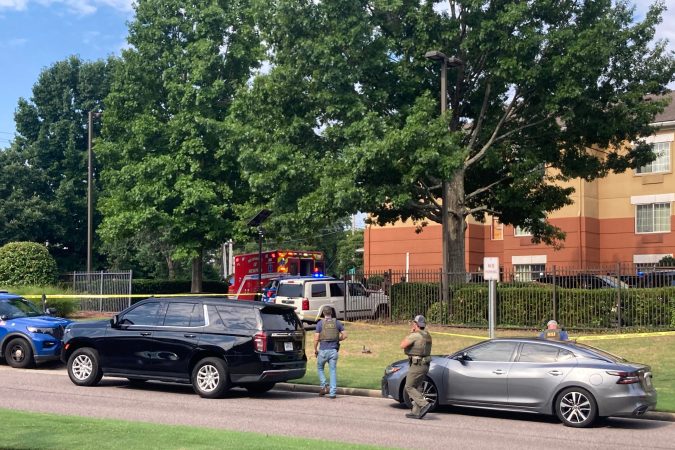
    The shooting occurred while U.S. Drug Enforcement Administration agents were serving a drug warrant at a hotel room, U.S. Marshals Service spokesman Brady McCarron said. When the suspect refused to open the door for agents, they knocked the door down, McCarron said.

    A news release from the Marshals Service sent out earlier in the day said the man was killed after pointing a handgun at task force members. A later news release from the Tennessee Bureau of Investigation, which is probing the circumstances of the shooting, is less specific. It says only that, “For reasons still under investigation, the situation escalated, resulting in a DEA agent firing into a room, striking a man and killing him.”

    The Memphis Safe Task Force created by President Donald Trump was part of an effort to place National Guard troops and federal agents in Democratic-run cities he described as crime-ridden. Although plans to send troops to some other cities were blocked by the courts, Tennessee National Guard troops have been serving in Memphis as part of the task force since last fall.

    Tennessee’s Republican Gov. Bill Lee has embraced federal intervention while Democratic Memphis Mayor Paul Young took a pragmatic approach, saying they were coming regardless of his opinion so he wanted to find ways to use them effectively.

    Wednesday’s shooting follows another one early Sunday by two members of the Tennessee National Guard assigned to the task force. Authorities said 20-year-old Tyrin Johnson was killed after he turned toward them with a gun during a downtown pursuit. Johnson’s family is calling for the release of video evidence that would show what happened.

    Data from the Tennessee Bureau of Investigation shows that at least four people have died in encounters with officers tied to the federal task force, including at least one other fatal shooting by a DEA agent.

    In mid-May, when task force members were serving an arrest warrant, the agent shot and killed 41-year-old Darrin Pigram, who had allegedly reached for a gun in his waistband, the TBI said in a preliminary statement.

    Later that same month, a Homeland Security special agent fired her weapon when task force members “responded to a report of a man armed with a gun, threatening to harm himself.” Jonah Neal, 25, was pronounced dead at the scene, but TBI said at the time it was not “immediately clear whether Neal died as a result of the agent firing upon him or if it was self-inflicted stab wounds.”

    In a fifth shooting in December, a Tennessee Highway Patrol trooper assigned to the task force opened fire at a vehicle and struck one person, after the car didn’t pull over in a traffic stop. The person was taken to the hospital in stable condition, according to information released by TBI at the time.

    All five shootings are being investigated by the Tennessee Bureau of Investigation.

  • Does leisure make us happy? Often the answer is no.

    Does leisure make us happy? Often the answer is no.

    You might think spending more time relaxing would make you happier.

    But recent research suggests that having more leisure time doesn’t necessarily make people more likely to rate their day as happy. The research, using data from the U.S. Census Bureau’s American Time Use Survey, shows that people were most satisfied with their days when they included an hour or two of socializing, physical exercise, and — surprisingly — up to six hours of work (though more work than this was linked to less happiness).

    “It doesn’t mean leisure time is bad. It just means that we probably need to use it a little bit differently,” said Laurie Santos, a psychology professor at Yale University who wasn’t involved in the study, which was published earlier this year and analyzed how 15,000 Americans used their time across two nonconsecutive years.

    In the survey, respondents reported “watching television and movies” was about 70% of their relaxation and leisure time.

    Santos said that working — whether at a day job, or doing another effortful activity, especially if it involves connecting with other people — often makes us happier than being idle. In particular, she said, scrolling on our phones or binge-watching TV might be a recipe for loneliness.

    Yet given the choice, people often choose the easier route, one of the many ways people tend to be misguided when predicting what will make them happy, she said.

    Santos teaches the course “Psychology and the Good Life,” which became the most popular class on Yale’s campus when she first offered it in 2018. Nearly 1 in 4 students now enroll, which she said is a sign of how many young people are searching for research-backed strategies to help them feel better.

    The paradox of happiness

    One of the pitfalls of searching for happiness is that focusing on it too much can make contentment even more elusive.

    Santos cited research from Iris Mauss at the University of California at Berkeley, which found that it’s hard to enjoy a happy moment if you’re too fixated on how happy you are.

    “You know, I’m on vacation in this perfect spot and I’m asking, ‘Could this be better? Was this worth the money?’ And of course that doesn’t make the vacation feel all that great,” Santos said. “We tend to be kind of anxious about whether we’re feeling happy and that doesn’t feel good.“

    The second problem is that we think that the perfect job or relationship or achievement will make us happier.

    “Happiness is really less about our circumstances and more about our behaviors and our mindsets,” Santos said.

    For people who are struggling with essentials like housing or food, changing their circumstances will make them happier, she said, but once basic needs are met, there are diminishing returns.

    The problem with ‘good vibes only’

    Being a happy person does not mean being happy all the time.

    “A good flourishing life is going to involve some negative emotion,” Santos said.

    Often it’s our reactions to our emotions that cause problems. For example, if you get an email that stresses you out and let that spill into your next interaction, you might snap at someone, then feel guilty.

    Santos recommends recognizing what you’re feeling without adding too much meaning to it — or shaming yourself for feeling badly — what Santos calls “meta-emotions.”

    On a vacation, for example, if a rainy day forces a change of plans and you find yourself getting frustrated, that can bring on meta-emotions. You might feel ashamed that you’re annoyed on vacation — Shouldn’t I just be enjoying it? Feeling grateful?

    “It’s often those meta-emotions that are worse than the primary emotions that we initially feel,” Santos said. “It takes some work, but those meta-emotions are under your control.”

    What actually makes people happier

    There is a lot of research about what does make people feel better. In the scientific literature and in Santos’s own experience, these little tweaks work by subtly rewiring the brain.

    A little bit of effort or challenge is better than pure ease. We tend to enjoy things more when they require a bit of work. If you have a free afternoon, you’re more likely to take pleasure in a hike outside rather than scrolling or watching TV alone.

    Pretty much everything is better with a friend. Even if you’re just running errands, invite a friend, and look for opportunities for small moments of connection, like chatting with a clerk in a store rather than ordering things online.

    Try a reframe. You’ve probably heard the advice to keep a gratitude journal, but if you can’t stick to writing things down every day, you can still do a quick reframe in a tough moment by asking yourself some questions.

    “What’s one thing that I’m really grateful for in this moment? What’s one thing that I’m going to look back on tonight and think was good?” Santos asked. “Just that little change in our attention can be really powerful.”

  • Judge orders E. Jean Carroll be paid $5.8M in Trump sex abuse and defamation case; Trump appeals

    NEW YORK — Writer E. Jean Carroll can collect $5.8 million held in escrow since a jury found that President Donald Trump sexually abused and defamed her, a federal judge ruled Wednesday. Trump’s lawyers immediately appealed to stop the payment.

    The president has already deposited the money in an account. The U.S. Supreme Court recently let the 2023 civil verdict stand, clearing the way for Judge Lewis A. Kaplan to release the money. The initial $5 million award has grown with interest.

    The jury found Trump attacked Carroll in 1996 in the dressing room of a luxury Manhattan department store, and defamed her after she described it publicly in a 2019 memoir, during his first term as president. Trump called her allegations false and said “she’s not my type” in an interview.

    Trump’s attorneys said Wednesday they would continue to appeal, and accused his political opponents of using the legal system against him. They asked the 2nd U.S. Circuit Court of Appeals to stop the payment. Carroll’s lawyers did not immediately respond to requests for comment.

    The jury had reached its verdict — in a trial that Trump did not attend — after Carroll testified that their flirtatious and friendly chance encounter at the department store turned violent. Trump insisted he never knew Carroll, now 82, a former advice columnist. He accused her of trying to sell books at his expense and of having political motives.

    Carroll sued Trump after New York changed its laws to give sexual abuse survivors a fresh chance to sue over attacks that happened in the distant past.

    Trump is also appealing $83 million in defamation compensation granted to Carroll by a separate Manhattan jury after a 2024 trial where Trump briefly testified.

    At that trial, Kaplan required the jury to accept the findings of the previous jury and only determine how much money, if any, Trump owed Carroll for comments he made about her while he was president.

    Trump’s lawyers complained that the judge, in setting rules for the damages trial, had barred Trump and his defense team from telling the jury that the encounter with Carroll never happened.

    When the 2nd Circuit declined to let all of its judges rehear an appeal of the $83 million award, Circuit Judge Denny Chin wrote that Trump had said multiple times over many years that Carroll lied for political and financial gain and had suggested she was too unattractive for Trump to have sexually assaulted her.

    “As a result of Trump’s statements, Carroll was harassed and humiliated, subjected to death threats, and feared for her physical safety for years,” Chin said. “And Trump showed no remorse, continuing his attacks against Carroll during and after two federal trials, and even proclaiming two days into the Carroll I trial that he would continue to defame her ‘a thousand times.’”

  • Prosecutors play video in court of suspect in Charlie Kirk’s shooting after he turned himself in

    PROVO, Utah — Prosecutors played a video clip in court Wednesday of suspect Tyler Robinson after he had turned himself in to Utah authorities a day after the shooting of conservative activist Charlie Kirk.

    The video showed Robinson standing in a room at the Washington County Sheriff’s Office wearing a T-shirt and baseball cap. There was no audio and it was unclear if he was interviewed by investigators while at the sheriff’s office.

    State District Judge Tony Graf will decide at the conclusion of this week’s hearing if prosecutors have enough evidence to bring Robinson to trial on an aggravated murder charge in Kirk’s fatal shooting on the campus of Utah Valley University in September.

    Robinson’s roommate, Lance Twiggs, was interviewed twice as part of the investigation, State Bureau of Investigation Agent Brian Davis testified Wednesday. Twiggs was given immunity for the statements, meaning what he said cannot be used against him in a potential criminal case, Davis said.

    Robinson’s defense team objected to showing recordings of those interviews in open court.

    His lawyers have said repeatedly this week that they are concerned about his right to a fair trial if evidence in the case is made public. Graf did not immediately rule on the request.

    Prosecutors allege Robinson sent a text to Twiggs saying he targeted Kirk because he “had enough of his hatred.”

    On Tuesday, Robinson’s lawyers questioned the reliability of DNA testing used to link the defendant to the suspected murder weapon.

    A member of Tyler Robinson’s defense team interrogated a DNA analyst from the FBI about the techniques she used to connect Robinson to a towel wrapped around a rifle found at the college campus, where Kirk was shot while speaking to a large crowd.

    Defense lawyer Michael Burt cast doubt on the analyst’s conclusions.

    “She can’t match Mr. Robinson to the questioned samples,” Burt argued.

    Robinson has not yet entered a plea and his attorneys have not commented on his guilt or innocence. They have, however, sought to get the death penalty taken off the table, so far unsuccessfully.

    Prosecutors must show they have enough evidence for a trial

    Forensics expert Lawrence Quarino said law enforcement agencies use “extremely reliable” tests to determine the probability that a person matches with DNA found at a crime scene.

    DNA testing “is the gold standard in forensic science,” said Quarino, a professor and director of the forensic science program at Cedar Crest College in Pennsylvania.

    FBI analyst Amanda Bakker said that after Twiggs provided a DNA sample for comparison, she was able to rerun her tests and attribute all of the DNA to two people.

    Investigators found the towel and suspected murder weapon — a bolt-action rifle with one spent round — in a wooded area near where Kirk was shot.

    DNA on the towel matched to two people, Jennifer Faumuina with the State Bureau of Investigation testified. One was Robinson’s roommate and the other was very likely Robinson, she said. Twiggs, a key figure in the prosecution’s case, will not testify in person this week, but prosecutors have said they plan to introduce a recorded statement.

    Prosecutors allege Robinson confessed in a note left for Twiggs, who was also his romantic partner, that read: “I had the opportunity to take out Charlie Kirk and I’m going to take it.”

    Investigators say Robinson went to a rooftop near where Kirk was speaking and shot him once through the neck as the activist was taking questions from a crowd of several thousand people. Kirk was declared dead after being taken to a hospital.

    The defense team pushes back

    Prosecutors contend the shooting endangered others at Kirk’s campus event — an aggravating circumstance that could make the crime punishable by death under Utah law. Robinson also faces possible sentence enhancements based on the prosecution’s claim that he targeted Kirk because of his political views.

    During one of several appearances on campus on Sept. 10, the defendant went to the amphitheater where Kirk was later shot, State Bureau of Investigation Agent David Hull testified Tuesday. Hull said Robinson made contact with representatives of Turning Point USA, a group co-founded by Kirk that galvanized the conservative youth vote to help Trump win a second term.

    The investigator did not detail what occurred during that interaction or if members of Kirk’s security team were present.

    Robinson’s defense team pushed back Tuesday on the idea that he was hostile to Kirk’s politics. Defense attorney Richard Novak sought to block prosecutors from introducing a statement describing the traditional Christian values of Turning Point USA.

    “This doesn’t say anything about Mr. Robinson’s state of mind,” Novak said about the statement from Turning Point USA board member David Engelhardt. “I don’t think that this court should be deciding — based on the record before it — where, if at all, politics and religion intersect.”

    The judge ruled that the Turning Point statement was relevant and would be “provisionally admitted,” with a final decision later on.

  • Funeral processions held in holy Iraqi cities for Iran’s late Supreme Leader Ayatollah Ali Khamenei

    Funeral processions held in holy Iraqi cities for Iran’s late Supreme Leader Ayatollah Ali Khamenei

    NAJAF, Iraq — Thousands of mourners attended funeral processions for Iran’s Ayatollah Ali Khamenei on Wednesday in the holy Iraqi cities of Najaf and Karbala as part of dayslong funeral ceremonies for the Islamic Republic’s late supreme leader.

    The ceremonies began on Saturday, with authorities shutting down streets, airspace, and daily life in Tehran, Iran’s capital, as throngs commemorated the life of the man who led Iran for decades with an iron fist while confronting the West. His body was later taken from Najaf to Karbala before it is to be returned to Iran.

    Khamenei was killed in late February in wide-scale U.S. and Israeli strikes on Iran that started the war. The 86-year-old supreme leader was among several senior Iranian leaders killed in strikes during the war.

    Talks on ending the war between the United States and Iran appear to be on hold until after the burial.

    However, strikes from both sides in the Persian Gulf on Tuesday and into Wednesday raised risks that the interim agreement to end the monthslong conflict that engulfed the Middle East could completely break down.

    The U.S. military attacked Iran Wednesday and again early Thursday after it said Tehran struck three ships in the Strait of Hormuz. Iran then launched retaliatory strikes on Kuwait and Bahrain.

    Khamenei’s body arrived on Tuesday in Najaf, considered one of the holiest of cities for millions of Shiite Muslims worldwide. Mourners holding portraits of Khamenei welcomed the body and senior officials escorting it, including Iranian President Masoud Pezeshkian and Foreign Minister Abbas Araghchi.

    The body was placed in a casket draped in the Islamic Republic’s flag and encased in glass.

    Some supporters performed self-flagellation on the streets, while others waved Iranian as well as red and black flags symbolizing mourning and revenge.

    Muhammad Taqi al-Hakim, a senior scholar at the Najaf seminary, led the funeral prayers at the Shrine of Imam Ali, the Prophet Muhammad’s cousin and son-in-law.

    As the coffin was carried into the shrine, large crowds pushed and shoved their way to get close to it. Some threw themselves onto the casket, as attendants struggled to control the crowd, urging the pallbearers to carry it closer to the ground for fear it might fall.

    “We, the people of Iraq, will remain a thorn in the eyes of the enemies,” said Jaafar Jawad, a funeral attendee. “(His body arriving here) is the greatest possible honor, and God willing, we will be loyal and repay a little of his debt in the holy city of Najaf.”

    The body later arrived in Karbala, also a holy city for Shiites, where Imam Hussein, the grandson of the prophet, was killed in 680 AD. Thousands of supporters gathered in the desert heat in and around the shrine while Abdul Mahdi al-Karbalaei, a representative of Iraq’s top Shiite religious authority, led the prayers there.

    Iran’s new supreme leader, Ayatollah Mojtaba Khamenei, has yet to make an appearance at the funeral ceremonies, which are unfolding over several days. He is believed to be in hiding after reportedly being wounded in the airstrike that killed his father.

  • Family demands an independent probe after ICE officer fatally shoots a man in Houston

    Family demands an independent probe after ICE officer fatally shoots a man in Houston

    HOUSTON — A Mexican national fatally shot by an Immigration and Customs Enforcement officer in Houston had no criminal convictions during his decades living in the U.S. and was driving a crew to a homebuilding site when he was killed, his family and a Texas congresswoman said Wednesday.

    Lorenzo Salgado Araujo was working toward securing legal status in the U.S. and knew what to do if stopped by ICE, his son said.

    Ronaldo Salgado said his father may have been scared that the people in unmarked vehicles were coming to steal the tools he used for 35 years to build homes, from sunrise to sunset, so he could send his three American sons to college.

    “He did not deserve to die. He did not deserve to be reduced to a headline of Mexican man shot and killed by ICE. He deserved to live a quiet life as Lorenzo Salgado Araujo, a husband, a father and a job creator for dozens of men who also wanted the American dream,” Salgado said during a news conference.

    The shooting happened Tuesday in Magnolia Park, a neighborhood that has been a hub for Houston’s Mexican American community for a century.

    Federal officials claim vehicle was rammed

    Salgado Araujo was shot after he ignored commands and attempted to ram an officer who fired his weapon in self-defense, the Department of Homeland Security said Tuesday in a statement. ICE officers were targeting him because he was living in the country without legal permission, according to the department, which oversees ICE. The man’s car struck an ICE vehicle, the department added.

    Democratic U.S. Rep. Sylvia Garcia said Salgado Araujo had no criminal convictions.

    Houston firefighters said he was shot in the abdomen. He died at a hospital.

    Three other men appeared to be detained as Salgado Araujo lay moaning on the ground, according to his son, who said one of them was his uncle and that no one has heard from any of them since.

    Federal officials have not released video or images of the shooting or the alleged damage to the vehicles. Salgado on Tuesday joined civil rights groups and Democratic officials in urging federal authorities to release all the footage and other information it has on the shooting.

    In several other shootings involving federal officers, initial descriptions by immigration officials have sometimes been contradicted later by video evidence.

    A video shot by bystander Juliet Martinez shows a black vehicle angled towards a white van, their doors wide open. A bleeding and handcuffed man groans loudly on the ground and his leg shakes. Other federal officers stand over at least three other handcuffed men.

    Civil rights groups say ICE can’t be trusted with the investigation

    The federal crackdown has created a country where it is “open season on Latinos” by officers who think they can “shoot and explain later,” League of United Latin American Citizens President Roman Palomares said during the news conference.

    The way ICE has handled previous investigations shows they have not earned the trust of taking their statements as facts without evidence like video to back it up, he said.

    “Your pattern has been one of inaccuracies of prejudicial leaks before the facts are known, of twisting the narrative to fit your version of events,” Palomares said.

    The league offered a $5,000 reward for information and videos from witnesses. Ronaldo Salgado and several civil rights organizations called for an independent investigation. Some of them begged anyone with videos to not turn them over to ICE, which they said could destroy them.

    Harris County District Attorney Sean Teare said Salgado Araujo’s family and the community deserve the truth but federal authorities are exclusively handling the investigation at this time.

    Uptick in arrests in recent weeks

    Representatives of ICE and DHS have not responded to repeated requests for comment Wednesday.

    Homeland Security Secretary Markwayne Mullin took over the department in March with the aim of keeping it away from the controversies that had marked the tenure of his predecessor, Kristi Noem.

    In the months after two fatal shootings in Minnesota sparked a fierce backlash, the number of immigration arrests across the country fell and ICE appeared to recalibrate its tactics. But in late June, arrests around the country surged to 10,000 over a five-day period, fueled in part by massive Congressional funding.

    The shooting was at least the eighth death resulting from an encounter with federal immigration officers since the start of the Trump administration’s immigration crackdown.

    Son says his father worked hard for decades

    Ronaldo Salgado said his mother was told something bad had happened to his dad around 7 a.m. Tuesday. After frantically looking for him at his job site and finding his empty van, he saw a video.

    “I recognized him, not from his appearance but from his voice crying for help as he lay on the street,” Salgado said.

    Salgado Araujo met his wife as a teenager in Mexico. They came to America and built their own home in Houston with help from friends and family who worked on his crew. His wife made his lunch before he left for the day and had a hearty meal ready when he came home. He would listen to music and pet his dog on his porch, Salgado said.

    “After nearly 35 years of working to give us the American dream, he made the choice to begin the process of obtaining his American dream through a work permit,” Salgado said. “We dotted every I, crossed every T, filled every document, attended every appointment. He was close to obtaining his legal status.”

    Salgado Araujo had biometric scan and fingerprints done earlier this year, his son said, and had carefully studied what to do if ICE pulled him over. If he was speeding away, it was probably because he feared having his tools stolen, his son said.

    “Had my father seen an emblem of ICE or an emblem that says anything about a law enforcement agency, my father would have complied,” his son said.

    Mexico’s president criticizes the killing

    Mexico is “preparing legal measures” over the killing of Salgado Araujo because “we cannot allow the mistreatment of our brothers and sisters in the United States,” Mexico’s President Claudia Sheinbaum said Wednesday.

    In April, Sheinbaum expressed concern about the deaths of Mexican nationals in U.S. immigration detention, saying her government would support lawsuits filed by detainees over poor conditions or by the families of those who died. She raised the detainees’ deaths to the Inter-American Commission on Human Rights and said she was considering an appeal to the United Nations.

    Texas’ largest city has experienced heightened enforcement operations since the crackdown began last year, and not without public backlash. The Houston City Council voted to pass an ordinance limiting ICE cooperation but reversed course after Gov. Greg Abbott, a Republican, threatened to cut more than $100 million in state funding for public safety.

  • Status of damaged Manhattan building unclear after crews work overnight

    Status of damaged Manhattan building unclear after crews work overnight

    NEW YORK — The status of a midtown Manhattan office building that suffered structural damage remained unclear early Wednesday, hours after New York City’s buildings commissioner said it was stable for now but warned of tense days ahead.

    “I can say right now the building is stable,” the commissioner, Ahmed Tigani, said late Tuesday. “We feel confident in the emergency plan we have now.”

    Construction crews hammered and welded through the night at the former Pfizer building in midtown, shoring up sections of the failed structure. Officers with the New York Police Department’s Technical Assistance Response Unit flew a drone beside the building, close to the 21st floor, throughout the night. The video captured two workers in hard hats inside the building, inspecting the floor where support beams had buckled.

    Police officers blocked all traffic on East 42nd and 43rd streets between Second and Third avenues, and authorities said early Wednesday that traffic in that area remained restricted. Those who worked or lived in the area would have access, however, unless the buildings were under evacuation orders. Five buildings remained fully or partially evacuated.

    Fire officials received reports Tuesday morning about “a structural issue” at 235 E. 42nd St., the former Pfizer headquarters that is being converted into a housing complex with more than 1,600 apartments. Architects had called the project, scheduled to be completed in 2027, the largest of its kind in the city’s history.

    Two support columns inside the building began buckling, and several upper floors were sagging, the Fire Department said Tuesday. Authorities initially created a “frozen zone” from 40th to 45th streets between First and Third avenues as they worked to stabilize the building. Although the so-called frozen zone has shrunk considerably, Tigani said “the public should not engage with that area.”

    The situation disrupted midtown Manhattan, as construction workers and people in nearby buildings, including tourists and school students, were evacuated. There were no injuries, the Fire Department said.

    Here’s what else to know:

    — Developer’s response: Nathan Berman, the founder of MetroLoft, the developer behind the project, said in an interview that there was never any danger that the building would collapse, calling the episode “a typical construction mishap.” A spokesperson for the city’s Buildings Department said the structure was still being stabilized and an investigation was continuing.

    — Upper floors: Tigani said late Tuesday that officials were monitoring the building for any signs that it was unstable. Emergency shoring was being undertaken on the 20th and 21st floors of the building, Brad Hoylman-Sigal, the Manhattan borough president, said in a social media post late Tuesday.

    — Midtown construction: The project is part of a campaign to turn midtown Manhattan’s empty office buildings into residential spaces to help address a housing shortage and revitalize the area.

  • Justin Verlander plans to retire after this season, will be honored at All-Star Game in Philly

    Justin Verlander plans to retire after this season, will be honored at All-Star Game in Philly

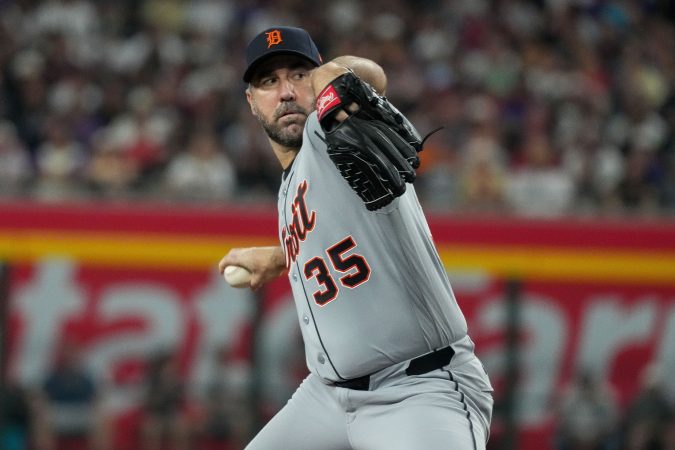
    DETROIT — Justin Verlander plans to call it a career later this year.

    The three-time Cy Young Award winner, two-time World Series champion and 2011 AL MVP will retire after this season with the Detroit Tigers.

    Verlander made the announcement on Wednesday, shortly after he was added as a “Legend Pick” to the American League All-Star roster.

    “While I’m fully committed to giving my team everything I have for the rest of this season, I’ve decided this will be my last,” Verlander, a right-handed pitcher, shared on social media. “It’s fitting that I get to finish where it all started — with the Detroit Tigers, the organization that drafted me and gave me my first opportunity.”

    All-Star Game tribute

    While he will not play in the All-Star Game, MLB commissioner Rob Manfred said Verlander will be at Tuesday’s game at Citizens Bank Park and will be honored during the festivities.

    “The opportunity to attend once again is something I’ll cherish and it will be an incredibly special moment for me and my family,” said Verlander, who is married to model Kate Upton and has two children.

    Verlander has a career record of 266-159 with a 3.33 ERA in 556 starts across 21 major league seasons with the Tigers, Astros, New York Mets, and San Francisco Giants. He has 3,554 strikeouts and has tossed 26 complete games, including nine shutouts.

    He joins Phillies first baseman Bryce Harper as a Legend Pick for the 2026 Midsummer Classic. Albert Pujols, Miguel Cabrera, and Clayton Kershaw were honored at previous All-Star games.

    Oldest player in the majors

    Verlander, 43, is the oldest player in Major League Baseball. He signed a one-year, $13 million contract to rejoin the Tigers in February.

    Verlander allowed five runs in 3⅔ innings in his only start this year, a 9-6 road loss at Arizona on March 30.

    “It’s time for the next chapter,” Verlander said. “But first, I’m excited to finish this season the only way I know how — with everything I’ve got.”

    Injuries this season

    He went on the injured list with hip inflammation early in the season, and, when he was nearing a return last month, he pulled a hamstring during a bullpen session.

    “I never wanted to retire because of a milestone, a number, or a date on the calendar,” Verlander said. “I wanted the game to tell me when it was time. Over the last several months, I’ve realized that time has come.”

    He was scheduled to pitch in June and make what would have been his first start with the Tigers at Comerica Park since Aug. 30, 2017 — the day before he was traded to the Astros.

    Cy Young winner, World Series champ

    He went 183-115 from 2005 to 2017 with the Tigers. He won the American League Rookie of the Year award in 2006 and was the AL MVP and Cy Young Award winner in 2011. He helped Detroit reach the World Series in 2006 and 2012 along with four straight division titles from 2011 to 2014.

    Verlander was drafted second overall in 2004 by the Tigers. Their front office at the time was led by Dave Dombrowski, who’s now the Phillies’ president of baseball operations.

    Verlander was the 2017 ALCS MVP in Houston and helped the Astros win the World Series that year and was a key player for them when they won another title in 2022. He won his second and third Cy Young Awards in 2019 and 2022.

    “I’ve been fortunate to play with and against incredible players, for outstanding organizations, and compete in front of fans who deeply appreciate the game,” Verlander said.

  • Graham Platner, isolated, defies Maine Democrats as they try to hatch a plan

    Graham Platner, isolated, defies Maine Democrats as they try to hatch a plan

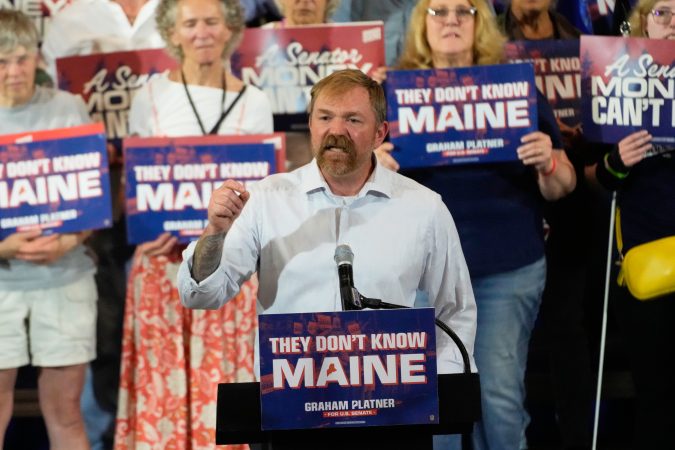
    Increasingly isolated from the Democratic Party, Graham Platner is holed up at his home in rural Maine, navigating the likely end of his once-surging campaign for the U.S. Senate, as establishment fury over his prolonged exit grows louder.

    Platner’s campaign team held a call Wednesday afternoon in which campaign leadership sounded resigned to the idea that the Democrat’s bid could be ending soon, said a Democrat close to Platner. Campaign staff were told that Platner would speak about the future of his run Wednesday night.

    He could drop out of the race soon, probably by prerecorded video, said a second person close to Platner’s team who, like others in this article, spoke on the condition of anonymity to avoid alienating fellow Democrats in what has become an increasingly tense situation.

    One of Platner’s key advisers, Morris Katz, flew up to Maine from New York on Tuesday to discuss his withdrawal, said the person. But Platner, whose political support has evaporated since he was accused of sexual assault on Monday, has struggled with the decision, people close to him said, and has said he would like input on the replacement process, leaving the timing of any announcement unclear.

    “It is him who is wanting to hold on,” the first Democrat said. “He is having to come to terms that his dream is dead. The show is over, this is done.”

    Until Platner pulls the plug, however, the Democratic Party is at an impasse, unable to fully refocus on its uphill battle to defeat five-term Republican Sen. Susan Collins. The race is critical to Democrats’ longshot bid to retake the Senate, where the party must flip four seats held by Republicans to win back control in November.

    That frustration is now spilling into the public.

    On Tuesday night, the Maine Democratic Party released a confrontational video reiterating its call for Platner to drop out so it could select a replacement candidate. If Platner withdraws by Monday, the party has until July 27 to submit a new nominee – though it remains unclear how that decision would be made.

    “Unfortunately, Graham Platner’s team has repeatedly reached out to us in an attempt to put their thumb on the scale of what this process looks like,” Devon Murphy-Anderson, executive director of the Maine Democratic Party, said in the video. “We have repeatedly reiterated to Graham Platner’s team that they have no role in determining our next Democratic nominee for the U.S. Senate.”

    That posture incensed Platner’s more dedicated supporters, some of whom have felt aggrieved by how quickly Democrats turned on him after the sexual assault accusation and who argue that any replacement candidate must be aligned with the populist politics that fueled his rise.

    Party officials are sensitive to the fact that, despite Platner’s downfall, they need to keep the political movement that emerged around him intact in order to win.

    “It is important that someone carry forward the movement that has been built here of everyday working-class people who are fed up with a system in Washington that is so broken,” Maine House Speaker Ryan Fecteau said in an interview. “There are a number of people in Maine politics who share the same views as Graham Platner, who have the same message as Graham Platner, who can carry this work forward.”

    A spokesperson for Platner denied that “the campaign tried to ‘put its finger on the scale’” of the replacement process. But Platner is seeking to influence it as he navigates his exit – and his decision not to drop out immediately has divided many within his campaign.

    Platner’s attempt to continue a campaign detonated by his own alleged behavior has not only exasperated some Maine Democrats but also dumbfounded them.

    “People who have made their political careers decrying a rigged political system are now trying to rig the political system,” quipped a Democratic operative who works in Maine.

    National Democrats, led by the Democratic Senatorial Campaign Committee, have said that they will not spend money in Maine if Platner remains the nominee.

    But their role in selecting his successor is minimal, beyond supporting the Maine Democratic Party’s currently unknown plans for selecting a replacement should Platner drop out. There is belief within the committee that any nominee, at this point, will be stronger than a scandal-plagued Platner, said one person familiar with the committee’s thinking.

    Since he launched his campaign last summer, Platner’s political rise and his outsider message have invigorated Maine Democrats, who have long failed to find a candidate who can defeat Collins, despite the state’s Democratic lean.

    Many voters were willing to overlook earlier controversies that plagued the charismatic 41-year-old oyster farmer and military veteran, including old social media posts where Platner downplayed sexual assault and made other inflammatory comments; a tattoo resembling a Nazi symbol that he had covered up; sexually explicit text messages sent to other women after he married; and accusations of violent behavior by ex-girlfriends.

    Then on Monday, a woman who used to date Platner said he entered her home intoxicated one night in late 2021 and forced himself on her as she told him to stop.

    On Tuesday, a second ex-girlfriend told The Washington Post that Platner repeatedly removed protection without her consent when they were having sex. The campaign called the claim “categorically false and politically motivated.”

    Unlike some politicians engulfed by scandal, Platner retains a core of close advisers who have stuck by him since Monday, allowing him to hold out against calls for his withdrawal.

    In April, when then-Rep. Eric Swalwell (D-California) was accused of sexual assault by a former staffer amid a run for governor, top campaign staff immediately quit and his campaign imploded within days. Platner, by contrast, continues to operate with the inner circle of his campaign from his home in the small coastal town of Sullivan.

    The scene was quiet there Wednesday morning. Several cars were parked in Platner’s driveway near a pile of chopped wood and a boat covered in a green tarp. A few reporters were across the narrow road.

    As the public awaits word from Platner about his plans, longtime friends say this has been a difficult moment, with one even suggesting that Platner could continue to fight.

    “Everybody says they are pulling their support. Is that truly what they are going to do? Are they just going to let Susan Collins win?” the friend said. “That seems highly unlikely to me because we need Maine to flip the Senate.”

    That is not a universal view, however. Some people who have backed Platner for months, even through his many scandals, are too disgusted with him to continue their relationship.

    “At this point, he knows I know he’s lied to me directly too many times,” said a top Maine Democrat who has been close to Platner. “I don’t think he has the shame to speak directly to me.”

    Joanna Slater in Sullivan, Maine, contributed to this article.
  • Kentucky Gov. Andy Beshear asks Sen. Mitch McConnell to give a public update on his condition

    Kentucky Gov. Andy Beshear is directly asking Sen. Mitch McConnell, the state’s most powerful figure in Congress, to disclose more about his condition after three weeks of silence from the 84-year-old since he was hospitalized in Washington.

    The letter released Wednesday from Beshear, a Democrat who is considered a potential presidential candidate in 2028, to the former Senate Republican leader says, “Kentuckians have grown increasingly concerned about the current state of your health and well-being, and ability to hold office.”

    McConnell, whose physical condition has visibly declined in recent years, was hospitalized June 14. He has not released a public statement, photos, or videos since. Aides have disclosed nothing specific about his condition, other than to say last week that McConnell “continues to improve, and is working closely with his staff on Kentucky and Senate matters while the Senate is out of session.”

    That lack of detail has fueled rampant speculation about his prognosis and whether he will return to the Senate when it reconvenes next week. The firestorm was enough that Republican Senate leaders on Tuesday made public statements saying they had talked to McConnell and that he was alert and discussing current events.

    McConnell is retiring at the end of his term in January, and the campaign to elect his successor already is underway. Kentucky’s Senate succession law, which Republican legislators have twice changed during Beshear’s tenure, does not give the governor a role in picking a temporary successor should McConnell’s seat become vacant before his term ends.

    Under the latest change in 2024, if the seat becomes vacant before Aug. 3, there would be a special election to pick a replacement, perhaps held concurrently with the general election in November. The special election winner could take office nearly immediately. The general election winner would be sworn in as part of the new Congress in January.

    If the seat were vacated after Aug. 3, there would be no time under the law for a special election and the seat would remain vacant until January.

    Beshear ended the letter by wishing McConnell “a safe and speedy recovery.”