Category: Wires

  • Wally Funk, who set an age record for space travel, dies at 87

    Wally Funk, who set an age record for space travel, dies at 87

    Wally Funk, who was among the most accomplished female pilots of her time and who, at 82, became the oldest person to fly in space, achieving a goal she had set some 60 years earlier, died Wednesday at her home in Grapevine, Texas, a suburb of Dallas and Fort Worth. She was 87.

    Her death was confirmed by Mona Quintanilla, a spokesperson for the city of Grapevine.

    “Aviation has been my whole life,” Ms. Funk wrote in her 2020 memoir. “I eat it, and I breathe it.”

    In the early 1960s, she was among a group of 25 women, later reduced to 13, who were put through rigorous tests at the dawn of the Space Age to determine how women might fare in space. Ms. Funk was the only aviator in the group — which became known as the Mercury 13 — to pass all the tests.

    But seven men, known as the Mercury Seven and tested separately, were selected by NASA to be its first astronauts, because the space agency wasn’t prepared to risk sending women into space. The Mercury Seven included Alan Shepard Jr., who became the first American in space when he completed a suborbital flight in May 1961, and John Glenn, the first American to orbit Earth.

    Ms. Funk made several unsuccessful attempts to be accepted by NASA for its astronaut corps, which didn’t admit women until 1978, when she was 39. The first American woman in space was Sally Ride, a mission specialist on a shuttle flight in 1983. (The first woman in space was Valentina Tereshkova, a Russian who flew a solo mission in 1963.)

    But Ms. Funk continued to fly, taught aviation privately, and oversaw numerous investigations into air crashes, initially as the first female inspector for the Federal Aviation Administration and later for the National Transportation Safety Board.

    She owned a flying school in Taos, N.M.; piloted a twin-engine passenger plane for Sierra Pacific Airlines, based in Tucson, Ariz.; and competed in the women’s transcontinental air races known as the Powder Puff Derby. In her memoir, Higher Faster Longer, written with Loretta Hall, Ms. Funk said she had logged more than 19,000 hours of flying.

    She was inducted into the Women in Aviation International Pioneer Hall of Fame in 1995, and her name was inscribed on the Wall of Honor at the National Air and Space Museum in Washington in 2017.

    Ms. Funk, who never flew for NASA, set her age record for space travel in July 2021, when she took part in a trip that lasted 10 minutes and 19 seconds, aboard New Shepard, a rocket built by Blue Origin, the spaceflight company founded by Jeff Bezos. Bezos was a passenger on the flight, along with his brother, Mark, and a teenage physics student.

    The rocket rose above the 62-mile threshold generally regarded as the beginning of space before returning to Earth.

    “We went right on up, and I saw darkness,” Ms. Funk said at a celebratory news conference. “I was going to see the world, but we weren’t quite high enough. I loved every minute of it. I just wish it had been longer.”

    That October, William Shatner of Star Trek fame, then 90, set a record for the oldest person to fly in space. In 2024, Ed Dwight, who was also 90 but a few months older than Shatner had been, became the current record-holder.

    Mary Wallace Funk (she preferred Wally) was born in Las Vegas on Feb. 1, 1939, to Losier and Virginia Shy Funk. She grew up in Taos, where her father opened a five-and-dime store selling modestly priced items.

    “I got my first try at flying, just pure flying, by flying my Superman cape off my daddy’s barn when I was about 5 years old,” she recalled in a 1999 oral history interview with NASA.

    She landed in a pile of hay, but her fascination with flying was undiminished. “I was allowed to make airplanes out of blocks of balsa wood and hang them from my ceiling,” she said in the interview.

    “I grew up in an area where you had free spirit,” she added. “I was brought up by the Indians of a Taos pueblo, and they taught me how to fish and hunt and camp at a very early age and survive the wilderness. So I had all that going for myself, where a youngster today is in a city, in an apartment, and that’s all they know. They don’t know ocean and skiing and snow and air as I was able to know it.”

    Ms. Funk obtained a pilot’s license while attending Stephens College in Columbia, Mo., a two-year women’s school, and then enrolled at Oklahoma State University, which had a prominent flight school.

    She had a rating for piloting a glider and a seaplane by the time she was 19. Later, she recalled that there were “never any eyes raised or eyebrows raised about ‘What’s that girl doing?’”

    After graduating from Oklahoma State, she became a flight instructor at the Fort Sill, Okla., Army base before beginning her long road to spaceflight.

    Ms. Funk, who never married, has no immediate survivors.

    Before Funk’s Blue Origin flight in 2021, Tanya Harrison, a planetary scientist and director of science strategy at Planet Labs, told the New York Times: “Seeing her finally get to go into space decades after proving that she was not only capable, but perhaps more capable than the men she was essentially up against during the Mercury program is so incredible.”

    When the flight was over, Ms. Funk said she had one overriding desire: “I want to go again, fast.”

    This article originally appeared in the New York Times.

  • Louise Lasser, star of TV’s ‘Mary Hartman,’ is dead at 87

    Louise Lasser, star of TV’s ‘Mary Hartman,’ is dead at 87

    Louise Lasser, the deadpan comedic actor who began her screen career in Woody Allen movies and became a star as the wrenchingly sympathetic title character of Mary Hartman, Mary Hartman, Norman Lear’s off-center 1970s comedy, died Monday at her home in New York City. She was 87.

    Her death was confirmed by Susan Charlotte, a friend.

    Mary Hartman, Mary Hartman was a phenomenon, a syndicated parody of midcentury soap operas that ran Mondays through Fridays after the late news in most major markets. It followed a befuddled Ohio housewife as she tried to hold herself together amid mass murders, sex scandals, and everyday consumer anxieties. She wore pigtails, puffed sleeves, and gingham (while real American women were in Dorothy Hamill bobs and designer denim); fretted about waxy yellow buildup on her kitchen floor; and was emotionally abused by her conveniently impotent blue-collar husband (Greg Mullavey).

    “She’s a survivor,” Ms. Lasser said of her put-upon character in a 1976 interview with the New York Times. “But that makes me sad. Because she’s a survivor in a world I wonder if it’s worth surviving in.” (The character did eventually have a nervous breakdown.)

    Articles about the series proliferated, and Ms. Lasser — somehow simultaneously neurotic and girlish — appeared on the covers of major magazines, including People, Newsweek, Ms., and Rolling Stone. The show ran only a year and a half, from January 1976 to July 1977, but that was 325 episodes.

    Louise Lasser was born in New York City on April 11, 1939, the only child of Sol Jay Lasser, a tax accountant and author, and Paula (Eisenreich) Lasser, a designer. (Louise had no middle name but later chose one: Jane.)

    She spent her childhood in the city’s Bronx borough, where she attended Fieldston, a prestigious private school. At Brandeis University, she majored in political science but also appeared in shows that friends wrote. She dropped out during her senior year and began acting lessons with Sanford Meisner.

    Living with her parents in Manhattan, she worked in theater and cabaret, and appeared in television commercials, notably for NyQuil and Excedrin. She was the first actress to win a Clio Award, the advertising industry’s highest honor. In 1962, she understudied a rising star, 20-year-old Barbra Streisand, in the Broadway musical I Can Get It for You Wholesale, and briefly took over the role when Streisand left.

    She met Allen on a double date — he was with the other woman — and made her screen debut in The Laughmakers, a 1962 pilot he wrote. Set at a comedy club, it never became a series but was broadcast as a special. The two began dating and married in 1966.

    After an uncredited part as a masseuse in the Peter Sellers comedy What’s New Pussycat? (1965), written by Allen, and a voice-over in What’s Up, Tiger Lily? (1966), Allen’s directorial debut, Ms. Lasser had full-fledged roles — with character names and screen time — in Allen’s next three auteur efforts, which he wrote, directed, and starred in.

    In Take the Money and Run (1969), she was a bank robber’s neighbor, impressed by his fame. In Bananas (1971), she was the hero’s activist girlfriend who drops him because he shows no political leadership skills. The next year, in Everything You Always Wanted to Know About Sex (But Were Afraid to Ask), she played a woman who could achieve orgasm only in public. In the middle of all that filmmaking, in 1970, the Allens divorced.

    Ms. Lasser spent a few years doing guest roles on sitcoms (The Mary Tyler Moore Show, The Bob Newhart Show) and drama series (Medical Center, McCloud) and television movies like Coffee, Tea or Me? (1973), a comedy about a flight attendant. Then Lear called.

    Critics, including John J. O’Connor of the Times, were initially skeptical of Mary Hartman. But O’Connor admitted, in a January 1976 preview article, that Ms. Lasser had “an uncanny ability to touch as well as tickle.”

    In May that year, Ms. Lasser was charged with cocaine possession in a highly publicized case that began at an antiques store where she was shopping. In her tote bag, police officers found 80 milligrams of the drug, which she always contended was a fan’s gift she had forgotten about. She received six months’ probation on the condition that she continue seeing her psychiatrist.

    That July, when she hosted Saturday Night Live, drugs and breakdowns were the comic topics. Viewers had trouble telling whether some skits were scripted or were showing a desperate performer crumbling in front of a nationwide audience. The episode was long kept out of reruns.

    Ms. Lasser stayed busy, writing and starring with Charles Grodin in Just Me and You (1978), a television movie about two strangers driving cross-country, and doing one season (1981-82) of It’s a Living, a sitcom about servers.

    She appeared in Allen’s Stardust Memories (1980), in a cameo as his secretary; Todd Solondz’s film Happiness (1998), for which the ensemble cast won a National Board of Review award; and Darren Aronofsky’s Requiem for a Dream (2000). And she taught acting in New York.

    She appeared in three episodes of HBO’s Girls (2014-15), playing an elderly artist who has been rediscovered. But she always said her favorite project was a part in The Lie, a 1971 BBC movie written by Ingmar Bergman. Its American broadcast won three Emmys.

    She is survived by her longtime partner, Michael Citriniti.

    The Mary Hartman questions never ended. Asked in 2013 if there had been a withdrawal period after the show’s end, Ms. Lasser told Interview magazine, “I’m still withdrawing.”

    That same year, she assured the website The Toast that Mary never felt like an outsider. Then how did you explain this small-town Midwesterner’s decided New York accent?

    “You don’t,” Lasser said, adding: “It’s a typical existential dilemma to try to make sense of something that has no sense. I think that’s what makes it work.”

    This article originally appeared in the New York Times.

  • Dodgers star Shohei Ohtani to miss All-Star Game, next mound start because of left knee irritation

    Dodgers star Shohei Ohtani to miss All-Star Game, next mound start because of left knee irritation

    Los Angeles Dodgers star Shohei Ohtani will miss Tuesday’s All-Star Game in Philadelphia because of continued irritation in his left knee.

    The Dodgers added that Ohtani would not make his scheduled start on the mound against the Arizona Diamondbacks on Friday night, but would continue his role as the team’s designated hitter throughout the weekend.

    The team says that after the series against the D-backs ends on Sunday, Ohtani will have some “interventions” done on his knee to get him ready for the second half of the season, which will cause him to miss the All-Star Game.

    The four-time Most Valuable Player has once again been one of the best players in the big leagues this season and stands alone as the game’s premier two-way player.

    Ohtani is batting .290 with 20 homers and 56 RBIs and is 8-2 on the mound with a 1.79 ERA and 95 strikeouts in 85⅔ innings.

    Ohtani’s absence will be a blow for baseball’s midsummer showcase at Citizens Bank Park. The Japanese star — who turned 32 years old earlier this week — is among the game’s most popular players and led MLB in jersey sales last year.

    He hit his 300th career homer on Tuesday night, a leadoff shot against Colorado Rockies pitcher Michael Lorenzen that made him the first Japanese-born player in the majors to reach the milestone.

  • Royal rapprochement: Harry and Meghan pay a rare visit to the king and queen

    Royal rapprochement: Harry and Meghan pay a rare visit to the king and queen

    In a step toward mending one of the world’s most-followed family feuds, Prince Harry, his wife, Meghan, and their two children met for the first time in years with Harry’s father, King Charles III, and Queen Camilla, Buckingham Palace said on Friday.

    The meeting answered questions that had been swirling all week about a potential reunion between the British king and his estranged second son. In 2020, Harry and his American-born wife, Meghan, renounced their royal titles and moved to the United States.

    Friday’s visit was a sign of a detente between Harry and his father. Harry had not returned to Britain with his family since Queen Elizabeth II’s Platinum Jubilee in June 2022. Harry had visited his father in Britain by himself last fall.

    The visit this week, officially to promote Harry’s charity competition for military veterans, had been shrouded in confusion, as efforts to mend family relations appeared to exacerbate them instead. Rifts emerged over where the family would stay and who would pay for their security.

    The prince has been embroiled in a yearslong battle with British authorities since they ruled that he and Meghan, after stepping down from royal duties, no longer qualified for publicly financed protection in Britain.

    Harry, 41, who arrived in Britain on Monday evening, lives in California with Meghan, 44, and their children, Archie and Lilibet. It was the first time in several years that Charles, 77, and his grandchildren, aged 7 and 5, met in person.

    Buckingham Palace said there would be no images released of the family visit at Highgrove House, a country estate that is one of the king and queen’s residences.

    Harry and his brother, William, had spent considerable time at Highgrove House, in the Cotswolds region west of London, when they were children. If offers a measure of privacy, far from the eyes of the London-based press corps. Earlier in the week, Harry’s team said that Meghan and the couple’s children, who were originally planning to accompany Harry for the whole visit, would not be going to London, citing security concerns.

    Highgrove House is also located nearer to Birmingham, where Harry had taken part earlier on Friday in an event to begin a countdown to the Invictus Games, a competition he founded for wounded veterans, which is due to be held in Birmingham in 2027. He played pickleball, took part in wheelchair rugby, and gave an interview to a British news outlet, speaking glowingly of his wife and children.

    The meeting with his father was a decidedly more private affair. The palace confirmed the meeting only after it had taken place.

    The reunion came shortly after a judge in Britain ruled against Harry and other celebrities earlier this week in a lawsuit that accused the publisher of the Daily Mail of targeting them with unlawful information gathering.

    The prince’s legal battles against the tabloid press marked a departure from the royal family’s tradition of ignoring unfavorable press coverage. Harry and Meghan have been open about their differences with the rest of the family, including in an Oprah interview, a tell-all memoir, and a documentary, even as they repeatedly voiced a need for privacy.

    This article originally appeared in the New York Times.
  • The Bayeux Tapestry is at the British Museum after a secret journey from France

    The Bayeux Tapestry is at the British Museum after a secret journey from France

    LONDON — After almost 1,000 years, the Bayeux Tapestry is back on English soil.

    In scenes like a heist movie in reverse, the priceless medieval artwork was spirited into the British Museum on Friday in the dead of night, after a high-tech, tight-security operation where any slip-up could have spelled disaster.

    On loan from its home in France, the tapestry will go on display at the London museum from Sept. 10 until July 2027. It’s a public homecoming for a vivid visual record of the 1066 Norman invasion, the last successful conquest of England.

    The tapestry’s arrival in London has been widely anticipated, but due to security concerns all details of when and how it would arrive were kept under wraps.

    “It feels extraordinary that after so much work and planning and care and thought that it’s actually happening,” British Museum director Nicholas Cullinan said as he waited outside the museum in the dark.

    “It’s the first time in 1,000 years that such an important piece of British — French too — history is going to be on these shores,” he said. “It’s incredibly exciting.”

    The 230-foot tapestry was folded accordion-style in a climate-controlled case that was placed inside a shock-absorbing cradle. That went into a truck that crossed from France on a vehicle shuttle train through the Channel Tunnel.

    After an 11-hour, 350-mile trip, escorted by police, the truck backed slowly into a loading bay at the museum, where workers gingerly eased the container, the size of a small car, to the ground. Museum staff and British and French diplomats who had been watching in hushed silence broke into applause.

    The priceless cargo will spend several days acclimatizing before it is carefully unpacked and unfolded for an exhibition that the museum expects to be one of the most popular in its 267-year history. Some 100,000 tickets were sold in their first day on sale this month.

    “It was like trying to get tickets to Glastonbury,” Cullinan said. “I don’t take for granted that people care that much about a 1,000-year-old embroidery. I think that’s an amazing thing.”

    Tapestry is a symbol of Anglo-French relations

    Stitched in wool thread on linen fabric — technically an embroidery, rather than a tapestry — the artwork depicts events leading up to the Battle of Hastings in October 1066, when William, Duke of Normandy, defeated King Harold’s Anglo-Saxon army. The invasion ended Saxon rule, made William the Conqueror the first Norman king of England and bound Britain and France more closely together.

    Historians believe the tapestry was commissioned by Bishop Odo of Bayeux, William’s half brother, and was probably sewn by women in England — possibly nuns — before being taken across the Channel. It has spent most of the last millennium in the town of Bayeux in northwest France, apart from two short periods at the Louvre in Paris.

    The tapestry symbolizes the sometimes fractious, intertwined histories of France and Britain, and securing the loan was a high-stakes diplomatic mission. It was announced during a state visit to the U.K. by French President Emmanuel Macron in July 2025.

    The loan coincides with renovations at the museum in Bayeux that houses it.

    In return, the British Museum will loan treasures from the Sutton Hoo hoard — artifacts from a 7th-century Anglo Saxon ship burial — and other items to museums in Normandy.

    Macron said in an article for Friday’s Times of London that “our two countries are not merely lending each other artworks: they are sharing the great narratives of European history’s origins.”

    Retired British diplomat Peter Ricketts, who helped cement the deal as the U.K.’s special envoy for the tapestry, said, “It’s an extraordinary mark of friendship and confidence in the U.K. to entrust this object to us for a year.”

    “Macron, when he offered us the tapestry, I think he understood that it would have far more impact in the U.K. than it does in France, because it’s more fundamental to our national story,” he said. “Everybody (in Britain) knows 1066.”

    It’s a vivid record of 11th-century life and death

    The tapestry features more than 620 people and 737 animals and tells its story in 58 scenes brimming with vivid and sometimes gory detail. There are scenes of hand-to-hand combat, mutilated bodies, and the unlucky Harold, felled by an arrow through his eye.

    “It has an emotional richness that is really difficult to get from written sources,” said Millie Horton-Insch, project curator for the British Museum exhibition. “It just brings people closer to this history than any other object can. It’s not the same as reading a text. You are looking at something that was handled by the people who lived through it and felt compelled to record these events in this way.”

    She said the document’s survival for 10 centuries despite myriad dangers — “moths, mice, mold, damp, fire” — is miraculous, and may be partly due to its humble materials.

    “It’s not really made of any blingy fabric,” she said. “It’s not gold, it’s not silver. There wasn’t the same temptation to cut it up and make it into vestments or repurpose it for anything.”

    Some French cultural figures opposed the loan, arguing that moving the tapestry was too risky. Cullinan said the expert teams went to great lengths to ensure its safety, including making two trial runs of the journey to show it would not cause the fragile item too much stress.

    “Such care has gone into it. I can’t think of a level of care for any other museum loan,” he said.

    He said he understands why there are concerns.

    “The tapestry arouses great interest and passion,” he said. “Which is a wonderful thing.”

  • Man partly sucked out of broken window on flight from Greece was pulled back by fellow passengers

    Man partly sucked out of broken window on flight from Greece was pulled back by fellow passengers

    THESSALONIKI, Greece — A man who was partially sucked out of a dislodged window on a flight from Greece to Germany on Friday was pulled back inside the aircraft by fellow passengers.

    The 61-year-old passenger suffered neck and shoulder injuries and friction burns, according to a Greek hospital official who spoke on condition of anonymity because they were not authorized to speak publicly to the media.

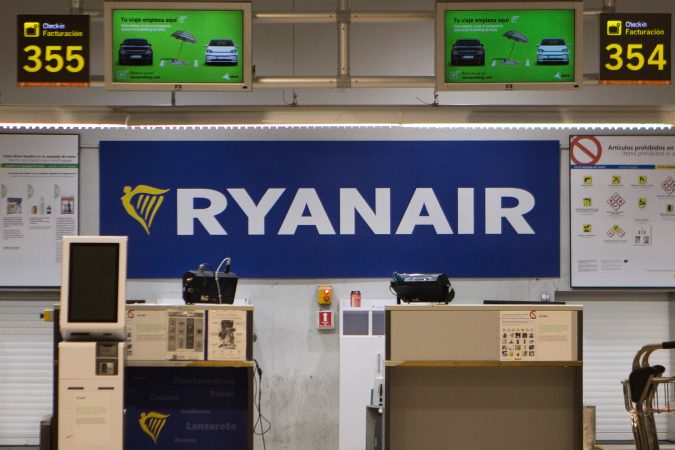
    The incident happened on a morning flight from the northern Greek city of Thessaloniki to Memmingen, near Munich, which was operated by Ryanair subsidiary Malta Air. Ryanair, Europe’s largest budget carrier, said in a statement the flight “returned to Thessaloniki shortly after take off when a passenger window dislodged in-flight.”

    Passengers told Greek media that they heard a loud bang, oxygen masks dropped and the plane began to lose altitude.

    One passenger, identified only as Christina, told Thessaloniki radio that some passengers panicked and screamed and that one passenger was partially sucked out of the window.

    “His whole head, neck, shoulders” were pulled out of the window, she said, adding that those seated near him pulled him back in.

    “Most people had fallen asleep, we had closed our eyes. We heard a sound, I’d describe it like a tire bursting … but very loud,” she said. “We knew straight away we lost pressure because we lost altitude. … Screams, shrieks, shouting.”

    The plane landed normally and passengers returned to the terminal, and one passenger requested and received medical assistance on the ground in Thessaloniki, the airline said in a statement. A replacement aircraft was later provided to fly the passengers to Germany.

    The National Transportation Safety Board, the U.S. federal agency that investigates aviation accidents and other major transportation incidents, said it was notified that the flight turned back because of “a right engine issue and cabin decompression.”

    The agency said it is standing by to assist in the investigation, which will be led by the Aircraft Accident and Incident Investigation Committee of the Republic of North Macedonia.

    The aircraft was a Boeing 737-800, which can seat up to 189 passengers. The narrow-body plane was delivered new to Ryanair in 2008, according to flight-tracking site Flightradar24.

    Flight records show that the aircraft climbed past 15,000 feet about six minutes after departure and then immediately descended to about 6,000 feet “to burn fuel for 30 minutes” before returning to Thessaloniki about an hour after taking off, Flightradar24 said.

  • Defending champion Sinner dominates 39-year-old Djokovic to set up Wimbledon final vs. Zverev

    Defending champion Sinner dominates 39-year-old Djokovic to set up Wimbledon final vs. Zverev

    LONDON — If there were any lingering questions over Jannik Sinner’s physical status after his meltdown at the French Open, they should be answered now.

    Sinner blasted his way past seven-time champion Novak Djokovic 6-4, 6-4, 6-4 on Friday to reach the Wimbledon final — showing off the kind of dominance he displayed before that second-round defeat in Paris.

    “I knew mentally,” Sinner said, “that today I had to raise my level, which I’ve done.”

    For the 39-year-old Djokovic, it marked another chance missed at adding to his record total of 24 Grand Slam singles titles.

    But Djokovic expressed interest in playing Wimbledon when he’s 40: “I would like to, at least one more time,” he said.

    “I feel when I’m healthy, I’m still able to play as a top-five player, still able to compete at the highest level,” Djokovic added.

    It was a measure of revenge for Sinner after Djokovic won their last meeting in five sets in this year’s Australian Open semifinals.

    “Playing against Novak,” Sinner said, “what he’s still showing is true inspiration.”

    Aiming to defend his title at the grass-court Grand Slam, the top-ranked Sinner will face second-seeded Alexander Zverev in Sunday’s final.

    Zverev ended the “Ferytale” run of British wild card Arthur Fery with an overpowering 7-6 (0), 6-2, 6-4 victory earlier as the star-studded crowd on Centre Court witnessed two one-way contests.

    Zverev will be playing for another major trophy a month after winning his first Grand Slam title at Roland Garros.

    “This Grand Slam has always been the one that I struggled with the most and all of a sudden I’m in the final of Wimbledon,” the 29-year-old German said. “We got one more match to go on Sunday and that’s what the focus is on.”

    It was another warm day in southwest London, with the temperature rising to about 85 degrees. It was also breezy and a bit cloudier than in recent days.

    Still, it felt nothing like the suffocating heat and humidity in Paris when Sinner wasted a big lead against Juan Manuel Cerundolo, who was ranked No. 56, and had his 30-match winning streak ended in dramatically unexpected fashion.

    Djokovic was coming off the longest quarterfinal in Wimbledon history, when he outlasted Felix Auger-Aliassime after 5 hours, 15 minutes on Tuesday.

    Sinner, by contrast, hadn’t lost a set since he was pushed to five by Miomir Kecmanovic in the first round.

    From the start, Sinner pushed Djokovic back with his powerful groundstrokes and came up with big serves in big moments.

    When Sinner faced his only break point of the match early in the third set, he produced an ace.

    Sinner has won 9 straight vs. Zverev

    Zverev, whose breakthrough at Roland Garros came in his fourth Grand Slam final, is attempting to become the first man in the professional era (since 1968) to win his second major title at the next event immediately after his first.

    Sinner has won his last nine meetings with Zverev and 14 straight sets.

    “I have to trust myself and I have to believe that I can win and that’s what I’m going to do,” Zverev said before he knew who his opponent would be.

    The 114th-ranked Fery, who grew up five minutes from the All England Club and played at Stanford University, was attempting to become the first wild card to reach the final since Goran Ivanisevic won Wimbledon in 2001.

    Zverev did well not to let the pro-Fery crowd get behind the local player too much and a double fault from Fery early in the first-set tiebreaker put Zverev in control.

    The 6-foot-6 (1.98-meter) Zverev was also able to dominate with his serve, which he cranked up to 139 mph (224 kph).

    The 5-foot-9 (1.75-meter) Fery, by comparison, was serving closer to 120 mph (193 kph).

    British cheering

    The British spectators did their best to encourage Fery early on, chanting his name between points as they sipped their Pimm’s under their wide-brimmed hats.

    At one point early on, chair umpire Marijana Veljovic had to tell the crowd to pipe down.

    “Ladies and gentlemen: Do not react, if possible, until the end of the point,” Veljovic said, before adding later in the first set: “Once again, do not react during the rally. That’s very disturbing for both players,” which was met with a round of applause.

    When it was over, Fery walked off to a standing ovation and applauded the crowd in return.

    “I know that 99.99% of the stadium was wanting Arthur to win. But it was still such an incredible atmosphere. It was such a fair crowd as well,” Zverev said. “A lot of crowds in the world can take an example of this crowd.”

    Becker congratulates Zverev

    Zverev had previously never been past the fourth round at Wimbledon.

    Now he’s the first German man to reach the final of the grass-court Grand Slam since Boris Becker lost to Pete Sampras in 1995.

    The last German man to win Wimbledon was Michael Stich, who beat Becker in the 1991 final.

    Becker, the three-time Wimbledon champion, wished Zverev “congratulations” in German on X: tweeting “Glückwunsch Sascha !!!,” using the player’s nickname.

    The women’s final on Saturday features two Czech players, Karolina Muchova against Linda Noskova.

  • Police in the U.K. arrest a suspect in the killing of former Parliament member Ann Widdecombe

    Police in the U.K. arrest a suspect in the killing of former Parliament member Ann Widdecombe

    LONDON — British police on Friday arrested a 26-year-old man on suspicion of murder in the killing of Ann Widdecombe, a former British member of Parliament and reality TV contestant.

    Widdecombe, 78, was found dead on Thursday in her Haytor Vale home on the edge of Dartmoor National Park in southwest England after sustaining what police said were “serious injuries.”

    The killing was not believed to be an act of terror and there was no information to suggest it was politically motivated, Devon and Cornwall Police Assistant Chief Constable Matt Longman said.

    Longman did not discuss a possible motive but said the suspect was in custody as the investigation continues.

    “This is really shocking news, and my thoughts, I think all of our thoughts, will be with the family and friends of Ann Widdecombe at this awful time,” Prime Minister Keir Starmer said. “Ann was a distinguished politician over many, many years with many achievements, and it’s a huge, huge loss.”

    Widdecombe found fame after leaving Parliament as a contestant on the Strictly Come Dancing and Celebrity Big Brother reality television shows. She later joined the Brexit Party and became a spokesperson for the anti-immigration Reform UK party.

    She served in the House of Commons as an MP from 1987 to 2010 and was known for socially conservative views, opposing abortion rights and expansion of LGBTQ rights.

    Starmer said the security of lawmakers was “of the utmost importance” as he urged people to rise above political differences.

    Security has been tightened for politicians after the murders of two serving members of Parliament in the past decade. Labour lawmaker Jo Cox was shot and stabbed in 2016 by a far-right extremist, and Conservative David Amess was stabbed in 2021 by an attacker inspired by the Islamic State group.

    Nigel Farage, leader of Reform, said he was deeply upset over Widdecombe’s death and noted that “things have become even more dangerous” for people in public life.

    Former Prime Minister Boris Johnson called Widdecombe a “heroic Brexiteer and a great speaker who could move Tory audiences to such ecstasy that she was a very hard act to follow.”

    The management company that represented her after she left politics said her life and career were driven by strong Christian values and a commitment to public service.

    “She loved the cut and thrust of political debate and, 16 years after leaving Parliament, was still actively campaigning for Reform UK and offering forthright views on the hot topics of the day,” Cloud9 Management said.

    “As Ann once said…‘we get one go this side of eternity, one go. Life is not a dress rehearsal, you take opportunities that you like and you go for it, that’s my philosophy’.”

  • Defense tries to sow doubt about evidence in Charlie Kirk’s killing

    Defense tries to sow doubt about evidence in Charlie Kirk’s killing

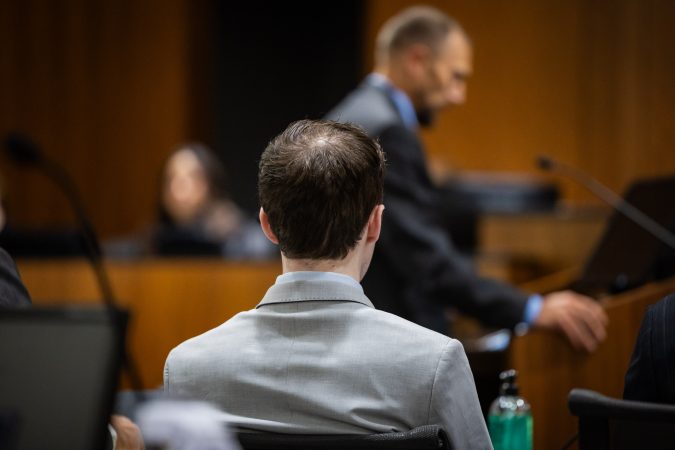
    PROVO, Utah — Lawyers for the man accused of killing conservative activist Charlie Kirk tried to sow doubt about the case Friday, while a prosecutor countered that authorities had “overwhelming” evidence including DNA tests and apparent confessions by defendant Tyler Robinson.

    Judge Tony Graf will decide if the case should advance to a trial after closing arguments from the two sides scheduled for Sept. 1.

    Kirk, 31, was killed as he spoke to a crowd of thousands at Utah Valley University on Sept. 10. Robinson is charged with aggravated murder and could face the death penalty.

    Friday’s hearing brought an emotional moment for Kirk’s family, when the court played a surveillance video that prosecutors said showed Robinson on the rooftop where he allegedly fired a single bullet that hit Kirk in the neck.

    Kirk’s widow, Erika, watched intently as a person said to be Robinson ran across the roof. When the figure dropped to a crawl near the roof’s edge, Erika Kirk turned and embraced Charlie Kirk’s mother, Kathryn, who was crying. They held each other and looked away until the video was almost over.

    Defense questions reliability of evidence

    Prosecutors this week presented testimony from a former roommate who said the 23-year-old defendant expressed remorse for the shooting before turning himself in. Lawyers from the Utah County Attorney’s Office also offered DNA analysis that investigators said linked Robinson to both the suspected murder weapon and a tool he allegedly used to etch messages onto bullet cartridges.

    Robinson’s team did not offer any alternative theories for who is responsible for Kirk’s death. But one of his attorneys, Michael Burt, repeatedly questioned the reliability of DNA tests and other evidence cited by prosecutors.

    Burt used testimony Friday from a government DNA analyst to highlight the limitations of such tests. He noted that government policies don’t allow analysts to say that DNA evidence is “infallible” or that it has a “zero error rate.” He also indicated it’s possible for DNA to be transported by a third party.

    “If you had a lot of DNA on your hand, we shook hands and I went to pick up an exhibit, a gun, and I touched the trigger of it, your DNA could be on that trigger, right?” Burt asked Caitlin Oliver, a forensic biologist with the Bureau of Alcohol, Tobacco, Firearms, and Explosives.

    “It is possible. Yes,” Oliver replied.

    Experts say the science behind DNA testing is sound.

    Chief Deputy Utah County Attorney Chad Grunander questioned the relevance of bringing in Oliver as a witness. He suggested prosecutors already had met the burden of proof needed to advance the case to trial.

    “Your honor’s heard four days of testimony now. The evidence is overwhelming. It’s devastating,” Grunander said.

    Kirk family thanks supporters

    Robinson has not entered a plea. He turned himself in a day after the fatal shooting of Kirk, a close ally of President Donald Trump credited with helping galvanize young voters for the Republican in the 2024 election.

    Kirk’s family released a statement shortly after court ended, expressing gratitude for the support and prayers offered to them. They said the preliminary hearing “marks an important step forward in the pursuit of justice for Charlie.”

    “As difficult as these last few days have been, it brings our family comfort to know that the world has witnessed the overwhelming evidence of what occurred to Charlie that day,” the statement said.

    The video that prosecutors said showed Robinson allegedly running across the roof at Utah Valley University was played for the court gallery at the request of Kirk’s family. Portions of the recording were zoomed in to better show the figure on the roof, and red circles were added to some images. An unaltered version of that video was shown earlier.

    Prosecutors also aired portions of a recorded interview with Robinson’s roommate, Lance Twiggs, who was Robinson’s romantic partner. The day after Kirk was shot in the neck, Robinson allegedly told Twiggs “he wishes he hadn’t done it,” a recording played in court revealed.

    Later that same day — and only about an hour before turning himself in — Robinson posted “it was me at UVU yesterday,” in a chat room on the Discord social media platform, according to investigators and messages shown by prosecutors.

    Defense attorneys unsuccessfully fought the public release of the statements from Twiggs and the chat room messages. They argued prosecutors would characterize the material as a confession, undermining Robinson’s right to a fair trial.

    Roommate: Robinson never talked about Kirk

    Prosecutors contend the shooting endangered others at Kirk’s campus event — an aggravating circumstance that could make the crime punishable by death under Utah law. Robinson faces possible sentence enhancements based on claims by prosecutors that he targeted Kirk because of his political views.

    Twiggs said in the April interview with prosecutors and investigators that Robinson sometimes talked about politics, including Trump. But Twiggs said he never heard Robinson talk about Kirk before the shooting. The defendant also did not talk much about gender issues or LGBTQ rights, Twiggs said.

    The weeklong preliminary hearing attracted intense media coverage and spectators who have angled for one of the 14 seats in the courtroom that are reserved for the public.

    People have lined up early — sometimes sleeping there overnight — in hopes of getting in.

  • Trump plan would fence Pennsylvania Avenue outside White House

    Trump plan would fence Pennsylvania Avenue outside White House

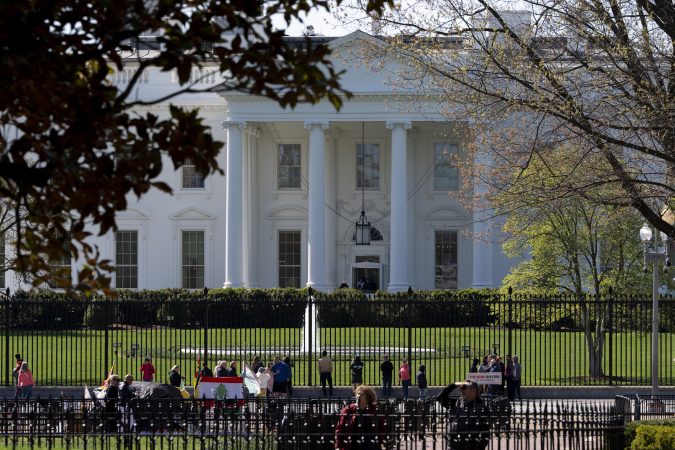
    The Trump administration plans to erect new fences on the ends of Pennsylvania Avenue NW outside the White House, the latest effort to boost presidential security, according to three people who spoke on the condition of anonymity because they were not authorized to publicly discuss the plans.

    The White House and Secret Service would be able to close the new fences, planned where Pennsylvania Avenue intersects 15th and 17th streets NW, and prevent pedestrian access in front of the White House if they determine there are security risks, the people said.

    The White House has long relied on temporary barriers, staffed by Secret Service personnel, to shut down Pennsylvania Avenue to pedestrians. Secret Service officials have previously suggested building permanent fences on Pennsylvania Avenue, but faced resistance from past administrations over the perception of restricting public access to the White House, the people said.

    Asked about the planned fencing, a White House official said that conversations about improving campus security were ongoing and that any proposed projects would go through a review process.

    The National Capital Planning Commission and the Commission of Fine Arts, a pair of federal agencies that oversee design matters related to construction projects in the capital region, have historically reviewed major changes to the White House and its grounds. That process often can stretch months or years, although the commissions — which are now led by Trump allies — have rushed several of the president’s projects.

    The Secret Service referred questions to the White House.

    The Trump administration also plans to build new permanent fencing around Lafayette Square, the public park across from the White House mansion, the Washington Post previously reported.

    Trump officials and the Secret Service have conducted additional reviews of presidential security risks after an April shooting at the White House correspondents’ dinner, the third time in less than two years that Trump found himself under the threat of gunfire.

    The stretch of Pennsylvania Avenue in front of the White House — which offers the closest view of the building for pedestrians — has long drawn visitors from around the world. The space has also been used by protesters for a wide array of political causes.

    Several organizations, such as the Smithsonian American Art Museum’s Renwick Gallery and the Milken Center for Advancing the American Dream, are also located on Pennsylvania Avenue outside the White House. Spokespeople for the Renwick Gallery and the Milken Center did not respond to questions about whether their organizations had been briefed on the planned fences and the effect on their workforce.

    Past administrations have considered a range of efforts to boost security around the White House grounds, including building more and higher fencing.

    President Bill Clinton in 1995 shut down Pennsylvania Avenue in front of the White House to cars, turning a long-standing road into a pedestrian thoroughfare.

    “It should be seen as a responsible security step necessary to preserve our freedom, not part of a long-term restriction of our freedom,” Clinton said in a radio address announcing the change.

    Officials in the early 2000s repaved the stretch of Pennsylvania Avenue and made other changes to make it more pedestrian-friendly, an effort overseen by then-first lady Laura Bush. The project also included building new security booths and bollards that remain in use today.

    Michael McGill, a former General Services Administration official who served on the commission at the time, said he was concerned that new fencing around the White House and the Secret Service’s push for security measures would lead to Pennsylvania Avenue being wrongly shut down for pedestrians.

    “This would mean that residents and tourists alike would be unable to see the White House from any reasonable distance, especially if Trump plants more trees in the Park,” McGill wrote in an email Thursday, alluding to the president’s separate plan to plant 47 trees in Lafayette Square.

    Reflecting Pool being drained again

    Elsewhere in Washington, the Associated Press reports, crews are again draining the Lincoln Memorial Reflecting Pool as Trump’s problem-plagued efforts to revamp the waterway push well past his initial goal of having it ready by July 4 to mark the nation’s 250th birthday.

    The president at first suggested his renovations would last a century. But, within weeks of the project originally reaching completion last month, the water was beset by an algae bloom and pieces of the new coating appeared to be peeling off the bottom.

    Trump has blamed the peeling on vandals, though critics allege it’s from shoddy repair work.

    Interior Secretary Doug Burgum, whose agency oversees the National Park Service, told conservative podcaster Katie Miller in an interview released earlier this week that the new round of draining was planned. He also said that the water might still contain debris from an extensive Independence Day fireworks display over the National Mall.

    “Drain the water, clean up the fireworks stuff,” Burgum told Miller, who is the wife of deputy White House chief of staff Stephen Miller. “Repair the vandalism that was done. Fill it back up again.”