Category: Wires

  • NYC sightseeing helicopter likely hit birds before its fatal plunge into Hudson River, report shows

    NYC sightseeing helicopter likely hit birds before its fatal plunge into Hudson River, report shows

    The remains of several geese were found on a New York City sightseeing helicopter that crashed into the Hudson River last year and killed 6 people, investigators said Thursday, strong suggestions that multiple bird strikes contributed to the tragedy.

    Reports from the National Transportation Safety Board were not final and do not identify a definitive cause of the crash. But they describe evidence that supports bird strikes before the helicopter plummeted into the river on April 10, 2025.

    The Federal Aviation Administration has said that helicopters are especially vulnerable to bird strikes because they fly at low altitudes. Strikes can be devastating.

    “It seems pretty clear to me that the breakup of that helicopter was precipitated by several bird strikes,” said aviation safety expert Jeff Guzzetti, a former federal crash investigator, who read the key findings. “Not just one but several — and birds of a different feather.”

    He noted damage to the aircraft’s horizontal stabilizer, a key part of the helicopter.

    “Without it, the helicopter could become very unstable and difficult to fly,” Guzzetti said.

    The victims of last year’s accident included a Siemens business executive from Spain, his family and the pilot, Seankese Johnson, 36, a U.S. Navy veteran who received his commercial license in 2023.

    Passengers Agustin Escobar, 49; his wife, Mercè Camprubí Montal, 39; and their three children, Victor, 4; Mercedes, 8; and Agustin, 10, all died.

    The crash renewed safety concerns about the popular sightseeing flights and prompted New Jersey’s governor to ask for additional restrictions on nonessential helicopter flights.

    Remains of several geese were found on the helicopter’s rotors and left horizontal stabilizer. One witness told the NTSB that just minutes before the crash a large flock of geese took flight in the area.

    “The geese were big and there were many of them. When the helicopter went bang, I immediately thought it was a bird strike,” the witness told NTSB investigators.

    The Smithsonian Institution’s Feather Identification Lab identified remains from different breeds of geese on the wreckage, including a female Canada goose, which can average nearly 8 pounds.

    Guzzetti said it’s reasonable to conclude “the pilot is not culpable here.”

    “Birds are everywhere, and pilots have limitations with their eyesight,” he said.

    The report, however, noted that a control panel switch to turn on pulsing lights to help deter birds was missing. The tour company’s former chief pilot said the light system was not mandatory during daylight rides, according to investigators.

    The NTSB has investigated 24 helicopter bird-strike crashes in the past 25 years, including three fatal ones. Helicopter pilots are encouraged to try to avoid areas where birds are known to be present and fly slower to minimize the potential damage from an impact.

    The “Miracle on the Hudson” highlighted the danger of bird strikes when a US Airways jet hit a flock of birds and lost power in both engines shortly after takeoff in 2009. Pilot Chesley “Sully” Sullenberger was hailed as a hero after he landed the powerless plane in the Hudson River and all 155 people on board were rescued.

    In last year’s crash, the helicopter took off from a downtown heliport that afternoon and flew north along the Manhattan skyline before heading south toward the Statue of Liberty. Less than 18 minutes into the flight, parts of the aircraft were seen tumbling into the water.

    Rescue boats circled the submerged aircraft within minutes of impact and recovered the bodies from the water. Later recovery crews hoisted the mangled Bell 206L-4 helicopter out of the river for investigators to examine.

    New York Helicopter Tours shut down after the crash, and the FAA issued an emergency order to ground all the company’s flights after learning it had fired its operations director minutes after he had agreed to suspend flights during the investigation.

    The FAA said at the time that it suspected the firing was retaliation for a safety decision.

  • ‘Today’ anchor Craig Melvin chases intruder from 30 Rock as show airs

    ‘Today’ anchor Craig Melvin chases intruder from 30 Rock as show airs

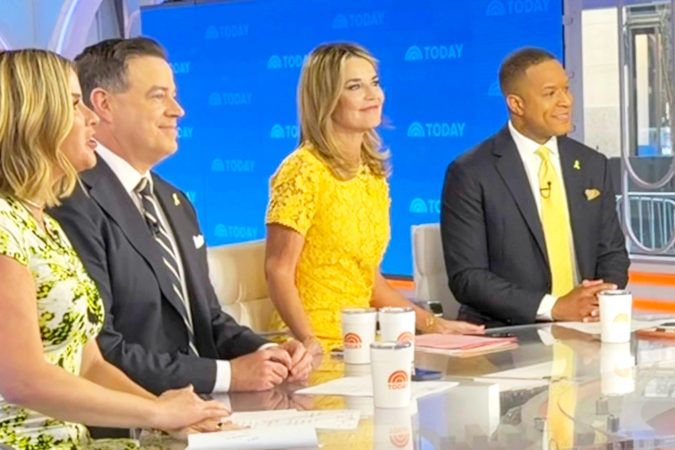
    Craig Melvin, the Today anchor, chased away a man who had sneaked past security at 30 Rockefeller Plaza in New York, where NBC is headquartered, on Thursday and managed to approach Melvin near the show’s Studio 1A, the New York Police Department said.

    Melvin, who has been with the network since 2011, alerted security, and the man was arrested by police.

    “There was no altercation, and no one was injured,” NBC said in a statement, adding, “We are reviewing the incident and our security protocols and remain committed to providing a safe and secure environment for everyone who works at and visits our studios.”

    The security breach happened right before 9 a.m., during the middle of the Today show broadcast, a department spokesperson said, when a man entered the lobby and headed through gold doors on the first floor and went upstairs. He encountered Melvin, who chased the man back through the lobby in an encounter that lasted between 8 and 10 seconds, the police said. The man was detained by Rockefeller Center, and then arrested by a police officer “without incident,” the department said.

    Officers were alerted to a “disorderly individual” inside 30 Rockefeller Plaza, the midtown Manhattan building that also includes several NBC studios, such as Studio 8H, where Saturday Night Live is filmed. Officials have not yet identified the man who was arrested.

    In an Instagram post Thursday afternoon, Melvin said he was “doing just fine” and thanked “so many of you” for reaching out after the security incident. “I’m looking forward to seeing you tomorrow morning on @todayshow.”

    Melvin has had a variety of roles since joining NBC. He first became a news anchor on “Today” in 2018, and last year was promoted to a full-time host, replacing Hoda Kotb in one of the most high-profile roles in broadcast television. He had also been a host on MSNBC.

    He recently sat down for an interview with former first lady Jill Biden about the release of her new book, during which he pressed her about former President Joe Biden’s fitness for office.

    This article originally appeared in The New York Times.

  • Trump’s teleprompter operator on unpaid leave for alleged prediction market bets on Trump speeches

    Trump’s teleprompter operator on unpaid leave for alleged prediction market bets on Trump speeches

    ATLANTA — President Donald Trump’s teleprompter operator is on unpaid leave after reports that he used his inside knowledge to make bets about the president’s speeches on the online prediction market Kalshi, the White House said Thursday.

    The firm’s enforcement chief said Kalshi contacted federal regulators about bets allegedly made about what the president would say in public addresses.

    White House press secretary Karoline Leavitt said the president is aware of the situation, which she described as “unfortunate” and “a disgrace.”

    “The White House has extremely strict ethical guidelines with respect to issues like this,” Leavitt told reporters, saying the aide is on unpaid leave.

    ABC News reported Thursday that Gabriel Perez, who has been operating Trump’s teleprompter since 2016, used his inside knowledge to win more than $100,000 betting on what the president would say in big speeches, including the State of the Union address earlier this year.

    Robert Denault, Kalshi’s lawyer and head of enforcement, said on X that the “Kalshi surveillance team promptly flagged, investigated and referred these trades” to the U.S. Commodity Futures Trading Commission that has regulatory authority over such matters.

    His statement did not name Perez.

    “We have been assisting regulators on this matter and provided all evidence that we collected, as we do with any referral,” Denault added.

    ABC based its report on multiple sources who have knowledge of the matter but spoke on condition of anonymity to discuss the details.

    The ABC report described suspicious activity on Kalshi’s “Mentions” market, in which users can place bets on what phrases and specific words might be used in public speeches. Kalshi recently began requiring users to disclose their place of employment, and the platform’s policy prohibits betting based on information that users gain because of their job.

    Attention on members of the administration profiting from the presidency has reached all the way to Trump himself.

    On Thursday, his media company announced it would charge for special high-speed access to Truth Social posts, including possibly his own affecting national security and financial markets.

    In his most recent financial disclosures, Trump reported making $1.2 billion from his crypto businesses in 2025, raking in profits while his investors suffered losses in marketplaces that Trump has sought to shield from tighter federal regulation.

    Trump got more than $500 million from his World Liberty Financial business selling new crypto products, including “governance tokens,” according to the required annual disclosure report with the Office of Government Ethics. It also showed another crypto business, CIC Digital LLC, took in more than $600 million from sales of souvenir-type “meme” coins stamped with his face. Both the tokens and the coins have plunged in value since the sales.

    The president has also profited from merchandising deals and high-dollar political and official events at his properties, significantly increasing his net worth since returning to power.

    Trump’s aides have stood by his personal and family business practices.

    “The president is abiding by all conflict-of-interest laws that are applicable to the president,” Leavitt said earlier this year. It’s “absurd for anyone to insinuate that this president is profiting off of the presidency.”

  • Blanche to meet with Epstein accusers after demand from Republican senator crucial to confirmation

    Blanche to meet with Epstein accusers after demand from Republican senator crucial to confirmation

    WASHINGTON — Acting Attorney General Todd Blanche was expected to meet Thursday with accusers of Jeffrey Epstein after a key Republican senator said it was necessary to earn his support for Blanche’s nomination to lead the Justice Department.

    Sen. Thom Tillis had indicated during Blanche’s confirmation hearing on Wednesday that he was leaning toward backing Blanche, who has been leading the department in an acting capacity since April. But after an Epstein accuser testified a day later, Tillis said he expects a meeting to occur before he’s “willing to vote out of this committee.”

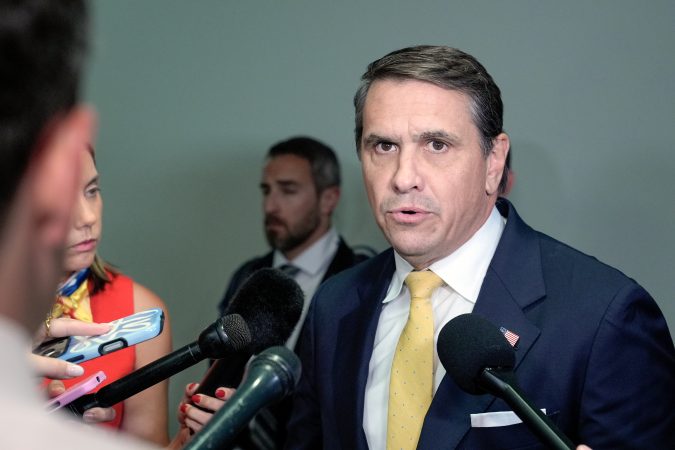
    Shortly after Tillis’ remarks, Blanche — who had been meeting with senators on Capitol Hill — told reporters he had tried to meet the Epstein accusers in a Senate office building but “it didn’t work out” and they were working to coordinate schedules. The Justice Department said later that the meeting was rescheduled for Thursday afternoon, adding: “He looks forward to their discussion.”

    “The Department of Justice will always meet with victims or their representatives, and if those victims or their representatives have evidence that anybody committed a crime — whether it has to do with Jeffrey Epstein or anybody else — we will of course move forward and investigate and prosecute,” Blanche told reporters.

    Epstein’s case and the Justice Department’s handling of millions of files related to his sex trafficking investigation have been a persistent political headache for the Trump administration.

    After missteps by then-Attorney General Pam Bondi that enraged Trump’s base, Blanche as deputy attorney general oversaw a massive review and release of millions of files related to the investigation into the disgraced financier with connections to wealthy and powerful people.

    Without Tillis’ support, Blanche’s nomination won’t make it through the Senate Judiciary Committee, which questioned Blanche for hours on Wednesday about the Epstein files as well as the creation of a fund to compensate Trump’s allies, a tax immunity deal for the president and a slew of other issues.

    Another Republican on the committee who says he has not made up his mind whether to support Blanche — Sen. John Cornyn — conveyed concerns that the Trump administration has yet to commit in writing that the fund is dead and could therefore conceivably be resurrected.

    One Epstein accuser, Dani Bensky, told lawmakers earlier Thursday that women harmed by Epstein repeatedly asked to meet with Blanche “through multiple channels and he never responded.”

    “We deserve to be heard directly, not dismissed and ignored,” Bensky said.

    Blanche has pushed back on suggestions that the Justice Department has been dismissive of the late financier’s accusers, saying Wednesday that officials have spoken with more than 30 representatives of the women over the course of its sweeping review of the files.

    Blanche has also defended the department’s staggered release of the Epstein files, a process beset by problems, including redaction errors that left exposed nude photos showing the faces of potential victims.

    Blanche said during his confirmation hearing on Wednesday that he takes responsibility for mistakes that were made, but noted that department lawyers were given a “herculean task” to quickly review millions of files for release. Blanche said department lawyers took pains to protect the women involved, and quickly fixed any errors that were found.

    “I am sorry that in about 1% of the documents mistakes were made,” Blanche said Wednesday. “But what I will say on top of that is we put tons of resources to rectifying those mistakes immediately, including pulling down documents within minutes of being informed that there were mistakes.”

    The political firestorm over the Epstein files dogged the Trump administration for much of last year, with lawmakers eventually passing a measure that compelled the release of a massive trove of documents in the government’s possession related to its investigation.

    The Justice Department began releasing the documents in late December, which included photos, call logs, grand jury testimony, and interview transcripts. The release did little to tamp down skepticism from conspiracy theorists and online sleuths, who have long pushed allegations of a government cover-up, without evidence.

  • White House faces stiff pushback on subjecting grants to political review

    White House faces stiff pushback on subjecting grants to political review

    WASHINGTON — Some of the nation’s top law enforcement officials were not pleased when the White House embarked on its push to assert more political control over more than $1 trillion in annual federal grants.

    The proposal, unveiled in May, stood to enable the administration to steer significant funding to causes and organizations aligned with President Donald Trump — and to cancel grants if recipients did not conform to his political views. That troubled a set of groups representing sheriffs, narcotics officers, and district attorneys, which said this month that the “undefined expectations” in Washington could interfere with public safety.

    The letter was one of roughly 500,000 formal comments that have flooded the Trump administration in recent weeks. Many of the posted submissions expressed misgivings with the draft White House plan to take greater control of federal spending.

    The opposition has been wide-ranging, spanning academic researchers, artists, city leaders, civil engineers, congressional lawmakers, housing experts, state attorneys general and regular Americans, who have warned that the White House could imperil public services if it subjects federal grants to political review.

    The administration proposal, which is not final, targets a vast set of federal funding for climate, education, health, housing, and infrastructure. If carried out, the regulation would require Trump’s political appointees to approve grants before they are awarded to cities, states, nonprofits, and other institutions. The review would primarily aim to ensure that the money supports purposes that “demonstrably advance the president’s policy priorities.”

    Recipients of federal funding would also be subject to broad political handcuffs. Taxpayer dollars could not “promote anti-American values,” for example, or be doled out to nonprofits that engage in some kinds of “issue advocacy” or that have certain “memberships and affiliations.” And a large set of topics would be off-limits, especially for scientists and researchers, who could face some of the most severe restrictions.

    The White House budget office has described the changes as necessary to eliminate waste, fraud and abuse, including spending that the office’s director, Russell T. Vought, deems to be “woke.” To achieve that goal, the administration has adopted an expansive view of its budgetary powers, even though Congress possesses the power of the purse under the Constitution.

    Many recipients of federal grants told the White House over the last two months that the proposed changes could be debilitating and that they cannot afford to have their aid revoked if Trump does not agree with their agenda.

    “This will put a lot of things up in the air,” said Andy Schor, mayor of Lansing, Mich., a Democrat. He added that the plan would affect “policing to housing to all the dollars we get from the feds.”

    Such interruptions have already plagued Schor’s community. The mayor recalled a series of incidents in which federal grants to the city and local nonprofits, including money to address redlining and combat violence, had been interrupted or canceled under Trump.

    Schor said the consequences could be greater if White House officials could more easily cancel a larger set of grants simply because “they suddenly decide they don’t like something.” In that case, the mayor said he would face a dilemma that could force him to choose between “staff we have to lay off or dollars we can’t get into the community for these important things that are needed.”

    A spokesperson for the Office of Management and Budget did not respond to a request for comment.

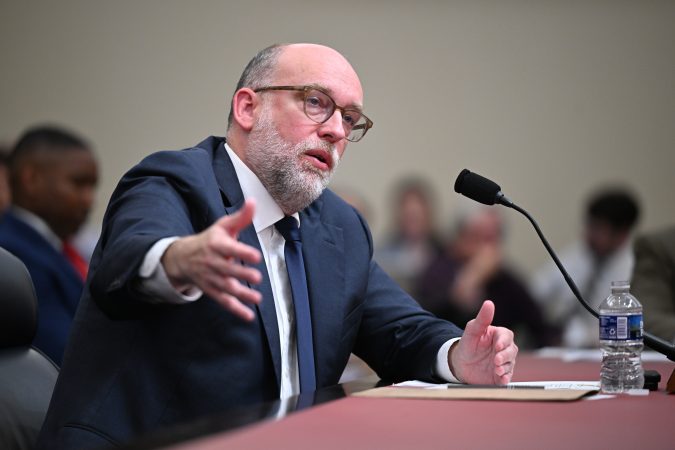
    Testifying at a Senate hearing Thursday, Vought said the proposal aimed to ensure “that we have democratic control of the spending that is going out.”

    But the stakes of his approach became clear when Sen. Tina Smith (D., Minn.) asked Vought how the administration might approach federally funded cancer research. She raised the example of a grant devoted to identifying the source of high cancer rates among Black people — and the extent to which the administration would disallow the money because of the president’s long-stated opposition to diversity, equity, and inclusion.

    Vought began by saying the White House was “against DEI policies,” adding, “How that would impact with that particular grant would be a decision for a political official, policy official, at NIH,” referring to the National Institutes of Health. He said administration appointees would “make the final decisions,” though they would take expert views into account.

    Smith said that revealed the “absurdity and the bias of this proposed rule, and the danger of what happens when you bring political ideology into grant-making processes, particularly around healthcare.”

    The proposed rules are the latest step in Trump’s contentious campaign to recalibrate how the government spends its money. With the help of Vought, the administration has fired thousands of federal workers while taking steps to hold up or cancel billions of dollars in congressionally approved aid, arguing that the spending was unnecessary or misaligned with Trump’s beliefs.

    Lawmakers from both parties sharply criticized some of Trump’s moves, and federal judges have repeatedly declared the president’s actions illegal. Yet the White House has continued pressing ahead and has taken steps to formalize some of its practices with its proposal targeting federal grants.

    The roughly 400-page blueprint, which the White House aims to put into effect in October, quickly stoked broad opposition.

    In Pennsylvania, the United Way, a network of nonprofit providers, warned that the grant rules could create “unpredictable financial and legal risks” for organizations that provide food, housing and other essential services. The group warned that those entities probably did not have the resources to comply or contest the government’s proposed restrictions.

    The Los Angeles County Department of Arts and Culture took issue with the way the administration tried to restrict the political activities of grant recipients. The agency said that approach could “chill free speech, creative expression, and activities supportive of diverse cultures and communities,” including at museums.

    The National Sheriffs’ Association and other law enforcement groups said they did not have the resources to incorporate all of the changes the White House had envisioned. A national network of civil engineers said the plan would impinge on its ability to collaborate with foreign counterparts on infrastructure research.

    And scientists, researchers and health providers expressed some of the loudest opposition. More than 300 organizations — many representing practitioners working on cancer cures, ALS and HIV treatments and pediatric medicine — urged the Trump administration to slow down because of the risks to their work and patients.

    The White House proposal reserved some of its strictest rules for academics funded by federal dollars. It aimed to limit the research they pursue, the conferences where experts can appear, and the organizations and foreign labs with which they are allowed to collaborate.

    Entire research areas would also be restricted if the rules were to take effect as drafted: Grants could not support work related to diversity, equity or inclusion, for example, or projects or groups that “deny the biological reality of sex or the sex binary in humans.”

    The strictures amounted to a major “escalation” from the president’s previous attempts to slash and control funding at agencies like the NIH and the National Science Foundation, according to Sudip S. Parikh, CEO of the American Association for the Advancement of Science, a nonprofit that promotes scientists.

    “It overemphasizes the political at the expense of scientific opportunities and the needs of the American people,” he said.

    Despite the president’s pursuit of deep cuts, Democratic and Republican lawmakers have ignored the requests and opted to keep most health and science funding intact. So the renewed push by Trump to cement his control over federally funded research enraged many Democrats, who view the proposed regulation as another encroachment of their spending powers.

    Rep. Rosa DeLauro (D., Conn.), who leads her party on the Appropriations Committee, said that the president, if successful, could undermine the idea enshrined in the Constitution that “money is directed based upon the needs of the American people, and that is transmitted through elected representatives.”

    DeLauro also joined with the 11 other House Democrats who serve in leadership positions on key appropriations committees this week to express deep reservations with the administration’s plans. The lawmakers estimated that the White House effort would affect more than $1 trillion every year.

    Democrats were not alone in airing frustration. In a separate letter last week, Sen. Susan Collins of Maine, the Republican chair of the Appropriations Committee who is facing a tough midterm election race, said the White House could imperil much-needed funding in ways that “harm small and rural communities.”

    The proposal drew support among Trump’s conservative allies. Daniel West, the government relations director for Heritage Action, said that some of the backlash had been “hyperbolic” and that he did not expect the White House budget office to retreat.

    “Everything I’ve seen indicates that OMB cares deeply about ensuring the proper stewardship of federal dollars, and they are moving this rule with that intention in mind,” West said.

    Some opponents still seemed to be readying for a legal battle. Citing the implications for education, healthcare, housing, science and other “critical services to hundreds of millions of people,” a group of governors and attorneys general from two dozen states told the White House on Monday that its proposed changes to grants would violate the Constitution. Many of the same states, including New York, California, and Colorado, have successfully fought Trump in the past over budget cuts enacted without the express permission of Congress.

    “The rule offends the Constitution,” the states argued at one point in their missive.

    This article originally appeared in The New York Times.

  • Trump administration revives rule that could deny green cards to immigrants who use public benefits

    Trump administration revives rule that could deny green cards to immigrants who use public benefits

    MIAMI — The Trump administration is reviving a rule that could deny green cards to immigrants who use public benefits that could include food stamps, Medicaid, and housing vouchers.

    The policy, known as “public charge,” appeared on Thursday in the Federal Register. It will be formally published on July 20 and take effect Sept. 18. Under the policy, applicants for green cards have to show they wouldn’t be burdens to the country or “public charges.”

    The policy was first implemented in February 2020 as one of President Donald Trump’s moves to limit legal immigration during his first administration, but it was reversed after Democratic President Joe Biden came to power.

    Its return comes when the Republican administration is implementing a hard-line policy to curb both illegal and legal immigration, and when the cost of healthcare and food is rising.

    The federal government “is reaffirming the requirement of self-reliance, protecting public resources and ending policies that encouraged dependency on the backs of hard-working American taxpayers,” U.S. Citizenship and Immigration Services said in a post published on its X account.

    “Under President Trump, USCIS is restoring the basic principle that immigrants must be able to support themselves,” the post said.

    While the administration’s crackdown on immigration has an increased focus on deportations and immigration enforcement in cities across the country and at borders and entry points, it has also taken actions that target legal immigrants and mixed-status families, in which the parents are foreign nationals with U.S.-born children.

    The rule expands disqualification options

    Federal law already requires those seeking permanent residency or legal status to demonstrate that they will not become a public charge. The Trump administration’s rule, however, broadens the grounds for disqualification.

    The new rule does not describe or specify by name the benefits and programs that could be considered a public charge. Instead, it says that officers who would implement the policy will make “individualized, fact-specific public charge inadmissible determinations, based on a totality of the alien’s circumstances.”

    It says that, “using good judgment and discretion, officers will more accurately assess an alien’s likelihood at any time of becoming a public charge.”

    The Trump administration first promoted the rule in 2018 as a way to ensure that only those who were self-sufficient came to the U.S. Immigrant rights advocates criticized it, saying it amounted to a “wealth test.” Public health experts said it would lead to worse health outcomes.

    Manatt Health, a group that provides advice to state and federal governments, estimated the policy would have deterred as many as 26 million people from seeking healthcare, food, housing, or other aid through programs for which they qualified under federal law. About half were U.S. citizens, mostly children or adults living in a mixed-status family, according to the group.

    Experts also noted that most people who receive benefits from the government are already legal residents.

    A 2020 study from the Migration Policy Institute said that while the “chilling effects” may be vast, the number of immigrants who could be deemed ineligible for legal permanent residence based on use of one of the public benefits under the rule was small.

    The institute estimated that no more than 167,000 people — less than 1% of the 22.1 million noncitizens residing in the United States at that time — could be determined ineligible for a green card based on their current use of a listed benefit.

    There were 22.8 million noncitizens living in the U.S. in 2023, according to the Census Bureau.

    Critics say the rule creates fear in the community

    Nongovernmental organizations said the policy generated confusion and fear and caused many immigrants and their U.S.-born relatives to decide not to apply for benefits and services to which they were entitled.

    Immigrant advocates condemned the government’s decision to revive the “public charge” rule and expressed concern.

    “This regulation is a direct assault on immigrant families, and a threat to our country’s health and economic security,” said Adriana Cadena, executive director at the Protecting Immigrant Families Coalition. “The Trump administration is basing immigration decisions on bias and politics, regardless of the resulting harm.”

    Sarah Krieger, senior policy counsel at the National Immigration Law Center, said the rule would make immigrants afraid to go to the doctor, buy food at the grocery store and file taxes.

    “With this new rule, they are sowing fear and chaos to ultimately reshape America into a country where only the few who are white and ultra-wealthy are welcome,” Krieger said. “The rule is not just deeply harmful, it also violates the law.”

  • FDA approves new pill to slash cholesterol levels

    FDA approves new pill to slash cholesterol levels

    The Food and Drug Administration approved a daily pill on Thursday that can lower cholesterol levels far below what can be achieved with statins, the cheap cholesterol-reducing pills.

    The drug, enlicitide, whose brand name is Lipfendra, is made by the pharmaceutical company Merck. Clinical trials have shown that it can bring levels of LDL — the dangerous type of cholesterol — down to 50 or 60 or even lower. Adults not taking cholesterol-lowering drugs usually have levels above 100. It works by inhibiting a protein known as PCSK9.

    New cholesterol guidelines issued by the American Heart Association and the American College of Cardiology say that people who have an above-average risk of heart attacks or strokes should get their LDL levels below 70. Those at high risk because, for example, they have had a heart attack, should get their LDL below 55.

    Lipfendra’s list price will be $315 for a 30-day supply, and it will be available in a few weeks, said a Merck spokesperson, Julia Cunningham.

    There are currently injectable drugs that work in the same way, but they are more expensive, with list prices of $500 to $600 a month or more. Insurers sometimes balk at paying, and some patients do not want injections. Only 1% of the 6 million eligible patients use the injected drugs. Yet a PCSK9 inhibitor can reduce the risk of heart attacks by 20% in high-risk patients.

    Cardiologists not associated with Merck applauded the FDA approval and the drug’s price. The hope is that a pill that costs less than an injectable and is easier to take will allow many more patients to get their cholesterol levels under control.

    “I’m thrilled,” said Christopher Cannon, a cardiologist at Brigham and Women’s Hospital in Boston who consults for several drug companies, but not Merck.

    “This would make a big difference compared with the cost of injectable PCSK9 inhibitors,” said David Maron, a preventive cardiologist at Stanford.

    Last November, Merck reported results from a 24-week clinical trial of Lipfendra, which involved 2,912 people. The drug lowered LDL levels by up to 60%. And there was no difference in side effects between the drug and a placebo.

    Those results are the same as what has been seen with the injectable drugs.

    In studies of the injectable drugs, blocking PCSK9 reduced the incidence of heart attacks, strokes and cardiovascular deaths 20% in high-risk people. Merck is conducting a study now to see if Lipfendra has the same effect. Dean Li, president of Merck Research Laboratories, said he is confident that it will.

    Li said the company wants to make lowering cholesterol with Lipfendra as easy and convenient as it is with a statin. Primary care doctors can prescribe it — it does not have to be limited to cardiologists. And, he said, patients are used to taking daily pills. Most who are at risk for a heart attack already take at least a blood pressure pill, a statin and an aspirin.

    It’s not clear yet whether companies making injectable PCSK9 inhibitors will lower their prices to compete.

    This article originally appeared in The New York Times.

  • Need for speed? Driving above the speed limit costs you — and doesn’t actually save much time

    Need for speed? Driving above the speed limit costs you — and doesn’t actually save much time

    Speeding in your car to work, to pick up your children from school, or go from one errand to the next not only wastes money in gas and sends harmful emissions into the air, it barely saves you time, new research says.

    It is something to think about as gas prices stay elevated throughout the summer months and add pain to day-to-day driving and seasonal road tripping.

    Instead, abiding by posted speed limits can save U.S. drivers millions of dollars at the gas pump and eliminate millions of gallons of fuel each day, according to a study published Thursday in the Nature journal Communications Sustainability. That is fuel that, when burned, emits planet-warming gases into the atmosphere. To top it all off, changing driving habits wouldn’t even add a full minute to a driver’s commute.

    University of Minnesota researchers analyzed 120 million vehicle trips across the United States from four Wednesdays in 2021 using driving data on national road networks, speed limits and U.S. Geological Survey elevation data. The analysis included roads with speed limits of 45 mph and higher.

    More than 43% of the studied trips included at least one instance of speeding, and drivers spent nearly 12% of their driving time going faster than the speed limit.

    They found that if drivers of light-duty, conventional internal combustion engine vehicles actually drove at posted speed limits, it could save an average of $22 million, based on fuel costs at the time, 6.7 million gallons of fuel, and 57,000 metric tons of carbon dioxide every day. The researchers said that is comparable to taking about 5.5 million passenger vehicles off the road.

    And while drivers say that speeding saves them precious time, researchers found that is not really the case. With an average daily driving distance of 28.6 miles, driving at or below the posted limit corresponds only to about 54 seconds longer per day.

    “If your goal is to shave one minute off your time, then you’ve got to drive fast. If your objective is to get to your destination safely and to save fuel, then you might drive slower than the speed limit,” said William Northrop, mechanical engineering professor at the University of Minnesota and study co-author.

    The research considered battery-electric vehicle efficiency only in California given the level of EV adoption in the U.S. at that time. Based on the California modeling, “We find that driving slower is beneficial for EVs as well,” he said.

    Interestingly, the study found differences among states. Nevada saw elevated speeding prevalence as well as high speed excess. There was high speeding prevalence in Florida, Georgia, and North Carolina, though those states did not necessarily exhibit high speed excess. Montana, Wyoming, Idaho, and South Dakota showed both low speeding prevalence and speed excess.

    The cost of faster driving today

    Driving faster increases a vehicle’s energy use and the emissions from its engine, as well as reduces efficiency. Vehicle engines have become increasingly more efficient over the past several decades even as vehicles have gotten bigger and more powerful. But speed limits have also climbed since the Emergency Highway Energy Conservation Act was implemented, which mandated 55 mph national speed limits amid the 1970s energy crisis.

    Accounting for the average cost of gas today and more vehicle miles traveled, that increases to roughly $26 million and 7.2 million gallons of fuel that Americans collectively could save each day this year just by not putting the pedal to the metal.

    One limitation of the research is that slower driving could impact traffic patterns, which could play a role in efficiency.

    However, it is especially timely as U.S. drivers remain price-sensitive to volatile gas prices as the war in Iran has sent the cost for a gallon of fuel above $4 this year. Experts have said there are a number of ways to improve one’s gas mileage, including something as simple as slowing down. Less fuel needing to be purchased because of better efficiency could influence oil market demand, which in turn could impact pricing.

    Rob Middleton, associate research scientist of mechanical engineering at the University of Michigan who was not involved in the research, said the study was well-done. But he also noted that the fuel saved from driving more slowly still only represents a fraction of daily gasoline consumption in the U.S., which is about 375 million gallons daily.

    “It’s a big number, but it’s a small fraction,” Middleton said. “This is a ‘freebie’ in that it doesn’t really cost anyone anything to do.”

    “The market penetration of selling EVs is still small, so we still need fuel, we still need ICE [internal combustion engine] vehicles, we’re still going to have them for a very long time,” he added. “Things that we can do to either make the new ones better or to improve our fuel supply, we need to do.”

  • How to make the beach your gym

    How to make the beach your gym

    If you’ve been to the beach with kids, you know it can become an instant playground.

    The beach can be a playground for adults, too, and allow you to move in new and different ways, which can bring fitness benefits you can’t usually get in a gym. The soft sand, wide-open spaces and splashing waves all lend themselves to movement, even when the sun is blazing.

    When you’re navigating seashells and seagulls, “you have to be a little bit more playful, and really present,” said Erin Sampson, a yoga instructor who trains aspiring teachers in Costa Rica and Colorado.

    Compared with exercising on a hard, even surface indoors or even at a park, exercising on sand works your muscles differently, helping to build lower-body strength and improve stability and balance, said Josh Goldman, a sports medicine specialist and team physician for UCLA Athletics.

    And moving in nature and environments that inspire awe can reduce stress and may even lower blood pressure.

    We asked coaches and experts in exercise science how to get the most out of moving on the sand.

    Beach workouts can be short

    The environment may be serene, but exercising on the beach will most likely feel hard: Because sand is less stable than a gym floor or even a trail, your body has to exert more force and energy to walk, run or jump compared with working out on firmer ground, Goldman said.

    Your feet, ankles, hip, and core muscles also have to work harder to provide stability and balance during both propulsive workouts and body-weight exercises like yoga.

    While exercising on sand puts less impact on your joints, the softer the surface, the more challenging any movement becomes, he said. In response, your cardiovascular system will have to work harder to power the same exercise than it would on a firmer and more even surface.

    Soccer and running coaches with access to beaches often have their athletes practice on sand precisely because it is harder, Goldman said.

    But don’t let this scare you: These extra demands on your body mean that you can get a great workout in less time, said Heather Jeffcoat, a physical therapist in Los Angeles. If you can perform well on sand, competing on firmer surfaces may feel like a breeze.

    If you usually work out at the gym or on firmer surfaces, Jeffcoat recommended starting by doing roughly 25 to 30% of what you would typically do when exercising on the beach, to avoid injury and overexertion. For example, if you typically run 3 miles, run about a mile and see how you feel the next day. She also recommended starting on the firmest part of the shoreline, close to the water.

    A similar principle applies to yoga and body-weight training: Easing into these exercises and even starting with less challenging versions of movements you typically do inside can help build the strength and mind-body connection to reap the most benefits. So if you typically do 15 pushups, aim for about five on sand.

    If you have regular access to a beach, you can gradually increase the duration and intensity of your beach workouts as your body adapts, she said.

    Moving in nature and environments that inspire awe can reduce stress and may even lower blood pressure.Amanda Friedman

    They can build mental resilience

    When you take a workout out of the gym and onto the beach, you are opening it up to many more unknowns. There’s the heat and humidity that come with any outdoor workout, but also the possibility of sand on your legs, wildlife and, if you’re on vacation, new terrain.

    It’s not clean or controlled, but that’s the point, Sampson said. The challenge becomes staying focused despite the distractions, and adapting as the ground literally shifts beneath you.

    “It’s the ultimate physical metaphor,” she said, adding that learning to move through obstacles like these can build mental toughness.

    Sand socks can help to protect your feet from heat.Amanda Friedman

    They require a few precautions

    Of course, with all of these additional challenges, you’ll get the most from a beach workout if you come prepared, the experts said.

    Before exercising on the beach, think about your footwear, Jeffcoat said. Walking, running or jumping barefoot can help strengthen your feet and contribute to ankle and leg stability. Sand socks, which beach volleyball players and other athletes sometimes wear while training, can help to protect your feet from heat.

    But if you typically wear orthotics or very supportive shoes while training, doing the same activity barefoot could put you at risk for injury. Jeffcoat recommended starting in sneakers and potentially testing out short bouts of barefoot movement to build strength and stability.

    You should also hydrate before, during and after exercising on the beach, rather than relying on when you feel thirsty, said Cedric Bryant, an exercise physiologist and CEO of American Council on Exercise. You will be exposed to direct sunlight on the beach, along with heat reflected off the sand and water, even on cloudy days, he said, which can put you at risk for overheating and dehydration.

    For all of these reasons, the experts recommended wearing sunscreen, a hat, sunglasses, and moisture-wicking clothing. Sampson typically tells her yoga students to wear close-fitting clothing. “The tighter your clothes are, the less sand you’re gonna have going down or up or around them,” she said.

    A swimsuit also works: When you’re done exercising, you can run into the ocean for an all-natural cold plunge.

    This article originally appeared in The New York Times.

  • House vote exposes Democrats’ widening divide over Israel

    House vote exposes Democrats’ widening divide over Israel

    A striking number of House Democrats — 103 — voted Wednesday to cut off military aid to Israel for the next fiscal year, in a sign of the growing disconnect between the Democratic leadership’s long-standing support for the Jewish state and the party’s left wing.

    The vote was on a largely symbolic amendment introduced by Rep. Thomas Massie (R., Ky.) to an appropriations package for the State Department and other national security agencies.

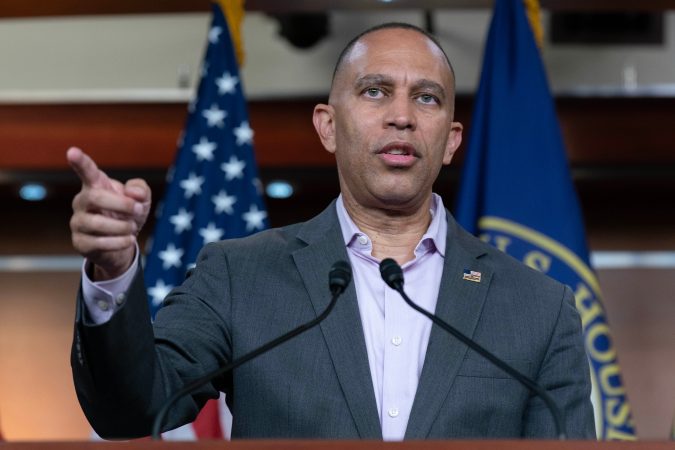
    Despite the considerable Democratic support, the amendment failed in the House. House Minority Leader Hakeem Jeffries (D., N.Y.) voted against it. Massie was the only Republican to vote for the amendment. Ten Democrats voted present.

    Still, the large support for the amendment comes amid a sharp shift among Democratic voters on Israel. A number of Democrats who have voiced support for Israel voted for the amendment, including former House Speaker Nancy Pelosi (D., Calif.) and Katherine Clark (D., Mass.), the minority whip.

    In a statement, Clark — the No. 2 House Democrat — said, “the status quo is not tenable.”

    She added: “We should not provide a blank check for military aid to any country that does not comply with U.S. law, interests, and values. The Netanyahu government has failed to meet that standard.”

    Public support for Israel has plummeted over the country’s military campaigns in Gaza and Lebanon, particularly among Democrats. Nearly three-quarters of Democrats want to reduce or end military support for Israel, according to a Washington Post-Ipsos poll conducted July 8-13. Forty percent of Democrats want to eliminate military support to Israel entirely, including 58% of “very liberal” Democrats.

    Views have shifted dramatically in recent years. Shortly after the Oct. 7, 2023, Hamas attacks on Israel, 28% of Democratic registered voters felt the U.S. was too supportive of Israel, according to polling by Quinnipiac University. That rose to 41% by early 2024 and to 66% last month, including clear majorities of older and younger Democrats.

    Rahm Emanuel, a potential Democratic presidential candidate and former top adviser to Presidents Bill Clinton and Barack Obama, recently traveled to Tel Aviv to warn Israelis that Prime Minister Benjamin Netanyahu had led the country toward dangerous diplomatic isolation.

    Emanuel said U.S. support for Israel was “plummeting around the world” and argued that the United States should end “the American taxpayer’s subsidy of Israel’s defense budget.”

    Jeffries has resisted calls from the base to end all aid to Israel’s government, balancing the priorities of his Democratic members who have stood by the U.S.-Israel relationship. He wrote in a Monday letter to his fellow Democrats that he would be voting against the measure, saying it is too broad.

    But Jeffries said “given the strongly held views throughout the Caucus,” he would let members vote their conscience on the measure.

    A progressive campaign push

    Progressive candidates have cast the divide as evidence that the Democratic establishment is misaligned with its own voters — not only on the war in Gaza, but also on money in politics and the use of U.S. tax dollars abroad.

    “The Democratic Party has been out of step with its own base on Gaza and Palestinian human rights for years. People in this country can’t afford rent, groceries, or a doctor’s visit — and instead of fighting for them, our politicians are sending billions to fund a genocide,” said Darializa Avila Chevalier, a democratic socialist candidate who won a competitive New York primary last month.

    The strategy has had several notable successes.

    In New York, three vocal leftist critics of Israel including Avila Chevalier handily won their primaries, including one in which support for Israel became a central distinction with the moderate incumbent. Candidates making similar arguments also won primaries in Pennsylvania, New Jersey, and Colorado.

    The trend continues in competitive primary races this summer, including in Michigan’s highly watched Senate race where criticism of Israel forms a pillar to progressive candidate Abdul El-Sayed’s message.

    In a statement for this story, Jeffries said the party “must recommit to a two-state solution that prioritizes a safe and secure Israel as a Jewish and Democratic state living side by side in peace and prosperity with a Palestinian state that provides dignity, respect, and self-determination for the Palestinian people.”

    He continued, “It is also imperative that we support the complete reconstruction of Gaza, aggressively surge humanitarian aid to Palestinian civilians and strongly oppose the reprehensible conduct of the far-right Netanyahu government in the West Bank.”

    He added in his letter to fellow Democrats that Israel has reached a point where it should be able to pay for its own defense and that the U.S. should reassess future aid agreements with the country.

    The call for a reset was a significant move for the leader given his past firm support for the U.S.-Israel alliance, said Jeremy Ben-Ami, president and CEO of the liberal pro-Israel group J Street.

    But several progressives have still demanded a stronger stance on the issue than Jeffries’s attempts to balance the positions of the caucus.

    “The Democratic voting base and the American voting base have shifted here,” said Brad Lander, who won a competitive New York primary against Rep. Dan Goldman, a longtime supporter of Israel. “I do believe that the Democratic Party leadership is going to have to catch up.” Lander, like Goldman, is Jewish and supports a two-state solution but differed from Goldman in labeling Israel’s actions in Gaza a genocide.

    The American Israel Public Affairs Committee, the preeminent pro-Israel lobbying group, has become a particular target on the left, held up as an example of what progressives call the corrupting influence of money in politics. Progressive candidates regularly criticize moderate candidates who benefit from spending by AIPAC-affiliated groups, asserting the group’s campaign funding pushes candidates away from the party base’s stance on Israel. AIPAC’s political network supports pro-Israel Democrats and Republicans, including all of the top members of House Democratic leadership.

    El-Sayed has accused his opponent, Rep. Haley Stevens, of failing to adequately condemn the actions of the Israeli government because of what he says is the influence of the pro-Israel lobby. A super PAC affiliated with AIPAC has poured more than $20 million into boosting Stevens.

    “Her entire campaign is bankrolled by outside organizations who know that they’re going to buy a reliable vote to send our tax dollars elsewhere instead of solving actual problems here in Michigan,” El-Sayed said.

    On Wednesday, Stevens voted against the House amendment.

    Stevens is a longtime supporter of Israel, though she has also criticized the government’s handling of the war in Gaza and said Israel’s actions have made Jews around the world less safe. During a debate this month, she said she was the only candidate who truly advocated for the creation of a Palestinian state alongside Israel.

    Stevens’ campaign responded that El-Sayed was “peddling in conspiracy theories” by asserting she was working at the behest of AIPAC.

    “Haley has always believed this race is about the future of Michigan, and that’s why her focus is and has been on promoting policies that will reduce costs, grow the economy and create a strong 21st century manufacturing industry that will carry Michigan forward,” her campaign said in a statement.

    Patrick Dorton, a spokesperson for AIPAC’s super PAC, said the group has the right to partake in the primary process like any other interest group and noted that super PACs have also been spending heavily to back candidates opposed to the U.S.-Israel relationship.

    “The anti-Israel fringe left uses the dark money argument when it suits them and funds super PACs when it’s to their advantage,” Dorton said. “These are red herring arguments to drive pro-Israel Democrats out of the party and out of the primary process.”

    Deryn Sousa, a spokesperson for AIPAC, said that the organization’s membership crosses party lines and the group supports candidates based on their alignment with its support for the U.S.-Israel relationship. Hundreds of AIPAC-backed candidates have won their primaries this year, Sousa noted.

    Democrats for Israel

    Israel still has its ardent defenders among congressional Democrats, several of whom argue that the growing number of vocal Israel critics fails to grasp the reality on the ground.

    “War is terrible, and it’s very hard to be successful in an urban war and successful in the public relations war,” said Rep. Brad Sherman (D., Calif.), a longtime supporter of Israel and co-chair of the Israel Allies Caucus.

    Sherman said he and most other Democrats have been able to criticize the government of Israel without going after the U.S.-Israel relationship, one of the strongest partnerships in the Middle East. He warned that some of the criticism has amounted to demonization and antisemitism.

    And even among the progressive candidates criticizing the party’s stance toward Israel, there is disagreement on the future of the relationship with Jerusalem. While Lander identifies himself as a Zionist, El-Sayed said liberal democracy was incompatible with the idea of a Jewish state.

    The next House Democratic Caucus is likely to include an unusually large number of members openly critical of Israel. Still, foundational disagreements over Israel are nothing new to the caucus.

    Sherman recalled a pushback on similar criticisms against Israel in the 1980s, when the country invaded Lebanon, though he noted the resistance to Israel is greater now among Democrats than then. He was a founding leader at the time of Democrats for Israel, a grassroots group dedicated to rooting out anti-Israel sentiment in the party.

    Avila Chevalier said she would work with anyone “serious about lowering the cost of living working-class people” regardless of their stances on Israel.

    Rep. Bradley Schneider (D., Ill.), a moderate who is largely supportive of the U.S.-Israel relationship, noted Israel critics already serve in the Democratic Caucus and that he is still able to work with them on other issues, including healthcare, housing and education.

    “Democrats are a big tent,” Schneider said. “We welcome diverse opinions.”