Category: Wires

  • A $3.2 trillion dealmaking frenzy is spurred by the AI economy

    A $3.2 trillion dealmaking frenzy is spurred by the AI economy

    An ebullient stock market, huge bets on artificial intelligence, and an open regulatory environment have fueled one of the biggest six-month booms in dealmaking in years.

    Through the end of June, there were about $3.2 trillion in global deals, a 45% jump from a year earlier, according to Dealogic, a data provider. That was the most spent on dealmaking over a half-year period in at least a decade.

    The frenzy heavily favored large companies, with 44 deals announced that were larger than $10 billion, including takeovers and large-scale fundraising in the private markets. Those blockbusters pushed the overall value of deals higher even though the total number of transactions fell about 1% from last year, as companies with less financial firepower or those more vulnerable to geopolitical uncertainties stayed on the sidelines.

    Executives of many large companies, however, have brushed aside the uncertainties posed by tariffs and the war in the Middle East to pursue takeovers that are more likely to be approved by regulators under the Trump administration than they were during previous administrations.

    Many companies “perceive they have a window in which to attempt to affect something transformational, and now is really the time to try to do it,” Matt McClure, a global co-head of investment banking at Goldman Sachs, said in an interview.

    Bankers insist this time is different from previous booms, such as the record-low-interest era of the COVID-19 pandemic, the leveraged buyouts of 2007, and the dot-com bubble in the 1990s.

    The companies driving this year’s dealmaking surge are among the world’s largest and best-funded, and many of them are aiming to transform their business by doing big mergers, rather than making smaller acquisitions.

    Some of this activity is propelled by a need to simply keep pace in an economy dominated by only a handful of giant corporations. Consider that companies need to be about twice as large to enter the S&P 500 as they did five years ago. Exxon Mobil, once the most valuable company in the United States, is about one-eighth the size of the largest of the so-called Magnificent Seven technology companies.

    “The definition of scale keeps moving, so companies need to be bigger and bigger, and big companies need to do bigger and bigger deals to have an impact,” said Ben Wilson, a co-head of North America mergers and acquisitions at J.P. Morgan.

    NextEra’s $118 billion deal for Dominion Energy, which was announced in May, would create a utility giant aimed at supplying the increasing amounts of electricity needed to power artificial intelligence. SpaceX’s $60 billion acquisition last month of Cursor, a start-up that makes code-writing software, is aimed at helping Elon Musk’s rocket company build its AI models.

    Typically, companies are reluctant to take on big deals in times of turmoil. Disruptions in oil supplies because of the war with Iran and the White House’s open hostility toward America’s biggest trading partners in Europe show no signs of abating. Questions also persist around the AI build-out, such as the costs for computer chips, supply constraints and potential delays on when these AI companies might reap profits.

    “What makes the current boom a little counterintuitive is it appears to be associated with maybe not unprecedented, but top-quartile-level uncertainty and volatility,’’ said Jonathan Knee, a Columbia Business School professor and senior adviser at the investment bank Evercore.

    The deal activity has been a boon for banks, too, with details likely to emerge when they announce earnings next week. Bank of America expects its investment banking revenue in the latest quarter to be up 28% from a year earlier, while JPMorgan Chase expects a 10% increase, according to a research note from Jefferies.

    Not every company has joined the party. In all, 21,727 deals were announced this year, down slightly from 21,997 at this point last year. Some of that decline can be attributed to the challenges facing private equity. Companies owned by private equity firms made up 24% of the overall deal value, according to Dealogic, down from about 34% in 2024 through 2025. Many of these firms are grappling with the uncertain values of the software companies they acquired before AI posed a threat to them, making them difficult to sell.

    “So far this year, it’s just not been quite at the pace the market originally anticipated,” McClure said.

    Initial public offerings during the first half of the year were dominated by larger companies bent on powering the race for AI and those in defense technology.

    Madison Air Solutions, a cooling company that serves data centers, raised $2.23 billion in an IPO, and Cerebras, a Silicon Valley maker of AI chips, raised $5.55 billion. And, of course, SpaceX raised more than $75 billion, in the largest-ever initial public offering.

    These offerings helped boost the value of IPOs in the United States to $155 billion, the most since 2021, when a flurry of so-called blank check vehicles stampeded into public markets.

    Bankers say the door for other offerings related to AI remain open. SK Hynix, a South Korean memory chipmaker, is set to raise $28 billion in a U.S. listing this week.

    But the first weeks of trading for SpaceX shares have been volatile. With its IPO price of $135 a share, it opened at $150 in its first minutes of trading June 12. It closed just above $135 on Wednesday, and was trading at less than $133 on Thursday.

    Questions about whether demand will ultimately justify enormous spending on AI continue to swirl over the markets, along with other uncertainties including the war in the Middle East and inflation. Shares of the Magnificent Seven helped lead the S&P 500 through its best second quarter in six years, even as shares of those companies fell roughly 9% in June.

    Still, Kennedy said, “I do think the AI theme will continue to drive activity through the end of the year.”

    This article originally appeared in the New York Times.
  • Bath & Body Works is on a quest for another billion-dollar scent

    Bath & Body Works is on a quest for another billion-dollar scent

    NEW ALBANY, Ohio — In a brightly lit Manhattan office above a fragrance laboratory, Mary Testa-Gough brought a white strip of paper to her nose and inhaled. Two perfumers’ assistants awaited her verdict, as if the fate of a multibillion-dollar olfactory empire depended on it.

    “Smoky,” Testa-Gough said. “Mossy. Woody. But it feels unfinished.”

    As the chief “nose” for Bath & Body Works, Testa-Gough is in charge of finding the next Japanese Cherry Blossom. That single scent has generated more than $1.5 billion in sales over the last 20 years, filling millions of homes with the aroma of Asian pear, white jasmine, and basmati rice.

    The Japanese Cherry Blossom scent has generated $1.5 billion for Bath & Body Works over the last 20 years.VINCENT TULLO

    The fragrance — which emanates from candles, air fresheners, lotions, and body mists — has been a bestseller since it debuted in 2006. It’s so popular that the retailer celebrated its 20th anniversary with an ad campaign and new packaging this past spring as part of a broader expansion strategy to help bring in new customers.

    Sales at Bath & Body Works slipped to $7.3 billion last year from a pandemic-era peak of $7.8 billion, pushed down by competitors marketing on TikTok and consumers increasingly suspicious of chemicals in fragrances.

    To fight back, CEO Daniel Heaf unveiled a plan in November that included marketing “iconic” fragrances online as stand-alone brands and offering products on Amazon. Bath & Body Works will also begin selling some of its products at hundreds of Ulta Beauty stores this month.

    They’re coming out with new products. Testa-Gough has high hopes for Watermelon Whirl and Tangerine Twirl — which are among the scents being released this week in a new product line promoted by actress and singer Hilary Duff.

    Nobody knows for sure why some scents become classics, while others fall into the discount bin. Despite all the money spent on marketing and focus group testing, some scents still fall flat while others invoke such intense loyalty that customers rant on social media when they can’t find them in a store.

    That’s why the company has invested millions of dollars in being able to quickly manufacture and distribute more candles, lotions, air fresheners, and body mists when customers fall in love with a particular scent. In 2011, for instance, Bath & Body Works stopped buying plastic bottles from China and began sourcing from Axium Packaging, a plastics container manufacturer that built a factory near the Bath & Body Works headquarters in New Albany, Ohio.

    Kdc/one, the contract manufacturer that mixes fragrances into foaming soaps, lotions, and gels, also built a plant there, helping to cut the time to market for some products to weeks from months.

    “It was a massive unlock to be more responsive to what the customers are buying in the store,” said Nicholas Whitley, Kdc/one’s CEO.

    The birth of ‘Beauty Park’

    Since 2008, Bath & Body Works has consolidated its number of strategic suppliers to about 50 from hundreds. It offered long-term contracts to vendors who agreed to build factories in New Albany, creating an industry cluster that is now known as Beauty Park.

    “Fifty-percent of our whole supply chain came from China” in 2008, recalled Toby Thunberg, who handled supply chain logistics for Bath & Body Works at the time and now works for Axium, the bottle maker. Today, 85% of the supply chain for Bath & Body Works hails from North America, according to Susanna Zhu, chief procurement and supply chain executive at Bath & Body Works; of that, 55% is in Beauty Park.

    Beauty Park was the brainchild of retail mogul Les Wexner, founder of L Brands, which owned Bath & Body Works, Victoria’s Secret, and Abercrombie & Fitch. Wexner said in 2007 that the global supply chain for the fragrance business was too cumbersome, according to Thunberg. At the time, the company searched for inexpensive plastic bottles from China. They had to be ordered months in advance, making it impossible to quickly restock best-selling scents, he said.

    Inspired by an apparel hub in India where Victoria’s Secret suppliers turned around underwear orders quickly because they were all clustered in the same area, Wexner envisioned factories surrounding the company’s headquarters in New Albany, where he owned vast tracts of land.

    It was a radical pitch. The proposed site was a pig farm 17 miles from the nearest railway, leaving his own staff and vendors deeply skeptical. Wexner flew his team and key suppliers to India to witness the hyper-efficient ecosystem firsthand, Thunberg recalled.

    Today, the tightly integrated hub allows Bath & Body Works and its core suppliers to work together more closely — shrinking lead times to weeks, from months. During the pandemic, the company was able to quickly pivot to making hand sanitizer and experienced its best year on record.

    Today, Bath & Body Works and its core suppliers have an almost familial relationship, even though the companies also make products for other customers.

    “They are an extension of ourselves,” said Stephen Smith, a supply chain senior executive at Bath & Body Works.

    Those informal bonds make it easier to create new products together, according to Alan Malter, associate professor at the University of Illinois Chicago, who has studied the impact of industry clusters on innovation.

    “If you are just going to have a contract manufacturer in the cheapest place you can find, you will probably be innovating less with them,” he said. “It will be more of a relationship where you are giving them instruction, and say ‘Make this.’ It is less of a partnership.”

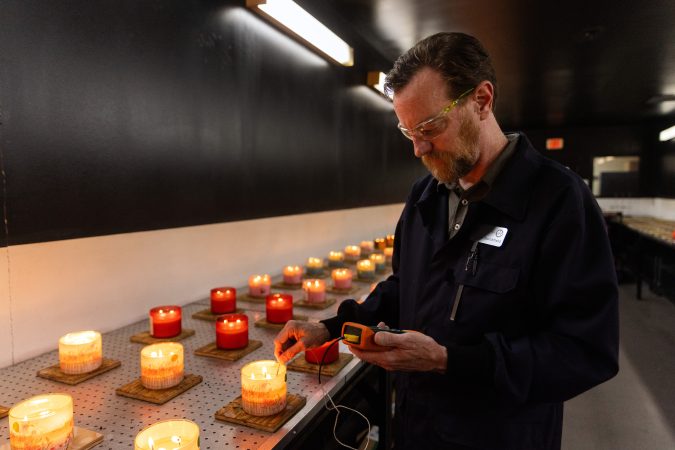
    One afternoon this spring, Zhu popped into Alene Candles, a key supplier in Beauty Park that pioneered the three-wick candle with Bath & Body Works. She chatted briefly with technicians in the burn lab who measure the soot content and height of flame from candles in every batch.

    Then she stopped by the laboratory at Kdc/one and thanked the technicians who helped develop a daily moisturizing hand soap that had been flying off the shelves.

    She wanted to know if they were working on anything new.

    How a fragrance is born

    The search for a new iconic fragrance begins in New York, where master perfumers at major fragrance houses, like DSM-Firmenich, compete to get on the shelves at Bath & Body Works by crafting new aromas based on themes that Zhu brings them.

    They create dozens, if not hundreds, of different scents — inspired by ideas like Mother’s Day or the joy of spring. They fine-tune them, based on feedback from Testa-Gough (the “nose”). Later in the process, focus groups are paid to smell them as well.

    Mary Testa-Gough (right) the chief “nose” for Bath & Body Works, tests a fragrance at DSM-Firmenich, a major fragrance house, in New York on April 20, 2026.VINCENT TULLO

    In the past, fragrances were made by boiling spices for hours or pressing oils out of flower petals. Today, the process is often more high-tech.

    For instance, to create the Milk Bar Birthday Cake collection, molecules were collected from the steam of a freshly baked cake at the popular New York bakery chain, then analyzed and recreated in a lab.

    With the Japanese Cherry Blossom, whose real petals hardly have a scent, the fragrance was more of a perfumer’s fantasy.

    Harry Fremont, a master perfumer at DSM-Firmenich who is best known for creating Calvin Klein’s CK One, designed a cherry blossom-inspired scent in 2006 for Bath & Body Works. Camille McDonald, the creative force behind Bath & Body Works at the time, asked him to make it more complex, so it would appeal not just to mall-loving teenage girls but also their mothers.

    “She said, ‘I want to make something different with it to elevate the brand, to make it more sophisticated,” said Fremont, who is now retired. “She said, ‘I want to make our Shalimar,’” a reference to the famous perfume created by Jacques Guerlain in 1925.

    Fremont added sandalwood, musk, and molecules that smell like basmati rice when it cooks. “Maybe it’s a bit too sophisticated,” McDonald told him after a round of focus group tests. He added back top notes of apple and pear, and it became the company’s top-selling fragrance of all time.

    This article originally appeared in the New York Times.

  • U.S. cancels automatic protections for imperiled animals as critics warn of extinctions

    U.S. cancels automatic protections for imperiled animals as critics warn of extinctions

    BILLINGS, Mont. — The U.S. Interior Department on Friday canceled a rule meant to protect plants and animals that are determined to be threatened with extinction, the latest step by President Donald Trump’s administration to dismantle key provisions of the landmark Endangered Species Act at the behest of industry.

    Instead of receiving automatic protections, imperiled species will need individualized protection plans once they are added to the threatened species list. That’s a potentially lengthy process in which companies could seek exemptions for oil and gas drilling, mining, and other development where those species live.

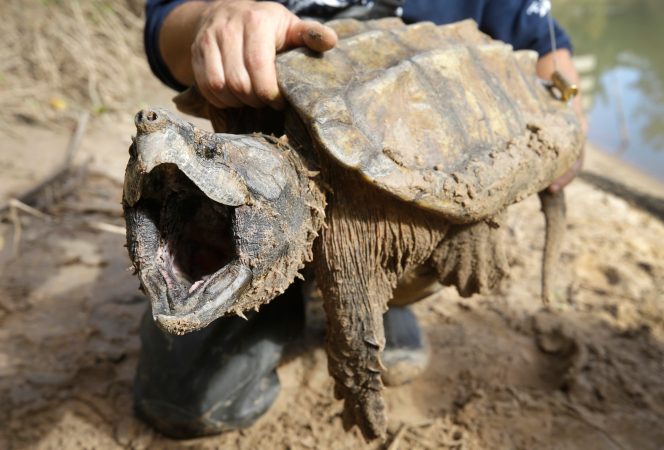
    Opponents said it would make it harder to save wildlife that’s awaiting federal protections and in danger of disappearing, such as monarch butterflies and alligator snapping turtles.

    Interior Secretary Doug Burgum said in a statement that the Endangered Species Act had been used for too long “to stop almost any new project in America, driving up costs for families, weakening our competitiveness, and undermining our national security.”

    “Success should be measured by species recovery and delisting, not by adding more species to the list,” Burgum added.

    A second change finalized Friday requires officials to analyze economic impacts when deciding whether habitat is critical to a species’ survival. Critics say it gives corporations an opportunity to put their thumb on the scale so that officials will allow development in those areas.

    “If you’re exempting certain industries that cause habitat destruction, in many instances you’ll be exempting the main threat to those species,” said Noah Greenwald with the environmental group Center for Biological Diversity.

    Officials made similar changes during Trump’s first term but they were reversed under former Democratic President Joe Biden.

    The rules that gave what some consider “blanket protections” to threatened species were first adopted for wildlife in 1975 and for plants in 1977.

    There have been no species added to the endangered or threatened lists in Trump’s second term. By comparison, more than 20 species were added in Trump’s first term, and about 60 during Biden’s presidency.

    About 30 species are currently proposed to be listed as threatened. Besides monarchs and alligator snapping turtles, they include California spotted owls and various snakes, fish, clams, and insects.

    Changes to government policies for endangered plants and wildlife have come faster and extended further in Trump’s second term than in his first.

    The administration in March exempted oil and gas drilling in the Gulf of Mexico from the Endangered Species Act after Defense Secretary Pete Hegseth said environmentalists’ lawsuits threatened to hobble domestic energy supplies as the U.S. wages war against Iran.

    Last week, Interior officials sharply narrowed the definition of what constitutes “harm” to a species. The change would allow development on critical wildlife habitat so long as the animals themselves are not immediately killed or injured.

    This week officials sharply reduced the amount of critical habitat in the U.S. Rocky Mountains designated for Canada lynx, forest dwelling wildcats that are threatened by climate change and other pressures.

    Also this week, Burgum said in a visit to Montana that the U.S. Fish and Wildlife Service would turn over more management authority for grizzly bears to states where the bruins live. That’s been a longstanding priority for the Republican governors of Wyoming, Idaho, and Montana.

    The Endangered Species Act is credited with bringing back iconic animals including the bald eagle and American alligator from the brink of extinction.

    Burgum noted Friday that 97% of the species that have been given protections still have them. That’s a frustration for Republican lawmakers who say species should be taken off the endangered and threatened lists more quickly once they’ve recovered.

  • Paying for early access to Trump’s Truth Social could raise big money — and major ethical issues

    Paying for early access to Trump’s Truth Social could raise big money — and major ethical issues

    NEW YORK — America’s first billionaire president may soon be profiting from a new line of business tied to his office: charging access for a first peek at certain posts on his Truth Social platform.

    Donald Trump’s struggling media company plans to sell Wall Street traders the chance to see posts from “highest-ranking” accounts — including possibly his own — milliseconds before others.

    That could mean big money for them, and Trump.

    Trump’s posts are often important enough to rattle financial markets, sending prices soaring and plunging within seconds. Until this moment, presidential policy announcements were considered a sort of public property that should be free and available to all at the same time.

    The president has the most followers on Truth Social — 12.9 million — so presumably will be included in the mix of high-ranking accounts.

    Truth Social’s public parent, Trump Media & Technology, did not respond to emailed questions, including whether Trump’s posts will be excluded from the offering, but the planned service is attracting plenty of attention — and not just from traders.

    “It’s odious, selling access to highest bidders on Wall Street,” said Dylan Hedler-Gaudette, an expert on federal ethic rules at watchdog Project on Government Oversight. “Everything he says has market implications.”

    How the new business hopes to make money

    Called Truth PSI, the service announced in a short news release Thursday would allow Wall Street trading firms and institutions to see certain posts earlier than other users so they could profit off subsequent moves in stocks, bonds, and interest rates.

    The Trump Media release did not give any sense of the size of the new business but quotes CEO Kevin McGurn as saying he expects it to become a “meaningful” source of revenue as part of a strategy to ”monetize proprietary assets.” The company added that it expects to launch the service next month.

    The customers that Truth Social is targeting are high frequency traders who jump ahead of others in reacting to news to buy and sell bonds and other financial instruments. And a few thousands of a second often spells the difference between profits and losses.

    Trump posts are big news, and big moneymakers

    When Trump announced his sweeping tariffs on April 2 last year, it was major political and financial news — and many found out first on Truth Social.

    “It’s Liberation Day in America,” Trump posted hours before a formal Rose Garden announcement, sending stocks plunging nearly 5% over the next few hours. Safe haven investments like gold and Treasury bonds soared.

    A few days later, Trump reversed course by suspending the tariffs for 90 days with an announcement again on Truth Social, writing, “THIS IS A GREAT TIME TO BUY!!!”

    Stocks soared 9.5% that day, adding $4 trillion to investor wealth as measured by the S&P 500 index.

    “It’s yet more brazen corruption,” said Kathleen Clark of Washington University School of Law and an expert in government ethics rules. “Trump can line his pockets by selling access.”

    His Iran war posts are must reading for oil traders

    Trump has announced major decisions and musings about other topics, including staff changes, immigration crackdowns, and matters of war and peace in Ukraine and Iran.

    “THE CEASEFIRE IS NOW IN EFFECT. PLEASE DO NOT VIOLATE IT!” he posted on June 24 last year about a short-lived Iran deal, sending oil prices plunging instantly.

    No other social media platform has such access to the president, and presumably banks and traders will have to pay up for it.

    Trump Media did not state in its release how much it plans to charge but said it has already signed up customers.

    The law doesn’t bar Trump from doing this

    The service is similar to others at rival social media firms but with a key difference: It’s the president posting. But there appears to be nothing to stop Trump from doing this, at least legally.

    Conflict of interest laws would bar U.S. government officials from owning a company that profits off their office by selling access to their decisions through public posts, says Washington University’s Clark. But the president and vice president, she notes, are excluded from the provision.

    Despite that, all presidents since the law was passed decades ago have acted as if it applied — selling individual stocks, dumping business holdings, or putting their financial assets in a blind trust so they wouldn’t know what was being bought and sold on their behalf while they wielded power — but Trump has refused.

    No response from the White House, or his businesses

    The White House referred questions, including those about the president profiting off its office, to the company that owns Truth Social. Several messages sent to that company, Trump Media & Technology, have not been returned. And Trump’s own family company, the Trump Organization, declined to comment.

    Trump himself has repeatedly denied that there any conflicts between his obligation to act in the public interest and the opportunity to make money off the presidency.

    The White House has previously said Trump only does what is good for the country and is not involved in his family business.

    Trump Media needs the help

    The new service is the latest in a series of moves to try to revive the fortunes of Trump Media, whose stock has plunged more than 70% since the president took office last year

    The company has been diversifying into various businesses — crypto, financial services, and nuclear fusion — but all to no avail.

    It recently replaced its longtime CEO, former U.S. Rep. Devin Nunes, with McGurn — but the stock kept sinking anyway.

    The stock rose 0.6% on the news Thursday, and up by half that amount the next day at $9.66. Before Trump took office last year, it closed at $40.

  • Man charged with hate crimes after confrontation with ‘Today’ show’s Melvin at NBC studio

    Man charged with hate crimes after confrontation with ‘Today’ show’s Melvin at NBC studio

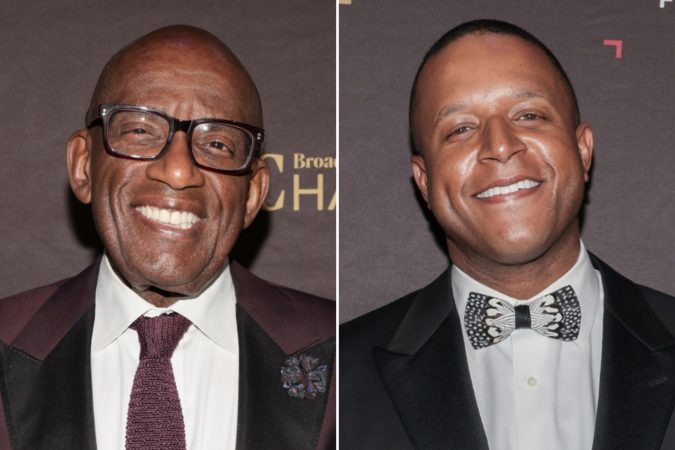
    NEW YORK — A 40-year-old New York man faces hate crime charges following a confrontation with Today show host Craig Melvin at NBC’s studio in Manhattan.

    The man was arrested Thursday morning inside 30 Rockefeller Center in Midtown by an officer responding to reports of a disorderly individual inside the building, police said Friday.

    NBC News says in a statement that an individual approached Melvin after entering an unauthorized area in a vestibule near Studio 1A. Melvin notified security, who held the man until police arrived, according to NBC.

    No altercation occurred and no injuries were reported. NBC did not say how the man gained access to the area.

    “We are reviewing the incident and our security protocols and remain committed to providing a safe and secure environment for everyone who works at and visits our studios,” the network said in a statement.

    The man has been charged with burglary, menacing, and criminal trespass as hate crimes, as well as harassment. It was not clear Friday if has appeared in court or if he has an attorney.

    Police did not say what led to the hate crime enhancements on the charges. Police records show a court date has been scheduled for Wednesday.

    Melvin, who is Black, discussed the incident on-air Friday morning.

    “Unfortunately, an intruder made his way into an unauthorized area here at Studio 1A,” Melvin said. “Thankfully, he was apprehended quickly. He was placed under arrest. We are just very happy that everyone is safe.”

    Melvin also posted about the incident on Instagram.

    “Hey everyone. I’ve heard from so many of you over the last few hours,” he wrote on Thursday. “I’m doing just fine. Thanks for reaching out.”

    Longtime Today show meteorologist Al Roker also took to social media to thank everyone reaching out to check on Melvin.

    “We are both okay,” Roker posted on Instagram. “It’s moments like these that serve to pull us together. You all, like Craig, said ‘You come after one of us, you come after all of us.’”

    Melvin and Roker are among a relatively small group of prominent Black journalists and anchors with regular, highly visible roles on national broadcast network news programs.

    Melvin joined NBC and MSNBC in 2011, according to the Today show’s website. He replaced Hoda Kotb in 2025 as co-host of the 7 a.m. to 9 a.m. hours of Today. He had been hosting the show’s third hour while serving as the news anchor during the first two hours.

    Roker also is a feature anchor on Today and co-host of the show’s third hour. He joined the show in 1996. Roker also co-hosted the Wake Up with Al morning show on the Weather Channel from 2009 to 2015.

  • Trump urges Darline Graham to run for full Senate term as funeral scheduled for Lindsey Graham

    Trump urges Darline Graham to run for full Senate term as funeral scheduled for Lindsey Graham

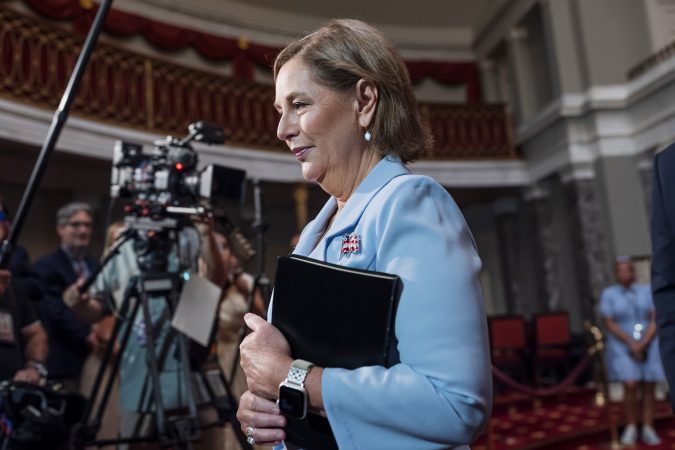
    COLUMBIA, S.C. — President Donald Trump said Friday that Darline Graham, the sister of the late Lindsey Graham, has his support to run for a full term to replace her brother in the U.S. Senate.

    He wrote on social media that she “has been a WINNER all of her life and, should she accept, has my Complete and Total Endorsement.”

    “RUN, DARLINE, RUN!” Trump added.

    The president said he had discussed a potential campaign with Darline Graham at the White House. Four people familiar with the deliberations, none of whom were authorized to speak publicly, had previously said that she privately expressed interest in running.

    Trump’s endorsement dramatically reshapes the scramble to fill Lindsey Graham’s seat after he died last weekend. The president had previously suggested he could back a potential candidacy from Rep. Russell Fry. Several other noteworthy politicians — including Fry, Rep. Nancy Mace, Rep. Ralph Norman, and Lt. Gov. Pamela Evette — have been eyeing a run.

    The filing period for a special primary runs from July 21 to July 28, and the primary is scheduled for Aug. 11.

    Plans for Lindsey Graham’s funeral were also announced Friday. There will be a service in Washington on July 28 and more in South Carolina on July 29.

    South Carolina Gov. Henry McMaster appointed Darline Graham to serve the remainder of her brother’s term, which ends in January.

    The first woman to represent the state in the Senate, Darline Graham called it “such an honor,” as dozens of her brother’s staffers and campaign advisers stood behind her, some with eyes glassy from welling tears.

    “Lindsey has always been there for me. And now, I will be there for him,” she said.

    Lindsey Graham died July 11 at age 71. A preliminary report from the medical examiner said he suffered a tear in his aorta.

    He never married or had a family of his own, but his sister was often by his side for the political touch points of his career, speaking at events and appearing in some of his campaign ads. After both of their parents died when Darline Graham was only 13, her older brother became her legal guardian and later adopted her, to ensure his military benefits would flow to her.

    In forging a relationship with Darline Graham — who is new to politics but was a constant in her brother’s political career — Trump could be angling to develop another ally to help steer his agenda through the Senate.

    Although they had at times a tumultuous relationship, Lindsey Graham had been one of Trump’s top Senate confidants, and the day after his death, the president said he was “like a member of the family.”

    In his announcement Monday, McMaster made no reference to Darline Graham as a placeholder or symbolic appointment.

    However, a person familiar with McMaster’s thinking but unauthorized to speak publicly said the governor, in selecting Darline Graham, had never contemplated that she would run for the seat herself.

    Sen. Tim Scott, another South Carolina Republican, said he would not endorse any candidate in the primary because he also serves as chairperson of the National Republican Senatorial Committee.

    But, he said, “as Tim Scott, the voter of South Carolina, I might indeed wade into the water at some point.”

    “I think the truth of the matter is that Darline has so far been off to a remarkable start,” Scott told reporters, asking about her as a possible special primary contender. “‘Why not her?’ would be my question.”

    When he died, Lindsey Graham had millions in his campaign account and was expected to raise much more heading into the general election. But those aren’t funds that Darline Graham could directly access, if she were to run, according to Bradley A. Smith, a former chairperson of the Federal Election Commission.

    Under federal rules, Lindsey Graham’s campaign would be limited to transferring just $2,000 to a potential Darline Graham candidacy. However, Smith said there is no limit on how much it could transfer to the National Republican Senatorial Committee, which could — thanks to a Supreme Court decision last month — “spend an unlimited amount in coordination with Darline’s campaign.”

    “It can’t be earmarked for Darline’s campaign, but in those circumstances I’m sure that the party will make sure she’s not short of cash,” said Smith, now serving as a professor at Capital University Law School in Ohio.

  • Clara Ester, activist who rushed to Martin Luther King Jr. after he was shot, dies at 78

    Clara Ester, activist who rushed to Martin Luther King Jr. after he was shot, dies at 78

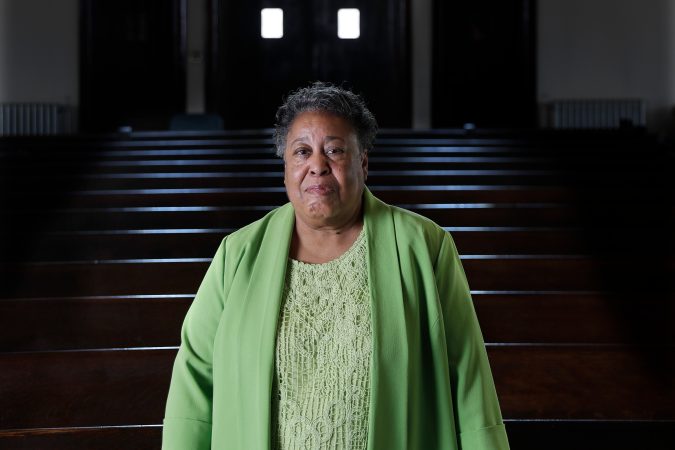
    NASHVILLE, Tenn. — Clara Ester, an activist who as a 20-year-old college student rushed to the Rev. Martin Luther King Jr.’s side when he was shot, has died.

    Ms. Ester, who died on July 9 at the age of 78, was among the few remaining witnesses to King’s assassination and its immediate aftermath in Memphis. With the passing of the Rev. Jesse Jackson Sr. in February and Ms. Ester this month, King aide and former U.N. ambassador Andrew Young is believed to be the last surviving eyewitness to the shooting.

    Ms. Ester grew up in Memphis attending Centenary United Methodist Church, where her pastor was civil rights leader the Rev. James Lawson.

    “We used to joke about colored water being Kool-Aid and the white water just being water, and so that satisfied us as children,” Ms. Ester told the Associated Press in 2018, around the 50th anniversary of King’s death. “But until you see the racism, until you see what has been withheld from you because of your color — is what started to really truly anger me. And I knew if there was a movement that could help change any of that, I had to be in it.”

    Civil rights issues were often discussed from the pulpit of her church, Ms. Ester said. Lawson was very involved in the sanitation workers’ strike, so it was natural for her to become involved too.

    “I got to the point that I didn’t miss a mass meeting,” she said. “I picketed every day that the picket lines were up.”

    Even 50 years later, she clearly remembered the impact of hearing King’s speech at the Mason Temple the night before he was assassinated and how it seemed to foreshadow his death the next day.

    “He had seen the mountaintop,” Ms. Ester said. “It was evident on the balcony — how calm.”

    Ms. Ester had gone to the Lorraine Motel for dinner on April 4, 1968, when she saw King chatting on the balcony with people below. Then she heard a shot.

    “He was speaking calmly and pleasantly to a crowd,” she said. “And so he was happy at that moment. But to lay there with his eyes open, looking toward heaven. He had seen the promised land, and he may not get there with us, but he promised that we as a people will see the promised land.”

    Ms. Ester said she ran to King and saw he was struggling for air. She tried to loosen his belt and asked someone to bring towels to try to staunch the bleeding. After King was taken away by ambulance, she had to stay at the hotel, where she was questioned by police.

    When she was finally allowed to go home, her parents asked if she was OK.

    “I said, ‘No, I’m not OK. There’s something wrong with this.’ And it was many months later that I guess at some point, I just broke down,” Ms. Ester said.

    She left Memphis to work elsewhere that summer, and as soon as she finished school, she left for good.

    “It’s just too much to … it hurt me that it happened, but it hurt me that it happened in my hometown, that that’s the legacy for this city,” she said.

    Ms. Ester moved to Mobile, Ala., where she found work as a neighborhood organizer at the Dumas Wesley Community Center, a Christian service program supporting children, seniors, and people experiencing homelessness. She later was named the executive director of the center, serving in that role until she retired in 2006.

    In 1986, she was commissioned as a deaconess, a type of lay minister, in the United Methodist Church. She remained active in the church throughout her life and held leadership roles that included serving as the national vice president of United Methodist Women.

    Methodist Bishop David Graves met Ms. Ester when he was assigned to the Alabama-West Florida Conference in 2016. He wrote in a remembrance that Ms. Ester did not take to him at first, but gradually they came to love each other.

    “Thank you, Clara Ester, for a life well lived and for loving me. It changed me,” he wrote. “Clara will be missed immensely, but what a day of rejoicing is going on in heaven. For love will always find a way for those who trust in Jesus and seek to love even in our differences.”

  • Brenda Fricker, Irish actor who won Oscar for ‘My Left Foot,’ dies at 81

    Brenda Fricker, Irish actor who won Oscar for ‘My Left Foot,’ dies at 81

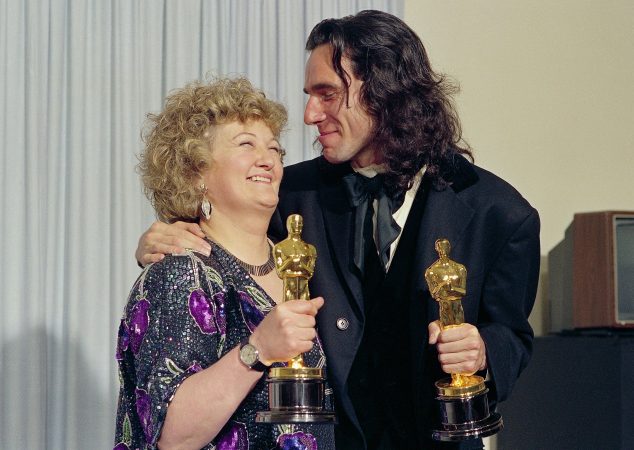
    LONDON — Brenda Fricker, who became the first Irish woman to win an Academy Award for her role as Bridget Fagan Brown in the 1989 film My Left Foot, has died. She was 81.

    The Irish character actor died Thursday night in Dublin after a period of ill health, her agent, Phil Belfield said in a statement.

    Ms. Fricker won the Academy Award in 1990 for best supporting actress for her portrayal of the determined mother of Christy Brown, a writer and painter who was born with cerebral palsy and could control only his left foot. Daniel Day-Lewis, who played Brown, won the award for best actor.

    “She was just an amazing actress, amazing character, forceful personality, great writer,” the movie’s director, Jim Sheridan, told Irish national broadcaster RTE. “She could be obsessive — in everything she did — life, work, love. But no real malice or anything, she was just a very strong personality and a good laugh.”

    Ms. Fricker said she was stunned when she won the Oscar, never thinking it was possible. In her acceptance speech, she thanked Brown “just for being alive” and paid tribute to his mother, saying “anybody who gives birth 22 times deserves one of these.”

    She later spoke of how the award doomed her to being typecast to forever playing roles as mothers. Later in life, she said she used the weighty statuette to prop open her bathroom door.

    Ms. Fricker, who appeared in more than 90 films and television shows between 1964 and 2024, was known for her role as the “pigeon lady” in the 1992 film Home Alone 2: Lost in New York, in which she played a homeless woman who befriended Macaulay Culkin’s character in New York’s Central Park.

    She also featured in the original cast of the BBC medical drama Casualty and appeared alongside Cate Blanchett in Veronica Guerin,” the story of an Irish investigative journalist who was murdered in 1996.

    “We will never see her like again and the world is lesser for the lack of her,’’ Belfield said. “I was honored to know, love, and work with her and she will always have a place in my heart and in the heart of so many film and TV fans the world over.”

    Born in Dublin in 1945, Ms. Fricker received the city’s highest honor earlier this year when she was awarded the Freedom of the City.

    In her autobiography She Died Young: A Life in Fragments, Ms. Fricker describes both happy childhood escapades with her sister Grania and her struggles to overcome sexual violence and mental health issues, which caused her to be institutionalized several times. Published in September 2025, the book appeared on the Irish Sunday Times bestseller list.

    Simon Harris, Ireland’s deputy prime minister, said the country had lost a national treasure.

    “She truly was among the greatest exports this country has ever produced and an ambassador for Irish talent on the world stage,’’ he said. ”Quite simply, we will never see the like of her ever again.

    Ms. Fricker was married to director Barry Davies from 1979 until they divorced in 1988. She became pregnant several times but suffered miscarriages, which led to severe depression much of her life.

  • Mullin pushes states to comply with election demands, echoing Trump’s claims about midterm risks

    Mullin pushes states to comply with election demands, echoing Trump’s claims about midterm risks

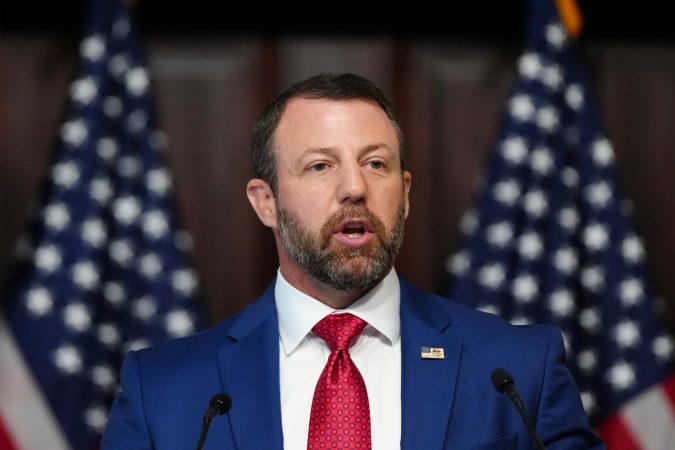
    WASHINGTON — Homeland Security Secretary Markwayne Mullin on Friday warned that state officials could lose funding or face investigations if they fail to go along with President Donald Trump’s election security demands, part of the Republican president’s longstanding attempt to undermine Americans’ confidence in the vote.

    Experts said the threats — issued just months before midterm elections that will determine control of Congress — were likely hollow because Trump’s voting initiatives have been stalled by judges and the Constitution gives states control over how elections are run.

    Nevertheless, Mullin’s remarks, delivered from the White House complex one day after Trump’s primetime address on the topic, could further doubts about election processes and create headaches for states as they prepare for November.

    “We absolutely can build confidence in the American people, but the states have to do their part,” Mullin said.

    Trump continues to falsely claim that Democrat Joe Biden won only because of fraud in 2020, and he’s tried to marshal the powers of the federal government to rewrite that history since he returned to office last year — even though judges and his own attorney general in his first term concluded the election was legitimate.

    Mullin insisted that the president was not relitigating the 2020 election, “although he definitely could at this point.”

    “This is just about exposing what took place and making sure it never happens again,” he said.

    Mullin’s claims of noncitizen voters rely on incomplete data

    During his remarks, Mullin advanced an unsubstantiated claim Trump made Thursday that the federal government had found 250,000 noncitizen voters on the rolls in California, Nevada, New Jersey, and Pennsylvania. He said the Department of Homeland Security’s investigation was conducted using public data, which election experts say is insufficiently detailed and updated to properly identify whether a registered voter is a noncitizen.

    Election officials in California and Pennsylvania said they would review the Trump administration’s findings but noted that they conduct their own voter list maintenance and noncitizen voting is exceedingly rare. Research has supported that finding.

    California Gov. Gavin Newsom, a Democrat, responded to Mullin’s threats with a post on social media.

    “California has free, fair, and secure elections and we will fight for them,” he wrote. “Try us.”

    In Nevada, Secretary of State Cisco Aguilar, also a Democrat, said he was confident in the integrity of the state’s voter file.

    “We are constantly looking at the information to figure out how many registered voters in Nevada don’t have a Social Security number on file,” he said. “We have done significant work to make sure our voter rolls are as clean as possible.”

    Mullin also pledged to aggressively monitor public voter lists to pursue potential voter fraud cases before and after the 2026 election.

    “If you are an illegal or you are voting illegally, we will hunt you down, we will find you, and we will prosecute you,” he said.

    He urged states to participate in DHS’ recently overhauled SAVE program, a federal tool central to the Trump administration’s efforts to nationalize elections. At least 25 states have used it to check their voter rolls since April 2025, after the Trump administration significantly expanded its search abilities, and the Trump administration has demanded that states submit their sensitive voter data to the program to fully audit their voter lists.

    Mullin said if state officials don’t participate in SAVE, they could face fines, penalties, or prison time.

    But the overhauled program’s use was recently blocked by a federal judge over concerns about privacy and wrongful purges of eligible voters. The case included voters whose registrations were wrongly flagged by the program, temporarily threatening their place on the rolls.

    David Becker, the executive director of the nonprofit Center for Election Innovation and Research, said Mullin was making empty threats.

    “Every court to consider the DOJ’s demands — 15 of them to date, six of those judges appointed by President Trump — have confirmed that the federal government cannot legally demand access to states’ sensitive voter data,” he said. “What he’s suggesting is illegal.”

    In addition, Trump’s efforts to pass the SAVE Act, federal legislation that would require proof of citizenship for voter registration, has stalled in the Senate. Republicans don’t have enough votes to change the filibuster rules and pass it without Democratic support.

    Cybersecurity support for election officials diminished

    Mullin also elevated Trump’s concerns about vulnerabilities in electronic voting machines — which voting experts have long acknowledged. While Trump suggested Thursday that these risks make it possible to “rig” the vote, election officials say there are numerous safeguards in place to prevent that, including physical security, voting machine tests, postelection reviews, and paper ballot backups in most of the country.

    To address the concerns, Mullin said the nation’s Cybersecurity and Infrastructure Security Agency, which sits under DHS, would release an updated election infrastructure plan within 30 days and provide cyber threat resources to election officials if they participate in SAVE.

    However, Trump has broadly dismantled the agency’s election security operation.

    CISA was largely absent from its long-held role assisting states in last year’s elections after the Trump administration conducted a review of its election work, placed more than a dozen election-focused staffers on administrative leave, and slashed $10 million from two cybersecurity initiatives, including one dedicated to helping state and local election officials. The agency is also still without a Senate-confirmed director and has cycled through a series of acting leaders.

    Aguilar said his state has stepped up and will protect its own elections in the absence of federal help.

    “The fact that they think they’re going to come in prior to the general election in November and provide us infrastructure, that’s nuts,” he said. “Actions speak louder than words, and in their case, it’s all been talk.”

  • In primetime, Trump criticizes networks for not carrying his speech

    In primetime, Trump criticizes networks for not carrying his speech

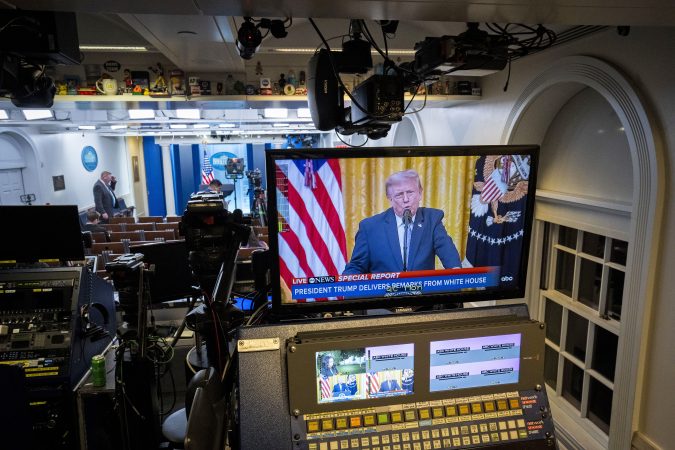
    Not every television network carried President Donald Trump’s primetime speech from the White House, and it did not escape the president’s notice.

    In a meta moment on Thursday night, Trump used his address to call out ABC and NBC for not airing his live remarks, claiming the networks declined to do so “because they know how corrupt our system is and they don’t want to reveal it.” He also repeated his frequent demand that the networks’ government-issued broadcast licenses be revoked.

    “They and others in the media are part of a plot,” the president said, offering no evidence for his claims.

    In fact, ABC and NBC did carry Trump’s speech live on their streaming platforms. After the president concluded, both networks broke into regularly scheduled entertainment programming to air special reports that analyzed his outlandish claims about the safety of American voting systems.

    Federal regulators are currently reviewing the station licenses owned by ABC, a move that the network has denounced as an “unconstitutional retaliation” for its programming.

    Presidents must request airtime from television channels when they wish to speak in primetime, and in the past, network executives have been loath to accommodate speeches that they view as distinctly political in nature, especially during election years. Former Presidents Barack Obama and Joe Biden both had some requests denied.

    On Thursday, TV networks took varying approaches to covering Trump’s remarks. Fox News and the Fox broadcast network ran the speech in its entirety; MS NOW and CBS aired some portions live, but then cut away for analysis and fact-checking from their correspondents. CNN aired clips and reporter commentary instead of the full remarks.

    Fox News, which paid $787 million to settle a defamation suit stemming from false claims about election interference that appeared on its airwaves in 2020, took a careful approach on Thursday.

    After Trump concluded his remarks, Bret Baier, the channel’s chief political anchor, summarized the president’s claims about the security of electronic voting machines. But he added, in a formal tone, that Fox News “has not seen that evidence directly yet, and is not in a position to evaluate the accuracy of the president’s statements at this time.” (Aishah Hasnie, a White House correspondent for Fox News, later repeated that caveat almost verbatim.)

    Even Sean Hannity, a Trump ally, was careful not to endorse the allegations, despite saying the president’s claims were “pretty remarkable.”

    “I’m sure anybody that cares about truth will want to do a deep dive into all of this,” Hannity told viewers.

    Network executives had been reluctant in the run-up to Trump’s speech to say whether they would air it live. The president had been expected to delve into partisan or incendiary comments about voter fraud, creating a conundrum for producers who would need to decide whether to fact-check the president’s remarks in real time, or wait until he was finished to provide context.

    This article originally appeared in the New York Times.