Category: Wires

  • U.S. general warns Pentagon he lacks sufficient forces to protect Israel

    The top U.S. general in Europe privately warned the Pentagon this week that he lacks sufficient naval forces to continue protecting Israel from incoming ballistic missiles, officials said, illustrating how the ongoing Iran war has imposed constraints on the military.

    Gen. Alexus Grynkewich, the head of U.S. European Command, sent written notification to senior Pentagon officials saying that without another Navy destroyer he will be forced to choose defense of the United States “homeland” over that of Israel, said the officials, who like some others spoke on the condition of anonymity to discuss the correspondence.

    A U.S. defense official said Grynkewich’s notification appears consistent with past outreach to the Pentagon from the military’s top generals when they see certain risks that require Washington’s consideration. This can occur, the official said, as commanders compete for finite resources and weapons.

    The Pentagon declined to comment. U.S. European Command did not respond to requests for comment. A spokesperson for the Israeli Embassy in Washington could not be reached for comment.

    The general’s warning comes at a tenuous moment in the five-month conflict, as near-daily attacks have resumed following the collapse of peace talks between Washington and Tehran and the operation’s intensity has drained U.S. supplies of key defensive weapons.

    The Navy has been particularly taxed, as the Trump administration has directed a blockade of Iranian ports in response to Tehran’s closure of the Strait of Hormuz. The standoff has stymied the movement of Middle Eastern oil and other commodities through the narrow waterway, upending the global economy.

    U.S. naval destroyers in the eastern Mediterranean Sea have been employed as a part of Israel’s defense for many years. The vessels, equipped with powerful radar and armed with an array of missiles, have downed missiles aimed at Israel not only by Iran, but by Houthi militants in Yemen that are equipped by Tehran.

    European Command is central to this mission, as it coordinates military operations in the Mediterranean. At the same time, its forces must remain ready for any Russian incursion into territory protected by the NATO military alliance. Russia also poses a ballistic missile threat to the United States, with missiles capable of reaching the U.S. mainland.

    The Navy has five destroyers that deploy from a U.S. port in Rota, Spain, with a sixth expected to arrive there later this year, Pentagon officials have said. But maintenance issues have piled up due to the Iran war’s tempo, complicating matters for Grynkewich, officials said. The Washington Post withheld specific details about the ships’ availability at the request of military officials, who cited security concerns.

    As the Post reported in May, Pentagon assessments conducted earlier in the war showed that U.S. forces have shouldered the brunt of defending Israel from Iranian ballistic missiles. The assessments found that American weapons, including the Terminal High Altitude Area Defense and naval interceptors launched from the eastern Mediterranean, were used far more frequently than Israeli air defense weapons.

    Two destroyers, the USS Paul Ignatius and the USS Roosevelt, were in the Mediterranean Sea on Friday, a U.S. official said. Three destroyers were in Rota: the USS Arleigh Burke, the USS Bulkeley and the USS Oscar Austin.

    Closer to Iran, an armada of additional vessels was in the Arabian Sea, including two aircraft carriers, the USS George H.W. Bush and USS Abraham Lincoln, and at least 15 other warships, this official said. Eleven are destroyers.

    The fleet has been central to the Trump administration’s blockade of Iranian ports. It also has been involved in an effort called Project Freedom, in which the U.S. military has helped protect vessels in the contested Strait of Hormuz.

    Another destroyer, the USS Gonzalez, is in the Red Sea, where Yemen’s Houthis have attempted to enforce their own blockade of commercial shipping in a bid to further the economic pressure facing the U.S. and its allies in the region. Saudi Arabia, a key U.S. partner, has sought to thwart the Houthis, a longtime adversary, by developing a military coalition to ensure freedom of navigation.

    The Iran war is increasingly unpopular among the U.S. public, and members of Congress — from both political parties — have grown frustrated with the administration as top officials struggle to articulate a plan for ending the conflict on terms deemed favorable to the United States. There is a deepening worry among many Republicans, particularly, that the war’s impact on the price of gas, food, and other goods will cost the party in November’s midterm elections.

    Tom Karako, director of the Missile Defense Project at the Center for Strategic and International Studies, a think tank, said the warning issued by Grynkewich highlights the scope of the Pentagon’s challenges.

    “Being on a wartime footing is going to take a toll in terms of readiness and munitions inventory levels,” he said. “Now the question is: What’s the strategy here?”


  • In Trump Gaza deal, Hamas disarms, Israel withdraws. Neither wants to go first.

    In Trump Gaza deal, Hamas disarms, Israel withdraws. Neither wants to go first.

    TEL AVIV — President Donald Trump this week touted “a HISTORIC agreement for the COMPLETE DISARMAMENT” of Hamas. But after his Board of Peace released the text of the 15-point plan Friday, analysts cautioned that there seemed to be a substantial gap between Israel and Hamas on a path forward.

    Under the agreement, the sides have 14 days to agree on the “timetable and implementation mechanisms” for the disarmament of Hamas and the withdrawal of Israeli forces from Gaza. But there was already disagreement on the order in which each should happen.

    Israeli Prime Minister Benjamin Netanyahu, who met with Trump on Tuesday, has been silent on the deal. In a statement to the Post, an Israeli official reiterated Israel’s long-standing position: “Israel demands the complete disarmament of Hamas, including the removal of weapons from Gaza and the full demilitarization of the Strip, as a prerequisite for any process.” The official spoke on the condition of anonymity to discuss the highly sensitive subject.

    Hamas, meanwhile, said Israel must end its military campaign in Gaza as a “first step.” The Israel Defense Forces on Friday announced the killing of men it described as a Hamas commander and a Hamas arms smuggler. Hamas also said that its agreement to surrender heavy weapons was contingent on Israel’s “cessation of all forms of hostility,” among other variables.

    Jonathan Rynhold, a senior researcher at the Begin-Sadat Center for Strategic Studies at Bar-Ilan University, said the effort to move toward disarmament and demilitarization in phases represented “some kind of progress,” but obstacles remained.

    “On a practical level, what Israel wants is for Hamas to disarm, and then for Israel to withdraw. Hamas wants the opposite,” he said. “Israel does not believe that Hamas will voluntarily disarm in a material sense.”

    Under the agreement, the weapons Hamas surrenders are to be held by the National Committee for the Administration of Gaza, run by Palestinian technocrats. The fear in Israel, Rynhold said, is that the militants, who led the surprise attack that killed about 1,200 people in Israel on Oct. 7, 2023, will retain the ability to intimidate whoever is in the government in Gaza.

    Israel responded to the Hamas attack with a military campaign that has killed more than 73,000 people, according to the Gaza health ministry.

    “The bottom line,” Rynhold said, “is that Israel doesn’t think that Hamas has changed its DNA.”

    There will be “no Israeli withdrawal from the Yellow Line before Hamas is disarmed and the Gaza Strip is demilitarized,” the Israeli official said. The line marks territory controlled by Israel since the sides agreed to a ceasefire in October. The territory amounts to about half the enclave.

    Ibrahim Al-Madhoun, a Gazan political analyst seen as close to Hamas, said the plan “represents significant political progress” toward an end to the war.

    “But optimism must remain cautious,” he said in a statement. “Israel has not finalized its position, and Netanyahu is evading and trying to evade the deal’s entitlements.”

    A month ago, Hebrew University political scientist Gayil Talshir noted, Netanyahu was boasting that Israel controlled 70% of the Gaza Strip — implying that the IDF had gone beyond the yellow line.

    Talshir predicted the IDF would first withdraw to the yellow line. Later, “if Hamas is indeed disarmed,” she said, “the IDF will gradually withdraw to the perimeter.”

    With elections in October, Talshir said, Netanyahu doesn’t want to give opponents the opportunity to say he has approved the withdrawal of military forces in either Gaza or Lebanon, where Israel is fighting Hezbollah. Israel has in fact withdrawn from several villages in southern Lebanon, ceding control back to the Lebanese army, and Trump’s announcement suggested more to come.

    There appears to be “a gap between the facts and how Netanyahu is presenting them,” Talshir said. Netanyahu, she said, is trying to portray himself as close to Trump but also able to stand up to him.

    “This is the narrative he sells in Israel — that only Netanyahu can say ‘no’ to an American president. This is both contradictory and makes Trump’s blood boil.”

    Right-wing National Security Minister Itamar Ben Gvir said Friday the agreement will allow “Hamas to organize for the next massacre.”

    Madhoun, the Gazan analyst, said the Israeli elections will complicate implementation of any agreement. “The Gaza war has turned into political and electoral material,” he said.

    Gadi Eisenkot, a leading challenger to Netanyahu, said, “The infuriating gap between [his] promises and reality has been exposed.” The deal stems from his “political weakness,” the former IDF chief of staff said, and will leave Hamas in power in Gaza.

    Michael Milstein, a former adviser on Palestinian affairs to the Israeli military, said there appeared to be a gap between Netanyahu’s claim of an “excellent” meeting with Trump and the details of the agreement. But he said he doubts Trump is “set on the details” of the deal.

    “I say this cautiously, but it seems that what is happening aligns with Hamas’ interests, which is mainly the growing pressure on Israel to begin the withdrawal,” said Milstein, who is now at the Moshe Dayan Center at Tel Aviv University. “No one is conditioning every single bit of progress [in the agreement] on complete disarmament.”

    The government’s mistake, he said, was refusing to “engage with a political track.”

    “The deal ends up being forced on you from the outside.”

    For Netanyahu, he said, the timing is a “nightmare scenario.”

    “If Trump is determined to push this forward — realizing he isn’t securing achievements in Iran, Lebanon, and Ukraine — and Netanyahu remains extremely stubborn about not complying with anything, this opens the door to friction.”

    The question, Madhoun said, is whether the Trump administration can “oblige Israel to implement what is agreed upon.”

    Hussam Al Hwaiti hoped so.

    “After three years of war, killing, destruction and siege, I say ‘enough,’” the Gaza merchant said Friday.

    “We don’t want to resist,” he said. “Hamas is weak now. They are not in a position to continue the fight. … It’s time to return back to our normal life, travel, and send our children to school.”

  • Spain installs sea barrier on Ceuta’s border with Morocco after frontier rush that killed 67

    Spain installs sea barrier on Ceuta’s border with Morocco after frontier rush that killed 67

    CEUTA, Spain — Spain on Saturday installed a 1,600-foot-long barrier on the sea border between its North African territory of Ceuta and neighboring Morocco after tens of thousands of migrants breached the frontier earlier in the week.

    At least 67 migrants died, including some who drowned and others who were killed in a stampede to cross a breakwater barrier, the Spanish government said Saturday.

    Spanish Prime Minister Pedro Sánchez slammed the reaction of some other European Union leaders to the events in Ceuta, saying calls for Spain to be suspended from the EU’s borderless Schengen zone were “driven by prejudice, fake news, ignorance, or political interest.”

    A handful of exhausted migrants who swam to Ceuta’s urban Tarajal beach Saturday morning were met by soldiers who escorted them across the border. Most of the 50,000 to 60,000 migrants who entered the territory between Thursday and Friday soon went back.

    “We are relentless against those who break the law,” Spanish Interior Minister Fernando Grande-Marlaska told journalists Saturday.

    Questioned how the massive border breach could have happened given the heavy security on both sides of the border and whether Morocco posed a threat to Ceuta, Marlaska defended the government in Rabat.

    “The events require an evaluation by Spain and Morocco,” he said. But it was the cooperation with its neighbors that allowed Spain “to revert the situation in 24 hours.”

    “Morocco is not a threat to Ceuta, or to the rest of Spain. It is a reliable partner,” Marlaska emphasized.

    EU leaders call for coordinated response

    The leaders of 22 EU countries called for a coordinated response to the situation. In a letter to top EU officials, released Saturday by the Danish prime minister’s office, the countries asked the EU’s current Irish presidency to urgently convene a videoconference of interior ministers.

    “We cannot allow uncontrolled mass crossings, the instrumentalization of migration, or other hybrid threats to create the perception that illegal entry into the European Union is possible. That a migrant’s illegal entry can turn into legal stay,” the letter said. “Such a perception would encourage further attempts, undermine confidence in our common migration policy and have repercussions for all Member States.”

    Leaders of Italy, Denmark, Austria, Belgium, Bulgaria, Cyprus, Croatia, the Czech Republic, Estonia, Finland, Germany, Greece, Hungary, Latvia, Lithuania, Malta, the Netherlands, Poland, Romania, Slovenia, Slovakia, and Sweden signed the letter.

    Sánchez also asked for a videoconference of EU interior ministers to “enable us to establish a common response to situations of this kind and reaffirm that the security of our external borders is a shared responsibility of all Member States, and not only of those on the Union’s front line.”

    Italian Premier Giorgia Meloni has threatened to suspend Italy’s open-border Schengen agreement with Spain, and Italy was reimposing border controls for people arriving from Spain by air and sea.

    “In the current international context, the European Union cannot afford this kind of selfish, polarizing, and unlawful reaction,” Sánchez wrote in his letter.

    Migrants head back into Morocco

    Hundreds of migrants returned to Morocco on Saturday. Some told an Associated Press reporter they were returning “of their own free will” after what they described as degrading treatment on the Spanish side of the border.

    Migrants walked along a long stretch of wave breakers before slipping into Morocco through a small breach in the border fence that had become an informal entry point. Moroccan police and soldiers watched. Most of the migrants were Moroccans, while a smaller number were from sub-Saharan Africa.

    Hungry and angry, some barefoot or shirtless and others nursing visible injuries, those who returned said they had “seen hell in Ceuta.”

    “I decided to come back on my own,” said Ouail Lamzeiz. “I spent eight days in Ceuta, and I was about to get a bed at the migrant center, but I hadn’t eaten for days. Even the Moroccans there didn’t help,” he added, showing a document supporting his account.

    His friend, Salah Eddine El Arrage, said he decided to return to Morocco after, he said, Spanish police beat him.

    Migrants said they spent their nights sleeping in the forests around Ceuta because they could not find shelter, and that they often fought over food.

    One, Othmane El Merzoug, asked passersby for a phone call so he could reach his family and ask them to send money for the journey back to his hometown, about 189 miles from the border.

    Along Ceuta’s Tarajal beach, sunbathers largely ignored the streams of migrants walking toward the border.

    Ceuta resident Mohamed Abdelatif, 21, said the border rush had ruptured the city’s peace.

    “The reality is, it’s not good,” Abdelatif said, before wading into the water with his girlfriend.

    The road linking the Moroccan town of Fnideq to the border crossing bore the scars of the unrest. Burned-out vehicles sat along the roadside, while the acrid smell of smoke still hung in the air. Police barriers channeled traffic toward the crossing, and water cannons remained stationed nearby.

    “Life in this city has been disrupted as a result of the border incident,” said Ceuta President Juan Jesús Vivas. “The return of people has begun satisfactorily but the process must be completed.”

    In the Moroccan city of Tangier, about 46 miles west of Ceuta, the main railway station was busy with people returning. Some slept on the ground.

    “I tried to cross, but I failed. I stayed near the border with Ceuta for two days, but I couldn’t find anything to eat,” said Abdalah, an aspiring migrant who asked that his last name not be published out of fear of retaliation for trying to cross illegally.

    But some who made it to Ceuta were determined to stay. Among them was Mohamed Hatri, a 23-year-old Moroccan.

    “They’ve closed everything down so that we can’t buy anything to eat, to force us to return to our country,” he said, adding that he and others were determined to stay “whether we’re hungry or not.”

  • Trump’s threat to push ahead on settlement fund injects new uncertainty into attorney general talks

    Trump’s threat to push ahead on settlement fund injects new uncertainty into attorney general talks

    WASHINGTON — President Donald Trump on Saturday threatened to push forward with a fund to compensate his allies if two Republican holdouts will not support his nominee for attorney general, injecting fresh uncertainty into a Senate confirmation vote planned for next week and underscoring once more his interest in securing payouts for supporters who feel unjustly persecuted.

    Trump asserted in his Truth Social post that he would keep acting Attorney General Todd Blanche in his current role and press ahead on the “Anti-Weaponization Fund” if Sens. John Cornyn of Texas and Thom Tillis of North Carolina refuse to back the former federal prosecutor who was a key member of Trump’s defense team when the Republican battled four indictments.

    The administration needs their votes but both lawmakers have protested Blanche’s selection because of a lawsuit settlement that created a $1.8 billion fund to compensate people who feel mistreated by the criminal justice system and provided Trump and his family members with immunity from tax audits.

    In a sign of apparent progress Friday, Trump pronounced the fund “dead.” As negotiations continued into the night, the chairperson of the Senate Judiciary Committee, Sen. Chuck Grassley, rescheduled a committee vote for Blanche that had been postponed earlier in the week.

    A spokesperson for the committee said Grassley (R., Iowa) would like to see Blanche confirmed before the August recess and that putting the Tuesday vote on the calendar “gives more time for the White House to secure the votes for the President’s nominee.”

    But by Saturday morning, those plans were in jeopardy with a new announcement from Trump that appeared to put the fund back on the table — and dinged the two senators who are leaving Capitol Hill when their terms end in January.

    “If Senators Cornyn and Tillis, both upset because I wouldn’t Endorse them (they lost, and quit, respectively!), aren’t going to approve Todd Blanche, one of the most respected professionals, according to everybody, in the Country, to be the United States Attorney General, then I will keep Todd as Acting A.G., and push hard” to restore the fund. The president insisted, as he previously has, that the fund “takes care of those who have been so badly treated” during the administrations of Democratic Presidents Barack Obama and Joe Biden.

    Tillis, who is retiring, took note of the president’s turnabout by saying in a post on X that despite Trump’s comments Friday, he “clearly intends to resurrect the payout pot for punks either by inappropriately establishing another bogus fund or pushing Congress to vote for a bill that the majority of Republicans in the Senate would be against.”

    He added: “It’s unfortunate that Todd Blanche, who I consider qualified for the job, will not be confirmed because of this reversal. Hopefully, we can resolve this by Tuesday.”

    Blanche had said at a hearing two months ago that the anti-weaponization fund would not move forward after Republican senators revolted and held up an immigration funding bill.

    But Tillis and Cornyn, who lost reelection this year after Trump endorsed his primary opponent, said they want to ensure that the White House does not reverse course, especially as Trump continues to argue that a fund is needed.

    The Department of Justice has provided the senators with language that says Blanche’s May 18 order establishing the “Anti-Weaponization Fund” is “rescinded and shall have no force or effect,” according to a document reviewed by the Associated Press.

    Cornyn and Tillis have said they also want some clarifications on a separate piece of the settlement that would grant Trump and members of his family immunity from tax audits. Cornyn said this week that it was his understanding that the audits could extend to more than 100 different Trump organization subsidiaries into the future.

    “Todd Blanche said it was limited to the parties to the litigation — and it was retrospective, not prospective,” Cornyn said. “And all we’re doing is asking them to put that in writing.”

  • America’s biggest companies are burning cash on AI. It’s risky for everyone.

    America’s biggest companies are burning cash on AI. It’s risky for everyone.

    Over the past decade, the giants of Silicon Valley became reliable engines of the American economy and the nation’s retirement accounts.

    Must-have digital products like Google and Facebook hooked people and businesses, spewing geysers of cash that made tech giants the new blue chip stocks and fattened investment portfolios as markets soared.

    The finances of America’s technology stalwarts now look very different. To develop and deliver what the companies say is revolutionary artificial intelligence, they’re feeding every available dollar into the cash-incinerating maw of AI machines. Tech superstars that once had oodles of cash left over at the end of each year are now flipping into the red, with enormous stakes for every American and the wider economy.

    To optimists in Silicon Valley, the White House, and beyond, the big AI bet promises an even bigger payoff: huge corporate profits and a societywide boost to wealth and well-being when AI delivers the promised transformation of life, work, and the economy.

    But questions about that AI vision are now growing more urgent: When, if ever, will this payoff arrive? And what will the fallout be for Americans if the titanic investment doesn’t quickly deliver?

    “This AI thing better work out because if it doesn’t … we’re going to have a problem,” said Torsten Slok, chief economist at investment firm Apollo Global Management.

    AI costs and doubts are spreading. The U.S. stock market has swooned this summer over fear of the AI bubble going bust. The AI boom is pushing up inflation, adding to President Donald Trump’s challenges in tackling Americans’ affordability concerns. And there are signs that AI may be widening the economic divide between the country’s haves and have-nots by directing more wealth toward places and people that are already economically ahead.

    The AI gamble sweeping up American fortunes is led by tech companies splurging on hulking data centers packed with computer chips and equipment needed to develop sophisticated AI models and deliver them to customers.

    In investor calls in the past week, Google, Microsoft, Meta, and Amazon pointed to soaring AI-related sales and business deals. Advertisers are using the technology to tailor marketing pitches and corporations and startups are buying access to chatbots and other AI software to boost productivity. The wider U.S. economy, including construction workers and electricians, are getting a lift from the build-out of AI computer hubs.

    But this spending can only continue if AI generates an even larger avalanche of new revenue to pay for it all. Financial results released over the past week show that the AI titans’ mammoth costs are largely swamping the sales boost from the technology.

    At Google, for every dollar of cash its business generated in the past three months, $1.15 went out the door to pay for AI computer chips and equipment, land for AI data centers, and other big-ticket purchases. The company is covering the difference partly by borrowing money and selling more of its stock.

    Next year, five leading AI companies — Google, Amazon, Microsoft, Meta and Oracle — are projected to have negative free cash flow, which measures the cash left over after paying expenses and AI infrastructure costs. The figures, based on investment analyst projections compiled by S&P Global Market Intelligence, show a stunning reversal for what have been some of the world’s most cash-generating corporations.

    On Thursday, Amazon CEO Andy Jassy gave an impassioned defense of the company’s huge spending to capitalize on what he said was sustained zeal from businesses to buy AI. “We have clear line of sight to strong financial returns,” he told investors. (Amazon Executive Chairman Jeff Bezos owns The Washington Post.)

    The companies remain profitable by standard financial accounting measures that spread out the costs of their AI infrastructure spending over many years.

    Silicon Valley’s AI spending spree has become a high-stakes Rorschach test. AI boosters see the mammoth costs of building out computing facilities for AI as a rational, once-in-a-lifetime opportunity to cash in on insatiable demand for history’s most transformative technology. Pessimists see a bet so gargantuan that it cannot possibly pay off.

    The pessimists are growing louder. The Bank for International Settlements, a typically measured institution in Switzerland that advises government bankers around the world, recently warned there was risk of “economywide recessions” if the AI boom falters. That could mean pain for workers and communities across the United States.

    “I’m not saying AI is going to go away, it’s just not clear to me these guys are going to make money on it,” said Christopher Wood, global head of equity strategy at investment bank Jefferies who has correctly predicted past financial bubbles.

    As recently as June 2, exuberance about AI helped lift the S&P 500 stock index to an all-time high. But fear is now winning in what’s become an AI freak-out summer. People who own stock in the biggest losers of recent months, including Elon Musk’s Tesla and SpaceX, business software firm Oracle and computer chip titans Nvidia and SK Hynix, have collectively lost trillions of dollars.

    Matt Orton, chief market strategist of investment firm Raymond James, says the panic is out of control because AI has huge potential. “A lot of investors have lost their minds,” he said.

    At the same time AI is eviscerating Americans’ stock wealth, it’s further straining their cost of living.

    Many executives are lamenting that the companies developing AI are buying so many computer chips for AI calculations that it’s gobbling all the available supplies and driving up their costs. As a result, companies including Apple and Microsoft have raised prices for smartphones, laptops, video game consoles, and other consumer and business products.

    In some parts of the country including the mid-Atlantic, energy demand from data centers is pushing up household electric bills. Some economists and government officials have pointed to those AI-related price increases as one culprit for persistently stubborn inflation.

    NCTA, a trade association representing large internet service providers and cable TV companies, is among the American business groups pleading with the Trump administration to do something about AI-related computer chip price increases.

    Without action, executives say that AI will hold back new products and features or spark even higher prices for home internet equipment, cars, and medical devices. “Consumers are really going to suffer both from costs and from lack of innovation,” said Cory Gardner, CEO of NCTA.

    White House spokesman Kush Desai said that the Trump administration is supporting U.S. computer chip manufacturing to “ensure Americans have access to a ready supply of critical inputs for everyday electronics.”

    Evidence is also emerging that undermines the idea that AI can become a great equalizer that empowers people and businesses of all backgrounds to better their financial circumstances.

    Research by Barbara Denham, lead economist at research and consulting firm Oxford Economics, found that large U.S. metropolitan areas that are already economic winners are benefiting the most from the AI boom.

    Denham said that’s because many of the tech companies developing AI, and the white-collar industries that have been the most avid users of AI, are concentrated in wealthy regions including the Bay Area, New York, Seattle, and Washington, D.C.

    The economic gains of the AI boom are “self-reinforcing,” she said.

    Dan Gallagher contributed to this report.

  • SEC, Big Ten add long-missing support to college sports bill and revive its chances in the Senate

    SEC, Big Ten add long-missing support to college sports bill and revive its chances in the Senate

    The Big Ten and Southeastern Conference agreed Friday night to support the Protect College Sports Act, a Senate bill that seeks to regulate college sports, ending a breakneck week of negotiations and pulling the bipartisan measure out of what looked like a certain death spiral.

    School presidents from both conferences voted to back the bill after receiving last-minute concessions over language regarding third-party name, image, and likeness deals and the so-called “associated entities” that often make those arrangements.

    More details need to be worked out, but the bill still has a chance to earn the 60 votes it needs to halt debate and head to an up-or-down vote before the Senate heads for summer break next Friday.

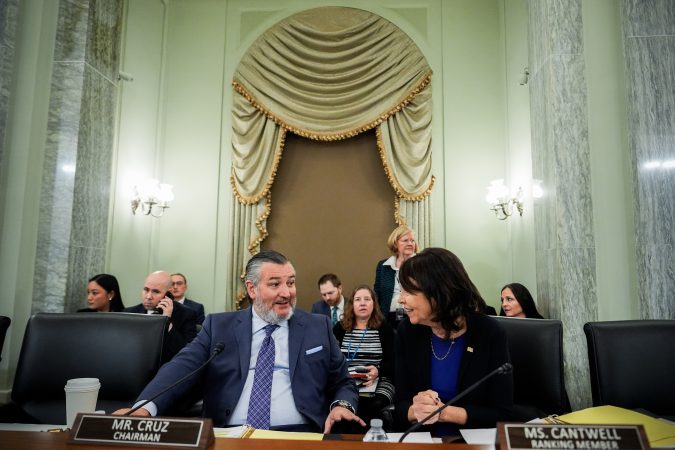
    The summer recess was increasingly looking like a hard deadline for the Protect College Sports Act, a bipartisan effort headed by Sens. Ted Cruz, R-Texas, and Maria Cantwell, D-Wash.

    After the conferences, which had balked at large sections of the bill, put out a short release announcing they supported the act “as currently drafted,” Cantwell went on social media and said: “Good. Now progress can be made in protecting women and Olympic athletes and moving the legislation closer to the President’s desk.”

    President Donald Trump, who also has been seeking fixes for an industry that now pays its players millions, got involved late Thursday, which helped push the parties back to the negotiating table.

    Cody Campbell, the Texas Tech regent who has played a big role in shaping this policy, called the SEC and Big Ten support “a major breakthrough that moves us closer to a Senate vote — and a better future” for college sports.

    Increased salary cap, new language entice holdouts

    The most groundbreaking part of the reworked deal is the $27.5 million that schools would be allotted to retain players, in addition to the existing $21.3 million cap.

    It could represent a major reworking of the House v. NCAA settlement, which governs paying players. The idea is that the extra money will take the place of payments from “associated entities” that were allowed beyond the $21.3 million cap. It was those payments that, many schools complained, obliterated any idea of a cap or controlled cost.

    The SEC and Big Ten sought stronger language in the bill to guarantee that any third-party deals are truly outside deals and not coming from the schools’ multimedia-rights partners, which currently broker the majority of those deals.

    Among the questions still unanswered are whether the new cap will comport with the House settlement, which had specific instructions about the hard cap (22% of a certain part of revenues, which equals $21.3 million this season), and what would happen to the College Sports Commission, the main NIL enforcement arm that spends the bulk of its time analyzing third-party NIL deals.

    Long road remains

    Even with Friday night’s victory, the bill has a long road ahead. Sen. Tommy Tuberville, R-Ala., has been a staunch opponent of the bill since the beginning. Before the latest compromise, Sen. Bill Cassidy, R-La., said that “as written today,” the act “creates chaos and eliminates opportunity for student-athletes.”

    Whether the SEC’s approval is enough to get those senators and others from SEC states on board is one issue. If the bill clears the Senate, it would still then need to pass the narrowly divided House, which flailed on another college bill called the SCORE Act, for more than a year.

    There’s also the matter of whether smaller conferences, long in favor of the bill, will remain so now that their bigger competition is being allowed to directly pay players up to $48.8 million.

    Other court rulings

    Almost everyone in college sports agrees that the status quo isn’t working.

    The news about the bill broke only hours after the NCAA lost a pair of key court cases involving its new rule that would give most Division I athletes five years to complete five seasons of eligibility.

    Using those losses as another chance to urge for passage of the bill, NCAA President Charlie Baker said “It is long past time leaders across college sports call for the immediate passage of the bipartisan Protect College Sports Act.”

    Two-time national champion hoops coach Dan Hurley of Connecticut used social media to outline the stakes in more colorful terms: “Somebody please come and fix College Sports. It’s a complete [expletive] show,” he said, using an emoji where the expletive would go.

  • DOJ drops Reflecting Pool charge, citing ‘botched’ work and angering Trump

    DOJ drops Reflecting Pool charge, citing ‘botched’ work and angering Trump

    Federal prosecutors on Friday moved to drop a criminal charge filed against a former Olympian who had been accused of vandalizing the Lincoln Memorial’s Reflecting Pool, suggesting that the damage was instead due to a “botched” and rushed installation.

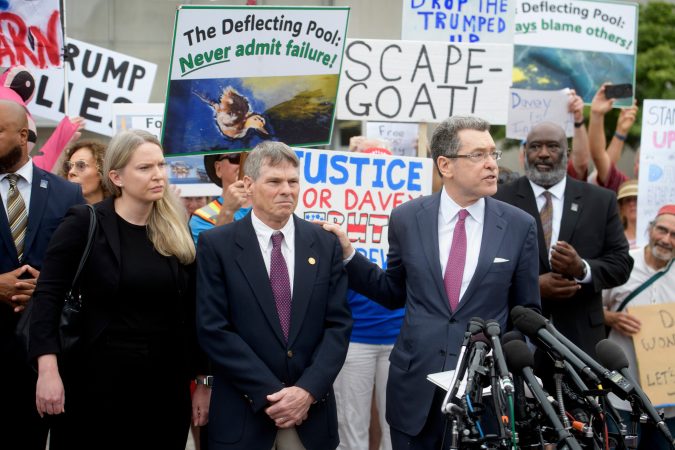
    Prosecutors said they would dismiss an indictment against David Hearn, an Olympic canoeist, whose arrest last month drew national attention amid questions about why the pool’s new blue liner was peeling. President Donald Trump — who had ordered that officials install the new liner and make other changes to the pool — repeatedly blamed vandals after pieces of the refurbished liner started drifting to the surface.

    A Washington Post analysis earlier this month found that the basin’s peeling was likely due to application errors by workers, a conclusion challenged by Trump administration officials at the time but supported by experts in waterproofing materials.

    According to Friday’s filing in D.C. Superior Court, internal Interior Department documents also chalked up the peeling of the pool liner to contractor errors made during the hurried effort to overhaul the pool ahead of celebrations to mark the nation’s 250th anniversary in July. Justice Department lawyers said the information they received showed that “the damage was the result of a botched installation and not vandalism as initially represented” by the Interior Department.

    “Given all of this newly discovered information, it is difficult to attribute the widespread damage to the Reflecting Pool to vandalism, let alone to establish that fact beyond a reasonable doubt,” according to the Justice Department’s filing.

    The Justice Department also said that officials at the Interior Department initially did not provide sufficient information about contractor errors and turned it over only after “dozens and dozens” of requests from the office of the U.S. attorney for the nation’s capital.

    “Had [the Interior Department] been forthcoming with the information clearly in its possession, the government would not have sought a grand jury indictment,” the filing reads.

    The Associated Press reported Saturday that Trump sharply criticized U.S. Attorney Jeanine Pirro’s assessment that damage to the pool was the result of shoddy construction and not the work of vandals.

    Trump, in a posting on social media, acknowledged that there “may have been some contractor difficulty” in the installation of a new pool liner. But he continues to insist “the major damage was caused by VANDALS!”

    “I disagree 100% with Jeanine Pirro, the U.S. Attorney for the District of Columbia, on the Reflecting Pool,” Trump added in his post.

    Trump on Saturday also posted a nearly four-minute video that appears to have been taken from a security camera, in which three individuals can be seen with their hands in the pool, including one for an extended period.

    The president claimed the video shows “material is being cut with a knife or a box cutter, for all to see!”

    It’s not clear from the video, which appears to be shot from some distance, that any vandalism occurred. Workers can also be seen standing nearby and don’t appear to notice the people sticking their hands in the water.

    The Interior Department did not immediately respond Friday night to questions about the administration’s past accusations against Hearn and others arrested for allegedly damaging the pool, or questions about the Justice Department’s decision to drop the case.

    The contractor, Atlantic Industrial Coatings, also did not immediately respond to a request for comment.

    In a statement on its website dated June 21, the company defended its work, saying that while the U.S. Park Service had identified areas of the pool that required repairs, the areas “are a very small part of the massive 7 acre project, and do not indicate a failure of the liner.”

    Hearn and three others charged with misdemeanors related to Reflecting Pool damage had a status hearing set for next Thursday. Court records show that at least one of those misdemeanor cases, against Justin Carreno, was dismissed Friday.

    “While we are pleased with this result,” Carreno’s attorneys, David Benowitz and Rammy Barbari, said in a statement, “Mr. Carreno is innocent of the charge and should never have been prosecuted in the first place.”

    Hearn’s lawyers and outside watchdog groups said Friday’s move to drop charges was insufficient, and accused the administration of seeking to punish innocent Americans rather than admit its own errors.

    “The Trump administration’s case against Davey Hearn should have never been brought,” Hearn’s lawyers, Norm Eisen, Mary Dohrmann and Steve Levin, said in a statement. “Its dismissal today does not erase the abuse of government power in arresting and charging a patriotic American who did nothing wrong. The government’s approach was ready, fire, aim. The administration owes Mr. Hearn an apology.”

    Hearn told the Post last month that he was cycling past the pool and put his hand in the water only to touch a piece of liner that was already dislodged. Reached by phone on Friday night, he declined to comment.

    The fight over the century-old Reflecting Pool — which sits at the foot of the Lincoln Memorial and has played host to famous speeches and events — has unexpectedly emerged as a major flash point in Trump’s second term.

    Trump announced plans in April to abruptly overhaul the pool, saying that he had personally picked out a new color for the basin, “American Flag Blue,” and had recommended contractors based on his experience managing pools at his various resorts.

    At the time, Trump said the pool renovations would cost less than $2 million and be completed within two weeks. The cost later swelled to more than $14 million, and historic preservationists and other experts repeatedly warned that the rapid renovations could backfire.

    The job was completed within six weeks, with the president and his allies saying it was a symbol of his efforts to remake Washington.

    “I’m very proud of it,” Trump said in the Oval Office as the pool prepared to reopen. “I’m very good at building things and constructing things.”

    The celebrations were short-lived. Within days, the pool was beset by major algae outbreaks and the liner’s peeling. The president responded by alleging that vandals were to blame, accusing them of cutting parts of the pool but providing no evidence.

    “Many additional people have been arrested having to do with the disgraceful Vandalism of our beautiful Reflecting Pool,” the president wrote on Truth Social in June.

    “It was slashed with a knife, or box cutter, high grade colored waterproofing liner — it was VANDALISM!,” Trump wrote in another post this month, criticizing an ABC News report that suggested the liner was peeling.

    A recent visual inspection found damage in the middle of the pool — “where a vandal would not likely attempt to peel the lining” — further indicating that the damage stemmed from mistakes during installation, DOJ lawyers wrote in their filing.

    The administration drained the pool after the July Fourth celebrations on the Mall, with officials saying further renovations would be necessary. In a Justice Department filing Thursday, the administration said the pool would be closed through Aug. 10.

    The Cultural Landscape Foundation, an education and advocacy organization, is suing to block the administration’s continued work on the pool, saying Trump has disregarded long-established processes and federal requirements intended to protect historic sites.

    “Today, the iconic pool sits empty, covered in peeling epoxy after a botched job,” the organization’s lawyers wrote in a court filing Friday, asking a federal judge to halt further changes to the pool until they can go through a formal review process.

  • Jurors in Lindsay Clancy’s trial visit the home where she killed her children

    Jurors in Lindsay Clancy’s trial visit the home where she killed her children

    DUXBURY, Mass. — Jurors walked through the Massachusetts home where Lindsay Clancy strangled her three children, a rare visit Friday that let them see firsthand the place where an outwardly ordinary family life unraveled into tragedy.

    After being driven past two businesses relevant to the narrative of the January 2023 killings, jurors were escorted in groups of six to view the inside of the house, including the basement where the children died. During the roughly 40-minute visit, the jury also saw the yard where Clancy was found after jumping from a second-story window.

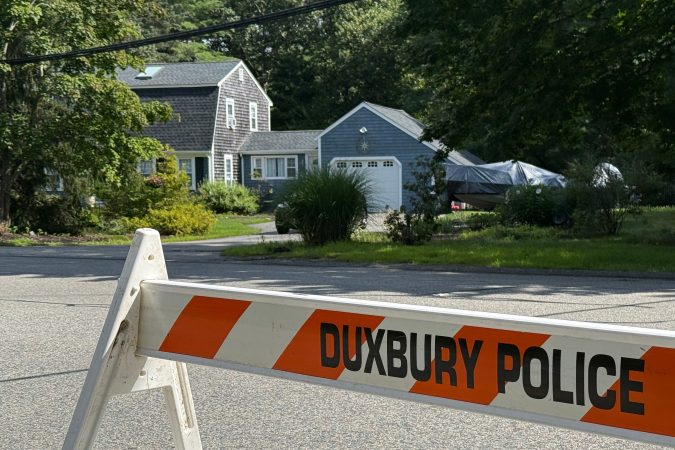
    Journalists were kept away by a police barricade, but court officers could be seen through the trees escorting jurors to and from the bus along the site of the Clancy family’s former driveway. The home now has a new owner.

    Clancy herself did not attend the visit to the home, which she hasn’t seen since the day of the killings. Her lawyers argue she was in the grip of postpartum psychosis, a rare mental illness linked to the stress, sleep deprivation, and hormonal changes that follow childbirth.

    Jurors in U.S. criminal cases often are expressly told not to visit the scene of the events in question. There are a number of rationales for not doing so — among other things, the site may have changed in the interim between an alleged crime and a trial.

    But courts sometimes allow juries to make a supervised excursion as a group, for reasons that can include assessing distances or features that aren’t thought to come across fully in photos.

    Such excursions have happened in a number of high-profile cases, including the 2023 murder trial of South Carolina attorney Alex Murdaugh, the 2022 sentencing trial of Parkland, Fla., school shooter Nikolas Cruz, the 2015 Massachusetts murder trial of former New England Patriots player Aaron Hernandez, and the 1995 murder trial of O.J. Simpson.

    Jurors in Clancy’s trial retraced the route her then-husband, Patrick Clancy, took when she asked him to pick up takeout food and medicine for daughter Cora on the night of the killings. He returned to find the children dead and his then-wife badly injured and bleeding in the yard.

    The panel was driven past the restaurant — about 5.5 miles from the family’s former home in Duxbury, a town south of Boston — and the pharmacy, about a mile from the house.

    Prosecutors say the errands were a ruse to get her husband out of the house. They say Lindsay Clancy, a former labor and delivery nurse, acted intentionally and is criminally responsible for the deaths of children Cora, 5; Dawson, 3; and Callan, 8 months.

    Her lawyers don’t dispute that she killed the children, but they say she had bipolar disorder and her condition worsened while she was on antidepressants prescribed after the birth of her third child. She believed a voice was telling her to “kill the children so you can kill yourself,” according to her lawyers.

    Lindsay Clancy remains paralyzed from the waist down after using multiple methods to try to end her life that night.

    If convicted of murder, she faces life in prison without parole. If found not guilty due to a lack of criminal responsibility, she would be committed to a state mental health facility.

  • U.S. stocks rise to finish a wild July as Amazon soars, Apple sinks, and inflation worries worsen

    U.S. stocks rise to finish a wild July as Amazon soars, Apple sinks, and inflation worries worsen

    NEW YORK — U.S. stocks rose Friday to finish a wild July for Wall Street as Amazon leaped, Apple sank, and rising oil prices worsened worries about inflation staying high.

    The S&P 500 climbed 0.7% after veering between gains and losses through the day. The Dow Jones Industrial Average added 276 points, or 0.5%, and the Nasdaq composite rallied 1% after briefly losing all of an early 1.3% jump.

    It’s a fitting finish to July for the U.S. stock market, which lurched up and down as oil prices shot higher because of the war with Iran and worries grew about whether Big Tech’s massive investments in artificial-intelligence technology will translate into profits and whether chipmaker stocks soared too high in the euphoria around AI.

    Friday’s gains sent the S&P 500 to its first winning week in three, but the main measure of the U.S. stock market nevertheless finished the month with a tiny loss.

    Amazon led the market with a leap of 15.3% after reporting much stronger profit for the latest quarter than analysts expected. Its profit more than tripled from a year earlier, thanks in part to an acceleration of growth in its cloud computing business.

    Analysts said that could be a signal Amazon’s huge AI investments are paying off, and Amazon increased its forecast for how much it will spend on investments this year.

    The reaction was similar to what Microsoft got a day before, when its stock soared to its best day in nearly 18 years on signals that its AI investments may also be yielding higher profits.

    Chip companies selling the processors and computer memory that such “hyperscalers” are scrambling to buy swung sharply again on Friday. Micron Technology, for example, went from an early jump of 6.4% to a loss of 6.5% before finishing with a fall of 5.9%.

    More firmly on the losing end of Wall Street was Apple, which dropped 7.4% despite reporting stronger profit for the latest quarter than expected. Its forecast for revenue growth in the current quarter fell short of expectations, which executives pinned on a supply crunch in components getting vacuumed up in the AI boom.

    All told, the S&P 500 rose 52.09 points to 7,489.72. The Dow Jones Industrial Average added 276.97 to 52,485.03, and the Nasdaq composite climbed 251.68 to 25,373.85.

    The gains came despite another rise in oil prices as uncertainty continues about when the war with Iran will allow crude to flow freely again from the Middle East.

    The price for a barrel of Brent crude rose 1.2% to settle at $87.93 after careening between $72 and $102 earlier in July.

    Higher oil prices have pushed the cost for a gallon of regular gasoline to an average of nearly $4.11 across the United States, up from $3.85 a month ago, according to AAA. More expensive oil also puts upward pressure on prices for virtually every product that rides on a ship, plane, or truck before getting to a customer.

    The worries about inflation sent yields in the bond market even higher.

    The yield on the 10-year Treasury rose to 4.71% from 4.68% late Thursday and from just 3.97% before the war with Iran sent oil prices shooting higher. That’s a notable move for the yield, which moves higher when investors’ expectations for inflation, economic growth, and other factors in upcoming years are rising.

    The leap for the 10-year yield has already sent the average long-term U.S. mortgage rate to its highest level in a year.

    Longer-term yields jumped on Wednesday after the Federal Reserve’s chairman, Kevin Warsh, promised again to get inflation back down to 2% but refused to say how he plans to get it there. The Fed voted again to keep its main interest rate steady on Wednesday, even though inflation remains well above 2%.

    Hikes to rates by the Fed could restrain inflation, but they could also slow the economy and undercut prices for stocks and other investments. President Donald Trump, who nominated Warsh to lead the Fed, has lobbied for lower interest rates instead of higher.

    Warsh has told financial markets that he does not want to give hints about what the Fed will do with interest rates, saying he wants to get direct, “unfiltered” messages from them rather than echoes back of what the Fed has suggested.

    “The Fed is facing a growing credibility problem,” economists at Bank of America wrote in a report. Unless data comes in showing less pressure on inflation in the interim, “it is imperative for the Fed to pass the September test by hiking rates and delivering an internally consistent narrative.”

    AP Business Writers Chan Ho-him and Elaine Kurtenbach contributed to this report.

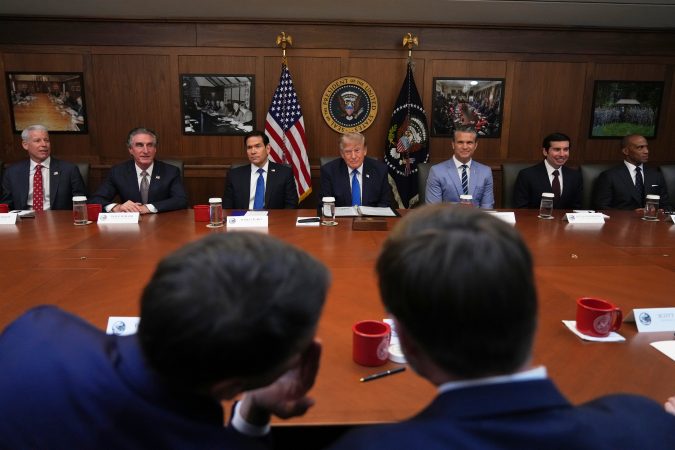
  • Trump hails a ‘unique’ Cabinet meeting at Camp David as he seizes on Spain’s migration crisis

    Trump hails a ‘unique’ Cabinet meeting at Camp David as he seizes on Spain’s migration crisis

    CAMP DAVID, Md. — President Donald Trump took Friday’s cabinet meeting on the road to Camp David, using the historic rustic backdrop of the presidential retreat to boast of his administration’s achievements while seizing on a migrant crisis in Spain to make his case for why voters should keep the Republican Party in power.

    The cabinet meeting, the 13th such gathering of Trump’s second term, came just three months before the November midterm elections that could serve as a check on his power if Democrats take control of one or both chambers of Congress. His warnings about Spain echoed language he used ahead of the 2018 midterms, when he warned of caravans of migrants headed to the southern U.S. border.

    “You know, I saw Spain yesterday, and I watched the catastrophe that took place. It looks like an invasion of a country by hundreds of thousands of people,” Trump said. “And that same thing is going to happen to us if the Republicans don’t get elected. Except worse, much bigger.”

    Some 60,000 migrants crossed from Morocco into Spain’s tiny Ceuta territory over the past 24 hours. Roughly half of them have already made their way back voluntarily, according to the Spanish government, but at least 57 have died on the journey.

    Separately, he deflected blame for a series of cyberattacks that targeted 30 water systems in Minnesota on the state’s “grossly incompetent” Democratic leadership. Officials have not publicly identified who was behind the attacks, though the FBI, the Cybersecurity and Infrastructure Security Agency, and other agencies warned in an advisory last week that Iranian hackers have been targeting water and wastewater systems and the operational controls of other critical infrastructure sectors.

    “They blame it on Iran,” Trump said, without offering evidence. “I don’t think so. I think I blame it on Minnesota because they’re grossly incompetent.”

    The president regularly convenes his cabinet throughout his terms as a setting to promote his administration’s policies while fielding questions on the news of the day, but what made Friday’s meeting unusual was that it was at Camp David, the government-owned retreat nestled in Maryland’s Catoctin Mountains, where Trump held one cabinet meeting during his first term.

    Trump began the meeting by noting it was “something very unique.” The White House called it the first-ever televised cabinet meeting from the presidential retreat.

    “It’s Camp David, and this room is a very, very special room,” Trump said.

    Secretary of State Marco Rubio and Defense Secretary Pete Hegseth were among the cabinet officials who spoke before Trump took questions from journalists. The public portion of the meeting ended after about an hour.

    Trump fields questions on Iran, Hamas deal, and Blanche confirmation

    In the lengthy question-and-answer session, Trump commented on the latest developments regarding the war in Iran and a deal he announced Thursday that he said would lead to the disarmament of the Palestinian group Hamas.

    He also lamented that a $1.8 billion anti-weaponization fund to compensate his allies was “dead” and appeared to back off a pledge he made earlier this month to grant Ukraine a license to manufacture Patriot air defense systems.

    “I don’t think this would ever happen, but, you know, there’s people that, you give that technology, they can someday turn on you,” Trump added. “You look at war, that’s happened a couple of times over the years, right? So we have to be very careful.”

    On the Hamas agreement, Trump acknowledged that the agreement that would also lead to Israel’s withdrawal from Gaza will have “ups and downs.” Still, he called it a “great breakthrough” that has been helped along by the U.S. and Israel’s war with Iran, which has served as Hamas’ prime backer.

    Trump also remarked on the anti-weaponization fund that is holding up the confirmation of Todd Blanche as his attorney general, saying the pot of money is “dead” and that “I wish it weren’t, to be honest with you.”

    The president continued to defend the people who could potentially benefit from the fund, mainly those who stormed the Capitol on Jan. 6, 2021, to stop the certification of Democrat Joe Biden’s victory over him.

    “Their families have been ruined,” Trump said. Those people “wanted to go to a rally or an event and ended up spending the rest of their lives in horror.”

    Trump said Blanche has been a “pawn in this whole thing.” Blanche, who was present, did not speak in the public portion of the cabinet meeting.

    Camp David has been a retreat for presidents since FDR

    The camp’s primary purpose is to provide presidents a place to rest, relax, and recharge. It was established in 1942 during Franklin Roosevelt’s presidency and has been used by every president since.

    Roosevelt had enjoyed relaxing aboard a presidential yacht, but the military and the U.S. Secret Service began to worry about his safety on open water during World War II. As a result, Roosevelt asked the National Park Service to find sites within 100 miles of the White House that he could use for rest.

    He chose what is now known as Camp David. He gave it the original name of Shangri-La, from James Hilton’s novel Lost Horizon. President Dwight Eisenhower renamed it Camp David, after his grandson and father.

    Trump spent more weekends at the retreat in his first term but has visited sparingly in his second, most recently in June for Father’s Day.

    In 2019, during his first term, Trump announced on social media that he had canceled a secret weekend meeting at Camp David with Taliban and Afghanistan leaders — scheduled for just days before the anniversary of the Sept. 11, 2001, attacks — after a bombing in the capital of Kabul killed a dozen people, including a U.S. soldier.

    Presidents throughout history have turned to Camp David when they needed security and privacy for sensitive diplomatic talks with foreign leaders. Jimmy Carter took the leaders of Egypt and Israel there in 1978 for talks that produced the Camp David Accords, a peace agreement between the two countries.

    The 180-acre retreat, which is run by the Navy and guarded by Marines, has a cabin named Aspen that’s reserved for the president, plus about a dozen other cabins for guests. A main lodge has conference rooms, a dining room, and an office for the president.