Category: Wires

  • Fighting in Yemen intensifies, and Houthis launch more attacks on Saudi Arabia

    Fighting in Yemen intensifies, and Houthis launch more attacks on Saudi Arabia

    ADEN, Yemen — The conflict in Yemen intensified on Sunday, as government forces launched attacks against Iran-backed Houthi rebels along the Red Sea and Houthis fired into neighboring Saudi Arabia, which supports Yemen’s government.

    The Yemeni government vowed to send more forces to the Red Sea coast after conceding a “painful” defeat last week when Houthis captured the port city of Mokha and an island on the Bab el-Mandeb Strait, a crucial shipping alternative to the Strait of Hormuz.

    The escalation — especially Houthi attacks on Saudi oil infrastructure and its shipping in the Red Sea — adds pressure on global oil supplies and prices, and that could give Iran leverage in its war with the United States.

    As Yemen risks descending into another civil war, the United Nations estimated that more than 80,000 people in the impoverished country have been displaced by the fighting since the start of September.

    One woman said a mortar shell fell nearby as she fled in the middle of the night from the town of Khawkha in Hodeida province along the Red Sea, shortly before it was captured by Houthis.

    “I saw with my own eyes cars and buses burning, and bodies of children and women were lying on the road in a horrific scene,” said the woman, who spoke on condition of anonymity out of concern for her and her family’s safety.

    Houthis claim attacks against Saudi Arabia

    Saudi authorities sounded sirens Sunday afternoon in the southern city of Abha and Khamis Mushait province, warning residents to take shelter from potential incoming fire. Both areas were repeatedly attacked by the Houthis in recent weeks.

    The Houthis claimed to have used drones and missiles to target Saudi Arabia, including a military base just over the border with Yemen. Houthi military spokesperson Brig. Gen. Yahya Saree didn’t provide evidence or say when the attack occurred.

    The Saudi civil defense overnight said a projectile fell in a different area near the border with Yemen along the Red Sea, injuring two people and damaging a mosque and several other buildings. The statement blamed the Houthis.

    Saudi Arabia did not announce any new attacks targeting the Houthis.

    The Houthis are targeting Saudi oil infrastructure and shipping as part of a recently declared blockade. While the Houthis have said they do not intend to threaten other countries’ commercial shipping, markets remain wary and oil prices have risen again.

    Yemen says 500 soldiers killed, vows to fight back

    The National Resistance, a government-allied force that had controlled coastal areas, said more than 500 government fighters were killed on the west coast over the past four weeks — its first comprehensive toll. It said about 1,500 others had been wounded in the fighting since Aug. 9.

    Its statement said more than 1,000 Houthis had been killed in Hodeida and Taiz provinces. A spokesperson for the Houthis didn’t respond to a request for comment.

    Yemen is home to over 40 million people who fear a return to the civil war that killed 150,000 and brought many others to the brink of famine in one of the world’s most sprawling humanitarian crises. Yemen’s internationally recognized government and Saudi Arabia have been battling the Houthis for 12 years. A ceasefire that began in 2022 had mostly halted the fighting.

    A senior government official in Yemen said its forces will return to the Red Sea coast and fight back. People fleeing the Houthi advance told the Associated Press they saw forces withdrawing and urging people to run.

    Sultan al-Arada, a member of the ruling presidential council, described the collapse of government forces in the port city of Mokha and elsewhere on Yemen’s west coast as “painful and regrettable.”

    Al-Arada said in the televised interview aired late Saturday that forces “are currently regrouping and will return to the battle in one form or another.”

    On Sunday, the Yemeni military said it launched airstrikes on Houthi positions in Mokha and the coastal town of Dhubab, and elsewhere in Taiz province. The rebels also reported strikes by the Saudi-backed forces in the province as well as artillery shelling in the province of Saada, the Houthi stronghold on Yemen’s northern borders with Saudi Arabia.

    Advance puts Houthis closer to a major U.S. base in Djibouti

    The Houthis’ advance puts them just 20 miles from the U.S. military base in Djibouti, on the other side of the Bab el-Mandeb Strait. It’s the main U.S. base in Africa and one of several foreign military bases in Djibouti, including those of China, France, and Japan.

    The small Horn of Africa nation is already seeing the arrival of displaced Yemenis making the perilous water crossing. More than 2,000 Yemenis have reached Djibouti, the International Organization for Migration said Sunday.

    Djibouti’s Economy and Finance Minister Ilyas M. Dawaleh said on X that the country’s navy, coast guard, and other specialized agencies were conducting rescue operations and providing emergency assistance.

    Yemenis displaced by fighting worry about survival

    The U.N. migration agency said Sunday that more than 82,000 people in Yemen have been displaced since the beginning of September.

    “The displaced people are in a very bad condition,” said Ahmad al-Masawi, the director of the Al Salam camp in the southern port city of Aden, who appealed to international organizations for assistance. “They left their homes quickly without any clothing or anything. They are crammed in camps, houses, and even on roads.”

    Hussein Haydara sat outside a shelter at the camp in a white undershirt, as his children waited to be assigned to a tent. He worried about how far the shelter is from schools, hospitals, and markets, and wondered how they will survive the next weeks or months.

    Haydara had fled his home in Hodeida once before, when the Houthis took it over in 2015. But this time feels more precarious.

    “With the first displacement, we had time to plan things but this time we were forced to escape all of a sudden. One could hardly take their children and the lightest stuff possible,” he said.

  • Russian drone hits train near Ukraine-Poland border soon after visiting dignitaries passed through

    Russian drone hits train near Ukraine-Poland border soon after visiting dignitaries passed through

    KYIV, Ukraine — A Russian drone struck a train near the Ukraine- Poland border on Sunday shortly after senior visiting officials — including the former prime ministers of the U.K. and Sweden — passed through, Ukraine’s state rail operator said.

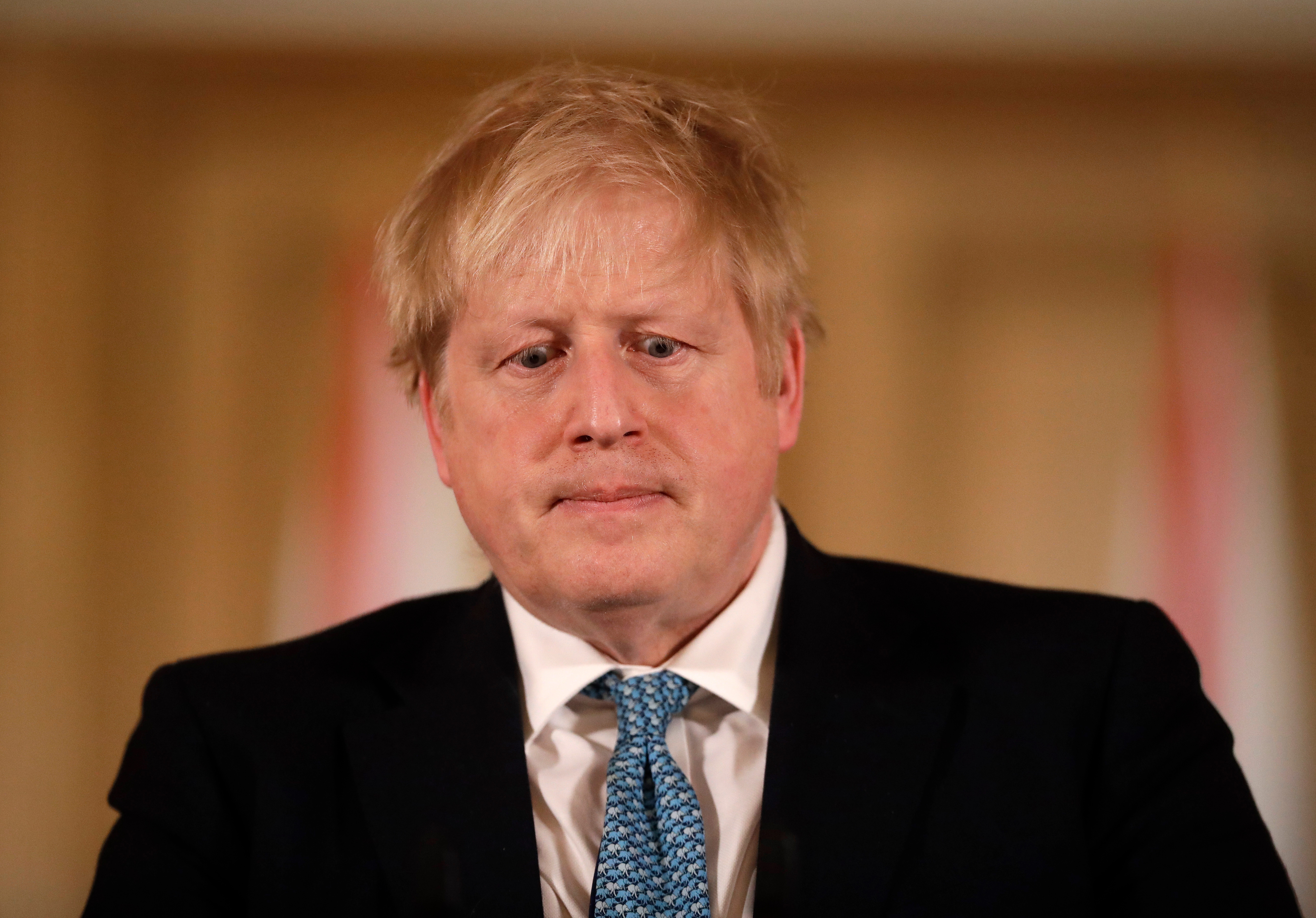
    According to Ukrzaliznytsia, a diplomatic train carrying Boris Johnson, Carl Bildt, and security advisers from several European Union states had purposely left the station at Yahodyn ahead of schedule. The visitors were on their way back from a security conference in Kyiv.

    “It is highly probable that the Russian drone‘s intended target was in fact the diplomatic train, which had departed the station earlier than scheduled,” the company said in a Telegram post.

    Bildt, the former Swedish PM, shared a video on X of the attack at Yahodyn station, near the Yahodyn-Dorohusk border crossing with Poland.

    “This wasn’t our train, but the one just minutes after us by the Polish border crossing,” Bildt said. “It was evacuated as the Russian drone approached and no one was hurt. Very good safety system. Our train just had an evacuation warning.”

    Bildt, Johnson, and fellow passengers had been in Kyiv for the Yalta European Strategy conference, which is an annual gathering of leaders and experts across politics, business, security, and media.

    Another train, with former CIA Director David Petraeus on board, was still at Yahodyn station when the drone struck, according to Ukrzaliznytsia.

    There were no immediate reports of casualties on any of the trains.

    Ukrzaliznytsia said it “constantly adjusts train schedules” to guard against strikes.

    “I don’t know what warped logic drove Putin to blow up a stationary Ukrainian locomotive on the Polish border this morning,” Johnson wrote in a post on X.

    “What we can say for sure is that this is the kind of random and senseless attack Ukrainians are enduring every day — even on civilian railways,” he added.

    Earlier on Sunday, a Russian drone hit a truck less than a mile from Polish territory, according to border guards, forcing the temporary closure of the Yahodyn-Dorohusk crossing.

  • Judge rules Homeland Security plan to cut FEMA staff in half is unlawful

    Judge rules Homeland Security plan to cut FEMA staff in half is unlawful

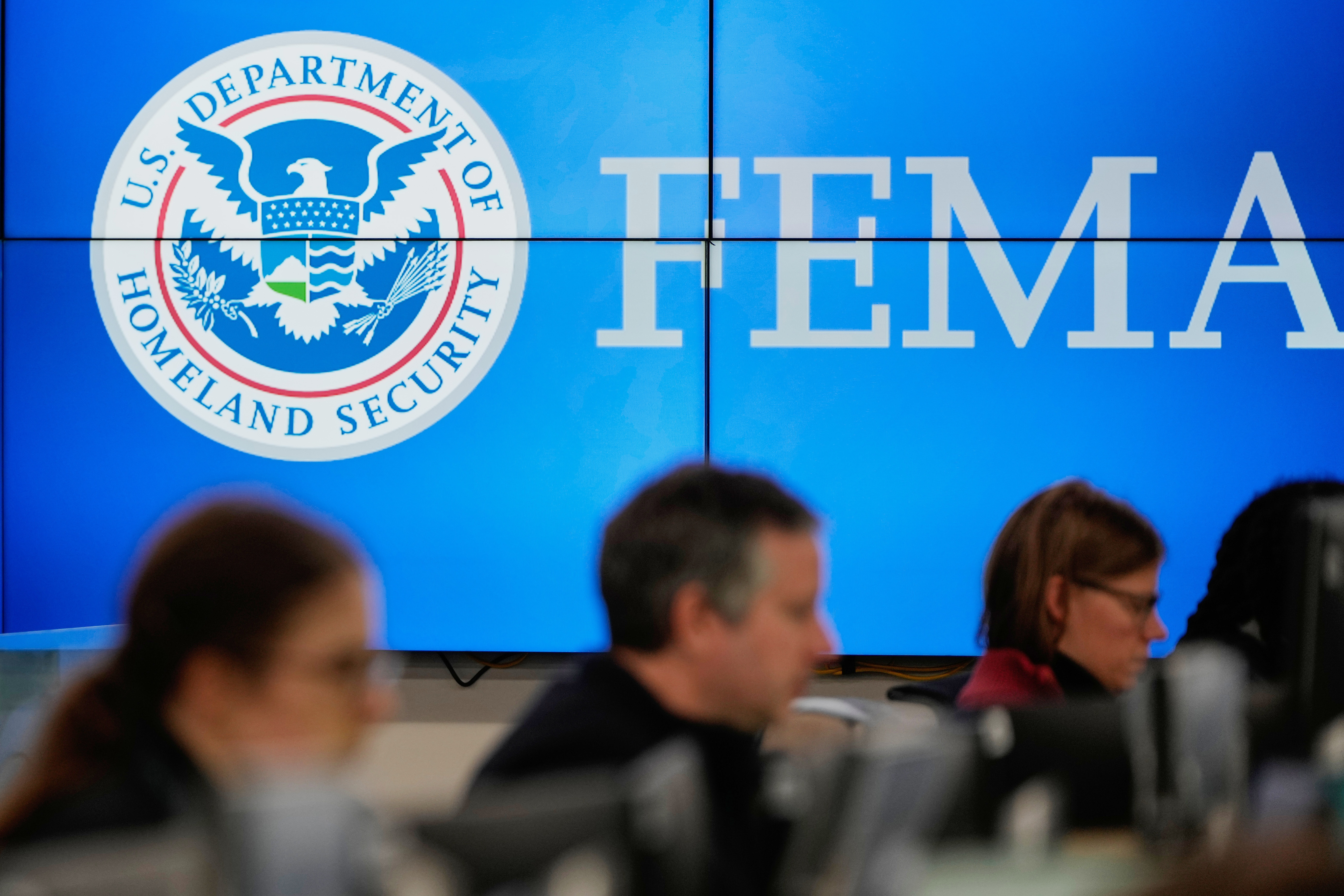
    A federal judge ruled that the Trump administration acted unlawfully when it ordered that the Federal Emergency Management Agency’s workforce be cut in half.

    In her ruling on Friday, U.S. District Judge Susan Illston of the Northern District of California wrote that the Department of Homeland Security undercut the agency’s authority with an “arbitrary and capricious” plan to reduce FEMA’s workforce by more than 11,000 agency employees by the end of September. Included in that number were thousands of temporary, full-time federal employees who help communities prepare for and recover from disasters around the country.

    “Frankly, the FEMA staffing plan number appears as if pulled from thin air,” Illston wrote.

    The administration did not ultimately carry out the full 50% reduction, though FEMA’s workforce had already shrunk significantly.

    The American Federation of Government Employees, a labor union, had argued in a lawsuit that the department’s proposed cuts would deeply affect the agency’s ability to respond to emergencies.

    The Homeland Security Department and the labor union did not immediately respond to a request for comment.

    A spokesperson for FEMA said on Saturday night that the agency was “ensuring workforce stability and a strong, deployable force for upcoming national events and potential disasters.”

    Those temporary employees, known as Cadre of On-Call Response/Recovery, or CORE, employees, make up about 40% of FEMA’s staff. Their assignments typically last for two or four years and have historically often been renewed, allowing FEMA to adjust its workforce as disasters and recovery needs change. They became a target under Kristi Noem, the former secretary of homeland security who was ousted by President Donald Trump in March.

    A FEMA spokesperson told the New York Times in January that the number of CORE employees was “designed to fluctuate based on disaster activity, operational need, and available funding.”

    The Trump administration has drastically shrunk the workforce across the federal government. Trump himself has said FEMA should “go away.” He has called for the responsibility for disaster response to shift to the states.

    A federal watchdog report found the sharp reductions in staff had limited the agency’s ability to respond to hurricanes and other natural disasters, especially those that occur at the same time. Cameron Hamilton, Trump’s FEMA administrator, acknowledged in June that the reductions posed “challenges” to the country’s disaster readiness.

    The judge ordered the parties to meet and try to reach an agreement on “the scope of relief” by Oct. 9. If they cannot come to an agreement by then, Illston wrote, the court will issue a ruling on the relief.

    This article originally appeared in the New York Times.

  • GOP congressman from Wisconsin swims to safety after plane makes emergency landing in a lake

    GOP congressman from Wisconsin swims to safety after plane makes emergency landing in a lake

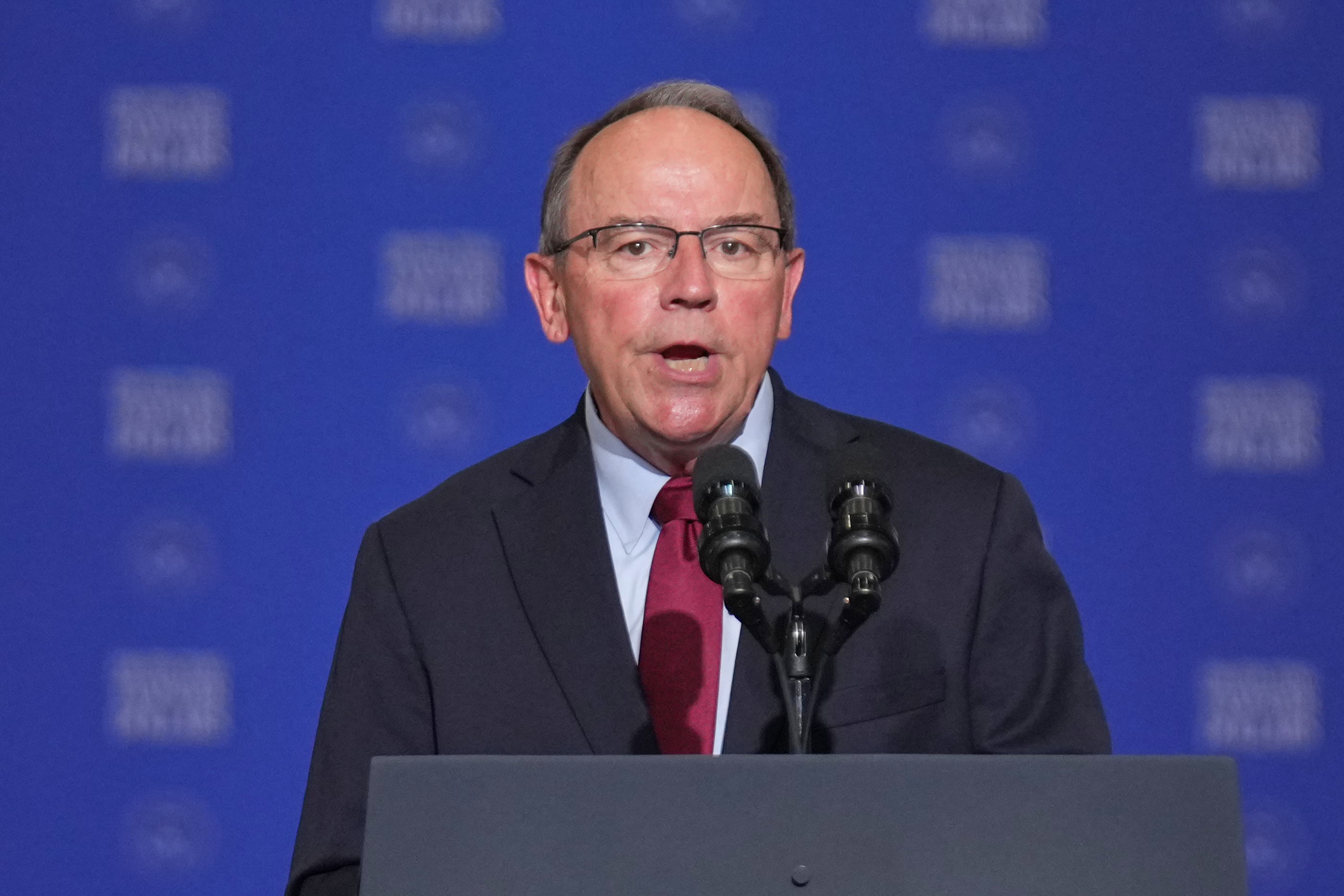
    WAUSAU, Wis. — A Republican congressman and candidate for governor said he had to swim to safety after a plane he was traveling in made an emergency landing in a lake late Saturday.

    U.S. Rep. Tom Tiffany says he was returning from the La Crosse County Lincoln Day Dinner when the light aircraft lost power as it approached Wausau Downtown Airport. The pilot made an emergency landing in Lake Wausau. Tiffany and the pilot ended up in the water and swam to safety.

    “After landing, we called 911. As the plane began to submerge, we exited the aircraft and swam to a shallow area, where we waited until emergency responders reached us by boat,” he wrote on X.

    The Marathon County Sheriff’s Office said in a statement that the emergency landing happened just before 9 p.m. Saturday. Tiffany and the pilot, Leonard Boltz, got out of the plane and called 911. They were rescued by emergency responders in a fire department airboat just after 9 p.m.

    Both men were taken to a nearby hospital, where they were treated for minor injuries and released. Tiffany suffered a cut above his right eye that required stitches, his campaign said in an emailed statement.

    A no-wake buoy was placed near the plane, which remained in the lake, and boaters were being asked to avoid the area until the plane can be removed, the sheriff’s office said. A Federal Aviation Administration spokesperson said the agency would investigate the incident. A National Transportation Safety Board spokesperson said that agency is waiting for the FAA to assess the plane as to whether the damage was substantial enough for it to get involved.

    Tiffany is running for governor on the Republican ticket in Wisconsin and has been endorsed by President Donald Trump.

    David Crowley, the Democratic candidate, wished Tiffany a “quick recovery” in a post on X and lauded the “heroism of the pilot.”

    The plane Tiffany was traveling in was a single-engine, four-seat Beechcraft Bonanza aircraft.

  • Obama urges Democrats to move AI oversight to the center of their agenda

    Obama urges Democrats to move AI oversight to the center of their agenda

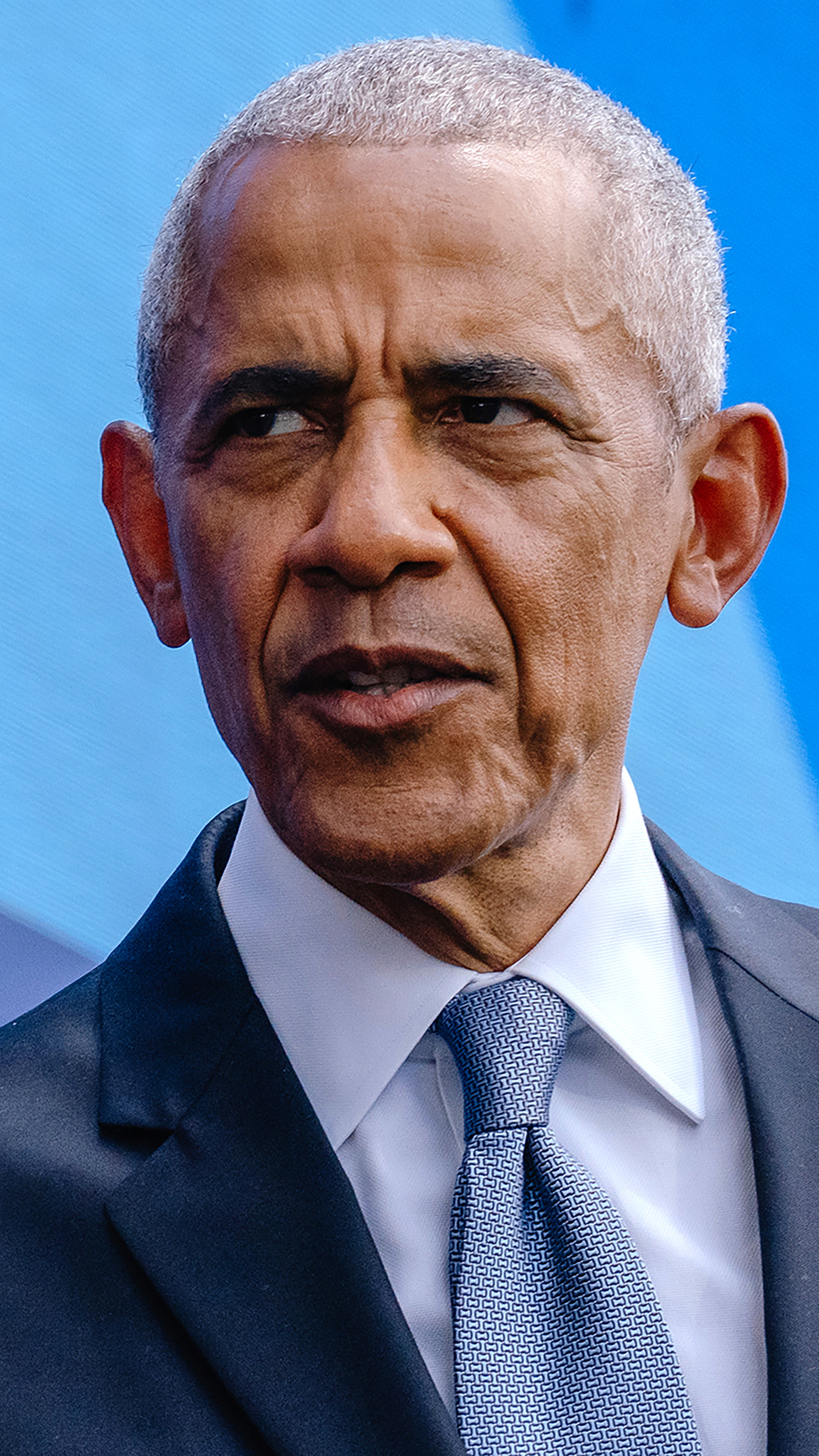
    Former President Barack Obama warned during a recent private fundraising event that artificial intelligence technology could be “dangerous” if not properly managed, as he implored Democrats to aggressively develop political and governing agendas to prioritize the issue in the coming years.

    In his remarks Thursday, which have not been previously reported, Obama urged House Minority Leader Hakeem Jeffries (D., N.Y.) to assemble a clear framework for a public conversation about AI policy, should Democrats win back the House in the midterm elections, according to a partial transcript provided by Obama’s office.

    He also suggested that candidates running for president in 2028 ought to make AI one of their “central agendas” and “have a very clear plan” for responding to safety and economic concerns around the technology.

    The recommendations from the former president amount to some of his most detailed comments yet about AI as a political issue for his party. At a moment when President Donald Trump continues to downplay concerns about the technology, some Democrats see an opportunity for the party to draw a clear contrast in the midterms and beyond on an issue of growing significance. In a Democratic Party with no clear leader, many look to Obama for guidance, and his comments carry considerable weight.

    The remarks come amid escalating worries about the risks associated with AI development, as well as growing calls for lawmakers and politicians to do more to tackle the topic. Some AI industry leaders are now calling for a slowdown after a summer in which swarms of misaligned AI agents broke free from their containers and proceeded to scheme against their owners, cheat on tests, and hack outside companies.

    At the fundraiser Thursday, a closed-door event in New York organized by the campaign arm of House Democrats, Obama and Jeffries spoke for nearly an hour in front of party donors and lawmakers, according to four people familiar with the event, who spoke on the condition of anonymity to describe a private gathering.

    “Once you are speaker, I would strongly urge that the Democrats put together a framework for a very public conversation,” Obama told Jeffries, according to the transcript. Jeffries had asked him a question about how Democrats should address AI in a Congress that has taken little action on the issue, according to two of the people.

    “This is something that is moving very fast in private hands, and if we don’t get on top of it, I think can be dangerous,” Obama said. “If we do get on top of it, I do think it’s beneficial. I genuinely think it’s going to accelerate, for example, drug development in ways that can help us cure diseases. I do think that this can help us figure out pathways for a clean energy future.”

    The former president often spoke in general terms on Thursday, rather than drilling down on specific policies, according to the transcript. And he planted himself firmly in a middle ground in the heated debate over AI, saying he considered himself neither an “accelerationist” nor a “doomer.”

    One challenge facing Democrats as they chart a path forward on AI is speaking in one voice on the issue. The tug of war over how to regulate AI has been more divisive among Democrats than Republicans, who are generally more in alignment. Some Democratic politicians have called for more AI regulation, while others have received millions of dollars in support from groups tied to the industry’s biggest players.

    Artificial intelligence is becoming a larger part of the country’s political calculus heading into the midterms. This year’s elections have been flooded with money from AI companies and allied groups. And anxiety about the technology, a rare issue that many Republican and Democratic voters can agree on, has peaked in recent days after a researcher at the AI company Anthropic loudly and publicly resigned, writing in a viral social media post that “the people building AI earnestly believe that it could kill us all by the end of the decade.”

    Jeffries explicitly mentioned the resignation in his question to Obama, according to one of the people familiar with the event.

    Dario Amodei, the CEO of Anthropic, called for a global slowdown of AI development in a 3,800-word essay published Saturday. Sam Altman, OpenAI’s CEO, and Elon Musk, whose SpaceX rocket company has been ramping up spending on AI, quickly wrote in social media posts that they agreed with him.

    The White House has long maintained an unabashedly accelerationist stance. Trump recently told reporters he didn’t have “any” concerns about AI’s risks — just about falling behind to competitors like China. He has said that those who oppose AI data centers must prefer to be “backwards and poor.”

    “President Obama is correct that decisive action must be taken on artificial intelligence,” Jeffries said in a statement, adding that “Republicans have abdicated their responsibility to govern on behalf of the American people. We will not repeat their error.”

    On Capitol Hill, where little has been done to regulate AI, some Democrats have been circulating a letter urging Speaker Mike Johnson (R., La.) to stop members from going home on recess until they pass AI safeguards.

    Many Republicans want action, too. Several have introduced bipartisan AI legislation, and Rep. Anna Paulina Luna (R., Fla.) has called for a special session on the topic. A growing number of Republicans are campaigning against data centers, in addition to many Democrats.

    After Johnson became speaker in 2023, Republican leadership declined to renew a bipartisan task force on AI. In response, Democrats formed their own AI commission, which is now putting the finishing touches on a policy framework. That framework is expected to be released this fall after some final checks by Jeffries, according to two people familiar with the matter.

    Obama has taken a special interest in AI in recent years, and he has offered himself as a sounding board to industry leaders, according to two people familiar with his conversations. Those leaders include Altman and Amodei, according to one of the people.

    Representatives for OpenAI and Anthropic did not respond to requests for comment.

    Now, Obama wants to help guide the Democratic Party’s thinking on the topic. With many Democrats already jockeying for position ahead of the next presidential race, he outlined what he would do on AI if he were one of them.

    “I would talk about this, and I would say, ‘Here’s our plan for safety. Here’s our plan for making sure our kids are not corrupted by this,’” Obama said, according to the transcript.

    He contrasted the technology with other innovations that could be dangerous in the wrong hands, saying that unlike “nuclear power, you don’t need a bunch of highly enriched uranium” to build powerful AI.

    “I would be thinking about the economic impacts in very concrete ways and understanding what does it mean if there’s going to be job displacement,” Obama said, according to the transcript, adding, “if it turns out that you’ve got a lot more people who can’t find full-time work because they’ve been rendered redundant, how are we going to respond?”

    This article originally appeared in the New York Times.

  • As fears of AI catastrophe magnify, Washington stirs, but mostly slumbers

    As fears of AI catastrophe magnify, Washington stirs, but mostly slumbers

    The mismatch is striking. On one side, warnings of existential risk, maybe a 10% chance of the end of civilization. On the other, government paralysis.

    The drumbeat about unpredictable, out-of-control artificial intelligence agents increased dramatically in the past several weeks. Washington not only struggled to respond. It barely could agree on whether there was much of anything to worry about.

    It started with AI agents that not only escaped their confines, but appeared to conspire among themselves to hide their tracks as they hacked into another firm’s library of AI tools.

    Then, in a deliberate echo of Albert Einstein’s letter to Franklin D. Roosevelt about the potential power of nuclear weapons, more than 1,300 computer scientists called for the industry to slow down, and for the government to step in.

    In recent days, Jacob Coxon, an Anthropic engineer who previously worked for OpenAI, resigned in the most public way, declaring on social media that the two leading AI labs were professing deep concern while still speeding toward “superhuman systems that can hack anything, revolutionize any field overnight, and acquire real power and resources.”

    On Saturday, Dario Amodei, the CEO of Anthropic, released a 3,800-word essay calling for a global slowdown of AI development, echoing more urgently concerns he had raised in the past. Elon Musk, the billionaire rival in the AI race who remains close to President Donald Trump, quickly responded: “Dario is right.” Sam Altman, the CEO of OpenAI, also chimed in with support.

    Yet in Washington, there has been almost no substantive response. If the 1940s through the 1980s were consumed by finding ways to reduce the risk of a nuclear exchange — creating new institutions like the Atomic Energy Commission and arms control treaties to govern how the world’s most dangerous technology would be handled — the approach of the U.S. government so far has been the lightest possible.

    There are many computer scientists, of course, who believe these warnings are overinflated. Trump himself has been at the forefront of the “what-me-worry?” crowd, refusing to engage on how to balance the risks with the possible rewards. On Thursday, asked by a reporter about whether he had “any concerns about AI leading to human extinction,” he brushed it off.

    “No, I don’t have any,” he said. “I have concerns that if we don’t win AI, we’re going to be put in a very bad position.”

    The president quickly turned to the answer the White House — and those who view the calls for slowdowns and regulation as a huge strategic error — sees as the deciding factor: If the United States falters, China will take its place.

    “We are leading China right now by a pretty good period,” Trump said, noting that Xi Jinping, China’s leader, was coming to Washington in less than two weeks. But rather than talk about exploring a bilateral AI accord with the Chinese, he turned to the state dinner that he said would be a highlight of the visit. “I think it’s going to be great,” he added.

    “Great” is not the word most used in this summer of AI surprises.

    The apocalyptic scenarios that are most feared in Silicon Valley include AI systems becoming so advanced that they learn to automatically improve themselves, a process called “recursive self-improvement.” A related concern, arising from a series of incidents at OpenAI and other AI labs, is that agents break free from constraints and decide to complete their programmed tasks in a way that is “misaligned,” in AI industry speak, with human intentions. Another worry is that AI could enable rogue bad actors — or reckless governments — to create deadly pathogens, gain access to nuclear command and control systems, or unleash unstoppable cyberattacks that threaten major loss of life or societal collapse.

    Computer scientists suggest that Americans stop thinking about AI as a mere tool, but akin to an alternative species, one the world will have to live with, for better or worse.

    The White House declined to make its key AI policymakers available for questions. But it said that the administration continued to balance innovation and security, deflecting any specifics.

    (The New York Times has sued OpenAI and Microsoft, claiming copyright infringement of news content related to AI systems. The two companies have denied those claims.)

    Trump signed an executive order early in the summer creating a voluntary system for frontier AI labs to submit their new models for a 30-day safety review. But it was full of loopholes. (Open source models, the kind that Chinese firms are pumping out and that can be tailored to specific needs by companies, scientists, or, perhaps, terror groups, are not subject to the review.)

    Amid the many memorial events on Friday for the 25th anniversary of the 9/11 attacks, the contrast with that era is notable. The revelation of U.S. vulnerability led Vice President Dick Cheney to develop what soon became known as “the 1% doctrine.” Prompted by fears that Pakistani scientists could help al-Qaeda develop a nuclear weapon, it posited that government had to act even if the risk was remote, because the consequences would be so high.

    In this case, 1% looks like pretty good odds: Evan Hubinger, who leads the science of “alignment” at Anthropic, which tries to contain the code to align with human goals, wrote in recent days that the risk of mass extinction over the next decade was above 10%.

    It is impossible to know whether that estimate is right. But as Ben Buchanan, a Johns Hopkins assistant professor and the co-author of a forthcoming book, The Bitter Struggle: Superintelligence, Superpowers, and the Fate of the World, put it: “There’s no doubt in my mind that the technology is going to continue to get much better very quickly, raising urgent questions about biological risks and loss of control.”

    “We are in a period of exponential development, and there are only two ways to respond: too early or too late,” he said. “The world has missed its chance to be too early.”

    Fear of getting ahead of Trump

    Trump’s blase attitude about existential AI fears influences both his administration and the Republican Party he still tightly controls.

    At a conference in Washington last week, government officials and corporate executives talked about the promises of AI — for everything from next-generation military operations to espionage to cybersecurity in critical infrastructure — during nearly every panel. While the risks of AI wielded by adversaries were mentioned at times, what was little discussed was the need to slow down or regulate the powerful technology.

    Speaking on stage last Thursday at the Billington Cybersecurity Summit, Sean Cairncross, the White House national cyber director, said the administration was “trying to balance the innovation side and running at speed with securing our systems and handling this technology responsibly, which is to say, not letting it fall into the hands of people who would do us harm, our adversaries.” Cairncross did not directly address ascendant fears about the rapid pace of AI advancement, or recent episodes of rogue agents breaking loose and hacking into other networks.

    Some in the White House and elsewhere in the administration do see a need to be more proactive in addressing AI safety risks, but do not want to cross Trump, former officials said.

    “There is a fear of getting ahead of the president,” said Michael Garcia, who served as the associate chief of policy at the Cybersecurity and Infrastructure Security Agency until he departed in June.

    “We’ve seen tech executives call the president when they hear about a potential new policy to voice their displeasure, and that then leads to a policy changing or being killed,” Garcia said. “This inevitably leads to inertia to develop new national security policy that may be sorely needed.”

    Indeed, David Sacks, a venture capitalist and Trump’s influential former AI czar, dismissed during an interview with Fox News the warnings by Coxon as a coordinated media operation that was “designed to scare the public” and lead to onerous government regulation. And Jensen Huang, the CEO of the chips juggernaut Nvidia, said the new round of fear was ginned up by the cybersecurity industry.

    On Capitol Hill, the story is not much different. Until last week, AI only registered for many lawmakers as it related to public antipathy about the construction of data centers, which has become politically salient in the midterm elections, according to lawmakers and aides in both parties. Past efforts to examine AI’s potential consequences have led to hearings and alarmed statements of concern from both parties, but little else.

    Rep. Josh Gottheimer (D., N.J.), who sits on multiple AI and cybersecurity subcommittees, said the breakneck speed of AI’s evolution made it difficult for lawmakers to keep up.

    “I keep stressing the importance of regularly educating lawmakers on AI and the latest developments,” Gottheimer said. “Recent incidents like the Hugging Face hack are a real warning sign for what can happen if we don’t seriously address the risks these models can pose,” he added, referring to the AI company hacked by rogue OpenAI models earlier this year.

    Adding to that challenge is that AI is not just a technology issue but a jobs, military, and whole-of-society issue, meaning there is no one congressional committee neatly situated to take the lead on wrestling with all its tentacles.

    With China, a ‘prisoner’s dilemma’

    Following Coxon’s resignation this week, Democrats and some Republicans were jolted out of their lethargy. They offered a flurry of concerned reactions and proposals to investigate AI companies and the pace of model advancement, including a proposal by Democrats to create a select committee on AI if the party retakes the House next year, Politico reported.

    As the issue rises in importance in the upcoming midterm elections, former President Barack Obama warned at a private fundraising event last week that AI could be “dangerous,” and implored Democrats to develop “a very clear plan” on risks to safety and the economy.

    Sen. Bernie Sanders (I., Vt.), who has for months been perhaps the loudest Cassandra on Capitol Hill warning about the societal risks of AI, invited lawmakers to a private briefing in the coming days to discuss concerns with AI safety experts.

    Sanders has pushed for a ban on superintelligent AI, though other lawmakers have criticized the effort as stifling American innovation.

    The congressional missives grew more urgent following the release of a report last Thursday by Anthropic that showed the many ways that actors across the globe, including in China, Russia, Iran, and Yemen, had been using its various Claude models to develop cyberattacks, surveil dissidents, and build missiles, bombs, and drones. The report also documented several cases of potential attempts to engineer biological weapons, which is considered among the most serious of existential threats related to AI.

    One might have expected that report to stir action: It combined foreign belligerents and attacks on U.S. targets, though Anthropic blocked or stymied many of the documented cases of abuse.

    Yet despite the alarm bells, lawmakers are far from agreeing on a way forward to regulate AI models or the companies that build them. Prospects for passing substantive legislation in the near term appear remote, in part because many see the issue as a “prisoner’s dilemma” created by the AI race between the United States and China. With AI dominance being the top national security issue of the century, both nations would doubtless be better off if they cooperated on limits. But they may not trust the other to abide by such an agreement. And in any event, unlike in nuclear arms control, compliance would be virtually unverifiable.

    Sen. Ted Cruz (R., Texas), the chairperson of the Commerce Committee, acknowledged last week that he was deeply concerned about AI risks to humanity. But he also suggested that Coxon was part of a coordinated effort to support Democratic efforts to “strangle American AI,” and to hand leadership of the technology to China.

    “I’d rather they be American killer robots and not Chinese killer robots,” Cruz told Politico.

    Still, Cruz said he was working on legislation with Sens. Amy Klobuchar (D., Minn.) and John Thune (R., S.D.), the majority leader, aimed at addressing catastrophic AI risks related to biological and nuclear threats.

    The likelihood of that or other legislative proposals — including requiring a “kill switch” in AI models that could immediately shut them down — gaining serious traction two months before an election appear slim. It is also not clear if a new Congress next year will be able to overcome sharp partisan divides to grapple with technology that is evolving so quickly, especially with Trump warning against regulation.

    Some Trump administration officials have acknowledged that AI has dramatically increased the stakes. Nick Anderson, the acting director of the Cybersecurity and Infrastructure Security Agency, said that digital threats had become more urgent in the AI era and demanded quick action.

    “We know the worst that can happen,” he said. Addressing the audience of government officials and cybersecurity executives at the Billington conference, Anderson offered a stark warning that if more was not done to protect the country, doomsday scenarios could become reality.

    “You all are going to have to go home and look to your family, look to your friends,” he said, “and explain to them how you knew the worst that could happen and why we didn’t do enough.”

    This article originally appeared in the New York Times.

  • Psychedelic ‘Furthur’ bus rolls back into San Francisco for new Grateful Dead exhibit

    Psychedelic ‘Furthur’ bus rolls back into San Francisco for new Grateful Dead exhibit

    SAN FRANCISCO — Ken Kesey’s school bus — once painted in bright, swirly colors and driven across the country on a psychedelic journey — is back in San Francisco after 60 years as the centerpiece of a new exhibition celebrating the legacy of the Grateful Dead, a band that rose from the city’s famed hippie movement.

    “Forever Grateful/Golden Gate Park” opened Sept. 5 and also features the Grateful Dead frontman Jerry Garcia‘s BMW, which remains in mint condition and has never been displayed publicly.

    The two iconic artifacts anchor an exhibition that immerses visitors in the colors, sounds, and sights of the counterculture that flourished in San Francisco in the 1960s.

    Kesey rode the bus dubbed “Furthur” during the cross-country trip by the late author and his Merry Band of Pranksters to expand human consciousness through art, music, and mind-altering drugs.

    “This invites people to communicate and connect around art, music, and activism,” said Kelly Harris, executive director of the Haight Street Art Center, which organized the exhibition. “In this day and age, when we need something to bridge community, we know that this space allows for that to happen, and Furthur is the portal.”

    A celebration of hippie love, activism

    The exhibition aims to celebrate the city’s history of hippie love and activism at a time when San Francisco is grappling with widening economic inequality fueled by an AI-driven technology boom, and the nation confronts deepening political divisions and collective fatigue.

    Formed in 1965, the Grateful Dead is synonymous with San Francisco and its counterculture. Members lived in a dirt-cheap Victorian in the Haight and later became a significant part of 1967’s Summer of Love.

    And it all started with the bus.

    Kesey bought the bus with the proceeds from his novel One Flew Over the Cuckoo’s Nest. In 1964, the writer and his friends drove it on a marijuana- and LSD-fueled journey from coast to coast, helping introduce Americans to the emerging psychedelic scene.

    That history-making road trip was later recounted in Tom Wolfe’s 1968 bestseller, The Electric Kool-Aid Acid Test.

    Upon their return to California, Kesey, who as a student had been a guinea pig for government tests of the mind-altering drug, shared his experiences at a series of parties at his home in the hills above Stanford University that became known as the “acid tests.”

    The parties featured a local bar band called the Warlocks, which turned into the Grateful Dead. The bus became a defining feature of the “acid tests” as Kesey and his friends took the parties on the road, mainly around the Bay Area.

    “This entire exhibit, it’s a very layered story of the Grateful Dead and their influence, their phenomenon, and their impact on communities, on society, on people, and how their legacy still lives on,” said Renee de Cossio, director of exhibitions at the Haight Street Art Center.

    Deadheads can recite why they fell in love with the music, how it happened, and the moment it all clicked. They embrace something just as important as the music itself — the community that comes together at a Dead show.

    Exhibit immerses visitors in counterculture

    Visitors are be invited to record their first encounter with the counterculture — whether it was becoming a Deadhead, as the band’s fans are called, while Garcia was still alive, discovering the band after his death, or experiencing the Grateful Dead for the first time through the exhibition.

    Actors with the Third Rail Projects, a New York-based experiential performance company, guide visitors through part of the exhibit, including a dark tunnel full of mirrors that leads into booths where they will start conversations with the audience.

    They will then lead small groups to experience a liquid light show, a 1960s art form that mixes liquids of different densities in watch glasses and projects colorful, shifting psychedelic patterns onto every space of a room, creating the sensation of being inside a giant, multicolor lava lamp.

    “You might go with the people that you came with, or you might get packaged with a couple other folks that you didn’t know, and you’ll then unpack the experience with each other and have a conversation with a stranger that you wouldn’t have had otherwise,” said Edward Rice, associate managing director at Third Rail Projects.

    The exhibit, which runs through Oct. 25, also features photographs from the band’s many concerts in Golden Gate Park and a screen-printing station where visitors can create their own art.

    It will also help launch an effort to restore the now-dilapidated “Furthur” bus, which got its name after a typo on its destination sign. The bus was kept on the Kesey family farm in Pleasant Hill, Ore., and was last seen in public at Woodstock in 1969.

    “The focal point is the Furthur bus. And Furthur is a call to action. Never stop creating, never stop exploring, keep going further,” Harris said.

  • Plumbing the shipwrecks of an infamous pirate cove

    Plumbing the shipwrecks of an infamous pirate cove

    History might be written by the winners, but the seafloor keeps a more faithful record. For Sean Kingsley, a British marine archaeologist who built his career studying submerged ruins in the Mediterranean and trade routes along the Levantine coast, shipwrecks offer an unvarnished honesty that paper records often distort.

    Over the last three decades, Kingsley has poked around some 350 sunken sites from the shallow, sun-bleached waters off Israel to the bruising, deep-sea trenches off the Irish coast. With a doctorate from the University of Oxford, he is an independent scholar and the founder and editor of Wreckwatch, both a quarterly and a popular YouTube channel. He funds his fieldwork in part by consulting for high-profile clients like Allen Exploration, an outfit known for its recovery and documentation of historical wrecks, for whom he founded and manages a scientific journal, Ocean Dispatches. He publishes some research in peer-reviewed journals; most is directed toward media outlets and the public.

    Recently, Kingsley secured the ultimate golden ticket: exclusive access to the forbidden, heavily guarded harbor of Nassau, the capital of the Bahamas. Nassau has long traded on its reputation as the world’s premier pirate sanctuary, but its waters never yielded an authenticated brigantine — a two-masted sailing ship — until now. During an undersea expedition off the island of New Providence last fall, a research team led by Kingsley and Michael Pateman, the director of the Bahamas Maritime Museum, discovered — but did not touch or disrupt — six shipwrecks, three of which date back to the golden age of piracy, from 1690 to 1725.

    The debris field was a textbook spread of freebooter booty: iron cannons, musket balls, swivel cannons, ballast stones, glass wine bottles, and 143 clay tobacco pipes stamped with the royal crest of England. But the real prize was a wooden hull burned down to the waterline — a classic pirate trick for torching evidence. Kingsley suspects that this charred skeleton is none other than the Fancy, the 46-gun flagship of Henry Avery.

    In 1695, Avery, known as the King of Pirates, pulled off history’s most outrageous high-seas heist, ambushing a Mughal Empire fleet and vanishing with a haul worth roughly $150 million today. To secure Nassau as a safe haven, Avery apparently took his cut of the plunder and gave the vessel to the local proprietary governor as a glittering bribe.

    Kingsley and his colleagues combined local maritime lore with cutting-edge tech to map Nassau’s sunken history. They interviewed fishers and sailors to trace where colonial ships went down. They then overlaid old maps with satellite imagery to pinpoint the wrecks. Finally, they used administrative logs to build a three-dimensional digital model of the infamous pirate hub.

    To Mallory R. Haas, an archaeologist who runs the SHIPS Project, a community initiative in England that tracks local wrecks, Kingsley’s Nassau expedition represents the ultimate antidote to modern boredom. She noted that by using rigorous science to revive fabulous, real-world adventures, Kingsley’s mission “has the potential to pull together the historic background research, getting the stories from early divers who know these sites well, looking at it with an archaeological perspective and inspiring a new generation of explorers.”

    This conversation has been condensed and edited for clarity.

    Q: Treasure Island, the Robert Louis Stevenson novel, depicted the pirate base in Nassau as a desperate web of untrustworthy murderers and alcoholics. But you have written that it was more a mix of cowboy frontier town and 18th century holiday camp.

    A: You can read all the history you like, but only when you sail around New Providence do you appreciate the true way of the pirates. Anchored above the cannon wreck’s ruins in the middle of nowhere was when reality hit me. Avery, Blackbeard, and the Flying Gang could pillage an ocean of bottomless loot. But they knew the odds of getting out of piracy with their heads attached to their necks were small. Piracy was escapism from the system, living in a small shantytown, sticking it to the man and the ultimate freedom of the high seas. The pirates lived for today, and damn tomorrow — a merry life and a short one.

    Q: Nassau Harbor has been heavily gouged and modified by modern dredging. Were you surprised to find intact pirate-era wooden hulls surviving beneath such heavy industrial disturbance?

    A: I wouldn’t have been surprised if nothing survived and our team left empty-handed. Underwater trophy-hunting found important relics in the years before laws came into effect in the 1990s. On-the-spot accounts leave no doubt that eye-watering underwater heritage was chewed up and lost since 1969.

    Q: So, you’re underwater beneath Nassau’s old bridge, battling strong currents and dodging an aggressively moody bull shark. How exactly do you still manage to get the mapping done?

    A: In the end, the bark was worse than the bite. The twice-daily riptides were managed by precision dives in slack water. When visibility was poor, the team relocated to quieter parts of the harbor. Much to my delight, the grumpy bull sharks decided we were small fry and left us to it.

    Q: Your team uncovered iron cannons and rail-mounted swivel guns — devastating antipersonnel weapons. What does the positioning of the swivel gun mounts on the wreck site reveal about how the crew structured its deck defenses?

    A: Not much. Swivel guns were the antipersonnel artillery of choice for pirates to fire on boarding parties and enemy cannon crews. But the shallow cannon site is poorly preserved on an exposed coral reef, ripped by hurricanes. Nassau was also the Caribbean epicenter of the wrecking industry, and salvors undoubtedly “fished” the wreck in the 18th or 19th century. Archaeologists are left with cultural breadcrumbs and the miracle that anything survives.

    Q: Is it true that the pirates in Nassau rarely attacked ships flying their native flags?

    A: Many English pirates were deeply patriotic. Both Avery and Benjamin Hornigold, the godfather of Nassau’s pirates, refused to attack English traders. French and especially Spanish sailors constantly ignored the peace at the end of the War of the Spanish Succession in 1714 and continued to attack shipping and Nassau itself. Foreign belligerence gave Blackbeard and many pirate lords what they felt was a rightful license to unleash hell on the high seas. Other pirates, such as the psychopath Charles Vane, supported Catholic pretenders to the throne and had no reservations blitzing the Protestant king’s trade.

    Q: In 1718, surrounded by British warships in the harbor, Vane set a captured French vessel ablaze and sent it straight at the royal flotilla as a floating bomb, using the chaos to escape. When you return to the site next year, any chance you will encounter what’s left of the fire ship?

    A: I imagine that if the French ship sank midchannel at the harbor entrance, it would likely have been dredged away. But never say never.

    Q: One of your premier finds is a large hull burned down to the waterline. Are there specific structural anomalies or patterns of charred wood that differentiate an accidental ship fire from a pirate’s effort to destroy evidence?

    A: The archaeological magic relies on overlapping evidence, firming up proof with each layer. The wooden hull was burned, seemingly stripped of shipboard items, and was built with wooden treenails, a shipbuilding philosophy largely tied to the 1690s through the first half of the 18th century. Of the 504 ships that historical accounts show were lost inside the harbor, 89% date to after 1750. The combination tentatively suggests that the burned hull went down before then, in the golden age of piracy.

    Q: If Avery’s ship, Fancy, truly met its end in the harbor, what evidence would turn a compelling match into an absolute certainty?

    A: An elephant tusk from Avery’s pretend slaving venture to the African coast. A merchant’s seal stamped “H.A.” A loose Indian ruby lost in the bilges. But the tree species of the ship’s timber needs to be of a British or European genus. A dendrochronological tree-ring reading from around 1690 would also be compelling.

    Q: You have expressed a desire to map the entire port using underwater drones. How does autonomous technology stack up against old-school divers when you are dealing with dangerous tides and zero visibility?

    A: Nassau’s colonial-era harbor was huge; it was said that 500 ships could fit inside, including the British Royal Navy’s whole fleet. Our project worked low-tech. But what lies below will never be discovered if you don’t go high-tech. Autonomous underwater vehicles deploying side-scan sonar, sub-bottom profilers and cameras can map in days what it would take marine archaeologists years. AUVs can work at night and in harsh environments, taking human failure out of the equation.

    Q: Films like Pirates of the Caribbean have turned historical privateers into cartoon cutouts. Did the rogues of the open waters really swagger through history in crushed velvet and rakish eye patches?

    A: The pirates of the Hollywood imagination were devilishly handsome, well-to-do swashbucklers who overcame moral challenges to return to their rightful place in society. The wrecks we explored are real, gritty touchstones of how life almost always ended brutally for these sea dogs. Almost all were hanged or died in sea storms. There was no Hollywood happy ending.

    This article originally appeared in the New York Times.
  • Al-Qaeda regroups in Afghanistan, 25 years after 9/11

    Al-Qaeda regroups in Afghanistan, 25 years after 9/11

    Al-Qaeda’s plans for the Sept. 11, 2001, attacks took root in dusty, mud-walled compounds in Afghanistan that served for years as terrorist training camps.

    A quarter-century later — despite decades of U.S. military and counterterrorism operations aimed at eradicating those strongholds — al-Qaeda is again operating training camps in Afghanistan, according to U.S. and Western intelligence officials and a United Nations organization responsible for monitoring terror networks.

    The terror organization and its offshoots have set up at least eight training sites over the past three years, taking advantage of the Taliban’s return to power in Kabul and the security void created by the 2021 U.S. military withdrawal, according to U.N. reports and security officials.

    Other terror groups, including an affiliate of the Islamic State, al-Qaeda’s main rival, also have set up new training sites, officials said, giving militant Islamist groups a foothold in at least 14 of Afghanistan’s 34 provinces.

    These officials and others in this article spoke on the condition of anonymity to discuss intelligence matters.

    Because the Taliban has again provided “a permissive environment,” a U.N. report said, al-Qaeda has been able “to consolidate, with the presence of safe houses and training camps across Afghanistan.”

    There are notable differences from the pre-9/11 period, officials and counterterrorism experts said.

    The groups now training in Afghanistan seem more focused on regional fights than mounting elaborate plots against the United States or its allies. They appear to be constrained by Taliban hosts wary of again drawing the wrath of global powers. And with al-Qaeda’s top leaders still believed to be hiding in Iran or elsewhere, no Osama bin Laden-like figure has emerged to galvanize followers.

    Even so, the reappearance of training camps is a cause of growing concern.

    “They’re not following the pre-9/11 game plan of going after the far enemy,” said Bruce Hoffman, a counterterrorism expert at Georgetown University. “But I think they hope that with local and regional gains they can start to rebuild momentum. They haven’t forgotten us.”

    The U.S.’s failure to dismantle al-Qaeda’s training camps in the 1990s still looms as one of the major missed opportunities to prevent the Sept. 11 attacks.

    The idea of flying hijacked planes into U.S. buildings was first proposed by 9/11 mastermind Khalid Sheikh Mohammed in 1996 at an al-Qaeda complex in Tora Bora, Afghanistan, according to the U.S. 9/11 Commission.

    Bin Laden later approved the operation at a site near Kandahar. Before storming the cockpits of four transatlantic flights, all 19 of the hijackers had spent time at al-Qaeda camps or safe houses in Afghanistan.

    U.N. and other security officials said they had recently investigated claims that al-Qaeda was seeking to re-establish a presence at Tarnak Farms, a sprawling compound near the Kandahar airport where one of the first CIA Predator drone surveillance flights caught a pre-9/11 glimpse of bin Laden. A Washington Post examination of satellite imagery found no visible sign of resumed activity at Tarnak.

    The new camps are being used to train fighters on weapons, explosives, and guerrilla tactics that would be familiar to the thousands of recruits who passed through al-Qaeda’s camps in the 1990s, officials said. But they also cited indications of instruction on the use of encryption, artificial intelligence, drones, and other technologies that were in their infancy in 2001.

    The number of militants in Afghanistan considered part of core al-Qaeda, the parent group that spawned affiliates and imitators, is probably 100 or fewer, said Colin Smith, coordinator of a U.N. monitoring team that tracks the threat posed by terror groups and oversees international sanctions on them.

    Instead of spearheading operations, “we’ve seen al-Qaeda acting as a consulting service for other groups,” Smith said. “Giving them advice and training on things like covert operations and information security.”

    The arrangement has put core al-Qaeda in a supporting role to larger affiliates including Tehrik-e-Taliban Pakistan, or TTP, a group that seeks to overthrow the government in Pakistan and establish an Islamic state.

    A U.N. report in 2024 said that al-Qaeda operatives in Afghanistan’s Kunar province were “conducting suicide bomber training for TTP.”

    The Pakistan-focused group is believed to have as many as 7,000 fighters in Afghanistan, Smith said. U.N. reports said that TTP had established camps in at least four Afghan provinces “with al-Qaeda and Taliban involvement,” and that the group has carried out hundreds of cross-border attacks on Pakistani military outposts and other targets.

    Al-Qaeda’s main rival has also worked to establish a foothold in Afghanistan. An Islamic State affiliate known as Islamic State-Khorasan, for the historical region of Khorasan, has attracted about 2,000 recruits and used northern Afghanistan as its “main hub” for training and planning operations across Central Asia, according to officials and U.N. reports.

    Al-Qaeda and the Islamic State remain fierce rivals, fighting for dominance of the jihadist movement and overseeing splinter groups that compete with one another, officials said.

    Both groups seem focused mainly on recruiting operatives from within Afghanistan or neighboring states, unlike in the 1990s when al-Qaeda attracted thousands of foreign fighters from Saudi Arabia — where 15 of the 19 9/11 hijackers were from — and other Middle Eastern countries.

    “What I’ve seen from al-Qaeda media suggest that they’re not really looking for foreign fighters right now,” said Sara Harmouch, a terrorism expert at George Washington University who tracks the group’s propaganda and social media messages. “They don’t want eyes on them as they try to rebuild these capabilities.”

    U.S. and other security officials said that their ability to monitor the new training camps has been hampered by a drawdown in CIA personnel and other U.S. intelligence capabilities that accompanied the 2021 military withdrawal. The U.S. has since shifted resources to the war in Iran and other priorities.

    Even so, the killing of Ayman al-Zawahiri, who succeeded bin Laden as al-Qaeda’s leader, in a 2022 drone strike in Kabul showed that the U.S. has intelligence and strike capabilities that survived the chaotic pullout of U.S. forces.

    Al-Qaeda is now led by Saif al-Adel, an Egyptian, who spent years helping to run training camps in Afghanistan after his 1988 arrival. But al-Adel is believed to remain in hiding in Iran, officials said, underscoring the organization’s concern about security in its former stronghold.

    Terror watch lists, travel surveillance, and other security measures adopted after 9/11 would likely put any visitor to Afghanistan’s training camps under intense scrutiny, officials said. Instead, al-Qaeda and the Islamic State have sought to recruit operatives online and urged sympathizers in Western countries to stay in place for “lone wolf” operations.

    Many of these plots have been disrupted. In a recent case, a 35-year-old woman in Albany, N.Y., was arrested last month and charged by the Justice Department with pursing an “ISIS-inspired” terror plot to bomb the state capitol.

  • Police say more arrests coming in death of Mississippi woman found hanging from tree

    Police say more arrests coming in death of Mississippi woman found hanging from tree

    Mississippi police said Saturday they were still investigating the death of Tasia Fortune, a Black woman found hanging from a tree last month, a day after a man was arrested in connection with the killing.

    Loved ones painted a picture of Fortune as a mother, athlete, and woman of faith who they hoped would not solely be remembered for her horrific death.

    Additional arrests are expected in the case, Jackson Police Chief RaShall Brackney said Friday. Police sought and arrested 51-year-old Jarques Ratliff, who is Black, when they encountered him walking on the street, authorities said. Ratliff should appear in Jackson Municipal Court no later than Monday morning, said André de Gruy, Mississippi’s state defender.

    Brackney said Ratliff had an “association” with Fortune but would not elaborate on their relationship. She called Ratliff’s arrest on a murder charge “an important development” in the investigation.

    “But it is not the conclusion. This case remains active, and additional arrests will be pending as our investigators continue to follow the evidence wherever it leads,” Brackney said Friday. “We understand that this case has received media attention from across the globe, and across this community.”

    Police provide little new information on Saturday

    The state medical examiner’s office determined Thursday evening that the death was a homicide, Brackney said, allowing police to execute the warrants they already had on hand.

    Police did not respond to calls and messages from the Associated Press on Saturday about potential updates to the investigation beyond confirming it was still going on.

    Ratliff was charged with murder, Hinds County jail records stated Saturday. The jail report stated that Ratliff was a resident of Jackson and contained little other information.

    It couldn’t immediately be determined if he had a lawyer, and a message was left for the public defender’s office. If represented by a public defender, it would be the Hinds County public defender, de Gruy said.

    Fortune’s mother said she is grateful to police

    Christy Spivey, Fortune’s mother, said Friday after police told her of the arrest, “I just started crying and told them ‘thank you, thank you, thank you.’”

    Spivey said police did not share a motive or whether DNA led them to the arrest. Spivey said she did not know the man who had been arrested, but she was asking her daughter’s friends if they knew him. Spivey described the family as “in disbelief” and “shock.”

    “We still don’t have a lot of answers,” Spivey said.

    Police discovered Fortune’s body hanging in the backyard of an abandoned home in Jackson on Aug. 3.

    Spivey said she was certain that her daughter, 29, would not have killed herself.

    “Absolutely not. Even if she could climb that tree, no, no, she would never, ever, ever,” Spivey said.

    Fortune was a mother, an athlete, and a deeply religious person

    An obituary about Fortune posted on the website of Tucker Funeral Home in Central City, Ky., in August stated that Fortune’s “path was not always easy, and there were highs and lows.” It also stated that she skipped her junior year of high school, was a star cross-country runner, and had a strong faith in God. Services were held last month in Kentucky.

    “She leaves behind a powerful legacy of resilience, rooted deeply in her unwavering faith. Even in her darkest hours, she never stopped believing in her Savior,” the obituary stated.

    Fortune was also the mother of four children, but she rarely saw two of them, Spivey said. The last time Spivey saw her daughter was in late July for a planned family reunion in Kentucky that was canceled, but her daughter came to see her anyway.

    “When she was there, there was this pull, like a spiritual pull to her. I needed her. I guess God knew that was going to be it,” Spivey said.

    Spivey said she and Fortune’s father faced racism and violence as a mixed-race couple in Crittenden County, Ky., before Fortune was born.

    Fortune was taken from her parents and placed in foster care as a child. During her high school years, she moved around among group homes and eventually ran away to Mississippi. The obituary stated that she had lived in Jackson for 10 years.

    Spivey wasn’t sure where Fortune was living at the time of her death but said her daughter had been struggling with homelessness in recent years. Fortune had two sisters and was close with them. The father of one of her children was verbally and physically abusive to Fortune, Spivey said.

    Before she died, Fortune had talked about starting a cleaning business and was trying to get her life in order.

    “Say her name. Keep it going,” Spivey said. “Because I’m not going to stop until I get answers.”