Category: Nation World News Wires

  • Hayden Panettiere, who starred in the television series ‘Heroes’ and ‘Nashville,’ dies at 36

    Hayden Panettiere, who starred in the television series ‘Heroes’ and ‘Nashville,’ dies at 36

    Hayden Panettiere, a former child actor who rose to fame and starred in TV shows Heroes and Nashville, died Aug. 16 in South Carolina. She was 36.

    South Carolina’s Greenville County Coroner’s Office confirmed her death, saying she was in cardiac arrest before she died. Emergency medical services responded to a 911 call reporting a cardiac arrest at 1:51 p.m. on Sunday at a residence in Greenville, where they found Ms. Panettiere unresponsive. She was pronounced dead at 2:32 p.m. after lifesaving measures were attempted. There were no signs of trauma, and the cause of death needs further investigation, the office said in a statement.

    In May, Ms. Panettiere released a memoir, This Is Me: A Reckoning, in which she detailed her life growing up in the spotlight, and her struggles with postpartum depression, substance abuse, and domestic abuse.

    She began acting as a child, gaining her first television credit before she turned 5 on the soap opera One Life to Live. At 10, she starred in the movie Remember the Titans.

    Her big break came when she played a high school cheerleader with regenerative superpowers in Heroes in 2006; the TV series ran for four seasons. She later portrayed rising country artist Juliette Barnes on Nashville. She also had roles in the Scream horror franchise, Bring It On: All or Nothing and the rom-com I Love You, Beth Cooper.

    Tributes to the actor poured in Monday. “I wish the world had more time with you because I had a burning curiosity about who you were becoming. I saw this beautiful Phoenix rising from the ashes,” actor Viola Davis posted on Instagram.

    In an interview on Jay Shetty’s On Purpose podcast released in May, Ms. Panettiere described her debilitating anxiety, alcoholism, and custody battle over her child, circumstances she said were written into her character on Nashville. “It felt like it never ended. I didn’t know where Juliette began and Hayden ended,” she said.

    In her memoir and press tour interviews, she described her struggles with postpartum depression, drugs, and alcohol, and the death of her brother three years ago. She also discussed the pressure to please everyone and her fractured relationship with her mother, who served as her manager for years in her childhood, where “everything was business.”

    “I finally feel like I have shaken off all of this darkness and this negativity. … And that means I closed one door and another door is opened,” she said on the podcast. “And I can feel all the … exciting possibilities. I feel like I have a lot more life to live.”

    Auditioning before she could walk

    Ms. Panettiere began acting when she was 11 months old, auditioning for a Playskool train commercial. By 1994, she landed a role on ABC’s soap opera One Life to Live.

    “Part of me just wanted to have friends, a place at a cafeteria table, teachers who were kind to me, and lots of fun at recess. But another part of me loved the rush I got from acting and the fact that it made Mom so proud,” she wrote in her memoir.

    At 10 years old, she had caught the attention of the casting director for Remember the Titans. She went on to play Sheryl Yoast, a football-loving preteen. “As Sheryl, I was strong and authentic, and on Remember the Titans I was the happiest I’d ever felt as an actor,” Ms. Panettiere wrote.

    Soon after, at 12, she secured a guest role as the nerdy babysitter on Malcolm in the Middle. The role was thanks to her mother, Lesley Vogel, who had played the wife of Bryan Cranston’s character on Loving. In her memoir, Ms. Panettiere recalled Cranston, an episode director for Malcolm, saying, “Hayden is so wrong for this role, but we’re going to make this work.”

    Once Ms. Panettiere turned 17, she was well known by casting executives, and she was asked to audition for the role of Claire Bennet — the Texas cheerleader with self-healing powers on NBC’s Heroes. She is best known for her performance in Heroes and her role as Juliette Barnes on Nashville.

    Barnes’ struggles with postpartum depression and addiction mirrored Ms. Panettiere’s life. In her memoir, Ms. Panettiere wrote about realizing the Nashville writers were modeling the script after her life; playing Barnes became “looking in a funhouse mirror, seeing a distorted reflection,” and diving “headfirst into my own hell.” She took a leave of absence from the show to seek professional treatment.

    Struggles with addiction

    Ms. Panettiere had long struggled with body dysmorphia, anxiety, and depression, according to her memoir. In the book, she described one paparazzi photograph of herself that showed the back of her thighs. A magazine published it with a banner over her legs: “CELLULITE.”

    At an industry event, when she was about 16, a former representative pulled her aside to offer her a “happy pill” before a press interview, she recalled in her memoir. The pills, Ms. Panettiere wrote, “were the gateway drug that ushered me toward the good of pharmaceuticals and the downfall of addiction.”

    While nerves pushed her forward as a child actor, they eventually overtook her, she wrote. She was prescribed Klonopin but turned to alcohol since it interfered less with work.

    After the birth of her daughter in 2014, her drinking increased as she dealt with postpartum depression. Antidepressants wouldn’t mix well with alcohol, and “I wasn’t ready to stop drinking,” Ms. Panettiere said on a 2023 television appearance. Around the same time, an old neck injury had flared up, and she’d begun taking opioids, she said.

    Ms. Panettiere developed jaundice from alcohol abuse. In the memoir, she recalled a doctor’s warning that she’d be dead in five years if she didn’t stop drinking.

    She put herself in rehab during the middle of production for the fourth season of Nashville in 2015. The producers temporarily wrote her character out of the script. By her return, Ms. Panettiere’s personal life matched much of the script: Juliette Barnes had postpartum depression, an alcohol and pill addiction, and an impending divorce.

    At the time of writing her 2026 memoir, Ms. Panettiere was in recovery.

    A complex personal life

    Ms. Panettiere’s personal life was relentlessly complex and often tragic. Her parents separated in 2008 while Ms. Panettiere was starring on Heroes, and their protracted divorce proceedings concluded in 2016.

    Ms. Panettiere was in an on-and-off relationship with the Ukrainian heavyweight fighter Wladimir Klitschko from 2009 to 2018. The couple got engaged in 2013 but never married.

    After the birth of their daughter, Kaya, in 2014, Ms. Panettiere’s postpartum depression led her to seek treatment for substance abuse. In 2018, Klitschko requested full custody of Kaya in Ukraine; Ms. Panettiere granted it.

    From 2018 to 2022, Ms. Panettiere dated actor Brian Hickerson. Their breakup resulted in Ms. Panettiere obtaining a protective order against Hickerson, and her memoir describes their relationship as physically abusive.

    Ms. Panettiere’s brother, Jansen — a fellow actor — died in 2023 at 28 from complications of an enlarged heart. Ms. Panettiere, 33 at the time, said she had “lost half my soul.”

    In adulthood, Ms. Panettiere had a difficult relationship with Vogel, her mother, she said. A former soap opera actor, Vogel was her daughter’s manager early on, and she disputed Ms. Panettiere’s accounts of being pushed too hard in her childhood acting years.

    Besides her father and her mother, survivors include her daughter, who lives with Klitschko. Ms. Panettiere had said in May she maintained a strong bond with her daughter and remained close to Klitschko.

  • Ukraine launches one of its largest aerial attacks of the war, killing at least 6 people in Russia

    Ukraine launches one of its largest aerial attacks of the war, killing at least 6 people in Russia

    Ukraine launched hundreds of drones across Russia on Sunday, killing at least six people in one of Kyiv’s largest aerial attacks of the war.

    Kyiv has stepped up its attacks on Russia this year, with long-range missiles and swarms of drones targeting military industries and energy facilities. It has also increasingly pummeled giant Wildberries depots, burning billions of dollars’ worth of merchandise belonging to the Russian online retail giant. Those attacks have brought the war home to the Russian public nearly 4½ years into Moscow’s full-scale invasion of Ukraine.

    Meanwhile, Ukraine also came under Russian attack, with drone strikes destroying homes and torching Kyiv’s landmark book market.

    Russia’s Ministry of Defense said it had destroyed 822 Ukrainian drones overnight. Some 600 drones were detected headed toward the Russian capital, Moscow Mayor Sergei Sobyanin said, with a third of those destroyed over the Moscow region itself.

    An 83-year-old man was killed after a Ukrainian drone hit a private home in the Moscow region, local Gov. Andrey Vorobyov said. He also confirmed that a Ukrainian attack had sparked a blaze at a Wildberries warehouse in the town of Podolsk.

    A drone attack targeted three towns in Russia’s southwestern Rostov region, killing five people, local Gov. Yury Slyusar said. The attack, with more than 150 drones, damaged several homes and a railway station and sparked a forest fire.

    Russian strikes kill 5 in Ukraine

    A Russian missile attack on Ukraine’s Kryvyi Rih killed two people and wounded 14 others, Ukrainian President Volodymyr Zelensky wrote on social media Sunday. He also said that one more person had been killed in the city of Sumy.

    ArcelorMittal Kryvyi Rih, Ukraine’s largest steel producer, confirmed that one of its sites had been hit in a missile attack and that operations had been partially suspended.

    Elsewhere, a man and a woman died when their home was hit by a Russian strike in Ukraine’s southern Zaporizhzhia region, said Ivan Fedorov, the head of the local military administration.

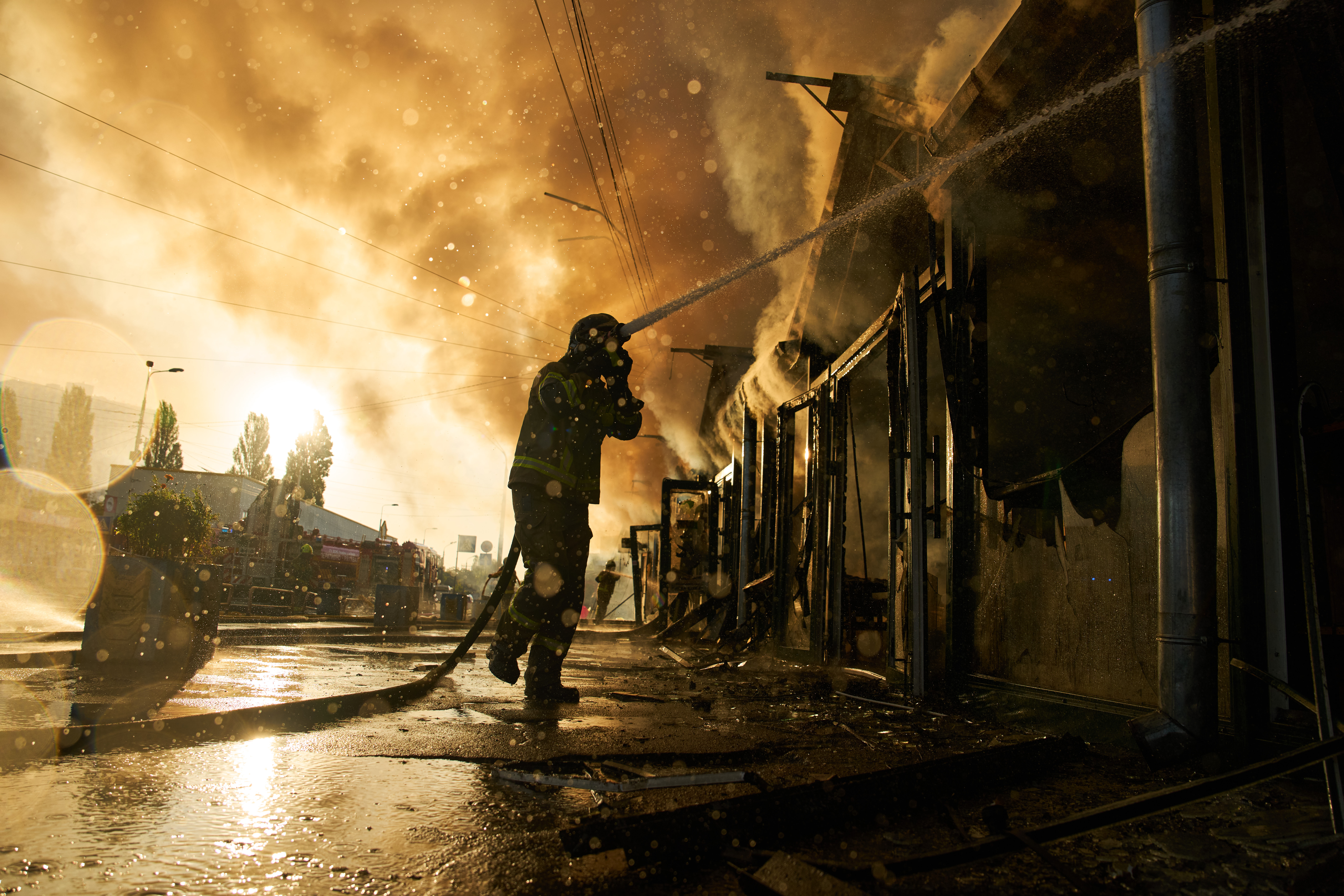
    Russian attacks also sparked fires throughout the Ukrainian capital, Kyiv, wounding six people. A blaze took hold at one of the city’s largest book markets, tearing through kiosks huddled close to the Pochaina metro station. Firefighters fought back the flames, which sent plumes of black smoke across the capital, and picked their way through rubble where the market’s crowded pavilions once stood.

    “Wherever the Russians can reach with their ballistic missiles, they strike civilian infrastructure,” Zelensky said.

    Russia’s Ministry of Defense said Sunday that it had targeted a metallurgical plant in Kryvyi Rih and several military-industrial sites in Kyiv, including a manufacturing facility for Ukraine’s Flamingo missiles.

    The domestically produced missiles are increasingly key to Ukraine’s long-range attacks on Russia, with Zelensky announcing Saturday that Kyiv had used the weapons to attack a rocket research and production center in Samara approximately 560 miles from the Ukrainian border.

    NATO jet downs drone in Romanian airspace

    Romania’s Ministry of National Defense said Sunday that a Spanish Air and Space Force F-18 fighter jet shot down a drone that had entered Romanian airspace.

    The drone’s entry into the NATO member’s airspace was detected by surveillance systems at 4:44 a.m., the ministry said, about 14.9 miles north of the eastern city of Galati near the border with neighboring Moldova. Moldova is a landlocked country between Ukraine and Romania.

    A Spanish F-18 aircraft that was performing air policing duties “made radar contact with the target and received engagement approval,” the ministry said. “The drone was safely shot down by the F-18 aircraft at 05:01.”

    The ministry later said that drone debris was also reported in the Black Sea around 10 a.m. on Sunday, about a mile from the coastal city of Constanta. Separately, another drone fragment was found on Sunday 1 nautical mile from Constanta.

    Romanian officials did not specify the drone’s origin.

    However, Moldova’s Ministry of Defense said Sunday that its Army surveillance systems had detected a Geran-type Shahed drone in Moldovan airspace, which entered from Ukraine and exited toward Romania.

    The spate of drone incidents comes weeks after Romanian pilots shot down three drones over three days as Russia intensified attacks against Ukraine near the border. Since Russia’s full-scale invasion of Ukraine, Romania has reported dozens of drone incidents, including some that have crashed and exploded on its territory.

    Acting Foreign Minister Oana Toiu said in a post on X that the Spanish deployment in Romania was scaled up “at the request of Romania and NATO to bolster the Eastern Flank following prior drone incidents,” and that it was Spain’s fourth such deployment.

  • Rescuers in Indonesia recover 6 more bodies in earthquake aftermath, raising death toll to 53

    Rescuers in Indonesia recover 6 more bodies in earthquake aftermath, raising death toll to 53

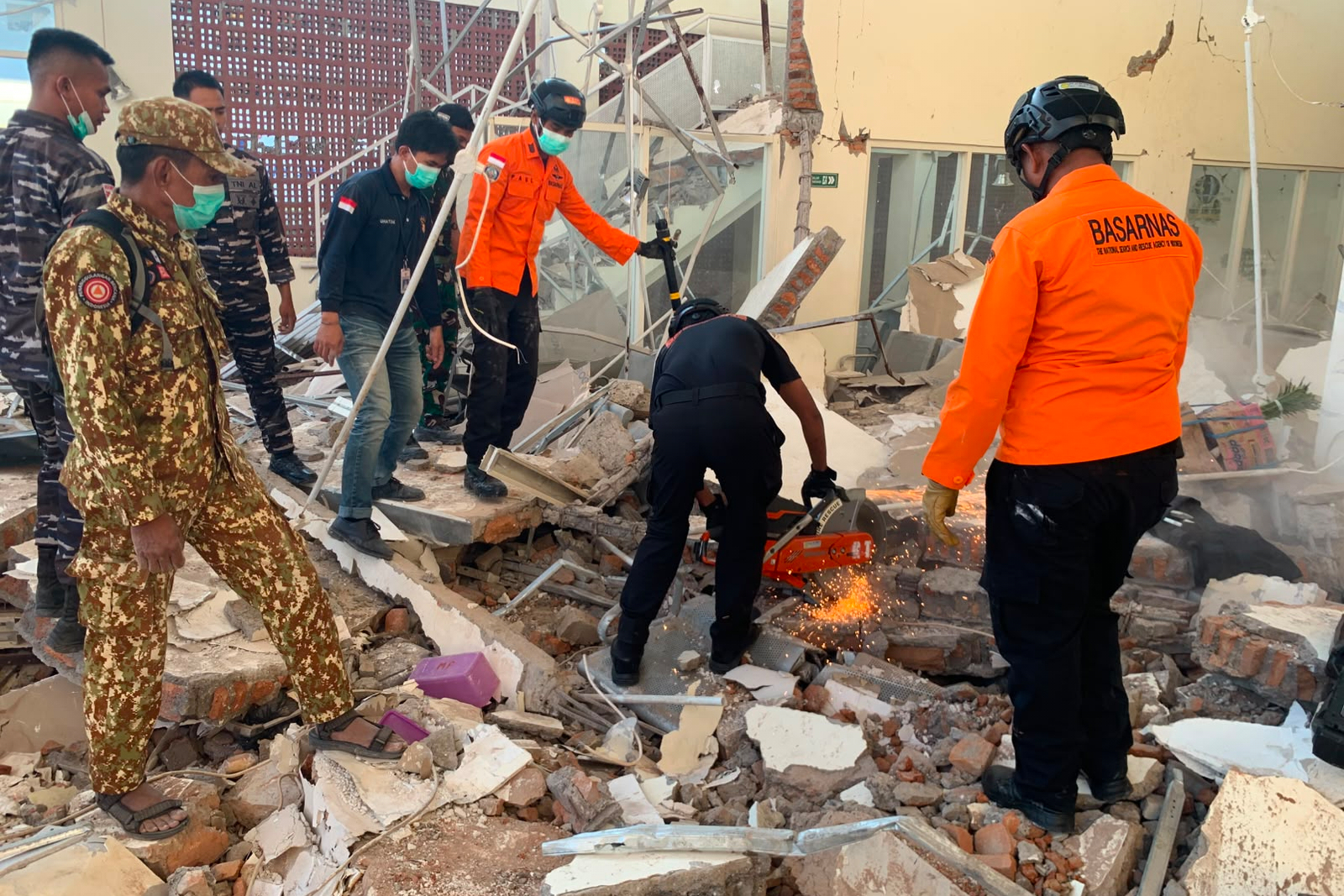
    RUTENG, Indonesia — Rescue teams in eastern Indonesia recovered six more bodies Sunday, a day after a magnitude 7.7 earthquake, raising the death toll to 53, authorities said, as thousands of displaced people spent the night outdoors in fear of aftershocks.

    Rescuers dug through debris looking for anyone buried beneath landslides triggered by the quake across six regencies on Flores, a predominantly Catholic island in the Muslim-majority country. They focused on three regencies that remained inaccessible: hardest-hit Manggarai, East Manggarai, and Nagekeo.

    “We have cleared most landslides and reopened roads to previously isolated villages, although communication disruptions and power outages continue to hamper search efforts,” said Fathur Rahman, head of the search-and-rescue office in Maumere, the capital of Sikka regency.

    The agency said more than 900 homes were destroyed and 450 more damaged in East Nusa Tenggara province, forcing about 5,000 people into temporary shelters. At least 241 homes were damaged in the Flores region alone, Muhari said.

    The quake occurred at a depth of 6 miles shortly before 6 a.m. Saturday, the U.S. Geological Survey said. Residents fled in panic as tsunami warnings were issued and later lifted.

    Authorities have since recorded at least 995 aftershocks, but only 46 were felt by residents, said Abdul Muhari, the National Disaster Management Agency’s chief for disaster prevention, adding that 135 people were injured.

    Many residents at Labuan Bajo, the gateway to Komodo National Park, one of Indonesia’s best-known tourist destinations, spent the night outside because of the aftershocks.

    “The shaking was terrifying, so intense that my house nearly collapsed,” said Anastasia Imad, a farmer, speaking from a makeshift green tent beside her damaged home. “We feared the aftershocks would bring it down on us while we slept.”

    Landslides blocked sections of the Trans-Flores Highway, a roughly 435-mile road linking communities across the mountainous island.

    Meanwhile, relief workers distributed rice, ready-to-eat meals, drinking water, blankets, and medicine, while emergency shelters were set up for displaced residents. Authorities said restoring electricity and communications, as well as delivering aid to remote villages isolated by landslides, were among the biggest challenges.

    Indonesia, an archipelago of more than 17,000 islands, is prone to earthquakes and volcanic eruptions because of its location on the Pacific Ring of Fire, a horseshoe-shaped arc of seismic faults and volcanoes.

    Flores has experienced some of the country’s deadliest disasters. A powerful earthquake and tsunami in 1992 killed about 2,500 people on the island.

    In 2018, a magnitude 7.5 earthquake triggered a tsunami on the island of Sulawesi that killed more than 4,400 people. In 2004, a magnitude 9.1 quake off Sumatra unleashed a tsunami that killed about 230,000 people in a dozen countries.

  • Mark Rydell, the Oscar-nominated director of ‘On Golden Pond,’ dies at 97

    Mark Rydell, the Oscar-nominated director of ‘On Golden Pond,’ dies at 97

    LOS ANGELES — Mark Rydell, the Oscar-nominated director of the sentimental blockbuster On Golden Pond who worked with such Hollywood heavyweights as Henry Fonda, Katharine Hepburn, Steve McQueen, and John Wayne, has died. He was 97.

    His daughter, Amy Rydell, told the Hollywood Reporter that her father died Thursday of natural causes at a retirement community for the entertainment industry in the Woodland Hills section of Los Angeles.

    “Hard to put into words how much I loved my dad,” she posted Friday on her Instagram account. “He was truly one of a kind. Funniest and most talented person I’ve ever known.”

    ‘On Golden Pond’ earned 10 Oscar nominations

    On Golden Pond, which teamed Fonda with Hepburn and his daughter, Jane Fonda, was nominated for 10 Oscars. Henry Fonda and Hepburn won leading acting honors and the film won for screenplay, which Ernest Thompson adapted from his play of the same name. Mr. Rydell was nominated for directing but lost to Warren Beatty for Reds.

    It earned over $119 million at the box office, making it the second-highest grossing film of 1981 behind Raiders of the Lost Ark.

    On Golden Pond was Henry Fonda’s final movie role. He starred as Norman Thayer, an emotionally brittle and distant father who becomes more accessible at the end of his life after his teenage grandson spends the summer with him and his wife, Ethel (played by Hepburn), at their cottage in New England. The film’s story resembled Fonda’s real-life relationship with daughter Jane, who said working on the movie together helped resolve some of their issues. The elder Fonda died at age 77 months after winning his only Oscar.

    Mr. Rydell’s other Oscar-nominated films were The Fox in 1967, The Reivers with McQueen in 1969, Cinderella Liberty with James Caan and Marsha Mason in 1973, The Rose with Bette Midler in 1979, and The River with Mel Gibson and Sissy Spacek in 1984.

    Born Mortimer Harold Rydell on March 23, 1929, in New York City, he studied with jazz pianist Teddy Wilson at the Julliard School of Music. During a stint in the Army, he spent two years in Japan developing entertainment for military personnel. He majored in English and philosophy at New York University.

    Early acting career opposite Steiger, Cassavetes, Mineo

    He turned to acting when he won a scholarship to the Neighborhood Playhouse in New York. Among his early jobs were roles on the CBS soap operas The Edge of Night and As the World Turns.

    Mr. Rydell made his Broadway debut in Seagulls Over Sorrento with Rod Steiger. In 1956, he made his movie acting debut opposite John Cassavetes and Sal Mineo in Don Siegel’s Crime in the Streets.

    Among his film acting credits were Robert Altman’s The Long Goodbye in 1973 and Woody Allen’s Hollywood Ending in 2002.

    Mr. Rydell moved into directing television, helming episodes of Mr. Novak, Ben Casey, I Spy, The Wild Wild West, The Long, Hot Summer, The Fugitive and Gunsmoke.

    He made his feature-film directorial debut with 1967’s The Fox starring Sandy Dennis, and it was a hit.

    Two years later, Mr. Rydell directed McQueen in the comedy-drama The Reivers.

    Teaming with Sydney Pollack

    Mr. Rydell and Sydney Pollack, who became friends during their acting days, formed Sanford Productions in 1971. Among their efforts were the films Jeremiah Johnson starring Robert Redford and Scarecrow with Al Pacino and Gene Hackman, which won the Cannes Film Festival’s top honor, the Palme d’Or.

    Mr. Rydell directed Wayne in 1972’s The Cowboys. He reunited with Caan for the 1976 flop Harry and Walter Go to New York.

    He scored a major hit with 1979’s The Rose, with Midler in her Oscar-nominated role as a self-destructive rock star loosely based on Janis Joplin.

    Mr. Rydell re-teamed with Caan and Midler in For the Boys in 1991, but it wasn’t successful.

    “He was an actor of note before he became a director, and I was so lucky to have met him when I did; he taught me so much on The Rose and later on For The Boys,” Midler posted on Instagram. “Two Oscars nominations both because of him. He was the actor’s whisperer; just a few words was all it took to understand what was needed. Devoted to Meisner. So many happy memories.”

    TV movies and series among his credits

    Mr. Rydell directed the pilot of the hit ABC drama Family in 1976.

    Among his TV movie directing credits were McBride and Groom, Crime of the Century with Isabella Rossellini and Stephen Rea, and James Dean, which earned actor James Franco a Golden Globe award. Mr. Rydell also appeared in the movie as Warner Bros. chief Jack Warner.

    He directed the movies Intersection in 1994 and Even Money in 2006.

    In 2009, Mr. Rydell, Oscar-winning actor Martin Landau, and screenwriter Lyle Kessler taught a film workshop at UCLA. Mr. Rydell and Landau were co-artistic directors of the Actors Studio West, teaching and coaching actors, writers, and directors.

    “All great art rests on telling the truth,” Mr. Rydell told UCLA’s student newspaper the Daily Bruin. “The real pursuit of an artist is to tell the truth.”

    Besides his daughter, he is survived by son Christopher. The siblings, who went into acting, were from his first marriage to actor Joanne Linville. He had another son, Alexander, from his second marriage to producer Esther Rydell.

  • Top U.S. commander visits aircraft carrier, discusses mental health issues

    Top U.S. commander visits aircraft carrier, discusses mental health issues

    The senior U.S. officer overseeing the war in Iran said addressing mental health concerns was a high priority for the military, days after reports emerged of burnout and poor conditions aboard USS Abraham Lincoln. But Adm. Brad Cooper also said some of the concerns that had surfaced were “old news.”

    Cooper, the head of U.S. Central Command, visited the USS Lincoln on Saturday during a Middle East tour. He called his time aboard the aircraft carrier “awe inspiring” and said he witnessed “camaraderie, teamwork, and resilience.”

    “This doesn’t mean that all is perfect,” the admiral said as he acknowledged that long stretches at sea are “uniquely challenging and tough.” He said mental health is “another aspect of individual health and requires our attention just like physical health and spiritual health.”

    The USS Lincoln’s deployment has stretched more than a month past its planned seven-month schedule. Senate Democrats have pressed military leaders on reports of food and supply shortages, water contamination, sewage problems, deteriorating morale, and attempted suicides on the ship.

    The Military Times reported last week that at least two sailors have attempted to jump overboard, with the wife of one sailor saying burnout caused her husband to try to jump.

    Defense Secretary Pete Hegseth downplayed the reports last week, saying the situation has been “completely misrepresented.” When asked Friday whether the deployment of the USS Lincoln had gone on too long, President Donald Trump dismissed that, saying it was “not nearly long enough.”

    Cooper, in a separate opinion piece Sunday in the Wall Street Journal, said that “issues related to food, hot water, and other concerns” were raised “months ago” and addressed by leadership.

    “What I found aboard the Lincoln is that many elements of those stories are old news,“ he said, referring to the issues of morale and ”operational tempo.“

    U.S. officials have confirmed that the USS Abraham Lincoln would return home soon as part of a planned rotation. The Pacific-based aircraft carrier USS George Washington is expected to replace it

    Acting Navy Secretary Hung Cao said in a statement Friday that the crew has been deployed in a combat zone for more than 200 days, carried out 10,000 sorties, and dropped 1.5 million pounds of ordnance.

    It is “also true,” Cao said, that “a small number of mental health cases” were treated with no loss of life and “meal plans were adjusted when fresh resupply was unavailable.” Calls home were also limited when the operational threat was too high, he said.

    While emphasizing that mental health is a “leadership priority” for the senior officers aboard the Lincoln, Cooper said that of the Navy’s 11 active aircraft carriers, “the Lincoln currently has among the lowest number of cases related to mental health.”

    Adm. Mike Mullen, former chair of the Joint Chiefs of Staff, told ABC’s This Week on Sunday that he spoke with Cooper after his visit and said the news that the crew members were coming home had boosted their morale.

    Mullen on ABC News said the reports of the ship’s conditions “were certainly of great concern” but that military officials are “working these issues hard.”

    “I also believe the truth probably lies somewhere in the middle,” he said.

  • Israel’s Ben Gvir advocates killing ’30 to 40′ people in Gaza nightly while speaking to ex-hostage

    Israel’s Ben Gvir advocates killing ’30 to 40′ people in Gaza nightly while speaking to ex-hostage

    JERUSALEM — An extremist Israeli lawmaker in Prime Minister Benjamin Netanyahu’s coalition publicly advocated for killing “30 to 40” people in Gaza each night, comments that surfaced Sunday and were quickly shared by Palestinian media.

    Minister of National Security Itamar Ben-Gvir made the statement while speaking to a former Gaza-held hostage, Rom Braslavski, on Braslavski’s podcast. The two were discussing Israel’s recovery from the Hamas attack of Oct. 7, 2023, when Ben-Gvir criticized Israel’s recent drawdown of strikes in Gaza.

    “It’s no secret, I disagree with the prime minister,” he said. “I think targeted assassinations should be carried out in Gaza, taking down 30 to 40 every night. Not just those who pose an immediate threat — there are people there who are not worthy of life. They shouldn’t live. They’re not even people.”

    In the past, similar statements by Ben-Gvir and other Israeli officials were widely condemned. Many have been presented to the UN’s world court as evidence of genocidal intent. Israel denies it has committed genocide in Gaza.

    Israel’s domestic media has made scarce mention of the statement, highlighting how once-fringe ideologies like Ben-Gvir’s are surging in the lead-up to Israeli elections Oct. 27.

    Figures like Ben-Gvir have become more popular among Israelis since Hamas’ brutal attack in 2023, when the militants killed about 1,200 people and took 251 hostage. Many hostages have recounted long-term starvation, physical and psychological abuse, and, in some cases, sexual abuse.

    Ben-Gvir oversees Israel’s police force and prisons

    Ben-Gvir does not have power over the country’s military and cannot order strikes on Gaza. But, after operating for decades within Israel’s far-right fringe, he is now one of the most influential people in the country.

    He has substantial control over key parts of Israel’s security apparatus, running the country’s prisons — where thousands of Palestinians from Gaza and the West Bank are incarcerated — as well as the national police force.

    He has previously boasted of lessening food rations for Palestinian prisoners. Israel’s top court ruled in 2025 that the prison service under Ben-Gvir was depriving Palestinians of a minimum subsistence diet.

    Ben-Gvir criticizes drawdown of Israeli strikes in Gaza

    Until recently, Israel was striking Gaza nearly every day, attacks that have killed over 1,250 people since an October truce deal came into effect, according to Gaza’s Health Ministry.

    Israel’s military, which says the strikes have targeted Hamas militants, appeared to ease off on the attacks in a quiet concession to U.S. President Donald Trump after Netanyahu rejected the president’s latest attempt to move the truce forward.

    Israeli media last week reported that the authority for carrying out strikes has now been limited to the army’s chief of staff, raising the ire of right-wing lawmakers such as Ben-Gvir.

    Ben Gvir advocates mass emigration, expulsion of Palestinians from Gaza

    In the same taped appearance, the lawmaker advocated for mass emigration of Palestinians from Gaza — a proposal that international lawyers say could amount to ethnic cleansing — and resettlement of Gaza by Israel.

    Twenty years ago, Israel withdrew from the Gaza Strip, dismantling a block of 21 Jewish settlements known as Gush Katif and pulling out its forces.

    “I see all of Gaza as ours,” said Ben-Gvir in the interview. “Settlements not just in Gush Katif but throughout Gaza, encouraging as much emigration as possible, sending them to their countries, and for the terrorists, no emigration, nothing, just to kill them one by one.”

    Trump’s latest proposal involves Hamas gradually giving up its weapons while Israeli forces halt their attacks and begin withdrawing from Gaza. Hamas accepted the deal, although the group linked the surrender of its heaviest weapons to the creation of a Palestinian state, something Israel’s current government and most of its political class adamantly reject.

    Netanyahu says Israel will not retreat from any of its positions in Gaza until Hamas has been completely disarmed. The stance leaves other elements of the ceasefire, including the deployment of international forces and any reconstruction of the devastated territory, on hold.

  • Firefighters battle massive blazes in Belgium and Greece as 2 die on an island near Athens

    Firefighters battle massive blazes in Belgium and Greece as 2 die on an island near Athens

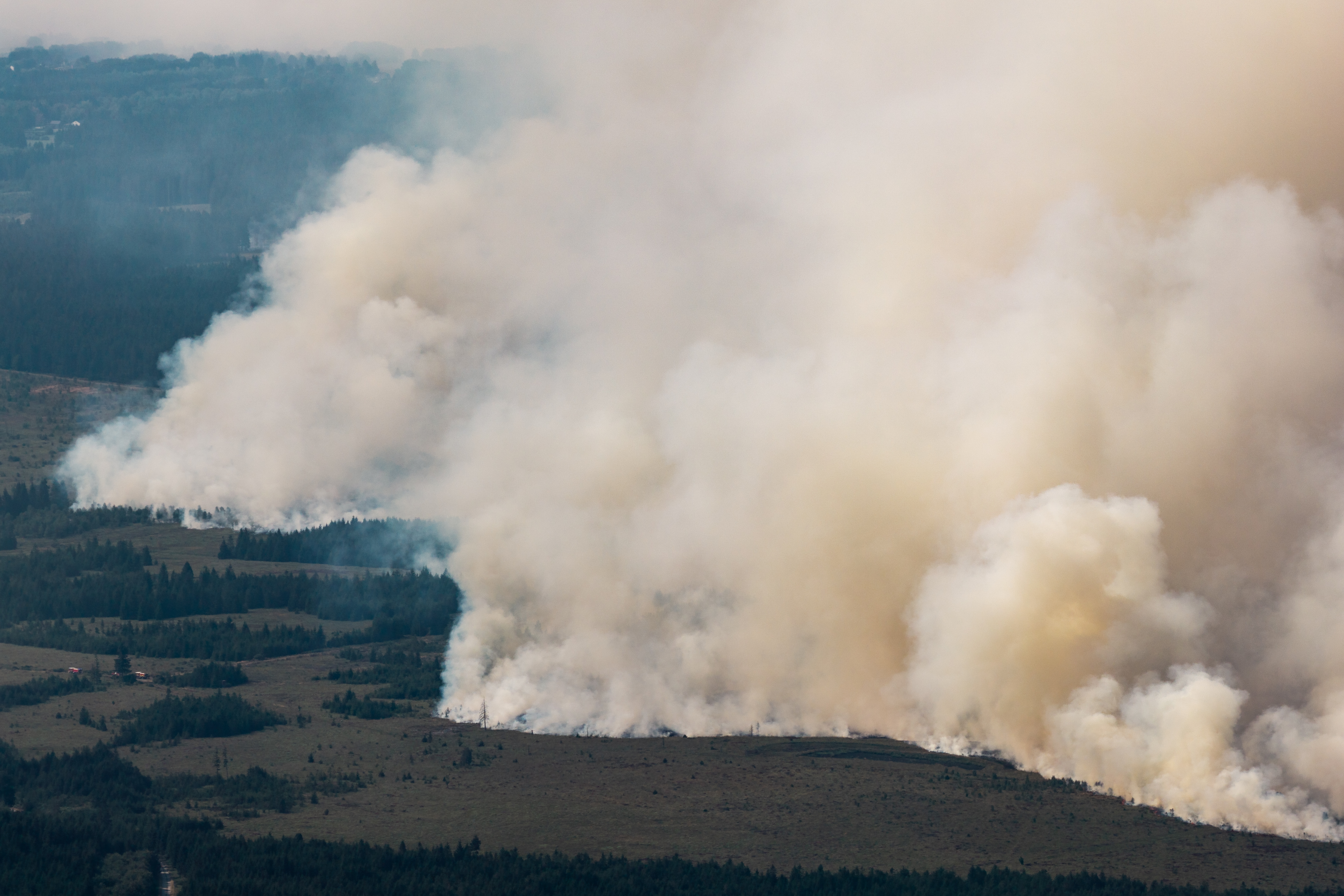
    BAELEN, Belgium — Firefighters battled a massive wildfire that scorched a nature reserve in eastern Belgium and another on a Greek island where two people were killed on Sunday as hot and dry conditions fueled fires across parts of Europe.

    A blaze in eastern Belgium burned about 12 square miles in the High Fens, a large nature reserve, in one of the country’s worst wildfires in recent history.

    About 600 residents in the nearby municipalities of Waimes and Bütgenbach, in Liège province near the German border, were told to evacuate on Saturday as winds shifted and smoke spread through the area. Authorities also advised tourists to leave, while a nearby gymnasium was opened to receive evacuees.

    Liège provincial governor Hervé Jamar said in a statement Sunday that more than 250 emergency personnel have been deployed, including over 100 Belgian and German firefighters, as well as police and military officers and civil protection staff. Firefighting helicopters operated by Belgium’s federal police and the Netherlands also helped.

    Two killed as fires break out on a Greek island

    In Greece, two people were killed in a wildfire Sunday on the island of Salamina, west of Athens, Greek firefighters said.

    The bodies were recovered in the village of Peristeria, where strong winds fueled the rapidly spreading blaze. A second blaze was reported in the Selini area. Firefighting and coast guard vessels were evacuating beachgoers in the area.

    Some 260 firefighters were responding to the blazes, including 15 ground teams, 10 aircraft, and eight helicopters.

    The island had been placed at high wildfire risk on Sunday, with near gale-force winds. “These conditions enabled the fire to quickly reach dangerous proportions and spread rapidly within seven minutes toward nearby residential areas,” said Fire Brigadier General Vasileios Vathrakogiannis.

    Dry conditions fuel record-breaking Belgium wildfire

    The blaze now torching Belgium has far surpassed a 2011 fire that burned nearly 5.4 square miles in the same area and was previously the country’s largest wildfire on record, according to data from the European Forest Fire Information System.

    Nicolas Yernaux, a spokesperson for the Public Service of Wallonia, said conditions were much worse this time. “We’re dealing with something much deeper because we have very dry soil,” he said.

    René Dahmen, chief engineer at the Department of Nature and Forest, said the fire was still spreading Sunday in an area that was difficult for crews to reach.

    “On the eastern flank, there’s a line at least a kilometer long where the fire is slowly advancing toward a municipal forest,” Dahmen said. “That’s the first priority now.”

    Interior Minister Bernard Quintin said on X firefighters managed to keep the fire from spreading towards the west and toward the German town of Monschau.

    In Germany, local authorities warned Sunday that the fire was just under a mile from the border.

    Some farmers from both Belgium and Germany filled up tanker trucks, pumping water from a nearby lake before heading toward the fire area to help firefighters.

    European countries send firefighting aircraft

    Belgium activated the European Union’s civil protection mechanism to receive assistance from other countries, EU Commissioner Hadja Lahbib, who is in charge of crisis management, said on X.

    “The High Fens are burning. Belgium is not facing it alone,” Lahbib said. Sweden sent two water-bombing aircraft, while three helicopters — two from the Netherlands and one from the Czech Republic — were also being deployed.

    The fire follows weeks of unusually hot and dry weather. The High Fens’ mix of heathland and peat bogs has complicated efforts to contain the flames.

    Belgium was hit by another spell of intense heat this week, with temperatures reaching about 98.6 F in parts of the country Friday.

    Wildfires burn in France and the U.K.

    In France, firefighters battling a wildfire in a pine forest in the southwestern Landes region faced no major flare-ups overnight, Landes Prefect Gilles Clavreul said. Authorities estimated the total area burned at 6.6 square miles, while about 650 people had been evacuated from their homes.

    It was the third major wildfire in the vast pine forests of southwestern France this summer, following two others in late July. A massive wildfire in the neighboring Gironde department burned about 162 square miles and forced the evacuation of about 220,000 people as it spread toward the Atlantic coast and the Bordeaux area.

    In the U.K., emergency crews were fighting 14 wildfires in South Wales with the support of military personnel. Authorities warned that although the heat wave is easing, drought conditions mean the risk of wildfires remains high.

    Fires gutted more than a dozen homes in the West Midlands in central England this week as officials recorded the hottest day of the year on Thursday, when temperatures reached 100.6 F.

    In Germany, firefighters made significant progress against a wildfire in the Hürtgen Forest, allowing about 2,000 evacuated residents of Gey to return home Saturday. Officials said Sunday there were no open flames and crews had established a cleared cordon around the affected area to prevent the fire from spreading.

  • Indiana authorities say at least 5 people have died in flooding across the state

    Indiana authorities say at least 5 people have died in flooding across the state

    Indiana authorities say at least five people have died in flooding across the state this week, as first responders worked to rescue more people Saturday from rising waters in neighborhoods along the White River in Indianapolis.

    The state has been hammered over the past week by heavy rains, resulting in rivers and creeks surging.

    More than 90 people and their pets were rescued Saturday as floodwaters rose along the White River in Indianapolis and authorities in central Indiana responded to what many described as historic flooding.

    The damage so far was concentrated along the river corridor from Hamilton County and into the northern Indianapolis suburbs. Farther east in Delaware County, sheriff deputies on Friday found the body of a 58-year-old woman who they believe died after trying to drive through floodwaters.

    Gov. Mike Braun confirmed Saturday that President Donald Trump intends to approve his request for federal resources to help in response to the flooding and the recovery.

    Braun said his heart is with the families who have lost loved ones due to the flooding over the past week. He also warned people to take the flooding seriously and stay away from floodwaters.

    Indianapolis Mayor Joe Hogsett was joined by emergency managers during a briefing Saturday as he urged residents along the river to evacuate. A day earlier, he had declared a local emergency as heavy rains resulted in creeks and streams swelling throughout central Indiana.

    “This is one of those once-in-a-lifetime type floods,” Jacob Spence, director of Marion County Emergency Management, told the Associated Press. “So yeah, this is an unprecedented event and unfortunately we’re setting some new records.”

    The National Weather Service reported that more than 11 inches of rain fell over a two-day period in some areas. The White River crested at more than 24 feet in the communities of Anderson and Noblesville, surpassing records set in 1913.

    Flash-flood warnings and watches were issued across a swath of central Indiana on Saturday, and forecasters with the National Weather Service warned that more showers and thunderstorms would be moving into the area throughout the day. In Warren County, forecasters reported 2 inches of rain falling in six hours.

    Forecasters expected the White River to crest Saturday evening in the Indianapolis area, where National Guard vehicles were among those helping with the rescue efforts. Rita Reith, a spokesperson with the Indianapolis Fire Department, put the number of rescues at 91 people and 45 pets as of early afternoon.

    “The water is still rising, so heed the warnings,” said Todd Wilson, director of the city’s public works department.

    Residents posted videos on social media that showed vehicles stranded in high water, a power pole being toppled by rushing water, and flooded intersections.

    Earlier this week, severe storms wreaked havoc across other parts of the Midwest, causing tornadoes, heavy rains, and flash flooding. Storm damage was reported from the Chicago area all the way to western Pennsylvania.

  • Democrats’ 2028 presidential calendar gives Black and Latino voters and union members an early say

    Democrats’ 2028 presidential calendar gives Black and Latino voters and union members an early say

    AUSTIN, Texas — Democrats seeking the party’s presidential nomination in 2028 will need to prove themselves early on in states where Black and Latino voters and union members are key supporters, under an election-year calendar approved Saturday.

    The primary lineup pushes Iowa from the traditional top spot and makes South Carolina the leadoff state, voting on Jan. 22, 2028, followed by Nevada on Feb. 1. New Hampshire, New Mexico, Michigan, and Virginia round out the early states throughout February, according to the plan endorsed by the Democratic National Committee at its meeting in Texas.

    DNC Chairperson Ken Martin said that to win the general election, “You have to be battle-tested in a way that you already have campaigned in front of and for the support of various communities throughout the country.” That is why the calendar designed by the party matters, he said in an interview.

    Some potential candidates in what is expected to be a large field have visited early-voting states such as South Carolina. Party leaders have said the order gives candidates the best shot at winning back the White House after Republican President Donald Trump’s second term.

    “They have to show that they can go to the South and talk to Black voters and rural voters, as well as out West, talking ranching and mining issues, to a border state, to union members,” said party strategist Karen Finney, who has worked on multiple presidential campaigns. “Whoever survives will be battle-tested.”

    Former presidential candidate Howard Dean, a onetime Vermont governor, recalled his tenure as national party chairperson, when Democrats solidified Nevada and South Carolina as early states behind Iowa and New Hampshire. The latest change is even better, he said.

    “These states look more like the country” as a whole, he said, “whereas Iowa and New Hampshire don’t.”

    Rita Hart, chairperson of the Iowa Democratic Party, said bypassing her state in the early going would sideline important voter voices and give a political edge to Republicans, who are expected to keep Iowa atop their calendar.

    Nonwhite voters claim top billing

    As the first-in-the-South primary, South Carolina was more decisive than Iowa and New Hampshire for nominees Barack Obama in 2008, Hillary Clinton in 2016, and Joe Biden in 2020. All three dominated among South Carolina’s large Black population, which can yield more than half the state’s Democratic primary electorate.

    With Nevada and New Mexico following, candidates will be required to court more Latino voters early in the process.

    Shifting from Iowa and New Hampshire does not mean little-known candidates cannot catch fire, as Pete Buttigieg did in Iowa and New Hampshire in 2020, when he was a 37-year-old former mayor. They just will not be able to do it with an almost entirely white audience.

    “If you can’t go to every part of this country and make your case, you should not be running for president,” Finney said.

    The progressive vs. establishment dynamics may shift

    There is disagreement over how Democrats’ split between progressives and mainstream liberals may or may not surface in the nominating calendar.

    “I think our primary voters up north are probably a little different than primary voters in South Carolina,” said Boyd Brown, a former DNC member from South Carolina. “It’s not the woke ideologies that we just can’t get away from” in other places.

    Nina Smith, a former Buttigieg adviser who now works closely with progressive causes, disagreed. Smith said Black South Carolinians, especially, have gravitated to more moderate candidates — twice rejecting Vermont Sen. Bernie Sanders in favor of Clinton and Biden.

    But, she said, “Southern Black voters are more progressive than they’re given credit for” on policy but also “realists” about what is possible.

    “Living through Jim Crow and other oppressive structures will force you to be take that approach,” she said.

    Smith said that with South Carolina leading off and many Southern states following on Super Tuesday soon after the early lineup concludes, progressives will have to take the time to listen and then tailor their messages.

    “A lot of Black voters don’t necessarily see themselves in the ideas and arguments that progressives put forward,” she said.

    Unions will get a spotlight in the early-voting states

    Nevada has the service industry unions because of Las Vegas; Michigan has the auto industry and associated manufacturing support industries; Virginia is home to more federal workers than any other state.

    “Labor is still so important,” Dean said.

    Beyond seeking the backing of organized labor, the campaigns and the party will look to unions for help in spreading Democrats’ message to voters and getting people to the polls.

    More scheduling efficiency for candidates

    Campaigns struggle to balance many demands such as meeting voters in person, raising money, and dealing with the logistics of travel. As a result, places such as Nevada have gotten short shrift in the past because candidates, most from the eastern part of the country, have concluded the investment of time is not worth it.

    An expanded calendar offers more clustering opportunities.

    A swing to the West could hit two early states — Nevada and New Mexico — and include a fundraising stop in California, full of Democratic donors. A South Carolina trip could mean fundraisers and public appearances in Atlanta, Charlotte, and Raleigh, both in North Carolina. Virginia offers proximity to donors and national TV studios in Washington; the same options are available by adding a New York City stop on the way to New Hampshire.

    Bre Maxwell is a DNC member from South Carolina who said the state’s smaller size and lower media costs are a financial equalizer, allowing not only the best-funded candidates to have an impact.

    “They can campaign from the top to the bottom in a day,” Maxwell said.

    It’s about primaries, with a clear look to November

    Of the six early states, all but South Carolina have been competitive in general elections.

    That means that even before Super Tuesday, the Democratic candidates will have spent significant time and resources in states worth a combined 43 Electoral College votes. That is not insignificant on the way to the 270 needed to win.

    Television ads and news coverage can spill over, as well. Markets targeting parts of South Carolina also reach portions of North Carolina and Georgia.

    After all, Brown said, the point is to put a Democrat in the White House.

    “This is not a social or a debate club. It is a political party,” he said.

  • Magnitude 7.7 earthquake strikes off Indonesia’s coast, killing at least 47 and toppling buildings

    Magnitude 7.7 earthquake strikes off Indonesia’s coast, killing at least 47 and toppling buildings

    MAUMERE, Indonesia — A powerful magnitude 7.7 earthquake struck off the coast of Indonesia early Saturday, killing at least 47 people, collapsing buildings, and causing panic in a region prone to deadly quakes. Authorities said dozens more residents were injured and warned that the death toll would almost certainly rise.

    Authorities issued a tsunami warning and urged coastal residents to move to higher ground, but later lifted the warning when Indonesia’s meteorological agency said monitoring showed no significant sea-level changes that posed a threat to coastal communities. Some smaller tsunamis were reported.

    The U.S. Geological Survey said the quake hit eastern Indonesia’s Flores region at a depth of 6 miles at 5:58 a.m. local time. Its epicenter was 42 miles north-northwest of the city of Ende in East Nusa Tenggara province.

    Wuake triggers landslides, generates small tsunamis

    The meteorological agency said the quake was followed by at least 235 aftershocks, with the largest recorded at magnitude 6.2.

    The agency’s sea-level monitoring stations acknowledged some small tsunamis reached coastal villages in Manggarai and East Manggarai regencies. Videos obtained by the Associated Press showed the coastal village of Riung in Ngada regency blanketed in mud and debris after what the agency described as a 5.3-foot tsunami. Fishing boats were stranded ashore, infrastructure damaged, and homes surrounded by sediment left by receding waters.

    Waves measuring 3.1 feet were observed in Maurole, Ende Regency.

    Tsunami waves exceeding 1.6 feet were detected in Bulukumba, South Sulawesi, and Sape in Bima Regency.

    A strong, land-based earthquake of 6.9 magnitude hit North Sumatra province in western Indonesia on Saturday afternoon, according to the USGS. It struck 107 miles beneath the earth’s surface, meaning it was too deep to cause significant damage or casualties, Indonesian authorities said.

    The quake has caused buildings to collapse

    East Nusa Tenggara Police Chief Rudi Darmoko said power outages hampered the spread of information about the impact of the earthquake in cities and villages, complicating search and rescue efforts.

    “We are continuing to collect reports of damage and casualties, but there are communication disruptions,” Darmoko said. He said quake-triggered landslides in Ende regency blocked the Trans-Flores highway, a roughly 435-mile paved mountain road spanning Flores Island, from Labuan Bajo to Larantuka.

    The head of the National Disaster Management Agency, Suharyanto, said rescuers have recovered at least 47 bodies, mostly in Sikka, Manggarai, and East Manggarai, and at least 50 people were taken to hospitals.

    Suharyanto, who like many Indonesians uses a single name, said the quake flattened at least 157 houses and damaged nearly 200 more, forcing about 2,000 villagers to abandon their homes and move to temporary shelters. The powerful temblor also destroyed more than 100 public facilities, including schools, medical centers, and churches.

    The death toll could rise because landslides triggered by the earthquake buried or cut off many remote villages across six regencies on Flores Island, said Fathur Rahman, who heads the Search and Rescue Office in Maumere, the capital of Sikka.

    Some remote villages are completely buried, he said, and damaged infrastructure and a lack of heavy equipment were hindering rescue efforts.

    Authorities deployed three helicopters and a rescue vessel to support logistics and emergency response operations, including potential evacuations. East Nusa Tenggara consists of numerous islands and presents significant transportation and access challenges.

    Residents ran for their lives when quake struck

    The quake was felt across much of Flores island with initial reports indicating heavy damage.

    Yohanna Embu, who lives in Sikka, said people ran in a panic to higher ground.

    “Many buildings here were damaged … I saw that the waiting room at the port terminal in Maumere had collapsed,” she said.

    Students at St. Peter Major Seminary in Sikka who were attending morning Mass fled when the roof of an assembly hall collapsed, said the Rev. Guidelbertus Tanga, rector of the seminary, known locally as Ritapiret Seminary, on the predominantly Catholic island of Flores.

    “Our students and nuns ran out in panic beneath a collapsing roof,” Tanga said. “At least one priest suffered a broken leg after jumping from the second floor of a building during the quake.”

    The quake also struck Labuan Bajo, a gateway town to eastern Indonesia’s Komodo National Park, one of the country’s best-known attractions. Damage was reported in Bima, a city in neighboring West Nusa Tenggara province, and in parts of southern Sulawesi island.

    Indonesian authorities initially issued a tsunami warning for parts of East Nusa Tenggara, West Nusa Tenggara, South Sulawesi, and Southeast Sulawesi provinces, and urged residents to stay away from beaches and riverbanks. The agency located the shallow undersea quake near Flores island.

    Indonesia, a vast archipelago of more than 17,000 islands, is prone to earthquakes and volcanic activity because of its location on the Ring of Fire, an arc of volcanoes and fault lines in the Pacific Basin.

    Most notably, a powerful earthquake caused a tsunami in 1992 that killed about 2,500 people on Flores, part of a group of islands in the eastern half of Indonesia, while in 2018, a magnitude 7.5 quake spawned a large localized tsunami that wiped out coastal areas, killing more than 4,400 people.

    In December 2004, a massive magnitude 9.1 earthquake off Sumatra in western Indonesia triggered a tsunami that killed 230,000 people in a dozen countries.