Category: Nation World News Wires

  • Trump threatened to bomb Oman because he’s unhappy with the country’s deal with Iran, officials say

    Trump threatened to bomb Oman because he’s unhappy with the country’s deal with Iran, officials say

    CAIRO — U.S. President Donald Trump threatened to bomb Oman because he is unhappy the country is close to a deal with Iran to manage ship traffic through the Strait of Hormuz, two regional officials said Tuesday, a day after Trump leveled the threat.

    The officials said the Trump administration has told Oman it is opposed to parts of the yet-to-be-announced deal, including the joint Iranian and Omani management of the exit route out of the passage that’s critical to global supplies of oil and natural gas. The officials were briefed on the U.S. position and how the administration views Oman’s position.

    Meanwhile, a projectile hit a ship as it sailed out of the strait, according to the British military’s maritime monitoring agency, and an Iranian official said the waterway would not reopen until the United States meets Iran’s conditions.

    U.S. believes Oman has not been tough enough with Iran

    The U.S. believes Oman has not been tough enough in its negotiations with Iran and is unhappy with Oman’s agreement to collect voluntary fees from vessels, even if the charges are related to security and maritime environmental protection, according to the officials, who spoke on condition of anonymity because they were not authorized to talk to journalists.

    Trump on Monday threatened to bomb Oman as it works with Iran on a deal to open the strait and pave the way for the U.S. and Iran to resume negotiations to end the war.

    He posted a map on social media Tuesday depicting the strait as a U.S. territory. The president first mentioned the idea in an offhand comment last week. On Monday, he told reporters in the Oval Office, “I like the idea of declaring it a territory,” without providing details.

    The White House on Tuesday referred to Trump’s remarks in the Oval Office and declined to comment further about Oman.
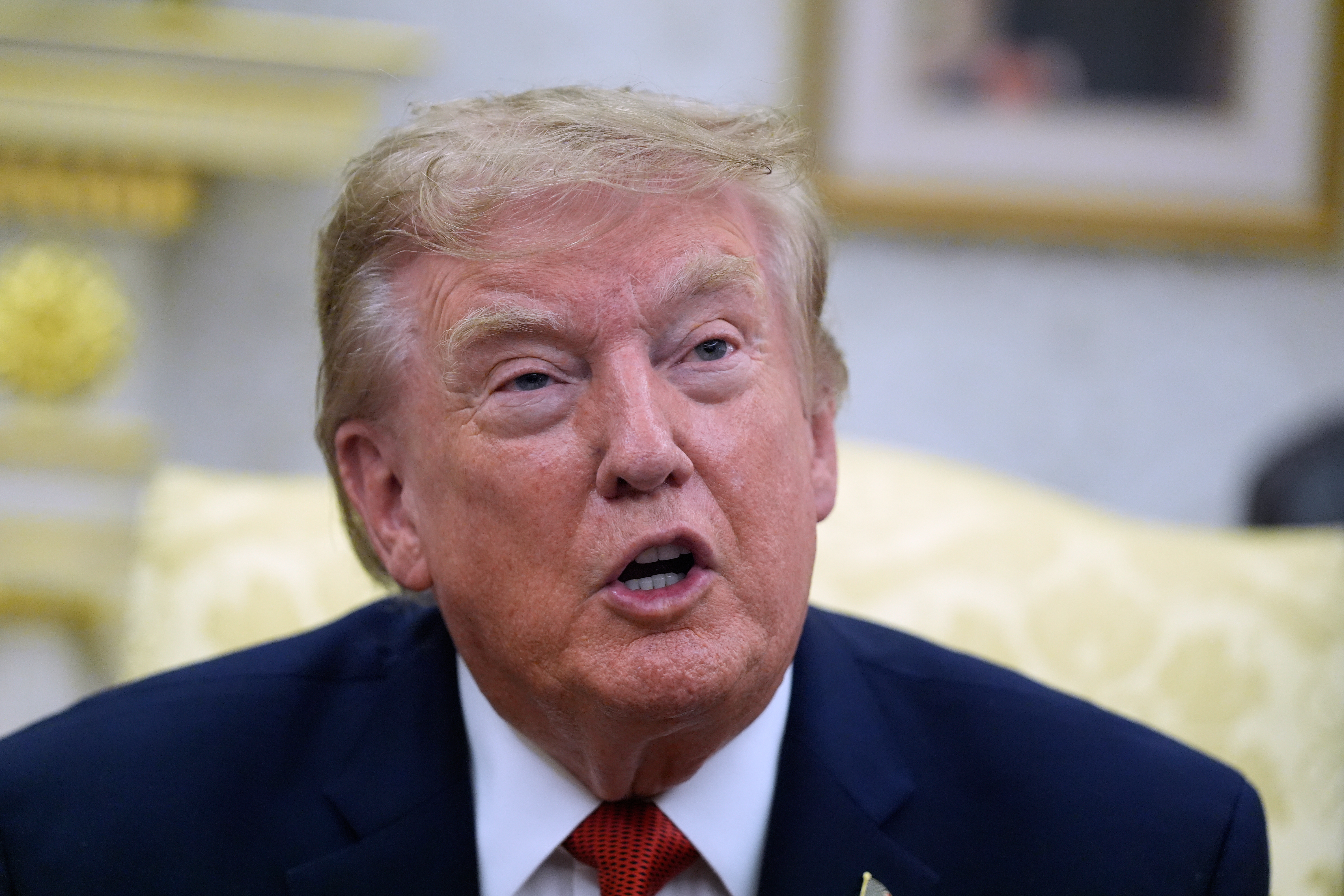
    President Donald Trump speaks in the Oval Office of the White House on Monday, Aug. 17. Manuel Balce Ceneta

    Iran refers to Trump’s ‘delusion’ about the strait

    Iranian Deputy Foreign Minister Kazem Gharibabadi appeared to respond to Trump’s post on social media depicting the strait as American territory.

    “Just as Trump correctly wrote the name of the eternal Persian Gulf, his delusion regarding the Strait of Hormuz will soon either be corrected, or we will correct this deluded man’s delusions for him,” Gharibabadi wrote on X.

    Trump’s comment on Monday was not the first time he has threatened Oman. In May, he told reporters during a Cabinet meeting that Oman “will behave just like everybody else, or we will have to blow them up.”

    Iran reiterated Tuesday that Tehran plans to maintain its grip on shipping traffic until Washington meets its conditions.

    “Until the United States fulfills its commitments under the agreement, including lifting the blockade, releasing frozen assets, lifting oil sanctions, ending threats and military operations on all fronts, and implementing the other conditions to which it committed, the Strait of Hormuz will not reopen,” said Mohammad Bagher Qalibaf, Iran’s parliamentary speaker and negotiator in previous talks with the U.S.

    The Egyptian Foreign Ministry said Tuesday that the Iranian-Omani deal could pave the way for Washington and Tehran to return to negotiations for a “comprehensive and permanent deal that addresses all concerns and enhances regional security and stability.”

    The statement came after a meeting between Egyptian Foreign Minister Badr Abdelatty and Omani counterpart Badr al-Busaidi. But it did not address Trump’s latest threat against Oman.

    President insists strait is open as more attacks are reported

    Trump said Tuesday the U.S. has no planned talks with Iran but insisted the strait is “open and operating,” despite limited traffic, the reported boat strike and the end on Monday of the 60-day negotiating period between the countries.

    Trump wrote on social media that a U.S. blockade of the strait remains “in full force and effect,” adding that all water mines have been removed.

    As the talks between Iran and Oman continue, more attacks were reported in the region.

    An unidentified projectile hit a ship early Tuesday in the strait off the coast of Oman, damaging the engine room and causing a casualty, according to the U.K. Maritime Trade Operations center.

    The monitoring agency did not release any details about the ship or its cargo, and it was unclear whether the crew member was killed or wounded. The agency said the Omani Coast Guard was assisting other crew members and that authorities were investigating.

    And Yemen’s Iran-backed Houthi rebels claimed they fired drones at an oil refinery in neighboring Saudi Arabia, the latest attack that threatened to reignite Yemen’s civil war and open another front in the Middle East.

    The attack targeted a facility run by Saudi Aramco, Saudi Arabia’s state-owned oil company, according to a report by the Houthi-run SABA news agency. There were no immediate reports of damage or comment from Saudi Arabia.
  • Justice Department creates a new pathway to restore gun rights for some convicted of felonies

    Justice Department creates a new pathway to restore gun rights for some convicted of felonies

    WASHINGTON — The Justice Department finalized a rule Monday that will pave the way for people who’ve been barred from owning firearms because of criminal convictions to apply to have their gun rights reinstated.

    The process launched by newly confirmed Attorney General Todd Blanche is a victory for Second Amendment advocates who have long pushed for nonviolent people with felony convictions to be given a pathway to regain their legal right to own firearms.

    “The Second Amendment is not a second-class right, and the federal government should not permanently deprive Americans of a constitutional right without regard to whether they pose a danger to public safety,” Blanche said in a statement. The attorney general said the new process will protect “public safety while giving deserving Americans a real path to restoration.”

    It’s the latest move by President Donald Trump’s administration to ease firearms restrictions. The Justice Department moved earlier this year to roll back and modify a slate of gun regulations. Separately, the department recently decided against challenging a court ruling that struck down regulations on firearm suppressors and certain guns.

    Federal law has long allowed people who’ve had their gun rights stripped because of felony convictions to petition the government for the ability to own firearms again, but Congress since 1992 has effectively barred the federal Bureau of Alcohol, Tobacco, Firearms, and Explosives from processing applications.

    The Trump administration’s rule aims to circumvent that by establishing a new application system using an online portal.

    The Justice Department says restoration will be granted on a case-by-case basis, weighing a person’s record and reputation to determine whether they pose a likely threat to public safety. Officials say people who have been convicted of violent crimes, registered sex offenders, people living in the country illegally, and others whom officials believe pose a danger to society will be denied “absent extraordinary circumstances.”

    Kris Brown, the president of Brady, which advocates for stronger gun laws, said her group is still reviewing the administration’s final rule but has stressed the need for a “robust and thoughtful system that minimizes the risk to public safety.”

    “Yet the Trump administration has consistently shown us they have no such discretion, including by restoring gun rights to convicted domestic abusers and violent January 6 insurrectionists, and by tirelessly rolling back broad policies proven to prevent crime and gun violence,” Brown said in a statement.

  • A dispute about fact vs. fiction at the trial over Tupac Shakur’s 1996 killing in Las Vegas

    A dispute about fact vs. fiction at the trial over Tupac Shakur’s 1996 killing in Las Vegas

    LAS VEGAS — A prosecutor said Monday that while few have been willing to speak about the 1996 killing of Tupac Shakur, Duane “Keffe D” Davis is the “one person who has a hard time being silent.”

    “Let’s be clear, Duane Davis did not pull the trigger. But he did plan the shooting in retaliation of the beating of his nephew,” Chief Deputy District Attorney Binu Palal told jurors at the start of Davis’ Las Vegas trial. “Remarkably, you will learn that from Duane Davis himself.”

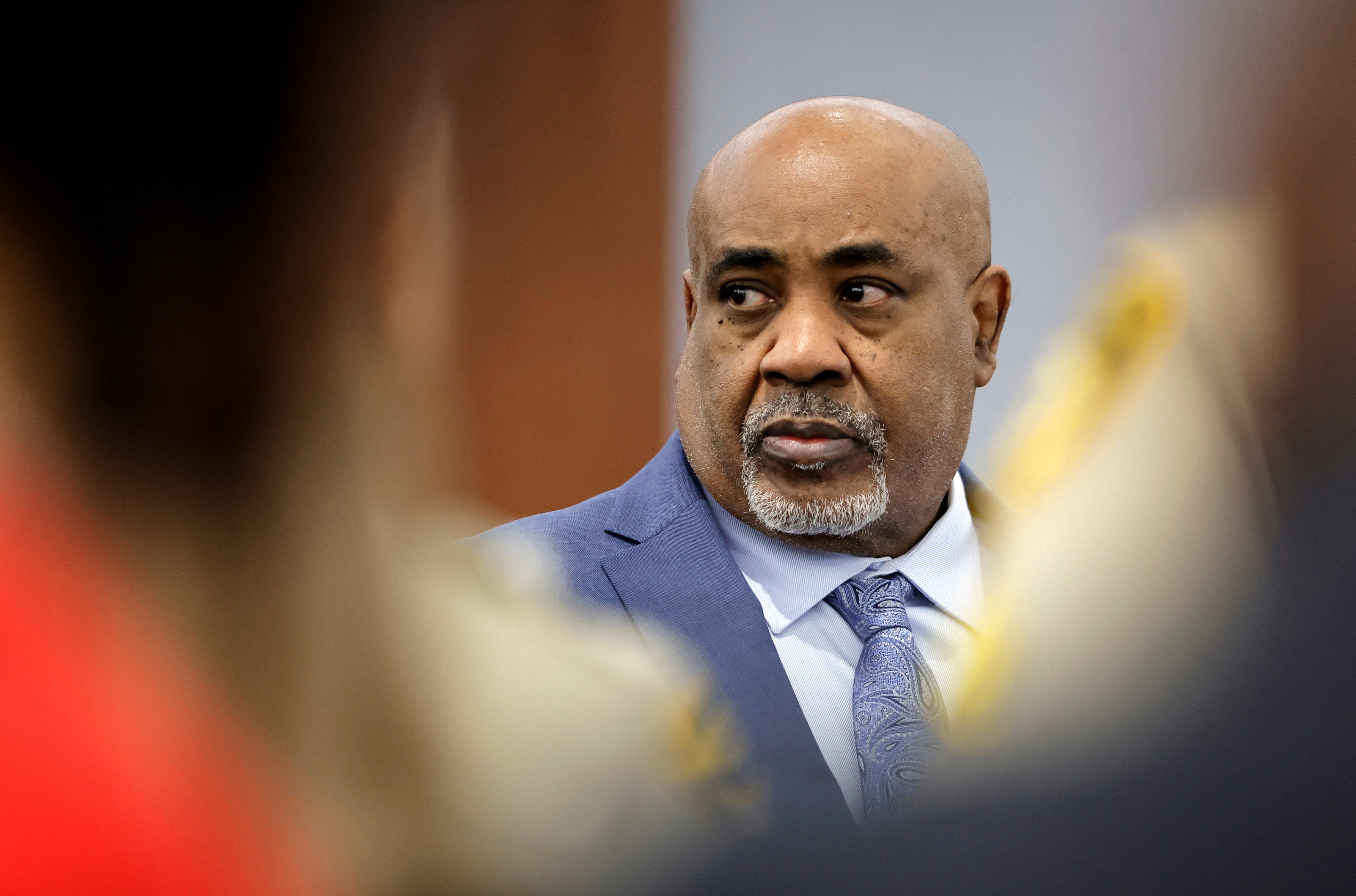
    Davis, 63, is charged with murder with a deadly weapon with the intent to promote, further, or assist a criminal gang in Shakur’s death. He pleaded not guilty. His lawyer in the defense opening called the prosecution’s narrative “fiction.” If convicted, Davis faces life in prison.

    Palal showed jurors video of Shakur’s entourage attacking Davis’ nephew Orlando “Baby Lane” Anderson outside a boxing match at the MGM Grand hours before the shooting on Sept. 7, 1996.

    Davis spent the next two hours planning how to get even, said Palal, and Shakur was gunned down “in an act of revenge.”

    What he told investigators in 2008

    In a 2008 interview with a federal task force investigating the killing of Shakur’s rival, the Notorious B.I.G., Davis instead talked about the Shakur shooting. He described handing a gun to the men in the back seat of a white Cadillac that fired on a black BMW with Shakur and Marion “Suge” Knight inside.

    As prosecutors played audio of Davis explaining the moment Shakur was shot, members of Shakur’s family, including his stepbrother Maurice “Mopreme” Shakur, stared ahead and listened intently from the audience.

    Palal told jurors Davis held onto a visceral hatred for Shakur for decades that drove him to speak.

    He said as early as 1998, the defendant talked to the FBI and admitted he had been in Las Vegas the night of the shooting. He spoke again in 1999 to the FBI and said again he was in Las Vegas then but denied responsibility.

    In 2009, he admitted to his role in the killing in an interview with Las Vegas police, Palal said.

    “And now 30 years later, we’re going to ask you to finally hold Duane Davis accountable,” Palal said.

    He also showed jurors the 2019 memoir that Davis co-authored, Compton Street Legend, that the prosecution will use and that the defense fought to keep out of the trial, along with several of the defendant’s interviews.

    How Davis’ legal team is defending him

    Davis, wearing a blue suit and tie, watched the presentation while sitting next to his attorney. He sat quietly with his hands folded on the table in front of him, occasionally nodding along as his attorney spoke.

    “The state has just told you what they believe is the evidence in this case,” attorney Michael Sanft said to jurors in his opening. “What they are telling you, they are representing as fact, when it’s really fiction.”

    Sanft said Davis wasn’t previously charged for the 1996 killing because law enforcement knew that he was “full of crap.”

    “There’s no facts,” he said, to back up what Davis said in his book.

    The defense attorney also pointed to missing documents in the original investigation and distrust between Los Angeles and Las Vegas police departments. He pointed out that the Compton Police Department was shut down in September 2000 due to corruption.

    He called one detective’s work “biased,” “sloppy,” and “incomplete.” He said retired Detective Clifford Mogg read portions of Davis’ book into the record as if it were fact, but said Mogg didn’t verify claims in it.

    Most eyewitnesses didn’t live to trial

    The story of the drive-by shooting has long gripped the hip-hop community, partly because no one was charged until Davis was indicted in 2023.

    The other three men riding in the Cadillac have all died in the years since.

    “When he says he’s the only person who can tell what happened, he’s right,” Palal said.

    Shakur remains a cultural icon and is considered one of the most influential and versatile rappers of all time, despite dying at 25. He was nominated for six Grammy Awards and was inducted into the Rock & Roll Hall of Fame in 2017.

    Witnesses describe the night Tupac was shot

    Retired Las Vegas police officer Garry Dale was the first of the 35 to 45 witnesses the prosecution plans to call at the trial, which is expected to last about a month. He recounted how he and another officer stopped a car carrying Knight and Shakur because the vehicle didn’t have a license plate. They let the pair go with a warning.

    About 10 minutes later the two officers responded to a call about a shooting and found Shakur being pulled from the car by EMTs, Dale said. Knight had been grazed by bullets, but told the officers to take care of Shakur, he testified.

    Dale jumped in the ambulance and tried to get Shakur to tell him who shot him. The retired officer said that Shakur said something like “no, we’ll take care of it.”

    Another witness, Ingrid Stokes, testified that she and her friends were heading home from Las Vegas when they encountered Shakur and Knight, who was friends with a woman in Stokes’ group.

    Knight invited them to a nightclub, she said, and they decided to meet them there.

    The car Stokes was riding in was one lane over and a car length ahead of Knight’s vehicle, when they heard gunshots while stopped at an intersection, she said.

    Stokes said they feared more gunfire and drove away, almost hitting a white four-door vehicle in the process.

    When they returned to the scene, police treated them like suspects, she said, and made them sit on the sidewalks. She was scared to talk about the case, worried about poor treatment from law enforcement and the potential for retribution from the unknown shooter.

    “Snitches get stitches,” she said.

  • Congo’s fast-moving Ebola outbreak becomes the country’s worst with over 2,300 dead

    Congo’s fast-moving Ebola outbreak becomes the country’s worst with over 2,300 dead

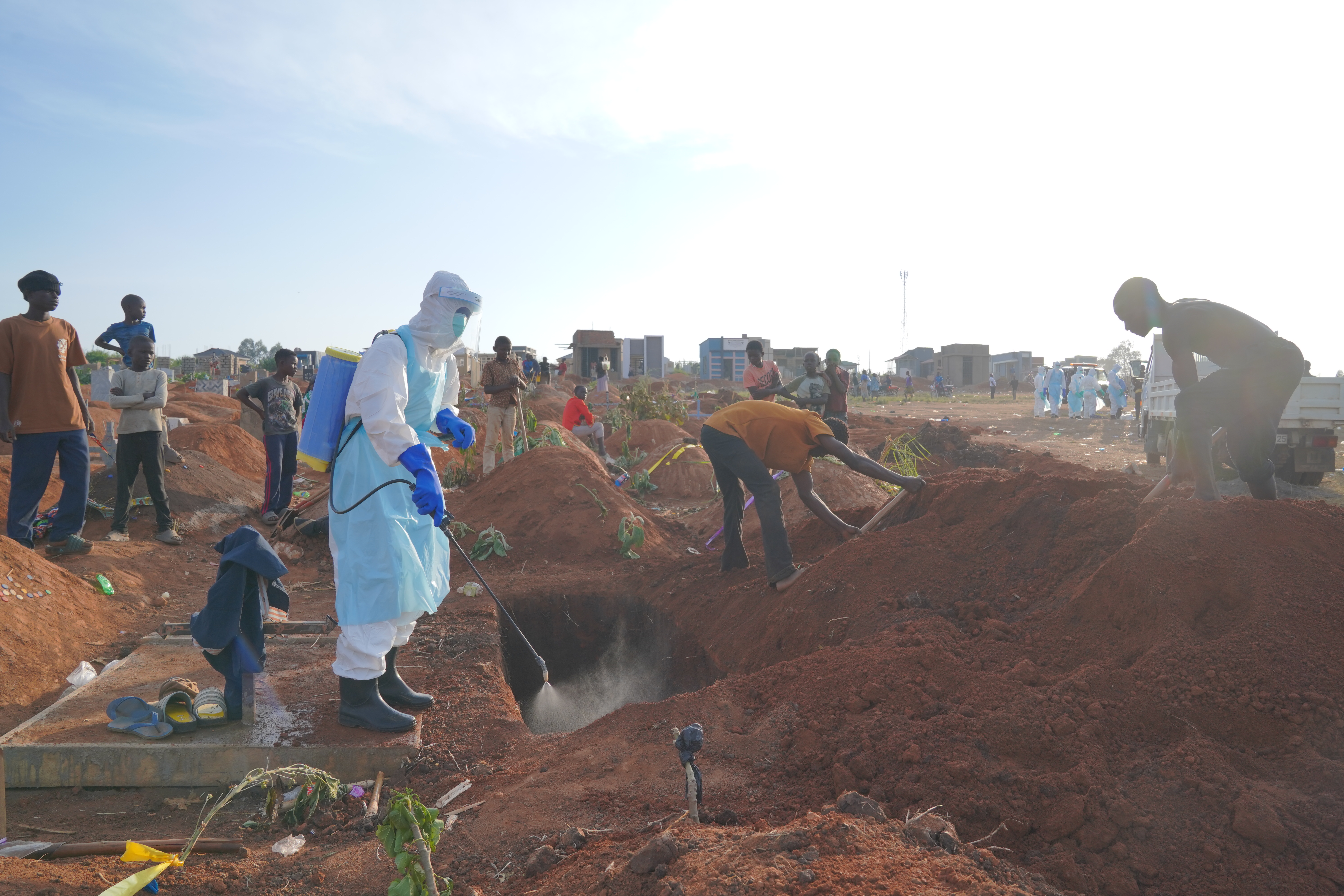
    BUNIA, Congo — Congo’s fast-moving Ebola outbreak has now killed over 2,300 people and become the deadliest outbreak of the disease on record in the Central African nation.

    The outbreak unfolding in one of Congo’s most vulnerable regions is the fastest-growing Ebola outbreak ever, with 4,945 cases including 2,325 deaths, according to government data released overnight into Monday.

    This is Congo’s 17th and largest Ebola outbreak. The toll eclipses that of the country’s 2018-2020 outbreak when 2,299 deaths out of 3,481 cases were recorded.

    The latest data shows 101 new cases and 33 deaths reported in the previous 24 hours. Over 1,000 people have recovered, while 730 remain in hospitals or isolation.

    The outbreak has infected and killed more people at a greater speed than any other outbreak in history. The World Health Organization has said it is on track to surpass the 2014-16 Ebola outbreak in West Africa, the deadliest on record with more than 11,000 deaths.

    There are no approved vaccines or treatments for the rare Bundibugyo virus responsible for the current outbreak across six provinces in Congo’s east. Trials for those are ongoing in Ituri province, the epicenter.

    Most new cases and deaths are being reported outside of people being monitored. Challenges also include strikes by some unpaid health workers, threats by rebel groups, anger from long-traumatized communities, territories difficult to reach due to bad roads, and misinformation asserting that Ebola isn’t real.

    WHO warned over the weekend that the outbreak is still moving at an “exceptional pace” ahead of efforts to track it, noting that it reached a weekly record of 579 cases and 304 deaths in the previous week.

    “A substantial scaling up of response activities is underway to get ahead of the outbreak,” the agency said.

    On Friday, United Nations humanitarian chief Tom Fletcher announced the allocation of an additional $30.5 million and the deployment of 20 more staff to aid the response on the frontlines.

    “This is a wake-up call,” Fletcher said. “We need speed, scale and solidarity before this virus gets even further ahead of us.”

  • Russian court jails a Kremlin critic for 11 years for opposing the war in Ukraine

    Russian court jails a Kremlin critic for 11 years for opposing the war in Ukraine

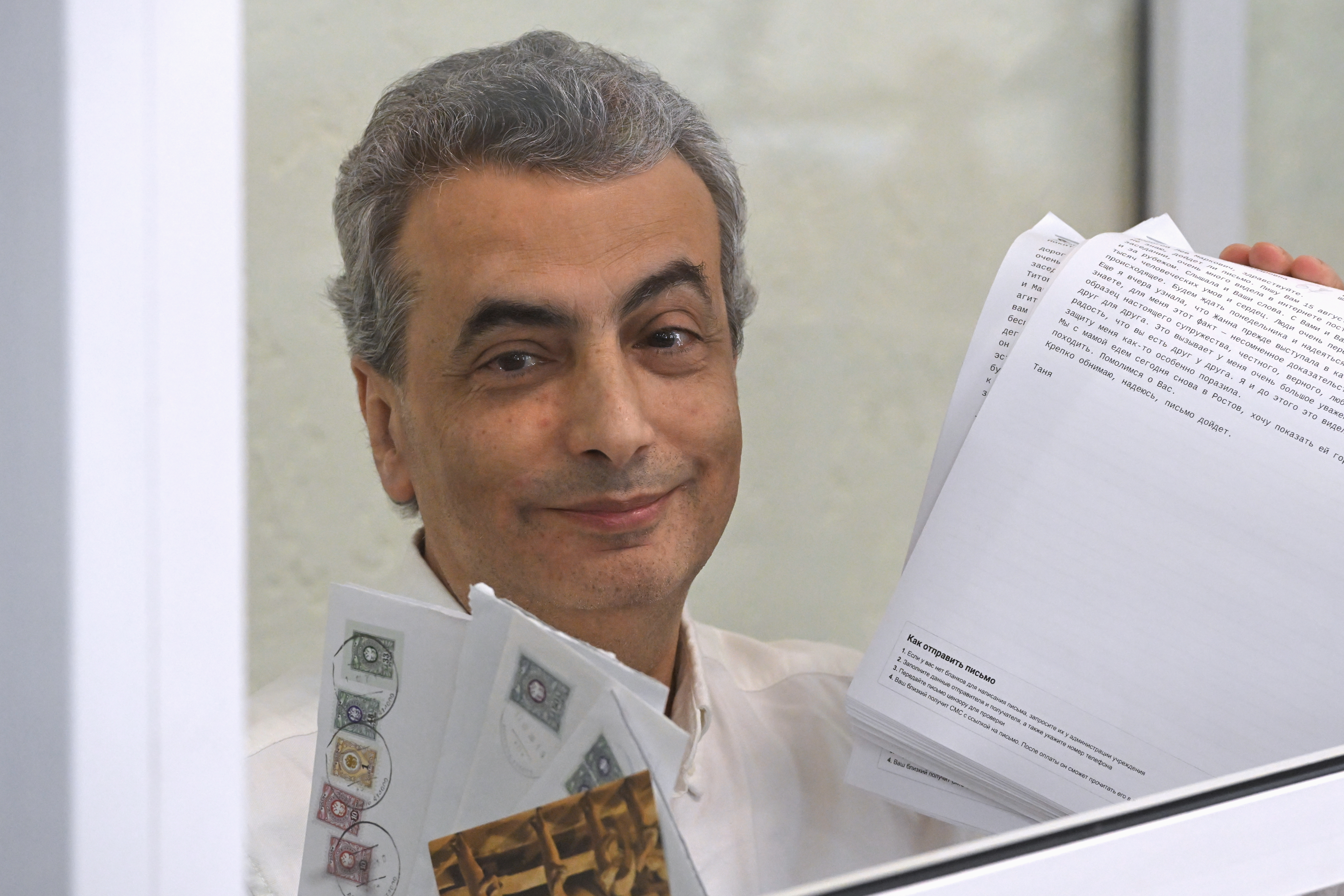
    A Russian court on Monday convicted a prominent opposition politician for speaking out against the war in Ukraine and sentenced him to 11 years and one month in prison in the latest crackdown leading up to next month’s parliamentary election.

    The verdict against Lev Shlosberg, a senior member of the Yabloko party, was another step by the Kremlin to stifle dissent since Russia invaded its neighbor in February 2022. Yabloko is the only official political party overtly opposing the war.

    In a separate ruling Monday, Russia’s Supreme Court upheld its earlier decision to bar Yabloko from the ballot in the Sept. 18-20 parliamentary vote, denying an appeal by the party.

    The moves against Shlosberg and Yabloko highlight the Kremlin’s intolerance toward any criticism of the war, now in its fifth year.

    It was Shlosberg’s second trial in 2 years

    Shlosberg, 63, is Yabloko’s deputy chairman and served in the regional legislature of Pskov from 2016-21. He stood trial in the city of Pskov, some 370 miles northwest of Moscow, on charges of “discrediting” and spreading “false information” about the Russian military.

    The charges stemmed from a debate in which he called for ending the war and from posting on his Telegram channel a British tabloid front page featuring an image of a bloodied woman next to one of Russian President Vladimir Putin, with the headline: “Her blood … his hands.” Shlosberg has rejected the charges as unfounded.

    It was the second trial for Shlosberg in the last two years. He has also been designated a “foreign agent,” a label that carries strong pejorative connotations in Russia and brings additional government scrutiny. He was convicted of violating the foreign agent regulations.

    In December 2025, he was placed in pretrial detention on the new charges and has been behind bars ever since. He is one of several prominent Yabloko members in recent years to be jailed or designated a “foreign agent” as Kremlin pressure on the party has mounted.

    Yabloko called the sentence ‘barbaric’

    In his final statement to the court Friday, Shlosberg said that for 30 years, Russia has traveled “a path from hopes for freedom to the almost complete destruction of human and civil rights and freedoms.”

    He said the war in Ukraine has “changed the lives of every Russian citizen without exception,” and predicted that once its true death toll becomes known, “the entire country will shudder.”

    Yabloko said Shlosberg received a “barbaric sentence” for “love of the Motherland and calls for a ceasefire.” In a statement on Telegram, the party said Shlosberg will appeal.

    Amnesty International denounced the verdict against Shlosberg.

    “His arbitrary prosecution and sentencing are blatant reprisals for exercising his right to freedom of expression to call for peace,” said Marie Struthers, the group’s Eastern Europe and Central Asia director.

    “The Russian authorities must immediately and unconditionally release Lev Shlosberg and quash his conviction,” her statement added. “They must repeal legislation criminalizing peaceful anti-war expression, end the persecution of Yabloko members and supporters, and respect the rights to freedom of expression, association, peaceful assembly, and political participation for all Russians.”

    Supreme Court upholds removing Yabloko from the ballot

    In Moscow, the Supreme Court upheld its ruling of a week ago to remove Yabloko from the ballot in the election for the State Duma, Russia’s lower house of parliament, denying an appeal by the party.

    The Central Election Commission in July had allowed Yabloko on the ballot along with 10 other parties. Young social media users and many Russian opposition figures in exile have since come out in support of Yabloko, urging voters to back the party, once a leading liberal voice in parliament that later lost its bloc of seats as the Kremlin tightened its grip on politics.

    In recent years, Yabloko was the only registered opposition party that opposed Russia’s full-scale invasion of Ukraine.

    Its campaign slogans for this year’s election included, “For a ceasefire agreement, diplomacy, and peace!” “Our goal is to prevent nuclear war!” and “For a Russia free from fear and political repression!”

    Several Kremlin parties publicly assailed Yabloko for its anti-war stance after it got a slot on the ballot. The Motherland Party filed a lawsuit with the Supreme Court, demanding its removal from the ballot, accusing Yabloko of copyright infringement and exceeding campaign spending limits. The party also viewed Yabloko’s stance on Ukraine as unlawful and tantamount to calling for the violation of Russia’s territorial integrity.

    Yabloko rejected these accusations, but the Supreme Court sided with the Motherland Party.

    As the court met Monday on Yabloko’s appeal, the party’s supporters gathered outside the courthouse and Russian media reported that several dozen people were detained.

    Liberal politician Grigory Yavlinsky, who co-founded Yabloko in the 1990s and chairs its political committee, deplored the court’s ruling in an online statement. It marked “a serious, deepening crisis in the Russian political system and a lack of understanding of a desired future,” he said.

    “People begin to feel this more acutely, regardless of their political views and positions,” he said, adding that Yabloko’s campaign “for peace and freedom” hit this particular “sore point.”

    Yabloko chairperson Nikolai Rybakov told reporters after the ruling that the party will continue its fight by lodging a complaint to the Presidium of the Supreme Court and possibly going to the Constitutional Court.

    “We achieved the main thing: The whole world knows how many people in Russia want peace, want to live normally, and to raise children under a peaceful sky in their country,” Rybakov said.

    Regarding the prison term handed to Shlosberg, Rybakov said, “Our feelings are with Lev and other political prisoners who have fought and are fighting for peace, for people to not die.”

  • Trump administration briefly pauses contentious border project in Texas’ Big Bend National Park

    Trump administration briefly pauses contentious border project in Texas’ Big Bend National Park

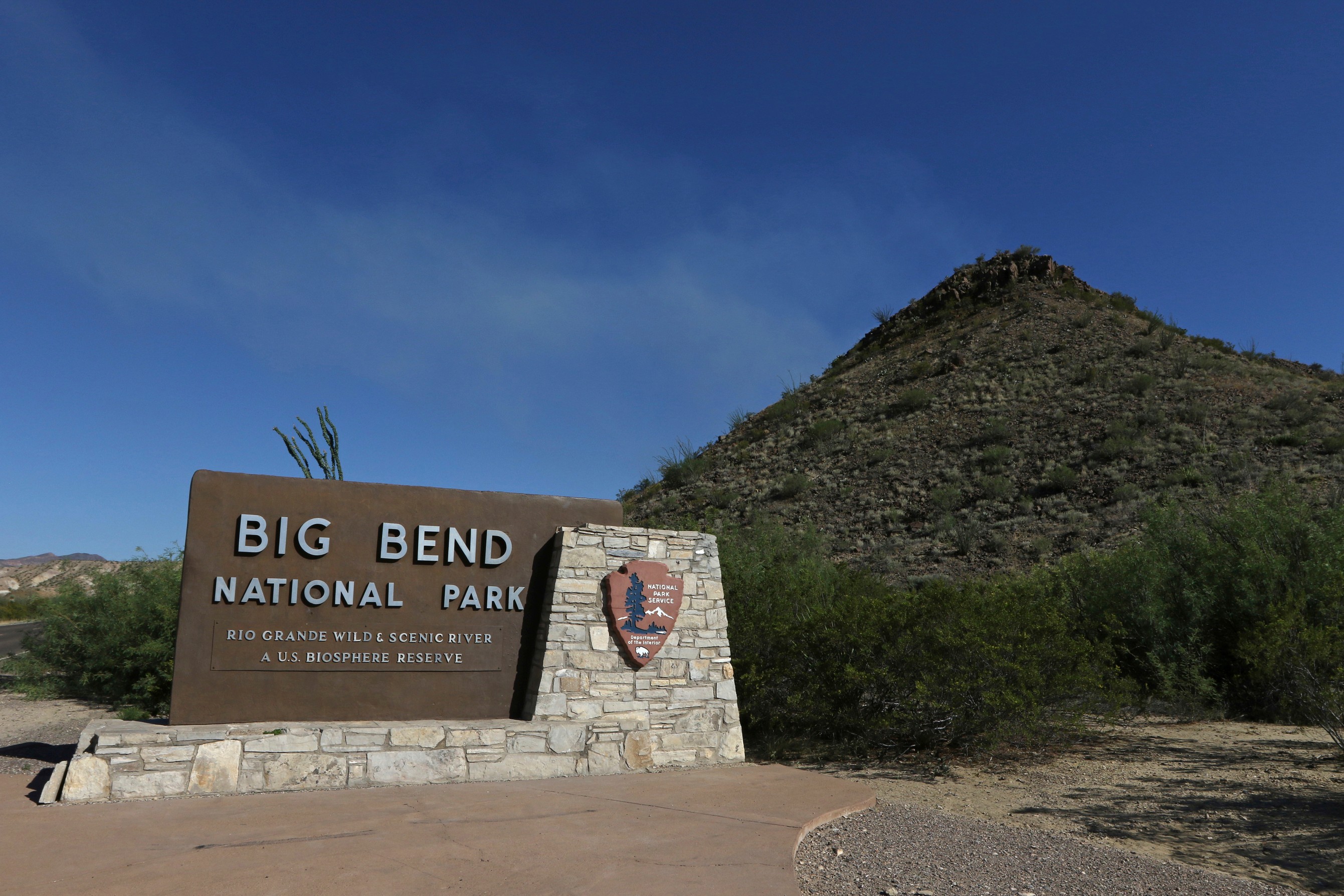
    WASHINGTON — The Trump administration said Monday it is temporarily pausing construction of a contentious border construction project in Texas’ Big Bend National Park while the head of the agency tasked with building the wall visits to do an “on-the-ground evaluation.”

    The project through the national park in southern Texas has faced fierce bipartisan opposition by critics who say it is marring the area’s pristine environment. They argue the region’s rugged and remote terrain already serves as a deterrent to migrants and smugglers. Border crossings in the area have historically been lower than other regions and have dropped even further over the past two years.

    “CBP is pausing all construction activity in Big Bend National Park while I visit and conduct a personal, on-the-ground evaluation,” Rodney Scott, who heads Customs and Border Protection, said on X. Scott said over the next couple of days, he was going to “listen to local leadership, community members, and stakeholders” to address what he said were “real” national security threats while protecting the park.

    While it isn’t clear whether the brief suspension portended a more permanent halt to the construction in the area, it reflected the intensity of the bipartisan opposition and was a rare concession from the administration on a signature promise of the president’s that it has raced to complete.

    Congress gave the Trump administration $46 billion last summer to build a wall from the Pacific Ocean to the Gulf of Mexico, and the administration has been charging ahead and waiving numerous regulations in an effort to swiftly build the wall.

    Scott has said that he expects the first layer of the wall to be built by the end of next year.

    But the administration has run into fierce opposition in Texas especially when it comes to construction in and near Big Bend National Park and a state park to the west.

    Customs and Border Protection earlier this year backed off of plans to build a 30-foot-tall bollard wall through the parks but was still moving forward with other border protection measures such as a new road, lights, miles of barriers designed to stop cars from crossing the border, and technology such as fiber optic cables to be buried under the fences.

    That has sparked opposition from Democratic and Republican sheriffs in the region, former national park officials, local residents who rely on the parks for their livelihood, and from some Texas elected officials. Critics have said it will scar the rugged landscape that attracts tourists who raft down the Rio Grande and take advantage of some of the clearest night skies in the U.S. to gaze at stars.

    Last week, bulldozers were seen clearing land at the park, sparking even more concern and raising questions from one of the state’s Republican senators. Sen. John Cornyn, who lost the Republican primary to the state’s attorney general, wrote to Homeland Security Secretary Markwayne Mullin over construction concerns.

    “My constituents believe that the 1,000-foot riverbank cliffs and remote Big Bend terrain offers its own source of deterrence for any illegal migrants crossing into the United States. The dangerous terrain includes steep mountains, deep canyons, and expansive deserts which they believe act a natural barrier that limits large-scale movements,” Cornyn wrote.

  • After killing hundreds in boat strikes, U.S. military expands campaign on land in Latin America

    After killing hundreds in boat strikes, U.S. military expands campaign on land in Latin America

    MEXICO CITY — Hundreds of people have been killed in the year since the U.S. military began bombing boats it accused of ferrying drugs off Latin America’s Caribbean and Pacific coasts. Now, the Trump administration says it is seeking to extend that lethal campaign to land, pursuing deals that would put U.S. forces on the ground in allied nations across the region.

    President Donald Trump’s defense secretary, Pete Hegseth, announced last week during a visit to Panama that Colombia, Guatemala, and Honduras had agreed to allow the U.S. to carry out joint military operations against criminal groups on their soil, following Ecuador, which launched similar missions with the U.S. in March. Guatemala, however, has denied reaching such an agreement.

    It will be “like you saw with the strikes on the drug boats,” Hegseth said during a military drill in the jungle in Panama. “Same effect on land. And so we’re working with Ecuador. We’re working with Colombia. We’re working with partners to bring the fight to the (designated terrorist organizations) on land.”

    The expansion marks a new phase in the Trump administration’s campaign to pressure governments across Latin America to align with its security priorities and assert what it calls “American dominance over the Western Hemisphere.”

    Voters across the region are increasingly embracing Trump-aligned leaders, giving Washington more willing partners. But critics warn that the widening U.S. military campaign risks civilian casualties and a backlash against the U.S. that could outlast the Republican administration.

    “What’s going on is an attempt to legitimize the increased use of the U.S. military in the region,” said Michael Shifter, a Latin America expert at the Inter-American Dialogue think tank. “It projects power, demonstrates military superiority, and enables Washington to impose its agenda. This is not cooperation, it’s obviously a very asymmetrical relationship.”

    Escalating unilateral boat strikes to joint land operations

    The U.S. military has operated in Latin America for generations, supplying allies with weapons, intelligence, and training to fight drug trafficking, while leaving a fraught legacy of support for military coups and dictatorships.

    But since Trump returned to office in January 2025, Washington has pursued its most interventionist approach to the region in decades.

    His administration has designated 20 Latin American criminal groups as “foreign terrorist organizations,” sent U.S. forces into Venezuela to capture its president, and involved CIA agents in drug lab busts in Mexico. It has killed more than 200 people in over 60 boat strikes in the Caribbean and eastern Pacific, offering little evidence that those targeted were “narco-terrorists” and drawing questions about the strikes’ legality.

    But sustained U.S. combat operations alongside local forces would be “new and different,” said William LeoGrande, a Latin America specialist at American University, testing deep-rooted sensitivities over national sovereignty and the presence of U.S. troops.

    Hegseth provided few details about what joint operations with Colombia, Guatemala, and Honduras would look like. But in Colombia, where Trump-backed Abelardo de la Espriella took office this month, he raised the prospect of U.S. forces joining strikes against armed groups including the National Liberation Army, or ELN, Colombia’s last major guerrilla group. Hegseth said de la Espriella had requested greater U.S. military involvement.

    “Anywhere you traffic drugs or you threaten the American people or our partners, you are a target just like ISIS or al-Qaida,” Hegseth said, equating drug traffickers with Islamic extremist groups that dominated U.S. national security priorities for decades.

    On Saturday, following a drone attack by the ELN on troops, de la Espriella vowed the rebels would “pay a high price.”

    Concerns over U.S. military presence in Latin America

    Ecuador has emerged as the clearest case of direct U.S. military involvement, launching joint raids with Washington despite voters overwhelmingly rejecting foreign military bases in a November 2025 referendum. A New York Times investigation found that one strike on an alleged drug lab in March instead destroyed a cattle farm.

    The push to extend such agreements has gained the most traction among Trump’s ideological allies in the region — conservative leaders elected on promises of aggressive crackdowns on crime in recent months.

    Guatemala stands out as an exception. Its progressive government has worked closely with Washington on security despite political differences. But President Bernardo Arévalo has denied agreeing to joint anti-drug operations, saying they would be illegal without congressional approval.

    Honduras, Colombia, and Ecuador did not respond to requests for comment on Hegseth’s remarks.

    A notable outlier from the new U.S. anti-trafficking alliance is Mexico, a major source and transit point for fentanyl and other drugs entering the U.S. Progressive President Claudia Sheinbaum has cooperated closely with Washington on security but resisted mounting pressure for a U.S. military role in fighting cartels on Mexican soil.

    “Ultimately, the United States will have to define what ‘joint operations’ means in each of these countries. It may discover pretty quickly that this is something most governments — even governments on the right — are quite uncomfortable with,” said Adam Isacson, a defense analyst with the Washington Office on Latin America.

    ‘There is only so much sovereignty they can cede’

    Observers question whether a more militarized approach would produce lasting security gains. Shifter said the campaign may serve partly as a show of force, building on the capture of former Venezuelan President Nicolás Maduro as the Trump administration seeks to offset foreign policy setbacks elsewhere, including in the Middle East.

    Others warn the strategy risks civilian casualties, particularly in Colombia, where armed groups operate among civilian populations and often function as de facto authorities in areas beyond the state’s reach. Rather than beating back those groups, military strikes are more likely to force them to adapt, said Jeremy McDermott, co-director of the Colombia-based investigative organization InSight Crime.

    “The U.S. bombs an ELN camp in Colombia or in Venezuela, what is the first thing the ELN are going to do? They’re going to dismantle all their camps and move into the villages and towns,” he said.

    In the long term, experts say, deeper U.S. military involvement could test how far voters are willing to go in putting security over sovereignty, potentially constraining even Trump’s closest allies.

    “All of these presidents, no matter how far right they are, face pressure to do something about security and to make a show of pursuing the ‘bad guys’ who are making people feel unsafe. There is broad agreement on that,” Isacson said. “But they also know there is only so much sovereignty they can cede before public opinion begins turning against them.”

  • Trump blames vandals for damaged grass in the spot where he held his big July 4 celebration

    Trump blames vandals for damaged grass in the spot where he held his big July 4 celebration

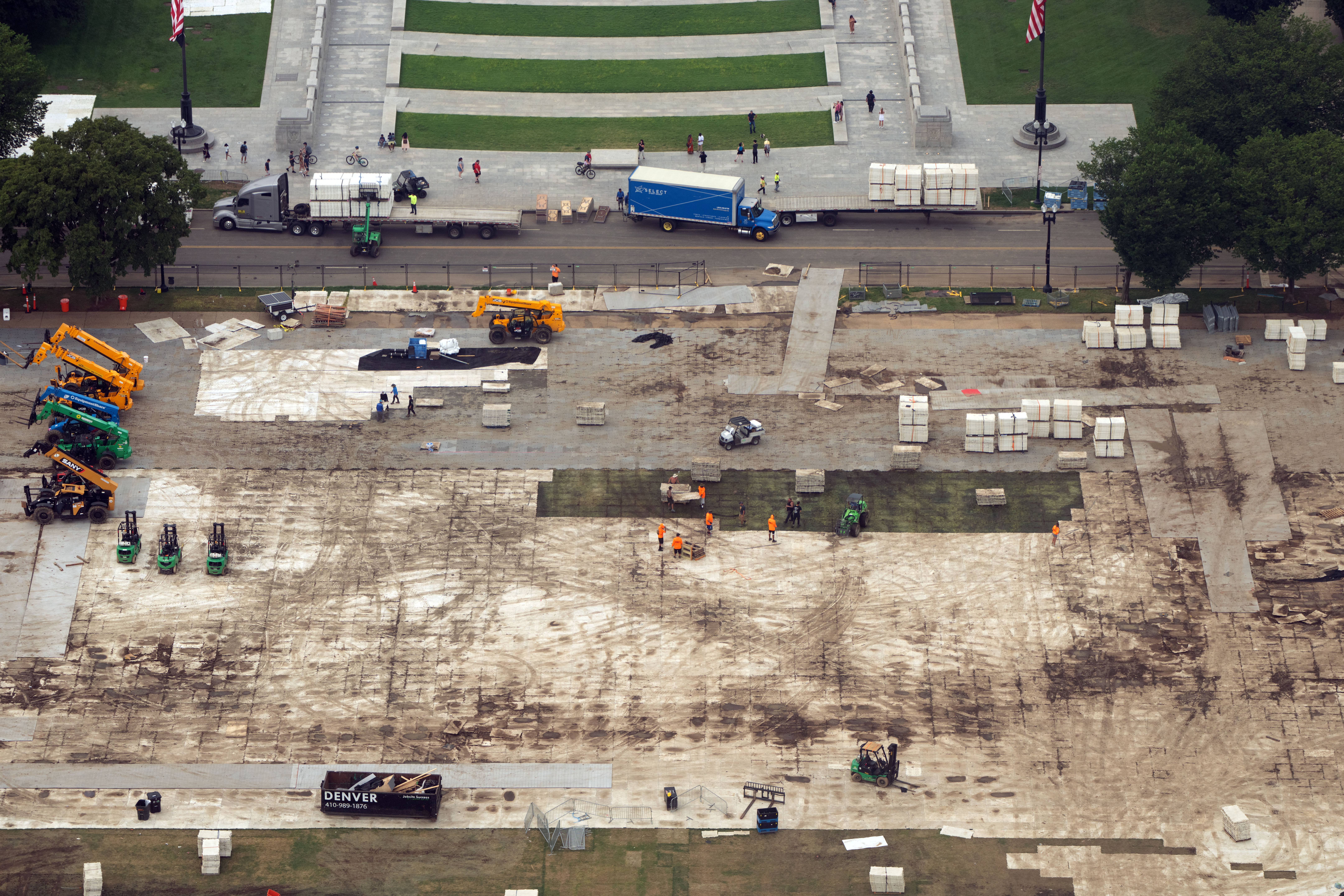
    WASHINGTON — President Donald Trump says vandals are to blame for large swaths of dead grass on the National Mall near the World War II Memorial — in the spot where he had a stage built and hosted crowds for his July 4 celebration.

    Trump made the accusation in a social media post on Sunday without saying why he believes it’s the work of vandals instead of trampled turf from the Independence Day festivities. The Republican president posted a photo showing a once-grassy area by the World War II Memorial, now patchy and brown across much of the sprawling turf.

    “Look what VANDALS did to the grass connecting the vandalized World War II Monument and the vandalized Reflecting Pool, which will be opened again, and better than ever, shortly,” Trump said on his Truth Social platform.

    “Anybody who thinks the Reflecting Pool wasn’t vandalized should go back to Law School!” he added.

    Trump has repeatedly blamed vandals for damage to his renovation projects in the nation’s capital, often without evidence and sometimes despite opposing accounts from his officials. Trump lashed out at U.S. Attorney Jeanine Pirro this month after her office concluded that damage to the Lincoln Memorial Reflecting Pool was the result of poor construction and not the work of vandals, as Trump claimed.

    Authorities on Friday announced an arrest in connection with vandalism at the World War II Memorial, after the words “Clean hands dirty $” were found painted on the monument and bubbles filled a fountain. Pirro said felony charges were being brought against Melissa L. Farris, who was in custody and couldn’t be reached for comment.

    A woman identified on her Facebook page as Melissa Lovewell on Thursday posted a video in which she is seen taking cans of spray paint from her bag and then painting the monument. “I will wait here to be arrested for spraying our veterans’ fountain,” she says. “It was me. I’m doing it. It’s on camera.”

    The woman was identified by her Kentucky driver’s license as Melissa L. Farris, of Elizabethtown, Ky., an arrest warrant says.

    Charging documents in that case make no mention of the grassy area Trump is highlighting in his new claims. Authorities said Farris had previously been arrested for camping on federal property a few blocks from the World War II Memorial, but not the area cited by Trump.

    That stretch of lawn is instead where a large stage was built and crowds gathered to hear from Trump and watch fireworks at a July 4 event celebrating the nation’s 250th anniversary. Trump claimed without providing evidence that more than 400,000 people attended the event before a storm hit the area and delayed his remarks.

    Photos from the time, taken by a streaming webcam atop the Washington Monument, show a large bandstand and seating areas covering nearly the entire lawn Trump now says has been vandalized. Associated Press photos from the days that followed showed workers removing the structures, revealing brown, damaged grass underneath.

    On Aug. 1, Trump posted a different photo of the same area that appears to show the numbers “86 47” — which federal officials have said constitutes a threat against Trump, the 47th president — emblazoned into the grass. He cited it as evidence refuting Pirro’s conclusion, calling it “a pure case of VANDALISM, that included the grass.”

    “There may have been some contractor difficulty, but the major damage was caused by VANDALS!” he wrote.

    Those numbers are not visible in the photo Trump posted to social media on Sunday.

  • Trump dwarfs his predecessors in the number of ultra-rich in his second White House, report shows

    Trump dwarfs his predecessors in the number of ultra-rich in his second White House, report shows

    Wealth, perhaps second only to loyalty, has been a prized attribute for Donald Trump during his second presidency.

    The number of people worth at least $100 million whom the Republican president has appointed to his administration is more than four times the combined total under the three previous presidents, according to a report from the consumer advocacy group Public Citizen.

    It’s the numbers for the Trump administration, in the context of previous administrations, that stand out in Public Citizen’s report, published on Monday. In all, 57 Trump officials are worth at least $100 million, including 17 ambassadors and the remaining 40 in senior posts across the executive branch.

    Look no further than Trump’s cabinet. Eight of its 23 members fit the category, notably Commerce Secretary Howard Lutnick and Education Secretary Linda McMahon, both billionaires.

    The president, himself a billionaire, has described his inclination toward appointing the ultrawealthy as deference to financial success. And yet, Trump, who owes his White House comeback to support from middle-income, working Americans drawn to his pledge to lower everyday costs, now faces a midterm electorate decidedly less keen on his handling of the economy.

    Presidents have long sought counsel from the nation’s wealthiest people and tapped some for high-profile administrative leadership roles. Likewise, presidents routinely reward wealthy and influential supporters with ambassadorships.

    Among the most notable examples is Andrew Mellon, the aluminum, oil, and banking tycoon who was among the handful of the nation’s wealthiest people in the 1920s and served as treasury secretary for three presidents.

    The Trump officials worth at least $100 million include Deputy Secretary of Defense Stephen Feinberg and Small Business Administration Administrator Kelly Loeffler, who are also billionaires, and Treasury Secretary Scott Bessent and special envoy Steve Witkoff, both worth hundreds of millions of dollars.

    By comparison, Republican George W. Bush’s administration and Democrat Joe Biden’s each included five members worth $100 million or more. Democrat Barack Obama’s included three, the report states.

    A government populated by so many of the economic elite presents potential problems, the report’s authors said.

    “When the people holding the reins of government are drawn overwhelmingly from the ranks of the ultra-rich, it leads to misplaced incentives and corruption, and begs the question, ‘Whose interests they are truly serving?” said Lisa Gilbert, Public Citizen’s co-president.

    The list does not include Trump, whose net worth Forbes estimates at more than $6 billion. Nor does it include space and social media giant Elon Musk, who advised Trump last year on an effort to reduce the federal government’s size, scope, and workforce and is the world’s wealthiest person, with a net worth Forbes estimates at about $860 billion.

    Trump’s views are well established: Financial success is evidence of executive mastery and negotiating strength.

    “They have great competence, those people. Incredible competence. Some of the smartest business leaders,” Trump said last year in explaining why he put considerable weight on advice from business executives.

    He has also pointed to investments by wealthy people as a signal of future economic growth. To encourage billionaires to deliver, Trump, in his first year back in the White House, pursued policies on artificial intelligence and financial regulation that could benefit wealthy people, along with tax cuts and reduced regulatory burdens for large-scale investments.

    Still, last month, only 32% of U.S. adults approved of Trump’s handling of the economy, down from 40% at the beginning of his second term and as his Republican Party faces headwinds in its attempt to hold both majorities in Congress in November.

  • The Supreme Court again rebuffed Trump’s push to toss out the $5 million verdict in the E. Jean Carroll defamation case

    The Supreme Court again rebuffed Trump’s push to toss out the $5 million verdict in the E. Jean Carroll defamation case

    WASHINGTON — The Supreme Court on Monday again rebuffed President Donald Trump’s push to throw out a jury’s $5 million finding that he sexually abused the writer E. Jean Carroll at a New York City department store in the mid-1990s and later defamed her.

    The Republican president’s lawyers had asked the justices to reconsider their refusal to hear his appeal. The court denied Trump’s petition along with several others.

    It’s unusual — although not unheard of — for the court to grant such requests. Trump paid the judgment shortly after the court declined to take up his appeal in June.

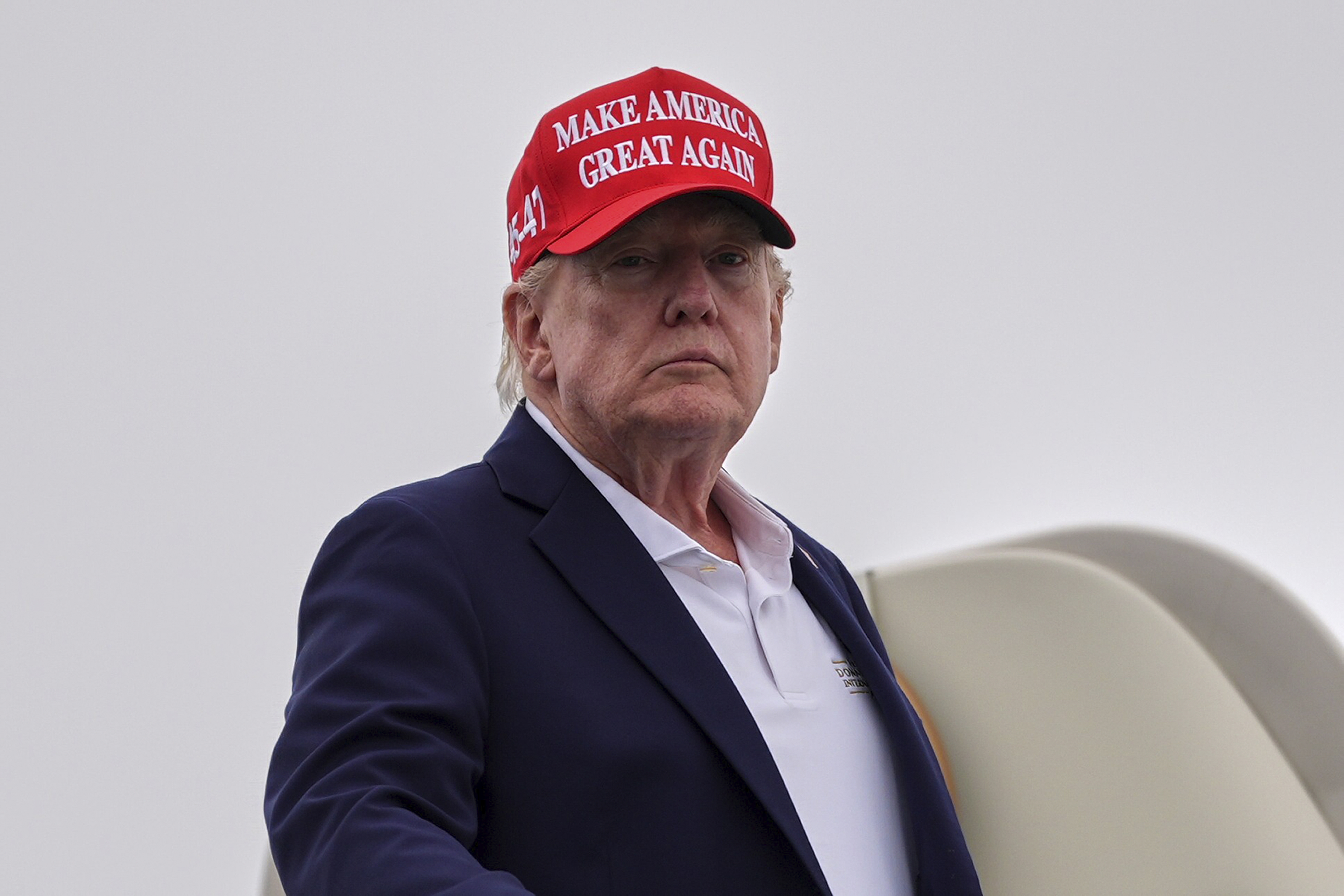
    President Donald Trump boards Air Force One on Sunday, Aug. 16, 2026, in Morristown, N.J. Julia Demaree Nikhinson

    Trump and the Justice Department are also asking the high court to toss out a second Carroll verdict totaling $83 million. They argue he’s immune from being sued over comments he made about her in 2019, when he was president. The court has not yet acted on that appeal.

    Carroll is a longtime advice columnist and former TV talk show host. She testified at a 2023 trial that Trump turned a friendly 1990s encounter into a violent attack in the dressing room at Bergdorf Goodman, a luxury retailer across the street from Trump Tower in Manhattan. The jury found Trump liable for defaming Carroll when he denied her allegation in 2022.

    Trump has denied any wrongdoing.

    The Associated Press does not identify people who say they have been sexually assaulted unless they come forward publicly, as Carroll has done.