Category: Nation World News Wires

  • Congo’s fastest-growing Ebola outbreak reaches a sixth province

    Congo’s fastest-growing Ebola outbreak reaches a sixth province

    KINSHASA, Congo — Congo’s Ebola outbreak has spread to a sixth province after a death was recorded in the previously unaffected Bas-Uele province, the head of Africa’s CDC said Thursday.

    The man died in Buta, the capital of Bas-Uele, after traveling there from Isiro in Haut-Uele province, said Jean Kaseya, director general of Africa Centres for Disease Control and Prevention.

    He was a motorcycle-taxi driver who had sought treatment at several hospitals before he died, Jean-Jacques Muyembe, head of Congo’s National Institute ​for Biomedical Research, said. His colleagues tried to forcibly take his dead body, prompting police intervention and concerns that more people may have been exposed to the virus, Muyembe added.

    The outbreak in eastern Congo, considered the fastest-growing one yet, is on track to surpass the deadliest one in history, which erupted over a decade ago and killed over 11,000 people, the World Health Organization said Wednesday. There are no approved vaccines or treatments for the rare Bundibugyo virus responsible for the current outbreak.

    It has killed over 2,100 people out of more than 4,500 cases, according to the latest government figures. This death toll has been reached almost three times faster than in the 2014-16 Ebola outbreak in West Africa — the worst in history.

    The outbreak is unfolding in some of the most challenging conditions imaginable, with strikes by some unpaid health workers, threats by rebel groups, anger from long-traumatized communities, and misinformation asserting that Ebola isn’t real.

    Bas-Uele is a vast province in northeastern Congo that borders the Central African Republic, where there is recurring armed violence that has forced thousands to flee and take refuge in the province. Access can be difficult due to bad and poorly connected roads as well as limited communication networks, and there are frequent population movements related to gold mining and displacement from conflict.

    As of Thursday, six out of 26 of Congo’s provinces have been impacted. About 90% of all cases and 80% of deaths are concentrated in Ituri province, the WHO said Wednesday.

    Mercy Corps, an aid group, warned Thursday that Ebola cases have been reported along a major travel route about 22 miles from Congo’s border with South Sudan, expressing concern over the outbreak’s “widening footprint.” No cases have been confirmed in South Sudan so far.

    Unpaid health workers’ strikes, low contact tracing hamper response

    Meanwhile, health workers at the Nizi Treatment Center in Ituri province, one of the most affected in the area, went on strike Thursday, leading to the temporary closure of the center after they said they have not been paid for three months.

    Kaseya on Thursday called on the Congolese government to pay the outstanding salaries.

    “We need to pay health workers,” he told reporters. “This is the responsibility of the government, not partners. And they told us that money is available.”

    The real scope of the outbreak remains unknown. It was declared on May 15, but the WHO now says sequencing showed it began months earlier, in February.

    Health authorities have said between 60% and 70% of new cases are recorded outside contacts being monitored, and that the disease is spreading at an “alarming” rate. Contact tracing helps break chains of transmission by finding exposed people early and reacting quickly if they show symptoms.

    “We are chasing the virus; the virus is ahead of us,” the WHO regional director for Africa, Mohamed Yakub Janabi, said this week.

    On Thursday, Kaseya from Africa CDC said, “The concept of contact tracing in DRC has become useless.”

    Trials for treatments and vaccines are underway

    Ebola is rare but highly contagious and can be contracted from bodily fluids such as vomit, blood, or semen, and from contaminated surfaces and materials such as bedding and clothing. The disease it causes is severe and often fatal.

    Clinical trials of two possible treatments for this type of Ebola began last month in Ituri, the most affected of the provinces in Congo where cases have been reported.

    Two vaccines developed specifically for the Bundibugyo virus are now being tested in people for the first time, the WHO said Wednesday.

    WHO also plans to test whether an existing Ebola vaccine could protect people against the virus after studies in animals showed promising results.

    Kaseya said on Thursday that the Africa CDC supports the use of Ervebo, a vaccine authorized against the Zaire Ebola strain, in provinces impacted by Bundibugyo virus. He said some studies show some cross-protection from the available vaccines.

    “We are in a gray area,” he said. “And when you are in a gray area, you have to make strong decisions to stop seeing people dying.”
  • Kennedy Center votes to restore Trump’s name and close for 2 years, challenging a judge’s order

    Kennedy Center votes to restore Trump’s name and close for 2 years, challenging a judge’s order

    WASHINGTON — The battle over the Kennedy Center’s future escalated Thursday as President Donald Trump’s allies on the board took new steps to commemorate him with physical changes to the iconic performing arts institution that could defy a federal court order.

    During an hourslong meeting that was conducted virtually, the board voted to add Trump’s name to the building’s facade so it would read “The John F. Kennedy Center for the Performing Arts Restored and Renovated By President Donald J. Trump.” The plaza in front of the building would be named after Trump and most of the space at the venue would be closed for two years to allow for substantial renovations.

    The changes, described by Rep. Joyce Beatty, an Ohio Democrat who is an ex-officio board member, and her lawyers, amount to a dramatic test of U.S. District Judge Christopher Cooper. He ruled in May that letters affixed to the building that spelled out Trump’s name were added illegally and he ordered their removal, a decision that the Republican administration failed to persuade courts to overturn. At the same time, Cooper blocked a two-year closure that was set to take effect July 5, saying an earlier board vote authorizing the shuttering was “ill-informed and seemingly preordained.”

    “This latest development is a transparent effort to circumvent the Court’s ruling, and flies in the face of the statutes that Congress passed,” Beatty said in a statement. ”I will continue to fight for this treasured national monument.”

    A representative of the Kennedy Center did not immediately respond to a request for comment.

    Much of Thursday’s board meeting was expected to focus on the extent of closures required to allow for renovations that the Kennedy Center’s management says are needed to improve safety. In response to the judge’s criticism of the earlier vote, the institution’s leaders said they would provide the board with three options to consider.

    They included a complete closure or a partial closure that would allow “some continued public access and limited programming in spaces unaffected” by the work. A third option would “consider a highly limited series of phased closures to address only the Center’s most serious infrastructure needs while scheduling and maintaining a full slate of programming.”

    Ultimately, the board decided to close the building for two years while leaving the potential for some degree of programming to still happen in an outdoor space known as the Reach. The decision to move ahead with the two-year closure, in addition to the moves to memorialize Trump, could revive questions about whether the board seriously considered the full range of options.

    During Trump’s second term, the Kennedy Center has become an unlikely — and highly visible — metaphor of presidential power. While he largely ignored the institution during his first round in Washington, Trump moved quickly to oust the institution’s leadership when he returned to office in January 2025 and replaced it with a board of trustees that named him chairperson.

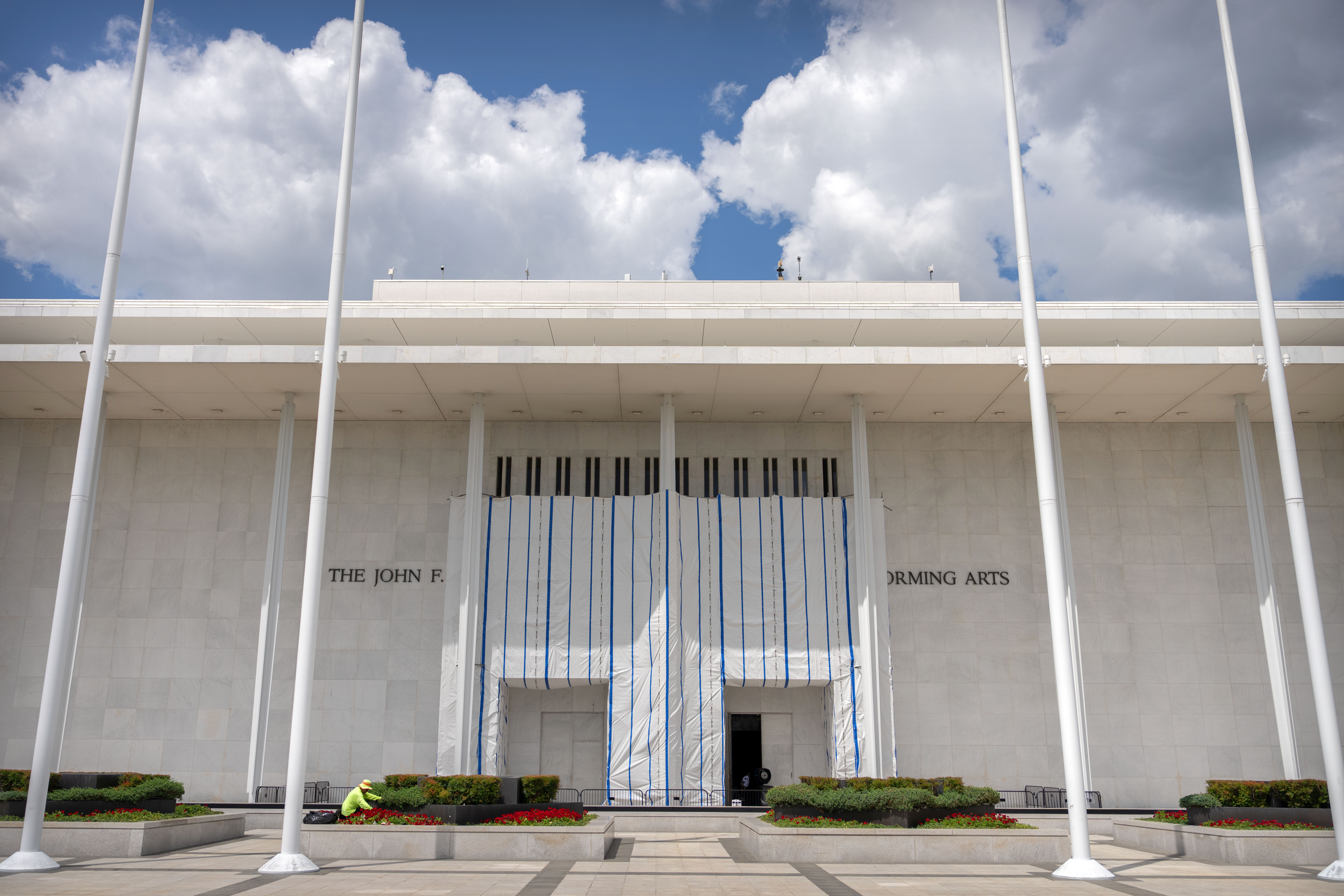
    His name was quickly added to the building, before coming down in June in response to Cooper’s order. The area where it once stood is now covered by a massive tarp.

    Trump’s push to remake the nation’s capital

    The Kennedy Center moves are part of Trump’s broader push to reshape the physical landscape of the nation’s capital in ways that have few modern parallels.

    He demolished the East Wing of the White House and is building a controversial ballroom in its place, though an appeals court ruled last week that construction should stop because Congress didn’t approve the project. Trump has said he will take the case to the Supreme Court.

    His remodel of the Lincoln Memorial Reflecting Pool has also stumbled after algae returned and U.S. Attorney Jeanine Pirro refuted his claims that a vandal was responsible for the damage.

    Meanwhile, Trump is planning extensive renovations of a golf course in East Potomac Park, which could significantly reduce the public’s access to running and biking paths. He is also moving forward with a triumphal arch that will sit near Arlington National Cemetery.

    Trump has derided the Kennedy Center as “rusted, rotted, and rat and bug infested” and threatened to hand the building over to Congress after Cooper rejected the closure and the addition of the president’s name to the building.

    The institution’s leadership has argued that it’s in genuine need of repair and updating.

    Matt Floca, the Kennedy Center’s executive director and chief operating officer, guided a group of journalists through the building in April, highlighting severe water damage that he said corroded steel in some places as thin as tissue paper. Some pieces of equipment, including several 800-ton chillers that help cool the building, are decades old and in need of replacement.

    At the time, Floca said he considered doing the repairs individually but insisted it was his recommendation to Trump to close the building and move forward with the renovation all at once.

    “When the president asked: ‘How do you make these projects the best? How do you make them really excellent and deliver them efficiently?’ my recommendation was you close the building and you do everything over a definite period of time, two years,” he said.

    More recently, the legal battles became the subject of barbs and jokes as comedian Bill Maher accepted the Mark Twain Prize for American Humor in late June. At the start of the program, Pamella Roland DeVos, a Kennedy Center trustee appointed by Trump, described the institution as a “national cultural center open not just for some but for every American patron who wants to experience the greatest art and expression the world has to offer.”

    “The responsibility that comes with it is one our board takes very seriously,” she said.

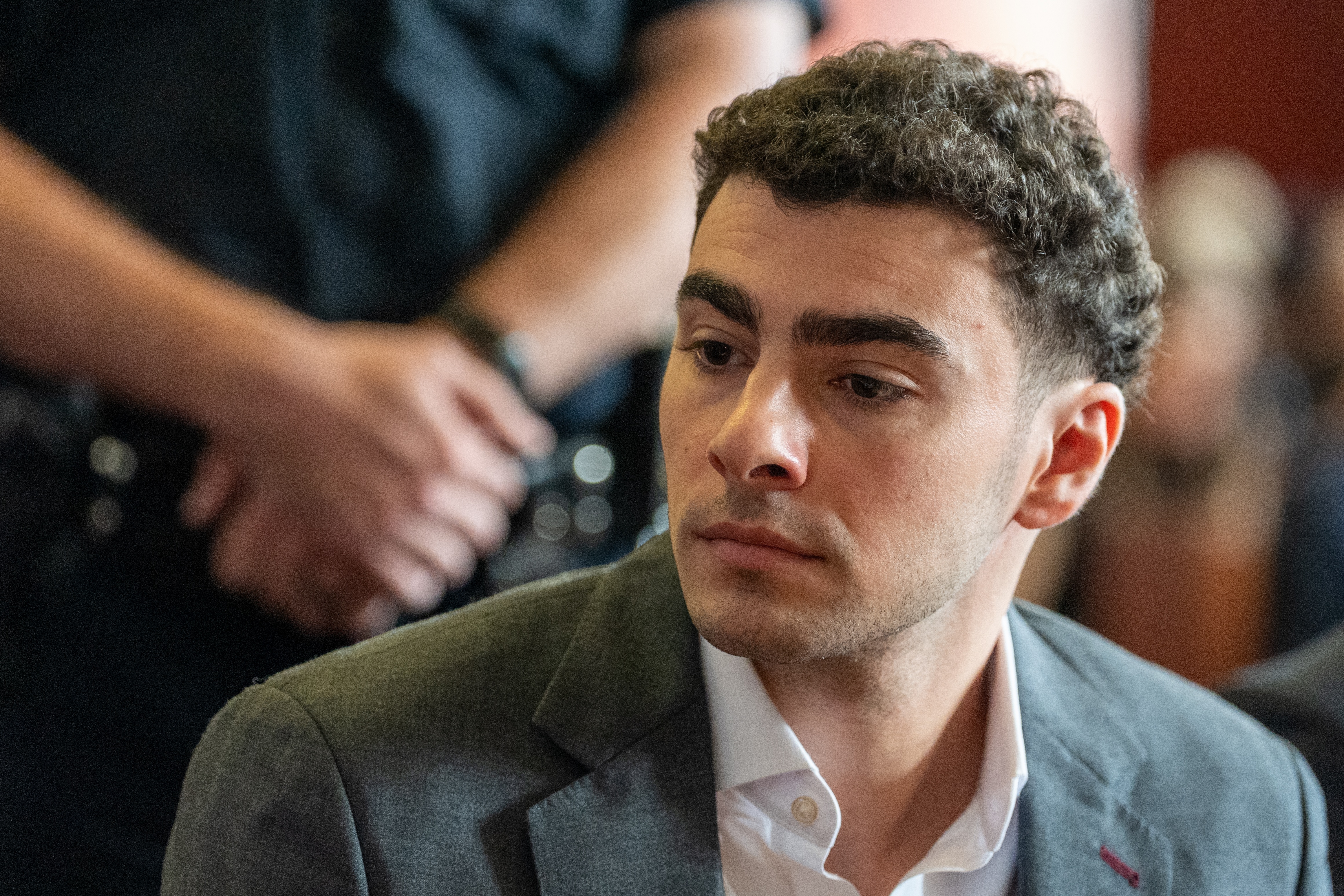
  • Luigi Mangione expected to plead guilty in federal case in UnitedHealthcare killing, AP source says

    Luigi Mangione expected to plead guilty in federal case in UnitedHealthcare killing, AP source says

    NEW YORK — Luigi Mangione is expected to plead guilty as early as Friday in the federal case accusing him of stalking and killing UnitedHealthcare CEO Brian Thompson, according to a person familiar with the matter.

    The person, who was not authorized to talk publicly about the case and spoke to the Associated Press on the condition of anonymity, cautioned that Mangione could change his mind. If he follows through, it would be a stunning development in a case that rattled business leaders while galvanizing their critics.

    Mangione’s lawyers, and spokespeople for the Justice Department and Manhattan federal prosecutors, declined to comment.

    Mangione is accused of traveling to New York City to ambush Thompson, 50, then shooting him outside a Manhattan hotel on Dec. 4, 2024, as the executive walked to UnitedHealth Group’s annual investor conference.

    Mangione is due in court on Friday for a hastily scheduled hearing in the federal case, which involves two counts of stalking. It wasn’t clear what charge or charges Mangione is expected to plead guilty to. The hearing, in Manhattan federal court, comes as his lawyers have been talking with federal prosecutors about a possible resolution to one of two criminal cases against Mangione in Thompson’s death. Previous talks in June broke down.

    Mangione, 28, has been charged in both federal and state court in New York and still faces the possibility of a trial in his unresolved state case. Mangione’s state murder trial is set to begin Sept. 8. Both sets of charges carried the possibility of a life sentence.

    Mangione has pleaded not guilty and has spoken out publicly against the prospect of two trials, telling a judge in February: “It’s the same trial twice. One plus one is two. Double jeopardy by any commonsense definition.”

    Under New York law, a state prosecution could be barred if the federal case is resolved first, but it isn’t automatic.

    The state’s double jeopardy protections kick in if a jury has been sworn in a prior prosecution, such as a federal case, or if that prosecution ends in a guilty plea. Mangione’s cases involve different charges arising from the same course of conduct.

    Once Mangione pleads guilty, his lawyers could then ask the judge in the state case to throw out those charges on double jeopardy grounds. State prosecutors argue their case is distinct and double jeopardy shouldn’t apply.

    Mangione’s federal charges allege that he traveled across state lines by bus to stalk and kill Thompson and that he used means such as a cell phone, the internet, interstate highways, and staying at a hostel that serves out-of-state customers while planning and carrying out the attack. The state charges pertain to the killing itself, as well as firearms offenses.

    In a letter last month, state prosecutors objected to the possibility of a guilty plea in the federal case wiping out the state case.

    “Obviously, any guilty pleas in these matters must account for the seriousness of defendant’s offenses, the loss of an innocent life, the impact of those crimes on the victim’s family, and the other state interests that are implicated, including the sanctity of life principle that underpins the state homicide charges,” Seidemann wrote.

    Mangione’s apparent decision to plead guilty comes after a series of setbacks for his defense.

    In January, U.S. District Judge Margaret Garnett took the death penalty off the table but ruled that prosecutors could use items collected from Mangione’s backpack during his arrest as evidence against him.

    They included a 3D-printed pistol that investigators said matched the one used to kill Thompson and a notebook in which authorities say Mangione described his intent to kill an insurance executive.

    In June, Mangione’s lawyers said they would pursue a psychiatric defense in the state case but reversed course a day later. The defense, involving claims that he was suffering from extreme emotional disturbance at the time of the killing, isn’t allowed in federal court.

    Surveillance video of the killing showed a masked gunman shooting Thompson from behind. Police say “delay,” “deny,” and “depose” were written on the ammunition, mimicking a phrase used to describe how insurers avoid paying claims.

    Mangione, an Ivy League graduate from a wealthy Maryland family, was arrested five days later at a McDonald’s in Altoona, Pa., about 230 miles west of Manhattan.

    He has become a cause célèbre for people upset with the health insurance industry.

    An online fundraiser for his legal defense fund raised more than $1.5 million, and several dozen supporters have shown up to his court appearances, some wearing green clothing — the color worn by the Mario Bros. video game character Luigi — and “FREE LUIGI” T-shirts.

  • Rescuers call for silence around earthquake rubble as window for survival narrows in Colombia

    Rescuers call for silence around earthquake rubble as window for survival narrows in Colombia

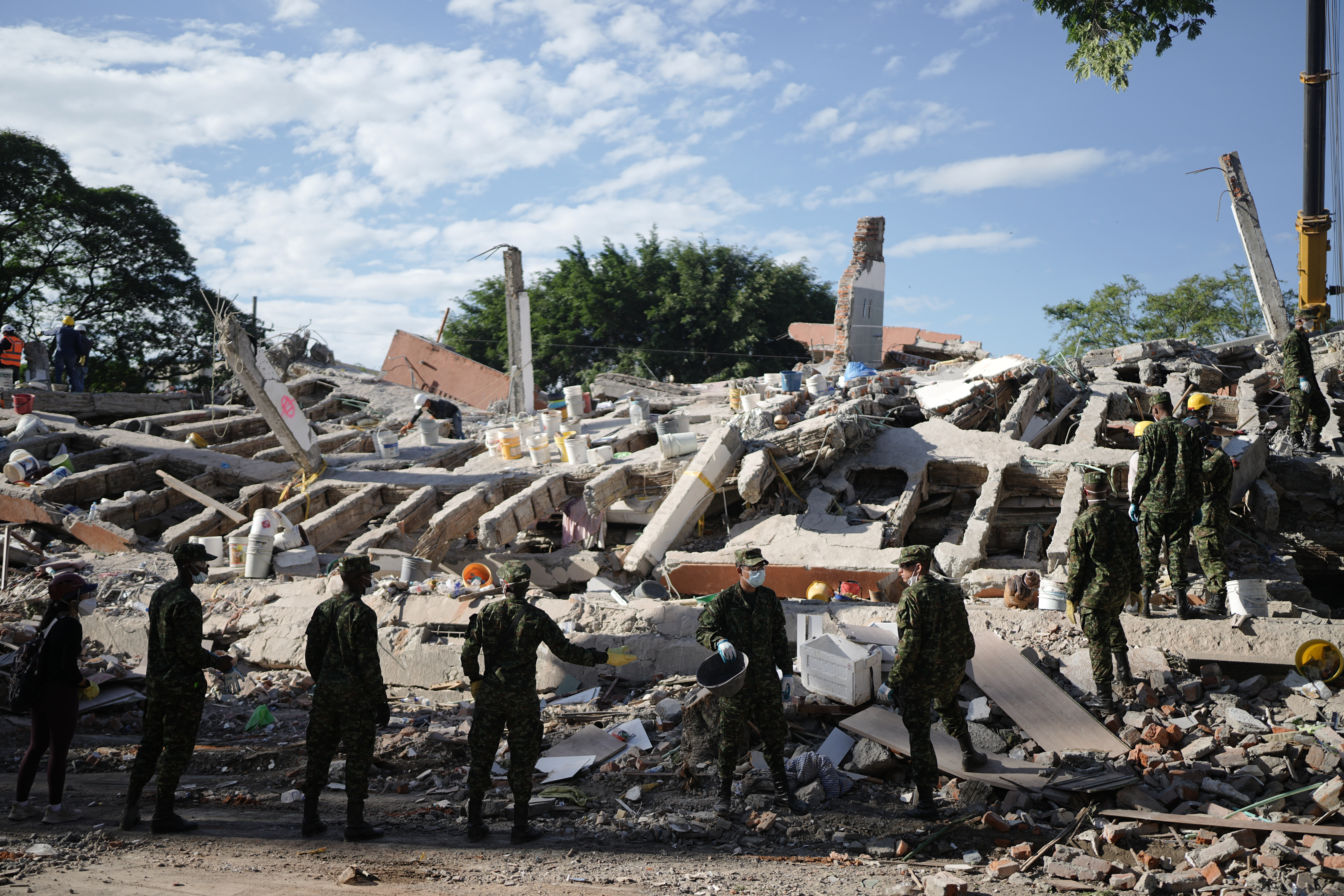
    CALI, Colombia — With arms raised and fists clenched, rescuers in Colombia called for silence Thursday as they listened for signs of life in the rubble left by a deadly earthquake that has killed more than 270 people and left hundreds more missing.

    The call for quiet was part of last-ditch efforts to find survivors in the aftermath of the 7.4-magnitude quake that struck the South American country Monday. Aid agencies consider the first two to three days after a quake to be the prime window for retrieving survivors. But that time frame can be extended if those trapped have access to food and water.

    “There might be two more people alive here, and I’m hopeful,” rescuer Daiana Rojas, 25, told the Associated Press. “We have been hearing sounds since 2:30 a.m., so our hope remains.”

    Rojas and her family were unharmed by the quake, the most powerful to hit Colombia in this century. She has been working as a volunteer to help search for survivors in Cali, one of the most affected cities, along with Pereira, Manizales, and Quibdó.

    “I thought that was going to be my last moment alive,” she said, recalling the terror of the quake. “Seeing this situation in my city breaks my heart.”

    Rojas has witnessed two people being pulled alive from the debris, as well as the recovery of bodies.

    “They are not a relative or a friend of mine, but it feels as they were,” she said of the survivors who have been found. “Whenever rescuers ask for silence, everyone stays still and tries not to move, speak, or whisper. But when signs of life are found, all the teams start to applaud.”

    The mayor of Cali, Alejandro Eder, told reporters Wednesday that rescue teams continue to find signs of life under the rubble and race to save anyone within reach. “The next 20 hours are the most critical to find and rescue people alive,” he said.

    But authorities recognize that the rescue effort is entering a grim phase as search teams begin shifting toward recovering bodies.

    “The removal of debris begins now; more than 72 hours have passed,” Milton Castrillón, who works in the Cali mayor’s office, told AP, adding that the teams now lean on “miracles from God to find survivors.”

    The death toll rose Thursday to 273, authorities said.

    Over 3,800 people were reported injured, with nearly 12,600 homes destroyed and more than 74,800 homes damaged, according to David Santiago Tamayo, director of the National Unit for Disaster Risk Management.

    The devastation has tested Colombia’s new president, Abelardo de la Espriella, and his government as they scramble to respond while aid groups seek to help the most heavily damaged communities.

    De la Espriella said Wednesday that nearly 500 people were reported missing, though civilian-run databases put that number at more than 4,200. In total, more than 25,800 families have been affected, de la Espriella said.

    Meanwhile, Colombia received more international aid from around the world.

    A group of rescuers from the Los Angeles County Fire Department arrived Thursday to help with search efforts and structural engineering assessments. Other countries, including Peru, El Salvador, Mexico, and Brazil, have also offered assistance.

    De la Espriella announced on X that Colombia will receive a $10 million donation from the United Arab Emirates.

    The South American Football Confederation and the Colombian Football Federation also jointly announced a $1 million donation to support reconstruction efforts.

    “Soccer transcends the pitch and remains close to its people, especially in the most difficult times,” they said in a joint statement.

    The Colombia disaster unfolded less than two months after neighboring Venezuela endured back-to-back earthquakes, and the contrast between the two countries’ responses was stark.

    In Venezuela, acting President Delcy Rodríguez waited nearly four hours before addressing the nation. In Colombia, de la Espriella announced an emergency command post to oversee rescue efforts barely an hour after the earthquake. For weeks, Venezuelan civilians were clawing through rubble by hand. Hours after the earthquake in Colombia, rescue teams were searching for survivors with cranes and excavators.

    The contrast was a reminder of the differences between the nations — their political systems, resources, and the strength of their institutions — and a demonstration of how those can take on life-or-death importance.

  • Trump’s vaccine plan would require millions of individual shots last used decades ago

    Trump’s vaccine plan would require millions of individual shots last used decades ago

    WASHINGTON — Public health experts have been quick to condemn an executive order from President Donald Trump aimed at upending childhood vaccinations in the U.S., but the biggest obstacles may be the unprecedented financial and logistical challenges it would impose on parents, health providers, and drugmakers.

    Monday’s announcement by the Republican president calls for separating combination shots — including the measles, mumps, and rubella, or MMR, vaccine — into separate injections. Appointments for that and other vaccinations should be spaced out whenever possible, the order states.

    To accomplish that, drugmakers would need to revive a slate of individual vaccines that have not been marketed separately in the U.S. for decades. They would also have to build new manufacturing plants capable of producing millions more vaccine doses than the nation currently uses.

    For parents, unbundling the MMR vaccine and spacing out the shots would mean returning to the doctor’s office many more times than is currently needed. Those appointments could also strain pediatricians who typically administer the shots, while driving up costs tied to syringes and other medical supplies.

    Studies in the U.S. and other countries have shown that combination vaccines increase the likelihood that children will be fully protected from infectious diseases before starting school.

    Health experts say there is no scientific basis for changing course.

    “We do things that are less convenient and more expensive if there’s a good reason to do it,” said Anna Durbin, of the Johns Hopkins Bloomberg School of Public Health. “There is no good justification for this. I think it’s very bad public health policy.”

    Trump’s plan would require vaccine manufacturing overhaul

    Under Trump’s executive order, federal officials are instructed to develop within 90 days plans for breaking up the MMR shot and spacing out other vaccines.

    But pharmaceutical scientists and former regulators say those changes would likely take years and require drugmakers to spend tens of millions of dollars on new studies and manufacturing facilities.

    Currently, there are no individual vaccines in the U.S. for measles, mumps, or rubella. All the vaccines approved for those viruses by the Food and Drug Administration are combination shots. That three-in-one approach has been the standard in the U.S. since the early 1970s.

    Jesse Goodman, a former FDA vaccine chief, said companies would have to conduct large studies showing new individual shots produced immune system-boosting reactions in children similar to the current versions.

    Companies might also have to demonstrate the safety of new manufacturing facilities and procedures, given that individual measles shots haven’t been widely produced in the U.S. for roughly a half-century.

    “The question is how much has changed since then and how comfortable will the FDA and the companies be relying on those comparisons?” said Goodman, who is now a professor at Georgetown University.

    Designing, constructing, and getting federal sign-off for new vaccine plants typically takes about five years, according to industry experts.

    Additionally, Goodman said, the FDA would have to review and license each unbundled vaccine separately, a process with no precedent.

    “I don’t think there’s any comparable example of removing hugely effective public health measures that protect babies for no documented scientific reason,” he said.

    Individual shots for measles and related diseases tend to be used by lower-income countries that can’t afford the MMR shot. Merck, GSK, and the handful of other companies that supply U.S. childhood vaccines make only the combination shot.

    In separate statements, Merck and GSK said they stand by the safety and effectiveness of their products. Neither discussed plans to unbundle their shots.

    “To date, there has been no published scientific evidence that shows any benefit in separating the combination MMR vaccine into three individual shots,” Merck said in an emailed statement.

    Many more trips to the doctor

    The MMR shot is currently delivered in two doses — the first at the age of 1 and the second dose after age 4. Splitting up the shot into its three separate components would mean six office visits. Spacing out other shots for pertussis and other infectious diseases could multiply the number of visits many more times.

    As the number of visits goes up, parents are more likely to miss appointments or stop making them, according to Durbin.

    “It’s going to be less convenient, more expensive, and you’re going to have fewer people getting vaccinated,” she said.

    Since last year, Trump has repeatedly expressed concern about the number of vaccinations U.S. children are receiving and called on Health Secretary Robert F. Kennedy Jr. to reduce the number. Kennedy and other officials have pointed to smaller countries, such as Denmark, that recommended slightly fewer vaccines than the U.S.

    But breaking up combination shots will result in kids receiving many more individual shots than other comparable nations, Durbin notes.

    White House spokesperson Kush Desai said the Trump administration’s efforts on the MMR vaccine “will give parents more options on timing and frequency for their children, which ultimately will increase vaccination rates for all three diseases.”

    Vaccine order is not legally binding

    Despite the precedent-breaking nature of Trump’s order, some experts are skeptical it will result in meaningful changes.

    Neither the White House nor the FDA can compel drugmakers to develop and seek approval for new vaccines. And from a business perspective, companies have little incentive to develop individual versions of vaccines they already sell in combination shots.

    “They’d be competing against themselves, and there’s no reason to do that,” said Paul Offit, a Children’s Hospital of Philadelphia vaccine researcher and former government adviser.

    While Trump’s order calls for more federal research and recommendations, only state governments have the legal authority to require vaccinations for schoolchildren. The order simply advises states to consider updating their laws to reflect the Trump administration’s approach.

    “I think states will ignore this,” Offit said. “I think that bottom line is that we don’t need to look to Donald Trump for our medical advice.”

  • White House press secretary Karoline Leavitt, youngest person to hold role, to leave at month’s end

    White House press secretary Karoline Leavitt, youngest person to hold role, to leave at month’s end

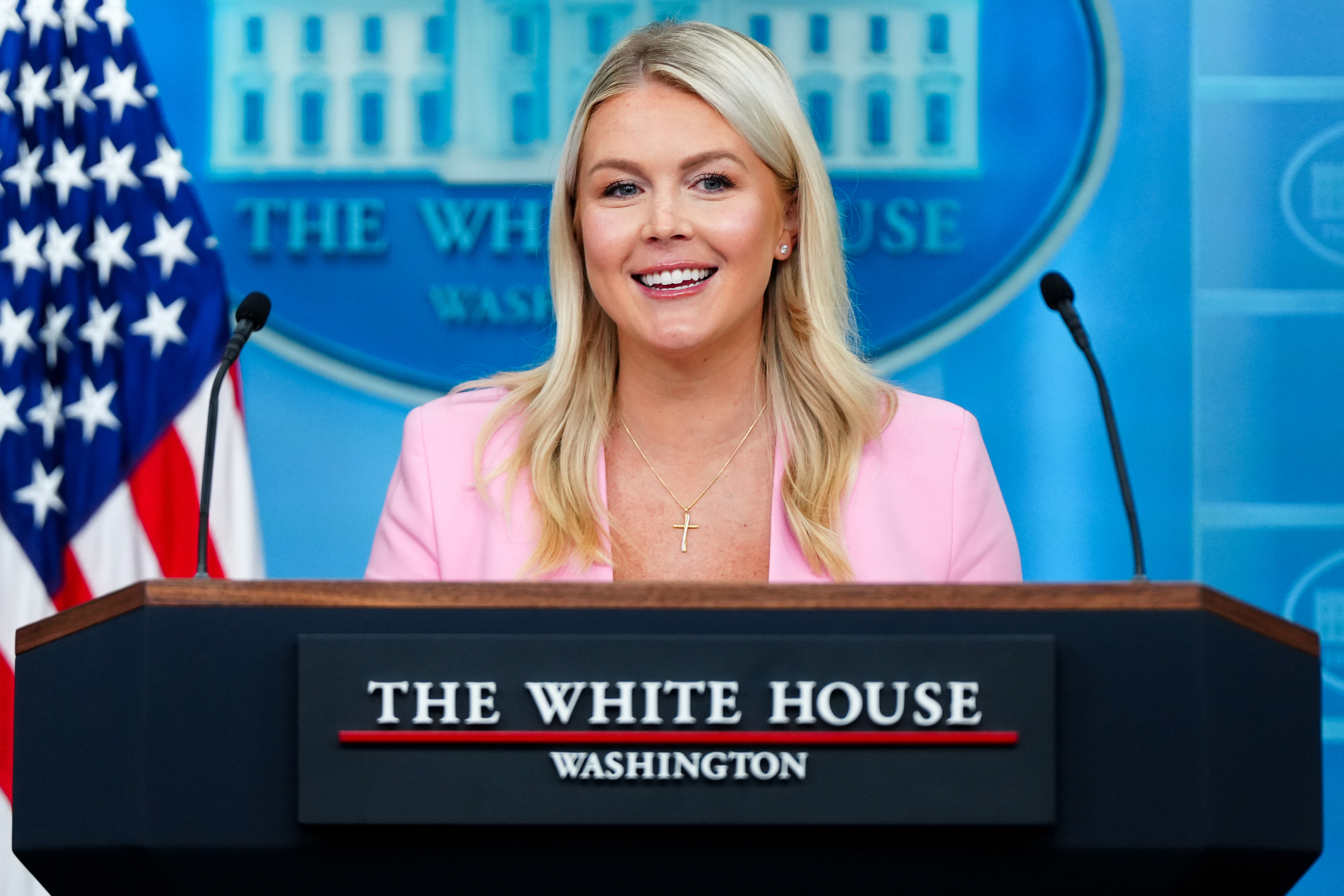
    WASHINGTON — White House press secretary Karoline Leavitt, the youngest person to hold the role, will leave at month’s end, President Donald Trump announced Wednesday.

    Leavitt, 28, just recently returned to the White House after taking a brief leave for the birth of her second child in May.

    Leavitt has been one of the most visible advocates of Trump’s “Make America Great Again” movement. The Republican president described her as one of his “most trusted aides” in a social media post announcing her departure.

    He said Leavitt “will be departing her role at the end of the month so she can spend more time with her beautiful young children and family, a decision I totally understand and respect! Karoline will now be one of my top outside advisors, and an influential voice within the Republican Party, as we work to defy History, and conclusively win the Midterm Elections.”

    Leavitt recently returned to work after taking leave following the birth of her second child, a daughter, in May. She also has a 2-year-old son.

    “The truth is since returning to the White House after the birth of my daughter, I have felt in my heart that I cannot be the best mom my two young children deserve while devoting the constant time, energy, and attention required of the White House Press Secretary — and that is why I have ultimately made the bittersweet decision to depart the White House and embark on a new chapter in my life,” Leavitt said in a social media post.

    Trump did not outline plans for who might replace her in the high-profile role.

    She worked as a spokesperson for MAGA Inc., a super PAC supporting Trump, before joining his 2024 campaign. In 2022, she ran for Congress in New Hampshire, winning a 10-way Republican primary before losing to incumbent Democratic Rep. Chris Pappas.

    During Trump’s first term in office, Leavitt worked as a press aide in the White House press office. She then became communications director for New York Republican Rep. Elise Stefanik.

    Leavitt briefed from the White House press room less frequently than some of her recent predecessors. Trump, who regularly engages with reporters during White House events and during his travels, primarily deployed Leavitt to Fox News and other conservative news outlets to trumpet his agenda and take shots at Democrats and the mainstream media.

    Trump’s first-term press secretaries were Sean Spicer and Sarah Huckabee Sanders, who were known for quarreling with reporters. Another, Stephanie Grisham, never held a briefing. Her successor, Kayleigh McEnany, often lectured the news media during her appearances in the press briefing room.

  • Forget left vs. center. Democratic voters are making clear they just want change

    Forget left vs. center. Democratic voters are making clear they just want change

    WASHINGTON — Democrats remain mixed over what ideological direction the party should take. But across a series of closely watched primaries, they are sending a clearer message about the party’s path forward: They want change.

    In marquee Senate primaries in Michigan and Minnesota, progressive candidates defeated two members of Congress with significant backing from party leaders. Wisconsin voters narrowly rejected a democratic socialist but still chose a 40-year-old county executive who is seeking to become the state’s first Black governor. And in Connecticut, voters ousted one of the longest-serving Democrats in Congress for a challenger who campaigned on generational change.

    The results so far this month deliver no clear ideological mandate. Instead, they add to mounting evidence from this year’s primaries of a Democratic appetite for turnover that is cutting across the party’s traditional divisions.

    “The through line between these races isn’t ideology. It’s impatience with this political system that feels disconnected from the urgency voters feel,” said Lis Smith, a national Democratic strategist. “The demand for change is much broader than the demand for socialism.”

    The immediate challenge for Democrats is whether they can harness the frustration fueling revolts against their own party and turn it against Republicans in November. Beyond that looms the 2028 presidential race, when a new generation of leaders will compete to shape a changing Democratic Party.

    “If leaders in our party don’t recognize that we need to make changes, then the changes are going to come from the ground up,” Luke Bronin, a former mayor who defeated 14-term Connecticut Rep. John Larson in Tuesday’s primary, said in his victory speech. “That’s a message our party needs to hear.”

    Progressives are ascendant, but Wisconsin shows their limits

    Progressive leaders touted Tuesday’s results as further proof that their message is working after victories in Minnesota and Michigan.

    “What we are seeing is that people are sick and tired of establishment politics and establishment policies,” Sen. Bernie Sanders told the Associated Press on Wednesday, pointing to a string of progressive victories around the country.

    In Wisconsin, Democratic socialist Francesca Hong had hoped to also ride the wave of recent progressive victories to the Democratic nomination for governor. Instead, she narrowly lost to Milwaukee County Executive David Crowley, a more moderate Democrat who had the backing of outgoing Gov. Tony Evers.

    Hong’s defeat also came after a number of her past comments resurfaced, including support for defunding the police and a call to cancel Thanksgiving, which she said was a joke. Unlike El-Sayed, Hong didn’t receive the backing of some of the nation’s most prominent progressive leaders, including Sanders and Rep. Alexandria Ocasio-Cortez.

    Sanders said Wednesday that he didn’t endorse Hong because his team lacks the resources to “get involved in every single race. Period. And that’s about it.” He nevertheless praised her “very strong grassroots campaign” for getting “a whole lot of people excited.”

    The result illustrates a tension for the party’s ascendant left flank. Candidates running on populist economic messages have found growing success with Democratic voters. But some positions associated with the progressive movement’s recent past remain vulnerabilities — particularly among voters worried about electability in November.

    “A lot of Democrats are traditionalists on things like culture issues. This is not about culture, it’s about economics. It’s about corruption,” said David Axelrod, who was an adviser to President Barack Obama. “The closer that candidates hew to those issues, the larger the base they’re going to be able to accumulate.”

    That tension was evident Tuesday for Sarah Atkins Hoggatt, 61, who said she agreed with Hong on some issues but worried that Hong’s deeply progressive politics and the democratic socialist label would make it harder for her to defeat Republican Tom Tiffany. She voted for Crowley.

    “I didn’t vote my heart,” Atkins Hoggatt said.

    Progressives scored a much clearer victory in Minnesota, where Lt. Gov. Peggy Flanagan resoundingly defeated centrist Rep. Angie Craig. Craig had the backing of House Democratic Leader Hakeem Jeffries and other prominent Democrats, while Flanagan was supported by Sanders and Sen. Elizabeth Warren.

    Flanagan, similar to El-Sayed in Michigan, highlighted her opponent’s support from wealthy donors while also attacking her vote for a Trump-backed immigration bill that became a liability after immigration agents shot and killed Renee Good and Alex Pretti in Minneapolis.

    As in Michigan, the winning progressive candidate was significantly outspent.

    “Super PACs spent over $80 million trying to defeat El-Sayed and Peggy Flanagan,” Sanders said. ”They lost both elections. I think what people are saying is, we’re sick and tired of billionaires and their super PACs buying elections.”

    Democrats are hungry for change

    Flanagan is 46 years old. Crowley is 40. And El-Sayed is 41. But nowhere was the demand for generational change more explicit Tuesday than in Connecticut.

    Bronin, 47, defeated the 78-year-old Larson — who was first elected to Congress in 1998. A central theme of Bronin’s campaign was the need for a new generation of leadership in Washington.

    Larson became the seventh Democratic House incumbent to lose a primary this year, many of them to younger challengers. The defeated incumbents and the Democrats replacing them span ideological lines, making the wave of losses difficult to explain simply as a shift to the left.

    The push for generational turnover has taken on greater urgency since Democrats’ defeats in 2024, when concerns about President Joe Biden’s age ultimately ended his reelection campaign and forced the party into an uncomfortable reckoning over a generation of leaders who had remained in power for decades.

    Bronin himself has connected his challenge to that experience. Earlier this year, he argued that Democrats needed “new members of Congress, new Democratic leaders who have the energy and courage and clarity of mission that this moment demands.”

    That sentiment was evident among voters in Larson’s district. Dan Schnaidt, a 73-year-old Democrat, said he appreciated Larson’s service but believed it was time to move on.

    “It’s time for new blood, for new ideas,” Schnaidt said.

    The generational divide extends to the electorate

    While Hong fell just short in Wisconsin, the strength of her insurgent campaign highlighted another force reshaping Democratic politics: younger voters.

    Cody Chandler, a 35-year-old software engineer, voted for Hong and called her “probably the most exciting candidate I’ve seen.” Unlike in elections past, Chandler said, he voted for the candidate he most wanted to win rather than the one he considered most electable.

    Jesse Heer, a 32-year-old Madison business owner, also backed Hong, citing her focus on affordability.

    That support showed up geographically. Hong won Madison, home to the University of Wisconsin’s flagship campus, by nearly 7 percentage points, though it wasn’t a big enough of a margin to help her win the nomination.

    A similar pattern helped propel El-Sayed to victory a week earlier in Michigan.

    El-Sayed won Washtenaw County, home to the University of Michigan, by nearly 25 percentage points and Ingham County, home to Michigan State University, by 23 points. He also won Grand Rapids, with its large population of younger, college-educated voters, by nearly 26 points.

    Jordan Snyder, a 20-year-old Michigan voter who supported El-Sayed, said she backed him because of his progressive positions and because she viewed him as someone she could trust, rather than “someone who I feel could be bought and sold.”

    “People are feeling like a lot of the people that they’ve trusted that have been in government haven’t really been living up to expectations,” Snyder said.

  • Congo’s Ebola outbreak is on track to surpass the deadliest one in history, WHO chief says

    Congo’s Ebola outbreak is on track to surpass the deadliest one in history, WHO chief says

    The ongoing Ebola outbreak in Congo is on track to surpass the deadliest one in history, which erupted over a decade ago and killed over 11,000 people, the head of the World Health Organization said Wednesday.

    “At its current pace, it’s on track to eclipse the West African Ebola outbreak of 2014 to 2016,” Tedros Adhanom Ghebreyesus told reporters. That outbreak horrified the world and jolted efforts to develop a vaccine.

    The outbreak in eastern Congo, considered the fastest-growing one yet, has killed over 2,000 people out of more than 4,300 cases. The outbreak was declared on May 15, but health authorities now say sequencing showed it began months earlier, in February.

    It is unlike recent Ebola outbreaks because the rare Bundibugyo virus responsible for it has no approved vaccines or treatments, though efforts to address that are underway.

    WHO says this outbreak ‘had a big head start’

    Experts say this outbreak is moving faster than efforts to track and manage it in a remote part of eastern Congo facing ongoing conflict, near the borders with South Sudan, Uganda and Rwanda.

    Most new cases and deaths are being reported in communities outside the reach of health workers in a region of poor infrastructure and ill-equipped health centers. Some workers have gone on strike over lack of pay. Misinformation about the virus circulates in communities where some are wary of outsiders, keeping some people from clinics.

    “The outbreak had a big head start, still way ahead of us, and we’re playing catch-up,” Tedros said.

    Abdirahman Mahamud, WHO’s director for health emergency alert and response operations, said the agency expects the peak of the outbreak to be reached in six months.

    “But … that’s the moderate scenario,” Mahamud said. “There is a one-case scenario where this outbreak may last nine months to 12 months.”

    This Ebola outbreak has killed more people at a faster rate than any other, including the 2014-2016 outbreak that had at least 28,000 cases. That one took about eight months to reach 1,000 deaths.

    Two vaccines for this type are being tested

    Ebola is rare but highly contagious and can be contracted from bodily fluids such as vomit, blood or semen, and from contaminated surfaces and materials such as bedding and clothing. The disease it causes is severe and often fatal.

    Clinical trials of two possible treatments for this type of Ebola began last month in Ituri, the most affected of the five provinces in Congo where cases have been reported.

    Two vaccines developed specifically for the Bundibugyo virus are now being tested in people for the first time, Tedros said Wednesday.

    WHO also plans to test whether an existing Ebola vaccine could protect people against the virus after studies in animals showed promising results.

    The origins of the outbreak are becoming increasingly clear.

    A study published in Nature Medicine on Monday added evidence that the outbreak began when the virus jumped from an infected animal to a person, rather than stemming from earlier outbreaks. Researchers found the virus is genetically different from versions seen in Bundibugyo Ebola outbreaks in 2007 and 2012.

  • Ex-Chinese Premier Zhu Rongji, who drove economic reforms and led China into the WTO, has died at 97

    Ex-Chinese Premier Zhu Rongji, who drove economic reforms and led China into the WTO, has died at 97

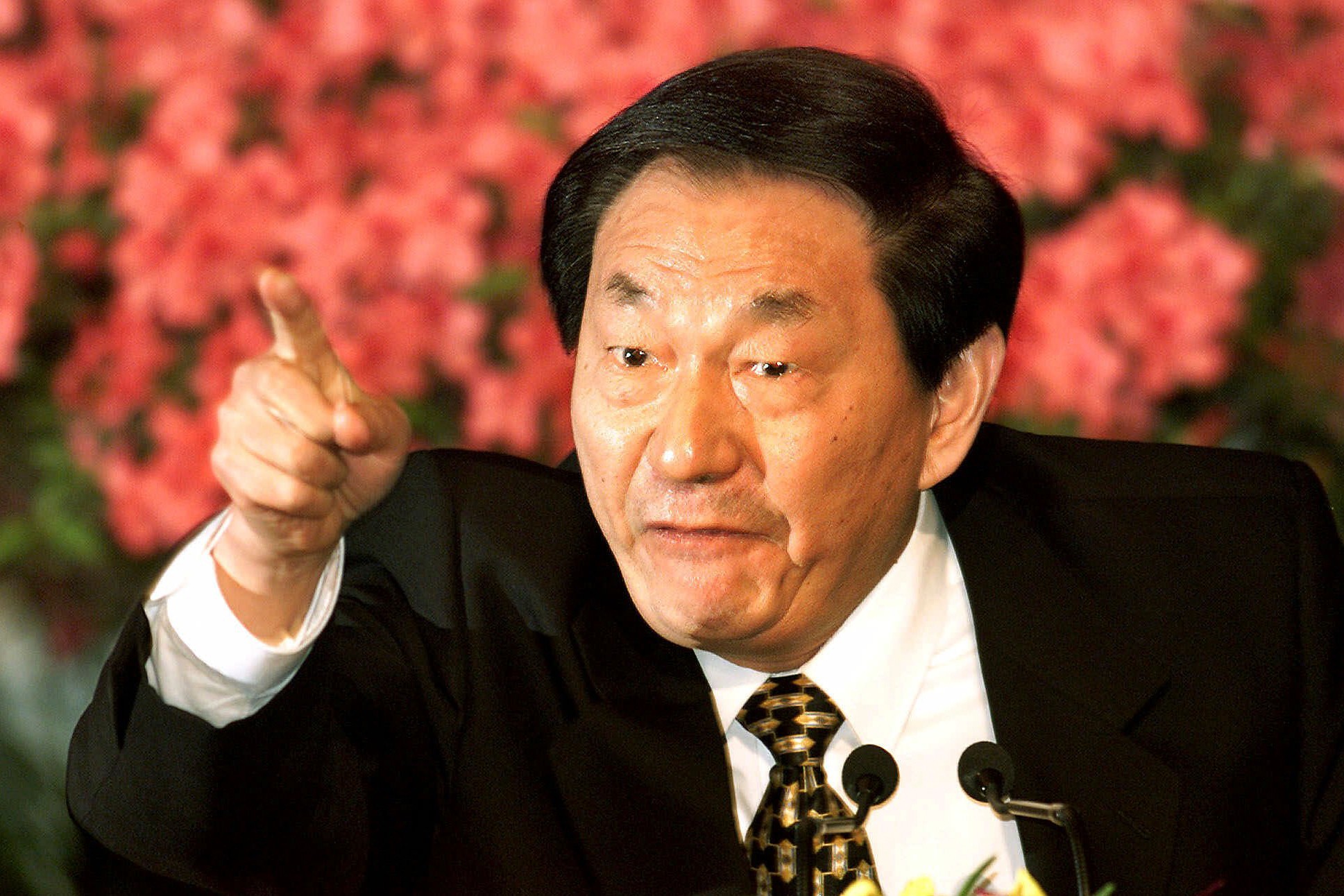
    BEIJING — Former Chinese Premier Zhu Rongji, the impatient, sharp-tongued reformer who helped ignite China’s explosive economic boom by forcing wrenching change on state industry in the 1990s and leading the country into the World Trade Organization, has died of illness, state media reported Wednesday. He was 97.

    Mr. Zhu died in Beijing at around 11 a.m. on Wednesday, the official news agency Xinhua reported.

    Once sent into rural exile to do manual labor for praising reforms in other communist countries, Mr. Zhu pushed through a dizzying array of changes as premier, China’s top economic post, from 1998 to 2003 under former President Jiang Zemin.

    Mr. Zhu clashed with Communist Party conservatives and state industry bosses as he pushed state-owned companies to become efficient and profitable. That cost millions of layoffs, but helped propel China to overtake Japan as the second-largest economy behind the United States in 2010.

    Building on former leader Deng Xiaoping’s 1979 reforms, Mr. Zhu is credited with supplying the resourcefulness and tenacity to push through history-making changes such as China’s WTO membership, which helped to transform China into the world’s biggest exporter.

    Those changes helped to keep economic growth above 8% a year from 2000 to 2010, peaking at 14.2% in 2007.

    A spiky personality who fought corruption and conservatives

    Named premier in 1998 at age 69, Mr. Zhu became a popular figure by criticizing official bungling and graft and accepting blame when the government fell short. His demanding style earned him the nicknames Boss and Zhu Fengzi, or Madman Zhu.

    “I have prepared 100 coffins here — 99 for corrupt officials and one for myself,” Mr. Zhu said in 1998, according to the party newspaper People’s Daily.

    Mr. Zhu ranked No. 3 in the party hierarchy behind Jiang and Li Peng, chairman of the ceremonial legislature, the National People’s Congress. But he was a technician without his own power base. Mr. Zhu complained that allowed officials to ignore his orders.

    Mr. Zhu made his name as a deputy premier in the 1990s by crushing inflation. He enforced price controls and cut off loans to money-losing state companies, rebuffing resistance by local leaders — a pattern Mr. Zhu would repeat as he fought conservatives over the pace of reform.

    Mr. Zhu led efforts to secure WTO membership following marathon negotiations that began in the 1980s. That status would enshrine free trade as a national commitment, giving Mr. Zhu a tool to force local officials to stop protecting favored companies.

    Mr. Zhu’s campaign was nearly derailed when he went to Washington in 1999 with market-opening concessions to win U.S. endorsement of the WTO bid. The Clinton administration rejected the offer as inadequate, while his political enemies at home accused him of offering too much, but Zhu survived and China went on to join the body in December 2001.

    Mr. Zhu launched China’s home ownership boom in 1998 with an initiative to sell apartments owned by state companies. Families rushed to buy, and within a decade the majority of urban housing was privately owned.

    Still, Mr. Zhu was less an advocate of free enterprise than a skilled bureaucrat who carried out party orders to whip state industry into shape.

    Mr. Zhu showed no interest in privatizing the economy. He played a key role in drafting plans in the 1990s to turn banks, airlines, oil companies, and other enterprises into profit-oriented corporations but to retain government ownership.

    Zhu stood out for admitting official failings

    Born Oct. 23, 1928, in Mao Zedong’s home province of Hunan, Mr. Zhu paid an early price for his willingness to take risks and speak out.

    After a start as an economic planner, his career went into a 22-year eclipse when he was labeled a “rightist” in 1957 for praising reforms in Hungary and Yugoslavia. He was banished to the countryside during the 1966-76 Cultural Revolution to do manual labor.

    Rehabilitated in 1979, Mr. Zhu rose swiftly, becoming deputy Shanghai party secretary in 1987 and mayor the next year.

    As mayor in 1989, Mr. Zhu gained a reputation for moderation when he placated protesters and pledged not to call in the military.

    “He managed to defuse, with considerable subtlety, a tense political situation that could have developed into localized violence or worse if the military had felt it necessary to intervene,” wrote Australian diplomat Shelley Warner in the 1991 book The Pro-Democracy Protests in China: Reports from the Provinces.

    Mr. Zhu’s boss, Jiang, would soon be called to Beijing by Deng and made party leader. Mr. Zhu was named deputy premier in 1991 and joined the party’s ruling Standing Committee in 1993.

    Mr. Zhu broke with the leadership’s stance of infallibility by admitting and taking blame for official failings.

    In 1998, after summer floods killed 4,150 people and officials were accused of embezzling money meant for anti-flood dikes, Mr. Zhu complained some barriers were no stronger than bean curd.

    Three years later, he apologized on national television for his cabinet’s failure to protect the public after an explosion in a schoolhouse in southern China killed at least 42 people, most of them children.

    Mr. Zhu enlivened the party’s bland image by cracking jokes in public, sometimes at his own expense. Laughter erupted at a 1999 news conference when he said a recent photo “made me look like a dead man.”

    One of Mr. Zhu’s proudest triumphs as deputy premier was to craft a tax system that required local officials to hand more revenue to Beijing. He said in 1996 that he deserved a Nobel Prize in economics for that.

    Mr. Zhu rarely appeared in public after leaving office as premier.

    Mr. Zhu was married to Lao An, a fellow Hunan native. Their son, Yunlai, also known as Levin Zhu, is a former CEO of China International Capital Corp., a government-owned investment bank.

    Their daughter, Yanlai, led a charity organization supporting schoolchildren that was backed by Zhu Rongji.

  • ICE plans to give officers gloves that can deliver painful electric shocks

    ICE plans to give officers gloves that can deliver painful electric shocks

    Immigration and Customs Enforcement officers may soon be outfitted with gloves that can deliver painful electric shocks intended to gain compliance from combative individuals.

    ICE plans to spend up to $20 million to purchase thousands of “conductive distraction and de-escalation devices” for officers and agents by March, according to a notice published Monday by the Department of Homeland Security.

    The devices are known as the G.L.O.V.E., which stands for Generated Low Output Voltage Emitter, and are manufactured by Compliant Technologies LLC of Lexington, Ky. They have been used in recent years by some jails and police departments.

    DHS said Tuesday that it was working on a response to an Associated Press inquiry and offered no immediate comment. Jeff Niklaus, the founder and CEO of Compliant Technologies, wrote in an email, “Unfortunately, we are unable to speak on this subject.”

    The notice said the solicitation for a no-bid contract could be published as early as Friday.

    Civil rights advocates expressed alarm at the plan, saying ICE officers already face criticism for their use of force with little oversight or accountability while enforcing President Donald Trump’s immigration crackdown.

    Compliant Technologies says the devices function as a normal pair of patrol gloves until officers press a switch to activate their electrical mode. The gloves must be applied directly to someone’s skin to deliver a pain stimulus that typically helps an officer gain compliance within seconds, according to the company.

    “It’s immediate and sharp, and it will distract you. I call it like a bee sting,” said John Peters, president of the Institute for the Prevention of In-Custody Deaths, who is studying how the device has been used. “If the officer is getting any type of resistance from the person, this is certainly an effective tool.”

    Peters said he believed ICE’s planned purchase would likely be the largest from the company to date. He said he could envision ICE officers using the gloves to help remove uncooperative subjects from cars and houses and in and out of detention facilities.

    “For smaller officers or weaker officers or older officers, I think it has a great advantage” because it can produce faster takedowns and shorten confrontations, he said.

    The manufacturer warns the device should not be used as punishment, against people merely exhibiting “verbal defiance or belligerence” or on high-risk populations such as children, pregnant women, or elderly or disabled people.

    Jenn Rolnick Borchetta, deputy project director on policing at the American Civil Liberties Union, said the public should have no confidence that ICE officers will use the devices appropriately. She questioned why the devices would be necessary for civil immigration enforcement and noted those getting shocked might have no advance warning.

    “ICE spent the last year showing this country they are too quick to use force. Now they will be able to deploy electric shocks with the slight push of a button that maybe nobody else can see them do,” she said. “Introducing gloves that can so easily be used to deliver terrible pain in encounters is a recipe for harm to the public.”

    Supporters say the devices are generally used in specific jail and transport situations, rather than broadly to patrol on the streets. They have been used to subdue violent suspects who are refusing to get into squad cars and inmates who are harming themselves and threatening officers, according to Compliant Technologies.

    Peters said he expected the devices to be misused by a small number of employees, as with other policing technologies, but he said they are unlikely to cause injuries. He said it would be important for ICE to have robust policies and training in place.

    To use the device, officers must complete a course and be recertified every two years, the manufacturer says.