Category: Associated Press

  • Pope forgives person who nailed him in the eye with a rosary in Peru

    Pope forgives person who nailed him in the eye with a rosary in Peru

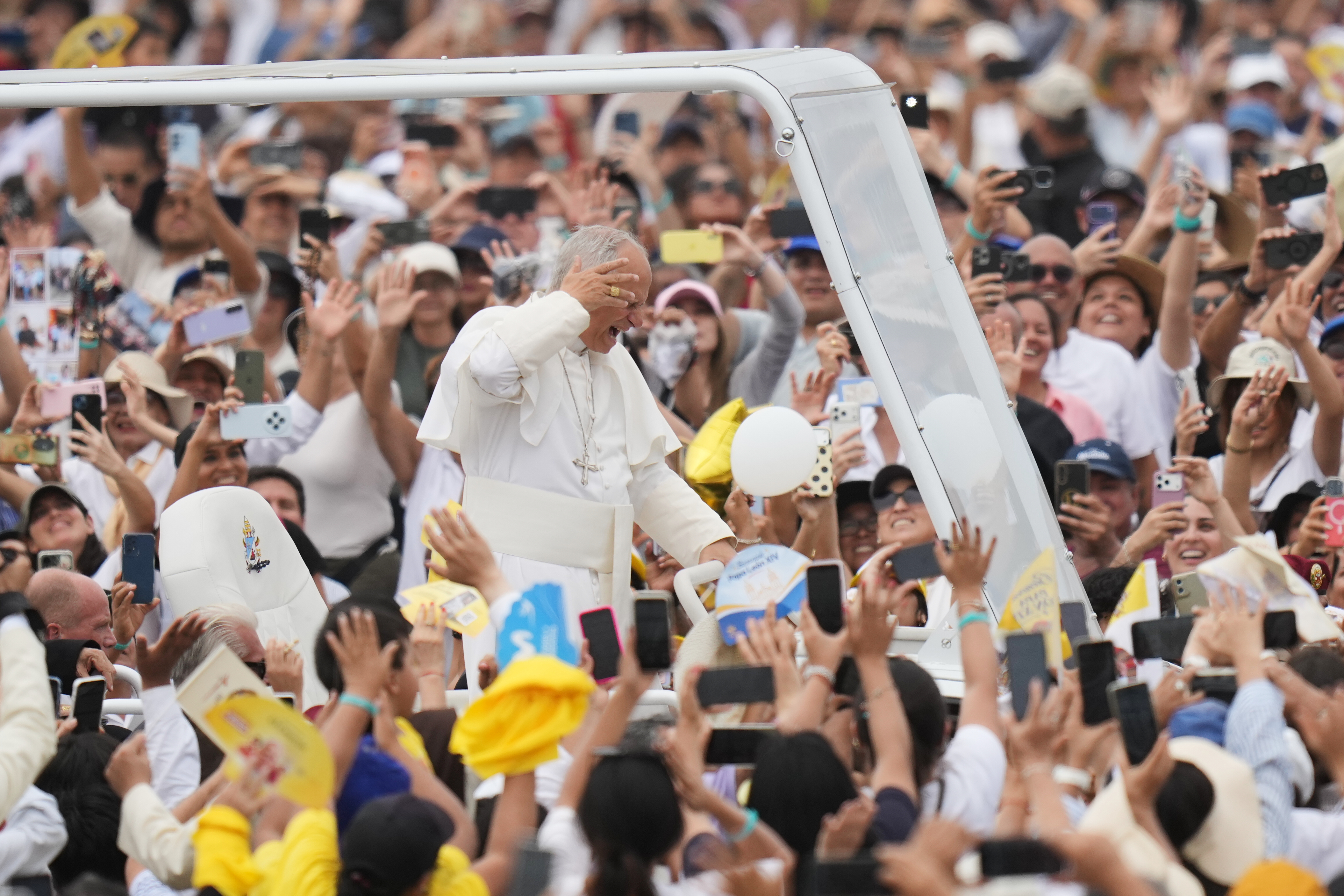
    ABOARD THE PAPAL PLANE — Pope Leo XIV has forgiven the person who threw a rosary that nailed him in the eye before his final Mass in Peru, saying it was merely a sign of the person’s profound faith.

    Leo got hit during a popemobile ride Monday through the estimated 1.5 million people who had flooded a Lima air base for the service. Leo grimaced and touched his eye but proceeded as if nothing had happened.

    During an in-flight news conference en route home, a Peruvian reporter apologized for the incident. Leo, who lived in Peru for two decades and has Peruvian citizenship, brushed it off as merely someone trying to get close to the pope.

    And he also joked about it.

    “The nice thing about Peruvians, including the person who with a lot of faith simply wanted to offer me a rosary, are things you carry in your heart — or maybe in your eye — but that mark the life of someone,” he said.

    “It tells you that here truly there is enthusiasm. Here there is profound faith. Here there is a desire to receive the blessing of the Lord,” he said.

    People often toss rosaries, stuffed animals, sports jerseys, and other items toward the pope when he is in the popemobile and he has often wowed crowds with his quick reflexes and ability to catch them. His bodyguards, however, say these tossed items are some of their biggest security concerns when he’s out in public.

    One rosary moment went viral during Leo’s June visit to Barcelona.

    A young man handed his wooden beaded rosary to the pope as he arrived in a golf cart at Montserrat, the mountain complex revered by many Catalans. The pope was later seen praying with the rosary in his hands inside the Montserrat basilica, according to footage by EWTN.

    As Leo left the complex in a car, the young man waiting for him along the road shouted out to him: “Holy Father! The rosary! The rosary! Throw it! Throw it!”

    Leo obliged. A police officer picked it up and gave the man back the rosary that the pope had used.

  • FAA temporarily stops router installations connected to air travel stoppage

    FAA temporarily stops router installations connected to air travel stoppage

    WASHINGTON — The Federal Aviation Administration has paused installing routers linked to last week’s ground stop that caused chaos for travelers, the agency said Tuesday.

    The move comes amid growing scrutiny over the nation’s air traffic control system and as the Trump administration is making a new request for $50 billion to improve air travel. Democrats in the Senate are demanding that the administration provide clear answers about what went wrong.

    President Donald Trump has blamed old technology and Democrats for the nationwide grounding of all planes and upheaval at the nation’s airports. But the FAA has been struggling to modernize the air traffic control system for decades — going back well before the first Trump administration.

    FAA spokesperson Ian Gregor said the agency paused new installations of Juniper routers and disabled the functionality of all existing ones on Friday after technicians linked the problems to a new router in El Dorado, Ark. The FAA has said that another router installed three weeks earlier in Amarillo, Texas, also went haywire.

    Maker of routers says devices were working properly

    The system became overloaded when the federal contractor that maintains the FAA’s telecommunications network was replacing outdated copper wires with fiber optic lines across the nation.

    The ground stop was needed, Transportation Secretary Sean Duffy said, after the new router that L3Harris installed in Arkansas resulted in a cascade of intermittent communications and radar signals at 17 of the 22 regional air traffic control centers. The centers direct planes cruising at high altitudes.

    The FAA said that “excessive data” was flooding the system “at a rate of 1,000 connection attempts every 4 to 5 seconds.” That deluge created instability with “aircraft communications and radar feeds,” the agency said.

    For now, the FAA is relying on older Cisco routers that have been in place for 25 years to continue operating the network while they investigate the cause of Friday’s trouble.

    The routers at issue last week are being tested in a lab at the headquarters of L3Harris.

    Hewlett Packard Enterprise, which owns Juniper, said in a statement that the company believes the routers were working properly when the ground stop occurred. “Based on what we know today, the device functioned as it was configured to by the installer. It did not fail or act improperly,” the statement said.

    Problems with FAA equipment are decades old

    Democrats on the Senate Commerce Committee said they believe that only 400 out of more than 3,600 new routers have been installed.

    “Identifying the device that failed does not establish why it failed. FAA must investigate further to determine the root cause and report to Congress on how it intends to prevent future issues,” the Democrats said in a letter sent to Duffy.

    Upgrading the nation’s air transportation system is an effort that Congress has dedicated significant sums to in recent years. The problems with aging equipment at the FAA date back decades and past efforts to modernize the system have come up short.

    Duffy has pushed Congress for billions more dollars to upgrade a system he said had been neglected for decades, saying again this week that much more is needed.

    Money would go to control towers, airport infrastructure

    The Trump administration on Tuesday sent a letter to key lawmakers outlining its request for $50.1 billion to modernize the system and make other improvements at airports.

    The request calls for $10.1 billion for updating the nation’s air traffic control system. Similar amounts would go toward boosting airport infrastructure, replacing or refurbishing terminals at high-impact hubs, constructing five new traffic control centers, and improving or replacing up to 140 FAA-owned air traffic control towers.

    “Congressional approval of these funds will equip the FAA to deliver to the American people a brand-new air traffic control system that is safer, smarter, faster, and more efficient,” the letter said.

    Congress approved $12.5 billion last year to modernize much of the key infrastructure that more than 45,000 flights a day rely on to reach their destinations safely. The funds were earmarked for replacing outdated technologies such as copper wires, floppy discs, and radars built in the 1980s, but much of that money will also go toward runway upgrades and other construction projects.

    Ground stop cost big airlines over $300 million

    Equity research and brokerage firm Bernstein estimated the ground stop and the weekend work needed to recover from it cost the four biggest U.S. airlines $345 million combined.

    Since work on the FAA’s communications network led to Friday’s flight halt, American Airlines, Delta Air Lines, United Airlines, and Southwest Airlines only had to offer cash refunds, credits, or a rebooking option to customers who decided to cancel their trips, Bernstein analysts said.

    The lost revenue and additional costs from the ground stop — estimated at $113 million for American, $96 million for Delta, $96 million for United, and $40 million for Southwest — still are enough to have a measurable effect on the four carriers’ quarterly earnings, the analysts wrote in a Monday research note.

    “A booking slowdown before Thanksgiving, or a second outage, would cost more than the weekend’s cancellations did,” the analysts said, adding they did not see any signs of waning ticket demand.

  • Claims by Netanyahu’s party of a ‘stolen’ Israeli election unravel

    Claims by Netanyahu’s party of a ‘stolen’ Israeli election unravel

    NAHARIYA, Israel — Since suffering heavy losses in Israel’s Oct. 27 election, Prime Minister Benjamin Netanyahu’s party has repeatedly claimed the vote was “stolen” by Arab-led parties, possibly with foreign assistance.

    Those claims appear to be crumbling as the longest-serving Israeli leader tries to cling to power.

    Israeli authorities say they have found no evidence to support the Likud party’s claims. And in a new setback to Netanyahu, Israel’s attorney general is looking into revelations that unsubstantiated claims of voter bribery originated with Netanyahu’s own staff.

    There are no signs Netanyahu was personally involved in wrongdoing. But his party’s unsuccessful attempts to discredit the election have left him in a weakened position as his chief rival, Gadi Eisenkot, moves ahead with efforts to form a new government and oust Netanyahu.

    Netanyahu’s office raised suspicions ahead of the vote

    Early on the morning of the election, Israeli police announced the arrests of three suspects in a Bedouin Arab town and said they had confiscated envelopes filled with cash. They said the men were suspected of paying people to vote for the Arab-led Ra’am party.

    Netanyahu immediately jumped on the announcement, calling it a “serious incident” and demanding a police investigation.

    Four additional suspects were arrested days later, and the incident would become a cornerstone of the Likud party’s campaign to discredit the vote, in which Arab-led parties posted strong gains in representation, jumping from 15 seats to 19 seats in the 120-seat Knesset.

    But the accusations quickly fell apart. A judge ordered all of the men released within days due to a lack of evidence, and none were charged.

    On Tuesday, after meeting with Israel’s internal security service, the Shin Bet, the country’s Election Committee said, “There is no evidence that bribes were paid to voters on a scale that could have affected the election results.” The committee said its investigation is ongoing but shifting to examine allegations of foreign influence, another Likud claim.

    Netanyahu’s office at center of investigation

    In the past few days, signs have emerged that the unsubstantiated allegations against Arab voters can be traced directly to Netanyahu’s office and allies.

    The information appears to have originated with Danny Greenberg, a former adviser to the prime minister on Arab affairs. Greenberg told Israel’s Yediot Ahronoth newspaper that he received a tip from a member of the Arab-led Joint List party whom he declined to identify. He said he then passed information to Netanyahu’s chief of staff.

    Earlier this week, Netanyahu’s office said the chief of staff, Ido Norden, was “doing his duty as a law-abiding Israeli citizen” by reporting a possible crime to police. He said his office had no further involvement.

    Israel’s police commissioner said Monday he would investigate the police handling of the affair. But late Monday, Israel’s attorney general ordered police to freeze the probe. Instead, she said she will hold discussions about a broader investigation, including a look at the communications between Netanyahu’s office and police close to election day.

    Rival says prime minister is a ‘threat’ to democracy

    Netanyahu’s bloc of religious and nationalist parties lost its parliamentary majority in the election, but Netanyahu remains in office as caretaker prime minister. The latest developments come at a bad time for him.

    In a possible first step toward unseating Netanyahu, Eisenkot’s allies installed their own parliament speaker, Matan Kahana, on Tuesday.

    That clears the way for Eisenkot to reverse some of Netanyahu’s more controversial policies while he continues to try to cobble together a majority coalition in the Knesset. Eisenkot faces his own struggles because he may be forced to rely on Arab-led parties, a potentially risky move.

    Netanyahu has sought to head off any alliance between Eisenkot and the Arab-led parties, pejoratively referring to them as “terror supporters.” Instead, he has called on Eisenkot to join him in a government under Netanyahu’s leadership.

    Eisenkot said this week that the actions of Netanyahu and his inner circle pose a “tangible, direct and immediate threat to Israeli democracy.”

    Yoav Dotan, a law professor at Hebrew University, said the Likud party’s attempts to discredit the vote were part of a larger pattern. Netanyahu has frequently made incendiary statements against Arab voters during elections.

    “It’s not surprising, because it’s not a bug, it’s a feature in his strategy during this election,” Dotan said. “The only point that might surprise someone is that it was pretty clumsy.”

  • Trump’s pick for Navy secretary acknowledges the Iran war is straining military resources

    Trump’s pick for Navy secretary acknowledges the Iran war is straining military resources

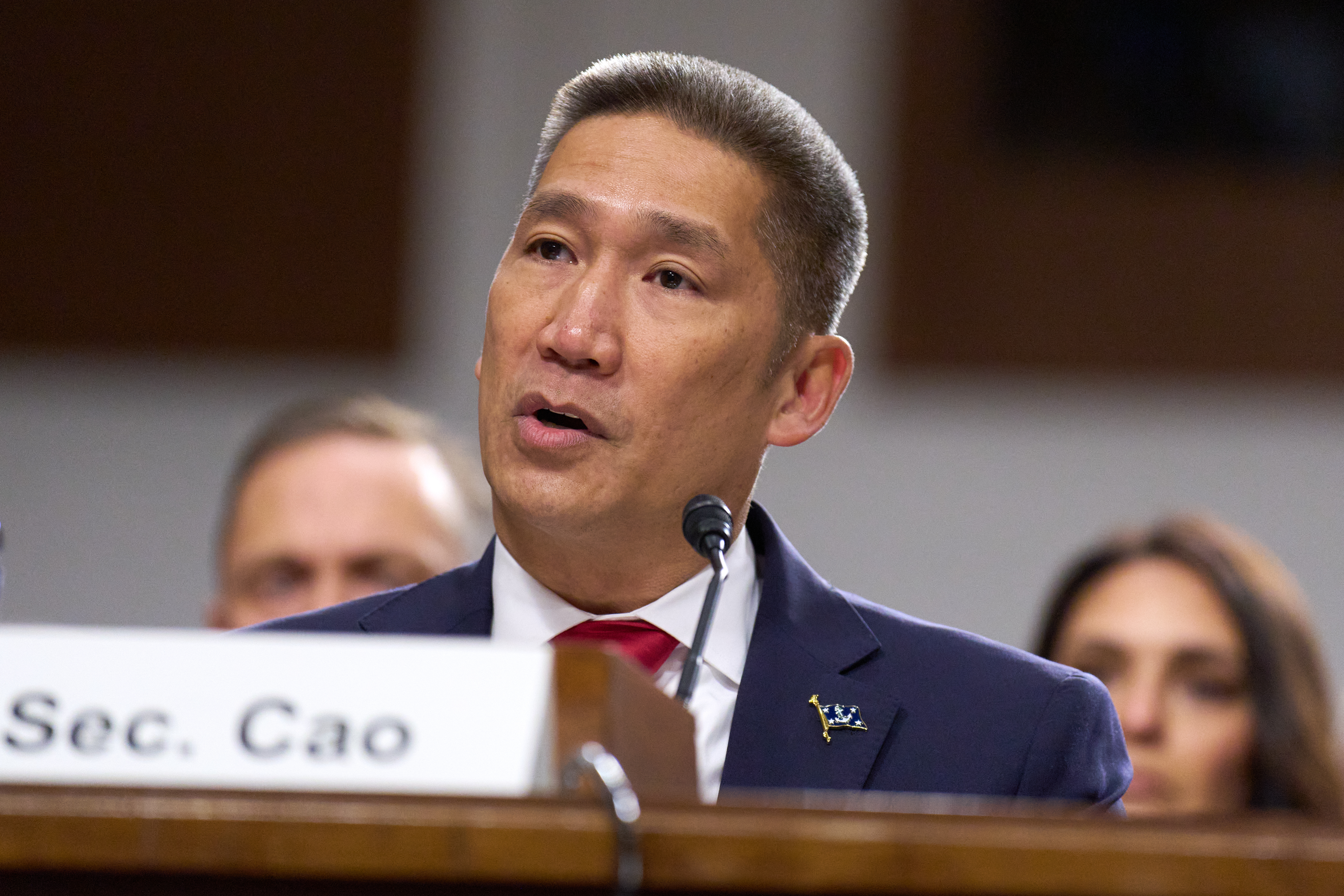
    WASHINGTON — President Donald Trump’s pick to lead the U.S. Navy acknowledged the strain of the Iran war as senators from both political parties pressed him at his confirmation hearing Tuesday about the impact of long ship deployments on sailors, drawdowns to stockpiles of advanced weapons, and resources being shifted away from countering China.

    Acting Navy Secretary Hung Cao, a Trump loyalist and combat veteran, is seeking the permanent top civilian job during a particularly volatile time in Washington. He also faces the extra hurdle of needing a waiver from Congress, because he left active-duty service less than seven years ago.

    “This war, again, I know it’s a strain on our Navy,” Cao told the Senate Armed Services Committee, but he insisted that “it’s really set China back on their heels” to see all the military services work together.

    Sen. Elizabeth Warren, a Democrat from Massachusetts, grilled Cao on the costs of the Iran war, noting that independent estimates or media reports say the naval blockade on Iranian shipping costs about $32.5 million a day and Iranian strikes on the Navy’s regional headquarters in Bahrain did at least $400 million in damage.

    Cao confirmed the figure for the blockade but said he could not offer a full damage assessment in Bahrain because “it’s a nonpermissive area for us to go,” despite telling a reporter months ago that Iran “blew the hell out of Bahrain.”

    The hearing offered a rare opportunity to question a top military leader publicly about the Iran war and other issues. It follows recent firings of Navy officials and a failed impeachment attempt in the House against Defense Secretary Pete Hegseth, partly over his handling of the 8-month-old conflict. Republicans lost the House and Senate in the midterm elections, which were widely seen as a repudiation of the war and will put Democrats in control of Congress in January.

    Cao faces questions over living conditions, mental health during long deployments

    Cao was asked to address concerns that lawmakers have raised over living conditions aboard warships deployed to the Middle East and sailors’ mental health, following reports of crew stress and supply shortages on the USS Abraham Lincoln aircraft carrier and other ships. The Lincoln endured a record-breaking deployment supporting the Iran war before returning to its homeport of San Diego in October.

    Republican Sen. Roger Wicker of Mississippi, who chairs the Senate Armed Services Committee, noted that the “incredibly challenging deployments” take a toll on sailors and their families.

    Sen. Mark Kelly, a Democrat from Arizona, said his office had received “reports of not enough food and inadequate basic necessities” from other warships that are now deployed.

    “One parent told us that there’s their kid, lost more than 45 pounds in six months because of a lack of food,” Kelly said.

    Cao said he was focused on sailors’ welfare but argued that sailors going hungry was “like my kids opening up the refrigerator door and saying there’s nothing to eat in here.”

    When asked about suicide attempts aboard the ships, Cao told Sen. Richard Blumenthal, a Connecticut Democrat, that what he saw “as eight suicide attempts, I see as eight suicide mitigations.”

    Cao says the Navy is making progress on munitions

    The conflict with Iran has strained U.S. stockpiles of air defense interceptors as well as other missiles such as the Navy’s Tomahawk cruise missile, which can be fired offshore by a ship but strike targets hundreds of miles inland.

    GOP Sen. Deb Fischer of Nebraska pointed to concerns about the dwindling munition stockpiles, while fellow Republican Sen. Joni Ernst of Iowa also noted the strain to Navy resources of maintaining the blockade on Iranian shipping.

    Sen. Jack Reed of Rhode Island, the committee’s ranking Democrat, said in his opening remarks that “the munitions expended and damage sustained from Operation Epic Fury alone will take years to recover.”

    When lawmakers raised concerns over munitions stocks, Cao said there’s been a boost in production of Tomahawks and other weapons.

    “When I was in uniform, we only produced 125 Tomahawks a year. Right now we’re well above 60 every month,” Cao said.

    He said efforts are also underway to boost the production of interceptors that are used by Navy ships to shoot down incoming missiles.

    However, Cao also conceded that the Navy has taken to using expired munitions, comparing it to adding water to expired bread and putting it in the microwave. He didn’t identify the specific munitions involved.

    “For some of these munitions, we recoded them. And so we’re able to shoot off the expired munitions,” Cao said.

    Democrats press Cao on recent Navy firings

    Democratic lawmakers say the Navy failed to inform Congress that it fired the entire leadership team of a nuclear-powered attack submarine after an underwater collision. Separately, the sea service fired the commander of a destroyer deployed to the Middle East.

    Cao made the case against the Navy’s traditional policy of publicly announcing the removal of commanders and instead argued that he wants “to make sure that we don’t destroy their careers.”

    “We relieve commanding officers for everything from negligence to even just fraternization or, you know, harassment,” Cao said, “and I want to make sure that we’re protecting their livelihood afterwards as well.”

    Trump nominated Cao for the permanent job in September. Cao has been serving as acting Navy secretary since April after John Phelan’s departure, which came with little public explanation. Before that, Cao was serving as Navy undersecretary and had run an unsuccessful Republican bid in 2024 to unseat Virginia Democratic Sen. Tim Kaine.

    Cao fled Vietnam with his family as a child in the 1970s before attending the U.S. Naval Academy. He was commissioned as a special operations officer and went on to serve with SEAL teams and special forces in Iraq, Afghanistan, and Somalia, according to his Senate campaign biography.

    Cao left active duty in 2021. To take the secretary post, he needs a waiver from a law that prohibits military officers from serving as a service secretary until they have been retired for at least seven years.

    A similar law, which has been on the books since the end of World War II, exists for the secretary of defense and is designed to ensure truly civilian control of the military. Congress has only granted exceptions three times for that post — twice in the past decade, for retired Marine Gen. James Mattis during the first Trump administration and retired Army Gen. Lloyd Austin under President Joe Biden.

    In each case, Republican and Democratic lawmakers expressed an aversion to waiving the requirement and setting precedent for future exceptions. They raised concerns about further erosion of the already precarious concept of civilian control of the military.

  • Apple joins a parade of technology hiccups in recent days

    Apple joins a parade of technology hiccups in recent days

    An update gone awry at Apple followed a rash of major outages in recent days, among them the Federal Aviation Administration, United Airlines, and Microsoft, highlighting the risks that go along with the massive scope of modern technological platforms.

    Apple acknowledged on its system status page that its Apple Music, App Store, and AppleCare services suffered full outages and that its iCloud sign-in interface was designated as also having issues. The technology monitoring site Downdetector.com showed a spike in user complaints about Apple Pay as well.

    “Many of our systems are back up and running after an internal update caused some outages this morning,” the company said in an emailed statement. “We’re working to get the remaining systems online as soon as possible.”

    Marriott International, the largest U.S. hotel operator, was also having technology issues that guests reported had impacted reservations and check-ins, among other problems, according to users posting on Reddit. Downdetector.com also reported that Marriott was experiencing an outage.

    Marriott, which has 10,200 properties and more than 1.8 million rooms under its corporate umbrella, had not responded to an email inquiry from the AP.

    The outages at Marriott and Apple are just the latest in a string of technology breakdowns in recent days.

    The Washington Post reported Tuesday that a key internal communications system used by employees of the National Security Agency to exchange classified messages was out of commission, according to three current and former U.S. officials.

    The reasons for the outage involving NSA Net were not immediately clear. But a former Pentagon official said it was significant enough to force the intelligence agency to delay employees’ arrival times at its headquarters at Fort Meade, Md., and other locations.

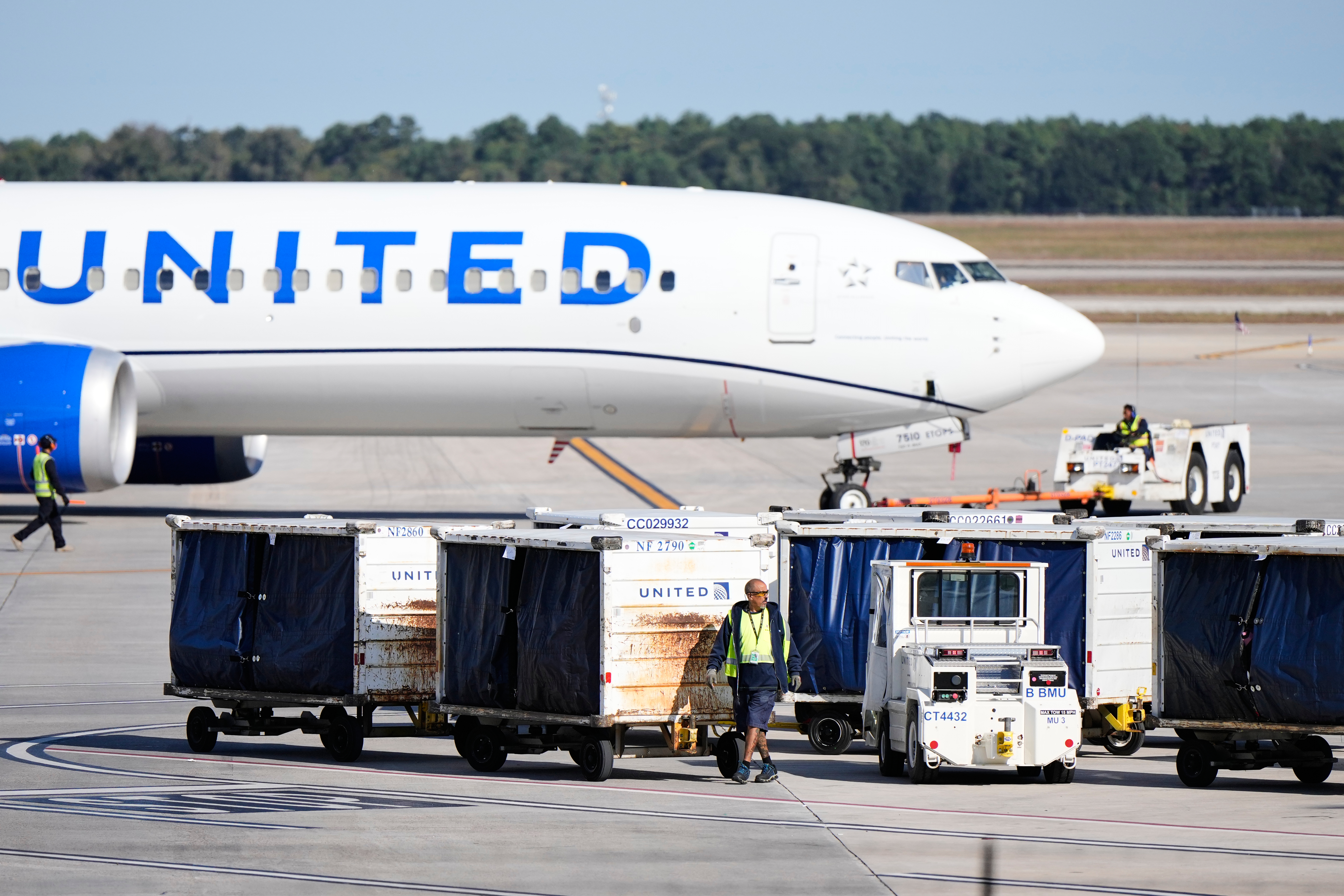
    On Monday, a system outage at United Airlines lasted more than 90 minutes, forcing the carrier to delay departing flights. The problem at United came just days after a malfunction in the Federal Aviation Administration’s network prompted a nationwide ground stop that delayed hundreds of flights and stranded hundreds of thousands of travelers across the country.

    Chicago-based United said there was no indication that its outage was cybersecurity related.

    Also Monday, thousands of customers reported difficulty accessing online accounts at several major U.S. banks and the money transfer service Zelle after a technical issue at JPMorgan Chase caused ripple effects throughout the financial system.

    Chase said Monday that the technical problems were not the result of a cyberattack, and as of Tuesday confirmed that the bank’s systems were back up and operating normally.

    Last week, a global Microsoft outage disrupted email and other workplace tools, plunging business chatter and everyday services into disarray worldwide. Microsoft 365 services, including Outlook, Teams, and AI assistant Copilot, were interrupted.

    The tech giant said that there was “no indication” that the disruptions were caused by malicious activity, specifically noting Friday that the outage was not related to a cyberattack or artificial intelligence agents.

  • Nvidia chair says board does not intend to reinstate Jensen Huang as CEO

    Nvidia chair says board does not intend to reinstate Jensen Huang as CEO

    Nvidia Chair Harvey Jones said Tuesday that the company’s board of directors does not intend to reinstate Jensen Huang as CEO, a statement that came hours after Huang said he would come back to lead the chipmaker if the board invited him.

    It was Huang’s first public statement since he abruptly left the company last week following revelations of an extramarital affair with an alleged Chinese spy.

    Huang said in a social media post that if the board decided that his return was in the best interest of shareholders, employees, the company, and the country, he would be “honored to answer these calls.” He acknowledged making “serious mistakes” in his personal life.

    Some tech industry figures, including SpaceX and Tesla CEO Elon Musk, have called for the reinstatement of Huang, a high-profile booster for the artificial intelligence industry who oversaw Nvidia’s development as the key provider of chips driving advanced AI models. President Donald Trump, a Huang ally who has spoken with him frequently, has also endorsed the comeback bid.

    Huang acknowledged making “serious mistakes” in his personal life but said that he’s received an “outpouring” of support from employees, investors, business partners, and customers for his return.

    Company’s earnings report made no mention of Huang

    In its third-quarter earnings statement released Tuesday, Nvidia did not mention Huang’s ouster or his possible return.

    The turmoil notwithstanding, Nvidia blew past Wall Street expectations for the quarter, pulling in more than $116 billion in revenue, double the level from a year ago. The company also posted net income of $2.70 per share, beating estimates of $2.48 per share.

    Santa Clara, Calif.-based Nvidia did not respond to an earlier AP request for comment on Huang’s statement.

    Nvidia Chief Financial Officer Colette Kress was expected to speak with Wall Street analysts on the earnings call for the first time since being named interim CEO.

    A “Stand with Jensen” petition set up last week has gathered momentum, gaining signatures from current and former Nvidia staff, investors, and other Silicon Valley supporters. The petition calls on the board to bring back Huang while an independent investigation proceeds or until there’s “compelling evidence” that his departure is in the company’s best interests.

    “We are concerned that Jensen was removed without meaningful due process,” the organizers said in an open letter. “We have not been shown evidence substantiating the allegation that the woman at the center of this controversy was a spy.”

    Trump suggested Monday that the ex-CEO could return, saying Huang “learned a big lesson” and that he “would certainly not mind” if he was reinstated.

    Huang resigned last week from Nvidia, apparently ousted by the board after revelations that he had extramarital affairs, both with a Chinese businesswoman suspected of being an intelligence asset for Beijing and with a senior executive who reported to him.

    The woman Huang was seeing who reportedly had links to Chinese intelligence was an executive at Singapore-based cloud computing firm Megaspeed International, a company being investigated by the U.S. for allegedly violating U.S. export controls by illegally diverting advanced Nvidia AI chips to Chinese companies.

    Huang faces questioning by Congress

    Also Tuesday, key House lawmakers said that Huang has voluntarily agreed to appear for transcribed interviews as the company faces intensifying national scrutiny over sales of its advanced computer chips.

    Huang will appear before congressional committees on Dec. 1, followed by the company’s general counsel, Tim Teter, on Dec. 2.

    “We look forward to hearing from Jensen Huang and Tim Teter on their roles in a potential breach of our national security,” said a statement from the chairs of three House committees with oversight of China and intelligence issues.

    “The American people need answers on Mr. Huang and Nvidia’s role in allowing dangerous PRC actors to access our most advanced chips, as well as the role of a potential Chinese intelligence asset in this scandal,” the lawmakers said, referring to the People’s Republic of China.

    Meanwhile, Nvidia said it’s creating a new board committee to oversee national security and global trade compliance following the revelations about Huang.

    In the statement detailing its August-to-October results, Nvidia said revenue in a key business segment — data centers — more than doubled to $107.6 billion. It also projected that revenue for the current quarter running through January would hit $130 billion, more than Wall Street had expected.

    Nvidia’s advanced chips are in high demand because they’re essential for cloud computing and data centers that underpin the AI boom, but they face restrictions on their sale to China. Trump said it was “good” that Nvidia had created the new oversight committee.

    “Yes, that’s a good idea. It’s a great company,” Trump said shortly after arriving Tuesday evening in the Philippine capital of Manila, where he participated in a photo opportunity with the leaders of Australia, India and Japan. “It’s a great idea.”

  • United Airlines says widespread system outage is resolved

    United Airlines says widespread system outage is resolved

    CHICAGO — United Airlines said Monday that it had resolved a technology issue that delayed departing flights, just days after a malfunction in the Federal Aviation Administration’s network prompted a nationwide ground stop.

    Chicago-based United said in a statement that while some flights were delayed because of the issue Monday afternoon, flights that were in the air and flights on its United Express regional network were not impacted. It also said, “There is no indication that this was a cybersecurity-related issue.”

    United apologized to customers for the inconvenience on social media.

    A recording posted on the ATC app showed a United pilot in Houston asking the tower for permission to stay put at the gate until the system was working again. The app combines live air traffic control radio feeds with real-time visual aircraft tracking.

    The flight tracking website FlightAware showed United with 418 delayed flights late Monday afternoon.

    The United computer problem is just the latest high-profile technology meltdown in recent days.

    Earlier Monday, thousands of people reported being unable to access their online accounts at several major U.S. banks after JPMorgan Chase had a technical problem.

    On Friday, the FAA ordered every flight grounded because a new router that was installed malfunctioned and overwhelmed the aging air traffic control system. And one day earlier, Microsoft experienced a major disruption to its Outlook email service. Microsoft said Saturday that services were fully restored.

  • Trump’s tariffs are unpopular — but they’ll be tough to repeal despite Democrats’ landslide win

    Trump’s tariffs are unpopular — but they’ll be tough to repeal despite Democrats’ landslide win

    WASHINGTON — For months, Democrats on the campaign trail hammered President Donald Trump’s unpopular tariffs, arguing that the taxes on imports drive up prices for American families already frustrated by the high cost of living.

    James Talarico, a Democrat running for a U.S. Senate seat in Texas, blamed Trump’s tariff on Mexican tomatoes for pushing up the price of a popular appetizer: “Chips and salsa,” he said, “are sacred in Texas.”

    Targeting tariffs proved to be a winning message nationwide, contributing to the Democrats’ stunning gains in the Nov. 3 midterm elections. And in Texas? Talarico became the first Democrat elected to the Senate from the state since 1988.

    “Americans don’t like tariffs,″ said Scott Lincicome at the Cato Institute’s Center for Trade Policy Studies. ”They connect them to the cost of living.″

    But when the Democrats take full control of Congress, they are likely to find that reversing Trump’s tariffs won’t be easy.

    The president will still have power to veto any legislation that repeals his import taxes or reins in his legal authority to impose them. And it’s unclear — probably doubtful — that enough Republicans would defy Trump and join Democrats in overriding his veto.

    Moreover, Democrats themselves are divided over trade policy. Some want to move back toward low-tariff trade policies that Trump demolished. Other Democrats want to see the United States continue using tariffs to fight other countries’ unfair trade policies and to sanction U.S. adversaries such as China.

    “There’s going to be a big debate over what should the Democrats’ tariff and trade policy be,” said Ryan Majerus, a former U.S. trade official during Trump’s first term and in the Biden administration. ”It can’t just be: We don’t like what Trump’s doing.’’

    Complicating matters is the fact that Trump’s tariffs are delivering significant amounts of revenue to the U.S. Treasury — nearly $370 billion in the last two budget years — at a time when the federal government is sitting on a staggering $40 trillion in debt.

    Democrats have “just been elected to come in and address concerns about affordability,’’ said Sally Laing, former chief trade counsel for the Senate Finance Committee and now a partner at the law firm Akin Gump. “It’s not as easy as people may think.’’

    Trump’s tariffs pinched family budgets

    The U.S. Constitution gives the power to levy taxes — including tariffs — to Congress. But over the years, lawmakers have relinquished tariff-setting authority to the president.

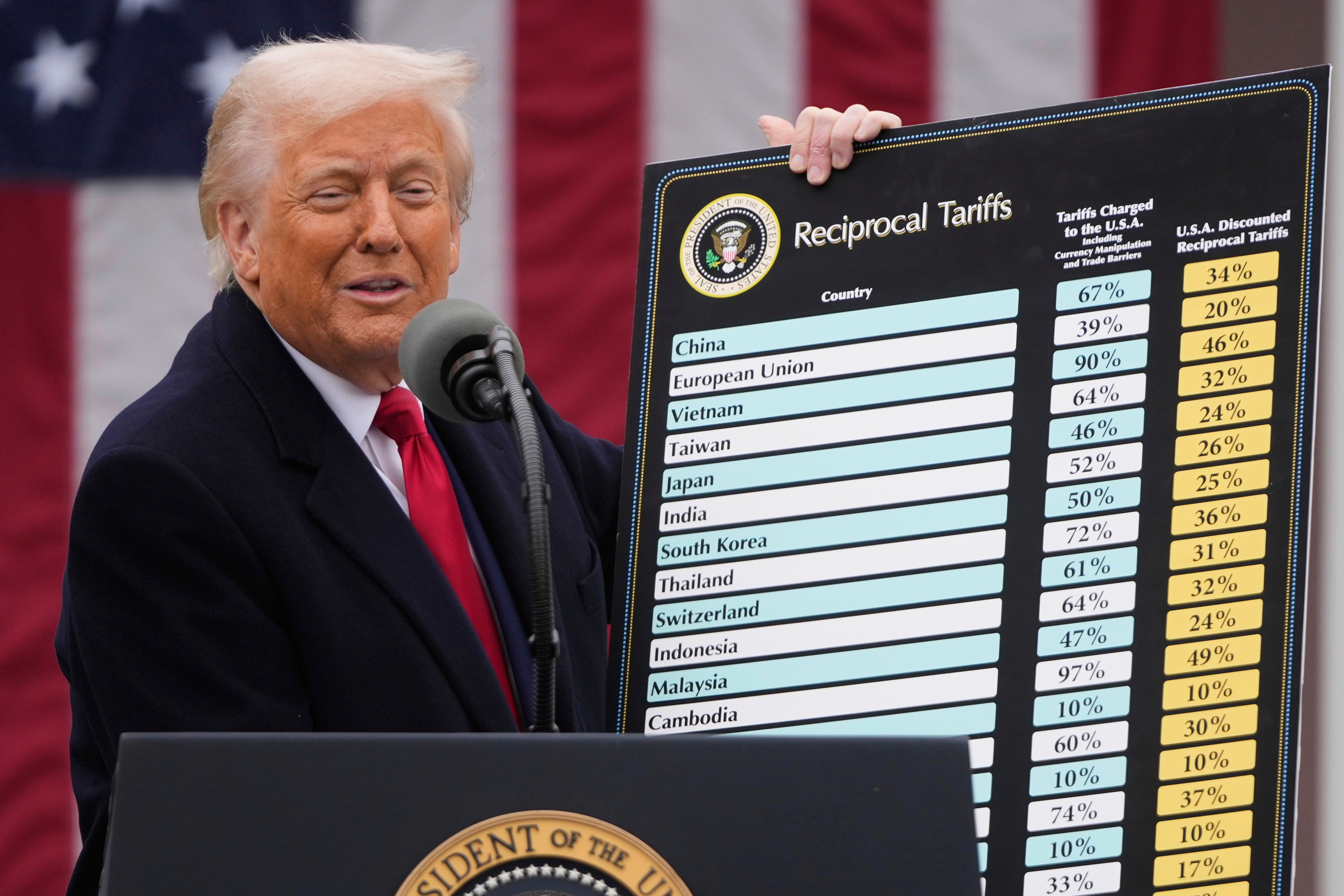
    Trump swept into the vacuum. In his first term, he started a trade war with China and slapped taxes on steel and aluminum imports, saying they posed a threat to U.S. national security. All that was just a warmup for his second term. Although the Supreme Court rejected his most ambitious tariffs in February, he has still managed to build a high protective wall around the U.S. economy, sometimes relying on the expansive use of the legal authority Congress gave up.

    His use of tariffs also has proven erratic. Last year, for instance, he suddenly imposed a 50% tariff on Brazil because its government had prosecuted his friend, former Brazilian president Jair Bolsonaro. (The Supreme Court decision struck down that tariff, among others.)

    “Trade policy has sort of gone off the rails and has lost a strategic focus,” said Inu Manak, senior fellow at the Peterson Institute for International Economics. “Now, we’re just using tariffs as a blunt cudgel instead of addressing real challenges.’’

    Trump’s tariff frenzy has lifted the average U.S. tariff from around 2.5% when he returned to the White House in January 2025 to 11.2% now, according to Yale University’s Budget Lab. Tariffs are paid by importers in the United States. And they often pass along the burden to consumers via higher prices. Yale’s Budget Lab estimates that tariffs cost the average U.S. household about $900 a year.

    That burden comes at a time when elevated inflation is already pinching family budgets, even more so because Trump’s war with Iran has driven up gasoline prices.

    But the Republicans who controlled Congress did nothing to reassert their authority and push back against the president’s aggressive use of tariffs.

    Voters largely turned against Trump’s tariffs as they voted in the midterm elections. About two-thirds of U.S. voters said Trump’s tariffs had hurt the national economy or the economy in their area, while only about 2 in 10 said they’d helped, according to the AP Voter Poll, a survey of more than 100,000 midterm voters. Voters who saw a negative impact from the tariffs overwhelmingly supported the Democratic candidate in their local U.S. House race.

    Trump, meanwhile, remains committed to his protectionist agenda.

    “President Trump will never waver from putting Americans and America First, whether in trade negotiations or through an economic agenda of tax cuts and deregulation,’’ White House spokesperson Matthew Middleton said in response to questions from the Associated Press.

    Democrats must round up GOP votes to repeal Trump tariffs

    As they campaigned this fall, Democrats vowed to cancel some Trump tariffs and curb his legal authority to impose others. Their proposals include repealing the tariffs he levied in July on 60 U.S. trading partners for allegedly failing to do enough to crack down on trade in products made by forced labor. Another would require Congress to approve his tariffs.

    Turning their ideas into law will require overcoming a daunting obstacle: Trump’s veto power. Overriding a presidential veto requires a two-thirds majority in both houses of Congress. Even if Democrats win all the congressional races that are still undecided this year, they won’t have enough votes to override a Trump veto on their own. They will need Republican support.

    Can they get it? Their resounding midterms victory makes “a veto-proof vote more possible,” said Majerus, the former trade official and now a partner at King & Spalding. “Are Republicans willing to break with Trump? I’m still skeptical.’’

    Oregon Sen. Ron Wyden, the top Democrat on the Senate Finance Committee, sees one issue that could draw Republican support: ending the 50% tariffs that Trump imposed in August on $20 billion worth of Canadian imports.

    “That’s what we’re focused on, figuring out a way to beat Trump and his veto,” said Wyden, who will be Senate Finance chair when the Democrats take over.

    The levies damaged relations with America’s neighbor and longstanding ally, drew retaliatory tariffs from Ottawa, and hurt U.S. companies that depend on trade with Canada. “The Canadian tariffs, these tariffs on our allies, are wildly unpopular,’’ Laing said.

    Gellert Global Group, a food importer based in Elizabeth, N.J., is contending with Trump tariffs on Canadian cheese.

    “We are paying millions of dollars in additional costs and tariffs to maintain our distribution and have our products on the shelf,” said co-CEO Thomas Gellert. “We’re absorbing that today. It’s not sustainable for our business.″ The company, represented by the libertarian advocacy group Liberty Justice Center, has sued the Trump administration over the Canada tariffs.

    Furor over the Canada tariffs contributed to longtime Republican Sen. Susan Collins’ loss in Maine — even after Trump exempted products from the levies to aid her reelection bid.

    Republicans, Wyden said, face a choice: They can “help lower costs for American families or they can continue to defend Trump’s tariffs and make clear whose side they’re on.’’

  • British women to receive automatic pardons for past abortion convictions

    British women to receive automatic pardons for past abortion convictions

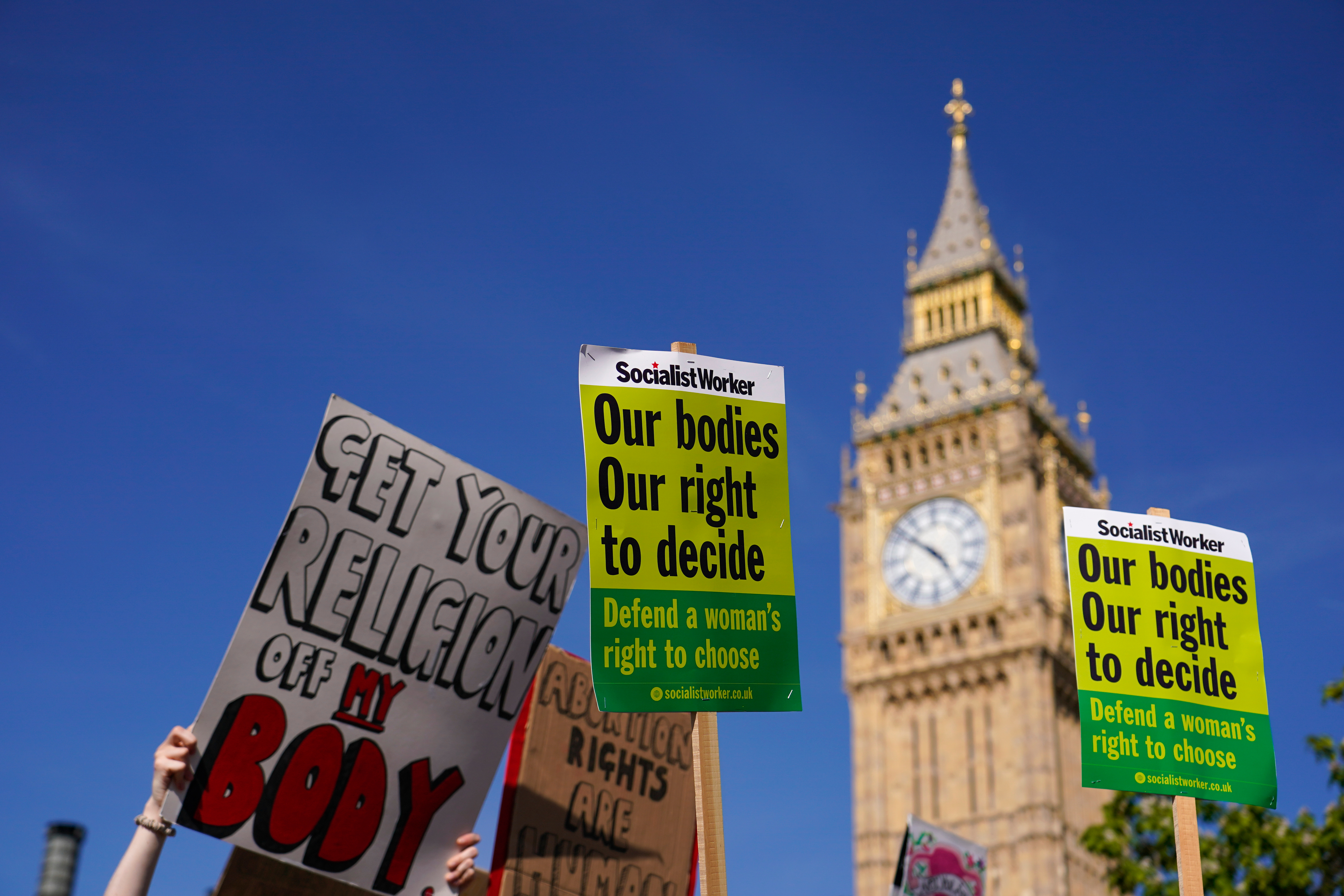
    LONDON — British women convicted of illegally terminating their pregnancies under a Victorian-era law will be automatically pardoned Monday, the government said.

    The action follows Parliament’s passage last year of a landmark vote to decriminalize abortion by repealing a section from the 1861 Offences Against the Person Act.

    Women who have received a caution from police will also be pardoned and women arrested or investigated for ending their own pregnancy will have those details removed from their criminal records. They will not have to apply for pardons and some will be issued posthumously.

    “For too long, women have faced the devastating consequences of outdated abortion laws,” said Heidi Stewart, chief executive of the British Pregnancy Advisory Service. “While no pardon can undo the distress and trauma these women have experienced, this historic change in the law recognizes the profound harm caused by their criminalization and represents a meaningful step towards justice.”

    The government did not provide the number of women affected. But Tonia Antoniazzi, the Labour member of Parliament who introduced the decriminalization amendment, said police had investigated more than 100 women suspected of illegal abortions in the five years preceding last year’s vote. That included some who suffered natural miscarriages and stillbirths.

    Antoniazzi described how women suspected of illegally aborting a fetus were once “dragged from hospital beds to police cells” and interrogated when they should have been cared for.

    “This trauma cannot be erased, but I hope that this offers some alleviation of the pain these women have endured, enabling them to participate fully in society again, living their lives to the full, working the jobs they’ve always wanted to,” she said.

    Under current law, doctors can legally carry out abortions in England, Scotland, and Wales up to 24 weeks, and beyond that under special circumstances, such as when the life of the mother is in danger. Abortion in Northern Ireland was decriminalized in 2019.

    Under the Crime and Policing Act that took effect this spring, women who terminate a pregnancy at any stage will not face criminal charges.

    The measure was opposed by anti-abortion groups that argued it would open the door to abortion on demand at any stage of pregnancy.

    The law was changed after high-profile prosecutions, including the jailing of a mother of three that caused an outcry from abortion rights supporters.

    Carla Foster was sentenced to more than two years in prison in 2023 for medically inducing an abortion about eight months into her pregnancy. An appeals court freed her a month later, saying the case called for “compassion, not punishment.”

    Another woman, Nicola Packer, was acquitted on a charge of unlawfully self-administering poison or a noxious thing with intent to procure a miscarriage. Packer, who took abortion medicine when she was about 26 weeks pregnant, testified that she did not know she had been pregnant more than 10 weeks.

  • A technical issue at JPMorgan Chase triggers online banking delays for major U.S. banks

    A technical issue at JPMorgan Chase triggers online banking delays for major U.S. banks

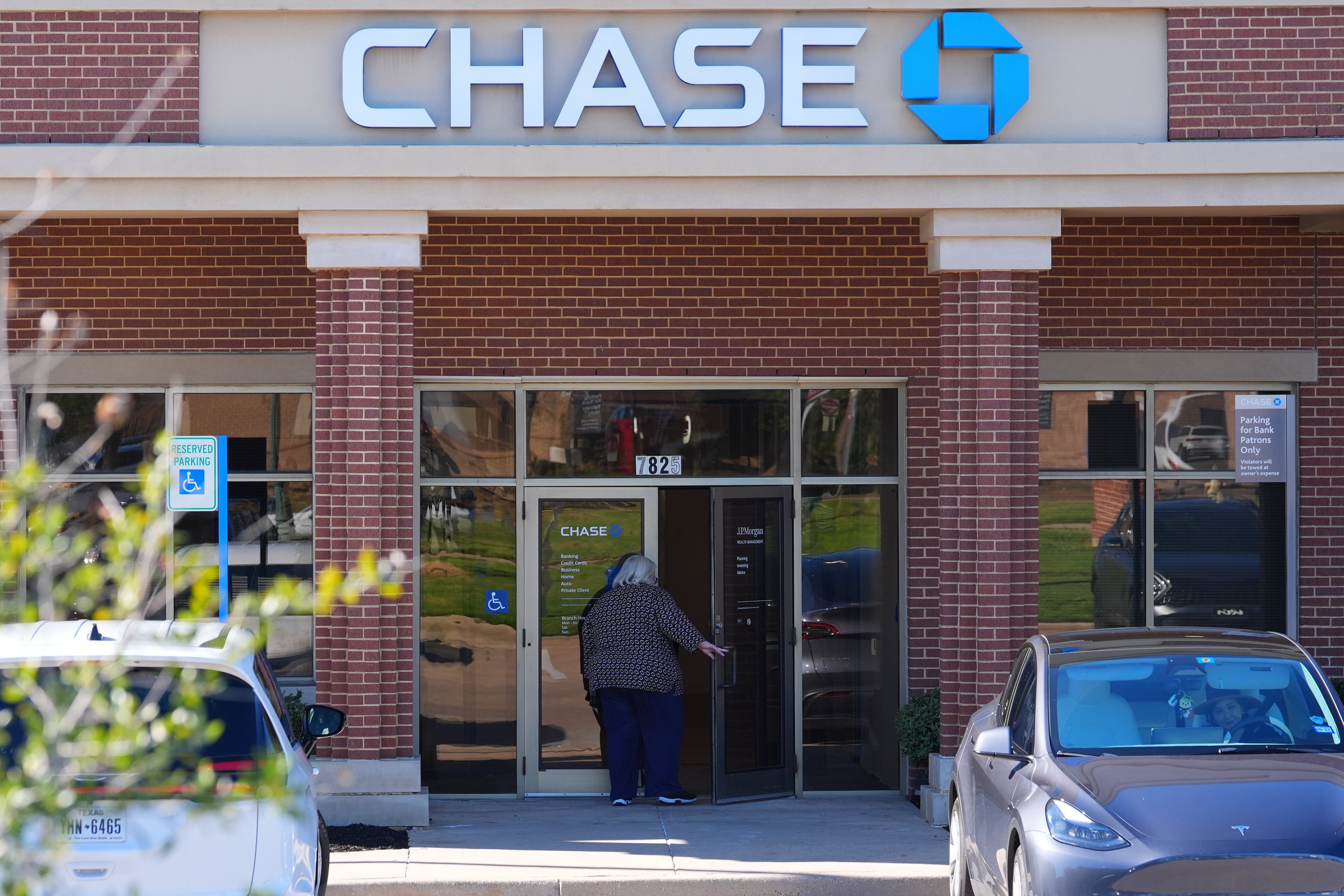
    NEW YORK — Thousands of customers reported difficulty accessing online accounts at several major U.S. banks and the money transfer service Zelle on Monday after a technical issue at JPMorgan Chase caused ripple effects throughout the financial system.

    Chase said Monday that the technical problems were not a systemic issue and were not the result of a cyberattack, and that it was working to bring banking services back online.

    “Due to a technical issue, some transactions are taking longer than usual to complete but customers still have access to their accounts and funds,” a Chase spokesperson said in a statement. “We are working to resolve this as quickly as possible.”

    The disruption comes days after two major outages affected other parts of the U.S. economy: A major outage by Microsoft happened Thursday and lasted for hours, severely impacting services including Outlook, Teams, and AI assistant Copilot. This was followed by an outage affecting the nation’s air traffic control system Friday that grounded all U.S. flights for several hours and continued to disrupt air travel across the country over the weekend.

    Monday’s technical issues seem to be centered on Chase customers and customers at other banks trying to transact with Chase. Those banks, including Bank of America and Citigroup, were not having issues with their banking services.

    A spokesperson for U.S. Bank said its systems are not directly impacted but that “clients attempting to send or receive Zelle payments with another financial institution may experience transaction delays.”

    Zelle is the peer-to-peer payment system that major U.S. banks use to allow customers to send money to friends and family at near-instant speed. Zelle is owned by Arizona-based Early Warning Services, which in turn is owned by financial institutions including Bank of America, Capital One, JPMorgan Chase, PNC Bank, Truist, U.S. Bank, and Wells Fargo.

    A spokesperson for Early Warning Services said the Zelle network was fully operational.

    “An issue at the financial institutions may be delaying Zelle payments for some of their customers,” the spokesperson said.

    Some Chase customers received a message that said, “Some services aren’t available. We’re working on them. Please try back later.”