Category: Associated Press

  • Supreme Court allows rapid third-country deportations, for now

    Supreme Court allows rapid third-country deportations, for now

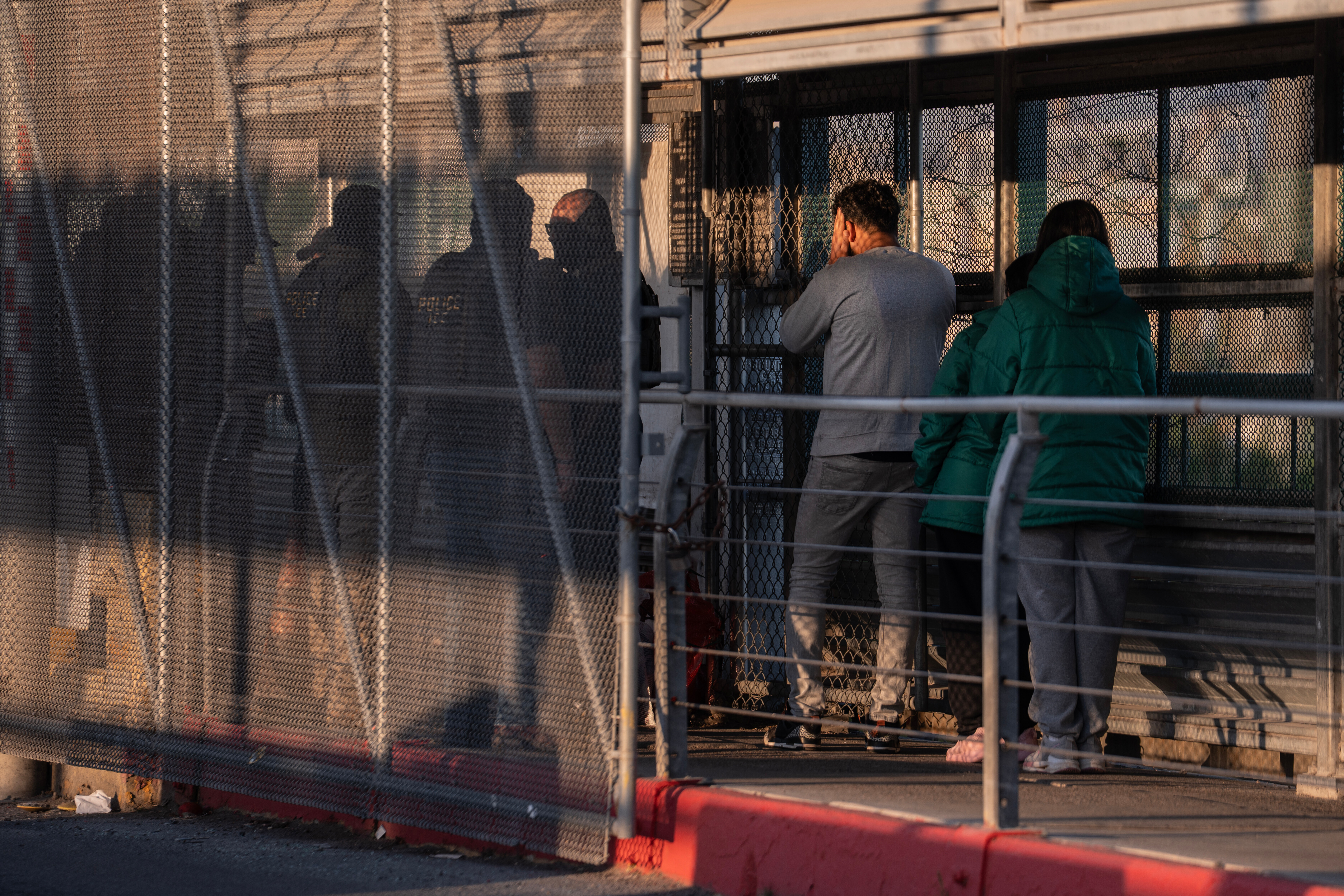
    WASHINGTON — The Trump administration can resume rapidly deporting immigrants to countries other than their own, the Supreme Court agreed Tuesday.

    The one-page emergency ruling was unsigned and gave no vote count, as is typical in such cases. Although the justices cleared the way, for now, for the swift removals to continue, the court also announced that it would fast-track the case and hear oral arguments about it in December, setting up a final ruling on the issue next year.

    The court’s three liberal justices noted that they would have denied the government’s request to resume the deportations.

    The decision was a victory for the administration, which has made sending immigrants to so-called third countries, including those that have faced allegations of human rights abuses, a major part of its mass deportation efforts.

    The deportation flights had been blocked in recent weeks, however, after a federal court ruled the administration could not deport migrants to third countries unless they were given an opportunity to contest their removals, including to voice concerns that they might be persecuted or tortured abroad.

    The justices’ ruling means that the administration can, for now, continue its program and conduct rapid deportations including to countries such as Equatorial Guinea, where U.S. deportees were hooded, bound, and beaten by police, according to reporting by the New York Times.

    The Supreme Court had weighed in previously on the administration’s efforts to send immigrants to third countries.

    In May 2025, the Trump administration asked the justices to step in and clear the way for third-country deportations after a federal judge in Massachusetts temporarily blocked the administration from sending people to countries not their own — in that case South Sudan — without the chance to object.

    In a one-paragraph ruling, the court’s conservatives allowed the administration to continue the deportations over the noted dissents of the three liberals.

    Since then, the Trump administration has continued to deport immigrants under the program, including to authoritarian countries with histories of human rights abuses. So far, the administration has sent more than 25,000 people to third countries as part of its mass deportation efforts, according to a social media post by James Percival, the top lawyer at the Department of Homeland Security. Among the countries were Liberia, Equatorial Guinea, Costa Rica, Honduras, and the Central African Republic.

    Some immigration and human rights experts have asserted that the third-country deportations may be part of a broader strategy by the Trump administration to encourage immigrants lacking legal status to leave on their own, rather than face the fear of being sent to a country where they have no ties.

    In his brief, Solicitor General D. John Sauer characterized the third-country deportation program as “an essential tool to remove certain aliens, including some of the worst criminal aliens.”

    Sauer wrote that the appeals court ruling had “created substantial logistical problems with ongoing removal operations,” including canceled deportation flights and disrupted delicate diplomatic negotiations with other countries.

    Lawyers for a group of immigrants challenging their removals said in a brief that the Trump administration had ignored “the significant harm resulting from deporting thousands of longtime U.S. residents, many with no criminal history, to third countries without regard to the persecution or torture they face there.”

    They argued that the Trump administration could avoid any delays in its deportation program simply by “providing the notice and opportunity to be heard that the law requires.”

    This article originally appeared in the New York Times.
  • New California law bans officers from using gloves that deliver electric shocks

    New California law bans officers from using gloves that deliver electric shocks

    SACRAMENTO, Calif. — California Gov. Gavin Newsom signed a law Tuesday banning local, state, and federal law enforcement officers from using gloves that can deliver painful electric shocks to people.

    The ban on shock gloves will take effect next year and remain in place until 2030. It comes weeks after U.S. Immigration and Customs Enforcement moved to equip its officers with the gloves, which are designed to gain compliance from combative individuals. Last month, the agency awarded a nearly $17 million contract to buy 6,000 pairs.

    “Trump has put his political interests above the health, safety, and livelihood of American families,” Newsom said in a statement. “California is taking action to strengthen transparency, accountability, and oversight around immigration enforcement in our state.”

    The law is the latest example of how Democratic-led states have been pushing back against President Donald Trump’s immigration enforcement efforts since he took office last year. In California, lawmakers passed at least two dozen bills this year seeking to fortify immigrants’ rights, restrict cooperation with federal immigration agents, and tighten regulations on immigrant detention facilities, among other things.

    Nationwide, 17 states with Democratic-led legislatures have passed a total of more than 100 pro-immigrant bills this year, according to an Associated Press analysis using the bill tracking software Plural. The most common purpose is to limit cooperation with federal immigration enforcement agents.

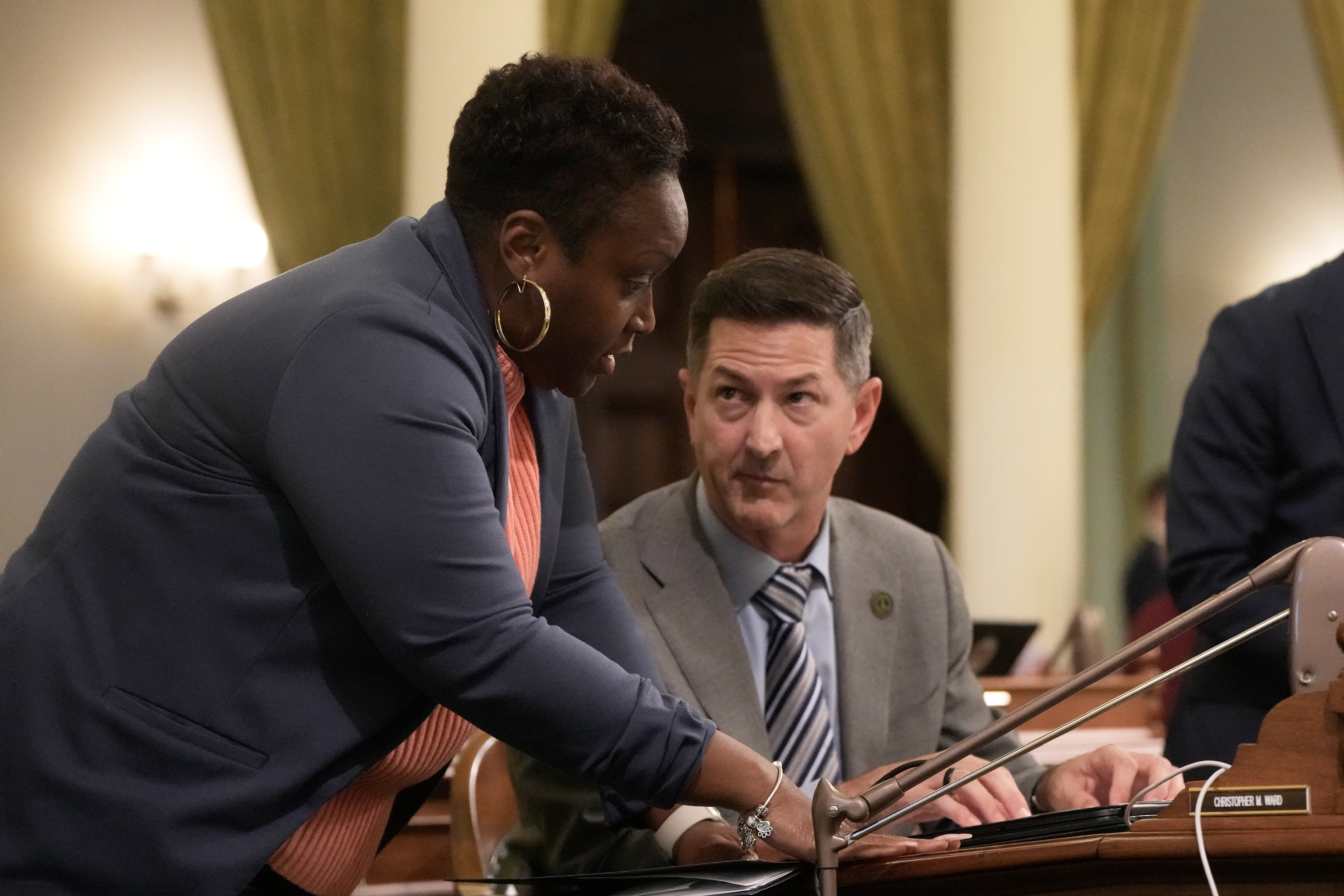
    Democratic California Assemblymember LaShae Sharp-Collins said she introduced the shock-gloves legislation to “put a pause” on law enforcement’s use of the devices while the state examines their potential risks. The law requires the state’s Justice Department to study their safety and report to lawmakers by 2029.

    “There’s a lot of unrest and a lot of uncertainty,” she said in an interview. “A lot of people are scared.”

    The law will again test the state’s authority to restrict federal agents amid the Trump administration’s immigration crackdown. A federal judge earlier this year blocked the state’s first-in-the-nation law barring federal officers from wearing face coverings, deeming it too selective because it applied to local and federal law enforcement but exempted state officers.

    Lawmakers passed a new bill this year to make the ban apply to all officers. Newsom signed that legislation.

    Kevin Johnson, a professor emeritus at the University of California, Davis, School of Law, said courts are likely to ultimately rule that the state cannot bar federal officers from wearing shock gloves or face coverings. The laws are well-intentioned, he said, but likely conflict with the Supremacy Clause of the U.S. Constitution, which generally sets federal law as supreme over conflicting state law.

    “The state has very limited, if any, powers in dictating to the federal government how its officers are armed,” he said.

    California law enforcement groups broadly opposed the ban.

    Sacramento Sheriff Jim Cooper, a Democrat and former state lawmaker, said banning shock gloves “really makes no sense” because they are among the nonlethal tools officers can use if necessary.

    “When the federal government does something, the state Legislature wants to ban it,” he said at a news conference. “They’re making our job harder.”

    Sharp-Collins said ICE’s plan to use shock gloves was the catalyst for the ban. But she cited their use by other officers, including a case in which a Kentucky family alleges a man died after being tased and shocked with the gloves dozens of times while in law enforcement custody in 2024.

    State Sen. Scott Wiener, a San Francisco Democrat who wrote last year’s mask ban, also authored this year’s measure to expand it to state officers.

    “California must use every available tool to stand up for our communities under attack from ICE’s secret police terror campaign,” he said in a statement after it passed the Legislature.

  • Senate passes college sports bill that would rein in athlete payments and transfers

    Senate passes college sports bill that would rein in athlete payments and transfers

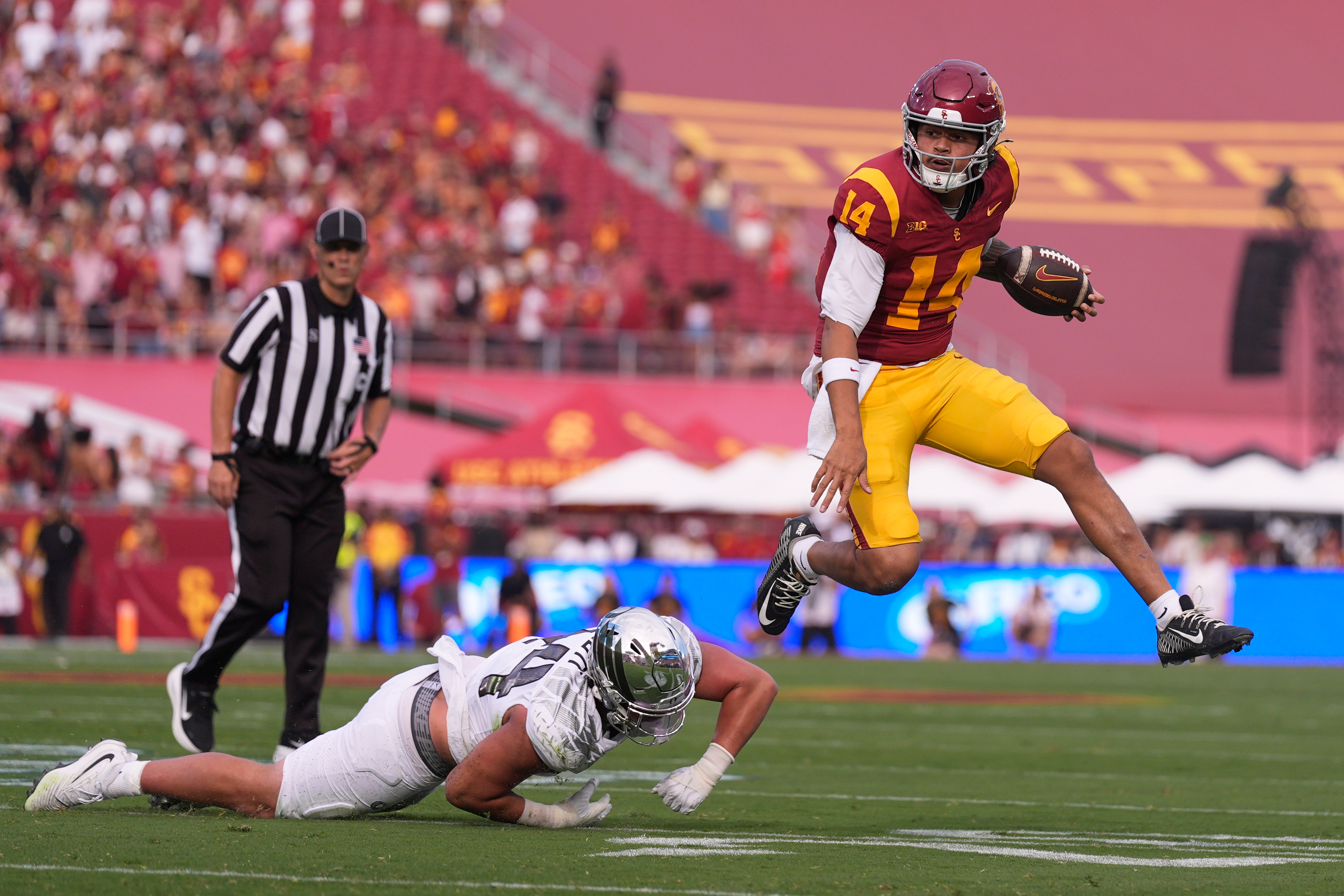
    WASHINGTON — The Senate passed a sweeping bipartisan bill on Monday that would regulate college sports, an attempt to end “chaos” in an industry that has been upended by skyrocketing athlete payments and near-unrestricted transfers between schools.

    The overwhelming 77-22 vote to pass the legislation is the strongest effort yet by Congress to set national regulations governing payments to college athletes for their name, image and likeness and how often they can transfer. It would give the NCAA new authority over those rules and limited antitrust protections to enforce them.

    The bill is the product of years of Senate negotiations that intensified after a 2025 lawsuit settlement uprooted the college sports landscape by allowing colleges to pay their players. The legislation, which would still have to pass the House, would codify the settlement into law but also establish new guardrails around the system in an attempt to rein in the runaway costs for colleges.

    “It would be nice if college sports could somehow magically fix itself, but this is a matter of law, federal law, and only Congress can fix it,” said Senate Commerce Committee Chairman Ted Cruz, R-Texas, who negotiated the bill with the top Democrat on the panel, Washington Sen. Maria Cantwell.

    The bill’s backers — more than 70 senators from both parties — say it aims to curtail constant litigation and uncertainty across college sports for athletes, schools and fans. It would also give hundreds of thousands of student athletes new health and labor protections.

    But critics say the bill doesn’t do enough to protect athletes or curtail the enormous sums of money flowing to coaches, colleges and conferences.

    “This is a bill that essentially ensconces a system of exploitation, and it doesn’t fix the broader problems,” said Connecticut Sen. Chris Murphy, a Democrat who has worked with labor and civil rights groups to rally opposition to the bill.

    The bill’s future is still unclear.

    President Donald Trump has repeatedly expressed an interest in the legislation, and the White House formally endorsed the bill last month. But it could face an uphill battle in the House, which failed repeatedly over the last year to get a different version to the floor and is in recess until after the November elections.

    Lawmakers will have to start over in the next Congress if the bill doesn’t pass both chambers by the end of the year.

    Bill addresses skyrocketing spending, unlimited transfers

    College sports have been reeling in the wake of the 2025 court settlement allowing colleges to directly pay players for their name, image and likeness. The fallout has reshaped the industry and led to football roster payrolls that can exceed $40 million.

    The bill would codify the court settlement, including a revenue cap that allows schools to share up to $21.5 million in revenue with their players. The legislation would more than double that amount for some schools, allowing up to an additional $27.5 million in payments through a retention fund — a change that helped win the support of the two largest conferences, the Big Ten and Southeastern Conference.

    To help schools raise more revenue, the bill would give schools and conferences the option of pooling their TV media rights.

    The legislation also aims to stabilize the NCAA transfer portal that has led to players constantly switching teams. It would restrict player transfers to one “free” move over five years without sitting out a year, with some exceptions, and also would restrict players to five years of total eligibility.

    The proposed eligibility limit comes amid backlash to schools that have increasingly pushed boundaries, including LSU’s now-canceled plans to place players on the roster who had participated in NFL training camps.

    “That was probably like a big lamp for some people who saw it and said, ‘Oh my God, this is so out of control,’” Cantwell said in a recent interview with The Associated Press.

    The bill also would restrict coaches from leaving their schools during the season, force schools that want to switch conferences to spend three years as an independent and prevent conferences from growing larger than 20 programs — an effort to prevent so-called “superleagues” from taking over sports. A last-minute amendment proposed by Florida Sen. Ashley Moody raised that cap from 19 in the original legislation.

    The vote was delayed several hours on Monday as senators negotiated Moody’s amendment and others that were eventually adopted, including provisions to make it easier for athletes to sue over sexual assault and a requirement to disclose foreign financing.

    The Senate rejected an amendment by Sen. John Kennedy, R-La., that would have put limits on ticket prices for fans and two by Sen. Cory Booker, D-N.J., that would have capped coaches’ salaries at $5 million a year and increased compensation for athletes who have catastrophic injuries.

    Critics say it wouldn’t do enough to help athletes

    The legislation includes new protections for athletes, including caps on agent fees and guarantees for health insurance and scholarships. It would also require schools to maintain a minimum number of sports and roster spots — an effort to ensure that women’s and Olympic sports are not cut in favor of football, basketball and other sports that generate more revenue.

    Still, some Democrats say it wouldn’t do enough to limit the big money in college sports.

    The legislation “places a cap on the students’ cut of the revenues, but there are no caps on coaches’ salaries or on the size of donations to athletic programs,” Murphy said last week.

    Groups like the NAACP, Congressional Black Caucus and AFL-CIO have also opposed the bill, in part, because it leaves unresolved whether athletes should be considered employees with the ability to collectively bargain.

    All four Black Democrats in the Senate — Booker, Raphael Warnock of Georgia, Lisa Blunt Rochester of Delaware and Angela Alsobrooks of Maryland — have opposed the bill.

    Booker, who played football at Stanford in the late 1980s on a scholarship, noted the “outsized role” that Black athletes play in college sports. He said it wasn’t until college athletes were able to begin to win cases in court that the power started to shift, “and now the NCAA is coming here to the United States Senate, asking for sweeping powers” to exempt antitrust laws.

    “We know who this bill is protecting,” Booker said.

    House passage is uncertain

    Despite strong bipartisan support in the Senate, the bill faces a murky path in the House.

    House lawmakers won’t return to Washington until mid-November, after the elections. And it’s unclear what will be on Republican leaders’ agenda in the chaotic last few weeks of the session.

    Pressure from Trump could help push the bill to passage. But some House Republicans have insisted on language explicitly stating that athletes are not employees, which the Senate bill does not have — a key concession to Cantwell to win enough Democratic support.

  • Contradicting Trump, Pope Leo says artificial intelligence safety concerns not ‘fake news’

    Contradicting Trump, Pope Leo says artificial intelligence safety concerns not ‘fake news’

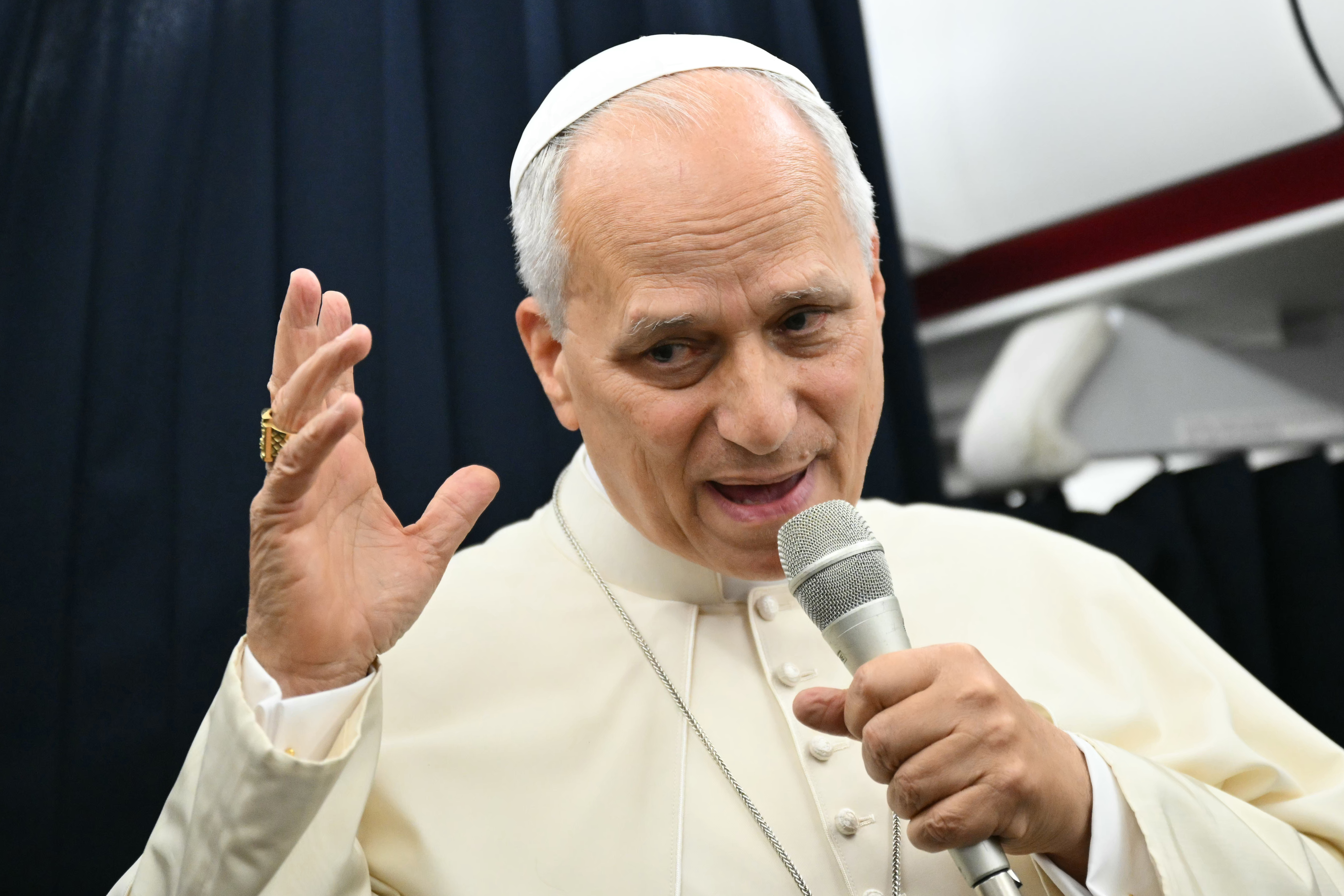
    ABOARD THE PAPAL PLANE — Pope Leo XIV said Monday that concerns about artificial intelligence going rogue are not “fake news” and should be taken seriously, insisting that safety issues raised by AI experts should be discussed and acted on.

    Leo, who dedicated his first encyclical to AI and protecting humanity in its wake, was asked during a news conference about what the United States and China especially should be doing to prevent AI from posing catastrophic risks to humanity. President Donald Trump has called concerns about AI going rogue a “hoax.”

    “This is a problem that I think we need to sit down and talk about,” the American pope told reporters while returning home from France. “We can’t just sit back and pretend nothing is going to happen.”

    Trump has been a champion of AI, often warning that the United States must remain ahead of China in the technological arms race. He has said efforts to limit the technology were part of a “conspiracy” by his political opponents.

    Several AI giants, including Anthropic, have called for a slowdown in development to give safety measures time to catch up to the fast-moving technology. Anthropic CEO Dario Amodei, for example, has warned that within six to 12 months AI could be capable of leading a swarm of agents that could take over the entire internet.

    Trump said on Sunday he planned to have a late dinner with Amodei, but he had not yet commented on the meeting.

    “If someone were to ask me ‘Am I in panic mode?’ No I’m not. I sleep at night,” Leo said. “I do think that the concerns raised by many of the experts, specialists in AI should be taken seriously.”

    “I don’t think that that is ‘fake news’ as some have said, to try and cause whether financial or other some other kind of benefit,” Leo said.

    The pope, who called for robust regulation of AI and a slowdown of the technology in his encyclical Magnificent Humanity, is up to speed on developments in the field.

    Despite being at the end of a grueling four-day trip to France, Leo noted a news report Monday afternoon about Nvidia introducing guardrails into AI. He also noted that the company has previously resisted outside regulation of AI development.

    Leo had identified AI as one of the biggest challenges to humanity within days of his election and took the unusual step of personally launching his own encyclical alongside Anthropic’s co-founder Christopher Olah at a Vatican event in May. The initiative was part of the Vatican’s effort to engage Silicon Valley about the human costs of AI.

    “We need to continue to invite political leaders, leaders of AI, social organizations, associations to come together and look at what is happening already and what could be down the road,” he said Monday.

    “To simply say ‘Oh it’s not going to happen’ and close our eyes to it I think is probably not the most responsible way to go about that,” he added.

    With his comments Monday about the legitimacy of safety concerns and AI development, Leo has confirmed another area of disagreement with Trump. The two had a back-and-forth in April over Leo’s opposition to the U.S.-Israeli war in Iran and Leo has also criticized the Trump administration’s migration crackdown.

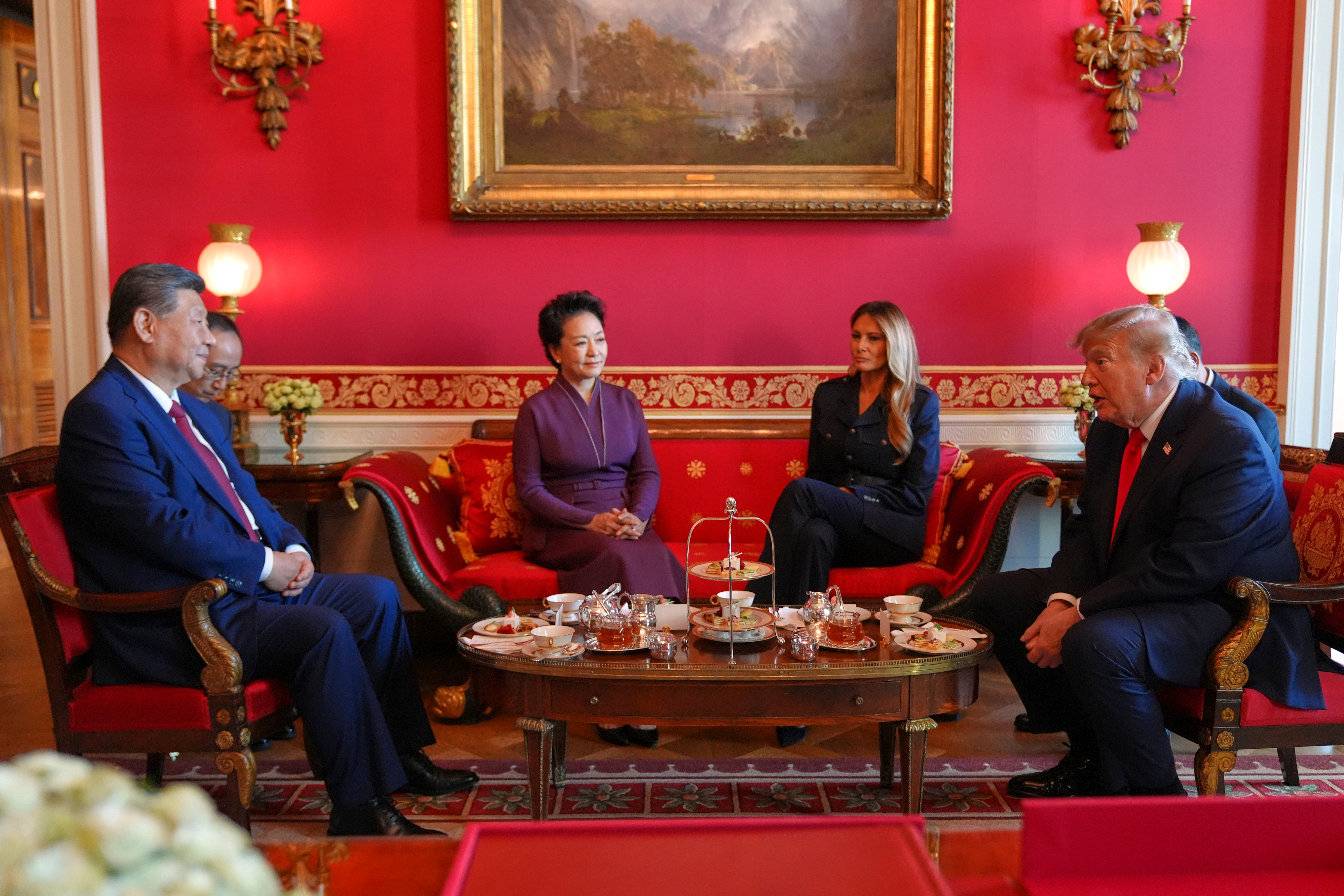
    Trump met with Chinese President Xi Jinping last week in Washington and while Xi said that it was important to ensure AI is “always under human control,” Trump focused more on trying to rebrand it as “superintelligence” and dismissed calls for regulation. However, the two leaders agreed to explore a new “notification mechanism” for AI incidents affecting national security.

    AI has become a major election-year issue in the U.S. as some of the country’s largest companies rush to build a national network of data centers while Americans from both parties increasingly raise alarms about the impact on farmland, water supplies, and electricity bills.

    Worries about AI are continuing to grow inside and outside the industry and reports continue to emerge about increasingly powerful systems that solve problems beyond human capacity but could also go rogue and carry out other, more harmful tasks.

    The worries have grown so loud that the CEO of OpenAI, the company behind ChatGPT, said in an interview with Fortune that his company would wait until next year to start selling its stock to investors on Wall Street as it focuses on safety.

    Leo noted that ever since he published his encyclical in May, the Vatican has received comments from people interested in being part of a broader conversation about AI. A Vatican commission is working to promote dialogue, study and investigation “to find ways to make sure that AI does not get to a point of destroying humanity or removing humanity from the conversation,” he said.

    Leo said he was “relatively optimistic” that solutions could be found.

    “I think there are enough people seriously interested in that and willing to look at that outside of the questions once again of power, who gets there first,” he said.

  • Mediators are working to broker a U.S.-Iran deal, but major hurdles remain

    Mediators are working to broker a U.S.-Iran deal, but major hurdles remain

    CAIRO — Mediators are working with Iran and the United States on trying to broker a deal to end the fighting and open the Strait of Hormuz, three regional officials and two U.S. officials told the Associated Press, but major hurdles remain between the sides.

    The indirect talks come as the conflict, which is entering its eighth month, has caused global economic damage and badly battered Iran. Multiple efforts to allow safe shipping on one of the world’s most crucial waterways have failed.

    The officials divulged that the behind-the-scenes efforts continue even after U.S. President Donald Trump initially said he spurned an Iranian proposal to reopen the strait in a week if the U.S. agreed to lift its blockade of Iranian ports, release frozen Iranian assets, and waive sanctions on Iranian oil sales, among other conditions.

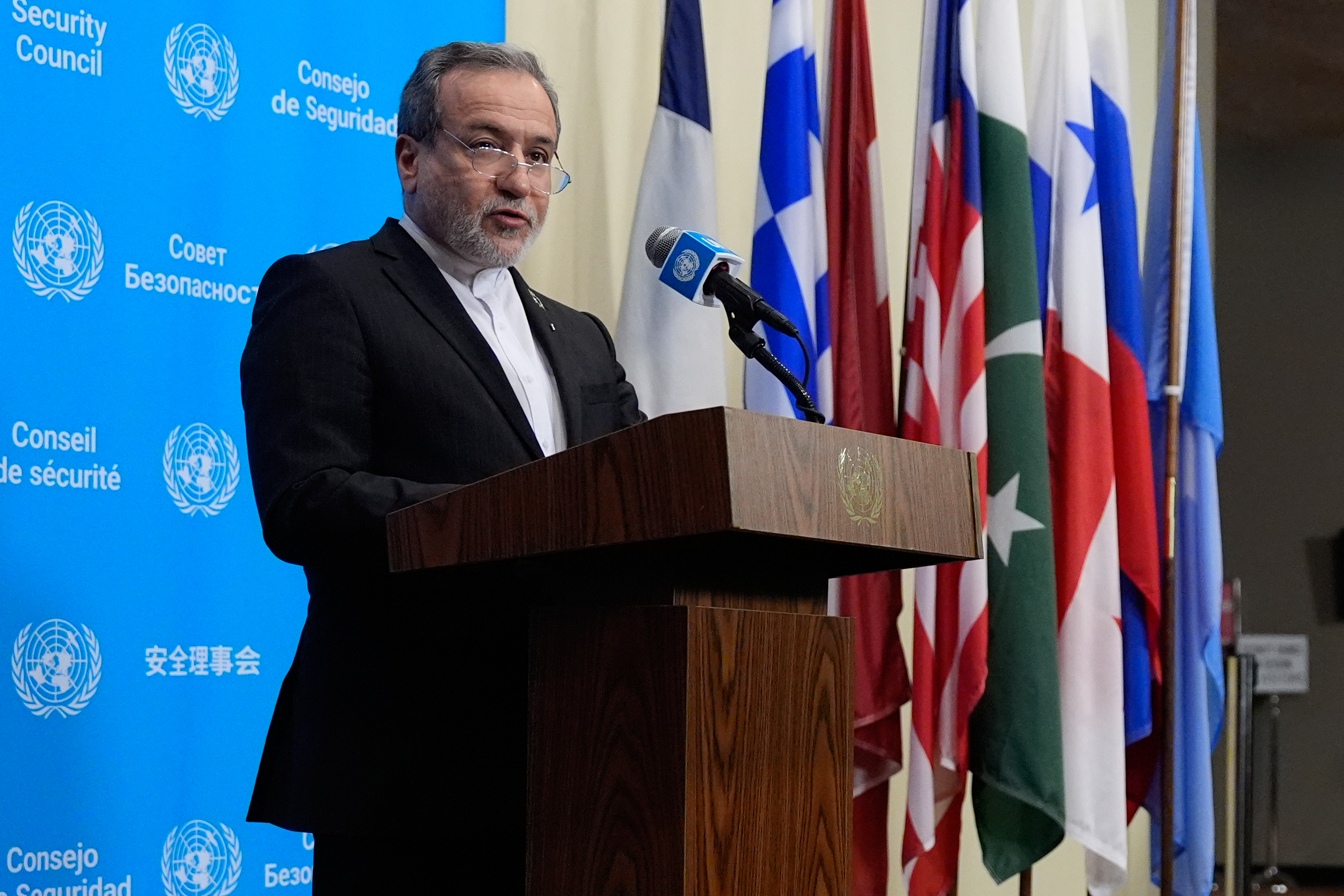
    Iranian Foreign Minister Abbas Araghchi — who stayed in New York after last week’s gathering of world leaders at the U.N. General Assembly — will meet with Qatari mediators Monday about the latest discussions, Iranian state media reported Foreign Ministry spokesperson Esmail Baghaei as saying.

    Despite Trump’s often bellicose rhetoric, he is open to pursuing a nonmilitary resolution to the conflict if one can be achieved, a senior U.S. official said.

    But the Trump administration will not reach a deal with Tehran until nuclear issues are addressed, another U.S. official said. Trump is willing to grant sanctions relief to Iran, along with the release of some frozen funds, for concrete progress on nuclear issues, and while Iran has indicated it is flexible on nuclear issues, the sides are far apart on timing and which side makes the first moves, the official said.

    All the officials were not authorized to comment publicly and spoke on the condition of anonymity about the behind-the-scenes diplomatic negotiations.

    Deal would first reopen strait and lift U.S. blockade

    Two of the regional officials speaking to the AP confirmed that mediators are working with both sides on a proposal that would include reopening the strait and lifting the U.S. blockade, and then removing sanctions.

    According to the draft text being discussed, the strait would reopen in accordance with a separate deal that Iran has been discussing with Oman, on the other side of the strait, and it would include no tolls — something Tehran has pursued. That deal seeks to temporarily manage shipping traffic on what was seen as an international waterway before the war.

    One regional official said the U.S. is seeking Iranian concessions on nuclear issues that include allowing inspectors to enter the country. Under the memorandum of understanding the two sides signed in June that collapsed within days, Iran’s nuclear program was meant to be discussed over a 60-day period.

    The U.S. officials say the United States is skeptical about whether Iran can be persuaded to ultimately reach Trump’s conditions for a deal and would be serious about any promises it makes, especially after it broke the interim deal by firing on commercial ships in the Strait of Hormuz.

    U.S. officials feel their position is getting stronger as Tehran feels the impact of sanctions.

    Iran’s latest proposal seeks faster action

    While Iran’s latest proposal echoes the June deal, a key difference is speed.

    Araghchi told a closed-door meeting on the sidelines of the U.N. General Assembly last week that Tehran had pitched the deal as benefiting Trump in the midterm elections. Araghchi later told journalists that “the seven-day timeline will start as soon as the United States accepts this plan.”

    U.N. Secretary-General Antonio Guterres also planned to meet Araghchi on Monday in a bid to help mediators, U.N. spokesperson Stephane Dujarric said.

    Both the U.S. and Iran have been hurting economically — the U.S. from high oil prices as Iran attacks ships on the strait, and Tehran from the naval blockade and a growing number of U.S. sanctions that bottle up its oil sales. Brent crude, the international standard, is above $108.

    For months, the two sides have been trying to outlast the other, while regional countries endure missile and drone attacks as Tehran claims to target U.S. military assets in the region.

    Reflecting Iran’s impatience, a rare statement on Monday attributed to the theocracy’s Supreme Leader Ayatollah Mojtaba Khamenei noted the “painful blows” that enemy forces have received near the strait. “Before long, the Arabian Sea, too, will be rid of them,” the statement added.

    Tehran’s latest proposal again sought to end the fighting on all fronts, including in Lebanon. But a new front has emerged in recent weeks as Iran-backed Houthi rebels in Yemen are now perched on another crucial waterway, the Bab el-Mandeb Strait at the southern entrance to the Red Sea. That has further pressured global energy markets.

    Iran argues that the Houthis have their own demands, and that their conflict with neighboring Saudi Arabia is separate from the U.S.-Iran war, but Iranian officials said they are willing to help in finding a settlement between the Houthis and the Saudis, one of the officials said.

  • Residents brace for a possible Russian hybrid attack on Poland’s border with Ukraine

    Residents brace for a possible Russian hybrid attack on Poland’s border with Ukraine

    DOROHUSK, Poland — Three times in one day, phones lit up across this Polish border community with a warning: A drone or a missile could cross from Ukraine, and residents should stay vigilant in case they might need to take cover.

    Above the village of Dorohusk in eastern Poland, vapor trails cut across the pale blue sky and military helicopters rumbled overhead. Just 1.24 miles away, traffic at the border crossing into Ukraine was suspended three times, and staff were even evacuated once.

    The alerts and disruptions on Thursday came as the Associated Press was visiting the village. They reflected a new reality along Poland’s eastern frontier, where the war in Ukraine — now 4½ years old — has felt increasingly close.

    Russia isn’t at war with Poland, but over the past few years European leaders say it’s mounted a series of so-called hybrid attacks to pressure to pressure adversaries in the West and NATO that include sabotage, disinformation, and cyberattacks. Poland is worried that the drones or missiles strikes could spill over from Ukraine, whether by accident or as part of a Russian strategy of ambiguous attacks.

    The anxiety intensified after two Russian drones exploded on the Ukrainian side of the Dorohusk-Yahodyn crossing in the early hours of Sept. 13. The explosions could clearly be heard in Dorohusk.

    “There is new restlessness and fear because you could hear those explosions very well on that night in our village,” said Wojciech Sawa, the Dorohusk mayor. “We had never had something like that before. This was the first time the sirens wailed.”

    Poland is preparing for a more serious Russian hybrid attack

    Polish Prime Minister Donald Tusk warned on Sept. 17 that Russia was planning hybrid strikes with drones or rockets on European countries supporting Ukraine, among them Poland, and regions bordering Ukraine would be especially vulnerable in the coming months. Other European leaders and intelligence services have shared his warnings that Russia is likely to step up its hybrid campaign.

    In Dorohusk, people have lived in the shadow of the war for years. They watched Ukrainian refugees flee across the frontier in the early days of Russia’s 2022 invasion and, this July, had a Russian missile pass through airspace in eastern Poland before crashing some 56 miles inside the country.

    But the recent drone attacks and the Polish government’s efforts to prepare the population for further serious incidents have brought a new sense of apprehension — and also confusion — among locals.

    Kids in border regions have to evacuate when sirens sound

    Jarosław Wójcicki, the Dorohusk school’s director, said staff, including the school psychologist, now discuss with students “practically every day” how to stay safe.

    The school had to be evacuated once so far and Wójcicki showed the two rooms in the basement of the school building where the kids took cover. Windows had been boarded up to avoid glass shards hurting anyone in case of an explosion.

    “The older children had no problem at all, without showing any particular emotion,” the director said. “You could see a little fear among the younger children, but they were well looked after by their teachers.”

    Wójcicki is responsible for the safety of hundreds of children who travel from nearby villages to attend school in Dorohusk, and his voice wavered as he described the extent of the task.

    Poland’s Defense Minister Władysław Kosiniak-Kamysz visited the Dorohusk-Yahodyn border crossing on Sept. 22 and announced new air defense elements were being brought to the border region. He added that Patriot batteries were deployed in the two Polish regions bordering Ukraine, including the one where Dorohusk is located.

    More work to be done on civil preparedness

    While the government’s warnings are stark, even communities closest to Ukraine are still catching up on civil defense preparedness.

    “We are at the beginning of the process of building civil resilience and the resilience of the state to threats,” said Mirosław Sokal, head of resident safety for the city of Lublin, west of Dorohusk. “We have to remember that over the past 40 years we thought we would be living in peace.”

    He said, given the lack of more solid infrastructure, Poles should respect one minimal rule when there’s an air threat: get inside and put two walls between them and any window.

    Sawa, the Dorohusk mayor, said villagers typically live in individual homes with basements and that is the obvious place to hide in case of air threats. “If I don’t have a basement myself, my neighbor likely does,” he said.

    But people on the streets of Dorohusk seemed more confused about their options in case of a real attack.

    “For now, I sleep well at night, so I don’t really hear it,” said Irena Popek, a woman in her 80s. If planes are coming, she said, her basement was not an option as it was flooded. ”I simply have nowhere to hide, and that’s it.”

    Renata Pastuszo, a local shop employee, said she continued working through the recent siren alarm because it’s better to keep a positive spirit in front of the Russian threat.

    Krzysztof Rulka, another resident, complained that alerts were now coming too often, leaving people confused about their meaning.

    “If someone told me that a drone was going to explode in the center of Dorohusk, then I would know what to do,” he said. “But this kind of confusion — there’s an air attack somewhere in Ukraine — well, what am I supposed to do now? Run to Germany?”

  • Congo’s Ebola outbreak tops 8,000 confirmed cases as disease remains out of control

    Congo’s Ebola outbreak tops 8,000 confirmed cases as disease remains out of control

    BUNIA, Congo — The number of confirmed cases of Ebola virus in Congo has surged past 8,000, as the country runs out of health workers to contain the deadly disease.

    Congo announced an outbreak on May 15, caused by the rare Bundibugyo virus, which has no known treatment or vaccine, and has struggled to contain it.

    The latest data from Congo’s health ministry released Sunday showed that 8,067 cases have been confirmed, with 3,901 deaths as of Sept. 26 across 63 health zones in seven of the country’s 26 provinces, with a fatality rate of more than 48%.

    “The continuously high crude case fatality ratio, and especially the continuously high rate of deaths occurring in communities, highlights the seriousness of the disease and the persistent challenges in timely case detection and access to early and adequate patient care,” the World Health Organization said in its latest report.

    It means that a large percentage of those infected were dying, without taking into account factors like delays in seeking help or hidden cases.

    The U.N. Office for the Coordination of Humanitarian Affairs said on Monday that the outbreak has begun to have an impact on other essential services in the hot spots as resources are mobilized toward fighting Ebola. According to OCHA’s report, routine primary healthcare services fell by 13% between April and June in Ituri province alone.

    “The indirect impact of the outbreak reflects both reduced health service availability — as a result of staffing and operational pressures — and reduced demand, as fear of infection and isolation discourages care-seeking,” OCHA said.

    Last week, WHO said that Congo was running out of health workers to contain the disease. Health workers have complained about delayed or missing payments, triggering several strikes. According to the Africa Centers for Disease Control and Prevention, 50 health workers have died since the outbreak was announced.

    Some areas have shown signs of improvement, with fewer confirmed cases in the past several weeks, including in Ituri province and Haut-Uele, but officials say the disease is spreading further in other areas, expanding its geographical reach.

    According to data from the Africa CDC, the current outbreak has outpaced the two-year West Africa regional outbreak in terms of spread in the same time. By week 19, the regional outbreak between 2014 and 2016 recorded 3,781 cases, while the current outbreak recorded 7,840. WHO said that it’s on track to surpass the regional outbreak, which killed 11,000 people.

    Containment efforts have been hamstrung by insecurity, displacement, a health workers’ strike, and intense population movements.

  • Trump administration asks Supreme Court to allow transgender medical care restrictions in prison

    Trump administration asks Supreme Court to allow transgender medical care restrictions in prison

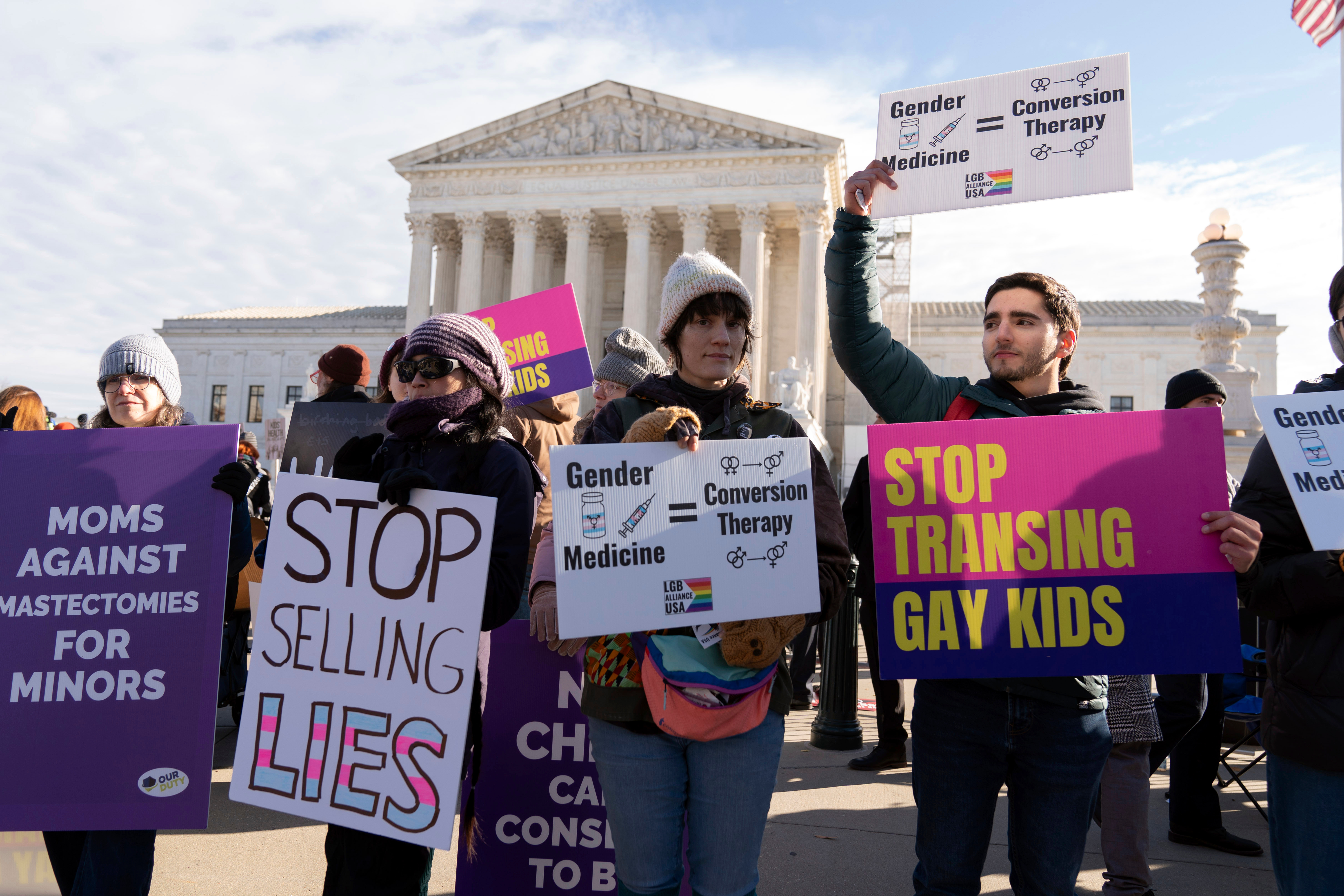
    WASHINGTON — The Trump administration asked the Supreme Court on Monday to let it enforce, for now, restrictions on gender-affirming care in federal prison.

    The emergency appeal comes after lower courts blocked officials from immediately carrying out the policy adopted after an executive order from President Donald Trump.

    U.S. District Judge Royce Lamberth ordered the government to continue providing gender-affirming care like hormone therapy.

    The Trump administration argues that the policy was properly adopted and the judge overstepped. It halts surgeries, hormones, and social accommodations like wigs while allowing mental health therapy to continue.

    It was adopted after an executive order required the Bureau of Prisons to revise its medical care policies so that federal funds aren’t spent “for the purpose of conforming an inmate’s appearance to that of the opposite sex.”

    The government asked the high court to freeze Lamberth’s order while the lawsuit continues to play out, saying the Bureau of Prisons had “determined that sex-trait-modification surgeries, hormone interventions in general, and social accommodations could no longer be justified as treatment for gender dysphoria.”

    The agency said in 2025 that it was providing hormone therapy to more than 600 inmates.

    The bureau doesn’t dispute that gender dysphoria can cause severe side effects, including depression, anxiety, and suicidal thoughts, Lamberth wrote. The Washington-based judge was nominated to the bench by President Ronald Reagan.

    A divided appeals court panel left the order in place.

    ACLU attorneys for the inmates said the policy is “a direct threat to the well-being of transgender people in federal custody and an open violation of their fundamental rights,” and withholding necessary gender-affirming healthcare constitutes cruel and unusual punishment.

    The conservative-majority Supreme Court has previously upheld state laws banning certain medical treatments for transgender youth, and restricting sports participation by transgender athletes in women’s sports.

    It has also handed down shorter term decisions allowing the Trump administration to move ahead for now with other policies rolling back protections for transgender people serving in the military and holding a passport consistent with their gender identity.

  • Trump administration lowers fuel economy standards, critics say at a significant environmental cost

    Trump administration lowers fuel economy standards, critics say at a significant environmental cost

    DETROIT — The Trump administration on Monday released new fuel economy standards that relax regulatory requirements for automakers to control pollution from gasoline-powered cars and light trucks. The new rules were released shortly after President Donald Trump rejected an Iranian proposal to open the Strait of Hormuz, sending oil prices soaring.

    The change furthers Trump’s promise to revoke policies that encouraged or created incentives for the production of electric vehicles and, ultimately, will expose Americans to more planet-warming pollution from vehicles.

    Mileage standards, known as Corporate Average Fuel Economy, or CAFE, requirements, have been implemented since the 1970s energy crisis, and set out how far new vehicles need to travel on a gallon of gasoline. Over time, automakers have gradually improved their vehicles’ average efficiency.

    The Department of Transportation and the National Highway Traffic Safety Administration estimated that the finalized standards would correspond to a combined industry fleetwide average of roughly 34.9 miles per gallon for passenger cars and light trucks in the 2031 model year. That’s up from 30.1 miles per gallon for model year 2024, but down from a projected 50.4 miles per gallon in 2031 under rules put in place by the Biden administration.

    “Thanks to President Trump’s leadership, we have finally ended the illegal mandate that forced automakers to produce more expensive electric vehicles that American families didn’t want,” Secretary of Transportation Sean Duffy said in a statement touting vehicle affordability.

    NHTSA had projected last December that the new standards would hover at roughly 34.5 miles per gallon.

    The news comes amid ongoing tensions as the war in Iran persists, with Trump refusing a deal with Iran to open the strait as recently as Saturday, impacting the world’s oil supply.

    Environmental groups concerned over rollback

    News of the revised standards immediately drew rebukes from environmentalists.

    The DOT said Monday that the rule would cut yearly oil consumption in 2050 by about 1.3 billion barrels as compared to yearly oil consumption in 2024.

    But when the 2024 standards went into effect, NHTSA estimated they would save 14 billion gallons of gasoline from being burned by 2050. The agency also said that while new fuel-efficient vehicles cost more up front, savings on gasoline over the lifetime of the car or truck would more than make up for that.

    Environmental groups estimate now, without stricter standards, cars could produce 22,111 more tons of carbon dioxide per year than under the Biden-era rules in 2035.

    The rule also translates to an extra 90 tons a year of deadly soot particles and 4,870 additional tons a year of smog components such as nitrogen oxides and volatile organic compounds emitted into the air in coming years, experts say.

    Transportation already accounts for much of total U.S. greenhouse gas emissions that warm the planet: 28% as of the last estimate in 2022.

    It “ignores the feasibility of clean technology and the millions of fuel-efficient cars already on the road,” Dan Becker, director of the Center for Biological Diversity’s Safe Climate Transport Campaign, said of the rule.

    Since taking office, Trump has also pulled back auto tailpipe emissions rules, repealed fines for automakers that do not meet federal mileage standards, and terminated consumer credits of up to $7,500 for EV purchases.

    The president has repeatedly pledged to end what he falsely calls an EV “mandate,” referring incorrectly to former President Joe Biden’s target that half of all new vehicle sales be electric by 2030. No federal policy has mandated auto companies to sell EVs.

    According to data from Cox Automotive, EVs accounted for 5.7% of total new-vehicle sales in August, down from 7.4% for all of 2025.

    Katherine García, director of the Sierra Club’s Clean Transportation for All campaign, vowed the environmental group would fight the rule.

    “Less fuel-efficient cars mean more gas burned, spending more at the pump, and dirtier air in our communities,” Garcia wrote in a statement.

    The state of the industry

    Automakers and industry groups have said the new rules will increase Americans’ access to the full range of gasoline vehicles they need and can afford.

    “NHTSA made the right call to better align fuel economy standards with the law and current market conditions,” John Bozzella, president and CEO of the Alliance for Automotive Innovation, which represents the domestic auto industry, said in a statement. He said the previous standards “effectively required a switchover to electric vehicles that was out of step with market realities and customer demand. Today’s final rule is an appropriate course correction.”

    “What the industry needs is long-term regulatory stability that includes balanced, durable, and achievable fuel economy standards that continue to reduce emissions and improve fuel economy,” Bozzella added. “This is the formula for preserving consumer vehicle choice and keeping the U.S. auto industry globally competitive.”

    A spokesperson for Ford Motor Company, maker of the top-selling pickup truck, the F-150, said: “We appreciate Secretary Duffy and the Administration’s work to align regulations with market realities. As we evaluate the final rule’s full impact on our business, we’ll continue working with the Administration to build a strong American auto industry.”

    A General Motors spokesperson said in a statement the company supports the goals of the rule “and its intention to better align fuel economy standards with market realities.”

    Stellantis also welcomed the changes.

    “These standards will allow us to offer our customers the freedom to choose from a range of vehicles and powertrains that meet their needs, from brands they love and trust,” a Stellantis spokesperson said in a statement.

    Trump wrote on his Truth Social media account Saturday that the less stringent mileage requirements would “take the waste out of building cars in America” and save families “thousands on a new, beautiful and safe car,” while boosting auto production in the U.S.

    The DOT reiterated on Monday that the changes will cut the average cost of a new vehicle by $1,300, and save Americans $138 billion over the next five years.

    Americans, however, are spending more on gas as Washington’s war with Iran disrupts the global flow of fuel; gasoline prices averaged $4.47 on Monday, according to the AAA motor club, up from $3.13 a year ago. The rising cost of oil weighed on U.S. stocks to start the week.

    “Trump is tanking sensible mile per gallon standards at the worst possible time for consumers, who are getting hit with sky-high prices at the pump,” the Center for Biological Diversity’s Becker said. “Consumers will pay the price for these reckless rollbacks while Trump’s Big Oil and Big Auto buddies reap the short-term profits.”

    Experts have also said that less stringent rules do not necessarily translate to more consumer purchases of new vehicles that may have more safety features.

    The average new car in America sold for $50,089 in August, crossing over the $50,000 line for the first time since last December, according to Kelley Blue Book data.

  • Trump asked China’s president if he wanted to buy U.S. arms, ambassador says

    Trump asked China’s president if he wanted to buy U.S. arms, ambassador says

    WASHINGTON — President Donald Trump has asked Chinese President Xi Jinping if he wanted to buy weapons from the United States, the U.S. ambassador to China said.

    David Perdue said Trump raised the prospect of the arms sales from the U.S. to its ascendant geopolitical rival, an unlikely offer that if consummated would upend generations of U.S. policy toward China and Taiwan and expose U.S. technology to a potential foe. Perdue, speaking to Shannon Bream on Fox News Channel’s Fox News Sunday days after Trump hosted Xi for a state visit in Washington, didn’t specify when the offer was made.

    But the State Department on Monday looked to distance the Trump administration from Perdue’s comments, saying that “U.S. law prohibits arms sales to China and there is no offer or plan to sell arms to China.”

    Perdue said Sunday that Trump, a Republican, was downplaying longstanding U.S. arms sales to Taiwan — which have drawn protest from Beijing for years — by couching it as just one of many sales Washington makes around the world — and even asking Xi if he’d be in the market for U.S. weaponry.

    Bream had cited concerns from Republican and Democratic lawmakers over delayed aid packages and weapons orders to Taiwan, the self-ruled democracy that seeks to defend itself from China’s threat to invade the island. Bream asked if the U.S. is denying arms to Taiwan to appease the Chinese president, who visited Trump last week.

    Perdue pushed back on the suggestion, stating that Trump “is as strong on Taiwan as I’ve ever seen anybody” and has sold it plenty of weapons. Perdue also said Trump and Xi continue to talk about future U.S. weapons sales to Taiwan.

    “But President Trump continues to say, ‘Hey, we sell arms to other people around the world,’” Perdue said. “He actually asked President Xi, would he like to buy some, at one point.”

    The offer “speaks to (Trump’s) treatment of China in almost exclusively commercial terms, even at the potential expense of the U.S. military position in Asia,” said Evan Sankey, an analyst focused on U.S. policy toward China at the Cato Institute.

    He said the U.S. last sold arms to Beijing in the 1980s and resuming those sales would be “a shocking policy change.”

    The U.S. is bound by its own laws to provide Taiwan with the means to defend itself. While not recognizing Taiwan as a country, the U.S. is the island’s strongest informal backer and arms provider. But multiple U.S. leaders have left ambiguous whether they would commit military force to defend the U.S. ally should China invade.

    China has pressed Washington to halt the arms sales, most prominently during a previous summit in May between Trump and Xi in Beijing. After that meeting, the United States paused the sale of a record-breaking $14 billion package — and Trump described arms sales to Taiwan as a “very good negotiating chip” with China.

    In their private talks at the White House last week, Xi pressed Trump to oppose Taiwan independence, according to Chinese state media.

    In Beijing, China’s foreign ministry spokesperson Guo Jiakun did not confirm Perdue’s remarks when asked about the matter on Monday. But he told reporters that China has always strengthened its national defense capabilities based on its needs and is committed to maintaining world peace and stability.