Category: Associated Press

  • Court stay prevents U.S. Army from detonating bomb-making chemicals in Iowa

    Court stay prevents U.S. Army from detonating bomb-making chemicals in Iowa

    DES MOINES, Iowa — A federal appeals court has granted a request by environmentalists to put on hold a permit that cleared the way for the U.S. Army to detonate several tons of bomb-making chemicals in Iowa.

    The ruling came late Thursday, putting in jeopardy the military’s plans to deal with dozens of barrels of lead azide pending further direction by the court.

    “The Army can’t detonate under the permit while the permit is stayed,” said Thien Chau, an attorney with Earthjustice, which filed a petition on behalf of Iowa groups calling for a review of the U.S. Environmental Protection Agency permit.

    The 8th U.S. Circuit Court of Appeals had yet to put out a schedule Friday for when it will issue a ruling on the groups’ emergency motion or even if there will be a hearing. Chau said attorneys expect the court will try to decide before Monday’s planned operation.

    The Army did not immediately return messages seeking comment on how the court action would affect its plans.

    The Army has said the chemicals are unstable, and the risk of an uncontrolled explosion is growing, particularly as temperatures drop.

    The detonation was initially planned for Friday, but the Army announced Thursday that it would push the operation back to Monday following an outpouring of public concern about the potential health and environmental consequences.

    “This will delay the detonation until the latest possible moment prior to a forecasted temperature drop, which would risk further destabilization of the material,” Acting Army Secretary Adam Telle had announced in a post on X.

    The Army, the EPA, and the federal Department of Health and Human Services followed up Friday with a joint statement saying they were working together to ensure the detonation is conducted in the safest way possible.

    “Officials have been meticulously planning for this event since March, and all agencies involved are prepared to take the most extreme mitigation measures available to ensure there is no risk to the public and any disruptions are minimized,” the statement read.

    An inspection earlier this year at the Iowa Army Ammunition Plant determined that the lead azide, which is used in munitions production, had started to degrade. The crystallization of the material created an unstable and dangerous situation, prompting the Army to assemble experts in munitions chemistry, engineering, and environmental safety to come up with a plan.

    According to EPA documents, alternatives such as neutralizing and decomposing the drums’ contents with other chemicals were considered. But officials said handling the drums would increase the probability of an accidental, fatal detonation.

    The environmental groups disagreed, arguing in their petition that other alternatives were not fully considered. They also criticized officials for not sharing more information with the public.

    The Army detailed its plans during a public meeting in Middletown in October, but a public advisory Sunday was the first time other communities — some as far away as 100 miles — became aware of the potential impact.

    Nearly 400 people live in Middletown — about 160 miles southeast of Des Moines — but thousands more in surrounding areas could be affected by detonated material that could disperse in the air and land on the ground.

    Some schools and businesses had planned to close, as the Army recommended that people stay indoors, bring their pets and livestock inside, and keep their windows and doors closed. Officials also urged residents in the path of the predicted plume to clean cars, windowsills, and outdoor surfaces afterward.

    “The detonation will result in an air plume with some lead-containing particles which will disperse in the air and deposit on the ground,” an advisory stated. “Lead is toxic to humans and animals.”

    Lucy Giehl, her husband and two dogs live about 4 miles north of the ammunition plant. She said during an interview Thursday that she didn’t know if she needed to wear gloves to wipe down surfaces or to keep her dogs from drinking water in their pond.

    “There’s just so many details that I feel like haven’t been addressed with the public.”

  • ‘Grand Theft Auto VI’ sets record with $3.79B in first-day retail sales, Rockstar Games reports

    ‘Grand Theft Auto VI’ sets record with $3.79B in first-day retail sales, Rockstar Games reports

    NEW YORK — Sales of Grand Theft Auto VI set a record with $3.79 billion in first-day retail sales as gamers’ insatiable appetite for the series continues, maker Rockstar Games said Friday.

    That worldwide figure was based on company estimates through the end of the day Thursday, the day the game launched. Rockstar also said in a release that it sold 32.5 million units prerelease, setting a record across platforms.

    “We are incredibly humbled by the response from players around the world and we couldn’t be more excited to share this moment with you,” Sam Houser, Rockstar’s president and founder, said in a release.

    The standard edition of the game retails for around $80 in the U.S.

    Earlier this month, the PlayStation blog said that GTA VI was the most preordered game in the history of its namesake store. Due to the demand, PlayStation said that it was teaming with Rockstar Games to allow players to start preloading the game nine days early, so that they’d be ready to play on launch day.

    GTA VI is the latest installment in the hyperviolent, open-world video game series that has skewered American culture with fictionalized versions of New York and Los Angeles and is now returning to its sun-baked version of Miami — Vice City.

    It’s the first new GTA game in 13 years, with the story of GTA VI centered on a couple trying to improve their circumstances through crime. Early reviews for the game have noted that it has a depth of relationship building that goes beyond the violent stickups and bank robberies.

    The Grand Theft Auto franchise has sold more than 470 million units globally, according to publisher Take-Two Interactive. Grand Theft Auto V, released in 2013, accounts for more than 230 million of those sales and generated $1 billion in retail sales in just three days.

  • U.K. and EU strike deals on trade and travel, pledging to rebuild ties after Brexit

    U.K. and EU strike deals on trade and travel, pledging to rebuild ties after Brexit

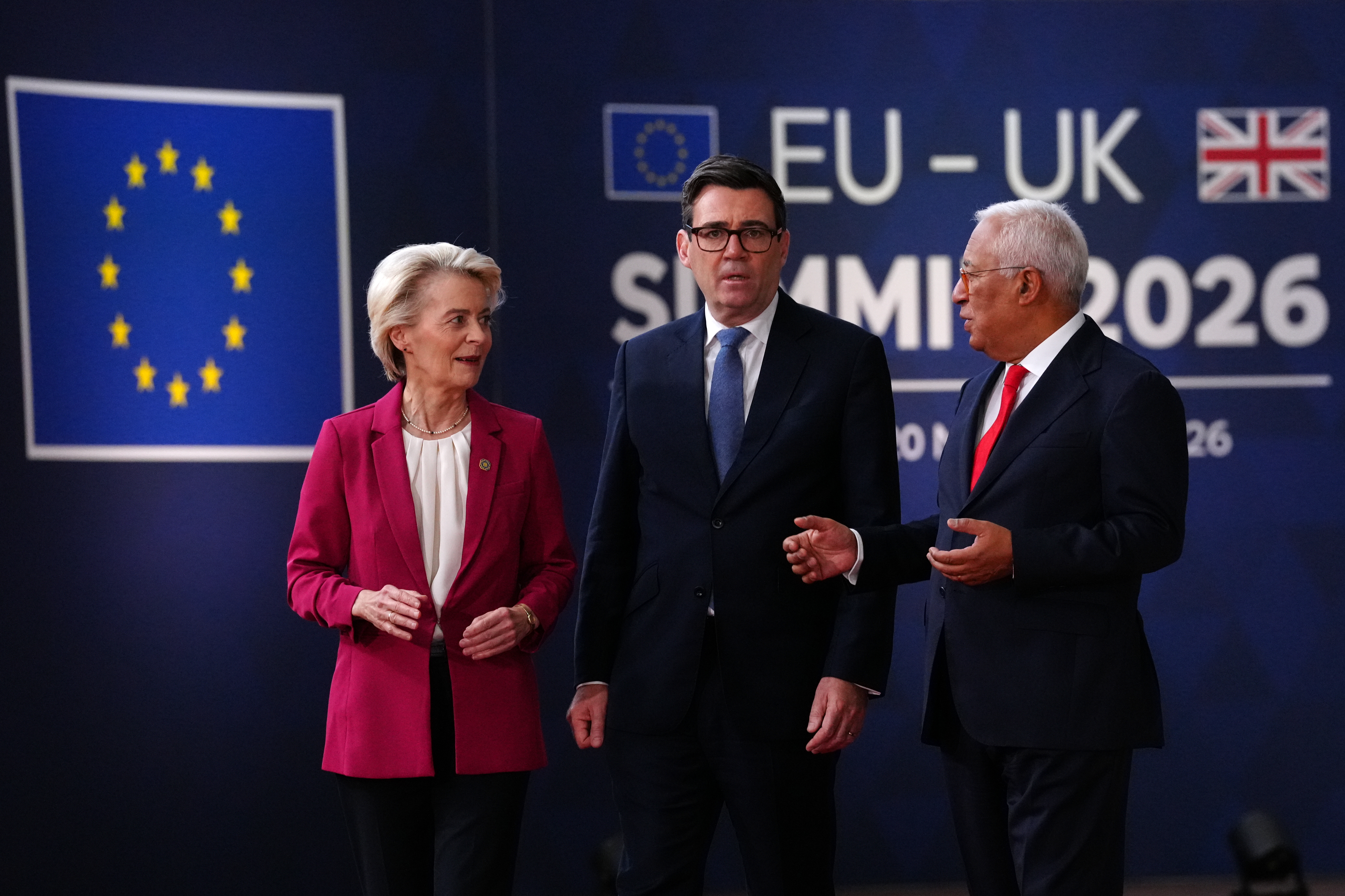
    BRUSSELS — Britain and the European Union agreed Friday to remove barriers to trade and expand travel opportunities for young people as they pledged to rebuild their strained ties with an “ambitious and dynamic” relationship. But they left big decisions about softening or reversing Brexit for another day.

    In a joint statement after a summit in Brussels, the U.K. and EU confirmed agreements that will scrap border checks on plant and animal products, cut carbon taxes on some exports by linking their emissions trading schemes, and let 100,000 young adults from each side live and work in the other’s countries for up to three years.

    Other areas remain a work in progress, with the two sides giving themselves six months to reach an agreement on the level of university fees for EU students in the U.K. and vice versa.

    Friday’s summit was part of efforts to forge a closer relationship, a decade after Britain voted to leave the EU and six years after the divorce became final.

    Supporters of Brexit argued that leaving the EU’s vast free-trade area and web of rules would let Britain take back control of its borders, laws, and economy, and strike new trade deals around the world. Critics say Brexit has left Britain weaker and more isolated, and new deals with countries including Australia and Japan have not made up for the economic hit from erecting barriers between Britain and its closest and biggest economic partners.

    European Commission President Ursula von der Leyen said the deal is “a turning point” in EU-U.K. relations, and U.K. Prime Minister Andy Burnham called it a “historic moment.”

    “This is a good day for Britain, and this is a good day for Europe,” he said.

    This was only the second EU-U.K. summit since Britain became the first country to leave the world’s biggest trading bloc. Months — likely years — of negotiations lie ahead on everything from electricity markets to manufacturing rules.

    Burnham said the summit was a step toward undoing a decade of damage caused by the divorce.

    He said the two sides are “rebuilding the bridges that were broken all of those years ago” and “building a much more constructive relationship with our nearest neighbors and our largest market.”

    Burnham has said all options should be on the table for future relations, including rejoining the now 27-nation bloc. But he’s stressed that reversing Brexit is just one possible outcome, and far from imminent. It would need the backing not just of British voters, but the unanimous support of a mistrustful EU. Still, he has broken a long political code of silence on the option of rejoining.

    “We remain open to have the closest possible relationship,” European Council President António Costa said. But he also recalled the obligations of EU membership, including single-market principles on the free movement of goods, services, people, and capital.

    Burnham says closer ties will ease the cost of living

    Burnham pitched the package of agreements approved Friday as a way of “cutting costs, keeping prices down in the supermarkets, and creating opportunities for young people.” He said the deals could bring in 17 billion pounds ($22 billion) a year and add 0.5% to Britain’s economic output.

    British retailers welcomed the deal to remove checks on food and agricultural products, which will make it cheaper and easier for U.K. businesses to export to Europe.

    “Getting our spaghetti Bolognese from Lincolnshire onto a shelf in Dublin takes hundreds of extra miles, mountains of paperwork, a vet’s signature, and even the Latin name of a cow,” said Alex Freudmann, managing director of food at Marks and Spencer.

    Freudmann said Friday’s announcement “is a major step forward.”

    But nothing in U.K.-EU relations is ever quick or simple. EU negotiators want European students to pay domestic fees if they study in Britain rather than the higher fees for foreign students, something the U.K. has resisted.

    An EU official said negotiations had not been easy but they sensed good will to resolve the issue. The official was designated to brief reporters about the summit but only on condition that they not be named.

    Talks are also continuing on Britain’s desire to be included in the bloc’s “made in Europe” rules, which favor European manufacturers for public projects over rivals from China or elsewhere.

    Critics say the deals are a betrayal of Brexit

    To get the deals, the U.K. must accept some EU rules and standards that it has no role in setting. Supporters of Brexit say that undermines Britain’s independence.

    Nigel Farage, leader of the euroskeptic, anti-immigration party Reform UK, told reporters in Brussels that Burnham had taken “the first step, incrementally, to take us back into membership of the European Union.”

    The war in Ukraine, and the U.K.’s military strength, are drawing the two sides back together, and the summit produced pledges of stronger cooperation on security and defense, as well as efforts to restrict irregular migration.

    Nevertheless, feelings remain raw, and EU officials have been reluctant to encourage talk of the U.K. rejoining. They are weary from the shifting demands of seven British prime ministers over the last decade and want clarity about the country’s intentions.

    Von der Leyen said that a lot has changed in their relations since the Brexit vote, including the pandemic and Russia’s war on Ukraine. She said that the EU is “totally open to do the necessary brainstorming for the wider picture, the bigger picture” of what ties could look like in the future.

    Burnham said he wanted the two sides to do that brainstorming before their next summit, probably a year from now.

    For now, Burnham remains bound by the pledge made by Keir Starmer, his predecessor as Labour Party leader and prime minister, not to rejoin the bloc’s tariff-free customs union or frictionless single market, or to restore free movement for EU nationals to the U.K.

    He acknowledged Friday’s agreements are “the limit of what we can achieve” before a national election.

    “Incremental steps … only take us so far,” he said.

  • A 2nd federal judge blocks construction of Trump’s memorial arch in DC

    A 2nd federal judge blocks construction of Trump’s memorial arch in DC

    WASHINGTON — A second federal judge has blocked President Donald Trump’s administration from building a 250-foot memorial arch in the nation’s capital, issuing an order on Friday that keeps the construction work on hold indefinitely, according to plaintiffs’ lawyers who sued to challenge the project.

    U.S. District Judge Leonie Brinkema in Alexandria, Va., issued her order from the bench in a lawsuit brought by the Arlington County Board. Brinkema ruled two days after a different judge in Washington, D.C., extended a previous order that blocked the Trump administration from breaking ground on the arch on a more temporary basis.

    The Virginia board claims Trump’s project will exacerbate traffic congestion and jeopardize public safety in the county, which is across the Potomac River from Washington.

    “We are pleased that the court has recognized the irreparable harm that will come to people who live and work in Arlington and stopped the massive vanity project while our case is heard and considered by the court,” plaintiffs’ attorney Kate Talmor said in a statement after Friday’s hearing.

    On Wednesday, U.S. District Judge Tanya Chutkan in Washington agreed to extend a temporary restraining order keeping the project on hold until Dec. 3. The injunction issued by Brinkema doesn’t have a specified expiration date.

    Chutkan initially blocked the arch’s construction on Nov. 5, shortly after a hearing of the National Capital Planning Commission ended with the Trump-heavy panel giving the arch its final approval in an 8-4 vote, despite dozens of witnesses who opposed the construction.

    The case before Chutkan was filed on behalf of Vietnam veterans and an architectural historian. Members of the Kennedy family filed a separate lawsuit last month, citing the impact the structure would have on Arlington National Cemetery, where family members are buried.

    The arch is one of several projects around Washington that Trump, a Republican, has pushed in his efforts to leave a personal imprint on Washington’s historic landscape. At 250 feet tall, the arch would be twice the height of the Lincoln Memorial.

    Brinkema was nominated to the bench by Democratic President Bill Clinton. Chutkan was nominated by Democratic President Barack Obama.

  • S&P 500 sinks 3.7%, Nasdaq goes negative for the year

    S&P 500 sinks 3.7%, Nasdaq goes negative for the year

    NEW YORK — A bruising sell-off in artificial intelligence stocks on Friday pulled the S&P 500 down 3.7%, dragging the index to its worst weekly loss in more than 18 months, and knocking the Nasdaq composite into the red for the year.

    The benchmark index is now in what professional investors call a “correction,” having fallen more than 10% from its Oct. 6 all-time high.

    The last time the S&P 500 had a correction was March 2025, as the Trump administration’s trade war rattled the market. Its weekly loss, marking its worst such decline since April 2025, as the trade war escalated, capped a seven-day losing streak, the longest such string of losses since the onset of the COVID-19 pandemic in 2020.

    The Nasdaq composite, which is more greatly influenced by tech stocks, slumped 5.3%, pulling it into negative territory for the year. Its weekly loss was also just shy of its worst week since March 2020, when the pandemic ground the global economy to a halt.

    The Dow Jones Industrial Average, with less exposure to technology stocks, fell 1.9%.

    Chip stocks like Nvidia, Micron Technology, Broadcom, and Advanced Micro Devices bore the brunt of the selling, but other companies connected to the AI build-out tanked as well, including the optical products company Corning and the energy provider Bloom Energy. The AI lab Anthropic, coming off a successful IPO Thursday, tumbled 9.1%.

    The sell-off in technology stocks spread around the globe: Japan’s Nikkei and South Korea’s Kospi each fell more than 5% overnight. European indexes fell sharply as well.

    AI stocks have hefty market values and have a much bigger impact on the market’s direction. They were responsible for Wall Street’s big gains this year and are now behind the big slide for the market.

    The AI trade has been losing steam partly over worries that AI stocks’ big market values and heavy spending are unjustified. Fears of a bubble within the sector have also been exacerbated by the results of the recent midterm elections, with candidates advocating for a slowdown in data center construction winning at both the federal and state level.

    “The whole notion that AI can continue to spend unlimited amounts of money and support the stock market, I think the notion of that is ending as we speak, that’s what’s being priced right now,” said Michael Antonelli, market strategist at Baird. “But I don’t think that means that the overall bull market that started in October 2022 is over.”

    Much of the AI rout was centered among chip stocks, which have been big beneficiaries of the build-out of AI data centers. Advanced Micro Devices sank 13.3%, Micron Technology slid 13.9%, and Broadcom fell 12.1%. The PHLX Semiconductor Index sank 10.7%.

    Corning slid 10.9%, and Bloom Energy gave up 15.3%.

    Nvidia, considered by many to be the poster child for the AI boom, fell for the ninth day in the last 10, closing 13.8% lower. The chip company’s stock was caught up in the market’s anxiety about the strength of the AI build-out, and more recently has been pressured by worries about its future following the sudden downfall of Jensen Huang, its former CEO and cofounder. Since the Huang scandal erupted earlier this month, the stock has dropped more than 25%.

    The big market debut for Anthropic, maker of the Claude AI tool, fizzled Friday with the rest of the tech sector. The stock fell 8.5% to $88.91, but remains above its IPO price of $83 per share. It was the biggest public stock offering ever, at one point surpassing $2 trillion in value.

    Anthropic’s share price drop on Friday amounts to a roughly 23% decline from its brief peak of $115.10 a share set the day prior. That’s an even bigger drop than the dive seen for Facebook (now Meta) in the early days after its May 2012 IPO.

    Market debuts for tech companies are often followed by a volatile period. SpaceX, which previously held the title for biggest IPO, rose nearly 50% in its first three days, but fell below its IPO price a month later.

    Outside of tech, though, most stocks were gaining ground. Cheerios maker General Mills rose 3.7% and homebuilder Lennar gained 1%.

    All told, the S&P 500 fell 265.44 points to 6,910.39. The Dow dropped 949.73 points to 48,147.33, and the Nasdaq lost 1,261.47 points to close at 22,617.73.

    While the stock market’s mood has soured, the sentiment among American consumers appears to have brightened, a reversal of the dynamic seen earlier this year.

    The University of Michigan’s latest index of consumer sentiment rose sharply compared to last month, coming in slightly ahead of economists’ expectations. Consumers noted some relief from easing gas prices and improved expectations for business conditions following the midterm elections. Still, sentiment remains below where it was in February, before the start of the U.S. war with Iran.

    Treasury yields fell in the bond market. The yield on the 10-year Treasury fell to 4.93% from 5.04% late Thursday.

    Brent crude oil, the international standard, rose 0.6% to settle at $92.57 per barrel, amid continued tension near the Strait of Hormuz as the U.S. war with Iran continues. Saudi Arabia said on Friday that Iran-backed Houthi rebels had fired more missiles and drones at the kingdom days after it launched a major air campaign across Houthi-controlled parts of Yemen. Iraq apparently reached a compromise with a powerful Iran-backed militia it accused of smuggling oil.

    Yuri Kageyama and Michelle Chapman contributed to this article.

    Editor’s Note: This story has been updated with the market close and Anthropic results.

  • Russian missiles land in Poland, as Europe held military drills nearby. NATO calls it a violation

    Russian missiles land in Poland, as Europe held military drills nearby. NATO calls it a violation

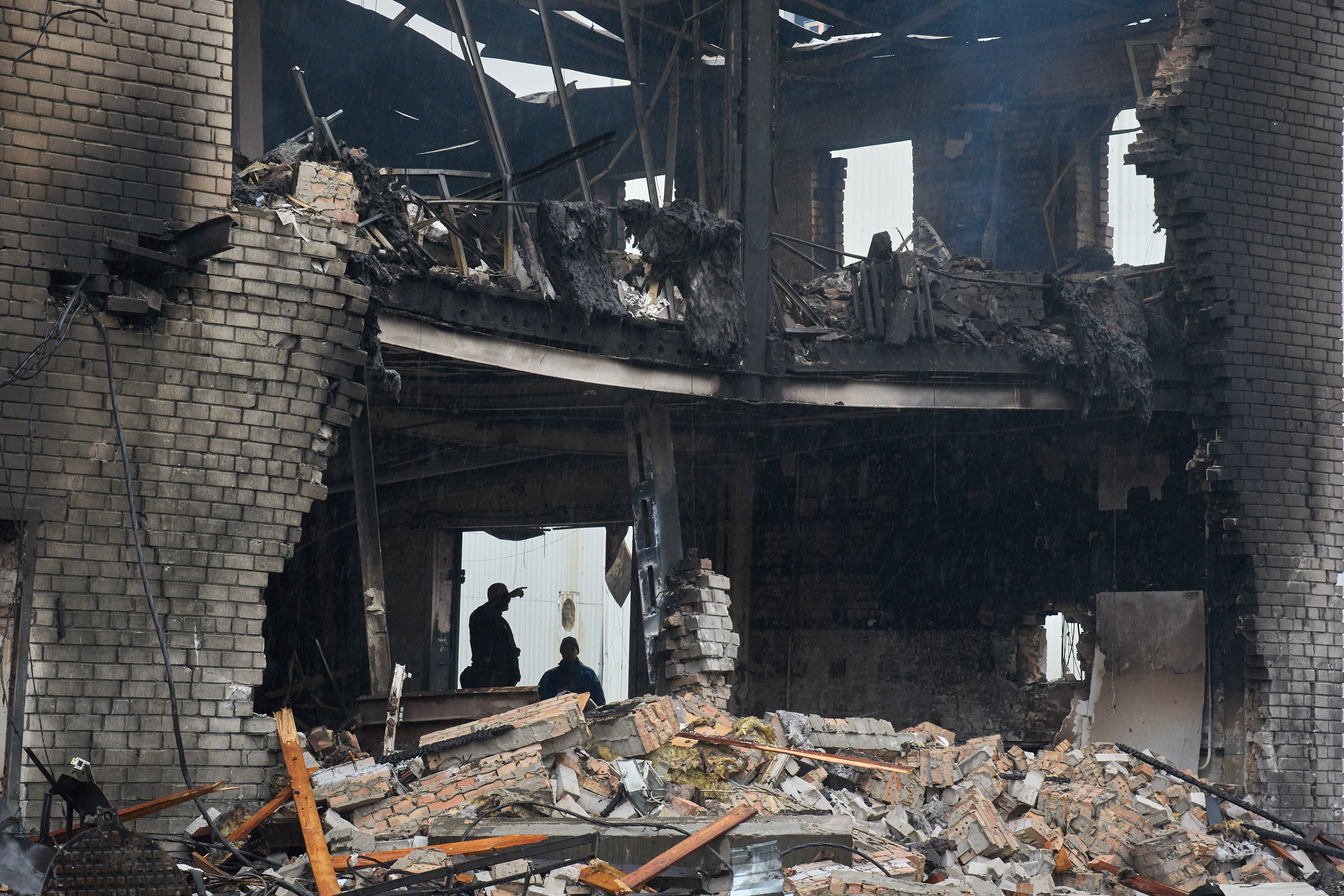
    NOWA DEBA, Poland — Two Russian missiles and a suspected drone came down in Poland on Friday in what its prime minister said was likely a provocation timed to coincide with European military exercises in his country for a possible postwar mission in Ukraine.

    The incidents occurred while Russia carried out a major nighttime bombardment of neighboring Ukraine. The development stoked tensions between Europe and Moscow just as the U.S. tries to add momentum to talks it is mediating on ending the war that began with Russia’s all-out invasion of Ukraine nearly five years ago.

    Polish Prime Minister Donald Tusk said it appeared that “we are dealing with an intentional provocation” by Russia.

    There was no immediate comment from Moscow on the missiles and suspected drone, or on Friday’s drills.

    One Russian missile is believed to have crashed around 22 miles from where the military exercises were taking place, officials said. A Kh-101 cruise missile went down roughly 30 miles from the Ukraine border, and what officials believe was likely a jet-powered drone hit about 20 miles from the border with Ukraine.

    There were no immediate reports of injuries or damage.

    European troops were taking part Friday in an unprecedented two-week military exercise that began Nov. 9 in southeastern Poland. Forces are preparing for a possible postwar mission in Ukraine aimed at helping to stabilize the country and rebuild its military.

    European countries previously have expressed alarm at what they deem to be Russia’s attempts to destabilize the continent.

    U.S. President Donald Trump discussed the war at a summit in China on Thursday with Russian President Vladimir Putin and Chinese leader Xi Jinping, according to his envoy Steve Witkoff. Another envoy, Trump’s son-in-law Jared Kushner, told European leaders that the United States believes Russia is “comfortable” with NATO-like security guarantees for postwar Ukraine, in what could be a step toward compromise.

    Russia’s nighttime attack on Ukraine came hours after Putin vowed to retaliate for Ukrainian strikes this week on a bridge linking occupied Crimea with the Russian mainland. The bridge is vital to Moscow’s war effort.

    NATO chief addresses a ‘grave violation’ by Russia

    Images from closed-circuit cameras and a mobile phone in the region collected by Poland’s PAP news agency showed a large, loud explosion and a bright flash, apparently in a wooded area, in one of the crashes.

    NATO Secretary-General Mark Rutte called the development in Poland a “grave violation” of that country’s airspace. “This incident is clearly dangerous — a consequence of Russia’s ongoing war against Ukraine,” Rutte wrote on X.

    Rutte is expected to go to Poland this weekend in response.

    Under NATO’s collective security guarantee — Article 5 of its founding treaty — an attack on any ally should be considered an attack on all 32 members. It obliges members to provide support to that ally, most likely military backup, but does not limit them to that alone.

    Article 5 is not triggered automatically. Ultimately, it is a political decision that all members must agree to. Poland also has the option to enact Article 4, which it did last year. This provides for emergency consultations only.

    The development brought a chorus of European condemnation.

    British Prime Minister Andy Burnham described it as “utterly unacceptable.” European Council President António Costa said that Russia “continues to spread (its) threats.” Germany’s Foreign Ministry called it “yet another example of Russia’s ongoing provocations.”

    Ukrainian Foreign Minister Andrii Sybiha said the incident in Poland “demonstrates the threats posed by Russian aggression to the whole of Europe and the trans-Atlantic community.”

    Later Friday, the chief of defense intelligence for the U.K. said he was confident that Russia “does not actively seek war with NATO.”

    But, Lt. Gen. Matthew Jones said in a speech at a college in Cambridge, his greatest fear “is the risk of a significant miscalculation.”

    “There are too many recent examples of reckless Russian behavior where, if the incident had been slightly different, the results could have been extremely serious,” said Jones, who did not directly mention the incidents in Poland.

    Putin has said that Russia will not accept any European troops deployed to Ukraine after a prospective peace deal and will view them as legitimate targets.

    Russian attacks batter Ukraine, killing at least 8

    Overnight strikes killed at least eight Ukrainian civilians and wounded more than two dozen, Ukrainian President Volodymyr Zelensky said. Russia fired more than 400 drones and over 110 missiles, 27 of them ballistic and some carrying cluster warheads that scatter dozens of smaller bomblets across a wide area, he said.

    The attack fit the pattern of Moscow’s heavy responses to eye-catching Ukrainian attacks, such as the ones this week on the Kerch Bridge, and added to uncertainty about the prospects for ongoing talks brokered by Washington.

    Russia and Ukraine are still far apart on the possible terms for a peace deal.

    Russia takes aim at Ukraine’s missile and drone plants

    Russia’s Defense Ministry said the sites it hit Friday were linked to the Ukrainian military. It said it hit a facility where missiles are assembled, a plant making components for rocket fuel, and a facility where drones are assembled.

    Ukraine said the deadly attacks also wounded more than a dozen people as apartment blocks, medical facilities, warehouses, and three bridges took hits.

    Russia’s nighttime barrage also extended its campaign to knock out Ukraine’s power grid ahead of winter. Strikes on power plants, substations, and transmission lines forced Ukraine’s three operational nuclear power plants to reduce generation, bringing emergency outages in 11 regions, said Deputy Energy Minister Artem Nekrasov.

  • UN climate talks slammed by activists, leaders as fossil fuels go unmentioned in draft agreement

    UN climate talks slammed by activists, leaders as fossil fuels go unmentioned in draft agreement

    ANTALYA, Turkey — The United Nations climate talks are wrapping up in Turkey after failing to produce any concrete agreements on how to drastically slash the use of fossil fuels, which experts warn is crucial to averting the most catastrophic effects of global warming.

    The term “fossil fuels” wasn’t even mentioned in the draft of the final agreement — meant to address how the world will deal with climate change — sending activists and country leaders into an uproar Friday, the last scheduled day of the two-week summit known as COP31. Such agreements, often adopted by nearly 200 nations, are voluntary and nonbinding.

    Negotiators, who pulled an all-nighter from Thursday into Friday, said they expect to go into overtime on Saturday.

    Although past summits also have failed to agree on how to transition away from fossil fuels that fuel global warming — primarily coal, oil, and gas — this year’s talks came amid urgent warnings that the planet is sure to overshoot the goal set in the 2015 Paris Agreement of limiting warming to 1.5 degrees Celsius (2.7 degrees Fahrenheit) above pre-industrial temperatures.

    It also comes after a year of climate-related disasters, including Europe’s deadly heat waves and Nepal’s devastating flooding.

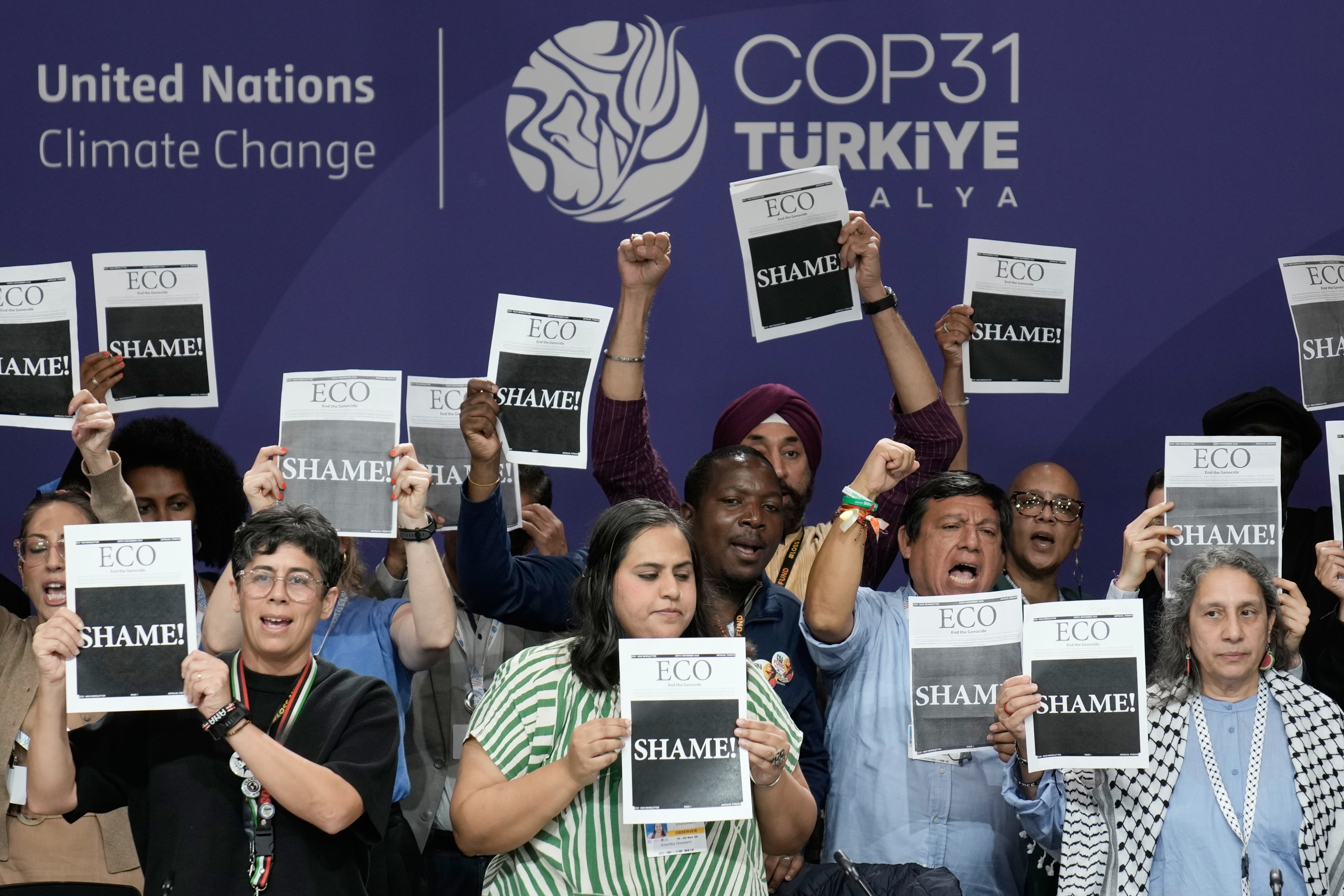
    “There is nothing on the table that protects people, or addresses the priorities of the Global South,” said Tasneem Essop, executive director of Climate Action Network International, at a Friday event, where attendees chanted and held signs that read “SHAME!”

    As talks near their end, fossil fuel debate rages

    One of the main goals on the table would increase the share of electricity in total global energy consumption from roughly 21% today to 35% by 2035.

    But the final draft doesn’t stipulate that electricity should be generated with renewable energy sources like solar and wind, leaving the door open for fossil-fueled power plants to be counted as part of an electrification push.

    “At a time when the climate crisis demands decisive action, weakening commitments on fossil fuel phase-out risks undermining progress,” said Ghiwa Nakat, executive director of Greenpeace in the Middle East and North Africa.

    The U.N. has hosted climate talks for more than 30 years, but didn’t acknowledge that fossil fuels contribute to climate change until the 2021 summit in Glasgow, Scotland. Two years later in Dubai, United Arab Emirates, countries explicitly called for a transition away from fossil fuels for the first time.

    Turkey’s Murat Kurum, minister of environment for Turkey, who is overseeing this year’s summit — co-hosted with Australia — said the electrification push implies a transition away from fossil fuels, adding: “We are not here to discuss decisions at previous COPs.”

    In a rare move, Panama vowed to “formally object” if the final agreement doesn’t add climate finance, cap oil production, and acknowledge failing goals, among other demands. The country’s Environment Minister Juan Carlos Navarro said the talks are being held hostage by a “petroleum mafia” and need to be reformed.

    “The COPs have become an exercise in hypocrisy and futility,” he said. “What we have here is a contest to see who speaks the most, who blows the most hot air.”

    Vulnerable nations say climate finance is lacking

    The draft agreement also says a fund to compensate countries ravaged by climate change should be tripled but doesn’t specify an amount. A previous version of the draft said at least $120 billion would be needed annually to help the mostly poorer, vulnerable nations that are bearing the brunt of climate disasters despite contributing little to the problem.

    The money is supposed to come from wealthier nations that have contributed most to climate change. But rich countries are not even providing previously agreed upon funds.

    Complicating the goal is that many of the world’s most polluting nations did not participate directly at this year’s talks, including the United States, the second-biggest polluter behind China and the largest historical emitter.

    “Disappointment is rife,” said Iskander Erzini Vernoit, an adviser to African negotiators in Turkey. Next year’s climate summit is scheduled to take place in Ethiopia’s capital, Addis Ababa, in November 2027.

    “Hope is not lost, but absent a course correction, we are headed toward a low-ambition set of outcomes at COP31,” he said.

  • Cincinnati Zoo says Fiona the hippo has died, days after ingesting a visitor’s hat

    Cincinnati Zoo says Fiona the hippo has died, days after ingesting a visitor’s hat

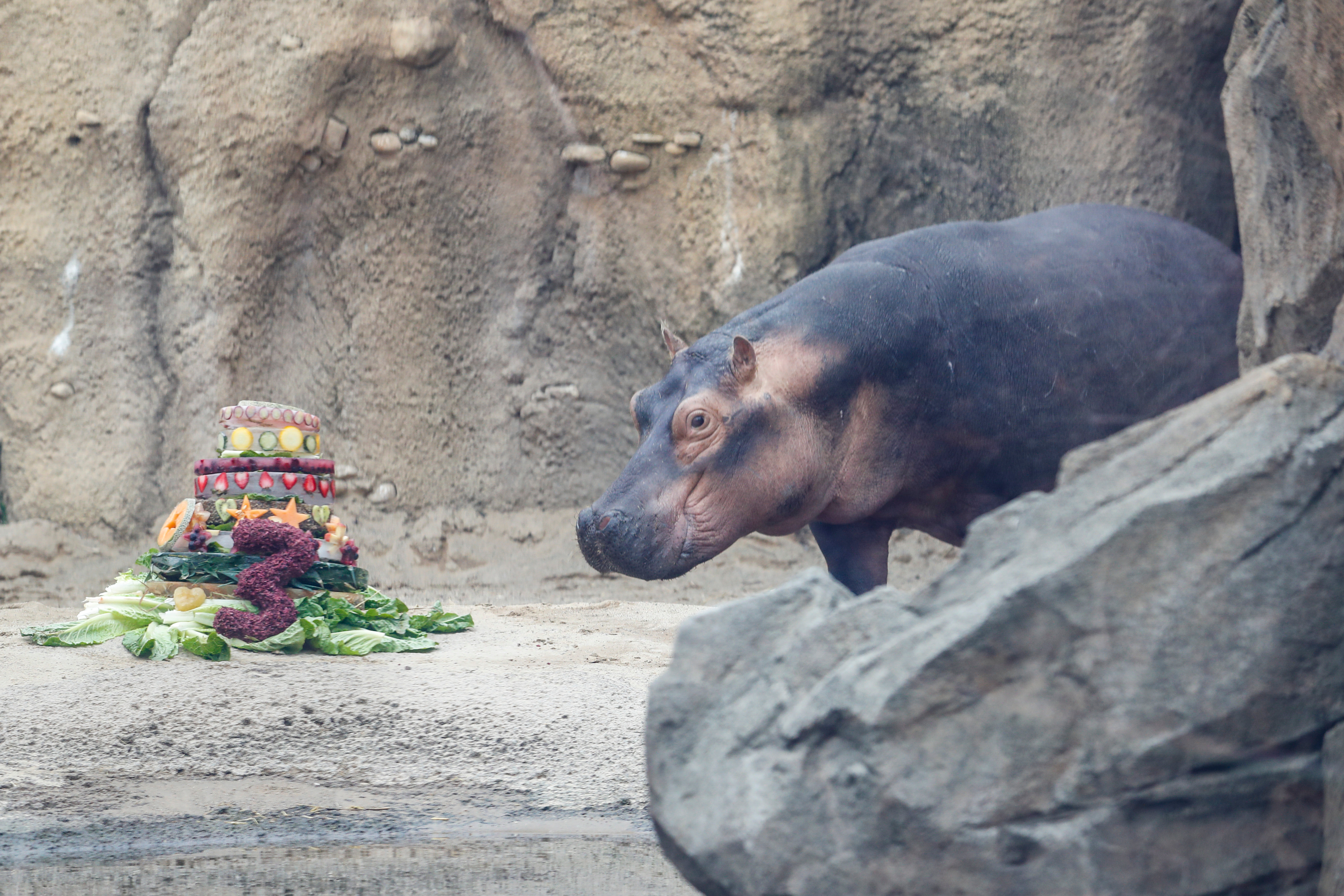
    CINCINNATI — Fiona, the hippo whose premature birth and fight for survival at the Cincinnati Zoo turned her into a global sensation nearly a decade ago, died Thursday from complications after swallowing a knit hat that was accidentally flung into her enclosure more than a week ago.

    “It is with extreme sadness that we share with you the devastating news that Fiona did not make it after multiple attempts from our amazing vets and keeper team to help her through what ended up being a medical emergency,” the zoo said in a statement.

    The zoo said Monday that Fiona was undergoing care around the clock after swallowing the hat more than a week ago.

    Before she died, veterinarians had been keeping Fiona hydrated, giving her treats, and monitoring her every move, the zoo said. They even borrowed a vibration plate from a horse farm, encouraging her to stand on it several times a day in the hopes that the shaking would help move things along through her digestive tract.

    “Despite multiple attempts to move the hat out of her system, it was ultimately too much to overcome,” the zoo said. “The team performed necessary supportive care today in an attempt to save her, but it was not successful and she did not recover.”

    Grace Brooks, of Cincinnati, and her two children, ages 3 and 5, had Fiona on their minds when they arrived at the zoo Thursday, before her death was announced. Her kids have been talking about Fiona at preschool, she said.

    “They know all about Fiona, and we have lots of books about her,” Brooks said.

    The zoo was mostly empty, though a small crowd was gathered inside the “Hippo Cove,” where two other hippos were swimming.

    Even without Fiona in the cove, her presence was felt. There’s a holiday-themed Fiona statue just outside the entrance, and the gift shop has an entire wall filled with hippo-themed shirts, coffee mugs, shot glasses and books, including “A Very Fiona Christmas” and “You’ve Got This, Fiona.”

    Cincinnati Mayor Aftab Pureval posted on social media that the city was heartbroken.

    “Fiona was a symbol of perseverance and joy in Cincinnati. She brought smiles to so many faces, from kids to parents to visitors from around the world,” he said.

    Fiona was under close care

    Fiona captivated people worldwide after her premature birth in 2017. She swallowed the hat about 11 days ago after a zoo visitor tossed it in the air. A ceiling fan caught and catapulted the hat through a small opening above the area’s viewing windows.

    It was an accident, said zoo spokesperson Michelle Curley.

    Before she died, Mike Wenninger, the zoo’s director of animal health, said veterinarians had sedated her twice to evaluate her condition.

    An ultrasound on Tuesday showed some bunching of her intestines, Wenninger said. They also conducted a colonoscopy using a 9-foot scope, but were unable to detect anything, he said.

    Surgery would have been challenging

    Specialists told the zoo that surgery wasn’t an option for full-grown hippos, the zoo said.

    Hippos have a digestive system that would make Fiona’s situation tricky, Jack Kottwitz, an assistant professor at Michigan State University’s College of Veterinary Medicine, said before her death was announced.

    “They have a multichambered stomach for digesting plants — sort of like a cow — but they don’t regurgitate and chew cud like a cow does,” Kottwitz told The Associated Press in an email.

    Surgery would have been a major logistical challenge for many reasons, he said.

    In order to find the hat, multiple incisions would have been needed during a very long surgery, he said. But hippos are notoriously difficult to anesthetize and have skin over 2 inches thick in places.

    Jan Hawkins, doctor of veterinary medicine at North Carolina State University, said Fiona’s situation was difficult because it was hard to tell exactly where the hat was.

    “You just don’t know because you can’t do the normal imaging and things that you can do in some of the smaller animals, or even horses,” Hawkins said.

    Other zoo animals have also died from eating foreign objects

    Zoos around the world have warned for years about the dangers posed by objects that are tossed or blown into animal habitats.

    Two years ago, a rare antelope choked to death after eating the plastic lid from a squeezable fruit pouch at a zoo in Tennessee. A polar bear at a German zoo died in 2014 after swallowing a jacket dropped into his enclosure by a visitor.

    Fiona became a sensation after Harambe’s death

    Fiona survived her first health scare when she was born six weeks premature. She weighed just 29 pounds, which was less than the lowest recorded birth weight for her species at that time.

    Fiona was unable to nurse, so a zoo staffer hand-milked her mother. The zoo recorded her progress with photos and videos, while fans worldwide followed her progress online.

    Her survival brought an uplifting turn for the Cincinnati Zoo after months of backlash over the shooting of Harambe, the gorilla who became a pop culture phenomenon after he was killed because a child got into his enclosure.

  • Denmark approves security deal with U.S. and Greenland, seeking to finally ease tensions with Trump

    Denmark approves security deal with U.S. and Greenland, seeking to finally ease tensions with Trump

    COPENHAGEN, Denmark — Denmark’s parliament on Thursday approved a hard-wrought deal with Greenland and the United States to strengthen security in the Arctic and North Atlantic, a final step aimed to defuse months of tensions over the Trump administration’s pressure about a possible U.S. takeover of the vast, mineral-rich island.

    The trilateral deal — between U.S. President Donald Trump and Danish and Greenlandic leaders — paves the way for more U.S. bases in Greenland, a semiautonomous territory of NATO ally Denmark. It also eases tensions in the Atlantic alliance and with the European Union over Trump’s repeated calls for the vast island to become part of the U.S.

    U.S. Secretary of State Marco Rubio said Thursday the deal “will make us all safer, stronger, and more secure.”

    “This agreement modernizes the United States-Denmark-Greenland defense partnership and bolsters the national security of the United States and our allies in NATO,” Rubio wrote on X. “Looking forward to more cooperation in the future.”

    The 109-0 vote in the Folketing amounts to a final step: The deal enters into force once the parliaments of Denmark and Greenland have signed on, followed by formal notification of the United States in a diplomatic note.

    Greenland’s parliament approved the deal earlier this month, also with no opposition.

    “Today is a big day,” Danish Prime Minister Mette Frederiksen wrote on Facebook. “It hasn’t been an easy process.”

    She said the agreement respects Denmark’s sovereignty and territorial integrity, and the right of Greenlanders to self-determination.

    Greenlandic Prime Minister Jens-Frederik Nielsen wrote on Facebook that Thursday’s vote proved that Greenlanders can stand firm in their rights while also finding solutions through dialogue and cooperation.

    “We have been through a difficult time, during which many people here at home have been concerned about our country and our future,” he said. “I hope that today’s decision will help bring greater calm and a sense of security.”

    The U.S. ambassador to Denmark, Kenneth Howery, welcomed the “strong support” in the Danish parliament for ratification of the deal “paving the way for it to enter into force.”

    “The agreement is a tremendous accomplishment, one that modernizes our partnership for the security challenges of the future and bolsters the security of the United States, the Kingdom of Denmark, including Greenland, and all of NATO,” he wrote on X.

    The aim is to bolster the U.S. military presence on Greenland but keep the self-governing island under Danish control. It would still apply if Greenland eventually chooses independence.

    Trump and the leaders of Greenland and Denmark signed the deal in September in New York, after months of quiet, behind-the-scenes negotiations to address his security concerns and Danish and Greenlandic fears of a possible U.S. takeover.

    Under the deal, which builds on a defense agreement dating to 1951, the United States can expand its military presence on the island and “modernize and expand” its activities at the remote Pituffik Space Base in the northwest.

    The U.S. can also set up “defense areas” at Narsarsuaq in the south and Mestersvig in the east of Greenland, and can establish additional defense areas in the territory and strengthen its military operations or sites.

    The three sides expressed support for a stronger NATO engagement in the Arctic, and for allowing the U.S. military access to Greenland to defend the NATO area — including through the ” Golden Dome ” defense system.

    After repeated U.S. warnings about the threat in the region from geostrategic rivals Russia and China, the agreement says only NATO members can establish manned or unmanned military installations on Greenland.

  • Trump wants the Supreme Court to let his EPA cancel billions in Biden-era climate grants

    Trump wants the Supreme Court to let his EPA cancel billions in Biden-era climate grants

    WASHINGTON — The Trump administration is appealing to the Supreme Court in its push to cut $16 billion in grants for a climate program, the largest grant cancellation case ever and one that could affect Republican President Donald Trump’s push to defund the priorities of prior administrations.

    The justices have not said whether they will take the case.

    If they do, it could resolve a fight over grants that the Environmental Protection Agency rescinded in 2025. Democratic President Joe Biden’s administration awarded the money under a 2022 law to finance clean energy projects and accelerate the transition from fossil fuels. Trump has targeted other grants, such as those considered to be supporting diversity, equity, and inclusion. A favorable outcome at the high court could help his administration defeat other grant lawsuits, according to the government’s filing this month.

    At issue is the Greenhouse Gas Reduction Fund, commonly referred to as a “green bank.” Climate United Fund and other nonprofits were picked to operate the program authorized by the 2022 Inflation Reduction Act. If the justices decline to take the case, the groups could regain access to their money because a federal appeals court already ruled in their favor.

    The EPA canceled the nonprofits’ grants soon after the start of Trump’s second term in January 2025, with EPA Administrator Lee Zeldin accusing the groups of mismanagement and potential fraud.

    The nonprofits’ lawsuit argues that the EPA broke the law and violated the Constitution. It demands access to their grant money so they can run the program. The administration says it is immune from legal and constitutional claims and contends the groups filed their case in the wrong court.

    If the justices eventually side with the EPA, it could “have far-reaching implications for the government’s ability to reshape grant programs and to terminate grants that do not advance a particular administration’s policy priorities,” said Romany Webb, deputy director of the Sabin Center for Climate Change Law at Columbia University who has supported Climate United’s arguments.

    The EPA says the $16 billion at stake is the largest grant cancellation case ever and is another reason it warrants Supreme Court review.

    The courts have so far tried to thwart the administration’s priorities, the EPA wrote in its petition to the Supreme Court.

    The EPA and Climate United declined to comment.

    Federal appeals court sided with the nonprofits

    In August, a divided federal appeals court in Washington sided with the nonprofits and said the administration improperly terminated the grants. The release of any money was paused to give the Supreme Court a chance to weigh in.

    The justices ruled for the administration recently in decisions over canceled National Institutes of Health grants and teacher training grants.

    The administration has built its arguments around the Tucker Act, which gives the Court of Federal Claims exclusive authority over contract disputes. The claims court can award money, but not direct the government to take certain actions in the way federal courts can.

    The nonprofits argued the way the EPA canceled the grants did not upend a contract with the federal government, but was done illegally and undercut spending on entire programs Congress had required, a constitutional violation. The government argues the matter is a contract dispute.

    The administration’s broad use of contract cancellations to enact policies is a novel approach, according to Bob Wagman, president of the Court of Federal Claims Bar Association and a partner at the firm White & Case.

    “I would hate to think that the only programs that could be supported have a four-year life,” he said, mentioning cancer research as an example of a grant program that would need longer than a single administration to pay off. “It is just not good for the country.”

    Government rushed to cancel grants and criticize the nonprofits

    Zeldin last year told Fox News that he suspected the green bank “was a clear-cut case of waste and abuse.”

    U.S. District Judge Tanya Chutkan said that when the government was asked for evidence of fraud, the EPA did not provide it and shifted its position to more general concerns about the level of oversight over the program. Chutkan said the government cannot terminate the contracts in violation of the law and that the groups should have access to some of their frozen money, which is held in an account at Citibank.

    The administration has been adamant that nothing requires them to make these grants to these groups.

    Passage of the Inflation Reduction Act created the green bank. Trump’s tax and spending bill passed last year rescinded part of the law that established the bank and the money that had not already been obligated to its recipients. The EPA has said that those changes mean it should not have to release any money to the groups.