Category: Associated Press

  • Trump picks Heidi Overton, a top White House aide, to lead the Food and Drug Administration

    Trump picks Heidi Overton, a top White House aide, to lead the Food and Drug Administration

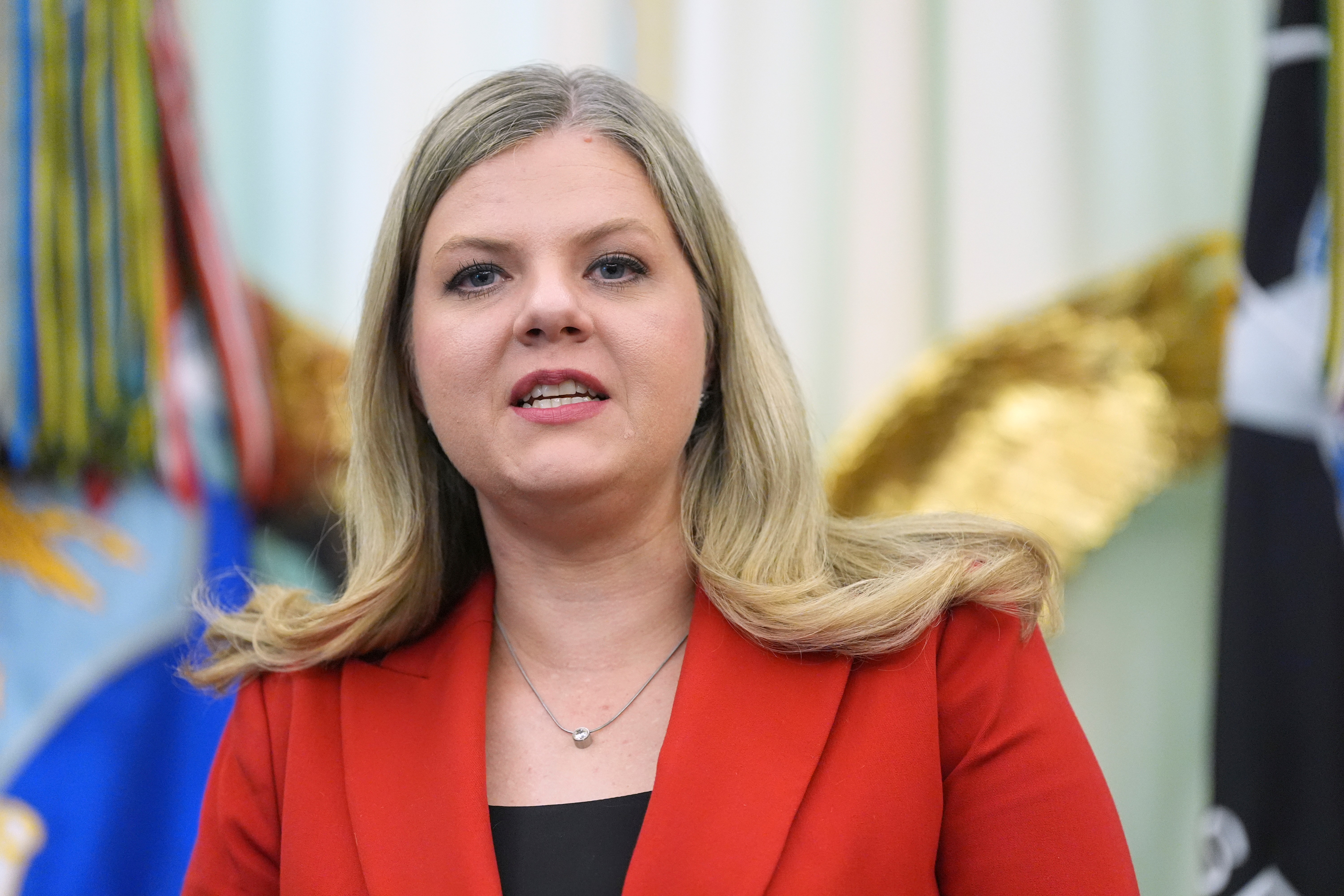
    WASHINGTON — Heidi Overton, a top White House aide, has been picked to lead the Food and Drug Administration, President Donald Trump announced Wednesday.

    Overton is a medical doctor and deputy director of the White House Domestic Policy Council who has worked on several of Trump’s second-term health initiatives. She has become a trusted administration figure and a champion of the Republican president’s goals.

    If confirmed by the Senate, she would have to balance a raft of competing priorities, including Trump’s fixations, the anti-regulatory interests of traditional Republicans, and the anti-corporate posture of Health Secretary Robert F. Kennedy Jr.

    Those challenges dogged the tenure of the previous FDA head, Marty Makary. He resigned in May, leaving behind unfinished projects such as work on ultraprocessed foods, antidepressants, and COVID-19 shots.

    Referring to her as “Dr. Heidi” in a Truth Social post, Trump said Overton was a smart and respected “rockstar” who would deliver on his priorities of faster cures, innovation, lower drug prices and more wins for Kennedy’s “Make America Healthy Again” movement.

    Kennedy posted on X that Overton has “exceptional judgment, professionalism, discipline and an unwavering commitment to the American people.”

    Overton has promoted Trump’s health priorities

    Overton attended medical school at the University of New Mexico and has a doctoral degree in clinical investigation from Johns Hopkins University, according to her LinkedIn profile. Before joining Trump’s second administration, she was the chief policy officer at the America First Policy Institute, a conservative think tank.

    In recent months, she has appeared with the president to announce major projects, including some of his “most favored nation” deals with drug companies to lower prices to those of other developed countries and his recent vaccine order that sought to split the combined measles, mumps and rubella (MMR) vaccine into three separate immunizations — against the advice of medical groups.

    At an Oval Office event to promote that order, she stood by Trump as he falsely suggested the number or timing of vaccines could play a role in rising rates of autism spectrum disorder. Scientific consensus and decades of studies have firmly concluded there is no link.

    Overton has been critical of abortion pills and, if confirmed, would be positioned to roll back FDA rules that made them more accessible. U.S. abortion opponents have expressed frustration that the administration has not acted to stem the flow of such pills prescribed online, a situation they view as undermining state abortion bans.

    Mifepristone is typically used with misoprostol in medication abortions that make up close to two-thirds of abortions in the U.S. Medical professionals call it “among the safest medications” ever approved by the FDA.

    To be confirmed, Overton must seek approval from a narrowly Republican-led Senate and face questions from the Senate Health, Education, Labor and Pensions Committee. Its chair, Republican Sen. Bill Cassidy, a physician from Louisiana, has been a vocal critic of some of Trump’s actions to sow doubt in vaccinations, including the MMR order.

    Democratic senators slammed the nomination on social media.

    “Heidi Overton is a far-right, anti-abortion extremist who has no business leading the FDA,” posted Washington Sen. Patty Murray, a committee member.

    Makary’s replacement will face challenges he left behind

    Before he left the FDA, Makary had drawn complaints from health industry executives and anti-abortion activists. The frustration with him came to a head over the agency’s lack of movement on flavored e-cigarettes. Companies such as R.J. Reynolds are seeking to market to adult smokers, but sweet-flavored vapes have long been blamed for the trend of teenage vaping. FDA scientists have hesitated to endorse those products to curb adult smoking.

    Days before Makary’s departure, the agency opened the door to allowing more unauthorized electronic cigarettes and nicotine pouches onto the U.S. market, in a policy change that essentially bypassed FDA experts.

    Pharmaceutical companies will be looking for changes at the agency, too, after rejections or reversals of biotech drugs intended for rare diseases. Complaints from biotech companies, investors and patient groups have grown and been taken up by conservative lawmakers.

    Makary tried to assuage industry grievances, in part by announcing new programs designed to streamline or accelerate drug approvals. Some of those initiatives, however, have meant new headaches for the agency.

    Several of Makary’s deputies also exited the agency.

    Vinay Prasad, the vaccine and biotech chief, stepped down in April following intense criticism from drugmakers, patients and investors. Tracy Beth Hoeg, who was involved in scrutinizing the safety of antidepressants, COVID-19 vaccines, and other widely used therapies, was replaced as FDA’s acting drug center director.

    MAHA has high expectations of FDA’s next head

    Overton would also need to tend to the priorities of Kennedy’s health movement, some members of which are already skeptical of her.

    Kelly Ryerson, an activist critical of pesticides who is known to her supporters as “Glyphosate Girl,” told The Associated Press that Overton parroted pesticide manufacturer Bayer’s talking points in a MAHA roundtable at the White House in April.

    “I was stunned by the blatant, undisguised corruption,” Ryerson said.

    One major decision for the next commissioner is what to do about peptide regulation. A panel of federal health advisers selected by Kennedy recently recommended easing access to several peptides that are popular with wellness influencers and celebrities, despite warnings from FDA scientists that the chemicals have not been shown to be safe or effective.

    The agency recently proposed a rule change that would require food manufacturers to notify regulators before introducing new ingredients or additives into processed or packaged foods. But it is still working with the White House to finalize a first-of-its-kind definition of ultraprocessed foods, which Kennedy blames for elevated rates of diabetes, obesity and other chronic conditions.

    Under Kennedy, the FDA has set up extra hurdles for vaccine testing and blocked the publication of research into the effectiveness of COVID-19 shots. Kennedy stood by Trump recently as the president signed the executive order aimed at upending childhood vaccinations in the U.S. despite unprecedented financial and logistical challenges.

    The FDA also has an ongoing review of widely used antidepressants, including whether they may increase the risk of autism and other disorders when used during pregnancy. The medicines have long been a target of Kennedy, who was a leader in the anti-vaccine movement before joining the government.

    In recent weeks, the agency has been investigating two summertime foodborne illness outbreaks: a cyclospora outbreak linked to tainted iceberg lettuce that has sickened thousands of people and a multistate salmonella outbreak linked to jalapeño peppers.
  • ‘No serious dispute’ that Comey’s seashell post could be read as a Trump threat, prosecutors say

    ‘No serious dispute’ that Comey’s seashell post could be read as a Trump threat, prosecutors say

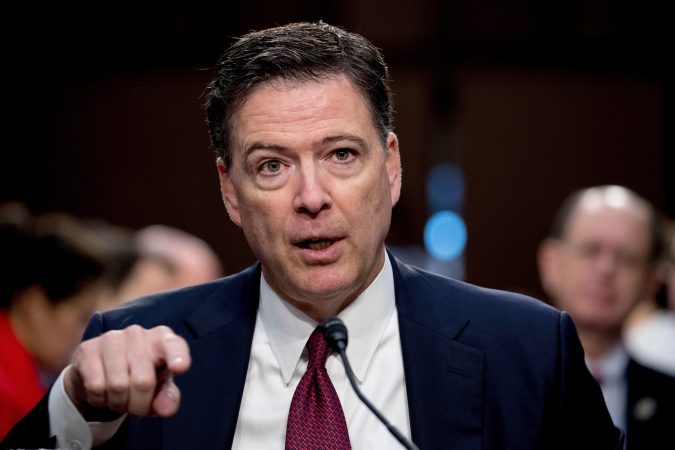
    WASHINGTON — The Department of Justice is defending its prosecution of former FBI Director James Comey, saying “there is no serious dispute” that a social media post of seashells he made last year could be understood as a threat against President Donald Trump.

    Prosecutors also called into question Comey’s account that he had found the seashells in the numerical arrangement of “86 47” while walking on a beach in North Carolina and suggested that his May 2025 post on Instagram was an effort to generate attention for a forthcoming novel about a social media personality whose words inspire his fans to attack his foes.

    The arguments in motions late Tuesday represent the government’s most detailed explanation of its indictment and were filed in response to wide-ranging defense efforts to dismiss the case on grounds including that it constitutes a vindictive prosecution and that Comey’s post did not amount to a true threat. Comey’s lawyers contend that investigators in the case misled judges, submitted documents containing false statements, withheld key facts, and repeatedly came up empty in their efforts to prove that Comey intended a physical threat or knew that the number 86 could suggest violence.

    The entry for “86” from Merriam-Webster, the dictionary used by The Associated Press, says its meaning is “to throw out,” “to get rid of” or “to refuse service to.” Trump, a Republican, is the 47th president.

    The Justice Department maintains that the post constituted a real threat

    Federal prosecutors maintain that the photo of the seashells, which Comey said he found on the beach, constituted a threat against Trump. Comey deleted the post shortly after he put it up, saying he did not know that anyone interpreted the numbers as a call to violence. His lawyers have said that the slogan has long meant to “get rid of” or “eject” and has been featured on thousands of items sold online and regularly displayed at protests.

    But the department sought in its filings to place the post against the backdrop of assassination plots or attempts against Trump in the months before and after Comey’s post. Prosecutors say that two minutes before the post was made, Comey’s wife texted him a screenshot of a definition of “86” that said “to get rid of or refuse service.”

    “There is no serious dispute that an objective viewer of Comey’s post could read it to mean ‘Kill President Trump,’” prosecutors wrote.

    The photo was posted days before Comey was set to release a novel he wrote titled “FDR Drive,” in which a prosecutor pursues a far-right social media personality who has called out his adversaries by name and inspired violence against them by his fans, the department said.

    After the Instagram post provoked an outcry, according to the government’s filings, Comey’s publishing agent observed in a text message to him that he had “gone viral.” Comey responded that that was “not my intention, but I’ll be OK if it sells books.” The agent replied, ”Music to an agent’s ears.”

    Prosecutors also asserted there was “reason to doubt” Comey’s account of having come upon the seashells while on a walk, saying they were located 4 miles (6 kilometers) “down from the beach from beachfront property where Comey was staying, in an area separated from the ocean by a sand dune.” They said there was “no evidence that anyone else arranged, photographed, or even saw the shells.”

    Comey has called the case vindictive, but prosecutors deny that

    Comey’s lawyers have called the indictment, which was filed months after an earlier and unrelated case against him was dismissed, part of a Trump retribution campaign targeting one of the president’s vocal critics. Trump fired Comey as head of the FBI in 2017 as Comey was overseeing an investigation into potential ties between Trump’s 2016 presidential campaign and Russia. Trump since then has called for him and other perceived adversaries to be jailed.

    But the Justice Department denied allegations of vindictiveness, saying the decision to indict Comey was made by the U.S. attorney in the area and did not stem from a directive from the president or the attorney general.

    To bolster their claims that Comey was unjustly targeted, defense team argued that investigators struggled to develop compelling evidence from witnesses that Comey had intended the post as a threat, but they concealed that from federal magistrates as they applied for warrants to search digital accounts associated with Comey and his wife

    For instance, defense lawyers have said, the FBI searched an internal database of information about open and closed investigations for any indication of an association between Comey and the term “86” but found inconclusive results. An FBI agent also requested a review of the FBI file for the case against reputed mobster John Gambino, which Comey worked on as a young prosecutor, but found no references to the term “86.”

    Investigators also interviewed a key government cooperator in the case, Salvatore “Sammy the Bull” Gravano, who said he did not recall ever discussing the term “86” with Comey or hearing it in connection with the trial.

    The latest filings made clear that the administration was standing behind the premise of the case.

    “No Government theory was disproved at that time, or now. No intentionally false omission exists, much less one made with reckless disregard for the truth,” prosecutors wrote. “The evidence still supports that Defendant acted at least recklessly by consciously disregarding a substantial risk that his coded message of “8647” that he sent to his 200,000 or so Instagram followers, and the millions of secondary social media users who would view this as threatening violence against the President of the United States.”

  • Trump says U.S. and Canada have reached last-minute deal to delay 50% U.S. tariffs on Canadian imports

    Trump says U.S. and Canada have reached last-minute deal to delay 50% U.S. tariffs on Canadian imports

    WASHINGTON — President Donald Trump said Tuesday he was delaying 50% U.S. tariffs on $20 billion worth of Canadian imports after the two countries reached a last-minute deal hours before the sanctions were to go into effect.

    The announcement, which Trump made on his social media platform, buys time for more negotiations and avoids, for now, another strain in already tense relations between the historic allies.

    “I have paused the 50% Tariffs against Canada, that were scheduled to kick in tomorrow morning for a three day period, based on the fact that Canada and the U.S.A., subject to the finalization of documents, have a DEAL!” Trump posted on Truth Social less than two hours before the 12:01 a.m. Wednesday deadline.

    If they had gone into effect as scheduled at 12:01 a.m. Wednesday, Trump’s import taxes would have hit Canadian products ranging from hockey sticks to tongue depressors.

    But the political impact would likely have been bigger than the economic one. Canada had threatened to retaliate against any new tariffs with levies of its own, aggravating a trade fight between countries that sold each other $880 billion worth of goods and services last year.

    Canadian officials did not immediately respond to requests for comment Tuesday night.

    Canadian Prime Minister Mark Carney and Trump had spoken twice by phone in the past two days about the ongoing negotiations, including a call Tuesday afternoon, Carney’s office said, underscoring the last-minute push for a deal.

    Both countries had reason to step back from the brink. Nearly 72% of Canada’s goods exports last year went to the United States. And the Trump administration would be taking a risk by imposing a hefty new tariff — paid by U.S. importers who try to pass along the cost to consumers via higher prices — ahead of November’s midterm elections. U.S. voters are already frustrated with the high cost of living.

    “I don’t think either side really wants these tariffs to come into effect,’’ Ryan Majerus, a partner at King & Spalding and a former U.S. trade official, said before the delay was announced. “There’s a pretty strong push on both sides to find an off-ramp here.’’

    Trump’s approach to dealing with Canada marks an extraordinary departure from the traditionally cooperative relationship between the two countries. Trump has hit Canadian goods with tariffs — in a push to bring manufacturing back to the U.S. — and has repeatedly made inflammatory comments about turning Canada into America’s 51st state.

    Trump has made tariffs the centerpiece of his second-term economic agenda. Last year, he imposed double-digit import taxes on almost every country, justifying them by declaring the longstanding U.S. trade deficit a national emergency. The Supreme Court in February ruled that he’d overstepped his authority, striking down those tariffs and setting the stage for the federal government to pay refunds to importers.

    So Trump has looked for other legal authority to impose tariffs.

    To hit Canada, he reached back to the Great Depression, invoking Section 338 of the Tariff Act of 1930 to threaten 50% tariffs on products that account for about 5% of Canadian exports to the United States.

    Nearly a century ago, with the U.S. and world economies in collapse, Congress passed the 1930 tariff law, imposing taxes on imports from around the world. Known as the Smoot-Hawley tariffs, named for their congressional sponsors, they are notorious among economists and historians for limiting world commerce and making the Great Depression worse.

    Section 338 tariffs have never been used before.

    Section 338 authorizes the president to impose tariffs of up to 50% on imports from countries that have discriminated against U.S. businesses. No investigation is required to justify the levies. Nor is there any limit on how long the tariffs can stay in place.

    The U.S. is renegotiating a North American trade pact — the US-Mexico-Canada Agreement — that Trump strong-armed America’s neighbors into accepting in his first term. The threat of Section 338 tariffs gives the United States leverage to seek fresh concessions from Ottawa.

  • Byron Donalds and David Jolly will compete to replace Ron DeSantis as Florida governor

    Byron Donalds and David Jolly will compete to replace Ron DeSantis as Florida governor

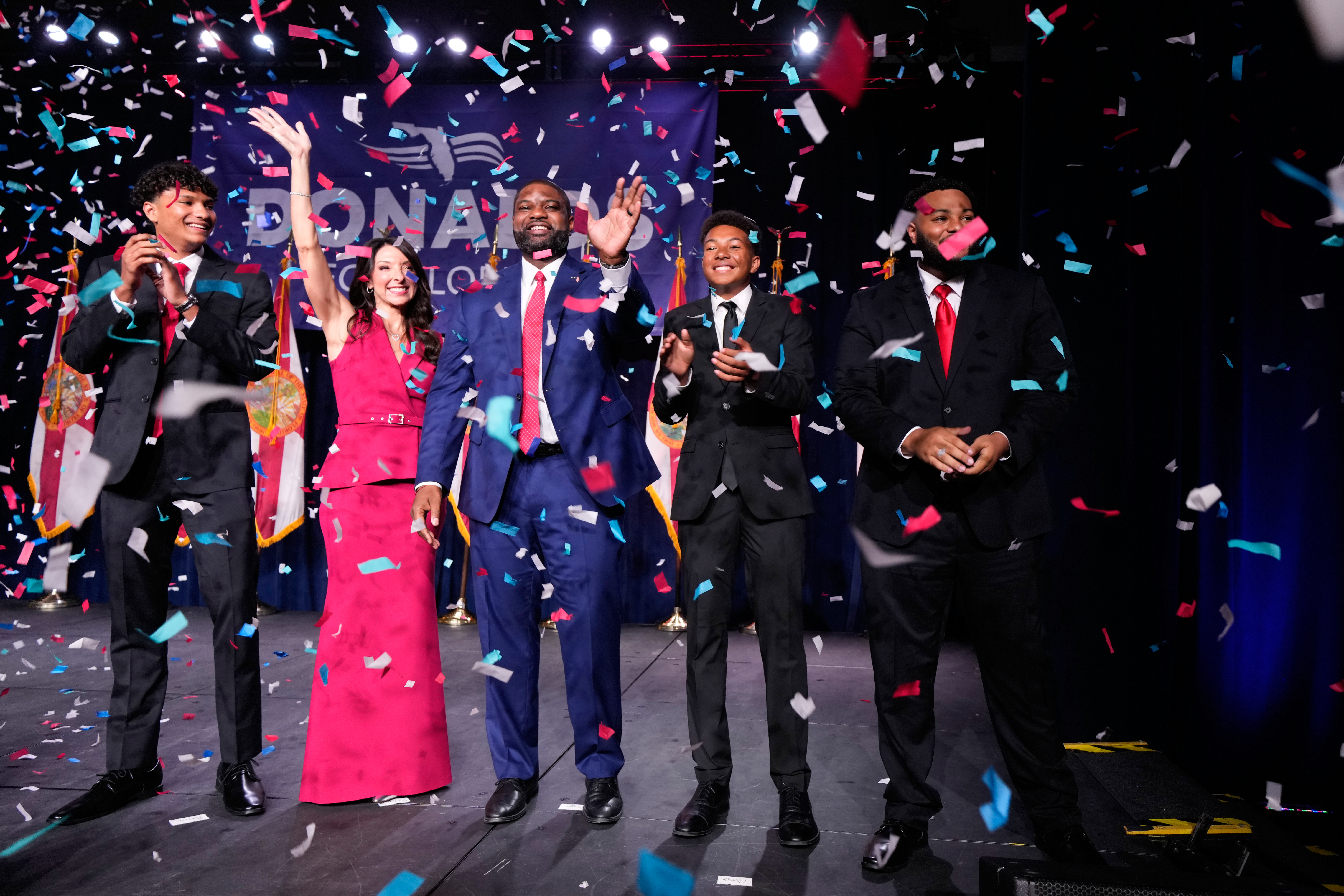
    ORLANDO — U.S. Rep. Byron Donalds won the Republican nomination for Florida governor and former Rep. David Jolly picked up the Democratic nod in Tuesday’s primaries, setting the stage for a fall campaign to replace outgoing Gov. Ron DeSantis and decide the state’s future political direction.

    November’s election will test President Donald Trump’s grip on his adopted state and Democrats’ ability to resurrect Florida as a national political battleground. Florida has moved notably to the right since Trump’s victory in 2016, though Democrats hope to regain ground from his slumping popularity ratings.

    DeSantis, a leading conservative figure who has both clashed and collaborated with Trump over the years, is barred from running for a third consecutive term.

    Also Tuesday, progressive state Rep. Angie Nixon won the Democratic nomination for a U.S. Senate special election, defeating retired Army Lt. Col Alexander Vindman, a onetime National Security Council official who testified in Trump’s first impeachment in 2019.

    Nixon, who was heavily outspent by Vindman, will face Sen. Ashley Moody, winner of the Republican nomination, in November to fill the last two years of Marco Rubio’s Senate term. Rubio left the seat to become Trump’s secretary of state last year.

    Donalds could be a historic figure in Florida

    Donalds would be Florida’s first Black governor if he wins in November. He defeated a former DeSantis running mate, Lt. Gov. Jay Collins, political newcomer James Fishback and others Tuesday.

    The 47-year-old congressman Donalds told his supporters at a Universal Studios resort hotel that he’d heard from Republican rivals who pledged their help in winning the general election.

    “The primary is over,” Donalds said. “Tonight we put aside our differences. Tonight we are one united Republican Party.”

    Donalds described Trump’s backing as important but not determinative.

    “Obviously, he has the strongest following of anybody in our party,” he said. However, he added, “you can’t just sit back and think the president’s endorsement is going to carry you.”

    Donalds has promised to push tax cuts, overhaul Florida’s insurance regulations to lower consumer costs and seek greater price transparency from healthcare providers.

    The Democrats’ candidate for governor, Jolly, is a former Republican congressman who switched parties last year. He did not shy away from his partisan history as he addressed supporters Tuesday night.

    “To my Democratic friends, thank you for welcoming me into the party,” he said.

    Jolly’s speech detailed a platform that balances between both political parties: an embrace of capitalism and a lean government, but one that “needs to do its part to fill the gaps,” such as with education and housing.

    “As an old-school Republican, I talk about ending the culture wars not to celebrate some progressive platform,” he said, “but because I still believe in the old school Republican, Libertarian policy that government should simply stay out of your life, and stay out of your bedroom.”

    It’s the second time in a row that Democrats have nominated a onetime Republican for governor.

    Four years ago, they backed former Gov. Charlie Crist, only to see him lose by nearly 20 percentage points to DeSantis.

    Rich Chamberlin, a retiree in Port St. Lucie, said he supported Jolly in Tuesday’s primary, spurred on by attack ads against him.

    “I saw anti-Jolly ads. I said ‘OK, if they are against him, then I must be for him,’” Chamberlin said, adding it didn’t matter to him that Jolly was once a Republican.

    A progressive gets Democratic nomination for Senate

    Florida voters haven’t sent a Democrat to the U.S. Senate since 2012, and this year’s race was always going to be an uphill climb.

    Moody, a former state attorney general, was appointed by DeSantis to fill Rubio’s seat last year after he became Trump’s secretary of state. She’s now running to finish the last two years of his term.

    Moody will face Nixon, a progressive state lawmaker who scored an upset victory over the Army veteran Vindman. Nixon would be Florida’s first Black U.S. senator if elected in November.

    “Rep. Nixon ran a strong campaign,” Vindman posted on social media. “I will be standing by her side in the fight against Ashley Moody. I hope you’ll join me.

    Wasserman Schultz wins in a new plurality Black district

    In U.S. House primaries, Tuesday’s biggest contest saw longtime Democratic U.S. Rep. Debbie Wasserman Schultz defeat former U.S. Rep. Sheila Cherfilus-McCormick and others in a redrawn South Florida district.

    Wasserman Schultz, who is white, urged voters in the new, plurality Black district to help her return to Washington for a 12th term. Cherfilus-McCormick had sought a comeback after resigning earlier this year under a pending federal indictment and threat of House ethics sanctions.

    Wasserman Schultz entered a new district after DeSantis’ successful push for new congressional maps intended to boost Trump’s midterm election prospects.

    Her four Black primary opponents — including Cherfilus-McCormick — had argued that the district should have a Black representative. But the voters went with a candidate who touted long experience from serving in Congress since 2005.

    Surrounded by her campaign staff Tuesday night, Wasserman Schultz tearfully thanked voters for having confidence in her. She said she wanted to “make all of you proud, to make sure that the people we spoke to all across this district know that I will fight so they can pay their rent.”

    Republican Rep. Cory Mills is ousted by a challenger

    Former television news reporter Ryan Elijah won the Republican nomination for Florida’s 7th Congressional District, ousting the scandal-plagued Mills.

    A two-term congressman, Mills has denied allegations of domestic violence against a former girlfriend and other controversies.

    But Florida Republicans including DeSantis had abandoned Mills ahead of the primary and the congressman was not included on Trump’s final list of Florida endorsements. Elijah advances to the general election in a central Florida district that is considered reliably Republican.

  • Frank Beard, drummer of boogie-rock trio ZZ Top, has died at 77

    Frank Beard, drummer of boogie-rock trio ZZ Top, has died at 77

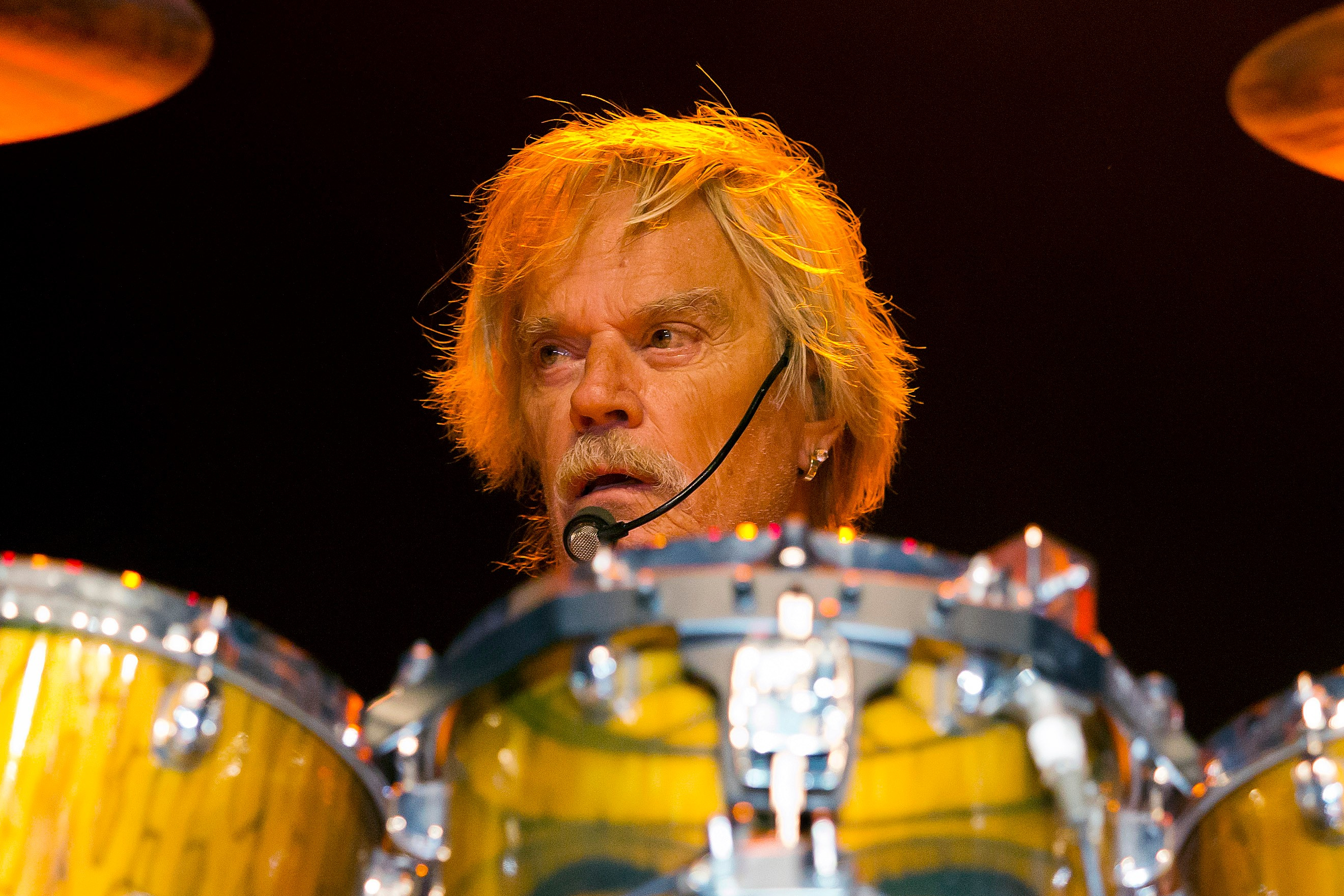
    NEW YORK — Frank Beard, the drummer for the Texas boogie-rock trio ZZ Top who kept the tempo for the band’s biggest hits like “Sharp Dressed Man,” “Gimme All Your Lovin’,” and “Legs,” has died. He was 77.

    Mr. Beard was in hospice care when he died Tuesday at his ranch in Richmond, Texas, with family members at his side, according to publicist Bob Merlis. Band cofounder and guitarist Billy Gibbons, on tour with bassist Elwood Francis, hailed Mr. Beard in a statement.

    “Today, Elwood and I lost a great friend and collaborator, and the world lost one of the most naturally innovative drummers and a great and true son of Texas. His signature backbeat was key to keeping ZZ on top. The band of which he was part for six decades is going to keep on keeping on as he had wished,” Gibbons said.

    ZZ Top sold more than 50 million records and had six singles that reached No. 1 on Billboard’s Mainstream Rock Airplay chart. Seven of their albums have been in the Billboard 200’s Top 10 and they earned three Grammy Award nominations.

    “I’ve found the people I was meant to play with,” Beard says in the 2019 documentary ZZ Top: That Little Ol’ Band from Texas. “I never wanted to quit, and never wanted to get fired.”

    Drummers went to social media to pay tribute to Mr. Beard’s influence, including Rage Against the Machine’s Brad Wilk, who wrote his mind was blown seeing Mr. Beard’s two-hand shuffle live in high school. Former Guns N’ Roses drummer Matt Sorum called Mr. Beard “a very special and unique man behind the kit.”

    How the band came together

    Mr. Beard, from Frankston, Texas, met Gibbons in a band called the Moving Sidewalks and later introduced bassist and vocalist Dusty Hill who had been in several bands with Mr. Beard.

    The trio formed ZZ Top in 1969, naming themselves in part after blues singer Z.Z. Hill and influenced by the British power trio Cream and Jimmy Reed. They maintained their original lineup for more than five decades. Their signature look — long, bushy beards on Gibbons and Hill, and dark sunglasses for all — didn’t change much, either.

    When Rolling Stones guitarist Keith Richards helped induct the trio into the Rock & Roll Hall of Fame in 2004, he joked: “These cats know their blues and they know how to dress it up. When I first saw them, I thought, ‘I hope these guys are not on the run, because that disguise is not going to work.’ ”

    ZZ Top songs — with their sly and humorous lyrics — were popular in Hollywood, which used “Gimme All Your Lovin’” in Happy Feet, “Sharp Dressed Man” in Evan Almighty, “Legs” in Air, “Sleeping Bag” in I, Tonya, “Tush” in Dazed and Confused, “Mexican Blackbird” in From Dusk Till Dawn, and “La Grange” in Armageddon.

    “The best way to describe ZZ Top is we’re interpreters of a great American art form,” Gibbons told the Dallas Morning News.

    Their debut release, ZZ Top’s First Album, came out in 1970. Their sound was described as a hybrid mixing elements of rock, blues, and funk into a steaming-hot Houston stew. They called themselves a “Little Ol’ Band From Texas.”

    Breaking through

    Three years later, they broke through commercially with “La Grange,” a funky blues song on the album Tres Hombres that paid tribute to the Chicken Ranch, a brothel outside of the Texas town of La Grange that operated from 1905 until 1973 and was immortalized in the Broadway show and the film The Best Little Whorehouse in Texas. Gibbons has ascribed the power of “La Grange” to its simplicity — just two chords and a Robert Johnson-inspired guitar solo.

    The band went on to have such hits as “Tush” and “Cheap Sunglasses.” But their 1983 Eliminator — named after one of Gibbons’ custom cars — added more production elements, synthesizers, and drum machines to their stripped-down sound and yielded the hits “Gimme All Your Lovin’,” “Legs,” and “Sharp-Dressed Man.” The band toured with a Texas-shaped stage, live rattlesnakes, and a longhorn steer.

    Long beards weren’t always part of the band’s look. Gibbons said it happened by accident: In 1976, the trio took a long break and scattered. Mr. Beard went to Jamaica, Hill went to Mexico, and Gibbons went to France.

    “Although we were speaking by phone, this was pre-video phone. And Dusty and I did not know that we had gotten so lazy that we had decided to forget to shave,” Gibbons told The Tribune in San Luis Obispo in 2010. “So after three years we returned and showed up, and lo and behold here was this sort of wacky-looking image. And it just kind of stuck with us.”

    A boost from MTV

    The band’s rock-chic cool played well on the nascent MTV crowd and their videos, featuring models in short skirts emerging from one of Gibbons’ custom roadsters, became a mainstay.

    They kept the beards, hats and cheap sunglasses in the video trilogy of “Gimme All Your Lovin’,” “Sharp Dressed Man,” and “Legs,” made with director Tim Newman.

    “ZZ Top reveled in the humor and ridiculousness of it all, busting their synchronized dance moves and spinning their white-fur guitars. These guys always got the joke, at a time when other bands were still just nervously lip-syncing in front of brick walls,” Rolling Stone said in 2021.

    In 2012, superstar producer Rick Rubin helped update the trio’s sound with the band’s comeback album, La Futura. The album landed at No. 6 on the Billboard chart, their highest position since 1990’s Recycler, some 22 years previously.

    Hill died in 2021.

    In March 2025, the band announced via Instagram that Mr. Beard would temporarily step away from the band’s tour to tend to foot and ankle problems. Mr. Beard died weeks after ZZ Top called off its Aug. 5 concert at the Hollywood Bowl due to his health issues.

    Mr. Beard is survived by his wife, Debbie Meredith, and three children.

  • Whistleblower alleges political pressure, lack of evidence in antisemitism probes targeting schools

    Whistleblower alleges political pressure, lack of evidence in antisemitism probes targeting schools

    WASHINGTON — A Trump administration task force created to combat antisemitism pushed for settlements with Ivy League universities despite government investigations that were rushed and incomplete or that failed to establish legal violations by the schools, a former Justice Department lawyer alleged in a whistleblower disclosure obtained by the Associated Press.

    The complaint alleges that the investigations into some of the nation’s most prestigious academic institutions were designed to strong-arm the schools into cutting deals for political purposes. Outcomes of the investigations were “predetermined, without regard to the evidence” in a “politically mandated effort” to extract money from schools through settlement demands and funding freezes under the pretext of rooting out antisemitism, the complaint alleges.

    The work of the multiagency task force, launched by the Justice Department under then-Attorney General Pam Bondi in February 2025, was “marked by extraordinary procedural irregularities, predetermined outcomes without factual or legal support” and disregard for the law and Constitution, lawyers for the former government attorney wrote in seeking watchdog investigations into their client’s complaints.

    The complaint taps into a broader public discussion about the administration’s efforts to confront allegations of antisemitism at colleges, a problem that received renewed attention during campus protests over Israel’s war in Gaza that some Jewish students said made them feel unsafe. President Donald Trump returned to the White House with a goal of rooting out antisemitism that he said had gone unchecked during the Biden administration, but critics have called his government’s response heavy-handed and said it infringed on free speech rights and coerced concessions from public institutions.

    A key House Democrat is publicizing whistleblower’s allegations

    Lawyers for the former Justice Department attorney, identified as Haley Van Erem, filed the disclosure Tuesday with the inspectors general at the departments of Justice and Health and Human Services and the Office of Special Counsel.

    Van Erem spent nearly a decade working in the Justice Department’s Civil Rights Division before being involuntarily assigned to HHS to work on the Title VI investigations into the universities, the complaint says.

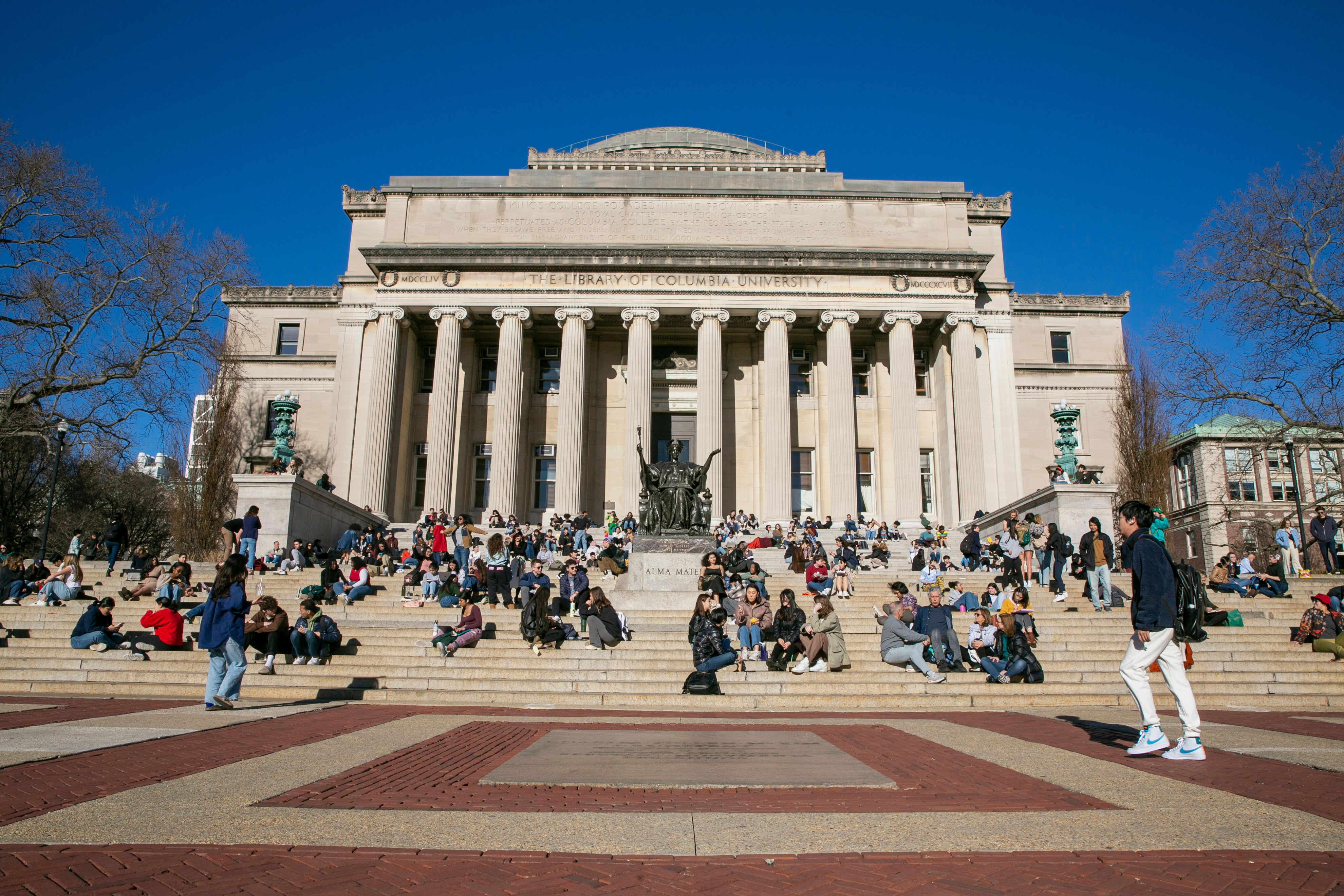
    The health department assignees were initially told to scrutinize allegations of antisemitism at medical school commencement ceremonies — the lawyers were advised of a New York Post story describing antisemitic conduct at graduation events, the complaint says — but the inquiries were later expanded to focus on the entire schools in the cases of Columbia and Brown, according to Van Erem’s account.

    She left the Justice Department in May 2025 because she was “unwilling to be made vulnerable to further participation in politically motivated investigations unsupported by facts and contrary to law,” says the complaint, which also accuses the task force of having targeted Muslim professors.

    Kiersten Pels, a Justice Department spokesperson, said the department “stands behind the integrity” of its investigations. A spokesperson for the Health and Human Services Department did not immediately respond to requests seeking comment Tuesday.

    Rep. Jamie Raskin, the top Democrat on the House Judiciary Committee, wrote separately to Harmeet Dhillon, who as the assistant attorney general in charge of the Justice Department’s Civil Rights Division has been a public face of the department’s efforts to counter antisemitism. In his letter, Raskin said antisemitism at colleges and medical schools is a real problem that needs to be investigated.

    “But,” he told Dhillon, “your ‘investigation’ into antisemitism was fake, a pre-baked frame-up operation thoroughly political in nature.”

    Raskin wrote that “the whole project was designed to harass professors and administrators at major universities, to curtail their freedom of speech and academic freedom, and to strip targeted institutions of hundreds of millions of dollars in grants that they had already been awarded on the merits of their applications.”

    Scrutiny over the handling of investigations into elite schools

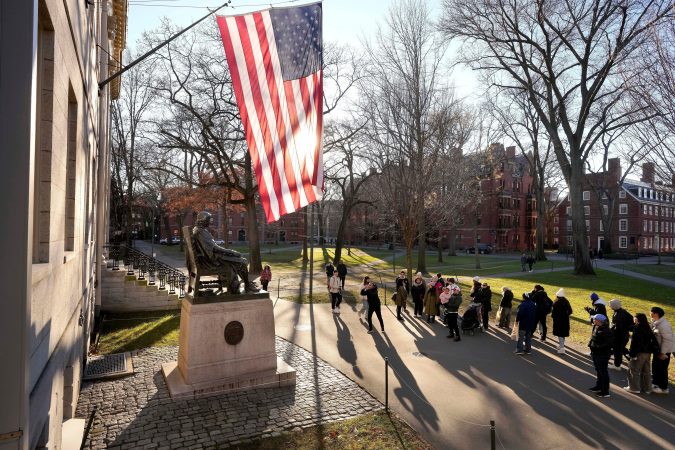
    The whistleblower complaint deals chiefly with investigations into three Ivy League universities: Brown, Harvard, and Columbia.

    It alleges that in the case of Brown, the investigative team did not find evidence to support a violation of Title VI, the section of the Civil Rights Act that bars discrimination on the basis of race, color, or national origin in programs that receive federal funding, but that “leadership refused to permit a notice of no violation and instead sought some form of settlement or resolution despite acknowledging the absence of a legal basis for doing so.”

    Investigators did find evidence of discrimination at Columbia, the complaint says, but the investigation was done on an accelerated timetable before adequate factual development and legal review were completed and relied on allegations that “were unsupported, based on news reports or litigation filings, or that implicated protected First Amendment activity.”

    Columbia University agreed to pay the government $200 million as part of an agreement restoring access to federal funding. Brown University separately agreed to pay $50 million to Rhode Island workforce development organizations to end the three federal investigations involving allegations of antisemitism and racial bias in admissions, with no findings of wrongdoing.

    In the investigation into Harvard, Trump administration officials discussed “extraordinary funding freezes and sweeping proposed settlement terms” before an investigation had been completed that could establish Title VI violations. Sean Keveney, then-HHS acting general counsel, said he believed Harvard would settle because they were “over a barrel,” according to the complaint.

    A federal judge last year ordered the Trump administration to reverse its cuts of more than $2.6 billion in research funding for the university, saying the government “used antisemitism as a smokescreen for a targeted, ideologically-motivated assault on this country’s premier universities.” And a different judge last week dismissed a Trump administration lawsuit that accused Harvard University of turning a blind eye to harassment of Jewish students.

  • Trump says U.S. has no talks planned with Iran, says Strait of Hormuz is open

    Trump says U.S. has no talks planned with Iran, says Strait of Hormuz is open

    U.S. President Donald Trump said Tuesday the U.S. has no talks planned with Iran but insisted the Strait of Hormuz remains “open and operating,” despite limited traffic and a reported strike on a ship exiting the waterway.

    Earlier this week, Trump threatened to bomb Oman as the country sought a deal with Iran to manage shipping traffic through the strait, two regional officials said Tuesday, a day after Trump reportedly leveled the threat if Oman “gets in the way.” Iran says the waterway will not be reopened until the U.S. meets its conditions.

    As talks between Iran and Oman continue, a projectile hit a ship in the strait and Iran-backed Houthi rebels claimed they fired drones at an oil refinery in Saudi Arabia.

    Trump looms over negotiations to reopen Strait of Hormuz

    As Oman and Iran say they are nearing a deal to reopen the Strait of Hormuz, Trump said on social media Tuesday that the U.S. blockade of Iranian ports remains “in full force and effect,” but asserted that all water mines have been removed and that other marine traffic was free to pass.

    Trump posted a map depicting the strait as U.S. territory.

    Iranian Deputy Foreign Minister Kazem Gharibabadi appeared to respond to Trump’s post.

    “Just as Trump correctly wrote the name of the eternal Persian Gulf, soon his delusion regarding the Strait of Hormuz will either be corrected or we will correct the delusions of this deluded man,” he wrote on X.

    The Trump administration has told Oman it opposes parts of the yet-to-be-announced deal, according to officials briefed on the U.S. position. Those include joint Iranian and Omani management of the passage’s exit route and the collection of voluntary fees from vessels, even if the money is used for security and maritime environmental protection.

    The officials spoke on condition of anonymity because they were not authorized to talk to journalists.

    The White House on Tuesday referred to Trump’s remarks in the Oval Office and declined to comment further about Oman.

    Egypt says Iran-Oman agreement could open door to Iran-U.S. deal

    The Egyptian Foreign Ministry said Tuesday that the Iranian-Omani deal could pave the way for Washington and Tehran to return to negotiations for a “comprehensive and permanent deal that addresses all concerns and enhances regional security and stability.”

    The statement came after a meeting between Egyptian Foreign Minister Badr Abdelatty and Omani counterpart Badr al-Busaidi. But it did not address Trump’s latest threat against Oman.

    The 60-day negotiating period ended this week between the U.S. and Iran with no clear end to the war in sight.

    Ship traffic drops significantly in Strait of Hormuz

    Ship traffic through the Strait of Hormuz dropped significantly last week, with confirmed crossings falling 19.5% to 95 transits. Only three vessels made it through the waterway on Sunday, according to shipping data platform Kpler.

    The ships used the Iranian-designated route through the strait, with no crossings recorded through the Omani routes.

    Crossings through the Bab el-Mandeb Strait increased 6.7% to 254 transits, while so-called dark transits, in which ships turn off the transponders that broadcast their location, fell from 40 to 16, Kpler said.

    Projectile damages ship in strait causing casualty

    An unidentified projectile damaged the engine room of a ship in the Strait of Hormuz near Oman and “resulted in a crew casualty,” according to the British military’s U.K. Maritime Trade Operations center.

    The maritime monitoring agency did not release any details about the ship or its cargo, and it was not clear whether the crew member was killed or wounded.

    No environmental damage has been reported and the agency said the Omani Coast Guard was assisting other crew members and authorities were investigating.

    Iran-backed Houthis claim an attack on a Saudi oil refinery

    Yemen’s Iran-backed Houthi rebels claimed they fired drones at an oil refinery in neighboring Saudi Arabia, the latest attack threatening to reignite Yemen’s civil war and open another front in the Middle East.

    The attack targeted a facility run by Saudi Aramco, Saudi Arabia’s state-owned oil company, according to a report by the Houthi-run SABA news agency. There were no immediate reports of damage or comment from Saudi Arabia.

    The Houthis have escalated attacks against government forces in Yemen and oil facilities in Saudi Arabia, which supports the Yemeni government, and the kingdom’s shipping in the Red Sea, an important alternative to the Strait of Hormuz.

    Israel strike on Gaza City kills 7 people

    An Israeli strike hit Gaza City on Tuesday, killing six people, including a child, and wounding 14 others, according to Shifa Hospital, where the casualties were taken.

    The Israeli military said it struck Hamas commanders in the Shati area who it said were planning to carry out attacks against Israeli forces.

    The heaviest fighting has subsided since a ceasefire in the more than two-year war took hold in October. Israeli forces have carried out repeated airstrikes since then, killing at least 1,266 Palestinians, according to health officials in Gaza.

    The Gaza Health Ministry, which is part of the Hamas-led government, maintains detailed casualty records that are seen as generally reliable by U.N. agencies and independent experts. But it does not give a breakdown of civilians and militants.

    Missiles fired at the United Arab Emirates

    The defense ministry of the United Arab Emirates said two ballistic missiles were launched from Iran toward the UAE on Tuesday.

    One landed outside of the country’s waters, and the other landed within them, the Emirati Defense Ministry said. It was unclear whether the missiles were shot down by air defenses or fell. No damage or injuries were reported. There was no immediate statement from Iran.

    In the weeks after the U.S. and Israel launched a war against Iran on Feb. 28, the UAE was frequently targeted by Iranian missiles and drones, but Tuesday’s reported attack was the first in weeks.

  • Pentagon orders audit of 30 universities’ partnerships with foreign institutions

    Pentagon orders audit of 30 universities’ partnerships with foreign institutions

    The Department of Defense has ordered 30 U.S. universities to audit their partnerships with mostly Chinese universities and military training institutions as the Trump administration scrutinizes the country’s growing global influence.

    If the schools don’t complete a review and terminate any arrangements deemed problematic within the next two weeks, they face losing funding. The goal is to protect taxpayer-funded research from theft and exploitation, the Pentagon said Monday.

    “The Department of War has zero tolerance for academic partnerships that compromise our national security,” Emil Michael, the Pentagon’s chief technology officer, said in a news release.

    The release didn’t name the schools, but a U.S. official who spoke on condition of anonymity to discuss internal matters said they include Harvard University, the Massachusetts Institute of Technology, and Johns Hopkins University.

    The schools didn’t immediately respond to emails from the Associated Press seeking comment.

    Sarah Spreitzer, vice president at the American Council on Education, which represents college and university presidents, raised concerns that the announcement suggests, without any evidence, that the schools are engaged in wrongdoing.

    The order comes after the Pentagon last month released an updated list of 130 foreign institutions it accused of engaging in “activities that increase the likelihood of U.S. government-funded research and development efforts being misappropriated.”

    While the vast majority were Chinese, such as the University of Science and Technology of China and the country’s Academy of Military Medical Sciences, several Iranian and Russian institutions also appeared on the list.

    The first version of the list was developed during Trump’s first term, with the help of the American Council on Education, Spreitzer said.

    She said most of the council’s member institutions moved away from research partnerships with those institutions in the years that followed. She said she worries U.S. schools will be held liable for partnerships that predate the creation of the list.

    “We don’t appreciate the implication that we are not good partners on research security, given that we helped create this list, and given that we’ve always partnered with the federal government when there has been national security concerns,” she said.

    The audit comes as the Trump administration continues to express deep concern about China’s activities in the Americas, pushing back on Chinese ownership of ports at either end of the Panama Canal, infrastructure projects funded by China’s Belt and Road initiative in the region, and Chinese investment in the telecommunications sector.

    The Justice Department also is investigating whether Harvard University is allowing Chinese donors to create scholarships that exclude American students, adding to the barrage of federal inquiries the Trump administration has opened in its battle against the Ivy League school.

    A spokesperson for the Chinese embassy said in a statement that the country opposes what it described as the politicization of “normal scientific, educational, and academic exchanges.”

    “The U.S. side,” the statement continued, “should abandon the Cold War mentality and foster an open, fair, and non-discriminatory environment for educational, scientific, and people-to-people exchanges between China and the United States.”

  • Minnesota attorney general sues Texas governor to compel extradition of ICE agent for trial

    Minnesota attorney general sues Texas governor to compel extradition of ICE agent for trial

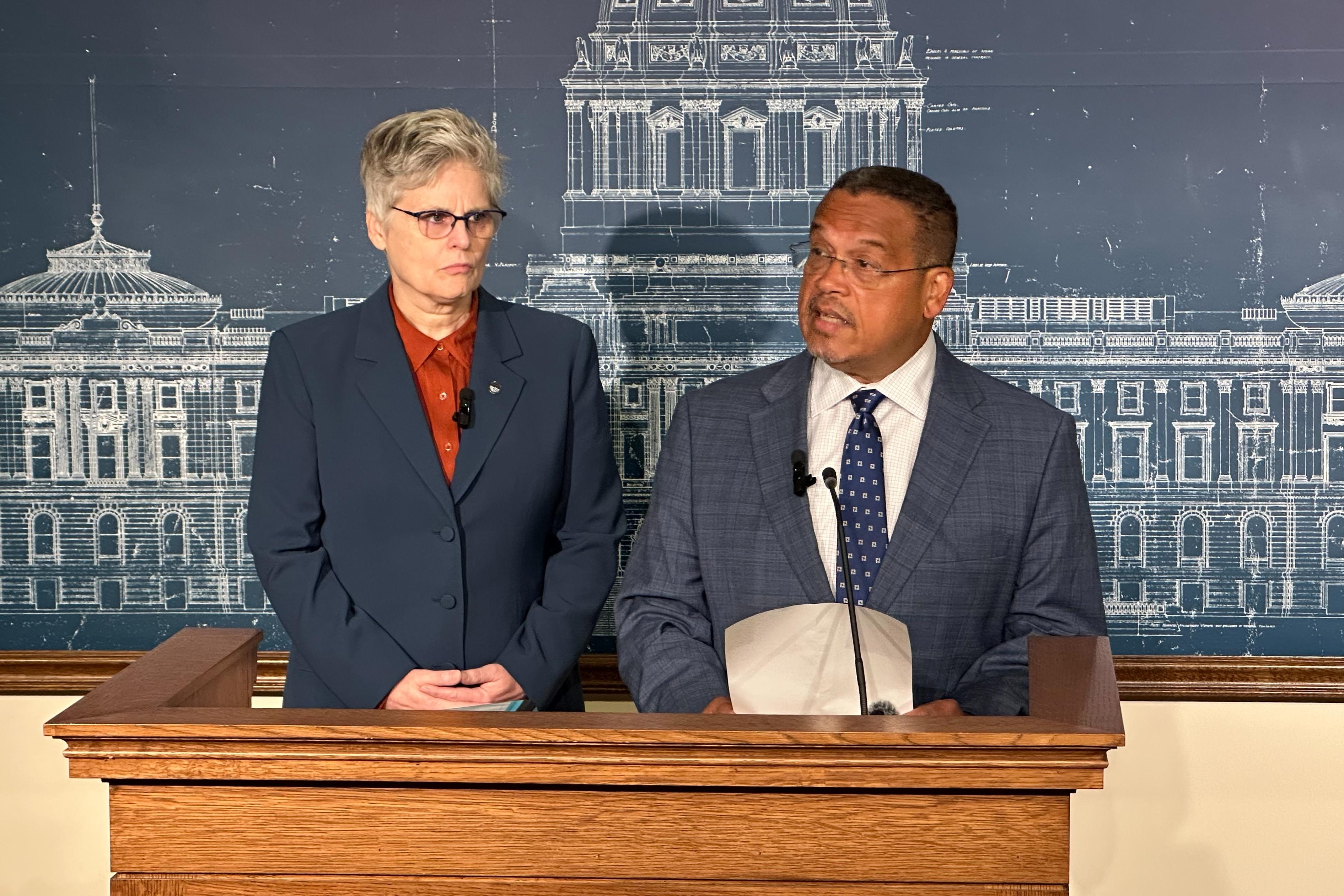
    ST. PAUL, Minn. — Minnesota’s attorney general sued the governor of Texas on Tuesday, seeking to compel the extradition of an Immigration and Customs Enforcement agent charged with wounding a man and then lying to justify the shooting during the agency’s crackdown in Minneapolis.

    Attorney General Keith Ellison is asking a federal judge to bar the sheriff in Cameron County, Texas, from releasing ICE agent Christian Castro, and to order Texas Gov. Greg Abbott to sign his extradition warrant so that Minnesota officers can take custody.

    Minnesota officials have clashed with the federal government over who has jurisdiction to investigate and prosecute federal officers for on-duty conduct. Ellison is a Democrat and Abbott is a Republican ally of President Donald Trump.

    Castro was arrested in Texas in May on Minnesota charges of assault and falsely reporting a crime in the Jan. 14 wounding of Julio Cesar Sosa-Celis. Castro, 52, is accused of firing a gun through the front door of a Minneapolis home, striking Sosa-Celis in the leg with a bullet that lodged in a child’s bedroom wall. Prosecutors say Castro then falsely accused Sosa-Celis and another man of attacking an ICE officer with a broom handle and a snow shovel.

    Minnesota officials fear ICE agent could flee

    Ellison told a news conference that unless he’s extradited, Castro could be released from jail next week — 90 days since he was detained — under Texas law. And if he’s freed, Castro could slip into Mexico from the border town where he’s being held, Ellison said. The lawsuit said Castro has been making calls from jail to a woman in Mexico, talking “about marrying her and buying a house in Mexico when he is released.”

    “Christian Castro has been charged with breaking the law in Minnesota,” Ellison said. “He must face justice in Minnesota. Gov. Abbott should have granted Gov. Walz’s extradition request long ago and is required to do so now.”

    It was not immediately known if Castro had a lawyer who could speak for him. Online court records in Minnesota and county jail records in Texas did not list a defense attorney.

    Abbott’s office said in a statement that it would not comment on “pending extradition matters.”

    Hennepin County Attorney Mary Moriarty said the legal action to compel Castro’s extradition “should be a completely unnecessary lawsuit.” She said jail officials and prosecutors in Texas have been “very cooperative,” and that an extradition “is not supposed to be controversial.”

    The office of Cameron County Sheriff Manny Trevino declined to comment Tuesday on the case.

    Federal agency has called agent’s prosecution a ‘political stunt’

    Authorities say Sosa-Celis was shot after Castro and another officer chased a different man, Alfredo Alejandro Aljorna, to the Minneapolis apartment duplex where he and Sosa-Celis lived. Sosa-Celis and Aljorna were legally in the U.S., according to Minnesota officials.

    Federal authorities initially accused Sosa-Celis and Aljorna of beating an officer. A federal judge later dismissed the charges, and ICE and the Justice Department opened an investigation into whether agents lied about what happened.

    Regardless, the U.S. Department of Homeland Security has called Moriarty’s prosecution of Castro “unlawful and nothing more than a political stunt,” saying only federal authorities have jurisdiction in the case.

    The federal government took a similar stance following the fatal shootings of Renee Good and Alex Pretti during the Minneapolis enforcement surge. Moriarty sued the Trump administration to gain access to evidence in those cases before federal prosecutors turned it over last month.

    The extradition lawsuit Ellison filed in U.S. District Court in Texas cites a 1987 U.S. Supreme Court ruling that compliance with the Constitution’s extradition clause is mandatory, affording no discretion to the governor or courts of a state where a defendant is being held.

    Moriarty said that since Castro’s arrest, Texas has extradited three unrelated criminal defendants without incident to Minnesota.

    “Gov. Abbott has received communication with us on an ongoing basis, including recently,” Ellison said. “We have to take the position that they are refusing to honor the extradition request.”

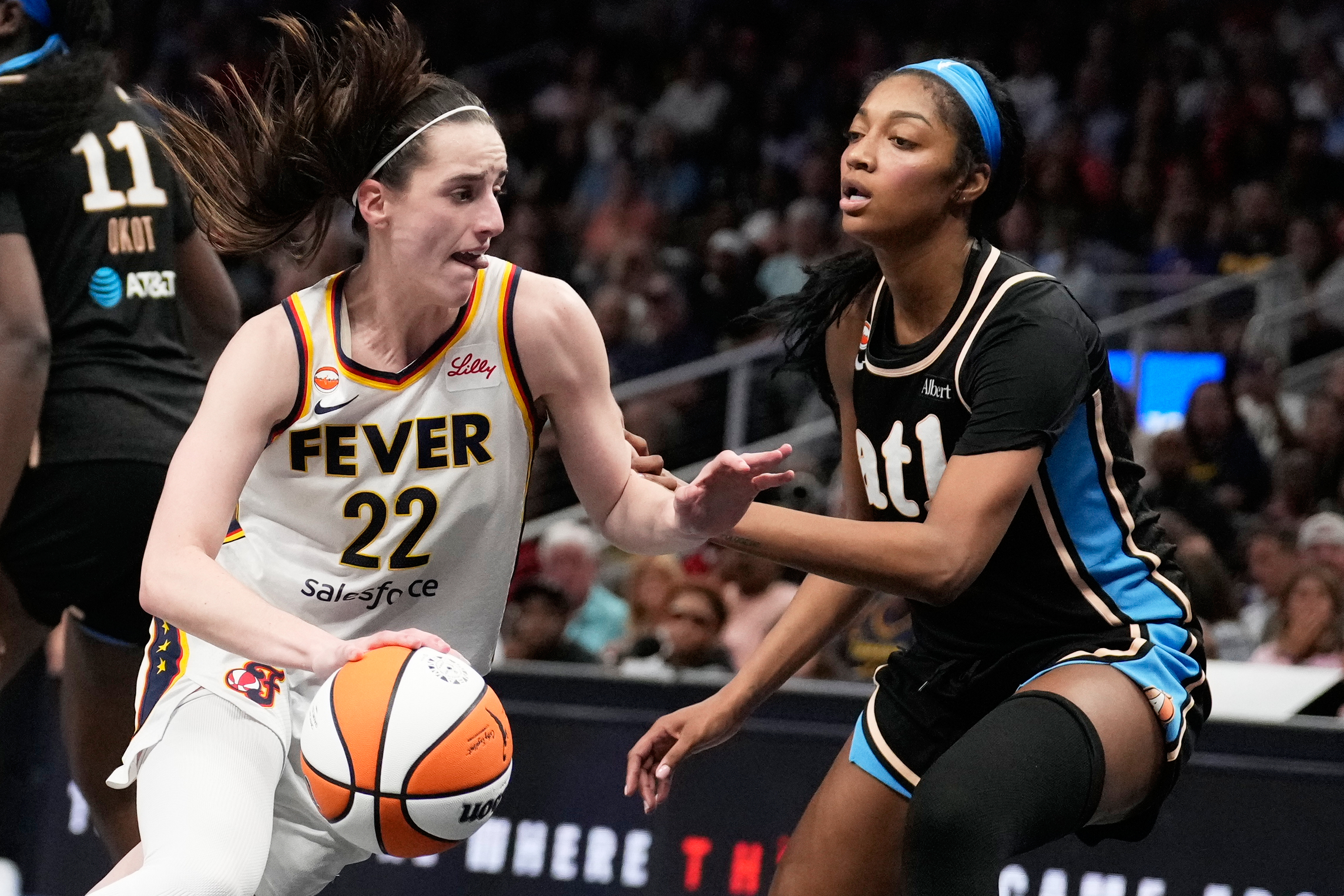
  • San Francisco’s Chase Center, Valkyries to host 2027 WNBA All-Star Game

    San Francisco’s Chase Center, Valkyries to host 2027 WNBA All-Star Game

    SAN FRANCISCO — The WNBA All-Star Game is coming to the Bay Area next summer.

    League commissioner Cathy Engelbert announced Tuesday that the game will be July 31, 2027, at Chase Center after a weekend of All-Star activities around the San Francisco region.

    “We are thrilled to bring AT&T WNBA All-Star to the San Francisco Bay Area for the first time,” Engelbert, a Collingswood native, said in a statement. “The Golden State Valkyries have brought incredible energy and excitement to the WNBA from the moment they were announced as an expansion team in 2023, and the response from fans across the Bay Area has been remarkable. Valkyries fans have embraced this team with an extraordinary level of passion and enthusiasm, and we can’t wait to see that energy on full display for an unforgettable All-Star weekend next summer.”

    At the All-Star Game in Chicago last month, players’ union president Nneka Ogwumike, who played at Stanford, said many players felt that Golden State would be a great host for next year’s midsummer exhibition.

    The Valkyries have sold out all of their home games at the Chase Center, which opened in 2019, since the franchise’s inception last year. They became the first expansion organization to make the playoffs in its inaugural year and ultimately lost to the top-seeded Minnesota Lynx. The Valkyries clinched a playoff berth for this year on Monday night with a win over Dallas.

    The NBA All-Star Game was played at Chase Center last year.

    “Hosting AT&T WNBA All-Star in only our third season is an incredible honor and a reflection of everything this fanbase, this region, and this organization have built together,” Valkyries president Jess Smith said. “From Day 1, the Bay Area has shown up for this team in a way that’s redefined what’s possible in women’s basketball, and we can’t wait to put that same energy on display for the entire league next summer.”

    Last week, Major League Baseball announced the 2028 All-Star Game would return to nearby Oracle Park, home of the San Francisco Giants.

    The Super Bowl was played in February at Levi’s Stadium in Santa Clara, Calif., which then hosted the World Cup this summer.