Category: Associated Press

  • FlyDubai co-pilot intended to crash plane into Tel Aviv airport, UAE prosecutor says

    FlyDubai co-pilot intended to crash plane into Tel Aviv airport, UAE prosecutor says

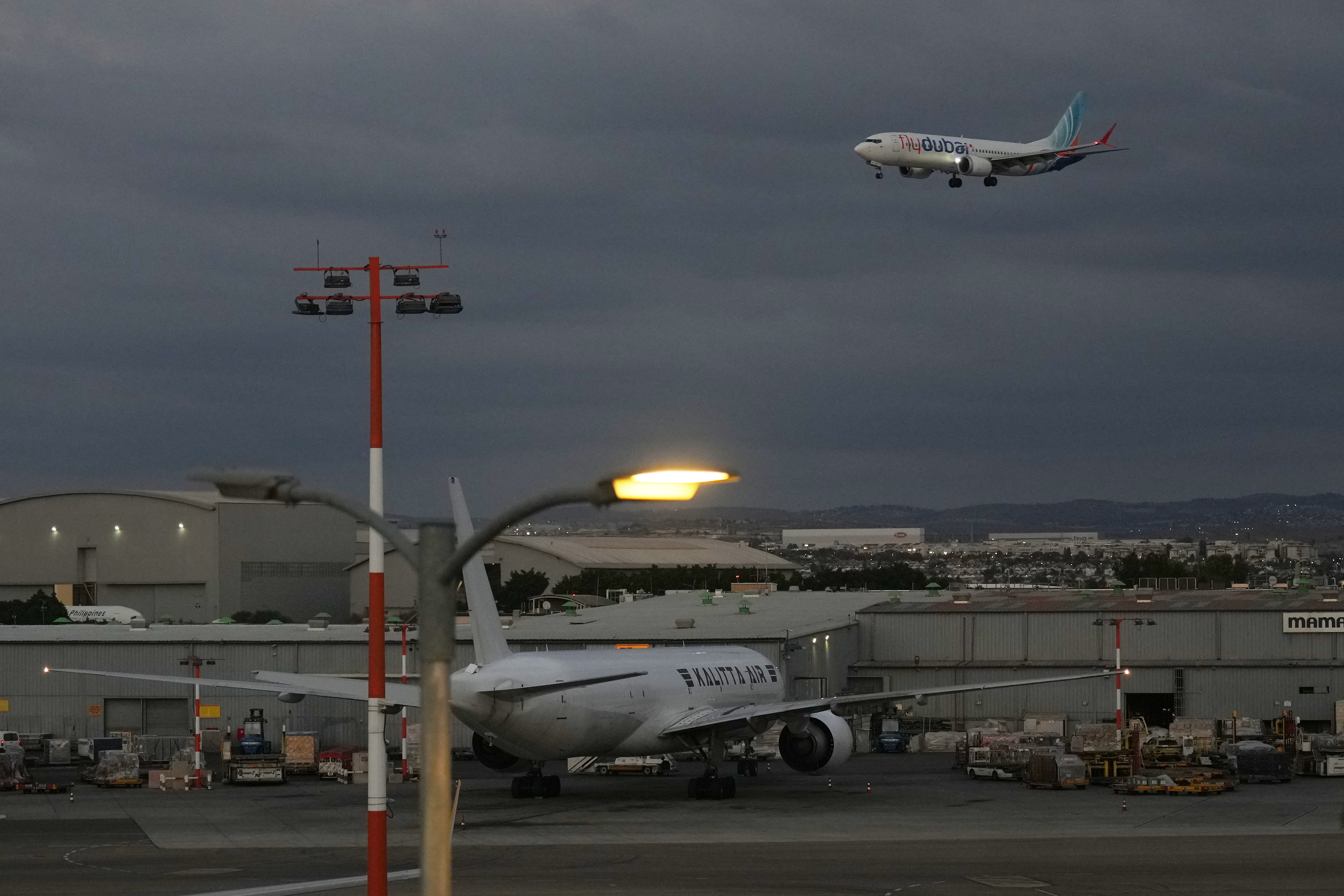
    JERUSALEM — The ax-wielding co-pilot who attacked the captain of a FlyDubai flight to Tel Aviv last month intended to seize control of the airplane and fly it into the passenger terminal at Israel’s main international airport, authorities in the United Arab Emirates said Friday.

    The suspect, an Omani national, did so “with the intention of causing the greatest possible number of human casualties,” the UAE’s top prosecutor said in a statement carried by the state news agency WAM. Most of the 174 passengers on the flight were from Israel.

    The statement said the co-pilot “drew inspiration” from the Sept. 11, 2001, attacks in the United States and used two previous flights from Dubai to Tel Aviv to “familiarize himself with the flight route and the airport.”

    It said none of FlyDubai’s security or professional checks had indicated that the pilot, who was identitifed by the Associated Press as 29-year-old Hamam al-Hammami, harbored extremist views or plans to carry out an attack.

    Hammami “admitted that he had acted alone, without the involvement of others,” the statement said, adding that he “provided a detailed confession outlining his motives and the stages of planning and execution” in the presence of his lawyer. It also suggested he was radicalized at a mosque in Australia while attending the Royal Melbourne Institute of Technology in 2017.

    The update from the public prosecutor Friday was the most comprehensive since the UAE took over the investigation shortly after the incident on Sept. 30. FlyDubai is a government-owned airline.

    The crisis unfolded suddenly in the skies above Jordan and Saudi Arabia, when Hammami attacked the captain, Smit Machchhar, with a crash ax in the cockpit. Bloodied and beaten, Machchhar managed to open the cockpit door, alerting passengers and crew to the assault.

    Passengers detained Hammami and helped steady the aircraft, which had plunged roughly 14,000 to 16,000 feet in less than a minute. Two reserve pilots then guided the plane to an emergency landing at Tabuk airport in Saudi Arabia.

  • Chicago Bears coaching legend Mike Ditka dies at 86; played two seasons with the Eagles

    Chicago Bears coaching legend Mike Ditka dies at 86; played two seasons with the Eagles

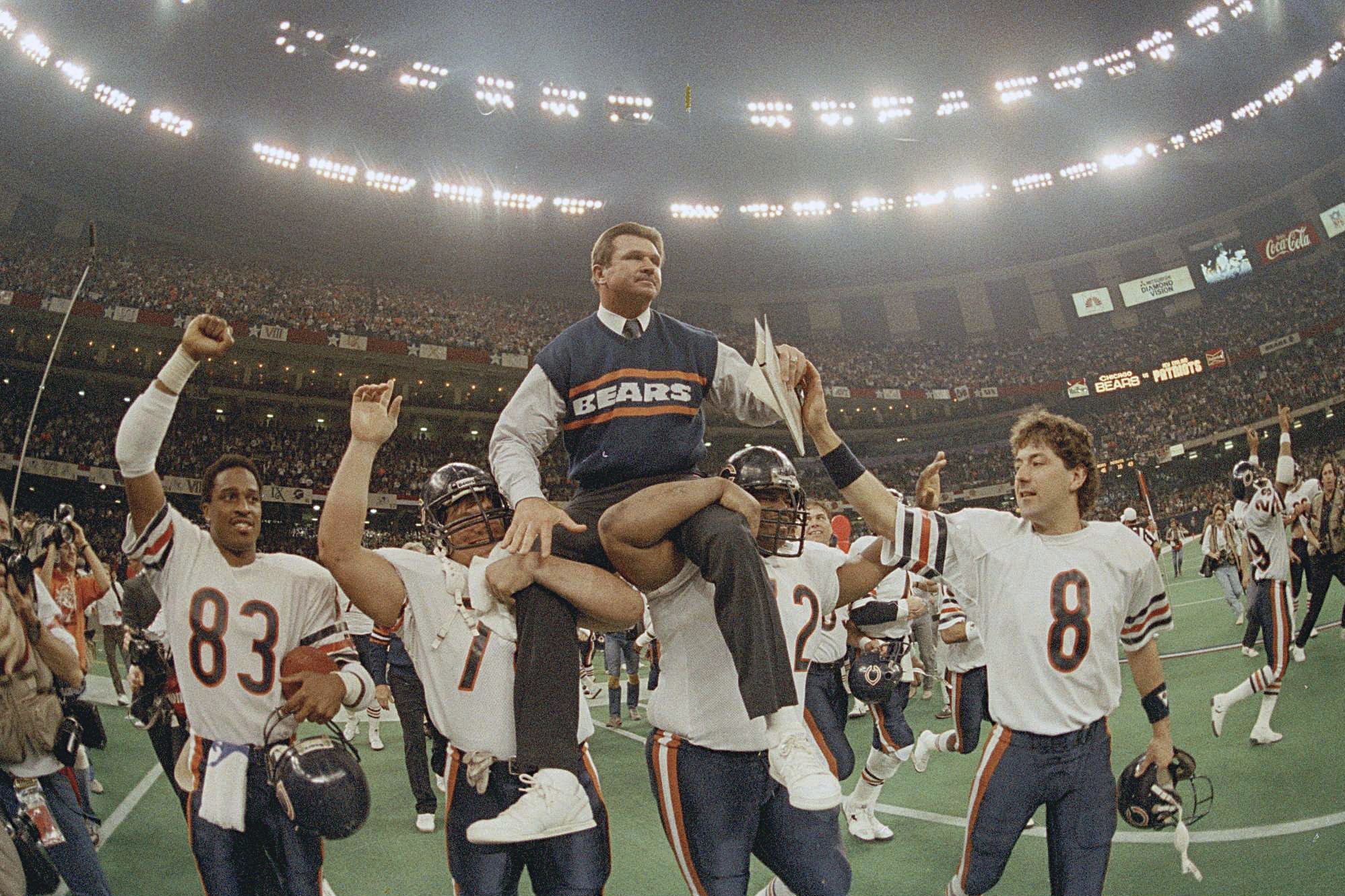
    CHICAGO (AP) — Mike Ditka, who won NFL titles as a player and coach with the Chicago Bears, has died. He was 86.

    Ditka’s family announced the death on Friday in a statement.

    “It is with profound sadness that we announce the passing of our beloved husband, father, grandfather, and friend, Mike Ditka,” The family said. “While the world knew Mike as a Hall of Fame football player, legendary coach, and leader of the Chicago Bears’ Super Bowl XX championship team, we knew him as the heart of our family. Mike will be missed beyond measure and remembered forever.”

    Nicknamed “Iron Mike” as a player, Ditka helped revolutionize the tight end position, then moved to the sidelines and took over as Chicago’s coach. His 1985 team featured one of the game’s most dominant defenses ever. It also had enough outsized personalities to record a rap video, “The Super Bowl Shuffle,” and back up their boasting in the championship game three months later.

    After retiring as a coach, Ditka became a restaurateur, pitchman and TV personality, as well as a forceful advocate for improved medical and retirement benefits for former players.

    Ditka was tough and gruff, the quintessential Chicago Bear. He did everything from order off the menu to knock defensive backs on their butts with a growl. His adopted hometown reveled in every minute.

    Still revered as “Da Coach” and ringmaster of the 1985 Bears, one of the most dominant and perhaps the zaniest Super Bowl-winning team in league history. Ditka was enshrined in the College and Pro Football Halls of Fame and the Bears said during a ceremony in 2013 that his “No. 89” jersey will be the last one retired by the team.

    He was born in Carnegie, Pennsylvania, the son of a welder who changed the family name from Dyczko. He grew up in nearby Aliquippa, close to the coal-mining and steel-manufacturing plants that dotted the western part of the state, a big, talented, three-sport athlete and All-American at Pitt whose bruising style made his first nickname, “Iron Mike,” a good fit.

    Selected fifth overall by flinty Chicago owner George Halas in the 1961 draft, Ditka went on to Rookie of the Year honors, multiple Pro Bowl trips and the 1963 NFL Championship. In the bargain, he and Baltimore’s John Mackey changed the tight end position and offensive schemes forever. He was a battering ram of a blocker, but Ditka was just as likely to catch a short pass and pinball through an entire secondary or outrace a lone safety on a deep touchdown throw.

    Mike Ditka’s stop in Philly, where he played for unpopular coach and general manager Joe Kuharich (right), was not a happy one. Paul Vathis

    He left Chicago in 1966, playing briefly for the Eagles and Dallas. His two seasons in Philly (1967-68) were unhappy ones for Ditka, who was traded to the Cowboys for split end David McDaniels after vowing publicly not to play for coach and general manager Joe Kuharich. Ditka caught just 39 passes in two seasons in Philly.

    After concluding his playing career, he moved to the sideline in 1973 as an assistant to the revered Tom Landry and stayed with the Cowboys for eight seasons, before returning to a hero’s welcome in Chicago as head coach in 1982.

    Ditka’s return to the Bears lasted 10 tumultuous years, including five straight NFC Central titles, the Super Bowl win, a DUI conviction, a heart attack, a long-running feud with defensive coordinator Buddy Ryan and, finally, a new nickname — “Da Coach.”

    To Hall of Fame linebacker Mike Singletary, the seeds of what was to come were planted in Ditka’s first meeting with the team. He laid out his vision, saying Chicago would be in the Super Bowl in three years — and many of the players in the room would not be around for it.

    “When I first heard him when he walked in the room, to me Coach Ditka had the opportunity to be the greatest coach of all time because he had the fire,” Singletary said at the Bears’ 100th anniversary celebration in June 2019. “I don’t know George Halas coached. But I can imagine that the fire and intensity and passion that Coach Ditka exuded that first day set the tone for exactly what he said: ‘Three years from now, we’re going to be in the Super Bowl.’ And that was 1982. In ’85, we were there and it was because of that vision.”

    The public beefs with Ryan mirrored the behind-the-scenes battles that Ditka waged trying to contain a team bristling with outsized personalities.

    “It was more than a team,” Ditka once said. “It was a team of characters that had character that played for a crazy man, who let him be crazy and had fun doing it and don’t apologize for it ever. I wouldn’t want to be one of these suits walking around on the sideline today.

    “I have no desire to be that. I was what I was and they were what they were and, damn, it was fun.”

    It wasn’t until two dozen players recorded “The Super Bowl Shuffle” — an audacious rap-styled video released three months ahead of the 1986 title game — that the rest of the football world wondered whether Ditka was losing his grip.

    His players never did.

    “We call him ‘Sybil’ after that girl in the movie,” quarterback Jim McMahon once explained. “You know, the one that had all those personalities. Mike will be calm one minute, then throw a clipboard the next. People don’t understand that, but we do.”

    The Bears demolished the New England Patriots 46-10 in the Super Bowl, but Ditka often said he regretted having McMahon and defensive tackle William “The Refrigerator” Perry run for touchdowns instead of Walter Payton, Chicago’s loyal and long-suffering running back.

    Ryan departed for a head coaching job in Philadelphia soon after. While the Bears continued to be a contender for most of the next five years, a 5-11 season prompted Ditka’s departure in 1992.

    After a five-year absence, he returned to coaching with the New Orleans Saints, but failed to revive the franchise. After a miserable 1999 season ended with a 3-13 record — Ditka’s worst as either a player or coach — he left the sidelines for good.

    His face and demeanor were so familiar by then that a second act became an easy segue. Ditka began building a stable of restaurants and appeared as himself in TV sitcoms from “Cheers” to “Third Rock from the Sun,” as well as shows such as “L.A. Law” and “Saturday Night Live.”

    He also stayed close to the game as an NFL analyst and game-day show personality at ESPN. Ditka’s high-profile status also made him an effective advocate to secure improved health and retirement benefits for former players.

    His name also circulated for years in Illinois political circles. Though he never ran for office, Ditka described himself as a staunch conservative and was mentioned several times as a possible Republican candidate, including a congressional race against then state Rep. Barack Obama for the U.S. Senate.

  • The long-deployed USS Lincoln returns home to San Diego Bay

    The long-deployed USS Lincoln returns home to San Diego Bay

    CORONADO, Calif. — Sailors disembarked the USS Lincoln on Thursday following a deployment that included a record 265 uninterrupted days at sea supporting the Iran war and reports of supply shortages and deteriorating mental health among the crew.

    Families waiting for the aircraft carrier’s arrival in San Diego Bay described crying and losing sleep after hearing about the ship’s food shortages and tough conditions. Many said the sailors had sent lists of the food they were craving.

    Abel Ramirez, 20, walked off the carrier with a big grin, overjoyed that his first deployment was over.

    “It feels amazing,” he said while headed out to search for his parents who drove from Texas. “There was a certain point when I never thought I would come off.”

    The carrier drew national attention following reports of stress among the crew and poor mental health, as well as supply shortages, including food and hygiene products, during its Iran war mission.

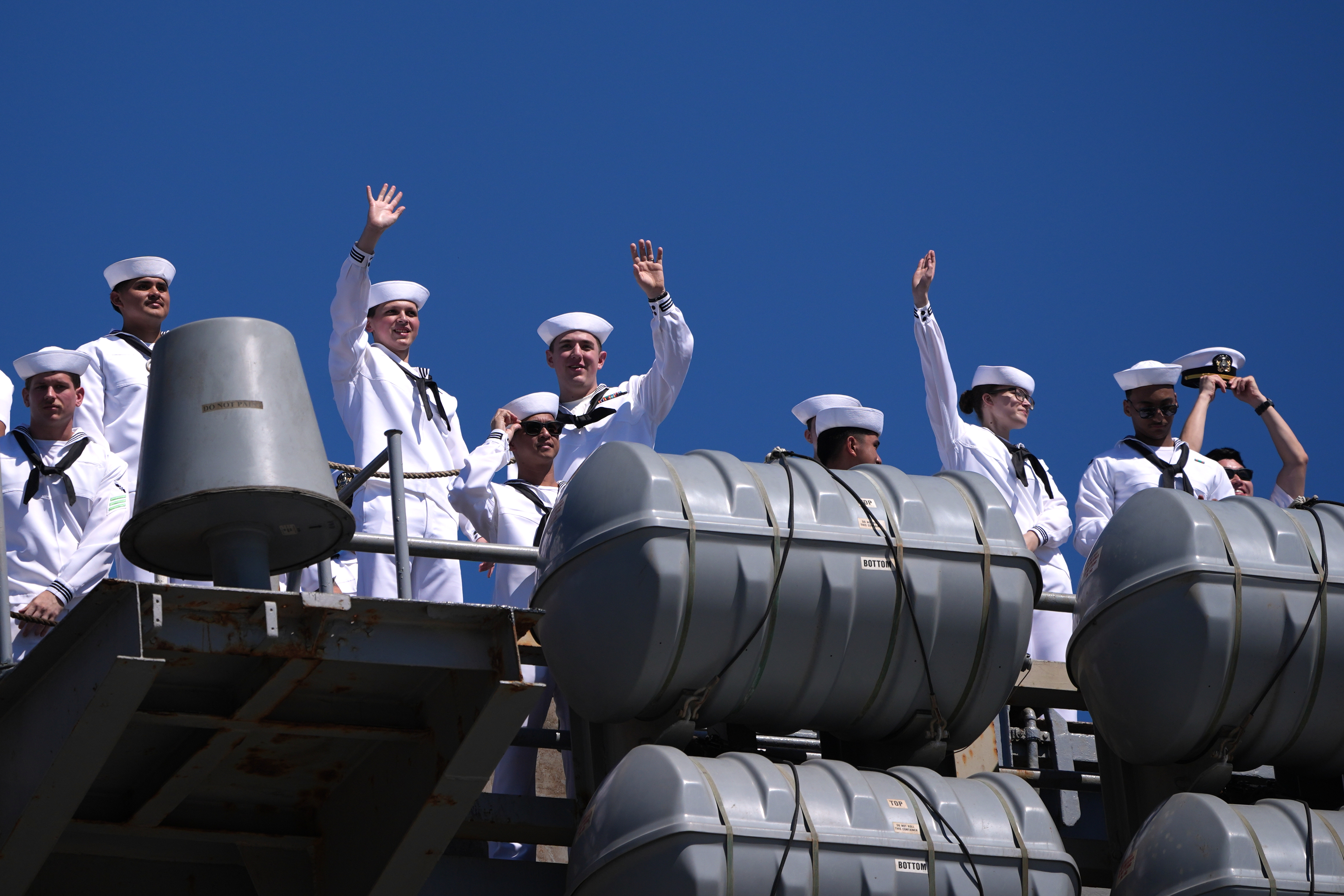
    Dozens of sailors stood atop the Lincoln as it glided past the cityscape of downtown San Diego toward cheering families who were carrying flowers and balloons and ringing cowbells.

    Cassity Garduque, 14, waved as her mom in her sailor uniform frantically waved back from the top deck. “It feels really overwhelming,” she said about being reunited, adding she’s glad her mom won’t need to eat ramen almost every day.

    Defense Secretary Pete Hegseth flew out to the Lincoln on Wednesday to give the crew the Presidential Unit Citation, the highest honor a unit can receive.

    Hegseth pushed back against what he said were efforts to turn the “Lincoln into some sort of a symbol, a symbol of dysfunction or a symbol of low morale or a symbol of a failed mission.”

    Capt. Daniel Keeler, the ship’s commander, said most of the crew was on their first deployment and that the issues they faced were normal for such a long deployment, adding everyone had access to four meals a day.

    USS Lincoln crew looks forward to family and favorite meals

    Among the first to depart the carrier at the naval base in Coronado were 64 fathers meeting their babies for the first time, the Navy said.

    Waiting for the Lincoln to bring her husband home, sailor Kathy Monterrosa held her 6-month-old daughter, Sarahi, outfitted in a tiny blue and white sailor dress.

    “She’s our deployment baby,” said Monterrosa, of Virginia Beach, Va.

    It was tough to hear about the ship’s conditions while she was pregnant, she said. “I was crying a lot and worried. I wasn’t sure if he was OK or not,” she said.

    When she finally heard from her husband, he told her it was “pretty bad.”

    Sailor Steven Rivas beamed as he held his 7-month-old daughter.

    “I couldn’t grasp the reality of it,” he said about coming home. He said he became overwhelmed as they pulled into the bay, “seeing everyone and knowing my family was waiting for me.”

    Alma Solano Velez said her husband gave his family an extensive list of the foods he has been craving over the past 10 months: oxtail, barbecue chicken, broccoli, and shrimp empanadas to name a few.

    He had told his wife about “the lack of food and showers” on board and was looking forward to seeing their daughter, who turned 4 while he was away, she said.

    The Navy initially downplayed problems on the carrier

    The Navy initially downplayed any problems during the deployment, and President Donald Trump commented in August that the Lincoln’s lengthy deployment was “not nearly long enough.”

    Hegseth told the crew that “what makes the U.S. military and the U.S. Navy and all these sailors different is that you adapt and that you’re resilient and you overcome — you finish the mission nonetheless.”

    The carrier left San Diego in November and arrived in the Middle East in January. U.S. and Israeli forces launched airstrikes against Iran on Feb. 28.

    Navy leaders eventually acknowledged there were some issues aboard.

    In August, acting Navy Secretary Hung Cao said the Lincoln maintained adequate food supplies, but because combat operations limited resupply opportunities, meal options were reduced for a short time.

    After more than 10 months at sea, the Lincoln’s crew got a stop in Thailand early last month on the way back from the Middle East.

    Long deployments can tax service members

    Extended naval deployments can wear on service members who are away from home for long periods and increase strain on the ship and its equipment.

    The Navy told lawmakers that eight sailors attempted suicide during the record-setting deployment, though experts say that number is low in a strike group of 6,000 sailors over 10 months.

    According to the citation that Hegseth read to the crew, the Lincoln and its strike group executed nearly 3,700 combat missions, launched 450 Tomahawk cruise missiles, shot down 77 one-way attack drones, sank 64 Iranian warships, and destroyed 21 anti-ship cruise missiles.

    The Lincoln, which set a record for days between ports of call, is the second carrier to endure an unusually long deployment during the Iran war and to receive the Presidential Unit Citation afterward, typically reserved for significant achievement in combat.

    The crew of the USS Gerald R. Ford returned in May from a 326-day deployment — the longest for an aircraft carrier in the past 50 years and a record in the post-Vietnam War era. The deployment didn’t include as many uninterrupted days at sea as the Lincoln.

    Another carrier, the usually Asia-based USS George Washington, relieved the Lincoln in the Middle East in August.

  • Pentagon says the firing squad execution of Fort Hood shooter Nidal Malik Hasan will be livestreamed

    Pentagon says the firing squad execution of Fort Hood shooter Nidal Malik Hasan will be livestreamed

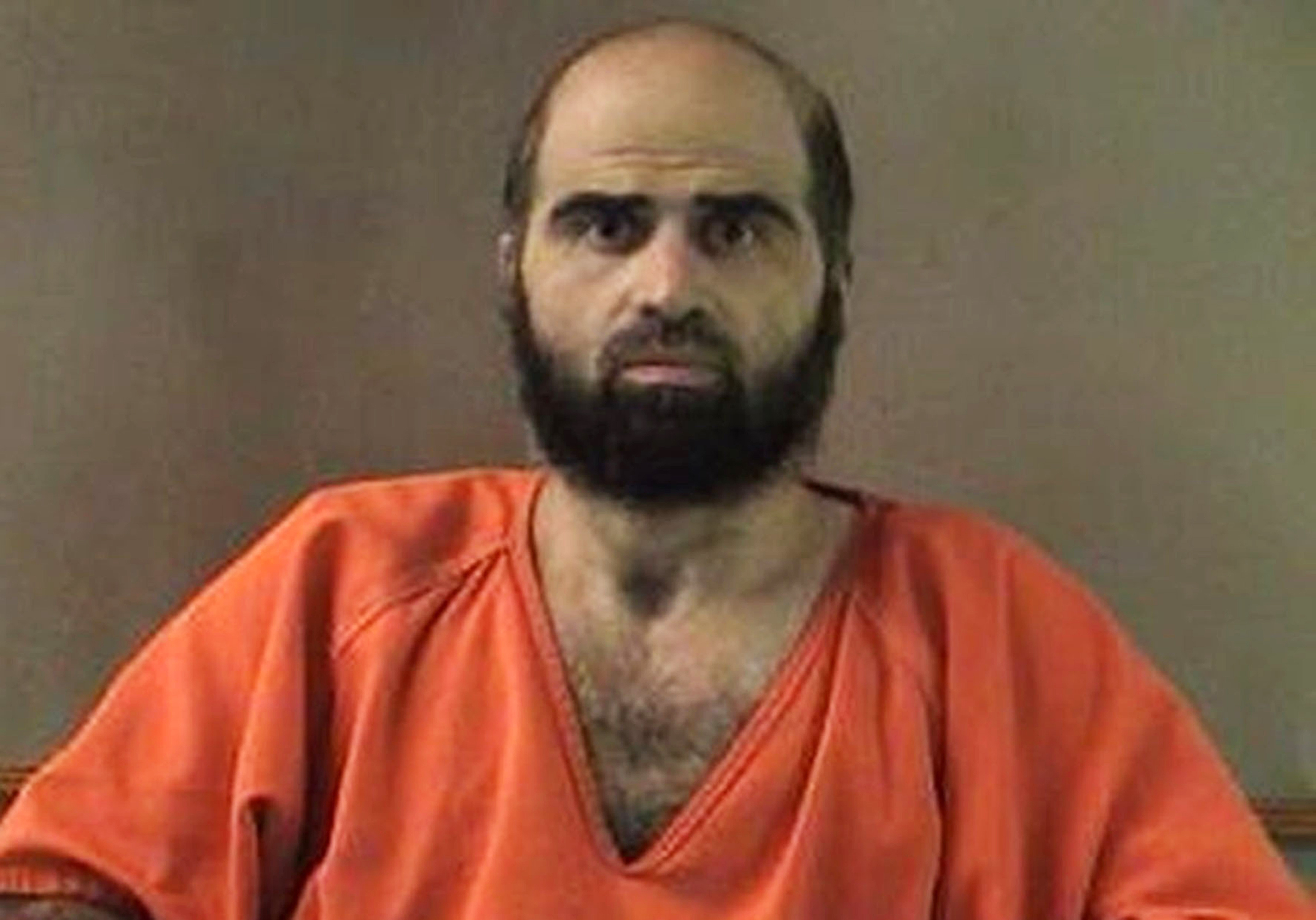
    WASHINGTON — The Pentagon says the firing squad execution of Fort Hood shooter Nidal Malik Hasan will be livestreamed after Defense Secretary Pete Hegseth said the execution would be “public.”

    Hegseth, speaking to the conservative TV outlet Real America’s Voice News on Wednesday, said the execution of Hasan will take place at Fort Hood on Dec. 3. Hasan was convicted of killing 13 people and injuring 32 others in a shooting at the military base in 2009.

    “We’ll make sure that people are able to watch it, that it’s public,” Hegseth said.

    Hegseth spoke to the outlet aboard the USS Abraham Lincoln aircraft carrier while visiting the long-deployed crew, who supported the Iran war, before their arrival at their home port in San Diego.

    When asked if Hasan had made any final requests or reached out to the Trump administration, Hegseth simply replied: “Don’t care. We’ll see him on December 3rd.”

    Officials in the Pentagon clarified Thursday that the execution will be livestreamed and that more details would follow.

    Pentagon spokesperson Sean Parnell had said Monday that President Donald Trump had approved the execution of Hasan.

    Trump has previously been critical of public executions in Iran, at times using the possibility of protesters being killed by the Iranian government as a possible rationale for military action. Those warnings preceded his ultimate choice to attack Iran at the end of February over its ballistic missiles and the risk of it developing nuclear weapons.

    “We’ve been told that the killing in Iran is stopping,” Trump told reporters on Jan. 14 of this year. “It’s stopping and there’s no plan for executions.”

    He repeated that claim on Jan. 20 at a White House press briefing, saying: “We let them know that if that happens, that will be a very bad day for them. And they decided not to do it. They didn’t hang the people.”

    Slightly more than a month later in his State of the Union address, Trump said, “We stopped them from hanging a lot of them with the threat of serious violence.”

    The White House on Thursday immediately referred questions about the plans for the livestreamed execution to the Pentagon.

    However, experts on military law said Hasan could choose to resist execution and file a habeas petition in civilian court, which could significantly delay the execution.

    “It frankly might outlast the current administration, and who knows if the next one will have the same penchant for executions,” Eugene R. Fidell, a visiting lecturer at Yale Law School specializing in military law.

    Hasan, an Army psychiatrist who held the rank of major, walked into a medical building where soldiers were were waiting in long lines to receive immunizations and medical clearance for deployment. He shouted “Allahu akbar” — Arabic for “God is great!” — and opened fire with a laser-sighted handgun.

    During the trial it was revealed that Hasan spent weeks planning the deadly attack, and his preparation included videotaping a sales clerk showing him how to change the magazine on the pistol that he purchased. He would later go to a gun range outside Austin and ask for advice on how to reload with speed and precision from an instructor.

    Soldiers later testified that Hasan’s rapid reloading made it all but impossible to stop the shooting. Investigators recovered 146 shell casings inside the building and dozens more outside, where Hasan shot at the backs of soldiers fleeing toward the parking lot.

    Hasan said it was an effort to stop them from going to Afghanistan and killing his fellow Muslims. A military judge barred him from presenting that as a defense during his trial. Hasan made almost no effort to defend himself in court, telling jurors when he acted as his own counsel that evidence would show he was the shooter and describing himself as a soldier who had “switched sides.”

    Hegseth said the military hasn’t executed a servicemember by firing squad since World War II. The last military execution took place on April 13, 1961, when Army Pvt. John Bennett was executed by hanging.

  • MLB proposes shortening regular season to 154 games in 2029, expanding Division Series to best-of-7

    MLB proposes shortening regular season to 154 games in 2029, expanding Division Series to best-of-7

    NEW YORK — Major League Baseball proposed to shorten the regular season to 154 games from 162 starting in 2029 and to expand the Division Series to best-of-seven in a plan given to players during collective bargaining Thursday.

    Owners also proposed adding nine additional days off to the current postseason format, extending it to a maximum 42 days in a move that would give top starting pitchers potential to appear more often.

    MLB would allow higher-seeded teams in the first two rounds of the postseason to pick their opponents beginning next year and would make most regular-season Mondays a day off for the vast majority of teams starting in 2029 except for those in up to two nationally broadcast games.

    Cutting regular-season games would reduce the opportunity for players to set season and career records.

    “Returning to a 154-game schedule would allow us to introduce a weekly off day, which is good for player health, while also creating a new national broadcast window to showcase our most exciting teams and players,” MLB spokesman Glen Caplin said in a statement.

    The players’ association said it will review the plan and will respond at the bargaining table.

    Baseball’s five-year labor contract expires Dec. 1, and management is expected to lock out players in a confrontation that could delay or wipe out the 2027 season. MLB proposed a salary cap, which the union has vowed to never accept, along with limits on contract values and length.

    “Unfortunately, the league once again made clear that all of its proposals are contingent on players’ agreement to a salary cap, a system that guts player rights and compensation, as well as its other anti-player proposals,” the union said in a statement.

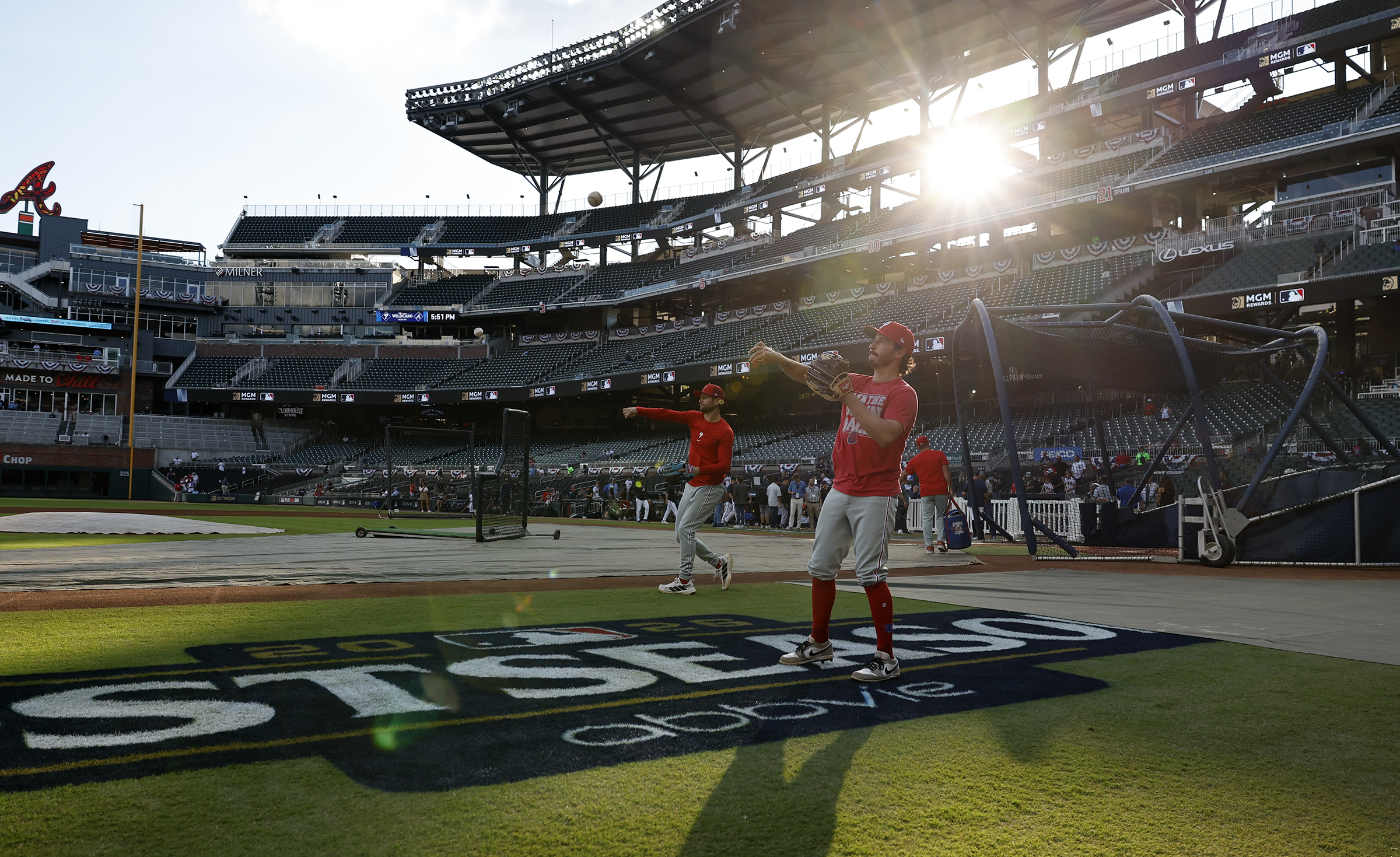
    Matt Klentak breaks down how the Phillies acquired Zack Wheeler and Cristopher Sánchez
    Video: Matt Klentak breaks down how the Phillies acquired Zack Wheeler and Cristopher Sánchez

    MLB’s regular season schedules 162 games over 187 days, and the new format would play the 154 games over 180 in most years.

    MLB would keep the wild-card series at best-of-three at the ballpark of the higher-seeded team, add an extra day off between Games 1 and 2 and stagger series starts. There would be only two games scheduled on each of the first three days rather than the current format of up to four games per day.

    No. 3 seeds could select after the regular season whether to host No. 5 or No. 6 in the wild-card series, and the No. 1 seeds could pick which wild-card winner to play in the Division Series.

    Each best-of-seven series would be played over 11 days instead of nine, adding off days before Games 5 and 7 in addition to the travel days before Games 3 and 6. MLB would stop scheduling early round postseason games in afternoons after some teams have struggled to fill stadiums in those slots.

    Management made a “pick your opponent” proposal in 2022 bargaining as part of a 14-team playoff plan players didn’t agree to.

    “A shorter regular season unlocks making October even better for our fans — with fewer weekday afternoon games, a longer Division Series and more opportunities to see the game’s best pitchers on the biggest stage,” Caplin said. ”And allowing the top seeds to select their opponents in the first two rounds would create compelling storylines, intensify existing rivalries and create new ones.”

    As part of the proposal, each team would be scheduled for four day-night doubleheaders, one against each division rival.

    Minor league schedules have included days off on Mondays since 2021.

    Big league clubs would be scheduled for Monday games on national holidays, when many typically draw large crowds. Teams that play Mondays would be scheduled to have Thursday off.

    MLB said player salaries would not be adjusted to reflect fewer games and bonus provision thresholds — like those that pay players for games played — would be adjusted to reflect the shortened schedule.

    The National and American Leagues adopted 154-game schedules in 1904 that had every team in each eight-team circuit playing all opponents 22 times.

    The AL switched to a 162-game schedule when it expanded to 10 teams for 1961 and the National League followed suit the next year.

    The LCS started in 1969 and were best-of-five through 1984, then expanded to best-of-seven.

    Division Series have been best-of-five since their inception for annual use in 1995. Wild-card games started with the expansion of the playoffs from eight to 10 teams in 2012 and became best-of-three wild-card series when the postseason increased to 12 clubs in 2022.

  • Rising oil prices, falling technology stocks, and reversing bond yields keep Wall Street unsettled

    Rising oil prices, falling technology stocks, and reversing bond yields keep Wall Street unsettled

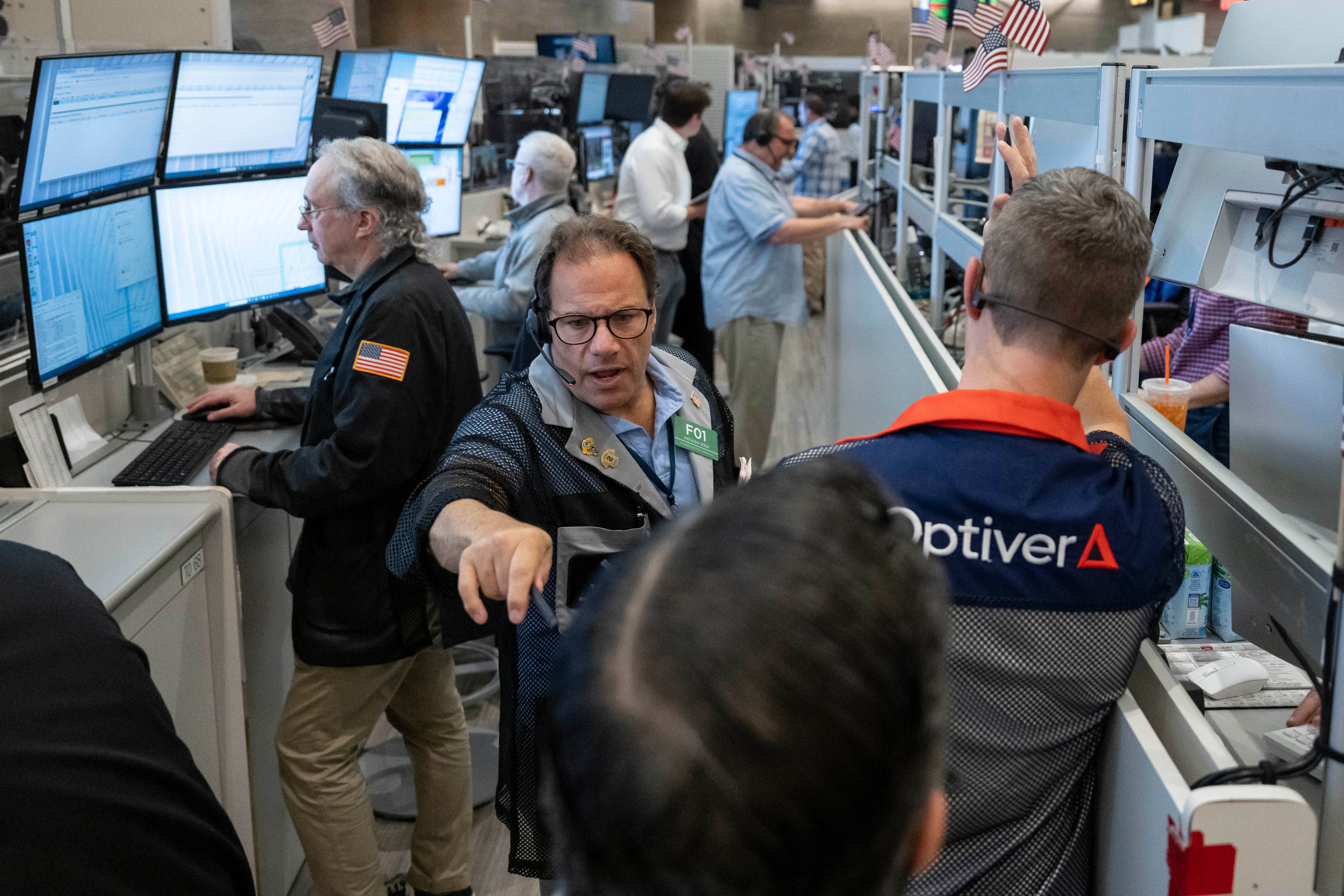
    NEW YORK — Some sharp reversals kept financial markets unsteady on Thursday, as oil prices rose and U.S. stock indexes finished mixed.

    The S&P 500 fell 0.5% for a second straight loss after setting its all-time high. The Dow Jones Industrial Average added 51 points, or 0.1%, and the Nasdaq composite fell 1.3% as technology stocks took particularly hard hits.

    Stocks felt pressure from a 4.1% rise in the price for a barrel of Brent crude oil, the international standard, to $104.28. It’s been pinballing between $96 and nearly $110 over the last month on uncertainty about when the war with Iran will allow the global energy industry to return to normal.

    Brent got to nearly $106 in the morning before President Donald Trump sent its price veering after saying “productive discussions” are happening with Iran and that the U.S. military would not attack it before the upcoming U.S. elections in November. That briefly sent Brent toward $103 before it eventually turned back upward.

    Even sharper swings shook the bond market, where yields have been jumping worldwide to their highest levels in years or even decades, which threaten to slow the economy.

    The 10-year Treasury yield initially rose with oil prices, going from 5.28% late Wednesday to 5.35% early Thursday morning. But it then fell all the way back to 5.23%.

    It dropped after the U.S. government said that it sold $22 billion in 30-year Treasury bonds at an auction with a high yield of less than 5.62%. That helped bring the 30-year Treasury yield down to 5.60% from 5.73% in the morning, which is a notable move for the bond market.

    A day earlier, an auction of 10-year Treasurys also helped bring down yields. Strong demand there showed investors are still willing to buy U.S. government debt, even though their prices have fallen sharply this year because of worries about high inflation, big government debt loads and other factors.

    “Higher U.S. Treasury yields are starting to create their own demand, buyers are showing up for the right price,” said Tony Miano, global investment strategy analyst at Wells Fargo Investment Institute.

    On Wall Street, the ease in Treasury yields helped the majority of U.S. stocks rise, including two out of every three in the S&P 500 index.

    PepsiCo climbed 3.7% after the snack and drink company reported stronger profit and revenue for the latest quarter than analysts expected, thanks in part to strength outside of North America.

    But drops for several influential technology stocks overshadowed such gains.

    Nvidia, the chip company that’s ridden the tidal wave of demand created by artificial-intelligence technology, fell 2.9%. Because it’s the largest stock by value on Wall Street, it was the heaviest weight on the S&P 500 even though other stocks had larger losses.

    That included drops for other AI-related stocks, including Broadcom’s 4.3% fall and Micron Technology’s 4.8% slide.

    The losses came even though a bellwether for the chip industry, Taiwan Semiconductor Manufacturing Co., reported growth for September that suggested its revenue for the latest quarter was strong enough to top analysts’ expectations. TSMC’s stock that trades in the United States fell 3%.

    AI stocks are under heavy pressure to report big growth to justify how high their stock prices have soared in recent years because of the AI frenzy.

    All told, the S&P 500 fell 36.41 points to 7,765.36. The Dow Jones Industrial Average added 51.77 to 51,231.64, and the Nasdaq composite slid 345.35 to 27,193.34.

    In South Korea’s stock market, Samsung Electronics dropped 2.4% to help drag the Kospi index down 2.6%. The tech giant said its operating profit for the latest quarter likely soared to 107.4 trillion Korean won (roughly $80 billion) from 12.17 trillion won a year earlier, but that wasn’t enough to satisfy investors.

    In other stock markets abroad, indexes fell across much of the rest of Asia and Europe.

  • Taliban firmly in control in Afghanistan 25 years after U.S.-led invasion to oust them

    Taliban firmly in control in Afghanistan 25 years after U.S.-led invasion to oust them

    KABUL, Afghanistan — Nigar Nangrahari was on a night shift in a Kabul hospital when the U.S.-led invasion of Afghanistan began 25 years ago — an event that would shape her and her country’s future for decades to come.

    As she walked home the next morning, Nangrahari saw Kabul residents taking revenge on members of the Taliban, whose harsh, repressive rule had seen public stonings, limb amputations of alleged criminals, and women obliterated from public life.

    “Along the way, I saw ordinary people killing anyone they caught who was a Taliban member. I witnessed with my own eyes the people of Kabul capturing and killing Taliban fighters. Some had climbed trees to hide,” she said.

    Afraid of what was to come, Nangrahari and her family stayed home for about a month. Eventually, she was called back to the hospital and returned to work as an obstetrician-gynecologist. She no longer had to wear a burqa in the street.

    “They granted us freedom — but not the kind that Afghans could truly benefit from,” said Nangrahari, 58.

    Afghanistan is a deeply conservative Muslim society, and the U.S. culture that came with the American presence in the country often rankled some segments of society.

    “Afghans should neither be completely unrestricted nor subjected to the kind of severe constraints imposed by the Taliban,” she said. “There needs to be a moderate balance.”

    A bitter legacy

    Under U.S. President George W. Bush, the American-led coalition launched Operation Enduring Freedom with the stated goal of dismantling al-Qaeda, the terrorist organization whose leader, Osama bin Laden, had orchestrated the Sept. 11 attacks in the United States from his base in Afghanistan.

    The invasion was to mark the start of a 20-year war that cost tens of thousands of Afghan lives, along with thousands of coalition service members, U.S. contractors, aid workers, and journalists.

    The legacy of that war, and of the successive U.S.-supported Afghan governments during that time, endures today.

    “Their stated goals were to bring good governance to Afghanistan and to combat narcotics and terrorism,” said Muin Gul Chamkanai, a former doctor who now heads a humanitarian organization, the Shkula Charitable Foundation, and also works as a political analyst. “The reality turned out to be the exact opposite.”

    At a massive cost, both financial and in lives, the American presence brought certain freedoms, particularly for the media and in women’s education and employment opportunities. But pervasive corruption and often heavy-handed military tactics soon bred deep resentment.

    Sitting at home on Oct. 7, 2001, Chamkanai switched on his television. The sight of his country being invaded enraged him.

    “Had I been struck by their bombs, I would have considered martyrdom far preferable. I was not afraid,” he said. “I wanted to fight against them in Afghanistan using both the pen and the gun.”

    The return of the Taliban

    Now, 25 years after the invasion and five years after the chaotic U.S. withdrawal from the country, the Taliban are firmly back in control of Afghanistan. Although not quite as extreme as their previous government, when they ruled the country from 1996-2001, they have reinstated many draconian restrictions, particularly on women and girls.

    Security has improved without question since the Taliban seized power in August 2021. Gone are the endless devastating bombings and attacks, the vast majority of them carried out by the Taliban themselves during the two-decade-long war.

    “After a long and arduous struggle, jihad and great sacrifices, Afghans succeeded in liberating their country,” deputy government spokesman Hamdullah Fitrat said in a statement on the 25th anniversary of the invasion. “This struggle demonstrated that Afghans will never submit to foreign occupation or external coercion.”

    He said that Oct. 7, 2001, was “a dark day in the country’s history that resulted in thousands of Afghans being martyred, wounded, imprisoned, displaced and left homeless.”

    But for a generation who grew up under U.S.-supported governments, the loss of personal freedoms, especially for women, who face restrictions on everything from what they wear to where they can go, has been a brutal blow.

    After the Taliban took over, “gradually … restrictions were imposed, and the normal life we had known was taken away. Things became very difficult for us,” said Tahmina Mangal, a 33-year-old woman who saw her hopes of continuing her studies dashed by the shuttering of high schools and universities for girls and women.

    “The burden is immense. It weighs heavily on my own spirits and psyche,” she said.

    A perilous future

    Now, Tahmina owns and runs a store selling traditional Afghan clothing for women. Although women face multiple restrictions and are barred from most jobs, the Ministry of Commerce does issue business licenses to women, she said. She viewed that as the only avenue open to her.

    But with women barred from education and participation in any form of governance, she worries deeply about the future.

    “If this situation persists, Afghanistan’s future is perilous,” Tahmina said. “Without women pursuing their studies or receiving an education, we will lack doctors, teachers, and literate women, including mothers capable of raising healthy children for society. I view Afghanistan’s future as bleak and dire if this trend continues.”

    For Nangrahari, although the Taliban government’s emphasis on improving infrastructure in the country is welcome, its emphasis on religious education for boys, and its ban on higher education for girls, “sets Afghanistan back by a century.” Afghanistan already is among the world’s poorest countries.

    “Roads have been improved and high-rise buildings constructed. Indeed, infrastructure is the foundation of the economy, and we acknowledge all of this,” Nangrahari said. “But a society lacking education is zero.”

    Still, sitting in her clothing shop in Kabul, Tahmina said that women shouldn’t give up hope, and should continue pursuing their studies, even if it is only online.

    “Governments inevitably come and go, collapses happen, and no government lasts forever,” she said. “I always say: ‘Remain hopeful for the future. Study, pursue professional training alongside your regular schooling, and seek higher education.’”
  • Russian official seeks to turn the page on a suspected pneumonic plague case, but questions remain

    Russian official seeks to turn the page on a suspected pneumonic plague case, but questions remain

    A Russian official on Thursday sought to turn the page on the suspicious death of a worker at a plague research lab in Siberia, saying a quarantine and other preventive measures had been completed with no dangerous pathogens detected.

    The statement by Irkutsk Gov. Igor Kobzev came a day after the World Health Organization requested more information from Russia about the death of the worker at the Irkutsk Anti-Plague Institute of Siberia that sparked global concerns about a possible case of pneumonic plague.

    Media reports in Russia blamed the Oct. 2 death of the woman, whom news outlets identified as Darya Shipilova, 28, on pneumonic plague, which can spread from person to person. Russian authorities have kept a tight lid on information about the case, saying only that the woman contracted pneumonia of “unknown” origin and that her tests were negative for the pathogens she worked with.

    Kobzev’s statement didn’t provide details about what exactly caused the woman’s pneumonia and what kind of pathogens she worked with. He also did not explicitly say that her death was not caused by pneumonic plague.

    The woman had “community-acquired” pneumonia — a type of pneumonia contracted outside of a hospital setting, Kobzev said. She had been “vaccinated and immune” to the pathogens she worked with at the institute, he said.

    No accidents had been detected at the institute, where “adequate control measures for working with pathogenic microorganisms” have been verified to be in place, he added.

    The hospital where she died was placed under quarantine and those who came in contact with her were put under medical observation. Anna Popova, the head of Russia’s public health watchdog Rospotrebnadzor, flew to the Irkutsk region last week, and a special commission of experts was formed to deal with the case.

    Kobzev said quarantine, observation of the woman’s contacts, and other steps were completed, and some 5,000 lab tests conducted as part of the measures found no pathogens.

    He added that the investigation came amid “pressure” from the media, calling it “a challenge, but we handled it commendably.”

    On Wednesday, Maria Van Kerkhove, the WHO’s director of Epidemic and Pandemic Management, said the U.N. health agency doesn’t know what caused the woman’s death and asked for more information from Russia. The WHO also referenced media reports that a second employee had pneumonia of undetermined cause.

    Earlier Thursday, Rospotrebnadzor rejected reports about a second person falling ill after coming into contact with the lab worker. It didn’t offer any new information about the lab worker’s illness and death or reasons behind the sprawling emergency measures in the region.

    Kobzev said the epidemiological situation in the city of Irkutsk, where the anti-plague institute is located, the nearby town of Shelekhov, where the woman was hospitalized, and adjacent areas is “calm.”

  • New U.S. indictment charges former Venezuelan President Nicolás Maduro with torture

    New U.S. indictment charges former Venezuelan President Nicolás Maduro with torture

    NEW YORK — U.S. authorities added new torture charges Thursday to their case against former Venezuelan President Nicolás Maduro, ramping up pressure on the ousted authoritarian leader already fighting drug trafficking offenses.

    Maduro, who was previously charged with participating in a conspiracy to send cocaine into the U.S., is now also facing allegations of human rights abuses during his time as president of the oil-rich South American nation.

    “He authorized the use of torture against specific individuals and oversaw a system designed to use torture, arbitrary detention, and violence as a means of repression against the political opposition,” says the revised indictment, which newly charges Maduro and his wife, Cilia Flores, with torture conspiracy.

    The allegations include electric shocks, beatings, and asphyxiation at Maduro’s behest.

    Asserting that thousands of Venezuelans were “harassed, threatened, arrested, prosecuted, assaulted, tortured, or killed” by people acting at the behest of Maduro’s government, the indictment alleges that the abuse included electric shocks, beatings, and asphyxiation. Maduro, the indictment claims, signed off on torture methods, sought and got updates on specific victims’ treatment, watched a video of a forced confession, and personally threatened the killing of one prisoner’s child “as a form of psychological torture.”

    Flores, a former legislator and attorney general, helped develop the repressive system and ordered the torture of some specific people, the indictment contends.

    A message seeking comment was sent to Maduro’s lawyer; Flores was in court for a previously scheduled hearing, where her attorney said he hadn’t yet had time to review the new allegations. Both Maduro and Flores have been behind bars in New York since early January when forces seized them from their Caracas home in a middle-of-the-night raid.

    Both have pleaded not guilty in the U.S. drug case first brought years ago against them and numerous alleged co-conspirators. They had already been facing potential life prison sentences if convicted.

    Maduro has been under investigation for years by the International Criminal Court over allegations of crimes against humanity, tied to his crackdown on opponents. He has always denied any wrongdoing.

    Alleged torture victims included U.S. citizens

    The revised indictment includes several mentions of the involvement of Venezuela’s feared DGCIM military intelligence agency, which was headed for many years by one of Maduro’s co-defendants, Gen. Hugo Carvajal. He broke with Maduro years ago, pleaded guilty last year to drug trafficking charges in New York, and has offered to testify against his former boss.

    The indictment alleges that the torture victims included three U.S. citizens, who were not named in the court documents.

    One of those Americans was punched, subjected to electric shocks, and forced to eat his own vomit during eight months of imprisonment, the indictment says. Another was beaten badly enough to necessitate a long hospital stay and had a gun stuck in his mouth. A third was handcuffed, hooded, and beaten for two days every half hour, suffering a permanent eye injury, the indictment said.

    Maduro has long ignored lawsuits brought in U.S. courts by Americans who alleged they were beaten while in custody in Venezuela.

    Among those who sued is Matthew Heath, a former U.S. Marine corporal from Tennessee. He was arrested at a roadblock in Venezuela in 2020 and held in custody for more than two years.

    In May, Heath and another former prisoner won a $300 million default judgment against Maduro and other top Venezuelan officials for overseeing a pattern of torture. The lawsuit, brought under a federal anti-terrorism law, included allegations of waterboarding, electrocution, threats of rape with a nightstick, administration of mind-altering medications, and the repeated use of a cramped cell nicknamed “El Tigrito.”

    “It’s incredible to see a dictator in court,” Heath said Thursday upon learning of the new charges. “The Maduro prosecution will do more to prevent the kidnapping of Americans by rogue regimes than a hundred press releases from the United Nations.”

    Former first lady seeks release for medical treatment

    Flores, meanwhile, was in court Thursday so her lawyers could urge a judge to free her from jail and put her under house arrest because she has heart problems.

    Their attorneys have asked for the case to be dismissed on the grounds that they have immunity as the leader and first lady of a foreign country.

    Lawyers for Flores, 69, have also argued that she has medical issues that cannot be treated effectively in jail, and that she could instead be allowed to live under 24-hour guard at a residence in New York.

    They also said she suffered permanent scarring when she was “thrown against a wall or dresser” during the U.S. military action that led to her capture.

    Her lawyers say she has lost 25 pounds while imprisoned at the Metropolitan Detention Center in Brooklyn and has been told that she might need heart surgery. They said she has “lingering lightheadedness, dizziness, and shortness of breath” and might have suffered a minor heart attack in July.

    Prosecutors opposed the bail request. In a court filing, they wrote that Flores would pose an “extreme risk of flight and danger to the public” if released. They also said she has been taken from the jail to get treatment at a local hospital, when care was needed.

    President Donald Trump’s administration has defended the raid to capture Maduro as a “surgical law enforcement operation.” Maduro has called himself a prisoner of war and his capture a kidnapping.

    Flores is charged with participating in a cocaine importation conspiracy with her husband, Maduro, who served as Venezuela’s president from 2013 until his capture by American forces in January.

    Lawyers for Flores said she was no threat to flee because she is “intent on supporting her husband with her constant presence.”

  • PepsiCo is raising prices on Doritos and more after a weak quarter in North America

    PepsiCo is raising prices on Doritos and more after a weak quarter in North America

    PepsiCo plans to raise prices on some snacks and drinks and slash corporate costs after a disappointing performance in North America during the third quarter.

    The price hikes, which will hit Doritos, Ruffles, SunChips, and some sodas, will be in the single-digit percentage range, and prices will still be lower than they were at the start of this year. PepsiCo said Thursday that it must raise prices to recoup rising costs for fuel, aluminum, and agricultural commodities.

    Many companies, including PepsiCo, have offset rising costs this year by using tariff refunds issued by the U.S. government after the Supreme Court struck down President Donald Trump’s far-reaching global tariffs.

    PepsiCo used its $178 million refund to do just that during the most recent quarter, but said that money will not be available in coming quarters.

    Yet there are risks for U.S. companies that raise prices in the current economic environment, with so many American households already stretched financially.

    PepsiCo leaned heavily into price increases to combat inflation in the aftermath of the COVID-19 pandemic. The company hiked prices by double-digit percentages for eight straight quarters in 2022 and 2023 before settling into more moderate price increases.

    Consumers revolted, and sales of PepsiCo’s drinks and Frito-Lay snacks fell. Last fall, activist investor Elliott Investment Management took a $4 billion stake in the company and began pressing for even lower prices. PepsiCo agreed, and it slashed prices on Lay’s, Doritos, Cheetos, and Tostitos chips by up to 15% before the Super Bowl.

    PepsiCo CEO Ramón Laguarta said the lower prices have brought back some consumers, but the third-quarter results remained weaker than hoped, partly due to tepid sales in Canada. Frito-Lay snack food volumes were flat in the July-September period compared with the same period last year. Beverage volumes fell 2%.

    Laguarta also said during a conference call that “we don’t feel good about the beverage business.”

    Sales of hydration drinks like Gatorade and energy drinks like Celsius were stronger in North America, but soda sales slumped.

    “We’re putting all the urgency of the business and the focus in improving our performance in soft drinks,” Laguarta said.

    PepsiCo lowered its earnings expectations for the year, saying it now expects adjusted earnings per share to grow 2.5% to 3.5%. Previously, it had expected growth between 5% and 7%. The company now expects full-year revenue growth of 6%, the high end of its earlier forecast of between 4% and 6%.

    Still, PepsiCo reported better-than-expected revenue for the quarter on the strength of its international business, which makes up 41% of the company’s revenue. Net revenue rose 5.6% to $25.27 billion in the July-September period. Wall Street had expected revenue of $24.95 billion, according to analysts polled by FactSet.

    The company, based in Purchase, N.Y., said its global snack food volumes increased 4%, the highest rate of growth since 2021. World Cup-related demand for Lay’s snacks was strong, the company said, and PepsiCo gained share in key markets like China and Brazil. Snack food volumes rose 11% in the Asia-Pacific region, PepsiCo said.

    Fast-growing categories include snacks with simpler ingredients, like Doritos and Gatorade Lower Sugar with no artificial colors or flavors, as well as protein-enhanced snacks, the company said.

    Net income rose 17% to $3.07 billion in the third quarter. Adjusted for one-time items, the company earned $2.34 per share. That was higher than the $2.29 per-share earnings analysts expected.

    PepsiCo shares rose 2% Thursday.