Category: Associated Press

  • How much should retirees worry about inflation?

    How much should retirees worry about inflation?

    Inflation can be scary for retirees. True, Social Security provides inflation increases in line with the Consumer Price Index, or CPI. But any portfolio income, save allocations to inflation-protected bonds, isn’t inherently inflation-protected. And if inflation occurs early in your retirement, those higher prices will do more damage throughout retirement, potentially jeopardizing your portfolio’s ability to last.

    To gauge your inflation risk and how strenuously you need to defend against it, ask yourself three questions.

    Where are you spending?

    You may not have stopped to consider it before, but CPI is meant to capture the spending experiences of all consumers. Categories like housing receive the biggest weighting in the CPI calculation, while recreation and apparel get smaller weightings.

    But a retired older adult who no longer has a mortgage will likely have smaller housing-related outlays, as a percentage of household spending, than the general population, but healthcare expenditures may well be a bigger share of the budget.

    Given those variations, it can be helpful to use the CPI’s weightings as a starting point for understanding inflation’s impact on your household. But you can get closer to a personal inflation rate by looking at your actual spending in each of the major categories alongside the inflation we’re seeing in those areas.

    How much of your income is inflation-adjusted?

    Next look at how much of your cash flow needs are coming from income sources that have some inflation insulation.

    Social Security is an ideal income source because individuals receive income adjustments that track CPI. Some public-sector pensions also track CPI or offer inflation adjustments that are even more generous. If you have a fixed annuity with an inflation rider, you’ll also see your income adjusted by a fixed percentage per year, though it won’t perfectly track CPI. (You can’t buy an annuity whose payouts are linked to CPI today, unfortunately.)

    On the portfolio side, I bonds and Treasury Inflation-Protected Securities are the only investments that are specifically structured to protect against inflation. That’s why building a laddered portfolio of TIPS bonds, with one to mature in each year of retirement, can be a straightforward way to address inflation risk with your portfolio withdrawals. You could invest enough in the TIPS ladder to deliver inflation-adjusted income to cover any fixed living expenses, above and beyond what you can address with Social Security and/or a pension.

    Other portfolio constituents don’t offer as precise a structural defense against inflation, but some asset types do have a good track record of gaining during inflationary periods. Commodities-tracking investments, quite intuitively, top the list: As noted by Amy Arnott, portfolio strategist for Morningstar, they gained ground in all six of the inflationary periods she examined. Stock returns, meanwhile, have been inconsistent or poor in inflationary periods. However, they’ve done a phenomenal job of beating inflation over time. Inflation has run at about a 3% rate since the late 1920s, while equities have gained about 10% on a nominal basis. Thus, a way to think about stocks is that they’re a long-run defense against inflation but won’t necessarily protect your purchasing power year in and year out.

    At the other extreme, fixed-income sources that deliver income in nominal/noninflation-adjusted terms, whether cash or bonds, will tend to be vulnerable in inflationary periods; rising prices have the potential to gobble up all of your income. There are still good reasons to hold cash and bonds in your portfolio — ballast in recessionary environments, for one thing — but their vulnerability in inflationary environments is a major reason not to overdo them.

    Where are you in your retirement?

    Finally, consider where you are in your retirement. As Jamie Hopkins, CEO of Bryn Mawr Trust Advisors and chief wealth officer of Bryn Mawr Trust, and others have pointed out, high inflation early in retirement is just another form of sequence risk, like bad market returns early in retirement. The reason is that if inflation flares up early in someone’s retirement period, those higher costs will elevate costs through the whole retirement period; deflation is very rare.

    In our retirement spending research, we found that those who started retirement at the beginning of a period with unusually high inflation would have a more difficult time sustaining spending for a full 30-year period. To be clear, not every person who retires into a high-inflation environment will run out of money: There have been historical periods where market returns have been strong enough to offset the drag of higher costs. However, because you can’t know how the market will behave as retirement unfolds, it’s wise to curtail spending (to the extent that you can) if inflation happens to flare up early in your retirement.

    This article was provided to the Associated Press by Morningstar. For more retirement content, go to morningstar.com/retirement.

    Christine Benz is director of personal finance and retirement planning for Morningstar and co-host of “The Long View” podcast. Subscribe to her free newsletter, Improving Your Finances.
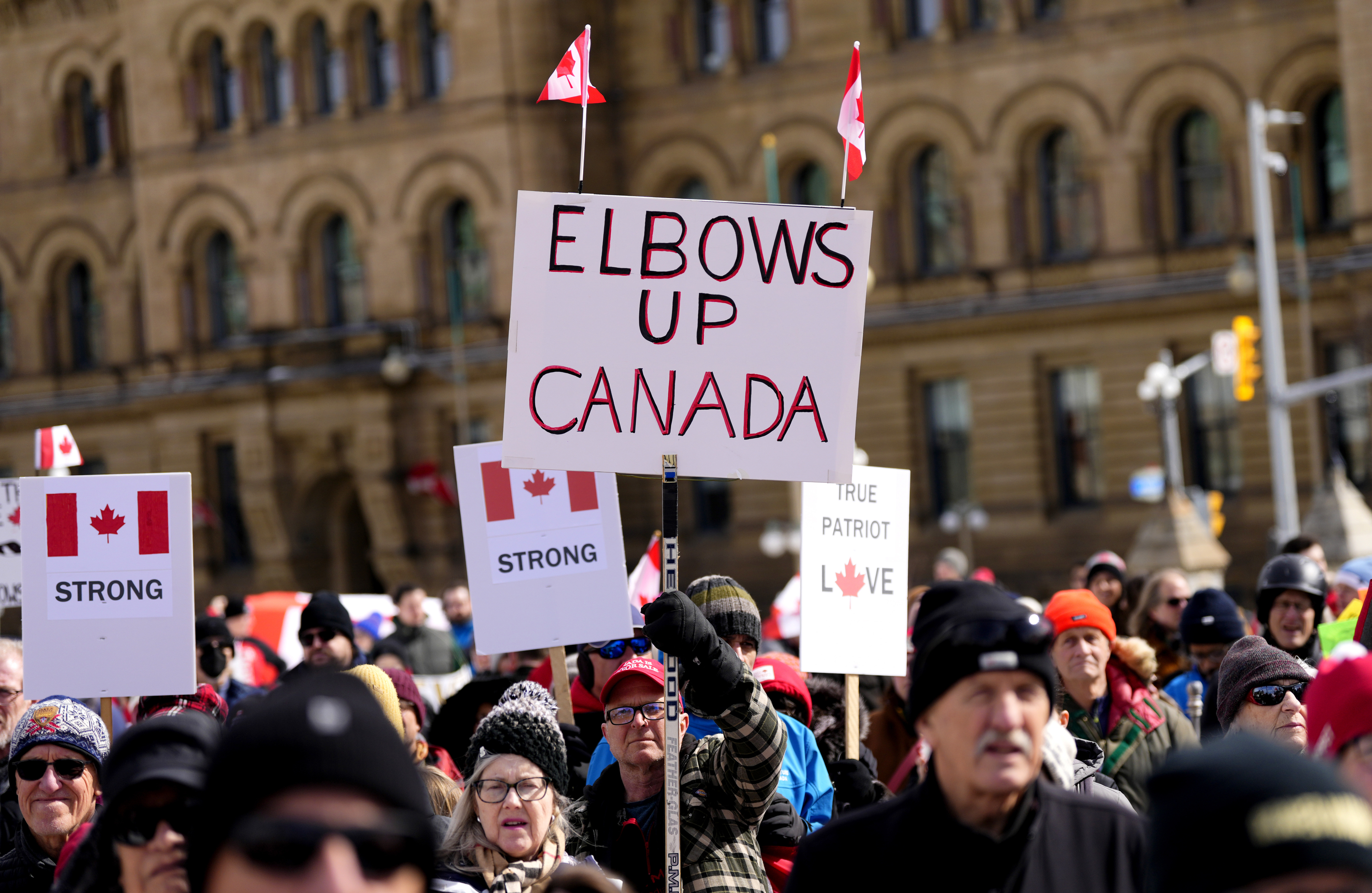

  • A trade war between Canada and the US further ruptures a once-close and durable alliance

    A trade war between Canada and the US further ruptures a once-close and durable alliance

    TORONTO — For decades, Canada built much of its prosperity on privileged access to the United States. Now, after the collapse of trade talks, one of the world’s closest and most durable alliances has been fundamentally altered, with both countries facing the risk of a full-scale trade war.

    Prime Minister Mark Carney acknowledged the break after last-ditch negotiations failed Friday, saying Canada had recognized that “America has changed” and that the countries would “not return to our old relationship.”

    The United States imposed 50% tariffs on about $20 billion worth of Canadian goods early Saturday. Carney said Canada would retaliate dollar for dollar beginning Sept. 8, targeting sectors including steel, dairy, appliances, agricultural equipment, pulp and paper, and electronics.

    Carney foreshadowed the shift at the World Economic Forum in Davos in January, declaring that the world was experiencing “a rupture, not a transition” and urging countries such as Canada to reduce their vulnerability to economic coercion by strengthening their economies at home and diversifying abroad.

    He said in Ottawa on Saturday that warning had been borne out. He accused the U.S. of using “economic integration as a weapon” and said its “signature was written in pencil.”

    “The collapse of the tariff talks points to the fact that the old Canada-U.S. relationship is over and, for many Canadians, it also confirms the perception that Canada can’t trust the Trump administration,” said Daniel Béland, a political science professor at McGill University in Montreal.

    The pressure from Republican President Donald Trump has gone well beyond tariffs.

    He has questioned Canada’s economic viability, repeatedly talked about making it the 51st U.S. state, and used trade measures to encourage production to move from Canada to the United States. That has angered many Canadians and fueled a sense of betrayal in a country that had long regarded the U.S. as its closest ally.

    Canadian travel to the U.S. remains sharply lower than before the dispute, with July return trips down nearly 29% by car and 27% by air from July 2024, Statistics Canada said.

    The failed negotiations underscored how far the relationship had shifted. Canada had been prepared to accept some U.S. tariffs for market access and greater certainty — a break from decades of policy aimed at eliminating trade barriers.

    For Canadians accustomed to preferential access under the 1989 Canada-U.S. Free Trade Agreement, NAFTA, and its successor, even reduced tariffs would mark a retreat from the old relationship.

    The collapse also puts Carney’s approach to Trump to the test.

    The prime minister’s “elbows up” posture — hockey shorthand for playing aggressively and refusing to be pushed around — has helped keep him popular at home. His decision to resist U.S. pressure could also resonate abroad with those impressed by his Davos call for countries to resist economic coercion and reduce dependence on great powers.

    Provincial and conservative leaders broadly backed Carney. Saskatchewan Premier Scott Moe said, “The old status quo is not possible,” while Ontario Premier Doug Ford praised Carney for rejecting what he called a bad deal for the auto, steel, and manufacturing sectors.

    Ford said Trump “is not to be trusted whatsoever.”

    Former Alberta Premier Jason Kenney said Canada was “not cravenly surrendering in the face of constant economic and political aggression.”

    Lana Payne, national president of Unifor, Canada’s largest private-sector union, accused Trump of trying to weaken Canada’s industrial base.

    “What we have seen from the U.S. administration, or Donald Trump, is this consistent attempt to try and destroy the industrial economy of Canada with tariffs that have been strategically designed to attack us,” Payne said.

    Economic risks of fighting back and a shift seen as perhaps lasting

    Nearly three-quarters of Canada’s goods exports go to the United States. The U.S. economy is roughly 10 times larger than Canada’s, limiting Ottawa’s ability to retaliate dollar for dollar without inflicting disproportionate damage at home.

    Royal Bank of Canada economists estimate the tariffs directly affect about 0.4% of Canada’s GDP because they cover only about 5% of Canadian exports to the U.S. The damage could grow if retaliation broadens, more sectors are targeted, or the dispute curbs investment and disrupts supply chains.

    Carney himself acknowledged the cost of retaliation, saying the Canadian measures would “raise costs and reduce choice for Canadians.” He said his government would announce additional assistance for affected businesses and workers.

    Béland said the countries were witnessing “the beginning of a full-scale trade war,” though he cautioned that the situation could change rapidly.

    The dependence is not one-sided.

    Carney said Canada supplies 99% of U.S. natural gas imports, 85% of its electricity imports, and 60% of its crude oil imports. Trump has focused much of his pressure on autos, steel, and aluminum, fueling resentment among Canadians who see the push as an effort to hollow out key industries.

    Goldy Hyder, president and CEO of the Business Council of Canada, said businesses still view the U.S. as Canada’s most important trading partner but increasingly see the shift as lasting beyond Trump.

    “There is a new trade and investment model, one that could well be kept in place by future U.S. administrations whether Democrat or Republican,” Hyder said.

    Canada looks beyond U.S. because ‘things will never be the same’

    The breakdown adds urgency to Carney’s push to diversify beyond the United States. He has traveled abroad seeking investment and new trade ties, aiming to attract $1 trillion Canadian (US$730 billion) by 2030 and to double non-U.S. investment over the next decade. Canada has signed more than 20 trade and security agreements across five continents in the past year.

    That made Washington’s effort to restrict Canada’s ability to negotiate trade agreements with other countries particularly significant.

    In July, Ottawa and Alberta advanced plans for a new Pacific Coast oil pipeline to give Canadian crude greater access to Asian markets and reduce reliance on U.S. buyers.

    The immediate question is how long the latest tariff confrontation will last.

    Béland said the deeper change probably will, partly because U.S. protectionism is likely to remain influential under future administrations.

    “The idea that things will return to ‘normal’ once Donald Trump leaves the White House is probably just wishful thinking,” Béland said. “It doesn’t mean the relationship might not improve in the future but that things will never be the same.”

  • Iran security chief threatens neighbors against economic measures

    Iran security chief threatens neighbors against economic measures

    The new leader of Iran’s top security body is threatening neighbors against joining new U.S. efforts to squeeze Tehran’s economy. Egypt is trying to revive Iran-U.S. negotiations. And Iraq and Iran say Tehran has helped some ships carrying Iraqi oil to transit the Strait of Hormuz. France and Saudi Arabia are expected to discuss plans to bypass the waterway.

    Meanwhile, Israel has carried out strikes in Syria and in Gaza.

    Iran’s new top security adviser issues threats

    The hard-line new leader of Iran’s Supreme National Security Council threatened Tehran’s neighbors against joining the new U.S. effort to hurt Iran’s economy, and accused the United States of increasing global nuclear insecurity with months of war.

    “If (Trump) wants to do something, we will retaliate in a seismic manner,” he said in an interview with the state broadcaster that aired Saturday.

    Mohsen Rezaei was named this month as part of senior appointments widely seen as hardening Tehran’s political and military stance. His interview with IRIB is his most extensive public statement since then.

    Rezaei said Iran would target oil-shipping routes out of the Persian Gulf — alternatives to the Strait of Hormuz — if neighbors join what he described as the economic war against Iran. Those neighbors would be considered enemies and “we will target their interests,” he said.

    U.S. President Donald Trump in the past week has vowed to increase Iran’s pain by imposing an “unprecedented” level of economic warfare and isolation. Iran has lived under sanctions for years.

    Rezaei said discussions with Oman, located on the other side of the strait, over management of it were ongoing, and said fees would be imposed. Iran asserted control over what was seen as an international waterway shortly after the U.S. and Israel attacked on Feb. 28.

    Rezaei also vowed to make changes to Iran’s diplomacy and bring new capabilities to what he called the next war. He warned the U.S. against sending more military personnel to the region, and said the U.S. had increased nuclear insecurity because countries see that participating in international monitoring efforts, as Iran has done, is no protection against attack.

    Egypt tries to revive U.S.-Iran negotiations

    The top diplomats for Egypt and Iran discussed efforts to bring Tehran and Washington back to the negotiating table to settle the war, Egypt’s foreign ministry said.

    Iranian Foreign Minister Abbas Araghchi and Egyptian counterpart Badr Abdelatty also discussed the Iranian-Omani talks, the ministry said.

    Araghchi briefed Egypt’s foreign minister about “Iran’s view of ongoing developments, the course of negotiations and their challenges,” the ministry said, without elaborating. Araghchi confirmed the call. Separately, Araghchi said he had a call with Pakistan’s army chief, Field Marshal Asim Munir,

    Iran and Iraq say some Iraqi oil is facilitated through the strait

    The governments of Iraq and Iran said Tehran has helped some ships carrying Iraqi oil to transit the Strait of Hormuz, a key waterway for global oil, natural gas, and other supplies, but there were few details.

    “There is facilitation for some ships carrying Iraqi oil in the Strait of Hormuz,” Iraqi President Nizar Amidi said in comments published Saturday by the state-run news agency, adding that Iraq doesn’t have a national carrier for transporting oil.

    Iran’s state-run IRNA news agency said a number of Iraqi oil tankers have been permitted to transit. It was not clear how many or what Iran might have received in return.

    Syria says an Israeli drone strikes inside a village

    An Israeli drone strike on a vehicle wounded one person on Saturday in the southwestern Syrian village of Beit Jin, according to the Syrian state news agency SANA. Syria’s foreign ministry said several civilians were injured and called the strike a flagrant violation of the country’s sovereignty.

    The Israeli military said it targeted a “terrorist who advanced terror attacks in final stages of preparation,” without elaborating. It wasn’t immediately clear if it was the same strike.

    Israel has carried out hundreds of airstrikes around Syria after the ouster of former President Bashar Assad in late 2024, mainly destroying army assets to keep them out of the hands of his successors.

    Messages differ on the Golan Heights

    In an interview on Friday with Mario Nawfal, a Lebanese-Australian entrepreneur, U.S. Ambassador Tom Barrack said Israel “still” occupies the Golan Heights in violation of U.N. resolutions.

    Israeli Defense Minister Israel Katz on Saturday in a statement called Barrack’s remarks “full of inaccuracies and positions that contradict Trump’s own position.”

    Israel captured the Golan Heights from Syria in the 1967 war and annexed it in 1981. The U.N. considers the territory occupied Syrian land. But in March 2019, Trump signed a proclamation recognizing Israeli sovereignty over the Golan Heights, reversing decades of U.S. policy.

    French president, Saudi crown prince will meet

    French President Emmanuel Macron and Saudi Crown Prince Mohammed bin Salman are expected to discuss plans to develop alternative routes to the Strait of Hormuz during the Saudi leader’s two-day visit to Paris that starts on Sunday, according to officials in the presidency who weren’t authorized to be publicly named.

    Proposals include increasing trade through Omani ports outside of the Persian Gulf, expanding or doubling pipelines in Saudi Arabia and elsewhere, and developing new rail links, the officials said.

    France and Saudi Arabia have formed a task force on energy and logistics connections between the Middle East and Europe that is scheduled to meet at the ministerial level Monday. The officials said the work would focus on identifying the most strategic projects, securing financing, and establishing roles for French companies.

    An Israeli strike in Gaza kills 1 Palestinian

    An Israeli strike on the backyard of a house in central Gaza killed one Palestinian and wounded another Saturday, according to health officials at Al-Aqsa Martyrs hospital.

    Israel’s military said it targeted Sharif al-Hasanat, a Hamas commander who “advanced terror attacks and took part in efforts to restore Hamas’ underground infrastructure.” Days earlier, a U.S. negotiator reportedly asked Israel to draw down attacks while seeking to make progress on the ceasefire.

  • Trump urges court to reject BBC’s bid to secure records from his family in defamation case

    Trump urges court to reject BBC’s bid to secure records from his family in defamation case

    WASHINGTON — President Donald Trump has urged a federal judge to reject the BBC’s request for the court’s help in securing testimony and documents from three family members in response to his $10 billion defamation lawsuit against the British broadcaster.

    The BBC is trying to gain “politically-driven leverage” over Trump by serving subpoenas on daughter Ivanka Trump, son-in-law Jared Kushner and son Donald Trump Jr., personal lawyers for the Republican president argued in a court filing Friday.

    U.S. District Judge Jeffrey Kuntz in Miami did not immediately rule on the dispute.

    Kuntz, who was nominated to the bench by Trump, inherited the president’s lawsuit from another judge less than a week ago. Court filings did not immediately specify a reason for the case’s reassignment. The previous judge has set a February trial date.

    In May, a process server working for the BBC tried to serve subpoenas on Ivanka Trump and Kushner at their residence but encountered Secret Service agents who said they were not authorized to accept it, according to the president’s lawyers. They said the process server also visited Trump Tower in New York several days later in a failed attempt to serve Donald Trump Jr.

    In a court filing last week, the broadcaster asked for the court’s permission to serve subpoenas on Trump’s family members by certified mail instead of in person.

    Trump’s lawsuit, filed in December, accuses the BBC of deceptively editing portions of the speech that he delivered near the White House on Jan. 6, 2021, when a mob of his supporters attacked the Capitol to try to stop Congress from certifying Democrat Joe Biden’s victory over Trump. The suit claims the BBC spliced together separate parts of Trump’s speech to intentionally misrepresent what he said.

    The lawsuit alleges the BBC aired its documentary a week before the 2024 presidential election in “a brazen attempt to interfere in and influence” the outcome to Trump’s detriment.

    “The relief that the BBC’s Motion seeks cannot be segregated from the politically charged discovery campaign that it is based on, and which has already been ruled as improperly overbroad by this Court,” Trump’s lawyers wrote.

    The BBC has apologized to Trump for the misleading edit, but it denies defaming him.

  • Federal judge vacates Trump policy that suspended processing of immigration visas from 75 countries

    Federal judge vacates Trump policy that suspended processing of immigration visas from 75 countries

    A federal judge in New York has vacated a Trump administration policy that suspended the processing of visas from 75 countries, including Afghanistan, Iran, Russia, and Somalia, whose nationals the Trump administration deemed likely to require public assistance in the United States.

    U.S. District Judge Jeannette Vargas, an appointee of former President Joe Biden, set aside the policy Friday as “contrary to law and in excess of statutory authority.”

    Secretary of State Marco Rubio exceeded his authority by issuing the policy, which “runs afoul” of the Immigration and Nationality Act by mandating “the refusal of visas to eligible applicants without any basis in law,” the judge ruled.

    Judge says power lies with consular officers

    Vargas said the policy also undermines the congressional requirement that puts consular officers at the forefront of any visa decision.

    “Congress imbued these officers with exclusive authority and discretion to determine if an immigrant is eligible for a visa based upon review of specific and detailed criteria set forth in the statute,” she wrote. “The Policy, which categorically prohibits the issuance of immigrant visas based upon the nationality of the applicant, represents a direct abrogation of this statutory scheme.”

    The policy was challenged by two nonprofit organizations along with 11 individuals, including six whose family members had been refused visas. The remaining five are outside the country and had filed “employment-based petitions” to come to the United States.

    Advocates say keeping families apart is cruel

    “We welcome this ruling because, at its heart, this case is about keeping families together,” said Anna Gallagher, the executive director of CLINIC, a national nonprofit that provides training, resources, and support to a network of immigration legal service providers and was one of the plaintiffs.

    “Catholic social teaching calls us to uphold the dignity of every person and recognize the family as the foundation of society,” she said in a statement. “This decision affirms both those values and the rule of law, allowing families to once again move forward toward reunification.”

    Another plaintiff is African Communities Together, a Harlem-based nonprofit. One of its leaders called the ruling “a tremendous victory for the rule of law.”

    “This unlawful and racist ban caused immeasurable harm, cruelly keeping families and loved ones apart,” Diana Konate, deputy executive director for policy and advocacy, said in a statement. “Today, we are elated to tell our community members: this ban is no more.”

    Trump expands his anti-immigration agenda

    President Donald Trump has imposed a growing list of immigration and travel bans mostly for people from Africa, Asia, and Latin America. The State Department said Saturday that the Trump administration is “protecting the American people by upholding the highest standards of screening and vetting of visa applicants,” and that it would not comment on pending litigation.

    At the time the policy was issued, the State Department said it had instructed consular officers to halt immigrant visa applications from the 75 countries in accordance with a broader order in November that tightened rules around potential immigrants who might become “public charges.” Relying on Council of Economic Advisers data, the State Department said that more than 30% of households with immigrants from these countries received some form of public assistance.

    A separate notice sent to all U.S. embassies and consulates said that non-immigrant visa applicants also should be “fully vetted and screened” for the possibility that they might seek public benefits in the United States.

    The cable, a copy of which was obtained by the Associated Press, noted several times that the applicant must prove they won’t apply for public benefits while in the U.S., and that consular officers who suspect the applicant might apply should require them to fill out a form proving their financial bona fides.

    The ruling is the latest example of the courts upending Trump’s immigration agenda. In June, a federal judge struck down a Trump administration policy that made it harder for immigrants from dozens of countries to enter and stay in America — affecting elements like asylum, work permits, green cards, and citizenship applications. That judge said the policy threw countless immigrants’ lives “into indeterminate legal limbo,” and accused the U.S. Citizenship and Immigration Services of ignoring the law.

  • Canada will impose retaliatory tariffs on U.S. goods beginning Sept. 8 as trade negotiations collapse

    Canada will impose retaliatory tariffs on U.S. goods beginning Sept. 8 as trade negotiations collapse

    WASHINGTON — The United States imposed 50% tariffs on $20 billion worth of Canadian products early Saturday, and Canada said it would retaliate beginning Sept. 8 after last-ditch negotiations failed to resolve the latest strain in relations between the historic allies.

    President Donald Trump’s import taxes will hit about 5% of what Canada ships to the United States every year, including products ranging from hockey sticks to tongue depressors.

    Carney said, “in the coming days, we will release the details of these new tariff measures, which will come into force the Tuesday after Labor Day.” The dollar-for-dollar retaliation would target steel, dairy, appliances, agricultural equipment, pulp and paper, and electronics, he said from Ottawa.

    He disclosed that Canada had been willing to drop remaining retaliatory tariffs on steel, aluminum, and autos if the United States substantially lowered its own, and to encourage provinces to restore U.S. alcohol sales. But he said Washington’s final demands went too far, saying, “They asked too much and offered too little,” Carney said.

    Trump’s top trade negotiator, Jamieson Greer, said the Republican administration was offering to cut tariffs on steel, autos, and lumber, “things that are sensitive for them. And they’ve always had the best deal, and they still would have an even better deal, but they didn’t want that,” he told Fox & Friends Weekend.

    He added: “We’re moving forward with measures that respond to Canadian retaliation.”

    The moves also call into question the future of a North American trade agreement covering the United States, Canada, and Mexico that is crucial to industry in all three countries.

    Carney said the U.S. added last-minute terms that would have reduced tariff relief for Canadian-made vehicles, restricted Canada’s ability to strike trade deals with other countries, and weakened protections for language, culture, and sovereignty. He said such demands were “unacceptable.”

    But Greer, the U.S. trade representative, said that after a year of retaliation by its longtime ally, “We’ve said enough, and so we’ve taken countermeasures. Our interest is in protecting American workers and protecting American supply chains.”

    No further talks are planned.

    The breakdown in negotiations marked a sharp reversal from two days earlier, when officials from the two countries sounded as if they were headed toward a compromise.

    Carney said Ottawa would “hit back” with targeted tariff protection for industries exposed to the new U.S. duties, including some steel products.

    Ontario Premier Doug Ford, who leads Canada’s most populous province, backed Carney’s response, saying the prime minister had his “full support” for retaliation “tariff for tariff, dollar for dollar” and that “everything needs to be on the table.”

    A typically cooperative alliance goes sour

    The political impact will likely be even bigger than the economic fallout. The countries sold each other $880 billion worth of goods and services last year.

    The tariffs were initially supposed to kick in at 12:01 a.m. Wednesday. Trump extended the deadline for three days to allow talks to continue, but the countries could not reach an agreement in time.

    The U.S. and Canada have wrangled for decades over trade, poking each other over sore spots such as Canadian softwood lumber imports and U.S. access to Canada’s protected dairy market.

    Somehow, they still managed to remain friends, allies, and trading partners. Canadian soldiers fought alongside Americans in Afghanistan after 9/11. The 5,525-mile U.S.-Canada border is undefended, and nearly 330,000 people and $2 billion worth of goods cross it every day; 800,000 Canadians live in the United States.

    Trump’s approach to dealing with Canada marks an extraordinary departure from the traditionally cooperative relationship between the two countries. Trump has imposed tariffs on Canadian goods in a push to bring manufacturing back to the United States and made inflammatory comments about turning Canada into America’s 51st state.

    Carney said Canada had recognized that “America has changed” and that the two countries would “not return to our old relationship.”

    Canadians and Americans are frustrated

    The Canadian public is fed up. A petition to expel U.S. Ambassador Pete Hoekstra, a Trump ally, has collected nearly 248,000 signatures since July 21. It accuses the former Republican congressman from Michigan of having “normalized’’ Trump’s talk of annexing Canada, among other things.

    The two countries had good reasons to find a compromise.

    Nearly 72% of Canada’s goods exports last year went to the United States. The Trump administration might be wary of imposing new tariffs — paid by U.S. importers who try to pass along the cost to consumers via higher prices — before the November midterm elections. American voters are already frustrated with the high cost of living.

    “Canada likely wanted further sector-specific relief than the U.S. was willing to offer, or Canada’s concessions did not go far enough,’’ said Ryan Majerus, a partner at King & Spalding and a former U.S. trade official. ”Either way, I think both sides will be under immense pressure in the coming days to still find an off-ramp. But if Canada has agreed to also impose tariffs, the off-ramp may be even harder to find.”

    Candace Laing, president and CEO of the Canadian Chamber of Commerce, called the tariffs “a body blow to North American competitiveness” and warned they would raise costs for Americans while threatening Canadian customers, investment, and small businesses.

    Trump has turned to Depression-era trade penalties

    Trump has made tariffs the centerpiece of his second-term economic agenda. Last year, he imposed double-digit import taxes on almost every country, justifying them by declaring the long-standing U.S. trade deficit a national emergency. The Supreme Court in February ruled that he had overstepped his authority. The justices struck down the trade penalties and set the stage for the federal government to pay refunds to importers.

    So Trump has looked for other legal authority to justify tariffs.

    To punish Canada, he reached back to the Great Depression, invoking Section 338 of the Tariff Act of 1930 to threaten 50% tariffs on products that account for about 5% of Canadian exports to the United States.

    Nearly a century ago, with the U.S. and world economies in collapse, Congress passed the 1930 tariff law, imposing taxes on imports from around the world. Known as the Smoot-Hawley tariffs after their congressional sponsors, they are notorious among economists and historians for limiting world commerce and making the Great Depression worse.

    Section 338, which has never been used before to impose tariffs, authorizes the president to slap import taxes of up to 50% on imports from countries that have discriminated against U.S. businesses. No investigation is required to justify the levies. Nor is there any limit on how long they can stay in place.

    The rift comes as the United States, Mexico, and Canada are trying to renew a trade agreement that Trump negotiated in his first term and once praised as a triumph. The United States has begun formal talks with Mexico over revamping the US-Mexico-Canada Agreement, known as USMCA. But talks with Canada have not begun and escalating trade conflict casts doubt on whether they will.

    “Canada told the Americans in advance that if these tariffs landed, it would stop negotiating and retaliate,’’ said Barry Appleton, senior fellow at the Center for International Law at New York Law School. ”The American trade representative said publicly he would not tolerate retaliation. Both sides have now committed themselves in public, which is how escalation stops being a choice.’’

  • An ‘influencer’ degree? Colleges bet on content creator major as critics question its value

    An ‘influencer’ degree? Colleges bet on content creator major as critics question its value

    Ask a teen what they want to be when they grow up, and there’s a fair chance being an influencer is on their list.

    Digital media and the people who star in it have been cultural mainstays for teens’ entire lives, so creating social media, video, or podcast content seems a natural, albeit nontraditional, career path. And now they can earn a college degree in that very field.

    Arizona State University recently launched a new bachelor’s degree in content creation, offered through its Walter Cronkite School of Journalism and Mass Communication. The curriculum overlaps with that of ASU’s mass communication and media studies degree, with the major departure being a slate of specialized electives on podcasting, studio production, and on-camera presence.

    ASU’s announcement was met with swift criticism from many sides — from people who feel content creation is not a legitimate profession to those who question the value of a college degree in launching a social media career.

    But the ASU program is not the first of its kind.

    And the university, which declined an interview request about the new program, is not the first to offer content-creation courses.

    Universities, eager to compete for a shrinking student population, are rolling out new majors intended to prepare students for today’s careers. Whether they lead to jobs can be up for debate.

    College courses in content creation have riled critics

    Many higher education institutions have started offering classes focused on the burgeoning content-creation industry over the past couple years, and several have certificate or minor programs. Syracuse University, Quinnipiac University, and Colorado State University offer minors, and St. Bonaventure University announced a content-creation major last winter.

    To Brooke Erin Duffy, a communication professor at Cornell University, these college programs represent an inflection point. During the past year, Duffy said, institutions in education and beyond have been acknowledging content creation as a viable career path — even if the term influencer itself hits a nerve.

    On social media, influencers are everywhere, sharing shopping recommendations and lifestyle content or promoting beliefs about health or politics. Because even influencers with relatively small followings have loyal audiences, brands also often pay them to talk about products.

    The image of a prototypical influencer, Duffy said, is usually a “young girl who is snapping selfies and just reaping in tremendous rewards for seemingly not doing anything.”

    But that’s not the reality for many content creators, who are working on media production, audience retention strategies, brand partnerships, and business relationships associated with their online presence.

    “It is a time-consuming, labor-intensive job that often doesn’t pay well — at least in the beginning,” Duffy said. “But a lot of that gets concealed behind … this assumption that it’s a dream job.”

    The creator economy is booming, but not everyone reaps the riches

    Even if someone has the skills to make it in content creation, it isn’t easy to break in.

    Social media is already a crowded field, and it’s going to get even more competitive in the coming years, said Max Willens, a principal analyst at Emarketer who covers the creator economy.

    Emarketer forecasts that social media creator revenue in the U.S. will climb above $20 billion this year, but Willens said it’s important to contextualize what that means for individual creators.

    “The overwhelming majority of that money is not going into creators’ pockets,” he said, even though their content and their followers form the foundation of the lucrative field.

    Influencers can earn money from social media platforms, which reward high engagement, and some earn commission if people buy a product they’re promoting. But the largest share of influencers’ earnings comes from sponsored content — getting paid to talk about a brand or product. Willens said he expects the amount brands spend distributing and amplifying creator content will eventually surpass the amount creators earn making it.

    The idea that a specialized college degree will “suddenly turn people into viral content machines deserves a bit of a reality check,” Willens said.

    Duffy noted that becoming an influencer often is perceived, incorrectly, as a path to get rich quick. Colleges that introduce content-creation degrees may be hoping to attract new students — and their parents — who are looking for “a job that will pay off,” Duffy said. “Whether or not it does is another story.”

    A degree’s price is also a factor: At ASU, base tuition for Arizona residents is about $12,000 per academic year, excluding scholarships, but the total cost of attendance can exceed $37,000 after factoring in room, board, and other fees. For students from outside of Arizona, tuition is more than $35,000 and the total cost of attendance is around $60,000 before scholarships.

    Creators see value and transferable skills in these programs

    While many content-creation students may be hoping to become viral sensations, Phoenix-based creator Aiesha Beasley said she could see programs like ASU’s being valuable even to those without that dream.

    “Having a digital presence and a personal brand is very important nowadays,” Beasley said. Building a platform and sharing that personal brand online can help a person network and gain entry to settings they may not have had access to otherwise, she said.

    Beasley, who has been a full-time content creator for three years after more than a decade posting online, works with small businesses to help optimize their social media presence. She noted that ASU’s courses would teach several transferable skills in fields such as communications and marketing.

    Content creator and actor Sammy Cristerna graduated from Arizona State University this spring with a degree in sociology and political science, but said he “absolutely” would have taken classes in the content-creation program and considered the major if it had been available.

    The courses, Cristerna said, would have been useful in learning how to negotiate brand deals, maximize monetization opportunities, and cultivate and keep an audience. Some of those skills can be self-taught through experience, he added. Still, “it’s nice to have that formal education.”

    The one thing Cristerna said he isn’t sure will translate in the classroom is personality.

    To connect on camera, a person needs to have “good energy,” he said. “That’s hard to teach.”

  • Nancy Kissinger, philanthropist and wife of former Secretary of State Henry Kissinger, dies at 92

    Nancy Kissinger, philanthropist and wife of former Secretary of State Henry Kissinger, dies at 92

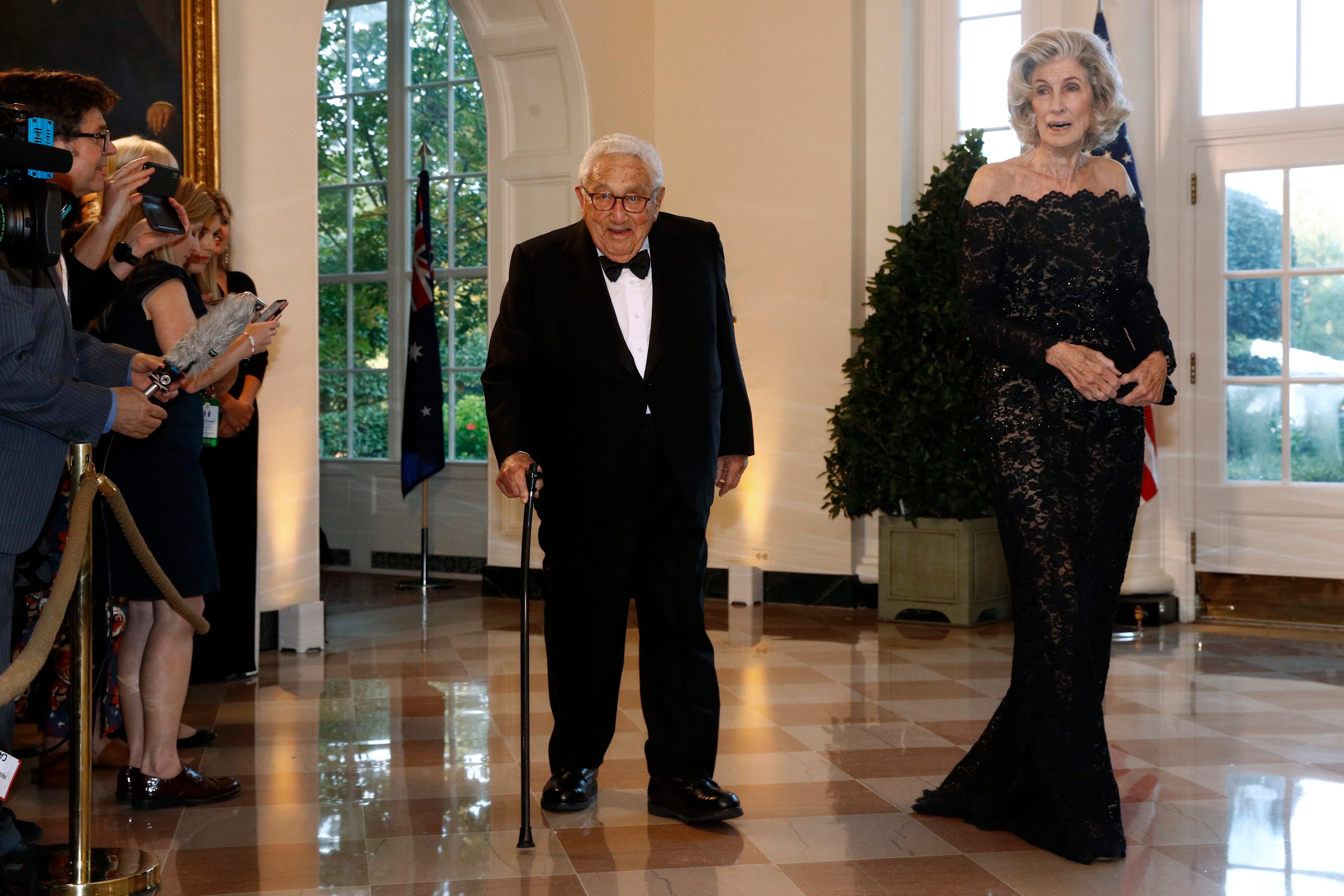
    NEW YORK — Philanthropist Nancy Kissinger, onetime foreign policy researcher and wife of former Secretary of State Henry Kissinger, has died. She was 92.

    She died Thursday at her home in Kent, Conn., Robert Johnson, manager of the property, told the Associated Press. The cause of her death was not disclosed. Johnson said she will be buried next to her late husband at Arlington National Cemetery at a later date.

    The daughter of a New York City lawyer, she met Henry Kissinger while working for New York Gov. Nelson Rockefeller. The couple wed in 1974.

    She was described by one profiler as a brainy, Blass-bedecked blond. She was often seen at high fashion openings and was a strong presence on the New York philanthropy scene.

    “Nancy Kissinger can pick up the phone and get right through to the CEO. Nobody keeps her waiting,” philanthropist Judy Peabody said after chairing a successful hospital charity event in 1989.

    Michael Bloomberg — the billionaire founder of the Bloomberg financial-news empire, former New York City mayor, and a friend of the Kissingers — said in a social media post that Nancy Kissinger “was a powerhouse of ideas and insights that she put to work throughout her life in government and philanthropy — and as Henry’s most valued and trusted adviser.”

    He added, “She was the ultimate diplomat — as wise as she was discreet — and I know how completely Henry admired and loved her. Diana and I were fortunate to call her a dear friend, and to see their extraordinary partnership in action over the decades. We will miss her greatly.”

    Nancy Kissinger made headlines in 1982 when she tried to throttle a woman who harassed her and her husband with insulting questions at Newark Airport. The couple was going to Boston, where Henry Kissinger was to undergo bypass surgery.

    The woman, a leafleter for a group affiliated with politician Lyndon LaRouche, accused Nancy Kissinger of choking both her throat and her free-speech rights. Nancy Kissinger said she only wanted to protect her husband from upset.

    A judge acquitted Nancy Kissinger of assault and called her behavior “a spontaneous and somewhat human reaction to an offensive question.”

    The Kissingers met in the mid-1960s when he was a consultant for Rockefeller and she was on the staff of Rockefeller’s Commission on Critical Choices for America.

    Henry Kissinger had joined the Nixon administration and was secretary of state when he and the former Nancy Sharon Maginnes married on March 30, 1974, in a civil ceremony in Arlington, Va.

    After leaving Washington, they returned to New York and lived in homes in Manhattan and Kent, Conn.

    The daughter of an Episcopalian Park Avenue lawyer, Nancy Kissinger grew up with two brothers and a horse on an estate in White Plains.

    She attended Good Counsel Academy, a Catholic girls school in White Plains, and the exclusive Master’s School in Dobbs Ferry, from which she graduated in 1951. She returned to the school to teach history for two years after graduating from Mount Holyoke in 1955.

    Graduate studies at the University of California at Berkeley followed before she went to work for Rockefeller.

  • Cuba says U.S. sanctions are blocking its efforts to open the economy to private investment

    Cuba says U.S. sanctions are blocking its efforts to open the economy to private investment

    UNITED NATIONS — The United States has demanded that Cuba open up to private investment, and Cuba has passed sweeping reforms to encourage just that. So Cuba’s U.N. ambassador says he wants to know why Washington keeps piling on sanctions that stymie the very economic opening it has sought for decades.

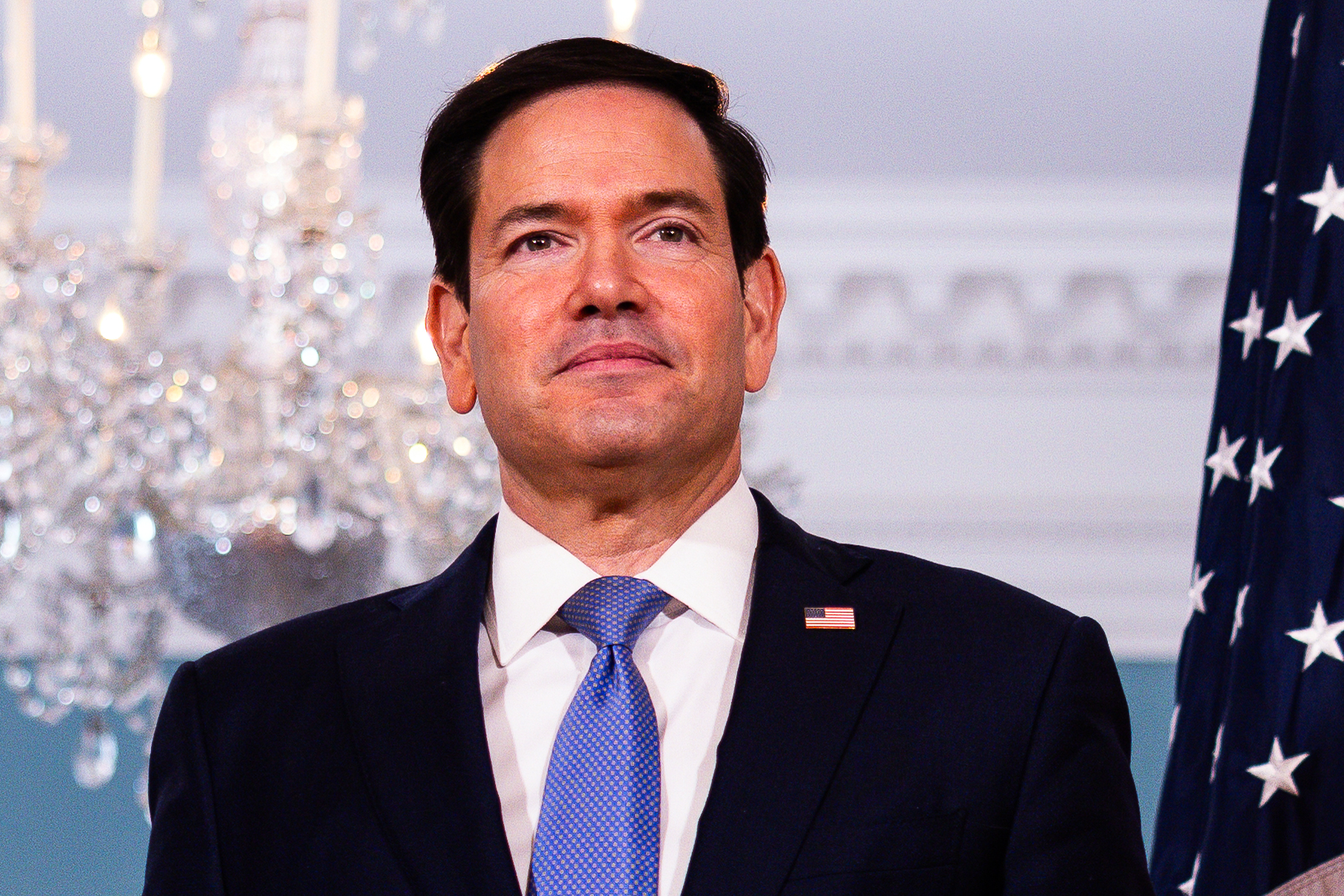
    Ambassador Ernesto Soberón Guzmán, in an interview this week with the Associated Press, directed his question to U.S. Secretary of State Marco Rubio, the main architect of the Trump administration’s Cuba policy:

    “What are you afraid of? If you are so convinced that the Cuban government is an incompetent government, why do you need to implement almost every two weeks new sanctions?”

    The U.S. State Department responded to a request for comment with a quote from Rubio saying new sanctions will continue to be announced every couple of weeks to close off “escape valves that they’re trying to create in every mechanism.”

    Then on Thursday, the U.S. imposed more economic penalties on Cuban industries, targeting state-owned mining, metal, and construction companies.

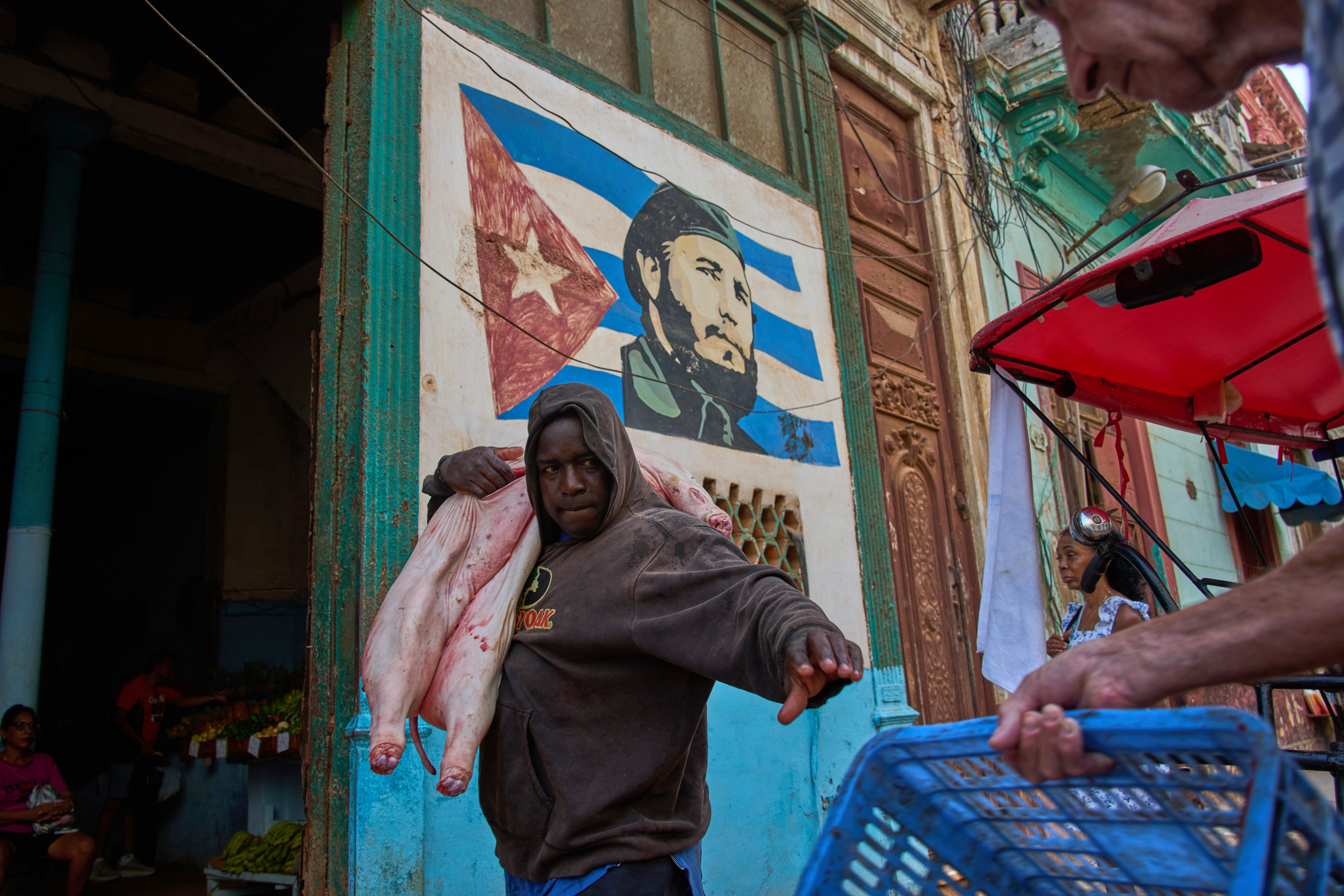
    Cuba has been pushed to the brink by an oil blockade imposed by the United States in January on top of a decades-old embargo, coupled with the escalating sanctions. The moves by President Donald Trump’s administration, meant to put pressure on the government by depriving it of funding, have worsened already debilitating blackouts, cut workers off from public transport, crippled infrastructure, and deepened shortages in medicine and food in the Caribbean island nation.

    Guzmán said the sanctions are the main obstacle to Cuba opening up its economy. He said the impact of the U.S. measures — specifically the shortage of electricity and lack of fuel to run a business or travel — has turned off investors and tourists, a major source of Cuba’s income.

    Some companies have pulled out of Cuba, including the Spanish hotel chain Meliá, which relied on tourist revenue and cited “significant operational, legal, economic, and financial difficulties” in explaining its decision to leave.

    ”Literally, the United States has done everything imaginable to try to prevent foreign investors,” said William LeoGrande, a professor at American University and a leading expert on U.S.-Cuba relations. ”When they say, `Well, we want to see Cuba open up to foreign investment,’ they’re being disingenuous. … It’s not possible for them to succeed without some kind of sanctions relief.”

    The goal of Trump’s Republican administration, he said, is “not just to open up Cuba economically but to overthrow the Cuban government — to change the nature of the Cuban political system.”

    Cuba announces major economic shift

    John Kavulich, president of the U.S.-Cuba Trade and Economic Council, said Cuba had to make changes when it lost its economic lifeline with the U.S. ouster in January of Venezuelan leader Nicolás Maduro.

    “The result is the Cuban government in the last eight months made more commercial, economic, and financial changes to the country than they have as a group since the revolution,” he said.

    Nonetheless, the Trump administration keeps ratcheting up sanctions, putting more pressure on Cuba, which is responding by making more changes, Kavulich said.

    “But from our standpoint, there are two parts missing: One is Cuba implementing by regulation everything that it’s announced, and secondly, the Trump administration allowing U.S. companies to have more access to the Cuban marketplace while these changes are underway,” he said.

    The changes announced by Cuban President Miguel Díaz-Canel in June aim to significantly shift Cuba’s economy and industry, which have been strictly controlled by the socialist government since the 1959 revolution.

    They include more space for private businesses, imports and exports without the state as an intermediary, free hiring of personnel, authorization for private banks, investment by Cubans abroad, and opportunities for fast-food chains to establish themselves on the island.

    Guzmán said there are opportunities for investments in real estate, solar farms, and energy to help ease the country’s electricity shortage, as well as in marinas and the tourism industry.

    Christopher Hernandez-Roy, acting director of the Americas program at the Center for Strategic and International Studies, recalled that the last economic opening under President Barack Obama’s Democratic administration “was later throttled by the Cubans themselves, who feared that the opening went too far and appeared to threaten political control.”

    Today, he said, it appears the Cubans really do want economic reforms and outside investment. Díaz-Canel’s economic reforms are not impossible, but U.S. sanctions “significantly constrain their prospects for success,” Hernandez-Roy said.

    He noted the irony that U.S. pressure ”is helping push the Cubans toward greater economic liberalization out of necessity, while simultaneously limiting the resources and access necessary for those reforms to actually improve the economy.”

    Rubio says Cuba’s leaders ‘don’t know what they’re doing’

    In late June, after the reforms were announced, the U.S. slapped sanctions on five state companies, three linked to a business conglomerate run by Cuba’s Revolutionary Armed Forces. Best known as GAESA, it is believed to command nearly 40% of Cuba’s gross domestic product.

    Rubio, a former U.S. senator from Florida whose parents were born in Cuba, did not appear to be impressed by the newly announced economic changes. He last month called Cuba “a failed state” with “a bad economic model.” He said Cuba’s leaders “don’t know what they’re doing” and “don’t know how to fix their economy.”

    “I think the challenge that Cuba has faced for the last 15 years is they want to somewhat improve their economy, but they’re afraid that if they improve it too much they’ll lose political control over people,” he said.

    The United States is prepared “to do what we can do to effectuate a positive change in Cuba because it directly impacts our national security” since it is only 90 miles from the U.S. mainland, Rubio said. “And we want Cuba to be prosperous. We want Cuba to be free.”

    The Cuban ambassador said implementing the economic changes would be far easier without the sanctions, if American companies were involved in Cuba and if trade between the two countries was possible.

    He said the good news is that talks are taking place between the United States and Cuba. He declined to give details of what he called “very sensitive conversations.”

    “But the point here is that even when Cuba is changing a lot,” Guzmán said, “the U.S. government keeps the same policy of aggression towards the Cuban people.”

  • U.S., South Korean militaries wrap up drill early, a day after North Korea’s missile barrage

    U.S., South Korean militaries wrap up drill early, a day after North Korea’s missile barrage

    SEOUL, South Korea — The U.S. and South Korean militaries wrapped up their annual drill six days earlier than initially scheduled on Friday in a conciliatory gesture toward North Korea, though the North said the step isn’t enough to persuade it to return to talks.

    U.S. President Donald Trump had earlier abruptly ordered the Pentagon to “substantially reduce” the Ulchi Freedom Shield exercise just before it began Monday. Trump cited what he described as a good relationship with North Korean leader Kim Jong Un and South Korea’s refusal to support Trump over the war in Iran.

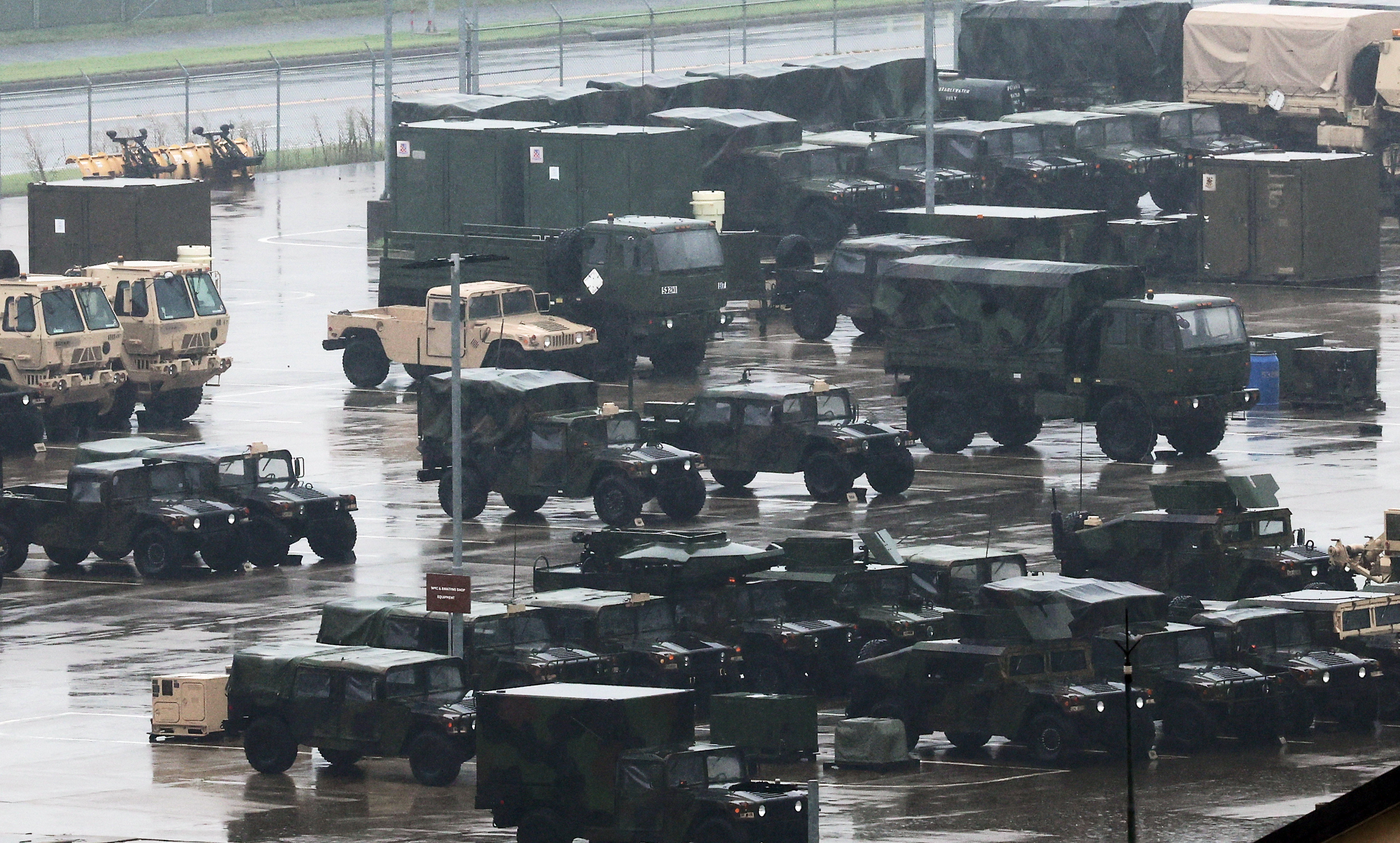
    South Korea’s military said the Ulchi Freedom Shield, a command post exercise with the U.S., ended on Friday.

    This month’s exercise was initially reportedly scheduled to be held in two phases for 11 days in simulation of North Korean attacks — the first part until Friday on defensive operations and the second part until Aug. 27 on counteroffensive operations. North Korea is extremely sensitive to the second phase.

    South Korea and the U.S. had also planned to hold 14 joint field training exercises during the Ulchi Freedom Shield period. But they’ve agreed to halve them as well, according to South Korea’s military.

    North Korea shrugs off Trump’s outreach

    Kim Yo Jong, the influential sister of North Korean leader Kim Jong Un, brushed aside Trump’s overture on Wednesday, saying that reducing the duration and size of the drills won’t change their “provocative, aggressive nature.”

    The next day, North Korea fired about 10 short-range ballistic missiles toward the sea, apparently following through with its previous threat to respond to the U.S.-South Korean drills that it views as an invasion rehearsal.

    The U.S. Pacific Command said the events didn’t pose an immediate threat to U.S. territory or its allies. The command said the U.S. remains committed to the defense of the U.S. homeland and its allies in the region.

    Kim Yo Jong’s statement dampened hopes for an early resumption of talks between Trump and Kim Jong Un, whose earlier nuclear diplomacy collapsed in 2019. Kim Jong Un has used the diplomatic stalemate to increase his leverage by modernizing his nuclear and missile arsenals and aligning with Russia over its war against Ukraine. Kim Jong Un suggested last year that he won’t return to talks unless the U.S. drops its demand for North Korean denuclearization as a precondition for diplomacy.

    Kim Yo Jong still used relatively measured language, avoided typical harsh North Korean rhetoric, and touched upon what she called an “excellent” relationship between her brother and Trump. This suggests North Korea doesn’t want to completely shut the door for future talks and may seek to win bigger U.S. concessions, such as international recognition as a nuclear state and broad sanctions relief.

    More nuclear weapons, Russia ties give North Korea leverage

    With its supply of ammunition and troops to Russia, North Korea is likely receiving economic and military assistance in return, and its expanding ties with Russia provide it with leverage to ask for greater support from China, its biggest trading partner.

    “After this strategic play has run its course, Kim may seek further economic and reputational benefits from Washington,” said Leif-Eric Easley, a professor at Ewha University in Seoul. “But that will probably be after the U.S. midterm elections when Trump is expected to be in a weaker domestic political position and in search of headline-grabbing foreign policies.”

    Kim Dong-yub, a professor at the University of North Korean Studies in Seoul, said that Kim Yo Jong’s statement showed North Korea’s position that a personal relationship between her brother and Trump “can’t be a factor that moves current North Korean-U.S. relations.” He said Kim Yo Jong likely aimed to head off speculation that Trump’s move can restore diplomacy so as not to fully take the blame when it doesn’t happen.

    Kim Yo Jong denied Trump’s claim that Kim Jong Un had responded to his request for a conversation. When asked by reporters Wednesday if he would be meeting with Kim Jong Un this year, Trump said, “Yeah, I will be.”

    The Ulchi Freedom Shield is one of the main military exercises conducted by the U.S. and South Korea annually to enhance their ability to cope with potential North Korean aggression. Its downsizing has caused worries about joint U.S.-South Korean readiness.