Category: Associated Press

  • Testimony concludes in Lindsay Clancy’s murder trial. Jury to hear closing arguments Thursday

    Testimony concludes in Lindsay Clancy’s murder trial. Jury to hear closing arguments Thursday

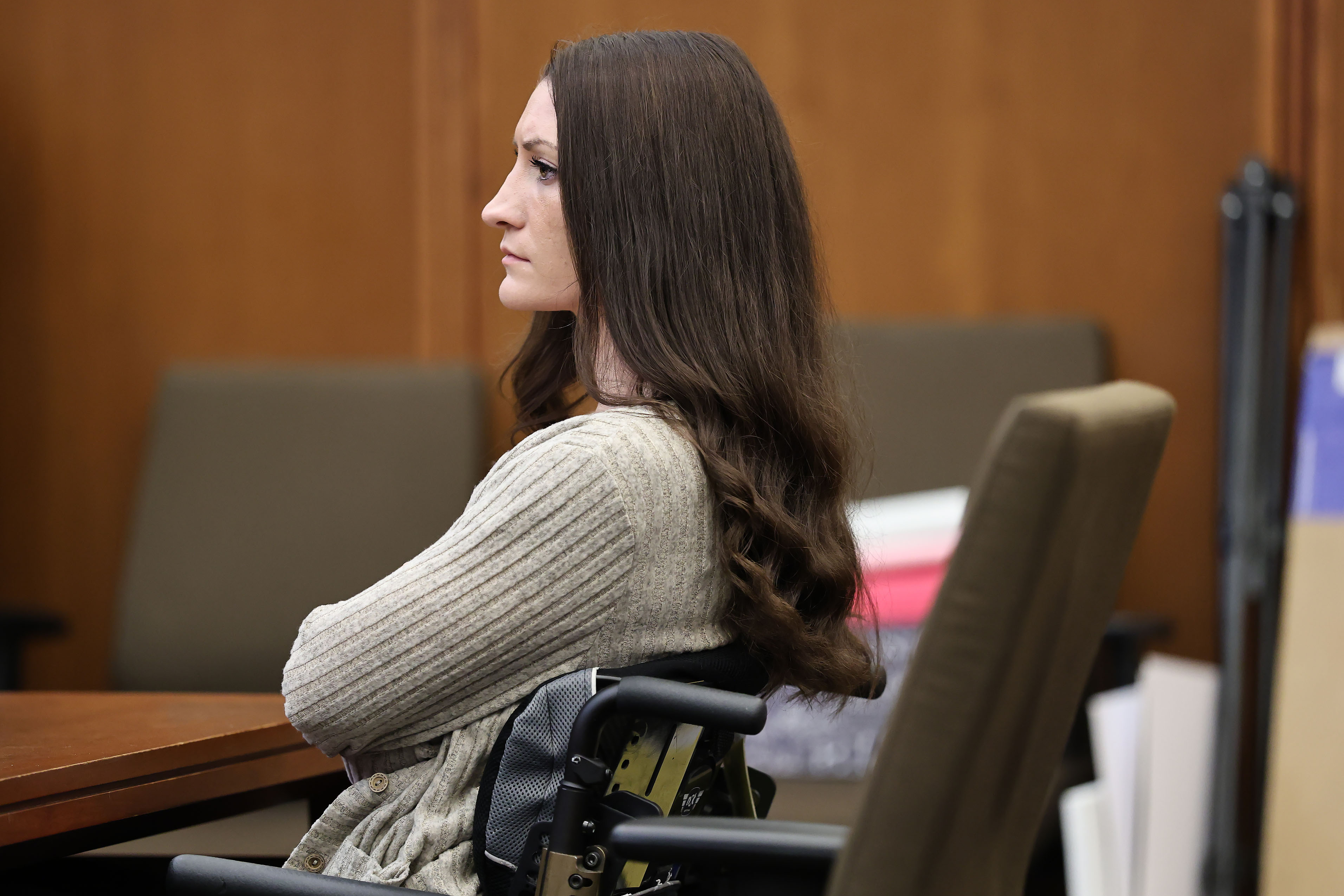
    Testimony concluded Wednesday in the murder trial of Lindsay Clancy, a mother accused of strangling her three young children in a case that has drawn attention to postpartum mental health.

    Closing arguments are expected to begin Thursday, before the jury begins deliberating.

    Clancy, 36, has pleaded not guilty by reason of lack of criminal responsibility, with her lawyers arguing she was experiencing postpartum psychosis when she killed 5-year-old Cora, 3-year-old Dawson and 8-month-old Callan Clancy at the family’s home in coastal Duxbury, Massachusetts, in January 2023. The rare mental illness is linked to the stress, sleep deprivation and hormonal changes that follow childbirth.

    ___

    EDITOR’S NOTE: This story includes discussion of suicide. If you or someone you know needs help, the national suicide and crisis lifeline in the U.S. is available by calling or texting 988.

    ___

    Prosecutors say Clancy planned the killings and understood her actions were wrong.

    Clancy did not testify during the trial, which is in its fifth week. The defense called 10 witnesses, including some of Clancy’s friends and relatives, while prosecutors called more than 70 witnesses, including her then-husband.

    Testifying as the final rebuttal witness for the prosecution, a forensic psychiatrist at the University of Virginia and a senior psychiatrist for the FBI’s Behavioral Analysis Unit said Wednesday that he did not believe Clancy’s account that a voice ordered her to kill the children.

    Prosecutor Jennifer Sprague asked Dr. Gregory Saathoff a series of questions about Clancy’s account: Did the voice tell her where to kill the children? How to kill them? What to use? In what order? Saathoff answered no each time.

    “Having no instructions as to how to do it, but being able to execute those decisions … that is surprising that she’s able to accomplish all of this without any other kind of direction or plan,” he said.

    All three children were strangled with exercise bands in the family’s basement before Clancy tried to kill herself while her husband was getting takeout and at a pharmacy on Jan. 24, 2023. Saathoff said her ability to accomplish everything she did without direction indicated Clancy “had control, control of the sequence of what she was doing throughout.”

    “In the small amount of time that Miss Clancy had in the home without her husband, it was important, in order to carry this out, as well as her suicide, to do this quickly, methodically, and alike,” he said.

    On Tuesday, Saathoff said he found it unusual that Clancy said the voice stopped once she was done strangling the children, that the voice was constant rather than intermittent and that she never previously reported hearing a voice to her medical providers. She also gave a different timeline to other evaluators about when she first heard the voice that day, he said.

    “Committing the act is not curative of the voice,” Saathoff said of the voice stopping abruptly. “I’ve not ever seen that.”

    Defense attorney Kevin Reddington began his cross-examination of Saathoff on Wednesday by trying to cast doubt on Saathoff’s expertise in postpartum psychosis and portray him as someone closely aligned with law enforcement, questioning him about his work with prisons, the Justice Department and the Virginia attorney general’s office.

    Saathoff testified that he treated women with postpartum psychosis while working at a state hospital in the 1980s and 1990s, while much of his more recent research has focused on such subjects as extremist violence, national security and political radicalization.

    Reddington also asked Saathoff about Clancy’s attempts to search online for information about postpartum depression, her visits to multiple maternal and mental health providers, disclosures to her mother and then-husband that she was suicidal and feared that she would harm her children, and calls to a suicide hotline — all attempts that Reddington contended establish Clancy realized something was seriously wrong and made a sincere effort over time to get help.

    Reddington asked whether Saathoff believes that Clancy decided to kill her children because she “no longer liked the life she thought she wanted” and was making “a selfish choice” to “manipulate her providers, seek out a quick and easy fix when she was feeling depressed and anxious.”

    “I think that statement that you read really minimizes what she was going through,” Saathoff responded.

  • The Kremlin says the CIA director held talks in Moscow with his intelligence counterparts

    The Kremlin says the CIA director held talks in Moscow with his intelligence counterparts

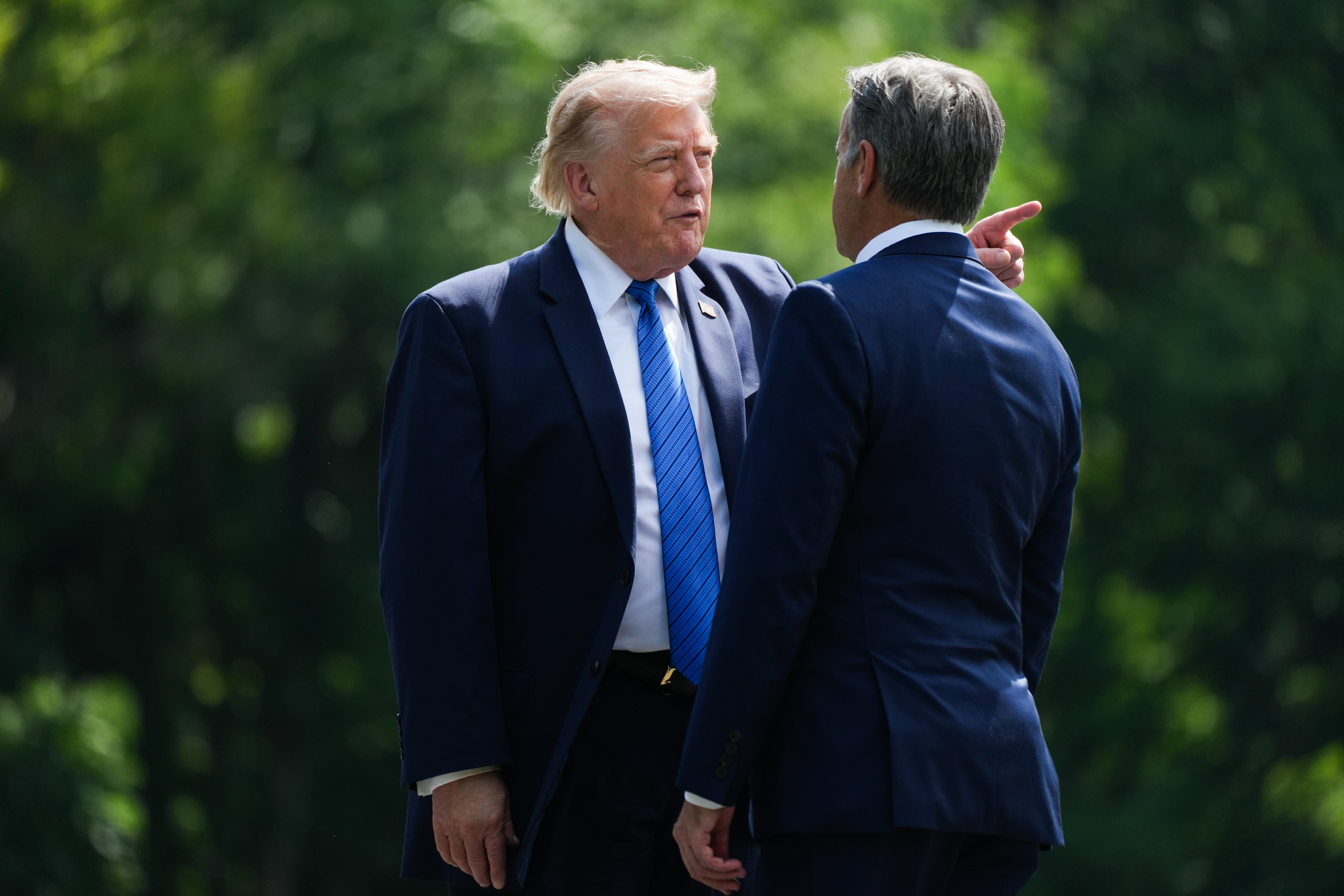
    The Kremlin said Wednesday that CIA Director John Ratcliffe held talks in Moscow with his intelligence counterparts, a rare and secretive visit at a time when relations with Washington remain strained over Russia’s war in Ukraine.

    Kremlin spokesman Dmitry Peskov said Ratcliffe did not meet with Russian President Vladimir Putin, who was informed of the contacts that were “on the intelligence agencies’ level.”

    “Of course, President Putin is immediately informed of everything,” Peskov added, refusing to say what was discussed.

    Russian state news agencies reported that a U.S. military plane landed in Moscow’s Vnukovo airport on Tuesday and departed later that day.

    U.S. President Donald Trump played down the significance of Ratcliffe’s trip, saying it was “sort of semi-routine.”

    “I hate to disappoint people,” he said on conservative broadcaster Glenn Beck’s radio show Wednesday.

    A senior Ukrainian official told The Associated Press that Washington informed Kyiv a delegation would be traveling to the Russian capital and asked it to suspend strikes until it left. The official said the request did not apply to all Russian territory, but specifically to Moscow, St. Petersburg and some northern regions. Strikes on other parts of Russia continued, the official said, speaking on condition of anonymity because he is not authorized to talk publicly.

    CBS News first reported on the visit.

    Kremlin says US-Russia relations are in a ‘profound crisis’

    Peskov said that “contacts between intelligence agencies are, in and of themselves, a positive phenomenon, a positive process,” but he stressed that Russia-U.S. relations remain in a “profound crisis.”

    He added that it was “too early to say” what impact Ratcliffe’s visit would have on the ties between the two countries.

    Andrei Soldatov, an expert on Russia’s security services, told AP that visits like the one by Ratcliffe do not “happen every year.”

    Official channels of communication between Moscow and Washington have been kept alive since the 1980s and exist so both sides can talk if American or Russian lives are in danger or for other reasons, Soldatov said.

    In 2021, Nikolai Patrushev, the secretary of Putin’s Security Council, met CIA Director William Burns in Moscow months before Russian forces invaded Ukraine. Burns later met Sergei Naryshkin, the head of Russia’s foreign intelligence agency, in Turkey in November 2022 to warn Russia not to deploy a nuclear weapon in Ukraine.

    Details of Tuesday’s discussions have not been revealed, but such meetings normally take place only when there is a matter of pressing national security and when it is in “American national interests,” Soldatov said.

    Russia-U.S. relations sank to Cold War lows after Moscow’s full-scale invasion of Ukraine in 2022, but appeared to warm after Trump returned to office. He had promised to end the war swiftly, holding multiple phone calls with Putin and even hosting him in Alaska a year ago.

    In his radio appearance Wednesday, Trump repeated that he wants to see the Russia-Ukraine war end.

    Efforts to negotiate a peace deal have largely stalled, with U.S. attention turning to its war with Iran and both Moscow and Kyiv stepping up their long-range attacks on each other. Putin has rejected Ukrainian President Volodymyr Zelenskyy’s push for an immediate ceasefire, arguing that Russia wants a comprehensive settlement, not a temporary truce.

    Russia has proposed to mediate in the U.S. and Israel’s war with Iran, Moscow’s important ally in the Middle East.

    Russia and Iran have a partnership treaty

    After Putin sent troops into Ukraine in February 2022, Tehran provided Russia with Shahed drones and later licensed their production in Russia. In January 2025, Moscow and Tehran signed a “comprehensive strategic partnership” treaty. But even as it has built ties with Iran, Russia also has remained friendly with Israel, and analysts have described its relations with Iran as complex and challenging.

    In March, AP reported that Russia provided Iran with information that could help Tehran strike American warships, aircraft and other assets in the region, according to two officials familiar with U.S. intelligence on the matter. The officials, who were not authorized to comment publicly on the sensitive matter and spoke on the condition of anonymity, cautioned that the U.S. intelligence has not uncovered that Russia is directing Iran on what to do with the information.

    Asked at the time whether Russia would go beyond political support and offer military assistance to Iran, Peskov said there has been no such request from Tehran. Pressed on whether Moscow provided any military or intelligence assistance to Tehran since the Iran war’s start, he refrained from comment.

    Soldatov said it’s possible Tuesday’s meeting involved protecting U.S. personnel, bases or facilities in the Middle East that have been targeted by Iran. Ratcliffe could have traveled to Moscow to try to influence this relationship, he added.

  • Trump mulls renaming Lake Ontario as ‘Lake America.’ Canadians balk at the idea

    Trump mulls renaming Lake Ontario as ‘Lake America.’ Canadians balk at the idea

    WINDSOR, Ontario — With his trade war with Canada intensifying, President Donald Trump floated the idea of renaming Lake Ontario to become “Lake America.” America’s northern neighbors quickly panned the idea.

    “He can blow out his hole as much as he wants to, but it’s never going to happen, because Canadians are strong,” said Patricia Wiseman, an Ontario resident, as she walked along the waterfront of the Detroit River.

    It may be more complicated than that. Trump has wide latitude over how the U.S. government recognizes geographic places and landmarks. But the Republican president cannot force Canada or individual citizens on either side of the border to follow his preferred naming conventions. And his latest branding idea — reminiscent of his move to rechristen the Gulf of Mexico as the “Gulf of America” — highlights how much his rhetoric and trade policy have sundered the previously warm relationship between Washington and Ottawa.

    “I believe the American people love us, and we love them,” Wiseman said. “They’re going through as much turmoil as we are. Hopefully, one day we can reunite.”

    Trump introduced the idea of renaming the easternmost area of the Great Lakes hours before Canadian Prime Minister Mark Carney’s scheduled announcement of reciprocal tariffs on U.S. imports into his country.

    “The United States is giving serious consideration to changing the name of Lake Ontario to Lake America in that we don’t expect to doing much business with Ontario any longer,” Trump posted Tuesday on Truth Social.

    The White House followed later in the day by posting on social media a toy Lego map of the U.S. labeling the Gulf of Mexico with Trump’s preferred name, Gulf of America.

    Ontario is leading trade partner for many U.S. states

    The U.S. and Canada, which share borders along multiple Great Lakes, including Lake Ontario, are locked in an extended trade dispute, with the Trump administration imposing 50% tariffs on $20 billion worth of Canadian goods over the weekend after talks between the countries broke down. That ratcheted up lower tariffs that Trump imposed in 2025, shortly after his second presidency began.

    Trump has also threatened new 50% tariffs on Canadian vehicles, auto parts and steel, while Carney said U.S. trade demands showed that Washington wanted to “destroy our major industries,” including autos, steel and aluminum.

    The official U.S.-Canada border stretches across the water between Lake Ontario’s northern and southern shores. The body of water forms much of New York State’s coastline and separates Buffalo from Toronto, the capital of the province of Ontario. Toronto is Canada’s most populous city and Ontario its most populous province.

    Ontario is also the single largest export destination for more than a dozen U.S. states.

    “It’s disappointing,” Ontario resident Paul Butler said of Trump’s policy and rhetoric. “The more you hear it, it just gets downright infuriating.”

    Ontario Premier Doug Ford, who traded personal insults with Trump on Monday, dismissed the Lake Ontario threat as “a lot of rhetoric” and urged the two countries to resume negotiations. Ford acknowledged in a CNN interview that the dispute had “got a little personal” and agreed it was time to lower the temperature, saying the trade fight was hurting both countries and that Canada and the United States should “get back to the table” to negotiate.

    Lake Ontario’s name predates either country

    The lake’s name comes from the Huron Indigenous people’s word “oniatarí:io,” which means “lake of shining waters,” and it predates European settlement in the region. The province, founded in 1867, took its name from the lake.

    The International Hydrographic Organization — of which both the United States and Canada are members — works to ensure that the world’s seas, oceans and navigable waters are surveyed and charted uniformly, and also names some of them. But there is no single international body that determines names of international bodies of water.

    “It’s been like that for so long, so, why do we need to change it?” said Nancy Minard, an Ontario resident. “It seems to work for Canada and I think probably works for the U.S., too.”

    Trump has at least some support for his idea on Ontario’s south shoreline.

    “I like it. Absolutely. Because I like America, and right now Canada’s not treating us very nicely,” said Jim Fetterhoff, a resident and fisherman in Port Ontario in upstate New York.

    He cited Canadian tariffs on dairy and other products. Nothing against Canadians themselves, Fetterhoff added, “just the Canadian government. I love Canadians.”

    Trump has been antagonizing U.S. neighbors

    Canada and Mexico are the largest U.S. trading partners but have drawn Trump’s ire throughout his second presidency on trade, immigration and crime. He has called for Canada to become the 51st state, alternating between joking tones and seemingly serious assertions that Carney and other Canadians have rejected and mocked.

    On the day of his second inauguration, Trump fulfilled one of his 2024 campaign promises with an executive order to rename the Gulf of Mexico to the Gulf of America. The body of water forms a shared border between Mexico and the U.S.

    Mexico does not recognize the change, nor do many other countries and international bodies.

    In 2015, President Barack Obama changed the name of Alaska’s Mount McKinley, named for the 25th U.S. president, to Denali, its historical name given by Alaska Natives as well as the preference of many Alaska residents. Trump, the same day he ordered the Gulf of Mexico to be renamed, returned McKinley’s name to the Alaska mountain to honor “a great president.”

    That back-and-forth in Alaska could be a preview for a certain ancient lake. Said Wiseman of Trump, “He’s not going to be in the presidency forever.”

    ___

    This story has corrected to reflect that Trump floated the idea in a social media post on Tuesday, not Monday.

    ___

    Barrow reported from Atlanta. Gillies reported from Toronto. Associated Press writer Cara Anna in Lowville, N.Y., contributed to this report.

  • At least 160 killed and hundreds missing after flash floods in Nepal and China

    At least 160 killed and hundreds missing after flash floods in Nepal and China

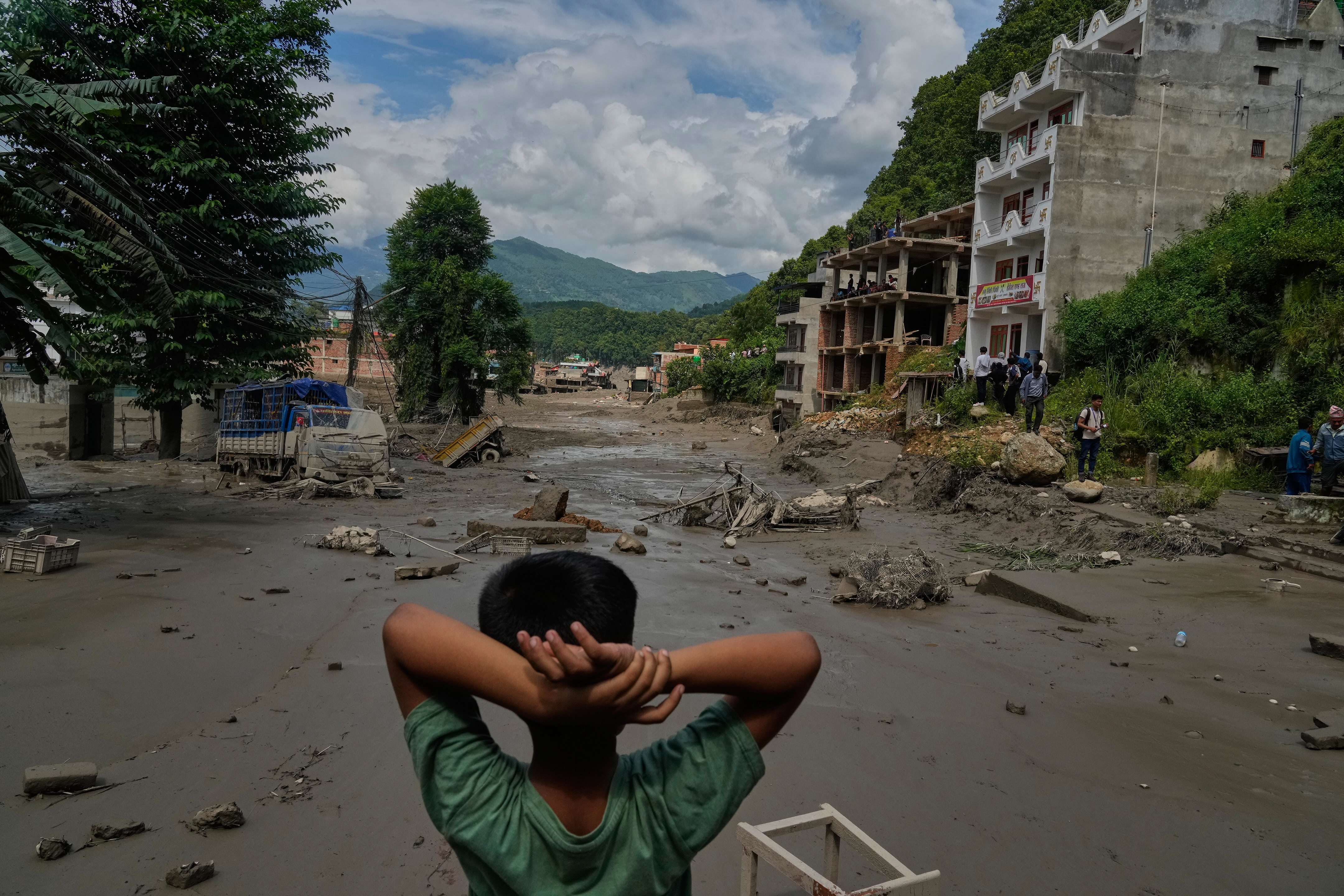
    UDIN DHUNGA, Nepal — Massive flash floods in a border area of Nepal and China on Wednesday killed at least 160 people and left hundreds of tourists, workers and others missing after sweeping through communities and bringing travel in some areas to a halt. Experts said an avalanche from a glacier was the likely cause.

    Police in Nepal reported at least 157 dead. China’s state broadcaster CCTV said a mudslide in the Tibet region’s Gyirong County near the border killed at least three and left 265 missing. Drone footage showed roads destroyed and buildings buried. State news agency Xinhua reported significant casualties.

    Nepal’s steep valleys are economic lifelines and travel corridors but precarious ones when disaster strikes. Images showed what appeared to be the second floors of buildings in hard-hit Nuwakot district slathered in mud after the torrent rushed by. Debris hung from tree branches and wires, vehicles were buried and stunned survivors were caked in mud.

    Many missing were on pilgrimage to a sacred site

    Officials in Nepal said 403 people, including 341 foreign nationals, were reported missing. Sunil Sharma, a tourism board spokesperson, said 133 were from India on pilgrimage to Mount Kailash in Tibet, a sacred site for Hindus. Also missing were 47 from the United States, 34 from Australia, 33 from Britain and 24 from Canada, he said. The State Department said it was aware of Americans affected.

    At least 62 missing Nepali citizens were among hundreds of locals trekking in the Gosaikunda Lake area in Rasuwa, coinciding with the local festival of Janai Purnima on Friday, Sharma added. Nepal police spokesperson Abi Narayan Kafle told The Associated Press at least 28 police officials were missing.

    Officials warned residents in several districts to stay away from the banks of the Bhotekoshi, Trishuli and Narayani rivers. The Bhotekoshi flooded around 9 a.m. Wednesday, destroying several villages and hydropower projects, officials said. At least 19 bridges were swept away.

    “We have asked both India and China to help us with the rescue efforts,” said government spokesperson Sasmit Pokharel.

    The U.S. Geological Survey had reported a magnitude 4.4 earthquake early Wednesday, about 60 miles north of Kathmandu, near the border with China’s autonomous region of Tibet.

    Though the current monsoon season is less favorable for trekking in Nepal, it’s a major season for Kailash trekking in Tibet, which follows the route in Nepal’s Rasuwa district bordering Tibet’s Gyirong.

    Countries express alarm over missing citizens

    South Korean government officials said nine citizens working on building a hydropower plant in Nepal were among those reported missing. Malaysia’s foreign ministry said its embassy received reports from travel agencies that they had lost contact with 11 Malaysians believed to be in Rasuwa district. Russia’s embassy in Nepal said four citizens reportedly in the affected area were missing.

    Indian Prime Minister Narendra Modi spoke with Nepal’s Prime Minister Balendra Shah and offered help. “India is prepared to provide Nepal with all possible types of humanitarian assistance. Our teams are closely coordinating on rescue and relief efforts,” Modi said on social media.

    Some United Nations bodies were deploying “in an effort to meet what will clearly be massive humanitarian need,” U.N. spokesperson Stephane Dujarric said.

    In a joint statement, Australia, Britain, the European Union, Finland, France, Norway and Switzerland expressed solidarity with people in Nepal, adding: “We encourage all those in affected areas to follow the guidance of local authorities and official safety advisories as the situation continues to evolve.”

    The same region saw flash floods last year

    Climate experts at the Kathmandu-based International Centre for Integrated Mountain Development said an avalanche from a glacier likely caused Wednesday’s flash flood.

    “Hydrological observations indicate the exceptional speed and magnitude of the flood wave,” they said in an emailed statement, noting that water levels at one point on the Trishuli river rose by as much as 27 feet over half an hour.

    The Lhende Khola River, a tributary of the Bhotekoshi, had maximum flooding, they said.

    “The Lhende Khola has flooded twice in 14 months, this time triggered by an ice rock avalanche from a glacier on the Nepal side that blocked the river and released a sudden surge downstream,” said Saswata Sanyal, a disaster risk reduction specialist at the climate research group.

    He noted the importance of early warnings in “a warming Himalaya.”

    The region saw similar flash floods in August last year, when a glacial lake in Tibet overflowed because of high temperatures. Nine people were killed, and critical infrastructure, including a bridge connecting Nepal and China, was damaged.

    The Himalayan region, which spans several countries including India, is especially vulnerable to heavy rains, floods and landslides because of warming due to human-caused climate change. Research shows that extreme weather events, including heat waves, rains and melting glaciers, have become more frequent.

    Researchers in Kathmandu found earlier this year that glaciers across the Hindu Kush Himalaya region are melting at an accelerating rate, with ice loss rates doubling since 2000, primarily due to rising global temperatures and climate change.

  • Democratic states file new lawsuit seeking to block Trump’s order limiting mail voting in midterms

    Democratic states file new lawsuit seeking to block Trump’s order limiting mail voting in midterms

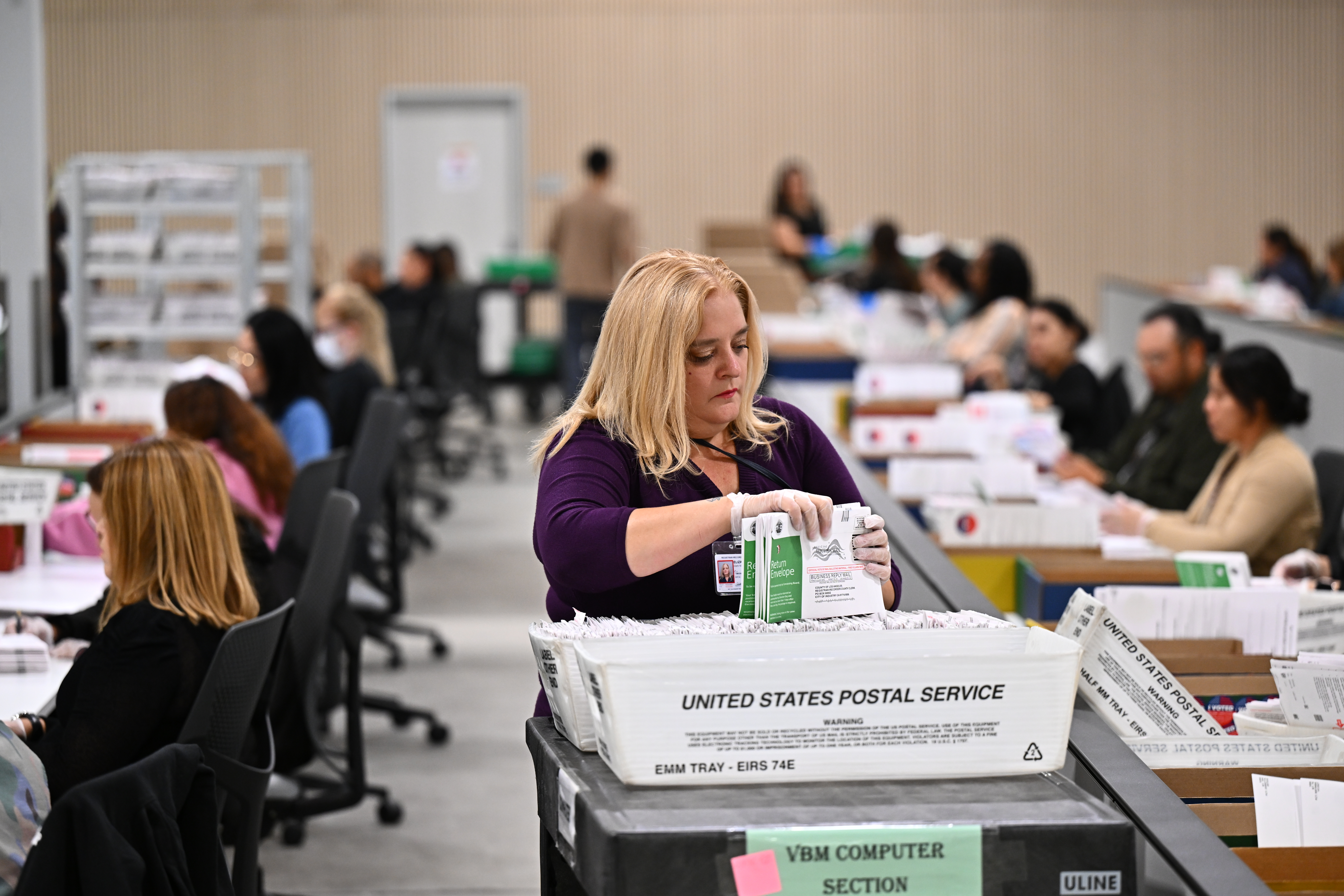
    Democratic-controlled states on Wednesday filed another lawsuit challenging President Donald Trump’s executive order seeking to limit mail voting in this year’s midterm elections.

    The action, filed by about two dozen states against the U.S. Postal Service, marked a new phase in the high-stakes litigation just two days after the Supreme Court ruled against them in a separate case, but did not say Trump’s order was legal.

    The high court majority found the Democratic lawsuit was premature, but that was before the Republican administration issued a rule governing Postal Service delivery of mail ballots. Election officials warn it will be impossible to implement in the days before the first wave of mail ballots are sent out next week.

    “Across the country, states are already deep into preparations for the 2026 elections. Now, at the last moment, the federal government is attempting to meddle in those preparations and potentially threaten countless Americans’ right to vote,” New York Attorney General Letitia James, one of 25 Democratic attorneys general filing the lawsuit, said in a statement. “USPS has no authority to decide who can and cannot vote by mail.”

    Trump’s executive order remains barred from taking effect under a separate injunction that the administration argues needs to be immediately rescinded in light of the high court’s ruling in the previous Democratic state lawsuit. It also had succeeded in a third case filed in May in the District of Columbia, convincing a judge that it was too early to prevent its implementation of the executive order.

    All previous challenges were filed before the administration published its mail ballot rule Friday night. The rule says that if states want their mail ballots delivered, they will need federal approval of the design of their envelopes and must give the Postal Service a list of voters eligible to receive them.

    White House spokesperson Lauren Bis on Wednesday said the Postal Service’s proposals were “commonsense measures that protect the security of mail-in ballots” and that the administration would continue to work to implement them to boost “the safety and security of our elections.”

    The Postal Service said it would not comment because of the pending lawsuit.

    National Democrats on Tuesday cited the rule in asking the federal judge in the Washington case to block Trump’s order after he declined to do so last spring, saying the administration at the time had not taken concrete action. In Boston, U.S. District Judge Indira Talwani also found that the administration moving forward with the mail ballot rule had violated a separate injunction she had placed on the Postal Service prohibiting it from enacting Trump’s order, although she did not take any action against the government.

    Talwani, who was nominated by Democratic President Barack Obama, had issued the injunction against Trump’s executive order in the prior Democratic state case, which is the one the Supreme Court overturned on Monday. She has yet to act on the administration’s urging her to revoke her second injunction. It was issued Aug. 11 in a case against the executive order and was filed by the League of Women Voters and other voting rights groups while the Supreme Court was considering the administration’s appeal of the judge’s first order.

    Trump has long targeted mail voting, which he falsely blames for his 2020 election loss and is disproportionately used by Democrats as a result of Trump’s condemnations. Since returning to power, Trump has tried to claim authority over election rules, saying he thinks Republicans should “take over” vote counting in Democratic areas.

    He issued his first election executive order just months after retaking office, attempting to require documentary proof of citizenship to vote, among other changes. He has also been pushing a sweeping election bill that has stalled in the Senate amid opposition from Democrats and even some within his own party.

  • Democratic states file new lawsuit seeking to block Trump’s order limiting mail voting in midterms

    Democratic states file new lawsuit seeking to block Trump’s order limiting mail voting in midterms

    Democratic-controlled states on Wednesday filed another lawsuit challenging President Donald Trump’s executive order seeking to limit mail voting in this year’s midterm elections.

    The action, filed by about two dozen states against the U.S. Postal Service, marked a new phase in the high-stakes litigation just two days after the Supreme Court ruled against them in a separate case, but did not say Trump’s order was legal.

    The high court majority found the Democratic lawsuit was premature, but that was before the Republican administration issued a rule governing Postal Service delivery of mail ballots. Election officials warn it will be impossible to implement in the days before the first wave of mail ballots are sent out next week.

    “Across the country, states are already deep into preparations for the 2026 elections. Now, at the last moment, the federal government is attempting to meddle in those preparations and potentially threaten countless Americans’ right to vote,” New York Attorney General Letitia James, one of 25 Democratic attorneys general filing the lawsuit, said in a statement. “USPS has no authority to decide who can and cannot vote by mail.”

    Trump’s executive order remains barred from taking effect under a separate injunction that the administration argues needs to be immediately rescinded in light of the high court’s ruling in the previous Democratic state lawsuit. It also had succeeded in a third case filed in May in the District of Columbia, convincing a judge that it was too early to prevent its implementation of the executive order.

    All previous challenges were filed before the administration published its mail ballot rule Friday night. The rule says that if states want their mail ballots delivered, they will need federal approval of the design of their envelopes and must give the Postal Service a list of voters eligible to receive them.

    White House spokesperson Lauren Bis on Wednesday said the Postal Service’s proposals were “commonsense measures that protect the security of mail-in ballots” and that the administration would continue to work to implement them to boost “the safety and security of our elections.”

    The Postal Service said it would not comment because of the pending lawsuit.

    Pennsylvania is one of the states suing the Trump administration.

    “Absolutely nothing has changed here in Pennsylvania. You can vote in person on Election Day or you can vote by mail before Nov. 3,” Democratic Gov. Josh Shapiro said Tuesday evening before the suit was filed.

    “Your vote will be counted. Your vote is safe and secure,” Shapiro said. “No matter how many times the president wants to try and undermine people’s right to vote in this commonwealth, he needs to know that he will be met with a swift rebuke from me.”

    National Democrats on Tuesday cited the rule in asking the federal judge in the Washington case to block Trump’s order after he declined to do so last spring, saying the administration at the time had not taken concrete action. In Boston, U.S. District Judge Indira Talwani also found that the administration moving forward with the mail ballot rule had violated a separate injunction she had placed on the Postal Service prohibiting it from enacting Trump’s order, although she did not take any action against the government.

    Talwani, who was nominated by Democratic President Barack Obama, had issued the injunction against Trump’s executive order in the prior Democratic state case, which is the one the Supreme Court overturned on Monday. She has yet to act on the administration’s urging her to revoke her second injunction. It was issued Aug. 11 in a case against the executive order and was filed by the League of Women Voters and other voting rights groups while the Supreme Court was considering the administration’s appeal of the judge’s first order.

    Trump has long targeted mail voting, which he falsely blames for his 2020 election loss and is disproportionately used by Democrats as a result of Trump’s condemnations. Since returning to power, Trump has tried to claim authority over election rules, saying he thinks Republicans should “take over” vote counting in Democratic areas.

    He issued his first election executive order just months after retaking office, attempting to require documentary proof of citizenship to vote, among other changes. He has also been pushing a sweeping election bill that has stalled in the Senate amid opposition from Democrats and even some within his own party.

    Staff writer Jeff Neiburg contributed reporting.

  • Economists don’t expect reopening the U.S. to Mexican cattle imports to reduce high beef prices

    Economists don’t expect reopening the U.S. to Mexican cattle imports to reduce high beef prices

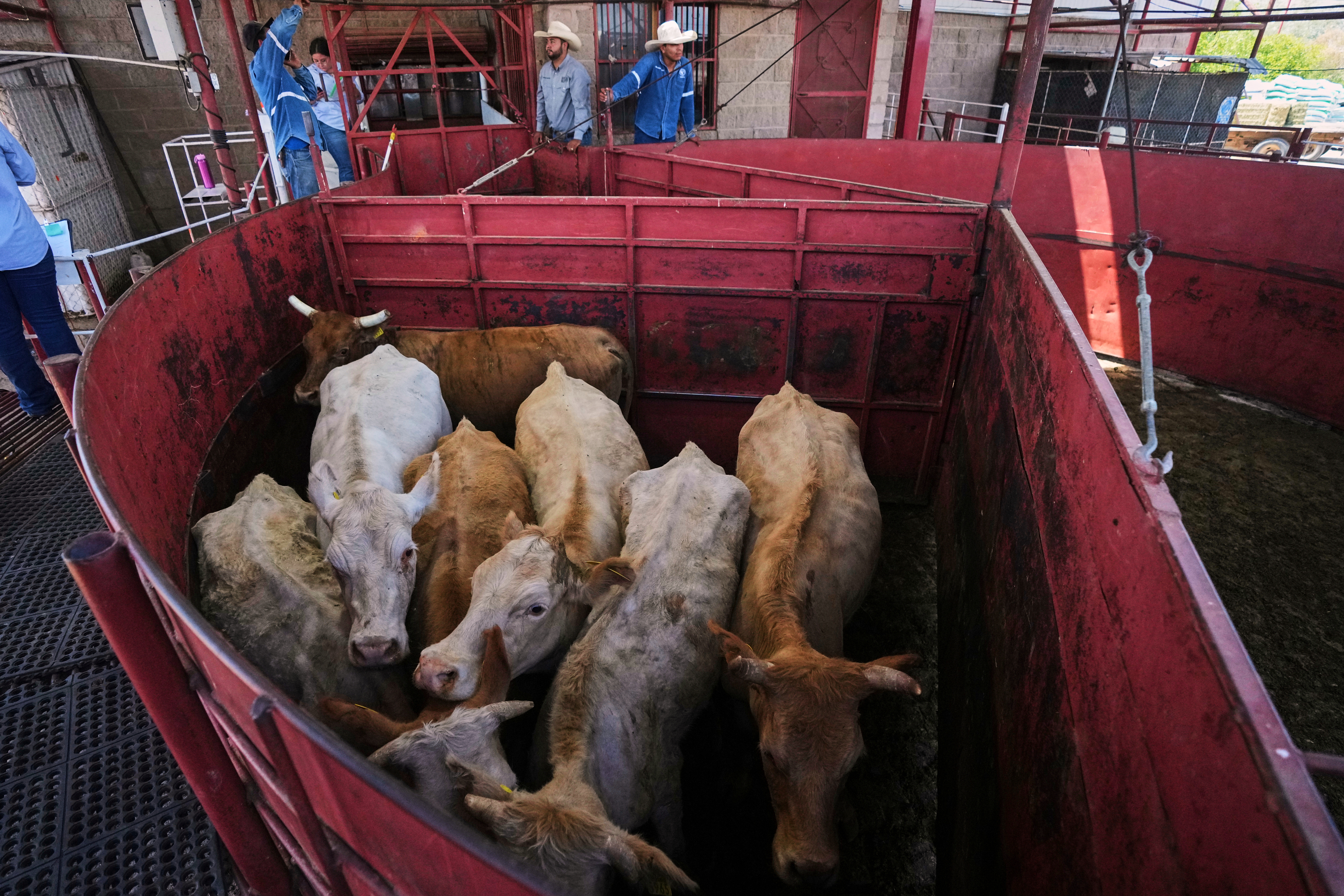
    The U.S. reopened a border crossing in Arizona to cattle from Mexico on Monday as part of a broader effort by the Trump administration to reduce record-high beef prices, though economists doubt the move will mean much to grocery store shoppers.

    The U.S. Department of Agriculture has said concerns about the New World screwworm’s spread lessened enough to allow the movement of cattle from Mexico at a crossing in Douglas, Ariz., about 230 miles southeast of Phoenix. Over time, it hopes to reopen other crossings in New Mexico and Texas.

    “Today, the border in Sonora is open for livestock,” Mexican President Claudia Sheinbaum said during a Monday morning news conference in Mexico City, referring to the Mexican state bordering Arizona.

    Cattle were coming across the border by mid-afternoon Monday.

    Beef prices clearly are a concern for President Donald Trump, who announced Friday that he would allow up to 331,000 tons (300,000 metric tons) of imported ground beef into the U.S., tariff-free, to be sold at below-market prices over the next 90 days. In February, the White House said closing the border to livestock imports from Mexico more than a year ago was “essential” to containing the screwworm, but it has exacerbated a shortage of cattle for slaughter in the U.S.

    “The administration obviously has a lot of incentive to try to be able to say that they’re doing something about high beef prices in particular,” said Derrell Peel, a professor of agribusiness at Oklahoma State University. “Beef has been singled out because it is an expensive product and because it’s just high profile.”

    The Trump administration closed the border to cattle imports in May 2025 as part of its response to the screwworm, a parasite with flesh-eating larvae that can infest and even kill cattle or other animals. The move came as the U.S. already was struggling to meet beef demand, thanks to a cattle herd that has been shrinking for five years and now is the smallest in decades.

    Because the USDA plans a phased reopening of the border, it will take months for Mexican imports to return to their traditional levels, Peel said. Mexico has traditionally provided 1.1 million head, or about 3% of the U.S. cattle supply.

    “I don’t expect to see any measurable impact on cattle prices or beef prices soon,” Peel said.

    The smallest U.S. herd in decades fueled record prices

    The USDA reported that on Jan. 1, the U.S. cattle herd had dropped to 86.2 million head, the lowest figure in 75 years. Beef prices skyrocketed over the past five years, rising significantly faster than food prices as a whole, according to the U.S. Bureau of Labor Statistics.

    The average price of a pound of ground beef rose nearly 57% from July 2021 to July 2026, from $4.39 to $6.89 — hitting a peak of $6.90 in May — with a 10% increase over the previous year. Food prices have risen about 25% overall in those five years, according to the bureau’s numbers.

    The price for a pound of uncooked steak rose 35% over the past five years, reaching a record $13.06 per pound in July, also 10% higher than a year before.

    But Glynn Tonsor, a professor of agricultural economics at Kansas State University, said the potential effect on beef prices from the smaller supply of cattle was lessened because the U.S. beef industry is more efficient and has been able to get more meat from each animal than in past years.

    The USDA says the reopening starts at a safe spot

    U.S. government and industry officials view the New World screwworm fly as a major threat to the nation’s $113 billion cattle industry. It was an annual warm-weather scourge for U.S. ranchers from at least the 1930s through the 1960s, until the U.S. largely eradicated it. The fly was contained for years near the Panama Canal, but returned to southern Mexico in late 2024 and advanced toward the U.S., with the first case in Texas since 1966 reported June 3.

    Since then, more than 40 cases have been confirmed in southern Texas and southeastern New Mexico, with infestations of cattle, sheep, goats, and dogs.

    In her July announcement of plans for a phased reopening of the border, U.S. Agriculture Secretary Brooke Rollins said it was possible to start with an Arizona crossing because the northern Mexican states of Sonora and Chihuahua had stronger animal health programs than other parts of Mexico. She also said each animal would be inspected and declared free of the parasite before crossing the border.

    U.S. Senate Agriculture Committee Chair John Boozman said the USDA is taking a “careful, science-based” approach to reopening the border and imposing strong animal health protocols.

    “This is an important step for America’s cattle producers, especially our feeders in the border states,” Boozman, an Arkansas Republican, said in a statement. “Restoring this long-standing trade is critical to strengthening our cattle supply and supporting a healthy, competitive beef industry.”

    Drought, low prices led to the smallest U.S. herd in 75 years

    Drought in cattle-producing regions of the U.S. is a major reason the national herd is so small, said David Anderson, professor of agricultural economics at Texas A&M University. If grass doesn’t grow, cattle have nothing to graze upon, forcing ranchers to sell them off. Low cattle prices over the past two decades also are a factor.

    “Where we are today is sort of the culmination of some 18, 19, 20 years of very low cattle prices,” he said. “That forces us to reduce our herds. Drought forces us to reduce them even further.”

    The shortage of cattle also has left beef processing plants operating below capacity.

    Tyson Foods, one of the nation’s largest meat processors, announced in November that it was reorganizing its beef operations and closing a plant in Lexington, Neb., about 220 miles southwest of Omaha. Earlier this month, it announced plans to close a plant in Utah outside Salt Lake City and another in Illinois about 150 miles southeast of Chicago.

    In June, another major U.S. processor, JBS USA, announced plans to close beef plants in Memphis and outside Philadelphia, though it later said it would keep some operations at the Pennsylvania plant to preserve 400 jobs there.

    Rebuilding the U.S. herd — and ultimately lowering prices — likely will take years, largely because a cow typically has only one calf a year, Peel said. In addition, breeding a heifer keeps her out of the food supply, tightening it further as the herd is rebuilt.

    Peel said prices will remain high for some time and for elected officials, “There’s nothing you can do.”

  • SEC joins Big Ten in banning pros from returning to college, includes basketball players

    SEC joins Big Ten in banning pros from returning to college, includes basketball players

    The Southeastern Conference passed a rule Tuesday banning players who have been drafted by NFL, NBA or WNBA teams or listed on rosters in those leagues, joining the Big Ten in taking a strong stand against this month’s unexpected surge of pro players trying to return to college.

    The SEC’s rule differs from the one adopted by the Big Ten, which only included football in its decision released earlier in the day.

    Combined, it leaves little doubt about where the nation’s two biggest conferences stand in the wake of court orders that were allowing players who had been on pro rosters, then released, to return back to college.

    It puts LSU on notice. This week, Tigers coach Lane Kiffin added Dae’Quan Wright and Zxavian Harris, a pair of undrafted players out of Mississippi who had tryouts in the NFL over the summer, but were released by their teams during training camp.

    The rule would also apply to basketball player R.J. Luis, who Monday won a court ruling that allowed him to sign with Will Wade’s program at LSU despite having briefly been under contract with the Jazz and Celtics of the NBA.

    There was no immediate comment from LSU.

    The Big Ten’s penalties for violating its rule include a half-season suspension for the head coach and a fine to the school. The SEC did not immediately divulge its penalties.

    The burst of rulemaking marked the latest chapter in a remarkable month for college sports, which was suddenly faced with the once-unthinkable but now court-approved return to college of players who had signed and sometimes played for professional teams.

    “I feel like I took a freaking gummy,” said Sean McVay, the coach of the Los Angeles Rams, when asked about the prospect of a player he released returning to college. “I don’t even understand it.”

    Kiffin was much more in tune with the change, suggesting in a news conference Monday that if LSU didn’t take such players, other teams certainly would. Now, nobody can — at least not among the 34 teams that make up the two biggest leagues in college and play an outsize role in spearheading policy across the industry.

    Another Power Four league, the Atlantic Coast Conference, was set to discuss the issue Wednesday.

    They are reacting to a series of losses in state courts around the country, where judges are granting players who graduated high school in 2022 a fifth year of eligibility. In June, the NCAA passed a rule giving most players five years to finish five seasons of eligibility in college, but did not grandfather in the Class of ’22.

    Hundreds of those players saw their fourth — and supposedly final — year of eligibility run out last spring. They are arguing in courts that they’re being denied educational opportunities and the chance to earn name, image and likeness money that they could get in a fifth year.

  • Watchdog files bar complaint against Jeanine Pirro over bid to indict 6 Democratic lawmakers

    Watchdog files bar complaint against Jeanine Pirro over bid to indict 6 Democratic lawmakers

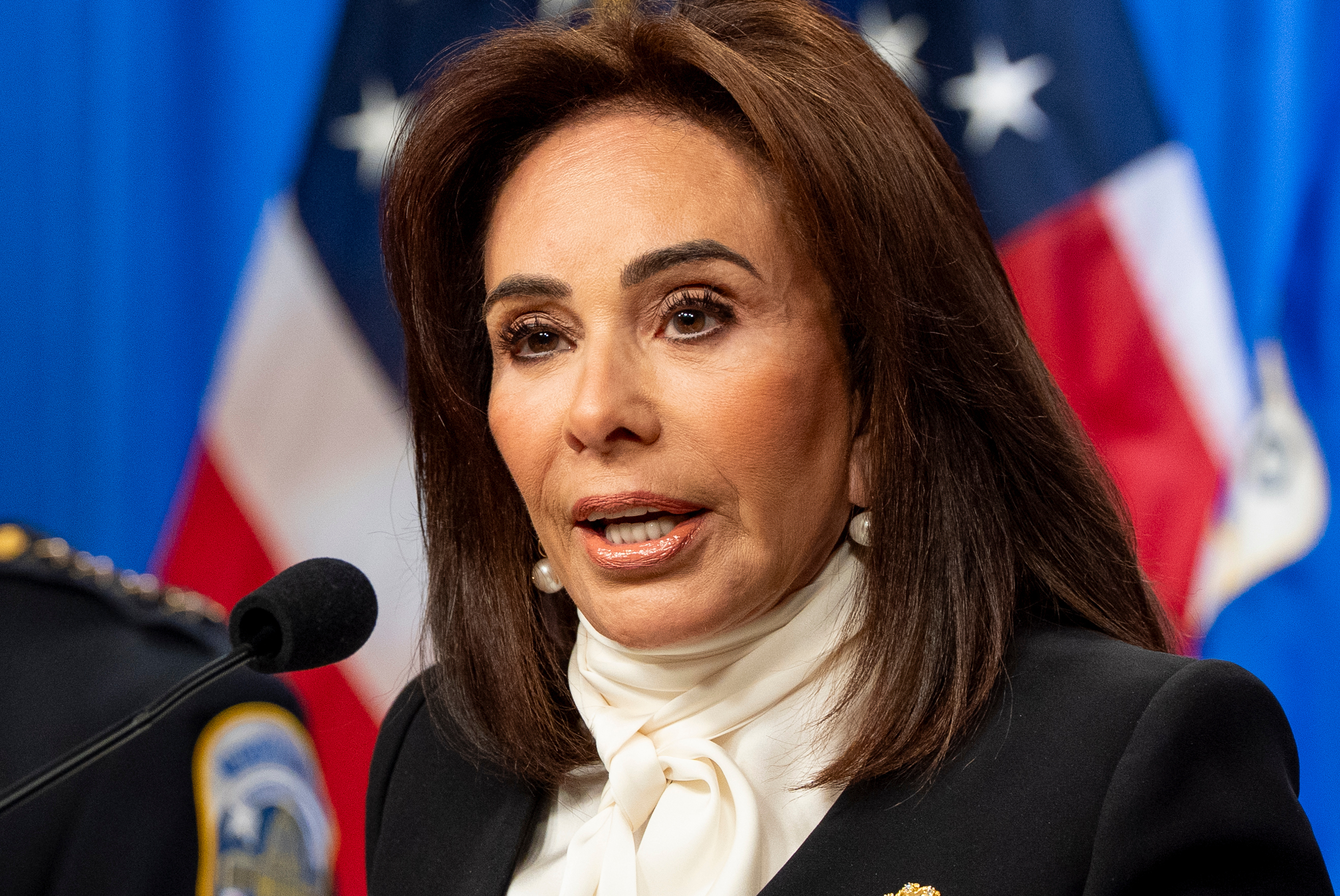
    WASHINGTON — A legal watchdog says it filed bar complaints on Tuesday accusing U.S. Attorney Jeanine Pirro and two lieutenants of violating their ethical duties in seeking to charge six Democratic lawmakers with federal crimes for appearing in a video that called on troops to resist unlawful orders.

    The Legal Accountability Center’s bar complaints, filed in New York and Virginia, claim Pirro and her subordinates, Carlton Davis and Steven Vandervelden, abused their prosecutorial powers to seek “meritless” indictments against President Donald Trump’s “perceived political enemies.”

    Tim Lauer, a spokesperson for Pirro’s Washington-based office, noted that it’s a grand jury’s job — not prosecutors’ — to decide whether to hand up an indictment.

    “Attempting to weaponize the disciplinary process against prosecutors for doing their jobs amounts to nothing more than a frivolous complaint,” Lauer said in a statement.

    In February, a grand jury in Washington refused to indict Sens. Mark Kelly and Elissa Slotkin and four House Democrats for urging U.S. service members to follow established military protocols and reject orders they believe to be unlawful. All six lawmakers previously served in the military or at intelligence agencies. Trump accused them of sedition “punishable by DEATH” in a social media post.

    A grand jury’s refusal to return an indictment is extraordinarily rare, but it has become increasingly common in Washington during Trump’s second term. Pirro’s critics have accused her of pursuing other legally dubious and politically motivated cases at the Republican president’s behest, such as the recently abandoned felony charge against a former Olympian who was accused of defacing the Lincoln Memorial Reflecting Pool.

    The center has filed complaints against other Trump administration officials, including Ed Martin Jr., Pirro’s predecessor as U.S. Attorney for the District of Columbia. Martin has been a leading figure in Trump’s campaign to use the Justice Department to prosecute his political opponents.

    In its complaint against Pirro, the center asks bar officials to investigate whether she and her colleagues violated rules of professional conduct for attorneys — and to “pursue appropriate discipline” against them. Its complaint against Pirro says her office had no legal basis for its “patently improper effort” to secure an indictment against the six lawmakers.

    “The only purpose could have been political animus and a desire to intimidate perceived enemies of the federal government and the President, who personally criticized the lawmakers’ video as seditious and punishable by death,” the complaint says.

    Defense Secretary Pete Hegseth has tried to punish Kelly, a former Navy pilot representing Arizona, for participating in the video. Kelly sued in federal court to block the censure from Hegseth. A district court judge ruled in his favor. Hegseth has asked an appeals court to review the decision.

    The center filed its complaint against Pirro and Vandervelden with a grievance committee based in White Plains, N.Y. In New York, the state Supreme Court’s appellate division governs ethical complaints against attorneys. The center filed its complaint against Davis with the Virginia State Bar.

    “Prosecutors have enormous power, and with that power comes an obligation to exercise independent legal judgment rather than use the criminal justice system to carry out a president’s political demands,” the center’s co-founder, Michael Teter, said in a statement.

    Pirro, who served as a county prosecutor and judge in New York, left her Fox News hosting job to become the top federal prosecutor for Washington last year.

  • FBI sets $25,000 minimum reward for dozens of unsolved Indian Country cases

    FBI sets $25,000 minimum reward for dozens of unsolved Indian Country cases

    SIOUX FALLS, S.D. — The Federal Bureau of Investigation has established a minimum reward of $25,000 in cases where people went missing or were killed in Indian Country, part of a broader effort to address high rates of violence affecting Native American communities.

    The new minimum applies to more than 50 unsolved homicides and missing-person cases in tribal communities. Most of the cases are less than 10 years old, though a dozen have been unsolved for more than two decades, an AP analysis found.

    Victims’ families and experts are unsure the higher amounts will be enough to get tipsters to come forward, citing people’s fears and distrust of the federal government.

    “Everybody’s scared in Oglala,” said Lisa Carlow, whose father, Patrick Carlow Sr., was found dead in his Pine Ridge Reservation home in 2023. “So to me it’s like, OK, what do you guys know that you’re not saying?”

    The FBI investigates federal crimes on nearly 200 Native American reservations, along with the U.S. Bureau of Indian Affairs. At the end of 2025, the FBI’s National Crime Information Center recorded just under 1,500 active cases involving missing Native Americans, though not all become federal cases. There isn’t a minimum reward that applies across all FBI cases.

    The FBI cited several cases in its recent announcement, including that of 8-year-old Maleeka Boone, who it said was likely struck by a vehicle on the Navajo Nation, and San Carlos Apache teenager Emily Pike, whose body was found after she disappeared from an Arizona group home.

    Higher rewards could stir new interest

    Mary Kathryn Nagle, a citizen of the Cherokee Nation of Oklahoma and an attorney who advocates for families of missing Native Americans, said federal investigators often “parachute in” to investigate crimes in tight-knit communities where witnesses may stay silent because of distrust and fear of retribution.

    Still, she said, larger rewards could provide an incentive for people to talk, and show families their loved ones’ cases are being taken seriously.

    “We have people in Indian Country who know what happened to our relatives,” she said.

    Luana Ross, who is Bitterroot Salish and a co-director of the Native Voices program at the University of Washington, said cash rewards could boost interest but often aren’t paid out.

    “It is my opinion that in reservation communities, people would be extremely reluctant to turn a friend or relative into a criminal justice system that hasn’t served them well,” she said.

    Lisa Foster’s longtime friend Mona Renee Vallo was found dead after a suspected hit-and-run along historic Route 66 in Laguna Pueblo, N.M., in 2022. Foster hopes the higher reward money will renew interest in the investigation.

    Foster described Vallo as a positive, bubbly friend who could have fun no matter what. She was a member of the Confederated Tribes and Bands of the Yakama Nation.

    “Someone knows something there,” Foster said. “They have to. I mean, it’s weird that she went to work and then all of a sudden this happened to her.”

    Frustration mounts as families seek answers

    The reward in Carlow’s case was increased to $25,000 in July, up from $10,000.

    Carlow’s family says the 73-year-old rancher was respected in the Oglala community. He mowed the grass for others and spent time with his grandchildren. The family said more calls started coming in after the reward was increased, but the wait for answers continues.

    Meanwhile, the FBI declined to provide the Associated Press an update on the case.

    “It’s so hard to get your hopes up like that and think, ‘This is it, we finally got Dad’s killer.’ And then nothing comes of it,” Lisa Carlow said.

    She said fear keeps community members who may have information from contacting authorities.

    “I think that’s like deep-rooted within our people,” said her sister, JoDee Carlow. “It’s not just on Pine Ridge. It’s on every reservation.”

    Relatives don’t want cases to be forgotten

    The FBI initially offered $5,000 for information in the deaths of two brothers from Ohio, Matthew and Philip Reagan. The reward was later doubled and now will hit $25,000. Though not Native Americans, they were killed on the Navajo Nation and are featured on the FBI’s Indian Country cases website.

    The brothers planned to visit Canyon de Chelly National Monument during a trip to California. Authorities believe their SUV got stuck in mud after GPS sent them off course near Sawmill. They were shot multiple times while walking to seek help, authorities said.

    Matthew Reagan’s wife, Faye Wurstner-Reagan, said she doubts a $25,000 reward will persuade anyone in the small community to come forward.

    “You would have to promise someone, like, actual protection,” she said. “I mean, they brutally murdered two men.”

    She suggested the FBI instead put resources toward law enforcement to keep the cases from going cold and for liaisons to keep families informed.

    FBI spokesperson Brooke Brennan in Phoenix said investigating crimes in Indian Country often is complex because of the remoteness, limited resources, and extensive workload.

    Wurstner-Reagan hopes that families united in pain and grief over missing loved ones and unsolved killings might one day see justice.

    “We’re just getting forgotten, like no one is remembering any of us, and we’re just told it’s an active investigation,” she said.