Category: Associated Press

  • Ebola outbreak in eastern Congo spreads to 2 new health zones with a total of 60 areas now affected

    Ebola outbreak in eastern Congo spreads to 2 new health zones with a total of 60 areas now affected

    BUNIA, Congo — The fastest-growing Ebola outbreak in history has spread to two new health zones in eastern Congo, with a total of 60 now affected, according to the latest government figures published on Friday.

    The two new zones affected are Biena and Manguredjipa in Congo’s North Kivu province, where the case fatality rate is much higher than the overall rate of 48%, due in part to delayed response efforts, according to Congo’s Ministry of Health data.

    It said the outbreak has recorded 5,794 confirmed cases, including 2,786 deaths, as it is spreading at an unprecedented speed, faster than efforts to track and slow it.

    The outbreak is spreading under extremely difficult conditions, fueled by insecurity, displacement, a health workers’ strike, and intense population movements. The World Health Organization has said that it remains out of control and is on track to surpass the 2014-2016 West Africa Ebola outbreak, the deadliest on record, which killed more than 11,000 people, primarily in Guinea, Liberia, and Sierra Leone.

    Aid group Doctors Without Borders said on Friday it had opened a new treatment center in Beni in North Kivu to enable a faster response in what it said was one of the hardest-hit areas.

    While the large majority of cases are concentrated in northeastern Ituri province, North Kivu has an Ebola fatality rate of close to 69%, one of the highest in the country, according to the latest government figures.

    The new center “enables the rapid treatment of patients, strengthens contact tracing, and supports the health authorities in their efforts to contain the spread of the virus,” Doctors Without Borders said in a statement.

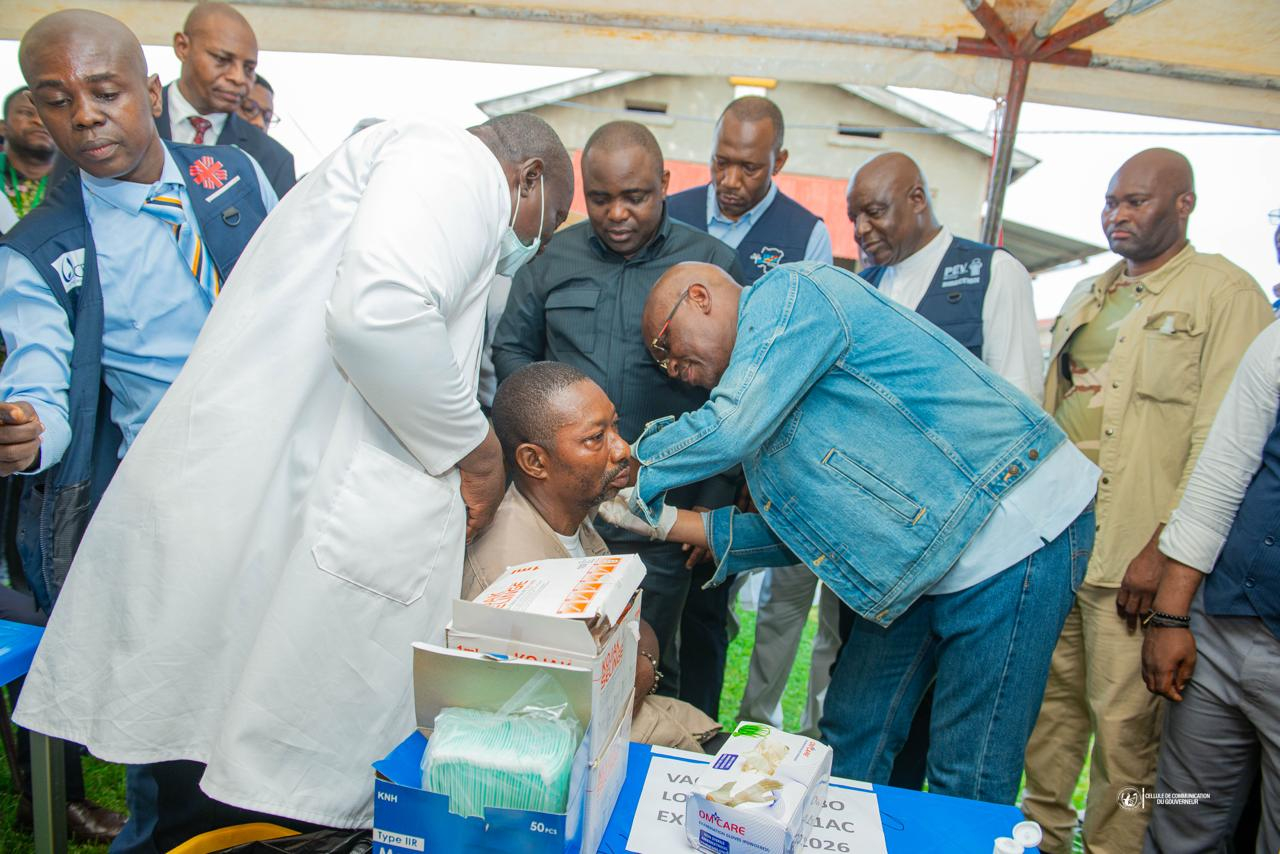
    On Thursday, Congo began vaccinating health workers and other front-line workers with the Ervebo vaccine that was effective in past Ebola outbreaks caused by a different, more common type called Zaire.

    Clinical trials are underway to find a licensed vaccine for the rare Bundibugyo virus that is causing the current outbreak and which has no approved vaccines or treatments.

    Although the current outbreak was declared in mid-May, officials believe it had been spreading since February. It has spread from three health zones to nearly 60, with most cases and deaths occurring outside the network of monitored contacts and within communities.

    Efforts to bring the outbreak under control — from limited public gatherings to social distancing and airport closures — have disrupted life in the six affected provinces, particularly Ituri, which has been ravaged by rebel violence.

    The government has introduced measures, including installing health and sanitary equipment at some locations, but advocacy groups say more needs to be done to build trust within the community.

    While neighboring Uganda declared itself free of Ebola last month, the risk of further cross-border spread remains, WHO said Wednesday.

    WHO expert Marie Roseline Belizaire said that the Central African Republic is now considered the country at highest risk of spillover, followed closely by South Sudan, as the outbreak in eastern Congo has expanded toward border areas.

  • Israeli strikes kill 5 in Gaza and 3 in West Bank

    Israeli strikes kill 5 in Gaza and 3 in West Bank

    Israeli airstrikes killed five people in Gaza and three in the West Bank on Friday, despite a fragile ceasefire brokered by the United States.

    Meanwhile, thousands of sailors remain stranded in the Persian Gulf by the Iran war, while Iran is touting an energy deal with Russia and the U.S. has imposed restrictions on a major Egyptian bank for its ties with Iran.

    Israeli strikes in Gaza kill 5

    Israeli strikes in Gaza have killed five people, local hospital officials said Friday.

    Two brothers and another relative died in a strike on the family’s home outside Khan Younis, officials at Nasser Hospital said. Two separate Israeli strikes killed one person each in Gaza City, according to health officials at Shifa hospital.

    Israel’s military confirmed the Gaza strikes but said it was not aware of the one in Khan Younis.

    The five deaths are among more than 1,300 Palestinians killed in airstrikes since an October ceasefire deal, Gaza health officials say.

    Attack kills 3 in Jenin

    Israel’s military said it killed three Palestinians in an airstrike in the West Bank city of Jenin on Friday, describing one of the dead as a Hamas operative and the two others as accomplices.

    The military identified one of the targets as Qais Bitawi who was alleged to be “involved in advancing significant terrorist activity.” The Palestinian Ministry of Health confirmed Bitawi had been killed, along with two others. Hamas condemned the strike as a “heinous crime.”

    Violence has escalated in the West Bank, where at least 87 Palestinians have been killed in attacks while three Israelis have been killed by Palestinians in 2026.

    Iranian leader bans actions undermining national unity

    Iran’s leader, Mojtaba Khamenei, on Friday declared that actions undermining national unity in the political, security, cultural, social, or economic spheres are prohibited.

    He warned that even measures with some support could ultimately be harmful if their broader social consequences are ignored.

    “Any statement that creates despair or weakens national and public motivation,” as well as what Khamenei called false divisions such as “war or negotiations,” “consensus or radicalism,” and “compromise or warmongering,” could damage the country.

    U.S. diplomats return to Mideast embassies

    American diplomats and some of their family members are beginning to return to U.S. embassies in the Middle East after many were ordered to leave their posts during the early days of the war with Iran.

    On Friday, the embassies in Doha, Qatar; Kuwait City, Kuwait; and Manama, Bahrain, announced they would allow some family members of diplomats to return.

    Similar measures were implemented earlier this week to all family members of U.S. government employees in Israel as well as those who are over 21 to Beirut, Lebanon.

    Iran’s president says negotiations between Iran and U.S. needed

    Iranian President Masoud Pezeshkian said Friday that neither Tehran nor Washington can achieve all of its demands and that negotiations are needed to bring stability and calm, state television reported.

    Pezeshkian said Iran would remain committed to the Islamabad memorandum if the United States upheld its own commitments under the agreement, adding that negotiations could then continue toward a broader resolution.

    He also criticized hard-liners inside Iran who oppose an agreement, favor continuing the war and argue that sanctions have had little effect on the country.

    Thousands of sailors stranded by Iran war

    The U.N.’s maritime agency said Friday that 19 seafarers have been killed and at least 6,000 remain stranded on hundreds of ships unable to leave the region since the start of the Iran war on Feb. 28.

    There have been at least 70 attacks on international shipping in the Persian Gulf, according to the International Maritime Organization.

    About 20% of the world’s traded oil and natural gas passed through the vital commercial waterway at the mouth of the Persian Gulf before the war.

    Iran and Russia look to revive energy deal

    Iran’s ambassador to Russia on Friday said the two countries are seeking to deepen links between their energy grids by reviving a plan that dates to 2022, according to Iranian state media.

    Umud Shokri, a fellow at George Mason University, said the plan calls for piping 55 billion cubic meters of Russian gas annually into Iran, via Azerbaijan.

    He said that would help Iran weather U.S. economic pressure by alleviating seasonal shortages of gas, though there are significant hurdles, as building out the infrastructure would be expensive and time-consuming.

    U.S. imposes restrictions on Egyptian bank

    The Trump administration is taking steps to limit an Egyptian bank’s operations in the United Arab Emirates.

    Banque Misr, Egypt’s second-largest bank, is accused of serving as an economic lifeline to Iran’s leadership. But under a new rule proposed by the U.S. Treasury, the bank’s Emirati branches would be severed from access to the U.S. financial system.

    The Central Bank of Egypt said the restrictions are limited to Banque Misr’s branches in the UAE and relate to dollar transfers only. No other Egyptian bank is affected.

    Iran objects to U.S. economic pressure

    Iran’s Foreign Ministry on Friday condemned a new round of U.S. economic measures against the country, calling them “economic terrorism” and saying Tehran would use all available means to counter them.

    The ministry said the sanctions violated international law and called on other countries to refrain from implementing them.

    Earlier this week, U.S. Treasury Secretary Scott Bessent vowed to fully sever Iran from the global economy and threatened countries that continue to do business with Iran with secondary sanctions.

    Finland to stop providing U.N. agency aid for Palestine

    Finland said it will not extend an agreement to provide humanitarian aid with the United Nations agency for Palestinian refugees, or UNRWA.

    Israel’s Foreign Ministry, which has accused the U.N. agency of being a “hotbed of terrorism,” welcomed the news. UNRWA did not immediately respond to a request for comment.

    Finland provided UNRWA with 5 million euros ($5.8 million) annually under a multiyear deal set to expire later this year. The country said aid to Palestinian territories would instead be provided through other channels, such as the U.N.’s World Food Programme.

    U.S. revokes visa of former Iraqi finance minister

    The Trump administration has revoked the U.S. visa of a former Iraqi finance minister who was honored in 2022 with an International Women of Courage award by the State Department.

    The department said Friday it had revoked the visa of Taif Sami Mohammed Al Shakarchi, who served as Iraq’s finance minister from 2022 until July and earlier this month when she was implicated by Iraqi authorities in a possible corruption scheme.

    The department said her visa was revoked after the FBI added her to its “terrorism watchlist.” It was not clear why she had been added to the watchlist but officials said she had left the United States before her visa was revoked.
  • Civil rights groups make urgent plea for voting rights in D.C., ahead of midterm elections

    Civil rights groups make urgent plea for voting rights in D.C., ahead of midterm elections

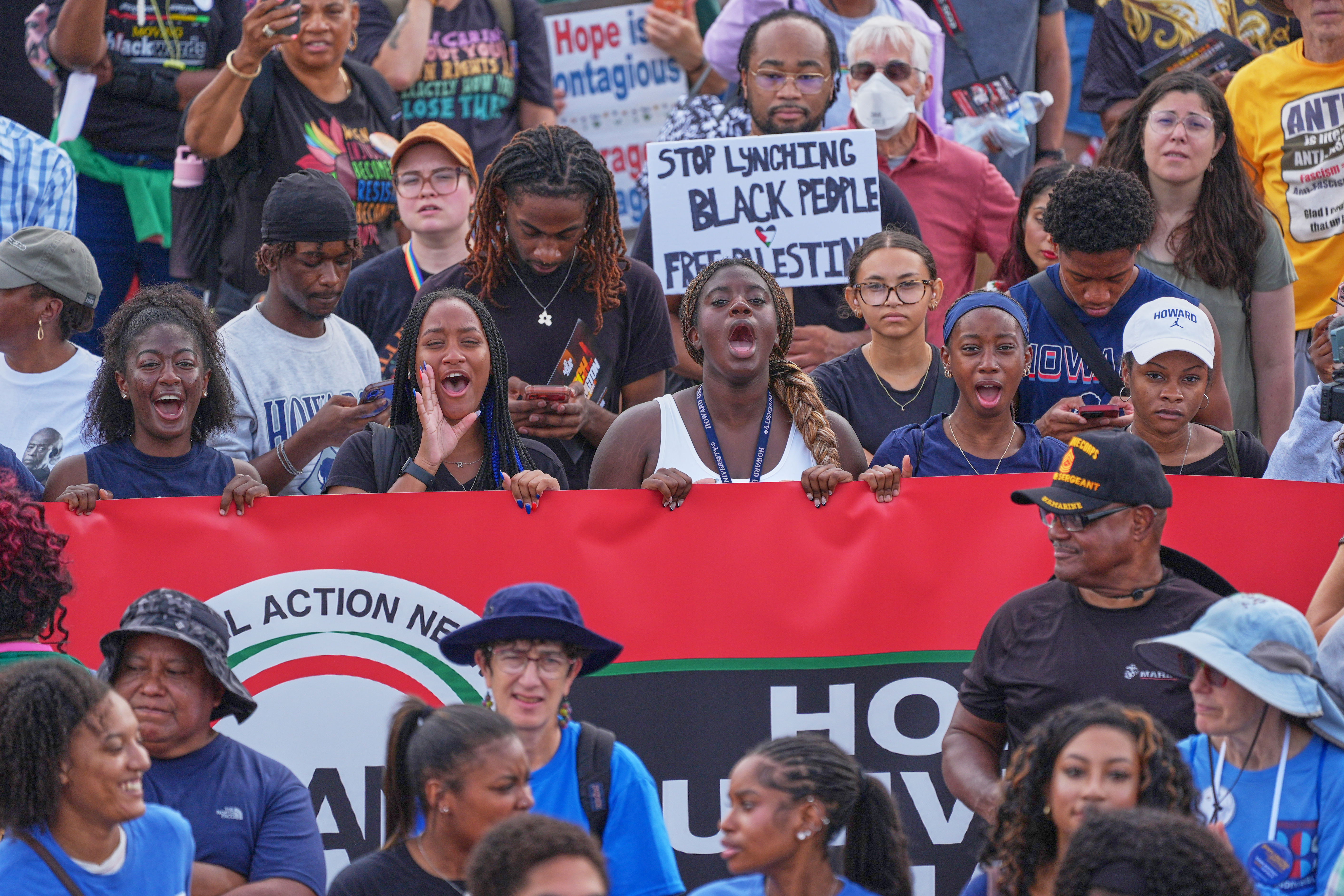
    WASHINGTON — Voting rights, the work of the civil rights movement, and racial justice took center stage on the National Mall Friday, with protesters gathering ahead of midterm elections and following a wave of changes to voting laws and redistricting that some have condemned as detrimental to Black Americans.

    Hundreds of people gathered near the steps of the Lincoln Memorial for the 2026 “Defend the Vote” March on Washington, organized by the Rev. Al Sharpton and Martin Luther King III, echoing the Rev. Martin Luther King Jr.’s 1963 march. The event follows the U.S. Supreme Court’s landmark April decision in Louisiana v. Callais that reinterpreted key provisions of the Voting Rights Act of 1965, allowing Southern states to redraw their congressional maps in a way that erodes equal representation in Black communities.

    “We’ve been doing these marches for years, but this is probably the most important because this is the first year we are marching that the voting rights bill has been nullified by the Supreme Court,” Sharpton, founder of the National Action Network, said in an interview with the Associated Press.

    Some call it a ‘very dangerous moment in American history’

    Friday’s event harkened back to King Jr.’s historic March on Washington for Jobs and Freedom in 1963, when more than 200,000 people gathered at the foot of the Lincoln Memorial. That march, an inflection point in the Civil Rights Movement, came at a fraught moment, when economic headwinds, civil unrest, political division, and the Vietnam War bitterly divided Americans.

    Sen. Bernie Sanders (I., Vt.), one of dozens of speakers at the event, said that now is a “very dangerous moment in American history” and that the “dream of a more just and equitable society has never been under greater threat than it is right now.”

    He placed blame on Republican President Donald Trump and the Supreme Court’s conservative majority, listing attempts to purge voter rolls, obtain sensitive voter data, restrict mail-in and early voting, and redraw Congressional districts as part of threats to voting rights.

    “Today, we have a president along with the Supreme Court members he appointed carrying out the most significant assault on voting rights since segregation, targeting virtually every aspect of the electoral system,” Sanders said.

    Martin Luther King III told the AP the Civil Rights Movement’s work “is further eroding” in the wake of the April ruling.

    He said his father would be disappointed with the state of the country, but current civil rights advocates should be undaunted.

    “Had he lived, we’d be on a totally different trajectory,” the younger King said. “These would not be issues; they would have been resolved. I don’t think he would be surprised because he understands our history and understands those who are trying to retain power. But the challenge is challenging our communities to engage even more.”

    King’s Drum Major Institute, a progressive think tank and community action group, co-hosted the march with Sharpton’s group.

    Ray Turner, a 65-year-old Maryland retiree, sat Friday on the steps in front of the Lincoln Memorial. He came independently, carrying a sign that read “(Puny) Hands off our elections.”

    “The lies about the 2020 election being stolen continue to be sounded, even though they’ve been disproved,” Turner said, adding, “Now they’re trying to use this to prevent people who are legal citizens, legal voters, from voting.”

    Sharpton said the Trump administration’s immigration policies for Haitians and white South Africans, as well as cuts to social programs, are unifying concerns for this year’s march attendees. But redistricting efforts by Republican-led states set to reduce the number of Black lawmakers in Congress loom large.

    “This march is about people who refuse to be counted out. When the courts and the legislature broke apart District 6, they did not just redraw lines,” Rep. Cleo Fields (D., La.) said in a texted statement. “They told hundreds of thousands of Black families from Baton Rouge up through the Delta that their voice could be taken away at any moment.”

    Fields’ district was central in the Supreme Court decision that hollowed out the Voting Rights Act of 1965. The court ruled that his district, created just one term ago to permit a second majority-Black district in a state where Blacks make up 33% of the population, was unconstitutional because it relied too heavily on race.

    The court has held that maps can be redrawn for partisan reasons.

    Louisiana’s legislature rushed to redraw the district after the decision, reshaping it to cluster around predominantly white communities in the Baton Rouge area and southern Louisiana.

    Fields has opted not to seek reelection to Congress and instead is pursuing a seat in the state Senate.

    Embattled Black lawmakers see need for continued push

    Rep. Shomari Figures, an Alabama Democrat whose majority-Black district was targeted by the state’s Republican-led redistricting effort, said the original voting rights fight required local movements, national figures, lots of coordination, and strategy. He sees this year’s march as a continuation of that legacy.

    “My district includes Montgomery, which was the birthplace of it all. It started with a bus boycott in 1955 and that, ultimately, morphed into a broader struggle for civil rights and led to a more broad Civil Rights Movement,” Figures told the AP.

    Ahead of Friday, organizations participating in the march filed new claims in their federal lawsuit against President Donald Trump’s executive order restricting mail-in voting. The Supreme Court cleared a path Monday for possible implementation of the order, though it remains unclear how much can be put in place before the midterms.

    Late Thursday, a federal judge in Boston who is hearing some of the lawsuits against that executive order put a temporary halt on the administration from moving forward with it. Time is running short to make any significant changes to voting in the midterms, with the first mail ballots scheduled to be sent out next week.

  • Trump administration starts building border wall project in Arizona over tribe’s objections

    Trump administration starts building border wall project in Arizona over tribe’s objections

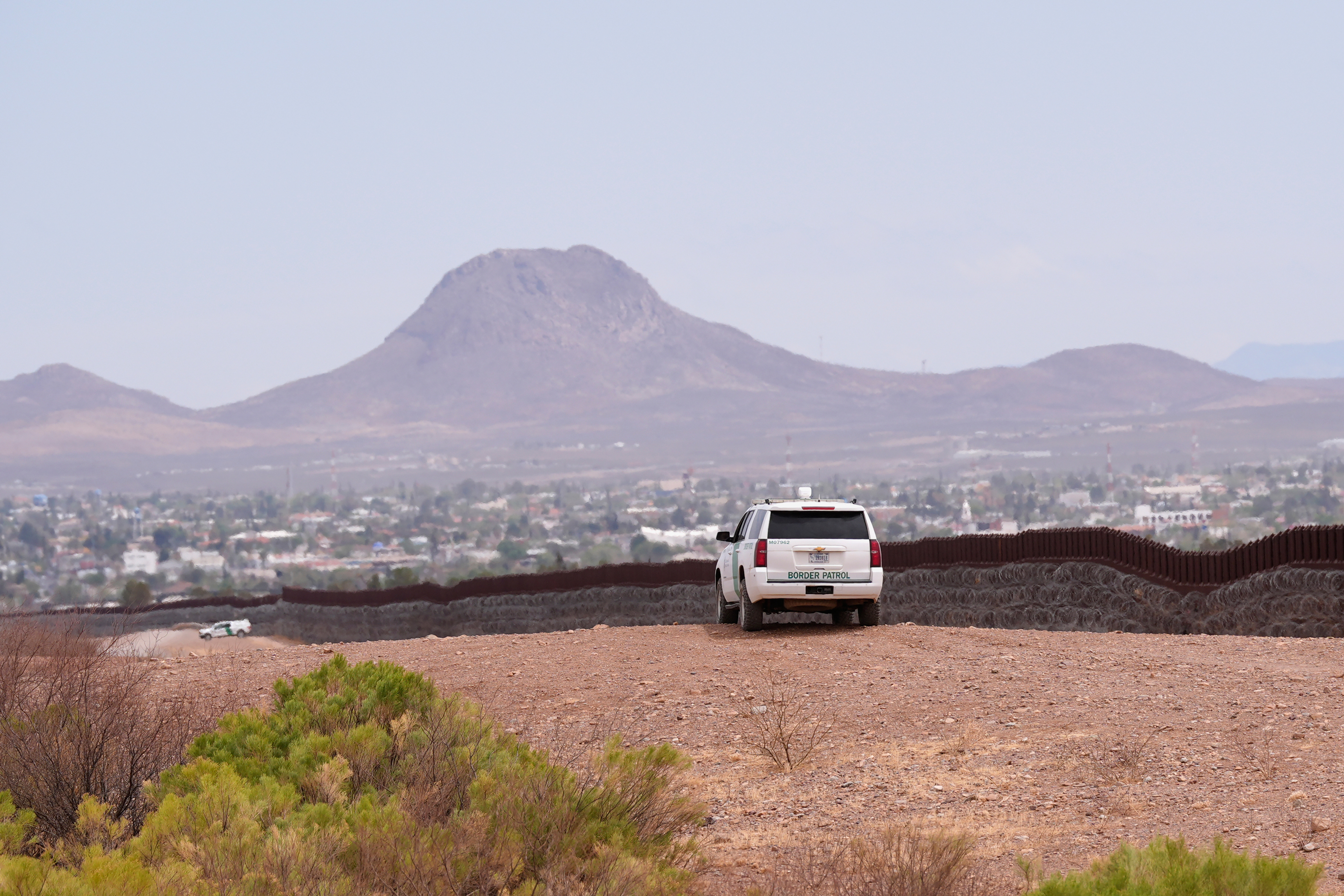
    PHOENIX — The Trump administration has begun work on a project to build a stretch of border wall in southern Arizona through part of a Native American tribe’s reservation, pushing ahead with one of its signature projects despite protests from the tribe.

    U.S. Customs and Border Protection says the area is a dangerous smuggling route and that building the wall will close a longstanding security gap. But members of the Tohono O’odham Nation, whose membership spans both sides of the U.S.-Mexico border, have accused the administration of trespassing and say the construction will damage land sacred to the tribe.

    The wall segment is part of a $46 billion effort by the Trump administration to fill the border with 30-foot-high steel bollard walls, vehicle barriers, and technology designed to stop undocumented immigration and smuggling.

    But as building efforts have ramped up, the administration has run into opposition from landowners, environmental groups, and Native American tribes who say construction is violating property rights and desecrating sacred Indigenous sites.

    The Tohono O’odham Nation said in a statement Tuesday that about 20 Customs and Border Protection officers, working with contractors, went onto the tribe’s land early that morning to begin construction.

    Drone videos published by nation officials show roughly 14 vehicles and an industrial drill at one of the sites.

    A federal judge permitted the government to move forward with construction earlier this month, but the tribe says the contractors are violating tribal codes and trespassing to access the border wall site.

    The Tohono O’odham Nation, which has 37,000 members including thousands who live in Mexico, sued the federal government in June in an attempt to block construction of the border wall. The tribe argued that the wall would cause “significant devastation” on the reservation, including the destruction of mountain peaks sacred to the tribe, and would alter boundaries of their nation.

    U.S. District Judge Richard Leon in Washington, D.C., an appointee of former President George W. Bush, ruled in favor of the government, noting that the border wall would be built on a 60-foot-wide buffer zone of federally owned land called the Roosevelt Reservation.

    “Defendants have not yet articulated plans to construct outside the Roosevelt Reservation,” the judge wrote in his opinion.

    The Tohono O’odham Nation said that even if construction were contained to the Roosevelt Reservation, driving onto tribal land to access the area still constitutes trespassing.

    “The contractors, who are on the Nation illegally, were accompanied by agents as they worked on three separate locations near the border with drill trucks to conduct soil sampling and other activities,” tribal officials said in a statement.

    The CBP agents were masked, armed, and set up a vehicle blockade to stop tribal police from removing the contractors, according to Tohono O’odham officials. The nation had set up “No Trespassing” signs before Tuesday.

    So far, no physical confrontations between police or members of the Tohono O’odham Nation have been reported.

    CBP defended the need for the wall in a statement Tuesday, saying the desert spanning the Tohono O’odham Nation is a corridor for drug smuggling.

    “The project will close one of the most dangerous smuggling and trafficking corridors on the Southwest border: remote desert that has facilitated decades of drug loads, migrant deaths, and cartel activity,” said CBP Commissioner Rodney Scott.

    Tribal officials said they’re exploring further legal actions in an effort to remove contractors.

    SLSCO Ltd., the Texas-based construction company building the section in Arizona, has secured over $390 million in funding from the Department of Homeland Security to build the border wall since 2023.

  • Wyoming governor requests investigation into activity of Justice Department monitors during primary

    Wyoming governor requests investigation into activity of Justice Department monitors during primary

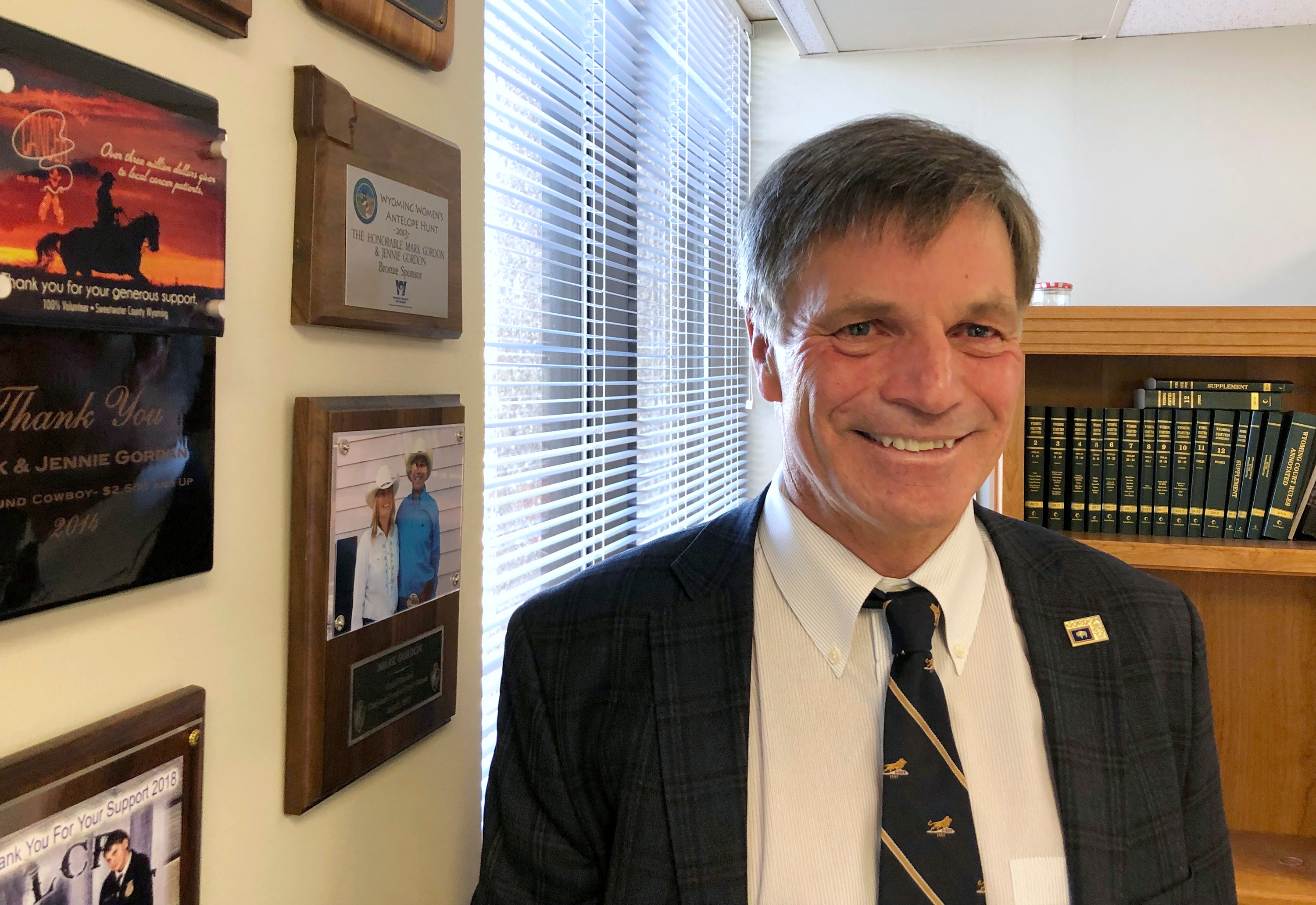
    FORT COLLINS, Colo. — Wyoming’s attorney general is investigating how two U.S. Department of Justice officials monitored poll workers and observed voters in the state’s most populous county during the Aug. 18 primary, a spokesperson for Republican Gov. Mark Gordon said Friday.

    Gordon called the monitors’ behavior “a bit aggressive” and “irregular” in an otherwise routine meeting to confirm the election results in the mostly rural and Republican state.

    “I feel very strongly about the federal government coming in and taking our guns. I don’t like that. I don’t like the federal government coming in and taking our votes, either,” Gordon said at the meeting Wednesday.

    Gordon spokesperson Amy Edmonds on Friday confirmed the investigation by Attorney General Keith Kautz, who was appointed by the governor.

    Voting rights groups have raised concern about President Donald Trump’s Justice Department shifting priorities away from enforcing civil rights laws with respect to voting. Trump instead has directed federal prosecutors to search for fraud in the 2020 election, which he lost to Democrat Joe Biden.

    Trump has meanwhile been more assertive about influencing the department, including encouraging investigations of political opponents, in his second term.

    Approaching the end of his second and final term in office, Gordon has publicly expressed little if any previous criticism of federal polices under Trump.

    The monitoring happened in southeastern Wyoming’s Laramie County, home to the state capital, Cheyenne.

    The monitors arrived soon after polls opened at 7 a.m. on primary day and said they intended to interview voters while assessing compliance with federal civil rights and voting rights laws, Laramie County Clerk Debra Lee said in a statement.

    Lee said her office didn’t allow interviews to be conducted in polling places and denied the monitors permission to do so. The monitors questioned local officials about “the nature, length, and timing of poll worker training,” Lee said.

    “Monitors requested training guides, asked how our new election equipment was acquired, and wanted to examine our tabulators,” Lee said.

    Wyoming law allows only election observation by certified poll watchers who monitor registration and turnout, Lee said.

    “This was a poorly managed exercise and one that showed complete disregard for our state laws and administration of our elections,” Lee said in the statement.

    She said she hadn’t been notified the monitors would be in Laramie County. A Justice Department official in Washington told her the decision to send them was made on short notice and an email was sent to her but “may have gone to the wrong address,” Lee said.

    The Justice Department routinely sends monitors to observe polling places or election offices, but they are not supposed to interfere with voting or election administration.

    The DOJ did not answer questions about the monitors Friday but referred to a primary day statement by Darin Smith, the U.S. attorney for Wyoming. He said monitors would be in the state “to ensure transparency, ballot security, and strict compliance with federal voting rights statutes.”

    “Voters deserve absolute confidence that their ballots are secure and their voices are heard without interference,” Smith said in the statement. “We are working alongside local officials to ensure every lawful vote is protected.”

    Appointed by the governor, Wyoming’s attorney general works mainly in the service of the executive branch and is not politically independent as in other states.

    No one, including Gordon, is asserting the monitoring influenced the election outcome, Edmonds said.

    “It’s really a fact-finding mission just to sort of figure out exactly what did happen,” Edmonds said.

    Trump’s fraud claims about the 2020 election have been amplified by Wyoming’s Republican secretary of state, Chuck Gray, who successfully ran in 2022 in part by showing a discredited documentary about those claims at campaign rallies across the state.

    Gray told Gordon at the elections meeting that his office “got an email,” but that was all the communication it had with the Justice Department about the federal officials. Wyoming law allows election observers, Gray said.

    “Certainly happy to visit with the attorney general,” Gray told the governor during the meeting. “Transparency is so important, and accountability.”

    Gray is not seeking reelection as secretary of state and won the Republican nomination for Wyoming’s seat in the U.S. House during the primary.

  • Rescuers retrieve flood survivors caked in mud as death toll in Nepal-China border disaster climbs

    Rescuers retrieve flood survivors caked in mud as death toll in Nepal-China border disaster climbs

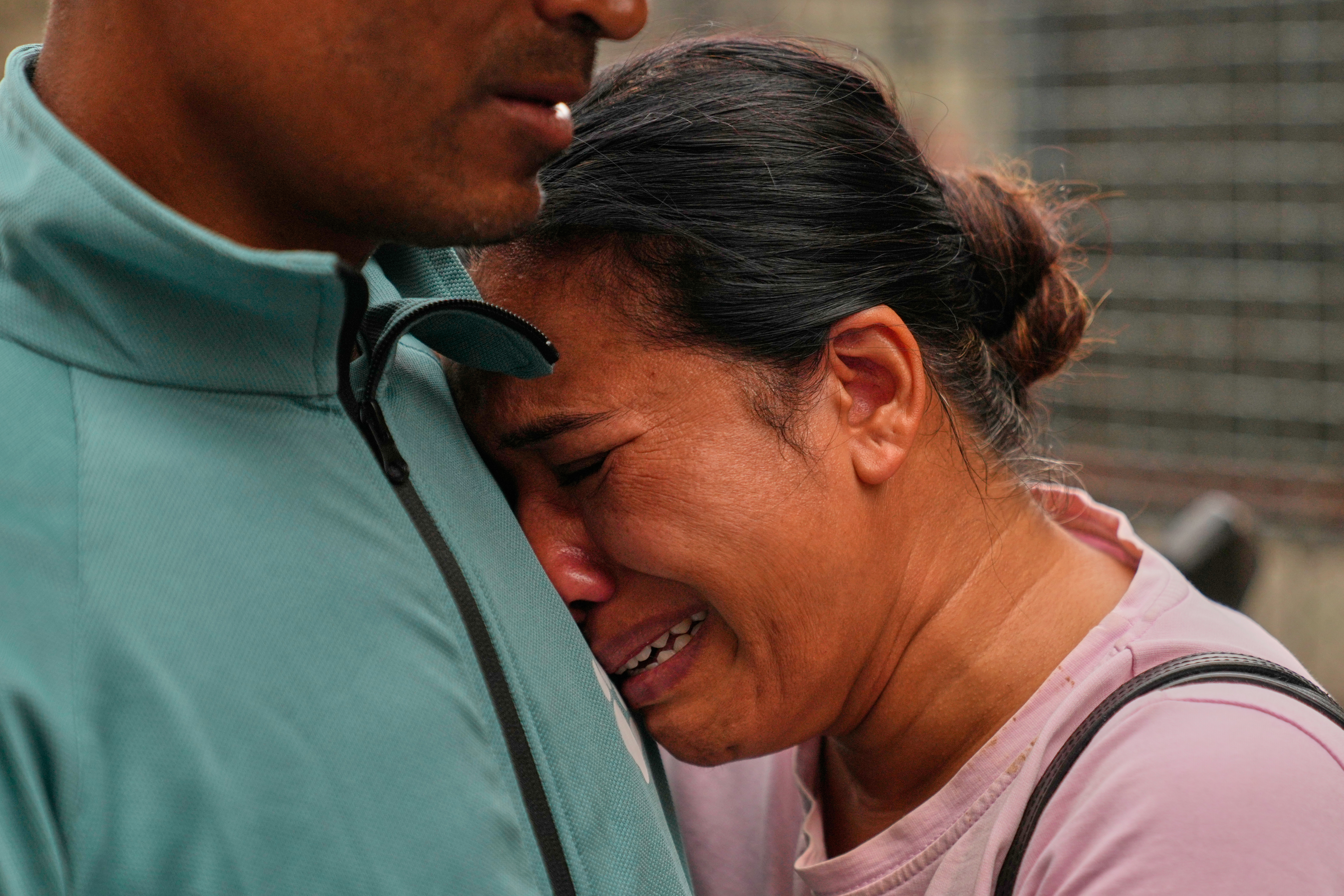
    KATHMANDU, Nepal — Rescuers pulled out survivors caked in dark brown mud and helicopters lifted stranded people to safety, as Nepal and China raced to respond to catastrophic flash floods that killed nearly 600 people and left almost 2,500 missing.

    The rescue efforts included a team that rappelled into a severely damaged checkpoint area on the Chinese side of the border between the two countries. Rescuers were on high alert for more flooding from a new lake that formed high up in the Himalayan mountains after the initial floods Wednesday. Experts warned that the lake, created after a glacier collapse that triggered the floods, was starting to overflow.

    Nepal’s army was deployed to help rescue more than 100 people believed trapped inside a tunnel at a hydropower plant located in the country’s worst-hit district. Like elsewhere in the disaster zone, their work was complicated by thick layers of mud that covered the site.

    The rappelling rescue team descended into the once-bustling border-crossing area from wooded mountain slopes, the state broadcaster China Central Television said.

    “As far as I can see, it’s nothing but debris,” rescue official Zou Mingqi told state media. The area where travelers went through border control to enter or leave China has been flattened to a muddy area, according to satellite images.

    The floods have killed 579 in Nepal, the country’s disaster-management authority said Friday. Nepali police later put the number of deaths at 553. There was little information on survivors on the Chinese side, where the death toll rose to five Friday as state media showed evacuations of villages and leaders’ efforts to direct the relief response.

    More than 3,700 people have been rescued in Nepal so far. Meanwhile, the number of people who were unaccounted for in the country nearly doubled to 1,924 as more local residents were added to the tally. China’s state media previously said 558 people were missing on the Chinese side. Hundreds of the missing are foreigners in the area to work, trek, or make a pilgrimage to a sacred peak.

    Authorities warn of flooding from a new lake

    Nepali police issued a fresh alert Friday after receiving information that a dam on the Tibet side had burst. Security personnel and rescue and relief workers were told to stay on high alert and move to a safe location if necessary.

    It was unclear if the dam bursting was related to flooding concerns over the lake that formed after the initial flash floods. Chinese broadcaster CCTV said the newly formed lake, located more than 6 miles from Gyirong Port, the hard-hit border crossing with Nepal, sits at an elevation of 9,680 feet.

    Nepali and Chinese authorities earlier warned of more flooding from the lake, which was already overflowing. Rescue workers heading to the disaster zone were ordered to stop temporarily Friday due to concern the lake would release more water and debris, and people in potentially affected areas were urged to move to safer ground.

    Monitoring data from the Chinese Ministry of Water Resources later showed that the lake had dwindled in size. The water level dropped by 32 feet from the high point on Thursday morning, the state broadcaster said.

    Some 680 rescuers eventually reached the Gyirong area by foot and via rafts. Some were dropped down from drones flown to the area, CCTV footage showed. “Anyone, anyone?” rescuers yelled, according to footage by the broadcaster.

    It was not immediately known how many people were at the border checkpoint building when the floods hit.

    Thousands have been evacuated while others await rescue

    In Nepal’s Rasuwa district, Nepali army rescuers struggled to help more than 100 people believed to be trapped by thick mud in a tunnel that’s part of the Upper Trishuli-1 Hydropower Project. The army said it had rescued 350 people from the tunnel so far.

    Video from the scene showed rescuers helping a man covered in mud out of the tunnel by pulling and pushing.

    “It is complicated to find the entry and exit points of the tunnel because everything has been covered by mud,” Army spokesperson Brig. Gen. Raja Ram Basnet said.

    Nepal’s disaster-management authority said 3,253 people had been airlifted by helicopter from the disaster area.

    The search-and-rescue efforts have been supported by an outpouring of financial support from neighboring countries, including small, poorer countries like Sri Lanka, said Kanni Wignaraja, the United Nations development agency’s regional director for Asia and the Pacific.

    “Sri Lanka has its own huge fiscal problems, but it has just sent $1 million immediately to the Nepal government,” Wignaraja said. “So you can see that while this devastation is happening, it has also really brought together countries in that neighborhood, who have stepped in for each other.”

    Some felt the ground shake, then saw a ‘black storm’

    Scientists who studied satellite images said bedrock underneath a glacier high in the Himalayan region had collapsed, taking part of the glacier with it. The rockfall was so extreme that it registered as magnitude 5.2. The rocks and melted water then swelled the rivers in the valleys below, causing a torrent of water that swept buildings, bridges, and earth downstream in Tibet and Nepal.

    Customs officer Karbir Gaire was among some of the survivors in Timure, the closest Nepalese village to the border with China, where some 1,500 people had lived.

    Gaire reached his office around 8 a.m. Wednesday and was working on his computer when he first felt the ground shake.

    “Right after the shake, I noticed a black storm coming towards us,” he recalled from Kathmandu, where he is back with family. “We all immediately started running out, and within a few seconds, we were climbing uphill on the opposite side of our office building. I think those 10 or so seconds saved some of us.”

    Fifteen of Gaire’s colleagues are missing. “It was like a Hollywood movie scene. I don’t call it a flood. It was a tsunami.”

    Families around the world hope for news of loved ones

    Nepal’s tourism board has said that among the missing are more than 500 foreigners.

    While the Nepal government shared a public list of people they rescued, there was little information about victims on the Chinese side of the border.

    Chinese government officials stuck to their tight media controls. Information about major disasters is typically released with a delay and without personal stories of victims. State media has focused on stories of rescuers working to reach the disaster site or reporting on instructions from top leaders.

    About 90 Americans were unaccounted for.

    Some of the missing may have been on a pilgrimage to Mount Kailash in Tibet, a sacred site for Hindus, Buddhists, and others.

    Vishnuram Ramaswamy, who works at a private company in the southern Indian city of Puducherry, said that he last spoke to his mother and two sisters who were on that pilgrimage Wednesday morning. It was a highly anticipated trip, something his mother had always wanted to do, he said.

    “My mother said they were on their way towards the border area and said they’ll reach their hotel and call us,” he said. He’s in touch with government officials and the travel agency, but there’s been no news.

    “This was the last we spoke to them. They have been unreachable since.”

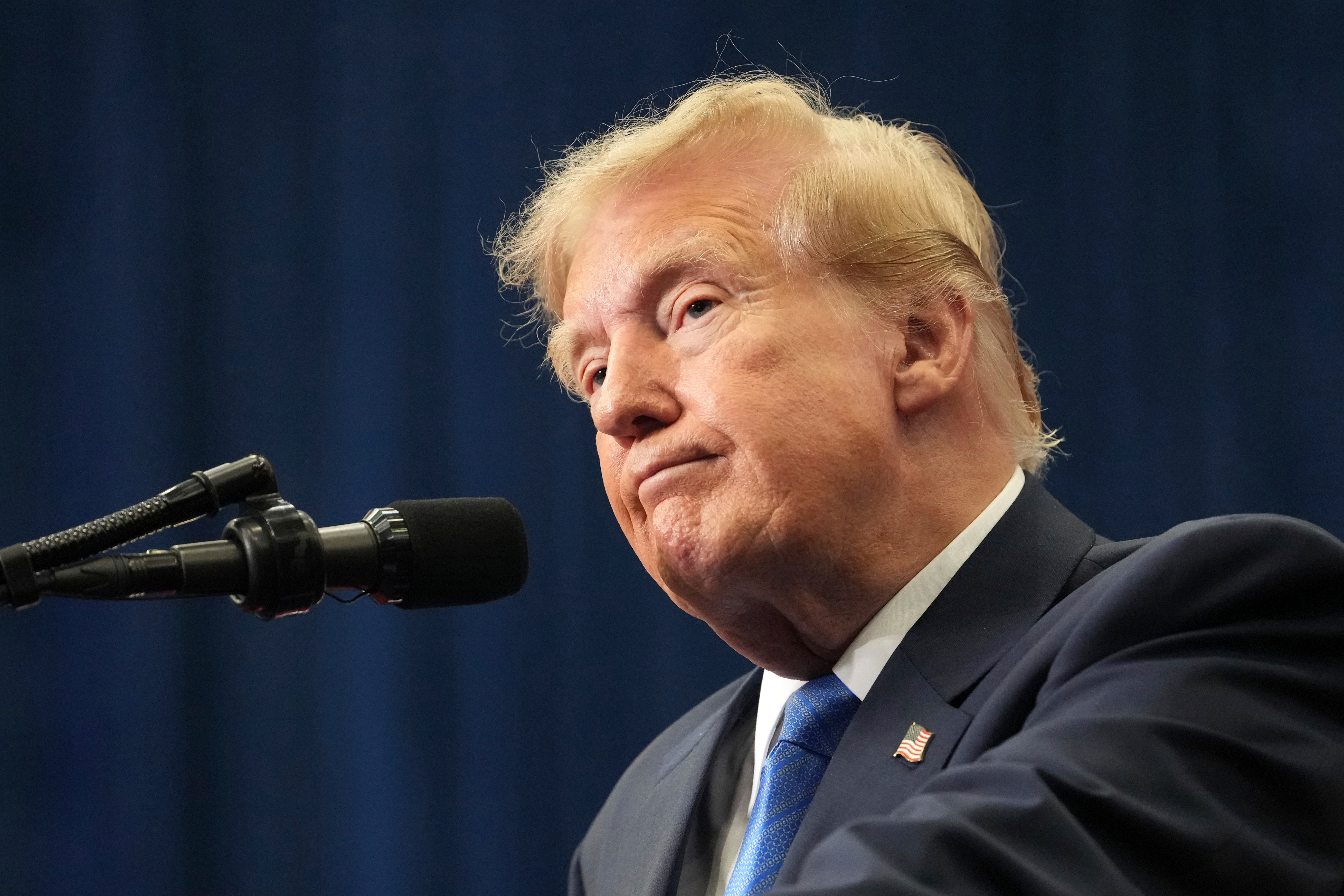
  • President Donald Trump loses again in bid to erase his hush money conviction

    President Donald Trump loses again in bid to erase his hush money conviction

    NEW YORK — A federal judge on Friday once again spurned Donald Trump’s effort to erase his hush money conviction, rejecting the president’s bid to move the state court case to federal court and have it dismissed on presidential immunity grounds.

    Judge Alvin K. Hellerstein reiterated his earlier finding against Trump, saying that the reasons Trump cited for renewing his request were “neither new nor legally sufficient.”

    The judge added: “He has failed to show good cause and diligence.”

    It is the third time Hellerstein has blocked Trump from having the U.S. District Court in Manhattan seize control of the case from the New York court where he was tried and convicted.

    And, like before, Trump will appeal, according to a spokesperson for his legal team who called Hellerstein’s ruling “baseless and lawless.”

    “The Supreme Court’s historic decision on Immunity, the Federal and New York State Constitutions, and other established legal precedent mandate that the Witch Hunt perpetrated by the Manhattan DA be removed to federal court, and immediately overturned and dismissed,” a statement issued on behalf of the legal team said. “President Trump will be filing a powerful appeal, and will continue defeating Democrat weaponization at every turn.”

    The guilty verdict, reached in May 2024 while Trump was between terms, made him the first former — and now current — U.S. president to be convicted of a crime. Trump is also challenging his conviction through the state court appellate process, which is pending.

    Hellerstein’s decision came after a federal appeals court last year ordered him to reconsider his prior denial. The judge previewed his ruling during oral arguments in February, slamming Trump’s lawyers for legal maneuvers that amounted to taking “two bites at the apple.”

    State prosecutors did not immediately respond to a request for comment.

    Case centered on a payment to Stormy Daniels

    Trump was convicted in May 2024 of 34 felony counts of falsifying business records to conceal a $130,000 hush money payment to adult film actor Stormy Daniels, whose claim of a sexual encounter with Trump a decade earlier had threatened to upend his 2016 presidential campaign.

    Trump was sentenced to an unconditional discharge, which left his conviction intact but spared him any punishment. He had long denied Daniels’ claim and said he did nothing wrong. He has sought to get the conviction overturned both by attempting to move the case to federal court and through the appeals process in state court, which is pending.

    Hellerstein rejected Trump’s requests to move the case twice before. The first was after Trump’s March 2023 indictment. The second was after Trump’s trial, as his lawyers sought to nix his conviction in the wake of the Supreme Court’s July 2024 ruling that presidents and ex-presidents can’t be prosecuted for official acts and prosecutors can’t use official acts as evidence that unofficial actions were illegal.

    Trump appealed Hellerstein’s posttrial ruling and, last November, the 2nd U.S. Circuit Court of Appeals ordered the judge to reconsider his decision, finding that he had failed to consider “important issues relevant” to the president’s request to move the case.

    A three-judge appellate panel said it expressed no view on how he should rule but instructed Hellerstein to closely review evidence that Trump claimed was related to official acts and whether Trump could argue those actions were taken as part of his White House duties.

    The judges also instructed Hellerstein to determine if Trump had “diligently sought” to have the case moved to federal court and whether the case can even be moved to federal court now that Trump has been convicted and sentenced in state court.

    Judge questioned the Trump legal team’s strategy

    During oral arguments in February, Hellerstein took issue with the Trump legal team’s decision-making after the Supreme Court ruling.

    Instead of immediately seeking to move the case to federal court, he noted, Trump’s lawyers first asked the trial judge in state court, Juan Merchan, to throw out the verdict on immunity grounds. Normally, such a request must be made within 30 days of an arraignment, but a federal appeals court in Washington, D.C. has ruled that exceptions can be made if “good cause” is shown.

    Trump, a Republican, did not attend the arguments.

    Trump lawyer Jeffrey Wall argued that prosecutors rushed to trial instead of waiting for the Supreme Court’s presidential immunity decision and that Trump’s legal team was crunched for time after the high court’s ruling because his sentencing was scheduled for just 10 days later.

    Trump’s lawyers did not ask Hellerstein to intervene until nearly two months later, while their request to Merchan was still pending. The judge called that a “strategic decision” and suggested that by going to the state court first, Trump’s lawyers cost him the right to pursue remedies in federal court.

    “No, your honor,” Wall replied. “It is what any sensible litigant would do” in that situation.

    “Not so,” Hellerstein replied.

    “That is a decision on your part,” the judge added. “You didn’t have to do that. You could have come right to the federal court. Just by filing a notice of removal, there would be no sentencing.”

    Trump’s lawyers “made a choice,” Hellerstein said, “and you sought two bites at the apple.”

    In his written ruling Friday, Hellerstein said Trump was asking for a “‘second bite at the apple,’ a result the law disfavors.”

    The judge added that “Trump’s delay in filing for removal constitutes a ‘quintessential strategic decision,’ and the ‘fact that he later came to view that decision as a poor one is not sufficient, by itself, to establish cause.’”

  • Judge will hear recantation of sexual abuse claim against ex-Penn State coach Jerry Sandusky

    Judge will hear recantation of sexual abuse claim against ex-Penn State coach Jerry Sandusky

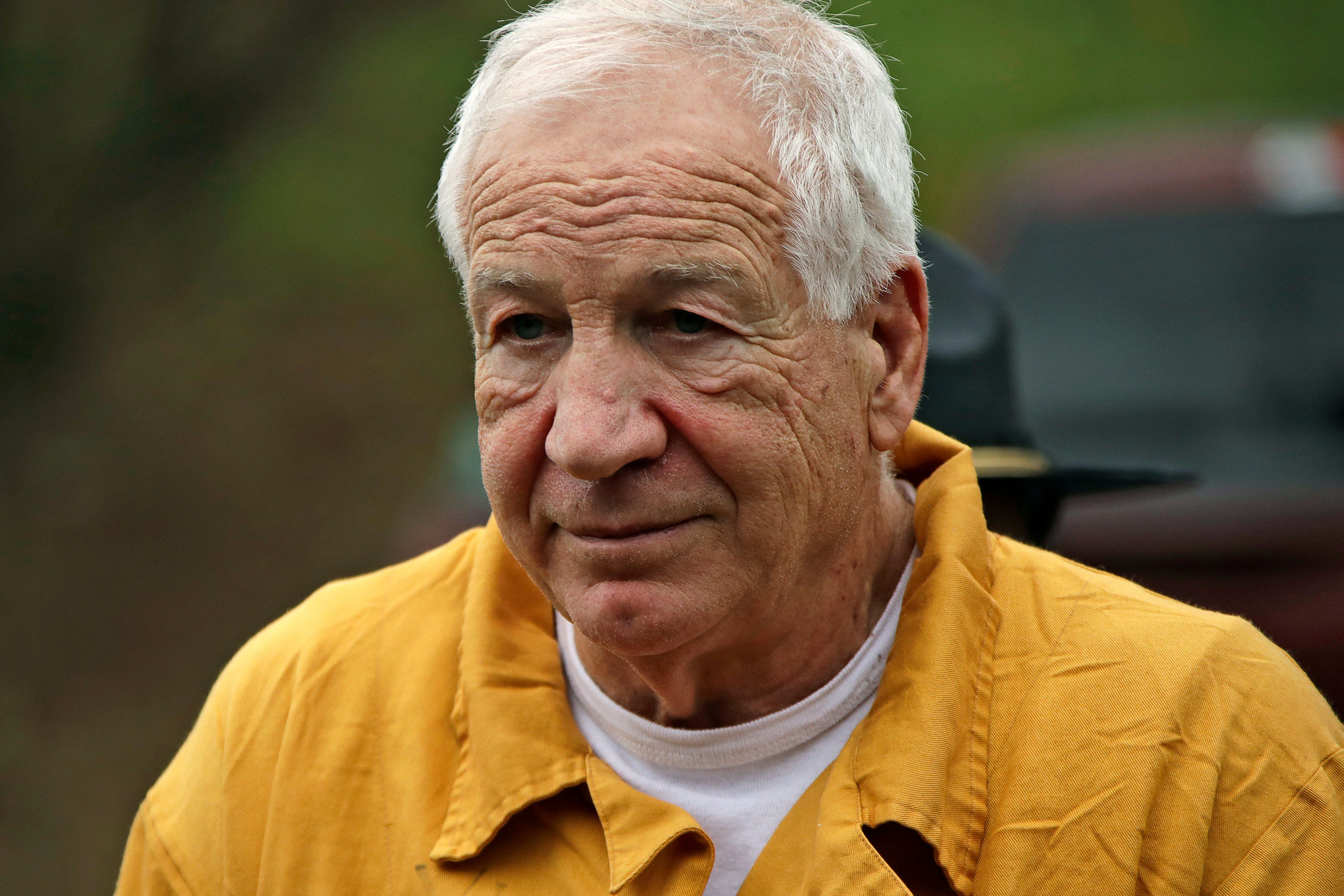
    BELLEFONTE, Pa. — A judge has granted a hearing to explore claims that a man wants to recant allegations of sexual abuse years ago by Penn State assistant football coach Jerry Sandusky.

    Sandusky, 82, has been serving a decades-long prison sentence since he was convicted of 45 counts of sexual abuse involving multiple boys in 2012. He has repeatedly lost efforts to get a new trial.

    A man identified in court documents as R.R. said he was coached extensively by authorities.

    “I was told — both directly and indirectly — that trauma may have fragmented my memory, and that I could safely affirm details I did not fully recall. I was assured this was common and even expected,” R.R. said in an affidavit filed by Sandusky’s attorneys.

    A court hearing in Centre County has been scheduled for Sept. 8. Messages left with attorneys were not immediately returned Friday. State prosecutors said Sandusky’s petition is untimely.

    Sandusky coached the defense at one of the country’s top football programs under Hall of Fame head coach Joe Paterno. The scandal led to Paterno’s firing, and the university paid more than $100 million to people who said they had been abused by Sandusky. He has repeatedly declared his innocence.

    “I apologize that I’m unable to admit remorse for this because it’s something that I didn’t do,” Sandusky said during a 2019 court appearance.

    Authorities said Sandusky found and groomed victims at the Second Mile, a charity that he started for at-risk youth. Eight young men testified against him.

    At trial, R.R. was 25 years old. He testified that he was 11 when Sandusky performed oral sex in the coach’s basement in 1998, a transcript shows.

    “He told me that if I told anybody that I would never see my family again,” said R.R., who was in foster care at the time.

    Sandusky later apologized and said “he loved me,” R.R. testified.

  • ICE awards $16.7M contract to buy 6,000 pairs of gloves that deliver electric shocks

    ICE awards $16.7M contract to buy 6,000 pairs of gloves that deliver electric shocks

    U.S. Immigration and Customs Enforcement has awarded a $16.7 million contract to purchase 6,000 pairs of gloves that can deliver painful electric shocks, saying officers would use them to control detainees and protesters who resist.

    ICE moved forward with the purchase despite opposition from civil rights advocates and Democratic members of Congress, who said ICE officers cannot be trusted to use them appropriately.

    A notice published in a federal database Thursday said ICE entered into a no-bid contract to purchase the gloves from Compliant Technologies LLC, a Kentucky-based firm that manufactures them. The deal includes acquiring 6,000 of the devices along with support equipment and services over the next six months.

    Civil rights advocates have said ICE officers already face criticism for their use of force with little oversight or accountability while enforcing President Donald Trump’s immigration crackdown.

    ICE published the notice hours after a group of U.S. senators, led by Democrat Catherine Cortez Masto of Nevada, urged the agency to cancel its plan to buy the gloves. In a letter to ICE’s acting director Thursday, Cortez Masto and 15 of her colleagues in the Democratic caucus questioned ICE’s need for the devices.

    “The blatant and tragic misuse of force in Los Angeles, Chicago, Minneapolis, Houston, Maine, and other locations around the country raises significant skepticism about the agency’s professional capability to safely deploy a new tool that could be used to harm Americans without cause,” the letter said.

    The senators were the latest to express opposition to the plan, which became public this month when ICE published a notice outlining its intent to purchase thousands of “conductive distraction and de-escalation devices” for officers and investigators.

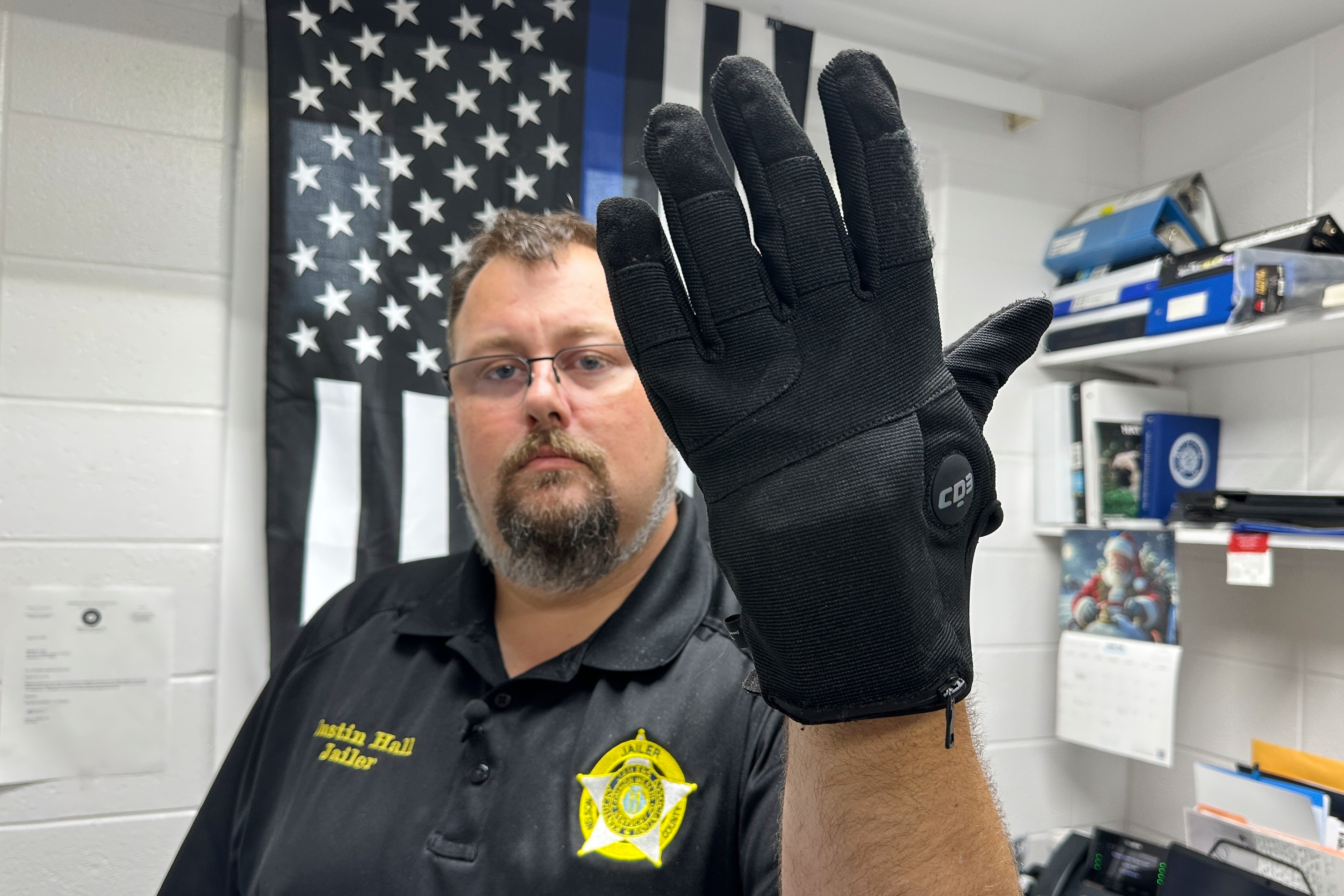
    The devices are normal patrol gloves until an officer presses a button to activate the electrical mode. They must be applied directly to someone’s skin to produce a shock that causes pain, which is promoted as a way to gain compliance from people who are resisting. They have been used by some local jails and police departments in recent years.

    ICE’s notice said officers would use them in “high-tension environments,” including while making arrests, transporting combative detainees and responding to civil disturbances outside detention facilities.

    “It will be used when a subject is actively or passively resisting and an officer needs to gain control quickly to prevent injuries to both parties,” the document said.

    It said that the shocks would help “maintain control over inmates and prevent aggression or escape attempts,” allow officers to handcuff people hiding their hands, and assist in crowd control. The goal would be to avoid using “more severe force,” including firearms. The notice said the gloves would be used with “approved policy, training, and accountability standards,” but it did not elaborate.

    Cortez Masto and the other senators said in their letter that the device “presents substantial risks if deployed during civil arrests — even more so if it is deployed without clear limits, appropriate training, and comprehensive oversight.” They said ICE must make public details about how officers will be trained and how use of the gloves will be documented and reviewed internally to avoid misuse.

    ICE’s parent agency, the Department of Homeland Security, reacted defiantly Thursday to critics of the purchase.

    “Sanctuary politicians attempting to ban our federal law enforcement from any safety equipment is despicable and a deliberate attempt to undermine and endanger our officers,” the agency said in a statement.

  • Shackled Tate brothers in court asking to be released from jail during extradition fight

    Shackled Tate brothers in court asking to be released from jail during extradition fight

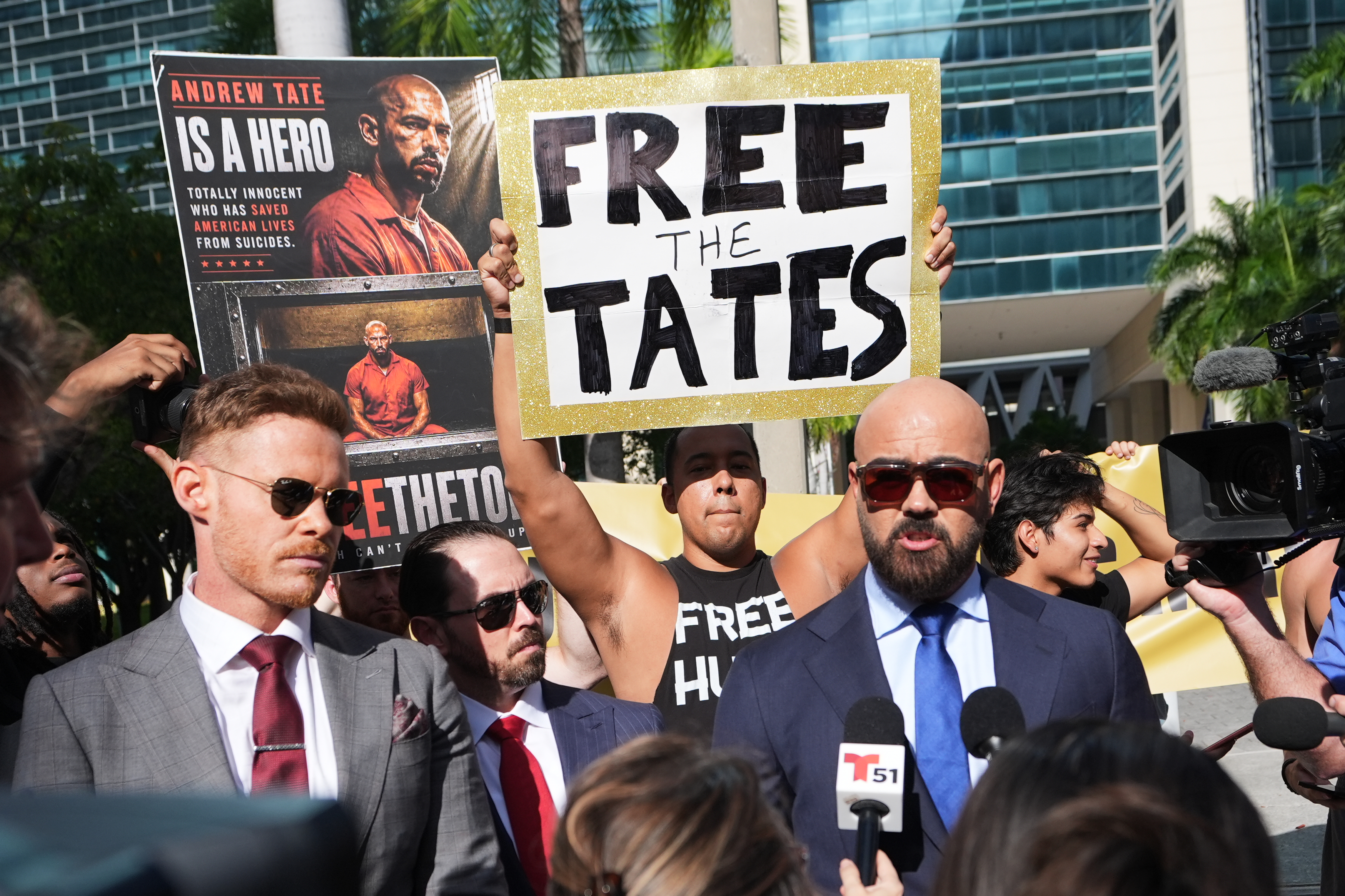
    MIAMI — Social media influencer Tristan Tate took the witness stand in federal court on Thursday and said he and his brother Andrew can’t adequately defend themselves from criminal sex charges if they have to remain in a Miami jail while fighting extradition to the United Kingdom.

    Lawyers for the Tates are asking a judge to allow them to be freed from custody at least until an extradition hearing can be held on their U.K. rape and trafficking charges. They have remained in a federal detention center in Miami since they were arrested July 18.

    Prosecutors say Tates bragged about wealth and multiple passports

    Prosecutors said they appear to have money and have bragged about multiple passports. Their attorneys argued that their high profile and active social media presence make it nearly impossible for them to flee, and they have shown they won’t run through cooperating in a separate sex crime case in Romania.

    The Tates have become among the world’s most polarizing internet personalities by promoting wealth, male dominance, and misogyny through their social media empire.

    Andrew Tate, 39, has said women who are sexually assaulted should bear some responsibility for the attacks and shared graphic descriptions of how he might attack women. Tristan Tate, 38, has worked with his brother on multiple businesses, including the production of online webcam pornography.

    No date for an extradition hearing has been set. The U.K. has until mid-September to provide evidence to the State Department.

    Tristan Tate says he needs to be out of jail to prove his innocence

    On his way into court Thursday, defense attorney Joseph McBride told reporters he hasn’t heard of a case where U.S. Magistrate Lauren Louis has allowed someone out on bail while awaiting an extradition hearing.

    But while the odds aren’t in their favor, McBride felt like the truth was. He called them innocent, good men who have never run from the law.

    In court, Tristan Tate was called to the stand Thursday and said he can’t prove he is innocent if he is kept in jail.

    “I need to clear my name. I need to take part in these proceedings, I can’t do that from the secure housing unit,” he said.

    Tristan Tate also complained of conditions at the Miami jail. He said there are ants and the only toilet in his cell is where anyone walking by can see him. He said he has lost 14 pounds eating mostly junk food in the nearly six weeks he has been in custody.

    The brothers were wearing tan prison clothes and shackled for Thursday’s hearing.

    Defense lawyers say the brothers have complied in Romania case

    Their lawyers said the U.K.’s request was out of line because their criminal case in Romania is going first. Romanian officials have let them remain free until the proceedings conclude and they have not tried to flee and are complying with all court restrictions.

    The judge reminded defense attorneys she has to follow U.S. laws.

    Attorneys for the Tates said they largely exaggerated their claims of wealth to boost their social media personas, their claims of multiple passports were satirical and a “$50 million superyacht” featured in one of the brothers’ videos does not actually belong to them. The expensive luxury cars, including a $2.1 million Aston Martin, that were featured in other videos were rented, the defense says.

    The brothers have long claimed that their violent and misogynistic statements have been taken out of context or were intended as jokes.

    “That is not the real Andrew Tate, the person Andrew Tate,” said his lawyer Howard Srebnick, who in court Thursday compared Tate on social media to Sacha Baron Cohen’s confrontational Ali G character.

    The former professional kickboxers, who have dual U.S. and U.K. citizenship, have millions of social media followers and are vocal supporters of President Donald Trump. The White House has said the brothers shouldn’t expect any help from the president.