Category: Associated Press

  • Yayoi Kusama, who splashed polka dots across the art world, dies at 97 in Tokyo

    Yayoi Kusama, who splashed polka dots across the art world, dies at 97 in Tokyo

    TOKYO — Japanese artist Yayoi Kusama, who splashed her signature polka dots on paintings, sculptures and museum installations around the world, has died, her studio said Thursday. She was 97.

    Kusama died Aug. 14 at a hospital in Tokyo, Yayoi Kusama Studio said, without specifying the cause of death.

    “She continued to paint until her final days, never setting aside her brush, and continued exploration of forever love and eternal soul,” the studio’s statement said. “We will carry forward Kusama’s wishes and, through art, continue to bring hope and strength for the future to people around the world.”

    Kusama, one of Japan’s most respected contemporary artists, was widely exhibited around the world, including the Museum of Modern Art, the Whitney Museum of American Art in New York and the Museum Ludwig in Germany.

    Repetitive motifs were her trademark, in various shapes, resembling netting, swirls or worms, but most often dots, dancing proudly on her canvases, or as sparkling balls or dots of light in her installations, in all their vibrant psychedelic glory.

    “Polka dots are fabulous,” Kusama said in a 2012 interview with The Associated Press, appearing in her signature orange bob wig and polka dot attire.

    “I want to create a thousand paintings, maybe two thousand paintings, as many as I can draw,” she said in her childlike but matter-of-fact tone. “I will keep painting until I die.”

    Pursuing her vision of art over a lifetime

    Kusama insisted she drew the way she saw the world: covered with spots, part of the hallucinations she said she had from childhood. She was in and out of psychiatric institution for decades, although her sickness did not hold her back as she was one of the first Japanese women to go to New York to pursue her art, in 1957.

    Although soft-spoken and shy in her mannerisms, Kusama was always unabashedly bold in the assertion of her dotty vision, not only in sticking to the style for decades but also in making it accessible to the masses.

    In her later years, as the times caught up with her art, she enjoyed fame. She signed on with fashion brands like Louis Vuitton as well as other licensed products like teacups, T-shirts and key chains with her illustrations, including replicas of her likeness that were used in show windows and other marketing.

    In 2008, Christie’s auctioned her work for $5.8 million. In 2016, she won the most prestigious award Japan gives its artists, the Order of Culture.

    Upon receiving the award, she told reporters she was more determined than ever to pursue her art, stressing that the sincerity and devotion she had demonstrated in her personal life were crucial parts of her artistic legacy.

    “I feel there is little left in my life, but I am now still fighting to the death for my art,” she said. “I am giving all I have so that many people will continue to be interested in my art, even after I am dead.”

    Categories were not enough to represent her art

    Kusama was called pop, avant-garde, feminist, just to name some of the categories thrown at her, most of which Kusama brushed off as not quite representative of her art.

    She was born in a middle-class family but felt misunderstood, as her parents wanted her to simply get married. They wanted to buy her kimono, not paints and brushes. She knew she had to get away. She chose America.

    When she arrived in New York, the fad was “action painting,” characterized by dribbles, swooshes and smears, not dots. She suffered years of poverty and obscurity. But she kept painting dots.

    She put circles of paper on people’s bodies, and once a horse, in “happening” anti-war performances in the late 1960s, which got some people arrested for obscenity but helped get media attention for her art. While in New York, she befriended artists like Andy Warhol, Georgia O’Keeffe and Joseph Cornell, who praised her innovative style.

    Over the years, Kusama made quirky but stunningly celebratory works like “Macaroni Girl,” a female figure plastered with macaroni, which expresses the fear of food; “The Visionary Flowers,” giant sculptures of twisting tulips, and “Mirrored Corridor,” a room with mirrors that delivers an illusion of a field of phallic protrusions speckled with dots.

    Kusama, who has also made films and published several novels, said she wasn’t sure where she got her ideas. She just picked up her brush and started drawing. The process was so mysterious sometimes she surprised herself, she told AP.

    “I think, ‘Oh, I drew that? I was thinking that,’” she said.

    But she appeared happy to have her art be the focus of media attention and praise, reading one of her poems to a reporter or tackling her artworks with gusto for photos.

    But she was also a charmingly disarming mix of vulnerability and defiance, at one moment declaring herself “an artistic revolutionary,” and then the next, mumbling: “I am so afraid, all the time, of everything.”

    Fans around the world share messages of loss

    The news of her death was met with an outpouring of sadness from around the world, including museums that had exhibited her works.

    Fans and artists alike praised her courageous persistence in vowing to continue creating art that, she said, will be recognized thousands of years after her death.

    Messages recognizing her death were sent from people throughout Japan including Tokyo Gov. Yuriko Koike and Yoshitomo Nara, a younger Japanese artist who has exhibited widely abroad.

    “RIP Kusama-sensei,” Nara wrote on his X account, respectfully calling her a teacher in Japanese.
  • U.S. Patriot missile stocks in Europe are ‘beyond critical’ due to Iran war, officials say

    U.S. Patriot missile stocks in Europe are ‘beyond critical’ due to Iran war, officials say

    WASHINGTON — The U.S. military is experiencing a “beyond critical” shortage of advanced missile interceptors in Europe largely driven by President Donald Trump’s war with Iran, a U.S. defense official in Europe and a NATO official told The Associated Press, raising concerns about vulnerabilities in NATO countries to a potential Russian attack.

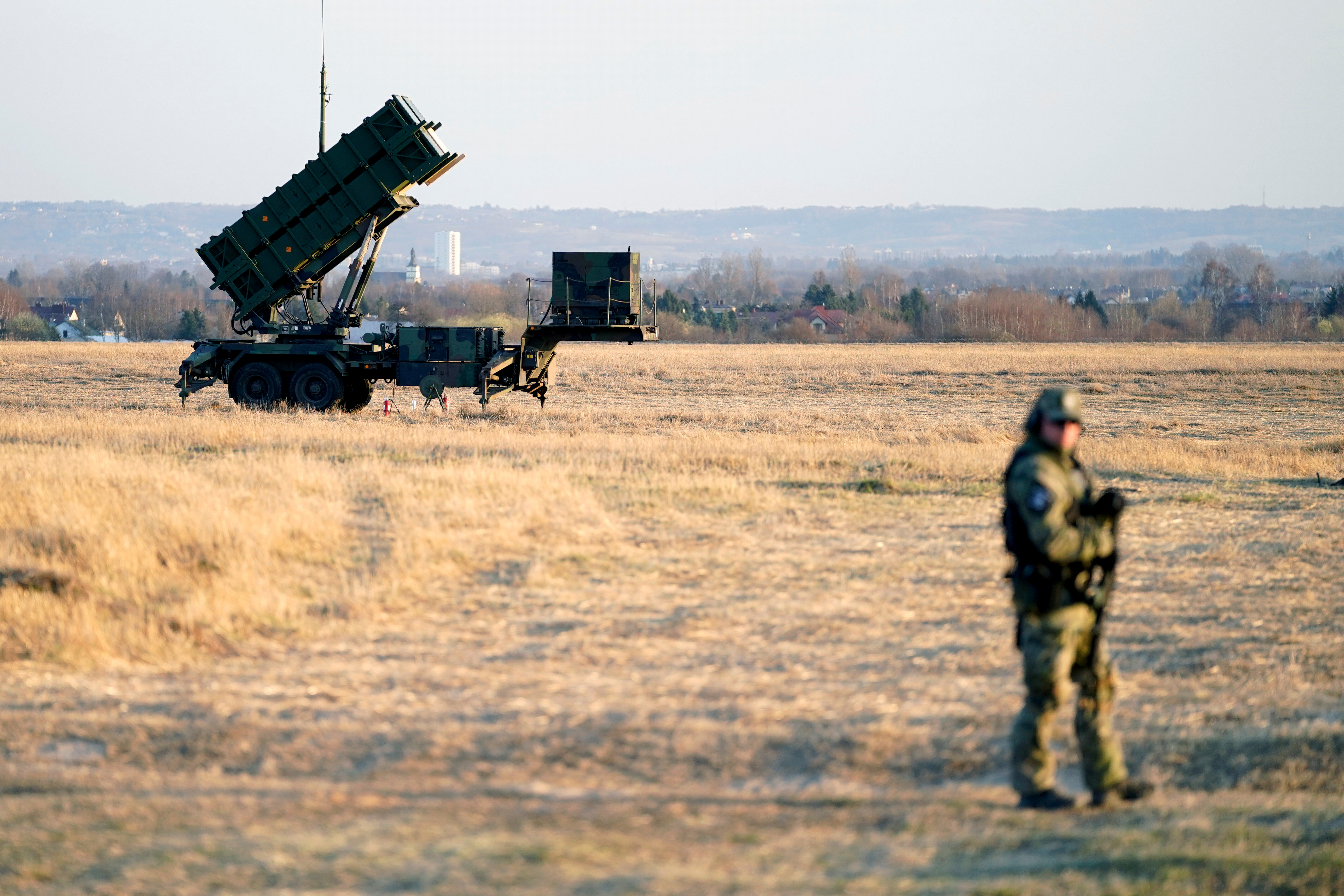
    The U.S. defense official said the most concerning shortfall involves Patriot missile interceptors, which can shoot down Russia’s high-speed ballistic missiles. The NATO official confirmed the low inventories of Patriots among American and NATO forces in Europe. Both spoke on condition of anonymity to discuss sensitive military matters.

    In the event of a Russian ballistic missile assault on, for example, a military headquarters or power plant, NATO could be in a similar position to Patriot-starved Ukraine and be forced “to take punch after punch in the mouth,” the U.S. defense official said.

    In Europe, the American military “definitely” does not have enough Patriots to stop any possible sustained ballistic missile attack and would have “very limited” capability to defend against a single ballistic missile strike or a stray Russian missile that goes off course, the U.S. official said.

    It illustrates the cascading fallout from Trump’s decision to launch a war against Iran, a conflict that reaches the six-month mark on Friday. U.S. missile stocks in Europe have been moved to the Middle East, where U.S. and Gulf allies have fired off significant numbers of interceptors, including Patriots, to thwart Iran’s drones and missiles. Some of those attacks have killed and wounded American troops.

    Though a Russian ballistic missile attack against NATO countries is not imminently expected, CIA Director John Ratcliffe went to Moscow this week to warn Russia not to attack, The Wall Street Journal reported.

    Asked by reporters Thursday whether Ratcliffe delivered that message to Russian President Vladimir Putin, Trump offered a roundabout response.

    “I don’t want to comment on that, but they’re not going to attack,” Trump said.

    European and NATO officials say Russia could be in a position to attack countries in the alliance by 2030. Patriot stockpiles are projected to rebound by then. In the meantime, Russia’s war in Ukraine could hinder its ability to carry out any missile attack on Europe as it would be a challenge for Moscow to fight an air war on two fronts.

    U.S. Patriot transfers to Ukraine played a role in the drawdown, but the Iran war wasn’t expected

    U.S. Army Col. Martin O’Donnell, a senior NATO military spokesperson, said it is “simply not the case” that the number of Patriot missiles in Europe is beyond critical.

    NATO, he said, is able to “block punches” and has enough air defense munitions available to defend itself as well as to donate to Ukraine.

    Chief Pentagon spokesman Sean Parnell said in a statement Thursday that claims of U.S. munition shortages “are false.”

    “We have everything required to strike at the time and place of the President’s choosing,” Parnell said. “Across multiple combatant commands, we have already executed successful operations while maintaining a deep, ready arsenal to defend our people and our interests.”

    Officials in Ukraine, however, are begging for more Patriots to defend against Russian missile attacks, while previous U.S. transfers to Ukraine have drawn down some of the American supply of the interceptors.

    Kyiv says only U.S.-made Patriots can stop Russia’s advanced ballistic missiles, which increasingly are getting through Ukrainian defenses, including as part of a barrage overnight into Thursday.

    The U.S. supplied hundreds of Patriot missiles to Ukraine over the course of the 4 ½-year-long conflict, but the Iran war was the tipping point for shrinking inventories, said Ed Arnold, senior associate fellow at the Royal United Services Institute, a military think tank in London.

    The supply to Ukraine was planned for and reasonably measured, he said, whereas stocks in the Middle East have been unexpectedly and quickly drained, exposing supply chain constraints.

    The U.S. military in Europe also is grappling with critical shortages of the Army Tactical Missile System, or ATACMS, a medium-range ballistic missile designed to strike behind enemy lines, the two officials said. But the overall munitions picture in Europe is less dire than on air defenses alone because some European militaries have their own offensive missiles, such as the Taurus and Storm Shadow, which are both long-range air-launched bunker-busting missiles.

    Europe has few alternatives while stocks are low

    The dearth of Patriot interceptors in Europe would leave few alternatives for shooting down Russia’s more advanced ballistic missiles, which can be combined with swarms of inexpensive drones to overwhelm defenses, experts say.

    Ukraine and some allies already use systems that can destroy slower-moving drones without expensive missiles. But ballistic missiles are a challenge because they dive steeply toward targets at more than five times the speed of sound, leaving little time to stop them.

    The Patriot system tracks the missile, predicts its path and launches within minutes, all while carrying out complex calculations to ensure the interceptor finds its target. One Patriot battery can only cover a limited area: for example, a small military base but not a whole city.

    One alternative could be France and Italy’s SAMP/T NG air defense system. France has promised to speed up the delivery of the system — the upgraded version of the current SAMP/T — to Ukraine, which the manufacturer says is better able to counter ballistics.

    The new iteration, however, has not yet been battle tested and the current version of the SAMP/T has a smaller range than the Patriot.

    While U.S. and European militaries have warships that can serve as mobile air defense, they may be too far from a target to protect it and could risk getting sunk.

    Patriot stocks have plunged during the Iran war

    Ukraine has received Patriots from American and European stockpiles since Russia’s 2022 invasion, with the U.S. providing about 600 of the interceptors during the Biden administration, said Mark Cancian, a retired Marine colonel who is now senior adviser at the Center for Strategic and International Studies, a Washington think tank.

    But the greatest expenditure has been during the Iran conflict, which has used up 65% of U.S. Patriots, amounting to roughly 1,500 of the nation’s 2,330 interceptors, CSIS says. About 600 missiles, including those destined for Europe, should be made this year, with a production goal of 2,000 Patriot missiles a year set for 2030, Cancian said.

    NATO says Europe’s first Patriot missile production facility is expected to open in Germany in September, with deliveries possibly beginning early next year. The first deliveries should go to countries that have already placed orders, including Germany, the Netherlands, Romania and Spain, the U.S. defense official said.

    But for now, that means some countries, such as Germany, have bought expensive Patriot systems but are in the “ridiculous” position of not having any ammunition to fire from them, said Arnold of the London think tank.

    Germany’s defense ministry said it does not comment on stockpiles.

    Russia also has limitations

    Moscow likely cannot carry out a sustained air assault on a NATO target while it launches almost nightly attacks on Ukraine, Arnold said.

    Ukraine’s recent strikes into Russia also have exposed weaknesses in Russia’s air defenses, which could prompt Putin to think twice about provoking a retaliatory attack.

    “The uncomfortable truth is possibly the best air defense that we have is Russian constraints,” Arnold said.

  • Russia bombards 9 Ukrainian cities overnight, calling the strikes ‘massive’

    Russia bombards 9 Ukrainian cities overnight, calling the strikes ‘massive’

    KYIV, Ukraine — Russia bombarded cities across Ukraine with missiles and drones in an overnight onslaught that ran into the daylight hours of Thursday, when explosions echoed around Kyiv through the morning.

    Ukraine is desperately short of U.S.-made Patriot air defense missiles that can counter Russia’s ballistic missiles, and Moscow’s fast-flying jet-powered drones have brought another challenge since the Russian military’s full-scale invasion began 4½ years ago.

    Ukrainian officials say Russia builds up missile stocks and launches major attacks every few days, hoping to exhaust Ukrainian defenses through the sheer weight of numbers. In response, Ukraine has hit high-profile targets on Russian soil as the countries inflict mutual destruction.

    Russia says attack targeted war-related facilities

    The Russian Defense Ministry said its forces carried out a “massive” strike on targets in nine Ukrainian cities that began after nightfall on Wednesday. It described the targets as military-related, including industrial facilities, oil refineries, logistics hubs and port infrastructure.

    Civilian areas, including apartment buildings, suffered damage. The barrage killed a 78-year-old woman in the southern Zaporizhzhia region and another person in the northern Kharkiv region, with at least 14 people reported wounded elsewhere, Ukrainian officials said.

    “Russia continues to invest in missiles and in expanding its war, and that means more countermeasures are needed,” Ukrainian President Volodymyr Zelenskyy said on social media, noting promises earlier this week by European countries to provide more air defense assistance.

    “It is important that these (measures) are also supplemented by additional ballistic missile defense packages” through European purchases of weapons from the United States, he said.

    Though the Russian Defense Ministry insisted only war-related targets were attacked, Russia appears determined to hurt Ukrainian businesses and dent the country’s economy through attacks on private enterprise after Ukraine’s long-range drone strikes caused financial difficulties for Moscow.

    Russian drones hit three major distribution centers, destroying depots belonging to a toy store chain and a confectionery company, and damaging another run by an electronics retailer, the companies said.

    In addition, Moscow continued its efforts to wreck the Ukrainian power grid before the freezing winter months.

    Four powerful glide bombs destroyed generating equipment at the southern Kherson region’s combined heat and power plant, forcing it to shut down, its operator Naftogaz said.

    Zelenskyy expected on official visit to neighboring Moldova

    Zelenskyy was due to visit neighboring Moldova on Thursday to mark its national day commemorating its 1991 declaration of independence from the Soviet Union. Ukraine announced its independence the same year.

    Russia’s neighbors in Eastern Europe are concerned its invasion of Ukraine could trigger a wider conflict, and drones flying into its airspace have fueled jitters.

    Moldova’s Ministry of Defense said Thursday that five drones breached its airspace overnight, but it didn’t specify who fired them.

    Ukraine’s air force said defenses shot down or suppressed seven Russian ballistic missiles, though it didn’t say how they achieved that.

    Four districts of Kyiv were hit during the night, damaging residential buildings, a school and a medical facility, though no casualties were reported, city police said.

    Russian forces struck industrial facilities as well as energy infrastructure in Ukraine’s central Poltava region, said Vitalii Diakivnych, head of the Poltava regional military administration.

    The southern Odesa region also came under a major Russian attack lasting more than seven hours, according to Oleh Kiper, head of the Odesa regional military administration.

    The barrage damaged a 16-story residential building and two educational facilities as well as a grain elevator, he said. Odesa is a key port for Ukraine’s vital exports of grain and other agricultural products.

    Some trains were delayed by more than 17 hours following the attack, according to Ukrainian state rail company Ukrzaliznysia.

    Ukraine takes aim at another Russian online retailer

    Ukraine has also fired hundreds of long-range drones almost nightly at targets in Russia.

    Ukraine’s General Staff said that plane-launched missiles hit Russia’s main and backup command posts near the eastern city of Donetsk, where Ukrainian defenders are under pressure from a Russian push.

    The Russian Defense Ministry said Thursday that its air defenses shot down 267 Ukrainian drones over 14 Russian regions, the illegally annexed Crimean Peninsula, the Sea of Azov and the Black Sea.

    After razing huge warehouses in recent months belonging to Wildberries, Russia’s biggest online retailer, Ukrainian drones are now taking aim at Ozon, the country’s second-largest e-commerce company.

    Ozon initially said that its logistics facilities in the cities of Orenburg and Ufa were attacked, but neither of the premises caught fire. A later alteration to the company statement said that only the Ufa site was attacked, while the Orenburg facility was evacuated because of an alert, but resumed normal operations.

  • Iran scrambles to sustain trade as U.S. threatens to sanction countries that refuse to break ties

    Iran scrambles to sustain trade as U.S. threatens to sanction countries that refuse to break ties

    BEIRUT — Iran’s economy, already strained by high inflation, years of Western sanctions, and a war that has sharply reduced oil revenue, is poised for more instability as the Trump administration tries to coerce other countries into ending all financial dealings with the Islamic Republic.

    A decision by the United Arab Emirates to suspend trade relations with Iran last week kick-started the White House’s latest attempt to isolate Tehran into submission. Iran entered the war with its foreign commerce concentrated among a relatively small group of countries, leaving it with fewer places to turn now.

    The success of the U.S. strategy will largely hinge on China, the main buyer of Iranian oil and its top trading partner. Russia, a fellow target of sweeping U.S.-led sanctions, has a military conflict and economic crisis of its own and probably can’t offer longtime ally Iran much hard financial support.

    Regional partners like Turkey, Pakistan, and Iraq maintain important relationships with both Iran and the U.S., giving them reason to avoid exposure to the secondary sanctions that Treasury Secretary Scott Bessent said awaited nations that did not cut economic ties with Iran.

    “Those who stand with the United States will reap the rewards of our partnership,” Bessent said Monday while outlining the plan he called “Operation Economic Outcast.” “Those who tether themselves to the Iranian regime should expect to share in the isolation.”

    The Emirates will be hard for Iran to replace as a conduit for foreign goods and payments

    Despite Western sanctions, Iran in 2024 exchanged $125 billion worth of goods globally, according to Trade Data Monitor, a private firm. Iran is not a member of the World Trade Organization.

    The bulk of its declared international trade, though, was with a handful of partners. The UAE, China, and Turkey supplied nearly three-quarters of Iran’s merchandise imports. Four countries — China, Iraq, the UAE, and Turkey — accounted for more than two-thirds of its non-oil exports.

    On the supply side, the UAE held outsized importance. It was Iran’s biggest source of imported items and a gateway to financial channels that helped Iranian businesses make and receive international payments. Both roles kept Iran connected to the global economy.

    As a re-export hub, the UAE processed shipments from foreign suppliers reluctant to deal directly with Iranian customers.

    “From Iran’s perspective, the UAE can be replaced, but the Iranians are openly saying it’s not going to happen overnight,” said Alex Vatanka, a senior fellow at the Middle East Institute in Washington.

    China has deep economic ties to Iran but depends less on the relationship

    Beijing has economic interests in the Persian Gulf beyond Iran, and so far has avoided getting drawn into the conflict the U.S. and Israel initiated. China buys the overwhelming majority of Iran’s crude through opaque trading networks that bypass sanctions.

    Its manufacturing clout and stranglehold on critical mineral supplies nonetheless give Beijing more room than Iran’s other partners to resist U.S. pressure, said David Lubin, a senior research fellow at Chatham House. Aggressive action against major Chinese banks and businesses could revive trade tensions as Chinese leader Xi Jinping prepares to meet with President Donald Trump in Washington next month.

    “I don’t see China playing ball by any means,” Lubin said.

    China is both Iran’s largest reported export market and a supplier of essential parts and products, according to WTO and U.N. data.

    During the Obama administration, Beijing did agree to reduce energy imports from Iran, said Atlantic Council fellow Daniel Fried, a former U.S. ambassador to Poland.

    “We will want the Chinese to go a lot farther than they have gone in the past,” Fried said. “But it’s a lot harder now.”

    China has experience helping an ally survive sanctions: it has long been North Korea’s economic lifeline and main diplomatic backer. Experts say China has avoided fully enforcing U.N. sanctions on North Korea and sent clandestine aid to help its impoverished neighbor stay afloat.

    Expanding bilateral trade would create problems for Iran’s neighbors

    Iranian Parliament Speaker Mohammad Bagher Qalibaf, who has been his country’s lead negotiator over the past six months, was in Iraq the day of the UAE’s trade suspension. A purpose of his visit, he said, was “speeding up efforts to expand joint cooperation among all countries in the region, without foreign interference.”

    The U.S. dollar’s preeminence in international trade and finance, however, means none of Iran’s trading partners would antagonize Washington lightly, Vatanka said. “We’re still at a point where if the U.S. wants to hurt you, it will matter,” he said.

    Underscoring potential consequences, Turkey settled a yearslong U.S. dispute in July over the role of a state-owned bank in helping Iran evade sanctions through an oil-for-gold scheme. Trump also moved to lift sanctions on its fellow NATO member stemming from Turkey’s purchase of a sophisticated Russian missile system.

    “I really don’t think Turkey would like to become the next country helping Iran to evade sanctions right now,” said Riccardo Gasco, an analyst at the IstanPol think tank in Istanbul.

    Iran is a vital import source for Iraq and retains influence there through allied political factions and armed groups. Baghdad has sought closer economic and security ties with Washington. Since it invaded Iraq in 2003, the U.S. has significant control over the nation’s foreign currency reserves because they are housed in the Federal Reserve Bank in New York.

    Oman, a frequent intermediary between Washington and Tehran, has found its balancing act suddenly precarious. Trump threatened Oman last week over its ongoing negotiations with Iran on the future management of the Strait of Hormuz.

    One easy route for goods slipping past sanctions on Iran would be ports like Gwadar near the Persian Gulf in Pakistan, said Peter Harrell, a visiting scholar at Georgetown University.

    “Ship an intermodal container of drone parts to one of the ports in western Pakistan and unload it onto a truck and have it driven across the border into Iran,” he said.

    While Pakistan, a key ally and economic partner of China in the region, wants to increase trade with Iran, it faces competing pressures. It is serving as a key mediator between Tehran and Washington and has deep security ties with Saudi Arabia, Iran’s longtime regional rival.

    Caspian Sea trade route alternatives unlikely to grow quickly

    With the Strait of Hormuz mostly blocked and Russia’s war with Ukraine endangering ships on the Black Sea, Iran has sought to develop a “road of life” on the Caspian Sea, said Nikita Smagin, an independent analyst and a former Russian state news agency correspondent in Tehran.

    Russia reportedly sent drones to Iran this year, repaying Tehran’s favor after Moscow’s full-scale invasion of Ukraine. It also rerouted exports to Iran via Caspian Sea ports like Astrakhan. Agricultural products make up 80% of Russia and Iran’s reported trade.

    “Both economies are exporting natural resources and have little to offer each other,” Smagin said.

    The other countries that border the Caspian — Azerbaijan, Turkmenistan and Kazakhstan — probably won’t rush to join in, said Umud Shokri, a fellow at George Mason University.

    Yet Russia and Iran are already in an “axis of the sanctioned,” said Mark Galeotti, executive director of the Mayak Intelligence firm. For decades the pair have collaborated to thwart trade restrictions, and increasing bilateral trade in both “strategic goods” and contraband like military technology, microchips and Gucci handbags could be a next step.

    “Pomegranates and tomatoes only go so far,” he said.

  • Trump signs order renaming Lake Ontario as ‘Lake America’ in the United States

    Trump signs order renaming Lake Ontario as ‘Lake America’ in the United States

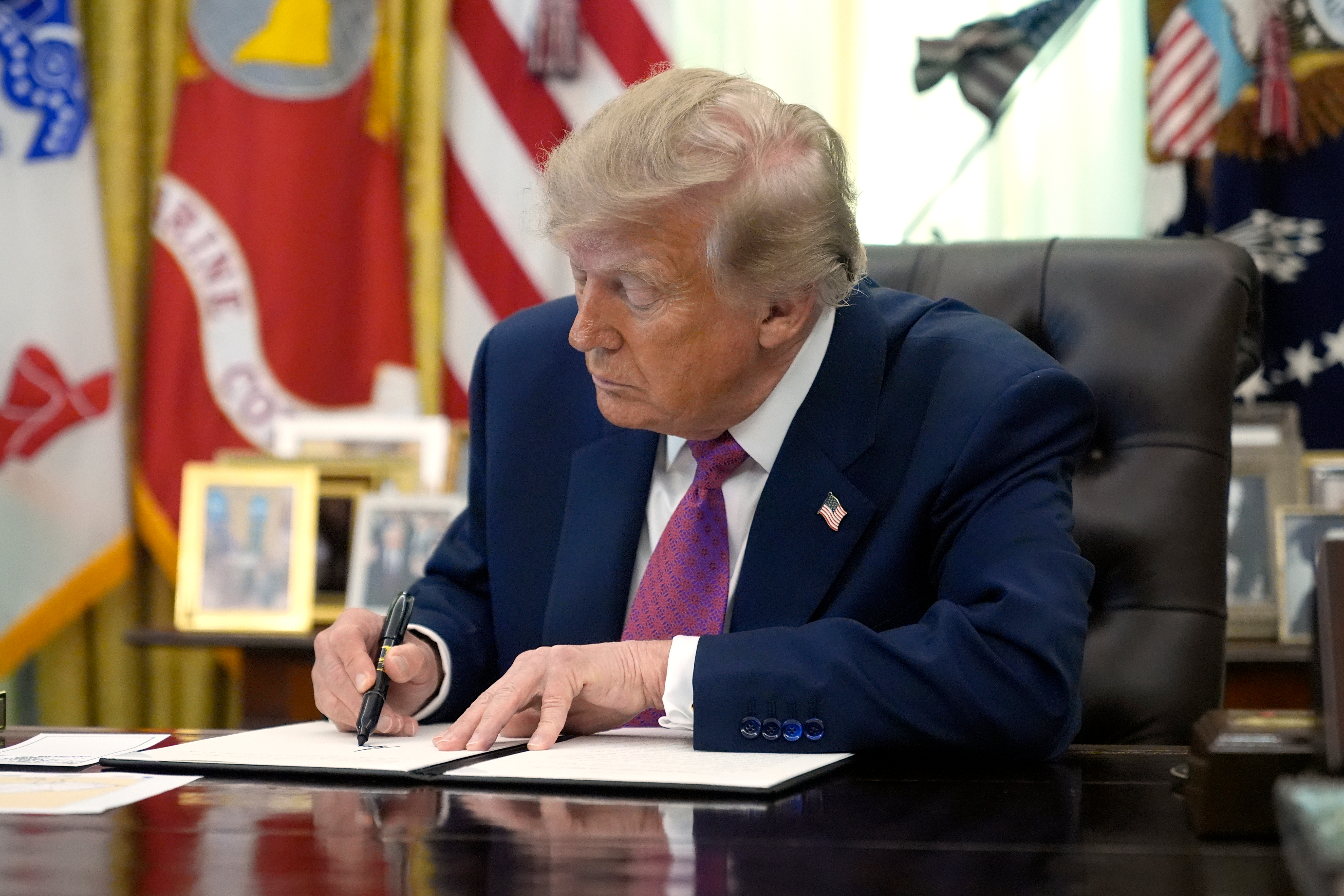
    WASHINGTON — President Donald Trump said Thursday he is renaming Lake Ontario to be known as “Lake America” in the United States as he exacerbates his trade war with Canada.

    The Republican president signed an executive order that updated the lake’s name for the U.S. geographic naming service. Trump cannot force Canada to follow his preferred naming convention, however.

    The move, which Trump said was “effective immediately,” is reminiscent of his move last year to rename the Gulf of Mexico as the “Gulf of America.’”

    Trump has been floating the idea of the name change in recent days as the U.S. announced it was imposing 50% tariffs on $20 billion worth of Canadian goods over the weekend after talks between the countries broke down. Trump has been needling America’s northern neighbor since he returned to the White House last year, suggesting the ally with whom the U.S. once had warm relations should instead be absorbed as the 51st state.

    Canada responded to Trump’s import taxes this week by imposing retaliatory tariffs on $20 billion worth of American goods, including steel, dairy products, appliances and farm equipment

    Trump, who signed the order as he was sitting at the Resolute Desk in the Oval Office, had a large sign behind him propped on a stand with a map of the Great Lakes. Over Lake Ontario, in big red letters, the map read “Lake America.”

    On the other wide of the president was another map with the words, “MAKING THE GREAT LAKES EVEN GREATER.”

    He told reporters that Canada is “the worst” to deal with on trade. “They feel entitled and we can’t have that,” he said.

    The lake is one of multiple Great Lakes that the U.S. and Canada share borders along.

    Trump on Thursday suggested his push to rename bodies of water may not be finished.

    “So, if you think about it, we have a gulf and we have a lake. Now, all we need is an ocean,” Trump said. “So maybe we’ll have to change the name of the Atlantic and or the Pacific. Maybe we’ll change them.”

    The official U.S.-Canada border stretches across the water between Lake Ontario’s northern and southern shores. The body of water forms much of New York state’s coastline and separates Buffalo from Toronto, the capital of the province of Ontario. Toronto is Canada’s most populous city and Ontario its most populous province.

    Ontario is also the single largest export destination for more than a dozen U.S. states.

    The lake’s name comes from the Huron Indigenous people’s word “oniatarí:io,” which means “lake of shining waters,” and it predates European settlement in the region. The province, founded in 1867, took its name from the lake.

    The International Hydrographic Organization — of which both the United States and Canada are members — works to ensure that the world’s seas, oceans and navigable waters are surveyed and charted uniformly, and also names some of them. But there is no single international body that determines names of international bodies of water.

  • Canada is bolstering its defense industry as US relations fray. A boom is on for local contractors

    Canada is bolstering its defense industry as US relations fray. A boom is on for local contractors

    TORONTO — As Canada moves to reduce its dependence on American military suppliers, the push is on display inside a Toronto garment factory.

    Hunched over sewing machines, two workers rapidly stitch together pieces of camouflage-patterned fabric and Velcro strips. In the next room, workers snip stray threads as they inspect the finished product: helmet covers for the Canadian military.

    The factory is assembling uniforms for Wuxly, a luxury parka maker that is among a flurry of Canadian companies branching into defense contracting. As Canadian military spending surges, others are developing remote sensors for the country’s vast Arctic region, making drones to resupply soldiers, and building autonomous robots.

    The boom in the defense sector reflects Canadian Prime Minister Mark Carney’s vow to strengthen the country’s economic self-sufficiency amid fraying relations with Washington, including a fresh escalation this week with new rounds of tariffs.

    Canadian startups and established companies, alongside firms in Europe, are set to benefit from tens of billions of dollars in extra defense funding, driven partly by pressure from U.S. President Donald Trump to contribute more to NATO. Canada’s investment remains small compared with the Pentagon’s budget, but its strategy aims to boost domestic defense capabilities, and not just U.S. contractors.

    A country known for peacekeeping ramps up military spending

    A defense industrial strategy released earlier this year by Carney represents a generational shift for Canada, which invented modern peacekeeping and had long been content to remain in the shadow of its southern neighbor on defense matters.

    The defense plan earmarks an additional $60 billion in funding over the next five years, and the government has promised support for domestic businesses to sell into defense and security supply chains. Currently, Canada spends about $36 billion to $43 billion on national defense.

    “The scale of investment that is involved is quite significant by Canadian standards, certainly in peacetime,” said Philippe Lagassé, a professor at Carleton University specializing in defense policy.

    The defense boom is “quite evident at all the events we’re at. Every defense show (is) sold out. Lots of new companies and (other) industries coming into the (defense) industry, getting involved,” said Wuxly founder and CEO James Yurichuk.

    Wuxly’s helmet covers, destined for the Canadian Armed Forces, allow soldiers to attach call sign patches or gear like lights, cameras, and beacons. The company also makes military parkas and tank covers and has been supplying Ukraine’s military with gear, including 40,000 female uniforms — one of the company’s specialties.

    Carney has called for upgrading the Canadian military’s Arctic capabilities, increasing spending by tens of billions of dollars to assert sovereignty over the vast but sparsely populated and increasingly contested region.

    “There’s a lot of innovation that can create advantage in the North, and with the Arctic region being so important, we’ve got to clothe our soldiers properly,” Yurichuk said.

    Canadian companies and European allies find new opportunities

    A major part of the strategy is diversifying away from U.S. defense contractors. It focuses on tapping a wider global pool of suppliers of military hardware — and fostering domestic defense supply chains.

    The strategy envisions investments amounting to more than half a trillion dollars, creating 125,000 jobs and tripling the size of the country’s defense industry over the next decade by steering contracts to Canadian companies. It calls for accelerating research and development and prioritizes developing key “sovereign capabilities” including aerospace, robotics and unmanned systems.

    As Canada pursues partnerships with other allies, in addition to the United States, Ottawa has announced deals this year to buy radar planes from Sweden’s Saab over American competitors and submarines from Germany’s ThyssenKrupp.

    Canadian startups like New Frontier Robotics also are lining up to play a part.

    “There definitely is money in play,” said Nikhil Malhotra, co-founder of the two-person company. “We see it. Obviously, we are going for it.”

    The company is working on a mobile manipulator robot — essentially a robot arm on a mobile platform — powered by artificial intelligence that could have both military and civilian applications, in what’s known as dual-use technology.

    The initial plan was to target manufacturing, with robots working autonomously between assembly lines, but potential customers suggested there was also a growing need from the defense industry. Robots could also be used for support roles at military bases, Malhotra said.

    “If you have infrastructure up in the Arctic that needs maintenance, obviously the climate is very dangerous. Are you really willing to risk an operator’s life? The answer is no. It’s better to put this thing on,” said Malhotra, whose company is based temporarily at a robotics lab at the University of Waterloo, about 60 miles (100 kilometers) west of Toronto.

    Startups focus on products with versatility

    Canada’s efforts to modernize its war machine still face big potential challenges, including the risk that opposition parties target Carney’s spending plans in future elections.

    Companies that develop novel technologies could be lured to the U.S. by its much larger defense market. It also will be tough for Canadian companies competing against American counterparts with much bigger research and development budgets that mean they are “always going to be a bit more at the edge of the technological capability,” Lagassé said.

    Still, the strategy opens new possibilities for companies like drone maker Volatus Aerospace, based near Montreal.

    “Defense was not a popular topic for a small-cap Canadian public company in the past,” CEO Glen Lynch said.

    Lynch said Canada has had limited manufacturing capability not just for drones “but manufacturing capability in general.”

    Like New Frontier, Volatus’ technology is considered dual use. Because Canada is technically not at war, companies can’t rely on selling exclusively to the military.

    Volatus makes drones and related services for civilian and commercial uses, such as air dropping medicine to isolated communities. But it also has a defense unit and makes first-person-view drones that take out targets by crashing into them.

    The company does some testing at a 100-acre site north of Toronto accessed by an unmarked gravel road and surrounded by fields of corn. Volatus employees demonstrated several aircraft on a recent visit by The Associated Press.

    The company showed off a drone with a 60-kilogram (132-pound) payload slung underneath by cable, and a scaled-down drone with tilt-wing rotors that can carry cargo over long distances. In a demonstration, the drones operated autonomously and flew in a circular pattern before landing.

    One drone, dubbed the Canary, has payload bay doors and is used to airdrop medical supplies to remote indigenous First Nations communities in Alberta.

    It could also be used to send “resupply packages for soldiers” as well as dropping munitions, said Chief Operations Officer Greg Colacitti.

  • ICE officer charged in Minneapolis shooting released in Texas after immediate extradition rejected

    ICE officer charged in Minneapolis shooting released in Texas after immediate extradition rejected

    BROWNSVILLE, Texas — An Immigration and Customs Enforcement officer charged with shooting a man and lying about it during the immigration crackdown in Minneapolis was released from a Texas jail Thursday, after a judge refused to order his return to Minnesota.

    Christian Castro was released at the break of dawn from a detention center in Brownsville. He motioned his hand toward a few camera operators and a reporter crowding around him and quickly got into an SUV that drove off.

    A day earlier, U.S. District Judge Fernando Rodriguez Jr. wrote in an order that said he couldn’t prevent a county sheriff from releasing Castro or order Texas Gov. Greg Abbott to sign his extradition warrant.

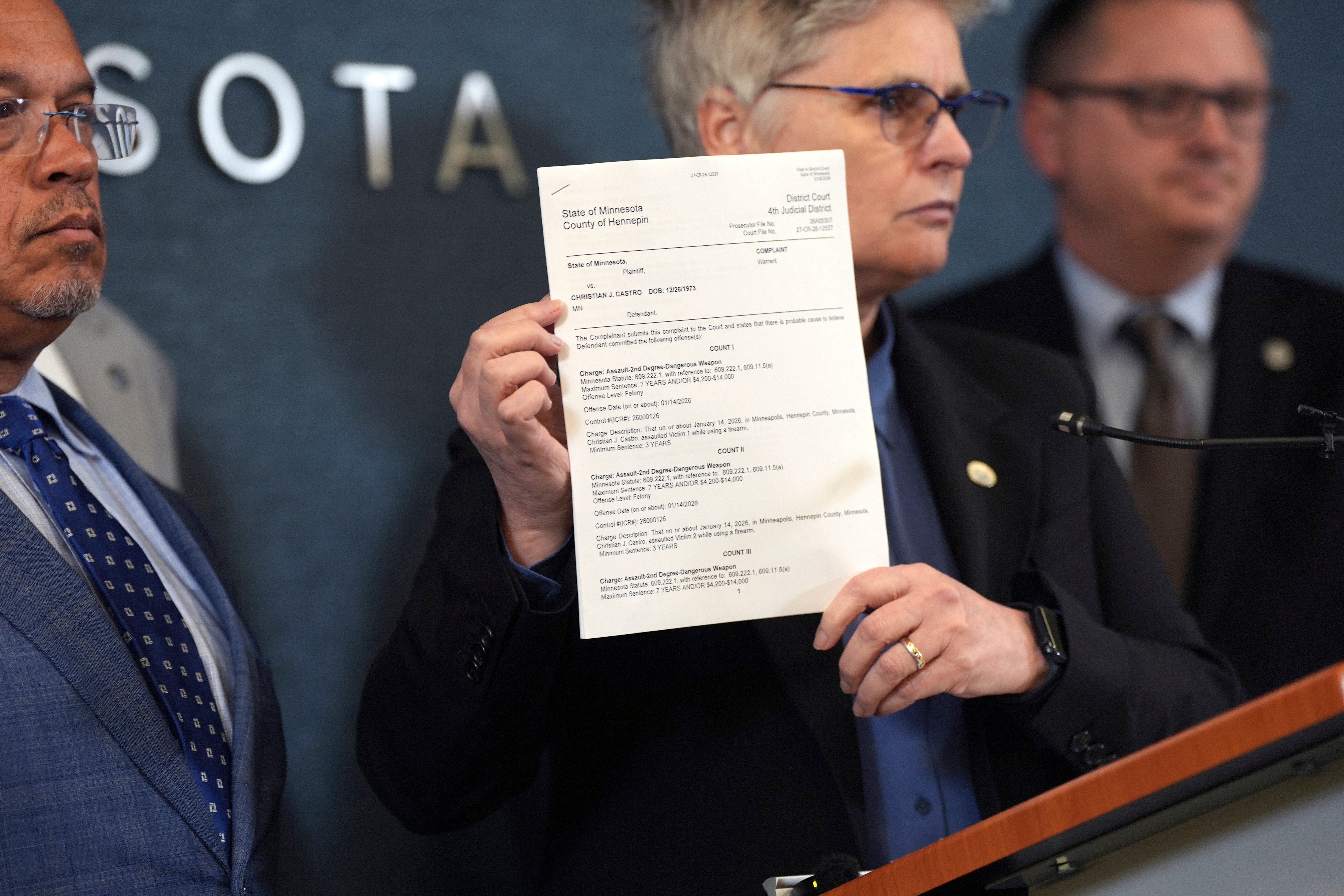
    Castro is charged in Minnesota with assault and falsely reporting a crime in the Jan. 14 shooting of 24-year-old Julio Cesar Sosa-Celis.

    Castro is accused of firing gun through door of home

    Castro is accused of firing a gun through the front door of a Minneapolis home, shooting Sosa-Celis in the leg. Prosecutors say Castro also falsely accused Sosa-Celis and another man of attacking an ICE officer with a broom handle and a snow shovel.

    After a Minnesota judge issued a nationwide warrant for Castro’s arrest in May, authorities, including Minnesota’s Bureau of Criminal Apprehension, arrested Castro in Cameron County on May 29. Minnesota authorities have sought his extradition since his arrest, but he remained in custody in Brownsville, a city bordering Mexico.

    Under Texas law and barring extradition, Castro had to be released after 90 days of detention, which was Thursday.

    Minnesota officials believe Castro could flee to Mexico.

    Minnesota Attorney General Keith Ellison filed a request for a temporary restraining order last week seeking to block Castro’s release or to order his return to Minnesota.

    Abbott waiting for internal state investigation about Castro

    Texas attorneys on Tuesday argued the judge could not rule on a decision that’s still pending. Abbott has not denied the extradition. Instead he is waiting for the outcome of an internal state investigation considering whether Castro was legally a “fugitive” under the Extradition Clause, the lawyers said.

    The judge wrote in Wednesday’s order that the court couldn’t yet step in.

    “The Court concludes that it lacks subject matter jurisdiction because the case is not ripe for adjudication,” the order read. “Minnesota cannot premise its causes of action on the allegation that Governor Abbott may violate those authorities in the future; it must prove that a violation has already occurred.”

    The judge said in his order that the extradition laws do not outline how long the Texas governor can take to make that decision.

    Abbott said last week he would not respond to the extradition request, citing the ongoing investigation into fraud in government social service programs in Minnesota, which President Donald Trump used to justify his immigration crackdown there.

    Abbott directs ‘bad lawyers’ comment at Minnesota attorney general

    After the judge’s decision, Ellison posted online that the Texas governor had an obligation to extradite Castro. And by refusing to extradite him, “Greg Abbott is turning Texas into a sanctuary state for violent criminals.”

    Abbott responded to Ellison.

    “You guys are such bad lawyers. You showed up unprepared, uninformed & unpersuasive,” Abbott wrote online. “You don’t know the law & it showed.”

    The Texas governor accused Minnesota of refusing to enforce immigration laws and threatened to send immigrants in the future to their state as he did with New York City, when thousands were released into Texas under President Joe Biden’s administration.

    A message seeking reaction from Ellison was sent to his office Thursday.

    Minnesota officials say Castro could flee the country, citing calls he made from jail to a woman in Mexico, talking “about marrying her and buying a house in Mexico when he is released,” according to the lawsuit.

    The judge conceded that Castro could flee the country but added that “the threat of injury by itself does not create an issue ripe for adjudication.”

  • Lindsay Clancy’s attorney says she was in a deep psychosis when she killed her 3 children

    Lindsay Clancy’s attorney says she was in a deep psychosis when she killed her 3 children

    PLYMOUTH, Mass. — Lindsay Clancy strangled her three children because she was depressed and tired of living, not because of failings with mental healthcare, a prosecutor told jurors Thursday before they began deliberating in her murder trial.

    “It was a choice to take them with her,” prosecutor Jennifer Sprague said. “It is a choice that we don’t want to think about that a mother could make.”

    “But it’s a choice she made,” Sprague said.

    Clancy’s mental state is at the center of the closely watched trial that has drawn attention to maternal mental health after childbirth. The debate has stirred deep divisions among the public over whether she should be held criminally responsible for the January 2023 killings.

    Her attorney contends she was experiencing postpartum psychosis when she killed her children, telling jurors she was a loving mother before her mental health spiraled and that she repeatedly sought help that failed her. The rare mental illness is linked to stress, sleep deprivation and hormonal changes following childbirth.

    Clancy, who did not testify during the monthlong trial, has pleaded not guilty by reason of lack of criminal responsibility. Clancy, now 36, had sought treatment from multiple providers in the months before the killings and was prescribed various drugs.

    Less than three weeks after being discharged from a psychiatric hospital, she killed Cora, Dawson and Callan Clancy, ages 5, 3 and 8 months, at the family’s Massachusetts home. She then jumped from a second-floor window and remains paralyzed from the waist down.

    Lindsay Clancy was depressed, prosecutor says

    During more than four weeks of testimony, jurors heard differing views from medical experts about Clancy’s mental state after Callan’s birth.

    Defense attorney Kevin Reddington said her condition worsened “because of the damned medicine and the lousy medical care that she got.”

    Clancy dabbed her eyes with a tissue and put a hand to her forehead as the prosecution described how she killed her children and confronted a central question in the case:

    Why would a mother who loved her children kill them?

    “She was depressed. She was exhausted. She was done. She didn’t want to try anymore. She felt damaged,” Sprague said. “But those kids, those kids were her protective factor. Those kids were keeping her from ending her misery.”

    Sprague said the case shouldn’t be a referendum on the nation’s mental healthcare system or how it treats women. She argued that Clancy had access to many providers and a wealth of family support.

    If convicted of murder, Clancy faces life in prison without parole. If found not guilty due to a lack of criminal responsibility, she still could be committed to a state mental health facility.

    Mental health is at the heart of Clancy trial

    Clancy’s decision not to tell her mental health providers about thoughts she had in December 2022 of harming her children showed that she understood those thoughts were wrong, Sprague said.

    She also made sure she had just enough time to kill her children on Jan. 24, 2023, Sprague said, by sending her husband to pick up dinner and medicine for one of the kids.

    The prosecutor acknowledged that Clancy sought help for her mental health struggles, but said she did not always take medications as prescribed or give her providers complete and accurate information.

    Both Clancy’s mother and sister testified in the trial that she became anxious, paranoid and suicidal.

    Lindsay Clancy lived for her kids, attorney says

    Clancy’s attorney criticized the prosecution’s case and raised doubts about the police investigation while painting Clancy as a good mother.

    He said prosecutors tried to suggest her suicide attempt wasn’t serious. “You know that is not what happened,” he said.

    He said investigators didn’t take pictures or test blood found at the home. He held up a copy of the book “Good Moms have Scary Thoughts” that investigators found at the Clancy house. He said a mental healthcare provider gave it to her.

    He showed jurors a small “wish box” that Clancy and then-husband Patrick bought on their honeymoon. Over the years, the couple filled the box with slips of paper wishing to have healthy, successful kids, Reddington said as Lindsay Clancy wiped away tears.

    Reddington told the jury that Clancy “lived for her kids” but after she starting seeing a doctor that “it was not a wonderful life anymore.”

    “You have the medical records. You heard the testimony. You know her concerns. You know her fears,” he said.

  • Judge denies Minnesota’s bid to compel the extradition of an ICE officer from Texas

    Judge denies Minnesota’s bid to compel the extradition of an ICE officer from Texas

    BROWNSVILLE, Texas — A federal judge on Wednesday refused to order Texas to extradite an Immigration and Customs Enforcement officer charged with shooting a man and lying about it during the immigration crackdown in Minneapolis.

    Christian Castro is charged in Minnesota with assault and falsely reporting a crime in the Jan. 14 shooting of 24-year-old Julio Cesar Sosa-Celis. Minnesota authorities have sought his extradition since his arrest, but he remains in custody in Brownsville, Texas, a city bordering Mexico.

    Under Texas law and barring extradition, Castro must be released after 90 days of detention, which is Thursday.

    Minnesota Attorney General Keith Ellison filed a request for a temporary restraining order last week, asking a federal judge to prevent the sheriff in Cameron County, Texas, from releasing Castro, and to order Texas Gov. Greg Abbott to sign his extradition warrant.

    Minnesota officials believe Castro could flee the country, citing calls he made from jail to a woman in Mexico, talking “about marrying her and buying a house in Mexico when he is released,” according to the lawsuit.

    Castro is accused of firing a gun through the front door of a Minneapolis home, shooting Sosa-Celis in the leg. Prosecutors say Castro also falsely accused Sosa-Celis and another man of attacking an ICE officer with a broom handle and a snow shovel.

    At a federal hearing in Brownsville on Tuesday, attorneys with the Minnesota Attorney General’s Office argued it would be hard to compel Castro to face charges in their state if he is released, and they fear Castro may flee the country, citing his phone conversations with a woman who lives in Mexico.

    Texas Gov. Greg Abbott said last week he would not respond to the extradition request, citing the ongoing investigation into fraud in government social service programs in Minnesota, which President Donald Trump used to justify his immigration crackdown there.

  • Fire in a hospital nursery kills 14 newborns in Pakistan’s capital

    Fire in a hospital nursery kills 14 newborns in Pakistan’s capital

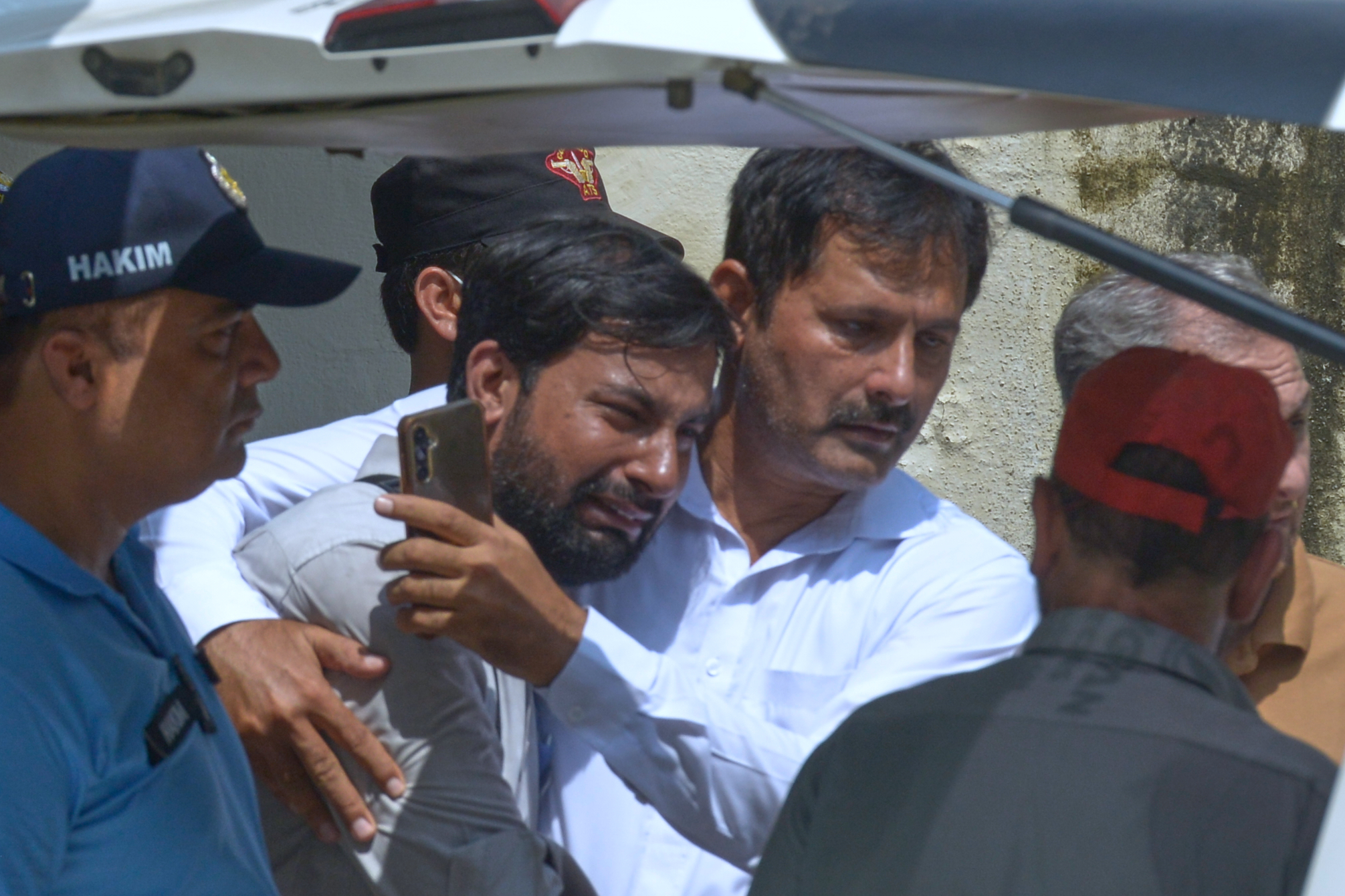
    ISLAMABAD — A fire triggered by an exploding air conditioner killed 14 newborns in a hospital nursery in Pakistan’s capital on Wednesday, officials said.

    One baby of the 15 who were in the nursery at the Pakistan Institute of Medical Sciences was rescued, the hospital said.

    Television footage showed rescue workers using ladders to reach the third-floor nursery through broken windows. Grieving parents and relatives gathered at the hospital, some weeping while others demanded answers about how the fire began and whether the nursery had adequate firefighting equipment.

    The government has opened an investigation, and Prime Minister Shehbaz Sharif ordered Health Secretary Aslam Ghauri, the Health Ministry’s highest civil servant, to be removed from office.

    A woman who identified herself as Mrs. Mohammad Sami said she gave birth three days earlier and her baby was receiving intensive care in the nursery when the fire broke out.

    “I don’t know what to say or whom to blame,” she said through tears. “I have lost my child.”

    The fire was confined to the hospital’s nursery

    The fire was confined to the nursery at the institute, which is one of Islamabad’s largest public hospitals. The rest of the facility was unaffected with no other injuries reported, according to hospital officials and witnesses. The blaze was later extinguished, Islamabad Chief Commissioner Suhail Ashraf said.

    It was among Pakistan’s deadliest recent tragedies involving children. In June, 14 schoolchildren were killed when the roof of a tutoring center under construction collapsed in the eastern city of Lahore.

    Health Minister Mustafa Kamal, who confirmed the death toll, told the Geo News channel that he was traveling from Karachi to Islamabad to oversee the investigation.

    Dr. Aneeza Jalil, a hospital spokesperson, said a doctor rescued one baby. She said the bodies of six babies had been handed over to their families, while the remaining bodies would be released soon.

    The government is investigating how the fire started and the response

    The Islamabad district magistrate appointed a fact-finding committee and asked it to submit a report within 24 hours. The panel will investigate the cause of the fire and its spread, determine whether adequate fire-safety measures were in place, and evaluate the emergency response, according to a government order.

    Interior Minister Mohsin Naqvi and Sharif, the prime minister, expressed sorrow over the fire.

    “A tragedy involving children is an irreparable loss,” said Sharif, who held a high-level meeting with officials from relevant agencies hours after the fire.

    President Asif Ali Zardari also offered condolences to the families, describing the deaths as “heartbreaking and an irreparable loss.” He called for those responsible to be brought to justice and urged hospitals to ensure effective fire-safety measures and emergency procedures.