Category: Associated Press

  • U.S. forces strike Iranian rocket launchers on the Strait of Hormuz in first military action in weeks

    U.S. forces strike Iranian rocket launchers on the Strait of Hormuz in first military action in weeks

    WASHINGTON — U.S. forces struck Iranian rocket launchers on the Strait of Hormuz in the first military action in a month on Sunday, according to a U.S. official, breaking a lull in fighting during an intermittent war that has lasted more than six months.

    Forces with the Revolutionary Guard Corps were observed preparing to launch rockets with sea mines into the strait, according to the official, who spoke on condition of anonymity to detail sensitive military movements.

    The U.S. military last week completed clearing sea mines from the strait’s international shipping routes.

    Semiofficial news outlets in Iran reported sounds of explosions near Larak island on the strait. The Guard in a statement carried by Iran’s state broadcaster noted “the martyrdom and injury of several of our fighters and compatriots.”

    The statement said the attack will “result in punishment of the aggressor.”

    The fighting comes just days after the Trump administration said it would turn its focus to increasing economic pressure — rather than military action — to try to end its war with Iran. The shifting strategy centers on threats to punish any country or entity that continues to conduct business with Tehran.

    The turn to using sanctions as the cudgel of choice comes as the administration weighs diminished munitions stockpiles after months of war, sparking concerns that the prolonged conflict could undermine U.S. military readiness in other parts of the globe.

    As the conflict grinds on, Trump’s talk of finding a quick end to the war also appears to be fading. He stressed last week that he’s “not in a hurry” to get Iran back to the negotiating table, and he continues making the case that the Islamic Republic’s leadership is on the ropes.

    Trump has consistently emphasized that the U.S. and Israel campaign has been devastating for Iran’s navy and air force. Iranian officials have said the country has suffered $270 billion in direct and indirect damage. Israeli military strikes in the first weeks of the war wiped out much of the theocratic government’s leadership structure.

    But Iran has found leverage through its own strikes in the critical Strait of Hormuz, where relatively few vessels carrying oil and liquefied natural gas are risking passage. Iran still has enough drones and missiles to fire at vessels transiting the vital energy waterway, through which 20% of the world’s oil normally flows, effectively controlling much of the traffic in the strait.

    Trump has repeatedly declared that the “Strait of Hormuz is open,” saying 24 vessels passed through last week. But that’s a fraction of the roughly 130 vessels that passed through the vital waterway daily before the war began.

    Earlier on Sunday, a multinational coalition overseen by the U.S. Navy said commercial traffic through the strait remained at “reduced levels.” And a monitoring agency run by the British military said an unknown projectile struck a tanker ship on Saturday north of Khasab, Oman, in the strait.

    The United Kingdom Maritime Trade Organization said the ship had been moving inbound and no casualties or environmental impact had been reported. It cited unspecified military authorities. There was no immediate claim of responsibility.
  • In one Nepal district, flood catastrophe is measured in bodies and burial trenches

    In one Nepal district, flood catastrophe is measured in bodies and burial trenches

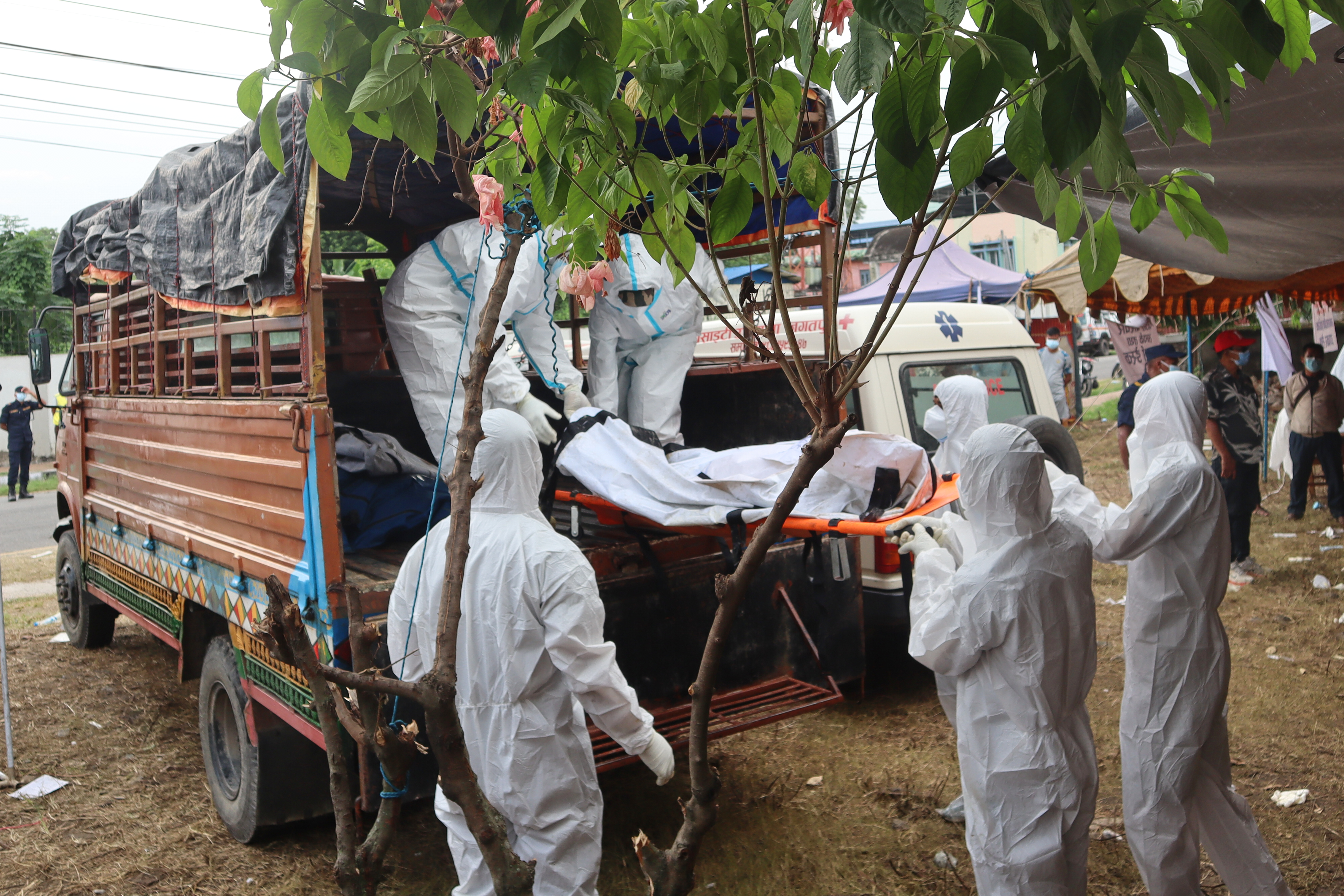
    KATHMANDU, Nepal — The devastating flash floods in the Himalayan region swept so many people downstream that authorities in one Nepalese district have begun burying bodies in temporary graves before they can be identified, prompting accusations that Hindu funeral traditions are being ignored.

    In south-central Nepal’s Chitwan district, the scale of the catastrophe was evident in some 250 bodies awaiting identification and the hastily dug trenches for their temporary burial following Wednesday’s catastrophic floods and mudslides, which killed at least 800 people and left more than 3,000 missing in Nepal and Tibet.

    The bodies were carried hundreds of kilometers downstream by the Bhotekoshi River from the flood’s epicenter before being recovered in Chitwan.

    Authorities carried out a temporary burial of about 100 victims on Saturday, officials said, as forensic teams struggled to cope. A convoy of vehicles carrying bodies entered a lush, forested area as an excavator dug a wide trench in the red earth while officials and media looked on.

    Anil Thapa, a police inspector coordinating the handling of the bodies, said another 50 bodies were having DNA samples taken ahead of their likely burial Sunday.

    Authorities preserve the DNA samples, photograph distinguishing facial features and record other identifying details, Thapa said. The bodies are assigned a reference number to help families claim them later.

    Thapa said many of the bodies had remained submerged in floodwaters for about four days and were already decomposing by the time they were recovered.

    Across the region, homes, vehicles, and farm tractors still lay partially buried in mud.

    Limited forensic infrastructure and inadequate morgue capacity in the district further strained efforts to manage the overwhelming number of bodies recovered from the disaster, officials said.

    High humidity and sweltering heat accelerated decomposition, compounding the challenges as health experts warned that leaving the remains exposed could increase the risk of disease.

    Fresh landslides in the area on Sunday closed the main highway linking the capital city of Kathmandu and Chitwan, a day after it partially reopened, complicating efforts to move bodies and relief supplies.

    As survivors grappled with the aftermath, criticism of the burials mounted. Some residents said the dead had waited days for their last rites and were denied dignity in death. Families still waiting to locate missing relatives and some public figures questioned whether authorities moved too quickly.

    The issue is particularly sensitive in Nepal, a predominantly Hindu nation where the dead are traditionally cremated.

    Ruby Chaudhary, who has two missing relatives, said the burials should not proceed without families’ consent.

    “The dead deserve to be treated with dignity,” she said. “Our tradition is to cremate them on the riverbank, surrounded by their immediate family.”

    A former prime minister, Baburam Bhattarai, said it was inappropriate to dispose of unidentified bodies before search and rescue operations were complete and without broader consultation with families of the missing.

    If morgues were insufficient, authorities could have mobilized emergency resources to set up temporary morgues or secure cold storage facilities, he said in a social media post Saturday night.

    Officials said the burials were a temporary measure necessitated by health concerns and limited capacity.

    “People are worried that this could be a permanent burial, but it is only temporary management,” Thapa said. “If someone is able to verify the identity later using the available information, they can take back the body and perform the appropriate funeral rites.”

    Amrit Bahadur Rai, Nepal’s foreign secretary, said the temporary burial of unidentified bodies was carried out in line with internationally accepted disaster-management protocols, including those of the International Committee of the Red Cross.

    “Families can match records later, and will be allowed to exhume (the remains later) for necessary rituals,” Rai said at a news briefing in Kathmandu.

  • Icelandic voters reject a proposal to restart negotiations to join the European Union

    Icelandic voters reject a proposal to restart negotiations to join the European Union

    REYKJAVIK, Iceland — Iceland’s voters rejected restarting negotiations to join the European Union in a referendum that pitted concerns about geopolitical stability against keeping national control of Iceland’s prized fisheries, officials said Sunday.

    Opponents defeated the measure by a margin of 52.8% to 47.2%, the National Electoral Commission said. The result puts the divisive issue to rest for now — more than a decade after a euroskeptic government ended EU talks that had begun after the 2008 financial crisis.

    The vote Saturday was held in the shadow of repeated threats by U.S. President Donald Trump to take control of nearby Greenland. Although Iceland is a NATO member, supporters said European solidarity would provide greater protection if Trump ever made similar threats toward the volcanic island.

    Iceland’s left-leaning coalition government, elected in 2024, moved up the EU referendum it had planned for next year after Trump mistakenly named Iceland four times while speaking about his designs on Greenland.

    Voters faced a simple question

    Prime Minister Kristrún Frostadóttir said she did not see the loss as a setback for her coalition government but as a win for democracy as more than 82% of the eligible 270,000 voters cast ballots. She said she would respect the result but would not rule out a future attempt to reopen the issue.

    “Things happened in the past couple of years, though, that I could not have predicted,” she said. “But this government will not go forward with it. And something big has to change in the next 24 months for this to be at the top of the agenda.”

    Guðrún Hafsteinsdóttir, leader of the opposition Independence Party who opposed the measure, said the result is a blow to the government but not European relations.

    “The best way to heal the wounds is for the government to listen to the conclusion and put this path aside,” she told RUV, the national broadcaster. “Because we want to remain in close contact with the European Union, Europe, and as many other countries as possible, the nation is sending a clear message that we intend to steer that course ourselves.”

    Voters faced a simple yes-or-no question: Should Iceland resume accession negotiations with the European Union?

    The capital of Reykjavik was the only area in the island nation of 400,000 people where a majority supported the referendum.

    The influential fishing industry led opposition to the referendum over fears the bloc’s common fisheries policy would open its waters to Spanish, Dutch, and other trawlers.

    Iceland is already in the EU single market

    Descendants of Vikings, Icelanders, who won their independence from Denmark in 1944, have lived off the sea for centuries, and fishing is central to their national identity. Iceland has a proud history of refusing to be pushed around by bigger and richer European nations, winning the so-called Cod Wars with Britain in the 1970s over the right to control its waters.

    Opponents also rallied around the fact that Iceland already reaps benefits from being in the EU’s frictionless single market and the Schengen free-travel zone without the sovereignty compromises that come with full membership. They argued that Iceland’s voice would be muted in the large European Parliament and that it would be better off cutting its own trade deals, such as one with China.

    Backers said EU membership would lower inflation and interest rates, and the euro would bring more stability than Iceland’s volatile króna currency. They said it was also in the nation’s interest to get closer to its European neighbors to tackle issues that don’t respect borders, such as climate change.

    Other countries face a more difficult path to EU membership

    If the proposal had been approved, it would have been a preliminary step to revive the lengthy negotiating process with the EU’s executive branch, the European Commission, to discuss areas from the economy to human rights. Voters would have needed to approve any negotiated deal.

    The result is sure to disappoint many in the European Union. As a wealthy, stable, and democratic country with vast fishing grounds, Iceland could have joined the bloc relatively quickly. Croatia was the last country to join, in 2013.

    Most of the other candidates waiting — including several countries in the Balkans, plus Moldova and conflict-torn Ukraine — must still undertake time-consuming reforms to bring their laws and standards into line with those of the EU.

    Getting Iceland into Europe’s rich club, perhaps along with Montenegro and possibly Moldova, over the next two years could have helped to lay to rest the damage to the EU caused by the departure of Britain in 2020, even though London now appears willing to mend ties.

    Voter Daniel Bjarkason, who opposed the measure, said Iceland should wait a decade or two before trying again to join the EU.

    “For now we’re too divided and that’s not a good look,” he said. “It should be 70-30 Yes if we’re going to do it.”

  • Iran’s leader calls for Muslim unity

    Iran’s leader calls for Muslim unity

    Iran’s supreme leader called on Muslim countries to stand together against Israel and the United States, imploring them to “know your real enemy.”

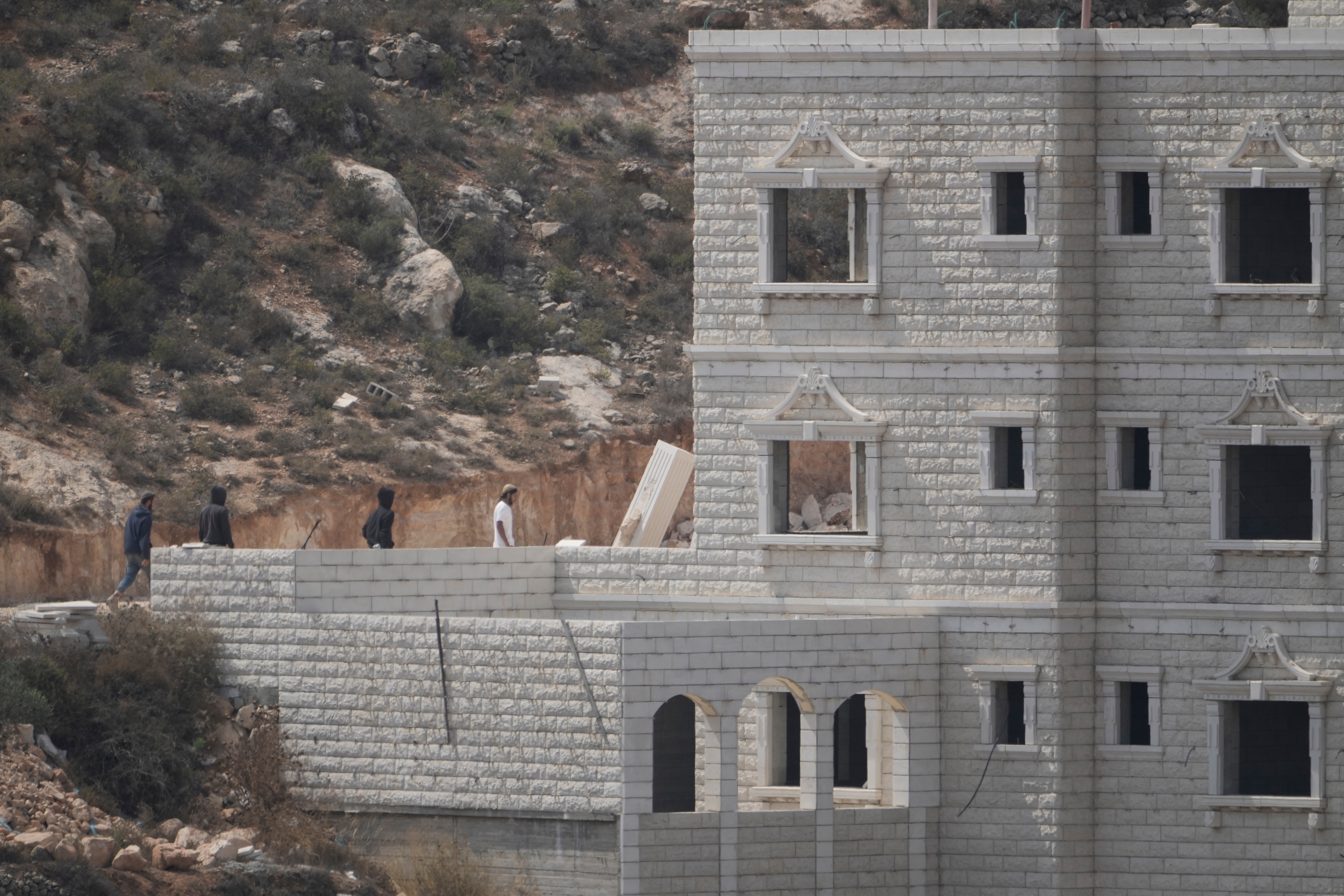
    U.S. broadcaster NBC said Israeli settlers attacked a team of its journalists in the occupied West Bank. A British activist faced deportation after Israeli settlers seized him and turned him over to police. And an Israeli airstrike in central Gaza killed at least two Palestinians, including a 3-year-old boy, hospital authorities said.

    Here’s a look at the latest developments Sunday in the Iran war and the wider Middle East. Full coverage can be found here.

    Iran’s supreme leader urges regional unity

    Iran’s new supreme leader, Ayatollah Mojtaba Khamenei, urged Muslim cooperation and unity in a letter to religious leaders from Islamic countries attending a conference in Tehran, Iran’s official IRNA news agency reported.

    Khamenei called the U.S. and Israel enemies of all Islamic nations. “My enduring and repeating advice to rulers of Islamic nations is to know your real enemy, understand its plans and confront it,” he wrote.

    Six months after the U.S. and Israel attacked Iran, killing Khamenei’s father and other senior leaders, Khamenei has not been seen publicly.

    The war has exposed deep divisions in the Muslim world after Iran struck targets in neighboring Gulf Arab countries and restricted movement through the Strait of Hormuz. Tehran has opposed the U.S. military presence in neighboring nations.

    NBC says settlers attack journalists in West Bank

    Settlers attacked an NBC crew in the central West Bank on Saturday as they were interviewing a Palestinian woman who said she’d been driven out of her house, the network said.

    Correspondent Matt Bradley, two other crew members, and the woman were treated for injuries, NBC said, giving no details about them.

    NBC shared footage showing masked settlers approaching the crew with sticks and beating their vehicles.

    Israel’s military said it was “aware of reports of Palestinian injuries, including a Palestinian woman who sustained non-life-threatening injuries and was evacuated by the Red Crescent for medical treatment.” It did not comment on the attack on the NBC crew.

    Prime Minister Benjamin Netanyahu issued a rare condemnation of the violence on Saturday, after a growing wave of violence by settlers in the West Bank. The Israeli leader has come under U.S. criticism for the attacks.

    Settlers seized a British activist, lawyer says

    Israeli settlers seized a British activist from a Palestinian village in the West Bank on Saturday and locked him in a shed before turning him over to police, his lawyer said Sunday.

    Inbar Shaked Vardi said settlers held Finn Joughin for half an hour. Video showed two settlers, one armed, restraining Joughin and marching him away.

    It was not clear what led to his capture. Settlers alleged he assaulted a child, which Vardi denied. Settlers pointed to a video where the activist uses his body in an apparent attempt to block a settler boy from passing through a fence. Vardi said the video shows he was trying to protect the village.

    “Without any hearing, the police has decided to move him to deportation, which just shows that this entire case has been political in the first place,” Vardi said later, adding that Joughin would likely be deported Sunday night.

    A spokesperson with the U.K. government’s Foreign, Commonwealth, and Development Office said embassy officials have raised the case with Israeli authorities and were seeking information.

    Israeli strike kills 2 Palestinians in Gaza, including a child

    An Israeli strike hit a group of people in the western part of Deir al-Balah, killing a 3-year-old and a man who Israel’s military called a Hamas operative.

    The military in a statement identified the man as Hassam Osama Hussein Nasir. It said he had “posed an immediate threat,” without providing evidence.

    Another Palestinian was wounded, according to Al-Aqsa Martyrs Hospital, which received the casualties.

    The deaths were the latest in Gaza since a fragile October ceasefire deal attempted to halt more than two years of war between Israel and Hamas. Gaza’s Health Ministry says Israeli fire has killed at least 1,318 Palestinians since that truce.

  • Three tricky decisions for every retirement plan

    Three tricky decisions for every retirement plan

    Many aspects of retirement planning are the subject of hot debate, even among experts. Here are three tricky decisions that confront people planning retirement today.

    How much to withdraw each year in retirement

    It’s impossible to say at the outset of retirement what the “right” withdrawal rate is. You don’t know what the major asset classes will return or how high (or low) inflation will run during your retirement. Nor do you know how long you’ll live.

    But you have to use something, and this is where the disagreements come in. A 4% starting withdrawal rate, with annual inflation adjustments to that initial dollar amount thereafter, is often cited as a “safe” withdrawal system for new retirees. Research we conducted at the end of 2021 suggested that a 3.3% withdrawal rate was a safe starting point for new retirees with balanced portfolios over a 30-year horizon. When we revisited the research in late 2022, our safe starting withdrawal percentage was 3.8%. By late 2023, that number had popped up to the classic 4%, thanks to rising fixed-income yields and moderating inflation. At the end of 2024, it was 3.7%, and 3.9% at the end of 2025. Further complicating matters is that retirees don’t spend the same amount, adjusted for inflation, year after year.

    There’s a comforting consensus in a few key areas.

    Whether to buy long-term-care insurance

    According to a 2019 study, about half of people turning 65 will need some type of paid long-term care. But paying for it can be financially devastating. What’s up for debate is whether and how to protect yourself.

    The long-term-care insurance market is deeply troubled today. While recent interest rate hikes have improved the economics of the long-term-care insurance industry, premiums have increased and several insurers have gotten out of the business.

    That’s why purchasing pure long-term-care insurance is by no means a no-brainer. Hybrid products offer a long-term-care rider bolted onto a life insurance policy or annuity, but they’re complicated and often purchased with a lump sum.

    Take a hard look at your retirement portfolio to decide whether your assets are sufficient to self-fund, you’re likely to qualify for Medicaid, or you fall somewhere in between. From there, you can create a long-term-care action plan.

    Whether to buy an annuity

    Academic researchers have long championed simple income annuities for retirement, arguing they provide longevity risk protection and a higher payout than would be available from fixed-rate investment products like bond funds. Annuities have been getting even more attention as payouts tend to get better during a period of rising interest rates.

    But annuity types vary widely, from single-premium immediate annuities to more complicated products that provide equity exposure, guaranteed minimum living benefits, and death benefits.

    Research has demonstrated that the peace of mind that accompanies the purchase of a basic annuity is greater than would be associated with holding the same amount in investment assets. Yet the annuity products that retirement researchers generally like best — the plain-vanilla immediate and deferred-income annuities — have struggled in the sales department. Investors may be reluctant to part with the capital to purchase them, and advisers may not have a strong motive to recommend them.

    While there’s no consensus on whether annuities are a must-have or which types to buy, there’s little doubt that the lifetime income they offer is in short supply. That’s especially true given that only about a fourth of baby boomers retiring today have pensions, and that number trends down for the generations behind them.

    The starting point when thinking about lifetime income isn’t an annuity. It’s Social Security, which is basically an annuity backed by the U.S. government. Only after maximizing lifetime income through Social Security should an annuity come into play.

    This article was provided to the Associated Press by Morningstar. For more retirement content, go to morningstar.com/retirement.

    Christine Benz is director of personal finance and retirement planning for Morningstar and co-host of “The Long View” podcast. Subscribe to her free newsletter, Improving Your Finances.

  • Ontario premier answers Trump’s ‘Lake America’ with giant ‘Lake Ontario’ sign

    Ontario premier answers Trump’s ‘Lake America’ with giant ‘Lake Ontario’ sign

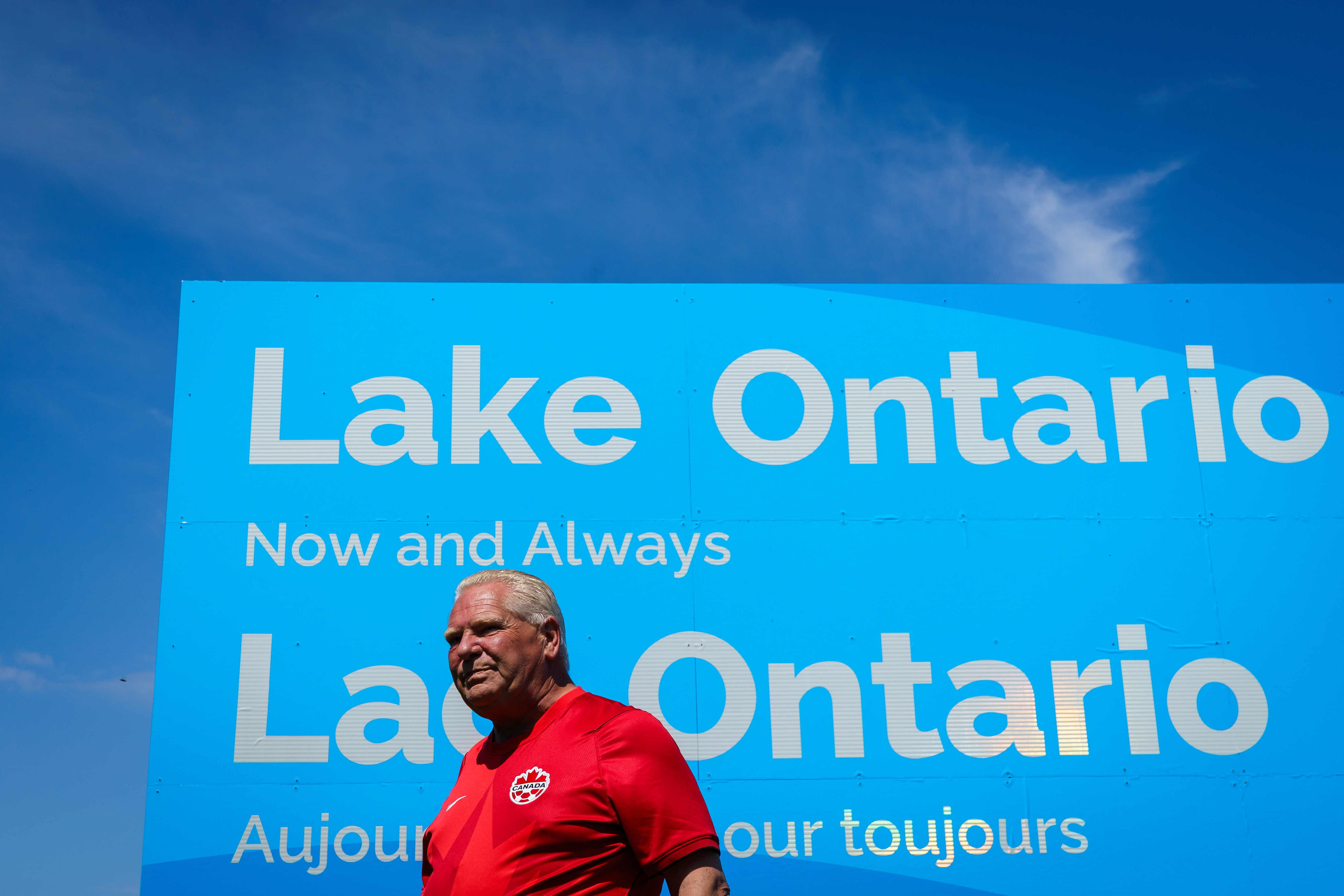
    TORONTO — Ontario Premier Doug Ford answered President Donald Trump’s “Lake America” decree Saturday with a billboard-sized message on the Canadian shoreline: “Lake Ontario. Now and Always.”

    Wearing a Team Canada soccer jersey, Ford unveiled the sign near Grimsby, Ontario, and posed for photographs. The 24-by-12-foot sign stands on 6-foot legs, putting its top about 18 feet above the ground — roughly two stories high. The message is repeated in French.

    It was the latest show of defiance after Trump signed an executive order directing U.S. federal agencies to call Lake Ontario “Lake America.” After months of tariffs, threats to make Canada the 51st U.S. state, and personal attacks on its leaders, the move has been met in Canada largely with ridicule.

    Ford said Trump was trying to rename the lake because Ontario and Canada were “standing up for ourselves” and argued the name would outlast the president.

    “Long after President Trump is gone, it will still be called Lake Ontario,” Ford said in a video posted on social media.

    Manitoba Premier Wab Kinew compared Trump to an aging rock band trying to revive an old hit.

    “You know when a rock band is really over the hill and you see them like in a casino playing some song from like 50 years ago. I think that’s the part of Donald Trump’s presidency we’re at now, Like he thought they had a real hit, a real golden oldie, with the Gulf of Mexico,” Kinew said, referring to Trump’s executive order renaming the Gulf of Mexico the Gulf of America. “And he’s trying to bring back that, and he’s trying to play the hits for his base. But I think everybody here thinks it’s a little sad and it’s not his best work.”

    The mockery was not limited to politicians. Canadian historian Robert Bothwell was even more scathing.

    “The greatest country on earth takes this moron seriously?” Bothwell said.

    But Bothwell said the dispute was more serious than the jokes, arguing Trump’s broader aim was “to subordinate Canada and at best make it a colony, at worst absorb it into the United States.”

    Nelson Wiseman, professor emeritus at the University of Toronto, said Trump “would like Canada to act like a vassal state, but it refuses to do so. That irritates him.”

    The dispute comes as relations between the longtime allies worsen over trade. Negotiations collapsed last week, both governments accused the other of making late demands, and Canada announced retaliatory tariffs set to take effect next month.

    Trump’s order also came amid an escalating war of words with Ford. In an interview with the Associated Press earlier this week, Ford said Ronald Reagan would be “throwing up” over Trump’s tariff policies and “disgusted with President Trump.”

    Trump fired back by dismissing Ford’s comments as “bluster,” calling him Prime Minister Mark Carney’s “flunky” and mocking him as the “less charismatic, intelligent, and overall unimpressive brother” of the late Toronto Mayor Rob Ford.

    Trump continued promoting the new name Saturday, reposting a meme showing Canada geese with Trump-like blond hair firing rifles as they “protected” Lake America.

    Trump has repeatedly used maps to make political points. A “Gulf of America” map was displayed for a time beside the Resolute Desk in the Oval Office, and Trump has posted images depicting Canada as part of the United States or as the 51st state.

    The name Lake Ontario comes from the Huron Indigenous people’s word “oniatarí:io,” which means “lake of shining waters.” The Canadian province of Ontario, founded in 1867, took its name from the lake.

    Wendat Nation Grand Chief Pierre Picard, whose people historically lived from the St. Lawrence Valley to the Great Lakes and whose language gave Lake Ontario its name, called Trump’s move an attempt to erase Indigenous history.

    “I want to tell him that it is unacceptable for us, as a nation, to have a president who can eradicate our history, our culture, and our identity,” Picard said.

    Canadian Prime Minister Mark Carney rejected the move, noting the lake’s Indigenous roots and that the name predates both Canadian Confederation and the U.S. Declaration of Independence. Trump cannot require Canada to adopt the new name.

  • Far-right British provocateur Milo Yiannopoulos has been deported after his immigration arrest in US

    Far-right British provocateur Milo Yiannopoulos has been deported after his immigration arrest in US

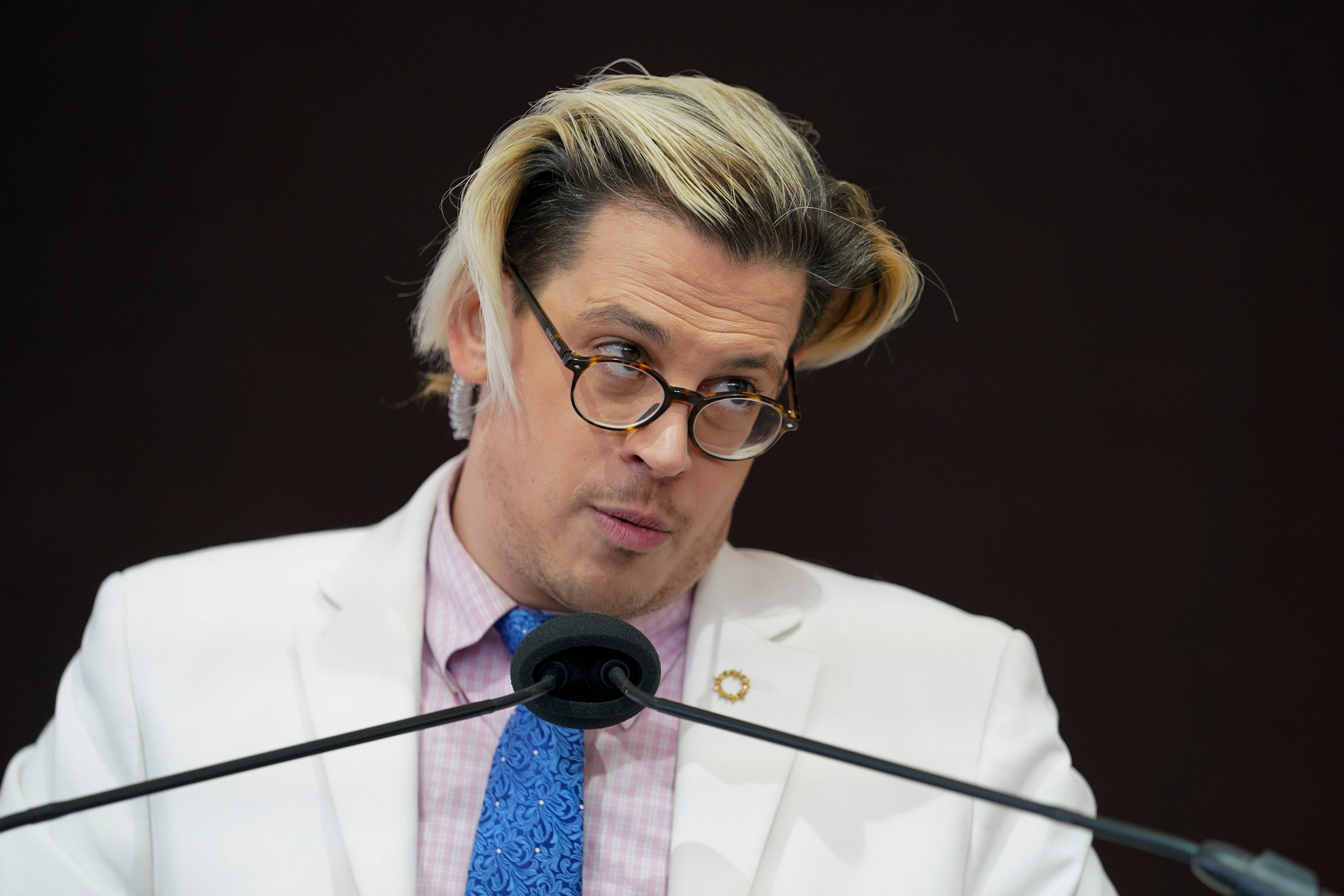
    British far-right commentator Milo Yiannopoulos has been deported back to the United Kingdom after his arrest by American immigration authorities, U.S. officials said Saturday.

    The U.S. Department of Homeland Security said Yiannopoulos was returned to his home country on Friday after being accused of overstaying after entering the U.S. legally in May 2019. An immigration judge had issued a final order of removal on July 22 after he failed to show up for an immigration hearing, a Homeland Security spokesperson said.

    Yiannopoulos was arrested Thursday at Louis Armstrong New Orleans International Airport in Louisiana and detained by Immigration and Customs Enforcement.

    “He chose to overstay his welcome in violation of our nation’s laws,” a Homeland Security spokesperson said in a statement.

    Yiannopoulos and his representatives did not respond to requests for comment. He has not posted on his X social media account since Thursday.

    Yiannopoulos is a well-known champion of conservative causes and has frequently taken provocative public positions criticizing feminism, Islam, and immigrants. He has been especially supportive of President Donald Trump’s immigration crackdown.

    “Zero immigration for the next 20 years. No ifs, no buts,” Yiannopoulos wrote on X last year.

    The British national has most recently worked for the rapper Ye, formerly known as Kanye West, who performed in New Orleans on Friday evening.

    Yiannopoulos rose to fame in the early 2010s as an incendiary writer for the conservative website Breitbart News. He resigned from the company in 2017 after a video of him endorsing pedophilia resurfaced online. He later apologized for the remarks and said he himself was a victim of sexual assault as a minor.

    Yiannopoulos’ arrest on Thursday comes amid a nationwide uptick in detentions as part of Trump’s immigration crackdown.

    Far-right conservative activist Laura Loomer swiftly took to social media to applaud Yiannopoulos’ arrest after years of public feuding between the two personalities.

    “I was the first person to report on the fact that Milo was in the U.S. illegally where he incited violence against President Trump and worked for Marjorie Traitor Greene,” Loomer wrote on X.

    Controversy around Yiannopoulos ballooned in 2017 when he carried out what he called his “Troll Academy Tour” across college campuses nationwide. Fights broke out when some students protested Yiannopoulos’ appearances and accused him of hate speech, while others celebrated him as a champion of free speech. Around that time, Buzzfeed reported on Yiannopoulos’ cozy relationships with self-proclaimed white nationalists.

    In recent years, Yiannopoulos continued to work in the orbit of conservative activism. In 2022, he was an intern for former U.S. Rep. Marjorie Taylor Greene, according to the Washington Post. He subsequently ran the short-lived 2024 presidential campaign for Ye.

    Most recently, Yiannopoulos has worked as a spokesperson for Ye, who has been beset by controversy of his own following antisemitic comments that the rapper has since apologized for. The Washington Post reported Saturday that two sold-out Ye concerts in St. Petersburg, Russia, were canceled in part because of his history of such remarks.

  • Trump cannot deport students for criticizing Israel, judge rules

    Trump cannot deport students for criticizing Israel, judge rules

    SAN JOSE, Calif. — Citing the importance of the First Amendment, a federal judge in California says the U.S. government is unconstitutionally silencing critics of Israel’s war in Gaza and others as part of the Trump administration ‘s quest to deport noncitizens who it says disrupted college campuses while expressing their views.

    Judge Noël Wise, in a ruling Friday, delivered a victory for the student newspaper at Stanford University, which has said some international students were afraid to speak out because of the deportation threat.

    The decision largely piggybacks on findings from nearly a year ago by a U.S. district judge in Boston, who ruled that the Trump administration violated the Constitution when it targeted people who are not citizens for deportation solely for supporting Palestinians and criticizing Israel.

    Wise wrote that the freedoms of speech and the press are “foundational to America’s enduring democracy.” The judge cited free-speech and vagueness flaws that violate the First Amendment and Fifth Amendment as she struck down portions of the provisions that the federal government follows regarding deportations.

    Wise cited retaliation in March 2025 by U.S. immigration authorities against people who engaged in speech supporting the Palestinians and against Israel’s actions — which a growing number of experts, including those commissioned by a U.N. body, have said amount to genocide. The judge also cited retaliation against people who were critical of Charlie Kirk after the Turning Point USA co-founder was assassinated last September.

    “Tomorrow, or perhaps even today, targets may include anyone in the United States who exercises their freedom of speech to simply express opinions the government does not like,” the judge in San Jose said.

    “This downward spiral is antithetical to our Constitution that recognizes our right to speak freely,” she added. “Here you can simultaneously hate the content of a person’s speech and love the country that cherishes the freedom to allow it. Zealous protection of our Constitutional right to free speech is a provocative demonstration of our country’s powerful lack of fear.”

    The Justice Department did not respond Saturday to a message seeking comment on the decision.

    Conor Fitzpatrick, an attorney with the Foundation for Individual Rights and Expression, which brought the lawsuit, praised the ruling.

    “In America, free speech doesn’t just belong to the people who say things the government agrees with,” Fitzpatrick said in a release.

  • FBI no longer treating an applicant’s experience with prostitution as automatic bar against hiring

    FBI no longer treating an applicant’s experience with prostitution as automatic bar against hiring

    WASHINGTON — The FBI is dropping a categorical hiring ban on applicants who have had sexual encounters with prostitutes and will instead consider in a more holistic manner at least some candidates who have engaged in the practice in the past, according to people familiar with the matter.

    The move away from an automatic disqualification falls along a continuum of evolving recruitment standards within federal law enforcement and at the buttoned-up bureau, which several years ago relaxed its approach to candidates’ past marijuana use and has drawn more recent concern among some current and former agents about a perceived loosening of recruitment requirements as it seeks to replenish its ranks.

    The bureau still intends to dismiss applicants who are revealed during the vetting process to have engaged in prostitution within the last 10 years, three or more times overall, or while in a position of trust such as public safety, according to guidance issued this past spring and described by a person familiar with the matter who was not authorized to discuss internal decision-making and spoke on condition of anonymity. For others, it will allow for consideration of the context of the conduct rather than treat it as grounds for an automatic rejection from the FBI’s hiring process.

    The practical impact is not immediately clear since many who have engaged in prostitution may still be either immediately disqualified or weeded out upon further scrutiny from FBI polygraphers and security officials.

    The FBI said the change was meant to account for the fact that some otherwise suitable candidates, including service members, may have engaged in the practice in places where it is legal and to accommodate applicants who may done so as a young child or have themselves been victims of sexual abuse.

    “It is false to suggest criminal behavior like this is no longer disqualifying at the FBI. Any applicant who has engaged in criminal sexual acts like those referenced would of course not be eligible for employment, and it is ridiculous to suggest otherwise,” the FBI said in a statement that described the background check process as “wide-ranging and extensive.”

    “The FBI has and always will maintain some of the highest suitability standards for its applicants and employees in the US Government,” the statement added.

    Justice Department easing recruitment requirements in general

    Even so, the shift is being made at a time when current and former officials worry that the FBI, and the Justice Department more generally, have eased recruitment requirements while facing a mass personnel exodus brought on by retirements, voluntary resignations, and firings. The bureau, for instance, has taken steps to make it easier for its own professional staff to become agents and has offered a truncated training academy for applicants from other federal law enforcement agencies.

    “If they’re moving the bar for sexual encounters to include prostitution, what is that saying about the applicant pool? They’re trying to bring in more people, which to me indicates that the applicant pool is extremely shallow right now,” said Daniel Brunner, a retired FBI agent who spent two decades in the bureau.

    In 2015, then-Attorney General Eric Holder issued a memo reiterating that all Justice Department employees were prohibited from soliciting or accepting prostitution, including in places where it was legal. But both before and since that directive, the FBI and other federal law enforcement agencies have confronted periodic episodes in which agents serving abroad have been accused of sexual encounters with prostitutes.

    As recently as last year, for instance, the Justice Department inspector general substantiated allegations that a supervisory special agent solicited and used prostitutes on multiple occasions while overseas and used a bureau-issued cell phone for the transactions.

    Chris Piehota, a retired top FBI executive, said he would be more troubled if the bureau were to loosen its standards for current employees who require periodic renewals of their security clearances. But he said he could understand the FBI leaning “toward leniency” for actions taken as a teenager or college student.

    “I don’t think you get a better or worse candidate from something you did in your college years,” Piehota said. “That’s why they have the screening process, that’s why they have the vetting process. And the people who do the recruiting and hiring, they look at all those things.”

    Background checks, polygraph tests, and more

    Applicants to the FBI undergo a multistep application and vetting process that includes, among other things, a background check, a detailed questionnaire, credit checks, interviews with neighbors and colleagues, and a polygraph test. The comprehensive regimen is meant to uncover any prior criminal conduct in an applicant’s past as well as embarrassing personal information that could make an employee vulnerable to blackmail.

    Felony convictions, domestic violence convictions, failure of a urinalysis, and violations of the bureau’s drug policies are among factors treated as automatic disqualifiers.

    Though the new guidance will allow for a broader and more contextual evaluation of applicants who disclose past experience with prostitution during their polygraph admission, such an admission has historically been typically regarded as a “death knell” for potential employees at agencies including the FBI, CIA, and NSA, said Daniel Meyer, a Washington lawyer with the Tully Rinckey law firm who specializes in the background check and the security clearance process.

  • Trump says U.S. has entered deal with Venezuela to take control of 65 billion barrels of oil reserves

    Trump says U.S. has entered deal with Venezuela to take control of 65 billion barrels of oil reserves

    WASHINGTON — President Donald Trump said Friday that his administration has entered a sweeping agreement with Venezuela that, if realized, could give the U.S. access to vast amounts of the South American country’s untapped oil reserves, at cost.

    Trump in a social media post announcing the agreement said it was negotiated by Secretary of State Marco Rubio, Defense Secretary Pete Hegseth, and Venezuela’s acting President Delcy Rodríguez.

    “The United States of America has just entered into an Agreement with the Country of Venezuela on, THE BIGGEST OIL DEAL IN WORLD HISTORY!” Trump wrote.

    Rodríguez’s government in a statement said the deal involves the development of 17 fields with a proven potential of 65 billion barrels. It said the agreement could draw $100 billion in investment into Venezuela’s oil industry and yield over $209 billion in taxes for Caracas.

    Rodríguez in a posting on Telegram predicted the deal “will have a significant impact on our nation’s revival.”

    The agreement allows for the United States to partner with an unnamed private operator in Venezuela to create a new private company to take hold of the reserves, according to a U.S. official familiar with the contours of the deal.

    The official, who was not authorized to comment publicly and spoke on the condition of anonymity, added that Rodríguez granted the company 100-year rights to develop the oil fields.

    The deal gives the United States 55% effective output of the new private company — including an ownership stake and rights to buy oil at cost. The company would be the second largest corporate holder of proven reserves after Saudi Aramco, according to the official.

    Trump is under pressure to show he’s lowering oil costs

    The announcement comes nearly nine months after the U.S. military at Trump’s direction carried out an operation to capture Venezuela’s then-President Nicolás Maduro and spirit him to the United States to face federal narcoterrorism and drug trafficking charges.

    Trump faces mounting pressure to address high gas prices as the war in Iran on Friday reached a six-month milestone with no conclusion in sight. The U.S. has tapped its strategic petroleum reserves, which in early August fell below 300 million barrels, down by more than 100 million barrels since the start of 2026.

    The U.S.-Israel war against Iran has led to a dramatic slowdown of Gulf oil moving through the Strait of Hormuz, which about 20% of the world petroleum passed through prior to the conflict.

    The average price of gas in the U.S. stood at about $4.09 a gallon on Friday, according to AAA. The average price was $3.21 at the same time last year.

    A significant drop in U.S. gas prices tied to the agreement should not be expected immediately. Experts have repeatedly warned that a substantial boost in Venezuelan oil production will not happen quickly as repairing and expanding infrastructure takes years and requires billions of dollars.

    Persuading big American oil companies to return the region could face headwinds given the political uncertainty and decades of badly damaged infrastructure.

    Days after the ouster of Maduro, Trump gathered oil executives at the White House and called on them to rush back into Venezuela. Executives expressed interest in the opportunity but there was also a measure of caution given their past experience in the country.

    Darren Woods, CEO of ExxonMobil, the largest U.S. oil company, said at that moment he saw the country as “uninvestable.”

    But Trump has insisted that his administration has brought a measure of stability to Venezuela.

    He has argued that Venezuela stole U.S. oil when former Venezuelan President Hugo Chávez moved decades ago to nationalize hundreds of foreign-owned assets, including those owned by American oil companies.

    Rodríguez, in one of her early moves after taking power, signed a law that opens the nation’s oil sector to privatization and reversed a bedrock tenet of the self-proclaimed socialist movement that has ruled the country for more than two decades.

    Rubio said on X that the agreement would usher in billions in private investment into Venezuela and lead to lower gas prices in the United States.

    “This deal is a huge win for both the American and Venezuelan people,” Rubio posted.

    The oil bought from the new company would go toward filling the U.S. strategic petroleum reserve and toward military use, according to the U.S. official.

    Venezuela has one of the largest oil reserves in the world, with an estimated 303 billion barrels of crude oil in the ground. That’s about 17% of the world’s supply, according to the U.S. Energy Information Administration.

    Unlike other parts of the world, where geologists have to search for untapped oil, the reserves under Venezuela’s soil are largely mapped and known, experts say. But because of dilapidated infrastructure, the country only produces about 1% of the world’s oil.

    Maduro remains jailed in the U.S. He has pleaded not guilty.