Category: Sports

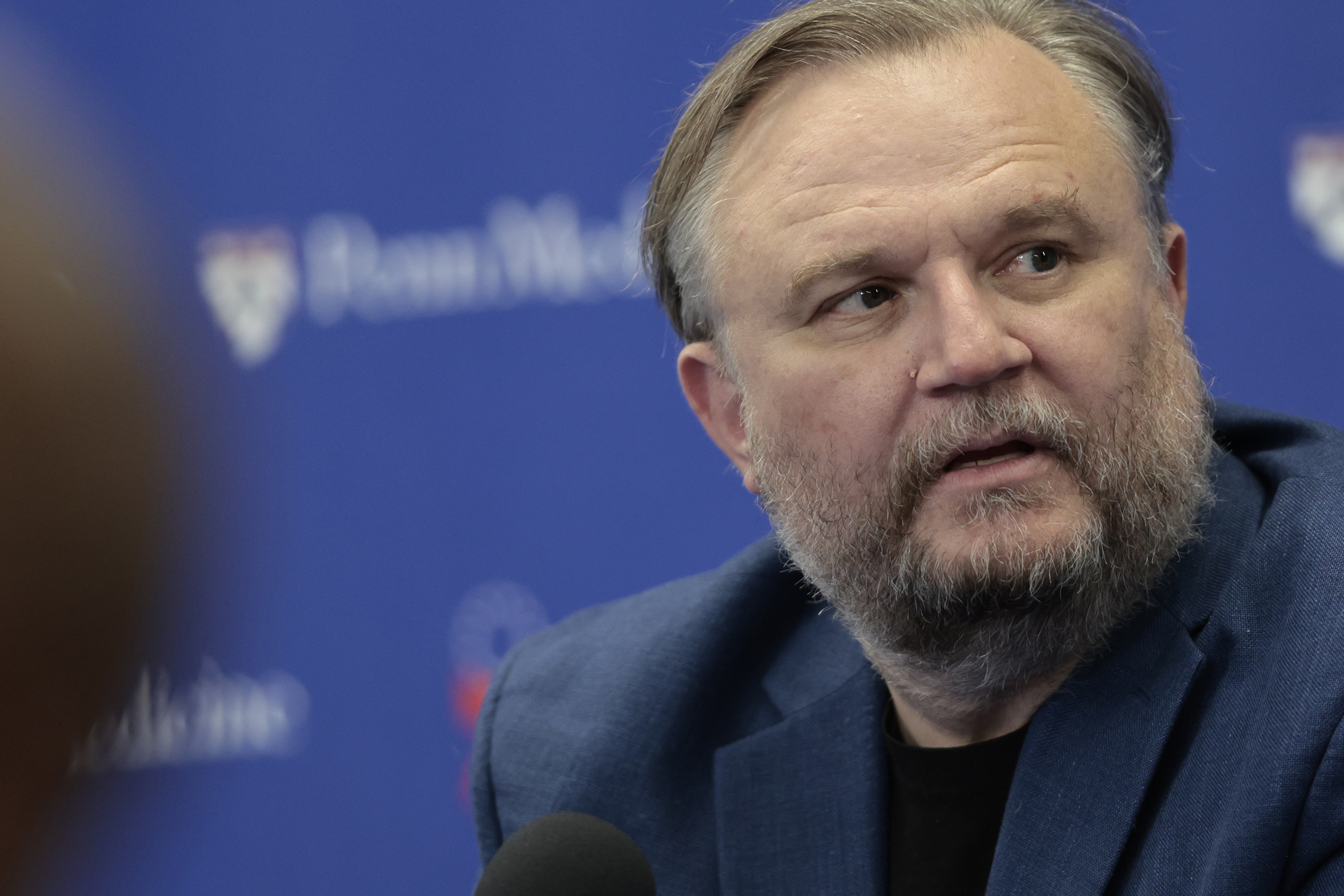
  • Would Daryl Morey still be here if the Sixers had slowed the Knicks’ runaway train? At least one NBA source thinks so.

    Would Daryl Morey still be here if the Sixers had slowed the Knicks’ runaway train? At least one NBA source thinks so.

    The question has lingered.

    Would Sixers owner Josh Harris have fired president Daryl Morey if the Knicks hadn’t rolled the Sixers?

    Working big sporting events can be an exercise in frustration. The Olympics, the World Cup, the Super Bowl, the World Series are objects of spectacle and celebration for a sports fan but can be vehicles of exclusion and futility for a sports writer.

    They also can be veins of golden intel. Such was the case last week in New York.

    Thanks to the vanity of the New Yorker in Chief, entering the arena last week was a protracted challenge. An NBA source with ties to the 76ers told me in the hours before Game 3, as we waited for President Trump to arrive:

    “You know, if the Sixers had won a couple of games against the Knicks, no way Morey gets fired.”

    That piqued my interest. The Knicks had swept the Sixers in the second round of the playoffs. Morey was fired two days later, news that shocked the NBA world.

    Did the Knicks’ storybook run to the hoop-crazed city’s first title in 53 years make Morey’s career an unlikely casualty? Did the sweep cost Morey his job? Was it at least the final straw?

    Apparently so.

    The Knicks weren’t considered elite when they rolled the Sixers. By Game 3 of the Finals, however, they were playing great.

    Folks were talking: Was Morey’s firing less warranted than it seemed at the time?

    I was eager to leave Madison Square Garden and try to track down Morey himself, see what he’d say. He’s going to continue to live in Philadelphia, but, since he got fired, he’s been hanging out in New York, feeding his Broadway addiction and waiting for the unemployment checks to come in.

    Then, a few hours later, the Knicks had lost Game 3, the Spurs seemed to have turned a corner, and the assertion lost its legs.

    But only briefly.
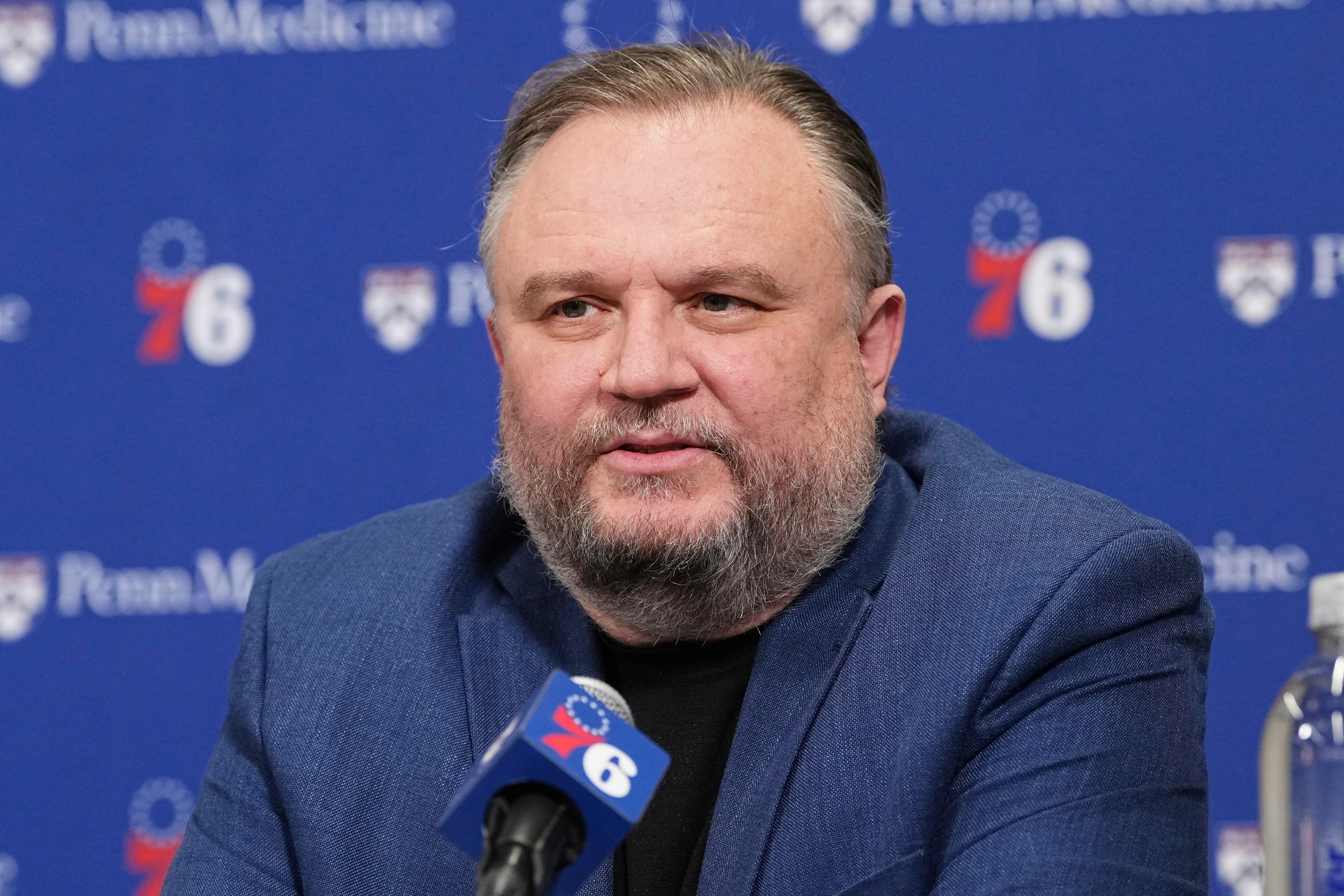
    Daryl Morey did some things well, but the Sixers were also hamstrung by some of his decisions. Matt Rourke

    Genius dismissed

    A computer scientist with an MBA from MIT, Morey’s moves might draw criticism but his intellect never has been in question. Twenty-one years ago he co-founded the annual analytics nerd-fest at MIT, the Sloan Sports Analytics Conference, a stats-based Davos gathering of the smartest suits in the sports industry, designed to render obsolete knuckle-draggers like Doc Rivers and me.

    Despite having never won a title, Morey is front-office royalty. As such, the NBA was rocked by Morey’s dismissal, especially coming, as it did, on the heels of such a dizzying postseason high.

    The week before the sweep, the Sixers beat the arch rival Celtics in seven games to win their first-round series. Boston had held a 15-7 record in the teams’ playoff series and had won the last six; the last time the Sixers won was 1982. It was their first Game 7 win in 25 years. It was their first Game 7 road win in 44 years (the aforementioned 1982 series). It was the first time the Sixers won a series when trailing 3-1 in their last 18 tries, and the Celtics had won 32 times in a row when leading a series 3-1.

    Euphoria barely describes the mood around the franchise after Tyrese Maxey dropped 30 points and pulled down 11 rebounds in that Game 7. Maxey was Morey’s first draft pick when he arrived in 2020.

    Humiliation barely describes the mood around the franchise 10 days later. The Knicks won Game 1 in New York by 39 points. They won Game 4 in Philadelphia by 30 and, at one point, they led by 44. That wasn’t the worst of it. Xfinity Mobile Arena was inundated with Knicks fans for Game 3 and was predominantly pro-Knicks in Game 4.

    Harris, a New Yorker for most of his adult life, was galled. More than anything else, according to the source, it was those two home losses and the Knicks fans’ takeover that cost Morey.

    It didn‘t help, of course, that Morey traded popular shooter Jared McCain in February, after which McCain thrived in Oklahoma City. It also didn‘t help that, two years ago, Morey max-extended the contract of Joel Embiid and max-signed Paul George. Both have been injured and suspended since.

    Both were bigger stars than anyone on New York’s team. Neither played well against the Knicks.

    As it turned out, nobody would play well against the Knicks.
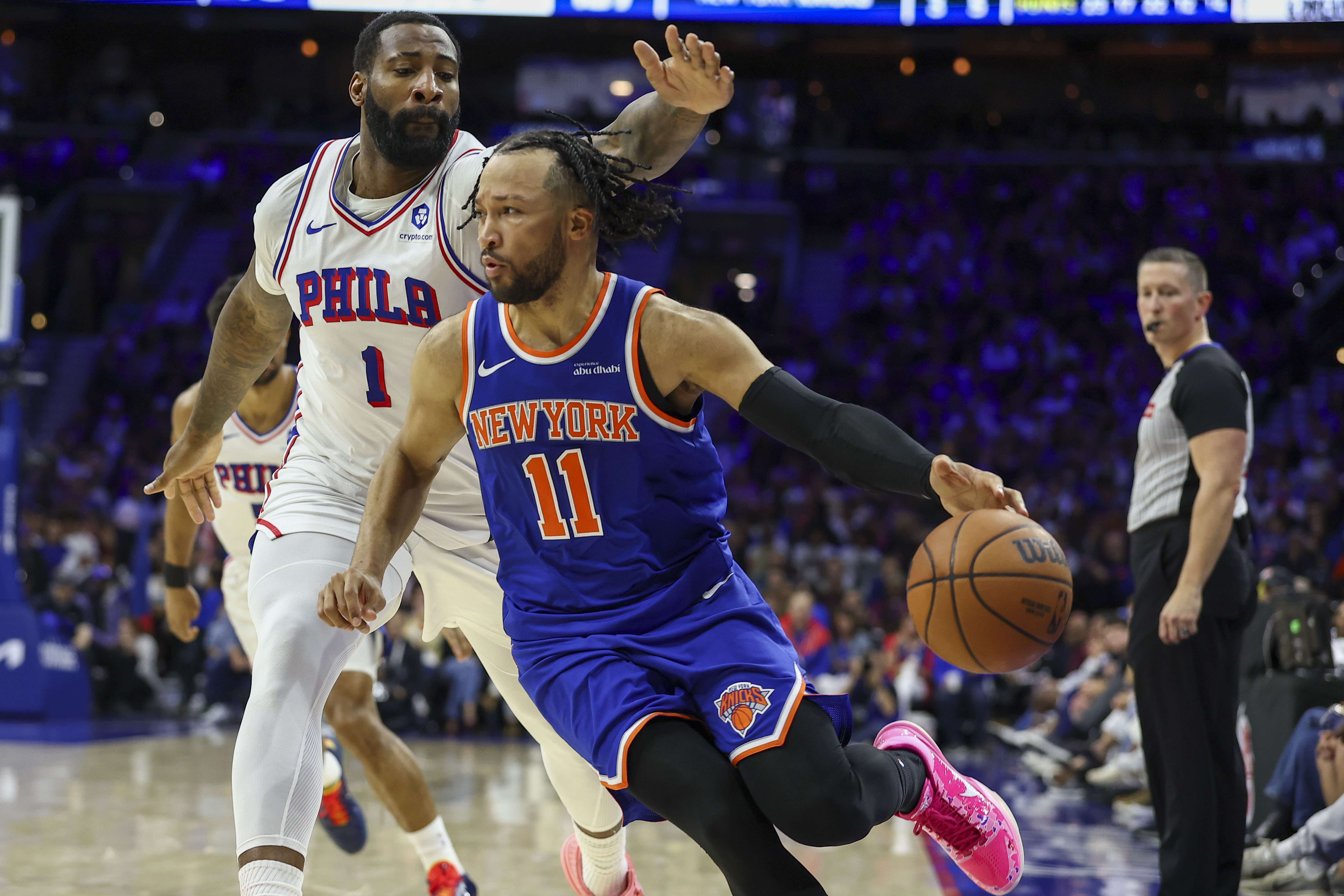
    Jalen Brunson and the Knicks rolled the Sixers in a way that was humiliating for the team and the fan base. Monica Herndon / Staff Photographer

    Juggernaut

    The Knicks’ sweep of the Sixers included wins three through six of 13 playoff wins in a row, the second-best streak in NBA history and just two fewer than the Warriors in 2017. Those Warriors had Steph Curry and Kevin Durant, Hall of Fame scorers who’d been to 12 All-Star Games between them.

    Again, at the time of the Sixers series, nobody considered any of the Knicks on par with Steph or KD.

    Then, the Knicks swept the Cavaliers in the Eastern Conference Finals.

    Then, they won Games 1 and 2 in San Antonio.

    Then, after losing Game 3 at home, they executed a Finals-record 29-point comeback in Game 4.

    Then, on Saturday, they won Game 5 and the title in San Antonio. Jalen Brunson proved himself the biggest star in the playoffs, capping his Finals average of 32.6 points with 45 in the closeout game, a record for a Knick in the Finals, tied with Michael Jordan for the third-most in a Finals closeout game.

    The Knicks finished the playoffs with a point differential of plus-283, the biggest in NBA history. Of course, the Sixers contributed 89 of those positive points, and the Knicks played only one team from the superior Western Conference, but those arguments are thin gruel.

    The 2025-26 Knicks were a powerhouse team: deep, talented, hungry, well-coached, and led by a bona fide, if unlikely, superstar.

    That’s who beat the Sixers.

    That’s who, according to an NBA source, ultimately cost Morey his job.
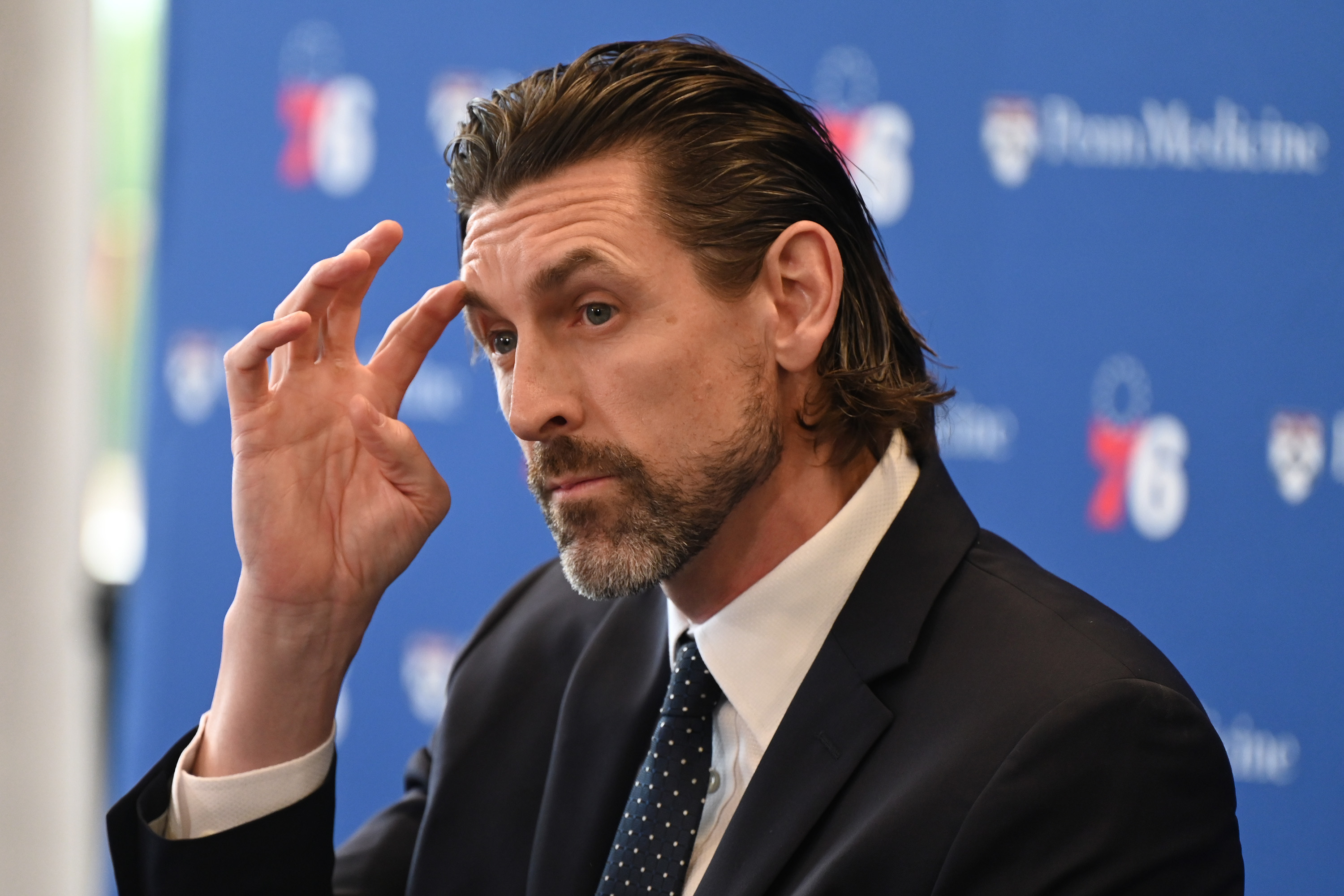
    It’s new president of basketball operations Mike Gansey’s show now in Philly. Tom Gralish / Staff Photographer

    So what?

    I’ve always believed Morey to be a bit overrated as a team builder but I’ve always admired his innovation, his transparency, and intellectual capacity. These, I believe, burnished an image that was more impressive than the reality. He was, nevertheless, a very good basketball president.

    Still, when a team with high expectations repeatedly fails to meet them, change is almost always good. Embiid just ate his way into wasting two more seasons. Paul George popped for PEDs. Both happened on Morey’s watch. Will it happen again under his replacement, Mike Gansey, who helped resurrect the Cavaliers after the LeBron James Era, Part 2? Will Gansey and his overseer, Bob Myers, the former Warriors president who runs all of Harris’ numerous sports franchises, keep the old guys from stealing more money?

    Maybe.

    Maybe a new sheriff in town who has no connection to either Embiid or George will serve as a catalyst for them to deliver more value for the combined $112 million they will make in the next season alone.

    But maybe, had Harris known how humiliated his peers in Cleveland and San Antonio were going to be a month later, he wouldn’t have let go the man he’d introduced six years prior as “extraordinary,” an “innovator,” and a “visionary.”

    Then again, maybe he would have.
  • Who could the Sixers draft at No. 22? Here’s our take on projected picks, and other players to watch

    Who could the Sixers draft at No. 22? Here’s our take on projected picks, and other players to watch

    The NBA draft is a week away, which also marks the first roster-building benchmark for new 76ers president of basketball operations Mike Gansey.

    The Sixers hold the 22nd overall pick, and no selection in the second round. Gansey ran the draft in his last job as general manager of the Cleveland Cavaliers, and will aim to put his imprint on the Sixers’ process with a short timeline since being formally introduced last week. Gansey also said he will be respectful of the preparation the remaining front office staff has already completed, and that has delivered mostly positive results in recent drafts.

    ESPN reported Monday that the Sixers will hold prospect workouts this week. Gansey said they will select based on a combination of best player available and positional need, a vague-yet-understandable description.

    Who are some possibilities at No. 22? Here is a roundup of the major national mock drafts — often created by analysts whose year-round job is to scout and report on these prospects — along with our thoughts and some other players who could be available in the Sixers’ range.

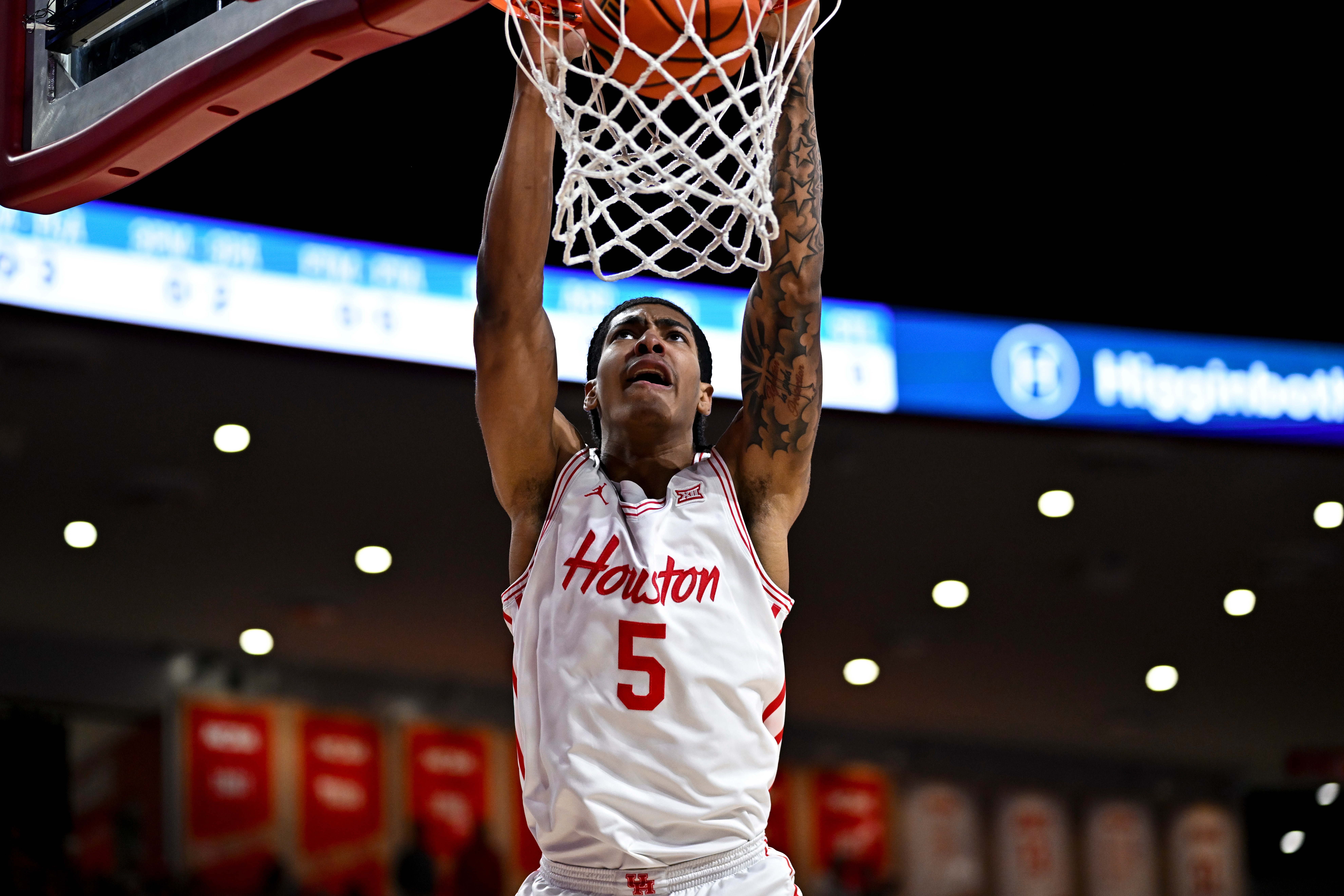
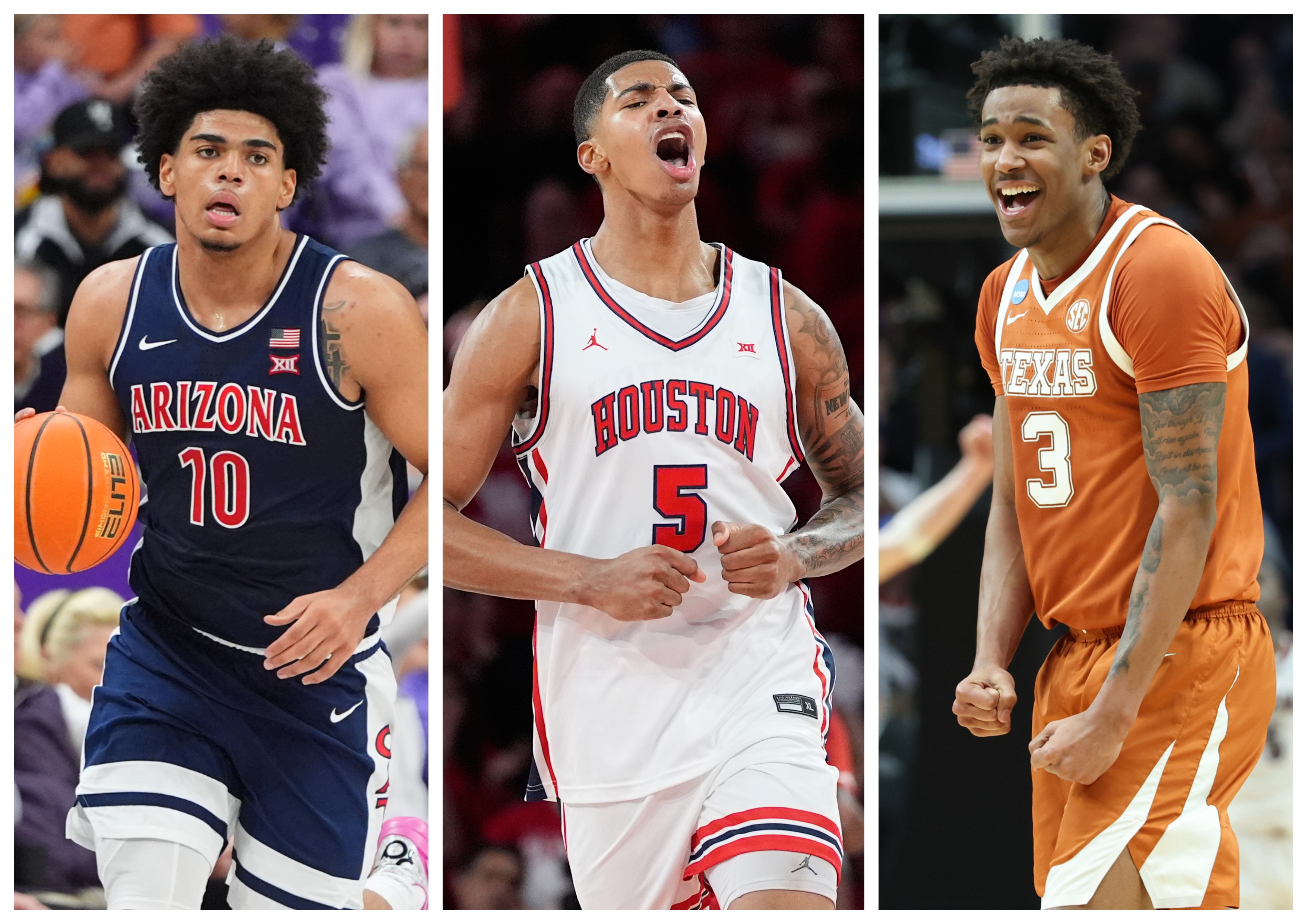
    The 6-foot-11 Chris Cenac Jr. averaged 9.5 points and 7.9 rebounds as a freshman with Houston.Maria Lysaker

    Bleacher Report and Yahoo!: Chris Cenac Jr., Houston big man

    Yahoo! says: “Finding a center to play behind Joel Embiid needs to be prioritized. Embiid simply cannot be trusted to stay on the floor. Cenac checks every box on paper as a superb athlete who moves like a wing, has the length to alter shots, and shoots from the perimeter. Houston handed him a starting role with national title aspirations and trusted him with heavy minutes. But the Cougars fell short again, in part because Cenac struggled to stay out of foul trouble, couldn’t score efficiently, and was overeager to play on the perimeter despite having the body of a bruiser. He arrived in college with lottery expectations, and he still could become that player in the future. But the NBA team drafting him is taking a project.”

    Bleacher Report says: “The Sixers have to pursue frontcourt depth here if the draft board allows it. Joel Embiid is the living embodiment of the questionable designation, and Andre Drummond is headed into free agency. In a perfect world, though, Philly would find someone who could man the middle in Embiid’s absence and manage to stay on the floor in some double-big looks. Cenac offers that kind of flexibility, or rather he would if he could further his development. He can get a little too perimeter-happy, but the tools are there: good length and hops, great mobility, some shooting touch and finishing force.”

    Inquirer says: Focusing on frontcourt help — either at center or power forward, given Paul George’s unpredictable availability — makes obvious sense. That Cenac struggled to stay out of foul trouble might make Sixers supporters wince, given Adem Bona has been in the same predicament throughout his two-year NBA career. But Cenac’s mobility and potential versatility — and he was coached hard by Kelvin Sampson in a high-profile program — are intriguing.

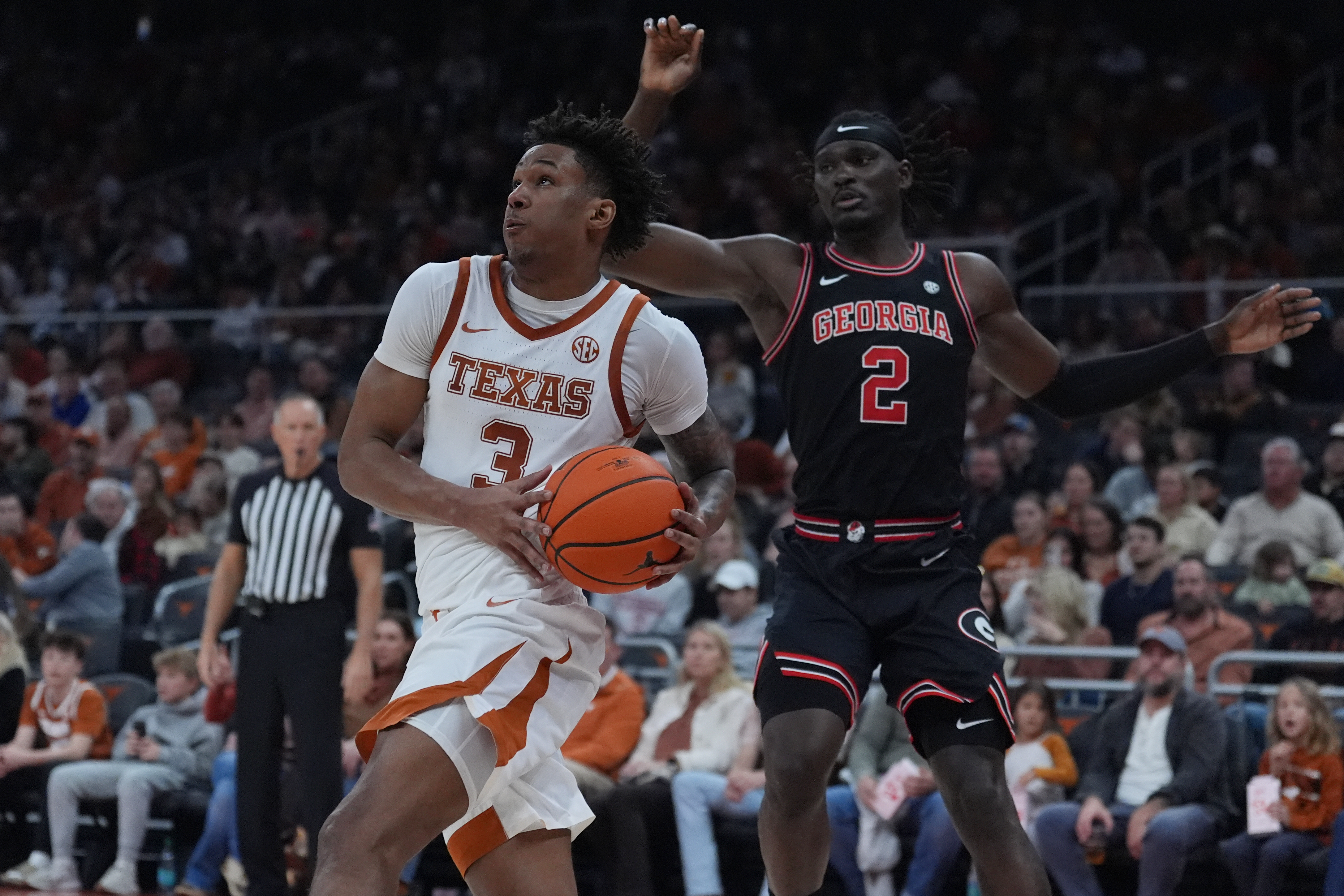
    Texas guard Dailyn Swain averaged 17.3 points and 7.5 rebounds last season.Eric Gay

    ESPN: Dailyn Swain, Texas wing

    ESPN says: “Despite the combine not going all that well for him, Swain appears to be firmly in the first round, as the lack of wings with a variety of tools in the middle tier of the draft works in his favor. There are still questions around his shooting, but teams view his ability to get downhill and solid defensive upside as worth the long-term investment. After bringing in the new president of basketball operations, Mike Gansey from Cleveland, to head the front office, the 76ers are still relatively early in their decision-making process and will begin bringing in players for workouts this week. Finding an immediate contributor at this spot would be a win, with much of Philadelphia’s salary structure tied up in Joel Embiid and Paul George, and cultivating depth behind them is likely a priority.”

    Inquirer says: This pick would make sense if the Sixers are worried about losing Kelly Oubre Jr. and/or Quentin Grimes in free agency. That the 6-foot-8 Swain still needs to develop as a shooter is a concern for a Sixers team that struggled from three-point range, but the downhill attacking and defensive playmaking would fit right in with dynamic guards Tyrese Maxey and VJ Edgecombe. Other mock drafts have Swain as a lottery pick, so this could be a steal at 22.

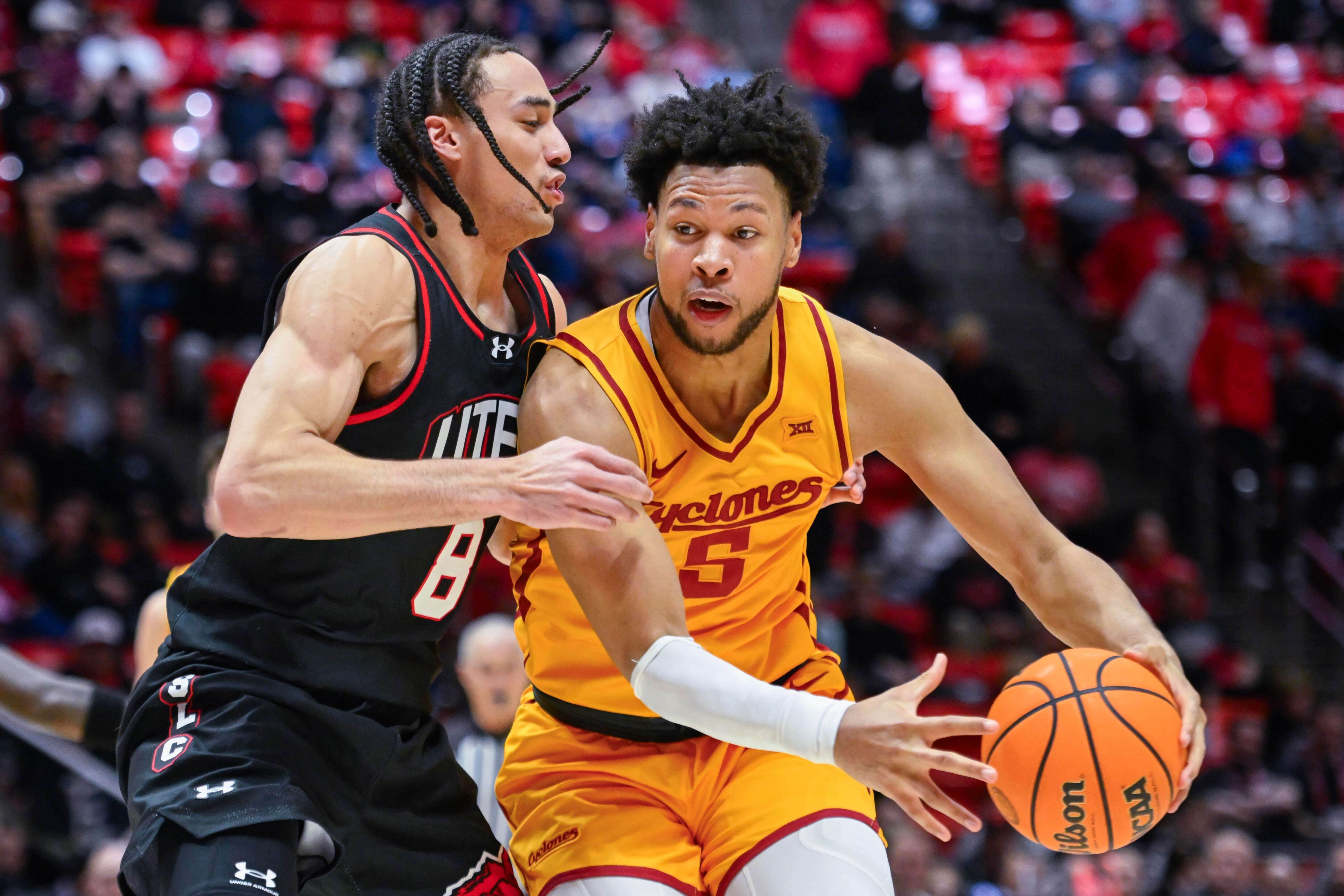
    Forward Joshua Jefferson averaged 16.4 points and 7.4 rebounds at Iowa State last season.Alex Goodlett

    The Ringer: Joshua Jefferson, Iowa State forward

    The Ringer says: “There’s an argument to be made that the 6-foot-9, 240-pound Jefferson is the best passer in the entire class, regardless of position. (Just ask his Iowa State teammate Milan Momcilovic, whose 10 percentage point jump in 3-pointers was partly a byproduct of playing with Jefferson.) To me, a Jefferson-Philly pairing would be a match made in heaven: His long track record of setting up perimeter scorers fits perfectly with the Sixers’ two incendiary scoring guards. While I do think that he’ll compress into a smaller role than the one he enjoyed at Iowa State, Jefferson’s also no slouch as a scorer himself, and his deflection-heavy defensive approach would feed right into their overall speed advantage.”

    Inquirer says: Though Jefferson’s age (22) likely lowers his ultimate ceiling, he feels like a plug-and-play depth guy with an immediately transferable skill as an offensive connector. An interesting tidbit: The Ringer’s draft guide compares Jefferson to current Sixer Trendon Watford, along with Collin Murray-Boyles, the Toronto Raptors’ standout rookie.

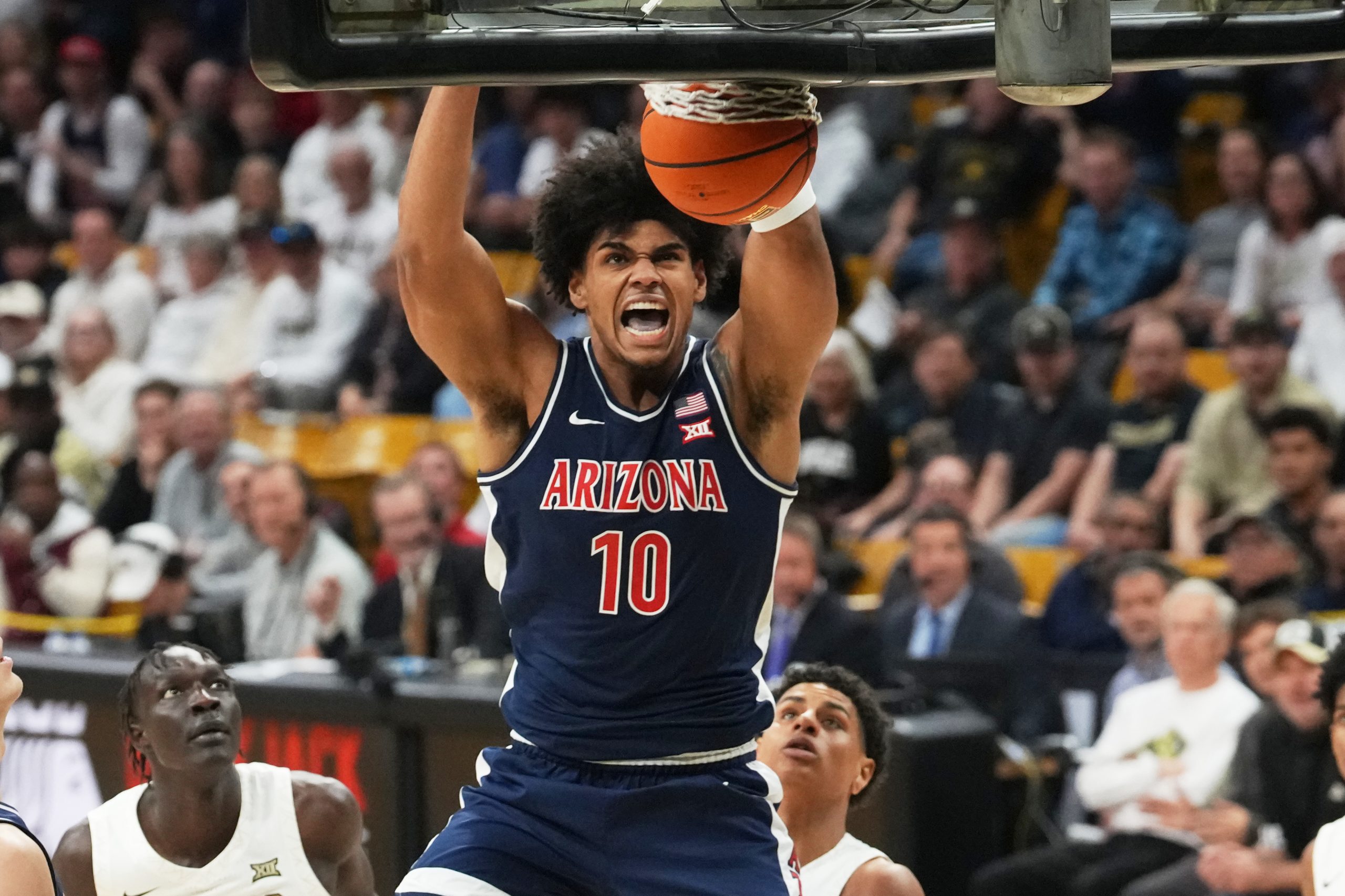
    Koa Peat averaged 14.1 points as a freshman at Arizona last season.David Zalubowski

    The Athletic and CBS: Koa Peat, Arizona forward

    The Athletic says: “Sources around the league are still trying to figure out what new head of basketball operations Mike Gansey’s type will be. So this pick might just be me wish-casting a bit, but I can’t imagine a better fit for both Peat and an organization. With Joel Embiid playing more consistently on the perimeter now, Peat could use his athleticism and strength to crash along the baseline and make smart plays while also providing tough defensive energy. The 76ers desperately need a four with some power to his game, and Peat brings that in a big way. I have Peat higher than this on my personal board, but sources across the league are unsure where he slots into the class.”

    CBS says: “Peat is higher than this on the CBS Big Board, but his glaring lack of shooting is going to require a specific fit. The Sixers lack a long-term solution at the four, can get their floor-spacing from Embiid’s face-up skill set, and could benefit from Peat’s strength, physicality, intangibles, winning pedigree, and ability to get downhill.”

    Inquirer says: Again, the lack of shooting is an eyebrow-raiser if added to a Sixers team that was not good enough from beyond the arc. But Peat’s rugged style at a position of need could be a nice complementary fit.

    Other possibilities

    Allen Graves, Santa Clara forward

    ESPN had Graves mocked to the Sixers before Monday. He is an “analytics darling” who did not even start for his college team but has become a fast-rising prospect. At 6-8 and 225 pounds, Graves is not a supreme athlete. But he boasts a terrific feel for the game that shows up in his passing, rebounding and defensive playmaking, along with underrated qualities such as great hands and screening ability.

    Tarris Reed Jr., a 6-11 forward, averaged 14.7 points and 9.0 rebounds at UConn last season.Abbie Parr

    Tarris Reed, Connecticut big man

    Another big man option, CBS had Reed mocked to the Sixers before Monday. He is a more traditional center in stature and as a rebounder, rim protector and inside finisher. He also performed well on the biggest stage during UConn’s March Madness run to the national title game.

    Jayden Quaintance, Kentucky big man

    The 6-9, 255-pound big man had lottery potential before knee surgery limited him to four games at Kentucky after transferring from Arizona State. When healthy, Quaintance was a dominant shot blocker and mobile defender, but still had a long way to go on the offensive end. Can the Sixers risk drafting another big man with health concerns? Or is that a gamble worth taking at this point in the draft, especially on a player who has not yet turned 19?

    Hannes Steinbach, Washington forward

    The Sixers should perhaps consider Steinbach for one reason alone: He led Division I basketball in rebounding last season. At 6-foot-11 and 250 pounds, Steinbach also has potential to become a floor-spacing big man.

    Henri Veesaar, North Carolina big man

    Notice a trend here? Veesaar boasts skills and versatility as a long-range shooter and pick-and-roll player, but needs a lot of work as a defensive presence. The lanky 7-foot, 225-pounder trained overseas before coming to the States, and began his college career at Arizona.

    Morez Johnson, Michigan forward

    Johnson was the high-motor, do-the-little-things spark of Michigan’s national title team. Though he is not a polished offensive player, he tested excellently at last month’s combine and is a physical and versatile defender.

  • Cheltenham players, parents feel ‘betrayed’ by district’s decision to cancel 2026 football season

    Cheltenham players, parents feel ‘betrayed’ by district’s decision to cancel 2026 football season

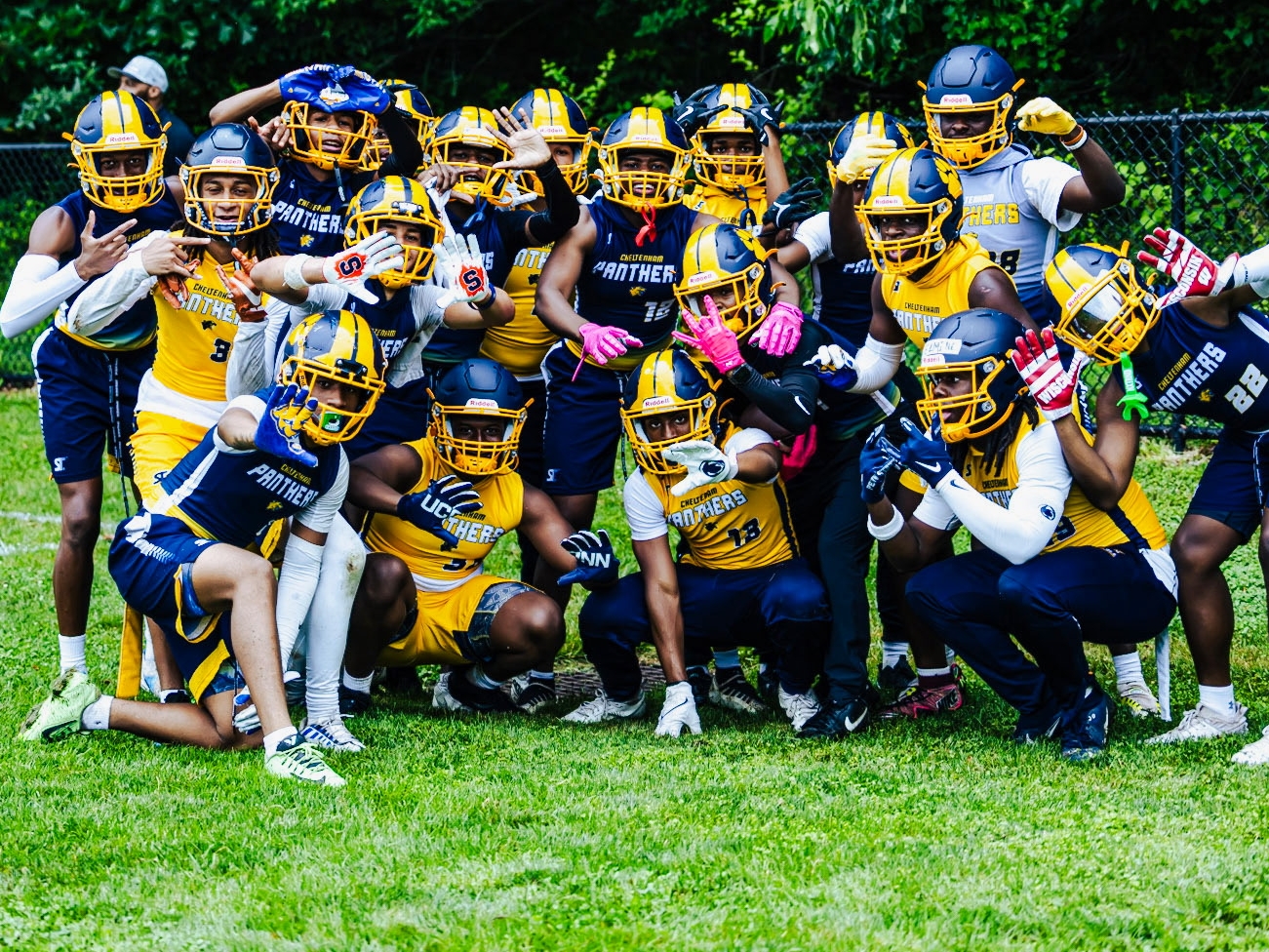
    Cheltenham High School football players expected a major decision was coming following an ongoing investigation from an alleged hazing incident that terminated the 2025 season. But when the verdict arrived last month that the 2026 varsity and junior varsity seasons would be canceled, those associated with the program were shocked.

    The news came in the form of an email from the Cheltenham School District on May 26, and the district said more work was needed to “reset the program” after about 20 students witnessed a student-on-student assault in a locker room in September, and no one tried to stop it.

    “Until those investigations are concluded and their findings are known, it is not possible to define, develop, or execute the necessary corrective actions,” wrote Dr. Brian W. Scriven, Cheltenham’s superintendent of schools, in the release. “The district cannot build a path forward around unknowns. The scope and nature of what must be addressed will be determined by the evidence, and that process must be allowed to run its course before any meaningful next steps can be taken.

    Prior to the ruling, about 50 players — 30 rising seniors and 20 rising juniors — at the Montgomery County school were wondering what to do next.

    Now, those questions remain.

    “We weren’t updated about anything,” said Kendall Jackson, a rising senior, who was a two-year starting quarterback at Cheltenham. “We’re sticking together. We’re trying to be there for each other, because no one else is. This has not only affected kids at Cheltenham, but the future kids thinking about coming to Cheltenham. Those kids might think Cheltenham is not the right place for them because of what supposedly happened. We’re all frustrated.”

    The school district and Cheltenham declined to comment. Cheltenham will field a freshman team next season, and it’s unclear if it would field a varsity or junior varsity team in 2027, which will also impact the rest of the Suburban One League Continental Conference.

    According to the school district, Cheltenham was set to debut its $13.4 million football stadium complex this season, which has been in the works since 2024.

    ‘I feel defeated’

    When the announcement that the rest of the season would be canceled was made on Oct. 20, 2025, the players said then-Panthers coach Terence Tolbert, a former teacher at the school who could not be reached for comment, and his coaching staff were no longer around.

    The players were not allowed to work out in the weight room or on the practice field because they did not have the supervision of a coach or an administrator.

    The Inquirer also learned that the school district could not find a varsity coach for the Cheltenham football team. Two area coaches, who asked that their names not be mentioned, confirmed that they submitted their names for consideration to the district and later withdrew, with one citing the program’s “unstable” culture.

    Jackson has been in contact with several area schools about transferring in the fall. Rosalind Jackson, Kendall’s mother, said the district told parents it would keep them informed about the situation, but she said that did not happen.

    “I feel defeated,” she said. “My son and these other kids are paying a price for what others did. … The school district hasn’t provided any answers. These kids should have been treated with far better respect than they were. They should have been told in person by a school administrator about this news, [rather] than receiving an email at 4 in the afternoon. The school district let me down.”

    Kyle Montgomery, a rising senior defensive end, had an idea something was coming. So in December, he took the Archbishop Wood entrance exam and was accepted in January. Montgomery said he did not like how the school district handled the investigation.

    “They were taking a long time with the investigation and not telling us anything,” said Montgomery, who has attracted attention from Ivy League schools. “I thought that was a sign that they would cancel the season. I want to play in college, and I have moved on from this. I have already made plans. I can see where other guys who are stuck there feeling let down by the school and the school district.”

    Brian Palmer-King, a wide receiver and cornerback, said the school provided counseling services after the 2025 season was canceled, but he claimed it did not offer direction or support on other options.

    His mother, Brandi King, held out hope that her son would have a senior football season, but as a precaution, King and her son made other plans. He’ll attend Wood next season.

    “You feel a little betrayed, because Brian grew up with Cheltenham and the football program,” Brandi King said. “Wood is a very good school and we’re happy about the move. But I’m a little sad, because Brian was hoping to graduate from Cheltenham and play his senior year.”

    ‘We’re working on it’

    Elijah Stehman, a rising senior running back who also kicks and punts, pushed for answers this past year.

    He said he repeatedly approached Cheltenham Principal Benjamin Hammond, went to school board meetings, and questioned Scriven. He said he received the same answer: “We’re working on it.”

    “The administrators lied to us and lied to me,” said Stehman. “They said they would stand up for us having a season. We got nothing. I mean we got called all kinds of things on social media and in the classroom. I won’t forget my mom coming into my room after I saw they canceled the season and consoling me. My mom was more upset over how the adults handled the situation.

    “The Cheltenham teachers have been great. They have been supportive. It’s everyone that is above them that has failed us. It’s not fun when you can’t trust the people who are responsible for educating you.”

    Stehman said he emailed the administration and Scriven, and showed up at a school board meeting in January asking what would happen to the 2026 team.

    He said he was told that Cheltenham would hire a coach in March and that they would open the weight room for football players.

    No coach was hired, and he said they didn’t open the weight room.

    “It does feel like we are in football jail,” Stehman said. “We’re paying a price for something we had nothing to do with. Every other football player in the state is preparing for the 2026 season. We can’t. We are going to be getting a new stadium. No one will be there to play.

    “I tried to talk to Dr. Hammond and Dr. Scriven. They never gave me an answer.”

    Stehman is looking to transfer to the Philadelphia Public League’s Martin Luther King, where his father, Kirk, was a longtime assistant coach.

    What’s ahead

    With Cheltenham off the schedule, Suburban One League Continental Conference schools have been in a scramble to replace those games. The SOL two-year schedule cycle was made in December, according to league officials.

    This will not impact District 1 playoff seedings, since the point system can be divided by nine games instead of the traditional 10. But several SOL Continental athletic directors have said they prefer to play 10 games.

    “With Cheltenham not competing next year, the teams impacted have the opportunity to reschedule that week with a different opponent. If a school is unable to find a contest, it will be considered a bye week,” said Jason S. Traczykiewicz, the Council Rock North principal and president of the Suburban One League. “Since the teams create their schedules on a two-year cycle, Cheltenham will need to inform the league of their intent for the fall of 2027 season by Aug. 31, 2026.”

    As for the Cheltenham players looking to leave the school, they have a process ahead of them.

    According to District 1 Chairman Dr. Michael Barber and District 1 Executive Director Sean Kelly, a student cannot transfer from one public school to another for athletic purposes, despite the extraordinary circumstances at Cheltenham.

    The procedure includes the sending school signing off on the student-athlete and the receiving school signing off on accepting the transfer. If the sending school contests the transfer, a hearing is held in the school district to where the student-athlete is transferring. Both schools must sign off for the transfer to be accepted.

    If a student-athlete transfers after his or her sophomore or junior year, that student-athlete would be deemed ineligible for the postseason. But considering Cheltenham’s unusual situation, postseason rulings would be addressed on a case-by-case basis, according to Barber and Kelly, by the respective PIAA district where the student-athletes intend to transfer.

    As of early June, Cheltenham has not sent official transcripts or report cards to other schools, according to football coaches at Wood, Neumann Goretti, and Roman Catholic, which have received request of transfer from Cheltenham students. By PIAA bylaws, Cheltenham does not have to sign off on transfers until the student-athletes have physically left the school, with a two-week window that usually applies.

    Cheltenham finished the school year June 12.

    Three Cheltenham parents, who did not want their names published, are threatening lawsuits if the transfers do not come through.

    “There have already been a number of missteps by the school district in this matter, and I have June 15 circled on my calendar, because if my son’s transfer does not go through, I’m going to be retaining a lawyer. I know a number of other [Cheltenham] parents who will,” said one parent. “I’m sure this is not over yet. I have no trust or have any faith in the Cheltenham School District.

    “This is going to continue. They will have a freshman team in 2026, but ask yourself this, will they allow an all-sophomore team to play a Suburban One varsity schedule in 2027? No, this will go on for another year.”

    Many rising seniors were looking forward to playing their final season at Cheltenham. Now they won’t get that chance.

    “Everyone wants out, and we all learned something: The world does not stop,” said Jabriel Epps, a two-year starting defensive back who is talking to Kutztown. “ … I still want to play football. What’s sad is I’ll never wear anything with Cheltenham football on it again.”

  • Two coaches in Nigeria — and an ex-New York Giant — helped Uar Bernard reach the NFL. Back then, he had a nickname: ‘Bigfoot’

    Two coaches in Nigeria — and an ex-New York Giant — helped Uar Bernard reach the NFL. Back then, he had a nickname: ‘Bigfoot’

    In the summer of 2022, a sheepish teenager with a backpack walked into Moshood Abiola National Stadium in Abuja, Nigeria. He was there for a basketball camp, but his physique looked like that of an edge rusher; lean and athletic with sculpted calves.

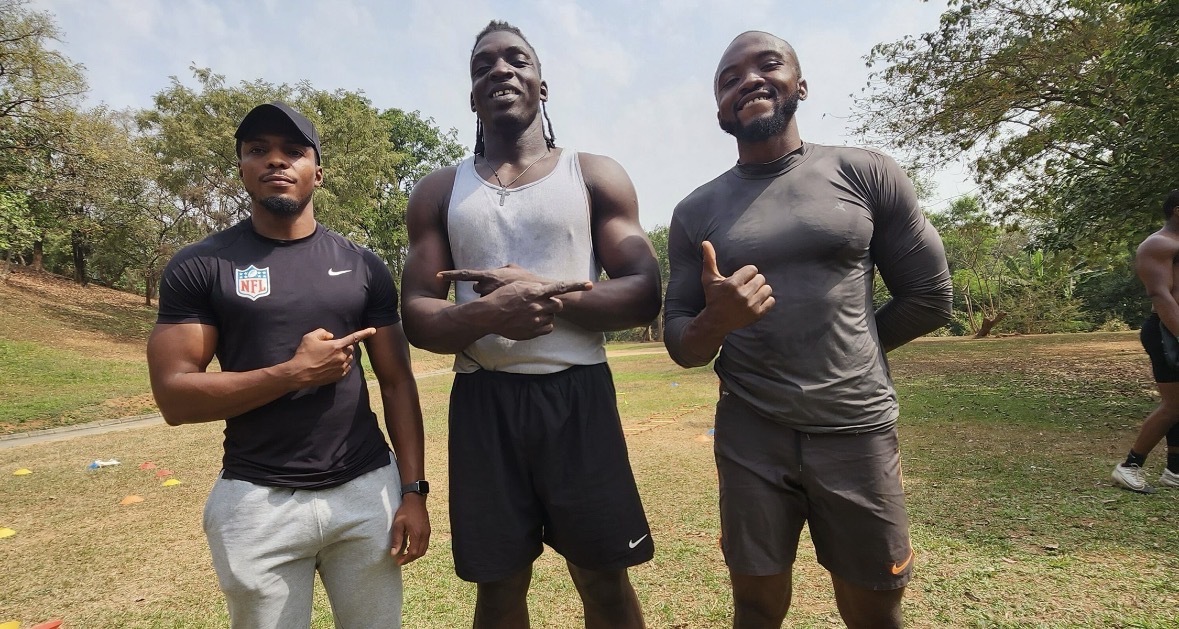
    Two coaches told him as much. Mustapha Musa and Dike Christian of Pro Prospects Program were in the same building for a flag football event coordinated by former New York Giants defensive end Osi Umenyiora’s agency, The Uprise. Musa and Christian approached the teenager and asked if he’d ever played American football.

    The teenager said no. They asked if he would give it a try. He explained that this would be logistically difficult; he had traveled six hours from Unguwa Uku, a suburb of Kano, in the northern part of the country.

    But the coaches were insistent. They asked if the teenager would consider extending his trip.

    “You know,” Musa said, “you look like a footballer, not a basketballer.”

    The teenager let out a laugh. He decided to stay, and underwent a workout the following day. Ejike Ugboaja, a co-founder of The Uprise, sent Umenyiora some video.

    Former Giants star Osi Umenyiora has played a role in the discovery of players, including Uar Bernard, in Africa.provided by NFL Africa

    He didn’t know the teenager’s name, but quickly came up with a moniker.

    “[Ejike] just called him Bigfoot,” Umenyiora said. “And he was a freak athlete. I saw him running and moving around, and I was like, ‘OK, this kid, he’s got something.’”

    By the time he showed up to the next flag football event, everyone knew him as Uar Bernard. But “Bigfoot” stuck, in part because the coaches couldn’t find cleats that fit him.

    “He had like a size 18,” Umenyiora said. “It was ridiculous.”

    At 17 years old, Bernard was too young to qualify for the NFL’s International Player Pathway (IPP) program but too old for the NFL Academy. He would have to wait until he was three years removed from high school to try again.

    Over those three years, Bernard trained with Musa and Christian in Abuja. In 2024, he attended another NFL Africa Camp in Lagos, but failed again to make the IPP, this time because he was not considered mobile enough.

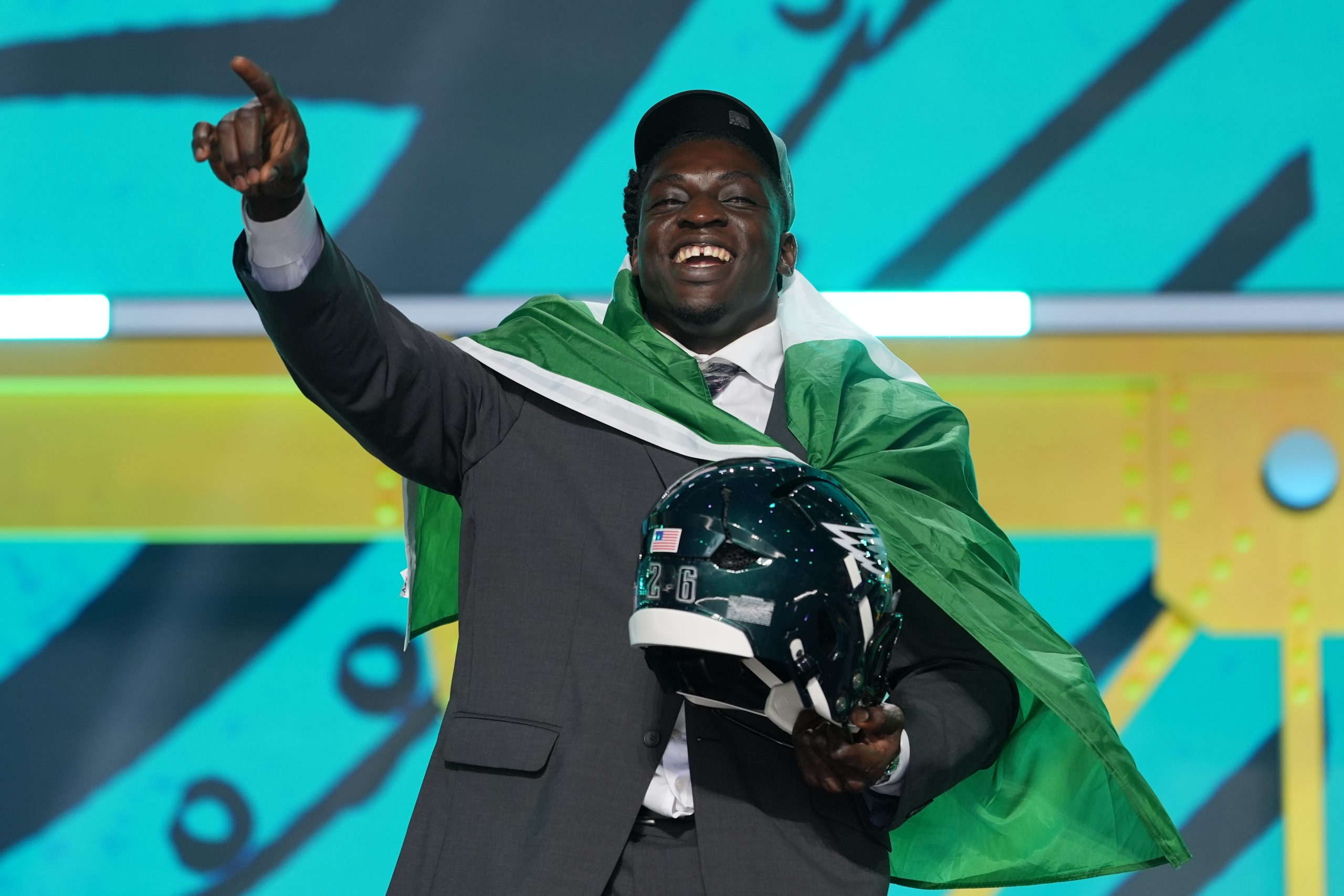
    The Nigerian finally qualified in 2025. He entered a 12-week training program in Florida in January, and in April, he was drafted by the Eagles in the seventh round.

    Bernard has never played a down of organized football. He didn’t spend his childhood on a Pop Warner team. But Musa and Christian have helped him prepare for this moment.

    And Umenyiora is confident it is all going to work.

    “I think one of the GMs for the Giants used to call it ‘planet theory,’” he said. “There are only so many people walking around the planet that have that type of physique and ability. And so whenever you get that, you have to take a chance on them, and give them an opportunity to develop.

    “And hopefully, Philadelphia — who have been absolutely tremendous — will give him that opportunity.”

    Training in ‘The Trenches’

    Of the tens of thousands of players who have ever competed in the NFL, only 40 were born in Nigeria.

    Twenty-one of those 40 hailed from Lagos, the country’s largest city; Umenyiora says most come from the southern and eastern regions.

    Osi Umenyiora (center) has discovered players in Nigeria previously, but never from the impoverished community that Uar Bernard calls home.provided by NFL Africa

    None have come from Kano. According to the World Bank Group, the state has a poverty rate of 53.75%, more than double that of Abuja, and more than six times that of Lagos.

    “It’s a dangerous place,” Musa said. “You only see a few kids that will grow up in that area, and be like, ‘I want to do sports.’ It’s very hard and very rare in that kind of environment.”

    When Bernard moved to Abuja, Musa already had a handful of aspiring football players living with him. So Christian took the teenager in. Together, they’d work every day, from 8 a.m. to 11 a.m., at a local public park they called “The Trenches.”

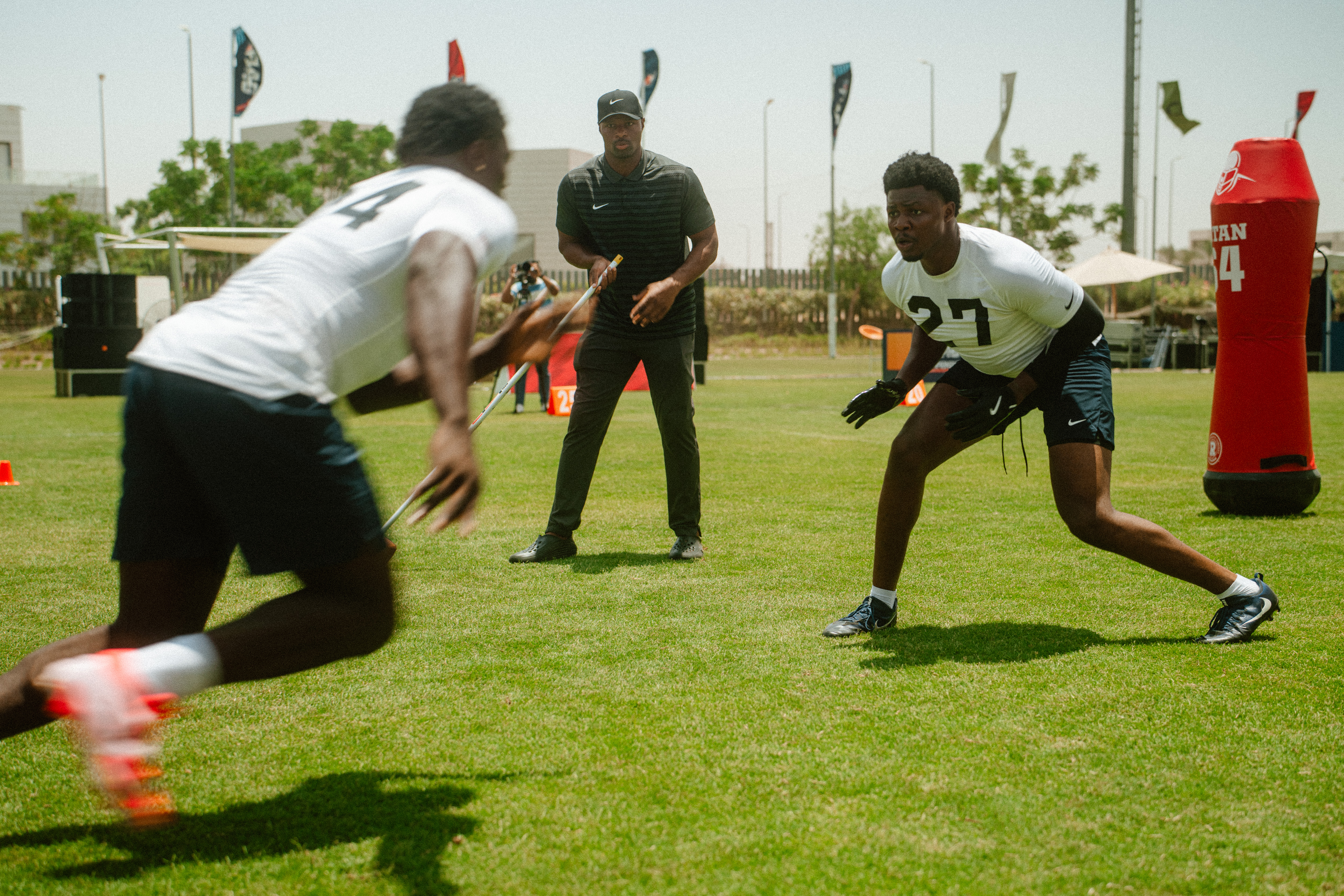
    This wasn’t an NFL training facility, but Musa and Christian saw potential. The park had a sand pit. Its hills were steep, perfect for mid-morning sprints, and its trees were as sturdy as a blocking sled.

    The coaches purchased small pieces of equipment, like cones, ladders and mini hurdles, and set them up on the grass, sharpening the players’ skills under the blistering sun.

    They’d also use the natural resources around them. Bamboo sticks were repurposed for cross-chop drills and honing inside shoulder drops. Bernard and his fellow athletes had occasional access to a gym, but due to limited funds, everyone had to get creative.

    This was especially true for Bernard. One of his biggest early obstacles was mobility, and he didn’t have access to a physical therapist in Nigeria.

    So, Musa and Christian came up with an idea.

    “We had to push him into a dance class,” Musa said. “We’re like, ‘Yo, you need to go to a dance class.’ It was to help his flexibility. More aerobics than Afro dance.”

    “He laughed about it,” Christian said, “but even if he laughs, he will never say no. He will do it. He’s humble.”

    Bernard knew virtually nothing about American football when he started working with the coaches. But even from West Africa, Musa and Christian had learned quite a bit.

    In 2011, a former University of Maryland linebacker, Ricardo Dickerson, co-founded the American Football Association of Nigeria, an organization focused on youth development. He started going on visits to high schools around the country, which is how Musa was introduced to the sport.

    He and his classmates stayed in touch with Dickerson, who sent them YouTube tutorials and documentaries. Musa had hoped to attend an American university on a football scholarship, but the pandemic — and a lack of financial support — made that a nonstarter.

    The coach wasn’t getting any younger, and as months turned into years, he conceded that his dream had passed him by. But he and Christian still felt a passion for the sport, and continued to follow it religiously.

    They’d seek advice from high-profile coaches on Instagram, like defensive line trainer Javon Gopie. They’d study film of pass rushers including Umenyiora and Myles Garrett.

    Before long, Musa and Christian could recite defensive drills and plays by heart. And the two coaches would break them down for the future Eagle, bit-by-bit.

    If a move required three steps, Musa, Christian and Bernard would spend a week working on each one. Their pupil had many God-given gifts — explosiveness, quickness, strength — but the coaches wanted to refine the basics.

    Bernard would know exactly where his size-18 feet would need to be planted before and after the snap. He’d know exactly how to get off for a cross chop play, and which direction to break in the following moments.

    He would know the difference between bull rush and speed rush, and when to use each move.

    “Small details,” Musa said, “that will make him outstanding.”

    Like his coaches, Bernard was a voracious learner. After spending three hours at The Trenches, he’d put in extra work, calling Musa or Christian with follow-up questions.

    At night, over the West African dish soup and swallow, Bernard and Christian would study more video, usually of Uar’s favorite player, Aaron Donald.

    “He would show me tape, and then say, ‘What’s my take?’” Christian recalled. “And then we’d try to dissect and talk about it.”

    Unlike other athletes his age, Bernard wasn’t prone to distraction. When he wasn’t at the gym, he was at The Trenches. When he wasn’t at The Trenches, he was often in prayer.

    “The boy only goes to church, gym, training,” Musa said. “That is his life. Because he came with the hunger that nobody believes in him. Sometimes we even needed to tell him, ‘You need to slow down before you break down.’

    “He would go to the church and do overnight prayer, and early morning he would come to the field and keep working. And I’m like, ‘Yo, I know your eyes. You haven’t slept.’”

    ‘Our boy has been drafted’

    Musa and Christian were 5,166 miles away from Pittsburgh on Day 3 of the NFL draft, but that didn’t help calm their nerves. In an homage to Bernard, Musa watched the broadcast at home, on his prayer mat.

    He was concerned after the Kano native hadn’t been picked in the earlier rounds.

    “I was like, ‘Oh God, please let this happen to us,’” Musa said. “It wasn’t just happening to him. It was happening to the whole of Africa.”

    When Bernard was finally selected, with the 251st pick, the coach called Christian, who had dozed off. It was just past midnight in Nigeria.

    “He woke me up,” Christian said. “He was like, ‘Yo, are you sleeping? Our boy has been drafted!’”

    Uar Bernard’s seventh-round selection was one of the feel-good stories of the 2026 NFL draft. AP Photo/Jeff Roberson

    Musa and Christian were overcome with excitement. So was Umenyiora. The longtime Giant may have hated the Eagles as a player, but as an ambassador for NFL Africa, he looked at the organization through a different light.

    In his mind, Philadelphia was a perfect fit for “Bigfoot.”

    “[The Eagles] have this mentality that they’re going to be patient with these guys,” Umenyiora said. “A lot of times, teams will get a guy who’s never played football before, and after maybe a month or two, they’ll cut him and get rid of him.

    “And you’re like, ‘Well, what were you thinking was going to happen in a month or two?’ But with Philly, when they get them, they stick with the process. It’s like they’ve done so much homework, that when they get them, they are stuck in their belief system that they can turn this guy into a player.

    “And they have the right coaches, and they believe in their coaches. So, when I found out he was going there, quite frankly, I was really happy. Because they get it. A lot of teams don’t get it. But they do.”

    The work is far from over. Going from the basics to Vic Fangio’s defense will be challenging. The Nigerian is still getting used to wearing a helmet; soon, he’ll be facing the best players in the world.

    But no matter what happens, Bernard has already proved something.

    Back in Abuja, at The Trenches, a handful of football players are waking up each morning to run grueling sprints.

    It wasn’t so long ago that locals used to mock them. They’d compare their drills to kung fu, as if their sport was a novelty.

    Not anymore.

    “The athletes here are super proud,” Christian said. “He’s the motivation to all of them who are working so hard. And we keep preaching that.

    “‘Bernard was here with you guys. He’s not a stranger. He’s not a ghost. He’s someone you all know. So, if he can do it, you can do it.’”

  • Flyers assistant GM Brent Flahr talks Jett Luchenko’s big summer, the value of NCAA hockey, and the team’s intriguing college prospects

    Flyers assistant GM Brent Flahr talks Jett Luchenko’s big summer, the value of NCAA hockey, and the team’s intriguing college prospects

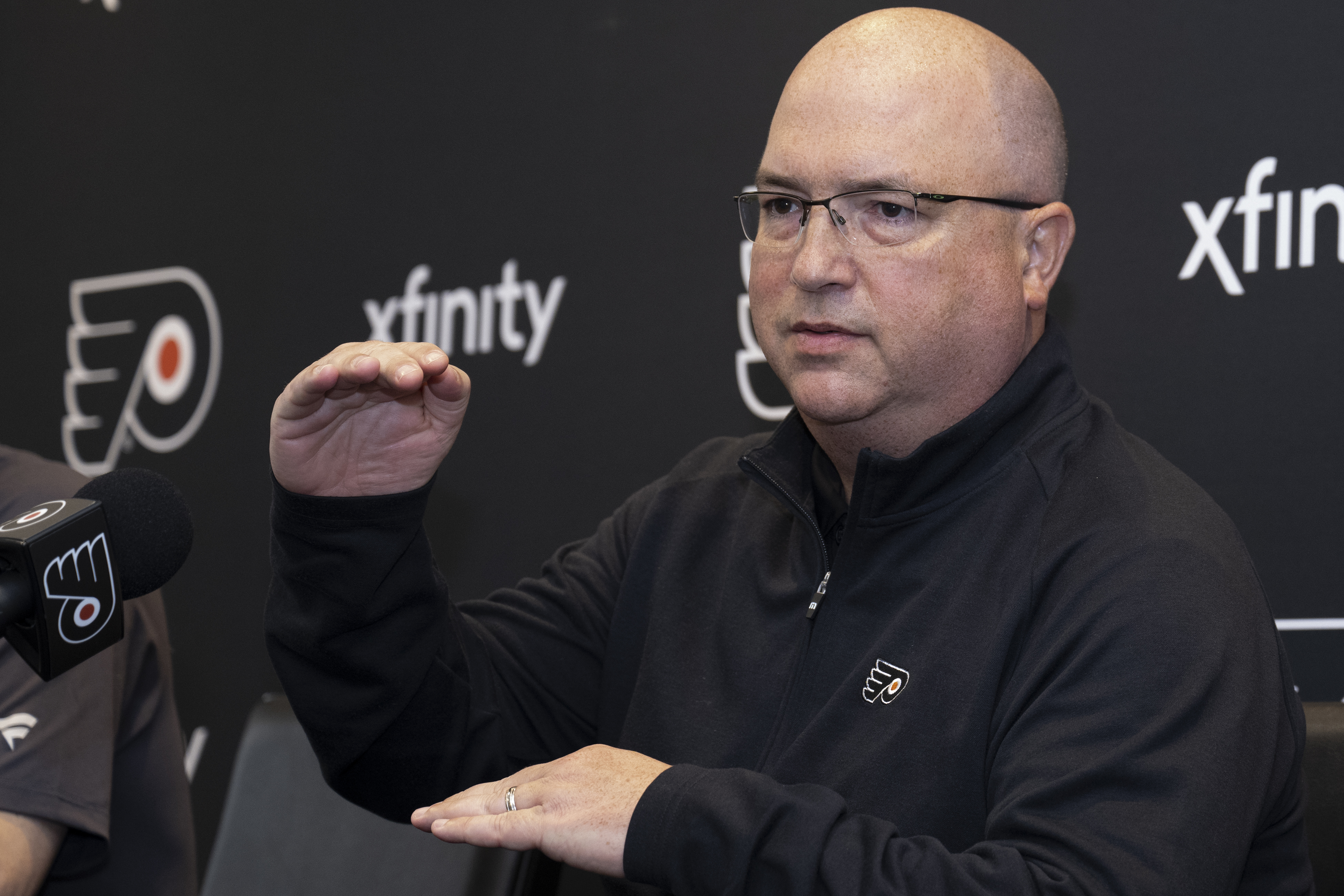
    BUFFALO, N.Y. — In Part 2 of The Inquirer’s two-part interview with Flyers assistant general manager Brent Flahr, he gives some insight into the prospects already in the system.

    This interview has been edited and condensed for clarity and was conducted on June 3.

    Q: Was there anyone who set themselves apart, or surprised you this season?

    A: I don’t think there were too many surprises. Obviously, Porter Martone’s finish — we thought he could play [but] we didn’t know he was going to have that level of impact, maybe. But other than that, Jack Berglund, maybe for fans who didn’t know him well, that’s just been the way he’s played the last couple of years. … Heikki Ruohonen, at the World Juniors, that grouping there maybe stepped up. Overall, our kids have been good. … So it’s exciting.

    Q: Not everyone has the same opinion on Jett Luchenko and how things went this year. So, how do you think his season went?

    A: I don’t think he’s happy with his points or whatever. Still, there’s a stretch there where — I don’t know whether it was pressure — just wasn’t on his game, as far as offensively. But even his B-game is still very good with his speed, defensively responsible, and I think he lost a little confidence, maybe on the offensive side of things. But he bounced back, had some really good games down the stretch; he’s already been a really good player for us in the past, within the system, and he’ll get it back and get it going. You know, he’s also missed most of last summer training-wise too, which set him back due to injury, so I think he’s got a big summer here, hopefully.

    Q: Do you think getting that one playoff game gives him a little confidence moving forward?

    A: I shouldn’t say lack of confidence, but he knows he’s a good player. I just think it should give him confidence that he knows that the coaching staff thinks that highly of him — and that wasn’t our decision, that [was] the coach doing that. But, no, I think he knows what he is, but he also knows what he’s going to have to do to crack the NHL and stay there full time.

    Q: With the changing landscape, do you like that more and more players are going to college hockey?

    A: It’s up to every player. I don’t think a lot of these kids understand how hard college hockey is, and how fast it is, and you’re playing against older players. Some kids are ready for that, and some kids aren’t, so it’ll take longer for them to adjust. … So, yeah, it’s a new situation for us and the teams and agents; we’re all trying to figure this out as we go. But there’s some good programs out there that do a great job and get these kids stronger, and, obviously, the hockey is good.

    Like his fellow first-round pick in 2025, Jack Nesbitt will be heading off to college — except he is going to Porter Martone and Michigan State’s rival, the University of Michigan.Alejandro A. Alvarez / Staff Photographer

    Q: Several players in the Flyers system are playing college hockey now, and some are off to play college hockey, like Jack Nesbitt this September to Michigan and Nathan Quinn next year at Northeastern. How does that impact things on your end?

    A: Well, I think it will impact the American League a little bit, as not every kid at 19 or a CHL player is coming right in. In some cases, it might be beneficial [as] some kids aren’t quite ready for the American League physically or mentally at 20, so maybe having an extra year or two to play NCAA, and then transition. So, there might be a buffer zone in there where we have to find players to fill up rosters and stuff, but that’s not a big deal. Whatever is the best development path for these guys is fine. And there’s still going to be CHL kids that are going to be committed to schools, but maybe they’re ready for the American League right away, and they’ll go that route, too. So we’ll see.

    Q: Speaking of Quinn, what did you see from him this year and does it change your outlook on his projection?

    A: Well, he was a skilled kid. He was already a good junior when we drafted him, but when you see him off the ice, you see him on the ice — he knows how to play. A longer path, because physically, he’s got a ways to go, but he knows how to play the game. He has the ability to generate offense and make players around him better. I saw him a number of times because they have a number of draft picks on his team, and obviously I follow him as well, but he had a really good year. I thought he had some really high-end stretches, so he’s put himself in a position where he’s a legitimate prospect, and he’s improved from a year ago. Kind of met or exceeded expectations, and now that’s just a stepping stone for him, though; he’s got to keep working, getting better, and that’s his plan.

    Q: Porter Martone was brought up often by the prospects regarding him gaining strength and making himself NHL-ready at Michigan State. With that, how excited are you for Nesbitt to go to a college program and build up his strength?

    A: Porter, when we drafted [him], was a little more dense physically than Jack. Even though they were the same draft year, they’re far apart as far as where they are physically. So, Jack, we’re really excited about as a prospect, as a player. He’s got some work to do, just with his body type, to put on the right type of weight, get stronger. … He’s a good player, a good prospect, and it’s a great program for him to come in to play with top players, and the way they practice, the way they train, it’s really conducive for improving. So we’ll see the timeline — we don’t really have one — but he’s excited about going there.

    Q: Jack Murtagh, a 2025 pick, will be a sophomore in the fall at Boston University. How did you see his past season unfold?

    A: I think he was a little frustrated, just with the role, and his ice time kind of fluctuated all over the place. But the games I was at, he was good. I think he began to earn it, which is good and healthy. … But he’s going to have a much bigger role this year, and my expectation is he’s going to make a big jump statistically. He brings a lot of assets [like] his speed and his shot. … He played a lot of different roles, which, when he was available in the second round, it’s kind of why we drafted him. So there’s pro potential, but he’s got some work to do: get stronger conditioning-wise and fast, but he’s in a good program for that to happen.

    Q: Carter Amico was his teammate with the Terriers but left a few months in for Muskegon of the United States Hockey League. Where do you see things with him now?

    A: I think it was the right decision to go because he played a lot of minutes. He missed so much time last year [due to injury], and to not play a lot of minutes regularly, I think it wasn’t great for him. … The first couple games, he’s … catching his breath playing that many minutes, and then he started to go, and he really got better. But he’s an intriguing guy because of his size and skating ability and range and physicality, and his puck game and puck touches have really improved. And then they had a long playoff run, too, which was awesome for him, and selfishly for us, too, just to get him those games, which he needed. He’s going back to BU next year, and should be a lot more ready and more confident, I think, and obviously they’ll be more confident using him.

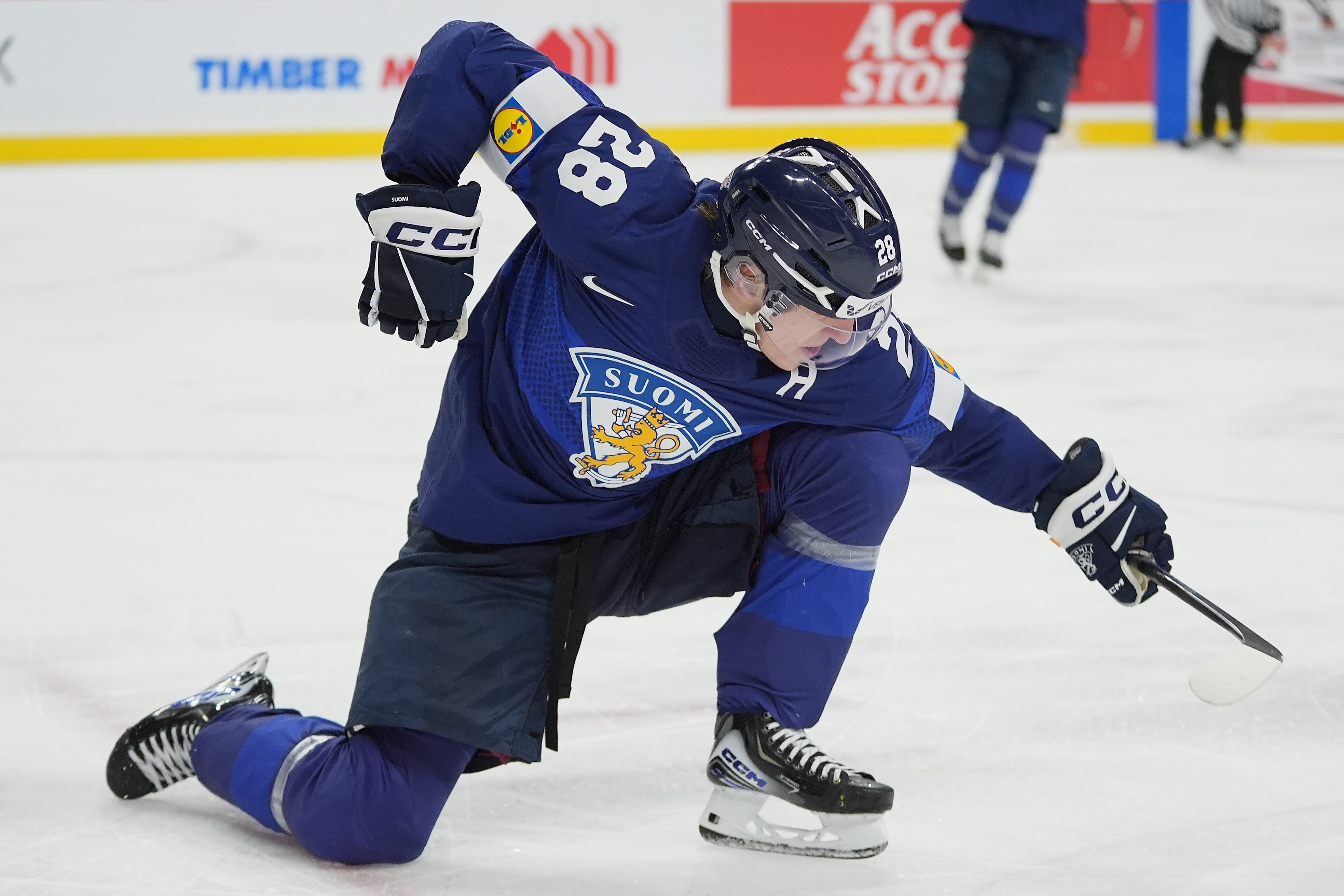
    Forward Heikki Ruohonen (playing for Finland at the IIHF World Junior Hockey Championship) will play for Harvard against next season. Abbie Parr

    Q: What about Heikki Ruohonen at Harvard?

    A: Yeah, I thought [this] last year was great. I was able to see him play a couple times there in Harvard, not just the World Juniors, but he had a big role there. One thing about playing [at Harvard], he was the first power play a lot of nights, first penalty kill, played in all situations, big faceoffs. So that was really healthy, and I thought he just got better and better. His skating is coming, his pace, he’s really working on his body, and he’s in a good environment for that to happen. He’s obviously a bright kid, too, and very focused on his school. And with his World Juniors tournament, I thought he opened people’s eyes, too, for the type of player he could become, and I think the way he played there translates to what he’s going to be in the NHL, hopefully, too.

    Q: Spencer Gill will be turning pro in 2026-27. He’s battled a few injuries the last couple years, so where do you see his projection now?

    A: Well, thankfully his team had a pretty good playoff run, so he got a number of games. He’s been frustrated, but he’s put on a lot of weight in his downtime because of injuries. Now we’ve got to get him quicker, stronger for the pro game. But I thought his playoff run was really good and he should be ready to jump in and play at the American League level. It’s going to be an adjustment period for him, but he’s a smart player, he’s puck friendly, he’s big. I think once his pace of play comes, and learning the details of the pro game, he should be a fairly quick study.

    Flyers prospect Spencer Gill (42) has dealt with a broken ankle and an upper-body injury that required surgery over the last two seasons in juniors.Jose F. Moreno

    Q: Luke Vlooswyk and Matthew Gard were traded out from Red Deer of the Western Hockey League this season. How do you assess their seasons?

    A: Vlooswyk, who just finished [with a loss in the Memorial Cup Final], had a great season in Everett, and he was a big part of that team — and we interviewed one of his teammates there this morning. But there’s another kid [who’s] got the tall, lanky frame that’s going to take some time to put on weight, get stronger; his mobility hopefully can come with that. He’s long, he’s rangy, good defender, and his puck game is improved dramatically. They’ve got a really good program there. I thought he just kept getting better and better, and a lot of big minutes, and he’s going to go back there next year and then the plan is to go to college. … He’s a longer-path guy, but he’s shown some interesting traits this year, and he’s certainly taken a step in the right direction.

    Gardo, I think once he got to Seattle, he emerged. But he’s another guy who’s tall and lanky. He’s got some work to do to get stronger, quicker with the explosiveness. He’s got a long stride, he’s got a powerful stride, so we project him to be a good skater — it’s going to take him the time to get there. Obviously, his defensive details have always been solid, but the offensive game in Seattle is good. … Big, exciting year for him, and he’s in the same category: go back and wants to play junior. He had options to go to college this year, but I think his agent and even his family thought playing one more year, getting stronger.

    Q: Max Westergård is an intriguing prospect: on the smaller side, but showed a lot of skill and a lot of upside at World Juniors. What did you see from him this year?

    A: He’s actually bigger than I thought when we initially drafted him, but what he brings is, he has a skill set … [and] he has dynamic speed, and he’s sneaky strong. He has one-on-one ability; he has the ability to generate offense out of nothing because of his speed, and he can score. … I think he’s in a good spot over there [in Sweden] to keep going. I know colleges are all over him, but he’s not going to college. I think he’s in a good spot, and hopefully earn his spot on Frölunda. We have a good relationship with them, so if he’s not having a bigger role than down to Allsvenskan, which is the second division, hopefully have a good role. But he’s determined to make it there, and they’re going to give him a chance, too.

  • Mark Franek quit being a lawyer to teach the history of U.S. soccer to the future of U.S. soccer

    Mark Franek quit being a lawyer to teach the history of U.S. soccer to the future of U.S. soccer

    Cavan Sullivan slammed his book bag down and told the teacher that he had had enough of those boring, dull readings.

    Animal Farm? The House on Mango Street? No, not those.

    It was the passages Mark Franek assigned four years ago to the class of ninth-grade soccer phenoms about the sport’s history in America that made Sullivan irate. They weren’t just uninteresting. They were negative.

    “You can just take a look at the books and the titles of them,” said Franek, who teaches at YSC Academy, the soccer-specific high school that funnels students to the Union. “One is Why the U.S. will never win a World Cup. Who wants to read that? Let alone, Cavan Sullivan.”

    Franek, 57, taught at Penn Charter in the 1990s before becoming a lawyer and then returning to the classroom in 2022 to teach at YSC, the high school for elite boys’ soccer players that produces World Cup players and sits across the parking lot from the Union stadium in Chester.

    The school moved from Wayne to Chester in 2023, taking over space in an old power station on the banks of the Delaware River. It is an incubator of soccer talent, and three players on the U.S. World Cup squad — Mark McKenzie, Auston Trusty, and Brenden Aaronson — graduated from YSC.

    Sullivan, a 16-year-old who already plays for the Union and has a deal to play for Manchester City in the English Premier League when he turns 18, graduated last month. He might be the future of American soccer. First, Sullivan had to learn the history of American soccer. And it was Franek’s job to make that subject more engaging.

    “If you think about where someone is in their formative years and this really critical point of development in mid-adolescence and learning about themselves and the world and the soccer world,” said Jared Micklos, YSC’s Chief Strategy Officer. “Then understanding what comes before them is also this optimistic way to give them hope and confidence and belief that they might be able to write the literal next chapter is something you need to reinforce and you need to inspire.”

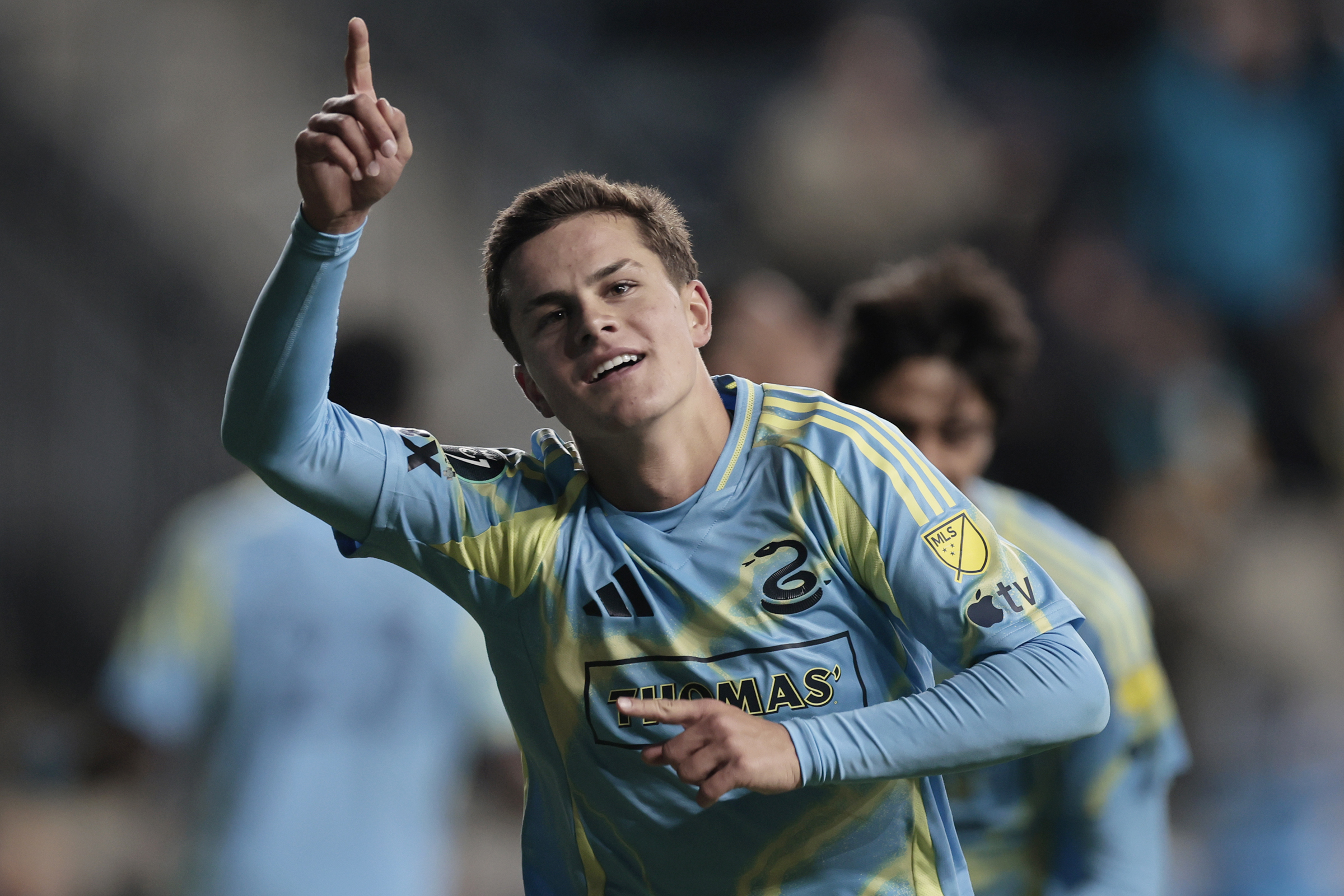
    The Union’s Cavan Sullivan wrote the foreword for the book written by his former teacher, Mark Franek.Elizabeth Robertson / Staff Photographer

    Back to school

    Franek grew up in York and played soccer at Duke University before starting his teaching career in Montgomery, Ala. He wanted to teach American Literature and coach varsity soccer. An Alabama high school, Franek said, was the only place that would let him. He moved four years later to Penn Charter, where he coached Chris Albright and Bobby Convey — teammates on the 2006 U.S. World Cup team — and taught Matt Ryan.

    Franek left Penn Charter in 2007 and enrolled at Temple’s Law School after realizing there was money in litigation. He used to charge his neighbor $20 to mow his grass while his wife — a lawyer — made much more for providing a few hours of legal aid for the neighbor’s painting business.

    “I said, ‘I’m in the wrong field,’” Franek said.

    He landed a job with a big firm, enjoyed the money, but hated the hours. Franek was in his early 40s when he passed the bar, but he was working like someone in their 20s. He worked almost every weekend and could see he would soon be missing his son’s soccer games. Something had to give.

    He went to YSC to meet Brendan Sullivan shortly after Quinn Sullivan — Cavan’s older brother — signed with the Union in 2022. Franek wanted Sullivan to autograph a jersey for his son. And there he saw Nooha Ahmed-Lee, the former administrator from Penn Charter and current YSC Head of School.

    “An hour later, I realized she was actually vetting me and trying to figure out if I was happy being a lawyer,” Franek said. “I talked to my wife and said, ‘I’m going to call Nooha and say if you’re serious about an English position, then I’m serious about getting out of the law and back into teaching.’ It was the right time for me.”

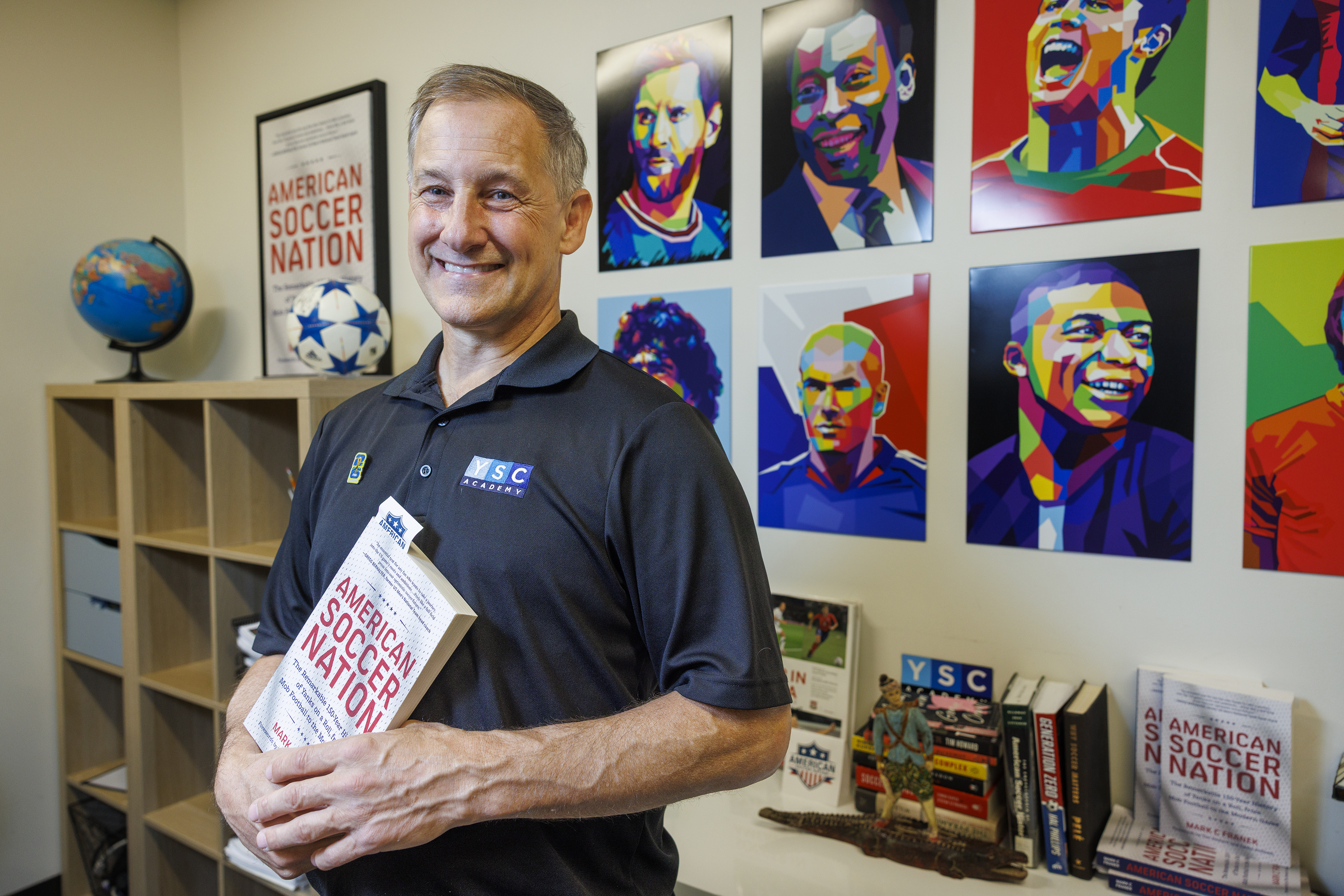
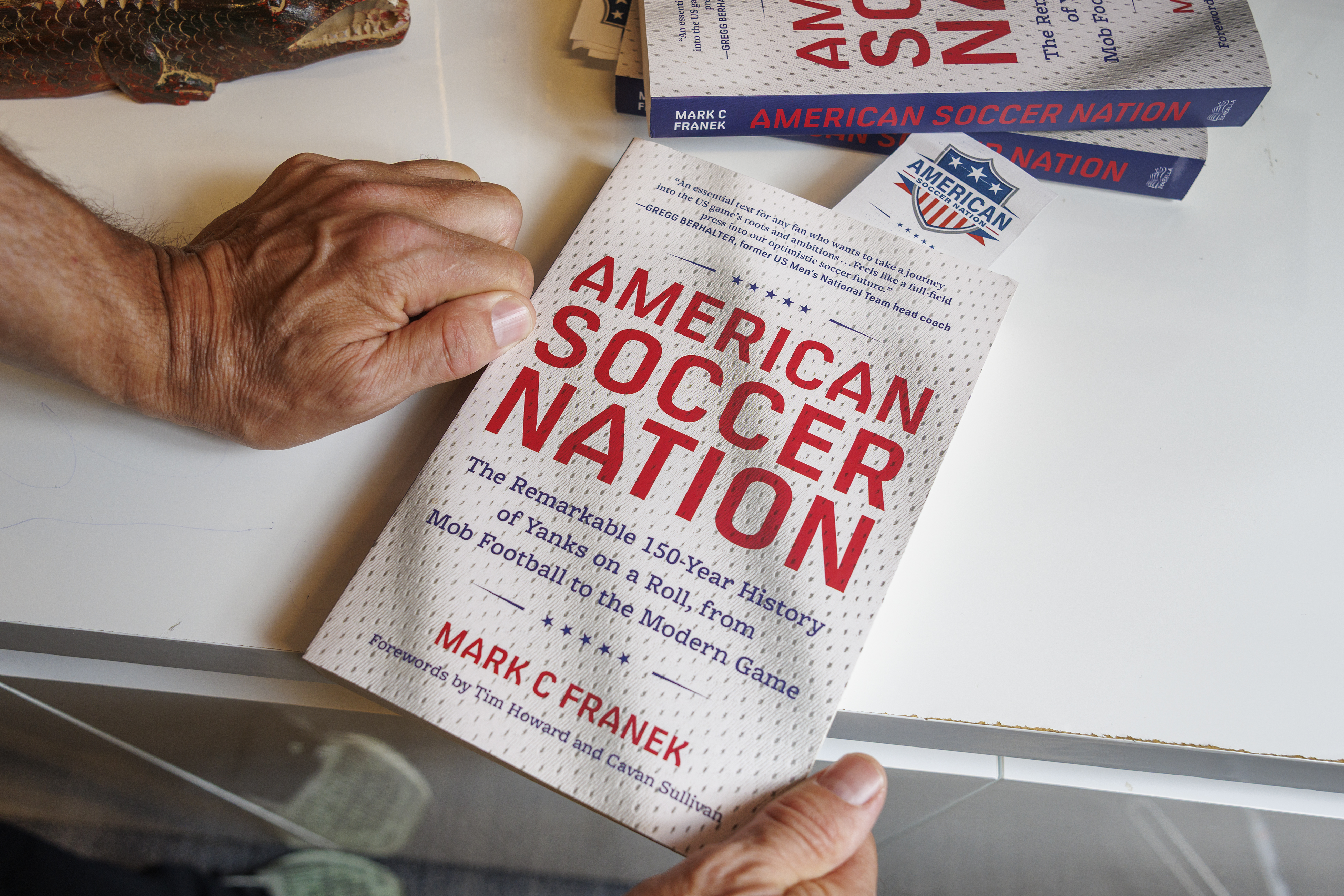
    Mark Franek shows his book, “American Soccer Nation: The Remarkable 150-Year History of Yanks on a Roll, from Mob Football to the Modern Game.”Alejandro A. Alvarez / Staff Photographer

    Writing the book

    Ahmed-Lee heard about Sullivan’s reaction to those readings and challenged Franek to design a course about the history of American soccer that he could weave into his English class. Franek accepted. He tracked down every book he could find about U.S. soccer, combed through internet articles, and learned everything he could.

    But Franek failed to find something that covered the whole story. So Franek wrote his own: a nearly 300-page book that was published earlier this year titled American Soccer Nation. It is a thorough history of American soccer that tries to deliver the story with optimism. It’s something Sullivan would want to read. He even wrote the foreword.

    “It’s incredibly rewarding to see an idea that began in our classrooms grow into a resource that is now helping students and soccer enthusiasts better understand the game,” Ahmed-Lee said.

    Franek uses the book in class at YSC as he assigns a chapter every week. The kids who dream of playing professionally learn about the pro league that rivaled baseball in the 1920s and the one that recruited Pele in the 1970s. Yes, there was pro soccer before the MLS. And Franek’s book does not ignore the mistakes that plagued those early leagues or the challenges the MLS faces today.

    “I have the best job in the world,” Franek said. “I get to teach young men in small classes who are living the dream. They’re grinding in the pitch and the classroom, trying to get better, and they have little tolerance for busy work or boring work or work that won’t help them get better whether it’s on the pitch or in the classroom.”

    The final chapter of Franek’s book details YSC and why he believes that “total immersion” is soccer’s path to success in America. The Union paired their soccer academy with a high school that is centered around soccer.

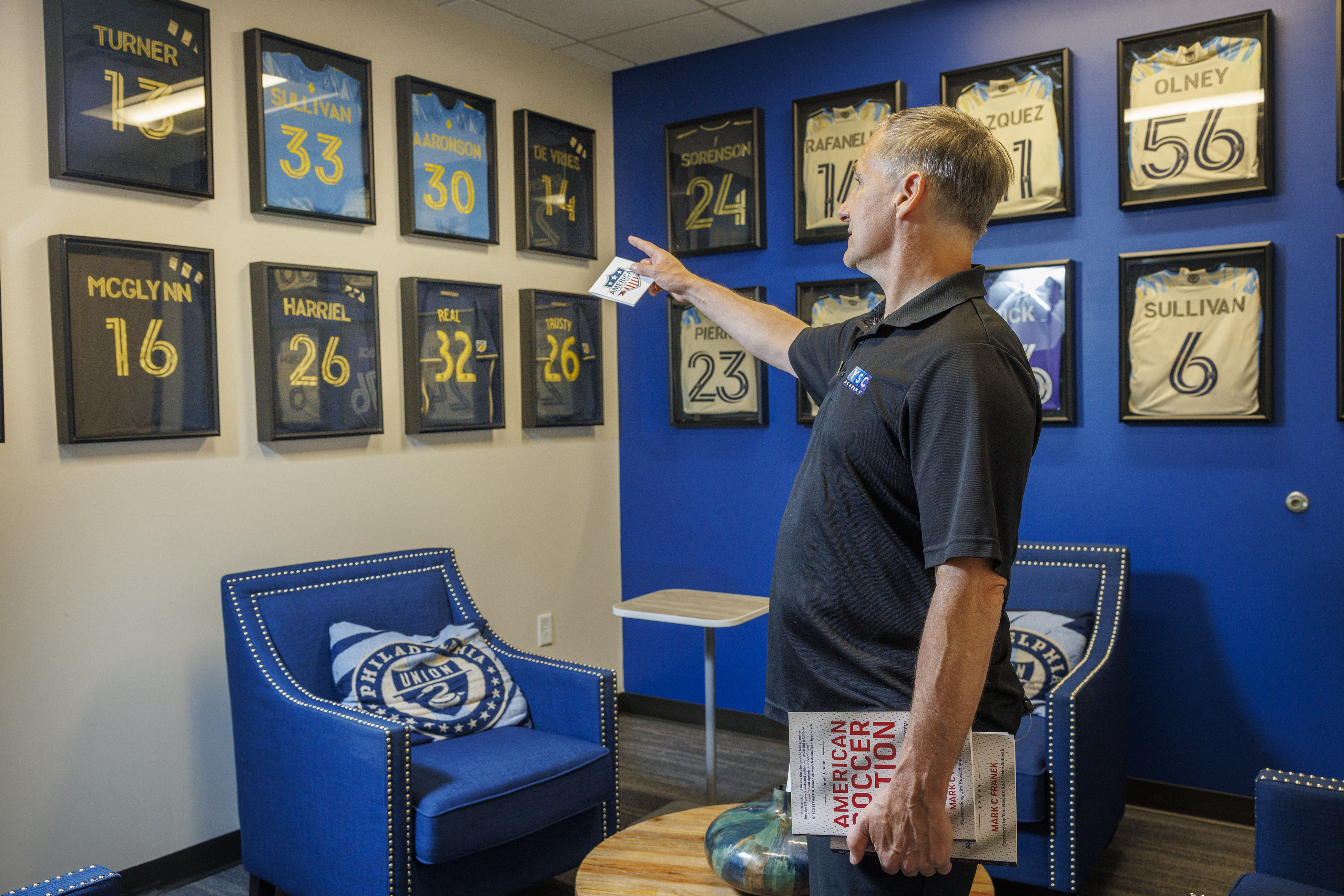
    Mark Franek shown in the “jersey room” at YSC Academy in Chester. Alejandro A. Alvarez / Staff Photographer

    “Imagine what the United States could do on the international level if one-third or one-half of the 30 MLS teams were able to build an academy and then surround that soccer environment with a learning environment that works for their setting and their community where you’re supercharging the dream and helping the kids along to the college dream,” Franek said. “The Union have shown without a doubt that it works.”

    YSC says 86% of its students graduate from college and 68 have signed professional soccer contracts since the school opened in 2013. The academics are not secondary at YSC but everyone understands the importance of soccer. The day starts later so students can train in the morning. Coaches and teachers work together to not overload a student’s schedule.

    “We have to remind everyone that their ultimate drive and purpose is to be great at soccer,” Micklos said. “Whether that means they’re a pro directly when they leave our doors and walk off the stage or they go to college and become a pro or it means they go to college, play soccer, and that’s the end of their soccer career, but the journey has prepared them for life and a career off the field.

    “The thing that drives them and their passion and the reason for the school is to help stimulate that growth and help them on that journey. It’s a hard journey for a young person to have the demands they have. If those things aren’t designed around their schedule then we’re actually doing them a disservice in their day-to-day life by creating a bigger challenge or hurdle than they need vs. saying, ‘Hey, we incorporate everything you need on the soccer field and then integrate that into what we’re doing at the school because an aligned and integrated environment is going to be the one that helps you best prepare.”
    Even the food is fit for budding pro athletes.

    “I remember two weeks into school and Cavan was eating a T-bone steak in my class,” Franek said. “I’m like, this is weird. I’ve taught for 15 years at Penn Charter and I’ve never seen anyone pull out a T-bone steak with A1 Sauce and then grab House on Mango Street. You’re living with alpha males. There’s a certain energy around the building that’s palpable and it’s glorious. Cavan was great and so is pretty much everyone. They’re moving in a direction and they’re super-focused.”

    Franek had Sullivan and his classmates autograph a ball during their freshman year. It was a keepsake of a class that pushed him to write that book. So far, several of them have already signed pro contracts. Sullivan should soon be playing in England for one of the world’s biggest clubs, and he’ll be a contender in four years to make the U.S. World Cup roster. Perhaps he’ll even team with his older brother, who graduated from YSC in 2022. If so, Franek will have more positive stories about American soccer to share with his students. And his book will need some more chapters.

  • ⚽ Goal-oriented| Sports Daily Newsletter

    ⚽ Goal-oriented| Sports Daily Newsletter

    I had this teacher in high school named Sam Holt, who also happened to be the soccer coach at my high school alma mater, just outside the Philly limits. He didn’t know it, but having him as a teacher left an indelible mark on who I became.

    Dually having him as my varsity soccer coach made all the difference, too, as he demanded the best out of every player, or you would find yourself taking in the game from the aluminum bench. In both the classroom and on the field, he taught life lessons that still serve today, 30-some years later.

    Coincidentally, today’s must-read is a history teacher just like Mr. Holt, who has been an inspiration to scores of professional soccer hopefuls at YSC Academy, the school directly associated with the Union’s youth academy.

    Where Holt regaled my class with stories of the Vietnam War, Mark Franek has been the U.S. soccer historian, educating students like Union phenom Cavan Sullivan who, before Franek, had been led to believe the U.S. could never win a World Cup. Needless to say, much to the chagrin of a classroom with some representing America’s best hope.

    It’s a fun read, one Inquirer writer Matt Breen dives into.

    Your weather today? Carbon copy of yesterday, with sunny skies and temperatures in the high 70s, before we get into some more rain expected tomorrow.

    — Kerith Gabriel, @phillysport, sports.daily@inquirer.com.

    If someone forwarded you this email, sign up for free here.

    ❓ Pause sports. Want to give a shoutout to an influential teacher? Email us back for a chance to be featured in the newsletter.

    Proud dad energy

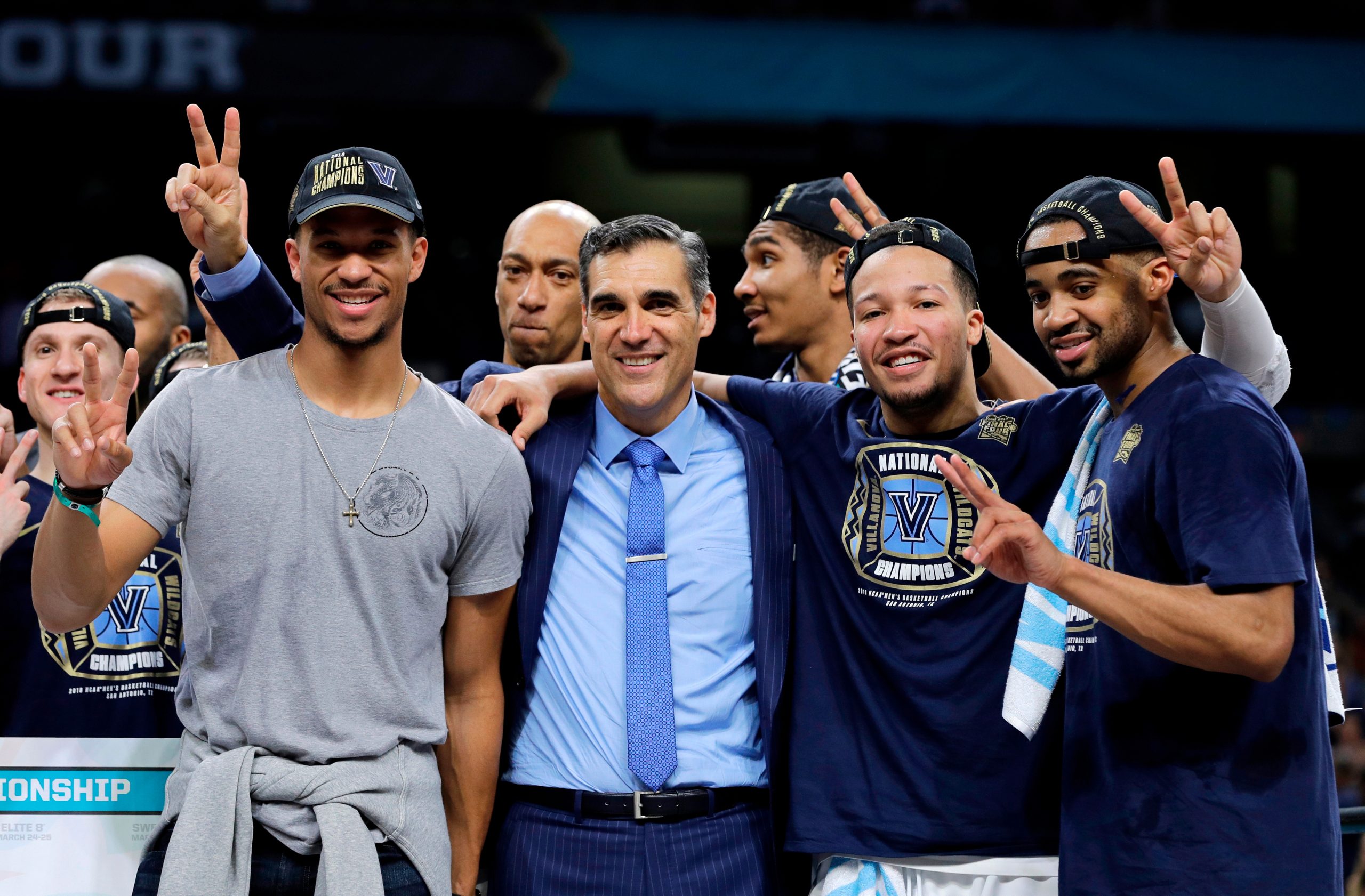
    Former Villanova head coach Jay Wright celebrated beating Michigan for the 2018 national title, then celebrated watching two key players from that team help the Knicks snap a 53-year-old drought from his car on Saturday.David J. Phillip

    What if we told you that former Villanova men’s basketball head coach Jay Wright watched three of his former Wildcats players lead the Knicks to an NBA title from a cul-de-sac in Radnor?

    Coming back from a wedding in New Jersey, Wright and his longtime wife, Patty, pulled over their car on a Main Line side street and watched as Jalen Brunson, Josh Hart, and Mikal Bridges reached the pinnacle of the sport, while snapping a 53-year drought in the process.

    Inquirer writer Jeff Neiburg on Wright’s virtual father-son moment from 100 miles away.

    What we’re…

    ⚾ Sharing: Brandon Marsh comes in at third among National League outfielders in the latest All-Star vote.

    🥊 Reading: How the ‘Rocky Jinx’ caught up with fans of Ecuador’s World Cup team on the steps of the Art Museum.

    👀 Watching: The revelry that was Philly’s first-ever men’s World Cup match.

    Sticking with Trea

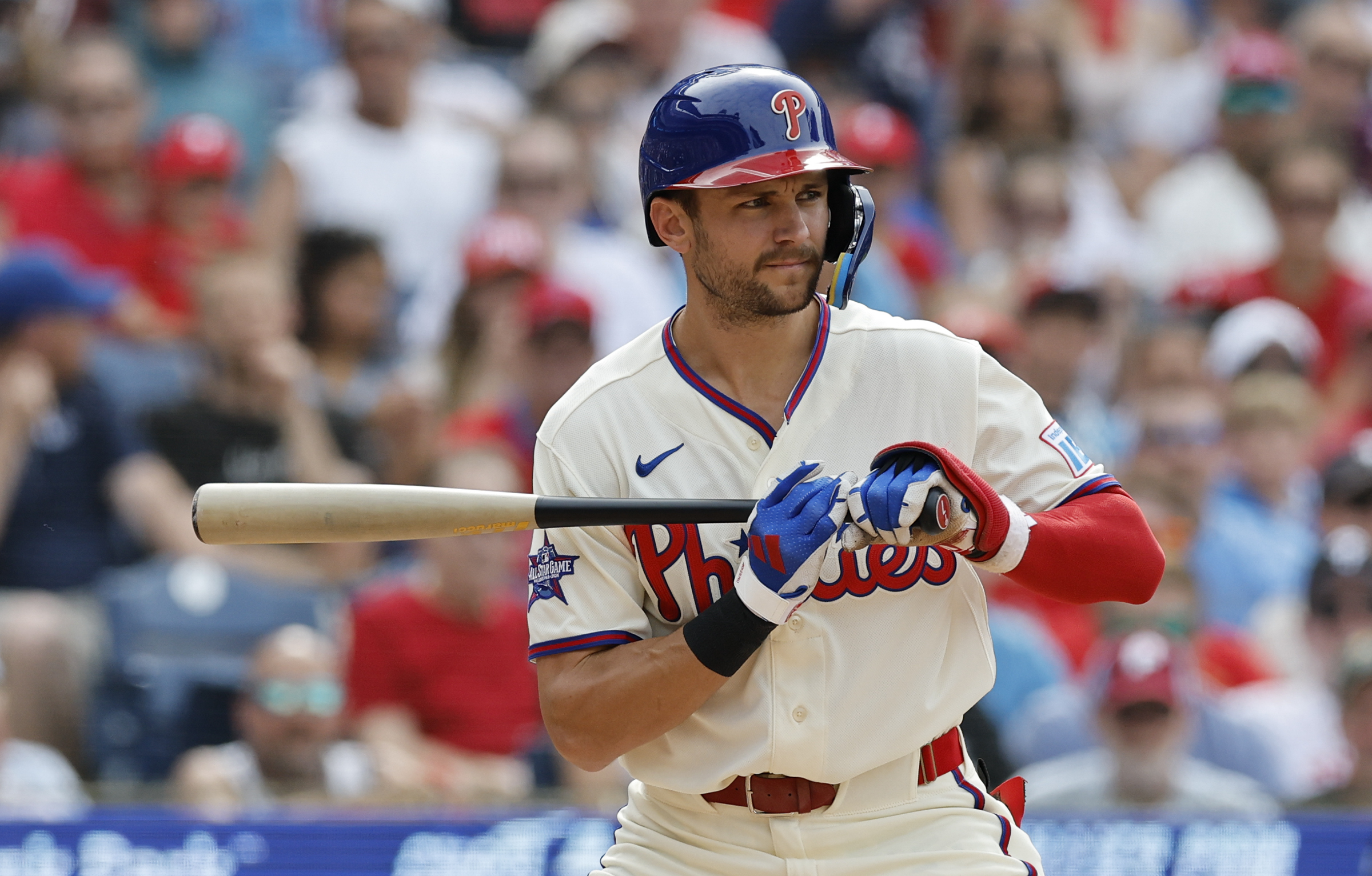
    Trea Turner returned from the road trip to Toronto and Milwaukee with a .219 batting average and a .598 OPS.Yong Kim / Staff Photographer

    Phillies interim manager Don Mattingly said he didn’t consider giving Trea Turner some time off as he’s continued to struggle at the plate. Turner was already slumping before the Phillies departed for their 3-3 road trip to Toronto and Milwaukee, but a 3-for-26 trip lowered his average to .219 and his OPS to .598 on the season.

    Turner, who won the batting title in 2025, has a 23% strikeout rate and 27.8% whiff rate this year. But Mattingly is steadfast that things will turn around. (Turner was removed from Monday’s 7-0 thrashing of the Marlins with a bruised right wrist but Mattingly said X-rays were negative.)

    The first update on All-Star voting was announced on Monday, and the case looks strong for one Phillie, who is looking to make his All-Star debut.

    Next: The Phillies continue their series against the Marlins at 6:40 tonight (NBCSP). Jesús Luzardo (5-4, 4.35 ERA) will start against Marlins right-hander and South Jersey native Tyler Phillips (1-1, 1.86).

    Doubling down

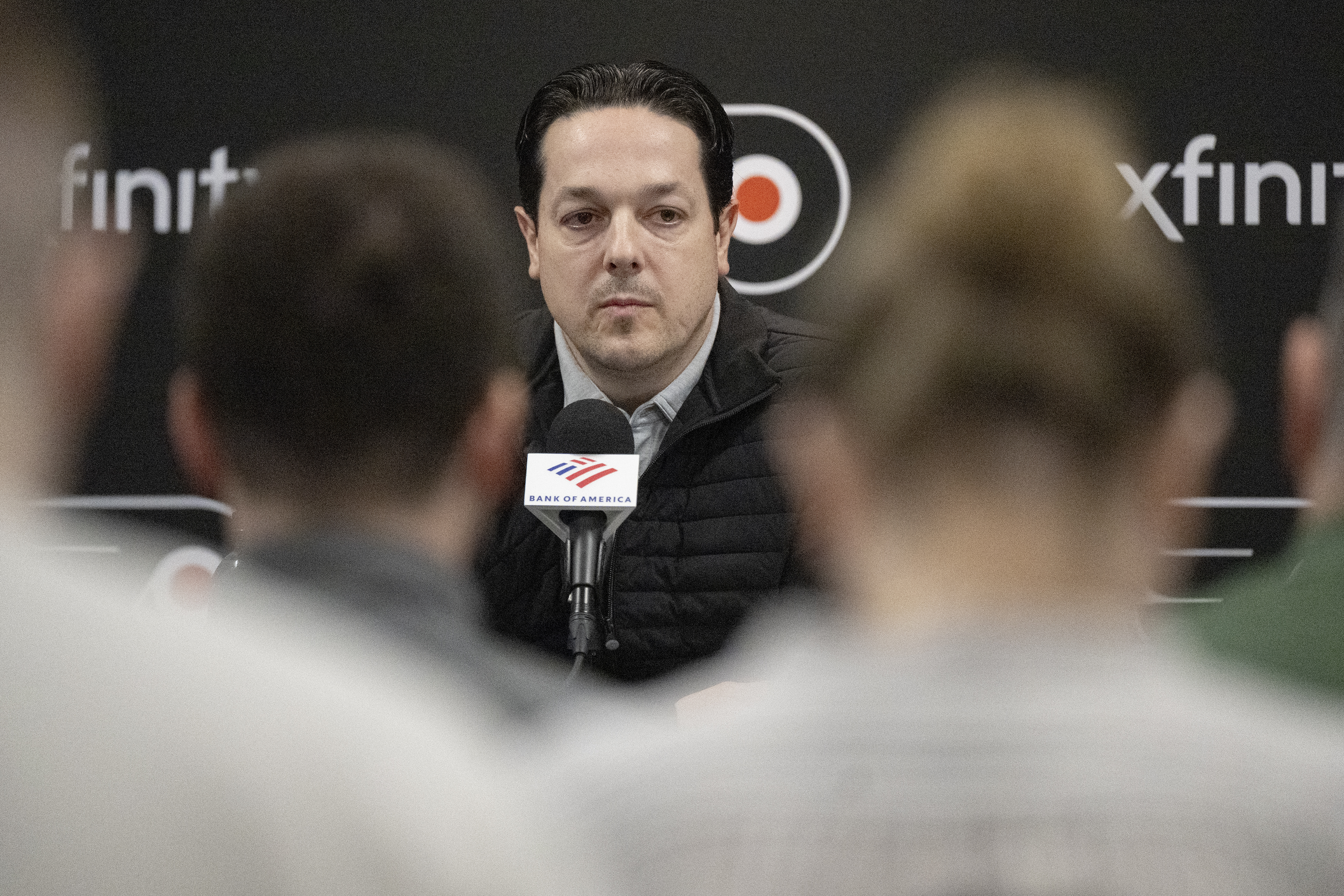
    Flyers general manager Danny Briere speaks to the media during the team’s end-of-season press conference in May.Jose F. Moreno / Staff Photographer

    The 2026 NHL draft is quickly approaching, and for the first time in a while, the Flyers are in the driver’s seat.

    After making it to the second round of the Stanley Cup playoffs for the first time since 2020, the Orange and Black are picking at No. 21 in the first round and only have five picks across all seven rounds.

    In Part 1 of Inquirer writer Jackie Spiegel’s two-part interview with Brent Flahr, who runs the team’s draft, the assistant general manager chats about the team’s approach heading into the draft, which will be held on June 26-27 in Western New York.

    On this date

    May 16, 1984: Phillies legend Steve Carlton belts a grand slam off a fellow future MLB Hall of Famer named Fernando Valenzuela to fuel a 7-2 Phillies win over the Los Angeles Dodgers.

    Dave Murphy’s take…

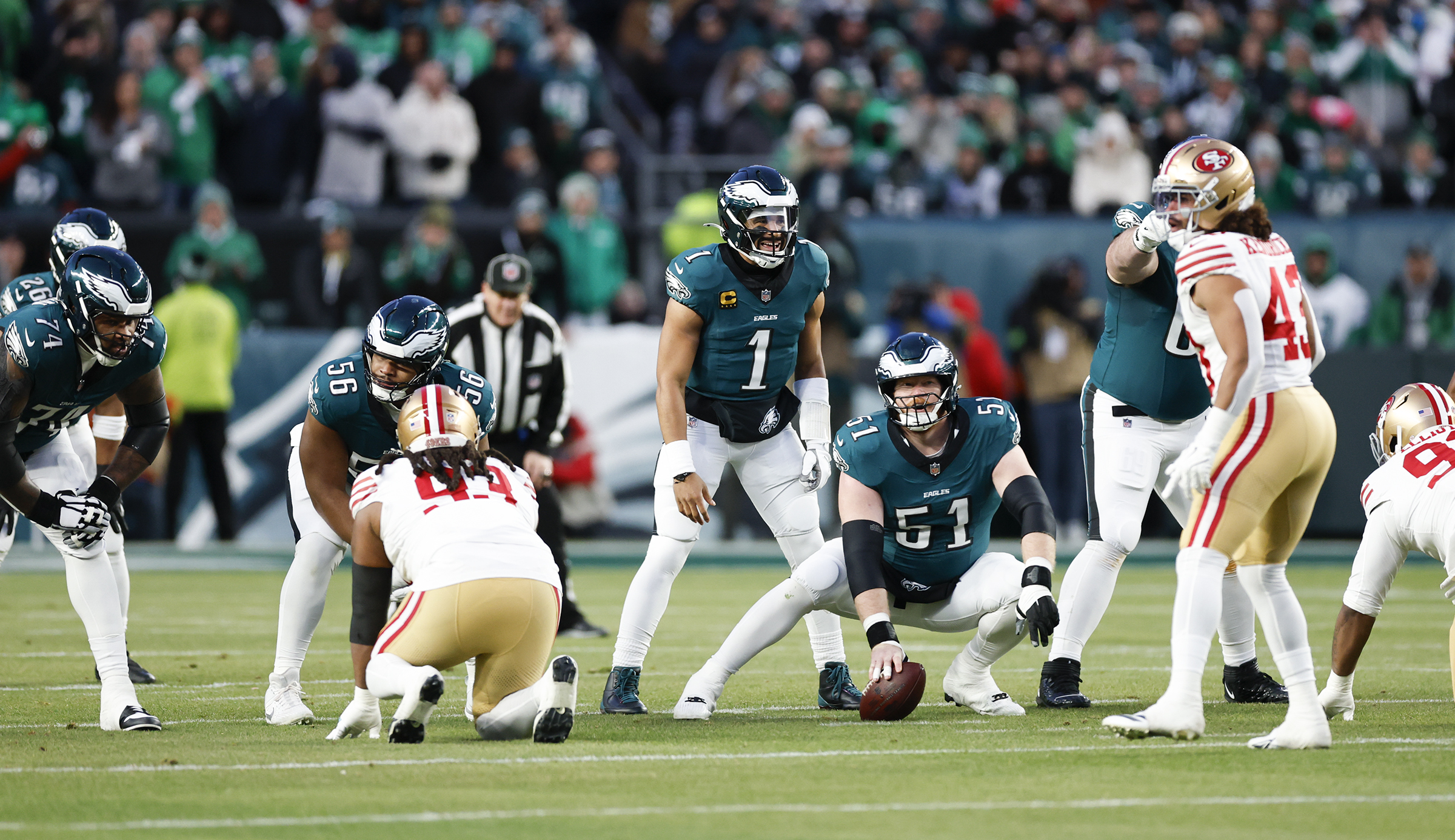
    Eagles quarterback Jalen Hurts looks over the San Francisco 49ers defense before taking the snap last season. Yong Kim / Staff Photographer

    “The evidence hardly supports the idea that the Eagles’ heavy reliance on the shotgun in recent years is an ipso facto indictment of Hurts and/or the offensive scheme. At least, not if you accept as fact that Burrow and Mahomes are two of the best quarterbacks in the NFL. Mahomes attempted just 32 passes from under center in 2025, 12 fewer than Hurts’ 44.” — Inquirer columnist David Murphy opines on the Eagles’ penchant for playing out of the gun and how that might look under new offensive coordinator Sean Mannion.

    🧠 Trivia time

    Philadelphia hosted its first men’s World Cup match, but it’s not the first FIFA World Cup game at Lincoln Financial Field, as there have been women’s matches played there as well. Today’s question: What year was it?

    A) 1999

    B) 2003

    C) 2010

    D) 2013

    What you’re saying about the World Cup

    We asked: After the [U.S. men’s national team’s] big 4-1 win, how far do you think the Americans can advance in the World Cup?

    We’ll know on Friday. Beat the Aussies, and we effectively win the group, giving a pretty good path to the quarters, and I think we’ll get there. Then can we get to the semis? Why not? — Joel G.

    My retired soccer coach friend told me that Team USA will go as far as their defense takes them. Homefield advantage helps, but then advancing will depend on who they have to match up against. For now, it’s important they earn three more points in group play against Australia on Friday. — Everett S.

    We compiled today’s newsletter using reporting from Lochlahn March, Matt Breen, Conor Smith, Michelle Myers, Jackie Spiegel, David Murphy, Ariel Simpson, and Jeff Neiburg.

    By submitting your written, visual, and/or audio contributions, you agree to The Inquirer’s Terms of Use, including the grant of rights in Section 10.

    Enjoy Tuesday, Philly. I’ll catch up with you later this week. — Kerith

  • Gabriel Rincones Jr. emerges, Zack Wheeler efficient as Phillies return home with 7-0 win over Marlins

    Gabriel Rincones Jr. emerges, Zack Wheeler efficient as Phillies return home with 7-0 win over Marlins

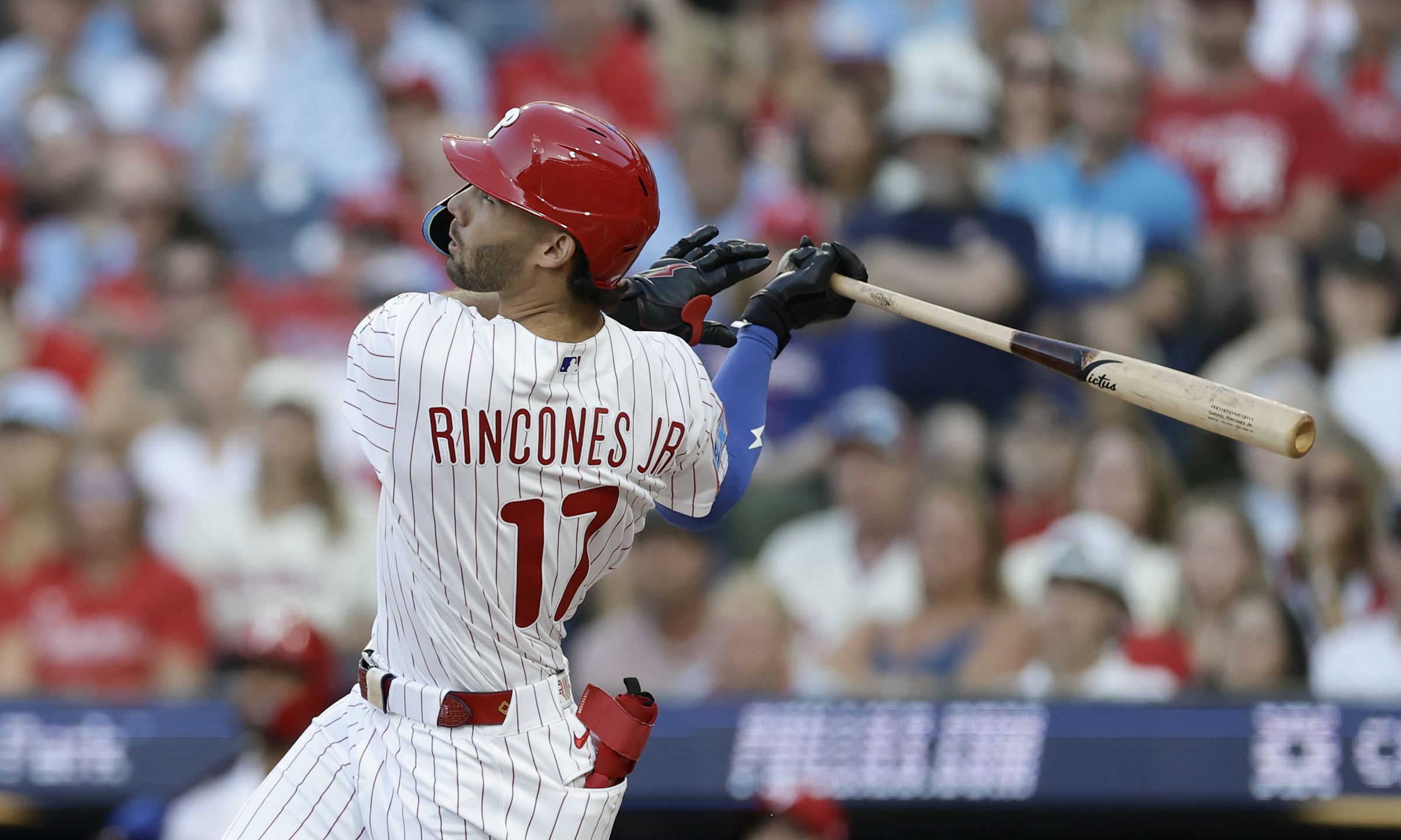
    Right away, Gabriel Rincones Jr. knew it was gone.

    He let the bat flip off his fingertips as he started toward first base. Miami right fielder Owen Cassie made a futile jog toward the wall, but the ball kept carrying and carrying until it landed just inside the foul pole, Rincones’ first major league hit and home run all at once.

    “I daydreamed about that, and tried to think about what it would feel like, what would I see, smell,” Rincones said. “And it’s very similar. I had a whole routine in my head with what I could possibly do, and thank God I was able to do that.”

    The rookie outfielder debuted Friday in Milwaukee when he and the rest of the Phillies were baffled by Brewers star Jacob Misiorowski. But in his first start at Citizens Bank Park on Monday, Rincones made his presence felt in the 7-0 win over the Marlins.

    It’s been a whirlwind few days for the right fielder, and it hasn’t all sunk in yet.

    “I process things really slow,” Rincones said jokingly. “It doesn’t help — that atmosphere vs. one of the best pitchers in baseball, I had a crazy travel day, going out to Milwaukee, pretty bad weather there at the time. But I got good sleep today and was able to do my thing.”

    Rincones’ solo homer in the second inning gave the Phillies an early lead they would not surrender as they pounded the Brewers for 10 hits. Every starter reached base at least once. That included Trea Turner, who was 0-for-3 before getting hit by a pitch in the sixth and was later removed from the game with a bruised right wrist.

    Interim manager Don Mattingly said Turner’s X-rays were negative, but he is sore.

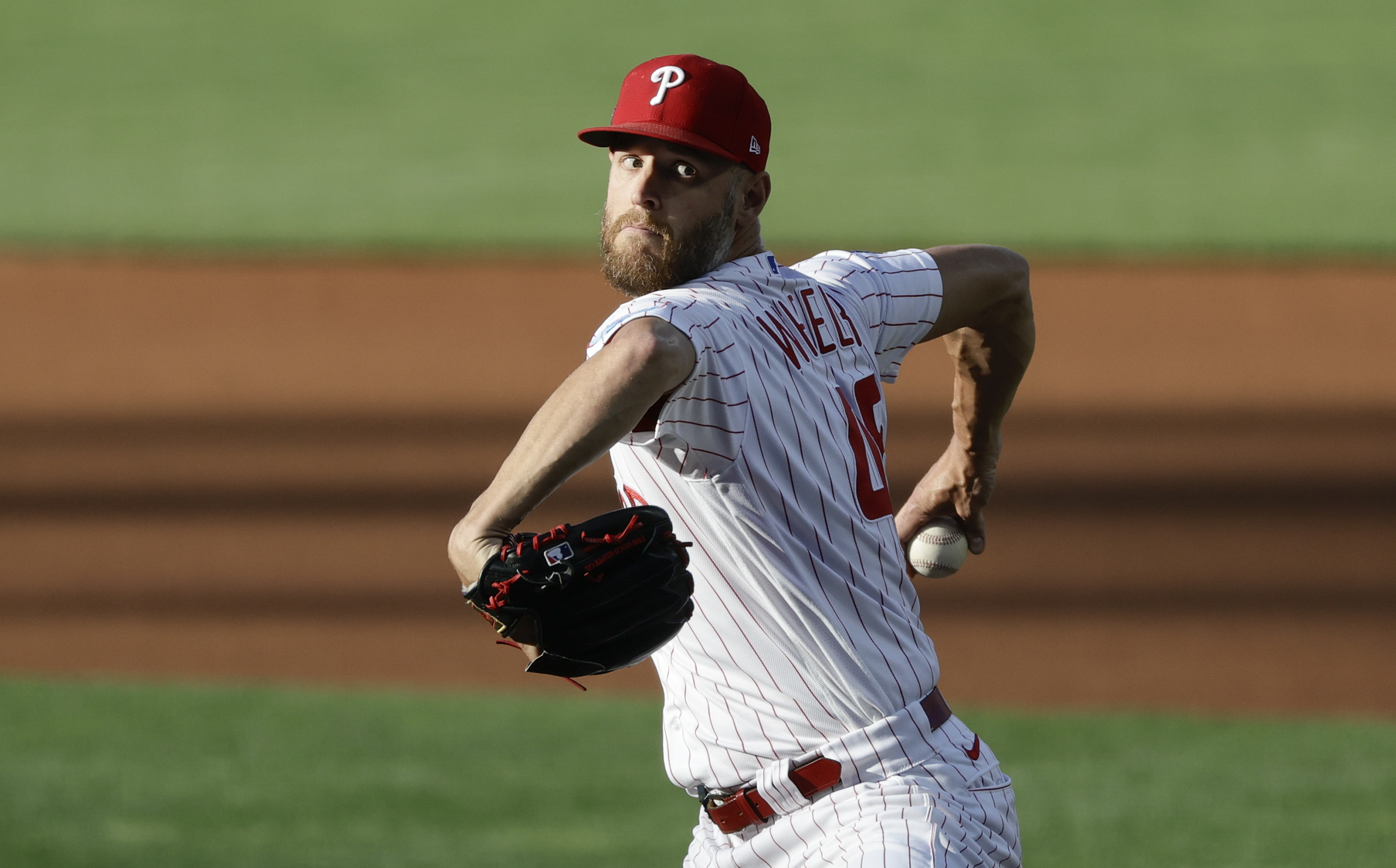
    Phillies starter Zack Wheeler tossed six scoreless innings, even though he said postgame he was unsatisfied with his command.

    “I think that’s something that makes him so special,” said catcher J.T. Realmuto. “He has very high standards for himself, and he doesn’t feel like he’s perfect. He feels like it’s not his best stuff, but he continues to go out and just give us quality innings and gives us a chance to win every time he steps on the mound.”

    A leadoff single to Liam Hicks was the only hit he allowed until Joe Mack doubled in the fifth inning, but both times Wheeler battled back to strand the runner. He also pitched around three walks to hold the Marlins off the scoreboard.

    “It’s a tightrope,” Wheeler said. “Just got to walk it fine and get outs. You put yourself in that situation, so you got to get out.”

    Zack Wheeler was not happy with his command but the Marlins did not trouble the scoreboard on Monday. Yong Kim / Staff Photographer

    Wheeler leaned on his splitter and cutter more than normal, and collectively those two pitches generated nine of his 12 swings-and-misses.

    “I think those are probably the two pitches that kind of saved me today,” Wheeler said. “You sprinkle in everything else, but those two pitches really worked for me today.”

    He struck out nine, four of which were called looking.

    While there were offensive contributions up and down the Phillies lineup, it was the bottom of the order that consistently came through.

    Rincones picked up another RBI in the third inning to add to the Phillies’ lead. With the bases loaded, he grounded into a force out that scored a run. Justin Crawford followed it up with a single that made it 3-0.

    “The second at-bat I liked from the standpoint of putting the ball in play there,” Mattingly said. “Where he controlled the zone enough to get himself a pitch to put the ball in play, got us an extra run.”

    J.T. Realmuto celebrates his two-run fifth-inning home run against the Marlins on Monday. Yong Kim / Staff Photographer

    Realmuto then swatted a two-run homer in the fifth, his second home run in as many games after he had the day off on Sunday.

    “It’s important for any team to be able to have a deep lineup, and that’s something we feel like we put together here, is being able to score up and down the lineup,” Realmuto said. “We haven’t obviously done that all season long, but we feel like when we’re at our best, we can score at any point, doesn’t matter who’s hitting. So it’s good to see us score some runs the last few games with the bottom half.”

    The Marlins threatened the shutout in the eighth when they put two runners on against Jonathan Bowlan with an error and a single to bring up the heart of the order. But Bowlan struck out back-to-back Marlins — Kyle Stowers on a fastball and Xavier Edwards on a changeup — to end it.

    The bottom of the order started another rally in the eighth when the Phillies loaded the bases on consecutive singles from Crawford and Edmundo Sosa and then a walk from Kyle Schwarber. They tacked on two more runs with two sacrifice flies to make it 7-0.

    If it had remained a five-run game, Mattingly said he likely would have used a higher-leverage arm in Orion Kerkering for the ninth, but the extra cushion allowed him to bring in Chase Shugart instead. Shugart sidestepped a single to seal the shutout.

    “Those kind of runs, they don’t seem huge during the course of a game because it’s 5-0,” Mattingly said. “But it’s really big from the standpoint of bullpen usage, who’s available tomorrow and the next day, so those are big runs at the end.”

    After his second-inning homer, Rincones jogged back out to his position on defense, past where it had landed. He tipped his cap to the fans as they greeted him with an ovation.

    With Adolis García’s season likely over following a right lat tear, the Phillies have a need, and Rincones has an opportunity.

    He knows it.

    “I don’t want this to get familiar,” he said. “I want it to be like it’s a new feeling, and that fire, I don’t want that to go away. And I want to give these fans all that I got.”

  • Don Mattingly sticking with slumping Trea Turner in the Phillies lineup: ‘He’s always hit’

    Don Mattingly sticking with slumping Trea Turner in the Phillies lineup: ‘He’s always hit’

    When the Phillies posted their lineup card ahead of Monday’s series opener against the Marlins, Trea Turner’s name was where it has been for the past few weeks: second in the order.

    Phillies interim manager Don Mattingly said he didn’t consider giving Turner some time off as he’s continued to struggle at the plate. Turner was already slumping before the Phillies departed for their 3-3 road trip to Toronto and Milwaukee, but a 3-for-26 trip lowered his average to .219 and his OPS to .598 on the season.

    Turner, who won the batting title in 2025 with a .304 average, has a 23% strikeout rate and 27.8% whiff rate this year. But Mattingly is steadfast that things will turn around.

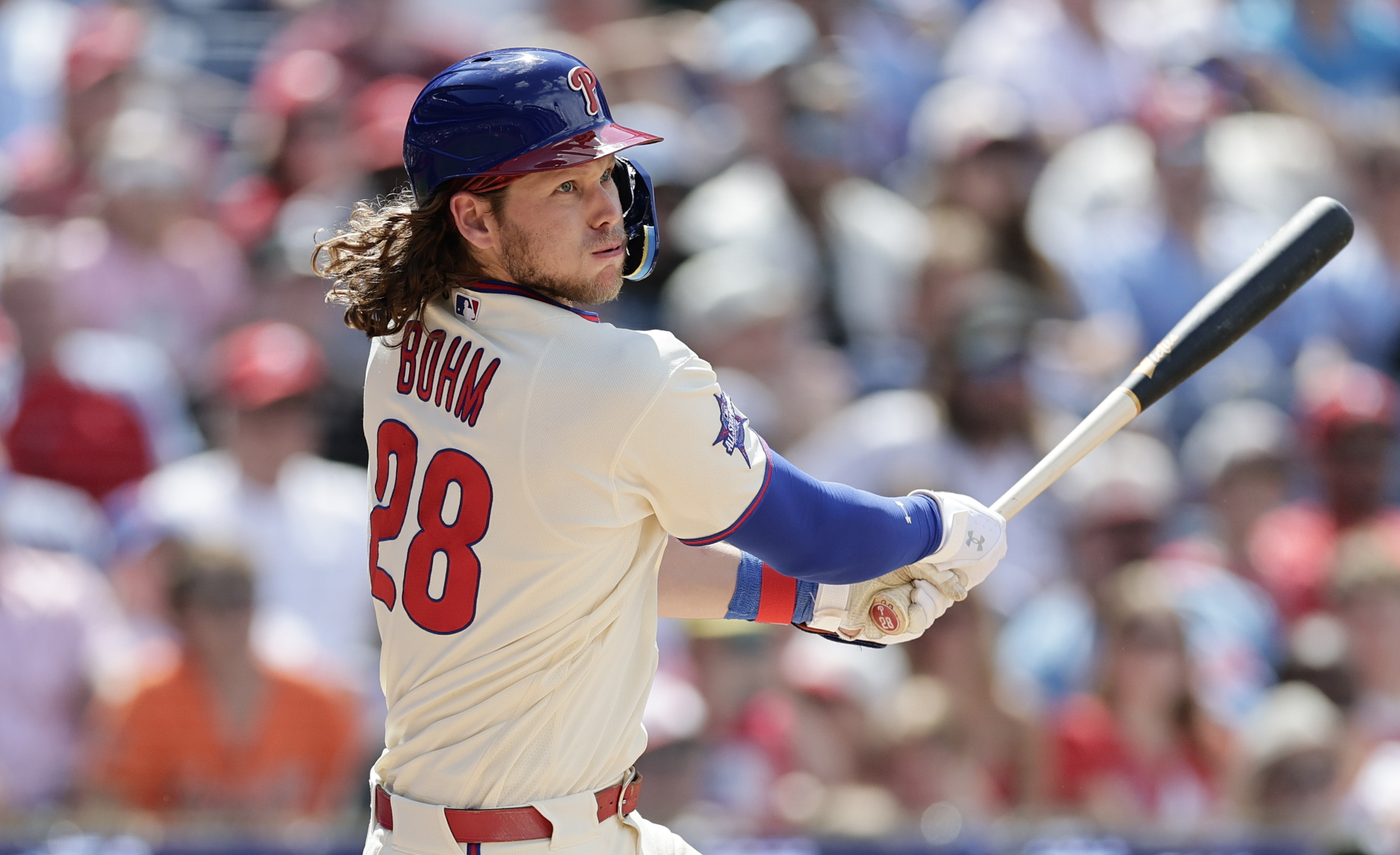
    “Because it’s Trea. He’s always hit,” Mattingly said. “It’s what we talked about earlier in the year with [Alec Bohm], when everybody was ready to bench him, not ever play him again. Guys who hit, hit. He’s a great player, and he’s going to be a great player for us.”

    A few days off did work for Bohm’s own struggles this season. He had a two-day reset in May after his batting average dropped to .159 and then he hit two homers in the game immediately after. In the 32 games since then, Bohm has a .281/.326/.504 slash line.

    Bohm was out of the lineup on Monday because he was a little “banged up,” according to Mattingly, who added that he was still healthy and should be back Tuesday. Edmundo Sosa started at third base in his place.

    Alec Bohm benefited from his two-day “reset” in May.Yong Kim / Staff Photographer

    “He was just kind of gathering nicks and bruises as that road trip went on, a little bit in the hammy, a little bit in the hip, a little bit in the shoulder,” Mattingly said. “So I just wanted to give him a day, a chance to recover.”

    Mattingly also said he hasn’t considered moving Turner further down in the batting order from the No. 2 spot.

    “Not at this point. If it gets to that point, then [I’d] consider anything that’s going to help us win,” Mattingly said. “Everybody, all of a sudden, is talking about Trea today, but when we don’t score, Trea’s not the only reason when things like that happen. Trea’s a big piece of what we are, what we’re going to be, and if we’re getting really successful, we’re going to need Trea. So for me, I’m not giving up on Trea, I’m not moving him right now. It’s just the way I feel about it.

    “ … I want to show confidence because I feel confidence. I wouldn’t say the things I say if I didn’t feel confident that Trea was going to find it, and be swinging more consistently and better as we go through the season.”

    Still monitoring Marchán

    Phillies backup catcher Rafael Marchán has not been diagnosed with a concussion after he took a foul ball off the mask on Sunday in Milwaukee, Mattingly said. But the Phillies are still monitoring him.

    “The update’s been good, and that we’ll continue to keep an eye on him,” Mattingly said. “I guess things can happen a couple days later, too, so we’ll keep an eye on him. But at this point the doctors have checked him out, he’s been through everything, and he’s good to go. ”

    Extra bases

    Left-handed reliever Kyle Backhus (left elbow inflammation) pitched one-third of an inning Sunday for triple-A Lehigh Valley for his rehab assignment. He entered with two inherited runners, walked a batter, and then struck out the next batter to end the inning. Backhus is next scheduled to pitch for the IronPigs Wednesday, and the Phillies plan to start building multiple innings. “He’s doing good, everything’s going in the right direction for him,” Mattingly said. … Outfielder Steward Berroa returned from the paternity list on Monday and was optioned to Lehigh Valley, the Phillies announced. … Jesús Luzardo (5-4, 4.35 ERA) is scheduled to start Tuesday against Marlins right-hander and Bishop Eustace product Tyler Phillips (1-1, 1.86), a former Phillie.

  • As the USMNT returns to work at the World Cup, Australia’s big win sharpens the focus

    As the USMNT returns to work at the World Cup, Australia’s big win sharpens the focus

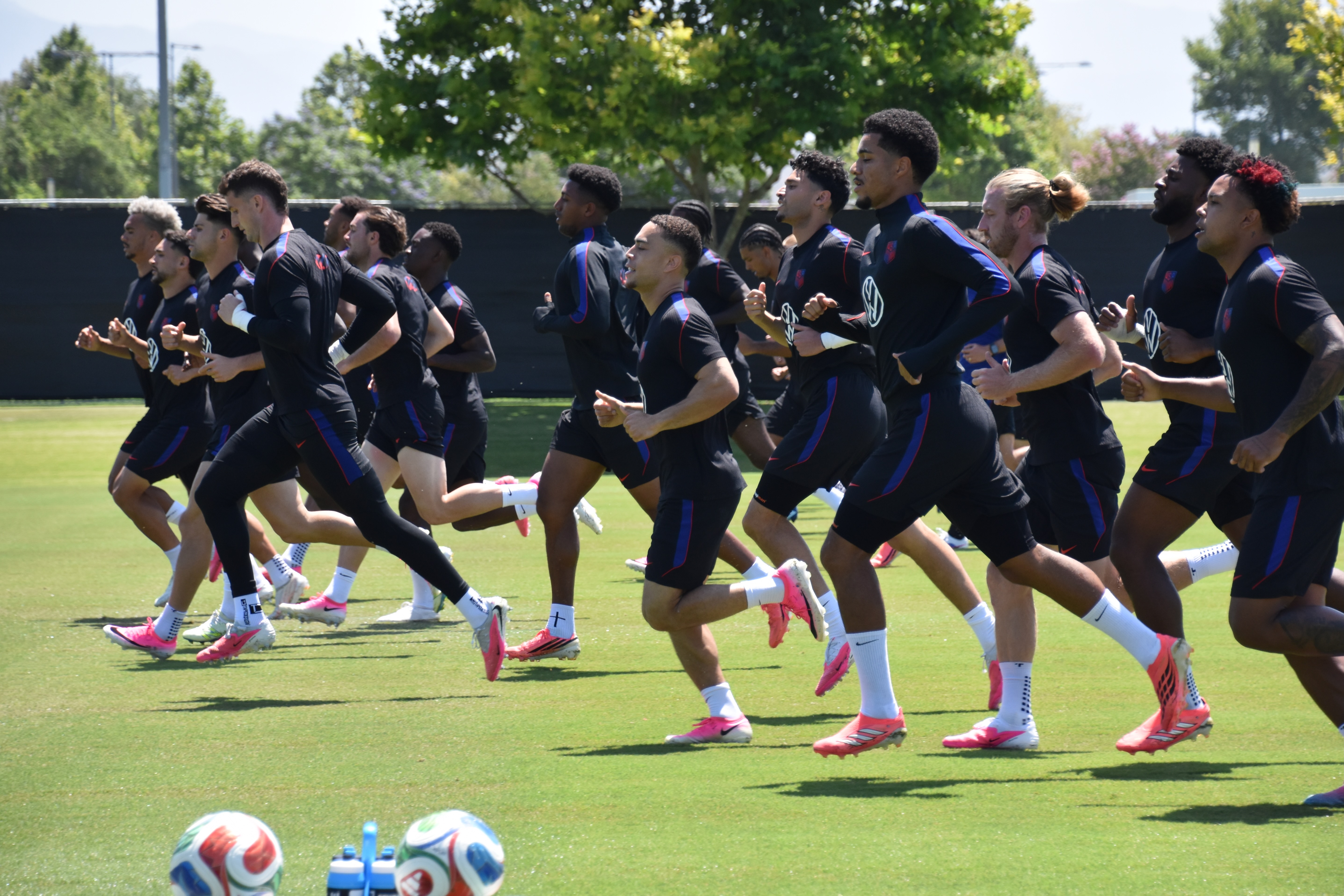
    IRVINE, Calif. — The U.S. men’s soccer team’s big win over Paraguay electrified this World Cup, especially for American fans. But the players can’t spend too long reveling in the moment, because the next game is now on the horizon.

    Monday was always going to be a natural moment to turn the page, since it marked the return to work after two days off. But there was also a wakeup call over the weekend, when Australia upset Turkey and blew Group D wide-open.

    The players got the message.

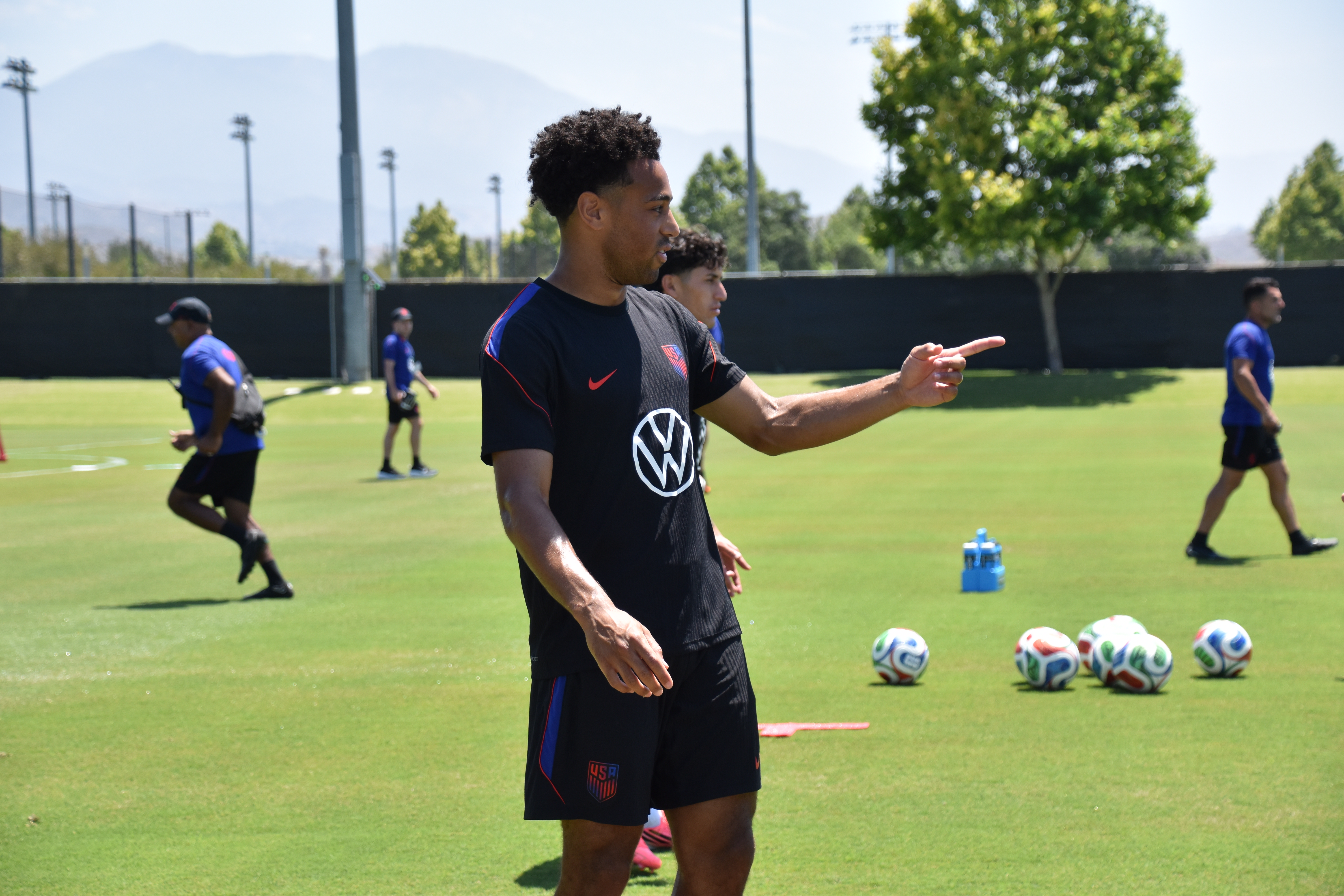
    “We saw a team that went out against Turkey and competed at a very, very high level,” stalwart U.S. midfielder Tyler Adams said of his team’s next opponent. “They’re combative, they’re smart, tactically they were unbelievably sound. So I think it’s going to be an extremely difficult game.”

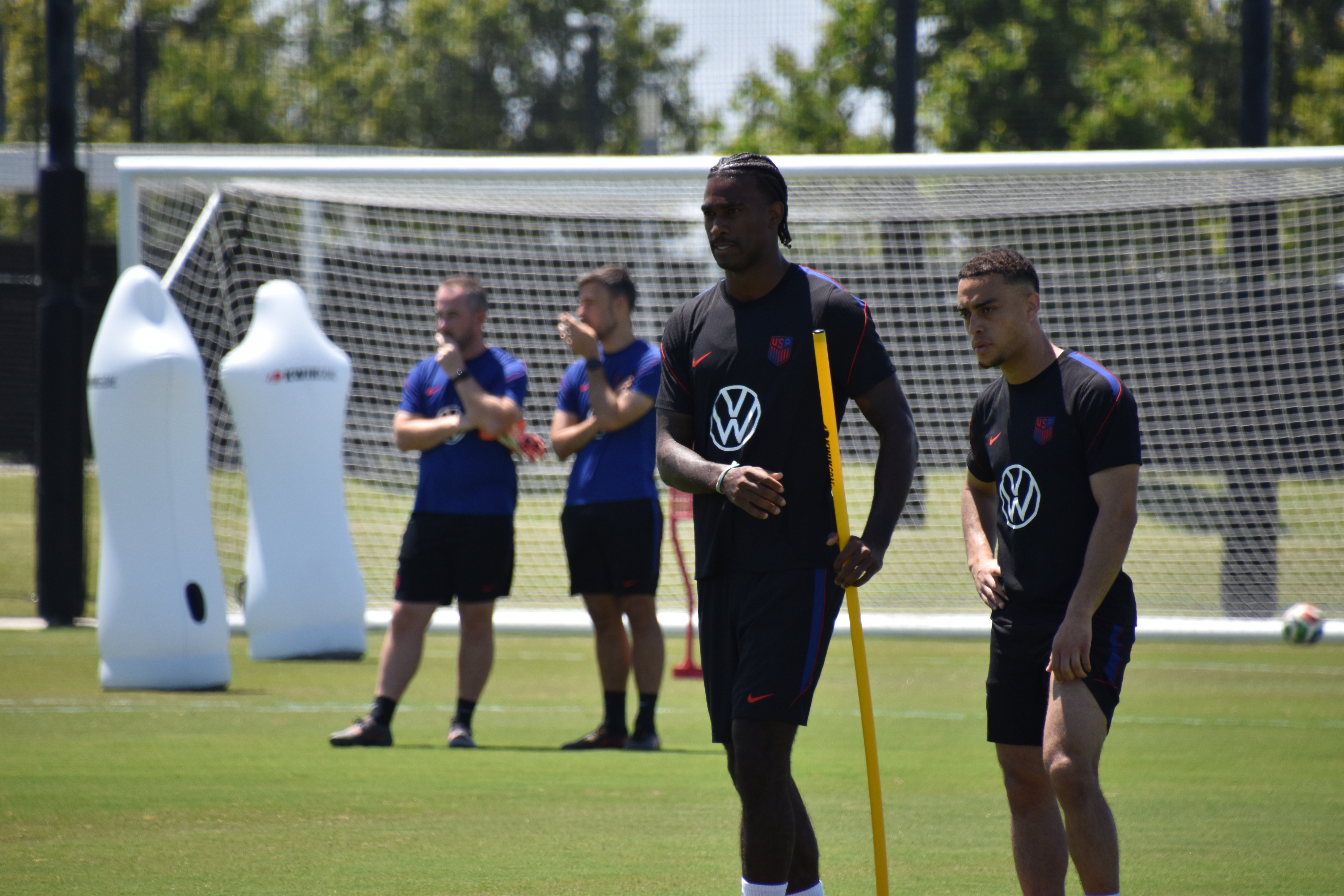
    Tyler Adams making a point to a teammate during a drill.Jonathan Tannenwald

    As he got ready for Monday’s practice, Adams said it was “pretty easy” for the team to shift its focus ahead.

    “I think that having a day off is obviously nice to just be able to disconnect,” he said. “I think having this amount of time in between games is really nice, just for the body, the mind, everything in between. It was a good start — it’s exactly what we wanted and we set out to do. That being said, the focus has to be on Australia now.”

    Australia’s win raises the stakes even higher in what was already a much-anticipated game (3 p.m., Fox29, Telemundo). The scene will be just as much of the story as the action on the field, as soccer-mad Seattle finally hosts the U.S. after not being part of any previous World Cup in this country, from the 1994 men’s tournament to the 1999 and 2003 women’s ones.

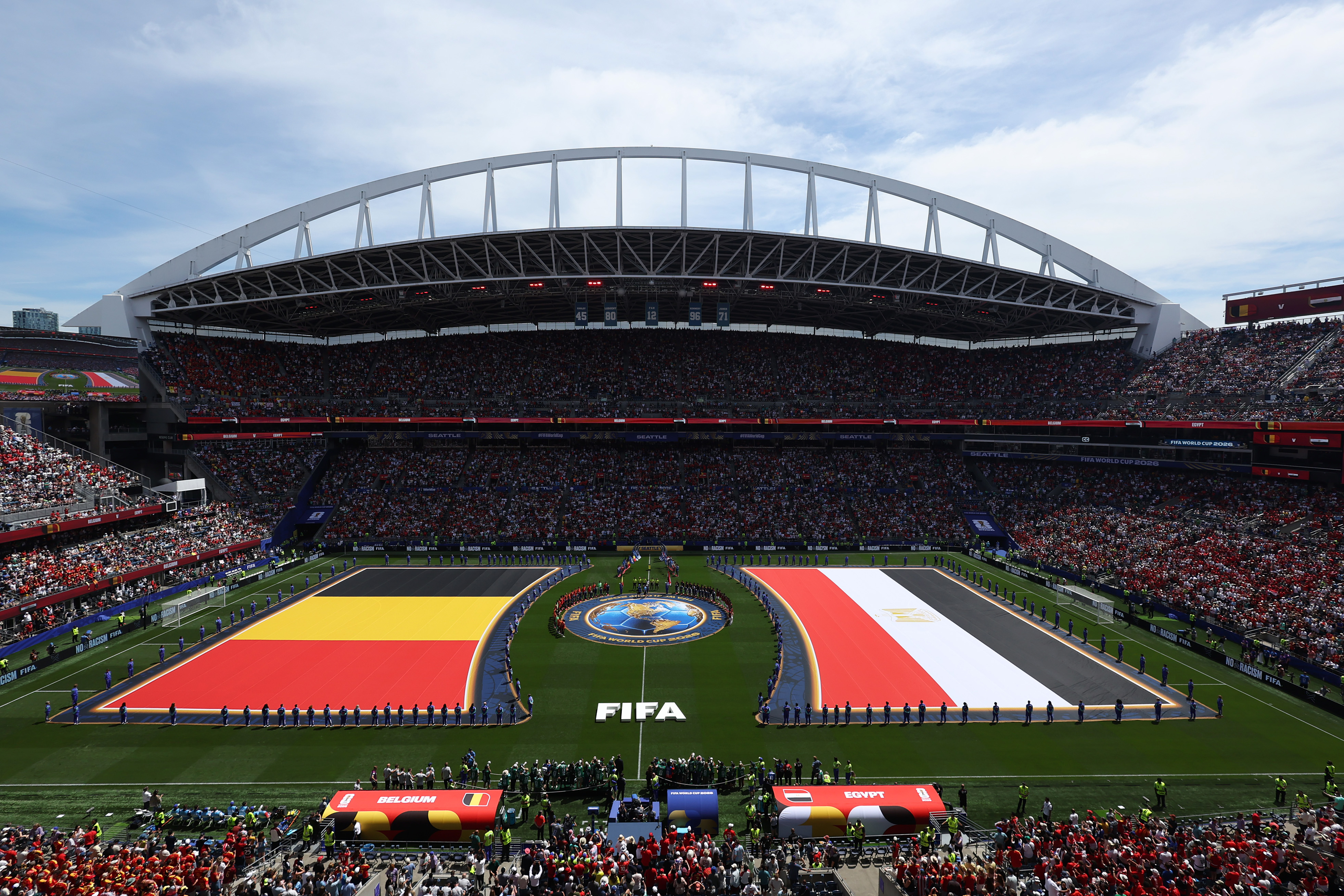
    The city looked terrific in its first time on the big stage, Egypt’s 1-1 tie with Belgium on Monday.

    A view of the full house in Seattle as Belgium and Egypt’s players lined up for the national anthems.Maddy Grassy

    When the U.S. and Australia met in a friendly last October, striker Haji Wright scored both American goals in the 2-1 win. He reflected Monday on watching tape of the Turkey game, and how these Socceroos compare to last fall.

    “Saw a well-executed game plan from Australia,” he said. “They’re tough to break down, they’re dangerous on counterattacks, they have good players at the top of the pitch, and they were able to be effective and damage Turkey. I think Turkey kind of came into the game a bit overconfident, and I think we won’t make that same mistake.”

    That was a reference to team captain Hakan Çalhanoglu claiming a few days earlier: “I think we will dominate the game, because we have more qualities and a more talented team.”

    Some U.S. pundits have done some boasting of their own, and Adams was asked about that. He quickly brushed it off.

    “I don’t think any commentary helps anybody,” he said. “And no, it’s not going to be a layup. If anything, it’s going to be one of the most difficult games that we play.”

    Haji Wright (center) in a drill at Monday’s practice.Jonathan Tannenwald

    The U.S. will be on alert not just for Australia forward Nestory Irankunda, already justifying the hype as a breakout star. Adams’ yellow card in the second half against Paraguay means that if he’s is booked again in this game, he’ll miss the group finale against Turkey on June 25. Card accumulation is then reset after the group stage ends, and after the quarterfinals.

    “I live with yellow cards,” Adams said. “I think that for me, it’s something that you have to manage of course, but especially in the second game, you can’t take your foot off the gas.”

    When kickoff arrives, it will have been a week since the Americans’ group opener. That’s a rare sight in a World Cup, created by FIFA’s expansion of the field to 48 teams. In the past, there were usually three or four days between games.

    “I absolutely love it after playing a long season,” said Adams, who plays his club soccer for the English Premier League’s Bournemouth, noting too that the last World Cup in 2022 — his first — was the first moved from the summer to autumn because of Qatar’s heat.

    Tyler Adams drew a big crowd for his session with the media, as he always does.Jonathan Tannenwald

    “Your body feels it, obviously, a little bit more coming into the end of the season, into a World Cup where there’s so much emotion, so much adrenaline, all these things,” he said.

    Pulisic trains separately

    As he nurses the hamstring knock that sent him out of the Paraguay game at halftime, Christian Pulisic did not take the field with his teammates Monday morning. He emerged separately a few minutes later, and worked on his own with a trainer on the next field over.

    A U.S. Soccer spokesperson said Pulisic was scheduled to do a “modified training session” with “gym and individual field work.”

    Pochettino wasn’t scheduled to meet with the media on Monday, but he came over during practice to say hello and talk casually for a few minutes. When a reporter asked him how Pulisic is doing, Pochettino answered “Good.”

    Christian Pulisic working with a trainer on a separate field Monday morning.Jonathan Tannenwald

    Adams shared the sentiment, and a few more words.

    “Come on — Christian will be ready, everyone. Let’s relax,” he said with his usual spirit. “I think that he picked up a knock a few days before the game, and I think he got kicked in the same spot again during the game, and when you go in at halftime, things obviously get tight within the 15-, 20-minute break. But he’ll be fine.”

    U.S. Soccer also announced that 20-year-old goalkeeper prospect Julian Eyestone of English club Brentford has joined the camp as a training player. Diego Kochen of Spain’s Barcelona departed last week, while the Union’s Andrew Rick has stayed all along.

    Though U.S. Soccer didn’t say why Kochen left, ESPN reported last week that the 20-year-old is on the verge of a season-long loan to Danish club Lyngby to get some regular playing time. Lyngby earned promotion to Denmark’s top flight last month, and its ownership includes the Union holding a partial stake.

    Julian Eyestone (left) is another of the U.S. program’s leading young goalkeeper prospects.Jonathan Tannenwald