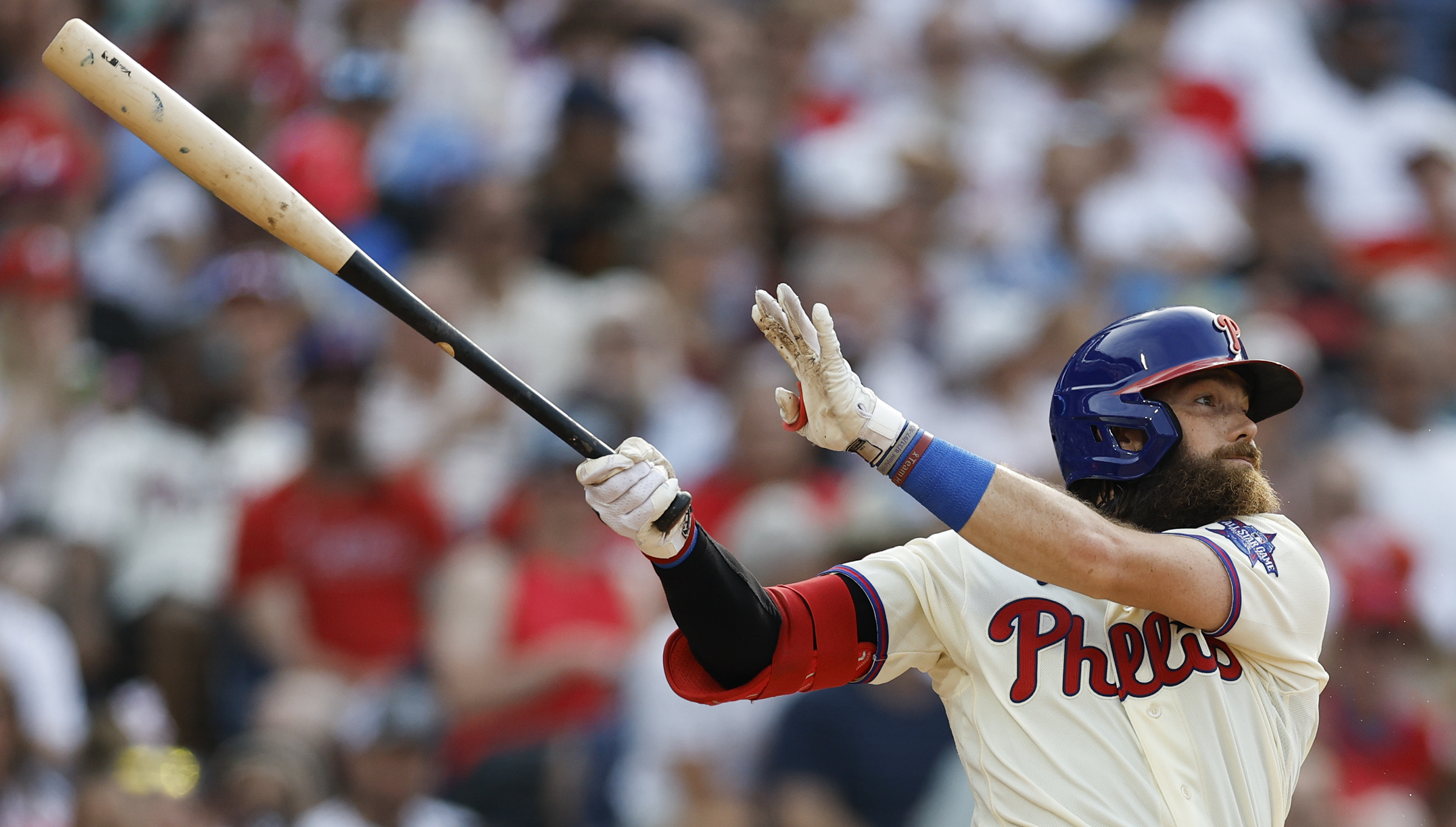
Major League Baseball released the first update for All-Star voting on Monday, and several Phillies are vying for starting spots.
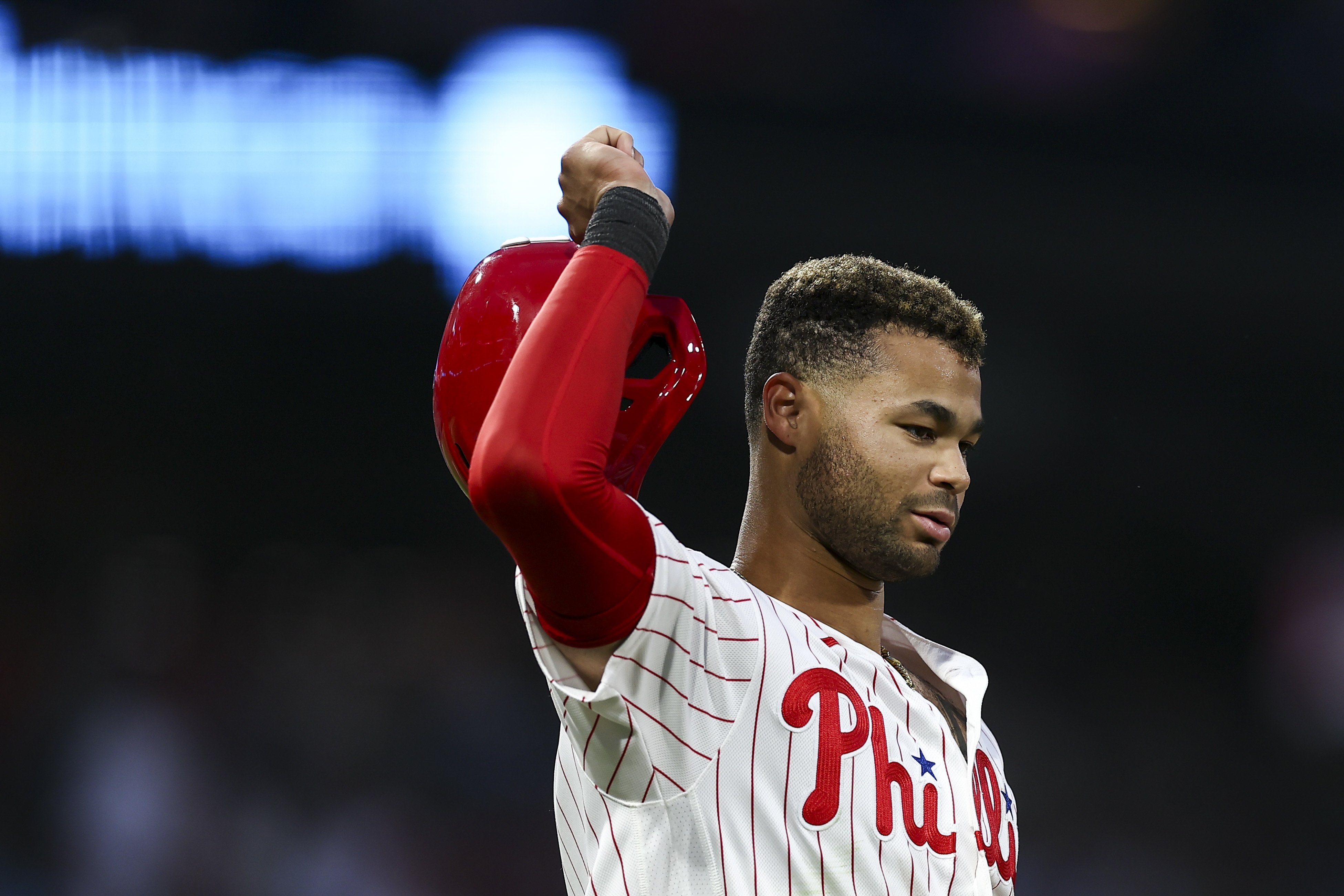
With 668,191 votes, Brandon Marsh is third among National League outfielders behind the Dodgers’ Andy Pages (800,496) and Ronald Acuña Jr. (693,472) of the Braves.
Marsh entered Monday’s game against the Marlins with a .322 batting average, which ranks fourth in baseball and third in the NL.
“Great for him and great for us, and it’s good to see that nationally he’s starting to get recognized,” interim manager Don Mattingly said of Marsh. “After that April last year, he’s probably been one of the best hitters in baseball.”
Kyle Schwarber (820,009) ranks second for designated hitters behind the Dodgers’ Shohei Ohtani (1,165,133), who is the top vote-getter in baseball.
Bryson Stott is second among second basemen and Alec Bohm is second among third basemen, while Bryce Harper and J.T. Realmuto are third at first base and catcher, respectively.
Phase 1 of voting concludes on June 25 at noon, after which the top two vote-getters at each position and top six outfielders will advance to the second phase. The All-Star Game is July 14 at Citizens Bank Park.
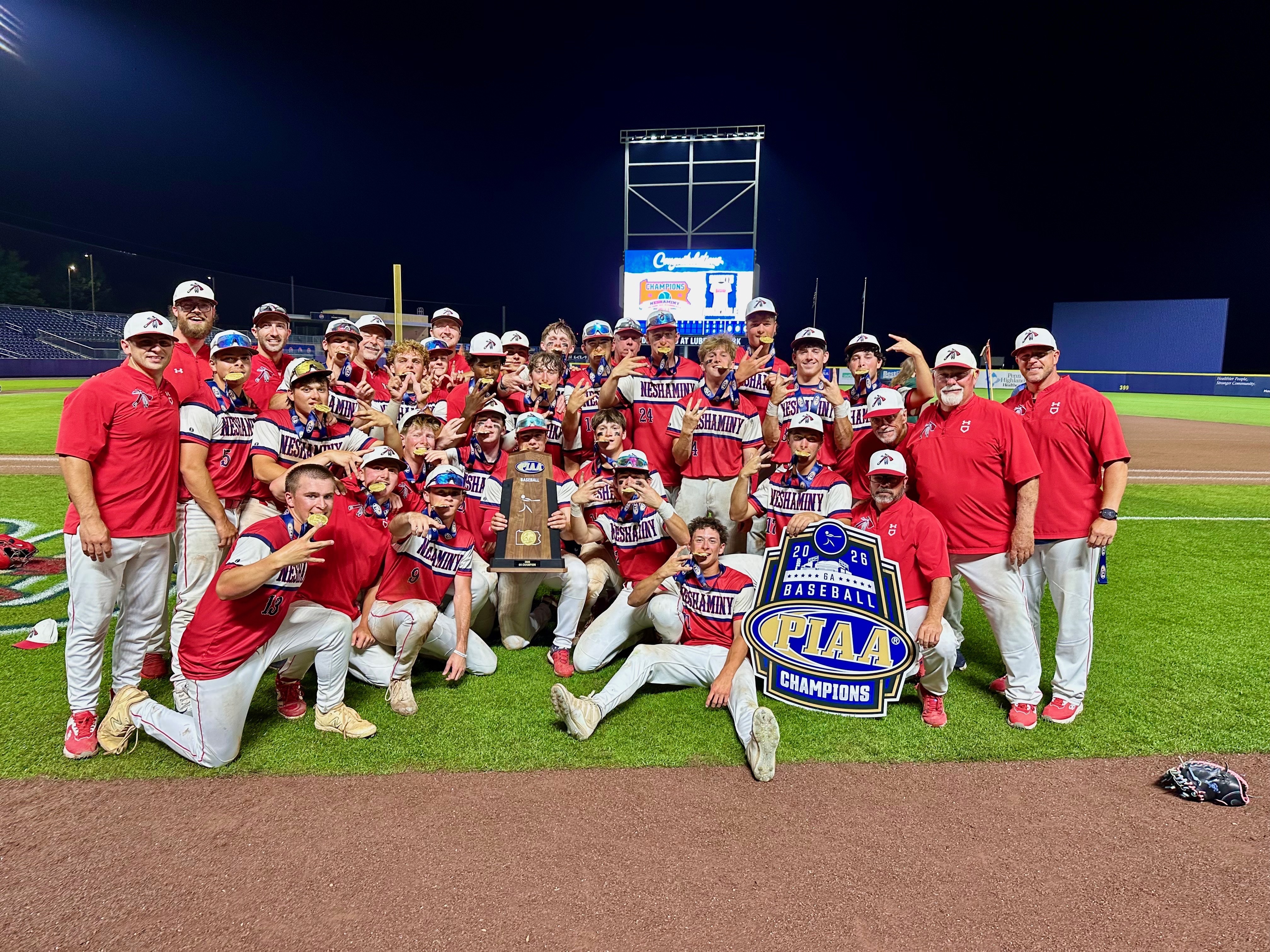
Neshaminy baseball has been waiting for a state championship since its inception, so having to wait another three-and-a-half hours wasn’t going to stop the team from accomplishing what it set out to do.
Following a rain delay at Penn State’s Medlar Field at Lubrano Park, Neshaminy won the first state title in program history with a 7-3 win over Butler Senior High School in the PIAA Class 6A championship last Thursday.
Neshaminy was one of three area schools competing in the state final from June 11 to June 12. Dock Mennonite Academy in Lansdale beat Eden Christian Academy of Allegheny County for the 1A crown, while Holy Ghost Prep fell short to Indiana Area Senior High in the 4A title game.
Head coach Dan Toner said from when the team arrived, and through the delay, he knew Neshaminy was coming home with the plaque.
“We felt it when we got there.” Toner said. “[The players] were studying film, talking about ways to be successful, [and] visualization. So, they were focused from the second they arrived, all the way through.”
These techniques were part of the team’s pregame conversations about creating its own narrative. Toner said Neshaminy’s football coach, Nick Felus, sent him a video about how creating your own narrative is what separates elite athletes and winners.
Toner preached this to his team early on, and the players bought into it. Even during a stalemate through the first half of the game, Neshaminy knew it was going to break through.
That breakthrough finally came in the back-half of the game.
Tied 1-1 through the bottom of the fifth, a single from senior Dan Marable brought senior Michael Welsh home from second to give Neshaminy a 2-1 lead, followed by three more runs in that frame. In the next inning, they added two insurance runs.
In Toner’s nine years as the head coach, Neshaminy has made the PIAA tournament six times, losing in the state semifinal in both 2019 and 2025.
“We were kind of knocking on the door a couple times,” Toner said, “But to finally get over that hill and make it and then actually win it, was the feeling everybody chases and the goal everybody chases when they start playing, start coaching.”
Toner said coaches Jess Toner, his father, and Jim Strickler, who have been coaching in the area for more than 40 years, have been waiting for this state title longer than anyone else.
Strickler was the head coach at Truman before joining Neshaminy’s coaching staff. Jess Toner was also with Truman, as well as Pennsbury and Council Rock, before joining his son at Neshaminy.
They’ve experienced league and district championships, but states were a new experience for them.
“Watching them finally get that moment was absolutely fantastic for myself and I’m sure everybody else involved,” Toner said.
— Pennsylvania State Baseball Coaches Association (@pabasecoaches) June 12, 2026
The moment also meant a lot to the players who got a taste of the PIAA playoffs before.
Third baseman Brandon Lall, shortstop and pitcher Chase Bonner, second baseman Mike Sassano, and first baseman and pitcher Noah Wallace have experienced state playoffs for most of their careers.
They have been starters since their sophomore year, when Neshaminy won the Suburban One League title in 2024 and made it to the state quarterfinal. Toner said they had a good idea of what the “intensity and competition” was like on this stage.
“The experience played a huge part,” Toner said. “Once they got to the game that they really couldn’t get past [the state semifinal], they knew what they had to do to be able to accomplish that and they were able to do it.”
With three sophomores and five juniors on the state championship team returning next year, there’s a solid group of players who have gained this experience as well. After learning from the upperclassmen, Toner said it’s their turn to pass it on to the younger players and get back to the state championship.
“That’s what they’re going to be chasing from now on,” Toner said. “So right away, whether the skill level is the same or not, whether they’re as successful, they know what it takes and they have that feeling of what they want to accomplish again. That’s a huge part of being successful.”
WASHINGTON — President Donald Trump emerged from the Oval Office first, then fighters from around the globe followed straight into the fight cage, in part for the president’s 80th birthday celebration and to bring a sport long on the fringe of mainstream acceptance into a main event on the White House South Lawn.
For a president who revels in winners, Trump had to enjoy crowning two champions on a big fight night staged closer to the Rose Garden than Madison Square Garden in the co-main event of UFC Freedom 250.
American lightweight Justin Gaethje capped his unification championship victory in the main event over Ilia Topuria with a backflip off the top of the cage. He crouched near Trump for a celebratory chat and the betting underdog draped the American flag over one shoulder — and the 155-pound title belt over another. Trump later stepped into the cage to congratulate Gaethje.
“Hey, I’m from America, 250 years ago we were way more than 6-1 underdogs,” Gaethje said. “I know that was absolutely legendary because I can not even believe it.”
Topuria and Gaethje made their walkouts from the Oval Office as fireworks exploded overhead during Michael Buffer’s introductions. Gaethje — who appeared to skim the copy of the Declaration of Independence on his way out — mustered some scattered “USA!” chants against the Spanish-Georgian Topuria, though not even the main event could stop the trend of mostly quiet fights.
It took the gory sight of a bloodied Topuria — his back to Trump in a white “USA” hat as he peered through the wire-mesh cage — nearly having the fight waved off to get a “let them fight!” chant going. The fight continued, and the 37-year-old Gaethje won eventually via corner stoppage in the fourth round.
“Hard work, baby,” Gaethje said. “I am made for these moments. This sport is made for me.”
Earlier, Ciryl Gane hammered Alex Pereira with a series of elbows and fists to the head and won via TKO in 1:27 of the second round to claim the interim heavyweight belt for a second time and set up a rematch with heavyweight champ Tom Aspinall.
Like the bulk of the fighters who had their hands raised in victory, Gane thanked Trump.
The White House was a most improbable all-American setting for a fight promotion that long ago shed the “human cockfighting” tag and decades later became entwined with the emboldened right-wing “manosphere” that soaks up UFC fights and threw its support behind Trump in two elections.
Trump and UFC boss Dana White, the tempestuous tag-team that rallied the fight company to the nation’s capital, walked from the Oval Office to the Blue Room Balcony to chants of “USA! USA!” to kick off the fight card jacked up by a dose of high-octane patriotism on a blustery night for cage fighting.
UFC ramped up the patriotism for White House debut
The Marine Band jazzed up the festivities and played fighter entrance music in front of the White House and Zac Brown sang the national anthem — never performed before normal UFC fight cards because of the mix of nationalities fighting inside the Octagon. The Navy’s Blue Angels and Air Force Thunderbirds zipped overhead as part of a flyover to celebrate Trump’s birthday and the 250th anniversary of the Declaration of Independence’s signing.
The 4,000-plus fans — Meta CEO Mark Zuckerberg and Paramount Skydance CEO David Ellison among them — on the South Lawn who sat under the claw, the flying saucer-like, open-air structure that housed the cage, mostly sat on their hands until the fighters used theirs to deliver punishing blows and a true fighting spirit that got everyone on their feet.
Bo Nickal delivered the red, white and boom when the three-time NCAA Division I wrestling champion at Penn State earned the TKO win over middleweight Kyle Daukaus, a Northeast Philly native and Father Judge alum, and immediately bolted the Octagon for a cage-side chat with Trump. Nickal met Trump in 2019 during a ceremony at the White House for collegiate national champions.
The first blight of the night for Trump came when American heavyweight Derrick Lewis lost his fight after he got a personal invitation from the president. Trump proclaimed himself a fan of Lewis and his unconventional celebrations and asked White to add him to the card. Josh Hokit instead improved to 10-0 when he flattened Lewis by TKO.
Sean O’Malley celebrated his walk-off KO win with a salute, and Mauricio Ruffy and Diego Lopes won their fights earlier in the night.
“That was sexy,” O’Malley said to cheers. “I felt the energy in here. I truly felt the energy in here.”
UFC says it’s only running one card at the White House
More than $60 million and tens of thousands of hours of labor were poured into building the arena, according to a court filing from the National Park Service, which oversees the South Lawn, and the looming threat of rain that threw White into a tizzy each time a miserable forecast was raised never materialized over the early portions of the card.
Fight night came only hours after the United States and Iran reached an agreement to end the war and open the Strait of Hormuz, offering relief to the global economy more than three months after the war began.
The rare UFC outdoors event marked the pinnacle of the relationship between White and Trump that has yielded personal, political and financial dividends for both parties. White’s first card as UFC president came in 2001 at an event held at Trump Taj Mahal.
Trump has attended four UFC cards as sitting president, walking to the cage amid rock music and patriotic chants from fans. White introduced Trump at two Republican National Conventions.
Trump got a home game for this one, making the short walk from the Oval Office to the Octagon, much like the fighters who made the walk down West Wing halls covered with presidential portraits and were flanked by first responders and medal of honor recipients, among other individuals who served.
Strickland causes trouble at the fan zone at the Ellipse
Thousands more outside the White House lawn watched the fights on big screens from the nearby Ellipse, though not everyone was able to get tickets.
Even one of UFC’s champions.
UFC middleweight champion Sean Strickland was escorted out of the Ellipse event by a group of police officers.
U.S. Park Police said in a statement that Strickland’s presence drew enough attention from attendees that it resulted in disorder. He wasn’t cited or arrested, they said. Instead, he was taken to his hotel and told not to come back to the venue.
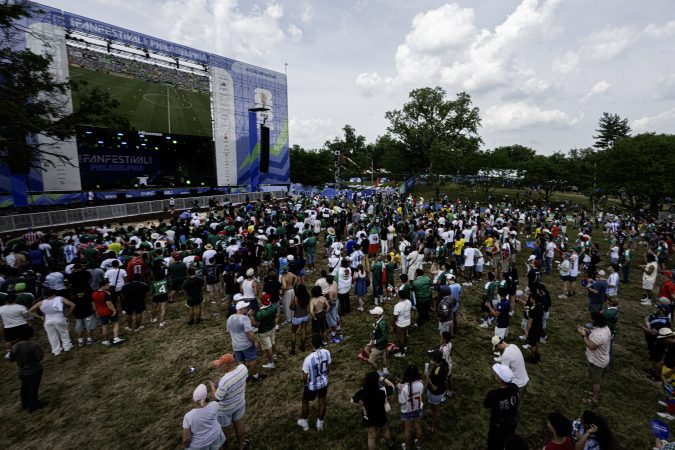
Crowds of Ecuadorian supporters lined the FIFA Fan Festival at Lemon Hill park Sunday during the Group E clash between Ecuador and Ivory Coast at Lincoln Financial Field on Sunday.
The Ivorian team is calling the Philadelphia region home for the World Cup, but Ecuador had an advantage in the 23 acres of festival grounds.
The festival, free and open to the public, streamed three of the day’s matches to a global crowd. Alongside Ecuador, supporters of Germany, Japan, the Netherlands, Ivory Coast, and Curaçao watched their teams compete from the festival grounds.
The festival ended its night with the first match of Philadelphia’s World Cup schedule, a 1-0 win for Ivory Coast.
Festival organizers declined to give a specific count for the number of people who entered the 15,000-person capacity festival grounds in its first weekend of operations, but organizers did say tens of thousands of fans have passed through the festival gates since they opened Thursday.
“People have come, and they’ve been blown away by what we’ve accomplished out here,” said Michael DelBene, the festival’s executive producer. “The energy is high, the crowds are big, the food is delicious, and the matches are great. We think we’re off to a great start.”
Fan Festival’s opening weekend
Hosting a crowd of fans for the first World Cup match in Philadelphia’s history was a checkpoint for festival organizers, but there’s little time for them to reflect on the three-year planning process that led to this point.
Philadelphia’s Fan Festival is the only festival open for all 39 days of the tournament. It will be back open on Monday for three matches, beginning with Spain-Cape Verde at noon.
Putting on the 39-day festival has its challenges, but DelBene said he would not mind if the festival were open for 100 days.
“The transformation of staring at a blank piece of paper to standing in the middle of the site and looking around at what we managed to build and create for our city and its guests is the most rewarding thing,” DelBene said. “That’s why I do what I do.”
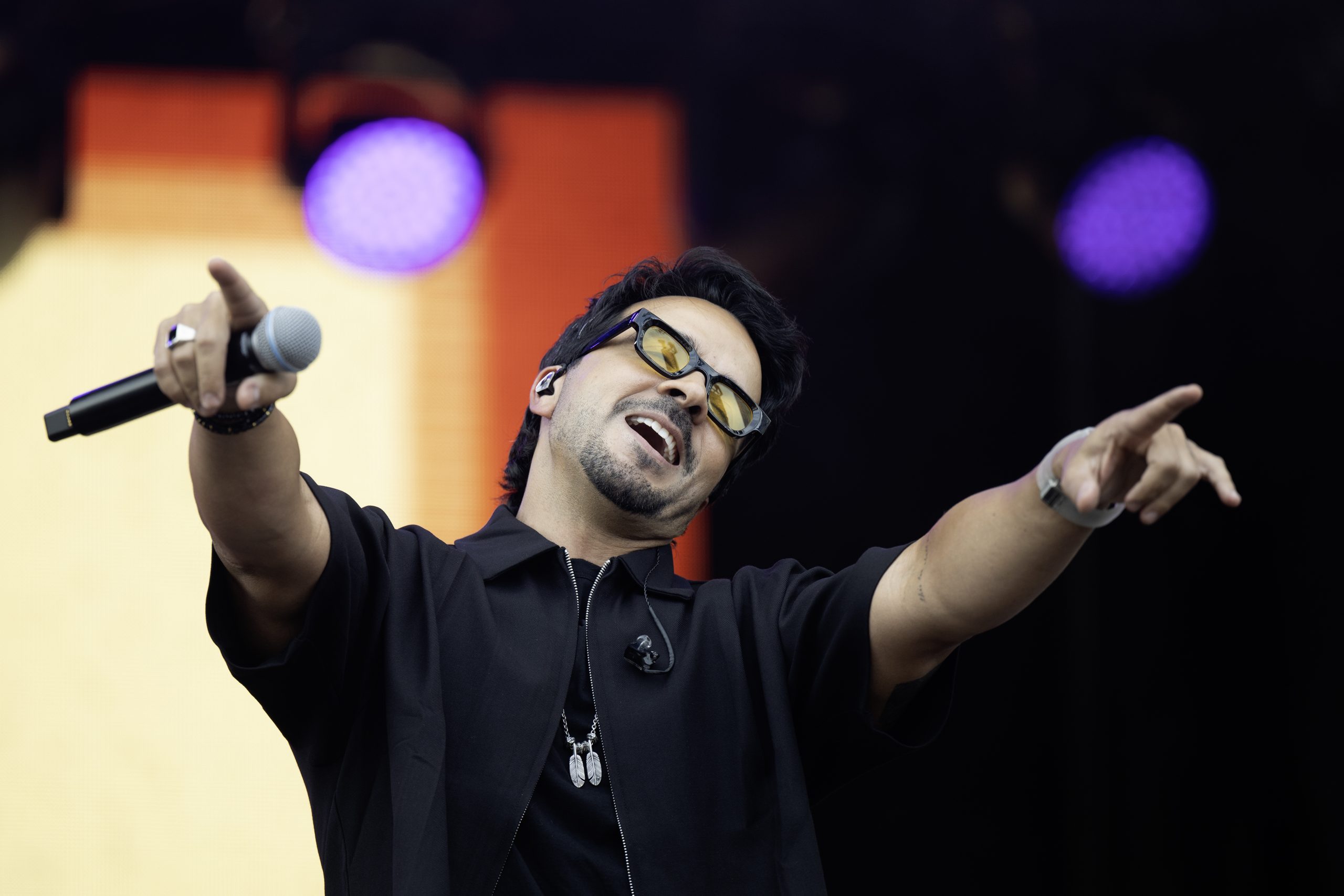
The festival has had to contend with high temperatures through its opening weekend. Philly experienced record highs on Thursday before seeing thunderstorms that led festival organizers to move up the scheduled Luis Fonsi concert to beat the storms.
Singer Luis Fonsi is one of multiple musical acts that perform at Lemon Hill.Jose F. Moreno / Staff Photographer
Hot and humid conditions continued throughout the weekend, and more storms loomed over the region as Ecuador and Ivory Coast kicked off.
DelBene said public safety is a top priority, and pointed to Thursday’s scheduling change as evidence.
“If we can’t do it safely, we just won’t do it,” DelBene said. “We have comprehensive public safety and security plans when it comes to logistics, when it comes to heat, when it comes to rain and lightning, and we’ve had to exercise those plans already … Those things have gone smoothly, so we feel like we’re prepared.”
Fortunately for the Fan Festival and its organizers, the rain held off and the festival was able to host crowds for all three games it showed on Sunday and a few live music performances, including a concert from Ecuadorian singer-songwriter Johann Vera.
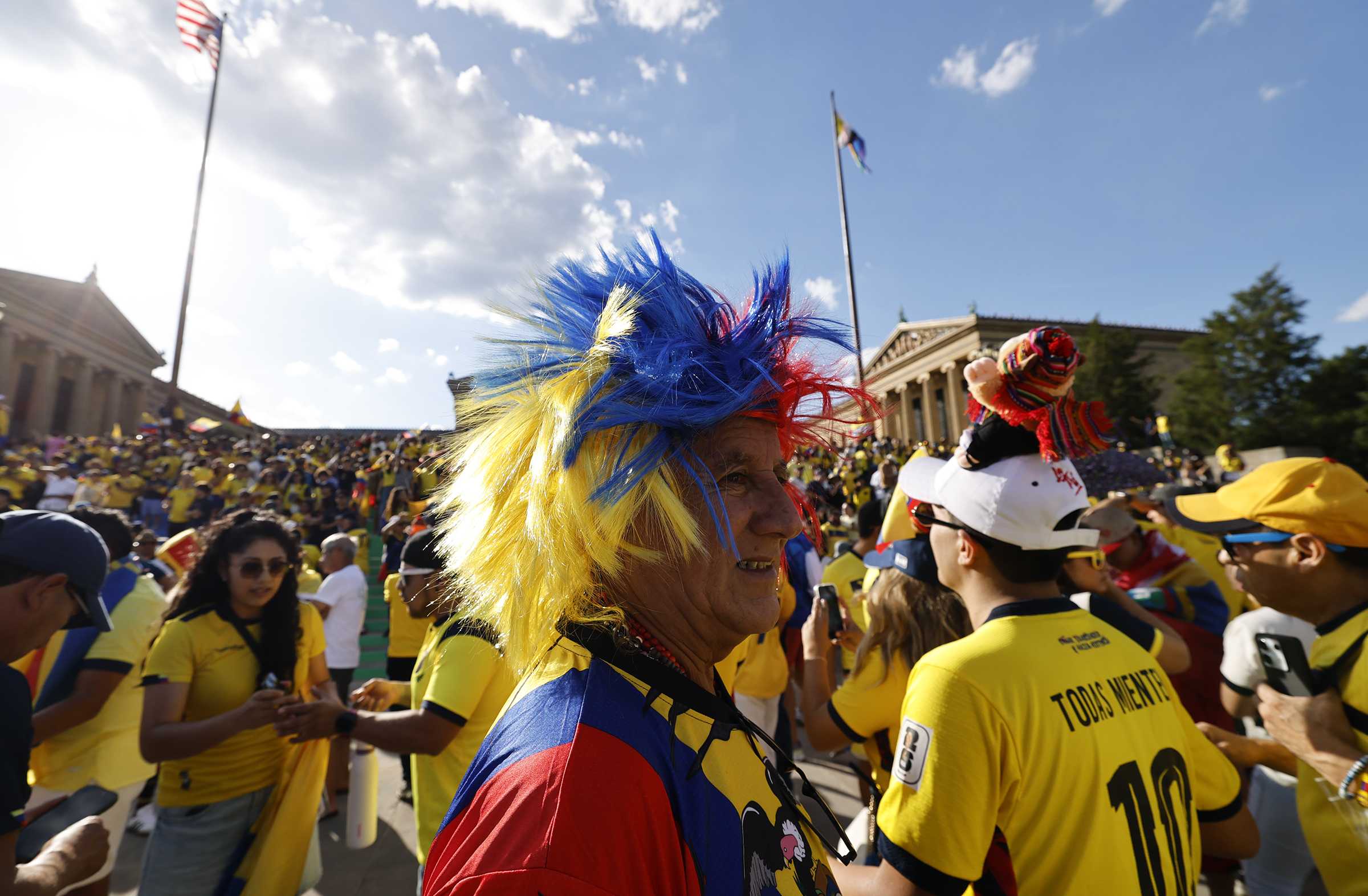
Ecuadorian fans announced their arrival to Philadelphia by wrapping the Rocky statue outside the Art Museum in a bright yellow Ecuadorian jersey on Saturday.
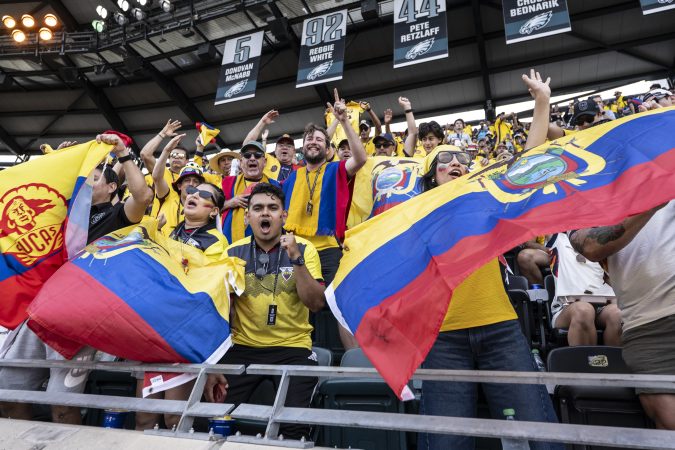
Fans of La Tri continued to have a strong presence on Sunday, filling the Fan Festival with yellow, blue, and red.
“They are a passionate fan base, and just wonderful, incredible people,” DelBene said. “We are just so excited to have them here in Philadelphia.”
Matt McKee was not one of the many native Ecuadorians on the festival grounds, but the resident of East Falls was cheering on Ecuador, sporting a jersey he bought on a trip there in 2012.
McKee said he was impressed with Ecuador’s presence throughout Philadelphia this weekend, especially considering its relatively small population, as compared with the other South American nations in the tournament.
“A ton of yellow, even earlier today in Center City,” McKee said. “You saw yellow shirts everywhere. It’s an impressive showing for not that large of a South American country.”
The Fan Festival had a celebrity fan on Sunday, too. Sixers center Adem Bona strolled through the festival Sunday afternoon during Germany’s defeat of Curaçao.
Ivorian fans were harder to spot, despite the team being scheduled to play two games at Lincoln Financial Field and setting up its training base in Chester.
Still, some fans have adopted the Ivorian team, which is the only team scheduled to play twice in Philadelphia during the group stage. They were rewarded Sunday as Amad Diallo netted a 90th-minute winner for Les Éléphants.
Naseef Sami, a lifelong fan of Germany, had traveled from Williamsport, Pa., to attend his first World Cup match. He stopped at the Fan Festival to watch the Germans dominate Curaçao, 7-1, in Sunday’s first game.
Sami said he valued soccer’s ability to serve as a bridge between cultures. He conversed with two Ecuadorian fans as they waited on the draw between Japan and the Netherlands to kick off.
“Especially in the current political environment, to see that happening right now,” Sami said. “People have all sorts of colors, all sorts of jerseys, it doesn’t really matter … [It is] cool to talk to people from all different places.”
LAS VEGAS — Carolina spent the first part of the Stanley Cup Final surviving, finding ways to overcome deficits and play a high-scoring game that didn’t fit the Hurricanes’ typical style.
But when it came down to doing what it takes to win the Cup, the Hurricanes’ defense put its stamp on this series, shutting down the Vegas Golden Knights and not letting up.
The Hurricanes held Vegas to five total goals in Games 4 and 5 and used a suffocating defense in a 3-0 shutout Sunday night in Game 6 to win their first championship in 20 years.
“That’s a lot of years,” said Carolina center Jordan Staal, who received the Conn Smythe Trophy as playoff MVP. “It’s amazing. This is something I’ve been going after ever since we got the first one. You want to win it again and again and again. ”
Brandon Bussi, whose entrance late in Game 3 helped turn around the series, had his first career playoff shutout in stopping 22 shots. Jackson Blake had a goal and assist, and Taylor Hall scored just 3:47 into the game to set the tone. Nikolaj Ehlers added an empty-netter.
“Your mind wanders the last couple of days and wonder what it may be like out here (on ice after winning) and it’s better than I could have expected,” Hall said.
The Golden Knights struggled badly to muster any kind of offense in Game 6 and went 18:37 between shots on goal in the second and third periods. Playing in their third Cup final, this is the first time they have been shut out.
This final game was what many observers expected the series to be like between the defensive-minded teams, but each side watched leads of two-plus goals disappear in the first three games.
“It’s just as awesome,” Brind’Amour said. “But as a player, it was a little different. I worked and dreamt of winning the Cup my whole life, so that was like a piano came off my back. This time around, I wanted it for the group.”
This was the first game of the series that Vegas goalie Carter Hart didn’t allow four goals in a game. He finished with 20 saves.
The Hurricanes began to assume control of the series after falling behind by the score of 4-0 in Game 3. They came back force overtime, and though the Canes lost, they outplayed the Golden Knights from there on out.
Reflecting the do-or-die situation for the Golden Knights, they made several lineup changes, with Brett Howden replacing the injured William Karlsson at second-line center. Mitch Marner could have moved there, but remained at right wing.
Original Golden Knight Reilly Smith made his Cup final debut at third-line right wing, and Braeden Bowman made his playoff debut at fourth-line right wing. Kaedan Korczak replaced Dylan Coghlan on the third defensive pairing.
“This is tough to be on this side of it,” Golden Knights defenseman Brayden McNabb said. “But on the other side, these chances don’t come around very often. So it stings.”
This title is a testament to Carolina’s resilience as a franchise that kept coming close to winning the Eastern Conference, but couldn’t quite get through until now.
Brind’Amour made sure the Hurricanes kept getting back up after losing in the conference final twice in the past three years and three times in their current eight-year playoff run. The talent was clearly there, but there was always a stumbling block.
Not anymore.
After dispatching Montreal in five games to make the final, the Hurricanes then faced perennial power Vegas and took care of business there, too. Now, Brind’Amour will get his name on the Cup for the second time.
So will 37-year-old Staal, who also won the title in 2009 with Pittsburgh. He planted himself in front of Hart and dared the Golden Knights to knock him out of the way. Staal scored in each of the first five Cup final games, the first time that has happened.
The Hurricanes got off to a fast start with a goal just 25 seconds into Game 1, only to lose 5-4 on a late goal from Tomas Hertl. And the Golden Knights were on the verge of taking complete control as minutes ticked down in Game 2 while holding a 2-0 lead and appearing as if they would take a two-game advantage back home.
Then, it all changed. Carolina showed a fight that not only brought the Hurricanes back into the series by rallying to win 4-3 in overtime on Seth Jarvis’ one-timer, but would serve as their signature throughout the series.
That was especially true the following game when the Golden Knights took a 4-0 lead into the third period and the Canes seemed to have no answers. Brind’Amour even appeared to wave the white flag by removing goalie Frederik Andersen and replacing him with Bussi.
But the Hurricanes weren’t simply trying to get to Game 4. They sent a message, going on a remarkable rally to force overtime. Though Carolina lost, it was inflection point, with Bussi backstopping a team that was only growing stronger. Carolina then went on to win the next two games and moved within a victory of the championship.
The Hurricanes got it done against the Golden Knights team that was on a heater after former Flyers coach John Tortorella replaced Bruce Cassidy with eight games left in the regular season. Vegas then went from third in the Pacific Division to first, knocked off Utah and Anaheim in six games apiece in the playoffs and shockingly swept Presidents’ Trophy-winning Colorado to win the West.
“I am very proud to be a part of this organization, very proud to lead this team, very proud to play with every single guy that steps into our locker room,” Vegas captain Mark Stone said. “This feeling sucks. I never want to have it again.”
You could use the same four words to describe the Eagles offense in 2025 as you would Elmer Fudd.
Uses shotgun, rarely well.
So says the conventional wisdom, at least.
During the Eagles’ recently completed mandatory minicamp, there was a lot of talk about new offensive coordinator Sean Mannion’s affinity for operating from under center and the adjustment it might require for those closest to the ball (namely, the quarterback). The topic of conversation was certainly valid. Throughout the Jalen Hurts/Nick Sirianni Era, shotgun has been the Eagles’ baseline look, more so than all but a small handful of NFL teams. I’m just not sure that the change under Mannion will be as radical as people hope/expect.
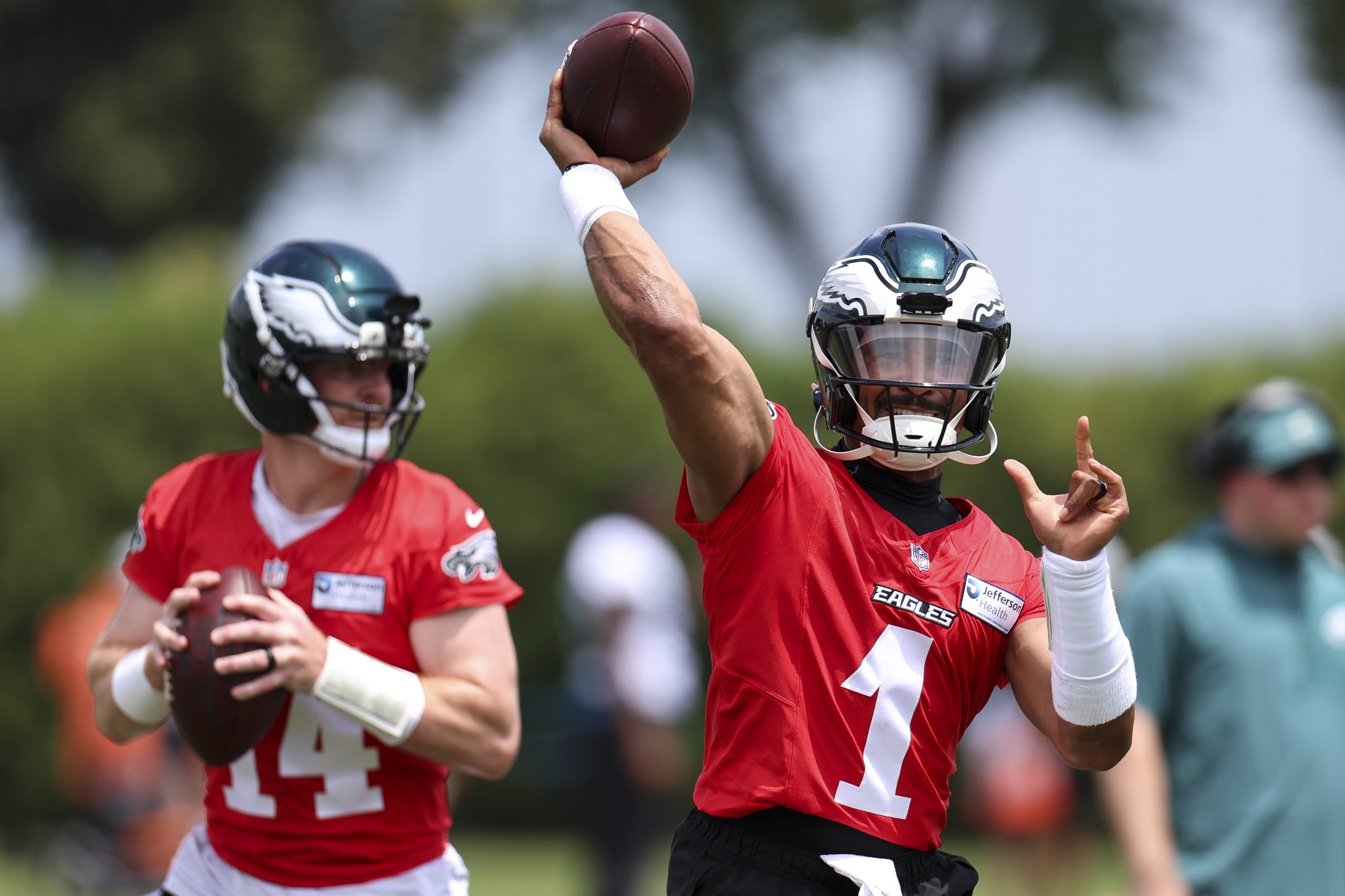
What if I told you that Saquon Barkley has only had one fewer carry from under center than the Packers’ Josh Jacobs over the last two seasons, when Mannion was in Green Bay? Or that, in 2025, Hurts attempted more passes from under center than Joe Burrow and Patrick Mahomes, both of whom can make a case as the best in the game?
All of this talk about scheme comes from a good place. But I think the term itself tends to get misapplied when we talk about what makes good teams good and bad teams bad. The perception of “scheme” is that it is some static, word-of-God recipe book that each coach draws up like a wizard and then carries with him from stop to stop. In reality, I think it’s closer to a core set of principles and best practices that guide the concrete aspects of coaching: teaching and game-planning. The actual output of all of those things — the plays — will look a lot different from roster to roster and opponent to opponent.
Jalen Hurts attempted more passes from under center than Joe Burrow and Patrick Mahomes in 2025.Monica Herndon / Staff Photographer
“There’s things I believe in and there’s things that schematically I have a background in, but ultimately it’s going to be a blend and it’s constantly going to evolve,” Mannion said earlier this offseason. “It’s about maximizing things for the players. How do we make the Eagles the best team we can be, how we make the Eagles offense the best it can be and how do we put all of our players in a position to really, really succeed and maximize their strengths.”
Don’t get me wrong. There will be change. As I wrote last week, it will be real change, more so than at any point in Sirianni’s time as head coach.
Reality is, the NFL has become a shotgun league over the last decade. That’s true regardless of coach or quarterback. Last season, Matthew Stafford and Sam Darnold were the only two quarterbacks to line up under center on more than half their snaps. Both quarterbacks threw the ball out of shotgun roughly twice as much as they did under center.
The evidence hardly supports the idea that the Eagles’ heavy reliance on the shotgun in recent years is an ipso facto indictment of Hurts and/or the offensive scheme. At least, not if you accept as fact that Burrow and Mahomes are two of the best quarterbacks in the NFL. Mahomes attempted just 32 passes from under center in 2025, 12 fewer than Hurts’ 44.
The big difference between teams like the Seahawks/Rams and the Eagles was their preference for running from under center. The Rams ran out of shotgun just 64 times in 2025, for instance.
At the same time, the Eagles ran the ball from under center more than you might think. Two years ago, nearly half Barkley’s 2,005 rushing yards came from under center. His 6.1 yards-per-carry average was best in the NFL, and better than his 5.6 yards per carry out of shotgun.
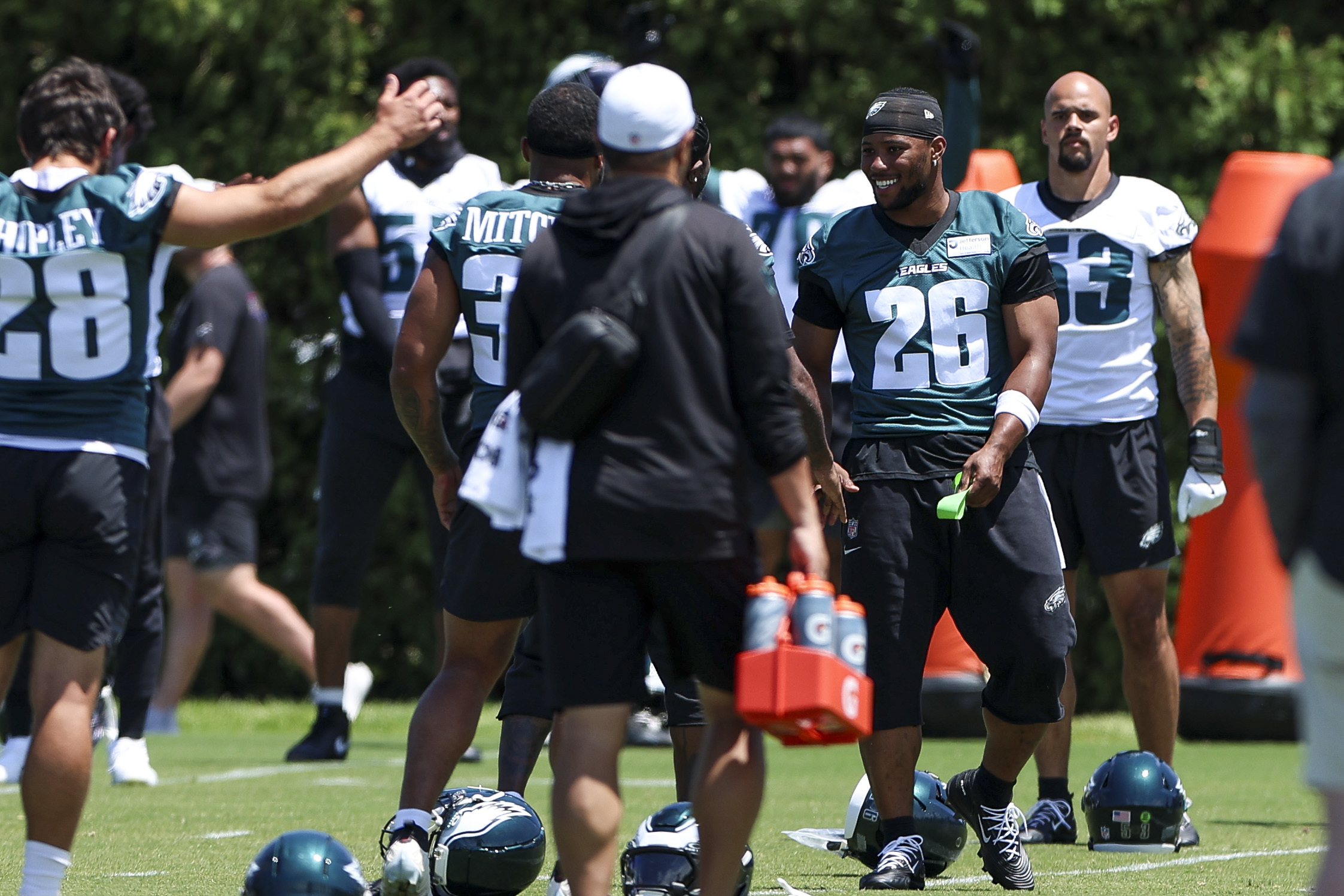
Saquon Barkley is looking forward to running Sean Mannion’s system.Monica Herndon / Staff Photographer
Again, to be clear, we should expect to see a significant difference. One takeaway from the Eagles’ pre-camp workouts is that Mannion’s run game philosophy is closer to the Shanahan/McVay/Kubiak tree than Sirianni’s.
“It’s no secret what this system is about,” Barkley said earlier this offseason. “I look forward to doing that. It’ll probably be the most I’ve ever done it under center and outside zone and all that good stuff. It’s a challenge I’m looking forward to work on and getting better at and trying to be the best at it.”
As for the passing game, one suspects we’ll still see plenty of shotgun. Jordan Love attempted roughly 30% of his passes from under center in 2025 when Mannion was with the Packers. That’s more than three times as often as Hurts did.
We could be talking about an additional 5-7 passes per game from under center. That’s not nothing. But we’re probably not going to see something that looks completely foreign. As tight end Dallas Goedert said last week, “You can only do so much [different] on offense.”
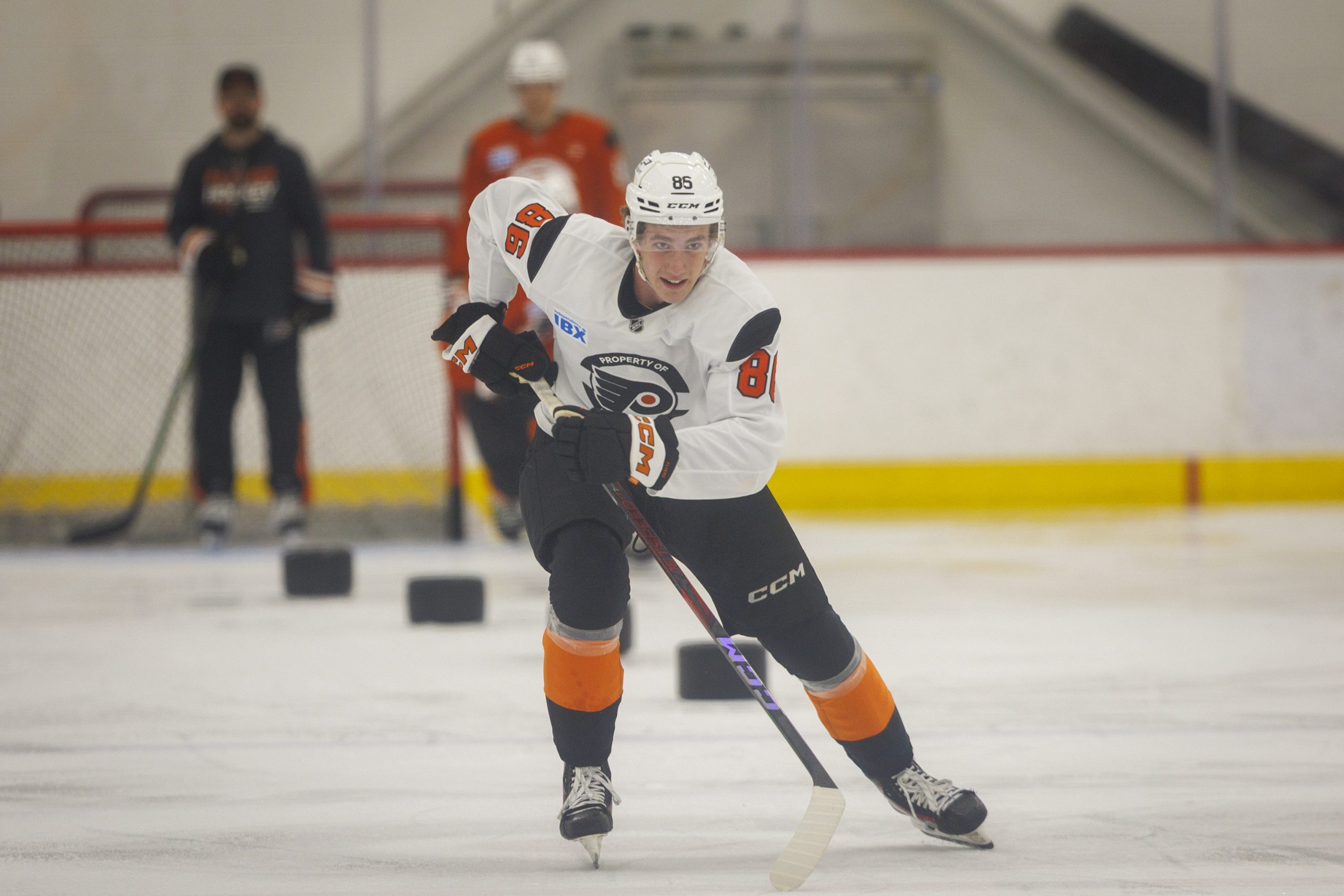
BUFFALO, N.Y. — The 2026 NHL draft is quickly approaching, and things look a little different for the Flyers this year.
After making it to the second round of the Stanley Cup playoffs for the first time since 2020, the Orange and Black are picking at No. 21 in the first round and only have five picks across all seven rounds.
In Part 1 of The Inquirer’s two-part interview with Brent Flahr, who runs the team’s draft, the assistant general manager chats about the team’s approach heading into the draft, which will be held on June 26-27 back in Western New York.
This interview has been edited and condensed for clarity and was conducted on June 3.
Q: Several young players entered the lineup for the Flyers this season and impacted the game. Does how they performed change how you look at things for the draft?
A: A little bit. But where we’re picking, we know we can’t be that selective, especially early, we’re going to go with the best player. But we know where maybe our holes and our depth charts are going forward, or where we need to add more depth. At the same time, sometimes the draft doesn’t fall that way; you can’t go way off. The way we do our draft is we have layers and, obviously, we’ll target the best player, and if it’s all equal, then we’ll go by position. It’s kind of the way it always works.
Q: What do you consider missing in the depth chart then?
A: Well, we do have a number of centers coming now, which was kind of our [issue in] depth before, and we have some younger D on the team. But besides Spencer Gill and Ty Murchison and Hunter McDonald, Oliver Bonk, the next layer of younger defenseman we would probably use. We didn’t draft a goalie — we drafted two a couple of years ago, which takes the heat off — but probably go with adding a goalie, maybe. And then up front, we can always add depth.
Q: Does it change your approach when there’s only five draft picks?
A: Certainly doesn’t change it early. We’ll look at options, whether you’re trying to trade up or trade back, maybe adding a pick or changing things to get another higher pick, but just the way the draft was, we were aware. I think it’s a good draft at the top end; it’s not quite as deep as maybe some of the drafts previously. So when we were talking about giving away picks, we kind of targeted this year as the year that we’re going to be short a pick or two. But we still feel like, as the year has gone on, we have some guys targeted to the later rounds, which our guys [will] be happy with and excited about.
Q: When you see the success of players like Ty Murchison, Hunter McDonald, Alex Bump, who were late-round picks, does it give you confidence you can find someone there?
A: For sure, and that’s the challenge of the draft. Not everybody plays — we’re well aware of that — but you’re trying to draft players with multiple assets to give them a chance down the road. Some guys you think are slam-dunk players maybe don’t come through, for whatever reason. … And there’s some guys who are overachievers that really push themselves, like a Murchison, and Alex Bump from where we drafted him to now; a lot of that’s because of how hard he’s worked to get himself in that position. It’s a competitive business, and it’s not only getting there but staying there, too. But obviously the key for organizational success is hitting on some of those late-rounders, too.
Q: Do you look for that specific internal drive or confidence then?
A: You can watch them play, but, yeah, when you meet with them — and we’re not talking about 24-year-old kids, either — we interview kids here. You’ve got to understand some kids are in high school, so they’re less polished than the kid that’s already been in college for a year, or a kid that’s [played for] Hockey Canada and been in front of microphones and rooms full of people before. So, you got to take that into account, but you can tell players who have a presence, people that are leaders, just by sitting there, the presence they have. And some kids can grow into it, but some people just have that.
Selected by the Flyers in the second round at the 2025 draft, 6-foot-5 center Matthew Gard was one of six players over 6 feet the team selected.Alejandro A. Alvarez / Staff Photographer
Q: In past drafts, the Flyers seem to prioritize size, 200-foot play, and high compete. With who you have in the system, does it change your outlook?
A: A little bit. The one draft [in 2025] where we had a really big draft randomly, some of it was, obviously, a focus [that] we wanted to try to get bigger, but at the same time we had all those guys that were that big, and that was just kind of circumstance, too. So, there’s good small players in the game, and there’s certain things you have to have when you are a smaller player. For instance, our forward group, we have some top-end smaller players, and we also need some size to build around that. We’ve added a lot of size to the organization with the younger players, and you want to be as big and strong and fast as you can [but] there are some good players, and we’ll be cognizant of that.
Q: There are several smaller players in this draft, specifically defensemen under 6-feet like Tommy Bleyl and Xavier Villeneuve, who are puck-movers and high-offense players. With the power-play struggles, does it impact your thought process?
A: Yeah, obviously the power play is a problem. Realistically, the guys in this year’s draft, especially the guys you mentioned, are going to need quite a while to get there. So, hopefully, we have our power play addressed before these players arrive. But, no, for being a small player, a small defenseman, it’s getting harder and harder to play. I think you need an offensive dimension, or you’ve got to be special. … You watch the playoffs, size does matter, and it’s harder to get to the net. But it’s something we take into consideration, and this D class, especially at the top end, is pretty good — really good — especially top 10.
Q: So, you’re not necessarily looking for size still?
A: No, but I think in certain positions I think it’s certainly important. But if you’re undersized, you have to be dynamic.
Q: Picking at 21 is very different than where you’ve been in the last couple of years. Does it change things and make it harder to build your draft board with such uncertainty?
A: Yeah, still a little early, because we usually have a pretty good idea of the projection of where guys are going. There are always a few surprises, outliers, but yeah, we’ll build our list the same way. This year it’s obviously a little bit different, the number of players going ahead, but you’ve got to make sure your list is tight, and you can’t just assume players are gone because we will go off our list in the first round. And then maybe later in the draft you’ll go [for] guys you maybe have a stronger feel for or position or whatever, if it’s close. But, yeah, it’ll be interesting. Got a lot of work to do yet. We’ve had our meetings already, and obviously the combine kind of fills up some gray areas, testing and seeing the body type, personalities of these kids a little bit more. Yeah, we’ll tighten it up, certainly through the first couple rounds and beyond, and we’ll be ready to go at the end of the month.
Q: Is there usually a big shift after the NHL scouting combine in your list?
A: Well, we have some red-flag players. Or, maybe, players who, whether it’s body type, or our strength guys think they can get there, or we also have some maybe character flaws or something. So you just address it here, and sometimes you take players off, sometimes you move them up or down, and if there’s no issues, or whatever, you can move them up. But yeah, we still have some things to tighten up for sure.
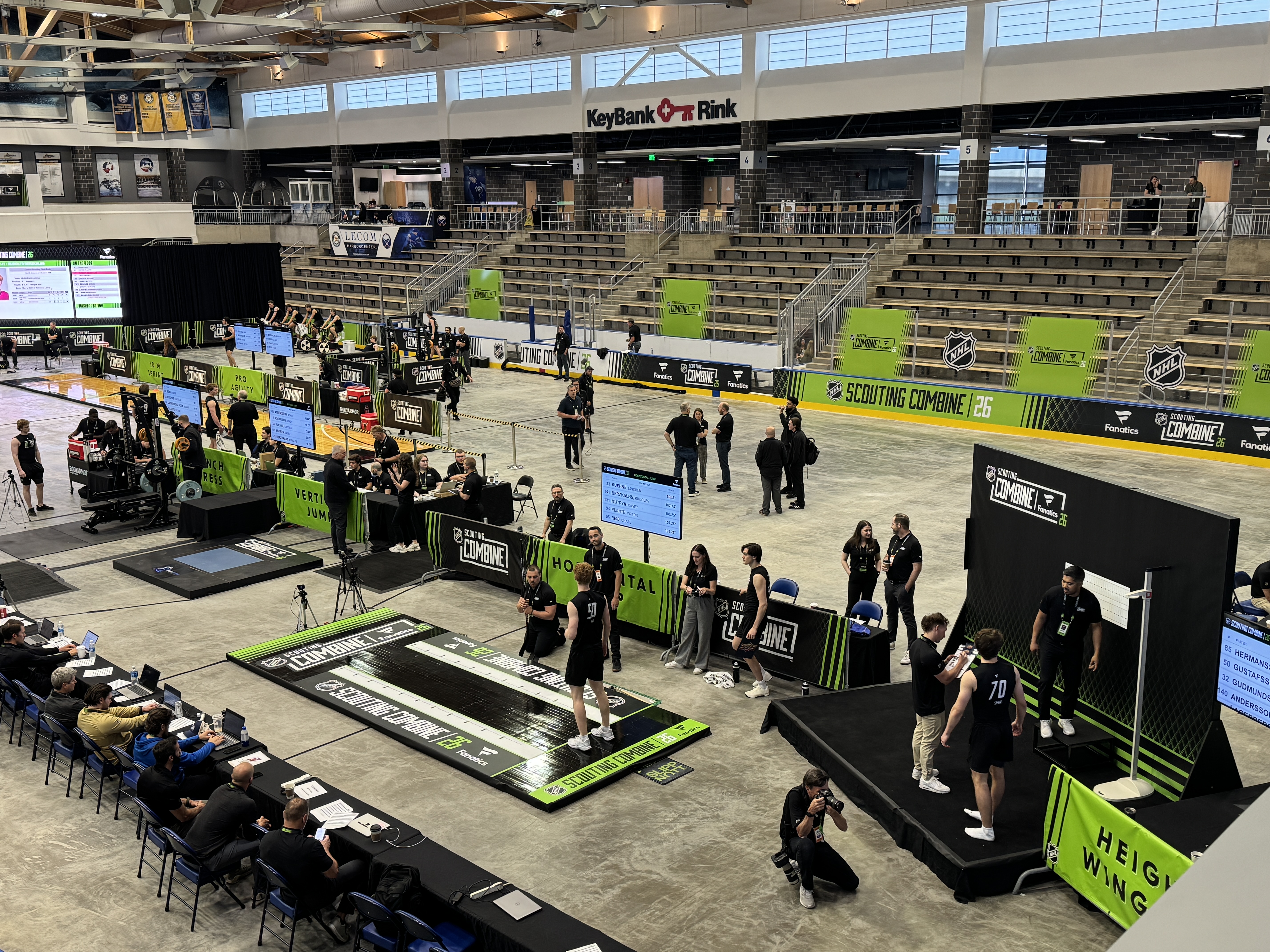
The NHL held its annual scouting combine in Buffalo, N.Y., the week of June 1, where teams were able to interview 90 draft prospects. The Flyers interviewed approximately 50.Staff/
Q: How would you compare the value of having a 21st pick versus last year at sixth overall?
A: Well, it’s a big difference, but at the same time, happy where our team got to this year. We’ll do the best we can to find players who can have impacts down the road, but obviously you’re dealing with a different level of player. … So, it’s a little more challenging, a little more projection probably because some of these kids, where we’re looking at, aren’t as maybe as close to playing or a little more work or a couple more years away. But, same time, we’ll have the same concepts, and what we like in players.
Q: Is there any thought of moving up and seeing what you can get higher up in the draft?
A: For sure. We’ll be talking about those scenarios here going forward, whether it’s trading up at a certain level if players are gone, maybe trade back and add a pick, or move up the pick and give them a later pick. Whatever you got to do. But I know Danny [Brière’s] talking to teams here already about certain scenarios, and then once you get to the draft and see what players are available, you react. But usually before then, we talk to the teams, and you have an idea what it’s going to take to move up and whether it’s worthwhile, and vice versa, to move back and have things in place. It’s a little more challenging now [because] you’re not right on the draft floor anymore; you’ve got to do it by phone and just keep in contact with teams. So you create the relationships now and put a bug in the ear that maybe we’ll move, and calls take place after that.
Q: The Flyers have a history of taking players who played well at U18 Men’s World Championship or the Hlinka Gretzky Cup, like Jett Luchanko. How much do you actually factor that in?
A: I think what happens is the media says that’s part of the case. … There’s kids that we see all year — our scouts see them all the time — and there’s certain players that the media have no idea about as far as the quality, and sometimes they don’t get to see them live, and then when they see them at the U18s, they see these guys climbing the list. So it doesn’t matter to the teams; lists are the same. But, no, in certain cases, you see these players against their peers, so I think any time a player has a lot of success at the end of the year in a big tournament and wins a championship, or whatever, puts up a big number and performs well, it’s the last thing on our minds. And vice versa, a kid has a tough tournament, or doesn’t produce, or whatever, doesn’t mean they’re not a good player. You’ve got to be a little careful with that kind of stuff. It’s a recency [bias] effect, but at the same time, it is real. We’re all there to watch, and you want to see guys perform on a big stage, too. That’s a big part of playing in the NHL.
Q: Russia was not allowed to play internationally this year. How does that impact looking at those players?
A: Well, me personally, and a number of our staff, we have to do everything by video. [Gold Star agent] Dan Millstein has a camp down in Florida [before the draft], which we’ll attend and get to know players personally, but for some of the other players, we have to rely on Kenny [Hoodikoff], our Russian scout, and [director of European pro scouting] Reid Simpson is able to travel, so he sees a number of these guys live. But other than that, it’s video and interactions with Kenny and the player interviews, and doing the background that way. But it is a challenge, and there’s some risk there, too.
Q: What kind of involvement does Rick Tocchet have in the draft? Does he give you any directions?
A: Not much. His coaches come by and talk to our scouts … just what type of players they like. But no, he doesn’t get involved.
Q: It’s hard to gauge when a player will be NHL ready, and he may not be the coach when that time comes. Do you still look for players that would fit his structure or systems?
A: Hockey sense is a big factor for players that we try to get. But there are types of players that his staff [and Tocchet] are confident they can develop. He’s had a lot of different players play for him that have had success over time. So, the biggest thing for our coaches, they want competitive people; they’re competitive, and they’re smart, and they can adapt and adjust to the league. So they’re pretty easy to deal with. Obviously, we’ve had a lot of guys jump in the lineup here this year, and they’ve been great.
We’ve be talking about it for years, waiting and planning for almost as long, and on Sunday night, the World Cup finally arrived in Philadelphia as Ecuador took on Ivory Coast at Lincoln Financial Field Philadelphia Stadium. Even Jay-Z was on hand.
From South Philly to Lemon Hill and all across the city, fans celebrated as a years-long effort culminated, and a stretch of six games over the course of the next three weeks commenced. The Ivory Coast’s 1-0 win over Ecuador was the first of five group stage games, with a Round of 16 finale scheduled for July 4.
To many in the Philadelphia area — outside of the passionate Ecuadorian and Ivorian fans that made their presence known throughout the city over the weekend — the outcome of last night’s game likely mattered very little. What did matter, however, is that the city’s World Cup party has officially started. And it’s time to enjoy that thing it felt like would never arrive. Because it will be gone before you know it.
Philadelphia Phillies center fielder Justin Crawford reacts after he’s called out following an ABS challenge during the game against the Cincinnati Reds at Citizens Bank Park on Tuesday, May 19, 2026 in Philadelphia.Monica Herndon / Staff Photographer
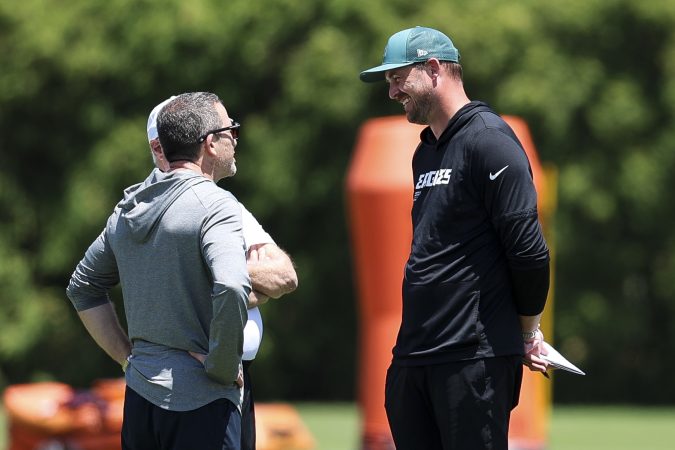
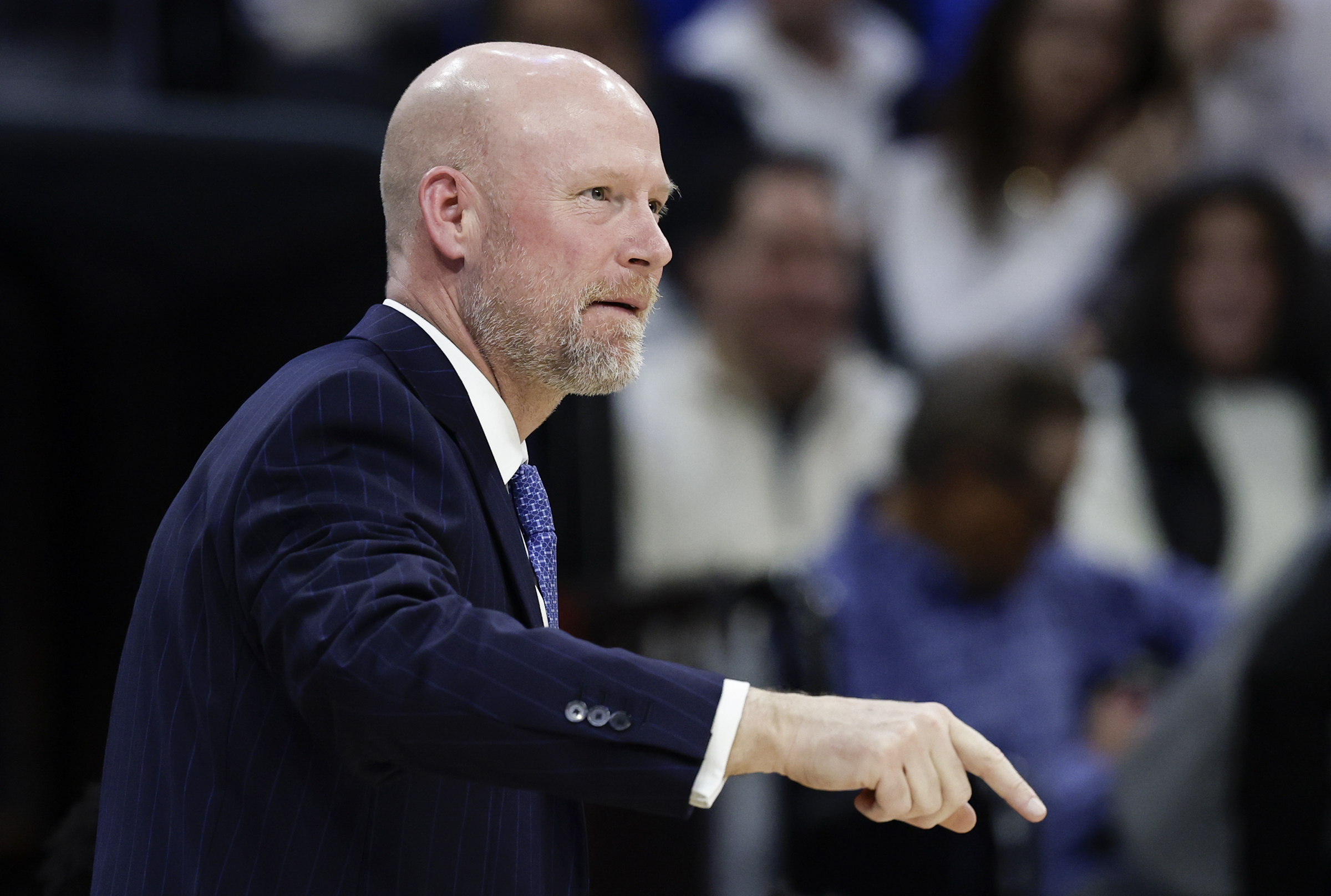
Phillies interim manager Don Mattingly didn’t mince words when talking about the situation in which rookie outfield Justin Crawford now finds himself.
“We’re pretty much platooning him,” Mattingly said.
That wasn’t the initial plan, but the left-handed hitting Crawford is 4-for-28 (.143) with three walks and no extra-base hits against lefties. And so, the plan changed. But does Crawford need to see left-handed pitching in order to improve against left-handed pitching? Mattingly is leaning on his on experience.
“I kind of rely on my own history because when I first came up, I platooned, and it wasn’t a terrible thing for me,” he said. “I probably would’ve struggled with the lefties. [Crawford]’s a guy that I think is going to hit lefties. But the amount of lefties we see, we don’t see a ton. So, it’s days where he can step back and keep working on his swing.”
Meanwhile, the Phillies dropped two of three to the Brewers in Milwaukee this weekend. The latest series loss isn’t cause for panic given the opposition, but it is worth noting that while the Phillies are 38-33 — and 29-14 under Mattingly — they’re only 3-9 against the Brewers, Dodgers, and Braves, the cream of the National League crop.
Now, the Phillies return home for six games against the Marlins and Mets, the start of 12 straight against the two teams at the bottom of their division.
It probably hurt most Philly sports fans to watch the Knicks, who steamrolled the Sixers in the second round, hoist the Larry O’Brien Trophy on Saturday night. They were a deserved champion, for sure, taking care of Victor Wembanyama and the San Antonio Spurs in five games, but there’s something about seeing a rival — especially one that so thoroughly beat your hometown team — win a title.
But if you went to Villanova or are a Wildcats fan, you’re likely ranging somewhere between an existential crisis and pure joy. And columnist Mike Sielski likely wouldn’t blame you for applying your Villanova loyalties to the ‘Nova Knicks. He believes the seeds of their greatness — especially that of Finals MVP Jalen Brunson — was forged on the Main Line.
“It was the perfect preparation for these playoffs, for these NBA Finals, for a remarkable run capped when Brunson took control of Game 5, when the sub-six-foot guard with the impeccable footwork, with the endless array of head fakes and mid-range shots, with the glorious old man’s game was once again the coolest customer on the court,” Sielski writes.
That Villanova was able to lure a player projected to make up to $3 million as an NBA rookie says a lot, and not just about their team next season. In fact, it may say more about the school’s future — and its ability to financially compete with some of the sports’ biggest programs.
It also caps off a roster retool that saw the Wildcats replace all but one of the eight players to appear in their NCAA Tournament game in March. And the reviews so far are promising.
Flyers Asst. GM Brent Flahr talks to reporters on Tuesday, June 17, 2025 at the Flyers Training Center in Voorhees, N.J.Jose F. Moreno / Staff Photographer
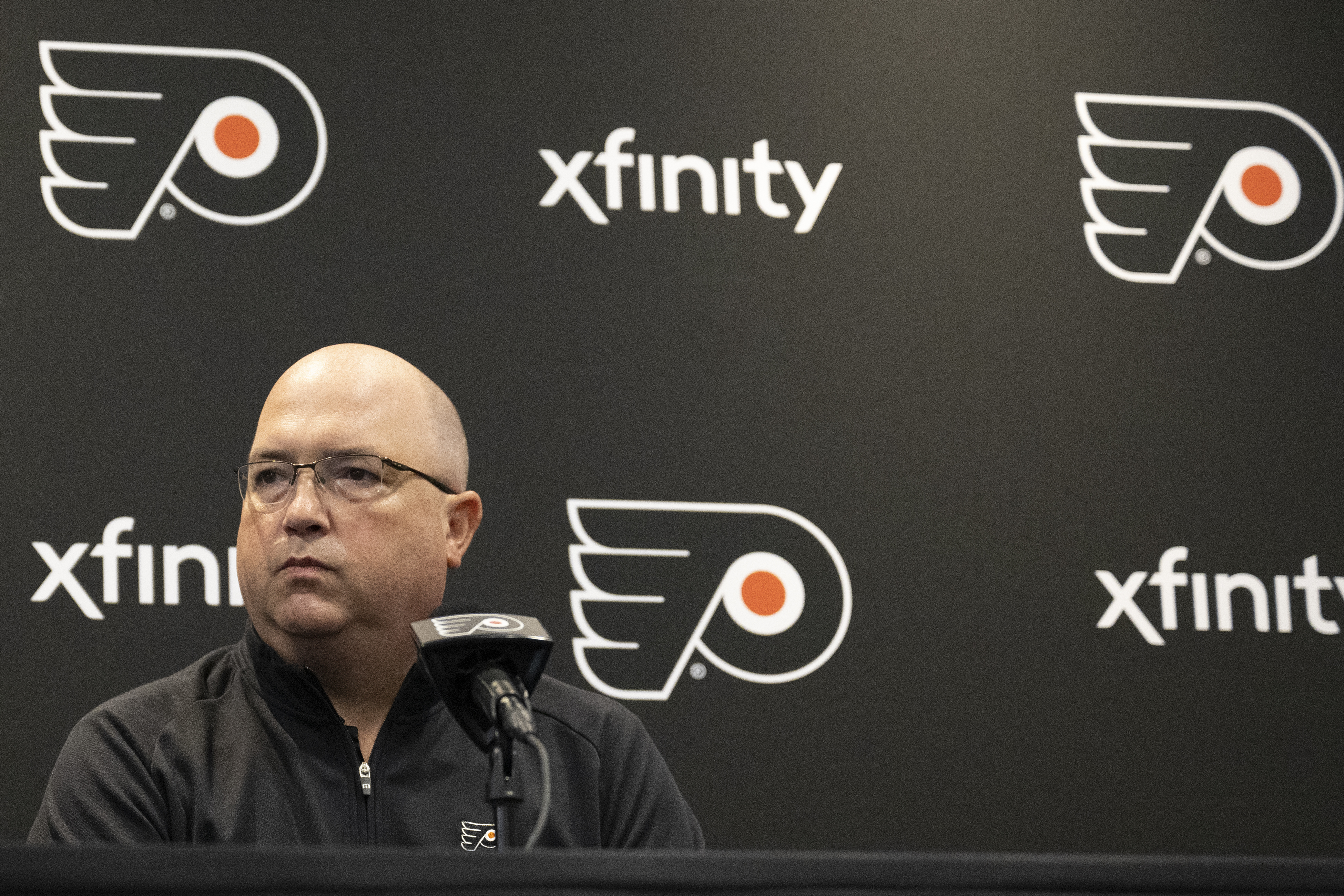
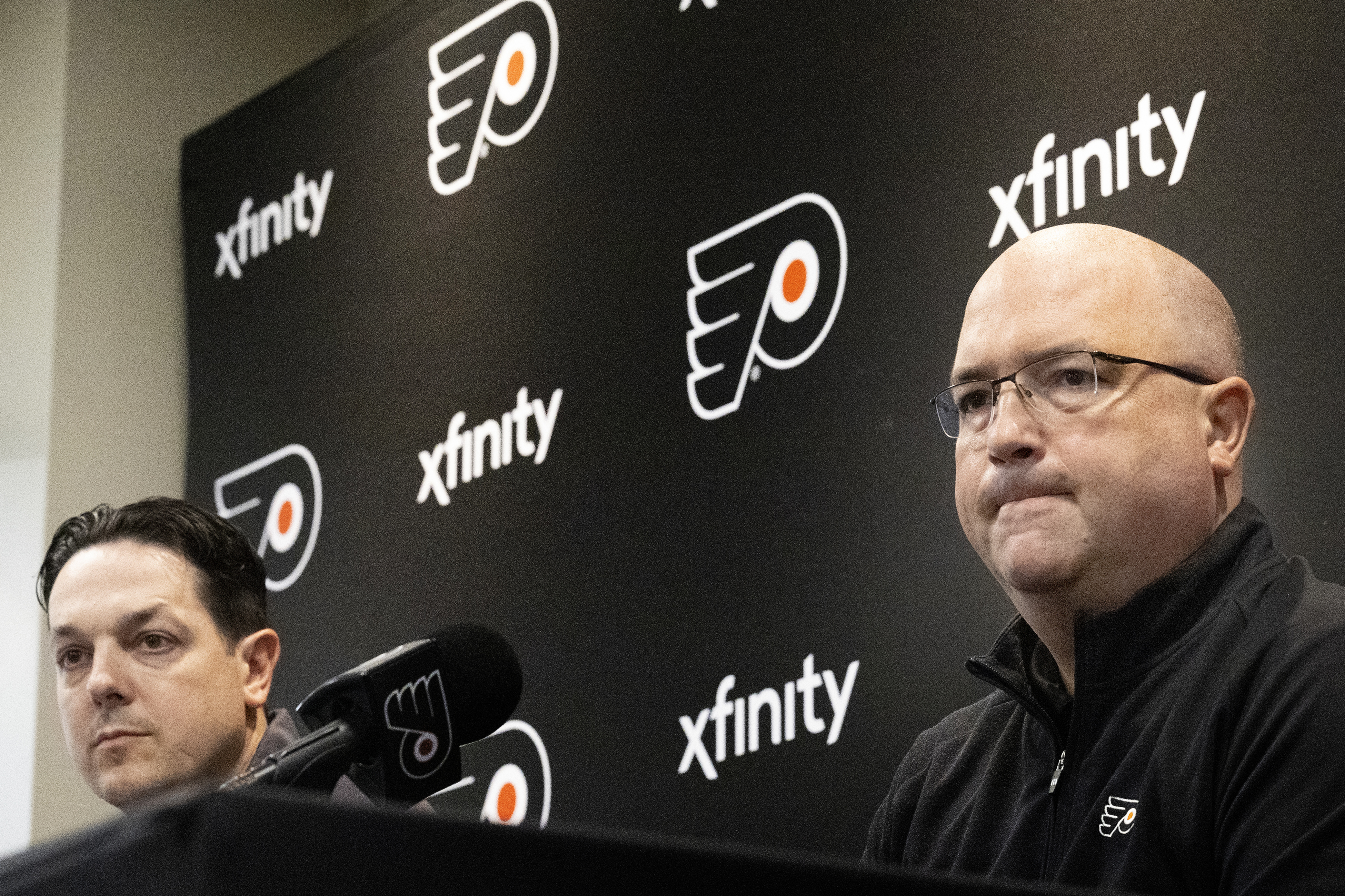
The NHL draft is rapidly approaching, and it’s going to be new territory for general manager Danny Briere, whose team made the playoff for the first time in his tenure and holds the 21st overall pick, not a lottery pick. But there are still plenty of needs — and plenty of options — for the Orange and Black.
It was a beautiful weekend, so hopefully you were outside enjoying the start of summer. If you were, here are a couple more stories you might’ve missed from around the sports world …
Up in arms: Some residents who live around the Lemon Hill neighborhood that’s hosting FIFA Fan Fest have already had enough.
Sticker shock: This weekend marked about a month until the MLB All-Star Game and Home Run Derby at Citizens Bank Park. If you’re looking to go, we hope you’ve been saving.
For his country: On Saturday, Union midfielder Danley Jean Jacques (Haiti) became the first active Union player to appear in a World Cup match.
🧠 Trivia time
Jalen Brunson, Josh Hart, and Mikal Bridges are not the first members of Jay Wright’s two Villanova national championships teams to win an NBA title. Who was the first?
A) Collin Gillespie
B) Eric Paschall
C) Donte DiVincenzo
D) Ryan Arcidiacono
We compiled today’s newsletter using reporting from Scott Lauber, Mike Sielski, Gina Mizell, Devin Jackson, Ariel Simpson, Jeff Neiburg, Jackie Spiegel, Henry Savage, Lauren Jones, Jonathan Tannenwald, and the Associated Press.
By submitting your written, visual, and/or audio contributions, you agree to The Inquirer’s Terms of Use, including the grant of rights in Section 10.
It took 96 years, but the most sacred version of the beautiful game came to Philadelphia.
Both the city and the match met the moment.
Extra public transportation, hydration stations, and modest traffic framed an evening of graceful and powerful football, the kind every other nation reveres except ours.
Amid the spectacle of team jerseys, flags, and team benches covered by vibrant roofs identifying the sides in national colors, the grass was the star. The stadium’s normal turf is a ragged Bermuda thatched with 5% plastic to withstand the cleated NFL rhinoceroses who usually play there. For the World Cup, it was transformed into a flawless pitch, golf-course quality ryegrass and bluegrass, the sort of surface you on which could imagine Jason Kelce lying on his back and making snow angels.
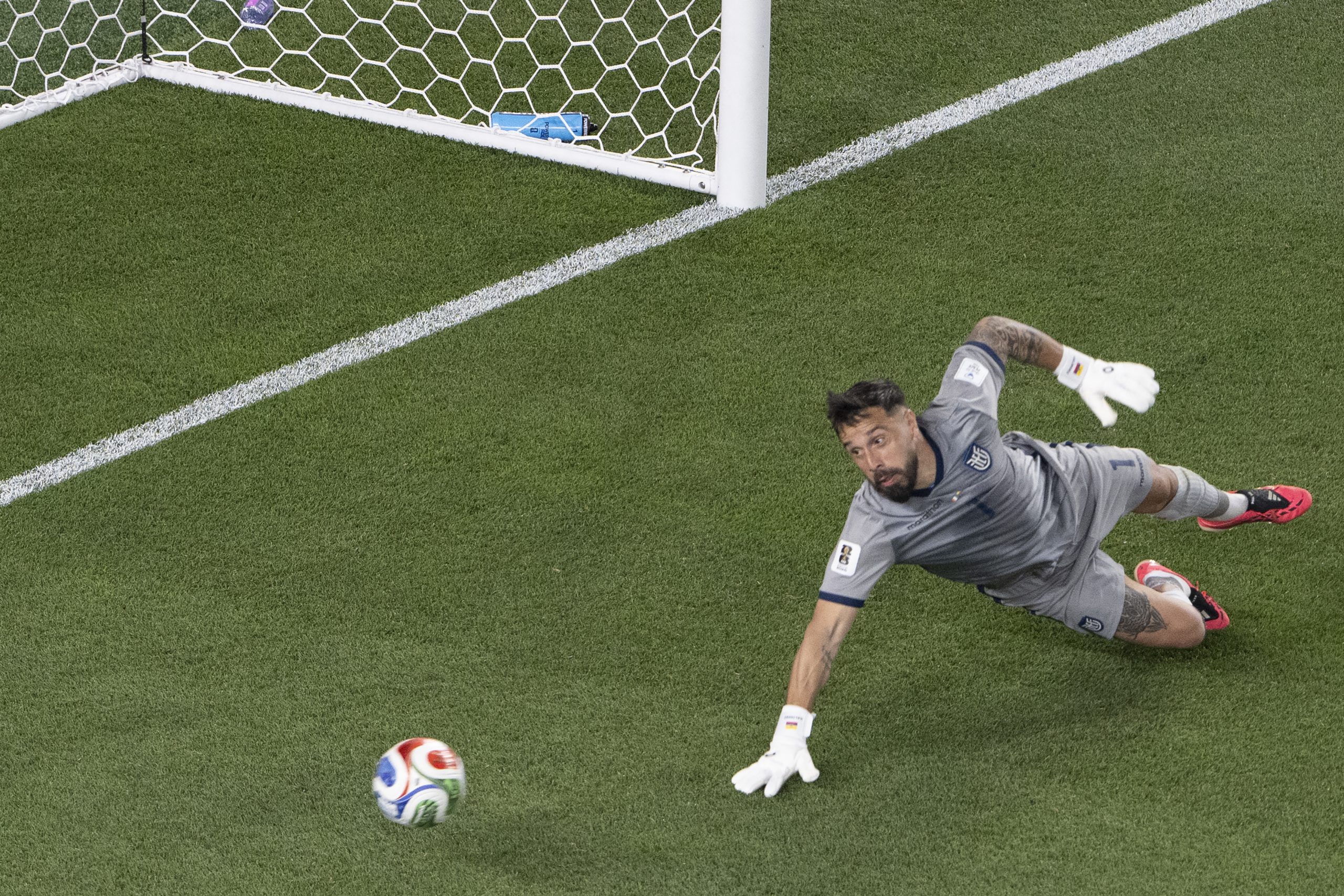
Ecuador goalkeeper Hernán Galíndez watches as the ball crosses the goal line on a shot by Ivory Coast’s Amad Diallo late in the second half of Sunday’s game.Jose F. Moreno / Staff Photographer
Viewed through an international lens, even a soccer game this insignificant still was the most significant sporting event in the history of the city. A town that has seen two World Series titles and a Stanley Cup won within its borders has never hosted anything that riveted folks on six of the continents.
What comes close? Maybe Rocky Marciano, when he knocked out Jersey Joe Walcott in 1952, and won the heavyweight championship. Maybe not.
More moments will come, since the group-stage match between Ivory Coast and Ecuador is just the first of five such games. On July 4, Philadelphia will host an elimination game in the Round of 16, and then that will become the most significant sporting event in the history of the city.
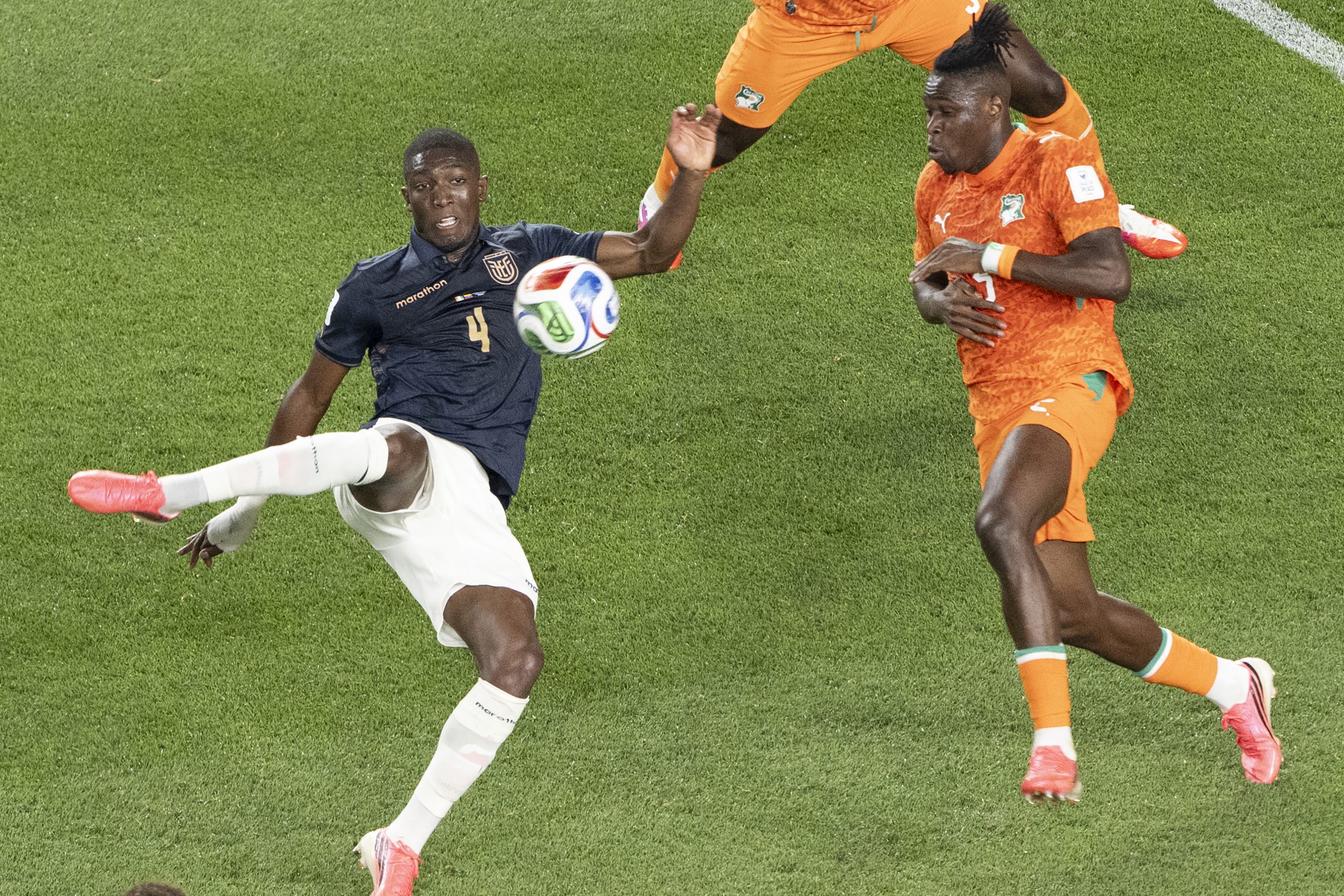
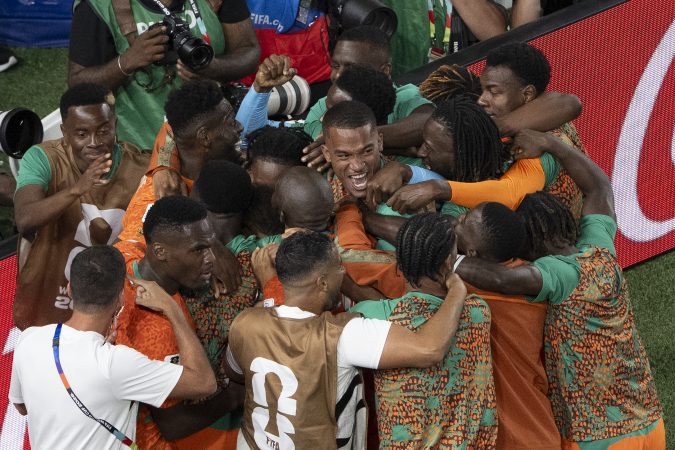
The difference was deserving of the night’s significance. At the top of the box, Amad Diallo, who plays for Manchester United, redirected a simple cross from Wilfried Singo with his left foot in the 90th and final minute of regular play. Given eight minutes of stoppage time, Ecuador could not break through.
Three crucial points to Les Elephants, following the 1-0 final.
After three days of pre-tournament watch parties and fan fests (the Cup began in Mexico City on Thursday), Philly’s hot, sticky, 90-degree moment finally arrived.
The city, four weeks removed from the PGA Championship at Aronimink and four weeks from hosting the Major League Baseball All-Star Game at Citizens Bank Park, finally seemed to grasp the magnitude of the world’s biggest single-sport sporting event landing at its doorstep.
The catalyst: How about the 4-1 thunderbolt win the United States laid on Paraguay in Los Angeles on Friday night.
Ecuador hit the crossbar twice in a first half and nearly scored on a blast from Flamengo’s Gonzalo Plata just before the water break in the second half. Ivory Coast hit the crossbar six minutes into the second half. All of those shots drew gasps, but gasps of different timbre; either delight denied or disaster averted, because the gasps were almost completely Ecuadorian.
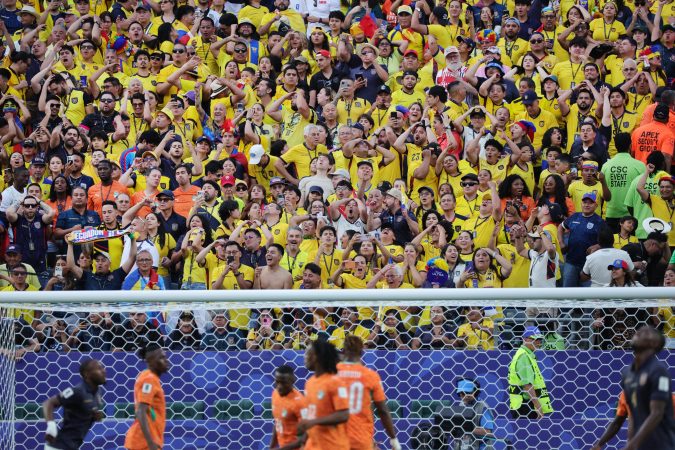
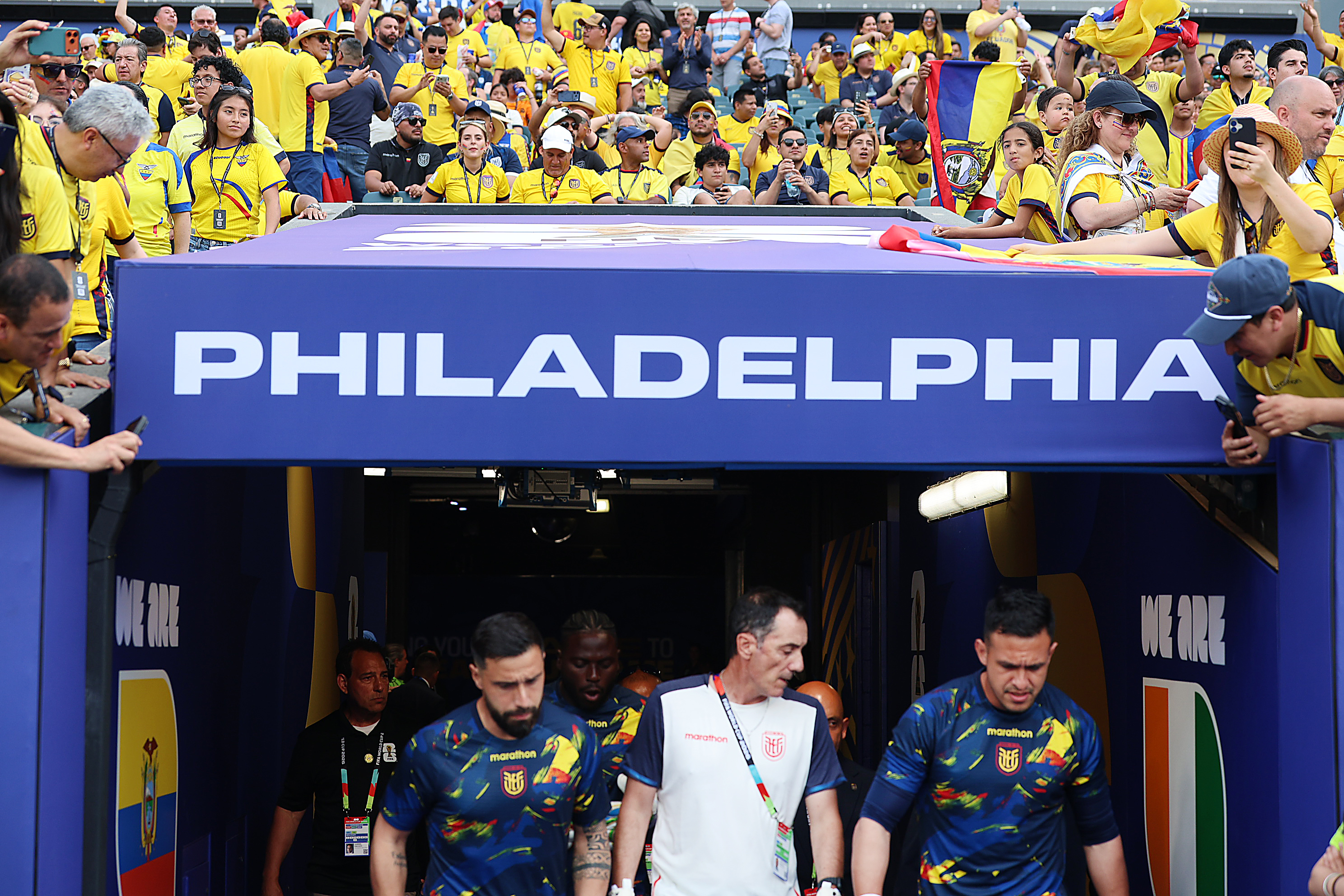
Ecuador is nearly 3,000 miles from Philadelphia, but, for two hours, the stadium served as an Ecuadorian colony, its fans wearing yellow, accounting for 90% of the 68,247 fans in the seats. If they’d issued 60,000 pairs of goggles, they’d have had 60,000 Minions.
you can totally trust the little green guy leading you into a cave full of monsters 😉 Trey Parker is the voice of Goomi in Minions & Monsters. Only in theaters July 1. pic.twitter.com/je5rfPaxAQ
Little wonder. About half of the approximately 850,000 people in the United States who claim a connection with Ecuador live in either New York or New Jersey. Most estimates of Ivorians in the U.S. don’t even reach 10,000.
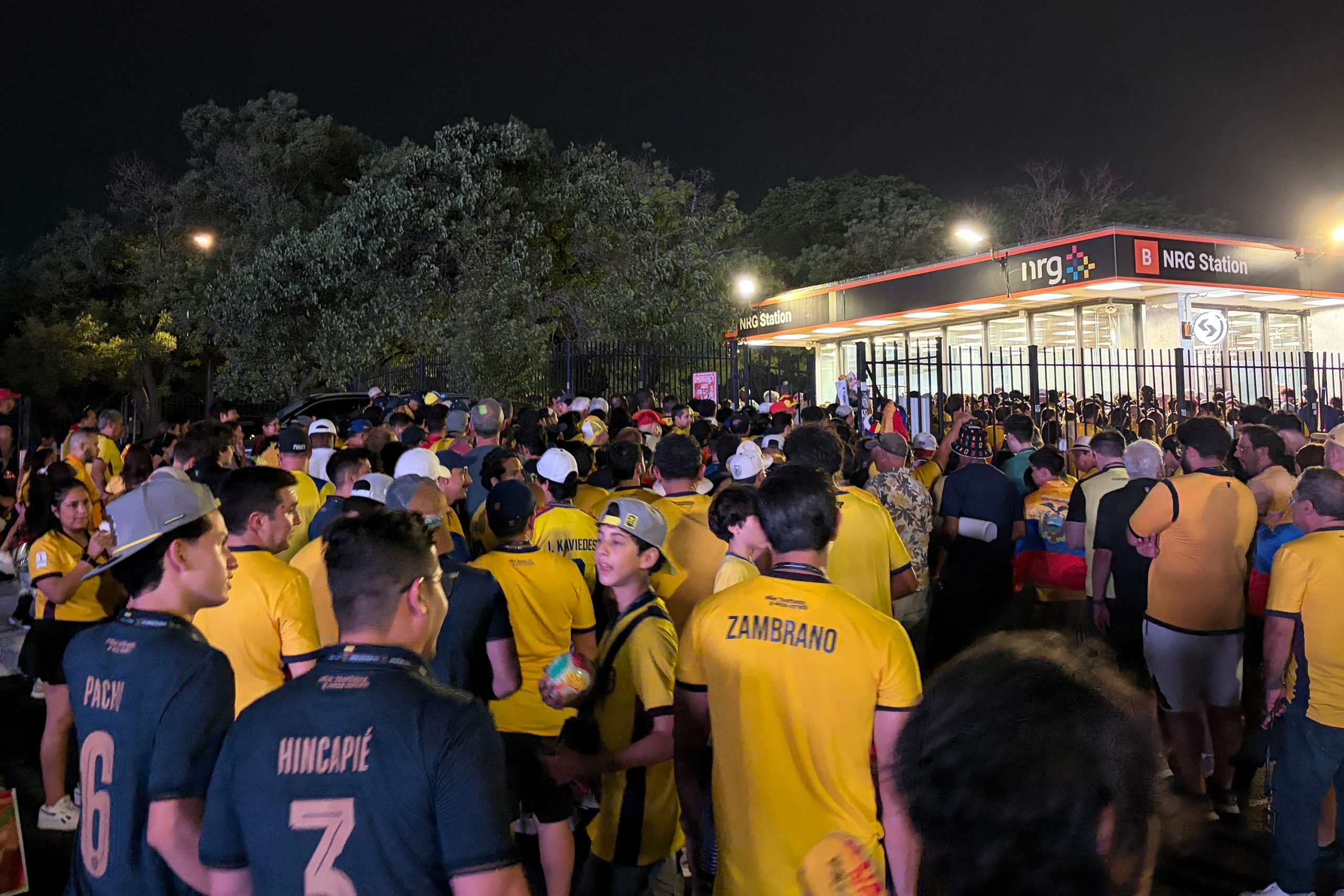
After the 5 p.m. SEPTA Broad Street Line express was taken out of service at Race-Vine because a door wouldn’t close, the 5:15 local train was inundated with Ecuador enthusiasts when it hit the City Hall stop.
The cars were full to bursting by the time they hit Walnut-Locust, yellow jerseys shoulder to shoulder and chest to chest, men and women alike. As the train pulled out a song arose, full throat and deafening in the hot, cramped subway car:
“¡Vamos, vamos ecuatorianos, esta noche tenemos que ganar!”
Or:
“Let’s go, let’s go, Ecuadorians, tonight we have to win!”
As the throng exited up the stairs of NRG Station, their hearts and voices swelled again. The song rang out again and again during the match.
Unfortunately, the Ecuadorians were not singing on the subway ride home.
Fans wait outside SEPTA’s NRG Station near the stadium following Ivory Coast’s victory over Ecuador Sunday night.Michelle Myers
Only the Olympics does a better job than FIFA capitalizing on nationalistic spectacle, and Sunday night was no exception. The stunning FIFA World Cup 2026 emblem tapestry laid on the ground covered the midfield circle. Replicas of the flags of Ecuador and the Ivory Coast took up most of the rest of the pitch in front of the goals, crescents cut in the extra fabric to frame the FIFA logo tapestry at midfield. The teams stood on their respective sides of the circle, facing the south stands, as the anthems played.
The match occurred where the Eagles play, at Lincoln Financial Field, which must be referred to as Philadelphia Stadium during World Cup games. FIFA has a strict policy that prohibits references to sponsors who don’t give FIFA money.
That said, Sunday’s affair was nothing like an Eagles game. It was far more elegant.
When Ivory Coast dawdled, La Tri — a nickname for Ecuador’s fans, who wear the tricolor yellow, blue, and red of the flag — booed and whistled. It was not unlike the response of Eagles fans whenever the Cowboys score.
Fans of the American version of football might balk at the contention that soccer is a bigger deal, and lovers of the Olympics might contend that the ever-shifting collection of summer and competitions matters more. They are wrong.
Ivory Coast’s Wilfried Singo, right, defends against Ecuador’s Jean Michaël Seri during the second half of a FIFA World Cup Group E match on Sunday.Jose F. Moreno / Staff Photographer
The World Cup is a different animal than the Olympic Games, concentrated and egalitarian. You don’t have to own a horse or skis to prepare to compete in the World Cup, just a ball.
The only thing in America that reflects a World Cup is an NFL season. Consider the first 17 games, the regular season, the group stage. Consider the playoffs the knockout Round of 16.
The NFL season in its entirety and intensity is the one comparison that might allow most Americans to understand the depth of investment and emotion other nations harbor for soccer.
And, when you factor in the fact that virtually every man, woman, and child in many of these countries have played the sport, then you can better comprehend why soccer is, for so many people on earth, as much religion as it is diversion, and how sacred evenings like Sunday can be for anyone connected with the Ivory Coast or Ecuador.
The folks who organized it all understood the gravity of the moment.
Meg Kane, CEO of Philadelphia Soccer 2026, had measures of both delight and relief in her voice as she sat in the stadium parking lot Sunday night.
“It’s been an exciting four days,“ she began, noting that there were 36 more to go. “I think everything we hoped this would be has been borne out.”
The delight was easy to source: She had just seen a really good soccer game in a grand stadium with two excellent teams, snuck in just minutes before a thunderstorm, with little or no complication.
The relief was probably based on the reception most of the millions of residents had given these unusual visitors.
“People in Philadelphia are excited to be hosting something like this,” Kane said. “Philadelphians love when people choose to spend their time here.“
The best news: Philadelphia gets to do this five more times.
After years of anticipation, ticketing woes, and infrastructure blunders, the world’s most beautiful game has landed in the City of Brotherly Love.
And soccer fans are feeling it.
The 68,274 attendees erupted when the West African nation broke the deadlocked game in the last seconds of regulation, leaving Ecuadorians stunned and distraught. Some covered their faces in disbelief.
“They fought, but we won,” Ivory Coast supporter Glenn Feidanga said.
Feidanga was the only person dancing in his section after spending the two halves surrounded by Ecuadorian fans. The momentary rivalry eventually gave way to high-fives and kudos.
“Everything is good,” he said.
While the Ecuadorian and Ivorian communities in the Philly-area are small — less than 15,500 residents claim Ecuadorian ancestry, and the number of Ivorians is difficult to estimate because the Census Bureau doesn’t tabulate them — their fans had no dearth of fervor or conviction.
Anything for your team
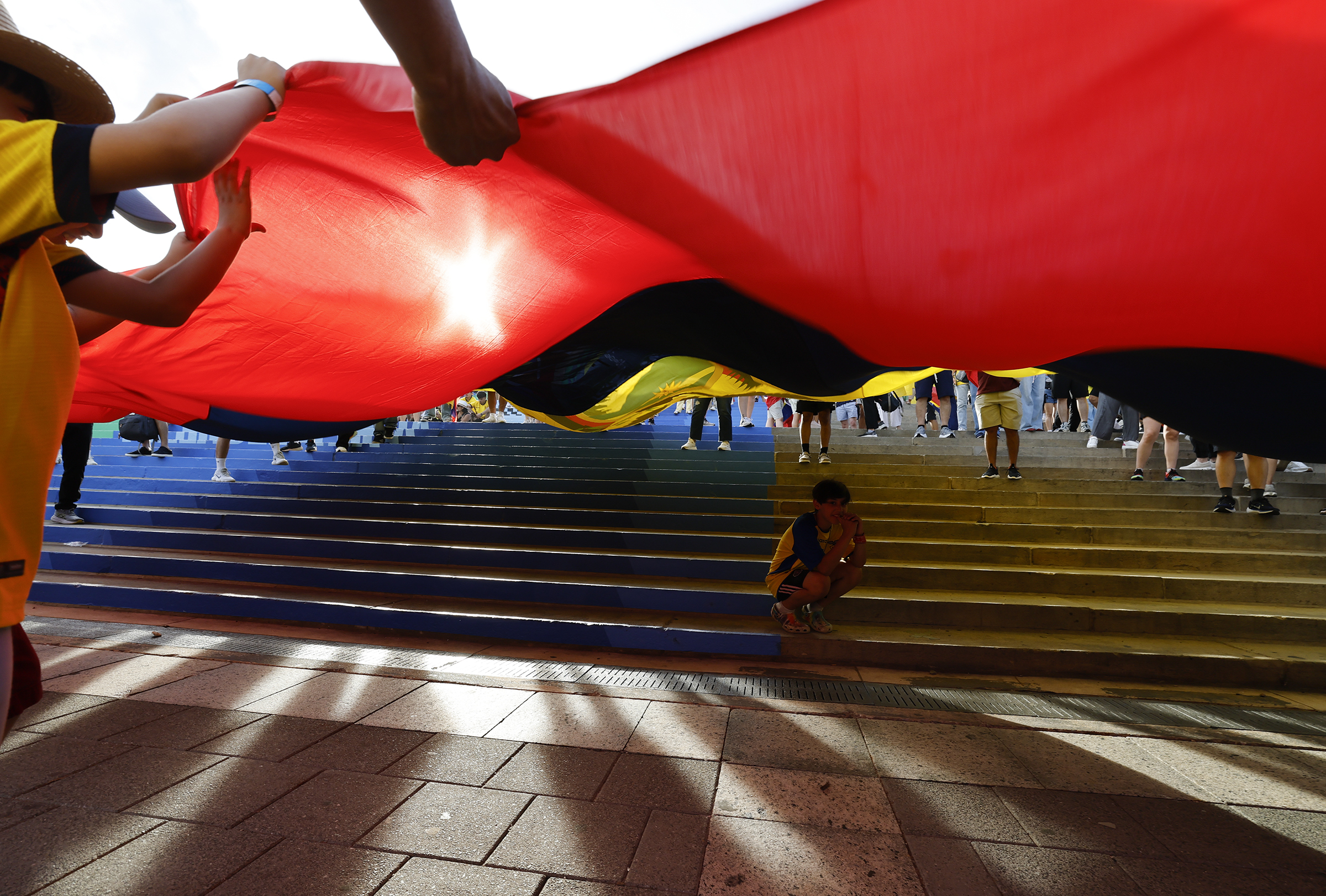
In the days and hours leading up to kickoff, celebrations have spilled into streets and SEPTA stations across the city — and supporters have been undeterred by oppressive heat and threats of severe weather. On Saturday, a wave of yellow, red, and blue flooded the steps of the Philadelphia Museum of Art, as thousands of Ecuadorian fans rallied and basked in their pride.
The Broad Street Line Sunday afternoon was inundated with Ecuador fans. Teeming train cars were full of yellow jerseys standing shoulder to shoulder, men and women alike. As the train pulled in, a song arose; full throat and deafening in the hot, cramped subway car.
“Let’s go, let’s go Ecuadorians, tonight we have to win!“
As the throng made its way out of the NRG Station, the fans’ hearts and voices swelled again.
A young Ecuadorian soccer fan sits under the Ecuadorian flag during a flag waving event at the Philadelphia Museum of Art steps along the Benjamin Franklin Parkway, ahead of Ecuador’s first round World Cup match against the Ivory Coast on Saturday, June 13, 2026.Yong Kim / Staff Photographer
Pacho Flores would go to any length for “La tri,” the nickname for the Ecuadorian national team. He had traveled from New York City and had paid $650 a ticket for his family of eight to see his team play in Philadelphia.
“It’s the most beautiful thing in the world,” Flores, a 62-year-old Ecuadorian native, said. “We have to follow the team to every game. It’s a blessing to have them play so close.”
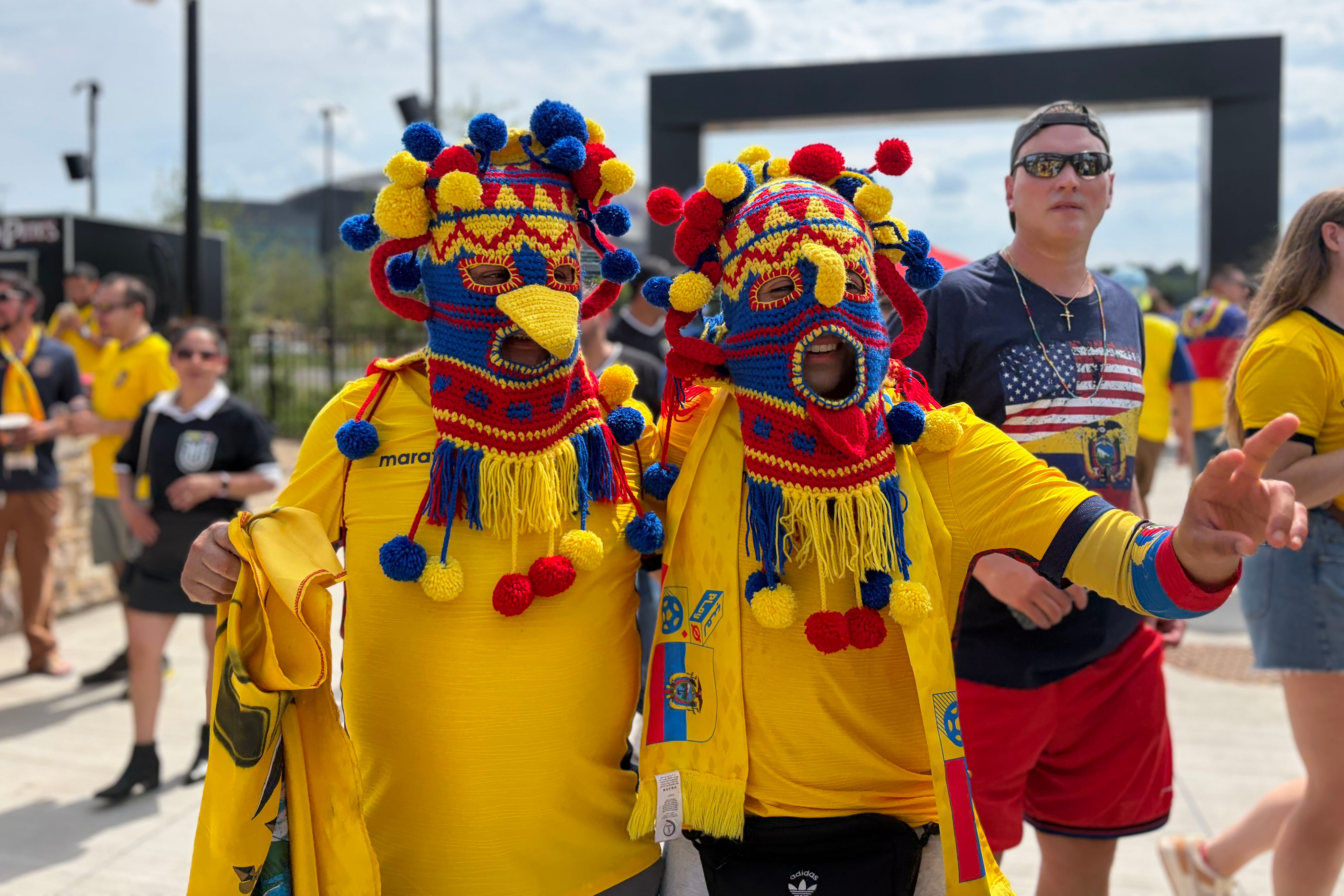
Pacho Flores (left) and his son, Alex, dance wearing thickly knit Diablo Uma masks ahead of Ecuador’s World Cup match against Ivory Coast in Philadelphia Sunday, June 14, 2026.Michelle Myers /
Despite the 90-degree day, Flores and his son, Alex, wore thickly knit masks of Diablo Huma — an Indigenous protective sacred figure from the highlands of Ecuador — to represent his native town of Cañar.
“It’s not that hot inside the mask,” Alex said, wiping sweat from his brow, “and it’s worth it because we have to win.”
“Either way, we will still love the team,” his father added.
Ecuadorian soccer fan Demetrio Govrea watches fans during a flag waving event at the Philadelphia Museum of Art steps along the Benjamin Franklin Parkway, ahead of their first round World Cup match against the Ivory Coast on Saturday, June 13, 2026.Yong Kim / Staff Photographer
The family won’t have too much time to idle: They head back to New York City on Monday morning to pack for La tri’s match in Kansas City on Saturday against Curaçao.
Ivory Coast fans Justin Bambara, Samska Lejah, and Couby Ouedraogo flew from Niger to New Jersey, then drove two hours to Philadelphia, and were confident in their team’s chances.
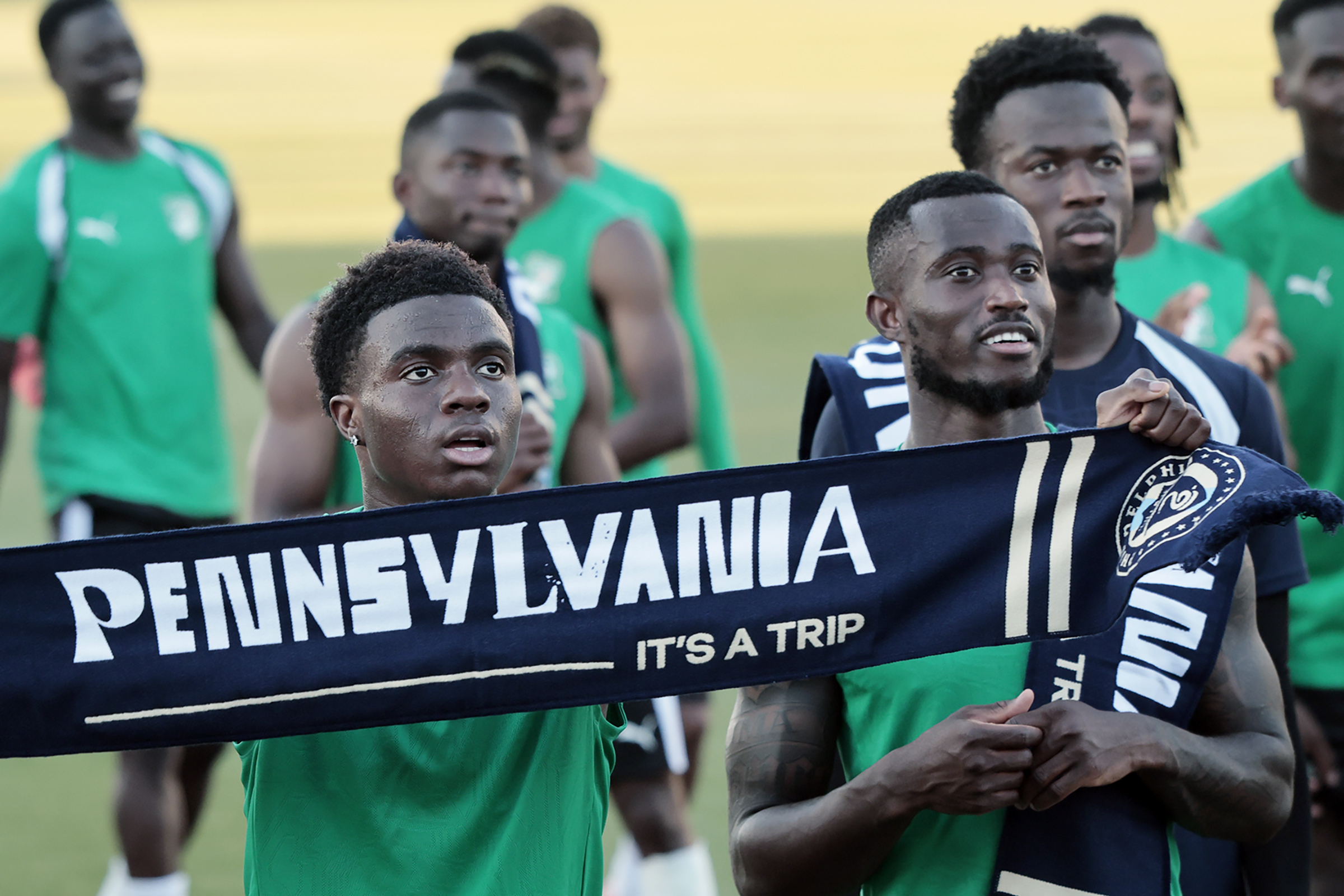
Members of the Ivory Coast national football team react while watching the Sixers Stixers drum line perform following their practice at Subaru Park in Chester on Friday, June 12, 2026 Elizabeth Robertson / Staff Photographer
“The yellows,” Bambara, 49, said, referring to the Ecuadorian fans’ jerseys, “need their support; we don’t need that, we are going to win.”
“We will invite them to beers once they lose,” Lejah, 55, said.
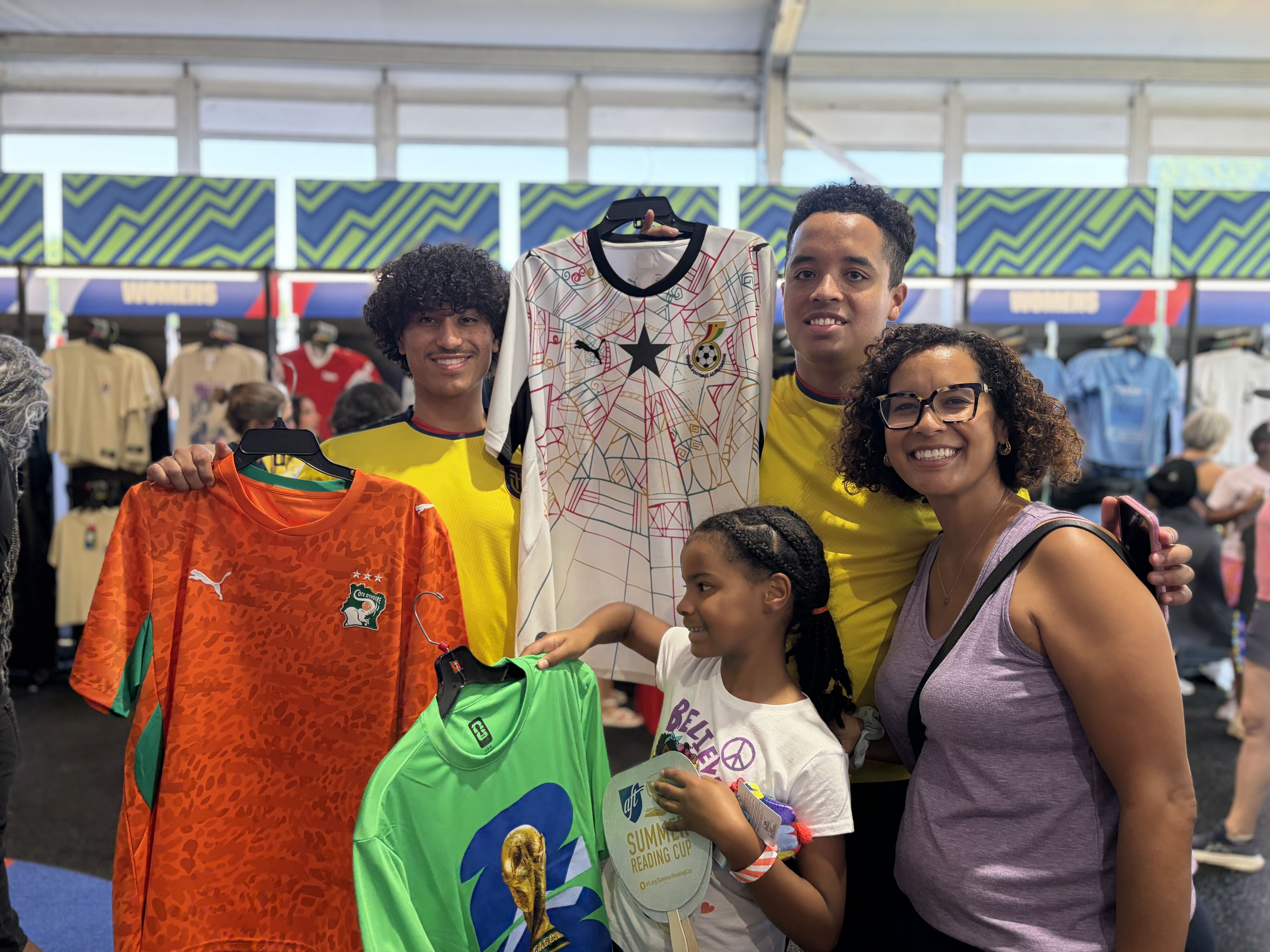
In the middle of it all, there seemed to be a marriage being put to test. Aurora Brown of Jacksonville, Fla., was attending FIFA Fan Festival with her family Saturday and said she is cheering for her home country, Ecuador. Her husband, Jamaal Brown, who had to stay back in Jacksonville, recently found out through a DNA test that he has Ivorian connections and is rooting for Ivory Coast.
Aurora Brown and the family pick out a soccer jersey for dad at FIFA Fan Fest in Philly. Dad Jamaal had to stay back home in Jacksonville, where he will be rooting for the Ivory Coast. But Aurora is sticking with Ecuador.Michelle Myers
“If they weren’t playing against Ecuador, the whole family would be Ivory Coast fans,” Aurora said.
“Ivory Coast is going to win and I will celebrate with some drinks,” Jamaal said over the phone.
“We are winners.”
Ticketing woes continue
This is the most expensive World Cup ever, and astronomical ticket costs and “dynamic pricing” have been a big gripe for many soccer fans.
Jayden Quezada, 17, and his parents spent $4,350 on Saturday to get three tickets to the next-day game through TickPick, a resale website. The trio traveled from Bensalem to Philadelphia hoping for an Ecuadorian victory. By the time they arrived at the stadium Sunday, the tickets were yet to be transferred to their FIFA app.
They were turned away at the door.
“They have been the biggest fans since before I was born and they don’t get to go back often because of work,” Quezada said of his parents who were trying to reach TickPick representatives on the phone. “We are probably going to try to get a refund but missing the game would be really sad because we were looking forward to feeling the Ecuadorian pride.”
Like the Quezadas, more than 50 people waited for help with their failed tickets, including Monica Rojas and Jose Avil who bought a pair of tickets and parking on StubHub for $2,000, only to learn their purchase had been refunded.
“I don’t know what we are going to do,” Avil said. “It feels defeating — now all we have is the tickets and the desire to watch them.”
Fans wait outside SEPTA’s NRG Station near the stadium following Ivory Coast’s victory over Ecuador Sunday night.Michelle Myers
Fan festivities
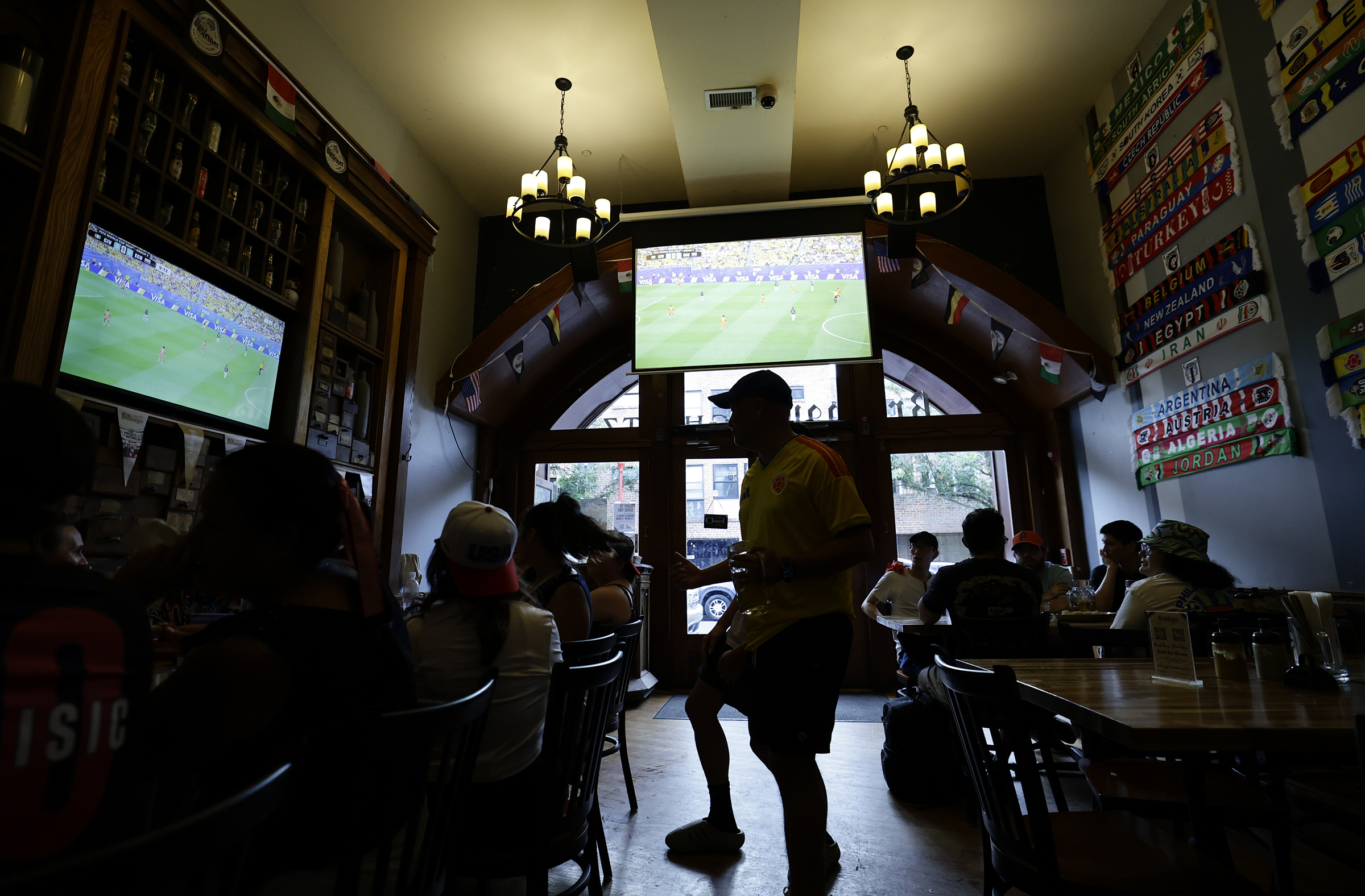
Meanwhile, watch parties were underway from Spring Garden to South Streets.
Ecuadorian singer Johann Vera commanded center stage at FIFA Fan Festival, roaring “¿Listos?”— “Ready?” — to a sea of yellow jerseys dotted by Ivory Coast orange.
“I thought there were more Ivorians in Philadelphia but I guess not,” said Swann Nemin, a Temple University student from Ivory Coast, visiting Fan Festival with her two Ivorian friends, Ornella Kouame and Naïke M. Their friend, Phoebe Mattes, who they joke is “Ivorian by preference,” joined too.
Ecuador takes the field for warm-ups before facing Ivory Coast in the World Cup Group E soccer match in Philadelphia on Sunday, June 14, 2026.David Maialetti / Staff Photographer
The World Cup brought the friends together who were looking forward to dancing and celebrating with people from all over the world.
“I feel like it’s not only people from Ecuador but also people from South America that are cheering for Ecuador, in the same way that people from all over Africa are repping Côte d’Ivoire,” Nemin said.
Aleyda Alvarado, a Fishtown resident originally from Mexico, admitted that she isn’t the biggest soccer fan, but the World Cup always gets her and her friends to come out and celebrate.
“Everyone is here from different countries, but during the World Cup, we’re all just fans,” Alvarado said before kick-off. “That’s how soccer bring people together, and what makes me love it.”
At the dozens of tables across Brauhaus Schmitz, the German beer hall in South Philly, beer steins were dangerously close to empty. The Caddick family eagerly watched TV screens around the bar and rang cowbells as their team, Ecuador, closed in on the net.
Soccer fans watch Ecuador take on the Ivory Coast during a World Cup soccer watch party at Brauhaus Schmitz on Sunday, June 14, 2026.Yong Kim / Staff Photographer
Karina Caddick, 56, of Horsham, was born in Ecuador, just outside Guayaquil, a port city and the country’s largest metropolis. She moved as a baby, but her family made sure to instill in her the importance of and love for soccer.
To watch her native country’s team compete on her home country’s soil is quite special, she said.
“It’s unbelievable that we’re able to watch [the game] here,” Caddick said. “To be in Philadelphia and see all the yellow shirts, it’s incredible.”
But not everyone gets the hype. Outside Brauhaus, a man was overheard asking, “Why does everyone like soccer so much?” For those with connections to one of the participating countries, the answer is obvious.
“Soccer is everything to Ecuador,” Caddick said. “It is the main sport. It’s their spirit. It’s what calls them.”