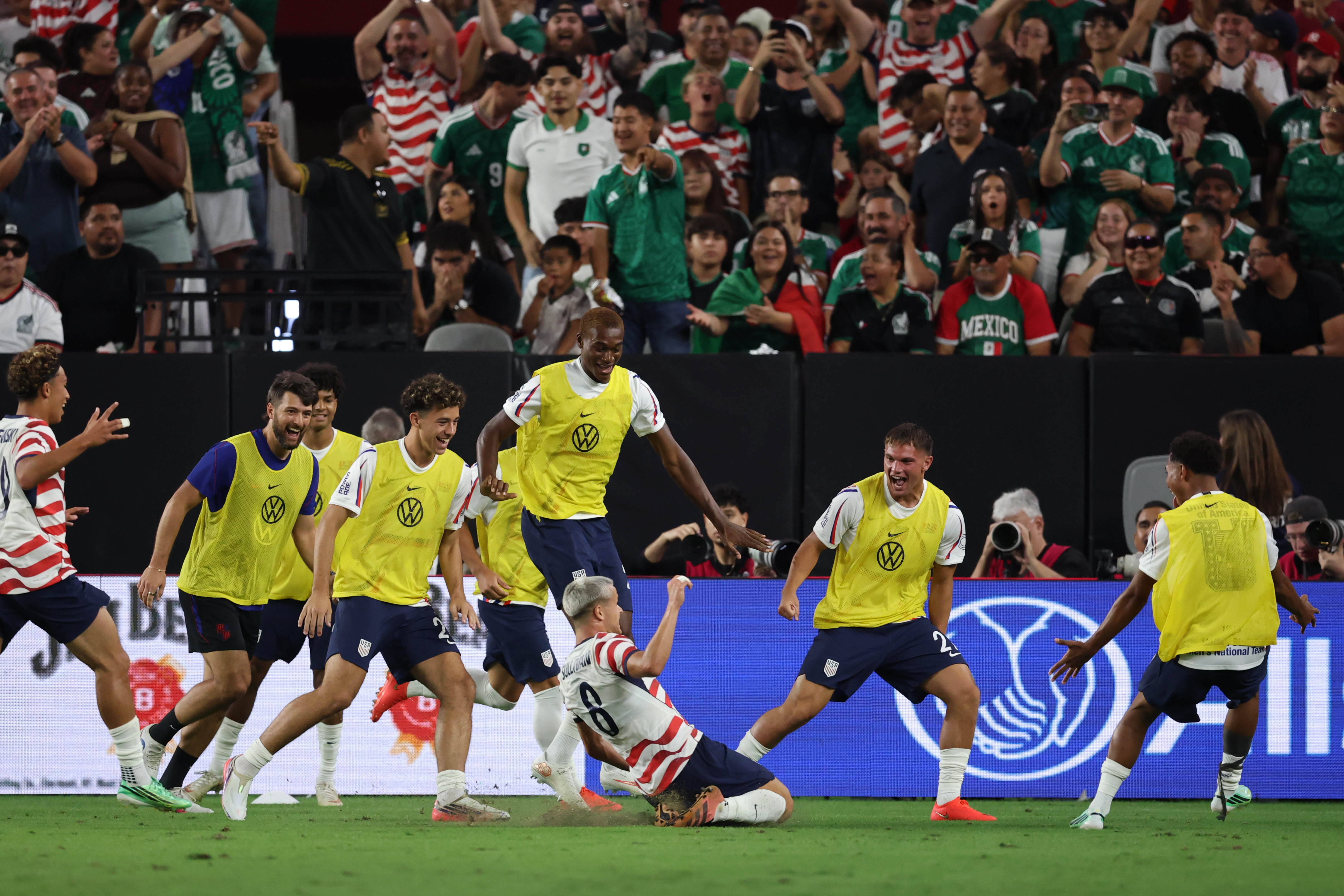
GLENDALE, Ariz. — Cavan Sullivan scored his first goal for the U.S. men’s soccer team on Saturday night, and he did it in spectacular fashion.
In the latest edition of the U.S.-Mexico rivalry, the 17-year-old Union phenom stole pass and launched a nearly 35-yard chip shot for the Americans’ second goal of a 3-0 win, electrifying a packed crowd at State Farm Stadium.
It made him the youngest goal-scorer in senior U.S. men’s team history at 17 years and 5 days.
CAVAN SULLIVAN SCORES IN HIS FIRST USA-MEXICO GAME 😤
Sullivan was in the starting lineup for the second time in three games, as U.S. manager Mauricio Pochettino fulfilled a pregame promise to have another mix of youth and veterans.
It was no surprise that for a game of this magnitude, Pochettino went with eight veterans instead of a closer-to-even split. The other two newcomers were striker Julian Hall, who impressed with a goal in each of the two previous games, and goalkeeper Diego Kochen.
The veteran contingent included Media’s Auston Trusty, who started at centerback next to Chris Richards. It was Trusty’s second time facing Mexico, two years after his first came in a friendly in Guadalajara.
Almost everything about the surroundings was as expected, including the pro-Mexico crowd. (It was always going to be that way in this part of the country, as it would be at any NFL stadium.) The one surprise was Mexico’s late scratch of its teen sensation, Gilberto Mora, due to an ankle injury.
Mexico had the better of the play for most of the first half-hour, which was also expected with its veteran-laden squad. But the U.S. scored first by hitting El Tri in one of its biggest weak spots: goalkeeper.
In the 28th minute, a rare moment arose when Mexico’s press backed off the U.S. defense. That allowed Americans the Americans to put together one of their first sustained passing sequences of the night.
It led to Sebastian Berhalter sending Alex Freeman up the right wing, and he played a ball between two defenders that Gio Reyna hustled to reach in open space. As Reyna neared the end line, he turned a half-shot-half-pass back toward the middle. Mexican netminder Raúl Rangel completely misplayed it, and Hall pounced for his latest smart finish.
Three games, three goals for Julian Hall, who starts celebration, then gives a little smile like he can’t believe what is happening. pic.twitter.com/vKwTKd0spL
Sullivan didn’t do much attack-wise in the first half, but he was a lively high-presser — which no doubt will have pleased the U.S. coaching staff. He was on the ball much more in the early stages of the second half, and made some incisive runs.
Kochen took the spotlight in the 58th with a leaping save of Roberto Alvarado’s shot off a free kick sequence. There had been some iffy moments for the 20-year-old up to then, in his second national team game and first start. But that play showed why his prospect stock is so high.
Then came the moment that will live on highlight reels for a long time.
Rangel stood on the ball well outside his 18-yard box looking for a teammate to pass to. His eventual play was a softball on the ground that Sullivan jumped on. A turn and first touch settled the ball, and his second touch was a chip shot from nearly 35 yards. It sailed over Rangel and floated right into the middle of the net.
As the crowd erupted, Sullivan screamed, then ran to the corner of the stands near where the U.S. substitutes were warming up — including Union teammates Neil Pierre and Frankie Westfield. Within seconds, the entire American squad had swarmed him to celebrate.
Sullivan emerged in the grasp of a big embrace from two of the most experienced veterans, Richards and Robinson. Adams, newly re-appointed as the U.S. captain, arrived next for another bearhug and an exchange of words.
The moment felt with emotional significance. And if that wasn’t enough, the scoreboard told another story to savor. It read 2-0 — dos a cero. The Americans’ favorite score against their favorite rival lived again, thanks to their bright new stars.
But this time, that wasn’t the final score. Malik Tillman capped things off in the 85th, outhustling Mexican centerback Diego Campillo to a loose ball and smashing it first-time from 12 yards.
💥🇺🇸 ¡¡TILLMAN LE GANA LA CARRERA A CAMPILLO Y SENTENCIA LA GOLEADA!!
⚽🔥 Diego Campillo dejó correr el balón, pero Malik Tillman aceleró, le ganó por velocidad y aprovechó el error defensivo para aumentar la ventaja de @USMNT.
Between those goals, there was one of many old-fashioned ruckuses like these teams have always had. In the 69th, Mexico’s Mateo Chávez barged into Yunus Musah off the ball, and referee Selvin Brown of Honduras gave Chávez a straight red card.
Sullivan exited right after his goal, replaced by Yunus Musah. Justin Ellis entered for Hall at the same time. In the final minutes, Pochettino used three more of the eight total subs available to him: Brooklyn Raines for Reyna, Peyton Miller for Berhalter, and Mathis Albert for Tillman.
By the end, most of the crowd was streaming for the exits. But the U.S. fans stuck around, and serenaded the team with a rendition of John Denver’s “Country Roads,” the song that became the team’s anthem at the World Cup.
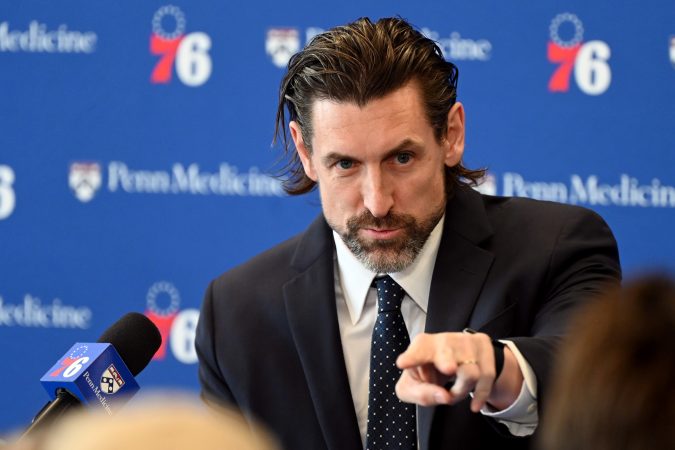
As Mike Gansey left Saturday’s Sixers Blue x White Scrimmage, fans gathered alongside the fence greeted him with a big cheer.
The Sixers’ new general manager made a massive splash in his first summer in charge, swinging a trade for Jaylen Brown and following it up by signing LeBron James.
On Saturday, fans finally got their first look at this year’s squad, but for Gansey, it’s been a few days of watching the star-studded team he assembled face one another in camp.
“I’ve been in a lot of training camps, and at least like the first four or five days, the intensity, I mean, LeBron’s diving on the loose floor for balls,” Gansey said. “He’s 41 years old. It’s just stuff like that, like he’s really set the tone, and everyone’s been doing the same.”
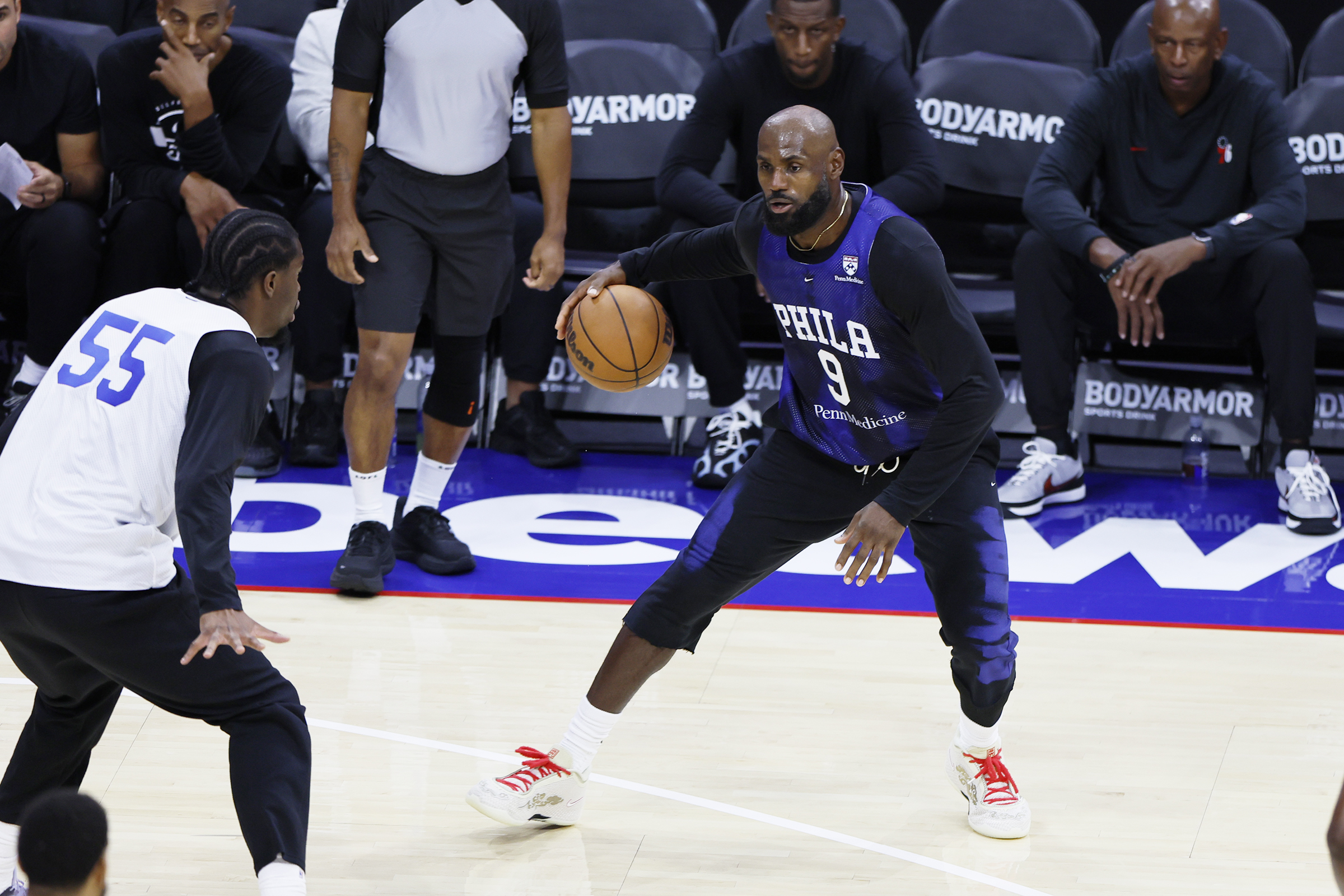
Ariel Hukporti (left) defends against LeBron James during the Sixers Blue x White Scrimmage at Xfinity Mobile Arena on Saturday.Elizabeth Robertson / Staff Photographer
Even with all the new faces, the Sixers are still relying on their long-time veterans, Tyrese Maxey and Joel Embiid. Gansey said back in Cleveland, he referred to Maxey as the “Cavs killer,” and since coming to Philadelphia, he’s seen Maxey develop both as a player and as a leader.
“[He] and Joel are like the elder statesmen here with the team,” Gansey said. “With Jaylen, LeBron and all the other new guys in here, I think he’s trying to take on a vocal leadership role with our group because, you know, the talent, the skill level, I mean, some of the stuff he does in practice, it’s like ‘Whoa,’ you know, like, ‘I’ve never seen that before.’”
Gansey also provided insight into the future of first-round pick Labaron Philon Jr., who, after the Sixers’ big summer, has a much tougher road to significant playing time. That doesn’t mean he’s not factored into the Sixers’ long-term plans.
Philon started on the White Team, defending against the Sixers’ ideal starting lineup with James, Embiid, Maxey, Edgecombe, and Brown. He stayed aggressive on defense and hit a few tough contested baskets.
“Being a point guard in this league, I think that’s the hardest position for a rookie to come in, and it’s going to take some time,” Gansey said. “But he’s a worker.”
The big story of the scrimmage, though, was seeing that starting five all on the floor together. The Sixers have a lot of skill and personality in the locker room. They’re counting on that high level of skill to win a lot of games, but as this team knows from past experiences, it takes more than talent to win games.
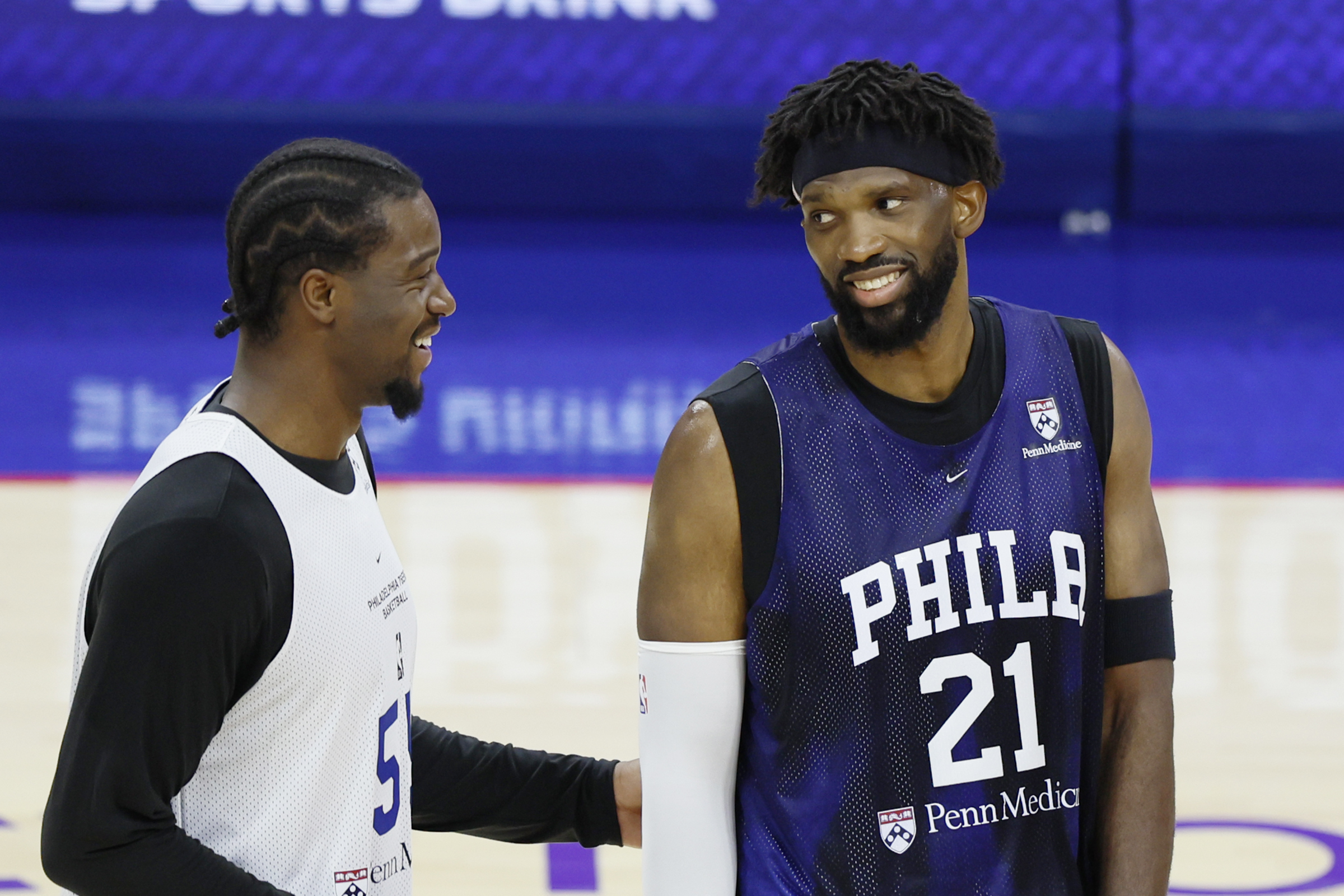
Ariel Hukporti (left) and Joel Embiid share a laugh during the Sixers Blue x White Scrimmage at Xfinity Mobile Arena on Saturday.Elizabeth Robertson / Staff Photographer
But based on what Gansey has seen so far during training camp, he’s confident the Sixers will figure it out. They’re not starting from zero, given James and Embiid’s experience at the Olympics, and Maxey and James’ time as training partners.
“We have so many good veterans that they’re just kind of figuring it out,” Gansey said. “Like, there’s been a lot of scrimmages we’ve had where we don’t even have to run a play. They just kind of figure it out, and I think that’s what it’s really going to be moving forward. Practice is obviously important this week, and then obviously when the games start, we’ll try to figure it out.”
Reynaldo Rivera had little interest in sports betting. He preferred playing slots and table games at casinos around Philadelphia, where he’d unwind a couple times a week after covering the graveyard shift as a tow truck driver.
But when the COVID-19 pandemic left most forms of indoor recreation off-limits in 2020, Rivera downloaded some sportsbook apps, and sampled their digital simulations of casino games.
He soon discovered that he had no reason to ever return to Rivers Casino on Delaware Avenue, or Parx Casino in Bensalem, to play slot machines and Ultimate Texas Hold’em.
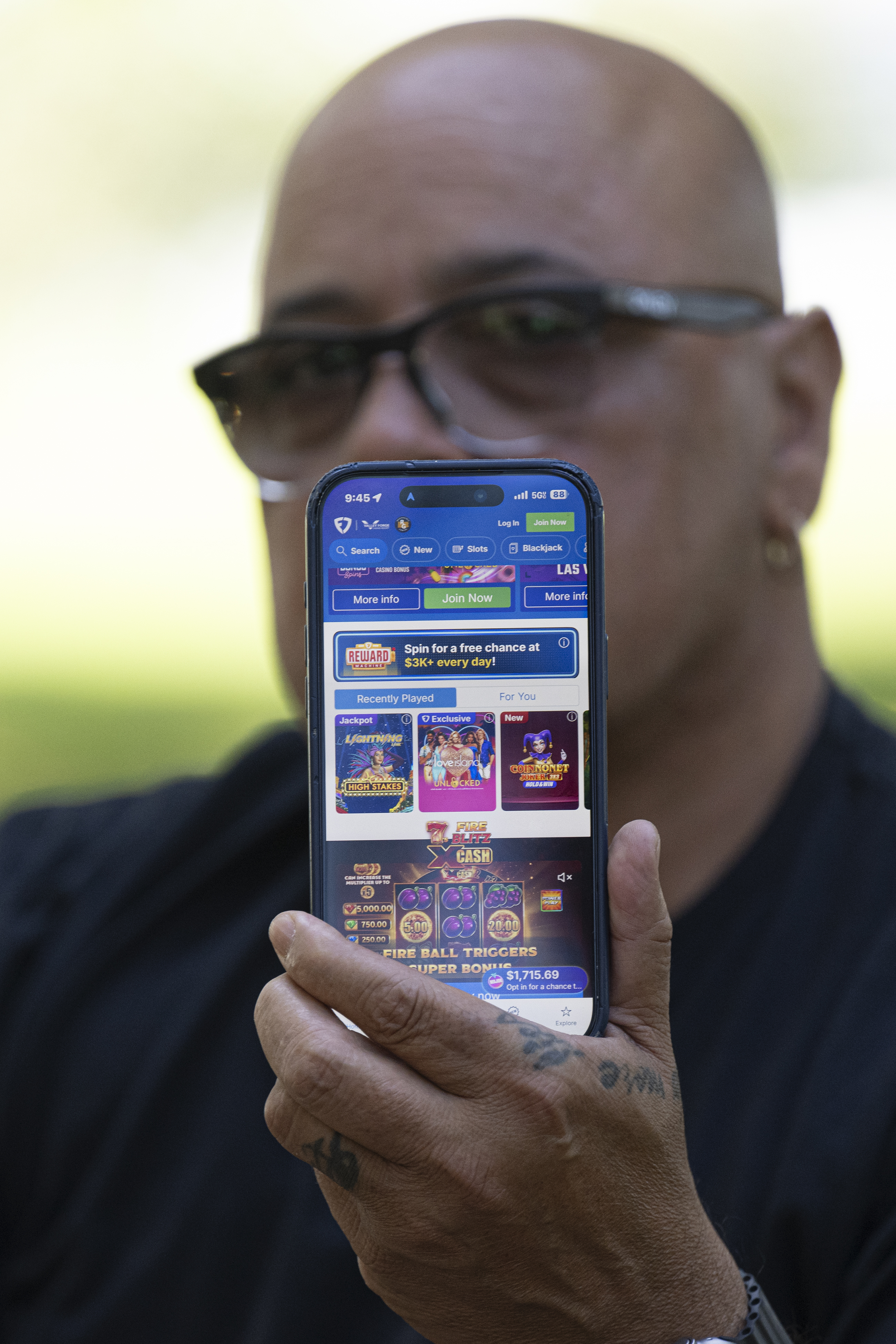
“You open your phone,” he said, “and it’s right there.”
Occasional after-work gambling turned into constant on-the-job gambling. Rivera sat for hours in the cabin of his tow truck, the outside world dark and still, while he tapped and tapped on his phone.
Hundreds of dollars in losses became thousands. Then, tens of thousands. By this spring, he’d wagered about $2.4 million, losing $137,000.
As his losses ballooned, the gambling companies made sure he knew how valuable he was to them. They granted Rivera VIP status and supplied him bonus credits and gifts, like a Peloton bike, courtesy of DraftKings.
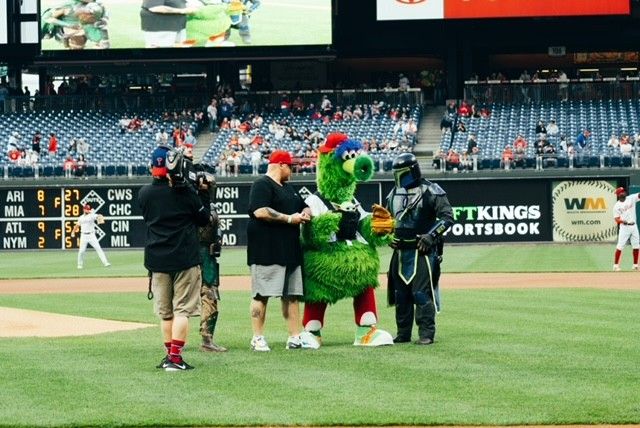
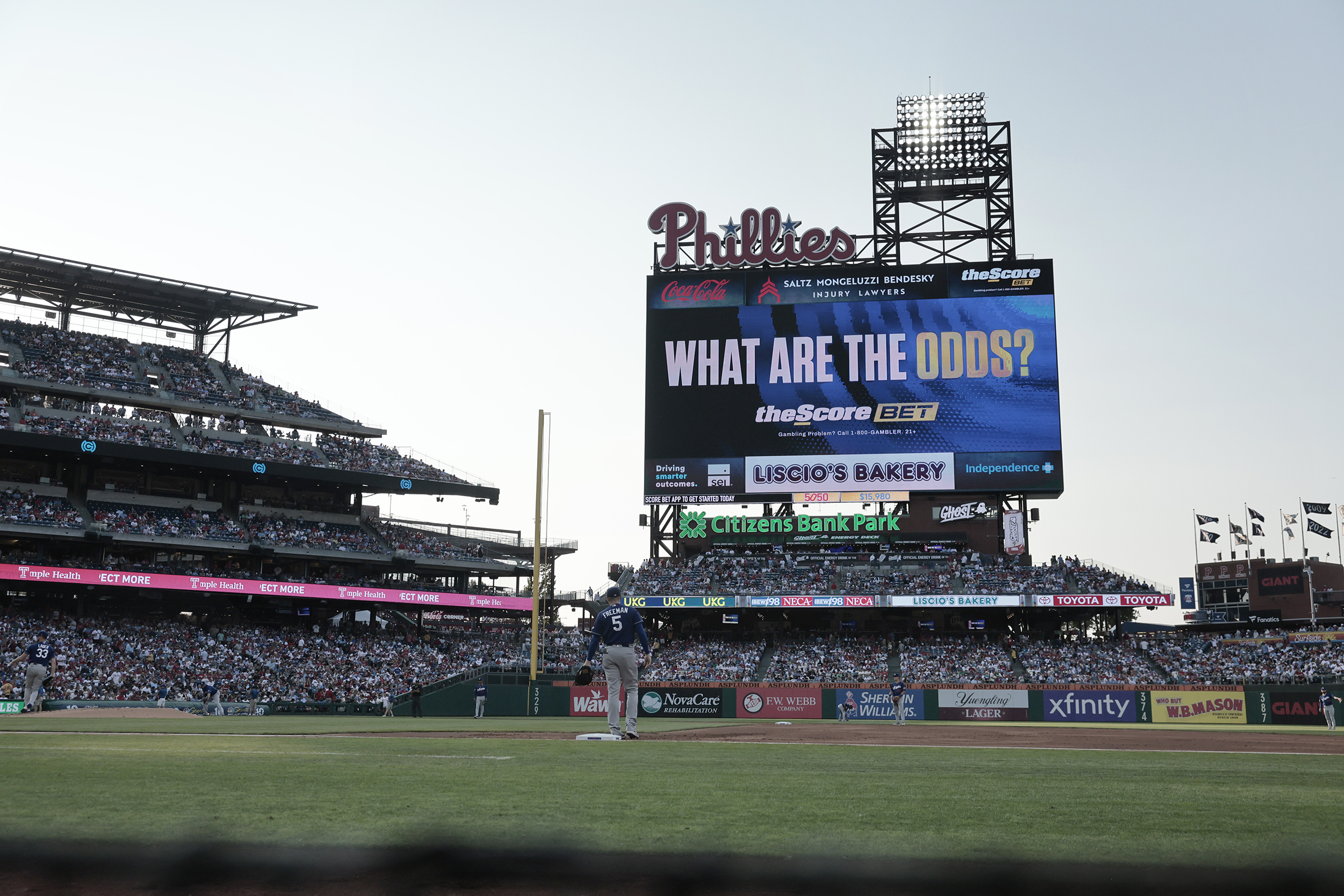
BetMGM arranged an even more remarkable reward through a sponsorship deal with the Philadelphia Phillies. On a spring evening in May 2022, Rivera was led onto the lush infield grass at Citizens Bank Park, before the Phillies played the Texas Rangers. As thousands of fans watched, Rivera tossed a ceremonial first pitch.
Yet the constant gambling and losing left Rivera feeling ashamed and foolish. He was struggling to get by, instead of living comfortably from the money he made driving a tow truck.
He just couldn’t stop.
“Listen, I don’t have a drug addiction,” Rivera, 56, said in a recent interview. “But if that’s what it feels like, that’s crazy.”
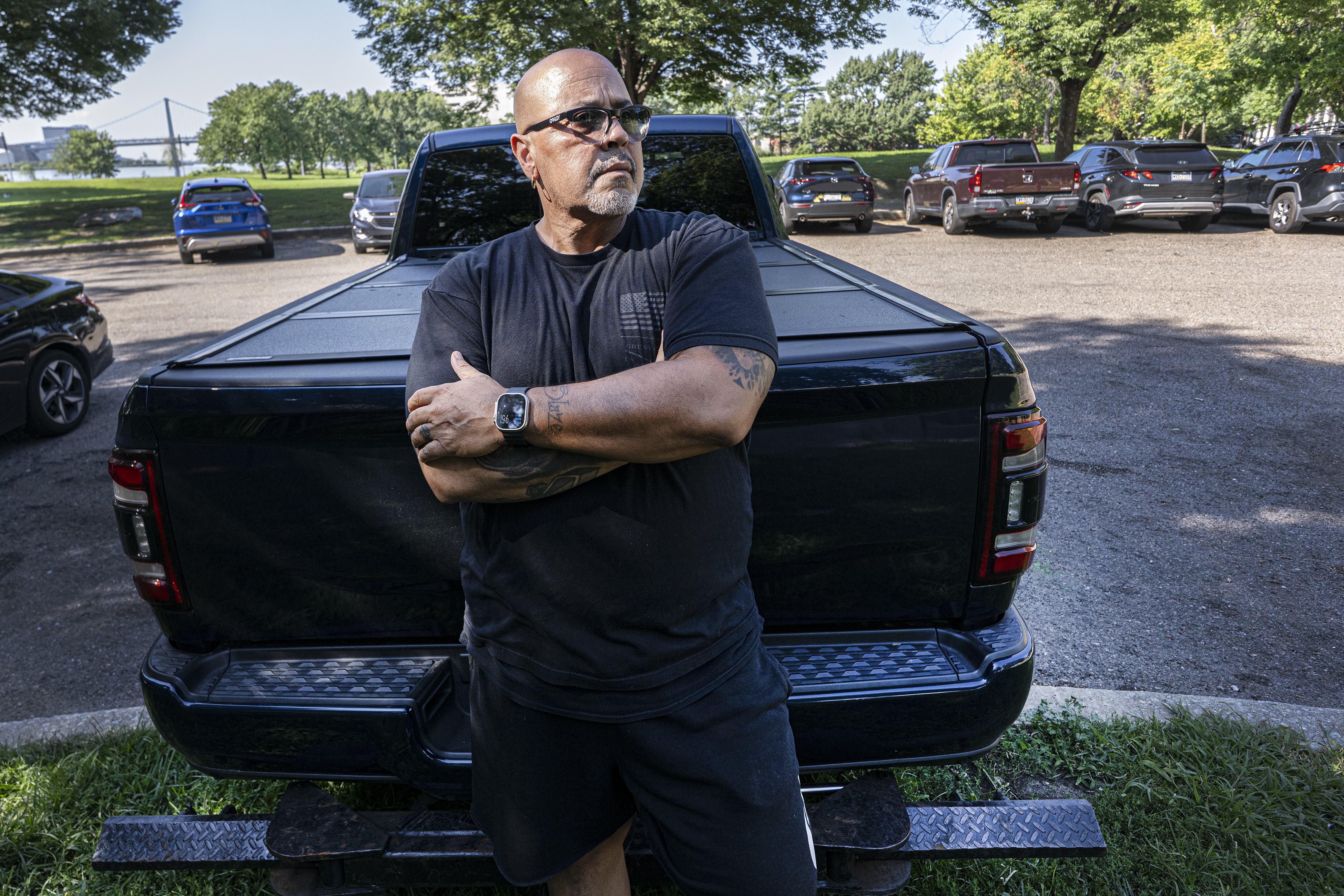
Reynaldo Rivera said he grew addicted to playing online casino games on his phone while working as an overnight tow truck driver in Philadelphia. Earlier this year, his attorney filed a lawsuit against DraftKings and FanDuel over his addiction.Jose F. Moreno / Staff PhotographerAs Rivera’s gambling losses deepened, he said companies granted him VIP status and enviable rewards, like throwing out the first pitch before a Phillies game at Citizens Bank Park in 2022. Courtesy of Reynaldo Rivera
Less than a decade ago, gamblers had to invest time and physical effort if they wanted to bet on sports or play casino games, whether it meant going to Las Vegas or Atlantic City, or meeting up with a bookie. Now, it takes only the flick of a thumb to open an app.
And it’s no longer a fringe activity that needs to be sought out. Nearly everywhere Americans look, there are advertisements about sports betting or prediction markets: billboards alongside highways, banner ads in stadiums, sponsored segments in sports broadcasts, and TV and online pitches featuring global stars-turned-well-paid ambassadors, including Philadelphia 76er LeBron James, tennis legend Maria Sharapova, and Academy Award winner Jamie Foxx.
But a corollary backlash is also taking shape, as the repercussions of nearly unlimited access to gambling have become impossible to ignore.
Lawmakers are demanding greater control over how sportsbooks and prediction markets operate, while a wave of litigation is attempting to hold those companies responsible for their customers’ addictions, echoing similar legal action that’s been taken against social media companies. (Meta agreed in August to pay up to $18 billion to settle lawsuits it faced over claims that it designed its products to be addictive to children and teens.)
The impact of the gambling industry’s skyrocketing growth might be felt more acutely in Pennsylvania than anywhere else. In March, the American Gaming Association wrote in a report that Pennsylvania had the largest online gambling market in the U.S., generating $3.46 billion in revenue in 2025 — a 27.9% increase from the year before.
Pennsylvania recorded $7.7 billion in overall gambling revenue in 2025, a sum that trailed only Nevada, according to the gaming association. Pennsylvania is also one of just eight states that have thus far legalized both online gambling and sports betting.
Philadelphia, meanwhile, is the seventh-largest commercial casino market in the country, having generated $1.4 billion in 2025, the gaming association said, and last year was the top market for online gambling advertisements.
“The casino itself has expanded basically into infinity,” said Timothy Fong, the co-director of the UCLA Gambling Studies Program, which researches gambling disorders and evidence-based addiction treatments.
While brick-and-mortar casinos have long wooed bettors with offers of free meals and hotel rooms, the modern gambling industry bears little resemblance to the neon palaces of past generations.
“If you go back in time, like 25 years ago, and you compare the differences, it’s obviously not the same world,” Fong said. “It’s not even the same universe, and it’s because gambling is frictionless right now. It takes very little effort to get bets down. And you also have a much wider array of choices of how to bet, what types of wagers are out there.”
The state’s Gaming Control Board last week published an annual overview of its regulatory activity, and reported that 30,000 people are enrolled in its self-exclusion programs, which prevent bettors with addictions from being able to legally gamble.
Researchers at Pennsylvania State University’s Criminal Justice Research Center have found that between 60% and 73% of adults in the state had engaged in some form of betting in 2025, with as much as 30% gambling online. The average age of online gamblers was 37, and more than 77% were men, with 61% identifying as white.
Overall, Penn State found that between 2.4% and 6.4% of Pennsylvanians might be problem gamblers — more than double the reported national average of 1% to 3%.
“That’s an inordinate amount of people,” said Eric Webber, a senior behavioral health therapist for Caron Treatment Centers, which offers addiction rehabilitation services in Pennsylvania, Florida, Georgia, New York, and Washington, D.C.
Webber, since 2013, has been treating people who have gambling addictions. The number of his patients — who include lawyers, executives, and college students — has climbed steadily since the U.S. Supreme Court ruled in 2018 that states could adopt their own sports betting laws.
He described one young client whose compulsions led him to coordinate a phone, laptop, and tablet to play multiple hands of blackjack simultaneously.
“I tell people this is the new epidemic,” Webber said, and Pennsylvania “is at the epicenter of it.”
Rivera is among a half dozen former customers of FanDuel and DraftKings who have recently sued the companies in Common Pleas Court of Philadelphia. Their lawsuits allege that the apps use “hyper-personalized algorithms” and loyalty programs to target “the most addicted, problem users” that make up a disproportionate chunk of the sportsbooks’ revenue.
Rivera’s lawyer, Jennifer Hoekstra, said her Pensacola, Fla.-based firm, Aylstock, Witkin, Kreis & Overholtz, has retained about 15,000 clients with similar claims, and has filed lawsuits against sportsbook operators in Delaware, Massachusetts, and New Jersey.
“FanDuel and DraftKings have created, essentially, an addiction crisis,” Hoekstra said. “They built an addictive product intentionally.”
Rivera’s attorney, Jennifer Hoekstra, said DraftKings and FanDuel banned him from their apps after he sued the companies. Rivera said he still can’t bring himself to delete the apps. Jose F. Moreno / Staff Photographer
The companies have rejected that characterization and said they offer tools that allow players to monitor and set limits on their deposits, wagering, and playing time.
FanDuel “supports and exceeds the comprehensive requirements set by Pennsylvania regulators for how we monitor customer behavior and respond to signs of harm,” a spokesperson wrote in an email.
In 2025, the company spent $158 million on responsible gaming technology, conducted 58,000 account reviews, and removed 5,700 users from FanDuel’s platform, the spokesperson said.
A DraftKings spokesperson wrote that while the company won’t comment on pending litigation, it “takes responsible engagement concerns very seriously” and has a team of more than 50 full-time employees and a chief responsible gaming officer who focus on that issue. “Responsible engagement is embedded across our business and essential to DraftKings’ long-term sustainability,” the spokesperson said.
The sportsbooks have asked judges to dismiss other lawsuits that have accused them of product liability and violating state consumer protection laws. Their attorneys have argued that FanDuel and DraftKings don’t sell an actual product, but instead offer a free app and have no obligation to protect customers from placing lawful bets, even if their gambling becomes excessive.
Shortly after Rivera’s lawsuit reached the court docket in July, DraftKings and FanDuel banned him from their apps, and the friendly VIP managers who had once texted him regularly no longer responded to his messages, his lawyer said. Yet Rivera can’t bring himself to delete the sportsbook apps from his phone. The urge to place a bet remains just under the surface, an itch he can’t scratch. Sometimes, he imagines winning back the money he’s lost.
“If I had access to them apps, I’d probably be on them,” he said. “I know I’d be on them.”
Advertisements for sports betting can now be easily found at professional sports stadiums and during broadcasts of games. Elizabeth Robertson / Staff Photographer
A bond, broken
On Sept. 23, a cluster of parents walked through the echoey halls of the Russell Senate Office Building in Washington to a small, cream-colored room. Once inside, they unspooled personal accounts of how gambling addiction had impacted their lives. Politicians and advocates listened and nodded solemnly, and discussed the urgency of a newly announced gambling reform movement.
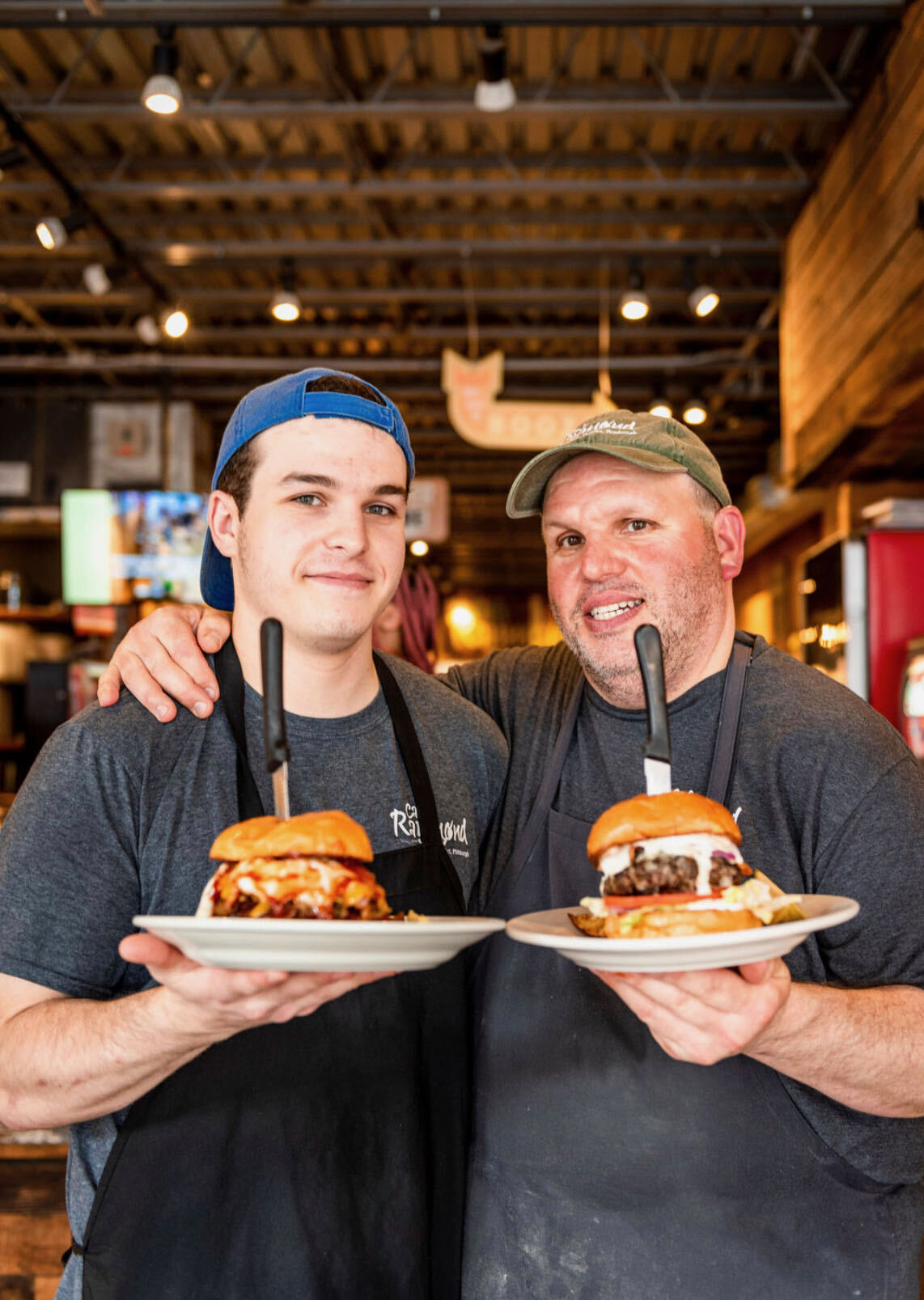
Raymond Mikesell described the inseparable bond that he shared with his son, Ray, who at the age of 4 began helping out at Cafe Raymond, the breakfast and lunch spot that Mikesell operated for 17 years in Pittsburgh, beginning in 2007. Ray became a full-time fixture in the restaurant as he grew older, whipping up blueberry ricotta pancakes in the kitchen while his father amiably chatted with customers.
By age 20, Ray had enough money to buy his own house. That picture of success was punctured when Mikesell one day received some of his son’s bank statements by mistake, and discovered that his account had been repeatedly flagged for insufficient funds.
“I said, ‘Ray, what’s going on here? You got to explain this to me,’” Mikesell recalled. “He said he was betting.”
Mikesell wanted to help his son climb out of debt. He began managing his finances, giving him an allowance, and sometimes paying his mortgage. Mikesell said he also avoided mentioning professional sports altogether, for fear that it would drive his son to place more wagers.
“Within a month, he was kicking my door down to tell me I’m ruining his life,” he said. “We all knew what it was. It was the addiction to gambling. He just wanted to bet all his money.”
Mikesell said his son spiraled deeper into addiction. He maxed out his credit cards, and his home fell into foreclosure, and then was sold at a sheriff’s sale.
Among those who had assembled in the senate room with Mikesell were U.S. Sen. Richard Blumenthal (D., Conn.) and U.S. Rep. Paul Tonko (D., N.Y.). In 2025 the lawmakers introduced the SAFE Bet Act, which would prohibit sportsbooks from marketing during live games and using artificial intelligence to inform the promotions they offer to bettors.
Blumenthal and Tonko each addressed the parents, who represented a nonprofit, Families and Friends of Gamblers, which was created with the help of the Public Health Advocacy Institute. (Lawyers for the institute in March sued FanDuel, DraftKings, and the NFL on behalf of Terry Thompson and Christopher Sage, men from the Philadelphia suburbs who developed sports gambling addictions.)
Blumenthal accused sportsbook companies and prediction markets of exploiting their customers’ compulsions.
“It drives families apart. Ruins people’s careers,” he said. “It basically decimates lives, because gambling can be an addiction. We know it’s an addiction. It’s a disease, like every addiction.”
Tonko and Blumenthal in August demanded that FanDuel end its VIP services, citing reporting from The Inquirer that revealed that a FanDuel VIP host had sent a personalized video of Phillies star Bryce Harper to Thompson, who earlier this year planned to end his life after gambling away the last of his family’s savings.
A FanDuel executive disclosed to the lawmakers in a Sept. 24 letter that the company has sent approximately 30 personalized videos from athletes and entertainers to its customers during the last two years, but said such perks are not meant to encourage betting.
In response to the congressional scrutiny, the Major League Baseball Players Association has said it would support prohibiting players from doing promotional work for gambling VIP programs.
Such measures arrived too late for Mikesell’s son.
A few days before Thanksgiving in 2024, Mikesell spoke by phone with Ray, who was still staying in his foreclosed-upon house in South Fayette. Neither knew that Allegheny County Sheriff’s Office deputies planned that day to serve Ray with an eviction notice.
When the deputies later arrived and knocked on Ray’s door, they heard a single gunshot.
Ray, 24, had died by suicide.
Mikesell later said that he didn’t believe his son had planned on taking his life — he had already packed his belongings and his two cats in his car — but might have panicked when he saw police at his property.
“We found a note in his garage,” Mikesell recalled. “It said, ‘Please take care of my cats.’”
Raymond Mikesell (right) and his son Ray (left) worked together daily at Cafe Raymond, Mikesell’s restaurant in Pittsburgh. Courtesy of Raymond Mikesell
Grief-stricken, Mikesell contacted Rep. Jason Ortitay, an Allegheny County Republican, to ask if anything could be done to address gambling addiction. Earlier this year, Ortitay introduced a bill that would prevent betting apps from being accessed within Pennsylvania schools.
“I called my wife and daughter, and we cried,” Mikesell said, his voice breaking. “Because it’s a small step in a big thing that’s going to mean a lot someday soon.”
After police closed their investigation into Ray’s suicide, investigators returned his cell phone to his parents. They discovered that a month after his death, Ray’s phone was still buzzing with promotional offers from gambling companies.
“There was one text from DraftKings,” Mikesell said, “asking him, ‘Are you betting with someone else? What’s going on?’”
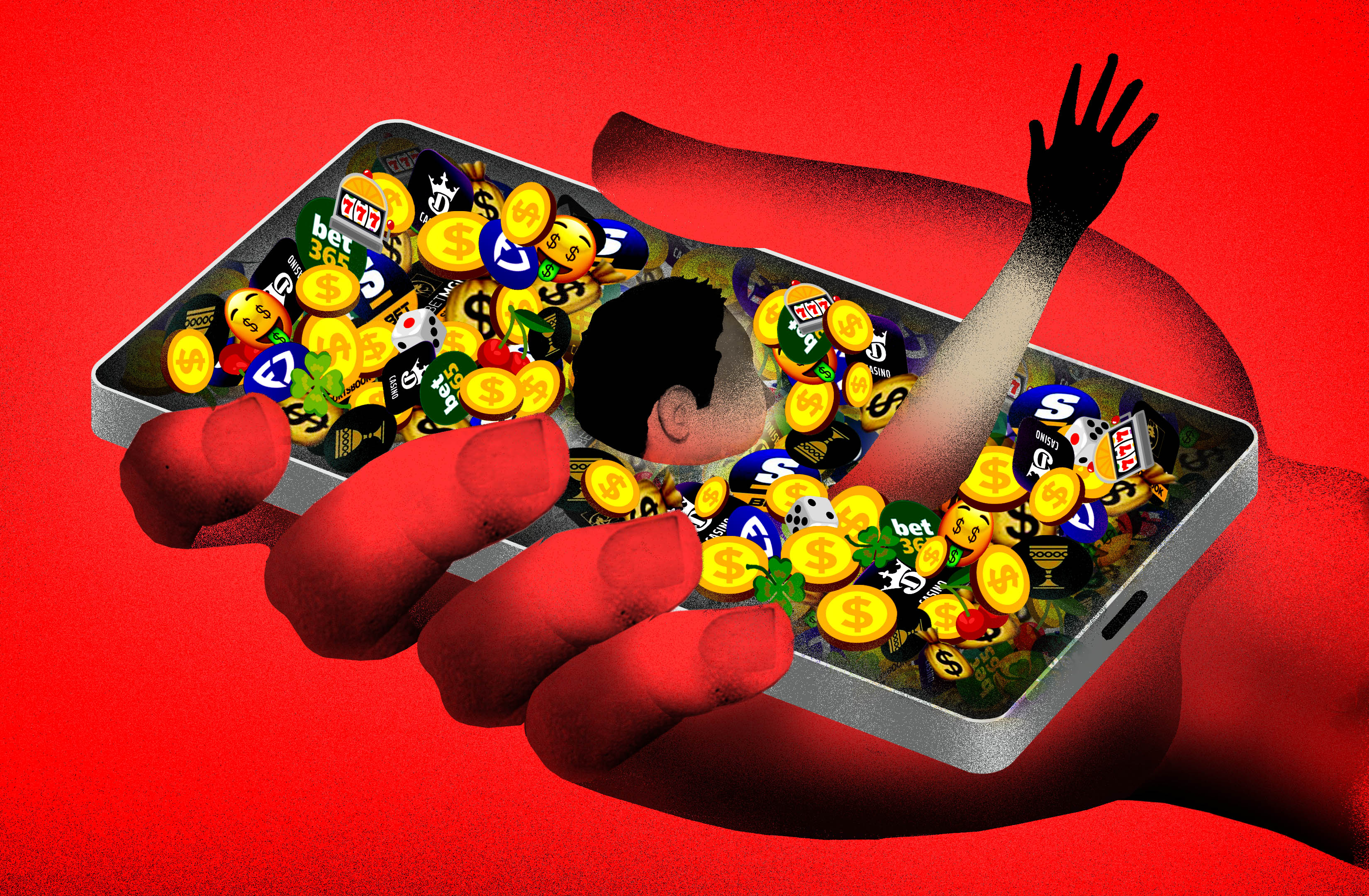
Advertisements that encourage viewers to try online gambling or prediction markets have become nearly inescapable. Staff Illustration
‘The gambler’s fallacy’
Tales of tragedy and heartache like Mikesell’s have spurred other legislative and legal efforts to rein in sportsbooks and prediction markets.
Pennsylvania lawmakers are drafting legislation to ban in-game microbets and curtail VIP programs, and have introduced additional bills to prohibit consumers from using credit cards to place wagers, restrict gambling entities’ ability to send push notifications to customers, and ban insider trading on prediction markets.
The Sports Betting Alliance — a national advocacy organization whose members include FanDuel, DraftKings, BetMGM, bet365, and Fanatics — has said it would oppose legislation to eliminate microbets, and has likened VIP services to rewards that retailers like Starbucks offer to frequent customers.
New York Attorney General Letitia James has sued prediction markets Polymarket and Kalshi, accusing each of operating illegal gambling platforms. The federally regulated markets are available in 50 states, and customers can be as young as 18, while the legal gambling age remains 21.
Prediction market officials insist that their products are not gambling apps — even after recording tens of billions of dollars in sports wagers during the FIFA World Cup — but rather a financial product similar to the stock exchange.
In early September, New Jersey Attorney General Jennifer Davenport petitioned the Supreme Court to decide whether states should have the authority to regulate prediction markets as they do gambling.
Amid those legal tussles, researchers are still assessing the complex picture of addiction that has been associated with the widespread growth of online sports betting and prediction markets.
In early September, Bank of America Institute published an analysis that showed the largest share of customers who engaged in online betting in July came from lower- and middle-income households.
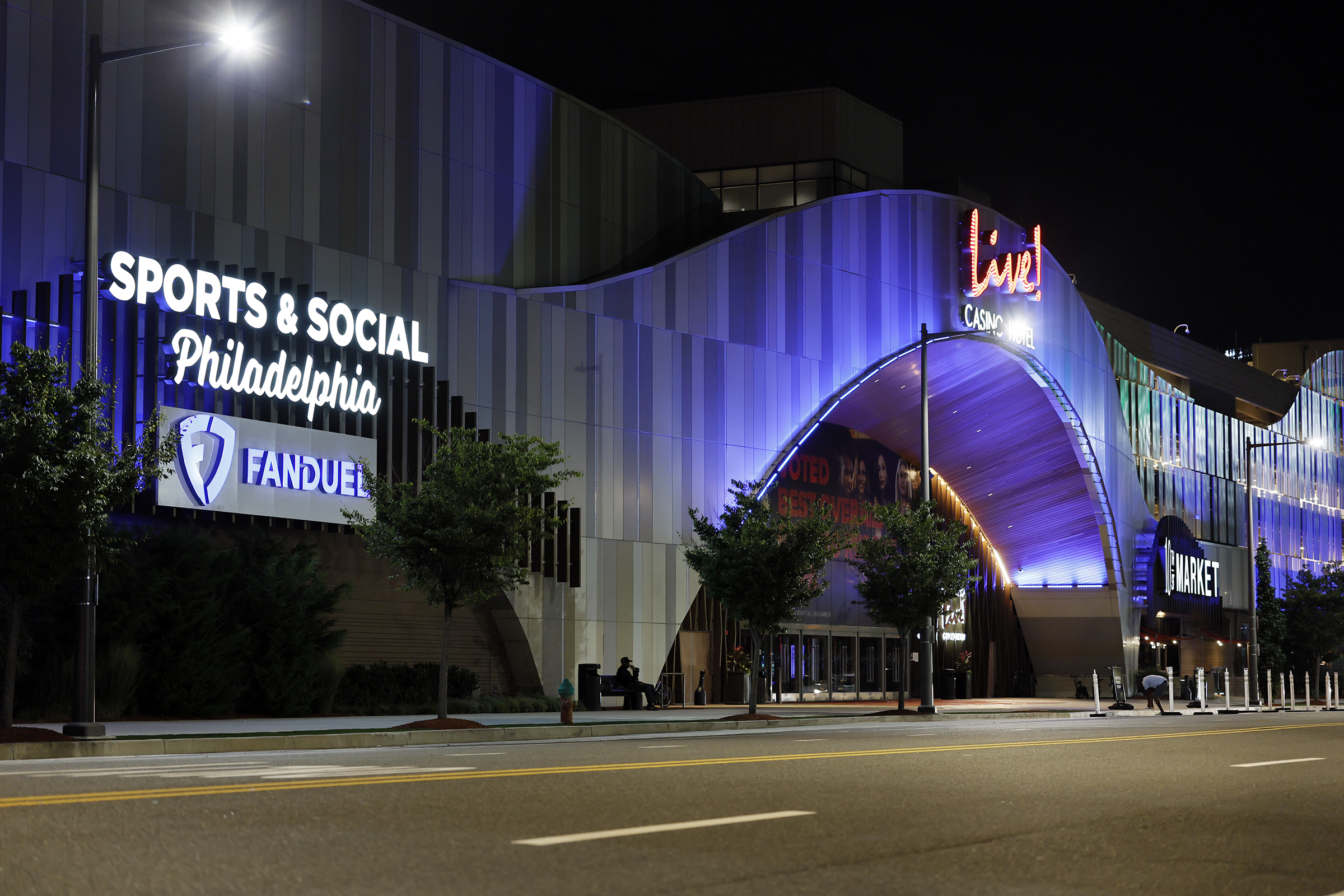
FanDuel’s logo can be found next to the entrance of Live! Casino & Hotel, which sits about a block north from Citizens Bank Park in South Philadelphia.Elizabeth Robertson / Staff Photographer
The institute said that median account balances of households that participated in online betting was 59% of those that did not, but didn’t include demographic or other details about those customers.
“There’s something called the gambler’s fallacy, which basically goes like this: ‘If I keep doing this, I have to win,’” said Webber, who conducts inpatient rehabilitation at Canon’s 110-acre campus in Berks County.
“From a biological standpoint, it’s a dopamine rush, so even if I’m losing, I’m getting a reward. It’s the excitement of the chance — ‘I might get this. And VIP [rewards] are going to make me feel like the man.’”
In June, researchers from West Virginia University and the University of Oviedo published a study suggesting that the legalization of sports betting could lead to a 3% increase in the annual divorce rate. “Effects emerge gradually and are driven almost entirely by online wagering,” the authors wrote. (The study, which examined state and county data from 2012 to 2024, has not yet been peer-reviewed.)
A 2025 report from the Democrat-leaning Progressive Policy Institute, meanwhile, found a 36% decrease in bankruptcies between 2019 and 2024 in states that legalized online sports betting, with “no sign of a tidal wave of bankruptcies or consumer credit downgrades.”
That same year, The Lancet Regional Health-Europe published a study that showed suicide was the leading cause of death among 6,899 patients in Norway who had a gambling disorder between 2008 and 2021.
Though those patients had a higher suicide risk than the general population, the researchers found that gambling addiction had a lower suicide risk than substance use disorders, alcohol dependence, psychotic disorders, or mood disorders.
None of that research, though, captures how easily even a new gambler’s experience can escalate from a fun diversion to a life-altering obsession.
Hiding his online gambling addiction from those closest to him left John Field feeling like he was living a double life, and ultimately drove him to lose a long-term relationship. Tyger Williams / Staff Photographer
A double life
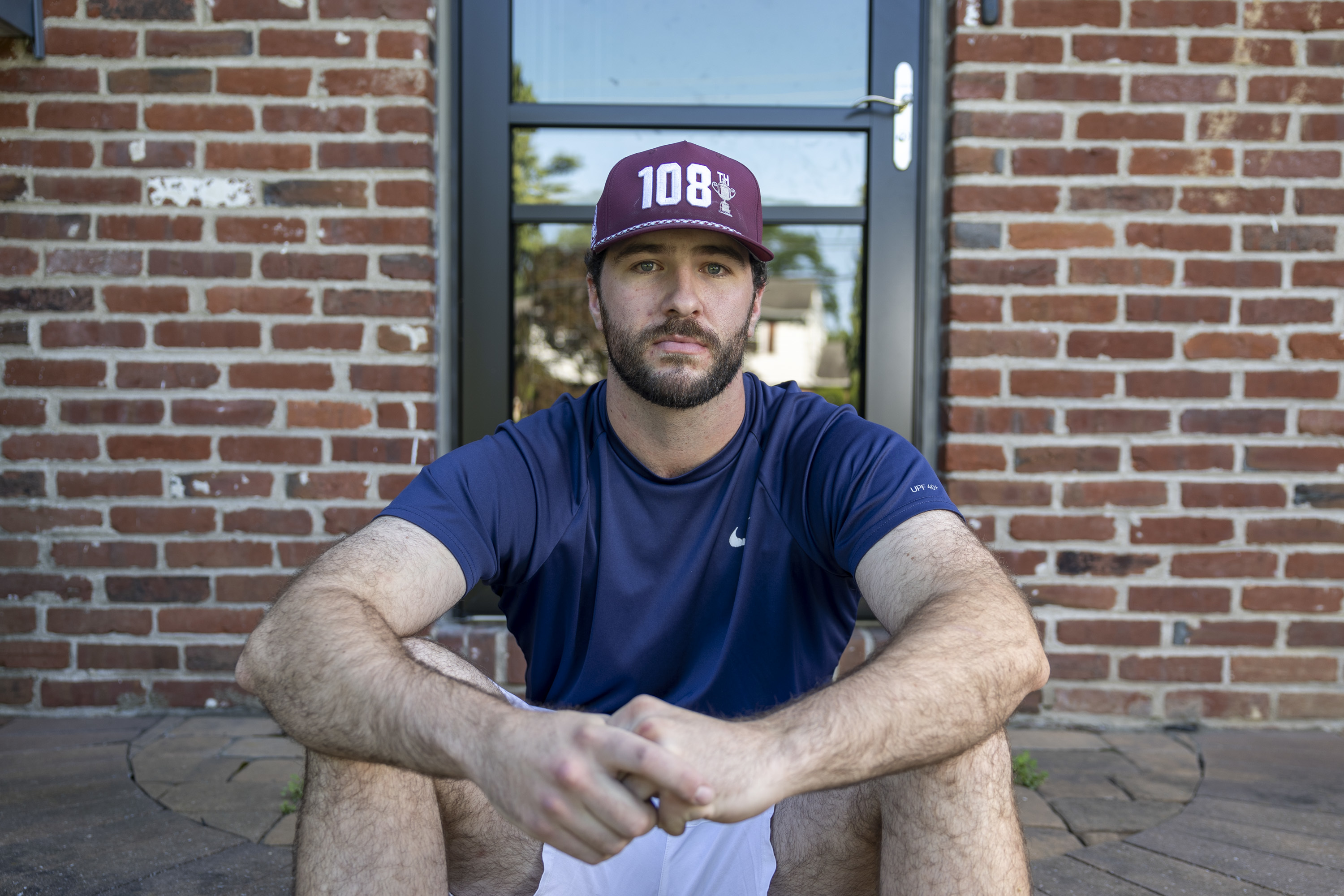
When John Field turned 21, he opened accounts with DraftKings and FanDuel, and occasionally placed football parlay bets when he hung out with friends. Eventually, he tried the apps’ casino offerings, and became hooked on slots — 20 cents a spin at first, then 50 cents, then 5 bucks, then 10 dollars.
He gambled nonstop at a warehouse job that he held in Clifton Heights, but hid this newfound compulsion from those closest to him. He felt like he was leading a double life.
“Have you ever seen the show Severance?” Field asked, referring to the Apple TV sci-fi show in which office workers live separate lives in and out of work. “It was just like that. I had to basically pretend like I was a completely different person.”
One person knew the truth: Field’s mother, Debbie. She still had access to his bank account from when he was younger and observed that Field was regularly moving money to a FanDuel account.
“It started off slow,” Debbie said, “and then every year, it got worse.”
Field recognized that he had a problem, and said he tried several times to close his FanDuel or DraftKings accounts. But then he felt a maddening urge to start gambling again.
“Every time I’d run out of money, I’d see an ad, like, ‘Deposit 50 bucks and get $500 in casino credit.’ So when I was down real bad I’d download the other apps,” Field said. “I knew they’d give me a bunch of money to start with.”
His phone eventually held apps from Fanatics, BetRivers, Borgata Online, BetMGM, Caesars Palace Online, SugarHouse, Stardust, and Bally Bet. Some weeks, he gambled away nearly his entire paycheck.
Debbie Field saw that her son’s bank account was plunging into negative figures, and accruing overdraft fees. She implored him to disclose his addiction to his longtime girlfriend. The couple had started dating when they were sophomores at Penncrest High School in Middletown, Delaware County, and were planning to get an apartment together.
“I was like, ‘John, you can’t move in with your girlfriend without telling her. You tell her, or we will,’” Debbie recalled. “He was petrified.”
Field told his girlfriend about his struggles with addiction. The couple forged ahead and moved in together in February 2025.
“I figured we got our own place, I got rent, bills, I really should probably stop this,” Field said. “And it just, again, got way worse. Because then when I lost money, I was like, ‘Holy s—, I have to pay rent, I have to get groceries.’”
He chased his losses, diverting more money into gambling apps.
After losing his apartment, Field moved in with his parents and began undergoing treatment for gambling addiction. He said he still encounters numerous daily ads for gambling on social media. Tyger Williams / Staff Photographer
By March 2025, Field needed his parents to pay his rent. Two months later, he and his girlfriend broke up. Heartbroken, he moved back in with his parents, and agreed to participate in online therapy sessions through ETHOS Treatment.
Field’s therapist, Phil Waibel, said there is so much demand for gambling addiction treatment, he now has a waiting list for his group sessions. “It’s taking the hearts and minds of young people — especially young men — at an astonishingly high rate,” he said.
Waibel has treated patients who discovered that it was difficult to escape gambling marketing and push notifications even when they attempted to quit.
“They’re seeking out even those people who have gone out of their way to block or delete contacts, to self exclude or unsubscribe from email lists,” Waibel said. “They continue to be bombarded, which would indicate a predatory or extremely offensive stance, to loop people back in as soon as possible.”
Field, 27, said he now feels like his addiction is under control. He excluded himself from all gambling activities in Pennsylvania, secured a union job with a construction company, started going to a gym, and began repairing relationships with friends and family members.
“Every aspect of my life is significantly better,” he said.
Yet gambling isn’t out of the picture entirely.
Recently, Field used Venmo to send some money to his sister, and faced a pop-up ad from a casino app that offered a $1,000 deposit match and up to 1,000 spins.
“Sign up today,” the message read.
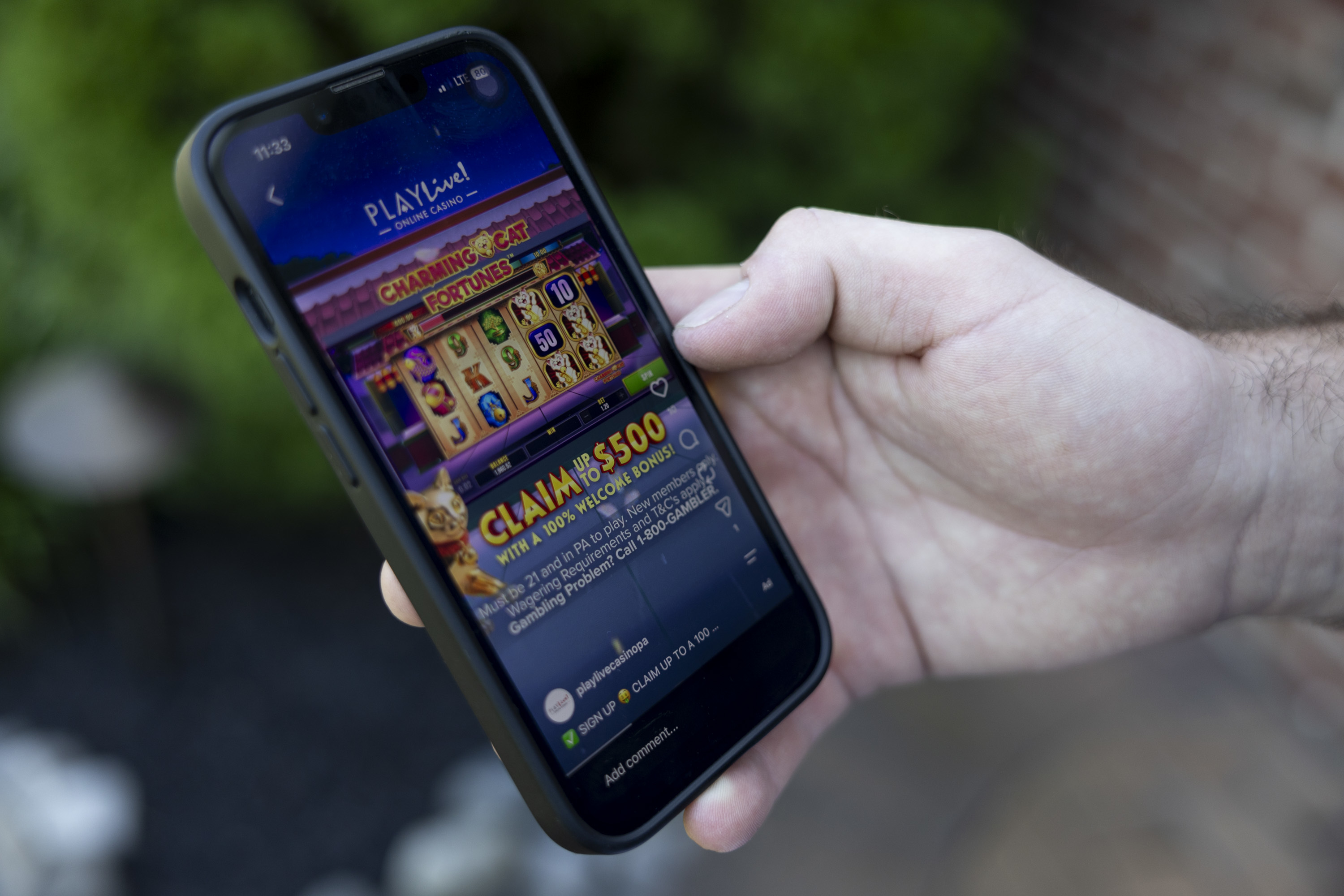
After opening his Instagram app, he encountered ads for Charming Cat Fortunes — a slots game from PlayLive! Casino whose motto is “Stay entertained 24/7” — in addition to ads for a gold digger-themed slots game from betParx.
Field estimates that he sees nearly 20 gambling ads across various social media platforms each day. “I’d be having a good day, not thinking about it,” he said, “and then boom, you’d see an ad, and feel that little itch, and you just kind of got to get rid of it.”
He now considers the barrage of advertising to be a form of motivation.
“It’s like, ‘F— these guys.’ All they’re trying to do is shove it down my throat,” he said. “It’s just insane how inescapable it is.”
The Inquirer will continue to report on issues related to the growth of gambling addiction — among teens and adults — across Pennsylvania. If you, or someone you know, wants to speak with a reporter, please contact David Gambacorta or William Bender at dgambacorta@inquirer.com and wbender@inquirer.com
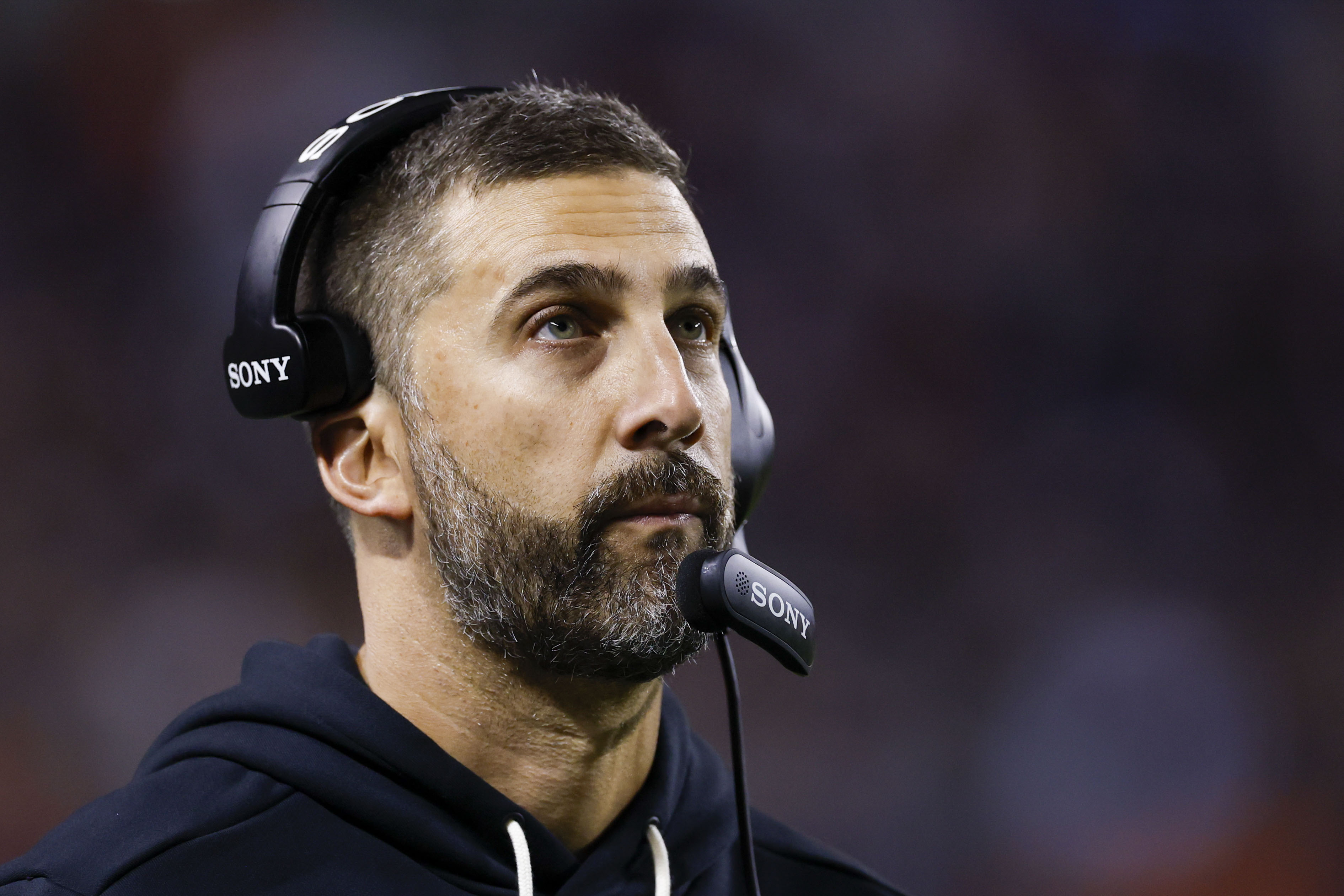
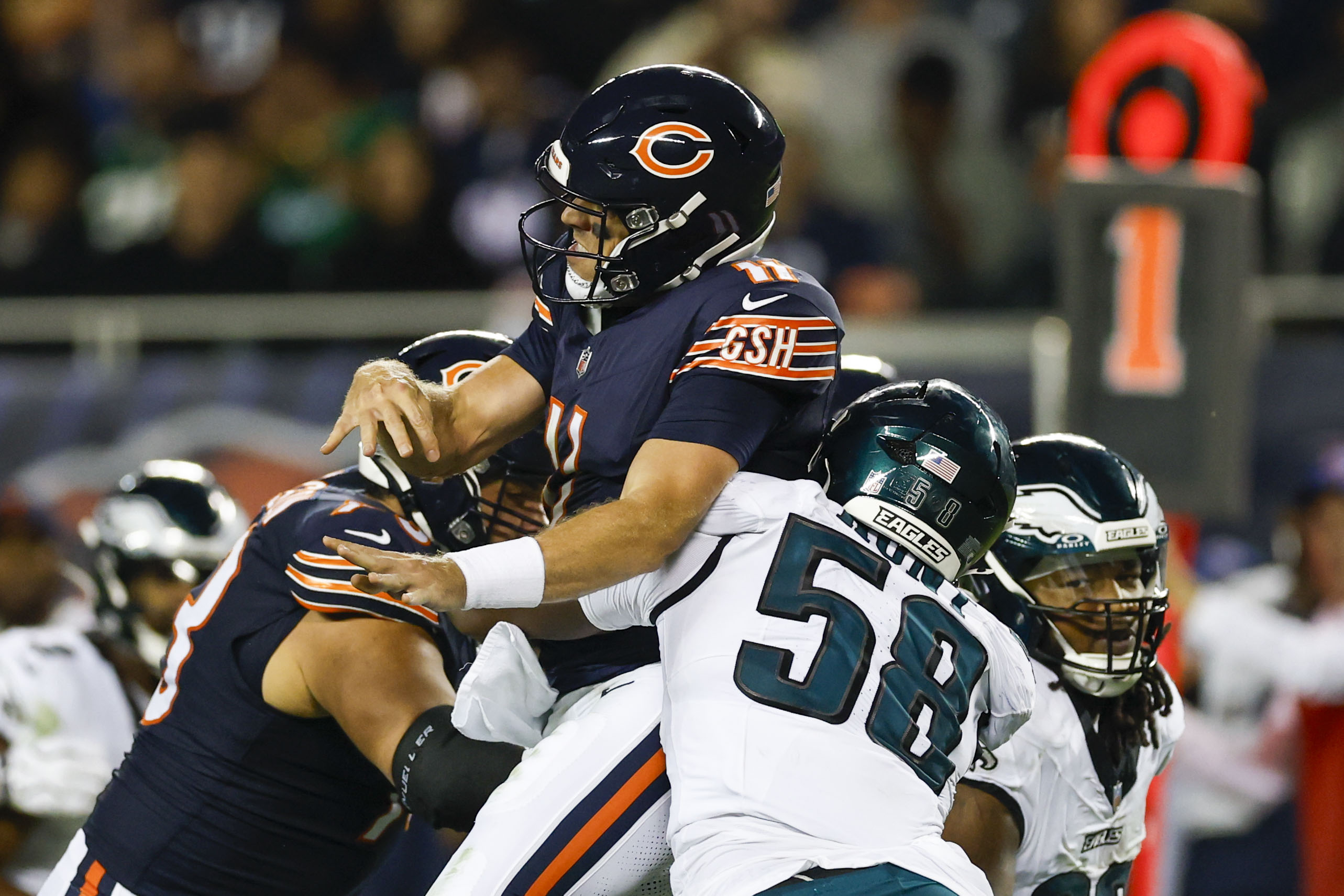
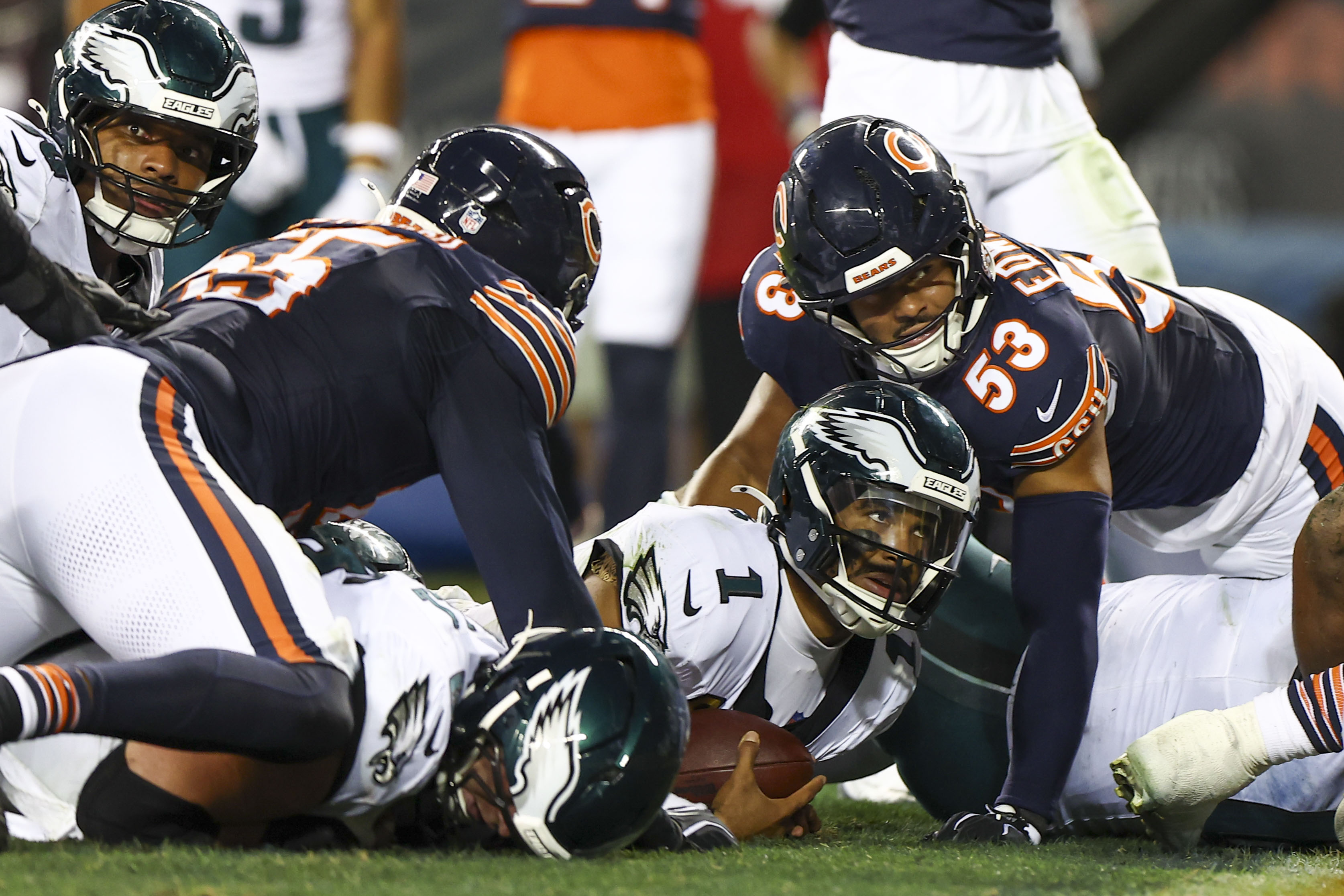
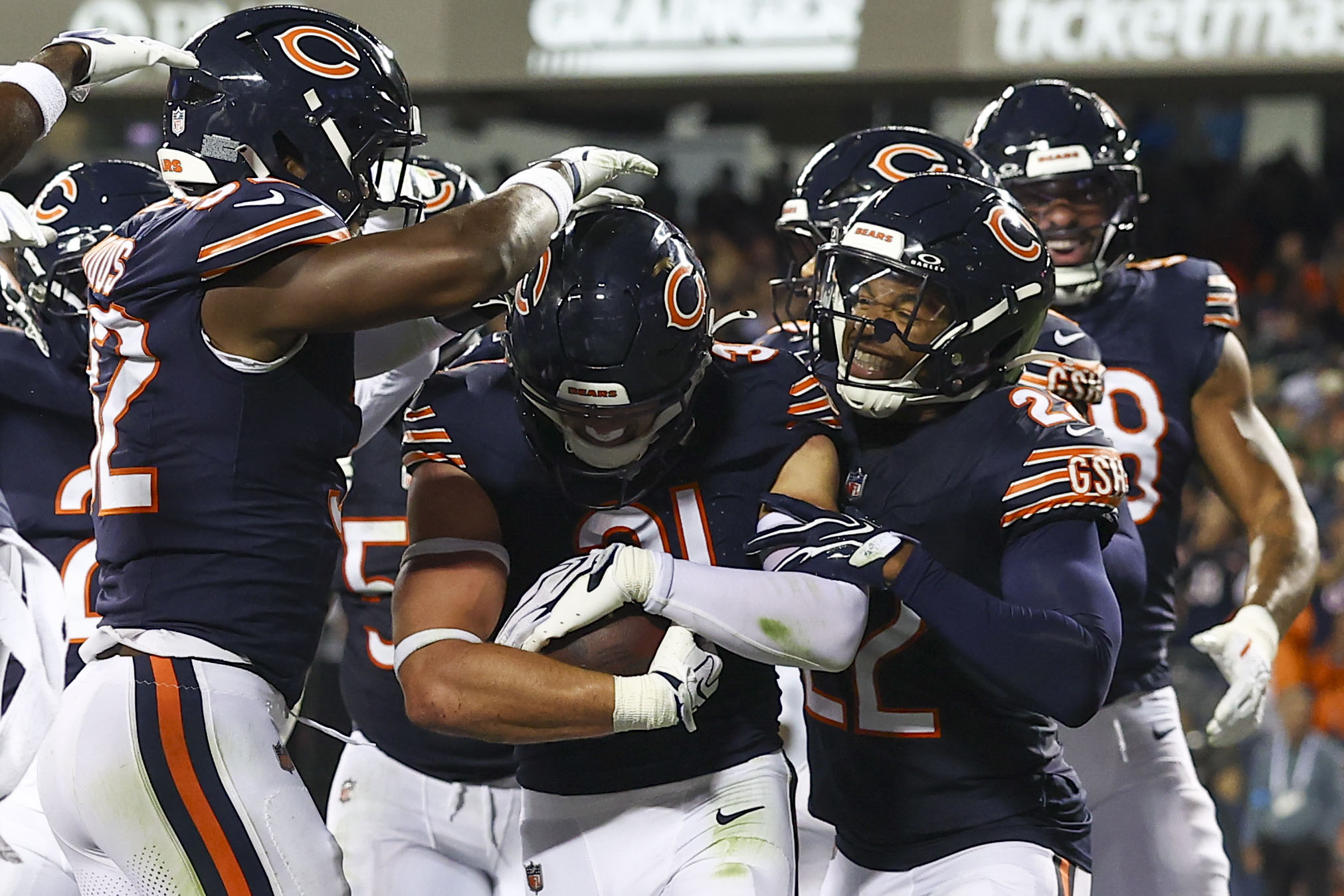
One more time, Nick Sirianni had spent several days seeking shelter from a storm whose clouds he had created. The Eagles’ 27-7 loss to the Bears last Monday had been a greatest-hits collection of the flaws his critics cite whenever they want to make a case that he’s the luckiest head coach in the NFL, that Howie Roseman’s brain and one of the league’s best rosters often save Sirianni from himself.
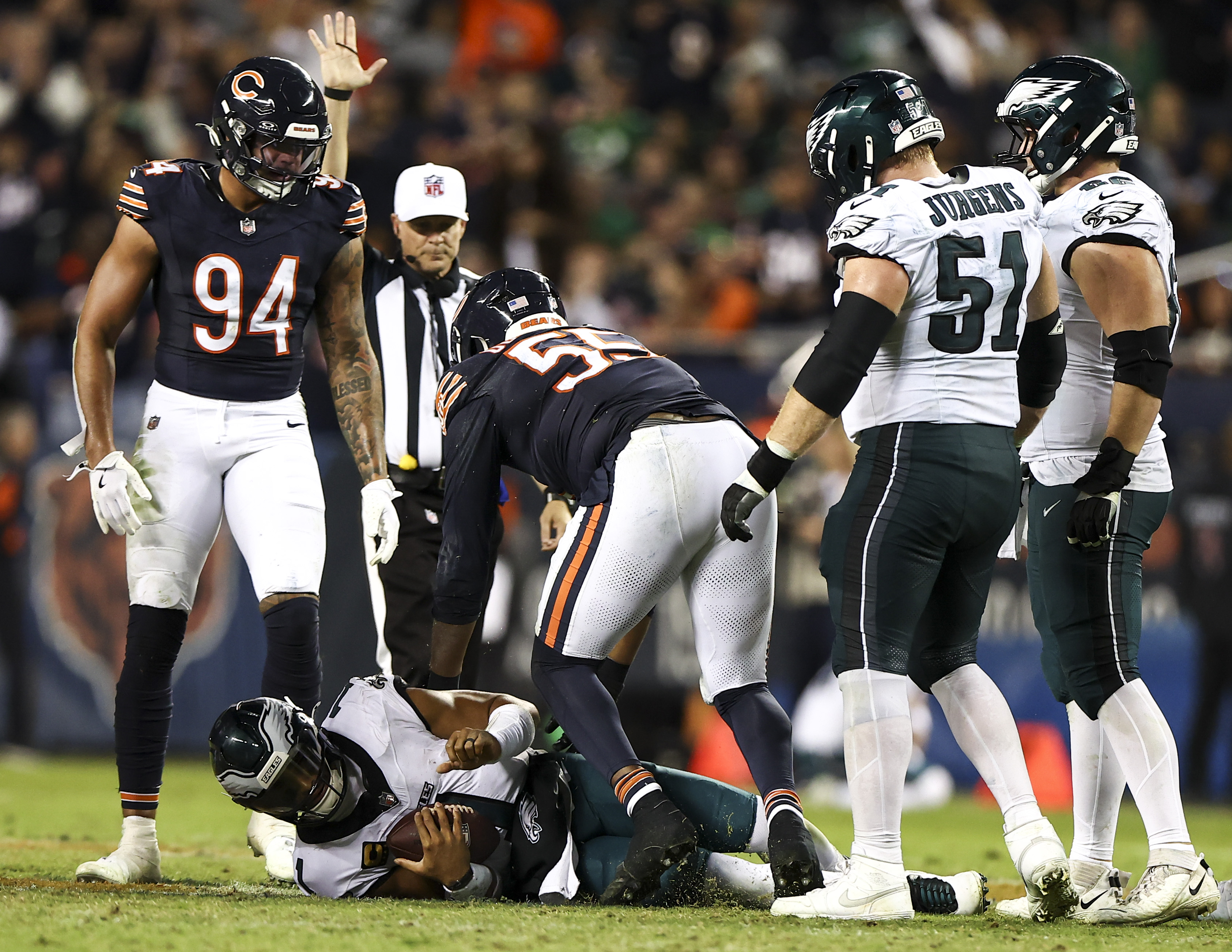
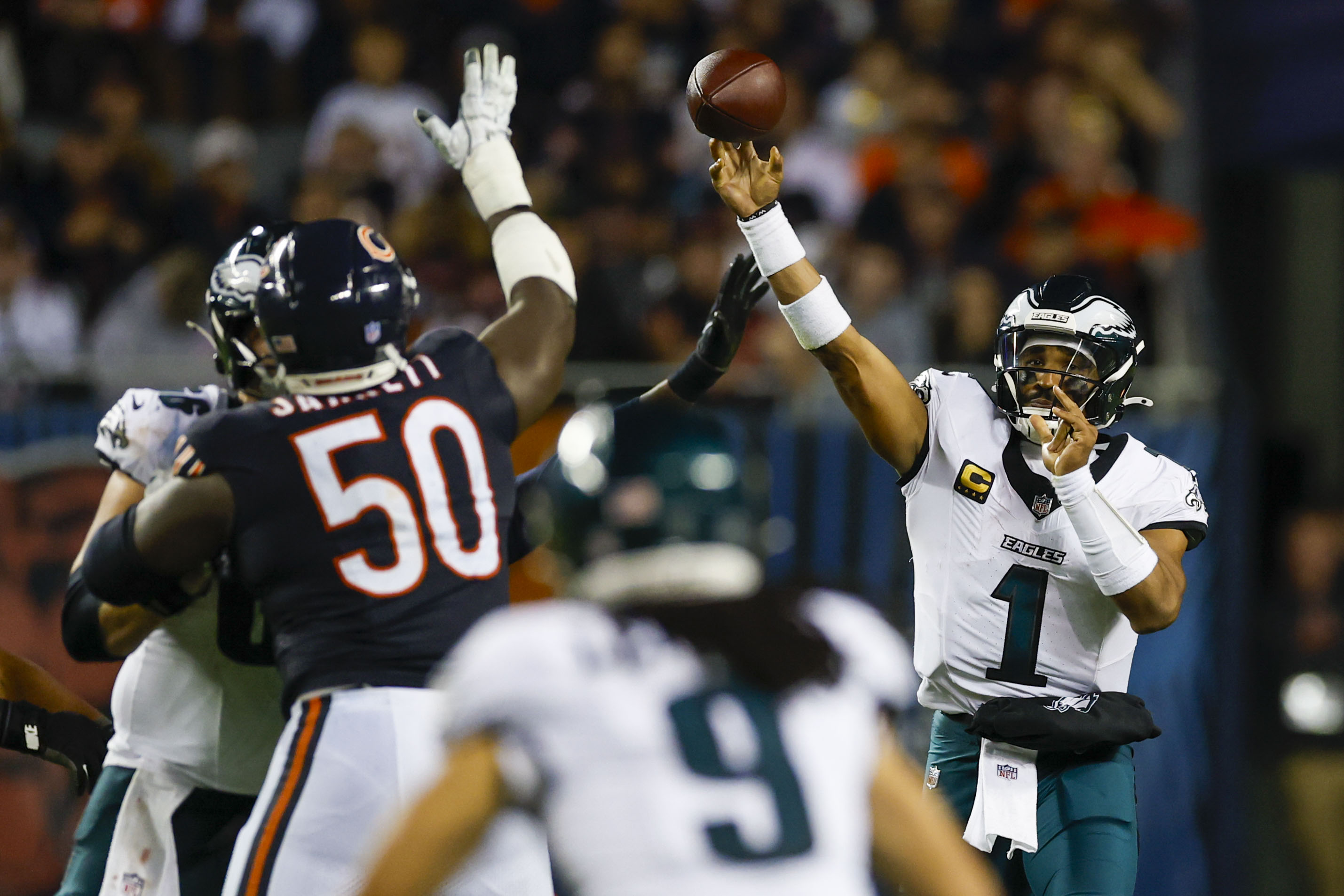
He had screamed an obscenity at Bears linebacker D’Marco Jackson just after Jackson had sent Jalen Hurts flying near the sideline. With the Eagles down by just two scores in the third quarter, he had decided to have his offense punt on fourth-and-1, seeming to freeze in the moment once he realized the distance to earn a first down was too long for Hurts to try a quarterback sneak. His team had been unprepared and overwhelmed from the start against third-string QB Case Keenum and a defense that doesn’t exactly recall Buddy Ryan, Mike Singletary, and the ’85 Bears.
Yes, it was another one of those weeks for Sirianni, which means it’s another one of those moments for Sirianni, the kind he has faced before during his five-plus seasons in Philadelphia. From a 2-5 start in 2021 to the Eagles’ free fall late in 2023, from teetering on the edge early in 2024 to winning a Super Bowl months later, he has these inflection points when it felt as if a season — or his career — could go either way. Find a way to win, and he quiets the noise and keeps his job. Fail to stop the spiral, and people start asking what Jeffrey Lurie might be thinking.
Now here’s his latest walk on the high wire. The Eagles are 2-1 but reeling after that embarrassing loss in Chicago, missing DeVonta Smith, Zack Baun, and several other key players, and hosting the Los Angeles Rams on Sunday — a championship-caliber team that’s ticked off that it’s 1-2. The following week, they travel to London to play the Jacksonville Jaguars, who are emerging as a contender in the AFC. No one should be surprised if the Eagles end up staring at a three-game losing streak and a 2-3 record out of these two weeks, and it’s on Sirianni to make sure everything doesn’t fall apart.
“Whether you win or you lose, you go through the same process,” he said. “I read something Kobe [Bryant] said: ‘You win, great. You’ve got to get up and do the same thing. You lose, it sucks, but you’ve got to get up and do the same thing.’ …
“I know it’s boring, and you can probably say, ‘Hey, that’s just coach-talk.’ But you’ve got to have faith in the process until the process produces results in everything that you do. So business as usual this week. I have a lot of faith in all the guys in this building. That’s why they’re in this building. That’s why they’re on the team.”
Sirianni could have said the same thing in ’21, when the Eagles won seven of nine games and scratched into the playoffs, or in ’24, when they won 16 of 17 and earned the right to party in New Orleans in early February.
Those turnarounds came with strategic changes on offense, sure, and Sirianni and Sean Mannion might need to rethink their approach. But first things first: Sirianni and his players can’t allow that Bears loss to snowball into an avalanche.
“You make the corrections, but you don’t stay on it too long,” defensive tackle Moro Ojomo said. “You can’t let a team beat you twice. We’ve got to game-prep, and we’ve got a hell of a team coming in. They’re a playoff team. They’ve been a great team. So you’ve got to flush that really quick. If you don’t, you’re going to lose twice on the same thing. You’ve probably got 24 hours to deal with it. That’s it.”
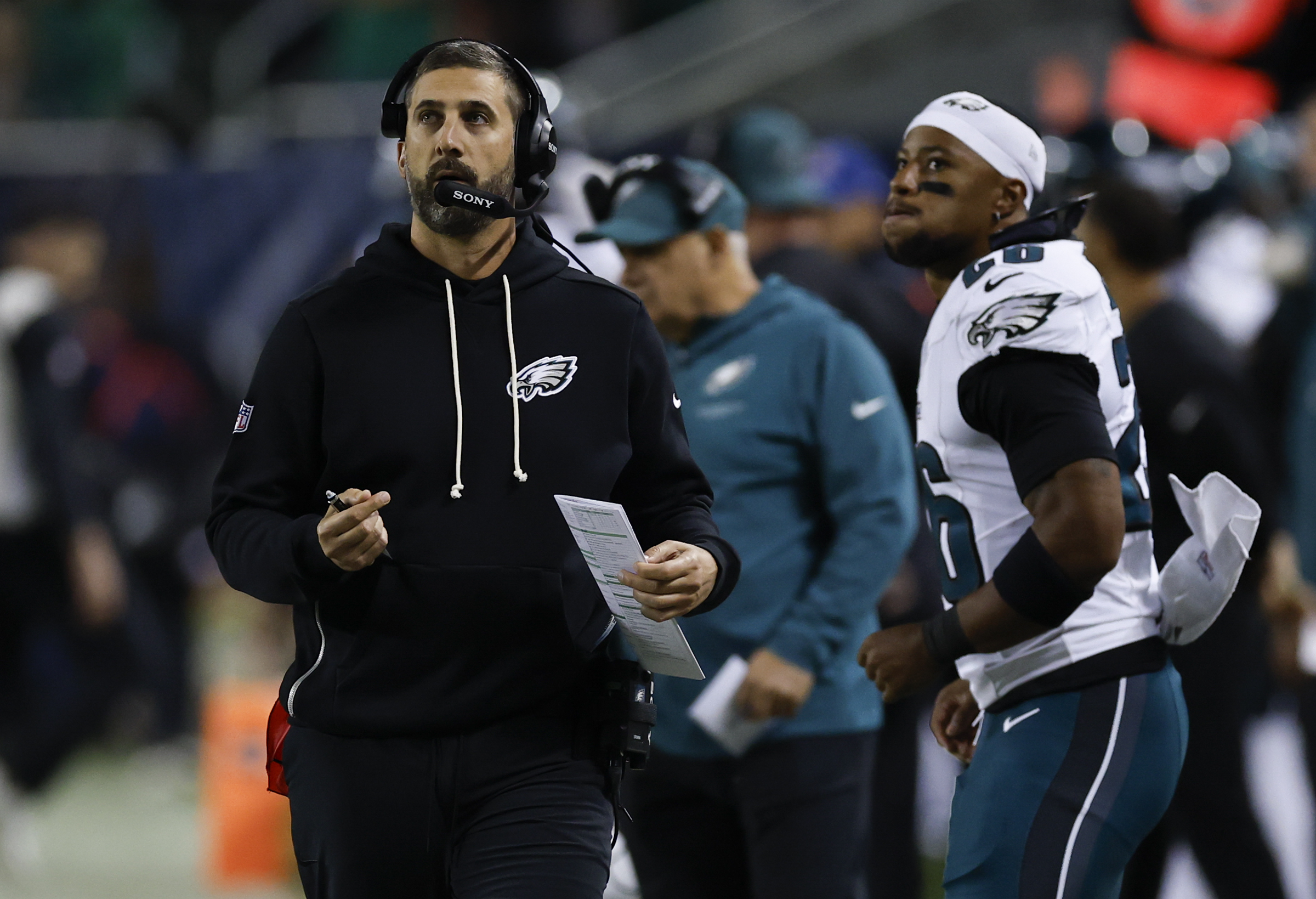
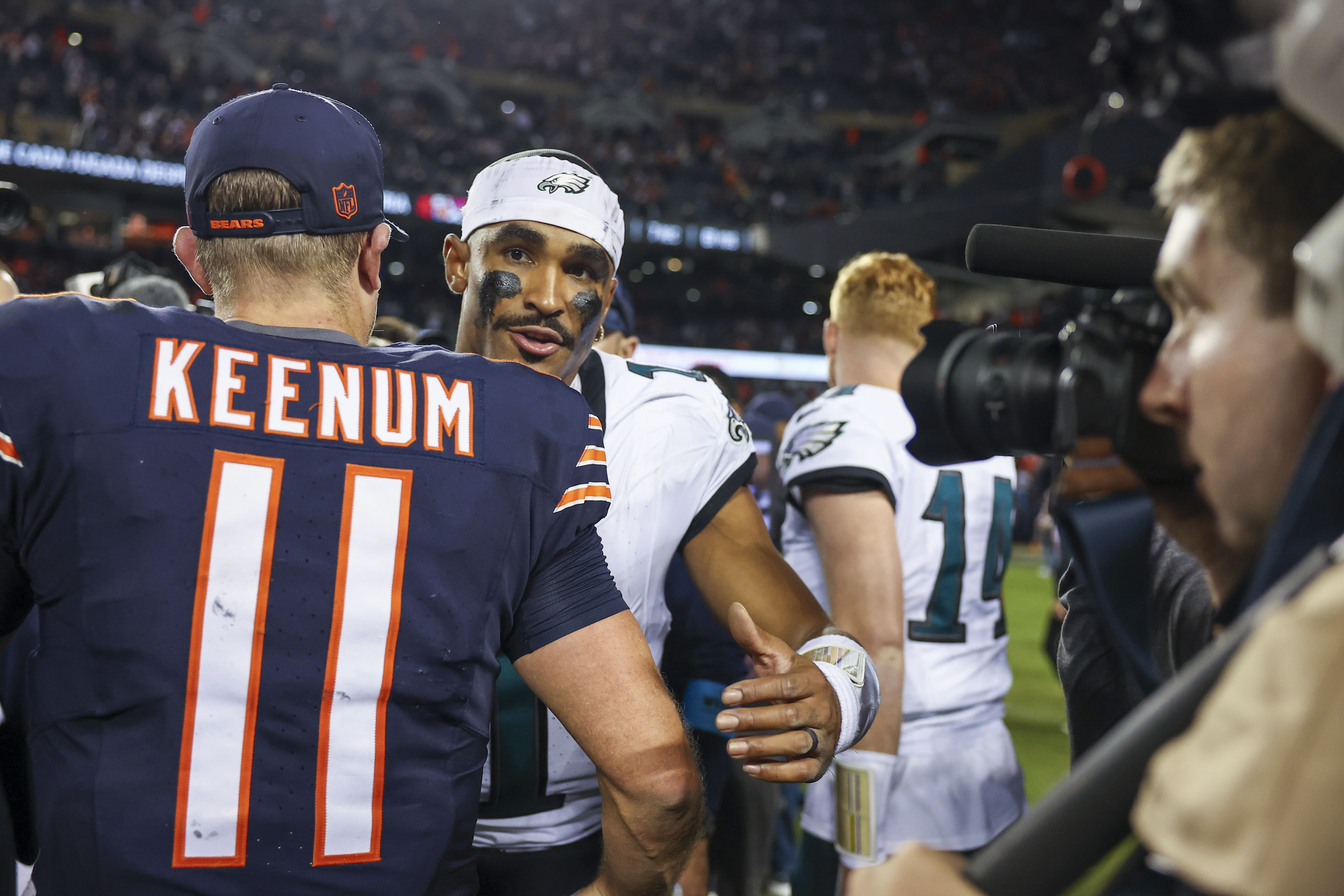
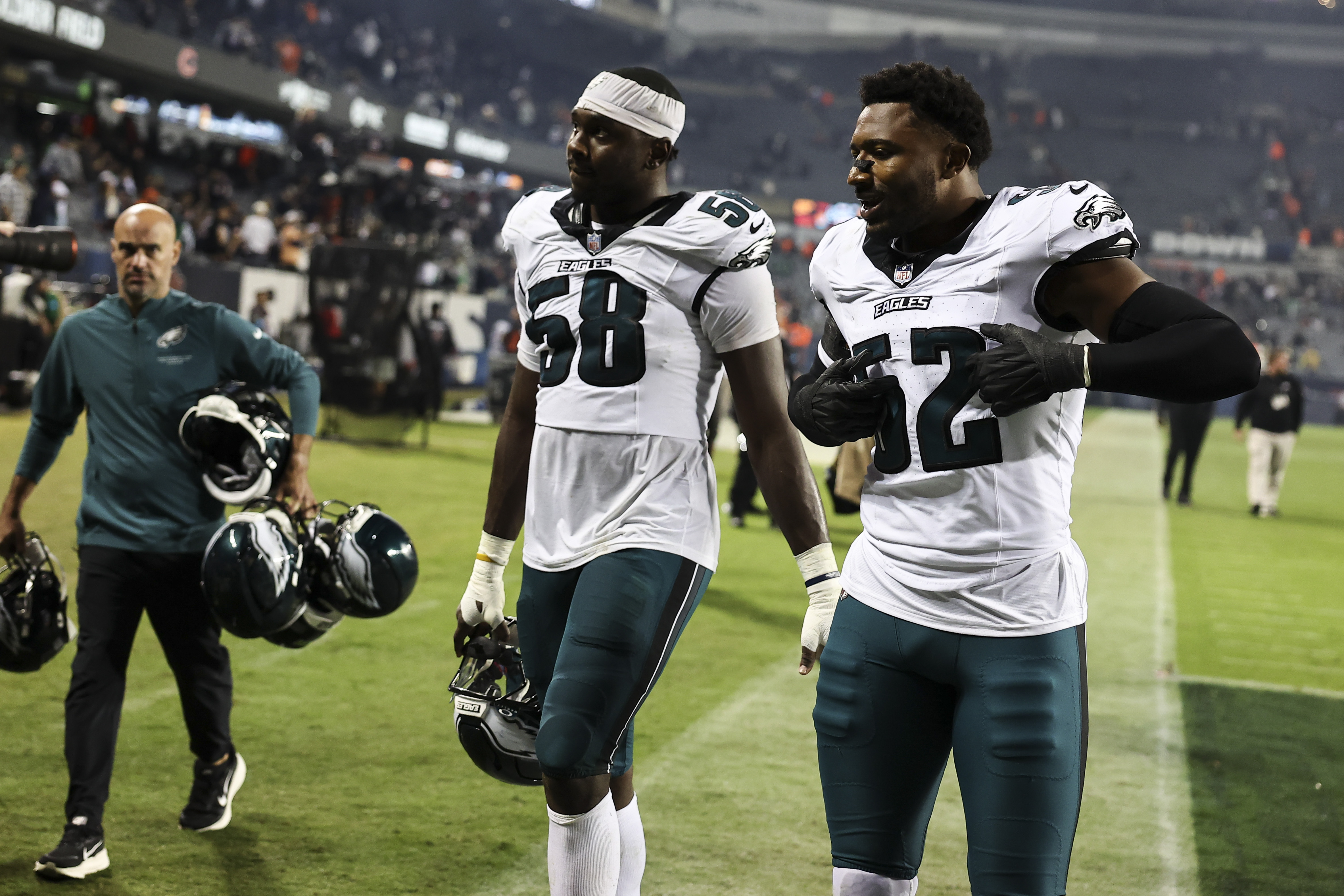
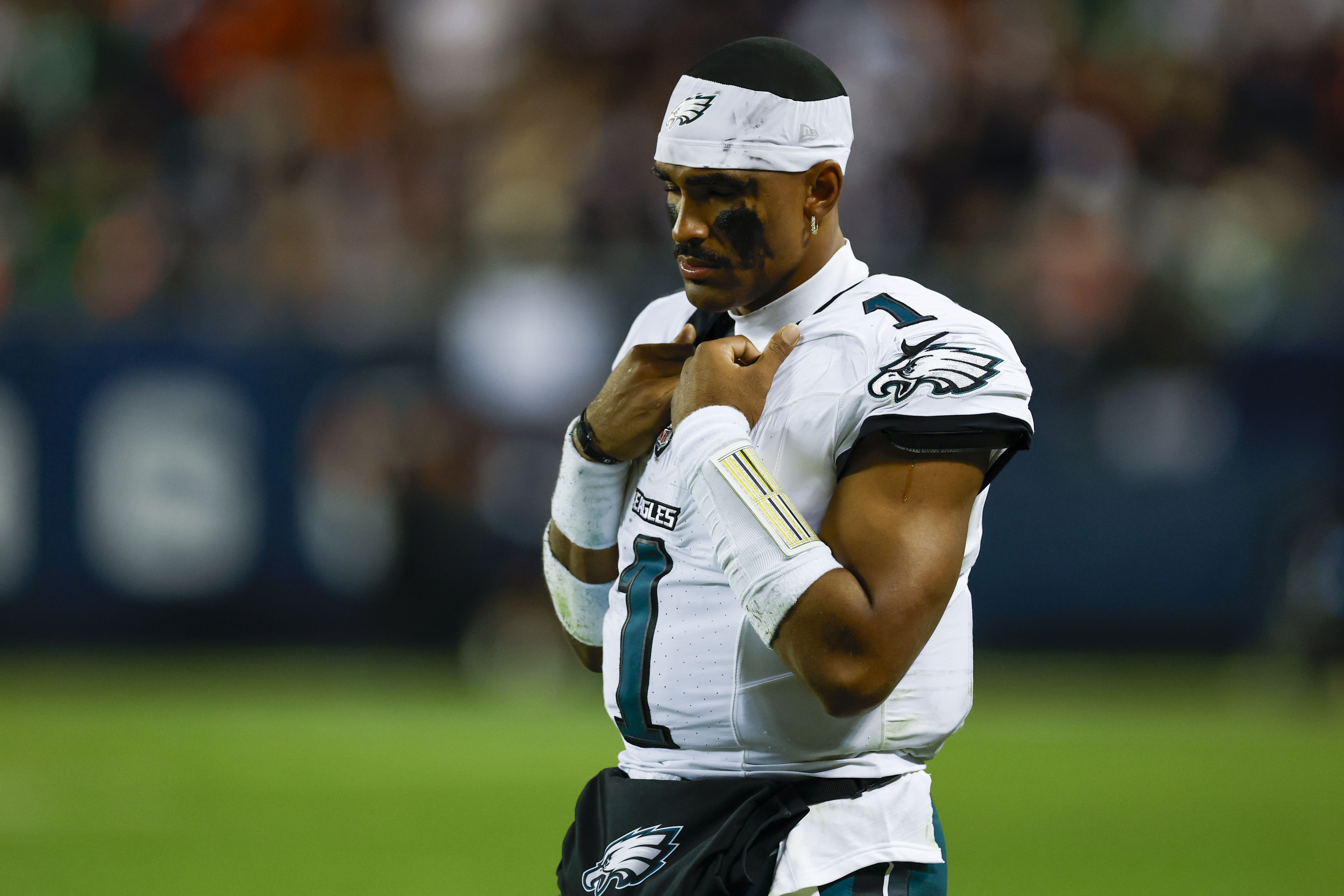
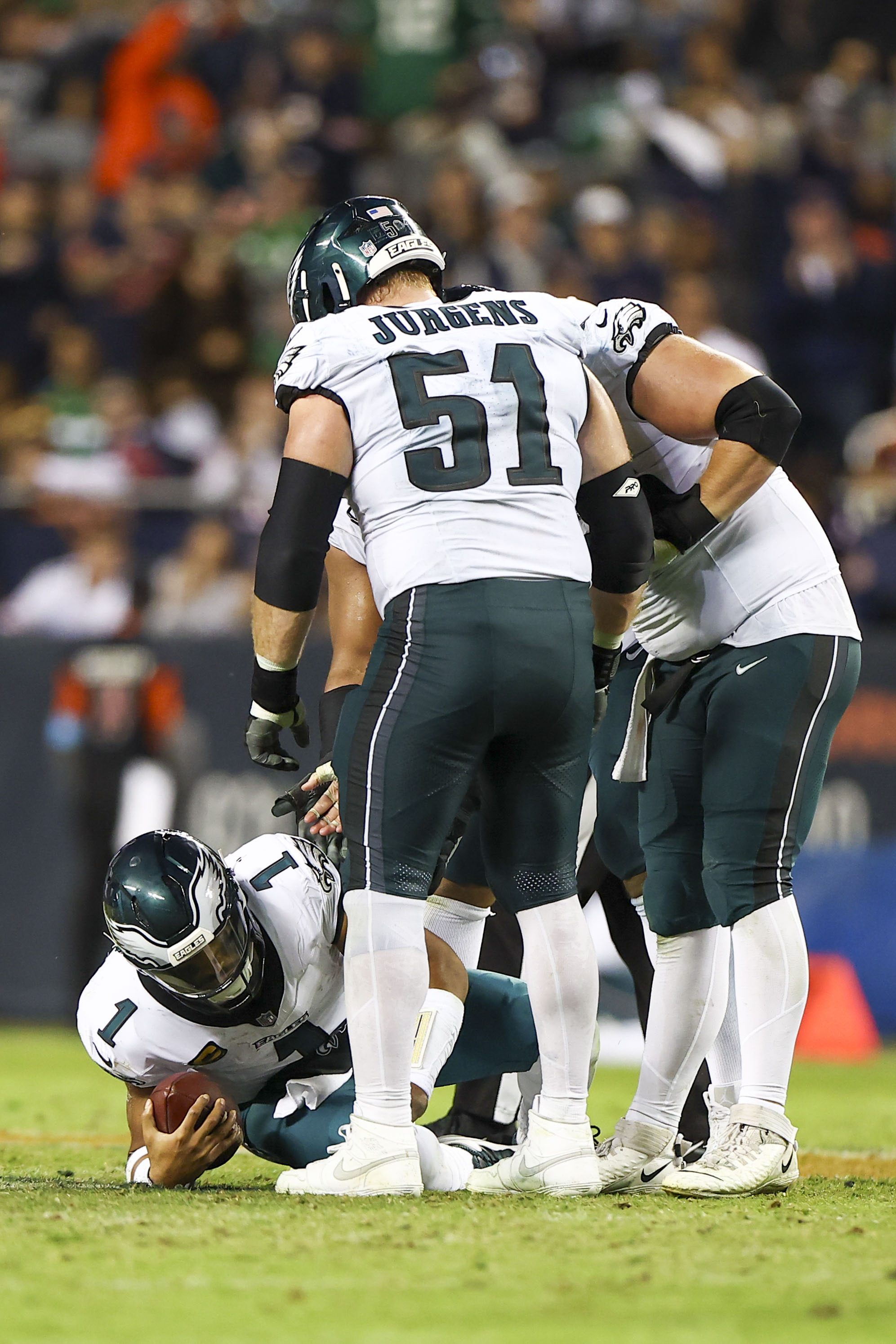
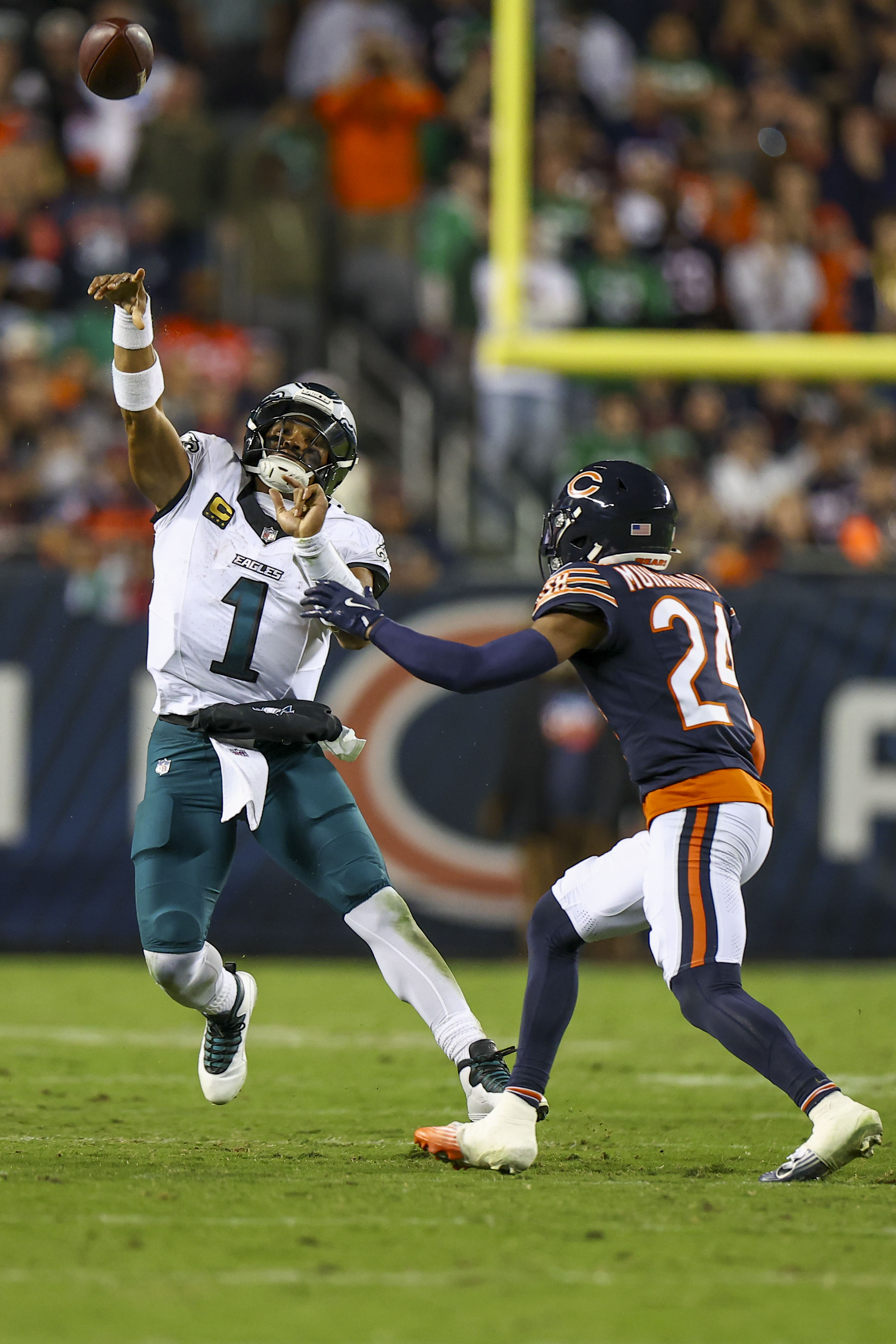
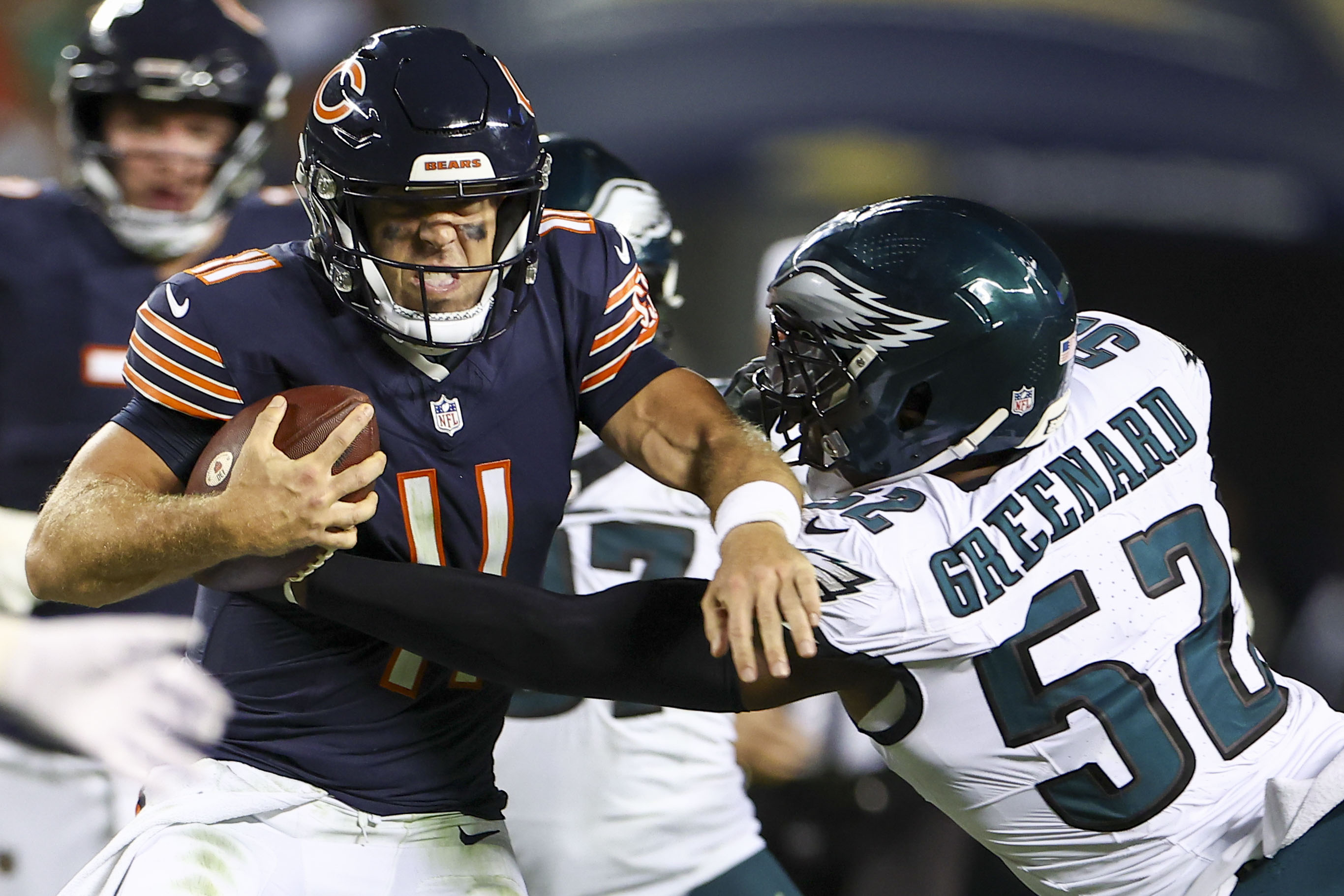
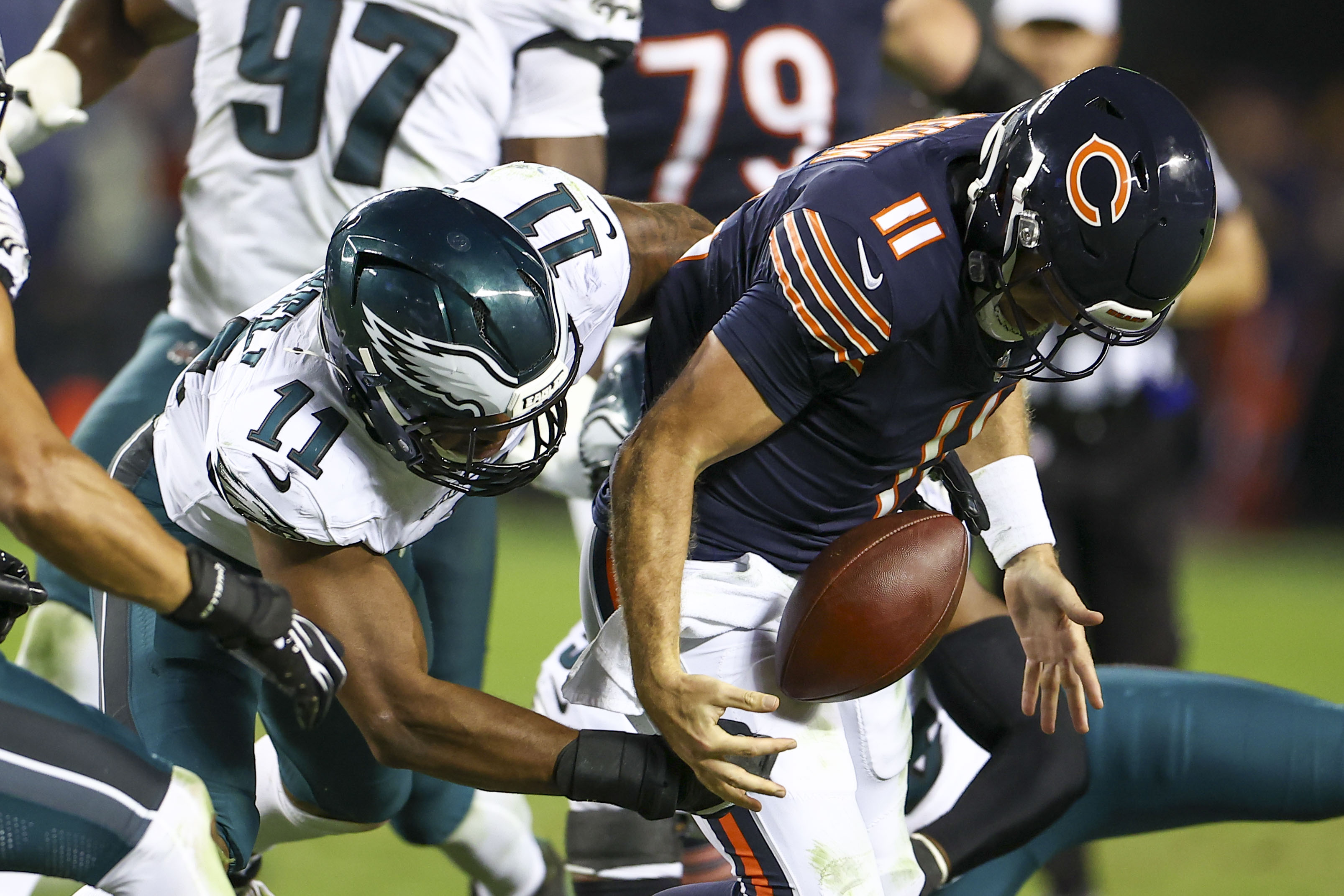
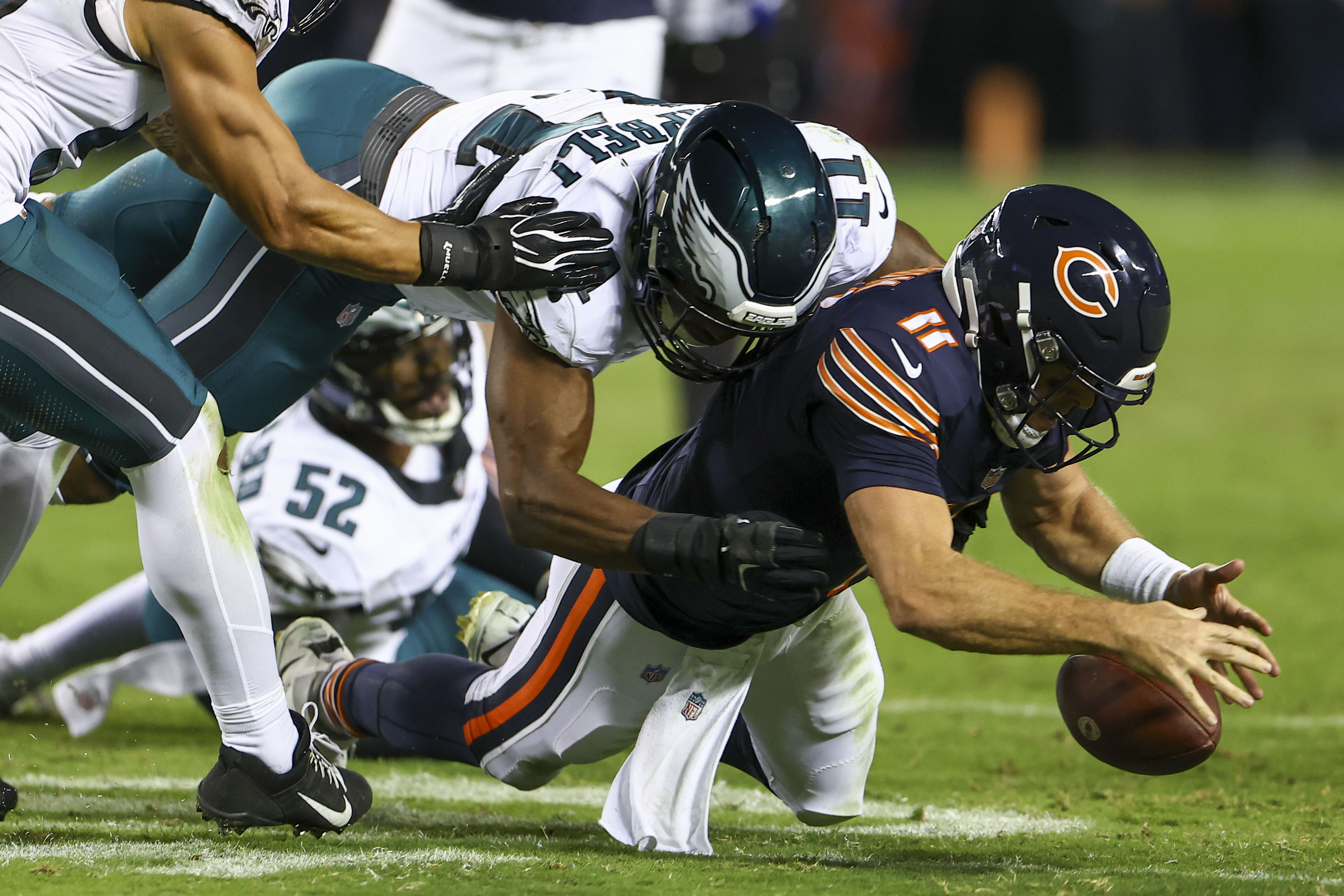
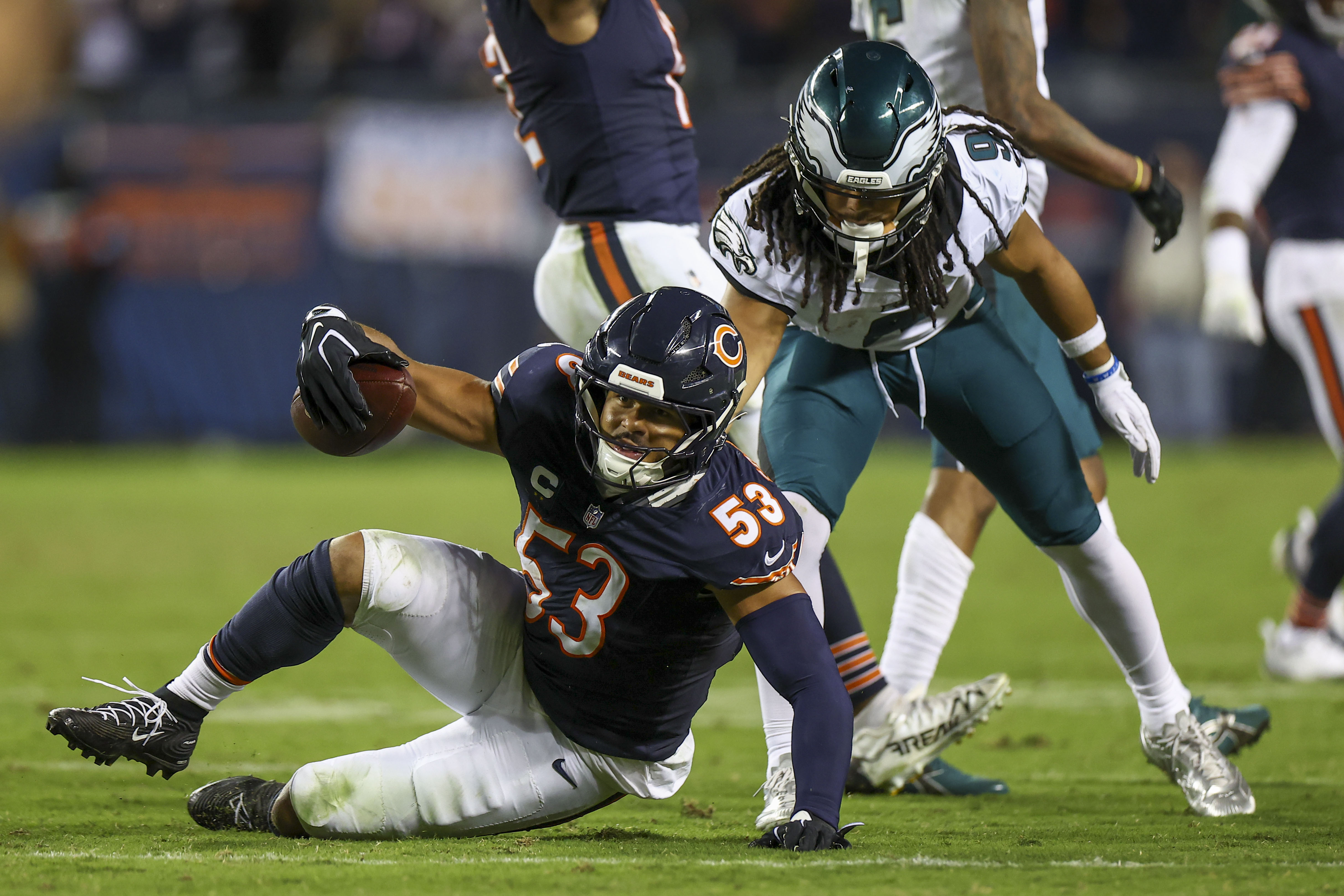
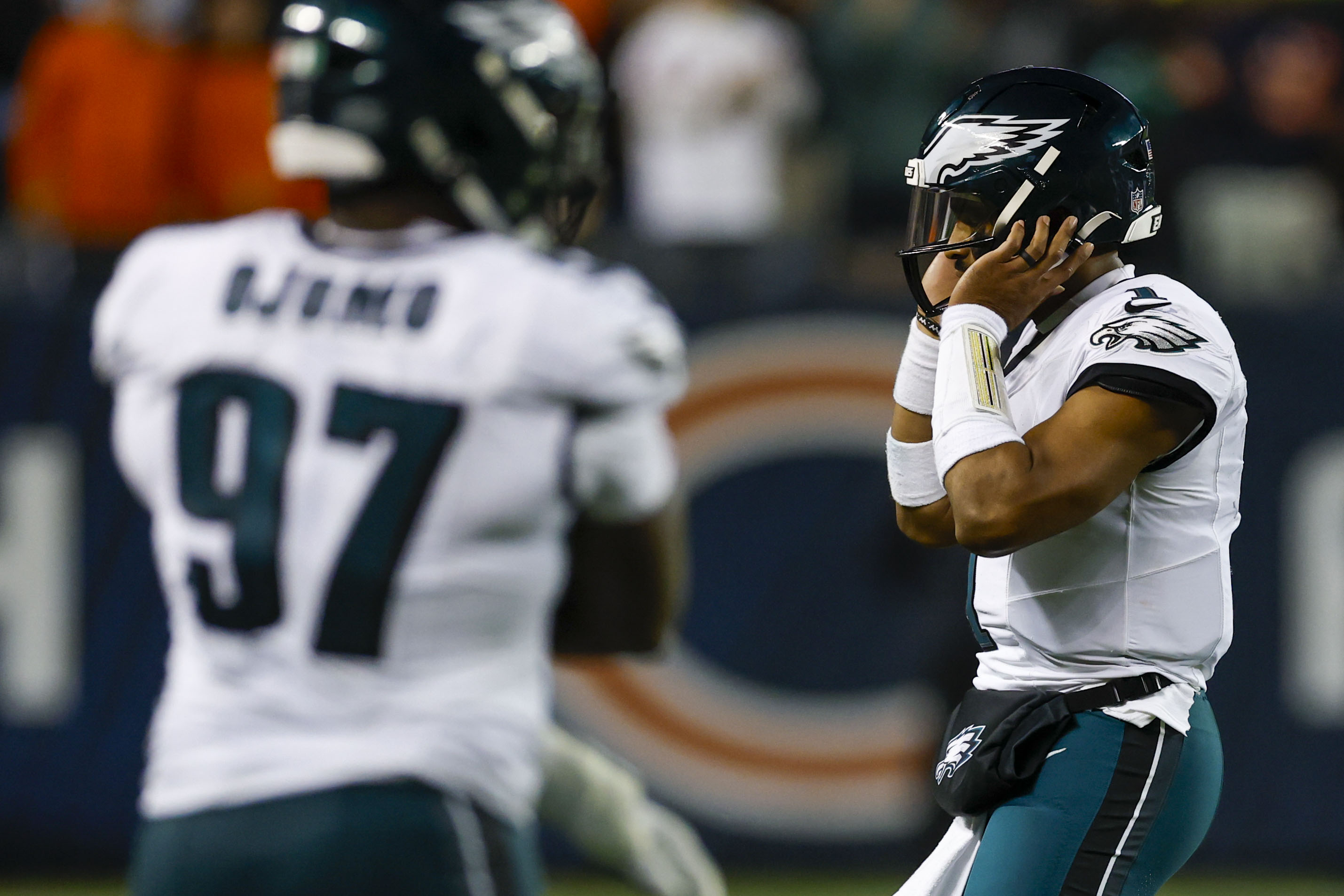
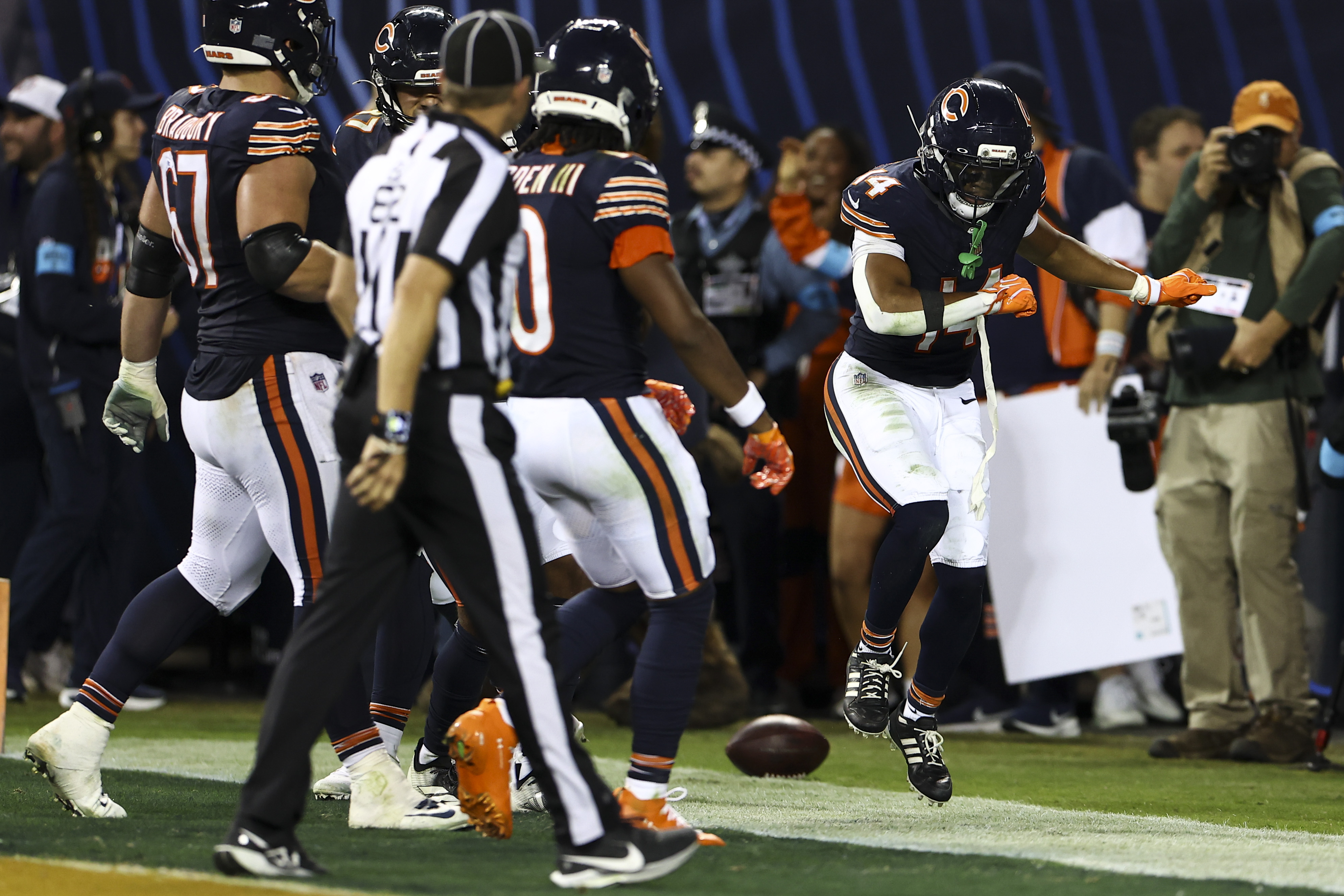
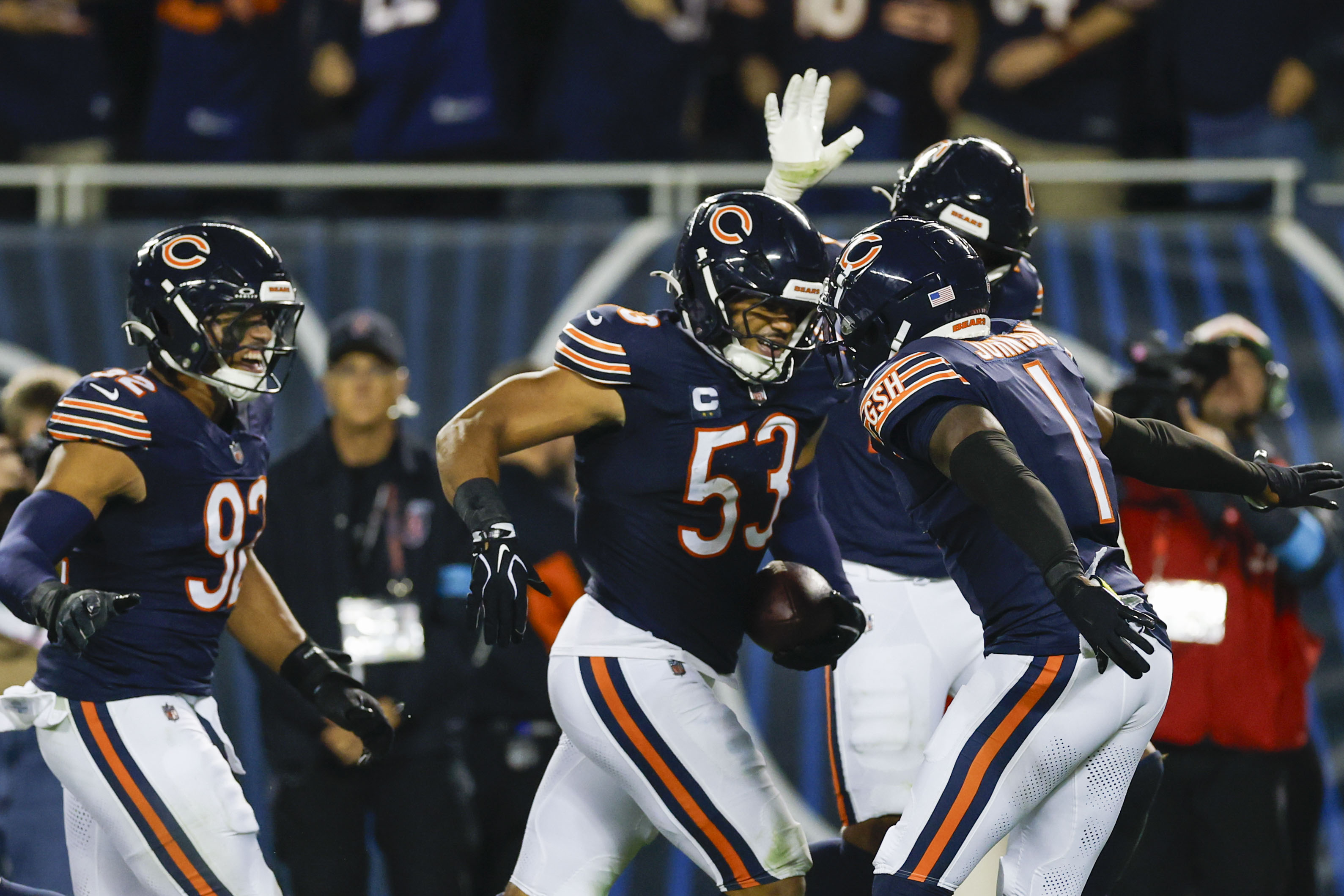
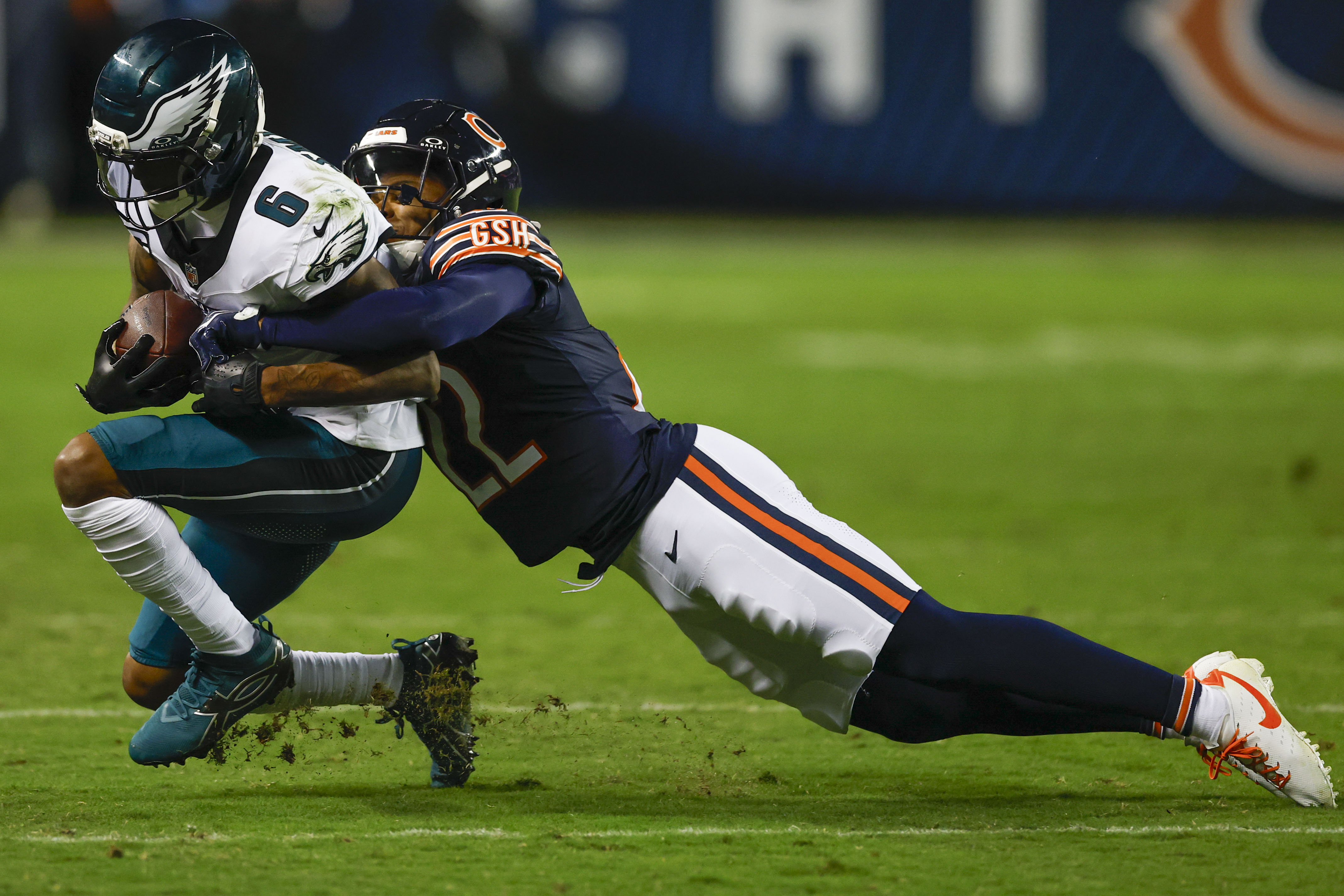
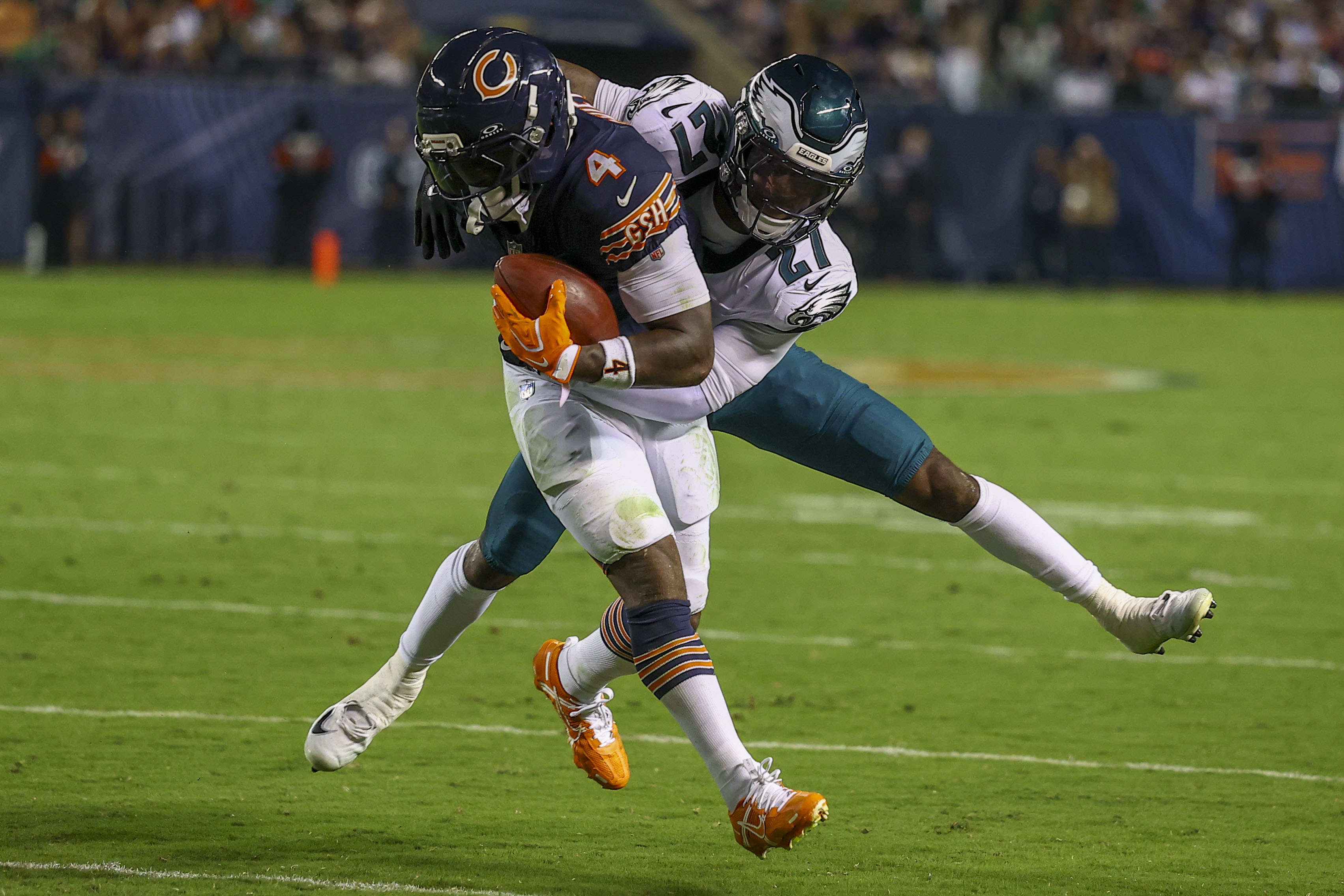
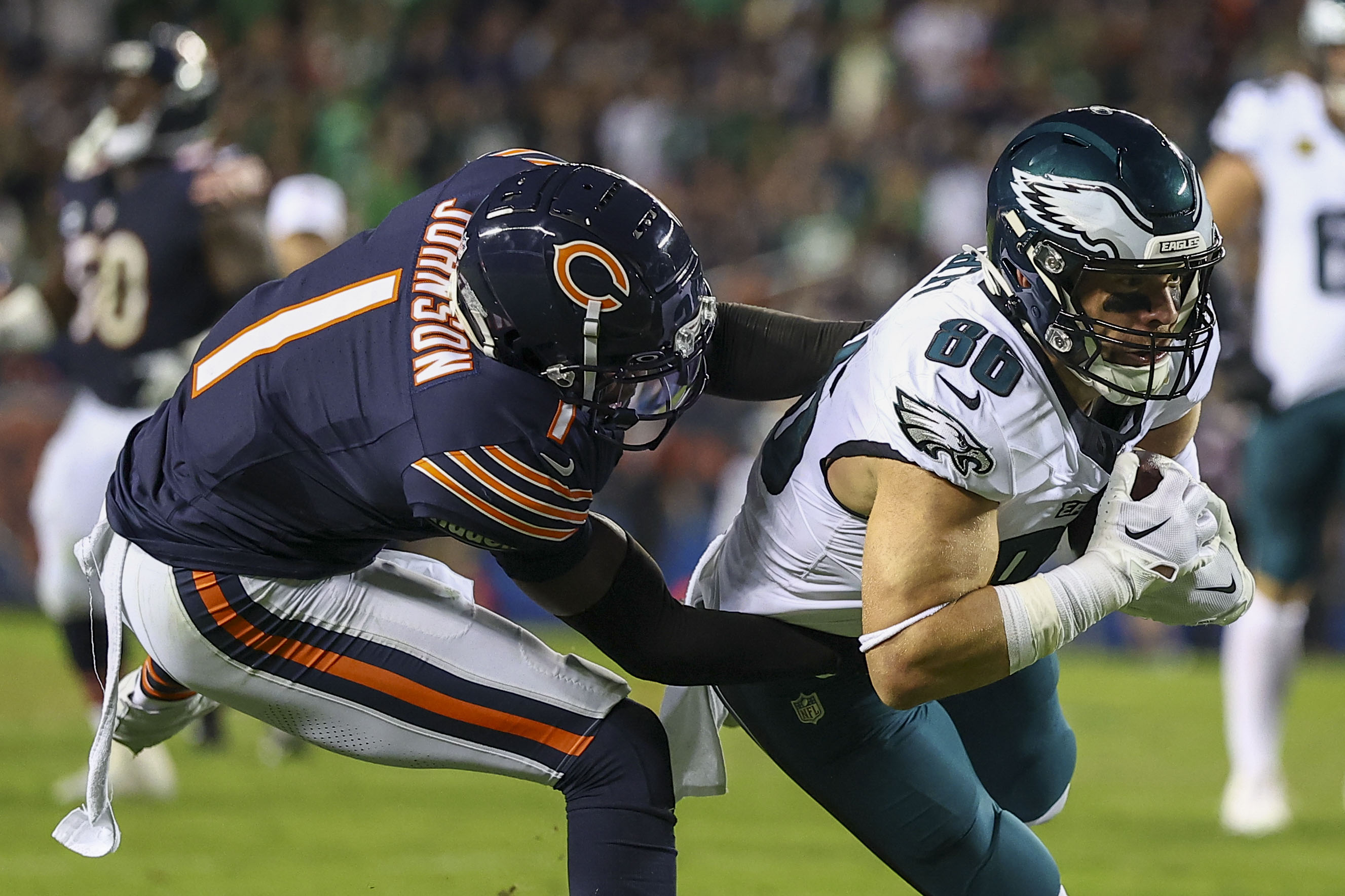
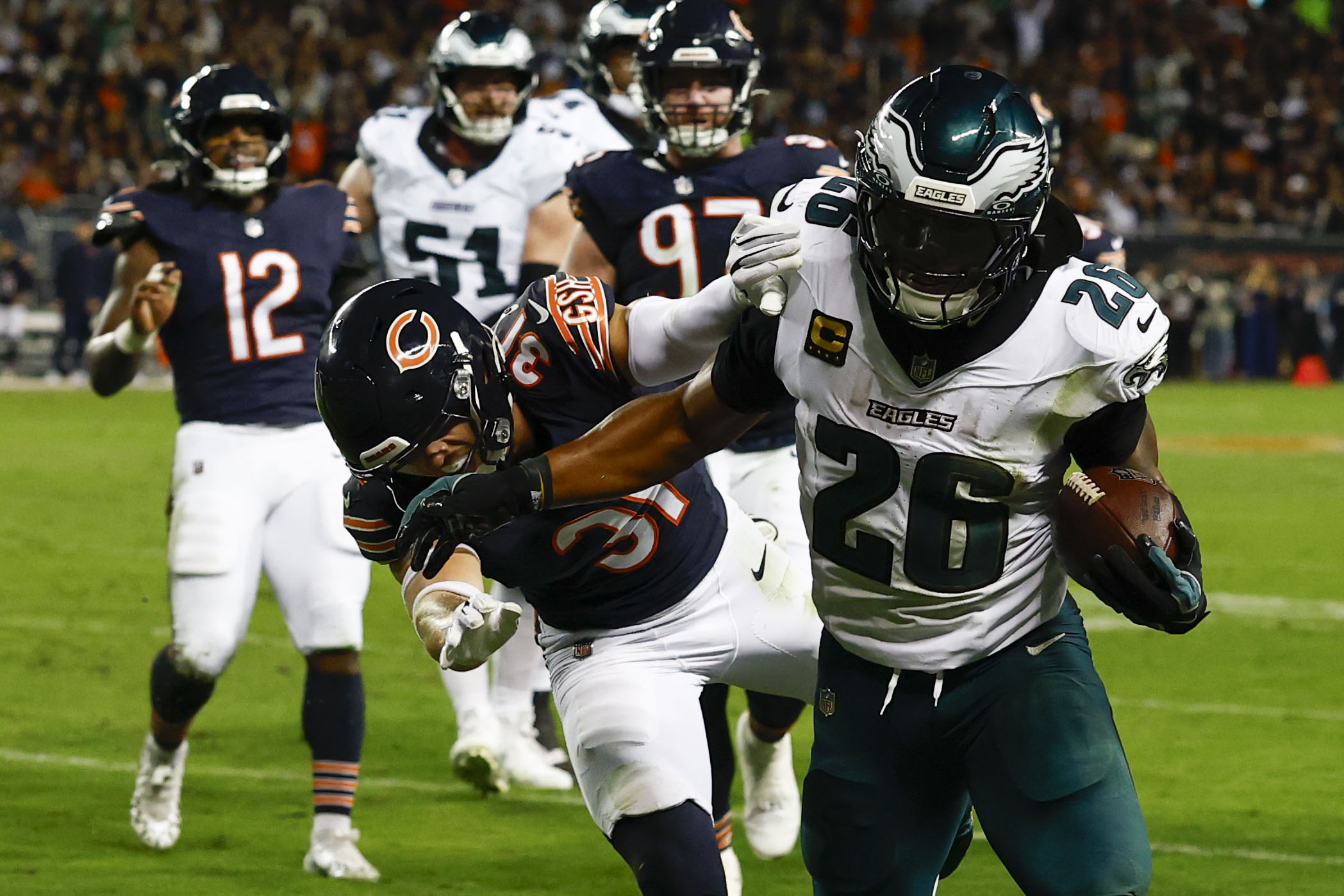
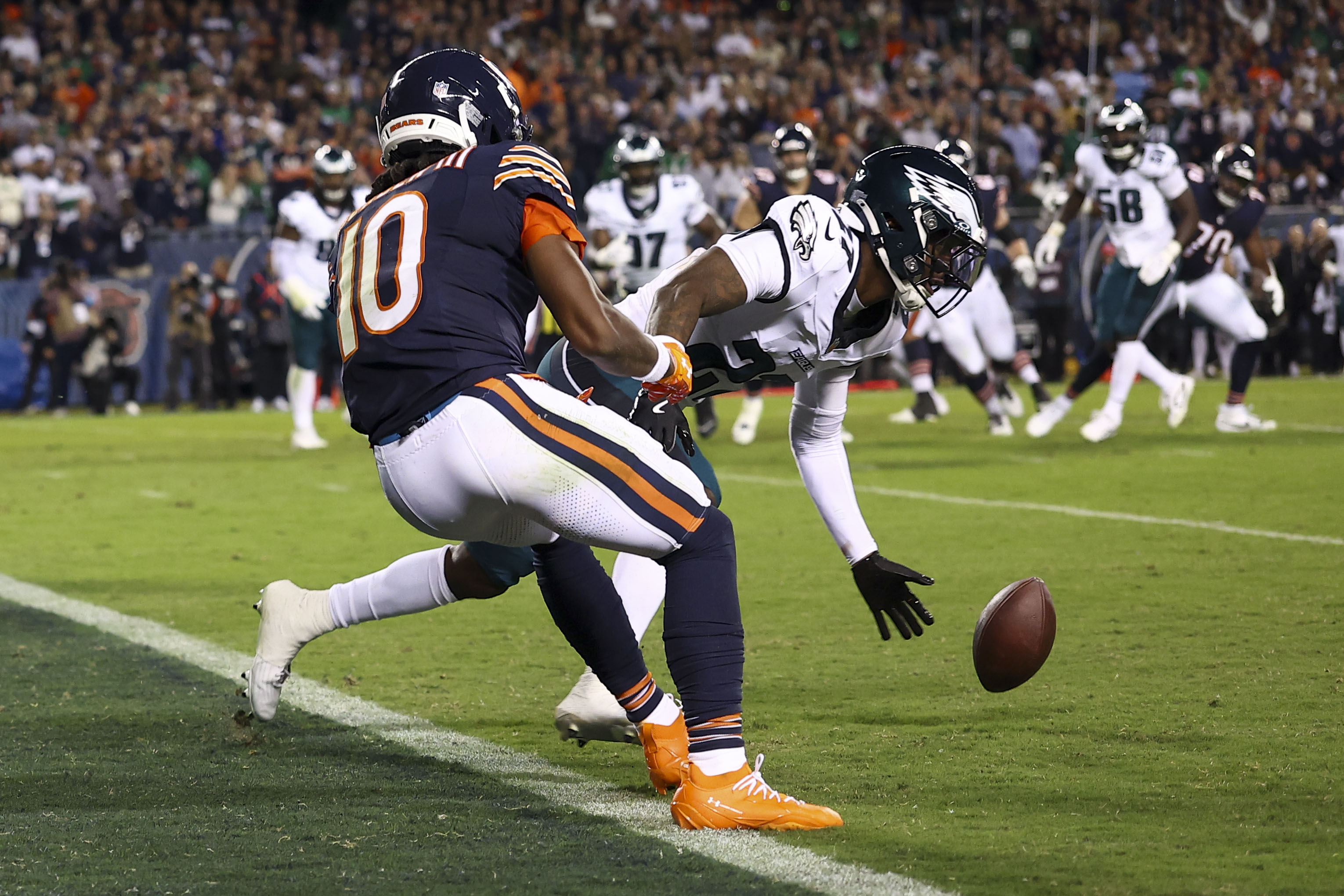
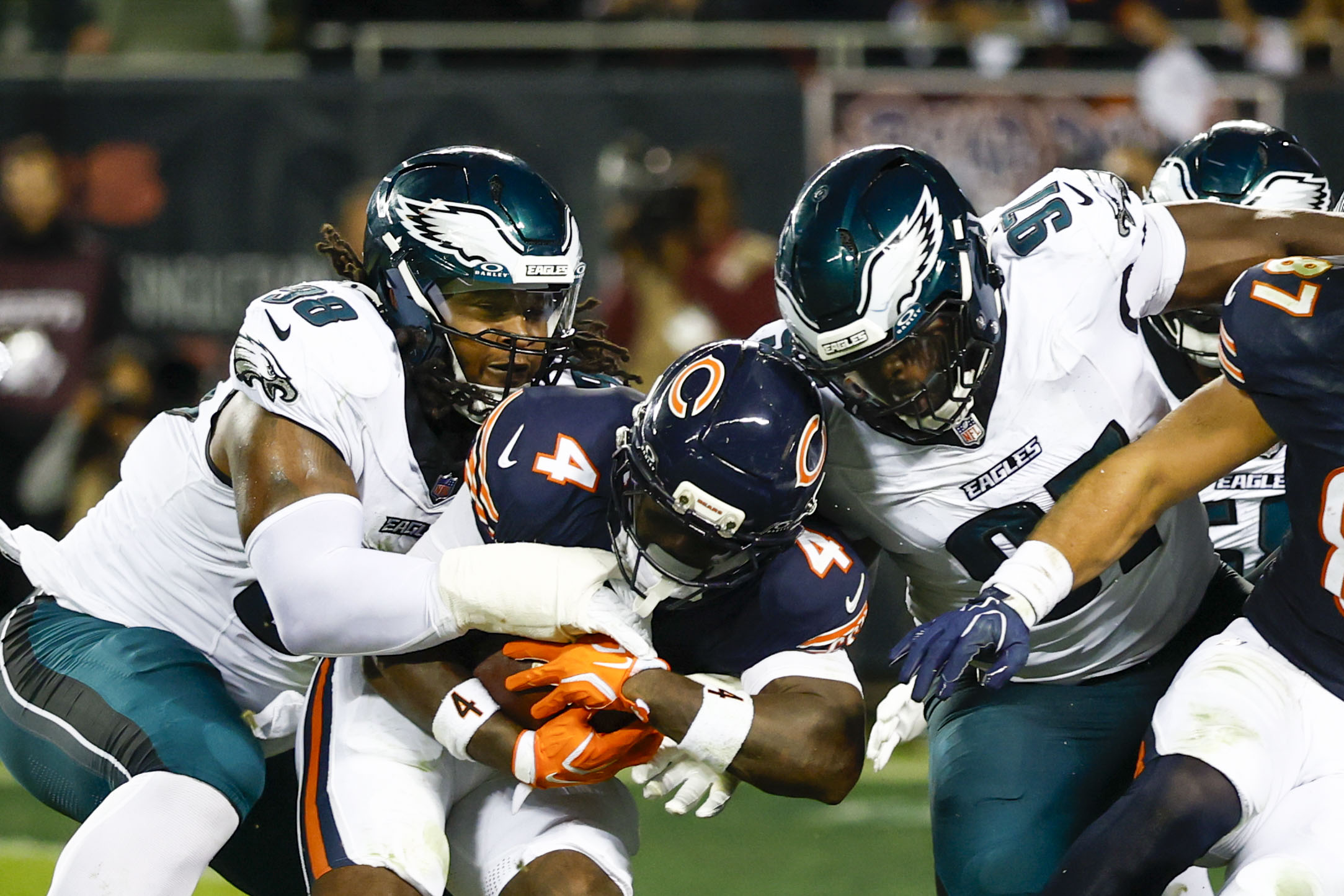
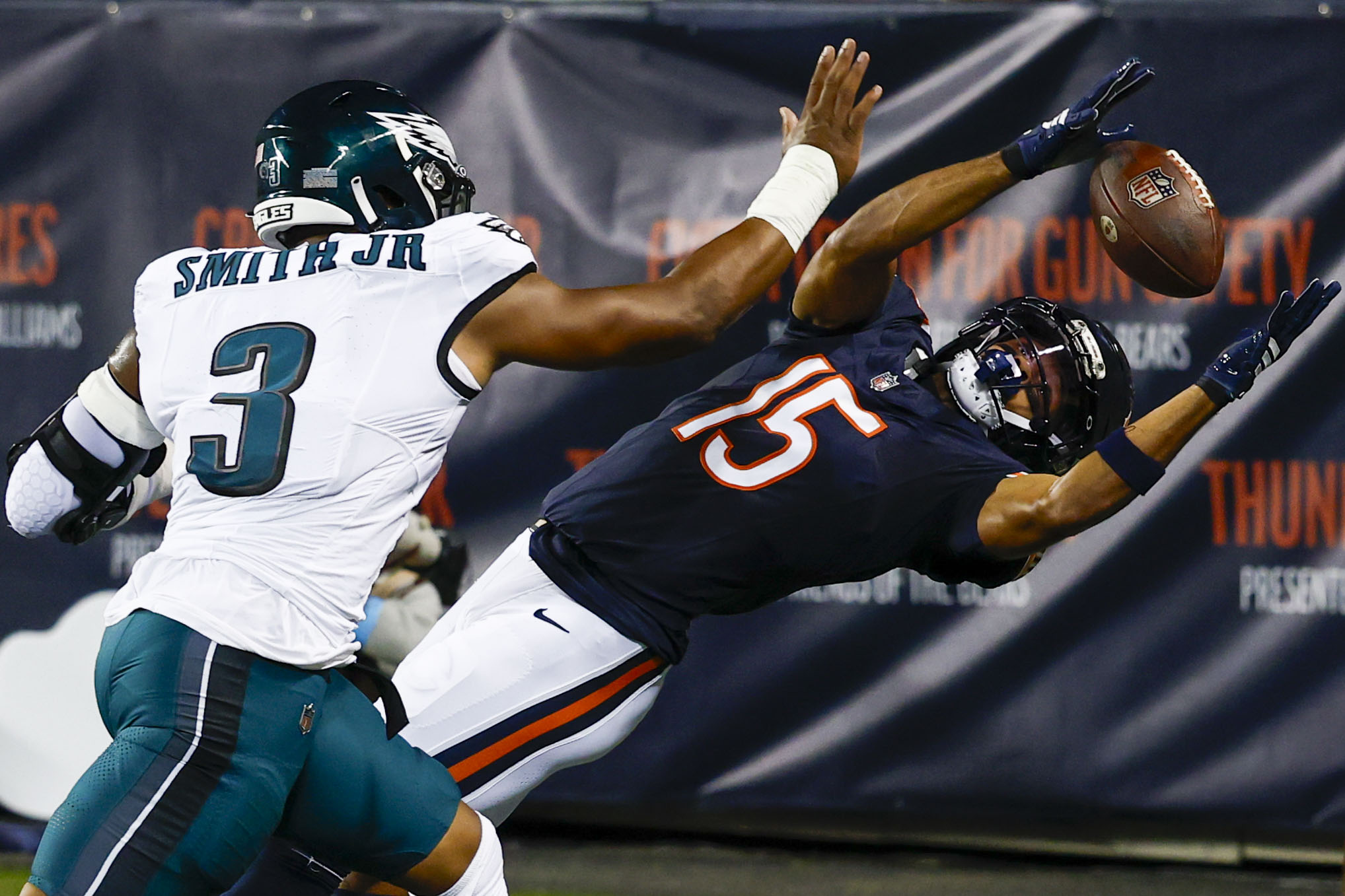
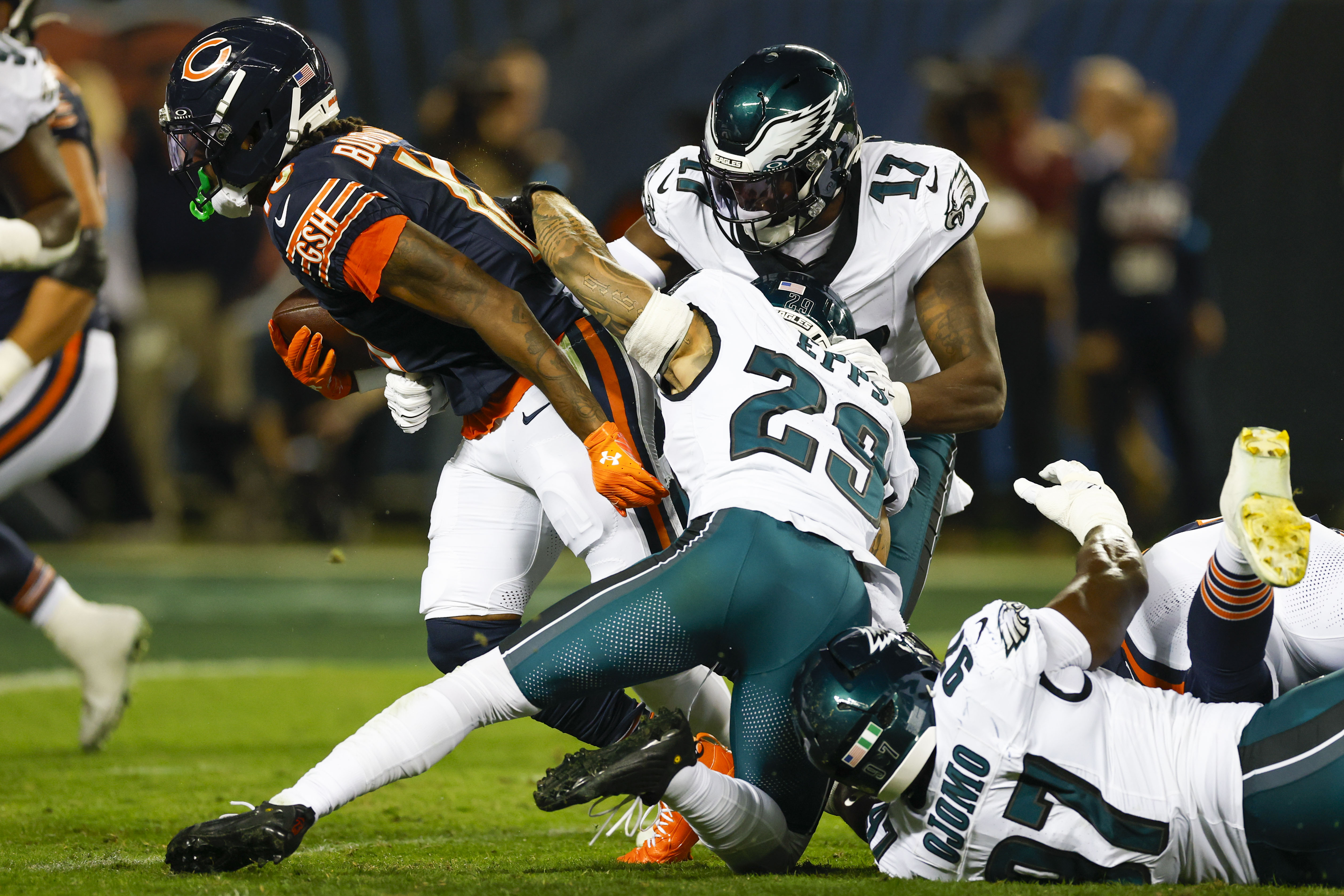
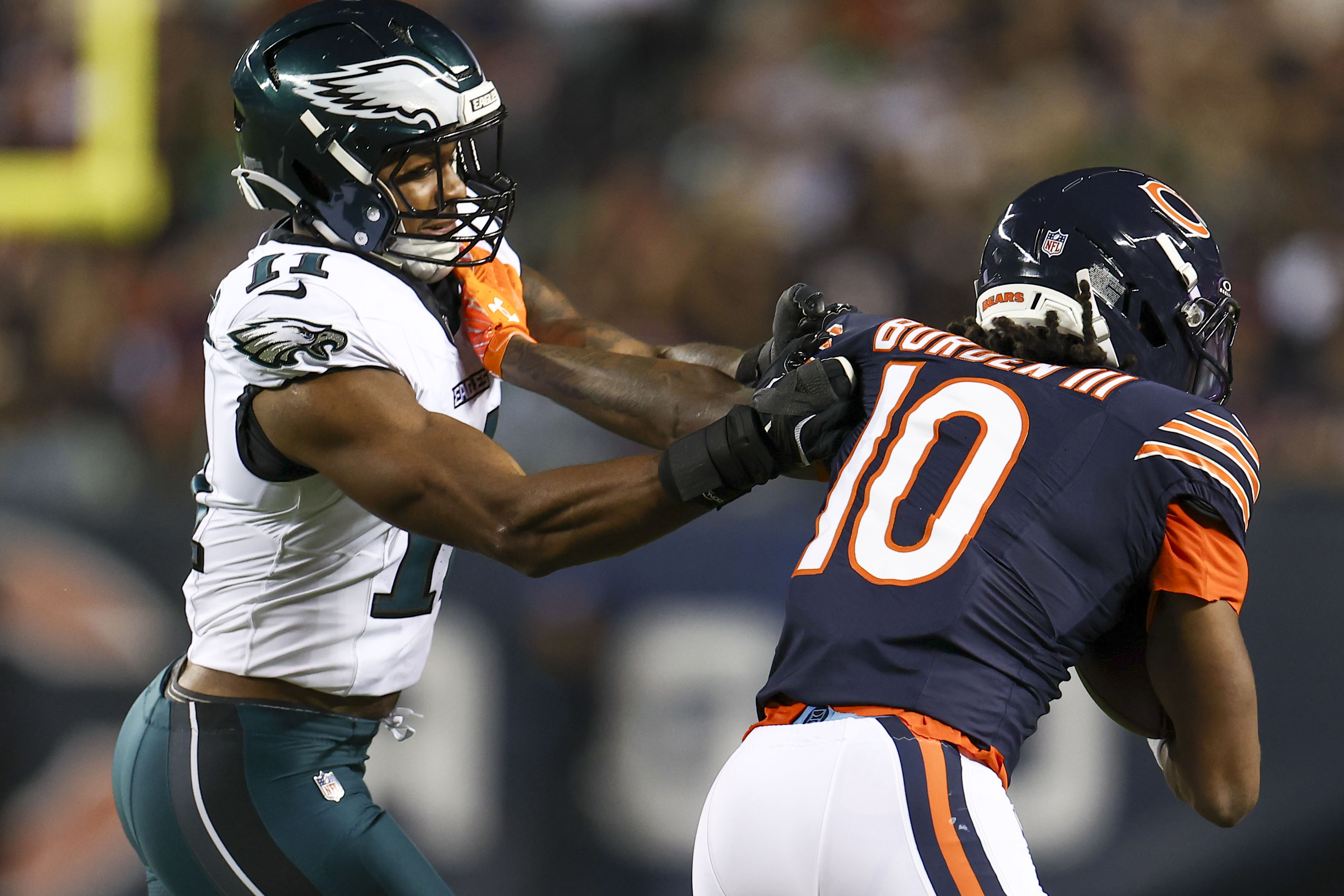
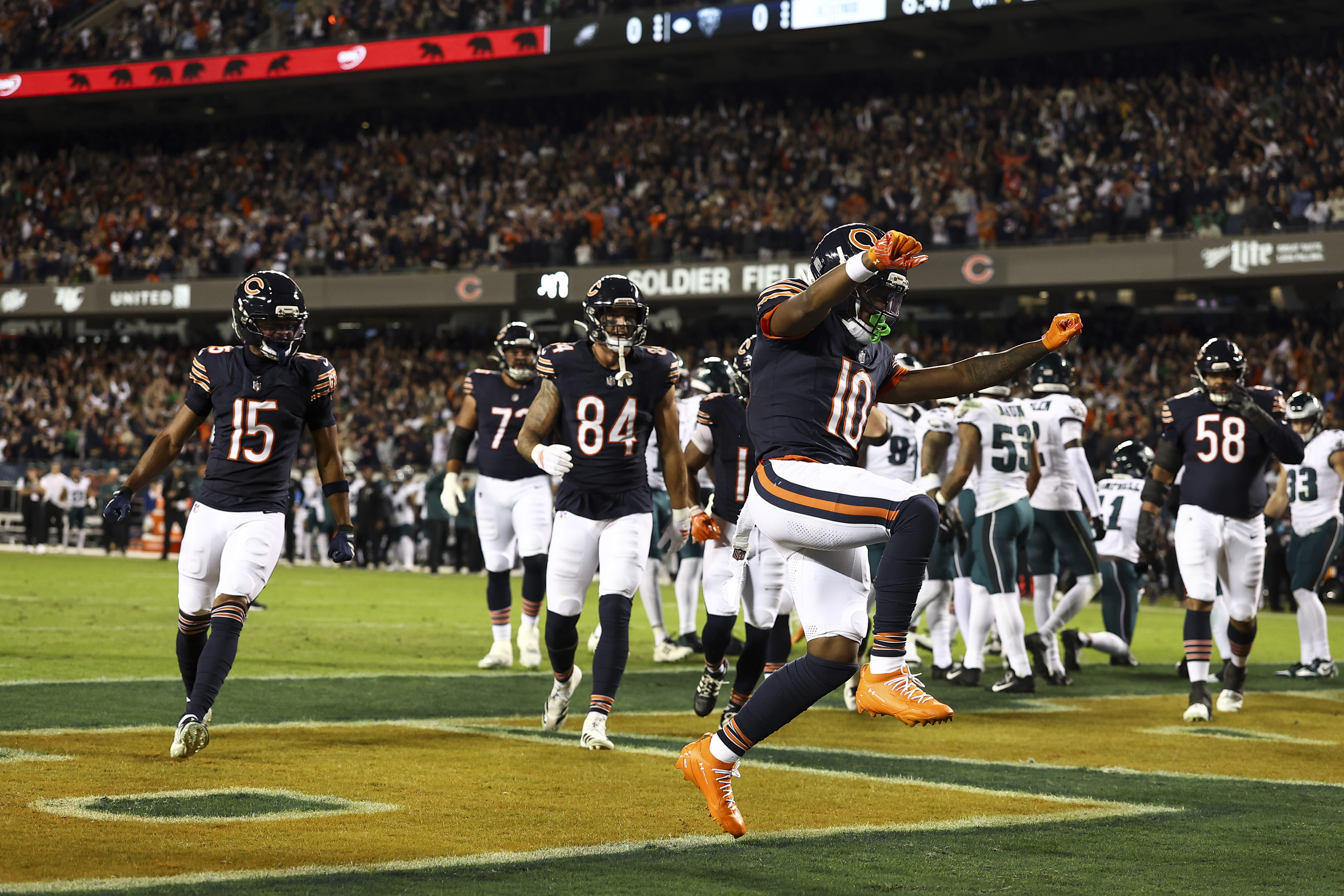
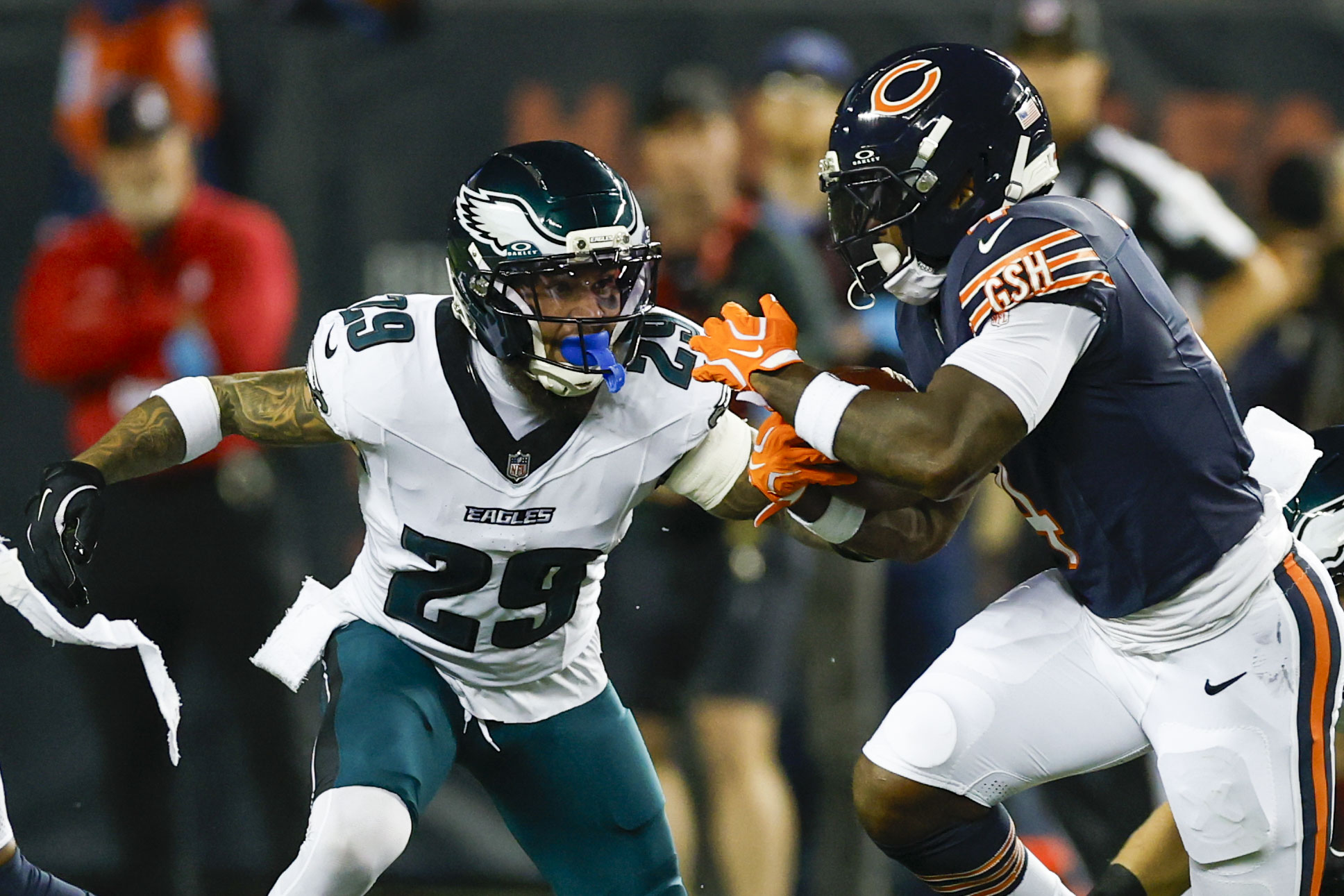
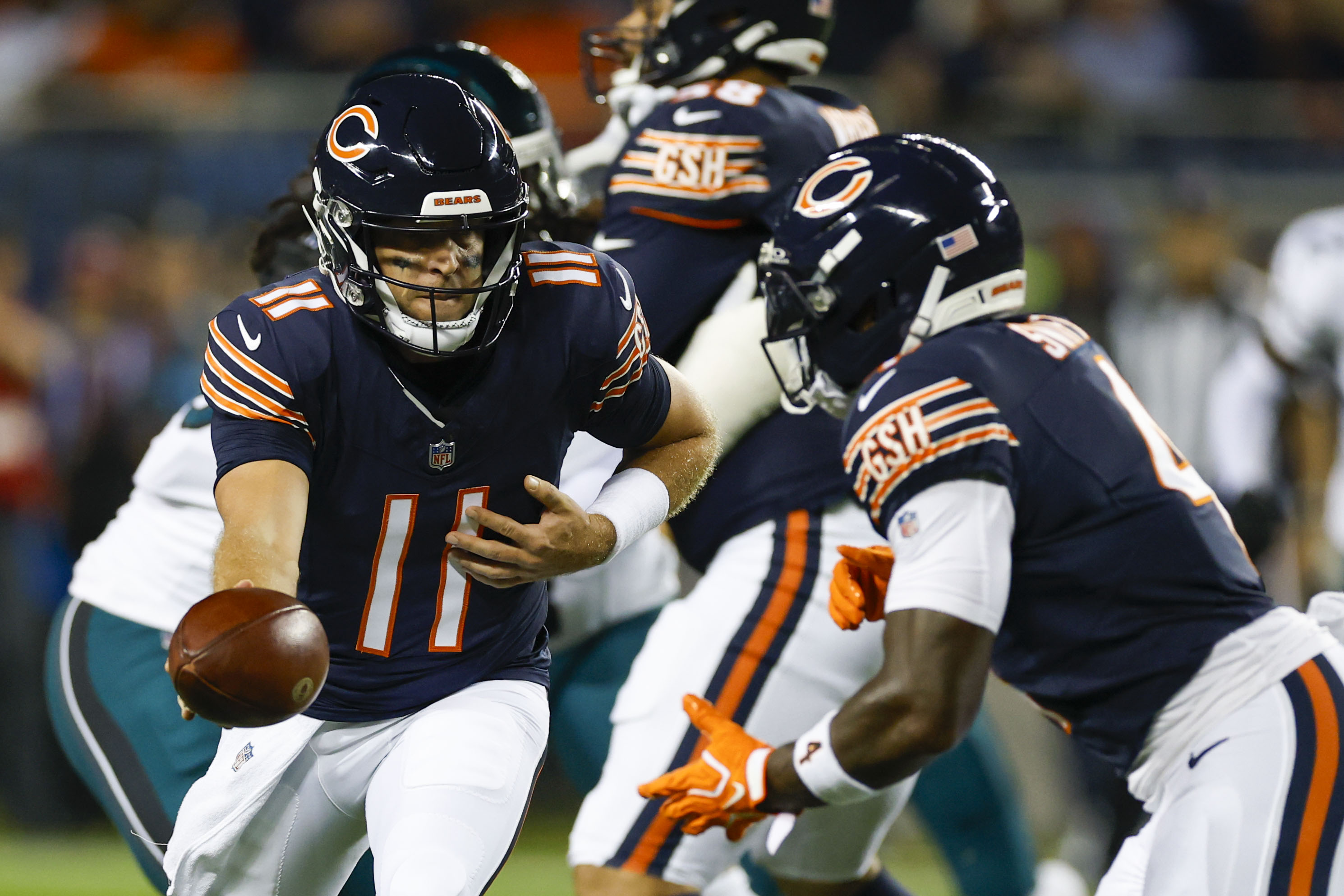
Philadelphia Eagles quarterback Jalen Hurts and Chicago Bears quarterback Case Keenum embrace at the end of the game at Soldier Field on Monday, Sept. 28, 2026, in Chicago, Ill. Chicago won 27-7.Monica Herndon / Staff PhotographerPhiladelphia Eagles linebacker Jalyx Hunt and Philadelphia Eagles linebacker Jonathan Greenard leave after the Chicago Bears game against the Philadelphia Eagles at Soldier Field.Monica Herndon / Staff PhotographerPhiladelphia Eagles quarterback Jalen Hurts lies on the ground after getting sacked during the fourth quarter of the Chicago Bears game.Monica Herndon / Staff PhotographerPhiladelphia Eagles quarterback Jalen Hurts watches the last two minutes of the game against the Chicago Bears at Soldier Field. Chicago won 27-7.Yong Kim / Staff PhotographerPhiladelphia Eagles quarterback Jalen Hurts gets up after getting sacked in the fourth quarter.Monica Herndon / Staff PhotographerPhiladelphia Eagles quarterback Jalen Hurts throws long on fourth down in the fourth quarter, pass incomplete at Soldier Field on Monday, Sept. 28, 2026, in Chicago, Ill.Monica Herndon / Staff PhotographerPhiladelphia Eagles wide receiver Makai Lemon makes a reception in the fourth quarter.Monica Herndon / Staff PhotographerPhiladelphia Eagles fan reacts after a penalty is called in the fourth quarter.Monica Herndon / Staff PhotographerPhiladelphia Eagles head coach Nick Sirianni in the fourth quarter. Chicago won 27-7.Yong Kim / Staff PhotographerPhiladelphia Eagles quarterback Jalen Hurts throws the ball to Philadelphia Eagles wide receiver Makai Lemon in the fourth quarter.Yong Kim / Staff PhotographerPhiladelphia Eagles linebacker Jonathan Greenard tackles Chicago Bears quarterback Case Keenum in the fourth quarter.Monica Herndon / Staff PhotographerChicago Bears quarterback Case Keenum almost loses possession of the ball in the fourth quarter.Monica Herndon / Staff PhotographerPhiladelphia Eagles linebacker Jihaad Campbell tackles Chicago Bears quarterback Case Keenum in the fourth quarter.Monica Herndon / Staff PhotographerChicago Bears linebacker T.J. Edwards after intercepting a pass in the third quarter.Monica Herndon / Staff PhotographerPhiladelphia Eagles quarterback Jalen Hurts after throwing a third-quarter interception.Yong Kim / Staff PhotographerChicago Bears wide receiver Kalif Raymond celebrates a touchdown during the third quarter.Monica Herndon / Staff PhotographerChicago Bears linebacker T.J. Edwards celebrates an interception in the third quarter.Yong Kim / Staff PhotographerPhiladelphia Eagles wide receiver DeVonta Smith is wrapped up by Chicago Bears safety Elijah Hicks in the third quarter.Yong Kim / Staff PhotographerPhiladelphia Eagles fans in the third quarter.Monica Herndon / Staff PhotographerPhiladelphia Eagles linebacker Jihaad Campbell and Philadelphia Eagles linebacker Zack Baun tackle Chicago Bears tight end Colston Loveland in the third quarter.Monica Herndon / Staff PhotographerPhiladelphia Eagles wide receiver Makai Lemon was tackled by Chicago Bears cornerback Jaylon Johnson in the third quarter.Monica Herndon / Staff PhotographerPhiladelphia Eagles quarterback Jalen Hurts throws the ball to Philadelphia Eagles running back Saquon Barkley.Yong Kim / Staff PhotographerPhiladelphia Eagles linebacker Jalyx Hunt goes after Chicago Bears quarterback Case Keenum in the third quarter.Yong Kim / Staff PhotographerChicago Bears fan reacts to the last-minute “tush push” score by Philadelphia Eagles quarterback Jalen Hurts.Monica Herndon / Staff PhotographerPhiladelphia Eagles quarterback Jalen Hurts looks up after scoring on the tush push with one second left to go.Monica Herndon / Staff PhotographerChicago Bears safety Dillon Thieneman celebrates an interception in the second quarter.Monica Herndon / Staff PhotographerPhiladelphia Eagles cornerback Quinyon Mitchell stops Chicago Bears running back D’Andre Swift in the second quarter.Monica Herndon / Staff PhotographerPhiladelphia Eagles tight end Zach Ertz is defended by Chicago Bears cornerback Jaylon Johnson in the second quarter.Monica Herndon / Staff PhotographerPhiladelphia Eagles running back Saquon Barkley runs by Chicago Bears safety Dillon Thieneman in the second quarter, just short of a touchdown.Yong Kim / Staff PhotographerPhiladelphia Eagles cornerback Quinyon Mitchell breaks up a pass intended for Chicago Bears wide receiver Luther Burden III in the second quarter.Monica Herndon / Staff PhotographerChicago Bears running back D’Andre Swift gets stopped by Philadelphia Eagles defensive tackle Jalen Carter (left) and Philadelphia Eagles defensive tackle Moro Ojomo (right) in the second quarter.Yong Kim / Staff PhotographerIncomplete pass to Chicago Bears wide receiver Rome Odunze in the second quarter, defended by Philadelphia Eagles linebacker Nolan Smith.Yong Kim / Staff PhotographerChicago Bears wide receiver Luther Burden III scores as the Philadelphia Eagles defense tries to stop him during the first quarter.Yong Kim / Staff PhotographerPhiladelphia Eagles linebacker Jihaad Campbell forces Chicago Bears wide receiver Luther Burden III out of bounds in the first quarter.Monica Herndon / Staff PhotographerChicago Bears wide receiver Luther Burden III celebrates a touchdown during the first quarter.Monica Herndon / Staff PhotographerChicago Bears running back D’Andre Swift runs with the ball against Philadelphia Eagles safety Marcus Epps in the first quarter.Yong Kim / Staff PhotographerChicago Bears quarterback Case Keenum hands off to Chicago Bears running back D’Andre Swift in the first quarter.Yong Kim / Staff Photographer
The good thing for Sirianni and his team this time is that the standard for success has to be different, has to be a little lower. Losses to the Rams and to the Jaguars wouldn’t necessarily be the worst possible outcomes for them. The nature of those losses — of how the Eagles play — would matter more. Put simply, even if they go down, the Eagles have to go down fighting. They can’t get blown out again. They have to remain competitive. They have to give everyone, themselves included, reason to believe they can turn things around once they get healthier, once all their defensive starters settle into Vic Fangio’s system, once Mannion has more opportunities to show whether he’s the budding genius the Eagles have billed him to be.
A 2-3 start is still too early in a season to write off any team, especially one that has qualified for the playoffs five years running. After Jacksonville, the Eagles get the Carolina Panthers and the Dallas Cowboys, both at home, so the schedule will ease up a bit, at least in theory. The most important task for Sirianni over the next month is to hold the locker room and the coaching staff together, to prevent what happened in 2023 — one awful loss leading to another and another, morale plummeting, veterans looking out for themselves instead of focusing on the team’s greater good — from happening again.
“You get in a bind,” Ojomo said, “and it’s hard to get out of it.”
For the Eagles and their head coach, then, the mission is simple: Don’t get in one.
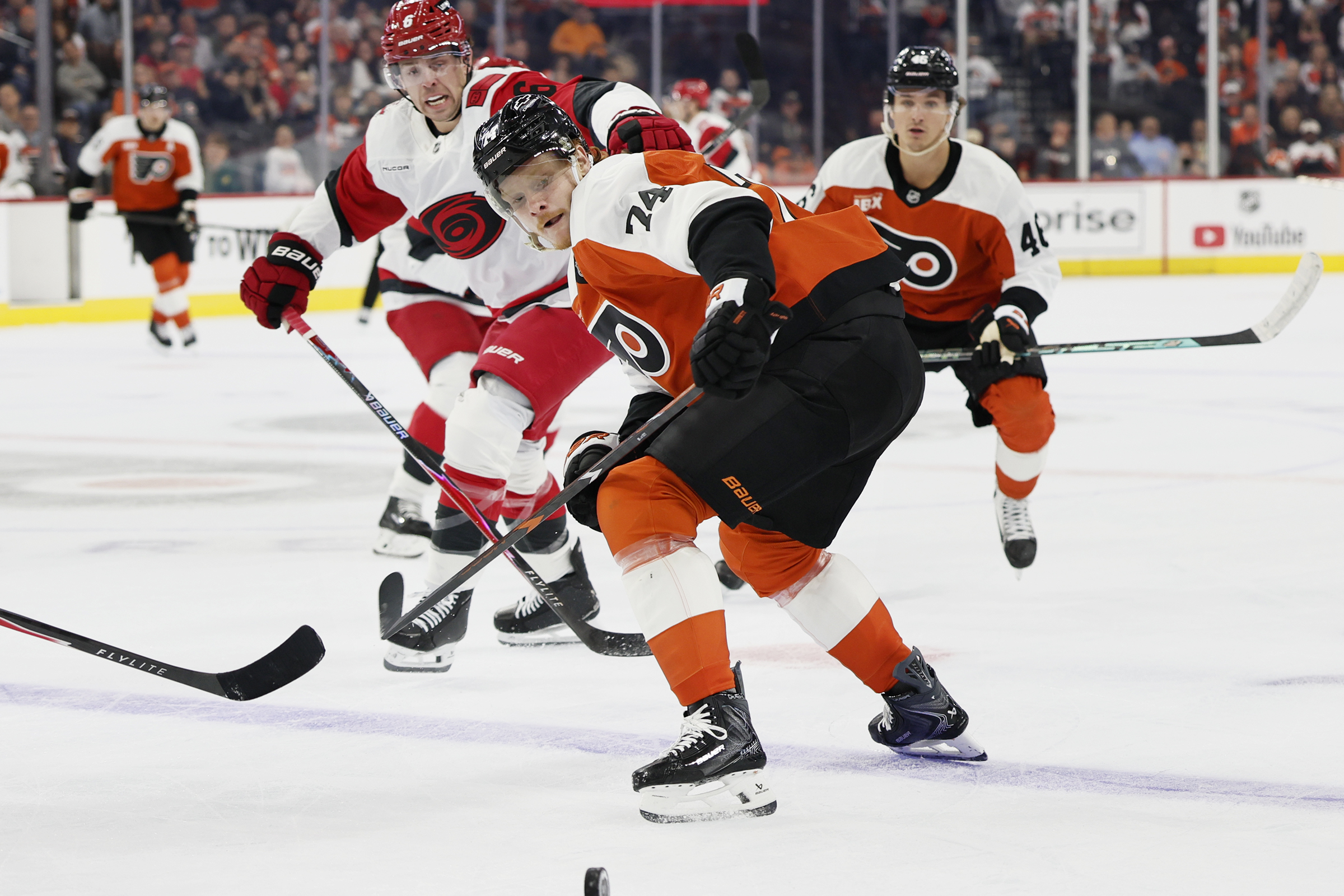
The Flyers are still looking for their first win of the season, after losing 3-2 in overtime to the defending Stanley Cup champion Carolina Hurricanes — and questionable officiating.
Owen Tippett was called for a slashing call in overtime, one of several debatable calls against the Flyers on the night, and former Flyers defenseman Shayne Gostisbehere ripped the game-winner past goalie Joseph Woll in his home debut.
The Flyers stayed on the bench after, wanting the goal reviewed by the NHL. Right before Gostisbehere scored, the Flyers thought Andrei Svechnikov cross-checked Nick Seeler and bumped Woll as he skated atop the crease to set a screen.
Facing the team that eliminated them from the 2026 playoffs in a sweep , the Flyers played a little better than the first two games of the season. However, they still went 0-for-4 on the power play with nine shot attempts and two shots on goal, including a man advantage that carried into overtime. And while Carolina is known as a high shot volume team and put 40 shots on goal, the Flyers could only muster 18.
Philly is now 0-1-2. It is the first three-game winless streak to start the season since 2014-15, when they lost four straight back then.
It didn’t look like the Flyers would earn a point in this one because, just 10 seconds in, Sebastian Aho put the Flyers in a 1-0 hole. The Hurricanes won the opening face-off, with Jaccob Slavin dumping it into the Flyers’ end and Andrei Svechnikov chasing it down as it rang around.
He sent it back behind the net to William Carrier, who put the puck in front, but onto the stick of Christian Dvorak. The center tried to tap it to Matvei Michkov, but it went right to Aho, who scored off the glove of Woll.
Video: 76 Seconds with the Flyers before the 2026-27 season opener
With the Flyers struggling, Tippett told The Inquirer on Saturday morning that simplifying everything right now was important. Well, he did that in the offensive zone and, as a result, found the back of the net.
The play started in the neutral zone when, after a pass from Travis Sanheim missed Tippett, Rasmus Ristolainen bodied Aho along the boards a few feet into the Flyers’ end. The puck popped loose, and Tippett grabbed it to begin the rush.
Trevor Zegras got the puck and found Sanheim trailing, but the defenseman, instead of shooting straight down the pike, tried to feed Tippett for a redirect as he was crashing down the right side. It didn’t connect there either, but Tippett got the puck back for a turnaround shot that was blocked, then a one-timer from above the circles, and eventually, off a scramble, collected it for a snapshot past Pyotr Kochetkov’s glove.
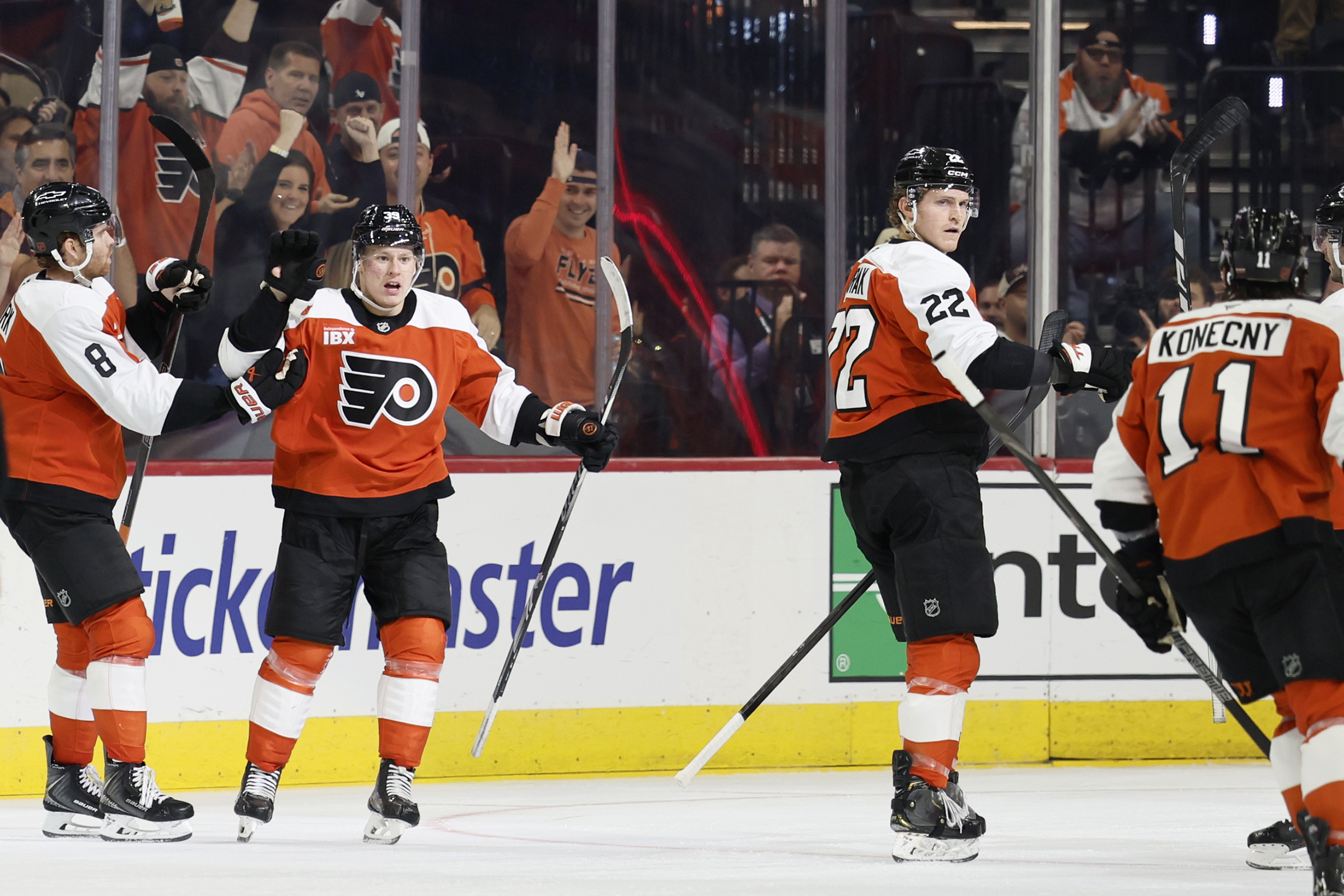
Sandwiched around two power plays —the first one was only 70 seconds — that saw the Flyers get four shots to the Hurricanes’ two, was Michkov’s first goal of the season.
Skating with Travis Konecny and Dvorak, Michkov was left all alone as his linemates were battling to get the puck down the right boards. With two Hurricanes drawn to Konecny, Michkov skated down the middle, got the pass from his fellow winger, and buried it past his countryman Kochetkov as the goalie came out of the crease to challenge.
Carolina tied it 2-2 in the third period, scoring a power-play goal on a bumper shot from Aho off a pass by Nikolaj Ehlers. Michkov was in the box for a legitimate holding call.
Owen Tippett (center) battles for the puck in Saturday’s game against the Carolina Hurricanes.Elizabeth Robertson / Staff Photographer
Breakaways
Ristolainen left the game in the third period with an undisclosed injury and will be reevaluated on Sunday. Ristolainen blocked a shot by Hurricanes defenseman K’Andre Miller with 3 minutes and 31 seconds left in the second period. He finished that shift, ending over a minute later, but missed his next shift and played one 37-second shift to start the third period. Tocchet said Flyers general manager Danny Brière was speaking with the trainers at that moment. They will decide tonight or tomorrow if they need to make a call-up for the upcoming road trip. … Carolina earned their first win of the season.
Up next
Flyers hit the road for a three-game trip beginning on Monday in Tampa Bay against the Lightning (7 p.m., NBCSP).
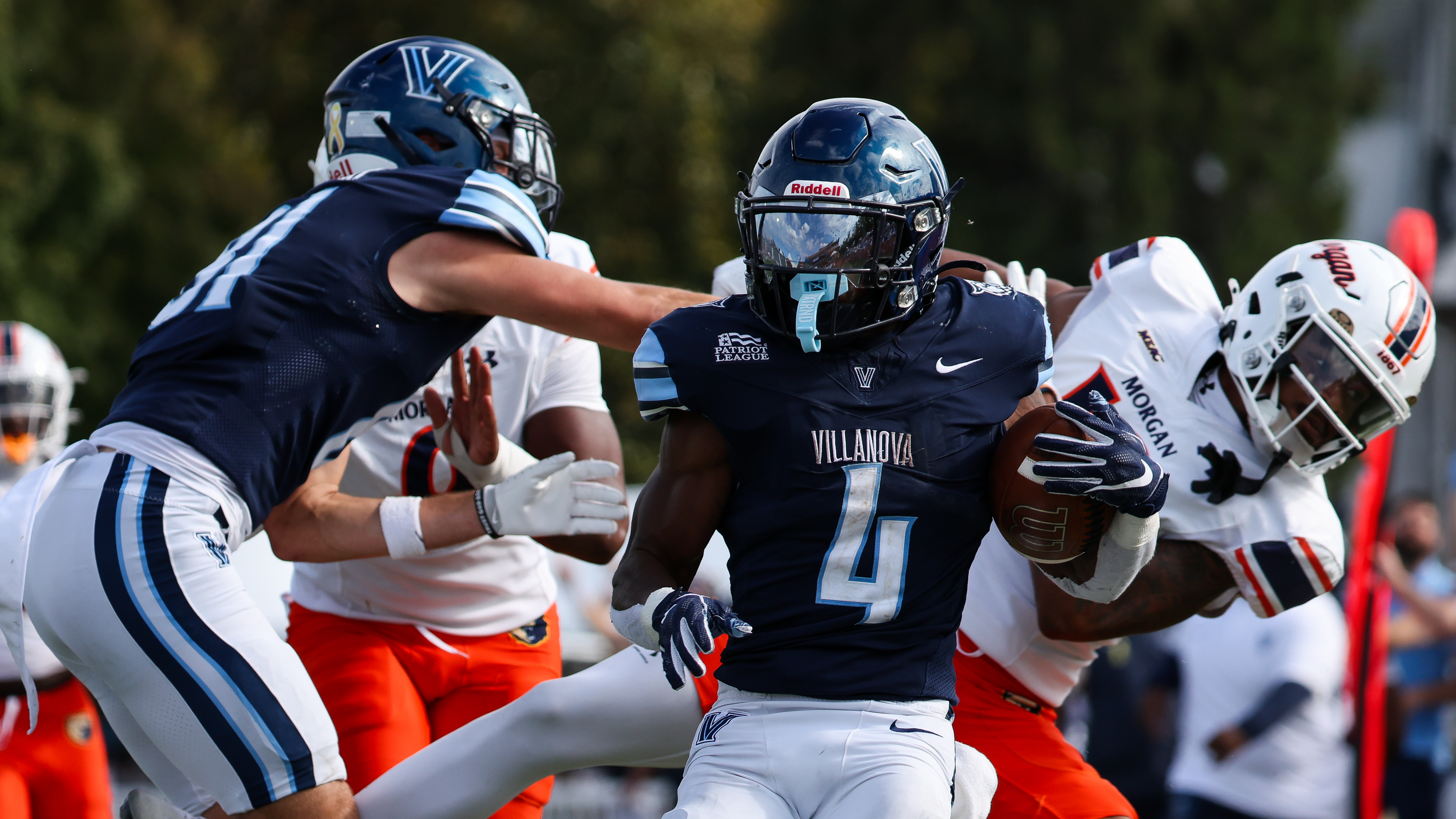
In a game where Villanova was favored to win by two or more possessions, it traded scores with Morgan State all the way until the final seconds of regulation. With 2 seconds left, Villanova sophomore kicker Dom LeBlanc attempted a 47-yard field goal to force overtime. However, LeBlanc missed just his second attempt of the season, and Villanova fell to Morgan State, 38-35.
The loss marked the Wildcats’ fourth consecutive home defeat.
Villanova (2-4) has yet to win consecutive games this season and has not won inside Villanova Stadium since last November.
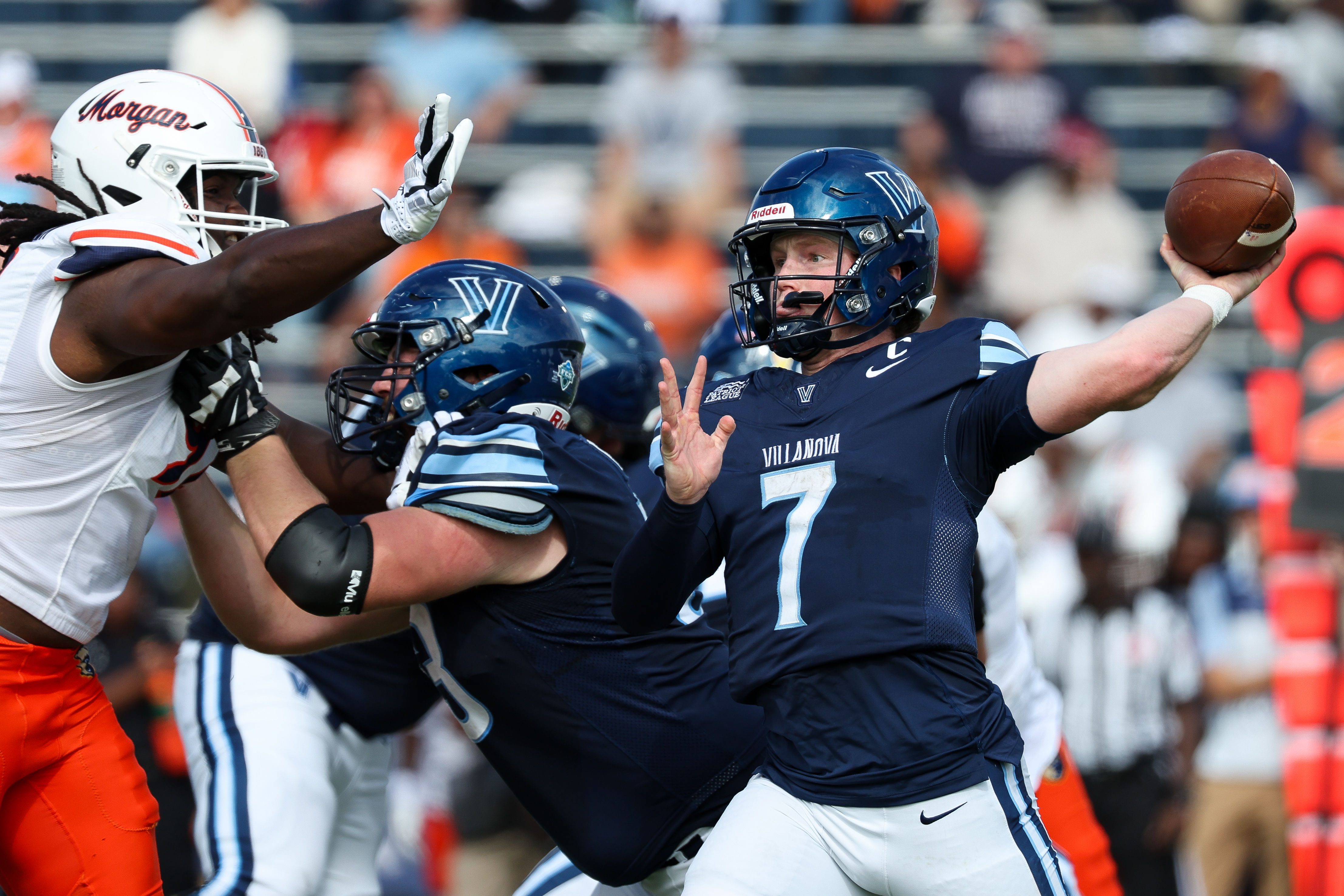
“Yeah, I mean, just trying to give us a chance to tie the game,” graduate quarterback Pat McQuaide said on the last drive. “We have a ton of confidence in our kicker. I mean, he’s been great all year, and we still have a ton of confidence in him. I mean, the goal was to get an opportunity to tie the game and go to overtime. Or if there was an opportunity, to score a touchdown. Obviously, you want to do that. Like I said, he’s still our guy, and I’ll still take him 10 times out of 10.”
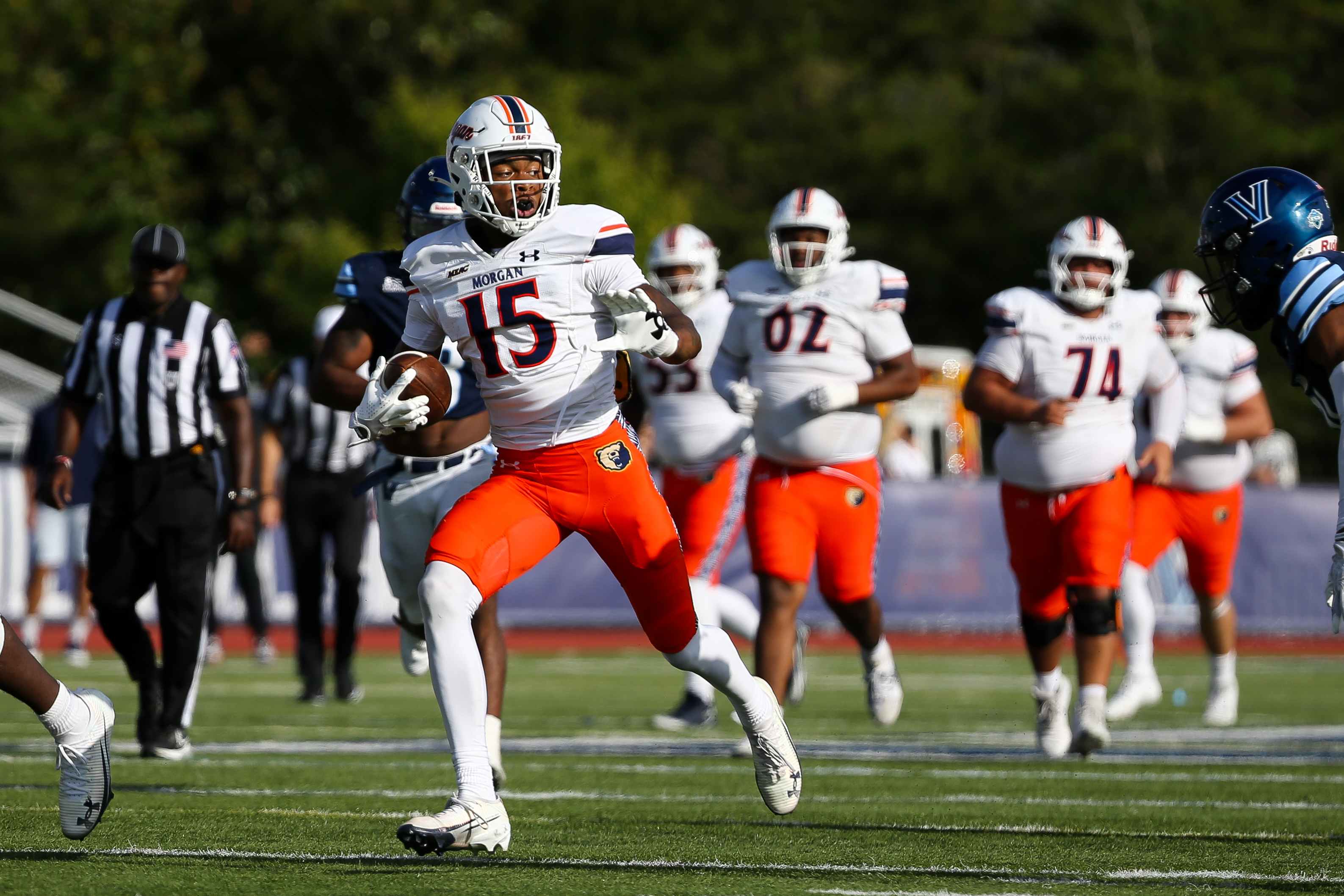
Morgan State Bears wide receiver Justin Perry runs on one of his five receptions in the win over the Wildcats. Isaiah Vazquez / For The Inquirer
McQuaide completed 22-of-28 pass attempts for 266 yards, marking the most passing yards the fifth-year QB has had since the season opener against William & Mary. McQuaide also threw an interception after a pass breakup tipped the ball into the air, into the hands of Morgan State (4-1).
Morgan State quarterback Cameron Edge completed 31-of-41 passes for 444 yards and three touchdowns. His longest pass of the day was for 79 yards.
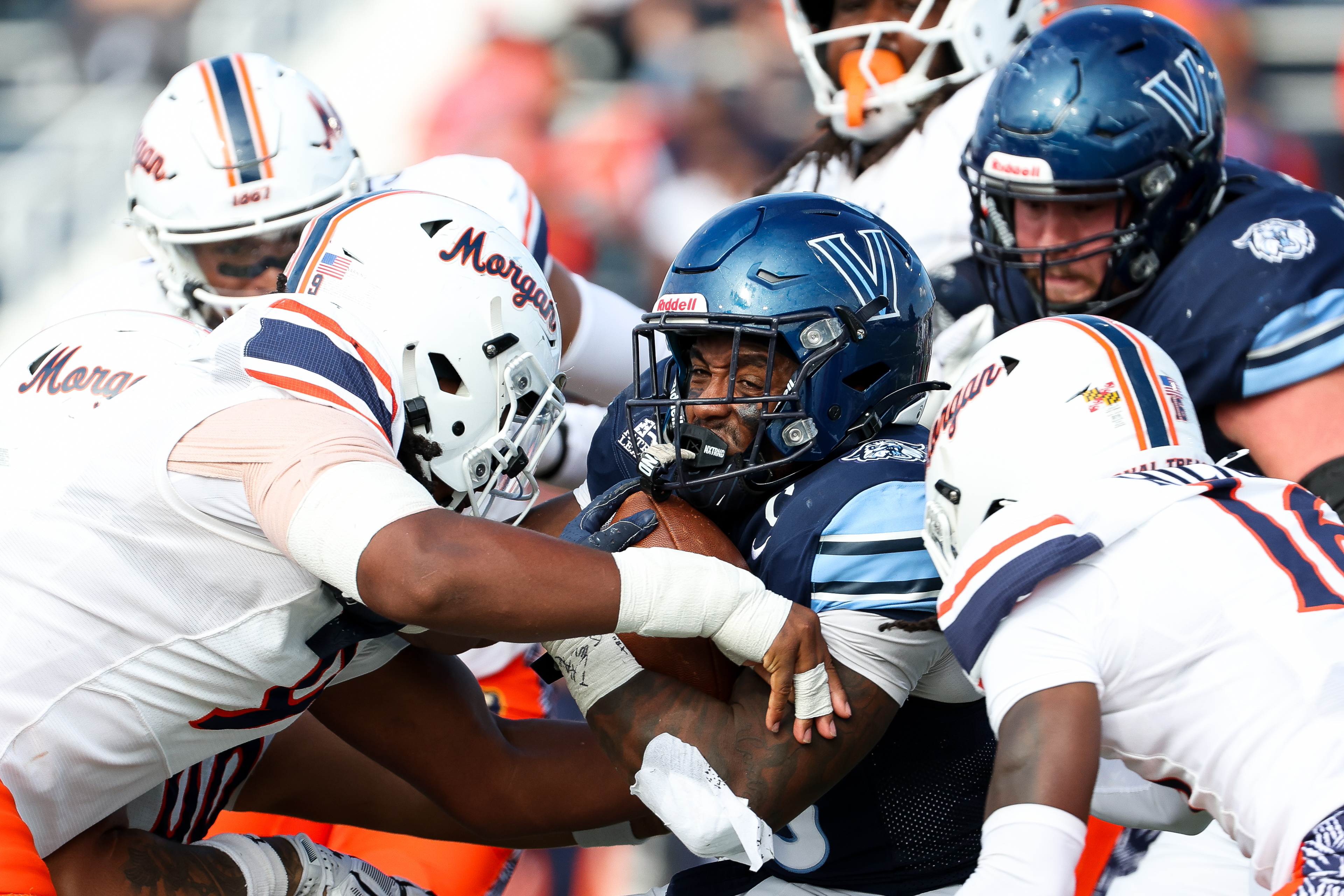
Villanova’s running back duo of Ja’briel Mace and Isaiah Ragland combined for five touchdowns and 182 yards on the ground.
Mace rushed for 105 yards, which marked the first 100-plus-yard game from a Wildcat this season.
“Ja’briel and [Ragland] are unbelievable,” McQuaide said. “The guys in front did a great job. The offensive linemen with tight ends. Even the receivers, getting in there and blocking. Those guys do a great job every week. And Rags and Ja’briel are great players. And I’ve said this before, but they don’t do what they do without those guys in front of them. So you’ve got to give credit to everybody. It’s not just those two.”
Villanova running back Ja’briel Mace runs the ball during the third quarter against Morgan State on Saturday.Isaiah Vazquez / For The Inquirer
Defense has its ‘highs and lows’
Villanova sophomore defensive back Jamie Tyson intercepted Edge in the end zone on fourth-and-7 with 2:45 left to play. At the time, Villanova led, 35-31.
The Wildcats were in position to win with a two-possession, while uncomfortable, lead.
Tyson’s interception came after Villanova’s defense allowed Morgan State to convert big, chunk yardage plays. The Bears had nine plays of 15 or more yards, with three of them being larger than 45 yards.
Villanova running back Isaiah Ragland (center) fights for yardage against a group of Morgan State defenders on Saturday.Isaiah Vazquez / For The Inquirer
In comparison, Villanova only had four plays that were greater than 15-plus yards.
Morgan State would score the eventual game-winning touchdown on a six-play, 56-yard drive, which took just 1:15 off the clock..
“We weren’t consistent today,” Omari Bursey said. The redshirt sophomore linebacker led Villanova with nine total tackles (seven solo), one sack, one quarterback hit, and one tackle for a loss. “We had some great highs, but we had a good amount of lows too. So it’s kind of just, we got to stay steady.”
Villanova now has a bye week before returning to Patriot League play on the road against Fordham (1-5, 1-2 Patriot League) on Saturday, Oct. 17 (3:30 p.m., ESPN+).
“Yeah, we’ll see how our guys respond,” Ferrante said when asked about the upcoming week off. “I mean, they’re still in class next week, so it’s not like they have a week ‘off.’ And then we have an extra week to prepare for the next opponent, which is Fordham. So we’ll clean this up tomorrow, just like we do on every Sunday.”
The last time the two programs faced off was in 2015. Villanova defeated Fordham, 14-7, on the road in the Bronx. The Wildcats are 3-1 all-time against the Rams.
Penn lost, 14-10, to Dartmouth following a fourth-quarter flurry on Saturday in the Ivy League opener for both teams in Hanover, N.H.
For three quarters, it was a defensive battle. Dartmouth took a 7-3 lead into the fourth quarter before the Quakers put together a 16-play, 80-yard drive capped by senior running back Sean Williams Jr.’s 1-yard touchdown run to go up 10-7. The lead was short-lived, however, as Dartmouth responded with an eight-play, 75-yard touchdown drive to regain the lead.
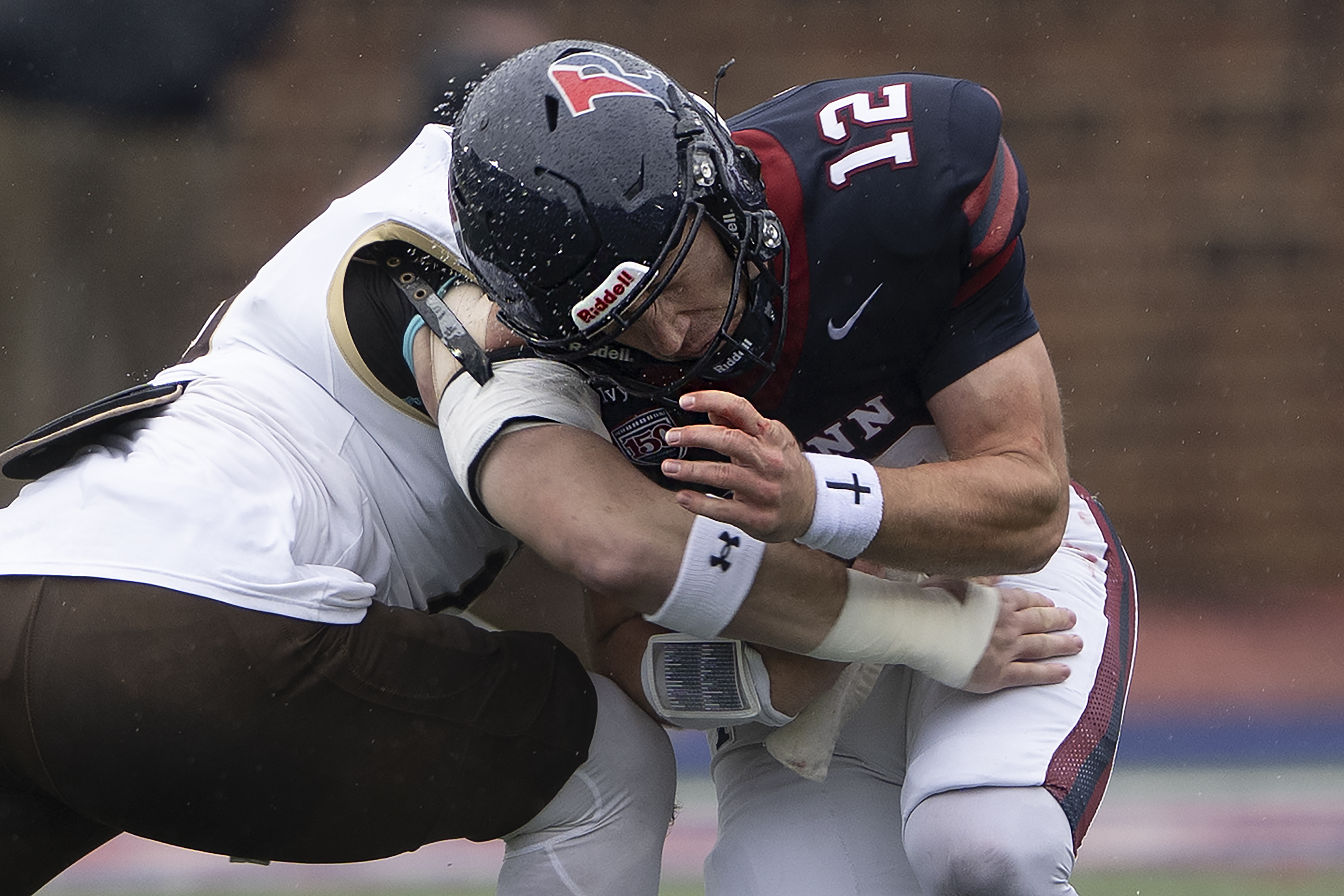
Penn battled back with a 12-play, 59-yard drive that ended with an incomplete pass on fourth down from the Dartmouth 16-yard line with 1 minute, 20 seconds left. After both teams used timeouts on Dartmouth’s ensuing three-and-out, the Quakers got the ball back at their own 46 with 9 seconds left. But an incompletion and a sack of Penn freshman quarterback Miles Teodecki sealed Dartmouth’s first win of the season (1-2).
Penn quarterback Miles Teodecki, seen here in a game against Lehigh, recorded 214 passing yards in his first career Ivy League game.Jose F. Moreno / Staff Photographer
Figuring it out
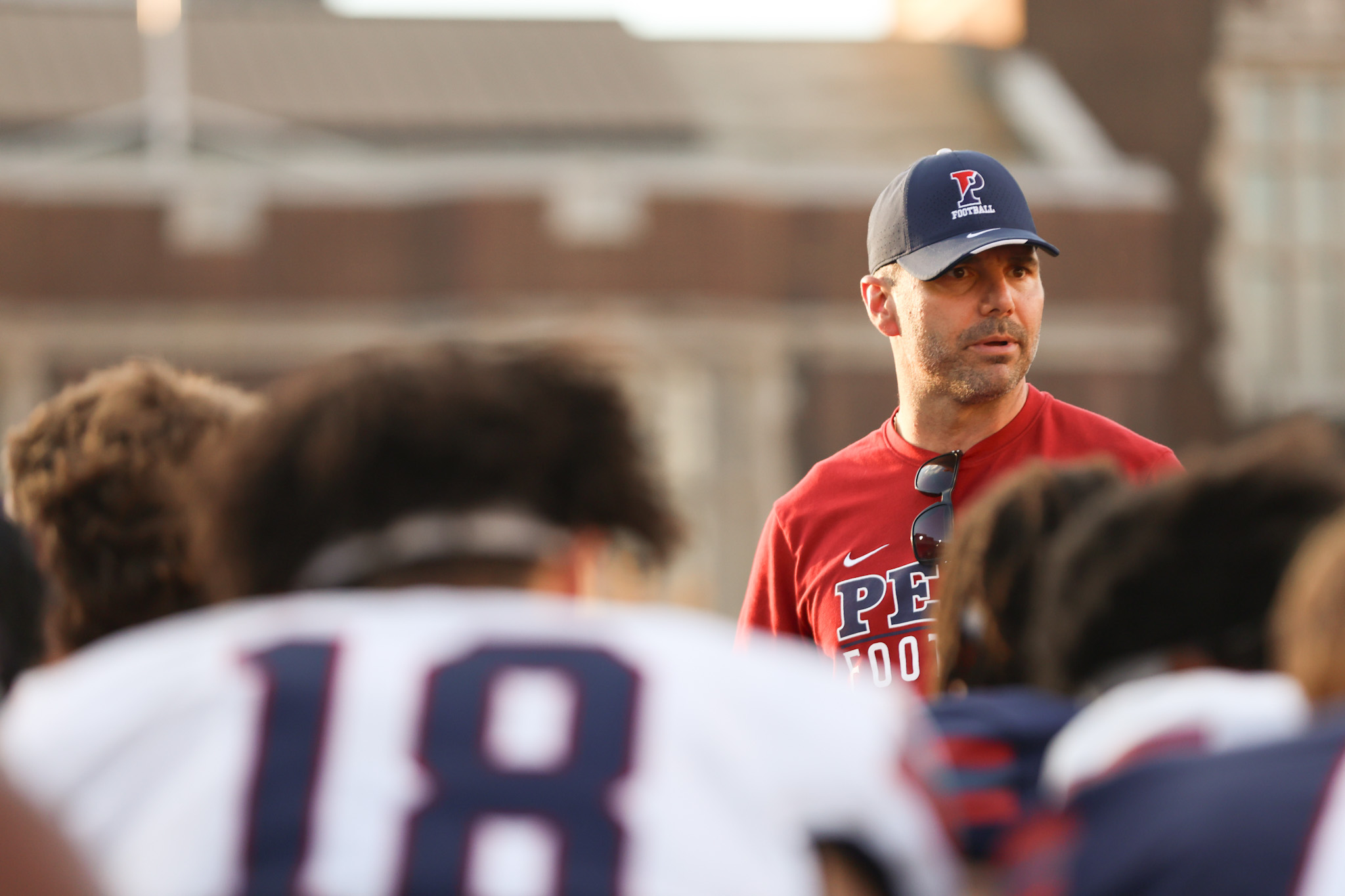
Penn head coach Rick Santos stressed the importance of first- and second-down efficiency entering Saturday’s game, but the first quarter looked like a repeat of last week’s loss for Penn’s offense. The Quakers (1-2) punted on both of their drives and struggled to sustain offensive momentum while Dartmouth scored on a 16-yard touchdown pass from Grayson Saunier to Ky’Dric Fisher. Saunier threw for 173 yards on 13-of-15 passing.
But Penn’s offense woke up in the second quarter. The Quakers put themselves in field-goal range twice and converted one, a 26-yarder to cap a 10-play, 71-yard drive. Meanwhile, they held the Big Green to just 59 yards in the quarter.
Teodecki looked more comfortable this week and flashed the dual-threat abilities he impressed fans with against Bucknell. He was Penn’s leading rusher with 54 yards, and completed 27 of 39 passes for 214 yards on Saturday compared to 133 last week against Lehigh.
The quarterback also started to find his passing rhythm with a fellow freshman, wide receiver Mason Page. Page had eight receptions for a game-high 64 yards, including a 19-yard pass from Teodecki.
Dartmouth missed a trio of field-goal attempts in the second and third quarters, and, while Penn’s field goal put them on the board, untimely penalties erased the potential for more.
But the Quakers finally got an edge on their opening drive of the fourth quarter, when Williams’ 1-yard touchdown run gave them their first lead of the day.
TOUCHDOWN 🙌
Donte West punches it in from one yard out and the Quakers have their first lead of the day!
But Dartmouth responded quickly, gaining 75 yards on eight plays and scoring a rushing touchdown of their own via a 2-yard run by Myles Craddock, whom Santos pointed out as a player Penn’s defense needed to watch.
Though Craddock scored the winning touchdown for the Big Green, the Quakers held him to 85 rushing yards. He put up 140 yards in Dartmouth’s previous game against Monmouth.
Up next
Penn returns to Franklin Field to face nonconference opponent Howard (2-3) next Saturday (1 p.m., ESPN+).
VJ Edgecombe could have had an easy dunk or layup in Saturday’s Blue x White scrimmage before Joel Embiid made up his mind to prevent it.
As Edgecombe was weaving his way down the middle of the lane, Embiid made up the few steps he was trailing Edgecombe and met him at the rim. Embiid blocked the shot, but not without a foul. Embiid fell to the ground when he landed, which can cause at least a little bit of nervousness, given his injury history. But he got back up and started twirling around his finger, asking for a review of the play, as did LeBron James.
“I thought it was all ball,” Embiid said.
That sequence was just one of a few indications of how healthy Embiid has looked since the start of camp, with teammates, coach Nick Nurse, and president Mike Gansey raving about his intensity and participation level.
“He hasn’t missed a practice. He’s been in damn near everything that we’ve done,” James said. “Pretty much, [the team has] had to sit him out at times, even when he wanted to keep going.”
Gansey said the team “got a plan together” for Embiid for this season, something Embiid also referenced during his comments Monday at media day. When asked if the team had a target number of games for Embiid to play this season, Gansey didn’t specify, but said the team would take things “day by day” with how Embiid is feeling.
Embiid played a good portion of the Sixers scrimmage on Saturday, and he looked refreshed and spry on both ends of the floor. He was knocking down threes as a trail man in transition and challenging shots at the rim while dusting off his two-man game with Tyrese Maxey. He even dunked at one point to cap a couple intense possessions battling Ariel Hukporti.
“That’s probably the last dunk of my career,” Embiid said in typically trolling fashion.
He also reignited some chemistry with James from their time playing for Team USA in the 2024 Olympics.
“We played a lot of minutes,” James said. “He started a lot of games for us that summer, but the difference between ‘24 and now, he’s just so much more healthier.”
On one possession, James hit Embiid in stride as he was approaching the three-point line, and Embiid walked into an open three. That was part of an early barrage of plays James was making that delighted the crowd inside Xfinity Mobile Arena.
“Obviously, the Olympics was great. But whether we have played together or not, I don’t think it was going to matter,” Embiid said. “Because at the end of the day, when you put — whether it’s two players, a bunch of players together that have a high basketball IQ — it’s going to be easy to fit with that, and that’s been the case.”
Related to the fit, Embiid touched on one of the buzzwords of this Sixers training camp: sacrifice. James spoke at length about how that word doesn’t have to be a negative. Nurse echoed that, and said he wanted the players to be the best versions of themselves, whatever that may look like within the context of this team. When asked a question about what he has seen from Maxey so far this camp, Embiid took his answer and spoke at length about his view of that word, and what it may mean for him and the rest of the Sixers lineup.
“It’s not about sacrifice. It’s just about being a star in your role and doing what you do best,” Embiid said. “I don’t think anybody should be put in a box. Just go out there, be yourself. Good shot, great shot, bad shot, we’ve all got each other’s backs. We move on. And then we go get a stop.”
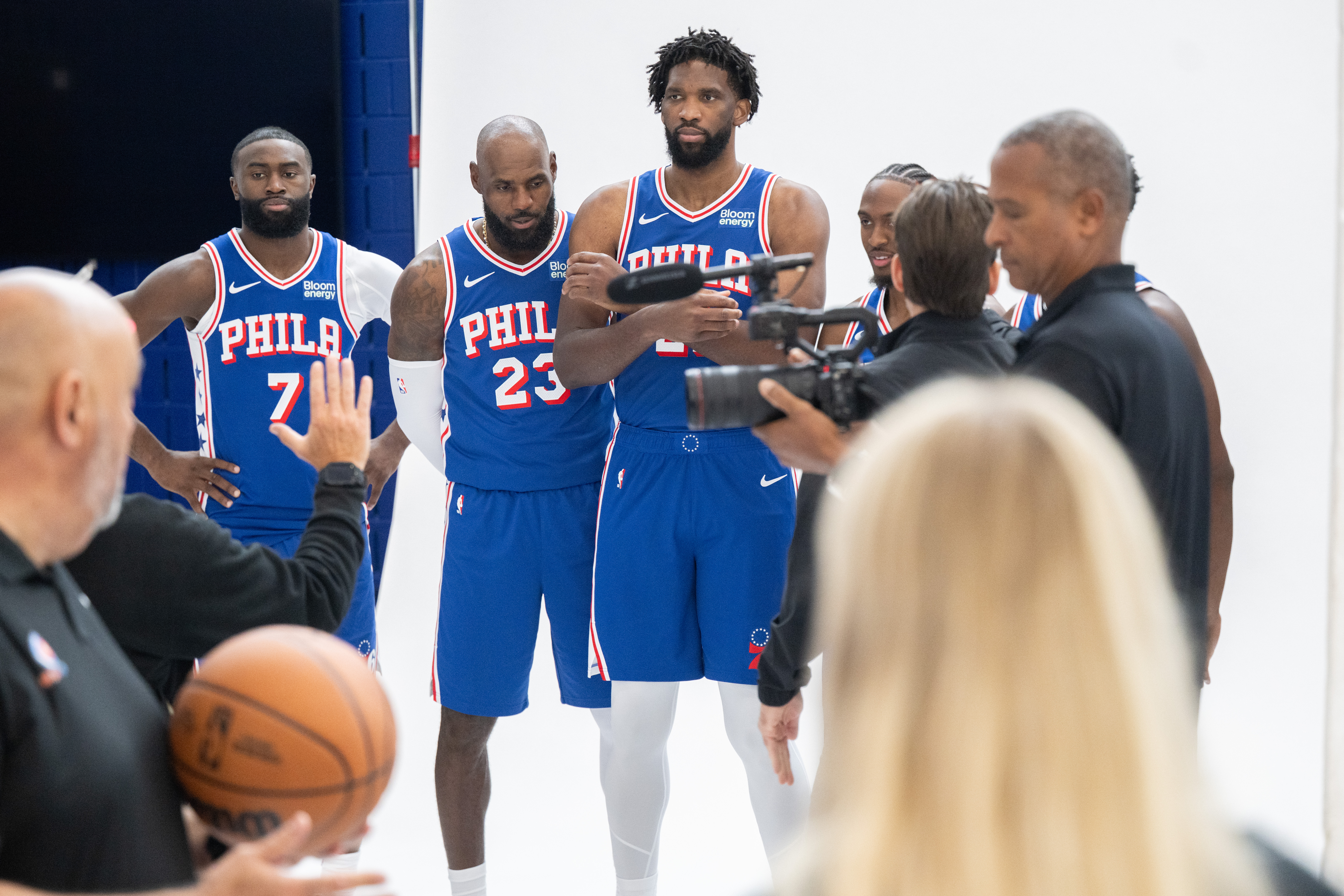
The Sixers have one of the most star-studded rosters in the NBA. Jessica Griffin / Staff Photographer
To Embiid, this roster configuration is a chance for every player on the roster to be more efficient with the touches they get because the attention everyone else will command should keep the floor open regardless of who has the ball.
“You might get less touches, but you might get also more space. So what are you going to do with that space?” Embiid said. “Whether it’s for [Maxey], for me, for everybody, starting lineup, guys coming off the bench, different roles. Roles don’t even matter; it’s just about making the right play for each other over and over and over and try to find a way to be — I think for me — more efficient than I’ve ever been.”
The crowd noise inside Xfinity Mobile Arena swelled as public address announcer Matt Cord’s booming voice said, “At 6-9, from St. Vincent-St. Mary … ” before introducing LeBron James. It erupted again the first time the all-time great touched the ball, then when James dished a pass to Joel Embiid for a three-pointer, then when James buried his own shot from beyond the arc.
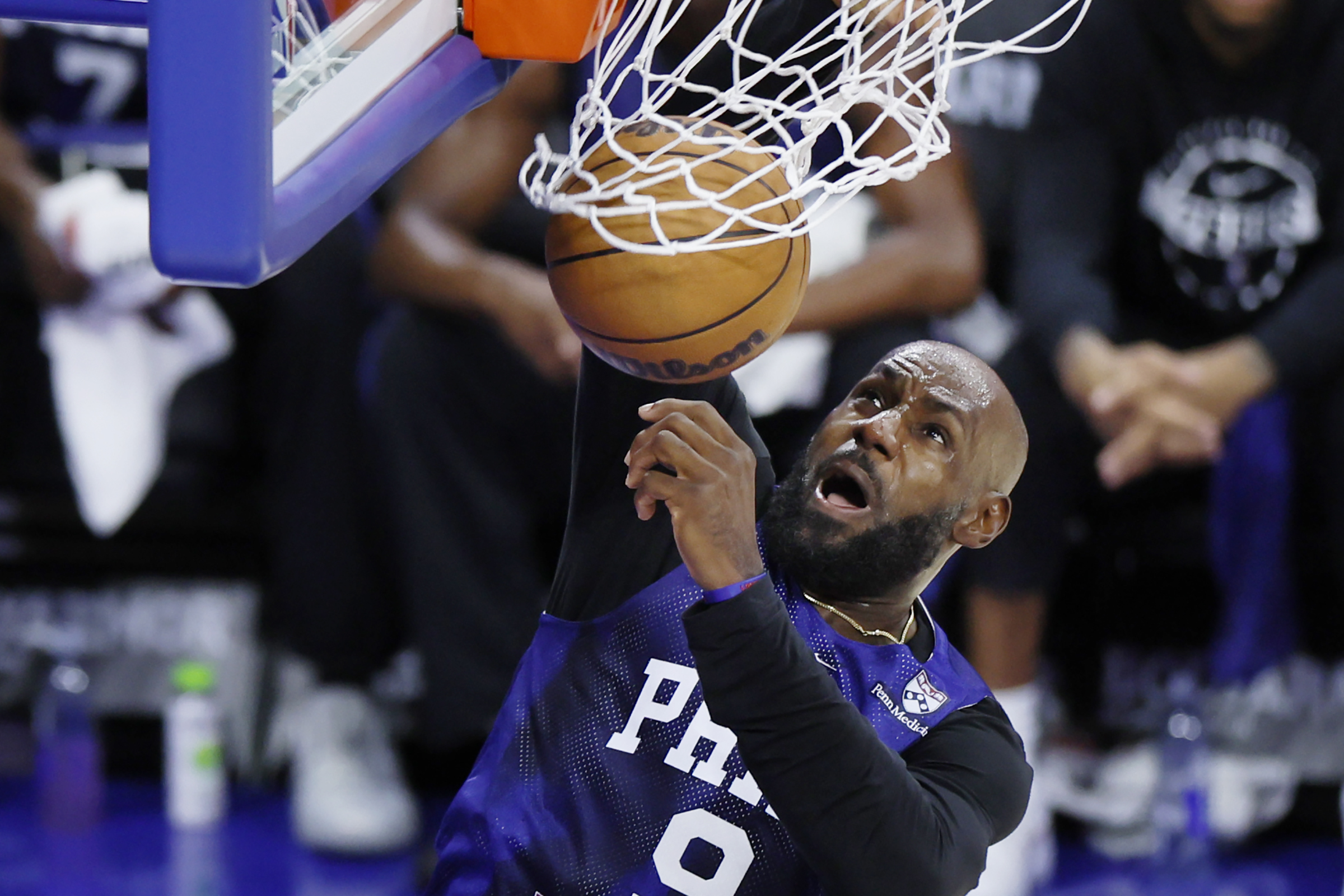
James’ first public appearance in a 76ers (practice) jersey Saturday afternoon came with far more hubbub than a typical preseason scrimmage. His impact was apparent all over the floor as a facilitator, pace-pusher and scorer for the revamped Sixers roster now expected to contend in a deep Eastern Conference.
For James, the annual Blue x White scrimmage was an “extension of training camp” and in his personal onboarding process in his first official days with his new team.
“As far as in the building, it’s been very smooth, in the simple fact that everybody’s been super welcoming,” James said following the scrimmage. “I’ve been able to implement some things in my voice, and as far as my command in how I play the game, and my experience of playing the game.
“I’m still getting more and more comfortable off the floor, as far as with the travel and without my family and things of that nature. So that’s going to be a little bit of a challenge. But everything’s been good so far. It’s been a great first week.”
The Sixers’ signing of the legendary James — plus trading for All-NBA wing Jaylen Brown as part of a shocking offseason — prompted the move of their annual public scrimmage from their G League affiliate Delaware Blue Coats’ facility in Wilmington to South Philly in order to accommodate more fans. With skyrocketing ticket prices for the regular season, this might be the only time some of those in attendance Saturday will get to see this star-studded roster in person. Admission was a $10 donation to the Sixers Youth Foundation, with 5,000 tickets provided to families that receive grants from the organization’s nonprofit affiliate along with youth organizations and community partners.
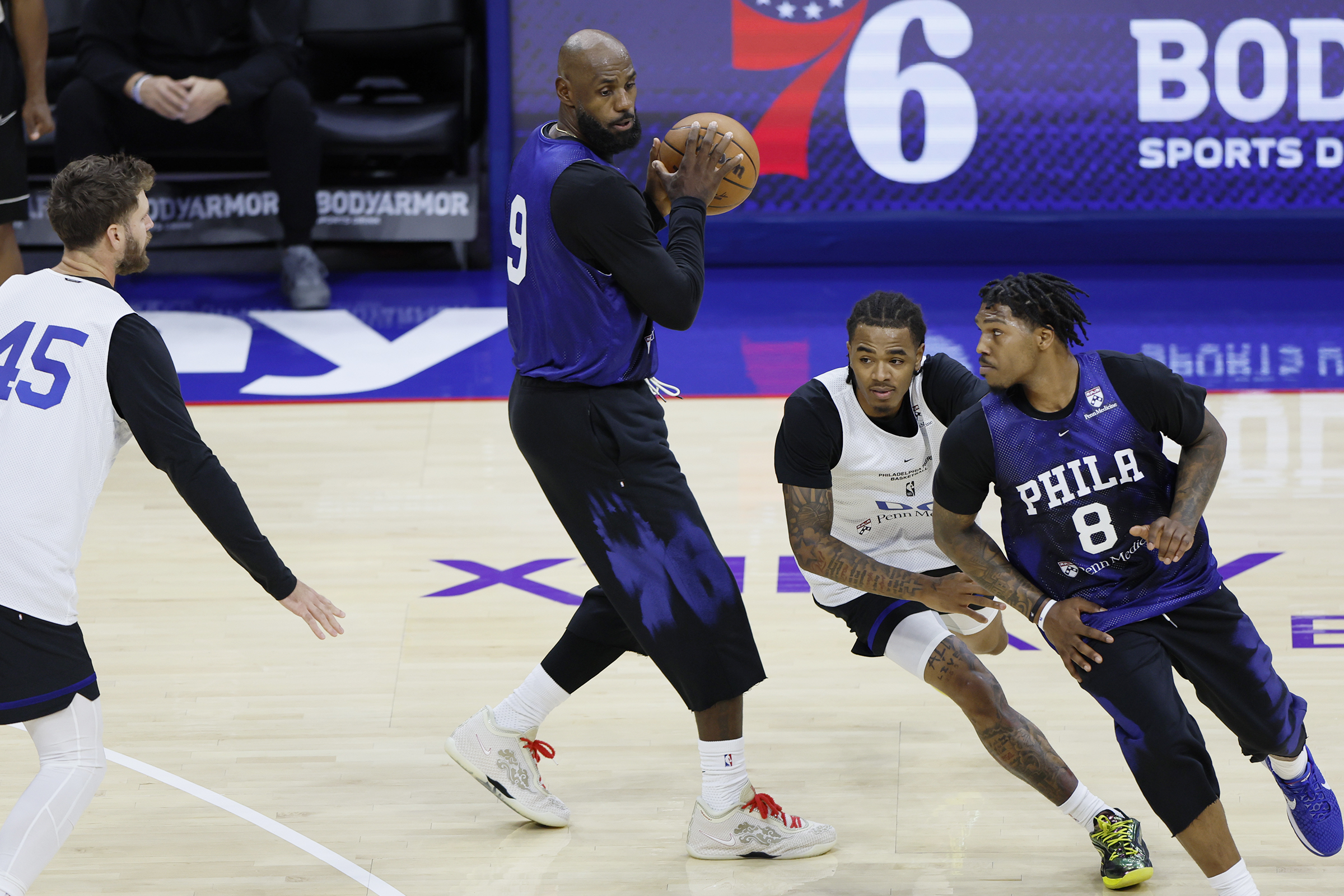
LeBron James handles the ball as Dean Wade, left, defends in the Sixers’ public scrimmage. Elizabeth Robertson / Staff Photographer
It was the start of a new relationship between Sixers fans and James, who said at media day that he appreciated the mutual respect and hate he received during his previous trips to Philly as an opponent.
Those in the stands Saturday got to watch James, wearing No. 9 instead of his iconic 23, deliver a behind-the-back pass to VJ Edgecombe in the corner. And throw down an alley-oop from Tyrese Maxey. And hit another step-back three-pointer.
After averaging 20.0 points, 6.1 rebounds, and 7.1 assists last season with the Los Angeles Lakers, James maintained Saturday that he is willing “to pick up whatever a team may need” as the Sixers aim to best maximize their top-end talent.
“I’m just trying to fast-track everything, offensively and defensively,” James said. “The commands. The calls. The reads, and everything they’ve had in place over the few years. I’m stepping into a new system and I’m stepping into a whole new environment.”
The bulk of James’ initial work, however, has been in the privacy of the Sixers’ practice facility. Coach Nick Nurse and president of basketball operations Mike Gansey recently commended James’ consistent early arrival for his meticulous personal routine ahead of practice. Though his strong rapport with Maxey is already well-documented, James on Saturday reminded that he also has brief history with Embiid as part of the 2024 U.S. Olympic team.
Gansey also called James a tone-setter; that, at age 41, he is still diving on the floor for loose balls during practice.
“I mean, the guy is the biggest professional I’ve ever seen,” said Gansey, who also was in the Cleveland Cavaliers’ front office during James’ championship-winning stint with that team.
Once the Sixers begin preseason play Monday against the New York Knicks, James said he hopes to continue gaining rhythm with new teammates but “not overdo it” physically leading up to a high-profile Oct. 20 opening night at Madison Square Garden. The Sixers’ home opener is two nights later, against James’ familiar Cavaliers.
Yet Saturday afternoon will always mark the first time James got Cord’s booming introduction inside Xfinity Mobile Arena. Fans hung around the building long after the scrimmage concluded, at one point abruptly swarming to a fence overlooking the parking lot where players come and go.
They wanted a glimpse of James leaving his new home arena.
“Obviously, it was fun to be able to play in front of some of our Philly faithful for the first time,” James said. “ … It was a great first step in the direction we’re trying to go. And, like I said, it was great to hear some cheers.”
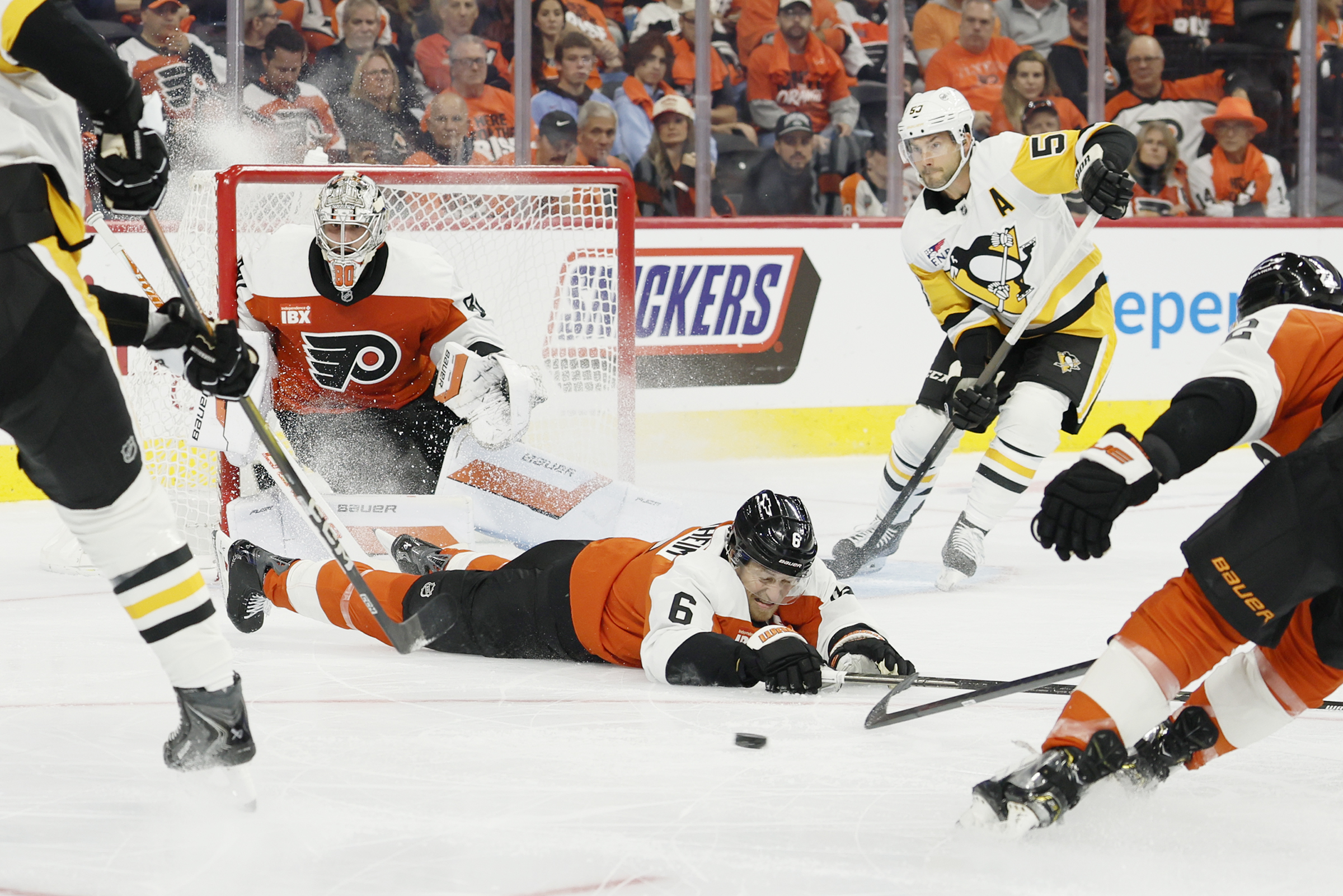
Two games into the season, the Flyers have scored twice and allowed 10 goals. They have been outshot, 41-22, on average and have spent just 37% of their time in the offensive zone, below the league average of 40.4%.
Things aren’t great at either end.
Coach Rick Tocchet said Saturday morning that they “need some guys to be able to hold pucks and make a play” and that several players need to move their feet and play more disciplined. It’s apparent via the eye test that the team is a step behind. According to NHL Edge stats, the Flyers rank 26th in max skating speed, led by Carl Grundström’s 21.82-mph burst in the season opener.
They have not had a player reach 22 mph, despite hitting above that mark 97 times last season when the league average was 86.
Although it’s two games into the season and still 82 more on the slate — beginning Saturday against the defending champion Carolina Hurricanes (7 p.m., NBCSP), the Flyers know that while they played better Thursday at New Jersey than in their season-opening 7-0 loss to Pittsburgh, it’s still not good enough.
“I think sometimes you come in thinking that it’s just going to be easy, and you get humbled pretty quickly in this league when you aren’t on your A game, and I think you’ve seen that through the first two games,” defenseman Travis Sanheim, who, along with his partner Rasmus Ristolainen, has scored the Flyers’ goals this season, said Saturday.
“We’ve got a lot of games coming up here against a lot of good opponents, and we’re going to have to figure it out pretty quickly, or it’s going to get out of hand.”
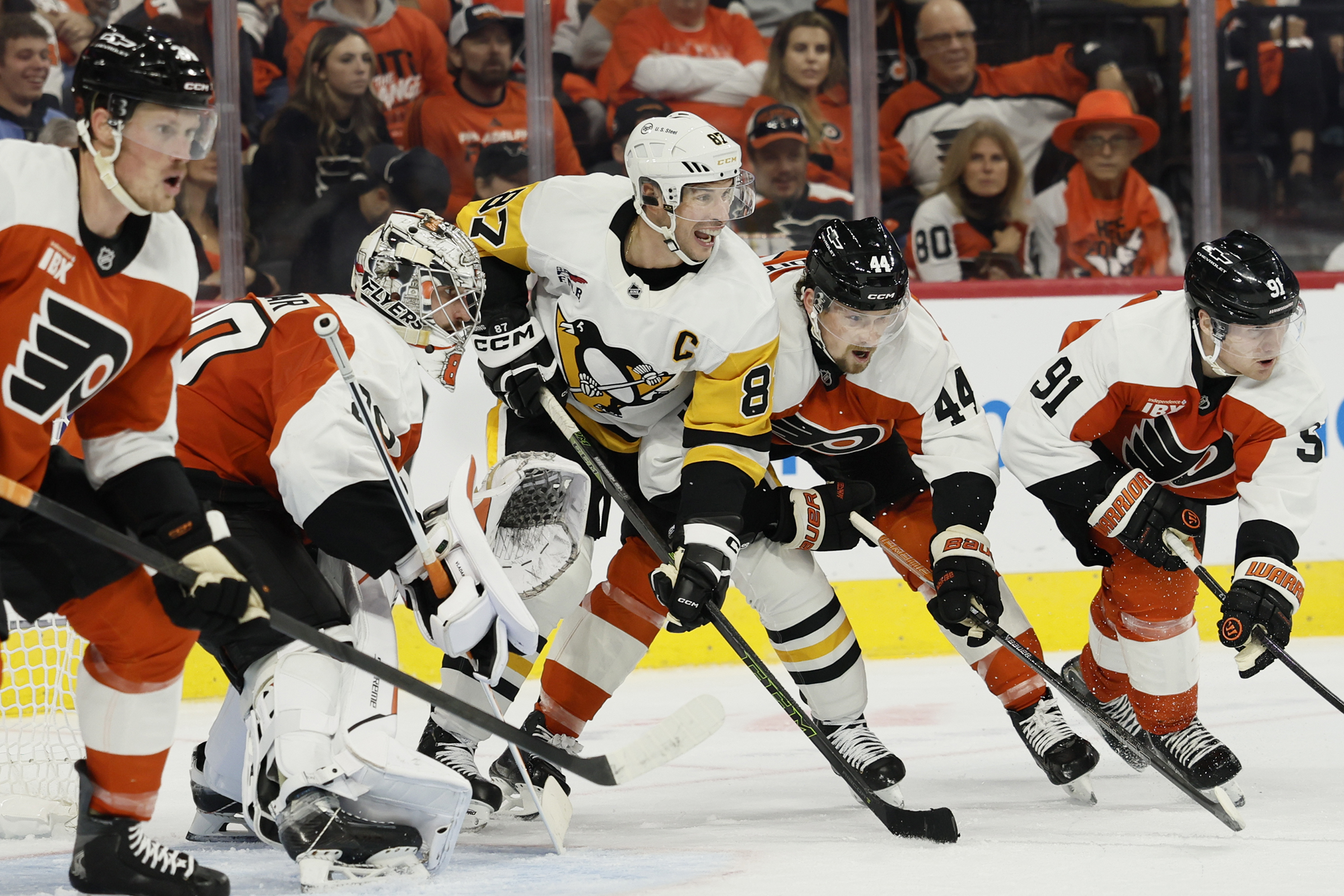
Nick Seeler (left), Dan Vladař, Simon Benoit, and Carl Grundström mark Pittsburgh’s Sidney Crosby in the second period on Wednesday. Grundström has the Flyers’ speediest skating burst so far this season, but nobody has eclipsed 22 mph yet.Elizabeth Robertson / Staff Photographer
The easy thing is to point out what has gone wrong. The harder question is how to fix it. After Wednesday’s rout, the team simplified some things on Thursday, and Tocchet liked the uptick in puck possession in earning a loser point. But as forward Owen Tippett added Saturday, going back to basics is key, as is knowing when to make the right play at the right time.
“If you look at the last two games, even this preseason, execution hasn’t been great,” Tocchet said. “Like an 18-foot pass, passing into the guy’s skates and puck possession. That’s making plays. We want guys to make plays. We expect certain guys, even with a guy on you, he should be able to make a play. We’re not getting that play. So we’re looking for more of that.”
The numbers aren’t great, either. According to Natural Stat Trick, among the 10 teams that have played two games, the Flyers are last in shot attempts (64), Corsi For percentage (34.21%), expected goals for (1.92), scoring chances (22), and high-danger chances (five) at five-on-five. They also have given up the second-most high-danger chances (26), with only the New York Rangers, who have 26 themselves, giving up more (28).
To help right the ship, Tocchet has switched up the lines for a third straight game. Trevor Zegras will center the speedy Tippett and Grundström; Alex Bump is now alongside Sean Couturier and Noel Acciari; Travis Konecny and Christian Dvorak will skate with Matvei Michkov on the top line; and Porter Martone is moving down with Noah Cates and Tyson Foerster.
The bench boss is trying to find the puzzle pieces that fit.
“You could always say you could flush those games and stuff, but I think for us, there’s more of learning lessons and kind of take the negatives and positives from the game,” Martone said.
“Just continue to learn from them and come in today with morning skate with that attitude that we got a lot better. We know what we have in this room. We know what we’ve got in this group. So it’s what we do with it. And just come here and compete tonight. That’s all we could ask for.”
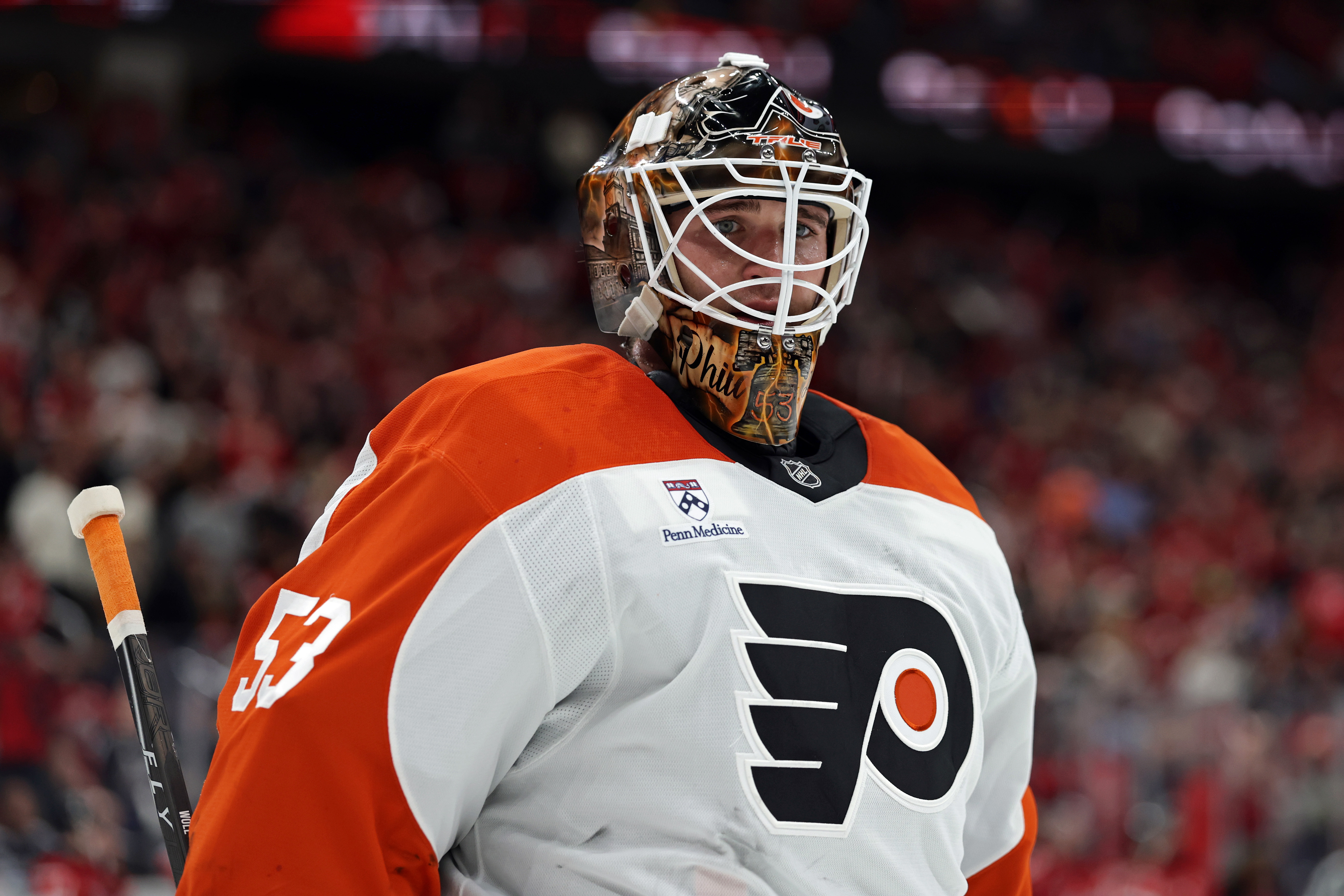
Flyers goaltender Joseph Woll is getting the start again on Saturday.Adam Hunger
Breakaways
Defenseman David Jiříček will make his season debut on the third pair with Nick Seeler and, according to Tocchet, should see some time on the second power-play unit, despite Cam York taking recent reps. Jiříček played in the Flyers’ season finale in April after being acquired from the Minnesota Wild at the trade deadline for Bobby Brink. … Joseph Woll will be back in net for the Flyers after making 41 saves in their 3-2 overtime loss to the Devils on Thursday. … Forward Denver Barkey skated half the morning skate in a noncontact jersey and half in a contact jersey. “I think it’s the first time he’s switched jerseys,” Tocchet said. “A little more contact, so when that happens, obviously get closer and closer. So hopefully he’s a possibility this week.”