Presti’s Bakery was established about 120 years ago in Little Italy, Cleveland, but its influence has reached into the 21st-century Delaware County housing market.
Mike and Tori Gentile are leaving the Wallingford home they have loved so Mike can take over the family enterprise.
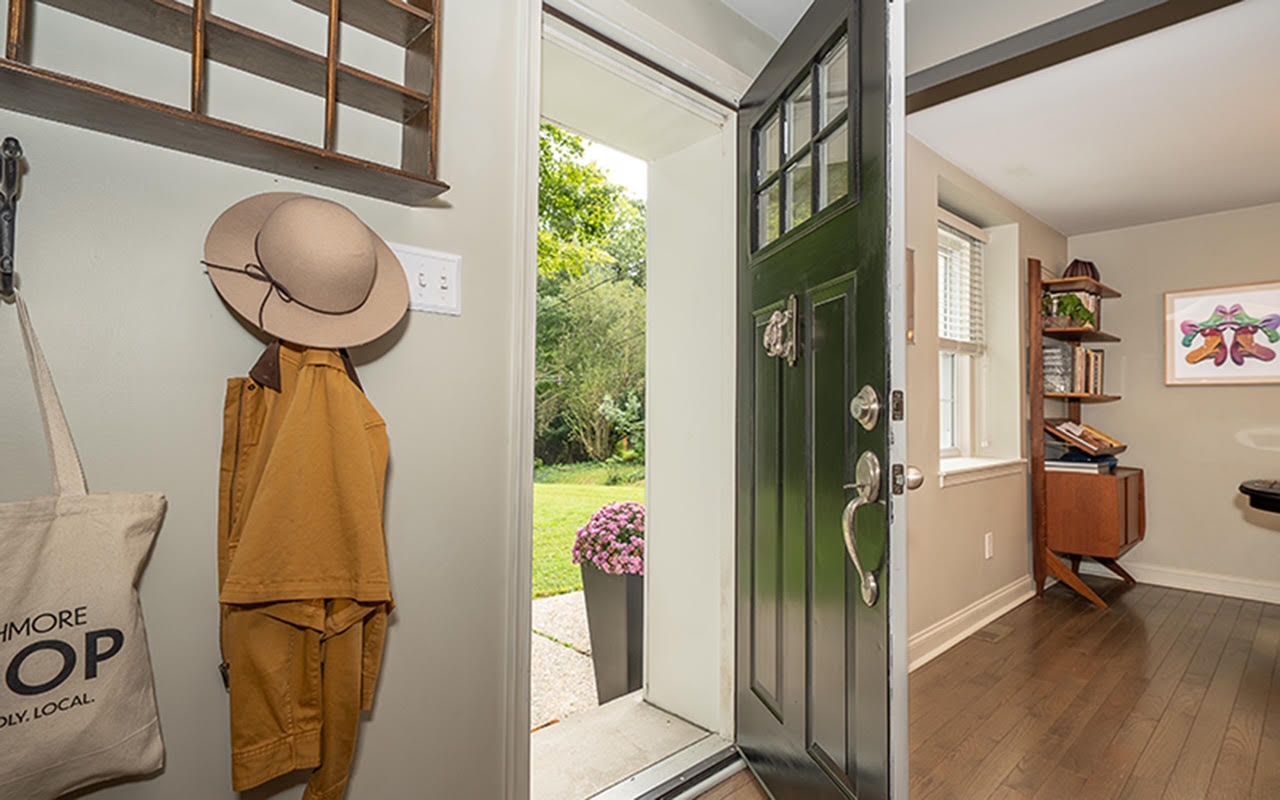
The green front door leads to the foyer at 5 Waterville Rd. in Wallingford.Dave Ocenas
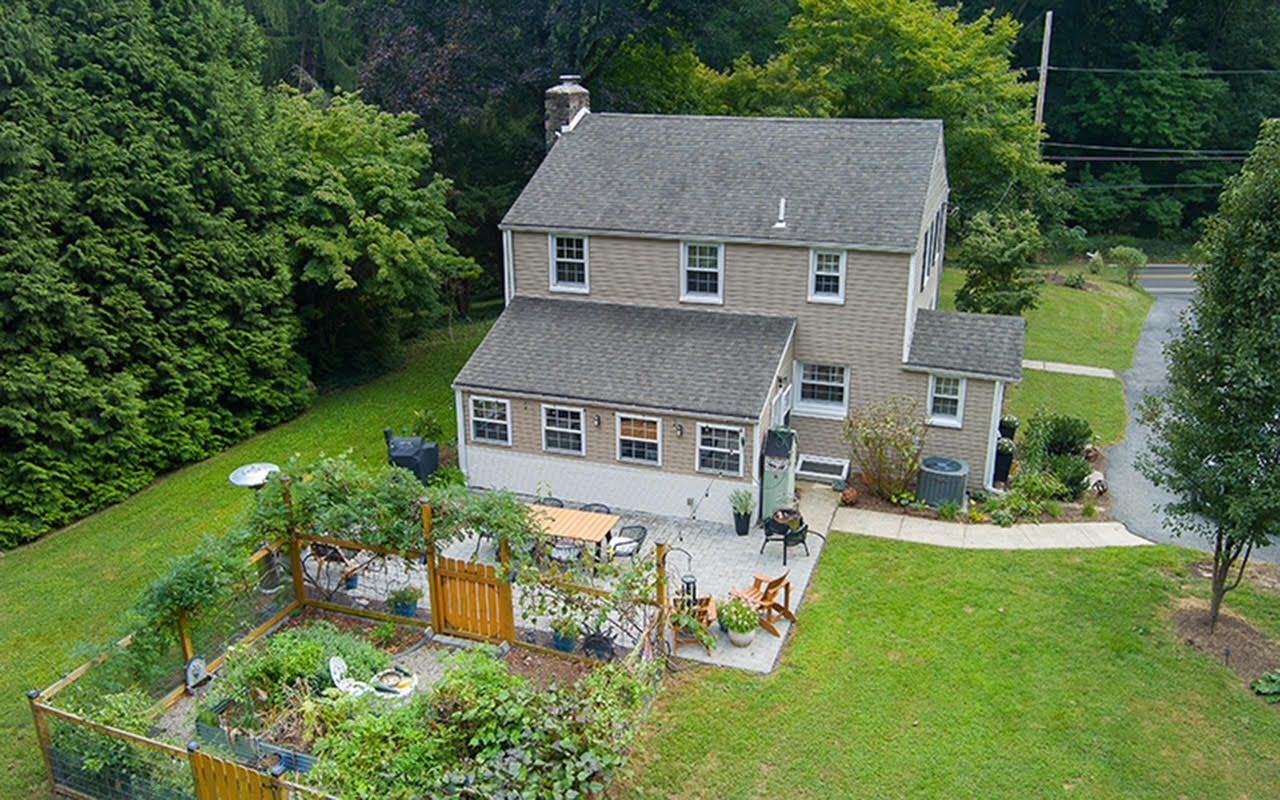
The Gentiles bought the three-bedroom, 2½-bathroom, 1,622-square-foot Wallingford home in 2019, right before the COVID-19 shutdown, expecting a long stay.
“We really liked the Media-Swarthmore area,” said Tori, an interior designer for an architectural firm. Mike sells BMW cars. She thought the area was charming, and loved the nearby farmers market.
The house has a 0.77-acre lot, which Tori appreciated because it provided room for the family to grow. Plus, she said, “I liked the Pennsylvania stone and the open layout.”
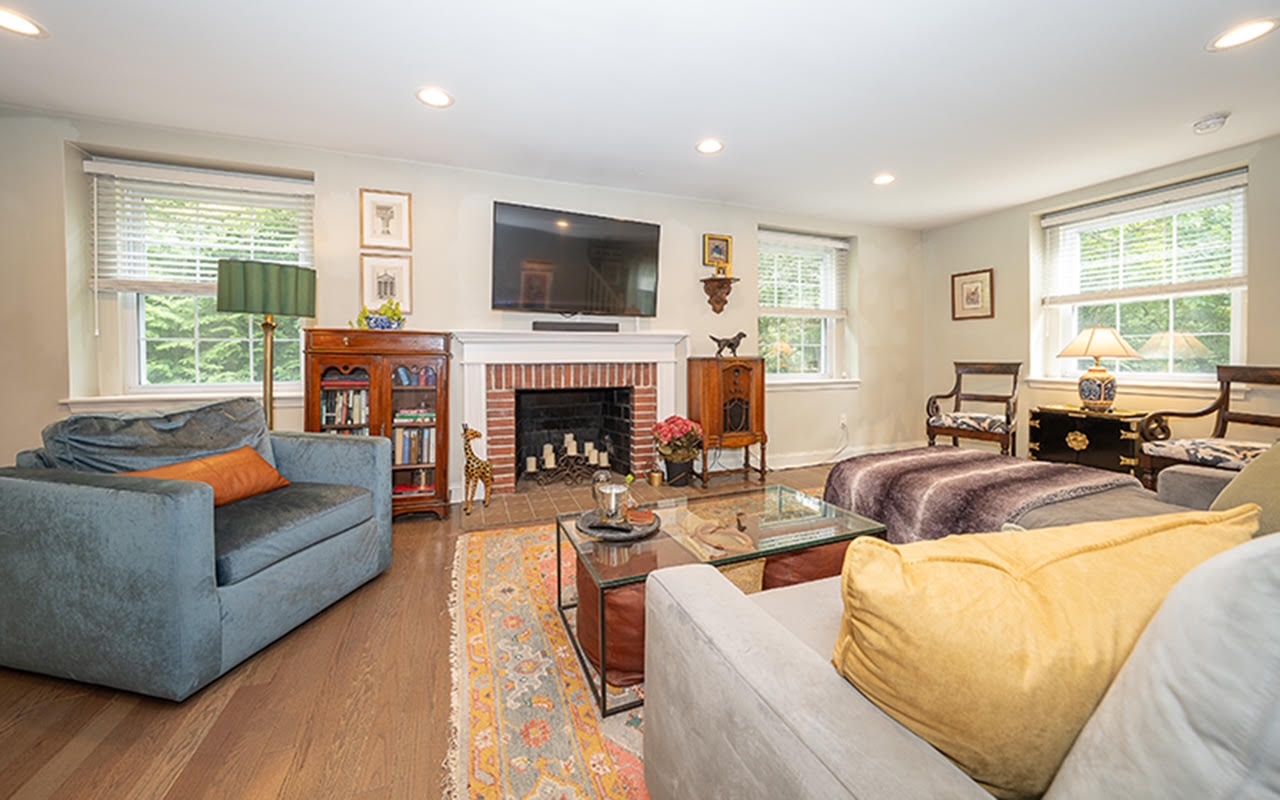
The living room is anchored by a classic brick fireplace and custom mantel.Dave Ocenas
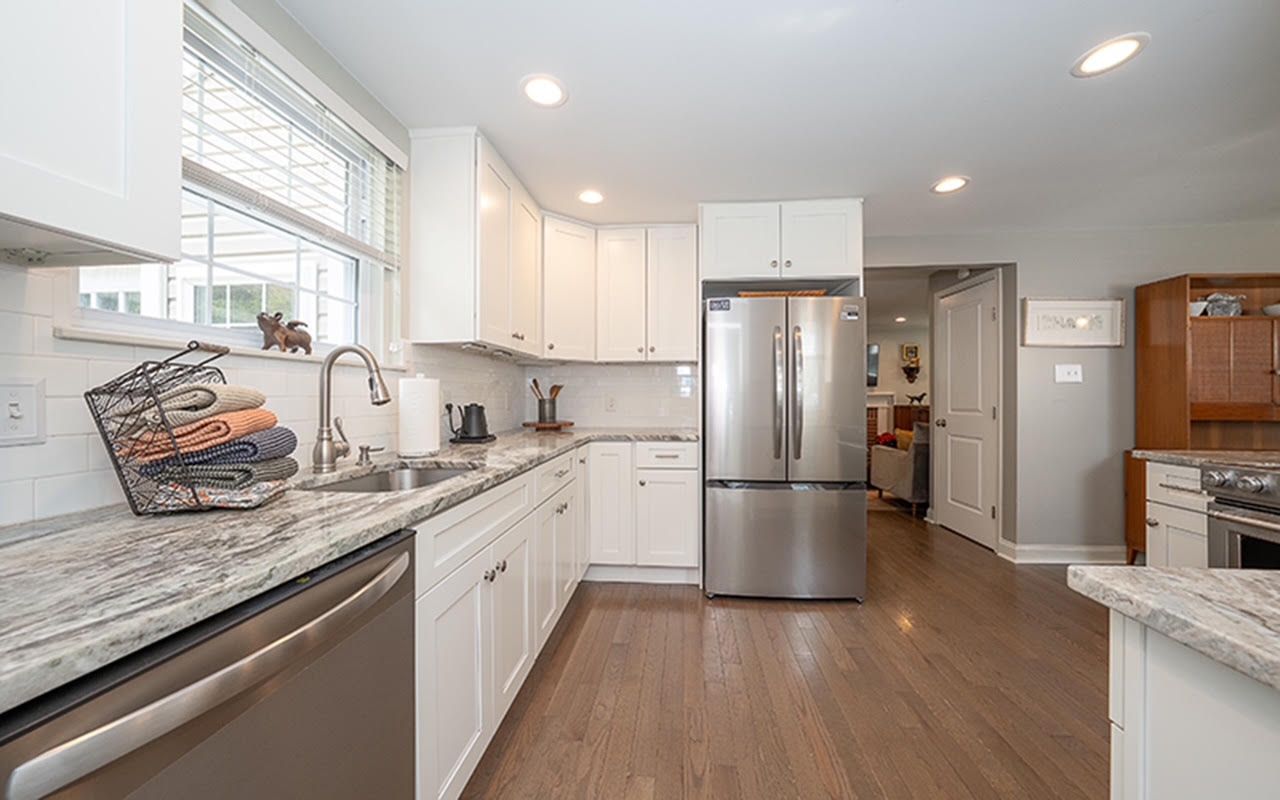
The first floor is home to the kitchen, dining room, living room, and family room. The kitchen has granite countertops, stainless steel appliances, and a subway tile backsplash, with a new refrigerator, dishwasher, and microwave. The living room has a brick fireplace.
There is a mudroom just off the kitchen with a dedicated laundry area and direct driveway access, and a bonus room with exposed brick has direct access to the backyard.
The spacious kitchen features granite countertops, new stainless-steel appliances, and subway tile.Dave Ocenas
The second floor has all three bedrooms and two bathrooms. The primary bedroom has dual closets and an en suite bathroom, and the hall bathroom has a barn-door vanity and tiled tub/shower surround.
A new French drain system was installed in 2019 and HVAC was replaced in 2020.
The unfinished basement has ample natural light.
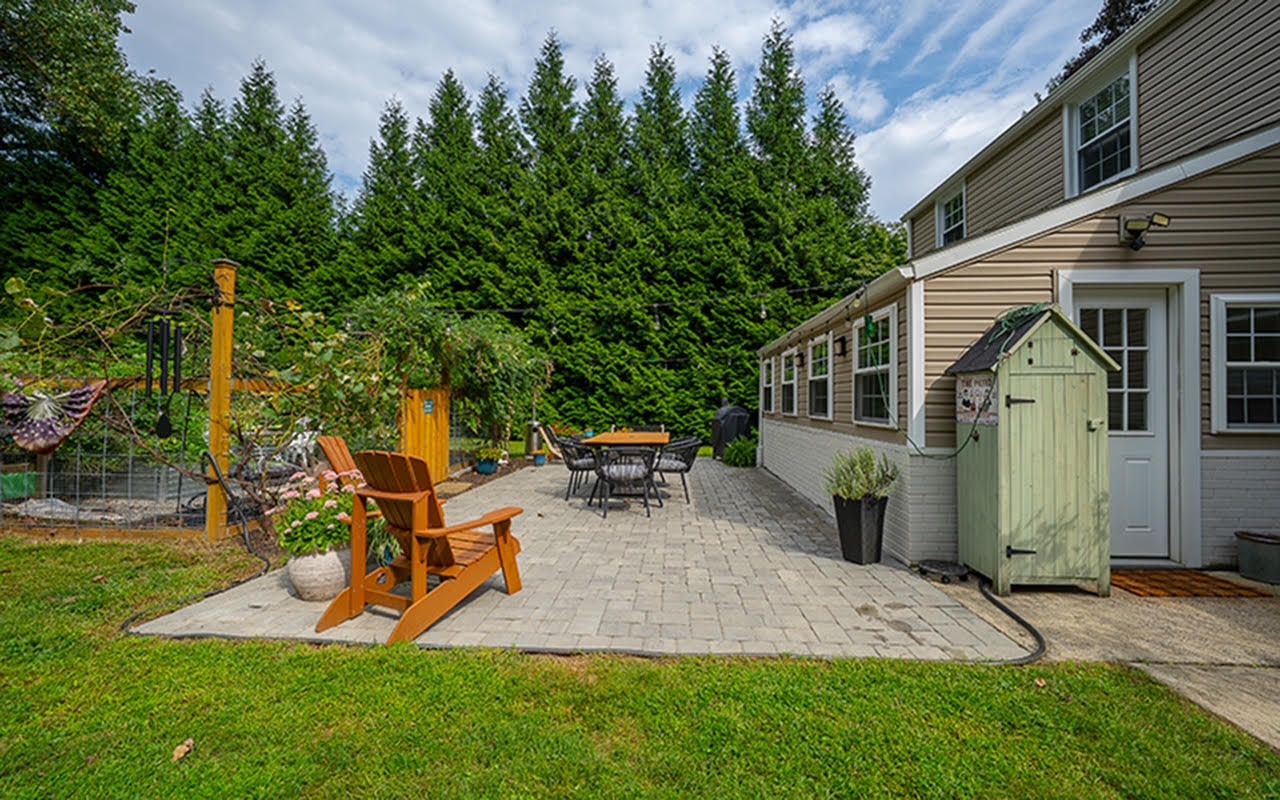
The Gentiles used the COVID-19 “break” to install a paver stone patio and fenced-in garden.
The backyard has newer paver stone.Dave Ocenas
There are several close-by SEPTA Regional Rail stations and convenient access to I-95 and the Blue Route. Philadelphia and Wilmington are less than a half hour away.
There is a large one-car garage and driveway space for four cars.
The house is in the Wallingford-Swarthmore School District.
It is listed by Marisa Bruder of BHHS Fox & Roach Wayne-Devon for $545,000.
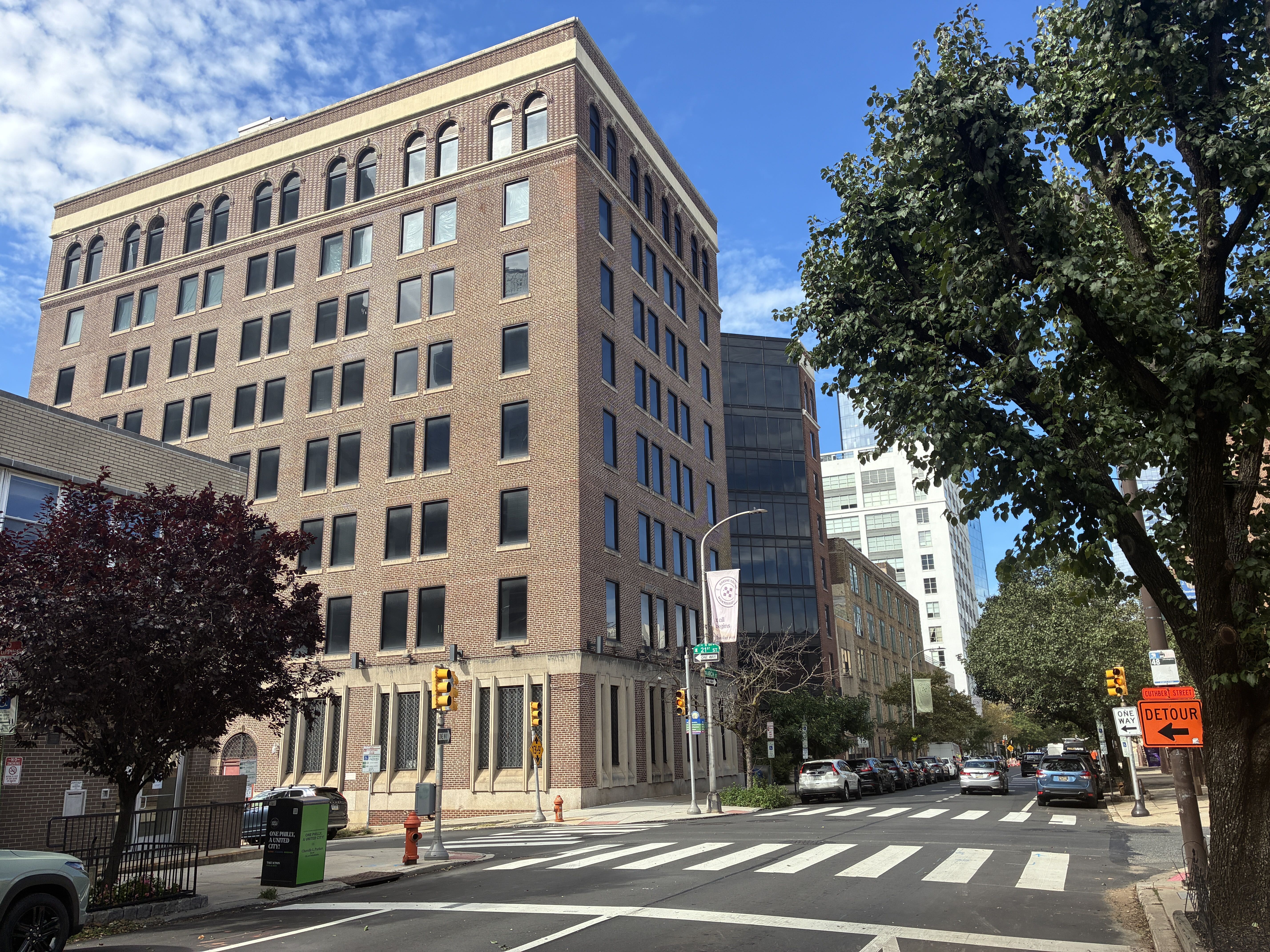
The residential conversion of the former office building at 2100 Arch St. is underway, with completion expected in late 2027 or early 2028.
Philadelphia-based MM Partners paid $12 million for the eight-story buildingin March 2023, with plans for 116 apartments in the Logan Square neighborhood.
It was formerly the Jewish Community Services Building.
But the site was quiet for a few years and the project delayed by skittish lenders who were concerned about financing more apartments in a market they saw being flooded with new supply. Construction finally began in July.
“It wasn’t easy, but we just stuck with it and figured out a way to get it under construction,” said David Waxman, founder and managing partner with MM Partners.
“The good part of [the delay] is we’ll now be delivering into a market with very little new supply, particularly in this part of the city,” he said.
The project will be composed of studios, with the smallest in the 500-square-foot range, up to two-bedrooms that will be up to 1,400 square feet. There will be 36 studio apartments, 64 one-bedrooms, and 16 two-bedrooms.
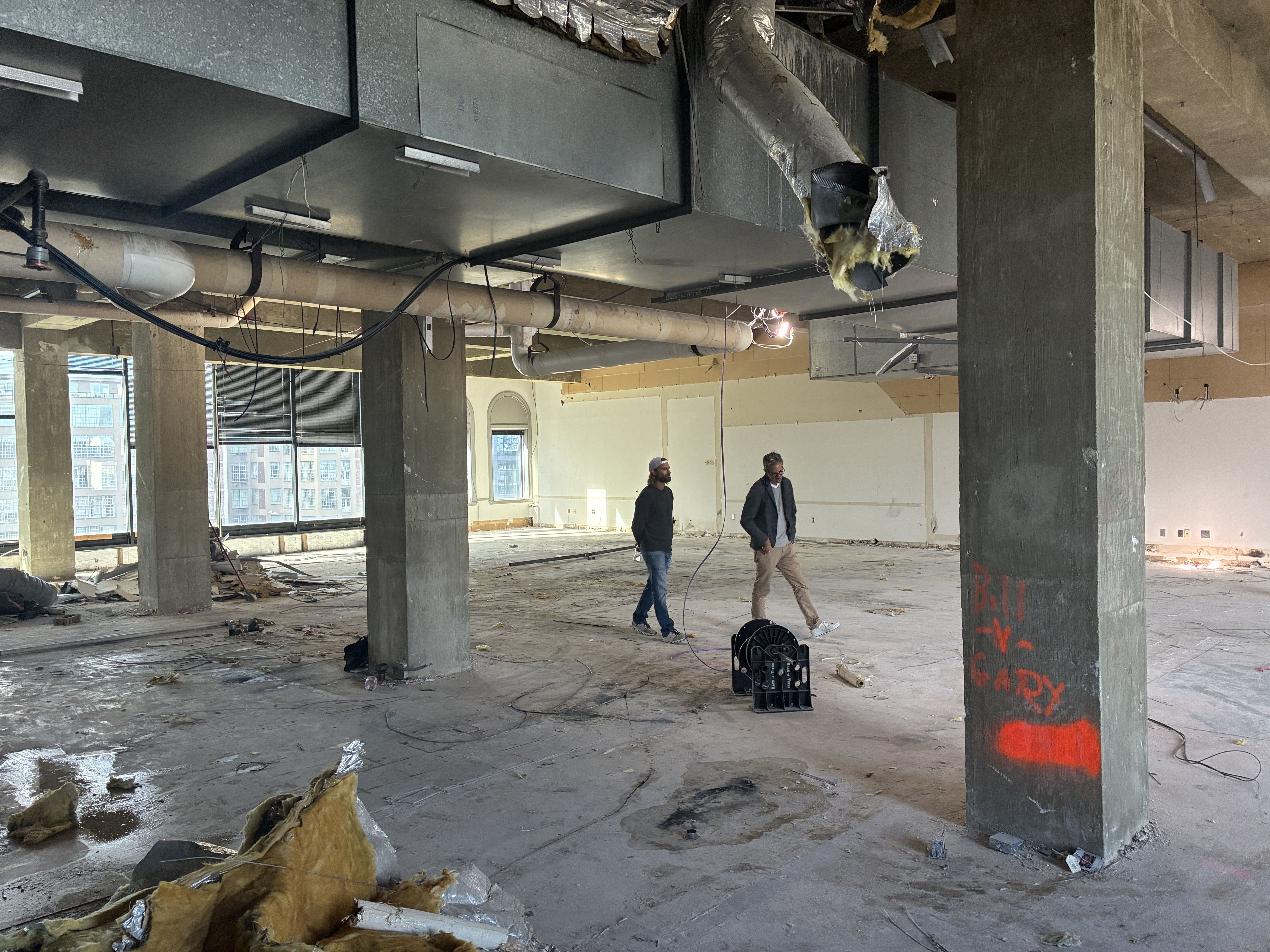
Aaron Smith and David Waxman in the midst of 2100 Arch’s conversion.Jake Blumgart
MM Partners is planning 3,000 feet in commercial space on the ground floor of the original 113-year-old building and is considering a roof deck as well.
In the basement, tenant amenities such as a gym and lounge are planned, and MM Partners is considering providing 1,200 square feet of rehearsal space for Philadelphia theater companies.
“There’s a lot of local theater companies that are looking for efficient and affordable space,” said Aaron Smith, partner and founding member with MM Partners.
In many ways, 2100 Arch St. is an ideal office building for residential conversion.
It is relatively small at 121,500 square feet and has none of the cavernous, sunless interior space that makes more recent skyscraper office buildings so hard to convert.
That means tenants will have access to windows without carving light wells through the center of 2100 Arch. The number of apartments is more modest than would be the case in the large towers on West Market and, therefore, easier to fill.
“It’s not too big and not too small,” Waxman said. With a lot of large office buildings, “you have to buy it so cheap to be able to afford to just have dead space in the middle.”
MM is working with King of Prussia-based Axis Construction Management on the 2100 Arch conversion. It is their eighth adaptive reuse project together.
For the $26 million project, MM Partners was able to secure $6.1 million in federal historic tax credits and $500,000 from Pennsylvania’s Historic Preservation Tax Credit.
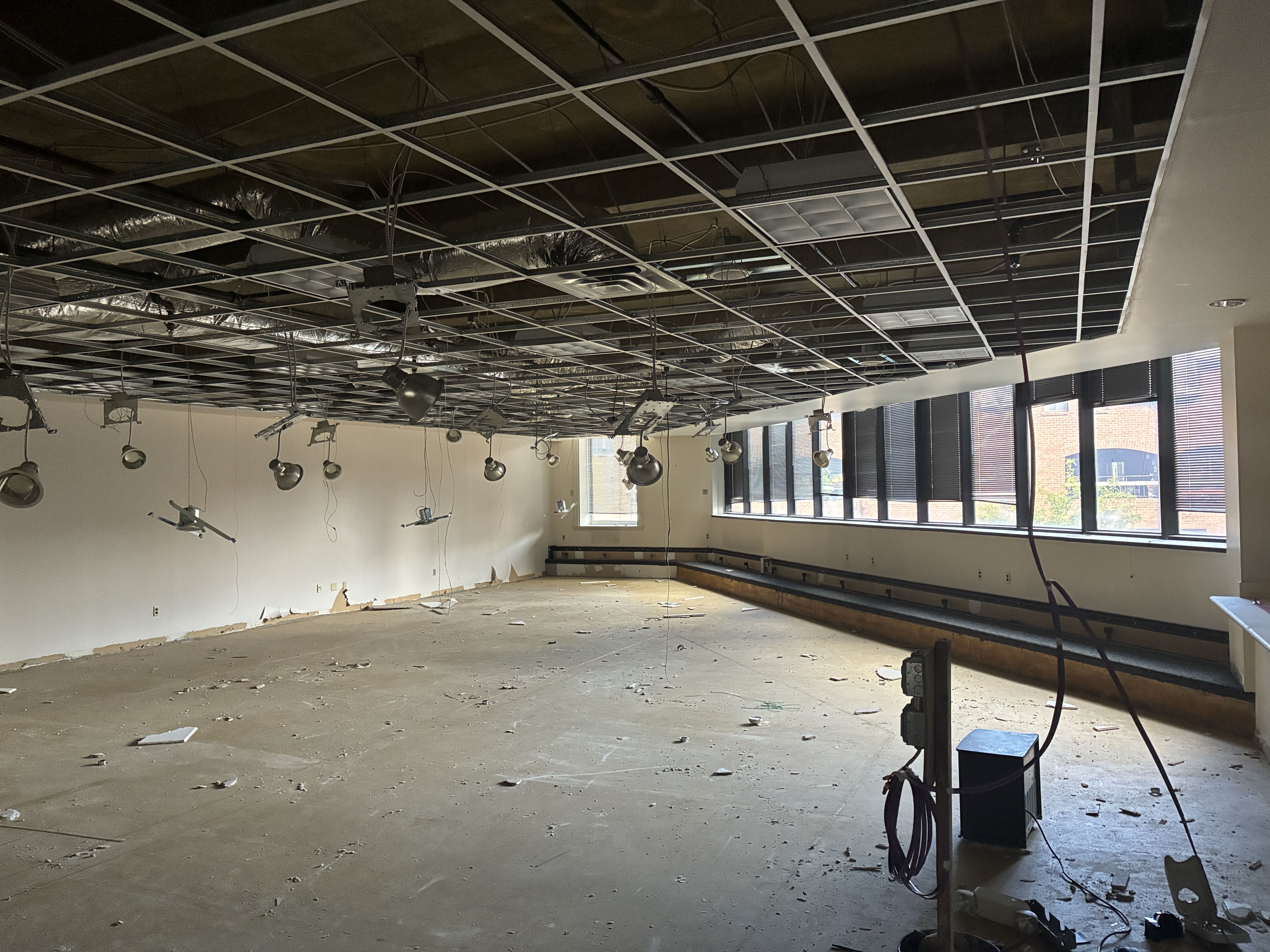
While the original building is over a century old, half of it dates to the 1980s when it was home to BIOSIS, a life sciences database publisher.
The room where BIOSIS, a company that catalogued life sciences research, used to keep their mainframe computers.Jake Blumgart
The eastern section of the building was constructed in 1913, and then acquired by BIOSIS in 1966. The company grew throughout the later half of the 20th century and doubled the size of the structure to the west in 1982.
Like other conversion projects in Philadelphia, 2100 Arch will get a 10-year property tax abatement.
The developer acquired the building from the Jewish Federation of Greater Philadelphia, which had purchased it from BIOSIS in 1999, after the building had been vacant a short time due to the COVID-19 pandemic.
“They had done a really nice job keeping it up,” Waxman said. “If there had been an office market for B- and C-class buildings, this could have been easily leased as office. But there isn’t. Everyone only wants to be in the nicest buildings now.”
In sharp contrast MM Partners has adapted long-derelict buildings to new uses in other parts of the city, such as the F.A. Poth Brewing Co. in Brewerytown, which MM converted to 133 loft apartments.
Some of those buildings had severe structural problems as a result of their long abandonment, whereas 2100 Arch was in perfectly good shape.
“It’s a joy to work in,” Waxman said. “You have working elevators. You have a non-leaky roof. You have electricity coming in. You have sprinklers. You have all the things that these other buildings that we’ve done in the past didn’t have.”
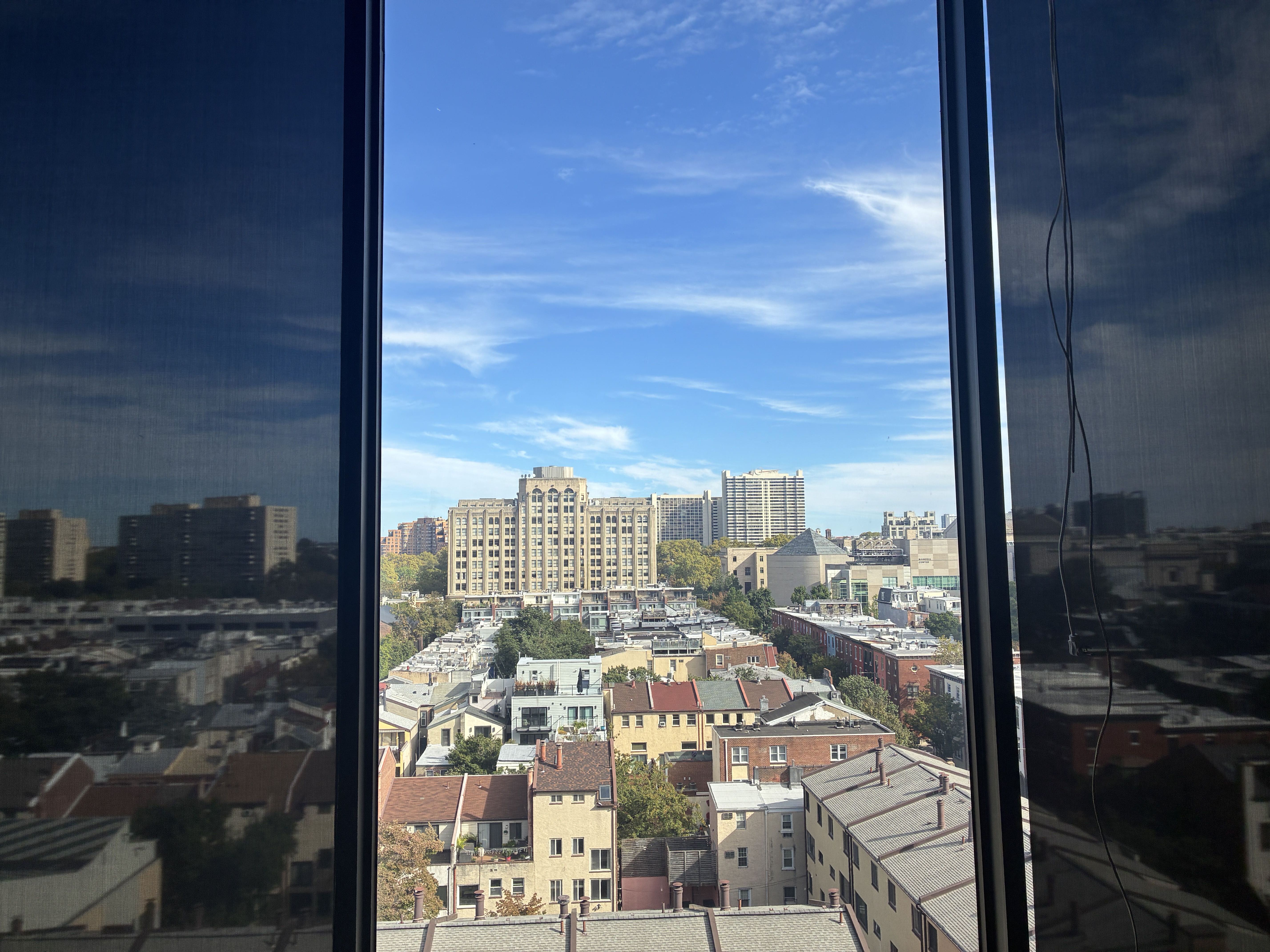
The view from the eighth floor of 2100 Arch, looking over the Logan Square neighborhood.Jake Blumgart
Meanwhile, the nearby west side of Center City has become the heart of Philadelphia’s commercial life.
West Market Street, visible from 2100 Arch’s south-facing windows, is the most successful corner of the city’s office market.
Insurance giant Chubb’s new office building just opened next door. Burlington recently announced plans to move its headquarters into the Schuylkill Yards developmentnear 30th Street Station.
At 2100 Arch,“you’re close to everything, but you have a little oasis [in the Logan Square neighborhood] right next to the hustle and bustle of Market Street,” Waxman said.
As real estate development in Philadelphia slows, the most expensive project on the horizon is a state-of-the-art laboratory and classroom building set to replace a mid-century structure that lacks central air-conditioning.
The $520 million redevelopment of the David Rittenhouse Laboratory at 209 S. 33rd St. will raze two-thirds of the existing structure.
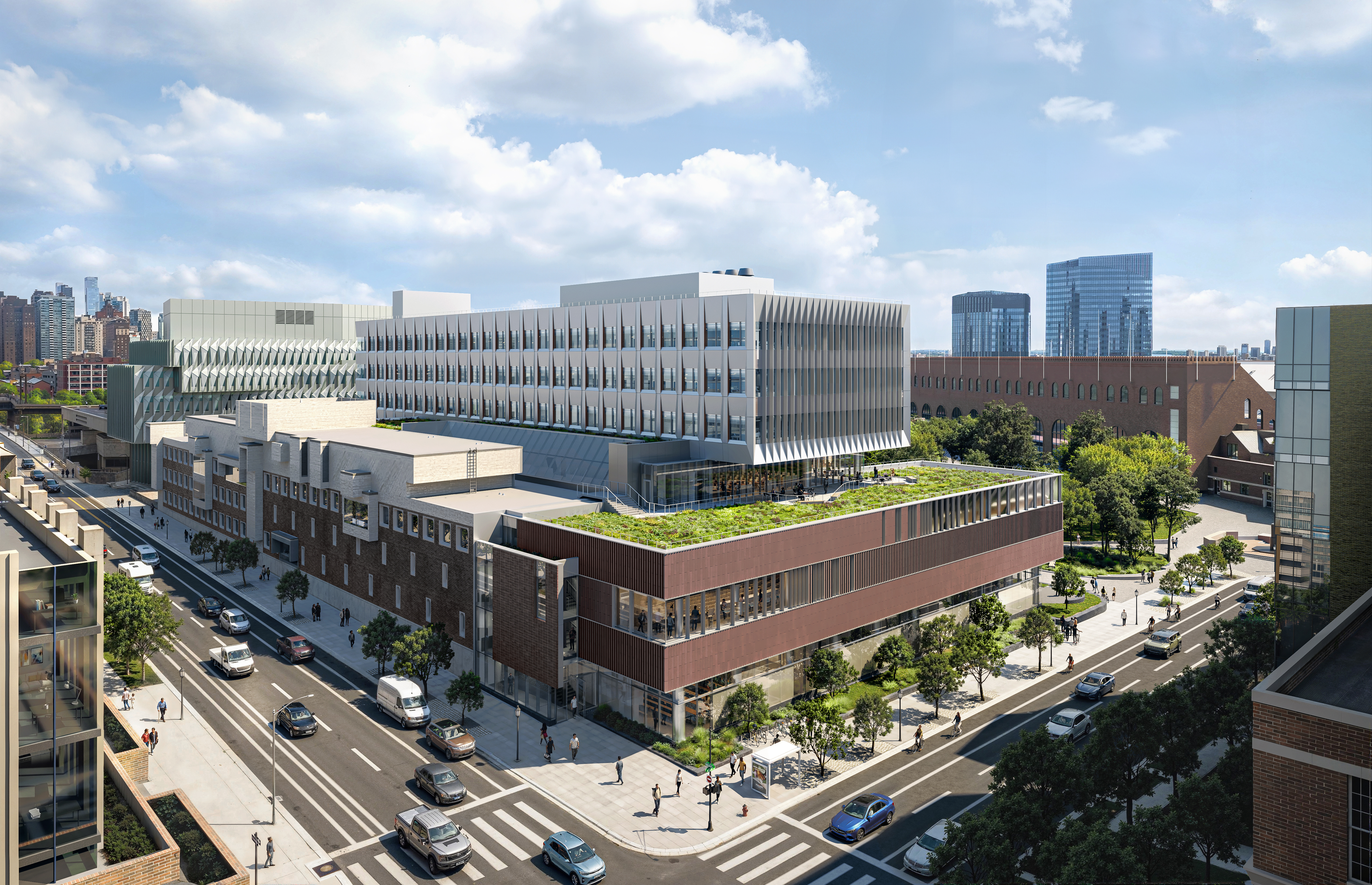
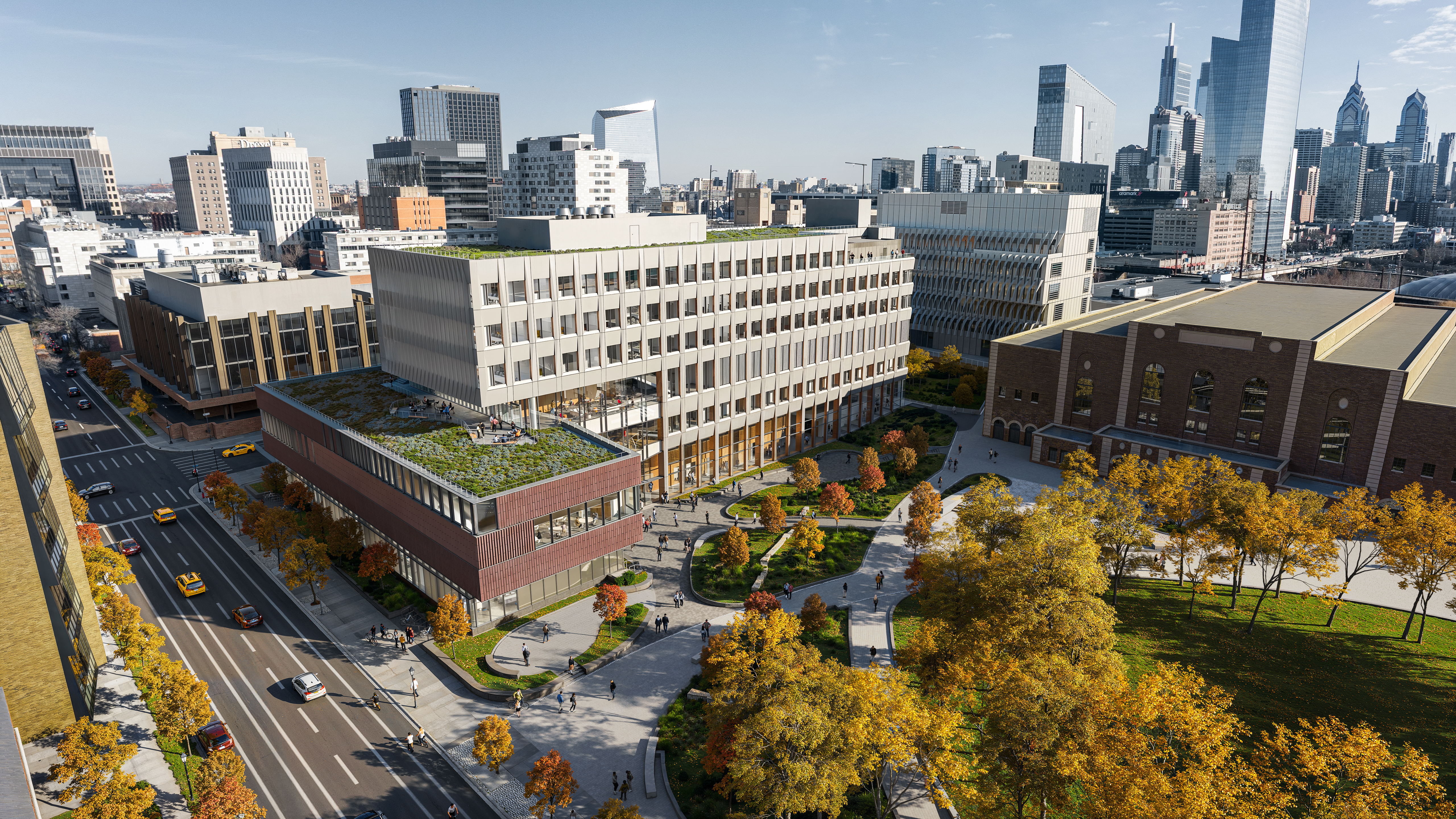
A seven-story, 325,000-square-foot replacement, dubbed the Penn Discovery Commons, will be built in its place.
The David Rittenhouse Laboratory has housed the math and the physics and astronomy departments since 1954. While the building has been the setting for multiple Nobel and Breakthrough Prize discoveries, university leaders now consider it outmoded.
“Those young, amazing experimenters are doing their work in this terrible, dilapidated old building that’s just not fit for purpose,” said Mark Trodden, dean of the School of Arts & Sciences, who has had an office in the building for over 17 years.
Penn has been considering replacing the existing Rittenhouse Lab building for 10 years, with the Daily Pennsylvanian first reporting on redevelopment plans in 2024. The new structure is designed by Los Angeles-based CO Architects, which is known for West Coast eds and meds designs, along with local partner Ewing Cole.
The project comes amid a challenging time in higher education, as Penn and other universities have faced funding cuts from the Trump administration. Last year, the West Philadelphia Ivy League school instituted a hiring freeze and other economies as a result.
Penn is still moving forward with a variety of major real estate projects from a new wrestling facility to a new theater addition to the Annenberg Center for Performing Arts.
But the new Penn Discovery Commons — and its more than half-billion dollar price tag — is the largest single project in the university’s pipeline and for the city in the coming years.
It eclipses the $450 million TerraPower Isotopes factory at the Bellwether District in South Philadelphia. The only larger project in Philadelphia is the Children’s Hospital of Philadelphia’s $2.5 billion new patient tower, which will be completed in 2028.
Why a new building is needed
David Rittenhouse Laboratory was built in phases, with the core constructed in 1954. It was Penn’s first new development on its main campus since the Great Depression and was seen as a sign of the university’s dedication to the city.
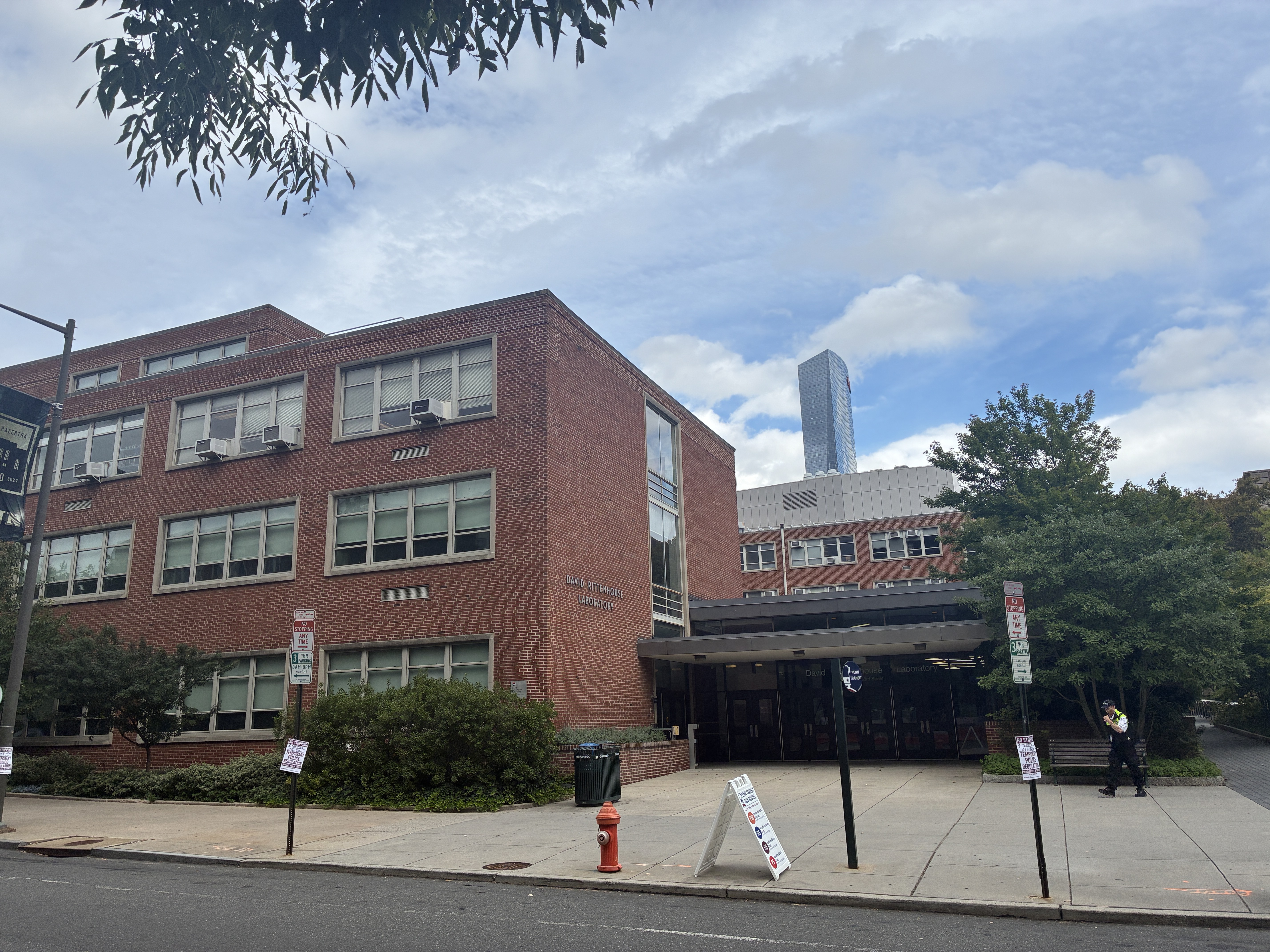
The original redbrick 1954 building predates central air-conditioning and is cooled by window units.
The redbrick portion of the existing building will be demolished.Jake Blumgart
“It’s temperature control doesn’t work,” Trodden said. “The laboratories do not have the right structure or capabilities to do modern science. It’s just a very inhospitable place to work.”
Penn looked into renovating this portion of the existing building, but it rivaled the cost of new construction. So the redbrick portion with the David Rittenhouse Labs’ current main entrance on 33rd Street will be demolished.
“Many buildings built post World War II, particularly with government funding, were built relatively quickly, and they aren’t as durable,” said Mark Kocent, Penn’s university architect. “A lot of universities like us have these buildings from the 1950s and 1960s that were not well built.”
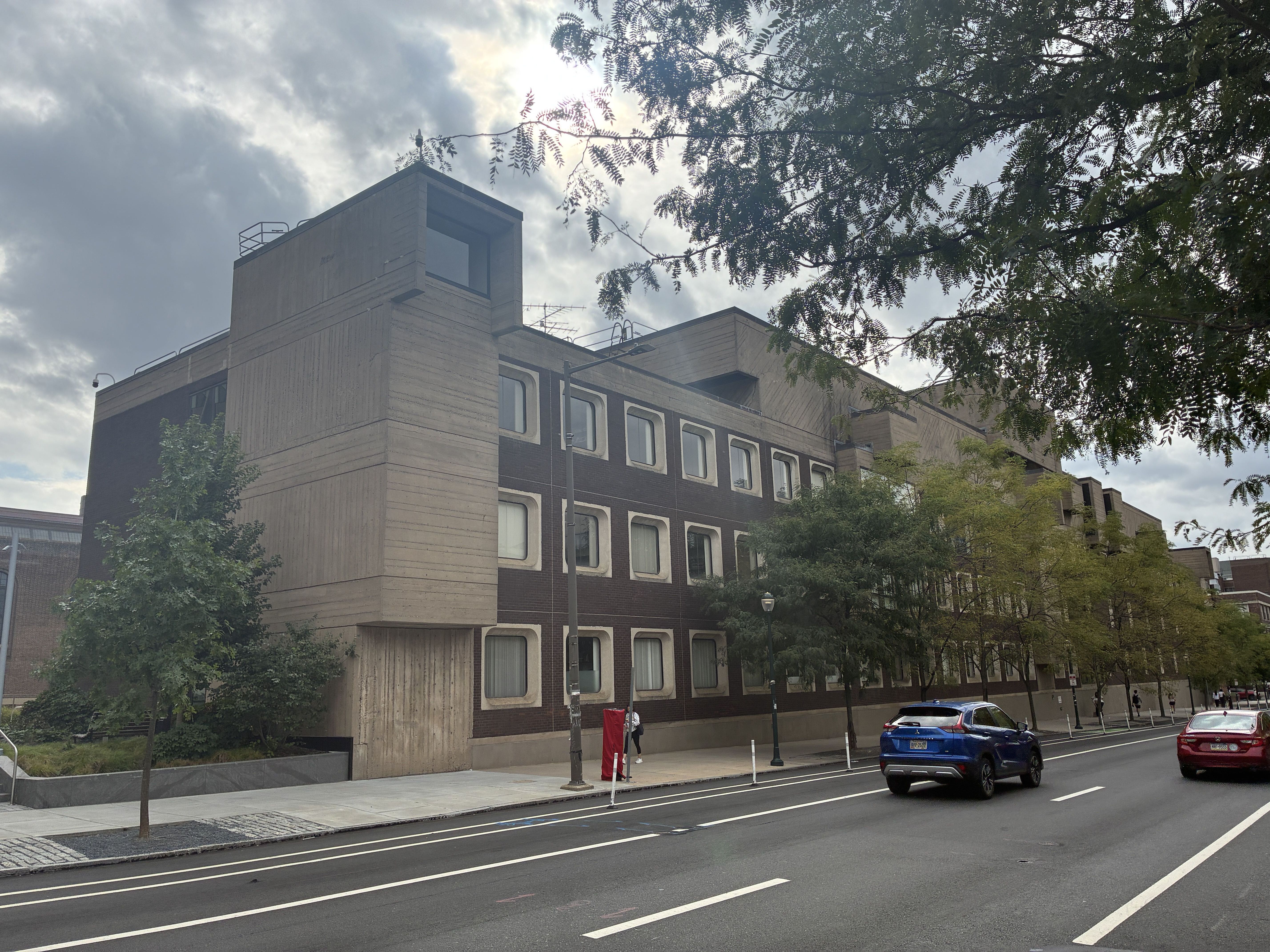
An expansion followed in 1967, which features the space-age addition that fronts much of the block of Walnut Street between 33rd and 32nd Streets. It was designed by Carroll, Grisdale & Van Alen, a renowned modernist firm that also designed the Pennsylvania State Office Building at 1400 Spring Garden St.
That over 80,000-square-foot portion of the David Rittenhouse Labs, built with cast-in-place concrete and brown brick, will remain and become part of the new Penn Discovery Commons.
The 1967 expansion, seen here, will be incorporated into the new building.Jake Blumgart
The decision to keep this architecturally distinct piece of the building will save money and reduce the project’s environmental impact.
“The most sustainable building is an existing building, and so we evaluated this pretty carefully and [decided to preserve part of the existing building] both due to cost and sustainability and less time to tear everything down and rebuild,” Kocent said.
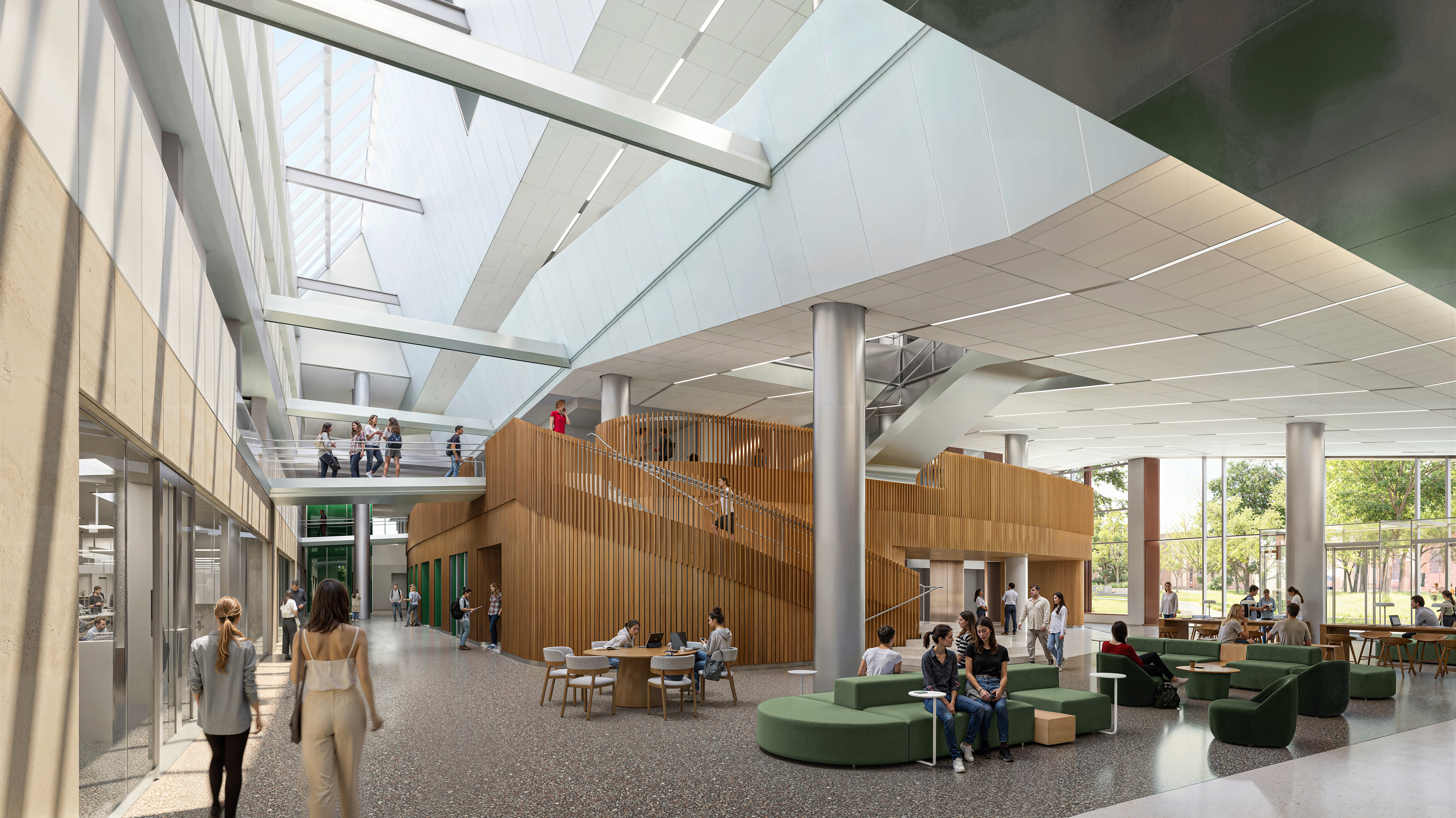
Discovery Commons’ redesign also adds natural light and replaces confusing-to-navigate hallways. It will include features like a green roof, stormwater management, and increased energy efficiency.
The new building will have 15% more research laboratory space than the current structure, and 57% more space devoted to classrooms and teaching labs.
This interior rendering of the new building planned by Penn shows all the natural light that the new design will allow, in contrast with the existing David Rittenhouse Lab.CO Architects
The university plans to add space for socializing outside the classroom, with the hope of fostering the kind of spontaneous interactions that spur creativity and collaboration.
“There is this idea of scientists as the lone genius that sits in their lab or office and dreams up these wonderful ideas,” Trodden said. “Most of modern science looks nothing like that at all.”
What’s now one floor of public space will become three stories, dubbed The Nexus, which will serve as the main entrance and a connection between the research and academic sections of the new building.
Kocent, who trained under renowned Penn architecture professors Denise Scott Brown and Robert Venturi, says that encouraging socialization and unstructured interaction is in keeping with their ideas.
“Denise would often say the next Nobel Prize wasn’t necessarily going to be figured out at the lab bench; it was going to be figured out at the coffee shop at the end of the hallway,” Kocent said.
Faculty concerns about research disruption
The seven-story Vagelos Laboratory for Energy Science and Technology just to the east, which features similar environmentally conscious design, opened in 2024. It is 112,500 square feet and cost $173.5 million to build (or $1,540 a square foot).
Replacement of the Rittenhouse lab will cost $1,600 a square foot. Penn’s development team says that prices haven’t spiked dramatically — despite the current inflationary environment — because the preservation of the 1967-portion of the building is helping to manage costs.
The cost is also held down because the Penn Discovery Commons contains a lot of classroom space, which is cheaper to build.
The university plans to begin relocating the building’s tenants at the end of next year, with demolition beginning in spring 2028. Construction would take about three years, with the goal of Penn Discovery Commons being open by Sept. 1, 2031.
A rendering of the new lab, looking to the northeast. None of the preserved Walnut Street-facing facade can be seen here.Co Architects
The Daily Pennsylvanian reported earlier this year that some faculty based out of the David Rittenhouse Laboratory worry that relocating their lab space twice in four years could “decimate research.”
Trodden says that he understands the faculty’s concerns and that the university is committed to taking care of their needs.
“Everyone is rightly anxious about how this will work in practice,” he said, “but there’s a lot of thought going into it, and a lot of care being taken about individual people’s research needs, and the needs of departments.”
As a reporter for “How I Bought This House,” The Inquirer’s series that shares the stories of how people purchased homes, I’ve spent a lot of time asking people about, well, how they bought their houses. How much they offered. What they waived. What they regretted. I’ve learned all sorts of tips and tricks, strategies, and common mistakes to avoid.
So when I bought my first house this August in Philadelphia, I fancied myself savvier than the average first-time buyer. I knew, for instance, that the appropriate response to discovering knob-and-tube wiring is to run in the opposite direction, and that only a fool would waive the inspection.
I headed into the process eager and overly confident, sure I’d be able to nab the perfect house well below the asking price and secure a mortgage at the lowest possible interest rate. I’d planned to use things I learned while helming this column, like seller assists and mortgage buydowns, to finagle the seller into practically giving me the house for free.
Then I found a house I really wanted, and I learned that knowing what to do is one thing. Doing it when you are terrified that someone else might buy your dream house is another.
Most of the hacks I picked up flew out the window the second another couple showed up at the open house. Faced with a competitive seller’s market, I quickly folded on things I would’ve previously considered nonnegotiable.
Like the inspection. While I didn’t waive it entirely, I did agree to it being “information only,” meaning I gave up my right to ask the seller to fix or pay for anything. Information-only inspections can strengthen your offer when you can’t afford to pay more, but they can still end up costing you in the form of a hefty repair bill.
Looking back, I wish I had done a full inspection. I didn’t know the details of the other offers, but I doubt anyone else waived theirs. When the report came back with a list of necessary repairs totaling $15,000, I was stuck.
I knew from interviewing dozens of buyers that people often use inspection findings to negotiate a seller’s credit. I would’ve liked to ask for one to cover some of the $12,000 it cost to replace the cloth wiring. But because I’d agreed to an information-only inspection, my only real option was to walk away. I believe this is what people in business call giving away your leverage.
And speaking of giving away leverage, I don’t know why I offered over the asking price except that fear is a powerful motivator. And by that point, I had developed a healthy fear of being outbid.
I had already been outbid on two houses, both of which sold for more than $40,000 above asking. This time I could afford to offer more, so I did, even though I didn’t know what the other offers were.
In a less panicky state, I might have remembered something I’d heard again and again reporting on homebuyers: If someone else offered more than us, the seller would probably circle back and ask if I could match them. That would’ve been a good time to go above the asking price. Instead, I did it right out of the gate. To borrow another phrase from the business community, I negotiated against myself.
Thankfully, not everything I learned from How I Bought This House was for naught. While debating ways I could fend off the competition I was convinced was trying to steal my house, I remembered a couple from Collingswood who hoped to avoid a bidding war. They had bought and sold several homes before, so they knew how to put together an irresistible offer. One of the things they did was waive the mortgage contingency.
When you waive the mortgage contingency, you’re essentially telling the seller that your financing is your problem, not theirs. If your loan falls through, you can’t back out of the deal and get your earnest money back. You have to be able to buy the house one way or another.
It sounds risky — especially if you’re still planning to use a mortgage — but I felt it was a risk I could safely take. My lender was confident I’d be approved.
Plus, I knew the seller would find it appealing because sellers love certainty. Waiving the mortgage contingency gave them the security of an all-cash offer without requiring us to actually make one. A true “win-win,” as my friends in business would say.
Of course, I have no idea whether it won us the house, but after spending so much of the process paying extra to calm my own nerves, it felt good to finally strengthen my offer for free.
If I learned anything from buying my first house, it’s that you should decide what you’re willing to spend, waive, or risk before you fall in love. Then stick to it. I didn’t. But I still got the house. And I don’t have any regrets.
Jenkintown’s zoning board denied its first short-term rental request on Thursday after residents complained about noise and visitors.
Resident Elvira Lindgren and her husband bought and renovated a twin in hopes of renting out rooms, she said in an interviewFriday. The couple began hosting almost a year ago, according to their Airbnb.com listing. But the business has led to tension with some neighbors, who urged the board to deny the request for an official rental license.
The tiny Montgomery County town’s code did not permit short-term rentals until spring 2025, when the borough created an ordinance that allows property owners to open the small businesses with permission from the zoning hearing board, which typically only meets once per year.
Jenkintown now requires a rental license under the new ordinance, which lays out policies on location, parking, safety, and fines, among other things.
Lindgren said she didn’t know about the licensing process when she first started, but when a neighbor reported her, the borough said she could continue operating until Thursday’s hearing.
First Airbnb request draws neighbor dispute
Lauren Davis, whose family shares a wall with the Lindgrens, said Friday that the twins aren’t suited to Airbnb rentals — partly because they share attic access — and that she and other parents are upset to see older men walking on the property, rather than medical students as Lindgren had told her to expect.
“The level of activity they have going on there is better suited to a standalone home,” Davis said.
The borough was mindful of Jenkintown’s already-dense residential development while working on the new short-term rental rules with the county planning office, borough manager George Locke said Wednesday, before the hearing.
“We wanted to have it, but we wanted it in certain locations,” Locke said, “and to make sure it was safe for everybody and didn’t become a nuisance.”
Reached by phone Friday, board solicitor Noah Marlier wouldn’t comment on why the board denied the license.
Lindgren said she was “shocked” by the pushback at Thursday’s meeting from Davis and two other neighbors, adding that seven neighbors had signed a document before the meeting attesting they had no problems with her business.
Davis argued at the hearing that problems during renovation, including a gas leak that forced her family to evacuate, showed the short-term rental would not follow rules.
But accidents can happen during any renovation, Lindgren said Friday, so it’s unfair to count the incident against the business itself.
Lindgren also defended her guests, who she said have included medical students, World Cup visitors, and an out-of-state dad who stays monthly to visit his daughter. While she understands their concern for their children’s safety, complaints are one-off incidents that the neighbors falsely portray as a pattern, she said, and she doesn’t hesitate to remove the rare guest who causes problems.
“I’ve met so many people from abroad, so many countries,” Lindgren said. “Quite a few people became friends.”
She’s disappointed that the board’s decision means visitors coming to Jenkintown to see loved ones or work at Jefferson Abington Hospital will lose a housing option in the area, Lindgren said.
Some Jenkintown Airbnbs may run without approval
But Jenkintown does have a few other short-term rentals, according to postings on Airbnb — including two that appear to have operated for several years.
Locke wouldn’t say whether he’s aware of any unlicensed short-term rentals, but he encouraged any property ownersoperating one to seek approval.
The borough’s solicitor is expected to write a written opinion on Lindgren’s case within 45 days, and she could appeal after that.
But Lindgren plans to consider options for longer-term renters instead, like traveling nurses. The short-term ordinance only applies to properties that offer stays of fewer than 30 days and accept guests for fewer than 120 days total in the year. Properties that book more than 120 days a year are considered hotels in Jenkintown.
“I just feel bad for those who won’t get to stay with me,” she said.
This suburban content is produced with support from the Leslie Miller and Richard Worley Foundation and The Lenfest Institute for Journalism. Editorial content is created independently of the project donors. Gifts to support The Inquirer’s high-impact journalism can be made at inquirer.com/donate. A list of Lenfest Institute donors can be found at lenfestinstitute.org/supporters.
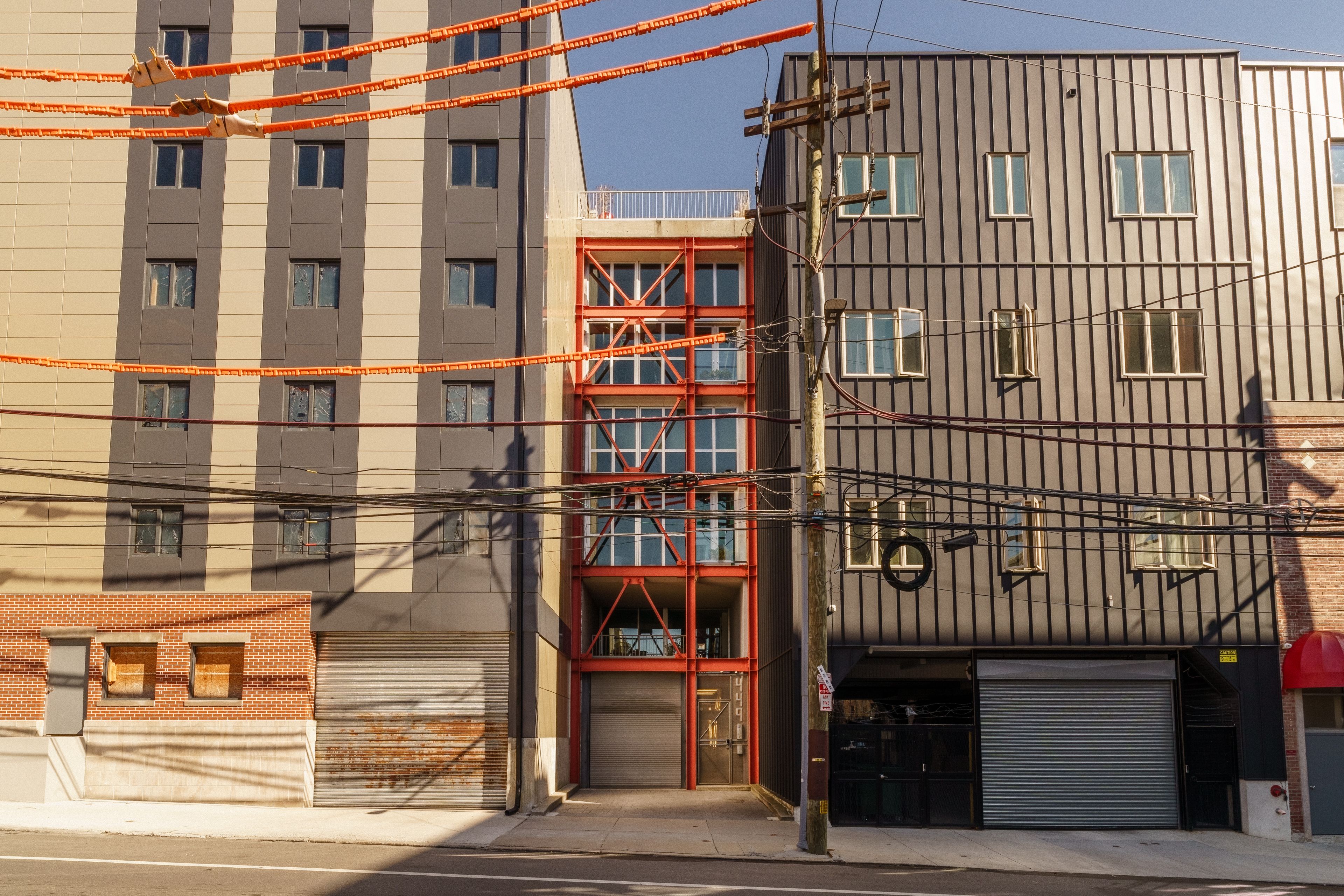
An eye-catching Callowhill building with a vivid orange steel front that often inspires passersby to snap a photo is on the market for $2.5 million.
The property on North 13th Street between Buttonwood and Hamilton Streets is owned by visual artist Ray Bartkus and his wife, Ina. The couple have used the building’s top unit, a tri-level with partial loft-like floors that allow light to flow through the space, as their home and Ray’s studio since purchasing it for $729,000 in 2013.
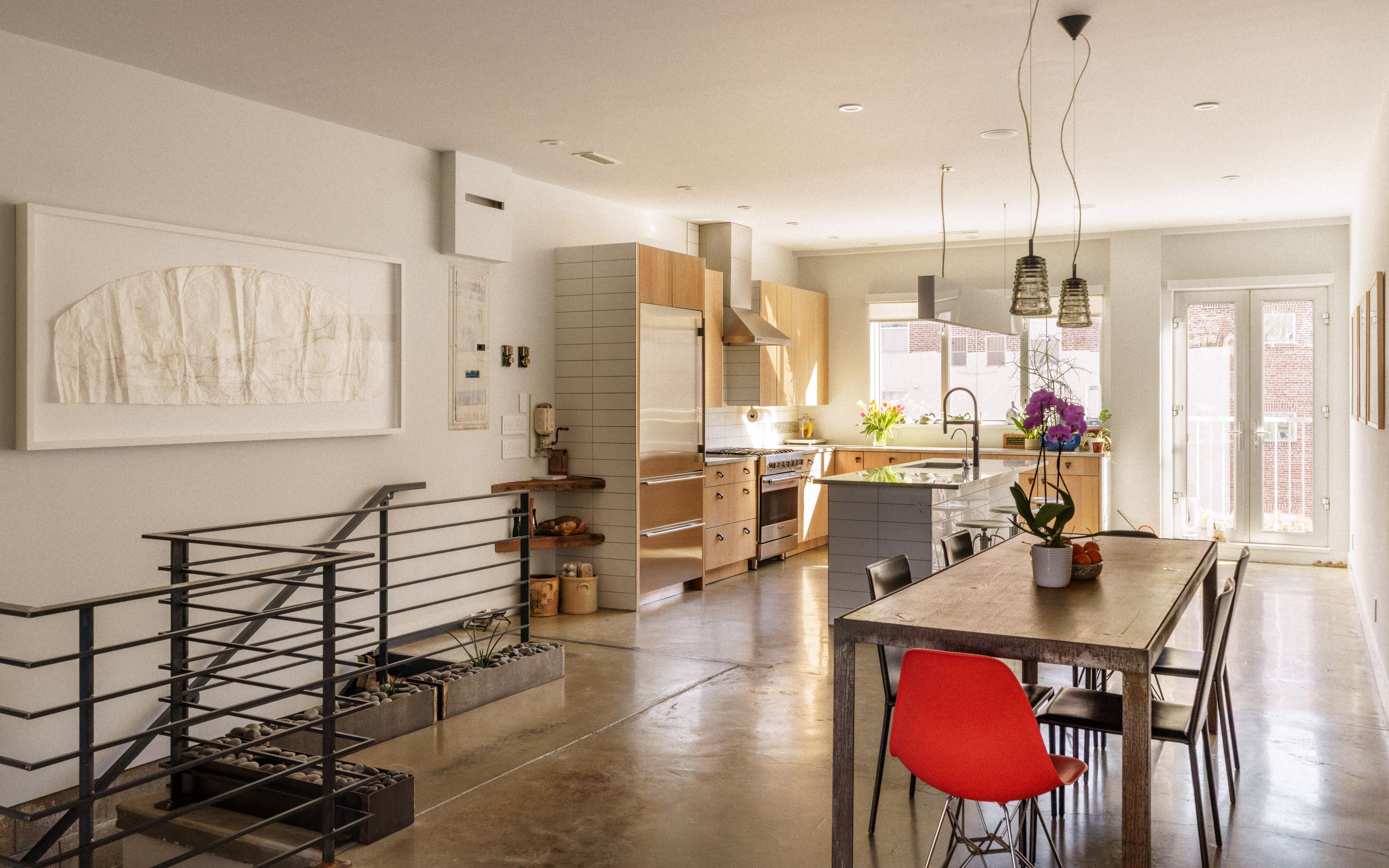
The kitchen and dining area of the Callowhill property.Donkin Media/Thomas Donkin
The Bartkuses purchased the building’s remaining portion for $420,000 in 2015. They have used its five studio-like units, each with kitchen facilities and a bathroom, for hosting visiting friends and family as well as short-term-stay guests. The building can be reconfigured into a single-family home or maintained as separate units.
The house is a playground for Bartkus’ artistic sensibilities. Included in the sale is a custom chandelier which he made out of car exhaust pipes that stretches two-and-a-half floors, as well as cheeky Philadelphia-themed artwork in the building’s central stairwell including impressions of Rocky Balboa and Questlove.
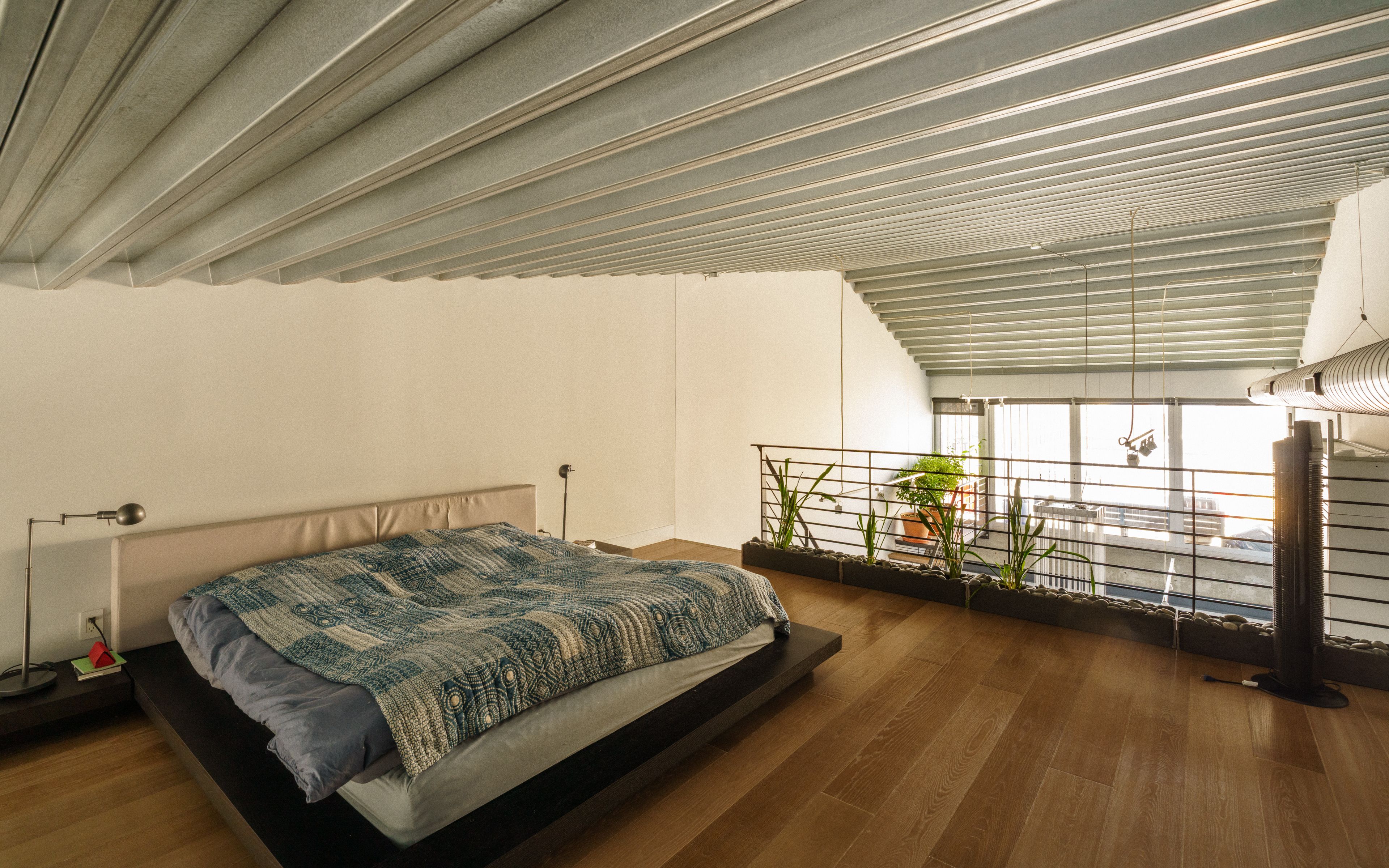
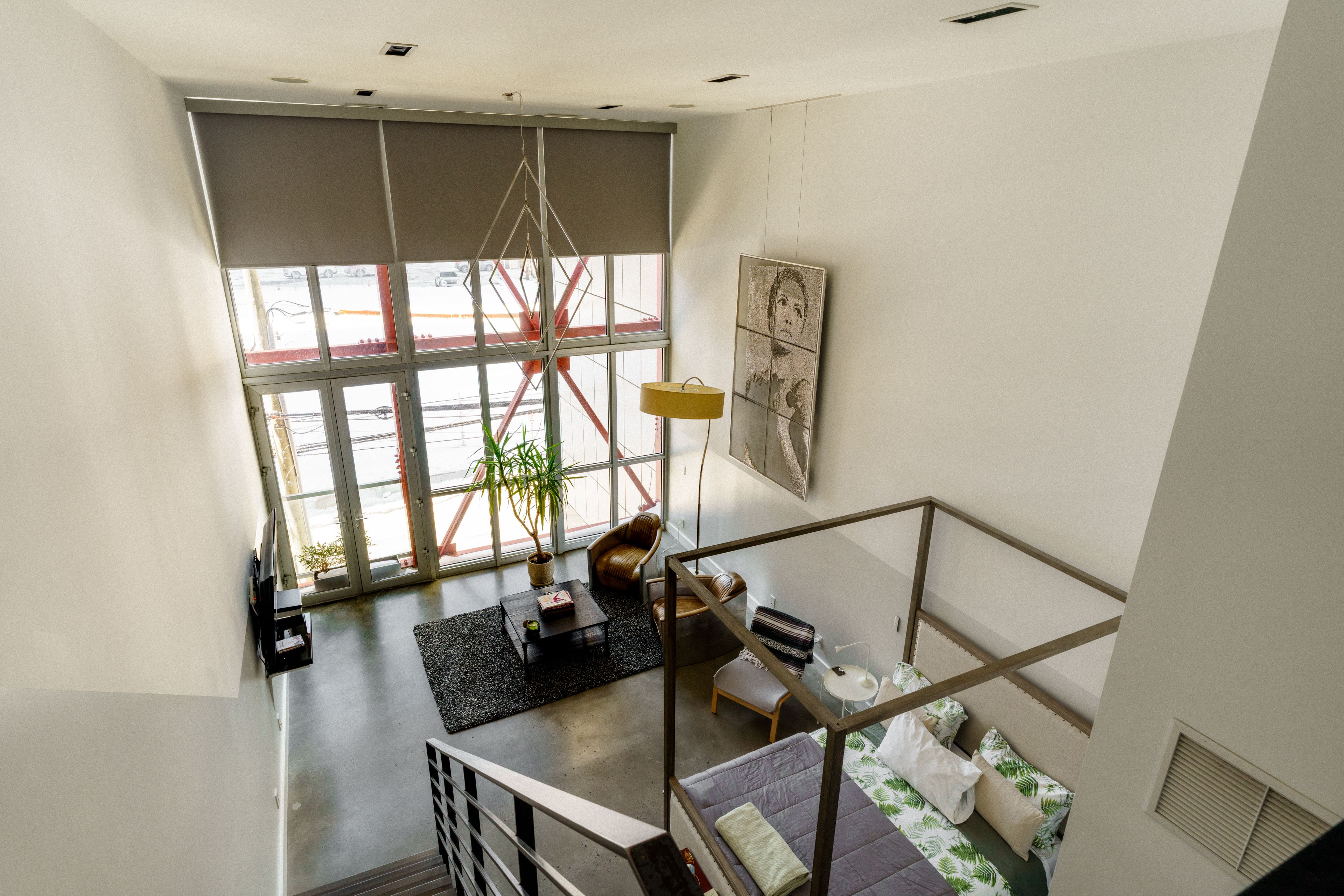
A lofted bedroom in the Callowhill property.Donkin Media/Thomas Donkin
Bartkus said he enjoyed bringing a Philly connection to each of the short-term-stay spaces through custom art.
Some of the building’s best attributes, however, are immaterial, said listing agent Brent Williams.
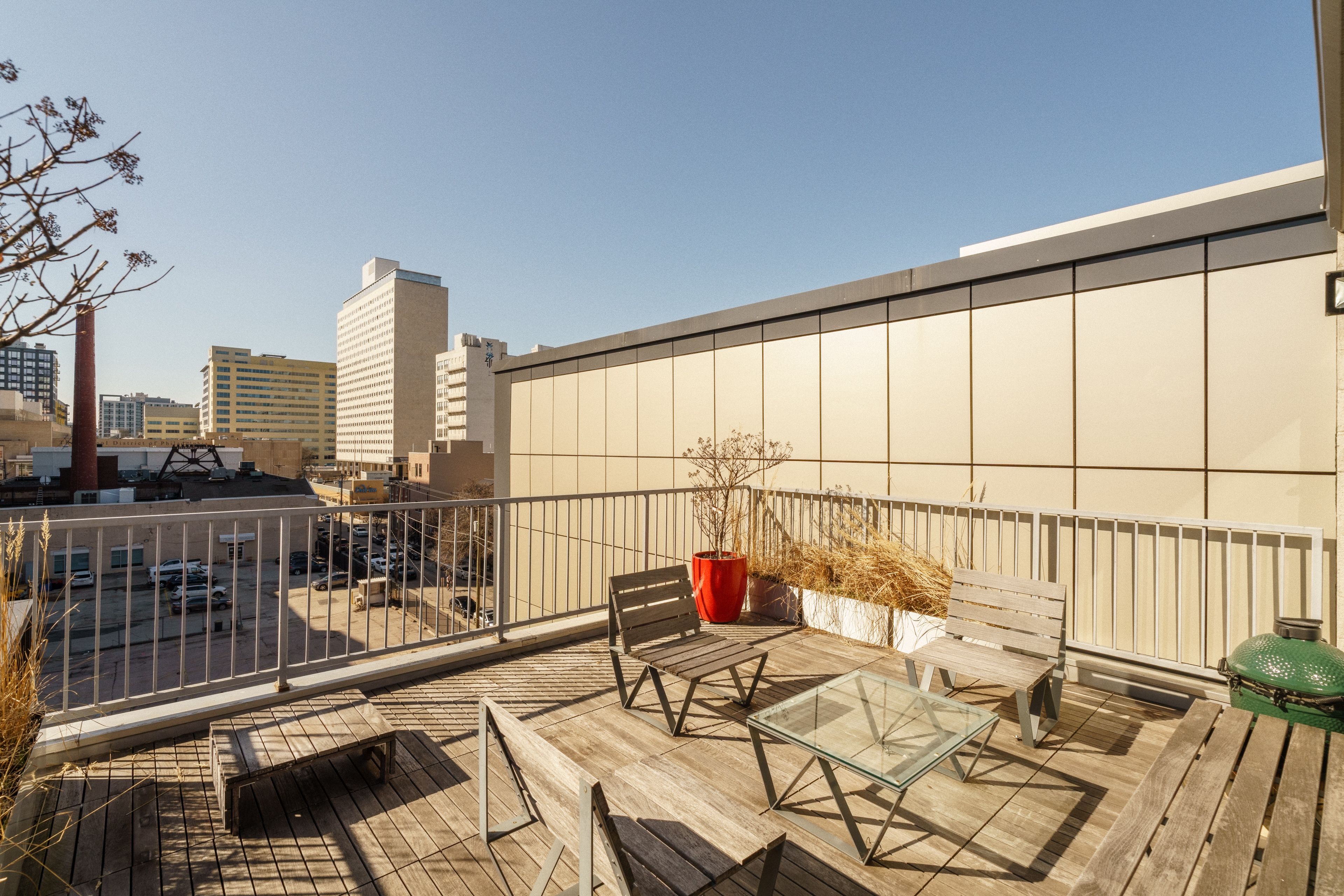
The rooftop deck in Callowhill.Donkin Media/Thomas Donkin
“The light really changes throughout the day, and that really influences how you live,” Williams said, noting that the building’s glass facades are east- and west-facing, meaning mornings get early, dewy sunlight and evenings get the rich setting sun. “The light and the architecture, the blend of glass and steel, it really is impactful in person.”
Bartkus sees the house as its own piece of art that he has tinkered with, helping coax out its unusual qualities over the years.
“Good artists have the ability to show the world details regular people didn’t see,” he said. “In a way this is this house.”
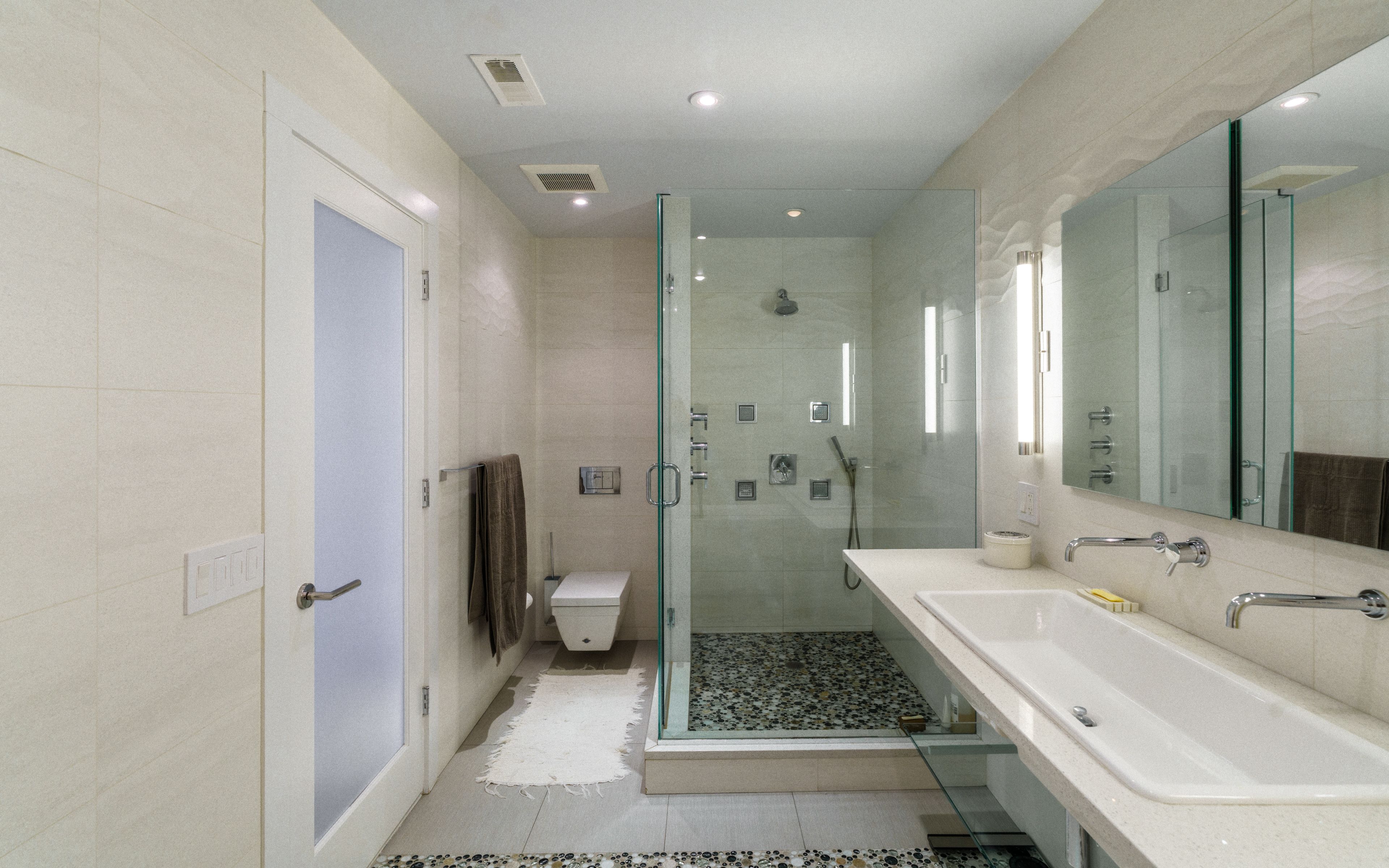
One of the bathrooms, with a spacious shower and luxury finishes.Donkin Media/Thomas Donkin
The building is heated via radiant heated concrete floors and, Bartkus said, has become much more energy efficient since buildings went up on either side of it with heating costs cut in half.
Other unusual touches include a two-car garage and parking for two additional cars, a loggia that provides sheltered outdoor space off of one of the lower units, and a rooftop deck.
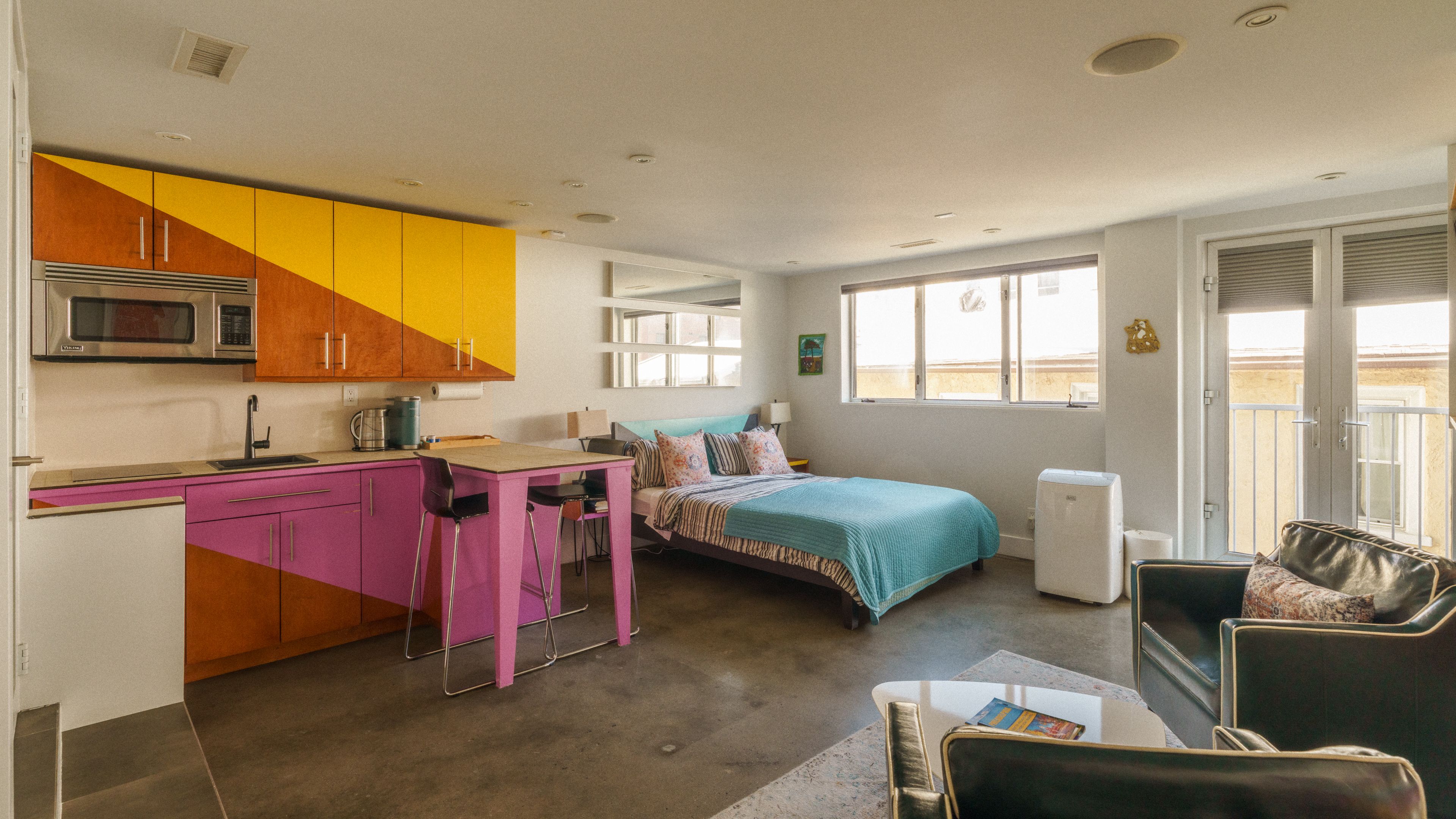
One of the studio apartments in the building, with a colorful kitchenette.Donkin Media/Thomas Donkin
The Bartkuses have decided to downsize in Philadelphia from the 4,500-square-foot building.
“It fit us perfectly,” Bartkus said. But at 65, he’s ready to leave behind the rigamarole of short-term renting and maintaining such a large building.
He added, “I just want to concentrate on my art.”
Natural light floods into one of the bedroom spaces, which also has a sitting area.Donkin Media/Thomas Donkin
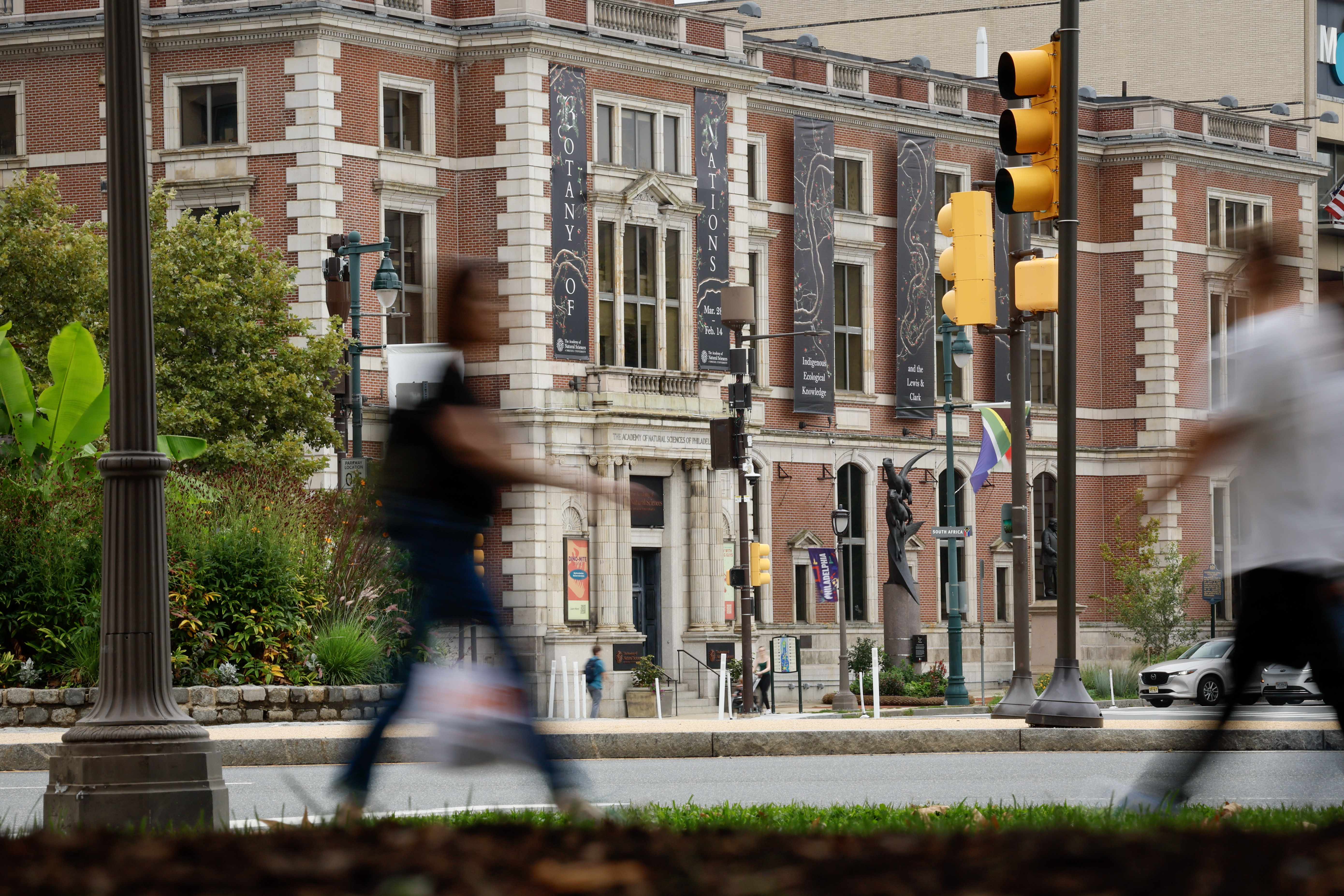
A new zoning bill by City Councilmember Jeffery Young Jr. would restrict the redevelopment potential of the Academy of Natural Sciences museum after Drexel University this month announced plans to shutter the centuries-old institution.
Young, whose 5th District includes the museum property on the Benjamin Franklin Parkway, introduced the ordinance at Thursday’s Council session.
It would limit the allowed uses of the property and others around it to specific categories, including hospitals, government uses, libraries and cultural exhibits, and “community-supported” farms.
Under Young’s legislation, residential and commercial uses would not be allowed. The property is currently zoned to allow multifamily residential development, unlike the other museums on the Parkway.
Young said his legislation would simply change the museum’s zoning to reflect what has long been on the site.
“It’s always been a cultural and civic use, so [my bill] would match the land use with the actual zoning to allow only cultural and civic type uses,” Young said. “But it wouldn’t prevent the academy from closing.”
Councilmember Jeffery Young Jr. Elizabeth Robertson / Staff Photographer
Drexel did not immediately offer comment on Young’s legislation.
If the bill passes, it will make it much harder to convert the building to other uses. The owner would need to secure a variance from the Philadelphia Zoning Board of Adjustment, an often lengthy and costly process with no guarantee of success.
During that process, any prospective developer would also be required to meet with community groups in advance of a zoning board hearing.
Young said the purpose of his bill is to allow “the community some input on a site that has been a cultural use for centuries.”
Instead of changing the property’s zoning to match those of neighboring museums and libraries, Young has proposed adding the restrictions to what is known as a zoning overlay — a kind of hyperlocal patch of the code — that covers his district and allows him to precisely describe what he wants to restrict and allow.
Young said he is also considering changing the underlying zoning to match that of the Philadelphia Museum of Art, the Barnes Foundation, and other cultural institutions on the Parkway.
“We are looking to do that, but the issue is that the planning commission doesn’t work for me and so they’re not on my time,” Young said. “Ultimately, we had to do what we could do from our office’s standpoint.”
To become law, the bill would need to be approved first in the Committee on Rules and then by the full Council before heading to Mayor Cherelle L. Parker’s desk.
If Young pushes forward, the bill is likely to pass in Council thanks to a practice known as councilmanic prerogative, in which the rest of Council defaults to the wishes of the member whose district includes a property when it comes to land-use decisions.
Young, whose district includes parts of Center City and much of North Philadelphia, has abandoned zoning legislation that stirred controversy in the past, such as a housing ban around the former Hahnemann University Hospital campus.
But the closure of the Academy of Natural Sciences is unpopular, and the new legislation is likely to have broad support from Council members.
If enacted, the bill would take effect immediately.
A surprise closure
Founded in 1812, the Academy of Natural Sciences is the oldest institution of its kind in the nation, and its museum, which opened in 1828, is the country’s oldest natural history research museum. It houses 19 million biological specimens, including bones, carcasses, and plants.
Drexel announced earlier this month that it was closing the museum effective Sept. 27, citing a decrease in attendance since the COVID-19 pandemic and the university’s financial woes. The decision caused an immediate uproar, including a protest on the Parkway attended by hundreds. Young vowed to “protect and preserve” the building.
Matt LeBlanc, of Manayunk, and his wife, Alyssa, show their children, Miles and Clara, the Dinosaur Exhibit at the Academy of Natural Sciences of Drexel University earlier this month.Tyger Williams / Staff Photographer
Leaders of Drexel and the academy have said that the “collections and their use to advance scientific knowledge will be the focus of our work for the near future” and that no final decision had been made on the building’s future.
A source told The Inquirer the university’s ultimate aim is to relocate the collection and sell the building.
After the announcement, Deputy Mayor Patricia Wellenbach, a top official in Parker’s administration, was named the academy’s temporary leader, serving as senior adviser while on loan from the city.
Young and other members of Council have been attending rallies against the closure.
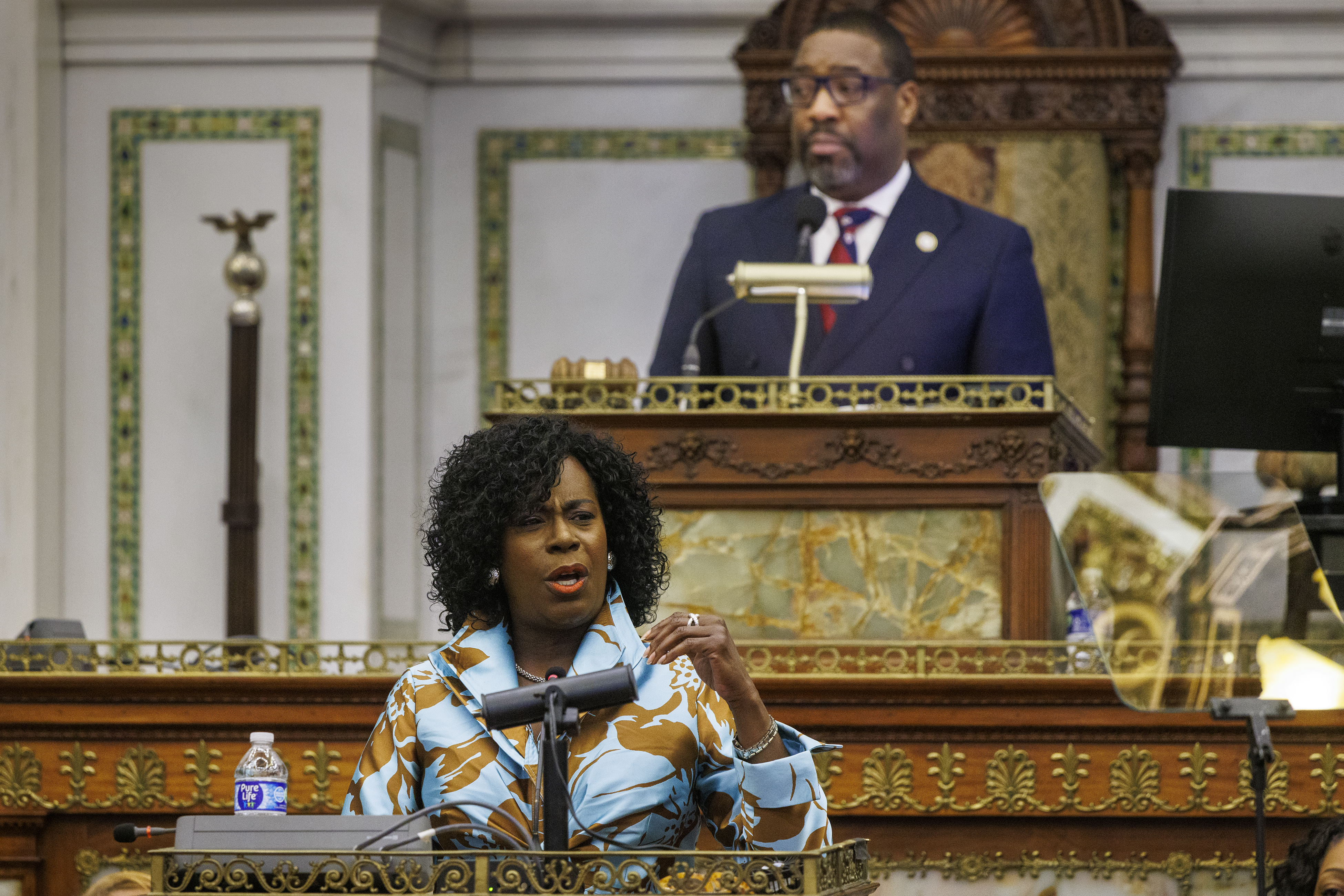
“This academy has been there for over 200 years. It’s dedicated to civic and cultural education, to science,” Young said in a speech during Thursday’s meeting. “If we take that away, how will our kids learn?”
Correction: An earlier version of the story inaccurately attributed plans to sell the museum building and relocate the academy’s collection.
Last November, Mayor Cherelle L. Parker announced with great fanfare that Philadelphia could create a property tax break to spur the conversion of derelict buildings, such as empty Center City office towers and vacant school facilities, into apartments.
She had worked with legislators in Harrisburg to change state law to allow Philadelphia to pursue the legislation, which would create a 20-year property tax abatement for conversions of “deteriorated” properties.
But 10 months later, no such legislation has been introduced in City Council, and Parker on Wednesday called on city lawmakers to consider her 20-year abatement idea for distressed properties.
“We have an affordability crisis here in the city of Philadelphia,” Parker told reporters Wednesday. “What if we marry that challenge with these persistently vacant buildings that have gone underutilized, and we put them to their best and their highest use to incentivize affordable housing?”
Parker’s administration, however, has not yet transmitted a draft of the bill to Council, which is typically the first step for lawmakers to consider legislation championed by the mayor.
“Tell them, ‘Send the bill over,’” Council President Kenyatta Johnson told reporters Thursday. “We haven’t seen any piece of legislation regarding 20-year tax abatement at this particular point in time.”
Asked about the delay, Tiffany W. Thurman, Parker’s chief of staff, said Thursday that city agencies “are collaborating to ensure the proposed legislation is legally sound and can withstand constitutional scrutiny.” She added that Parker “remains firmly committed to presenting City Council with a bill that incentivizes the development of affordable and workforce housing on vacant, publicly owned land.”
On Thursday, several members of Council questioned the lack of specifics from the mayor’s office, and others were less than enthused about the idea of approving a new tax break when the Philadelphia School District is facing a funding crisis.
“I continue to appreciate an effort to make sure that we have access to affordable housing in the city of Philadelphia,” Councilmember Nicolas O’Rourke said. “At the same time, I am very much so laser-focused and desirous of the city getting the revenue that it needs.”
A controversial policy
Property tax abatements have long been controversial in Philadelphia, with opponents contending that they starve the city and school district of needed revenue while favoring real estate developers.
Philadelphia’s 10-year abatement program, which was established in the 1990s, previously exempted owners from paying real estate tax on all new construction or improvements on any type of property for 10 years.
That program was long hailed as key to the city’s turnaround in the early 2000s. But concerns about its impact on neighborhood inequality and school funding grew over time, and Council in 2019 roughly halved the value of the tax break for new construction.
Parker argues that the idea behind her legislation is different: She wants to see a far more narrowly targeted bill that would only help developers who seek to redevelop large, derelict buildings.
“We’re talking about … persistently vacant school buildings that have been vacant from three up to 30 years,” Parker said Wednesday.
The mayor also noted that the development environment has worsened dramatically since Council cut the 10-year tax abatement’s power, with soaring interest rates and construction material inflation as factors that weigh heavily on complex and large-scale projects.
Still, many Council members are skeptical of tackling a potentially controversial measure that is seen to favor developers ahead of next year’s municipal elections, when all 17 city lawmakers will be on the ballot.
“I’d like to get more information on exactly what the plan is because the tax abatements are, as you know, hugely unpopular,” said Councilmember Cindy Bass, who represents parts of North and Northwest Philadelphia.
Bass said that while the abatement has spurred needed growth, she would need to see any expansion of it balanced with the needs of lower-income Philadelphians who are struggling with rising costs and property taxes.
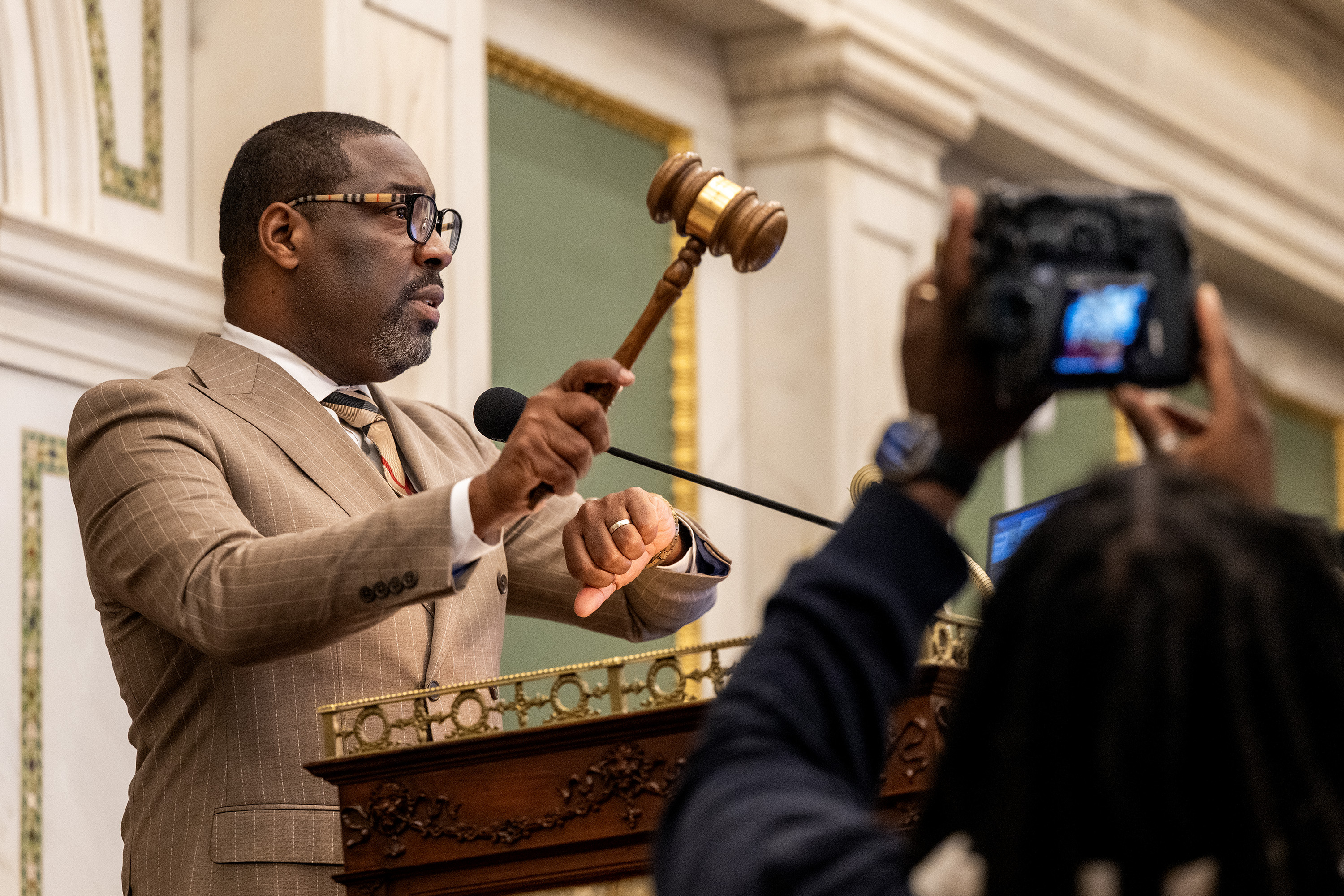
President Kenyatta Johnson checks his watch and gavels City Council into session on Sept. 17, as the body returns for start of its fall session.Tom Gralish / Staff Photographer
And Johnson on Thursday reiterated his comments from earlier this year that he would like to see the newly authorized 20-year abatement include a provision that requires an affordable housing component of the projects it enables.
“Any type of legislation like that should really focus on making sure that we’re providing a level of affordability, also senior housing,” he said. “Obviously, the devil’s always in the details.”
But it is not clear that state law would allow Philadelphia to mandate affordability in an abatement bill, and Parker cautioned against doing anything that would exceed the city’s authority.
“We have to make sure that whatever we are proffering, that it is directly connected to what has been enabled,” Parker said. “It has to pass legal muster for no one to question the constitutionality of what it is that we’re doing.”
Persistently vacant schools
A 20-year abatement would apply to empty office buildings in Center City and long-vacant industrial buildings. But Parker and administration officials have focused their pitch on revitalizing empty public schools.
“We need to pass it because it’s going to be extremely beneficial for challenging properties,” John Mondlak, chief of staff of the Philadelphia Department of Planning and Development, said Wednesday. “You think about schools in 10 years, 20 years — they are very difficult to reposition.”
That pitch, however, runs up against another policy issue festering between Parker and Council.
Thomas and other Council members vigorously protested the plan and are still pressing for the board to reconsider it.
“That’s our priority,” Thomas said Thursday. “I don’t want to have a conversation about schools that are vacant until we have a conversation about schools that are occupied.”
Asking your pastor for prayers is one thing. Asking them for a home is another.
But that’s what members of the Church of Christian Compassion in West Philly did almost 10 years ago. Seniors said they and their homes were aging, and they needed safe, affordable homes that didn’t require so much upkeep. Could the pastor help them in any way?
Many Philly seniors struggle to afford basic costs. More than a third of residents 65 and older live below or near the poverty line.
And as housing costs rise, finding an affordable apartment as a senior can be difficult.
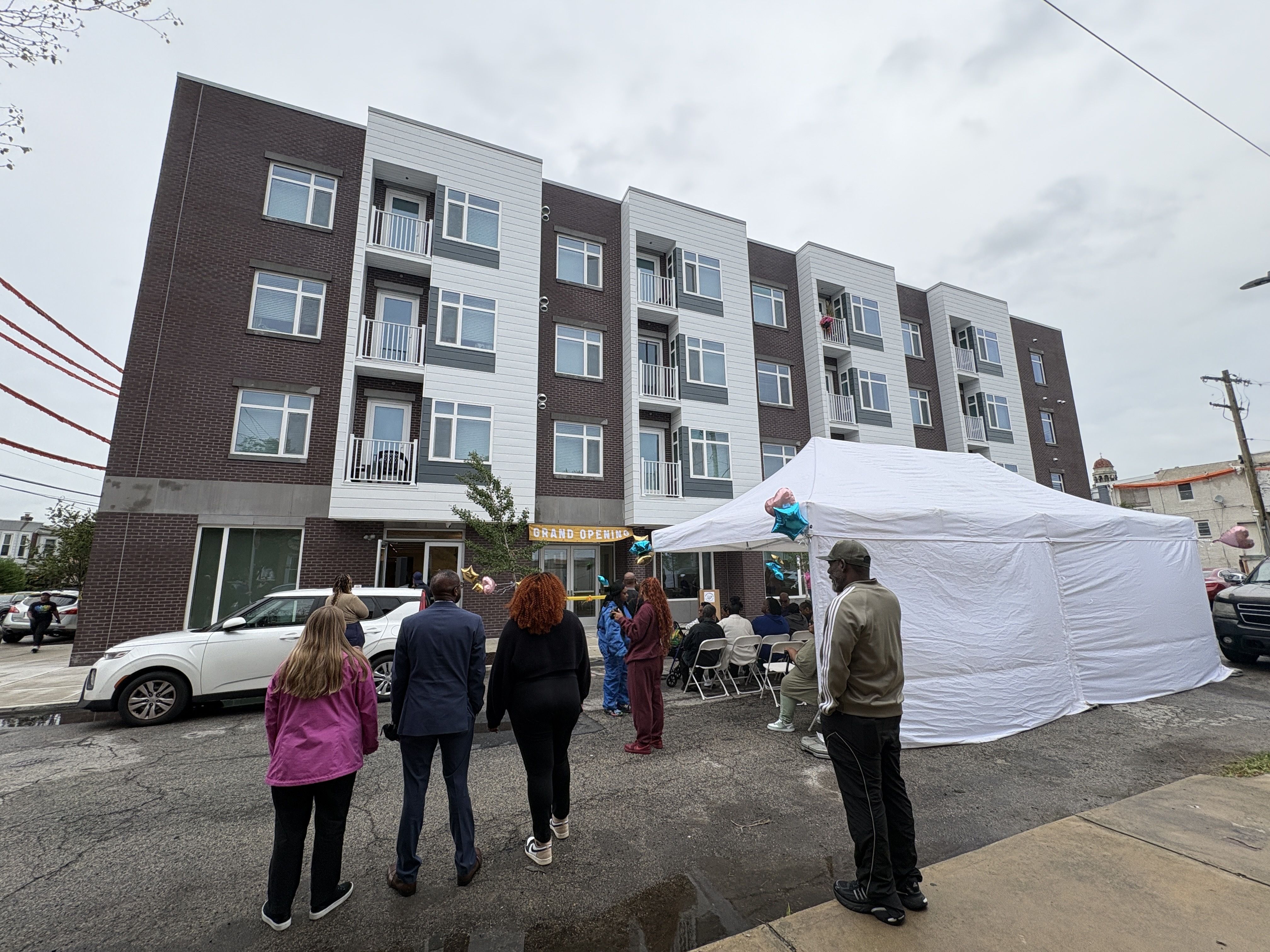
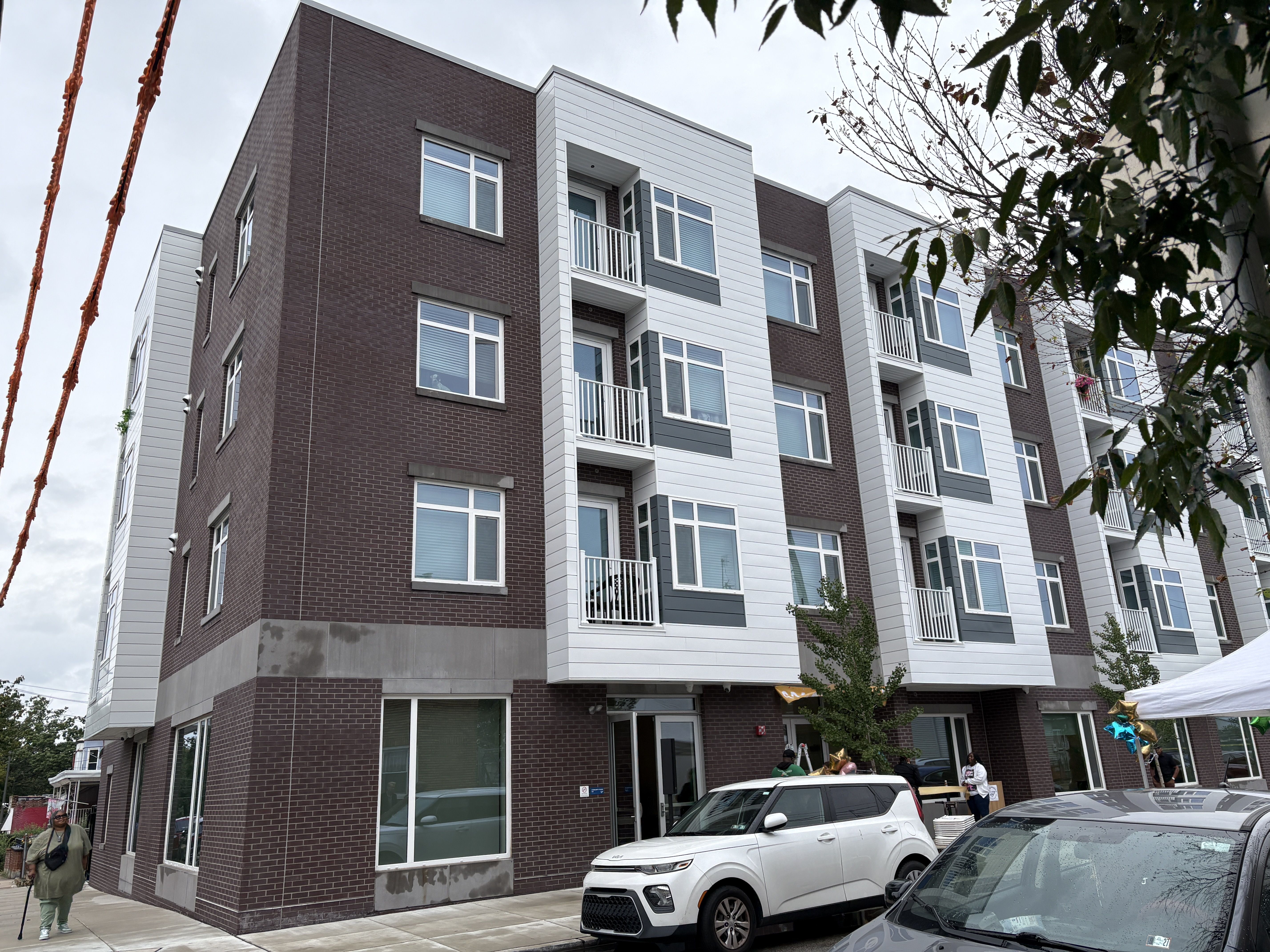
So the Church of Christian Compassion built a 38-unit apartment building to keep older residents from being pushed out of West Philly. And this week, the church and government officials celebrated the building filling with residents.
Rents are meant to be affordable for households making 20% to 60% of the area median income — roughly $17,200 to $51,540 for a single-person household.
A new resident told me she waited more than five years for a chance to get into the building. People told her she was crazy for waiting that long, but she said it was worth it.
W. Lonnie Herndon, the church’s senior pastor, said he hopes the homes can be “a place where our seniors don’t simply reside, but where they continue to live, laugh, flourish, share their wisdom, and impact the next generation.”
Across the country, homebuyers have the upper hand. But it’s a seller’s market in Montgomery, Chester, and Bucks Counties.
That’s because buyers outnumber sellers, which gives sellers an advantage as more people compete for their properties.
Last month, the combined market that the real estate brokerage Redfin calls Montgomery, Chester, and Bucks Counties was one of only five seller’s markets out of the 49 most-populous U.S. markets that Redfin analyzed.
The distinction reflects the region’s strong demand for homes and a housing supply that isn’t keeping up.
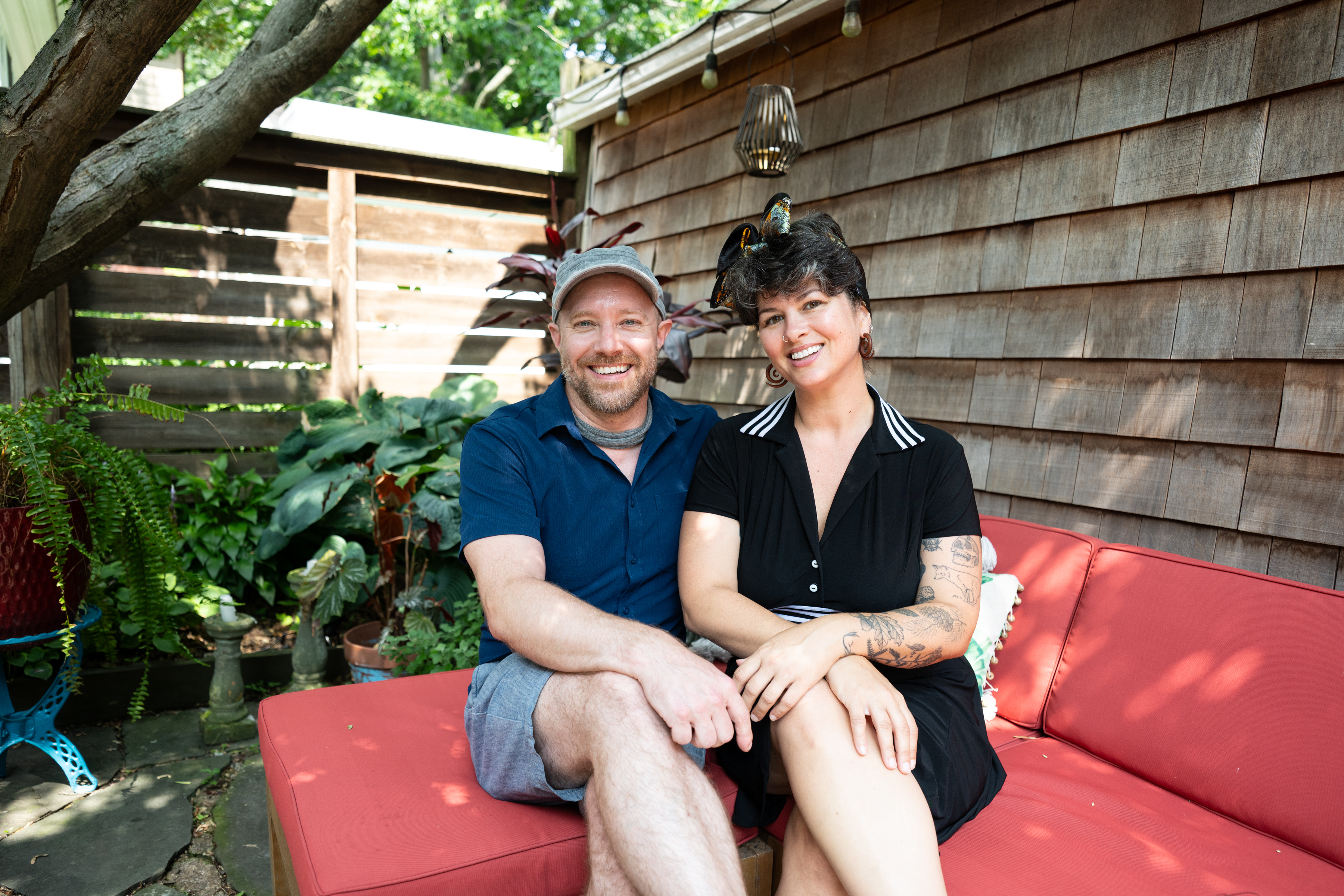
The real estate gods may have been looking out for Devin and Taylor Lashbrook.
They got desperate in their search for a home in Mount Airy and tried to buy more than 10 properties without success. But Devin admitted they put offers on houses that he’s glad they didn’t get.
The Lashbrooks ultimately bought a 19th-century farmhouse next door to a house they’d bid on. But this one checked all their boxes.
They think they got lucky this time because they found the house over Labor Day weekend in 2020 and the roof needed to be replaced, which may have scared off buyers who weren’t down the Shore.
The Lashbrooks have tried to preserve the home’s history as they’ve made the property their own.
Lynnewood Hall, the formerly abandoned Gilded Age mansion, is back in the news. The historic Elkins Park property will open to the public for the first time in more than 80 years.
Mayor Cherelle L. Parker’s administration on Wednesday announced the first 10 residential blocks that will each receive $100,000 in beautification upgrades as part of the city’s Curbside Appeal program.
“Every Philadelphian deserves to live on a block they can be proud of,” Parker said in a statement, adding that the program “gives neighbors the resources to come together, improve their surroundings, and strengthen the sense of community that makes our city special.”
The first 10 blocks set to receive services under the program, including debris removal, tree trimming, lawn restoration, and sidewalk repairs, are:
1300 block of South Ruby Street
1700 block of St. Paul Street
1800 block of Hart Lane
2200 block of South Sixth Street
2500 block of North Marston Street
3000 block of Titan Street
3200 block of North Howard Street
5000 block of Newhall Street
First block of Hobart Street
First block of Wiota Street
In May and June, residents were encouraged to nominate blocks for the program through their Neighborhood Advisory Committees or Neighborhood Community Action Centers, the so-called mini-City Halls Parker has established throughout the city to make services more accessible.
The next round of nominations for the program will take place in the spring.
“By partnering directly with neighbors, we’re helping transform blocks in ways that reflect the priorities of the people who live there while building stronger, more connected communities,” Jessie Lawrence, the city’s director of planning and development, said in a statement.
Council approved the H.O.M.E. initiative, which is funded primarily through $800 million in city bonds, in June 2025. Lawmakers then clashed with the administration last fall over income thresholds for some of the housing programs it funds, with Council successfully pushing through changes that prioritize poorer residents.
The city issued the first $400 million in H.O.M.E. bonds earlier this year, and is scheduled to issue the next tranche in 2027.