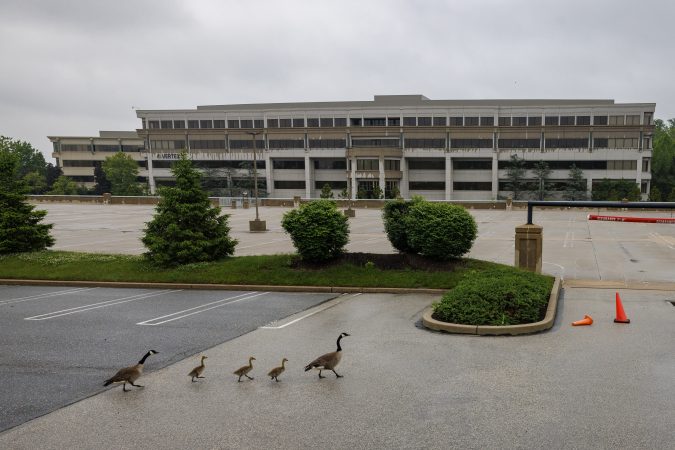
Category: Commercial Real Estate

  • King of Prussia data center complex is rejected by Upper Merion Township officials

    King of Prussia data center complex is rejected by Upper Merion Township officials

    The Upper Merion Township Board of Supervisors unanimously rejected a proposed 5-million-square-foot AI data-center campus that had sparked pushback from residents, a lawsuit from the developer, and accusations of mistreatment and intimidation.

    After the decision was made at a Thursday night meeting, some in the crowd applauded, danced, and high-fived one another. The rejection came after three hours of fiery exchanges between the developer, Brian O’Neill, and township officials.

    O’Neill and his team said they were prepared to go over each of the township’s comments about his five proposed sites in the King of Prussia area. But officials said it was too little, too late, and asked if O’Neill’s team was “filibustering.”

    “Are you asking us to not present those facts in defense of those plans when it’s clear all you want to do is deny our plan and go home tonight?” said O’Neill. He later said township officials were violating state and local planning codes, an allegation they denied.

    “Your attempt here to lecture us is considered an intimidation. And I don’t want to see our professional staff bullied or coerced,” said William Jenaway, vice chair of the Upper Merion Township Board of Supervisors. “Intimidation, coercion and bullying are not good qualities in a professional leader.”

    O’Neill, a longtime real-estate developer, has recently turned his sights to data centers. He first proposed building one of the controversial cloud-storage facilities in nearby Plymouth Township. In Upper Merion, he wants to build a data center complex on five properties in the township’s Swedeland section, a small residential and industrial area between West Conshohocken and Bridgeport.
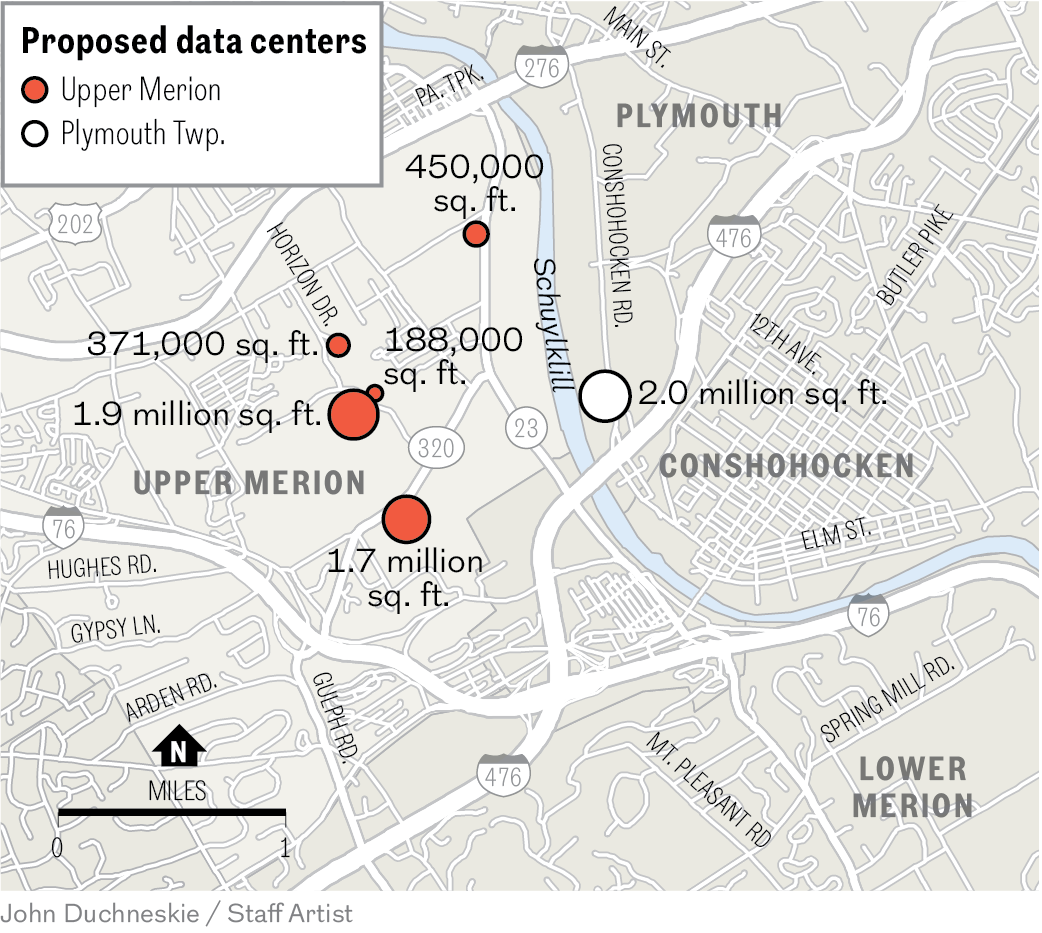
    A map of the proposed data centers in Upper Merion and Plymouth TownshipsJohn Duchneskie

    Those projects aren’t dead: O’Neill can appeal the board’s denial, as chair Tina Garzillo told him Thursday.

    “Don’t you worry about that,” said O’Neill, before walking out of the Upper Merion Area Middle School auditorium to a chorus of boos.

    The board’s decision came after months of contention and a whirlwind two days of legal back-and-forth.

    O’Neill on Wednesday sued the township, its planning commission, and its board of supervisors, saying they violated his legal right to an extension and treated him unfairly during the development review process. Soon after, Montgomery County Court Judge Garrett D. Page ordered the township to halt proceedings and decisions related to the data centers until a hearing next week.

    Citing the ruling, Edmund J. Campbell, an attorney for O’Neill, declined to make a presentation on two of the five proposed data-center sites at an Upper Merion Township Planning Commission meeting on Wednesday night.

    Late Thursday afternoon, however, Page vacated his previous order, allowing the township board of supervisors to proceed with its meeting as planned. On the agenda: A vote on O’Neill’s request for an extension until Sept. 30, and votes on the five proposed data centers.

    After an hour of public comment, all but one of which was from residents opposing the data centers, the township’s board of supervisors voted to deny O’Neill’s extension requests. The board then moved on to vote on the land development plans for each of the five sites.

    One by one, the plans were denied unanimously by the five-person board.

    Each vote was met with loud cheers from attendees.

    For months, residents have rallied against O’Neill’s plans, packing township meetings and putting up bright orange lawn signs opposing the projects. About 18,000 people had signed a Change.org petition against the Upper Merion data centers as of Thursday. Some neighbors have expressed concerns about pollution, light, noise, electricity prices, property values, and quality of life.
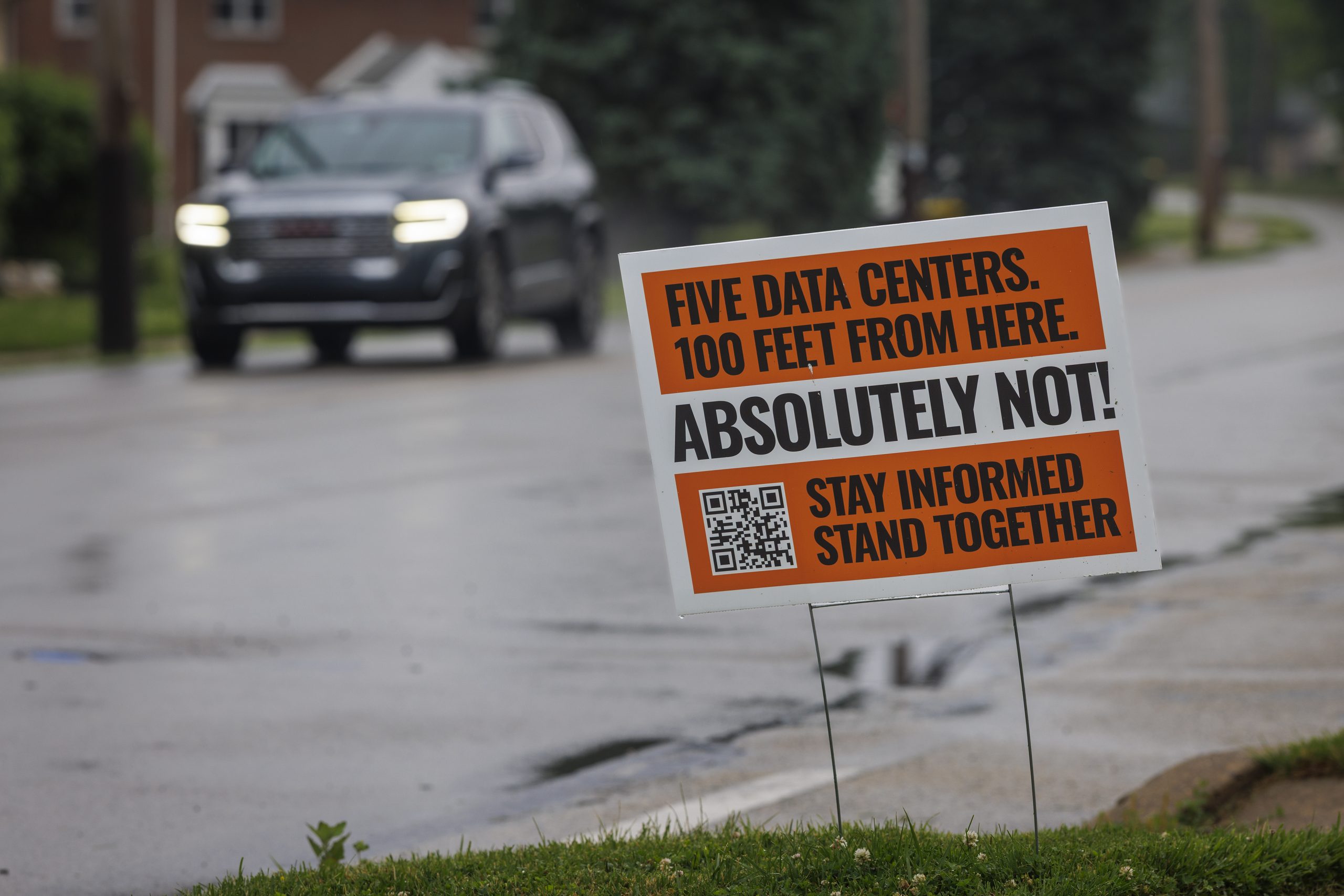
    Upper Merion residents opposed to the data centers have put up these lawn signs.Alejandro A. Alvarez / Staff Photographer

    “I’m really proud to stand here tonight with each and every other concerned resident,” Courtney Smith said Thursday. “We all have something important here to fight for.”

    “The people here are here because they care deeply about the long-term interest of our communities,” Montgomery County Commissioner Neil K. Makhija said during his comments in opposition of the plan. The commissioner said the supervisors’ decision would have ramifications beyond the county, as communities across the region and the country weigh data-center development.

    O’Neil has said his data centers would benefit Upper Merion and “change the world for the better.” While the developer has declined to specify who exactly would operate the centers, he has indicated the facilities would use AI-powered biotech in conjunction with his existing life-sciences complex, Discovery Labs.
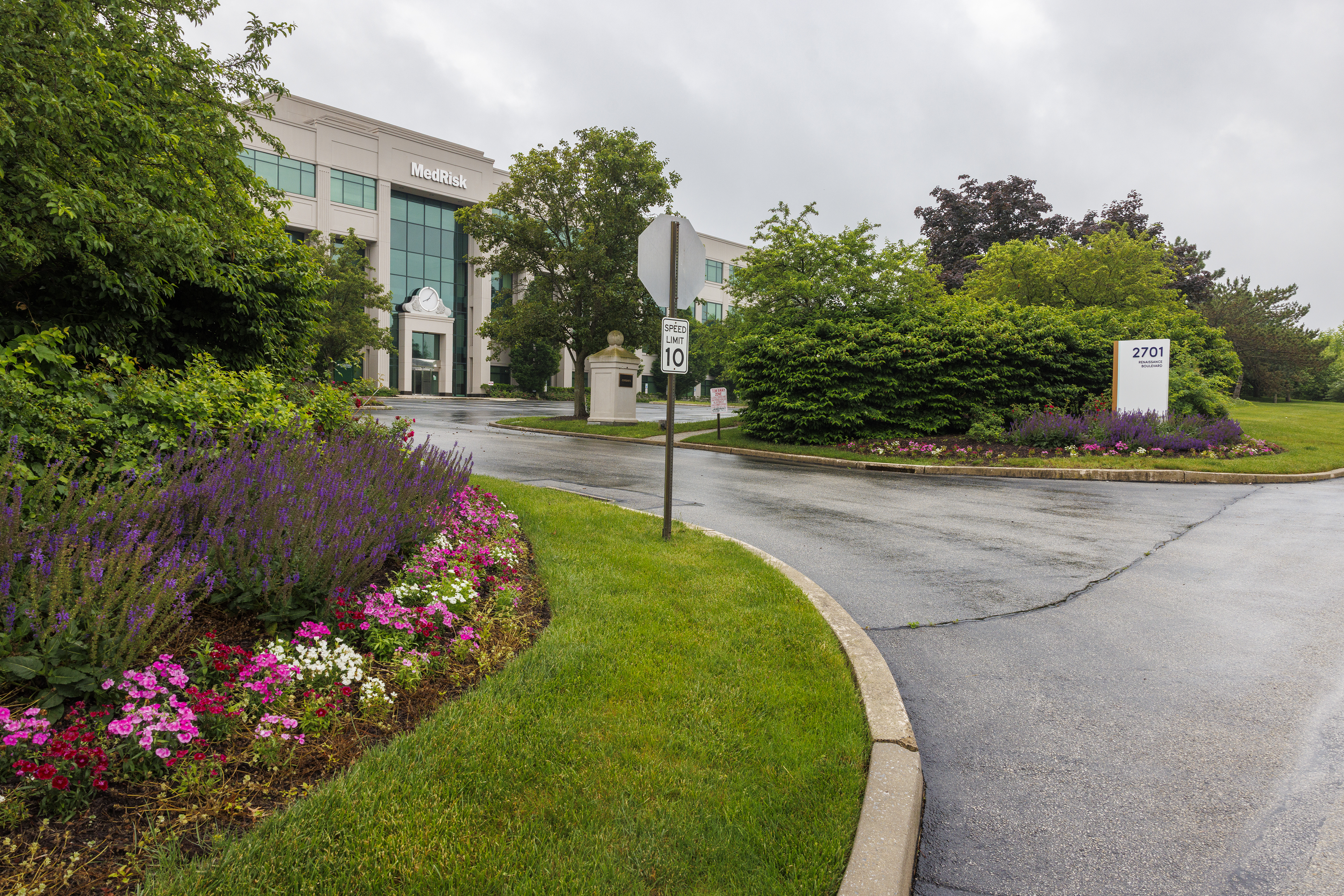
    One of the sites where Brian O’Neill wanted to build a data center in Upper Merion.Alejandro A. Alvarez / Staff Photographer

    O’Neill has said his data centers would comply with the highest environmental standards, emitting little light and noise. They would operate on a closed-loop system, requiring no outside water, he said, and provide their own power.

    The developer has also said they’d be an economic boon to the area. Last week, he released an economic impact study that said the Upper Merion centers would result in more than 10,000 jobs during its construction and then generate more than $55 million a year in local tax revenue.

    At Thursday’s board of supervisors meeting, however, Upper Merion Township Tax Collector Evelyn Ankers disputed those figures, and said O’Neill has failed to pay taxes on his properties in the past.

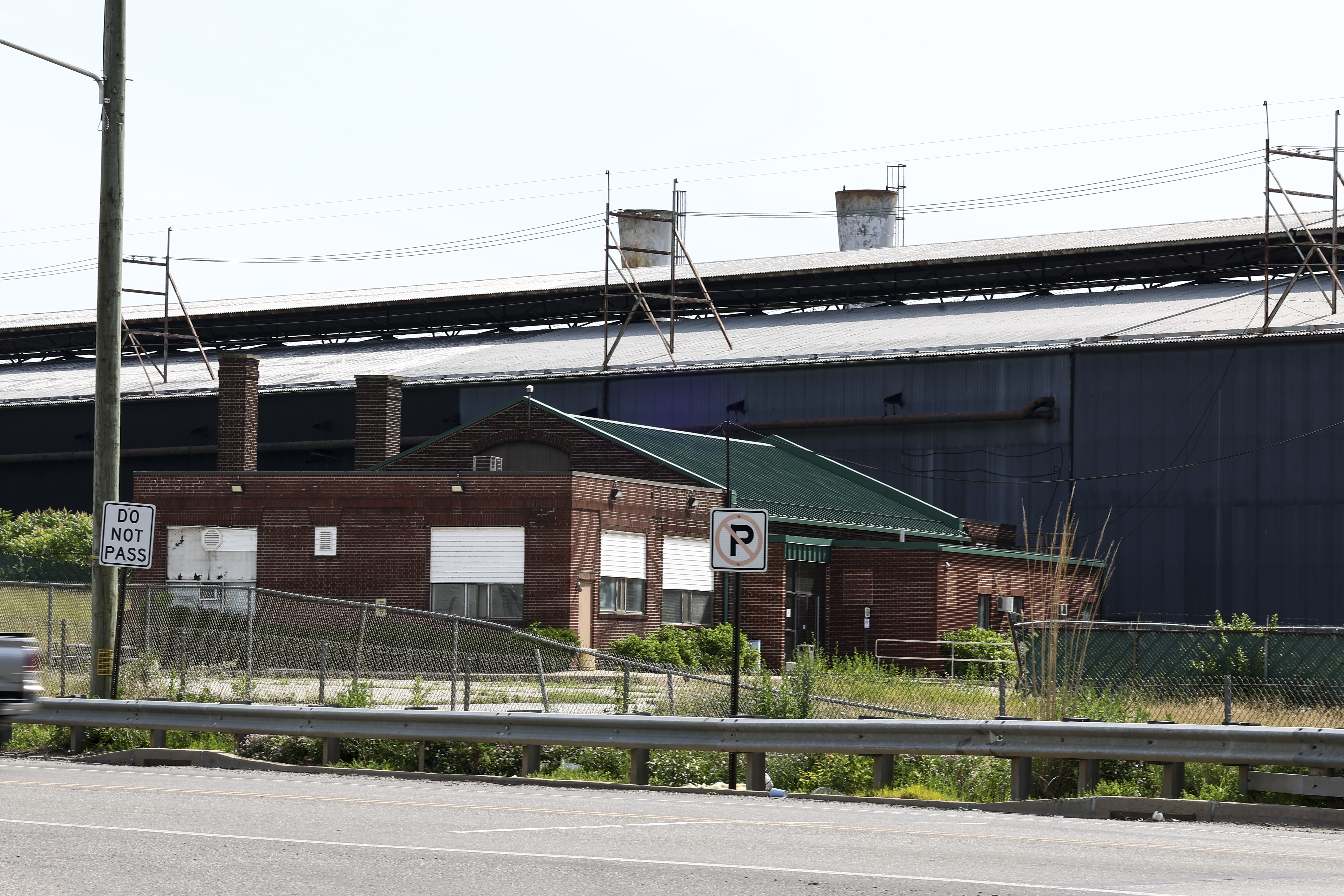
    Across the Schuylkill, a data-center fight rages on between O’Neill and some residents of Plymouth Township, where the developer wants to build a 2-million-square-foot facility on a shuttered steel mill outside Conshohocken.

    The developer recently filed a legal challenge to the Plymouth Township zoning ordinance, and has exchanged accusations of mistreatment with township leaders. News of O’Neill’s actions in Plymouth Township prompted a rebuke from Gov. Josh Shapiro, who had previously encouraged data center development in the commonwealth.

    A date has not been set for the next Plymouth Township meeting, though officials indicated it would be sometime in September.

  • King of Prussia data center fight could be paused by developer’s lawsuit

    King of Prussia data center fight could be paused by developer’s lawsuit

    A Main Line developer looking to build multiple data centers in Montgomery County possibly could have more time to make his case for a five-property campus near King of Prussia.

    And residents who oppose the projects — who had been preparing for a potential vote on the plans this week — now may wait to learn whether the complex will be built in their neighborhood.

    A Montgomery County Court of Common Pleas Judge on Wednesday temporarily prohibited Upper Merion Township from making decisions about any data centers proposed by Brian O’Neill. The township board of supervisors had been set to vote Thursday on the five proposed data centers totaling 4.6 million square feet.

    The developer had asked for an extension from Upper Merion until Sept. 30, saying his team needed more time to respond to dozens of township review letters related to the projects. In emails, O’Neill said township officials made clear they would not allow more time.

    “It is clear … that the township’s board of supervisors intends to decline the offer of extension and instead proceed to deny the applications,” O’Neill wrote in the lawsuit.

    On Wednesday, the developer had sued Upper Merion Township, its board of supervisors, and its planning commission, saying they violated his legal right to an extension and treated him unfairly during the review process.

    The judge’s ruling ordered that township officials halt certain proceedings and not make any decisions about the data center plans until after a court hearing scheduled for next week.

    Before the lawsuit, the Upper Merion Township Planning Commission had been scheduled to discuss and make recommendations to the Upper Merion Township Board of Supervisors on two of O’Neill’s five data center plans on Wednesday. The planning commission had previously voted not to recommend approval of O’Neill’s three other proposals.

    In a separate meeting on Thursday, the township supervisors had been set to vote on whether to approve the five data center plans.

    The proposed data centers in Upper Merion are across the river from another data center O’Neill has proposed near Conshohocken.John Duchneskie

    But late Thursday afternoon, Judge Garrett D. Page vacated his Aug. 12 order, paving the way for a potential vote Thursday night on O’Neill’s extension request and his data center plans.

    O’Neill’s team had declined to discuss the projects with the planning commission on Wednesday, citing the lawsuit.

    “We are not making a presentation tonight consistent with the court’s order,” said Edmund J. Campbell, an attorney for the developer. “I will ask to be excused as I don’t believe my presence is needed, pursuant to the court’s order.”

    With Campbell’s exit, the township planning commission had opened the floor to dozens of local residents, all but one of whom was opposed to the projects.

    They expressed concerns about light, noise, and sound pollution; water use; the impact on the power grid and electricity prices; mental and physical health impacts; and overall quality of life in the suburb. Some said they were angry with O’Neill and his team, with a few citing a recent 6ABC interview in which O’Neill said opponents wanted to “fight for the sake of the fight” and were against development that was “right for the community.”

    Some residents disagreed with those statements.

    “Judging by the past five months or so [of] our community standing together in solidarity against these horrific proposals, this is clearly not right for our community,” Upper Merion resident Zachary Davis said Wednesday.

    Some King of Prussia residents have put up lawn signs opposing the data centers.Alejandro A. Alvarez / Staff Photographer

    O’Neill has said his Upper Merion data centers would “change the world for the better” through AI-powered biotech that would complement his existing life-sciences complex, Discovery Labs.

    The developer has said the data centers would operate on a closed-loop system, requiring no outside water, and provide their own power. They’d emit little light and noise, according to O’Neill, and include billions of dollars worth of emissions controls.

    O’Neill’s team last week released an economic impact study that says the Upper Merion centers would result in more than 10,000 jobs during its construction and then generate more than $55 million a year in local tax revenue.

    O’Neill’s efforts come as data-center opponents’ ire toward him has intensified.

    The animosity was on display last week at a zoning hearing board meeting in nearby Plymouth Township, where O’Neill is trying to build a 2-million-square-foot data center on the outskirts of Conshohocken.

    In recent weeks, the developer has sparred with Plymouth Township officials, and filed a legal challenge to the zoning ordinance there. News of the moves prompted a “hell no” from Gov. Josh Shapiro, who had previously encouraged data center development in the commonwealth.

    A date has not been set for the next Plymouth Township meeting, though officials indicated it would occur sometime in September.
    In Upper Merion, officials said late Wednesday that the monthly board of supervisors business meeting scheduled for 6:30 p.m. Thursday was still on. Other issues, not related to data centers, were on the agenda.

    Editor’s Note: This story has been updated after Montgomery County Common Pleas Judge Garrett D. Page late Thursday afternoon vacated his Aug. 12 order.

  • Rowdy residents at Plymouth Township zoning meeting draw rebukes as they push back on big data center plan

    Rowdy residents at Plymouth Township zoning meeting draw rebukes as they push back on big data center plan

    The crowd at a raucous Plymouth Zoning Hearing Board meeting on Thursday repeatedly shouted down an attorney and expert witness representing developer Brian O’Neill’s plans for a hyperscale data center on the site of a closed steel mill.

    The hoots and hollers, which included some expletives, provoked repeated pleas for order from the board’s solicitor David Sander, who said the outbursts interfered with the court reporter’s ability to make accurate transcripts of the meeting.

    Although the two-and-a-half hour meeting was largely procedural, it was emblematic of flaring tempers throughout the region when it comes to data centers.

    The hearing, the first of at least several quasi-judicial proceedings, was held at Colonial Middle School to accommodate the number of residents expected to attend. Many have expressed fears about potential power and water usage, and pollution by a data center.

    The hearing also came on the heels of a recent social media post by Pennsylvania Gov. Josh Shapiro calling O’Neill’s plans “the exact wrong way to do development,” and public opposition by township council and Montgomery County commissioners.

    O’Neill, stung by the attacks, went on the offensive in the days before the meeting, releasing a study showing the economic might he says the data center will flex. In an interview with The Inquirer, he called his proposal the “opportunity of a lifetime” for the township, and said officials have bowed to political pressure by residents misinformed by social media.

    But residents at Thursday night’s meeting weren’t interested in the economic argument, which was set to establish who could testify and which experts could be admitted as the township considers zoning for the site.

    Frances Wood, who lives on West Elm Street, about 400 feet from the steel mill, was allowed to testify after outlining her personal health concerns regarding the data center’s potential air emissions.

    “I walk my dog every day by that building,” she said. “I also have respiratory distress and asthma related to my health as well. I will be breathing the air immediately because it is right there.”

    Residents interjected so frequently during Thursday’s meeting that Sander admonished them, especially after someone shouted an epithet.

    “We can’t get a record, and the zoning board can’t decide this case if we can’t hear the questions and answers because someone’s screaming and yelling at everything that the witness says or the counsel says,” Sander said.

    O’Neill’s lawyer, Edmund J. Campbell Jr., suggested there should have been security at the meeting.

    “I would ask that those who repeatedly disrupt the proceedings be removed,” Campbell said, to more jeers.

    What is O’Neill’s data center proposal?

    O’Neill wants to build a 2 million-square-foot data center at the shuttered Cleveland-Cliffs steel mill at 900 Conshohocken Rd., a 66-acre site along the Schuylkill. It would sprawl over 10 existing buildings as part of a reuse of a current industrial-zoned site.

    O’Neill, who did not testify at Thursday night’s meeting, cited Alan Wood, who founded what became the now-closed Cleveland-Cliffs steel mill, as an example of a job creator. That’s the same site where O’Neill wants to build a data center.

    And he noted John Ellwood Lee, who founded the nearby Lee Tire and Rubber Company, the site of which O’Neill has since developed into an office park. Both the steel mill and tire company once employed thousands.

    O’Neill said he hoped to kick-start thousands of construction jobs.

    “We’re bringing new technology to town, and we’re bringing it in a way that is sensitive to our neighbors and sensitive to the town,” he said.

    The hyperscale AI data center just outside Conshohocken would generate $21.11 million a year in taxes, according to a report O’Neill commissioned by 4Ward Planning. And it would create 5,000 construction jobs a year over a three-year period, the report said. It would result in 371 “direct data center jobs” and 468 “indirect and induced jobs,” according to the report.

    But opponents of the plan are concerned about light, noise, and air pollution. They worry about emissions from on-site power generation that’s been proposed, water use, and the impact on electricity costs, as well as the proximity to existing homes.

    O’Neill has said the facility would provide its own on-site electricity generation via natural gas-fired turbines. The operation, he has said, would be cooled by a closed-loop system that does not require outside water.

    O’Neill said the facility would utilize “dark sky standards” to ensure there is not light pollution, with outdoor lighting “less than a single soccer field.”

    He asserts that the proposed data center would not violate local noise ordinances and that his team has hired sound consultants.

    O’Neill has not named an operator or tenant, but said he is “negotiating with multiple large tenants.” He has indicated those tenants would be related to life sciences.

    (function(){function e(){window.addEventListener(`message`,function(e){if(e.data[`datawrapper-height`]!==void 0){var t=document.querySelectorAll(`iframe`);for(var n in e.data[`datawrapper-height`])for(var r=0,i;i=t[r];r++)if(i.contentWindow===e.source){var a=e.data[`datawrapper-height`][n]+`px`;i.style.height=a}}})}e()})();

    Who decides whether to allow a data center?

    O’Neill has applied for a special zoning exception so the data center can be built in the township’s heavy industrial zoning district. He argues that zoning should include data centers.

    The township zoning code allows a warehouse or laboratory, but does not specifically cite data centers.

    The township council has taken the position that a data center is not the same use as a warehouse. They said O’Neill’s application for a special exception must be decided by the zoning hearing board.

    If that exception is granted, the project would move onto the township’s land development process, which includes additional reviews, public meetings, and approvals.

    Richard Roseberry, an engineer at Colliers Engineering & Design who O’Neill hired, testified during Thursday’s zoning meeting that data centers fit in with other heavy industrial uses.

    But Charles Campbell, an attorney representing nearby property owners, said O’Neill’s team has not supplied enough information to make informed decisions, including a drawing of what’s being proposed.

    “It’s clear as day that this application is insufficient,” Campbell said. “It does not include what the applicant intends to put on the property. It talks generally about a data center … but does not provide a scale plan as required.”

    What does O’Neill say?

    Under Pennsylvania law, O’Neill argues, municipalities must have zoning for all legitimate land uses, and data centers have been recognized by the courts as a legitimate commercial or industrial use. Developers have, as a result, targeted industrial or commercial zones for data center proposals.

    A municipality cannot ban data centers under Pennsylvania law. As a result, many municipalities have raced to craft ordinances to limit their impacts.

    But municipalities are allowed to treat a land use not specifically mentioned in a zoning ordinance as a special exception or conditional use. That requires a developer to go through a zoning hearing board.

    If a municipality refuses to classify data centers as a legitimate use, a developer can file what’s known as a “substantive validity challenge,” which O’Neill says he has done because some township officials are on record as saying they don’t support his application.

    “If they don’t work with us in good faith, we’re going to get it by right,” O’Neill said.

    Sander, the zoning hearing board solicitor, ended Thursday’s hearing without setting a date for the next, saying it would likely continue in September.

    This story has been updated to say that developer Brian O’Neill did not testify at the meeting, and clarified the estimated number of jobs that would be associated with the data center.

  • As developers clash over the future of the Bourse, their lender wants to force a sale of the building

    As developers clash over the future of the Bourse, their lender wants to force a sale of the building

    A New York City-based commercial real estate lender has asked a federal judge to force a sale of the Bourse building on Independence Mall after work ground to a halt on a hotel development amid the dissolution of a partnership between real estate magnate Dean Adler and Keystone Development + Investment.

    As the two former partners fought a battle for control of the Bourse in Delaware Chancery Court, the property has racked up millions in liens and missed at least one mortgage payment.

    The lender, KKR Real Estate Finance Trust, says it is owed more than $24 million in the latest turn in the legal drama surrounding the 131-year-old Beaux Arts building.

    In June 2024, KKR Real Estate Finance Trust lent Lubert-Adler Real Estate Funds and Keystone $83.7 million to purchase the building and convert a portion of it into a hotel, according to a lawsuit filed July 28 in federal court for the Eastern District of Pennsylvania.

    The loan also funded the purchase of 400 Market St., which was developed as planned.

    The loan agreement required Adler’s development team to show that the hotel project was near completion by the end of May 2026. But earlier this year, the Bourse’s development team “abandoned its plans to redevelop a portion of the Bourse property into a hotel and ceased work on the hotel conversion,” the complaint says.

    Adler had decided to scrap the hotel and event space plan and his partnership with Keystone, the Philadelphia Business Journal reported in April. Instead, Adler said he planned to go into business with PMC Property Group, Philadelphia’s largest apartment owner, to convert the Bourse into a multifamily property.

    Keystone filed a breach of contract suit and accused Adler of failure to provide promised funding for the project. Adler, in turn, accused Keystone of unauthorized spending and “gross negligence.”

    The two are fighting in Delaware Chancery Court for control of the property and its future. In a March ruling, reported by Law360, a judge ruled against Adler’s attempt to oust Keystone.

    The legal conflict between the two former partners has put KKR Real Estate Finance Trust’s investment at risk. By abandoning the plan and stopping construction, the suit says, the Bourse’s development team defaulted on the mortgage with more than $24 million of the principal outstanding.

    The Bourse’s owners also racked up more than $2 million in liens filed by at least five contractors for failure to pay for their work and failed to make a mortgage payment starting in June.

    KKR Real Estate Finance Trust is asking a federal judge to issue a judgment of $24.2 million plus interest and fees and to order a public auction of the Bourse building to pay back the debt.

    Keystone declined to comment on an active lawsuit, but a spokesperson said the firm remains “confident” that it will prevail in the litigation against Adler in Delaware Chancery Court.

    For his part, Adler said that he believes the legal cases with Keystone will soon be concluded and that KKR will follow.

    “I believe we are near resolution on the Bourse lawsuit with Keystone,” he said. “And then we will resolve KKR’s potential foreclosure and be ready to revitalize the Bourse like we did at 400 Market.”

    The former development partners purchased the nearby office building at 400 Market in the same deal as the Bourse and successfully converted it into apartments. KKR Real Estate Finance Trust made clear that building is not included in the lawsuit.

  • PHA plans an 85-unit mix of rental and ownership homes in Strawberry Mansion

    PHA plans an 85-unit mix of rental and ownership homes in Strawberry Mansion

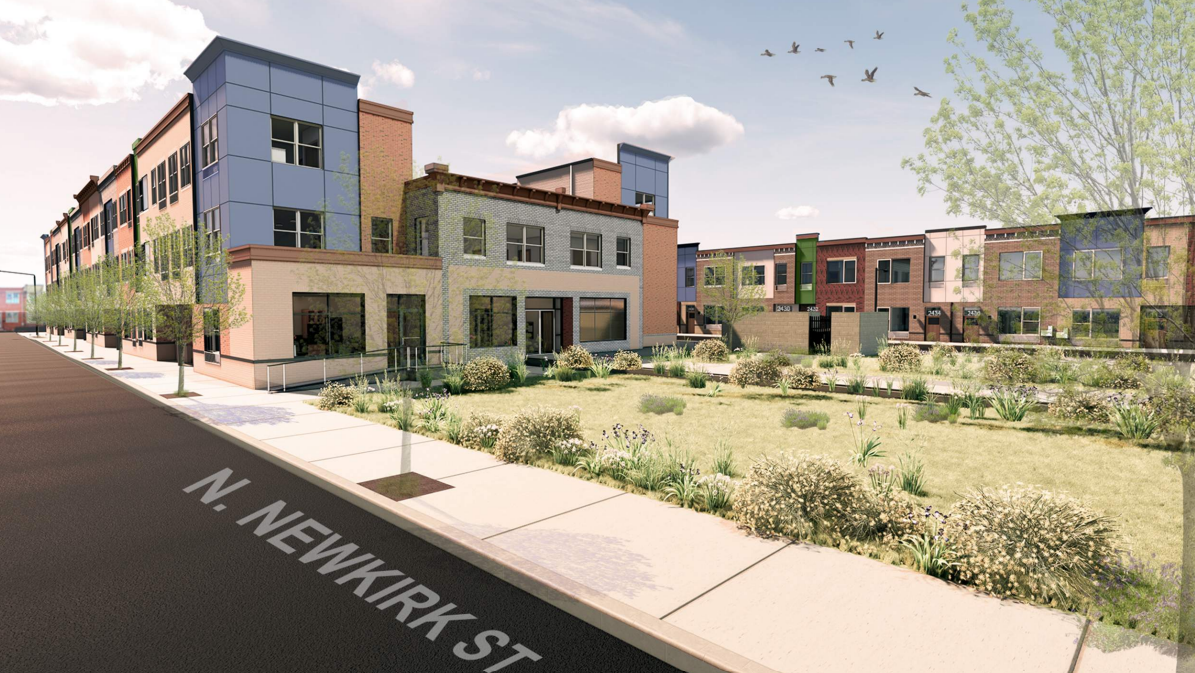
    The Philadelphia Housing Authority is planning an 85-unit mix of affordable rental and homeownership units in Strawberry Mansion, around 28th and York Streets.

    The proposal is part of a burst of PHA activity in this North Philadelphia neighborhood in recent years, as the agency has sought to use vacant land to add affordable housing to the area.

    “This proposed development at 28th and York represents exactly the kind of investment Strawberry Mansion deserves — one that replaces long-term vacancy and blight with affordable homes, open space, and renewed opportunity,” Kelvin A. Jeremiah, president and CEO of the Philadelphia Housing Authority, said in a written statement.

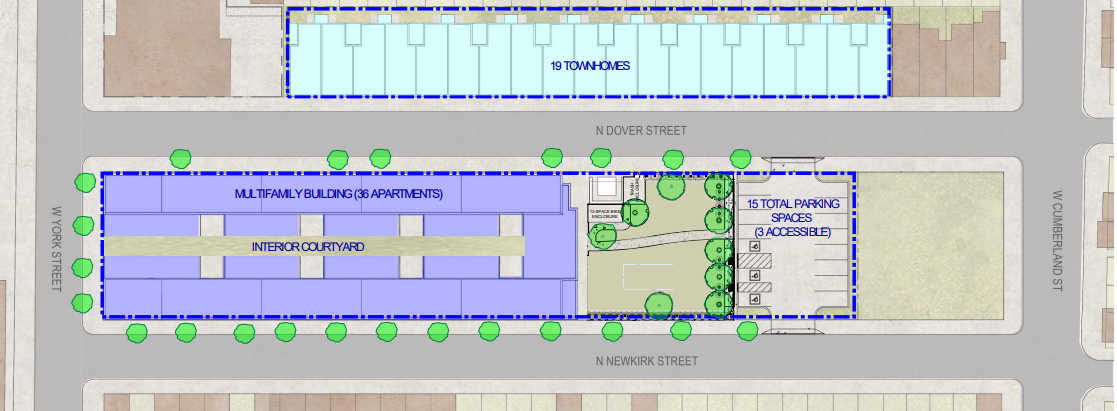
    The project has 30 single-family houses that will be built using the city’s Turn the Key program, 19 rental townhouses, and a 36-unit apartment building roughly split between one- and two-bedroom units.

    PHA also plans 15 parking spaces, street widenings to allow more parking, and a new agency-run park.

    The rental portion of the project, which includes the apartment building at 2401 N. Dover St. and the 19 rental townhouses at 2416 N. Dover St., received permission to move forward from the Zoning Board of Adjustment in late July and early August.

    The housing authority has the support of many of the area’s elected representatives, including State Sen. Sharif Street and State Rep. Keith Harris. The politically influential Laborers union also submitted testimony to the zoning board in support of the project.

    The biggest regulatory hurdle to PHA’s plans is that the land slated for multifamily development is zoned for single-family use, but the board waived that requirement after hearing from community members about PHA’s proposal.

    “I would love to see some development on Dover Street,” said Altrena Nixon, who owns a business at 29th and York Streets.

    “It’s been sitting like that for many, many, many years,” Nixon said in testimony before the zoning board. “We need the vibrancy. We need the development. We need the jobs that it’ll bring to our area.”

    Two speakers warned about the housing authority’s history in the neighborhood, arguing against adding so much density and too much affordable housing.

    All In The Family Group Associates Inc., a community organization, wanted further meetings with PHA to discuss how the project related to other nearby developments.

    In a letter, PHA declined to enter into an agreement with the group over a planned park at 27th and York Streets. All In The Family did not respond to a request for comment.

    “The PHA should not be able to get away with not coming to the table with us and ironing out these issues and ensuring that we have stability in our communities,” Odessa Tate, a member of All In The Family, said in testimony before the board.

    Councilmember Jeffery Young — who is engaged in a legal action against a ZBA ruling in favor of another 57-home development PHA proposed in Strawberry Mansion — asked the board to delay its ruling to allow more time to meet with All In The Family.

    A map showing where the rental portion of PHA’s plan will lay out.Cicada

    But the zoning board ruled in the project’s favor at hearings on July 29 and Aug. 5. Six of the nine speakers at the hearing were in favor of the project.

    “There is a dire need for affordable housing in our community, and to continue to just delay and delay and delay is counterproductive to the needs of the community,” said the Rev. Warren Marshall at the July hearing.

    The 30 homeownership units did not require zoning board permission to move forward. They will be on 29th, Newkirk, and Dover Streets and are being built by Civetta Property Group, the developer that has used the city’s Turn The Key program the most extensively.

    Construction will begin on the for-sale units in October. The rentals are slated for next year as they seek competitive Low-Income Housing Tax Credits that will become available in 2027.

    The 15-space surface parking lot will be next to the apartment building, while Dover and Newkirk Streets will be widened to allow for more on-street parking.

    A proposed park at 27th and York, meanwhile, is being described as a space for community events.

    “PHA will be responsible for development, maintenance, use procedures, and related management functions necessary to preserve the park as a community asset,” Jeremiah said in a letter to local political leaders.

    This isn’t the authority’s only current project in Strawberry Mansion. WHYY recently reported PHA also has proposed converting a 126-year-old school on North 22nd Street into a 50-unit affordable apartment building for seniors.

  • Shift Capital is selling many of its Kensington holdings

    Shift Capital is selling many of its Kensington holdings

    Shift Capital made its name in Kensington.

    The company has long styled itself as a socially conscious real estate developer, rebuilding long-vacant buildings into thriving mixed-use properties in a neighborhood challenged by poverty and addiction.

    Now 14 years after the company’s formation, it is seeking to sell its cornerstone developments in the neighborhood.

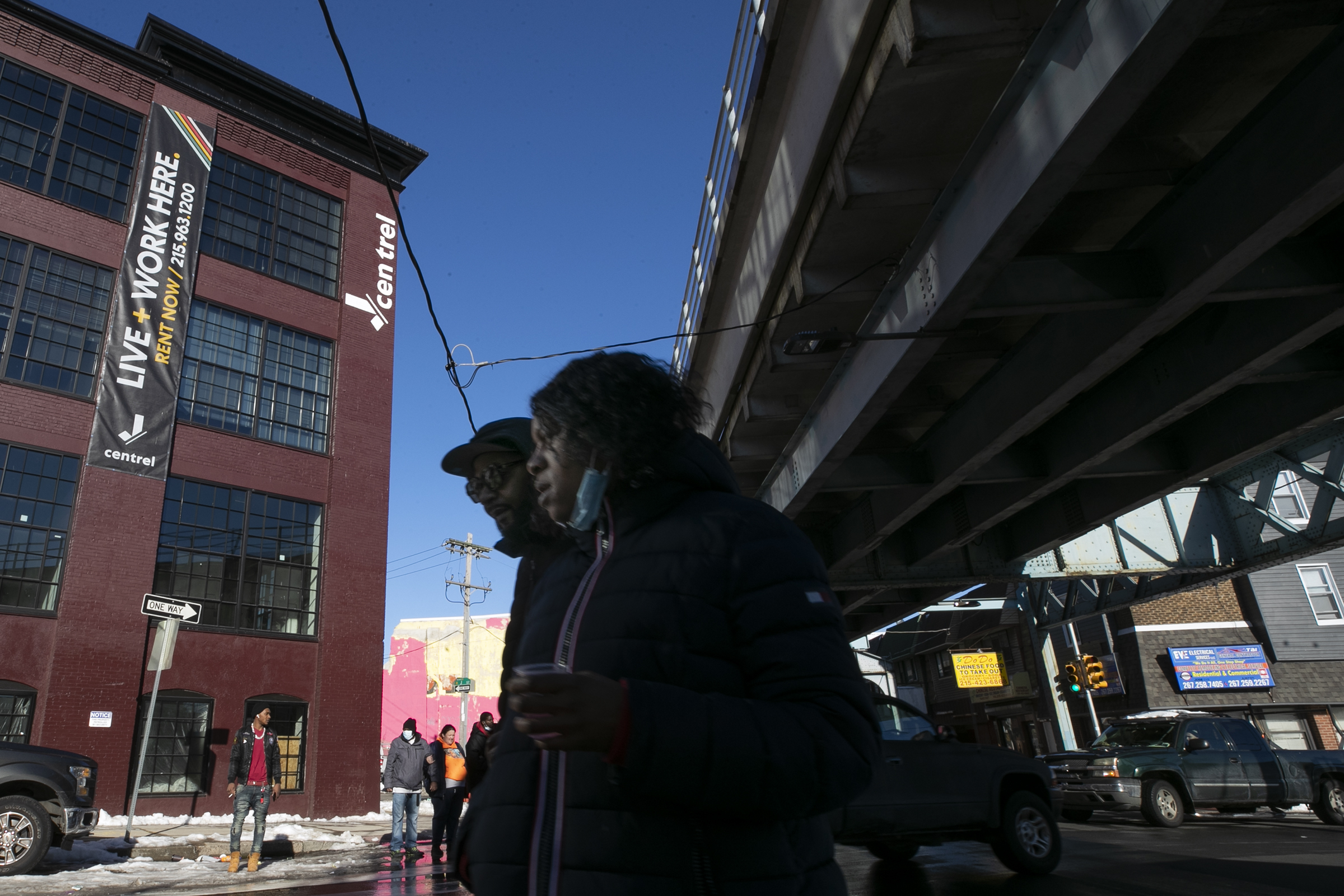
    That includes its Harrowgate flagship, the 116-unit building at 3400 J St. known as J-centrel, which is home to the renowned Vietnamese bakery and cafe Càphê Roasters.

    Kensington Corridor Trust, a nonprofit that Shift helped found, plans to purchase that property for $18 million, although it needs to raise $1.5 million more by the end of August to close on the deal.

    The organization is a neighborhood trust with the mission of acquiring properties on Kensington Avenue and placing them under community control — via a nonprofit board — to preserve affordability. Currently, most of the trust’s properties are storefronts and much smaller than J-centrel.

    “We’re excited to hand the responsibility of creating a healthy, safe neighborhood to the next group to continue the work that we’ve been doing,” said Brian Murray, CEO of Shift Capital. “It’s an exciting moment of transition to the next generation of people … who want to see Kensington be what it could be.”

    Murray says the properties Shift wants to sell represent 30% of their properties in the city.

    They are in talks with potential buyers for the old industrial building at 3775 Kensington Ave., and the artist studios, office space, and light manufacturing at 3525 I St. (MaKen Studios North) and 3401 I St. (MaKen Studios South).

    Murray emphasizes that Shift will retain a presence in Kensington. Their offices will remain in J-centrel, and they are still working on the Càphê Roasters expansion across the street at 3419-23 Kensington Ave.

    He says a sale of this kind has always been part of the plan. The investors who backed these developments in Kensington are nearing the end of their time with the fund, and Shift is not currently planning to recapitalize with new partners.

    “Our world is limited to capital that needs to be returned,” he said. “They can be as mission-driven as they would like, but that still is a limitation of the role that we can play in revitalizing and preserving neighborhoods.”

    That’s why Murray wants to sell to Kensington Corridor Trust, which Shift helped found in 2019 (although it exited the organization’s board in 2021).

    Kensington Corridor Trust owns 32 properties along the avenue, although none is close to the size of J-centrel. In preparation for the purchase, the trust has hired more staff, including a new property manager and a full-time maintenance person who used to be with Shift.

    “Shift Capital’s J-centrel property will be our single largest acquisition to date in terms of square footage, units, and cost,” said Adriana Abizadeh-Barbour, executive director of Kensington Corridor Trust.

    Abizadeh-Barbour said the trust raised a half-million dollars in early August, and she is confident it can get the $1.5 million needed before the end of the month.

    The funds raised so far include $1 million from individual donations, $1 million from the City of Philadelphia, $3 million from foundations, $3 million from investment funds, and $10 million from Community Development Financial Institution, which specifically invests in low-income areas.

    “We have a strong base of supporters who believe in community control and neighborhood power, and we’re excited to bring this under community ownership,” Abizadeh-Barbour said.

    The trust plans to make the apartments more affordable as higher income tenants move out of the building, with the goal of targeting the units to those at 60% of area median income, or roughly $50,000 for a one-person household.

    As for Shift, the company has other big plans in Philadelphia. Earlier this year it announced a partnership with Temple University over a long delayed development proposal near Amtrak’s North Philadelphia station, near Broad Street and Indiana Avenue.

    And although lenders backed away from the firm’s redevelopment of the historic Beury building at 3701 N. Broad St. in 2024 amid an increasingly difficult development environment, Murray says they “are still actively working on” the property.

    “The Kensington Corridor Trust [sale] is an exciting mission exit that we’ve been working on almost from the beginning of our work,” Murray said. “This was always a prescripted game plan to create an entity that was community controlled that could be a steward of assets in the neighborhood long term.”

  • Philly developer Post Brothers faces contractor lawsuits and a union campaign

    Philly developer Post Brothers faces contractor lawsuits and a union campaign

    More than a dozen Philadelphia-area contractors have sued apartment developer Post Brothers, alleging the company failed to fully pay for all the work they did.

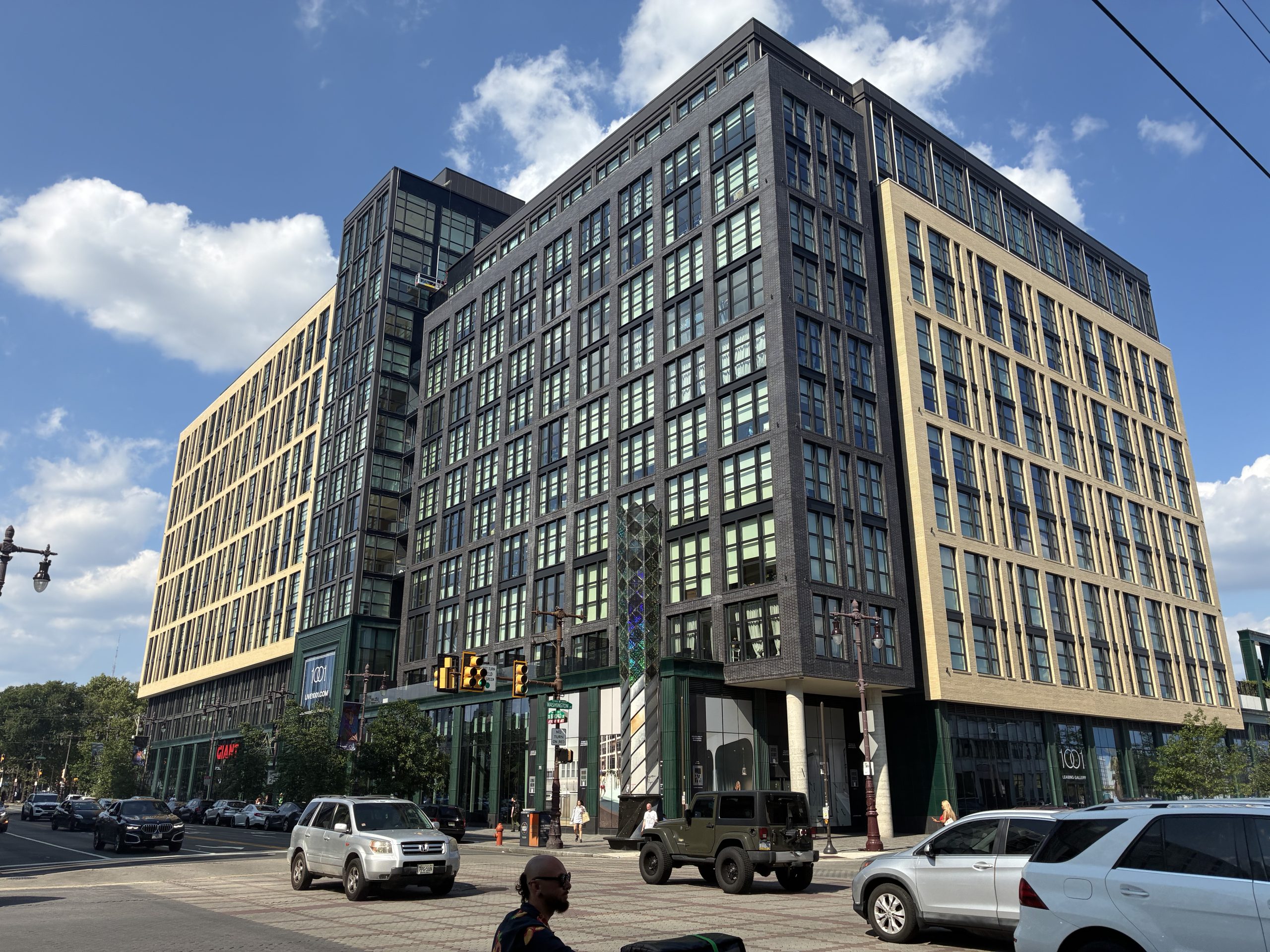
    In state and federal courts, the building and professional-services contractors, most of them affiliated with the city’s carpenters union, allege Post Brothers owes more than $9 million for work at the 630-unit One Thousand One apartment complex at Broad Street and Washington Avenue in South Philadelphia.

    “The Post Brothers want to take a Donald Trump business model where they don’t want to pay their contractors,” said James Hocker, assistant executive secretary-treasurer of the Eastern Atlantic States Regional Council of Carpenters.

    One of the contractors, Healy Long & Jevin, a concrete construction company based in Wilmington, alleges the Post Brothers mismanaged the project at Broad and Washington and should pay an additional $14 million.

    Post Brothers alleges it’s Healy that should pay them a larger sum — for poor performance. Healy’s lawyers did not respond to a request for comment.

    Doylestown-based Apollo Contractors and other smaller contractors filed the next-largest claim, for $5.8 million.

    According to Apollo’s complaint, the developer “doesn’t have adequate funds because the owners” used company funds “for their own personal benefit and expenses.” Healy has made similar claims.

    Post Brothers in court papers called the union contractors’ lawsuits “without merit.” The development company argues that the conflict is about who should bear the costs of inflation.

    “Subcontractors who agreed to a price in 2022 experienced 30% inflation probably throughout the course of the project,” which is wrapping up this year, said Michael Pestronk, CEO of the Post Brothers, who runs the company with his brother Matthew.

    But “the way that contracts work, our financing works, we pay lump sums for agreed scopes of work,” Pestronk said. “It’s up to the subcontractors to fix their costs and allow for that.”

    He also says the fraud allegations are baseless and just an example of contractors “throwing [stuff] at the wall” to see what sticks.

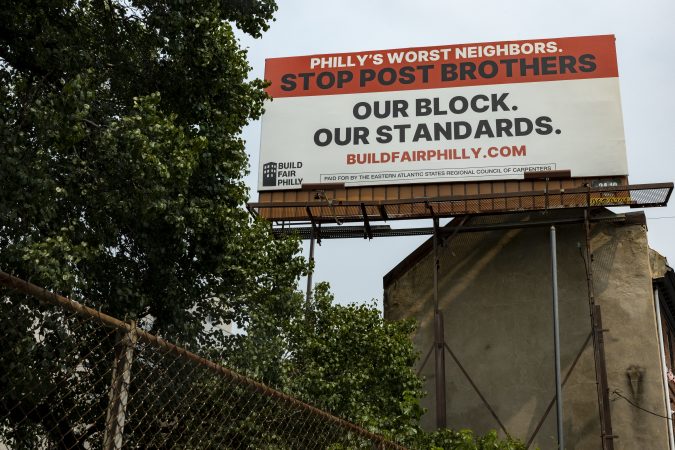
    The carpenters have launched a pressure campaign against Post Brothers, including nine billboards denouncing the company along Philadelphia’s highways. They say contractors at the Broad and Washington site had to pay union members and contribute to health and pension funds, despite not being fully remunerated.

    “That’s why they’re fighting hard to get what is owed to them because they have a lot of money on the street, and it’s jeopardizing their business,” Hocker said. “But they made their employees whole.”

    Post Brothers has made a counterclaim against Healy, accusing the concrete contractor of “false billing” and other violations. A judge rejected a motion from union-aligned Healy to dismiss the developer’s counterclaim.

    Pestronk says the legal saga is a manifestation of high interest rates and inflation in the construction market. Multifamily residential construction outside the city’s wealthiest neighborhoods has slowed dramatically. Office construction has ceased, and industrial sites do not require as many building trades.

    “Subcontractors and general contractors are feeling much more hungry today than two years ago,” Pestronk said. “Their pipelines are totally dry.”

    The Post Brothers development at Broad Street and Washington Avenue, which is at the heart of the conflict with the carpenters union.Jake Blumgart

    What’s in dispute

    One of the largest dollar-value claims against Post Brothers is a joint demand for $5.8 million from a group of businesses, led by Apollo Contractors, a carpentry, drywall, and finishing firm, and Fluid Works, a plumbing contractor, based at the same Doylestown address.

    Apollo and Fluid are owned by members of the Sharpan family, who are also partners with the Pestronks in another business, Mega Supply in Bensalem. The Sharpans are separately suing the Pestronks over money they say the Pestronks owe Mega Supply.

    The Apollo-Fluid Works complaint, filed in Philadelphia Common Pleas Court last August, was the first to include fraud allegations.

    Apollo says that the Pestronks paid Apollo to improve “their respective private residences” even as they owed millions to the contractors for work in Philadelphia, according to Apollo’s complaint. Attached to the suit are invoices for more than $200,000 worth of carpentry, painting, tile and drywall work that Post Brothers paid Apollo to perform at Michael Pestronk’s Eagle Farm in Villanova in 2021 and 2022.

    The groundbreaking for the Broad and Washington project was in December 2021.

    The Apollo complaint alleges that Post Brothers knew they didn’t have enough money to pay for the work but didn’t tell the contractors until the work was done.

    Early in July, Healy amended its federal complaint, pending before Judge Michael Baylson, to add similar claims. The Post Brothers denies those allegations and says the contractors have not offered detailed support for the allegations.

    “They are preposterous,” Pestronk said.

    Healy also demanded Post pay an additional $14 million for “mismanagement” at the Broad and Washington site that made the work difficult to complete and unprofitable. Post filed a counterclaim blaming Healy for “defective performance” that cost the developer $17 million. Each has asked the judge to dismiss the other’s allegations beyond the original complaint.

    Other lawsuits asked sums well under $1 million. Some have been in settlement talks; others are slated for trial.

    Post Brothers’ history with unions

    In addition to the nine billboards condemning the Post Brothers, the carpenters union has an electronic messaging truck attacking the company rolling around the city.

    The carpenters union’s electronic messaging truck outside City Hall, denouncing the Post Brothers.Eastern Atlantic States Regional Council of Carpenters

    The clash is the latest conflict between building trades unions and the company, which has always used an “open shop” mix of union-and-unorganized workers on their job sites.

    In 2012, the Pestronks sought to redevelop a former textile mill at 12th and Wood Streets into a 164-unit apartment complex called the Goldtex building, using an open shop model.

    The Philadelphia Building Trades Council, an umbrella group that covers many of the construction unions, fought for 100% union representation on the site.

    Union workers blocked access to the site — sometimes bringing construction to a standstill — and the Philadelphia sheriff’s office had to enforce a court order that protests stay back from the building. Violent tactics by protesters were caught on video.

    Relationships between the Post Brothers and the building trades have never been that contentious since, although they’ve never been tension-free either. The company still uses a mix of organized and nonunion labor.

    “We worked very hard to develop a relationship with Post Brothers over the last 10 to 15 years,” said Hocker of the Eastern Atlantic States Regional Council of Carpenters. “There was some bad blood [but] … we were able to secure some work on some of the Post Brothers’ work, specifically around concrete.”

    According to both the carpenters and the Post Brothers, the project at Broad and Washington employed greater numbers of union workers than some of their other major projects recently, such as Piazza Alta in Northern Liberties.

    “We were trying to play nice with the unions, and we made a commitment to hire these contractors at frankly greater expense than we otherwise would have incurred to try to foster relationships,” Michael Pestronk said. “And it turned out not to have gone well.”

    Besides the billboards and messaging truck, there have been periodic pickets at Broad and Washington, but according to Pestronk, nothing remotely comparable to the protests over the Goldtex building years ago.

    The carpenters are not a part of the Philadelphia Building Trades Council or the Philadelphia AFL-CIO. Other unions have not joined the campaign against Post Brothers, although the carpenters say they have invited them to partake.

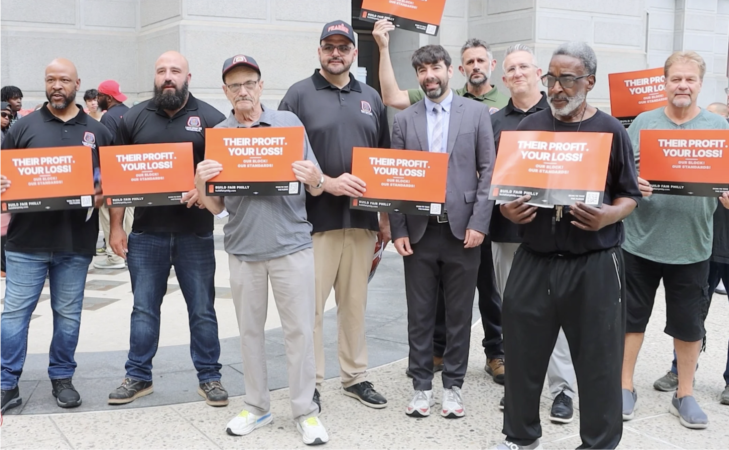
    The union also has released a larger campaign, Build Fair Philly, meant to highlight what they consider unscrupulous development in the city. The billboards critical of Post Brothers bear the larger effort’s emblem. They also are trying to build alliances with neighborhood groups.

    “Post’s practices ultimately affect the whole market, and we welcome anyone who wants to be part of holding developers accountable,” Hocker said.

    Pestronk shrugs off the conflict. He notes that the Post Brothers continue to build in Philadelphia and says the current conflict does not compare to his company’s earlier struggles with the trades.

    “When that was going on, that was something I spent a lot of time thinking about and figuring out what to do every day,” Pestronk said. “This is less than 1% of that. These are just some [nonsense] lawsuits that just go on in the normal course of business.”

  • Who’s behind the orange signs around Philly criticizing rogue developers?

    Who’s behind the orange signs around Philly criticizing rogue developers?

    In May, Passyunk resident Peter Kim found a vivid orange flyer on his door that read, “Their Profit. Your Loss!”

    The messaging on the material inveighed against shoddy and irresponsible real estate development, without naming any particular company or specific foe.

    It encouraged residents to sign the Build Fair Philly pledge and attend registered community organization (RCO) meetings, which developers have to hold in advance of large projects or a zoning change.

    Kim is a pro-housing advocate, and after checking out the website he at first thought that some new antidevelopment political organization had come to town.

    “While on the surface, the talking points sound reasonable, I think because I’ve become so conditioned to NIMBY [not in my backyard] groups finding any reason to oppose new development, I just assumed this campaign was from some NIMBY anti-housing group,” Kim said.

    But Build Fair Philly’s website lists as its address 1803 Spring Garden St., which is the Philadelphia headquarters for the Eastern Atlantic States Regional Council of Carpenters until its forthcoming move to the Navy Yard.

    The Carpenters, like the rest of Philadelphia’s building trades unions, are generally pro-development. After all, the more projects — especially big ones — that get built, the more their members work.

    “[I] was surprised to learn it’s the Carpenters union because, obviously, they’re not anti-housing,” Kim said.

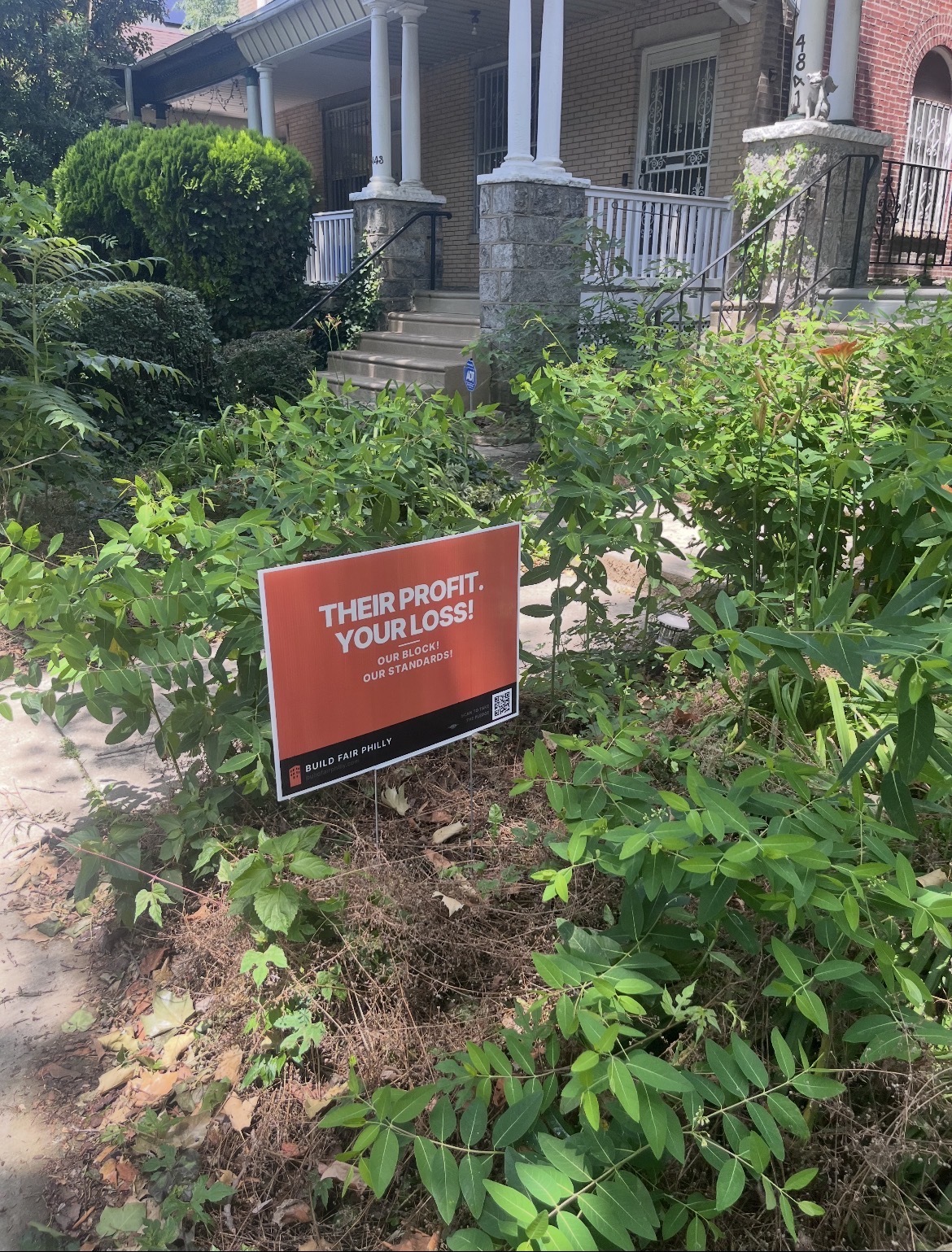
    In recent months, conspicuous orange Build Fair Philly lawn signs have been popping up on rowhouses and lawns around Philadelphia, decrying harmful real estate development. (Another common message: “Our block! Our standards!”)

    A Build Fair Philly sign in West Philadelphia.Zoe Greenberg

    The campaign’s sponsor is not listed on its material, leaving many recipients wondering what the notices are about.

    In an interview, leaders of the Carpenters said that the Build Fair Philly campaign is an attempt to raise popular consciousness about irresponsible construction — which Philadelphia’s rowhouse neighborhoods are very familiar with.

    “We are not against development; if anything, we want more development,” said James Hocker, assistant executive secretary-treasurer with the Eastern Atlantic States Regional Council of Carpenters.

    “But we want more responsible development, development that’s built in a fair way that is creating opportunities,” Hocker said. “We want to see licensed contractors on these projects. We want to see contractors that are paying their workers a responsible wage.”

    The Carpenters say Build Fair Philly is an effort to give community members a way to get involved in a campaign to better regulate the construction industry, forging alliances with community groups to ensure quality building and get pro-labor laws enforced.

    The move comes amid a difficult environment for Philadelphia’s building trades unions. (The Carpenters are not part of the Philadelphia AFL-CIO or the Philadelphia Building and Construction Trades Council.)

    After interest rates spiked in 2022, construction slowed. The commercial sector, which is most likely to employ union labor, has taken a hit from the remote work-induced cessation of new office construction. That is part of why the trades fought so hard on behalf of the proposed, then abandoned, 76ers Center City arena.

    Mayor Cherelle L. Parker’s $800 million housing initiative will create work for the unions. But a lot of the funding — like the signature Turn the Key program — goes into rowhouse construction and rehabilitation, which labor has largely ceded to nonunion, often immigrant, workers.

    There also are not many public works projects currently in the pipeline, and longtime fonts of trades work like the Philadelphia Housing Authority are less reliable sources of employment.

    The website Unionstats.com shows a steady downward trend in union representation in the Philadelphia metropolitan area’s private construction market since the pandemic.

    “I think it’s part of a general campaign by unions in the Northeast to reverse their declining market share,” said Stephen Jacob Smith, executive director of the Center for Building in North America.

    “Exactly what they have in mind as the mechanism, I do not know,” Smith said of the Carpenters. “They have a bunch of political levers, and I don’t know which of them they’re trying to pull with this.”

    But Hocker says the effort is not only about winning more work for the Carpenters members. It is also about holding contractors and developers accountable for not hiring in the city.

    After all, the building trades unions have been criticized for having memberships that do not represent the demographic makeup of Philadelphia. Why are developers not getting attacked if they are also not doing representative hiring?

    “We want development that’s going to create opportunities, whether it’s union or nonunion, for individuals that live in the city of Philadelphia,” Hocker said. “We feel that the development that happens in these communities should reflect what the community looks like. It shouldn’t be a bunch of out-of-state license plates.”

    Build Fair Philly’s Instagram account includes footage of a rally with City Council members, including Quetcy Lozada, Jeffery Young, and a cigar-wielding Jimmy Harrity.

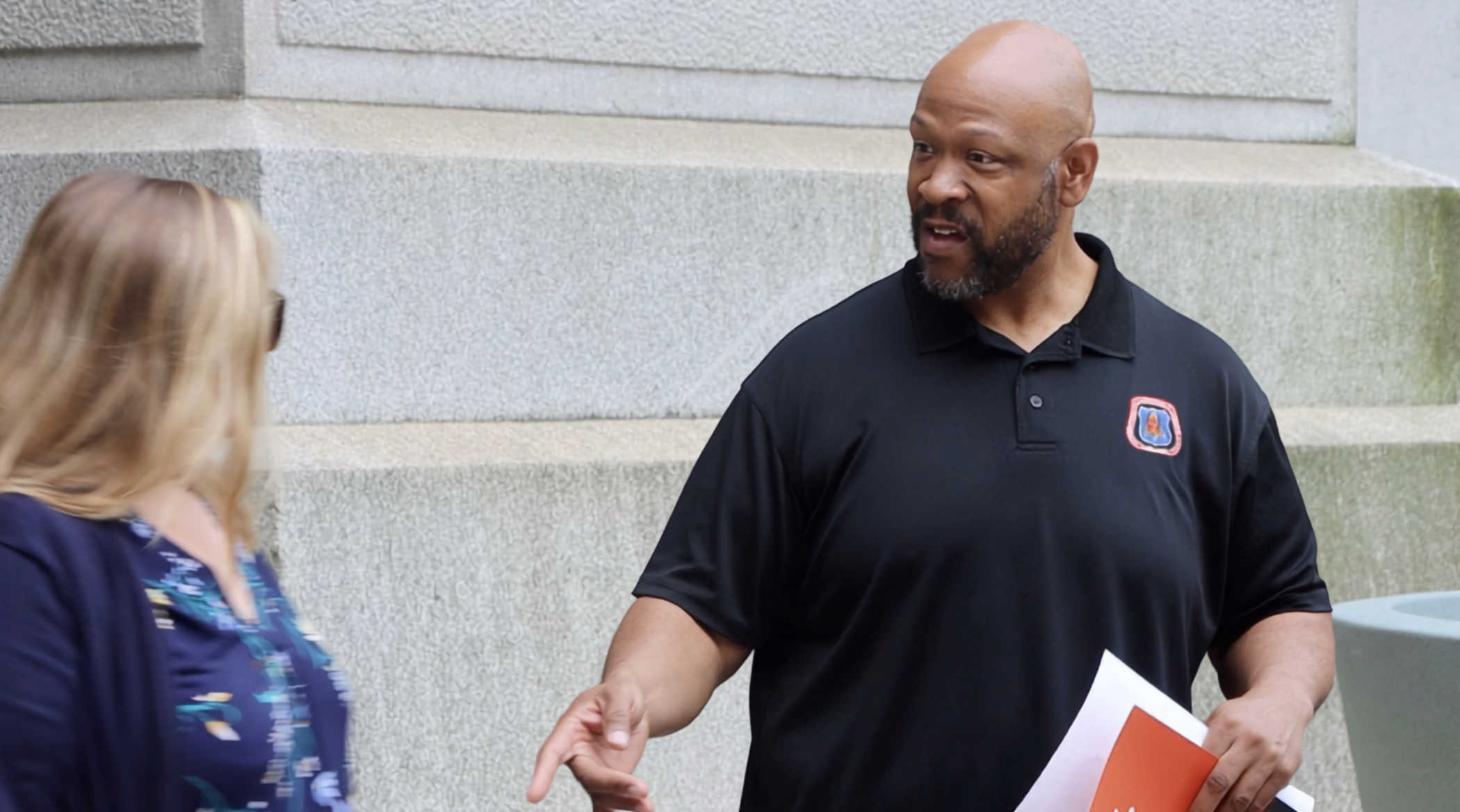
    Eastern Atlantic States Regional Council of Carpenters senior council representative Joseph Lockley talks about Build Fair Philly outside of City Hall.Eastern Atlantic States Regional Council of Carpenters

    But the union leadership says that the campaign is not necessarily about passing new legislation — which many other trades have successfully won before — but about getting the city to enforce the regulations that are already on the books.

    “We’re not asking for elected officials or anybody in any kind of position to create new laws and policies,” said Joseph Lockley, senior council representative for the Carpenters. “These are laws, policies, and procedures that are already in place that are just not being pushed and enforced, or even prioritized.”

    As of early July, the Carpenters said, they had already had 10,000 people sign on to Build Fair Philly’s pledge. “I believe Philadelphia’s development should be safe, fair, and built for all of us — not just for investors and insiders,” it reads.

    They had distributed 6,536 signs and canvassed 17,537 people, knocking on doors and interacting with people on the street.

    They have also put up nine billboards attacking Post Bros., a major Philadelphia developer. (“Philly’s Worst Neighbors. Stop Post Brothers,” the signage reads.)

    A variety of contractors that work with the Carpenters are currently in a legal dispute with Post over the company’s large apartment development at Broad Street and Washington Avenue.

    The Carpenters Union’s Build Fair Philly campaign billboard across from I-95 on Richmond Street. The union hopes the campaign will rally community members to push back against shoddy development.Aidan T. Gallo / Staff Photographer

    As part of the canvassing effort for Build Fair Philly, the Carpenters have been engaging with community members to hear about their experiences of development in the city. They said they are using that information to formulate the next steps for Build Fair Philly.

    “This is also a social justice issue,” said Mungu Sanchez, deputy political director for the Carpenters.

    “This is about fairness and this is about making sure that we’re organized with other community groups who also care about growth and care about making sure that communities are able to have the same options and the same sort of resources that every American should have,” Sanchez said.

  • Pearl Properties is moving forward on Jewelers Row tower

    Pearl Properties is moving forward on Jewelers Row tower

    For the first time in almost two years, Pearl Properties is making visible movement on its long-awaited Jewelers Row housing tower by requesting permission from the Historical Commission to alter two small protected buildings on the Seventh Street side of the project.

    In 2022, the Philadelphia-based developer obtained the vacant land at 708 Sansom St. from Horsham-based Toll Brothers, which had sparked controversy — and seen their development delayed — by their eventually successful effort to demolish five buildings in the midst of the city’s historic diamond district.

    After buying the property from Toll, Pearl Properties received a zoning permit on Sept. 24, 2024, for a 35-story tower, with 99 units, 50 parking spaces, and almost 1,500 square feet of commercial space.

    Since then there has been no movement on the project, amid a difficult construction environment and a competitive multifamily market.

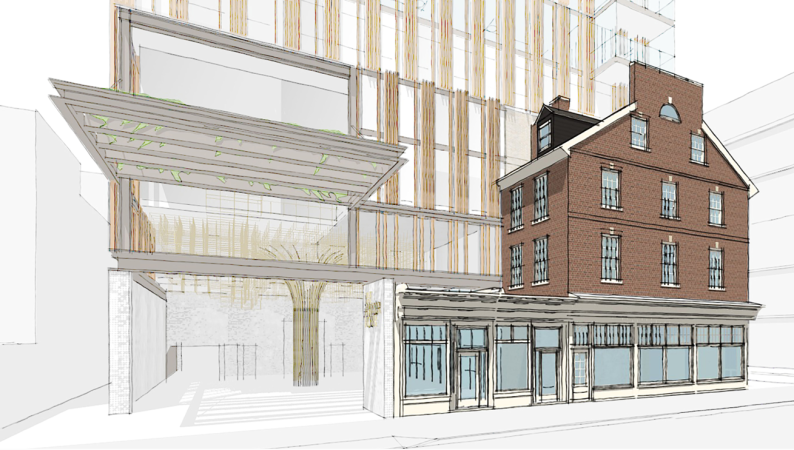
    But earlier this month, Pearl Properties asked the Historical Commission for permission to demolish the rear sides of two one-story buildings facing Seventh Street, while preserving their facades as a pedestrian entrance to the tower’s parking garage.

    “Due to many years of neglect, the buildings are in substantial disrepair,” Morris Clarke, director of operations of DAS Architects Inc., wrote in a letter to the commission on behalf of Pearl Properties.

    “It is the applicant’s intention to restore both storefronts to their original form, so as to enable them to contribute to the streetscape experience and vibrancy of the immediate neighborhood rather than continuing to be a symbol of blight,” Clarke said.

    The new rear entrance next to the garage on Seventh is not the only alteration to Pearl’s project since it was last seen by the public in early 2024.

    The developer needed permission from the city’s Zoning Board of Adjustment to proceed and also negotiated over the project’s design with the Society Hill Civic Association in exchange for its support.

    Pearl has made changes to accommodate the neighborhood group’s demands that the floors closest to the street reflect the surrounding buildings.

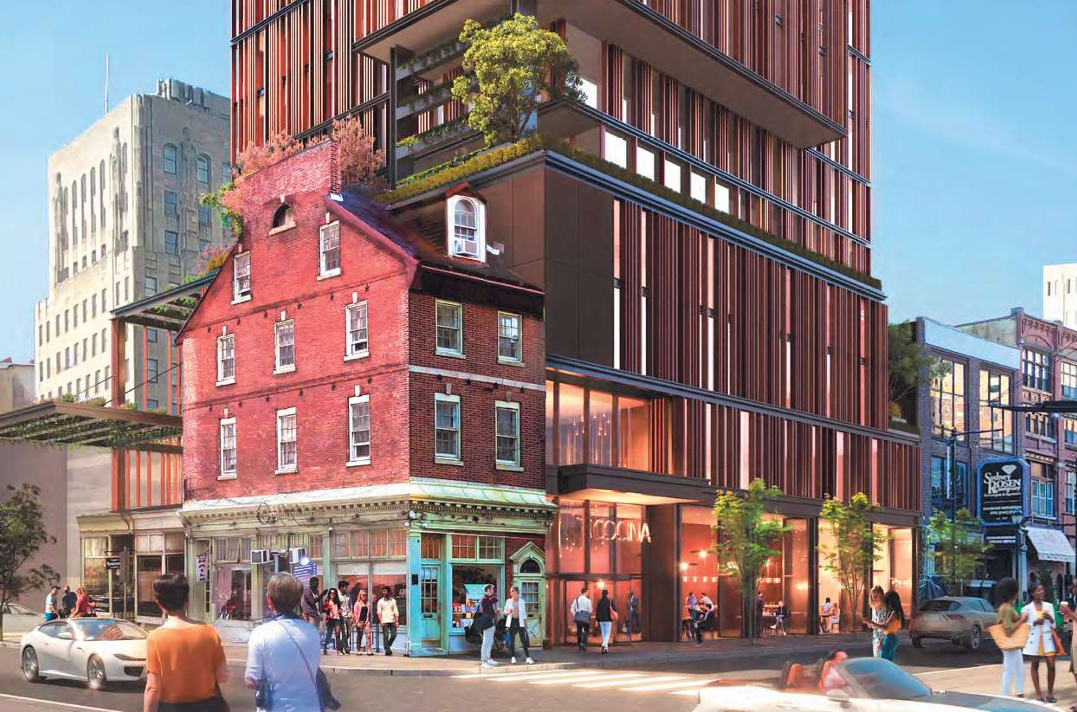
    Plans for the new Sansom Street facade of Pearl Properties Jewelers row tower.DAS Architects

    “The original design has no compatibility with Jewelers Row,” a 2024 document about the negotiations from the Society Hill Civic Association said. “It is monolithic. The materials were invasive.”

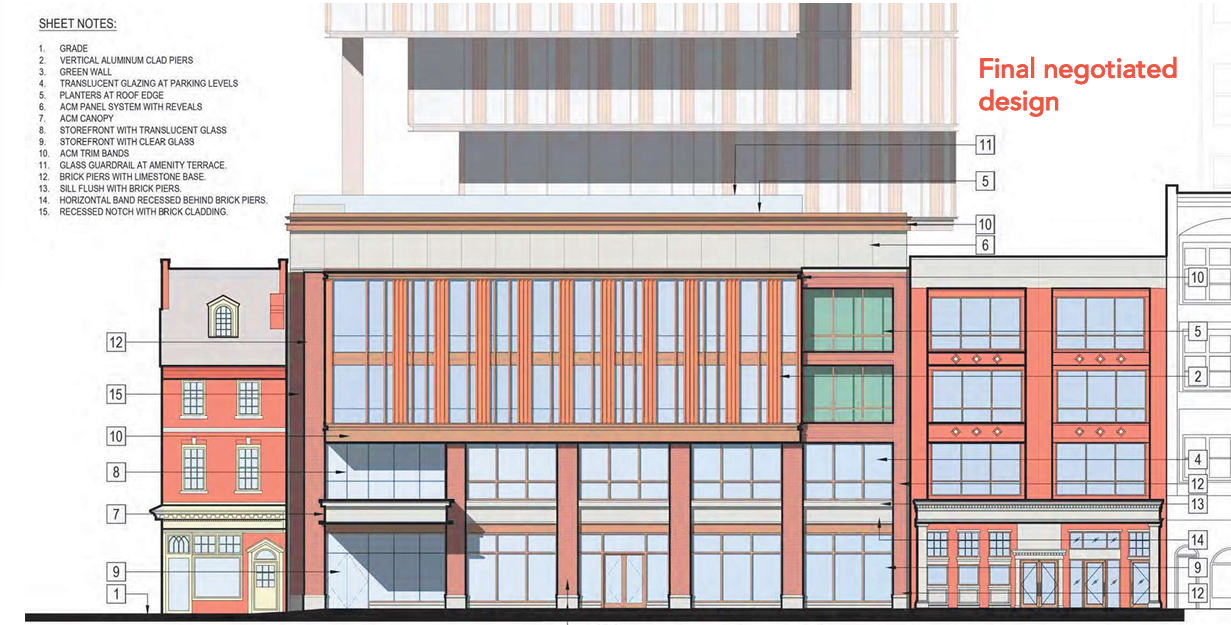
    Renderings of the ground floor levels, marked “final negotiated design” and dated to September 2024, show that Pearl responded to that feedback by creating a podium for the building that better matches the surrounding historic buildings.

    This was partly achieved by using brick and other materials more akin to Pearl’s neighbors and partly by splitting the facade into units that appear more like the commercial townhouses of Jewelers Row.

    “There were arguments, but we accepted it because we thought it was a good product, a good design, good quality,” said Paul Boni, chair of the zoning and historic preservation committee of the Society Hill Civic Association.

    “They have other holdings in the city that we checked out,” Boni said. “And something needs to be built there. This is a nice big building with a lot of density. It’ll be a good addition.”

    A rendering for Pearl Properties’ original design for the Jewelers Row tower, decorated by the metal fins that the Society Hill civic disliked.DAS Architects

    Neither Pearl Properties’ Reed Slogoff nor project architect DAS responded to a request for comment. Boni declined to comment on when the project was likely to break ground.

    The Historical Commission staff approved Pearl’s plans to demolish the rear of the two one-story buildings on Seventh Street, noting that they are both only 13 feet wide and 18 feet deep.

    “The small buildings would be used as entrances to the interior motor court of the high-rise building,” the staff notes read.

    The Seventh Street addition to the design will be considered by the commission’s Architectural Committee on July 28 and can then be considered by the full committee as soon as August.

    Pearl Properties is also moving forward on its Harper Square development at 113-121 S. 19th St. near Rittenhouse Square, another long-awaited luxury apartment tower. The company installed a tower crane in May to begin construction.

  • Plans for apartments near Penn Treaty Park will be scrapped to build more townhouses

    Plans for apartments near Penn Treaty Park will be scrapped to build more townhouses

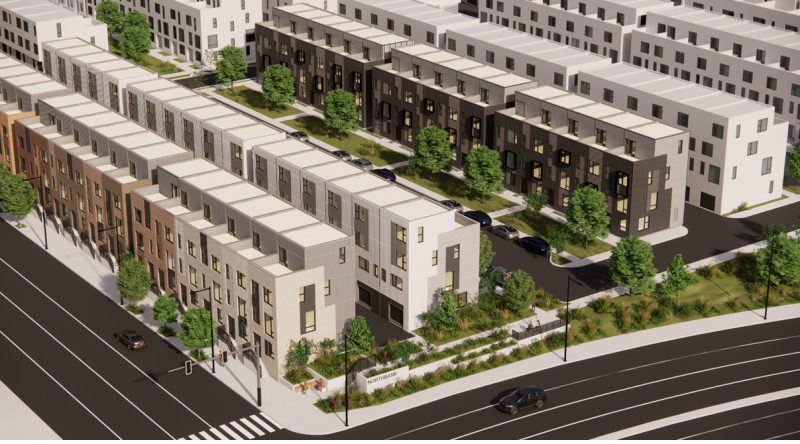
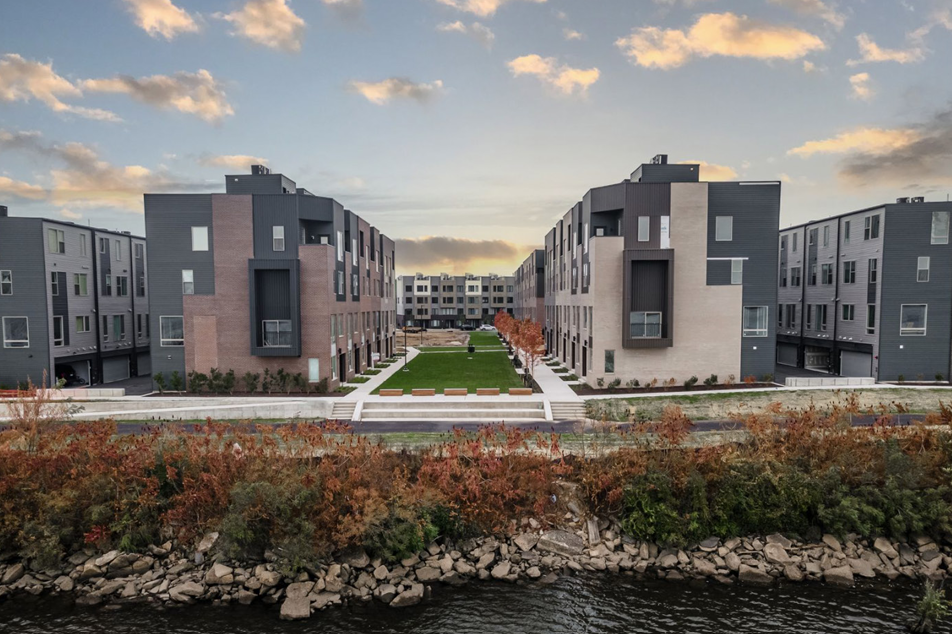
    A further 219 single-family townhouses are slated for the North Bank development at 2001 Richmond St. in Philadelphia, between the Battery and Graffiti Pier on the Delaware River.

    The proposal, from Concordia Group and D3 Real Estate Development, is the second phase of their project. The first is composed of 475 single-family townhouses at 2001 Beach St., which have sold out.

    In 2024, the developers planned to include a 307-unit apartment building on the western side of the second phase of North Bank — closer to Richmond Street — along with 8,425 square feet of commercial space and 135 townhouses closer to the river.

    But the apartment boom along the Delaware River and in Northern Liberties and Fishtown has made that proposal unworkable, the developers say.

    “There’s just such an abundance of apartments” in this area, said Greg Hill, cofounder and managing partner of D3 development.

    “We were surprised. Although the market has certainly slowed down for multifamily, there are still lots of new starts happening in this neighborhood,” Hill said. “The investment team just felt the timing was not optimal to come on with another 300 units at this location.”

    The 2001 Richmond St. portion of the project is on the southern end of the property, near Penn Treaty Park.

    “Our development team felt it was in the best interest of the community we’ve developed to date to complete the project and build it out with houses, as opposed to leaving the land to sit vacant any longer,” Hill said.

    The designer for the project is the Philadelphia-based Interface Studio Architects. The team anticipates a construction timeline of 24 months.

    The 219 townhouses will have 284 parking spaces for residents, along with another 85 public parking spaces.

    The developers plan to extend the Delaware River Trail to Graffiti Pier from where the trail currently ends at Penn Treaty Park. They also plan additional green space throughout the development.

    A rendering of the new phase of the North Bank project, with the Delaware River Trail in the foreground.ISA

    Matt Ruben, chair of Central Delaware Advocacy Group, had praised the earlier plan to bring apartments to the riverfront.

    “Still seems to have the original issue — shared by many waterfront townhome developments of the past decade or so — of facing neither the river nor the street and instead turning a ‘shoulder’ (side) to the water and the street,” Ruben said in a text message.

    But Ruben praised the developer’s plan to extend the river trail, the commitment to adding green space, and a change from an earlier plan that would have blocked public access to Graffiti Pier.

    “We were disappointed that the multifamily will not go forward, but we feel we have a nice site plan with lots of green space and lots of extra parking, which we think the community needs,” Hill said.