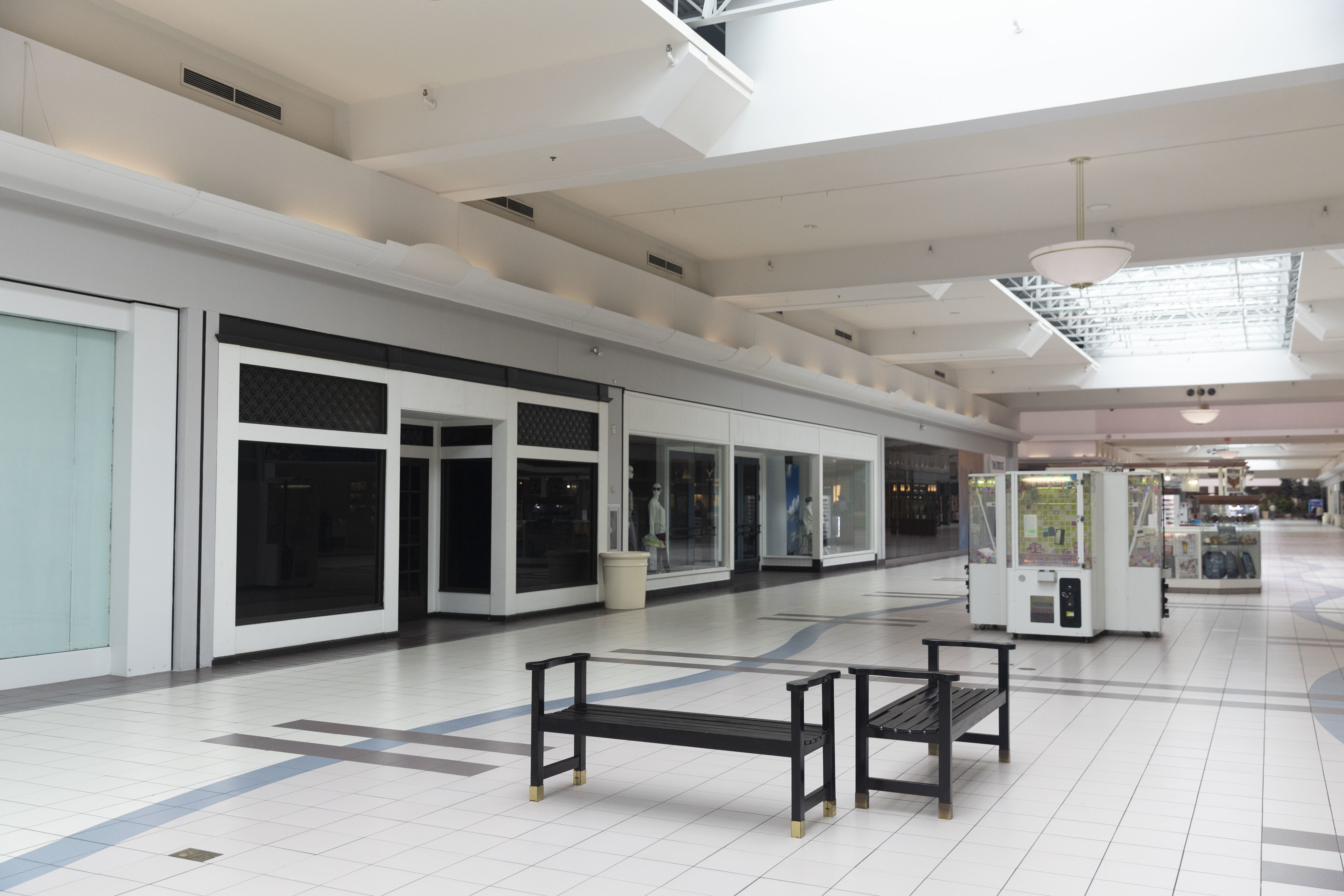
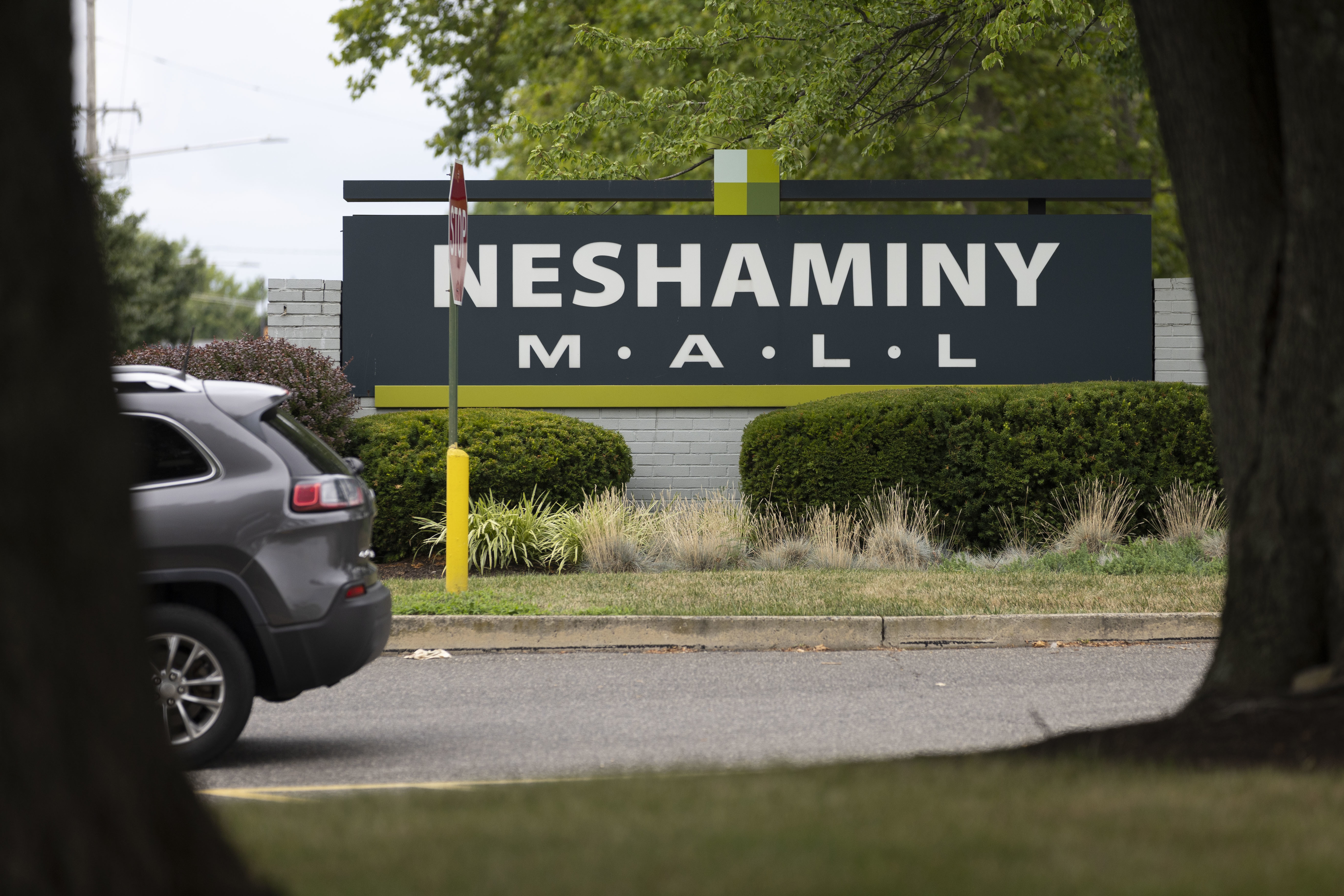
Neshaminy Mall, a 58-year-old Bucks County institution, will not see another holiday season, according to Bensalem Township Mayor Joe DiGirolamo, who said the complex will close by the end of October.
“It’s very bittersweet,” DiGirolamo said, “but the mall has been going downhill for the last few years.”
The 1-million-square-foot center has struggled with rising store vacancies and fewer customers, becoming fodder for TikTokers mourning their teenage stomping grounds.
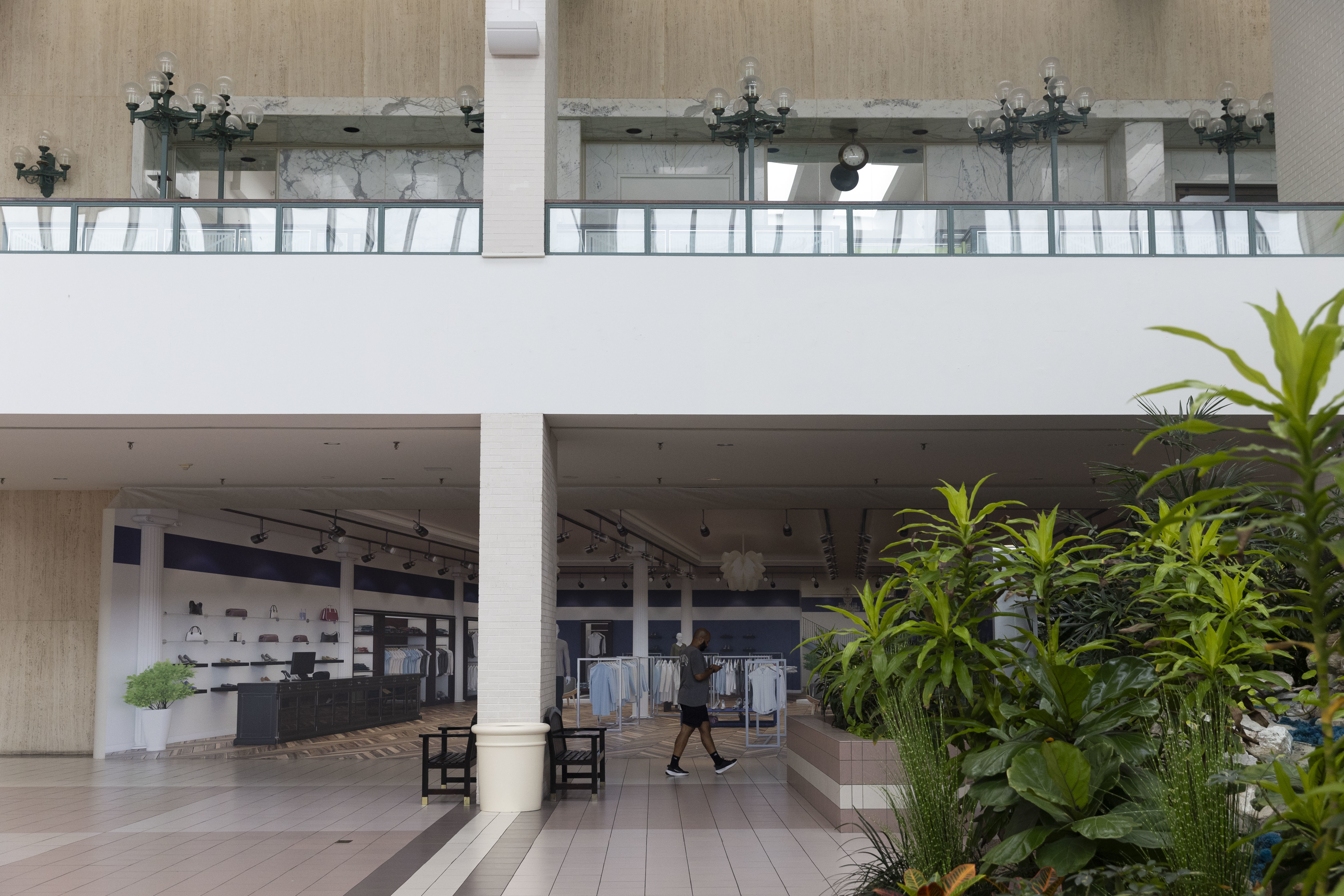
Neshaminy Mall in Bensalem, Pa., on Monday, July 22, 2024.Monica Herndon / Staff Photographer
Like in Exton, Neshaminy’s Boscov’s will remain open, DiGirolamo said, as will the AMC Movie Theater and Barnes & Noble bookstore.
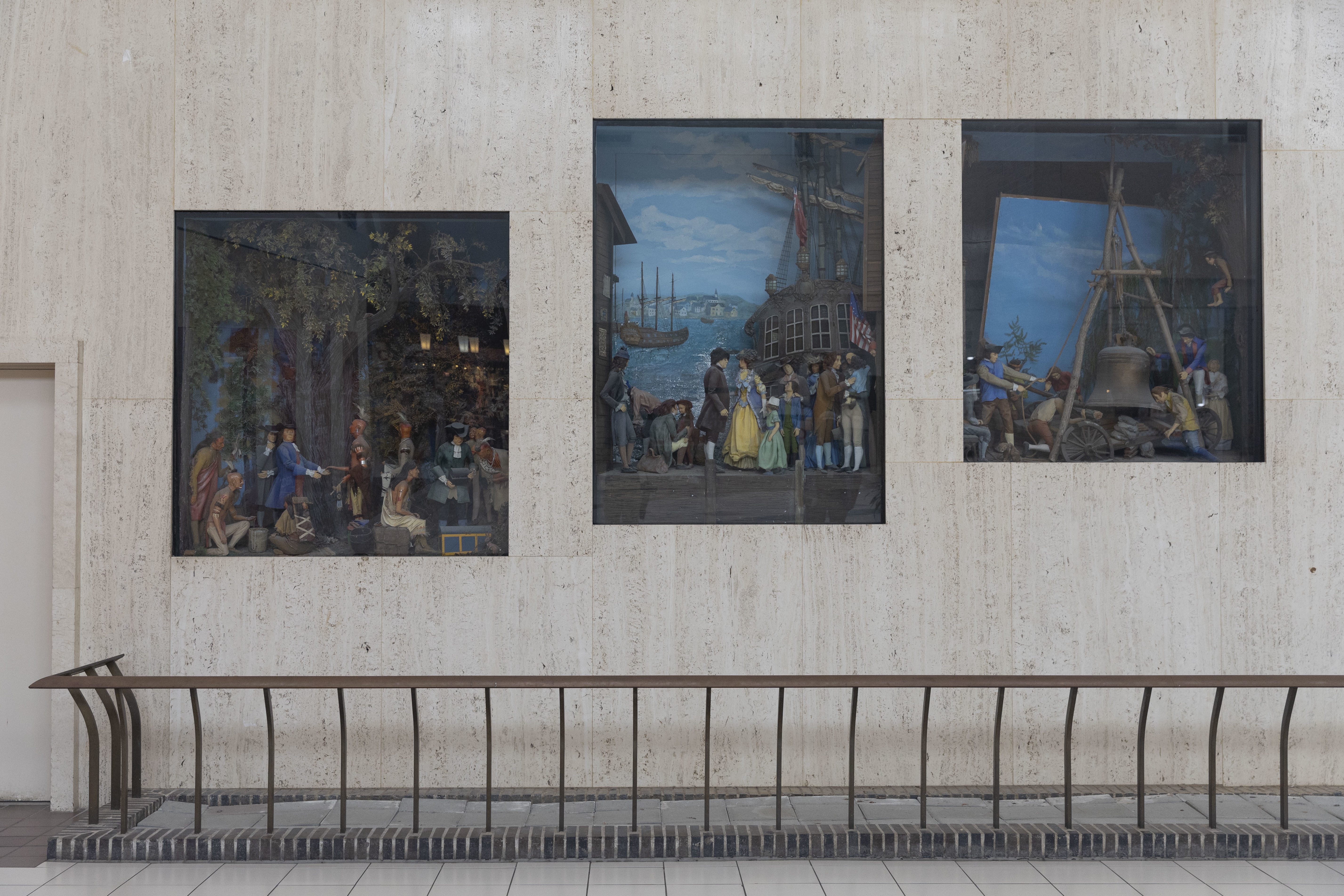
A handful of other mall tenants must close up shop by the end of October, DiGirolamo said. In November, township officials plan to remove the mall’s dioramas, which depict key moments in U.S. history that took place in the Delaware Valley, as well as a bronze Native American statue, for preservation.
Historical dioramas in the Neshaminy Mall, as seen in 2024, will be preserved when the mall closes.Monica Herndon / Staff Photographer
The mayor said the property’s owners,Lakewood, N.J.-based Paramount Realty, want to knock down the mall and build something new in its place, though the company had not applied for a demolition permit or submitted redevelopment plans as of Tuesday. Such plans would require approval by township council.
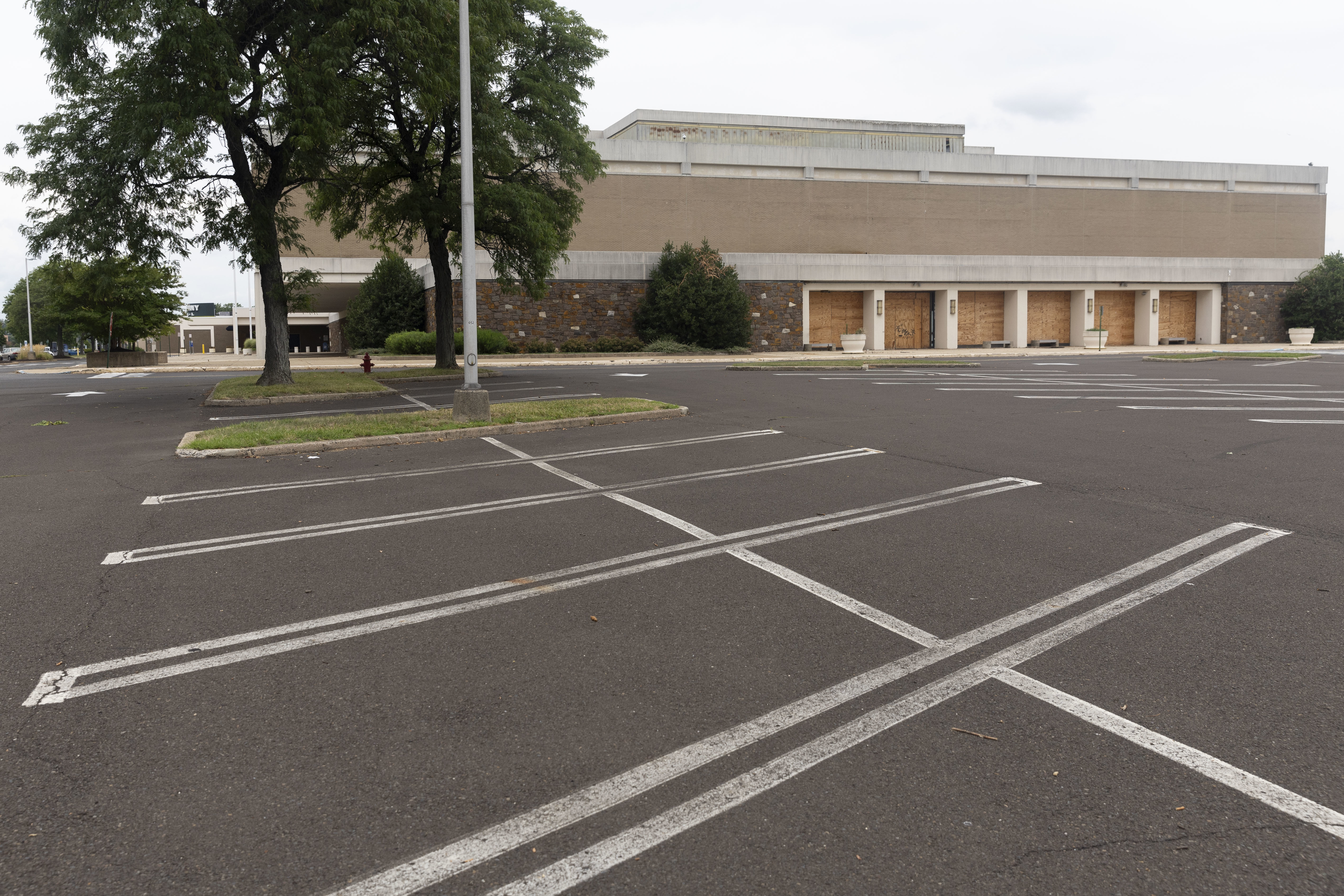
The exterior of the old Macy’s at the Neshaminy Mall, as seen in 2024.Monica Herndon / Staff Photographer
A few have been transformed, or are in the process. In Media, Delaware County, the 1-million-square-foot Granite Run Mall was demolished in 2016 and replaced by a mixed-use town center with apartment buildings, new retail, and medical offices.
At the Neshaminy Mall site, near U.S. Route 1 and the Pennsylvania Turnpike, DiGirolamo said he’s “hopeful they are going to rebuild it in a way that most malls are rebuilt,” in the town-center style with housing and outdoor walkways.
As for the indoor mall’s final days, the mayor said he expects them to be quiet, with some tenants vacating before their leases expire.
DiGirolamo, a lifelong resident of Bensalem, said he remembers when the mall opened in 1968. It was a “regional mall,” he said, that attracted out-of-town visitors.
A faux storefront covered the old Macy’s at the Neshaminy Mall in 2024.Monica Herndon / Staff Photographer
A Philadelphia Daily News article about Neshaminy Mall’s opening called the $25-million complex “America’s most modern shopping center,” with the largest branches of Sears Roebuck & Co. and Strawbridge & Clothier at the time.
A few years later, the Oxford Valley Mall opened in nearby Langhorne. Oxford Valley, which is being partially redeveloped with apartments, will be Bucks County’s only enclosed mall once Neshaminy closes.
The King of Prussia building that hosts Netflix House has sold for $60 million to a developer aiming to invest in experiential business properties.
The more-than-100,000-square-foot building at 180 N. Gulph Rd. has been up for sale since 2024 — a year before the streaming company’s first immersive entertainment venue opened inside it last fall.
The 2024 listing noted that Netflix had already signed a 10-year lease to begin Dec. 31 of that year, according to the Philadelphia Business Journal.
Executives of buyer EPR Properties indicated after the sale in June that the tenancy of Netflix House, which offers activities like mini golf and virtual reality gamesinspired by its shows, including Stranger Things and Squid Game, was part of the appeal.
“We are pleased to welcome Netflix as a new partner through our acquisition of Netflix House in King of Prussia, Pennsylvania,” EPR’s CEO Gregory Silvers said on a July earnings call.
Missouri-based EPR Properties has aimed to expand its portfolio of experiential business properties, according to its website, amid a broader national shift toward experience-based commerce.
EPR bought the property from an LLC associated with the former owner of Lord & Taylor, a department store that long occupied the two-story building, but closed during the COVID-19 pandemic.
This suburban content is produced with support from the Leslie Miller and Richard Worley Foundation and The Lenfest Institute for Journalism. Editorial content is created independently of the project donors. Gifts to support The Inquirer’s high-impact journalism can be made at inquirer.com/donate. A list of Lenfest Institute donors can be found at lenfestinstitute.org/supporters.
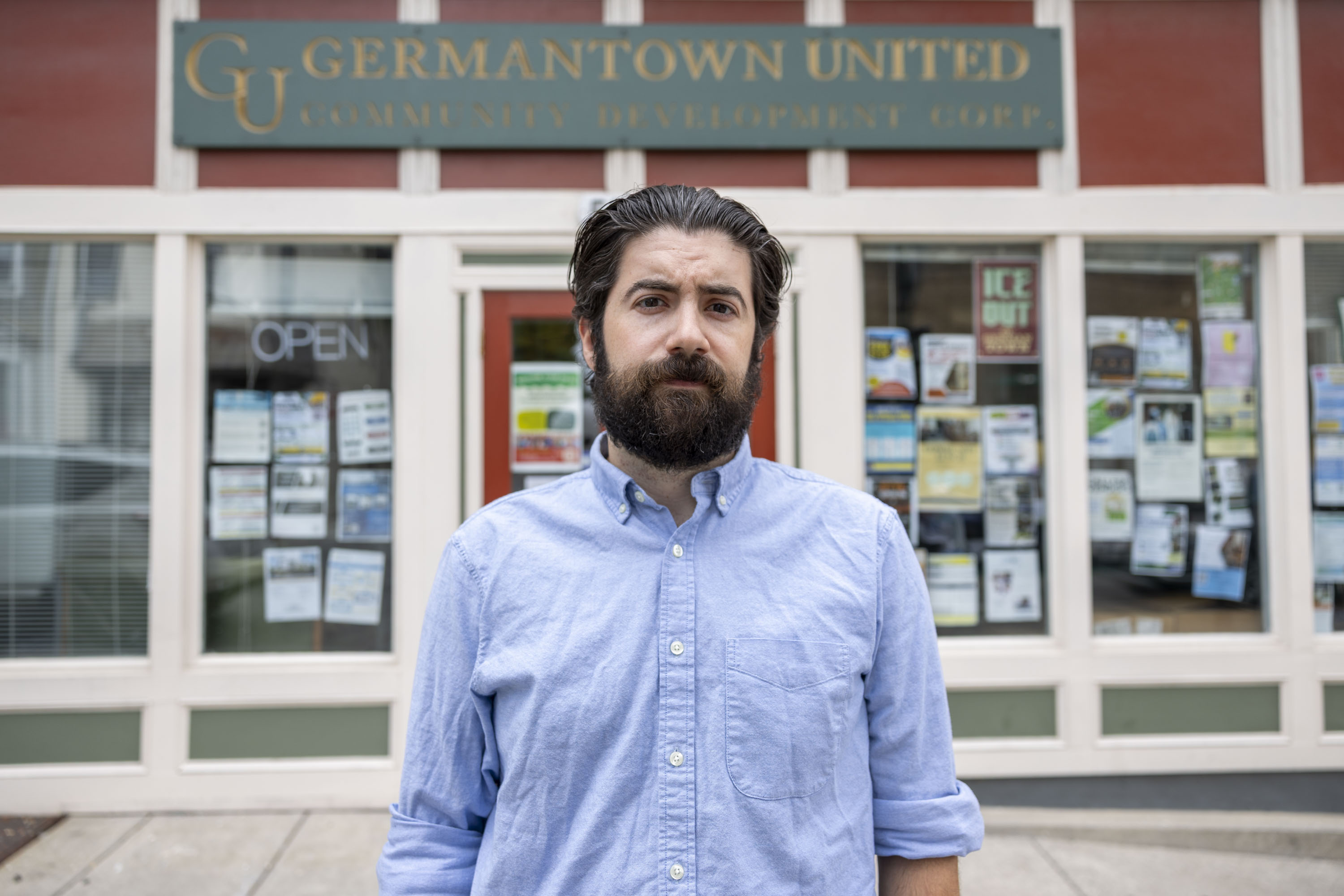
The story that’s told about Germantown’s downtown is often one of disinvestment, but a small contingent of community stakeholders and business owners are hoping to spin a new yarn.
But forces big and small are working to revitalize the community: Germantown United, the neighborhood’s community development corporation (CDC), recently completed a plan to make Germantown’s business district more walkable. Historic Germantown, the neighborhood’s historical society, in July unveiled its new visitors center that aims to connect Philadelphians and visitors to the area’s deep history. And buzzy storefronts including Uncle Bobbie’s Coffee & Books, Salam Cafe, Weavers Way Co-op, Cupbearer Coffee, and Attic Brewing bring much-needed services and third spaces to the neighborhood.
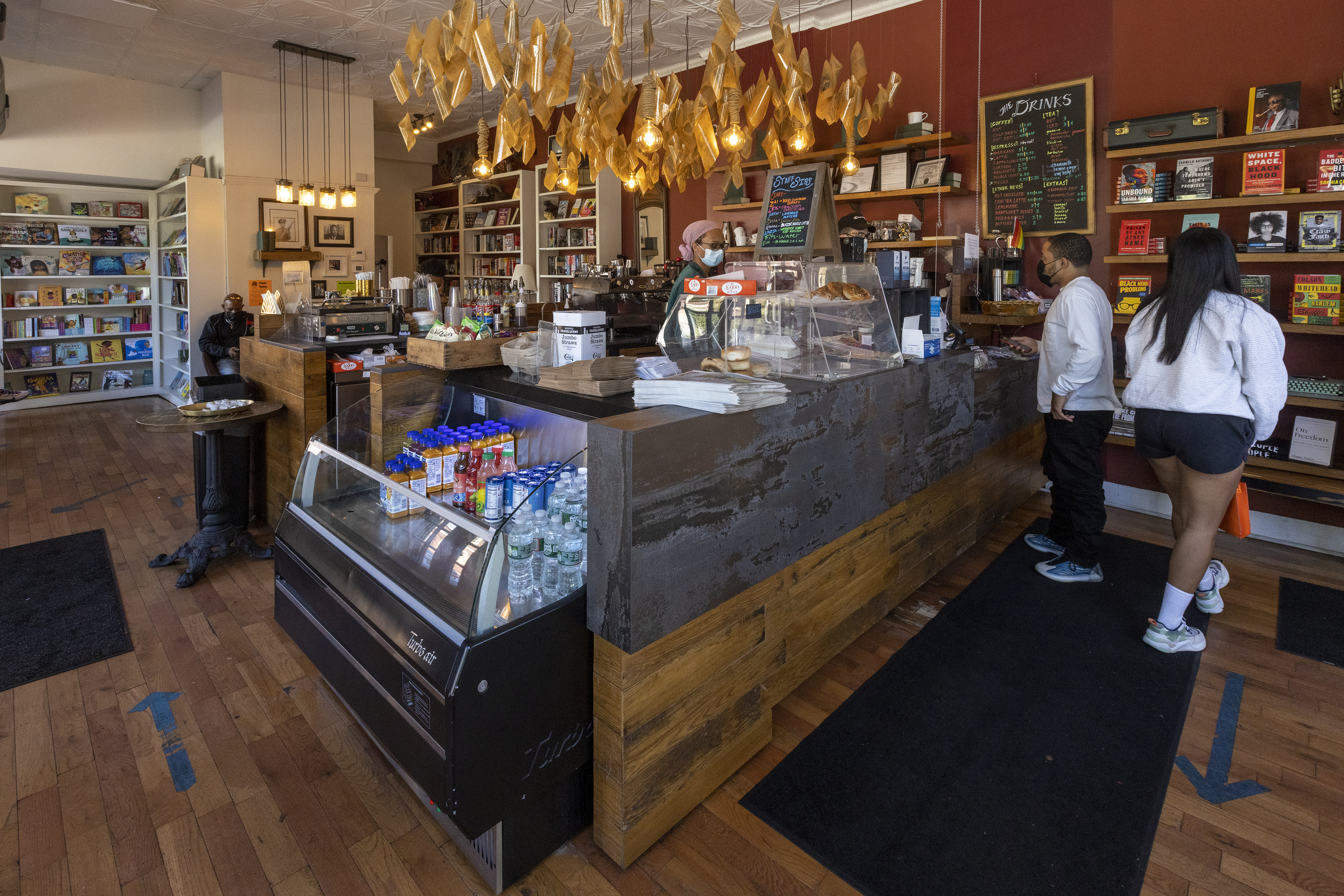
Interior of Uncle Bobbie’s Coffee & Books, 5445 Germantown Ave. Alejandro A. Alvarez / Staff Photographer
Leo Dillinger IV, the executive director of Germantown United, said new businesses have been reaching out to the CDC, the first step to lifting the business district up, “but with everything, it takes time.”
“We don’t want the corridor to change like a light switch and all of a sudden it’s actively populated with a bunch of businesses that aren’t offering affordable goods and services,” Dillinger said. “That leads into the fears of gentrification and displacement that are a major concern for the Germantown community.”
Connecting corridors in Germantown
While it has the CDC, Germantown lacks a business improvement district to fund and oversee improvements to the area. And with the 2019 disbanding of the Germantown Special Services District, after accusations of mismanagement and misappropriation of funds, the neighborhood lost a body tasked with keeping its main business corridors clean.
“We lack structure in order to have a commercial district that is thriving,” said Patrick Jones, a Germantown resident who has organized community members around efforts to redevelop its public spaces and city-owned large vacant properties. “A lot of us feel as though Germantown is a forgotten community in the 8th Council District.”
Jones said residents would like to see Germantown bring in a selection of sit-down restaurants and middle-class big box stores like Target or Giant. Dillinger said the CDC gets similar feedback.
“Right now if you want to sit down and have a nice meal, you have to go outside of Germantown to do that,” Jones said. The addition of Uncle Bobbie’s and its cafe in 2017 “started moving us in the right direction, but we want to see an actual restaurant in Germantown, and it’s just difficult to do that with the way things are right now.”
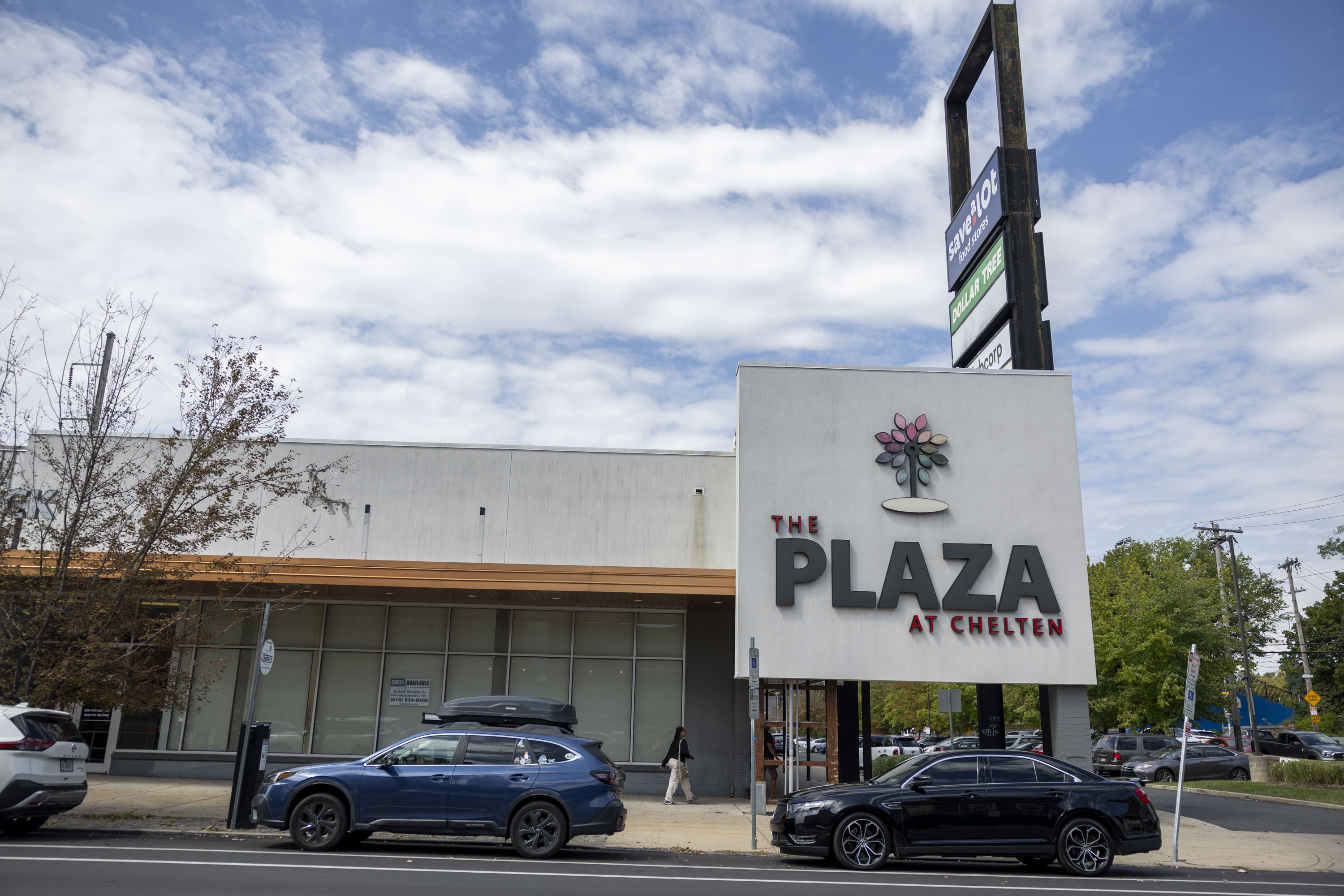
The outside of the Plaza at Chelten in Germantown.Tyger Williams / Staff Photographer
Having more organizational support beyond the CDC might allow that, he says.
“We’re lacking the resources to put attention towards advocating for ourselves,” said Laura Lacy, co-owner of Attic Brewing Co., near Wayne Junction. “You can immediately see the change when you’re driving [out of Germantown]. As you get into Mount Airy, you start to see hanging flower baskets and landscaping on corners and trash cans.”
The neighborhood’s existing business hubs also feel disconnected. That’s an issue that Germantown United is addressing with a five-year plan to better connect West Chelten Avenue, Maplewood Mall, and Market Square for pedestrians. They’re pushing for better overhead lighting, connecting business owners with the Department of Commerce’s business security camera program, and addressing cleanliness and improving greenery.
The plan also includes connecting with absentee landlords to discuss how their properties can better serve the community, Dillinger said. These landlords are at the heart of the problem, locals say.
“There’s just a lot of commercial property owners who don’t care,” Dillinger said. “There are some who do and are invested in their properties and making sure that their tenants succeed. There are also commercial properties that are sitting in a portfolio of developers’ and, as a result, they just start to deteriorate.”
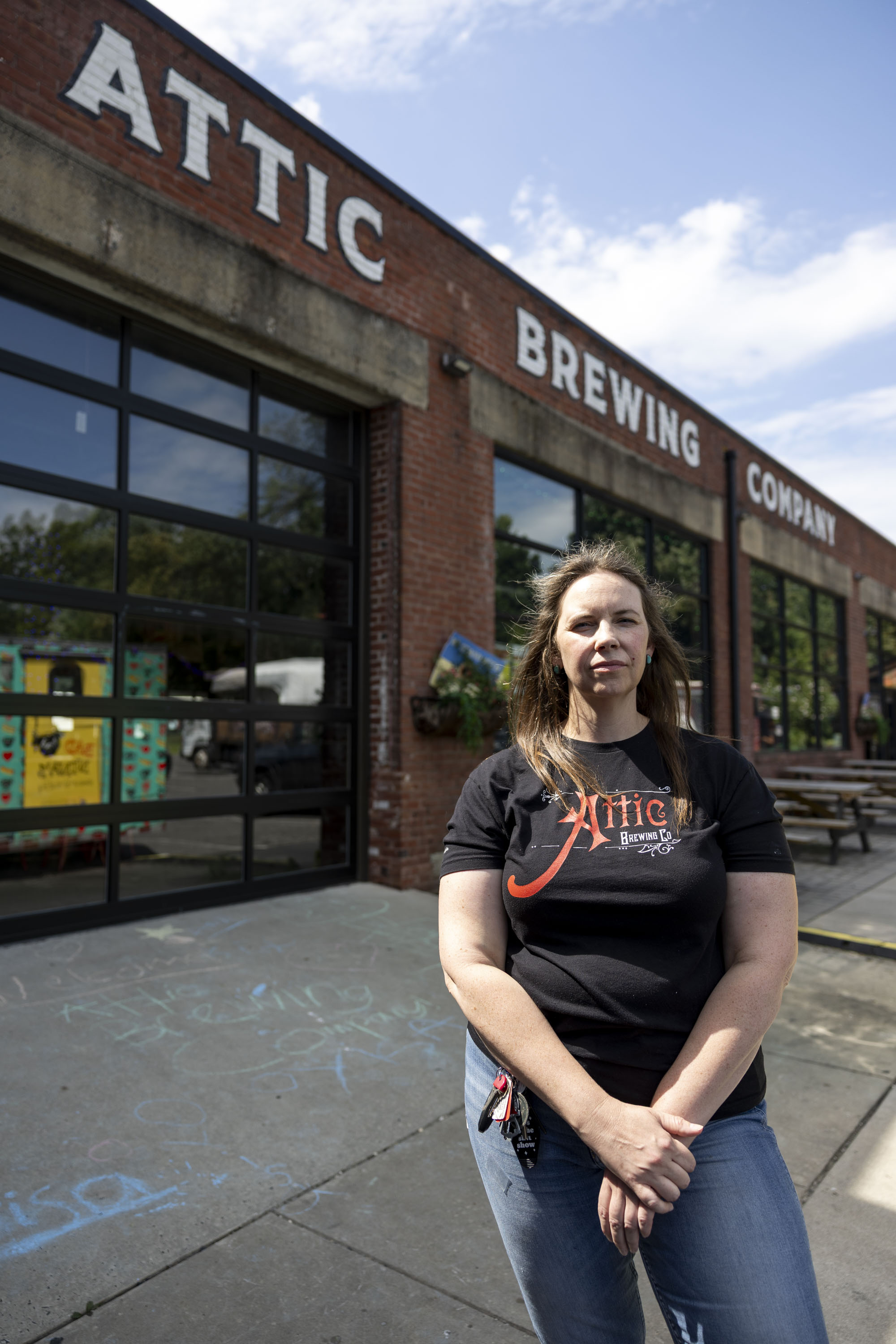
Laura Lacy, co-owner of Attic Brewing Co., outside the business in September.Tyger Williams / Staff Photographer
Street safety is also a major community concern after a spate of hit-and-run fatalities. This is a significant challenge for Attic Brewing, Lacy said.
Its location near Wayne Junction removes it from the commercial heart of the neighborhood, and her landlord’s promises to develop surrounding lots into complementary businesses never panned out. It all amounts to less visibility and awareness of pedestrians in the area.
“We’re talking about the safety of our team members. … We’re talking about the safety of our customers,” Lacy said.
Also of concern are the two vacant lots near Attic, which were part of a development plan years ago, Lacy said. “At what point does the city take it back? At what point does it become like you can’t just let this sit abandoned like this?”
Councilmember Cindy Bass, who represents the area, declined to comment for this story.
Signs of new life
Still, business activity is underway in Germantown.
Indego, Philadelphia’s bike share program, will enter Germantown this fall with 10 to 12 stations.
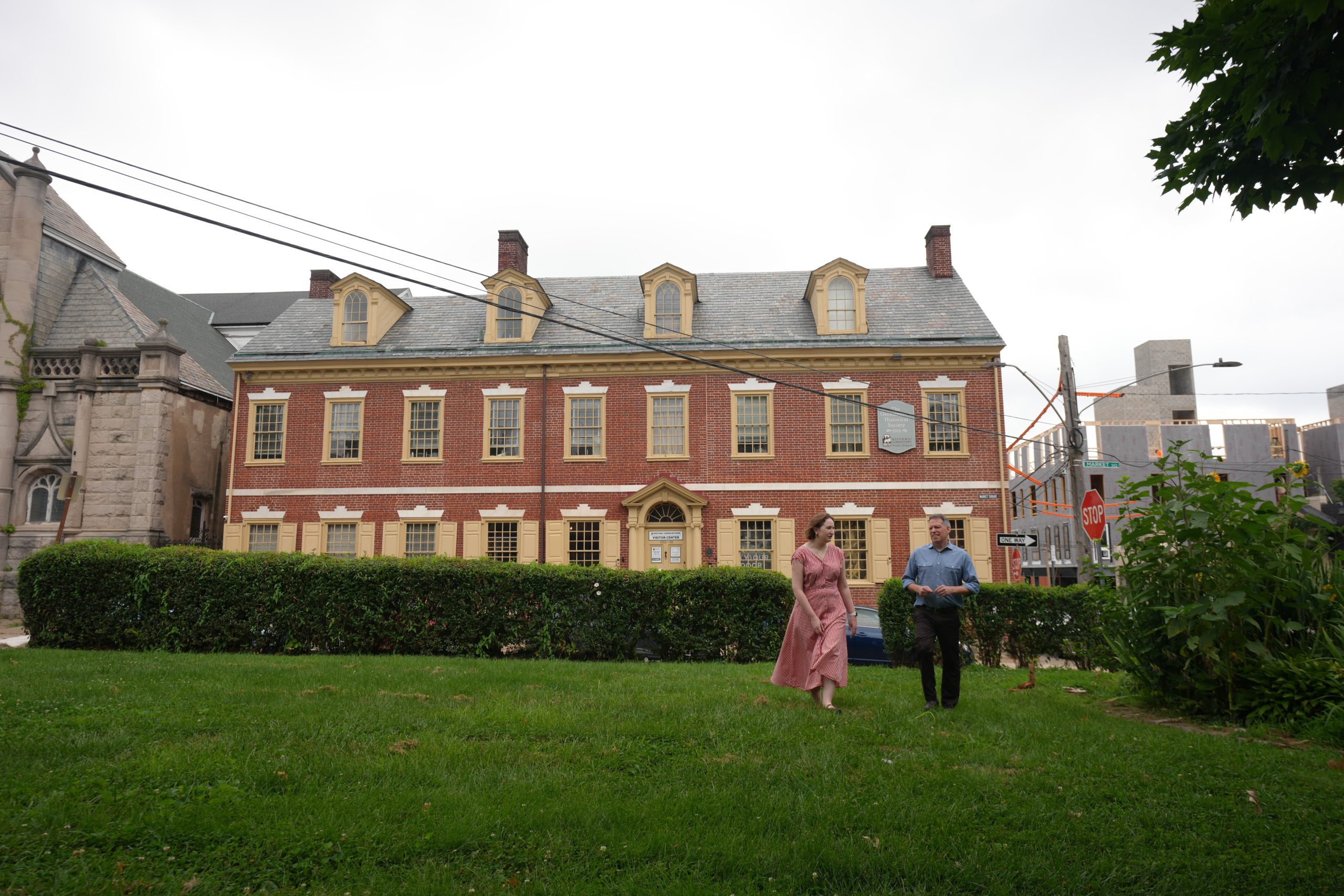
Kaila Temple, curator of collections at Historic Germantown, and Tuomi Forrest, executive director. The new Historic Germantown Visitor Center opened in July.Jessica Griffin / Staff Photographer
Historic Germantown’s Visitor Center opened in July. It’s a jumping-off point to access the neighborhood’s vast cache of historic cultural sites, which drive about 125,000 visits from the public and 25,000 from staff and volunteers annually who spend about $10 million in and around Germantown, according to Tuomi Forrest, Historic Germantown’s executive director.
“Our goal is that people get so interested and excited that they want to come back or expand their visits here,” Forrest said.
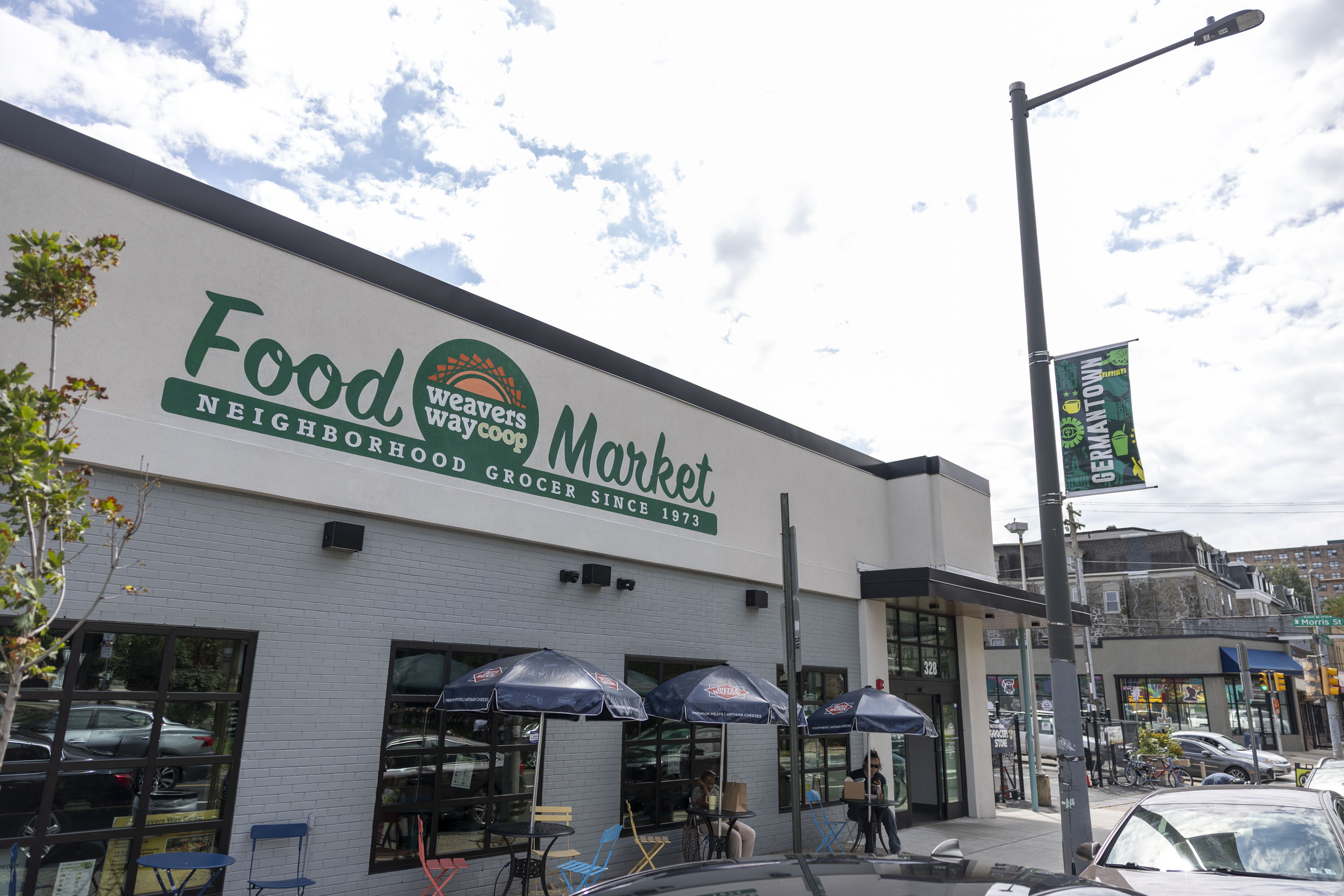
A few new businesses on West Chelten Avenue are invigorating the area. Weavers Way Co-op’s Germantown store, which opened in May 2024, has “exceeded projections since day one, and our membership in Germantown has continued to grow,” said general manager Jon Roesser. The co-op is open to the public, but its roughly 2,400 Germantown members get discounts and other benefits.
The outside of Weavers Way Co-op.Tyger Williams / Staff Photographer
“We bring a lot of foot traffic to the avenue; we have about 1,000 transactions a day,” Roesser said. “That’s 1,000 people a day coming to the corner of Chelten and Morris that previously was exactly zero because the building was abandoned.”
Complementary businesses have popped up nearby, including Cupbearer Coffee, Das Good Cafe, and Nutrition & Herbs Center.
Uncle Bobbie’s Cafe & Books is expanding its neighborhood footprint this fall and moving up Germantown Avenue from its current location at Church Lane into a 3,000-square-foot spot at the intersection of Washington Lane.
“We are excited to be in a position to grow, bring people together, and read great books,” Justin Moore, the bookstore’s general manager, told The Inquirer in April. “Most importantly, we are excited to further and deepen our ties in Germantown as a community hub.”
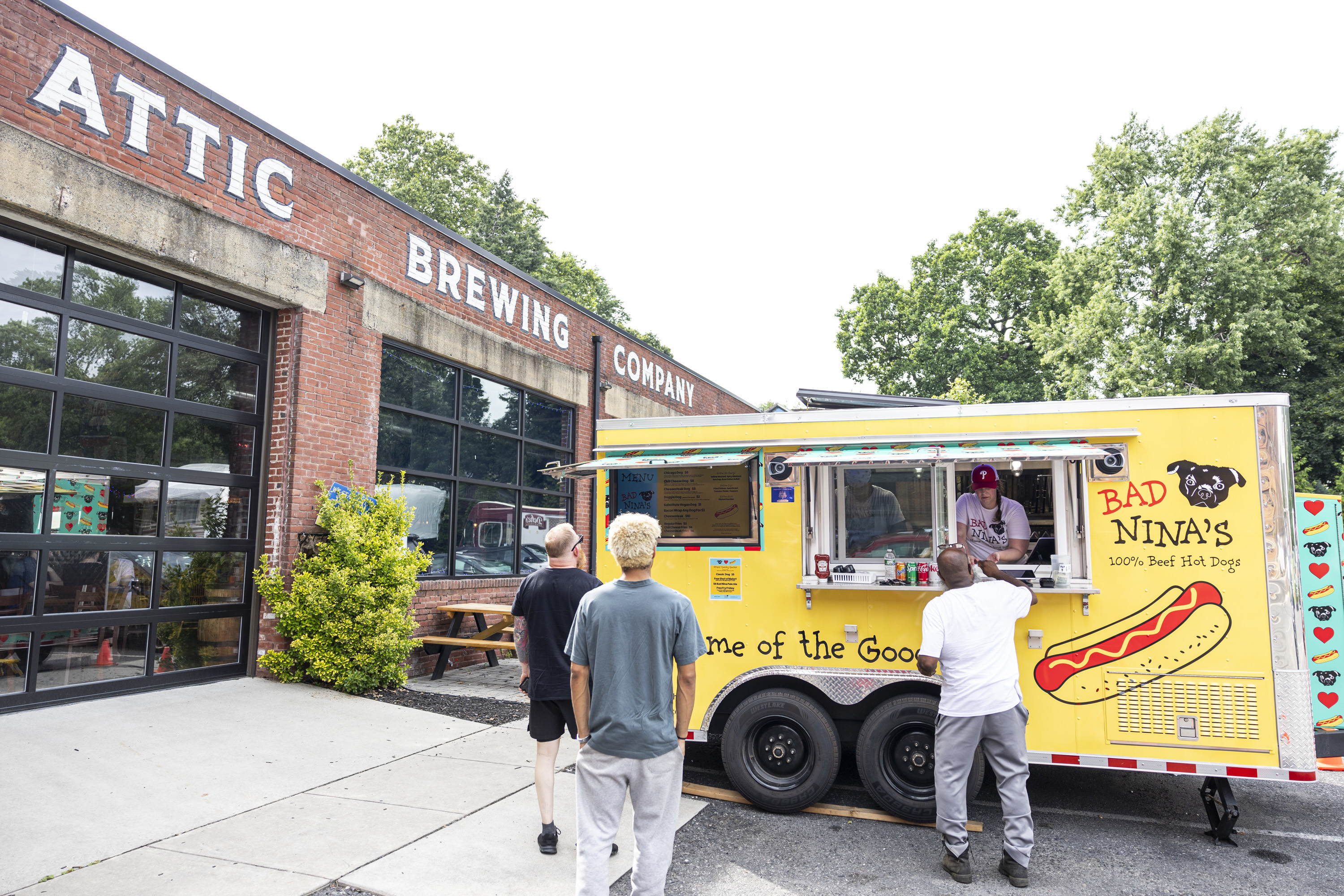
Customers line up to order hot dogs at the grand opening of Bad Nina’s outside Attic Brewing. Lacy said the hot dog stand opened because other companies did not want to bring their food trucks to the brewery.Tyger Williams / Staff Photographer
“One of the best beers in the world is brewed here in Germantown,” Lacy said. At the same time, from a financial standpoint “our business is in the worst spot it’s ever been in in six-and-a-half years.”
Attic needs to “exponentially increase the number of people” coming into the tap room to be viable, Lacy said. Getting other restaurants into the area could help. Lacy said Atticstarted Bad Nina’s gourmet hot dog cart becausefood trucks wouldn’t come to the neighborhood and the area lacks sit-down restaurant options for their patrons.
“We know that our product, our service, our space is one of the best in the city,” she said, so as the business struggles, “we start to wonder if maybe we picked the wrong location.”
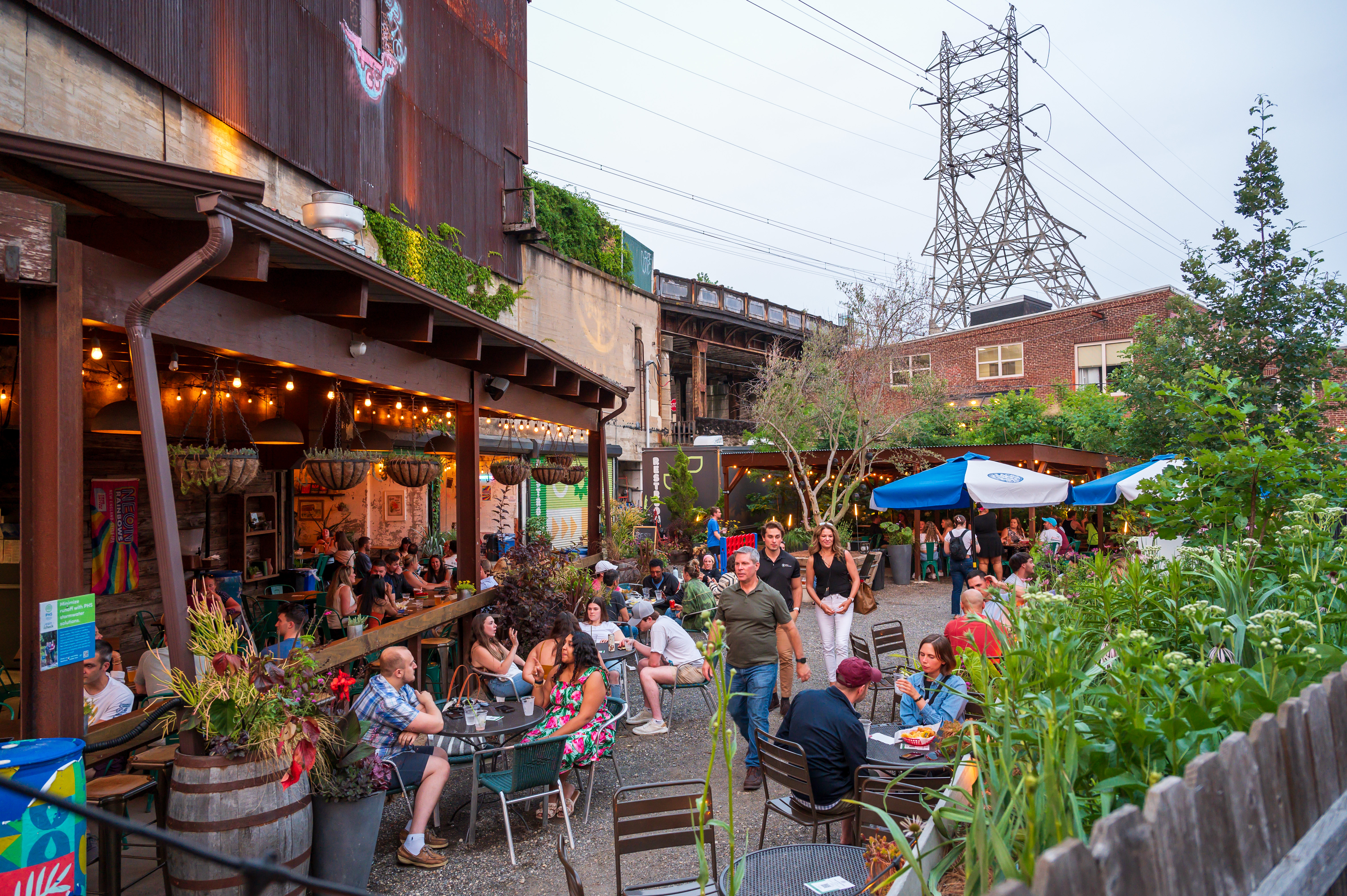
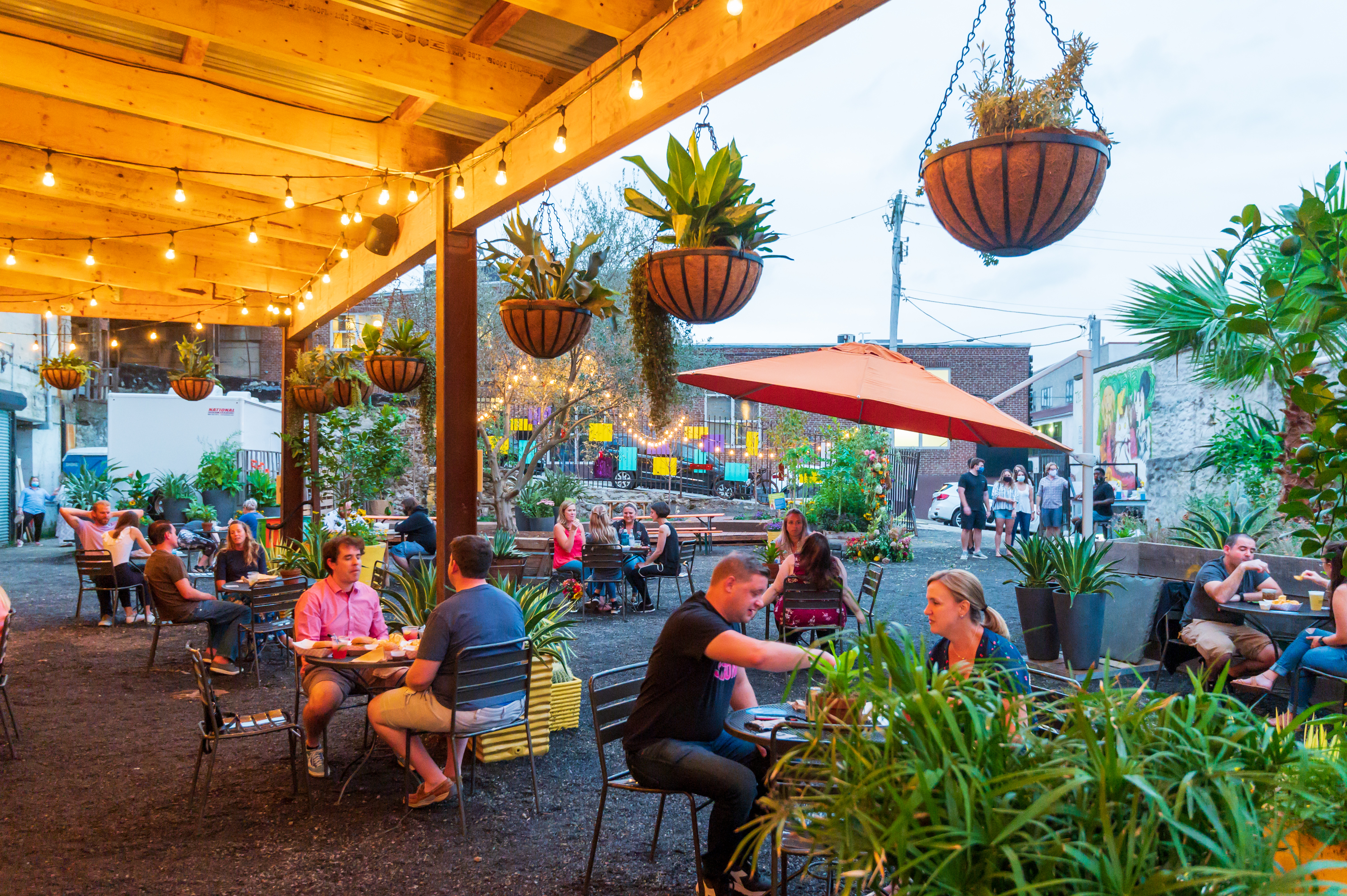
The Pennsylvania Horticultural Society (PHS) announced Wednesday that its popular pop-up beer garden in Manayunk will close permanently Oct. 5.
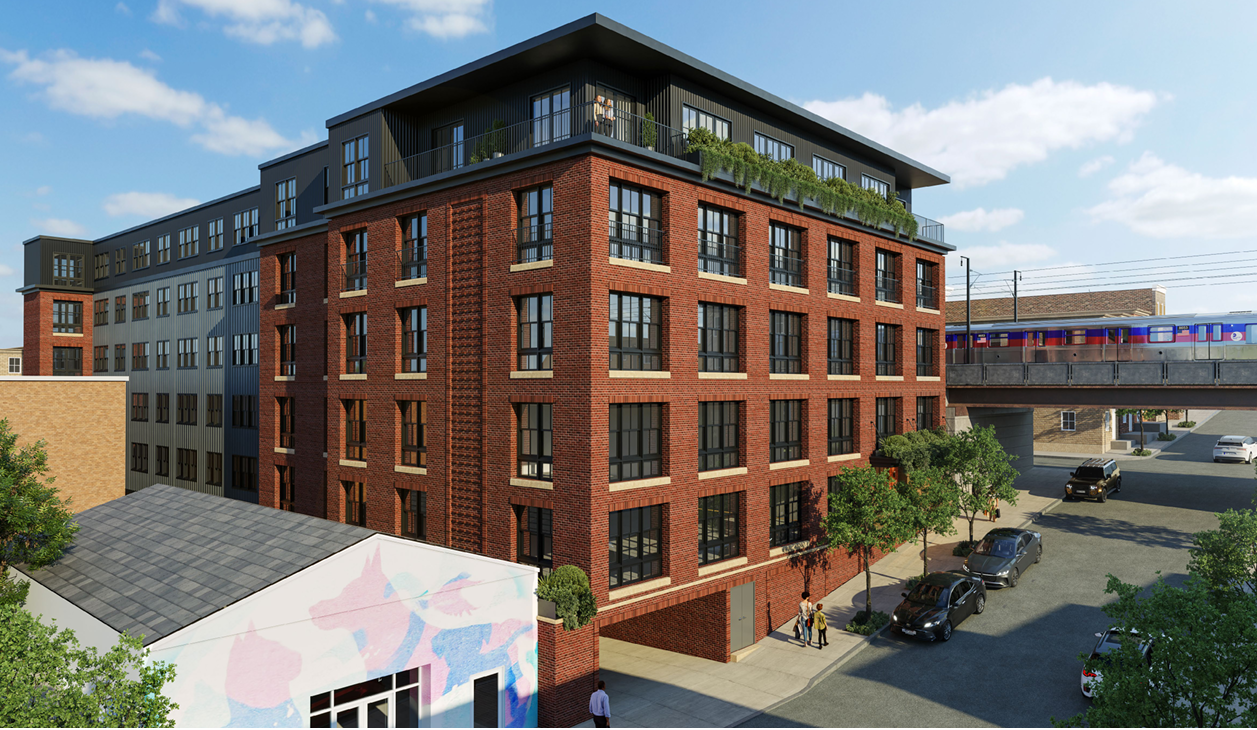
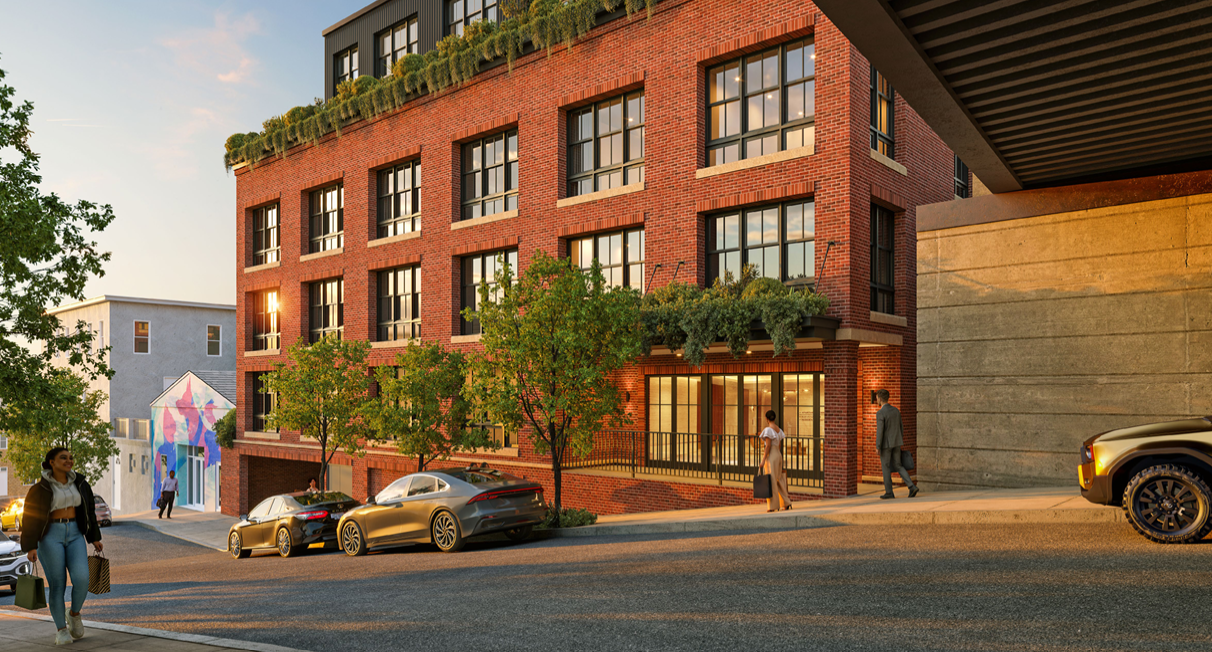
The property at 106 Jamestown Ave. is slated to become a six-story, 73-unit apartment building from local developer Dan Greenberg, although it faces community and political pushback.
Its hearing before the city’s Zoning Board of Adjustment was postponed last month.
“The day will serve as a celebration of PHS’s time in Manayunk and the many visitors, plant lovers, and community members who have made the garden a beloved gathering place over the years,” a PHS news release issued Wednesday said.
“PHS invites the community to come together this fall to enjoy the garden, share memories, and celebrate the lasting impact of this special green space in Manayunk,” the release said.
Since Greenberg’s plans were announced, community groups and neighbors have been pushing for the preservation of the public gathering space just off Main Street.
But PHS has emphasized that its pop-up beer gardens are not intended to be permanent.
The Manayunk location opened in 2020, while the site at 1438 South St. has been in operation since 2014.
As development plans for 106 Jamestown have advanced, PHS has been searching for another location in the city to open a new beer garden.
“Our team is actively assessing other potential sites and neighborhoods for future PHS Pop Up Gardens, but we don’t have a confirmed site to announce,” said Sin Gogolak, vice president of brand and communications for PHS.
The new location will not necessarily be in Manayunk or Northwest Philadelphia. But Gogolak confirmed they are looking in the city limits.
“PHS is grateful for the opportunity to have called Manayunk home for an extended period and is proud of what the garden has meant to the neighborhood,” PHS said in the news release.
A new zoning board hearing has not been scheduled for the apartment building at 106 Jamestown Ave.
The developer needs permission from the board to build apartments on land zoned for industrial and commercial uses and to build above the height limits set by the Main Street Manayunk zoning overlay.
Feedback from City Council and neighborhood groups will be considered by the zoning board.
“Fortunately for [Greenberg], he’s not finally purchased it yet because zoning is an essential part of the sale,” City Councilmember Curtis Jones Jr., who represents the area, said in an interview last month. The delay at the board “gives them the opportunity to talk to the community, but as it stands, I cannot support it.”
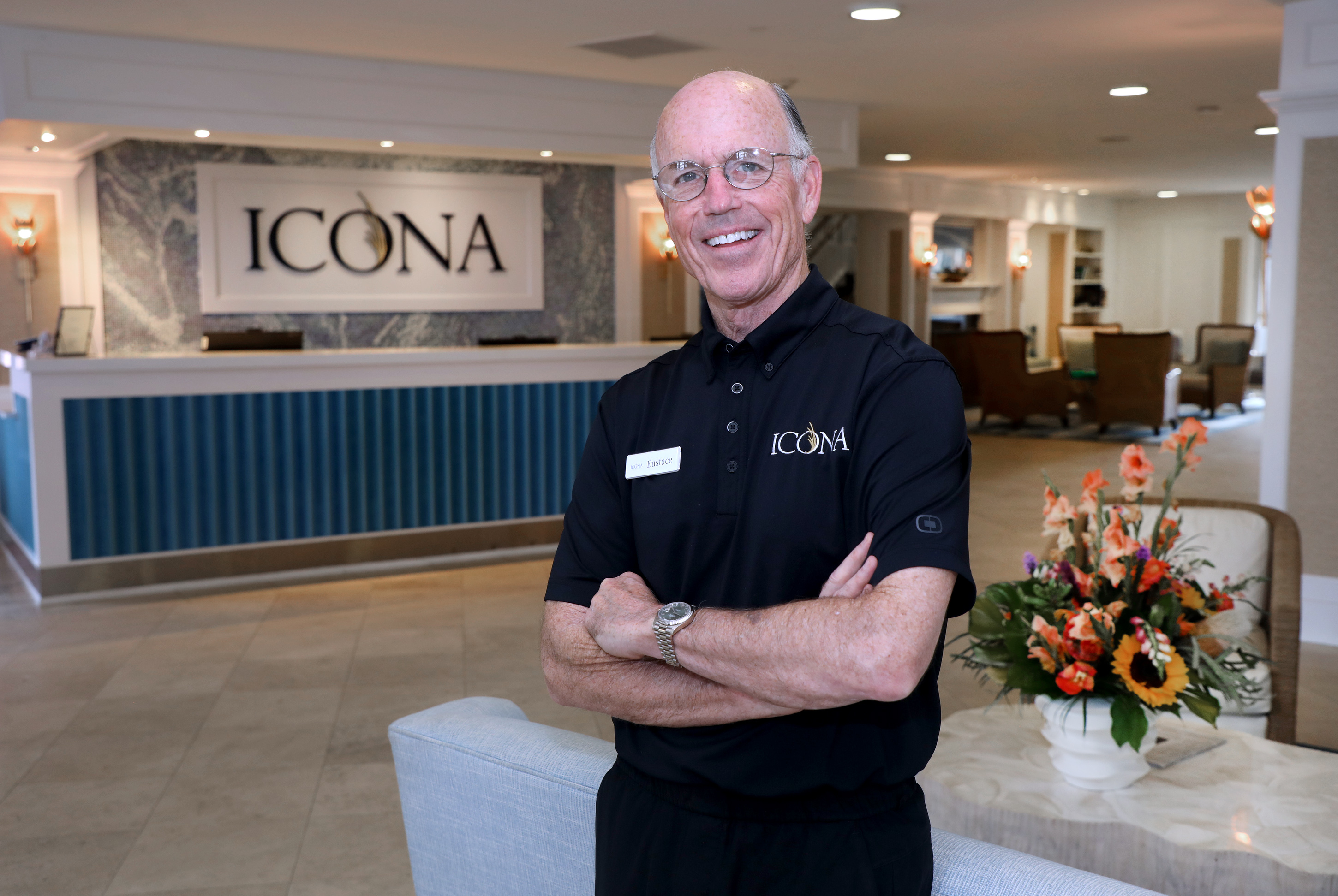
Icona Resorts founder Eustace Mita says he didn’t set out to change the Jersey Shore.
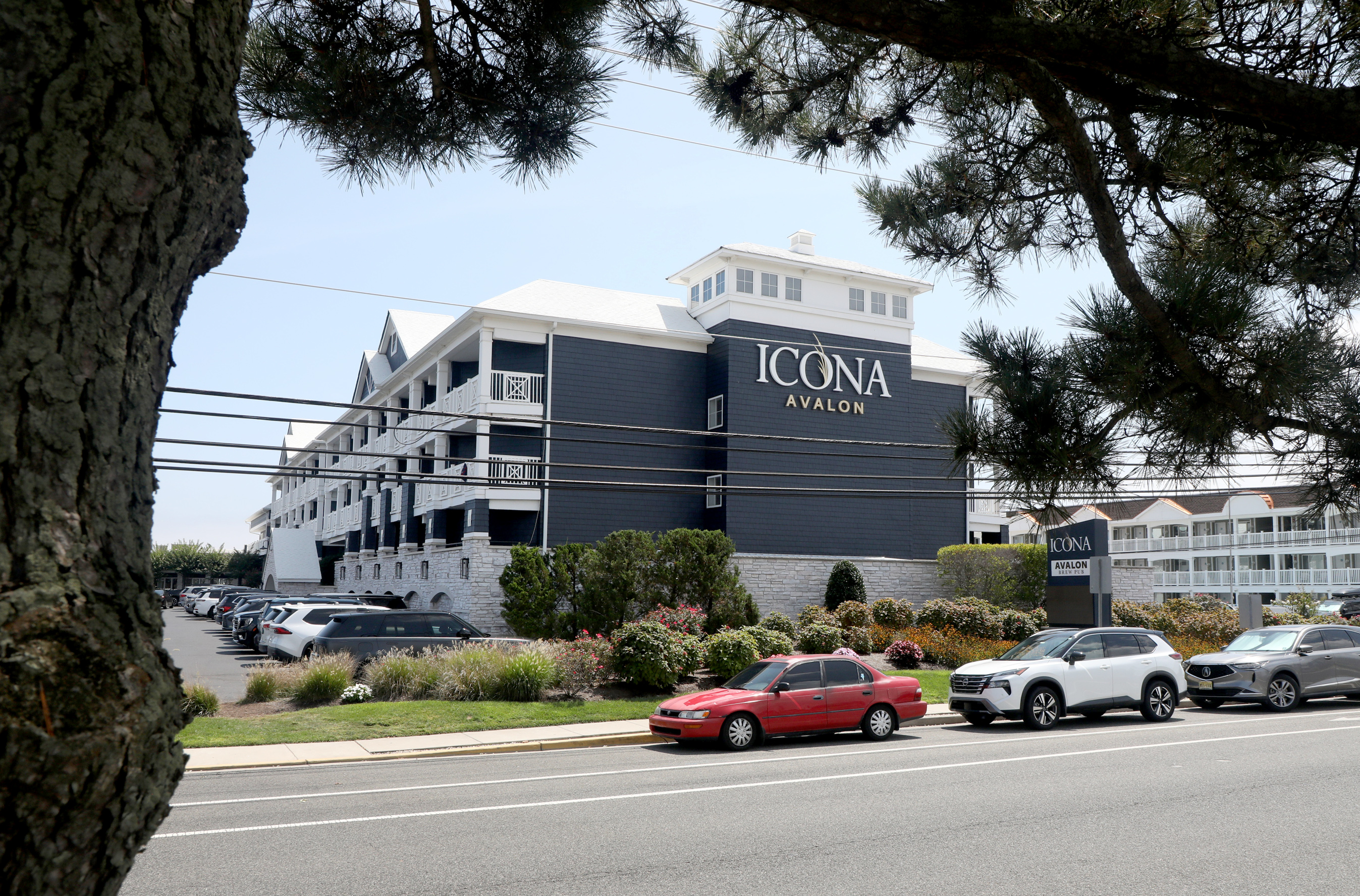
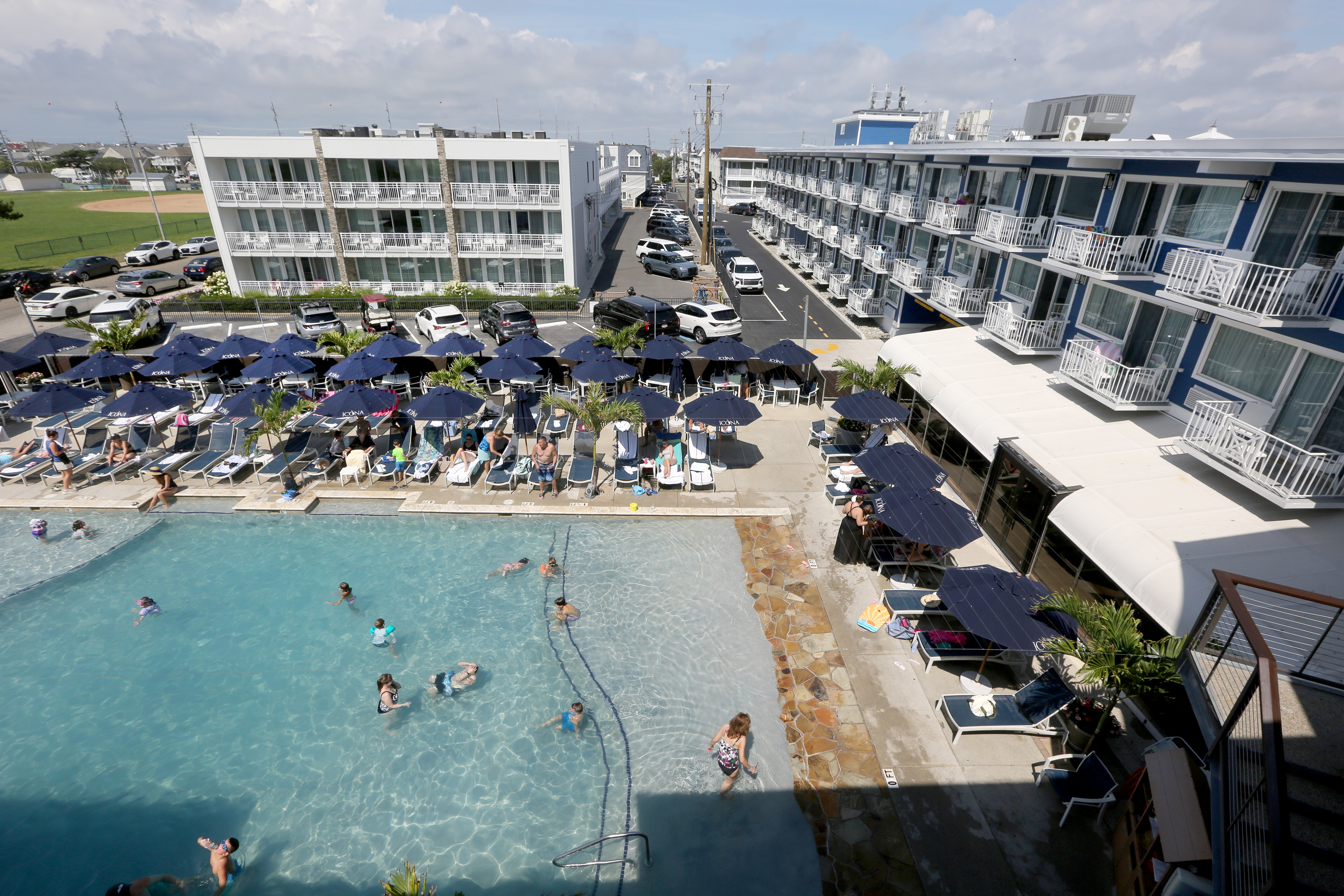
Sitting in a corner room at the Icona Avalon, the largest of Mita’s seven luxury hotels, the 72-year-old said it was the Shore, his lifelong “happy place,” that transformed him.
As Mita looked out onto the dunes, he recalled his baptism at St. Paul Catholic Church in Stone Harbor and his summer job as a teenage busboy and server at the Princeton Bar & Grill in Avalon.
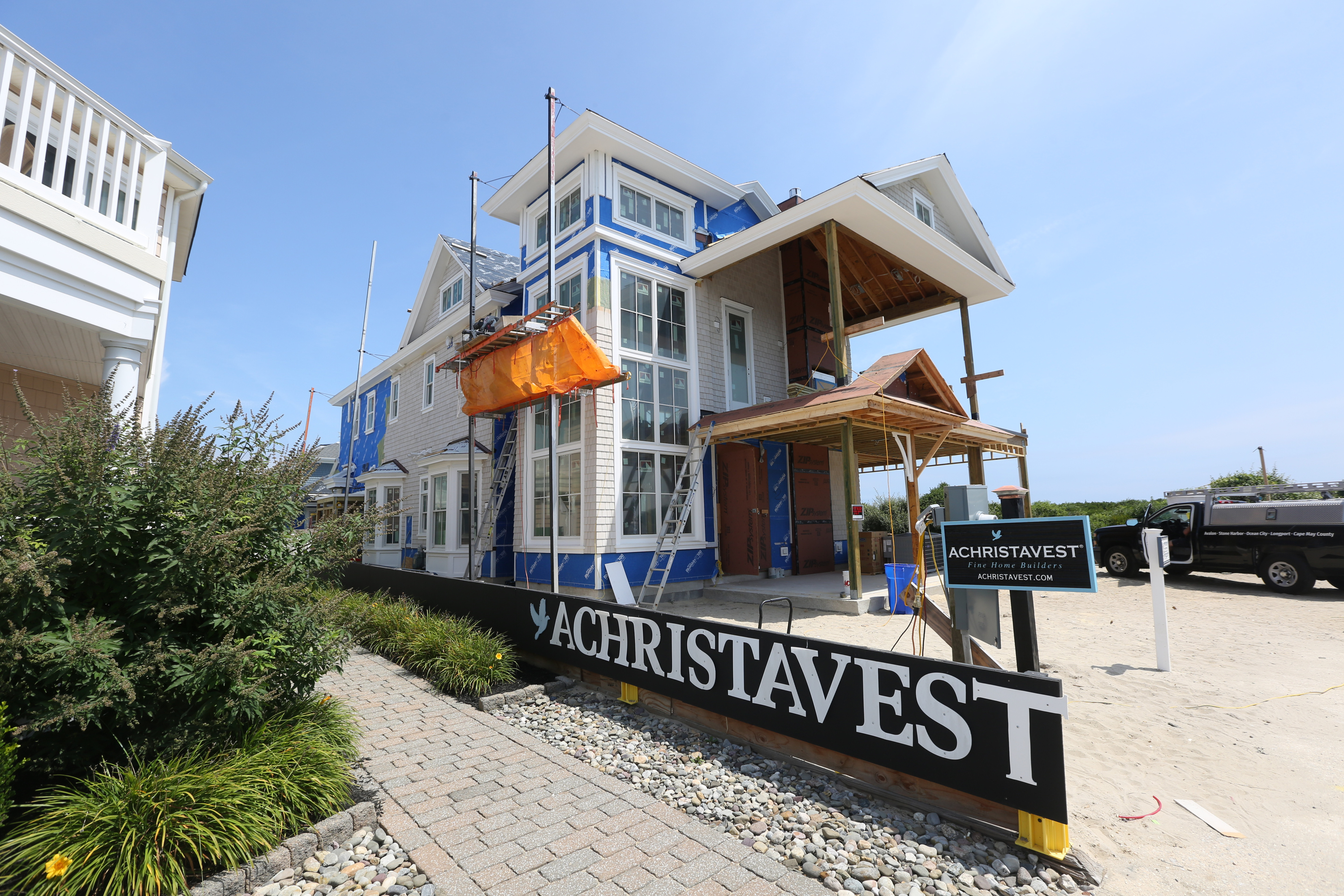
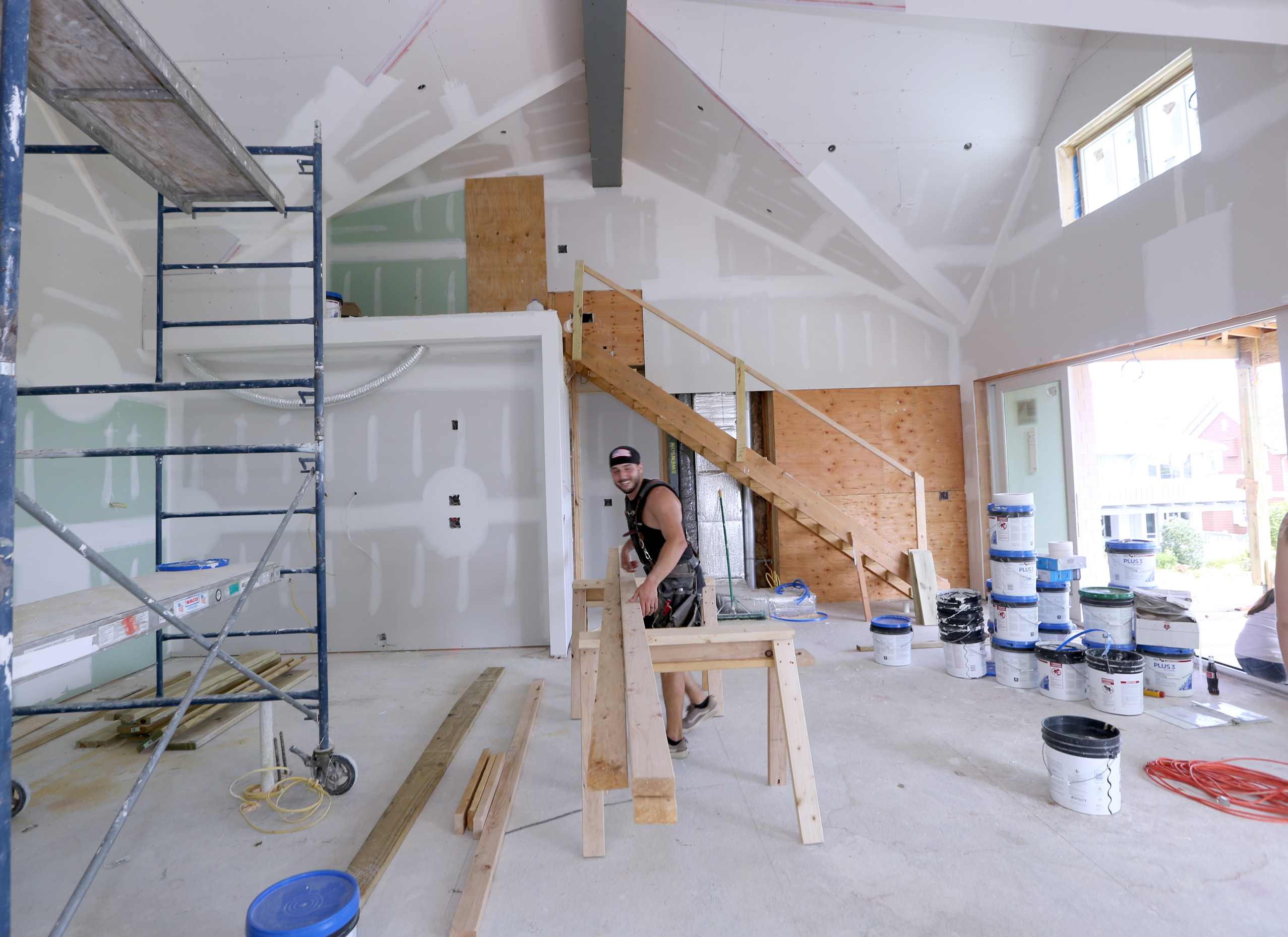
Decades later, Mita leads both Icona Resorts and Achristavest homebuilders, which constructs multimillion-dollar waterfront homes — including a controversial 18,000-square-foot mansion that would be the largest in Avalon. Built on spec, it will likely sell for several tens of millions.
His for-profit companies are all about luxury. At the same time, they are imbued with Mita’s faith: The names, Icona and Achristavest, were inspired by spiritual experiences and words, and he displays 18-inch statues of the Blessed Mother in the hotel lobbies.
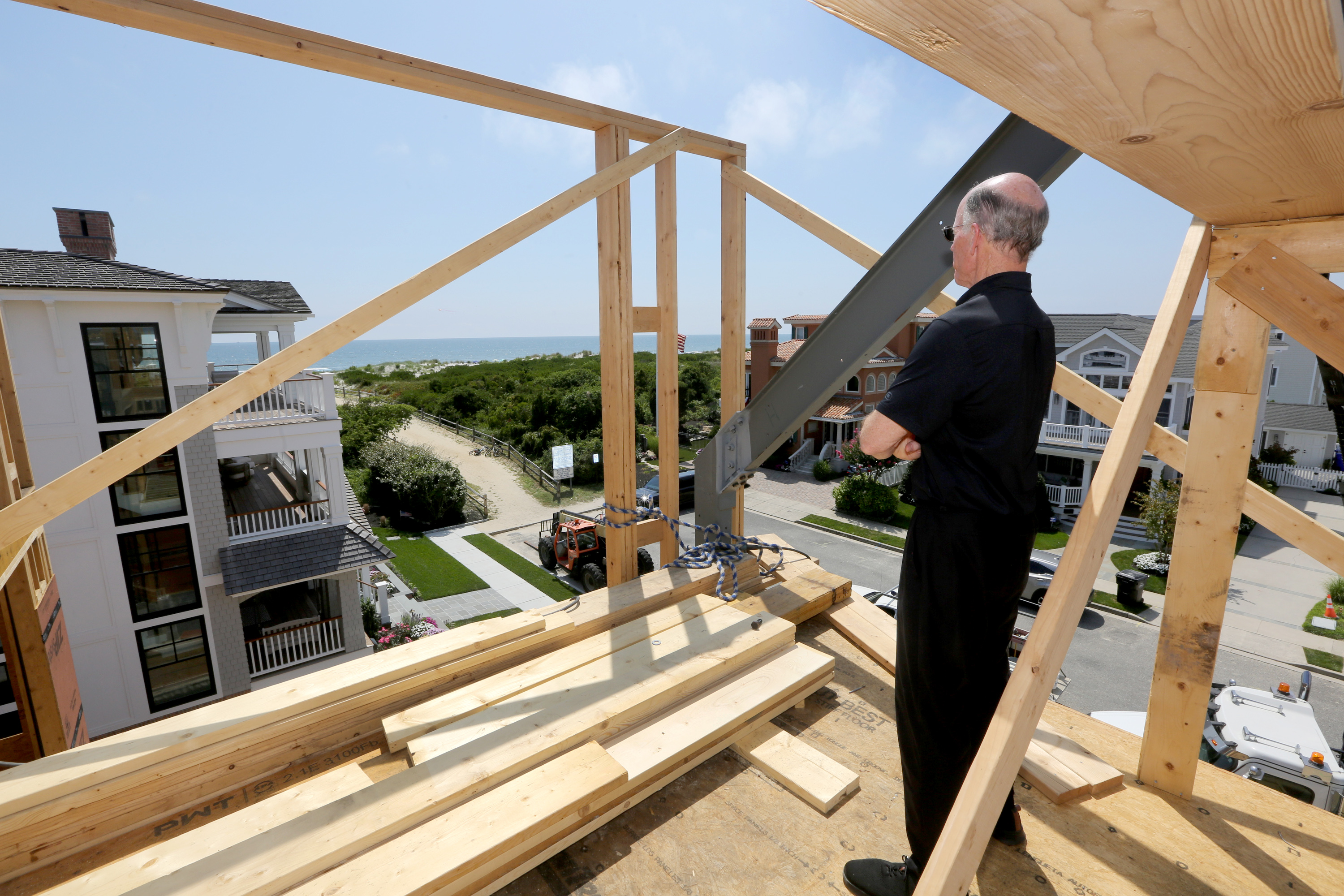
On a recent August day,he greeted employees by name and chatted with guests as he walked through Icona Avalon and neighboring Icona Windrift. Later, he visited under-construction homes, rattling off details about each project and staring in awe at the ocean views, as if seeing them for the first time.
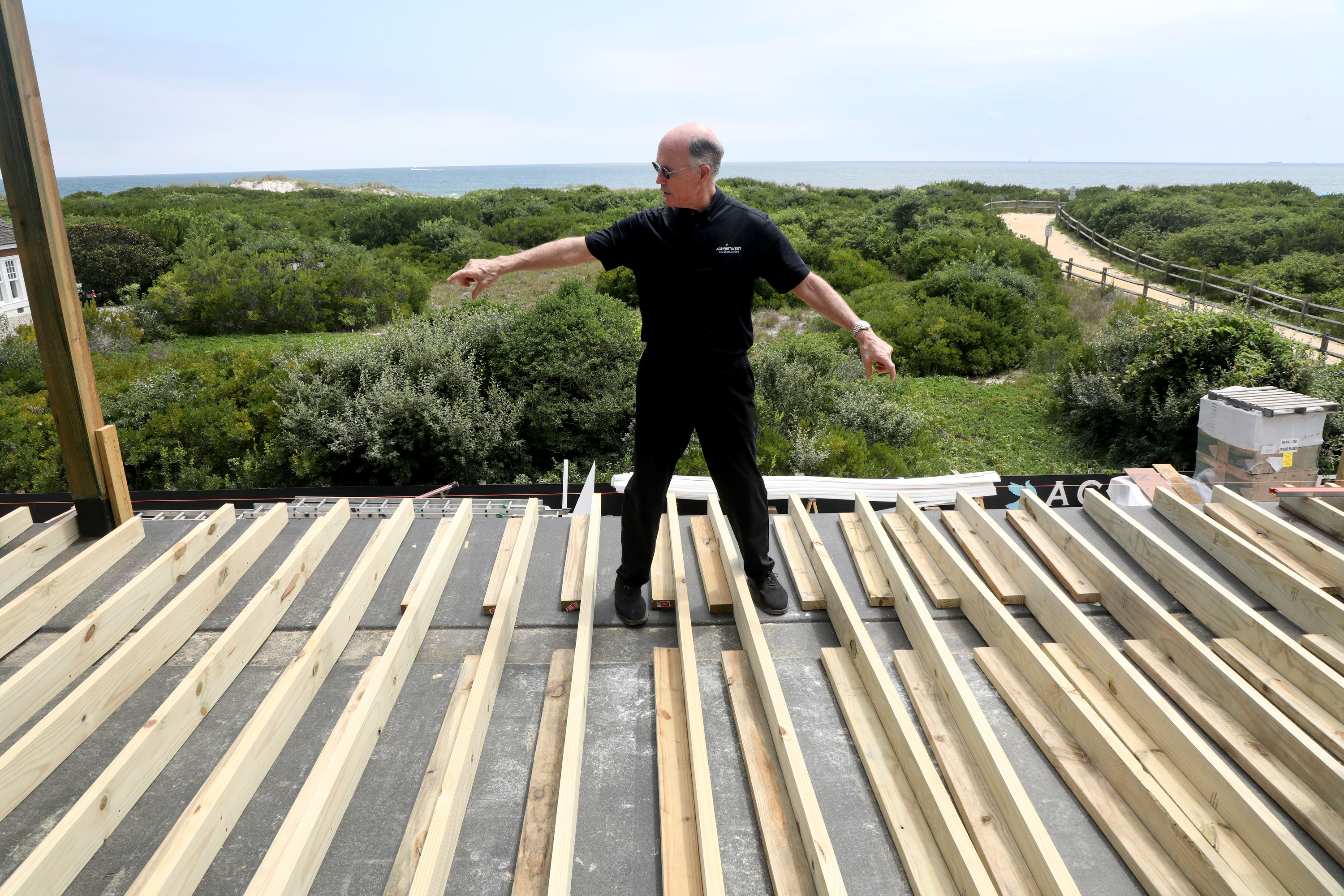
Eustace Mita takes in the view from an under-construction Achristavest home on 77th Street in Avalon.Vernon Ogrodnek / For The Inquirer
“Do what you love and the money will come,” Mita said, referencing a lesson he learned from his grandfather, Eustace Wolfington, who owned Avalon’s first beachfront hotel, the Puritan, later renamed the Whitebrier. “That has been so true in my life.”
Mita declined to share how much his companies, which are privately held,are worth, or how much he’s invested in the Shore, saying only that it’s “hundreds and hundreds of millions of dollars” — and counting.
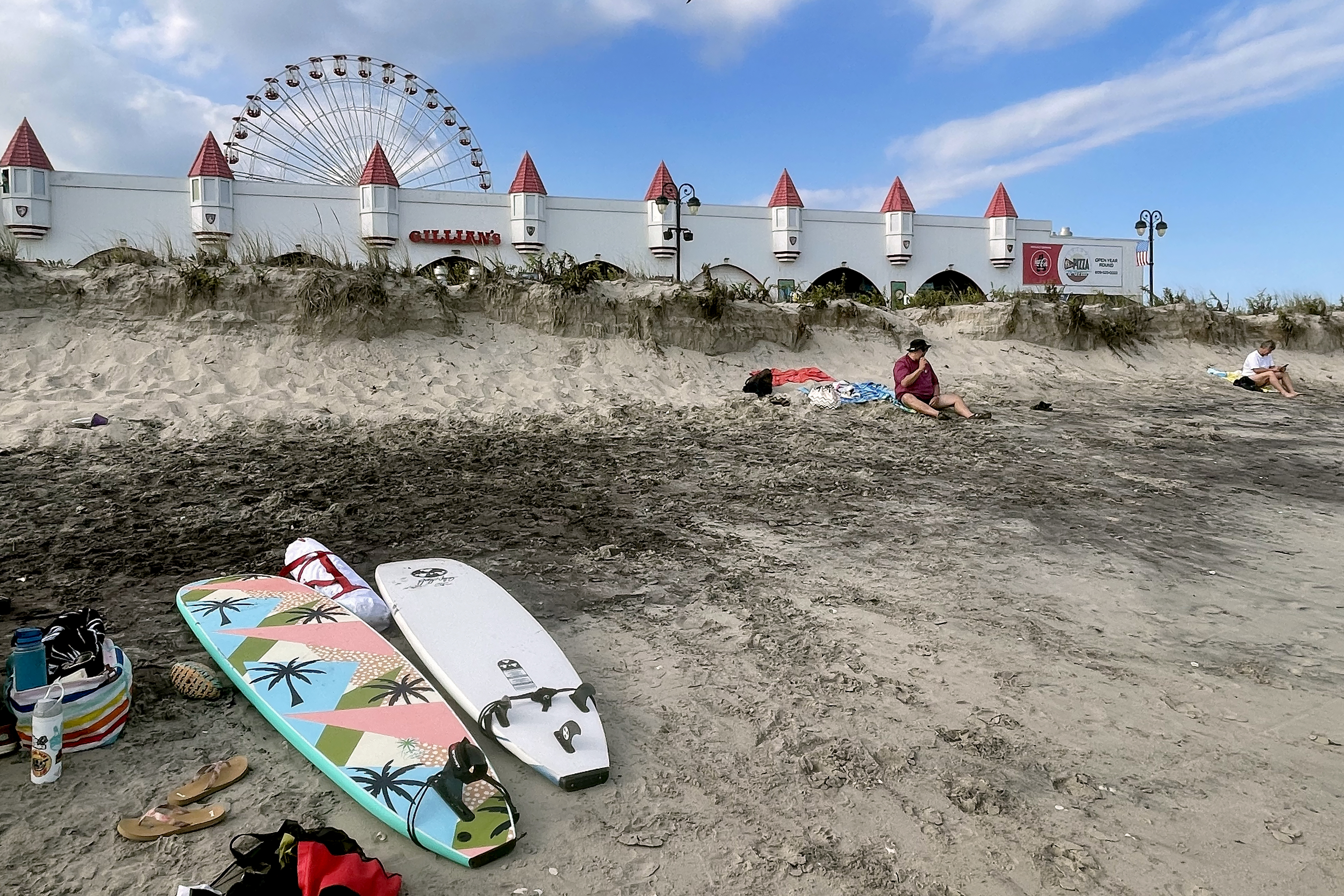
The now-closed Gillian’s Wonderland Pier rose above the dunes at Sixth Street and the Boardwalk in Ocean City during its final weekend in September 2024.Tom Gralish / Staff Photographer
For five years since he boughtthe now-shuttered Gillian’s Wonderland Pier, Mita says he has faced roadblocks and pushback, most recently from community groups who sued Ocean City and its council asking to void the site’s “in need of rehabilitation” designation. The designation allowed council to start talks with Mita about his plans to redevelop the former amusement park.
In a statement announcing the lawsuit, Jack Gutenkunst of Plaza Place Civic Association, one of the neighborhood-group plaintiffs, called the designation “deeply flawed” and said it “seeks to improperly strip away important planning protections that residents have long relied upon.”
“We have [millions] worth of real estate right here that would be degraded by this hotel, and our way of life would be degraded,” said Marie Crawford, who lives behind the pier.
Mita said the project, which has been downsized from the original proposal, would be an asset to Ocean City. The town calls itself “America’s Greatest Family Resort,” he added, but has not opened a new hotel in more than 50 years. He noted that several business owners on the boardwalk and elsewhere have spoken in favor of the project.
“We’re on the pathway now to being able to build Icona Ocean City, but we’ll see,” Mita said. “I don’t take anything for granted.”
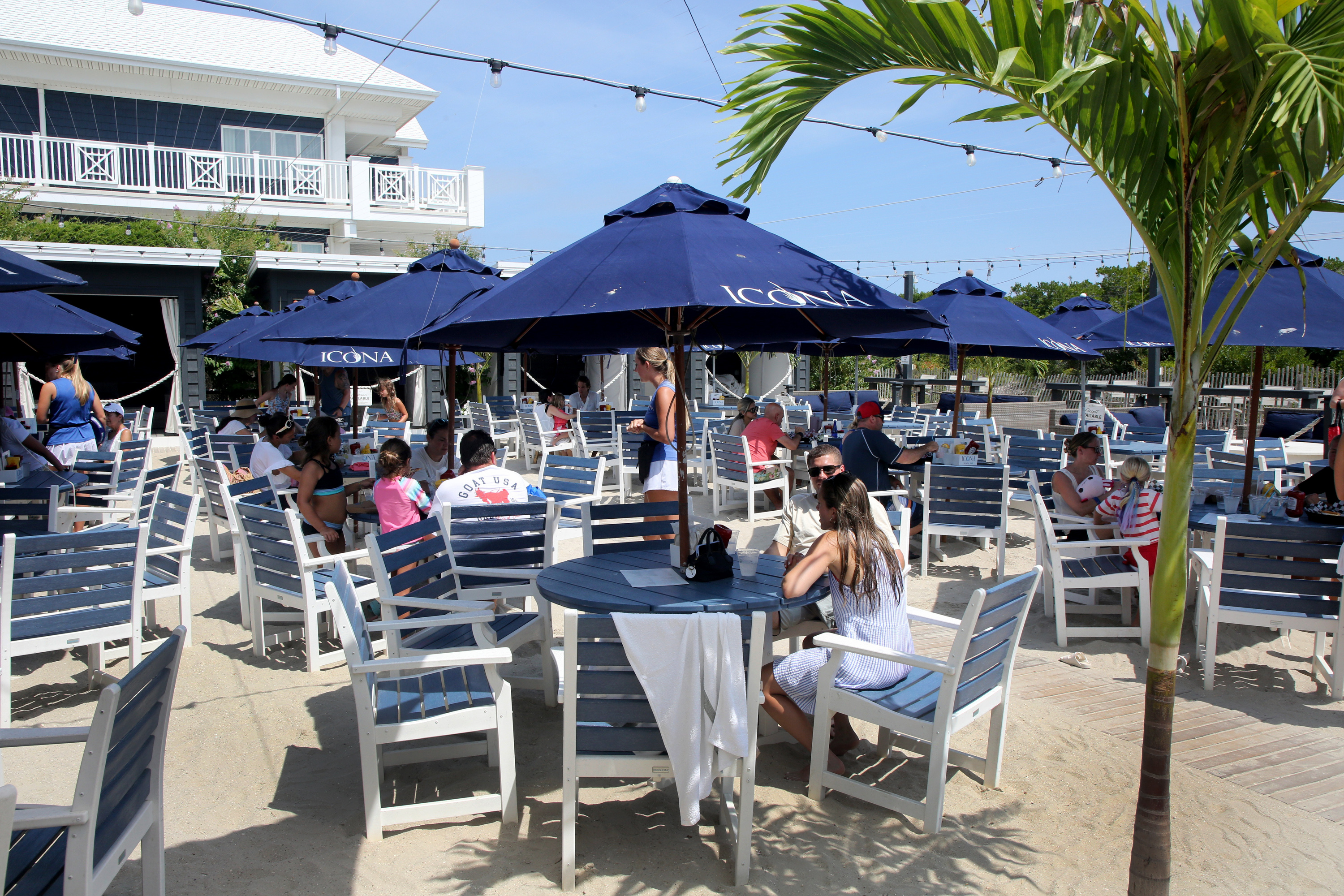
Guests eat lunch at Icona Avalon’s Beach Bar on a weekday in August.Vernon Ogrodnek / For The Inquirer
He has his sights on two other potential hotel properties, one in Cape May County, though he wasn’t ready to share details.
Despite many offers, Mita has no interest in selling Icona Resorts. He has told his five grown children that they could do so someday — as long as they don’t sell the prime beachfront real estate where his hotels sit.
For now, his answer to the near-constant acquisition proposals is polite but firm: “Thank you, we’re not interested.”
But, he added with a laugh, “we’ll sell you a house.”
An Achristavest home is under construction on 116th Street in Stone Harbor.Vernon Ogrodnek / For The Inquirer
Mixing faith and luxury down the Shore
In a conference room off the Icona Avalon ballroom, dozens of hotel employees — many of them international workers on J-1 visas — sit facing a projection screen and white board where the company’s guiding principles are about to be reinforced.
Wearing a black Icona polo, black pants, and an unwavering smile, Mita slips into the morning meeting with little fanfare.
A manager kicks off a regular exercise: Stand, introduce yourself, and greet coworkers on either side of you by name. Seated in the back, Mita is among the last to participate, standing ramrod straight and speaking with a joyful lilt.
Randel Davis, general manager of Icona Avalon, leads an employee meeting.Vernon Ogrodnek / For The Inquirer
Whenever possible, managers remind the employees, they should call guests by their names, too.
“The sweetest sound to a person’s ears is the sound of their own name,” Mita said, referencing How to Win Friends and Influence People by Dale Carnegie, one of many books that influenced Mita’s leadership style. The most instrumental, he said, was Greatest Salesman in the World by Christian writer Og Mandino.
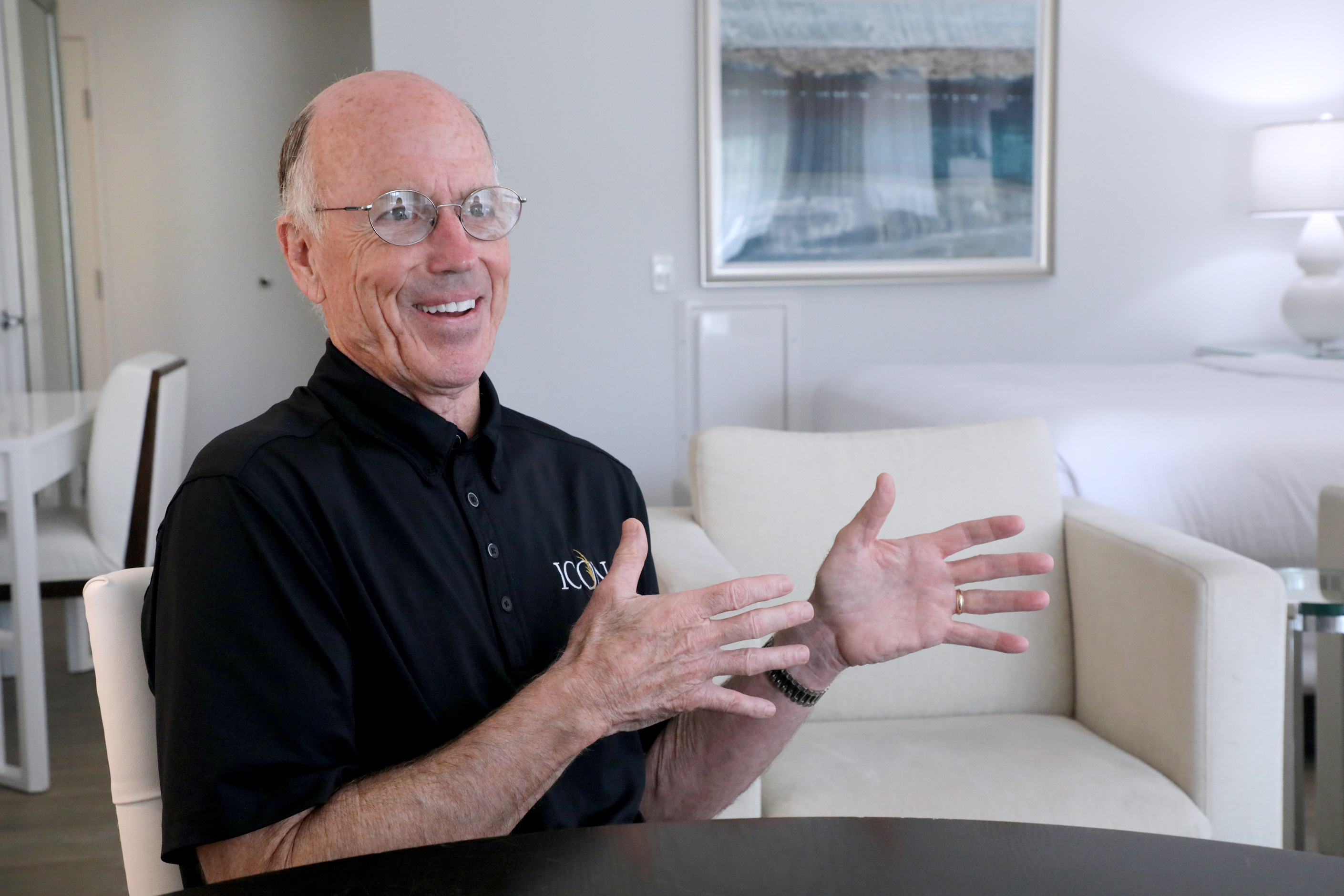
Eustace Mita talks about his business and life philosophy in a guest room at Icona Avalon.Vernon Ogrodnek / For The Inquirer
When Mita first placed Blessed Mother statues in his hotels, he said, some suggested it could be “a little too religious.” But he stood by it, saying the Blessed Mother is the matriarch of all people, not just Catholics.
“If you don’t like Mom,” he said, “you don’t have to stay with us.”
More often, Mita said guests compliment the statues. He sees some passersby bless themselves and say a silent prayer.
“We don’t apologize for that,” he said of the iconography. “But we honor all faiths.”
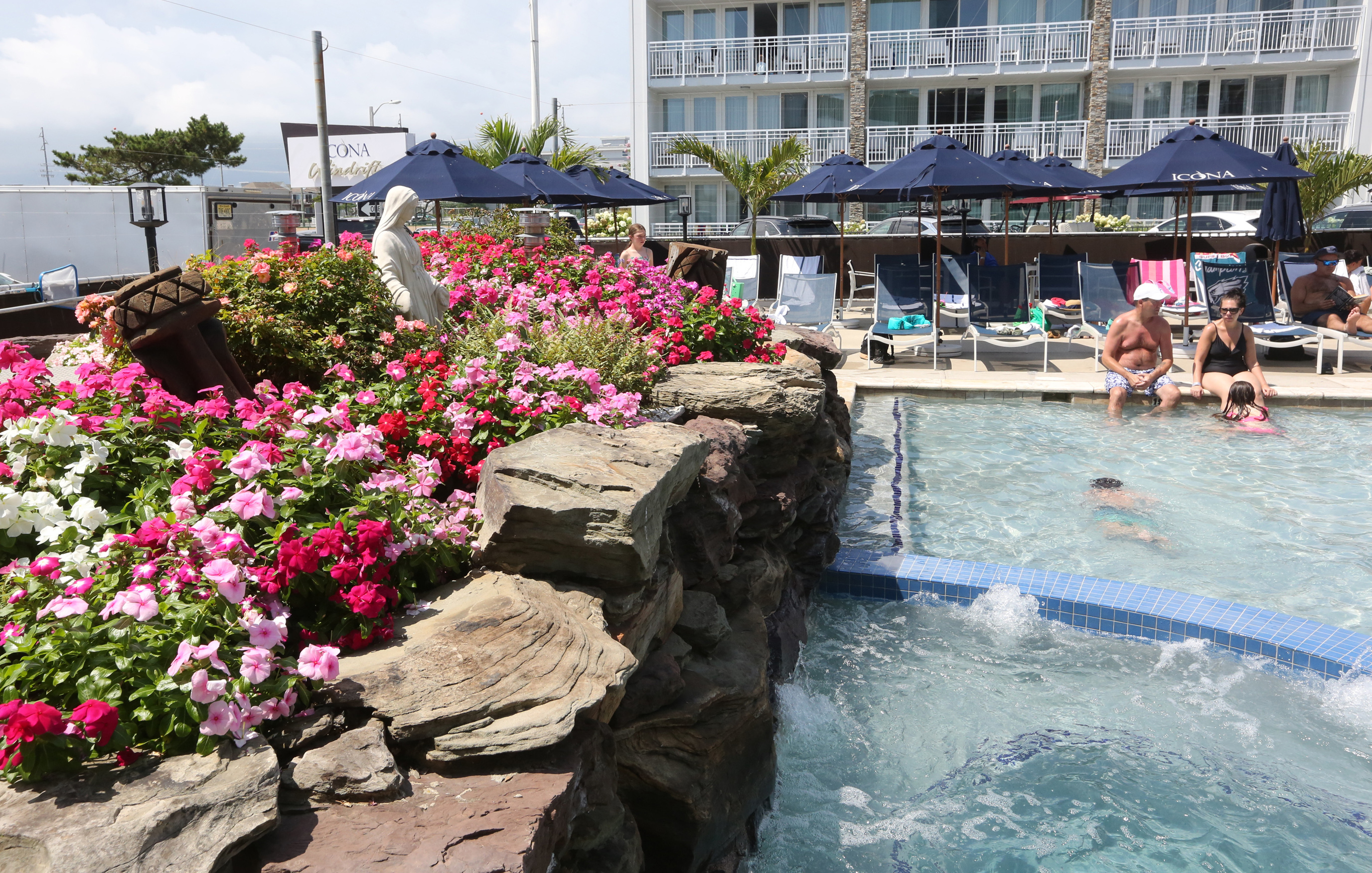
A statue of the Blessed Mother overlooks the pool at Icona Windrift.Vernon Ogrodnek / For The Inquirer
How Icona Resorts were built
In his pursuit of hotels, Mita was particularly motivated by scroll three of Mandino’s work: “I will persist until I succeed.”
After graduating from Archbishop John Carroll High School in 1973and studying for three years at Drexel University, Mita worked in the auto industry. In the 1980s, he founded Mita Leasing, then ran Half-a-Car, a lease-training company, with his uncle, Eustace Wolfington II.
Mita said he “backed into” the hotel industry around the time of the 2008 financial crisis, during which he lost about three-quarters of his net worth.
Back then, Mita’s Achristavest real estate company was knocking down small Shore hotels and building condo complexes, including the Grand at Diamond Beach, which sits between Wildwood Crest and Cape May.
Achristavest acquired the Grand’s neighbor, the Pier 6600 hotel, for $12 million in 2006, Mita said. Then, “Armageddon hit” with the recession.
Home construction at an Archistavest home in Stone Harbor in AugustVernon Ogrodnek / For The Inquirer
“Our homebuilding business didn’t slow down; it literally stopped,” Mita said. When you’re building second homes, “everybody wants one, but they don’t need one.”
While demand for Shore homes remained low, Mita said he found that families were flocking to the hotel for short beach vacations at lower prices. So he went all in on resorts.
The Pier 6600 became Icona Diamond Beach in 2012. Mita has spent $30 million renovating it, he said, including the addition of a third-floor ballroom for its thriving wedding business.
Eustace Mita bought Icona Avalon from the former owners of the Golden Inn in 2015. Vernon Ogrodnek / For The Inquirer
Then, after 16 years of knocking on the door at the Golden Inn in Avalon, Mita acquired the iconic beachfront property for $25 million, which in 2015 was the largest hotel transaction in Cape May County history, he said.
Mita renamed it Icona Avalon. He said he has spent $35 million to remodel it.
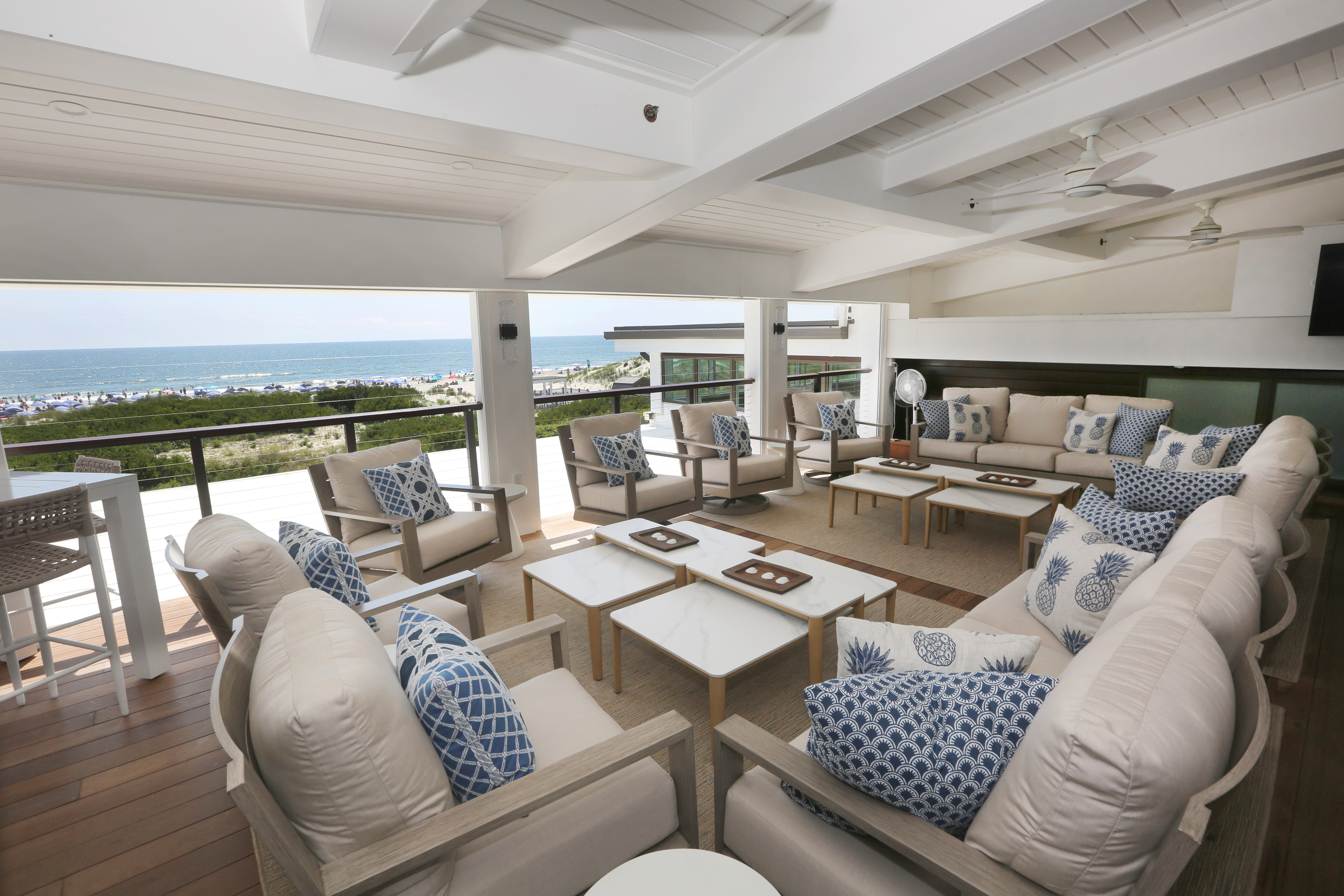
A few years later, he purchased the Windrift hotel next door for more than $30 million and spent $27 million on renovations there, which include the new Avalon Prime steakhouse and a private third-floor “sky lounge.”
The Icona Windrift in Avalon, which Eustace Mita has spent $27 million renovating since he purchased it five years agoVernon Ogrodnek / For The Inquirer
Icona Yacht & Beach Club members, who pay a $7,000 initiation fee plus $5,000 a year, can access the sky lounge, the Icona yacht, private beach service, and shuttle service.
They number about 25 now, Mita said, and he plans to cap membership at around 200 people.
It’s a similar setup as the Union League. The historic club, headquartered on South Broad Street, recently bought Avalon’s iconic Whitebrier for $23 million and last summer made it members-only. The move sparked debate over whether the Shore town was becoming too exclusive for even its wealthy homeowners.
The members-only Sky Bar at Icona Windrift in Avalon sits on the highest point on Seven Mile Beach, according to Eustace Mita.Vernon Ogrodnek / For The Inquirer
The Jersey Shore experience, elevated
While middle-class families have increasingly been priced out of the Shore, Mita said he doesn’t believe his hotels are contributing to the trend.
“We don’t cater to the wealthy,” Mita said, adding that Icona has opened two “select-service” hotels — Mahalo Diamond Beach and Mahalo Cape May — which have fewer amenities and sometimes lower prices.
Rooms there are about $200 a night on shoulder-season weekdays but can cost $500 to $700 on a summer weekend.
At Icona’s full-service resorts in Avalon and Diamond Beach, and its boutique hotel in Cape May, rooms start around $700 a night on peak summer weekends.
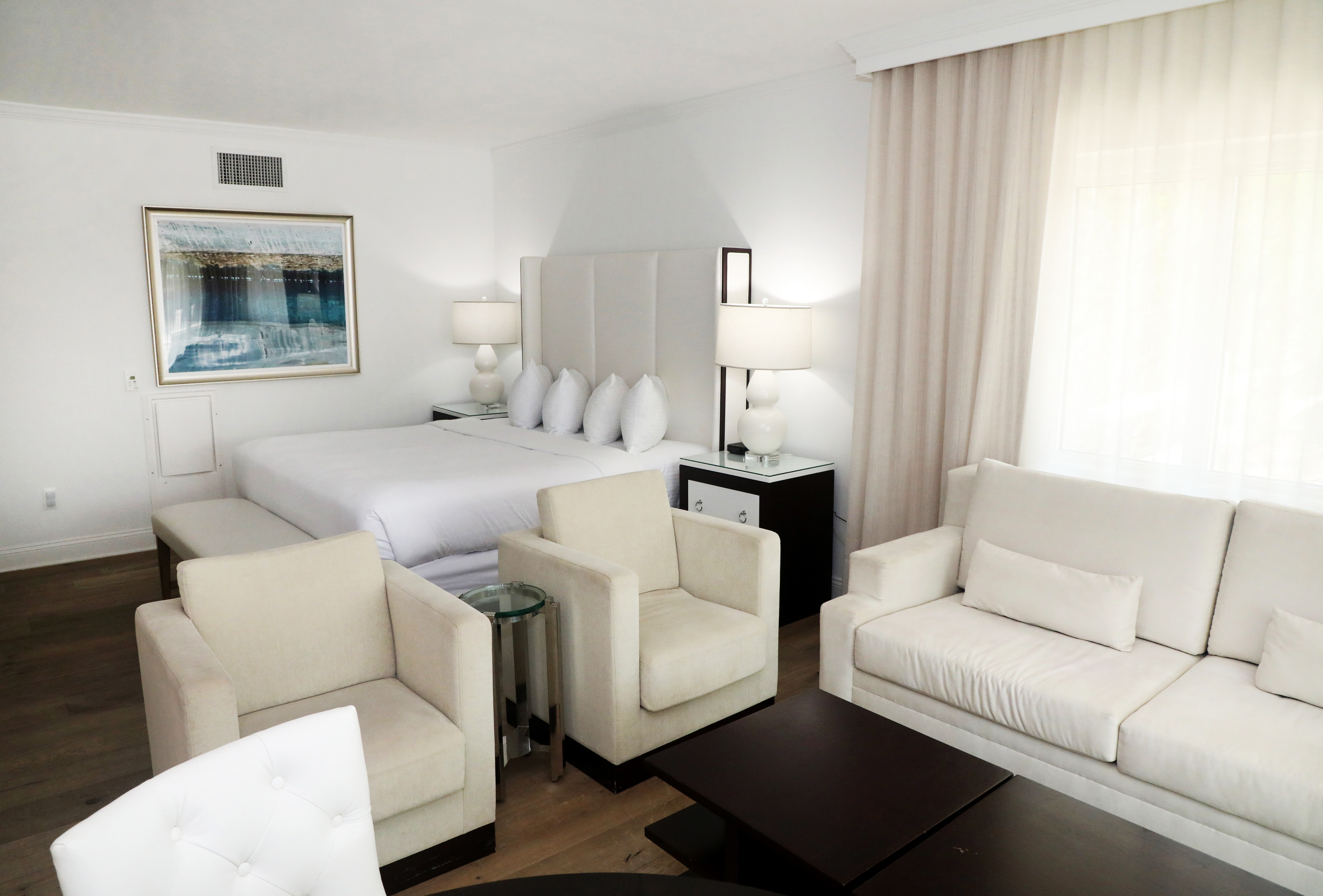
A corner guest room at the Icona Avalon.Vernon Ogrodnek / For The Inquirer
Outside South Jersey, Icona’s Grand Victorian boutique hotel in Spring Lake, Monmouth County, has slightly lower rates.
Icona is not the first brand to bring luxe hotel accommodations to Seven Mile Island, which contains Avalon and Stone Harbor.
The Reeds at Shelter Haven, a year-round resort in downtown Stone Harbor, opened a couple years before Icona Avalon. Rooms there start around $600 a night on midsummer weekends.
“It’s great to have healthy competition, right?” the Reeds’ general manager Carmen Russo said. “We always look at them and see what they’re doing, just as they look at us and see what we’re doing.”
Eustace Mita rattles off details about the construction of this Achristavest home on 116th Street in Stone Harbor.Vernon Ogrodnek / For The Inquirer
As for Mita’s home-building business, Achristavest builds on the beach and bay from Cape May to Longport, with properties starting at $5 million. By comparison, the median listing price for all homes — not only waterfront ones — in Stone Harbor is just under $4.7 million.
Achristavest homes being built on spec in Avalon and Stone Harbor will likely sell for $15 million to $25 million.
“I tell my children rent in Delaware County and buy in Cape May County,” said Mita, who grew up in Bala Cynwyd and now has homes in Malvern and Ocean City.
What’s ahead for Icona and Achristavest
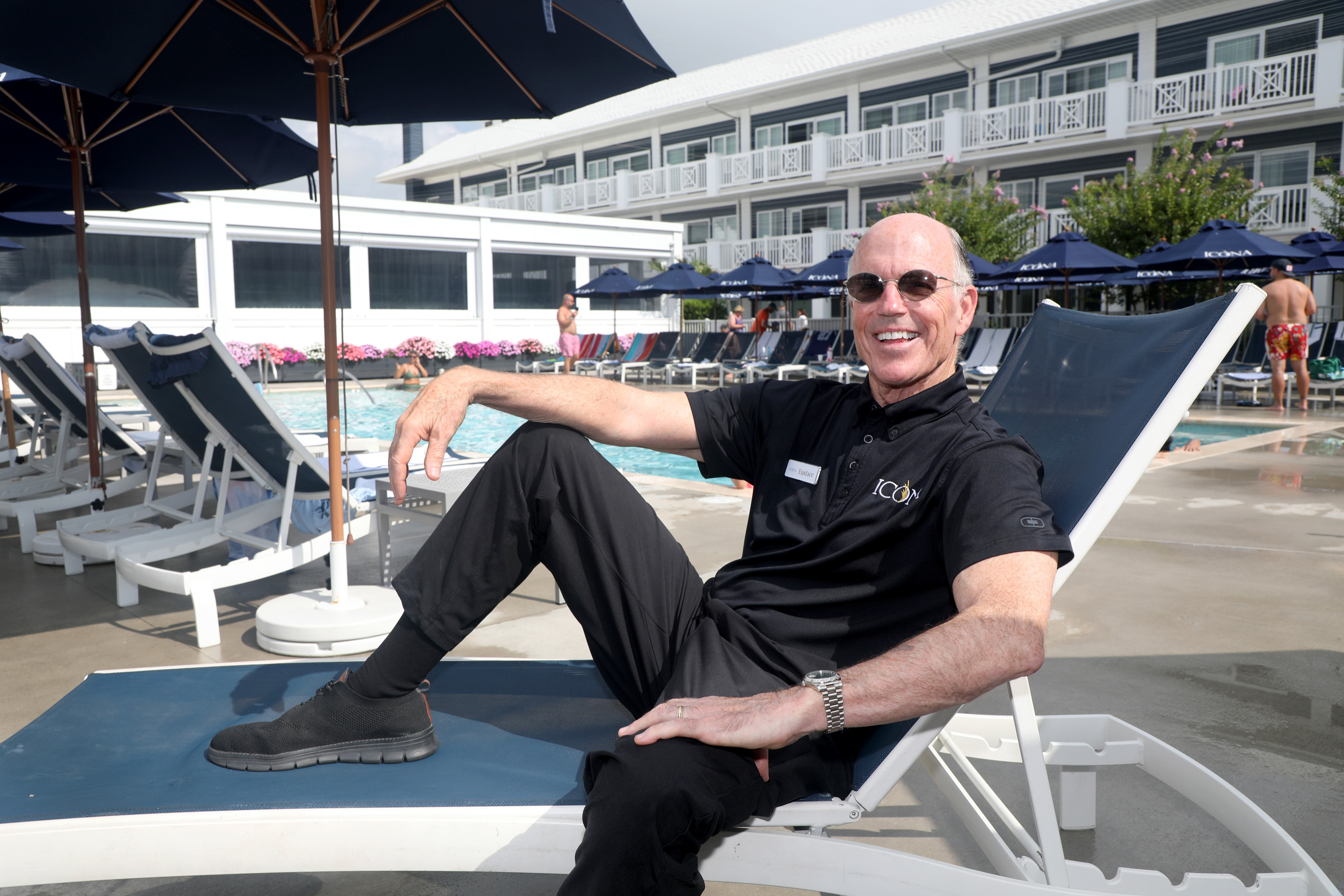
Eustace Mita, Icona’s chairman, poses by the pool at Icona Avalon.Vernon Ogrodnek / For The Inquirer
Mita speaks often of his legacy.
“I’ll be dead and gone, but imagine the next generation and then the next generation,” Mita said. “Everything we’ve built is built to last.”
And he said he hopes the lessons he instilled in employees are just as permanent.
One employee, Rob LaScala, worked at Mita Leasing and then went on to found LaScala Restaurant Group, which has dozens of locations across the region. In just a couple years working together, LaScala said, Mita left a mark.
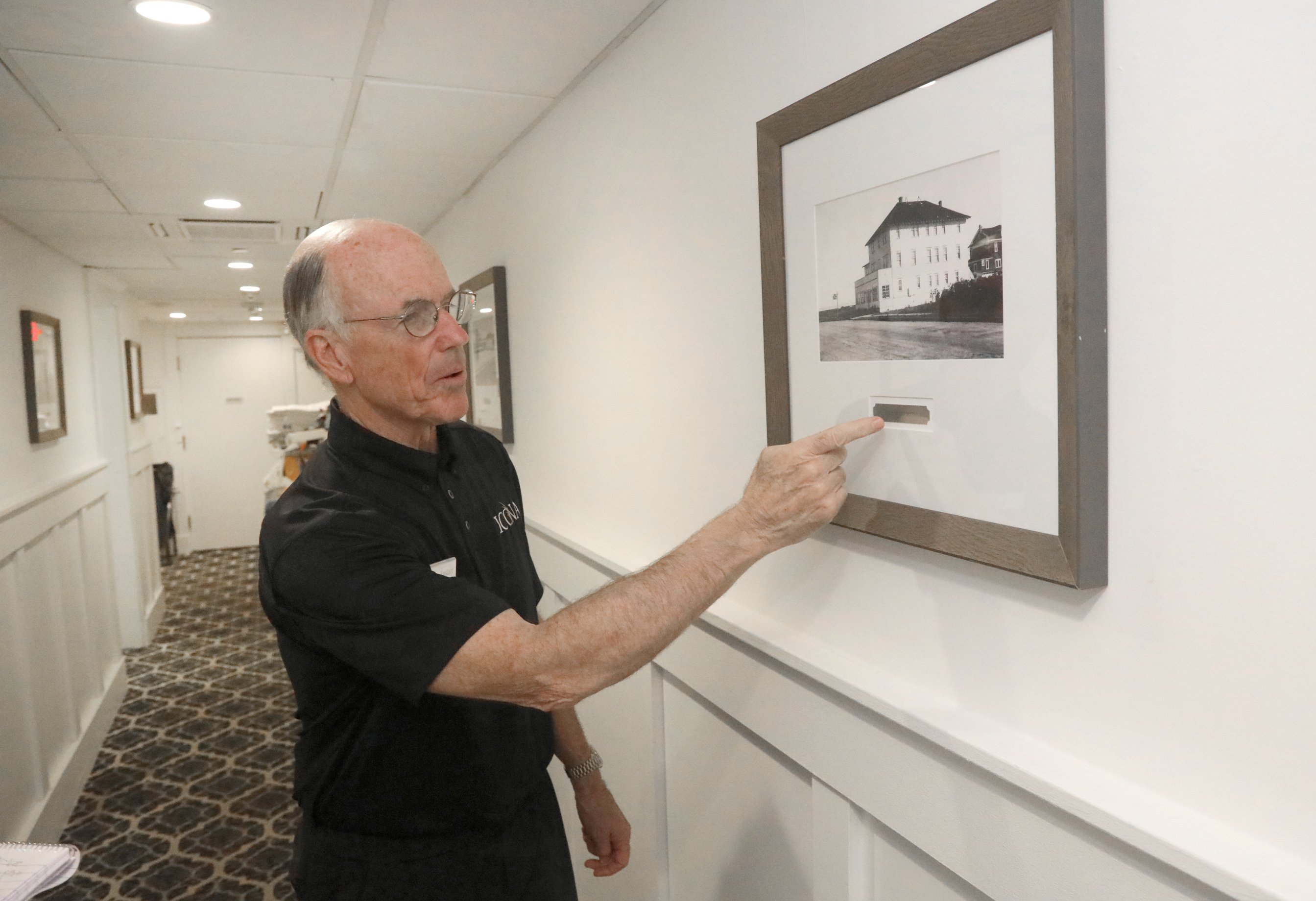
At his Icona Avalon hotel, Eustace Mita points to a black-and-white photo of the Puritan, Avalon’s first beachfront hotel that was founded by his grandfather, Eustace Wolfington.Vernon Ogrodnek / For The Inquirer
Mita is “just a make-you-feel-good type of person,” LaScala said. “I over the years have tried to emulate him” and create a company culture that transcends business.
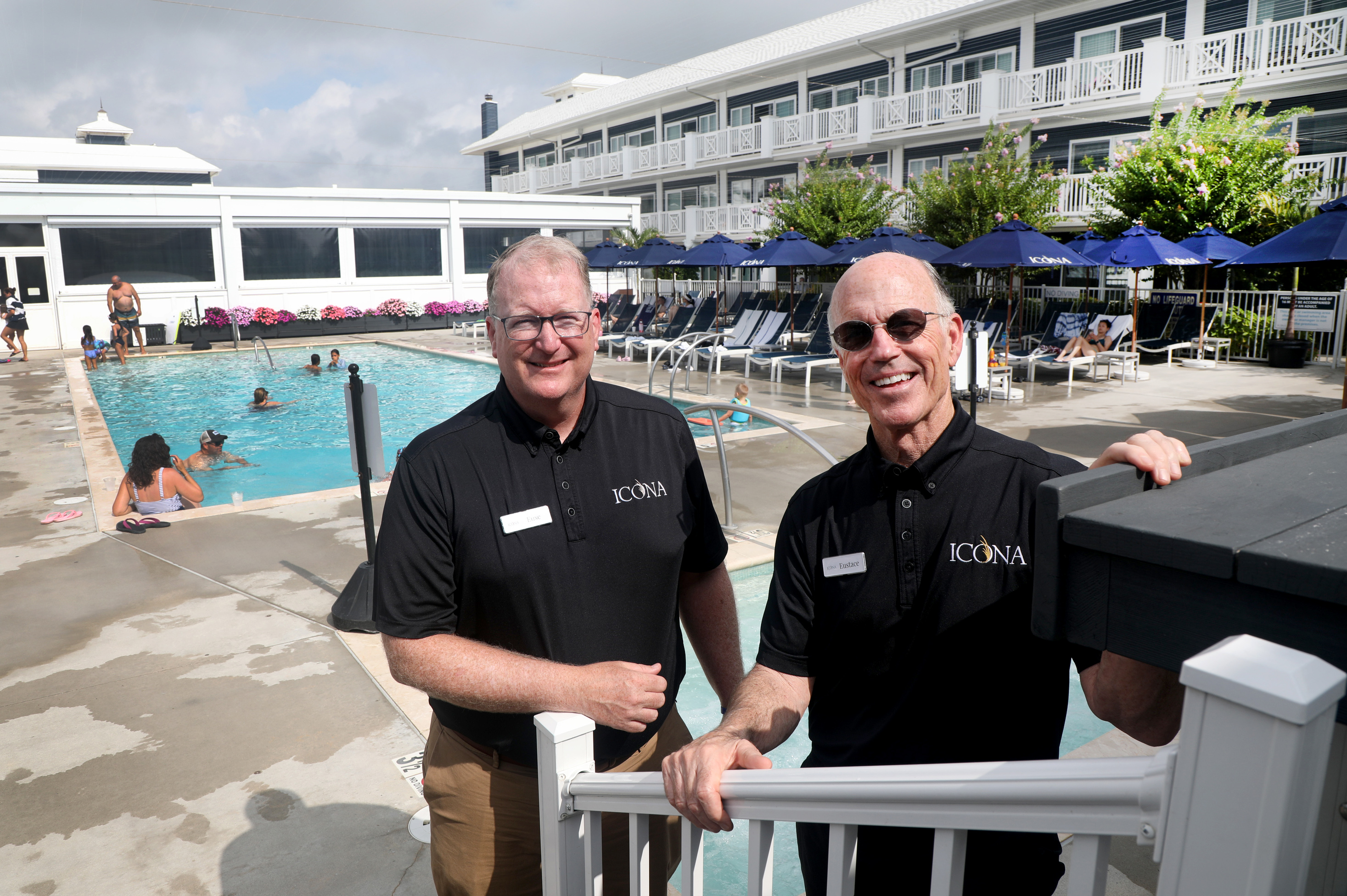
Mita refers to his 1,100 employees as family but said he works to prioritize time with his actual family. He spends summer weekends with his wife, Susie, and some combination of their five children and 18 grandchildren. His oldest son, Euse, was recently named Icona’s president and CEO.
Eustace Mita (right), founder and chairman of Icona, with his son Euse, who was recently named president and CEO.Vernon Ogrodnek / For The Inquirer
But, of course, he said, work sometimes calls. On a recent weekend, with many summer staffers back at college, Mita helped clear tables at Icona Avalon while Euse was a fill-in valet.
Said Mita: “There’s no reason just because I’m a leader that I can’t bus tables, that I can’t sweep floors.”
With the relocation, set to start in two to three years, the discount retailer says it will invest a total of $370 million in the city. The company plans to keep warehouses in Burlington County, including on the site of its current headquarters, where it has been based for more than half a century.
Here’s what else to know about the big numbers related to Burlington’s move to 3151 Market St.
What does it cost to move to Schuylkill Yards?
$370 million: What Burlington plans to spend on the move
$240 million: How much Burlington is paying for the 441,000-square-foot building, according to a Thursday SEC filing by Brandywine Realty Trust. That’s about $544 per square foot.
$130 million: How much Burlington plans to spend on “design and development of the space, creating an HQ built for collaboration and the modern needs of Burlington’s corporate workforce,” a spokesperson said.
$223 million: What Brandywine had spent on 3151 Market, as of June 30, according to its latest earnings report.
(function() { var l = function() { new pym.Parent( ‘burlington-move__graphic’, ‘https://media.inquirer.com/storage/inquirer/ai2html/burlington-move/index.html’); }; if(typeof(pym) === ‘undefined’) { var h = document.getElementsByTagName(‘head’)[0], s = document.createElement(‘script’); s.type = ‘text/javascript’; s.src = ‘https://pym.nprapps.org/pym.v1.min.js’; s.onload = l; h.appendChild(s); } else { l(); } })();
$168 million: How much Brandywine estimates it will get from the sale. The company said in an SEC filing that it has a $57.3 million mortgage on the building that will be repaid at closing, which is set for later this month.
96%: The vacancy rate at 3151 Market, which was completed in 2024.
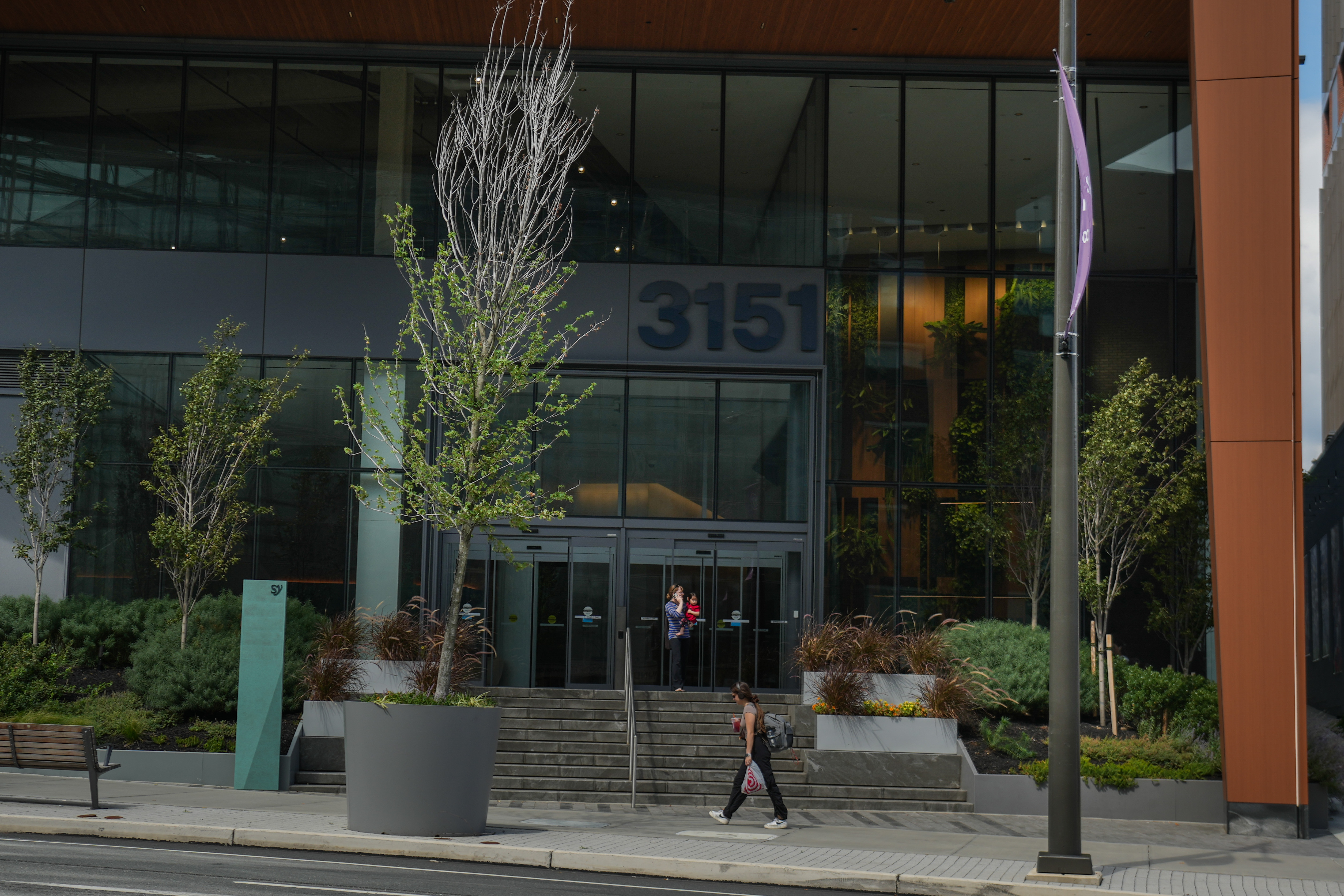
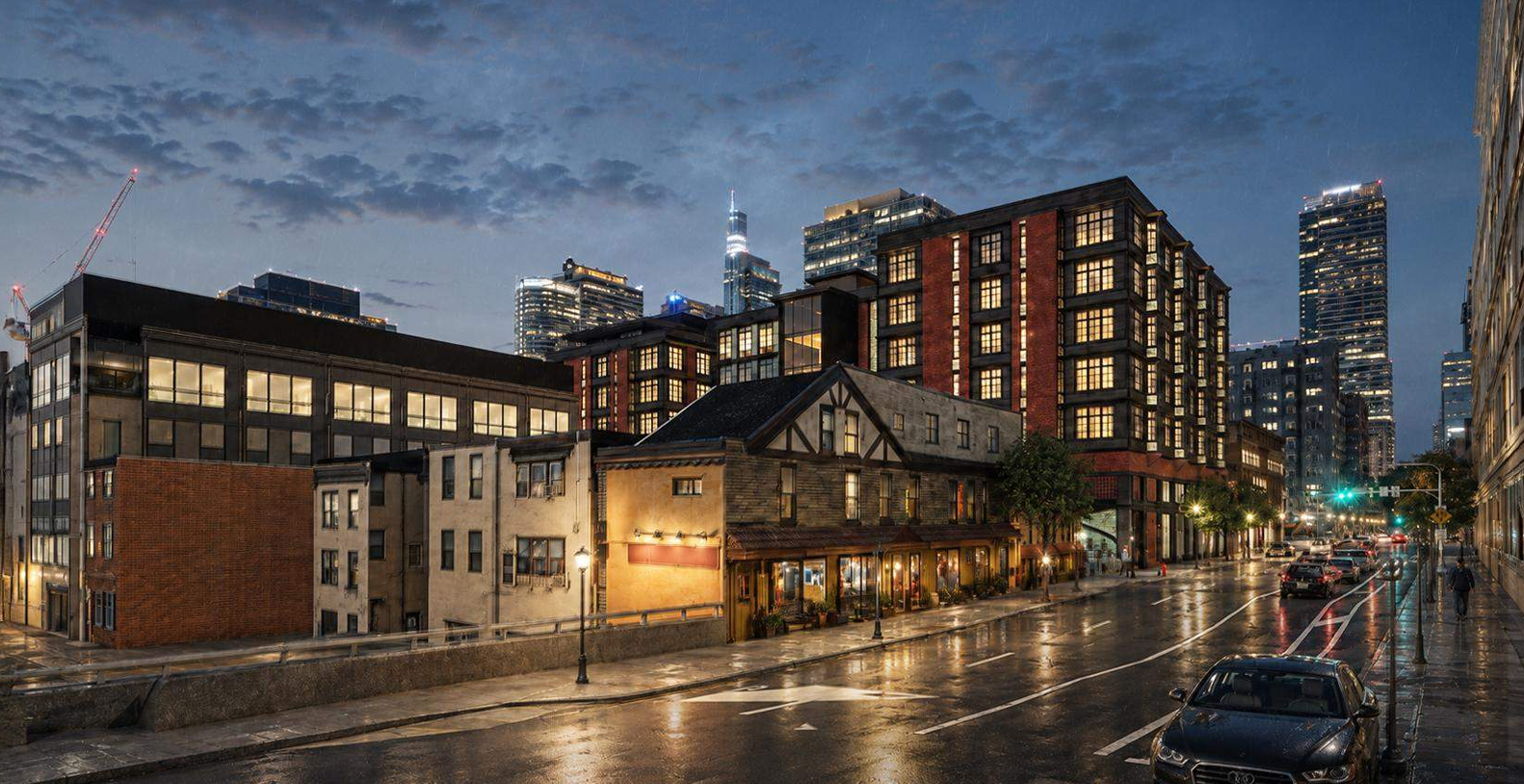
Burlington Stores’ future new home at 3151 Market St., in Philadelphia. Jessica Griffin / Staff Photographer
What government incentives are going to Burlington?
$30 million: How much Burlington is set to receive in grants from Pennsylvania.
$8 million: What the City of Philadelphia plans to invest in Burlington’s move, including a $7 million forgivable loan and $1 million for a year of free SEPTA passes for employees.
How much of Burlington’s workforce is coming to Philly?
1,500: Number of Burlington employees the company plans to move from New Jersey to Philadelphia, starting in late 2028 or early 2029
500: Number of hires Burlington plans at its new headquarters in the next five years
0: Number of layoffs Burlington has planned as a result of the headquarters relocation
Inquirer reporter Joseph N. DiStefano contributed to this article.
Burlington Stores, the discount retailer named for its longtime South Jersey home, is spending millions on new corporate offices in Philadelphia, marking the first time in decades the city has welcomed the headquarters of a Fortune 500 company.
In all, Burlington plans to spend $370 million on the move, and is set to receive another $30 million in state grants. The city is also providing a $7 million forgivable loan, a job-creation tax credit, and a $1 million investment that will give Burlington workers free SEPTA passes for a year.
Burlington eventually plans to relocate 1,500 employees from New Jersey to the new Philly headquarters, a spokesperson said, and hire another 500. The company has no plans for layoffs.
They plan to gradually move employees by team. The moves will begin no earlier than late 2028.
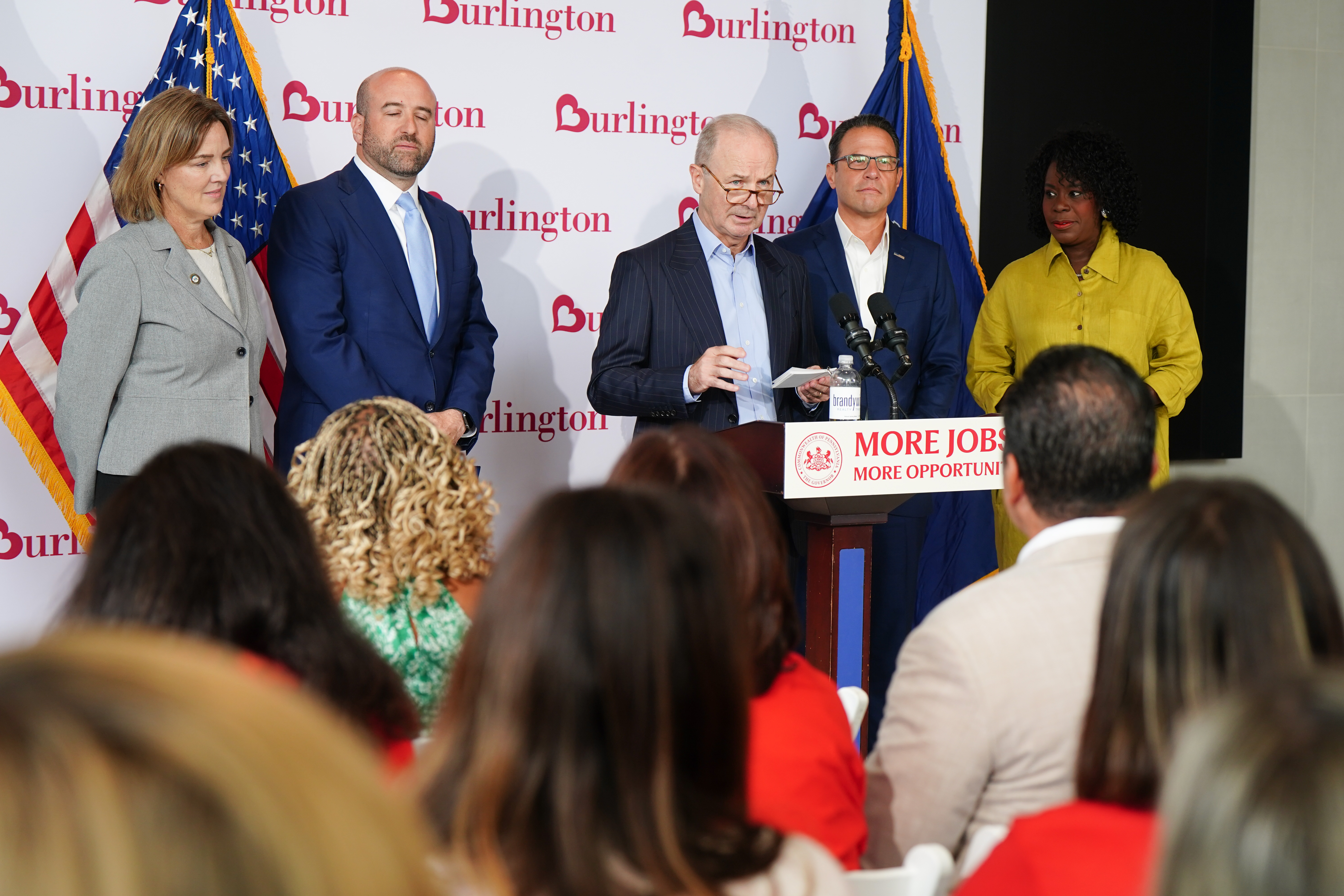
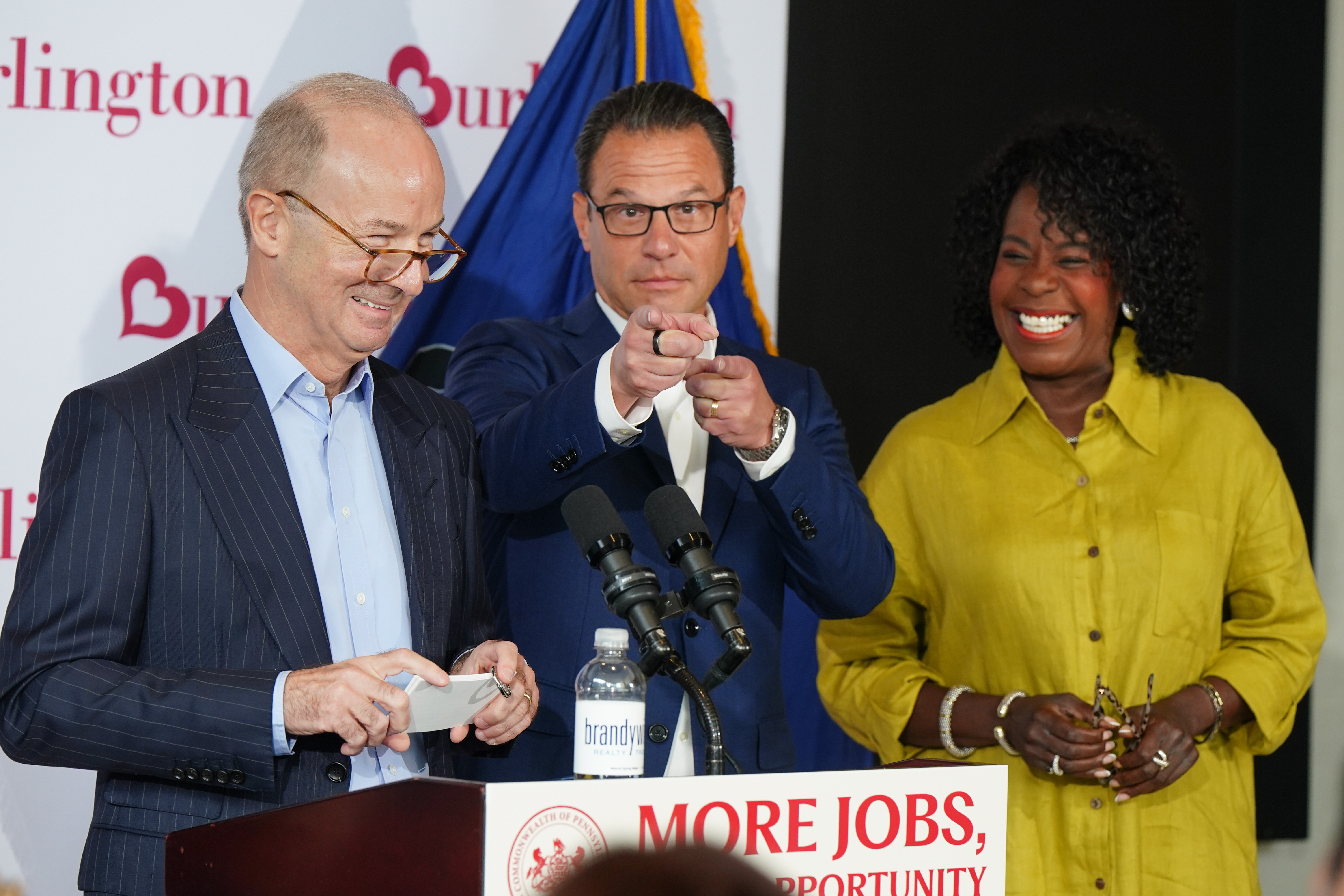
Pennsylvania Gov. Josh Shapiro called the move “one of the largest corporate relocations ever in the commonwealth,” at an event Thursday in the lobby of Burlington’s new headquarters.
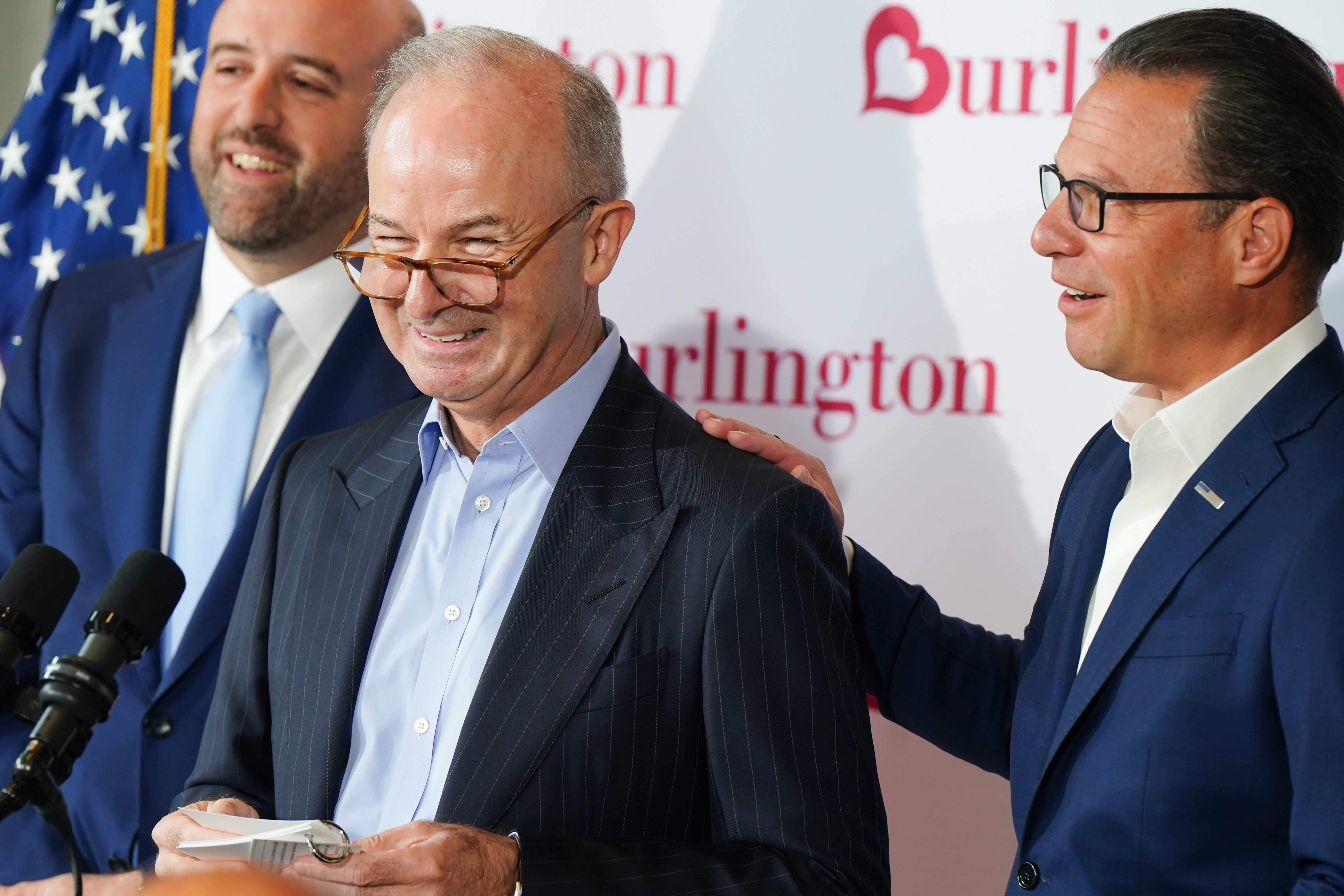
Burlington CEO Michael O’Sullivan, Gov. Josh Shapiro, and Mayor Cherelle L. Parker announce the retailer’s forthcoming move to Philadelphia.Jessica Griffin / Staff Photographer
“It’s going to put West Philly and our growing downtown district on the map as a premier spot for some of the largest companies in the world,” said the governor, who announced the news Thursday alongside Mayor Cherelle L.Parker, Burlington CEO Michael O’Sullivan, Brandywine Realty Trust CEO Jerry Sweeney, and other state and local officials.
Philly’s gain comes at a loss for New Jersey: Burlington has been based in its namesake Burlington Township for more than half a century. It opened its first store there in 1972.
New Jersey Gov. Mikie Sherrill’s office said in a statement that they were “disappointed by Burlington’s decision to relocate its headquarters.” But “the company will continue to maintain a significant presence and thousands of jobs here in New Jersey.”
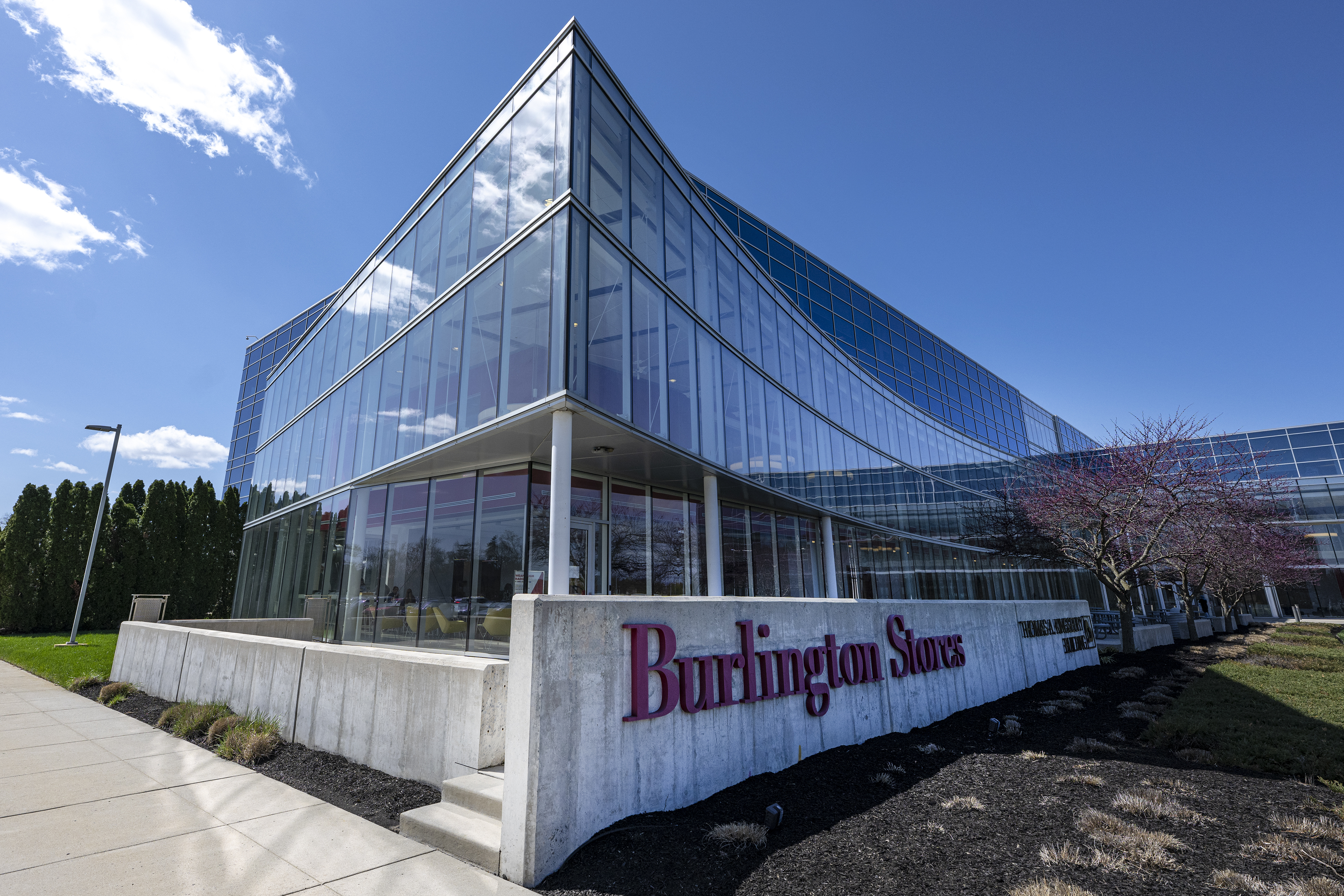
Burlington Stores headquarters in Burlington, N.J., as seen in 2025.Jose F. Moreno / Staff Photographer
About 4,700 people worked at Burlington’s corporate campus and warehouses in Burlington County as of last year, with 2,100 people employed in Philly-area stores. A company spokesperson said Thursday that the company employs 8,000 across New Jersey.
As for its current headquarters on U.S. Route 130 North, Burlington intends to have it rezoned for warehouse space and turn some of the property into farmland. The company plans to keep its New Jersey warehouse and distribution centers in Burlington, Edgewater Park, Florence, and Logan Township.
Burlington’s move is the latest win for Parker and Shapiro, who is up for reelection in November, as well as the governor’s Department of Community and Economic Development (DCED). Earlier this week, Shapiro’s administration announced $50 million in state grants and loans to help fund the yogurt company Chobani’s expansion into Allentown.
“This is another day in what’s been just a monster week,” DCED Secretary Rick Siger said. “It’s another proof point of Pennsylvania’s strength as a business destination.”
“What we’ve seen today is what can happen through a public-private partnership when leaders have a shared vision, a dedication to cause, and an unwavering commitment to the exciting future we can create by working together,” said Sweeney, Brandywine’s CEO, on Thursday.
(function() { var l = function() { new pym.Parent( ‘burlington-move__graphic’, ‘https://media.inquirer.com/storage/inquirer/ai2html/burlington-move/index.html’); }; if(typeof(pym) === ‘undefined’) { var h = document.getElementsByTagName(‘head’)[0], s = document.createElement(‘script’); s.type = ‘text/javascript’; s.src = ‘https://pym.nprapps.org/pym.v1.min.js’; s.onload = l; h.appendChild(s); } else { l(); } })();
Burlington was initially drawn to Philly because of the city’s history and culture, including its food scene, artistic institutions, and sports fandom, according to O’Sullivan. But the CEO said conversations with Shapiro and Parker “pushed this decision over the line.”
“We found the vision that they laid out for the city and the state hugely compelling,” he said. “We were very impressed by their clear priorities and their focus on getting stuff done around economic development, education and training, public transportation, public safety, and fiscal responsibility.”
Burlington has been expanding in recent years as more consumers, including higher-income shoppers, flock to discount retailers.
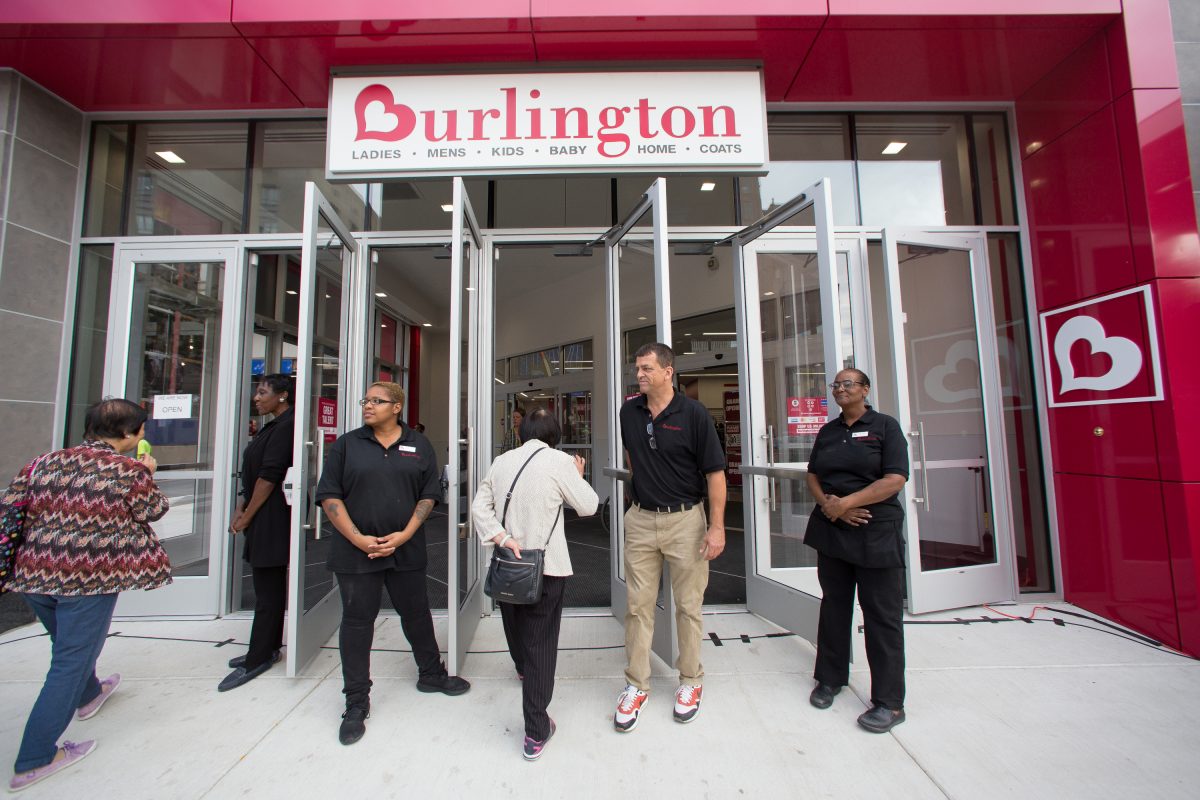
Shoppers and employees at the Burlington Store at 833 Market St. in Philadelphia in 2018.Jessica Griffin / Staff Photographer
As of August, the company operated 1,300 stores in 47 states, including eight in Philadelphia and dozens across the region. By the end of the year, the company plans to open another 115 stores and hire 5,000 more employees, O’Sullivan said Thursday.
The chain’s growth has paid off, with a 21% increase in net income and a 9% jump in sales last year.
In an earnings call, O’Sullivan attributed those numbers to the company’s tariff response, which included inventory reductions, price increases on certain items, and an aggressive cutting of expenses.
Burlington has continued to report strong earnings in the first half of 2026, with a boost from $55 million in tariff refunds. O’Sullivan has said the company plans to put that money toward more markdowns for customers.
Shapiro and Parker both said they had shopped at Burlington, with Shapiro patronizing the Jenkintown store and Parker frequenting the location at the former Cheltenham Mall in Wyncote.
O’Sullivan said with a laugh: “The mayor and the governor got my full attention when they independently confirmed that they both exclusively wear clothes from Burlington.”
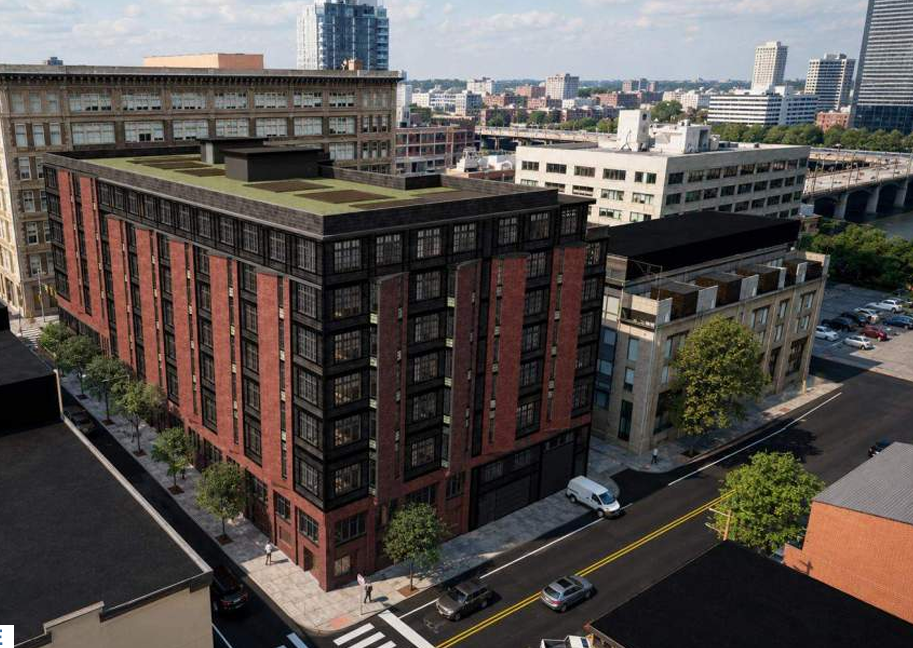
An 118-unit apartment building at 2301-11 Walnut St. received a warm welcome from a city-designated panel of architects and planners at Tuesday’s meeting of the Civic Design Review committee.
The eight-story proposal is slated for land that once housed a suburban-style Rite Aid and its surface parking lot.
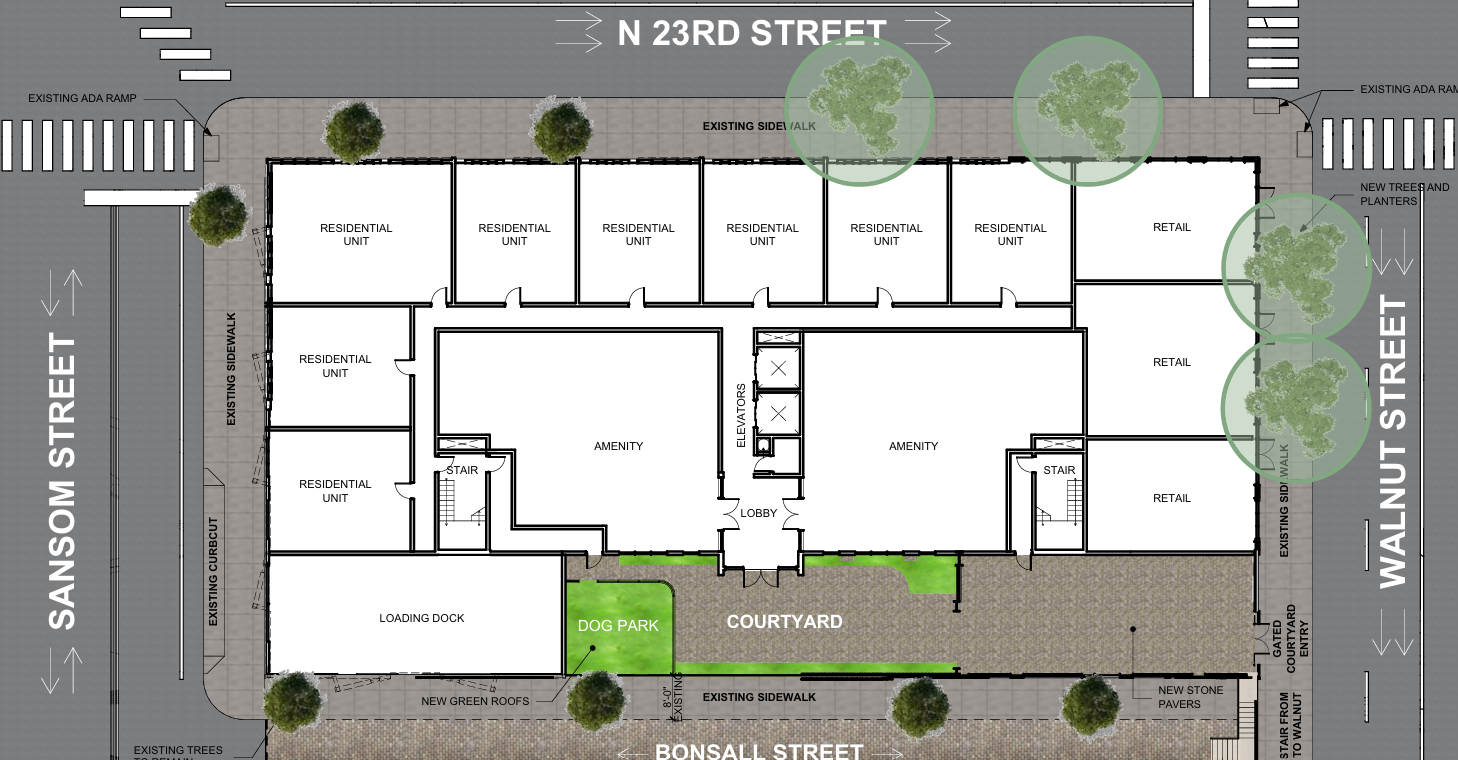
The new building would include 46 underground parking spaces, 2,750 square feet of retail on Walnut Street, and 5,675 square feet of amenity space facing an interior courtyard.
The property has long been held by Patriot Development Associates, a company that owns and operates parking facilities throughout Center City.
In 2022, developer Trammel Crow Co., based in Dallas, proposed a 172-unit tower on the site, but the project was scuttled when interest rates began rising sharply.
The new plans show Patriot developing the property themselves. The president of the company, Richard Zeghibe, did not respond to requests for comment.
Philadelphia-based Boxwood Architects is designing the project. The firm is known for high-end restaurant and bar design, as well as multifamily projects.
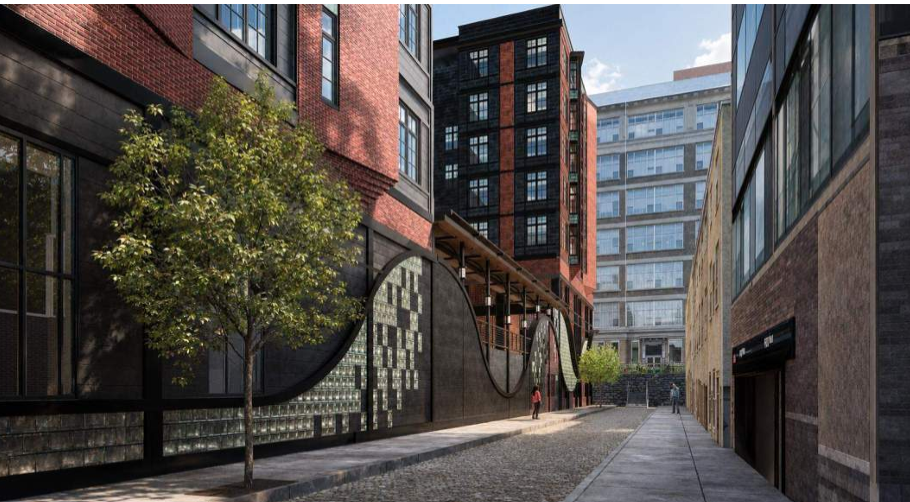
The architect plans a variety of plant life features, including new street trees, a green roof, and a garden in the courtyard facing Bonsall Street, as well as design detailing on the side of the building.
“We introduced an artistic gesture on Bonsall Street, inspired by the movement of the Schuylkill River, to activate the streetscape and connect the courtyard to the neighborhood through brick screens and sculptural metal railings,” said John Weckerly of Boxwood.
The detailing on Bonsall Street is “inspired by the movement of the Schuylkill River,” according to the project architect.[Box]wood Architects
“Gardens and green spaces are situated throughout the project to reduce the heat island effect and create a more welcoming experience for residents and neighbors,” Weckerly said.
The overwhelming majority of the project is comprised of one-bedroom units, with only 13 two-bedrooms.
The proposal does not require any breaks from zoning law, so the developer only had to meet with the local community organization — the Center City Residents Association (CCRA) — in advance of Tuesday’s advisory-only meeting.
“[We] welcome the addition of housing to the neighborhood, additional residents, and retail opportunities for more businesses,” Alex Roederer, head of CCRA’s zoning committee, said at the Tuesday meeting.
He noted that Patriot Development had expanded the bicycle room in response to the neighborhood’s feedback and that the company was considering a Community Benefits Agreement as well. Details are not yet available.
A close-up rendering of Patriot Development’s proposed building, with the green roof visible.[Box]wood Architects
The Civic Design Review committee generally praised the aesthetics of the project and its potential to enliven Walnut Street as it approaches the Schuylkill.
Multiple street-level businesses in the blocks of Walnut Street leading up to the river have shuttered since 2020.
Some members of the CDR committee encouraged the developer to add more street-level commercial space — currently only the Walnut Street side features room for retail — and others urged the architects to bring more definition to the existing street frontage.
Alternatively, they suggested wrapping amenity space, such as a gym, around to Walnut. (Currently, the space faces the courtyard, with residential units lining Sansom and 23rd Streets.)
A map of the ground floor of the proposed building, which unusually has apartments on the ground floor.[Box]wood Architects
“I would just love to see how you can … make this more special because right now I’m afraid it’s just a glass surface on the sidewalk,” said Ximena Valle, an architect who chairs the committee. “If they remain empty, which they might, it’s really quite ominous. It would be more of what’s already there” — vacant space.
When asked about specific amenities — beyond a dog park — Weckerly of Boxwood noted that those details have not been fleshed out.
Neither have potential retail offerings, with committee members noting that the current configuration did not appear to have the back-of-house space needed to sustain a restaurant.
However, the committee on the whole praised Boxwood and Patriot Development’s design, a contrast with the reception of Trammell Crow Co.’s project in 2022.
“Sometimes we have developers come in, and they do the absolute minimum to make an apartment, and this is more than that,” said Dan Garofalo, an architect who is the committee’s vice chair.
This is the second major development recently announced this summer on the western edge of Walnut Street. A 372-unit building from PMC Property Group is planned just to the west at 200-10 S. 24th St.
“I was excited to see the project come through. It provides a great opportunity of connecting West Philly and the east side of the Schuylkill,” Valle said. Right now, “I think that pedestrian experience, pre-bridge, heading west is pretty miserable.”
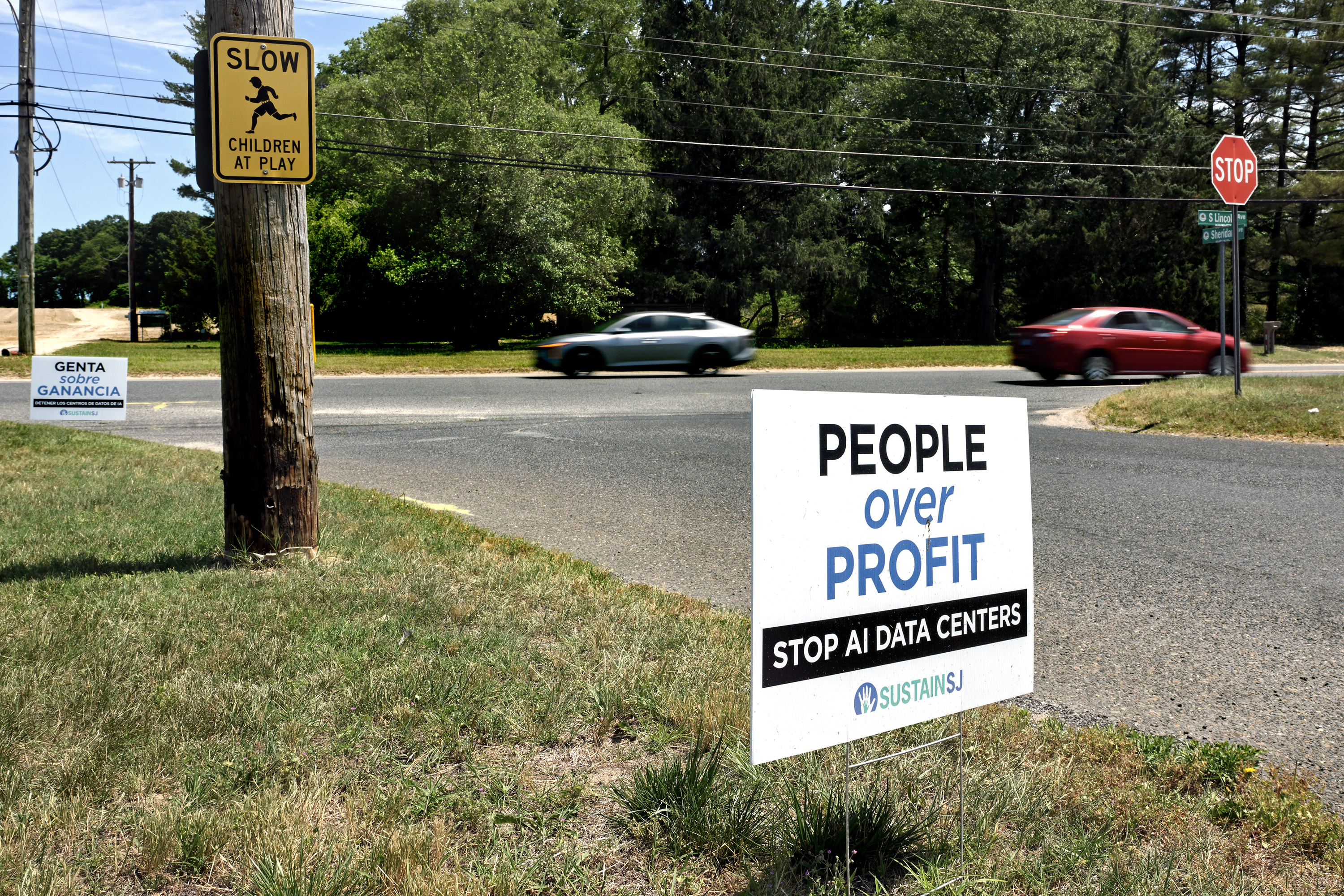
When hundreds of Upper Merion residents came to a township planning meeting in the spring of 2026 to oppose construction of five proposed data centers in King of Prussia, they discovered that, according to the developer, they had little recourse. The plans were code compliant, Brian J. O’Neill of MLP Ventures claimed. They required no rezoning, no variances — and no vote from township officials.
Yet, the residents didn’t just roll over. Instead, they set about organizing. A petition against the proposal garnered roughly 18,000 signatures — a majority of the township’s population. After an intense three-month campaign against the plans, the township Board of Supervisors rejected them in August. O’Neill vowed to appeal, and accused the board of violating state and local planning codes (which they denied), so the fight may not be over.
The board’s action reflected how fierce blowback across the country has politicians across the ideological spectrum rushing to limit data center construction. Both Texas Republican Gov. Greg Abbott and Pennsylvania Democratic Gov. Josh Shapiro recently placed limits on data center construction.
As the campaign against data centers proceeds, opponents can learn from the experiences of towns caught up in the high-tech manufacturing boom of the mid-20th century. That history shows what happens when residents disagree with politicians on these initiatives. And, while not every locality will succeed in stopping a data center, what residents build in these campaigns can outlast the fight itself.
In the 1950s and 1960s, city councils throughout the San Francisco Bay Area eagerly courted technology industries to build campuses in their cities. Officials in these places saw high-tech as the future of American industrialization. They hoped that these new facilities would become an economic boon for their cities and sought to capture new tax dollars from businesses and new residents. Some places, like San José, went so far as to give land to companies like IBM without following the usual avenues for development.
Cities weren’t the only ones that saw high-tech industry as the economy of the future. Stanford University, under the guidance of administrators who had worked in scientific research during World War II, saw high-tech research and development as an engine for economic growth for the university. They developed new programs around electrical engineering and electronics research, created industry-university worker programs that allowed employees to enroll in Stanford classes and encouraged students to found their own companies.
In 1954, Stanford used a piece of its vast landholdings to create the Stanford Industrial Park (later, Stanford Research Park), which attracted the likes of Fairchild Semiconductor and Kodak, alongside companies founded by one-time Stanford students such as Varian Associates and Hewlett-Packard. Business developers at the university were right: within a decade, the new office park was generating millions of dollars of new revenue for the university.
In 1960, the university and City of Palo Alto announced that the Ampex Corporation planned to build an office campus in the research park outside Los Altos Hills. The city council had already approved rezoning the land for light industry, and the plan appeared poised to proceed.
Neighboring residents, however, were not so keen on the university’s plans. Stanford neglected to consider the impact of the development on the local communities. Residents expressed concern about increased traffic and smog, as well as the potential environmental degradation of the pastoral foothills. They were also irritated by Stanford’s seemingly smug attitude toward community relations.
Through community and alumni networks, residents formed the Citizens Committee on Regional Planning (CCRP) to organize resistance to the Ampex plans. Within a month, CCRP organized community meetings, editorials and letter writing campaigns so forceful that Stanford University President Wallace Sterling referred to the event as the “Battle of the Hills.” One resident expressed dismay to Sterling, noting that “we now have smog, congestion, and acres of asphalt where we once had fresh air and freedom of movement in a beautiful countryside — one of the finest climates on earth!”
Hundreds of letters in opposition to the planned construction poured into the Sterling’s office: within four months of announcing the plan, nearly 400 such letters had reached the university president. Meanwhile, residents flooded the letters-to-the-editor section of the Palo Alto Times with opposition to the plan.
Made By History sponsors. FOR USE ON MADE BY HISTORY STORIES ONLY.Inquirer Staff
In response, the university’s business manager, Alf Brandin, took to the pages of the newspaper to cast the university as a reluctant developer, writing that Stanford was “doing everything we possibly can to produce income” to support the university’s mission. Stanford also pushed back against criticism by reminding residents of the role the university had played in preserving open spaces — in the form of its campus lands — and in encouraging economic development that benefited the community.
When the letter and editorial campaigns failed to budge Stanford, residents turned to their next tool: the referendum. In June, five months after Stanford announced its plans, organizers began circulating petitions throughout Palo Alto calling on the city council to rescind its decision to rezone the land for industry and allow residents to vote on the issue. Four days before the rezoning ordinance became official, organizers filed a petition with the city clerk with 2,000 signatures, double the amount required to force a vote.
Placed on the ballot that November, the Stanford lands were now in the hands of residents. A “yes” vote would keep the city council’s rezoning in place and allow Ampex to proceed with construction, while a no vote would kill the development.
The debate continued to play out in the pages of the Palo Alto Times. The newspaper’s editorial board came out in favor of Stanford’s plans, arguing that residents’ concerns over the loss of a foothill overlooked the way in which Stanford’s landholdings “constituted a free park” for Palo Alto and its surrounding communities.
This sort of argument proved persuasive. In November, the referendum to stop the construction lost in a close vote. Stanford’s grassroots campaigning had helped to convince voters to bless the construction plans.
Yet, this win proved to be a pyrrhic victory. The yearlong political campaign had spooked Ampex, which decided to build its new facilities elsewhere.
Ultimately, the neighbors won in another way as well: their campaign against the Ampex development had created a durable organizing network. Those involved in the fight continued organizing against high-tech development plans, forming new conservation and environmental groups and galvanizing networks that successfully shaped future decisions and plans.
Within five years, new waves of conservation-minded city council candidates displaced their more developer-friendly predecessors. High-tech developers now had to contend with the concerns of communities.
The successors and offshoots of the high-tech entrepreneurs and companies who propelled the rise of high-tech industry in California in the 1950s and 1960s are now building data centers. Residents in Pennsylvania, California, Texas, Virginia, Nevada, Nebraska, Ohio and elsewhere have come out in heavy opposition to their plans, concerned over their footprint, water use, electricity needs and taxes. They see these downsides as outweighing the economic benefits and new jobs that boosters promise the data centers will bring to communities — O’Neill released an economic impact study claiming that building the King of Prussia data centers would have created 10,000 construction jobs and more than $55 million per year in local tax revenue.
States and counties across the United States have passed moratoriums on data center construction while congressional and gubernatorial candidates find themselves taking a stand on the issue as well. Congress is also getting involved. Among the most forceful proposed efforts is California Rep. Ro Khanna’s Data Center Bill of Rights, which seeks to establish zoning restrictions, require independent environmental and economic impact statements for any project, and protect residents from higher utility bills.
The history of the fight over high-tech industry in the 1950s and 1960s suggests that those crusading against data centers may not win the short-term fight. Residents and local governments might find the economic arguments of data center backers persuasive just as pro-development arguments won over the voters in Palo Alto decades ago. Yet, even when they fail in the short term, these campaigns might spook companies and can seed organizing networks that will shape local development for years to come.
Made by History takes readers beyond the headlines with articles written and edited by professional historians. Opinions expressed do not necessarily reflect the views of The Inquirer.
The developer of a controversial apartment project at 106 Jamestown Ave. in Manayunk requested that the Zoning Board of Adjustment delay its Wednesdayhearing.
The six-story, 73-unit building would replace the Pennsylvania Horticultural Society’s pop-up beer garden that currently leases the space.
Neighborhood backlash against the project from developer Dan Greenberg has been intense.
Critics say the project doesn’t provide enough parking; offers no commercial space; and would eliminate the beer garden, a popular community gathering place.
“It was prudent that he postponed,” said Councilmember Curtis Jones Jr., who represents the area and recently came out in opposition to the project.
Jones’ opinion is relevant because the project is seeking to build taller and denser than current zoning rules would allow, and the zoning board heavily weighs the opinions of neighborhood groups and the district City Council member. (The project is 60 feet tall, above the height limits imposed by the Main Street Manayunk overlay.)
Greenberg also needs permission to build apartments in an area that is not zoned for residential development.
A rendering of the proposed 73-unit apartment building for 106 Jamestown Ave. in Manayunk.Barton Partners
“Fortunately for him, he’s not finally purchased it yet because zoning is an essential part of the sale,” said Jones. The delay “gives them the opportunity to talk to the community, but as it stands, I cannot support it.”
Greenberg’s team declined to comment, but a city staffer confirmed that Wednesday’s delay stemmed from the real estate company. A new hearing is not yet scheduled.
“This means that the applicant will contact us to reschedule the next hearing date,” wrote Ian Hegarty, a Planning Commission staffer who advises the zoning board, in a message to a questioner on the board’s Zoom on Wednesday.
The Manayunk Neighborhood Council led opposition to the project, submitting a petition against it to the zoning board with more than 500 signatures.
A community meeting earlier this year attracted 200 attendees, 97% of whom were opposed to the project, according to the neighborhood council.
“Even we are a little surprised at the universal opposition,” said John Hunter, the council’s zoning chair, in an email.
The Jamestown Avenue proposal also faced criticism from the Civic Design Review committee, an advisory-only city body.
In a June meeting, the board asked the developer to consider adding commercial space, criticism of the project also raised by the neighborhood council.
A rendering of the paused 73-unit apartment development from under the railway bridge. Barton Partners
At that meeting, Hunter criticizedthe plan’s 36 parking spaces, arguing that the standard in Manayunk is one parking space for every housing unit. The notoriously hilly neighborhood is less walkable and has fewer transit options than neighborhoods closer to Center City.
The developer’s team has repeatedly declined to speak publicly, but at a meeting in June, lawyers for the project indicated that compromise is possible.
“There have been, and there still can be [modification to this project],” Adam Laver, a land-use attorney with Blank Rome who represents the developer, said at the June design committee meeting. “This team remains very interested … in hearing your feedback and continuing to make this project, which we believe in, as good as it can possibly be.”
For now, the beer garden will remain in place until the end of the season. Although PHS says it does not yet have a final closing date, the organization typically ends its outdoor pop-ups in October.
PHS declined to comment further on the future of the beer garden in light of the project’s delay. Itopened the garden in 2020 as a temporary pop-up.
“He should consider if he can reduce the scope of the project to preserve the garden,” said Jones.
The project is part of a wave of apartment development on and around Main Street in Manayunk, with 1,800 units in the pipeline. That includes more than 800 homes slated for Venice Island, the flood-prone spit of land next to Manayunk in the Schuylkill.