Category: Commercial Real Estate

  • A Strawberry Mansion church will be redeveloped as affordable housing

    A Strawberry Mansion church will be redeveloped as affordable housing

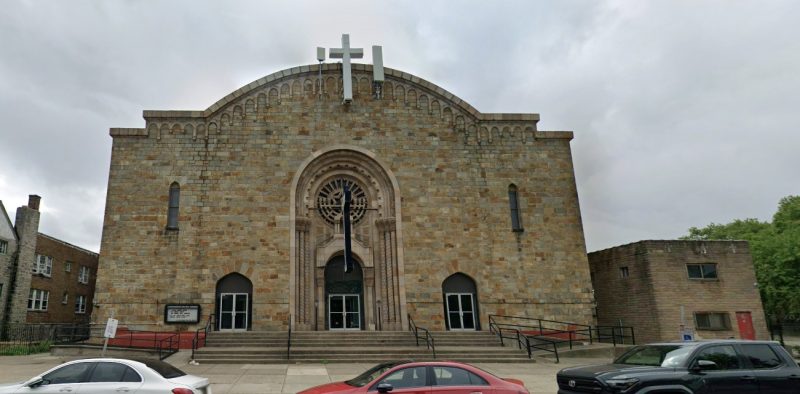
    Strawberry Mansion’s Cornerstone Baptist Church is slated for redevelopment as an affordable apartment building with 44 units.

    The sprawling church, located at 2117 N. 33rd St. on the edge of Fairmount Park, was sold earlier this year to Philadelphia-based Select Redevelopment for $1.9 million.

    Most of the units will be available to those making 75% of area median income, or less than $45,000 a year for a one-person household, with some available for even less to people earning lower incomes.

    There will be 29 one-bedroom apartments, 14 two-bedrooms, and one studio. The project is estimated to cost $10 million to develop, with construction estimated to be complete in April 2028.

    Travis Seal, a principal with Select Redevelopment, says Strawberry Mansion’s historic building stock, walkability, and park access have long been underappreciated by the real estate industry.

    “Obviously [Strawberry Mansion] had some economic disinvestment over the second half of the 20th century, but a lot of people are waking up to the sense that neighborhoods like this are not being made every day anymore,” said Seal.

    Seal says the roughly 100-year-old building — originally a synagogue called B’nai Jeshurun — is actually in robust condition, better than many historic religious buildings.

    “We’re really trying to work within the existing structure because structurally, it’s [in] pretty good [shape],” said Seal. “It has some pretty fundamentally good bones, as opposed to churches that might be of a slightly older vintage, from the late 19th century.”

    The church is not historically protected by local preservation regulations — earlier proposals from other developers would have razed the building for new construction — and Select Redevelopment’s project will also not require any zoning approvals to move forward.

    The company has held some neighborhood meetings to gather community feedback, although it was not required to do so.

    The church’s closure “was a really big loss to the neighborhood in terms of just us utilizing that space,” said Tonnetta Graham, the executive director of Strawberry Mansion Community Development Corporation.

    Graham says that at its height Cornerstone Baptist was a huge presence in the neighborhood.

    The congregation allowed its property to be used for a lot of neighborhood needs, including hosting a boxing ring, Boy Scout troops, summer camps, a community kitchen, and for high school graduation ceremonies.

    But as the neighborhood and congregation shrank, they could not keep up with repairs, a common reason churches fall into disrepair.

    Graham said there are some neighborhood concerns about the project — some would like to see even more affordability — and that residents would like the project to include efforts to honor Cornerstone’s history.
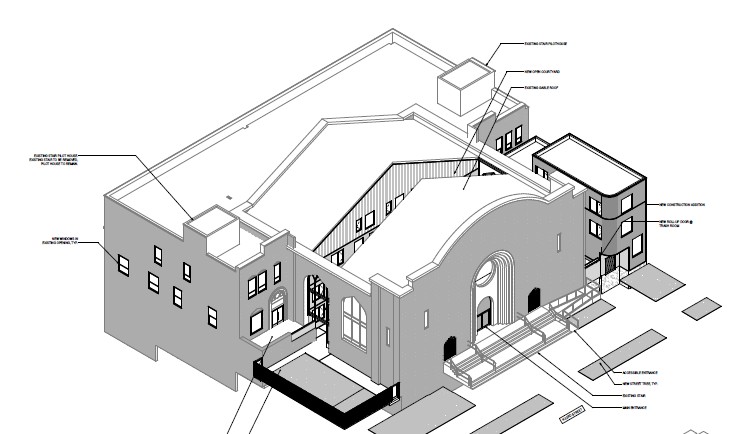
    A rendering of the developer’s plans for the former Cornerstone Baptist church.Studio Architect LLC

    “We’re just happy that it’s not going to be demolished,” said Graham. “That’s the main thing. We won’t lose the actual edifice.”

    Redevelopment backed by innovative affordability fund

    Like many areas of North Philadelphia, Strawberry Mansion was hit hard by white flight and racist lending policies in the second half of the 20th century, which discouraged investment in the neighborhood and drove away residents.

    In 1977, the federal government passed the Community Reinvestment Act (CRA), which compelled banks to make loans in neighborhoods that had experienced redlining and other discriminatory practices.

    As part of TD Bank’s federal obligations to historically divested neighborhoods under the CRA, it has formed a $25 million partnership with CEI-Boulos Capital Management and together they are helping fund the redevelopment of Cornerstone Baptist Church.

    The $25 million fund with CEI-Boulos is meant to allow TD Bank to invest in affordable projects without the long wait lists for competitive Low Income Housing Tax Credits (LIHTC). Many affordable projects suffer delays as they wait for that federal subsidy, and some are doomed if they don’t get a LIHTC award.

    The CEI-Boulos partnership “helps us build a pipeline of CRA eligible deals outside of that pool,” said Scott Mularkey, CRA Investment Officer at TD Bank, which hopes to contribute to eight affordable projects in Philadelphia with the $25 million.

    The TD Bank and CEI-Boulos fund will provide over a third of Cornerstone Baptist’s redevelopment costs.

    They have previously backed a 49-unit project at 1348 S. 32nd St. in Grays Ferry and another 46-unit project at 2800 W. Diamond St., also in Strawberry Mansion.

    Sam Spencer, CEO of CEI-Boulos, also argues that affordable rental housing is essential for Strawberry Mansion, where 57% of residents rent (compared to 45% of Philadelphia residents).

    He also notes that 36% of residents in the census tract spend more than half their income on housing. He hopes the project will help people stay in their neighborhood.

    “Strawberry Mansion has gentrification pressure,” said Spencer. “Our intent as a fund is to invest in projects that are going to serve current residents rather than drive current residents out.”
  • Planning Commission considers how — and if — data centers should be built in Philly

    Planning Commission considers how — and if — data centers should be built in Philly

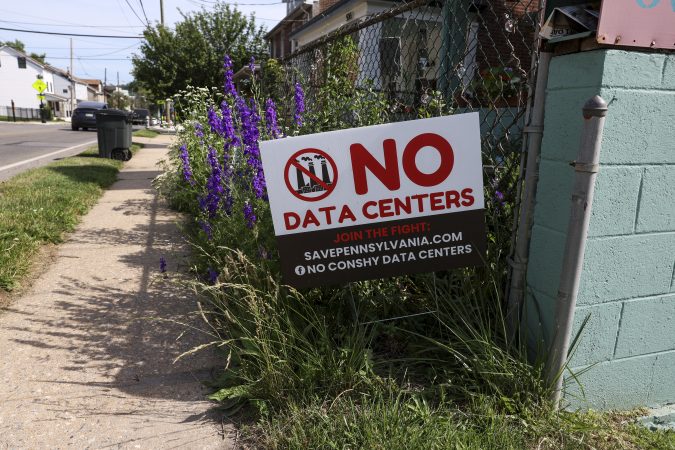
    An information-only presentation about data centers before the Philadelphia Planning Commission provoked a firestorm of controversy Thursday, with more than a dozen community groups and other activists rejecting the idea of bringing this energy-intensive use to the city.

    Demand for data centers has soared in recent years, as tech companies have invested heavily in artificial intelligence products that require vast amounts of computing power.

    Several large projects have been proposed in Philadelphia’s suburban counties and South Jersey.

    Data center foes, who dominated the public comment section of Thursday’s presentation, repeatedly called for a moratorium akin to the policy recently enacted in New York State.

    “Data centers are a hot topic in land use around the country,” said Amy Boyd, a city planner who presented the research to the commission. “Staff wants to stay up to date on this issue, so that when the topic becomes more pressing in our city, we can be prepared.”

    Thursday’s presentation is not a reaction to a particular proposal. Instead, the Planning Commission presented research on the employment, energy, and health effects of data centers, the current state of zoning law in the city, and what parts of Philadelphia could accommodate them.

    The Planning Commission found there are only two sites in Philadelphia that could accommodate the largest size of data center, the kind currently being built to support the artificial intelligence boom. Any other possible sites would require consolidating properties and changing zoning.

    One possible location is the former refinery site in South Philadelphia known as the Bellwether District, 3143 W. Passyunk Ave., which contains 1,300 acres of mostly undeveloped land zoned for industrial uses and has long been rumored as a potential data center site.

    The other possible site is 2600 Grant Ave., a city-owned property by the airport in Northeast Philadelphia.

    The idea of municipally owned land being used for a data center drew protests from citizen attendees of the commission meeting.

    But policymakers emphasized that the presentation was just meant to highlight parcels that were large enough to accommodate the use — and were not meant to indicate support for such an idea.

    “We are not currently considering that site. We have not been asked to consider that site,” Octavia Howell, director of the Planning Commission, said about the Grant Avenue property.

    “We were strictly looking at industrial land that is of a size that could be attractive … to someone who is looking at Philadelphia and curious about data centers,“ Howell said. “There is no proposal that this research is responding to.”

    Boyd’s presentation noted that Philadelphia already hosts eight smaller data centers from an era when they were not such a controversial topic.

    These include 365 Data Center, which operates at 3701 Market St. in University City, and 4775 League Island Blvd. in the Navy Yard. At 25,000 square feet, that South Philly building is only a quarter of the size of the smallest contemporary “hyperscale” data centers.

    Boyd’s presentation also emphasized the amount of resources that are required to keep huge, new data centers going.

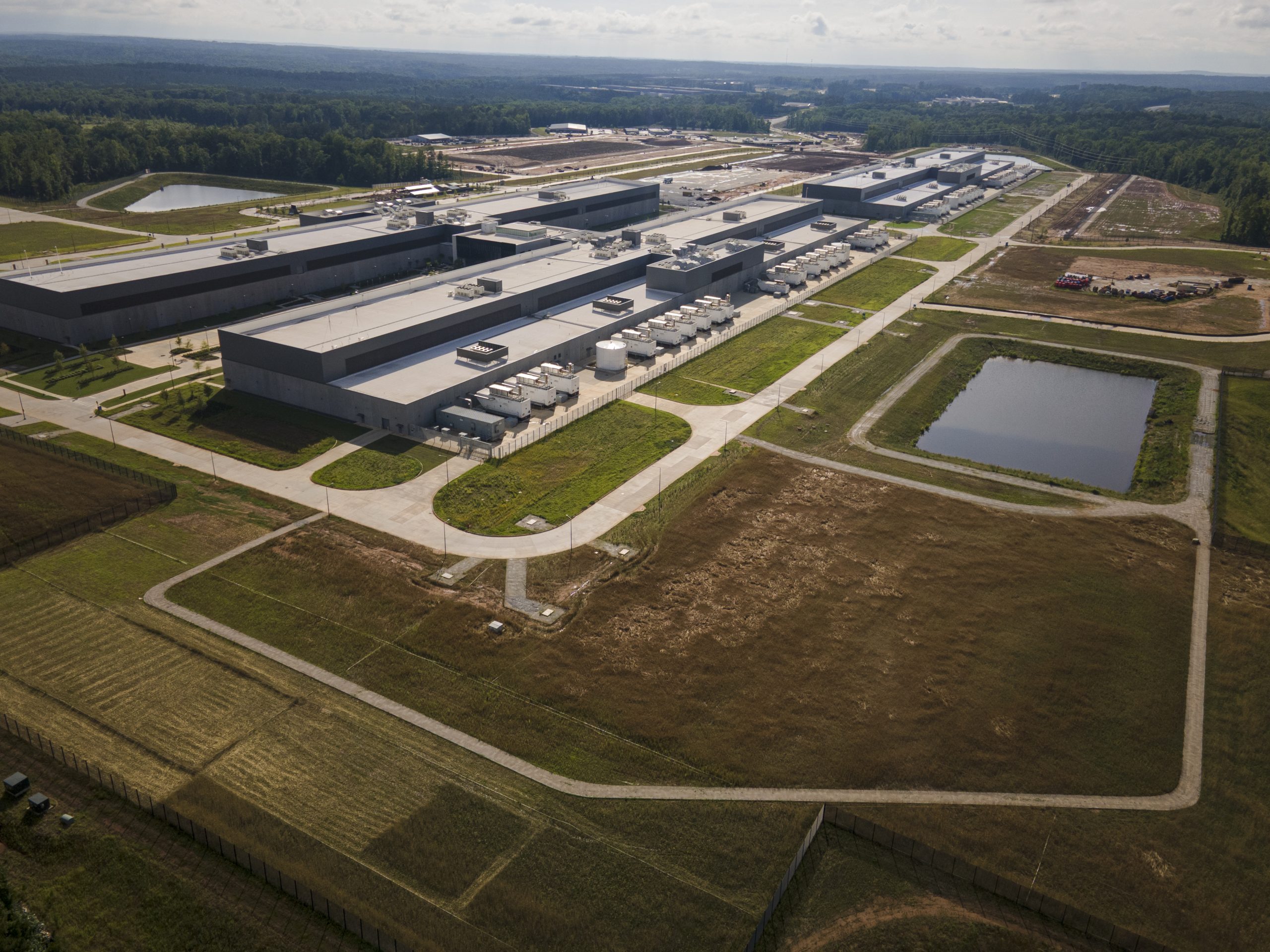
    A Meta data center in Covington, Ga.DUSTIN CHAMBERS

    She reported that data centers are now among the 10 largest water-consuming industries in the United States and use 4% of the nation’s electricity — with that figure expected to grow to 12% by 2035. Local energy providers have had to make large capital investments to accommodate the industry.

    Boyd noted that many of the jobs and tax benefits to data centers take place during construction, when up to 1,500 well-paid union workers are employed.

    Afterward some well-paid positions will still exist, including tech and maintenance staff, but she found that data centers employ only one worker per 5,000 square feet — roughly 13% of the jobs that would be expected in a standard warehouse of a similar size.

    But Planning Commissioner Pat Eiding said he thought that might undercount the job-creation potential.

    “I don’t know if it considers the amount of maintenance that goes on in these critical facilities,” said Eiding, former head of the Philadelphia AFL-CIO. “As we go forward, I’d like to see research on how many man hours are needed for maintenance and keeping a facility going.”

    Public response to the Planning Commission’s report was wholly oppositional to data centers. No one spoke in favor.

    Potential health effects were highlighted, and many speakers expressed concern that the amount of electricity used by potential centers would likely be powered by fossil fuels.

    Others expressed concerns about surging electricity costs, as capital improvements are paid for by increased consumer costs.

    “It’s what’s causing people to not be able to pay their bills,” said Linnea Bond, environment and health education director at Physicians for Social Responsibility Pennsylvania. “It’s a huge health issue, and it’s a huge affordability issue.”

    The Planning Commission staff emphasized that data centers are not currently specifically regulated in Philadelphia’s zoning code and suggested the possibility of a new law creating a specific category for them.

    While talk of a potential data center moratorium swirled around City Council earlier this year, only two nonbinding resolutions have been passed related to the topic so far.

    One from Councilmember Rue Landau called for hearings on data centers, which have not been held yet. Councilmember Isaiah Thomas held hearings late last year about rising energy costs, citing data centers as one of the driving forces.

  • Real estate ‘pit bull’ Marc Kaplin says Exton Square Mall pushback is an ‘anomaly’

    Real estate ‘pit bull’ Marc Kaplin says Exton Square Mall pushback is an ‘anomaly’

    Marc Kaplin takes “pit bull” as a compliment when it’s used to describe him. The longtime real estate lawyer who has championed property rights for developers in the region takes it to mean “aggressive, prepared, knowledgeable.”

    He’s using that tenacity right now in court, battling over whether his client’s plan to redevelop the recently shuttered Exton Square Mall into a mixed-use town center can go forward despite the town supervisors’ denial.

    For decades, Kaplin, 82, has been behind dozens of regional development projects, with clientele spanning the Delaware Valley, into the Lehigh Valley, the Poconos, Delaware, and New Jersey.

    Kaplin’s interest in real estate law kicked into high gear when his family moved to Blue Bell in 1978, near Wings Airways. It was still “a prairie” with little development, he recalls. The airway owners wanted to expand the runway, challenging the township’s ordinance. He was hired by a group of neighbors to oppose it.

    Marc Kaplin, a real estate powerhouse, talked to The Inquirer about the Exton mall redevelopment project and more.Courtesy of Marc Kaplin

    That led to his role as township solicitor for Whitpain Township in Montgomery County in the early 1980s. Eventually, he moved into development: First working for his landlord, Bud Hansen of Hansen Properties, which became one of the biggest developers in Montgomery and Chester Counties.

    When Toll Brothers started, Kaplin was there. He’s represented the home construction company for more than 40 years. Other clients, like retail developers Wolfson Group, have also spent decades alongside Kaplin.

    With the closure of the Exton mall, and his client’s proposed redevelopment plan still in the courts, Kaplin spoke with The Inquirer about the downfall of the indoor mall, the challenges of building more affordable housing, and the rise in AI data center development.

    This conversation has been edited for clarity and brevity.

    You’ve worked in the city and the suburbs. Where is it easier to get projects done?

    They’re both extremely difficult and getting more and more difficult for different reasons.

    Philadelphia, if you don’t have a by-right project, you’ve got to go to the neighborhoods, the RCOs [registered community organizations]. You got to spend a lot of time, and it’s more political and satisfying people, than it is complying with every small [thing].

    Not only do you have to make sure that all the I’s are dotted and T’s are crossed in the suburbs, you got to know what to look for.

    There’s often community pushback in development projects. What are you hearing now when communities oppose a project?

    Just seems like everybody is against almost everything for a variety of reasons. Everybody complains about traffic. That’s the biggest thing. It’s ‘We’re here, we live here, we don’t need any more stores. We don’t need any more of this or that.’ But a lot of times you get a mixed bag.

    Now the Exton mall, we got very good reception to the Exton mall. It’s only a small group of people who are against the redevelopment of the Exton mall.

    Does the pushback to Exton Square Mall feel representative of larger trends in the region?

    It’s an anomaly for a project like that. When you look at the malls that are in really bad shape, townships are reaching out and want them redeveloped. Montgomery Mall. Plymouth Meeting Mall. Some over in New Jersey. I’m working on the Berkshire Mall up in the Reading/Wyomissing area, and we’re getting tremendous cooperation.

    These malls are 1,500-pound gorillas. They killed tax base, millions and millions of dollars that were coming in before. … I can’t give you a logical reason why two supervisors in West Whiteland are putting up this fight. I’m waiting for a judge to make a decision.

    We’re pretty optimistic that we’ll be able to go ahead, but it ain’t over until it’s over.

    You’ve been quoted as saying ‘indoor malls don’t work,’ but we are seeing some success in King of Prussia and Cherry Hill. What do you think sets them apart from places like Exton mall?

    They are the super regional malls, and they do work, and Simon controls many, many of them. They work, but the Plymouth Meeting Mall doesn’t work, the Exton mall doesn’t work, the Willow Grove mall doesn’t work, and many, many more.

    There’s a whole long history of why that’s so. There were, in the ’60s and ’70s, department stores we no longer have: Wanamakers, Strawbridge’s, Snellenburg’s, and on and on. … And then you had J.C. Penney and Sears, and it was much easier way back then to get three large anchors. Then the Kmarts came along, and the Walmarts, the big boxes that didn’t have all of the infrastructure. The common operating expenses are much less, because you have all interior halls — heating, air-conditioning, and all that.

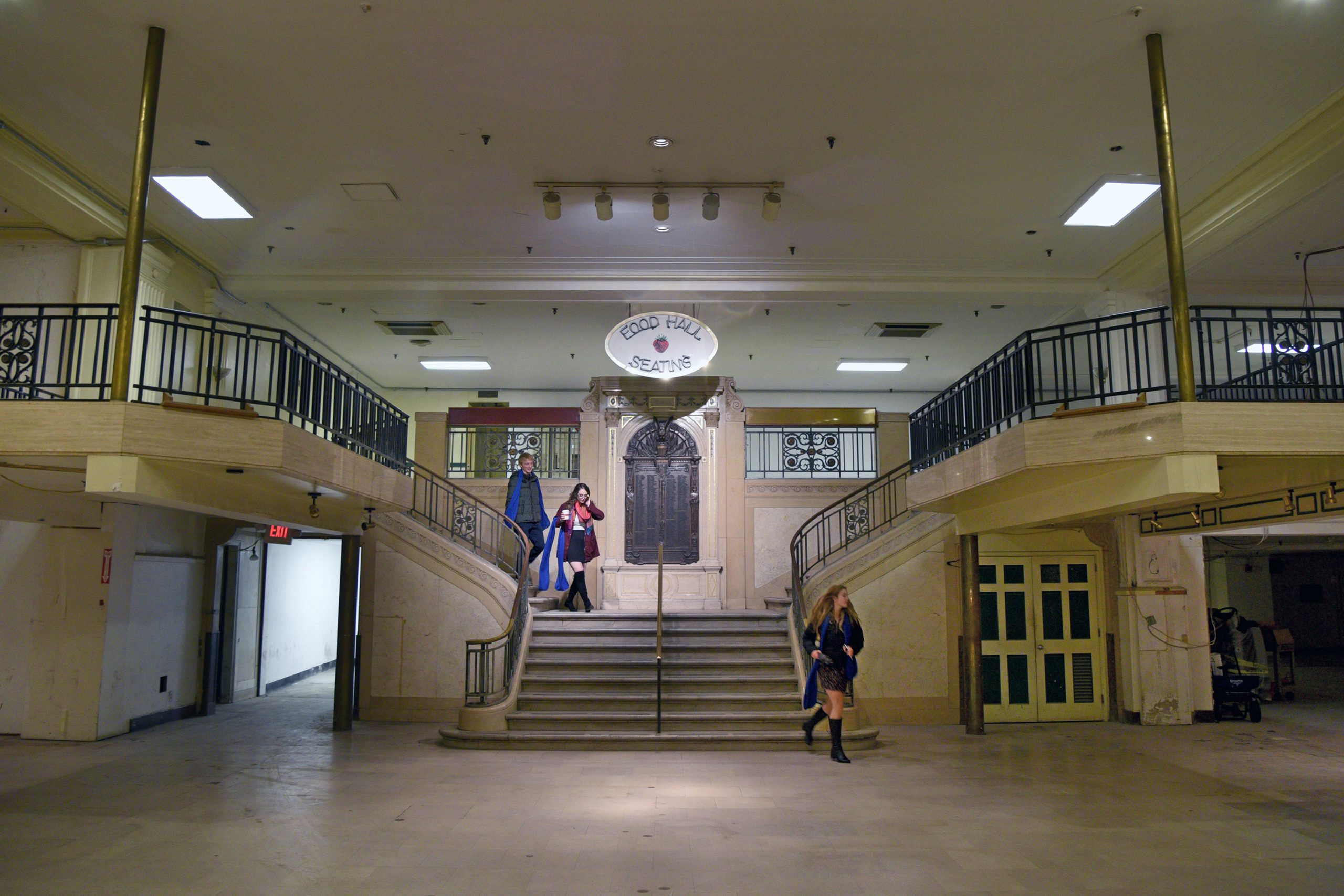
    Members of the Strawbridge family explore the old Food Hall on the first floor of the former Strawbridge & Clothier department store site on the north side of the 800 block of Market Street Dec. 17, 2019.Tom Gralish / Staff Photographer
    Why do you think Main Street at Exton, a mixed-use shopping center that opened in the 2000s, has been such a success?

    Because it’s run by the best operator around. That’s my client, Steve Wolfson. It’s had a[n] … anchor for now over 20 years.

    In Exton, there was about a 10-year period when there were two supervisors who were against everything. So you didn’t see a great deal more development, but the Main Street at Exton used the new urbanist approach 22, 23 years ago and made huge improvements to the roads. There are great roads there, and it was right in the path of development.

    Are there any cases or projects that have shaped Chester County as we know it today?

    Exton has always been called the crossroads of Chester County. You’ve also got the Hankin Group that has done all the development in Chester County. … You had very big companies come in — Vanguard — and you had good school systems and relatively decent roads. I think it’s just the continued outward development from Philadelphia.

    Many suburbs are facing affordable housing crises. How do you predict municipalities will overcome NIMBYism when it comes to those projects?

    It’s a very, very, very difficult problem. There are very few places in the entire country where it’s been solved. New Jersey has the most extensive program in the country to cause the development of affordable housing … that’s really the Mount Laurel doctrine, and where the townships are required not only to make affordable housing available, but also to make it happen.

    The market cannot create affordable housing without governmental help. Just can’t be done. It’s not enough land. Regulations are enormous, expensive.

    It’s a societal problem that can’t be solved just by municipalities and homebuilders and homebuyers.

    Do you think all of the proposed data centers will actually get built?

    I’m involved in a couple of data centers. … At first the communities were dead set against more warehouses, particularly up in the Lehigh Valley, and then when this particular community heard ‘data center,’ they were ecstatic — for a whole variety reasons: very little traffic, very few people in schools, high-paying jobs, and now there’s this national swell attacking data centers.

    The data centers we’re seeing now, in one fashion or another, are creating their own energy. So my own particular opinion is that it’s just blown up, overblown, over-exaggerated, and we’re going to need all this computing power as we move into the next technology age.

  • Future of Centre Square is uncertain again as rival developers question purchase

    Future of Centre Square is uncertain again as rival developers question purchase

    A New York-based developer that outbid real estate investor Dean Adler and Philadelphia’s PMC Property Group for control of the huge office complex at Centre Square has decided to walk away from the property.

    Centre Square, one of Philadelphia’s largest office buildings, saw soaring vacancy after the COVID-19 pandemic and went into foreclosure in 2023.

    In February, Adler announced that in partnership with PMC, he would buy the 1.76 million-square-foot office complex at 1500 Market St. for $70 million and transform it into a mixed-use mecca with hundreds of apartments and hotel space. The previous sale price in 2017 had been $328 million.

    Then in May, the Philadelphia Business Journal reported that Manhattan-based CSC Coliving had bid $80 million for the project. CSC, too, planned a mix of residential, hotel, and office space.

    “We were kicked out, and we didn’t fight it. We played by the rules,” Adler said. “We accepted when they were going to overbid us.”

    On Thursday, the managing partner of CSC said his company had decided against the project.

    “We backed out from 1500 Market,” said Salomon Smeke, managing partner and cofounder of CSC. “The tax abatement incentives in Philly were not enough to justify the conversion.”

    Smeke said that “it would help” if a 20-year property tax abatement, like the one Mayor Cherelle L. Parker has been considering, were in place.

    Asked for his reaction to CSC’s decision, Adler says that while he is still theoretically interested in the property, he will need to take another look to get a sense of why his competition backed out.

    “Are we still interested? We are always interested,” Adler said. But he also said he would need to do more research.

    “We are going to take our time,” Adler said. “I got to find out if there’s something we missed. Maybe they found something that we didn’t know, so we have to go back to do more homework.”

    Philadelphia developer Dean Adler at the Center City District’s State of Center City event in April.Alejandro A. Alvarez / Staff Photographer

    Adler has been on a roll of dramatic and ambitious adaptive reuse projects with his former company Lubert-Adler Real Estate Partners, transforming Philadelphia landmarks into mixed-use campuses, notably at the Bellevue Hotel on South Broad Street and the Battery on the Delaware River.

    In these projects, Adler has championed a mix of residential, hotel, office, restaurant, and wellness.

    Adler is also locked in a dispute with his former partner Keystone Property Group over the Bourse on Independence Mall, which he hoped to turn into another mixed-use hub.

    The Centre Square project would have been CSC’s largest project in Philadelphia. The developer is known in Philadelphia for its purchase of the former International House in University City, rebranded as the Mason. CSC then toyed with the idea of turning the 3701 Chestnut St. tower into a drug and alcohol rehabilitation center.

  • After years of delay, a Francisville apartment building is under construction

    After years of delay, a Francisville apartment building is under construction

    North Philadelphia’s Francisville is getting an apartment building at 801 N. 19th St. after years of delay and a complex change in ownership.

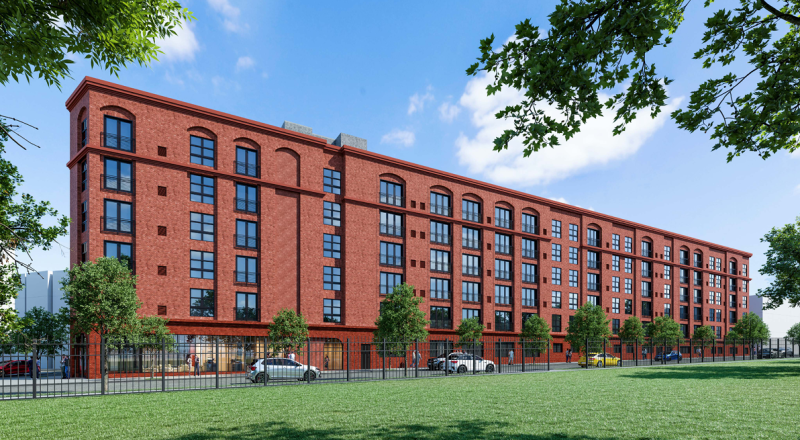
    The six-story project, clad in red brick, will include 110 apartments and 49 underground parking spaces. The foundations are built, and construction is underway.

    The project sits on an oddly shaped lot between 19th Street, Cameron Street, and Wylie Street, which neighbors call “the triangle lot.”

    The property used to be owned by the Exton-based Hankin Group, which secured building permits for a 115-unit apartment building during the pandemic.

    Hankin sold the property in 2021. Now two different townhouse projects are being developed on the site, one by West Philadelphia-based Guy Laren.

    The apartment project is being built under the name of Cameron Square Partners LLC, which is registered at a West Philadelphia property owned by Laren.

    On the Department of Licenses and Inspections website, violations for “walkway not provided” and a failure to post permits are being appealed by the Philadelphia-based developer, contractor, and property manager Vicintas.

    Laren did not respond to a request for comment. Vicintas confirmed it is the general contractor and future property manager for the apartment building but did not reply to an interview request.

    Hankin’s building permit is old enough that the Philadelphia Planning Commission decided it has to go through an advisory-only Civic Design Review process again, five years after its first go-around.

    The new iteration of the project is different from what Hankin proposed, with 110 instead of 115 apartments but larger layouts. It has a new architect, too, with Philadelphia-based Harman Deutsch Ohler Architecture replacing global firm NORR.

    “The new owner wanted some bigger units, so we’re down five units, and we increased the height by five feet, and then we redid the entire facade,” said Rustin Ohler, a principal with the firm.

    The new plans call for 40 one-bedroom apartments and 35 two-bedroom units, with the remainder mostly being larger studio units known in the industry as “junior one-bedrooms.”

    The apartments will have “more square footage, not necessarily more bedrooms,” Ohler said. “The previous design had a lot of studios. This is more ones and twos [bedrooms], and they’re a little larger than your average new construction coming to the market.”

    Parking has been reduced from 52 to 48 spaces, although the development team plans to expand the number of spaces by automating the garage.

    Such a system would eliminate the need for people to enter the facility, depending on mechanical systems to distribute and receive cars and allowing for a much larger parking capacity.

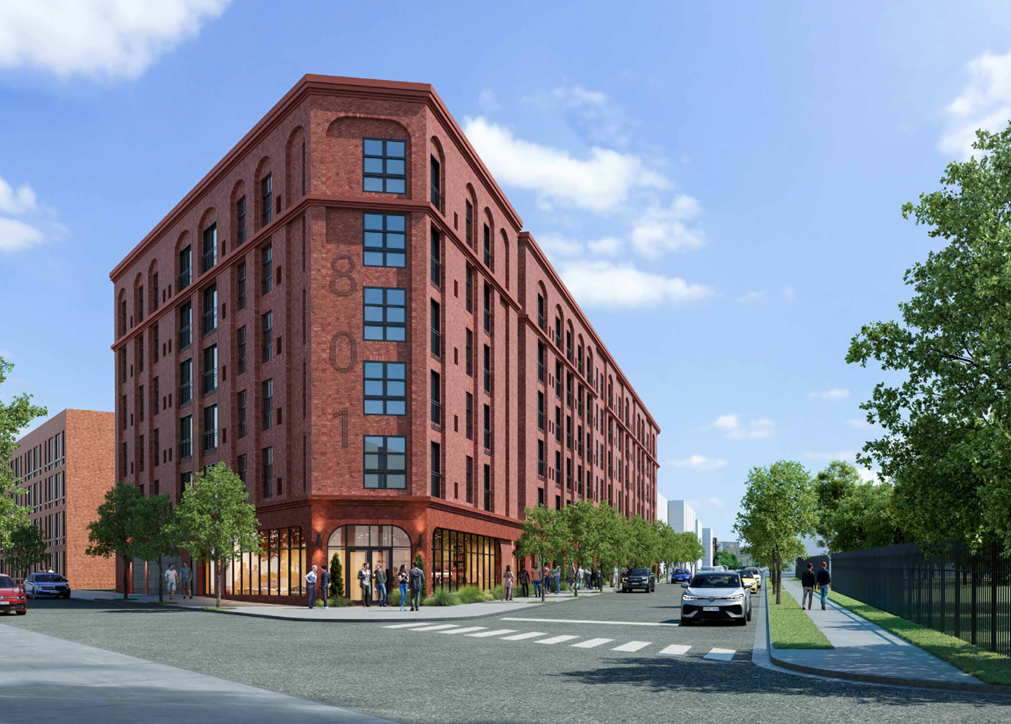
    The latest design for the new apartment building at 801 N. 19th St., with an articulated brick identifier spelling out “801.”Harman Deutsch Ohler Architecture

    The apartment building contains no retail but will have amenities including a gymnasium and a narrow roof deck, including a dog park, that is set back from the edge so it is not visible from the street.

    At a June meeting of the Civic Design Review committee, a representative of the United Francisville Civic Association criticized the amount of parking in the project, the increased height, the roof deck, and the new building materials.

    “What was originally approved was a five-story building,” said the representative, whose name was obscured in a recording. “This is now a six-story building, and it really towers above. It just adds a lot more height to the building based on the surroundings.”

    At the June and July meetings, however, Ohler noted that the three projects on the triangle lot are already under construction and that the apartment project is hemmed in by the bordering townhouse developments.

    That restricts what changes could be made to the architecture and layout of the project, despite community concerns.

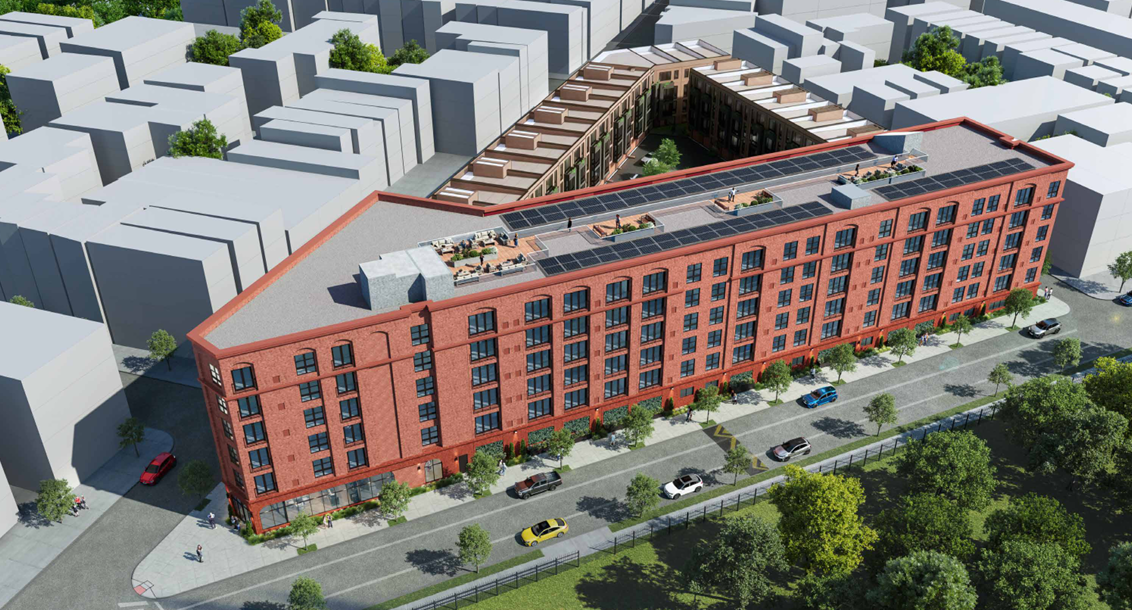
    A new rendering of the apartment building shows the roof deck broken into smaller chunks, to cut down on large crowds making noise and separated from the edges of the building by newly proposed solar panels.Harman Deutsch Ohler Architecture

    The development team increased “the garage ceiling height in order to accommodate future stacked mechanical parking, which would potentially double our number of cars that we could have,” Ohler said.

    Since the June meeting, the development team also added darker brick spelling out “801,″ as an identifier on the building’s south-facing facade and entrance.

    Ohler noted that the roof deck has been broken up into four separate pockets to prevent large groups of residents from congregating. It also was pushed back from the street to accommodate neighbor concerns.

    “The roof decks have been designed to be centered into the building, so that nobody can get near the edge,” Ohler said. “And we did add the solar panels, there’s no way for anybody to get near the edge, so that would address their concerns of sound from the roof deck.”

  • A W hotel building contractor is hit with another court judgment, this time for $42.4 million

    A W hotel building contractor is hit with another court judgment, this time for $42.4 million

    One of the largest building contractors in the United States has been hit by another multimillion judgment as a result of the dispute over the W and Element hotels in Center City.

    Philadelphia Common Pleas Judge James Crumlish III ordered California-based Tutor Perini Building Corp. to pay $42.4 million in damages to the subcontractor retained to install the building’s exterior, the Chicago-based Ventana DBS LLC.

    “Throughout the project, Ventana was forced to navigate numerous obstructions and obstacles, stemming from Tutor Perini’s pervasive material breaches of contract,” Crumlish’s ruling read last week.

    That judgment comes on top of a $174.7 million judgment Crumlish issued earlier this year for 2,797 days of construction delays to the 51-story building, to be paid to Philadelphia-based Chestlen Development LP.

    A Tutor Perini spokesperson said in April that the firm disagreed with the decision and intended to appeal it.

    The contractor declined to comment on the new developments.

    “This ruling is an important affirmation of the facts and of the principles that govern successful project delivery,” said Bob Clark, executive chairman of Clayco, a real estate development company that is Ventana’s parent company.

    “We are pleased that the Court awarded Ventana $42 million in damages and recognized that Tutor Perini failed to properly coordinate its subcontractors while acting in bad faith by concealing its knowledge of significant concrete defects,” said Clark.

    The judgment is the latest in the fallout from a construction project that Crumlish has said in an earlier ruling went “off the rails” because of Tutor Perini. Five years after the W hotel opened, the litigation is ongoing.

    Tutor Perini was in court again Tuesday for the start of a new trial, this time for the judge to assess how much a concrete subcontractor, Thomas P. Carney Inc. Construction, owes Tutor for botching the job.

    The proceeding had a tense opening as attorneys for Tutor Perini and Carney spent the morning arguing over motions.

    Crumlish, who has previously chastised the parties for their animosity and turning the litigation into a “challenging behemoth,” expressed frustrations at times and ordered everyone to stop talking.

    “I’m getting cranky, I will admit it,” the judge said at one point.

    Disruptive and costly delays

    Tutor Perini retained Ventana in 2015 for $14 million to assist in the design and installation of the building’ exterior and window-wall systems for floors nine to 50.

    But when Ventana moved to install the hotel’s wall-window systems, they immediately noticed a “big problem,” according to the judge’s October memo. In many places, the concrete was not level or did not meet the elevation requirements in the design.

    Tutor Perini denied there was a problem, while quietly attempting to grind the edges of the concrete slabs to address the issue.

    By failing to supervise the concrete pours, Crumlish wrote in the recent ruling, Tutor Perini caused the “inefficient, obstructed, and impaired installation” of the window-wall systems.

    “Ventana repeatedly encountered disruptive and costly delays due to Tutor’s lack of coordination while attempting to install its window wall systems,” the judge’s memo said.

    Tutor Perini, for example, didn’t clear debris left by other subcontractors, the judge said, to allow the Ventana team to transport the window-wall components.

    And while Tutor’s consultants confirmed the problem was the concrete pour, the company rejected Ventana’s delay notices and stopped paying the contractor.

    Crumlish ordered Tutor to pay Ventana the $7.5 million unpaid subcontractor balance, $7.3 million in labor inefficiency costs, and $2.4 million unpaid change order requests, and $18 million in other costs.

    The company is also on the hook for $7.1 million in attorney’s fees, expert witness fees, and litigation costs, bringing the total judgment to $42.4 million.

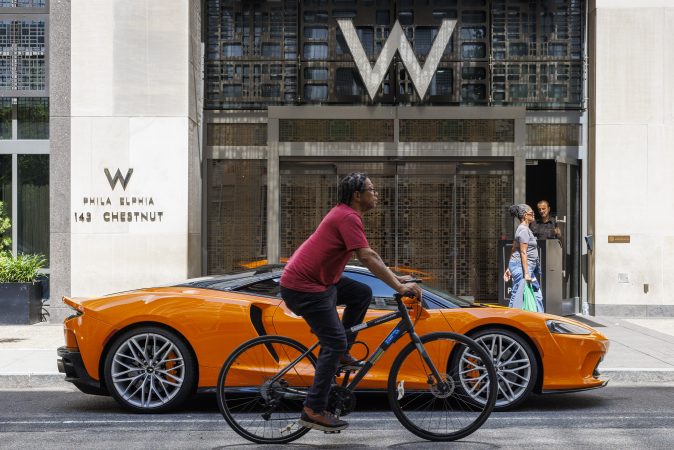
    The W hotel opened in 2021 at 15th and Chestnut Streets, three years after its intended opening date, and it still cannot be fully occupied because some window vents are inoperable.

    The project was developed by Brook Lenfest, son of former Inquirer owner H.F. “Gerry” Lenfest, whose foundation continues to own the newspaper.

    Editor’s note: This article has been updated with a statement from the subcontractor Ventana’s parent company.

  • Temple professor delves into America’s long and troubled history with public bathrooms

    Temple professor delves into America’s long and troubled history with public bathrooms

    The first public bathroom in the United States opened in 1869 in New York City. The controversies began not long after that.

    Since then, the debate over the government’s role in providing public accommodations has reflected America’s political movements and controversies.

    In the Progressive Era of the early 20th century, “comfort stations” were opened as an example of what good government could do. In the Jim Crow South, they were racially segregated. During the rise of the modern conservative movement in the 1980s, they were branded a typical failure of big government and closed.

    More recently, opinions of public restrooms have ranged from fear of disease during the COVID-19 pandemic to a sanitary necessity for people living on the streets to targets of the backlash against trans rights.

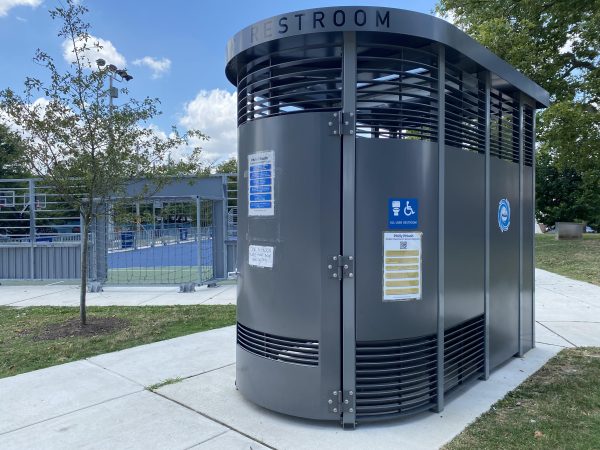
    Cities like Philadelphia are experimenting with bringing public toilets back in the form of the Philly Phlush: stainless steel contraptions that are easily cleaned but have limited privacy to keep people from sleeping or using drugs in them.

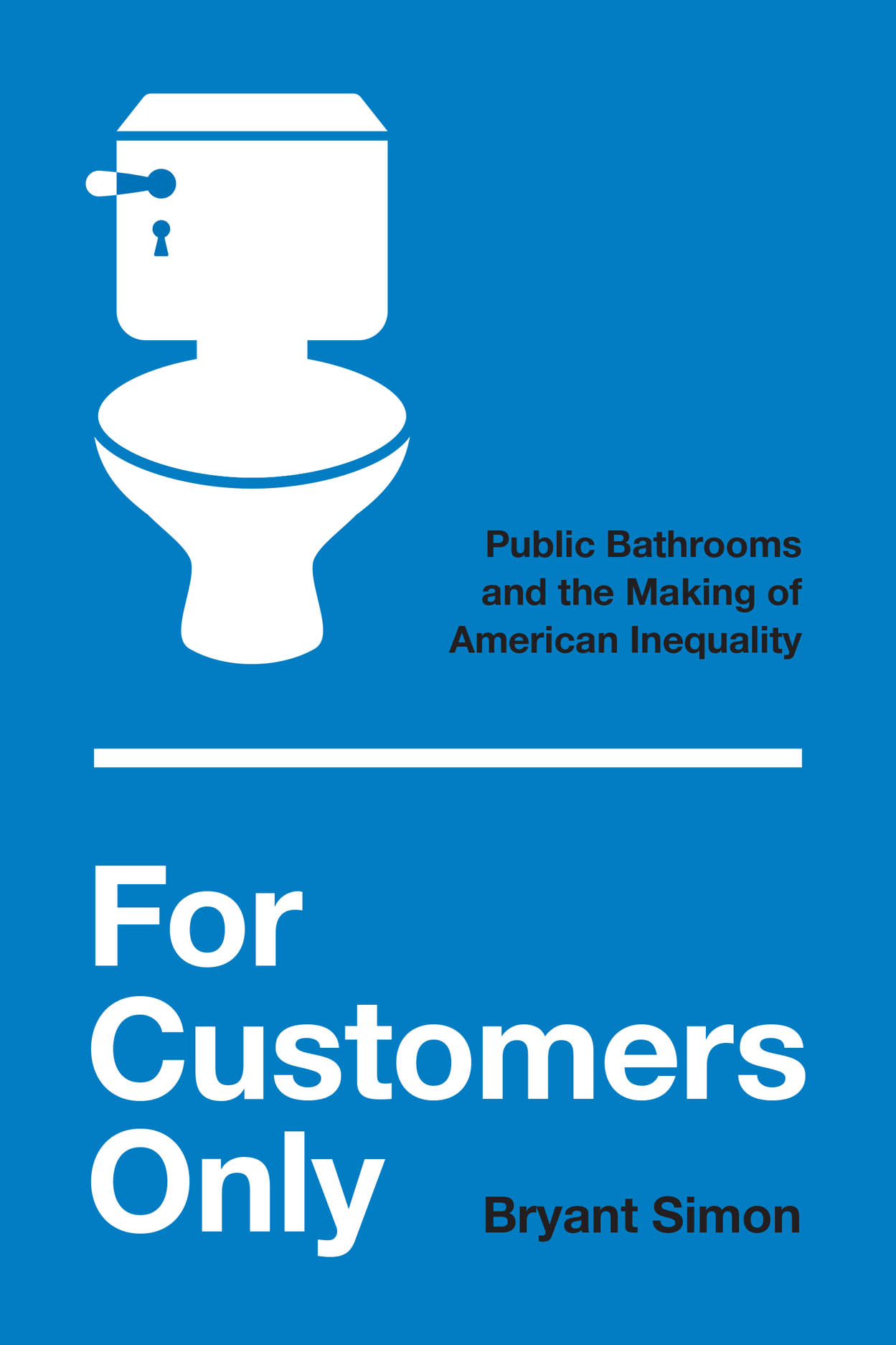
    The Inquirer talked with Temple University history professor Bryant Simon about his new book For Customers Only: Public Bathrooms and the Making of American Inequality and the debate over government’s responsibility to provide accommodation.

    This conversation has been edited and condensed for space.

    When did public bathrooms first emerge?

    What we understand as public bathrooms happened in the late 19th century, as privacy gets redefined and the scale of cities gets bigger. There’s a technology question here, too. You get the development of flush toilets and a really extensive sewer system.

    The other important thing is there’s a shifting notion of government built around the Progressive Era. There were public-ish bathrooms before fully public bathrooms, but they were all maintained by private structures [mostly taverns]. They want to solve a problem that they think is both personal, scientific, and social, and they recognize that the private sector can’t handle it.

    How long did it take for public bathrooms to become controversial?

    That is the part of the story that surprised me the most. The answer is: almost immediately.

    They offered privacy away from home. The public bathroom is seen by the middle and upper classes as an extension of the home. But privacy at home was exactly what working people, for the most part, didn’t have. Many working people lived in tenements with two or three brothers and sisters, their parents, and maybe their grandparents.

    This is an opportunity. And they immediately seize it to drink, do drugs, sleep, do their hair. Most ominously, for those in control, they seize on it to have sex, particularly men.

    As early as 1899, people in New York are complaining about men having sex in public bathrooms.

    By 1905, Long Beach hires two out-of-work actors to entrap men in public bathrooms.

    But [the authorities] can’t arrest their way out of it, and as early as the 1930s, public officials are beginning to advocate closing public bathrooms to scrub queer sex. The closing of public bathrooms becomes a way to edit people out of the public.

    The cover of Bryant Simon’s new book.University of Chicago Press

    Later, when segregation breaks down, southern leaders close public bathrooms. When mass homelessness first appeared, almost every single city closed public bathrooms. That’s what’s happening in the current moment with trans people.

    But that leads to our current problem, where now no one really has access to public facilities away from home.

    Why do public bathrooms seem to reflect major pressure points of our society?

    I would slightly reframe it and say they help to make these inequalities.

    Segregation is the most clear example. [White policymakers] are using the bathroom to not just divide people up but to really make them feel unequal.

    There was one other story I found that blew me away, where a Black janitor [in the Jim Crow era] is told to deliberately not clean Black bathrooms in the Atlanta bus station. It makes [Black Americans] feel the neglect of the state, but it also creates a smell that they know white segregationists will read as Black inferiority, which they are manufacturing.

    More recently, with the homeless, taking away public bathrooms is essentially denying their entire existence, their bodily needs. There’s a part in the book where I talk about Washington Square 20 years ago [where the public restroom was deliberately kept in a state of bad repair].

    We want them to feel their inequality in a profound sort of way. This is insulting; it’s humiliating; it’s uncomfortable; it’s cruel. There is an element of cruelty that runs through the book.

    Are paid toilets a policy solution?

    If I were building an ideal society, I wouldn’t want paid toilets, but we’re so far from an ideal that the question is would it be able to provide more people with more access? And would pay toilets also guarantee maintenance along the way?

    In a political fight, you have to know what you ultimately want and then what you’re willing to accept. [In Europe often] they’re just putting paid toilets in places where there’s wealthier people, or they’re servicing travelers only. They’re not really in service of the larger community.

    This is why what’s happening in Philly is interesting. Of the first Philly Phlush toilets, two of them are in neighborhoods. There are not a lot of parallels to that. It helps to build them in parks.

    What the past has taught us, and I think we know this in Philly really well, given the Starbucks incident downtown [where two Black men were arrested while sitting in a Starbucks and not purchasing anything] is that leaving things up to the private sector guarantees you inequality.

    Bryant Simon is a history professor at Temple University.University of Chicago Press

    In fact, if I were a progressive candidate, I would redefine sewer socialism to bathroom socialism. There was a Progressive Era reformer who said that these things show people in the most intimate way that government can work, and it actually could probably provide us leverage to do more.

    It seems like a hard idea for politicians to champion because by its very nature, it evokes shame and disgust.

    You’re right for another reason. Bathrooms are better at creating inequality than equality. The conundrum for politicians is the lack of public bathrooms is a place in which some really deep policy failures come into view. The housing problem, addiction, the collapse of the state, the fear of others.

    And public bathrooms are pretty expensive now. So when politicians invest in them and they don’t immediately yield results, then it’s hard to argue for [bathroom] funding over a new roof for a public school or a new clinic in a neighborhood or extended library hours.

    The really hard sell of the public bathroom is it’s the place that makes visible so many other problems that can’t be solved even with an investment of $300,000 for a public toilet.

    But if you don’t solve them, you become San Diego [which had a major hepatitis an outbreak in 2017] or San Francisco, which is dealing with problems of open defecation and health problems for everyone.

    It has the potential to affect all of us because of the health issues implied in not having enough public facilities.

  • A new warehouse is proposed for a quiet street in Northeast Philadelphia

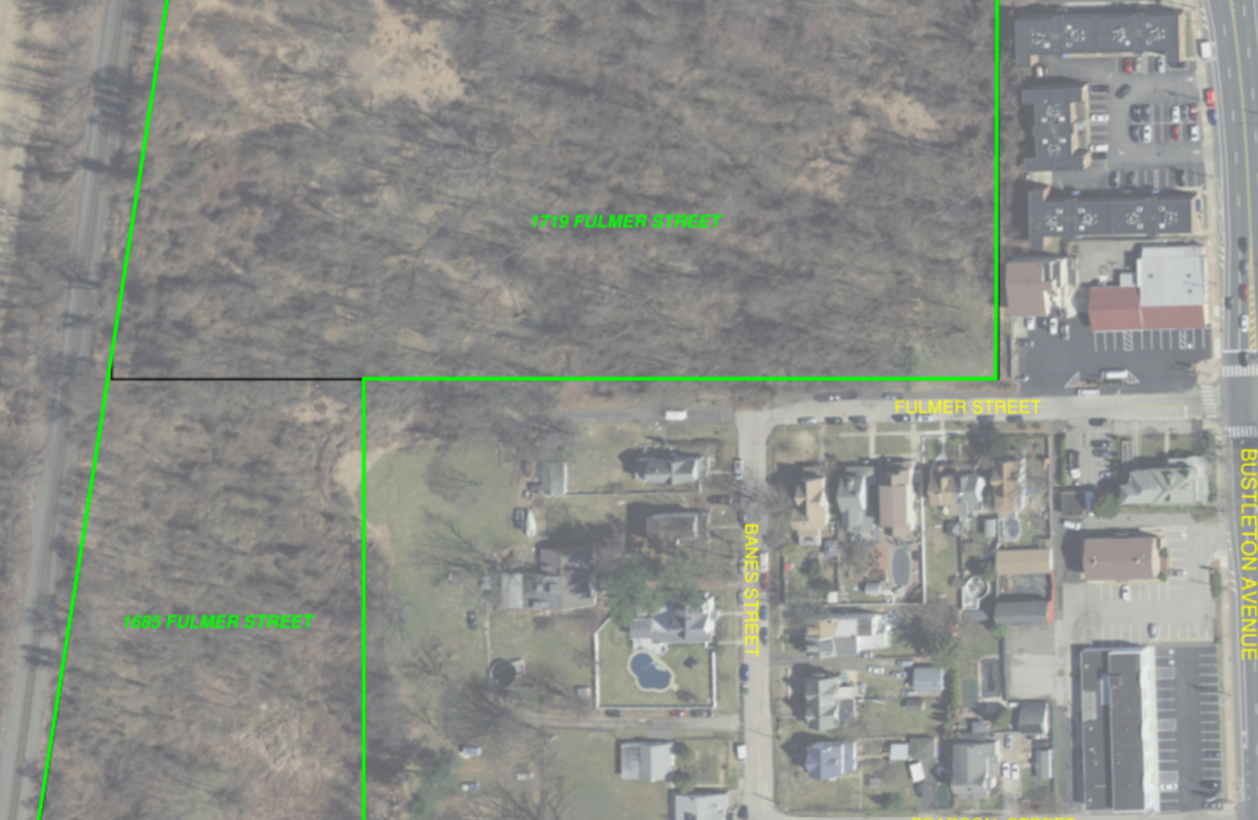
    Northeast Philadelphia’s Bustleton neighborhood is getting a new warehouse at 1685 and 1719 Fulmer St., a wooded area that was previously the site of a townhouse proposal.

    The over 123,000-square-foot warehouse proposal comes from Georgia-based developer Stonemont Financial Group and the global asset manager Nuveen.

    The 50-foot-tall warehouse would be built on land zoned for industrial uses, so it does not require zoning approvals. It is subject to community feedback only because it is large enough to trigger consideration by the city’s advisory-only Civic Design Review committee.

    In January, the Fulmer Street property was purchased for $2.75 million by a limited liability company associated with Nuveen’s industrial investment team in Dallas.

    The lot was sold by an LLC associated with Warminster-based County Builders, a suburban developer that hoped to build 60 townhouses or 48 duplexes on the wooded site.

    “I’m disappointed the residential developer decided not to go forward with this project,” said Jack O’Hara, president of the Greater Bustleton Civic League, who planned to support County Builders’ plans at the city’s Zoning Board of Adjustment. “The community greatly prefers residential over additional industrial.”

    An aerial view of the Fulmer Street site, which is heavily wooded.Ware Malcomb

    But while County Builders’ project had been embraced by the Greater Bustleton Civic League, a group of neighbors who live close to the site fiercely opposed the residential project during tense community meetings.

    “A small group of immediate neighbors were vocally opposed to basically any development, but they were especially opposed to the residential development,” O’Hara said. “And their comeback [to the residential builders] was we’ll take industrial. So, that’s what we’re left with.”

    When presenting the proposal to the Greater Bustleton Civic League, the warehouse developers told residents that they do not yet have a tenant for the proposed building but are marketing the location.

    The architect for the 1685 and 1719 Fulmer St. warehouse development is Ware Malcomb, a national design firm. A request for comment from the project’s zoning attorney was not returned.

    Recent years have seen a burst of new warehouse projects in Northeast Philadelphia, which contains large tracts of developable land. Much of that property has been zoned industrial and saw little interest from builders for decades.

    But as the recent surge in e-commerce and other kinds of new, nonmanufacturing industrial uses have grown, more of these properties have been seeing increased interest from developers.

    This story has been updated to correct the last name of the president of the Greater Bustleton Civic League. He is Jack O’Hara.

  • Nearly 26,000 square feet of downtown Bryn Mawr is for sale

    Nearly 26,000 square feet of downtown Bryn Mawr is for sale

    Five buildings in downtown Bryn Mawr, including the storefronts of Carina Sorella, Jeni’s Splendid Ice Creams, and the Buttery Bryn Mawr, are up for sale.

    The Bryn Mawr Collection, a nearly 26,000-square-foot portfolio that includes residential, retail, medical, and office space, was recently listed by real estate firm CBRE. The properties are owned by Main Line-based real estate developer Tim Rubin and are located in the heart of Bryn Mawr at 834-40 W. Lancaster Ave. and 860-66 W. Lancaster Ave.

    CBRE’s Chris Munley said the properties could sell for around $12 million.

    Rubin is a Narberth native who has owned the properties for almost 20 years. With the sale, he is hoping to recycle capital and make a similar investment somewhere else, Munley said.

    The Bryn Mawr Collection is “extremely rare, irreplaceable ‘Main Street’ real estate, providing a once-in-a-lifetime opportunity to break into a high barrier to entry market,” according to the listing. The portfolio is a stone’s throw from the Bryn Mawr SEPTA station and down the road from Villanova University, making it well positioned in one of the region’s most “affluent, educated, and densely populated suburban communities,” the listing reads.

    The properties are currently home to TCO Fly Shop, the Buttery, Jeni’s Splendid Ice Creams, and Carina Sorella, as well as apartments and offices.

    Beloved tenants such as Carina Sorella and The Buttery, which opened last week, aren’t going anywhere, Munley said. The successful businesses are “one of the reasons this is attractive” for potential buyers, and they have long-term leases that would extend beyond the sale of the properties.

    The properties are in their second week on the market, and Munley said the level of interest has been “eye-opening.” In addition to local players looking to expand their portfolio on the Main Line, Munley said he has seen interest from investors that usually focus on larger markets like New York, San Francisco, and Los Angeles.

    This suburban content is produced with support from the Leslie Miller and Richard Worley Foundation and The Lenfest Institute for Journalism. Editorial content is created independently of the project donors. Gifts to support The Inquirer’s high-impact journalism can be made at inquirer.com/donate. A list of Lenfest Institute donors can be found at lenfestinstitute.org/supporters.

  • 35% of Airbnb and VRBO rentals in Philly don’t have the right licensing, new report finds

    35% of Airbnb and VRBO rentals in Philly don’t have the right licensing, new report finds

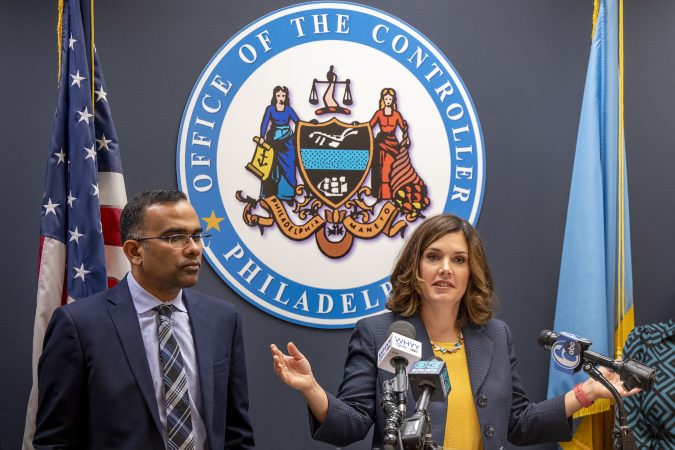
    More than a third of short-term rental properties like Airbnb and VRBO in Philadelphia have licensing issues, according to a new report from the City Controller’s office released Tuesday.

    The controller found that of 3,734 analyzed licenses associated with short-term rentals, 1,327 were expired or noncompliant.

    “Short-term rentals are an increasingly important part of Philadelphia’s lodging market, especially during major events that we’re experiencing right now,” City Controller Christy Brady said in a news release.

    “The industry’s growth requires a clear, efficient regulatory framework with strong licensing and enforcement tools to identify noncompliance,” her statement read.

    The city adopted licensing requirements in 2023, after coming under scrutiny for lack of regulation.

    In one case highlighted by the report, the controller found a host operating 50 listings in the city without any of the correct licensing.

    In other cases — including one property offering renters the chance to “Chill in Style Anime Themed Escape”— licenses were either absent or associated with unrelated uses like dumpsters or towing companies.

    Philadelphia’s short-term rental market has been in the spotlight this summer, as the city hosts major tourism events including the 250th anniversary of the Declaration of Independence, the World Cup, and Major League Baseball’s All-Star Game.

    The city has 121 registered hotels with 19,615 rooms and over 4,000 short-term rentals.

    That’s a large reduction from before the licensing regulations took effect in 2023, according to the Department of Licenses and Inspections (L&I).

    L&I says it has removed 10,452 unlicensed properties from rental sites since the beginning of 2024.

    Under the regulations adopted in 2023, short-term rental hosts who live in the properties they are renting have to get a zoning permit and a “Limited Lodging Operators License.”

    For those who do not live in the property, a zoning permit and a rental license with a hotel designation is needed. The licenses must be renewed annually.

    No short-term rentals are allowed in the Far Northeast section of Philadelphia, where City Councilmember Brian J. O’Neill, a Republican, banned them.

    The controller’s report recommends simplifying the “complicated compliance process for hosts” and switching to a more tech-oriented enforcement approach, which could monitor “noncompliant listing across multiple platforms.”

    The result, the report suggests, would help the system move away from “complaint-driven enforcement managed by a small staff” of L&I workers.

    Nashville and Mount Pleasant, S.C., have outsourced short-term rental regulation monitoring to third-party companies using automated tools to track listings across platforms.

    As a result, they both saw over 90% of rentals complying with local laws, a huge increase from the previous status quo.

    “The city can benefit from using technology-assisted monitoring tools that can support the identification of potentially noncompliant listings across multiple booking platforms,” Brady said in a statement. “Other cities are already utilizing this technology and significantly improving their enforcement measures.”

    In the run up to the World Cup, short-term rental hosts in Philadelphia — as well as hotel leaders — have expressed concern that the anticipated level of consumer interest before this summer’s festivities has not fully materialized.

    Just before the games began, the region’s short-term rental market had an occupancy of about 60%, according to AirDNA, which analyzes data from companies like Airbnb and VRBO.