Category: Philadelphia Politics

  • Mayor Parker’s office declined to say if the city will be refunded for Christina Aguilera’s canceled July 4th concert set

    Mayor Parker’s office declined to say if the city will be refunded for Christina Aguilera’s canceled July 4th concert set

    Mayor Cherelle L. Parker’s office on Tuesday declined to say whether the city will save money after pop star Christina Aguilera, who was scheduled to headline the city’s free July Fourth concert, ended up not taking the stage Saturday due to the weather delays that pushed much of the concert and the subsequent fireworks display into the early morning hours of Sunday.

    Parker spokesperson Joe Grace said the city had “no comment as yet” on whether the city would be refunded in light of the change in plans triggered by Saturday’s severe thunderstorms.

    Aguilera was the only artist who ended up skipping their set, and Grace emphasized Parker’s role in ensuring the rest of the performers returned to the Benjamin Franklin Parkway to restart the show around midnight after it was suspended about 9 p.m.

    “We’re focused on the performers who did return and put on a tremendous show once the storms subsided,” Grace said in a statement, noting that the Roots, Kathy Sledge, State Property, Meek Mill, Will Smith, and DJ Jazzy Jeff all performed after the concert restarted. “In the evening, those artists came back, at the request of [concert producer] ESM and Mayor Parker — and put on a great concert. … All the evening artists credited the mayor with bringing them back to perform.”

    The decision to restart the concert pushed the fireworks display to about 2:30 a.m. Sunday.

    “After the storms passed, there were a lot of people who could have called it a night,” Parker said in a statement Tuesday. “Instead, we made one more call. The Roots and the other artists, including Will Smith returned. Thousands of people returned. Our city employees never stopped working. Our first responders stayed at their posts. Together, we finished what we started. That’s who Philadelphia is.”

    Smith, in an Instagram post on Monday, said he returned to the Parkway to perform in the Independence Day concert after midnight after receiving a personal call from Parker.

    Will Smith and DJ Jazzy Jeff (left) perform at One Philly: Unity Concert for America on the Benjamin Franklin Parkway Sunday, July 5, 2026, in Philadelphia.Yong Kim / Staff Photographer

    Parker’s administration this year agreed to pay $15.5 million to ESM Productions, a for-profit Philadelphia-based company known for putting on major events on the Parkway, to organize the show. The city paid ESM at least $10 million prior to July Fourth, but it is unclear if any money was paid out to performers in advance of the show.

    The annual concert was previously managed by the nonprofit Welcome America, a public-private partnership organized by the city in the 1990s, and cost taxpayers far less.

    The last July Fourth concert cost Welcome America about $3 million to produce, according to a person with knowledge of the event who was not permitted to discuss details about its costs. Welcome America’s entire budget for 2024 — its salaries and office expenses, a concert that featured Kesha and Ne-Yo, and several smaller events it organizes — totaled about $6.6 million, about $5.3 million of which came from government grants, according to the group’s most recent federal nonprofit disclosure.

    It is unclear how much Aguilera was supposed to be paid for her performance this year.

    ESM’s original $10 million contract with the city, which was obtained by The Inquirer, included a nearly $3.4 million budget for “talent.”

    The contract between the city administration and ESM did not include a breakdown on how much each artist would be paid, and it did not include details related to artists’ pay in the event of canceled performances.

    The city also signed a $5.5 million contract amendment with ESM that did not include budget details.

    ESM Productions declined to comment.
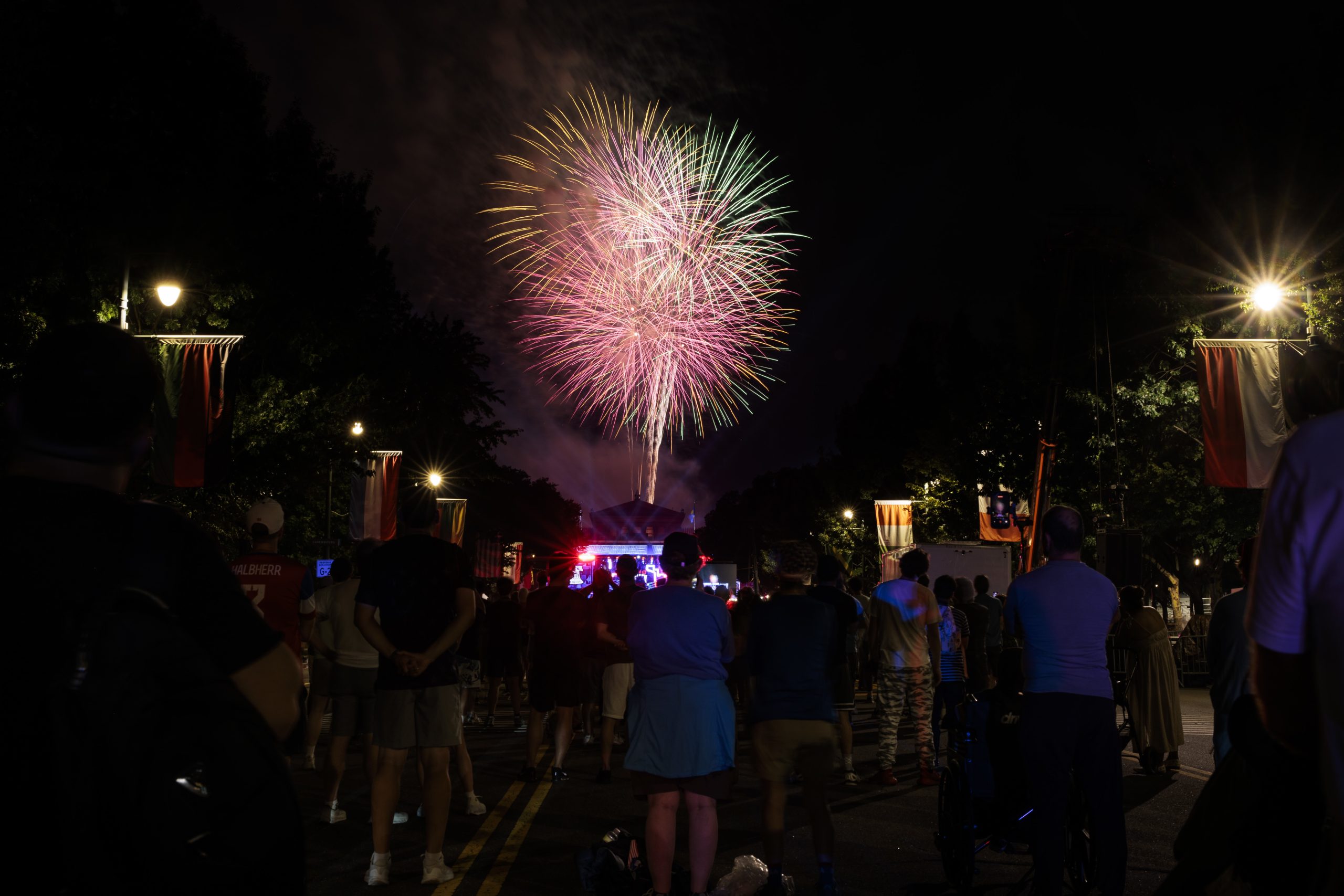
    Fireworks fill the sky at the One Philly: Unity Concert for America on the Benjamin Franklin Parkway on Sunday, July 5, 2026 in Philadelphia.Monica Herndon / Staff Photographer

    United Talent Agency, which represents Aguilera, did not return a request for comment. The pop star on Sunday posted videos from her rehearsals prior to the show on social media.

    “Philly, we had such a special 4th of July show planned for you!! 😭😫☔️🌧️,” Aguilera wrote on Instagram. “We poured so much heart and soul into this one, but safety always comes first—and sadly, the storm meant we couldn’t give you the show we worked so hard to bring to life 💔 Thank you to everyone who came out, and to my team for all the hard work that went into building this show… I hope to be back to Philly soon! xxxx.”

    The city’s payments to ESM are only part of the taxpayer costs for putting on the annual concert. The city also increases hours for city workers such as sanitation workers and police officers to put on the event.

    Grace on Tuesday declined to share the total cost of the concert, and reiterated Parker’s previous promise to lay out all expenses related to it at a future date.

    “As we’ve said previously, we will account for all expenses associated with the concert, along with producing an analysis of economic benefits accruing to the city, and release a report at a later time,” he said. “We want the report to be comprehensive.”
  • A union fight inside Philly DA Larry Krasner’s office may test his pro-labor reputation

    A union fight inside Philly DA Larry Krasner’s office may test his pro-labor reputation

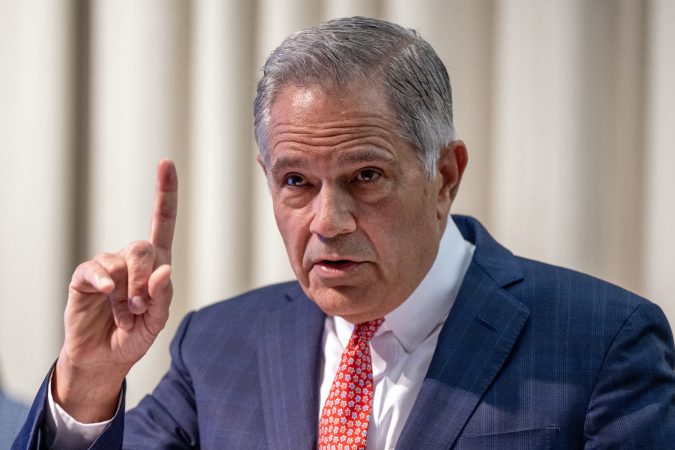
    Philadelphia District Attorney Larry Krasner has long said he’s a friend to organized labor. As prosecutors in his office are gearing up for an election to authorize their union, Krasner has said their efforts could ensure his own legacy, because “whatever person might take my seat later cannot easily undo what we have done.”

    But not everyone in his office is feeling the support.

    More than 100 lower-level employees in the District Attorney’s Office, including paralegals and victim and witness coordinators, are separately trying to secure their own union — and some say they’re meeting resistance.

    Several workers said that Krasner’s administration has put up roadblocks and taken positions that they see as at odds with his public image as a leader of the city’s progressive movement.

    Five paralegals and coordinators, all of whom spoke to The Inquirer on the condition of anonymity to avoid retribution before a union is in place, said the unionization process has left them disappointed with Krasner.

    “He was elected in large part because of a number of very important pro-labor organizations in Philadelphia,” said one employee. “If the DA just came out and publicly supported it, that’s what I would expect from the most progressive DA in America.”

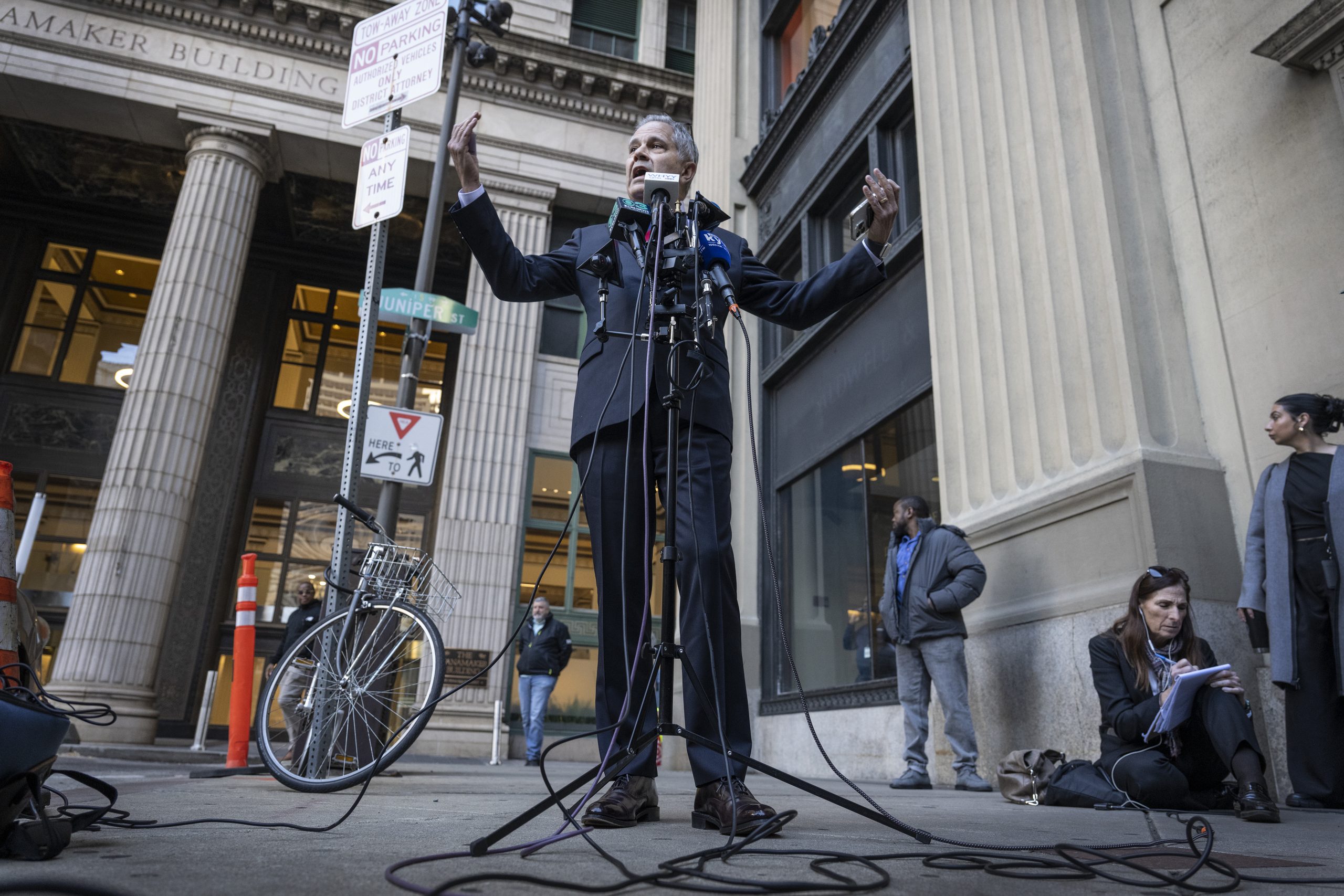
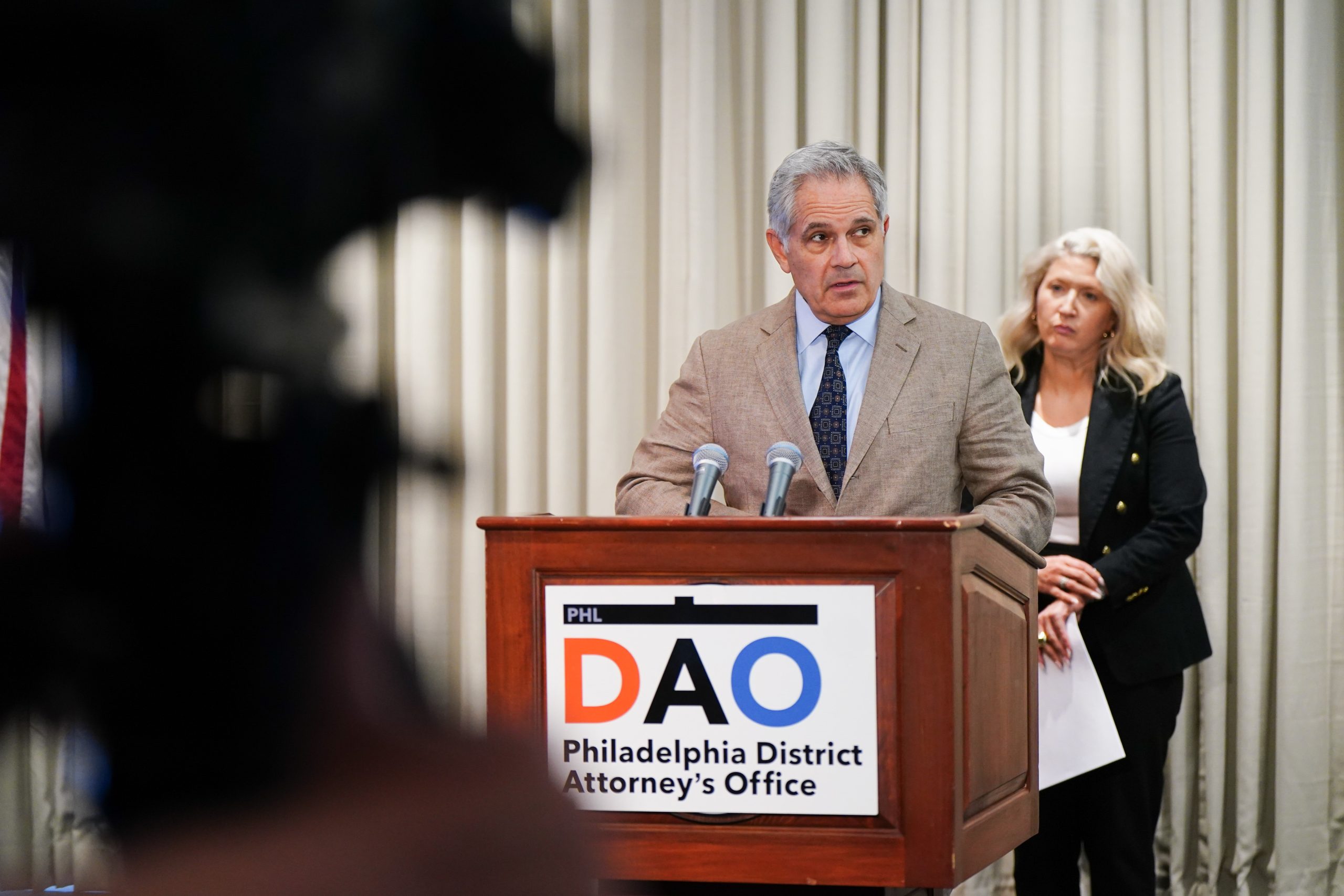
    District Attorney Larry Krasner speaks during a press conference about a homicide in May.Jessica Griffin / Staff Photographer

    And meanwhile, the lower-level employees say there’s been a separate Wild West-style standoff between two unions, which are both vying to represent them.

    Krasner said in an interview on Monday that he supports his employees’ right to organize a union through a “properly conducted free, fair, and final election.”

    “I will support them 100% in whatever decision they make to form or not to form a union, and whatever union they choose if they do form one,” he said.

    Still, it all could become a political flashpoint for Krasner, a third-term progressive Democrat whose name has been floated by some in the city’s political class as a potential candidate for higher office. He has not ruled out running next year, when Mayor Cherelle L. Parker, a more centrist Democrat, will be up for reelection.

    While Krasner has positioned himself as supportive of organized labor, his relationship with some leaders of the city’s politically powerful unions has been strained. He’s received steadfast support from the unions that tend to align with left-leaning politicians, but clashed with others, including the leaders of the building trades unions that last year backed his challenger.

    Krasner last month publicly criticized Parker for not acquiescing to his office’s requests for additional funding, to which Parker countered that his funding has increased every year since she became mayor. He said this week that he believes the unionization effort among his employees is the result of his office being underfunded during Parker’s administration.

    Paralegals and victim and witness coordinators said that they have explored unionization to improve wages. Several staffers described living paycheck-to-paycheck and holding second jobs to meet expenses.

    The starting annual salary for paralegals, who assist attorneys with legal research and drafting documents, and for coordinators, who shepherd victims and witnesses through the court process, is $46,000.

    Several employees also said they’re seeking union representation to improve their workplace culture. Two said the expectations of them change frequently, and that responsibilities often expand with little warning.

    But the road to get there, they said, has not been smooth.

    To unionize, the lower-level employees partnered last year with organizers at the United Steelworkers Local 286. The union represents workers in a diverse range of industries, including school bus drivers, pharmaceutical packaging plant workers, and some clerks in the city’s court system.

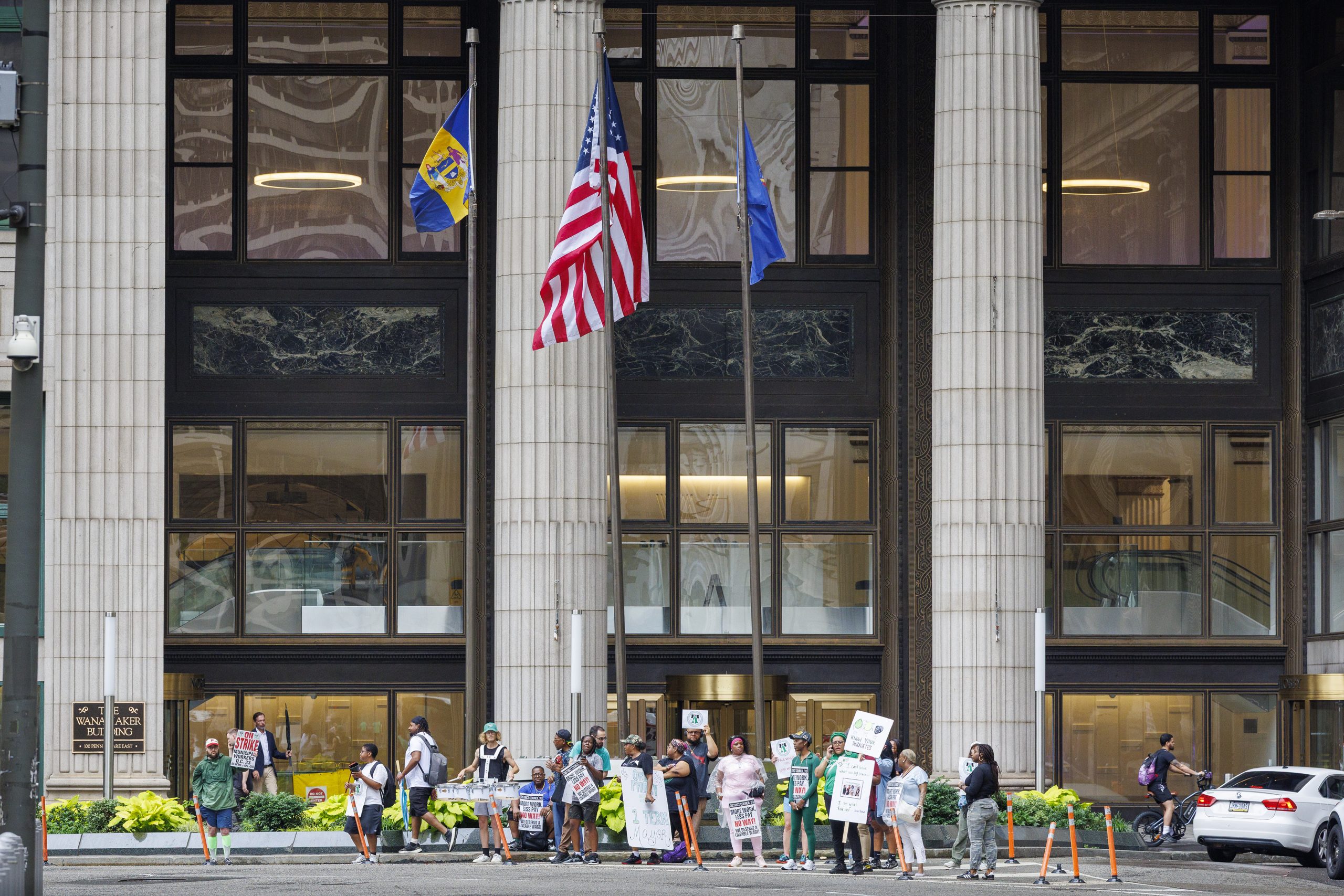
    Picketers employed in the District Attorney’s Office picket outside during the AFSCME District Council 33 strike on Wednesday, July 2, 2025. DC 33 already employs some workers in the DAO.Alejandro A. Alvarez / Staff Photographer

    Carlo Simone Jr., the union’s president and business manager, said his local has been seen by some city employees in recent years as “an alternative” to the American Federation of State, County and Municipal Employees District Council 33 and District Council 47.

    Those two much larger unions represent thousands of city employees, with DC 33 largely representing blue-collar workers and DC 47 working primarily with white-collar staff.

    The prosecutors in Krasner’s office will be represented by DC 47 if their election is successful. But several of the lower-level workers in the District Attorney’s Office had preexisting relationships with USW and said that they thought the steelworkers’ union would be the best fit to represent them.

    In December, USW filed a petition with the Pennsylvania Labor Relations Board, asking the state to authorize an election that would lead to them representing the paralegals.

    But DC 33 had other plans. In February, DC 33 filed paperwork with the state and argued that the paralegals instead belong in their municipal workers’ union, setting up a power struggle with the steelworkers.

    The PLRB agreed with DC 33.

    Last month, the board issued a preliminary ruling that said DC 33 is the appropriate union to organize the workers. The board reasoned that, under longstanding precedent, DC 33 is responsible for representing “nonprofessional” employees — or those that don’t require advanced professional education — who are designated as members of the civil service.

    The vast majority of city employees are members of the civil service, which is the city’s merit-oriented system for hiring and promotion. It is intended to separate municipal employment from political considerations.

    But for decades, most employees in the District Attorney’s Office have been exempt from the designation. Under the Philadelphia Home Rule Charter, employees are civil service unless they are specifically exempted. Assistant district attorneys and some investigators in the DA’s office are exempt, but there is no carve-out for paralegals or victim and witness coordinators.

    The lower-level employees who spoke to The Inquirer said they want their jobs to be classified as civil service, because the designation would require job descriptions and afford them protections against arbitrary discipline.

    But Krasner’s office last month filed paperwork opposing the PLRB ruling, saying that lower-level workers in his office have not been designated as civil service for decades and that the labor board doesn’t have the authority to reclassify them.

    Krasner called the PLRB’s decision a “rogue finding that was illegal.”

    “This is a law enforcement agency. We have to follow the law,” he said. “If there’s going to be civil service, it will be because our workers’ rights are protected because they decide it’s beneficial to them and because legal processes are followed.”

    In this November file photo, District Attorney Larry Krasner speaks to reporters during a news conference outside the District Attorney’s Office after he won reelection.Jose F. Moreno / Staff Photographer

    But employees said they saw Krasner’s opposition as a slight.

    “He is not pushing for us,“ one employee said, ”and in fact is making this process way longer than it should have been.”

    The PLRB has yet to issue a final ruling, and it’s unclear when one may come. A spokesperson declined to comment. DC 33 also declined to comment.

    If the PLRB’s ruling stands, paralegals and victim and witness coordinators would be represented by DC 33, and it’s not clear if they’d have the ability to pursue organizing with another union.

    Simone, of the steelworkers’ group, said that USW is encouraging employees in the DA’s office to “stay the course,” even if they ultimately join a different union.

    “It might not be as soon as they want it,” he said, “but they will be OK.”

  • Pa. officials mourn the death of former State Sen. Shirley Kitchen, who represented North Philly for 20 years

    Pa. officials mourn the death of former State Sen. Shirley Kitchen, who represented North Philly for 20 years

    Pennsylvania elected officials are mourning the death of former State Sen. Shirley Kitchen, the second Black woman to serve in the state Senate and a champion for progressive issues who represented parts of North Philadelphia for more than two decades. She died Saturday at 79. A cause of death was not immediately clear.

    Kitchen represented the 3rd Senatorial District, composed of parts of North Philadelphia, for 20 years. She is remembered by her former colleagues as a pillar and matriarch of her community who worked tirelessly to improve the lives of low-income people, even after she retired.

    “She did so many things for so many people. Now that I’m old enough to appreciate it, I’m not quite sure how she did it — and she did it with such force,” said State Sen. Anthony H. Williams (D., Philadelphia), who served alongside Kitchen in the Senate and had known her for decades. Kitchen was elected to the state Senate in 1996 and served five terms before retiring in 2016.

    Her former colleagues, some through tears, credited many of Pennsylvania’s recent criminal justice reforms as being born under Kitchen’s leadership, with her early legislative proposals paving the way for their passage years later. For example, Kitchen authored early drafts of what is now known as the Clean Slate Act, which automatically seals some nonviolent convictions after 10 years, hiding them from most employer and landlord background checks. She first introduced similar legislation in Harrisburg years earlier and it failed. In 2018, two years after Kitchen retired, the Clean Slate Act became law in Pennsylvania and was heralded as a first-in-the-nation model for criminal justice reform.

    Elected officials across the city shared their condolences, remembering Kitchen as an advocate who cared deeply for her community.

    Mayor Cherelle L. Parker in a social media post on Sunday recalled Kitchen as “fighting for people who often had no one else to fight for them,” and as a trailblazer for Black women in politics.

    “Shirley Kitchen cared about working people, and she cared about Philadelphia,” said Parker, the city’s first Black female mayor and a former state representative.

    City Council President Kenyatta Johnson said in a statement that Kitchen “never forgot who she was fighting for,” dedicating her life to making people’s lives better.

    State Rep. Joanna McClinton (D., Philadelphia), Pennsylvania’s first Black female speaker of the House, wrote in a social media post that Kitchen was “a mentor and her service in the state House and Senate inspired me greatly.”

    Williams added that Kitchen also sought to elevate other Black politicians, like himself, to elected office — and laid the groundwork for much of the city’s current political progressivism.

    “The reality is that a lot of the infrastructure that helps them, Shirley had everything to do with it, and more,” Williams said, noting her advocacy and experience during the Civil Rights Movement. “I would hope the progressives in this generation would tip their hat to a generation that really created the progressive movement.”

    State Sen. Sharif Street (D., Philadelphia) had known Kitchen since he was a child, and said she helped him see the power a Senate seat has in improving the lives of his neighbors. When she decided to retire, Kitchen encouraged Street, who was on her staff at the time, to run to fill the vacancy in the 3rd District following her fifth and final term in the state Senate.

    Williams and Street recalled Kitchen as a fair but demanding mentor.

    “If she told you to do something, you better do it,” Williams said, with a laugh.

    For Street, Kitchen “didn’t limit her advice. She had opinions about everything in my life, including when my wife was right and I needed to listen to her.”

    Street said he spoke with Kitchen weekly, and Williams said he remained in touch with her as recently as last month. She often had ideas or issues she wanted the senators to take up. Street spoke with her last week about a forthcoming Registered Community Organization meeting that she was leading about a new proposed development nearby, emblematic of her continued involvement in her community.

    Prior to her election to the state Senate, Kitchen was involved in the National Welfare Rights Movement, which was a progressive advocacy group for the dignified treatment of women and children, largely led by Black women, during the 1960s and 1970s, Williams said.

    Kitchen served as the minority chair of the Senate Public Health and Welfare committee, in which she often leaned on her social work experience to inform her legislative proposals.

    A Democrat in a time where Republicans controlled the state legislature, she served her entire tenure in the minority party, but was still able to garner bipartisan support for some of her legislative proposals.

    “This image of her being an urban Black woman from Philadelphia would limit her ability to get stuff done in the Senate just wasn’t true,” Williams added. “She could analyze people and figure out what way to approach them with exceptional skill.”

    Born in 1946 in Augusta, Ga., Kitchen attended the Philadelphia School District and graduated from Antioch University in 1979 with a bachelor’s degree in human services, according to her Senate Library biography. She went on to work for former Philadelphia Mayor John Street, Sharif Street’s father, before she was elected to the state House in a special election in 1987. After she lost reelection to the seat in 1989, Kitchen returned to Harrisburg a decade later after her election to represent the 3rd Senatorial District.

    “She was a transformational figure that loved her community and understood that the purpose of those of us holding elected power is to be able to make a difference in the lives of the people we serve, in a way that they can feel and see,” Sharif Street added.

    Funeral services will be announced in the coming days, he said.

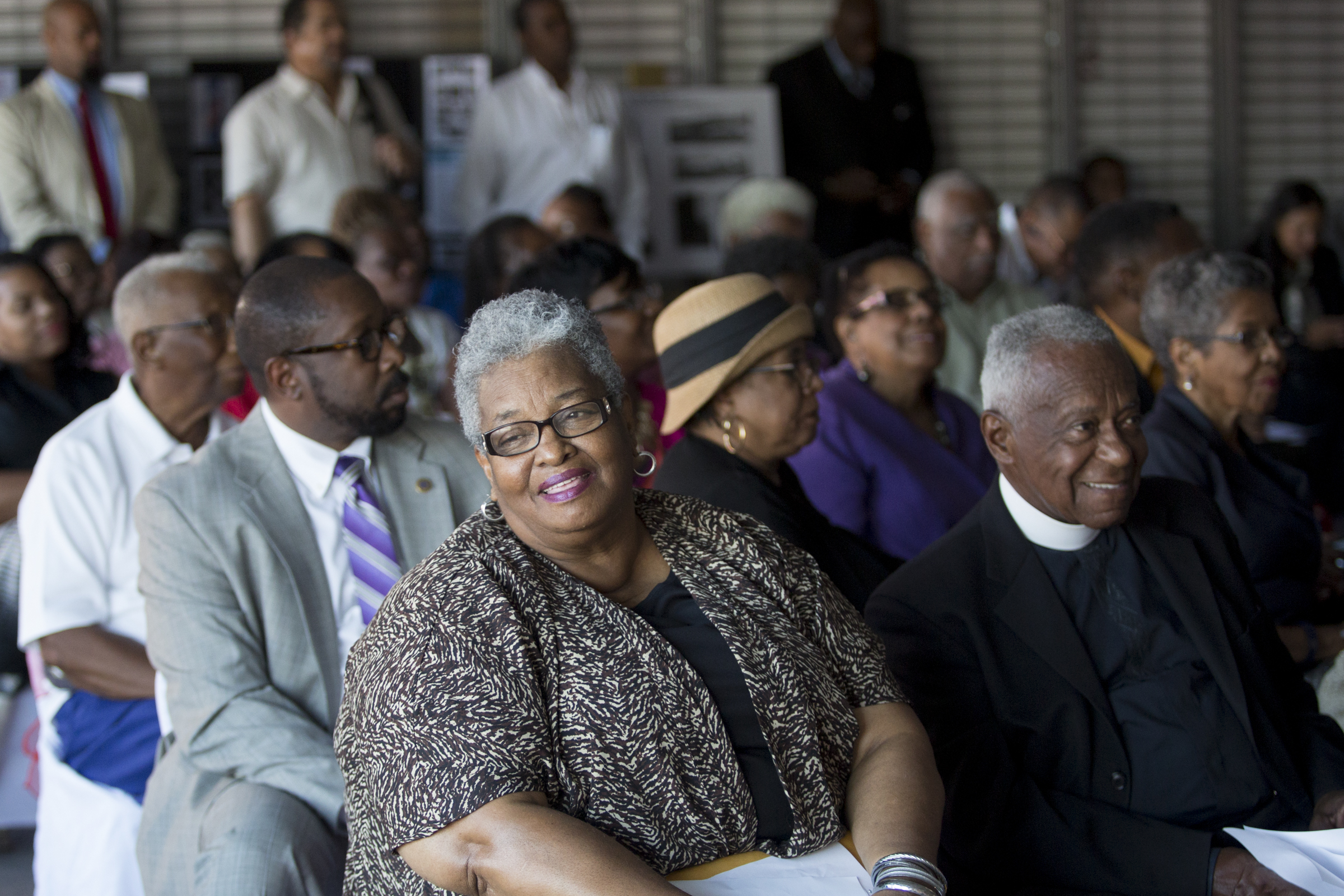
    Senator Shirley Kitchen in the audience during speeches in honor of the historical marker that was unveiled at Sullivan Progress Plaza September 14, 2016. The plaza was the first black-owned and operating shopping center in America. Wednesday, Sept. 14, 2016.Margo Reed/ Staff Photographer
  • ‘I’m on this roller coaster’: Philly teachers and school staff are stuck in limbo despite promises to save hundreds of jobs

    ‘I’m on this roller coaster’: Philly teachers and school staff are stuck in limbo despite promises to save hundreds of jobs

    When a deal was struck to save 340 classroom-based jobs in the Philadelphia School District, Mayor Cherelle L. Parker and Superintendent Tony B. Watlington Sr. declared it “Christmas in June.”

    It’s July now, but manystaffers still don’t have clarity on exactly who’s allowed to come back to positions that were almost cut and how that affects vacancies system-wide.

    “It’s a mess, and it’s getting messier,” said Alison Andrawos, a teacher at Potter-Thomas Elementary in North Philadelphia who accepted a job in another district after learning this spring that her position would be cut and still doesn’t know whether it will be restored.

    Monique Braxton, the school district spokesperson, said the system is “moving forward with restoring the approximately 340 school-based positions approved in the revised budget,” but that staffing the positions is separate from restoring them.

    “We have been meeting with our union partners on implementation and are now working with principals on school staffing,” Braxton said in a statement. “All approved positions will be restored in the district’s budget system by Wednesday, July 9.”

    The complex process is causing additional uncertainty for teachers and staff members and prolonging an already tumultuous hiring season as the district deals with fallout from 17 forthcoming school closings and the back-and-forth over millions in cuts stemming from a $300 million district budget deficit.

    Watlington this spring directed school principals to build their 2026-27 budgets factoring in the cuts, including about $50 million in school-based trims and the elimination of 340 classroom jobs. Parker then proposed a $1-per-trip rideshare tax she said would cancel the classroom cuts, but City Council balked, and for a time, the position losses appeared inevitable.

    After a breakthrough with city officials on June 10 — after the district’s deadline to pass its 2026-27 spending plan — officials triumphantly said the cuts were off the table.

    But restoring the positions was always going to be complicated.

    Schools’ hiring timeline means that many of the teachers, counselors, and climate staff who were told they were going to be force-transferred because of the cuts sought and found new jobs over the past few months, either inside the district or elsewhere. Now, those workers either must rescind their acceptance of those new jobs or say “no thanks” to returning. Either way, that creates new vacancies in July, months after most schools have filled jobs and when many people are on vacation.

    “We haven’t heard whether our positions are going to be reinstated, we don’t know what positions are available, and we don’t know what we’re doing in a few short weeks,” said Andrawos, an English as a second language specialist who began teaching in Philadelphia schools in 1997.

    ‘I’m pretty sure I’m going to be leaving’

    Andrawos said she didn’t want to leave the city, but amid the worry of the past few months, she felt she had to explore jobs outside the district. Andrawos has been offered a position at a Delaware County school that comes with a raise and a shorter commute.

    “I’m pretty sure I’m going to be leaving the School District of Philadelphia because of this,” Andrawos said.

    She said the decision is tough — she’s forged real bonds with her students’ families, and has been fielding messages saying they hope she stays at Potter-Thomas.

    It’s not clear whether Andrawos’ position at Potter-Thomas, in North Philadelphia, will be restored because of the complicated way budgets are built, and the latitude principals have to shift positions based on school need and their own judgment calls.

    Jobs are filled in city schools two ways — first, by a process called site selection, where principals hire any candidate they choose for open positions. Once the site selection window closes, district staff without positions choose from among open jobs in seniority order. Site selection closed weeks ago; force transfers without jobs have had their hiring sessions pushed back multiple times so far, and are still waiting.

    Jane Roh, a spokesperson for the Philadelphia Federation of Teachers, said the union notified members June 19 that all positions cut due to the deficit would be restored; the PFT was told that district notifications to affected employees would immediately follow. So far, that has not happened.

    That leaves staff sweating and frustrated by a lack of answers, some said.

    A roller coaster

    One K-8 teacher, who asked that his name be withheld because he feared repercussions, was on the force transfer list because of budget cuts. With no notice that’s being walked back, he’s left with the possibility of having to get emergency certified to teach in another subject area, which would mean taking more courses.

    The uncertainty is tough, and the answer to every question posed to the district and the union so far has been, we don’t know yet.

    “For this whole summer, where teachers are supposed to have the space to reflect and rest and plan, we can’t do that to any degree,” the K-8 teacher said.

    A teacher at a district high school, who also asked to remain anonymous because her employment situation is not settled, is in a similar boat. When her position was cut because of the deficit, she site selected into a job at another district high school.

    The process has been frustrating, she said. She once got an email saying her transfer was canceled, but that turned out to be incorrect, though she never got official notice from the district about its error and had to make calls herself to figure it out.

    When Parker and Watlington made their good-news announcement, she had no idea what to make of it. She still doesn’t, the teacher said.

    “I’m on this roller coaster; I literally don’t know which school I’m going to work at in the fall,” said the high school teacher, who would be teaching different classes, depending on where she lands. “I want to prepare for the upcoming school year, and that’s impossible if you don’t know what you’re teaching.”

    Staff at Olney High, the district school perhaps most affected by budget cuts, have been pressuring the district, publicly and in private, to halt the losses planned for their school — Olney had been slated to give up 17 staffers.

    The school had been overstaffed four years ago as it navigated a complicated, unprecedented transition from a charter school back to a district school. It has soared, adding programs and opportunities and building a strong school culture; the community fears weathering steep staff cuts would jeopardize its progress.

    Sarah Apt, a longtime Olney teacher active in the pushback against cuts, said Wednesday that the school was told it’s getting back three of its 17 staffers.

    “We’re happy about that, but still fighting for more,” said Apt.

    Among those still in limbo is Eric Baker, an Olney English teacher who’s been struggling with the back and forth, and the possible implications for the school he’s come to love — the school recruited students for a college prep track that’s potentially losing most of its teachers, including Baker.

    “Because of this uncertainty, I’ve had to interview other places. I don’t know where I’m going to go. I would rather have the certainty of knowing where I’m going to work than having to deal with this,” said Baker. “It’s been frustrating.”

  • Pa. residents stand to lose an average of $520 a month in Social Security benefits in six years unless Congress acts

    Pa. residents stand to lose an average of $520 a month in Social Security benefits in six years unless Congress acts

    For 30 years, Nettie King, 92, has relied on Social Security to survive.

    She and her former employers at the Oak Lane Diner near her home paid into Social Security through payroll taxes for years.

    While the storied institution closed in 2015, the Social Security benefit checks that King’s work generated have kept coming. “It’s been comfortable,” explained King, who said she was the diner’s first server of color in 1963.

    But now there’s a problem.

    King is among 68 million Americans facing possible reductions of 22% to their benefits by 2032 unless Congress acts, according to a new report by Social Security Administration (SSA) trustees released last month.

    Pennsylvania residents could lose an average of $520 each from their monthly Social Security checks, according to the Committee for a Responsible Federal Budget, a nonpartisan think tank. That would affect an estimated 255,000 Philadelphians receiving Social Security benefits, according to Olivia Mitchell, director of the Boettner Center on Pensions and Retirement Research at the Wharton School of the University of Pennsylvania.

    “Losing that much would be a disaster,” King said. “I pray the money doesn’t stop.”

    It won’t if Congress overcomes its partisan divide and creates a workable solution to make Social Security solvent, say advocates for the elderly — including AARP, whose senior vice president Bill Sweeney warned in a recent press call that “the longer they wait, the harder it gets.”

    Speaking for the Trump administration, Treasury Secretary Scott Bessent said in a statement, “We are working to preserve Social Security … and recognize that more work remains to secure benefits for future beneficiaries.”

    Someday soon

    Analysts have long predicted the Old Age and Survivors Insurance trust fund from which most retired Social Security claimants draw benefits could dissipate, said Temple University labor economist Samuel Solomon. But that was always regarded as a “someday” event.

    “Someday” may now be just six years away. “That’s a big deal,” Solomon said.

    The SSA wouldn’t stop paying benefits altogether, Mitchell said. Although the report predicts the fund’s reserves could be tapped out by 2032, “continuing payroll tax revenue [from people currently working] would cover about 78% of scheduled retirement benefits,” she added.

    At nearly $1.6 trillion annually, Social Security represents more than 20% of the U.S. budget and is the nation’s largest single expense, Solomon said.

    Various factors have combined recently to accelerate the fund’s potential depletion, according to the report submitted by SSA trustees, who include Bessent, as well as Health Secretary Robert F. Kennedy Jr.

    First, the fertility rate this year is going down faster than predicted: 1.75 children per woman vs. 1.9.

    Also, immigration is lower than estimated. That trend will continue as the government maintains restrictive immigration policies, experts say. It represents a potentially immense loss of revenue, according to Wharton research, which shows that “unauthorized immigrants” paid $24 billion in Social Security payroll taxes in 2024, despite being ineligible to collect any benefits.

    Both the slowed fertility and diminished immigration rates have lowered the anticipated number of workers and the payroll taxes they’d have contributed to Social Security, said Kathleen Romig, Social Security expert with the Center on Budget Priorities and Policies, a left-leaning research group.

    The final factor, the trustees report said, is that the One Big Beautiful Bill Act that decreased income tax rates has reduced revenue that would’ve flowed into the program.

    The SSA didn’t respond for requests to comment.

    The Social Security system had been strained long before the trustees report. The giant baby boomer generation has been retiring since around 2011, siphoning millions from the program, Solomon said.

    In 1950, when the first boomers were 4 years old, every 100 workers paid the Social Security benefits of 13 elderly people, Solomon said. Today, it’s 25 elderly people per 100 workers — “more responsibility on a single working person to support more retirees,” Solomon said.

    That worries Doris Kitt, 81, of Jenkintown, a Social Security benefits recipient who still works at a South Jersey pediatric dental practice.

    Doris Kitt talks with coworker Asia Bagby. Kitt, who is 81, still works and also collects Social Security benefits.
    Tom Gralish / Staff Photographer

    “Less Social Security when rent and food continue to cost more is a challenge,” Kitt said.

    ‘Give me what I’m due’

    Through the years, Republicans and Democrats have forwarded competing remedies for repairing Social Security.

    GOP suggestions include raising the retirement age to 70, and privatizing the system.

    Democrats call for raising payroll taxes and ending the payroll tax cap. (Currently, wages above $184,500 are not subject to Social Security taxes. Democrats would eliminate the cap so higher-income earners pay into the system on 100% of their earnings.)

    In a statement, U.S. Rep. Brendan Boyle, a Northeast Philadelphia Democrat running for reelection in November against Republican challenger Jessica Arriaga, said the trustees report makes it clear that “we must act to protect Social Security benefits for all generations.“

    He referenced a bill he introduced in May 2025 that would require Americans earning more than $400,000 to contribute a greater percentage of their wages to Social Security. It’s now before the House Ways and Means Committee.

    U.S. Rep. Lloyd Smucker, a Republican representing Lancaster County, also issued a statement, saying Social Security could be fixed by a “bipartisan fiscal commission” to “build consensus” and eliminate depletions of benefits. Smucker is being opposed by Democrat Nancy Mannion in his bid for reelection.

    “We must preserve the trust fund millions of Americans rely on and keep our promise to those who have been paying into the system their entire lives,” he said.

    That covenant must be honored, said Shirley Stringfield, 70, a retired city worker from Germantown.

    “I spent 55 years of my life paying into Social Security,” she said, “so I want them to give me my due. I expect to receive my benefits until I expire. I need every cent.”

  • Democrat Bob Harvie sends cease-and-desist letter to Rep. Brian Fitzpatrick, claiming defamation in campaign ads

    Democrat Bob Harvie sends cease-and-desist letter to Rep. Brian Fitzpatrick, claiming defamation in campaign ads

    The Democratic nominee for a crucial swing seat in Pennsylvania is accusing the Republican incumbent of making categorically false and defamatory statements, the latest move as escalating attack ads circulate in the Bucks County district.

    Attorneys representing Bob Harvie sent a cease-and-desist letter to U.S. Rep. Brian Fitzpatrick, a five-term Republican incumbent facing a competitive reelection, and his campaign for a “series of defamatory allegations” that, they say, misleadingly portray Harvie’s role in an FBI investigation.

    A lawyer representing Fitzpatrick and his campaign confirmed receipt of the letter but did not respond to additional requests for comment.

    The advertisements purport that Harvie, a Bucks County commissioner, is currently under criminal investigation for stealing taxpayer money, assertions his campaign said falsely stem from a federal case that appeared to have quieted after the grand jury met in Philadelphia in 2022. The probe was about problems related to contracts, unions, and a Pennsylvania school district.

    Harvie is not and never was under investigation, his lawyers said, nor was he the subject of the federal case, but mailers and television spots continue to blur the lines.

    The election fights are ramping up as both men compete to win Pennsylvania’s 1st Congressional district in November, and with it, decide fate over which party controls the U.S. House. It’s one of four seats in the commonwealth being targeted by both political parties during the high-stakes midterm elections. Fitzpatrick has represented the area since 2017.

    Rep. Brian Fitzpatrick (R., Pa.) speaks to reporters on June 3 after the House passed an Iran war powers resolution.Haiyun Jiang

    Harvie’s attorneys sent Fitzpatrick and his campaign the letter Thursday shortly after 5 p.m. and gave the campaign 24 hours to respond.

    “Brian Fitzpatrick’s lies are intended to deceive the voters and that’s a disgrace to this district,” Harvie said in a statement.

    Further action will depend on whether and how Fitzpatrick and his campaign proceeds, Harvie’s campaign said.

    Defending America PAC, a political action committee that supports Fitzpatrick, has also used similar language in social media posts, news releases, and video content that said Harvie is the subject of an FBI investigation. Harvie’s campaign sent Defending America PAC a cease-and-desist letter Thursday, too, around 9 a.m.

    In a statement, Chris Pack, president of the PAC, said further legal action from Harvie would be an effort “to chill protected political speech.”

    What happened with the FBI investigation?

    The FBI in 2020 interviewed several people with connections to Falls Township and the Pennsbury School District, LevittownNow reported in September 2022.

    Harvie and several other officials were among those who testified before a grand jury in the probe, which has not been active since 2022, the campaign said. But Harvie and his lawyers in the letter maintain he “is not now and has never been the subject of any criminal investigation” or stealing money from taxpayers to throw himself a party.

    Political advertisements, paid for by the Fitzpatrick campaign, suggest otherwise.

    In a television spot that has aired on three cable systems that run across the district since June 30, a man is seen asking, “Commissioner Harvie, why did you steal taxpayer money to throw yourself a party” while the words “BOB HARVIE UNDER FBI INVESTIGATION” are displayed on screen. His campaign committee, Brian Fitzpatrick for All of Us, paid for the ads.

    The letter also accuses Fitzpatrick, a former FBI agent himself, of “actual malice,” which would require proof in court that he made the advertisements with knowledge that the allegations were false or with reckless disregard to whether they were false or not.

    When similar charges were made in 2023 in a race for county commissioner, Harvie denied the claims as false.

    “There comes a line where you cannot straight up lie about folks,” said Dan McCormick, Harvie’s campaign manager.

    What other action could be taken?

    Harvie’s campaign could file a lawsuit claiming Fitzpatrick has defamed him, but that would involve likely months of subpoenas, depositions, and evidence gathering before the case potentially goes to a judge or jury — a process that could extend past November’s election.

    The Federal Election Commission, an independent agency in the U.S. government, oversees federal elections and campaign finance, but defamation is under the jurisdiction of courts, not the commission.

    The television stations that have aired the advertisements have also been alerted to the defamation claims, Harvie’s campaign said. The Federal Communications Commission, another independent U.S. agency, monitors communications by radio, television, wire, satellite, and cable. However, it also does not investigate or resolve defamation claims.

    It’s not uncommon for campaigns to trade cease-and-desist letters as elections heat up, and some are outright ignored.

    How much money has been spent on the campaign?

    A competitive U.S. House seat has drawn state and national attention, resources, and lots of dollars.

    Fitzpatrick entered April with $7 million already stored in the bank, allowing him to spend early on ads against Harvie — even before the Democrat won his May primary. Some of Fitzpatrick’s money went to attacking Harvie in his race against Lucia Simonelli, a grassroots candidate and climate policy expert.

    In total, Fitzpatrick has already spent $2.81 million from Jan. 1, 2025, to April 29, 2026, according to campaign finance reports — with roughly four months left to go before the campaign. During the entire 2024 campaign cycle, he spent $3.47 million.

    In addition to the FBI investigation ads, other TV hits and mailers have framed Harvie as a “career politician” who “voted to give himself a raise” and voted to count faulty mail ballots during a U.S. Senate recount, in violation of a state Supreme Court ruling.

    Prior to beginning his tenure as commissioner in 2020, Harvie was on the Falls Township Board of Supervisors for 17 years, and spent 12 of those as chair. As chair of the Bucks County Board of Commissioners in 2022, Harvie approved an annual 1% increase in salaries for commissioners and several other local offices.

    Fitzpatrick and the National Republican Congressional Committee have placed a joint ad buy starting Tuesday. This type of purchase was made more possible after the Supreme Court case, announced this week, that allows coordinated campaigns and direct campaigns to work more in tandem.

    Harvie, though, has his own stash of cash. He’s raised $1.45 million, according to campaign finance reports, and has released ads that connect Fitzpatrick to President Donald Trump’s agenda — even as the lawmaker has voted against Trump on numerous issues and earned his ire. The next financial disclosure will be released July 15, and Harvie’s campaign said it has now raised about $2 million.

    National Democrats have also thrown resources behind him, and the Democratic Congressional Campaign Committee has listed Harvie on its “Red to Blue” list as a key seat to flip.

    “This is a defining moment in this campaign: After nearly a decade in D.C., Fitzpatrick has been caught with egg on his face by resorting to the very kind of gutter politics that he pretends to stand against,” said DCCC spokesperson Eli Cousin.

    Harvie was one of four swing-districts Democratic candidates Gov. Josh Shapiro supported ahead of the May primary, as he looks to elevate the party in fall and help win control of Congress.

    Staff writer Fallon Roth contributed to this article.

  • Read the full text of Pope Leo XIV’s speech to the National Constitution Center

    Read the full text of Pope Leo XIV’s speech to the National Constitution Center

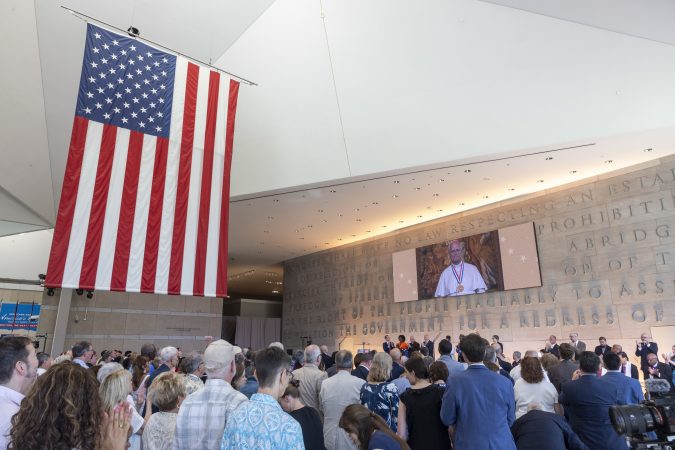
    Here is the full text of Pope Leo XIV’s speech to the National Constitution Center, livestreamed from the Vatican on July 3 for his acceptance of the Liberty Medal. The Inquirer’s coverage of the event can be found here.

    Thank you very much.

    Dear friends,

    I am honored to accept the Liberty Medal of the National Constitution Center in this year that marks the 250th anniversary of the founding of the United States of America with the signing of the Declaration of Independence on July 4, 1776. On the eve of this momentous occasion, I offer a warm greeting to all those assembled at the National Constitution Center in Philadelphia. As a son of this great country, founded by courageous men and women who dreamed of liberty and of a better life for themselves and for their children, I join you in asking God’s blessings upon America’s future, that the lofty ideals enshrined at the beginning of the Declaration of Independence may continue to guide the flourishing of the nation in unity, justice and peace.

    From our youth, most of us have admired the eloquence of those words, with their resounding appeal to the law of nature and to nature’s God as the basis of their assertion that all men and women are created equal and endowed by their Creator with certain inalienable rights, including the right to life, liberty and the pursuit of happiness. While couched in the language of the Enlightenment, that claim is ultimately grounded in an understanding of the human person inspired by the great biblical vision of man and woman being created in the divine image. It is indeed here that we discover the basis of human dignity; dignity which precedes the establishment of any state, and whose custody constitutes its very purpose.

    In these past 250 years, for so many peoples throughout the world, it was the firm resolve to achieve the noble vision of the nation’s founders that made America a byword for freedom, as the country opened its doors to successive waves of immigrants, enabling them and their children to play their part in shaping the future of the nation. It was this same love of freedom that inspired the United States, in the darkest hours of the last century, at the time of the two world wars, to look beyond itself and, at great sacrifice, to champion the cause of freedom beyond its own borders.

    As every American knows, however, the path to building a society that would embody those high ideals of liberty and justice for all was not always easy and, in many respects, is still a work in progress. Indeed, the effort to realize this vision is one that must be taken up anew in each generation and in the face of ever new challenges. Today, as we look to the future, this historic anniversary presents us with the opportunity to reflect once again on the nation’s founding principles in the hope that America will remain ever true to the dream that has earned it the title of land of the free and home of the brave.

    The first right enshrined by the nation’s founders was the right to life, for no one who is deprived of life can enjoy liberty or pursue happiness. A country’s vitality is deeply tied to the value it affords to human life in every form and condition, acknowledging the dignity endowed upon every human person by virtue of their very existence. The inherent worth of every human life has led the noble hearts of generations to praise the marvelous works of the Creator and stand in reverence before so precious a gift. Indeed, it is precisely this reverence that we must continue to cultivate — one that sways the hearts of individuals and inspires laws that recognize and safeguard this gift from the moment of conception to natural death. Reverence, too, will aid us in discovering that we are guardians and stewards of those entrusted to our care. In this regard, the moral greatness of a nation is manifested, above all, in its capacity to support, protect and cherish the lives of all, especially the most vulnerable and those whose worth is questioned.

    Following the right to life, liberty was and is preeminent among the principles revered by the men and women who have sought within this nation’s borders a new beginning, often equating it with previously undreamed-of hope. Though frequently understood as the ability to act as one would like, authentic freedom runs much deeper. It is founded upon the human person’s capacity to know the truth and adhere to what is good, even at great cost — a sacrifice well known to many who have labored to shape this country. The desire for truth and freedom, as well as the very pursuit of happiness, continues to inspire people of all generations to ask fundamental questions regarding the meaning of life, our ultimate purpose, and indeed about God, and it is proper for magnanimous hearts to endeavor to answer these questions with sincerity. These answers inevitably determine the direction which we seek to give to our lives, and America has long championed the religious freedom necessary to follow responsibly the dictates of conscience in this regard, free from fear and coercion, as enshrined in the First Amendment to the United States Constitution.

    It is this freedom that holds sacred the inner sphere of the person where convictions are formed and where conscience can guide the decisions made in the intimacy of the human heart. This same freedom also ensures the right of every person to worship according to one’s own belief, and of individuals, communities and associations to give public expression to their faith. In fact, religious freedom gave rise to the American tradition of allowing for interfaith dialogue and interreligious cooperation in promoting the public good and enriching the debates on the great moral and ethical issues that have faced the nation and shaped the course of its history. It is my hope that this tradition will continue to bear fruit in a public discourse marked by moderation, respect for the views of others and an ongoing effort to find common ground in promoting the cause of peace and reconciliation, at home and abroad.

    The forbearers of this country, men and women of diverse backgrounds, religions and languages, were able to find that common ground and the strength necessary to pursue a better future. The principles that inspired America’s founders, rooted as they are in the truth of the human person, brought them together in a single cause, a common dream. Unity lent strength to that dream, giving rise, under God, to the United States of America. E pluribus unum — out of many, one. In order for a nation to flourish, it must be truly united; united not by goals bound to momentary endeavors, but by ideals that do not fade with the passing of time. May the principles we have reflected upon today — a shared human dignity, equality and the rights laid out in the Declaration of Independence — ever be a source of such unity and a guiding light for the present moment and the years to come.

    In accepting this award, I therefore pray that this, the 250th anniversary of the founding of this great nation, may be the occasion of a solemn recommitment to these ideals that have made America a country that values peace and prosperity, a country characterized by generosity and nobility of heart. I commend all of you, as well as the future of the nation, to the One who is himself the source of true freedom and lasting peace, the One whose very name is Peace.

    May God bless America!

  • The 250th anniversary gathering of Congress at Independence Hall touches on divided times, uneven history

    The 250th anniversary gathering of Congress at Independence Hall touches on divided times, uneven history

    Two days before the American revolutionaries signed the Declaration of Independence in 1776, the Second Continental Congress gathered in Philadelphia to formally vote on the matter.

    Standing in virtually the same spot 250 years later, their distant successors commemorated that historic moment while grappling, at times, with what it left out.

    “The fact that we have you here together is a symbol of progress,” said U.S. Rep. Dwight Evans, a retiring Democrat who’s spent more than four decades as one of Philadelphia’s central Black political leaders. “250 years ago, people like me were not fully included in the founders’ vision. … The struggle to live up to our founding ideals was hard fought.”

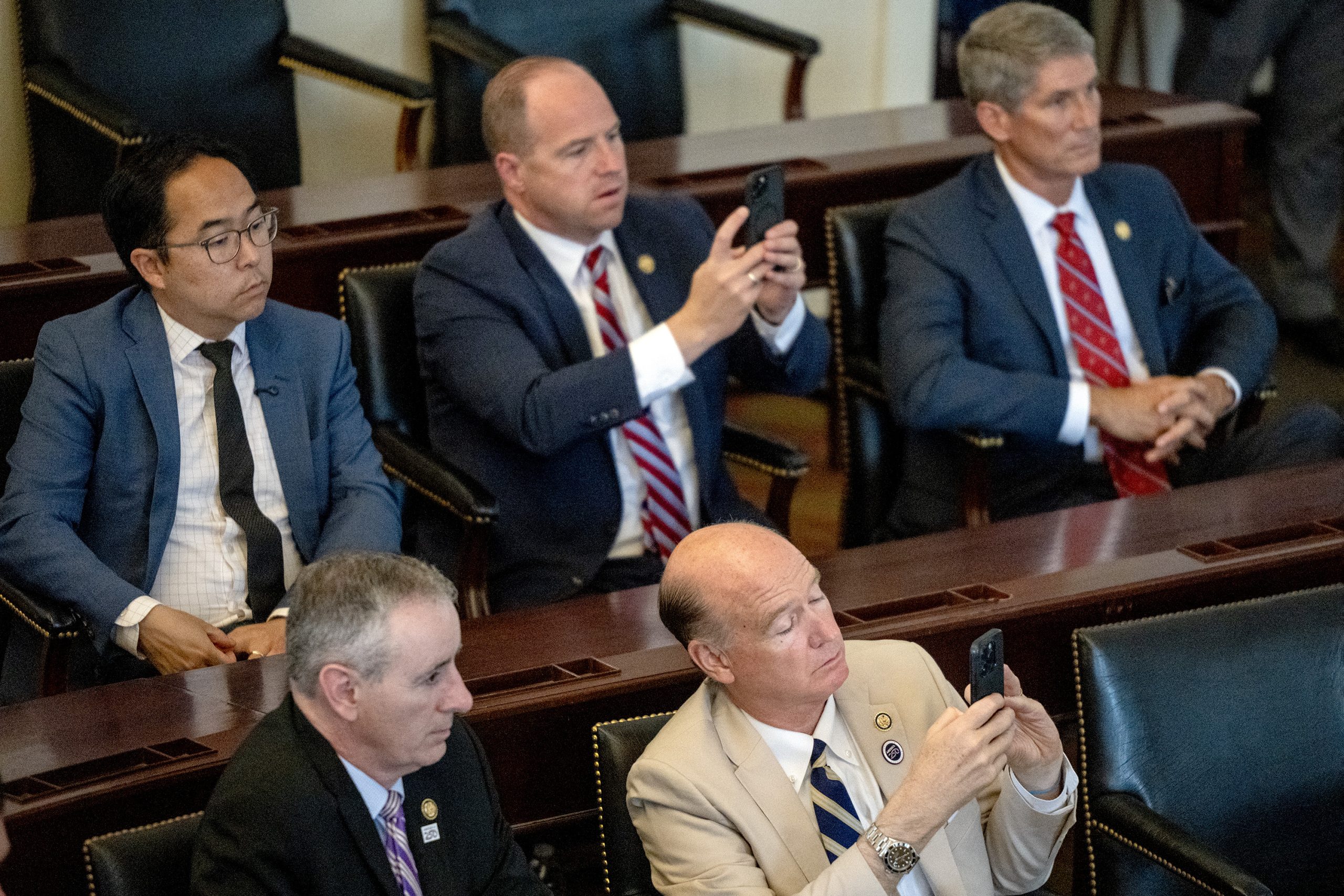
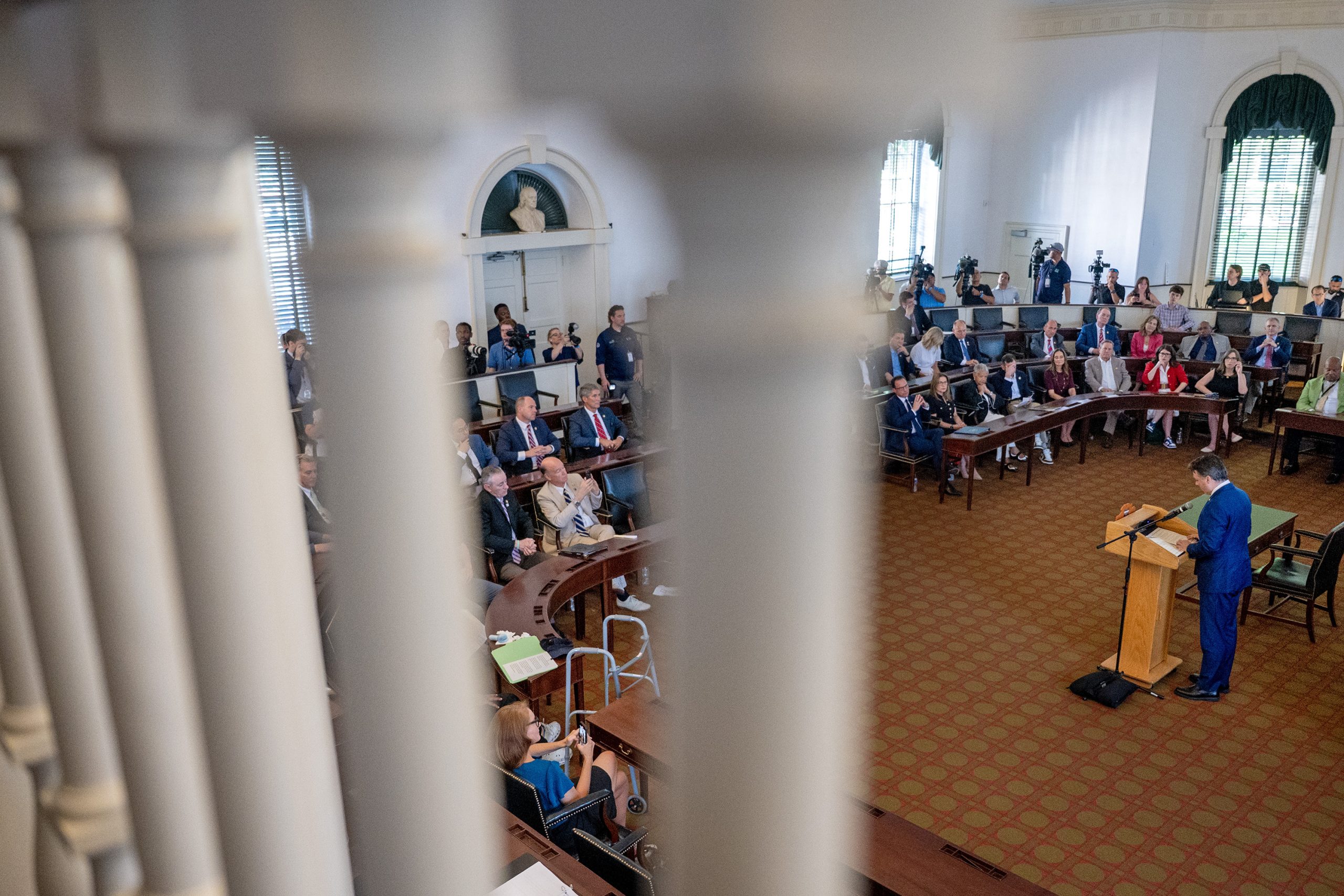
    More than 30 members of the 119th Congress attended the event at Independence Hall, one of many marking the Semiquincentennial in the city this week. U.S. Rep. Brendan Boyle, a Philadelphia Democrat whose district includes the historic site, had worked for years to bring his colleagues to the site to mark the nation’s founding.

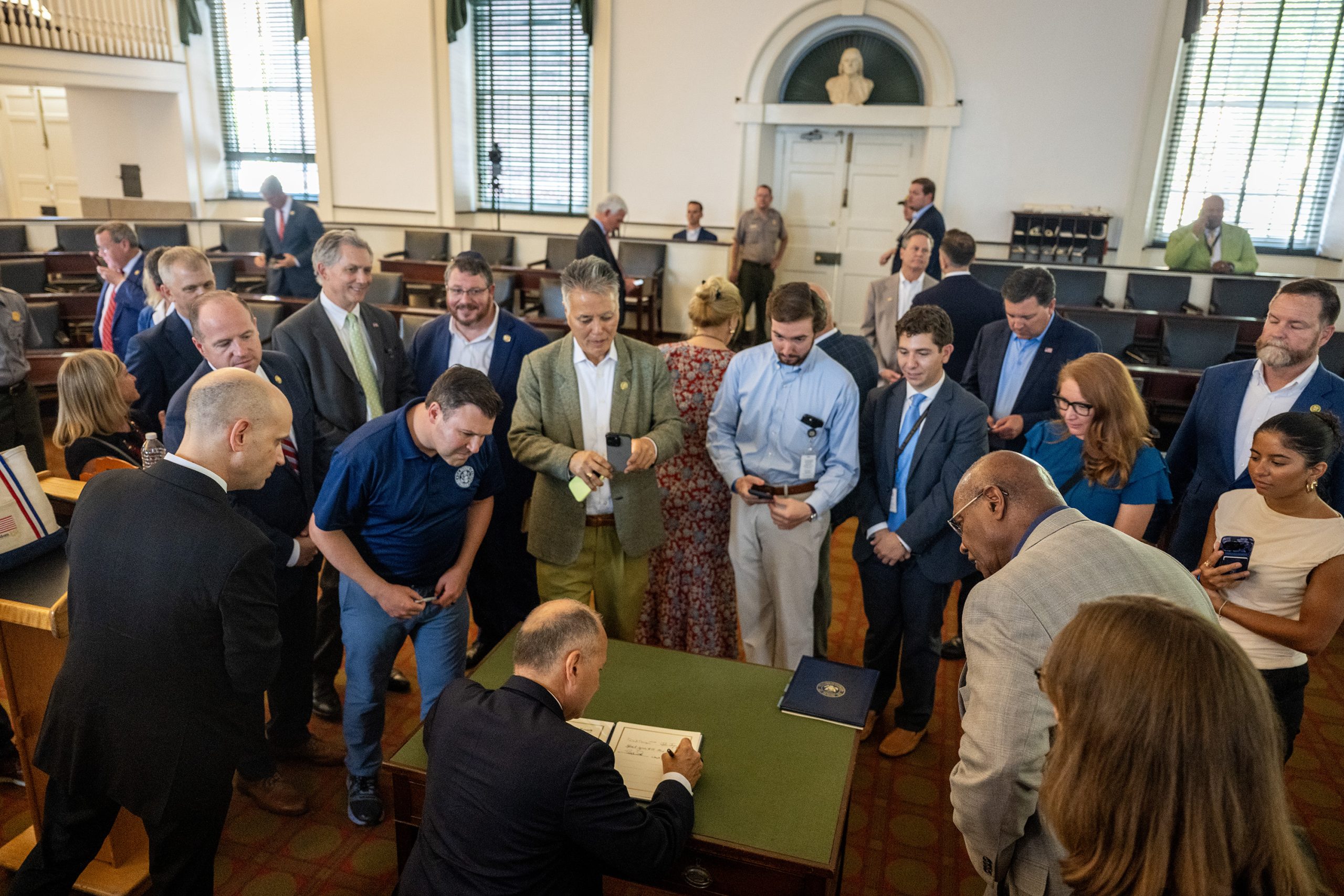
    A bust of Benjamin Franklin is above the door in the back of Congress Hall as U.S. Rep. Lloyd Smucker of Lancaster County signs a ceremonial document after the House of Representatives met at Independence Hall on Thursday. Tom Gralish / Staff Photographer

    As Boyle and others walked through that history in Congress Hall — the room where the legislative branch convened before relocating to Washington — they referenced both the uneven history of the country and the divided, polarized times that define modern America.

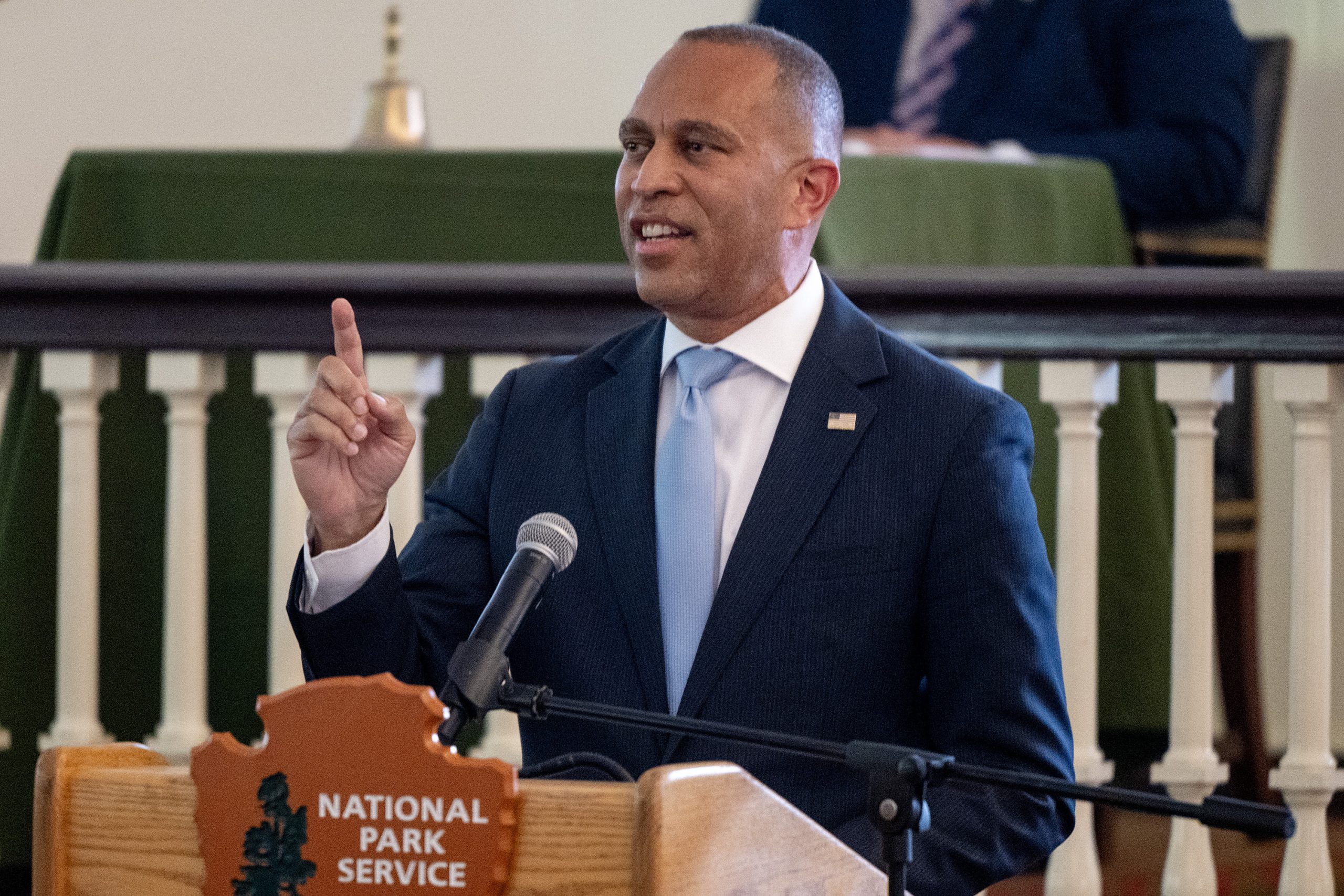
    “America has indeed struggled at times, beginning with the horrors of chattel slavery and the oppression of Native Americans, to live up to our highest ideals,” said House Minority Leader Hakeem Jeffries (D., N.Y.). “But the high–minded principles, upon which this great country was born, have served as an eternal lamp post for us to continue to strive and march toward a more perfect union.”

    Jeffries’ remarks — from a high-profile lawmaker poised to become the first Black speaker of the U.S. House if his party wins control in the midterms later this year — came as President Donald Trump’s administration has tried to pull back the federal government’s references to the history of slavery, including on Independence Mall, most notably at the President’s House, a block from where the lawmakers gathered.

    The Democratic leader was one of multiple speakers, including Pennsylvania Gov. Josh Shapiro, who made veiled references to Republicans’ ceding Congress’ role as a check on Trump. The members of Congress who served at Independence Hall believed the chamber “would be separate and coequal, never subservient or co-opted,” Jeffries said.

    “Let us never forget that we don’t work for any other branch of government,” he said. “There are no kings in the United States of America. We work exclusively for the American people.”

    House Democratic Leader Hakeem Jeffries addresses the Representatives meeting in Congress Hall. He said it was important to speak about the history of slavery in America. The gathering marked the 250th anniversary of the day the Second Continental Congress voted for independence.Tom Gralish / Staff Photographer

    U.S. Rep. Glenn “GT” Thompson, a Centre County Republican and dean of the Pennsylvania delegation, presided over the event. He said afterward that some of the remarks turned “a little political.”

    “But it is an excellent observation,” Thompson said. “We don’t have a king. We can thank George Washington for that.”

    Thompson was one of several Pennsylvania Republicans to attend the mostly Democratic event, but other top officials were noticeably absent.

    Pennsylvania’s top-ranking Republican federal official, U.S. Sen. Dave McCormick, did not attend. Neither did U.S. Sen. John Fetterman, a Democrat who has increasingly aligned himself with Trump and Republicans.

    U.S. Sen. Andy Kim (D., N.J.), who lives in nearby Burlington County, was the only senator to attend.

    U.S. Senator Andy Kim (left) of New Jersey joins House members.Tom Gralish / Staff Photographer

    ‘Let this sacred place awaken us’

    Since 1800, Congress has met outside Washington, D.C., on only extremely rare occasions.

    In 1987, a ceremonial joint session in Philadelphia marked the 200th anniversary of the Constitution, and in September 2002, more than 300 members met in New York City for the first anniversary of 9/11.

    Thursday’s gathering in Philadelphia was considered a ceremonial event, not a formal joint session, so the lawmakers did not debate legislation or cast votes in the room where they conducted that kind of official business in the earliest days of the nation.

    There weren’t defined political parties, all those years ago.

    But the fissures that soon arose in the nation’s first capital — and that have only become more entrenched since then — were evident both in and around Thursday’s event.

    The 45-minute ceremony was a bipartisan showing. A pair of Pennsylvania Republicans in particular, Thompson and U.S. Rep. Brian Fitzpatrick (R., Bucks), kicked off the day with a call to order and invocation. Others like U.S. Reps. Ryan Mackenzie (R., Lehigh), Lloyd Smucker (R., Lancaster) and John Joyce (R., Blair) also attended.

    Fitzpatrick, a moderate Republican facing a tough reelection campaign this year, and Boyle, a moderate Democrat, were among several speakers who talked about the anniversary being a moment for Congress to recommit to its founding goals.

    “Let this sacred place awaken us, a solemn charge that flows from what was proclaimed here 250 years ago,” Fitzpatrick said.

    Among the over 30 lawmakers, though, Democrats outnumbered their colleagues across the aisle. Jeffries addressed the room, while no members of House Republican leadership, who control the chamber, made an appearance.

    ‘A great balancing act’

    The day itself came after a chaotic few weeks in Washington, even during an unusually divisive two-year term.

    The most significant bipartisan legislation produced during Trump’s second term, a comprehensive housing bill that includes a home-repair program that originated in Pennsylvania, was temporarily scuttled when the president refused to sign it. His demands for a controversial voter-ID and elections reform bill first was derided by members of both parties.

    U.S. Rep. Brendan F. Boyle speaks as members of Congress gather for the ceremonial event.Tom Gralish / Staff Photographer

    Just 48 hours before Thursday’s gathering, that move was still causing turbulence on Capitol Hill as Republican House Speaker Mike Johnson canceled the rest of the week’s agenda because of disagreements around the legislation, known as the SAVE America Act.

    Johnson did not attend the event at Independence Hall.

    Shapiro, a Democrat and potential 2028 presidential candidate, made a veiled reference to the current Republican-led Congress’ failure to serve as a check on Trump. He said the founders set in motion “a great balancing act” that lawmakers were responsible for upholding.

    “Two and a half centuries later, we continue to work to find that balance, work that each of you is charged with taking up every single day,” Shapiro said.

    Even in the blocks around the lawmakers’ gathering, the tensions of the Trump era were evident.

    A few blocks away at the historic Christ Church, local advocates and interfaith leaders gathered before the congressional event to call out the president’s aggressive immigration enforcement tactics. One local member of Congress — U.S. Rep. Mary Gay Scanlon, a Delaware County Democrat — stood with them before joining her colleagues at Independence Hall.

    And just down the street at the President’s House, tourists saw an incomplete display after the Trump administration took down information that memorialized the nine people George Washington enslaved in Philadelphia during the nation’s founding.

    Boyle pointed to fights by “generations of Americans who refused to accept that liberty and equality belonged only to some.”

    “That struggle is not separate from the American story,” Boyle said. “It is the American story.”

  • Philly can’t force ICE agents to unmask, federal judge rules

    Philly can’t force ICE agents to unmask, federal judge rules

    Philadelphia can’t prevent U.S. Immigration and Customs Enforcement agents and other federal officers from concealing their identities, a federal judge ruled Thursday.

    U.S. District Judge Chad F. Kenney issued an order preventing Mayor Cherelle L. Parker’s administration and District Attorney Larry Krasner’s office from barring federal law enforcement officers from wearing masks, intentionally covering their badges, or using unmarked vehicles.

    The U.S. Constitution’s Supremacy Clause prevents states — or a city in this case — from imposing requirements on how federal agencies carry out their duties, the judge appointed by President Donald Trump said.

    When City Council passed the bill in April as part of the ICE Out legislative package, the lawmakers “attempted to sidestep the Constitution’s clear mandate and disregarded this fundamental principle of law that has informed American jurisprudence for over 200 years,” Kenney’s opinion said.

    Parker allowed the bill to become law without her signature, following City Solicitor Renee Garcia’s advice that signing the bill “would send an inaccurate signal to the public that the Administration can legally and practically enforce” its provisions.

    “Mayor Cherelle Parker acted with civic wisdom and courage to stand up for the Constitution and follow the rule of law to where it led, despite what may have been strong personal inclinations to the contrary,” the judge said.

    While the ordinance’s requirements apply to all law enforcement, its inclusion in an “ICE Out” package suggested the city planned to be selective in its enforcement, Kenney said.

    And even though the ordinance hadn’t taken effect yet, the judge said, the city never said it wouldn’t attempt to enforce its provision. Krasner’s past statements vowing to “arrest” and “put handcuffs” on ICE officers who break state law, as well as his involvement in a progressive prosecutors’ group committed to such prosecutions, suggest the threat of enforcement is real, Kenney said.

    “The Department of Justice will keep fighting jurisdictions that try to obstruct President Trump’s immigration enforcement with policies that endanger agents and public safety,” a department spokesperson said.

    The city is reviewing the ruling and potential next steps, a law department spokesperson said.

    Kenney showed an “unnecessary urgency” from the beginning of the case, Krasner said.

    “The red-hot rush of this federal district court judge, a Delaware County Republican appointed by Donald Trump, was predictable,” the district attorney said.

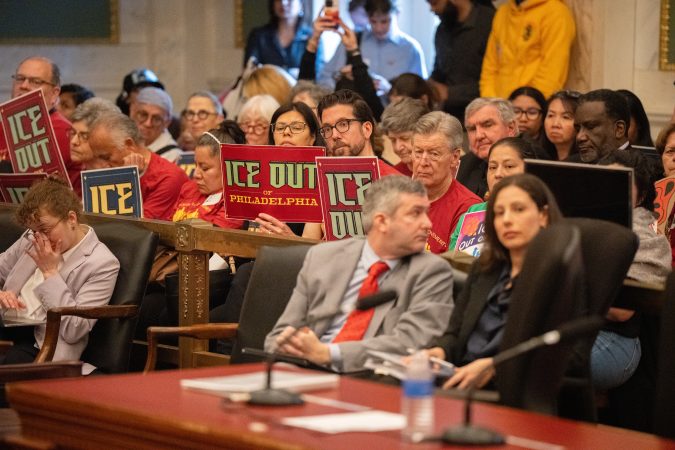
    Defending the ordinance put Parker and her administration in an awkward position. City Council passed the legislation with a veto-proof supermajority as part of a seven-bill package.

    The ordinance at the heart of the litigation made it a crime for law enforcement officers, including Immigration and Customs Enforcement agents, to wear face coverings or conceal personal identifiers like badges and nameplates while carrying out their official duties in Philadelphia, and required officers to identify themselves. It also prohibited the use of unmarked vehicles.

    The bill included exceptions allowing officers to wear masks in certain circumstances, such as medical emergencies or SWAT operations.

    An officer could face up to 90 days in jail plus a fine for violating the ordinance.

    The other bills prohibit federal immigration agencies from staging raids on city-owned property, ban discrimination on the basis of citizenship status, and prohibit the city from engaging in most forms of information-sharing with ICE.

    The legislation also codified some of Philadelphia’s long-standing sanctuary city status, which a recent poll found most city residents support.

    Parker signed the six other bills, which will take effect Tuesday.

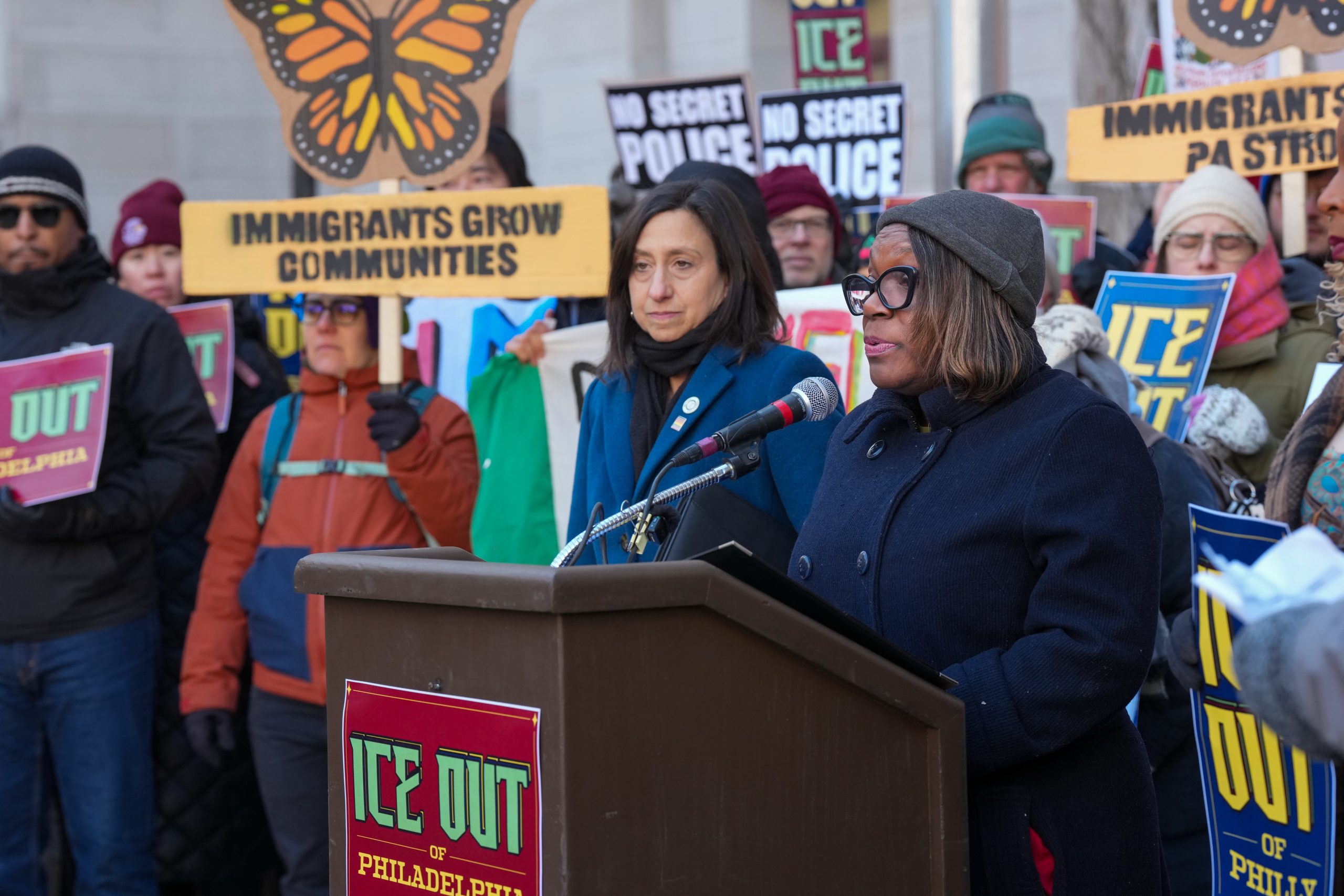
    Kendra Brooks shown here during a press conference at City Hall to announce a package of bills aimed at pushing back against ICE enforcement in Philadelphia, January 27, 2026.Jessica Griffin / Staff Photographer

    The Justice Department sued the city, Parker, Krasner, and Garcia in federal court in Philadelphia last month and requested an injunction on the enforcement of the masking bill.

    Officials from various federal agencies told the court the bill would harm their operations and officers.

    Members of the public routinely dox ICE agents, who are later subject to threats, John Rife, acting director of ICE’s Philadelphia field office, said in a filing.

    “Facial coverings reduce the risk of officers’ personal identities being shared publicly, which helps ensure that officers’ privacy and safety, and that of their family members, remains intact,” Rife said.

    The city argued the litigation was premature as the ordinance hasn’t gone into effect and there was no attempt to enforce it.

    The city also said federal agents had applied “aggressive enforcement tactics behind the mask of anonymity, undermining public safety and trust.”

    But Kenney’s opinion said, “there can be no public interest” in enforcing a provision that violates the Constitution.

    It doesn’t make sense that the city can’t hold federal officers to the same standard it holds its own police department to, Councilmember Rue Landau, who authored the bills with fellow progressive Kendra Brooks, said in a statement.

    The Trump administration has sued other jurisdictions, including New Jersey, over similar requirements. In April, the U.S. Court of Appeals for the Ninth Circuit found that a California bill requiring agents to “visibly display identification” was unconstitutional.

    On Tuesday, a federal judge in Richmond enjoined Virginia from enforcing a law barring ICE agents from covering their faces.

    “It’s unfortunate the Parker administration’s own doubts were used against the bill in this injunction,” Brooks said in a statement. “No one else is dealing with that dynamic in their lawsuits.”

  • Top Trump official Sean Duffy promotes the President’s House in video with Mayor Parker

    Top Trump official Sean Duffy promotes the President’s House in video with Mayor Parker

    President Donald Trump’s administration has spent almost a year scrutinizing, and then dismantling, and then trying to rewrite history at one of Independence Mall’s most informative exhibits on slavery.

    All for one of Trump’s cabinet secretaries to promote the President’s House in a new video ahead of July Fourth.

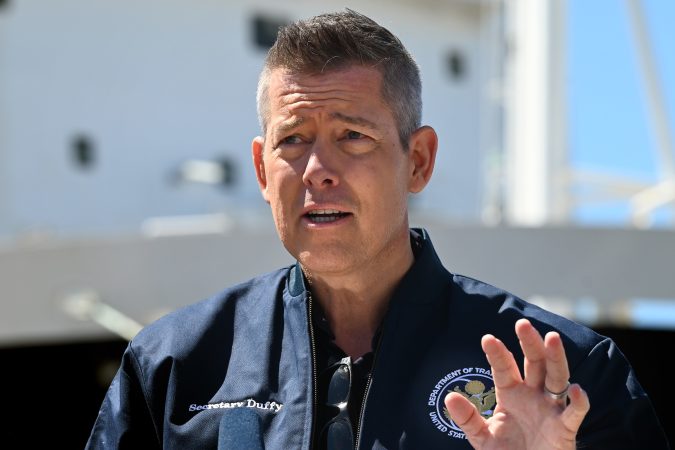
    Transportation Secretary Sean Duffy, who has been one of the Trump administration’s biggest cheerleaders for this week’s 250th anniversary celebrations, produced a video asking Mayor Cherelle L. Parker which Philadelphia historical sites visitors should see.

    Parker listed the highlights — the National Constitution Center, Independence Mall, the Liberty Bell, and ended her list of recommendations with the President’s House, which memorializes the nine people enslaved by George Washington in Philadelphia.

    “Reconnect with our history, recommit to the democratic values that we stand on, and have an amazing time,” Parker said.

    Cue Duffy showcasing pictures of the very panels at the President’s House that his boss wants to take down.

    The video, which was posted Wednesday to Duffy’s social media, appears to have been filmed in May, when Duffy visited Philadelphia while the city and the Trump administration were in the midst of a legal battle over the President’s House after the federal government removed the site’s exhibits earlier this year.

    A February court order allowed some of the panels to be reinstalled. Then, a ruling from the Third Circuit Court of Appeals in June said the Trump administration could replace the exhibits with its own materials, which are posted online.

    After the Third Circuit’s ruling, Parker said in a statement that: “I will pursue every legal action possible to reverse this decision. We cannot and WILL not rest until the full story of American history — including the existence of slavery at the President’s House here in Philadelphia — is told, for our Nation and the World to see.”

    On Thursday, a Boston-based federal appeals court removed the final legal obstacle that prevented the Trump administration from installing its own exhibits at the President’s House.

    This was not Duffy’s only visit to Philadelphia that coincided with a key event in the President’s House saga. Duffy joined Interior Secretary Doug Burgum in a visit to Independence National Historical Park in September 2025, just days after reports that the Interior Department planned to make changes to the President’s House.

    The secretaries were preparing for the Semiquincentennial celebrations. The Transportation Department, led by Duffy, has promoted road trips to a number of sites targeted by the Interior for changes, including Harpers Ferry National Historical Park in Virginia, in addition to the sites in Philadelphia.

    Duffy, a former MTV reality television star, has faced backlash for shooting a reality TV-style travel series with his family over the span of several months called The Great American Road Trip, meant to encourage celebrating the United States ahead of the 250th.

    A trailer for the series shows that he stopped in Philadelphia and visited LOVE Park and the Liberty Bell.

    In Wednesday’s video, which does not appear to be related to the series, Duffy says, “There’s no better place to go than where it all began in Philadelphia.”

    “This city is truly amazing, and the history that exists here,” Duffy said, “No one has it.”