Category: Philadelphia Politics

  • As Lemon Hill Park restoration begins after FIFA Fan Festival, park caretakers doubt long-term city support

    As Lemon Hill Park restoration begins after FIFA Fan Festival, park caretakers doubt long-term city support

    The marred fields of Lemon Hill Park are the remaining signs of the longest summer party the city has ever seen. Half a million people gathered in the park for 39 days straight, dancing to the All-American Rejects, cheering on World Cup matches, and sharing meals on blankets across more than a million square feet of the Fairmount park.

    The FIFA Fan Festival, by most accounts from the city, tourists, and residents, was a resounding success, offering a premium World Cup experience at a sliver of the cost of attending a game. Philly’s fan experience was considered one of the most affordable and popular in the country.
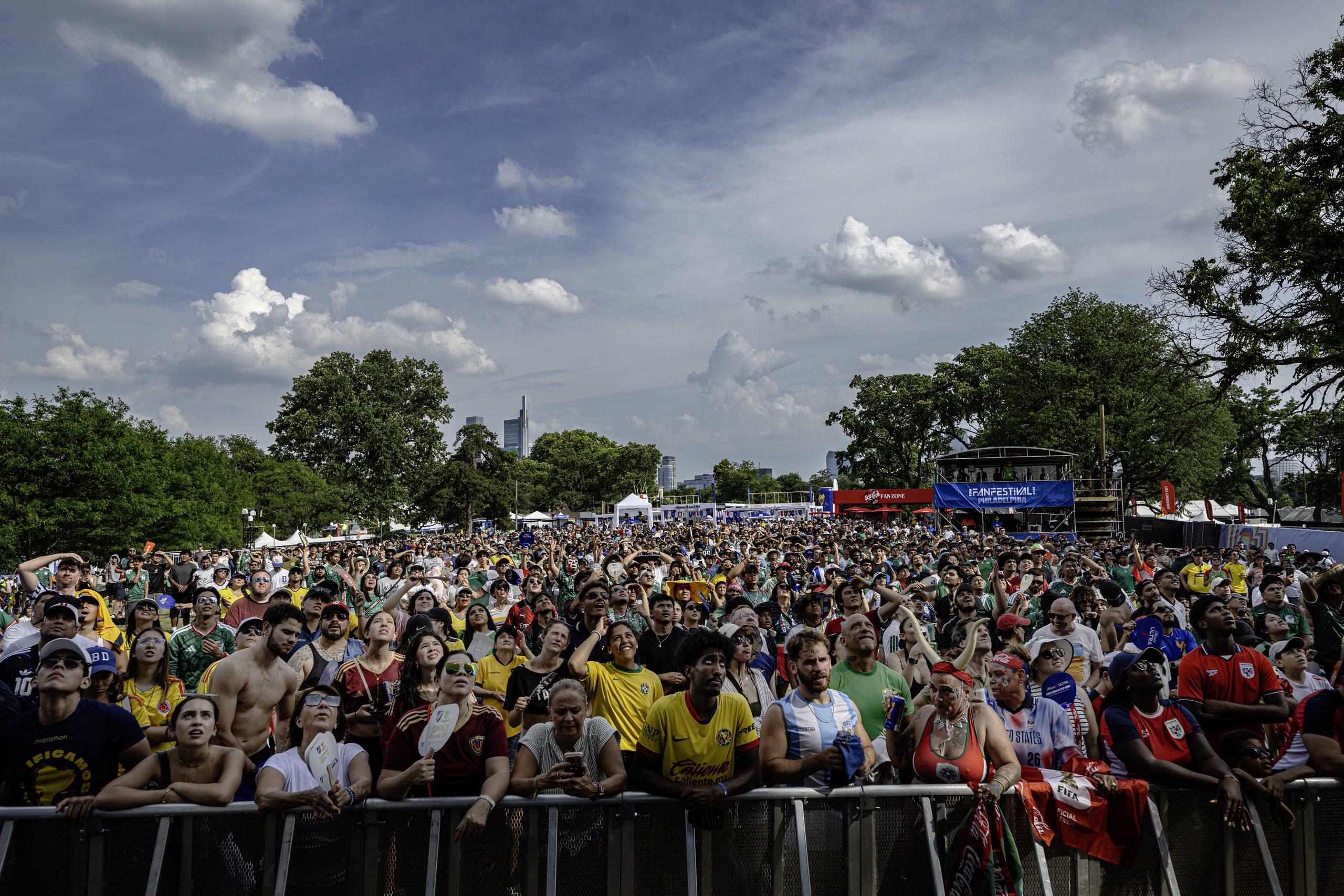
    Soccer fans gather to watch Mexico play South Africa on a giant screen during the opening day of the FIFA Fan Festival at Lemon Hill on June 11.Jose F. Moreno / Staff Photographer

    Now that the party is wrapped, the caretakers of Lemon Hill and nearby residents are hoping the city makes good on a promise to restore the park to its former glory, if not better.

    Philadelphia Soccer 2026, organizer of the FIFA Fan Festival, committed $4 million to park upgrades, from new picnic pavilions and a playground to safer sidewalks and traffic-calming measures at intersections. Additional funding will come from the city, but when asked, a city spokesperson declined to reveal the total budget and said more details will come during a groundbreaking celebration in September.

    The city gathered input from the community across nine public engagement sessions beginning in 2024 that netted 350 comments from 200 participants that helped shape which improvements would be prioritized.

    While residents and caretakers welcome park improvements, it is not lost on them that financial backing comes only after large companies use the space, though locals have been requesting help for years, said Shaun Cerborino, a co-organizer of Lemon Hill’s volunteer parks group. What’s more, without long-term maintenance funding, the upkeep of the park and its new upgrades will fall to caretakers once again.
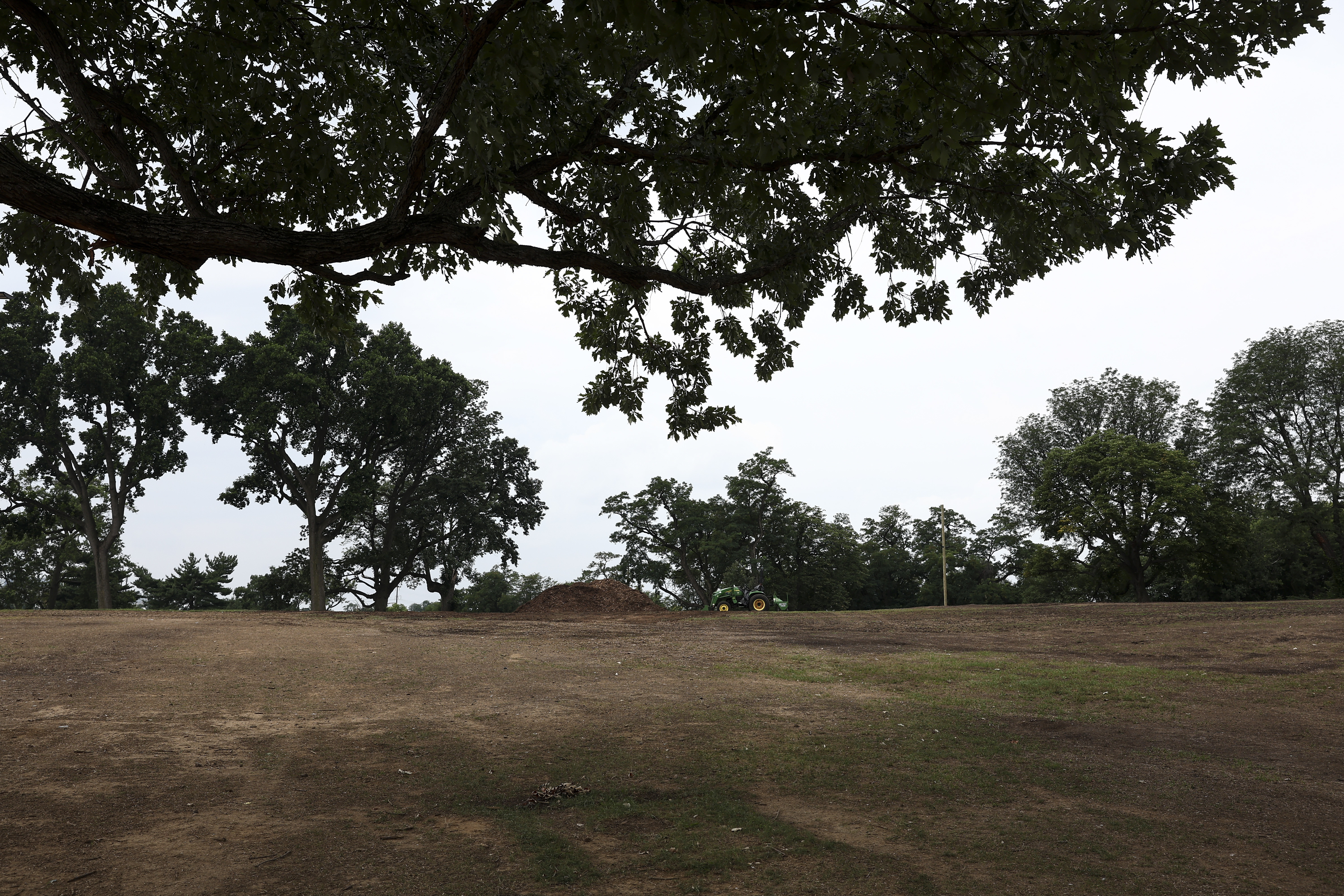
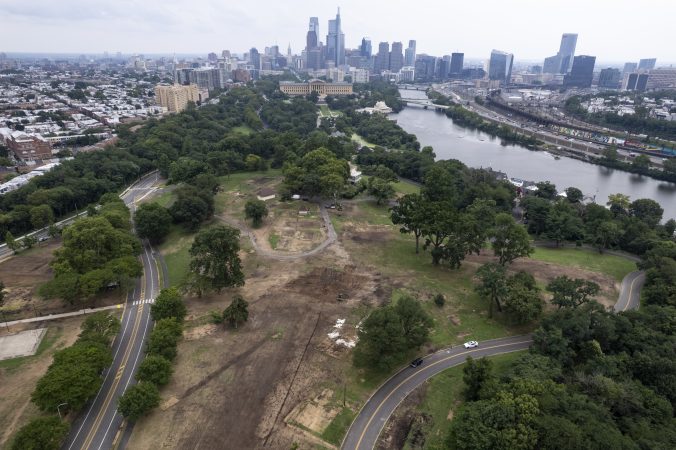
    Large grass-less sections remain following FIFA Fan Festival at Lemon Hill on July 28. Fan Fest wrapped up on July 19.Monica Herndon / Staff Photographer

    Deferred maintenance billed as ‘legacy projects’

    A month after the World Cup ended, the largest Lemon Hill field that staged the festival is still mostly filled with dirt, patches of wilting grass, and the occasional leftover screw and other small construction waste. The city began aerating and preparing the soil for regrowth in July.

    The grass will grow back, said Cerborino and Nissa Eisenberg, Fairmount residents and co-organizers of the Lemon Hill Neighbors Association, which provides regular volunteer maintenance to the park. But what caretakers truly are concerned about is long-term support after the city finishes its upgrades months from now.

    Additionally, many of the improvements considered legacy projects are really “deferred maintenance” that had been requested for years, and came about only when corporations needed to use the park, Cerborino said.

    Large grass-less sections remain following FIFA Fan Festival at Lemon Hill on July 28. Fan Fest wrapped up on July 19.Monica Herndon / Staff Photographer

    “Instead of properly funding Parks and Recreation, the city looks toward private ventures to help keep the lights on and generate enough money to maintain — which we’re barely doing anyway,” Cerborino said.

    In Philadelphia, there is no dedicated budget for parks and open space; instead, the city and volunteers rely on the Philadelphia Parks and Recreation budget to maintain parks. They also look to grants, private nonprofits, and thousands of volunteers who weed, fix, and maintain trails and park space as part of “Friends” groups. Philadelphia relies on volunteers at more than twice the national average.

    Since taking office, Mayor Cherelle L. Parker has raised the parks and recreation department’s budget each year, doubling its spending from $53 per resident on parks in 2024 to $110 per resident in 2026. And while 97% of Philadelphians can walk 10 minutes and find a park, far exceeding the national average, Philadelphia still spends about half as much on its parks as the national average, according to the Trust for Public Land.

    Improvements like upgraded sidewalks, lighting, signage, and recreation areas are standards that should already be met by the city, which is home to some of the highest-ranked parks in the country, Cerborino said.

    Small holes line sections of the park, possibly following aeration, after FIFA Fan Festival at Lemon Hill on July 28. Fan Fest wrapped up on July 19.Monica Herndon / Staff Photographer

    Residents may have their park back, but restoration is far from over

    Fairmount residents are all but back to their usual park routines after the festival equipment was removed, but they say it is still a long way before Lemon Hill is back to normal.

    Last month, Samantha Tartaglino was walking her German shepherd, Marley, through the flattened fields. Marley sprinted through swaths of dead, brown grass, unfazed by the patches. Tartaglino said Marley was just happy to be back in wide-open spaces, as the dog had to make do with a smaller park nearby for weeks.

    Lemon Hill’s open fields are a key reason for why many move to this part of Fairmount, Tartaglino said, but even before the fan festival, residents felt the park was not being supported to its fullest potential.

    “I feel like FIFA and World Cup put the city under pressure and kicked them into gear,” Tartaglino said.

    The city has already put into place many of its legacy commitments, like new ADA-compliant sidewalks and ramps along Sedgley Drive, traffic-calming measures at the intersection of Sedgley and Poplar Drives, and additional lighting fixtures.

    But the community’s request for permanent bathrooms, water fountains, and portable water stations has gone unanswered, Eisenberg said. The city says those things can happen only if there is an on-site park staffer due to concerns about maintenance and vandalism.

    A project with a longer timeline will be a new 43,500-square-foot playground, with construction expected to stretch into April 2027, according to Philadelphia Soccer 2026 and the city. And while construction is underway, the playground and basketball courts will be closed.

    Eisenberg lamented that. What was once presented as a plan for residents to give up park space for two months during the World Cup will now last much longer, she said, as grass fields will need to grow back and other amenities are closed for renovation.

    “The basketball court is one of the most heavily used assets of the park, but they’re planning to use the court as a staging area for the construction,” Eisenberg said. “Which I get because it’s conveniently located, but you just put on this multimillion-dollar event; I’m sure you can find another area to stage construction materials so that at least the basketball court isn’t offline all winter.”

    City officials say the plan is worth the wait.

    “We expect the legacy improvements to be completed next spring and are excited for neighbors and future visitors to enjoy a renewed Lemon Hill … that builds on the excitement of this summer while serving Philadelphians for years to come,” a city spokesperson said.
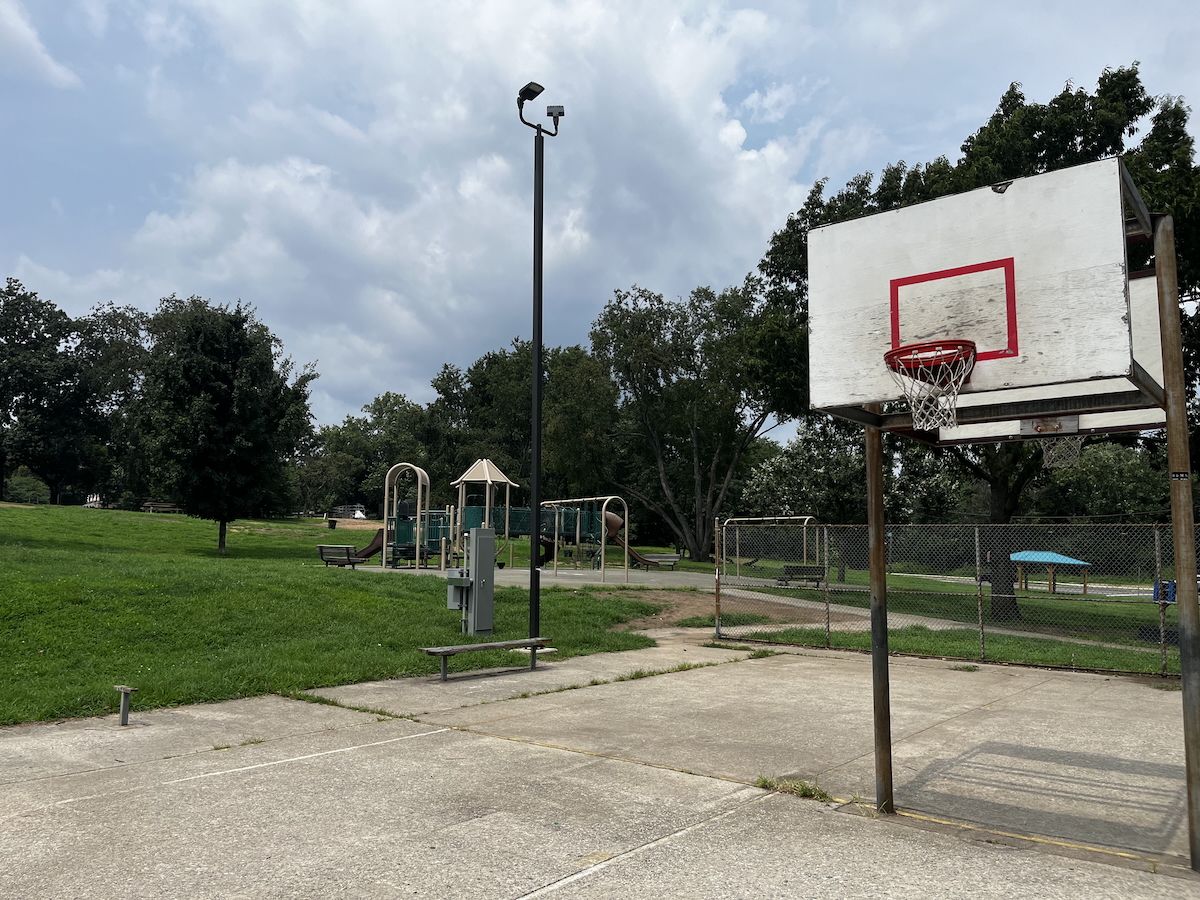
    The playground and basketball courts at Lemon Hill Park in the Fairmount neighborhood of Philadelphia. Since the 2026 World Cup has ended and the FIFA Fan Festival staged at the park has left, restoration efforts are underway with funding from various private and public stakeholders.Henry Savage / Staff

    Lack of long-term maintenance funding

    While projects such as renovating the playgrounds, basketball courts, and baseball fields are welcome, the Lemon Hill Neighbors Association fears that once city crews finish the work, the caretakers will be right back where they started — working off “love and duct tape” with little financial support.

    This means park improvements come only after long periods of push and pull between Philadelphia Parks and Recreation staffers and volunteer park caretakers, leaving long-term maintenance to fall to volunteer groups that dedicate their time and money to keeping parks usable.

    “We understand that a lot of times Parks and Recreation is understaffed or underfunded, but then that means we’re going to have to pick up that role,” Eisenberg said. “We need help, and the Parks and Recreation budget needs to reflect it.”

    Earlier this week, Temple graduate student Kyle McCurly was lounging in the undamaged grass surrounding the large field that just housed the festival. Having grown up in rural Georgia and recently back from a trip to Austin, Texas, McCurly said Philly’s parks could be so much more with long-term maintenance, and not just at Lemon Hill. He noted that Austin invests twice as much money as Philadelphia does in its parks per resident, according to the Trust for Public Land.

    “Everyone’s going to have different opinions on how the funding itself is created,” McCurly said. “But I think that it’s worth consistent investment to make green spaces more accessible and enjoyable in the city.”

  • Federal investigators subpoenaed records about Philly lobbyist William Dunbar, who was key to Mayor Parker’s campaign, sources say

    Federal investigators subpoenaed records about Philly lobbyist William Dunbar, who was key to Mayor Parker’s campaign, sources say

    Federal investigators last summer issued subpoenas for documents and financial records related to William F. Dunbar Sr., a Philadelphia lobbyist who was a close confidant of Mayor Cherelle L. Parker during her 2023 campaign, according to three people with direct knowledge of the probe.

    Dunbar, who has extensive political ties, was a key member of Parker’s informal “kitchen cabinet” of unpaid advisers during her 2023 run, and he ran her campaign, People for Parker, for most of 2024, the mayor’s first year in office. He has also raised money for U.S. Sen. Cory Booker of New Jersey and members of Philadelphia City Council, and he co-chaired Gov. Josh Shapiro’s 2023 inaugural committee.

    The sources, who spoke on the condition of anonymity to discuss a sensitive legal matter, said federal investigators in the summer of 2025 issued subpoenas to multiple associates of Dunbar’s, compelling them to produce records related to his business and political dealings. One source described the investigation as “fairly broad.”

    None of the sources said they were aware of an investigation centered on Parker.

    Dunbar, 42, declined to comment Thursday.

    A spokesperson for the U.S. Attorney’s Office in Philadelphia declined to comment. No charges have been filed in relation to the probe.

    A Parker campaign spokesperson declined to comment on her behalf.

    Records show that Parker’s campaign increased its spending on legal services in 2025, around the time that the sources said the subpoenas were issued. The Inquirer reported this week that the campaign has paid its law firm, Dilworth Paxson, about $108,000 since the start of 2025, according to campaign finance reports. It paid the firm less than $15,000 during the 2023 election year and about $19,000 in 2024. People for Parker did not respond to a request for comment on what was driving the increased legal bills.

    During the 2023 election, the campaign was led by campaign manager Sinceré Harris and senior adviser Aren Platt. Dunbar and several other informal advisers, however, were part of Parker’s inner circle, helping with strategy and fundraising.

    In 2024, Dunbar officially joined the campaign for the first time after Platt and Harris became chief deputy mayors in Parker’s administration. Both have since resigned from city government. Platt later returned to the campaign to serve as executive director of People for Parker.

    Dunbar has never been personally paid by People for Parker, according to campaign finance records. The campaign made rent payments to his firm, Dunbar Public Affairs & Associates, totaling $22,850 from March 2024 to November 2024.

    Parker’s campaign parted ways with Dunbar in late July 2024. Dunbar at the time said it was the mayor’s decision to take the campaign in a different direction.

    “I’m very much still an informal senior adviser but because of a different set of priorities, the mayor has decided to manage her politics herself,” Dunbar told The Inquirer at the time. “My business has continued to grow as we work to support our clients.”

    Parker added: “Will has been a valued friend to me, and let me just say that life is good right now [for Dunbar] and business is good and it’s growing.”

    Dunbar, an Overbrook Park native who got his start in politics working for former U.S. Rep. Chaka Fattah (D., Philadelphia), has developed an extensive political network through fundraising and advising campaigns. He worked in government affairs for Comcast before expanding his lobbying portfolio after Parker’s victory in the 2023 election.

    Dunbar in recent years registered as a city government lobbyist on behalf of several clients, including Comcast, the Philadelphia School District, the Chamber of Commerce for Greater Philadelphia, Jackmont Hospitality, and several other companies, according to public disclosures. Dunbar’s lobbying registration had been listed as “expired” in city records Friday, but was changed to “submitted” after the initial publication of this story.

    Dunbar worked with the school district as a subcontractor for a Harrisburg lobbying firm, DT Firm.

    “In June, the DT Firm informed the District [that] Mr. Dunbar was no longer a subcontractor with the firm,” district spokesperson Naima DeBrest said in a statement.

    DeBrest did not respond to a question about whether the district received a subpoena. The DT Firm declined to comment.

    Comcast and the chamber also declined to comment.

    Jackmont, which operates concessions at Philadelphia International Airport and also runs two TGI Friday’s locations in Philadelphia, did not respond to a request for comment.

    Staff writer Ryan W. Briggs contributed to this article.

  • National hunger fighter visits Northeast Philly to criticize ‘a dangerous double whammy’ of SNAP cuts and rising prices

    National hunger fighter visits Northeast Philly to criticize ‘a dangerous double whammy’ of SNAP cuts and rising prices

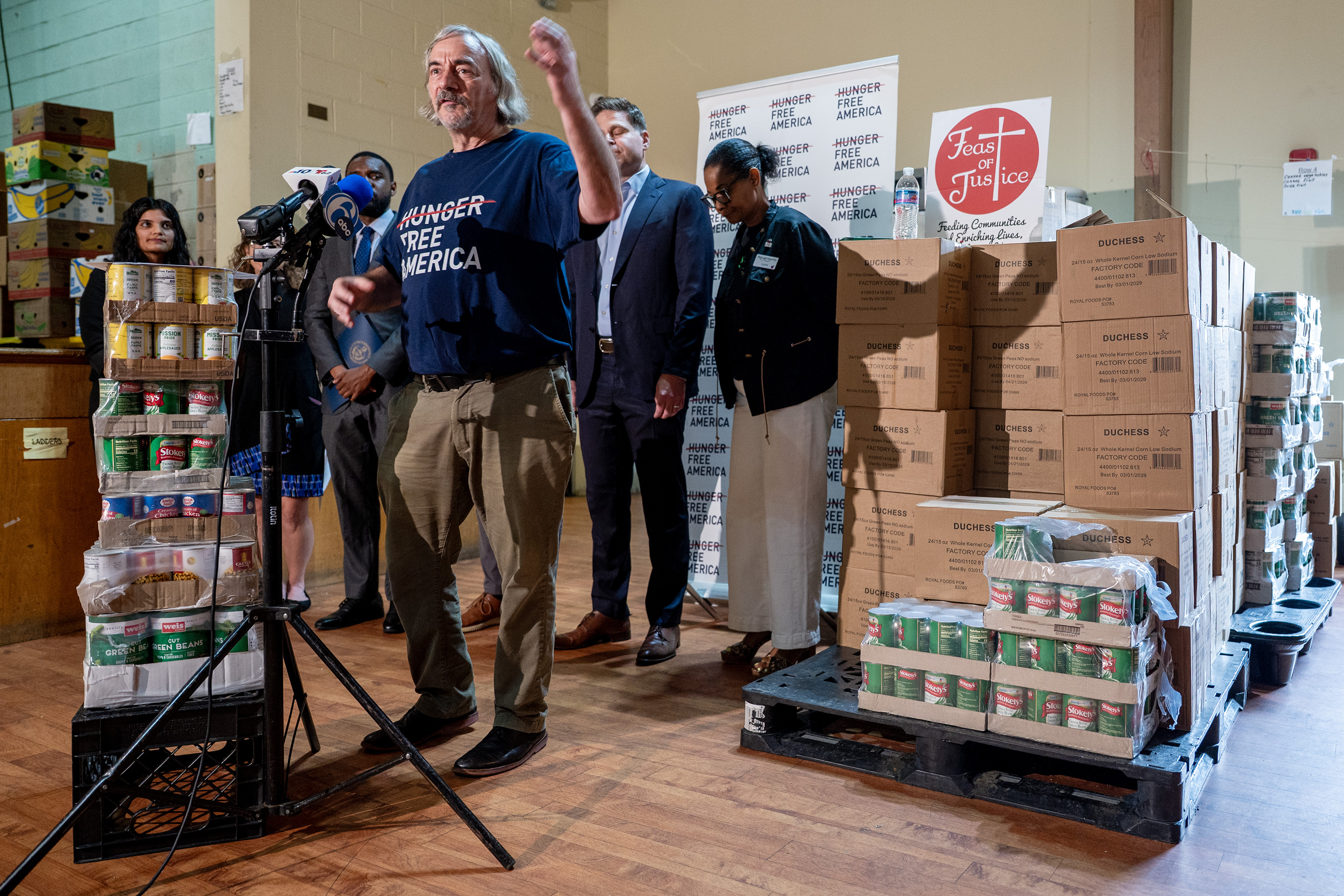
    People throughout the Philadelphia region, hampered by cuts to federal food aid and soaring prices, are “facing a dangerous double whammy causing a skyrocketing hunger crisis,” said Joel Berg, a national hunger fighter, speaking in Northeast Philadelphia on Tuesday.

    Berg, CEO of the New York-based nonprofit Hunger Free America, was visiting Feast of Justice, one of the largest food pantries in the city with “probably the most diverse food pantry clientele in the nation,” he said. That is proof, according to Berg, that food insecurity can affect anyone, from any background.

    Feast of Justice, he added, “is the food affordability issue in the flesh.”

    Especially critical of the One Big Beautiful Bill Act, signed into law by President Donald Trump on July 4, 2025, Berg noted that it included more than $1.1 trillion in cuts to Medicaid and the Supplemental Nutrition Assistance Program (SNAP).

    Roughly 4 million Americans are expected to lose SNAP benefits in 2026 under the law. Many of them do not meet work or age requirements newly added to the anti-hunger program. The reductions in SNAP and Medicaid benefits helped pay for tax cuts ordered by Trump.

    Alahallak Abdelmenim and his children Asil (left), 6, and Hasan (right), 8, load groceries into their shopping cart at the Feast of Justice Food Pantry Tuesday, Aug. 11, 2026.Tom Gralish / Staff Photographer

    In Pennsylvania, around 144,000 SNAP recipients could see benefits cut this year — an estimated 45,000 in Philadelphia and 12,000 in its collar counties, according to Pennsylvania Department of Human Services estimates. In New Jersey, around 50,000 individuals could lose SNAP benefits, New Jersey Department of Human Services figures show.

    It’s not “rocket science,” said Berg, who used a pallet of canned beans and apple sauce as a lectern as he addressed a small crowd at the pantry. “When there’s a drought and you take away water, the drought’s going to get worse. When there’s a hunger crisis, and you take away food, the hunger crisis is going to get worse, especially after you throw in inflation,” he added.

    In response, Trump spokesperson Anna Kelly said Tuesday that Trump is “strengthening” SNAP to sustain it into the future. Changes to SNAP “crack down on waste, fraud, and abuse,” she said. Kelly added that Trump is “uplifting every American’s financial situation by passing the largest tax cut in history — which every congressional Democrat opposed — and bringing historic numbers of jobs and investments into our country.”

    Pastor Tricia Neale, executive director of Feast of Justice, said Tuesday that since the enactment of the One Big Beautiful Bill Act, an additional 1,850 families in Northeast Philadelphia have turned to the pantry for help. Overall within the last five years, she said, the number of households the pantry supports has grown from 2,750 to 6,425, a more than 200% increase.

    “And,” Neale added, “the crisis is accelerating.”

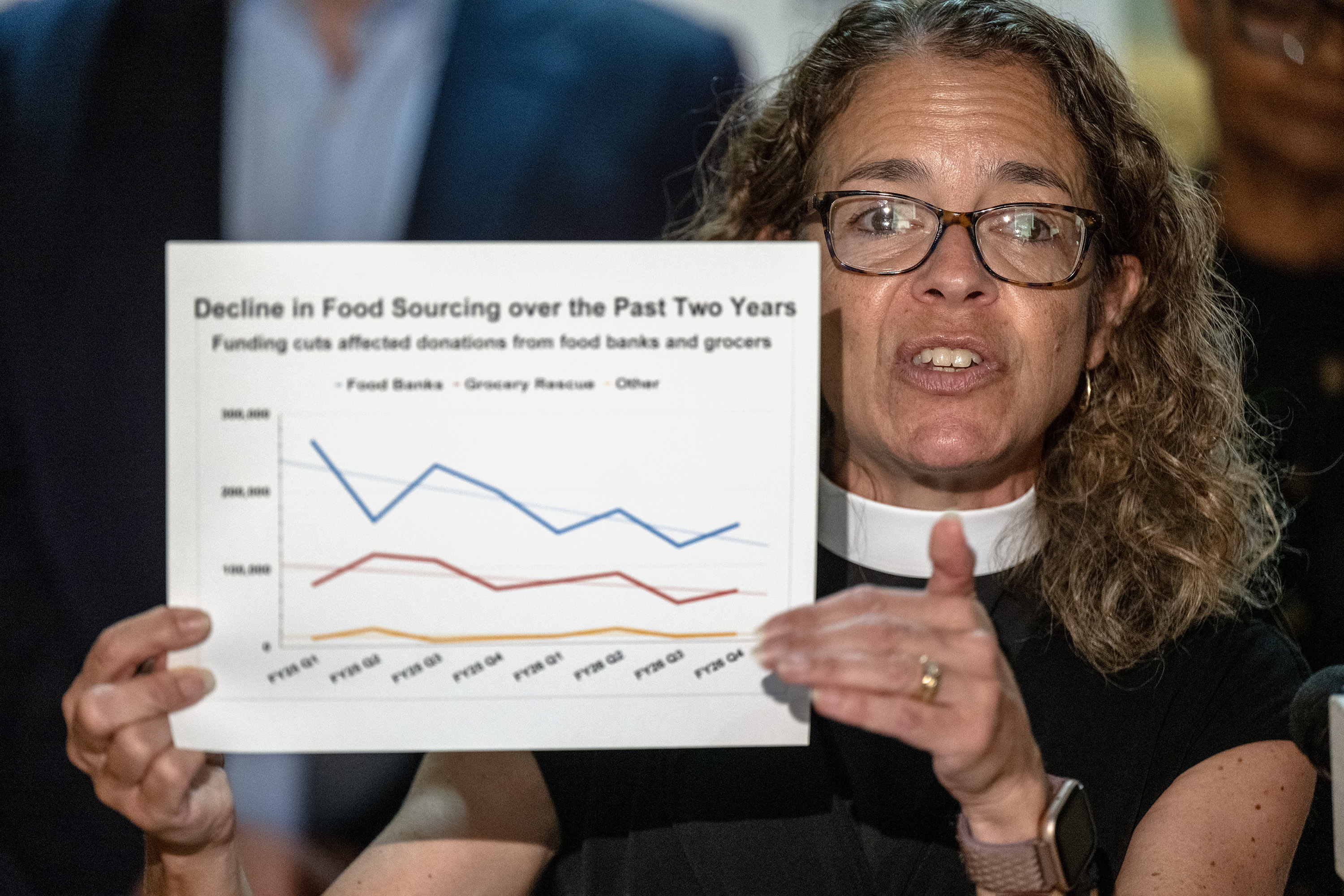
    Pastor Tricia Neale, executive director at Feast of Justice, displays a chart showing the decline in food sourcing as she speaks at a press conference at the food pantry Tuesday, Aug. 11, 2026. Tom Gralish / Staff Photographer

    The pantry has been forced to absorb a 35% decline in donated food it receives, in part because of cuts to federal and state food programs that have been so vital, she added.

    Even with diminished supplies, Feast of Justice is an essential institution, according to Angie Bryant, 55, of Tacony, a client. Formerly a phlebotomist who can no longer work, Bryant said she recently lost her SNAP benefits because new age restrictions exclude her participation.

    “In the body, hunger is hurtful,” she said. “Without this place, I don’t know how I could make it.”

    Food banks such as Philabundance and Share Food Program do their best to provide Feast of Justice whatever food they can, Neale emphasized.

    Volunteer Daniel Khan (center) restocks the shelves as clients load groceries into their shopping carts at the Feast of Justice Food Pantry Tuesday, Aug. 11, 2026. Tom Gralish / Staff Photographer

    If SNAP is the safety net, “we’re the safety net of the safety net,” said Loree Jones Brown, CEO of Philabundance, who joined Berg and Neale at Feast of Justice on Tuesday. “But we can’t make up for the cuts.”

    She added that “this is a crucial time for food banks, legislators, and community organizations to stand together for our neighbors and against hunger.”

    That Feast of Justice does its best to beat back hunger is widely appreciated in the community, said client Anthony Morales, 27, of Mayfair. Laid off from a warehouse job, he said he is responsible for feeding his 7-year-old daughter and his partner, and he needs the pantry’s support.

    “When you fall,” he said, “this place lifts you up. You have a lot of fear and anxiety without enough food. It can give you hope and confidence that tomorrow could be better.”

  • Mayor Parker’s campaign is spending far more on lawyers than it did when she was running for office

    Mayor Parker’s campaign is spending far more on lawyers than it did when she was running for office

    Mayor Cherelle L. Parker’s campaign has spent about $108,000 on legal fees since the start of 2025, far more than it shelled out in any recent year, campaign finance records show.

    For instance, in 2023, when Parker’s legal bills would have been expected to spike amid her winning campaign for mayor, the campaign paid about $14,900 in fees to its law firm, Dilworth Paxson, according to campaign finance reports. In 2024, Parker’s first year in office, the campaign sent Dilworth about $19,300.

    But in 2025, payments to Dilworth more than quadrupled.

    Aren Platt, executive director of the Democratic mayor’s campaign, People for Parker, did not respond to a request for comment on what was driving the increased legal bills.

    “Our lawyers at Dilworth are an essential part of our team and it’s important that we are able to talk to them on a variety of strategic initiatives,” Platt said in a statement.

    The campaign paid Dilworth about $88,700 in 2025, and an additional $19,700 between Jan. 1 and May 4 of this year, according to the most recent report.

    “It’s an unusual number to see right now,” said Matthew Haverstick, a Philadelphia-based elections attorney who has primarily worked with Republican candidates. “There could be lots of prosaic or benign explanations for it, but it’s not normal.”

    Election law gives campaigns wide latitude over how they spend money from donors. In addition to election-related expenses like advertisements or legal work on campaign finance compliance, campaigns can spend money on everything from constituents’ funeral expenses to airfare for candidates to attend political events. They can also support the candidates’ work in government.

    Public records do not provide detailed information about campaign expenditures. After multiple requests from The Inquirer for the campaign’s legal expenses, Dilworth attorney Timothy J. Ford, who handles most of the campaign’s legal work, on Monday provided copies of invoices from 2023 through 2025.

    The campaign told the Philadelphia Office of City Commissioners, which oversees elections and processed the request, that the delay was due to a mix-up involving an email address that is “not checked regularly.”

    The invoices, which the commissioners said were “redacted for attorney-client privilege and client confidential information,” show Dilworth billed the campaign during that three-year period for four separate matters.

    For “Matter 01,″ which included all the invoices during the election year of 2023, the firm billed the campaign for about $12,400, and almost all of the work appears to have been done by Ford. (The campaign spending reports and Dilworth’s invoices do not exactly align, due to the timing of payments and potentially other factors such as reimbursements.)

    “Matter 02″ listed in the invoices lasted from February 2024 to March 2024, with Dilworth billing $2,300. Ford appeared to complete all the work.

    The billings escalated with “Matter 03,” which began in March 2024, three months into Parker’s tenure, and lasted at least through October 2025, the period covered by the most recent invoice provided to The Inquirer. The firm billed about $62,100 for its work on that matter, and the invoices show that at least four people from Dilworth billed hours.

    “Matter 04″ began in August 2025, and has resulted in $45,300 in billing with as of October 2025. Although most of the details are redacted, the invoices show extensive billing around an “interview” on Sept. 12, 2025. From Sept. 10 to 13, Dilworth billed nearly $7,800.

    Additionally, the Parker Mayoral Transition and Inaugural Committee, which aided her transition into office and has since closed, paid Dilworth about $9,700 between December 2023 and March 2024, when it was active.

    Parker’s campaign has been more active with fundraising during nonelection years than the campaigns of her recent predecessors. In 2025, she raised $1.7 million, more than any another second-year mayor since at least the early 2000s, according to her campaign.

    People for Parker had about $1.4 million in cash on hand as of May 4 after raising about $241,000 and spending about $390,000 in the first four months of this year. Parker is up for reelection next year, and rumors have swirled about the potential of her facing a challenger backed by the progressive movement.

    Earlier this year, Parker’s campaign donated $23,000 to the Pennsylvania Democratic Party and $25,000 to Pick Pennsylvania, a committee led in part by Parker to lure the Democratic National Convention back to Philadelphia.

    Allies of Parker also set up a 501(c)4 nonprofit called One Philly that raised and spent vast sums in 2024 before appearing to fade away in 2025.

    Political consultant Jeff Sheridan, who helped lead a super PAC that was critical to Parker’s 2023 victory, was a public point person for the One Philly nonprofit. In March 2024, he said the group was formed to advance Parker’s governing agenda, not to get involved in politics.

    One Philly, which is not required to disclose its donors, raised $658,500 in 2024, Parker’s first year in office, according to an annual return the nonprofit filed with the IRS. It spent $484,900 that year to “promote policies and actions championed by City leaders.”

    The group also reported paying nearly $19,000 in legal bills that year, and listed its representative as the Ballard Spahr law firm.

    In 2025, the group reported raising only $15,000 and spent all of its remaining money, according to its most recent disclosure, filed in May.

    Sheridan did not respond to a request for comment.

    Staff writer Anna Orso contributed to this article.

  • The race to unseat Philly Councilmember Jeffery Young Jr. is taking shape

    The race to unseat Philly Councilmember Jeffery Young Jr. is taking shape

    The ultracompetitive race to replace Philadelphia City Councilmember Jeffery Young Jr. is officially underway.

    With nine months until next year’s primary election, two candidates are already taking steps to challenge the first-term incumbent Council member from North Philly — and more may be to come.

    On Saturday, cybersecurity attorney Jalon Alexander launched his campaign for the seat during a party in Fairmount, where he told attendees that Council needs an infusion of fresh blood and new ideas to spur growth in the city.

    “We’ve spent the last two years meeting with different community organizations, speaking with different ward leaders, and community groups, and just everyday people,” Alexander said in an interview. “This is going to be a people-powered campaign that really is grassroots.”

    And on Friday, Curtis Wilkerson, who was the chief of staff to former City Council President Darrell L. Clarke, announced that he’s forming an “advisory committee” to evaluate a prospective run for the seat. The group will host community roundtables and neighborhood listening sessions to collect policy ideas and feedback from residents.

    Wilkerson, who campaigned for the seat four years ago but did not make it onto the ballot, said he’ll likely decide whether to launch an official campaign by September.

    A third potential candidate, Democratic political operative Kellan White, has been having conversations with party officials and labor leaders about running. White is a former deputy city controller who has managed and advised campaigns, including physician Ala Stanford’s recent unsuccessful run for Congress.

    At least two others have said they are considering launching campaigns for Young’s seat: Dustin Dove, the president of the Fairmount Civic Association, and Max Tuttleman, a philanthropist who in 2023 unsuccessfully ran for seat on Council representing the city at-large.

    The recent moves by several prospective candidates are the latest sign that the 5th District is likely to be the most crowded Council race this spring, when all 17 members of Council will be up for reelection and are expected to seek another term. The 5th District, which includes parts of Center City, North Philadelphia, and Fishtown, is overwhelmingly Democratic, meaning whoever prevails in the May primary is all but certain to win the seat in the general election.

    Fifth District Councilmember Jeffery Young Jr., during the Barber’s Hall community legacy celebration, a daylong celebration of music, history, and community in North Philadelphia on Aug. 1.Yong Kim / Staff Photographer

    Young’s campaign did not respond to a request for comment. In an interview last month, he said he intends to run for reelection and sees facing challengers as a normal part of the process.

    “People have a right to do what they want in a democracy,” he said. “But I’m focused on myself and what we can do as a leader of the 5th Council District and get the constituents to understand that every decision that we make is to improve their life.”

    The freshman lawmaker is seen as Council’s most vulnerable member in the upcoming election, in large part because of how he got into office.

    In 2023, several other candidates — including Wilkerson, who was Clarke’s preferred successor — were kicked off the ballot amid a series of legal challenges questioning the validity of their nominating petitions. Young ended up being the only Democrat on the ballot.

    Since January 2024 when he was sworn in, Young’s tenure has been tumultuous. He has championed legislation that at times has sought to slow or halt housing construction in parts of the district, drawing the ire of developers. Constituent groups have loudly opposed Young, specifically over his controversial plans for a popular library branch in North Philly.

    And he has publicly clashed with Mayor Cherelle L. Parker’s administration, including in 2024, when he took the rare step of introducing legislation to authorize Council to subpoena the mayor.

    Jalon Alexander greets supporters and community members as he kicks-off his bid in the 5th Council District seat, at a campaign event in Fairmount on Saturday.Bastiaan Slabbers / For The Inquirer

    Young, 40, an attorney by trade, has something of an independent streak. He has at times aligned with different political factions, and he does not fit neatly onto the Democratic ideological spectrum.

    Neither do some of his opponents. Alexander, 33, said he has progressive views on workers’ rights and keeping homes affordable, and he has built relationships with some leaders of the city’s progressive political organizations.

    But the tenor of Alexander’s campaign is pro-growth. He said he wants to cut the city’s business taxes with the goal of eventually eliminating the business, income, and receipts tax. And he said he’s committed to facilitating more development in the district, including through the city’s Turn the Key program that provides mortgage support to some first-time homeowners.

    Alexander has been particularly critical of Young’s use of councilmanic prerogative, the unwritten rule that gives district Council members an extraordinary level of control over land-use decisions and construction projects in their district.

    Young has used prerogative to attempt to obstruct projects he opposes, such as the redevelopment of the former Hahnemann University Hospital. He introduced legislation to ban residential housing development in the area, a move he said was to preserve the area’s job-generating capacity, but he did not advance the bill amid opposition from interest groups and Parker’s administration.

    Alexander — who was born and raised in Strawberry Mansion and still lives in the neighborhood — said his campaign is targeting Democrats “all over the tent.”

    “There’s room for progressives. There’s room for people who are loyal Democrats but feel let down by the establishment,” he said. “We’ve got one goal: We’re fully committed to removing and replacing Jeffery Young.”

  • Chris Rabb’s former campaign treasurer was charged with wire fraud for routing money into her own bank account

    Chris Rabb’s former campaign treasurer was charged with wire fraud for routing money into her own bank account

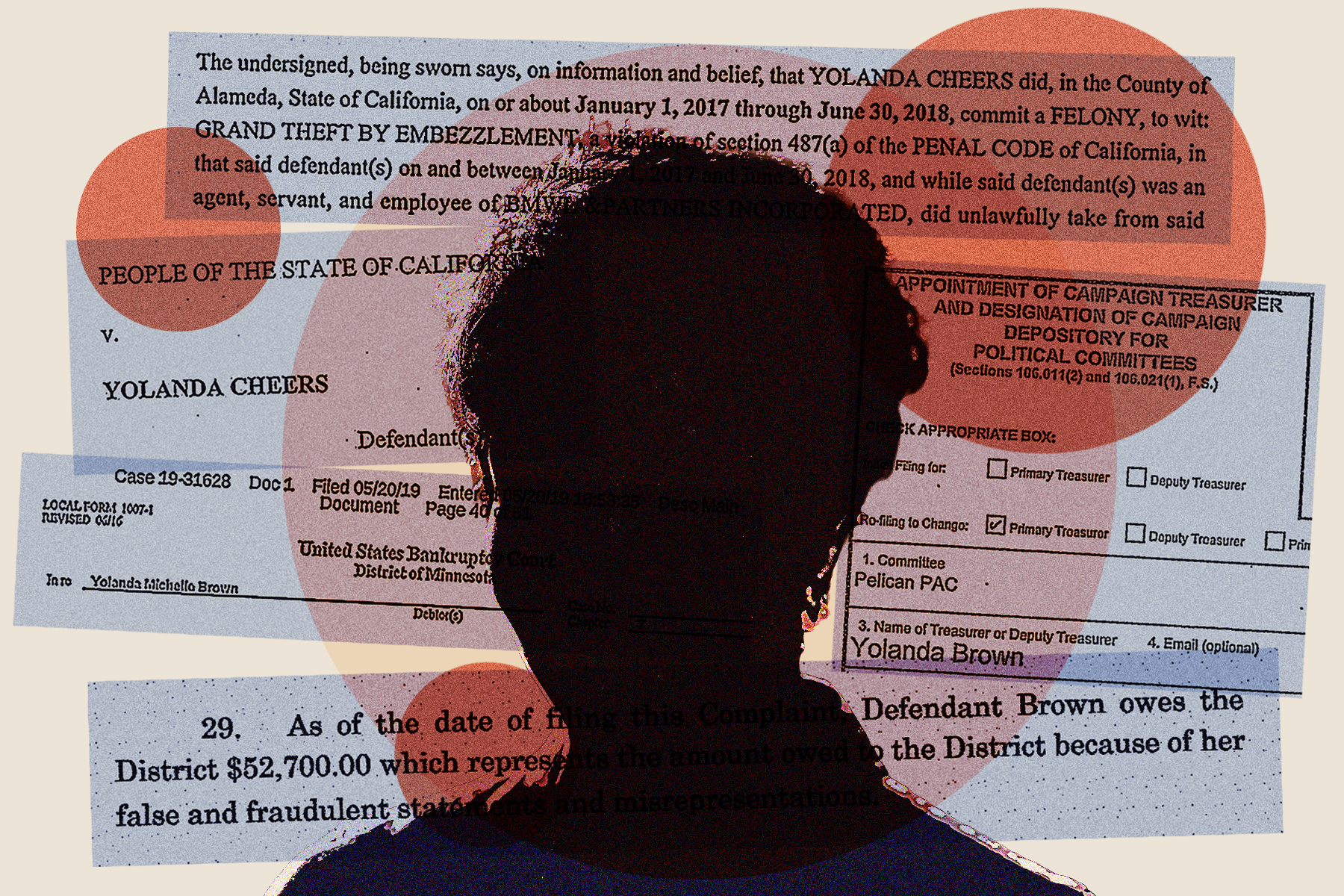
    A Florida-based political consultant who once worked as the campaign treasurer for Philadelphia congressional candidate Chris Rabb was charged Friday with wire fraud after she defrauded more than 20 clients out of about $1 million, according to federal prosecutors.

    Yolanda Brown was charged in federal court in Philadelphia with one count of wire fraud, according to documents unsealed Friday. She was charged by information, which typically indicates a person intends to plead guilty.

    She did not have an attorney listed in court records, and attempts to reach a lawyer who previously represented her were not immediately successful.

    Brown had been under scrutiny for months over allegations from campaigns in several states that she had mismanaged, embezzled, or taken unauthorized withdrawals from accounts meant to support political candidates.

    And Rabb accused her earlier this year of making unauthorized withdrawals from his campaign accounts, saying he had fired her and reported the allegations to federal authorities.

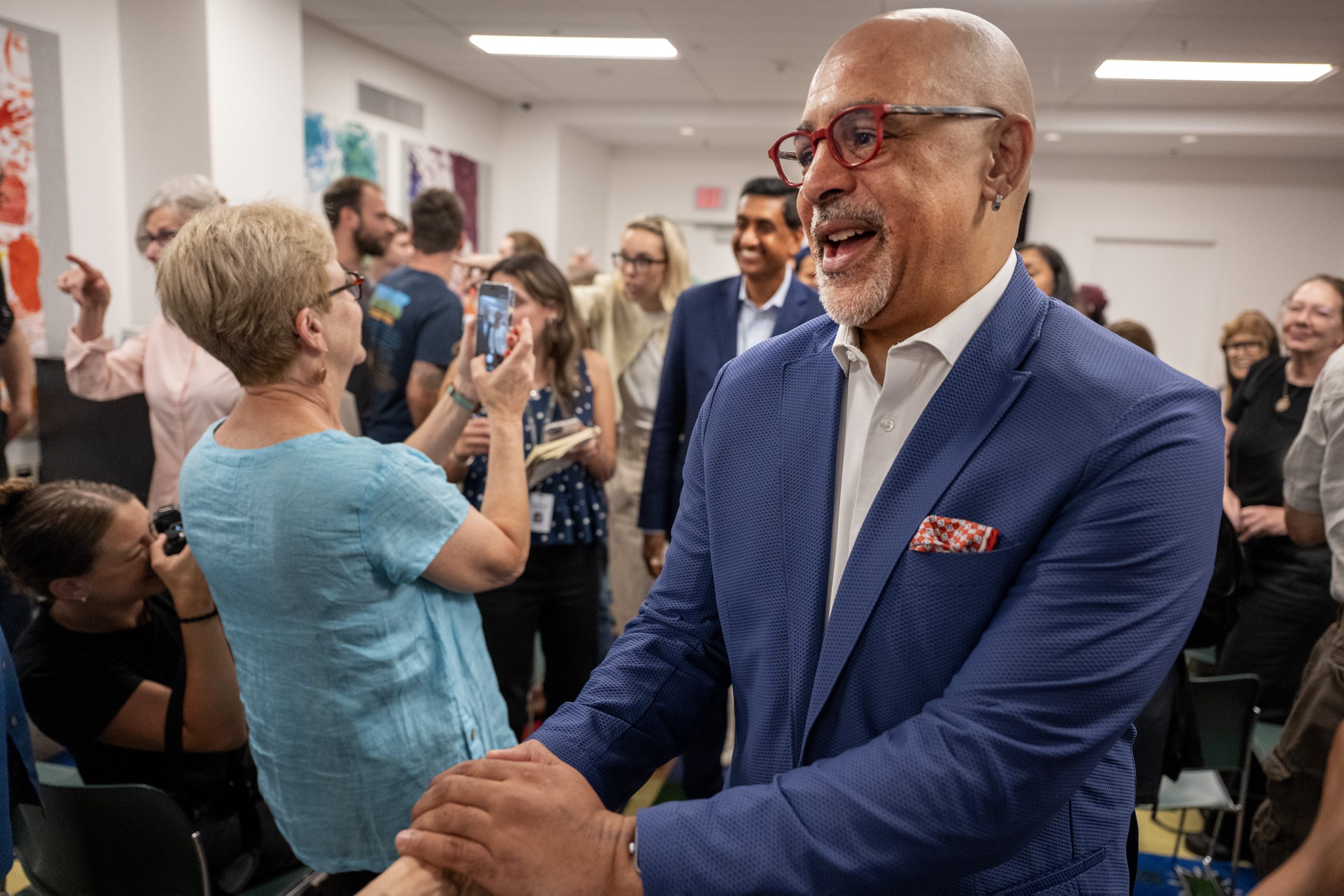
    State Rep. Chris Rabb greets supporters on Tuesday, July 28, 2026.Tom Gralish / Staff Photographer

    While Brown worked on Rabb’s campaign in 2025 and early 2026 — identified in court documents only as “Political Campaign #1″ — prosecutors said she set up new bank accounts on which she could serve as a signatory. She then transferred $19,000 into one of those accounts, they said, and went on to steer about $6,000 into her personal bank account without Rabb’s knowledge.

    In April, Rabb’s campaign said it identified about $160,000 that had been routed into the account Brown had set up. But it was not clear Friday how much of that may have been embezzled for Brown’s personal use, and it is also not uncommon for prosecutors to formally charge a more limited scope of wrongdoing if a defendant has agreed to plead guilty.

    Still, in charging documents, prosecutors said Brown, who ran Brown Financial & Consulting Services Group and worked primarily with Democrats, committed her fraud against Rabb actions as part an “overall scheme” in which she defrauded about 20 clients out of more than $1 million. Prosecutors did not name the other victims, or offer details on how the other cases unfolded.

    Brown has been accused of other wrongdoing in recent years.

    Earlier this year, Ken Welch, the mayor of St. Petersburg, Fla., said Brown embezzled more than $200,000 from his campaign committee. Another Florida-based political consultant also accused Brown of wiring $25,000 out of PAC’s bank account.

    And in 2024, Brown — who also used different surnames, including her married name, Yolanda Rumph — pleaded no contest to felony embezzlement in California, where prosecutors said she stole from two different companies, including a nonprofit. She was ordered to pay $330,000 in restitution but served no jail time.

    An attorney for Brown, Khambrel Davis, told The Inquirer earlier this year that one of Brown’s employees — not Brown — had actually committed the most recent fraud in Philadelphia and Florida.

    But the employee had since disappeared, Davis said, and “everyone’s just assuming [Brown] must have done this. They’re kind of putting together this narrative that she’s just this habitual thief.”

    Rabb — a longtime state representative who won a competitive Democratic primary this spring in the state’s 3rd Congressional District — declined to comment.

  • Philly watchdog says city’s property tax crackdown may have missed thousands of fraudsters — and $30 million more in revenue

    Philly watchdog says city’s property tax crackdown may have missed thousands of fraudsters — and $30 million more in revenue

    Philadelphia’s fiscal watchdog said this week that a recent city review identifying thousands of property owners cashing in on tax relief programs they are ineligible for may have only scratched the surface of the problem.

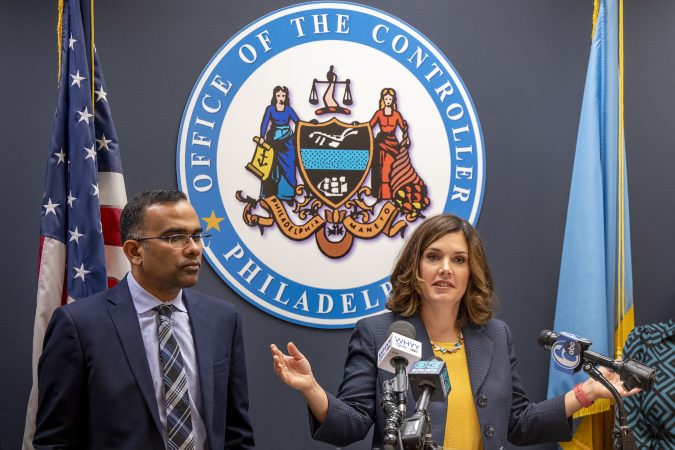
    In a report released Wednesday, City Controller Christy Brady said investigators in her office had identified about 58,000 properties that are receiving the city’s popular homestead exemption tax break and may not be eligible.

    That is far more than the 22,000 properties that Mayor Cherelle L. Parker’s administration reviewed in a two-year probe that officials said last week led to more than 13,000 property owners being kicked off tax relief programs in which they were fraudulently enrolled. The Philadelphia Department of Revenue said those owners will be charged back taxes totaling about $30 million in additional property tax revenue for the city and the cash-strapped Philadelphia School District.

    But Brady’s report suggests the city could recover millions more in owed tax revenue. Her report says the city should review an additional 36,000 properties, an investigation that could double the money the city is owed annually to $60 million.

    “Over a five-year budget, that’s a remarkable $300 million for our schools and vital city services,” Brady said in a news release.

    Christian Crespo, a spokesperson for the revenue department, said in a statement that the agency’s tax benefit review unit conducts continuous compliance reviews to identify potentially ineligible properties.

    Crespo cautioned that the controller identified thousands of properties with “potential risk factors,” which do not alone establish that a homeowner does not qualify for a tax exemption.

    He said more than 8,000 exemptions in the administration’s initial review were deemed legitimate, meaning “a homeowner can have an indicator of potential fraud and still be eligible.”

    “Revenue appreciates the Controller’s continued focus on program integrity and welcomes the opportunity to review the findings presented in the report,” he said.

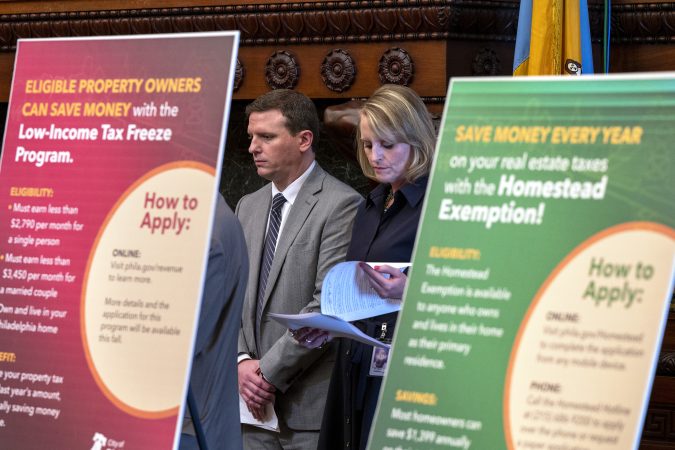
    The city’s homestead exemption is by far the most popular tax break offered. The free program allows for property owners who live in their homes to deduct the first $100,000 from their property’s assessed value, saving homeowners up to $1,400 a year.

    About 250,000 property owners receive the exemption, for which residents must enroll to take part. Investigators in the city controller’s office found that more than one in five participants may not be eligible, including some with mailing addresses differing from the address of the property receiving the tax break.

    The review identified properties with other red flags, including more than 8,000 property owners receiving the exemption whose mailing addresses are listed as outside Philadelphia.

    Some were even more brazen: For example, 67 properties legally deemed vacant were receiving the exemption, totaling nearly $100,000 in annual lost revenue, Brady’s office said. In another case, one business owner received an exemption on 15 different residential properties.

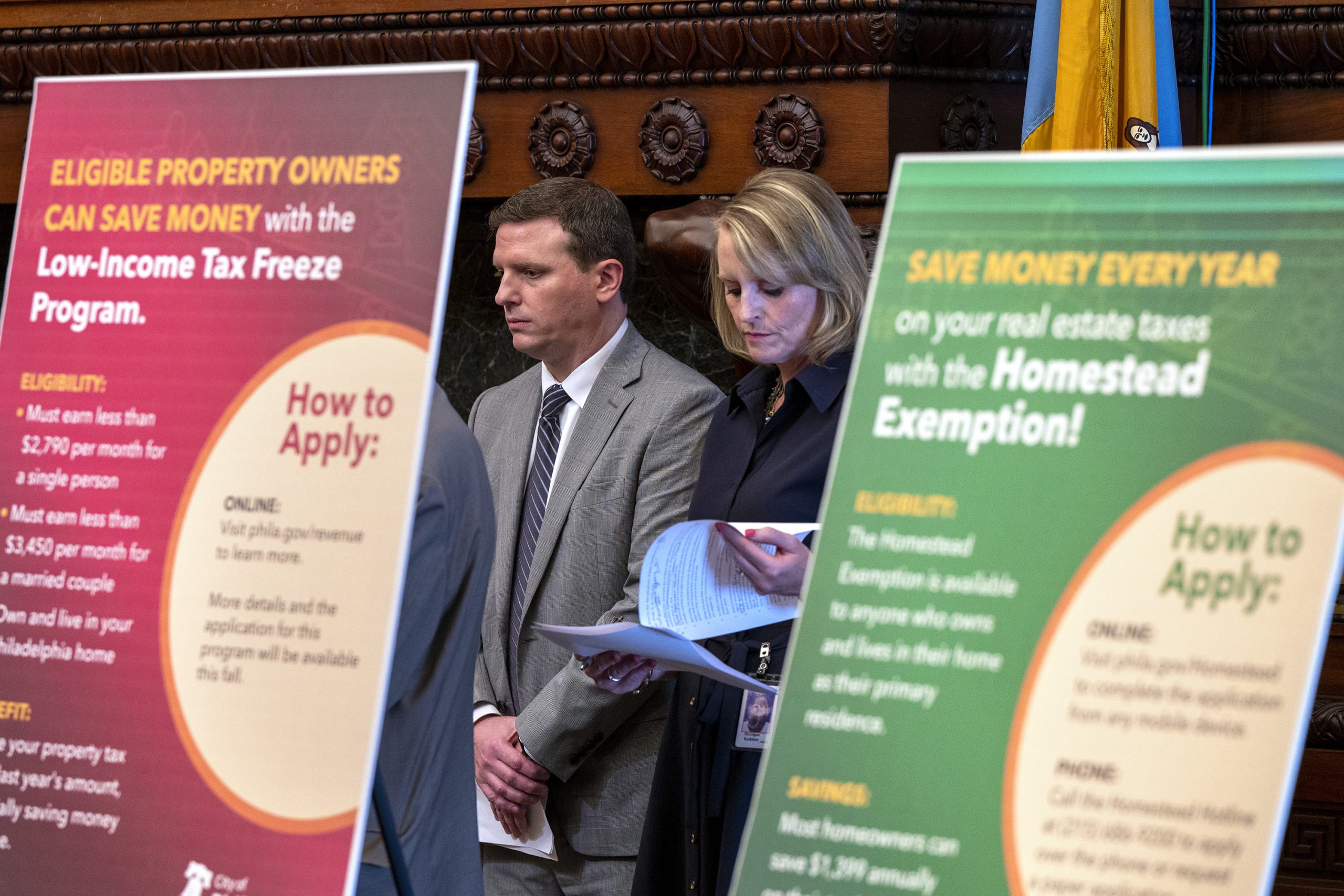
    James Aros, Jr. (left), Chief Assessment Officer at the Office of Property Assessment, and Revenue Commissioner Kathleen McColgan (right) attend a Mayor Cherelle L. Parker press conference at City Hall on Monday Aug. 5, 2024, as her office prepares to release the first citywide real estate reassessment in two years.Tom Gralish / Staff Photographer

    Parker administration officials have said that recovering lost revenue is a priority, especially given the school district’s financial position. The public school system is facing a $300 million structural deficit and the school board recently voted to close 17 schools.

    The district is the only one in Pennsylvania that cannot legally increase taxes to generate revenue. Property tax revenue in the city is split, with 56% going to the school district and the remainder into the city’s accounts.

    The current property tax rate is 1.3998% of assessed value.

    Homeowners who were removed from the homestead exemption program as part of the city’s review were mailed two notices and provided an opportunity to produce evidence of their eligibility. They may still appeal the decision.

  • Philly City Council grilled Police Commissioner Kevin Bethel over officers’ Pride response as LGBTQ+ advocates demanded accountability

    Philly City Council grilled Police Commissioner Kevin Bethel over officers’ Pride response as LGBTQ+ advocates demanded accountability

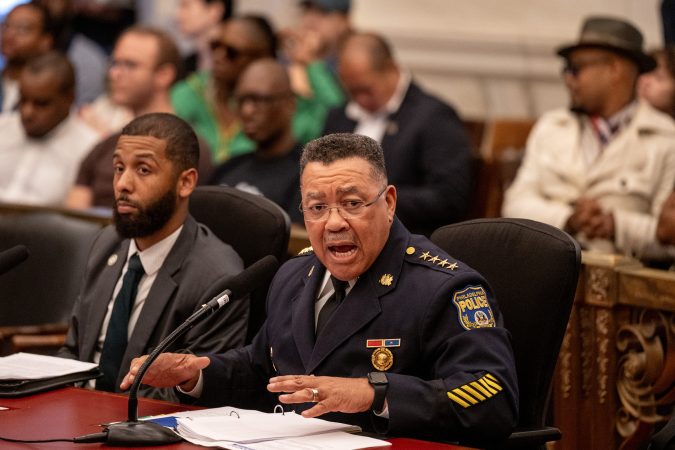
    Several members of Philadelphia City Council and a bevy of LGBTQ+ community leaders on Wednesday sharply criticized Police Commissioner Kevin Bethel, who testified about the department’s response to Pride festivities in the city’s Gayborhood in June and largely defended the force’s crowd-control tactics that had drawn outrage.

    Bethel acknowledged that June 7 was “not a perfect day” and vowed that the police department would implement more robust planning procedures ahead of next year’s celebrations.

    But he stopped short of apologizing for the police department’s response, saying chaotic scenes from the Pride events were part of officers’ attempts to disperse crowds from the Gayborhood, where thousands of people congregated instead of the city’s official festival on the Benjamin Franklin Parkway.

    Among them, Bethel said, were hundreds of teenagers, some of whom were seen on video fighting.

    “There’s a large group of young people who [had] descended into the neighborhood for what they think is something there,” Bethel said. “There is nothing for them there, other than to take over the street.”

    That comment did not sit well with Council members and dozens of LGBTQ+ community members who attended the hearing at City Hall.

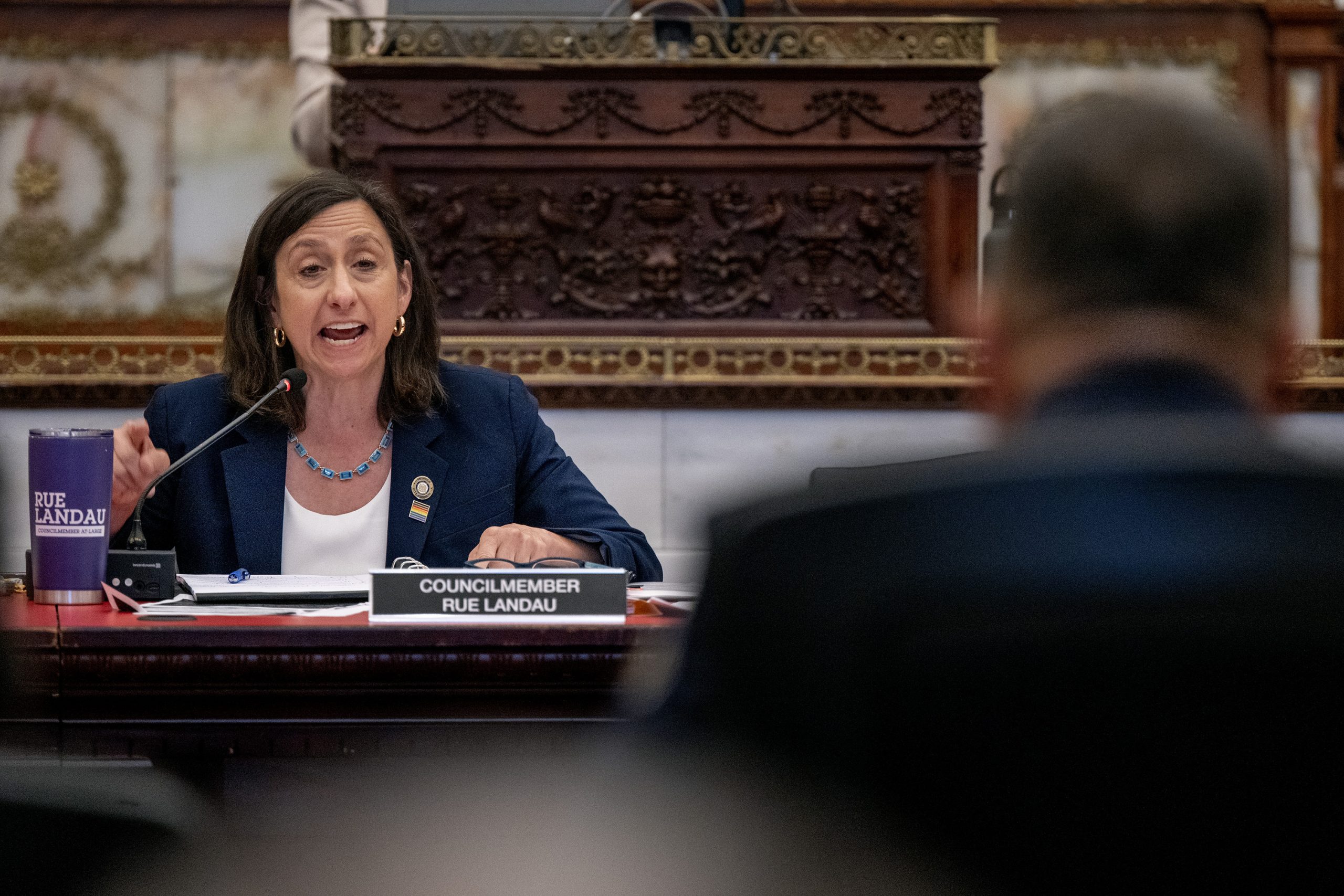
    “Your testimony today and what I’m hearing is both painful and perplexing,” said Councilmember Rue Landau, a Democrat who called for the hearing and is the first out LGBTQ+ person to serve on Council. “It is mind-boggling to think that you and your team would not know that people were going back to the Gayborhood.”

    Councilmember Isaiah Thomas, a Democrat, said he was “confused” why groups of teenagers fighting would have prompted an outsized police response throughout the Gayborhood that included crowds running amid police on horseback and motorcycles.

    “It doesn’t really feel like we’re having a conversation that can put us in a position of earning the trust of a lot of the people who feel like the trust has been lost,” he said.

    And C. Michael Robinson, a community advocate, added: “Only adult bullies scapegoat children, and that was a weak display of leadership.”

    Councilmember Rue Landau questions Police Commissioner Kevin Bethel (foreground) as Council’s Committee on Legislative Oversight holds a hearing Wednesday, Aug. 5, 2026 into the Philadelphia Police tactics used during Pride celebrations in June.Tom Gralish / Staff Photographer

    The hearing Wednesday before Council’s Committee on Legislative Oversight was the most tense questioning that Bethel, a veteran of the city’s police force, has faced since he was sworn in as commissioner in January 2024 at the beginning of Parker’s term. He has enjoyed a largely warm relationship with Council members, who have been supportive of his leadership amid a significant drop in violent crime.

    However, the police department faced intense scrutiny following June 7, the day of the Pride parade and celebration during which 15 people were arrested and videos of police corralling crowds in the Gayborhood drew widespread criticism. Videos posted to social media showed officers physically struggling with Pride attendees, as well as police on horseback and motorcycles dispersing people, and at times displaying batons and Tasers.

    Following the backlash, Landau called for Council’s Committee on Legislative Oversight to hear testimony from the department’s top brass, as well as members of Mayor Cherelle L. Parker’s administration and LGBTQ+ advocates.

    Pride attendees who testified Wednesday said police forcefully directed them through a maze of barricades in the Gayborhood. Several described being pushed and yelled at, and said that the most aggressive tactics were used on crowds of mostly Black people. One person said they heard an officer use a slur.

    Parker said in a statement Wednesday that the events described during the hearing “show us we can and must do better.”

    “We can and will learn from what occurred,” she said.

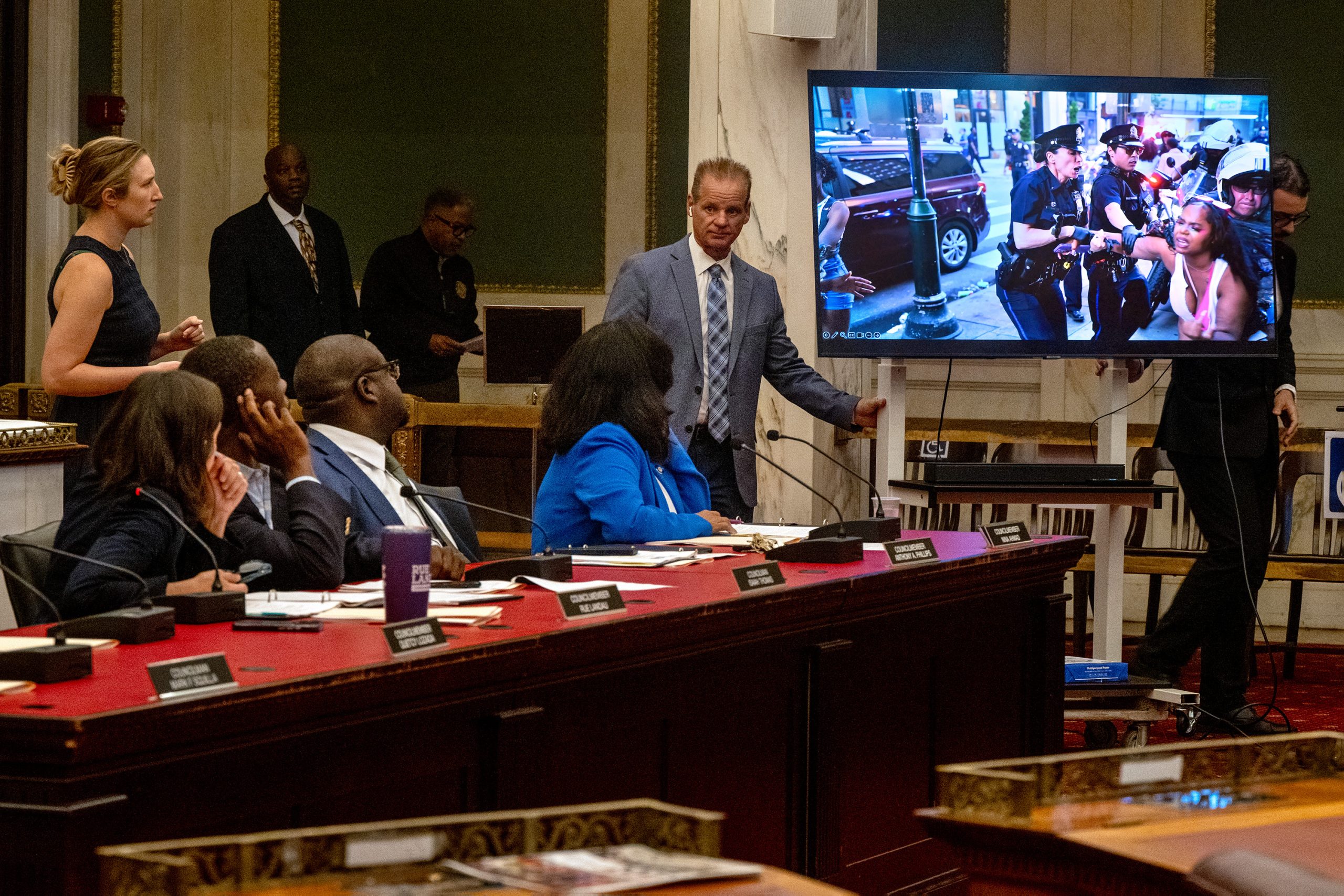
    Councilmember Rue Landau (seated, left) shows a collection of social media videos as City Council’s Committee on Legislative Oversight holds a hearing Wednesday, Aug. 5, 2026 into the Philadelphia Police tactics used during Pride celebrations in June.Tom Gralish / Staff Photographer

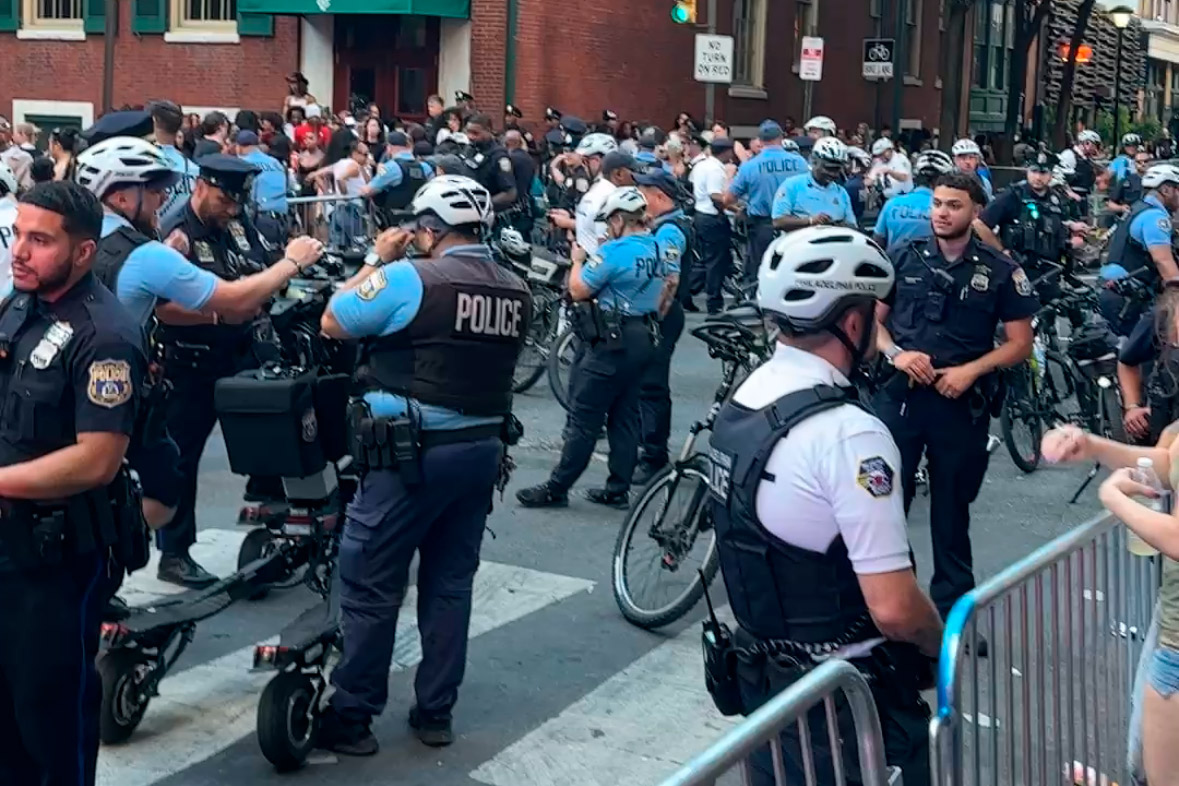
    This year marked the first time the city’s Pride festival was held on the Benjamin Franklin Parkway, where Bethel said police had been well-prepared to manage crowds. Thousands of people still congregated in the Gayborhood, where celebrations were held in previous years, creating dueling events that he said overwhelmed the department.

    Officers attempted to manage crowds in the Gayborhood for hours, Bethel said, and began working to disperse people by late afternoon. To do so, he said, officers used barricades, as well as officers mounted on horseback and motorcycles to motivate people to leave on their own.

    A large police presence at a Pride celebration in the Gayborhood on Sunday, June 8, 2026.Courtesy of Joshua Stokem

    Landau said she was horrified by the crowd-control tactics and asked Bethel if he supported the decision to have officers on motorcycles on the sidewalk, calling it “terrifying” and “dangerous.”

    He said the goal of moving the crowd was “appropriate at the time.”

    In what became a tense back-and-forth, Landau said that people attending Pride “did not believe that you were there to protect them.”

    “They were terrified, they were harassed, they were traumatized,” she said. “This was not about protection. You had 150 officers there, by your own testimony. That is a significant amount of officers.”

    Bethel responded: “Do you want police there at all?”

    Landau appeared taken aback.

    “My comment that there was 150 officers there should not turn into the end-sum game of ‘Do you not want anybody there?’” she said.

    The police commissioner did not specify how many officers in total are facing potential discipline stemming from Pride events on June 7, but he said “eight or nine″ are under investigation by the internal affairs division for wearing facial coverings, a violation of department policy.

    Bethel, who was formerly the department’s liaison to the LGBTQ+ community, vowed a more collaborative planning process next year.

    “Next year it will not be like that. It will be prepared,” Bethel said. “It is not my job to police that event. It is to keep it safe.”

    Several LGBTQ+ advocates and community members testified in favor of additional accountability measures.

    Jacen Bowman, the president of Philly Black Pride, called for an independent after-action review, a permanent LGBTQ+ public safety advisory council that is consulted during the planning of large events, and more consistent cultural competency training for officers.

    “Versions of these structures already exist,” Bowman said. “The question is whether or not the structure has the authority, independence, or enforcement power necessary to produce accountability. Oversight without authority is observation.”

  • Inside the scramble to save Philadelphia’s only free sexual assault exam center

    Inside the scramble to save Philadelphia’s only free sexual assault exam center

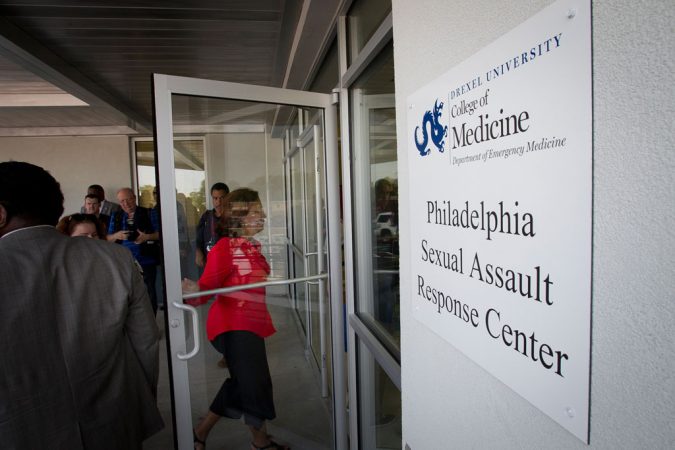
    Philadelphia’s only free sexual assault exam center was so strapped for funding last spring that Drexel University, its former operator, started drafting a closure announcement.

    The school was facing financial strain of its own, and state funding to rape crisis nonprofits was tied up amid a prolonged budget impasse in Harrisburg. Emergency funding from the city was tangled in City Hall’s lengthy contracting process.

    At the time, there was no plan for who would run the Philadelphia Sexual Assault Response Center (PSARC), where roughly 300 rape survivors a year go for the sexual assault exams used to collect forensic evidence that are commonly known as “rape kits,” which often play a key role in prosecuting assaults.

    Fast-forward to this month, when Mayor Cherelle L. Parker’s administration announced the city’s public health department will assume all control of PSARC. Officials presented the news as the culmination of a careful, collaborative handoff, and one city staffer framed the transition in a news release as “seamless.”

    But hundreds of emails obtained by The Inquirer through a right-to-know request and a review of public records tell a far messier story. The emails show that for more than a year the fate of PSARC lurched from one near-miss to the next and that a failed bid process forced the city to take over the center’s operations when no one else would.

    Taken together, the records offer a granular view of how a critical piece of the city’s safety net for sexual assault survivors nearly broke. And they portray a chaotic process in which the city for months sought to transfer control of the center from Drexel to the nonprofit WOAR Philadelphia Center Against Sexual Violence, even as WOAR faced its own budgetary implosion.

    Over the course of the last year, the exam center never shut its doors to patients. But it came close on several occasions, a collapse that would have had ripple effects in hospital emergency rooms across the region that typically route sexual assault patients to the center.

    If PSARC suspended operations, hospitals would have to find specially trained staff — of which there are few — to perform the exams.

    “Philadelphia emergency rooms were not ready for that,” said Lila Slovak, director of the Philadelphia office of the Women’s Law Project, who spent months warning city officials that PSARC was in danger. “They did not know that [the center] was at risk of closing. It was not on anybody’s radar.”

    Crystal Yates-Gale, the city’s deputy managing director for health and human services, said in a statement that the final outcome — the city running the center — is ultimately what is best for sexual assault survivors.

    “We are proud to have secured the continuity of vital services for victims of crime in a dignified, victim-centered, culturally-competent atmosphere in Philadelphia,” she said.

    The exam room at the Philadelphia Sexual Assault Response Center, in Philadelphia, Pa., on Friday Dec. 6, 2024.Tyger Williams / Staff Photographer

    LaQuisha Anthony, WOAR’s executive director, said in a statement that the organization was hamstrung by last year’s monthslong state budget impasse that froze much of its funding.

    She said WOAR was transparent with the city about its financial position.

    “Like most Commonwealth-funded providers, we planned on the assumption that funding would resume,” Anthony said. “The impasse instead ran 135 days. By the time it ended, we had drawn down our reserves.”

    A lifeline center on a shoestring budget

    PSARC, located at 300 E. Hunting Park Ave. in North Philadelphia, has two full-time staff members and a network of about 15 contracted nurses trained to perform sexual assault forensic exams, provided free under Pennsylvania law. The procedures are intended to gather physical evidence, such as DNA left behind by an assailant, and to document injuries that may aid investigators in a future criminal investigation.

    Many hospitals lack the specialized staff required to perform sexual assault forensic exams, so they refer patients to PSARC or work with PSARC to have a trained nurse dispatched to the hospital.

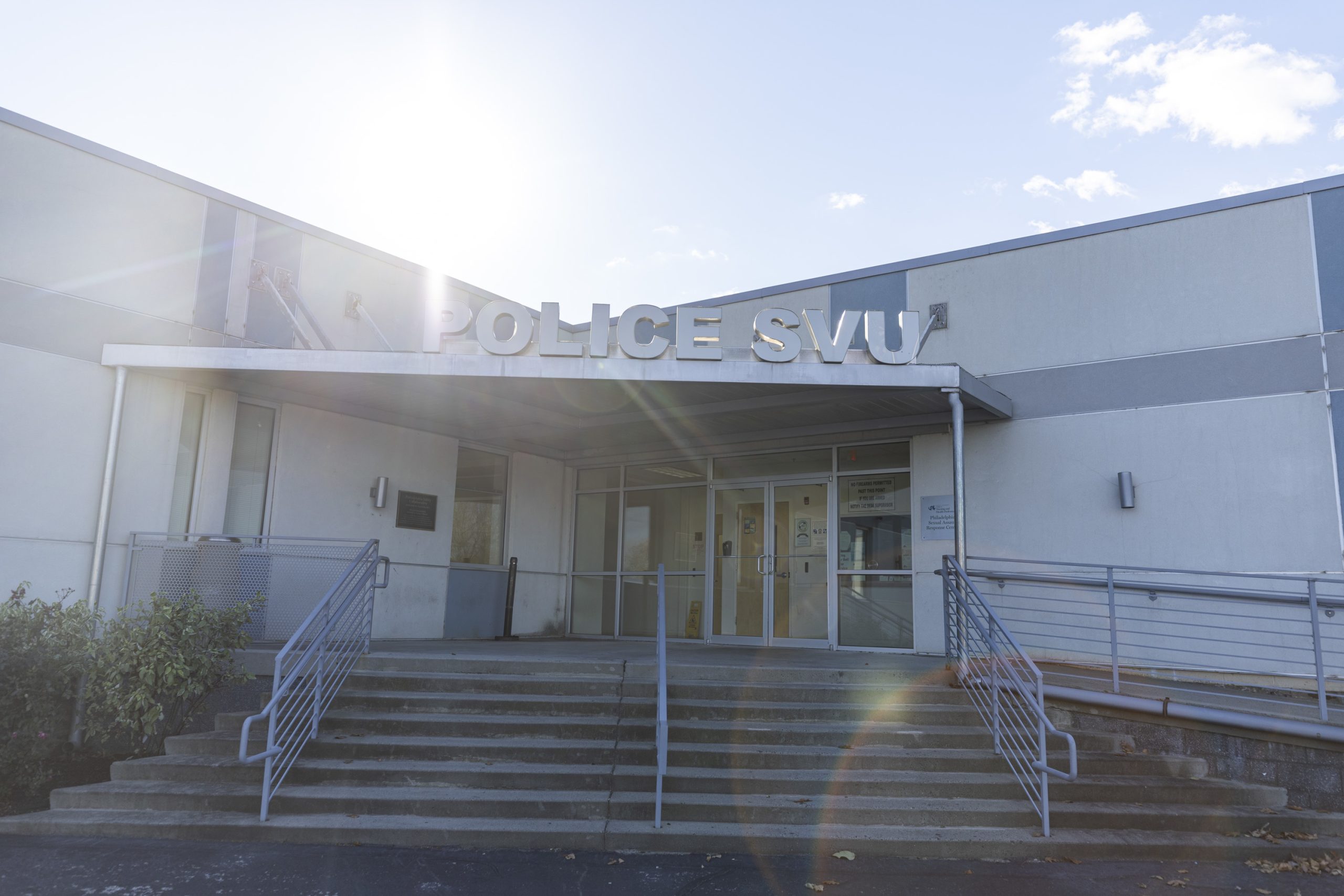
    The center is located next to the Philadelphia Police Special Victims Unit, but patients are not required to report the assault to law enforcement in order to have the free exam performed.

    The Police SVU where the Philadelphia Sexual Assault Response Center, in Philadelphia, Pa., on Friday Dec. 6, 2024.Tyger Williams / Staff Photographer

    Founded in 2011 and initially operated by the now-shuttered Hahnemann University Hospital, PSARC has been run since 2019 by Drexel University’s College of Nursing and Health Professions. For most of that time, the operation ran on a shoestring budget.

    Until last year, PSARC received no dedicated city funding. The state reimbursed Drexel about $1,000 for each patient treated, with Drexel absorbing substantial losses, according to records. The exam reimbursements can take months to flow from the state.

    Brian Keech, then Drexel’s senior vice president for government relations, shared a financial analysis with city officials last year that laid out an annual shortfall averaging more than $175,000.

    As Drexel cut staff and benefits across the university last year amid declining enrollment and a $63 million annual operating loss, its leaders told the Parker administration that the school could no longer manage PSARC on its own.

    In a series of emails last spring, Keech pressed the city for a funding commitment for the center and warned that, without one, the university would have to tell hospitals to stop referring patients for sexual assault exams.

    “We’ve begun to prepare the closure announcement,” Keech wrote in a May 20, 2025, email to Adam Geer, the city’s chief public safety director. “Obviously we’re hopeful we can avoid this scenario, but we do have to adequately prepare area hospitals that they will have to begin providing sexual assault services come July 1 if PSARC closes.”

    By early June, the city had found the money.

    The scramble to save PSARC

    Yates-Gale, the city’s deputy managing director, said in a June 2025 email to Drexel officials that the administration had identified $250,000 in emergency funding to keep the center running.

    The plan was for WOAR — the nonprofit formerly known as Women Organized Against Rape — to operate PSARC. The city would support its efforts by routing those funds to WOAR through an existing health department contract.

    Through the summer of 2025, the money was tangled in the city’s often lengthy contracting process.

    Meanwhile, WOAR was itself under severe financial strain amid the state budget impasse that left community organizations across Pennsylvania unfunded. WOAR’s leaders told city officials that they could not make payroll without the check from the city.

    PSARC was left in limbo. The handoff deadline from Drexel to WOAR was moved from Aug. 1 to Sept. 1, with Drexel agreeing to cover an extra month of payroll to bridge the gap. Then, on Aug. 28 — three days before the already delayed transfer — WOAR’s board chair, Joanne Strauss, wrote in an email to city officials that the organization “will not be acquiring” PSARC.

    She provided no reason other than saying the organization was “further evaluating the proposed transaction.”

    City officials were alarmed. Within an hour, the city’s victim advocate, Adara Combs, emailed Drexel officials to say she was “deeply troubled” by the sudden shift.

    Two weeks later, WOAR appeared ready to operate the center again. The group’s board of directors voted unanimously to approve the acquisition, and money from the city began flowing to WOAR to operate the rape exam center — more than $80,000 in total.

    Then the plan fell apart again.

    In early October, WOAR announced it would lay off staff and cut programs due to its funding crisis.

    Anthony, of WOAR, said in a statement the board’s approval of the acquisition of the sexual assault center came as the nonprofit thought the state budget impasse would come to an end and was “contingent on conditions related to funding and our ability to responsibly take control of PSARC.”

    “It became clear that those conditions were not resolved,” she said.

    Drexel continued to pay to operate the rape crisis center, and WOAR wired the university the city funding it had received. Drexel operated PSARC, with an additional $167,000 in help from the city, until June 30.

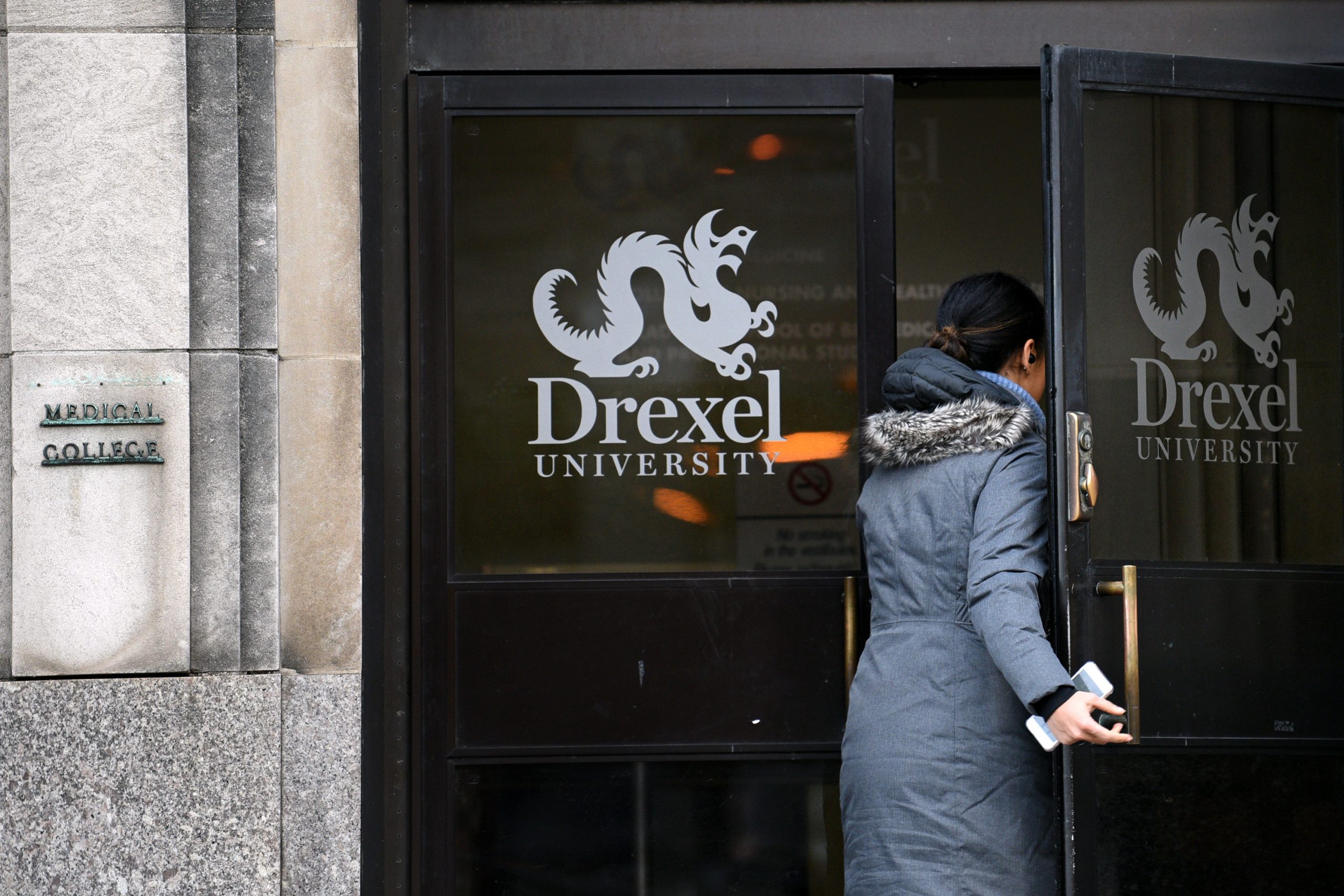
    The 15th Street entrance to Drexel University College of Nursing and Health Professions Feb. 19, 2020. The college has the largest bachelor program in the three-state region.TOM GRALISH / Staff Photographer

    The back-and-forth saga highlighted a central question: Why did the city seek to transfer a critical service to WOAR despite the nonprofit’s existing financial problems?

    Slovak, of the Women’s Law Project, said it made sense that WOAR stepped up to take over the center’s operations, given its mission to treat and prevent sexual violence. It is common in other cities for rape crisis centers to manage forensic exam facilities.

    But overseeing hundreds of sexual assault exams each year, she said, would have been a major expansion of WOAR’s scope because it “is about more than just providing emotional support or accompaniment for survivors.”

    Yates-Gale said WOAR was a natural choice to assume operations of the center. The group had an existing contract with the city and its mission aligned with that of PSARC.

    “Drexel agreed to continue operations until another suitable alternative organization could be identified,” she said, “and the entirety of the funds for the program were transferred back to them.”

    Britt Faulstick, a Drexel University spokesperson, said the school “worked closely with city leadership to ensure a smooth transition.”

    Another failed effort to find an operator

    The city’s $250,000 in emergency funding bought PSARC time. But the same question remained: Who would run it long-term, and where would they find the money?

    This spring, Parker’s budget proposal, which was approved by City Council in June, included $300,000 for the center. The city put the operation out for bid, seeking an outside organization like another hospital or nonprofit to run it.

    City officials met on April 13 with potential operators, including representatives from area hospitals that depend on the center, such as Temple University, the University of Pennsylvania, and Jefferson Einstein Philadelphia. Several expressed concerns about PSARC’s finances.

    According to a public recording of the meeting, multiple attendees suggested that $300,000 a year in city funding would not be enough to cover PSARC’s operations and salaries for medical staff who must be available 24-7.

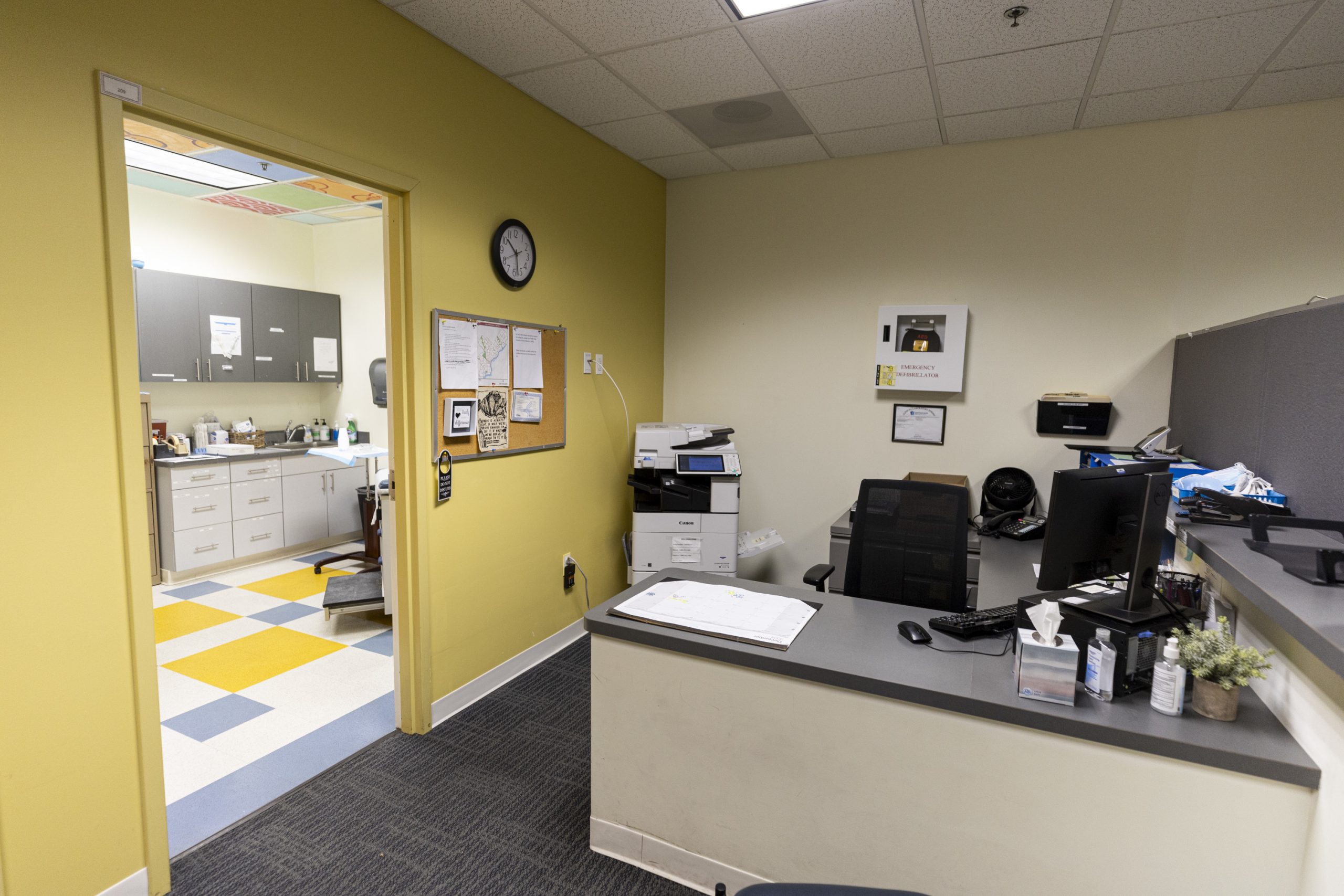
    The exam room and desk space when patients are in at the Philadelphia Sexual Assault Response Center, in Philadelphia, Pa., on Friday Dec. 6, 2024.Tyger Williams / Staff Photographer

    “This has never been something that’s been profitable, so it’s always needed another source of funds to keep it stable,” one hospital representative said. “It’s the money, right, to keep it open and to be able to run this as a service for the city and keep it maintained so you’re not back in this ‘we don’t have it’ in six months.”

    Combs, the city’s victim advocate, told potential bidders that they were welcome to “reimagine” how PSARC operates and propose new funding streams.

    But hospital representatives remained skeptical and pressed the city to find a different solution, citing a moral urgency.

    “It would be a tremendous tragedy if we lost the resources of PSARC in the city,” said a representative from Jefferson Einstein Philadelphia Hospital.

    “I think we all agree,” said Azucena Ugarte, director of the Philadelphia Office of Domestic Violence Strategies. “That’s why we’re doing this.”

    But following the meeting, no one bid.

    The city takes over

    With no outside bid to operate Philadelphia’s only free rape exam center, the options in front of city officials were either to let it close or to take control themselves.

    The city chose the latter. Parker administration officials framed it as a lasting solution.

    Faulstick, of Drexel, said the school will continue to train nurses in sexual assault examination to help ensure the care is available. He said PSARC is “positioned for continued growth and long-term sustainability.”

    Others have questions about the stabilization plan.

    City Councilmember Nina Ahmad, who represents the city at-large and held a hearing earlier this year about PSARC funding, said that the $300,000 annual allocation to the center is likely inadequate and that she will push for more dollars in future city budgets.

    Councilmember Nina Ahmad in chambers as City Council meets Dec. 11, 2025.Tom Gralish / Staff Photographer

    Ahmad also said she expected more buy-in from hospitals, noting they would have been saddled with the responsibility of providing sexual assault exams if PSARC had shuttered.

    “I am not surprised,” she said in an interview, “but I’m still disgusted that we have not come together on this. … This is evidence being collected, [and] this is how we prevent future rapes.”

    Slovak said ensuring PSARC’s financial survival will take more than a change in management. It will require cooperation, including from hospitals, the city, and the state, to work together “so that survivors aren’t sacrificed in the budget gamesmanship.”

    Still, she said, the city “can really be this positive, central, coordinating force.”

    “And I do feel confident at this point,” Slovak added, that the center “is going to move in a good direction from here.”

  • 13,000 Philly homeowners have been kicked off tax break programs that they weren’t eligible for

    13,000 Philly homeowners have been kicked off tax break programs that they weren’t eligible for

    More than 13,000 Philadelphia homeowners were receiving assistance on their property taxes from the city despite not being eligible, according to city officials who conducted a review of thousands of properties to identify people fraudulently receiving tax breaks.

    Those homeowners — most of whom received the popular homestead exemption that can save owners an average of $1,400 a year — have been kicked off the programs, officials said Wednesday. And they will be charged back taxes, in some cases dating back multiple years, resulting in $33.5 million in additional revenue for the city and the Philadelphia School District.

    That is welcome news for the cash-strapped public school system, which is facing a $300 million structural deficit and is the only district in Pennsylvania that cannot legally raise taxes on its own.

    Instead, the district receives 56% of property tax revenue, with the remainder going into the city’s coffers. The current property tax rate is 1.3998% of assessed value, which has not changed for nearly a decade.

    Last month, the city released new property assessments that resulted in a 3% median increase in valuations from the 2025 tax year, the last time there was a mass reassessment.

    Philadelphia School Superintendent Tony Watlington joins Mayor Cherelle L. Parker and her finance team at City Hall on Monday Aug. 5, 2024, as they prepare to release the first citywide real estate reassessment in two years. Behind them, from left are: Finance Director Rob Dubow; James Aros, Jr., Chief Assessment Officer at the Office of Property Assessment; and Revenue Commissioner Kathleen McColgan.Tom Gralish / Staff Photographer

    Philadelphia has a variety of property tax relief programs that are intended to help homeowners weather changes in valuations and avoid displacement. The most popular is the homestead exemption, which exempts the first $100,000 in home value from property taxes. Only homeowners who live in their house as their primary residence are eligible.

    That means that, in some cases, homeowners are eligible to receive the exemption while they live in their homes, but no longer qualify if they move and rent out their space.

    In 2024, Mayor Cherelle L. Parker’s administration launched a review to identify properties that might no longer meet the eligibility requirements. According to a news release, the Philadelphia Revenue Department reviewed about 22,000 tax accounts, or less than 10% of all the households enrolled in the homestead exemption.

    Christian Crespo, a spokesperson for the department, said officials used a variety of data indicators to identify those properties that were up for review. For example, he said, some property owners were claiming homestead benefits at multiple properties.

    As a result of the investigation, 13,355 homeowners were removed from a property tax assistance program. There are several other tax breaks for homeowners that are targeted toward low-income people and seniors, but most of those removed were improperly receiving the homestead exemption.

    Homeowners were sent two notices and given 60 days to prove their eligibility before they were kicked off an assistance program. They may still appeal the decision.

    “We want eligible homeowners to get the relief they deserve,” Revenue Commissioner Kathleen McColgan said in a statement. “These compliance projects help ensure that program participation is accurate, fair, and accessible to residents who truly qualify.”