Category: Pennsylvania Politics

  • Josh Shapiro’s measles response — and its backlash — reignites COVID-19 fury

    Josh Shapiro’s measles response — and its backlash — reignites COVID-19 fury

    A contagious airborne disease spreads. The tally of cases climbs higher as a vaccine debate rages among the public and their elected officials. Politicians point fingers at each other, arguing over the release of information and the steps that some consider “draconian.”

    The measles outbreak this year represents a far different public health crisis than the COVID-19 pandemic that wreaked havoc across the nation and the rest of the world six years ago.

    But with Pennsylvania at the center of a national conversation around a disease once considered eradicated in the U.S. because of widespread vaccination, the ensuing political rhetoric on measles has a familiar ring.

    Republican critics of Gov. Josh Shapiro’s announcement last week of two measles-associated deaths in Lancaster County — the first reported in the country this year — have repeatedly evoked the COVID pandemic in their critiques.

    Shapiro, as the Democratic nominee for governor four years ago, said during his last campaign that his party got parts of its COVID response wrong, such as vaccine mandates. But he defended the party line in court because of his role as the state’s attorney general.

    Now two months before voters decide on whether to reelect him, the governor’s detractors have condemned both his handling of the measles deaths and his administration’s simultaneous push for a string of new regulations aimed at fighting infectious diseases.

    “IT’S COVID ALL OVER AGAIN — BUT WORSE!!!” State Rep. Russ Diamond, a conservative Republican from Lebanon County, wrote Sunday in a lengthy social media post that led with three fire alarm emoji. The post followed other online comments in which Diamond speculated that Shapiro was broadcasting the measles deaths to “justify the draconian” regulatory proposal.

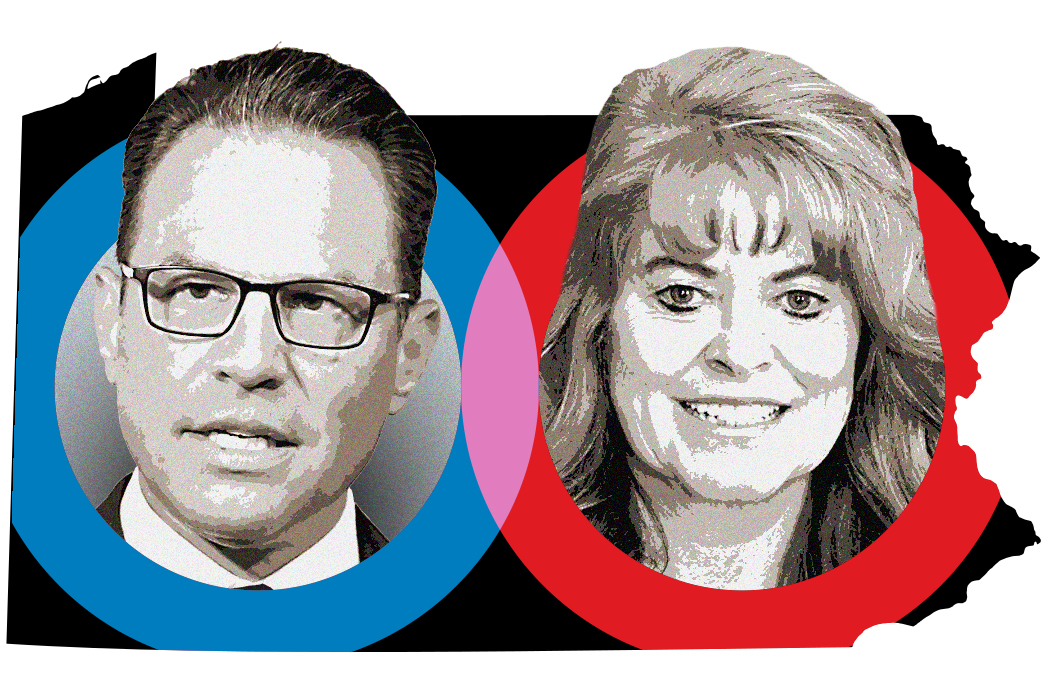
    Treasurer Stacy Garrity, the governor’s Republican challenger this fall, has echoed those recent comments from others in her party as she seeks to close a gap in the polls. She’s leaning into a message that appears strikingly similar to the one used by State Sen. Doug Mastriano, Shapiro’s 2022 Republican opponent who lost by double digits.

    In a video on social media, Garrity said Shapiro proposed “mandates that would make draconian COVID-era restrictions blush.” His “highly staged, partisan news conference” about measles, she added, “demonstrated just how dangerous his proposed mandates could be.”

    Shapiro’s Department of Health proposed the regulations earlier this year, before the state reported its first measles-associated deaths in three decades. The 502-page proposal, according to the state, would bolster officials’ ability to manage the outbreak of diseases, including isolation protocols and the reporting of identified cases. It’s been in the works for years and does not specifically refer to the 2026 measles outbreak, though it could play a role in managing such crises.

    “People want to raise some level of panic and anxiety here,” said Ericka Hayes, the senior medical director of infection prevention at the Children’s Hospital of Philadelphia, who has reviewed the proposal and is concerned about the “alarmist rhetoric” emerging around it. “But the spirit of this, and what is written in the document, as far as I’ve read, really is focused on appropriate measures for response to public health, infectious disease crises.”

    The governor’s office said the regulations were not yet final, and the governor will weigh in after public comment concludes later this month.

    “Disease outbreaks are serious, and Pennsylvania is confronting that reality right now,” Rosie Lapowsky, Shapiro’s spokesperson, said in a statement, which pointed to the reported 540 measles cases in the state.

    “The Governor’s philosophy that will guide the final regulations is that public health depends on trust, and building that trust means respecting individual rights, involving parents in decisions that affect their children, and ensuring government works closely with the people it serves,” she said.

    Shapiro also emphasized trust last week when he publicly clashed with U.S. Health and Human Services Secretary Robert F. Kennedy Jr., whom he blamed for spreading vaccine misinformation, saying Pennsylvania was seeing the negative consequences in the growing outbreak of a vaccine-preventable disease.

    Democrats like State Rep. Tarik Khan, a Philadelphia Democrat and nurse practitioner, have come to Shapiro’s defense. In a livestreamed conversation with other legislators who are also healthcare professionals, Khan said the governor “rightly spoke truth to power” by targeting Kennedy.

    Still, the way Shapiro took a leading role in announcing the measles-related deaths made what could have been two disconnected issues — the outbreak and the separate regulations proposal — “into a conflagration” that is giving “lots of people flashbacks to” COVID, particularly conservatives who believed there was government overreach, said Chris Nicholas, a Harrisburg-based GOP consultant.

    “We’re getting back into a situation where all the usual subjects are going to be relitigating the COVID pandemic restrictions or rules because this has given everyone an excuse to dredge it back up again,” Nicholas said. “I don’t know if the general public is ready for that. But the politicos are certainly ready for that.”

    COVID, measles, and mitigation

    The pandemic was unlike the measles outbreak in Pennsylvania in many ways.

    When the COVID-19 virus started widely spreading in early 2020, the effects and severity for different parts of the population were unknown. Public health officials scrambled to track and contain the virus. For a year, vaccines were not widely available.

    On the other hand, doctors have been writing about measles since at least the ninth century, according to the CDC. And healthcare providers have been required to report the disease to federal authorities since 1912.

    Vaccines, available since the 1960s, are required for children to start school, although Pennsylvania has some of the nation’s most lenient exemption rules. The measles, mumps, and rubella combination shot currently in use is one of the “most-studied vaccines” in part because of misinformation that has circulated about its safety over the last several decades. For example, studies have shown, over and over, that childhood vaccination is not linked to autism.

    Kennedy, a longtime anti-vaccine activist, has sought to upend federal vaccine policy at the helm of the country’s top health agency at a time when rising vaccine hesitancy increasingly divides Republicans and Democrats, and measles outbreaks are resurging.

    Across the country this year, 47 states have reported 2,887 confirmed cases of measles, according to the Centers for Disease Control and Prevention’s weekly update last Thursday.

    Pennsylvania’s Department of Health reported 540 cases as of Wednesday. The two “measles-associated deaths” — which state health officials consider as deaths where evidence of measles is present — that were identified by the state last week remained the only such deaths.

    Shapiro’s decision to withhold any identifying information about the cases his administration reported — such as the victims’ ages, or if they had other health conditions — quickly led to an information vacuum that allowed skeptics — including Kennedy — to question the deaths, independent public health experts said. Shapiro’s administration, however, maintains that state law bars the governor from sharing more information about the individual victims.

    Lancaster County Coroner Stephen Diamantoni, an elected Republican and a physician, drew wide attention for saying he did not believe measles contributed to a newborn’s death. Diamantoni said measles was noted as a significant condition “contributing to death but not resulting in the underlying cause” on the death certificate because the baby tested positive for measles.

    National Institutes of Health Director Jay Bhattacharaya, in a Fox News appearance on Saturday, said Shapiro was “politicizing the issue.”

    “What the governor is doing is he’s playing this out over the airwaves for political purposes just like what happened during COVID,” said Bhattacharaya, an appointee of President Donald Trump.

    The pandemic comparisons erupted as Pennsylvania Republicans began to connect the measles outbreak to the regulatory proposal, which is currently being reviewed by the state’s Independent Regulatory Review Commission. The proposal became public on Aug. 8 and is open for public comment until Sept. 21.

    The lengthy document details what the department described as “much needed amendments” to align the state with recommendations from experts like the CDC and the American Academy of Pediatrics.

    The proposed changes are numerous — including expanding the list of diseases that must be reported to the state and the protocols for pulling children out of school if they contract certain illnesses.

    Instead of the current 24-hour requirement for healthcare practitioners to disclose measles cases, the cases would need to be reported “immediately by telephone” to the state.

    State House Minority Leader Jesse Topper, a Bedford County Republican, compared the regulations to “oppressive COVID-era policies” and called on Shapiro to rescind them. In a statement, he said they would allow the state to interview students in school without notifying their legal guardian.

    Garrity said in her statement Saturday that the regulations would allow the administration to “conduct warrantless searches of private property, access patients’ confidential medical records and require schools to give those officials one-on-one, private access to students.”

    She did not elaborate on which specific regulations raised those concerns when responding to a request for comment from The Inquirer. The Department of Health pushed back on Garrity’s claims as inaccurate.

    Hayes, the CHOP expert, said the regulations are a step toward “further fleshing out” long-used practices like contact tracing, which involves identifying individuals exposed to an infectious case to keep them from infecting more people. Those methods are “really important” in the context of the ongoing measles outbreak, she said, given that measles is so contagious that nine in 10 unvaccinated people will be infected if exposed, and children are especially vulnerable.

    Critics who misrepresent the state’s proposal as a way to invade people’s privacy or take their property is deeply worrying, she said.

    “They’re trying to vilify a work process for controlling infectious outbreaks that has been in place for centuries, and it’s dangerous,” Hayes said.

    COVID flashback

    Under Shapiro’s predecessor, Pennsylvania took an aggressive approach to public safety surrounding the COVID-19 pandemic.

    Former Democratic Gov. Tom Wolf’s moves included a requirement that children wear masks in school — a rule later struck down by the Pennsylvania Supreme Court — and the temporary closure of “nonessential” businesses.

    As attorney general at the time, Shapiro defended the state’s actions in court as his legal duty. In a video that has reemerged and been widely shared since his measles news conference, Shapiro appears with his son to warn the public that “yes, you can” get in trouble for having a gathering at home or in public.

    By March of 2021, just 40% of Pennsylvanians approved of Wolf’s handling of the crisis, according to a Muhlenberg College poll. Shapiro’s eventual opponent, Mastriano, in some ways became the face of the public opposition.

    But as Shapiro campaigned for governor in 2022, he began to distance himself from Wolf’s actions, saying “too many Pennsylvanians could not get the help they needed during COVID,” and government needed to be more responsive — though Republicans continued to tie them together.

    By the summer of that year, Shapiro had fully broken with fellow Democrats on mask and vaccine mandates, saying he opposed them.

    “This is an area where I think folks got it wrong,” Shapiro said of school and business shutdowns, in an August 2022 interview with the Associated Press. “And to me, that’s the approach we need to take more broadly as a public, which is to educate, empower, and respect people’s personal decisions and respect their personal freedom to make those choices.”

    Campaign messaging

    Shapiro’s campaign did not respond to questions about Garrity and others tying his measles response and regulatory proposal to the pandemic — a new messaging strategy in a race where the Republican nominee has at times struggled to find her footing.

    “It feels like this is probably just what’s going to happen for the next 60 days,” said J.J. Abbott, a Democratic consultant and former spokesperson for Wolf.

    Abbott said he believed the criticisms are likely aimed at energizing a base of Republican voters who have not shown the same enthusiasm for Garrity and other GOP candidates as they did in 2024, when Trump won Pennsylvania and Republicans swept the other statewide races.

    Garrity’s statement alludes to some of that potential energy while also contending she showed restraint by waiting for “four days for additional information before issuing a statement about Josh Shapiro’s latest political stunt, despite calls from members of my own base to attack Josh Shapiro.”

    Whether or not voters will be swayed by attacks on Shapiro’s handling of the issue is an open question.

    Shapiro already beat a candidate who ran on nearly the same message on government overreach during a health crisis. That fact, combined with the vast differences between the novel coronavirus and measles, could mean those criticisms largely fall flat with voters, Abbott said.

    “Something that comes off as anti-vaccine for measles isn’t going to be very persuasive or appealing to the vast majority of voters, because most of them are vaccinated and almost all of them get their kids vaccinated,” Abbott said.

    Nicholas, the Republican consultant, said the latest developments had resonated with many conservatives who were still concerned about government overreach during COVID.

    He also pointed to the fact that both Shapiro, during his reelection as attorney general, and Garrity, in her first campaign for treasurer, won campaigns during the pandemic in 2020 and that he wasn’t surprised both sides were bringing up familiar themes six years later.

    “Politicians love things that are familiar,” Nicholas said.

    Staff writer Aubrey Whelan contributed to this article.

    This story was updated to reflect that the governor plans to weigh in on the Department of Health’s proposed regulations once public comment concludes on Sept. 21.
  • Josh Shapiro and Stacy Garrity will debate for Pennsylvania governor next month

    Josh Shapiro and Stacy Garrity will debate for Pennsylvania governor next month

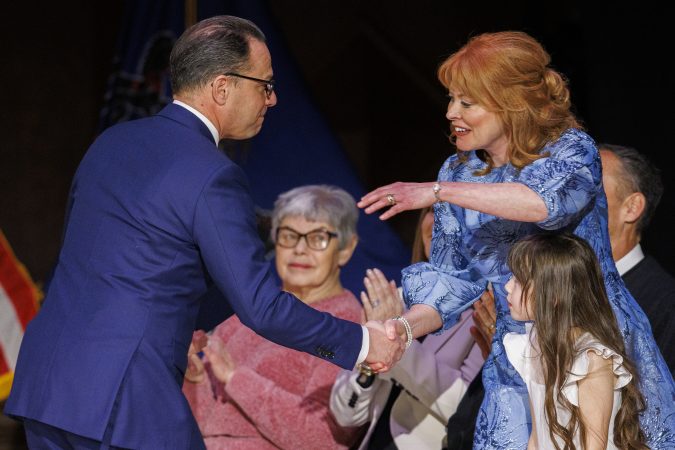
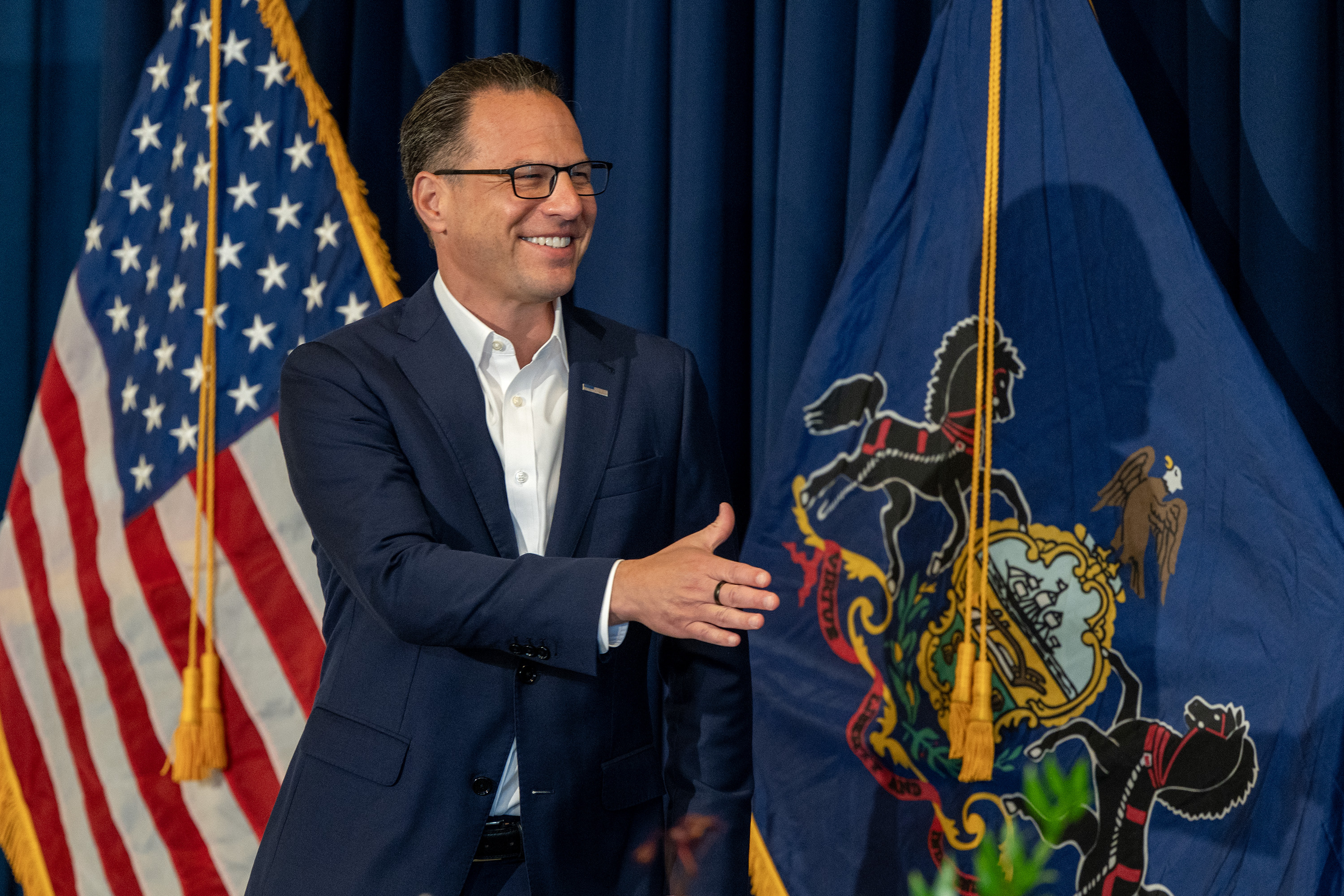
    Democratic Gov. Josh Shapiro and Republican Treasurer Stacy Garrity, both candidates running to be Pennsylvania’s next governor, have agreed to face off next month in the first and only scheduled televised debate between them.

    The debate — scheduled for 8 p.m. on Oct. 7 and hosted by ABC 27 — will be held in Harrisburg and will air live on several stations owned by Nexstar across Pennsylvania, including WPHL-TV in Philadelphia.

    Both campaigns said they look forward to meeting face to face to discuss issues important to voters.

    “Game on,” said Matthew Beynon, a spokesperson for Garrity.

    Manuel Bonder, communications director for Shapiro’s campaign, said “we look forward to continuing to make the choice in this election clear.”

    Shapiro, who was elected governor in 2022 after serving as the state’s attorney general, holds a sizable lead against Garrity, according to a Philadelphia Inquirer/New York Times/Siena University poll conducted last month.

    As the November election approaches, Shapiro — who is a rumored contender for president in 2028 — has focused on translating his popularity to downballot Democratic candidates in four, nationally watched congressional districts and those running for seats in the Pennsylvania state Senate, which has been under Republican control for more than 30 years.

    Garrity, meanwhile, has struggled to gain traction among voters and to compete with Shapiro’s massive campaign funds. A quarter of likely Republican voters did not know who she was or know enough about her to form an opinion of her, The Inquirer/New York Times/Siena poll found.

    Next month’s debate could present Garrity with a fresh chance to introduce herself to voters statewide and make her case on why Shapiro should not be reelected.

    October’s debate is the only one scheduled between the candidates, though Garrity’s campaign have proposed several more. In 2022, Shapiro and his Republican challenger, State Sen. Doug Mastriano, did not debate after the two could not agree to terms.

    Topics likely to surface during the debate include data centers, the measles outbreak, and President Donald Trump.

    Both candidates have released television ads criticizing the other’s past support for data center development, which has grown increasingly unpopular in Pennsylvania and beyond. Garrity has denounced Shapiro for his shifting positions on data centers, though she has a mixed record herself. Last month he signed an executive order dramatically restricting their development, touting them as the strictest guardrails in the nation. Garrity has called for a pause in data center development.

    Garrity has also blasted Shapiro for his handling of the rollout of public health information in announcing two measles-associated deaths in Pennsylvania, saying he has stepped in front of verified facts. Shapiro has been critical of the Trump administration, saying the nation’s health secretary was responsible for the influx of measles cases by stoking misinformation.

    Trump has endorsed Garrity in the governor’s race, and Shapiro has repeatedly sought to tie her to some of his unpopular policies, highlighting her support for his tariffs on imported goods and unpopular war in Iran.

    ABC 27 anchor and reporter Dennis Owens will moderate the debate, which will also be available to view on streaming platforms.

  • Shapiro expresses ‘real concerns’ about Flock surveillance cameras as he weighs a potential ban

    Shapiro expresses ‘real concerns’ about Flock surveillance cameras as he weighs a potential ban

    Pennsylvania Gov. Josh Shapiro has “real concerns” about the way Flock cameras — automated license plate readers that capture and store data gleaned from moving cars — are being used in the state, a spokesperson said Wednesday.

    Open to banning the technology, Shapiro is wary of how Pennsylvanians’ privacy can be protected, Rosie Lapowsky, Shapiro’s spokesperson, said in a statement. Flock cameras can record license plates and other vehicle features such as bumper stickers of every car that passes them.

    Lapowsky added that commonwealth agencies, including the Pennsylvania State Police and the Department of Transportation, “do not own Flock cameras and will not allow them to be used or installed on Commonwealth property.”

    Shapiro, a Democrat up for reelection in November, has pointed out that there a several proposals being weighed by the Pennsylvania General Assembly that would either ban or strictly regulate this technology, Lapowsky said.

    “And,” she added, “our administration is working with the General Assembly on what piece of legislation could make it to the governor’s desk in order to protect Pennsylvanians’ privacy.”

    A bipartisan proposal would establish statewide privacy and accountability protections for automated license plate reader systems. The bill, which was introduced by Philadelphia Democratic State Rep. Tarik Khan, would create guardrails to prevent the misuse of personal data and to protect civil liberties.

    In a statement Wednesday, Flock spokesperson Paris Lewbel characterized the cameras as “important public safety tools … helping [law enforcement] officers solve serious crimes and find missing people.”

    But organizations such as the American Civil Liberties Union call the cameras “creepy” and part of what could grow into a nationwide, warrantless surveillance system.

    The issue has gained traction nationally ahead of the November midterm elections amid a wider backlash to the AI industry.

    Last week at a news conference in Franklin County, Shapiro said, “I think law enforcement needs to have tools to keep communities safe. Flock cameras are not a tool that I support. I would welcome bipartisan legislation to ban these across the state.”

    The county announced it would terminate its contract with Flock, even though the sheriff’s department supported the technology.

    Similarly, the Abington Township Police Department ended a contract last month that supplied the agency with Flock cameras over concerns about data security. The governor resides in Abington.

    Concerns grew after it was learned that the network uses artificial intelligence to identify cars that frequently drive together, and allows officers to search for vehicles by behavior, rather than plate number.

    Officers in other states have even been accused of using Flock to keep tabs on their girlfriends.

    Unredacted search logs have also been released to the public through information requests and data leaks.

    Lewbel added that the company would “support thoughtful, bipartisan legislation that puts strong privacy, transparency, and accountability guardrails in place while preserving law enforcement’s ability to use technology responsibly to keep people safe.”

  • Philadelphia’s police union endorses Gov. Josh Shapiro for his reelection bid

    Philadelphia’s police union endorses Gov. Josh Shapiro for his reelection bid

    Philadelphia’s police union on Tuesday endorsed Gov. Josh Shapiro’s reelection bid, announcing its continued support for the first-term Democratic governor while touting his commitment to law enforcement.

    “Every day, he has shown a commendable ability to work with local law enforcement and deliver the resources and support we need to protect and serve our friends, families, and neighbors,” said Roosevelt L. Poplar, president of the Fraternal Order of the Police Lodge 5, which represents over 14,000 active and retired Philadelphia police officers and sheriff’s deputies.

    In a statement, Shapiro said he was “honored” by the endorsement.

    “I’m going to keep fighting for the brave law enforcement officers who work to keep Philadelphia safe every single day,” he said. “I believe all Pennsylvanians deserve to be safe and feel safe in their communities — and we have focused every day on funding law enforcement and supporting the men and women that protect and serve our Commonwealth.”

    It marks the second time the police union has embraced Shapiro for governor after endorsing him in 2022 over Republican candidate Doug Mastriano, who the then-president of the union said couldn’t be trusted to protect their collective bargaining rights. Shapiro, a former state attorney general, was a reliable government official who the union said was “there to help us with whatever we need to do.”

    This election cycle, Shapiro holds a commanding lead over his Republican opponent, Treasurer Stacy Garrity, according to a recent poll from The Philadelphia Inquirer, the New York Times, and Siena University. The union has previously supported President Donald Trump, but Shapiro attracted its backing over Garrity, who Trump has endorsed in the Pennsylvania governor’s race.

    Shapiro has also received support from other organized labor unions, including the Pennsylvania AFL-CIO and the Pennsylvania Professional Fire Fighters Association. On Monday, he received the backing of the Pennsylvania State Troopers Association.

    Shapiro has maintained a comfortable relationship with law enforcement, and his campaign noted that he has signed multiple state budgets funding 2,000 additional officers across Pennsylvania and allocated more than $1 billion in community-based violence prevention grants.

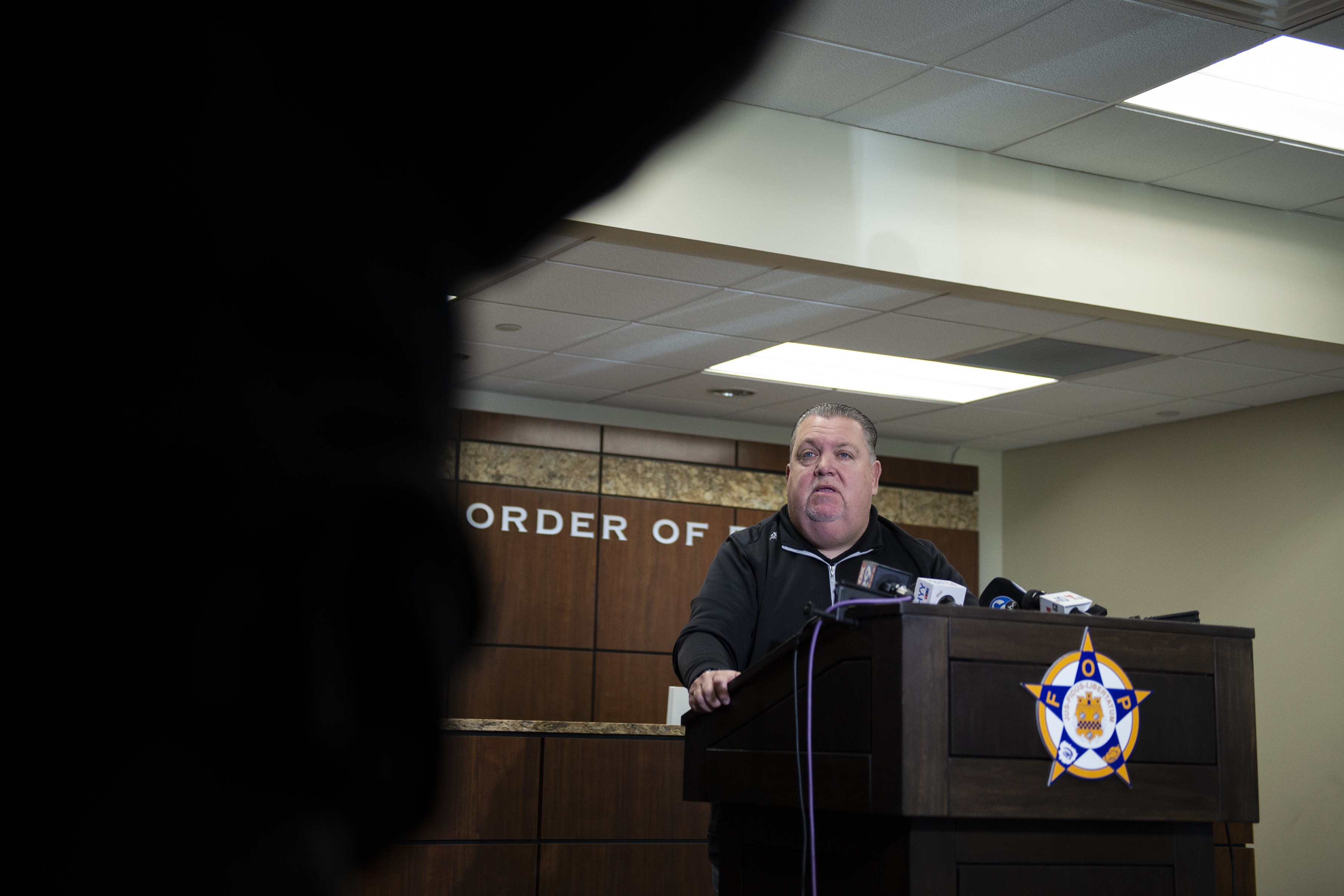
    Roosevelt Poplar, president of Fraternal Order of Police Lodge 5, on Jan. 26, 2024.Elizabeth Robertson / Staff Photographer

    In his statement, Poplar also commended Shapiro for providing funding for police department needs.

    “The Governor has delivered on his promise to invest in public safety, he has shown up with us in times of tragedy, and he has proven his commitment to keeping our officers and the communities we serve safe,” he said.

    The police union’s endorsement of Shapiro is notable for an organization that just a few years ago was seen by some Philadelphia Democrats as politically toxic.

    In the aftermath of the 2020 Minneapolis police killing of George Floyd, protests by racial justice activists swelled in Philadelphia and across the country with many of the movement’s participants calling to “defund” or abolish the police. They pressed local lawmakers to redirect police funding to social services, and Philadelphia City Council in June 2020 canceled a planned increase to the Philadelphia police budget.

    Amid the calls for reform, the FOP was a major point of contention, as was its bombastic former leader, John McNesby. Activists — and many of their allies in elected office — said the union was too resistant to change and protected bad cops.

    Former FOP president John McNesby holds a news conference on Oct. 19, 2022.Joe Lamberti

    At the time, Shapiro was running for reelection as the state attorney general, and his campaign presented him as a “progressive reformer” who had established a unit in his office to review criminal convictions that may have been unfairly applied and a council to support people leaving prison with housing and employment opportunities. The FOP endorsed Shapiro’s 2016 and backed his 2020 campaign for attorney general.

    Unlike some Philadelphia Democrats, Shapiro — who has rumored ambitions for a presidential run in 2028 — did not embrace the “defund” movement. He argued during a 2020 trip to Philadelphia that addressing structural inequities in the department and having strong law enforcement, especially in communities with high levels of poverty, were not mutually exclusive endeavors.

    “We reject that poverty or institutionalized indifference and marginalization should mean that some people don’t get to have a safe community to live in,” he said. “We won’t give up on the belief [of] law enforcement showing up in a community to make people feel safer.”

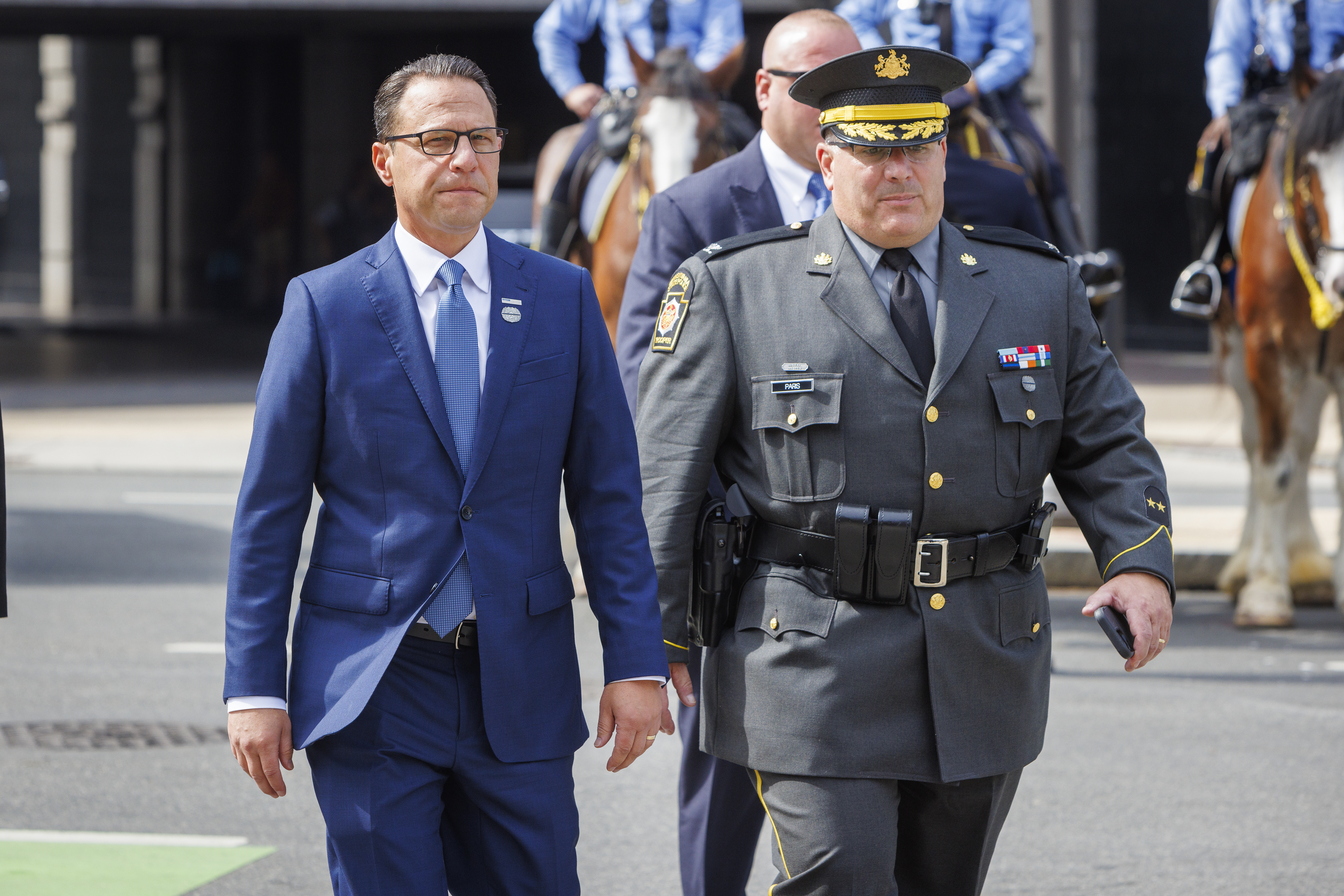
    Gov. Josh Shapiro with Pennsylvania State Police Col. Christopher L. Paris. They were attending the funeral for Philadelphia police officer Jaime Roman at the Cathedral Basilica of SS. Peter and Paul on Sept. 19, 2024.Alejandro A. Alvarez / Staff Photographer

    In the years following 2020, public support for police in Philadelphia appeared to grow. The city saw a historic spike in gun violence, and Republicans nationally portrayed Democrats as soft-on-crime. When a half-dozen Democrats were fighting for the mayoral nomination in 2023, polling showed that most voters saw public safety as the No. 1 issue driving the race. None of the candidates embraced “defund,” and most of them supported proposals to provide additional resources to the police department as it sought to solve shootings.

    In the end, the tough-on-crime mayoral candidate — then-City Councilmember Cherelle L. Parker — won decisively.

  • DHS staff lacks ‘high confidence’ in Trump’s claims of noncitizen voters in Pa., Al Schmidt claims in letter to Mullin

    DHS staff lacks ‘high confidence’ in Trump’s claims of noncitizen voters in Pa., Al Schmidt claims in letter to Mullin

    Pennsylvania’s top election official contended in a letter to a cabinet secretary this week that the Trump administration’s own staff does not have “high confidence” in its claims of thousands of noncitizens on the state’s voter rolls.

    In a letter to DHS Secretary Markwayne Mullin, Secretary of State Al Schmidt said the Department of Homeland Security has still not fulfilled a promise to provide a written copy of its methodology “with a list of specific data sources” for its calculation that there are more than 14,500 noncitizens on the state’s voter rolls — a claim Schmidt and other Pennsylvania officials dispute.

    “We await this information,” Schmidt said in the letter, citing a virtual Aug. 13 meeting with DHS staff.

    Schmidt, a Republican appointed by Democratic Gov. Josh Shapiro, told Mullin that during that meeting “DHS representatives explained that they did not have high confidence that the 14,576 individuals… were, in fact, non-citizens who had improperly registered to vote in Pennsylvania.”

    The correspondence, shared with The Philadelphia Inquirer, comes amid increased scrutiny of election workers ahead of the consequential midterm elections just over two months away and as President Donald Trump has been pushing for an overhaul of the way Americans vote.

    In an email response Thursday after the initial publication of this story, a spokesperson for DHS confirmed the meeting with Schmidt and said the agency “will continue working with Pennsylvania to address additional questions and correct their misunderstanding of the information provided during the meeting.”

    Pennsylvania was one of four Democratic-led states — along with California, Nevada and New Jersey — that DHS claimed had a collective total of 250,000 noncitizens on their voter rolls in a July document posted at the same time Trump delivered a prime-time address on election security that waded into conspiracy theories.

    The White House and DHS have provided little explanation for how they have arrived at these numbers, and election experts have said the large numbers may likely be pulling from other government data sources and include hits to names from systems that were never meant to identify noncitizen voters.

    Schmidt said in the letter that he looks forward to understanding “how you attempted to match registered voters in Pennsylvania with information in DHS’s data sources and how you determined which matches were associated with greater or lesser degrees of confidence.”

    Mullin said in a news conference the day after Trump’s address that leaders in any states who resist working with the department to screen for noncitizen voters would be “held accountable by fines, by penalties, and even depending on how far it goes, prison time.”

    Schmidt, who previously investigated noncitizen voting when he served as Philadelphia’s Republican city commissioner, has repeatedly rebuked the department’s requests, which would require handing over unredacted voter rolls, which Schmidt has warned could put individual privacy at risk. He has also said it is extremely rare for noncitizens to vote and is already prohibited by state law.

    In New Jersey, a few days after Mullin’s announcement, Democratic Gov. Mikie Sherrill disclosed that, due to a computer glitch, roughly 6,600 noncitizens were inadvertently registered to vote over a yearlong span ahead of the 2024 election.

    Mullin claimed on X, following Sherrill’s announcement, that more than 35,000 noncitizens could be registered in New Jersey.

    Sherrill’s office has since provided updates to its estimates, sharing Aug. 19 that approximately 5,100 individuals, who were only registered from the error, were removed from voter system and about another 1,450 will undergo additional review. Roughly 340 individuals, her office said, who were registered because of the error cast a ballot at least once.

    Sherrill won the 2025 governor’s race, and New Jersey went for Vice President Kamala Harris in 2024. Neither contest’s outcome would have been changed by those 340 votes.

    But New Jersey’s disclosure has helped put additional pressure on the other three states targeted by DHS as November approaches. Shapiro, who is seeking a second term as governor this November, and Schmidt have continued to reject Trump’s push for a greater federal role in elections.

    In closing his letter, Schmidt said he wants DHS’ additional information to conduct further review and appealed to the high stakes of the potential premature removal of eligible voters.

    “The right to vote is sacred, and the cancellation of any voter registration record must be based on reliable data sources and done in accordance with Pennsylvania and federal law,” he wrote.

  • The 1960s blueprint for fighting against data centers

    The 1960s blueprint for fighting against data centers

    When hundreds of Upper Merion residents came to a township planning meeting in the spring of 2026 to oppose construction of five proposed data centers in King of Prussia, they discovered that, according to the developer, they had little recourse. The plans were code compliant, Brian J. O’Neill of MLP Ventures claimed. They required no rezoning, no variances — and no vote from township officials.

    Yet, the residents didn’t just roll over. Instead, they set about organizing. A petition against the proposal garnered roughly 18,000 signatures — a majority of the township’s population. After an intense three-month campaign against the plans, the township Board of Supervisors rejected them in August. O’Neill vowed to appeal, and accused the board of violating state and local planning codes (which they denied), so the fight may not be over.

    The board’s action reflected how fierce blowback across the country has politicians across the ideological spectrum rushing to limit data center construction. Both Texas Republican Gov. Greg Abbott and Pennsylvania Democratic Gov. Josh Shapiro recently placed limits on data center construction.

    As the campaign against data centers proceeds, opponents can learn from the experiences of towns caught up in the high-tech manufacturing boom of the mid-20th century. That history shows what happens when residents disagree with politicians on these initiatives. And, while not every locality will succeed in stopping a data center, what residents build in these campaigns can outlast the fight itself.

    In the 1950s and 1960s, city councils throughout the San Francisco Bay Area eagerly courted technology industries to build campuses in their cities. Officials in these places saw high-tech as the future of American industrialization. They hoped that these new facilities would become an economic boon for their cities and sought to capture new tax dollars from businesses and new residents. Some places, like San José, went so far as to give land to companies like IBM without following the usual avenues for development.

    Cities weren’t the only ones that saw high-tech industry as the economy of the future. Stanford University, under the guidance of administrators who had worked in scientific research during World War II, saw high-tech research and development as an engine for economic growth for the university. They developed new programs around electrical engineering and electronics research, created industry-university worker programs that allowed employees to enroll in Stanford classes and encouraged students to found their own companies.

    In 1954, Stanford used a piece of its vast landholdings to create the Stanford Industrial Park (later, Stanford Research Park), which attracted the likes of Fairchild Semiconductor and Kodak, alongside companies founded by one-time Stanford students such as Varian Associates and Hewlett-Packard. Business developers at the university were right: within a decade, the new office park was generating millions of dollars of new revenue for the university.

    In 1960, the university and City of Palo Alto announced that the Ampex Corporation planned to build an office campus in the research park outside Los Altos Hills. The city council had already approved rezoning the land for light industry, and the plan appeared poised to proceed.

    Neighboring residents, however, were not so keen on the university’s plans. Stanford neglected to consider the impact of the development on the local communities. Residents expressed concern about increased traffic and smog, as well as the potential environmental degradation of the pastoral foothills. They were also irritated by Stanford’s seemingly smug attitude toward community relations.

    Through community and alumni networks, residents formed the Citizens Committee on Regional Planning (CCRP) to organize resistance to the Ampex plans. Within a month, CCRP organized community meetings, editorials and letter writing campaigns so forceful that Stanford University President Wallace Sterling referred to the event as the “Battle of the Hills.” One resident expressed dismay to Sterling, noting that “we now have smog, congestion, and acres of asphalt where we once had fresh air and freedom of movement in a beautiful countryside — one of the finest climates on earth!”

    Hundreds of letters in opposition to the planned construction poured into the Sterling’s office: within four months of announcing the plan, nearly 400 such letters had reached the university president. Meanwhile, residents flooded the letters-to-the-editor section of the Palo Alto Times with opposition to the plan.

    Made By History sponsors. FOR USE ON MADE BY HISTORY STORIES ONLY.Inquirer Staff

    In response, the university’s business manager, Alf Brandin, took to the pages of the newspaper to cast the university as a reluctant developer, writing that Stanford was “doing everything we possibly can to produce income” to support the university’s mission. Stanford also pushed back against criticism by reminding residents of the role the university had played in preserving open spaces — in the form of its campus lands — and in encouraging economic development that benefited the community.

    When the letter and editorial campaigns failed to budge Stanford, residents turned to their next tool: the referendum. In June, five months after Stanford announced its plans, organizers began circulating petitions throughout Palo Alto calling on the city council to rescind its decision to rezone the land for industry and allow residents to vote on the issue. Four days before the rezoning ordinance became official, organizers filed a petition with the city clerk with 2,000 signatures, double the amount required to force a vote.

    Placed on the ballot that November, the Stanford lands were now in the hands of residents. A “yes” vote would keep the city council’s rezoning in place and allow Ampex to proceed with construction, while a no vote would kill the development.

    The debate continued to play out in the pages of the Palo Alto Times. The newspaper’s editorial board came out in favor of Stanford’s plans, arguing that residents’ concerns over the loss of a foothill overlooked the way in which Stanford’s landholdings “constituted a free park” for Palo Alto and its surrounding communities.

    This sort of argument proved persuasive. In November, the referendum to stop the construction lost in a close vote. Stanford’s grassroots campaigning had helped to convince voters to bless the construction plans.

    Yet, this win proved to be a pyrrhic victory. The yearlong political campaign had spooked Ampex, which decided to build its new facilities elsewhere.

    Ultimately, the neighbors won in another way as well: their campaign against the Ampex development had created a durable organizing network. Those involved in the fight continued organizing against high-tech development plans, forming new conservation and environmental groups and galvanizing networks that successfully shaped future decisions and plans.

    Within five years, new waves of conservation-minded city council candidates displaced their more developer-friendly predecessors. High-tech developers now had to contend with the concerns of communities.

    The successors and offshoots of the high-tech entrepreneurs and companies who propelled the rise of high-tech industry in California in the 1950s and 1960s are now building data centers. Residents in Pennsylvania, California, Texas, Virginia, Nevada, Nebraska, Ohio and elsewhere have come out in heavy opposition to their plans, concerned over their footprint, water use, electricity needs and taxes. They see these downsides as outweighing the economic benefits and new jobs that boosters promise the data centers will bring to communities — O’Neill released an economic impact study claiming that building the King of Prussia data centers would have created 10,000 construction jobs and more than $55 million per year in local tax revenue.

    States and counties across the United States have passed moratoriums on data center construction while congressional and gubernatorial candidates find themselves taking a stand on the issue as well. Congress is also getting involved. Among the most forceful proposed efforts is California Rep. Ro Khanna’s Data Center Bill of Rights, which seeks to establish zoning restrictions, require independent environmental and economic impact statements for any project, and protect residents from higher utility bills.

    The history of the fight over high-tech industry in the 1950s and 1960s suggests that those crusading against data centers may not win the short-term fight. Residents and local governments might find the economic arguments of data center backers persuasive just as pro-development arguments won over the voters in Palo Alto decades ago. Yet, even when they fail in the short term, these campaigns might spook companies and can seed organizing networks that will shape local development for years to come.

    Jason A. Heppler is the senior developer at the Roy Rosenzweig Center for History and New Media and Adjunct Professor in the Department of History and Art History at George Mason University. He is the author of Silicon Valley and the Environmental Inequalities of High-Tech Urbanism

    Made by History takes readers beyond the headlines with articles written and edited by professional historians. Opinions expressed do not necessarily reflect the views of The Inquirer.

  • 6 in 10 Pennsylvania voters oppose data center development, new poll finds

    6 in 10 Pennsylvania voters oppose data center development, new poll finds

    A majority of Pennsylvania voters oppose data center development in the United States, according to a new poll, as the issue has quickly become a flash point in the state’s gubernatorial race and other midterm elections.

    Six in 10 likely Pennsylvania voters do not want the U.S. to construct data centers to house artificial intelligence, according to a poll conducted from Aug. 17 to 21 by The Inquirer, the New York Times, and Siena University. The poll, which surveyed 760 likely voters in Pennsylvania, found that Democratic and independent voters oppose data centers at higher rates, while just over half of Republicans support their construction.

    (function(){function e(){window.addEventListener(`message`,function(e){if(e.data[`datawrapper-height`]!==void 0){var t=document.querySelectorAll(`iframe`);for(var n in e.data[`datawrapper-height`])for(var r=0,i;i=t[r];r++)if(i.contentWindow===e.source){var a=e.data[`datawrapper-height`][n]+`px`;i.style.height=a}}})}e()})();

    The United States is in an international race to lead advancements in AI, with $2.3 trillion in data center projects underway or in the planning stages across the country. Pennsylvania, with more than 100 proposed projects, is among the hot spots targeted by developers for its key location near top U.S. metropolitan areas, vast rural space for building, and significant energy resources.

    Gov. Josh Shapiro originally welcomed data center developments to the state, and last year championed a $20 billion investment from Amazon to build at least two data center campuses in Bucks and Luzerne Counties. He also offered developers fast-track permitting in an attempt to establish Pennsylvania as a leader in AI development.

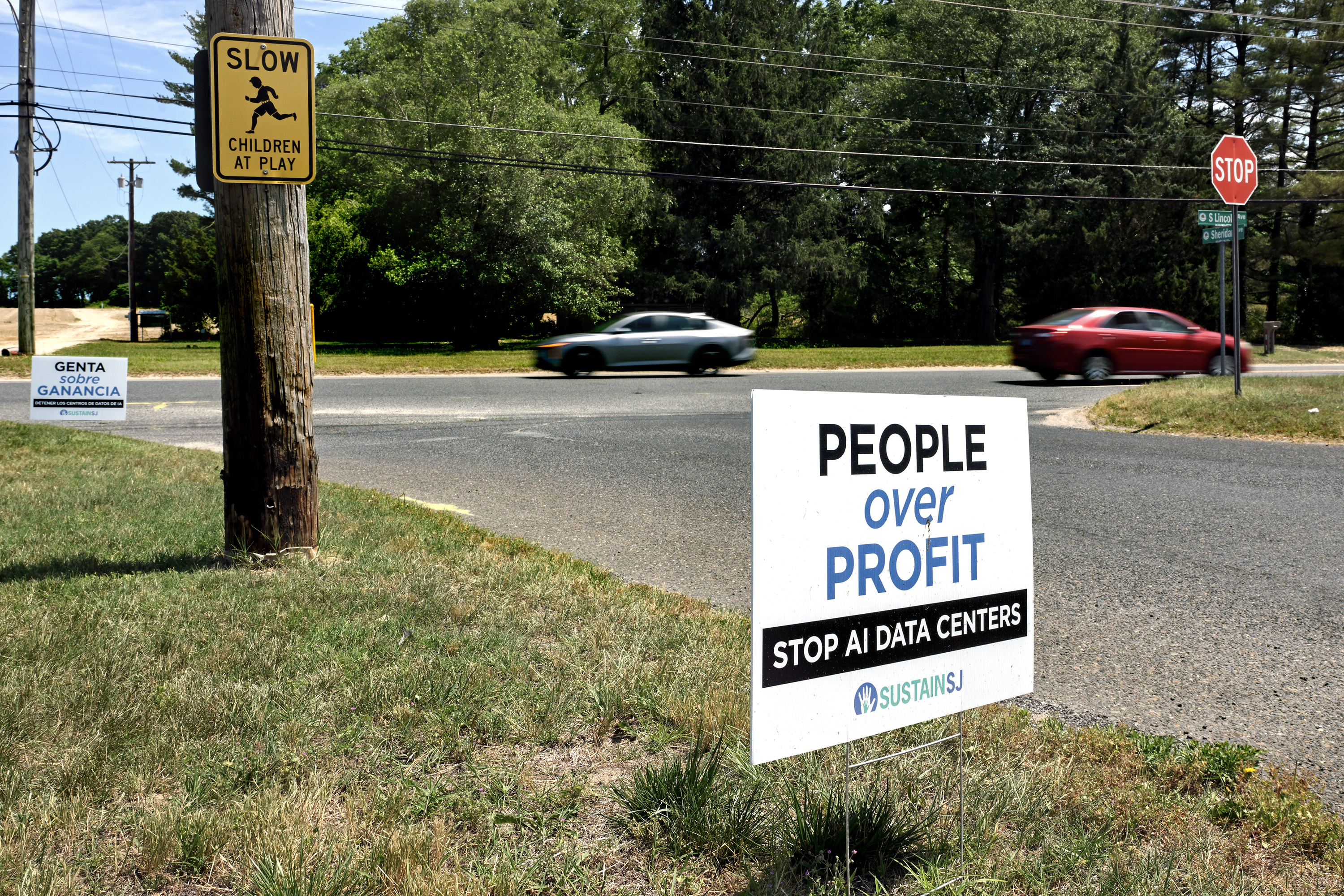
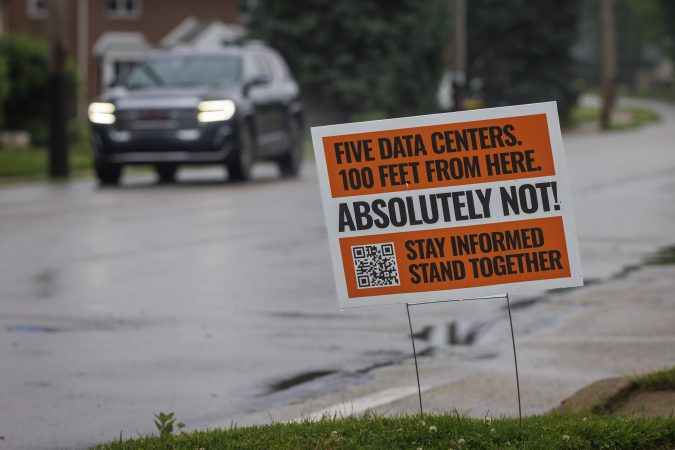
    But in a year’s time, public animosity toward data centers has grown in Pennsylvania and beyond, as residents say they fear the facilities will drive up electricity costs, overuse water supplies, depreciate home values, and disrupt their daily lives. Last week, Shapiro, a Democrat running for reelection in November and a 2028 presidential prospect, announced plans to restrict data center development in the state.

    Shapiro said his position on data centers evolved as he listened to more constituents who live in areas like Archbald, a small northeastern Pennsylvania town with six data center campuses under construction, and pointed to a developer in Montgomery County who he said is “bullying” residents to push projects through amid public opposition.

    (function(){function e(){window.addEventListener(`message`,function(e){if(e.data[`datawrapper-height`]!==void 0){var t=document.querySelectorAll(`iframe`);for(var n in e.data[`datawrapper-height`])for(var r=0,i;i=t[r];r++)if(i.contentWindow===e.source){var a=e.data[`datawrapper-height`][n]+`px`;i.style.height=a}}})}e()})();

    Pennsylvania’s youngest voters were most likely to reject data centers, according to the poll: 83% of likely voters ages 18 to 29 opposed their development, as did 71% of voters ages 30 to 44. Opposition, while above 50% for all age groups, decreased among older voters.

    Kelly Harrington, 29, of Conshohocken, who participated in the poll, said she has been attending Plymouth Township Council meetings to oppose a controversial proposal for a 2 million-square-foot data center project there.

    “Some of my concerns about that specific data center are selfish in the sense that I think my home value is going to go down, I think it’s going to be loud and obstructive, I think it’s going to pollute the air that I want to breathe every day,” Harrington said. “But in a wider sense, I’m also concerned about the environmental impacts of data centers.”

    Front and center in the Pa. governor’s race and beyond

    Data centers have become a key issue in the Pennsylvania gubernatorial election, where Shapiro hopes to ride his high popularity to reelection and usher in Democratic gains in down-ballot races for the statehouse and Congress.

    Both Shapiro and his Republican opponent, State Treasurer Stacy Garrity, have released ads criticizing the other’s past support for data center development.

    The issue also is animating down-ballot races across the state, where candidates from both parties are campaigning on their opposition to data center development.

    Democratic and Republican politicians across the country have reversed course on data centers in recent months as the projects have grown increasingly unpopular.

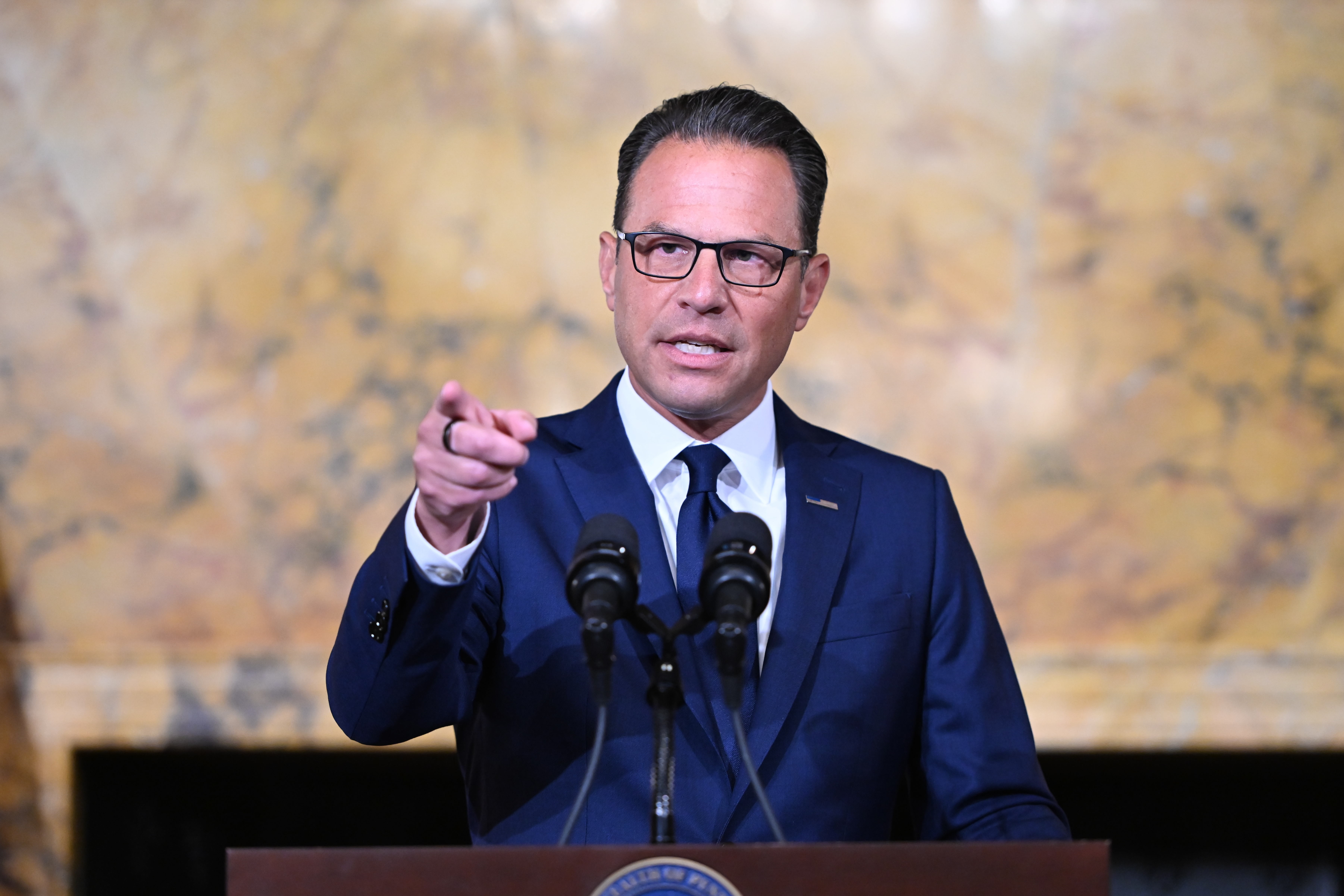
    Gov. Josh Shapiro answers questions after signing an executive order restricting data centers in Pennsylvania during a ceremony in the Capitol in Harrisburg, Pa., Tuesday August 18, 2026.Kalim A. Bhatti / For The Inquirer

    Prior to Shapiro’s announcement last week touting the “strictest guardrails in the nation” for data center development, his support for the projects appeared to be one of the major tests of his popularity. A Quinnipiac University poll published in July found that while 56% of voters approved of Shapiro overall, only 24% approved of how he was handling data center development in Pennsylvania.

    And some Pennsylvanians who had voted for Shapiro in 2022 said his support for the developments had caused them to contemplate sitting out the November election or writing in a different candidate for governor.

    For some voters, like Montiese McKenzie, Shapiro’s change in position has been enough.

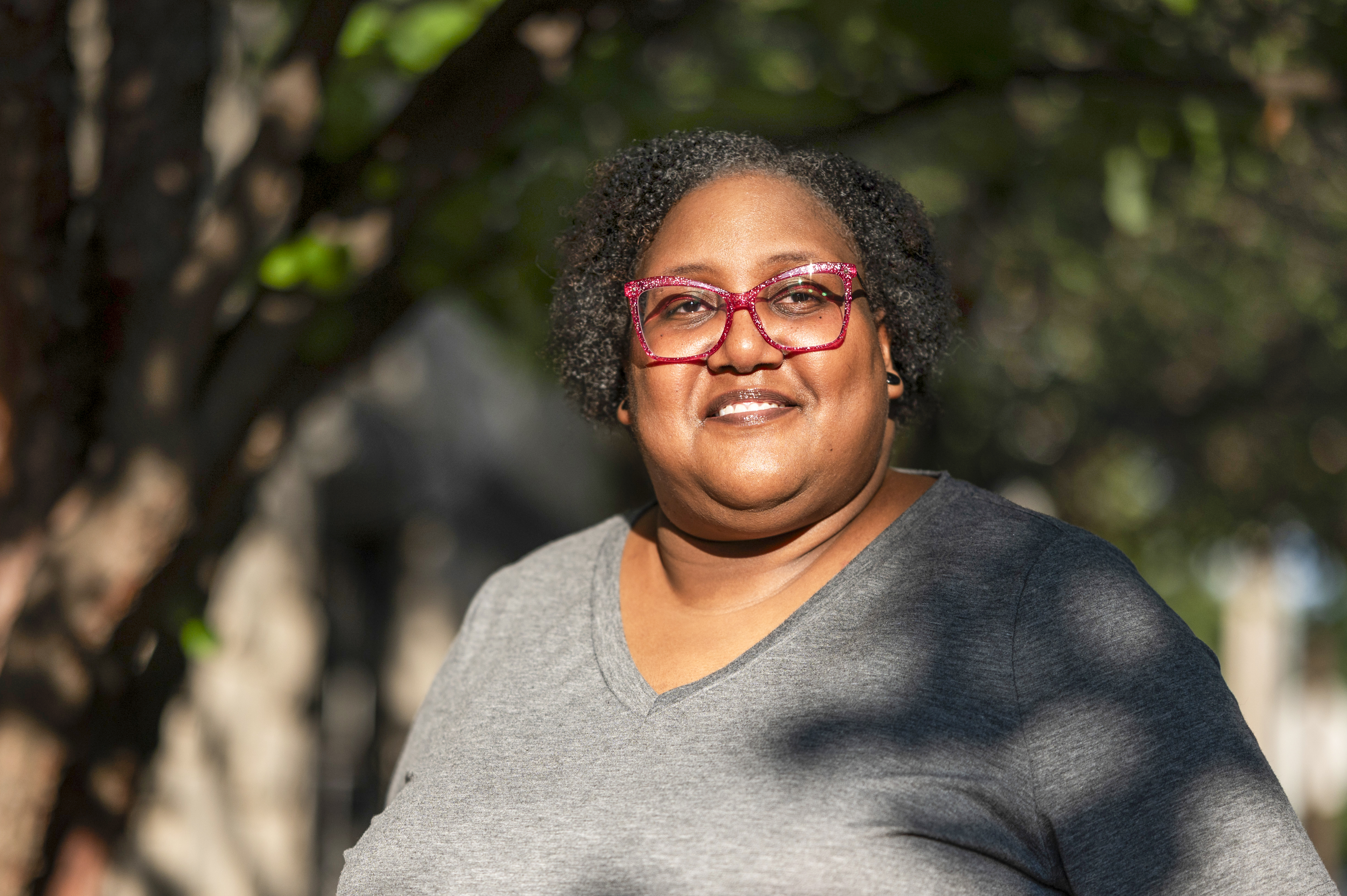
    “I’m very proud of Gov. Shapiro for being anti-data center,” said McKenzie, 48, of West Philadelphia. The Democratic voter said she fears that poor communities will face disproportionate consequences of the construction of AI data centers.

    “What happens will be very important for how I see him as a future leader,” McKenzie said.

    Montiese McKenzie, 48, poses for a portrait near her home in West Philadelphia on Monday, Aug. 24, 2026.Allie Ippolito / For The Inquirer

    Still, Shapiro’s recent change in position has not wooed all Pennsylvania voters.

    Maryann Klaus, 82, a Democrat in Upper Bucks County, supported Shapiro in 2022. But, she said, his initial embrace of data centers in the region without consulting the community was “just not good governance.” Despite Shapiro’s recent moves to restrict data center development, Klaus said, she is still reconsidering her vote for his reelection this fall.

    The executive order Shapiro signed last week is a “a start,” Klaus said. “But, unfortunately, when you open the door, too many things occur and then you can’t walk them back.”

    Others, like Steven Keenan of Ridley Township, say they want more data center development in the state.

    Keenan, 60, a Republican who is supporting Garrity in November, said he wants Pennsylvania to lead on data centers.

    “I’m not afraid of advancement in technology,” Keenan said. “I think we need all that [development]. We’re in a race with other countries that we want to dominate.”

    Keenan said Shapiro’s change in position reaffirmed his support for Garrity. The shift in stance, he said, showed Shapiro was reacting to public opinion instead of doing what is right for the state. (Garrity, too, has moved away from her public support for data centers. She has called for the state to temporarily pause all data center development.)

    “He goes where the wind blows,” Keenan added.

    Staff writer Fallon Roth contributed to this article.

  • Most of Pa.’s likely voters disapprove of Donald Trump and his policies, new poll shows

    Most of Pa.’s likely voters disapprove of Donald Trump and his policies, new poll shows

    More than half of likely voters in Pennsylvania’s forthcoming midterm elections disapprove of President Donald Trump’s job performance, and he is drastically underwater among the state’s electorate on key issues — some of which helped him win a second term in 2024.

    Trump, who won the crucial swing state by nearly two percentage points in November 2024, now has an approval rating of 39% and a disapproval rating of 58% among Pennsylvania’s likely voters, according to an Inquirer/New York Times/Siena University poll published Tuesday.

    The poll, which was conducted from Aug. 17 to 21 among 760 likely Pennsylvania voters, raises questions about how voters’ perception of the president will affect November’s midterms, when many Pennsylvanians will cast their ballots in four critical swing district races that could determine which party controls the U.S. House.

    (function() { var l = function() { new pym.Parent( ‘nyt-trump2__graphic’, ‘https://media.inquirer.com/storage/inquirer/ai2html/nyt-trump2/index.html’); }; if(typeof(pym) === ‘undefined’) { var h = document.getElementsByTagName(‘head’)[0], s = document.createElement(‘script’); s.type = ‘text/javascript’; s.src = ‘https://pym.nprapps.org/pym.v1.min.js’; s.onload = l; h.appendChild(s); } else { l(); } })();

    Even among his Pennsylvania supporters who were surveyed, Trump faces some of his lowest approval ratings regarding his handling of the war in Iran and cost-of-living issues, according to the poll, counteracting campaign promises that proved successful in 2024: ending foreign wars and helping people pay their bills.

    Once again, the economy will likely be at the front of voters’ minds heading into November — 22% of Pennsylvanians polled said it is their top issue in the governor’s race — and it could also serve as an indicator for the outcome of House races where Republicans will be on the defensive.

    “Certainly it’s got to be a drag on their fortunes,” said Don Levy, director of the Siena Research Institute.

    (function(){function e(){window.addEventListener(`message`,function(e){if(e.data[`datawrapper-height`]!==void 0){var t=document.querySelectorAll(`iframe`);for(var n in e.data[`datawrapper-height`])for(var r=0,i;i=t[r];r++)if(i.contentWindow===e.source){var a=e.data[`datawrapper-height`][n]+`px`;i.style.height=a}}})}e()})();</script

    Trump losing ground on issues that propelled him to White House

    The new polling on Trump’s management of top concerns facing the United States — particularly the economy and the cost of living — shows how the issues that helped propel him to the White House in 2024 are now souring his approval among Pennsylvanians, including some who previously voted for him.

    Among likely voters in the Keystone State, 39% approve and 61% disapprove of Trump’s handling of the economy. On his handling of the cost of living, 33% said they approve and 66% disapprove.

    The data come as voters continue to grapple with rising costs, including unusually high gas prices, and grocery prices that have been increasing for nearly six years. Trump’s tariffs, one of the defining policies of his first year back in office, also raised prices for consumers and businesses.

    Now, a quarter of Pennsylvanians who voted for the president in 2024 say they disapprove of how he is handling of the cost of living.

    Michael Patterson, 60, of Bucks County, is one of them.

    Though Patterson said Trump’s term has been “great” overall, he was expecting more from the president on the economy and costs.

    “The prices are still too high, interest rates are still too high,” Patterson said. “We still haven’t seen anything from that promise yet.”

    (function(){function e(){window.addEventListener(`message`,function(e){if(e.data[`datawrapper-height`]!==void 0){var t=document.querySelectorAll(`iframe`);for(var n in e.data[`datawrapper-height`])for(var r=0,i;i=t[r];r++)if(i.contentWindow===e.source){var a=e.data[`datawrapper-height`][n]+`px`;i.style.height=a}}})}e()})();

    Trump’s messaging on the economy in 2024 was part of why he won Pennsylvania with more votes than any other statewide GOP candidate in history. Pennsylvania voters cited Trump’s promises to bring costs down as a top reason that they voted for him and overlooked Democrats’ warnings about what his election could mean for democracy.

    Trump is also hurting on other issues that helped boost him to the presidency, including his promise to end wars. Thirty-two percent of likely voters in Pennsylvania approve of Trump’s handling of the war in Iran and 66% disapprove — including 30% of Trump voters.

    The war has now gone on for almost six months, after Trump promised it would last just a few weeks, and has contributed to rising oil and gas prices.

    Kay Skripac, who voted for Trump in 2024, said that though she supports the president on almost every other issue, “I just don’t think that we should have invaded or bombed Iran. I was very surprised, because I didn’t vote for that.”

    The 72-year-old independent voter said, despite thinking Trump has done strong work on the economy (she says her retirement portfolio doubled from 2016 to 2026), she is feeling the war’s impact at the gas pump.

    “I want everything to just be normal and stay the same, because everything was fine,” said Skripac, who lives in Crawford County. “We weren’t involved in any wars. You didn’t have to worry about any friends or loved ones potentially getting killed. I don’t like that at all.”

    Trump’s handling of the Israeli-Palestinian conflict also received low marks from voters, with 62% disapproval, compared with 36% approval.

    Republican Sandra Faust, 40, approves of Trump’s handling of that conflict. But her support does not extend to the war in Iran, which Trump launched in coordination with Israel.

    Faust, who voted for Trump two years ago, said she strongly disapproves of the war due to rising gas prices and believes it conflicts with the president’s promise to end wars. The Pittsburgh resident, who has a family member in military training to become a jet refueler, said she wishes the conflict in Iran would end.

    “Them dragging it on is not only harming us, locally with gas and, you know, pricing and stuff like that, but it’s putting our military in harm’s way, and I’m not happy about that,” she said.

    Faust added that she opposes the war because of her belief in the “America First” ideology. That perspective also makes her supportive of Trump’s immigration agenda, she said.

    The president is lagging in Pennsylvanians’ support of his immigration policies — which have included mass deportations and enhanced border security — but the disapproval is not as stark. Among likely voters, 44% approve of his handling of immigration and 55% disapprove.

    “We are not responsible for taking care of the world’s problems,” Faust said.

    What does Trump’s approval rating mean for November in Pa.?

    So what does this mean for the midterms?

    Time will tell.

    But 51% of Pennsylvania’s likely voters who were polled indicated they would be more likely to vote for a Democrat in their congressional district, and 44% said they would support a Republican. More than half, 53%, say they would want to see a flip of control in the House, putting Democrats in charge, while 44% say they would want to see the GOP maintain control.

    The polling for the GOP in November is not as bleak as Trump’s numbers, but it shows where voters’ heads are a little more than two months away from the midterms, when Pennsylvanians will weigh in on four competitive swing district congressional races.

    (function(){function e(){window.addEventListener(`message`,function(e){if(e.data[`datawrapper-height`]!==void 0){var t=document.querySelectorAll(`iframe`);for(var n in e.data[`datawrapper-height`])for(var r=0,i;i=t[r];r++)if(i.contentWindow===e.source){var a=e.data[`datawrapper-height`][n]+`px`;i.style.height=a}}})}e()})();

    Both parties are targeting GOP-held seats in Bucks County’s 1st Congressional District, the Lehigh Valley’s 7th Congressional District, the Scranton area’s 8th Congressional District, and the Harrisburg area’s 10th Congressional District.

    Democrats are hoping that a message focused on affordability and tying opponents to Trump will usher in wins this fall. For instance, Democrat Bob Harvie in the heated 1st Congressional District race published a new campaign platform recently that focuses mainly on addressing economic issues.

    “The task of Republicans running in various congressional districts, or for the governor of the state, is going to be to somehow separate themselves from the perception that Pennsylvanians have about the job that the head of their party is doing on the economy,” said Levy, the Siena polling director.

    But for Democrats, connecting Harvie’s opponent, longtime Republican U.S. Rep. Brian Fitzpatrick, to Trump could be a harder sell. The Bucks County lawmaker consistently outperforms his party and has survived one blue wave after another.

    The poll’s findings signal that both parties may also have to think about their branding to the public — 50% of respondents said the Democratic Party is too far to the left and 47% said Republican Party is too far to the right.

    Republicans will also have to consider Trump’s unpopularity, especially with women. Sixty-two percent of female likely voters in Pennsylvania disapprove of Trump’s policies, while 34% approve. The president is also struggling with men — a key base for him in 2024: 51% of men disapprove of Trump’s policies, compared with 46% who approve.

    (function(){function e(){window.addEventListener(`message`,function(e){if(e.data[`datawrapper-height`]!==void 0){var t=document.querySelectorAll(`iframe`);for(var n in e.data[`datawrapper-height`])for(var r=0,i;i=t[r];r++)if(i.contentWindow===e.source){var a=e.data[`datawrapper-height`][n]+`px`;i.style.height=a}}})}e()})();

    Democrat Vincent Russo, 78, of Lackawanna County, where Republican U.S. Rep. Rob Bresnahan faces a challenge from Democrat Paige Cognetti in the 8th District, said he will be voting straight blue on his ballot in November and thinks opposition to Trump’s policies will motivate his party to get out to the polls.

    “I think the people are starting to see he does nothing but lie,” Russo said.

    Staff writers Michelle Baruchman and Gillian McGoldrick contributed to this article.

  • Josh Shapiro has a 16-point lead in the governor’s race — and most Pa. Democrats would support him for president

    Josh Shapiro has a 16-point lead in the governor’s race — and most Pa. Democrats would support him for president

    With a little more than two months until Election Day, Democratic Gov. Josh Shapiro has a double-digit lead over his Republican challenger, Stacy Garrity, among likely Pennsylvania voters in the race to lead the critical swing state — an election that could also serve as an audition for the 2028 presidential primary.

    Shapiro holds a 16-percentage-point lead over Garrity, the state treasurer, according to a new poll of 760 likely voters conducted from Aug. 17 through 21 by The Inquirer, the New York Times, and Siena University.

    The numbers could foreshadow another commanding victory for Shapiro, as he hopes his popularity trickles into other down-ballot races, including four congressional districts that national Democrats think they can flip. Shapiro is also trying to flip the state Senate for the first time in 30 years and deliver a Democratic trifecta in the statehouse.

    (function() { var l = function() { new pym.Parent( ‘nyt-shapiro2__graphic’, ‘https://media.inquirer.com/storage/inquirer/ai2html/nyt-shapiro2/index.html’); }; if(typeof(pym) === ‘undefined’) { var h = document.getElementsByTagName(‘head’)[0], s = document.createElement(‘script’); s.type = ‘text/javascript’; s.src = ‘https://pym.nprapps.org/pym.v1.min.js’; s.onload = l; h.appendChild(s); } else { l(); } })();

    A majority of Pennsylvania voters — 60% — have a favorable opinion of the governor, compared with Garrity, who is viewed favorably by just 37% in the state.

    Shapiro’s popularity also eclipses that of President Donald Trump, according to the poll. Sixty percent of likely Pennsylvania voters approve of the job Shapiro is doing as governor, while 39% approve of Trump, who won the state two years ago.

    Lora Peluso, 63, a Democrat and retired catering director from Pittsburgh, said Shapiro has been a shield in Pennsylvania against some of Trump’s most harmful policies affecting low-income and older people.

    “I think [Shapiro] is trustworthy,” said Peluso, who participated in the poll. “His policies are things that actually benefit people, the average working person, seniors.”

    Garrity still unknown by some Republicans

    Pennsylvania Republicans this year had hoped to avoid another walloping by Shapiro, who has won three times statewide, with fears that a weak gubernatorial candidate could negatively affect the rest of the Republican ticket. So the state GOP took the unprecedented move of endorsing Garrity in September 2025 — approximately 14 months before the election — to try to raise her profile.

    Despite securing Trump’s endorsement, Garrity has struggled to raise money, attract support from national Republicans, or compete with Shapiro’s $13 million in ad buys so far this cycle. Her campaign has spent $679,000 on ad buys thus far, according to media-tracking firm AdImpact, as it seeks to introduce the candidate to voters.

    Now, with 70 days until the election, a quarter of likely Republican voters still did not know Garrity or know enough about her to form an opinion of her, according to the poll.

    Meanwhile, Shapiro maintains favorable opinions among 27% of Trump’s 2024 supporters, and 35% of registered Republicans approve of the job he is doing as governor, the poll found.

    (function(){function e(){window.addEventListener(`message`,function(e){if(e.data[`datawrapper-height`]!==void 0){var t=document.querySelectorAll(`iframe`);for(var n in e.data[`datawrapper-height`])for(var r=0,i;i=t[r];r++)if(i.contentWindow===e.source){var a=e.data[`datawrapper-height`][n]+`px`;i.style.height=a}}})}e()})();

    Michael Patterson, a Republican from Trumbauersville, Bucks County, who supported Trump in 2024, said he plans to support Shapiro in November because he likes the job the governor is doing and because he does not know much about Garrity besides what he has seen on social media.

    “Honestly, I don’t know much about her,” Patterson, 60, said. “I guess I don’t see advertisements on the TV. Other than Facebook, I really don’t see her. The stuff I see on Facebook is just typical partisan stuff.”

    Shapiro, on the other hand, appears more moderate and independent from his party in Patterson’s eyes.

    “He’s kinda doing his own thing. I have a lot of respect for that. He’s not playing partisan games,” Patterson said, contrasting Shapiro with Democrats in California and New York.

    Michael Patterson, a Bucks County Republican voter pictured in his Trumbauersville home, plans to vote for Democratic Gov. Josh Shapiro over Republican nominee Stacy Garrity. William Thomas Cain / For The Inquirer

    This attitude shows up among other Republicans, too, said Don Levy, the director of the Siena Research Institute.

    “Shapiro is seen as sufficiently middle of the road,” Levy said. “He’s got 35% of Republicans approving of the job that he’s doing as governor. That’s a really impressive number in today’s world.”

    Other Republicans like Steven Keenan, 70, of Ridley Township, are all in for Garrity, citing her military experience and support for Trump.

    “[Shapiro’s] a big phony. He’s a politician,” Keenan said. “She is, too, but she’s been through the wars. I think she’s earned her place. I think we should give a woman a chance.”

    A majority of Pennsylvania voters trust Shapiro over Garrity to handle top issues facing the state, including the economy, cost-of-living increases, the Trump administration, immigration, and doing what is best for ordinary Pennsylvanians.

    Tina Hoffert, 68, of Lenhartsville, Berks County, said she has not heard much about Garrity, but plans to vote for her in November because she is unsatisfied with Shapiro’s leadership.

    “He’s forever bashing Trump,” Hoffert, a Republican, said. “I’m sorry, I don’t care whether you like him or not, he’s our president. You work with him. You don’t fight him. And if there’s things you don’t like that he’s doing, then you go in there and you have discussions.”

    Shapiro’s presidential prospects

    If Shapiro is reelected in a landslide victory this November, it becomes even more likely that he jumps into the 2028 presidential race as the governor of a key swing state with 19 electoral votes.

    Among those surveyed who said they plan to vote in the Democratic primary in two years, 86% said they would be likely to support him — though the poll did not compare him with other potential primary candidates.

    Other prospective candidates include former Vice President Kamala Harris, Govs. Gavin Newsom of California and JB Pritzker of Illinois, U.S. Sens. Mark Kelly of Arizona and Jon Ossoff of Georgia, and U.S. Rep. Alexandria Ocasio-Cortez of New York.

    (function(){function e(){window.addEventListener(`message`,function(e){if(e.data[`datawrapper-height`]!==void 0){var t=document.querySelectorAll(`iframe`);for(var n in e.data[`datawrapper-height`])for(var r=0,i;i=t[r];r++)if(i.contentWindow===e.source){var a=e.data[`datawrapper-height`][n]+`px`;i.style.height=a}}})}e()})();

    Shapiro has brushed off questions about his ambitions and told a reporter Saturday, in response to whether he would commit to serving a four-year term in office, that “the only thing that I’m focused on — and the only thing anybody should be focused on — is winning in November and being a check on this president’s chaos, cruelty, and corruption.”

    Most voters in the poll — 58% — said that if Shapiro decides to run for president, doing so either would not distract from his role as governor or would not keep him from being effective at governing.

    “I mean, it would be a distraction, of course, but I think he’s a professional and a hard worker, and he would figure it out. It seems like he hires good people, too,” said Peter Hewitt, 62, of Devon, a Democrat who supports Shapiro’s reelection bid.

    (function() { var l = function() { new pym.Parent( ‘nyt-trump2__graphic’, ‘https://media.inquirer.com/storage/inquirer/ai2html/nyt-trump2/index.html’); }; if(typeof(pym) === ‘undefined’) { var h = document.getElementsByTagName(‘head’)[0], s = document.createElement(‘script’); s.type = ‘text/javascript’; s.src = ‘https://pym.nprapps.org/pym.v1.min.js’; s.onload = l; h.appendChild(s); } else { l(); } })();

    Shapiro’s potential candidacy has largely centered on his electability, especially his ability to win the top office in the nation’s premier swing state. He has pitched himself as a Democratic governor more interested in working with Republicans to make meaningful improvements to the state than in picking partisan fights, and voters agree: 58% of respondents said he is neither too far to the left nor to the right.

    “He’s done a good job of just being more of a moderate, middle-of-the-road Democrat,” said Andrew Perez, a 58-year-old self-described independent voter in Pittsburgh. He said he appreciated Shapiro’s focus on improving roads and highways and not “just blindly disagreeing” with Trump.

    “I think we need a strong presidential candidate who will try to unite the country instead of just keeping it being divisive, so I think that I’d be pretty likely to vote for him [for president],” said Perez, a physician.

    Montiese McKenzie, 46, of West Philadelphia, said she is supporting Shapiro for a second term, but is not quite yet sold on a presidential run. She said she has not seen him rise to the level of “fighter” she thinks the Democratic Party needs, and believes as of now, she would be more likely to support someone else in the Democratic primary.

    “You see people like Jon Ossoff and JB Pritzker, and they’re not putting up with it. They don’t make it pretty anymore,” McKenzie said. “If I saw some of that in Shapiro, I might be more likely to support him as a presidential candidate. Until then, I’m not sure he has the gumption.”

    Shapiro has signed on to dozens of lawsuits against Trump’s administration on a host of issues, from tariffs to gender-affirming care.

    But to win the party’s nomination, Shapiro would have to defeat more progressive candidates and make the case for his more centrist approach.

    Montiese McKenzie, 48, poses for a portrait near her home in West Philadelphia on Monday, Aug. 24, 2026. McKenzie is a supporter of Gov. Josh Shapiro’s reelection, but is hesitant to back his potential presidential run in 2028.Allie Ippolito / For The Inquirer

    He has already faced criticism from some progressive voters over his previous support for school vouchers, and his early embrace of data centers, which he reversed last week by implementing what he called some of the nation’s “strictest guardrails.” Shapiro, Pennsylvania’s third Jewish governor, has also faced a perception from some progressives that he has been too supportive of Israel during its war with Hamas, despite his vocal opposition to the country’s leader, Prime Minister Benjamin Netanyahu.

    Nearly half, 47%, of respondents said he has been just “about right on support of Israel,” with 14% saying he has been too supportive and 19% saying he has been not supportive enough.

    Should Shapiro launch a presidential campaign, Hewitt wants to see him “come out on the right side.”

    Hewitt, who emphasized his support for Jewish people in his community, said he considers the Israeli government’s actions toward Palestinian people in Gaza to be genocidal. More than 73,000 Palestinian people have been killed in Gaza since the war began nearly three years ago, and multiple international institutions have said Israel’s actions violate human rights.

    “I don’t think it’s really that big of a deal for governors per se. He’s not going to vote on national policy as the governor of Pennsylvania,” Hewitt said. But he added: “He does have a voice, and if he’s thinking about a next step beyond Pennsylvania, then he will have to come out in regard to that issue.”

  • Thousands of Philly homeowners are facing property tax increases of 50% or more after this year’s reassessment

    Thousands of Philly homeowners are facing property tax increases of 50% or more after this year’s reassessment

    Most Philadelphia homeowners will see slightly higher property tax bills next year after the city conducted a mass reassessment process that resulted in a modest uptick in home values.

    But for thousands of residents, many of whom live in North Philadelphia, next year’s tax bills are expected to soar.

    Nearly 6,000 homeowners in Philadelphia saw their property assessments this year climb by more than 50% compared with two years ago, the last time the city conducted a mass revaluation, according to an Inquirer analysis of city property assessment data released in June.

    Of those homeowners, more than 2,200 saw their assessments more than double.

    That is likely to result in sticker shock come tax time next year, because property tax bills in the city are calculated based on home values. The revenue is split between the city and the Philadelphia School District.

    Homeowners across the city saw a median 3% increase in their property assessments this year compared with the 2025 tax year. Jumps were higher in neighborhoods that border gentrifying areas, such as in parts of Kensington and West Philadelphia.

    But this year, two other areas of the city had the densest concentrations of homes where property assessments increased by 50% or more, according to The Inquirer’s analysis.

    The steep rises are clustered in the southern end of Strawberry Mansion, the historically Black neighborhood along the Schuylkill, and in the tiny Hartranft neighborhood north of Temple University and east of Broad Street, where residents are predominately Latino.

    (function() {
    var l2 = function() {
    new pym.Parent(‘html_sandwich_2026_property4’,
    ‘https://media.inquirer.com/storage/inquirer/projects/innovation/arcgis_iframe/html_sandwich_2026_property4.html’);
    };
    if (typeof(pym) === ‘undefined’) {
    var h = document.getElementsByTagName(‘head’)[0],
    s = document.createElement(‘script’);
    s.type = ‘text/javascript’;
    s.src = ‘https://pym.nprapps.org/pym.v1.min.js’;
    s.onload = l2;
    h.appendChild(s);
    } else {
    l2();
    }
    })();

    Housing experts and advocates for low-income homeowners have long criticized the city’s assessment system as systemically biased, leaving Black and brown homeowners to pay disproportionately high property taxes. Mayor Cherelle L. Parker convened a task force in 2024 to study the city’s revaluation system, and that group’s recommendations are expected to be released later this year.

    Monty Wilson, a senior attorney at Community Legal Services who sits on the task force, said the Philadelphia Office of Property Assessment is the best in the state and has “worked really hard to become more and more accurate.”

    But he said bias persists in part because of the unique challenges that assessors face in low-income neighborhoods that can cause volatility in home values, such as higher rates of vacant lots, foreclosures, and other factors.

    A 2024 CLS report found that errors were clustered in lower-value neighborhoods where a majority of residents are people of color.

    “That means when a property is overassessed,” Wilson said, ”it tends to occur in a Black and brown neighborhood.”

    (function(){function e(){window.addEventListener(`message`,function(e){if(e.data[`datawrapper-height`]!==void 0){var t=document.querySelectorAll(`iframe`);for(var n in e.data[`datawrapper-height`])for(var r=0,i;i=t[r];r++)if(i.contentWindow===e.source){var a=e.data[`datawrapper-height`][n]+`px`;i.style.height=a}}})}e()})();

    The Parker administration did not respond to requests for comment.

    In response to a previous article about this year’s property reassessments, city officials emphasized that some lower-income homeowners pay relatively low tax bills because of the popular homestead exemption tax break. The program, which any homeowners can apply for and obtain if they live in their house as their primary residence, exempts the first $100,000 from a home’s taxable value.

    That means that some homeowners in working-class neighborhoods previously paid little to no property taxes. A sudden increase in valuation, like the ones seen this year in pockets of North Philadelphia, could require they pay bills next year that are several hundred dollars more than in the past.

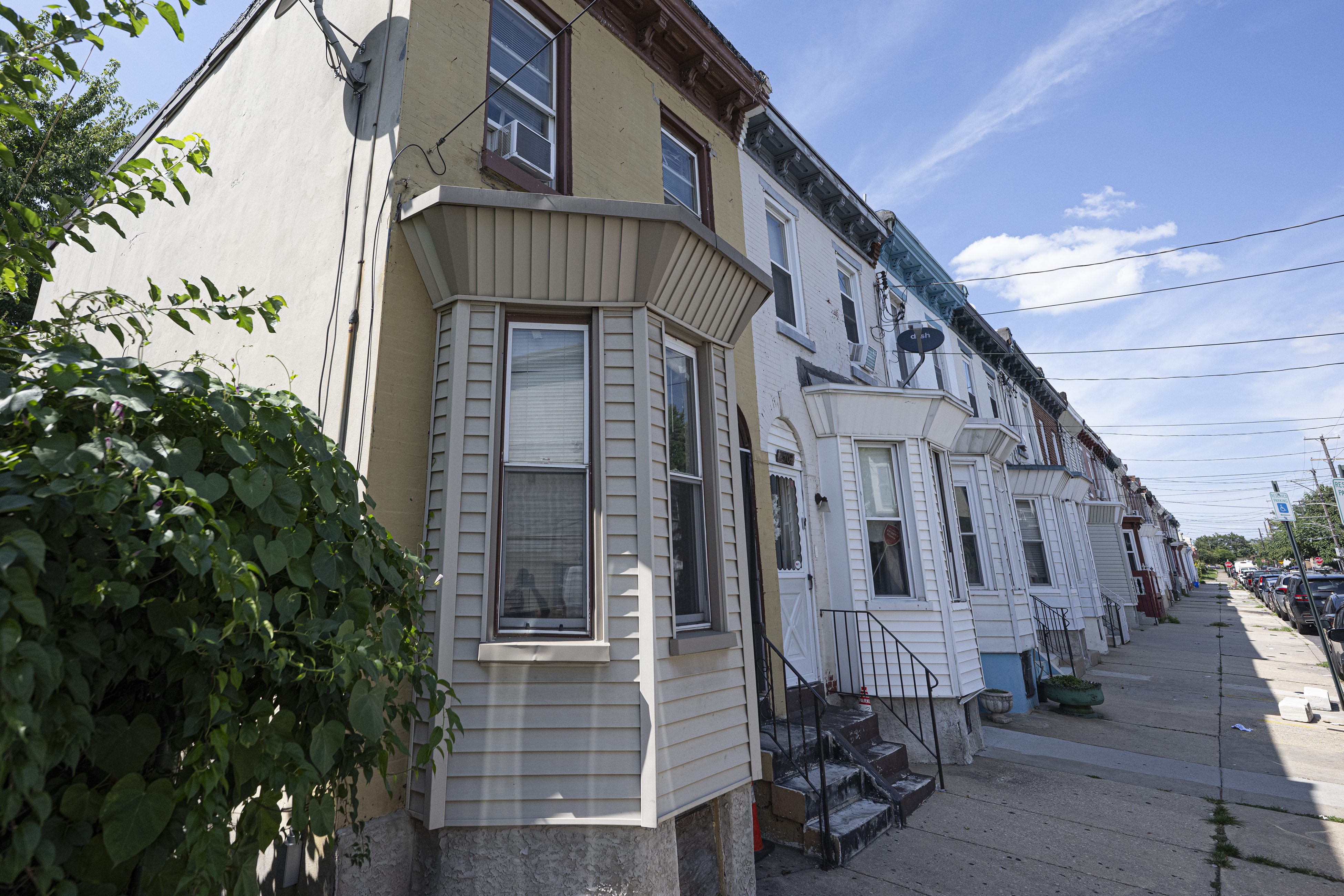
    Take the 2500 block of North Marshall Street. The residential North Philly street sits between West Kensington and Broad Street, and nearly every home saw its assessment increase by 60% or more, according to The Inquirer’s analysis.

    Most of the homes there had previously been valued at less than $100,000, meaning owners with the homestead exemption owed no property taxes. Now, many of the homes on the block are valued at about $140,000, an amount that would next year yield more than $500 in yearly tax bills for owners with the homestead exemption.

    More than 40% of the Hartranft neighborhood’s residents are below the federal poverty level, which is $33,000 a year for a family of four, according to U.S. Census data.

    At Left a property on 2500 N. Marshall St., Philadelphia, PA 19133 is shown Wednesday, Aug. 19, 2026, in Philadelphia.Jose F. Moreno / Staff Photographer

    City Councilmember Quetcy Lozada, whose district includes parts of Kensington and North Philadelphia, said the Hartranft area is not like sections of Kensington that have seen an influx of development in recent years and where increases in property assessments may be expected.

    It is possible, she said, that lower-income residents who have been displaced from parts of Kensington looked to move west of the neighborhood, increasing demand in the Fairhill and Hartranft areas.

    Lozada — who has held workshops in the neighborhood to connect residents with property tax relief programs — said she fears her constituents are being asked to pay disproportionately high taxes and not seeing better city services and stronger public schools.

    “How is it possible that someone in Fairhill is paying a higher tax for a property that has not had any investment, in a neighborhood that is not as safe, whose school system is not as great, as somebody that lives in Chestnut Hill, for instance?” she said, referring to the upscale Northwest Philadelphia neighborhood with a $109,000 median household income. “There has to be a better way of doing a more accurate evaluation in every neighborhood.”

    City Council is expected to hold a hearing this fall to probe the assessment process.

    In Strawberry Mansion, community leaders said that increased assessments are likely a result of market pressure from Brewerytown to its south, a comparatively whiter and higher-income neighborhood.

    “The city has to be super transparent about this assessment system so people can better understand it and not feel that sticker stock,” said Tonnetta Graham, president of the Strawberry Mansion Community Development Corp. “If we know how they came to their number, it’s easier to chew.”

    The 1700 block of North Newkirk Street on Thursday, Aug. 20, 2026 in Philadelphia.Monica Herndon / Staff Photographer

    Councilmember Jeffery Young Jr., whose district includes both Strawberry Mansion and parts of Hartranft, did not respond to requests for comment.

    Jalon Alexander, a Strawberry Mansion native who this month launched a campaign to challenge Young for his Council seat next year, said he was recently at a block party in the neighborhood where he heard repeatedly from older homeowners who were concerned about their increased assessments.

    “They feel taken advantage of, and they feel like it’s coming out of nowhere,” Alexander said. “This is an area where there’s high levels of poverty, and there is not a lot of political or government attention in this area. I’ve spoken with many people whose rates have almost doubled. It’s the biggest issue in the neighborhood.”

    Staff writer Michaelle Bond contributed to this article.