Category: Pennsylvania Politics

  • McCormick and Fetterman are stepping in to fill Pennsylvania’s empty booth at Trump’s Great American State Fair

    In the latest twist over Pennsylvania’s participation in President Donald Trump’s Great American State Fair, U.S. Sens. Dave McCormick and John Fetterman announced Saturday that the state where America was founded will be represented after all.

    Pennsylvania Gov. Josh Shapiro initially signaled the intention for the state to participate in Trump’s 16-day fair on the National Mall. But this week, he said state officials could not find a Pennsylvania business to sponsor the state’s booth.

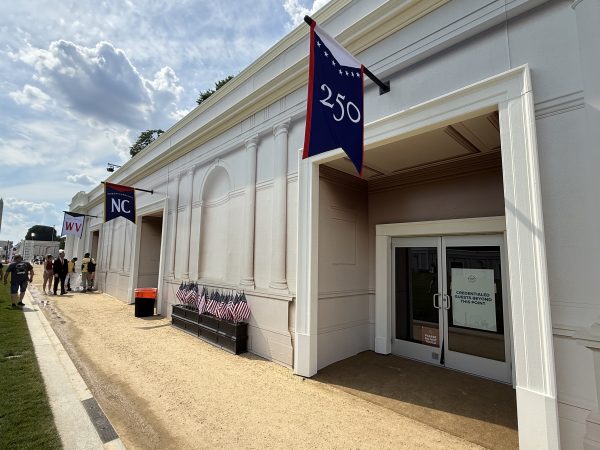
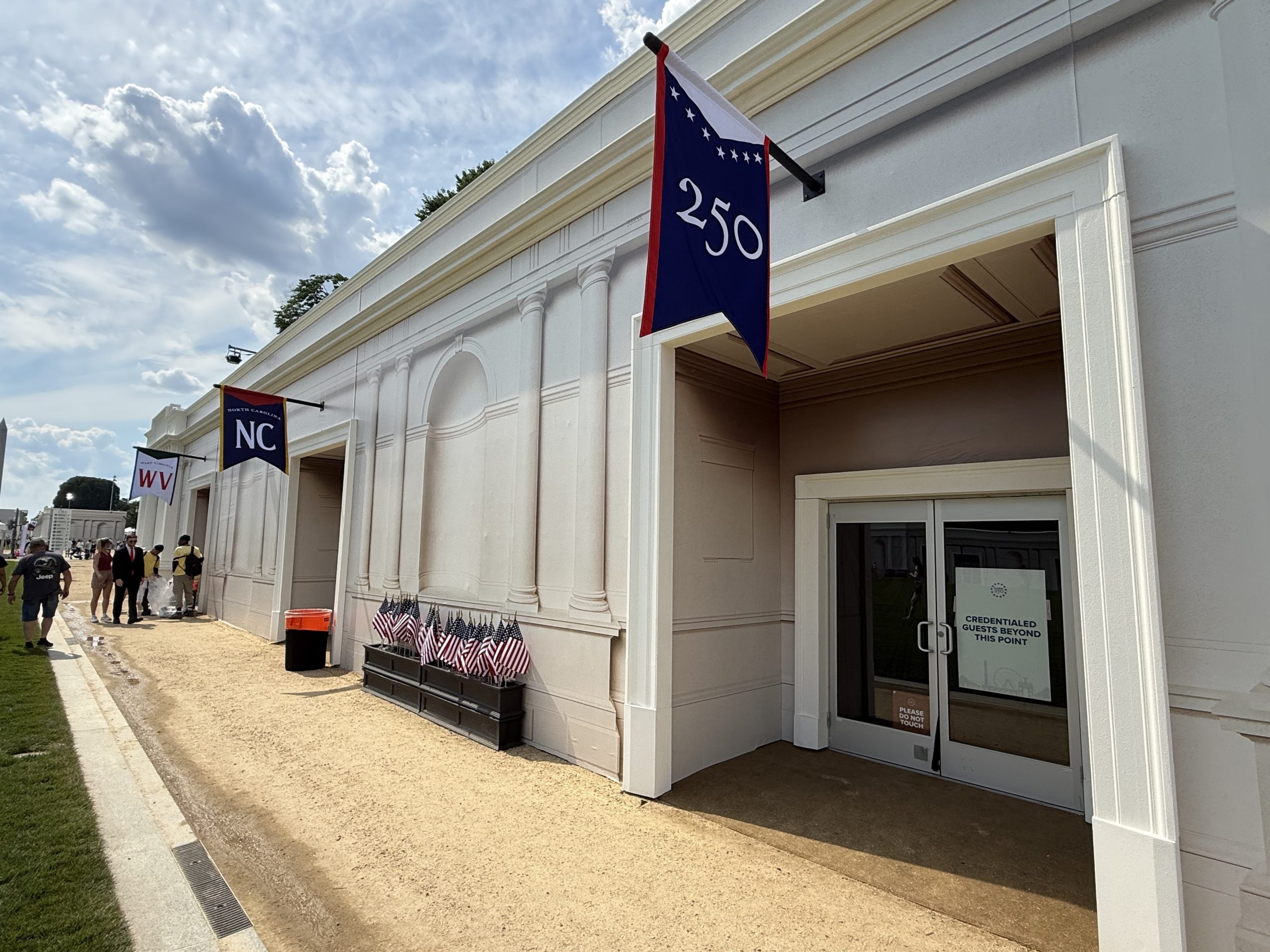
    On the fair’s opening day, Pennsylvania had no official presence, and the booth reserved for the commonwealth remained empty, except for a flag that read “250” in Pennsylvania’s space.

    After that news, McCormick (R., Pa.) and Fetterman (D., Pa.) said in a joint news release Saturday that they secured private-industry sponsors for the booth at no cost to taxpayers. Sponsors include the Pennsylvania Chamber of Business and Industry, the Pennsylvania Farm Bureau, and other organizations.

    “Pennsylvania is where America’s story began, and there was no way we were going to let the Commonwealth go unrepresented during our Nation’s 250th birthday celebration,” McCormick said in the release.

    “Celebrating America’s 250th birthday and Pennsylvania’s special role in our country is important and bipartisan,” Fetterman said. “We discovered our commonwealth wasn’t participating in the Great American State Fair on the National Mall, and we should be.”

    A ferris wheel is on the National Mall as part of the Great American State Fair, one of the celebratory events organized by the Trump administration commemorating the 250th anniversary of the United States in Washington, D.C., June 25, 2026. At the kickoff to the Great American State Fair, exhibits celebrating the nation were on display. So were conservative themes. (Alex Kent/The New York Times)ALEX KENT

    Shapiro told the New Republic earlier this week that when his administration approached major Pennsylvania companies to participate, “none were interested.”

    “It reflects this sad state of affairs that we find ourselves in — that the president has politicized this to a degree that businesses don’t want to participate,” he told the New Republic.

    However, sources who worked on the sponsor search confirmed for The Inquirer that at least two major Pennsylvania companies agreed to provide products and other donations to give away at Pennsylvania’s fair booth but were unable to initially do so due to short notice. The sources asked The Inquirer to not name them because they were not authorized to speak on the search.

    In a statement Saturday after the senators announced their plans, a Shapiro spokesperson said the administration was “unwilling to spend hundreds of thousands of taxpayer dollars to fund the Great American State Fair amid the historic slate of events across Pennsylvania in 2026.”

    Before McCormick and Fetterman’s intervention, Shapiro administration officials were told that Freedom250, the organization planning the fair, would be “handling the booth” in the absence of formal state participation, said Rosie Lapowsky, Shapiro’s press secretary.

    Pennsylvania’s Department of Agriculture also sent state literature that began appearing in the booth on Saturday, according to Freedom250.

    The Great American State Fair Thursday, June 25, 2026, in Washington, D.C. This pavilion would have belonged to Pennsylvania if the state had participated in President Donald Trump’s 250th anniversary event on the National Mall.Sam Janesch / Staff

    But Pennsylvania’s search for business sponsors was brief, according to a source close to the search.

    The Pennsylvania Chamber of Business and Industry, which was charged with finding sponsors, said Shapiro’s office called the organization less than two weeks before the fair began. Other states, the chamber said, had been working on their displays since January.

    “The Governor’s team asked us for assistance with business outreach for the Great American State Fair just two weeks before the event. While there was interest, the short time frame made it difficult for many businesses to fully commit,” said Jon Anzur, the chamber’s senior vice president of public affairs. “We are now reengaging those and other companies as we partner with Sens. McCormick and Fetterman.”

    In the absence of official Pennsylvania representatives and sponsors, McCormick and Fetterman were suddenly on Saturday able to secure private groups to staff the booth and help coordinate sponsors for the remainder of the fair.

    According to a source briefed on the conversation, Shapiro and McCormick spoke Saturday about the senators’ plans to fill the booth, and Shapiro offered to send additional state literature. The Inquirer is not naming the source because they were not authorized to speak on the conversation.

    Crayola is among the sponsors that will send along crayons, markers, and coloring books for a coloring station, which should be operational as early as Sunday. Other sponsors have signed on as well, though they were not immediately identified and their contributions were not disclosed.

    Pennsylvania is among a list of at least 10 states, some Democratic-led, that have officially dropped out of the Great American State Fair, including Connecticut, Illinois, Maine, Massachusetts, North Carolina, Oregon, Rhode Island, Vermont, and Washington.

    During the fair’s opening days, nearly every other state was represented, with most sending government staff or tourism officials to host educational or interactive exhibits.

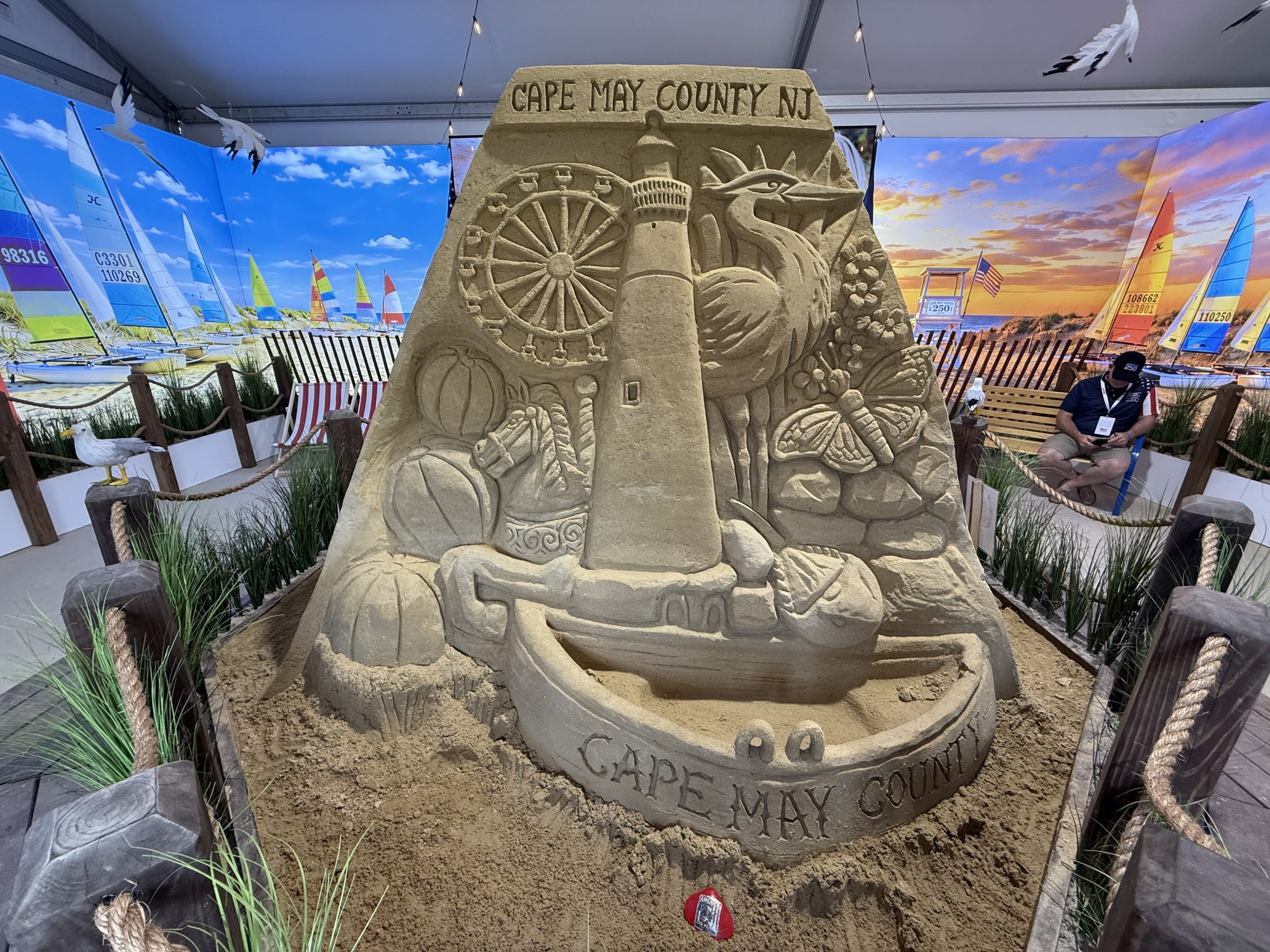
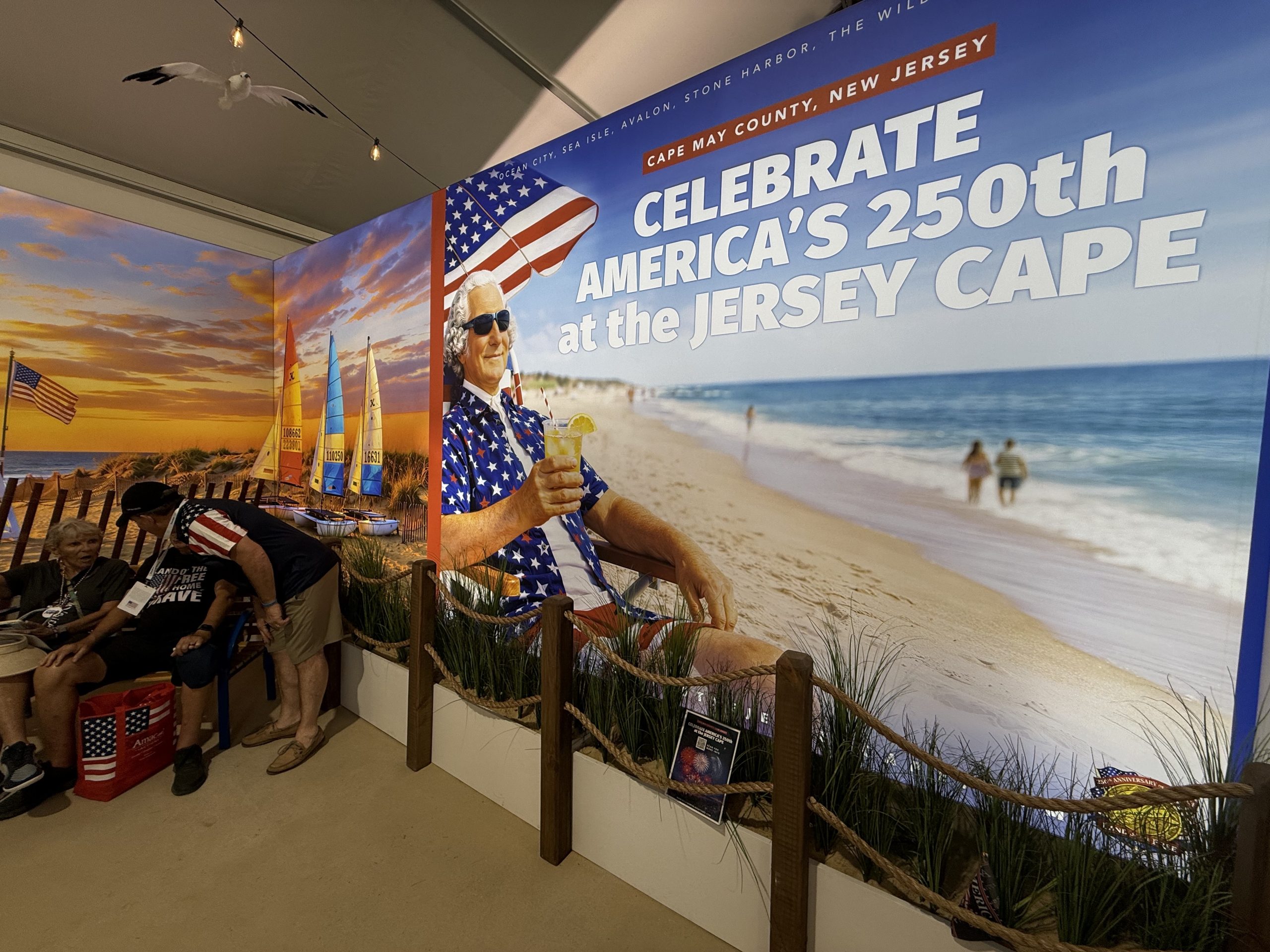
    New Jersey also officially declined to participate, but Cape May County, a Republican stronghold, stepped in to represent the state. Its exhibit features an 8-ton sand sculpture created by a Wildwood artist over the course of more than four days.

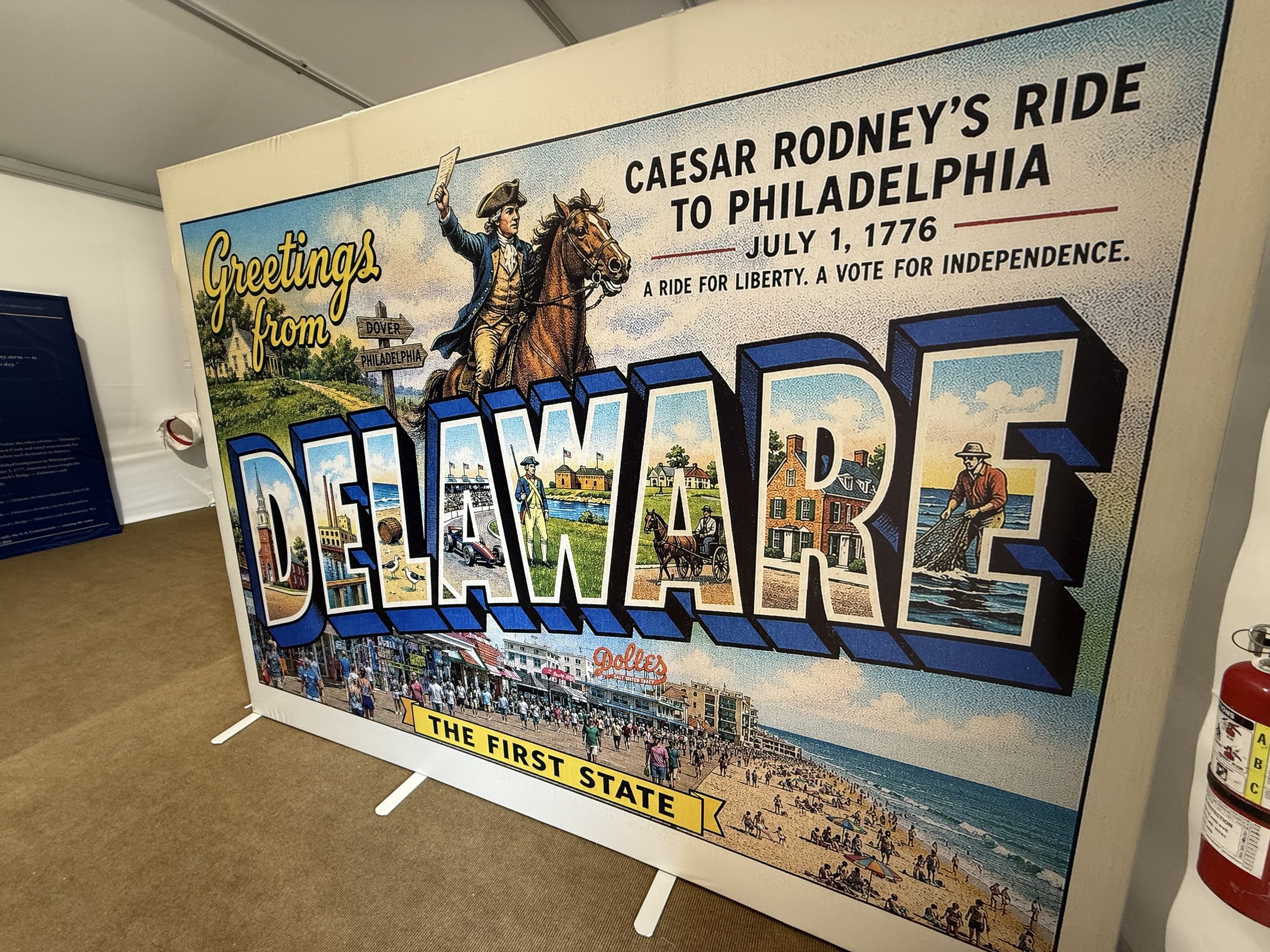
    Delaware highlighted Founding Father Caesar Rodney’s ride to cast the decisive vote for independence in Philadelphia.

    Sam Janesch and Andrea Padilla contributed to this article.

  • Josh Shapiro says progressives’ wins in New York show voters ‘are channeling that pain into purpose’

    Josh Shapiro says progressives’ wins in New York show voters ‘are channeling that pain into purpose’

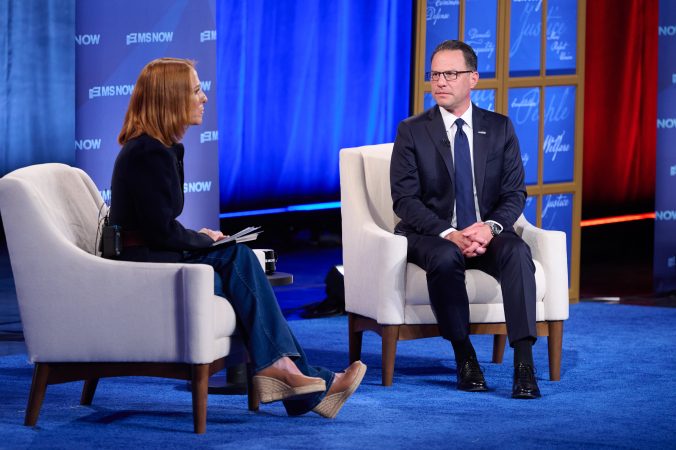
    The Democratic Party should be a big tent and welcoming to a diversity of voices, Gov. Josh Shapiro told MS NOW’s Jen Psaki in a live event in Philadelphia on Thursday.

    Following Tuesday’s primary races in New York that saw the elections of more progressive and socialist candidates, Shapiro said the results there and around the country show that voters are eager for change.

    “I appreciate the passion that we are seeing from voters all across this country,” Shapiro said during the event at the Academy of Music, part of MS NOW’s celebration of America’s 250th birthday.

    People are feeling the strain and opting to support more progressive candidates, Shapiro said, because of rising health insurance costs, struggles to purchase a house, and the feeling that their rights are being stripped away.

    “They are channeling that pain into purpose, they’re channeling that into showing up at the ballot box, they’re channeling that into showing enthusiasm,” he said. “That is a good thing.”

    But he stopped short of explicitly endorsing more left-leaning ideologies. In a separate interview with CNN on Thursday, Shapiro added that the successful candidates must now deliver results.

    “I get that there are some candidates out there that just say a lot words and attract a lot of attention but what we need to do as a party is drill down on how we take those words turn them into actions and make people’s lives better,” he said.

    In Philadelphia, voters elected Chris Rabb, the democratic socialist who has challenged the city’s political establishment, in May’s Democratic primary for Pennsylvania’s 3rd Congressional District. Shapiro did not get directly involved in Rabb’s district, despite making endorsements in other races.

    He also dodged direct criticism of Sen. John Fetterman, a fellow Pennsylvania Democrat who has become increasingly unpopular among the party’s voters, after Psaki posed some of the senator’s recent comments to Shapiro.

    Fetterman referred to the New York congressional candidates, endorsed by Mayor Zohran Mamdani, as “the dirtbag left” and “outrageous” on Fox News. (The phrase “dirtbag left” comes from the leftist podcast Chapo Trap House and refers to a strand of democratic socialism that counters the political right by mimicking its dark humor, among other tactics.)

    Shapiro said “John should answer for himself.”

    In both Philadelphia and New York, the victorious progressive candidates during their campaigns heavily criticized Israel’s war in Gaza and the United States’ role in supporting its material.

    Psaki did not ask Shapiro, who supports Israel but has been critical of Prime Minister Benjamin Netanyahu, about the issue during the event. And he did not refer to it when talking about the New York results.

    To show voters that Democrats hear their pain, the party needs to get “real stuff done to make people’s lives better,” he said.

    Sandra Dungee Glenn, who attended the event Thursday, said Shapiro could have been even more forceful against Fetterman, who is viewed unfavorably by 43% of Philadelphia residents, according to a recent poll.

    “Don’t even mention that name,” said Glenn, who lives in West Philadelphia, referring to Fetterman. “He’s a big disappointment.”

    In addition to his own reelection campaign in November, Shapiro is focused on getting Democrats elected in four competitive congressional seats and flipping the Pennsylvania state Senate, which has been under Republican control for three decades.

    Should the chamber flip, Shapiro said his immediate priority would be raising the state’s minimum wage and codifying the right to access abortion — blaming Republicans for standing in his way.

    But Shapiro, a first-term Democrat, is also looking ahead, past 2026 and Donald Trump’s presidency, as he builds a national profile and becomes a likely contender for the presidency in 2028.

    He said Congress should pass a 28th Amendment to the U.S. Constitution that guards against corruption and gerrymandering, and railed against the 2024 U.S. Supreme Court decision that gave presidents absolute immunity from criminal prosecution for actions taken within their constitutional authority, following Trump’s efforts to overturn the 2020 election.

    Shapiro said he is also open to adding more justices to the Supreme Court, which has been set at nine justices since 1869.

    “I think we’ve got to have everything on the table. We’ve got to be bold,” he said.

    Expansion has been pushed by progressives as a way to reform the court and end its conservative majority.

    Leslie Berger, 69, who attended MS NOW’s event Thursday said she supports adding more justices to the court.

    “These norms we have aren’t etched in stone,” she said. “We need to change this justice system and more justices would be a great start.”

    Democrats, Shapiro said, need to be aggressive and elevate candidates who will drive down costs, increase access to healthcare, repair the country’s standing in the world and rein in artificial intelligence.

    “We’ve got to understand that our sole mission right now is winning in these midterms and providing a check against Donald Trump at the state and the federal level,” he said. “Then as we go forward, I think we have to understand that rebuilding a federal government like it was before Donald Trump showed up cannot be the answer to the Democratic Party.”

  • Corner stores say ‘skill games’ are an essential part of their business. A court ruling threatens that.

    Corner stores say ‘skill games’ are an essential part of their business. A court ruling threatens that.

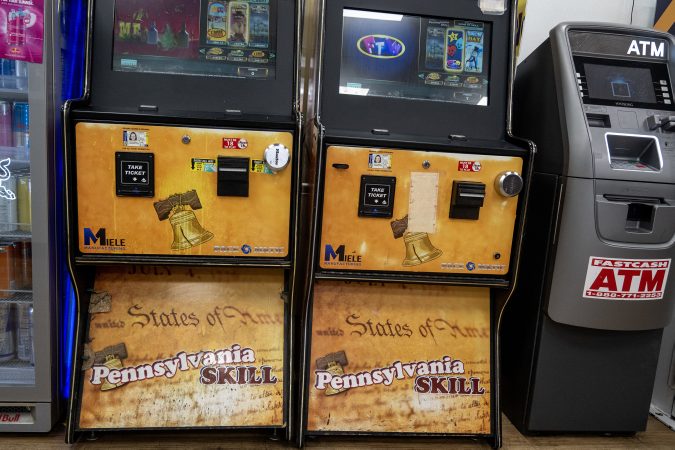
    Amid rising inflation and business costs, many Philadelphia corner stores, bars, laundromats, and smoke shops have turned to skill games, the slot machine look-alikes, to help keep their slim margins afloat.

    The machines, which shop owners say also encourage their customers to linger in stores and make additional purchases, are particularly profitable because they are not taxed or regulated like slot machines — and they have been operating without state oversight in a legal gray area for more than a decade. But a recent state Supreme Court ruling may force that to change.

    Last week, Pennsylvania’s highest court handed down a decision deeming skill games the same as slot machines. That means the skill game terminals proliferating around the state will soon be illegal if not operated and taxed at 52%, and housed in a highly regulated casino or truck stop with a license to carry slot machines. Those terms will take effect in less than four months unless the state legislature intervenes.

    Owners and clerks at several corner stores throughout Philadelphia that offer the games say they do not contribute a lot of revenue to their establishments directly, but they foster more of a lounge atmosphere in the shops that leads patrons to stay longer and purchase more snacks, drinks, lottery tickets, and other goods. Many of the business owners said they are willing to stomach a tax on skill games, but additional regulations would make them rethink keeping the machines.

    José Pérez, who runs a corner store on Opal Street in South Philadelphia, said his store runs on incremental profits. And, he said, when people play the skill game machines and start feeling lucky, they often are inclined to make other purchases there.

    “This business is about getting a little bit of money from every product, and the machines are a tiny source of income that adds up to that,” he said in Spanish between transactions at the store’s register. “While people play, they buy other stuff in the store. And if they win, they buy lottery tickets. Because when someone has one vice, they probably have two.”

    Tax proposals from Harrisburg

    Lawmakers in Harrisburg have for years failed to reach an agreement on how to tax and regulate the so-called skill games

    The issue has proved to be tricky in Pennsylvania’s split legislature, where Democrats narrowly control the House and Republicans control the Senate. The skill games industry leader, Georgia-based Pace-O-Matic, long maintained a friendly relationship with the Senate GOP, and the Republican lawmakers appeared willing to support policies that benefited them. But last year, the goodwill began to sour after the company backed political campaigns against incumbent Republican state lawmakers who did not support its requested low tax rate on the machines.

    State Rep. Danilo Burgos (D., Philadelphia) and State Sen. Anthony H. Williams (D., Philadelphia) have introduced a bipartisan bill in their chambers to impose a $500-per-month fee on each skill game machine operated in Pennsylvania, with a 50,000-machine cap across the state. There are currently an estimated 70,000 skill game machines in Pennsylvania, according to the state attorney general’s office.

    Skill games can be seen through the door of a mini mart on Kensington Avenue in the Kensington section of Philadelphia on Wednesday, July 30, 2025.Elizabeth Robertson / Staff Photographer

    The proposed legislation would split revenues among transit and infrastructure, local governments, and state police for enforcing the cap and fee. The bills also prohibit small businesses whose “primary source of net revenue” is from skill games, in an effort to prevent mini casinos in stop-and-go corner stores around the city. Burgos estimates the regulations would bring in $300 million in new revenue to the state in their first year.

    The bill includes additional protections for Philadelphia, where City Council voted in 2024 to ban the machines. The ban never went into effect, after a lawsuit was filed seeking to block it. In the legislation before the General Assembly, Philadelphia has specific carve-outs that would allow city officials to block stop-and-go businesses or “chronic nuisance” businesses from getting a license to carry the games.

    Surrounded by hundreds of skill games supporters at a news conference Wednesday on the Capitol steps in Harrisburg, Williams said rank-and-file lawmakers would hold up passing the state budget, due June 30, if there is not a deal to protect small businesses from losing their skill games altogether.

    “In this time when everybody talks about affordability, I can’t afford a 52% tax,” Williams said.

    The fee-per-machine option offered in the Democratic-sponsored bills is backed by Pace-O-Matic, which has spent millions of dollars on political campaigns and lobbying in the state, in addition to millions more spent by other parts of Pennsylvania’s booming gambling industry.

    Meanwhile, a separate proposal backed by the Senate GOP and penned last year would set the tax at 35% on gross terminal revenue, in addition to annual license fees. A small portion of those fees would go toward the state’s resources for problem gambling.

    Gov. Josh Shapiro, a first-term Democrat, has proposed taxing the machines at the same rate as slot machines — a hefty 52% levy on each machine’s net revenue — in his last two budget proposals. As the machines have continued to proliferate around the state, Shapiro’s office estimated the newly regulated industry could bring in nearly $800 million in revenue in its first year.

    Uncertain future with uncertain revenue

    Philly store owners were divided on whether it would be worth keeping the machines if they needed to pay a lofty tax on either housing the devices or the profits they made on them.

    Andrew Karki, who operates a laundromat near Pérez‘s store in South Philadelphia, said the machines occupy the customers while they wait for their laundry to finish and, as at Pérez‘s store, lead to purchases of candy and soda from the small bodega he runs inside the laundromat.

    He estimated the machines make up 15% to 20% of his monthly revenue, and he said he would likely be willing to take on a tax on the games, even a rather large one, to keep them around.

    “It’s hard, but we got to pay it. We got to pay it,” Karki said.

    For others, like Diego Reyes, who runs a secondhand shop on Kensington Avenue with about a dozen skill machines inside, taxing the small businesses for the machines does not seem fair. The terminals are often owned by small amusement companies, and are largely operated by Pace-O-Matic. The business owners get a cut from the machine’s revenue for allowing the terminal in their building.

    “They should tax the owner,” Reyes said in Spanish, wearing a Phillies cap and T-shirt with a size-medium sticker still stuck on the back, as three people played the machines.

    Pérez agreed that any tax should be on skill games companies and not on the businesses that carry them.

    It is frustrating to think another tax may be coming down the line, he said, when small-business owners already pay so many of them and see little return on the investment in the community.

    “Look outside, that pothole has been there for six months. We have no safety,” Pérez said. “What do you want me to pay more taxes for if you are not doing anything to better the conditions with it?”

    Staff writer Isabel Maney contributed to this article.

  • No sign of Pennsylvania at Trump’s 250th fair as state fails to find companies to participate

    No sign of Pennsylvania at Trump’s 250th fair as state fails to find companies to participate

    WASHINGTON — Pennsylvania is not participating in President Donald Trump’s Great American State Fair, which kicked off Wednesday, after state leaders failed to find a company willing to represent it at one of the hallmark 250th anniversary events in Washington that some say have become overly partisan.

    Pennsylvania’s state government, like those in some other Democratic-led states, had already chosen to not sponsor a booth at the 16-day fair. Gov. Josh Shapiro’s office had still been trying to connect Freedom 250, the nonprofit behind the fair, with organizations and companies that could represent the state, according to federal and state sources familiar with the planning.

    “Unfortunately, due to the high cost to taxpayers and not being able to secure PA businesses to sponsor the booth, Pennsylvania will not be a participant in the Great American State Fair,” the Pennsylvania Department of Economic and Community Development said in a statement.

    The fair, being held at the National Mall to celebrate the nation’s 250th anniversary, was originally planned to feature a pavilion dedicated to each state and territory.

    But as tourists visited Thursday on the fair’s first full day, there were no signs of the commonwealth where American democracy was born 250 years ago.

    Almost every other state was showcased — with most sending state or local government staff and tourism boards to host educational or interactive exhibits.

    Cape May County, a Republican stronghold that is representing New Jersey after the state government declined to participate, featured an 8-ton sand sculpture that a sculptor from Wildwood took 4½ days to create.

    An 8-ton sand sculpture promotes Cape May at New Jersey’s pavilion at the Great American State Fair, in Washington, D.C. The pavilion was sponsored by Cape May County, a Republican stronghold that chose to represent New Jersey after the state government declined to participate.Sam Janesch / Staff

    Maryland’s state tourism department handed out information about its vacation hot spots. Staff in the Lone Star State’s pavilion greeted tourists with a cheerful “Welcome to Texas” and offered an interactive space flight exhibit, a replica of the Alamo, and an Austin City Limits music display.

    Delaware highlighted Founding Father Caesar Rodney’s ride to cast the decisive vote for independence in Philadelphia.

    Delaware’s pavilion at The Great American State Fair highlights Caesar Rodney’s ride to cast the deciding vote for independence. Sam Janesch / Staff

    Pennsylvania joined seven other Democratic-led states — Connecticut, Illinois, Maine, Massachusetts, North Carolina, Oregon, and Washington — in declining to participate.

    Some of those states had flags outside the pavilions where they would have been located. A few chairs and a sign with the state’s name were also inside.

    But in the booth where, according to an interactive map, Pennsylvania’s location was supposed to be, a flag reading just “250″ was outside and the room was blocked off for the fair’s staff.

    As recently as this month, Pennsylvania was still seeking companies to represent it, but Rosie Lapowsky, Shapiro’s spokesperson, confirmed Thursday that the state had given up that effort.

    “None were interested,” Shapiro said to the New Republic in a story that first reported Pennsylvania’s lack of participation. “It reflects this sad state of affairs that we find ourselves in — that the president has politicized this to a degree that businesses don’t want to participate.”

    Trump’s presence has increasingly hung over events tied to the 250th anniversary in the nation’s capital, with the president planning to hold a political rally on the Fourth of July as part of the long-planned fireworks celebrations. It has made the decision to participate by entertainers and states alike more politically fraught.

    “Freedom 250 is a nonpartisan organization, full stop — and our track record of collaboration across red, blue, and purple states speaks for itself,” Freedom 250 spokesperson Rachel Reisner said in a statement earlier this month. She did not respond to a request for comment Thursday about Pennsylvania’s lack of involvement or Shapiro’s comments.

    Cape May represents New Jersey at the Great American State Fair Thursday, June 25, 2026, in Washington, D.C.Sam Janesch / Staff

    In New Jersey’s pavilion, visitors were met with not just the sand sculpture but also a new three-minute video highlighting Cape May County and a giant image of George Washington lounging at the beach with a cold drink.

    County administrator Kevin Lare said it took a significant amount of work — and at least $150,000 from the county’s tourism budget — to pull it all together in recent weeks. It is worth it, he said, to highlight the county in the hopes of bolstering its largest economic engine — tourism.

    “It’s a once-in-a-250-year event,” Lare said. “It’s not something the county will do every year at this level. It’s a celebration of our country, and our board of commissioners still believe we live in the greatest nation in the world. They’re happy to be a part of it.”

    Staff writer Gillian McGoldrick contributed to this article.

  • A new bipartisan housing law was on track to bring Pennsylvania’s home-repair program nationwide. Then Trump refused to sign the bill.

    A new bipartisan housing law was on track to bring Pennsylvania’s home-repair program nationwide. Then Trump refused to sign the bill.

    WASHINGTON — A Pennsylvania program that assists homeowners and small landlords by financing repairs was on track Wednesday to expand nationwide, after Congress this week passed a bill that both Republicans and Democrats are celebrating as the first major federal housing law in decades.

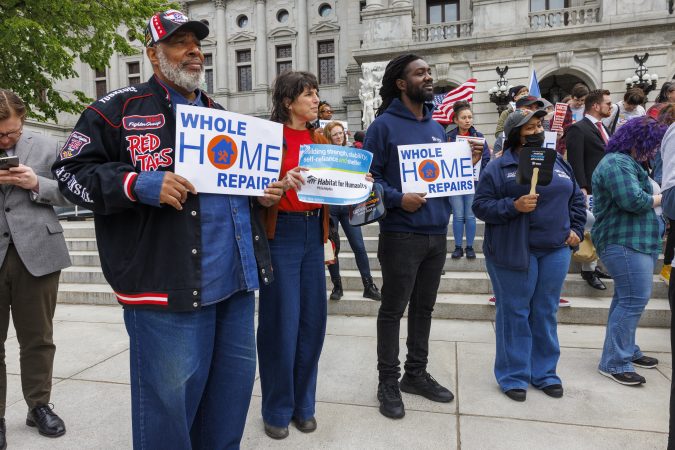
    Tucked into the 374-page omnibus legislation is a pilot version of a federally backed Whole-Home Repairs program — an idea that was originally sponsored by State Sen. Nikil Saval (D., Philadelphia) and passed in Pennsylvania in 2022.

    The program offers grants or loans to address safety, habitability, and efficiency concerns.

    But despite wide bipartisan support for the program and dozens of other housing reforms in the larger bill, final approval was derailed on Wednesday when President Donald Trump canceled the bill-signing ceremony in an attempt to force Congress to first pass more restrictive voter-ID laws.

    Democrats and some Republicans quickly rebuked the president, who still made a rare appearance on Capitol Hill to meet with Senate Republicans. The intraparty meeting turned contentious, according to multiple reports, while Democrats noted they had enough votes to overturn Trump’s veto if he holds out long enough.

    “It’s a mess,” said U.S. Sen. Andy Kim (D., N.J.). “Finally, we’re doing something that the American people want. We got bipartisanship. We worked on it forever. … Then he just parachutes in and just blows it all up here at the end.”

    The 21st Century ROAD to Housing Act aims to incentivize housing construction, restrict large institutional investors from buying single-family homes, improve financial literacy, and more.

    More than a year in the making, it includes a separate stand-alone Whole-Home Repairs Act that U.S. Sen. John Fetterman (D., Pa.) had introduced in each of the last two sessions of Congress. Fetterman’s bill merged last year into the larger bill while keeping many of the same provisions as the Pennsylvania-level program.

    Households that earn less than 80% of the area median income are eligible for grants, while small landlords with affordable units can access loans, including forgivable loans.

    Funded with more than $120 million in COVID-era federal stimulus money, the program has been limited amid high demand, with as many as 18,000 homes on the waiting list.

    Saval said he expects the national version to also reflect that level of “immense demand” — particularly as the program starts small and as homeowners across the country face higher costs to maintain their residences.

    “This is a huge issue. There are some 200,000 homes in Pennsylvania alone that have moderate to severe deficiencies,” Saval said. “Everyone is dealing with rising energy costs. Everyone’s dealing with the cost of materials and labor and the inability to pay for all that.”

    Addressing those kinds of affordability concerns, which have become a top-of-mind political issue during this year’s high-stakes midterm elections, is a rare bipartisan effort to emerge from the U.S. Capitol.

    Philadelphia-area lawmakers on both sides of the aisle had spent months advocating for the bill.

    U.S. Sens. Dave McCormick (R., Pa.) and Lisa Blunt Rochester (D., Del.) — members of the Senate committee that advanced the legislation — both celebrated the final passage by talking about its impacts on affordability and “cutting red tape.” Kim called it a “historic” move to bring costs down.

    “This package comes at a critical moment,” Blunt Rochester said in a statement, noting a nationwide housing shortage of as many as 7 million units. Five bills she separately sponsored — to accelerate building, increase investment in community development projects, develop zoning and land-use policies, and more — were featured in the final law.

    The Whole-Home Repairs provision of the legislation was not a guarantee as negotiations developed over the last year. House Republicans were generally skeptical of creating a new government program, and specifically critical of the policy’s tenant protections, according to a source familiar with the negotiations. But their counterparts in the Senate, and Democrats in both chambers, helped keep it in the larger bill.

    Fetterman said in a statement that Whole-Home Repairs “ensures families can stay in their homes” and that passing it had been a priority since he entered the Senate in 2023.

    “I’ve consistently maintained that our housing crisis needs real solutions that help address the problems at the center,” Fetterman said.

    Saval, who said he made multiple trips to Capitol Hill to work with sponsors and lobby for Whole-Home Repairs, said he was “thrilled” by the inclusion of a program that he and the coalition of advocates who helped push the idea had always envisioned as a model that could be replicated.

    He said he expects the pilot program to prove successful in “a few states” where it is able to launch. Unlike previous version of the federal bill that would have allocated $30 million to the pilot, there is no specific funding number for Whole-Home Repairs in the 21st Century ROAD to Housing Act.

    The legislation calls for the secretary of the U.S. Department of Housing and Urban Development to identify between two and 10 “implementing organizations” every year during the pilot, which is set to run through October 2031. The organizations will be local or state governments that administer the programs.

    Saval said that no matter how much funding is allocated, it “will undoubtedly fall short of the need,” but that its effectiveness will spur further investment.

    “It repays itself,” Saval said. “It repays itself in stabilized communities. It repays itself in stabilized property values, in people remaining in their homes rather than in unsafe or unhealthy homes, or rather than abandoning them.”

    Staff writer Jake Blumgart contributed to this article.

  • Trump was welcomed to Pa. by Stacy Garrity. He didn’t mention her at all.

    Trump was welcomed to Pa. by Stacy Garrity. He didn’t mention her at all.

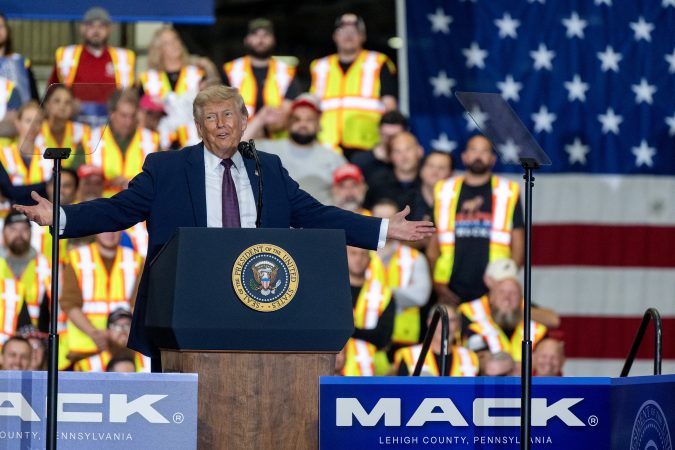
    MACUNGIE, Pa. — President Donald Trump’s speech on manufacturing in a key Pennsylvania swing district repeatedly veered into other topics and musings about elections in other states, like Maine and California.

    It took the president nearly an hour to even reference by name GOP U.S. Rep. Ryan Mackenzie, the vulnerable incumbent whose district Trump was visiting to boost his chances in this year’s midterm elections.

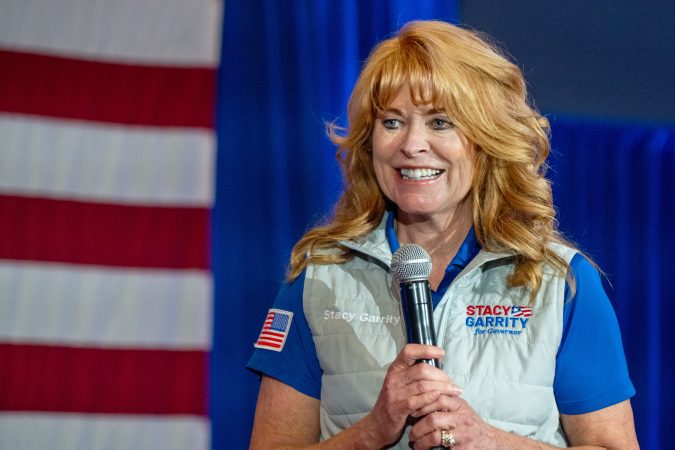
    And GOP gubernatorial nominee Stacy Garrity did not even get a mention during Trump’s speech to roughly 1,500 attendees, including workers at the Mack Trucks facility in Macungie in Lehigh County.

    Trump’s visit came just days after the company received $47 million through a Defense Department contract.

    And while he touted the trucks, he spent just as much time meandering about weight-loss drugs, immigration, firearms, the role of transgender athletes in women’s sports, and the UFC fight recently held on the White House lawn. He also repeated conspiracy theories about the races for Los Angeles mayor and California governor, saying he had asked the U.S. attorney in that state to investigate after conservative mayoral candidate Spencer Pratt did not advance to the general election.

    And he threw jabs at Pennsylvania Gov. Josh Shapiro amid 2028 speculation and appeared to undermine Shapiro’s Republican opponent, Garrity.

    Speaking about recent victories by democratic socialist candidates around the country, Trump quipped that “Shapiro is not that much better, to be honest with you.”

    He referenced the Democratic governor’s potential presidential aspirations, warning that “a guy like Shapiro is going to be forced on the left, otherwise he’s not going to get the nomination.”

    But though he weighed in on Shapiro, the governor’s Republican challenger’s name was noticeably absent from Trump’s list of shout-outs to GOP officials, despite the fact that Garrity spoke earlier in the event.

    Trump instead heaped praised on U.S. Rep. Dan Meuser, a Pennsylvania Republican who considered a run before ultimately opting against it and enabling the state party to coalesce around Garrity.

    “Meuser’s another great guy who was thinking about running for governor. I think he would have won. He was thinking of running for governor, and I said ‘I want you to stay in Congress,’” Trump said.

    Trump endorsed Garrity earlier this year, but the lack of acknowledgment Tuesday was striking given the election year focus of the event and Garrity’s own promises to support Trump’s agenda.

    “We need a governor in Harrisburg who will be a partner with President Trump in Washington, not an opponent in the courtrooms,” she said before Trump took the stage. “We need a governor who will fight for Pennsylvania jobs, like right here at Mack Trucks.”

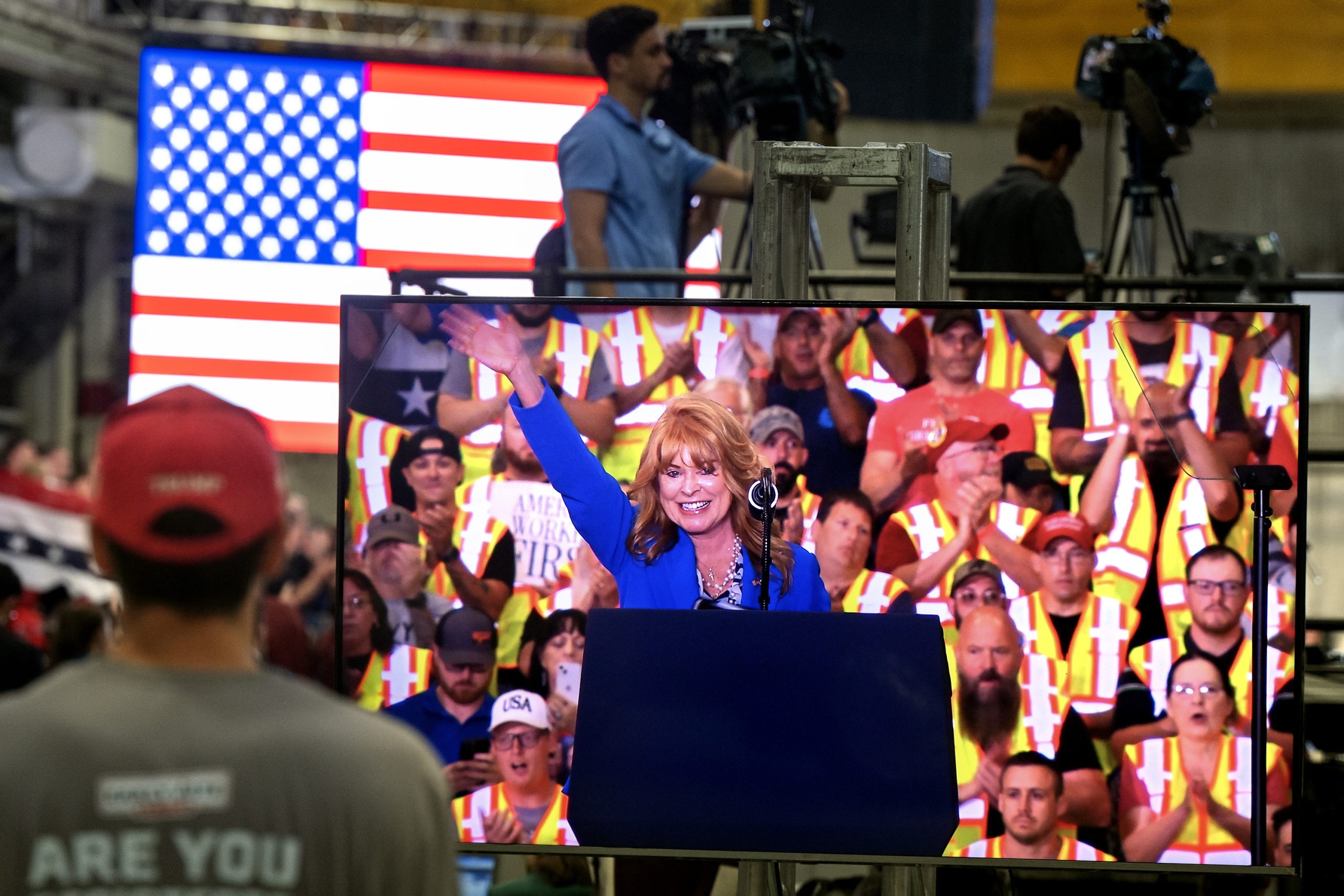
    State Treasurer and Republican candidate for governor Stacy Garrity is seen on a big screen as she speaks to supporters before the arrival of President Donald Trump at Mack Trucks in Macungie Tuesday, June 23, 2026. Trump did not mention Garrity when he later spoke to the crowd in the Lehigh Valley.Tom Gralish / Staff Photographer

    Trump restated his belief that tariffs have revitalized and would further boost the U.S. economy, though gas prices have reached new heights since he began a war with Iran, stymieing the flow of oil. (The Strait of Hormuz has reopened, following a tentative peace deal struck this month.)

    “I placed a 25% tariff on foreign automobiles and very importantly posed a 25% tariff on medium and heavy-duty trucks, so Mack Trucks could do very well with this factory in Pennsylvania,” he said.

    “They weren’t gonna come in from foreign lands and steal your jobs,” Trump added.

    However, the company cited Trump’s tariffs last year as contributing to its decision to lay off hundreds of workers at its Lehigh Valley operations center, the Pennsylvania Capital-Star reported at the time.

    Tuesday marked Trump’s fourth Pennsylvania appearance in his second term and his first this year ahead of November’s high-stakes midterm elections. The visit was billed as an official event as part of Trump’s American Workers First tour, but the event had the feel of a campaign rally.

    Four U.S. House districts in Pennsylvania are considered competitive, the most of any state, and the event took place in the 7th Congressional District, which is viewed as one of the most likely to flip to Democratic control.

    “We have to reelect a certain congressman,” Trump told the crowd.

    In 2024, Mackenzie won the seat by 1 percentage point, while Trump defeated Democrat Kamala Harris and won Pennsylvania in the presidential race.

    “Workers, like the ones here at Mack, are spearheading the great American comeback,” Mackenzie said.

    Bob Brooks, a union leader and firefighter who won the Democratic nomination to challenge Mackenzie, praised the union workers at Mack ahead of the event for building “the literal engine for the American economy,” but he blasted Trump and Mackenzie for failing to bring down prices.

    “No speech from Mackenzie can change the fact that his time in Congress has been an absolute disaster for the hardworking people of the Lehigh Valley,” Brooks said in a statement ahead of Tuesday’s event.

    Lt. Gov. Austin Davis, in a media call earlier Tuesday, said Trump’s choice to rally at Mack Trucks specifically signals he and his party recognize a “real political danger” because of Trump’s policies.

    “Donald Trump’s agenda is putting Congressman Mackenzie at serious risk,” Davis said. “They’re circling the wagons and trying to save that seat.”

    Affordability is likely to be a key issue on voters’ minds as they choose between Mackenzie and Brooks.

    Steve Leiby, 52, who works for Mack and attended Tuesday’s event, said he understands the tariffs Trump enacted are controversial, but he still supports them.

    “It’s a big risk, if we had a war, that we didn’t make a lot of war supplies in the U.S.,” he said.

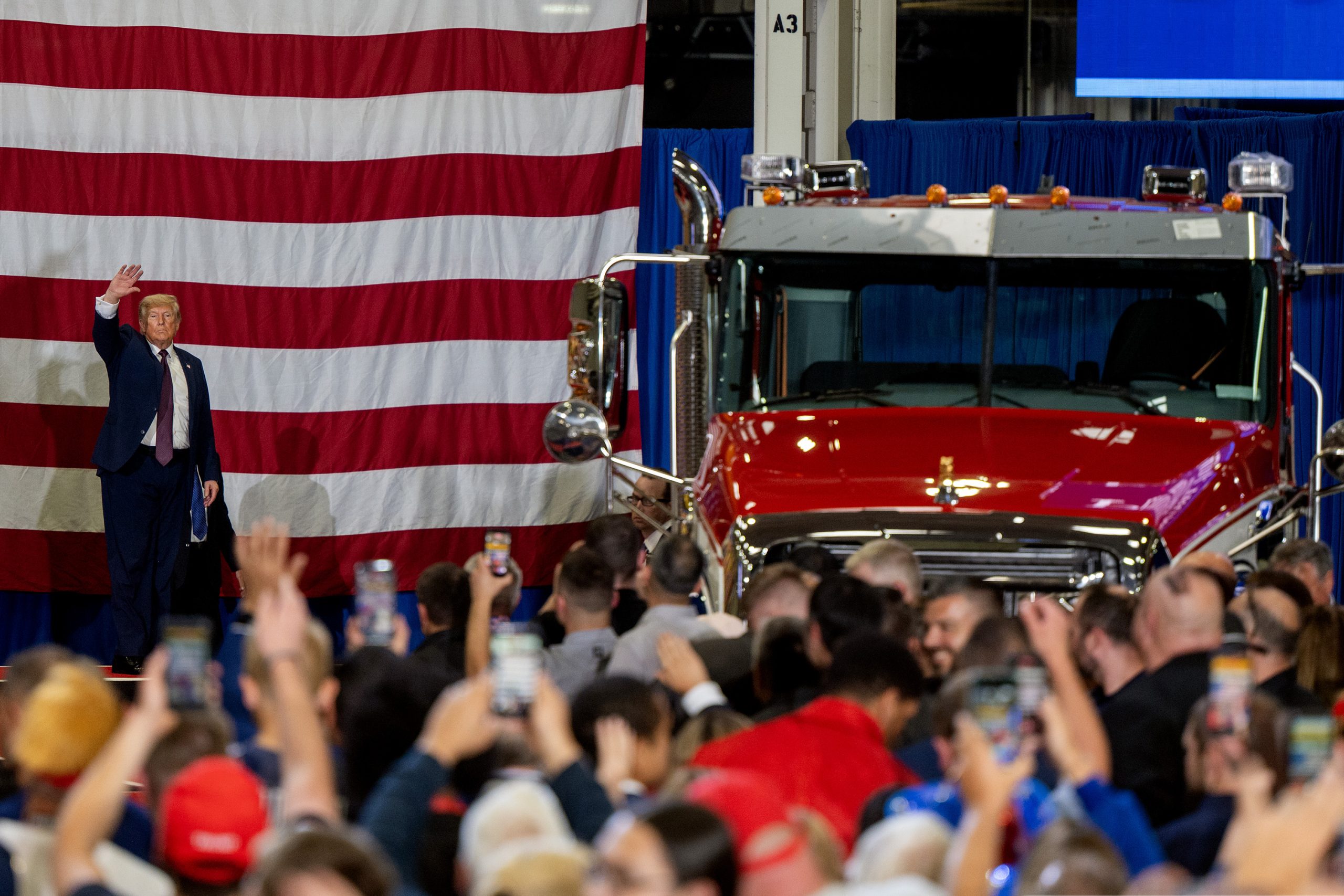
    President Donald Trump leaves after a visit to Mack Trucks in Macungie, in the Lehigh Valley Tuesday, June 23, 2026.Tom Gralish / Staff Photographer

    Brent and Francine Stanley, both 60, from New Tripoli, said they support Mackenzie because he shares their conservative values. His office organized an elder-care symposium that Francine Stanley attended because the couple have a 23-year-old child with disabilities, and they were able to get connected to resources.

    But they both know how competitive this election is, noting the stack of pro-Brooks mailers they have already received and predicting that Democrats will be knocking on their doors as November approaches.

    “They’re really persistent, and if you don’t answer, they follow up,” Francine Stanley said. Mackenzie, she said, should consider doing the same.

    Staff reporters Andrea Padilla and Sam Janesch contributed to this article.

  • Trump to visit Pa. on Tuesday as the battle for control of Congress heats up in the Lehigh Valley

    Trump to visit Pa. on Tuesday as the battle for control of Congress heats up in the Lehigh Valley

    President Donald Trump is scheduled to speak Tuesday at a truck manufacturing facility in the Lehigh Valley, where a competitive race for Congress this year could determine which party controls the U.S. House for the second half of his term.

    Trump will deliver remarks at Mack Trucks in Macungie in Lehigh County, according to the White House and two local members of Congress.

    The visit will mark Trump’s fourth Pennsylvania appearance in his second term and his first this year ahead of November’s high-stakes midterm elections.

    Pennsylvania has four competitive U.S. House districts — the most of any state — and the Lehigh Valley-based 7th District is widely considered one of the most likely in the nation to flip from Republican to Democrat.

    GOP U.S. Rep. Ryan Mackenzie won that seat by 1 percentage point in 2024 as Trump defeated Democrat Kamala Harris statewide. Bob Brooks, a union leader and retired firefighter whom many prominent Democrats rallied behind before last month’s competitive primary, is facing Mackenzie in November.

    The event Tuesday is scheduled as an official White House event, not a campaign event, and it could be the first of several trips by the president to the region and across Pennsylvania in the coming months.

    “We’re looking forward to joining President Trump at Mack Trucks — one of our nation’s most iconic manufacturers,” Mackenzie wrote on social media.

    “By investing in American workers and supporting domestic manufacturing, President Trump and Republicans in Congress have helped to put the Lehigh Valley and the Poconos at the forefront of our nation’s industrial revitalization. We appreciate President Trump coming to the region to help us highlight the work we’ve done together to support American workers, families, and industries.”

    Mackenzie spoke Friday at a different Mack facility outside of Allentown to highlight part of a contract the company won from the U.S. Army last year to produce heavy dump trucks. The deal is worth up to $221.8 million, and Mack Defense said it received $47 million in the latest Department of Defense appropriations act.

    A White House spokesperson said Trump will “stand with the American workers he has fought for” during his visit.

    “Under the President’s leadership, key domestic industries are being revitalized, historic investments are pouring back into communities like Macungie, and families across the country are securing new, high-paying jobs,” Liz Huston said. “Pennsylvanians placed their trust in President Trump, and he has delivered for them.”

    Former President Joe Biden visited the same Mack facility in 2021 for a speech focused on supporting American manufacturing.

    Trump last appeared in Pennsylvania in December for a rally at the Mount Airy Casino Resort in Mount Pocono, which is in the neighboring 8th Congressional District where another freshman Republican is looking to fend off a Democratic challenger. Pitched as a speech to address voters’ concerns about affordability, the president repeatedly veered off script and called affordability concerns a “hoax.”

    Some of the president’s former supporters in the region have since said they regretted voting for him, and national Democrats have made the area a priority as they look to win back a seat that Mackenzie flipped two years ago. Brooks, the Democratic nominee, has leaned into his working-class background while saying he understands voters’ financial concerns.

    U.S. Rep. Dan Meuser, a Republican who represents a different neighboring district, said Trump’s visit signals the president’s support for workers.

    “Mack Trucks are a symbol of America’s manufacturing strength,” Meuser said on social media. “Their Lehigh Valley operations are a pillar of the local economy, employing Pennsylvania workers and driving the nation’s trucking industry. Thank you, President Trump, for supporting American workers.”

  • Stacy Garrity on potentially being the first female governor of Pennsylvania: ‘It’s my least favorite thing to talk about’

    Stacy Garrity on potentially being the first female governor of Pennsylvania: ‘It’s my least favorite thing to talk about’

    If elected in November, Stacy Garrity would become Pennsylvania’s first female governor in the state’s 238-year history.

    Even now, she is one of only two women in history to receive the Republican Party’s nomination for the job.

    The state has never had a woman as its governor; no woman has been elected as U.S. senator; and both times a woman ran for president, she lost the state. Over the last two centuries, Pennsylvania’s political glass ceiling has proven stubbornly resistant to cracks.

    But on the campaign trail against Democratic Gov. Josh Shapiro, Garrity, 62, said she doesn’t give that too much thought.

    “It’s my least favorite thing to talk about,” she said. “I was the oldest of four daughters, and we were just told that we were expected to work hard.”

    Navigating gender dynamics in politics can prove to be a particularly fine balance. Republicans, in particular, often emphasize that candidates should rise on their skills and talent, not personal identity.

    Garrity emphasized her attention is on issues like the power grid, education, and reining in spending, though she recognizes the historic significance of a potential win.

    “Republicans, for the most part, are based on merit, and that’s how I was raised,” said Garrity, who spent decades serving in the Army Reserve and as an executive in the manufacturing industry before becoming state treasurer. When she was reelected in 2024, she broke the record in Pennsylvania for the most number of votes cast in her favor for a statewide office, a distinction formerly held by Shapiro.

    In addition to taking on centuries of male-dominated leadership, Garrity will face other challenges in November.

    She is a Republican who has aligned herself closely with President Donald Trump — including campaigning at his Mar-A-Lago Club in Florida — at a time when Trump has been experiencing historic dissatisfaction among voters and the national political environment favors Democrats.

    And she is running against Shapiro, a Democratic incumbent with a rising national star who is popular even among independents. He has $38 million banked as of May, vastly outpacing Garrity’s $2.8 million. Shapiro is also counting on a strong showing in the midterms to help Democrats win the majority in the U.S. House.

    “I think [voters] are excited to have a first female governor, but I don’t think that is the reason anybody would vote for me,” she said.

    In Pennsylvania and 16 other states

    It is hard to be what you can’t see. And for voters who have never experienced a woman at the top of the hierarchy, it is difficult to imagine what that could look like, experts said.

    It has been 300 years since a woman led Pennsylvania — before it was a state.

    Hannah Callowhill Penn led the colony of Pennsylvania, governing first while her husband, William Penn, suffered several strokes, and then alongside a group of trustees after he died. Over 14 years, she settled boundary disputes, appointed and replaced government officials, and navigated relations with the monarchy in England.

    Other Pennsylvania women made attempts to break gender barriers but came up short. Barbara Hafer ran as a Republican against Democratic incumbent Bob Casey Sr. in the 1990 governor’s race, but lost with just 32% of the vote.

    Former U.S. Rep. Allyson Schwartz lost to Tom Wolf during the Democratic primary for governor in 2014, and Laura Ellsworth was defeated by Scott Wagner in the 2018 Republican gubernatorial primary.

    “It could just be a coincidence, but also it’s very hard to break political traditions, and one of those traditions in Pennsylvania, unfortunately, is male leadership,” said Nichola Gutgold, a professor at Pennsylvania State University’s Lehigh Valley campus, who has researched women in politics.

    Pennsylvania, however, is not alone. There are 17 states that have never had a female senator, and 17 states have never had a female governor, according to the Pew Research Center. That distinction spans geographic ranges and party control.

    Still, Pennsylvania is one of just four states that has never had either, along with Idaho, Indiana, and Colorado. Among them, only Colorado went for Democrats Hillary Clinton and Kamala Harris for president.

    “We have certain variables at play in the Commonwealth of Pennsylvania that make it more challenging for women to run for elected office,” said Dana Brown, executive director of the Pennsylvania Center for Women and Politics.

    The role of the parties on the state and county levels means they have a strong influence on recruiting candidates and pushing them up through the pipeline. Historically, recruiting tended to come from more masculine bases — such as fire stations or township supervisor positions.

    Now, though, “both sides of the aisle recognize that women can win here in Pennsylvania, and so Republicans and Democrats have been purposely recruiting more women,” she said.

    Women have made strides in other Pennsylvania elected offices.

    In Harrisburg, State Rep. Joanna McClinton (D., Philadelphia) is the first woman and second Black person to serve as speaker of the Pennsylvania House. Republican State Sen. Kim Ward of Westmoreland County is the first woman in Pennsylvania history to serve as Senate president pro tempore and Senate majority leader.

    When former Democratic U.S. Rep. Susan Wild, the first woman to represent the Lehigh Valley in Congress, was elected in 2018, “it took a real concentrated effort from [political action committees] and from groups that really wanted to see a woman win to make that happen,” Gutgold said.

    In other cases, as in neighboring New Jersey or Virginia, women have ascended with a combination of fortunate timing, skill, experience, and deft campaigning.

    When Gov. Mikie Sherrill last year became the second woman elected to lead New Jersey, Brown said, “it was a change election for New Jersey, and it was a sign of pushing back against what the federal government is doing with ICE and immigration and also with the economy.”

    Even though Sherrill, a Democrat, shares the same party as her predecessor, Phil Murphy, New Jersey’s vote for a woman represents change, Brown said. “She also worked really, really hard for it, as most women do,” she added.

    Sometimes, female candidates succeed by pushing against expected norms for women by emphasizing military experience or work in male-dominated trades, Gutgold said. Garrity has emphasized her military and business experience on the campaign trail, holding a Veterans for Garrity rally last week.

    “I think that, rhetorically speaking, it would be easier to elect a woman who appears to hold more conservative views, because of the way we, the electorate, still views women’s role in society,” Gutgold said.

    Republican women have scored victories in the Deep South by upholding conservative values such as opposition to abortion and support of gun rights. Kay Ivey holds the governor’s mansion in Alabama, and Nikki Haley previously led South Carolina for two terms. In Tennessee, U.S. Sen. Marsha Blackburn has represented the state since 2018 and publicly repudiated gender-specific titles, such as congresswoman vs. congressman.

    Garrity, on the campaign trail, has also vowed to clean up the “boys will be boys” culture in Harrisburg and has criticized Shapiro’s handling of a sexual harassment case involving a longtime aide.

    The aide, Mike Vereb, abruptly stepped down in 2023, while the administration quietly agreed to pay $295,000 to settle claims from an employee in the governor’s office that Vereb had made repeated sexual advances toward her, and made lewd claims about her and other women.

    “We don’t need to settle for a governor who will sweep sexual harassment and abuse charges under the rug. We don’t need to accept that our state government is a cesspool where intimidation is the norm and public employees fear retribution,” Garrity said during a news conference this year.

    Manuel Bonder, a spokesperson for Shapiro, rejected those accusations.

    “Governor Shapiro has a track record of taking on powerful institutions, exposing sexual abuse, and putting predators behind bars — and he continues to fight to deliver real accountability and justice for survivors here in Pennsylvania,” he said.

    Could Pa. women give Garrity a boost?

    Nationally, women voters tend to lean more toward the Democratic Party, Pew Research Center data show, so it’s unlikely that the Republican Party will attract a huge turnover — even with a female candidate on the top of the ticket.

    Sometimes, however, the gender divide can become even more entrenched. In 2024, for example, when the candidates were broadly polling neck-and-neck, Harris saw a 17-point advantage with Pennsylvania women, while Trump led with men in the state by 11 points, according to a Philadelphia Inquirer/New York Times/Siena College poll.

    Garrity said she is putting together agendas that speak to various coalitions of voters, such as veterans, Latinos, and small-business owners.

    “I don’t think we’ve done specifically females, but that might be a good idea,” she said. A campaign spokesperson added that Garrity would be rolling out women-focused events in the coming weeks.

    Campaigns can target women by speaking directly to certain issues. Democrats have often focused their message on support for reproductive access and abortion rights, especially since the 2022 Supreme Court decision overturning Roe v. Wade.

    According to a Pew Research Center report in March, 64% of women and 55% of men say abortion should be legal in all or most cases. But Garrity has been inconsistent on the issue. She said “Roe was wrong from the beginning” on the day the ruling came out and sold T-shirts on her campaign website that opposed abortion. But in an interview last September, Garrity said she would “respect” Pennsylvania’s current abortion law and would not support a state ban.

    Republicans, meanwhile, often promote public safety and have sought to make women’s sports a wedge issue in recent elections by pushing restrictions on the participation of transgender athletes.

    It is a tactic Garrity will use against Shapiro, who has called attempts to silo transgender athletes discriminatory.

    “A lot of people think that he’s moderate because he likes to be all things to all people, and they don’t understand, he is really for boys competing against girls in sports,” Garrity said.

    There are other issues women candidates are often seen as more trusted on, such as education, healthcare, and children’s needs, Gutgold said.

    Amy Widestrom, executive director of the League of Women Voters of Pennsylvania, said top of mind for members of her organization right now is the right to vote. She said some women have expressed concern that requiring documentary proof of citizenship, which Republicans say is meant to ensure immigrants in the country illegally do not vote, could affect those who change their legal name and do not have matching identification records.

    Appealing to women on these issues can pay off, as they represent a significant voting bloc. Among registered voters in Pennsylvania, 52% are female. Of registered Democrats, 59% are female, and 47% of registered Republicans are female. Roughly 40% of unaffiliated voters are female, according to Widestrom, via voter data.

    But Macy Charles of Concerned Women for America, a socially conservative political nonprofit focused on women, said candidates should speak more expansively when courting women voters.

    “It’s pretty offensive to assume that when we’re talking about issues women care about, it’s only women’s specific issues, like abortion,” said Charles, a legislative strategist. “Women care about the economy, women care about the U.S. borders. Because they have maternal instincts, they care about their families, they care about the well-being of America’s future.”

    Rather than leaning into identity, Charles said, Garrity is reinforcing her reputation of competence.

    “More than just her identity as a woman, she is willing to stand up for common sense and truth and really put families first,” she said.

    Still, Garrity recognizes the achievement her potential victory could bring.

    To be Pennsylvania’s first female governor, “I think it would be great,” she said, “but I think it will be because I am absolutely the best candidate.”

  • How Bucks County’s sheriff redefined his office to zero in on domestic violence

    How Bucks County’s sheriff redefined his office to zero in on domestic violence

    In January, Danny Ceisler inherited a Bucks County Sheriff’s office that was a lightning rod for debate over deputies’ role in federal immigration enforcement. Now, as he reflects on the changes he’s made in his first six months in office, Ceisler says he is bringing the office back to standard procedure with a shift in staffing to prioritize addressing domestic violence.

    That shift comes amid an increase in the number of warrants — called Protection From Abuse orders — served against alleged perpetrators of domestic violence.

    Between February and May, Ceisler’s office has served 441 PFAs — an increase from the 370 that were served during the same time period last year.

    Ceisler, a Democrat who flipped the seat after four years of GOP control, has dedicated more staffing and resources to ensure those warrants are served in a timely manner, which can often be a life-or-death situation.

    “I view it as one of our real life-saving duties,” Ceisler said. “I mean if we can get an abuser out of a house at 8 p.m. on a Friday instead of 9 a.m. on a Monday — which is kind of what used to happen if they came in on Fridays — you could save a person’s life.”

    Last November, Ceisler ousted former Sheriff Fred Harran, a Republican, who came under scrutiny for his embrace of President Donald Trump’s style of politics and his willingness to commit his office to a controversial agreement to assist U.S. Immigration and Customs Enforcement in federal immigration enforcement in the county.

    In addition, Ceisler has developed a so-called “armory” that holds confiscated weapons and added six people to a round-the-clock unit dedicated to evicting alleged abusers from their homes based on judicial orders.

    In the United States, one in three women and one in four men will experience domestic violence in their lifetime, according to the Pennsylvania Coalition Against Domestic Violence.

    Jen Locker, executive director at A Woman’s Place, a Bucks County-based shelter and community organization for survivors of domestic and intimate partner violence, said that throughout her 13 years working at the nonprofit, the sheriff’s office has always been “really phenomenal” at being present during hearings for PFA warrants and ensuring survivors feel safe. The organization offers court accompaniment services and assistance in filling out PFA petitions.

    But the biggest shift came when A Woman’s Place and the sheriff’s office met early on in Ceisler’s tenure and advocates expressed that one of the biggest challenges survivors face is the delay in serving PFAs.

    Soon after the meeting, Locker said, Ceisler prioritized the eviction unit.

    “Getting the offenders out of the home and getting the weapons out of the home are really, really crucial in maintaining safety for the survivors who are just trying to find a path forward safely,” Locker said.

    Ceisler’s counterparts in the other Philadelphia suburbs say the work he’s doing is one of the core functions of any sheriff’s office.

    And Ceisler argues that he’s bringing the office back to basics, noting that at one point he had to reassign deputies who were tasked with planning firearms training and that the office spent a lot of time on ICE training.

    “One of my predecessor’s issues was he was stepping on the toes of police departments and trying to do more police work or federal, you know, immigration work,” Ceisler said. “We’re just doing what we are statutorily empowered to do, and trying to do it to the very best of our ability.”

    According to data provided by the sheriff’s office, there has been a 94.1% clearance rate for PFAs under Ceisler’s tenure between February and March and a 90.4% rate during that same period last year under Harran. A “cleared” PFA means the warrant was successfully delivered, and any weapons were confiscated.

    In an interview, Harran pushed back on the characterization that the office, under his leadership, was dedicated to anything but local law enforcement issues. And he was adamant that deputies working under him also served PFA warrants, with a dedicated, four-person unit doing that work exclusively.

    “Danny knows the truth: We were never doing the work of immigration. I’ve said it a million times, I’ve testified with my hand on a Bible to it,” he said. “I don’t know what more I could’ve done to tell people that’s not what we were doing.”

    Ceisler’s “armory,” he said, is also not a new concept. Harran said he was in the process of establishing one.

    “Domestic violence is not going away,” he said. “To say he created a new unit, tomato, tomahto, call it whatever you want, we were doing same thing.”

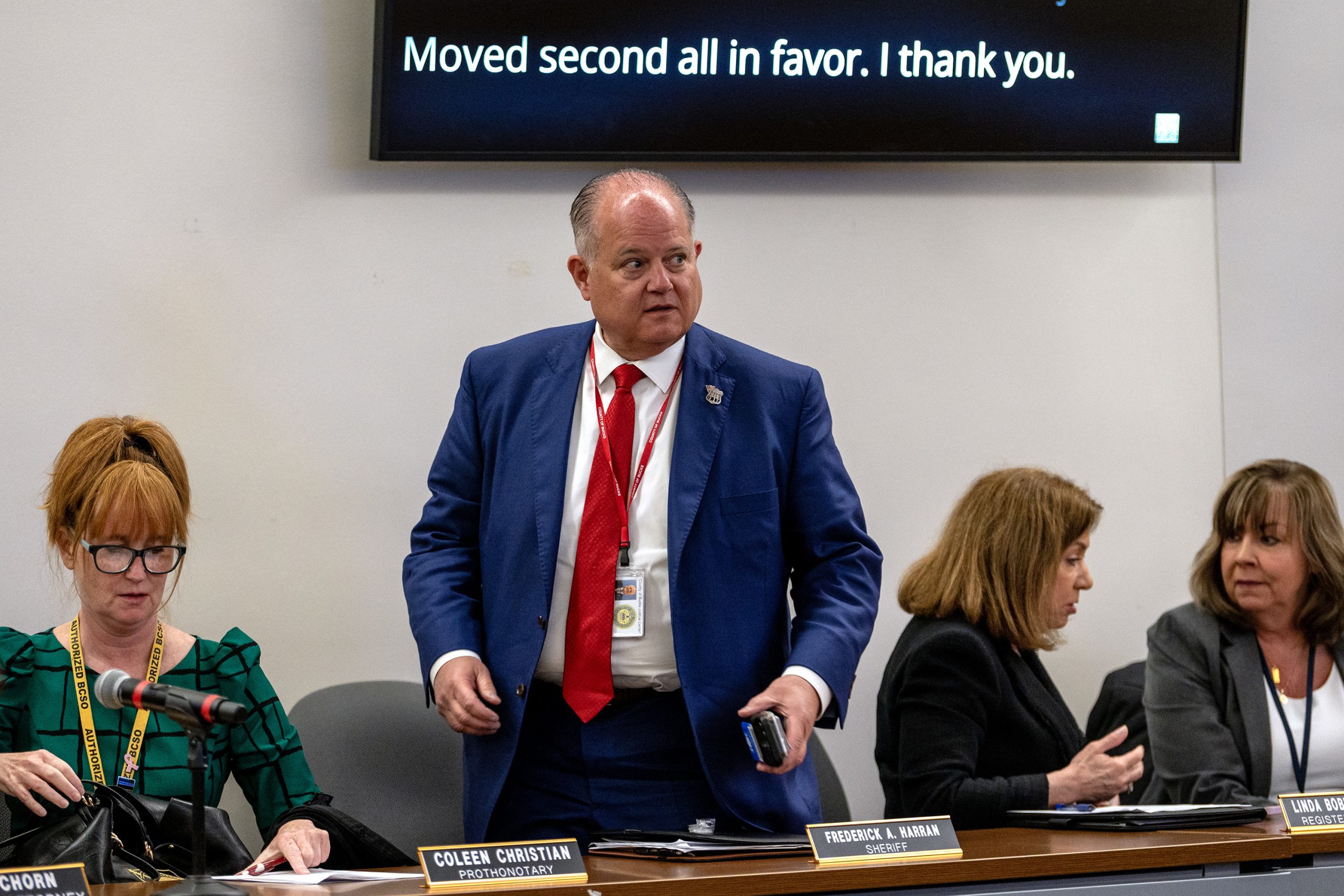
    Former Bucks County Sheriff Fred Harran stands following County Commissioners meeting last year when they approved a resolution opposing his deputies participating in an Immigrations and Customs Enforcement 287(g) program to act as ICE officers.Tom Gralish / Staff Photographer

    In most of the other suburban counties, the sheriffs — all Democrats — say their offices have been serving the vast majority of PFA orders.

    In Chester County, Sheriff Kevin Dykes said his office has processed 247 PFA orders in the first quarter of 2026, as well as recovered eight firearms relinquished through that process. Dykes said his office rarely, if ever, has a backlog of PFA orders waiting to be filed, and works closely with local police departments to avoid that situation.

    “I think where the issue came in with Bucks is that Danny stepped into an office where the person running it had different priorities,” Dykes said. “In this instance, it’s just how the nature of this business is. One day we could have a high-profile trial in the courthouse, and the next we could have a threat on an official. It just changes day-to-day for us.”

    In Montgomery County, Sheriff Sean Kilkenny said his deputies are responsible for serving three-quarters of the PFAs filed. Last year that amounted to about 1,600.

    Kilkenny formerly headed the state’s Sheriff’s Association, and said having those departments take the lead in handling PFAs is the industry standard, one that he said has worked well for counties across Pennsylvania. He added that Ceisler “getting under the hood” of the process is part of the job for a new official.

    In Delaware County, where newly elected Sheriff Saddiq Kamara is wrestling with a staffing shortage, the sheriff’s office one day hopes to use Ceisler’s initiatives as a model.

    Kamara, a former Yeadon Police officer and onetime member of Gov. Josh Shapiro’s security detail, said his office currently has 35 vacancies for deputies. He’s working to reverse that, and has recently hired seven new deputies, but said the shortage has forced him to leave the serving of PFAs to local police departments.

    “It’s something that I really would like for us to do as well, but the Delaware County Sheriff’s Office is the third-busiest in the state,” said Kamara, referring to the number of prisoners they transport daily, as well as applications they receive for gun permits and other filings.

    “We just don’t have the capability of the resources and the man and woman power in our office,” he said. “What Danny is doing I think is a phenomenal idea, and we’re planning to do that in the near future as well.”

  • Sen. Andy Kim has ‘no confidence in any aspect’ of Trump’s deal to end war in Iran

    Sen. Andy Kim has ‘no confidence in any aspect’ of Trump’s deal to end war in Iran

    WASHINGTON — As lawmakers on Capitol Hill grapple with President Donald Trump’s deal to end the war in Iran, the New Jersey Democrat who spent years weighing national security issues in the Middle East described the agreement as a “mind-boggling” move that will have damaging reverberations across the globe.

    “It’s like setting your own house on fire, a good chunk of it burning. You put it out. And then you start clapping, celebrating yourself. That’s what Trump is like right now,” U.S. Sen. Andy Kim, the only career diplomat in the Senate, said of the memorandum Trump signed Wednesday night.

    Democrats representing the Philadelphia region on Thursday blasted the terms outlining the end of a conflict that many of them repeatedly described as a strategic failure from the start.

    Some prominent Republicans echoed those concerns — criticizing Trump’s removal of U.S. sanctions on Iran and his promise to help pull together a $300 billion fund to rebuild the country’s infrastructure after months of bombings — while Pennsylvania lawmakers who supported the war, like U.S. Sens. Dave McCormick (R., Pa.) and John Fetterman (D., Pa.), remained silent or defended Trump.

    “Reagan is rolling over in his grave,” U.S. Sen. Bill Cassidy, a Louisiana Republican, wrote on social media.

    Kim, who worked at the National Security Council under President Barack Obama and spent time as a civilian adviser in Afghanistan, said it was difficult to imagine what will happen next.

    He said the Trump administration had lost all forms of leverage by agreeing to end hostilities, reopen the Strait of Hormuz, and provide financial benefits to Iran without securing any new or firm commitments around the country’s nuclear program. Though the countries vowed to continue negotiating over the next 60 days, Kim said, Iran will already be in a “position of strength” with the financial relief and thus have little incentive to follow through on its pledge not to pursue a nuclear weapon, which was the primary justification for the war by Trump and his allies.

    “I have no confidence in any aspect of this,” Kim said in an interview.

    Kim said he feared not just prolonged issues between the U.S. and Iran — issues that look almost the same as before the war began — but “reverberations everywhere” as the administration signals how it would handle other foreign conflicts, like Russian President Vladimir Putin’s aggressions in Ukraine or Chinese President Xi Jinping’s moves toward Taiwan.

    “We’re just at such a weak point now. We’re still strong enough that we can muscle other countries, but they see through it now,” Kim said.

    Trump has continued to project strength, including with threats to resume attacks if Iran does not comply with the peace deal.

    “It’s a memorandum of understanding, and if I don’t like it, we’ll go ​back to shooting at them, dropping bombs on ⁠their head,” Trump said Wednesday.

    McCormick, who served in the Army during the Gulf War and has described the war in Iran as one of the most effective military campaigns in history, did not agree to an interview with The Inquirer on Thursday as other Republican senators like Cassidy and U.S. Sen. Ted Cruz of Texas raised concerns. In multiple television interviews, McCormick said he had “a number of questions” about the memorandum.

    “If it has the two things the president’s talked about, I think we’re in good shape,” McCormick said on Newsmax. “One thing is that there can be no path to a nuclear weapon or not giving up the enriched uranium. … That has to happen for this to be successful. And the second thing was the president’s words that you have to pay for performance. You can’t lift the sanctions or give them real economic relief on the sanctions until they take tangible steps toward eliminating that nuclear capability.”

    A spokesperson for U.S. Rep. Brian Fitzpatrick, a Bucks County Republican who has voted for more congressional oversight of the war but has not criticized its mission, referred to a statement from before the terms were announced this week. Fetterman, the only Senate Democrat who has fervently supported the war, did not respond to a request for comment.

    Democrats representing the Philadelphia area, meanwhile, were quick to call the deal a symbol of a conflict that was entirely a failure.

    “Now, after billions of taxpayer dollars spent and 13 American service members’ lives lost, we are no better off in Iran than we were before the war began,” said U.S. Rep. Chrissy Houlahan of Chester County, an Air Force veteran.

    U.S. Rep. Mary Gay Scanlon of Delaware County said she was hopeful that the agreement was a step toward peace while calling the conflict damaging to the U.S. economy and embarrassing on the global stage.

    “The war did not accomplish any of the administration’s alleged goals, and has instead only strengthened Iran’s strategic ambitions,” she said.

    In a post on social media, U.S. Rep. Brendan Boyle of Philadelphia called it “total humiliation.”

    Public surveys showed the war was never popular with the majority of Americans, and at least one new poll released this week showed Pennsylvania voters were continuing to sour on Trump’s handling of foreign policy.

    About 29% of voters in the state agreed with the president’s approach to foreign policy in the June poll released Thursday by Franklin and Marshall College in Lancaster. That figure was down from 37% prior to the war.

    “This was just really a lose-lose everywhere,” said Kim, who helped lead a roundtable on Capitol Hill this week to highlight the economic impact of the war, like increasing fuel and fertilizer costs due to the shipping decline. “We need to move on. But this is going to have such a negative impact on America for so long, and in so many different ways.”

    Staff writer Michelle Baruchman contributed to this article.