Category: New Jersey Politics

  • New Jersey enacts law to prevent surveillance pricing of groceries. Here’s what to know.

    New Jersey enacts law to prevent surveillance pricing of groceries. Here’s what to know.

    New Jersey Gov. Mikie Sherrill signed a surveillance pricing ban into law on Thursday as she champions herself as a fighter for lower costs in New Jersey.

    The Democrat lauded the initiative as part of her broader agenda and campaign promise of making life more affordable in the state. Also in line with her messaging, she blamed President Donald Trump’s tariffs and the war in Iran for high grocery prices at a news conference announcing the new law.

    “Surveillance pricing essentially gives Big Brother a look into your shopping cart,” she said. “It’s incredibly invasive and it’s expensive.”

    Several states across the country have similar bills under consideration, but New Jersey is just the third to write the ban into law, after Maryland and Connecticut.

    Here’s what to know about the new law.

    What is surveillance pricing?

    Essentially, it’s when grocery stores or apps create individualized pricing based on shoppers’ personal data.

    As defined by the new law, it’s a pricing strategy in which food prices are adjusted, optimized, or recommended by an algorithm or automatic system that uses personal data, such as through biometrics, cameras, sensors, device tracking, or other forms of observing consumers’ personal attributes.

    What does this law do?

    The new law, called the Fair Price Protection Act, bans surveillance pricing or other pricing strategies that determine the cost of groceries based on consumers’ data. The law takes aim specifically at groceries and not at restaurants or other places that sell food or beverage for immediate consumption.

    It also implements a one-year ban on new electronic shelf labels and requires the state to study the use of such labels. The New Jersey Innovation Authority is required to submit findings no more than six months before the end of the moratorium along with policy recommendations surrounding the practice. Companies are allowed to repair or replace existing electronic shelf labels during this moratorium.

    These labels allow companies to update prices more efficiently and do not mean surveillance pricing is being used. But a group that has lobbied for a surveillance pricing ban — the United Food and Commercial Workers International Union — has also called for bans on electronic price tags and called them “the missing piece of the surveillance pricing puzzle.”

    The surveillance pricing ban will not take effect for a year, but the electronic shelf label moratorium will begin in six months.

    A violation of the new law carries penalties of up to $10,000 for the first offense and up to $20,000 for further violations, and the attorney general can pursue additional civil penalties.

    What did lawmakers think of this bill?

    Earlier this year, some South Jersey legislators said they wish the bill had gone further and banned the practice across other industries.

    The bill passed both chambers of the legislature on June 30 as part of a slew of last-minute actions before the budget deadline.

    It passed largely along party lines, though two Democrats voted against it in the Senate, including Sen. James Beach, a Camden County Democrat who had been listed as a cosponsor on the bill. He did not immediately respond to a request for comment Friday.

    In the Assembly, seven Democrats did not vote on the bill, and one Republican voted for it.

    Does Instacart use surveillance pricing?

    At her news conference, Sherrill cited figures from a Consumer Reports study that found Instacart used artificial intelligence-driven pricing that left customers with price tags differing as much as 23% per item for an annual household cost difference of $1,200 per year.

    However, Instacart has said it did not use personal information to set those prices, and therefore it did not involve surveillance pricing — a practice the company said it does not use. The company also said it has changed its practices outlined in the study.

    That being said, experts have warned that the combination of AI pricing models and the mass amounts of data collected on U.S. shoppers paves the way for surveillance pricing, per Consumer Reports.

    Will this law interfere with your loyalty discounts?

    Opponents of the bill, such as business groups and Republican lawmakers, have argued that the bill will have the opposite effect than intended, leading to higher prices because of negative effects on loyalty discount programs.

    “The reason so many businesses pushed back on ‘The Fair Price Protection Act’ wasn’t because they want to price gouge customers, it’s because the bill threatens the loyalty programs, discount apps, and member pricing that brings in customers and actually brings prices down for everyday shoppers. … This law threatens to take that all away,” Assembly Republicans said in a post on X on Thursday.

    But Sherrill insists the new law will not go after those discounts.

    “Deals are fine,” Sherrill said. “Surveillance-driven surcharges driving up costs are not. If companies violate your privacy to try and make a buck, they’ll be held accountable under our state’s Consumer Fraud Act.”

    The law specifically says it does not prevent discounts with publicly shared eligibility requirements, such as being a teacher or veteran. It also allows companies to offer discounts through loyalty programs that shoppers opt in to and provide discounts based on customers’ purchases as long as all members of the program are eligible to receive them under the same conditions.
  • Gov. Mikie Sherrill says motor vehicle vendor is responsible for issues beyond N.J. voter registration error

    Gov. Mikie Sherrill says motor vehicle vendor is responsible for issues beyond N.J. voter registration error

    New Jersey Gov. Mikie Sherrill revealed Thursday that her administration had already been trying to get rid of the vendor that she blames for thousands of illegal voter registrations in the state before she discovered the misstep.

    Sherrill, a first-term Democrat, announced Tuesday that she had learned almost a week earlier that about 6,600 noncitizens had been registered to vote between June 2023 and June 2024 under her predecessor, former Democratic Gov. Phil Murphy. She said fewer than 400 of those people had voted.

    The news coincided with President Donald Trump’s effort to revive conspiracy theories about the 2020 election. In an attempt to bolster his proposal for a national overhaul of elections, his administration has alleged large numbers of noncitizens are registered in a handful of states.

    Sherrill said a glitch in software at the New Jersey Motor Vehicle Commission (MVC) operated by a vendor called IDEMIA registered people to vote through the state’s automatic motor vehicle voter registration program even after they identified themselves as noncitizens.

    The term noncitizen can refer to people who are in the United States legally on green cards or visas as well as undocumented people, who have been able to get driver’s licenses in New Jersey since 2021. The state has allowed citizens to register to vote automatically at the MVC since 2018 unless they opt out.

    “I think it’s well known that the motor vehicle commission has been a mess, and IDEMIA is at the heart of that,” Sherrill said after a news conference Thursday.

    Sherrill said in remarks on Tuesday that her administration would replace the vendor but did not discuss the depth of her issues with the company before the recent scandal. She focused her criticism on the administration of her predecessor, Murphy, who has remained publicly silent on the issue.

    But on Thursday, the governor took more aim at IDEMIA.

    She blamed the company for long waits, bureaucracy, and red tape, and said she had already viewed the MVC as a “failure” prior to this incident. She said New Jerseyans have been told to get a passport because it would be faster than the process of getting a REAL ID in New Jersey, one of which is required for travel to avoid extra fees.

    “That’s the disarray that was going on there,” she said.

    Sherrill said Rosalie Johnson, whom she said she recruited from Colorado to appoint as the new MVC administrator this year, “was already in the process of removing them for their incompetence.”

    Johnson said Tuesday that her team has already made improvements at the MVC, is implementing additional safeguards, and is “actively working with a new vendor to ensure this type of technical malfunction does not happen in the future.” She said she expects the new vendor to begin next year.

    Additionally, Sherrill said her administration hired an independent firm to investigate what happened.

    In a separate news conference Thursday, New Jersey Republicans said an independent, bipartisan committee with subpoena power should also investigate the circumstances that led to the faulty registrations.

    New Jersey GOP chair Christine Hanlon said she believes there may be more instances of noncitizens improperly registered than what Sherrill disclosed.

    According to a sampling of data collected by the state party, she said, there were “hundreds” of noncitizens who had proactively requested to be removed from the voter rolls outside the time frame between 2023 and 2024. Not every county provided data, so the results show an incomplete picture, she said.

    “It just shows us we need a lot more information about what happened and when,” she said.

    Federally, Assistant Attorney General Harmeet Dhillon said in a post on X that the Civil Rights Division of the Department of Justice “is investigating this unlawful dilution of American votes.” U.S. Rep. Josh Gottheimer, a North Jersey Democrat who unsuccessfully ran for governor last year, called for a national audit of IDEMIA.

    IDEMIA released a statement Tuesday blaming the improper voter registrations on the New Jersey Department of State’s Division of Elections, saying the department is “ultimately responsible for verifying eligibility to vote.”

    The company’s responsibility was to transmit information from the motor vehicle system to the New Jersey Department of State, but the information “must still be validated and adjudicated by the Division of Elections,” the statement said. IDEMIA did not respond to a request for further comment on Thursday.

    Sherrill blasted the company’s justification on Thursday.

    “To suggest somehow that the fact that they had a huge software error like this for a year that they did not catch is somehow not something they were responsible for, I mean, this is why we’re getting rid of them,” she said.

  • How 6,600 noncitizens were registered to vote in New Jersey and what happens next

    How 6,600 noncitizens were registered to vote in New Jersey and what happens next

    New Jersey Gov. Mikie Sherrill was handed an election security crisis that took place under her predecessor just days after President Donald Trump’s administration pushed out claims of widespread noncitizen voting.

    Sherrill revealed Tuesday that about 6,600 noncitizens had been illegally registered as voters in New Jersey due to a system error in the state’s department of motor vehicle voter registration program under former Gov. Phil Murphy.

    The governor said fewer than 400 of those people had voted. There is no evidence that their ballots changed any election outcomes, but the news has thrust the Garden State into the middle of the national debate over election security.

    “This failure didn’t occur on my watch, but accountability starts now,” she said at a news conference Tuesday.

    Here is what to know about what happened and how, and what the fallout could be — both in Trenton and in Washington.

    How many noncitizens got registered in New Jersey and how many voted?

    About 6,600 people who identified themselves as noncitizens were registered to vote in New Jersey between June 2023 and June 2024 “through no fault of their own” due to the glitch, though fewer than 400 cast a ballot, Sherrill said.

    Sherrill said at a news conference that the error “was caught and stopped in 2024” but that her administration is now working to remove those hundreds of voters from the rolls. She said they could have voted in any elections since then but there is no evidence at this time that they could have swayed any results. She said they were registered as Democrats, Republicans, and mostly unaffiliated, and scattered throughout the state.

    She said her team is “taking a hard look at the process failures that occurred under the previous administration and the guardrails we can put down for the future.” Through a spokesperson, Murphy declined to comment.

    Sherrill, a former member of Congress who began her term in January, campaigned on changing the culture in Trenton and distanced herself from Murphy on the campaign trail but remained cordial with him. Her tone sharply changed this week.

    “This entire situation is unacceptable,” she said. “It’s unacceptable that the vendor released software with such a glaring error. It’s unacceptable that the MVC [Motor Vehicle Commission] took a year to get this fixed, and it’s unacceptable that no one in the previous administration brought this to light, demanded accountability, or took action when it happened years ago.”

    How did this happen?

    Sherrill called the issue a “serious software error in New Jersey’s motor vehicle system.”

    New Jersey began automatic voter registration in 2018, which allows citizens to be automatically registered to vote when they get an ID at the MVC unless they opt out.

    The noncitizens who were improperly registered had answered “no” when asked on a keypad at the MVC whether they were a U.S. citizen, Sherrill said. But she said the system registered them anyway “through no fault of their own.” She said the error could put those individuals’ immigration status at risk. It would be hypocritical for the state to charge the individuals and she wants to protect them, she said, but she “would not put it past” the federal government to charge them.

    U.S. Rep. Josh Gottheimer, a North Jersey Democrat who unsuccessfully ran for governor last year, called for a national audit into IDEMIA, the vendor whose software was used for the registrations.

    But IDEMIA pointed a finger at the New Jersey Department of State, noting that while the vendor’s role is to transmit information between the motor vehicle and state departments, it is ultimately the state department’s responsibility to verify voter eligibility.

    “Information submitted by IDEMIA must still be validated and adjudicated by the Division of Elections,” the company said in a statement.

    When did Gov. Sherrill find out?

    Sherrill said she learned about the error last Wednesday, the day before Trump’s speech. She announced the discovery on Tuesday.

    What is Gov. Sherrill doing about it?

    Sherrill said she immediately ordered an investigation when she learned about the issue and ordered the removal of the noncitizens from the voter rolls. She said that Rosalie Johnson, whom Sherrill appointed as New Jersey Motor Vehicle Commission administrator this year, had already begun replacing the system vendor.

    The governor said her administration hired an independent firm, CSG Law, to conduct the investigation. She said “they will be moving very quickly” and had already found the figures she has been citing. She said she will “present the findings” of the investigation to the public.

    Johnson said she expects to launch the new vendor next year and is working on creating additional safeguards to regularly review information before sending it to the elections division.

    Sherrill said her administration is looking at ways to make the state’s elections more secure and vowed to hold any government workers accountable.

    “Should there be anyone that is identified that is still working in this space that has not done the right thing, I will hold them personally accountable for this,” she said.

    How is the Trump administration responding?

    The Trump administration and other prominent Republicans are using the issue to call for the passage of the SAVE Act, a federal bill that Republicans say would improve election security but Democrats warn would suppress millions of voters.

    Assistant Attorney General Harmeet Dhillon said in a post on X that the Civil Rights Division of the Department of Justice “is investigating this unlawful dilution of American votes.”

    Additionally, the department argued in a letter that the incident justifies the Trump administration’s efforts to obtain the state’s unredacted voter rolls.

    Vice President JD Vance called on New Jersey U.S. Sens. Cory Booker and Andy Kim, both Democrats, to support the legislation in a post on X, given the issue in their home state.

    “If only there was a way to stop this type of ‘software error’ that allowed non citizens to vote in our elections,” Vance said in the tongue-in-cheek post.

    Booker said he trusts the Sherrill administration to solve the problem and criticized “those who will choose to weaponize this issue.” Kim declined to comment on the matter.

    Why is the timing beneficial for the president?

    The news came at an opportune time for Trump, just days after his speech in which he reignited conspiracy theories about his 2020 election loss. The same day, the White House shared claims of widespread noncitizen voting, including in New Jersey.

    DHS Secretary Markwayne Mullin claimed that more than 35,000 noncitizens could be registered in New Jersey. The department has not shared how it arrived at that number, and experts cautioned it could include new citizens who have not been updated in a system meant to check work eligibility.

    Sherrill said her administration received a letter with that 35,000 figure after Trump’s speech — which was also after she said she had learned about the 6,600 noncitizen voters.

    “We have asked them for any evidence of this, where they got that number, who this is,” she said. “We’ve received nothing back yet.”

    Sherrill said that the president “knows that if he provides us any credible information we will of course investigate it” but that he has “zero credibility on the issue of election integrity.”

    “For the past 10 years he’s cried wolf and peddled bizarre conspiracy theories about fraud with no evidence,” she said.

    Trump called for the passage of a national proof of citizenship requirement Wednesday during a speech in Georgia, but he did not directly reference New Jersey.

    How will New Jersey lawmakers respond?

    State Sen. Anthony Bucco of North Jersey, the Senate Republican leader, said the state should “at the very least” suspend the automatic voter registration program until a full investigation is complete and next steps are made clear.

    He also called on the state to enact a voter identification requirement.

    New Jersey requires identification or a Social Security number to register to vote, and first-time voters who registered to vote by mail may need to provide ID at the polls. But overall, most voters do not need to show ID at the polls in New Jersey.

    Republican-led efforts to enact legislation following this incident are unlikely to succeed in Trenton because Democrats hold a supermajority in the Assembly and a majority in the Senate.

    Sherrill said at the Tuesday news conference that the problem is not with the state’s laws, but rather with how the state government has been operating — further pushing blame on her predecessor.

    “I see no reason why our state cannot run our election system well and have a computer program that can operate well, and should any problem occur it should be caught quickly … it’s a problem with accountability,” she said. “It’s a problem with making sure government is effective and running well, and it really is a lack of responsibility.”

    Has this happened before?

    In 2017 Pennsylvania Secretary of State Al Schmidt, a Republican city commissioner in Philadelphia at the time, uncovered and resolved a similar glitch at the Pennsylvania Department of Transportation in which all Pennsylvania drivers were asked if they wanted to be registered to vote regardless of citizenship status.

    Schmidt said at the time that the glitch led to 168 noncitizens registering to vote in Philadelphia but that just 44 ballots were cast in the city as a result.

    Schmidt has since said that noncitizen voting is rare and that the threat has been exaggerated.

    Staff writers Michelle Baruchman and Abraham Gutman contributed to this article.

  • Ida Schmertz, pioneering women’s activist, political innovator, and former American Express senior vice president, has died at 91

    Ida Schmertz, pioneering women’s activist, political innovator, and former American Express senior vice president, has died at 91

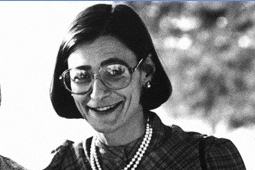
    Ida Schmertz, 91, formerly of Jenkintown, pioneering women’s activist, international relations innovator, presidential appointee, first female senior vice president at American Express, volunteer, mentor, and role model, died Thursday, July 2, of organ failure at New York Presbyterian Hospital.

    Born in Amsterdam, Ms. Schmertz and her family made their way to Philadelphia and then Jenkintown at the start of World War II in 1940, and she became a trailblazing American powerhouse in civil and women’s rights, international relations, corporate management, and healthcare.

    She earned a bachelor’s degree in political science and a master’s degree in international relations, and did everything but write a dissertation for a doctorate in international relations and Soviet studies. She was founding codirector in 1971 of the groundbreaking Center for American Women and Politics at Rutgers University, founding cochair in 1994 of the International Business Incubator and Training Center in Russia, and founding chair of the board of trustees for the Romanian-American Foundation in Bucharest in 1994.

    Wherever she was, Ms. Schmertz championed research, education, and public engagement. She helped organize the first national conference of women in political office for the Center for American Women and Politics in 1972, and later provided professional services to small businesses and startups in Russia, especially those owned by women.

    “I have empathy for people,” Ms. Schmertz told a colleague at the Romanian-American Foundation in a 2018 video interview. “I’ve always felt badly for people who are hurt or poor or unfortunate or don’t have access to something.”

    Ms. Schmertz was interested in voluntary foreign service, gun reform, and U.S.-China relations, and she lectured and appeared on TV shows and in dozens of newspapers. She worked with New York Gov. Hugh Carey on statewide initiatives of all kinds in the 1970s and was appointed by President Bill Clinton to head the Romanian-American Enterprise Fund in 1994.

    In the 1950s and ’60s, she worked for the Democratic National Committee, the CIA, and the American Association of University Women. She spoke English, Dutch, Russian, and French, and served as a guide at the State Department’s first U.S. promotional exhibition in Moscow in 1959.

    She lobbied for fair elections in South Africa in the 1990s, and pressed New York lawmakers to support the state’s medical aid in dying act until it recently passed. Colleagues praised her “vision, energy, and grit” and “integrity and long-term commitment” in online tributes.

    From 1979 to 1992, Ms. Schmertz was the first woman to supervise corporate strategy and philanthropy at American Express in New York.Courtesy of the family

    One colleague said: “I feel so fortunate to have known her.”

    Colleagues at the Romanian-American Foundation said in a tribute: “She helped shape not just an organization but a picture of what philanthropy in Romania could be: transparent, accountable, built on partnership, and dedicated to creating opportunity for all Romanians.”

    From 1979 to 1992, Ms. Schmertz was the first woman to supervise corporate strategy and philanthropy at American Express in New York. She was also an honorary director of the Women’s Economic Roundtable and a former director at Prudential Financial Inc.

    “She was extraordinary, formidable, deeply caring, and exceptionally committed to the people and causes that she believed in,” her daughter, Lexy, said. “Her hobby was her job, learning and exploring.”

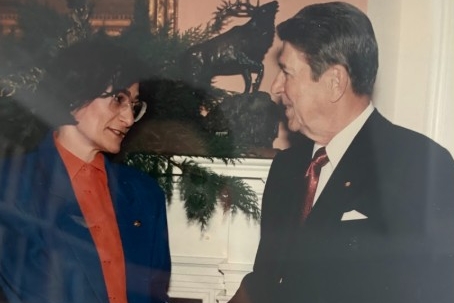
    Ms. Schmertz worked with President Ronald Reagan and many other political notables. Courtesy of the family

    Ida Frederieke Schaap was born Feb. 24, 1935. Her family traveled from the Netherlands to Indonesia in 1939 and then to the United States to escape the war.

    She was the first Jewish student to enroll in the old Stevens School for Girls in Germantown in 1940, was elected president of the student council and captain of the field hockey team, and graduated in 1952. She earned her bachelor’s degree at Wellesley College in Massachusetts in 1956 and her master’s degree at Columbia University in 1960.

    She also studied French political science at Sorbonne University in Paris and Russian at Middlebury College in Vermont. She married Herbert Schmertz in 1962 in Philadelphia, and they had a son, Anthony, and a daughter, Lexy. They divorced in 1976, and he died in 2018.

    Ms. Schmertz was tough and direct, her family said, intelligent and loving. She liked to read and travel, and was an engaging conversationalist.

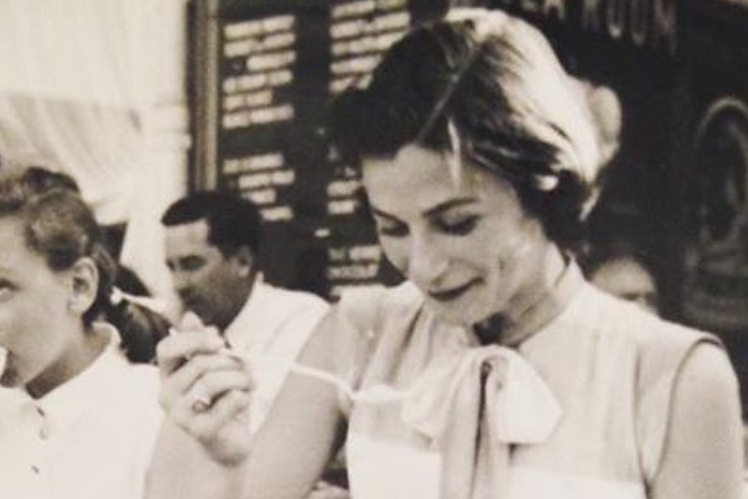
    Ms. Schmertz was a summer camp counselor for underserved children as a teen, loved cats, and supported the Philadelphia Museum of Art.Courtesy of the family

    She lived in Washington after college, moved to New York in the 1970s, and hosted friends and colleagues from around the world in her Upper West Side apartment. She doted on her four grandsons and took them to museums and hockey games. “She met them where they were,” her daughter said.

    She was a summer camp counselor for underserved children as a teen, loved cats, and supported the Philadelphia Museum of Art. For 30 years, she lived with chronic lymphocytic leukemia.

    “She was compassionate and caring,” her daughter said. Her son said: “She was devoted to her family.”

    In addition to her children and grandsons, Ms. Schmertz is survived by two sisters and other relatives.

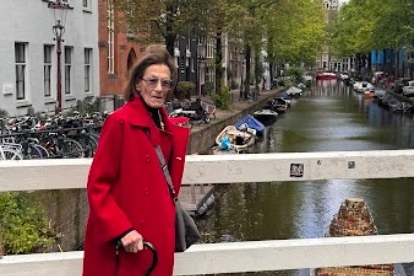
    Ms. Schmertz visited Amsterdam in May.Courtesy of the family

    A private memorial service is to be held later.

    Donations in her name may be made to Compassion & Choices, Box 485, Etna, N.H. 03750.

  • Storms move through the Philly region, bringing the potential for tornadoes and flooding

    Storms move through the Philly region, bringing the potential for tornadoes and flooding

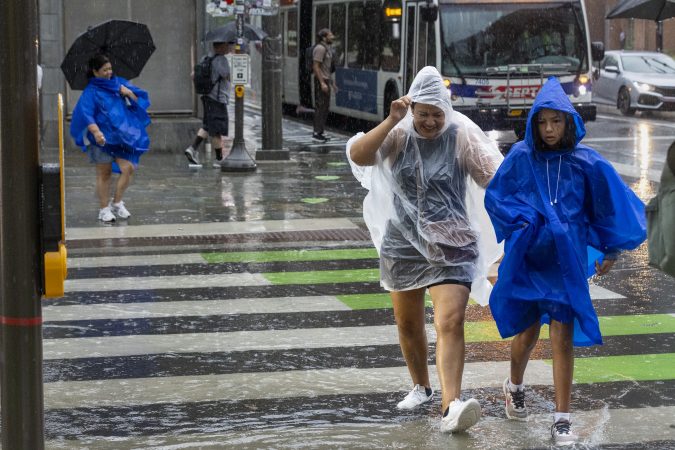
    Severe storms were moving through the Philadelphia region Tuesday, bringing with them the potential for flooding and tornadoes.

    The National Weather Service office in Mount Holly issued a flash flood warning for the area that was slated to be in effect through 8:45 p.m. Tuesday, as thunderstorms and heavy showers made their way to the region. Forecasters had predicted potentially unsettled weather that was expected to bring “several rounds” of rain.

    “Even the first round we get could result in flooding,” said Paul Fitzsimmons, lead meteorologist at the weather service’s Mount Holly office. “With successive rounds, that results in an increased threat.”

    The idea, Fitzsimmons added, is that once the ground is saturated with rain, the precipitation from future rounds of rain will have few places, if any, to go.

    On Tuesday afternoon, the weather service also issued a tornado watch for the Philadelphia region and beyond. That tornado watch, which the weather service said applies to parts of Pennsylvania, New Jersey, Delaware, New York, and Connecticut, is in effect through 9 p.m. Tuesday.

    The tornado watch impacts more than 32 million people, and covers possible tornados, scattered, ping pong ball-sized hail, and wind gusts of up to 70 miles per hour, according to the weather service.

    Initial strong rains had some impact on the region. PATCO service, for example, was temporarily suspended over signal issues caused by the storm. NJ Transit’s River Line was saw a suspension due to flooding in Camden. And Philadelphia International Airport warned travelers that the weather could impact their flights, and advised flyers to check with their airlines for up-to-date information.

    Additional, more organized rounds of rain were expected to arrive later in the day, with multiple storms potentially hitting the region into the overnight period, according to the weather service. Rainfall rates could push into the neighborhood of one to two inches per hour at times.

    The most severe weather, which could bring damaging winds, hail, and a possible tornado, was expected to arrive between 2 p.m. and 8 p.m., Fitzsimmons said.

    Tuesday saw high temperatures in the 80s, but with very high humidity to start out. The storms were expected to alleviate some of that humidity, opening the way for cooler, drier days to come later this week.

    Tuesday’s storms are the latest to descend upon the Philadelphia region. Severe weather was predicted for Saturday, but largely remained tame, and the previous weekend, a series of “microburst” storms with high winds toppled hundreds of trees in the area, leading to serious, localized damage in the city and suburbs.

    It is not uncommon for weather setups to arrive with similar impacts in this way, Fitzsimmons said. It is, however, hard to say how long those patterns might last.

    “There is something to the idea where you can get into patterns that repeat themselves,” he said.

  • New Jersey reveals glitch allowed 6,600 noncitizens to register to vote ahead of 2024 election

    New Jersey reveals glitch allowed 6,600 noncitizens to register to vote ahead of 2024 election

    Roughly 6,600 people who were not citizens were improperly registered to vote over a yearlong span ahead of the 2024 election because of a software error in New Jersey’s motor vehicle system, New Jersey Gov. Mikie Sherrill disclosed Tuesday.

    The revelation came just days after President Donald Trump’s administration targeted New Jersey as one of four states that the Department of Homeland Security claimed had noncitizens on its voter rolls, along with neighboring Pennsylvania. The White House said the announcement from New Jersey underscored the need for Trump’s proposed national overhaul of elections.

    Among the noncitizens, who were wrongly registered between June 2023 and June 2024, fewer than 400 cast a ballot, Sherrill said.

    The voters were scattered across the state and registered as Democrats, Republicans, and unaffiliated voters, though the office did not provide percentage breakdowns.

    Sherrill, a Democrat who took office in January, pointed a finger at her predecessor, noting that the wrongful registrations took place under former Democratic Gov. Phil Murphy. She said that she “immediately ordered” her chief counsel to investigate the issue and that the individuals erroneously added to the voter rolls be removed “before the next election,” which will be the November midterms that will determine control of Congress. The individuals have been notified of their planned removal.

    “As a military veteran who swore an oath to defend our Constitution, and as a former federal prosecutor, I believe the integrity of our elections is fundamental to our democracy. I am appalled by the reckless failures that allowed this to happen and the lack of transparency shown by those in charge at the time,” Sherrill said in a statement.

    Sherrill, at a news conference Tuesday afternoon, said the investigation would determine which elections the noncitizens’ votes were cast in — and whether they included the 2025 gubernatorial race in New Jersey, which Sherrill won, or the 2024 presidential election, when the state went for Vice President Kamala Harris — but neither contest’s outcome would have been changed by these ballots cast.

    The glitch occurred when individuals were applying for driver’s licenses and identification cards in New Jersey. Although they answered “no” when asked on a keypad whether they were a U.S. citizen, “through no fault of their own, the system registered them anyway,” Sherrill’s office said.

    Trump last Thursday delivered a prime-time address in which he, amid conspiracy theories about his 2020 election loss, claimed the Department of Homeland Security had identified more than 250,000 noncitizens registered to vote across four Democratic-led states — New Jersey, Pennsylvania, California, and Nevada — according to a document the White House posted online during Trump’s speech.

    DHS Secretary Markwayne Mullin claimed Tuesday on X that more than 35,000 noncitizens could be registered in New Jersey. However, the department has not shared the methodology it used to arrive at that number, and experts have cautioned it could include new citizens who have not been updated in a system meant to check work eligibility.

    “Just ONE illegal vote cancels out the vote of a U.S. citizen,” Mullin said.

    He said he appreciated Sherrill’s announcement, but “this should’ve been done a LONG time ago.”

    Pennsylvania election officials have disputed DHS claims of noncitizen registrations, but the timing of the New Jersey disclosure is sure to fuel scrutiny of the four states.

    Sherrill said she learned of the error last Wednesday, the day before Trump’s address.

    White House, Republicans call for changes to voting laws

    Trump’s administration has been pushing states to hand over unredacted voter rolls and threatening legal consequences for election officials, but New Jersey and Pennsylvania have resisted, saying doing so could put voters’ personal information at risk.

    “As the Trump Administration tries to weaponize elections for political gain, I am ensuring we protect our elections. Let me be clear: Donald Trump has zero credibility on the issue of election integrity,” Sherrill said in her statement.

    The White House argued that the New Jersey disclosure helped make the case for the SAVE Act, which would require prospective voters to prove their citizenship in order to register to vote.

    “Democrats and their media allies have repeatedly said it is impossible for noncitizens to register to vote, let alone cast a ballot. Time and again, they have been proven wrong. As President Trump has said, there is nothing more important than the integrity of our elections,” said Abigail Jackson, a spokesperson for the White House.

    The legislation has stalled in the Senate, but the New Jersey announcement will likely renew a push for it ahead of the midterms.

    “This is why we must confirm citizenship before anyone registers. Only US citizens should vote in our elections,” U.S. Sen. Dave McCormick (R., Pa.) said on X in response to the Garden State’s news.

    The senator has yet to weigh in on Pennsylvania’s inclusion on the White House’s list.

    U.S. Sen. Cory Booker (D., N.J.) called the failure of the registration software “not acceptable.” But he said he trusts Sherrill and the state to solve the problem and criticized “those who will choose to weaponize this issue” as attempting to undermine confidence in elections.

    “I have full confidence in New Jersey’s ability to administer voter registration and elections accurately and securely, and to ensure every legal ballot is counted,” Booker said.

    U.S. Sen. Andy Kim, a South Jersey Democrat who criticized Trump’s speech last week, declined to comment.

    New Jersey Republicans called for a bipartisan investigation and chastised Democrats for dismissing the issue in the past.

    “We believe this issue is not isolated to this one-year time frame or a software glitch. The system and verification process must be improved in order to safeguard our elections,” said Christine Giordano Hanlon, chair of the New Jersey GOP. “The public also deserves to know why this was covered up and who was responsible for keeping this critical information from the public.”

    U.S. Rep. Jeff Van Drew, a South Jersey Republican facing a challenge from Cape May Mayor Zack Mullock this fall, said the state should end automatic registration through the New Jersey Motor Vehicle Commission and require proof of citizenship to register.

    “We have had extremely close elections in New Jersey, and God knows how many other ineligible voters may still be on the rolls or how many ballots have been cast without ever being identified,” Van Drew said in a statement. “It is unacceptable.”

    The National Voter Registration Act of 1993, commonly known as the motor voter law, requires states to enable people to register to vote through departments of motor vehicles when they are getting a driver’s license. Twenty-three states, including New Jersey and Pennsylvania, provide automatic voter registration through the DMV, according to the National Conference of State Legislatures.

    Micah Rasmussen, the director of the nonpartisan Rebovich Institute for New Jersey Politics at Rider University in Mercer County, said the wrongful registrations were a small slice of the state’s 6.6 million voters.

    “It’s got to be dealt with,” he said. “The administration is dealing with it, but it’s also something well short of systemic.”

    He said that the DMV has long been a weak link in motor vehicle voter registration and that it is worth looking into replacing the vendor that runs the registration software.

    “On Election Day, when voters can go and argue and plead their case before a judge because they’re not registered and they thought that they were, invariably, it surprises nobody when DMV winds up being the problem,” he said.

    This is not the first time a state’s motor vehicle system has incorrectly registered noncitizens.

    Pennsylvania Secretary of State Al Schmidt uncovered a similar glitch in 2017 while he was serving as a Philadelphia city commissioner, discovering that a Pennsylvania Department of Transportation error had allowed 168 noncitizens to register to vote in the city, and likely a couple of hundred statewide.

    The state’s voter rolls were updated in 2018, and Schmidt has emphasized that noncitizen voting remains incredibly rare.

    In a statement, Schmidt said Pennsylvania’s automatic voter registration system, which was implemented in 2023, permits only eligible applicants — American citizens — to register to vote.

    “AVR has allowed hundreds of thousands of eligible Pennsylvanians to register to vote while safeguarding the integrity of our voter rolls,” he said in the statement.

    Sherrill said that she is exploring options to rectify the problem, and that the vendor behind the error will be replaced. Individuals responsible for the error will be held accountable, she said.

    “We’re open to suggestions that make our elections more safe,” she said. “The investigation will have findings on what occurred. We will be looking carefully at what we can do to make sure it doesn’t occur again.”

  • A worker was hospitalized after suffering life-threatening injuries at EMR in Camden, shortly after a judge allowed it to reopen

    A worker was hospitalized after suffering life-threatening injuries at EMR in Camden, shortly after a judge allowed it to reopen

    A worker was sent to the hospital with life-threatening injuries on Saturday, just days after the EMR scrap metal recycling plant reopened in Camden, following a court ruling.

    The company had sued Camden after the city suspended its operations last month following the latest in a string of fires at the facility. Just under two weeks ago, a judge permitted the company to reopen with heightened safety precautions meant to prevent further fires. The company announced Monday of last week that it would begin activities on site that day and start full operations this past Friday.

    The next day, an employee working on behalf of EMR was sent to the hospital with “life-threatening injuries,” confirmed Dan Keashen, Camden County spokesperson.

    He said the Camden County Police Department is investigating the “industrial accident.”

    Emergency response units responded to a report of a male with injuries from an accident inside the EMR facility about 11:30 p.m. Saturday, Keashen said.

    He said emergency medical services transported the man to Cooper Medical Center and, as of Tuesday, the worker was in critical but stable condition.

    Camden city spokesperson Vincent Basara confirmed that the Camden Fire Department and EMS were called to the EMR facility on Saturday regarding an injury in the workplace and a person was “taken to the hospital with significant injuries.”

    Representatives for EMR did not respond to requests for comment on Tuesday. The company also faced an emergency across the river last week when a blaze broke out at an EMR facility in Darby, Delaware County, prompting air quality concerns.

  • Sen. Andy Kim pitches MediKids, universal healthcare for children and young adults

    Sen. Andy Kim pitches MediKids, universal healthcare for children and young adults

    WASHINGTON — U.S. Sen. Andy Kim (D., N.J.) is introducing a plan to provide free healthcare to every child in the country, an idea he thinks could become a strategic step toward universal healthcare while addressing the urgent needs of an estimated — and likely undercounted — 4.6 million uninsured children.

    Enrollment in MediKids, as he calls it, would be automatic at birth and extend until age 26. It aims to provide comprehensive benefits to uninsured children and young adults while also tackling the larger affordability crisis and the healthcare cuts under President Donald Trump that are expected to lead to further disenrollment in the coming years.

    Strategically, Kim said, he also hopes the idea will be a politically popular jumping-off point as his party prepares to regain some level of control in Washington during the midterm elections this year and then fight for the White House in 2028.

    “It really kind of brings that debate about healthcare to its core essence,” Kim said. “Who is going to stand in the way? Who could possibly say that we shouldn’t provide healthcare to every child in this country?”

    Kim, speaking to reporters in his office on Capitol Hill last week, said he was in the early stages of figuring out and advocating for the program. He also said he was clear-eyed about the “political realities” that will make it difficult to pass.

    Republicans who control both chambers of Congress and the presidency rolled back future Medicaid spending in Trump’s One Big Beautiful Bill Act last year. They also declined to extend COVID-era subsidies to keep premiums low for individuals getting their insurance through the Affordable Care Act, a move that raised costs and has led to about 160,000 fewer people being insured through the marketplace in Pennsylvania this year.

    Even if Democrats win control of the House and Senate this year, finding a bipartisan agreement with Trump during the remaining two years of his term would be an uphill battle.

    Beyond that, Democrats have had their own internal debates on the issue — symbolized by Joe Biden’s opposition to Medicare for All during his 2020 campaign as progressives like U.S. Sen. Bernie Sanders (Ind., Vt.) championed the idea.

    Kim said he sees MediKids as a steppingstone toward universal government-backed healthcare, which he expects to be part of his party’s debates again heading into the 2028 presidential election. He said he introduced it now because of the “urgency” of the affordability crisis and a “hunger for ideas” that he hears from voters in New Jersey and elsewhere.

    Critically, he said, it is also a personal issue for him and his family. Trump’s attempt to roll back the ACA during his first term coincided with the birth of Kim’s son, who had immediate medical needs.

    “I would not be here in Congress had it not been for that experience,” Kim said. “No parent should have to experience what I had to, and what many parents right now have to, which is worry about whether or not they’re going to be able to get healthcare for their kid if they lose a job, or change jobs, or any number of other issues.”

    MediKids as introduced would operate as an extension of Medicaid, which currently covers about 35.5 million kids, including through the Children’s Health Insurance Program. It would provide access to comprehensive screening and early treatment benefits that experts say improve overall health outcomes for children.

    Kim said he did not have even a rough estimate of what it would cost to extend the benefits to every child and young adult through age 26. Though the price tag is likely to be significant — and play a role in the program’s ability to gain political support in Washington — he said the long-term investment in healthier kids will have “real savings over time.” Identifying a funding source would come later as Democrats figure out how to pay for a long list of priorities if they win control of Congress and the presidency, he said.

    “When you think of our healthcare system, writ large, children are very inexpensive,” said Joan Alker, a research professor and executive director of the Center for Children and Families at the Georgetown McCourt School of Public Policy.

    Alker said research has shown that providing healthcare for kids creates a “great return on investment, both from the perspective of taxpayer dollars and, more importantly, from the perspective of having children who are going to grow and thrive.”

    MediKids, she said, would be an effective and in some ways novel way of tackling an “extraordinarily worrying” trend.

    After steady declines in the number of uninsured children both before and after the passage of the Affordable Care Act in 2010, the figures have fluctuated in the last decade. The 4.6 million children without insurance in 2024 represented about 6% of all children, an increase from about 5.1% in 2022. That period coincided with changes in Medicaid after the pandemic, a period known as the unwinding.

    But child enrollment in Medicaid and CHIP has also decreased dramatically since Trump took office again in January 2025 — declining by more than 2 million through May of this year, according to the center at Georgetown.

    Enrollment has decreased in Pennsylvania by about 130,000, or 4.1%, and in New Jersey by about 28,000, or 1.5%. Indiana has seen the worst fallout, with about 360,500, or about 20%, fewer children enrolled.

    Alker said most children remain eligible. The drop-offs are due to a variety of reasons, including families with mixed immigration statuses being less willing to participate in federal government programs under Trump, less outreach by the federal government to connect individuals with healthcare options, and more administrative red tape for Medicaid, she said.

    “I think this is a harbinger of what’s to come next year,” Alker said, referring to the changes to Medicaid eligibility that were passed in the One Big Beautiful Bill Act and will begin to be implemented after the midterm elections.

    “There’s a lot of conversation about children being protected,” she said. “But when you start cutting off parents and other adults, when you start adding red tape, then children are going to be impacted.”

    According to the Kaiser Family Foundation, a nonprofit healthcare-focused think tank, about 26.7 million people — adults and children — were uninsured in 2024. That is about the same amount as in 2016, which marked a high-water mark after the Affordable Care Act passed.

    Kim said he set the upper eligibility limit for MediKids at age 26 because of the popular piece of the ACA that allows young adults to stay on their parents’ insurance until that age. He said he is still working through all aspects of the program, though, and his priority remains on the growing number of children who are uninsured.

    “That should be unacceptable for everybody,” Kim said. “I honestly did not realize the number was that high when I first set out to do this. But it’s shocking in the richest, most powerful country in the world that we have that level of problem that is out there right now.”

  • Touring Camden’s Cathedral Kitchen, Andy Kim calls Trump’s cuts to SNAP ‘devastating and cruel’

    Touring Camden’s Cathedral Kitchen, Andy Kim calls Trump’s cuts to SNAP ‘devastating and cruel’

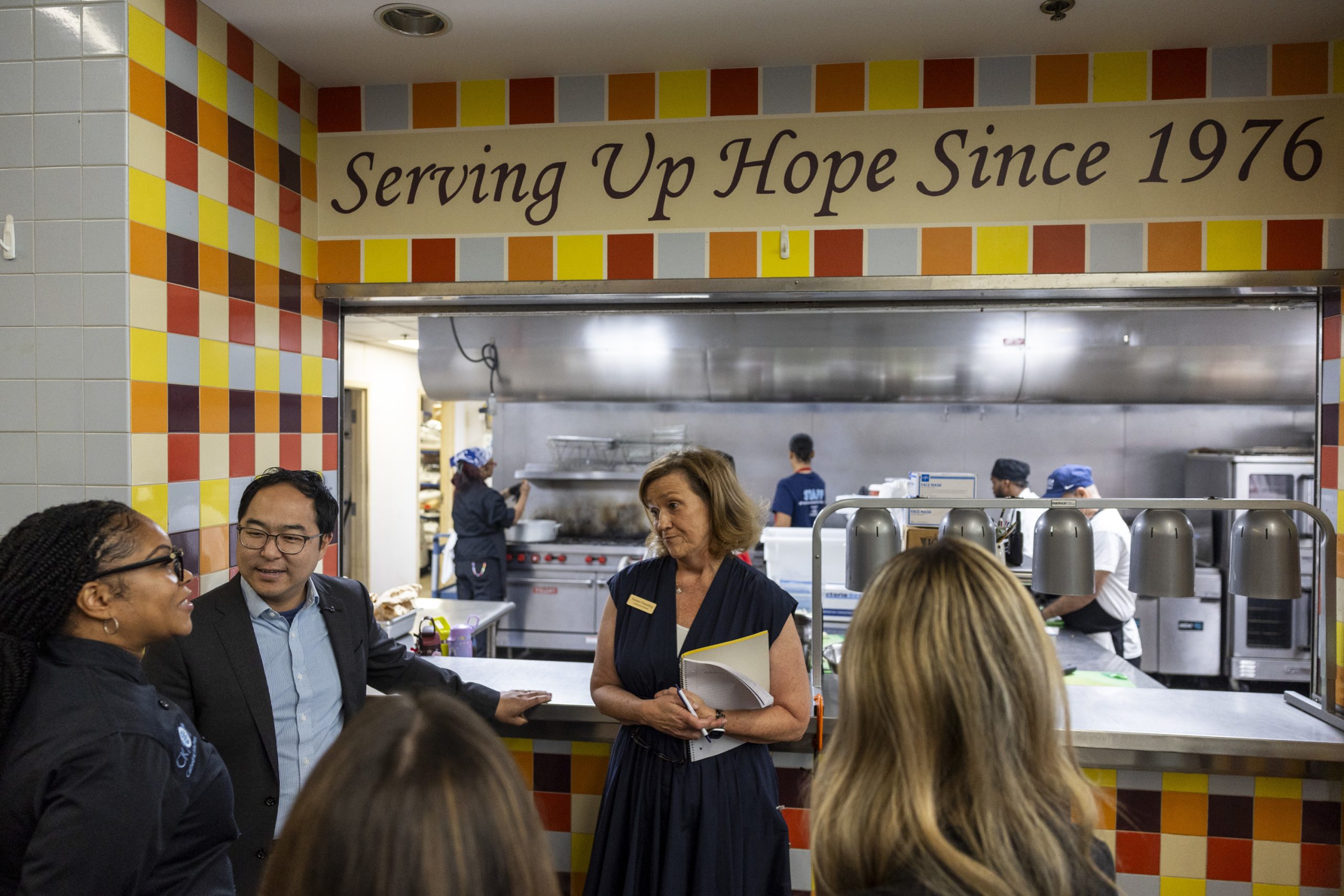
    Touring Cathedral Kitchen, the largest emergency meal supplier in South Jersey, Democratic Sen. Andy Kim praised the 50-year-old Camden institution Friday for the food it has served and the people it has saved.

    “The Kitchen is building community, right here in New Jersey,” said Kim, who noted that the nonprofit distributes 28,000 meals a month while training low-income people to be chefs and restaurant workers. Cathedral Kitchen also works to help people obtain IDs, apply for jobs and benefits, and find housing.

    Its work is needed more than ever, the New Jersey lawmaker said, with hunger on the rise because of high food prices and President Donald Trump’s One Big Beautiful Bill Act, which reduced federal food assistance such as SNAP (the Supplemental Nutrition Assistance Program) beginning July 4 of last year.

    Cutting SNAP benefits and changing eligibility requirements, Kim said, is a “devastating and cruel thing to do” at a time when cost of living has been climbing.

    “Why are we taking away necessary support at this time?” Kim asked. “I mean, we’re talking about food, the basics of being a human. Why is this happening now, at a time when people are struggling with affordability?”

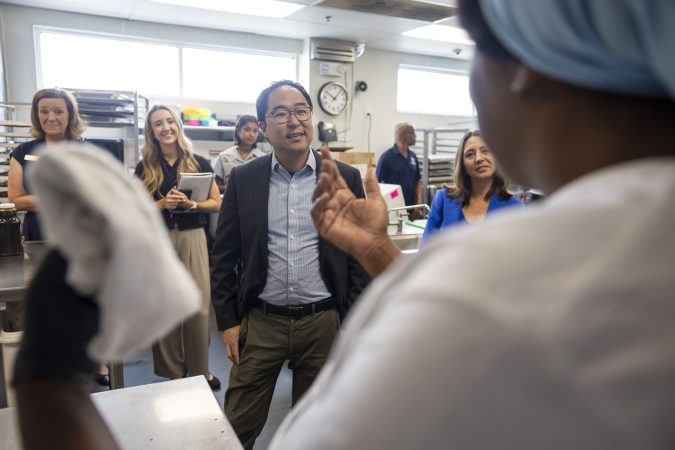
    New Jersey Sen. Andy Kim visits Cathedral Kitchen in Camden, speaking to the workers who provide food for their community and those in need.Tyger Williams / Staff Photographer

    The food assistance cuts are coinciding with the economic fallout from tariffs and the Iran war, Kim noted.

    Nationwide, between January 2025 and January 2026, SNAP rolls decreased by more than 4 million people — from 42 million to 38 million — according to USDA figures.

    In New Jersey, SNAP participation has fallen by more than 50,000 individuals between March 2025 and March of this year, New Jersey Department of Human Services figures show.

    And in Pennsylvania, nearly 90,000 people lost SNAP benefits between July 2025 and April due to new eligibility requirements, according to an analysis by the Pennsylvania Department of Human Services (DHS).

    At the same time, food prices have risen more than 3% in the last year.

    As a result, in Camden, Burlington, Gloucester, and Salem Counties, the number of meals distributed to help those in need grew by 34% over the last four years, according to the Food Bank of South Jersey

    “I know the Camden area,” said Kim, who grew up in nearby Marlton and Cherry Hill. “I’ve seen the struggles that have been here and still persist.”

    The Trump administration has said the cuts it’s made to SNAP, Medicaid, and other programs were necessary to staunch “waste, fraud, and abuse.” It maintains that it’s instituted strict work requirements for SNAP to move more people into the workforce and reduce dependency on government support.

    Kim said many Americans don’t understand that a large number of people who live in poverty also work. “Millions with jobs are still poor, and this country needs a mindset shift to understand that,” Kim said.

    Sen. Andy Kim (D., N.J.) speaks with Naimah Rutling, executive chef at Cathedral Kitchen in Camden, N.J., on Friday.Tyger Williams / Staff Photographer

    As he continued his Tour of Cathedral Kitchen, Kim invariably found himself in the organization’s actual kitchen, bustling with food workers slicing carrots and onions, preparing for meals ahead.

    Clearly enjoying the moment, Kim said that at home, he makes his own bread, including pizza dough.

    Kim asked executive chef Naimah Rutling what her favorite food is. “Grilled cheese,” she said without hesitating. Kim laughed and said, “I have a 9-year-old and a 10-year-old. About 90% of what we eat is grilled cheese.”

    Before leaving, Kim praised workers in the kitchen for their diligence and dedication in preparing food for those who need it.

    “It gives meaning and purpose to their lives,” he said. “I love the passion I see.”

  • Tom Kean is back in Congress but still isn’t talking

    Tom Kean is back in Congress but still isn’t talking

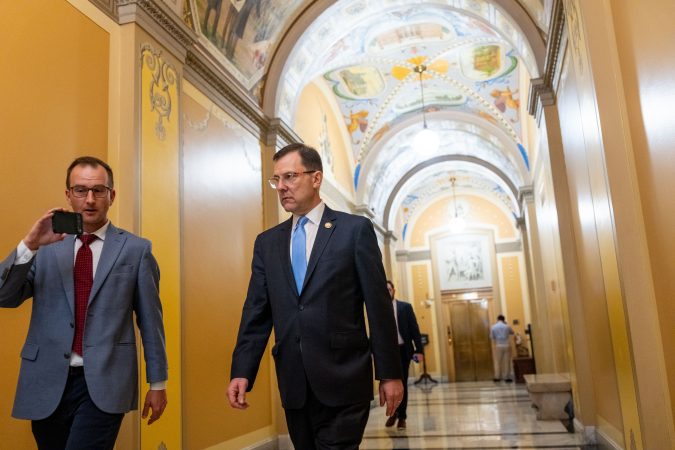
    Rep. Thomas Kean Jr. is back at work — and back to avoiding the spotlight.

    On Monday, Kean, a New Jersey Republican, silently refused to even acknowledge a reporter as he hustled out of the Capitol toward Independence Avenue. He did much the same on Thursday, when he was one of the last lawmakers to descend the Capitol steps after the House recessed for the week.

    Asked about his return to Congress after a monthslong absence and his schedule as he runs for reelection in one of the country’s most competitive contests, Kean stared straight ahead.

    If Kean has been on the campaign trail in New Jersey, it is hard to tell. Aides have refused repeated requests for his campaign schedule in the two weeks since Kean reappeared in Congress and explained that he had been hospitalized for depression.

    He did not follow up a June 30 speech on the House floor with media interviews. And even some of his staunchest allies in New Jersey said they were unaware of his plans to campaign locally.

    The Republican chair in Sussex County, a region seen as crucial to Kean’s victory, says he is “waiting on dates” for a hoped-for visit from the congressman. State Sen. Doug Steinhardt, the chair of the Republican Party in Warren, a neighboring county and conservative part of Kean’s district, said Kean was expected to attend the county fair at the end of July. But he was aware of no other scheduled campaign events.

    “I hope he intends to be more visible,” said Steinhardt, who previously led the New Jersey Republican Party.

    Harrison Neely, a spokesperson for Kean, said that the congressman was “full speed ahead with a campaign.”

    “You can see that the congressman is active,” Neely said. “His social media is active.”

    Since his June 30 return to Congress, Kean’s social media accounts have shared only a handful of posts that include recent photos of the congressman. One shows him marching with his wife in a parade. Another features him in an office, beside a family concerned about Lyme disease, an increasing worry in the area. There are also images of him with winners of an elementary school essay-writing contest and speaking at recent House committee hearings.

    In some ways, Kean, 57, is operating as he always has. He has refused to hold in-person town hall meetings during his two terms. And he has shunned most media attention during his tenure. Neely noted that it was not unusual for Kean to decline to share his schedule of upcoming public appearances, as he had not done so during his previous congressional campaigns, either.

    But Kean’s recent mental-health struggle and long absence — which he declined to explain in any detail for nearly four months — have increased his profile and brought a higher level of scrutiny to his campaign as he makes his pitch to voters. He is facing a tough race for a third term against Rebecca Bennett, the Democratic nominee, in a swing district that both parties consider a must-win in the midterm battle for control of Congress. His fate in November may depend in part on how he manages to shape the narrative of his return.

    It may also hinge on how shrewdly he can navigate new headwinds. President Donald Trump’s low approval ratings and voter dissatisfaction over the prices of gas and food have made Republicans like him vulnerable. In New Jersey, Kean, who was endorsed by the president, has had to fend off claims that he failed to stand up to Trump when the president tried to cancel funding for a Hudson River train tunnel vital to commuters in the district.

    He has also had to weather the administration’s abrupt changes in policy tied to a proposed migrant detention facility in Roxbury, New Jersey, a Republican stronghold in Kean’s district. The Trump administration last month said it had abandoned its expensive quest to build the detention center in a vacant warehouse, but last week signaled plans to revive the project. Republican leaders in the township, who have sued to block the 1,500-bed jail and months ago criticized Kean for failing to do enough to try to stop it, again began raising the alarm.

    The mayor of Roxbury, Shawn Potillo, also contacted Kean’s office.

    “As he resumes his official duties, we welcome any support he may be able to provide,” Potillo said in an email.

    Kean’s most recent campaign finance filings point to the ground he lost while out of the public eye from March through June.

    A report his campaign filed Wednesday with the Federal Election Commission showed that donors had chipped in roughly $300,000 in the last quarter, far short of the nearly $1.6 million in contributions Bennett reported.

    Kean nonetheless continues to hold a sizable fundraising edge, with $3.6 million left on hand to spend in the run-up to the Nov. 3 election for his 7th District seat. Bennett, a former U.S. Navy helicopter pilot who has worked for healthcare companies, has less than half as much: $1.4 million.

    The congressman also has the advantage of name recognition in a district where registered Republicans outnumber Democrats by roughly 19,000 voters. His father, who is also named Thomas Kean, was one of the state’s most popular governors and later steered the 9/11 Commission.

    And he does still have time. Jeanette Hoffman, a Republican political strategist, noted that summertime is a typically slow season for campaigning. She said she was confident that Kean would run a “vigorous campaign when it matters most.”

    “I don’t think anybody’s looking at his calendar and saying, ‘Oh my gosh where is he?’” Hoffman said. “That’s an insider’s game right now.”

    This article originally appeared in The New York Times.