Whatever the outcome of Tuesday’s midterm elections, President Donald Trump is likely to have one wish come true.
“In this election, I’m asking you to pretend, please, that I’m on the ballot,” Trump has said at various rallies for Republicans across the country in the last several weeks.
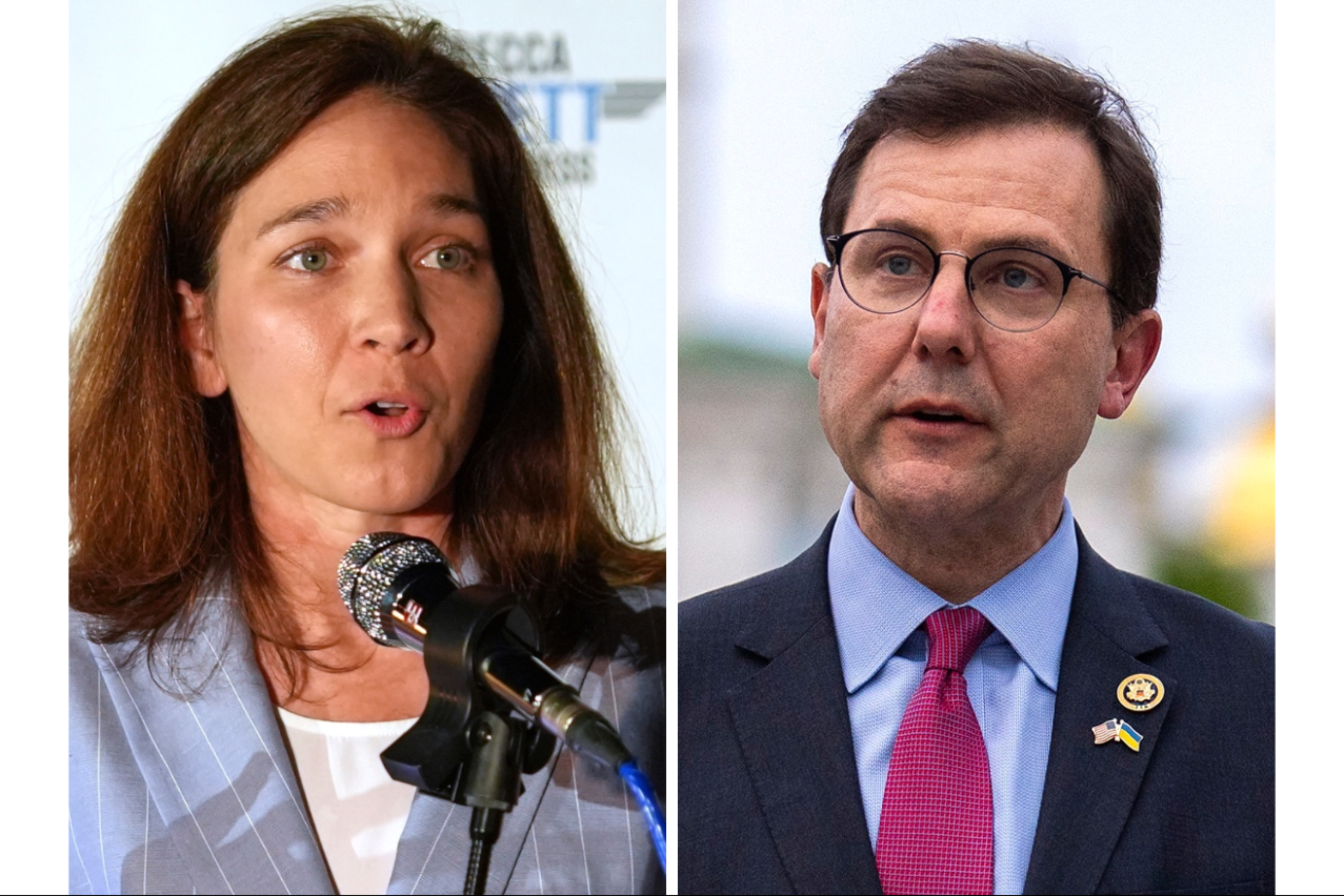
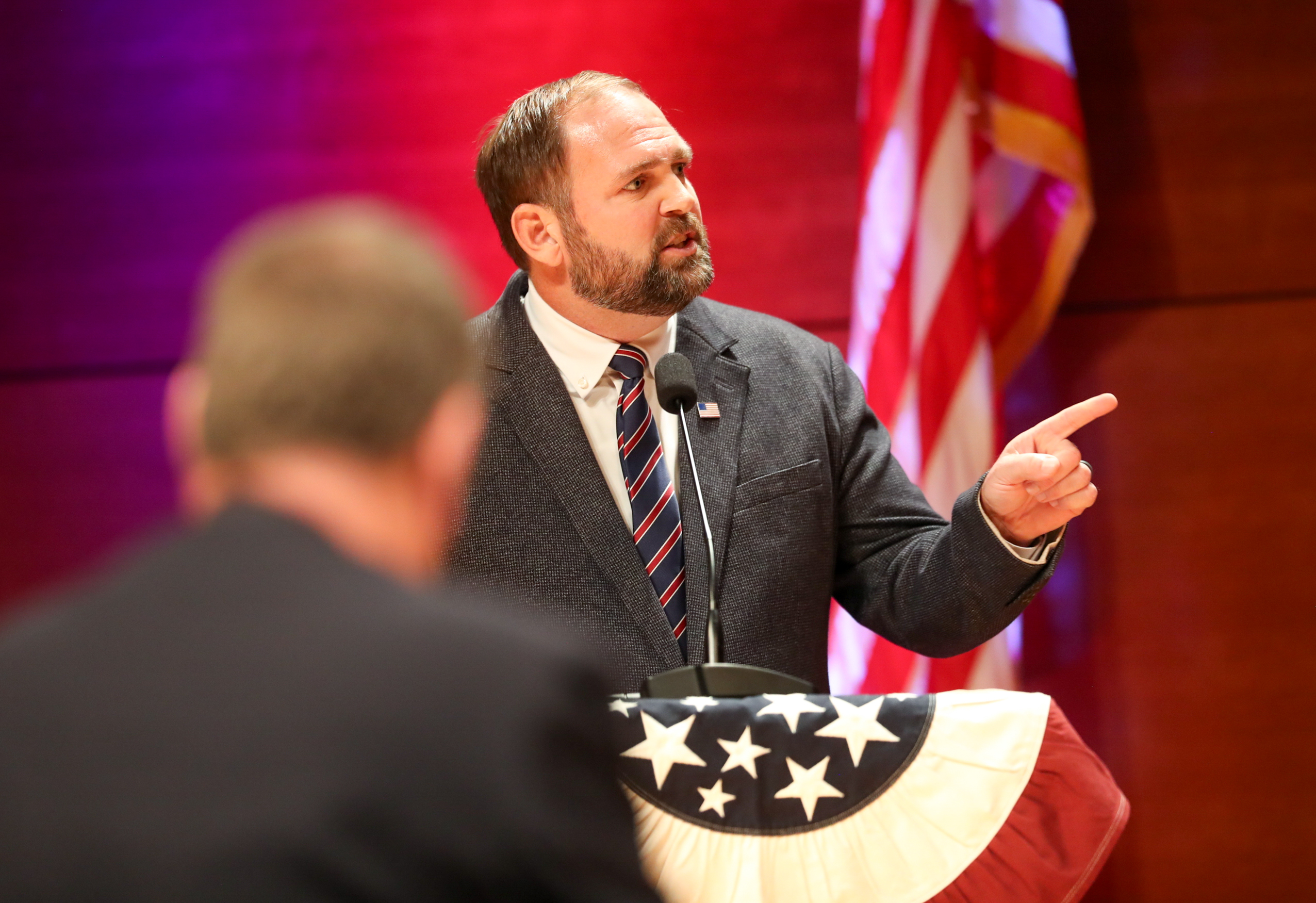
That is exactly what Bridget Barber of Summit, N.J., said shedid when she voted at the New Providence senior center earlier this week. She lives in the state’s 7th Congressional District, where Republican U.S. Rep. Tom Kean Jr., 58, is facing Democrat and first-time political candidate Rebecca Bennett, 39, of Bridgewater.
“I’m voting against Donald Trump,” Barber said. “That’s the most important thing to me.”
Most voters in suburban Union County who spoke to The Inquirer said Trump has motivated them to vote — but only because they feel compelled to vote against him. And that, by extension, means a no vote for Kean, whom the Cook Political Report called “a clear underdog.”
Two major Republican PACs have pulled funding from Kean’s race.
Bridget Coogan of Summit said her number-one issue was “driving Donald Trump out of office” and “getting more officials elected in Congress that do something about it, unlike Tom Kean.”
Coogan said she is anxious about the election because the stakes are so high.
“The future of the country we are bestowing on our kids — I feel like they are inheriting a really unfortunate situation on a number of levels,” she said.
Gov. Mikie Sherrill, who, like Bennett, is a moderate and a former U.S. Navy helicopter pilot, will campaign for Bennett on Monday night in Springfield.
As of Thursday, 61% of New Jerseyans who had cast ballots by mail or in person were Democrats, 22% were Republicans, and 17% were unaffiliated, according to the secretary of state’s office. The 7th District recorded nearly 95,000 ballots, more than any other congressional district in the state.
New Jersey’s 7th Congressional District is composed of parts of Union, Somerset, Morris, and Sussex Counties, and all of Hunterdon and Warren Counties. Republicans outnumber Democrats 218,268 to 202,071.
One Republican voter from Summit who declined to share her name said she voted for Kean, as she has in the past.
“I am not in love with him, but he beats the alternative,” she said. “Less government interference in my life, low taxes, and law enforcement keeping us safe” are her most important issues, she said.
Vietnam veteran John Pritch of Westfield, who spoke to The Inquirer while reading a newspaper outside a tobacco shop in town, said he was voting for Kean. The treatment of veterans is one ofthemost important issues to him.
“I can assure you the Republicans are better than the democratic socialists. They hate our military, hate our veterans,” Pritch said. “It’s time to keep them out of the government if they hate our soldiers so much.”
(Bennett does not identify as a democratic socialist, as New York Mayor Zohran Mamdani does.)
Union County is home to more Democrats than Republicans, even in the more affluent suburban areas. But Kean lives in Westfield and represented portions of the county for nearly two decades in the state legislature before getting elected to Congress four years ago. His name, which he shares with his father, former Gov. Thomas H. Kean, is well known. That name recognition and history of public service have counted in prior elections.
But they are unlikely to matter as much this year, said Ben Dworkin, a political science professor at Rowan University.
“Affordability and accountability are the encompassing issues people want to talk about,” Dworkin said. “Given the president’s extremely low approval rating, they want to hold him accountable, and the midterm elections are how you get to do that historically, and certainly this year.”
Dennis Allocco of Summit, a lifelong Union County resident, said he thought Kean owed voters more information, and much sooner than he shared it.
“I personally have a problem with the way Kean handled his own personal issues, when he was absent. But then again, I really shouldn’t be surprised because that seems to be the way the Republican Party chooses to conduct itself these days,” Allocco said.
Allocco said “restoring some normalcy to our political environment” matters the most to him.
“Our current situation in Washington is borderline disgraceful. It really is,” said Allocco, a retired postmaster with the U.S. Postal Service. “We have politicized absolutely everything. The two parties are no longer effectively communicating with each other. We have lost sight of compromise.”
The Rev. K.M. Truslow, a pastor in Newark who lives in Scotch Plains, said the economy, “getting this [Iran] war resolved,” education, and immigration reform are the most pressing issues for him.
“All they are doing is deporting people. That’s not reform,” Truslow said.
Josh Graver,who is Coogan’s spouse,said there are many important issues this year, but one surpasses the rest: “restoring the democratic process and the system of checks and balances that has sustained our government since the beginning of the country.”
Democrats winning Tuesday is just one step in the process, the Summit resident said.
“And if we can’t manage that and we can’t have a working process of politics and government, and if the country is just going to backslide into authoritarianism, none of the other things matter,” Graver said.
Wigs and Wishes — the nonprofit run by Gloucester County commissioner candidate and celebrity hair stylist Martino Cartier — has not been compliant with state law for three years.
He disputed that his charity had been functioning illegally and compared it to driving a car without a valid registration.
“It’s like a registration for your car,” he said on the phone Thursday. “If you drive your car and your registration’s expired, you’re still allowed to drive your car. You’re gonna get a fine … you’re not-not allowed to drive your car, technically. You can still drive it. People do it every day.”
Cartier is one of three Republicans trying to oust incumbent Democratic Gloucester County commissioners running for reelection Tuesday.
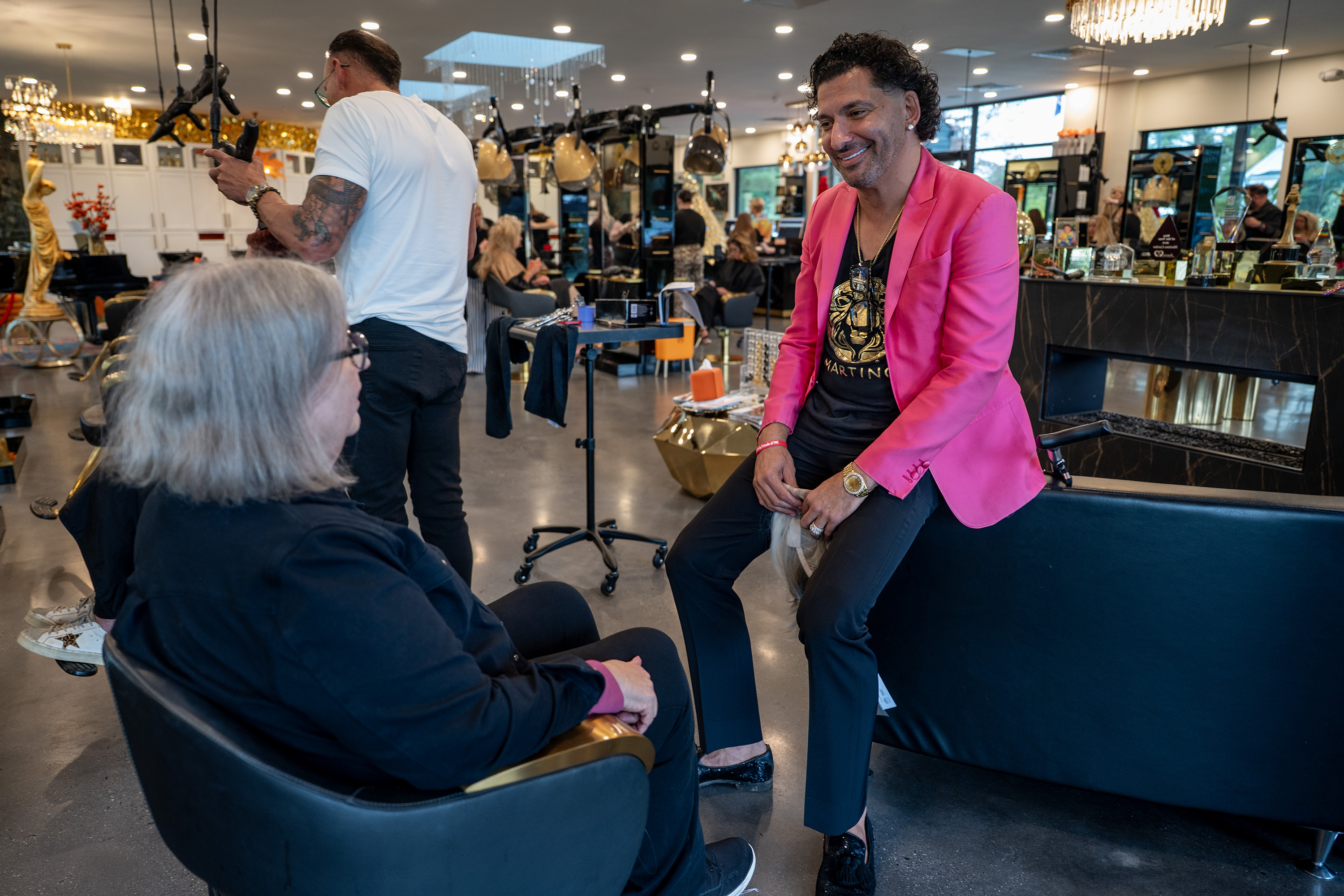
The celebrity hair stylist founded and runs Wigs and Wishes, also known as Friends Are by Your Side, an organization that provides free wigs to women with cancer and wishes to kids with cancer. He runs the charity out of his hair salon in the Sewell section of Washington Township on an extravagant property he also lives and has a petting zoo on. He has faced scrutiny from his Democratic opponents over offensive statements on his Christian podcast, past legal issues, and accusations of blurring the line between his nonprofit and campaign.
Cartier had not registered his nonprofit with the state for fiscal years 2023, 2024, and 2025, and did not request an extension for any of those years, making it non-compliant, said Lisa Coryell, a spokesperson for the New Jersey Attorney General’s Office.
“Charitable organizations that continue to engage in fundraising activities without renewing their registration as required, are operating in violation of the law,” Coryell said.
Cartier said he was not aware of the requirement when reached by The Inquirer on Thursday.
“I didn’t even know anything about this,” he said. “Me or my wife knew nothing about this.”
He said the person who previously would have handled the registration no longer works with the charity and he’s no longer on speaking terms with her.
“This isn’t what I do … I change lives. I do wigs. I do wishes now. The person who was in charge of this is not a part of the charity anymore, and she clearly dropped the ball,” he said.
“She handled the back end, and I handled the day to day,” he added.
He then went to upload documents into the portal to bring his charity into compliance.
After he did so, the red “non-compliant” label switched to a green “compliant.”
But it flipped back to the red label after the Attorney General’s Office reviewed his submission and “found one or more to be deficient,” Coryell said.
“Accordingly, the organization’s registration status remains non-compliant,” she added Thursday evening.
Cartier had been unaware the status changed back to noncompliant when reached again by The Inquirer. He entered the portal and shared an image that shows his 2024 and 2025 registrations were approved but his 2023 one is “pending corrections.”
Under the Charitable Registration and Investigation Act, New Jersey state law requires charities that raise more than $10,000 in gross contributions – or that pay an outside fundraiser – to follow certain rules. Those conditions include registering with the Division of Consumer Affairs’ (DCA) Charities Registration and Investigation Section and renewing it within six months of the fiscal year before fundraising or soliciting, Coryell said.
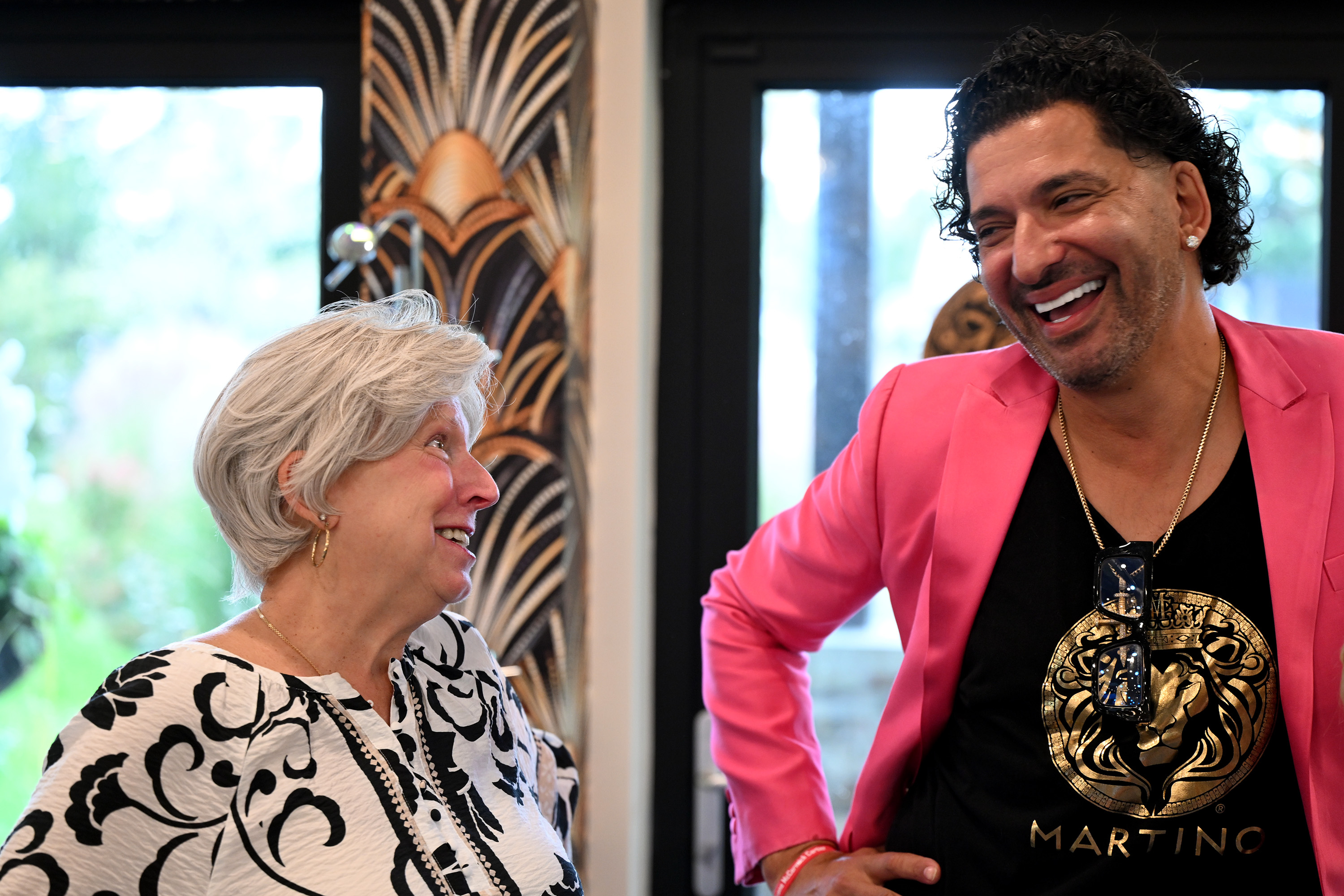
Lila Williams, left, wears a wig from Martino Cartier’s Wigs and Wishes as she visits him at his salon on Wednesday, Oct. 14.Tom Gralish / Staff Photographer
The act was created to give the Attorney General’s Office access to charities’ financial information in order to “protect the public from fraud and deceptive practices,” according to the state statute. It says that it’s “unlawful” for charities to solicit donations without registering, and that renewal is required but extensions can be granted.
Cartier’s nonprofit reported more than $72,000 in public contributions for 2025, according to the DCA database. The database does not show this figure for prior years but publicly available tax forms showfundraising figures in the hundreds of thousands.
When asked to confirm whether his organization met the benchmark in public contributions for 2023 and 2024, Cartier said someone would have to be “illiterate” to think his organization didn’t bring in at least $10,000 in contributions because of the cost of wigs.
The DCA registration process carries a fee ranging from $30-$250 depending on how much money an organization has raised.
Cartier’s registrations were due in June of this year and the two years prior and each late registration carries a $25 fee.
The Gloucester County Democratic Committee had previously pointed out that Cartier’s charity was listed as non-compliant in the state’s public database. But Cartier thought that was because his organization got an IRS extension to file taxes this year, so he thought the issue was handled when his accountant filed those earlier this week.
Cartier said it’s “crazy and convoluted” that nonprofits have to upload information to a portal that’s separate from filing state and federal taxes.
He also contended Thursday that the fact that his charity was not running legally in the state “has about as much validity as the tooth fairy” because his organization has maintained its federal 501c3 tax exemption status and because he had not faced repercussions from the state.
Ten months into her term, New Jersey Gov. Mikie Sherrill’s approval rating has dropped, especially among Democrats, who say they don’t know enough to judge her performance yet, a poll released Wednesday said.
But there is nothing ambiguous about how New Jersey voters feel about President Donald Trump, according to a new Fairleigh Dickinson Universitypoll of 805 voters this month.
The poll found 66% voters disapprove of the president, 29% approve, and 5% said they did not know or declined to answer.
Sherrill’s approval ratings declined 10 percentage points in October, to 48%, compared with the last time Fairleigh Dickinson surveyed voters, in March, when it was 58%. Yet her disapproval rating of 32% remained the same in both polls, said Dan Cassino, a professor of government and politics and the executive director of the FDU poll.
The difference is the 12-point spike in the number of people who said they “didn’t know,” “weren’t sure,” or declined to answer the question, according to the poll.
“Normally, you’d expect attitudes toward the governor to become more, rather than less, certain over time,” Cassino said. “But for whatever reason, Democrats are not as happy with the governor as they were when she took over.”
Steve Sigmund, Sherrill’s spokesperson, said the poll demonstrates the public’s continued support of her goals.
“Gov. Sherrill’s relentless focus on affordability and rejecting politics as usual in 2025 gave Democrats a playbook to win this cycle,” Sigmund said. “New Jerseyans’ strong approval of her job leading the state shows that they recognize she is delivering on these commitments.”
The poll did not ask why some voters did not approve of Sherrill’s performance. But she has faced some controversies since the last poll.
Cassino said he suspects the uncertainty rose because the Democratic brand remains unpopular nationally and the number of people who identify as progressive or liberal is growing.
In March, 88% of Democrats said they approved of the job Sherrill was doing, compared with 71% in the October survey, which was conducted by text-to web surveys from Oct. 16 through 22 by Braun Research of Princeton on behalf of the university.
“It’s not clear what Sherrill has done to cause voters who should be among her most loyal supporters to distance themselves,” Cassino said. “But whatever it is, this is a blinking yellow light for the administration.”
Among Republican voters statewide, the president holds a 95% approval rating among self-identified MAGA voters, 68% among conservatives, and 21% among moderates, the poll said.
“Trump isn’t running for reelection, but he has made himself the face of the Republican Party,” Cassino said. “The fact that he’s this unpopular means that he’s dragging down Republican candidates in a way that a less visible president might not be.”
The Nov. 3 midterm elections will decide whether Republicans maintain control of the U.S. Senate and House of Representatives.
Polls widely indicate the Democrats are most likely to flip the House, with two-term Republican Rep. Tom Kean Jr. in New Jersey’s 7th District in central and north Jersey considered to be among the most vulnerable GOP incumbents. Democratic newcomer and former U.S. Navy pilot Rebecca Bennett is favored to win.
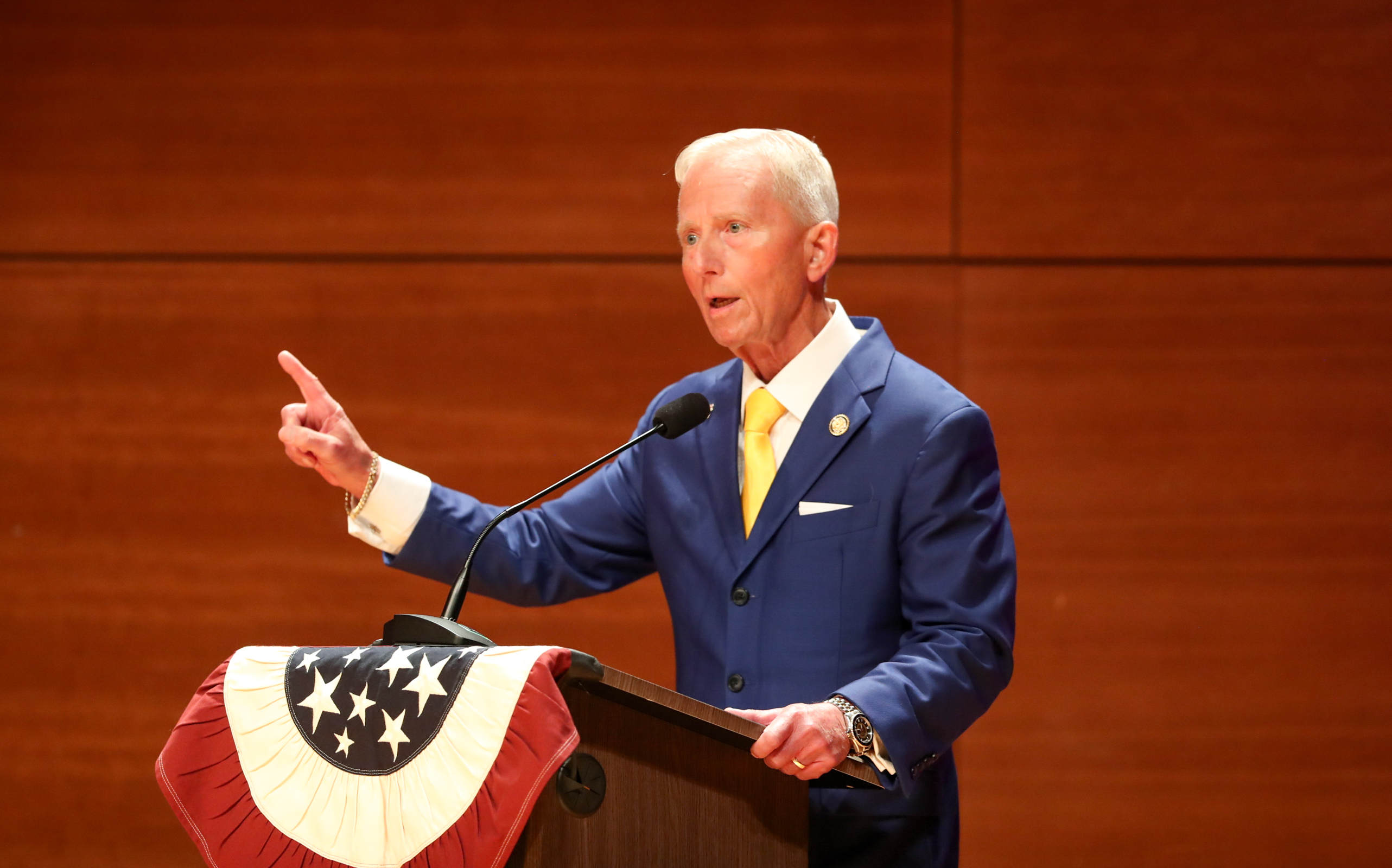
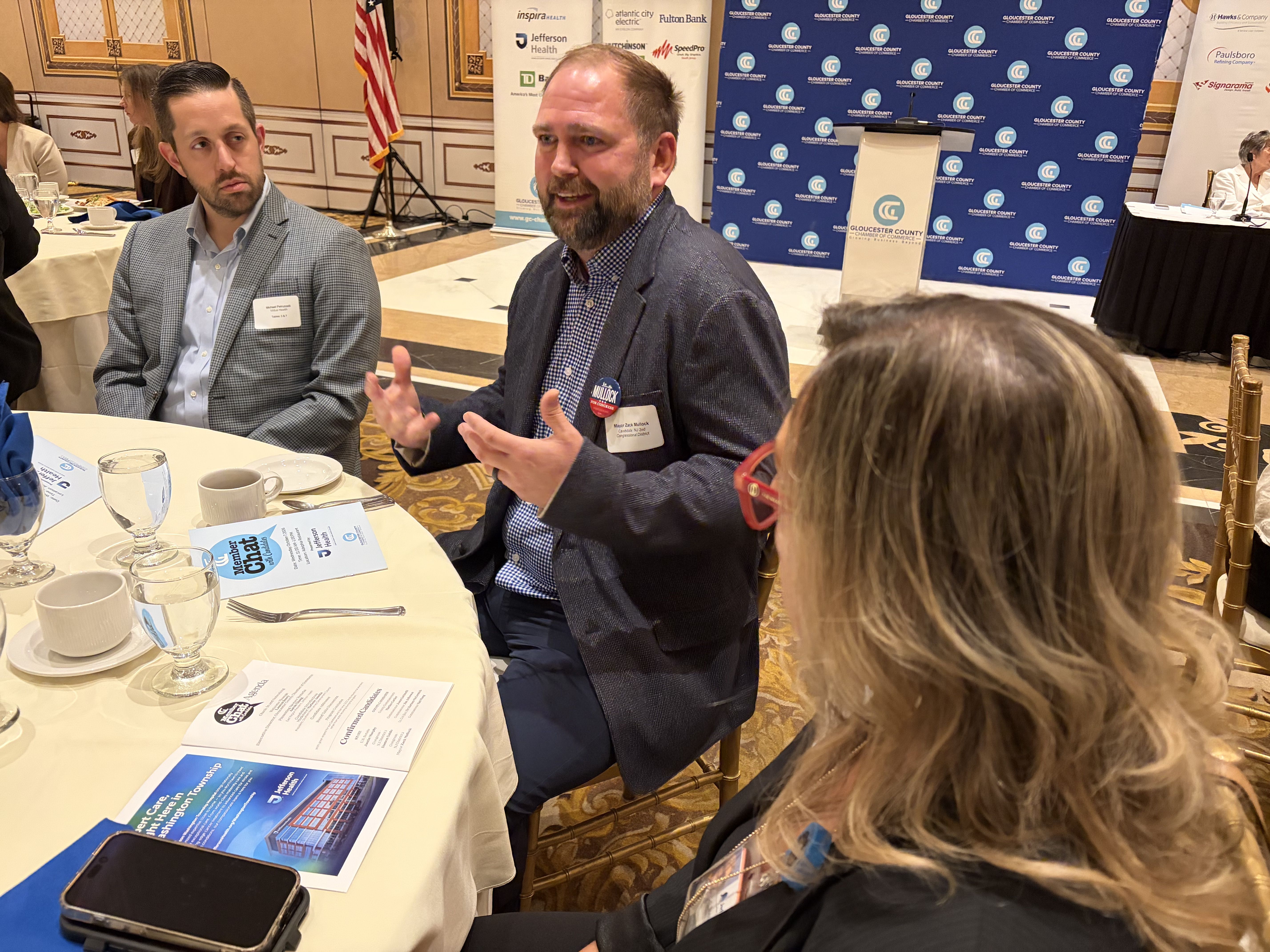
South Jersey Republican Rep. Jeff Van Drew is likely on more solid ground in the 2nd District, but his Democratic challenger, Cape May Mayor Zack Mullock, is gaining more attention as pundits predict a “blue wave.”
Thirteen years ago, Martino Cartier sat next to a lion for a self-made music video for his charity to a cover of Katy Perry’s pop anthem “Roar.”
He dances with cancer survivors around a fire, and at the end of the video, giant letters spelling out CANCER engulf in flames. Today, Cartier’s hair salon logo — the face of a golden lion wearing a crown — is plastered all over his business’ windows.
“Lions are fierce, and they don’t back down,” said Cartier, 51, a celebrity stylist running for Gloucester County commissioner, as he walked through his property.
Cartier lives in the Sewell section of Washington Township down a long driveway lined with American flags blocked off by a golden gate adorned with two lions, right next to the salon. Outside, there’s a fountain with, yes, more lions.
His property is home to the nonprofit he runs: Wigs and Wishes, which gives wigs to women with cancer and grants wishes to children with cancer, like seeing their favorite celebrities or enjoying a petting zoo — there is also one of those on his property.
The farm and animal petting zoo on the grounds of the compound of celebrity hair stylist Martino Cartier Wednesday, Oct. 14, 2026. Tom Gralish / Staff Photographer
Cartier is one of three Republicans running to oust the three incumbent Democratic county commissioners up for re-election: Jim Jefferson, Joann Gattinelli, and Matthew Weng. But his eccentricity, online footprint, and controversial past have attracted an outsize amount of attention, particularly from the Gloucester County Democratic Committee, which posts about him regularly.
His critics have touched on a slew of issues, includingCartier’s past legal troubles, his President Donald Trump-branded apparel, and remarks on his Christian podcast that some have found offensive — to name a few.
Cartier, who said his first priority would be trying to fire Sweeney, has fiercely pushed back against the committee’s attacks on him.
Just a few years ago, Washington Township Democrats celebrated Cartier as a “hometown hero” on a parade float. In 2021, DemocraticU.S. Rep. Donald Norcross awarded him a Making a Difference Award at the county’s NAACP gala. Over several years, Gattinelli, one of the Democrats running for reelection, supported Cartier’s charity work, and he supported her mayoral bids. Cartier said they have not spoken since he launched his campaign.
“When you’ve walked side by side me and have seen the thousands of lives that I’ve changed, you should all be ashamed of yourselves,” Cartier said, ranting in a phone interview Sunday.
Celebrity hair stylist Martino Cartier is visited by one of his Wigs & Wishes clients, Nina Sorelle (left), at his salon, Wednesday, Oct. 14, 2026.Tom Gralish / Staff Photographer
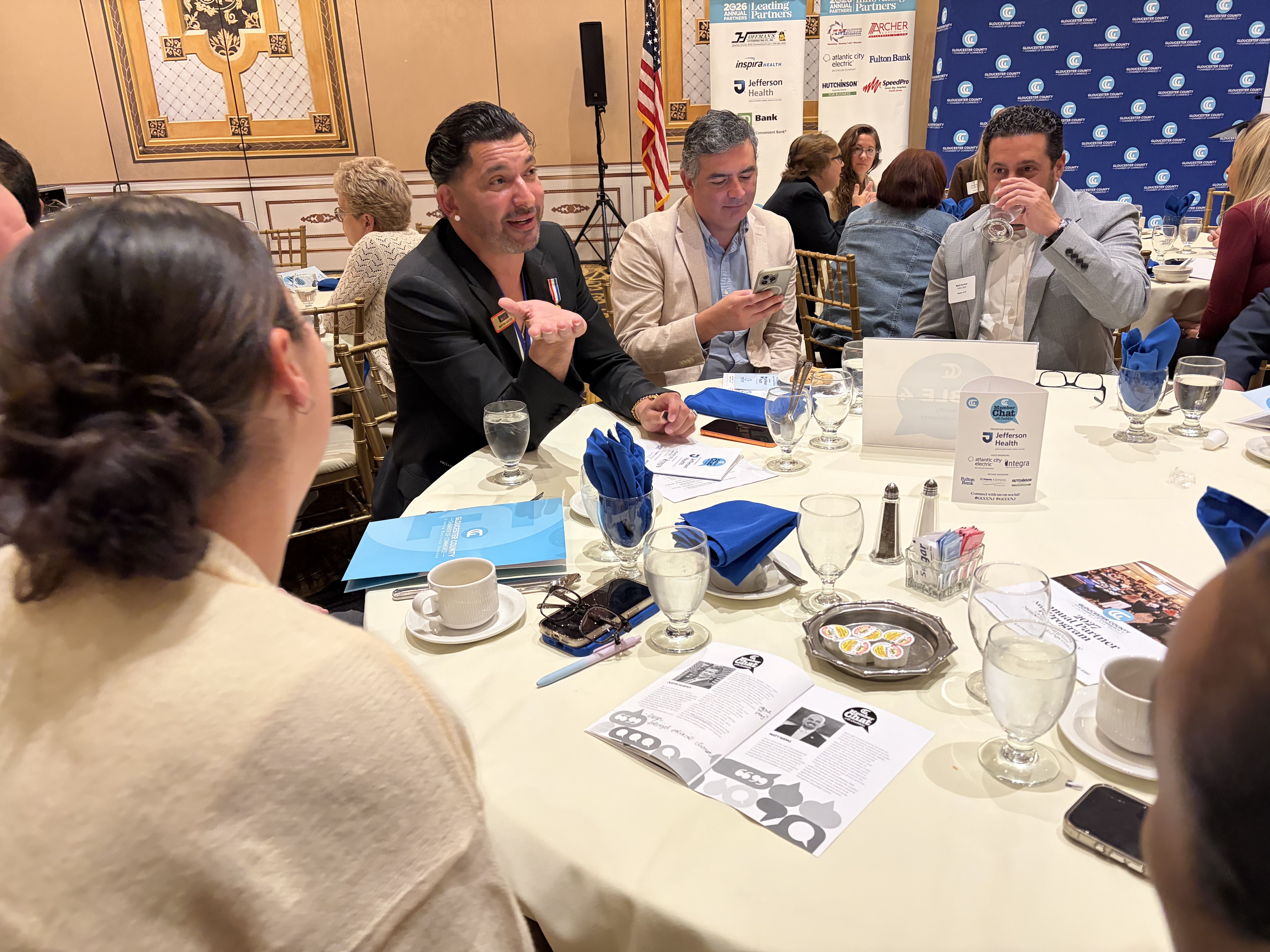
It is a similar tone to what he has taken on Facebook Live and at a nonpartisan candidate forum hosted by the Gloucester County Chamber of Commerce.
“They can smear my name, they can smear my good work, but I won’t tolerate it, and I will defend it,” he snapped at the forum, and proudly held up his 2022 Ellis Island Medal of Honor, which honors immigrants and descendants of immigrants. He told an attendee that he does not know how to speak without passion.
Cartier was born Baby Boy Ayad and then named Martin Clinton Maguire Jr. when his Irish American parents adopted him in Jersey City. Cartier has publicly shared a story about how his biological mother was sent to the United States from Egypt for an abortion but she gave him up for adoption instead.
As Cartier grew up, he became tired of being told he didn’t look like a Maguire.He hated the name. So when he was expecting his first son in 1999, he rushed to get his name legally changed to Martino Ayad Cartier so his child would not have the same experience, he said. He came up with the name with the help of a hairstyling client. His name has now been passed on to his adult son Martino Brigade Cartier, toddler son Israel Martino Cartier, and newborn Judah Martino Cartier.
“I hope it keeps getting passed on,” he said.
Martino Cartier speaks with attendees at a roundtable at a Gloucester County Chamber of Commerce forum on Oct. 7.Aliya Schneider / Staff
A chaotic reality TV appearance launching his success
Back in 2008, Cartier’s salon was featured as a chaotic mess onTabatha’s Salon Takeover, a reality TV show in whichhost Tabatha Coffey helped struggling salons. Coffey was shocked by dog poop on the floor of Cartier’s office, dirty work stations, and his touchy-feely approach with clients and staff, calling them names like “hun, babe, sweetie” and even licking them.
“Their husbands don’t call them that so they like coming here and feeling good,” Cartier said in the episode.
He opened up to Coffey about living beyond his means and owing hundreds of thousands of dollars to fund his lavish lifestyle.
“I’m $300,000 in debt,” he told her in the episode. “I had to borrow money from my mom, take out a second mortgage on my house, just to keep the salon afloat.”
When she returned for another episode twoyears later, Coffey was thrilled to hear Cartier share that he had improved his personal finances as well as the salon’s.
“I didn’t see him licking, lap dancing, or doing anything inappropriate with clients,” Coffey also noted in the reunion episode.
Cartier, who said he is now friends with Coffey, credited much of his success to his appearance on the show — and Coffey has made appearances with Wigs and Wishes. He has since traveled around the world as the face of various hair products, had his own brand on Home Shopping Network (HSN), and has been paid thousands for public speaking gigs.
“It was one of the greatest things that ever happened to me, and people all over the globe know that,” he said.
Celebrated by some, admonished by others
On a rainy Octoberday, Cartier dug through cabinets in his salon office for a wig that would match the natural hair color of a woman with cancer.
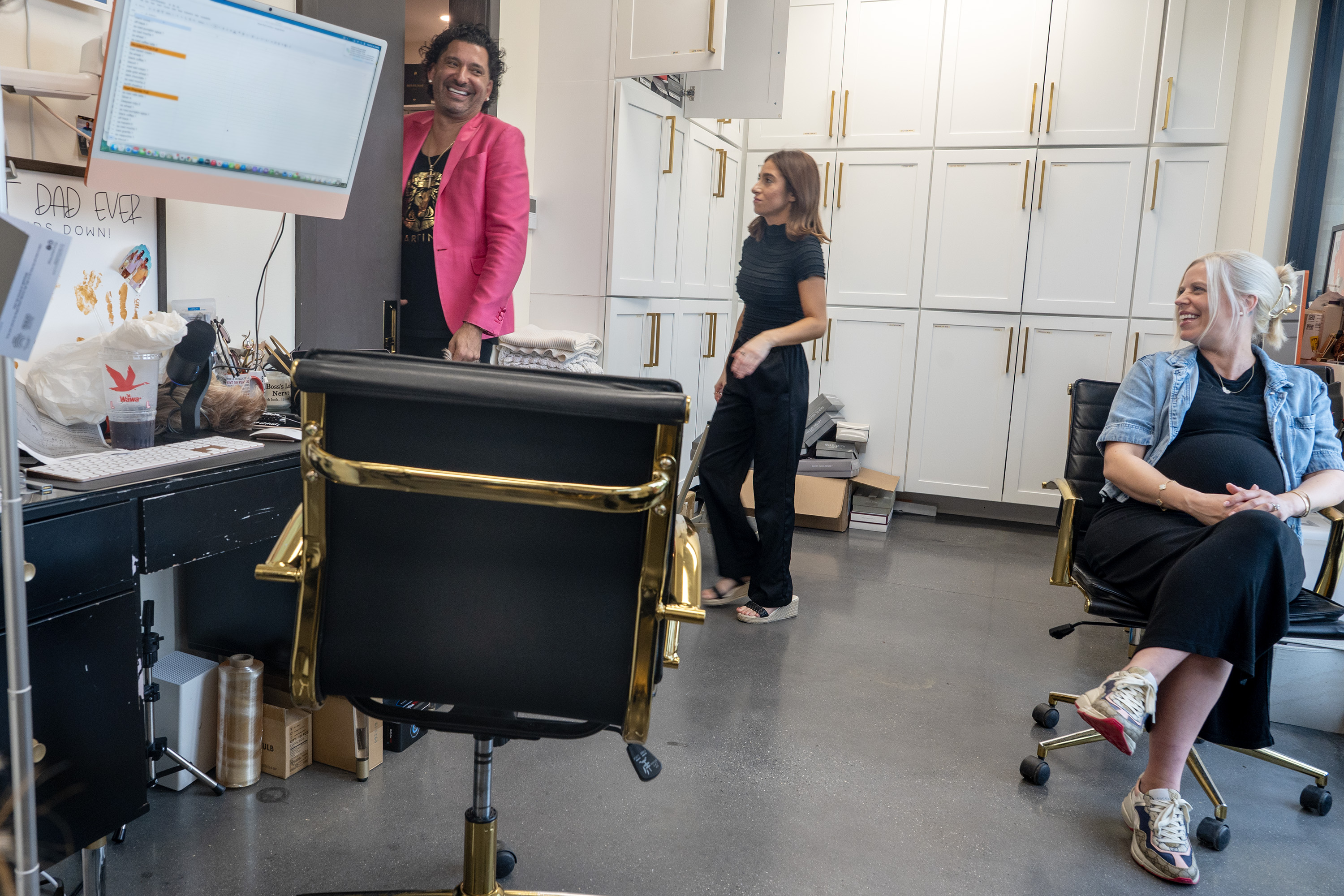
To his side was Gianna Cartier, 36, his then-pregnant wife, who helps run the charity as its “chief compassion officer” and manages the salon. Baby Judah was born days later.
Martino Cartier in the office at his salon, Wednesday, Oct. 14, 2026, with his personal assistant Gigi Donofrio (center) and wife Gianna Cartier (right).Tom Gralish / Staff Photographer
The Democratic committee has pointed out that Cartier’s nonprofit, registered as Friends Are By Your Side, is listed as noncompliant in the state’s charity database. Cartiersaid it was because his accountant requested an extension for the charity’s tax filings, and shared a photo of the returns dated Oct. 26.
The committee calls Cartier an “admitted criminal fraudster,” referencing his 2003 guilty plea over falsely reporting his car as stolen, which has since been wiped from his record because of a pretrial intervention program.
Another time Cartier got in trouble in the early 2000s: buying a pet monkey for his oldest son — a toddler at the time — which he also brought to his salon.
Cartier purchased Moochie, a capuchin monkey, from a licensed Pennsylvania breeder for $5,000 and sold it to a friend when he realized he would not be able to keep it in New Jersey, the Courier-Post reported in 2002. He was charged with illegally owning and selling the monkey and ended up pleading guilty and paying $500 for possession, according to the newspaper.
FILE – A 2002 photo of Martino Cartier holding Moochie, a capuchin monkey.Courtesy of Martino Cartier
In 2006, Cartier lost a Republican primary for Washington Township Council, garnering less than a quarter of the vote.
Over the years, Cartier has been in various legal battles.
He was sued by the luxury company Cartier over his use of the name. A customer filed a class-action lawsuit in 2022 over credit card information showing up on receipts at his salon. A model accused him of negligence for cutting her neck during a 2016 beauty show, which he described as a scratch, calling the suit a “money grab.”
“When you’re in business, when you’re in the limelight, and when you’re doing trade shows, you are more subject to things like this happening than the everyday Joe or Jenny,” Cartier said Tuesday.
Cartier entered a private settlement with HSN after it fired him in 2023, saying he had engaged in “unwanted physical contact with multiple team members and exhibited signs of being intoxicated.” In response, Cartier filed a $50 million defamation lawsuit.
In 2024, he sued Washington Township over zoning enforcement against statues on his property and his desire to build a Christmas tree farm next to his property.
“He’s been sued a lot by a whole lot of people … everyone can’t all be wrong,” Sweeney said in an interview.
Democrats have also accused Cartier of illegally intermingling his nonprofit with his political campaign.
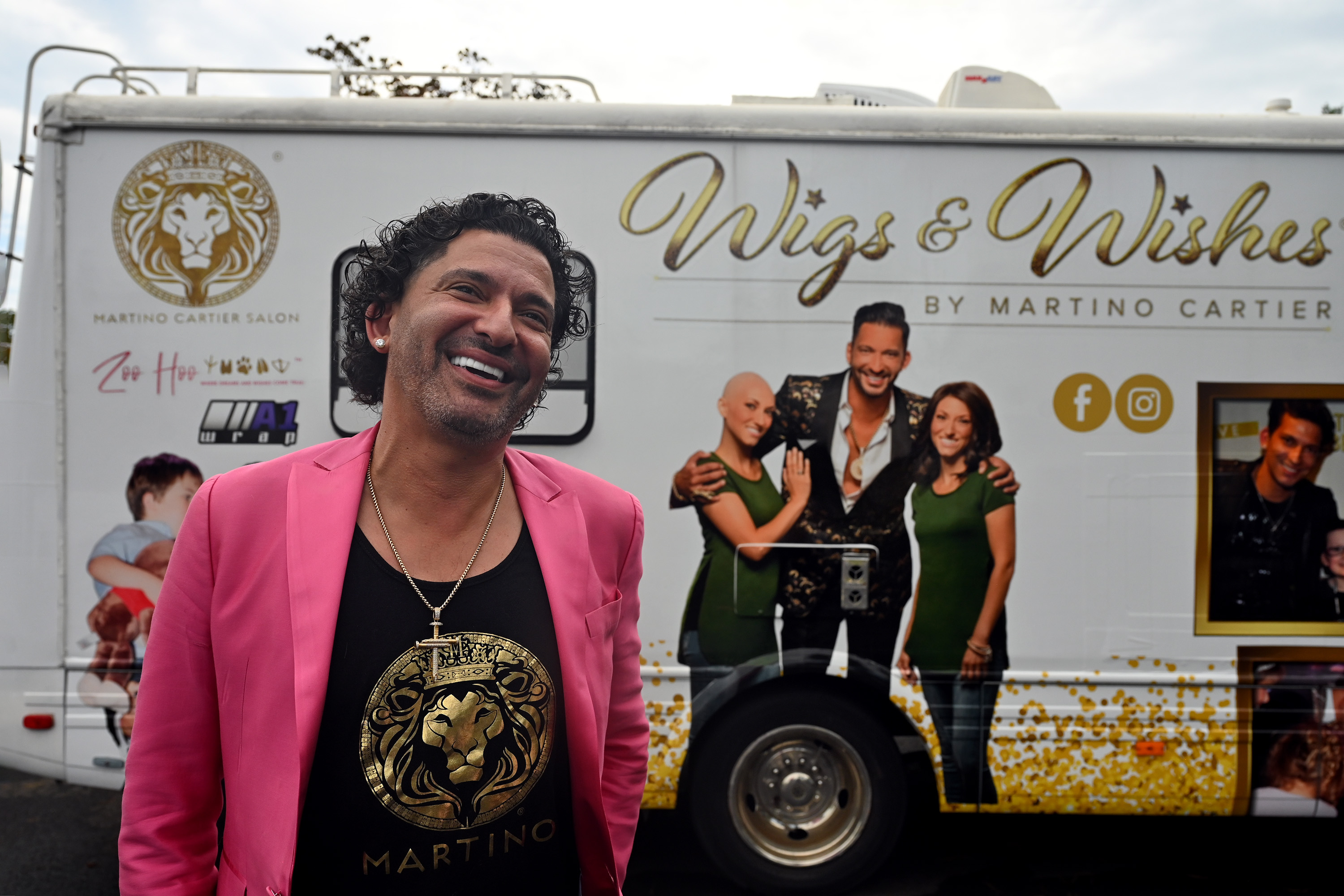
Martino Cartier in his Wigs & Wishes RV parked outside his salon, Wednesday, Oct. 14, 2026.Tom Gralish / Staff Photographer
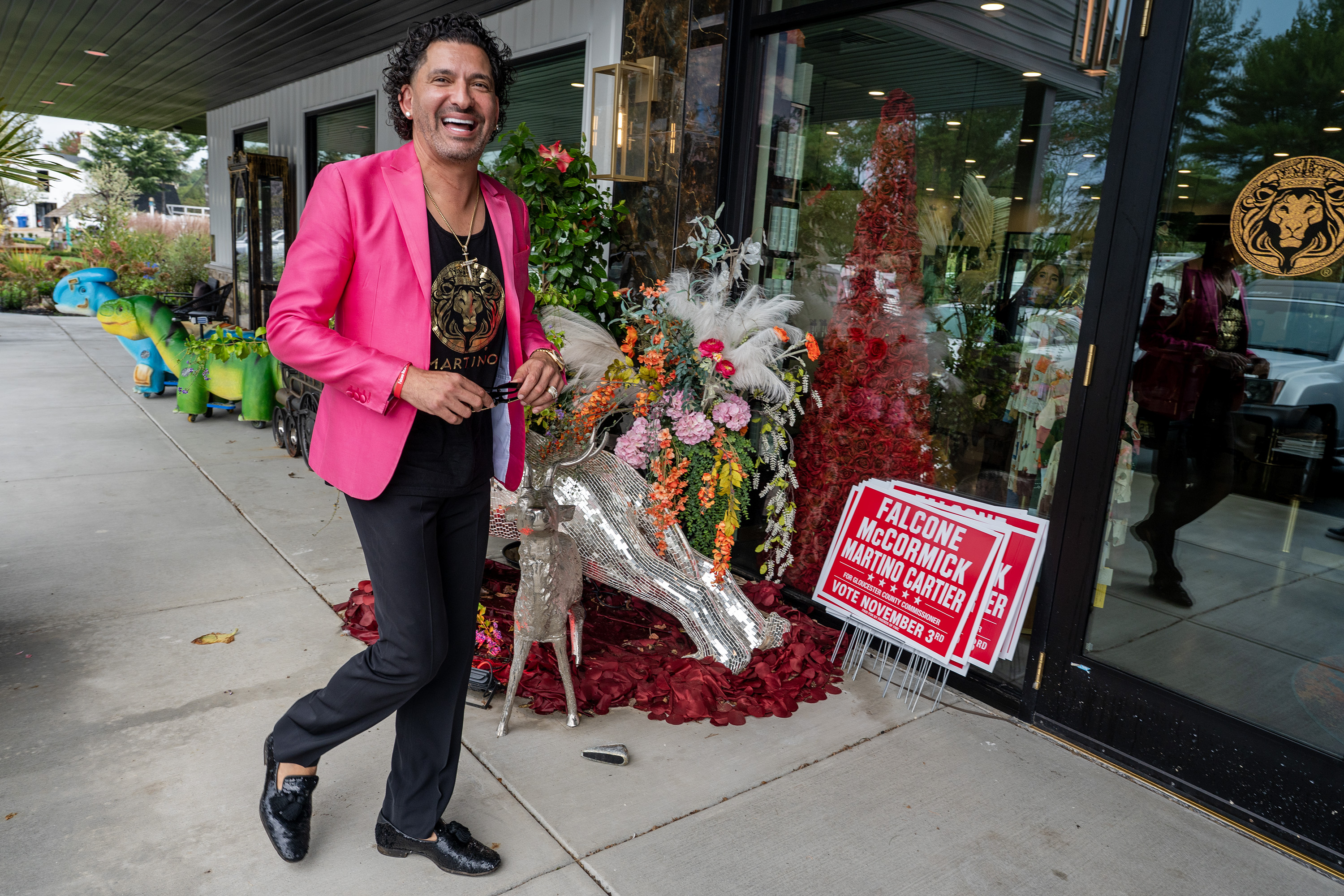
Earlier this month, Cartier paraded his Wigs and Wishes motor home in the Monroe Township Halloween parade with hisRepublicanrunning mates, Katherine Falcone and Barbara McCormick, the vehicle decked out with campaign signs. Cartier uses the motor home for the charity, and it is wrapped with Wigs and Wishes branding. But he contended that he can do what he wants with it, saying it was gifted to himbya friend and it is registered and insured in his name.
“These scared incumbents … are so evil that they think everybody else is evil,” Cartier said on the phone Sunday.
Among the photos printed on the RV’s wrap is a shot of Cartier with Paula Abdul, the charity’s “celebrity sponsor and adviser,” whom Cartier described as his “ride or die.” She has not gotten involved with the campaign and declined to comment through Cartier, though she has previously praised him as “very special.”
But as much as he is beloved by allies like Abdul, he has also made comments that have offended others, particularly in clips on his podcast that local Democrats have circulated online showing him laughing at concepts behind Sikhism — New Jersey has one of the largest Sikh populations in the country — and jokingly calling TikTok CEO Shou Zi Chew “Ching Chong.”
A statue of celebrity hair stylist Martino Cartier and singer Paula Abdul with Makenzie Rose, a young cancer patient and the roses planted in her memory, on the grounds of his compound and salon, Wednesday, Oct. 14, 2026. Tom Gralish / Staff Photographer
He also faced backlash for a comment he made about slavery. “With American slaves, that was just greed of African American people that sold their own people,” Cartier said. In an interview, he said he “misspoke” by saying American after African.
At a Democratic get-out-the-vote rally Saturday, Jefferson, one of Cartier’s opponents, admonished him for “trying to lecture us why slavery happened and blaming it on Black people.”
Cartier said the podcast hosts were discussing the history of slavery and he was reading from a script he did not write. Regarding his podcast comments in general, he said he has reached out and apologized to people who have been genuinely offended by his languagebut said others are “trolling.”
Celebrity hair stylist Martino Cartier is with cancer survivor Simone Herbin-Canty (left) at his salon, Wednesday, Oct. 14, 2026. Tom Gralish / Staff Photographer
“It’s only offensive because I’m running for Republican commissioner, and you weren’t offended before, or you would have brought it up,” he said.
Simone Herbin-Canty, an unaffiliated voter in West Deptford and cancer survivor who wears a wig from Wigs and Wishes, said in an interview at Cartier’s salon that she laughs at the criticism of Cartier.
“I understand that people got a job to do, and they gotta twist things around or take little sound bites or little snippets of videos and try to make it work toward their benefit. But … show the whole video so that you can understand exactly where this man is coming from,” she said.
A deep connection with Israel and mixed feelings about Trump
Gianna Cartier said that it’s frustrating to “see something about your husband every day on the internet” butthat she just has to “let it go and just, like, let God do what God does.”
Sculptures, a bench with the Israeli flag, and the Wigs & Wishes RV are outside the salon of celebrity hair stylist Martino Cartier, Wednesday, Oct. 14, 2026.Tom Gralish / Staff Photographer
Cartier’s property has three giant wooden crosses towering near the road. He describes himself as an evangelical Christian, which is the root of his support for Israel. That connection deepened after Hamas’ Oct. 7, 2023, attack on Israel.
Among Cartier’s tattoos are his eldest son’s name, Brigade, “Made in Egypt,” and “Am Israel Chai” in Hebrew, which means “the people of Israel live.” He has a bench with the Israeli flag printed on it next to his salon parking lot, and a dreidel-shaped fire pit further back on the property.
In 2020 he raised money for United Hatzalah, an emergency response organization in Israel. In April 2025, he went on a trip to volunteer with the Jewish organization Chabad and dressed in traditional Jewish garb. He wrapped his lion-branded cape around the front of countless Israeli soldiers and gave them free haircuts.
Celebrity hair stylist Martino Cartier, a Republican candidate for Gloucester County Commission, shows photos of himself posing with solders on a trip to Israel, on the computer in his salon office Wednesday, Oct. 14, 2026. Tom Gralish / Staff Photographer
After returning from that trip, Cartier put on an American flag Trump hat and golden Trump boots and posted a video on Facebook on June 22, 2025:
“I’ve never been more proud to be an American and I am so proud of President Trump! God bless America, God bless Israel, let’s go!”
Cartier said he was expressing his excitement for hostages coming home. That day, the Associated Press reported that the remains of three other hostages had been recovered by Israel, the week after the U.S. launched a surprise attack on Iran.
“President Trump may say a lot of stupid things and he may do a lot of stupid things as well, and there’s a lot of things I don’t agree with, but I am so thankful and grateful that those hostages came home,” Cartier said in a text.
Despite his apparel choices,Cartier said he is more of a “Reagan Republican” than the “MAGA extremist” Democrats are presenting him as, because he’s “for the people.”
Federal Election Commission records show Cartier contributed more than $3,500to support President Donald Trump’s 2020 and 2024 presidential campaigns spread across smaller donations, which Cartier said he did not remember making but noted were likely recurring.
He said that one photo Democrats have shared of him wearing a pink Trump hat signed by the president was a breast cancer awareness-themed gift from U.S. Rep. Scott Perry (R., Pa.) after he helped a 16-year-old with cancer. Cartier said if he got a hat signed by former President Joe Biden in the same situation he would have worn that proudly as well.
And the golden Trump boots in his video? He said he also wore those in a getup at a fundraiser at Mar-a-Lago for veterans suicide prevention.
“When I was on Home Shopping Network, or if I would do a trade show somewhere — you ask my wife — I would dress like Liza Minnelli, Liberace, and Elvis Presley had a baby. That would be my outfit, even if I was flying just to go sleep at the hotel, because that’s my persona,” he said. “And that’s how I met some of the most amazing people in my life.”
This article was updated to include the Attorney General’s Office response to an inquiry that was not answered by publication time.
New Jersey Gov. Mikie Sherrill signed a law Tuesday that will permit people running for office to use campaign contributions to hire security guards and buy surveillance equipment, in a sign that politically motivated violence is on the rise.
The law takes effect immediately, according to the legislation.
Typically, candidates cannot not use political donations to cover personal expenses. But since the execution of New Jersey U.S. District Judge Esther Salas’ son in their Middlesex County home in 2020 by a self-described men’s rights lawyer, appointed and elected public officials nationwide have taken steps to protect their privacy.
The protections could extend to candidates’ immediate family members with whom they live. Candidates shall not hire relatives to work as security personnel, nor may they hire security companies owned by family, according to the bill.
The state Senate unanimously approved the legislation in June. The Assembly voted 51-12 with nine abstentions in September, sending it on to the governor for her signature.
U.S. Rep. Donald Norcross (D., N.J.) compared his South Jersey Republican colleague U.S. Rep. Jeff Van Drew to Adolf Hitler while mocking him during a Saturday get-out-the-vote rally in Gloucester County.
After being reached by The Inquirer, Norcross apologized to Van Drew and said he went “too far” earlier that day.
“Donald, my undying, I pledge to you!” Norcross cried out after getting down on his knees in front of a crowd of roughly 200 Democratic supporters at the Deptford Eventure Center in Westville, referencing Van Drew’s support for President Donald Trump.
Snapping out of character, he said: “Jesus Christ! Oh my God! You remember thatbulls—? A guy from Jersey on his knee? That’s disgusting.”
Norcross — whose district includes all of Camden County, much of Gloucester County, and parts of Burlington County — is facing a long shot challenge from Republican Damon Galdo, a West Deptford podcaster who works in construction. But he focused his attention Saturday more on Van Drew, who represents a sprawling neighboring South Jersey district that spans from parts of Gloucester County down to Cape May.
U.S. Rep. Donald Norcross got on his knees to mock U.S. Rep. Jeff Van Drew’s support for President Donald Trump at a Gloucester County rally on Saturday.Aliya Schneider / Staff
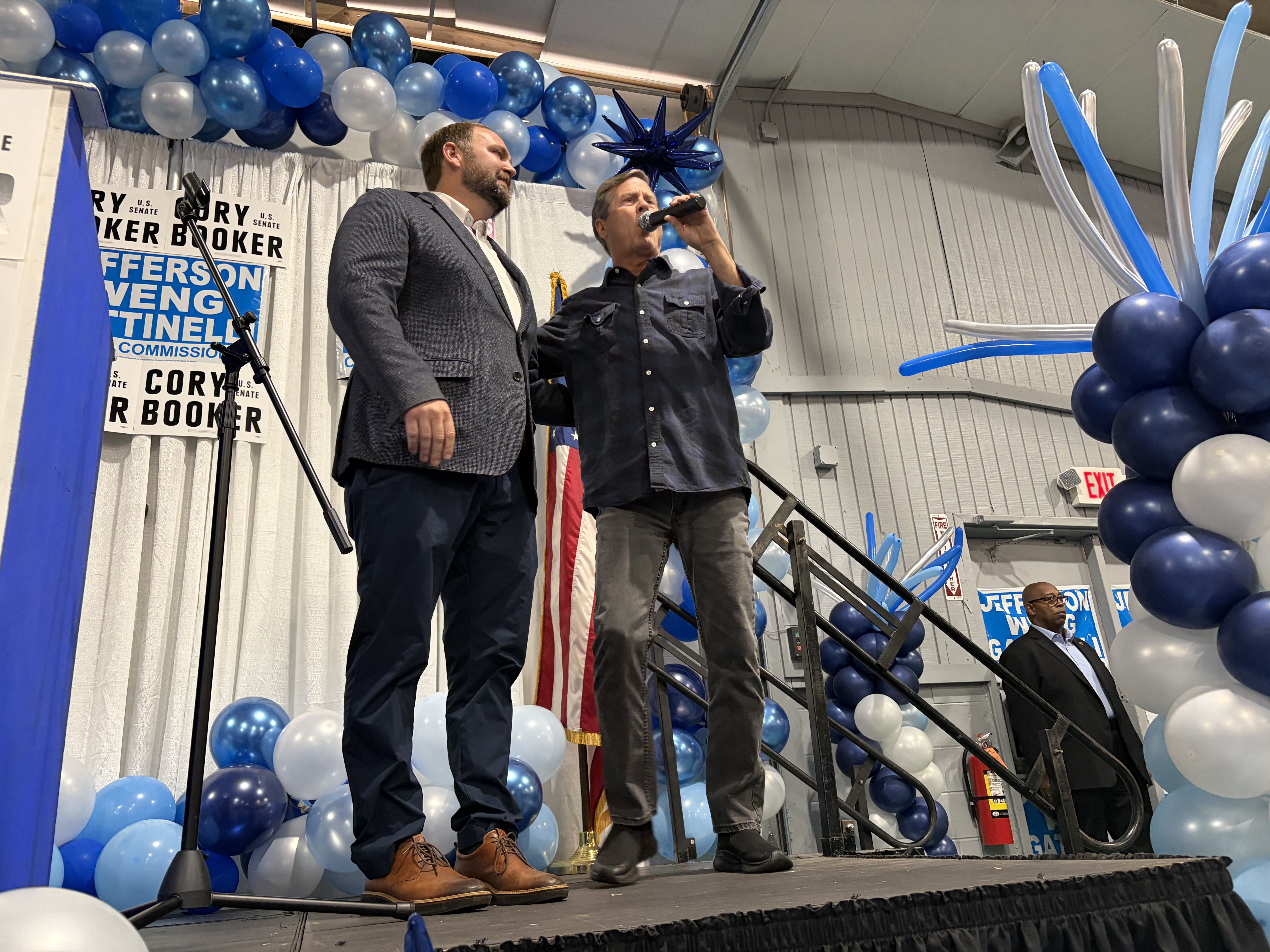
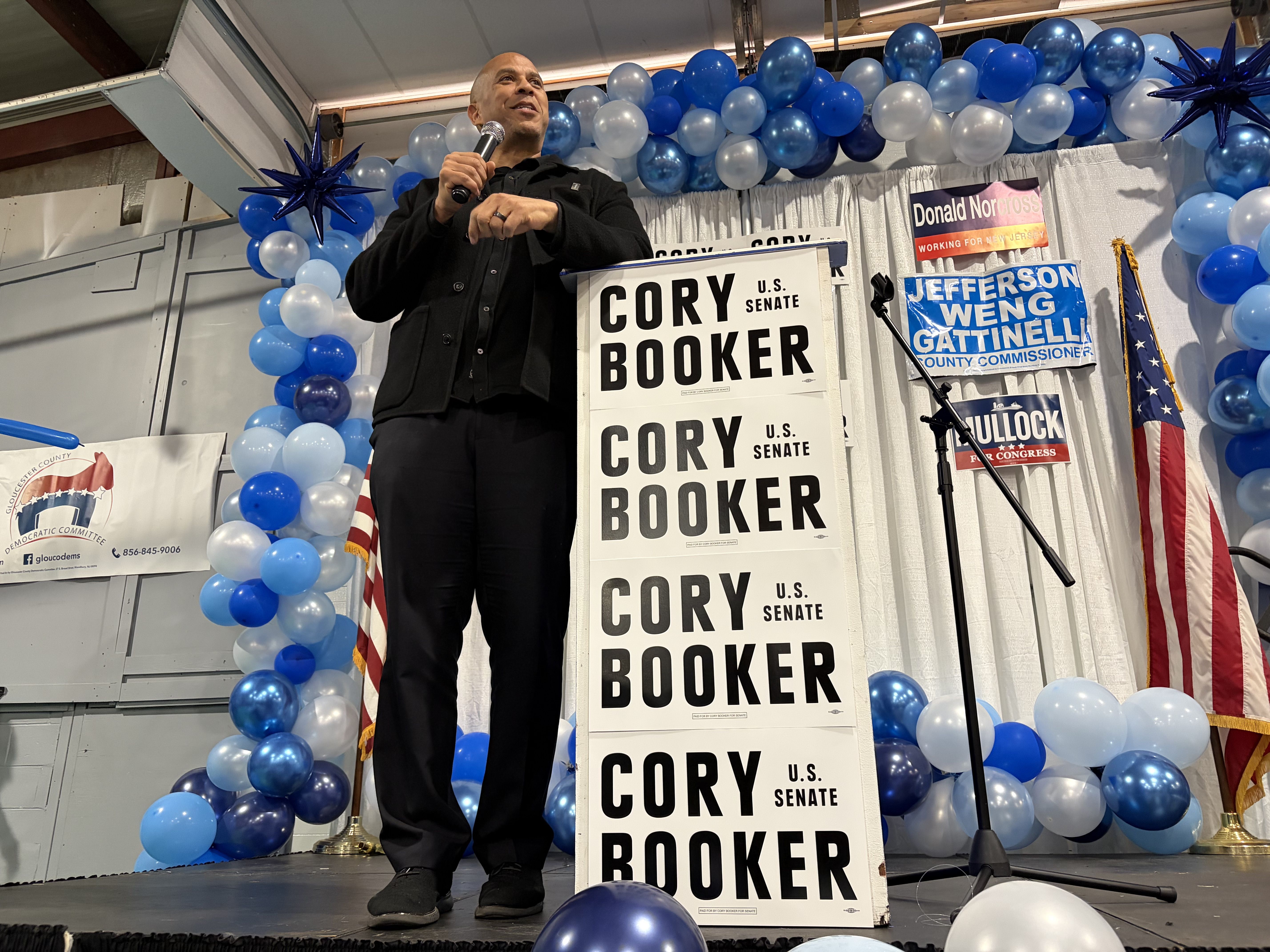
Norcross was joined by fellow Democrats U.S. Sen. Cory Booker and Cape May Mayor Zack Mullock, who is challenging Van Drew, for a rally to energize supporters 10 days ahead of the midterms.
Mullock did not comment on Norcross’ speech Saturday.
Three Gloucester County Democratic commissioners who are running for reelection — Jim Jefferson, Joann Gattinelli, and Matthew Weng — and U.S. Sen. Angela Alsobrooks, a Democrat representing Maryland, also made appearances.
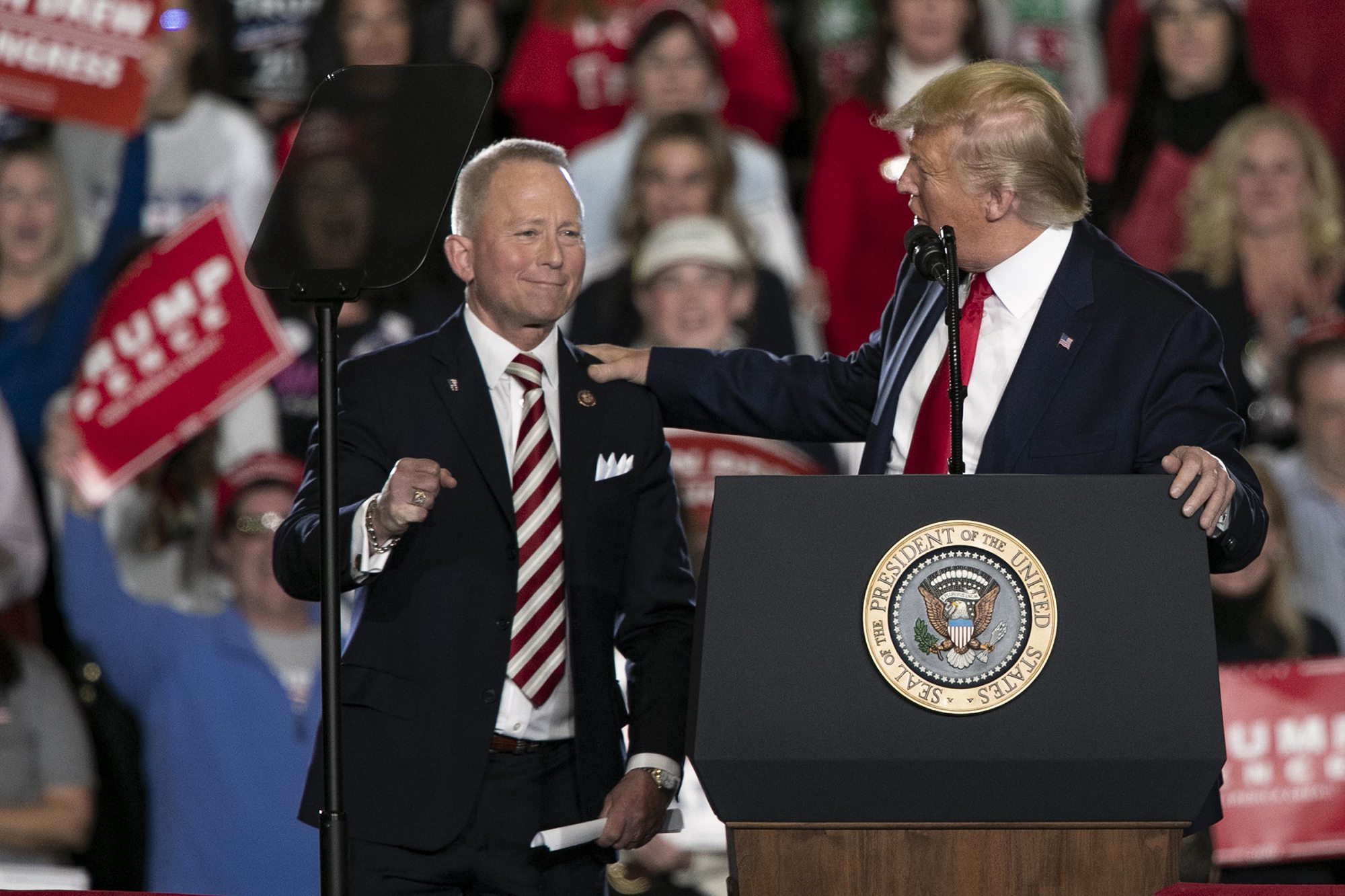
Democrats are particularly sour on Van Drew, who served in local and state positions for years and was elected to Congress as a Democrat in 2018 before switching to the Republican Party and vowing his “undying support” to Trump a year later. Van Drew has warded off challengers ever since, but the race has attracted increasing national attention in recent weeks as Democrats anticipate a blue wave.
Norcross said onstage he knew Van Drew leaned conservative even before they got to Congress.
“He called himself a Democrat,” Norcross said. He bemoaned Van Drew’s opposition to raising the state’s minimum wage while they served in the state legislature together.
Norcross also made fun of Van Drew’s shoes, saying “now he wears them pointy boots that you can’t kill cockroaches on ‘em. Ah, the guy’s losing!” before commenting on his hair. Norcross also referred to a white handkerchief that Van Drew used to wear in his jacket pockets, which was folded to show a series of peaks.
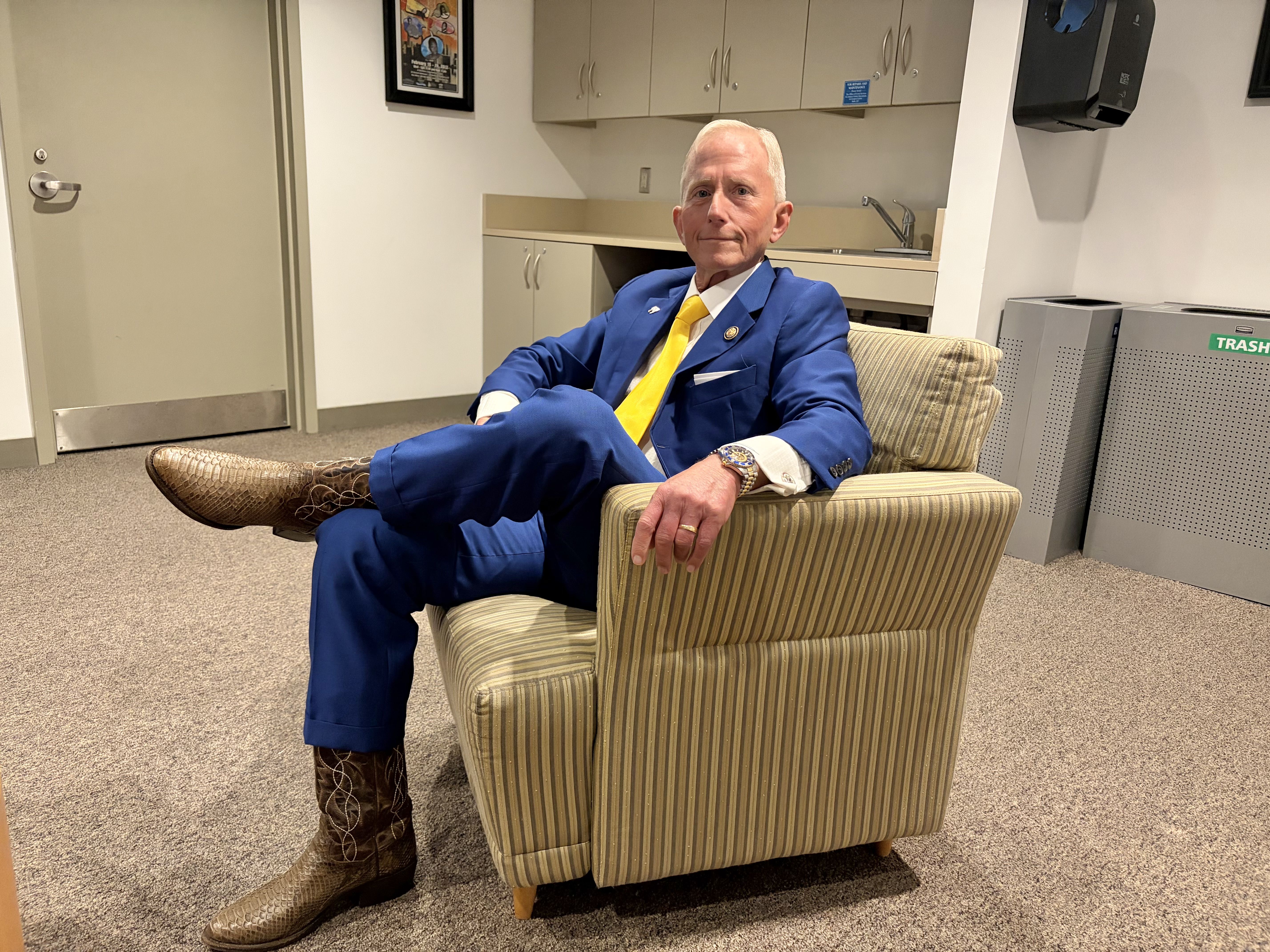
U.S. Rep. Jeff Van Drew sits backstage after his debate with his Democratic challenger Cape May Mayor Zack Mullock at Stockton University on Thursday.Aliya Schneider / Staff
“That haircut: If it was darker, that’s Hitler’s haircut. That tells you who he really is. And those things he used to wear in his pocket, those three things. … The Klan hats he used to wear there, remember that? This is the real Jeff Van Drew.”
Norcross called Van Drew to apologize after The Inquirer asked about the remarks.
“Whatever implications there were from my comments, I did not mean them that way. I went too far,” Norcross said through a spokesperson.
After Norcross apologized to him, Van Drew said on the phone that he was “profoundly disappointed” by his colleague’s remarks, which he called “rough and inappropriate for a congressman.”
“I think he agrees,” Van Drew added. “I think he knows it now. I guess he got caught up in the moment.”
Van Drew said he accepted Norcross’ apology, he’s glad he called, and that it’s time to move on.
“Hopefully he has learned a lesson from it,” the Republican added.
When asked for comment on Norcross’ remarks before the apology, Van Drew’s spokesperson Ron Filan said the Republican lawmaker is praying for his Democratic colleague.
“When Congressman Norcross was in the hospital last year, Congressman Van Drew reached out to see how he was doing and prayed for him,” Filan said. “He will continue to pray for him especially considering what he has just said and done. That tells you everything you need to know about who Jeff Van Drew really is.”
At the rally, Norcross, all fired up, also used a swear word when talking about high gas prices amid Trump’s war in Iran, and was met with cheers.
“I’m not going to say anything today that we didn’t say with that one second to go in the Eagles game. … So forgive me, I’m an electrician,” he joked onstage.
Steve Sweeney, the former longtime state senator who now works as the Gloucester County administrator and chairs the county’s Democratic committee, also referenced Van Drew’s decision to support Trump with a graphic metaphor at the rally.
“You saw when Jeff got down on his knee and kissed Donald Trump’s ass in front of the whole world. We’re gonna get rid of him real soon,” Sweeney said, which he later said he stood by “1,000%.”
Sen. Cory Booker at a campaign rally hosted by the Gloucester County Democratic Committee on Saturday.Aliya Schneider / Staff
Sweeney, a longtime friend of Norcross, said before Norcross’ apology that he is “not going to criticize Donald for his opinion” when asked if the lawmaker’s comparisons went too far. He expressed that he also isn’t a fan of Van Drew’s hairstyle — or policies.
At the rally, Norcross introduced Mullock as the “Jeff Van Drew slayer.” The Jersey Shore mayor’s voice was strained, completely shot from his many speeches on the campaign trail — and likely his tense debate with Van Drew two days earlier.
Mullock criticized Van Drew’s vote for the One Big Beautiful Bill Act, which made cuts to federal healthcare programs, and noted, “I know I sound like I’m a person who really needs some good healthcare right now.”
Booker joked that Mullock “may have a weak voice” but “has a strong heart.”
“When we elect him to the House of Representatives, you can turn off the TV, because you know we will have taken back the House,” the senator said. “You can turn off the TV because you know that that is going to shock the nation. That even the president of the United States will get the message. And any of the remaining Republicans in Congress, we’re going to say, ‘I’m not going to hitch my wagon to that guy.’ We have so much power in this county.”
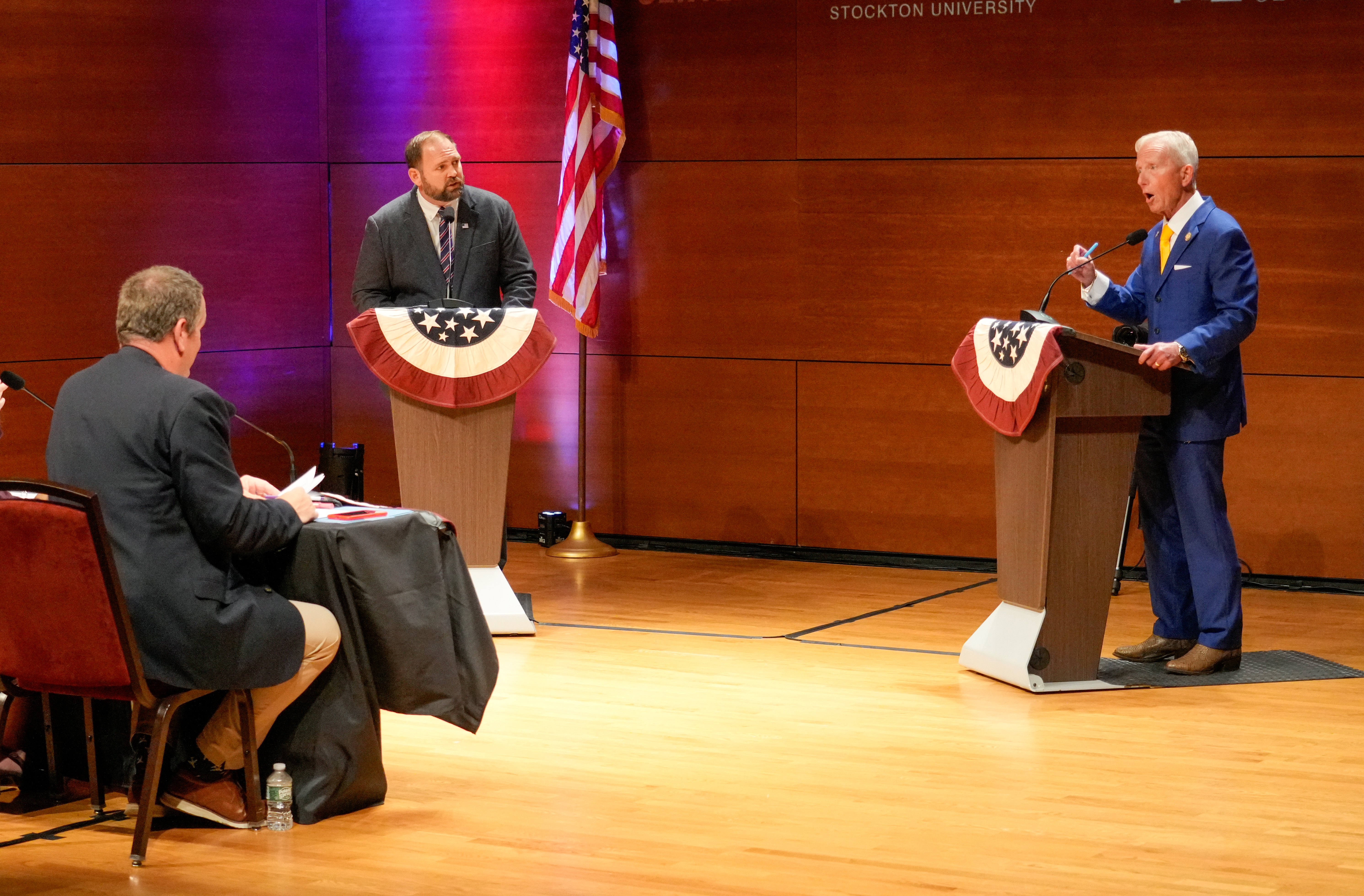
U.S. Rep. Jeff Van Drew and Democratic challenger Zack Mullock fought over a slew of local and national issues impacting South Jerseyans in a tense debate Thursday night as their once sleepy race sees increasing national attention and spending in the final days before the midterm.
Despite a ramped-up focus on the race, the two candidates squared off in a mostly empty theater at Stockton University with the debate only open to journalists andthe sound of cameras shuttering the only noise heard in the absence of an audience.Mullock,the mayor of Cape May, said he wanted a live audience, but Van Drew wouldn’t agree.
In an interview with The Inquirer after the debate, the incumbent Republican said it was a safety concern — the same reason he doesn’t hold open in-person town halls, which Mullock criticized.
Throughout the debate, Mullock interrupted Van Drew and accused him of tellingfalsehoods. Van Drew, meanwhile, derided his challenger as “Mr. Pinocchio.”
The sprawling 2nd Congressional District stretches from Gloucester County to the Jersey Shore. National Democrats added the district to a growing list of target races earlier this month, but it’s less likely to flip than some other seats in New Jersey and Pennsylvania.
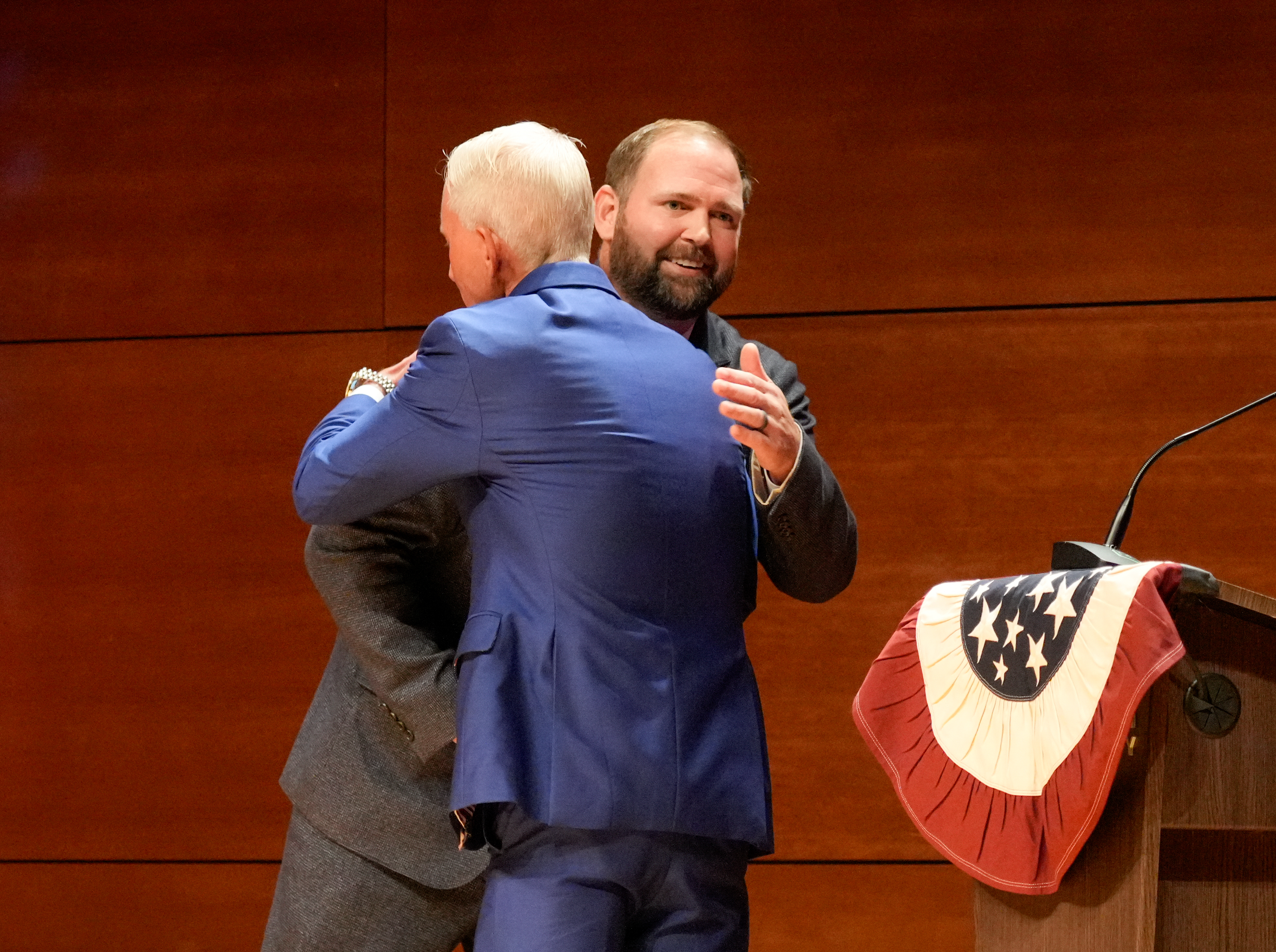
U.S. Rep. Jeff Van Drew, right, and Democrat Zack Mullock exchanger a quick hug after a tense debate in the Campus Center Theatre at Stockton University, Thursday, Oct. 22, 2026.Tim Hawk / For The Inquirer
Here are the highlights from the debate:
Where Van Drew disagrees with Trump, and Mullock disagrees with Democrats
Van Drew, 73, won the seat in 2018 as a Democrat before switching parties to become a Republican a year later and vowing his “undying support” to Trump.
Mullock, 41, said Thursday that Van Drew “looks up to the president like a child” and follows his “daddy Trump.”
When asked what issues he disagrees with his party on, Van Drew said he believed Republicans should have extended Obamacare subsidies — though he opposed a Democratic-led effort to extend the subsidies for three years.
As for Trump, Van Drew said he opposed the president’s past desire for offshore oil leases in New Jersey and his resistance to releasing the Epstein files.
Mullock pointed out that Van Drew was not among the Republicans who tried to force a floor vote on the files.
“He knew that some girls as young as 14 had been sexually assaulted, and he refused to sign the discharge petition. … When the victims needed him, he didn’t vote for it,” Mullock said.
Van Drew said he didn’t want to send the bill to the floor without going through the committee process and that he was a sponsor of a bill calling for the files’ release before Trump expressed his approval upon realizing he lacked support within his own party to keep the files under wraps.
U.S. Rep. Jeff Van Drew answers a question during a debate with Cape May Mayor Zack Mullock, in the Campus Center Theatre at Stockton University, Thursday, Oct. 22, 2026.Tim Hawk / For The Inquirer
Mullock said he has plenty of experience working across the aisle in his nonpartisan local government and said he’s hired Republican city managers. He also said he thought Democrats “did a bad job on the border.”
At another point in the debate, Mullock said farms and restaurants in the district rely on immigrants who haven’t broken the law and deserve a path to citizenship. He said he supports having “a strong border” and getting “rid of violent criminals” but that ICE sweeps under Trump are “terrorizing communities and scaring school children.”
Van Drew criticized Democratic policies in the state that limit local law enforcement’s cooperation with ICE as well as a legal-defense fund for undocumented immigrants.
He also called Mullock a “democratic socialist.” When asked about the label after the debate, Van Drew said Mullock supported the 2016 presidential campaign of Sen. Bernie Sanders of Vermont, who has long used the label.
The Cape May mayor, who donated $3 to Sanders’ 2016 presidential run, said he supported some of Sanders’ economic policies but does not identify with that term.
War in Iran
Mullock accused Van Drew of voting for the war in Iran six times, in reference to House resolutions seeking to restrict Trump’s power to continue the war without congressional approval. Trump launched the war in coordination with Israel in February and went past the deadline for approval in May.
Van Drew disputed Mullock’s characterization. “There was never a vote for the war in Iran,” Van Drew said.
“I did vote not to end hostilities absolutely immediately because it would have endangered our troops,” he added.
Democrat Zack Mullock points to U.S. Rep. Jeff Van Drew during a debate in the Campus Center Theatre at Stockton University, Thursday, Oct. 22, 2026.Tim Hawk / For The Inquirer
Mullock called it a “war of stupidity” and questioned what the war has done to help South Jerseyans, pointing to the high price of gas at the pump and diesel for farmerssince the war stressed the global oil supply chain.
“Ronald Reagan is rolling in his grave right now,” Mullock said, contending the Republican who oversaw the late stages of the Cold War would disapprove of Trump’s deal to purchase fuel from Russia to control costs.
“You had a chance to stop it, and you didn’t,” Mullock said to Van Drew.
After the debate, Van Drew said in an interview that he believes there will be an opportunity to leave Iran “soon.”
“I think this next Congress, regardless of whoever has control, is going to say, ‘OK, what’s the end game here?’” He said he supported Trump’s decision to start the war to go after nuclear enrichment and long-range ballistic missiles, but that it “does need to end” with a safe exit strategy.
Construction at the Data One data center in Vineland, N.J. in June. Tom Gralish / Staff Photographer
Data centers
Mullock said Van Drew’s campaign is “sponsored by data centers,” in reference to campaign donations from John Ruga, who leads a concrete company that helped develop the controversial Vinelanddata center. Ruga has said that Van Drew’s support for the project was “critical.”
Mullock also pointed to Van Drew’s vote for the One Big Beautiful Bill Act, which he said gave money to data centers while cutting Medicaid. According to Politifact, the law let companies with data centers write off equipment costs quicker than before.
“It is no coincidence that the poorest county in the state is being taken advantage of right now, and you’re letting it happen,” Mullock said in reference to the massive Cumberland County data center, which was recently hit with a $1 million fine from the state.
Van Drew said he’s known the concrete contractor, who has worked on various projects in the area, for years. He pointed to a bipartisan bill he supported last month that seeks to put guardrails on energy costs caused by data centers.
“I never met the data center people,” Van Drew said. “I don’t know who they are.”
Joan Dillon opened a childcare center in June of last year for 46 infants and toddlers in Gloucester County, where options for working-class and middle-class families are scarce. But within a month, the center was in trouble.
New Jersey froze additional funding for its Child Care Assistance Program in July 2025, stranding most families who expected to receive financial help to pay most of the cost. Former DemocraticGov. Phil Murphy reversed the decision eight months later, but it was too late for many of these parents, Dillon said.
“One-third of the mothers of those families left the workforce. Some families moved out of the area to live with relatives who could help them. Others pieced together inadequate care,” Dillon told 20 members of the Assembly during an often emotional hearing at the Statehouse in Trenton on what many called the “childcare crisis” in New Jersey.
Dillon was among the dozens of speakers Thursday who explained how “the math does not work” when it comes tothe cost of childcare. The monthly rates range from $1,600 to $2,200 a month for infant care and $1,400 to $1,900 monthly for toddler care, according to state market data.
Childcare centers also struggle because even for those families who qualify for help through the state’s assistance program, the subsidy covers only one-third to one-half of the cost of rent, utilities, and trained educators, providers said.
“We invest in public dollars inpre-K through 12th grade because education benefits our entire society. But somehow, when children are at their most critical stage of brain development, we treat their early education as a private family obligation,” Dillon said. “We are asking New Jersey to recognize that education does not begin at age 3.”
A campaignled by childcare providers and nonprofits called Strong Start New Jersey offered one solution to begin to address the problem: Commit $35 million a year in the next three state budgets to expand the subsidy program to families with slightly higher incomes. This would allow 3,000 more families a year to qualify for help, said Sharon Levine, the Start Strong New Jersey director.
The $870 million program served about 70,000 working-poor families across the state last year.
“Unfortunately, this means many working families with young children are stuck in an affordability gap — their income is too high to qualify and too low to afford childcare without assistance,” Levine said.
Shelby Willmot of Hamilton said she fell into that gap. A promotion edged her just out of range for subsidized childcare.
She has sinceput pursuing a bachelor’s degree on hold and every month decides which bill she can pay late because she needs childcare for her son.
“I want to keep working. I want to finish my degree and provide a stable home life for my son,” Willmot said. “I’m asking for a system that gives us a chance to do that.”
Assembly member Brian Bergen (R., Morris), a member of the Assembly Commerce and Economic Development Committee, said he would support adding $35 million to expand the subsidy program.
“That doesn’t sound like a lot of money,” Bergen said. “What we heard today is an easy, solvable solution if we just cut the junk out of the budget.”
Assembly member William Spearman (D., Camden), who chairs the commerce committee, said one solution may be to adjust the program’s income limits to reflect what families take home after taxes.
Advocates said other solutions must help small and family-run businesses, which have been hit hard by the state’s push to expand free prekindergarten programs — a great initiative that has hurt childcare centers.
Kayanna Jackson, owner of Angel Touch Nature Preschool in Southampton, Burlington County, said she has allowed parents to skip or delay payments because she understands they are struggling to hold onto their jobs.
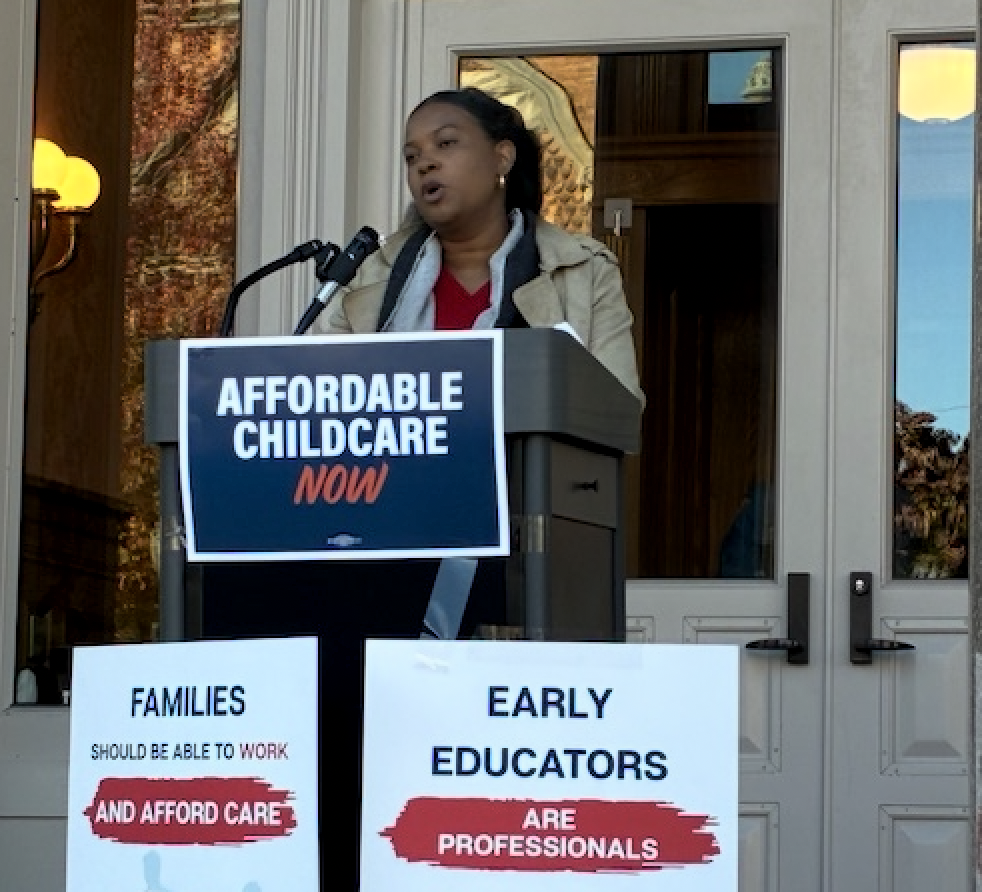
“As an educator and taxpayer, I contribute to our tax system, and I believe our tax dollars should be invested in meaningful change that strengthens our communities and builds an economy for our future generation,“ Jackson said in a rally on the Statehouse steps before the hearing.
“Our children deserve a system that will protect them and invest in them so that they can give back to the system and their communities.”
A Rutgers-Eagleton poll released this month found 73% of state residents said it is “very” or “somewhat” difficult to afford childcare expenses — more than for housing, utilities, and other spending categories.
An earlier version misstated the percentage of New Jersey residents who struggled to afford childcare expenses. It is 73%.
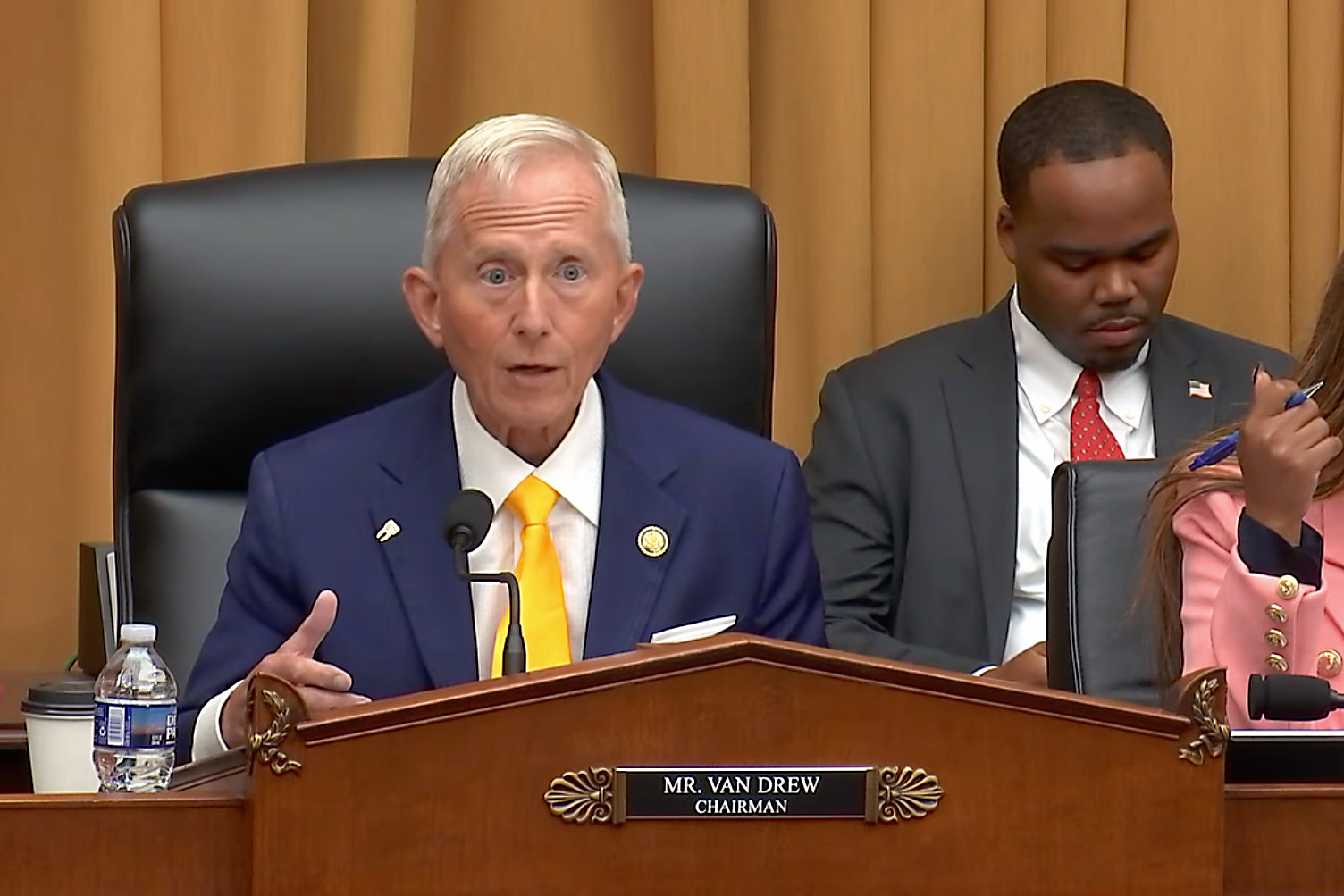
South Jersey Republican Rep. Jeff Van Drew Wednesday announced a congressional subpoena of New Jersey Gov. Mikie Sherrill’s administration, demanding it produce records he requested three months ago that may explain how 6,600 noncitizens were added to the voter rolls in violation of federal law.
Sherrill, a first-term Democrat, revealed in July that approximately 6,600 people who identified themselves as noncitizens were registered to vote in New Jersey between June 2023 and June 2024through the Motor Vehicle Commission, though fewer than 400 actually cast ballots.
Her administration’s response has been “inadequate,” and “an impediment” to their investigation, the letter said.
“None of the documents offered any substantive insight into how the noncitizen voter registration issue was discovered or why New Jersey did not conduct any remediation efforts until 2026,”said the letter Van Drew co-authored.
“These ineligible voter registrations raise concerns about the application of federal law in New Jersey as it pertains to accurate voter registration, as well as the effect that New Jersey’s failure to identify and remove noncitizens from its voter rolls has on the civil liberties of American voters and their ability to elect representatives,” according to the letter.
Sherrill has blamed former Gov. Phil Murphy’s team, as well as software vendor IDEMIA, for the registration of people who had answered they weren’t citizens and therefore ineligible to vote. Both have denied responsibility.
Murphy spokesperson Mahen Gunaratna on Wednesday pointed to his one statement on the matter from July in which he said Murphy “had no knowledge” of the issue and “applauds” Sherrill for looking into it.
Sherrill also referred the matter the law firm of former RepublicanAttorney General Jeffrey S. Chiesa for an independent investigation, which is ongoing, Sherrill noted Wednesday.
“I promised that when we discover a problem, we communicate the facts and fix it — and I meant it,” Sherrill’s statement said. “From the moment we discovered the Motor Vehicle Commission registration issue from 2023, we took action immediately, went above and beyond in making agencywide reforms, and have been transparent every step of the way. We did this so that New Jerseyans can feel confident that we are running the strongest and fairest election in our country.”
Sherrill dismissed the subpoena as “political theater,” and derided Van Drew and House Judiciary Chair Jim Jordan (R., Ohio) as “enablers” of President Donald Trump, whose administration has pushed for more power over state-run elections.
Van Drew defended IDEMIA, the vendor Sherrill has blamed, at the hearing on the matter last month but no one from New Jersey’s government or the voter registration system participated. Van Drew repeatedly accused the state of knowing about the noncitizen registration issue since 2024 and called it a “cover-up.”
Van Drew spokesperson Paxton Antonucci told The Inquirer after the hearing that documents showed the state contacted IDEMIA in June 2024 after noticing registered voters whose files were missing their age and party affiliation. Those questions were only asked of people who identified themselves as citizens wanting to vote, but the system still allowed people who said they aren’t citizens to register.
“This information was missing due to the fact that the software, for some reason, was failing to flag that this group of individuals had selected the ‘No’ option when asked if they were a U.S. citizen but were still allowed to be registered to vote,” Antonucci said last month.
Susan Coll-Guedes was baffled when she saw a photo of U.S. Rep. Jeff Van Drew, a Cape May County Republican, smiling with scissors at a ribbon-cutting ceremony for a group home provider agency.
“He cut Medicaid, which is the funding for group homes for people with disabilities,” said Coll-Guedes, whoseadult son has Down syndrome and is on Medicaid.
The Galloway resident is a self-proclaimed “Mom for Mullock,” who supports Democrat Zack Mullock, the Cape May mayor who is challenging Van Drew in the Nov. 3 midterm election. She wasn’t interested in politics until President Donald Trump’s One Big Beautiful Bill Act made major changes to Medicaid eligibility and decreased federal funding for the program.
While the cuts don’t directly target her son, she’s concernedthe changes will have a domino effect on the program as a whole, she said in interviews this month.
Back in August, behind the red barn of Independent Spirits Distillery, a small business along farmland in Gloucester County’s Woolwich, Mullock told an audience of about 75 people that he gets “daily reminders” from South Jersey residents who are scared about the law’s cuts to social programs like Medicaid, whichprovides health coverage for low-income people and people with disabilities, including tens of thousands of people in the district.
Cape May Mayor Zack Mullock speaks to an audience at Independent Spirits Distillery in Woolwich on Aug. 11.Aliya Schneider / Staff
Mullock is among the many Democrats across the country attacking Republican incumbents for slashing social safety net funding to help pay for Trump’s policy priorities — including tax breaks for the wealthy — while still adding $3.4 trillion to the national deficit.
“I cannot fathom cutting for the very poorest to give to the very wealthiest,” Mullock said to the receptive audience brought together by the Woolwich Democrats. “It’s absolutely insane, and that’s exactly what Jeff Van Drew did when he voted for the Big Beautiful Bill. It was passed by one vote. One vote. And that tells you just how important these elections are.”
“If I was in his shoes, that bill would not have passed,” he added.
Van Drew was first elected as a Democrat in 2018 before changing parties and vowing his loyalty to Trump one year later. He’s been reelected three times since then with his closest challenger still falling nearly 6 points behind him in 2020.
On Tuesday, the University of Virginia’s Center for Politics’ Sabato’s Crystal Ball shifted the district’s rating from “safe Republican” to “likely Republican,”meaning Van Drew remains favored to win but less comfortably than before.
U.S. Rep. Jeff Van Drew with President Donald Trump at a campaign rally in Wildwood in 2021.Heather Khalifa / MCT
Mullock is hoping dissatisfaction with the impacts of Trump’s policies will help himpull off an upset in the district, which stretches from Gloucester County to the Jersey Shore.
How Trump’s law will impact Medicaid
Prior to his vote for Trump’s lawlast year, Van Drew was adamant that he would not vote for legislation that impacts Medicaid or Medicare unless the cuts are “specifically aimed at reducing waste, fraud, or abuse.”
That’s exactly how the Trump administration has framed the new changes, along with saying that the cuts willhelp preserve the programs in the long term.
“I was on the forefront of saying that we shouldn’t hurt seniors, we shouldn’t hurt children, we shouldn’t hurt the disabled, that we shouldn’t be harming those folks,” Van Drew said at a recent candidate forum held by the Gloucester County Chamber of Commerce after Mullock criticized his vote at the same event.
Cuts to SNAP have already taken effect but Medicaid cuts won’t be fully implemented until after the midterms in January 2027. Democrats are pledging to reverse them if they take control of Congress.
Van Drew defended the changes, particularly a new requirement for Medicaid recipients ages 19 to 64 to file paperwork every six months to show they work, volunteer, or take academic classes 20 hours a week to qualify for the program, unless they meet exemptions carved out for people with disabilities.
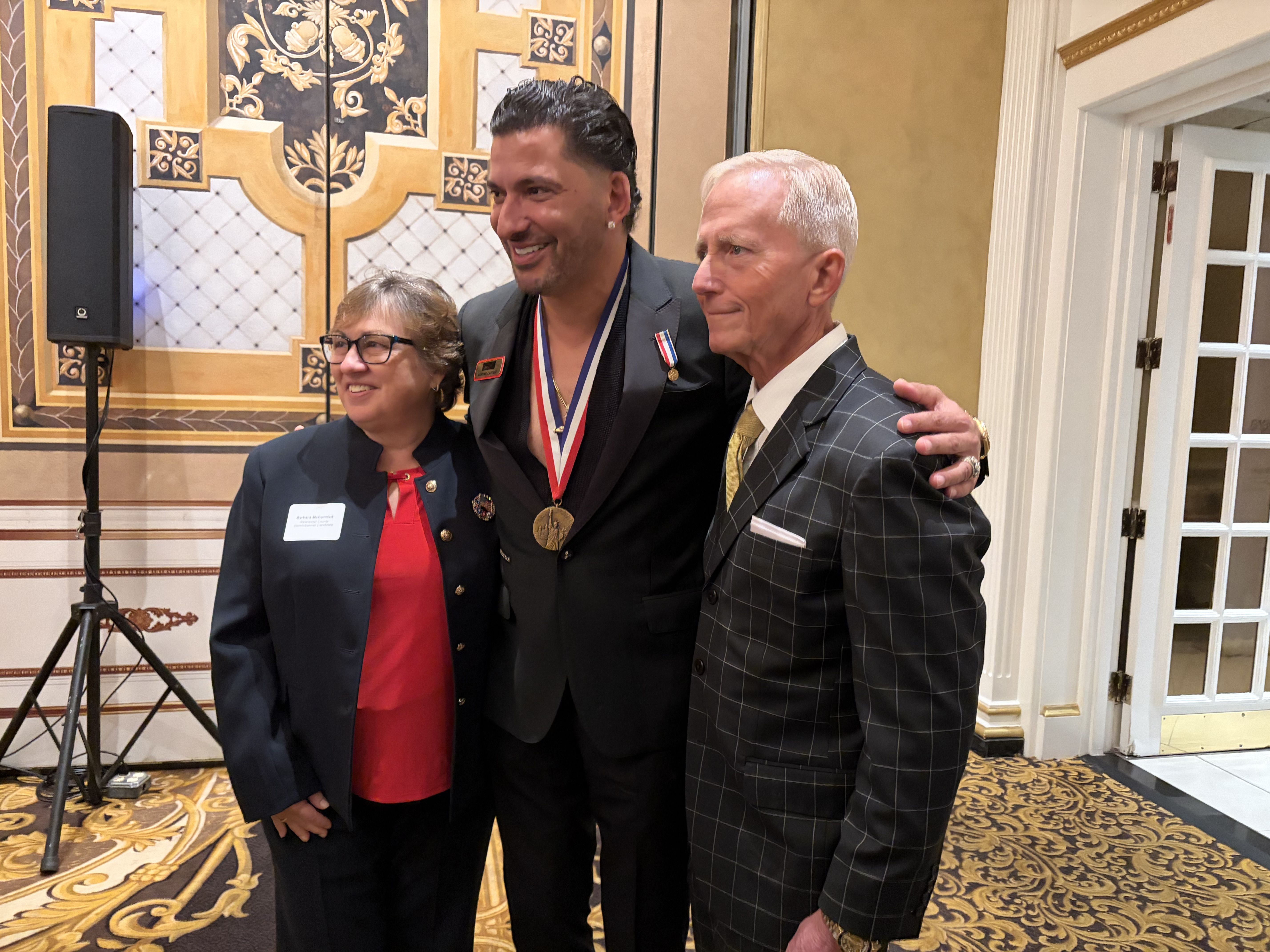
U.S. Rep. Jeff Van Drew (right) poses for a photo at a Gloucester County Chamber of Commerce candidate forum with Barbara McCormick and Martino Cartier, Republican candidates for Gloucester County Commission, on Oct. 7.Aliya Schneider / Staff
“If you are able-bodied and you don’t have children, and aren’t planning on it, and aren’t a senior citizen, and don’t want to work … you could pet dogs at the Humane Society, help senior citizens, or you could go and learn a trade, or you could even go back to college. You still would get your Medicaid,” Van Drew said at the forum.
“But if you’re healthy and you are young and you don’t want to work at all and you’re not willing to do any of those things … you’re not going to get it,”he said to claps from his supporters.
The law is slated to cut Medicaid spending over 10 years by approximately $911 billion, including approximately $29 billion in New Jersey, according to a KFF analysis using data from the nonpartisan Congressional Budget Office.
The changes to Medicaid are expected to lead to 7.5 million people becoming uninsuredby2034, including approximately 240,000 people in New Jersey.
Opponents of the requirement argue that since most adults receiving Medicaid already work, the extra paperwork will cause people who qualify to lose coverage anyway.
The 2nd Congressional District includes all of Atlantic, Cape May, Cumberland, and Salem Counties, and parts of Ocean and Gloucester Counties. These counties all together have 365,666 people enrolled in Medicaid as of August.
Mullock made the case at the forum that the cuts will have a disproportionate impact on the district because Cumberland, Atlantic, and Salem Counties are among those with the lowest incomes and highest poverty rates in the state.
“When you are driving all around and meeting with people and seeing the real poverty that exists here in CD-2, if your heart doesn’t break, you’re not a human,” Mullock said in an interview.
Another provision will also boot immigrants off the program who have legal status but aren’t permanent residents, such as refugees of war, asylum seekers fleeing persecution, and victims of sex trafficking and domestic violence. New Jersey’s Department of Human Services estimated that between 15,000 and 25,000 immigrants with legal status will lose coverage.
Van Drew introduced a “No Medicaid for Illegals Act” last year and said the program should only benefit American citizens.
Does the One Big Beautiful Bill touch Medicare?
While the law takes primary aim at Medicaid, Mullock has spoken about the cuts in tandem with Medicare, the federal healthcare program for people ages 65 and older. His campaign website says he supports Medicare for All funded by “fairer corporate taxes and a fair tax on the top 5%.”
And at the Gloucester County forum, Mullock claimed that the law cut $1.5 trillion in Medicare and Medicaid.
To get to that figure, Mullock said he was combining the nearly $1 trillion in Medicaid with a $491 billion figure that the Congressional Budget Office said could hit Medicare from 2027—2034 if Congress doesn’t act. That figure comes from the Pay‑As‑You‑Go Act of 2010, which forces cuts to prevent federal deficit increases. But legislators can override that obligation, and that’s exactly what they did as part of the November 2025 law that reopened the government after a record-breaking 43-day shutdown.
Meanwhile, Van Drew retorted during his own remarks that Medicare “never came up for a vote.”
“There wasn’t even a vote on Medicare,” he added. “Not one dollar has been cut from Medicare.”
While most of the law’s healthcare provisions affectMedicaid, the law does make some changes to Medicare.
Changes to eligibility for groups of legally present immigrants will leave 100,000 more people without health insurance and decrease federal Medicare spending by $5.1 billion by 2034, according to Congressional Budget Office data.
Another provision of the law blocks a policy enacted under former President Joe Biden that tried to make it easier for low-income Medicare recipients to access Medicaid financial assistance. The Congressional Budget Office projected this change will decrease dual enrollees by 800,000 people and decrease spending by $66 billion by 2034. While these people aren’t expected to stop getting Medicare, higher out of pocket costs would likely cause them to seek less care, the budget office predicted.
The six counties the district touches had a total of 378,833 people enrolled in Medicare in 2025.