Category: National Politics

  • How an addictive gas station drug found allies in Trump’s cabinet

    How an addictive gas station drug found allies in Trump’s cabinet

    For years, federal health officials have warned about the risks associated with a supplement derived from the leaves of kratom trees that adherents say can kill pain or boost energy. Sold in gas stations across America, kratom has been linked to liver toxicity, seizures and thousands of deaths.

    Powerful figures close to President Donald Trump, including Homeland Security Secretary Markwayne Mullin, pushed to downplay those concerns.

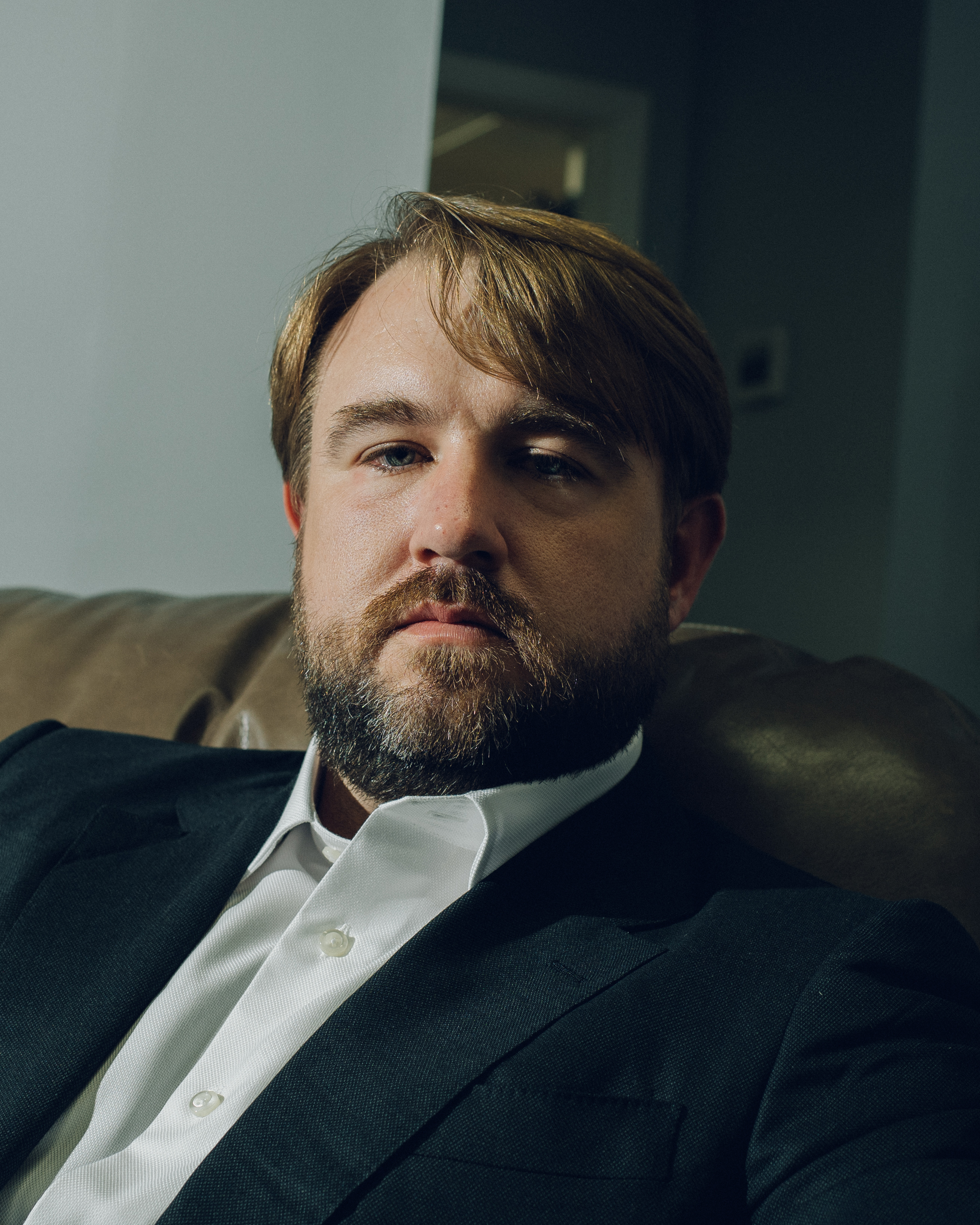
    Mullin, until recently a Republican senator from Oklahoma, played a key role in a sprawling influence campaign spearheaded by the kratom industry that courted Health Secretary Robert F. Kennedy Jr. and Vice President JD Vance, among others in the Trump administration, an investigation by The New York Times found.

    Only when he was nominated by Trump in March to lead the Homeland Security Department did it become clear that Mullin had a financial connection to the supplement. In a disclosure statement, he listed an investment worth as much as $1 million in a kratom company, Botanic Tonics, that could benefit from the changes he has sought.

    The company’s founder, Jerry W. Ross — who had been an energy executive in Mullin’s home state before pleading guilty to a financial crime — is a leading player in the influence campaign that was devised to benefit kratom at the expense of its rivals in the marketplace.

    The kratom campaign underscores how corporations in the growing wellness industry can gain traction in Trump’s government by casting risky products as aligned with the administration’s Make America Healthy Again, or MAHA, agenda championed by Kennedy, who has sometimes prioritized unproven remedies over science.

    In July, while still a senator, Mullin showed up at a Food and Drug Administration news conference and endorsed proposed federal restrictions on more powerful synthetic supplements that compete with kratom for shelf space. In explaining his position, Mullin pointed to a history of addiction in his family, though health experts say kratom products have also been shown to be addictive.

    His disclosure form did not indicate when he acquired his stake in Botanic Tonics, but he has not filed paperwork to indicate that he has divested from it.

    The Homeland Security Department did not answer questions about the investment. In a statement, the department said that Mullin “follows all ethics and conflict of interest standards and has not lobbied for any individual or company.”
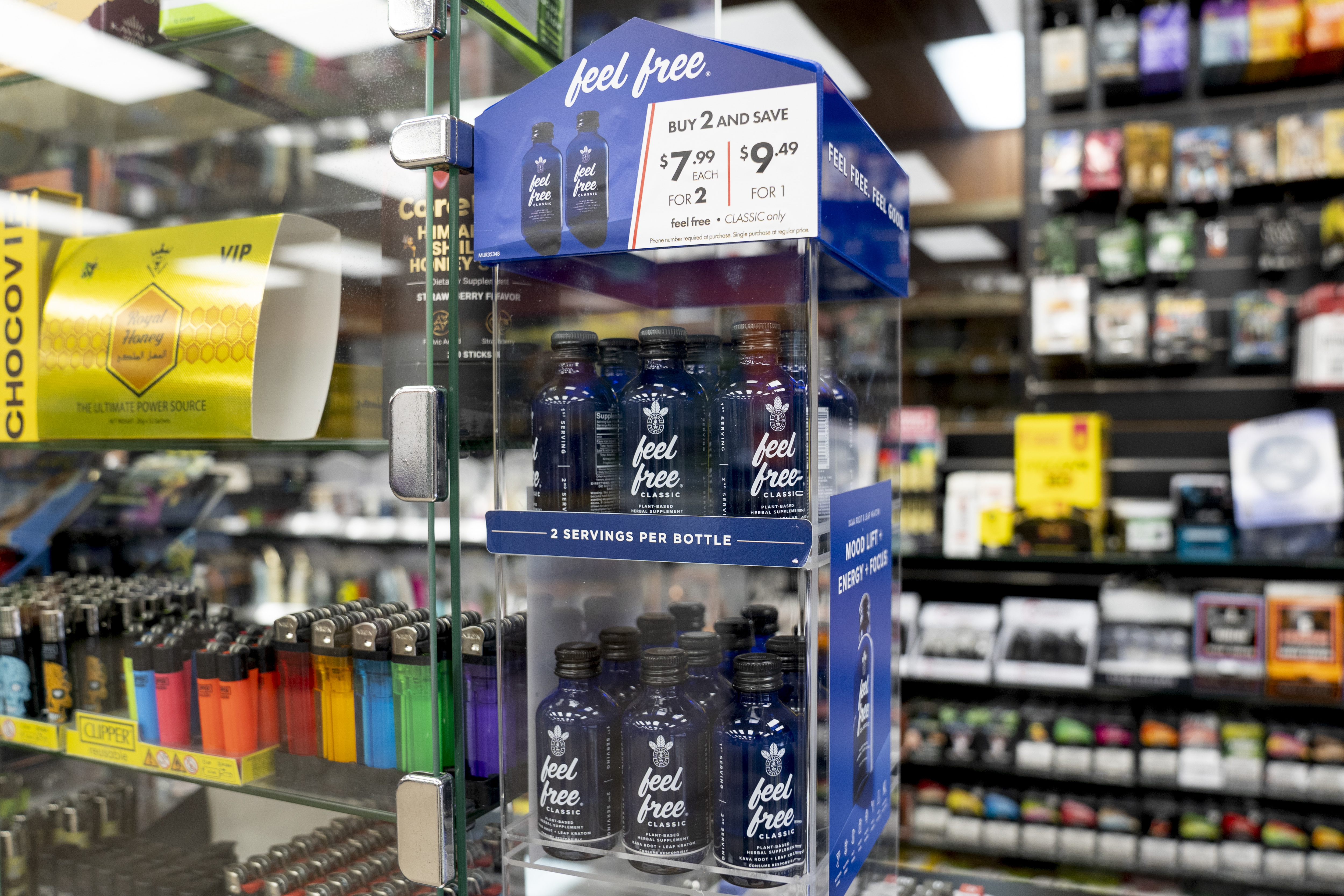
    Bottles of Feel Free, a kratom product produced by Botanic Tonics, displayed at a smoke shop in Oklahoma City, May 27, 2026. With support from Markwayne Mullin and Robert F. Kennedy Jr., the kratom industry is pursuing a potentially lucrative policy. (Nick Oxford/The New York Times)NICK OXFORD

    The restrictions that Mullin supported on the synthetic products would have been a boon to Ross’ company and others in the kratom industry, which market their supplements as safer and more natural. The kratom companies used donations and lobbyists to push for the crackdown.

    “It’s not pay to play. It’s pay to have conversations. It’s pay to have a chance at the table,” Ryan Niddel, CEO of Diversified Botanics, another kratom company involved in the effort, said in an interview with the Times. “And anybody that considers any of the lobbying work or any of the governmental work that goes on being different than that, I think has their head buried in the sand at this point.

    “I mean, that is the world that we live in.”

    The Times’ investigation — drawn from campaign finance data, lobbying disclosures, court filings, private correspondence and dozens of interviews — found the following:

    • Ross ramped up his donations to Kennedy’s defunct presidential campaign after Trump chose him to be health secretary. Ross privately boasted that he was “working on a plan for Bobby.”
    • The FDA in 2025 deleted links on its kratom webpage that detailed a then-pending legal case against Ross’ company, Botanic Tonics, after his allies pushed for the change.
    • Botanic Tonics had been sued by the federal government for illegally selling kratom products that were not proven safe, which the company disputed. But in December, the Justice Department suddenly moved to drop the case — which the company celebrated as a sign of the federal government’s receptiveness to kratom.
    • Kennedy, as health secretary, called the governor of Ohio to try to head off a state ban on kratom in the fall of 2025. Months later, Botanic Tonics donated $1 million to a political committee associated with Kennedy.
    • Ross, joined by influential lobbyist Ches McDowell, used donations to secure a private audience with Vance to lobby him about the benefits of kratom and to urge the ban on the synthetic products.

    Kush Desai, a spokesperson for the White House, suggested the administration was not swayed by the influence campaign, even though Trump recently made comments about needing to address the matter.

    “The only guiding factor behind the Trump administration’s healthcare policymaking is gold standard science,” he said in a statement. The administration, he added, was working “to get this critical matter correct and ensure the health and safety of Americans.”

    The Health and Human Services Department and Kennedy did not respond to requests for comment, nor did Ross.

    The administration’s receptiveness to kratom comes as Trump has also expressed a willingness to loosen rules covering other drugs backed by influence campaigns, including cannabis and psychedelics. The permissive posture stands in contrast to Trump’s baseless skepticism about highly regulated and widely used medications like Tylenol and vaccines.

    “It’s looking like we have a coin-operated drug policy that basically responds to whoever will give money,” said Kevin Sabet, who worked on drug policy under Republican and Democratic presidents. “And it threatens public health and safety because it’s going around the scientific process in favor of donors and influencers.”

    A rising scourge

    Long used medicinally in Southeast Asia, the leaves of the kratom tree contain a compound called mitragynine that interacts with the brain’s opioid receptors in a manner said to produce mild pain relief and — depending on its preparation — either sedation or energy and focus.

    Kratom started gaining popularity in the United States in the early 2010s as the opioid addiction epidemic raged. With doctors tightening access to powerful prescription painkillers such as OxyContin, users spread the word that kratom — initially sold as a bitter-tasting powder — could produce a similar effect.

    Devotees promoted it as a way to kick opioid addiction or to replace alcohol. But as reports of negative effects started rolling in, the government tried to take action.

    Under the Obama administration, the Drug Enforcement Administration described kratom as “a drug and chemical of concern,” and moved to greatly restrict access by classifying it as a Schedule I drug. Doing so would have defined it as having no medicinal value, making it illegal to sell.

    The proposal was withdrawn weeks later amid backlash from the fledgling industry, kratom users and members of Congress.

    Another proposal to restrict access during the first Trump administration was also pulled after lobbying by an industry trade group, over the objection of Scott Gottlieb, the FDA commissioner at the time.

    Kratom took off, appearing on the shelves of convenience stores and vape shops as tablets, drinks and gummies. The products varied in strength, and the concentration of active ingredients on the labels was not always accurate. They could be purchased in many states without age verification.

    From 2020 through 2024, kratom was found in the system of more than 5,200 people who died of drug overdoses, according to data from the Centers for Disease Control and Prevention based on death certificates and other official reports. Though kratom was often found in combination with other drugs, one study determined that those using kratom carried a sixfold increase in the risk of overdose death.

    Wyatt Wheeler, 27, was pursuing a master’s degree in business at Texas Christian University. He died of an overdose in October 2022, six weeks after he started taking a kratom extract, according to his mother, Patti Wheeler.

    An autopsy report issued by a county medical examiner in Fort Worth found that the cause of the overdose was the “combined toxic effects” of the active compound in kratom, along with a prescribed antidepressant and antihistamines.

    Patti Wheeler has become an anti-kratom activist, producing a documentary about the drug’s harms and pushing for state and federal restrictions.

    She says the industry has used its influence to thwart safeguards.

    If the federal government had effectively banned kratom earlier, Wheeler said in an interview, many overdose deaths could have been avoided.

    “My son would be alive,” she said.

    Feel free

    It was in this profitable but unregulated landscape that Ross set out to take the kratom industry mainstream.

    It was a fresh start for Ross after his stint in federal prison.

    Formerly a prominent energy executive in Oklahoma named Jerry D. Cash, he was an admitted heavy drinker who was charged on three occasions with driving under the influence from 2001 through 2008.

    In 2010, he pleaded guilty to a federal charge related to concealing his diversion of $10 million from oil and gas companies he ran.

    He was released from prison in the fall of 2013, after serving less than three years of a nine-year sentence. He was ordered to participate in substance abuse treatment and to abstain from intoxicants including alcohol, which he has said he previously used to cope with social anxiety.

    Eventually, he said later on a podcast, he began to experiment with other “social lubricants” — both legal and illegal — in search of a healthier alternative. By the time he created Botanic Tonics in 2020 with a base of operations in the Tulsa area, he had changed his name. The company began selling a roughly shot-size beverage called Feel Free containing kratom and another supplement called kava.

    Business boomed as Feel Free and competing products were embraced by skeptics of mainstream medicine who would become the core of the MAHA movement.

    Feel Free came to be sold at more than 24,000 retailers. Through a company, Ross would eventually pay more than $30 million for an 11,000-square-foot home in Malibu, California, overlooking the Pacific Ocean.

    Still, serious challenges loomed for the kratom business.

    In late 2023 a more powerful synthetic product emerged, featuring elevated levels of a psychoactive compound that is also found in lower levels in natural kratom. It is called 7-OH, or 7-hydroxymitragynine.

    Government and legal scrutiny of both kratom and 7-OH began mounting. While some states passed industry-endorsed laws regulating kratom, others enacted restrictions or even banned it and 7-OH entirely.

    Users also began suing.

    A class-action lawsuit filed in 2023 asserted that Botanic Tonics targeted recovering alcoholics with advertising casting Feel Free as a healthy, safe and sober alternative. The suit claimed that, to the contrary, the tonic had the “potential to be highly addictive.”

    The lead plaintiff in the suit was a recovering alcoholic in California. He spent $3,000 a month on Feel Free, according to the suit. (They retail for about $10 a bottle.) It said he “could no longer function without Feel Free and suffered severe withdrawal symptoms when he attempted to stop,” eventually turning back to alcohol “in an effort to cope with the worsening symptoms of his Feel Free addiction.”

    To settle the class action, Ross last year signed an agreement under which Botanic Tonics would pay $8.75 million and include warnings on Feel Free labels about how kratom “can become habit-forming and cause serious adverse health effects.”
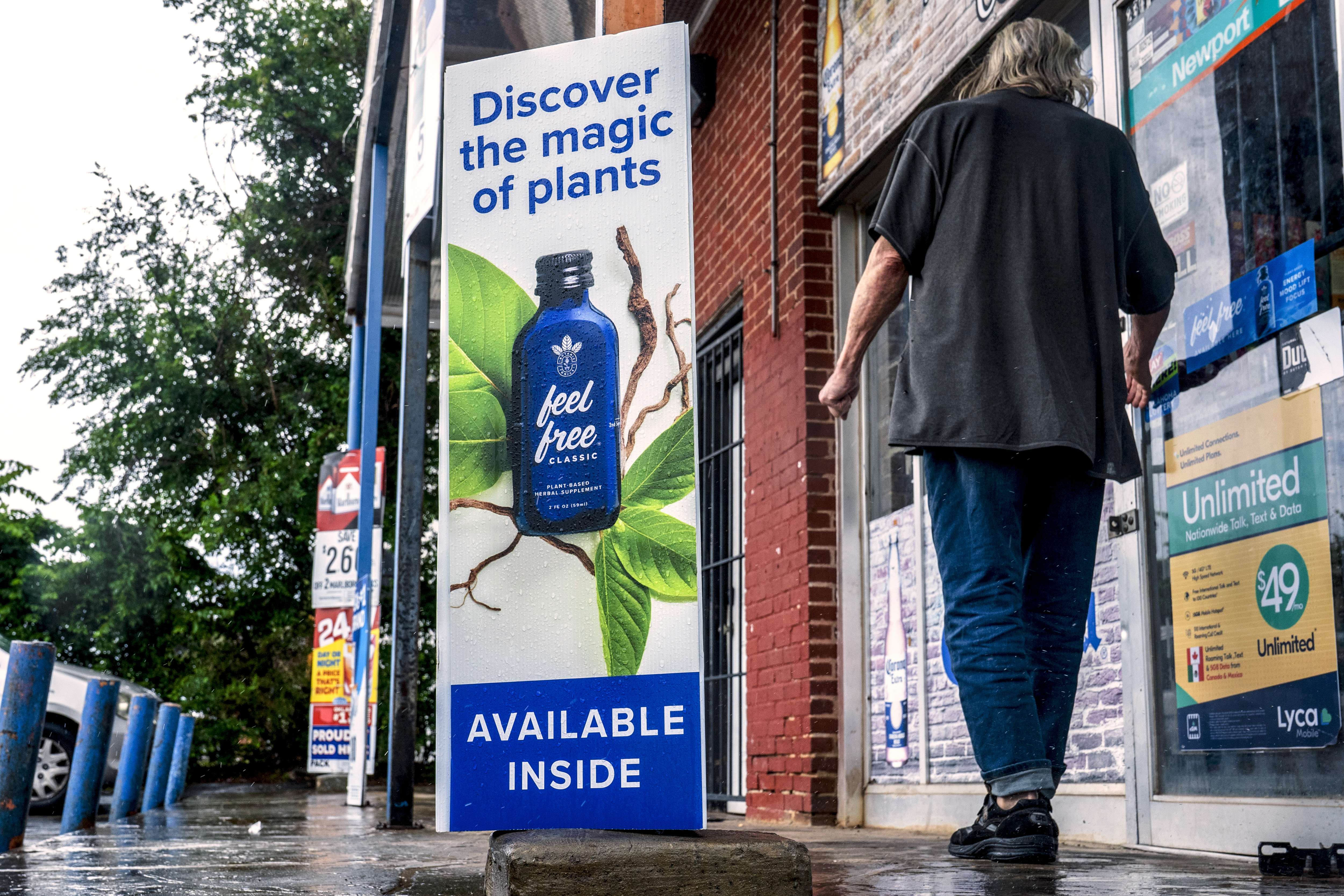
    A sign advertising Feel Free, a kratom product produced by Botanic Tonics, outside a convenience store in Oklahoma City, May 27, 2026. With support from Markwayne Mullin and Robert F. Kennedy Jr., the kratom industry is pursuing a potentially lucrative policy. With support from Markwayne Mullin and Robert F. Kennedy Jr., the kratom industry is pursuing a potentially lucrative policy. (Nick Oxford/The New York Times)NICK OXFORD

    The FDA would eventually receive more than 965 kratom-related reports of harm, including 264 resulting in death. The self-reported claims detailed instances of vomiting, paranoia and drug withdrawal.

    In 2023, FDA inspectors visited Botanic Tonics’ warehouse in suburban Tulsa. They reported their findings to the Justice Department, which went to court to seize 250,000 bottles of Feel Free and other kratom supplements.

    In court filings, prosecutors cited “serious safety concerns,” saying kratom had been linked to “addiction” and “liver toxicity.” They accused Botanic Tonics of engaging in illegal interstate trade of an unapproved substance.

    On a podcast released in 2024, Ross indicated that he planned a campaign to differentiate between natural kratom and other versions.

    “We’re going to be coming out of the chute asking for separate regulation for whole leaf kratom,” he said.

    Calling a governor

    Trump’s election — and his appointment of Kennedy as health secretary days later — created an ideal environment for such a campaign.

    To others working on the issue, Ross highlighted his relationship with Kennedy, indicating that he was planning to enlist the incoming secretary in efforts to influence the administration, according to one associate.

    In the weeks around the inauguration, Ross donated nearly $162,000 to Kennedy’s defunct presidential campaign, exceeding by many times his total federal political giving to that point.

    Ross was not the only kratom entrepreneur jockeying for position.

    A newly formed group called Botanicals for Better Health and Wellness, which is linked to a rival kratom supplement maker, retained the firm of Jeff Miller, a leading Trump fundraiser, to lobby the FDA, Congress and the White House. The new group donated $50,000 to the incoming president’s inaugural committee, for which Miller was finance chair.

    Miller and the group did not respond to requests for comment.

    Shortly after the inauguration, another rival firm, Diversified Botanics, which produces the popular kratom brand MIT45, hired a lobbyist who worked on Trump’s first presidential campaign and transition. The lobbyist helped arrange meetings with members of Congress and officials from the FDA and the health department for Diversified’s CEO, Niddel.

    Niddel said he wanted to explain to government officials how his company’s products differed from those featuring 7-OH.

    “We got to get in front of this,” Niddel said he recalled thinking. “It’s going to destroy the kratom industry, because an uninformed consumer or an uninformed legislator — it’s all being lumped in together.”

    Vince Sanders, founder and president of CBD American Shaman, which helped popularize 7-OH, said the kratom industry is targeting businesses like his for financial reasons, not because of moral or safety concerns.

    “We’ve devastated the industry,” Sanders said. “When 7-OH came in and people tried it, they learned very quickly that it was vastly superior. I mean, this is like going from a horse and buggy to an automobile.”

    Sanders’ company received a letter from the FDA last year accusing it of illegally marketing 7-OH products. It recently agreed to halt sales in Missouri to settle a lawsuit brought by the state attorney general. The suit accused the company of peddling “deadly opioids,” though the company did not acknowledge liability.

    Sanders believes that kratom lobbying has “demonized” his side of the industry.

    Mullin used his connections in Trump’s orbit to help the other side.

    Starting while he was in the Senate and continuing after he became homeland security secretary, Mullin urged officials in the health department to remove language from the FDA website warning of kratom’s harms, according to four people familiar with his efforts who were not authorized to discuss them.

    For the kratom industry, the warnings on the FDA website were no small concern. Industry representatives said they feared state officials were taking their cues from the agency in deciding whether to pursue bans or other restrictions.

    Records obtained by the Times show that the FDA was asked to remove from its kratom webpage links that took readers to enforcement actions against Ross’ kratom company and others.

    By the end of 2025, the FDA had removed the links.

    Other requested changes were not enacted, including one asking the agency to remove a warning “not to use kratom because of the risk of serious adverse events, including liver toxicity, seizures and substance use disorder.”

    Emily Hilliard, a health department spokesperson, declined to comment on the website changes, but said the agency is “solely focused on serving the American people, not advancing industry interests.”

    Mullin went public with his involvement in July.

    In a notable move, he joined Kennedy and Dr. Marty Makary, then the FDA commissioner, at a news briefing to announce that the agency was moving to effectively end the legal sale of synthetic 7-OH products.

    In a comment that was later highlighted by a group backed by Ross, Makary said at the briefing that “we’re not targeting the kratom leaf.”

    Mullin added that companies selling 7-OH were exploiting a loophole in FDA regulations to cause harm to consumers.

    “It’s legal, but it’s an addiction that’s ruining lives,” he said.

    Kennedy referred to his own past struggles with addiction at the news briefing. Weeks later, he pushed Ohio to adopt a policy that would have protected the kratom industry.

    Gov. Mike DeWine, a Republican, had announced a plan in August to designate all kratom products as illegal drugs. But Kennedy asked DeWine to crack down instead only on synthetic 7-OH — and not kratom leaf products. The health secretary had hoped to see states align with the federal effort, said Dan Tierney, a spokesperson for the governor.

    DeWine soon dropped the push to ban kratom and moved forward with an emergency prohibition against 7-OH. After a review, though, his office said it was moving ahead with a broader kratom crackdown.

    ‘People are asking for it’

    Having powerful people in Trump’s Cabinet vouching for kratom was not enough for Ross. He actively joined the effort to kneecap his competition.

    His allies launched an opaque company to position natural kratom products as safer than synthetic alternatives.

    They gave the company a name, Stop Gas Station Heroin, that made synthetics sound especially dangerous. The company hired the firm of the lobbyist McDowell, who had been introduced to Ross as a well-connected Trump insider.

    McDowell, who is close to the president’s elder sons, also employs a nephew of Kennedy and the son of Trump’s 2024 campaign co-manager Chris LaCivita.

    Stop Gas Station Heroin has paid McDowell’s firm, Checkmate Government Relations, at least $600,000, according to lobbying records.

    McDowell’s firm has pushed for tougher enforcement against the rival synthetic products in meetings with congressional offices and Kennedy’s health department.

    All the while, Botanic Tonics had been awaiting a ruling on its own battle with the federal government.

    In December, a federal judge denied the company’s motion to dismiss the FDA lawsuit accusing it of unlawfully selling kratom.

    Then, less than two weeks later, federal prosecutors moved to drop the case, as reported by The Kansas City Star. They told the judge that the seized supplements had expired and that the Trump administration had “determined it would not be a prudent use of government resources to sustain this action.”

    In a statement praising the decision, the company said the dismissal “reflects a maturing regulatory landscape” in which federal agencies increasingly recognize the differences between natural kratom leaf and the synthetic products.

    Justin A. Lollman, a lawyer for the company, told the Times in a statement that even during the lawsuit, the government “never sought to restrict Botanic Tonics’ continued manufacture and sale of Feel Free.” The company has sold more than 130 million servings of Feel Free, he added.

    In February, after the dismissal, Ross donated a total of $443,000 to the Republican National Committee in connection with a fundraising dinner headlined by Vance in New York.

    Before the dinner, Ross, accompanied by McDowell, secured a private meeting with Vance. Ross used the access to promote the benefits of natural kratom and urge the Trump administration, and particularly the DEA, to clamp down on 7-OH, according to two people briefed on the meeting who were not authorized to discuss it.

    McDowell’s firm did not respond to a request for comment.

    Over the next two months, Botanic Tonics donated $1 million to MAHA PAC, which is associated with Kennedy. The money from Botanic Tonics accounted for about 44% of all the funds raised by the political action committee between the beginning of last year and the end of April.

    The PAC did not respond to a request for comment.

    It is not clear whether the administration will approve the emergency ban of 7-OH that Ross and his allies have sought.

    But during a briefing in the Oval Office about maternal healthcare last month, Trump made a stray comment indicating the issue had reached his desk, even as his administration was grappling with higher-profile priorities including a war with Iran.

    “We’re looking very seriously at natural 7-OH and getting that approved,” Trump said.

    The statement left even industry insiders divided on whether he was siding with natural kratom or synthetic 7-OH, or taking another position altogether.

    Whatever his stance, Trump left the impression that he had heard from influential figures on the matter, adding that “we’re looking to see if we can do something there.

    “A lot of people are asking for it.”

    This article originally appeared in The New York Times.
  • History suggests there won’t be enough political will for ‘freedom cities’ to achieve their promise

    History suggests there won’t be enough political will for ‘freedom cities’ to achieve their promise

    As the United States approaches its 250th birthday on July 4, a coalition of libertarian think tanks is pushing the Trump administration to mark the occasion by unveiling the first sites for “freedom cities.” These privately developed towns built on federal land would fulfill Trump’s campaign promise to charter 10 such cities. They’re intended, in his words, to “reopen the frontier, reignite the American imagination, and give hardworking families a new shot at the American dream.”

    Groups such as the Frontier Foundation, the American Enterprise Institute and the Charter Cities Institute have run with what seemed like a far-fetched campaign promise. They have drafted proposals to hand public land to private developers for single-family homes and high-tech enclaves free from state and federal oversight. These groups have latched onto the idea of “freedom cities,” because the towns tap into a cluster of contemporary American anxieties about housing affordability, stagnant social mobility and global economic competition, especially with China.

    Trump and his allies see these cities as an innovative solution to major American problems, but they’re hardly new. Freedom Cities continue a long history of Americans looking to their vast endowment of public land as a safety valve for social and economic pressures. This is a “supply-side” solution for perceived scarcity, whether of housing or freedom from regulatory red tape.

    Yet, while tapping public land is a common move, the history of such undertakings — especially government-engineered colonies on public land in the early 20th century — suggests that the Freedom Cities face long odds of achieving their promise. Traditionally, the political will has faltered and such projects have collapsed long before the crises they’re designed to address abate.

    The Homestead Act of 1862 remains the most famous of Congress’ many attempts to underwrite opportunity through grants of essentially free land. But striking the right balance between acreage and price — while preventing speculation and corruption — proved difficult. In the two centuries between 1789 and 1976, when the Federal Land and Policy Management Act effectively ended private sales of public land, Congress passed hundreds of land laws and amendments. Most historians today would agree that the results were mixed at best.

    Government colonies emerged from a similar impulse to use public land to achieve social and economic goals at the state level. In the wake of World War I, legislators across the U.S. West began to fear for the future of the family farm. Modern farming required capital, technology and expertise that often exceeded the capacity of an ordinary individual. In the arid West, farming demanded mass irrigation, which only the government could afford to build. Meanwhile, farmland values grew exponentially, especially in California.

    State legislators worried that without farm work, landless Americans would congregate in cities as they had in Europe and Russia, and that this might foment radical ideas about socialism, communism and anarchism. “A prosperous farmer on his land does not turn berserker or run amok,” promised a 1920 California state pamphlet.

    The solution was utopia by statue. To keep small farmers in business, five states, beginning with California in 1917, passed Land Settlement Acts, empowering state officials to build planned farming colonies on state-owned land.

    In California, the project fell to Elwood Mead, a civil engineer who oversaw the state’s acquisition of 6,239 acres in Durham, Butte County. The site seemed like a good bet. It was fertile, well-watered and close to a highway and rail connections. Mead invited Americans to apply for farm allotments while the state constructed irrigation and officials planned the layout of farm buildings, orchards and gardens. This was not private speculation but the expert-led engineering of a new community from scratch.

    For a few years, it appeared to work. Even after costs ran more than double the state’s appropriation of $260,000, forcing residents to take out loans, they were able to keep up with their payments. With European agriculture still recovering from World War I, commodity prices remained high and state officials interpreted those windfalls as a sign of success. Mead reported that “considerably more than half the [Durham] settlers were tenant farmers, and they would still be renters if they had been compelled to buy under ordinary commercial conditions.” The Durham colony, Mead declared, guaranteed “independence, ambition, [and] self-respect” for its settlers.

    Emboldened, in 1920 the California legislature authorized $1 million ($16.5 million in 2026 dollars) to purchase 8,400 acres for a second colony in Delhi, Merced County. Delhi’s sandy soil required far more preparation than Durham’s, meaning the state’s investment would pay off only after years of stable yields and favorable market conditions.

    But state support didn’t last. Mead, it turned out, had cooked the books at Durham, misleading the legislature. Settlers quickly drained their personal savings to keep up with loan payments. After the nationwide agricultural depression in the early 1920s, both colonies’ finances collapsed. In 1923, Mead skipped town.

    The next year, after spending $2.5 million over four years, the California legislature admitted defeat at Delhi. Following extensive litigation, it shuttered its experiment in engineering a utopian farming future. The settlers weren’t bad farmers. It’s just that they required state subsidies, stable global markets and honest accounting to succeed.

    Perhaps ironically, to endure economic depression and environmental constraints, California’s utopian colonies needed more government, not less. But in the 1920s, the agricultural downturn and rising fiscal conservatism among voters and their officials, including Friend W. Richardson, elected governor in 1922, eroded the political will for state-directed rural planning.

    OLD IMAGE — DO NOT USE — Made By History sponsors. FOR USE ON MADE BY HISTORY STORIES ONLY.Inquirer Staff

    Yet, that cautionary tale didn’t deter the federal government from trying something even more ambitious a decade later. In 1935, Franklin D. Roosevelt launched one of his vaunted New Deal agencies: the Resettlement Administration, run by Columbia economist Rexford Tugwell. It proposed to build 100 “greenbelt towns” on the outskirts of major cities. The vision was utopian: modern, well-designed communities housing low- and middle-income families in garden settings, shielded from the squalor of unplanned urban growth. They would be cooperative, self-governing and superior to anything the private market had produced.

    Three towns were built: Greenbelt, Md.; Greenhills, Ohio; and Greendale, Wis. They were architectural and planning achievements. Greenbelt, outside Washington, D.C., was admired for its curved streets designed to limit through traffic, communal green spaces and cooperative stores. Life magazine called it a model for the future.

    There was a problem, however: the government invested roughly $16,000 per unit — about 10 times the cost of a private home at the time. In a country still climbing out of depression, that figure proved politically toxic.

    The backlash was almost immediate. Real estate and homebuilders’ associations, alarmed by the prospect of federally subsidized communities competing with private development, mobilized against the program. They found allies in a new conservative coalition of Republicans and southern Democrats in Congress who began rolling back New Deal initiatives in 1937 and 1938. Critics branded the greenbelt towns “socialist colonies” and “Tugwelltowns,” after their architect. The label stuck because Tugwell had visited the Soviet Union in 1927 as part of a U.S. trade delegation and had praised state planning, making him an easy target.

    The 1937 recession drained Roosevelt’s political capital, and in 1938, Congress defunded the program. Tugwell resigned. After World War II, the federal government sold the greenbelt towns to private developers and residents’ cooperatives, washing its hands of the experiment. They survive today as pleasant, somewhat quirky suburbs, fossils of a dream that the government could not sustain as a reality.

    Today’s advocates of Freedom Cities present their proposal as a tech-enabled departure from the timid incrementalism of conventional planning. But what they propose is actually part of an American ritual: imagining public land as a blank slate somehow immune from contemporary economic, environmental and political challenges.

    A century ago, state-sponsored colonies were going to make land affordable again and save the family farm. Ninety years ago, greenbelt towns hoped to prove that the U.S. government could outbuild the private market. And now, Freedom Cities purport to solve the housing crisis, outcompete China and restore the frontier spirit, all while remaining exempt from the federal management and environmental and labor regulations that, according to advocates, are the source of America’s problems, not hard-won protections against them. In the past, however, the crises that give rise to these so-called utopias — whether agricultural collapse or housing scarcity — outlasted the political will required to build the utopias meant to solve them. Freedom Cities depend on the same fragile arrangements: federal land transfers, regulatory exemptions and sustained political protection by the very government their boosters claim to escape. History suggests that arrangement won’t hold.

    Daniela Blei is a historian, editor and book coach who helps writers develop and finish their books. Find her at Daniela-blei.com/writing and scholarsandwriters.com.

    Tamara Venit-Shelton is Professor of History at Claremont McKenna College.

    Made by History takes readers beyond the headlines with articles written and edited by professional historians. Opinions expressed do not necessarily reflect the views of The Inquirer.

  • A group of Haverford alumni is pushing the college to remove Howard Lutnick’s name from library

    A group of Haverford alumni is pushing the college to remove Howard Lutnick’s name from library

    Haverford College students have publicly advocated for the school to consider removing U.S. Commerce Secretary and mega donor Howard Lutnick’s name from the library.

    Behind the scenes, an older group has been pushing, too.

    About a dozen vocal Haverford alumni have come out in strident disagreement with president Wendy Raymond’s decision in April not to take steps toward considering the removal of Lutnick’s name.

    Several in the group have called for Raymond’s resignation, while at least one said he had withheld his donation. Some were critical of Lutnick even before Department of Justice documents released earlier this year showed he had contact with sex offender Jeffrey Epstein as recently as 2018, long after Epstein pleaded guilty to obtaining a minor for prostitution and soliciting a prostitute.

    Haverford College president Wendy Raymond has led the college for seven years and previously announced she would step down next June.Courtesy of Haverford College

    But Raymond stood by and explained her decision during a Zoom call last week with former board members, and the current board chair said Lutnick himself feels that he is being targeted in a witch hunt, according to accounts of the meeting.

    Among the concerned alumni is Norm Pearlstine, a 1963 graduate who served on Haverford’s board of managers from 1986 to 1989 and is a former editor of the Wall Street Journal, Forbes Magazine, the Los Angeles Times, and Time Inc. and former chief content officer at Bloomberg.

    “I am appalled,” Pearlstine wrote to Raymond on May 3, days after she announced she would not initiate a committee to consider removing Lutnick’s name from the library. “You should resign immediately so Haverford‘s board can replace you with a leader who puts principle ahead of principal.”

    Another alumnus wrote that he would not advise his grandchildren to attend Haverford.

    “I cannot imagine that my granddaughters or grandsons would want to enter the Lutnick library or the Lutnick cafe or for that matter, any other building on campus with his name on it,” wrote Joseph Schulze, a 1963 graduate and retired Michigan school superintendent who grew up in the Philadelphia area.

    Adi Ignatius, a 1981 graduate and journalist who is editor at large of the Harvard Business Review, said he donated to Haverford every year until 2025, when he withheld his money because of the Lutnick matter.

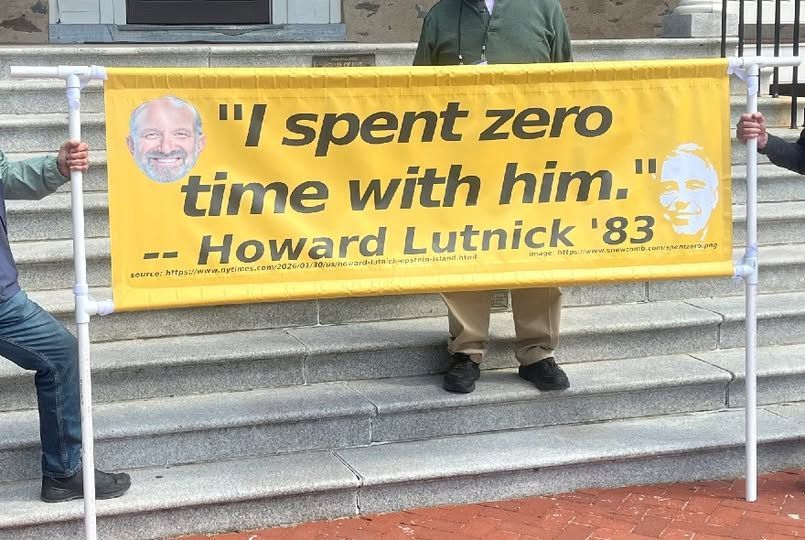
    Haverford College alumni from 1971 hold a banner on campus about Howard Lutnick during alumni weekend.Courtesy of Chuck Durante

    Haverford in a statement said many community members who oppose removing Lutnick’s name have also written to the college or told Raymond they are against the creation of a review committee that was requested through a student resolution this spring.

    “President Raymond felt it was in the best interest of the college to reject the resolution because she did not believe this matter met the threshold necessary to constitute a committee given the college’s established standards and the information available to us at that moment,” the statement said.

    But, the college said, “the matter is not closed.” Haverford is continuing to monitor “publicly available information” and “community sentiment” on the issue and Raymond or her successor could choose to initiate a committee, the college said.

    Haverford not ready to make an ‘indictment’

    Raymond, in the June 11 Zoom call with former board members, said she regarded creating a committee close to an “indictment” and did not think the threshold had been met, according to an email account of the meeting by Pearlstine obtained by The Inquirer. Some concerns about Lutnick are political, she said, and she is not willing to consider politics in her decision-making about a renaming committee, according to accounts of the meeting.

    Students and alumni have pointed out that Lutnick had previously said he had not been in a room with Epstein, whom he found “disgusting,” since 2005, yet he testified to Congress earlier this year that he had visited Epstein’s private island with his family in 2012 and exchanged emails with him in 2018.

    But Raymond, who has led the college for seven years and previously announced she would step down next June, said in Tuesday’s meeting that she did not think Lutnick’s lying about when he last had contact with Epstein was enough of a trigger.

    Some alumni, supporting Raymond’s decision, have noted there is no evidence Lutnick participated in Epstein’s crimes or improprieties.

    “I understand that students might feel strongly in support of wanting to change the name, but I don’t believe there’s a basis to do so,” said Robert Swift, a Philadelphia lawyer and former board member who was on the call Tuesday. “I have serious differences with Howard politically, but that’s not relevant either.”

    Swift, 79, a 1968 Haverford graduate who served on the board for 12 years, said Lutnick, a former chair of the college’s board of managers, was generous and served the board well.

    “His heart was in the right place,” Swift said.

    Some were calling for Lutnick’s removal even before the Epstein connection because they did not like his politics, said one alumnus who asked not to be named because of the sensitivity of the matter.

    “I don’t think it’s fair to remove someone’s name from a building simply because you don’t like their politics,” the alumnus said.

    George Parker, a 1960 alumnus and a professor of finance at Stanford’s Graduate School of Business, said Haverford should rely on its Quaker roots, which requires governing by consensus.

    “We do not have consensus,” Parker, a Quaker originally from the Philadelphia area, said of the Lutnick matter, “and where we do not have consensus, I do not think we should take action.”

    Lutnick’s relationship with Haverford

    Haverford has been in contact with Lutnick. Michael B. Kim, chair of Haverford’s board of managers and a private equity firm leader in Korea, said during the Zoom call that Lutnick communicated he is especially hurt that his alma mater is taking part in what he feels is a witch hunt, according to meeting accounts.

    Michael B. Kim, chair of Haverford College’s board of managers.Courtesy of Haverford College

    The board agrees with Raymond’s decision, he said.

    Lutnick’s relationship with the highly selective, small liberal arts college on the Main Line goes back decades. He lost his mother to cancer when he was in high school and then his father one week into his freshman year. Haverford’s president at the time waived his costs and he graduated in 1983 with an economics degree.

    Former chairman of financial firm Cantor Fitzgerald, he served on Haverford’s board for 21 years, the last three as chair, until 2015. His name was put on the library after a then-record $25 million donation he and his wife made in 2014. Lutnick has given the school $65 million and is one of its biggest donors.

    His Epstein ties gained scrutiny earlier this year. A Commerce Department spokesperson told the Associated Press that Lutnick had had “limited interactions” with Epstein, with his wife in attendance, and had not been accused of “wrongdoing.”

    A request to the Commerce Department’s press office to speak with Lutnick got no response.

    Under Haverford’s gift policy, the school can rename a building if “the continued use of the name may be deemed detrimental to the college, or if circumstances change regarding the reason for the naming.”

    Schulze, the former school superintendent, said he thinks that threshold has been met and a full discussion is needed.

    “Somebody else should take over if [Raymond’s] not ready to do that,” he said.

    Rob Riordan, a 1964 graduate and Trenton native who lives in Cambridge, Mass., said he was upset Raymond did not honor a request from an overwhelming majority of students at a plenary meeting who requested a committee be formed

    “To me, that felt like a violation,” said Riordan, 84, an educator who helped start charter schools in the San Diego area.

    Several alumni pointed out that nearby Bryn Mawr and Swarthmore Colleges have removed names of controversial figures from buildings in recent years.

    Pearlstine, who was on the Tuesday call, first wrote to Raymond and Kim in July 2025, urging that Lutnick’s name be removed. His concerns are not political, he said, but rather about behavior that conflicts with Haverford’s values.

    “Howard Lutnick is a powerful Trump administration cabinet officer who proudly helps the most lawless President in our country’s history implement policies that trample upon human rights, due process, rule of law, and respect for the independence and integrity of institutions of higher learning,” he wrote.

    It was not always that way. Ignatius, 67, who lives in Stonington, Conn., said he recalled interviewing Lutnick on stage at Haverford in 2015 and the good will in the audience toward him. Lutnick, who lost his brother and many of his company’s employees in 9/11, talked about the aftermath and how the company helped care for victims.

    “His trajectory since then has been similar to Rudy Giuliani’s,” Ignatius wrote to Raymond and Kim last August. “He has squandered the goodwill he built up after 9/11 and become a partisan troll, espousing values that are inconsistent with — and offensive to — the ideals that Haverford stands for.”

  • President’s House exhibits should be restored in time for July 4, another federal judge rules

    President’s House exhibits should be restored in time for July 4, another federal judge rules

    President Donald Trump’s administration must restore the remaining missing displays to the President’s House Site in time for July Fourth, a federal judge in Massachusetts ruled Friday evening.

    U.S. District Court Judge Angel Kelley’s decision, which came three weeks ahead of the United States’ roaring celebrations for its 250th birthday, temporarily blocks the National Park Service from removing or altering content at parks across the country and gives the agency 21 days to restore any exhibits that had been removed or changed.

    “Because Defendants deemed it important to strip the parks of these undeniable truths in anticipation of the 250th Anniversary of our great Nation, it is equally important that our shared history be honestly told and fully restored by the 250th Anniversary to properly honor the remarkable achievements of the United States,” wrote Kelley, a nominee of former President Joe Biden.

    The ruling comes as the City of Philadelphia and the federal government, including the Department of Interior and the National Park Service, are engaged in their own legal battle over the fate of the President’s House, a memorial dedicated to the nine people George Washington enslaved in Philadelphia during the founding of the U.S.

    Both parties are waiting for a ruling from the U.S. Court of Appeals for the Third Circuit on whether a February injunction ordering the administration to restore the site of America’s first executive mansion should take effect. Depending on how the Third Circuit rules — and when — the new ruling could add an extra level of complexity to the litigation.

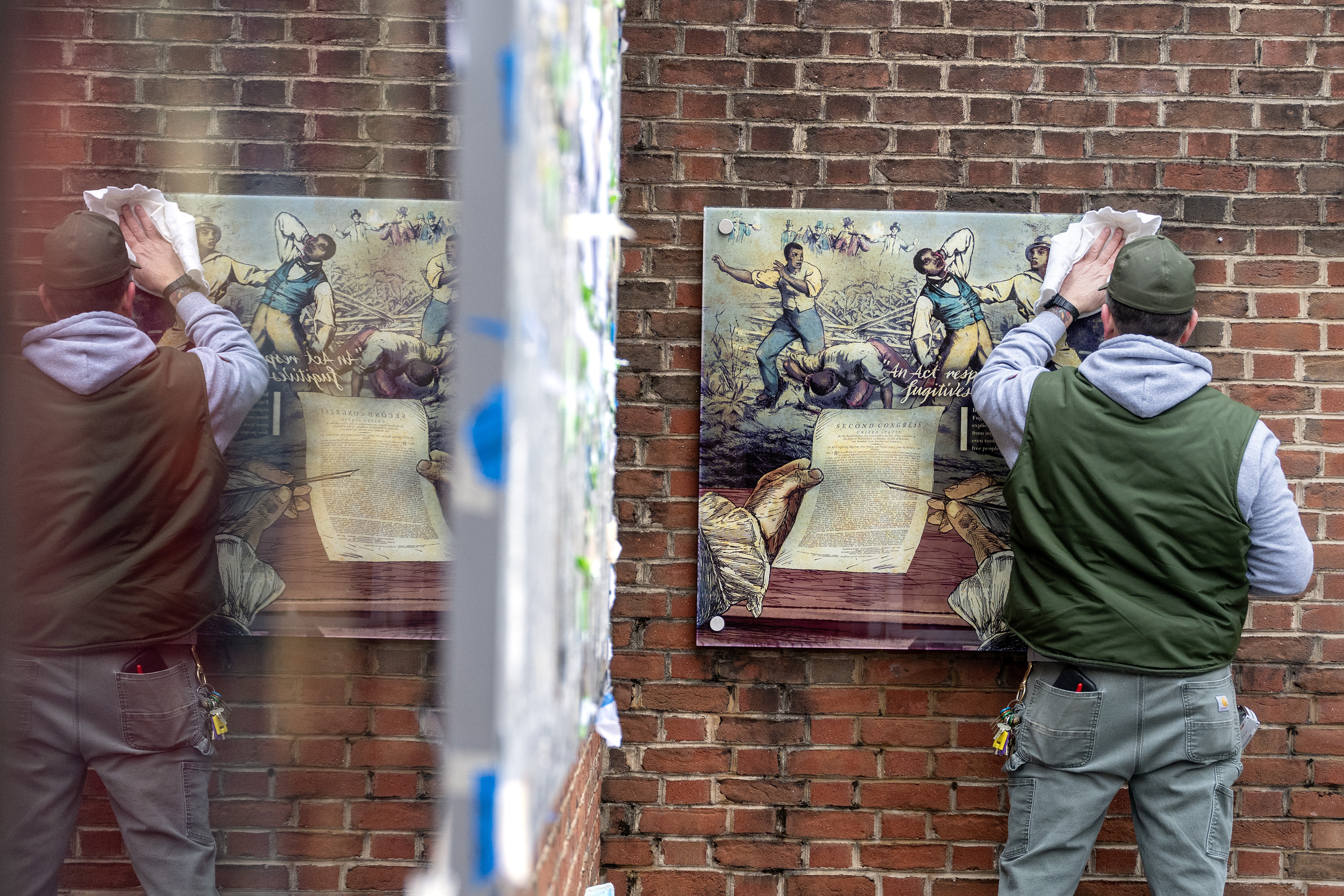
    Workers rehang panels at the President’s House in Independence National Historical Park on Feb. 19. Tom Gralish / Staff Photographer

    In a statement to The Inquirer Saturday, a spokesperson for the Interior Department called Kelley a “liberal activist judge” and said the government will be considering its appeal options “while we celebrate UFC Freedom 250 on the South Lawn of the White House this weekend in honor of our nation’s 250th,” referring to the controversial UFC fight that Trump is hosting at the White House on his birthday Sunday.

    The city did not immediately respond to a request for comment.

    Friday’s decision is the latest development in what has become both a bipartisan local and national effort to protect history at the President’s House and parks across the country. Directives from Trump and Interior Secretary Doug Burgum prompted the President’s House to be abruptly dismantled earlier this year.

    The federal government later proposed its own version of history for the Sixth and Market site, which the Trump administration said it’s ready to install should it get the legal green light.

    In a court hearing earlier this month, the administration said it would take roughly three weeks to restore the exhibits or install the new panels.

    The ruling out of Massachusetts came in a case that challenged the basis for the removals of exhibits more broadly. A coalition led by the National Parks Conservation Association argued in its lawsuit that Burgum’s 2025 order implementing Trump’s directive to ensure that no national parks’ exhibits “inappropriately disparage Americans past or living” was unlawful. The conservation groups asked Kelley to issue a stay on the order and reverse all removals that already took place.

    Plaques at other national parks were also impacted by the orders, including signage regarding climate change at Fort Sumter and the mistreatment of Native Americans at the Grand Canyon.

    “Under the guise of promoting American dignity, this Administration seeks to share a limited history by ordering the removal of all signs, displays, and interpretive exhibits at National Parks that do not align with its preferred narrative, thereby telling half-truths,” Kelley wrote.

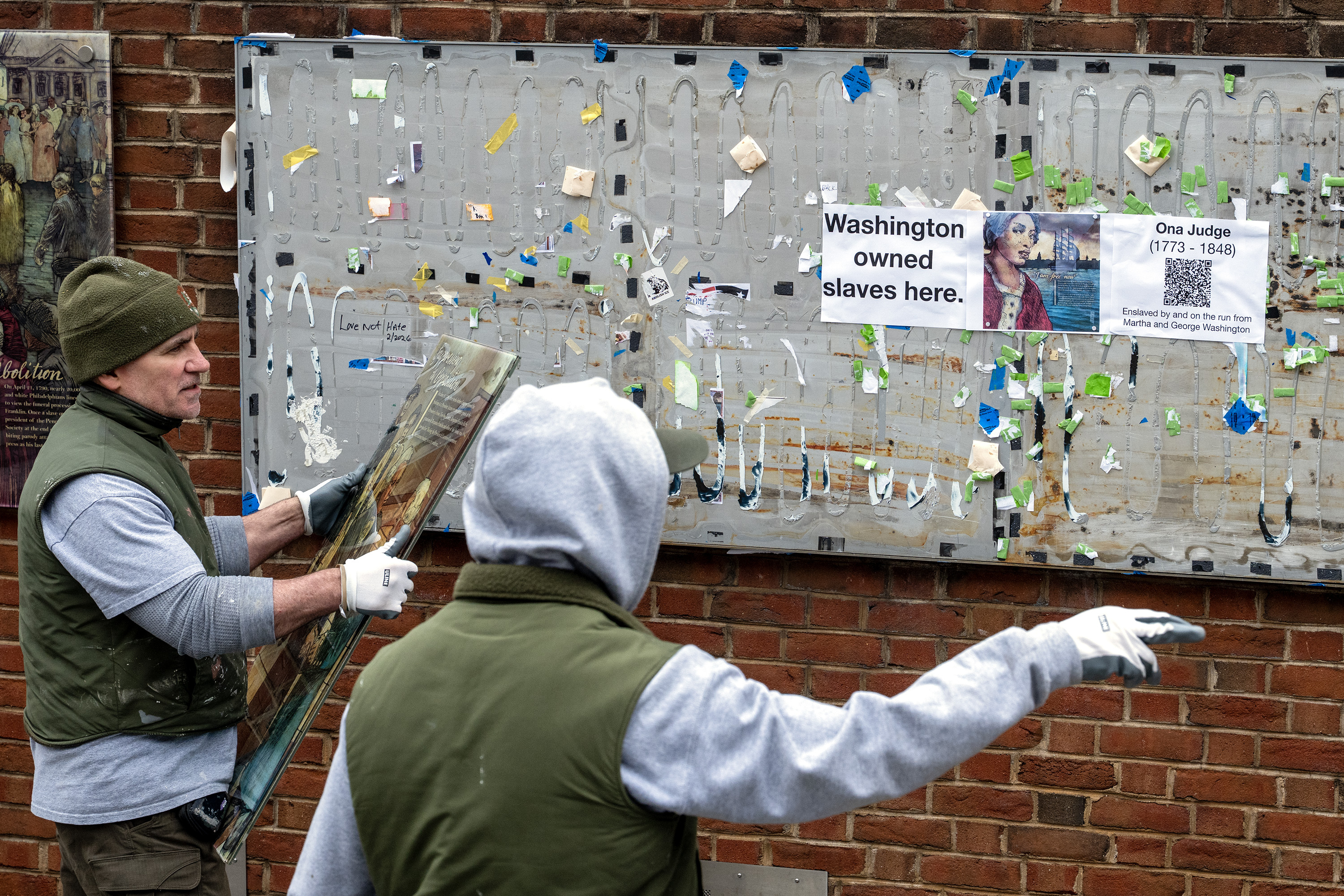
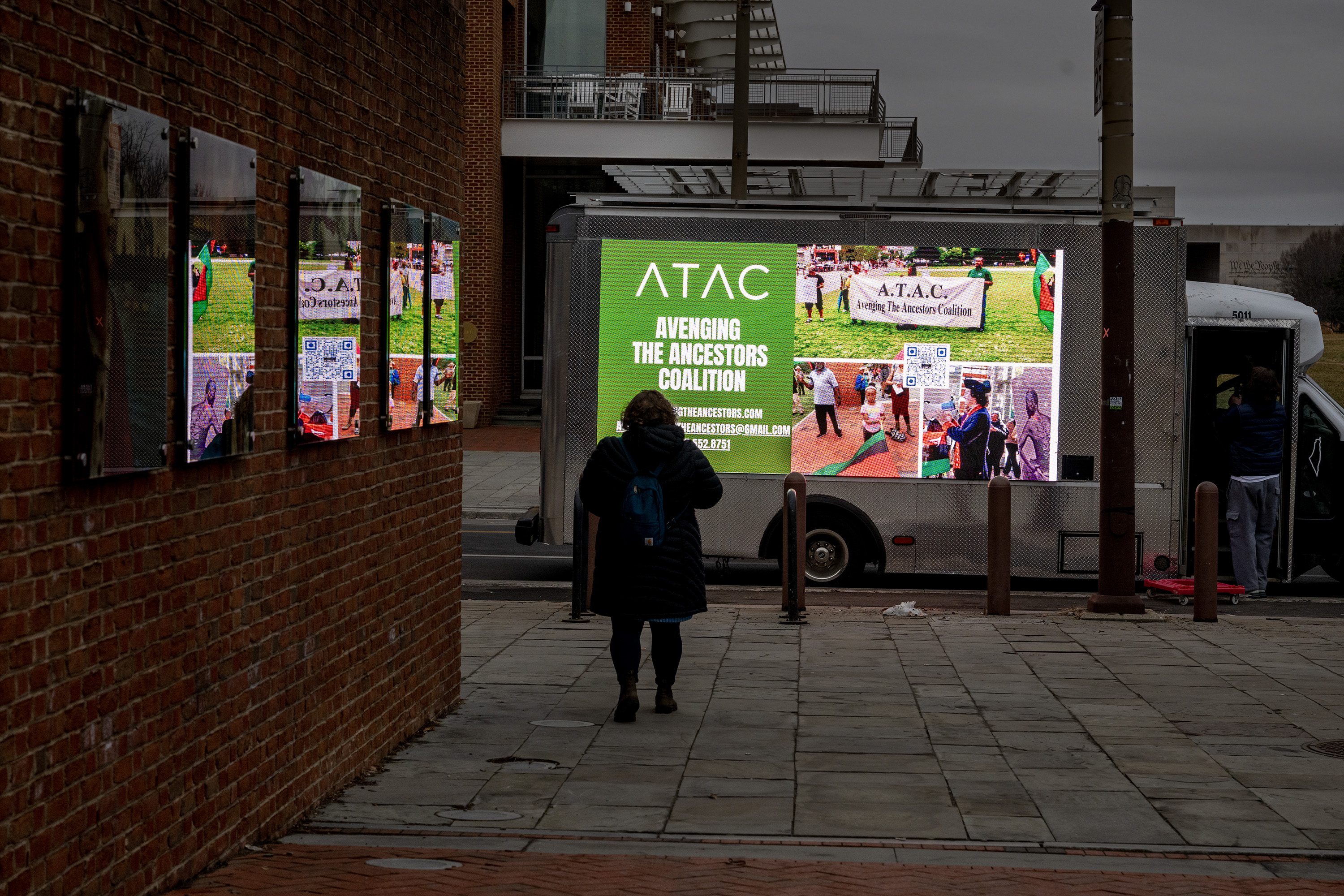
    An electronic billboard from the Avenging the Ancestors Coalition is parked at the President’s House on Feb. 19, following a rally after the return of some of the slavery exhibits that the National Park Service removed in January.Tom Gralish / Staff Photographer

    Alan Spears, senior director for cultural resources for the National Parks Conservation Association, applauded the ruling in a statement. He said “it will help protect national parks from the administration’s unprecedented campaign to erase history and science at these one-of-a-kind places.”

    The deadline to restore any missing materials ahead of July Fourth is notable, especially in Philadelphia, where a deluge of tourists will visit for Semiquincentennial festivities. But, as it stands, visitors to Independence National Historical Park are seeing a half-finished version of history at the President’s House.

    In February, Philadelphia District Judge Cynthia M. Rufe ordered the park service to restore the dismantled exhibits at the site, but a few remain uninstalled after the Justice Department appealed the injunction and obtained an administrative stay on further restorations.

    Outside of the legal proceedings, President’s House stakeholders have continued to defend the site by holding rallies and engaging Philadelphians via social media. Last month, the site was designated endangered by the National Trust for Historic Preservation, awarding the Preservation Alliance for Greater Philadelphia a $25,000 grant to produce a mobile digital exhibit near the embattled site.

  • Judge blocks national parks from removing ‘negative’ signs

    Judge blocks national parks from removing ‘negative’ signs

    WASHINGTON — A federal judge Friday temporarily blocked the National Park Service from removing or revising signs, films, and other materials at national parks across the country to comply with a directive from President Donald Trump.

    The ruling pauses enforcement of an executive order that called for removing or covering up materials at national parks that “inappropriately disparage Americans” or cast the United States “in a negative light.”

    The judge, Angel Kelley of U.S. District Court for the District of Massachusetts, also ordered the park service to restore within three weeks any exhibits that it had dismantled or altered.

    The ruling provides a temporary reprieve for the plaintiffs, a coalition of advocacy groups that sued over the executive order in February, while the litigation continues to unfold.

    To comply with the president’s directive, the park service has taken down plaques about slavery at the President’s House in Philadelphia, a sign about climate change at Fort Sumter in South Carolina, and a sign about Indigenous people at Acadia National Park in Maine.

    Another federal judge has already ordered the park service not to make further changes to the slavery exhibit at the President’s House Site at Independence National Historical Park, as she considers a separate lawsuit filed by Philadelphia.

    Kelley, who was nominated by President Joe Biden, sharply rebuked the Trump administration for taking down materials. “Not only does this undermine the integrity of the national parks; it sets a dangerous precedent of censorship and sanitization,” she wrote.

    Kelley began her 63-page ruling by listing examples of national parks that help educate visitors about difficult periods of American history, as well as contributions made by people of color, gay and transgender figures, women and other marginalized groups.

    “From the echoes of abolition in John Brown’s Fort in Harpers Ferry, to the genesis of the modern LGBTQ+ civil rights movement at the Stonewall National Monument, to the retreating ice of Glacier National Park in Alaska, the national parks preserve the multifaceted and multilayered history of our nation, including the good, the bad and the ugly,” she wrote.

    In the lawsuit, the plaintiffs argued that removing the materials was “arbitrary and capricious,” in violation of the Administrative Procedure Act. They also accused the park service of exceeding its legal authority.

    Katie Martin, a spokesperson for the Interior Department, the parent agency of the park service, suggested that the administration would appeal the ruling.

    “This ruling is from a liberal activist judge,” Martin said in an email. “The department will look at our appeal options while we celebrate U.F.C. Freedom 250 on the South Lawn of the White House this weekend in honor of our nation’s 250th with the greatest president in the history of our country — President Donald J. Trump.”

    Emily Thompson, the executive director of the Coalition to Protect America’s National Parks, one of the advocacy groups that brought the lawsuit, applauded the ruling.

    “National parks are not propaganda tools, nor should they be used for partisan purposes,” Thompson said in a statement. “They exist to preserve and interpret the full American story, not just the parts that make some politicians comfortable. This ruling is an important step to help ensure that remains the case.”

    In an email sent after the ruling, a copy of which was reviewed by The New York Times, a park service official directed regional supervisors to pause carrying out Trump’s directive “for the time being.”

    “Parks can continue to submit items for review, but implementation actions should pause pending further guidance,” the email said.

    This article originally appeared in The New York Times.

  • Pennsylvania is working to fill a spot in Trump’s ‘Great American State Fair’ as other Democratic-led states boycott

    Pennsylvania is set to have a presence at an upcoming two-week “Great American State Fair” on the National Mall, one of the signature 250th anniversary events hosted by President Donald Trump celebrating America’s founding.

    What that presence will look like for Pennsylvania — the state where the nation’s independence was declared — is still up in the air.

    All 50 states and six U.S. territories are expected to be represented with booths showcasing aspects of their culture and history. Some blue states, however, are opting out of sending their own staff to participate, citing a partisan tilt to the event and the cost to participate.

    Pennsylvania, a quintessential swing state led by Democratic Gov. Josh Shapiro, is still preparing to participate in an exhibit, according to a person familiar with the planning. But state officials have struggled to find a Pennsylvania business that wants to associate with the Trump-affiliated event.

    The Great American State Fair has hit numerous roadblocks in its planning in recent weeks. More than half of the acts announced to perform at a Semiquincentennial concert series withdrew shortly after its announcement over concerns the nation’s birthday planners were politically motivated. Trump then replaced the concert series with a political rally, which he will headline on June 24 and he billed as “A Rally to end all Rallies!” in a Truth Social post.

    Freedom 250, the nonprofit organization behind the 16-day event kicking off June 24, has deemed it a “first-of-its-kind world’s fair” while some Democratic officials have railed against it as a waste of taxpayer money.

    Unlike other states, Pennsylvania’s state government did not commit to sponsoring a booth. But Shapiro’s office has been trying to connect Freedom 250 with organizations and companies that could represent the state, according to federal and state sources familiar with the planning.

    It was not clear what type of Keystone State company or group would fill the gap.

    Freedom 250 was still finalizing plans with several states’ tourism boards, cultural and heritage groups, and other organizations as of Friday — less than two weeks before Trump was scheduled to headline the fair’s “kick-off celebration.”

    The event is set to include remarks by Trump and members of his cabinet, fighter jet flyovers, and a performance of “God Bless the USA” by Lee Greenwood, a staple of Trump’s major campaign events over the years. Each day of the fair from June 25 through July 10 will have a theme — including “land & prosperity,” “military & veterans appreciation day,” “faith, values and inspiration” and “MAHA Monday.”

    At least a half-dozen states have opted not to participate, according to NOTUS and other news outlets.

    “He invited all the states to participate and wants to charge us. Charge us to go down and put something on his exhibit, whatever he’s creating for Freedom 250. It’s just ridiculous,” Democratic Gov. Maura Healey, of Massachusetts, said in a Boston Public Radio interview earlier this month.

    Shapiro — a Democrat who’s also frequently challenged Trump and is widely considered a potential contender in the 2028 race to succeed him — has not similarly criticized the fair. The governor has been involved in other 250-focused events in Pennsylvania, such as the Commonwealth Concert Series that includes concerts in five cities across the state.

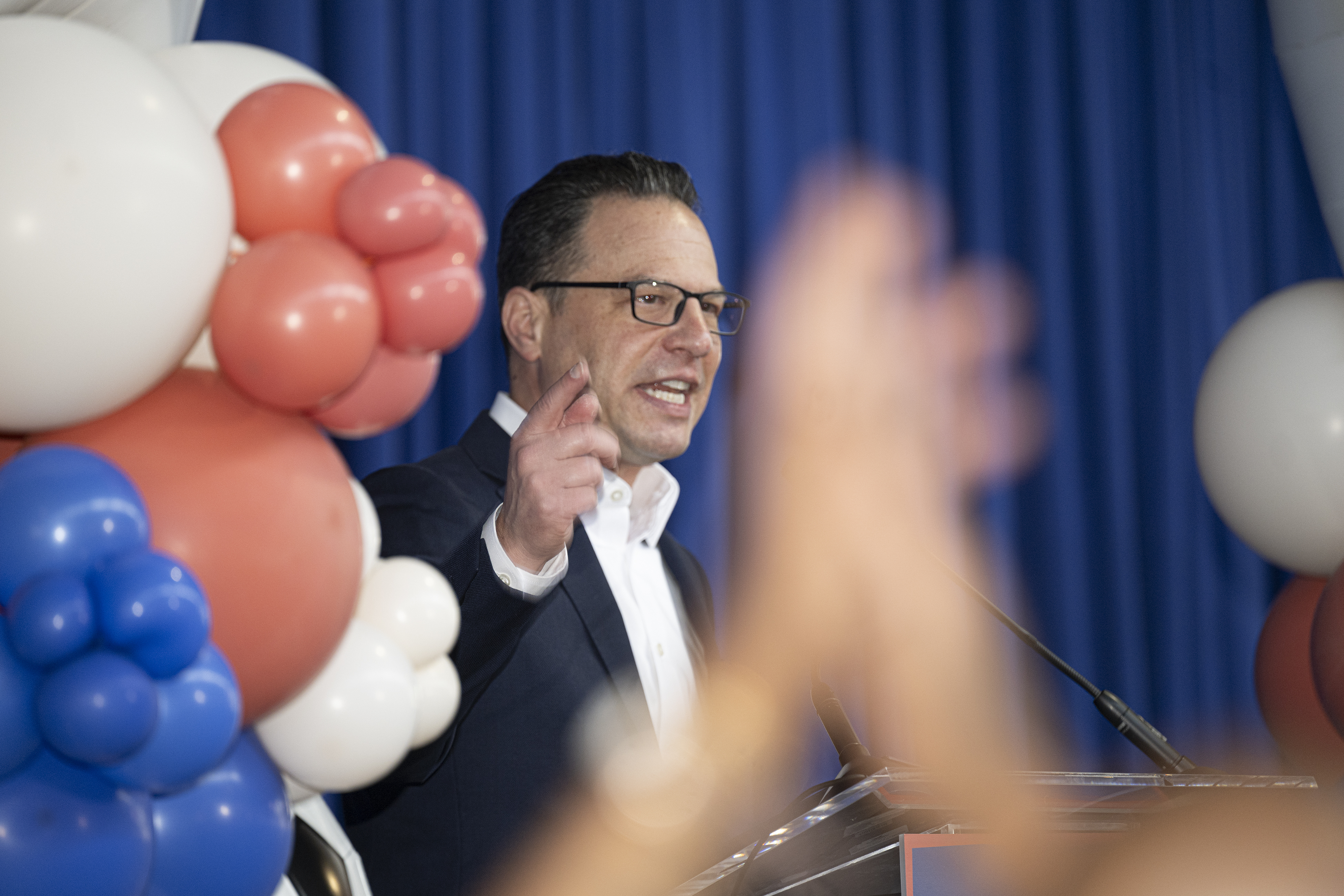
    Pennsylvania Gov. Josh Shapiro speaks during a Visit PA pep rally Tuesday, March 31, 2026, ahead of the nation’s 250th anniversary and other major events in the state. Jose F. Moreno / Staff Photographer

    Freedom 250 has pushed back against the idea that the fair and other anniversary celebrations are partisan.

    “The idea that a president’s presence at America’s 250th birthday is somehow a political act is not a serious argument — and frankly, it is not serious journalism to treat it as one,” Freedom 250 spokesperson Rachel Reisner said. “No one suggested the Biden-Harris administration would have kept the president away from this moment, nor should they have. We proudly welcome President Trump, who has shown genuine enthusiasm for celebrating America and its patriotic traditions, just as we would have welcomed any sitting president. Freedom 250 looks forward to celebrating America together and hosting once-in-a-generation events.”

    The organization has announced several pieces of the program, including “classic state fair” elements like livestock competitions and interactive experiences with companies such as John Deere and Northrop Grumman, the aerospace and defense company.

    It has not detailed the focus of each state’s designated section on the mall.

    An instructional pamphlet directed to state officials explains that every state and territory can “tell its own story” by “presenting a pavilion that reflects their history, culture, and contributions to the nation.” It does not include pricing, though a source familiar with the planning said states or organizations are only responsible for covering the cost to fill the space.

    Some states are sponsoring their exhibits directly through their state agriculture or tourism departments. For example, Arizona and Colorado are planning interactive experiences that highlight their states’ scenic outdoors, and New York’s “I Love NY” tourism campaign will showcase the state’s vacation areas, according to USA Today.

    The Freedom 250 pamphlet suggests other ways states can celebrate the Semiquincentennial — through flags and signage, or “projection experiences” to light up buildings like a state Capitol. It recommends governors issue official proclamations to recognize the moment, as well as foster civic and educational opportunities like student art contests and field trips.

    “The true power of this anniversary will not come from Washington alone,” Freedom 250 CEO Keith Krach wrote to state and local officials in the document. “It will come from you.”

  • Judge extends block on Trump’s $1.8 billion ‘Anti-Weaponization Fund’

    ALEXANDRIA, Va. — A federal judge agreed on Friday to extend a court-ordered block on the Trump administration’s creation and operation of a $1.8 billion settlement fund for compensating people who claim to be victims of a weaponized government.

    Earlier this month, acting Attorney General Todd Blanche told Congress that the government is scrapping its plans for the fund in the face of a fierce bipartisan backlash. Government attorneys have argued that lawsuits challenging the fund are now moot, but plaintiffs’ attorneys aren’t satisfied by Blanche’s assurances that the fund won’t move forward.

    Neither was U.S. District Judge Leonie Brinkema, who ruled that the “Anti-Weaponization Fund” will remain blocked until further notice from the court.

    “The (government’s) mootness argument, in my view, doesn’t go anywhere,” the judge said.

    President Donald Trump, meanwhile, has not publicly and unequivocally endorsed its cancellation. He has continued to express support for the fund in remarks to reporters.

    Brinkema gave the parties a week to negotiate an agreement for Blanche to submit a sworn declaration that the administration won’t revive the fund.

    Brinkema previously agreed to temporarily block the administration from proceeding with the fund for at least two weeks. Her May 29 order was due to expire on Friday.

    Trump’s Republican administration created the fund to resolve his lawsuit against the Internal Revenue Service over the leak of his tax returns.

    Plaintiffs who sued to block fund payouts argue that the government can’t legally divert taxpayer money into what they argue is a slush fund for compensating Trump’s allies.

    In a separate case on Wednesday, a different judge in Washington, D.C., rejected a government watchdog’s parallel request for a court order temporarily blocking the Trump administration from forging ahead with the fund. U.S. District Judge Richard Leon said he accepts Blanche’s representation that the fund is now moot.

    Leon had asked Justice Department attorney Andrew Block why Blanche doesn’t formally rescind his May 18 order establishing the fund. Block said he didn’t know. He still didn’t have an answer to that question when Brinkema posed it two days later.

    “It’s a huge gap in the record that we don’t have an answer to that question,” the judge said.

    In the Virginia case, attorneys from the legal advocacy group Democracy Forward asked for an order to temporarily suspend the fund’s implementation and stop the Trump administration from disbursing any payouts from it.

    The plaintiffs include a fired prosecutor and a college professor acquitted of assaulting federal agents at a protest.

    Even before the administration said it was dropping the fund, the Justice Department did not form the five-member commission that would decide on payout criteria, so no money was paid out nor claims accepted.

    Many of the Republican president’s allies are opposed to compensating rioters who stormed the U.S. Capitol on Jan. 6, 2021. In May, however, Blanche wouldn’t rule out the possibility that Capitol rioters who engaged could be eligible to apply for payments from the fund.

    Trump issued mass pardons to Capitol rioters on his first day back in the White House last year. More than 1,500 people were charged in the Jan. 6 attack before Trump erased every case with his sweeping act of clemency.

    Brinkema was nominated to the bench by President Bill Clinton, a Democrat.

  • A key U.S. government surveillance program is set to expire. A look at what that means

    WASHINGTON — A key surveillance tool seen as vital in preventing terror attacks and catching foreign spies was set to expire Friday after congressional efforts to temporarily extend it failed in bipartisan fashion.

    It’s a significant lapse for the program known as Section 702, and even as President Donald Trump nominates a new national intelligence director more palatable to both Republicans and Democrats than his initial pick, it’s unclear how soon lawmakers — set for recess — would be able to revive the spy program.

    Still, there is not expected to be an immediate drop-off in intelligence collection given that a court order from March certified that government surveillance powers under the law could remain in effect for another year.

    Section 702 allows for sweeping powers

    The provision is a part of the Foreign Intelligence Surveillance Act, known as FISA, and grants American spy agencies sweeping powers to collect and examine the communications of foreigners located outside the United States without first getting a warrant.

    U.S. officials see the law as an invaluable national security tool that has helped disrupt potential acts of terrorism, yielded valuable insight into ransomware attacks on critical infrastructure, and contributed to the killing of al-Qaida leader Ayman al-Zawahri in a 2022 drone strike.

    The law was passed in 2008 as an effort to codify key aspects of a predecessor spy program created by President George W. Bush’s Republican administration.

    Since then, officials across administrations of both major political parties have warned that without the law the government won’t be able to collect crucial intelligence overseas.

    Program’s renewal historically has been contentious

    The periodic need to reauthorize the law has prompted protracted debate in Congress well before this year, including discussion over whether additional guardrails are needed to protect the privacy of Americans and their personal data.

    That’s because when the government eavesdrops on foreigners abroad, it also sweeps up the communications of American citizens and others in the U.S. who are in contact with those surveillance targets.

    Civil liberties advocates have raised concerns over revelations that FBI analysts over the years have improperly queried the vast repository of intelligence collected through the program for information about Americans, including related to the Jan. 6, 2021, riot at the Capitol by a mob of Trump supporters and the racial justice protests of 2020, as well as about state and federal political figures.

    Some of those advocates have said the government should be required to have a warrant before examining communications collected from Americans. U.S. officials have said that a warrant would be legally unnecessary and overly cumbersome and that corrective measures have been implemented to reduce the number of improper queries.

    Complicating the debate is the unlikely political alliances it has produced, uniting a coalition of lawmakers skeptical of government surveillance that includes both privacy-minded liberal Democrats and Republicans who still regard the intelligence community with suspicion over the investigation of ties between Russia and Trump’s 2016 Republican presidential campaign.

    Pushback over acting intelligence pick Bill Pulte

    Democrats balked when Trump picked Bill Pulte to serve as acting national intelligence director and refused to support a FISA extension until the selection was withdrawn. Pulte, a Trump loyalist with no known national security experience, has set off alarms by using his perch as director of the Federal Housing Finance Agency to facilitate dubious mortgage fraud investigations of perceived Trump adversaries.

    A House vote this week that would have temporarily extended the program collapsed, with 19 Republicans and nearly all Democrats rejecting the temporary measure, 198-218. A Senate effort to approve its own versions also failed.

    After those votes, Trump announced he was tapping Jay Clayton, the U.S. attorney in Manhattan who previously served as chairperson of the Securities and Exchange Commission, as his permanent pick for director of national intelligence, or DNI. The pick was warmly received on Capitol Hill, but it was not enough to break the impasse before Friday’s scheduled expiration.

    Connecticut Rep. Jim Himes, the top Democrat on the House Intelligence Committee, said that he has “known and respected” Clayton for decades and that had he been tapped a week ago, “lots of pain might have been avoided.”

    “His intelligence, temperament, and deep commitment to public service will make him a terrific DNI,” Himes said.

    Next steps for the spy powers provision

    Before the congressional votes, Republican Arkansas Sen. Tom Cotton, chairperson of the Senate Intelligence Committee, and Iowa Sen. Chuck Grassley, chairperson of the Senate Judiciary Committee, had warned the Trump administration to prepare “for a potential significant gap in foreign intelligence collection.” Other lawmakers since then have voiced similarly dire concerns.

    The expiration is likely to be the first meaningful lapse of Section 702 since the law was created more than 15 years ago. In 2024, the Senate barely missed its midnight deadline before voting to approve a bill that was then signed by President Joe Biden, a Democrat, creating a brief lapse.

    Despite this year’s sunset of the statute, there’s no expectation of any immediate halt to intelligence collection as the U.S. hosts a series of events this summer with potential national security concerns, including the World Cup and festivities surrounding the 250th birthday of the United States.

    A March opinion from the secretive Foreign Intelligence Surveillance Court certified the program’s renewal for another 12 months, meaning that Section 702’s authority is expected to remain intact through then. Even so, it’s conceivable that without congressional reauthorization, communications companies forced to provide data to the government under the law could try to cease that compliance and argue that they cannot be compelled to cooperate.

  • Brian Fitzpatrick steps up criticism of House Republican leaders while he starts to lean on their campaign cash

    Brian Fitzpatrick steps up criticism of House Republican leaders while he starts to lean on their campaign cash

    WASHINGTON — As U.S. Rep. Brian Fitzpatrick’s fiercest reelection battle in years got underway in the last two months, the moderate Bucks County Republican has called to restrict President Donald Trump’s war in Iran and prohibit a so-called “anti-weaponization fund” that could reward the president’s allies.

    He’s talked up Democratic Gov. Josh Shapiro’s potential run for president, and he’s said he would “100%” become an independent if Pennsylvania didn’t have closed primaries.

    He went even further this week — deriding House Republican leadership for opposing a process that allows lawmakers like him to force a vote on issues like the weaponization fund.

    “Leadership of both parties have been guilty of this for years… just further evidence of the brokenness of the two-party system — and the rise of Independent voters is a direct manifestation of this,” Fitzpatrick wrote on social media.

    Behind the scenes, though, Fitzpatrick has started to lean on his party’s vast resources to help win his reelection and, Republicans hope, keep the narrowly divided 435-member House in GOP control.

    In a newly scheduled television ad campaign that will begin later this month, Fitzpatrick is teaming up with the National Republican Congressional Committee — the official campaign arm of House Republican leaders — to launch ads aimed at boosting his campaign in the 1st Congressional District against Democratic nominee Bob Harvie, a Bucks County commissioner who won last month’s primary with support from Shapiro and national Democrats.

    The $120,000 worth of cable TV ads represent the first foray by the NRCC in any Pennsylvania district so far this year, according to the tracking firm AdImpact.

    Both parties are competing heavily over four Republican-held seats in Pennsylvania, making the state one of the centerpieces in the fight to win the House majority during this year’s high-stakes midterms.

    The NRCC and other Republican groups have promised to help reelect all four incumbents. And with the new ads benefiting Fitzpatrick, the NRCC is spending first on the candidate who’s been the most publicly critical of their leadership and even gotten some blowback from Trump as a result.

    “Trump can say whatever Trump wants,” Robin Kolodny, a Temple University political science professor, said of the president’s accusations that Fitzpatrick is insufficiently loyal. “But you get to 218 by adding one race at a time. And if you have an incumbent who’s been successful, the party has every incentive to support them until they find that the polling says it’s the lost cause.”

    Fitzpatrick has won five terms in a nearly evenly divided Bucks County-based district with what observers have called a specific brand of politics. He votes with his party and supports Trump’s priorities the vast majority of the time, though he’s broken with them in instances like the final passage of the One Big Beautiful Bill and the expiration of COVID-era Affordable Care Act tax credits that kept costs lower for individuals using the public marketplace.

    His recent opposition to the anti-weaponization fund has echoes of that healthcare debate in December, when Fitzpatrick joined with Democrats in trying to use a process called a discharge petition to force a vote that Republican House Speaker Mike Johnson declined to set up.

    Fitzpatrick’s office and campaign did not respond to requests for comment for this story.

    But earlier this week, the Pennsylvania lawmaker and U.S. Rep. Tom Suozzi (D., N.Y.) said they would launch a discharge petition to prevent Trump from creating a fund to compensate people who claim to be victims of a weaponized federal government, Punchbowl News reported. The idea for the $1.8 billion fund emerged from a settlement between Trump and the Department of Justice in a case about the leak of Trump’s tax returns.

    Republican lawmakers who have often acquiesced to the president’s demands voiced deep concerns. Acting Attorney General Todd Blanche responded by saying the administration was walking away from the idea. Still, Trump officials have quietly worked to keep it alive and have not ruled out payments going to individuals previously charged with attacking the Capitol on Jan. 6, The Atlantic reported Thursday.

    “The statement’s not satisfactory,” Fitzpatrick said on CNN earlier this month while discussing Blanche’s comments. “We need both a legal avenue here and a statutory legislative avenue. That’s what Tom and I have introduced, and that’s what we’re going to force to the floor.”

    He called the fund an “abuse” of the law. In a post on X this week, he also disparaged Republicans leaders’ “poorly managed House Floor” for preventing a discharge petition to squash it.

    Johnson, the Louisiana Republican who leads the chamber, headlined a fundraiser earlier this year for Fitzpatrick, who generally does vote for GOP priorities — including this week’s successful effort to provide additional funding for immigration enforcement within the Department of Homeland Security.

    Fitzpatrick and Suozzi had not yet launched the discharge petition as of Thursday evening, after Punchbowl reported that Republican leadership was frustrated with the idea. Some even proposed pulling back campaign contributions from NRCC “patriots” who signed on to a discharge petition, according to Punchbowl.

    Fitzpatrick is one of 15 Republicans in the NRCC’s “patriots” program that prioritizes sending resources to competitive districts.

    Also on the list are U.S. Reps. Scott Perry, in a Harrisburg-based district; Ryan Mackenzie, in the Lehigh Valley; and Rob Bresnahan, in a Scranton-based district. Each of those races are considered more of a “tossup” than Fitzpatrick’s, and Kolodny said it’s likely the NRCC will invest in advertising and campaign operations to help them as well, possibly a little later in the summer.

    She said the earlier spending on behalf of Fitzpatrick is likely a sign they found him to be “newly vulnerable” after the May 19 primary, when Harvie was nominated.

    Widely considered the most formidable challenger to Fitzpatrick so far, Harvie has already been elected by voters twice in a majority of the district and both national and state Democrats have coalesced around him.

    Kolodny called the size of the NRCC’s ad-buy “modest” but said that “they’ve done anything at all means that their polling has shown them they’ve got a problem.”

    “They have a new level of concern that they didn’t have before,” Kolodny said.

    Harvie, who is expected to benefit from outside spending by the NRCC’s counterpart, the Democratic Congressional Campaign Committee, said in a statement that the ads are proof Republican leaders “can count on [Fitzpatrick’s] vote when they need it most.”

    “We are tired of politicians like Fitzpatrick talking out of both sides of their mouth,” Harvie said. “He claims to be ‘independent,’ but he’s seeking a bailout from Trump’s Republican Party because he is one of their own.”

    Charlie Gerow, a Republican strategist with a Harrisburg-based public affairs firm, said he didn’t view Fitzpatrick’s latest moves as much different from any other instance in which he’s successfully walked a “political tightrope” in his district, which is one of only nine GOP-held districts in the country that went for Kamala Harris in 2024.

    He said the assist from the NRCC also makes sense because of how large Fitzpatrick’s district looms in a House that’s currently split 218 Republicans to 212 Democrats, with one independent and four vacancies.

    “Leadership has an absolute interest in making sure that Brian Fitzpatrick gets reelected, despite their displeasure from time to time with what he says and does,” Gerow said.

  • Kennedy Center board to fight order to remove Trump’s name as deadline looms

    Kennedy Center board to fight order to remove Trump’s name as deadline looms

    The Kennedy Center’s board plans to fight a federal judge’s order to remove President Donald Trump’s name from the performing arts center.

    The center’s trustees on Thursday voted to seek a last-minute stay of U.S. District Judge Christopher Cooper’s directive to take Trump’s name off the center’s exterior by Friday as they appeal his ruling that renaming the center was illegal, according to a meeting attendee and someone briefed by a meeting attendee, who both spoke on the condition of anonymity for fear of retribution.

    The board’s decision came a day before Cooper’s deadline for the center to remove Trump’s name from its building and branding, part of a ruling in which the judge also granted a request from Rep. Joyce Beatty (D., Ohio) to temporarily block steps toward a planned two-year shutdown.

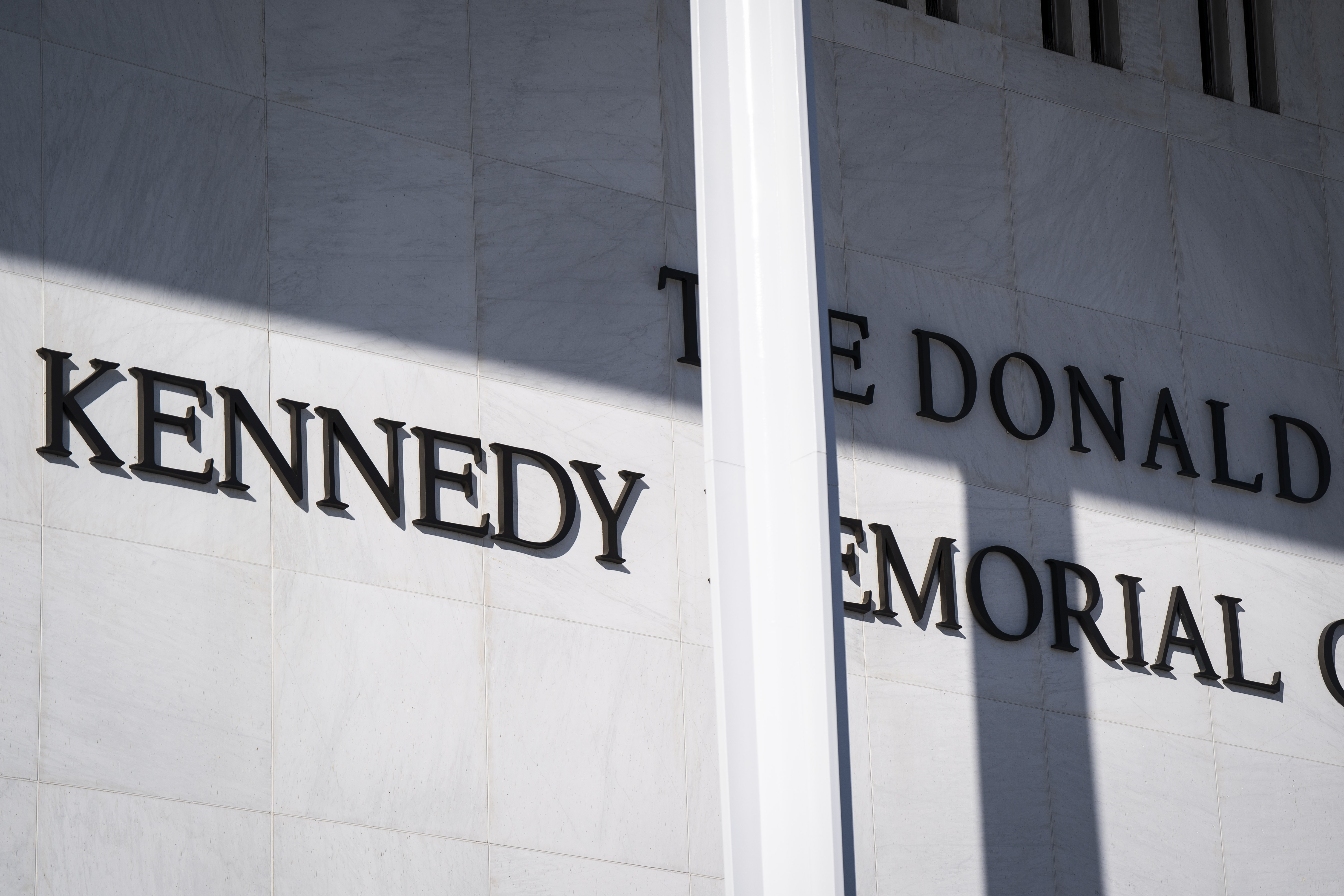
    Cooper’s order, the most significant legal blow yet to Trump’s effort to remake the Kennedy Center, found that the board exceeded its authority in December when it voted to rename the venue “The Donald J. Trump and The John F. Kennedy Memorial Center for the Performing Arts.” Congress gave the center its name, Cooper wrote, and only Congress can change it.

    In February, Trump announced that he planned to close the center for two years starting in early July. The closure was necessary, he said, to make roughly $250 million in renovations, a decision that blindsided staff, artists, and even some trustees. The board — stacked with loyalists who elected Trump chairman after he purged his predecessors’ appointees in February 2025 — voted in March to approve the closure. The center’s executive director, Matt Floca, testified in April that the building’s deterioration is so severe that staying open during construction would be “irresponsible,” citing failing roof panels and water seeping into electrical vaults.

    But Cooper ruled that the closure decision was made rashly, without the board weighing enough information about the potential harms. He did not bar trustees from ever shuttering the building, leaving the door open for the board to reconsider whether it should “come to this decision anew after independently balancing its multiple obligations to the Center in a prudent fashion.” The center’s general counsel highlighted that language last week in a memo to staff, noting that the court did not require the center to stay open during renovations or present any particular programming.

    The center has so far signaled that it will comply. In last week’s memo, the general counsel’s office ordered employees to erase all references to Trump from official materials, starting immediately with email signatures, letterhead, and other documents, followed by signs, brochures, ID cards, and the building’s exterior by Friday’s court-ordered deadline. On Monday, the center erased Trump’s name from its website and YouTube page, and by Thursday, it had done the same with its Facebook, LinkedIn, and X accounts.

    “We are complying with the court’s order while evaluating all legal options to preserve this revitalization and recognize President Trump’s leadership,” spokeswoman Roma Daravi said.

    Late Thursday afternoon, the center’s Instagram account was still branded “The Trump Kennedy Center,” and the president’s name remained emblazoned across the building’s facade.

    Hours after Cooper’s rulings, Trump lashed out at the judge and suggested he would abandon his involvement in the Kennedy Center altogether. In social media posts after the ruling, the president insisted that the building must close for renovations to proceed safely and said that unless he was “free to do what I do better than anyone else,” he had no interest in continuing. Trump said he had instructed the Commerce Department to arrange a “full and complete transfer” of the institution to Congress, a proposal that puzzled lawmakers and legal observers, since federal law vests management of the center in its board of trustees.

    Last week, Trump appeared to walk that back. When asked on Friday how he wanted to be involved at the center, Trump said, “The same way it is.”

    “I’m the chairman, so we’ll just keep it going,” he told reporters aboard Air Force One.

    On Wednesday, a White House official said the president will remain engaged in the center’s affairs as administration officials devise plans to fix “the facility’s major issues.” The White House contested the notion that Cooper’s rulings were a “defeat” for Trump.