Category: Elections

  • Blanche’s partisan activity before midterms dismantles another principle

    Blanche’s partisan activity before midterms dismantles another principle

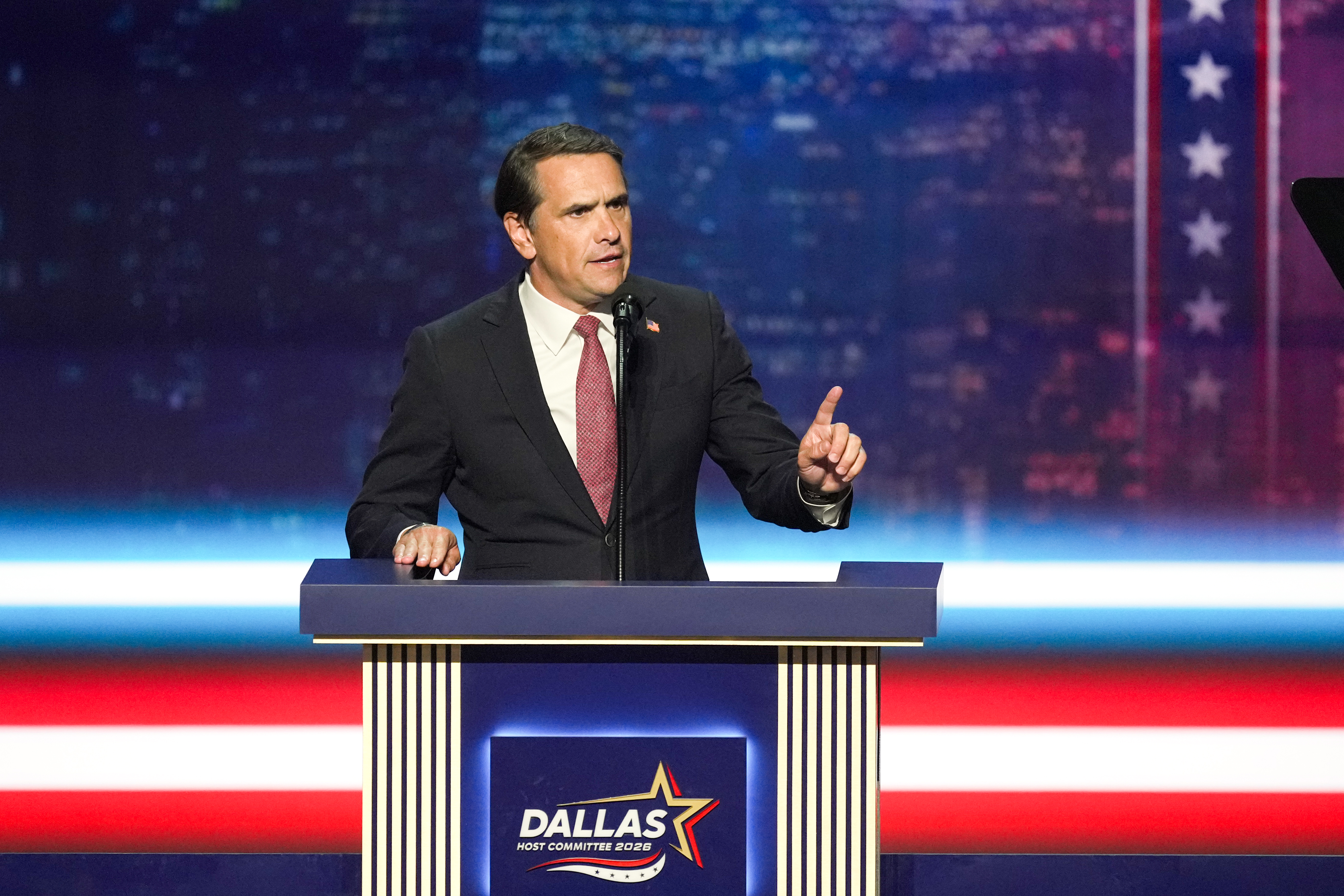
    WASHINGTON — Attorney General Todd Blanche has repeatedly participated in campaign events and spoken in partisan terms about the coming midterm elections since his confirmation last month, despite criticism that he violated a long-standing Justice Department principle of steering clear of electoral politics.

    This week, he waded again into those waters — twice.

    Since August, Blanche has come under fire for making campaign-tinged public appearances and comments. Last month, at a rally-style event on Long Island, N.Y., he praised Bruce Blakeman, the Republican candidate for governor of New York. Last week, Blanche delivered remarks at the Republican Party’s midterm convention.

    On Tuesday, he stood at the White House podium and disparaged Democratic lawmakers while invoking the coming election, dismissing their concerns about artificial intelligence as “nothing but an effort to influence the midterms.”

    And Wednesday, Blanche spoke at a campaign rally for Michael Whatley, the Republican Senate candidate in North Carolina. Echoing his convention speech, he portrayed crime rates, which continued a long-term downward trend to reach new lows in 2025, as “President Trump and Vice President Vance delivering on a promise.”

    Worries about the Justice Department abandoning its long-held commitment to appear apolitical in order to maintain institutional credibility may seem beside the point. Since January 2025, dozens of judges have viewed its representations with suspicion, eroding the traditional bonds of trust, known as the “presumption of regularity,” that the courts typically grant the department.

    The second Trump administration has also unabashedly destroyed the post-Watergate norm of Justice Department independence from the White House in investigative decisions. Early on, Blanche’s predecessor, Pam Bondi, declared, “We are so proud to work at the directive of Donald Trump.” Last September, after Trump publicly demanded that she charge several perceived adversaries, the department pushed through short-lived indictments of two of them.

    Still, Blanche is dismantling another post-Watergate principle: that Justice Department leaders stay away from partisan politicking.

    Joseph Tirrell, the Justice Department’s senior ethics official until the Trump administration dismissed him in July 2025, this week criticized Blanche’s participation in the Republican convention. He called the attorney general’s comments at the White House briefing “borderline” unethical, and his participation in the North Carolina rally “terrible.”

    “In my former role, I would have advised the attorney general not to go to the White House and not to make comments about members of Congress within 45 days of an election,” Tirrell said. Referring to a law restricting partisan political activity by government employees, he added, “I’d say, ‘That rally sounds like a Hatch Act violation to me, and I’d advise you not to do it.’ I would want to scare that person straight.”

    Stephen Gillers, a New York University law professor who specializes in legal ethics, said Blanche’s political statements and activities were protected by the First Amendment and did not violate professional conduct rule, even if they were ill-advised.

    “Any attempt to discipline him will fail,” Gillers said. “That’s unfortunate. He has the ability to do what he’s doing, and he’s chosen to do it.”

    The Justice Department did not respond to a request for comment.

    When the group Public Citizen filed a Hatch Act complaint about Blanche’s comments praising Blakeman, the Justice Department told Government Executive in a statement that it was “baseless” and “a politically motivated complaint designed to weaponize the Hatch Act against the attorney general for his support of law enforcement.”

    And in response to criticism last week by Democrats on the House Judiciary Committee over Blanche’s convention appearance, the department shot back on social media, “Todd Blanche’s appearance this evening in his personal capacity is legal (and has been approved by ethics).”

    Legal questions center on the Hatch Act, which is ambiguous and difficult to enforce when an administration does not want to strictly adhere to it. The law and related regulations allow some political appointees, while off duty, to attend partisan events, like fundraisers and campaign rallies. Some law enforcement officials are restricted from any partisan activity, but the attorney general is not listed among them, and it is disputed whether that part of the legal limits applies to them.

    Even for those who can engage in political activity in a personal capacity, the traditional test is not just whether such officials say they are doing so, but whether people would reasonably perceive them as acting in their government roles.

    Cynthia Shaw, who ran the Justice Department’s ethics office throughout Trump’s first term, said the notion that high-ranking officials could simply say they are acting in a personal capacity to get around that threshold was a misunderstanding.

    “The bigger the job you get, the less personal capacity you have, because when you speak, people are going to see you in your official capacity and representing the agency that you are head of,” she said.

    Federal law enforcement needs to not just be fair, she added, but to be seen as fair for the long-term good of the department and society.

    For that reason, the Justice Department had long held itself to a higher standard than the Hatch Act and its ambiguities. For decades, its ethics policies went beyond the statute in pushing officials to avoid events like political fundraisers and campaign rallies.

    In 2022, Attorney General Merrick Garland flatly banned political appointees from participating in partisan activities — even in their personal capacities, and even if their family members were the candidates.

    But in March of this year, Bondi rescinded that policy, freeing political appointees to attend such events in their personal capacities subject only to the lower standards of the Hatch Act.

    That weakening of ethics rules is one reason the department’s claim that Blanche’s appearance at the Republican Party convention was “approved by ethics” merits scrutiny. Another is that the administration has changed who makes ethics recommendations.

    After firing Tirrell, the administration left his position vacant for nearly a year before appointing Kristina Spencer, a former aide to Vice President JD Vance who had no prior department experience.

    The office of the deputy attorney general can also overrule the ethics office’s recommendations. For decades, the decision-maker was a career official, but the Trump administration moved that authority to political appointees.

    The principle that the Justice Department should strive to appear apolitical took root after Watergate. President Richard Nixon’s first attorney general, John Mitchell — who later went to prison for his role in the scandal — was so deeply partisan that he resigned to run Nixon’s 1972 reelection campaign.

    The attorney general immediately after established the modern norm of not acting as a political operative while in office: Edward Levi, a University of Chicago legal scholar.

    Maintaining a nonpartisan image has proved difficult, partly because of the department’s power and an increasingly polarized political atmosphere. Under both parties, one attorney general after another has been accused by political opponents of politicizing the Justice Department.

    In 2013, Attorney General Eric H. Holder Jr. called himself President Barack Obama’s “wingman,” clashing with the principle of Justice Department independence. Asked last week about Blanche’s speech at the Republican convention, Holder said, “It’s unprecedented, and it’s disgraceful. Attorneys general don’t talk about political things. He shouldn’t be there.”

    Holder, while serving as attorney general, never spoke at the Democratic convention or at campaign rallies. Nor did Republican attorneys general frequently accused by Democrats of politicizing the department, including Attorney General William Barr during Trump’s first term.

    Gillers said that shifting standards for the conduct of attorneys general would harm the rule of law, especially if Blanche’s successors followed his example.

    “This is new,” he said. “The changing image of what an attorney general should be seen to do, and how officials high in the Justice Department should behave, will not be good. We just don’t know yet how bad it will be.”

    This article originally appeared in the New York Times.

  • Trump refers to Black man from racially offensive 1988 campaign ad while stumping in North Carolina

    Trump refers to Black man from racially offensive 1988 campaign ad while stumping in North Carolina

    As President Donald Trump tries to convince voters that Democrats have let crime run amok, he’s digging into the country’s political past to cite one of the most controversial campaign advertisements — one that relied heavily on racist tropes.

    During a campaign stop Wednesday in Gastonia, N.C., to stump for Republican U.S. Senate candidate Michael Whatley, Trump resurrected a 1988 George H.W. Bush presidential campaign ad featuring Willie Horton, a Black man convicted of rape and assault after his release through a Massachusetts prison furlough program.

    A grainy black-and-white prison photo of Horton was used in the ad targeting then-Massachusetts Gov. Michael Dukakis, who was ahead of Bush in the polls. On Wednesday, Trump evoked the Horton ad in an effort to convince voters Democratic former Gov. Roy Cooper, Whatley’s opponent in the Senate race, is soft on crime.

    “Willie Horton was a bad guy, really bad guy,” Trump said, before comparing Dukakis’ release of Horton to the pretrial release of a Black man who faces a murder charge for last year’s killing of a white Ukrainian refugee in Charlotte, N.C.

    But Cooper was not the governor when the man was released or when he was later charged with killing the refugee.

    “Same thing as this, same as, same exact thing,” the president told the crowd in Gastonia.

    It’s the second time Trump has invoked Willie Horton while campaigning for his party. Last month during a speech in Las Vegas, Trump called the Charlotte killing a “Willie Horton — modern day” tragedy.

    “After the Willie Horton ad dropped, Bush established a lead in the polls and never looked back,” said Andra Gillespie, a political scientist at Emory University outside Atlanta. “They showed the picture, and you ascribed race onto it. It wasn’t sufficiently condemned as racism.”

    A spokesperson for the Republican National Committee, which organized the Gastonia campaign rally, defended Trump’s reference to Horton.

    “Roy Cooper emptied prisons and released thousands of violent monsters onto North Carolina streets,” RNC National Press Secretary Natalie Baldassarre said in a statement to the Associated Press. “The results had deadly consequences, and every Democrat who supports abolishing or defunding the police, paroling criminals, and implementing lax bail policies will have to answer for their dangerous records in November.”

    Trump paints North Carolina as a ‘dangerous state’

    Wednesday’s rally cited the Aug. 22, 2025, killing of white 23-year-old Iryna Zarutska on a commuter train in Charlotte.

    Decarlos Brown Jr., who is Black, faces murder and other charges in Zarutska’s stabbing, which was captured on video. Court records showed that at the time of the attack, Brown had 14 prior cases in Mecklenburg County, including serving five years for robbery with a dangerous weapon. Doctors had diagnosed him with schizophrenia.

    Republicans and other influential voices in Trump’s Make America Great Again movement claimed the attack showed how Democratic elected leaders in large cities across the U.S. failed to protect residents, while some conservative commentators suggested Democrats were ignoring an unfounded “black-on-white” crime problem.

    “He should have been locked up for many, many years,” Trump said Wednesday of Brown.

    “Nobody used to think of North Carolina as a dangerous state, criminally dangerous,” Trump added while blaming Cooper. “It was apple pie, right? Now, it’s one of the most violent, one of the worst in the whole nation.”

    According to 2024 FBI crime data, North Carolina ranked 19th for statewide violent-crime rates in a 50-state comparison.

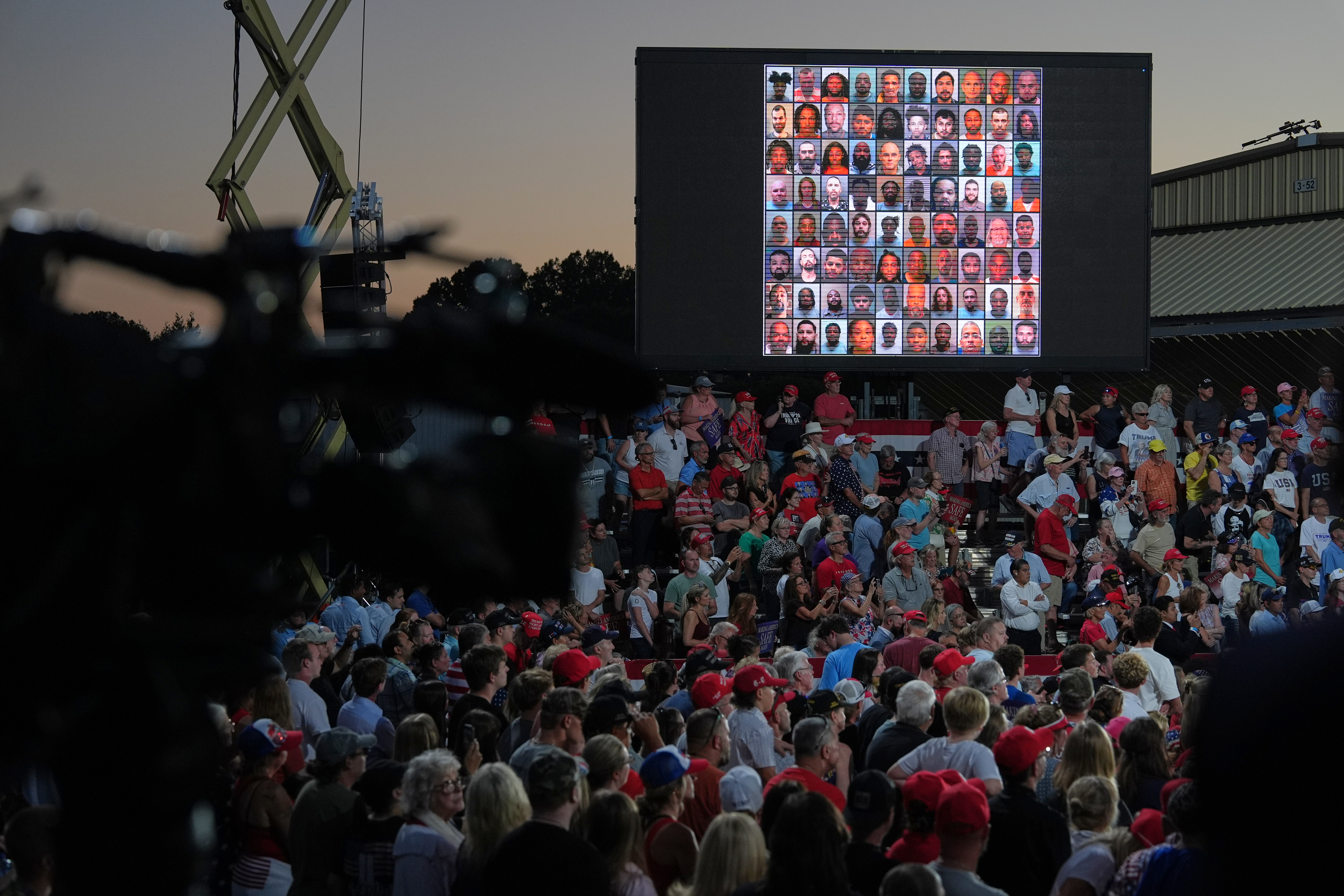
    During the Gastonia rally, a mosaic of mug shots was displayed on a large screen for the crowd. Trump claimed Cooper had cut a deal with “radical activists” to release “some of the worst criminals in the nation into North Carolina.”

    “He released these people. This is just a small group of them,” the president said, pointing to the mug shots that overwhelmingly featured Black people.

    Although it is unclear under what circumstances the people in the mug shots were released, state corrections officials have said Brown was not released early from prison or under Cooper’s COVID-era prisoner-release settlement that Trump referenced.

    Before fatally stabbing Zarutska, according to court records, Brown had been on a pretrial release over a misdemeanor offense that was ordered by a magistrate after Cooper left office.

    ‘Tapping into anger’

    Republicans are under pressure to win over swayable voters as the November midterms approach with Democrats pushing to gain control of the House, the Senate, or both. Some political strategists say part of the ploy of adding Horton to the North Carolina Senate campaign is to rile up Trump’s base.

    “He’s tapping into the anger to remind Republican voters of what he thinks their first principles are in hopes that will be successful for Republican candidates,” Gillespie said.

    “He’s doing this to try and divert attention away from criticism of how he’s governing at the moment,” she added. “Democrats want to make the story of this election Trump’s low approval numbers, the war in Iran, inflation, being preoccupied with things that don’t make a whole lot of sense when there are really serious things going on in the country.”

    Dewey Clayton, professor emeritus of political science at the University of Louisville, said Trump and other Republicans may be thinking that what worked before in the 2016 and 2024 elections presumably will work again in this year’s midterms.

    “It was very effective,” Clayton said. “You do not necessarily have to look at it as racial, in and of itself, although (race) clearly becomes a component. In 2026, talking about ads going back in the 1980s? I’m sure he had consultants that were basically saying this is tried and true.”

    The GOP may need the push in November, Gillespie warns. “I think the motivation by going back to these old strategies is there is real concern about Republican enthusiasm and you might see lower Republican turnout,” she said.

    Rhetoric attempts to divert voters’ attention from rising costs

    The tactic speaks to desperation by Trump and the Whatley campaign, according to Morgan Jackson, a partner with Nexus Strategies in Raleigh.

    “Trump brings up Willie Horton to stoke racial division, something he’s used for the last 10 years,” said Jackson, who is chief strategist for Cooper’s campaign. “It is very clear from the president’s speech last night their only goal is to sow division and hate and lies. Michael Whatley doubles down in support of that effort.”

    Jackson also said Trump and Whatley are trying to change the election’s message of “rising inflation and the cost of everything.”

    “They want to use inflammatory rhetoric, hate speech and lies to sow division in a chance to win an election,” he said. “By referencing Willie Horton, they are showing their hand very clearly.”

    The AP sent an email Thursday seeking comment from Whatley’s Senate campaign.

  • Republican House candidate removed from panel after repeatedly misgendering Rep. Sarah McBride

    Republican House candidate removed from panel after repeatedly misgendering Rep. Sarah McBride

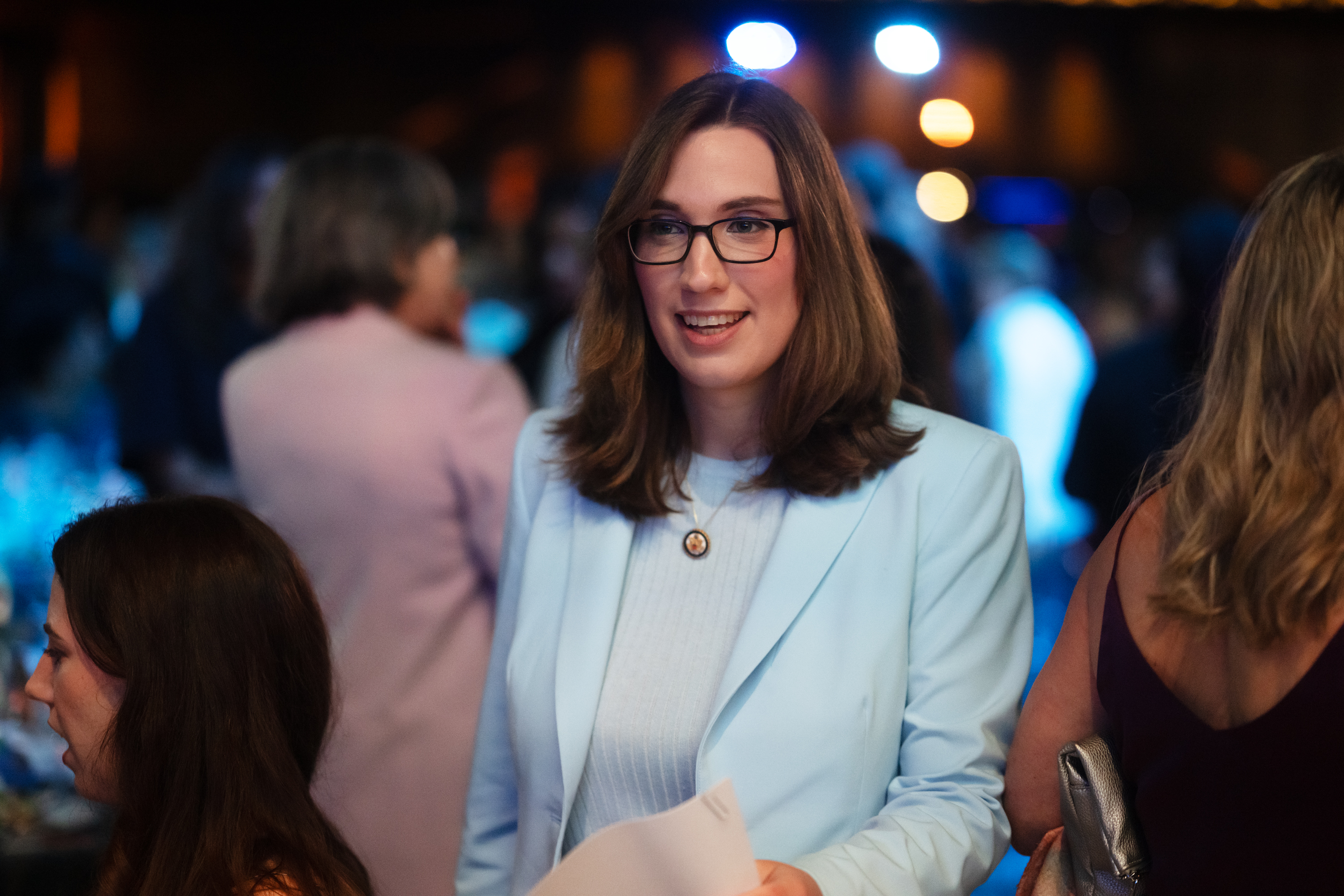
    Republican U.S. House contender Joseph “Dr. Joe” Arminio was removed from a panel Thursday featuring candidates in Delaware races after he repeatedly misgendered Democratic U.S. Rep. Sarah McBride.

    McBride is the first openly transgender member of the U.S. House and was sworn in last year.

    Things unraveled at the Siegel Jewish Community Center in Wilmington, where the Jewish Federation of Delaware’s Jewish Community Relations Committee coordinates a candidates forum every two years. The event featured candidates for U.S. Senate, U.S. House of Representatives, attorney general, state treasurer, and auditor of accounts.

    McBride will face Republican Arminio in November for the state’s only U.S. House seat.

    Arminio, a Wilmington native, political scientist, author, and educator, campaigned largely on inflation. His responses to a 2026 voter questionnaire indicate several anti-LGBTQ+ policy positions. In 2008, he ran unsuccessfully for Congress in Maryland. He did not receive the Delaware GOP’s endorsement, which went to Earl Cooper.

    At the public event, Arminio repeatedly referred to McBride using he/him pronouns and later called her a “gentleman.”

    In the first incident, Arminio’s remarks were met with boos from the crowd. After he spoke, moderator Ken Grant warned him to follow the forum’s rules for proper decorum.

    “If you fail to show respect to anyone else on this stage, you’ll be asked to leave,” Grant said.

    Arminio acknowledged the incident during one of his forum responses.

    “I committed an error before,” he said. “I do acknowledge it. It’s not the first error I’ve made in this campaign, or at any point in my future life.”

    But minutes later, Arminio misgendered McBride again, pointing at her and Democratic Sen. Chris Coons and calling the two of them “gentlemen.” The crowd started booing again, and Arminio’s microphone was cut off.

    McBride said on stage she wanted Arminio to stay and be able to talk about his platform, but organizers held firm.

    Arminio told 6abc he planned to address the incident. He did not immediately respond to The Inquirer’s request for comment.

    The Human Rights Campaign describes the political climate for transgender people and the LGBTQ+ community as an ongoing crisis amid legislative hostility, federal rollbacks, and discrimination. The organization estimates there are more than 2 million transgender people across the country.

    Experts say misgendering a trans person can range in severity from a microaggression or macroaggression to explicit harassment depending on the intent, frequency, and context. Studies show the LGBTQ+ community is more likely to experience harassment, discrimination, and violence than cisgender and heterosexual people.

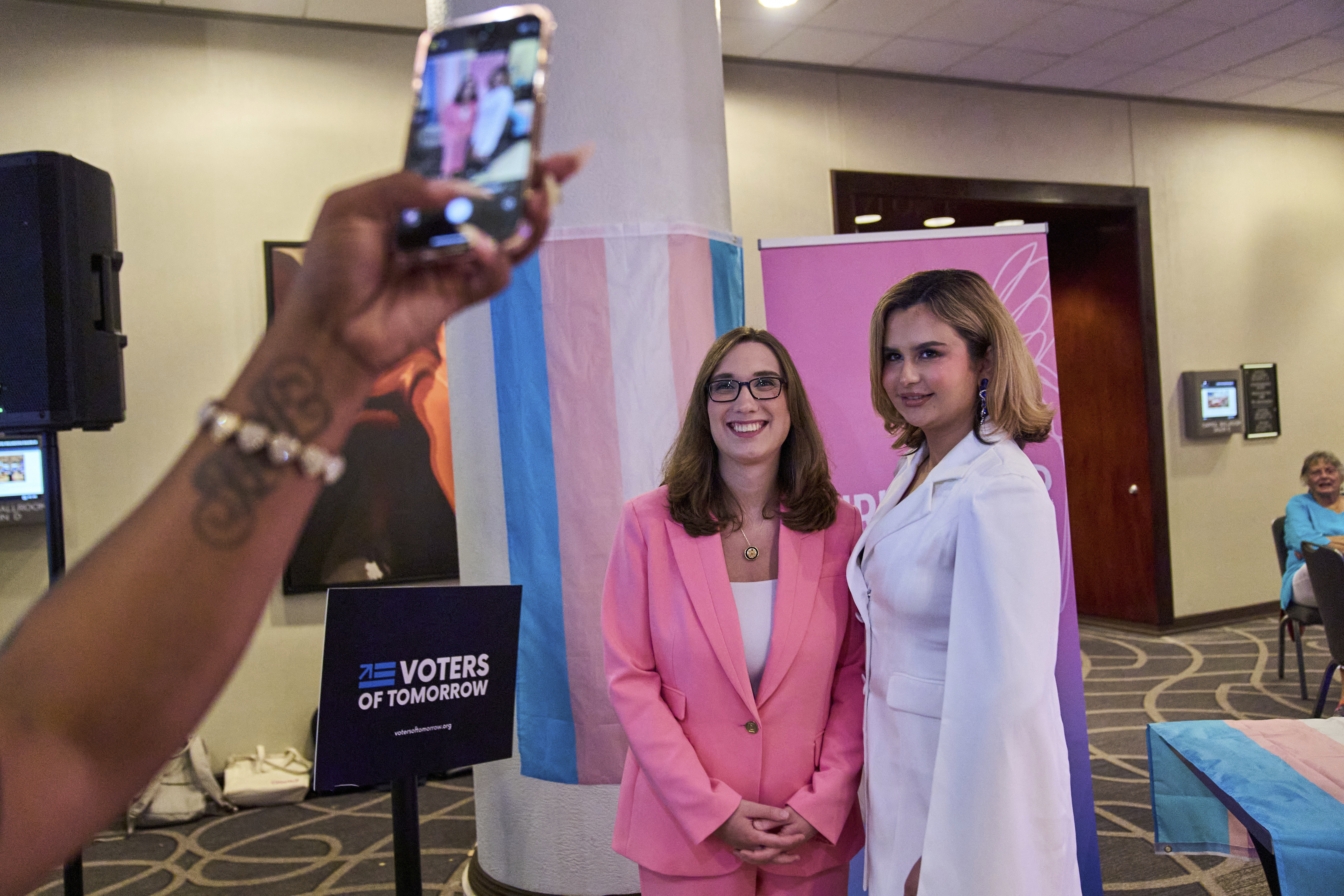
    Bella Bautista, 22, right, a trans woman, has a photo taken with Rep. Sarah McBride, D-Del., the first trans woman to be a member of Congress, during a reception held by the Christopher Project in June 2025.Jacquelyn Martin

    McBride, who was previously a state senator, has been targeted by transphobic attacks across her career.

    After being elected to Congress, Rep. Nancy Mace (R., S.C.) introduced a resolution banning transgender women from using women’s facilities in the U.S. Capitol. Speaker Mike Johnson also implemented a policy restricting restroom access in the Capitol and House offices to a person’s “biological sex,” which experts say is a politicized term to describe someone’s assigned sex at birth.

    The policies were viewed as a way to directly target McBride, the only openly trans person serving in either chamber. McBride has also been repeatedly misgendered.

    Last year, Rep. Keith Self (R., Texas) called McBride “Mr. McBride.” She quipped back, calling him “Madame Chair.” Others stepped in on McBride’s behalf, but the exchange got heated, and the session ended early with Self refusing to honor McBride’s identity.

    Other House Republicans have continued to use male pronouns and honorifics while referring to McBride during interviews, debates, and on social media.

    The representative has worked across the aisle with politicians whose views on the LGBTQ+ community don’t align with hers. She says her job in public office is to represent her state’s priorities and, in turn, normalize trans visibility.

    At the forum, Mike Katz, a former Democratic state senator and now the GOP’s endorsed candidate for U.S. Senate, said Arminio’s actions were uncalled for and apologized to the crowd. Following the event, in a lengthy Facebook post, he called for Arminio to withdraw from the race, calling it a matter of “respect.”

    Grant, the event’s moderator, said ground rules were shared with candidates in advance and were clear: “treat everyone on stage with respect.”

    “When a candidate declined to do so after a clear and public warning, the rules were applied — as they would have been for any candidate, of any party, on any subject,” he said. “I want the focus to remain where it belongs: on the nine candidates who spent the evening answering voters’ questions thoughtfully and civilly, and on the hundreds of Delawareans who came, in person and online, to listen.”

    McBride appears to be taking the incident in stride.

    “I am always so proud to represent Delaware and Delawareans,” she wrote in a statement Friday. “Nothing — and certainly not politicians seeking to go viral — will ever distract me from my laser focus on lowering the cost of gas, groceries, housing, childcare, and healthcare.”

  • Gov. Josh Shapiro spent more than $2.4 million on ads this week. His GOP opponent, Stacy Garrity, spent $672.

    Gov. Josh Shapiro spent more than $2.4 million on ads this week. His GOP opponent, Stacy Garrity, spent $672.

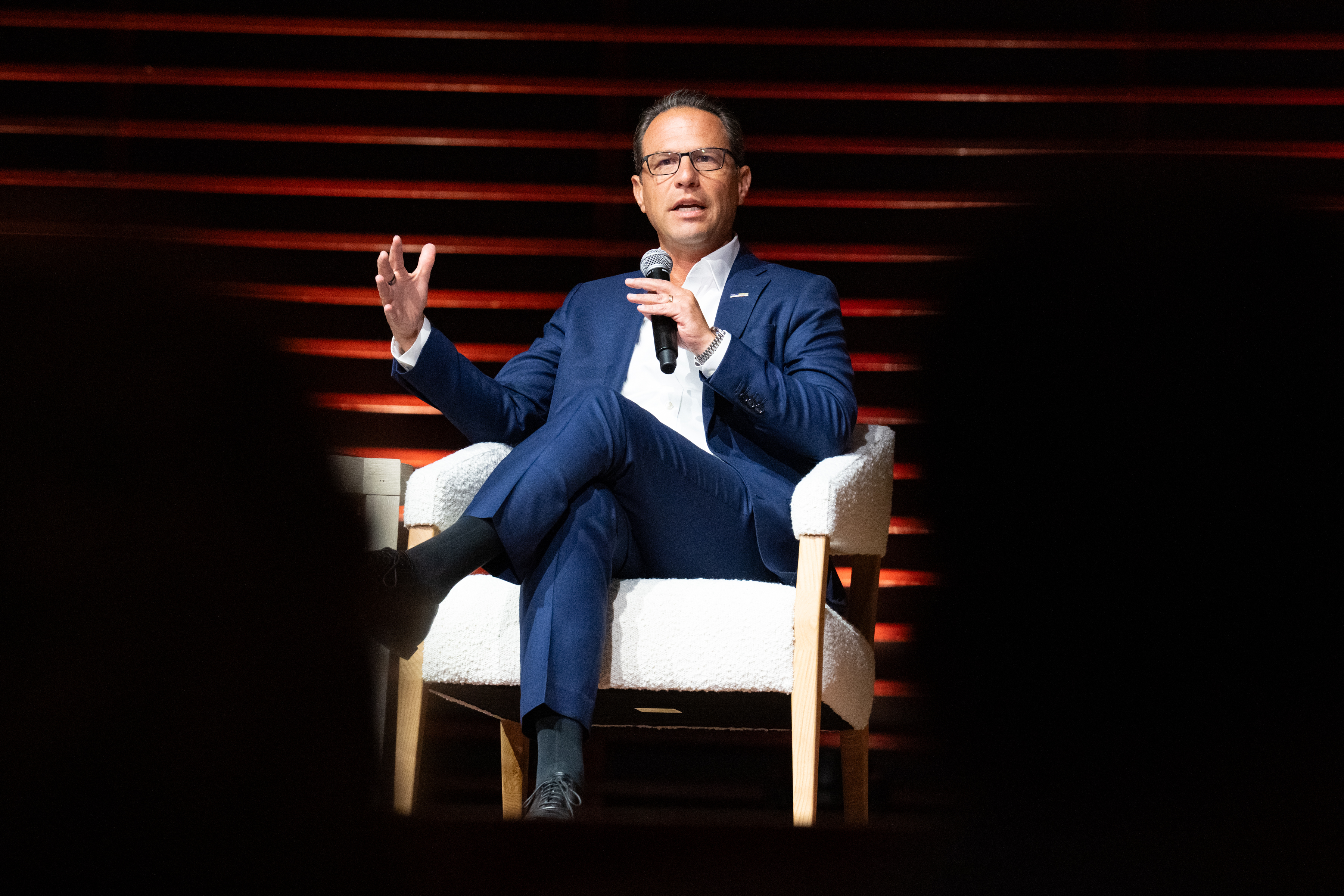
    Gov. Josh Shapiro is dominating Pennsylvania’s media markets in his reelection campaign, spending more than $24 million with less than seven weeks left until the Nov. 3 election — and trouncing his GOP challenger, State Treasurer Stacy Garrity, who has spent a small fraction of that on ads.

    Shapiro, a Democrat seeking reelection and potentially a 2028 White House bid, has spent more than $2.4 million on advertisements per week since Aug. 25 from his campaign war chest of more than $50 million, according to media tracking firm AdImpact. One ad pitches Garrity as “Pennsylvania’s #1 fan of data centers,” and in another, Shapiro boasts about his efforts to cap energy costs. He has also released a number of audience-specific ads to reach Black and Latino voters, including a radio advertisement in Spanish in the Lehigh Valley.

    A clearer picture of Shapiro’s full campaign haul will become public this week, with updated campaign financial filings due Tuesday. The last filing deadline for state candidates was in June. But Shapiro’s multimillion-dollar flurry of ad buys offers early insight into his strategy heading into November in a race where he holds a double-digit polling lead — and where he is hoping to achieve downballot wins in the statehouse and critical congressional districts.

    Garrity has spent just $743,000 on ad buys so far, and paid out only $672 last week, according to AdImpact. No top GOP groups, such as the Republican Governors Association or the Jeffrey Yass-backed Commonwealth Leaders Fund, have purchased TV ads supporting Garrity, and she has struggled to fundraise to compete with Shapiro, a popular incumbent who has raised more money than any governor since at least 2010.

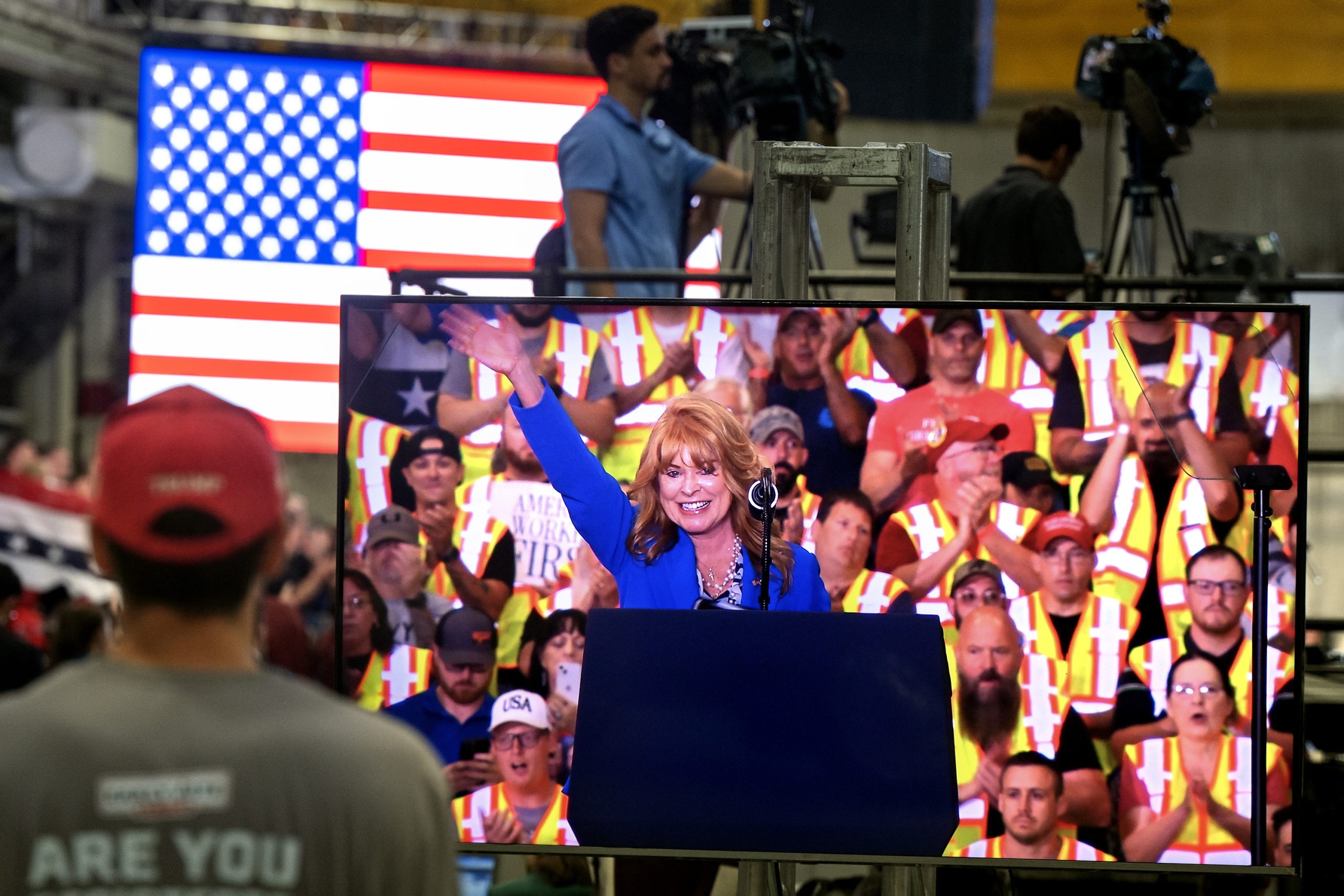
    State Treasurer and Republican candidate for governor Stacy Garrity is seen on a big screen as she speaks to supporters before the arrival of President Donald Trump at Mack Trucks in Macungie Tuesday, June 23, 2026. Tom Gralish / Staff Photographer

    Shapiro’s mass ad buys despite his commanding lead in the polls indicate the governor is a risk-averse politician, said Christopher Borick, a political science professor at Lehigh University.

    “He’s cautious. He wants to make sure nothing goes awry, and to do that, you buy insurance,” Borick said.

    “The governor has also been clear that the midterms run through Pennsylvania — and he is leading the fight to win critical races up and down the ballot in order to flip the House, put a check on Donald Trump’s chaos, cruelty, and corruption, and get even more stuff done,” said Manuel Bonder, a spokesperson for Shapiro’s campaign.

    Garrity, meanwhile, has spent the lion’s share of her ad buys on a digital social media video campaign called “Twilight Justice,” which promises the future release of bombshell details about Shapiro. She has also released an attack ad about Shapiro’s past support for data centers, but it has been seen by far fewer eyes than those Shapiro is reaching in his multimillion-dollar ad campaigns. Both Shapiro and Garrity initially embraced data centers, though both shifted their positions as the projects became increasingly unpopular among Democrats and Republicans.

    Matthew Beynon, a spokesperson for Garrity’s campaign, declined to comment on whether top GOP groups will get involved in the Pennsylvania governor’s race in the coming weeks. But he said any pro-Shapiro mailer or TV ad “is just another reminder to the people of Pennsylvania that Josh Shapiro sold them out.”

    “All the money in the world will not help Josh Shapiro paint over his administration’s failed economic record or erase his ethics scandals that have cost the taxpayers of Pennsylvania and embarrassed the entire commonwealth,” Beynon added.

    Data center power play

    The regulation of data centers and artificial intelligence have become key issues in midterm races nationwide, including in the Pennsylvania governor’s race, where Shapiro’s past support for the projects appeared to be the biggest test of his popularity.

    Shapiro changed his position last month and subsequently began running attack ads against Garrity for her past support of the unpopular centers. Garrity has also changed her position, from initially advocating for the rapid development of data centers around Pennsylvania to now calling for “a pause” on their development. Shapiro, in an executive order signed last month, will now require any prospective data center developers to meet a number of environmental and energy factors in order to build in Pennsylvania.

    “That’s why you’ve seen this enormous ad buy that she can’t even come close to matching, when, in reality, he’s as exposed as her on the issue, but she doesn’t have the resources,” Borick said.

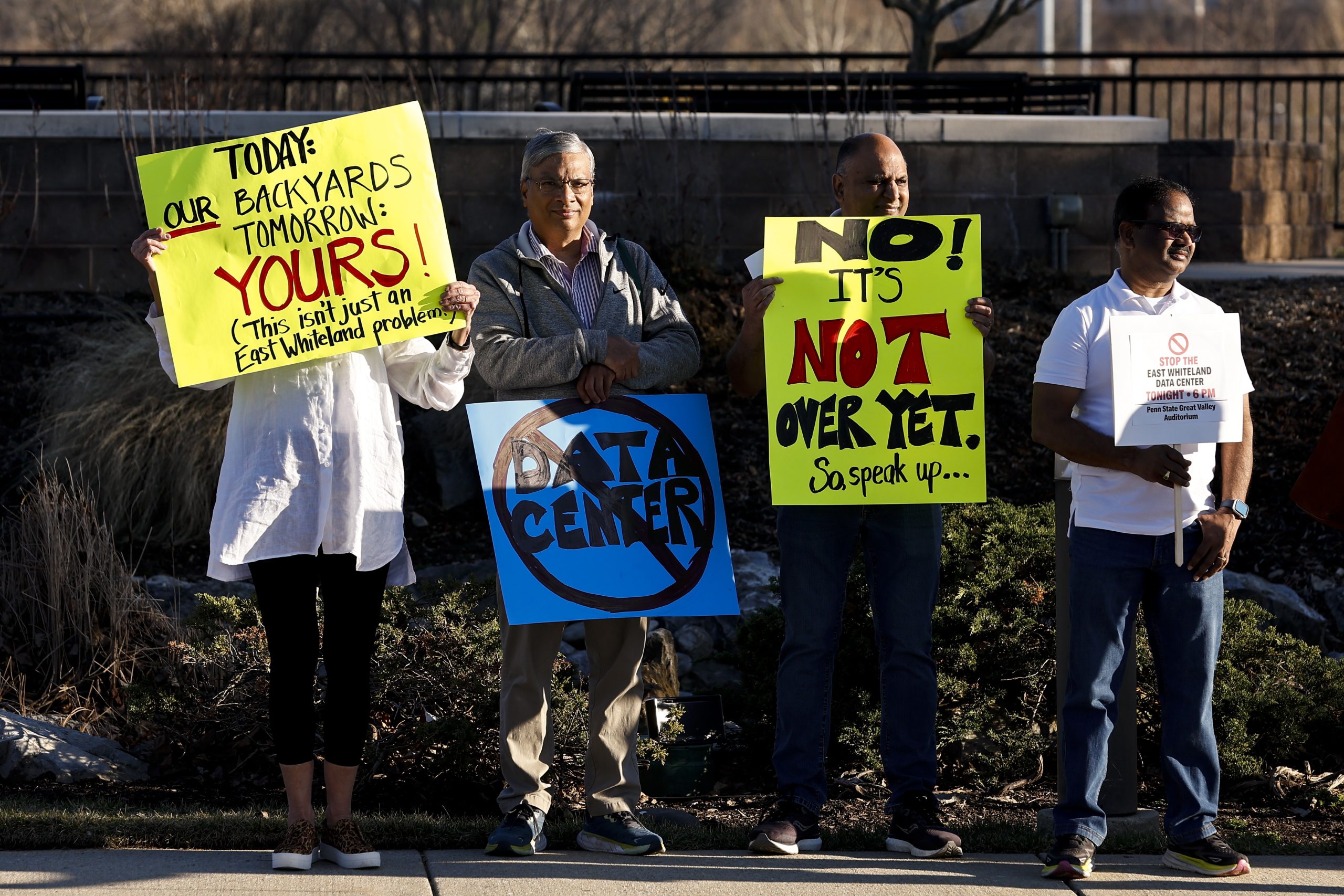
    People protest the expanded data center before the East Whiteland Planning Commission meeting held at Penn State Great Valley on Monday, March 9, 2026 in Malvern, Pa.Monica Herndon / Staff Photographer

    Pennsylvania Republicans endorsed Garrity in September 2025 — an unprecedented early nod that helped clear the field for her as the party’s nominee. President Donald Trump endorsed her in January, calling her an “America First Patriot.” She ran unopposed in the primary election, and top GOP leaders said they wanted to wage a stronger fight against Shapiro this time than in 2022, when far-right State Sen. Doug Mastriano (R., Franklin) won the endorsement in a crowded field and the state GOP largely did not financially support his candidacy.

    Despite all of the additional time to drum up support, Garrity has struggled to raise funds and has yet to be able to cash in on Trump’s backing. As of Thursday, she had spent just $300,000 more than Mastriano had at this point in the race. Shapiro, meanwhile, has spent less this election than he did at the same point in 2022, when he spent $28 million as of mid-September.

    “When you’re making comparisons to the amount of money Doug Mastriano raised, it’s a really troubling sign,” Borick added.

    Garrity and Shapiro will face off in a televised debate on Oct. 7 hosted by ABC27 in Harrisburg.

  • Philly’s political parties can now spend unlimited amounts in coordination with their candidates

    Philly’s political parties can now spend unlimited amounts in coordination with their candidates

    Political parties in Philadelphia can now spend unlimited amounts of money in coordination with their chosen candidates, according to a new board of ethics policy approved Wednesday.

    The policy, which was prompted by a recent U.S. Supreme Court decision, has the potential to dramatically increase the power of parties in Philly politics.

    For instance, in next year’s city elections — when Mayor Cherelle L. Parker and all 17 City Council members will be up for reelection — the candidates endorsed by the Democratic City Committee could be able to access major financial advantages over their Democratic primary rivals, if the party chooses to coordinate with them.

    Candidates are still bound by the city’s strict campaign finance rules limiting the size of donations to their campaigns — no more than $3,700 per year for individual donors, and $14,800 for organizations — and prohibiting them from coordinating with independent expenditure committees, or outside groups that spend money on candidates’ behalf.

    But endorsed candidates will now be the only primary contenders allowed to coordinate with a group that has no restrictions on how much money it can collect: the party. The candidates, for instance, will be able to work with the party on messaging strategy, the timing of TV ads, and where to deploy door-knocking canvassers.

    While the policy does not allow donors to require that parties spend their money on particular candidates, endorsed politicians with deep-pocketed backers can encourage donors to contribute to the party, with the understanding that the party will ultimately decide how the money is spent.

    The Philadelphia Council members inside the caucus inside City Hall in Philadelphia, Pa on Thursday, June 11, 2026.Aidan T. Gallo / Staff Photographer

    The impact of the new policy will depend on how aggressively candidates, parties, and donors seek to take advantage of it. But it has the potential to steer power in some elections back toward the city’s Democratic establishment after a period in which labor unions, special interest groups, and progressive super PACs have become increasingly influential.

    “This Supreme Court ruling is going to have the effect of shifting power back to political parties and away from independent expenditures in a lot of ways,” said Philadelphia elections lawyer Adam Bonin.

    In National Republican Senatorial Committee v. Federal Election Commission, the Supreme Court in June overturned limits on how much money parties could spend in coordination with candidates, citing parties’ free speech rights. The 6-3 decision, with the conservative justices in the majority, was widely seen as the latest in a series of cases that have demolished longstanding rules around money in politics.

    But the NRSC case centered on a law related to general elections for federal office, and it was not initially clear whether the Philadelphia Board of Ethics would determine the ruling applied to local elections and to primaries.

    The board, in a 4-0 vote with member Nelson Diaz absent, approved a policy that answered both of those questions affirmatively, meaning local political parties are now able to coordinate with their chosen candidates in primaries.

    In deep-blue Philadelphia, where Democrats hold a 7-1 voter registration advantage over Republicans, the party’s primary contests usually determine the outcomes of elections.

    In next year’s elections, progressives are hoping to make gains in Council, and Parker is aiming to secure a second four-year term. So far, Parker has attracted one announced Democratic primary challenger, former city official Shania Bennett. No Philadelphia mayor has lost reelection since the Home Rule Charter was adopted in 1951.

    The new policy holds that the party can only coordinate with its nominees in general and special elections. In primaries, the ethics board will allow the parties to set their own rules for determining their preferred candidates that they can coordinate with. The Democratic City Committee determines its endorsements by holding a vote among its ward leaders.

    The policy, meant to clarify the city’s rules in advance of next year’s municipal elections, is temporary. The full details of the new rules will be fleshed out in regulations the board will tackle in the coming months.

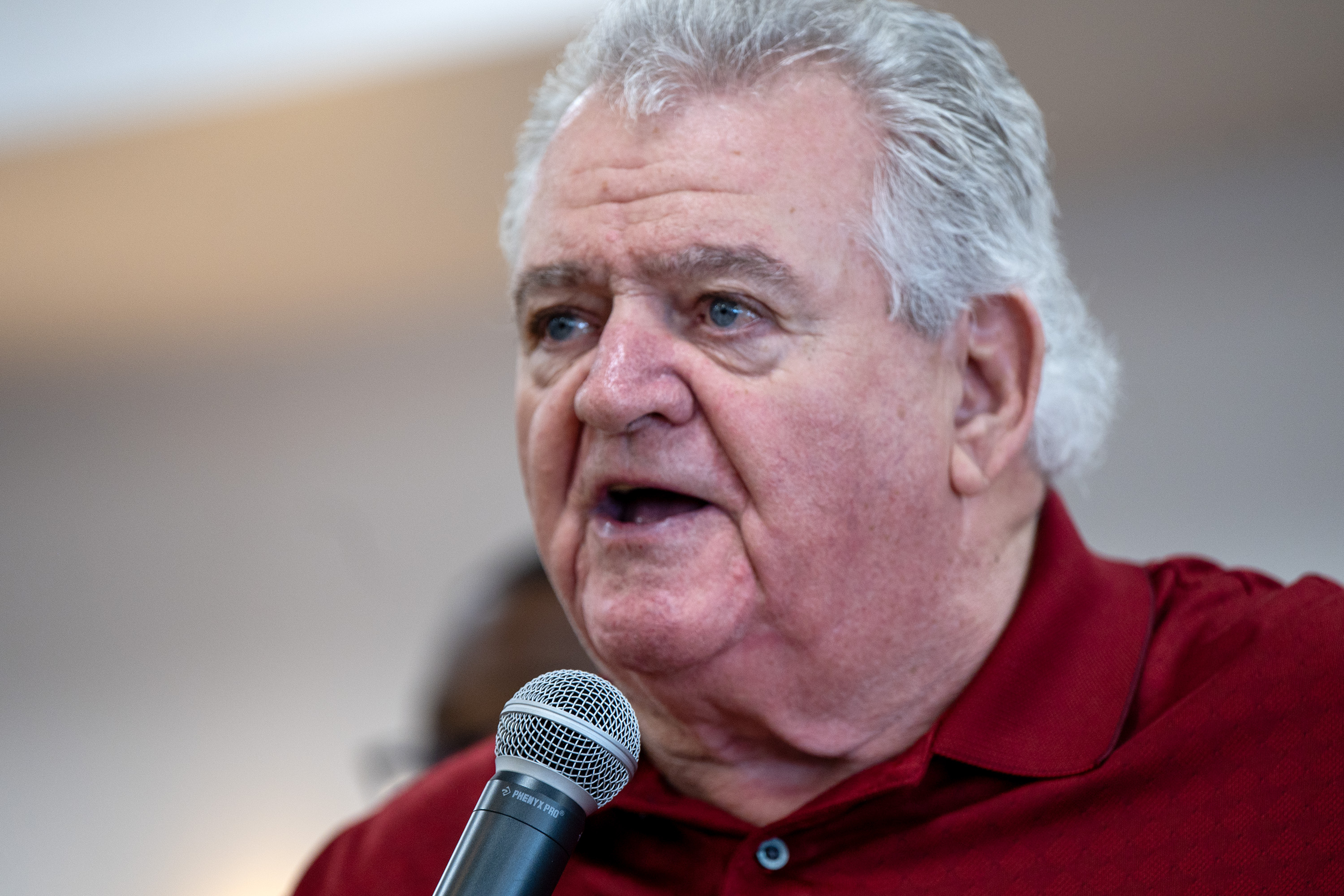
    Philadelphia Democratic Party Chairman Bob Brady on May 18, 2026.Tom Gralish / Staff Photographer

    Democratic City Committee Chairman Bob Brady said the party was “still reviewing the new guidelines.”

    “Protecting constitutional rights remains a priority of the Democratic Party, especially the right to participate in our democratic process,” Brady said in a statement. “We will continue the work to ensure that the final implementation of these policies and laws will right the wrongs that have too long infringed on First Amendment rights.”

    To be sure, there are significant roadblocks for candidates hoping to benefit from the new policy. In crowded primaries, for instance, the Democratic City Committee often declines to endorse when a majority of ward leaders fail to coalesce around one candidate. And the candidates and parties would have to find donors willing to give large sums knowing that they cannot control how the money will be spent.

    Additionally, Bonin said, the new policy may still be more restrictive than what the Supreme Court decision appears to have envisioned because the board is seeking to maintain many of the city’s existing campaign finance rules.

    “They are doing it in a way in which, initially, it seems they’re trying to change their rules as little as possible, while still recognizing they need to act,” he said.

    The policy could also have an impact on elections for the two seats on Council that are set aside for minority-party or independent candidates. Republicans held those seats for about 70 years before Councilmembers Kendra Brooks and Nicolas O’Rourke of the progressive Working Families Party won them in the last two election cycles.

    City Council candidates Kendra Brooks and Nicolas O’Rourke celebrate after the Working Families Party declared victory at their election night gathering at Roar Nightclub in Philadelphia, Pa. on Tuesday, Nov. 7, 2023.Monica Herndon / Staff Photographer

    Before Wednesday, it appeared possible the ruling could create an uneven playing field, with the Republican City Committee being allowed to coordinate with its nominees while the Working Families Party was unable to do so because it is not a major political party under state law.

    The language of the board’s approved policy, however, effectively gives the Working Families Party the same rights as the Democratic and Republican Parties because it fielded candidates in the most recent municipal election.

    Republican City Committee chairman Vince Fenerty celebrated the ethics board’s decision.

    “I’m very happy,” Fenerty said. “It will make our candidates be able to interact with other groups easily, and hopefully it will be a good day for the Republican Party of Philadelphia when we can have good funding to be victorious in some municipal elections.”

    A Working Families Party spokesperson said this summer that the party opposed the Supreme Court’s attacks on campaign finance law, but did not rule out the possibility of the progressive group taking advantage of any new policy.

  • Trump’s effort to assert control over elections continues, despite court loss

    Trump’s effort to assert control over elections continues, despite court loss

    WASHINGTON — The Supreme Court dealt President Donald Trump a major blow Monday when it blocked his executive order to restrict mail ballots. But Trump’s battle to assert control over the election process is far from finished.

    The stymied attempt to have the U.S. Postal Service screen mail ballots was just one piece of a broader effort involving the full power of the federal government to take more control of state-run elections.

    Just days before the Supreme Court blocked Trump’s mail ballot order, the Justice Department sent threatening letters to at least 30 top election officials across the country, escalating a fight to gain access to private voter data and election records.

    Federal agents are scouring voter rolls managed by states for noncitizens, despite a lack of evidence of widespread fraud. Trump’s Homeland Security secretary recently pushed for an investigation into whether a commonly used voting machine can be trusted, casting doubt on digital voting systems.

    “This is far from over,” said Benjamin Hovland, who was ousted from the independent, bipartisan Election Assistance Commission by the Trump administration this year.

    Hovland acknowledged that the Supreme Court’s decision mitigated “real-world impact” on voters and election workers, particularly since voters in some states have already begun to mail in their ballots. But he said Trump’s actions were alarming.

    “What you’re seeing is using the apparatus of government, using federal agencies, using taxpayer dollars, to push that narrative that only undermines confidence in our democracy and ultimately hurts voters and election officials,” Hovland said.

    Trump argues that he is trying to secure the integrity of the vote, but his claims of widespread fraud in the election system have been investigated and debunked repeatedly, and critics say his actions needlessly sow doubt about the outcome of the vote.

    The White House did not immediately respond to requests for comment.

    There are stark differences between now and Trump’s first term, when his attempts to undermine the election results in 2020 ran into stiff pushback not only from the courts but also from his own government officials. In his second term, Trump has surrounded himself with loyalists willing to turn his obsession over the country’s election systems into a blitz of federal actions. He has also installed election deniers in key posts.

    The Supreme Court’s decision Monday did, however, add to a string of mounting losses for Trump, who said this year that he wanted to “take over” and nationalize elections. Even before the Supreme Court decision, two lower court judges ruled that Trump’s changes to mail-in balloting were most likely illegal and should not be imposed so close to the November elections.

    Trump administration lawyers had urged the Supreme Court to step in and clear the way for its plan to use the Postal Service to screen ballot envelopes after they are submitted by state elections officials. The new rules would require states to submit lists of voters approved to receive mail ballots. The Postal Service would then deliver mail ballots only to the voters on the lists.

    In addition to the loss Monday, Trump’s other attempts to pressure states over the election process have faced legal setbacks.

    The Justice Department has sued 30 states for unredacted voter lists, which include personal information such as driver’s license numbers and partial Social Security numbers.

    They have lost 23 of those cases. Decisions are pending in the rest.

    The federal actions, as well as the various court decisions, have caused alarm among local election officials and voters, according to election experts.

    This month, the chief election officials in seven Republican-controlled states filed a brief to the Supreme Court, arguing that with less than two months until Election Day, it was too close to the midterms to make any major changes to the election process.

    Some states including North Carolina, Delaware, and Alabama had already mailed out their ballots, even before the Supreme Court issued a final decision.

    “Attempting to implement the rule now will almost certainly lead to mistakes, delays, and confusion for both voters and election officials,” the brief stated.

    But it was not just the pending Postal Service rule that has caused confusion and upended coordination among local election officials and the federal government.

    The administration has also asked the Supreme Court to intervene to allow it to move forward with an effort to build citizenship lists by merging data from various agencies, including the Department of Homeland Security and the Social Security Administration. A lower court has so far blocked the use of that tool, which administration officials argue is needed to verify citizenship for voting, among other purposes.

    In July, Markwayne Mullin, the Homeland Security secretary, threatened election officials in a speech and said they could face prison time if they did not comply with the Trump administration’s efforts to change election policies. Officials in the Justice Department have also explored whether they could bring criminal charges against state or local election officials if the administration determined they had not sufficiently safeguarded their computer systems.

    The Federal Emergency Management Agency, which sits under the Homeland Security Department, is demanding that states change the way they conduct elections or risk losing tens of millions in federal terrorism-prevention funds.

    Kimball W. Brace, the president of Election Data Services, an organization that works with local governments on election preparedness, said he did not expect the Supreme Court decision to stop Trump’s broader effort to pursue his election grievances.

    “I don’t anticipate people on the Republican side not wanting to continue and push their side of the story as much as possible,” Brace said.

    Distrust of the election process among voters is growing as the November elections approach. A survey from the Associated Press and the NORC Center for Public Affairs Research and USAFacts showed that only 34% of U.S. adults trust government certifications of election results “a great deal” or “quite a bit,” down from 40% in 2024.

    Trump has also gutted the government’s election security infrastructure. Experts warn that his cuts to agencies tasked with coordinating election security with state governments could reduce visibility into foreign influence campaigns and cyberattacks.

    Brace said all the executive actions have fueled pressure on local election officials.

    “They don’t want to deal with this crazy pressure that various interests and various individuals have pushed on the election administration,” he said.

    This article originally appeared in the New York Times.

  • Josh Shapiro celebrates as SCOTUS protects mail voting in Pa. and elsewhere from Trump’s restrictions

    Josh Shapiro celebrates as SCOTUS protects mail voting in Pa. and elsewhere from Trump’s restrictions

    Pennsylvania Gov. Josh Shapiro celebrated the U.S. Supreme Court’s decision to block restrictions on mail voting sought by President Donald Trump less than two months before the midterm elections.

    “Donald Trump’s illegal attempt to undermine our Constitution and prevent eligible voters from making their voices heard in this election by voting by mail has failed,” Shapiro said in a statement posted to X on Monday night in the wake of the ruling.

    In March, the president issued an executive order that directed the U.S. Postal Service to help decide which voters should receive mail ballots. Shapiro, a first-term Democrat running for reelection this fall, had used his power as governor to join Pennsylvania as a plaintiff in a multistate lawsuit against the Trump administration, arguing the limits would unfairly prevent thousands of voters from being able to cast a ballot and would unconstitutionally violate states’ rights to administer elections.

    Since 2019, under a state measure known as Act 77, any voter in Pennsylvania may request to vote by mail ballot. The ruling Monday means nothing will change for those who were planning to vote by mail, whether by submitting their ballot through the mail or over the counter at their county’s election office. Eligible residents may also vote in person at their polling place on Election Day.

    “Counties will continue to administer free, fair, safe, and secure elections. And I’ll stand ready to continue protecting your right to vote — no matter what the Trump Administration tries next,” Shapiro, a likely contender in the 2028 presidential race, wrote on X.

    The deadline to register to vote in Pennsylvania’s contests, which include the governor’s race and four competitive congressional seats that could help determine control of the U.S. House, is Oct. 19. The last day to apply to vote by mail is Oct. 27. Ballots must be received by Nov. 3 at 8 p.m. to be counted.

    Trump’s directive stemmed from his long-running grievance against mail voting, despite repeatedly utilizing the method himself. He had instructed states to develop an approved list of voters, to prevent noncitizens from voting, and ordered the Postal Service to withhold mail ballots from individuals not on the approved list.

    On Tuesday, he called America’s mail voting system a “disaster” and said the justices who voted to block his order, some of whom he had appointed, “are merely a shell of their original selves” in a post on Truth Social, his social media platform.

    At the Republican Party’s midterm convention in Dallas last week, Trump asked attendees to pledge that they would vote whether they are “registered or not” and to “try to cheat like hell like they do,” despite no evidence of systematic voter fraud by either party.

    Pennsylvania Democrats and election officials in the state had doubted the viability of Trump’s order throughout the court proceedings — but said the renewed debate could still instill concern among voters that their ballots might not be tabulated.

    Secretary of State Al Schmidt, a Republican appointed by Shapiro, called the effort an “unprecedented federal overreach” into Pennsylvania elections during a news conference Tuesday, and cheered the announcement.

    “This ruling is a major victory for Pennsylvania voters and, importantly, provides much needed finality for voters and counties ahead of this year’s election,” he said.

    In New Jersey, Democratic Gov. Mikie Sherrill also applauded the Supreme Court’s decision.

    “This is another win for New Jersey voters and another loss for Donald Trump’s attempt to rig elections.”

  • Supreme Court rejects Trump mail ballot restrictions for now ahead of midterms

    Supreme Court rejects Trump mail ballot restrictions for now ahead of midterms

    WASHINGTON — The Supreme Court on Monday rejected President Donald Trump ‘s mail ballot restrictions for now, capping a flurry of last-minute legal action with voting in the midterm elections already underway.

    The decision allows states to continue sending out mail ballots under the same processes they’ve used for years.

    Justices Samuel Alito and Clarence Thomas dissented from the brief order. Justice Brett Kavanaugh agreed that the restrictions should not go into effect for the midterms but indicated he might rule in favor of the Trump administration later.

    The Trump administration had asked the court, once again at the center of a roiling political controversy, to clear the way for restrictions before the pivotal November contests for control of Congress. The case has major implications because nearly one-third of the country votes by mail.

    Election officials have said there was simply no way to carry out a complete overhaul in the weeks before the midterms. Indeed, Alabama, North Carolina and Wisconsin began sending mail ballots to voters over the past week while the new system was still not active.

    The Trump administration plan would require states to adopt a uniform envelope style and submit lists of eligible voters to an online portal. The Postal Service could refuse to deliver ballots to states that didn’t comply.

    A whistleblower report, though, said the postal system’s requirements could lead to millions of mail ballots never being sent, because the portal wasn’t properly built and a single bar code error could result in an entire batch of ballots being tossed out.

    Democratic state officials and voting rights groups challenged the restrictions in court, arguing that the president has no constitutional authority to set election rules that would “virtually eliminate mail voting on the eve of a major election.”

    Lower courts agreed and blocked Trump’s plan, including a preliminary injunction issued by a judge nominated by the president.

    But the Trump administration appealed to the Supreme Court, arguing that federal control of the Postal Service allows them to set rules for mail ballot handling and that compliance was possible.

    The federal government won an early procedural decision at the Supreme Court, but the justices pointedly did not decide the legality of the plan.

    Trump has long opposed mail voting and falsely blamed it for his 2020 election loss to Democrat Joe Biden, even though he often uses that method to cast his own ballot, including as recently as this year.

  • As Supreme Court weighs Trump mail ballot plan, another judge blocks it

    As Supreme Court weighs Trump mail ballot plan, another judge blocks it

    WASHINGTON — As the Supreme Court weighs the legality of a Trump administration plan to change mail-in balloting, a second lower court judge ruled overnight Sunday that the plan is likely illegal and should be blocked before the November election.

    The ruling by Judge Carl J. Nichols, a Trump appointee, delivered another blow to President Donald Trump’s effort to add new conditions that could make it harder to vote by mail and easier for the federal government to scrutinize state voter rolls while searching for evidence of fraud.

    The Supreme Court is considering a similar ruling by a different federal judge based in Massachusetts. Judge Indira Talwani, an Obama appointee, has repeatedly found that the plan is likely unconstitutional and could not be implemented so close to the election without disenfranchising voters.

    Nichols, of U.S. District Court in Washington, wrote that the Trump administration had not identified any “evidence that there will be significant fraud in the upcoming elections” if he halted the rule. On the other hand, he wrote, there was an “increased risk that a significant number of otherwise appropriate absentee or mail-in ballots will ultimately not be counted in the upcoming elections” if the rule took effect.

    “The public has a strong interest in ensuring that doesn’t happen,” he wrote.

    Nichols’ ruling came in a lawsuit brought by a coalition of Democratic-aligned groups, including the Democratic Senatorial Campaign Committee, as well as a number of civil rights organizations. The Massachusetts suit was brought by a coalition of Democratic state attorneys general and voting rights groups.

    Nichols ruled in May that he could not stop the Postal Service from drafting the rule or preemptively declare it would necessarily be illegal before it was finalized. The Supreme Court similarly ruled last month that it was premature for the courts to intervene to stop Trump’s plan.

    But Nichols said he would review the issue after the Postal Service finalized the regulation, which it did in August. His finding that the proposal now should be blocked could offer a preview for how the justices view the issue.

    In a court filing Monday, the Trump administration formally alerted the Supreme Court about Nichols’ ruling.

    Lawyers for the Trump administration told the justices that if they allowed the Postal Service plan, it would mean Nichols would be required to immediately lift his block and clear the way for the ballot screening rules.

    The new rule stemmed from an executive order Trump signed in March, directing the Postal Service to preregister voters casting their ballots by mail, and to decline to deliver ballots from anyone whose information was not submitted by their state election officers.

    Talwani, who considered the separate legal challenge in Massachusetts, had found that the rule likely violated the constitutional authority given to states to run their own elections. But Nichols focused on another issue: the absence of any federal statute by which Congress gave the Postal Service the power to screen voters.

    “As the government concedes, the Postal Service could issue (and enforce) the rule only if Congress gave it the authority to do so, but here no statute grants the Postal Service the power to issue key parts of the rule,” he wrote.

    He focused on an online portal the Postal Service has said it is building that would let states upload the names and addresses of voters they deemed eligible to vote by mail. The relevant laws do not authorize the agency “to create a data collection system for mail-in and absentee voters,” he wrote.

    Despite the lawsuits, a number of Republican-led states have indicated in court that they would voluntarily adopt the new procedure and were taking steps to comply if the courts ultimately allowed it.

    Voting rights groups had argued that it would be nearly impossible to ensure the lists were up to date or counted people who had moved or recently registered in a new state. They warned that the new rules would very likely lead to improperly rejected ballots.

    State election officials have warned the plan could cause chaos. In some states, mail ballots have already been distributed to voters.

    Nichols appeared to agree, writing that the rule appeared certain to cause “delays and mistakes” at several stages. That could include the building of the portal, which has not yet opened, and the Postal Service’s new role screening outbound ballots and “confirming that each absentee and mail-in voter matches information in the portal,” he wrote.

    “Plaintiffs have demonstrated that there is an increased risk that a significant number of absentee or mail-in ballots will ultimately not be counted,” he wrote, noting that the Postal Service was likely to handle “more than 50 million pieces of federal ballot mail” this election season.

    This article originally appeared in the New York Times.

  • The new threat election officials fear: Trump’s federal government

    The new threat election officials fear: Trump’s federal government

    The activists staking out the ballot drop boxes in suburban Phoenix wore body armor and face coverings. With guns at their sides, they recorded residents as they deposited their votes during the last midterm elections.

    Voting-rights groups sued, and a federal judge put a stop to them, ruling they had to stay at least 250 feet away while armed to ensure voters were not intimidated.

    Four years later and 100 miles to the south, Pima County Attorney Laura Conover is treating the 2022 incident as a lesson on the importance of moving quickly this fall if anyone — including Immigration and Customs Enforcement agents — tries to interfere with the election’s administration. For her county along the U.S.-Mexico border, Conover has drawn up court papers so she can immediately file litigation to protect the vote.

    “When it comes to preparing for elections, we are on overdrive,” she said.

    In 2022, one of the greatest threats to elections came from activists like the armed men and women looming near drop boxes and questioning America’s voting procedures. This year, Conover and other officials across the nation are preparing for the possibility that the most serious risks may come from President Donald Trump, his agencies, and allies — including many now in power at the federal, state, and local levels. Election officials are contemplating ideas that once sounded outlandish, such as troops seizing voting machines, the president dictating last-minute election rules, or rogue officials blocking the certification of results.

    For the last year and a half, Trump and his administration have disparaged long-standing voting practices, dismantled federal agencies that protect elections, impounded ballots from past elections, amplified conspiracy theories, threatened to prosecute election officials, tried to limit mail ballots, and pushed to require proof of citizenship to register to vote.

    Their efforts have touched on nearly every stage of voting and could affect control of Congress, as Republicans try to retain their slim majority. A Democratic takeover of the House would stall Trump’s agenda, block funding for his initiatives, trigger a flood of investigations, and mire his administration in congressional hearings.

    The high stakes seem top of mind for the president. “I’m going to be impeached,” he warned supporters at a South Carolina rally last month.

    With seven weeks until Election Day and some ballots already in the mail, the White House and election administrators are clashing over nearly every aspect of the midterms, from who is eligible to vote to whether absentee ballot envelopes must have barcodes on them.

    Agents, troops, and monitors

    Last month, former Trump adviser Stephen K. Bannon told the audience of his popular MAGA podcast that the president should send an “up-armored ICE presence at these polling booths.”

    Critics might call that intimidation, Bannon said, and they would be right. “It’s an intimidation if you’re a foreigner,” he said. “It should be intimidating.”

    In Maine, the Republican nominee for governor also said he’d ask the administration to send ICE agents to the polls. Georgia’s Republican gubernatorial nominee spoke favorably of using National Guard troops. The GOP candidate for governor in Michigan said he’s talked to the head of the FBI about agents having a presence in the state ahead of Election Day. All three states are key in determining which party will control Congress and, after 2028, the presidency.

    Federal law makes it a felony to station troops or armed agents where an election is being held. But the statute carves out an exception for repelling enemies of the United States, and Trump’s critics worry he could invoke that provision by arguing without evidence that noncitizens could try to vote.

    Even a brief appearance by troops at the polls — and the inevitable online clips of them there — could dissuade voters from casting ballots, election officials and experts worry.

    The talk of troops and federal authorities at the polls has pushed local officials into preparation mode. This year, 10 Democratic prosecutors from around the country, including Conover in Arizona’s Pima County, formed a group to push back on the administration on elections and other matters.

    They call their group Fight Against Federal Overreach — or FAFO, after the slang term for messing around and finding out. They trade tips every two weeks on video calls.

    “With this president, you have to prepare for anything and everything,” Conover said.

    Mary Moriarty, the top prosecutor in Minnesota’s Hennepin County, which includes Minneapolis, said she’ll be watching for ICE agents at the polls.

    “They certainly know we’ve charged two ICE agents already and that we take this seriously,” said Moriarty, a member of FAFO who filed charges against agents for incidents during the federal agency’s enforcement surge in the Twin Cities.

    Most worrisome to local leaders is the possibility that federal officials could seize ballots or voting equipment.

    They don’t consider the prospect theoretical. In January, Trump told the New York Times he regretted not having troops take possession of voting machines after he lost the 2020 election. The FBI later took 2020 ballots in Georgia and obtained electronic images of 2020 ballots in Arizona. And the MAGA-aligned sheriff of Riverside County, Calif., confiscated ballots from a 2025 redistricting referendum.

    The military’s top officer said last month that the administration has no plans to send troops to polling places in November.

    “I have neither received nor anticipate receiving any unlawful order concerning the role of the Joint Force in the upcoming November 2026 midterm elections,” Gen. Dan Caine, chairman of the Joint Chiefs of Staff, wrote in a letter to Sen. Elissa Slotkin (D., Mich.).

    He said the military has no plans to use troops to seize ballots, voting machines, or other election material.

    Homeland Security Secretary Markwayne Mullin has been less categorical, but said this month that ICE would go to polling places only if agents were looking for someone or to respond to a threat. “If we’re serving a warrant, we will be where we need to be,” he said.

    The Justice Department said it will beef up its plans to send election monitors to polls this fall. A top department official has said she would deploy as many as 1,000 of them, but hasn’t said where they will go.

    The approach has drawn objections, including from Republicans. Wyoming Gov. Mark Gordon (R) called the conduct of Justice Department attorneys who monitored primaries in his state last month “aggressive” and “irregular” after a county clerk said they asked to examine voting machines.

    “I don’t like the federal government coming in and taking our votes,” Gordon said.

    Rushing to rewrite mail voting rules

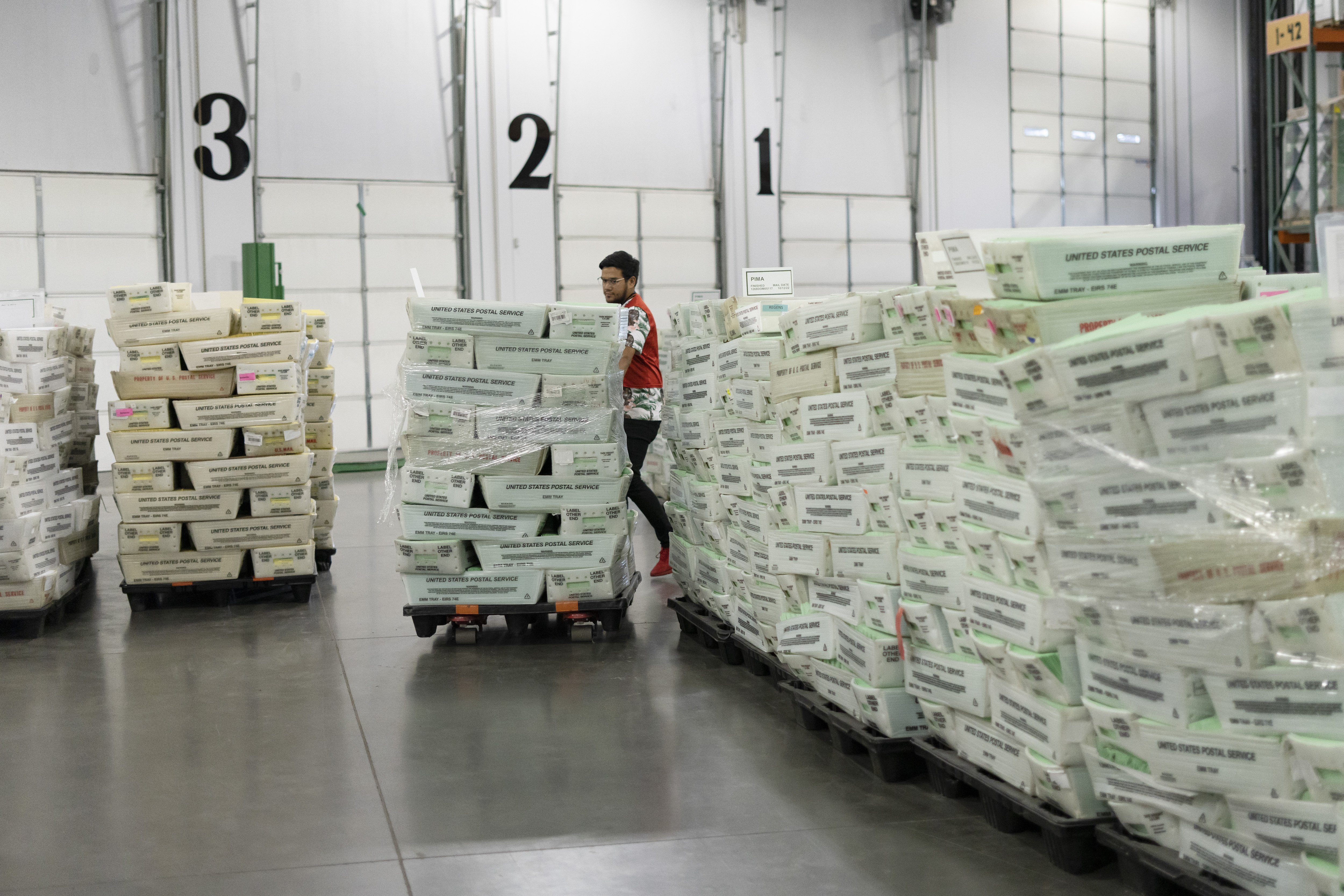
    Inside the U.S. Postal Service this summer, software engineers and policymakers scrambled to build something new: a verification system that, according to an anonymous whistleblower, could hold up an untold number of ballots.

    By late August, members of the team realized the rushed schedule would leave them just four days to test the full system. When a member raised concerns about the technology’s quality and the lack of testing, a senior Postal Service official gave little guidance other than saying, “We cannot fail.” The official said everything must work perfectly and there was no other choice, according to the whistleblower disclosure that a federal official submitted to Congress two weeks ago.

    As the deadline approached, multiple officials used profanity to describe the plan as a disaster, calling it a “s— show,” according to the disclosure. The Postal Service was scheduled to launch the technology on Sept. 1, but so far it hasn’t been made available.

    Under the Postal Service plans, election officials would upload lists of voters through an online portal. They would then submit their mail ballots to the post office, sometimes in batches of thousands at a time. If postal clerks found any mismatches — including for voters who moved or got married and changed their names — they would reject the entire batch, according to the whistleblower.

    The Postal Service moved fast, but it did not compromise its work, Postmaster General David Steiner said in a statement. “We stand behind both the rigor of our process and the resulting system,” he said.

    Whether any of the Postal Service’s changes will take effect is unsettled. Trump signed an executive order telling the Postal Service in March to review ballot envelopes and limit who could receive mail ballots. A federal judge blocked the order in June, but last month the Supreme Court cleared the way for it to temporarily go into effect when it found states had sued prematurely. After the Postal Service formally announced its new rules, the judge — hearing the challenge again — blocked those plans. The administration is now again asking the Supreme Court to give it the green light, and a decision is expected soon.

    White House spokesperson Lauren Bis said Trump will keep fighting in court for what she called “common-sense measures to protect the security of mail-in ballots and ensure only Americans vote in American elections.”

    Time is running out. Local officials in North Carolina and Wisconsin started mailing ballots to voters early this month under existing policies. Other jurisdictions are set to do the same soon.

    “It’s the potential for complete chaos,” said Gerry Cohen, a Democrat on the Board of Elections for Wake County, N.C.

    A recent incident in Leon County, Fla., brought a preview of the confusion Trump’s last-minute rules could bring. The county elections supervisor submitted his ballot envelope to the Postal Service in case the new rules go into effect — only to have the Postal Service reject it because the return address was 0.014 inches too close to another line of text.

    The Postal Service later relented and accepted the envelope, but Mark Earley, Leon’s elections supervisor, said Friday that the incident was a taste of the nationwide “chaos and confusion” possible if the rules go into effect.

    Hunting for noncitizen voters

    Trump’s executive order in March also directed the Department of Homeland Security to assemble a list of citizens for states to check their voter rolls against. And it instructed the attorney general to prioritize prosecuting state officials who issue ballots to ineligible people.

    His plan is premised on debunked claims that voting by noncitizens is rampant. Voting-rights advocates and election officials warn Trump’s agenda could lead to a raft of uncounted ballots from eligible voters.

    The federal government’s citizenship data is often flawed. Anthony Nel of Denton, Texas, learned that last year when he faced the prospect of losing his right to vote.

    Nel, a 29-year-old higher education administrator who said he leans liberal, received a letter telling him he would soon be kicked off the voter rolls because state officials weren’t sure whether he was a citizen. Nel, who was born in South Africa and became a U.S. citizen in his teens, didn’t have time to renew his expired passport before officials removed him from the rolls. He reregistered once he updated his passport but worries voters with less time and money could lose their right to cast ballots.

    Trump’s plans are “being described as voting security,” Nel said. “From what I am seeing, it looks more like voter suppression.”

    Trump continues to spread unsupported claims that voting by noncitizens is partly to blame for his 2020 loss. But court records and independent reviews show noncitizens rarely register to vote or try to cast ballots. Georgia officials determined noncitizens accounted for about 0.002% of the state’s registered voters and a study of voting in 42 jurisdictions in 2016 found one potential noncitizen vote for every 783,000 ballots.

    That hasn’t stopped Trump and his allies, who have pointed to a software glitch in New Jersey that led to the state motor vehicles division inadvertently registering about 6,600 noncitizens in 2023 and 2024. They say that error shows the need for more scrutiny of voter rolls.

    The administration’s approach is meant to protect elections and “ensure states’ voter rolls are accurate, up-to-date and do not include aliens who are not eligible to vote or to be registered to vote,” said Zach Kahler, a spokesperson for U.S. Citizenship and Immigration Services.

    The push for emergency powers

    Since Trump returned to office last year, his backers — including Bannon and a lawyer close to Trump — have pressed the president to declare a national emergency that they say would unlock powers for him to rewrite election rules.

    The idea resurfaced last month, when Trump appeared on a Real America’s Voice program hosted by Wayne Allyn Root. With election legislation stalled in the Senate, Root pressed Trump to declare an emergency that he said would allow him to limit mail ballots and require people to prove their citizenship to register to vote.

    “Let me just say that stranger things have happened, OK?” Trump responded. “I’ll leave it at that.”

    Peter Ticktin, a lawyer and longtime Trump friend who has spent months urging the president to declare an election emergency, called Trump’s answer “definitely a shift.”

    “I’m feeling good about my prospects,” Ticktin said.

    The White House did not answer questions about whether Trump is considering declaring an emergency.

    On legal grounds, the theory that the president can claim power over elections by declaring an emergency is laughable, said Hofstra University law professor James Sample. But Sample is treating it as deadly serious.

    In the weeks after Trump lost the 2020 election, lawyers backing him came up with another theory Sample viewed as preposterous: that Vice President Mike Pence could reject some states’ electoral votes and let Trump claim victory. Pence refused, but the theory set the stage for the Jan. 6, 2021, attack on the U.S. Capitol.

    The Constitution gives states and Congress authority over elections, not the president. A national emergency declaration triggers greater powers under federal law, Sample said, but none of them affect elections.

    The risk, he said, isn’t whether the notion would survive in court. It’s that Trump could use it to take sweeping actions while voting is ongoing and before courts can respond.

    “The idea is simply to do first and say, ‘So what?’” Sample said. “So much of Trump 2.0 is to outrun and outpace the courts.”

    When officials refuse to certify

    Perils lurk even after votes are cast.

    In 2022, commissioners in New Mexico’s Otero County listened as an attorney insisted they were obligated to certify that year’s midterm results.

    This kind of motion was normally a drama-free event. But the three commissioners didn’t see it that way, and they delivered their votes in rapid succession: “Nay,” “Nay,” “Nay.”

    Among other issues, they cited debunked conspiracy theories about Dominion Voting Systems machines that had circulated in MAGA circles since Trump refused to accept his 2020 defeat.

    “I have huge concerns with these voting machines, I really do,” said Commissioner Vickie Marquardt.

    After the attorney told the commissioners that a court would likely force them to certify, Marquardt laughed. “So then what? They’re going to send us to the pokey?” she responded, using another word for jail.

    Certification is the final stage of an election, when local and state officials sign off on vote tallies so the winners can take office. But in recent years, officials in pockets of the country have tried to block results by refusing to certify them — 35 of them in eight states from 2020 to mid-2024, according to Citizens for Responsibility and Ethics in Washington, a research and advocacy group that has sued the Trump administration over its election policies.

    Those efforts have failed. The Otero County standoff, for example, ended when a court ordered the election certified and Marquardt and another commissioner relented.

    Marquardt doesn’t know what she will do this November. She said she still has “huge concerns” about the security of mail ballots, voting machines, and drop boxes.

    “I would do it again if I felt strongly about it because I don’t think it’s right to certify something you don’t think is right,” she said.

    A refusal to certify results creates legal uncertainty and, even if it fails, can undermine faith in how elections are run. Some fear those who block certification could try to prevent the winners from taking office in Congress. Disputes must be settled quickly because the winners are slated to take office in early January.

    In Nevada’s Washoe County, Commissioner Jeanne Herman has voted against certifying every election since 2020, including her own reelection. Those elections were certified with the approval of others on the commission.

    “Elections need to be fair and honest, and until they are, I’m not going to lie and say this election was great,” she said.

    Similar clashes could emerge elsewhere, with potential hot spots in Arizona, Georgia, Michigan, and Texas, according to the nonpartisan Voting Rights Lab.

    Once local officials question their own results, “the damage has already been done in terms of public confidence,” said Charley Olena, a senior vice president with the nonprofit group.

    One ballot at a time

    Whatever the courts decide, and no matter the moves Trump makes, November’s election will largely depend on thousands of local jurisdictions and the hundreds of thousands of workers staffing them.

    On a recent August afternoon in Madison, Wis., three of them sat around a table to decide whether one person’s vote should count.

    The ballot had come in an envelope that was partially unsealed. Poll workers hadn’t counted it on the night of the gubernatorial primary, citing the possibility that someone could have tampered with it. Now the city’s Board of Canvassers examined the envelope, passing it back and forth and running their fingers along its edge. One corner of the flap wasn’t sealed. The rest of it was.

    “I don’t think you can grab the ballot out,” said Lydia McComas, the city clerk.

    The board counted the ballot and moved on to other quirks and anomalies. At least one voter’s ballot was not counted because of a jam in a voting machine. Another voter was given a ballot for the wrong ward. And one voter was inadvertently issued a ballot in the name of another person with the same name.

    For more than two centuries, officials across America have been carrying out this painstaking work.

    In recent years, Madison — a Democratic bastion in a swing state — has come under fire for mistakes. McComas’s predecessor resigned last year after 193 ballots went uncounted in 2024. In this spring’s contest for a state Supreme Court seat, workers failed to transport 23 absentee ballots to counting sites before polls closed, nearly preventing them from being tallied.

    Local officials make mistakes, McComas said, but they learn from them to make future elections run more smoothly. It’s important to let the public scrutinize their work at every stage, she said, from testing machines to tallying results.

    “If the public’s not confident in our work,” she said, “they’re not confident in democracy.”