Category: Elections

  • 1 in 4 Pa. GOP voters doesn’t know who Stacy Garrity is as Josh Shapiro widens lead in governor’s race

    1 in 4 Pa. GOP voters doesn’t know who Stacy Garrity is as Josh Shapiro widens lead in governor’s race

    One in four likely Pennsylvania GOP voters has not heard of the state’s Republican candidate for governor, as Gov. Josh Shapiro continues to pull ahead with less than six weeks remaining until Election Day, according to a new poll.

    Shapiro, a Democrat seeking reelection and a potential 2028 presidential candidate, is ahead of his Republican challenger, State Treasurer Stacy Garrity, by 21 percentage points among likely Pennsylvania voters, according to the poll, conducted by The Inquirer, the New York Times, and Siena University.

    According to the poll, Shapiro’s lead has now expanded beyond the advantage he held the month before the 2022 election against State Sen. Doug Mastriano (R., Franklin). Shapiro went on to beat Mastriano in that election by nearly 15 percentage points, or 800,000 votes — a drubbing that the GOP vowed not to repeat.

    (function(){function e(){window.addEventListener(`message`,function(e){if(e.data[`datawrapper-height`]!==void 0){var t=document.querySelectorAll(`iframe`);for(var n in e.data[`datawrapper-height`])for(var r=0,i;i=t[r];r++)if(i.contentWindow===e.source){var a=e.data[`datawrapper-height`][n]+`px`;i.style.height=a}}})}e()})();

    Pennsylvania Republicans endorsed Garrity in September 2025 — an unprecedented early nod to unify behind her in an effort to put up a stronger fight against Shapiro after the party largely withheld its support for far-right Mastriano. Garrity has won statewide twice and received the most votes in Pennsylvania history for a statewide office, a record previously held by Shapiro. In January, President Donald Trump endorsed Garrity, calling her “an America First Patriot.”

    But building on that early enthusiasm has proven to be a challenge for Garrity, who for months has struggled to raise money, compete with Shapiro’s $60 million war chest, and gain name recognition in the critical battleground state where registered Democratic voters narrowly outnumber Republicans.

    Garrity, 63, who entered politics in 2020 after a long career in the U.S. Army Reserve, raised only $1.8 million this summer and spent $1.5 million, according to her latest campaign finance filing, posted Tuesday. Shapiro raised $13.3 million during that time and spent $31 million.
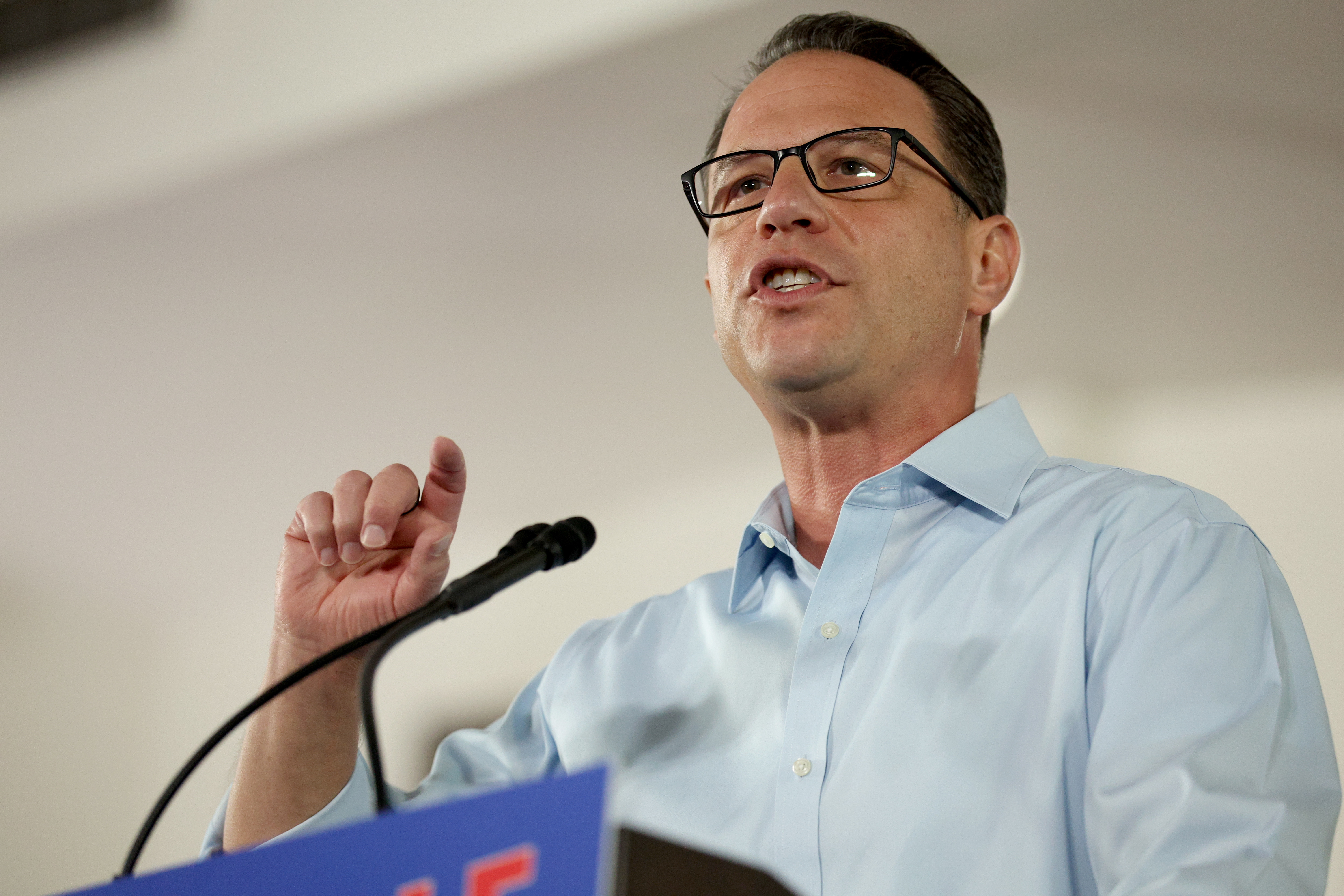
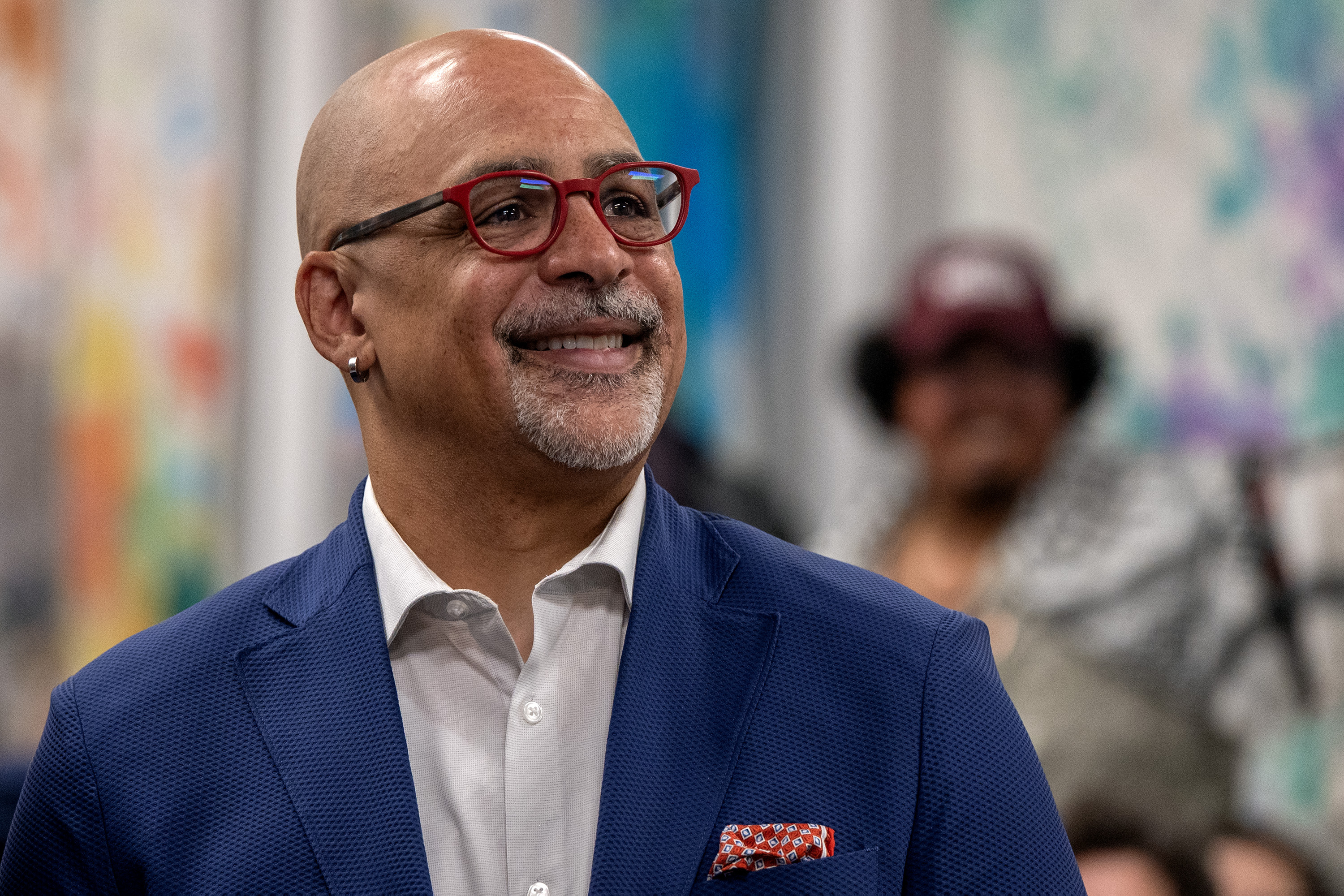
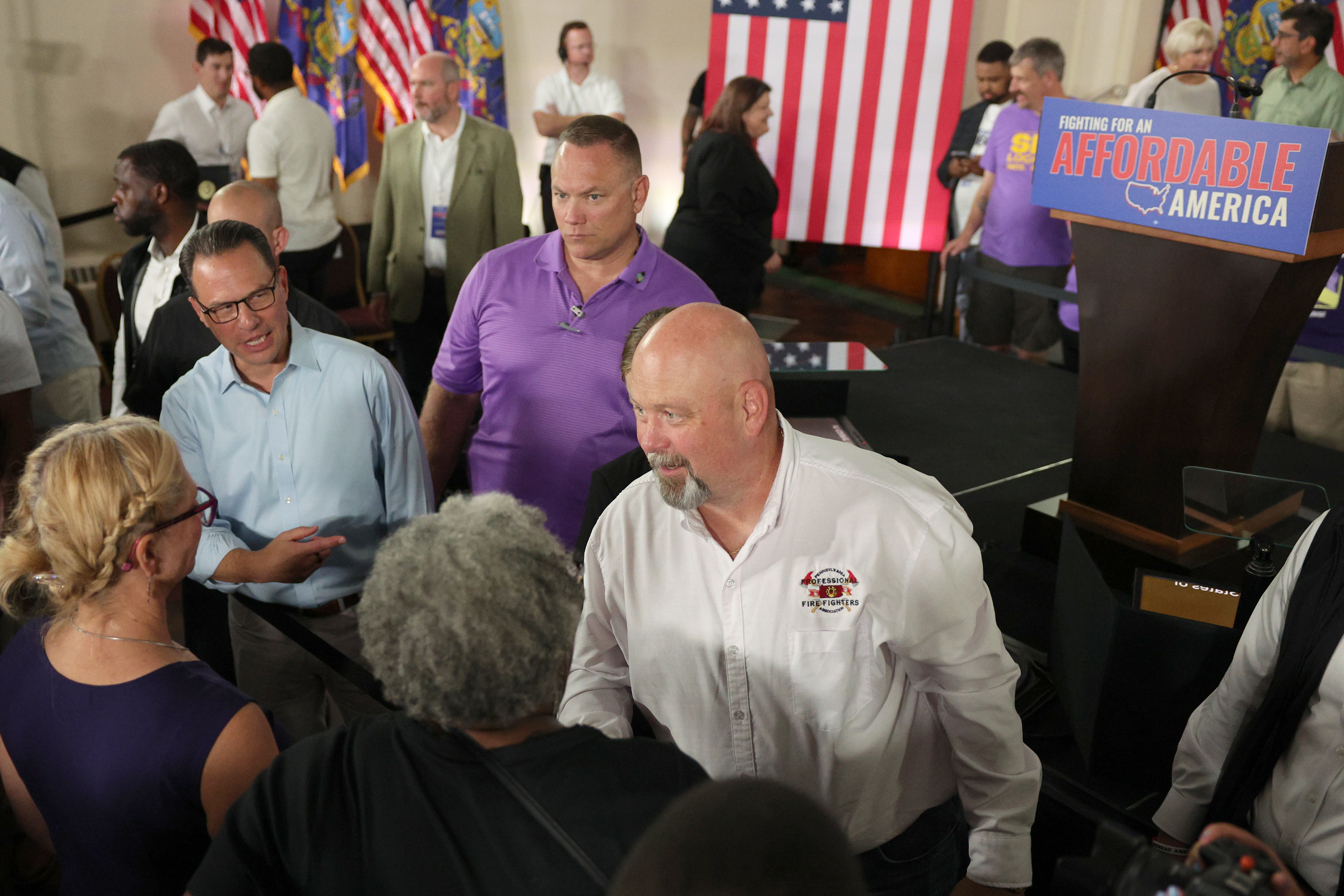
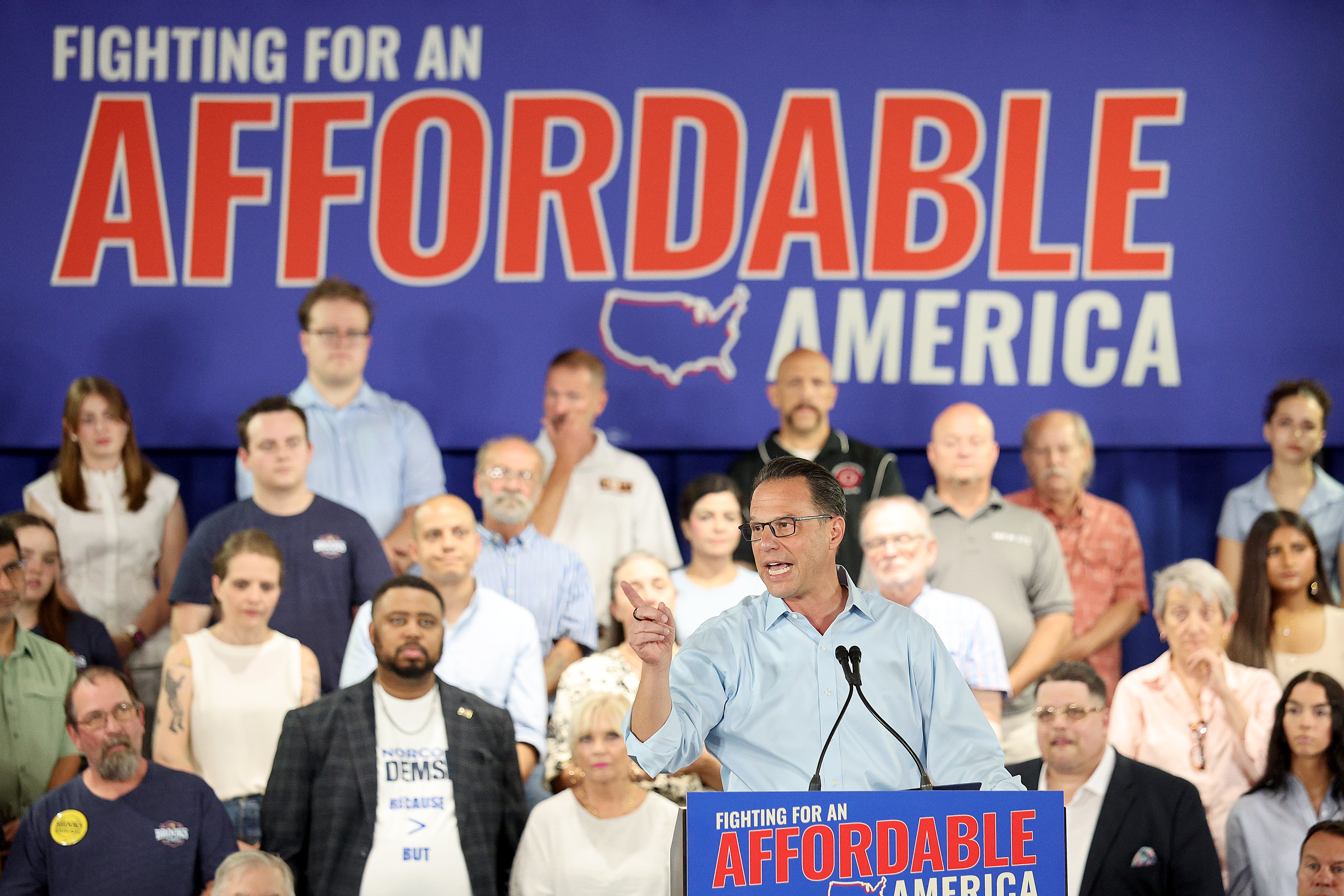
    Gov. Josh Shapiro addresses the audience during a rally for congressional candidate Bob Brooks at the United Steelworkers Union Hall in Bethlehem, Pa. on Sunday, July 26, 2026.David Maialetti / Staff Photographer

    And while Shapiro has dramatically increased his advertising spending on TV and streaming services to top $27 million this year, Garrity has spent a total of $744,000 on ads so far, according to media tracking firm AdImpact.

    Both Shapiro and Garrity have released ads attacking each other for their past support for data center development, an increasingly unpopular issue among both Republicans and Democrats. Garrity’s ad criticizing Shapiro has been viewed about 802,000 times in the Philadelphia media market, according to AdImpact. Shapiro’s commercial labeling Garrity as “Pennsylvania’s number one fan of data centers” has been viewed 416 million times.

    (function(){function e(){window.addEventListener(`message`,function(e){if(e.data[`datawrapper-height`]!==void 0){var t=document.querySelectorAll(`iframe`);for(var n in e.data[`datawrapper-height`])for(var r=0,i;i=t[r];r++)if(i.contentWindow===e.source){var a=e.data[`datawrapper-height`][n]+`px`;i.style.height=a}}})}e()})();

    “Within the data right now, Josh Shapiro is a favorite son in the state of Pennsylvania, and they see him as doing a fantastic job,” said Don Levy, the director of the Siena Research Institute, which conducted the poll of 615 likely Pennsylvania voters from Sept. 15 to 21. “Barring double lightning bolts or a triple rainbow, he’s going to win.”

    Garrity’s lack of campaign spending has allowed Shapiro to define her in the race, experts have said.

    George Stanton, 77, a registered Republican from Lebanon County who participated in the poll, said he will support Garrity in November. He said Shapiro’s attack ad about Garrity’s past support for data centers, which he said he agrees with, helped him learn more about her positions.

    Voters trust Shapiro more than Garrity on all of the top issues facing them, the poll found, including the state’s economy, the cost of living, data centers and artificial intelligence companies, and vaccine policy. In recent weeks, Shapiro has been embroiled in a battle with U.S. Health and Human Services Secretary Robert F. Kennedy Jr., whom he has blamed for spreading misinformation as Pennsylvania experienced a deadly measles outbreak. And at a summit in Pittsburgh last week, Shapiro called for more regulation of AI companies but said innovation of the technology should still be harnessed.

    (function(){function e(){window.addEventListener(`message`,function(e){if(e.data[`datawrapper-height`]!==void 0){var t=document.querySelectorAll(`iframe`);for(var n in e.data[`datawrapper-height`])for(var r=0,i;i=t[r];r++)if(i.contentWindow===e.source){var a=e.data[`datawrapper-height`][n]+`px`;i.style.height=a}}})}e()})();

    Scott Byers, 79, a Republican from Westmoreland County who supported Trump in 2024, is planning to vote for Shapiro this fall because “he just seems to be more in line with the public, with the feelings of his constituents.”

    That includes Shapiro’s position on AI and data centers, which Byers believes should be more difficult to build. All he knows about Garrity’s views is what he catches on commercials — but it does not feel comprehensive, said Byers, who participated in the poll.

    “I think technology in itself is going a bit beyond what is necessary. I feel that it’s hard to pinpoint, but I just feel that there’s too much emphasis on technology,” Byers said.
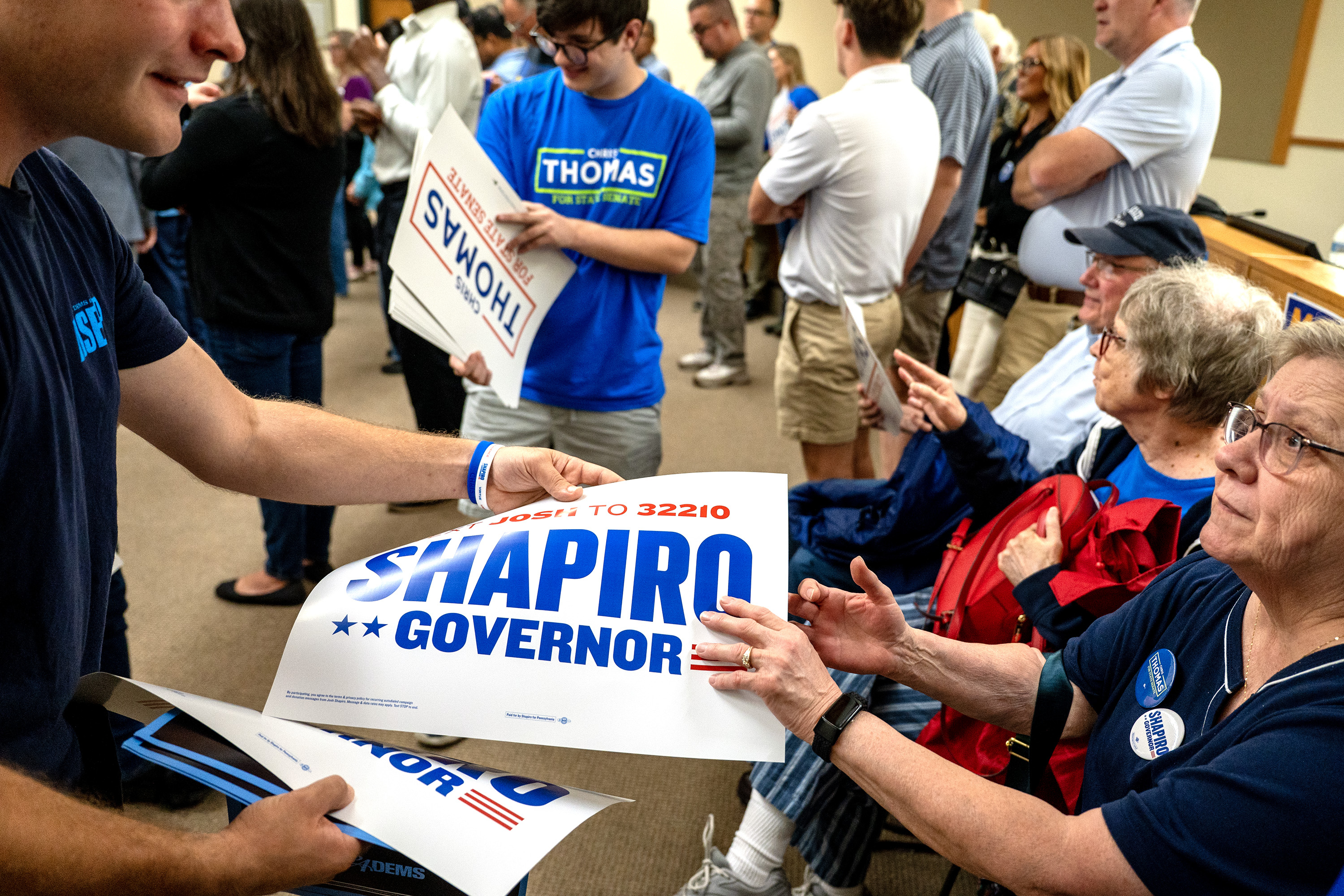
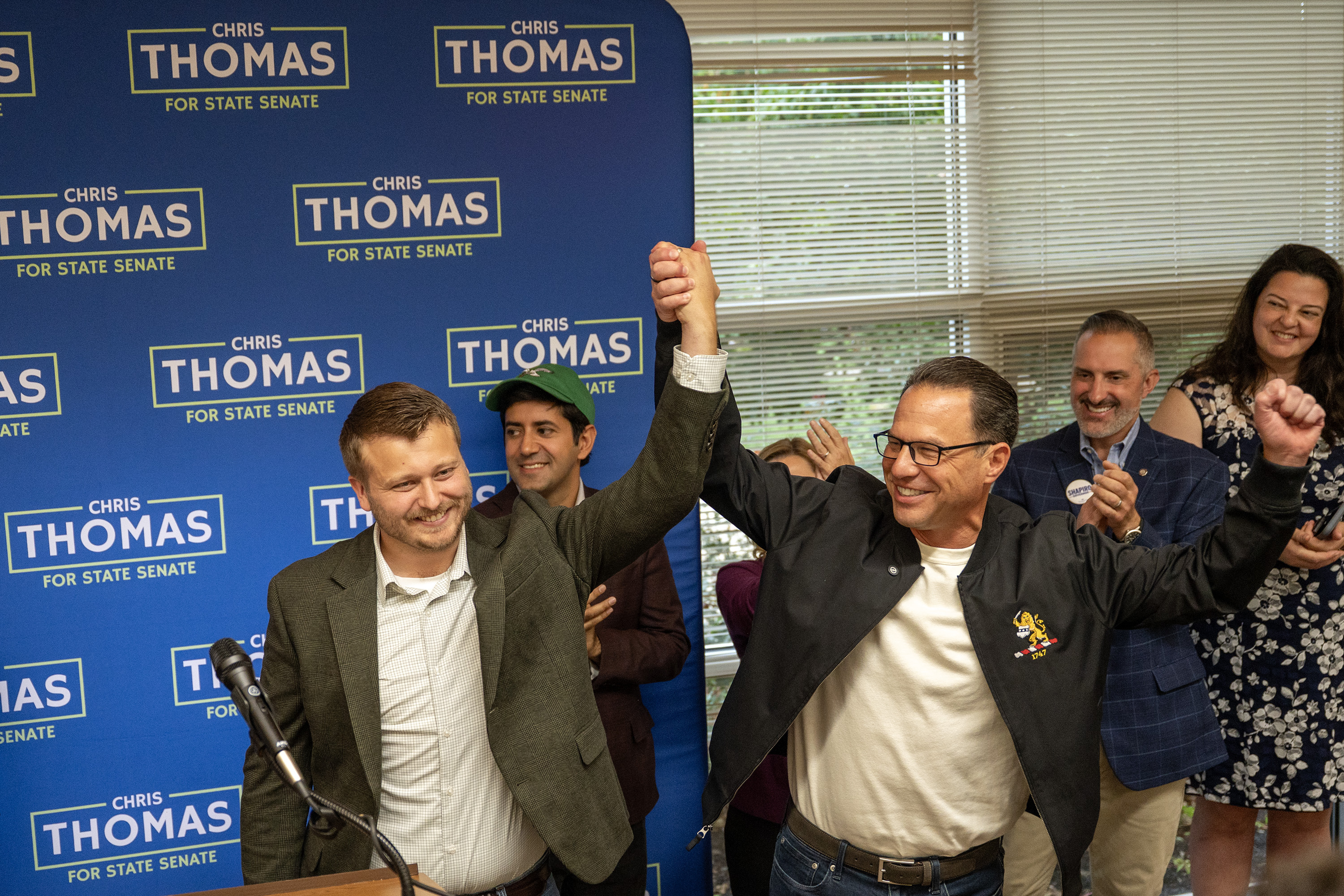
    Campaign volunteers hand out signs to supporters of Gov. Josh Shapiro and Democratic Pa. Senate candidate Chris Thomas at a rally in Towamencin, Montgomery County before heading out to canvass on Sunday, Sept. 29, 2026.Tom Gralish / Staff Photographer

    Approximately 60% of likely voters strongly approve or somewhat approve of the job Shapiro is doing as governor, according to the poll. That includes 30% of Republican voters, 89% of Democratic voters, and 59% of independents in the critical swing state where Shapiro maintains high popularity.

    As a moderate politician, Shapiro has been able to capture most independent voters and even win over some Republicans, according to the poll.

    Lesa Yeager, 63, considers herself an independent voter with centrist views who voted for a third-party candidate in the 2024 presidential election. She is an ardent union supporter and also thinks the nation should have a strong border. She said she trusts Garrity, as the state’s treasurer, to do a better job handling Pennsylvania’s economy.

    But she is supporting Shapiro this November, in large part, because of his work on schools.

    “I like that he’s very pro-education,” she said. “I am a fan of charter schools because I sent my kids to charter schools.”

    Two of her children, now 35 and 37, benefited from smaller classroom sizes and adjustable curriculums, she said.

    Yeager said she has also reached her limits with Trump’s behavior during his second term and believes Shapiro would continue to represent the state positively.

    “I just think Trump is such a bully and so mean and just does whatever he wants, and I just want someone who isn’t that,” Yeager said.

    She appreciates the Republicans who distance themselves from Trump. “But it’s tough to tell who is and who isn’t, a lot of times, and I would rather vote for someone I know isn’t going to support Trump on a lot of the things that he does,” she added.

    Still, Garrity has found some backing among Pennsylvania’s electorate, though even some of those supporters say they don’t know much about her.
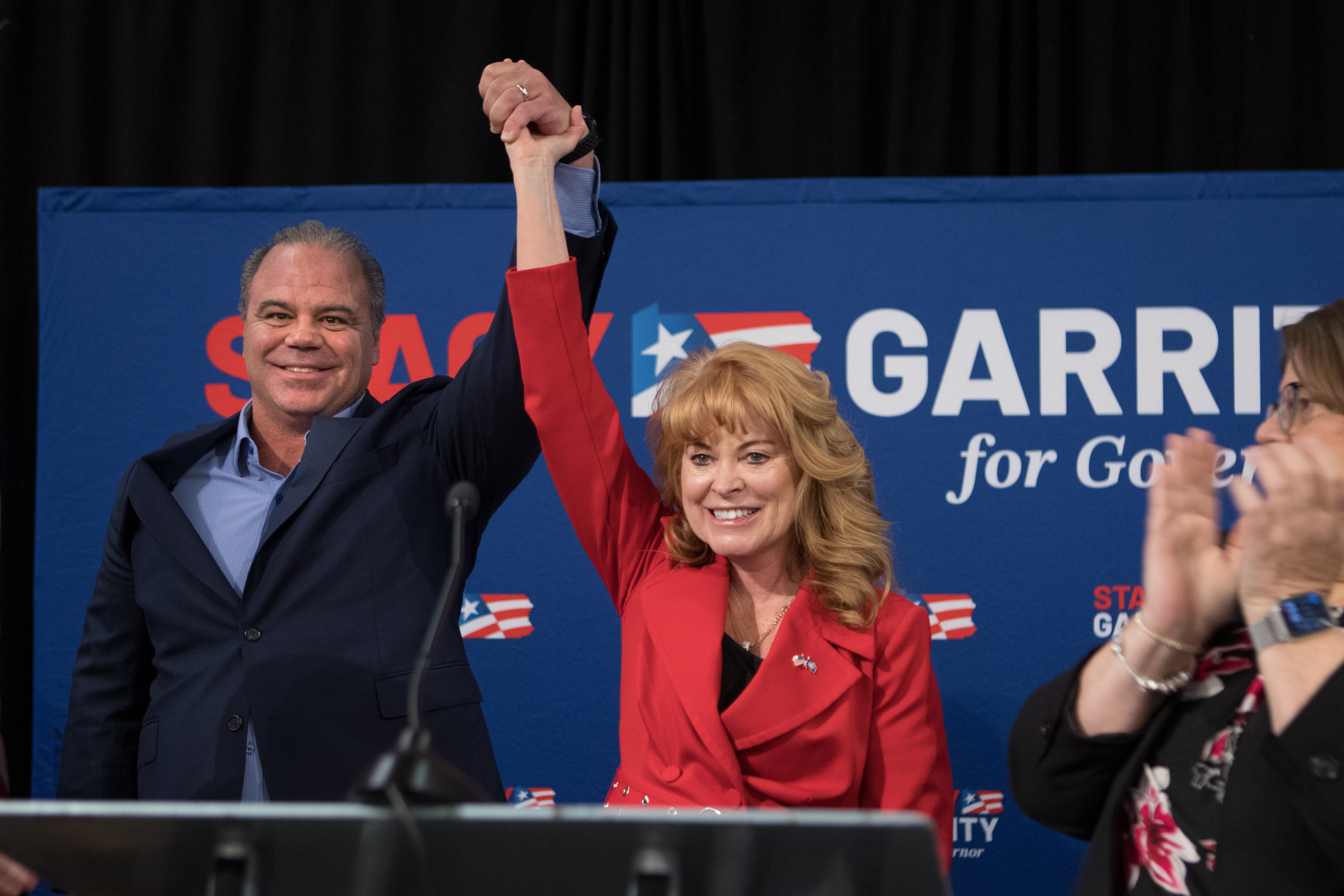
    GOP gubernatorial nominee Stacy Garrity and her running mate Jason Richey hold up their arms in Harrisburg, Pa., Saturday, February 7, 2026. Kalim A. Bhatti / For The Inquirer

    Susan Roller of Lancaster said she plans to vote for Garrity this fall because “she’s more responsible and will protect our freedoms.” Roller, who is retired, said she is particularly distressed about Shapiro’s positions supporting access to abortion and encouraging vaccines.

    But as far as getting to know more about Garrity, Roller, 72, said she has not “seen a lot” of messaging on television about her.

    Shapiro and Garrity are set to face off in a televised debate on Oct. 7.

    In 2022, Shapiro did not participate in any debates while he maintained a double-digit lead over Mastriano, declining the Republican’s requests as an “unserious stunt.” Shapiro held a 13-percentage-point lead over Mastriano in a New York Times/Siena poll conducted that October — a closer margin than Shapiro’s lead over Garrity this year.

    (function(){function e(){window.addEventListener(`message`,function(e){if(e.data[`datawrapper-height`]!==void 0){var t=document.querySelectorAll(`iframe`);for(var n in e.data[`datawrapper-height`])for(var r=0,i;i=t[r];r++)if(i.contentWindow===e.source){var a=e.data[`datawrapper-height`][n]+`px`;i.style.height=a}}})}e()})();

    The 2022 midterm election was a much different political moment for Democrats, said Levy of the Siena Research Institute.

    “That was a point in time when the Democratic star was on the decline,” he added. “Everything was a bit of a referendum on Democrats, on the job that [former President Joe] Biden was doing, how we were coming out of the pandemic.

    “The overall political climate in which the ’26 election is taking place vs. ’22 is really kind of night and day,” Levy said.

    Staff writers Joe Yerardi and Fallon Roth contributed to this article.
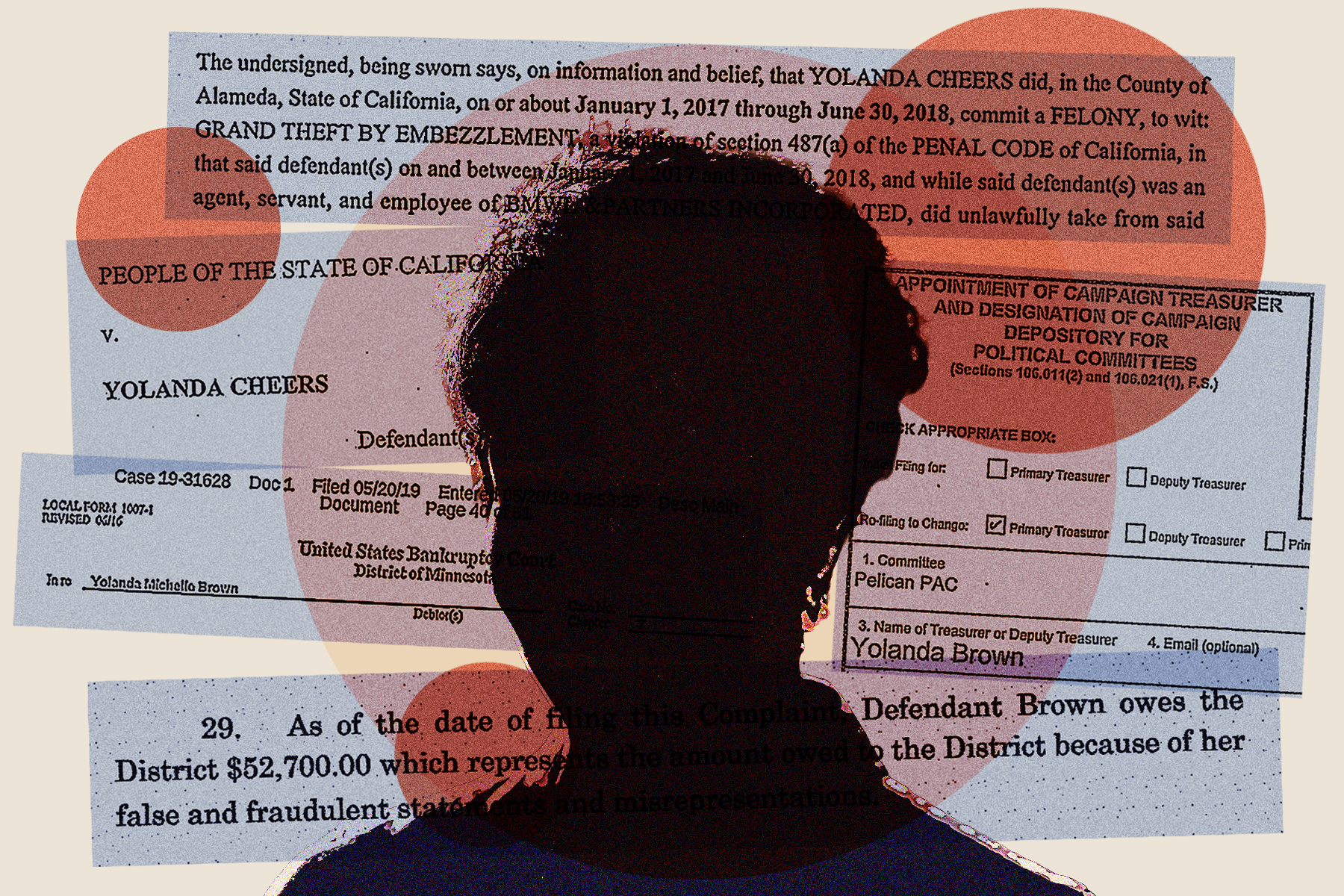
  • Chris Rabb’s former campaign treasurer pleads guilty to defrauding him and others of $1 million

    Chris Rabb’s former campaign treasurer pleads guilty to defrauding him and others of $1 million

    Philadelphia State Rep. Chris Rabb’s former campaign treasurer, whom he accused of draining his campaign account and disappearing in the middle of his run for Congress, pleaded guilty Wednesday to a federal fraud charge.

    Yolanda Brown, a campaign operative formerly based in Florida who worked for Democratic political candidates and social justice causes across the country, appeared in U.S. District Court in Philadelphia on Wednesday and pleaded guilty to one count of wire fraud. She admitted to embezzling a total of about $1 million from 20 clients, including Rabb, between 2022 and 2026.

    Brown, who now lives in Virginia, faces a maximum of 20 years in prison and will be required to pay restitution. A sentencing hearing is scheduled for Jan. 26.

    Rabb, a progressive, went on to win the Democratic nomination in May. He is expected to prevail in the November general election to represent Pennsylvania’s 3rd Congressional District. There is no Republican candidate, though he faces a long-shot independent opponent.

    Rabb did not immediately respond to a request for comment.

    For years, fraud claims from several political campaigns piled up against Brown, who operated Brown Financial & Consulting Services Group and at times worked under her married name, Yolanda Rumph. She was accused of financial impropriety in several states, The Inquirer reported, including shaving money from accounts she controlled and embezzling from a nonprofit client.

    But she continued working in politics and, in August 2025, signed on to work for Rabb, who was in the midst of a highly competitive Democratic primary run for an open seat in Congress representing about half of Philadelphia.

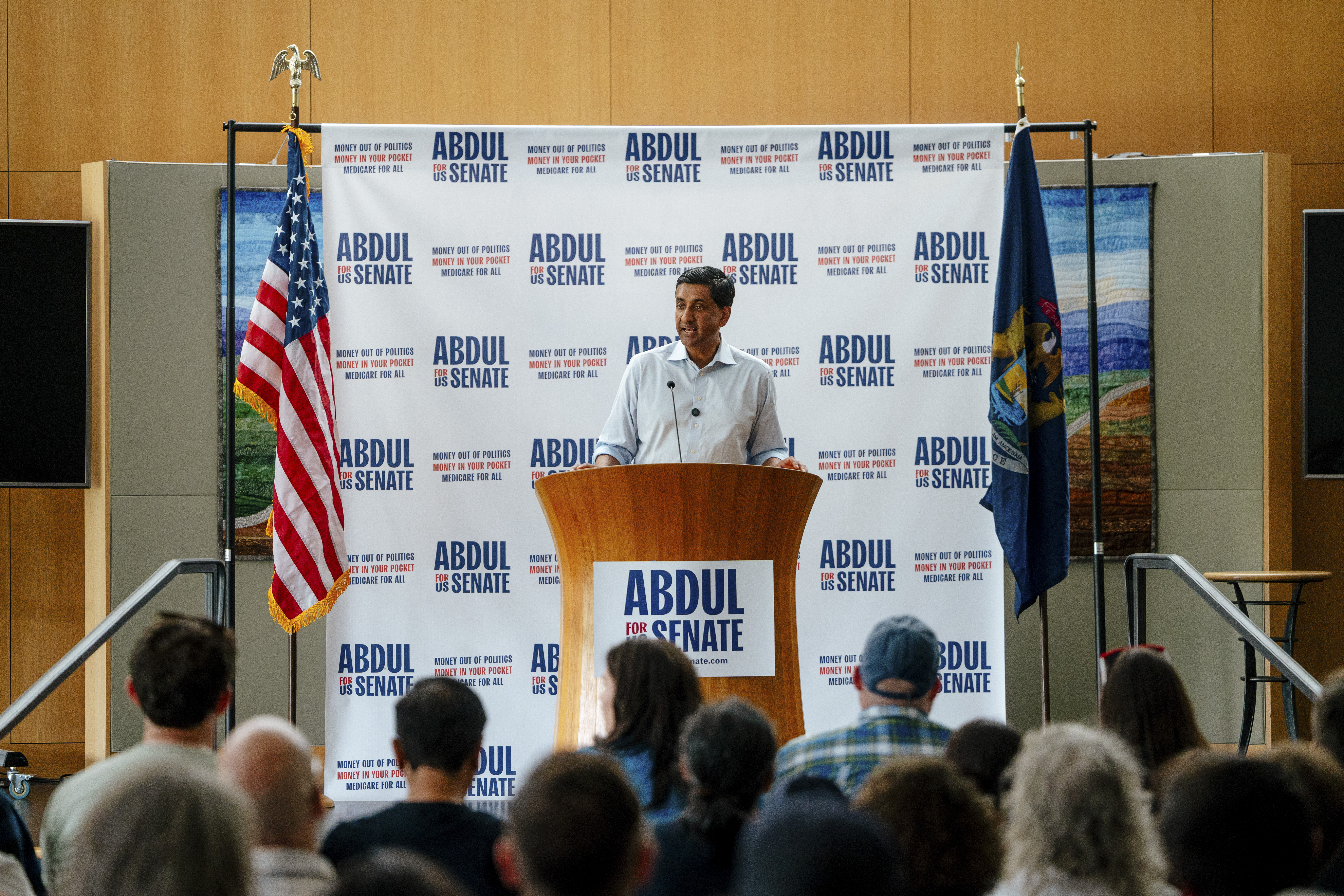
    State Rep. Chris Rabb at an event with U.S. Rep. Ro Khanna July 28, 2026.Tom Gralish / Staff Photographer

    In January, Ken Welch, the mayor of St. Petersburg, Fla., said that he had reported Brown to law enforcement after she misappropriated $207,000 from his campaign committee.

    The following month, Rabb said that Brown had made a series of unauthorized withdrawals from his campaign. The amount of money embezzled totaled more than $160,000, which constituted most of what was in his campaign’s account at the time, according to paperwork Rabb’s campaign filed with the Federal Election Commission.

    Khambrel Davis, Brown’s attorney, said in an interview with The Inquirer in March that Brown was innocent and merely the victim of a rogue employee who had stolen from her clients.

    But on Wednesday in court, Brown acknowledged that she executed a scheme to defraud her clients of hundreds of thousands of dollars.

    Assistant U.S. Attorney Robert Livermore told U.S. District Judge Chad F. Kenney that Brown “embezzled client funds in her control to pay for her own personal expenses without authorization from her clients.”

    He added that she “often used client funds to repay other clients from whom she had previously stolen funds.”

    In charging documents, prosecutors wrote that in one instance, Brown steered about $19,000 from the account belonging to Rabb’s campaign — identified in court filings as “Political Campaign #1″ — into a separate account that she controlled. She then transferred $6,000 of that money into her personal bank account.

    That transfer was one of multiple unauthorized transfers that Rabb’s campaign detected. Prosecutors often formally charge a limited scope of wrongdoing if a defendant has agreed to plead guilty.

    Prosecutors described the fraud perpetrated against Rabb’s campaign as part of an “overall scheme” in which Brown defrauded about 20 clients of a total of more than $1.4 million. They wrote that she had repaid clients more than $400,000, for a net loss of about $1 million.

  • Philly City Councilmember Kendra Brooks is considering running for mayor, sources say

    Philly City Councilmember Kendra Brooks is considering running for mayor, sources say

    Kendra Brooks, a progressive who made history as the first third-party candidate to win a seat on Philadelphia City Council in 100 years, is considering challenging Mayor Cherelle L. Parker in the spring Democratic primary election, according to two sources familiar with her thinking.

    The sources, who were not authorized to speak about the matter publicly and did so on the condition of anonymity, said Brooks is mulling a campaign but has not yet made a decision. She declined to comment Friday.

    To run in the Democratic mayoral primary, Brooks would have to resign from her seat on Council. Under state law, she could remain a member of the Working Families Party or switch her party registration to Democrat..

    A bid for the mayor’s office would pit Brooks, the de facto leader of the city’s Working Families Party and democratic socialist faction, against Parker, a centrist who has long been aligned with the city’s Democratic Party establishment.

    Brooks, a longtime organizer from North Philadelphia and the minority leader on Council, got her start in politics as a public education advocate and has served on Council since 2020. Her most high-profile legislation this year was a package of bills that placed new restrictions on federal immigration enforcement in the city, and drew legal challenges from the Trump administration.

    She has been critical of Parker, especially with regard to the mayor’s strategy of largely sidestepping criticism of President Donald Trump’s administration. Brooks has said that officials who do not outwardly oppose the president’s mass deportation campaign are engaging in “complicity disguised as strategic silence,” and she accused the mayor of “caving” to Trump when the administration last year quietly abandoned race- and gender-conscious contracting goals.

    “People want to see leaders fighting for something,” Brooks said at the time, “and right now we don’t see our city fighting for anything.”

    Aren Platt, the executive director of the mayor’s political campaign arm, declined to comment.

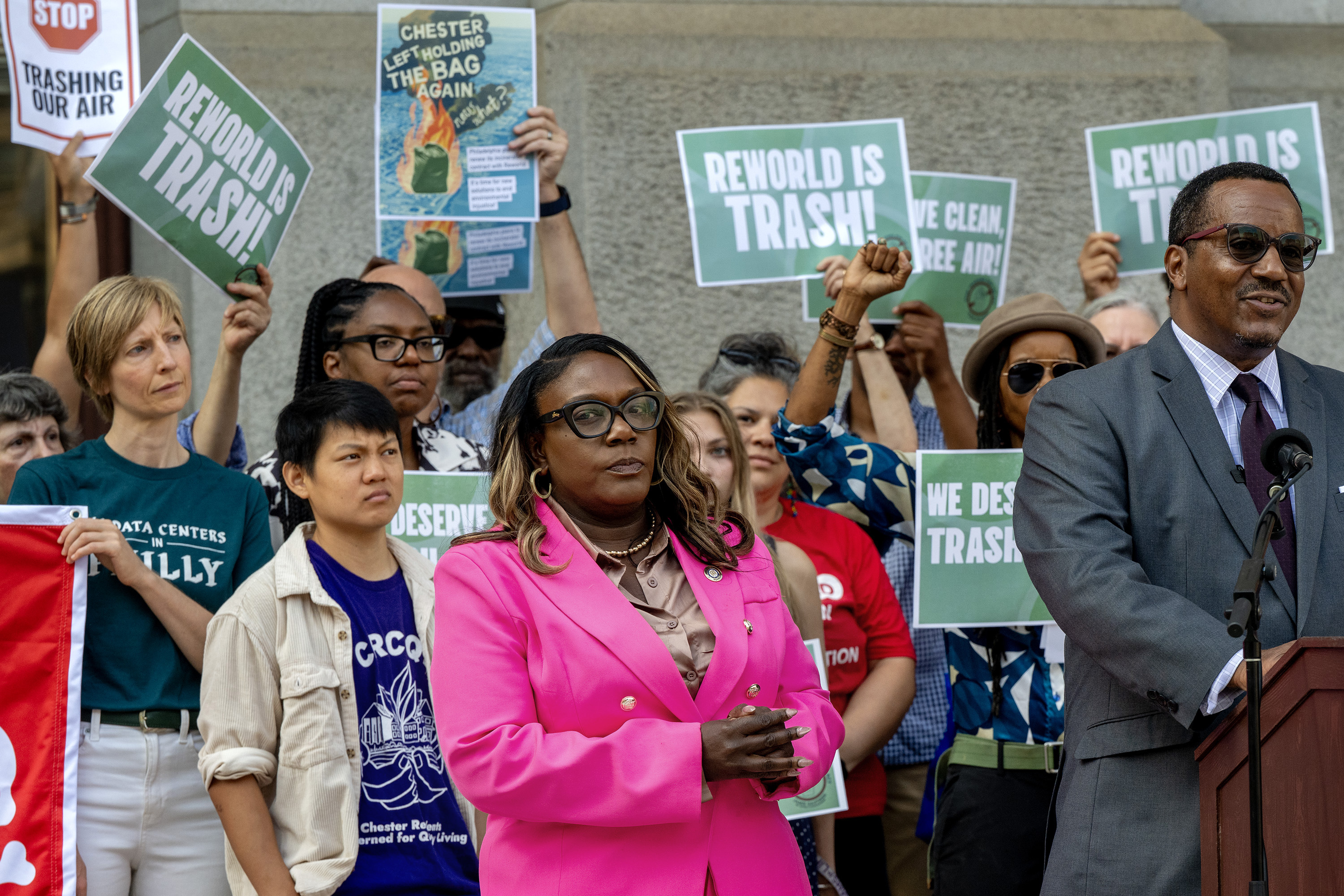
    City Councilmember Kendra Brooks joins Chester Mayor Stefan Roots (right) and protesters at a rally outside City Hall Sept. 17, 2026.Tom Gralish / Staff Photographer

    Brooks’ supporters see the mayor as potentially vulnerable as progressives have ascended nationally and notched wins over more traditional Democrats. That includes Mayor Zohran Mamdani’s victory last year in New York City and Abdul El-Sayed’s win in the Michigan Democratic primary for U.S. Senate.

    Closer to home, the left is emboldened by State Rep. Chris Rabb, who was backed by Brooks’ coalition and in May won the Democratic primary for a seat in Congress representing about half of Philadelphia. He toppled two centrist Democrats who were each supported by party leaders, big donors, and politically powerful labor unions.

    Despite the energy on the left, no progressive has officially launched a run for mayor ahead of the May primary election. Shania Bennett, the mayor’s former director of youth engagement, who has never run for office before, said this month that she will challenge Parker. Bennett said recently that she had not yet hired a campaign team or developed a policy platform.

    Any challenger to Parker faces significant hurdles. No Philadelphia mayor has lost reelection in modern history, and Parker would be backed by the city’s Democratic Party, which can now spend unlimited amounts of money in coordination with its chosen candidates under a new board of ethics policy.

    Parker will also be supported by the deep-pocketed building trades unions that boosted her in the crowded open mayoral primary in 2023.

    “We’re going to put all the resources, both financial resources and people resources, to bear to make sure that Mayor Parker has a second term,” said Ryan Boyer, the head of the Philadelphia Building and Construction Trades Council. “I want to be clear and vociferous that the Philadelphia Building Trades … are fully and completely behind Cherelle Parker.”

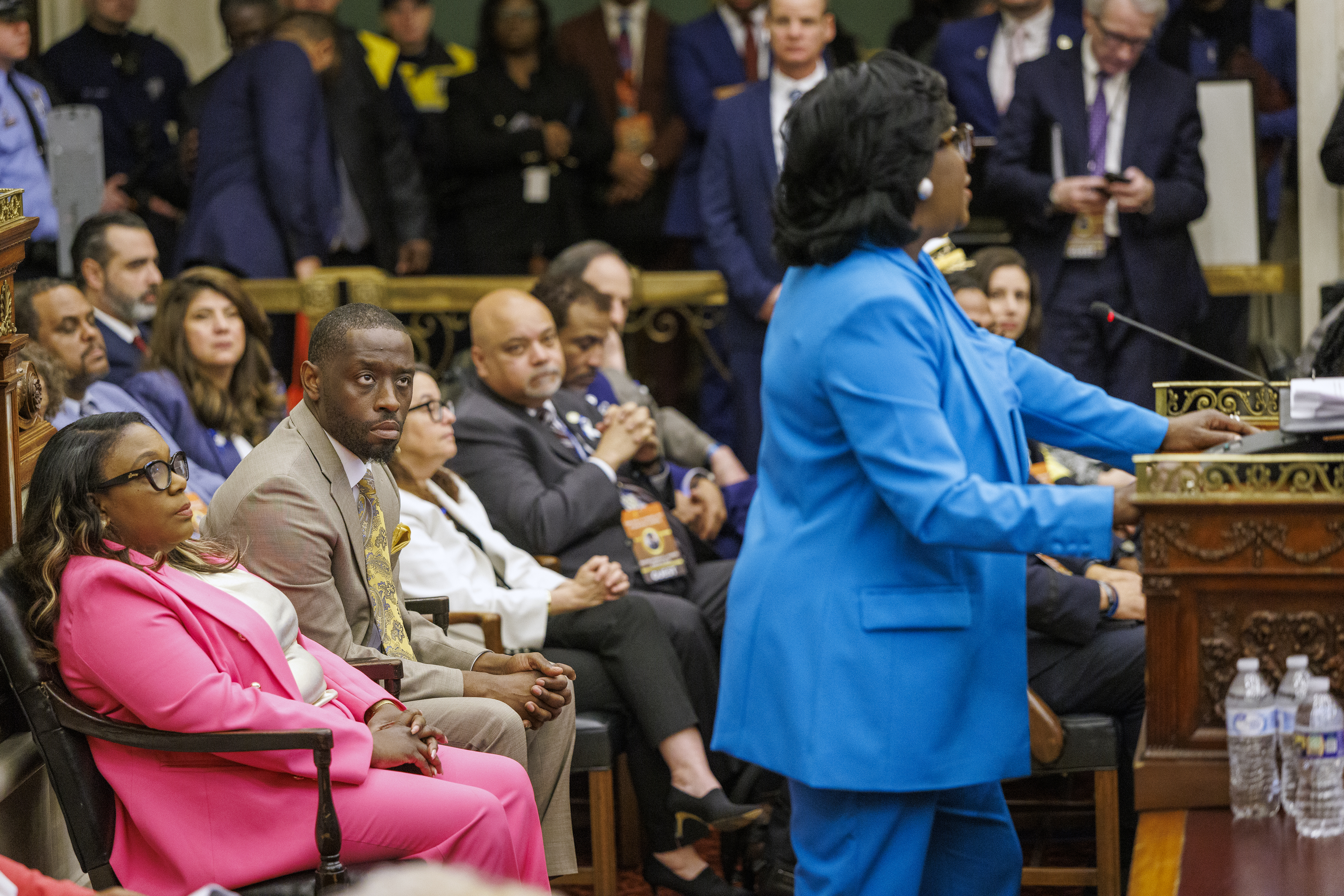
    In this March 2025 file photo, City Councilmember Kendra Brooks, left, listens to Mayor Cherelle L. Parker deliver her annual budget address.Alejandro A. Alvarez / Staff Photographer

    Parker is likely to see support from a super PAC bankrolled by city developers, and she also has her own massive war chest. Her campaign had $1.4 million in the bank as of May, according to the most recent campaign finance paperwork available. Brooks had $17,000 on hand as of her last report in January.

    But Brooks, who has won citywide election twice to represent the city as an at-large member of Council, could be a formidable opponent. She is one of the most prominent left-wing politicians in the city, and she is well-known in national progressive circles.

    The Working Families Party’s chapter in Pennsylvania recently commissioned a poll that showed Brooks as broadly popular with the city’s Democratic primary electorate but with much lower name recognition than Parker, according to polling documents obtained by The Inquirer.

    According to the survey of 900 respondents, 35% said they had a favorable view of Brooks, with just 4% saying they had an unfavorable view. Nearly 40% of respondents said they did not know who Brooks was.

    Nearly all of the respondents knew of Parker. Forty-eight percent said they had a favorable view of the mayor, and 40% said they had an unfavorable view. Those findings are similar to a June Suffolk University/Philadelphia Inquirer poll.

    Nick Gavio, a spokesperson for the Working Families Party, said in a statement that the organization often conducts polling on public opinion in the city and that the survey was “one test among a battery of others that we conducted in Philadelphia ahead of the 2027 elections.”

    “We are pleased that the Working Families Party and Minority Leader Brooks are so popular,” he said, “which we believe reflects our focus on the issues that matter to the working people of this city.”

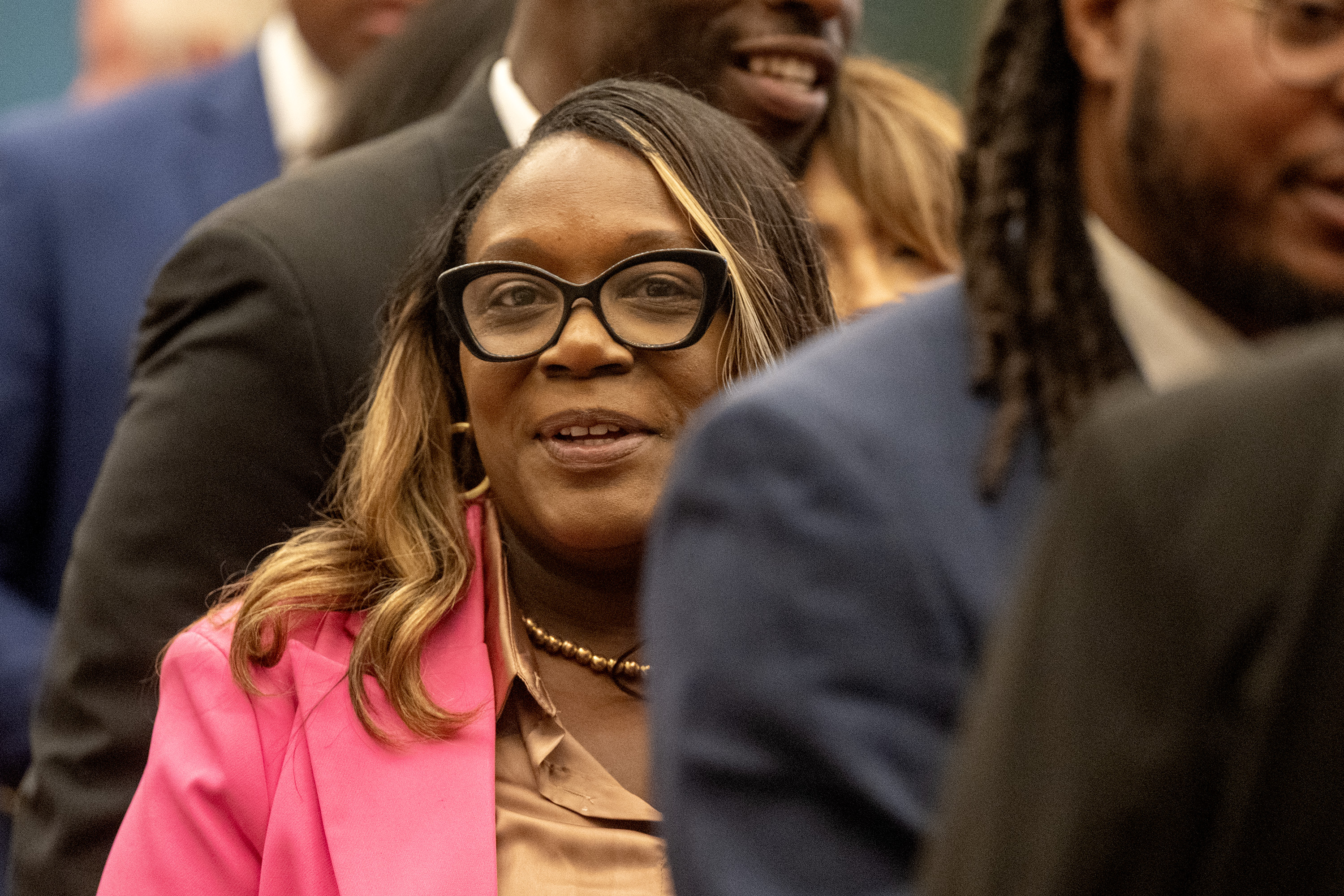
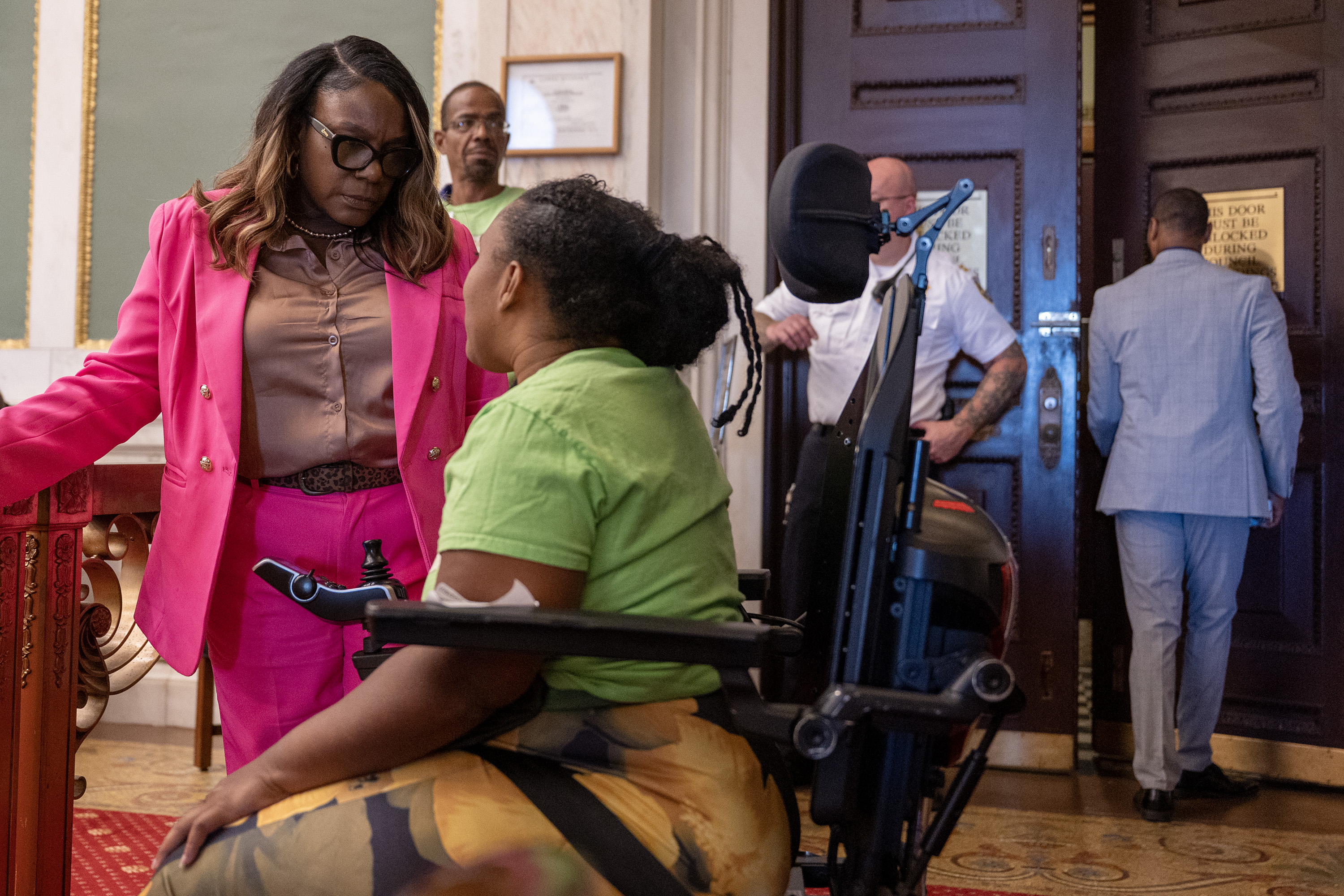
    City Councilmember Kendra Brooks talks with Dominique Howell (right) in chambers as City Council returns for its fall session Thursday, Sept. 17, 2026. Howell is a long-time constituent and was there with the non-profit Liberty Resources, part of the Philadelphia Coalition for Affordable Communities.Tom Gralish / Staff Photographer

    Several other leftist politicians in the city have been rumored to be considering running for mayor against Parker, but none have said publicly that they intend to launch a campaign.

    One is District Attorney Larry Krasner, the third-term prosecutor who is one of the most prominent progressive district attorneys in the country. Krasner has been increasingly critical of Parker, and in June said that he would not rule out the possibility of running against her.

    But the district attorney has recently faced significant scrutiny related to his handling of a complex post-conviction case. Last week, U.S. District Judge Paul S. Diamond said that Krasner may have committed federal crimes and that he had referred the matter to the Department of Justice for investigation.

    Krasner has denied wrongdoing.

    Correction: A previous version of this article incorrectly stated the steps Brooks would have to take to run in the Democratic mayoral primary. She could remain a registered member of the Working Families Party or switch her party registration.
  • Ro Khanna is the left’s busiest midterm surrogate. Can he raise his own profile, too?

    Ro Khanna is the left’s busiest midterm surrogate. Can he raise his own profile, too?

    Rep. Ro Khanna of California leaned forward in a patterned armchair as a rooster crowed outside, listening as a group of farmers in rural Sharpsville, Pa., told him that Democrats came across as inauthentic and insincere.

    “Don’t promise the farm and not come up with it,” said Joe McCann, who grows hay and raises pigs. “And don’t lie to people. I can take anything, but if someone’s standing there physically lying to me and blowing smoke up my butt, that’s not going to cut it.”

    Khanna agreed, fretting that his party had for too long “looked down” on blue-collar voters. Then he quipped: “How do you think I’m doing? Lying?” McCann, 78, said he didn’t think so.

    Khanna (D., Calif.) has emerged as one of the most prolific surrogates of the 2026 cycle. He has endorsed more than 70 candidates for seats in the House, Senate, and state legislatures, positioning himself on the front lines of a burgeoning progressive movement as discontent with the status quo has propelled a series of left-wing candidates to primary victories.

    But there was another reason for his vigorous political itinerary this campaign season: a possible presidential run in 2028. He wants to see the left’s power grow within the Democratic Party. He wants its policy prescriptions, such as universal healthcare and taxing the rich, to shape the conversation about who the party’s nominee for president should be.

    And he knows that none of that is likely to happen if the left bombs in November.

    A little 2026, and a little 2028

    Despite their major wins in primaries this season, progressives’ ability to sway the general electorate in competitive races remains untested. A new poll released by the New York Times and Siena University on Sept. 15 found that a slight majority of voters disliked socialism.

    In Khanna’s view, the only way the movement can change that perception is if it figures out how to talk to the working class.

    Khanna, born outside Philadelphia to immigrants from India, has been preparing for his political future out in the open. In the past two months, he has taken many of the steps of an early presidential candidate.

    He held a town hall with Latino voters in Nevada. He told the Democratic National Committee in a searing speech that the party needed to turn its back on corporate interests and military aid to Israel. He also ventured abroad, leading a congressional trip to the Vatican to discuss safeguards against artificial intelligence with Pope Leo XIV and visiting the West Bank, where he was detained by armed Israeli settlers.

    Icons of the progressive movement, such as Sen. Bernie Sanders of Vermont and Rep. Alexandria Ocasio-Cortez of New York, have been choosier with their high-profile endorsements this year. Khanna is lesser known, and has work to do to change that. The eagerness can occasionally backfire; he has expressed regret for his endorsement of Graham Platner, the Maine Democrat who withdrew his Senate bid in July after a woman accused him of rape.

    “He’s hustling,” said Bill Hyers, a progressive strategist who worked with two House candidates — Kat Abughazaleh in Illinois and Chris Rabb in Pennsylvania — whom Khanna endorsed in primaries this spring. Rabb won. Abughazaleh lost.

    Added Hyers: “He’s just been out there really working hard and he’s the only person on the left I have seen where there’s no doubt he’s running.”

    Over five days in Pennsylvania in July, Khanna, who grew up outside Philadelphia in suburban Bucks County, rallied for two House candidates whose primary victories in May stood out as early triumphs for the progressive movement. Their very different districts illustrated both the advantages and challenges facing the progressive left this fall.

    In Philadelphia, Khanna talked about liberal priorities like “Medicare for All” with Rabb, a democratic socialist who is virtually assured of victory in November in his deep-blue district. In a battleground district in Allentown, Khanna discussed tariffs and job losses with union factory workers to help the candidacy of Bob Brooks, a firefighter and labor leader who faces a more difficult path to victory in November against Rep. Ryan Mackenzie, a Republican.

    On behalf of both candidates, Khanna offered a similar pitch: The wealth and technological innovation of his high-income Silicon Valley district should be shared more widely. His agenda of “new economic patriotism,” he said, would spread technology jobs among Midwestern states and redistribute profits through a wealth tax.

    “If we just are running on centrist mush that is put out by ChatGPT, bland and inoffensive, we’re not going to win,” Khanna told a reporter in the SUV he was riding in for the Pennsylvania swing. “It has to be a transformative vision.”

    Khanna was generally well-received by an electorate in Pennsylvania that has soured on Republicans and seems increasingly willing to give Democrats another chance. But he also encountered the enduring skepticism of voters who see their leaders as having failed them.

    “He comes across very progressive with his plans, but I don’t know that he’ll be able to carry them through,” said McCann, after Khanna’s conversation in Sharpsville. “This area that I live in right now is a depressed area — and anybody that gives anybody around here a vision of hope is the person they’re leaning toward. They just have that vision of hope that this might happen, and it never does.”

    In an interview, Khanna said he planned to decide about 2028 between Thanksgiving and Christmas, after talking to his family and determining how viable he could be in battleground states.

    His trip across Pennsylvania was intended in part to assess that. A progressive contender for president, Khanna said, would have to “do well in the Black South” and “do well in states like Pennsylvania.”

    He said he was also forging bonds in southern states, including in South Carolina, where his partnership with Rep. Jim Clyburn and his daughter Jennifer Clyburn connects students at historically Black colleges and universities with scholarships from tech companies.

    Khanna has recruited alumni of both progressive and establishment campaigns. He is being advised by Ron Klain, the chief of staff to former President Joe Biden, and has enlisted longtime advisers to Sanders such as Julian Mulvey and Jeff Weaver, according to a person familiar with the partnerships who requested anonymity to describe internal staffing issues.

    The road ahead, plus AOC

    A dismal progressive showing in November could instantly set back Khanna’s fortunes. So could something else: Ocasio-Cortez. If Ocasio-Cortez, the breakout star of the left, runs for president, she would appeal to the same liberal constituency as Khanna but with an enormous head start in popularity.

    Khanna called Ocasio-Cortez an “extraordinary talent,” and dismissed the idea that she is a rival.

    “I have a tremendous amount of respect and admiration for her,” he said, adding, “I have genuinely never discussed what she wants to do in the future.”

    Khanna said he talked with Ocasio-Cortez occasionally in the halls of the Capitol. He communicates more frequently with Sanders, speaking with him on the phone about AI and answering the senator’s queries about the chances of California voters passing a tax on billionaires this fall.

    Khanna readily acknowledged that he lacked the political “star power” of his left-wing compatriots. “I’m not delusional,” he said.

    His speeches are also a little heavy on policy and light on the kind of soaring rhetoric that voters often look for in a president.

    That was the case in Pennsylvania, but he also tested catchphrases such as “economic patriotism,” and retail politicking seemed to come easily enough for him. One particular line, when he argued that President Donald Trump had not followed through on a simple promise — to replenish sand that had washed away along Lake Erie — got a good response from voters.

    “I’ve seen a lot of clips of him online — I thought he was much more charismatic in person,” said Gideon Tsoutsouris, a college student in Pittsburgh.

    Khanna portrayed his low profile as an asset, noting that other successful candidates — including former Presidents Jimmy Carter and Bill Clinton — began their bids as long shots. It’s an advantage, he said, “to go meet people and interact without the entourage.”

    Khanna, a multimillionaire, likewise dismissed potential criticism of his wealth, which largely stems from his wife’s father, the founder of an automotive company.

    “I tell people my own story of growing up middle-class in Bucks County, taking out loans for law school in my 20s, having forbearance and massive credit card debt,” Khanna said. “I think people will see that I had a middle-class life and even economic challenges.”

    Hyers, the progressive strategist, said Khanna would likely face criticism for his long-standing relationships with the tech industry.

    “The perception in a lot of the circles that I run in is, ‘How much money has he taken from the bad guys?’” Hyers said. (Khanna has since broken ties with many wealthy tech executives and called for taxing them more heavily.)

    When Khanna’s tour rolled into Pittsburgh, he hopped around town, chatting wi,th union leaders who are faculty members at a local university, nurses fighting for a labor contract and a group of college students.

    Before addressing the students, he spoke with two groups protesting his visit on nearby street corners: the pro-Israel Beacon Coalition and the pro-business Americans for Prosperity, a creation of the conservative Koch family. One of the AFP protesters urged him to reject socialism.

    The moment illustrated another challenge that Khanna would face in a presidential primary. He may be too progressive for moderates, and not progressive enough for some on the fractious left.

    “I don’t believe the government should take over the means of production,” Khanna told the protesters. But, he added, many young people were turning to socialism “because they can’t afford rent, they don’t have a good job. They lost the American dream.”

    This article originally appeared in the New York Times.

  • Gov. Josh Shapiro has raised $60 million for his reelection campaign. What will he do with it?

    Gov. Josh Shapiro has raised $60 million for his reelection campaign. What will he do with it?

    Gov. Josh Shapiro has raised more than $60 million toward his reelection effort since he took office, his campaign said Tuesday.

    According to the campaign, those preliminary figures mean that the first-term Democratic governor has added $13.3 million to his war chest since June, as he maintains a significant fundraising edge over his Republican opponent Stacy Garrity.

    Filings on Tuesday showed Garrity had raised around $1.8 million this cycle, with her campaign coffers nearing $3 million. After spending $1.5 million, she will enter October with roughly $1.4 million cash on hand.

    So with a massive cash advantage, where will Shapiro’s campaign money go? And could anyone else benefit from his spending?

    Even as he pulls ahead in polls, Shapiro has spent heavily on advertising. His campaign has promised he’s keeping his foot on the gas through Election Day in efforts to secure his own victory and elect Pennsylvania Democrats up and down the ballot in hopes of flipping the state Senate and electing Democrats in four battleground congressional districts. He’s donated roughly $5.7 million in total to the state party to fuel the effort, an additional $2.5 million since June, according to his campaign.

    Beyond the November election, he’s widely expected to launch another campaign as a 2028 presidential prospect. Although the law prevents him from transferring his gubernatorial campaign money into a political action committee that funds a run for president, that doesn’t mean he’ll spend all his fundraised money before this year’s election, experts said.

    In the governor’s race, the first checks he owes are paying for campaign staff salaries, spending money on advertising, and renting leases for field offices, among other costs, according to campaign experts. As a careful politician, he’d likely also want to reserve a fair amount of cash for surprise developments in the race, they said.

    But after all of Shapiro’s receipts are accounted for, experts said, a potentially large stock could remain available, presenting him with options for how to spend it — if at all.

    Daniel Weiner, the director of elections and government at the Brennan Center for Justice, said Shapiro has several options available.

    “It is incredibly common for candidates who are not facing an especially competitive race to still try to raise money hand over fist and amass a war chest,” Weiner said. “It can be used to fund a future run for office of one sort or another. It can also be used, increasingly in this era of very deregulated money in politics to just build a general political machine.”

    Keeping it in the party

    Shapiro, who has maintained high favorability among both Democrats and Republicans, has established himself as a formidable fundraiser, bringing in dollars from across the commonwealth and the nation. Donors can give him as much as they’d like, since there is no limit on political contributions in Pennsylvania, said Matthew Foster, a professor of political science at American University.

    “There’s a lot of ways for politicians to use political cash to help their allies and to help their team,” said Michael Beckel, an expert on money in politics at Issue One, a Washington, D.C.-based bipartisan nonprofit. “They can spread that money around to help people who need it. And there’s certainly a lot of people who might potentially want help from a big name like Governor Shapiro.”

    Pennsylvania law allows Shapiro to transfer endless amounts of money from his campaign account to other state candidates. His campaign said he had not given any money directly to state candidates, but that he has supported them in other ways.

    He is also not allowed to transfer money from his gubernatorial campaign to any congressional candidates.

    Instead, he has poured money into the state party.

    Pennsylvania Gov. Josh Shapiro accepts the endorsement for a second term as governor at the state Democratic Party’s winter meeting in Harrisburg on Feb. 7, 2026.Gillian McGoldrick

    Since last fall, Shapiro has given $5.7 million to the state Democratic Party and its election effort. That money is used to benefit Shapiro as well as state Senate and congressional candidates by pooling funds for their field offices, signage and volunteers.

    “A donation to the state party historically has helped get the vote out statewide,” said Philadelphia-based Democratic strategist Adam Erickson.

    Plus, donating to the state party versus national groups helps to ensure the money is spent on Pennsylvania races, Weiner added.

    Pennsylvania Republicans have held on to the state Senate for more than 30 years, even as the House chamber and governor’s mansion have swapped partisan control and are currently both occupied by Democrats.

    This year, Democrats have “a strong opportunity to flip the state Senate,” Erickson said, but that the effort will take “an unprecedented amount of spending” from Shapiro and the state party.

    Often, Shapiro has appeared alongside candidates at campaign events, rather than donating to them. On Sunday, Shapiro joined Democrats in Chester and Montgomery Counties to kick off door-knocking and phone-banking efforts benefitting several legislative candidates, such as state House candidate Elizabeth Moro in Chadds Ford and state Senate candidate Chris Thomas in Harleysville.

    “Under Governor Shapiro’s leadership, the Party is rallying support all across the Commonwealth and putting Democrats in a strong position to win everywhere this November,” said Manuel Bonder, a spokesperson for Shapiro’s campaign.

    Campaign volunteers hand out sign to supporters of Gov. Josh Shapiro and Democratic Pa. Senate candidate Chris Thomas at a rally in Towamencin, Montgomery County before heading out to canvass Sunday, Sept. 29, 2026. Tom Gralish / Staff Photographer

    From Pennsylvania to Pennsylvania Avenue

    Shapiro has batted away questions about his presidential ambitions, saying he’s focused solely on his gubernatorial reelection, but he has many of the signs of a future candidate: a book tour, frequent hits on cable television, and a voice on key issues likely to emerge in the next Democratic presidential primary.

    Tim Ford, an attorney who handles legal concerns for Democratic campaigns in Pennsylvania, said Shapiro’s sizable bank account is “also a flex to show he’s capable of raising this kind of money,” and another clue that he may be eyeing a higher office.

    If Shapiro does choose to run for president, he’s not allowed to legally transfer his state-level campaign fundraising to a federal political action committee associated with his campaign.

    “One thing that I think people get wrong is they believe that he’s raising money for his next office,” Erickson said.

    Governor Shapiro (left) and Democratic congressional candidate Bob Brooks (right) greet supporters during a campaign event at the United Steelworkers Union Hall in Bethlehem on July 26, 2026.David Maialetti / Staff Photographer

    That would put him at a slight disadvantage compared to any sitting federal elected officials who can spend their campaign funds on a presidential run and who are also speculated 2028 presidential contenders, including U.S. Rep. Alexandria Ocasio-Cortez and U.S. Sens. Mark Kelly and Jon Ossoff, who has been the top fundraiser this midterm cycle.

    Still, Shapiro’s cash stockpile “sends a message that he’s been a successful fundraiser,” Beckel said. “While past performance doesn’t guarantee future results, he certainly would try to [leverage] that to his advantage to say, ‘I’ve been a successful fundraiser in the past, I will be a successful fundraiser in the future’.”

    Former staff or associates could create a federal super PAC, a type of political action committee that can take in and spend unlimited contributions but must do so independently of a candidate and without directly coordinating with the campaign. Shapiro could repurpose his state campaign account into that super PAC, Weiner said, but he would have no say on the messaging in ads or how money is spent.

    While this practice of loose coordination skirts the spirit of the law, Weiner said it often goes unenforced.

    “In theory, super PACs are supposed to be independent from candidates, but in practice, they work hand-in-glove with them,” he said.

    Former staffers of Maryland Democratic Gov. Wes Moore, another potential 2028 contender, have established the Unity First PAC. Moore has headlined fundraisers for the group, but is not technically in control of the PAC.

    California Democratic Gov. Gavin Newsom, who may also run for president, launched a super PAC called Campaign for Democracy. The PAC has poured $1.7 million into state party and legislative committee races, mostly in South Carolina, where Democrats will hold the first contest of the presidential primary race in 2028.

    There are no official records that Shapiro, or those associated with him, have created a super PAC, according to FEC filings.

    Super PACs have earned a negative reputation in some circles, particularly among Democrats who view them as a means to give wealthy donors outsized influence on elections. But in 2028, Shapiro and other Democrats will be under pressure to use all the tools available to them, Weiner said.

    It’s a difficult bind, said Faith Williams, who works on anti-corruption and accountability efforts at Common Cause, a democracy-focused nonprofit.

    “Our system is not good,” she said. “But at the moment everyone is playing in it, and that I think that makes it even harder to reform it because it’s hard to have the genuine desire to reform a system that currently benefits you.”

    Shapiro could also develop a nonprofit organization with his campaign funds. The 501(c)(4) groups, which can spend on political ads but cannot make electoral activity their primary focus, are under no legal obligation to disclose their donors. In some cases, this opens the door to donations from so-called “dark money” groups, or those that obscure the role of their funders.

    Experts pointed out that he could also use his leftover money for his second gubernatorial inauguration or donate it to charity. And, in an unlikely maneuver, Williams said Shapiro could refund his donors and ask everyone to donate again to a federal campaign.

    But the best way to get from Pennsylvania to Pennsylvania Avenue, Erickson said, would be to ensure success in the statewide elections this year.

    “Playing a large role in flipping the state Senate will put him in the best position going into 2027 and beyond for any larger aspirations,” he said.

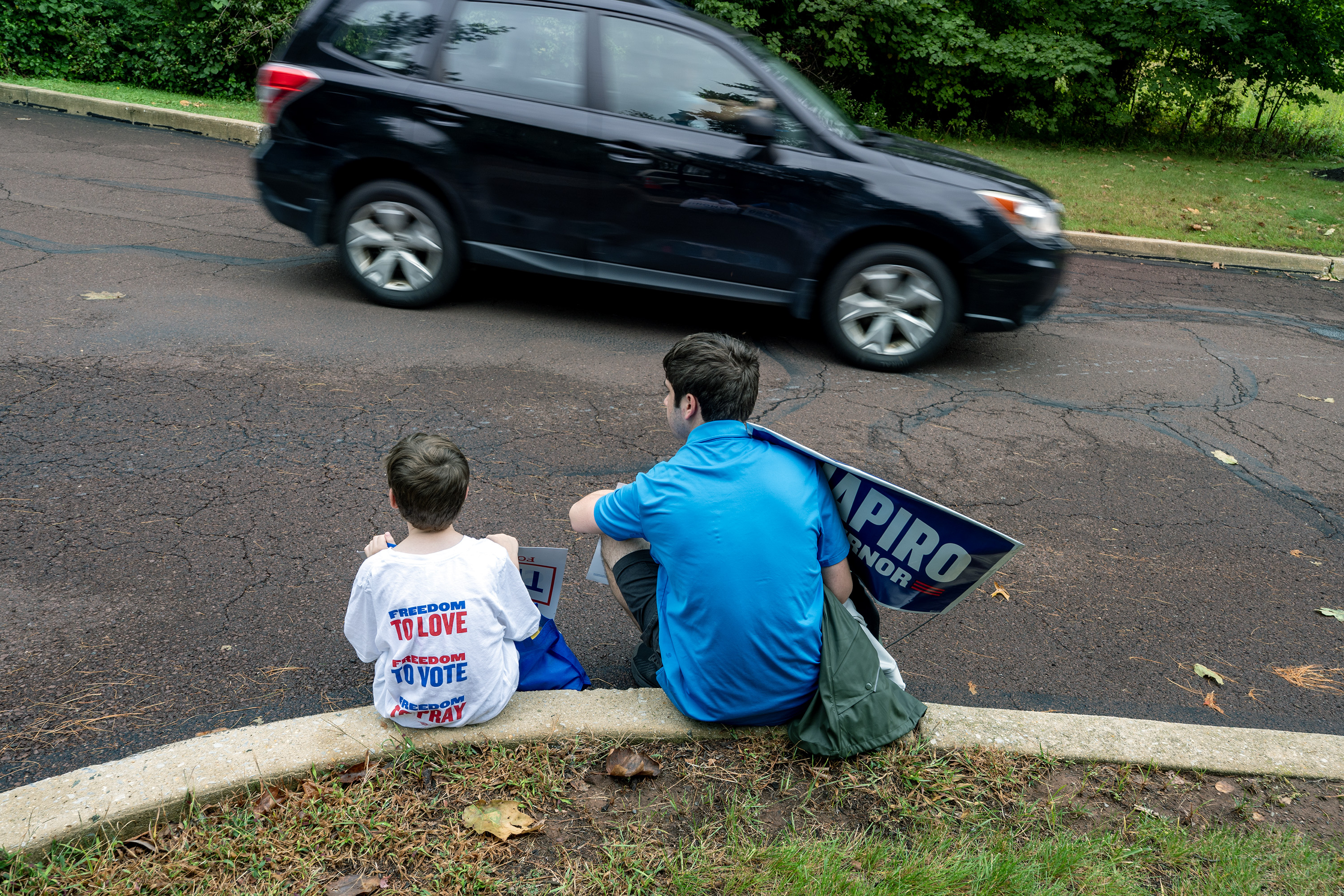
    Brothers Desmond DeBaun, 5, and David Hayman, 16, after a rally with Gov. Shapiro and Democratic Pa. Senate candidate Chris Thomas in Montgomery County Sunday, Sept. 29, 2026. Tom Gralish / Staff Photographer
  • Bush and Cornyn leave out Paxton as they raise cash for Senate candidates

    Bush and Cornyn leave out Paxton as they raise cash for Senate candidates

    Former President George W. Bush and Sen. John Cornyn, two top Texas Republicans, are rallying conservative donors behind the party’s Senate candidates — except for the one running in their own state, Ken Paxton.

    Cornyn hosted a fundraiser Monday evening in Dallas for six Republican nominees in battleground states, according to an invitation to the event that was obtained by the New York Times. Bush, listed on the invitation as a “special guest,” was attending the event, his spokesperson confirmed.

    The event benefits Maintain the Majority, a new joint fundraising committee supporting the Senate candidates, who are defending Republican-held seats in Maine, Ohio, Alaska, and Iowa and looking to flip seats in Michigan and New Hampshire.

    But Paxton, the Republican nominee in Texas, who defeated Cornyn in a costly and bitter primary, was not included. His campaign declined to comment on the fundraiser.

    The fundraising omission of Paxton is another escalation in the standoff between old-guard Bush Republicans and the fiery insurgent wing represented by the party’s Senate nominee, Paxton, President Donald Trump, and their allies.

    And it comes as the parties battle for cash and advertising time in the Texas Senate race, one of this year’s top contests. Paxton has badly trailed his Democratic opponent, James Talarico, in campaign fundraising, but super political action committees tied to Trump and Senate Republicans have come to Paxton’s aid, reserving more than $80 million in outside advertising in Texas.

    Paxton, the state attorney general, has long been a polarizing figure among Texas Republicans. He was impeached by the Republican-dominated Texas House on corruption charges in 2023, though he was acquitted in the state Senate, and he pushed to oust Republican lawmakers and judges who disagreed with him in his party’s primaries in 2024.

    This year, Cornyn and establishment Republican donors spent more than $130 million on advertising backing the senator and bashing Paxton in their contentious primary. (Bush chipped in $5,000 for Cornyn.) In the months since, Cornyn has continually criticized Paxton’s character and campaign.

    “Paxton’s a poor campaigner,” Cornyn told the Texas Tribune in August. “He’s lazy and doesn’t raise money. And he basically is not offering a very compelling case for his election. He’s making this harder than it needs to be.” (Paxton countered the attacks, saying on Fox News’ The Sunday Briefing that “John Cornyn doesn’t know my schedule. He doesn’t know how many hours I’m putting in every day, 18 hours a day.” )

    The fundraiser comes as long-simmering tensions between Bush- and Trump-era Texas factions burst to the surface.

    Last week, Karl Rove, Bush’s former senior adviser, announced that he would not vote for Bo French, the Republican nominee for the Texas state agency that regulates oil and gas, because of a racist social media post by French. Paxton declined to condemn French’s post, and Trump posted on Truth Social that Rove was a “stone-cold loser.”

    Paxton has attacked Rove in the past, including in an interview with conservative pundit Tucker Carlson in 2023.

    Paxton has also gone head-to-head with a scion of the Bush dynasty, soundly defeating Bush’s nephew, George P. Bush, in the 2022 Republican primary for Texas attorney general. And Paxton has long criticized Cornyn for his willingness to work with Democrats on bipartisan legislation.

    The host committee of the Monday fundraiser included paragons of the Bush-era Republican Party like Harriet Miers, Bush’s onetime nominee for the U.S. Supreme Court; former Sen. Kay Bailey Hutchison; and Republican megadonor Harlan Crow.

    One of the candidates the event seeks to support is John E. Sununu, the Republican nominee for Senate in New Hampshire. His father, also named John Sununu, served as the White House chief of staff for Bush’s father, George H.W. Bush. Contributions ranging between $1,000 and $61,500 were required for entry, according to the invitation.

    Some of the donors invited to the event on Monday have also contributed to Paxton’s campaign.

    The gathering and the new fundraising committee will benefit Sens. Susan Collins of Maine, Jon Husted of Ohio, and Dan Sullivan of Alaska, who are defending their seats in competitive general-election races, as well as three other Senate candidates: Sununu, Rep. Ashley Hinson of Iowa, and former Rep. Mike Rogers of Michigan.

    Two Republican Senate nominees in states that Trump won in 2024, Michael Whatley of North Carolina and Mike Collins of Georgia, are also not part of the fundraising effort. Democrats have shown strength in polls in those states.

    Collins “appreciates the support of Sen. Cornyn and President Bush,” said Blake Kernen, a spokesperson for Collins’ campaign. Representatives for the other candidates did not immediately respond to requests for comment.

    This article originally appeared in the New York Times.

  • Kamala Harris launches into the 2026 midterms as her 2028 decision looms

    Kamala Harris launches into the 2026 midterms as her 2028 decision looms

    As Kamala Harris mulls whether to run for president again, she’s throwing herself into the midterms by campaigning with fellow Democrats, starting with a Tuesday trip to Michigan on behalf of Senate nominee Abdul El-Sayed.

    It’s an especially notable destination for the former vice president. Michigan was one of seven battlegrounds she lost to Donald Trump two years ago, and it’s now one of six states that will start Democrats’ next presidential nominating process. Harris has additional rallies scheduled in Nevada and Georgia, two other key places on the political map.

    Her campaigning could serve to solidify or undermine her status as a potential Democratic front-runner. Although she’s one of the nation’s best-known politicians and a barrier-breaking figure, there are others eager to turn the page after she failed to defeat Trump when she replaced President Joe Biden on the top of the ticket.

    “I think she’s run her course,” said Barry Goodman, a Democratic National Committee member from Michigan who raised money for Biden and then Harris. “I just don’t think her running again would be the right thing for America moving forward.”

    Some Democratic candidates, especially in places Trump won handily, have curtly dismissed any possibility of campaigning with Harris. “No thanks,” Iowa gubernatorial nominee Rob Sand told Politico. “Let’s move on. We need some new leadership.”

    But plenty of Democrats, including some influential Black women who helped convince Biden to select Harris as his running mate in 2020, said she has more than earned the space to consider her options without being rushed or pilloried. Underscoring her unique position, California Gov. Gavin Newsom recently told CNN that he would not seek the nomination if Harris does.

    “Kamala isn’t under any deadline to run for anything,” said Donna Brazile, a former Democratic National Committee chair who managed Al Gore’s presidential campaign in 2000. She called it a “waste of time” to relitigate Harris’s truncated 2024 campaign and said any White House hopefuls “should follow Kamala’s lead and get out there” by trying to help midterm candidates.

    Harris has not announced any upcoming trips to South Carolina, where Democrats will hold their first primary. Antjuan Seawright, a political consultant in the state, said she could make a strong case for herself but another campaign would need to look and sound different.

    “She’s going to have to admit that she was wrong about some things,” he said.

    Michigan presents risk and opportunity

    Harris has painful political history in Michigan. During the 2024 campaign, the state’s prominent Arab American communities were outraged over Biden’s support for Israel’s military operations in Gaza, and they were disappointed when Harris did not break with him after she became the party’s nominee.

    El-Sayed, on the other hand, is an outspoken critic of Israel who has described the war as a genocide against Palestinians, an accusation rejected by Israel. He’s been viewed warily by some Jewish voters, which he’s tried to address by apologizing for some past controversial comments.

    El-Sayed told MS NOW that “there were some hurt feelings” in Michigan over the 2024 election, with some Black voters feeling like Arab Americans didn’t do enough to help Harris.

    With the former vice president coming to visit, he said it’s a chance “to bring communities together that have often been torn apart by recent events.”

    Their joint appearance will be closely scrutinized for other reasons too. Harris has a strained relationship with the party’s progressive wing, which includes El-Sayed, and El-Sayed is eager to solidify establishment support during his campaign against Republican nominee Mike Rogers, a former congressman.

    “We can build together on the areas of agreement, and we can come to understand each other far better on the areas where we might have seen eye to eye, and I think her coming into town will help us to do that,” El-Sayed said.

    Harris’ political travel has been light compared to potential presidential candidates like Pete Buttigieg, who ran in 2020 before serving as Biden’s transportation secretary. He recently visited South Carolina and he’s been stumping for other Democrats in the midterms.

    Harris went to South Carolina in the spring, but for smaller, local party events. She recently spoke on an organizing call aimed at registering and turning out 1 million more Black voters.

    “There’s value in doing a lot of stuff behind the scenes instead of being front and center, especially for her,” said Bre Maxwell, a Democratic National Committee member from South Carolina. She said there’s little benefit for Harris to insert herself into news cycles knowing “she’s still a target of Donald Trump right now.”

    Jaime Harrison, a South Carolinian who served as national party chair when Biden and Harris were in the White House, said the former vice president’s stature affords her the advantage of time that other potential candidates will not have.

    “Many of these folks who do get in quickly would love to have that type of name ID, would love to have that type of network, to have that type of email list,” Harrison said.

    Harris herself has said multiple times, including in an Associated Press interview last year, that she feels no rush to decide her next move. “Right now – midterms, midterms, midterms,” she told Megan Rapinoe on a recent podcast. Harris spokesperson Eduardo Negrón declined to comment when asked about her timeline.

    Harris’ other campaign events this fall include stops for Nevada’s Democratic candidate for governor, Aaron Ford, and Georgia Sen. Jon Ossoff, who has generated 2028 chatter of his own as he seeks reelection.

    “She is certainly being strategic,” said Seawright, the South Carolina political consultant.

    He noted that Harris’ tour for her campaign memoir, 107 Days, hit virtually every major Southern city in states where Black voters hold strong sway in presidential primaries that come early in the nominating process.

    Meanwhile, Goodman said he’s heard no evidence that Harris is working the party’s top donor network. Harrison said he hasn’t heard from her since last December.

    Past campaigns offer Harris lessons

    Harris first ran for president in the 2020 cycle, when she was a U.S. senator from California. But she dropped out late in 2019, before any primary votes were cast.

    Some progressives saw the former prosecutor as part of a criminal justice establishment that disproportionately imprisons Black men. Some moderates saw her as another San Francisco liberal.

    Biden chose Harris as his running mate, and she became the first woman and Black person to serve as vice president.

    When Biden dropped his reelection bid after a disastrous debate performance, Harris generated visible enthusiasm, drawing crowds that rivaled or exceeded Trump’s. She delivered a convention address and debate performance that most analysts lauded.

    But she could not distance herself from Biden on inflation or immigration. Harris infamously told friendly interviewers on The View that she couldn’t think of anything she’d have done differently than Biden. Trump hammered her with advertisements exploiting her support for transgender rights, saying “Kamala is for they/them. President Trump is for you.”

    If she runs again, Seawright said, Harris would need to emphasize moderate positions and “be willing to say, you know, ‘I’ve rethought some things.’” Voters, he said, “reward that kind of authenticity and humility.”

    Harrison argued it would be easier for Harris to articulate her own agenda than when “she was a sitting vice president, somebody else’s No. 2.” But, he warned, she would also have to shed the pomp and circumstance of the vice presidency, not just its political burdens.

    “You can’t act like a sitting vice president, standing up on that stage,” he said. “I’d tell her she has to run hard, just as hard as everybody else, working every rope line, taking every selfie.”

    Unlike Biden’s handoff to her in 2024, Harrison said, “This is going to be the wild, wild west.”

  • President Donald Trump praises Stacy Garrity for Pa. governor, says Josh Shapiro ‘does not have what it takes’

    President Donald Trump praises Stacy Garrity for Pa. governor, says Josh Shapiro ‘does not have what it takes’

    In a video shared to his social media platform on Friday, President Donald Trump reinforced his endorsement for Republican Stacy Garrity in her bid for Pennsylvania governor, while panning Democratic Gov. Josh Shapiro as an incumbent “who does not have what it takes.”

    “Stacy has been really special [and] has my complete and total endorsement,” Trump said in the video, posted Friday afternoon to Truth Social, praising her tenure as the state’s treasurer and applauding her military service and career in business. “She’s somebody that is going to do a fantastic job.”

    The video was posted in a string of more than a dozen similar endorsements on Friday afternoon for Republican congressional candidates in Alaska, Florida, Georgia, Michigan, North Carolina, and Texas.

    Garrity, who did not attend the president’s midterm convention in Dallas last week, appeared to be the only gubernatorial candidate, as well as the only candidate from Pennsylvania, to receive a video acknowledgment from Trump.

    President Donald Trump visits Mack Trucks in Macungie in the Lehigh Valley Tuesday, June 23, 2026.Tom Gralish / Staff Photographer

    Trump followed the endorsement videos on Truth Social with a post about his approval ratings, and another post featuring a video touting his own accomplishments in office. The endorsement blitz came less than seven weeks before the Nov. 3 midterm elections, in which Democrats are vying to retake control of Congress.

    In Pennsylvania, Shapiro — who has maintained a double-digit lead over Garrity in multiple public polls and has a commanding fundraising advantage — is seeking to use his advantage to secure Democratic wins in four nationally watched congressional seats, and to flip the state Senate to Democratic control for the first time in more than 30 years.

    Trump’s boost for Garrity comes as she has struggled to compete with Shapiro. She has not attracted outside ad-spending support from top GOP groups, such as the Republican Governors Association or the Commonwealth Leaders Fund, backed by Pennsylvania billionaire Jeffrey Yass. This week, Shapiro spent $2.4 million on advertising buys, while Garrity spent just $672, according to the media tracking firm AdImpact.

    Garrity and Shapiro have agreed to a live, televised debate on Oct. 7 in Harrisburg.

    In the video Friday, Trump swiped at Shapiro, who is viewed as a likely contender for the 2028 presidency and who has been critical of the president’s administration.

    “Your current governor does not have what it takes,” Trump said. “His reputation is far better than he is — that I can tell you and everyone knows it.”

    Shapiro’s campaign responded on X to Trump’s video by calling Garrity “100% MAGA.”

    Gov. Josh Shapiro addresses the audience during a rally for congressional candidate Bob Brooks at the United Steelworkers Union Hall in Bethlehem, Pa. on Sunday, July 26, 2026.David Maialetti / Staff Photographer

    It remains to be seen whether Garrity will receive additional national support or financial backing in the weeks before the election.

    Trump first endorsed Garrity, who ran unopposed in the Republican gubernatorial primary, in January. In March, he said “she should win” during a fundraising dinner at his Mar-a-Lago Club in Florida.

    In June, he seemed to forget her altogether during a speech in Macungie, Pa., where he celebrated Republican U.S. Rep. Dan Meuser and even name-checked Shapiro but did not mention Garrity.

    Last month, in a video posted to his Truth Social account, Trump called Garrity a “spectacular person” who he believes will win the race.

    On Friday, Trump said Garrity “will work tirelessly to grow Pennsylvania’s economy, cut your taxes, slash regulation and bring jobs, opportunity, and wealth to the Commonwealth of Pennsylvania.”

    A spokesperson for Garrity did not immediately respond to a request for comment about Trump’s video, but she reposted his endorsement video on her X account.

  • Civil rights groups sue to keep armed agents away from voting sites

    Civil rights groups sue to keep armed agents away from voting sites

    WASHINGTON — Civil rights groups and labor unions sued the Trump administration Friday, asserting that its aggressive immigration enforcement and suggestions that it could send armed agents to polling sites amounted to voter intimidation and violated the Voting Rights Act.

    Brought by a coalition of Black, Asian, and Latino civil rights groups and unions, including the NAACP and the Service Employees International Union, the lawsuit seeks to block any effort by the Trump administration to deploy federal agents at voting locations, which the groups contend can deter citizens trying to legally vote.

    The lawsuit, filed in the U.S. District Court for the District of Columbia, argues that President Donald Trump, Secretary of Homeland Security Markwayne Mullin, and other members of the administration had created a climate in which “voters, especially voters of color, are intimidated and fearful of engaging in the democratic process.”

    They had done so, the suit says, by simultaneously pushing false narratives of rampant voting by noncitizens, conducting sweeping immigration enforcement in communities of color, and repeatedly suggesting that they could send armed agents to polls.

    The White House and the Department of Homeland Security did not immediately respond to requests for comment sent Friday morning. But in the past, Mullin has said that opponents were fearmongering and that U.S. Immigration and Customs Enforcement was not patrolling polling places. “The only reason why we would be at polling places is if there is a threat to that polling place,” he said, “or we’re serving a warrant.”

    The lawsuit points specifically to the Trump administration’s recently expanded efforts to identify noncitizens registered to vote, despite no evidence of rampant voter fraud by noncitizens.

    Taken together, the lawsuit argues, the actions and statements constituted a violation of Section 11(b) of the Voting Rights Act, which broadly prohibits actual or attempted intimidation, threats, and coercion directed at voters and anyone helping to facilitate voting. This section of the Voting Rights Act was not affected by a recent Supreme Court decision weakening the landmark civil rights legislation.

    The act, the lawsuit says, broadly protects against voter intimidation, and requires only that voters reasonably fear being subject to harassment or violence for casting a ballot. “The breadth of Congress’s words was by design,” the lawsuit says.

    This is at least the second lawsuit seeking to block the Trump administration from deploying armed federal agents near polling stations. Last week, the city of Denver, Latino civil rights organizations, and government watchdog groups argued in a lawsuit that allowing immigration agents at voting locations violates a separate federal law protecting free and fair elections.

    For months, Democrats have voiced concerns that Trump is seeking to assert greater control over the coming elections and sow doubt about the outcome. While Trump administration officials have said there is currently no plan to deploy armed agents to polling sites, they have also not ruled out the possibility of doing so.

    This article originally appeared in the New York Times.

  • Early voting begins in US midterm elections that could flip control of Congress

    Early voting begins in US midterm elections that could flip control of Congress

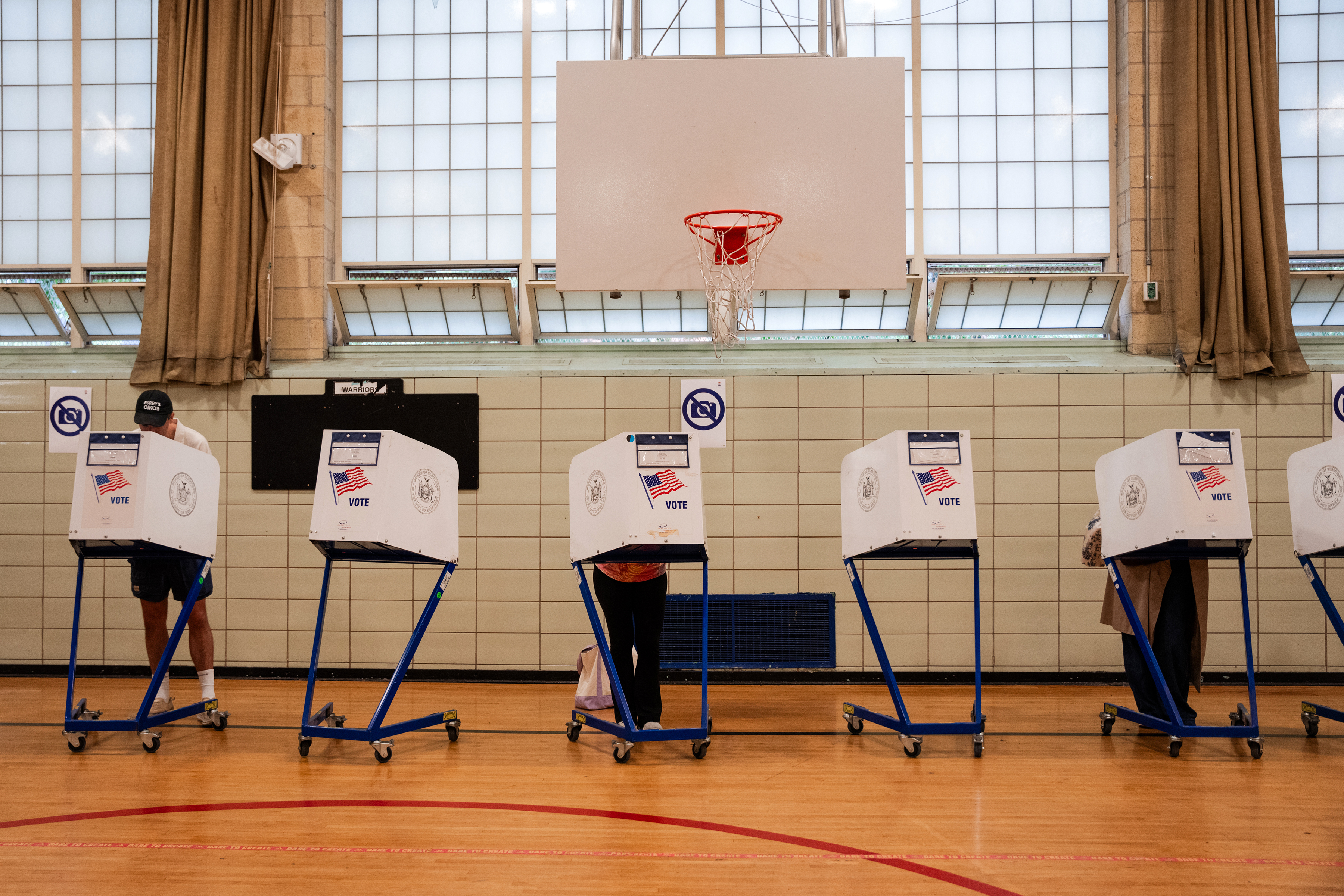
    HENRICO, Va. — In-person voting for this year’s midterm elections began Friday, ushering in the final six weeks for Americans to decide which party they trust to lead Congress through a cost-of-living crisis, a prolonged war in Iran, and other pressing issues.

    Election administrators say they are prepared and confident the vote will be accurate and secure. Nevertheless, President Donald Trump has continued efforts to denigrate certain voting methods and reshape how elections are run, through court challenges, a federal hunt for noncitizen voters, and a pressure campaign to force election officials to share sensitive voter data.

    Friday was the start of early voting in Virginia. Voters in a few other states, including Minnesota and South Dakota, can cast absentee ballots in person, typically at a local election office or voting center. More expansive early voting is scheduled to begin in those and other states in the coming weeks.

    At a voting location in Fairfax, Va,. 18-year-old college student Sanya Singhal was among the first to vote early in person Friday morning, arriving well before the site opened to get in line.

    “Why not just have a little fun in life, you know, try to be the first early voter?” she asked. “I really want to participate in my democracy.”

    At a voting location in suburban Richmond, a poll worker rang a bell as the building opened and about a dozen voters in line began to file in. Stephen Gura was excited to be the first.

    “This election is critical. We need to stop the Trump agenda,” said Gura, who added that he voted for U.S. Sen. Mark Warner, a Democrat, and Shannon Taylor, the Democratic nominee against Republican incumbent Rob Wittman in the 1st Congressional District.

    The Nov. 3 election includes votes for governor and state legislature in most states and will determine whether Republicans maintain control of the U.S. House and Senate. If Democrats retake Congress, it will alter the trajectory of the final two years of Trump’s term, most likely leading to investigations and other oversight efforts.

    Votes underway after redistricting, Trump’s bid to control elections

    At the suburban Richmond voting center, a steady stream of voters flowed in and out. William Curry, a 74-year-old retiree who described himself as a libertarian-leaning independent conservative, voted for Warner’s Republican challenger, Bert Mizusawa, and Wittman. Curry said he generally approves of the job Trump has done, apart from the war with Iran.

    “He’s in a mess he can’t get rid of,” Curry said of the conflict.

    On a rainy day in Sioux Falls, S.D., Bill Goehring, 67, said he voted early at the county office because he will be traveling later. He voted for a mix of Democrats and independents, and said Trump’s “dictatorial tendencies are bad for America.”

    John Thomas, a conservative retired police officer at the Sioux Falls office, said his biggest concerns were public safety and election integrity. He said he doesn’t want to see votes in federal elections from immigrants living in the country illegally. Such fraudulent voting has been found to be extremely rare.

    Trump’s immigration agenda is “spot on,” the 77-year-old said.

    “We wouldn’t be a country that much longer if it had stayed the same for another four years,” he said.

    The start of early voting comes at a time of deep angst and division among many Americans about issues including rising gas and grocery prices, the war in Iran, the looming risks of artificial intelligence, and Trump’s aggressive immigration enforcement campaign.

    It also follows an unprecedented spate of mid-decade redistricting for the House that began when Trump urged the Republican-controlled legislature in Texas to redraw its congressional map to help the party. California and other states followed.

    The changes affect millions of people: Research shows 1 in 10 Americans this fall is a resident of a different congressional district than in 2024.

    Those partisan efforts are expected to continue before the 2028 elections after a landmark ruling this year from the U.S. Supreme Court weakened the federal Voting Rights Act’s protections against racially discriminatory redistricting.

    As the start of early voting approached, Trump was focused on efforts to assert federal control over election administration, even as the Constitution bestows the power to run elections on the states and, in some cases, Congress. The nation’s highest court this week rejected Trump’s bid to restrict mail ballots, but several of his administration’s other efforts to influence the voting process and investigate state voter lists continue.

    Virginia’s Democratic attorney general warned Thursday that Trump’s administration may have violated the state’s laws after a whistleblower accused federal employees of misrepresenting themselves on voter lookup tools to hunt for noncitizen voters.

    Trump for years has raised the specter of widespread noncitizen voting in U.S. elections, and this year is no exception. But research continues to show noncitizen voting is exceptionally rare.

    David Becker, executive director and founder of the Center for Election Innovation and Research, said he wouldn’t be surprised if the Republican president continues “his disinformation campaign and his attack on election officials.” But he said he thinks “the process will hold as it has in past years.”

    At least a few Friday voters were motivated to vote early in part because of Trump’s actions.

    In Minneapolis, 47-year-old business processing engineer Dragan Colakovic said he didn’t want to wait until Election Day for fear of being stopped by immigration agents. He said Trump’s surge of agents to Minnesota in an immigration crackdown earlier this year terrified him. He is a naturalized U.S. citizen who moved from Bosnia in 1997 and saw the horrors of war in the former Yugoslavia.

    “This echoed what I saw in Bosnia,” he said of the heavily armed immigration agents who repeatedly swept through his neighborhood, which has many immigrants.

    “These were my neighbors, my friends,” being arrested, he said.

    Democratic voter Laura Bland, 63, in Virginia’s Henrico County said she cast a ballot early to send “a signal that we’re still here” despite Trump’s efforts to curtail mail voting.

    “Regardless of whether you vote for a Democrat, Republican, people are not going to be stopped or intimidated from participating in our elections,” Bland said, nearly moved to tears.

    Advocates suggest voters cast their ballots early

    Voting rights advocates have encouraged voters this year to cast mail ballots early, in part because of concerns about recent changes in U.S. Postal Service operations that could delay the application of postmarks to ballots.

    Voting early “gives voters options, eases lines on Election Day, and can even mean faster results,” said Hannah Fried, co-founder and CEO of the voting rights group All Voting Is Local.

    The top official at the U.S. Postal Service also encouraged voters who cast ballots by mail to get them in a week before they’re due.

    “Everything is solved if people vote early,” Postmaster General David Steiner said in an interview.

    In a news briefing Thursday, Minnesota Secretary of State Steve Simon urged people not to be swayed by stories they might have seen or read that cast doubt on election operations. They would be able to vote “just like they always have,” he said.

    “I just want to reaffirm that Minnesota’s elections are fundamentally free, fair, accurate, honest, and secure,” he said.