Category: Elections

  • Progressive Christian Democrats aren’t likely to win over conservative white evangelicals

    Progressive Christian Democrats aren’t likely to win over conservative white evangelicals

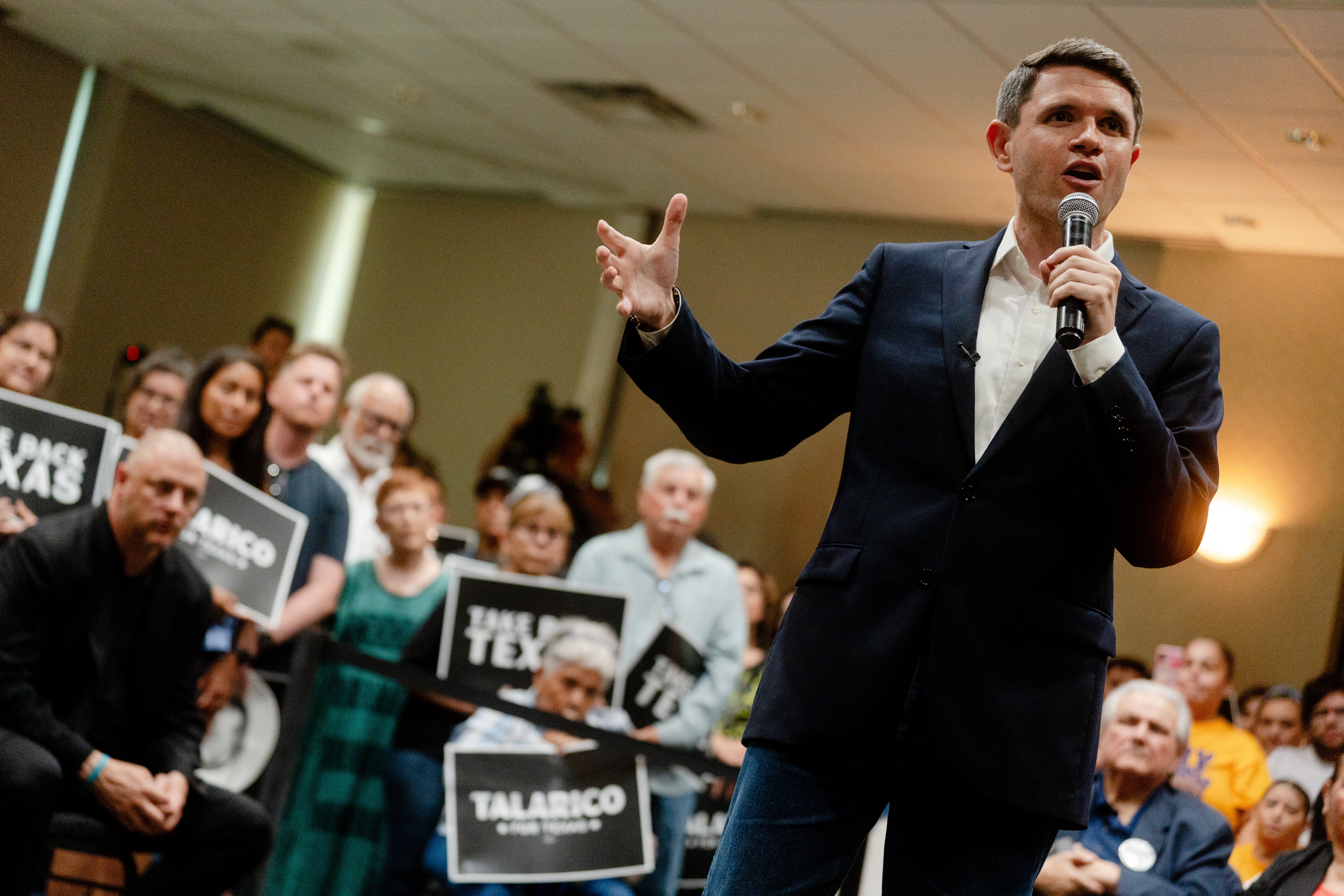
    A group of Democratic candidates has drawn attention this election cycle because of their deep religiosity. Two prominent candidates for the U.S. Senate, for example, James Talarico of Texas — a Presbyterian with a recent seminary degree — and Adam Hamilton of Kansas, senior pastor of a United Methodist megachurch, frequently discuss their faith and cite the Bible on the campaign trail.

    But those candidates are not winning the support of many white evangelicals.

    A recent Fox News poll showed that only 21% of white evangelical voters in Texas support Talarico, even in a race against a scandal-ridden opponent who had an extramarital affair.

    Policy differences over abortion and LBGTQ+ rights — two issues that have long been central concerns for white evangelical conservatives — at least partly account for this. Talarico and Hamilton both support abortion rights, and they’re running against Republicans who do not.

    But a more fundamental issue also makes it hard for Christian Democrats such as Talarico and Hamilton to make inroads with conservative white evangelical Christians. The Religious Left champions cultural pluralism, while a Christian national identity drives the Religious Right — and there’s an unbridgeable gap between the two. This divide has helped to shape American politics for more than a half century.

    It helps explain why more than 80% of white evangelical voters cast their ballots for President Donald Trump in each of his three presidential races. It’s also the reason why, in 1980, a majority of white evangelical voters supported Ronald Reagan, who had been divorced and was a less frequent churchgoer, over President Jimmy Carter, a Southern Baptist deacon and Sunday school teacher.

    In each case, white evangelicals considered a candidate’s faith and personal behavior to be far less important than their top priority: finding someone who championed their understanding of the place of Christianity and Christian-based sexual morals in the nation.

    This wasn’t always the case. In the mid-1970s, leading American evangelical magazines such as Christianity Today called for the election of morally exemplary, born-again Christian candidates on the grounds that only Christian politicians could rescue the nation from moral decline. When Carter ran for president in 1976, many evangelicals decided he fit the bill, and backed the Democrat.

    But some evangelicals quickly regretted this choice. Both Carter and more conservative evangelicals believed that the United States was morally adrift. Yet, their understanding of the sources of that national moral decline differed.

    For Carter, whose moral consciousness was shaped in part by his interactions with civil rights activists, racism and the destruction of the environment were moral evils. That meant that the solution to America’s moral problems would focus on greater equality, as well as a more responsible use of the environment. The United States faced a “moral and spiritual crisis,” he said — but that crisis could best be addressed by a reduction in “self-indulgence and consumption,” not through a public affirmation of America’s Christian identity.

    Moreover, as a moderately liberal Baptist — a tradition that had historically championed religious liberty — Carter was a religious pluralist who eschewed public endorsements of Christianity and embedding his personal religious beliefs in public law.

    He opposed the White House church services that President Richard Nixon had created. He publicly endorsed the Supreme Court rulings that curtailed classroom prayer in public schools, because he said that “as a Baptist,” he believed that “the Government ought to stay out of the prayer business.” And although he personally opposed abortion, he refused to support a constitutional amendment to overturn the Supreme Court’s Roe v. Wade decision — which conveyed a right to have an abortion — because he thought that in a pluralistic society, it was improper for the federal government to impose one religious group’s view of abortion on others.

    Conservative evangelicals, however, recoiled from these views. To them, the sexual revolution of the 1960s and 1970s was a much greater evil than racial injustice or environmental destruction. It threatened the fundamental building block of society: the family. And the source of the sexual revolution, they thought, was a national rejection of God, which was manifest not only in religious pluralism but also in the Supreme Court decisions on school prayer and abortion.

    Made By History sponsors. FOR USE ON MADE BY HISTORY STORIES ONLY.Inquirer Staff

    In the late 1970s, this concern prompted the formation of the Christian Right. At its heart, this movement was a campaign to restore an imagined lost world of the 1950s — an era that had combined more conservative sexual standards with national legislation to make “In God We Trust” the national motto. Conservative evangelicals thought those values had been lost amid the anti-war protests and cultural changes of the 1960s and 1970s.

    Some evangelical leaders argued that the answer was mobilizing and electing a president who shared their hunger to return to the world of the 1950s. “The hope of reversing the trends of decay in our republic now lies with the Christian public in America,” Moral Majority founder (and Baptist megachurch pastor and televangelist) Jerry Falwell declared in 1980. “Our Founding Fathers separated church and state in function, but never intended to establish a government void of God … We cannot be silent about the sins that are destroying this nation … We must turn America around or prepare for inevitable destruction.”

    White evangelical Christians had voted for Republican presidential candidates before — including in 1972, when they overwhelmingly supported Nixon’s reelection. But Falwell’s Moral Majority and other allied groups, such as Christian Voice and the Religious Roundtable, broke new ground in channeling evangelicals’ generally conservative instincts into a much more tightly focused campaign to restore Christian values through public law. That campaign put them at odds with religious pluralists like Carter.

    These new groups backed Reagan, and other candidates like him, who they believed would oppose further secularization of the nation’s laws and culture and prevent any further sexual liberalization. The Religious Right also opposed candidates who were strong cultural pluralists, since they thought that secularization and a pluralistic understanding of the nation’s religious identity had undermined the country’s moral foundation.

    Sometimes that meant backing less personally devout, morally compromised candidates, since the most vocal advocates of a public affirmation of Christianity’s place in public life were sometimes infrequent churchgoers whose sexual lives were far from monogamous. To these evangelical activists and voters, politicians’ policy choices mattered far more than their personal behavior. As Christian Voice executive director Richard Zone put it when endorsing Reagan, he “was not the best Christian who ever walked the face of the earth.” But to Zone, “we really didn’t have a choice.”

    When the group issued a “Moral Report Card” in 1980 that rated every member of Congress on the morality of their votes, pious churchgoers such as Sen. Paul Simon (D-Ill.) and Rep. Robert Drinan (D-Mass.), the only Catholic priest serving in Congress, received moral ratings of zero, while Rep. Richard Kelly (R-Fla.), who was sentenced to prison a few months later for accepting bribes in the Abscam scandal, received a rating of 100. Even the devout evangelical Baptist Sen. Mark Hatfield (R-Ore.), a liberal Republican who opposed abortion but warned against “mix[ing] piety with patriotism,” found himself at odds with the Christian Right.

    And little has changed in terms of this picture over the last 46 years. Once again, in 2026, in Kansas, Texas and elsewhere, evangelical voters have a choice similar to the one that evangelicals confronted in 1980: vote for the most religiously devout Christian candidate on the ballot or vote for a candidate who shares their vision of the nation.

    If history is any indication, most of them will choose the latter. Fundamentally, white evangelical voters understand that progressive Christian candidates are usually cultural pluralists whose faith is shaped by values of equality. They don’t see secularization and the sexual revolution as the threats that most white evangelicals do. Instead, progressive Christians are often more concerned about what they see as the threat to the rights of religious and sexual minorities posed by Christian nationalism.

    This history suggests that if progressive Christians like Talarico and Hamilton win their House and Senate races in November, it will be by overcoming white evangelical opposition, not because they hit upon a formula to win over the most conservative churchgoers.

    Daniel K. Williams is an associate professor of history at Ashland University and the author of God’s Own Party: The Making of the Christian Right.

    Made by History takes readers beyond the headlines with articles written and edited by professional historians. Opinions expressed do not necessarily reflect the views of The Inquirer.
  • The U.S. Supreme Court removed limits on political parties coordinating with candidates. What does that mean for Philly’s elections?

    The U.S. Supreme Court removed limits on political parties coordinating with candidates. What does that mean for Philly’s elections?

    The U.S. Supreme Court this summer overturned limits on how much money political parties can spend in coordination with their chosen candidates — the latest in a series of decisions by the conservative majority that have unleashed a flood of money into national politics.

    How that will play out in Philadelphia remains to be seen. But local elections lawyers said last week it could boost the power of the city’s political parties to influence the outcome of elections.

    “It will be disruptive to city elections,” Adam Bonin, a Philadelphia-based Democratic elections attorney, said of the case, National Republican Senatorial Committee v. Federal Election Commission. “It will give parties more power, and it will give incumbents more power.”

    The Philadelphia Board of Ethics, which enforces the city’s campaign finance rules, plans to consider the potential impacts of the Supreme Court’s 6-3 ruling this fall, said board chair Ellen Mattleman Kaplan. That would ensure any changes would take effect before next year’s municipal elections, when Mayor Cherelle L. Parker and all 17 Council members are up for reelection.

    In deep-blue Philadelphia, where most local elections are effectively decided by Democratic primaries, two key questions will determine the case’s impact: Does the ruling apply to local elections, and does it apply to primaries?

    Both are legally thorny issues that could require lengthy court battles to sort out. But if the answer to both questions ends up being yes, the NRSC ruling has the potential to give significant advantages to candidates who are endorsed by the Democratic City Committee.

    For instance, in crowded Democratic primaries for mayor or City Council, the party-endorsed candidates would be the only ones who could effectively circumvent the city’s limits on the size of political donations — currently $3,700 per year for individual donors — by directing deep-pocketed supporters to give additional money to the party, which is not subject to those limits.

    The party could then work directly with its endorsed candidates on how to spend that money, including decisions on the messaging and timing of TV ads or door-knocking efforts.

    To be clear, experts said, there are many uncertainties about how, and even if, the ruling would apply to Philadelphia municipal elections, where political money is more tightly regulated than in state and federal races. In the immediate future, the ethics board could take the position that the ruling applies only to federal races, not the city races it regulates.

    “We haven’t come to any conclusions yet,” said J. Shane Creamer Jr., the ethics board’s executive director. “We’ve got to keep in mind that the federal law in that case is a little different than Philadelphia’s laws, including different rules designed to prevent circumvention of contribution limits.”

    Additionally, the Supreme Court opinion did not specify whether its ruling applies to local elections, a question that could be addressed by subsequent federal court cases. The NRSC case before the justices centered on limits on coordination between parties and candidates in federal law that apply only to general elections.

    But Philadelphia elections lawyer Kevin Greenberg said the underlying philosophy in the decision — that limiting political parties’ coordination with their candidates constituted a violation of the constitutional right to free speech — would likely extend to primary elections.

    “There is nothing about the Supreme Court’s logic that inherently applies only to general elections,” said Greenberg, who has done legal work for the Pennsylvania Democratic Party. “What any judge and any lawyer thinking about how to implement this … would and should do is apply the Supreme Court’s opinion to what the next set of facts are, and under the Philadelphia law, this will be problematic for the existing [campaign finance] statue.”

    The ruling directly applies to general elections for U.S. House and Senate races, meaning that federal party committees can now coordinate with — and spend freely on behalf of — candidates running for Philly congressional seats and Pennsylvania’s U.S. Senate seats.

    But the two outstanding questions, about local elections and primaries, would likely have to be sorted out in court because the city is unlikely to voluntarily change its system, said Matthew Haverstick, a Philadelphia elections lawyer who often works with Republican clients. Such a case would require a candidate or, more likely, a political party suing the city, he said.

    “Given the way the Philly ethics board and the city regulates elections, they’re not going to do anything unless they’re told to do it by a court,” Haverstick said. “Whether this decision has a direct impact on the Philadelphia rule is unclear. … You could argue that political parties can coordinate in primaries — there are good arguments that it could — but it would have to be considered in court.”

    Haverstick is representing 2023 mayoral candidate Jeff Brown in a lawsuit against the ethics board. During that campaign, the ethics board alleged that a super PAC backing Brown coordinated with him in violation of campaign finance rules. A judge later threw out the case.

    With Haverstick as their attorney, Brown and the PAC have since sued the ethics board, alleging in part that it unfairly targeted him during the campaign. The Commonwealth Court in March ruled against Brown and the PAC. They have appealed the decision to the Pennsylvania Supreme Court, where it is pending.

    A potential opportunity for Philly’s Democratic establishment

    The local Democratic establishment’s influence in recent years has been waning as insurgent candidates backed by progressive groups have notched key victories, oftentimes with the backing of deep-pocketed outside spending groups supported by organized labor.

    Depending on how it is applied, the court’s decision could create an opportunity for the Democratic City Committee to reassert itself by giving its preferred candidates, who are typically more centrist or conservative Democrats, access to a major financial advantage over their rivals.

    The Democratic City Committee did not respond to a request for comment.

    Currently, candidates for city offices are subject to strict limits on the size of donations they can collect: $3,700 per year for individual donors, and $14,800 for organizations. Outside groups known as super PACs can raise money in unlimited amounts — but they are prohibited from coordinating with campaigns over fundraising, strategy, and spending.

    If applied to city elections, the ruling could create an exception to those rules for one type of outside group — political parties — allowing them to raise money in unlimited amounts and spend as much as they want while working hand in glove with their endorsed candidates. And in a primary election, where there is only one party involved, that could give the establishment-backed candidate a major advantage.

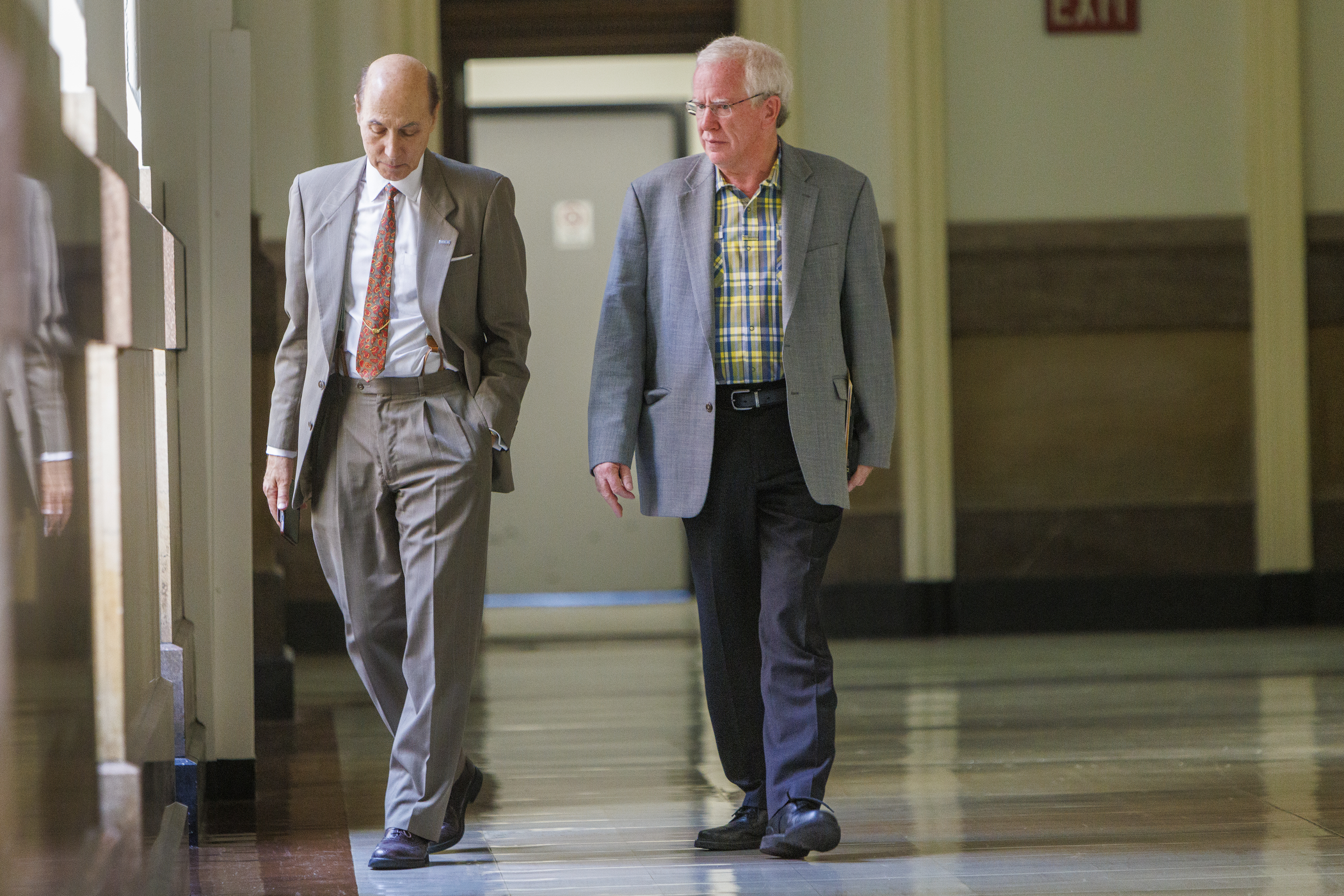
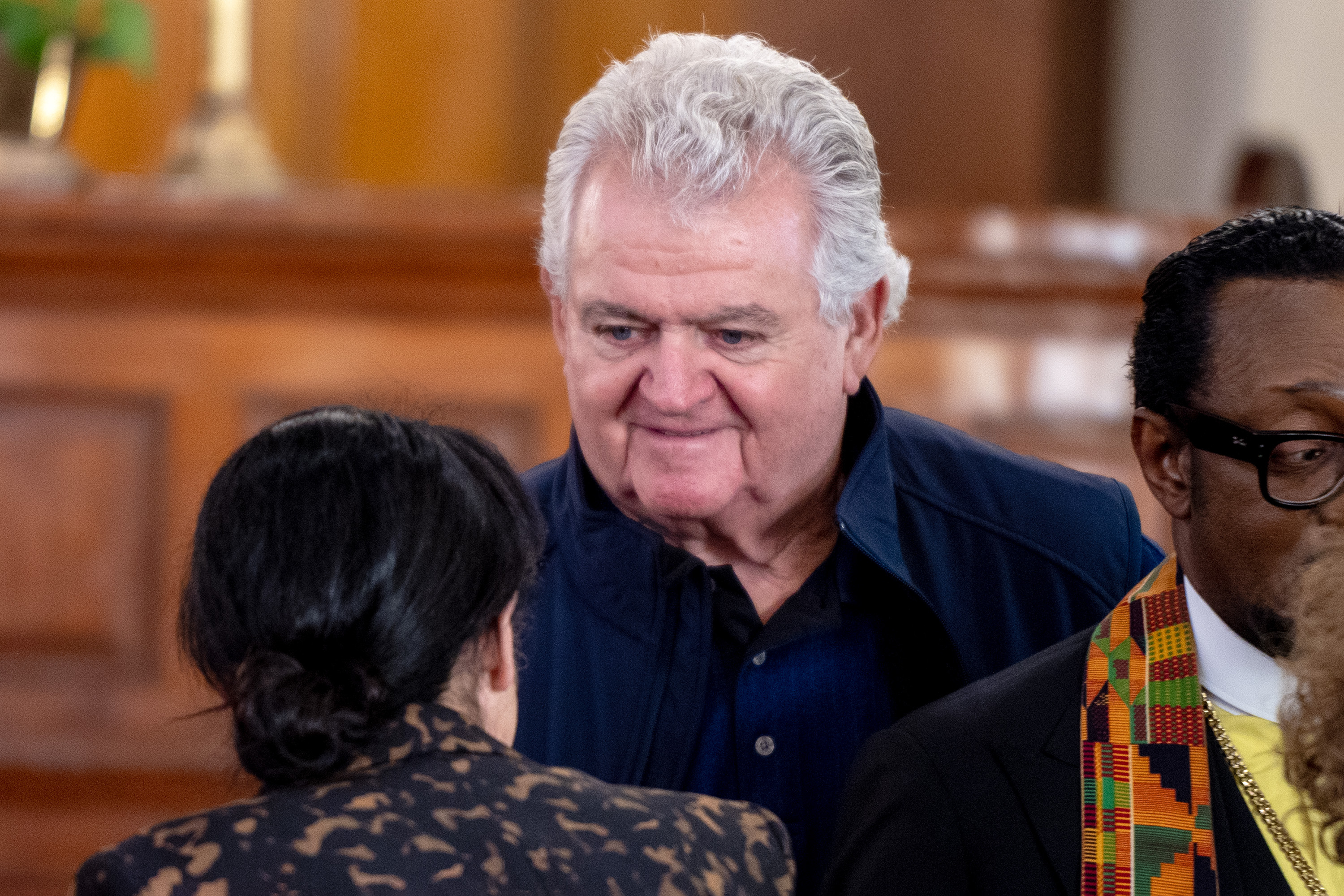
    Chairman of the Democratic City Committee, former U.S. Rep. Bob Brady, at Mother Bethel AME Church Nov. 2, 2025.Tom Gralish / Staff Photographer

    But there is reason to doubt that scenario will become the norm in high-profile Philadelphia elections. In addition to legal questions about the NRSC case’s applicability, there are political obstacles that could prevent candidates from taking advantage of the court’s ruling.

    To be endorsed by the city committee, candidates must receive the support of a majority of the 69 Democratic ward leaders, who often fail to reach that level of consensus in crowded races. And even if a candidate wins the endorsement, there is no guarantee they would have the donor network to be able to take full advantage of coordinating fundraising with the party.

    Lastly, the party may differ with a candidate’s campaign on strategy decisions, or it could decline to raise money beyond the limits applicable to other candidates to avoid the appearance of tipping the scales.

    Bonin said he opposes the current Supreme Court’s campaign finance rulings, such as the 2010 Citizens United decision that helped usher in the dominance of super PACs. But in light of those rulings, he said, the NRSC decision may be a positive development.

    “If we’re going to live in a world where super PACs exist, we are better off strengthening political parties, which are more accountable,” he said.

    A new twist in Council election races for the GOP and Working Families Party?

    There is another arena in which the decision could have a major impact in Philadelphia: the general election races for the two seats on City Council that are reserved for independent or minority-party candidates.

    Republicans held those seats for about 70 years until Councilmembers Kendra Brooks and Nicolas O’Rourke of the progressive Working Families Party won them in the two most recent city election cycles, a major factor in Council’s recent shift to the left.

    At left is Kendra Brooks speaking with colleague Nicholas O’Rourke during caucus session. Philadelphia City Council gathered today for the budget address from Mayor Cherelle L. Parker in chambers, Thursday, March 12, 2026. .Alejandro A. Alvarez / Staff Photographer

    The Philly GOP has seen anemic fundraising levels and dismal results in recent years. If applied to local primaries, the NRSC ruling could potentially help the party gain traction with the help of just a handful of major donors — especially given that it is less clear the Working Families Party, without a primary election, would be able to take advantage of the change.

    If the NRSC ruling is applied to city elections, the Philly GOP would undoubtedly be able to coordinate with its nominees in those Council races. Vince Fenerty, who chairs the Republican City Committee, said he is seeking legal advice on that question.

    “We’re hopeful that there could be a chance for us to help our City Council candidates next year and everyone else who runs [as a Republican],” he said.

    It is unclear whether the ruling would benefit the smaller Working Families Party, which under Pennsylvania law is not a major political party. (Pennsylvania’s Commonwealth Court is currently deciding an unrelated case on the Green Party that could affect the legal standing of groups like the Working Families Party.)

    At left is attorney Matt Wolfe and Vince Fenerty, chair of the Philadelphia Republican Party attended the hearing for Working Families Party candidates. Hearing in courtroom 443 Philadelphia City Hall for Working Families Party candidates on Friday, August 11, 2023.Alejandro A. Alvarez / Staff Photographer

    In a statement, Working Families Party spokesperson Nick Gavio lamented the direction of the U.S. Supreme Court’s recent rulings on campaign finance law.

    “Anyone who has knocked a door in Philadelphia knows that regular voters are not pushing to give billionaires and the ultra-rich more power to influence our elections,” he said. “WFP has no interest in overturning existing campaign finance regulations that act as guardrails against political and corporate insiders buying elections. We will of course continue to follow all campaign finance rules that are on the books.”

    A new quandary for the ethics board

    In stark contract to the increasingly unregulated world of federal elections, Philadelphia has some of the tightest campaign finance restrictions in the country, and the ethics board has aggressively enforced the city’s rules.

    Critics, including Greenberg, believe the board has already overextended itself by sticking to Philly’s rules as the Supreme Court increasingly takes a wrecking ball to federal campaign finance law. And for Greenberg, the NRSC case is the latest decision that shows Philly is overdue for a full redo that “addresses these issues in light of the [Supreme Court’s] clear direction.”

    “City Council needs to write appropriate rules, and the board of ethics needs to rescind almost all of its existing regulations and readopt them in law,” he said.

    It is unlikely the ethics board would lead the charge in demolishing the campaign finance system it helped to create — one that has been widely credited with limiting the influence of corporate interests and super-wealthy individuals since it was implemented in 2005.

    In an interview, Creamer, the ethics board executive director, referenced differences between the federal law in question in the NRSC case and Philly’s system — an indication the board could determine the decision has no bearing on local elections.

    “We don’t have a similar structure to our law. So it may impact our law somehow; it may not,” Creamer said. “We’re still analyzing it.”

    There are several important differences the board could point to. In federal law, for instance, there are limits on how much individuals can give to political parties, but in Philadelphia there are none.

    In addition, the majority opinion in the NRSC decision, which was authored by Justice Brett M. Kavanaugh, discusses at length how rules around “earmarked” donations — in which donors give money to political parties and direct them to spend it on specific candidates — provide a “prophylaxis” against corruption that could result from eliminating limits on coordination with political parties. Philly does not have an earmarking process.

    If the ethics board stands pat, candidates or political parties seeking to take advantage of the NRSC ruling could challenge the board’s regulations in court. Politicians in heavily Democratic cities like Philadelphia, however, face strong disincentives from taking that step, which would allow them to be painted as supportive of moneyed interests playing a greater role in local politics.

    Bonin, who has been less critical of the ethics board’s approach to campaign finance than Greenberg, said resistance to the NRSC case would be difficult.

    “Whether they like it or not, they have to allow it,” Bonin said, referring to coordination between candidates and parties.

  • Political campaigns are quietly paying influencers to support candidates

    Political campaigns are quietly paying influencers to support candidates

    Josh Greene is a rising left-wing social media star with his own podcast, nearly 800,000 followers, and access to politicians like Sen. Bernie Sanders of Vermont and Mayor Zohran Mamdani of New York.

    He has used that platform to support dozens of progressive candidates in the midterm elections, ranging from low-profile, down-ballot contests to some of the nation’s marquee Democratic primaries. In camera-facing videos, Greene informs his followers of his preferences, calling some candidates “the most viable” and, in other cases, declaring that “this is the candidate for you.”

    He does not always tell his viewers that he is being compensated for his support.

    But records show that Greene, 26, has received money from at least seven politicians, or outside groups supporting them, in the current campaign cycle, including several congressional candidates in New York and a super political action committee linked to Abdul El-Sayed, the Senate nominee in Michigan. Tom Steyer, a former candidate for governor in California, paid him $21,500.

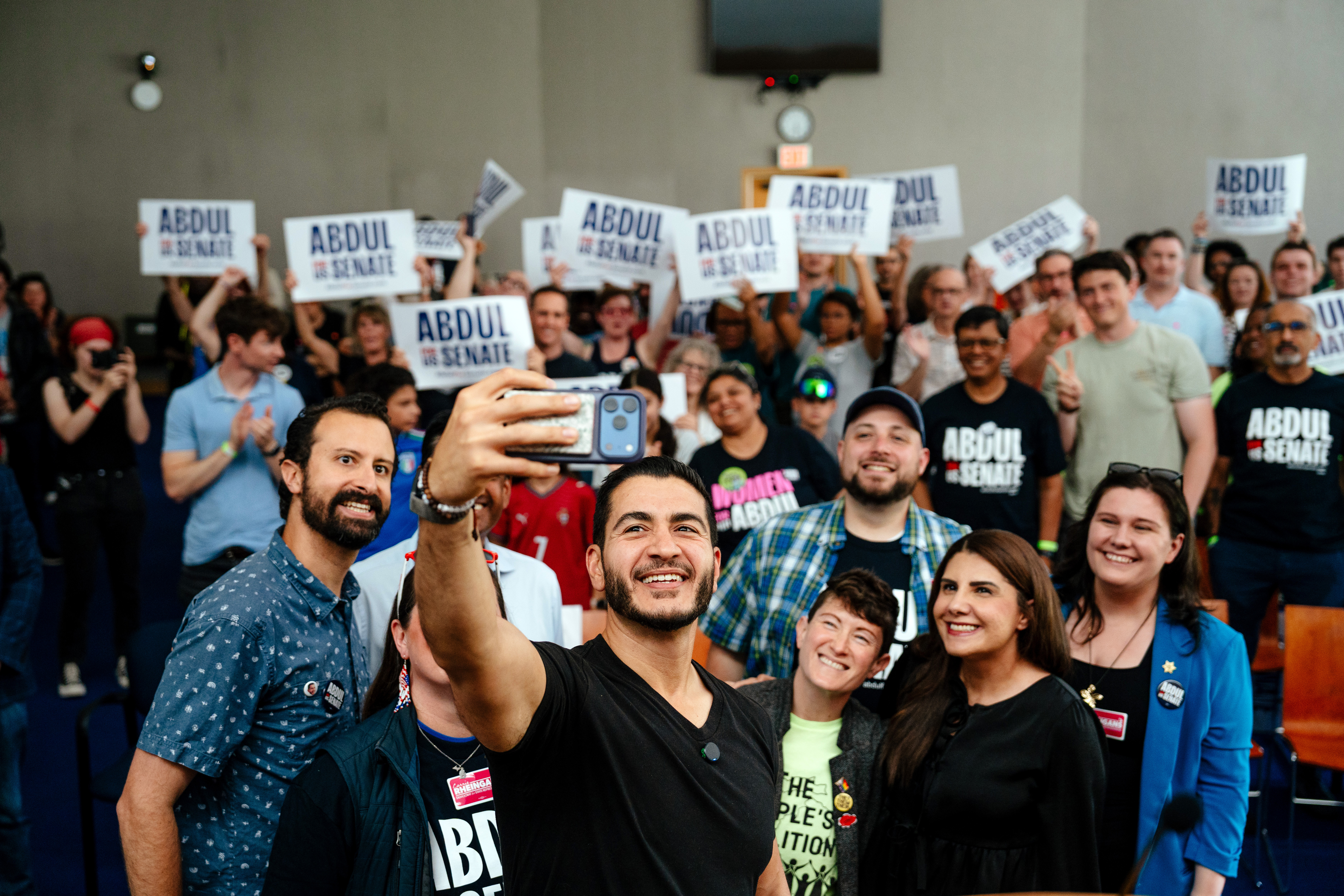
    Abdul El-Sayed, the Democratic candidate for U.S. Senate in Michigan, who is trying to bring his party together after a divisive primary, at a June 28 campaign event in Ann Arbor, Mich.NICK HAGEN

    Greene, who lives in Southern California and is best known by his handle @joshtheprogressive, is among a growing number of influencers who, at a moment when campaigns are increasingly willing to pay for online attention, appear willing to put their mouth where the money is.

    As more people spend time scrolling on their phones, campaigns view these shows of support from influencers as a vital way to reach voters. They are also significantly less expensive than traditional advertising.

    But unlike campaign mailers, billboards, and television spots, these messages fall into a legal gray area.

    There are no federal regulations requiring disclosure of payments for political support on social media, and only a few states have such rules. That allows influencers, in most instances, to endorse candidates for a fee without ever disclosing those payments in their posts. Creators say some campaigns have even asked them to actively conceal the fact that they’re being compensated, making it impossible to know what’s genuine support — and what is pay-for-play.

    In most cases, the only way a viewer would know an influencer is being paid would be to search a candidate’s campaign finance reports, as the New York Times did to discover the payments. Even then, such compensation is regularly obscured by funneling the payments through middlemen.

    “It’s completely out of control,” said Suzanne Lambert, a progressive influencer and comedian with more than 1.3 million followers between TikTok and Instagram. She said that while she happily promotes candidates she likes, she has “never taken a cent” in exchange for an endorsement and worries that the practice distorts the democratic process. “People don’t know what’s real anymore,” she said.

    Greene defended the idea of influencers getting paid for their work and noted that he accepts money only from candidates and campaigns that he would support anyway. “I turn down offers every single day because I’m not going to take money from anyplace if I don’t agree with it,” he said. (In the case of the Steyer campaign, Greene said he was initially critical but came to see him as the most viable candidate.)

    Still, he suggested there was a need for straightforward and consistent rules on disclosure. “If anything, we do need more clear transparency laws so that creators like myself aren’t confused,” he said.

    Coordinated networks

    The phenomenon is bipartisan.

    In June, Rep. Barry Moore of Alabama filed a complaint with the Federal Election Commission, alleging that at least eight social media accounts were being paid to attack his military record during the Republican primary. In April, a newspaper in Kentucky revealed what appeared to be a coordinated network of influencers boosting Nate Morris — at the time running in a Republican Senate primary — even though none acknowledged being paid for their efforts. Ken Paxton, the attorney general of Texas and the Republican nominee for Senate, benefited from a paid campaign on the social platform X when he was facing impeachment in the state several years ago.

    But the question of paid influence has gained particular attention in recent months thanks to aggressive efforts by a handful of Democratic candidates to secure support from well-known influencers.

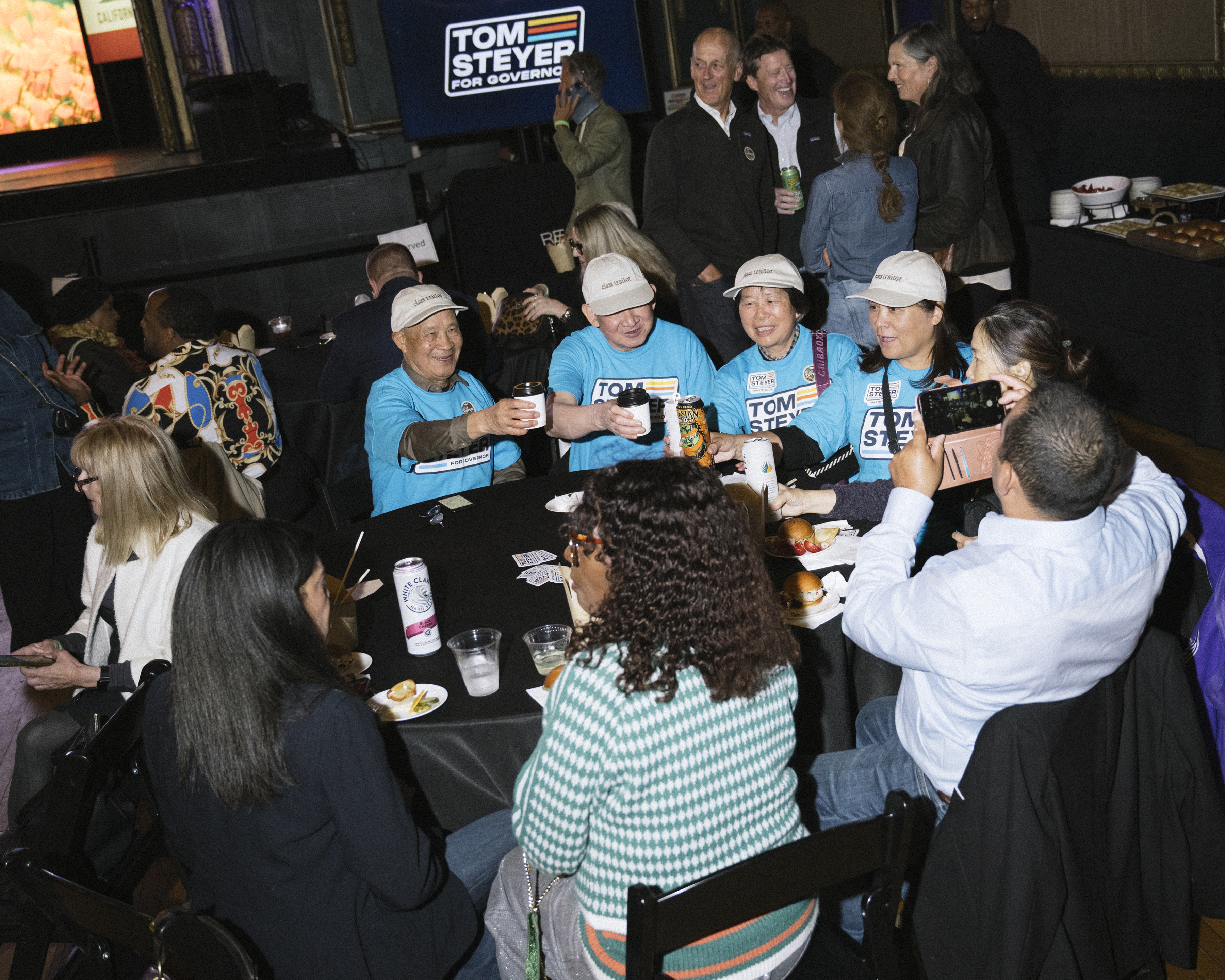
    During California’s hard-fought primary this spring, Steyer’s campaign paid 17 influencers at least $5,000 apiece, including one, Carlos Eduardo Espina, who has over 14 million followers on TikTok and received a total of $400,000, campaign finance filings show.

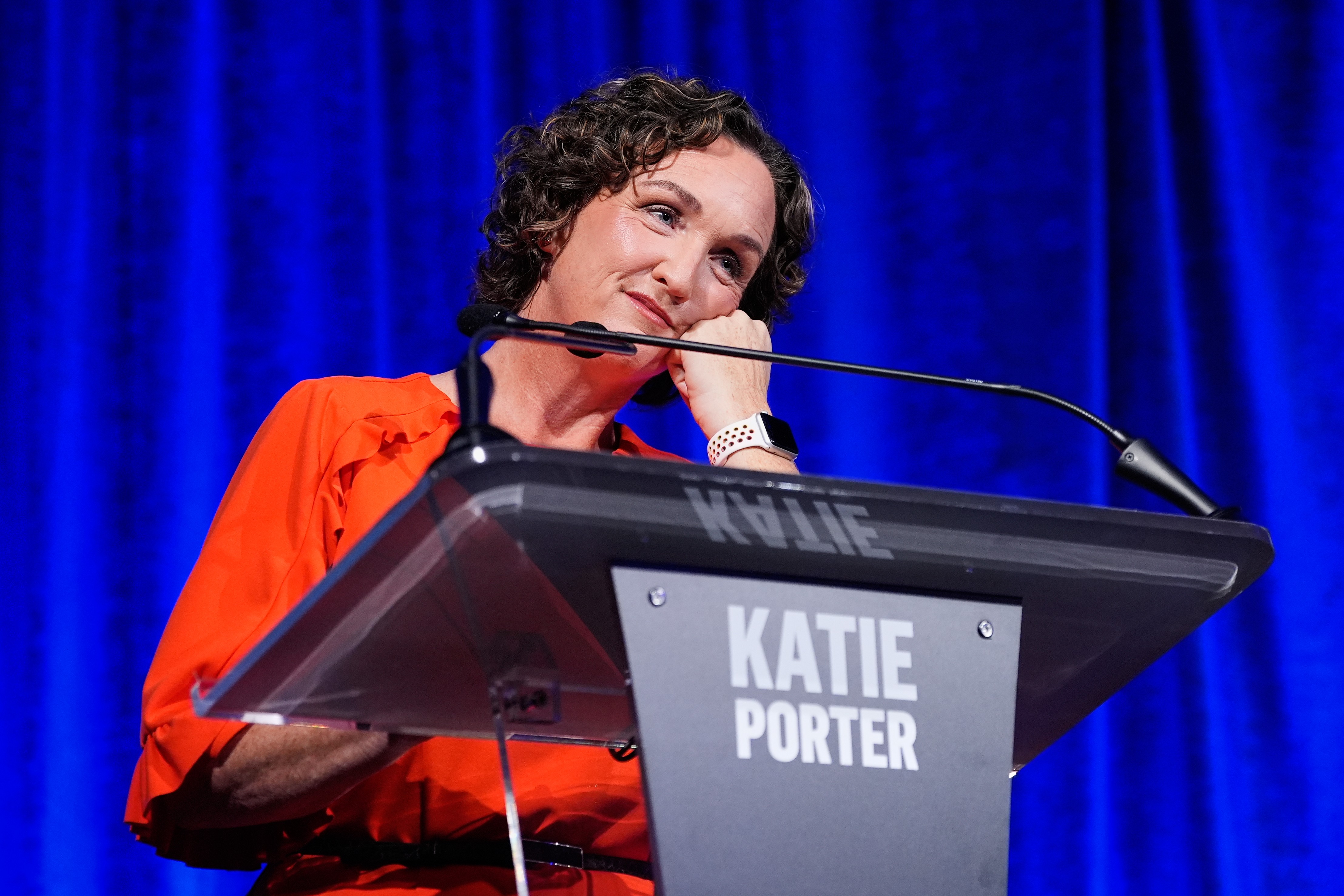
    Katie Porter was one of several candidates to deploy paid influencers during the California gubernatorial primary in 2026.Godofredo A. Vásquez

    Former Rep. Katie Porter, who also ran unsuccessfully for California governor, paid 12 influencers a total of $139,500. One of them, a lifestyle creator named Avery Cyrus with 9.5 million followers on TikTok, received $25,000 for what appeared to be a single post claiming “Katie Porter’s thing works.”

    Cyrus’ post was deleted after the Times inquired about it. She did not respond to a request for comment made through the social media agency that represents her, UnderCurrent Media, but the firm’s CEO, Eric Bogard, said in an email that it “was not asked to oversee disclosure compliance, nor were we provided instructions concerning any required disclosures.”

    Under California law, paid political posts on social media must be disclosed. A Times review found three posts supporting Porter on TikTok from influencers who were paid by her campaign that did not include any disclosures. In seven other instances, the disclosures could be found only after clicking through to a hidden section of TikTok for comments flagged “as potentially offensive or disturbing.”

    Sander Jennings, an influencer based in Florida who was paid $22,000, said “the Porter campaign and I agreed to disclose the payment” in TikTok’s comments section in order to get around the site’s practice of removing paid political posts. He said he did not know why the disclosures ended up in the hidden section of the comments.

    TikTok’s terms of service bar all paid political advertising, including “creators being compensated for making branded political content.” In an email, Porter said that “nothing was paid for and posted without review and coordination and compliance with all law.”

    Other political efforts have employed a different strategy, contracting private firms that pay little-known content creators smaller sums to put out a large volume of posts. Those companies, known as user-generated content platforms, or UGCs, operate on the principle that carpet-bombing the internet with hundreds of nearly identical posts is more likely to generate viral content than paying one large influencer the same amount of money to make a single post.

    This spring, a woman posted dozens of videos promoting Steyer in the California primary. Weeks later, she appeared in videos from a different account complaining about the cost of living “here in Michigan” and encouraging people to vote for Rep. Haley Stevens, El-Sayed’s primary opponent in the Senate race. Then she pivoted to a third account talking about affordability in Wisconsin.

    Corporate records show that the woman, Paige Dunmeyer, actually lives in Kansas City, Mo., and is registered to work with a UGC company called SideShift. It’s not clear how much she was paid for her Michigan and Wisconsin videos, but she has earned more than $30,000 on SideShift for a variety of political and commercial campaigns, according to company records reviewed by the Times. Filings from Steyer’s campaign showed she received $1,320 for her efforts in that race. Dunmeyer did not respond to requests for comment.

    A Times analysis found that at least 87 people registered to work with SideShift had made posts backing Steyer or Stevens, or participated in a third campaign to post video clips on TikTok supporting Rep. James Talarico, the Democratic Senate nominee from Texas. Most of the posts by those creators included no acknowledgment that money changed hands.

    In a statement, SideShift said that it advised creators to follow applicable disclosure requirements, and called for more explicit laws governing how paid content is disclosed on social media.

    “SideShift believes anyone can be a creator and that creators should get paid fairly for work they choose to do,” the company said.

    In June, Kendall Boyle, a TikToker in Michigan with over 21,000 followers, was contacted by a social media marketing agency called Activate HQ offering her a paid opportunity to post videos about “how rising costs are affecting Michigan residents in real life.”

    When she asked who was footing the bill, she was told it was Majority Forward, a dark money group linked to the Senate Majority PAC, a Democratic super PAC, email correspondence reviewed by the Times shows. Boyle said she was turned off by warnings in those emails from Activate HQ that “disclosure is not required and the paid partnership label will not be included in any posts” and also that Majority Forward “will not be mentioned” in her content.

    “It was one of those things where something isn’t fitting right,” Boyle said.

    In a statement, Majority Forward said the language in the email “explains disclosure requirements necessary under FEC rules, which were fully followed.”

    Little regulation

    Just four states have laws or regulations requiring influencers to disclose paid political messaging, but they apply only to state and local races, not federal contests. Although regulations for social media have been proposed multiple times to the FEC, it has never taken action. The Federal Trade Commission, which requires disclosure of paid commercial content on social media, makes an exception for political messaging.

    Rep. Mark Takano (D., Calif.) introduced a bill in June that would require anyone paid by a candidate or political committee to clearly disclose that fact in the same way that traditional campaign materials are required to note such payments.

    In an interview, Takano said he was inspired to draft the legislation after online sleuths revealed that numerous influencers had been making paid endorsements in the California governor’s race without proper disclosure, as required in that state.

    “It’s unfair when an influencer is allowed to be silent or not transparent about money they’re taking from a candidate, making it seem like what they’re saying is authentic and not influenced by money,” he said.

    Takano acknowledges that there are some potential loopholes in the bill. For instance: Campaigns often obscure payments to influencers by hiding them under layers of vendors and subvendors.

    Porter, for example, hired Activate HQ for “influencer marketing services,” and it in turn paid 13 creators to bolster her campaign for governor. One of them, a political influencer in Los Angeles named Dash Dobrofsky, who also posted in support of Stevens in Michigan, received $15,500 from Porter’s campaign. Dobrofsky did not respond to a request for comment.

    Steyer’s campaign, for its part, hired multiple digital strategy firms to manage social media, including one called Group Project, which hired a Los Angeles company, Gutsy Media, which paid Greene through UnderCurrent, which represents him.

    Those payment chains are visible because California is one of a handful of states that require campaigns to report payments to subvendors. There is no such obligation for campaigns for federal office. “Every dollar spent by this campaign is publicly disclosed and available for anyone to see,” the Steyer campaign said in a statement.

    ‘Social media consulting’

    State Rep. Chris Rabb at a July 28 event with U.S. Rep. Ro Khanna.Tom Gralish / Staff Photographer

    Occasionally, campaigns or independent expenditure groups will reveal direct payments to influencers, such as the super PAC Freedom PA, which supported socialist candidate Chris Rabb’s successful bid to win a Pennsylvania House primary in May. It has disclosed payments to nearly 50 influencers for “social media consulting,” among them Greene, who received $750 and posted a video celebrating the candidate’s victory.

    Other committees listing payments to Greene in federal filings employed less illuminating descriptions. Chuck Park, who unsuccessfully ran for Congress in New York’s Queens borough this year, listed a $300 disbursement to Greene as “staff salary.” Greene posted at least five videos promoting Park, none of which state that he had received payment.

    Park, in an interview, said that Greene was in fact not employed by the campaign, but said that “our campaign absolutely leaned into new media” and that he spent time with Greene in Queens filming a series of videos.

    Greene disclosed being paid on three of his posts about Steyer and told the Times that those videos were the only ones that he was specifically contracted by the Steyer campaign to produce. He said he didn’t receive compensation for prior posts about the candidate.

    Greene has also supported Sen. Ed Markey (D., Mass.) in a competitive primary against Rep. Seth Moulton, and last month, he posted a video accusing Moulton of “posturing to be someone they really aren’t.” He posted a second video this month critiquing Moulton, this time for taking corporate political money.

    Neither video includes disclosures, and FEC filings don’t show any payments to Greene related to Markey’s reelection bid. But a spokesperson for Commonwealth Together, a super PAC that is supporting Markey, said it had paid Greene $3,500 for “digital communications consulting” through his agency, UnderCurrent.

    Greene, in a text message, acknowledged the payment to support Markey, saying he took it “because I believe he is by far the more progressive candidate in the race.”

    The murkiness has left some in the political world uneasy. Last month Rynn Reed, the founder of Creator Congress, an organizing hub for influencers interested in politics, introduced a code of conduct for the group that would require creators to make clear when they’re paid, whether required by law or not.

    “With no standards,” Reed said, “there’s going to be a race to the bottom.”

    This article originally appeared in The New York Times.

  • Young Pa. voters are frustrated with Trump as they grapple with ‘the cost of continuing to exist’

    Young Pa. voters are frustrated with Trump as they grapple with ‘the cost of continuing to exist’

    Kelly Harrington is frustrated.

    The 29-year-old Conshohocken resident recently got laid off from a local, financially struggling real estate company and is now trying to find work in a grueling job market for young workers where many of her applications are getting intercepted by AI bots, instead of a person.

    On top of that, she is watching the cost of gas and groceries climb, concerned about reproductive rights after the U.S. Supreme Court in 2022 overturned Roe v. Wade, and is deeply worried about the environmental impacts from a proposed data center in nearby Plymouth Township.

    Harrington joins 75% of likely voters ages 18 to 29 in disapproving of President Donald Trump’s job performance, according to an Inquirer/New York Times/Siena University poll published Tuesday.

    That is a higher percentage than any in other age group in the poll, which found 58% of all Pennsylvania likely voters disapprove of the president.

    Though 80% of young voters said they are satisfied with their own life, they overwhelmingly gave Trump low marks on his handling of the economy and other major issues in the United States.

    Young people are overwhelmed by rising costs in what they see as an unstable economic and volatile international landscape with ramifications that they will one day have to shoulder.

    “It feels like things are going downhill in a way that we don’t know how to recover, and our generation is going to be responsible for picking up the pieces environmentally,” said Harrington, a Democrat. “Also, politically, there are many things that have been done that are going to be hard to take back or that we have to figure out how to undo in the future.”

    The poll, which surveyed likely voters in Pennsylvania between Aug. 17 and 21, underscores how deeply unpopular Trump is among the generation that came of age during his foray into politics and could foreshadow where the state’s politics are headed beyond November’s high-stakes midterm races.

    “Young people are feeling as though they simply don’t have the same level of opportunity as do older people,” said Don Levy, director of the Siena Research Institute. “They are dissatisfied,” he added, and contending with housing expenses, the prices of goods and services, and how much it costs to get married.

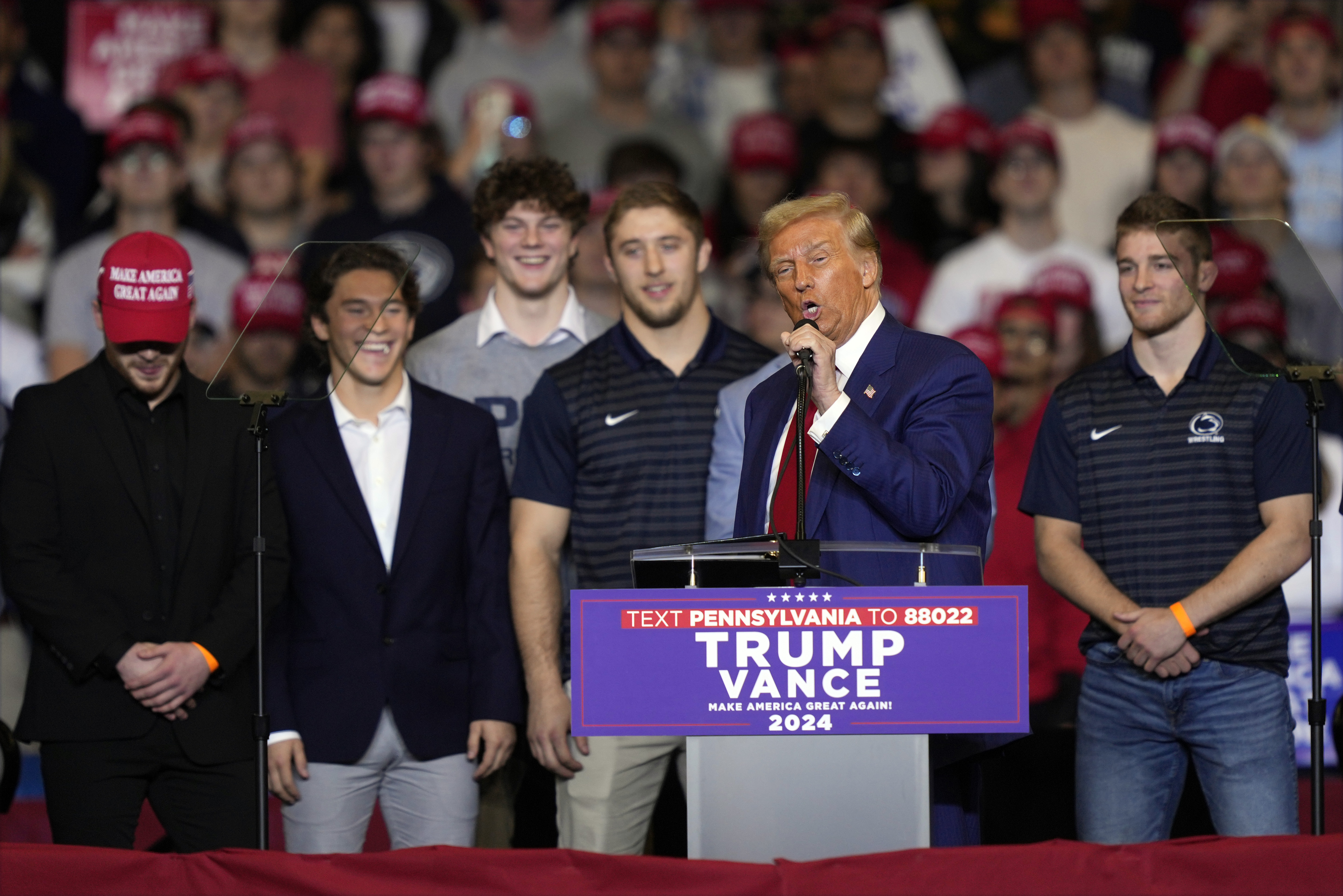
    President Donald Trump speaks as members of the Penn State wrestling team listen at a campaign rally at the Bryce Jordan Center in State College in October of 2024. Trump went onto win the state. Matt Rourke

    ‘The cost of continuing to exist’

    Sophie Showers, 19, wants kids, a stable job as a psychologist, and to one day be married.

    But now that vision is getting hazier as costs rise, including at the grocery store and at the gas pump, which she needs for her 45-minute commute to school — what the Mechanicsburg resident and first-time voter refers to as “the cost of continuing to exist.”

    Trump, according to the poll, is most underwater with young voters on the cost of living: Only 9% approve and 90% disapprove of his handling of the issue.

    That disapproval includes a quarter of voters under 30 who cast ballots for Trump in 2024, including a young voter from the Philadelphia area who asked not to be identified due to his role in his local Republican Party.

    He supported Trump in 2024, but he has become disappointed with what he says is Trump’s ignorance of the country’s biggest problems, namely inflation.

    “He wants to lower taxes. He wants to cut regulation. I agree with all those things,” he said. “But actually making major changes to people’s pricing, I don’t think he’s taking it that seriously.”

    On the economy, 19% of young people approve of Trump’s handling and 81% disapprove, according to the poll.

    “The current state of our country is that young people feel as though they have less opportunity economically than their parents or grandparents,” Levy said. “That’s a clear statement on dissatisfaction with the economy.”

    As they try to jump-start their early adulthood, young people are dealing with rising expenses, including unusually high gas prices and years of steadily increasing grocery store costs. Trump’s tariffs also raised prices for both businesses and consumers.

    (function(){function e(){window.addEventListener(`message`,function(e){if(e.data[`datawrapper-height`]!==void 0){var t=document.querySelectorAll(`iframe`);for(var n in e.data[`datawrapper-height`])for(var r=0,i;i=t[r];r++)if(i.contentWindow===e.source){var a=e.data[`datawrapper-height`][n]+`px`;i.style.height=a}}})}e()})();

    “If the cost of living keeps increasing, whether it be due to gas prices … or tariffs increasing the costs of groceries, I don’t want to be in a world where I have to worry about those kinds of things for the family that I want to have or will have, and I personally don’t really see things getting better,” said Showers, an independent voter.

    Miles Balfour, a graduate student pursuing a degree in human interaction at Carnegie Mellon University, is feeling similarly pessimistic.

    “When it comes to the financial and economic goals that I have for myself — wanting to own a home, wanting to be able to help provide financially for my family — I don’t know, honestly. I wish there was a better sense of confidence or assurance that these things are much more likely to actually happen,” Balfour, 25, said.

    According to a survey earlier this year from CIRCLE, a Tufts University program that studies youth civic engagement, many young people ages 18 to 29 are barely making ends meet, and nearly 60% said they struggle to meet their basic financial needs.

    “Young people’s personal situations are also really coloring their view of politics and of what’s happening in the country,” said Alberto Medina, CIRCLE’s communications manager.

    Ben Hummer, 28, of Pittsburgh, said though he is new to his career in recruiting, raises have slowed down while expenses like rent have gone up. His auto insurance for his Hyundai skyrocketed to roughly $3,000 a year, and his favorite sneakers — for a race he will be running later this year — have jumped from $120 to about $170.

    “My ability to afford my lifestyle comfortably has become more challenged,” Hummer, a Democrat, said.

    Young voters grapple with international conflicts

    Beyond struggles at home, young voters are also wrestling with questions about the U.S. role in overseas conflicts.

    After the deadly Oct. 7, 2023, terror attack against Israel by Hamas, the country launched a military campaign against the insurgent group in Gaza. And with the death toll of Palestinians climbing to more than 70,000 over the last three years, the debate over U.S. support for Israel has become a defining issue for many young people in Pennsylvania and elsewhere.

    As encampments and protests in support of Palestinians roiled university campuses ahead of the 2024 election, the issue hung over former President Joe Biden’s reelection campaign before his withdrawal and may have contributed to Vice President Kamala Harris’ loss.

    Trump repeatedly vowed during his 2024 campaign to end the war. But fighting has continued, and now only 16% of likely young voters in Pennsylvania approve of Trump’s handling of the conflict, the poll found.

    Hummer, the 28-year-old from Pittsburgh, disapproves of the president’s approach and said the U.S. “needs to balance its approach” in the Middle East.

    (function(){function e(){window.addEventListener(`message`,function(e){if(e.data[`datawrapper-height`]!==void 0){var t=document.querySelectorAll(`iframe`);for(var n in e.data[`datawrapper-height`])for(var r=0,i;i=t[r];r++)if(i.contentWindow===e.source){var a=e.data[`datawrapper-height`][n]+`px`;i.style.height=a}}})}e()})();

    “It doesn’t necessarily have to be pro-Palestinian by any means, but the United States has allies in the region outside of Israel that are being negatively impacted by the conflict, and we often just throw them under the bus,” Hummer said.

    Many young people have coupled their anger about the economy with Trump’s decision to join Israel in striking Iranian nuclear facilities and military sites. The Iranian regime retaliated by blocking a key water channel where oil tankers flow, spiking the price of gas throughout the spring.

    Among 18- to 29-year-old Pennsylvania voters, only 17% approve of Trump’s handling of the war in Iran, while 82% disapprove (it is also his least popular issue among all likely voters in the state). The war — which the president originally promised would go on for only a few weeks — has now lasted for six months.

    “I’m concerned about the United States’ ability to extract itself from the war in Iran without taking some kind of loss — whether it’s loss of influence, loss of life, or loss of financial resources,” and the prospect gets worse the longer the U.S. remains involved, Hummer said.

    Young voters are also more critical of Pennsylvania leaders’ positions on Israel than are respondents overall.

    Nearly half, 47%, of respondents said Pennsylvania’s third Jewish governor, Josh Shapiro, has been just “about right on support of Israel,” with 14% saying he has been too supportive, despite his vocal opposition to the country’s leader, Prime Minister Benjamin Netanyahu. But among young voters, 40% said he was too supportive.

    And more than half, 51%, of young voters said Pennsylvania U.S. Sen. John Fetterman, a frequent defender of Israel who has said he would leave the Democratic Party if anti-Israel sentiment grew too strong, is too supportive of Israel — compared with 30% overall.

    ‘Willing and ready to vote in 2026’

    Young voters are now figuring out what to do next.

    Darlene Jimenez, 19, of Philadelphia, said she is grappling with what she can feasibly do as a young person who cares deeply about many issues, including immigration (on which Trump has a 25% approval rating among young voters) and climate change.

    “There’s so many times where I find myself thinking like, ‘What am I to do?’” said Jimenez, a Democrat and college student. “Like, I’m 19 and I have so many opinions, and it’s like, what am I supposed to do to actually make a change?”

    Medina, communications manager for CIRCLE, said that while there is a sense of hopelessness among young people, “many of them are paying attention, and they say that they’re willing and ready to vote in 2026.”

    “Often, precisely because they don’t like the way things are going, and they would like things to change, and they see themselves as having a role in bringing about that change,” Medina said the organization has found in its research.

    In Pennsylvania, the youth vote has the potential to make a “decisive impact” on the four key competitive congressional district races this fall — in Bucks County, the Lehigh Valley, the Scranton area, and the Harrisburg region — according to CIRCLE’s 2026 Youth Electoral Significance Index.

    (function(){function e(){window.addEventListener(`message`,function(e){if(e.data[`datawrapper-height`]!==void 0){var t=document.querySelectorAll(`iframe`);for(var n in e.data[`datawrapper-height`])for(var r=0,i;i=t[r];r++)if(i.contentWindow===e.source){var a=e.data[`datawrapper-height`][n]+`px`;i.style.height=a}}})}e()})();

    But at the same time, young people are still trying to find their political home and historically have been less likely to vote than other age groups, including in 2024, when there was a 54% turnout rate among Pennsylvanians ages 18 to 24 compared with 70% for the overall electorate, according to census data.

    Others are a little more sure of where they stand. For instance, young women are the demographic most disapproving of Trump among likely voters in the Inquirer/New York Times/Siena poll. Fourteen percent of young women approve of his job performance, and 83% disapprove.

    (function(){function e(){window.addEventListener(`message`,function(e){if(e.data[`datawrapper-height`]!==void 0){var t=document.querySelectorAll(`iframe`);for(var n in e.data[`datawrapper-height`])for(var r=0,i;i=t[r];r++)if(i.contentWindow===e.source){var a=e.data[`datawrapper-height`][n]+`px`;i.style.height=a}}})}e()})();

    While a gender gap still exists among young voters, young men — who helped catapult Trump to the White House in 2024 — now disapprove of the president by a nearly 2-1 ratio: 33% approve of his job performance, compared with 64% who disapprove.

    Will, a Democrat from Bucks County who works in academia, crossed the aisle to vote for Trump in 2024 because he — “a loyal Joe Biden guy” — vehemently disagreed with how Harris was nominated without a primary after Biden’s withdrawal and also believes Democrats have focused too much on identity politics.

    The 27-year-old, who asked to be identified only by his first name because of concerns about workplace retaliation, has mixed feelings about Trump’s handling of the issues and called the Iran war “ridiculous.” But he does not fully regret his vote, citing Trump’s handling of Israel as one reason.

    “My impression is that the Democrats have been moving further left to kind of compensate for the fact that MAGA and the tea party moved the Republicans further right, so it kind of leaves people in the middle stranded. … I would prefer the Democrats kind of bring things back to the center,” said Will, who supports Shapiro for governor and would back him for president in 2028.

    And Luke Averill, 19, a registered Republican from Delaware County who voted for Harris in 2024, said he thinks he can make the most impact on the direction of the country by voting for moderate candidates in Pennsylvania’s GOP primaries, but he does not see himself as a “diehard for one party in particular.”

    But for many young voters, the elected officials they are gravitating toward are indicative of what is most important to them.

    Several young respondents to the poll said they find New York City Mayor Zohran Mamdani’s style of politics and focus on affordability to be refreshing.

    “He’s the inspiration for myself and many people in my generation and all around the country,” Balfour, the 25-year-old at Carnegie Mellon, said. Mamdani brings “a sense of hope and optimism” and the ability to see government “make our lives much more meaningful.”

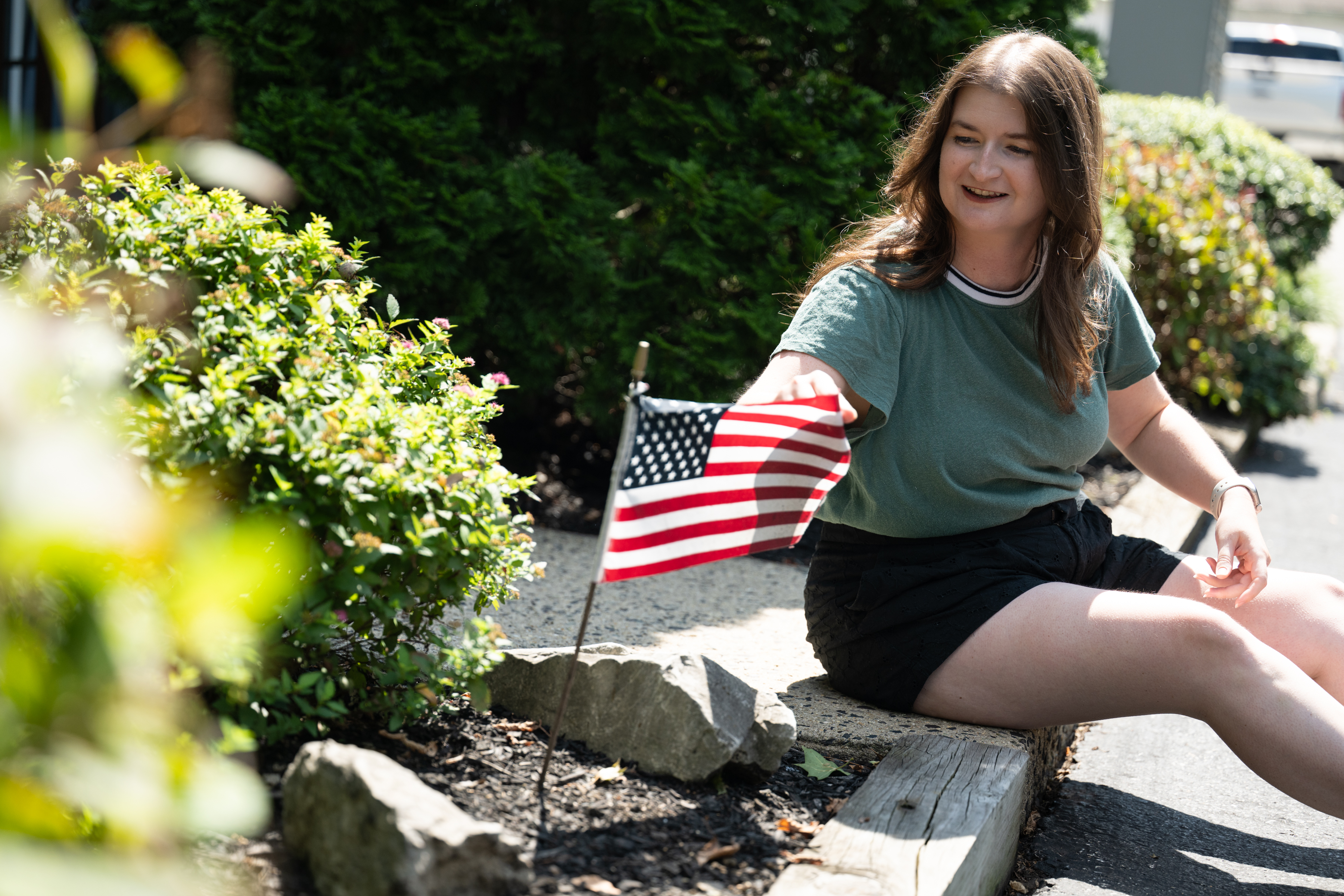
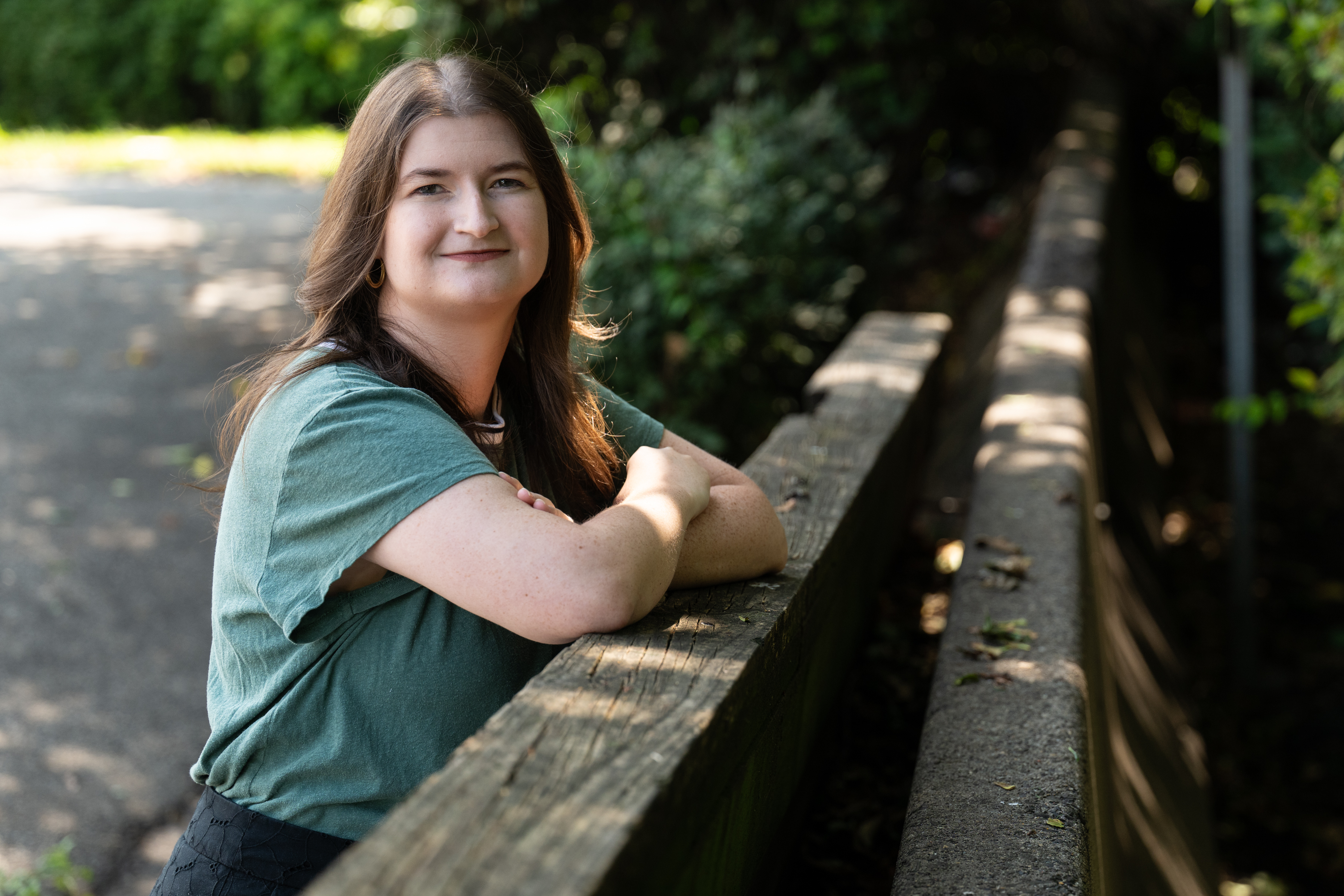
    Kelly Harrington, 29, poses for a portrait near her home in Conshohocken, Pa., on Monday, Aug. 24, 2026.Erin Blewett / For The Inquirer

    And as for Harrington, the 29-year-old from Conshohocken, she said though she feels “frustrated and sad about the state of the world,” she believes it is important to take those emotions to the ballot box.

    “Politics is in every aspect of life,” Harrington said. “It affects you directly in almost every way, and if you get involved, you can make real change.”

  • Democratic states file new lawsuit seeking to block Trump’s order limiting mail voting in midterms

    Democratic states file new lawsuit seeking to block Trump’s order limiting mail voting in midterms

    Democratic-controlled states on Wednesday filed another lawsuit challenging President Donald Trump’s executive order seeking to limit mail voting in this year’s midterm elections.

    The action, filed by about two dozen states against the U.S. Postal Service, marked a new phase in the high-stakes litigation just two days after the Supreme Court ruled against them in a separate case, but did not say Trump’s order was legal.

    The high court majority found the Democratic lawsuit was premature, but that was before the Republican administration issued a rule governing Postal Service delivery of mail ballots. Election officials warn it will be impossible to implement in the days before the first wave of mail ballots are sent out next week.

    “Across the country, states are already deep into preparations for the 2026 elections. Now, at the last moment, the federal government is attempting to meddle in those preparations and potentially threaten countless Americans’ right to vote,” New York Attorney General Letitia James, one of 25 Democratic attorneys general filing the lawsuit, said in a statement. “USPS has no authority to decide who can and cannot vote by mail.”

    Trump’s executive order remains barred from taking effect under a separate injunction that the administration argues needs to be immediately rescinded in light of the high court’s ruling in the previous Democratic state lawsuit. It also had succeeded in a third case filed in May in the District of Columbia, convincing a judge that it was too early to prevent its implementation of the executive order.

    All previous challenges were filed before the administration published its mail ballot rule Friday night. The rule says that if states want their mail ballots delivered, they will need federal approval of the design of their envelopes and must give the Postal Service a list of voters eligible to receive them.

    White House spokesperson Lauren Bis on Wednesday said the Postal Service’s proposals were “commonsense measures that protect the security of mail-in ballots” and that the administration would continue to work to implement them to boost “the safety and security of our elections.”

    The Postal Service said it would not comment because of the pending lawsuit.

    Pennsylvania is one of the states suing the Trump administration.

    “Absolutely nothing has changed here in Pennsylvania. You can vote in person on Election Day or you can vote by mail before Nov. 3,” Democratic Gov. Josh Shapiro said Tuesday evening before the suit was filed.

    “Your vote will be counted. Your vote is safe and secure,” Shapiro said. “No matter how many times the president wants to try and undermine people’s right to vote in this commonwealth, he needs to know that he will be met with a swift rebuke from me.”

    National Democrats on Tuesday cited the rule in asking the federal judge in the Washington case to block Trump’s order after he declined to do so last spring, saying the administration at the time had not taken concrete action. In Boston, U.S. District Judge Indira Talwani also found that the administration moving forward with the mail ballot rule had violated a separate injunction she had placed on the Postal Service prohibiting it from enacting Trump’s order, although she did not take any action against the government.

    Talwani, who was nominated by Democratic President Barack Obama, had issued the injunction against Trump’s executive order in the prior Democratic state case, which is the one the Supreme Court overturned on Monday. She has yet to act on the administration’s urging her to revoke her second injunction. It was issued Aug. 11 in a case against the executive order and was filed by the League of Women Voters and other voting rights groups while the Supreme Court was considering the administration’s appeal of the judge’s first order.

    Trump has long targeted mail voting, which he falsely blames for his 2020 election loss and is disproportionately used by Democrats as a result of Trump’s condemnations. Since returning to power, Trump has tried to claim authority over election rules, saying he thinks Republicans should “take over” vote counting in Democratic areas.

    He issued his first election executive order just months after retaking office, attempting to require documentary proof of citizenship to vote, among other changes. He has also been pushing a sweeping election bill that has stalled in the Senate amid opposition from Democrats and even some within his own party.

    Staff writer Jeff Neiburg contributed reporting.

  • 6 in 10 Pennsylvania voters oppose data center development, new poll finds

    A majority of Pennsylvania voters oppose data center development in the United States, according to a new poll, as the issue has quickly become a flash point in the state’s gubernatorial race and other midterm elections.

    Six in 10 likely Pennsylvania voters do not want the U.S. to construct data centers to house artificial intelligence, according to a poll conducted from Aug. 17 to 21 by The Inquirer, the New York Times, and Siena University. The poll, which surveyed 760 likely voters in Pennsylvania, found that Democratic and independent voters oppose data centers at higher rates, while just over half of Republicans support their construction.

    (function(){function e(){window.addEventListener(`message`,function(e){if(e.data[`datawrapper-height`]!==void 0){var t=document.querySelectorAll(`iframe`);for(var n in e.data[`datawrapper-height`])for(var r=0,i;i=t[r];r++)if(i.contentWindow===e.source){var a=e.data[`datawrapper-height`][n]+`px`;i.style.height=a}}})}e()})();

    The United States is in an international race to lead advancements in AI, with $2.3 trillion in data center projects underway or in the planning stages across the country. Pennsylvania, with more than 100 proposed projects, is among the hot spots targeted by developers for its key location near top U.S. metropolitan areas, vast rural space for building, and significant energy resources.

    Gov. Josh Shapiro originally welcomed data center developments to the state, and last year championed a $20 billion investment from Amazon to build at least two data center campuses in Bucks and Luzerne Counties. He also offered developers fast-track permitting in an attempt to establish Pennsylvania as a leader in AI development.

    But in a year’s time, public animosity toward data centers has grown in Pennsylvania and beyond, as residents say they fear the facilities will drive up electricity costs, overuse water supplies, depreciate home values, and disrupt their daily lives. Last week, Shapiro, a Democrat running for reelection in November and a 2028 presidential prospect, announced plans to restrict data center development in the state.

    Shapiro said his position on data centers evolved as he listened to more constituents who live in areas like Archbald, a small northeastern Pennsylvania town with six data center campuses under construction, and pointed to a developer in Montgomery County who he said is “bullying” residents to push projects through amid public opposition.

    (function(){function e(){window.addEventListener(`message`,function(e){if(e.data[`datawrapper-height`]!==void 0){var t=document.querySelectorAll(`iframe`);for(var n in e.data[`datawrapper-height`])for(var r=0,i;i=t[r];r++)if(i.contentWindow===e.source){var a=e.data[`datawrapper-height`][n]+`px`;i.style.height=a}}})}e()})();

    Pennsylvania’s youngest voters were most likely to reject data centers, according to the poll: 83% of likely voters ages 18 to 29 opposed their development, as did 71% of voters ages 30 to 44. Opposition, while above 50% for all age groups, decreased among older voters.

    Kelly Harrington, 29, of Conshohocken, who participated in the poll, said she has been attending Plymouth Township Council meetings to oppose a controversial proposal for a 2 million-square-foot data center project there.

    “Some of my concerns about that specific data center are selfish in the sense that I think my home value is going to go down, I think it’s going to be loud and obstructive, I think it’s going to pollute the air that I want to breathe every day,” Harrington said. “But in a wider sense, I’m also concerned about the environmental impacts of data centers.”

    Front and center in the Pa. governor’s race and beyond

    Data centers have become a key issue in the Pennsylvania gubernatorial election, where Shapiro hopes to ride his high popularity to reelection and usher in Democratic gains in down-ballot races for the statehouse and Congress.

    Both Shapiro and his Republican opponent, State Treasurer Stacy Garrity, have released ads criticizing the other’s past support for data center development.

    The issue also is animating down-ballot races across the state, where candidates from both parties are campaigning on their opposition to data center development.

    Democratic and Republican politicians across the country have reversed course on data centers in recent months as the projects have grown increasingly unpopular.

    Gov. Josh Shapiro answers questions after signing an executive order restricting data centers in Pennsylvania during a ceremony in the Capitol in Harrisburg, Pa., Tuesday August 18, 2026.Kalim A. Bhatti / For The Inquirer

    Prior to Shapiro’s announcement last week touting the “strictest guardrails in the nation” for data center development, his support for the projects appeared to be one of the major tests of his popularity. A Quinnipiac University poll published in July found that while 56% of voters approved of Shapiro overall, only 24% approved of how he was handling data center development in Pennsylvania.

    And some Pennsylvanians who had voted for Shapiro in 2022 said his support for the developments had caused them to contemplate sitting out the November election or writing in a different candidate for governor.

    For some voters, like Montiese McKenzie, Shapiro’s change in position has been enough.

    “I’m very proud of Gov. Shapiro for being anti-data center,” said McKenzie, 48, of West Philadelphia. The Democratic voter said she fears that poor communities will face disproportionate consequences of the construction of AI data centers.

    “What happens will be very important for how I see him as a future leader,” McKenzie said.

    Montiese McKenzie, 48, poses for a portrait near her home in West Philadelphia on Monday, Aug. 24, 2026.Allie Ippolito / For The Inquirer

    Still, Shapiro’s recent change in position has not wooed all Pennsylvania voters.

    Maryann Klaus, 82, a Democrat in Upper Bucks County, supported Shapiro in 2022. But, she said, his initial embrace of data centers in the region without consulting the community was “just not good governance.” Despite Shapiro’s recent moves to restrict data center development, Klaus said, she is still reconsidering her vote for his reelection this fall.

    The executive order Shapiro signed last week is a “a start,” Klaus said. “But, unfortunately, when you open the door, too many things occur and then you can’t walk them back.”

    Others, like Steven Keenan of Ridley Township, say they want more data center development in the state.

    Keenan, 60, a Republican who is supporting Garrity in November, said he wants Pennsylvania to lead on data centers.

    “I’m not afraid of advancement in technology,” Keenan said. “I think we need all that [development]. We’re in a race with other countries that we want to dominate.”

    Keenan said Shapiro’s change in position reaffirmed his support for Garrity. The shift in stance, he said, showed Shapiro was reacting to public opinion instead of doing what is right for the state. (Garrity, too, has moved away from her public support for data centers. She has called for the state to temporarily pause all data center development.)

    “He goes where the wind blows,” Keenan added.

    Staff writer Fallon Roth contributed to this article.

  • Pa. Democrats vow to keep fighting for mail voting after Supreme Court ruling creates uncertainty as November approaches

    Pa. Democrats vow to keep fighting for mail voting after Supreme Court ruling creates uncertainty as November approaches

    A Supreme Court decision on mail voting has created uncertainty with 70 days until critical midterm elections, but Pennsylvania Democrats are trying to reassure voters that they will have the option to cast a ballot by mail.

    More litigation over this highly watched issue is expected and further rulings could still come even after November, affecting the next presidential election.

    “We will continue to fight at every stage — including in the Supreme Court the moment they attempt to implement this — to make sure every eligible Pennsylvanian can cast their ballot by mail, free from federal interference,” said Montgomery County Commissioner Neil Makhija, a Democrat and an attorney who sits on the county’s election board.

    The procedural update, issued Monday, does not rule on the underlying legality of President Donald Trump’s March executive order that directed the U.S. Postal Service to help decide which voters should receive mail ballots but rather whether lower courts had the authority, at this stage, to block it.

    Pennsylvania was among the states suing to block the order.

    “Absolutely nothing has changed here in Pennsylvania. You can vote in person on Election Day or you can vote by mail before Nov. 3,” Democratic Gov. Josh Shapiro said Tuesday evening during a visit to the Eagles’ training camp.

    “Your vote will be counted. Your vote is safe and secure,” Shapiro said. “No matter how many times the president wants to try and undermine people’s right to vote in this commonwealth, he needs to know that he will be met with a swift rebuke from me.”

    Shapiro noted that the election is administered by the state and its counties under the Constitution.

    Revival of the debate about the availability and security of mail voting, and the temporary clearance, however, may instill doubt among voters that their ballot will be received and tabulated, Makhija said.

    “With just weeks until ballots go out, last-minute federal interference sows chaos for the voters we serve,” he said.

    Trump’s efforts to restrict mail voting, part of his long-standing grievance against the system despite repeatedly utilizing the method himself, are still working through the courts, and several experts doubt the proceedings will move fast enough to affect the November elections, when four swing districts in Pennsylvania could help determine control of the U.S. House.

    “Whatever may ultimately happen in this litigation, I’m pretty skeptical that anything is going to change for this November’s election,” said Ben Geffen, staff attorney at the Public Interest Law Center in Philadelphia, a nonprofit group that monitors election issues.

    States across the country will soon begin preparing applications and mailing ballots to voters.

    Pennsylvania voters, who can cast a ballot by mail for any reason, must complete an application by Oct. 27, and all ballots must be returned by Nov. 3 at 8 p.m., according to the Pennsylvania Department of State’s website.

    “Turning that battleship around in a matter of days is extremely unlikely,” Geffen said.

    A spokesperson for the Pennsylvania Department of State said the ruling does not change state law, and voters should be confident that counties will continue to ensure eligible voters can cast their ballot by mail.

    “The USPS action is not lawful, and we will continue to challenge that rule to ensure that Pennsylvania voters can have their voice heard — whether they vote in person, on demand, or by mail,” Geoff Morrow, the department spokesperson, said.

    Geffen’s advice for those concerned is to start early. Get your mail ballot application in right away, and as soon as you receive your ballot, fill it out and return it. For now, you can still send your ballot through the U.S. mail. But you can also drop it off at your county election board, and many counties offer satellite locations and drop boxes.

    If you prefer to vote in person on Election Day, go in the morning, he said.

    “You have options for how to vote, and you will get to vote. Nobody’s taking away the election, and just jump on it early,” he said.

    After Trump, through his directive, ordered the Postal Service to withhold mail ballots to individuals who are not on an approved list, which he instructed states to develop in order to prevent noncitizens from voting, Shapiro promised to protect Pennsylvanians’ right to vote by mail. In April, he used his power as governor to join other Democratic states in a lawsuit that argued the order violated states’ constitutional power to carry out elections.

    The unions representing postal employees also criticized Trump’s push to restrict mail voting as November approaches.

    A statement from the National Association of Letter Carriers, the union that represents about 200,000 postal workers throughout the country, underscored their dedication to delivering ballots reliably and securely.

    “Any insinuation that voting by mail is not safe and secure is severely misguided. Letter carriers have securely delivered ballots for decades, and there is no evidence that the existing system requires substantial changes,” NALC president Brian L. Renfroe said in the statement.

    Gwen Ivey, president of the American Postal Workers Union, Local 89, which represents between 1,300 and 1,400 U.S. clerks in Philadelphia who process mail, maintenance employees, and drivers who transport mail, also warned against inserting the Postal Service into decisions over voting.

    “The Postal Service is a public institution that serves the American people,” Ivey said Tuesday. “It should not be placed in a position of determining who is entitled to participate in elections or becoming an instrument for restricting access to the ballot boxes.”

    Trump has long railed against mail voting, referring to the ballots as “crooked” in his State of the Union address and suggesting they amount to cheating. But his 2024 victory in Pennsylvania was thanks, in part, to a higher rate of mail voting by Republicans.

    The practice is particularly useful for seniors and voters in rural areas — often with strong Republican bases — where voters may live far from their nearest polling location.

    “If you want to win, mail it in, that’s our message to our Republican voters,” then-Pennsylvania GOP chairman Lawrence Tabas said two years ago. The Pennsylvania GOP did not respond to a request for comment for this article.

    Pennsylvania Republicans have been more supportive of Trump’s SAVE America Act, an election reform proposal stalling in Congress that he insists will make voting more secure, though most election experts say new guidelines in the legislation would make it harder to vote.

    A spokesperson for Sen. Dave McCormick (R., Pa.), who has repeatedly championed the SAVE Act, did not respond to a request for comment on the court ruling.

    A separate but similarly Trump-aligned bill supported by House Republicans, including U.S. Reps. Rob Bresnahan and Ryan Mackenzie — two of the four incumbents in Pennsylvania’s competitive congressional districts — would ban universal mail voting and require mail ballots to be received, not just postmarked, by Election Day to be counted.

    Neither lawmaker immediately commented Tuesday on the Supreme Court ruling.

    This story was updated to include Gov. Josh Shapiro’s Tuesday evening comments.

  • Black voters have long been politically pragmatic

    Black voters have long been politically pragmatic

    Fierce primary fights throughout the spring and summer have exposed deep ideological fractures within the Democratic Party. They’ve also reopened an internal party debate about whether African Americans — one of the pillars of the Democratic Party — will support “progressive” or left-wing candidates in primaries against moderate opposition.

    In Michigan’s contentious Senate primary, upstart candidate Abdul El-Sayed narrowly beat establishment candidate Haley Stevens, despite the latter performing better overall with African American voters. In Wisconsin, however, African American voters proved decisive, as David Crowley eked out a narrow victory over Democratic Socialist Francesca Hong. In both campaigns, perceptions of electability in November became a key issue and a key indicator of whether a candidate could win Black support.

    This fight isn’t new. The Democratic Party has long featured debates over electability, and whether it ought to prioritize finding candidates who can excite base voters or identifying candidates who have crossover appeal in November.

    This question has unique importance for African American voters. They take a deeply pragmatic approach, one that has been shaped by the fraught racial environment that is, sadly, a key part of American electoral history. For close to a century, that has translated into a reluctance to back political causes or campaigns that make broad promises, but will have difficulty delivering results. While African Americans have been a stalwart Democratic constituency for more than 60 years, they have not automatically gravitated toward left-wing causes.

    The 1948 presidential campaign took place at the height of the Cold War abroad and the Second Red Scare at home. It also had a critical civil rights dimension.

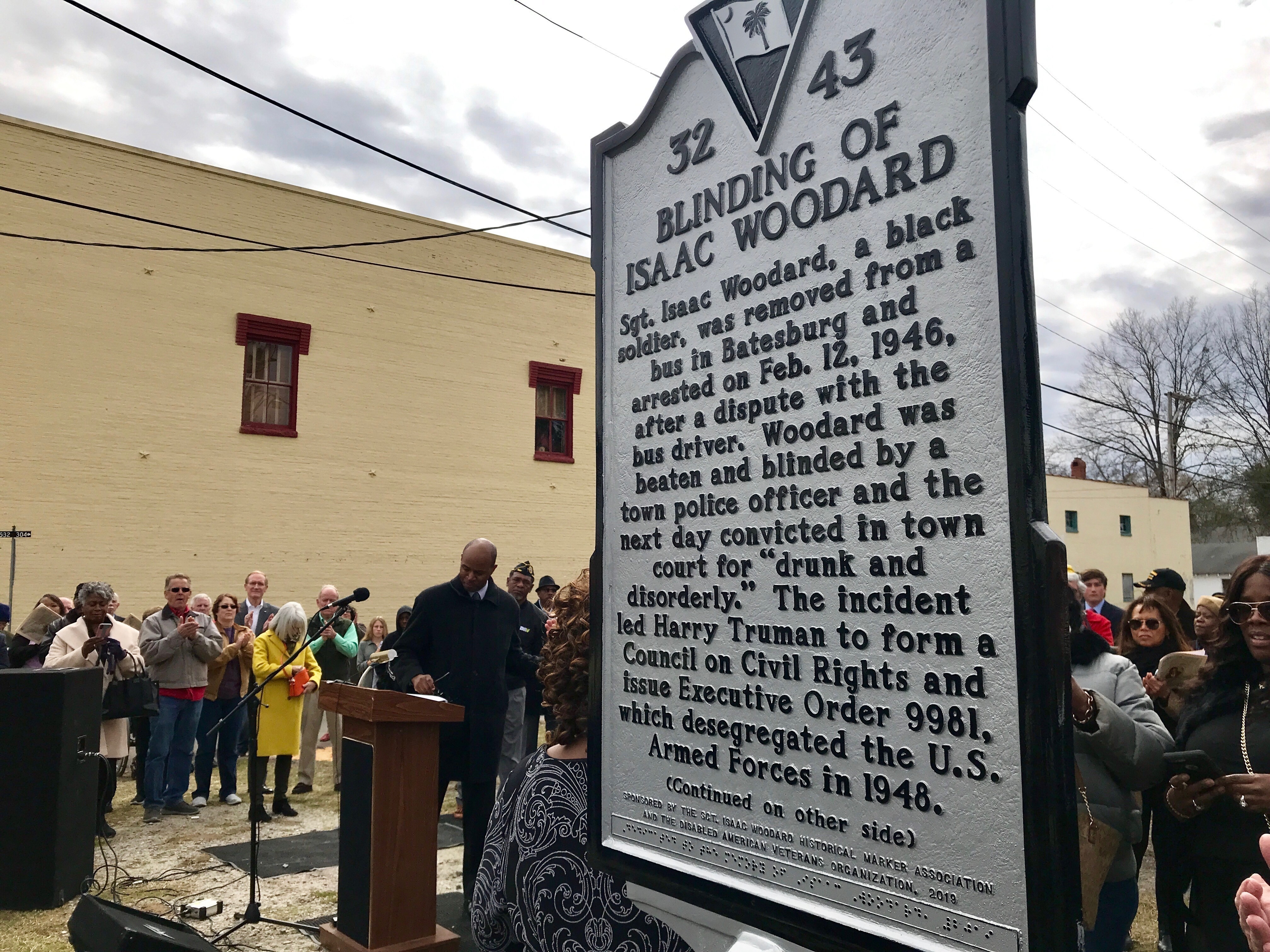
    Many Black soldiers had fought in World War II for a “Double V” — victory against fascism abroad and victory over racism at home. Yet, returning after the war, they discovered that many of their white counterparts did not want to eliminate Jim Crow segregation in the South, or other forms of white supremacy and discrimination elsewhere in the country. Lynchings and racial violence dramatically increased after the war, most memorably, the beating and blinding of Pacific War veteran Sergeant Isaac Woodard in South Carolina in 1946.

    In this Feb. 9, 2019, file photo, the Blinding of Isaac Woodard historical marker was dedicated in Batesburg-Leesville, S.C. Woodard, a uniformed World War II veteran was headed home on a bus in 1946, when he was removed and beaten by a white South Carolina police chief, leaving Woodard permanently blind.Christina Myers

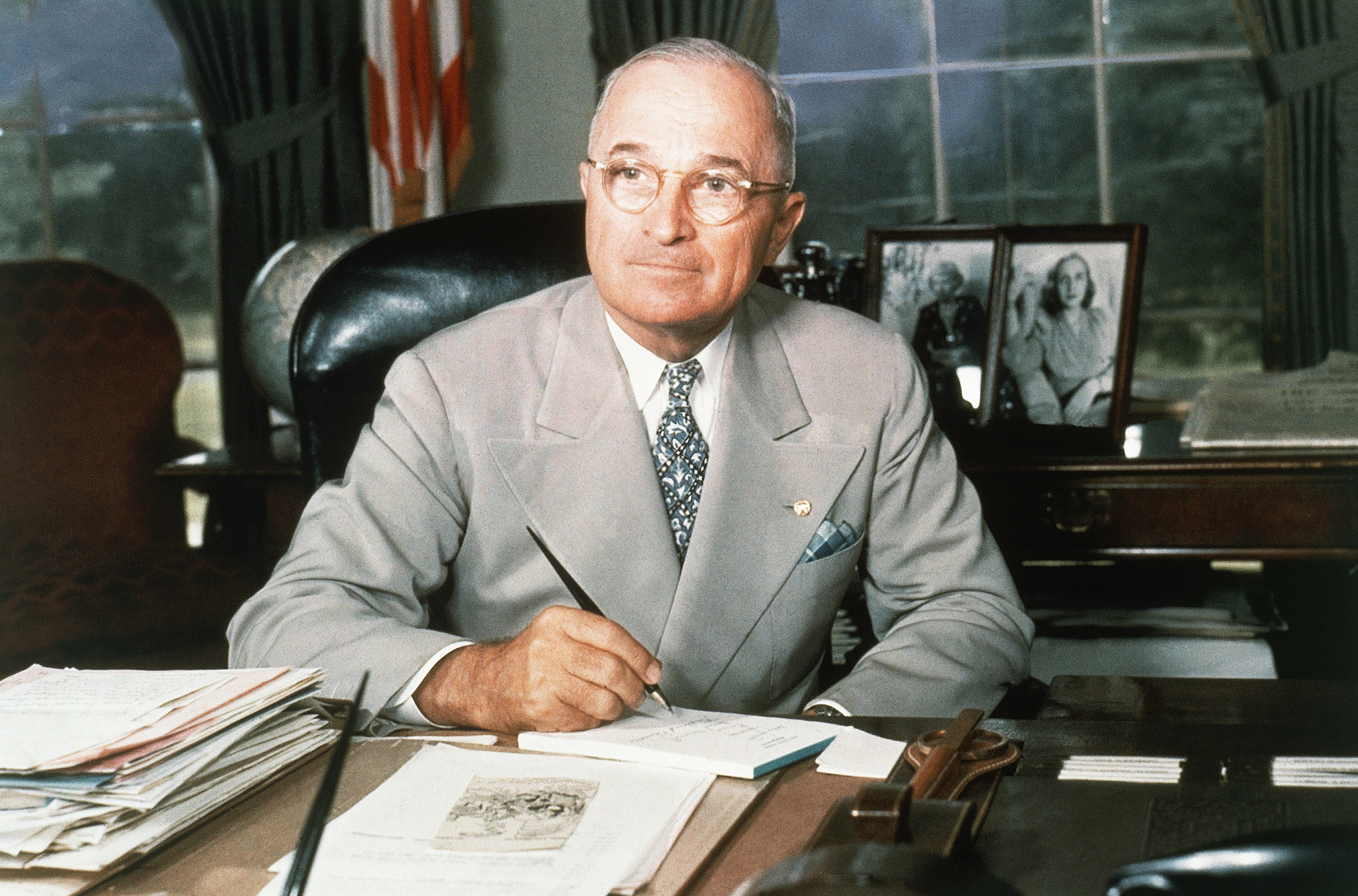
    Black Americans demanded that embattled President Harry Truman embrace new civil rights protections. Truman was aghast at the treatment of returning veterans and believed in fairness. He also realized that he’d need the votes of African Americans to have any chance of winning reelection.

    In 1947, Truman began making a concerted effort to advance the civil rights cause. He became the first president to speak at the National Association for the Advancement of Colored People’s annual convention. The White House also released To Secure These Rights, a book detailing how the Truman administration both acknowledged the problems facing African Americans and the steps it would take to ameliorate them. Additionally, Truman desegregated the armed forces, a critical step in showing he was serious about embracing civil rights.

    Truman made these moves to showcase American freedom and democracy and juxtapose it with Soviet communism, while also trying to shore up the African American vote. That was especially critical because of a political insurgency that threatened Truman’s hope for reelection: the rise of Henry Wallace and the Progressive Party.

    Wallace had served as agriculture secretary during Franklin Roosevelt’s first two terms as president and as vice president during Roosevelt’s third term. He had also served as Truman’s secretary of commerce. Many on the left saw Wallace as the only hope for achieving their main goals: preventing a full-blown war with the Soviets, and securing greater labor, civil and human rights at home.

    Wallace’s backers included prominent African Americans like Paul Robeson and W.E.B. Du Bois, who distrusted Truman. Both men supported Wallace due to the former’s strong stance in favor of civil rights at home and deep-seated opposition to the brewing Cold War abroad. Their support helped catalyze a debate in the Black community over which candidate to back.

    Forums like The Crisis, the official magazine of the NAACP, became spaces for African American voters to debate Wallace vs. Truman. In early 1948, The Crisis editors declared “Wallace is straight on our question,” referring to his unabashed support for civil rights. They refrained, however, from outright endorsing him, noting his mixed record as secretary of agriculture.

    Made By History sponsors. FOR USE ON MADE BY HISTORY STORIES ONLY.Inquirer Staff

    Readers remained divided over this support for Wallace. Some felt the editorial was too harsh about his policies as secretary, while others believed he had not done enough for Black Americans in the federal government. “I challenge you to name another American of equal stature,” Robert and Selma Singer from Chicago wrote to The Crisis offices after its April 1948 issue, “who has mass support, who has given such impetus toward solving the ‘Negro Problem.’”

    Yet, others, such as Max Womack of Iowa City, argued that Wallace had no chance as a third-party candidate, and would merely split the votes of people who’d otherwise back Truman. He also wondered why the editors hadn’t given “President Truman any credit at all?”

    This last question hinted at the prevailing sentiment in the Black community: most African American voters backed Truman that November. They preferred trusting the incumbent — a proven commodity — rather than taking a chance on what turned out to be a quixotic campaign.

    Their overwhelming support delivered key margins in battleground states in the North and Midwest, like Michigan, a testament to the maturing power of the African American vote. “Negro leaders pointed out,” proclaimed the front page of the Black-owned and operated Detroit Tribune, “that the Michigan Republican party seemed to go out of its way to avoid the Detroit population and its political desires.”

    Black voters siding with mainstream, liberal Democrats over more radical ideas proved to be no anomaly. Twenty-four years later, in 1972, Black voters again engaged in an ideological skirmish. Activists debated the best way forward after the heyday of the Civil Rights Movement and the election of Republican Richard Nixon in 1968 against a deeply divided Democratic Party.

    At the National Black Political Convention, held in Gary, Indiana, African American liberals, moderates, socialists, nationalists, and even conservatives gathered to map out a strategy for adjusting the politics of Black America to a new normal. Nixon’s administration had largely practiced “benign neglect” on racial issues, while suppressing the Black Power Movement. Attendees grappled with an overall backlash to the Great Society programs spearheaded by the liberal wing of the Democratic Party.

    In this March 13, 1972, file photo, the Rev. Jesse Jackson, executive director of Operation: PUSH, speaks from the floor of the National Black Political Convention in Gary, Ind.Jim Wells

    The Convention’s “Gary Declaration” gave voice to the frustration of many Black Americans, arguing, “Both parties have betrayed us whenever their interests conflicted with ours (which was most of the time), and whenever our forces were unorganized and dependent, quiescent and compliant.”

    Still, despite the critique of both Nixonian conservatism and Great Society liberalism, the members of the Gary Convention disagreed over a radical proposal to create an all-Black political party that could, in theory, broker deals with both major parties on behalf of Black America. Later that year, most Black Americans stuck with the Democrats — one of the few constituencies to back the doomed campaign of George McGovern.

    The primary that year had illustrated Black political pragmatism at work. Ebony magazine journalist Alex Poinsett acknowledged that McGovern was far from perfect and that Black voters lacked a truly satisfactory option. Yet, he argued that the candidate’s support for elements of the Gary Declaration — and a competing “Black Bill of Rights” proposed by the Congressional Black Caucus — made him a sensible option over several longer shots, including African American congresswoman Shirley Chisholm.

    The choice of McGovern over Chisholm reflected how Black voters’ wariness about progressivism that did not seem to be electorally viable even applied to Black candidates. The same was true three decades later: Barack Obama struggled with Black voters in polling until his victory in Iowa in January 2008 made it clear he was a candidate who could win.

    These cases epitomize how, over time, Black voters have stuck with liberals in the Democratic Party who demonstrate a genuine chance of victory over more radical options that might promise better policy. They aren’t always happy with their choices, but they know what to expect from mainstream Democrats.

    This choice reflects how, ultimately, for African American voters, a pragmatic view of politics overrules almost everything else. The old saying that “politics is the art of the possible” is, often, the rueful outlook on politics by African Americans.

    Robert Greene II is associate professor of history at Claflin University. He is also managing editor of “Global Black Thought” and co-host of the award-winning podcast, “Our New South.”

    Made by History takes readers beyond the headlines with articles written and edited by professional historians. Opinions expressed do not necessarily reflect the views of The Inquirer.
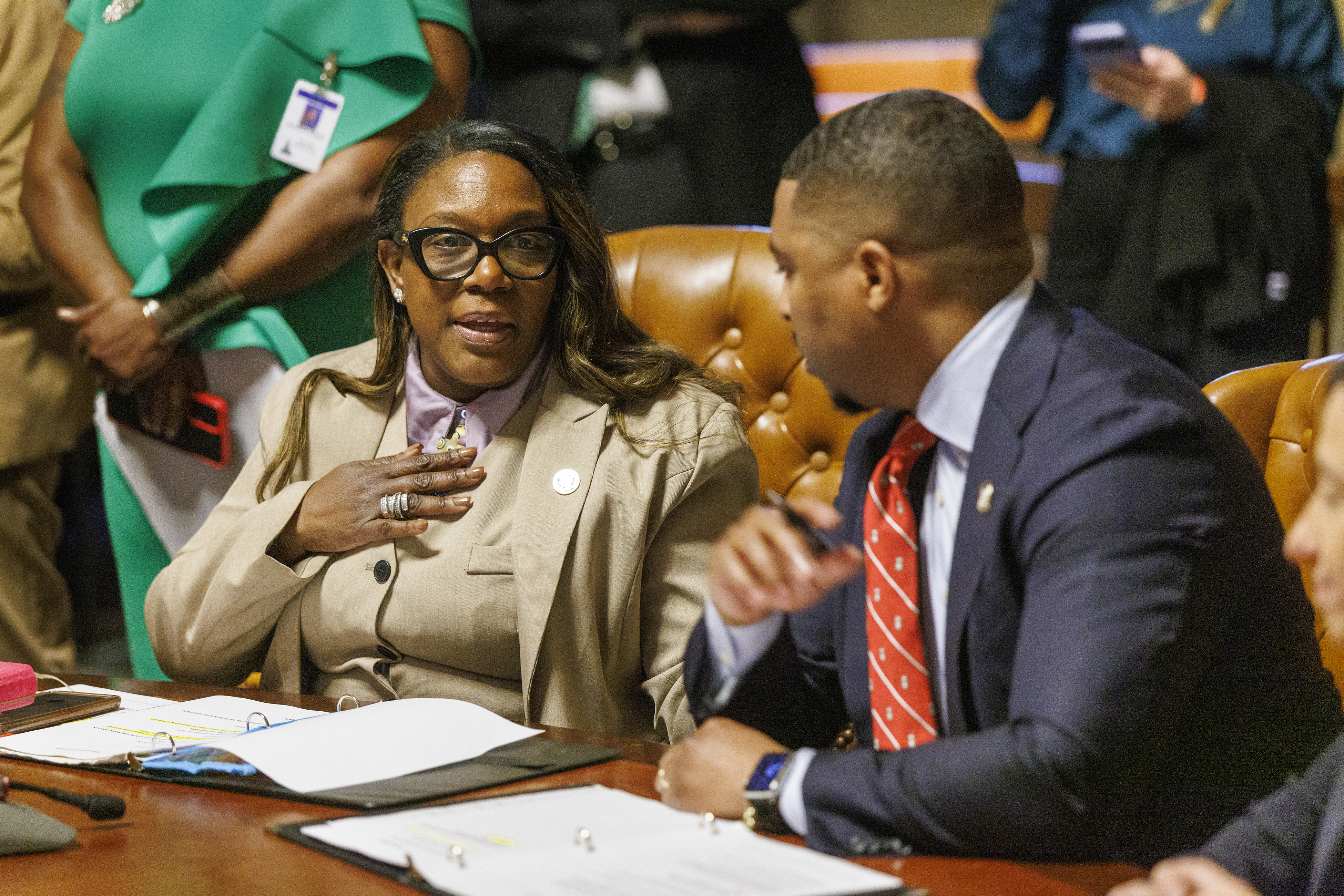
  • Fetterman gains GOP favor as Pa. Democrats regret electing him, new poll finds

    Fetterman gains GOP favor as Pa. Democrats regret electing him, new poll finds

    Two-thirds of Pennsylvania Democrats who are likely to vote this year believe U.S. Sen. John Fetterman supports President Donald Trump too frequently, while about half say the Democratic senator has been too supportive of Israel, according to an Inquirer/New York Times/Siena University poll published Tuesday.

    Democratic voters’ sharply divided views on Fetterman — with 69% having an unfavorable opinion of him in general — are the latest signs he could face an uphill battle if he seeks reelection as a Democrat in 2028.

    Fetterman has not said whether he will run for a second term.

    But as he weighs his options — which include leaving the Democratic Party because of what he considers its anti-Israel sentiment — the senator’s occasional support of Trump’s agenda has contributed to his declining favorability among voters who helped elect him in the first place, the new survey indicates.

    “I’m so disappointed in him, I can’t even see straight,” said Joseph Jaskula, a retired salesman from Lewisburg, Union County, who participated in the poll of 760 likely voters conducted by Siena University on behalf of The Inquirer and the New York Times from Aug. 17 to 21.

    (function() { var l = function() { new pym.Parent( ‘nyt-fetterman__graphic’, ‘https://media.inquirer.com/storage/inquirer/ai2html/nyt-fetterman/index.html’); }; if(typeof(pym) === ‘undefined’) { var h = document.getElementsByTagName(‘head’)[0], s = document.createElement(‘script’); s.type = ‘text/javascript’; s.src = ‘https://pym.nprapps.org/pym.v1.min.js’; s.onload = l; h.appendChild(s); } else { l(); } })();

    Jaskula, a Democrat who said he voted for Fetterman in 2022, said he is particularly upset about the senator’s votes for several of Trump’s nominees and for the war in Iran.

    Fetterman has been the only Senate Democrat to vote against restricting the president’s use of military force in Iran.

    “He voted with the Republicans on that,” Jaskula, 72, said of the war powers resolutions that aimed to rein in Trump. “And he’s had some other ones where we wonder if he’s a Republican or a Democrat.”

    Fetterman’s standing among Pennsylvania voters overall remains split, according to the poll.

    He is viewed favorably by 49% and unfavorably by 43% of all likely voters in the state. That was nearly the same result as the last time the Inquirer/New York Times/Siena poll asked about Fetterman’s favorability, in May 2024.

    But the difference between now and then — when Fetterman was campaigning against Trump’s election and only two years removed from his own sweeping victory in the Pennsylvania Democratic primary — is who is supporting him.

    Pennsylvania’s U.S. Senators John Fetterman (left) and Dave McCormick appear together at June event in Philly to promote the savings accounts for kids that were part of President Donald Trump’s One Big Beautiful Bill Act.

    Fetterman outperforms McCormick with GOP voters

    In almost the exact opposite breakdown compared with about two years ago, just one in five likely Democratic voters reported having a favorable view of Fetterman, while four out of five likely Republican voters said they have a favorable view.

    Even Fetterman’s Republican counterpart in Pennsylvania — U.S. Sen. Dave McCormick, who was elected in 2024 — is viewed favorably by a smaller share of GOP voters, about 66% compared with Fetterman’s 79%.

    (function(){function e(){window.addEventListener(`message`,function(e){if(e.data[`datawrapper-height`]!==void 0){var t=document.querySelectorAll(`iframe`);for(var n in e.data[`datawrapper-height`])for(var r=0,i;i=t[r];r++)if(i.contentWindow===e.source){var a=e.data[`datawrapper-height`][n]+`px`;i.style.height=a}}})}e()})();

    Don Levy, director of the Siena Research Institute, called the Democratic senator’s numbers “shocking.”

    “If you didn’t know any difference, you would immediately assume that Fetterman and McCormick are both Republicans, and that Fetterman is an extremely popular Republican senator amongst Republicans,” Levy said. “I can’t think of another case exactly like this.”

    Fetterman, citing his voting record in the Senate, which still mostly aligns with Democrats, has said repeatedly that he will not switch his registration to Republican.

    GOP leaders, who are fighting to retain control of the Senate this fall, have said they would welcome the Pennsylvania Democrat into their fold.

    And Fetterman has raised the prospect of leaving the party, possibly becoming an independent, if Democrats oppose Israel as an “official” part of their platform. He has staunchly supported the country in the wake of the Oct. 7, 2023, attack by Hamas, and as Democrats have become increasingly critical of Israel’s counterattack.

    (function(){function e(){window.addEventListener(`message`,function(e){if(e.data[`datawrapper-height`]!==void 0){var t=document.querySelectorAll(`iframe`);for(var n in e.data[`datawrapper-height`])for(var r=0,i;i=t[r];r++)if(i.contentWindow===e.source){var a=e.data[`datawrapper-height`][n]+`px`;i.style.height=a}}})}e()})();

    Fetterman has opposed fellow Democrats’ efforts to end the United States’ assistance to Israel’s offensive measures. He has also become the most vocal Democratic supporter of both countries’ attacks against Iran, an issue that also remains deeply unpopular among Pennsylvania voters.

    At the same time, Fetterman has backed other Trump initiatives, like immigration enforcement and the investment accounts for children known as Trump Accounts.

    “He’s a voice in the party, standing up for what’s right,” said Nicholas Morabito, a 32-year-old warehouse worker in Butler who participated in the poll.

    A registered Republican, Morabito said he would consider voting for Fetterman in 2028, regardless of which party label accompanies his name on the ballot.

    “I don’t think there’s very much difference between the two of us. Just the difference in party,” Morabito said.

    Fetterman has acknowledged the shift in support. He wrote in his 2025 memoir that he was “completely at peace” with the idea that his support of Israel might cost him his Senate seat. And in interviews, he has repeatedly said that, as a swing-state senator, he should work with and not demonize the other party.

    A plurality of likely voters — 47% — say Fetterman is “about right” when it comes to supporting or opposing Trump, according to the poll. About 38% said he supports Trump too much, 6% said he opposes Trump too much, and 9% did not answer.

    (function(){function e(){window.addEventListener(`message`,function(e){if(e.data[`datawrapper-height`]!==void 0){var t=document.querySelectorAll(`iframe`);for(var n in e.data[`datawrapper-height`])for(var r=0,i;i=t[r];r++)if(i.contentWindow===e.source){var a=e.data[`datawrapper-height`][n]+`px`;i.style.height=a}}})}e()})();

    But Democratic voters have indicated a strong desire for their elected officials to push back against Trump, and Fetterman’s declining support among them appears to be due in part to that shift during Trump’s second term. About 67% of likely Democratic voters said Fetterman supports the president too much, while 20% said he gets it “about right.”

    “Fetterman has been such an interesting, unique personality now since he broke onto the scene,” Levy said. “Given the state of play right now, Democrats are just angry that he was elected. Democrats are supposed to act like Democrats, and this shows that their perception of him is that he is not.”

  • Most of Pa.’s likely voters disapprove of Donald Trump and his policies, new poll shows

    Most of Pa.’s likely voters disapprove of Donald Trump and his policies, new poll shows

    More than half of likely voters in Pennsylvania’s forthcoming midterm elections disapprove of President Donald Trump’s job performance, and he is drastically underwater among the state’s electorate on key issues — some of which helped him win a second term in 2024.

    Trump, who won the crucial swing state by nearly two percentage points in November 2024, now has an approval rating of 39% and a disapproval rating of 58% among Pennsylvania’s likely voters, according to an Inquirer/New York Times/Siena University poll published Tuesday.

    The poll, which was conducted from Aug. 17 to 21 among 760 likely Pennsylvania voters, raises questions about how voters’ perception of the president will affect November’s midterms, when many Pennsylvanians will cast their ballots in four critical swing district races that could determine which party controls the U.S. House.

    (function() { var l = function() { new pym.Parent( ‘nyt-trump2__graphic’, ‘https://media.inquirer.com/storage/inquirer/ai2html/nyt-trump2/index.html’); }; if(typeof(pym) === ‘undefined’) { var h = document.getElementsByTagName(‘head’)[0], s = document.createElement(‘script’); s.type = ‘text/javascript’; s.src = ‘https://pym.nprapps.org/pym.v1.min.js’; s.onload = l; h.appendChild(s); } else { l(); } })();

    Even among his Pennsylvania supporters who were surveyed, Trump faces some of his lowest approval ratings regarding his handling of the war in Iran and cost-of-living issues, according to the poll, counteracting campaign promises that proved successful in 2024: ending foreign wars and helping people pay their bills.

    Once again, the economy will likely be at the front of voters’ minds heading into November — 22% of Pennsylvanians polled said it is their top issue in the governor’s race — and it could also serve as an indicator for the outcome of House races where Republicans will be on the defensive.

    “Certainly it’s got to be a drag on their fortunes,” said Don Levy, director of the Siena Research Institute.

    (function(){function e(){window.addEventListener(`message`,function(e){if(e.data[`datawrapper-height`]!==void 0){var t=document.querySelectorAll(`iframe`);for(var n in e.data[`datawrapper-height`])for(var r=0,i;i=t[r];r++)if(i.contentWindow===e.source){var a=e.data[`datawrapper-height`][n]+`px`;i.style.height=a}}})}e()})();</script

    Trump losing ground on issues that propelled him to White House

    The new polling on Trump’s management of top concerns facing the United States — particularly the economy and the cost of living — shows how the issues that helped propel him to the White House in 2024 are now souring his approval among Pennsylvanians, including some who previously voted for him.

    Among likely voters in the Keystone State, 39% approve and 61% disapprove of Trump’s handling of the economy. On his handling of the cost of living, 33% said they approve and 66% disapprove.

    The data come as voters continue to grapple with rising costs, including unusually high gas prices, and grocery prices that have been increasing for nearly six years. Trump’s tariffs, one of the defining policies of his first year back in office, also raised prices for consumers and businesses.

    Now, a quarter of Pennsylvanians who voted for the president in 2024 say they disapprove of how he is handling of the cost of living.

    Michael Patterson, 60, of Bucks County, is one of them.

    Though Patterson said Trump’s term has been “great” overall, he was expecting more from the president on the economy and costs.

    “The prices are still too high, interest rates are still too high,” Patterson said. “We still haven’t seen anything from that promise yet.”

    (function(){function e(){window.addEventListener(`message`,function(e){if(e.data[`datawrapper-height`]!==void 0){var t=document.querySelectorAll(`iframe`);for(var n in e.data[`datawrapper-height`])for(var r=0,i;i=t[r];r++)if(i.contentWindow===e.source){var a=e.data[`datawrapper-height`][n]+`px`;i.style.height=a}}})}e()})();

    Trump’s messaging on the economy in 2024 was part of why he won Pennsylvania with more votes than any other statewide GOP candidate in history. Pennsylvania voters cited Trump’s promises to bring costs down as a top reason that they voted for him and overlooked Democrats’ warnings about what his election could mean for democracy.

    Trump is also hurting on other issues that helped boost him to the presidency, including his promise to end wars. Thirty-two percent of likely voters in Pennsylvania approve of Trump’s handling of the war in Iran and 66% disapprove — including 30% of Trump voters.

    The war has now gone on for almost six months, after Trump promised it would last just a few weeks, and has contributed to rising oil and gas prices.

    Kay Skripac, who voted for Trump in 2024, said that though she supports the president on almost every other issue, “I just don’t think that we should have invaded or bombed Iran. I was very surprised, because I didn’t vote for that.”

    The 72-year-old independent voter said, despite thinking Trump has done strong work on the economy (she says her retirement portfolio doubled from 2016 to 2026), she is feeling the war’s impact at the gas pump.

    “I want everything to just be normal and stay the same, because everything was fine,” said Skripac, who lives in Crawford County. “We weren’t involved in any wars. You didn’t have to worry about any friends or loved ones potentially getting killed. I don’t like that at all.”

    Trump’s handling of the Israeli-Palestinian conflict also received low marks from voters, with 62% disapproval, compared with 36% approval.

    Republican Sandra Faust, 40, approves of Trump’s handling of that conflict. But her support does not extend to the war in Iran, which Trump launched in coordination with Israel.

    Faust, who voted for Trump two years ago, said she strongly disapproves of the war due to rising gas prices and believes it conflicts with the president’s promise to end wars. The Pittsburgh resident, who has a family member in military training to become a jet refueler, said she wishes the conflict in Iran would end.

    “Them dragging it on is not only harming us, locally with gas and, you know, pricing and stuff like that, but it’s putting our military in harm’s way, and I’m not happy about that,” she said.

    Faust added that she opposes the war because of her belief in the “America First” ideology. That perspective also makes her supportive of Trump’s immigration agenda, she said.

    The president is lagging in Pennsylvanians’ support of his immigration policies — which have included mass deportations and enhanced border security — but the disapproval is not as stark. Among likely voters, 44% approve of his handling of immigration and 55% disapprove.

    “We are not responsible for taking care of the world’s problems,” Faust said.

    What does Trump’s approval rating mean for November in Pa.?

    So what does this mean for the midterms?

    Time will tell.

    But 51% of Pennsylvania’s likely voters who were polled indicated they would be more likely to vote for a Democrat in their congressional district, and 44% said they would support a Republican. More than half, 53%, say they would want to see a flip of control in the House, putting Democrats in charge, while 44% say they would want to see the GOP maintain control.

    The polling for the GOP in November is not as bleak as Trump’s numbers, but it shows where voters’ heads are a little more than two months away from the midterms, when Pennsylvanians will weigh in on four competitive swing district congressional races.

    (function(){function e(){window.addEventListener(`message`,function(e){if(e.data[`datawrapper-height`]!==void 0){var t=document.querySelectorAll(`iframe`);for(var n in e.data[`datawrapper-height`])for(var r=0,i;i=t[r];r++)if(i.contentWindow===e.source){var a=e.data[`datawrapper-height`][n]+`px`;i.style.height=a}}})}e()})();

    Both parties are targeting GOP-held seats in Bucks County’s 1st Congressional District, the Lehigh Valley’s 7th Congressional District, the Scranton area’s 8th Congressional District, and the Harrisburg area’s 10th Congressional District.

    Democrats are hoping that a message focused on affordability and tying opponents to Trump will usher in wins this fall. For instance, Democrat Bob Harvie in the heated 1st Congressional District race published a new campaign platform recently that focuses mainly on addressing economic issues.

    “The task of Republicans running in various congressional districts, or for the governor of the state, is going to be to somehow separate themselves from the perception that Pennsylvanians have about the job that the head of their party is doing on the economy,” said Levy, the Siena polling director.

    But for Democrats, connecting Harvie’s opponent, longtime Republican U.S. Rep. Brian Fitzpatrick, to Trump could be a harder sell. The Bucks County lawmaker consistently outperforms his party and has survived one blue wave after another.

    The poll’s findings signal that both parties may also have to think about their branding to the public — 50% of respondents said the Democratic Party is too far to the left and 47% said Republican Party is too far to the right.

    Republicans will also have to consider Trump’s unpopularity, especially with women. Sixty-two percent of female likely voters in Pennsylvania disapprove of Trump’s policies, while 34% approve. The president is also struggling with men — a key base for him in 2024: 51% of men disapprove of Trump’s policies, compared with 46% who approve.

    (function(){function e(){window.addEventListener(`message`,function(e){if(e.data[`datawrapper-height`]!==void 0){var t=document.querySelectorAll(`iframe`);for(var n in e.data[`datawrapper-height`])for(var r=0,i;i=t[r];r++)if(i.contentWindow===e.source){var a=e.data[`datawrapper-height`][n]+`px`;i.style.height=a}}})}e()})();

    Democrat Vincent Russo, 78, of Lackawanna County, where Republican U.S. Rep. Rob Bresnahan faces a challenge from Democrat Paige Cognetti in the 8th District, said he will be voting straight blue on his ballot in November and thinks opposition to Trump’s policies will motivate his party to get out to the polls.

    “I think the people are starting to see he does nothing but lie,” Russo said.

    Staff writers Michelle Baruchman and Gillian McGoldrick contributed to this article.