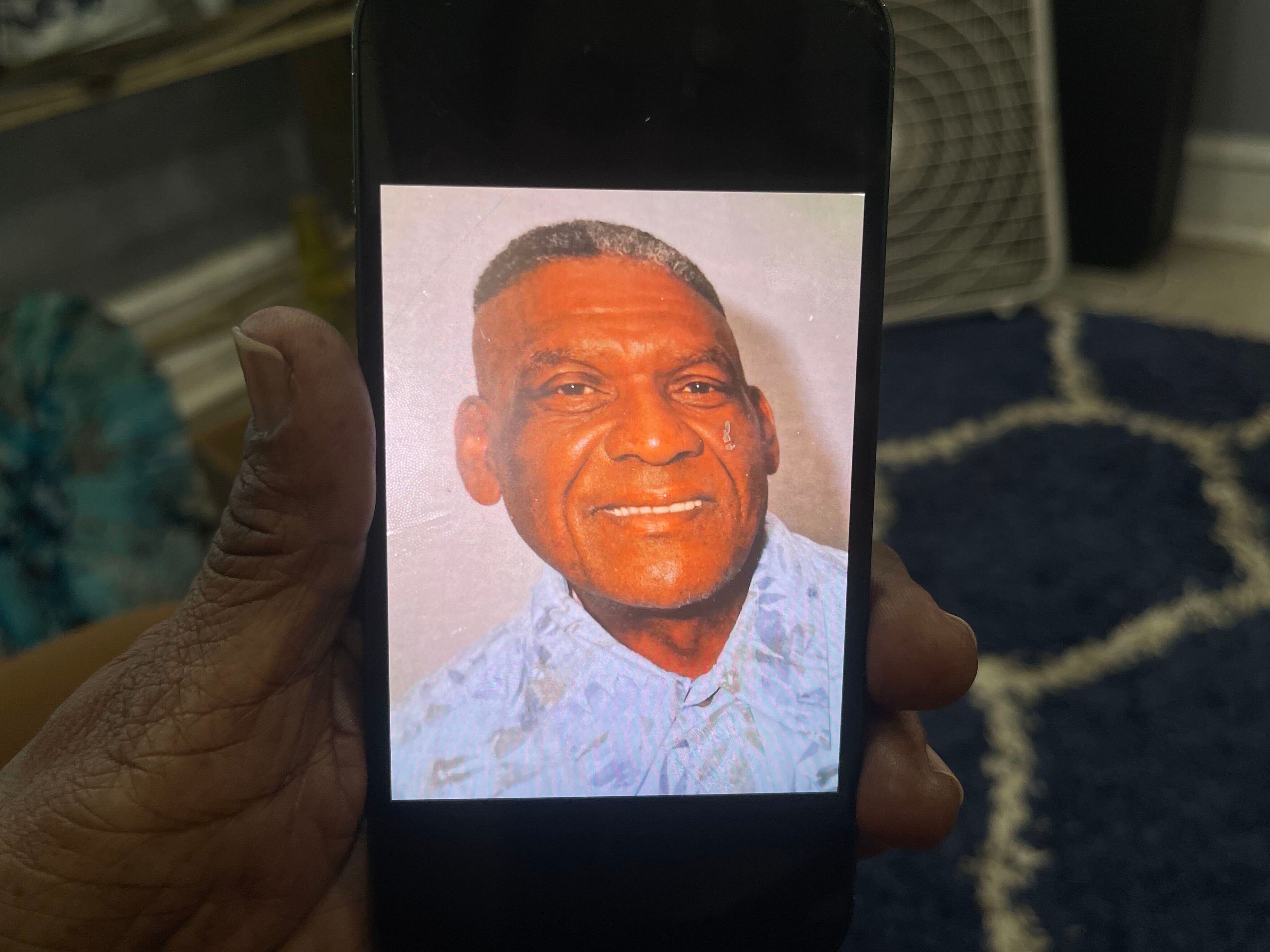
Two years ago, Steve Alexander “rang the bell” inside a Media hospital, celebrating the end of treatment for colon cancer.
On Tuesday afternoon, his life ended when a stray bullet struck him in the back in North Philadelphia. He was 78.
Police say that, shortly before 5 p.m. Tuesday, as the 2200 block of Ridge Avenue bustled with bystanders and cars during rush-hour traffic, a light-colored SUV pulled up and four gunmen fired more than 50 shots toward a group of young men on the sidewalk.
A 71-year-old and a 30-year-old were wounded by gunfire. Alexander was struck in the back, and died at Temple University Hospital shortly after.
No arrests have been made.
Alexander’s sister, Paulette Coles, said he was picking up cigarettes when the gunfire erupted.
Coles, 73, said in an interview from her Strawberry Mansion home on Wednesday that her brother was the eighth of 10 children, born in Mobile, Ala. Her mother, she said, brought her and her siblings to the Philadelphia area in 1960 to be closer to family.
A younger Steven Alexander, in a photo shared by his sister. Courtesy of Paulette Coles
Alexander lived in Lansing, Mich., for several years, working for General Motors, before returning to Philly in the 1970s, she said. He worked odd jobs through the remainder of his adult life and had two children who are now grown, she said.
“Anything you say goes with him. He was just a happy-go-lucky guy. He never argued with nobody,” Coles said.
“All he wanted for was a cigarette and a beer,” she said. “He was just happy.”
Happy, she said, even as he navigated life’s challenges. Cancer. Housing. He had spent the last year or so living at the Bethesda Project shelter, at 19th and Oxford Streets, but was on his way to living independently again.
He had just had an appointment with a housing specialist and visited an apartment in South Philadelphia last week, she said.
“He was going to be on his own again,” she said. “And then this happened.”
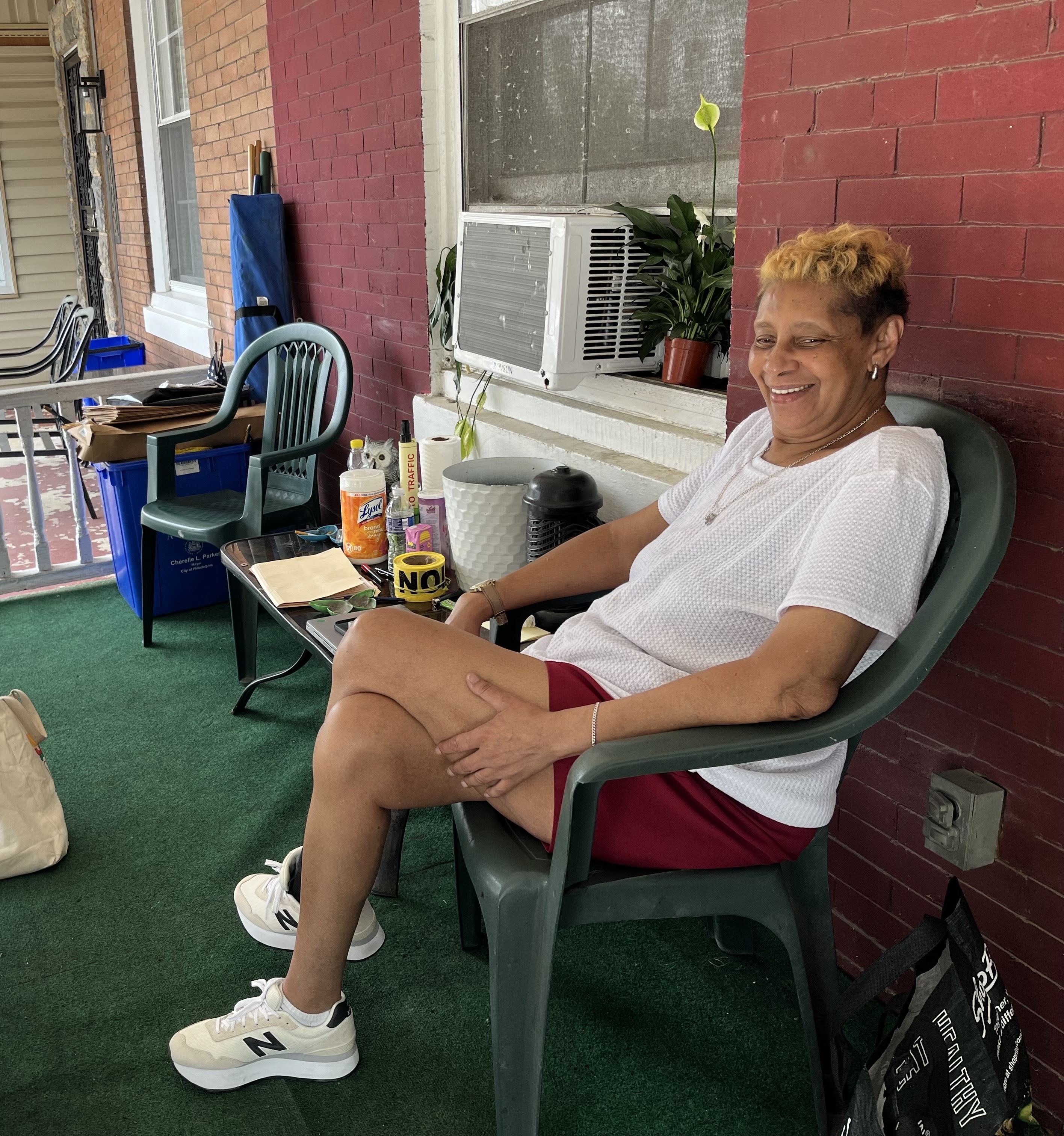
Staff and residents at the Bethesda Project facility on Wednesday said Alexander was always seated in a green lawn chair outside the building, cigarette in hand, greeting passersby and staff as they arrived each morning.
Tanya Cleveland said he was social and helped introduce new residents. He welcomed her each morning when she arrived to start her shift.
He took care of his appearance, she said, and often changed his clothes several times a day to make sure his shirts were crisp and clean.
Every morning, at 6:30 a.m., he would bring his outfits for the day down to the community room and iron them. He was the only one in the facility who used the iron, a staff member named Kelly joked.
On Wednesday, she said, her boss placed the ironing board in the basement. It was too painful to look at.
Investigators continue to search for the gunmen. Anyone with information is asked to submit tips to police at 215-686-TIPS (8477).
A 41-year-old man allegedly fleeing sex-assault charges in Maine was arrested Sunday at Philadelphia International Airport as he attempted to board a flight to Germany, authorities said.
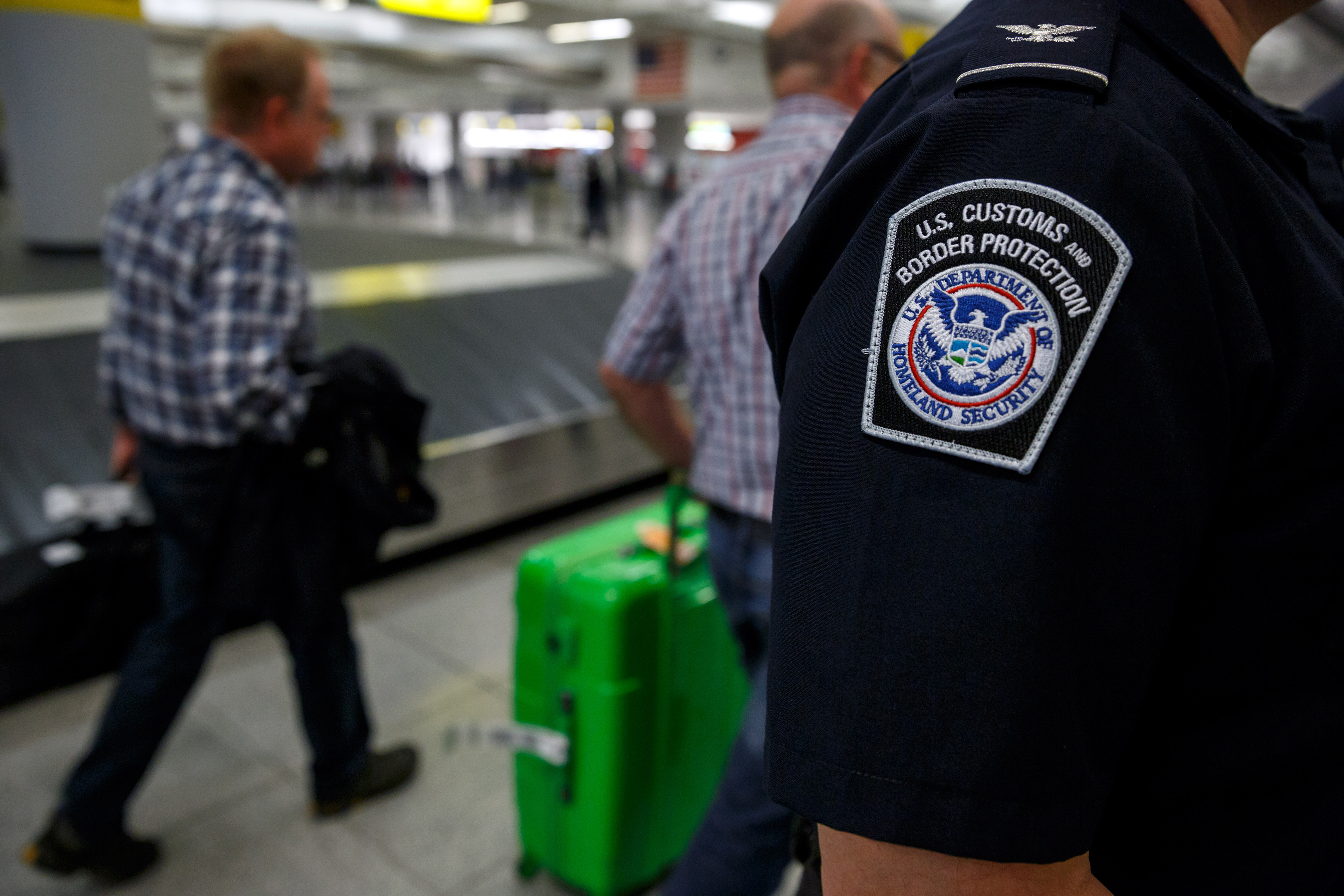
Matthew Thomas Cooley, of Solon, Maine, was stopped by U.S. Customs and Border Protection officers at the departure gate where he attempted to board a flight to Frankfurt on a one-way ticket, the federal law enforcement agency said Wednesday.
Cooley was transferred to the Tinicum Township Police Department to initiate extradition proceedings.
Court records show no attorney listed for Cooley, who was being held at the George W. Hill Correctional Facility in Delaware County.
In April, detectives from the Somerset County Sheriff’s Office in Maine went to Cooley’s home to arrest him in the sexual-assault case and Cooley allegedly pepper sprayed the detectives, CentralMaine.com reported.
Detectives began investigating Cooley after a 31-year-old woman alleged that Cooley sexually assaulted her twice last year, the news outlet reported. The woman also gave investigators videos and photos of multiple firearms and hundreds of boxes of ammunition kept in Cooley’s home.
Cooley was charged in Maine with two counts of gross sexual assault, one count of possession of a firearm by a prohibited person, and one count of domestic violence stalking. Cooley also was charged with two counts of assault on an officer, and one count of refusing to submit to arrest.
Elliott N. Ortiz, area port director in Philadelphia for Customs and Border protection, said in a statement: “Customs and Border Protection officers will always leverage our border security authority to help victims of sexual assault seek justice by capture dangerous fugitives attempting to flee the United States.”
Ortiz added: “Capturing dangerous fugitives is one way in which CBP works with our law enforcement partners to help keep our communities safe.”
A restaurant group in Idaho is determined to reclaim what it insists was theirs to begin with: a world record involving cheesesteaks.
On Sunday, Happy Day Restaurants — a company with a slate of eateries across the Gem State — is hosting an event where they’ll attempt to assemble the longest cheesesteak.
It was only earlier this year that Philadelphia claimed that record with a massive event at Philadelphia International Airport, piling nearly 1,000 pounds of rib-eye atop Amoroso rolls as far as the eye could see.
Philly ended up setting an official Guinness World Record that fateful March day, with about 1,291 cheesesteaks stretching out about 1,271 feet. It’s worth noting that Philly’s cheesesteak line was the inaugural record for that category, according to a Guinness World Records adjudicator who spoke with The Inquirer.
But, over the years, others have attempted unofficial cheesesteak records — including Idaho.
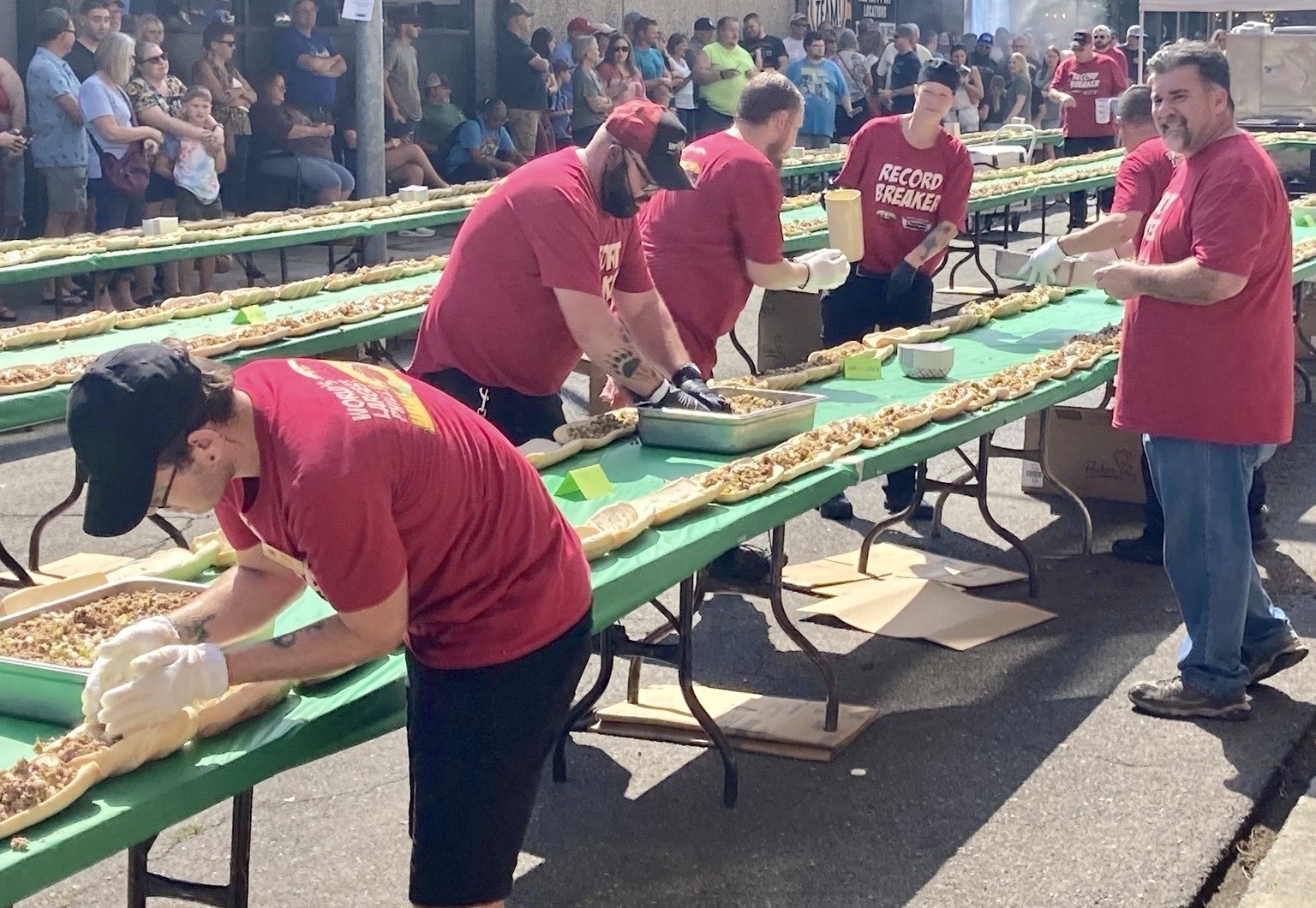
Main Street Grill in Lewiston, Idaho, made a 700-foot cheesesteak on August 26, 2023. Until March, it held the unofficial world record for the longest cheesesteak.Frank Webster
In 2023, the Main Street Grill in Lewiston, Idaho, (operated by Happy Day Restaurants) completed a 722-foot line of cheesesteaks as part of a fundraiser event for the regional Boys and Girls Club. Locals took bragging rights and observers (including The Inquirer) admitted at the time that the sandwich line appeared to be a record-holder. But it was all under “unofficial” terms.
Now, let’s fast-forward to this week.
The bad news: Lewiston, Idaho, is coming for Philly’s newly established “longest cheesesteak” world record. The good news: It’s still unofficial and the proceeds are going to charity — which is kind of hard to bash.
According to a statement from Happy Day Restaurants, participants are aiming to break Philly’s record with an attempt of a 1,350-foot Philadelphia cheesesteak (notably, not called an Idaho or Lewiston cheesesteak).
The event will again benefit the local Boys and Girls Club with $10 sandwich tickets. In 2023, the fundraiser raised more than $10,000 for the organization.
This year’s attempt is also an effort to showcase local agriculture and food production infrastructure.
All of the cheesesteak ingredients, from the beef and veggies (including — gasp — peppers!!!) to the rolls, are being sourced locally for Sunday’s installation.
“It’s a demonstration of what our local food system can do,” the restaurant group said in a statement. “The hardest part of farming isn’t always growing the food. For small and medium-sized farms, one of the biggest challenges isn’t necessarily production. It’s finding someone who will reliably buy what they grow.”
The Lewiston cheesesteak line will include:
1,350 rolls with regenerative grain from Cottonwood, Idaho.
720 pounds of beef processed at a local USDA butcher shop (a 50/50 blend of Idaho beef and supplemental supply, citing summer heat impacting processing capacity).
275-plus pounds of onions and peppers grown regionally in Lewis-Clark Valley.
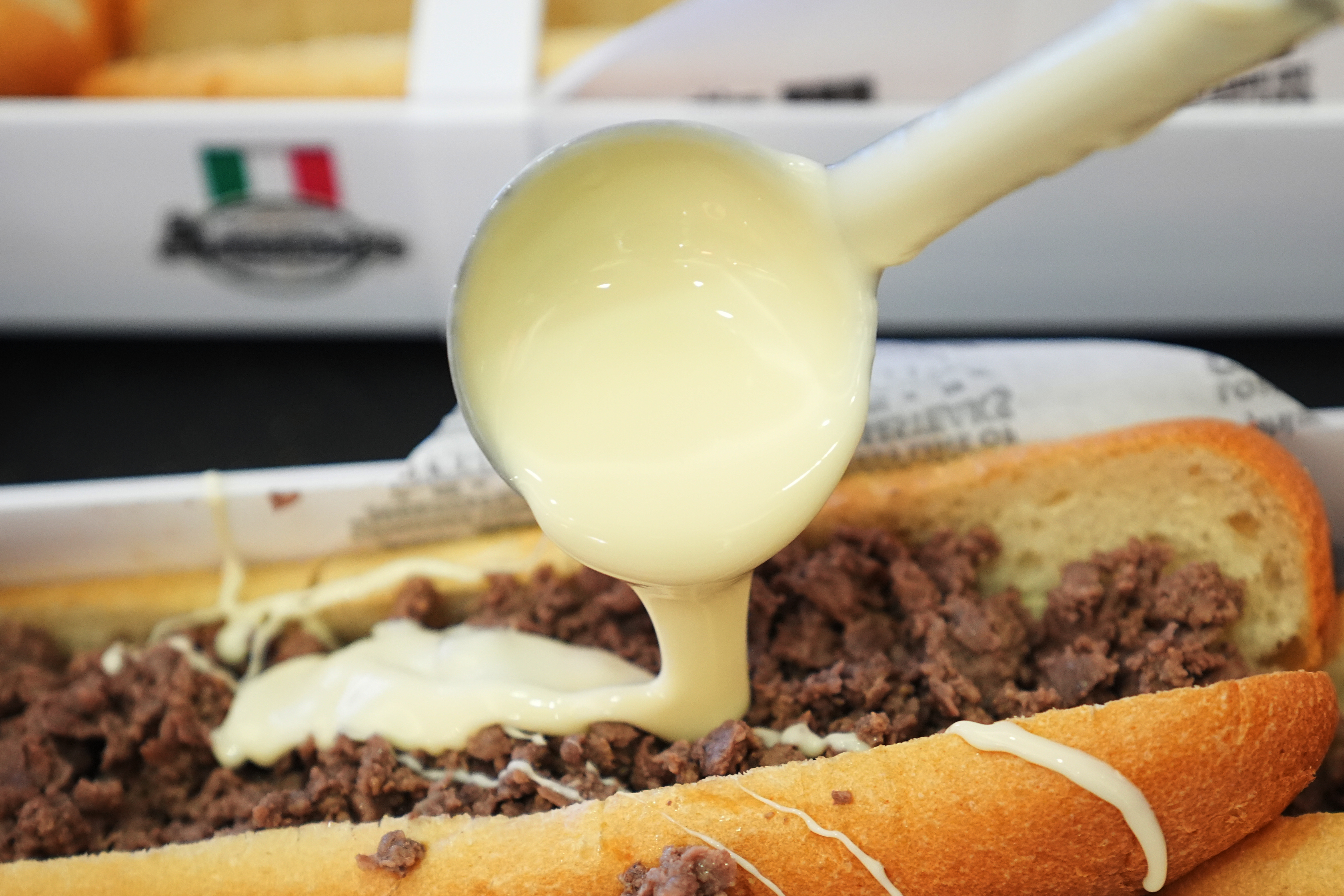
64 gallons of “cheese sauce” (their words not ours).
From left: Clarence LeJeune, Dana Krawchuk, marketing and guest experience manager for Marketplace PHL, and Mel Hannah, vice president and general manager of Marketplace PHL, with the award from Guinness World Records for a record-setting cheesesteak assembled at Philadelphia International Airport on Tuesday, March 24, 2026.Alejandro A. Alvarez / Staff Photographer
Asked for comment on Lewiston’s attempt to break Philly’s record, PHL sends its regards.
“As the first and current official Guinness World Record holder for ‘Longest Line of Cheesesteaks,’ MarketPlace PHL and the 18 restaurants serving cheesesteaks at Philadelphia International Airport send our very best wishes to Lewiston, Idaho,” Dana Krawchuk, MarketPlace PHL’s marketing manager who organized the airport’s spring record-breaker, said. “In partnership with all the Philly purveyors who supplied ingredients for 2026’s National Cheesesteak Day celebration honoring TSA workers at PHL and making Philly history … We just gotta ask the people of Lewiston, wit or witout?”
A series of human and oversight failings is being eyed by federal investigators as possible contributors to the fatal crash of a medical jet in Northeast Philadelphia last year, according to documents filed by the National Transportation Safety Board.
The federal agency does not identify a cause of the Jan. 31, 2025, crash of the Mexican-owned medical transport that crashed near the Roosevelt Mall just after takeoff, killing all six people onboard and twoon the ground.
But among the factors it has found during a 1½-year probe are possibly fatigued pilots who had never flown in or out of the airport, an improper setting on the Learjet tail’s elevators, and a lack of Federal Aviation Administration safety checks on a workhorse foreign-owned carrier.
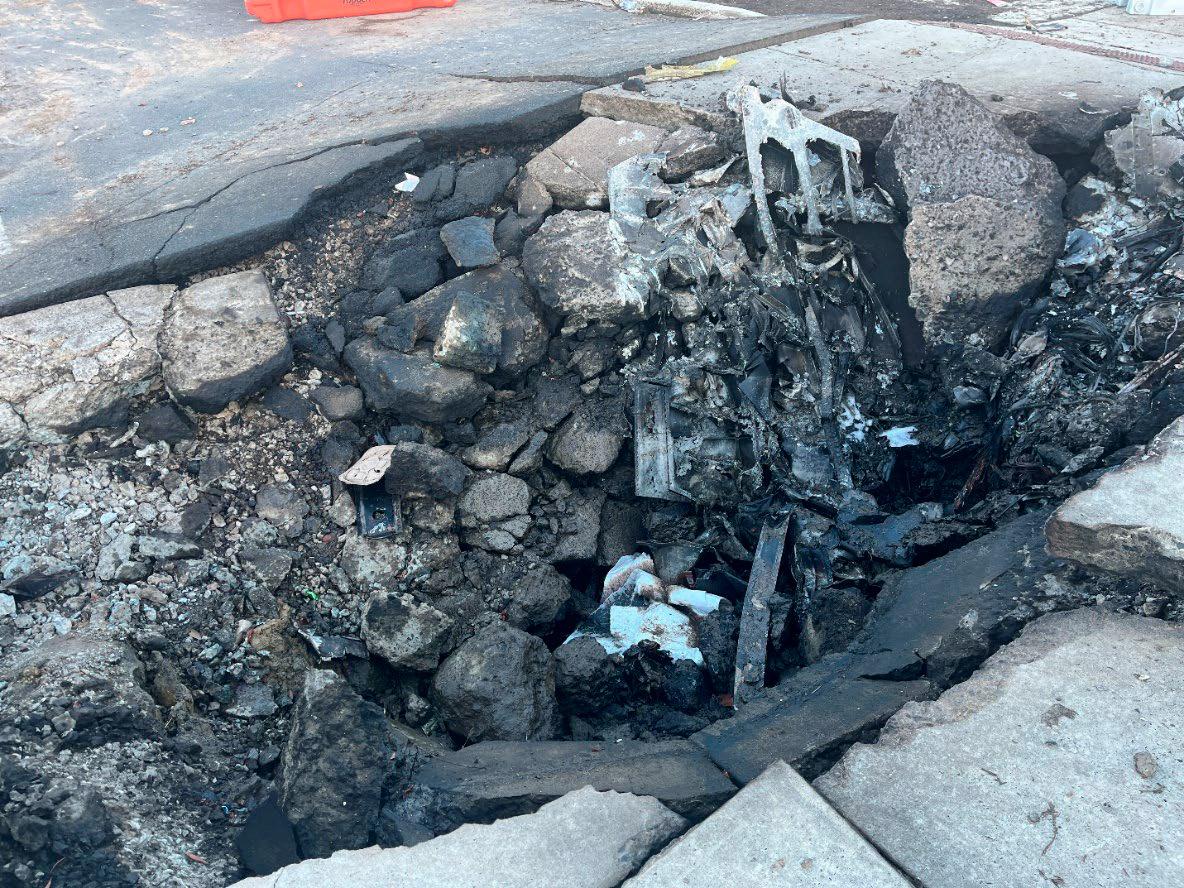
Images released by the NTSB as part of their investigation show the scene along Cottman Ave. where a medical plane that crashed, in Northeast Philadelphia on Jan 31, 2025.Courtesy of NTSB
Upon impact, the 1982 Learjet 55 erupted into flames that spread to homes and cars in the heavily populated area. At least 24 people were reported injured. The jet took off just after 6 p.m. that Friday and within a minute had begun a swift nosedive into the sidewalk near Cottman Avenue and Roosevelt Boulevard.
On board were 11-year-old Valentina Guzmán Murillo, who had just received care at Shriners Children’s Philadelphia before returning home to Mexico; her mother; a pilot; a copilot; a flight physician; and a paramedic.
Investigators going through the debris on Cottman Avenue Saturday, Feb. 1, 2025, in Philadelphia. A medical jet with six people on board crashed Friday evening near the Roosevelt Mall in Northeast Philadelphia.Charles Fox / Staff Photographer
Potentially fatigued pilots and potential training weaknesses
As investigators try to piece together what might have gone wrong in the cockpit, they are focused on the two pilots.
One factor that could have played a role was their workload in the days leading to the fatal crash. They had flown multi-leg trips all four days before the accident.
NTSB investigators also looked into the effects of “spatial disorientation,” a phenomenon pilots experience when their perception of motion and relation to the Earth’s surface becomes mismatched.
During the ascent from Northeast Philadelphia Airport, the pilots rolled the plane to the right by 12 degrees. Air traffic controllers then communicated with the pilots, and the pilots responded just as the plane began to rotate back to zero degrees. According to the NTSB, within 10 seconds of their last communication with the air traffic tower, the plane continued rolling to the left at a rapid speed until the plane stopped climbing.
“Pilots who are properly trained and current in instrument flying can normally use instrument information to overcome misleading sensations, however, even well-trained pilots experience sensory illusions from time to time,” NTSB investigators wrote.
When there is a delay, it can take a few seconds or more for a pilot to regain spatial awareness. But during that delay, a pilot may make inappropriate control inputs that place an airplane in “an unrecoverable trajectory.”
In interviews with the pilots’ most recent training instructors at Flight Safety International in Tucson, Ariz., the pilot in command demonstrated a “tendency to react before thinking through a problem,” the report says. The instructor noted that the same pilot would select modes of operation when the autopilot system was off, something the pilot in command is supposed to delegate to the second-in-command pilot.
“That allows the pilot to concentrate on actually flying the aircraft. So what happens is, if the autopilot’s off and the pilot flying goes to select modes of operation, it’s distracting him from flying the aircraft, which typically results in deviations of altitudes, speeds, and headings,” said the flight instructor, who was not identified in the report.
Images released by the NTSB as part of their investigation show the wreckage of a medical plane that crashed in Northeast Philadelphia on Jan 31, 2025.Courtesy of NTSB
The second-in-command pilot’s training report also showed that his lack of recent experience in flying a similar-model Learjet “was evident.”
A spokesperson for Jet Rescue Air Ambulance, the Learjet 55’s operator, could not be immediately reached Wednesday for comment on the new release of documents.
Jeff Guzzetti, a former NTSB investigator, wondered if the low visibility that night, made more hazardous by overcast and lightly choppy weather conditions, could have exacerbated a phenomenon called somatogravic illusion.
That happens when rapid acceleration or deceleration, or other changes in gravity, can cause pilots to falsely believe a plane is pitching up or down when it is not.
“When you look at those four things — the low cloud ceiling, nighttime conditions, high velocity descent, less than a minute after takeoff — that could be consistent with spatial disorientation,” he said. Add in other distractions, like changing radio frequencies, and even experienced pilots have lost their bearings while relying solely on their instruments to navigate, Guzzetti said.
Images released by the NTSB as part of their investigation show the medical plane that crashed in Northeast Philadelphia on Jan 31, 2025.Courtesy of NTSB
Investigators search the jet
The extreme impact, and a debris field scattered across more than a dozen city blocks and a shopping center, has hampered the investigation. Nearly all parts of the plane, from its engines to the mechanical and electrical systems that controlled the jet, were found in damaged condition.
Even so, the NTSB has reported that the jet’s pitch trim, which would have aided the angle of flight and airspeed, was not in optimal position. That meant the pilots would have had to exert up to 50 pounds of force against the controls during takeoff and 12 pounds for level flight, investigators said.
Arthur Alan Wolk, a Philadelphia-based aviation attorney and pilot, was dubious. “They blame the pilot for the trim,” he said. “I don’t think you can rely on that record” because the impact makes interpreting the damaged parts difficult.
Wolk also said the pilot could have corrected for this by hitting an electrical trim switch. “Could it have happened? Yes. Is it a factor? In my opinion, I don’t think so.”
The investigation devoted extensive research into tanks filled with oxygen and other gases the medical jet had on board, which could have led to a fire or impaired the flight crew. Investigators said cameras that caught the airplane’s descent did not show trailing smoke or any visible internal fire.
In all, 11 gas cylinders were recovered with various states of damage. In previous incidents, investigators noted, flight crews had become incapacitated by carbon dioxide exposure. The Learjet’s carbon dioxide tank was found with its valve stem fractured, though the NTSB did not say if it believed there had been a leak prior to the crash.
Jet Rescue Air Ambulancetold the NTSB that the company had no record of the raft for this jet and believed it was installed by a crew member without authorization.
Despite the NTSB stating in March 2025 that the cockpit voice recorder had not worked in years, investigators were able to repair its analog tape and listen to the audio. But the recordings were of a prior landing.
The report did not say why the device failed to record the final takeoff. This jet was not required to carry or maintain a cockpit voice recorder, though it was listed on the preflight checklist.
The NTSB also examined the Learjet’s logbooks and maintenance reports and found they were largely in order, though they could not determine if any new maintenance was done prior to the final flight.
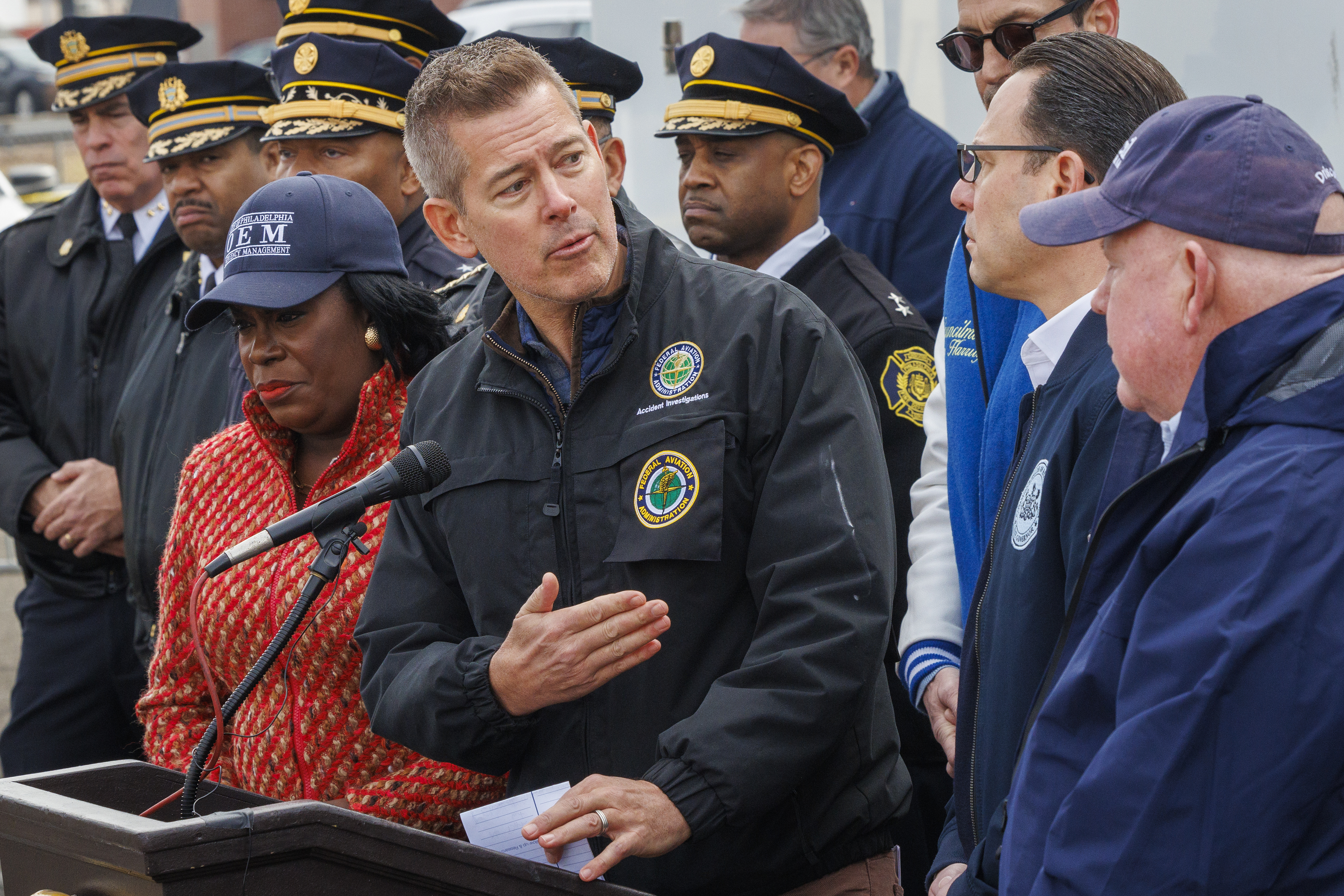
From left Philadelphia Mayor Cherelle Parker, Sean Patrick Duffy, United States Secretary of Transportation turning to acknowledge Pennsylvania Governor Josh Shapiro’s work at press conference. These three and others tour the scene of medical jet crash, Cottman Avenue on Monday, Feb. 3, 2025. The plane crashed Friday evening, Jan 31, 2025.Alejandro A. Alvarez / Staff Photographer
Lack of FAA oversight
A major piece of the investigation rests on the FAA’s Dallas International Field Office, which oversaw the U.S. operations of the medical jet operator.
Because the operator flew unscheduled, non-U.S. registered flights, FAA personnel said they were limited to performing “ramp checks,” or unannounced inspections of the aircraft and crew on the ground, as a safety measure. But when investigators searched the FAA’s safety assurance system for any record of ramp checks, they found none prior to the fatal crash.
Asked by NTSB investigators if there was a requirement to perform ramp checks or other surveillance on operators like Jet Rescue Air Ambulance, the primary inspector stated: “Oh, I’m not sure.”
The primary inspector continued that there was no surveillance plan in place before the time of the crash and that FAA staff in charge of Jet Rescue Air Ambulance’s operations had no knowledge of the operator’s previous crashes. The operator experienced a fatal accident in November 2012 in Fort Lauderdale, Fla., a nonfatal accident in February 2019 in Toluca, Mexico, and a fatal accident in November 2023 in Cuernavaca, Mexico.
Jet Rescue Air Ambulance was not on the FAA’s Heightened Surveillance List, which would have flagged the operator for additional inspections.
Unscheduled operators like Jet Rescue Air Ambulance are required to notify the Dallas FAA field office before operating in the United States, which the FAA would use todetermine when inspections are needed. But Jet Rescue Air Ambulance did not notify the office of its operations before the accident flight, according to the NTSB findings.
The NTSB release of evidence comes as federal probers complete their investigation phase and prepare their final report, followed by a review process that can take up to six months.
Loris Assadian, a French singer-songwriter and animal advocate known professionally known as Plumes, is globally recognized and celebrated for his distinctive sound and special connection with animals.
Videos of him playing his flamingo-pink guitar for farm and zoo animals have captivated millions of viewers worldwide, including former President Barack Obama, who talked about Assadian earlier this summer during the final month of The Late Show with Stephen Colbert.
Also count Megan Paier, of Cherry Hill, among the many fans of his calming musical moments. A member and volunteer docent at the Philadelphia Zoo, she thought it would be great after watching his reels on Facebook if he came here. “The way animals respond to him just warms the heart,” she said.
Assadian warms up before stepping to the tortoise environment.Tom Gralish / Staff Photographer
So she reached out in March, DMing him. “What do I have to lose?”
He got back to her right away.
She asked how much it would cost, and he told her he didn’t accept any money, he just needed his expenses covered.
He visited the zoo Tuesday — after running up the Rocky steps — and serenaded the tortoises ahead of sessions on Thursday and Friday, when he will play for other animals. Most tickets are already sold out.
Assadian serenades Abrazzo, a Western Santa Cruz Galapagos tortoise estimated to be around 97 to 100 years old.Tom Gralish / Staff Photographer
Assadian began performing for animals three years ago in France when he played Beatles songs for some local cows.
His appearance in Philly is the first at any U.S. zoo, and only his second visit to the United States (he went to Alaska last month).
Elizabeth Gibbons and her 2-year-old daughter Opal watch as the tortoises listen.Tom Gralish / Staff Photographer
Elizabeth Gibbons, of Kennett Square, is an “oh my gosh, a huge fan” and was excited to see he was coming to Philadelphia but disappointed she wouldn’t be able to be there.
She was at the zoo on Tuesday with 2-year-old daughter Opal and a mothers group from West Chester when she saw him opening his guitar case and teared up.
Megan Paier, the docent, noticed and got Assadian to take a selfie with her.
Before he plays, Assadian always talks with the animals’ caretakers to learn about their personalities and behavior. He keeps his own body language neutral, avoids sudden movements, and doesn’t expect or force interaction.
Assadian’s mother, Valerie, his social media videographer, records him with Abrazzo, a Western Santa Cruz Galapagos tortoise estimated to be around 97 to 100 years old.Tom Gralish / Staff Photographer
Beyond social media popularity, Assadian’s acoustic sessions serve as genuine behavioral enrichment for animals. Last year, he partnered with the Université de Nanterre for a scientific study at the Branféré animal park to evaluate music’s direct impact on animal behavior.
Michella Crosby first noticed it a couple of years ago: The children surrounding her block in West Philadelphia were hungry — and a little bored — during the summer break.
Once a kid in need of a meal, often getting one at her local armory, Crosby decided to do something to make sure no child went unfed.
The 74-year-old block captain signed up to run a Playstreet last summer. Through the city-run Playstreets program, and with the support of neighbors, she closed off her block to traffic on weekdays and distributed free, nutritious lunches to children, no questions asked.
“This is survival,” Crosby said in her second summer running a Playstreet. “We have to live. We have to be able to take care of our children.”
Crosby is just one part of the more than 500 churches, camps, schools, recreation centers, and Playstreets in Philadelphia that offer children under 18 opportunities to do everything from crafting to sports and unstructured play during the summer. These sites have the added benefit of feeding children for free.
The meals were paid for through the Summer Food Service Program, a federal program with funds administered by Pennsylvania.
Providing children with a free, federally approved breakfast and lunch is a benefit many families only speak about in whispers, according to program operators. At many sites, all children are handed meals, even if they don’t need them or come with their own snacks. Coordinators say this method of meal distribution makes it so no one feels less-than for lining up during breakfast or lunch.
This summer, the city was projected to distribute more than a million meals. A final count of meal sites will not be available until the end of the year, according to the city.
The Inquirer visited several of these meal sites to get a glimpse of the many purposes these hubs serve and the people who make it all possible.
Holy Innocents School summer camp
The gymnasium is abuzz on a Tuesday with approximately 70 children ages 4 to 14.
The pre-K children are the first to boldly rush the plastic folding table featuring a spread of small cardboard boxes topped with pints of milk.
“There’s a line behind you,” an instructor gently reminds a little boy skipping past his classmates.
The child spins around, offering a sheepish grin, and joins the friends he had zoomed past, giggling with glee.
Almost every child in the room attends Holy Innocents School during the school year, said Dee D’Aulerio, director of the free all-day summer camp in Juniata Park.
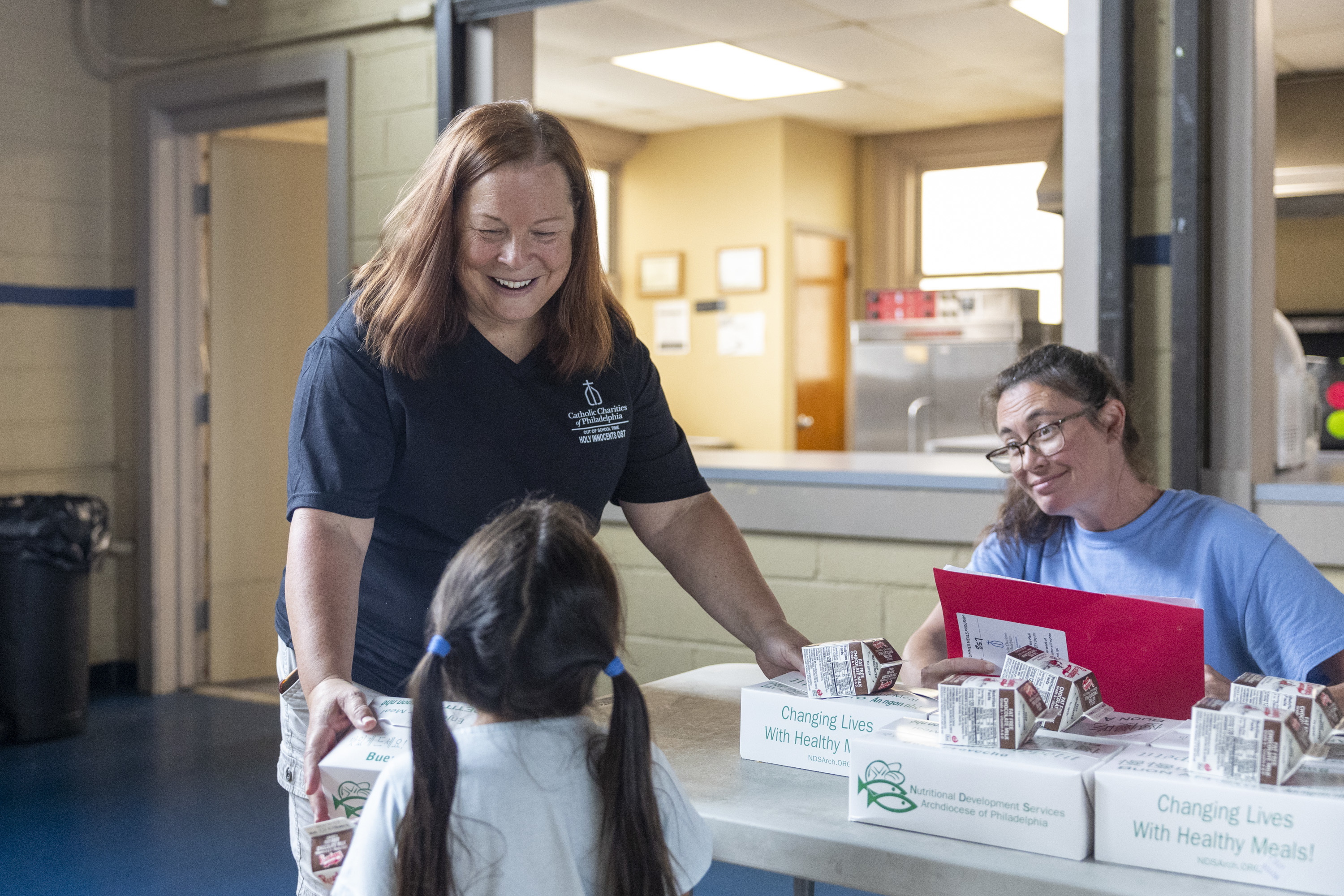
A calendar of the meals made by Nutrition Development Services for about 150 kids at Holy Innocents Catholic Church in Philadelphia, Pa., on Tuesday, July 28, 2026.Tyger Williams / Staff Photographer
“Historically, they did have to pay a fee, but now that we’re free, it really eases the burden on the families who pay tuition to take something off their plate,” she said.
In rapid succession, D’Aulerio personally hands every child a box that includes a ham and cheese sandwich, celery sticks, and potato salad.
Most look past the celery, donating their untouched containers to the “share table,” where a milk crate is already overflowing with applesauce containers.
One of the middle school boys walks up to the share box and grabs a handful of sandwiches. He tosses one to a friend and keeps the rest.
“The kids can help themselves if they’re still hungry after eating; they’re also able to take things home with them, too,” no questions asked, D’Aulerio said. “That’s a big help, especially if there are multiple children in the family.”
100 block of Dewey Street
Michella Crosby won’t admit it, but she is kind of the linchpin of her block, according to her neighbors.
She had been block captain for a decade and a member of the nonprofit ACHIEVEability, which aims to break the “generational cycle of poverty,” for 16 years. She is the person neighbors go to for help applying to city programs that can lower their tax bills.
Michella Crosby waits for children to stop by mid-August to pick up a free meal.Ximena Conde
Last year, she started to tackle hunger in the neighborhood.
Two children run up to Crosby’s house around 2 p.m. on a Friday, cracking open a blue cooler full of chocolate milk and apple juice. They are not from the 100 block of North Dewey Street, but they are near-daily visitors.
“Got something to eat?” the boy asks, knowing the answer is yes.
“I want two juices!” the girl says, pointing at a doll she is swinging around. “It’s for the baby.”
“I got your applesauce,” Crosby says to the boy as he inspects the ham sandwich lunch. The boy is in a picky eating stage, Crosby notes.
There were no Playstreets when she was coming up, so Crosby would head to the local armory. She only wishes she could do more for the modern-day latchkey kids who live in neighboring blocks. This summer, she has gotten faint knocks on the weekend of kids asking for food. Playstreets, however, only runs during the week.
“As much as I would love to, I can’t give away my refrigerator,” she said, as a neighbor greets her from across the street.
Still, she considers this summer a success, grateful that children feel safe enough to come to her for food and a chat. Their continued presence has persuaded her to continue the program.
“As long as there’s a need for children to be fed, I’m going to do it,” she said.
Kingdom Restoration Ministries
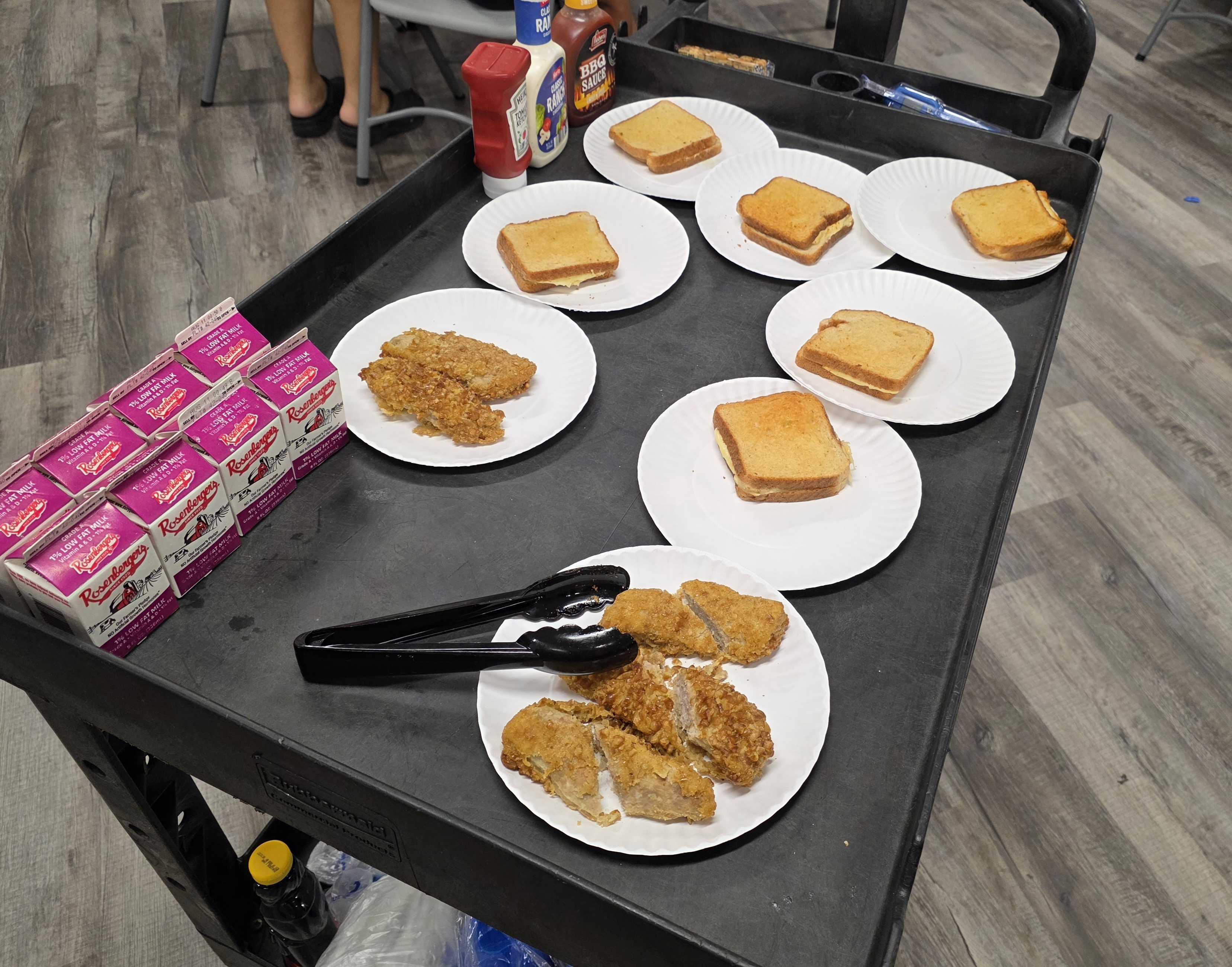
Eight children were already digging into crispy grilled cheese sandwiches, fried chicken, corn, and fruit cups when Peace McClain, 35, walked into Kingdom Restoration Ministries in Olney with two of his own.
A lunch of grilled cheese sandwiches and fried chicken is served at Kingdom Restoration Ministries in late July.Ximena Conde
McClain keeps his kids busy with beach trips and other activities during the summer breaks, but worries they are missing out on an experience he remembers fondly: hanging out with friends freely on his block.
“I remember summertime, going outside, and going to get free lunch from the block captain,” McClain said.
Still, safety concerns keep McClain from letting his children too far out of his sight.
The half-day camp he saw advertised on utility poles across the neighborhood felt like a good compromise.
“I wanted to give them the experience to come in and meet these people because they don’t get to walk around,” McClain said.
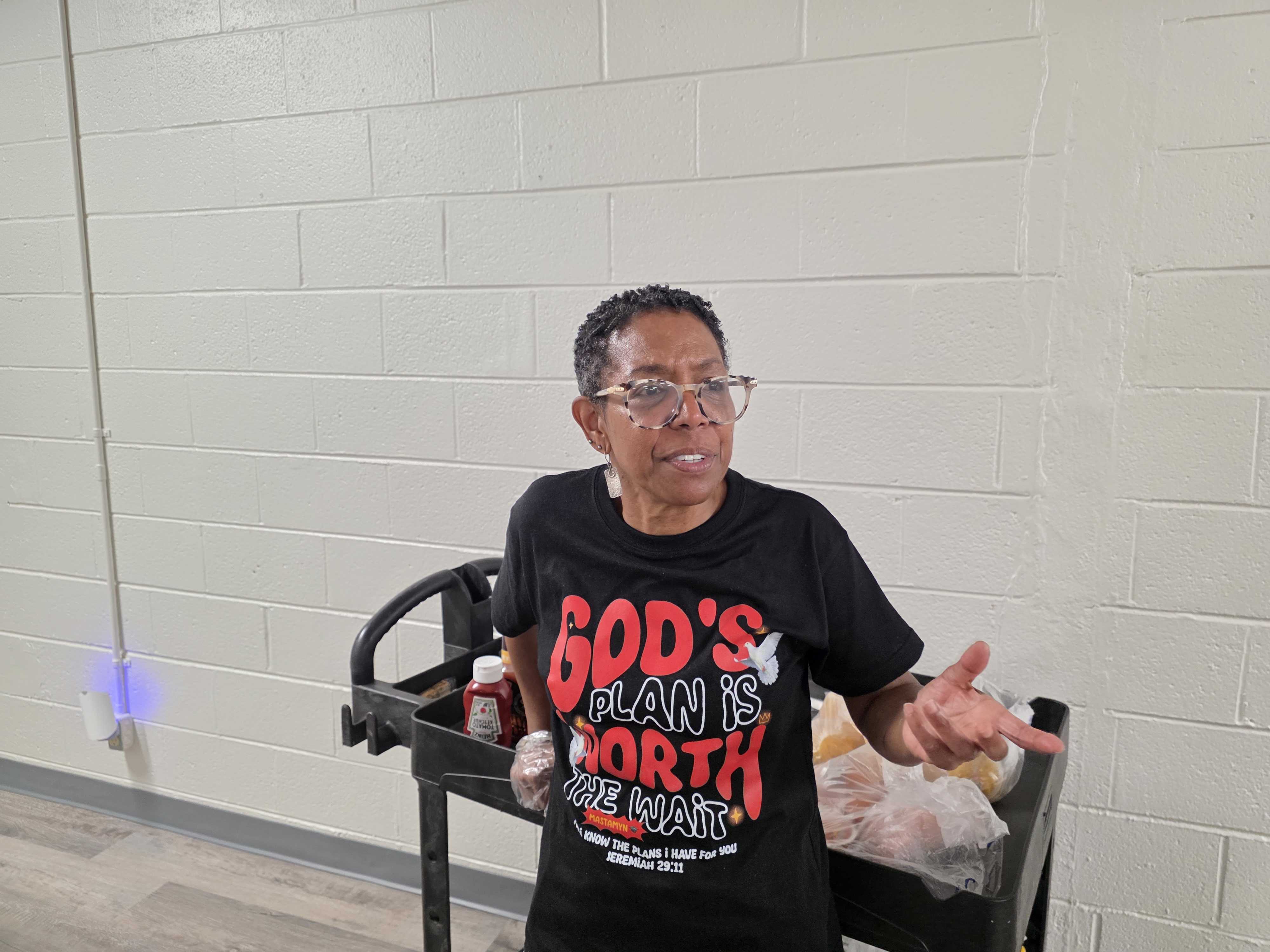
Velvet Howard gets ready to serve a lunch of grilled cheese sandwiches and fried chicken at Kingdom Restoration Ministries.Ximena Conde
Velvet Howard, 70, who is officially retired but is thecamp supervisor for the summer, tells McClain how the camp works.
In its first year, the camp offers half-day summer programming for children on Tuesdays and Wednesdays with breakfast and lunch included — all free. No preregistration is required, so the number of children in attendance fluctuates based on families’ summer plans. And while many of the children in attendance have some connection with the church, it is not required.
(Left to right) Peace McClain picks up his children, Peace and Payton, from Kingdom Restoration Ministries in late July. The family was drawn by the possibility of having the children mingle safely with neighborhood kids their age, and the nutritious lunch was a bonus.Ximena Conde
Lunchtime is almost over by the time Howard finishes answering McClain’s questions, but she encourages Peace, 10, and Payton, 8, to stick around, grab a bite, and mingle with the time left.
“The staff was super nice here and it was really fun,” Payton said when reporting back to her father, noting she would come back. “And they had really good food.”
The intersection of food insecurity and summer childcare
More than 100,000 Philadelphia youth experience food insecurity, according to Laura Crandall, Philadelphia’s director of food security initiatives. In addition, close to 87,000 children under 18 live below the poverty line, according to the most recent data from the U.S. Census Bureau.
An estimated 45,000 SNAP recipients in Philadelphia could see benefits cut this year, according to the Pennsylvania Department of Human Services.
As the social safety net tightens for families, summer camp enrollment has only grown more competitive.
“Prior to the pandemic, we were already seeing that the options for families during the summer was decreasing,” said Erinn Hill, director of child nutrition programs for Catholic Charities of Philadelphia’s Nutritional Development Services, which sponsored 192 meal sites in the city this summer.
“Camps and other programs were getting smaller, shorter, or closing. As of now, the number of sites is still not back to pre-pandemic levels.”
The nonprofit CBS Food Program, which provides meals to Kingdom Restoration Ministries, responded to the mounting interest by delivering food to 41 partner locations in Philadelphia, close to double the number of sites it worked with last summer.
Even so, some city partners worry food insecurity is only spreading amid the rising cost of groceries.
At least two site operators, who asked not to be named to avoid getting in trouble, said seniors in their communities are increasingly coming to summer meal sites for food, which they are supposed to save for kids. In areas where the kids do not want the meals, operators will sometimes look the other way and let seniors take the leftovers.
“We just can’t let our neighbors go hungry,” one site operator said.
A Philadelphia Veterans Affairs doctor is leading a national trial testing whether GLP-1 drugs could help patients with alcohol use disorder.
The treatments, which work by mimicking a natural hormone inthe body, have skyrocketed in popularity in recent years for diabetes and weight loss. People have also reported unexpected benefits for other conditions, from heart issues to kidney disease. GLP-1s may even help reduce cravings for addictive substances, including alcohol, opioids, and nicotine, early studies suggest.
While some of the additional health effects have been well-studied, others, like alcohol use disorder, still need a robust trial to assess safety and efficacy.
The upcoming trial will take place at 18 VA sites around the country, including Philadelphia, with the goal of recruiting 622 participants.
“The driving force has been really the groundswell of anecdotal and observational data from folks,” said David Oslin, the psychiatrist leading the national trial.
Recruitment for the trial starts this week and will likely take two years. Half of participants will be randomly selected to receive the treatment for six months, while the other half will receive a placebo with no active drug.
Participants will not know whether they received the intervention — a study design that’s considered the gold standard for medical research.
Alcohol use disorder affects roughly 28 million people nationwide. While there are many options to treat it — including psychosocial treatment, peer support groups, and medications — uptake is low.
Fewerthan 10% of people with alcohol use disorder receive any treatment in a given year. Oslin hopes GLP-1s, should they prove safe and effective, could improve that statistic.
“The impact is potentially very big in the sense that this is a drug that people seem comfortable prescribing and using,” he said.
He anticipates publishing the results in about three years.
The Inquirer spoke with Oslin, who also serves as the chief of behavioral health at the Philadelphia VA, about the trial in an interview lightly edited for length and clarity.
David Oslin serves as the chief of behavioral health at the Philadelphia VA Medical Center and a professor of psychiatry at the University of Pennsylvania. He is leading the national trial.Courtesy of the VA
What inspired the trial?
Anecdotally, folks that have been receiving the GLP-1s for something else — diabetes or weight loss — had noticed a decline in use of alcohol.
There have subsequently been three small clinical trials in the U.S. that have been published. They wouldn’t be sufficient to define efficacy from an FDA perspective, but they’re certainly encouraging.
Each of them have their own little pitfalls. One of them is small — 40 subjects — so we wouldn’t want to change clinical practice based on that. But they certainly point us in the direction that we need a large trial, and this trial was designed specifically with FDA requirements in mind.
How is this trial different?
Semaglutide is already FDA-approved. What you would want to be able to do is change the existing label to add the indication of alcohol use disorder.
The FDA has a number of requirements for trials in this domain for alcohol use disorder. One is that the duration be a minimum of six months, and we are doing that. The other is that it be a sufficient sample size to test a hypothesis. For our trial, we are hoping to enroll 622 veterans over the course of the next couple of years. That would be sufficient to answer the question of, ‘Is there efficacy and is there safety?’
What is the theory behind how GLP-1s could treat alcohol use disorder?
We know that GLP-1s have three main effects on the body.
One effect is to induce the pancreas to release more insulin. The second effect is that it slows down the stomach’s emptying when you eat. The third effect is on GLP-1 receptors in our brain. Those receptors actually respond to reward, and the natural effect of GLP-1s is to indicate that you’re full or that you don’t need any more to eat or drink.
These medicines will have the effect of reducing your desire to want to drink more. They don’t take away your pleasure or your ability to enjoy life, but they will reduce excessive eating and excessive drinking — that’s the hypothesis that is driving the study.
(function() { var l = function() { new pym.Parent( ‘he1ozempic__graphic’, ‘https://media.inquirer.com/storage/inquirer/ai2html/he1ozempic/index.html’); }; if(typeof(pym) === ‘undefined’) { var h = document.getElementsByTagName(‘head’)[0], s = document.createElement(‘script’); s.type = ‘text/javascript’; s.src = ‘https://pym.nprapps.org/pym.v1.min.js’; s.onload = l; h.appendChild(s); } else { l(); } })();
Who can participate in the study?
They have to be a veteran getting their healthcare through the VA. They have to be between 18 and 80. They have to be drinking sufficiently enough to meet criteria for moderate to severe alcohol use disorder. You also can’t be on insulin and can’t be taking another medication for diabetes.
The 18 sites would take any veteran and screen them, and if they’re not appropriate for the trial, we would get them into the right care for their needs.
How could having a GLP-1 as an option improve uptake?
A lot of folks that have alcohol use disorder will not seek treatment in a specialty care setting. They don’t think of their symptoms as being that severe. So they’ll talk to their primary care doctor.
We need treatments that primary care providers are comfortable delivering. The current medicines are not medicines that they often prescribe, so they’re not used to using them. Meanwhile, they’re prescribing GLP-1s for diabetes and weight loss, so they clearly are comfortable prescribing them.
There’s a lot of potential here that this could become a front-line treatment for folks, and we could reach many more people to get them in treatment. We need to establish the safety and efficacy first.
How big of an impact could that have?
The early clinical trials show that the effect of the treatment is actually larger than our current treatments, which would be really great if that’s replicated. It really could shepherd in a new era of being able to treat more people than we’ve been able to treat in the past.
Is there anything else you would like to share?
We want to really make sure that these compounds are safe in this population. I know that you can get these compounds pretty much anywhere these days, and I would discourage people from doing that when we don’t know that they’re safe and efficacious.
Alcohol use disorder is a devastating illness, and people should feel comfortable reaching out for help. Even if they can’t get into the study, the VA is here to assist them in that journey and try to find them a path to sobriety and a better life.
Veterans who need support can contact the Veterans Crisis Line 24/7. You don’t need to be in immediate crisis or enrolled in VA care to reach out. Dial 988 and press 1, visit VeteransCrisisLine.net/Chat, or text 838255 to connect with trained responders who can help with next steps.
Those interested in participating in the clinical trial in Philadelphia can call: 215-823-5800 extension 203404.
A 9-year-old girl was hospitalized in critical but stable condition after she was struck by a hit-and-run driver Tuesday night in North Philadelphia, police said.
The girl was hit on Germantown Avenue not far from Erie Avenue shortly before 8:30 p.m., police said.
She was transported by medics to St. Christopher’s Hospital for Children, where she was being treated for a broken foot, at least one broken rib, and skin abrasions, police said.
The striking vehicle was possibly a Toyota RAV4 with two flat tires, police said.
A 78-year-old man was killed in a triple shooting late Tuesday afternoon in North Philadelphia, police said.
Just before 4:50 p.m., police responded to reports of a shooting on the 2200 block of Ridge Avenue and found three victims, Chief Inspector Scott Small said.
Police took all three to Temple University Hospital.
The 78-year-old man, who was shot once in the back, was pronounced dead at 5:15 p.m., Small said. The man’s identity was not released.
A 71-year-old man who was shot twice in the back and a 31-year-old man who was shot several times in the lower back and once in a leg were initially listed in critical condition, Small said. Their conditions were later upgraded to stable.
Small said surveillance video shows a light-colored SUV-type vehicle traveling south on Ridge and stopping in the middle of the block. Four individuals then get out and start firing guns toward the victims.
More than 50 spent shell casings were found at the scene, Small said.
A store was struck twice by gunfire, shattering a front glass window, and a parked car also was hit, Small said.
The shooters got back in their vehicle and fled south on Ridge.
Investigators are checking with multiple businesses on the street for more video, Small said.
The Pennsylvania Human Relations Commission on Tuesday condemned an incident last week of antisemitic vandalism of a sculpture at the Weitzman National Museum of American Jewish History.
On Thursday evening, “an individual scrawled a hateful message on the museum’s iconic OY/YO sculpture. This marks the second act of vandalism within a year, following spray-painted graffiti on the building, plaza, and an Israeli flag in August 2025,” the commission said in a statement.
State Rep. Tarik Khan (D., Philadelphia) was in the area early Friday morning when he saw the vandalism, which he described as written in black marker on the side of the OY/YO sculpture at the southeast corner of Fifth and Market Streets. The three accusatory words appeared directed at Jews in general.
Khan said he quickly called 911.
“It was like a kick to the stomach,” Khan said Tuesday in a phone interview.
“We have to acknowledge what is happening,” Khan said.
The Weitzman Museum said in a statement: “At a time of heightened antisemitism and hatred directed at Jews in America and around the world, incidents like this are deeply troubling — but they will not intimidate us or change who we are.”
A spokesperson for the Philadelphia Police Department could not be reached for comment.
“Pennsylvania will not tolerate hate in this state and the PHRC will continue to foster inclusion and eradicate hatred in all its forms,” said Jones, who is also a member of Philadelphia City Council.
Less than a year ago, an Israeli flag that was displayed on the west-facing side of the museum was vandalized with red paint. A South Jersey man was charged with ethnic intimidation and related offenses. The case is still pending, court records show.
“Criticism of Israel is not antisemitism. Blaming Jewish people for the Israeli government’s actions is,” Khan wrote in a Saturday post on Facebook.
“This is a time we need to reach out to each other,” Khan said.
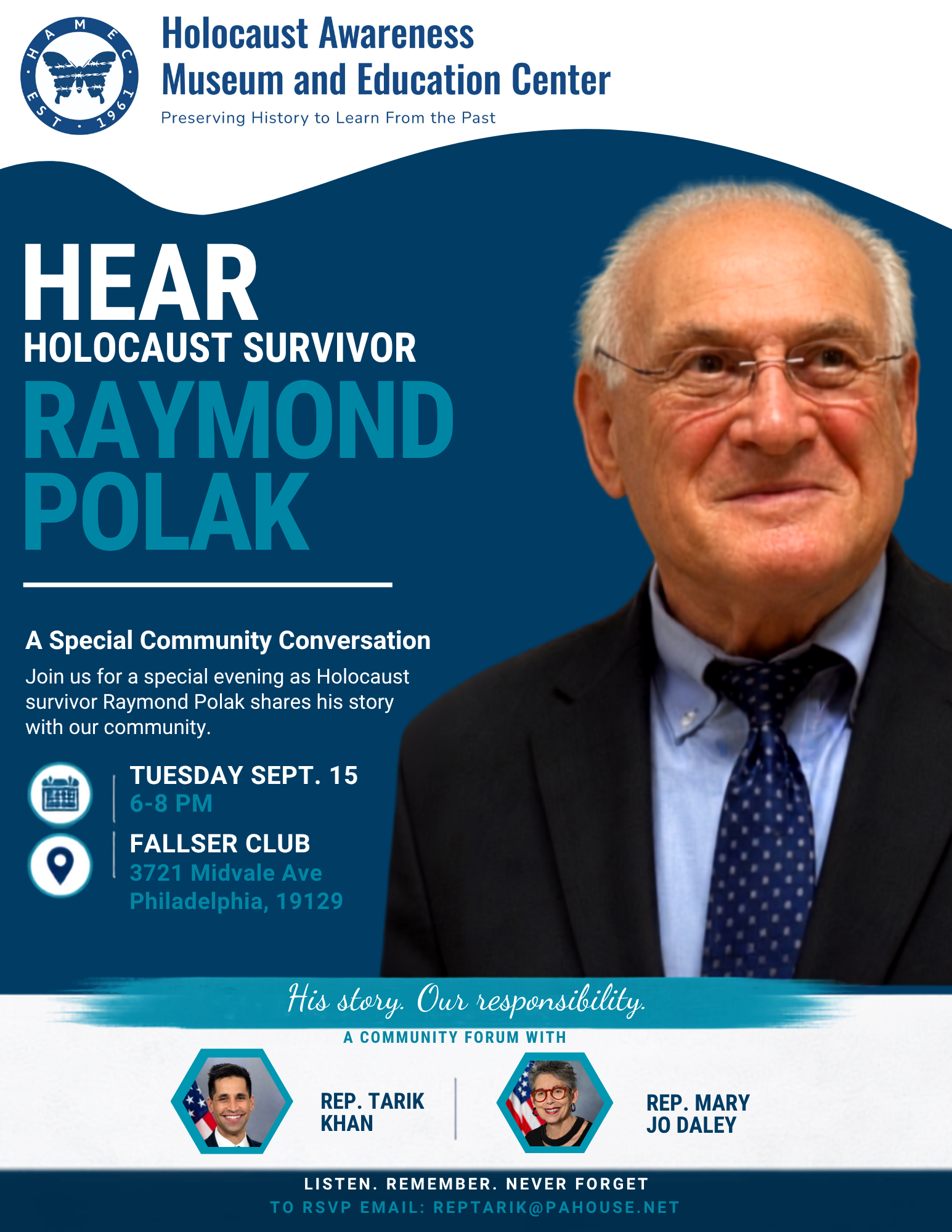
The Sept. 15 event, which is free and open to the public, will be held from 6 to 8 p.m. at the Fallser Club, 3721 Midvale Ave.
Raymond Polak, a Holocaust survivor, will be the featured speaker at a community fourm co-hosted by State Rep. Tarik Khan on Sept. 15 in East Falls.State. Rep. Tarik Khan