Category: Philadelphia News

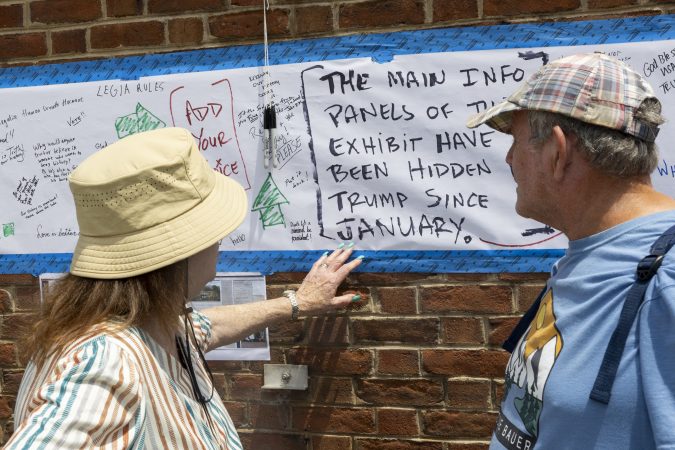
  • The last legal obstacle for the Trump administration’s own President’s House panels has been removed

    The last legal obstacle for the Trump administration’s own President’s House panels has been removed

    The President’s House has been in legal limbo for weeks.

    Even though a Philly-based federal appeals court gave the green light to President Donald Trump’s administration to install its proposed panels to replace the slavery exhibit National Park Service staff dismantled in January, federal litigation out of Boston placed any actual changes to the site on hold.

    That obstacle was lifted Thursday by a Boston-based federal appeals court, just two days before the nation’s 250th anniversary celebration, and the Trump administration wasted no time.

    Hours after the ruling out of Massachusetts, Justice Department attorneys asked the Philadelphia-based Court of Appeals for the Third Circuit to take the final procedural step so the National Park Service “may begin work immediately and install its new exhibits.”

    The Third Circuit ruled last month that Philadelphia doesn’t have rights over the President’s House exhibit, and approved the Trump administration’s proposed panels, which historians criticized for whitewashing George Washington’s own culpability in the enslavement of nine people in his Philadelphia home.

    That ruling vacated a Philadelphia federal district court judge’s February injunction that ordered the National Park Service to restore the President’s House site to its state before any panels were removed in January.

    The federal government on Thursday requested the “immediate issuance” of a procedural order that would enable it to begin installing new panels and said it hadn’t done so before because of the ongoing litigation in New England.

    Still, it’s unclear when the new exhibits could be fixed to the historical site’s walls.

    A spokesperson for the U.S. Department of the Interior did not respond to questions about when the National Park Service intended to install the new exhibit and the time the installation would require.

    Instead, the spokesperson shared a statement saying the Interior Department had “encouraged Americans to visit our cultural and historic sites and engage in meaningful conversations about the moments that have shaped our country.”

    The new panels have been manufactured, Assistant U.S. Attorney Gregory in den Berken said in last month’s Third Circuit hearing.

    A spokesperson for Philadelphia’s Law Department said the city was reviewing its options.

    The change that led to the Justice Department’s request came from the Court of Appeals for the First Circuit, where a three-judge panel ruled the federal government does not have to reinstall before July Fourth exhibits the Trump administration had removed from national parks as part of its efforts to remove displays that “inappropriately disparage Americans past or living.”

    At least 50 exhibits were removed from more than 30 sites nationwide, according to court records.

    The First Circuit previously issued an administrative stay on most of a lower-court ruling that halted the Trump administration’s changes to the parks. Such stays are a way for an appeals court to maintain a status quo while the judges study the case.

    But the new order, which stays the entire ruling, is based on the arguments and facts of the case.

    The First Circuit rejected the Boston district judge‘s finding that anything but restoring the exhibits nationwide would cause irreparable harm.

    The district judge’s ruling ordered the National Park Service to “undertake a burdensome reinstallation and restoration project in short order,” the First Circuit ruling said, while the conservation groups that brought the lawsuit could not show they would be harmed directly by exhibits’ absence or alterations.

    The First Circuit judges assigned to the case were Chief Judge David J. Barron, appointed by Barack Obama, and Joe Biden appointees Gustavo A. Gelpí Jr. and Julie Rikelman.

    The ruling is “merely a temporary procedural setback,” said Brooke Menschel, an attorney with Democracy Forward that represents the conservation groups.

    “Unfortunately, for now, the decision allows the administration to continue removing and altering interpretive materials that are critical for millions of visitors to understand our nation’s history, right at the moment when so many Americans will be enjoying the parks over the upcoming semiquincentennial weekend,” Menschel said in a statement.

    Mayor Cherelle L. Parker vowed to “pursue every legal action possible” in an effort to reverse last month’s Third Circuit ruling.

    So far, Parker’s administration has not taken any action. Legal experts noted that none of the administration’s options are a slam dunk.

    One option would be to file an emergency stay request with the U.S. Supreme Court, which would be up to conservative Justice Samuel Alito to decide.
  • Philadelphia police shoot, kill man outside St. Christopher’s Hospital for Children

    Philadelphia police shoot, kill man outside St. Christopher’s Hospital for Children

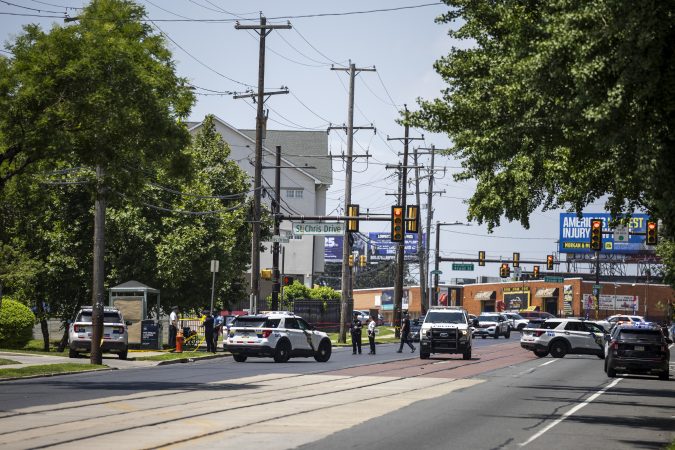
    Police shot and killed a man outside St. Christopher’s Hospital for Children in North Philadelphia on Thursday, authorities said.

    Officers were called to the hospital shortly before 10:30 a.m. for a report by hospital staff of an “irate man,” said Police Commissioner Kevin Bethel.

    At a briefing with the media Thursday evening, Bethel clarified that the man, whose name and age were not released, did not threaten anyone at the hospital.

    “The hospital was at no time under threat,” Bethel said.

    The man was at the hospital yesterday related to something involving a “child in the hospital,” Bethel said, then later adding that it was the man’s son.

    The man was asked to leave Wednesday, and when he returned Thursday, he was not allowed to enter the hospital, said Bethel, who did not elaborate on why the man was asked to leave.

    But when he returned Thursday, “he did not threaten” staff and was “compliant.”

    Shortly thereafter, a relative called police and reported that the man was suicidal and may have a gun, Bethel said.

    Police drove to the bus stop on Erie Avenue outside the hospital where the man was and an officer was just exiting from the passenger side of a police vehicle when the man allegedly pulled out a gun, Bethel said. The officer then fired.

    The man was transported to Temple University Hospital, where he later died. Bethel said a gun was recovered at the scene.

    A woman standing next to the man, who Bethel described as his girlfriend, was grazed by a bullet. He said she was in good condition.

    “He did not fire his weapon,” Bethel said about the man.

    The officer who fatally shot the man was placed on administrative duty while the shooting is investigated.

    At an earlier media briefing, Bethel described the shooting as a tragedy that unfolded in a matter of minutes.

    He added: “We have a lot to sort through,” including the mental state of the man who was killed. “He may have been going through some mental issue,” Bethel said.

    No patients or hospital staff were injured, said hospital spokesperson Bill Tierney. The man who was shot did not come inside the hospital, he said.

    The hospital initially went into a lockdown, which has since been lifted, Tierney said. Some entrances to the hospital were closed during the initial police investigation but they had reopened by Thursday afternoon, he said.

    Police have not released the name, age, or rank of the officer who discharged his weapon.

    Michael Lopez, a senior staffer at a sports complex across the street from the hospital, said he heard about a half dozen gunshots. Initially mistaking the gunfire for July Fourth fireworks, Lopez said he came out to Erie Avenue, where he saw a throng of police officers — and a woman he said appeared to be bleeding from her neck.

    “It was gruesome,” Lopez said.

    Thursday’s shooting was the second fatal shooting by a Philadelphia police officer in less than three weeks.

    On June 14, three officers were injured and Eric Franks was fatally wounded after exchanging gunfire in the Wynnefield neighborhood of West Philadelphia. The officers — who were shot in the hip, leg, and face — were hospitalized and recovered, police said.

    Their names had not been released as of Thursday because of an active threat assessment, said police spokesperson Sgt. Eric Gripp.

    — Staff writer Robert Moran contributed to this article.

  • Philly can’t force ICE agents to unmask, federal judge rules

    Philly can’t force ICE agents to unmask, federal judge rules

    Philadelphia can’t prevent U.S. Immigration and Customs Enforcement agents and other federal officers from concealing their identities, a federal judge ruled Thursday.

    U.S. District Judge Chad F. Kenney issued an order preventing Mayor Cherelle L. Parker’s administration and District Attorney Larry Krasner’s office from barring federal law enforcement officers from wearing masks, intentionally covering their badges, or using unmarked vehicles.

    The U.S. Constitution’s Supremacy Clause prevents states — or a city in this case — from imposing requirements on how federal agencies carry out their duties, the judge appointed by President Donald Trump said.

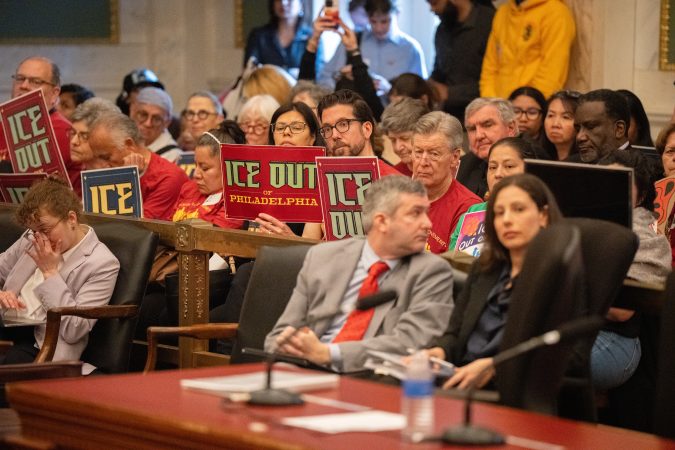
    When City Council passed the bill in April as part of the ICE Out legislative package, the lawmakers “attempted to sidestep the Constitution’s clear mandate and disregarded this fundamental principle of law that has informed American jurisprudence for over 200 years,” Kenney’s opinion said.

    Parker allowed the bill to become law without her signature, following City Solicitor Renee Garcia’s advice that signing the bill “would send an inaccurate signal to the public that the Administration can legally and practically enforce” its provisions.

    “Mayor Cherelle Parker acted with civic wisdom and courage to stand up for the Constitution and follow the rule of law to where it led, despite what may have been strong personal inclinations to the contrary,” the judge said.

    While the ordinance’s requirements apply to all law enforcement, its inclusion in an “ICE Out” package suggested the city planned to be selective in its enforcement, Kenney said.

    And even though the ordinance hadn’t taken effect yet, the judge said, the city never said it wouldn’t attempt to enforce its provision. Krasner’s past statements vowing to “arrest” and “put handcuffs” on ICE officers who break state law, as well as his involvement in a progressive prosecutors’ group committed to such prosecutions, suggest the threat of enforcement is real, Kenney said.

    “The Department of Justice will keep fighting jurisdictions that try to obstruct President Trump’s immigration enforcement with policies that endanger agents and public safety,” a department spokesperson said.

    The city is reviewing the ruling and potential next steps, a law department spokesperson said.

    Kenney showed an “unnecessary urgency” from the beginning of the case, Krasner said.

    “The red-hot rush of this federal district court judge, a Delaware County Republican appointed by Donald Trump, was predictable,” the district attorney said.

    Defending the ordinance put Parker and her administration in an awkward position. City Council passed the legislation with a veto-proof supermajority as part of a seven-bill package.

    The ordinance at the heart of the litigation made it a crime for law enforcement officers, including Immigration and Customs Enforcement agents, to wear face coverings or conceal personal identifiers like badges and nameplates while carrying out their official duties in Philadelphia, and required officers to identify themselves. It also prohibited the use of unmarked vehicles.

    The bill included exceptions allowing officers to wear masks in certain circumstances, such as medical emergencies or SWAT operations.

    An officer could face up to 90 days in jail plus a fine for violating the ordinance.

    The other bills prohibit federal immigration agencies from staging raids on city-owned property, ban discrimination on the basis of citizenship status, and prohibit the city from engaging in most forms of information-sharing with ICE.

    The legislation also codified some of Philadelphia’s long-standing sanctuary city status, which a recent poll found most city residents support.

    Parker signed the six other bills, which will take effect Tuesday.

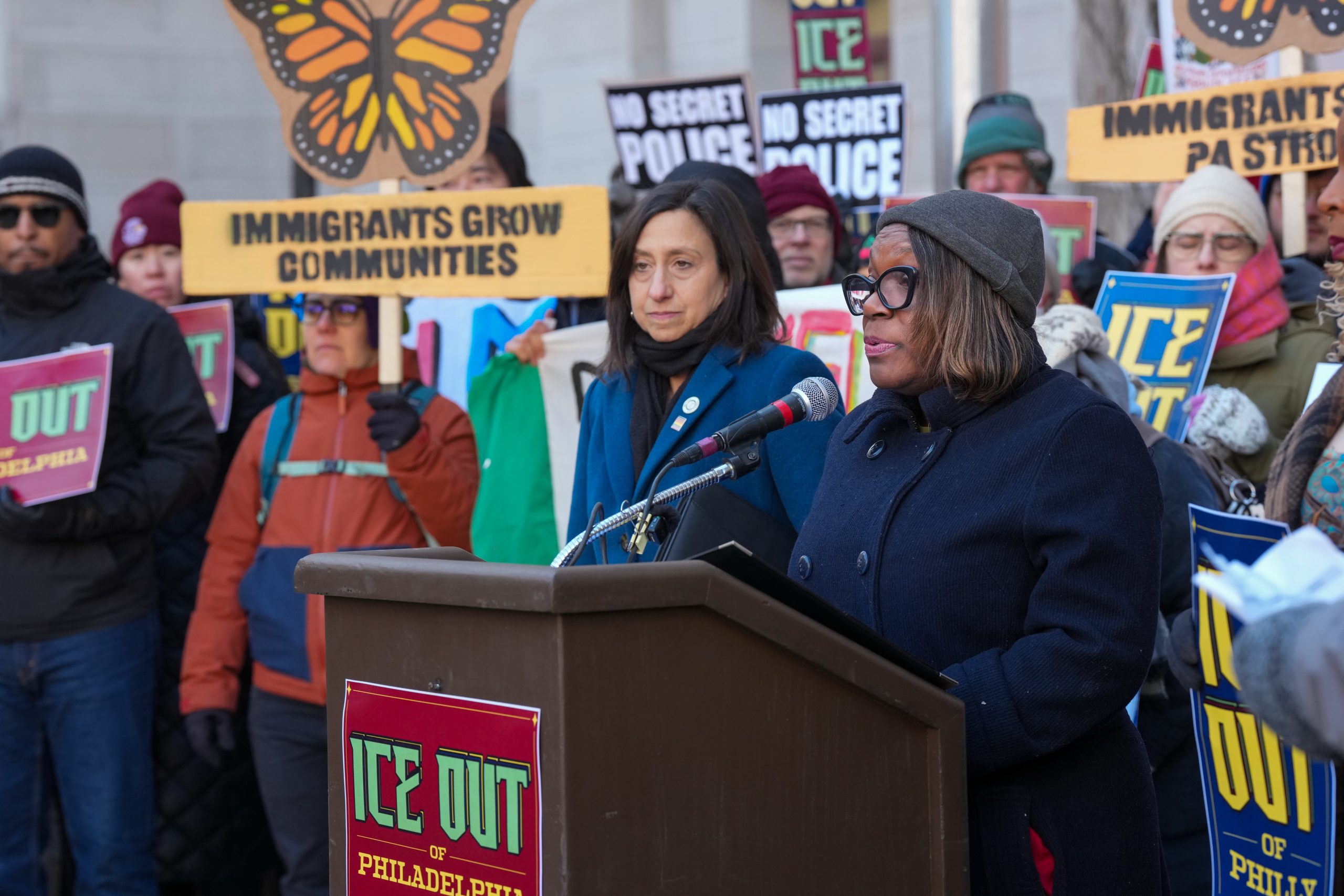
    Kendra Brooks shown here during a press conference at City Hall to announce a package of bills aimed at pushing back against ICE enforcement in Philadelphia, January 27, 2026.Jessica Griffin / Staff Photographer

    The Justice Department sued the city, Parker, Krasner, and Garcia in federal court in Philadelphia last month and requested an injunction on the enforcement of the masking bill.

    Officials from various federal agencies told the court the bill would harm their operations and officers.

    Members of the public routinely dox ICE agents, who are later subject to threats, John Rife, acting director of ICE’s Philadelphia field office, said in a filing.

    “Facial coverings reduce the risk of officers’ personal identities being shared publicly, which helps ensure that officers’ privacy and safety, and that of their family members, remains intact,” Rife said.

    The city argued the litigation was premature as the ordinance hasn’t gone into effect and there was no attempt to enforce it.

    The city also said federal agents had applied “aggressive enforcement tactics behind the mask of anonymity, undermining public safety and trust.”

    But Kenney’s opinion said, “there can be no public interest” in enforcing a provision that violates the Constitution.

    It doesn’t make sense that the city can’t hold federal officers to the same standard it holds its own police department to, Councilmember Rue Landau, who authored the bills with fellow progressive Kendra Brooks, said in a statement.

    The Trump administration has sued other jurisdictions, including New Jersey, over similar requirements. In April, the U.S. Court of Appeals for the Ninth Circuit found that a California bill requiring agents to “visibly display identification” was unconstitutional.

    On Tuesday, a federal judge in Richmond enjoined Virginia from enforcing a law barring ICE agents from covering their faces.

    “It’s unfortunate the Parker administration’s own doubts were used against the bill in this injunction,” Brooks said in a statement. “No one else is dealing with that dynamic in their lawsuits.”

  • Why Pa. lawmakers almost tore down Independence Hall in the 1800s

    Why Pa. lawmakers almost tore down Independence Hall in the 1800s

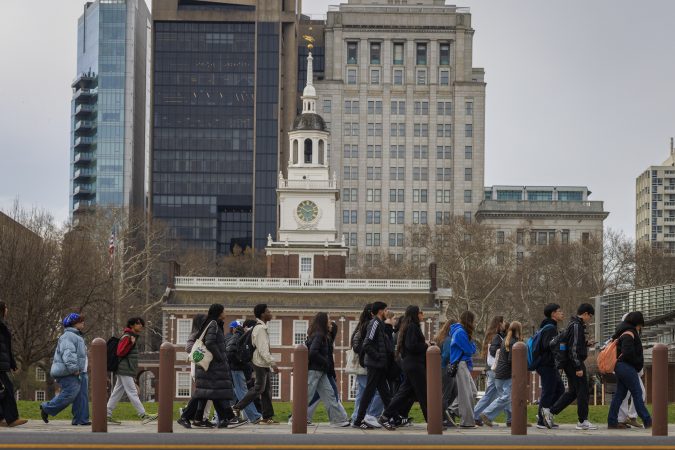
    While all eyes are on Independence Hall this week, something almost unfathomable happened more than 200 years ago: It was nearly demolished.

    Between the 18th and 19th centuries, Pennsylvania’s capital had moved to Harrisburg from Philadelphia, by way of Lancaster, and lawmakers wanted a new statehouse. The obsolete building then known as the Old State House in Philadelphia, on Chestnut between Fifth and Sixth Streets, was on prime real estate, according to Villanova University professor and historian Whitney Martinko.

    So, they contemplated demolishing the building and selling off the salvage and parcels of land to the highest bidders to fund the grand statehouse. But Philadelphians mounted a campaign to save what’s now called Independence Hall — the Georgian-style building where the Declaration of Independence and U.S. Constitution were debated and drafted. Today, Independence Hall stands as a testament to the Founding Fathers’ ideals as the country prepares for its 250th birthday this Saturday.

    “People looked to Independence Hall — already in the 1810s — as an important building and historic site,” said Martinko, who studies historic preservation in the early U.S. “Some of those people were residents of Philadelphia who didn’t want to lose a local landmark … but other people were really tourists who came to Philadelphia to see the site.”

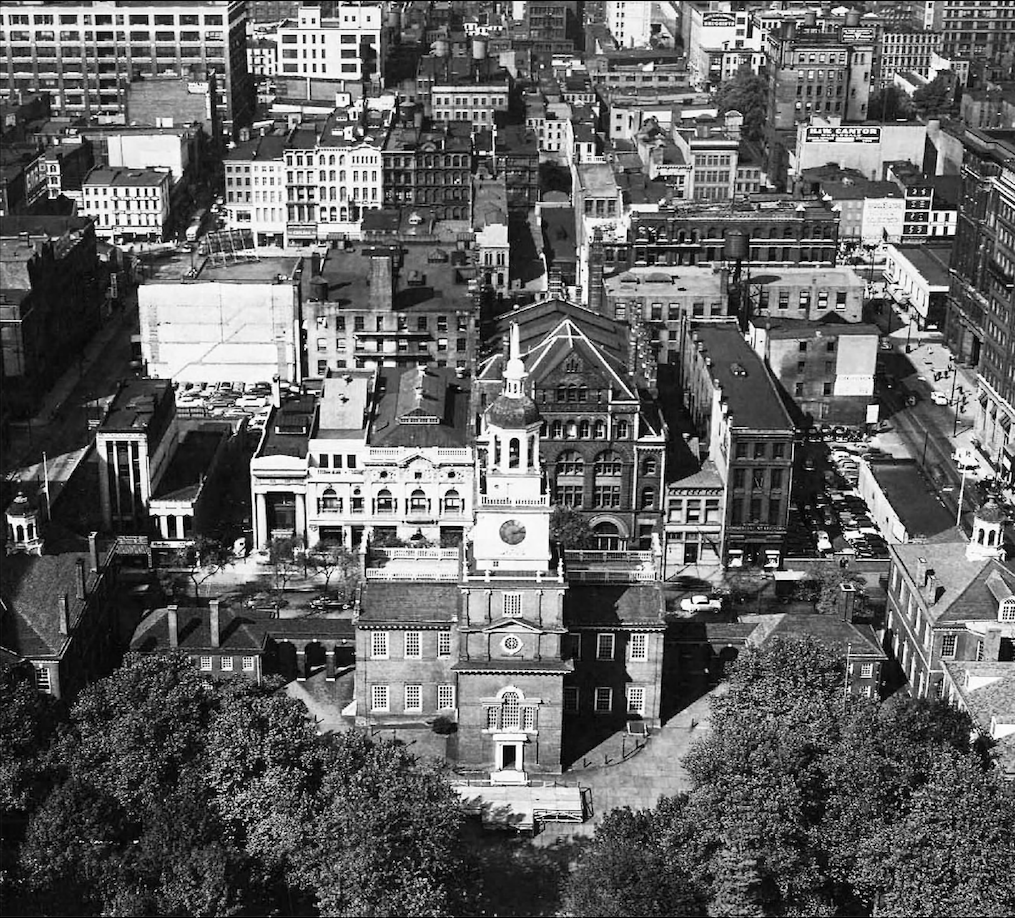
    Independence Hall in 1950, looking north from Walnut Street, in the area that would become Independence Mall.Inquirer Archives

    The state initially wouldn’t budge on its $150,000 price tag for the building, according to Martinko’s research, but after its yearslong campaign, the city ultimately purchased the plot for $70,000, or less than $2 million today. The deal, which was finalized in 1818, cemented Independence Hall’s legacy as a monument to the great American experiment.

    Government offices occupied the building, while the State House yard remained public green space. What’s now Independence National Historical Park was once a maze of industry, mixed-use buildings, and alleyways.

    By the mid-20th century, those blocks were razed, with some giving way to Independence Mall, in a push to beautify and boost civic pride.

    “Preservation and stewardship of historic sites is an ongoing decision — it’s very easy to take for granted buildings that are preserved today are going to be there tomorrow,“ Martinko said, ”but there’s no guarantee that any building will be here tomorrow or in 50 or 100 years.

    “History needs stewards and we all need to think of ourselves as people who should be engaged with saving places.”

  • Temple University IDs student killed by hit-and-run driver on Kelly Drive

    Temple University IDs student killed by hit-and-run driver on Kelly Drive

    Temple University on Tuesday identified a 20-year-old student who was killed last week by a hit-and-run driver on Kelly Drive.

    Bryce Wolfe, of Conyngham, a borough in Luzerne County, was an actuarial science major in the Fox School of Business and had just completed his sophomore year, said Temple President John Fry in a joint statement to the university community with Jodi Bailey Accavallo, vice president of student affairs, and Denise Wilhelm, interim vice president for public safety.

    Wolfe was riding a motorcycle when he was struck by a vehicle believed to be a white SUV, his parents said in an interview late Tuesday night.

    The unidentified driver dragged Wolfe for more than a mile on Kelly Drive, Clarence Wolfe III said.

    “We’re committed to getting justice for our son,” Lori Wolfe said.

    Philadelphia police said they responded to a report of a crash at Kelly and Reservoir Drives around 11:15 p.m. on June 24.

    Police said they believe the driver of a white SUV was traveling east on Kelly Drive and was trying to make an illegal turn onto Reservoir Drive, but then attempted to return to eastbound Kelly Drive when the SUV entered the westbound path of the red 2004 Triumph motorcycle Wolfe was riding.

    Wolfe became trapped beneath the SUV and was dragged to the area of Fountain Green Drive before his body was dislodged from the SUV, police said.

    Wolfe was transported by medics to Penn Presbyterian Medical Center and pronounced dead at 4:41 a.m. on June 25, police said.

    The suspected SUV sustained damage on the driver’s side and damage to the driver’s-side front wheel well, fender, and possibly driver’s-side door, police said.

    “Thanks to an anonymous donor, there is a $10,000 reward available for information leading to an arrest and conviction,” Fry said.

    Anyone with information about the case can contact police at 215-686-TIPS (8477), Fry said.

    Wolfe “had quickly established a reputation as both an excellent student and engaged member of the Temple community,” maintaining a high grade-point average while being enrolled in both Temple and Fox Honors program, Fry said.

    “Bryce was also deeply involved outside of class as he was a member of the student professional organization Gamma Iota Sigma and had recently started an internship with United States Liability Insurance Group,” Fry said.

    “There is no doubt that he had a very bright future ahead of him, and that’s what makes delivering this news especially difficult,” Fry said.

  • Top Trump official Sean Duffy promotes the President’s House in video with Mayor Parker

    Top Trump official Sean Duffy promotes the President’s House in video with Mayor Parker

    President Donald Trump’s administration has spent almost a year scrutinizing, and then dismantling, and then trying to rewrite history at one of Independence Mall’s most informative exhibits on slavery.

    All for one of Trump’s cabinet secretaries to promote the President’s House in a new video ahead of July Fourth.

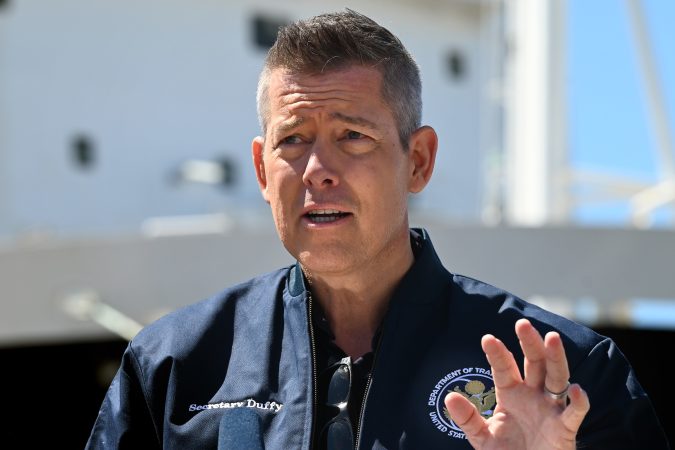
    Transportation Secretary Sean Duffy, who has been one of the Trump administration’s biggest cheerleaders for this week’s 250th anniversary celebrations, produced a video asking Mayor Cherelle L. Parker which Philadelphia historical sites visitors should see.

    Parker listed the highlights — the National Constitution Center, Independence Mall, the Liberty Bell, and ended her list of recommendations with the President’s House, which memorializes the nine people enslaved by George Washington in Philadelphia.

    “Reconnect with our history, recommit to the democratic values that we stand on, and have an amazing time,” Parker said.

    Cue Duffy showcasing pictures of the very panels at the President’s House that his boss wants to take down.

    The video, which was posted Wednesday to Duffy’s social media, appears to have been filmed in May, when Duffy visited Philadelphia while the city and the Trump administration were in the midst of a legal battle over the President’s House after the federal government removed the site’s exhibits earlier this year.

    A February court order allowed some of the panels to be reinstalled. Then, a ruling from the Third Circuit Court of Appeals in June said the Trump administration could replace the exhibits with its own materials, which are posted online.

    After the Third Circuit’s ruling, Parker said in a statement that: “I will pursue every legal action possible to reverse this decision. We cannot and WILL not rest until the full story of American history — including the existence of slavery at the President’s House here in Philadelphia — is told, for our Nation and the World to see.”

    On Thursday, a Boston-based federal appeals court removed the final legal obstacle that prevented the Trump administration from installing its own exhibits at the President’s House.

    This was not Duffy’s only visit to Philadelphia that coincided with a key event in the President’s House saga. Duffy joined Interior Secretary Doug Burgum in a visit to Independence National Historical Park in September 2025, just days after reports that the Interior Department planned to make changes to the President’s House.

    The secretaries were preparing for the Semiquincentennial celebrations. The Transportation Department, led by Duffy, has promoted road trips to a number of sites targeted by the Interior for changes, including Harpers Ferry National Historical Park in Virginia, in addition to the sites in Philadelphia.

    Duffy, a former MTV reality television star, has faced backlash for shooting a reality TV-style travel series with his family over the span of several months called The Great American Road Trip, meant to encourage celebrating the United States ahead of the 250th.

    A trailer for the series shows that he stopped in Philadelphia and visited LOVE Park and the Liberty Bell.

    In Wednesday’s video, which does not appear to be related to the series, Duffy says, “There’s no better place to go than where it all began in Philadelphia.”

    “This city is truly amazing, and the history that exists here,” Duffy said, “No one has it.”

  • Bill Wine, Emmy Award-winning film and TV critic, and longtime La Salle professor, has died at 81

    Bill Wine, Emmy Award-winning film and TV critic, and longtime La Salle professor, has died at 81

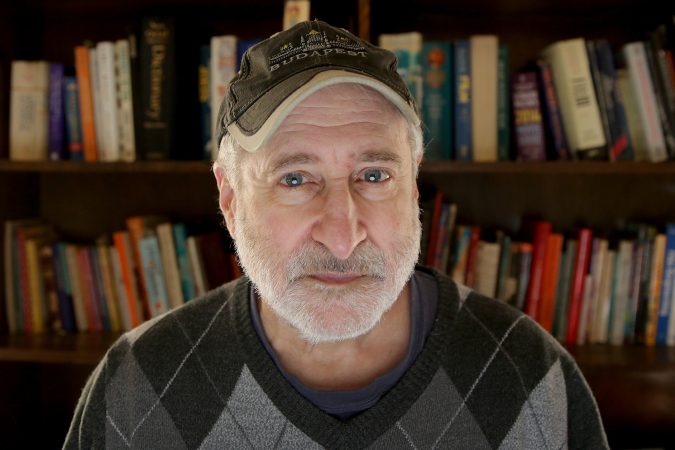
    Bill Wine, 81, of Philadelphia, three-time Mid-Atlantic Emmy Award-winning film and TV critic, retired tenured associate professor of TV and film at La Salle University, onetime freelance TV critic for the Daily News, freelance writer, playwright, and popular lecturer, died Sunday, June 14, of complications from Parkinson’s disease at his home in Chestnut Hill.

    The son of two part-time amateur actors and a lifelong devotee of theater, film, TV, writing, and teaching, Mr. Wine was a film critic for WTXF-TV, Channel 29, for 12 years and KYW radio for 17 years. Known for his pithy, witty, and often acerbic reviews, and a breezy conversational style of writing, he worked at Channel 29 from 1990 to 2002 and KYW from 2001 to 2018.

    “Bill Wine was a character out of a Neil Simon comedy, more Oscar than Felix,” said Carrie Rickey, former Inquirer movie critic. “You didn’t have to wait long for the punchline.”

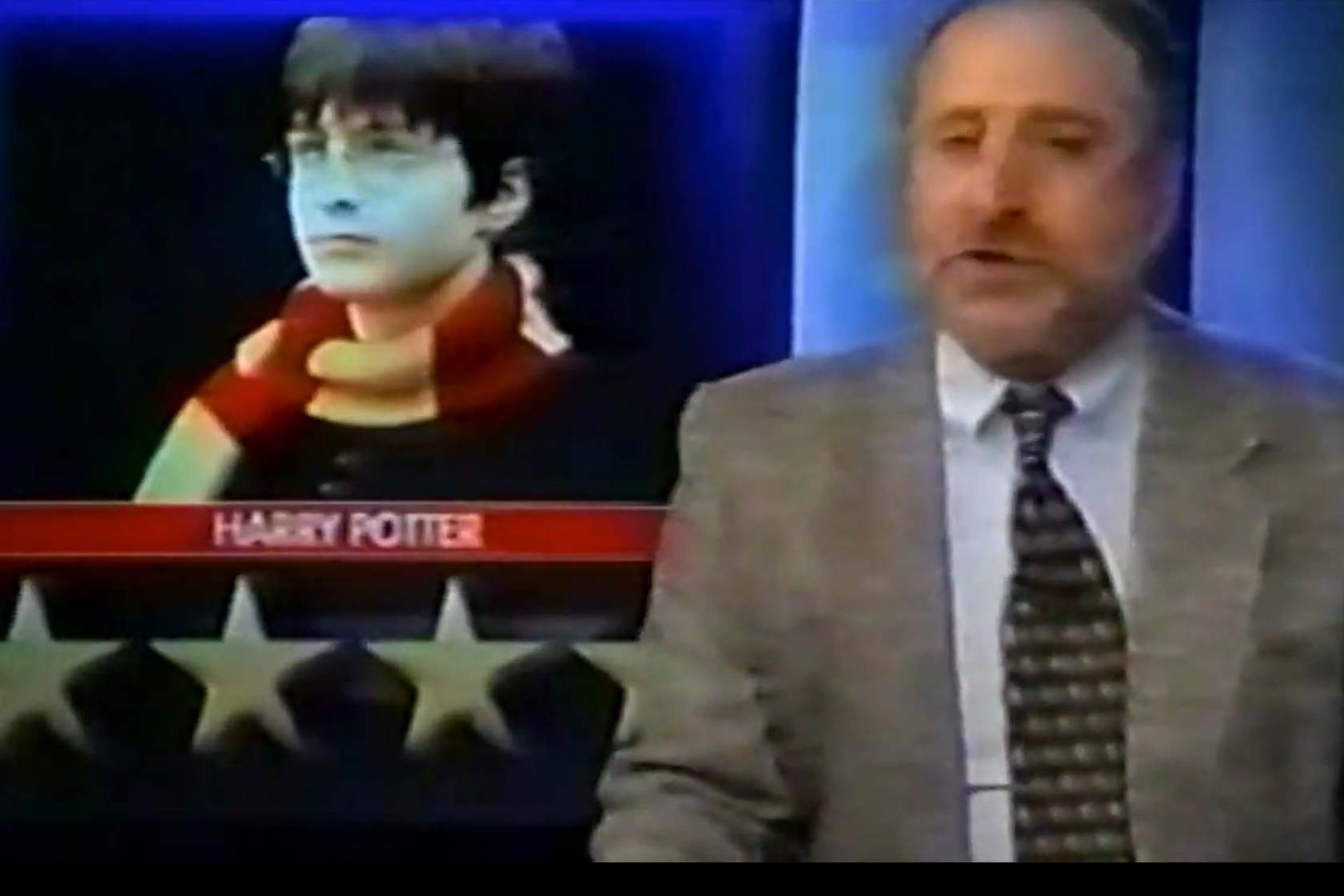
    Mr. Wine’s film reviews on Channel 29 were often funny and entertaining. Channel 29

    At Channel 29, Mr. Wine was nominated for eight regional Emmy Awards for commentary and writing, and won three. He appeared regularly on the station’s Ten O’Clock News, in primetime movie preview and review programs, and later on Mondays, Wednesdays, and Fridays on Good Day Philadelphia.

    By 1990, he had already written hundreds of freelance film reviews for the Daily News and Courier-Post, done radio reviews for WPEN, and taught a variety of classes about film and writing for a decade at La Salle. So, despite no previous TV experience, he was hired at Channel 29 over 60 other film critic applicants.

    “I had never been on TV, but I wasn’t nervous,” he told the Daily News in 2001, “because I had been standing in front of 100 students for 10 years.”

    Mr. Wine worked at at WTXF-TV, Channel 29, for 12 years.Courtesy of the family

    He started at KYW radio in 2001 and usually aired reviews and reports on Thursdays, Fridays, and Saturdays. Sometimes, he watched three movies in one day. He left Channel 29 in 2002 and KYW in 2018 only after both companies eliminated their local film critic position.

    “When I started [writing film reviews], it was before the internet,” he told The Inquirer in 2018. “A lot of people [now] feel like, ‘Who the heck is a movie critic to come on in a minute and to dismiss something that took hundreds of people and millions of dollars to create?’”

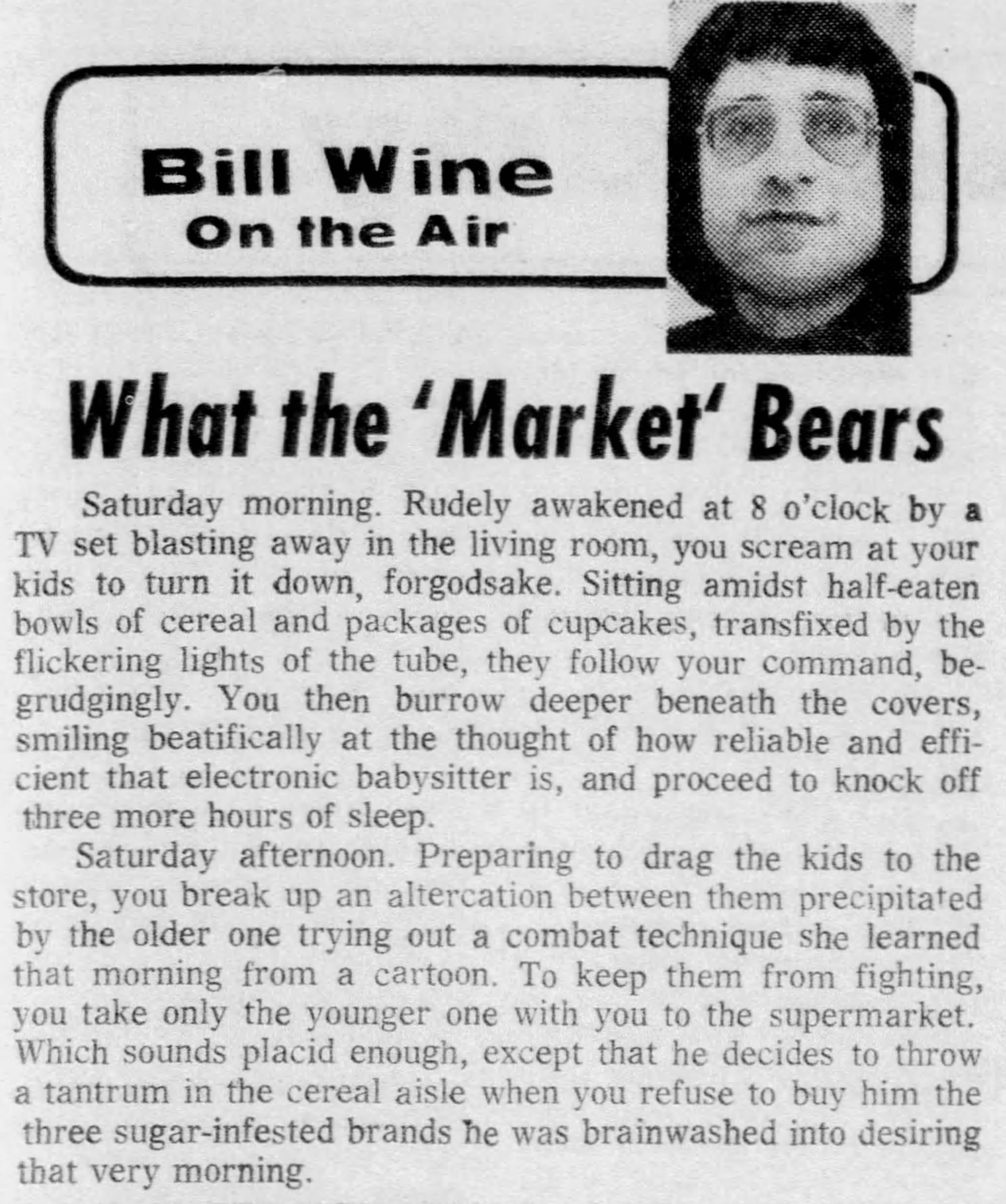
    In the 1970s and ‘80s, he wrote articles and reviewed films, TV shows, books, and plays for WPEN, The Inquirer, Courier-Post, Philadelphia Magazine, and other outlets. In 1975, he wrote dozens of freelance TV columns called “On the Air” for the Daily News.

    Mr. Wine wrote dozens of columns as a freelance TV critic for the Daily News in 1975.Newspapers.com

    He spent three years in California in the 1970s working on plays and film and TV scripts. He hobnobbed with famous writers, producers, and actors in Los Angeles, staged one of his own plays, and was a winning contestant on a new TV game show.

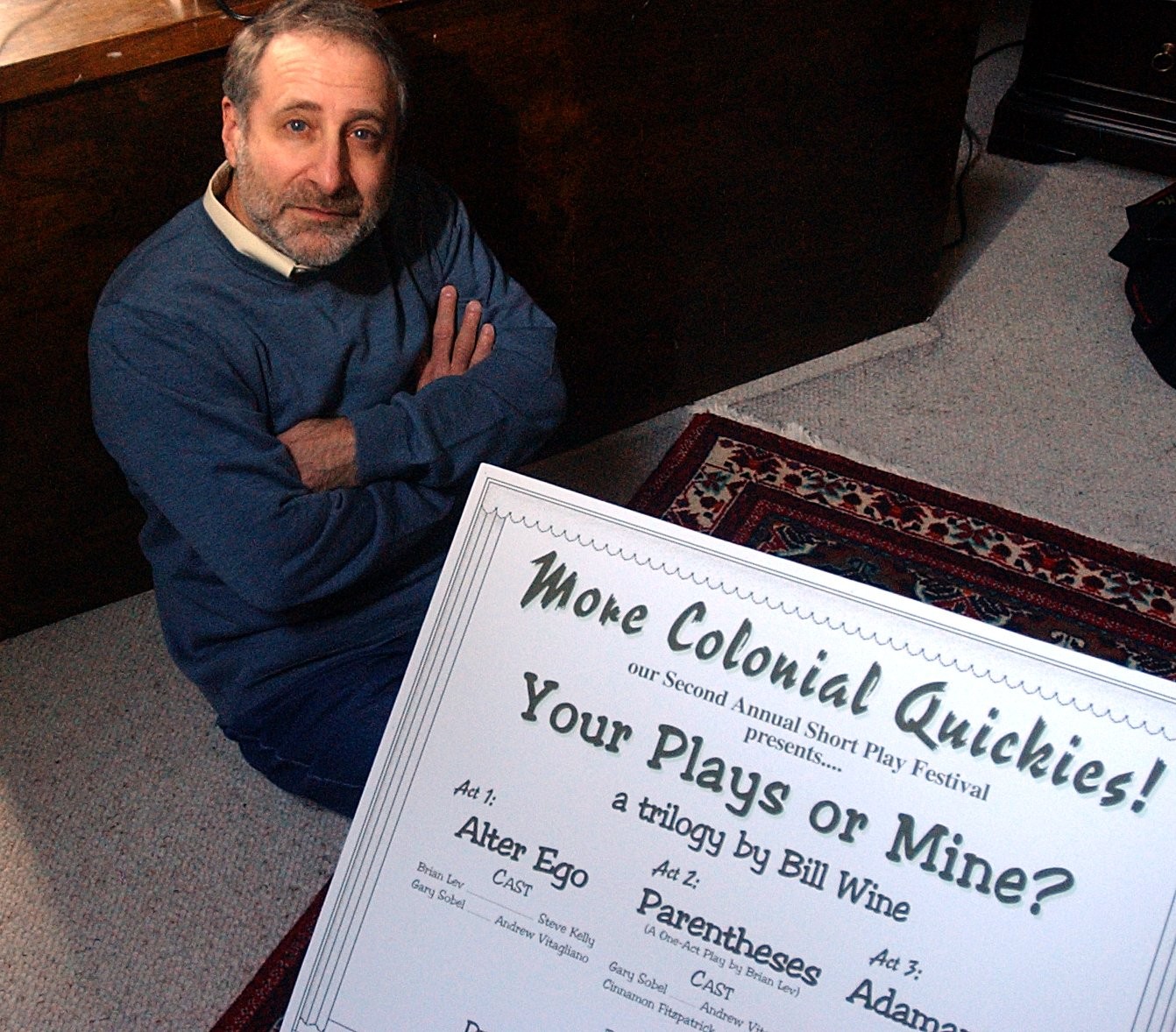
    He wrote 11 plays over the years, and several made it to the stage. “Now the people who disagree with my reviews can come and find out if I’m as dumb as they think I am,” he told The Inquirer in 2002.

    He aired reviews on WIP radio and lectured often at libraries, schools, community centers, theaters, and other venues about his favorite films, adapting books to film, and other topics. “He could be wickedly funny, especially when delivering a pan of a movie,” his family said in a tribute. “One of his favorite quotes was: ‘I had a bad seat. It was facing the screen.’”

    Mr. Wine was a prolific playwright who enjoyed table readings with family and friends. La Shina Clark / Staff Photographer

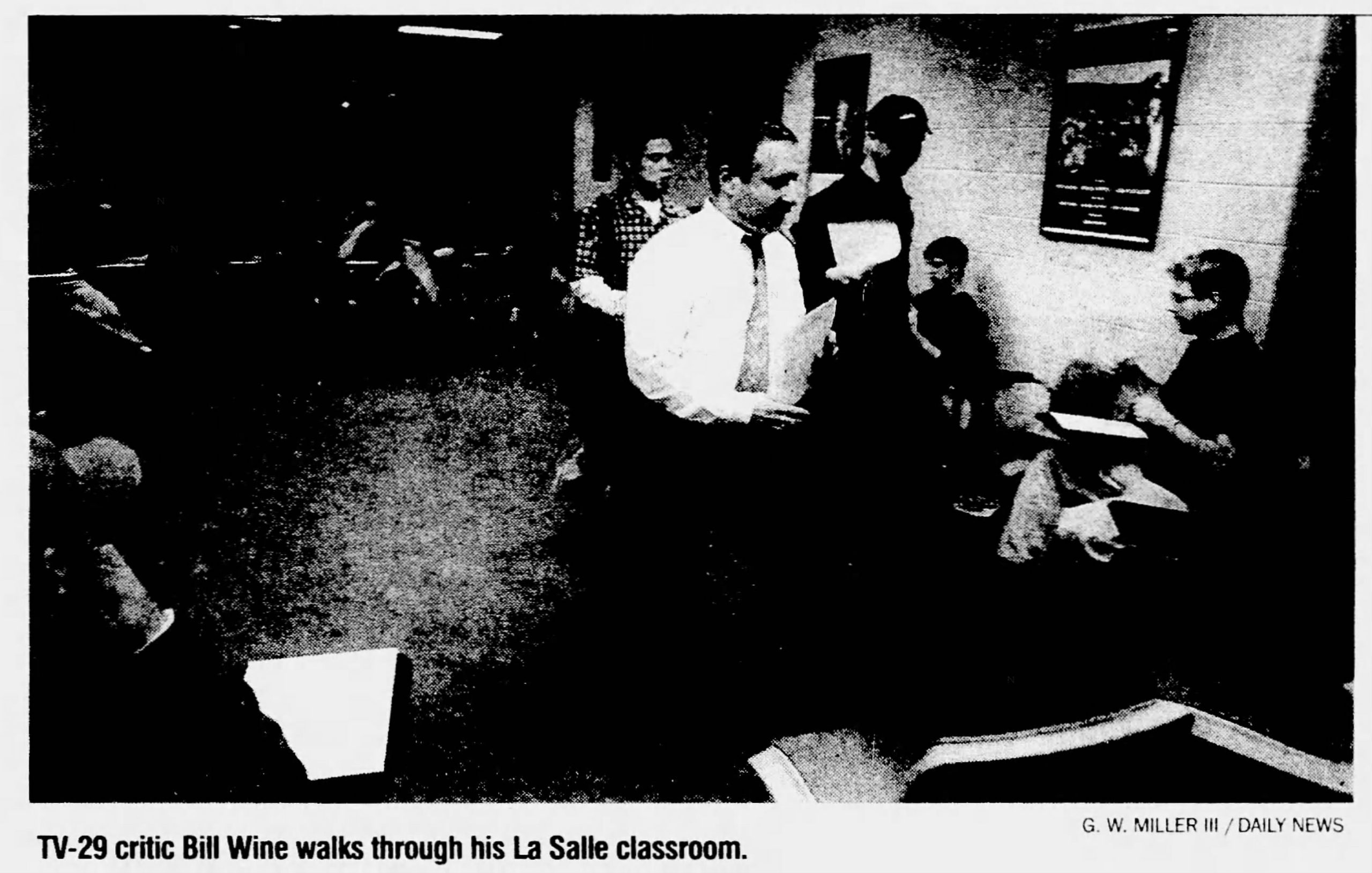
    Mr. Wine earned a bachelor’s degree in math at Drexel University and a master’s degree in communications at Temple University. He helped design La Salle’s nascent Communication Department in the 1980s, and school officials called him one of their “Founding Fathers.” He also taught briefly at Drexel, and came close to earning a doctorate at Temple.

    In 2001, he was featured in a Daily News story about “celebrity professors” and said: “You have to remind yourself that this is television, not the classroom. You mention, say, ‘film noir’ on TV, and you get a memo.”

    William David Wine was born June 21, 1944, in Germantown. He grew up in West Oak Lane and Cherry Hill, attended Central High School, and graduated from the old Cherry Hill High School.

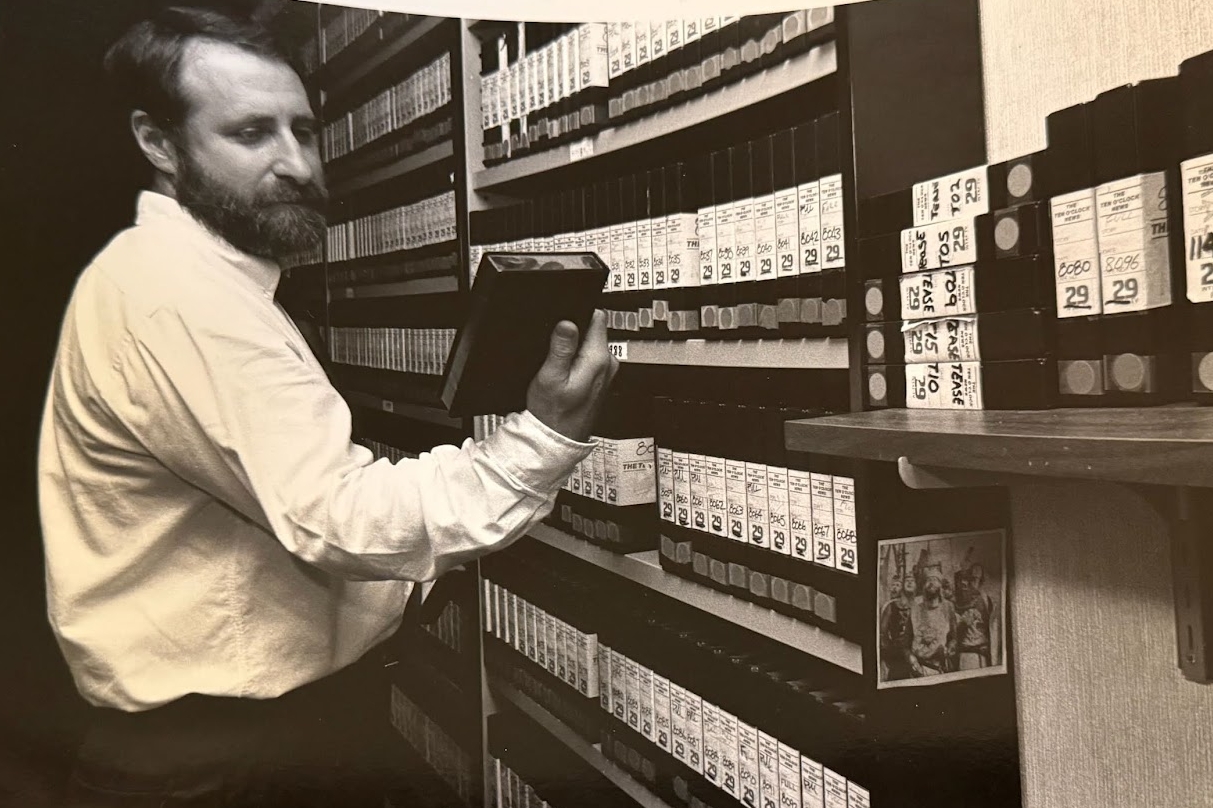
    A story and this photo of Mr. Wine about his time as a professor at La Salle appeared in the Daily News in 2001.Newspapers.com

    As a boy, he devoured newspaper movie reviews and fell in love with film after seeing Alfred Hitchcock’s 1954 thriller Rear Window. He got positive reviews of his own freelance movie review when he was at Temple, and he knew then, he said later, that writing about movies was his creative niche.

    “The first time I saw my byline, I was hooked,” he told Drexel Magazine in 2016.

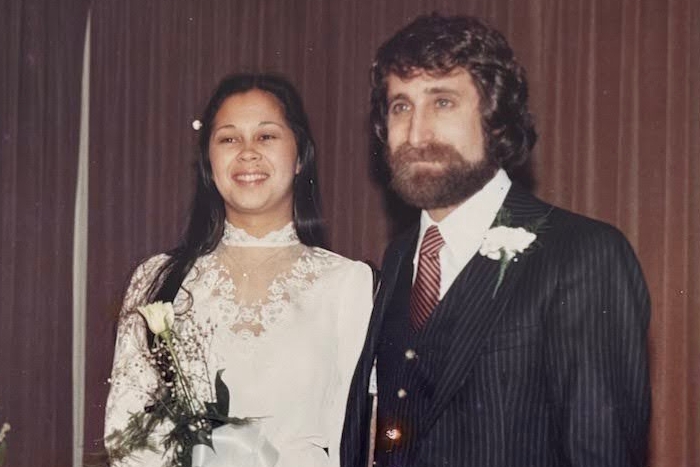
    He married Dina Lichtman, and they divorced later. He married Suzanne Monsalud in 1981, and they had daughters Simone and Paulina, and lived in Germantown, Wyncote, and Chestnut Hill.

    Mr. Wine and his wife, Suzanne, married in 1981.Courtesy of the family

    Together, Mr. Wine and his family traveled to Paris and London, and he and his wife honeymooned in Rio de Janeiro, Brazil. He doted on his daughters and sometimes took them to his La Salle classroom, the Channel 29 TV set, and movie screenings.

    Friends, former colleagues, and former students called him “a force of nature,” “smart and gifted,” and “a rare combination of kindness, professionalism, and humor.” His daughter Simone said: “His humor, warmth, and presence made life brighter.”

    Mr. Wine played tennis, third base on adult softball teams, and pickup basketball into his 70s. He followed the Phillies, 76ers, and Eagles closely, and hit tennis balls with Hall of Famer Rod Laver at a publicity event in Los Angeles.

    Mr. Wine and his family made memorable trips to Paris, London, and elsewhere. Courtesy of the family

    “He was a wonderful father and a dedicated teacher,” his wife said. “He was a real Philadelphian, and we complemented each other.”

    His daughter Paulina said: “Dad, I think you cracked the code. We’ll see you at the movies.”

    In addition to his wife and daughters, Mr. Wine is survived by three grandchildren, a sister, Marcia, and other relatives. A sister died earlier.

    A celebration of his life was held earlier.

    Donations in his name may be made to the Bill Wine Scriptwriting Award at La Salle University, 1900 W. Olney Ave., Philadelphia, Pa. 19141.

    Mr. Wine (second from left) enjoyed time with his family. Courtesy of the family
  • Second teen accused of killing Penn State student arrested on murder charge, authorities say

    Second teen accused of killing Penn State student arrested on murder charge, authorities say

    A teenager who authorities say killed a Penn State student surrendered to Philadelphia police on Thursday, one day after U.S. marshals captured a second teen wanted in the slaying more than 1,700 miles from the South Philadelphia street where the crime occurred.

    Kaiseem Smith, 16, turned himself in after a two-week, multiagency law enforcement search, according to the U.S. Marshals Service.

    Smith and Azzubair Outen-Fleming, 16, are expected to face charges of murder, robbery, criminal conspiracy, illegal possession of a firearm, and related crimes in the June 6 death of William “Billy” Schmidt.

    Both teens had been on the run until Wednesday night, authorities said, when members of the U.S. Marshals Service arrested Outen-Fleming at a house in Colorado Springs, Colo.

    Smith remained at large until Thursday.

    Police have said Outen-Fleming and Smith killed Schmidt, 22, shortly after 1 a.m. as he walked toward his South Philadelphia home.

    According to prosecutors, surveillance video captured two masked people — identified by investigators as Outen-Fleming and Smith — robbing Schmidt of his cell phone, searching his pockets, and then, moments later, shooting him.

    Smith, they said, is accused of firing the fatal shot.

    The teenagers fled after the shooting, police said.

    On Wednesday, prosecutors also announced charges against Outen-Fleming’s stepfather, Donte Abdulmalik, who they said helped him evade authorities after the killing.

    Abdulmalik was charged with hindering apprehension, obstruction of justice, tampering with evidence, and related crimes.

    Deputies with the U.S. Marshals Service’s Violent Offender Task Force tracked Outen-Fleming this week to a house in southern Colorado Springs with “ties to his family in Philadelphia,” Supervisory Deputy U.S. Marshal Robert Clark said. After conducting surveillance, deputies arrested him there late Wednesday.

    Schmidt’s father, William, did not return a phone call Thursday afternoon, and attempts to reach other family members were unsuccessful.

    Philadelphia police spokesperson Sgt. Eric Gripp said it was not clear when Outen-Fleming would be returned to Philadelphia.

  • Police are searching for a man who shot and killed two men and injured a third near Hunting Park Rec Center

    Police are searching for a man who shot and killed two men and injured a third near Hunting Park Rec Center

    Police have identified a man who they say shot and killed two men near the Hunting Park Recreation Center within days last month and shot and wounded a third man in May in what investigators believe are linked crimes.

    Jahylin Melchur, 21, is wanted in connection with two homicides and the shooting near the large North Philadelphia park, according to police.

    He is accused of killing 45-year-old Martin Higgins in the park on June 20. Officers found Higgins on the bleachers of the baseball field around 10 p.m. that evening suffering from a gunshot wound to the torso, police said. He was pronounced dead at the scene.

    Less than a week later, police said, Melchur shot and killed 29-year-old Sharef Holman not far from where Higgins was killed.

    Officers responded there on June 26 just before 11 p.m. and found Holman suffering from multiple gunshot wounds near the basketball courts. He was taken to Temple University Hospital, where he died a short time later.

    And on May 29, investigators said, Melchur shot a 55-year-old man in Juniata Park, about two miles from the recreation center. The victim told police Melchur had attempted to rob him before shooting him in the elbow and torso.

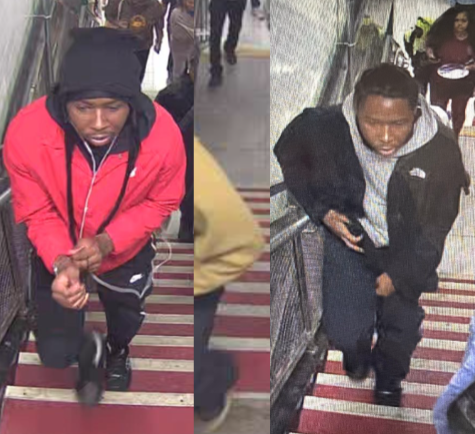
    Police are seeking the public’s help in finding Melchur, who they say is considered armed and dangerous and whose image, captured on surveillance footage at a Broad Street Line station, was circulated widely last week in an effort to locate him.

    Law enforcement sources said the victims were found partially clothed, and that they were looking into whether they had met the suspect through a dating app.

    Deputy Police Commissioner Frank Vanore declined to address that aspect of the investigation in a news conference last week and said police were looking into whether the incidents were related to robberies.

    Who were the victims?

    Sharef Holman’s loved ones said the 29-year-old lived a life of faith and compassion, and that he was the life of any party he attended.

    His mother, Danielle, said her son was beloved on both sides of his large family.

    “He was tall in stature, and the children in our family loved to climb him,” she said. “The reason why I start there is because Sharef had a heart for the youth.”

    Sharef Holman, a 29-year-old man who was shot and killed near the Hunting Park Recreation Center in June.Danielle Holman

    Holman, who was born in Philadelphia and graduated from Samuel Fels High School in Crescentville, loved playing the saxophone and dancing, his mother said. He excelled in his school’s musical theater program, and once played Ebenezer Scrooge, the lead role in A Christmas Carol.

    He had most recently worked at The Belvedere nursing home in Chester, where he assisted residents with recreational programs, and he tutored schoolchildren with the Greenhouse Project, a nearby Christian nonprofit.

    For a time, his mother said, Holman struggled with drug addiction, and she remembers the pride she felt when he graduated from a rehab program two years ago.

    “He had been fighting addiction for some years, and this last one was the one where he was the most successful,” she said, adding that her son’s progress allowed him to get an apartment of his own.

    Danielle Holman said she and her family are planning a celebration of her son’s life this weekend. As they prepare to honor and remember him, she said, they hope police will find and bring their son’s killer to justice.

    The family of Martin Higgins, who was shot and killed days before Holman, declined to be interviewed as they deal with their loss.

    Higgins, 45, was a graduate of Temple University’s business school and worked as an inspector for the city’s Community Life Improvement Program, according to his obituary.

    He had a “kind heart, generous spirit, and unwavering support for those he loved,” the obituary said, and he “was the person who showed up when someone needed him, always making time for family and friends no matter what was going on in his own life.”

    Police ask that anyone with information about Melchur contact the homicide unit at 215-686-3334 or submit an anonymous tip by calling 215-686-TIPS (8477).

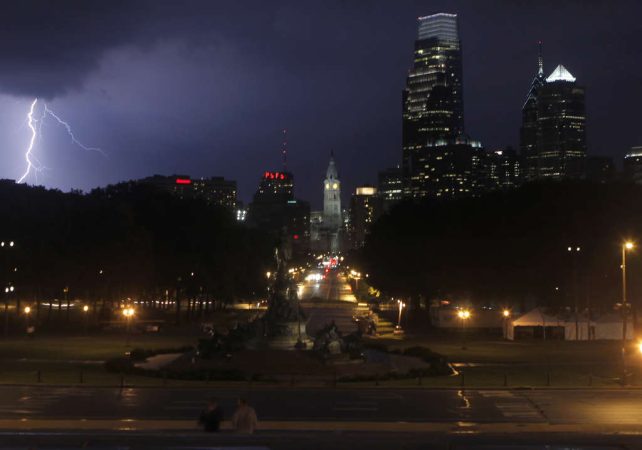
  • Lightning injuries are rare, but an expert says the Parkway is an especially risky venue on July 4

    Lightning injuries are rare, but an expert says the Parkway is an especially risky venue on July 4

    In the grand casino of the atmosphere, scheduling outdoor events on July Fourth in the Philly region is almost always going to be a rolling of the bones.

    And on the day Philadelphia and the rest of the nation are holding a mass 250th birthday party, the odds may be dicier than usual, with thunderstorms and accompanying lightning possible Saturday afternoon and night, forecasters say.

    The National Weather Service on Thursday listed a 50-50 chance of storms Saturday night, and the federal Storm Prediction Center, in Norman, Okla., bumped up the probability of severe storms — those with winds up to 60 mph — to 15%.

    July happens to be the peak month for lightning-bearing thunderstorms in Philadelphia, occurring every five days on average, and who doesn’t want to be outside on the Fourth?

    As if record-challenging heat and an atmosphere that feels like syrup weren’t enough.

    Lightning injuries and fatalities are rare — on average in the last decade, 20 people have been killed annually by lightning in the United States, according to the National Weather Service. But among outdoor events with large crowds across the country, Philly’s July Fourth concert would be among the riskiest for lightning, according to Stephen Strader, disaster specialist at Villanova University.

    “It’s way up there, a lot higher than I thought it was,” he said.

    The city is well aware of the atmosphere’s capriciousness, the potential risks in July, and the potential effects on the Parkway celebration and the World Cup match in South Philly and has developed safety protocols, said Jeffery Kolakowski, communications director for the Office of Emergency Management.

    Unfortunately, for attendees and planners, predicting the when and where for thunderstorms remains elusive.

    “There’s uncertainty of the when and where of the storms,” said Rich Thompson, branch chief and lead forecaster at the federal Storm Prediction Center, in Norman, Okla., the source of those severe storm and tornado watches. “It’s still one of the great frontiers of meteorology. It’s incredibly difficult.”

    ‘Ring of Fire’ fireworks and the weekend forecasts

    Readings soared to 97 on Wednesday, and the heat index shot past 105 in Philly as the atmosphere thickened in a hurry.

    And it’s about to get thicker. The heat is forecast to peak Thursday and Friday with highs surpassing 100. It could cool down all the way to 99 on Saturday, said Matt Benz, senior meteorologist with AccuWeather Inc. Unfortunately that would indicate increasing volatility in the atmosphere.

    High pressure though the atmosphere, the so-called heat dome phenomenon, has put a lid on convective storms, “but that starts to come off Friday into Saturday,” he said. That could lead to “ring of fire” thunderstorms, so named because they form on heat-dome edges. They can be especially nasty.

    “We’re worried that something is going to be blowing up,” he said.

    The storms could come in one bunch in the early evening and yield to a peaceful night, but they also could come in waves over a period of hours.

    Even without strong storms — or storms not in the immediate vicinity of the festivities — lightning strikes are possible.

    “Unfortunately that could be the biggest concern that day you’ve got lighting and people outdoors,” said Benz.

    The lightning threat

    The chances of being struck by lightning are remote, about one in a million in a given year, according to the weather service.

    But they do happen: They’re what Strader calls “low probability events” with “high consequences.” In 2019, several people were injured when lightning struck at a PGA tournament in Georgia.

    In 2014, a severe thunderstorm forced thousands of concertgoers at Philadelphia’s Made in America Music Festival to evacuate the Parkway for a short time that Sunday evening.

    But for the most part, Fourth of July fireworks have been confined to the manmade kind.

    In his analysis, Strader looked at thousands of outdoor events attended by 10,000 or more people, what he called “large outdoor public gatherings,” to calculate which ones would expose the most people to cloud-to-ground lightning strikes, taking into account location and time of year.

    He found that both the Parkway and World Cup events in Philly this year would rank among the top 6%, using his criteria. The Parkway would be particularly problematic given the lack of shelter options.

    All during the events the City’s Emergency Operations Center will be operating with a “play by play” from a National Weather Service forecaster, said Kolakowski.

    In the event of lightning he said, “an evacuation of the area could be issued and people would be asked to leave the event ground in a safe manner and seek shelter.”

    He said weather messages would be broadcast on screens, loudspeakers, social media, and text alert.

    He added that people can get free event or safety alerts by texting CUPPHL or AMERICA to 888-777.

    May they be unnecessary.