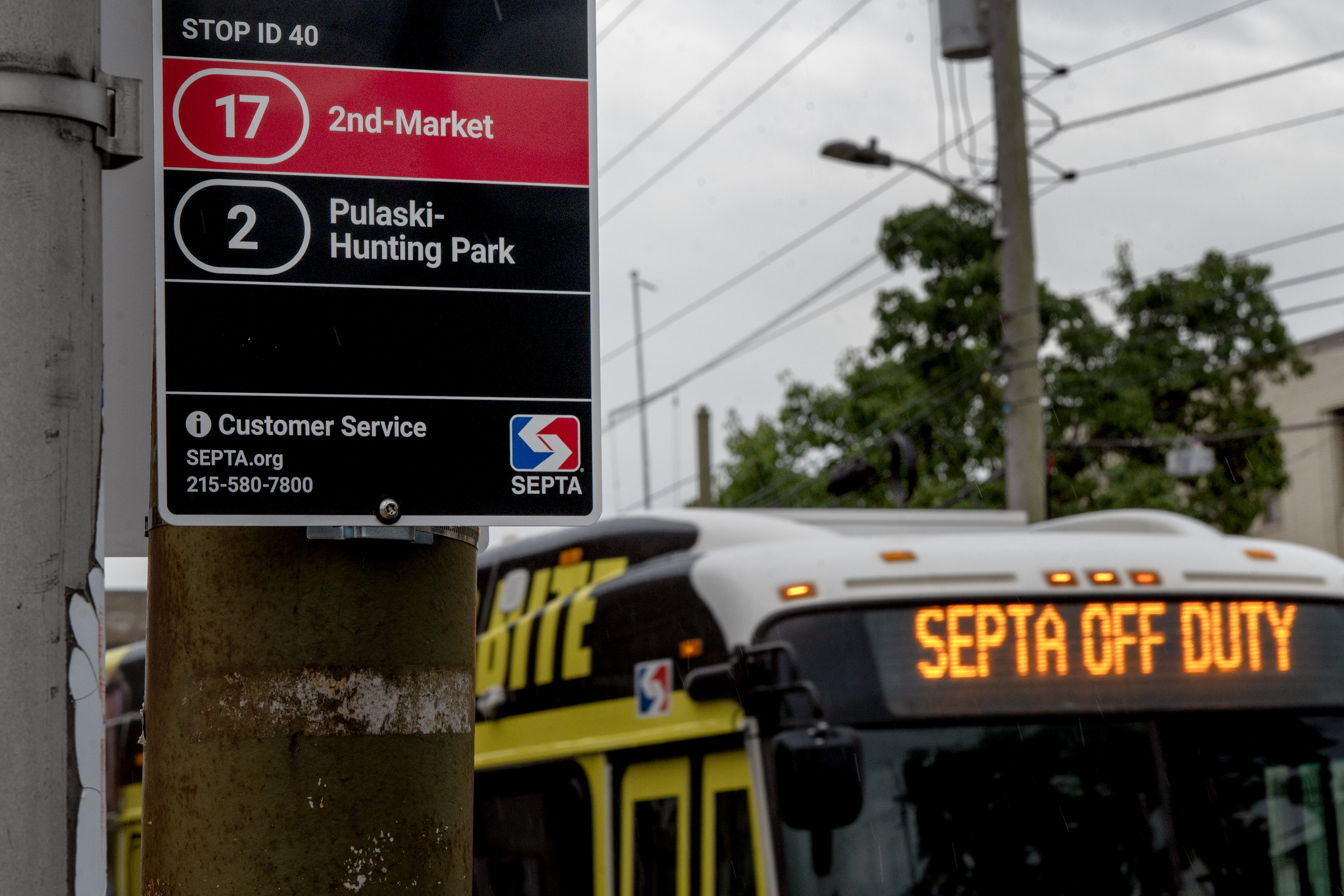
SEPTA is eliminating seven bus routes, debuting two new ones, and adjusting more Sunday as the first phase of a bus network redesign gets underway.
In all, riders will find changes to 30 routes, including more frequent service on those with high ridership, and buses coming less often on some lower-performing routes.
Highlights include:
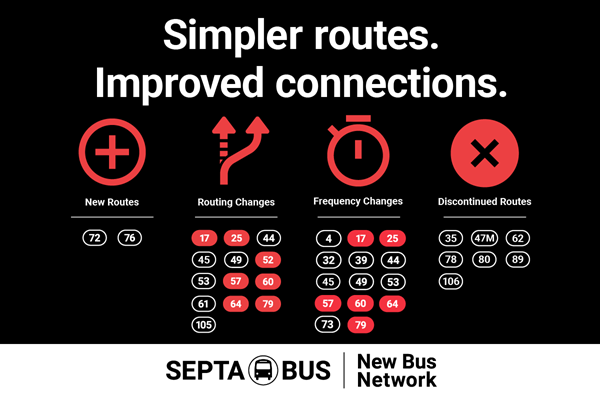
Routes 35, 47M, 62, 78, 80, 89, and 106 will disappear. SEPTA says they are less used or have nearby alternatives for passengers.
The new Route 72 will connect Frankford Transportation Center and Cedarbrook Plaza, running mostly along Cheltenham Avenue.
Route 76, the second new route, will travel between South Philadelphia’s Columbus Commons shopping center, anchored by Ikea and Lowe’s, and the intersection of Rising Sun and Olney Avenues.
SEPTA is using this graphic to summarize bus-route changes at a glance for the first phase of the redesigned system.SEPTA
SEPTA launched its bus system redesign efforts in earnest after ridership declined 13% from 2013 to 2019, a drop attributed to slow speeds, reliability problems, and competition from rideshare companies. And that was before the COVID-19 pandemic.
Originally called Bus Revolution, SEPTA’s redesign was set to launch in 2025 but faced significant community pushback and coincided with the state funding crisis that halted many planned transit initiatives. It was officially shelved in November 2024.
Along with the additions and subtractions, there are a few route extensions:
Route 45 will extend southward to serve the Navy Yard, the first time in a decade that a bus will serve the development seven days a week. There will be nine stops inside the Navy Yard for the 45. Currently, the route ends at Broad Street and Oregon Avenue. Route 17 will no longer stop at the Navy Yard on weekends.
Route 79, which ended at Snyder Avenue in South Philly, will cross the Schuylkill, go through Grays Ferry and University City, and end at 40th and Market Streets, where there is a stop on the L train, SEPTA’s new name for the Market-Frankford Line.
Route 53 is to be extended both east and west, to connect the Carpenter Regional Rail station on the Chestnut Hill West Line and the Richmond-Westmoreland Loop, via Aramingo Avenue. The 53 will no longer serve the Broad Street-Hunting Park Station on the B subway.
SEPTA says it is redesigning the bus network to modernize an outdated route structure and enable more efficient travel.
“We function as a network,” said Brandon Miller, manager of planning programs at the transit agency.
The changes will require riders to transfer to other bus routes, as well as metro trains, more often than they do now. And discontinuing low-ridership routes while beefing up popular ones is a needed trade-off to strengthen the overall system, Miller said.
Additional rounds of changes are scheduled for February and June 2027, with a fourth round in the fall.
As the afterglow of the world’s largest sports tournament and the country’s formal 250th birthday party in Philadelphia fades, the city is returning to its regularly scheduled programming.
But those months of celebrations came with significant investments into the city: building up the Benjamin Franklin Parkway, hosting Grammy Award-winning stars, renovating Lemon Hill to welcome half a million people, and, of course, the cleaning and maintenance work that made Philadelphia look fresher than it has in years.
SEPTA and the city partnered to landscape and beautify major traffic intersections, sometimes with a new mural provided by Mural Arts Philadelphia. SEPTA stations alsoreceived a much-needed deep clean and graffiti removal, all before and during the summer celebrations.
PHLASH buses got an extra stop to get to Lemon Hill; fans got free rides on the Broad Street Line after World Cup games. And, just as the international fans packed up their bags to head home, it’s time for many of those features to go, too.
But what about all the things staying in Philly? The city is not getting just generational memories and a summer party out of the deal. Here are some of the major legacy projects remaining in Philadelphia for years to come, perhaps even until the tercentennial celebration in 2076.
(function(){function e(){window.addEventListener(`message`,function(e){if(e.data[`datawrapper-height`]!==void 0){var t=document.querySelectorAll(`iframe`);for(var n in e.data[`datawrapper-height`])for(var r=0,i;i=t[r];r++)if(i.contentWindow===e.source){var a=e.data[`datawrapper-height`][n]+`px`;i.style.height=a}}})}e()})();
New mini soccer pitches across Pennsylvania
Location: Throughout Pennsylvania.
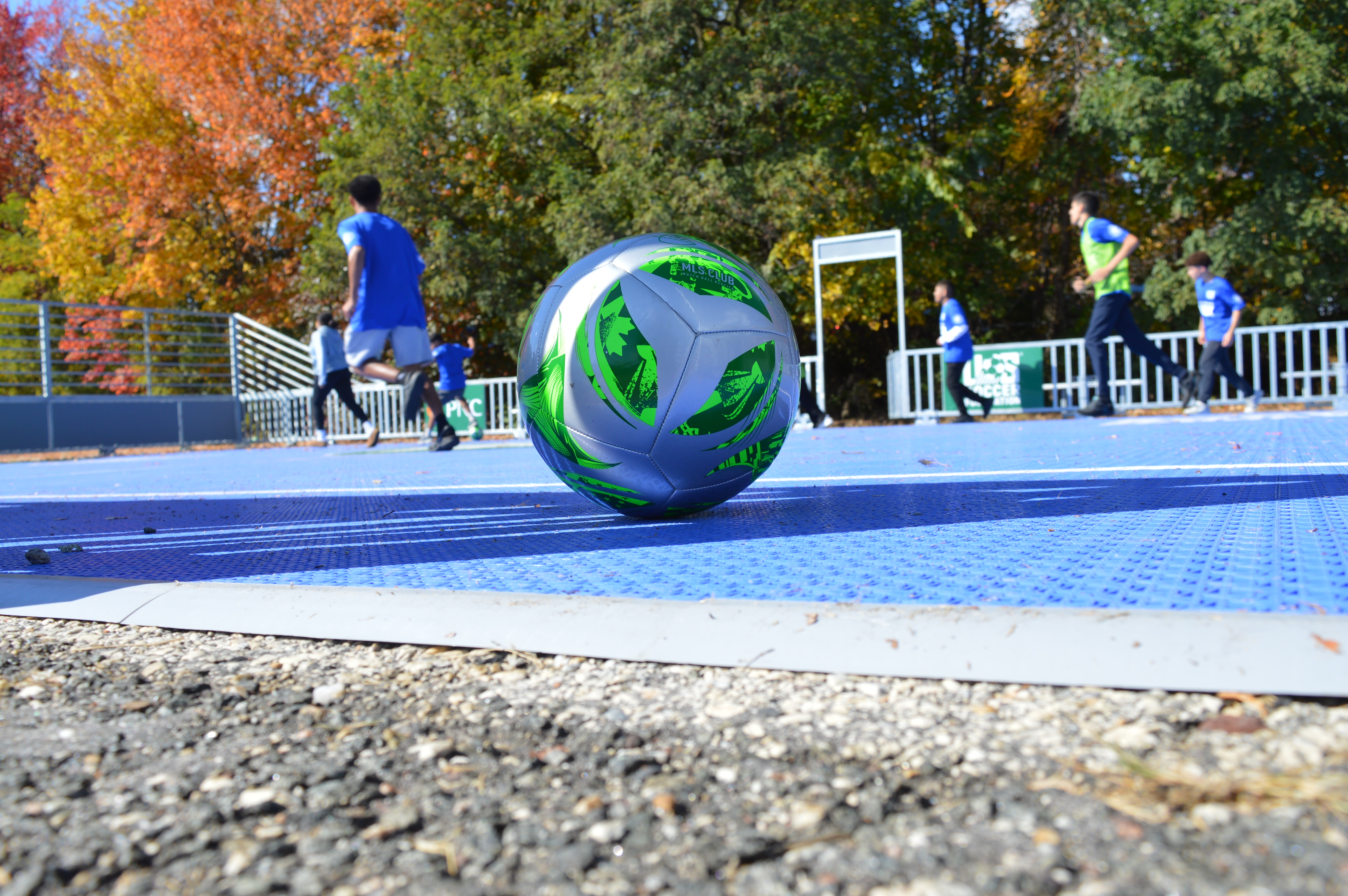
The project: How does the United States grow the next crop of elite soccer players? By making it easier to play soccer starting at a young age. At least 13 mini soccer pitches are being installed at schools, recreation centers, and parks across Pennsylvania.
The first two of Philly’s mini pitches were installed at West Oak Lane’s Building 21 and the Swenson Arts and Technology High School in Northeast Philadelphia. According to the U.S. Soccer Foundation, which is overseeing the project, each mini pitch costs $150,000 to install.
The U.S. Soccer Foundation has committed $2 million to install mini-soccer fields like this one in Northeast Philadelphia ahead of the 2026 FIFA World Cup.Kerith Gabriel
Who is behind it: The city and several nonprofits and private companies are backing this initiative, mostly through a $2 million investment from Philadelphia Soccer 2026, the city’s host committee for the 2026 men’s World Cup. Additional backers include the Philadelphia School District, Independence Blue Cross, and Comcast, among others. The U.S. Soccer Foundation is administering the funds and overseeing the installation of the pitches.
The project: The transformation of Fishtown’s TipTop Playground into two mini, enclosed turf soccer pitches, with additional event space and field lighting for night play. The pitches are now open for kids and adults.
Fishtown’s street soccer park will host leagues, free training clinics, and youth soccer programs. Casual pickup soccer is available outside of scheduled programming, led by Street Soccer USA, the organization that helps run such soccer parks across the country.
Who is behind it: You guessed it: Bank of America and Visa. Street Soccer USA will run programming at the park in collaboration with local groups.
Lemon Hill Park
FIFA President Gianni Infantino, center, will visit Lemon Hill Park on Thursday, April 10 for an operational planning tour of Philadelphia Soccer 2026’s FIFA Fan Festival siteJose F. Moreno / Staff Photographer
Location: Sedgley Drive and North Lemon Hill Drive.
The project: Lemon Hill Park received some updates ahead of hosting the official FIFA Fan Festival, and is now getting a much-needed makeover after 39 days of World Cup festivities. The restoration of the grass is underway, with more permanent amenities soon to be constructed.
Some upgrades are complete:
Other upgrades are coming soon:
Who is behind it: Philadelphia Soccer 2026 is committing $4 million to park upgrades, with help from the city, to repair the grass fields, bring new modern amenities to parts of the park, and outfit the space with new electrical service, provided by Peco, to prepare for future large events.
FDR Park’s Ashburn Field
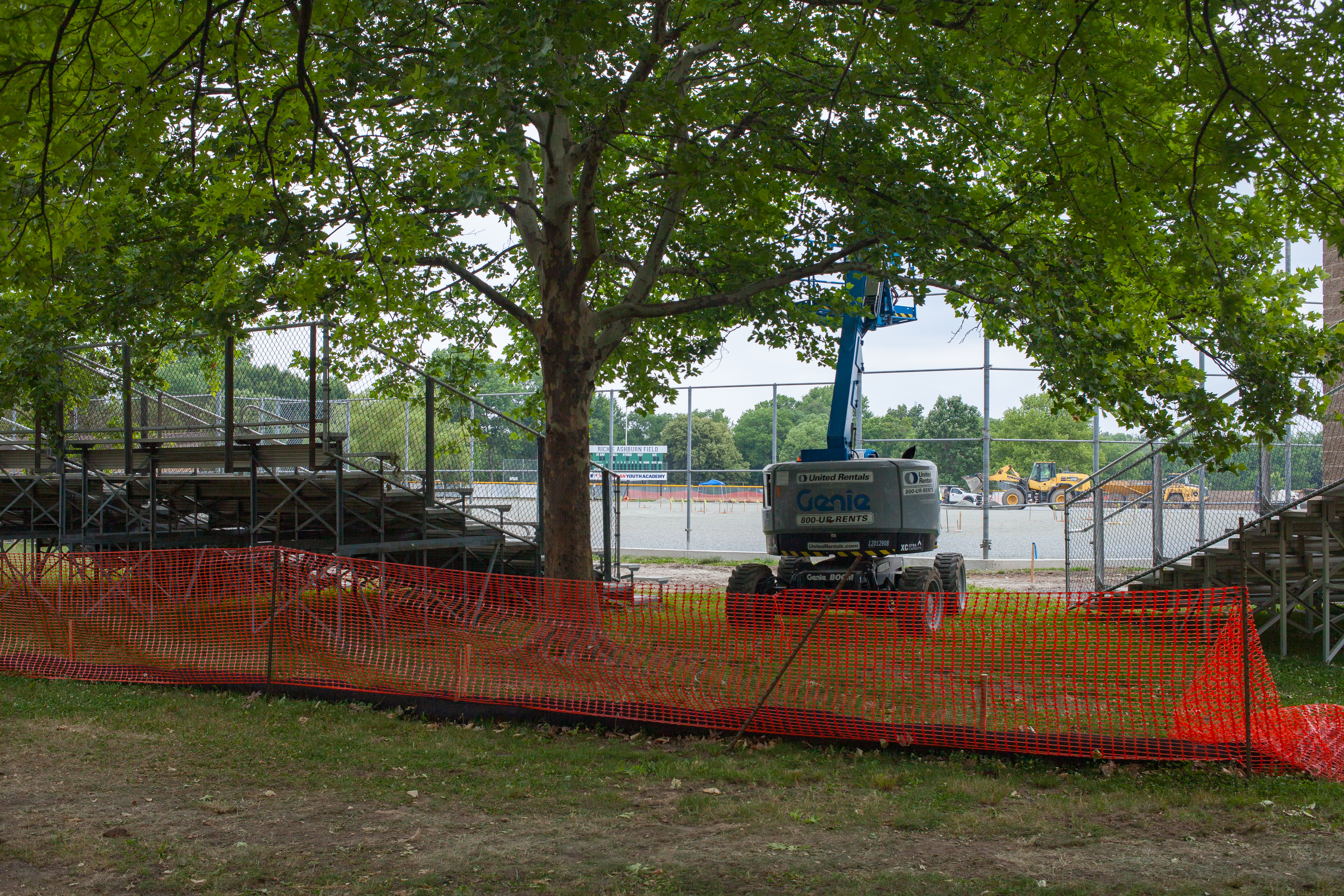
The MLB is renovating Ashburn Field in FDR Park, a city field managed and maintained by the Phillies that hosts a variety of youth baseball programs.
Location: 1500 Pattison Ave.
The project: Ashburn Field at FDR Park has been resurfaced with a new turf field, meant to better handle wet weather conditions. The 135,000-square-foot field was built in 1998, using funds generated from the 1996 MLB All-Star Game in Philadelphia.
Who is behind it: Major League Baseball and the Phillies, as part of a combined investment of more than $5 million in various projects tied to the 2026 MLB All-Star Game, including revitalizing the Negro Leagues Memorial Park and mural at 44th Street and Parkside Avenue in West Philly.
Independence National Historical Park
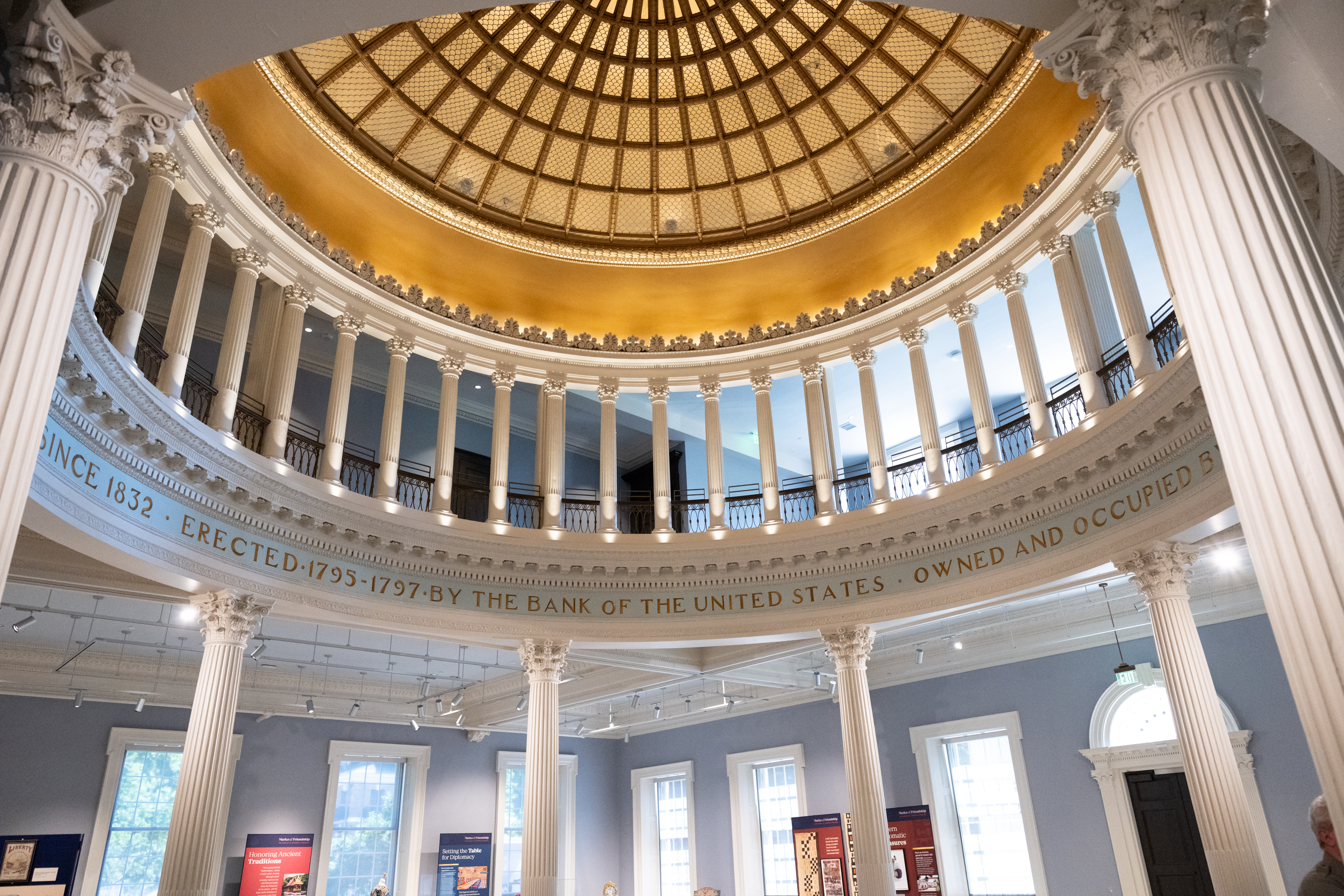
The rotunda inside the First Bank of the United States is pictured on Monday, June 29, 2026 in Philadelphia.Erin Blewett / For The Inquirer
Location: 599 Market St.
The project: Several improvements have already come to Independence National Historical Park and Independence Mall to commemorate the nation’s Semiquincentennial, and more are on the way. They include:
A $3.9 million “Join or Die” sculpture on Independence Mall, inspired by the truncated snake in Benjamin Franklin’s cartoon of the same name. The 46-foot-long granite work is expected to be unveiled this fall.
Beautification and horticultural work. This includes work at the Benjamin Rush Garden at Third and Walnut Streets, which showcases the 1976 Bicentennial Bell, a 10-ton Liberty Bell replica gifted by Queen Elizabeth II.
The reopening of the First Bank of the United States, on Third Street between Walnut and Chestnut Streets. The bank had been closed for 50 years but is now open for visitors thanks to a $43 million renovation.
Who is behind it: Independence Historical Trust, the city, the state, private foundations, philanthropists, and legacy groups.
Germantown Historical Society Visitor Center
Location: 5501 Germantown Ave.
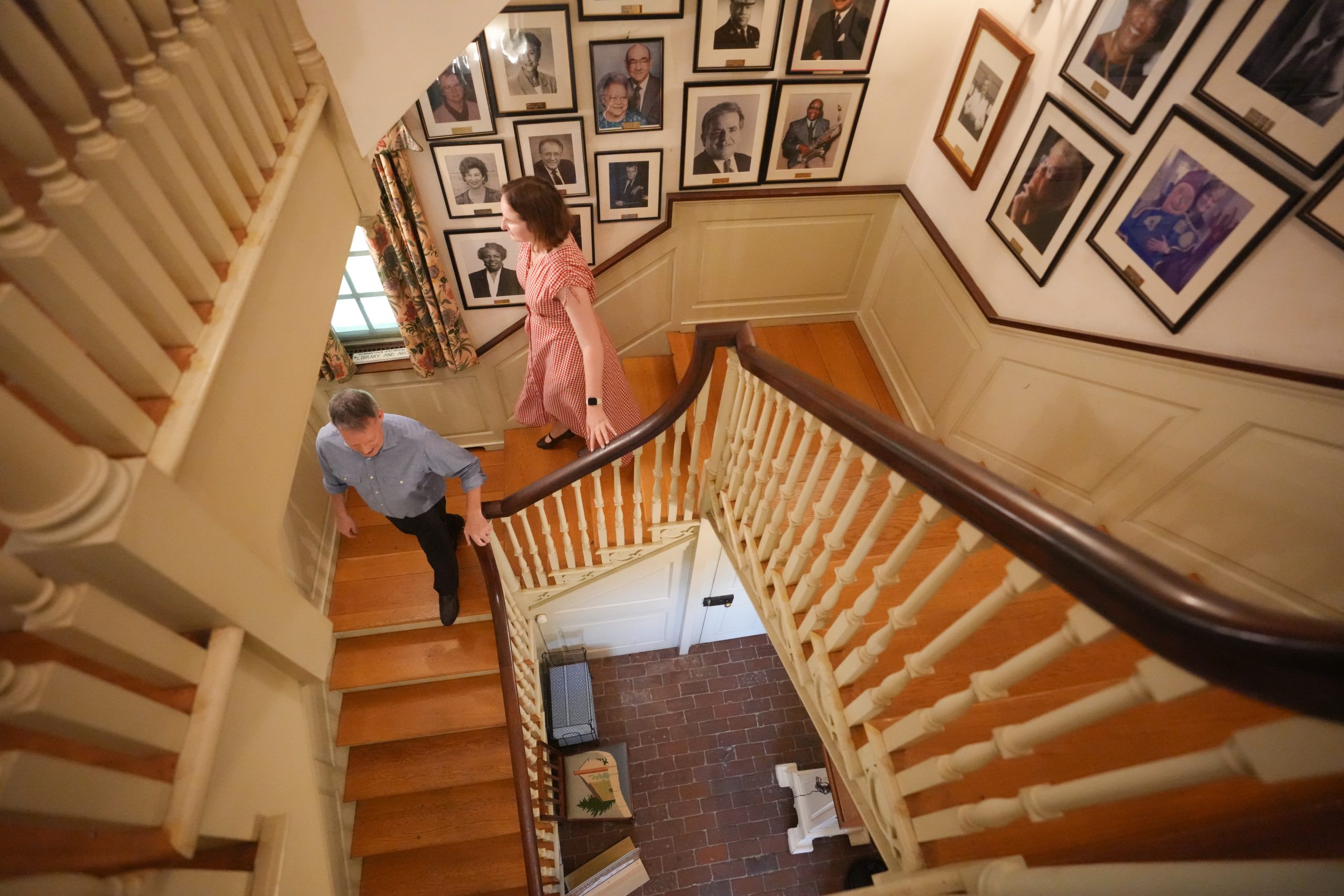
Tuomi Forrest, executive director at the Germantown Historical Society, and Kaila Temple, curator of collections at GHS, at the Germantown Historical Society building located at 5501 Germantown Ave. in Philadelphia, July 21, 2026.Jessica Griffin / Staff Photographer
The project: The Germantown Historical Society has its first visitors center, thanks to a $100,000 renovation of a section of its headquarters. It is modest but will host rotating exhibits, maps and pamphlets, and a gift shop.
Historic Germantown consists of various landmarks and attractions in Northwest Philly, including the Aces Veterans Museum, Awbury Arboretum, and the Germantown White House, where George Washington once lived.
Who is behind it: The Funder Collaborative for the Semiquincentennial, a philanthropic group organized by the Connelly Foundation that donated to many initiatives and projects related to the 250th anniversary celebration.
This week Philly teachers were prepping for the start of a new school year and I went to Fanny Jackson Coppin School in South Philadelphia to photograph them hanging posters, arranging desks, taking new books out of boxes, and opening packages of supplies,
I walked from classroom to classroom, saying hi and introducing myself. Most were happy to have me come in and show the newspaper’s readers how they spend hours making their room feel welcoming and comfortable.
I was definitely feeling at ease by the time I got to the first grade classroom of teacher Lauren Cucinotta.
Because I wrote just last week about the senses triggering memories I was expecting all morning that what’s known as the “Proust phenomenon” would kick in. But it wasn’t the waxy smell of the crayons.
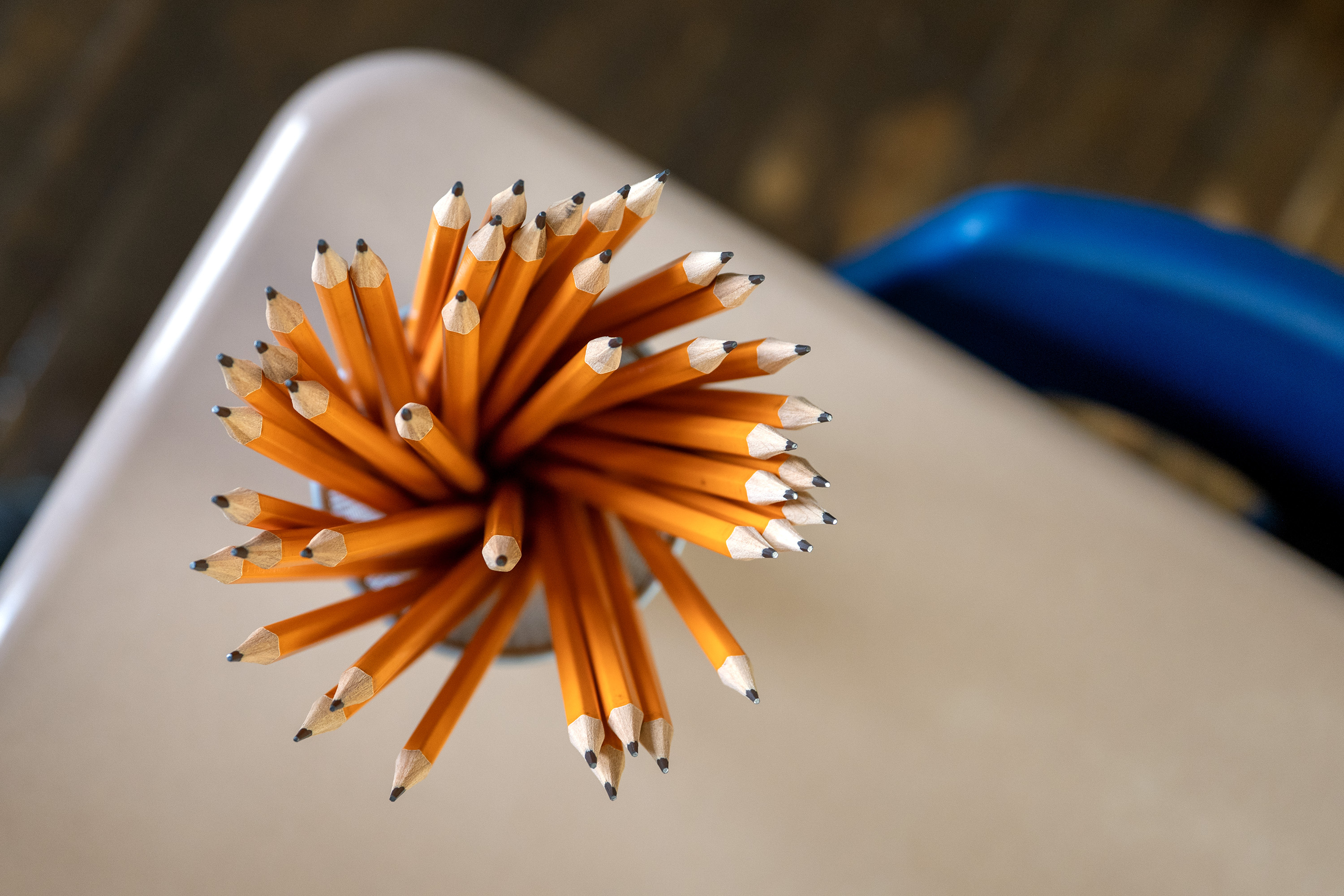
No, as a visual person it was the sight of a cup full of freshly sharpened pencils.
There is nothing more basic, more ordinary than a pencil — well except maybe for paper. But then we get into a chicken or the egg thing, and I don’t want to go there, so I’m sticking with pencil.
All those little points of graphite evoke a feeling of possibility. More than being ready to make the first marks of a new school year, I see them representing a clean slate (page) or even a new way to look at an annual recurring photo assignment.
You can’t see them in the photos, but for a moment even the erasers at the other end of the pencils evoke memories of my own first days of school and remind me that yesterday’s mistakes do not have to follow me into today, that there is always something new to see and photograph.
That’s enough navel gazing for one column, so let’s talk about this week’s installment of my colleague Elizabeth Wellington’s series highlighting a Philly “first” for the ongoing celebration of America’s 250th birthday. This week celebrated the first selfie still in existence, which was taken in Philadelphia in 1839.
They were first called self-portraits, and before smartphones, they involved putting cameras on tripods or tabletops and using timers or long cable shutter releases. Photographers — especially after small 35mm cameras came along — did use a wide-angle lens with the “extend your arm” technique, and the first I can remember seeing was when our wedding photographer took one of himself with me and my bride.
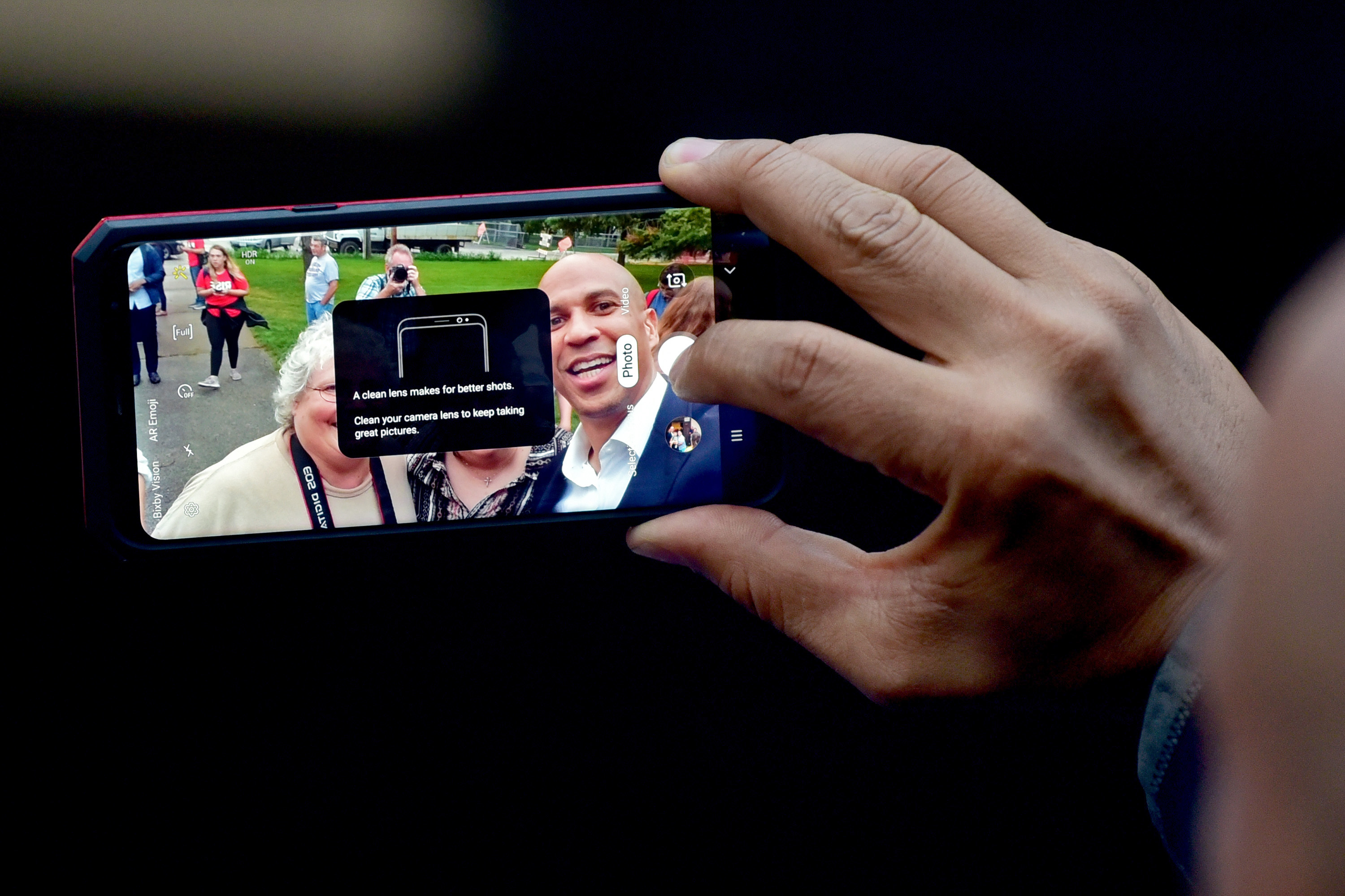
That’s a cherished selfie, but my all-time favorite selfie is one with U.S. Sen. Cory Booker when I spent time with him in Iowa during his short-lived 2020 presidential campaign. And since then, often on his home turf, in New Jersey. You can see me in the background — right behind the helpful photography tip a supporter’s cell phone offered (he cleared the message before taking the photo).
Which brings me to a few other photos to share from this week:
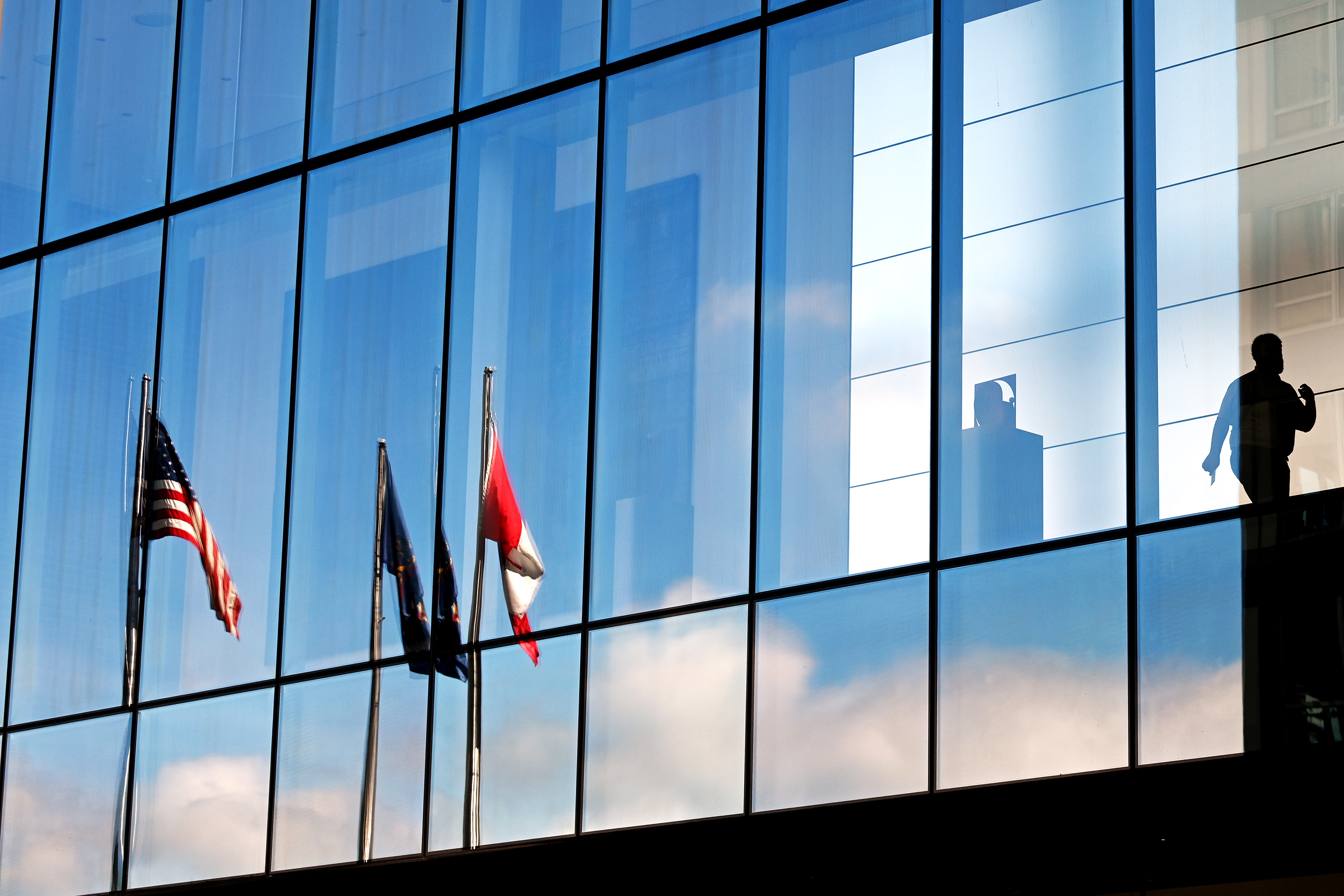
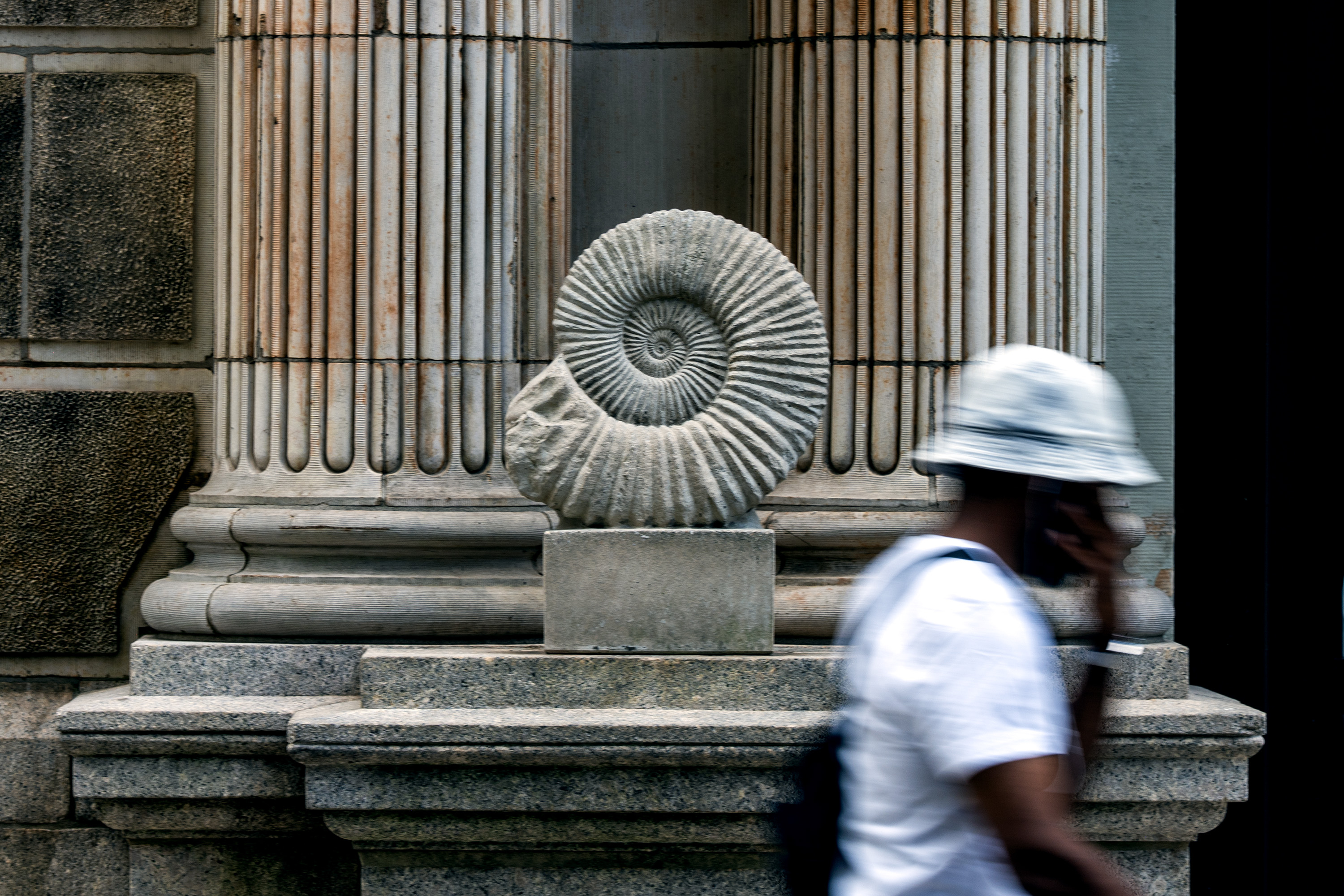
Flags and a bright blue sky are reflected in the windows of a Center City Philadelphia hotel on Monday.Tom Gralish / Staff PhotographerOne of two shell sculptures placed on either side of the entrance on the 19th Street entrance to the Academy of Natural Sciences of Drexel University on Monday. Created by unidentified artists and installed in 2010, a Philly public art website describes the small shell sculptural details as a “complement [to] the museum’s historic focus on malacology (the study of mollusks and their shells).”Tom Gralish / Staff Photographer
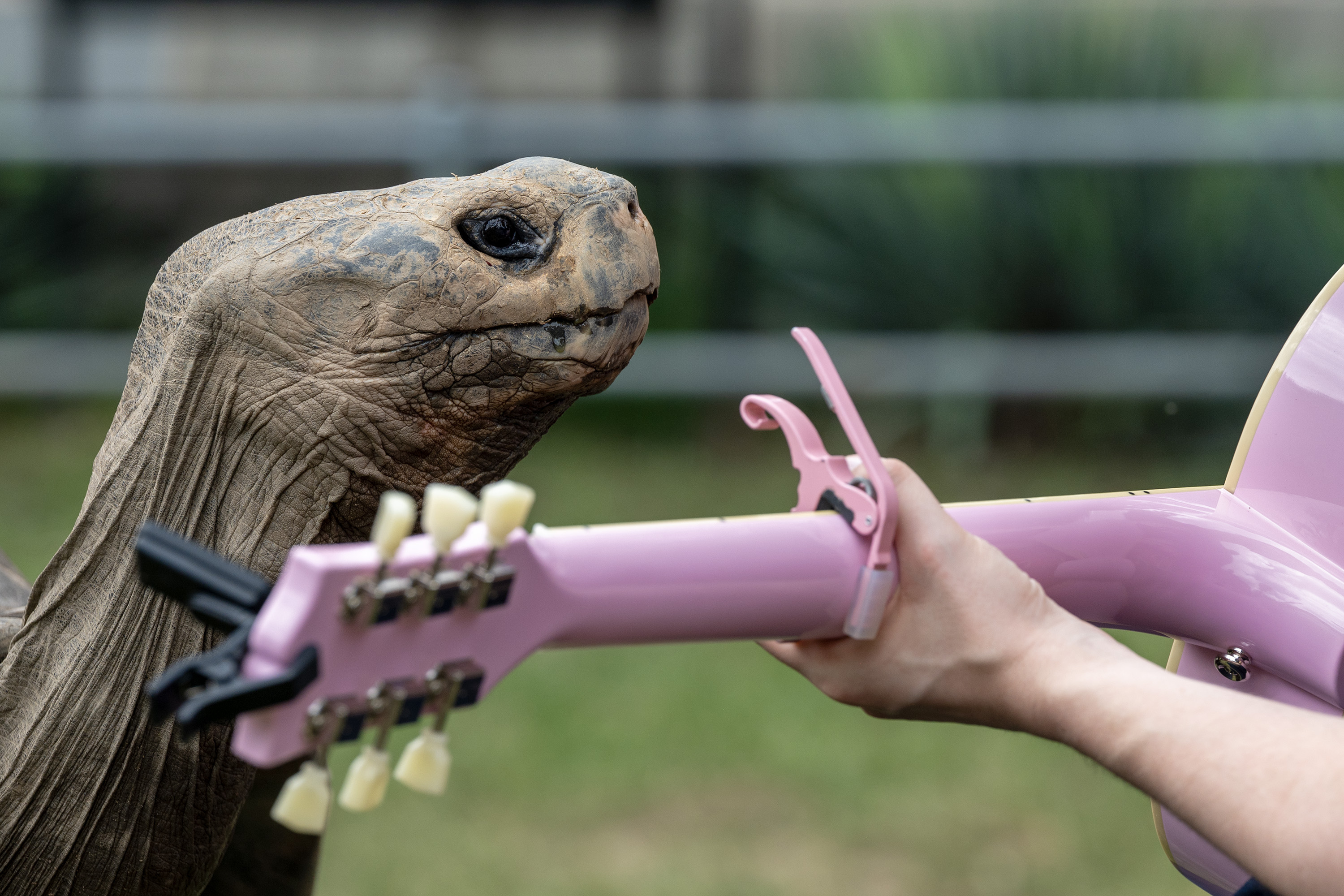
And a story I wrote this week on viral French singer-songwriter and animal advocate Loris Assadian, known as Plumes, who sang for tortoises at the Philly Zoo.
Assadian serenades Abrazzo, a Western Santa Cruz Galapagos tortoise estimated to be around 97 to 100 years old.Tom Gralish / Staff Photographer
Since 1998 a black-and-white photo has appeared every Monday in staff photographer Tom Gralish’s “Scene Through the Lens” photo column in the print editions of The Inquirer’s local news section. Here are the most recent, in color:
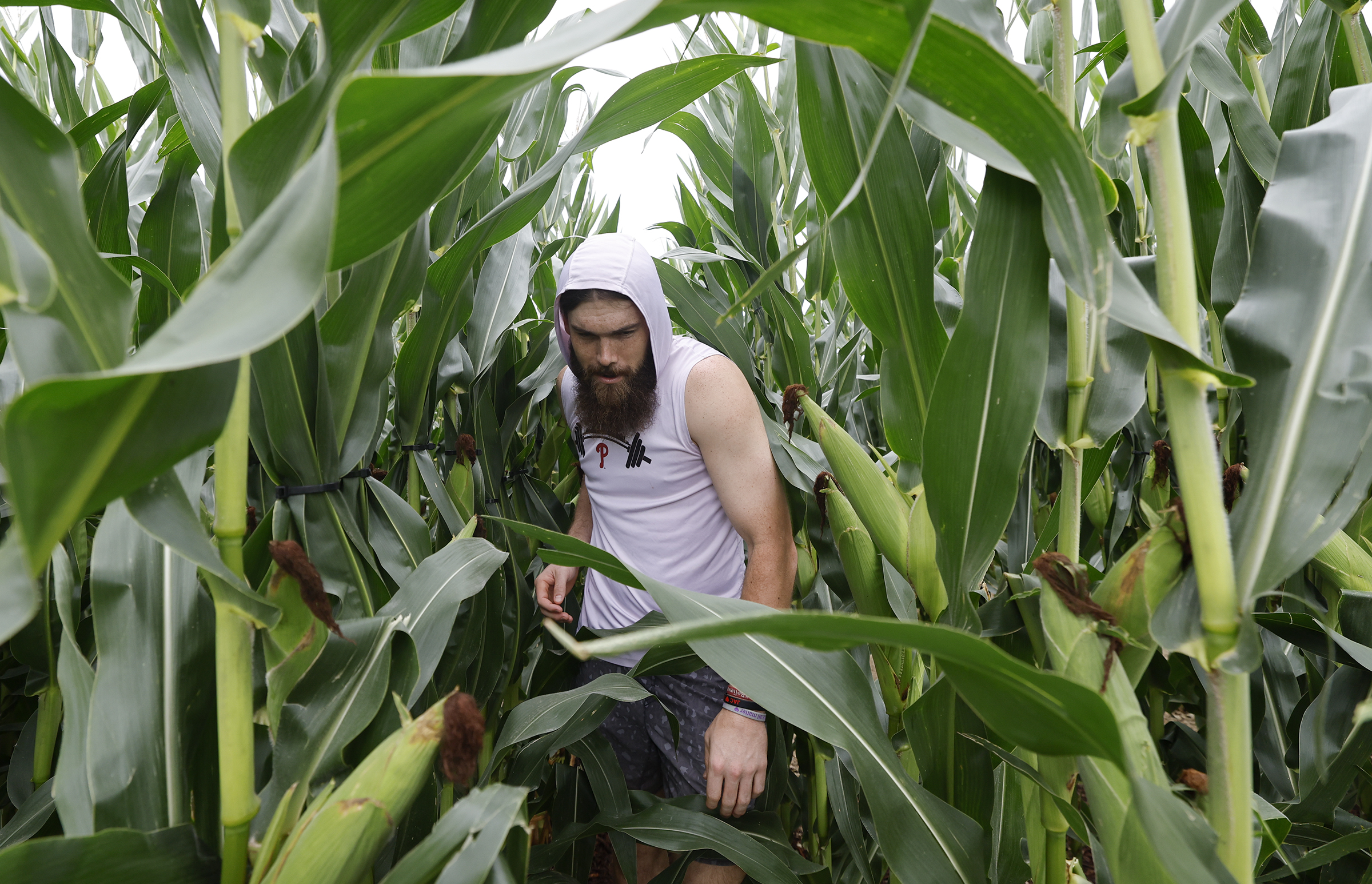
The Phillies crawled into Iowa for MLB’s mystical Field of Dreams game and haven’t lost since. The Fightins peeled off seven in a row since emerging from the cornfield in what’s become baseball’s most spine-tingling summer happening (Sorry, All-Star Game, but Mike Schmidt coming out of the corn was one for the ages.)
Powered by a suddenly divine offense — in the name of the Harper, Bohm, and Bryson Stott, amen — and a resurgent Aaron Nola, the Phillies’ season-best streak put the team 12 games over .500 for the first time all season. By Aug. 20, they enjoyed a two-game cushion for the second NL Wild Card spot. Whether the Phillies celestial good fortune has a Hollywood ending remains to be seen — and will depend largely on the trinity of Zach Wheeler, Cristopher Sánchez, and Jesús Luzardo, and saintly wisdom of Donny Baseball. Is it Heaven? Maybe not. But it’s August in Philadelphia, and the Baseball Gods are smiling.
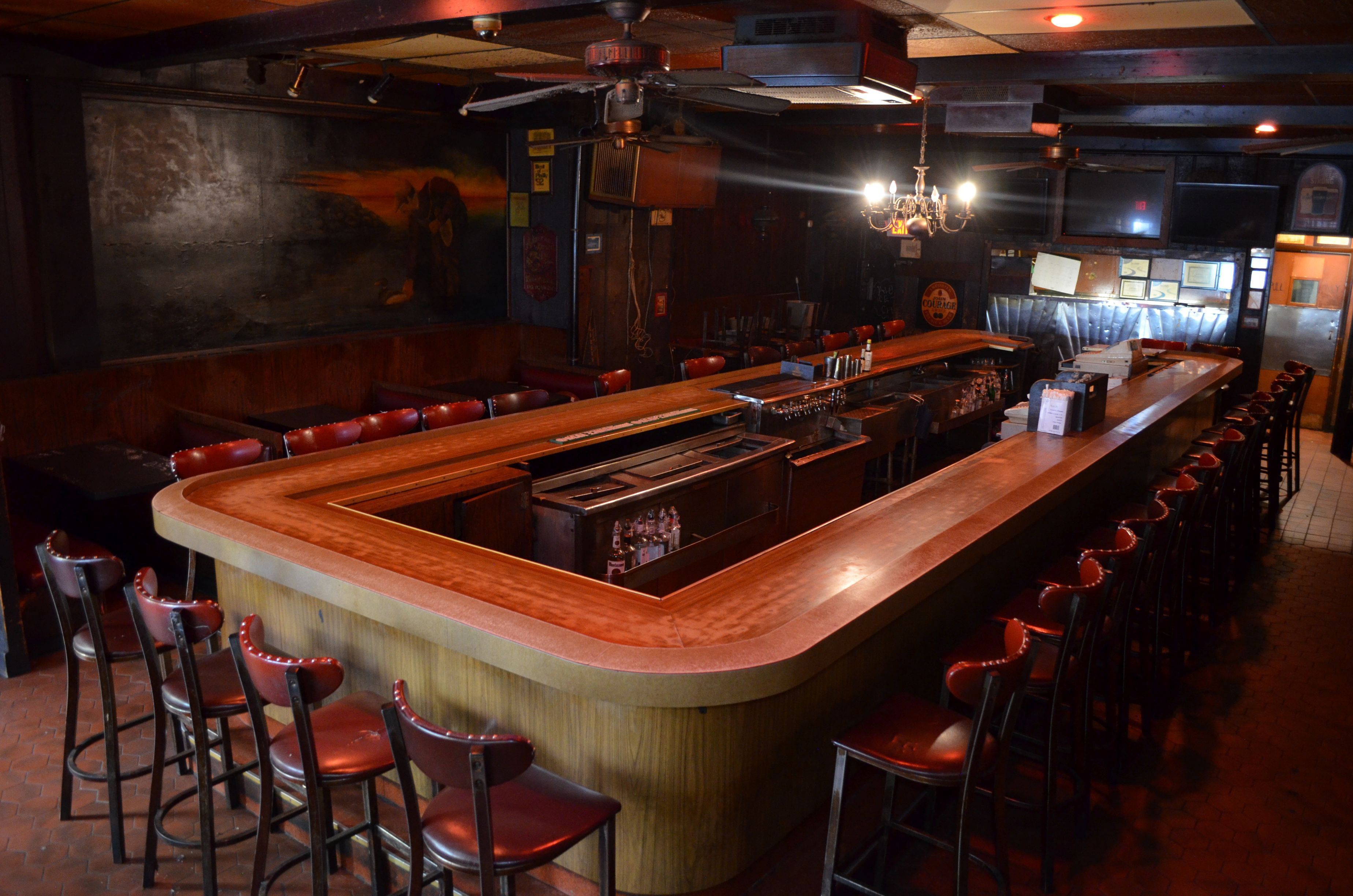
A bar at McGlinchey’s, 259 S. 15th St.MPN Realty
‘The Gray Wave’ hits Philly restaurants: B-
I’m a sucker for the city’s past. Especially its boozy, foodie past. My sepia-toned Philly time-machine daydreams include strolling bygone Jazz Age South Street speakeasies, clinking a Diet Coke to the swoosh of the gilded curtain at Palumbo’s nightclub, and touring the handsome booths of the 19th-century Reading Terminal Market. All to say, it’s a bummer to mark the passing of iconic Philly-area eateries like Kelly’s Seafood and Steve Stein’s Famous Deli, both in Northeast Philadelphia, and both closing by the end of the month.
Other landmarks — including the Medieval-inspired Pennsauken steakhouse, The Pub, and legendary Center City spots like Cherry Street Tavern and McGlinchey’s — are on the market. Some in the Philly restaurant scene have coined a phrase for what they say is a broader generational transition among small businesses as longtime owners reach retirement without children interested in taking over: “The Gray Wave.” Raise a Diet Coke — or something stronger, if you wish — to all the old great ones saying goodbye. But, alas, since a grand metropolis such as our own is nothing if not an ever-regenerating engine, offer too a hearty huzzah to the future greats that will surely follow in their boozy wake. Sláinte.
Jamika W. for President: A
Philadelphians pride themselves on providing local news reporters with profoundly entertaining and refined recountings of crimes and catastrophes. It’s in our blood — and unique vowel shifts. But for sheer charm and grace, few surpass everyone’s new favorite Philadelphian, Jamika W., who this week exuberantly reenacted kicking a masked menace near City Hall during a now-viral ABC7 Eyewitness News report.
On Aug. 17, Jamika W. saw something (a masked marauder chasing a woman into a coffee shop) and did something about it (calmly delivered a debilitating and flawless front kick to said marauder’s chest). Even more winsome than the kick itself — which Jamika W. displayed with wide-eyed enthusiasm and cool confidence — is the ironclad and incontrovertible reasoning behind her Roundhouse of Reckoning. “He just seemed disorientated about what his goals actually were,” she said, with a smile. “I had bags, he wasn’t reaching for those. He didn’t seem like he had a clear goal to actually get into La Colombe to do anything, so I was like, ‘OK, well, let’s see if you can fight, and he couldn’t.’”
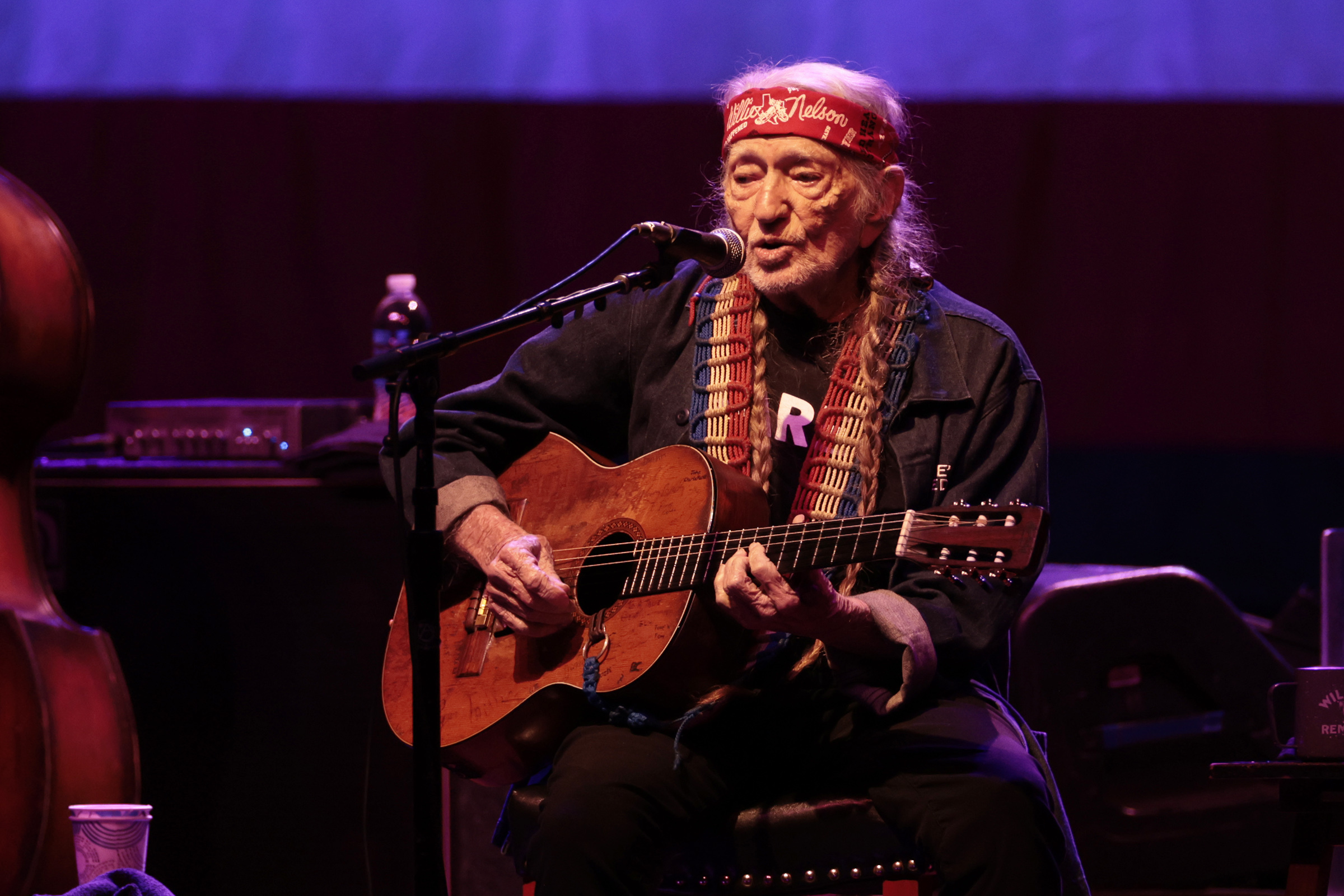
Willie Nelson performs during the Outlaw Music Festival at Freedom Mortgage Pavilion in Camden on Friday, September 12, 2025. On Sept. 24, Willie Nelson & Family and Neil Young and the Chrome Hearts will play a coheadlining date at the Highmark Mann.Elizabeth Robertson / Staff Photographer
Willie and Neil Philly bound: B+
For the first summer in years, Willie Nelson will not be bringing his Outlaw Music Festival to Philadelphia. At 93, and fueled by love, music, and his own THC-infused drink, Willie’s Remedy, the Outlaw Oracle needs a break. But all is not lost in Willieville. Turns out Nelson isn’t skipping Philly after all. On Sept. 24, Willie Nelson & Family and Neil Young and the Chrome Hearts will play a coheadlining date at the Highmark Mann. (Teenage songwriter phenom Ty Myers is also on the bill.)
Personally, I bawl like a baby every time I hear Willie Nelson sing “Blue Eyes Crying in The Rain.” See you soon, Willie.
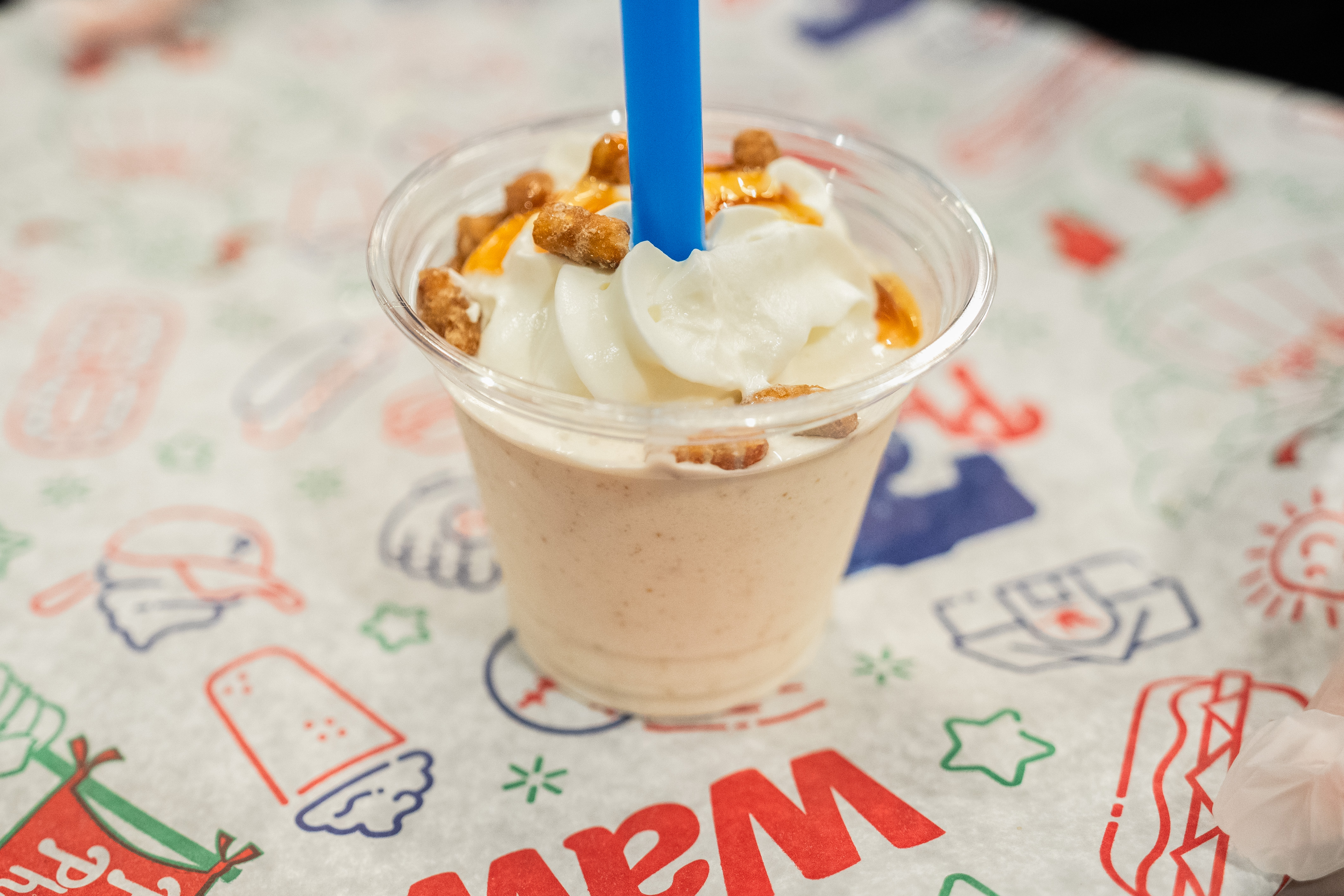
The new limited-edition Phanatic Caramel Curveball Cream Smoothie was announced Aug. 17 at Wawa’s Penrose Avenue store. Jessica Griffin / Staff Photographer
The new Phanatic smoothie: C-
Few can fault the limited-edition Phanatic Caramel Curveball Cream recipe, though vanilla ice cream, caramel sauce, whipped cream, salted caramel syrup, and sea salt pretzel pieces doesn’t exactly scream Galápagos Islands. Also, can you really call it a smoothie if it’s … 950 calories?
But what disappoints most is a Philly fan taste-tester who cheerfully testified that the drink contained a salty-sweet savor similar to a “sprinkling of Mets tears.” Mets?! They stink. An embarrassment, last in the division. Why is anybody concerned with them? Haven’t you read the news baby, we’re two games behind the Diamondbacks for the second Wild Card! Do rattlesnakes cry?
Makini, the last African lion at the Philadelphia Zoo, has died, zoo officials announced Friday.
Makini, who was about 17.5 years old, suffered from advanced arthritis, and he recently began showing signs of weakness in his hind end and was struggling to navigate, zoo officials said.
“The team made the difficult and compassionate decision to humanely euthanize him,” the zoo said in a statement.
“At 17.5 years old, he was considered geriatric and surpassed the life expectancy for this species. The life expectancy of lions in the wild is 10-14 years,” the zoo said.
The Smithsonian’s National Zoo website said that a lioness in the wild can live up to 16 years, but males rarely live past the age of 12. In zoos, the website said, lions may live into their teens or early 20s.
Makini arrived in Philadelphia in December 2011 from the Tulsa Zoo in Oklahoma where he was born. His name means “dignity” in Swahili.
“Makini was a force to be reckoned with and he made sure you knew that. He was all sorts of tough and manly, yet was goofy and would have you laughing several moments later. His presence is something that is surely going to be missed. I will cherish all the time we spent together,” said an animal care specialist identified by the zoo as Shannon K.
“He served as an incredible ambassador for his species for the hundreds of thousands of guests who had the chance to know him,” the zoo said.
The zoo said it was having conversations with the Association of Zoos and Aquariums “on the future of lions at the Philadelphia Zoo. We will keep you informed as the process progresses.”
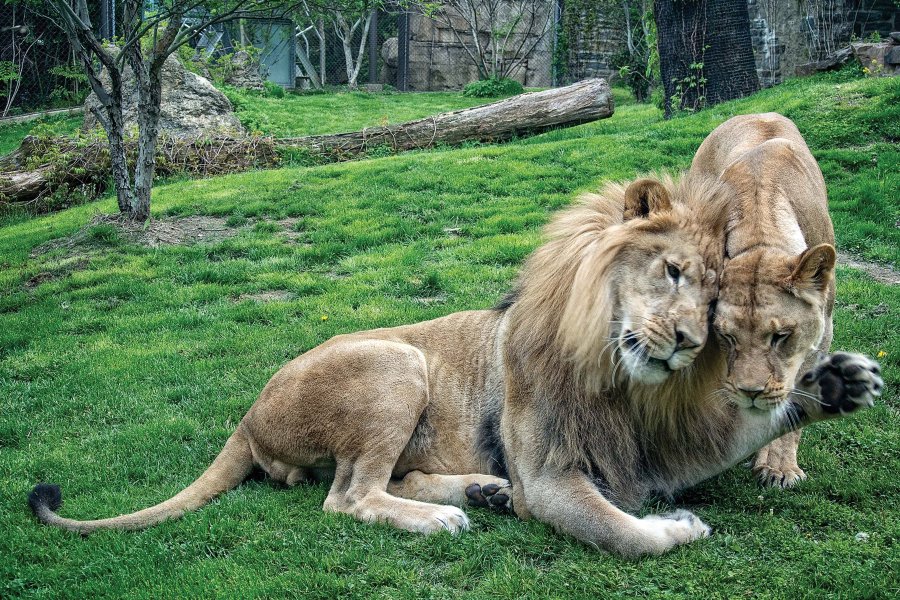
Makini and Tajiri at the Philadelphia Zoo in an undated photo. Tajiri, Makini’s partner, died late last year.Philadelphia Zoo
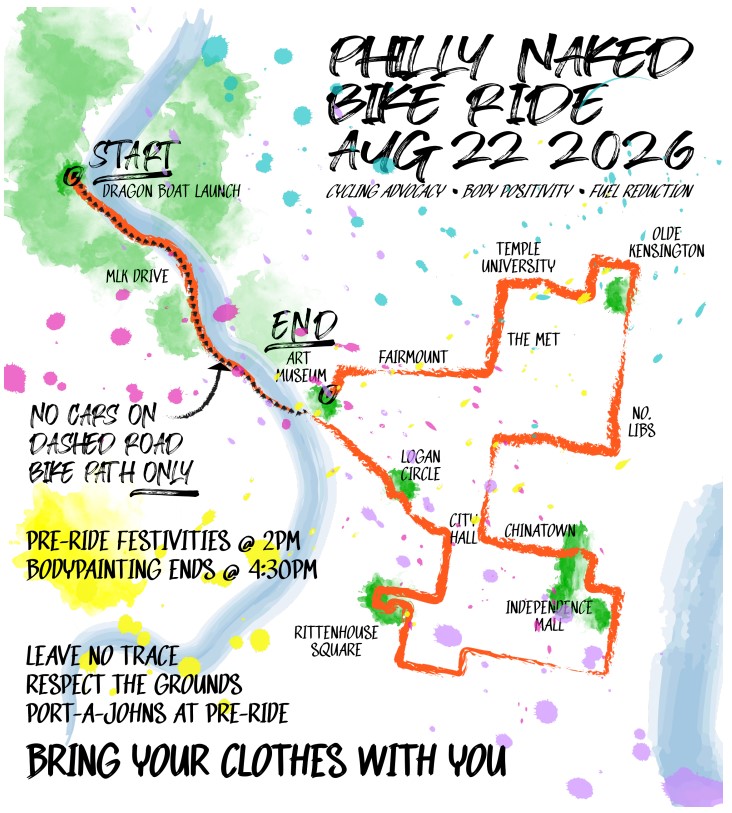
Saturday sees the return of the Philly Naked Bike Ride, which brings cyclists to a 12-mile route of bare-as-you-dare city riding for the event’s 17th edition.
This year, the ride is slated to kick off at 5 p.m. at the Dragon Boat Dock along Martin Luther King Drive, with a slightly different route than in previous years. For 2026, riders will head toward Eakins Oval and use the Benjamin Franklin Parkway to make their way around Logan Square to get to City Hall before heading to Rittenhouse Square and South Philly and making their way back north.
It all wraps up at the Iroquois statue on the Benjamin Franklin Parkway, a work created by artist Mark di Suvero that the city has owned for nearly two decades. The route’s finish stands just east of the Philadelphia Museum of Art, roughly two miles from its start.
That’s a slightly different route from 2025, which had riders start at Lemon Hill and end at the art museum itself. Lemon Hill also served as the ride’s starting point in 2023 and 2022.
The 2026 Philly Naked Bike Ride will start at the Dragon Boat Dock at 1233 Martin Luther King Jr. Dr.Philly Naked Bike Ride
Traditionally, pre-ride festivities like body painting sessions start a few hours before the ride.
Held annually with the exception of the pandemic year of 2020, the Philly Naked Bike Ride began in 2009 as a four-mile course that attracted roughly 400 riders. Now, it often brings out thousands of participants for the clothing-optional festivities. No fee or registration is required.
As per usual, this year’s event aims to promote cycling advocacy, body positivity, environmentalism, and safe cycling infrastructure. Nudity is not required to participate, organizers note online, and the ride is designed to be “safe and enjoyable for everyone.”
According to a code of conduct posted to the event’s website, organizers expect that participants not participate in “any form of sexual or physical harassment,” and refrain from any “unwelcome behavior.”
“Ultimately, one of the goals of the Philly Naked Bike Ride is to desexualize nudity and to encourage everyone to embrace nudity as a normal, enjoyable way of life,” the code of conduct reads. “Following this policy will help further this goal and teach all of us how to be better people in general.”
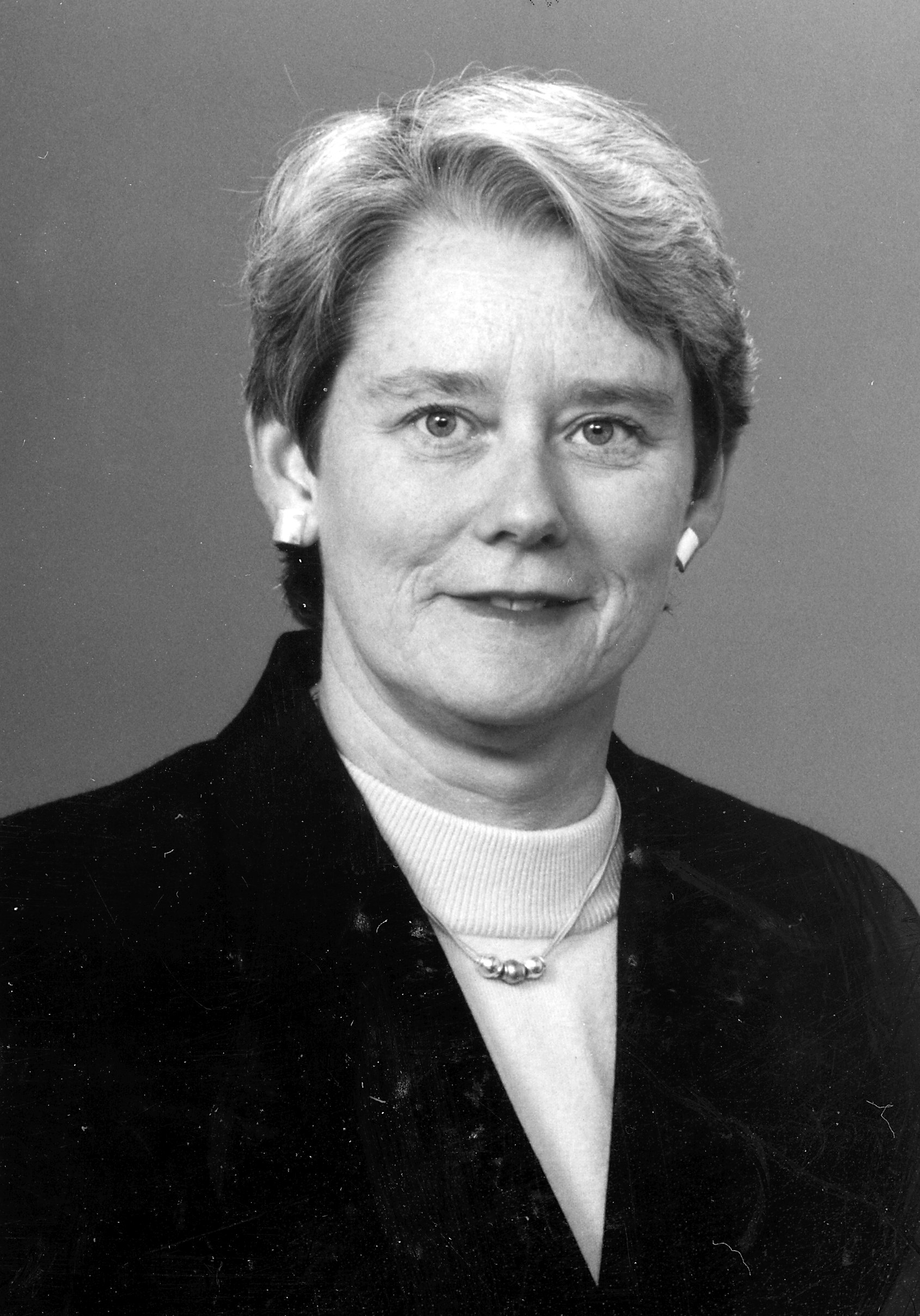
Barbara Ann McDermott, 71, a former Philadelphia judge who, for 40 years, spent nearly every workday inside the city’s criminal courthouse defending, prosecuting, and later presiding over some of the city’s most serious criminal cases, died Tuesday, Aug. 11, following a yearslong battle with a rare form of uterine cancer.
Judge McDermott spent nearly 14 years in Philadelphia’s Common Pleas Court — the majority of that time presiding over homicide cases — before retiring earlier this year.
She was known for running a tough and orderly courtroom, starting her day promptly and putting up with little fuss and few excuses from prosecutors, defense attorneys, police, and defendants alike.
Born and raised in Aliquippa, in Western Pennsylvania, Judge McDermott said in an interview this spring that, growing up, she was a tomboy who pushed the boundaries of her small, steel mill town. She delivered the local paper even when supervisors said the work was only for boys. When leaders of her local Catholic school balked at her request to start a girls basketball team — saying young women “weren’t strong enough” to play full-court — she found a coach who would let her.
She attended Seton Hill College, then an all-women’s university outside of Pittsburgh. There, she became passionate about pastoral theology and social justice, and led the student government association.
She initially thought she would follow local tradition and become a teacher or establish a chain of daycares, but then, she said, “I realized … I’ve been gifted with a brain. I want to do something more than the tradition.”
She took an interest in legal issues and attended Georgetown Law School. (She enjoyed pointing out that she was rejected by the University of Pennsylvania.)
Barbara McDermott in 2001.Courtesy of Barbara McDermott
She first worked in the attorney general’s office, but longed to practice in Philly, where she said she was inspired by female judges like Lois Forer, Lisa Richette, and Juanita Kidd Stout.
“I wanted to practice around lawyers that were better, and I wanted to practice around a diverse bench,” she said.
She joined the Philly DA’s office in 1984 under Ron Castille’s leadership, but left after several years due to what she described as “disagreements,” including that she did not support the death penalty.
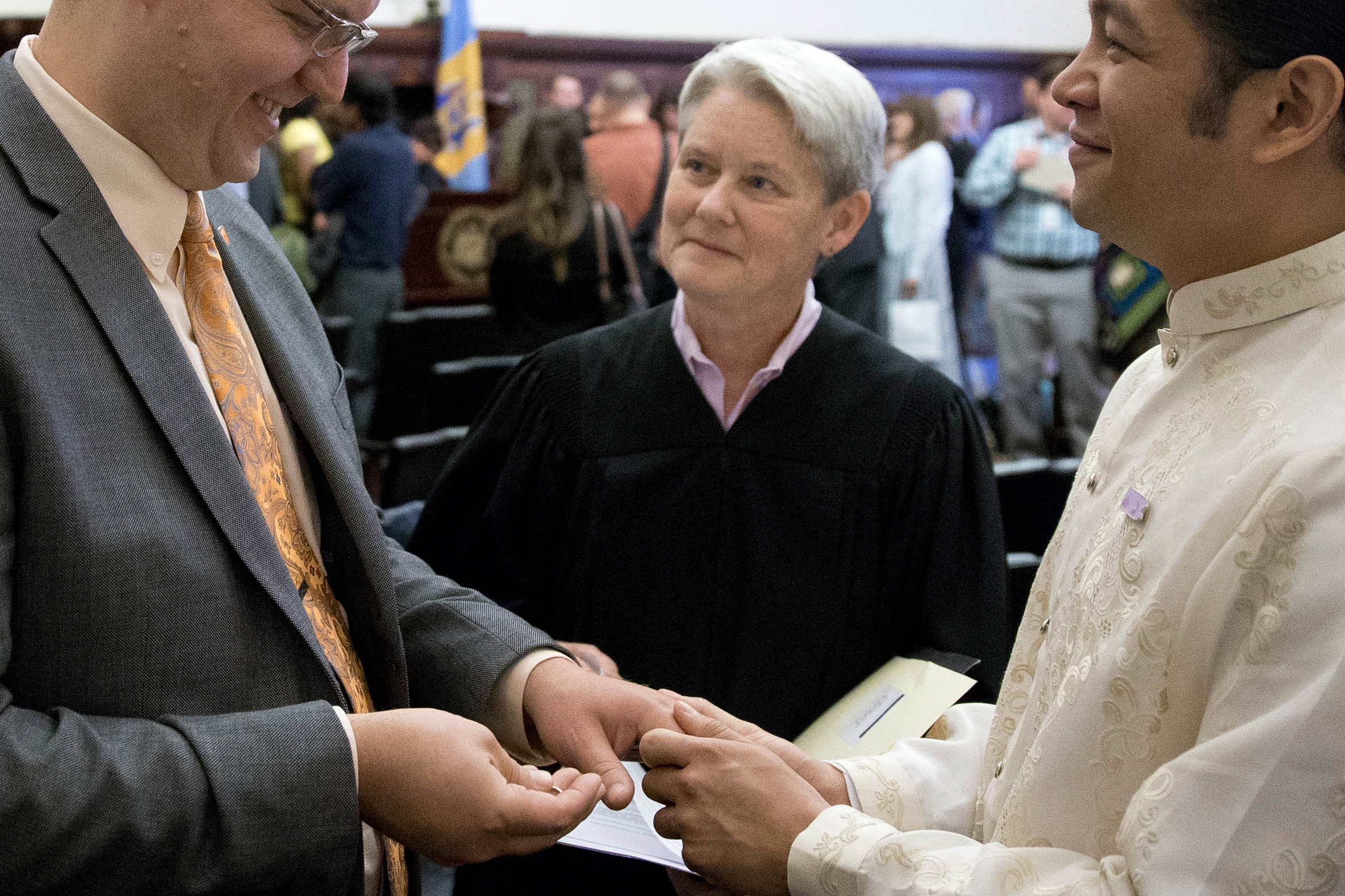
She started her own practice as a criminal defense attorney, and adopted two daughters, Nicole and Colette, in the early 1990s. She raised them alongside her partner — and, later, wife — of 37 years, Jeanne Buckley.
Buckley, in an interview with the Philadelphia Gay News, said she and Judge McDermotthad been introduced by friends at St. Vincent de Paul Catholic Church in Germantown, a service-oriented congregation they remained a part of through their life.
She told the outlet that, early in their relationship, they went to Rehoboth Beach, Del. There, Judge McDermott asked her to close her eyes and placed sparklers around her. This was what life would be like together, she said.
As their life together went on, Judge McDermott was later elected to Common Pleas Court, joining the bench in 2012. Soon afterward, she started overseeing homicide cases.
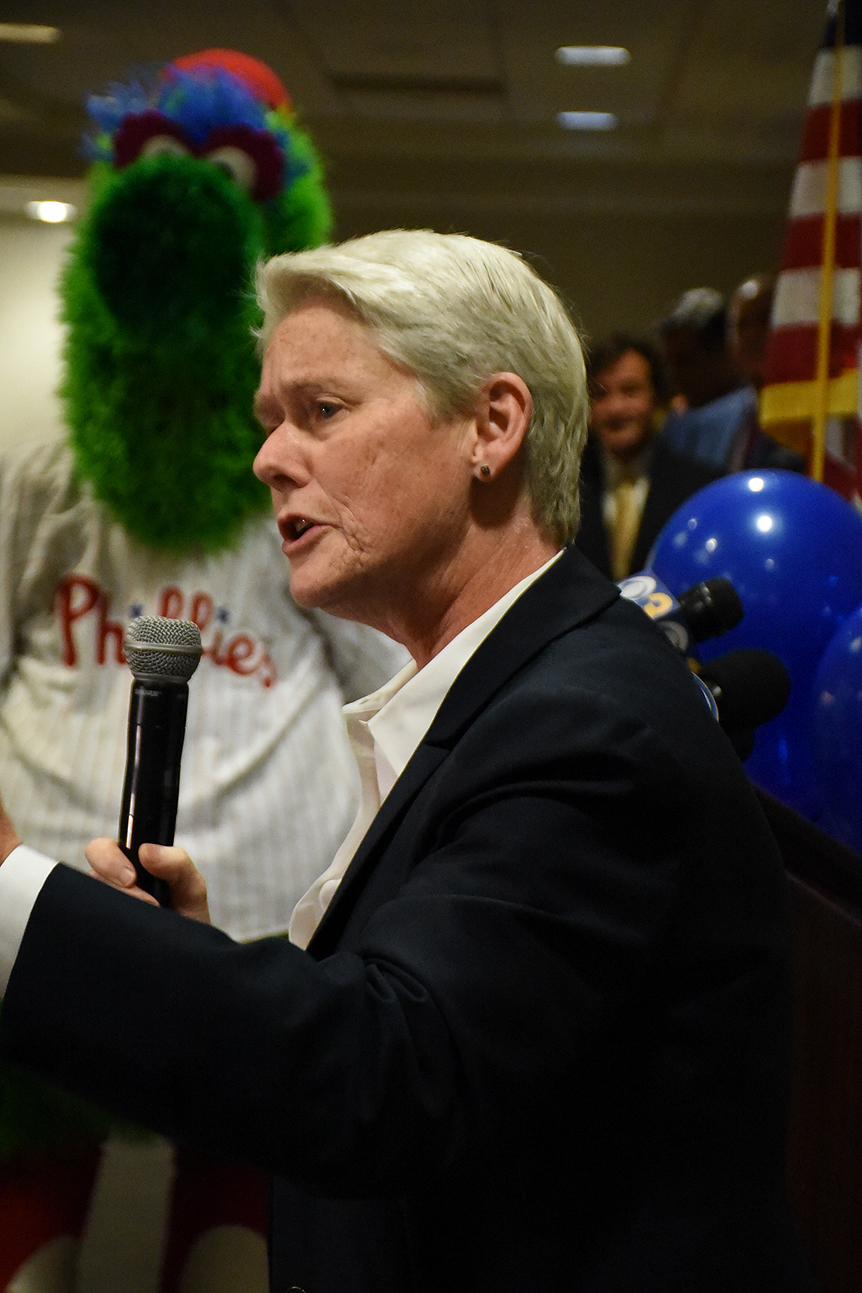
Barbara McDermott speaks at an event with the Phillie Phanatic in the background.Courtesy of Barbara McDermott
She presided over numerous resentencings of former juvenile lifers, in one case surprising both defense lawyers and prosecutors when she decided to exonerate one, Terrance Lewis, who had been found innocent by a federal magistrate judge but remained in prison on a procedural issue.
She said that work, seeing how people changed over time, was some of the most fulfilling of her career.
But she also drew criticism from some youth justice advocates who said she was unduly harsh in dealing with teenagers accused of violent crimes, denying requests to transfer their cases to juvenile court and imposing substantial state prison sentences.
Judge McDermott could be exacting from the bench. But her concern for how people experienced the courthouse and the justice system extended beyond the parties before her.
Colleagues called her a trailblazer for women and LGBTQ+ attorneys, and said she worked to get more female judges in leadership at the First Judicial District. She helped create a curriculum on how judges and court staff should treat transgender witnesses and victims. She also sought to improve conditions for jurors, and coordinated efforts to add a lactation booth to the criminal courthouse.
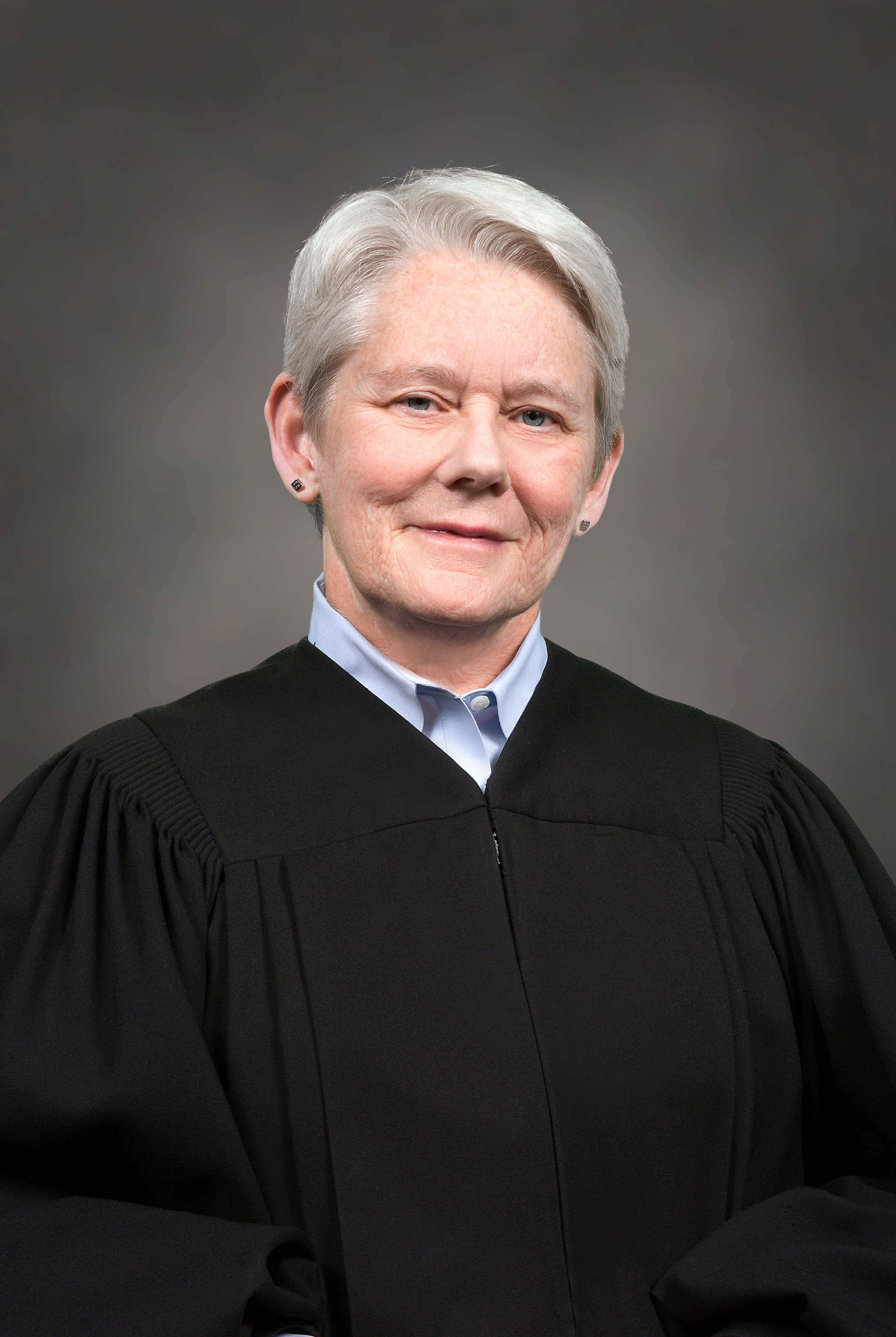
Barbara McDermott joined Philadelphia’s Court of Common Pleas in 2012.Anthony Leonardo
When she was fed up with how rundown the furniture was in the jury deliberation room, she brought in a sander and refinished the tables and chairs herself. A pungent smell took over her courtroom that “did linger longer than I thought,” she later joked.
Jury Commissioner Pat Martin said their work with jurors led to an unexpected friendship.
“I don’t know how or why,” he said. ”But I’m grateful.”
He particularly enjoyed her dry sense of humor.
“She took on people and didn’t care. She didn’t worry about the feathers that she ruffled,” he said.
Outside of court, she enjoyed volunteering, biking, camping, hiking, traveling, and spending time with her family and grandchildren, her family wrote.
Friend and retired Common Pleas Court Judge Ann Butchart recalled a time when she and her wife had plans to meet Judge McDermott and her wife for dinner. McDermottinvited them to go on a walk beforehand — which quickly became a challenging, miles-long hike.
“It’s getting darker and darker, and the hills are getting steeper and steeper,” she said. “We ended up at some hole in the wall in Roxborough.”
That was Judge McDermott, she said: “This very intense, very, very funny, very, very smart, and very, very determined woman.”
On the bench and in their friendship, she said, Judge McDermott was complex and honest, and rarely wavered in her positions.
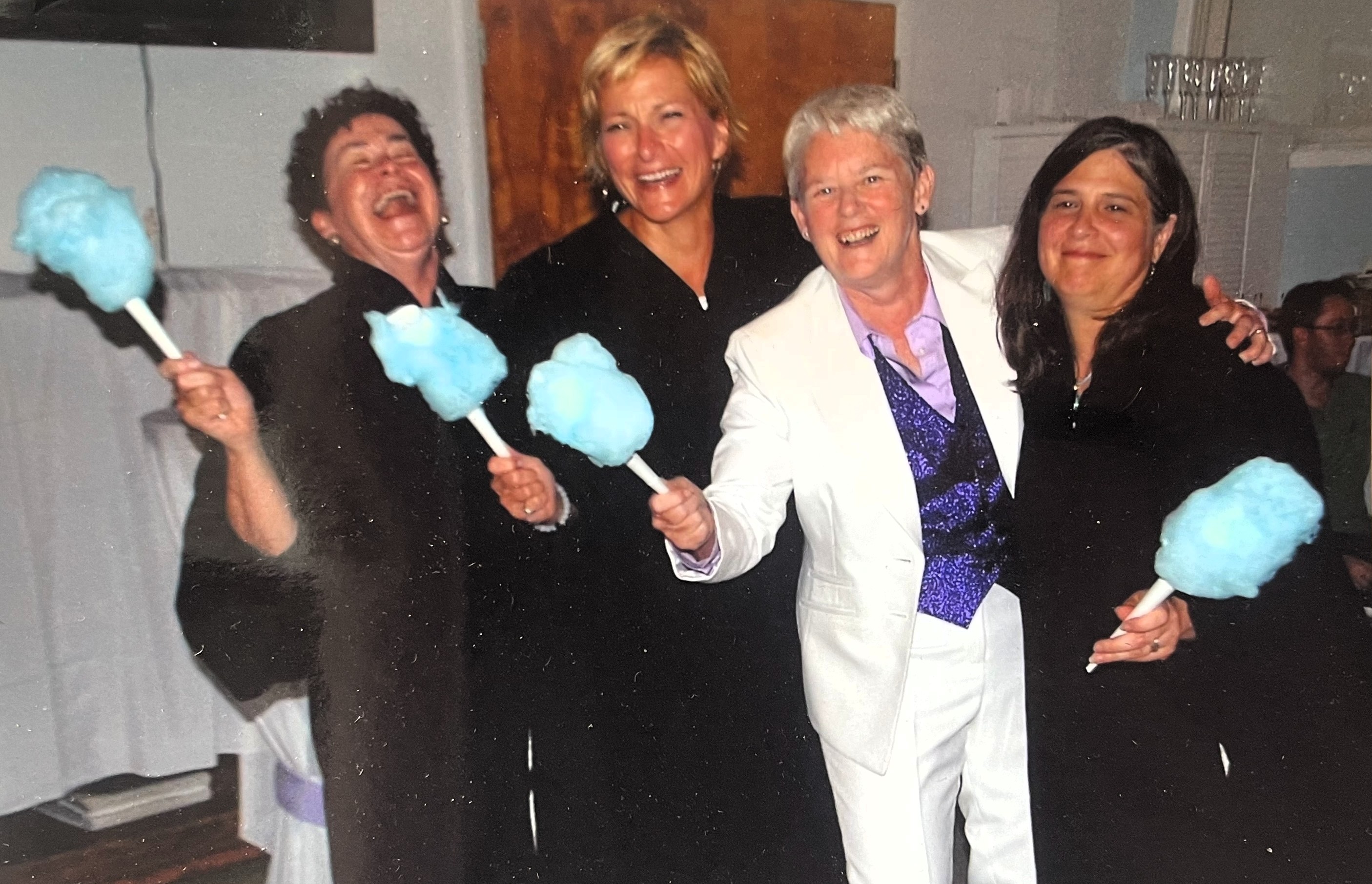
Barbara McDermott, center right, with fellow judges at her wedding in 2014.Courtesy of Barbara McDermott
She pointed to a Latin saying: “Sometimes wrong, but never in doubt.”
“She was so fiercely certain of her decisions and her perspective and her positions on things,” she said. “It was challenging at times, but to see and live in that confidence is a pretty amazing place to be. She manifested that in every part of her life, including her approach to her illness.”
When Judge McDermott was diagnosed with a rare form of cancer several years ago, Butchart said, there was little research on the illness and many doctors were unsure about the best course of treatment.
“She challenged every doctor. She was certain that if an approach had been recommended, it wasn’t thorough enough, wasn’t complete enough, wasn’t the best,” she said. “I think personally it added a good year and a half to her life.”
Martin and Butchart said they will never forget the unveiling of her judicial portrait at the criminal courthouse. A ceremony that is typically stale and sleepy became a celebration of her life.
She asked her colleagues to perform a skit that featured “a day in the life” of her courtroom, 507.
Butchart said she and other judges wore sparkly collars on their robes, waved little flags, and sang a personalized song to the tune of “Gloria” by Laura Branigan.
When they finished, she said, Judge McDermott quipped that the song was not even original — they had sung that at her birthday.
They could only shake their heads and laugh.
“This was so vintage Barb,” Butchart said. “She never had an experience that she couldn’t have improved upon or found wanting in some way.”
And then, naturally, she gifted them shirts donning her portrait.
Judge McDermott, in the months before her death, said she embarked on a “World Tour” to see and thank the people who had touched her over the years. It reinforced, she said, that her life was a gift.
“You’ve had 70 years,” she said she told herself. “You’ve had a life.”
Judge McDermott is survived by her wife and daughters, three grandsons, six siblings, and 20 nieces and nephews.
A celebration of her life is to be held in mid-September.
Seconds before an off-duty Philadelphia police officer was shot and killed outside a Southwest Philadelphia nightclub, he was involved in a confrontation with the man who police believe fired the fatal shot, according to a surveillance video under review by department investigators.
The video captures a previously unseen part of the encounter that preceded the Aug. 16 killing of Officer Alhassane Barry, 29. But it does not show the shooting itself, leaving critical questions unanswered.
Police spokesperson Sgt. Eric Gripp confirmed Friday that the department is reviewing the video as part of its investigation. But he declined to comment further, citing an “active homicide investigation.”
No charges had been filed against the alleged shooter as of Friday afternoon.
The newly surfaced video footage, which was obtained and reviewed by The Inquirer, appears to show Barry leaving Nipsey’s Hookah Lounge with the man police have identified as a suspect in the killing and a third man who has not been publicly identified.
Barry is seen in the video moving toward the alleged shooter, who is then struck twice in the head by the third man. The blows appear to knock him out of the camera’s view.
Barry and the third man then run in the same direction, also disappearing off screen.
A few seconds later, Barry comes back into view, falling onto the sidewalk outside the nightclub. He appears to be bleeding from a gunshot wound to his abdomen.
Police had said they responded to a report of gunfire shortly before 4 a.m. Aug. 16 on the 7200 block of Elmwood Avenue. Officers found Barry and a 35-year-old man suffering from gunshot wounds.
Both were taken to Penn Presbyterian Medical Center, where Barry was pronounced dead at about 8 a.m. The other man, who had been shot multiple times, was critically injured.
It was unclear Friday whether the 35-year-old victim was one of the men in the surveillance camera footage.
The footage comes as investigators try to determine what led to the shooting of the off-duty officer and whether the circumstances warrant criminal charges against the man police believe fired the fatal shot.
Two law enforcement sources with knowledge of the investigation said Friday that self-defense had become part of the discussion about whether charges would be appropriate. The sources, who were not authorized to speak publicly about the case, said the investigation had also not yet been referred by police to the Philadelphia District Attorney’s Office for review.
Police previously said that Barry, the other critically injured victim, and the suspected shooter had been inside the after-hours lounge before the shooting. The men exchanged words inside, Deputy Commissioner Frank Vanore said earlier this week, and the verbal confrontation continued after they went outside. Police said the altercation then became physical before the men were separated and the suspect opened fire.
The newly surfaced video appears to capture at least part of that physical confrontation. The video does not show what happened before the men exited the club. And because the shooting occurs off camera, it does not show the moments in which the man fired his gun.
Investigators recovered a firearm and eight spent 9mm shell casings at the scene.
Barry had been a Philadelphia police officer for two years and was assigned to the 12th District in Southwest Philadelphia. Before joining the department, he served for a decade in the Pennsylvania National Guard, including a two-year deployment to Egypt’s Sinai Peninsula, and left the Army as a sergeant, according to an Army spokesperson.
His killing prompted a funeral attended by more than 100 people at the Fouta Islamic Center of Philadelphia on Monday. Mourners and fellow officers remembered Barry as a young man devoted to public service.
The Philadelphia Cycling Classic is back after a decade-long hiatus, bringing loads of cycling fans, events, and road closures along with it.
The race, which dates back to 1985, begins and ends on the Benjamin Franklin Parkway. It loops up through Fairmount Park to the grueling “Manayunk Wall,” and back down for a finish line evoking the Tour de France’s conclusion at the Champs-Élysées in Paris.
The marquee race takes place on Sunday, but there’s a weekend full of events leading up to it. Here’s what you need to know:
Saturday road closures
The racing begins at 9 a.m. on Saturday with the Philadelphia Cycling Classic Amateur Time Trial, an eight-mile individual event. Martin Luther King Drive will be closed from Eakins Oval to Falls Bridge beginning at 8 a.m. Sedgley Drive between Girard Avenue and Poplar Drive will be closed from noon until the end of the event.
The weekend’s free fan fest also begins Saturday, running from 10 a.m. to 5 p.m., and from 8 a.m. to 5 p.m. on Sunday. It will take place near the Iroquois Sculpture at Eakins Oval.
Sunday road closures
Plan ahead if you need to drive near the 14.4-mile path for the main women’s and men’s races, beginning at 8:30 a.m. and noon, respectively, and the morning charity ride, which begins at 6:30 a.m.
The following road closures will take effect from 3 a.m. until 10 p.m. on Sunday.
Near the Benjamin Franklin Parkway:
Benjamin Franklin Parkway from 17th Street to Eakins Oval (all lanes)
Eakins Oval (all lanes)
I-676 ramps at 22nd Street
I-76 eastbound off-ramp at Spring Garden Street
Spring Garden Tunnel
Rear of Philadelphia Museum of Art — Anne d’Harnoncourt Drive
1900 block of Race Street
1800 and 1900 blocks of Vine Street
Park Towne Place between 22nd and 24th Streets
2000 and 2100 blocks of Winter Street
Spring Garden Street between Pennsylvania Avenue and 31st Street
All roads from Arch to Spring Garden Streets, 18th to 22nd Streets (access maintained for residents)
All roads from Arch Street to Fairmount Avenue, 22nd to Corinthian Streets (access maintained for residents)
23rd Street between Pennsylvania Avenue and Eakins Oval
22nd Street between Winter Street and Pennsylvania Avenue
21st Street between Winter Street and Pennsylvania Avenue
20th Street between Arch Street and Pennsylvania Avenue
19th Street between Callowhill and Cherry Streets
16th, 17th, and 18th Streets between Arch and Spring Garden Streets, if public safety conditions warrant
1600 and 1700 blocks of the Benjamin Franklin Parkway, if public safety conditions warrant
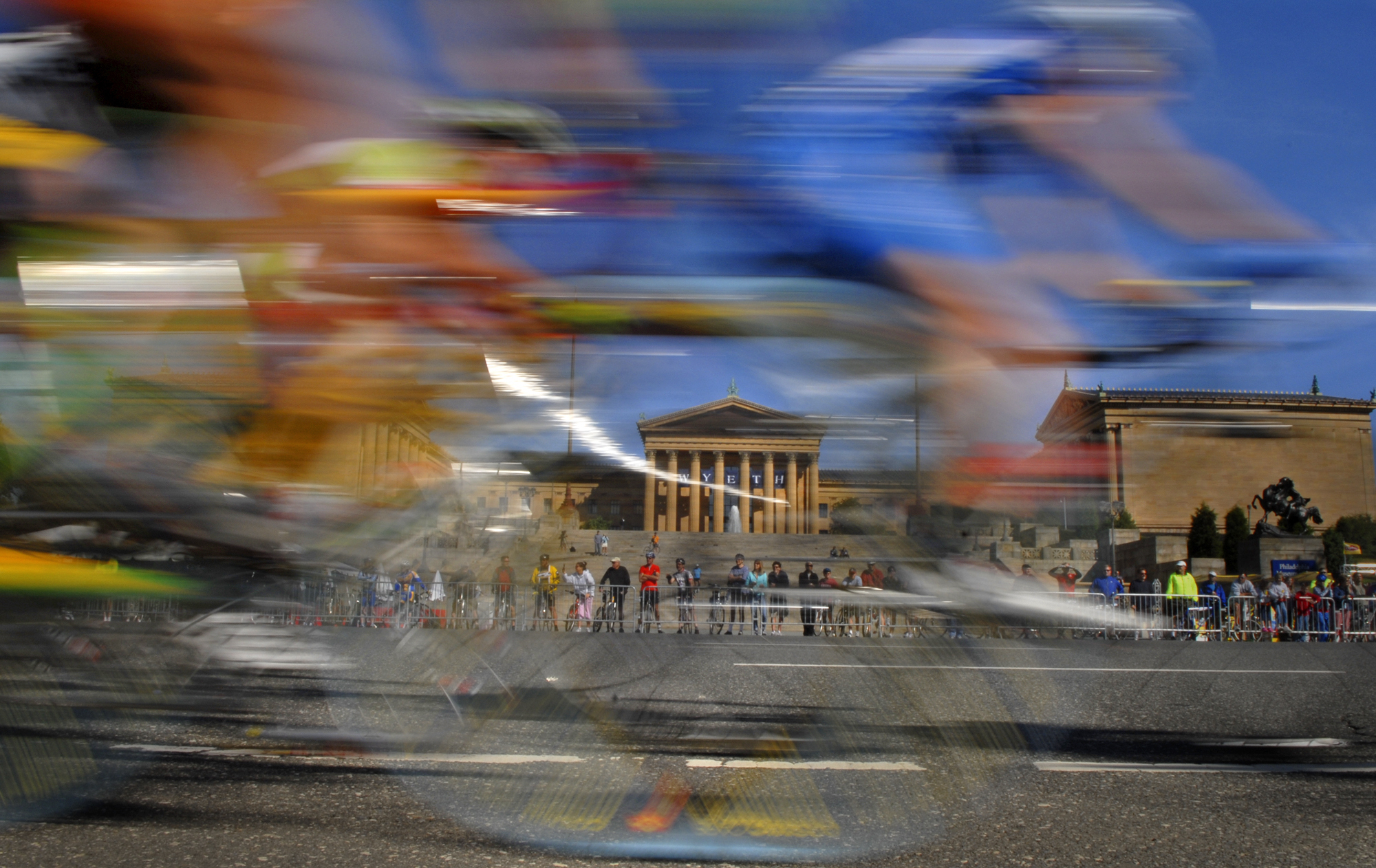
Cyclists speed past the Philadelphia Museum of Art on their first lap in the Philadelphia International Championship on June 11, 2006. Rider Greg Henderson won the race.David Maialetti / Staff Photographer
Fairmount Park:
Kelly Drive (all lanes)
Waterworks Drive
Reservoir Drive
Lemon Hill
Sedgley Drive between Girard Avenue and Kelly Drive
Poplar Drive between Girard Avenue and Kelly Drive
MLK Drive from Falls Bridge to Eakins Oval
Manayunk and Roxborough:
Ridge Avenue between Kelly Drive and Hermit Street
Main Street between Ridge Avenue and Green Lane
Levering Street between Main and Tower Streets
Cresson Street between Levering and Cotton Streets
Lyceum Avenue between Tower and Mitchell Streets
Pechin Street between Green Lane and Roxborough Avenue
Roxborough Avenue between Mitchell and Terrace Streets
Manayunk Avenue between Roxborough Avenue and Osborn Street
Rector Street between Terrace and Pechin Streets
Pensdale Street between Terrace and Lauriston Streets
Kingsley Street between Manayunk Avenue and Lauriston Street
Salaignac Street between Manayunk Avenue and Lauriston Street
Terrace Street between Dawson Street and Ridge Avenue
Vassar Street from Ridge Avenue to Cresson Street
Mitchell Street from Connaroe to Martin Streets
Additional streets: unit blocks of Shurs Lane, Jamestown Street, Pensdale Street, Roxborough Avenue, Grape Street, Levering Street, Gay Street, Carson Street, Rector Street, Cotton Street, and Connaroe Street, and the 300 block of Burnside Street
SEPTA detours
The following SEPTA bus routes will be detoured through Kelly Drive, Manayunk, and Roxborough beginning at 4 a.m. Sunday: 7, 9, 27, 32, 33, 38, 43, 48, 49, 52, 60, 61, 65, 82, 124/125, K.
For information on specific route changes, visit www.septa.org.
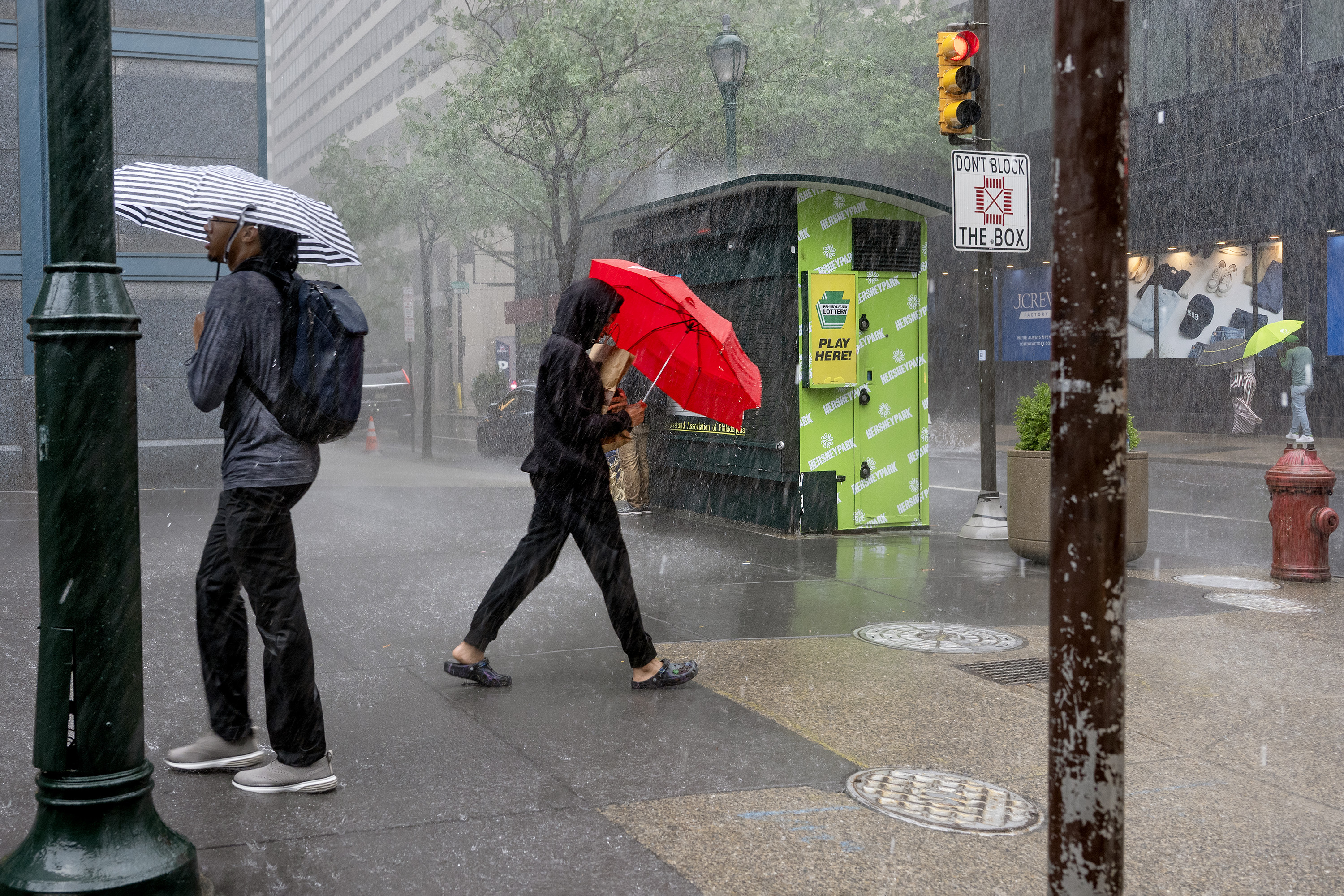
Another round of rain showers is expected Saturday, with potential flooding into Saturday night, but it shouldn’t be as intense as last weekend.
Multiple rounds of rain are possible Saturday, with most of the region expected to see up to an inch of precipitation, according to AccuWeather. A chance of thunderstorms will creep onto the horizon starting after 4 p.m.
While the rain is expected to continue into the night with a chance of flooding on streams and ponds, there likely won’t be devastating flash floods, said AccuWeather meteorologist Matt Benz.
“Certainly, just given the amount of rain that we’ve seen as of late, it doesn’t take a lot of rain to create flooding issues, so there could be some low-end flooding concerns tomorrow,” Benz said.
Most areas across the region received over an inch of rain on Thursday, with some places getting more than three inches.
“While a strong to severe thunderstorm can’t be ruled out completely, the threat for damaging winds/tornadoes/hail is much lower compared to what we saw Thursday,” weather service meteorologists said in a forecast discussion.
Despite the above-normal precipitation over the summer months, the region had experienced 16 consecutive months of below-average precipitation totals leading up to June. Most of the Philadelphia region is classified abnormally dry, with parts of the suburbs in moderate drought, according to the U.S. Drought Monitor. Sunday’s rain ended the first seven-day period without measurable rain in Philly in two months.
In addition to Thursday’s rain, a tornado touched down in Dover, Del., toppling trees that closed streets and causing widespread power outages. Power has been restored, but crews were still clearing debris from affected areas in Dover.
Sunday brings another chance of showers on and off throughout the day, especially in the afternoon. Benz advised residents to get their errands done in the morning on Saturday and Sunday to avoid showers.
The forecast is similar for folks headed down the Shore, as Saturday brings an increased chance of rain showers in the afternoon and evening. Sunday should be drier in the morning, but beachgoers could see a chance for afternoon rain showers or thunderstorms, Benz said.
Fair weather is expected to return early next week.