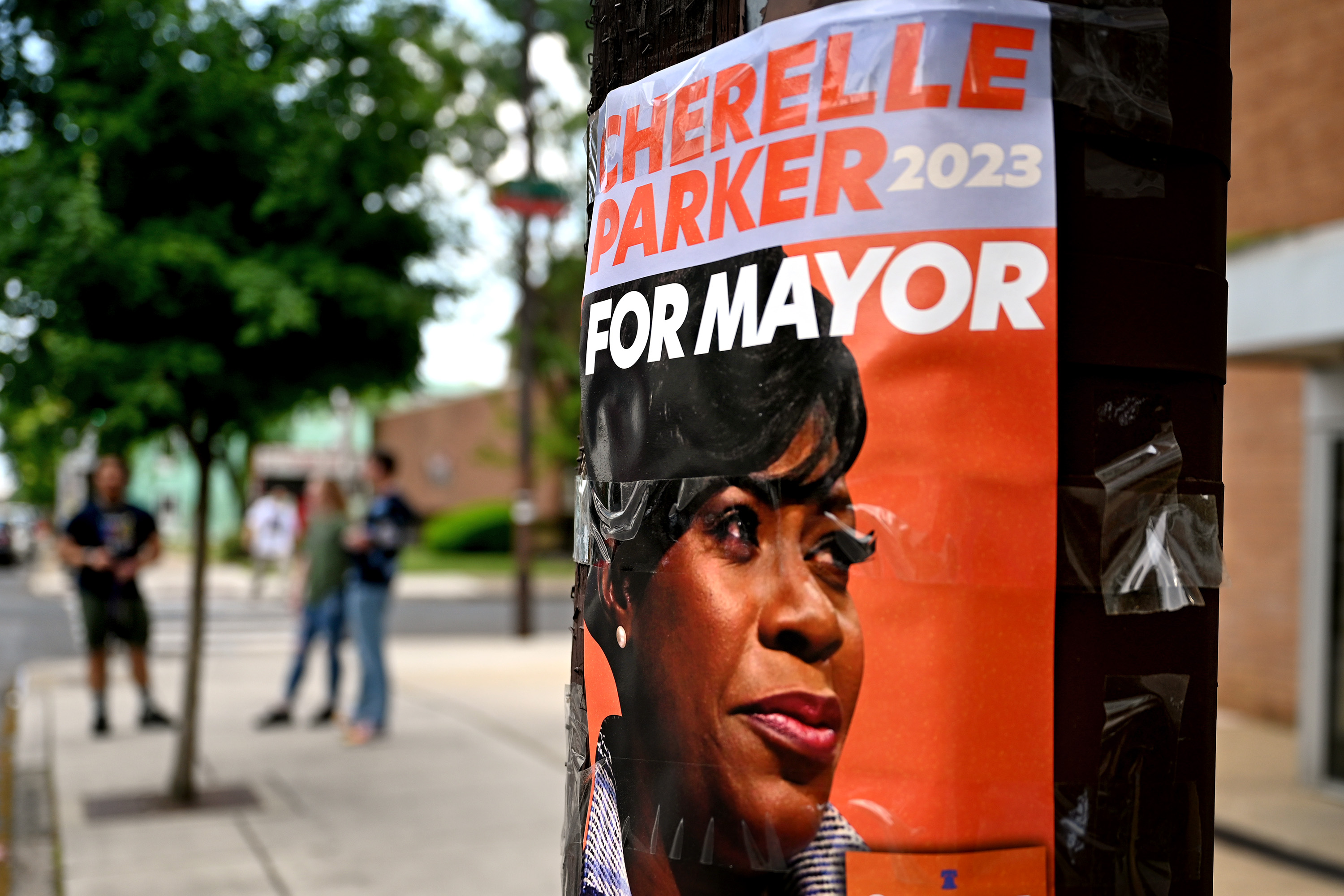
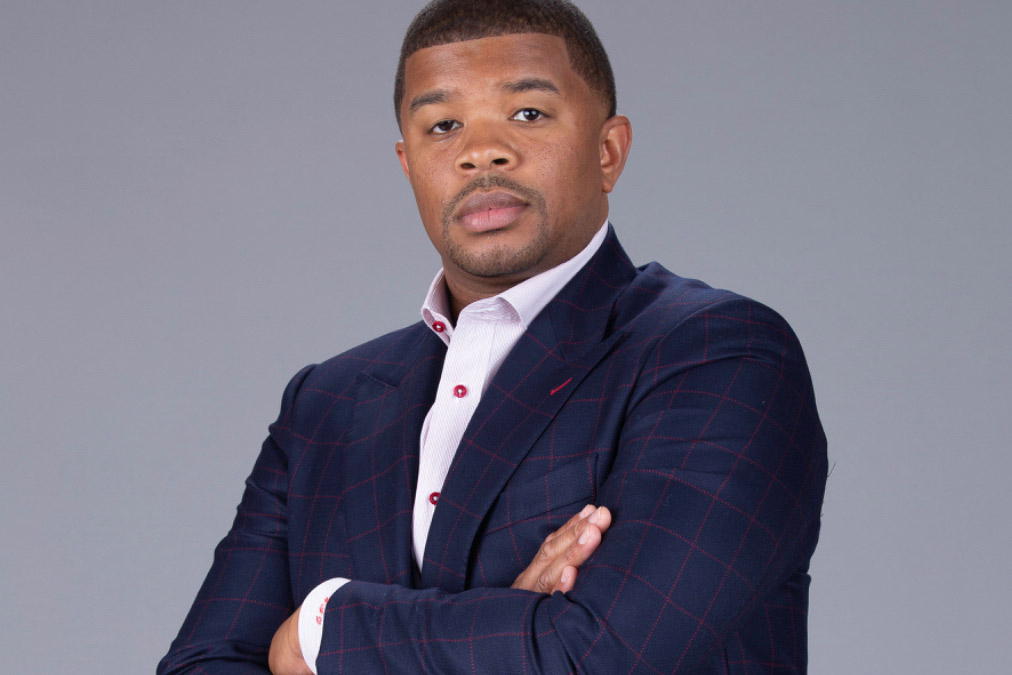
William F. Dunbar Sr., a former confidant to Mayor Cherelle L. Parker who pleaded guilty this week to federal tax fraud charges, also sought to bilk a political campaign out of rent payments he was not entitled to, according to a court document filed Tuesday.
The document does not name the campaign, but it appears to be Parker’s.
Dunbar, 42, never actually received any ill-gotten funds related to the lease with the campaign, prosecutors said, and he was not charged in connection with the matter.
But prosecutors said in court documents that he’s agreed to let a judge consider the episode and two other incidents of “additional misconduct” as she weighs his sentence for tax fraud.
Dunbar, a Philadelphia lobbyist, was an unpaid but important adviser to Parker during her winning campaign for mayor in 2023. He officially joined her campaign, People for Parker, around the time she took office in January 2024.
The mayor let Dunbar go from her campaign in July 2024 in a move that Dunbar at the time described as Parker’s decision.
The campaign made a series of rent paymentstotaling $22,850 to his lobbying firm, Dunbar Public Affairs & Associates, between March 2024 and November 2024, according to campaign finance records. The address listed for the rent payments was an office in the Penn Center complex near Philadelphia City Hall.
According to Dunbar’s plea agreement, in February 2025 he “falsified certain terms of a lease agreement for office space that [he] had entered as the lessor with a Philadelphia political campaign.”
The city’s online database of campaign finance records shows People for Parker as the only campaign that has made rent payments to Dunbar’s firm.
“The facts speak for themselves,” said Aren Platt, executive director of People for Parker, declining to comment further on Tuesday.
Dunbar declined to comment.
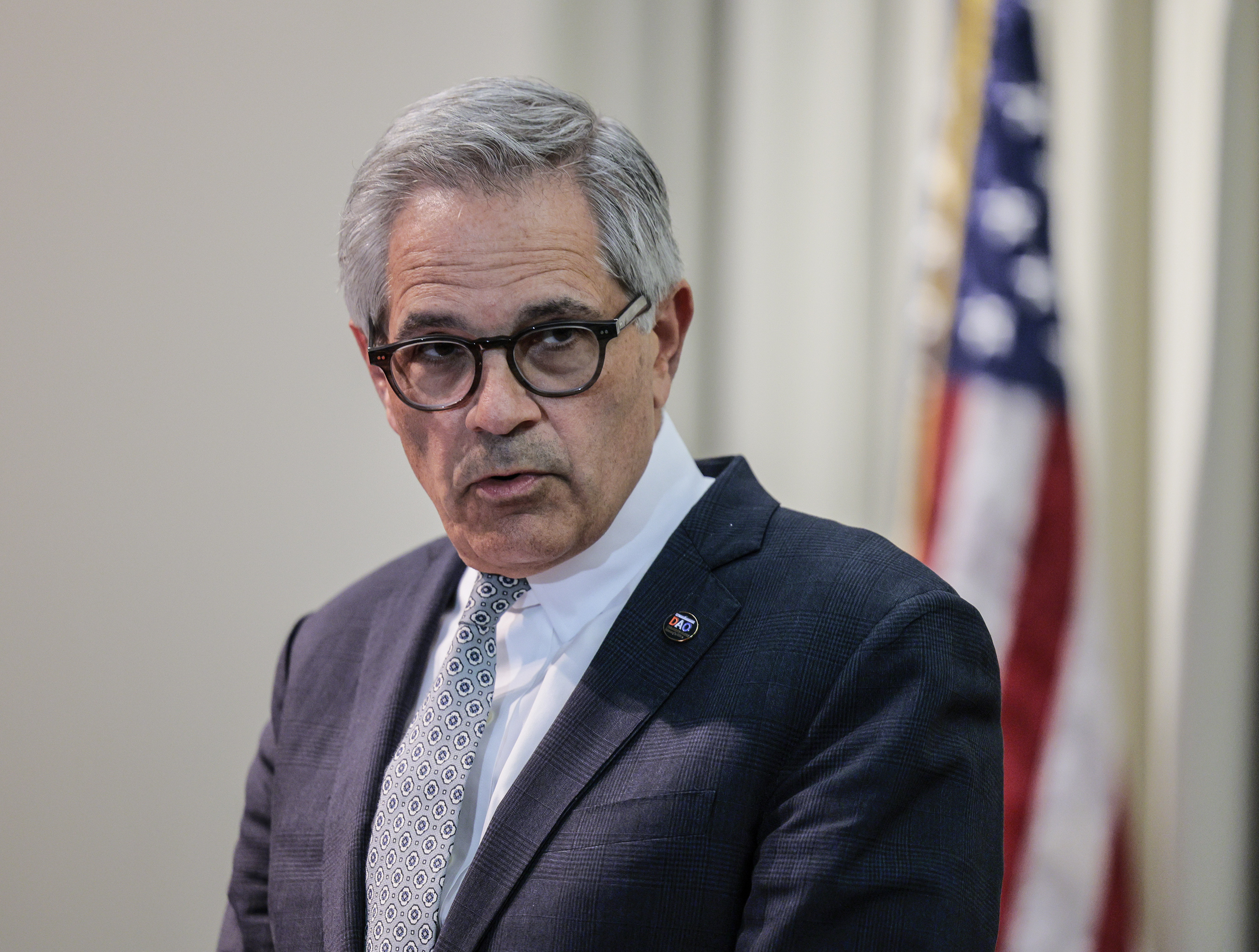
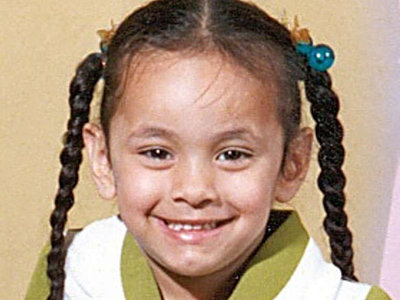
William F. Dunbar Sr., a lobbyist and a former informal adviser to Mayor Cherelle L. Parker.Courtesy of William F. Dunbar Sr.
The plea agreement, which was signed by Dunbar and his attorney, said he “falsely modified the terms of the lease agreement” to increase the notice the campaign was required to give him to terminate the lease.
Had the campaign not discovered the change, the agreement said, Dunbar would have received money he was not owed. “The defendant’s efforts in this regard did not result in his obtaining any funds, and he ceased making any efforts to obtain these funds before learning of the federal criminal investigation resulting in the charges in this case,” the agreement said.
Dunbar on Monday pleaded guilty to filing false tax returns for himself and his wife between 2020 and 2025 and claiming substantial refunds when, in reality, they owed money. Prosecutors said in court papers that the tax loss related to the fraud was between $350,000 and $750,000. The charges carry a maximum sentence of 16 years in prison, plus supervised release and fines.
Dunbar’s attorney, Brian McMonagle, said in a statement Tuesday that the plea agreement “reflects Mr. Dunbar’s acceptance of responsibility for his own conduct.”
McMonagle said that the agreement “does not include any cooperation obligations” and that Dunbar is “not required under the agreement to provide information or testimony regarding any other individual.”
The four charges to which Dunbar pleaded guilty are unrelated to his firm’s lease with the Parker campaign and the two other incidents of “additional misconduct” that Dunbar stipulated in the agreement. The other incidents involve falsifying a document for a mortgage application and submitting false financial information to receive additional financial aid at a private school.
Although those episodes did not lead to criminal charges against Dunbar, U.S. District Court Judge Kelley B. Hodge will be able to consider them when determining his sentence. A sentencing hearing is scheduled for January.
Staff writer Chris Palmer contributed to this article.
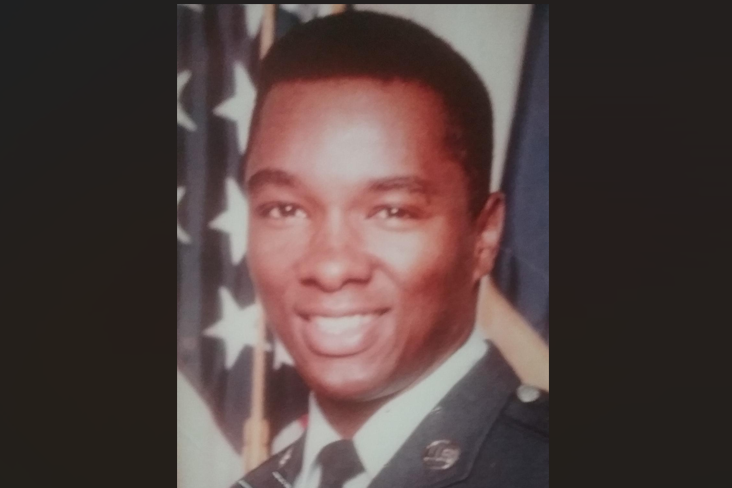
Wendell K. Daniels Sr., 68, formerly of Philadelphia, retired Air Force master sergeant, former facilities manager at Langley Air Force Base in Virginia, mentor, artist, chess wizard, golfer, and basketball player, coach, and referee, died Friday, Aug. 28, of cancer at a hospice center near his home in San Antonio, Texas.
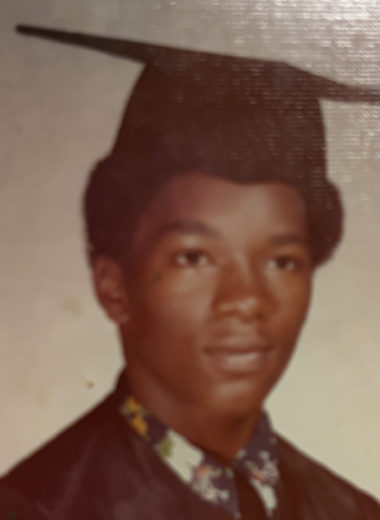
Born and reared in West Philadelphia, Sgt. Daniels joined the Air Force after graduating from West Philadelphia High School in 1976 and spent 24 years and six months serving at military bases in South Korea, Panama, Hawaii, California, Virginia, North Carolina, South Carolina, Texas, and elsewhere.
Before retiring in 2002, he worked in military intelligence at the Pentagon, was stationed at presidential retreat Camp David in Maryland, and took part in the 1989 operation that captured military dictator Manuel Noriega in Panama. He attended leadership programs in the Air Force, rose to master sergeant, and mentored young airmen and junior non-commissioned officers.
He organized relief efforts after natural disasters and earned military awards and medals. He followed his father, uncle, and older brother into the Air Force by enlisting in 1978.
“It was his sense of duty,” his daughter, Lyndell Anderson, said. “It was part of his family.”
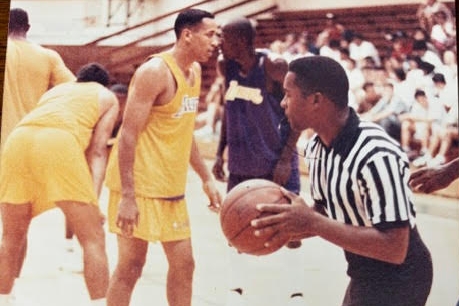
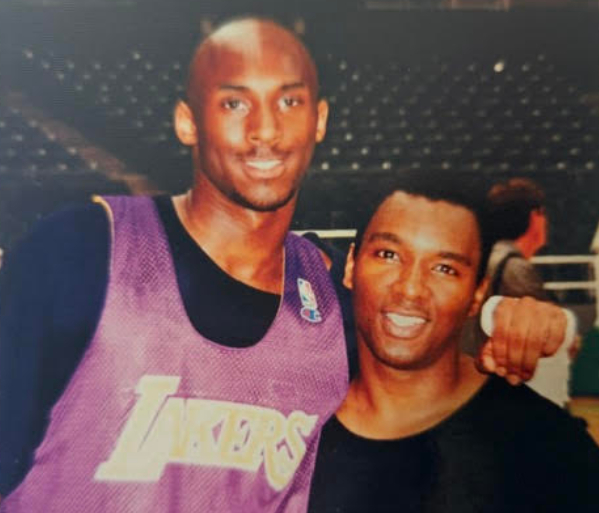
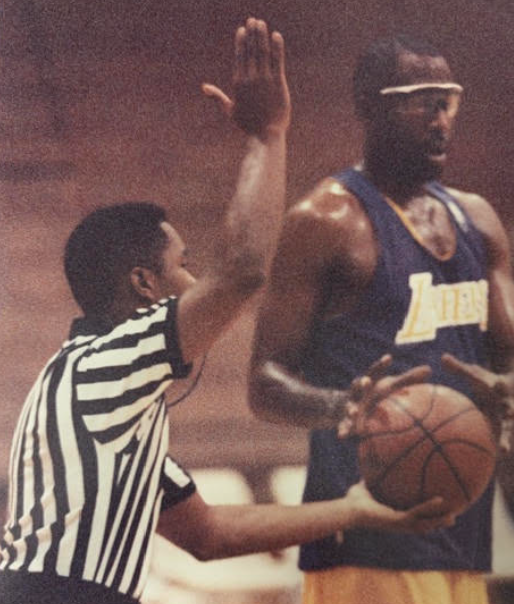
A natural athlete — he played baseball, football, and basketball on West Philly playgrounds as a boy — Sgt. Daniels played basketball on Air Force base teams, coached women’s basketball baseteams, and, certified as a referee, officiated at base games and college games in Philadelphia and elsewhere. He refereed summer camp games for the NBA’s Los Angeles Lakers when he was stationed in Hawaii and smiled in pictures with Kobe Bryant, Shaquille O’Neal, and Jerry West.
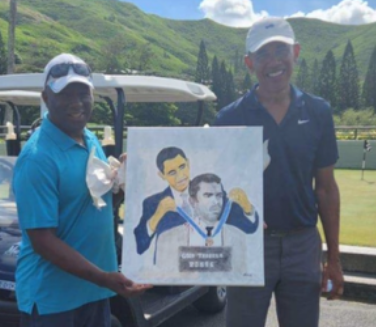
Sgt. Daniels played golf often and met President Barack Obama (right below) in 2023. Courtesy of the family
He started drawing and painting in high school, and considered a career as a cartoonist. In 2023, he personally presented a rendering of President Barack Obama to the president at a golf outing.
He was the best player on his junior high school chess team and later came close to becoming a master. He played golf for years and followed the Eagles and 76ers.
Sgt. Daniels worked as a facilities manager at Langley after leaving the Air Force and settled in San Antonio in 2017. In February, he championed racial equality and more opportunities for Black college basketball officials on a podcast with fellow former college referee Ted Valentine.
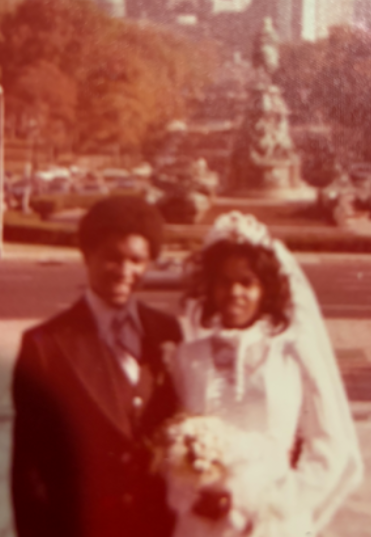
Sgt. Daniels graduated from West Philadelphia High School in 1976 (above) and married Lyndery Webb in 1978 (below). Courtesy of the family
“He could be outgoing one minute and reflective the next,” his daughter said. “He liked reading and parties.”
Wendell Kennedy Daniels was born Aug. 13, 1958. He collected autographs as a boy, played varsity baseball, and was a starting cornerback on the high school football team.
He met Lyndery Webb after playing football with her brothers in the neighborhood, and they married in 1978 and had a daughter, Lyndell, and a son, Wendell Jr. He and his wife posed for wedding pictures on the steps of the Philadelphia Museum of Art and moved from base to base for more than two decades. But only after the children had finished the school year, his wife said.
Sgt. Daniels officiated Los Angeles Lakers summer games in Hawaii (above) and posed with Kobe Bryant (left below) for a photo. Courtesy of the family
He stayed in touch with high school friends and was active in West Philadelphia alumni events. “He was the life of the party,” his wife said. “But he was serious about making people happy.”
In addition to his wife and children, Sgt. Daniels is survived by two sisters, two brothers, and other relatives. A brother died earlier.
A celebration of his life is to be held later.
Donations in his name may be made to the American Liver Foundation, Box 299, West Orange, N.J. 07052.
Sergeant Daniels, left in the top photo, was comfortable with big players on the basketball court and with his small daughter, in the bottom photo, at home. Courtesy of the family
Aiden Zeallor was only trying to get home the night he was struck and killed by gunfire while driving on I-95 near Port Richmond last year.
Zeallor, 21, was a bystander, in the wrong place at the wrong time when at least 50 rounds were fired at a nearby vehicle in what investigators said was an attempted targeted killing of another person.
Now, nearly 18 months after the Levittown native’s death, police have arrested a man and woman they say are responsible.
Alondra M. Lopez, 28, and Joseph G. Toledo-Gonzalez, 27, face charges of murder, attempted murder, and related crimes in connection with the 2025 shooting.
Lopez is being held in the Philadelphia Industrial Correctional Center and Toledo-Gonzalez is being held in the Curran-Fromhold Correctional Facility. Both were denied bail.
Zeallor’s mother, Denise Donahue, said the arrests have given her some semblance of closure, even if no development in the case will bring back her son.
“He was a loving boy that should still be here,” Donahue said. “His life was stolen from him.”
The curly-haired young man was an avid fisherman and outdoor enthusiast who worked as a technician for his family’s HVAC company and was always surrounded by friends, Donahue said.
He was also devoted to his family, she said. Not long before Zeallor’s death, he had moved into his grandmother’s house in Northeast Philadelphia to take care of her and so she did not have to live alone.
Donahue, meanwhile, continues to grieve the loss of her son. She had already experienced the death of Zeallor’s father, in 2009.
Her life was again forever altered the evening of March 29, 2025, when she learned her son had been shot in the head and torso and was put on life support.
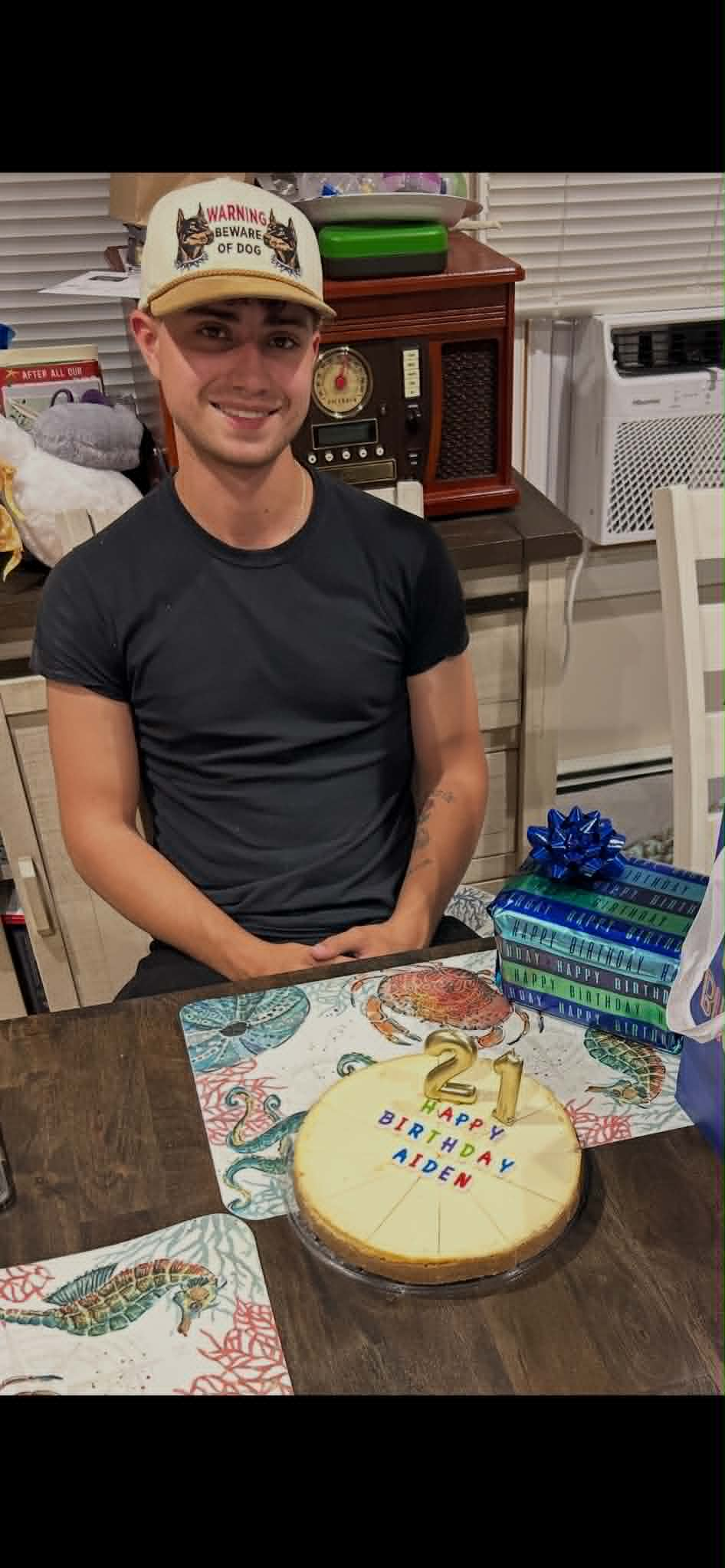
A photo of Aiden Zeallor.Denise Donahue
She rushed to the hospital from her home in Wildwood. Zeallor was declared brain-dead and died later that morning.
Donahue said her son had been out dancing with a friend that evening at a nightclub in Philadelphia.
The two were heading back to Zeallor’s grandmother’s house and were in the northbound lane of I-95 around 2:30 a.m. in Zeallor’s Ford Mustang when bullets fired from a semiautomatic rifle riddled a nearby Acura, the intended target of the shooting.
Two stray bullets pierced Zeallor’s windshield as he drove, striking his right eye and under his right arm.
The driver of the Acura was shot in the leg and was treated at a nearby hospital.
Court documents offered few details about Lopez and Toledo-Gonzalez’s role in the shooting and do not describe the motive.
A spokesperson for the Pennsylvania State Police, which is handling the investigation, did not immediately return a request for comment.
A preliminary hearing for both defendants is scheduled for Sept. 14 in Municipal Court.
Donahue said she and relatives plan to attend every court proceeding as they seek justice for Zeallor.
They are also urging lawmakers to pass “Aiden’s Law,” which would require the installation of surveillance cameras on certain Pennsylvania highways to help investigators identify suspects in violent crimes.
Meanwhile, the family is comforted knowing that Zeallor helped save four lives through organ donation.
“We changed other people’s lives that day,” Donahue said. “That makes me proud, as Aiden’s mom.”
A federal judge said Tuesday that he will not call Philadelphia District Attorney Larry Krasner to testify about his actions in a controversial post-conviction case — despite the fact that some of Krasner’s own staffers have accused him of overseeing the matter in ways they viewed as inappropriate.
The decision by U.S. District Judge Paul S. Diamond came at the end of a multiday hearing at which two of Krasner’s prosecutors testified about the discord that emerged among lawyers in the office as they worked to determine whether a man’s murder conviction should be overturned.
Both prosecutors who testified Tuesday, David Napiorski and Peter Andrews, largely echoed assertions two of their colleagues made on previous days of the hearing — including that Krasner vehemently opposed referring the case to the state attorney general’s office, and that he threatened unspecified “consequences” for those who didn’t follow his orders.
In earlier testimony, other staffers accused Krasner of calling state prosecutors “Nazis” and growing “apoplectic” when they memorialized their disagreements with him in writing. Diamond last week also suggested that some actions in the case could amount to crimes including perjury, conspiracy, or obstruction of justice.
Napiorski and Andrews continued to paint a portrait of an office consumed by internal conflicts over its actions in the matter. And they accused Krasner of sometimes amplifying the drama.
Despite that, Diamond said at the conclusion of the hearing that he did not intend to hear from any other witnesses, including Krasner. Instead, Diamond said, his next step would be to determine whether Krasner’s office should be allowed to continue participating in the case moving forward. He did not specify how quickly that ruling might come.
Krasner declined to comment Tuesday. He has previously declined to talk about the matter, saying it would violate ethical rules to do so while it remains pending.
The underlying case is the conviction of Dennis Johnson, who was found guilty of second-degree murder in 2009 for fatally shooting Kenyatta Smith outside a North Philadelphia convenience store.
Johnson appealed his conviction, in part because he said his trial attorney was ineffective. And in 2022, a newly hired prosecutor in Krasner’s law division, Jaclyn Mason, filed court documents agreeing with him and saying his conviction should be overturned.
But this spring, some of Mason’s colleagues began reviewing the case and took the opposite view — in part because they said she’d made clear and important mistakes in her brief supporting Johnson’s position.
That set off a sequence of events that has gone on to roil Krasner’s office.
First, Mason’s supervisors said they had to withdraw her brief and apologize to Diamond for her mistakes — an unusual step for lawyers to take in court.
And although they said they offered Mason a chance to join that effort, she resigned instead, saying she’d only filed her brief because her boss, Matthew Stiegler, had pressured her to do so, and that she didn’t want to be used as a scapegoat for the office.
In the weeks that followed, prosecutors testified, Krasner became involved in a series of disputes with those who remained on the case, including Napiorski, Andrews, and two of their colleagues: Katherine Ernst and Steven Wildberger.
All four went on to testify that they believed their office should recuse itself from handling Johnson’s case because their internal discussions had veered into areas of self-preservation rather than the merits of Johnson’s claims.
But Krasner disagreed, they said, at times angrily. He said he would not refer the case to the attorney general’s office because he viewed their staffers as “Nazis,” according to Ernst and Wildberger. And they and Napiorski said Krasner also wanted to keep the case in-house to “protect the office.”
By mid-July — about six weeks after Mason resigned — Ernst, Wildberger, Napiorski, and Andrews filed documents with Diamond saying they could no longer participate in the case due to the behind-the-scenes drama.
Krasner, in a court document of his own, called their assertions unauthorized and “ill-informed.”
As Diamond weighs how to sort out the turmoil, Roy Clark, Johnson’s father, said he’s become demoralized by how attention has shifted away from whether or not his son should be released from prison.
“With all the in-house fighting and stuff for the DA’s Office, it takes the human component out of the case,” he said outside the courthouse Tuesday. “We’re trying to get my boy home.”
Staff writer Jesse Bunch contributed to this article.
William F. Dunbar Sr., a Philadelphia lobbyist who was an important unpaid adviser to Mayor Cherelle L. Parker’s 2023 campaign, on Monday pleaded guilty to federal criminal charges related to a tax fraud scheme that lasted six years.
Dunbar’s lawyer, Brian McMonagle, said Dunbar “accepts full responsibility for his conduct.” The charges were filed in July but were under seal until Monday morning. Dunbar entered his plea on Monday afternoon before District Court Judge Kelley B. Hodge.
Dunbar, 42, was charged with four counts including tax evasion and filing a false tax return. He was charged by information, a process used when a defendant intends to plead guilty.
“Today’s plea reflects his commitment to resolving this matter with honesty, accountability, and respect for the judicial process,” McMonagle said. “He has taken decisive steps to satisfy his outstanding tax obligations and has implemented appropriate financial controls and professional oversight to help ensure this does not recur.”
McMonagle added that Dunbar “has dedicated his professional and personal life to serving his community through public service, civic leadership, and charitable engagement.”
A spokesperson for the U.S. Attorney’s Office declined to comment on the case Monday.
The charges carry a maximum sentence of 16 years in prison, plus supervised release and fines. A sentencing hearing was scheduled for Jan. 11, and Dunbar was released on bail pending sentencing.
Dunbar pleaded guilty to filing fraudulent income tax returns for himself and his wife from 2020 through 2025. Prosecutors say Dunbar inflated his charitable giving and business expenses while dramatically undervaluing his taxable income, a scheme that likely would have lowered the couple’s tax bill.
For example, they said, in the 2024 tax year, Dunbar claimed $1.45 million in total business expenses while indicating he had no taxable income. Dunbaralso reported that he owed $46,000 in total taxes for that year, a sum that can include other taxes outside the income tax, but prosecutors said the amount he actually owed was “materially greater” than what he reported on his tax form.
Prosecutors did not specify how much money Dunbar owed the government in taxes, but said in court papers that it was between $350,000 and $750,000.
Assistant U.S. Attorney Louis D. Lappen told Hodge that, due to the fraudulent returns, Dunbar for tax year 2023 received a refund of about $30,000 while his spouse received a refund of about $36,000. Lappen said the couple claimed similar refund sums each year from 2020 through 2025, and that they should have paid additional taxes when they filed their returns instead of receiving refunds.
“Had the taxes been filed accurately and appropriately and without fraud, [Dunbar and his spouse] would have owed,” Lappen said.
Although prosecutors accused Dunbar of inflating expenses associated with his political consulting firm, Dunbar Public Affairs & Associates, there are no accusations in his charging documents that connect his conduct with Parker or others affiliated with her campaign.
Dunbar was a key member of Parker’s “kitchen cabinet” of informal advisers during her 2023 run, in which she bested a crowded field to win the Democratic primary and become the city’s first female mayor. Dunbar also has had ties to other high-profile Democratic politicians, including Gov. Josh Shapiro, U.S. Sen. Cory Booker of New Jersey, and members of Philadelphia City Council.
The Inquirer reported earlier this month that federal investigators last summer issued subpoenas for documents and financial records related to Dunbar, according to three sources with direct knowledge of the probe.
One of the sources said the investigation appeared to be a “fairly broad” review of Dunbar.
Parker’s campaign has dramatically increased its spending on legal services since early 2025, around the time the sources said subpoenas were issued, according to campaign finance reports.
The campaign paid its law firm, Dilworth Paxson, about $108,000 since the start of 2025, The Inquirer reported. By comparison, it paid the firm less than $15,000 during the 2023 election year and about $19,000 in 2024.
Parker last week declined to comment on the subpoenas related to Dunbar or on her campaign’s increased legal spending.
Spokespeople for the mayor’s office and for Parker’s campaign declined to comment on the charges against Dunbar on Monday.
Dunbar was never paid for his role in the campaign during the 2023 mayoral election.
In 2024, Parker’s first year in office, Dunbar took over management of the campaign. The campaign paid Dunbar’s firm a series of rent payments totaling $22,850 between March 2024 and November 2024.
Parker let Dunbar go from her campaign in the summer of 2024 in a move that Dunbar said at the time was the mayor’s decision. The campaign is now managed by Aren Platt, who was one of the architects of Parker’s 2023 run and served as chief deputy mayor in her administration before resigning in October 2024.
Dunbar appears to still be active in politics despite no longer being on Parker’s team. Two weeks ago, he posted on social media a series of behind-the-scenes photos from a filming session at a West Philadelphia barbershop for a Shapiro campaign advertisement, writing: “Where politics meets the people.”
Manuel Bonder, a spokesperson for Shapiro’s reelection campaign, said in a statement that Dunbar has “no formal or informal role with the Shapiro for Pennsylvania campaign.”
Dunbar’s lobbying clients include Comcast, the Chamber of Commerce for Greater Philadelphia, and Jackmont Hospitality, an airport concessions company, according to his lobbying registration with the city.
Dunbar previously lobbied for the Philadelphia School District, but a district spokesperson said earlier this month that he stopped working for the district in June.
Staff writers Abraham Gutman and Ryan W. Briggs contributed to this article.
The long-term forecast for 6abc? No more Cecily Tynan.
The beloved meteorologist offered her final weather report on Action News Monday night, capping off a career spanning three decades as one of Philadelphia’s most-watched personalities.
Tynan choked up as she thanked 6abc for giving her a chance nearly 31 years ago and praised her colleagues for letting her be her “authentic self” as she rose up the ranks from weekend weather anchor to become the station’s first meteorologist.
“We’ve been through so much together,” Tynan said before ticking off major storms like the record snowstorm of January 1996 and Superstorm Sandy in 2012. “But after I leave here, that’s not what I will remember the most. I’ll be thinking about just how much fun I’ve had here for more than three decades now.”
“I may be retiring, and you won’t see me here on the news anymore, but I know I will always be part of the Action News team,” Tynan added. “And I thank you for that.”
Tynan devoted most of her farewell message to thanking viewers across the Delaware Valley, who have followed her career — and weather forecasts — for more than a generation.
“I’ve met families who’ve been watching Action News for several generations. Most people in this area can sing the Action News theme song, and I’ve even met several young Cecily’s named after me,” Tynan said. “What an honor.”
Among those on hand to celebrate Tynan’s final broadcast was retired Action News anchor Jim Gardner, a Philly media institution in his own right who trekked back to his former studio to celebrate his former TV partner.
“The viewers will miss her terribly,” Gardner said. “She such a compelling television personality who really owns the screen when she’s on camera. The rest of us just appeared on TV.”
“I’m not sure people give her enough credit for being a scientist, which is what she is first and foremost,” Gardner added. “She’s so committed to keeping viewers safe and informed when the weather presents serious challenges.”
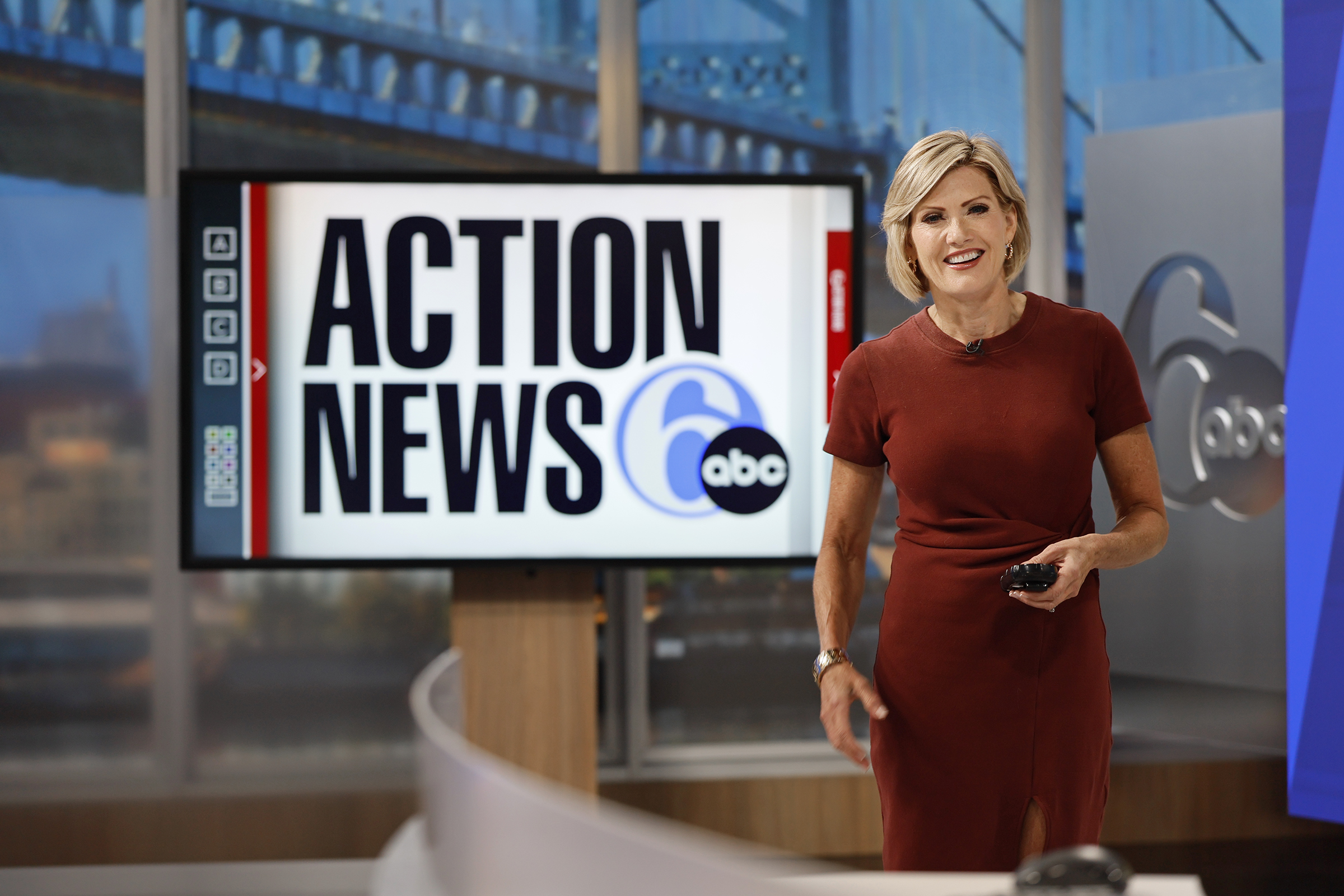
Cecily Tynan, seen here in 6abc’s weather center, has been the station’s chief meteorologist since 2009. Elizabeth Robertson / Staff Photographer
Tynan’s other longtime partner, current Action News anchor Rick Williams, was there in 1995 when she first joined the station fresh off a stint in Las Vegas. Nearly 31 years later, Williams offered a heartfelt goodbye during the 5 p.m. newscast to his “closest friend,” though the two couldn’t avoid cracking a joke or two.
“You’re my work husband,” Tynan said.
“And we’re getting divorced,” Williams shot back.
Despite retiring relatively young at 57, Tynan has no immediate plans, outside of splitting her time between her Delaware County home and waterskiing at her second house in Florida with her husband, Greg. She even turned down a chance to host the Thanksgiving parade one final time so she could spend the holiday with her family.
“We’ve always been in a hotel by the parade route, and I’ve never actually cooked,” Tynan told The Inquirer last month. “This year I was like, ‘No, I’m going to stay home. I’m going to cook Thanksgiving dinner from scratch.’ Hopefully my family appreciates it.”
Tynan’s departure is the latest in a string of exits in recent years by some of the city’s most-beloved and longest-serving media personalities.
“Retirement is a thief, if you ask me,” longtime 6abc anchor Brian Taff joked on social media.
6ABC meteorologist Cecily Tynan grabs a shoe from one of two shoe drawers she has in the weather center.Elizabeth Robertson / Staff Photographer
6abc hasn’t yet announced who will replace Tynan as the station’s chief meteorologist on the 6 p.m. and 11 p.m. editions of Action News. The obvious candidates are 6abc veterans Karen Rogers and Adam Joseph, both of whom have spent more than 20 years on Action News.
“Channel 6 is so much bigger than any individual, and it will continue on with extremely talented people doing the weather,” Gardner said. “But there’s only one Cecily Tynan.”
A longtime fugitive charged in the rape and murder of a 5-year-old girl in North Philadelphia more than two decades ago has been extradited to the city from Central America, authorities said Monday.
Alexis Flores, 51, was arrested earlier this year in Lapaera, Honduras, in connection with the death of Iriana DeJesus in 2000.
He is now in Philadelphia and has been charged with murder, rape, kidnapping, and related crimes, according to law enforcement officials.
“The return of Alexis Flores to Philadelphia demonstrates our unwavering commitment to pursuing fugitives wherever they may run, no matter how much time has passed,” said Wayne A. Jacobs, special agent in charge of the FBI’s Philadelphia office.
Iriana’s killing rocked the city’s Hunting Park neighborhood, and in 2007 — when federal investigators identified Flores as the suspect — he was placed an the FBI’s Top 10 Most Wanted list.
The child was reported missing near her home on the 3900 block of North Fairhill Street on July 29, 2000. She was last seen walking with a stranger around 9 p.m., witnesses told police.
Within days, a store owner found the girl’s body in a vacant second-floor apartment above a nearby small business at West Pike and North Sixth Streets.
She had been raped and strangled. Her body, left in a corner facing the wall, was decomposing and had been partially concealed by a trash bag.
Investigators soon suspected the attacker was a “drifter” in his 20s who had been doing handyman work on the property. They said the man mistakenly ended up panhandlingin Philadelphia after traveling from Arizona on a boxcar that he thought was headed to Chicago.
Iyanna Vazques (right) records a balloon release in memory of her sister Iriana DeJesus on Feb. 15. Five year-old Iriana was kidnapped and killed in 2000. Alexis Flores was arrested after two decades on the FBI’s most-wanted list.Tom Gralish / Staff Photographer
A breakthrough in the case came in 2007 when Flores’ DNA — collected during an arrest on unrelated forgery charges in Arizona several years earlier — came up in a database as a match for genetic material taken from the scene of Iriana’s slaying.
But law enforcement officials could not find him for years.
Flores had entered the U.S. without official permission and was deported to his homeland of Honduras in 2005 after his Arizona arrest.
It took until February of this year for federal law enforcement to track him down and arrest him in connection with the Philadelphia case. When word of his arrest reached Iriana’s family, her mother and around 100 neighbors in Hunting Park gathered on the block to release balloons in memory of the child, affectionately known as “Nena.”
The effort to bring Flores to the U.S. to face charges of murder and related crimes was led by the FBI’s Transnational Anti-Gang Task Force and aided by Honduran authorities, officials said.
Philadelphia-area health systems have been moving swiftly to pull offline web links that publicly revealed the daily work schedules and cell phone numbers of healthcare workers, information that hospitals traditionally do not make available online.
The information for thousands of medical workers at Penn Medicine, Children’s Hospital of Philadelphia, ChristianaCare, and dozens of hospitals nationwide was published online through a popular scheduling service, QGenda.
Experts said the online availability of internal information raises serious security and privacy concerns at a time when healthcare workers increasingly face the threat of workplace violence and doxing.
The Philly-area health systems took down the schedules in late August after The Inquirer alerted them that the information was publicly available. Penn and CHOP did not respond to questions about whetherthey were aware the link was accessible without a log in.
A spokesperson for ChristianaCare said the system “recently became aware” the pages were public, and “immediately” worked with the QGenda to “eliminate the vulnerability.”
“We are not aware of any impact to caregivers, clinicians, patient care, or operations,” Christiana’s statement said. “Protecting the privacy and security of our caregivers, clinicians, patients, and information systems remains a top priority.”
Other Philadelphia-area systems did not appear have publicly available links.
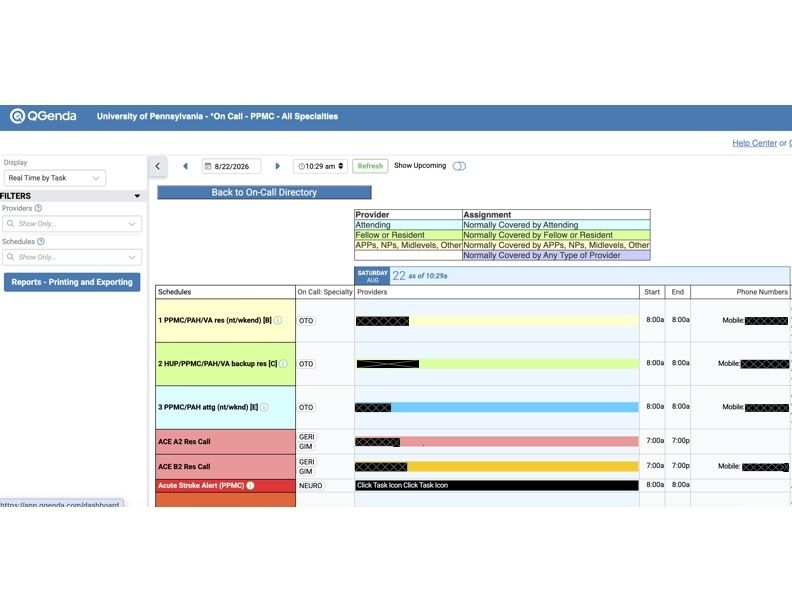
The web pages managed byQGenda, an Atlanta-based workforce management software company, exposed months of schedules of physicians, nurse practitioners, social workers, and other hospital employees.
The links don’t appear on Google searches, but anyone with access to basic AI chatbots could pull up live schedules showing the hours and assigned hospital service for on-call doctors andother providers.
“That’s very concerning,” said Lane Kantor, a fourth-year medicine-pediatrics resident at Penn and CHOP, explaining that healthcare providers’ work “sometimes comes with patients who can harass and threaten us.”
Kantor, a leader at Penn’s resident union, said the public information of providers who work with undocumented immigrants or in the areas of gender-affirming or abortion care was especially concerning.
QGenda is used by more than 4,500 organizations, according to the company’s website, including many hospitals that use the software as a one-stop source of information about providers who are on-call and available for consult at any given moment.
It is not clear how the schedules became public, how long the information was available online, to what extent hospital administrators knewthe information was not safeguarded with a log in requirement, or whether anyone — let alone someone wishing to inflict harm — accessed the information.
QGenda did not respond to multiple requests for comment.
The Hearst-owned company offers “QuickLinks” to allow “any staff member without a QGenda account” to easily access the schedule, according to the company’s website. The site also notes that “on-call schedules may contain sensitive information” and that there is risk of “unauthorized access or data breaches” without proper safeguards.
The platform also enableshealthcare systems to restrict access,“so that only devices on your practice’s secure network can access schedule data on the public-facing landing page,” the company’s site says.
Health systems in the Philadelphia area and across the country have taken steps in recent years to minimize doctors’ publicly available information in response to the growing politicization ofmany health services, especially those involvingdiversity, equity and inclusion, abortion, and gender-affirming care.
CHOP, for example, removed provider names from the webpage of its gender and sexual development program in 2022 as the clinic received threats because it provides gender-affirming care for teens. But information on clinic’s providers was available through the now-removed public schedule.
Security experts say releasingpublic work times and locations alongside cell numbers leaves providers vulnerable to being targeted by dissatisfied patients, or individuals who disapprove of the type of medicine a doctor practices.
“This is really alarming,” said Will Owen, a spokesperson for Surveillance Technology Oversight Project, a New York-based privacy nonprofit. “Hospitals must scrutinize the platforms they work with in their data collection to minimize information that can be weaponized.”
Live hospital schedules exposed
After receiving a confidential tip that three East Coast health systems had public QGenda web pages, The Inquirer identified public landing pages for nearly 50 health systems or hospitals nationwide, including Veterans Affairs hospitals, using OpenAI’s Codex.
For some, like Penn and CHOP, the landing pages for the entire system were public. For other hospitals, schedules for only one department or service surfaced.
Some of the United States’ largest and most prestigious institutions had public QGenda links, including Johns Hopkins Medicine and the University of California-San Francisco.
The Inquirer attempted to reach out to each hospital or system for which it found schedules before publication. At least 10,including Hopkins and UCSF, have removed the public link completely or added a password requirement.
A spokesperson for Cedars-Sinai Medical Center in Los Angeles said it was “unaware” that its anesthesia department’s schedule was public. The schedule has since been removed.
The call schedule for the Children’s Hospital of Philadelphia, and dozens of hospitals nationwide, was available online through a public QGenda link. CHOP updated the web page’s permissions to require a login after being alerted by The Inquirer.Screenshot
CHOP informed hospital staff last week about security updates made to QGenda “out of an abundance of caution.”
“We are taking a precautionary step to update access to the QGenda platform used to display CHOP on-call schedules,” CHOP said in an email to staff obtained by The Inquirer.
QGenda’s platform does not contain patient information, and CHOP “continually assess our systems, processes, and technologies with an eye toward privacy, security, and operational needs,” a CHOP spokesperson said in a statement.
Penn said it uses QGenda to support communication among care teams.
“We continually monitor the risk environment surrounding online information and, as it continues to evolve, we are adding controls that both preserve appropriate protection and provide reliable access for those who need the information to coordinate patient care,” Penn said in a statement.
Gennadiy Ryklin, a hospitalist at ChristianaCare, was surprised to learn a colleague had done a work-hour analysis for ChristianaCare’s attending union using an AI model.
“I asked him, ‘well, how’d you do that without having Claude get access to our private schedules?’ And, well, it’s not private, there’s a public link here,” Ryklin said.
Privacy and data security are principles are drilled into physicians through policies, procedures, and training courses, Ryklin said.
“We understand that patient information in the wrong hands can cause a lot of harm,” the doctor said. “Where’s that same concern for us?”
A June shooting that killed one IT intern and left another injured in ChristianaCare’s Wilmington Hospital underscored for Ryklin the threat of violence within health systems. Law enforcement charged a third intern in connection to the incident.
He reached out to hospital administrators and last week the hospital began removing the public web pages.
Employee privacy exists in a legal gray area, with protections often dependent on institutional policies, said Matthew Bodie, a law professor at the University of Minnesota.
Publicly sharing schedules and cell numbers does “feel invasive,” Bodie said, “especially if employees didn’t know about it.”
The combination of cell numbers and work schedules could be used to cause harm, whether by patients, politically motivated individuals, or stalkers, said Sharona Hoffman, a co-director of the Law-Medicine Center at Case Western Reserve University.
The lack of any sweeping federal employee privacy requirements makes the online availability of the information, “not surprising though very disturbing,” the professor said.
A decade-long void was filled: the whooshing winds of the peloton, the whooping and cheery sounds of cowbells, the whiffs of greasy food, and sips of cold beer.
All of it returned to the city’s vistas Sunday as the Philadelphia Cycling Classic, one of the nation’s most storied races — drawing cycling’s Olympians, national champions, and emerging talents to the City of Brotherly Love — made its resurgence. Funding snafus and waning support begone; biking in Philly is back.
For an international field of riders, the 14.4-mile looping, winding, and climbing course that weaved from the Benjamin Franklin Parkway to Manayunk was a giant chessboard of strategy, aerodynamics, and aerobics. For revelers, it was a great equalizer, a unique, unfettered opportunity in sports to see athletic prowess, drama, and world-class competitors up close.
That rarity was not lost on spectators, some of whom experienced the legacy race, which ended in 2016, and others for whom this was a novelty.
Ashley O’Neill’s stepfather talked relentlessly about the classic of yore’s folklore, but she never witnessed it herself. “The people [gathering] together, the happiness,” O’Neill, whose 41st birthday was also Sunday, recalled her stepdad saying, “but for years there was no race.”
Dylan O’Neill chimed in: “To have the city lose something like this is a huge loss for the entire community.”
As the Trenton couple huffed through humid air to reach a lookout on the famed “Manayunk Wall,” they talked about plans to come back, year after year.
“We hope they keep doing it,” Dylan O’Neill said. “It’s such a unique thing, and Philly is the perfect place to do it.”
Remembering the old
During its run from 1985 to 2016, Philadelphia’s criterium reigned, known for its theaterlike scene and famed “Manayunk Wall,“ an incline with a maximum 17% gradient.
“I remember the first race, it was amazing: No one was here and they had a helicopter,” said Thomas Gartside, 77, who moved to Manayunk, near the Wall, a year before the inaugural classic.
Over the years, as the race grew in prestige and attendance, his block got more crowded. In 2016, Gartside said he didn’t watch the spectacle — unaware the cyclists’ return would be an uphill battle.
The next year, the race had run its course; in 2017, organizers canceled the classic, citing increasing costs and decreasing sponsors, much to the chagrin of the city’s cycling community.
“I got a little tired of it, but this is reinvigorating,” Gartside said, looking out at hundreds of merry people packed shoulder to shoulder. Gartside hosted his own small fête, with bagels and coffee.
“Look at all the energy and all the neighbors,” he said.
Cyclists climb the Wall in Manayunk during the men’s race in the Philadelphia Cycling Classic on Sunday, Aug. 30.Monica Herndon / Staff Photographer
Organizers have described the free-to-watch revitalized classic as “the people’s race.” Road cycling is also one of the few professional sports where athletes brush right up against fans and front doors, bringing “the stadium to the streets,” said Philadelphia Mayor Cherelle L. Parker.
Michael Jones, a cyclist with Philly club Major Taylor, was among the throngs of fans who didn’t want to miss a second of the action — a 10-year break was long enough.
Jones even brought his bike along to follow some of the race route. A passerby remarked, “It’s like bringing a glove to a baseball game. But bigger.” And Jones couldn’t have agreed more.
Despite growing up in Philadelphia, the 48-year old was unfamiliar with the classic before getting into the sport himself, which he said transcends generations. Now, back and seemingly bigger than before, the race was electrifying, Jones said.
“It’s just so fantastic that so many people are down here taking in the scenes,” he said about the Fan Fest crowd.
“It’s just beautiful to see.”
If the verve of the morning’s women’s competition is any indication of the next era of cycling in Philly, it will be nothing short of “amazing,” according to Stefy and Sean Beury of West Mount Airy.
“The hype, the buildup, and the media attention to get more awareness and attention, in general, to the event and to bring more cycling back to Philly,” Stefy Beury, 47, said. “It’s just been awesome.”
It’s possible, Sean Beury, 54, said, that success on Sunday could inspire future road races, but he hopes the race motivates younger Philadelphians to start riding.
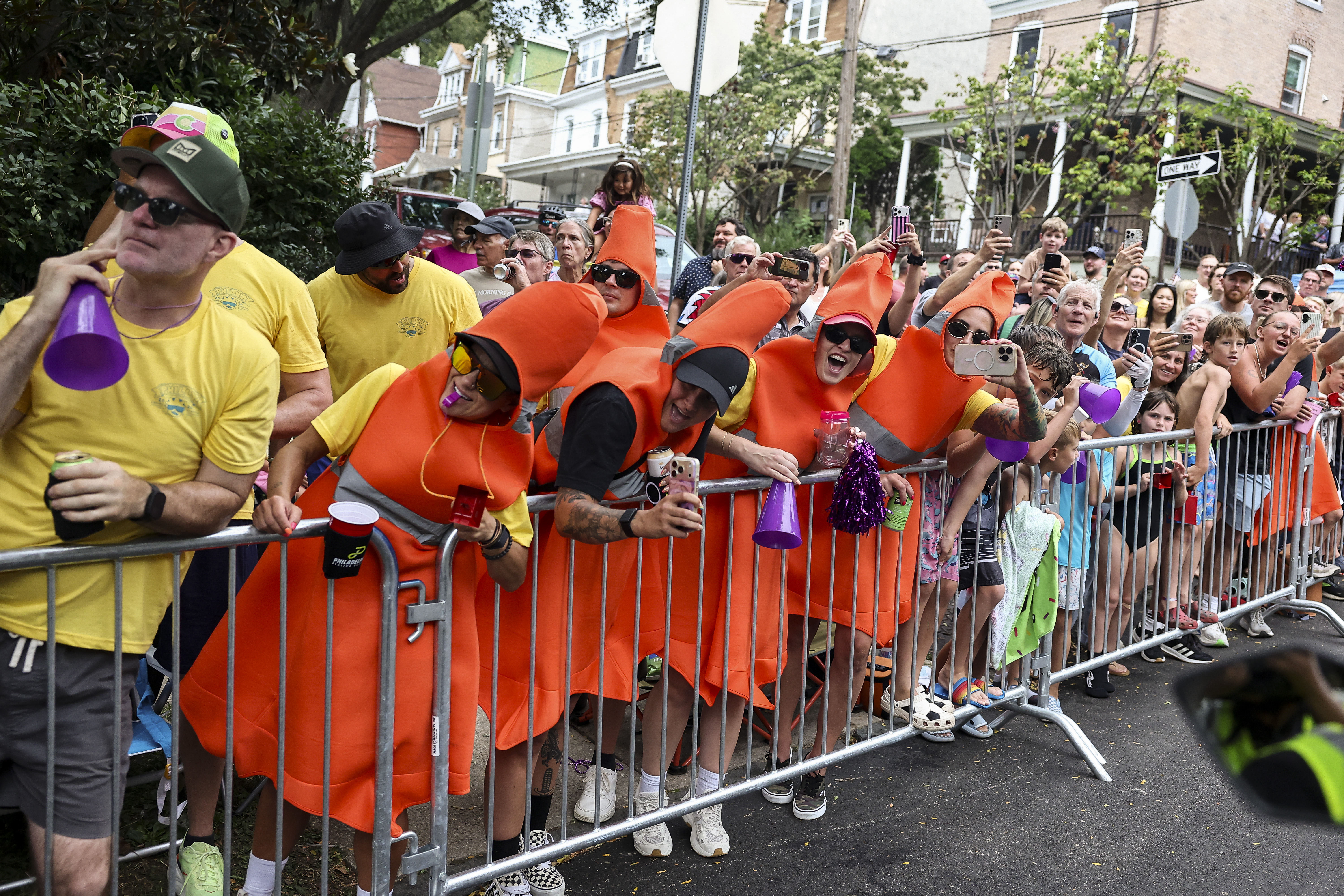
Spectators wearing orange cone costumes cheer in Manayunk during the men’s race in the Philadelphia Cycling Classic on Sunday.Monica Herndon / Staff Photographer
Ushering in the new
Eyes glued to a phone, siblings Tess and Fitz Dolan counted down the seconds it took the women’s field to arrive at the Wall, tracking their movements on a livestream of the race.
The teen mountain bikers’ ages were in the single digits when the race went away and they never had a chance to see it in person. On Sunday, they refused to lose sight of the riders.
“It’s so cool to see them do this,” said 16-year-old Tess Dolan, “we are used to these roads and we bike there. The women are putting in a lot of work and they are just rocking it.”
Her older brother, Fitz, was equally in awe by the bikers’ performance. The 18-year-old has biked the Manayunk Wall once and considers it to be a challenge for any cyclist. “They made it look so effortless,” he said.
Seeing the women’s strength and the jolliness of the spectators inspired Tess to put the Wall on her bucket list.
“It’s important for us to see them,” she said.
“It gives us inspiration to go outside and get on the bike.”
Bikers celebrate on the podium after placing in the Philly Cycling Classic on Sunday. From left are second-place finisher Alexandra Volstad of Canada, of EF Education-Oatly; winner Chiara Consonni of Italy, of Canyon-SRAM zondacrypto; and third-place finisher Ella Sabo of the United States, of Virginia’s Blue Ridge TWENTY28.Jose F. Moreno / Staff Photographer
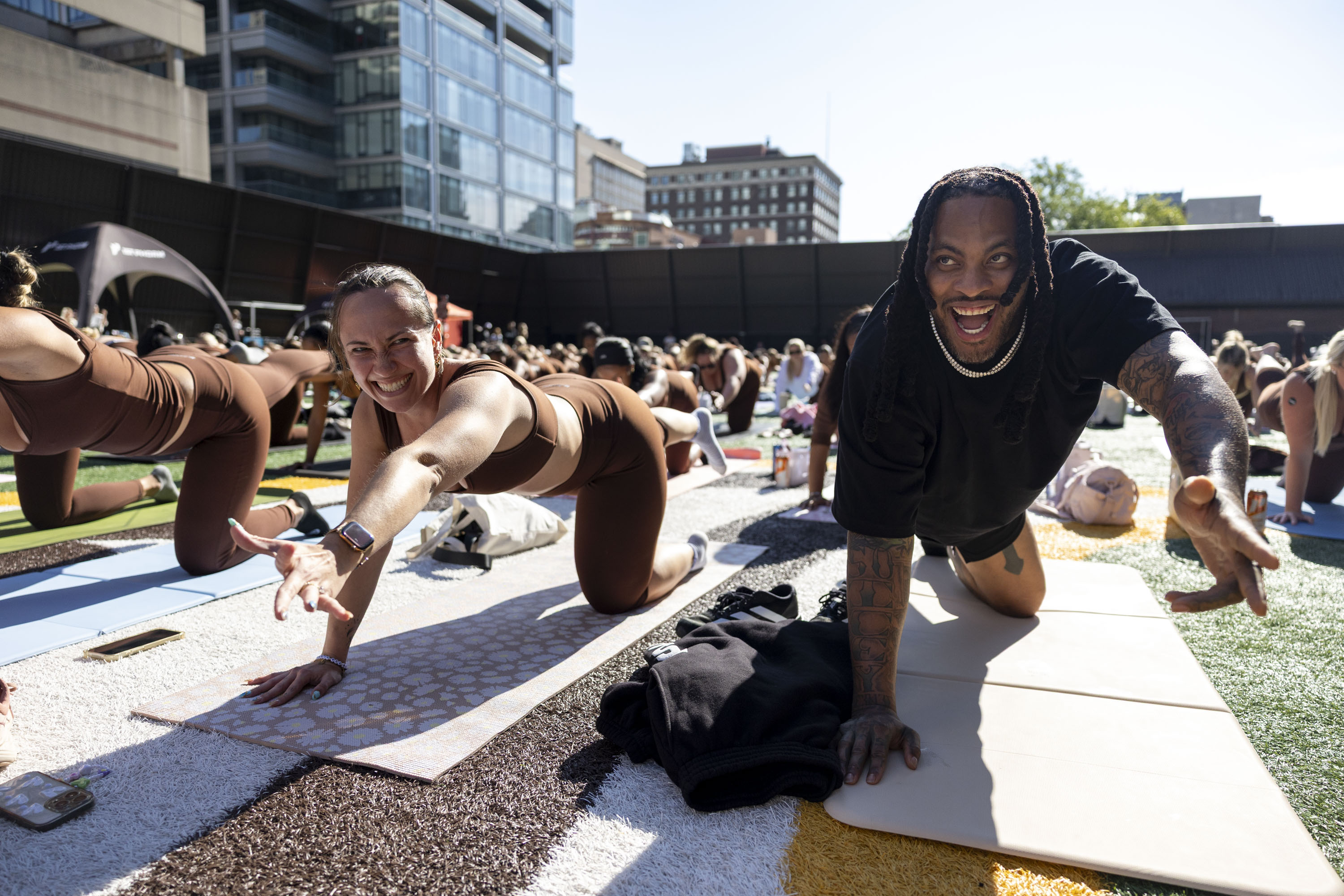
Early Saturday morning, I clambered out of bed and pulled on the required brown Spandex. With my hair slicked back into a ponytail, I hustled down to Friends Select School in Center City, a yoga mat slung over my shoulder. There, on the private school’s rooftop turf, awaited hundreds of my peers all clad in the variations of the same Jacklyn.fit-branded workout set, the allure of complimentary energy drinks and facials, and the promise of rapper Waka Flocka Flame.
This was Sweat & Sculpt, a mat Pilates class slash wellness bazaar slash concert. It’s the brainchild of influencer and Sea Isle City native Jacklyn Romano (aka Jacklyn.fit online), who bills the women’s workout-palooza as a “one-of-a-kind celebration of female empowerment, fitness, and community” and the “largest women’s event” in Philadelphia. That’s a difficult superlative to quantify, but organizers said there were more than 800 women in attendance.
“A lot of people are like, ‘Wait, is this real? Like 800 girls in matching workout sets and Waka Flocka?’” Romano told me. (Nearly everyone I told about this event had a similar reaction, with notably more expletives. One friend texted me, “I can’t even believe that’s a real sentence.”)
That singularity is what interested me — how someone could successfully marry a $120 “viral Pilates event” and the song “No Hands.” A TikTok commenter said it best: “Pilates & Waka is a diabolical combo.”
So I went, I worked out, I Waka’ed. And I didn’t expect to leave feeling so girly and giddy and genuinely moved by the body-positivity of the same man who wrote “Round of Applause.”
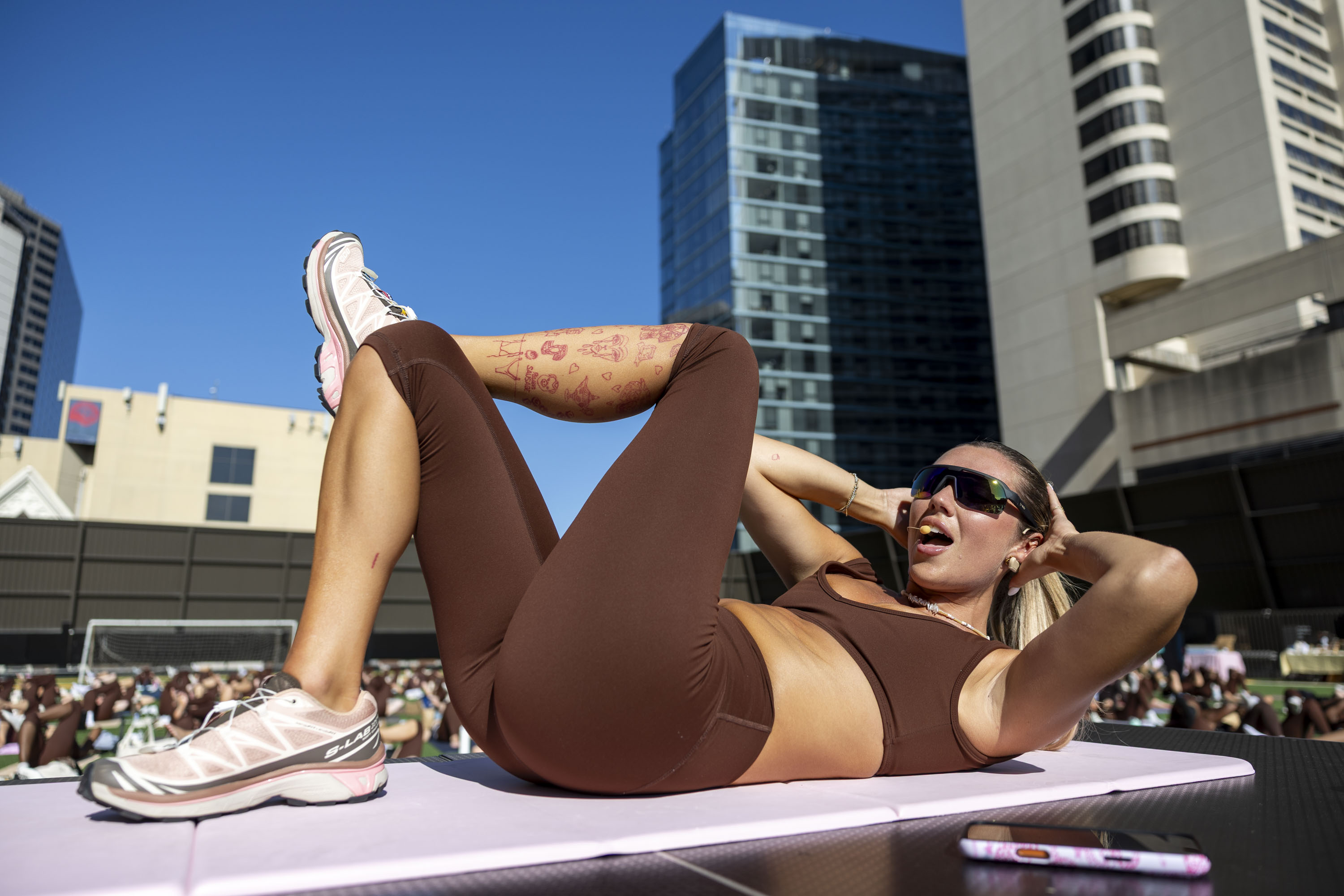
Influencer Jacklyn Romano leads Sweat & Sculpt at the Friends Select School on Saturday, Aug. 29, 2026, in Philadelphia.Tyger Williams / Staff Photographer
Sweat & Sculpt’s mantra
Six years ago, Romano’s brick-and-mortar fitness business was thwarted by COVID-19, so she pivoted to Zoom classes. Then, three years ago, she parlayed her online success (some 111,000 followers on Instagram and 20,600 on TikTok) into in-person activations — a burgeoning trend of social media stars taking their shtick on the road. This spring, for example, I wrote about another influencer, TikTok’s “Dense Bean Salad Girl,” who sold takeout containers of her signature salads at a pop-up near Rittenhouse Square.
A trainer for nearly a decade, Romano said she had always looked for an event like the one she ended up creating with Sweat & Sculpt: An inclusive space for women to get fit, make connections, and feel powerful. Despite the steep admission fee — which included the brown bra and your choice of leggings or capris, with an optional, additional $20 tank top — Saturday’s Sweat & Sculpt was the largest yet, according to Romano. (Full disclosure, I was comped my ticket and athletic garb because I was writing about the event.)
“Once [these women] leave here, they’re also shining from the inside out,” Romano said. At 8:45 a.m., she was already bubbly and energetic, bouncing from fan to fan and selfie to selfie. As we chatted briefly, her tooth gem caught the morning sun and her red-ink patchwork tattoos peeked out from her capris.
“They’re leaving with new friends, they’re leaving with a new form of confidence, they’re trying something new,” she said.
Cousins Dakota Hurwitz, Caitlyn McHugh, and Crystal McHugh have followed Romano for years. They’ve watched as her events grew fortyfold, from 20-person classes in Sea Isle to filling up soccer fields. Here, they said, they found community.
“It’s more than just a workout class,” Hurwitz, 26, of Bucks County, said.
Crystal McHugh, 31, of Northeast Philly, added: “It’s not just [about] confidence, it’s empowerment.”
Admittedly, before this event, I was not familiar with Romano. I recently deleted most social media apps from my phone, expressly because of the constant barrage of body checking, nutrition misinformation, ads for fat-loss miracle drugs, and commentary on what women should or shouldn’t look like. It started to feel like a nightmarish echo chamber of shame.
Romano’s brand, she said, defies that: The workout sets come in an expansive size range, from XS to 4X, and she encourages people to “worry about how you feel” but “not how you look.”
“I try to take a positive spin onto social media,” she said. “On our page, you get to see every different kind of person. No matter what size, what fitness level, what race, what religion — we all come together and we all want to empower each other.”
The workout
Sweat & Sculpt was promoted as low-impact, body-weight mat Pilates.
Don’t be fooled. That doesn’t mean easy.
I’m an ex-ballerina who’s been doing Pilates since age 11. I’m 27 now, so that’s more than 15 years of — albeit on again, off again — Pilates practice. At one point, I was taking as many as five mat classes a week; nowadays, my exercise routine consists of long walks, occasional reformer Pilates, and a weekly gym session with a personal trainer.
Yet by the second set of single-leg glute bridges, my hamstrings were burning. Then came a three-minute ab circuit. According to my Apple Watch, over 42 minutes, I burned 144 calories and my heart rate reached 167 beats per minute, more than double my resting rate.
As my arms and legs started to shake, I certainly felt that sense of camaraderie and support Romano talked about: her steady stream of affirmations — “Hang tight, ladies!” — blasting over the speakers; the smiles from the women around me; finding comfort knowing that I was not alone, that we all signed up to be breaking a sweat at 9 a.m.
Eleven mats down from me, 6-foot-6 Waka Flocka Flame cried, “Call the paramedics!”
“Why not bring in someone who’s iconic to our generation of women and just make it fun?” Romano said. The chorus “Girl, the way you’re moving got me in a trance. …” once filled gymnasiums on prom night; hearing “‘Rain, rain, go away,’ that’s what all my haters say,” teleported me back to a college bar, my heeled booties sticking to a White Claw-laden floor.
Waka Flocka Flame performs some of his hit songs after the Sweat & Sculpt Pilates class at the Friends Select School on Saturday, Aug. 29, 2026, in Philadelphia.Tyger Williams / Staff Photographer
But before he performed his medley, Waka, whose given name is Juaquin Malphurs, took time to answer audience questions, offering reassurance to one new mom in the crowd:
“I need you not to be hard on yourself postpartum,” Malphurs, who is also a new dad, said. “The woman that you’re gonna be is not the woman you see today, and you’ll get there — don’t worry.”
“Give your body some time … then fight the fight.”
Afterward, I spoke to Tamika Ford, who was coincidentally also seven weeks postpartum.
She came Saturday morning worrying — “I’m going to be so out of shape,” she thought — and left feeling fun and light-hearted and buzzing with encouragement.