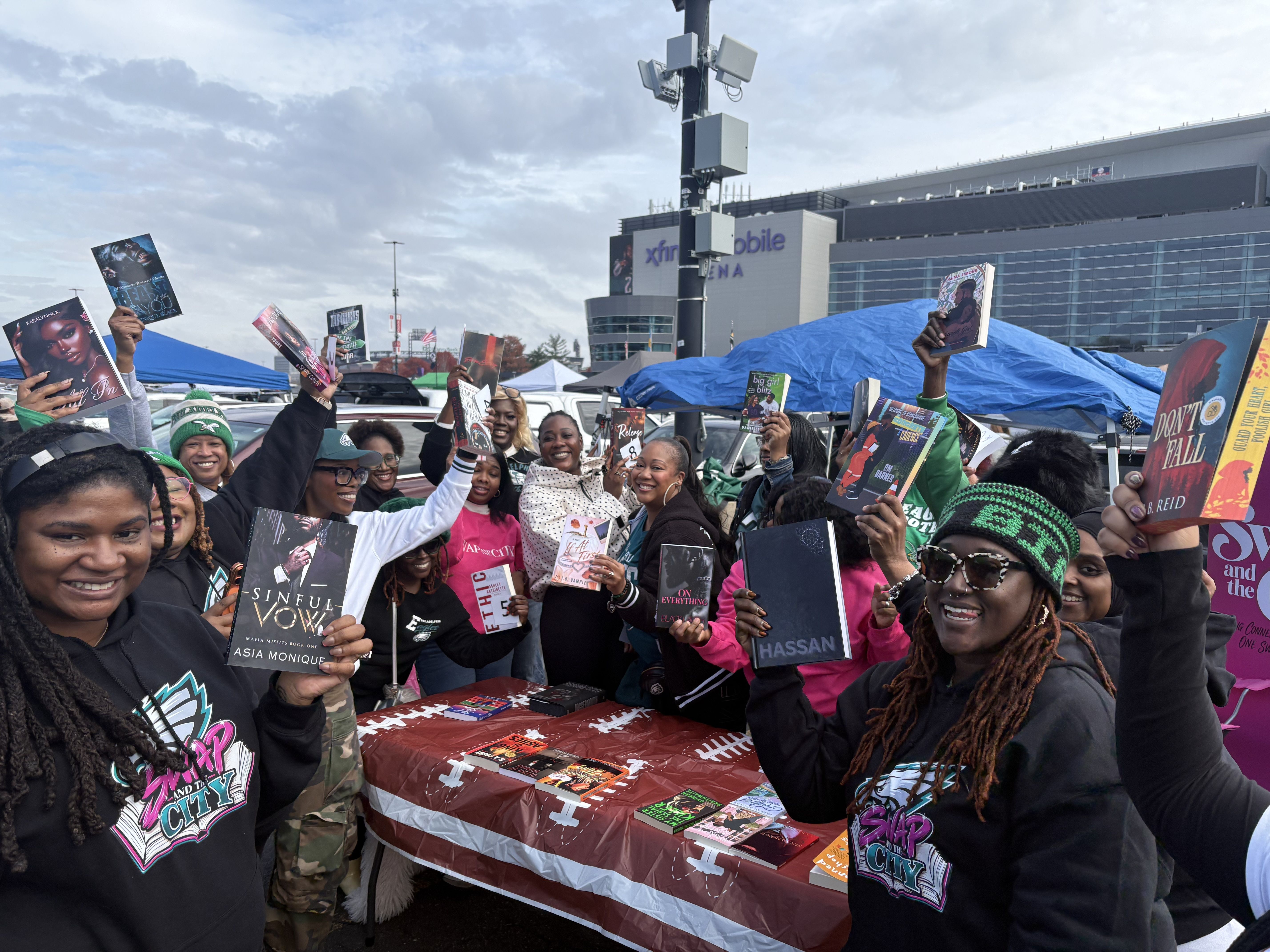
In a parking lot on the west side of Lincoln Financial Field, while others were guzzling beer in pickup truck beds or playing pickup games with pigskins, dozens of women were jostling for the best books.
They snatched thrillers or dramas, all by Black authors, from a tailgate table or out of each other’s hands, ribbing one another as they made their steals.
A nearby emcee remarked over his microphone: “Being knowledgeable is cool!”
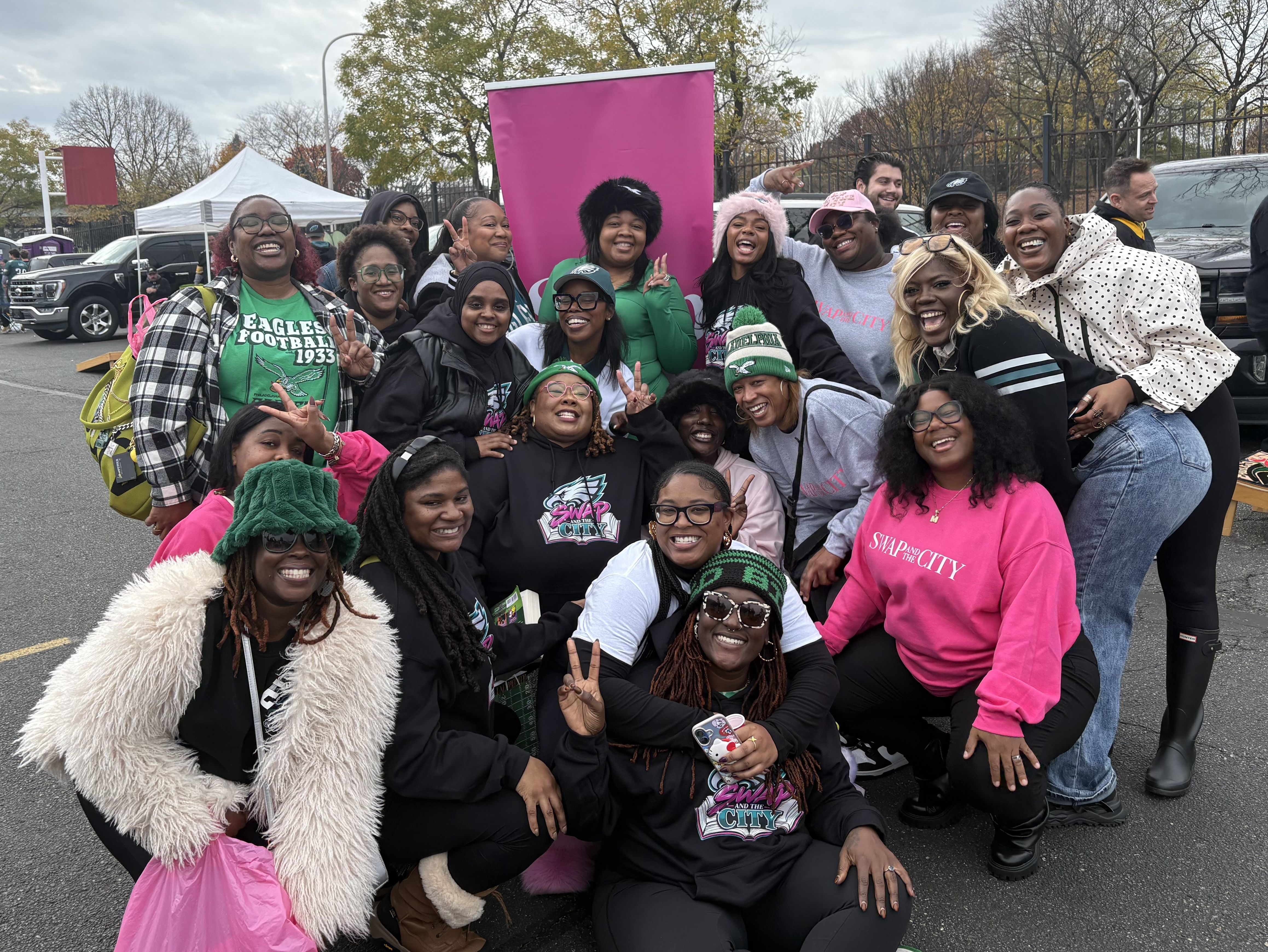
This was Swap and the City, a novel, anything-but-traditional women’s book club that champions Black literature. The group, which meets regularly to exchange books, hear from Black writers, and discuss their latest reads, has grown tenfold since it started in January, building a coalition of more than 80 like-minded women.
That kinship could be felt Sunday in Parking Lot C, where some of the women were tailgating before the Battle of Pennsylvania Eagles–Steelers rivalry. The event — one of their regular swaps, which operate like a white elephant gift exchange — married the women’s bibliophilia and their Eagles-mania.
“If someone told me that this book club would be as big as it is now … I would not believe them,” founder Latoya Henry, 38, of Glenolden, said. “And we’re honestly so far past the book club mentality.
When Henry found herself disinterested in another book club’s picks, including The Handmaid’s Tale, she wanted an outlet to celebrate the urban fiction and Black romance books that she’s loved for decades, like those by Trenton-born Wahida Clark. She started Swap and the City with a few women in a coffee shop; the name, a play on the TV series, Sex and the City, captures the group’s girly energy, Henry said.
“We are not like any other other book club,” said member and author Laketa London. Swap and the City is “your favorite happy place and add a book in there,” she said.
Members of Swap and the City pose for a photo outside the Eagles-Steelers game on Sunday, Nov. 22, 2026, in Philadelphia.Maggie Prosser
For local, independent Black writers like London and Briyanna Michelle, Swap and the City gives their work a platform and an audience. And, for Black readers, they can find their experiences reflected on the pages.
These writers “deserve to be celebrated, promoted, supported,” Henry said, “because they do have incredible stories.”
Michelle added: “We don’t have a space where I feel like my stories are being told, so [Swap and the City] feels very authentic and just a very safe space to be.”
The group has bonded beyond the books, too: “If you need someone to lean on … we’re there,” said Akaycia “AK” Curry, 31, of East Falls. “If you need a ride, we’re there.”
Member Latiya Griffin, 42, of West Oak Lane, said the group has given her a sense of belonging.
“Swap and the City has provided so much community for me,” she said.
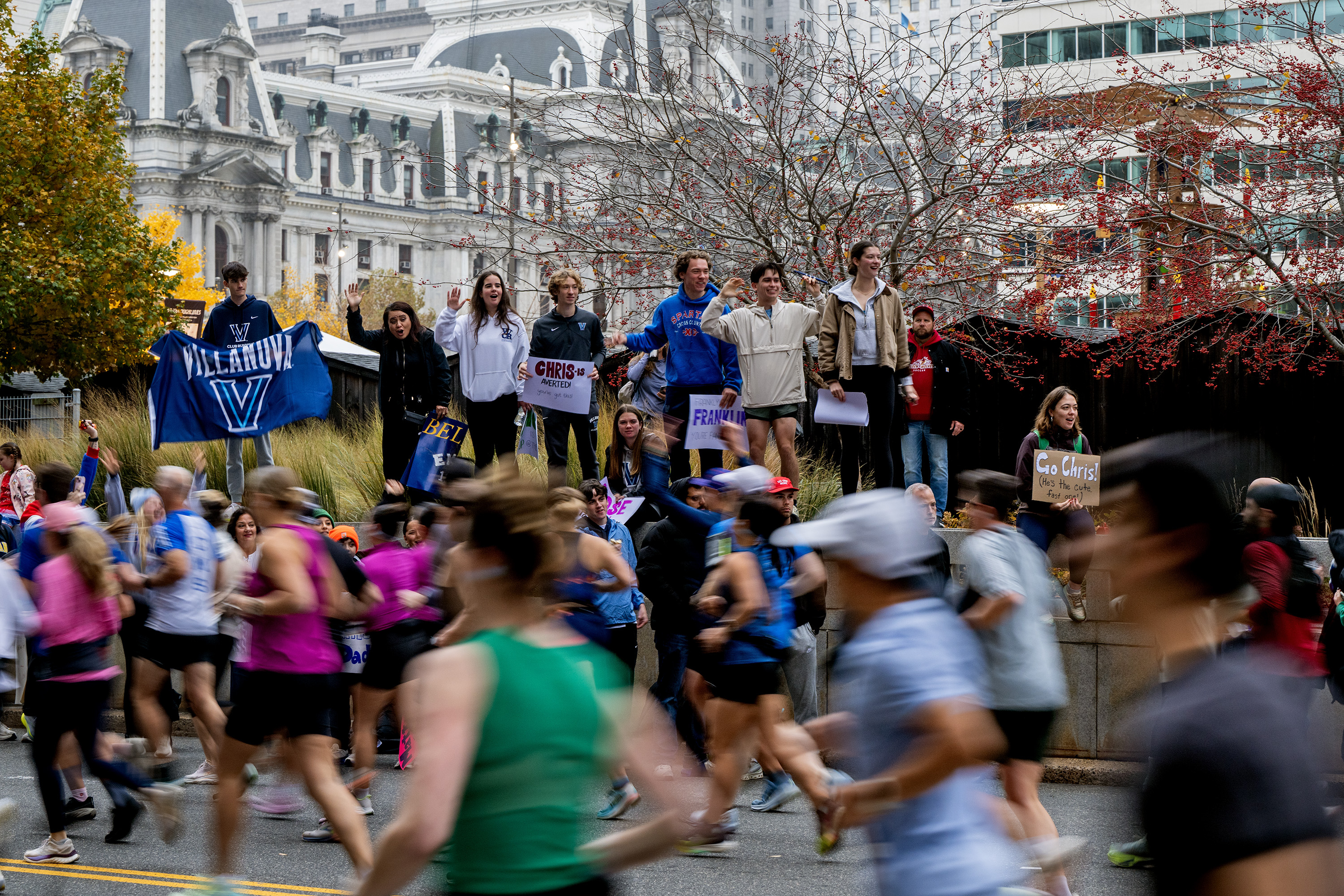
In Center City, nearly seven miles into the 2026 Philadelphia Marathon route, the thousands of fans lining Walnut Street created a wall of sound. Clinking cowbells and nonstop cheering swelled as waves of runners passed.
By 8 a.m., the elite runners vying to win the race had all passed. These fans were cheering on friends, family, and the thousands of other people, of all ages and fitness levels, striving to achieve their own personal goals.
“You get caught up in the energy, you almost get emotional,” said Michael Molloy of Swarthmore, who wasthere to support his 30-year-old son, Aidan.
Approximately 20,000 people ran the marathon Sunday, organizers said. Including Saturday’s half-marathon and 8K, the marathon weekend sold 40,000 race bibs this year — a 3,000-person increase and all-time high.
“Every year we focus on making Philadelphia Marathon Weekend bigger and better than the year before, and the fact that we continue to sell out in record time demonstrates the demand for a world-class race like ours,” race director Kathleen Titus said online.
After early forecasts of rain gave way to a cloudy, cool day, the decent weather and record number of racers all added up to a city packed with enthusiastic fans.
“It’s so much fun, and no matter how you do, you can be proud of yourself,” said Aidan Molloy’s partner, Becky McCain of Brooklyn.
She said Molloy’s goal was simply to finish his first 26.2-miler and to show McCain, who has run three marathons, that he, too, could do it. He did, finishing 3,844th with an average pace of 9:03 minutes per mile, according to race results.
Molloy fundraised for the cancer society, his mother Andrea Smith noted, after he was inspired by his cousin, who ran a half-marathon last year after finishing cancer treatment.
To cheer him on, Smith raised a sign, where his name was crossed out and replaced with “Mario,” a family joke, referring to Super Mario Bros., after he recently grew a mustache.
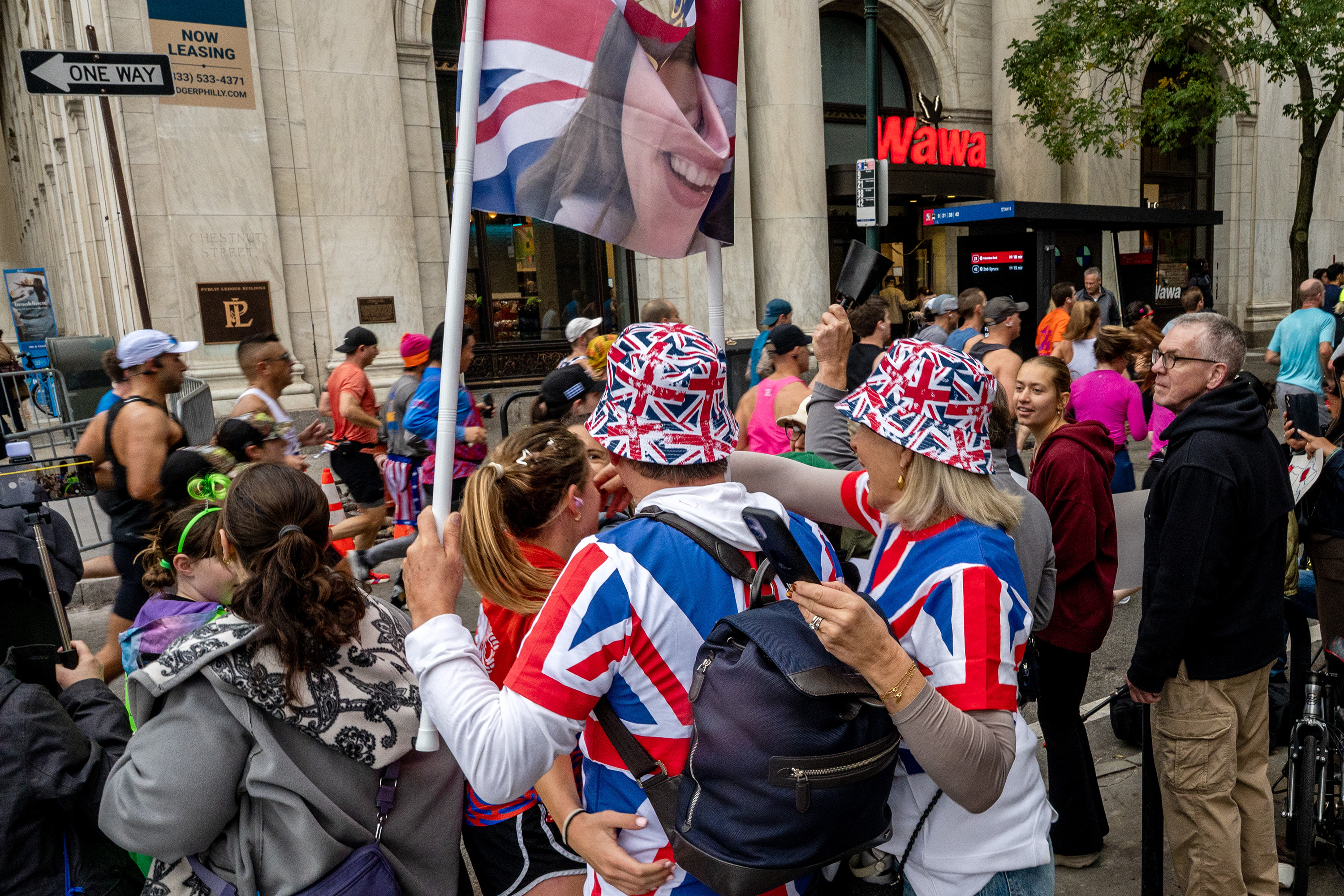
Runner Edie Priest breaks out of the pack briefly to hug her parents, Ian and Virginia Priest — in full-Union Jack clothing — as they cheer her on at Sixth and Chestnut. Edie, a University of Pennsylvania student, was running her first marathon, and hoped to beat her dad’s personal best, a time of 3:54 in the 1990 London Marathon. The family is from the United Kingdom.Tom Gralish / Staff Photographer
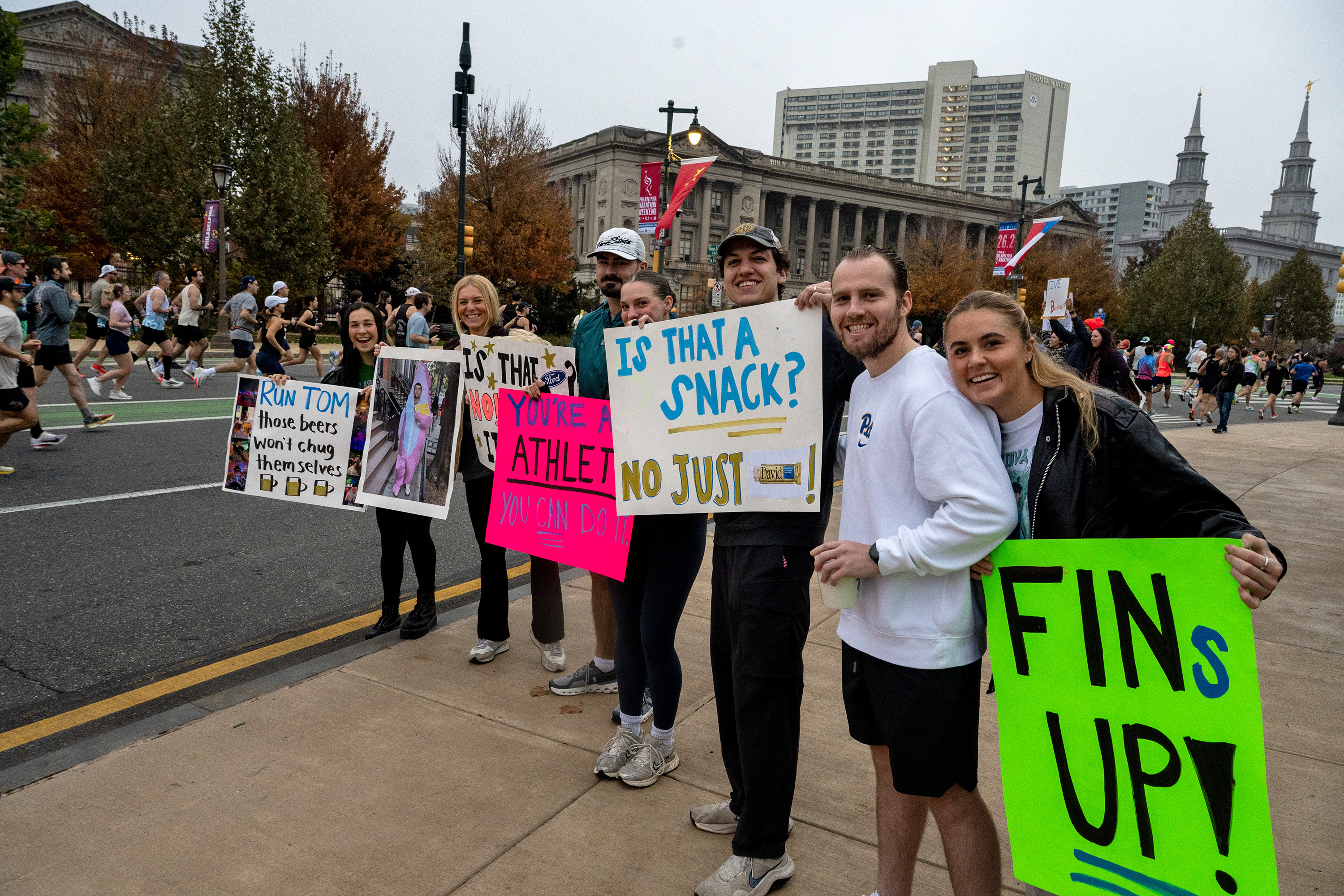
As always, the signs were a big part of the scene. Some spoke to news and politics. “You’re running better than the federal government,” read one. “They can’t cyberattack ur grit,” read another.
With the Eagles almost certain not to make it into the NFL playoffs, and set to play the Pittsburgh Steelers on Sunday afternoon, football-themed signs such as, “Run like the Eagles season depends on it!” punctuated the crowd.
Othersigns displayed more personal messages: “This is what believing in yourself looks like.” “Those boots are made for running.” “Bark if you’ve got that dawg in you.”
One sign read, “You’re impossibly fast and strong,” a reference to a line from the 2008 romantic fantasy film Twilight. The message — this one was next to an image of a young Robert Pattinson in his role as a forever-17-year-old vampire — has become a mainstay at marathons in recent years.
Kim Malcolm and her family carried signs showing a photo of their daughter, Linzy Malcolm, a 25-year-old medical student at the University of Pennsylvania Perelman School of Medicine.
“It’s so exciting. We’re so glad the rain held off,” Kim Malcolm said.
Malcolm said her daughter was motivated by her cousin, Sarah Coulter, who came in from Washington, D.C., to cheer her on.
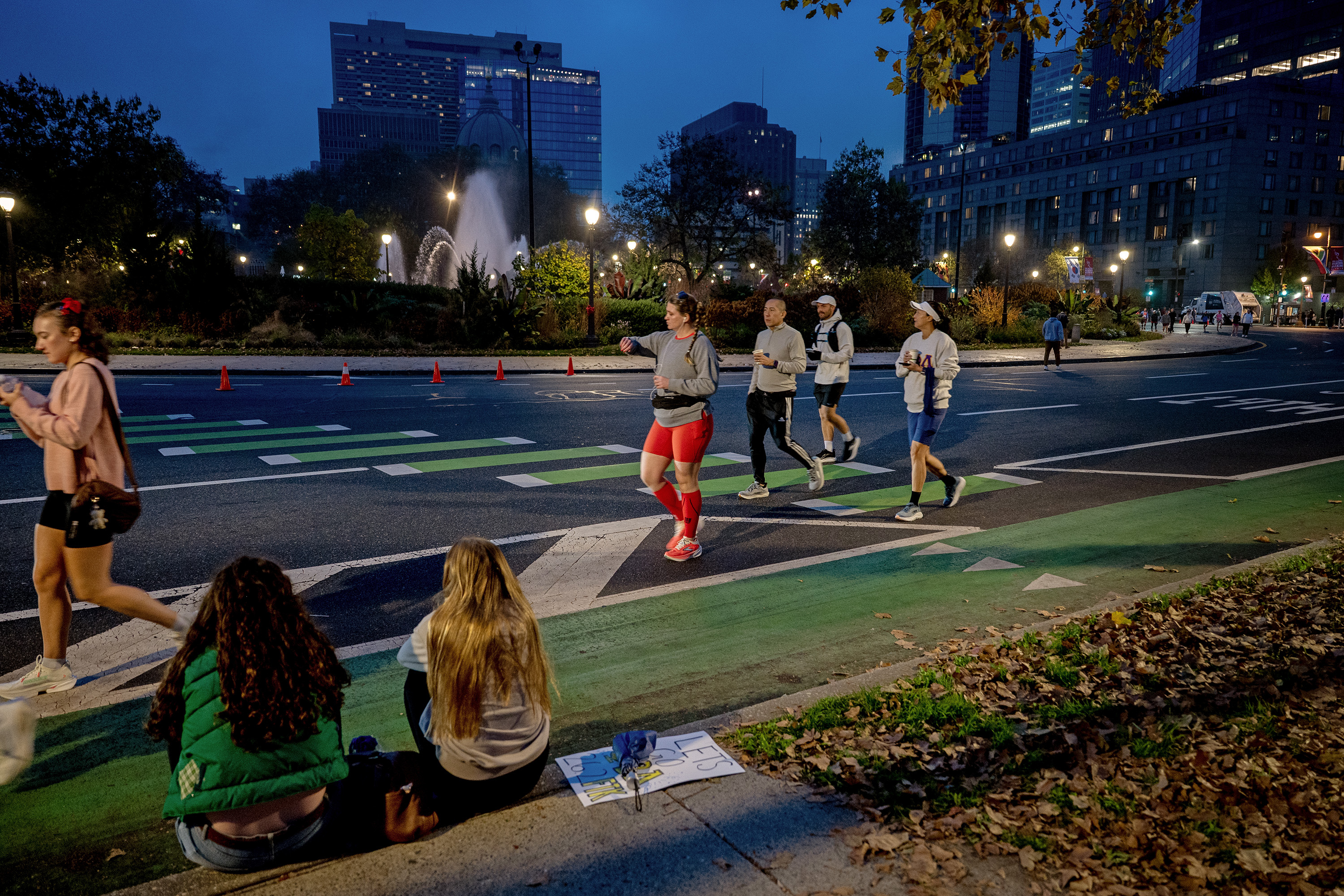
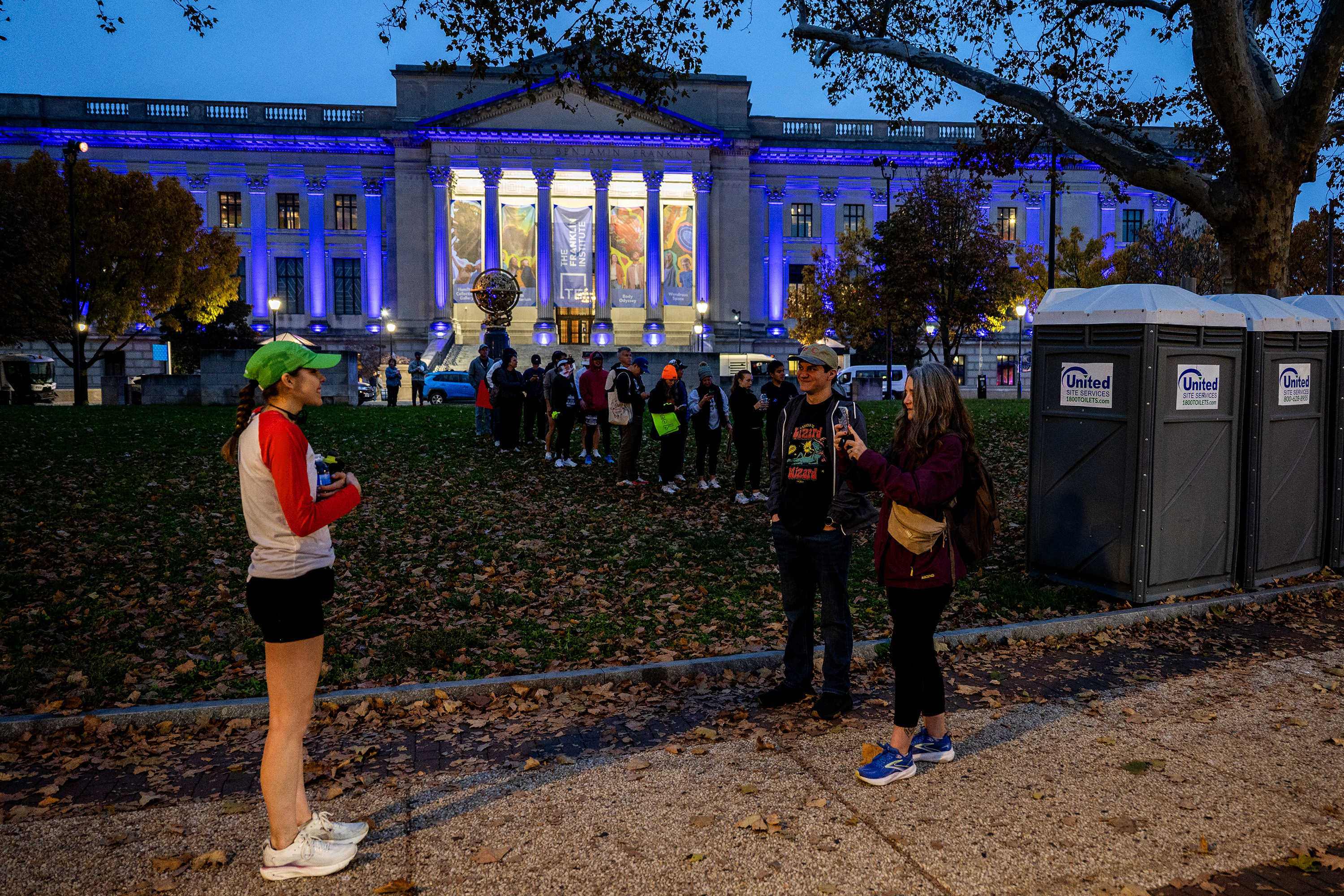
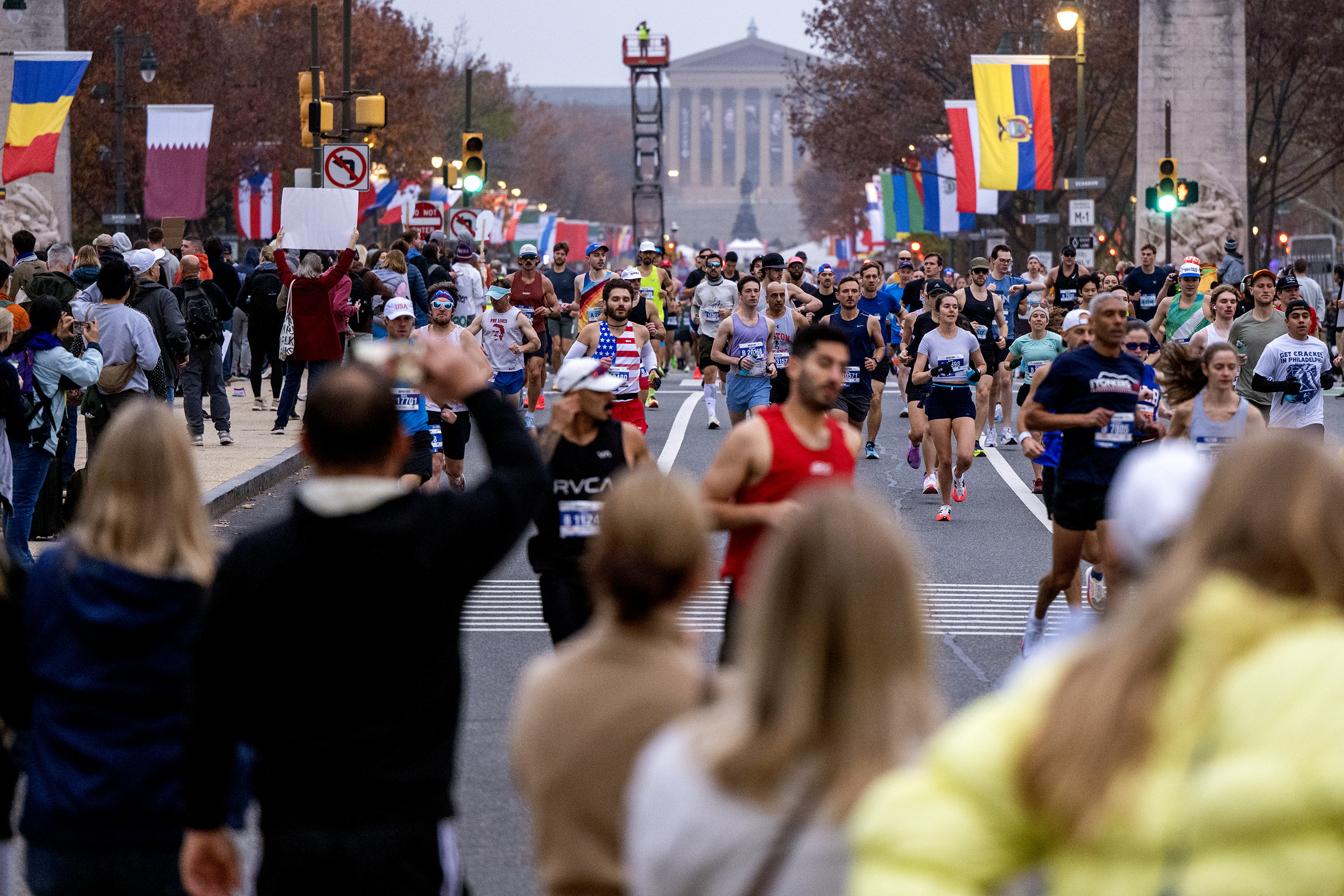
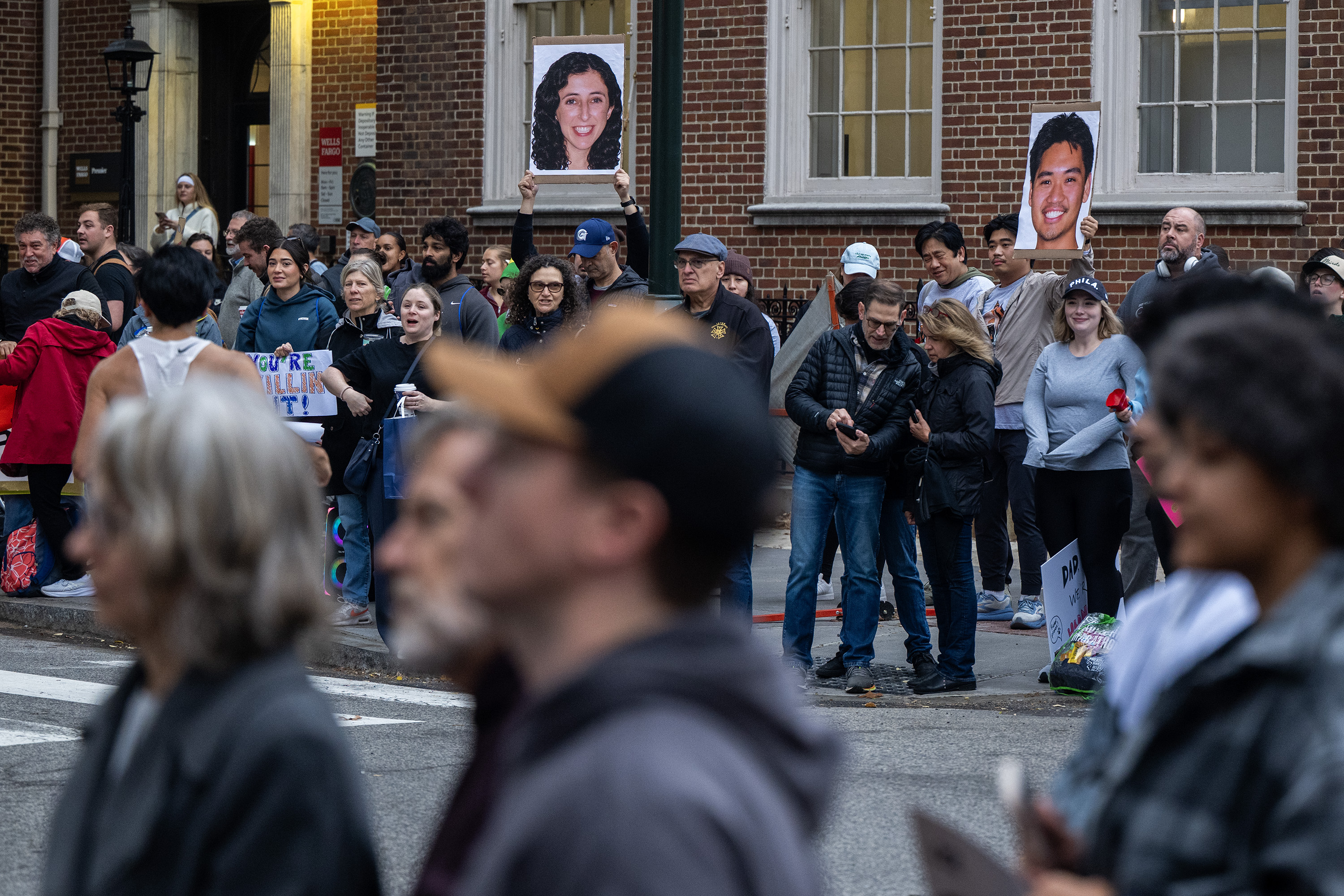
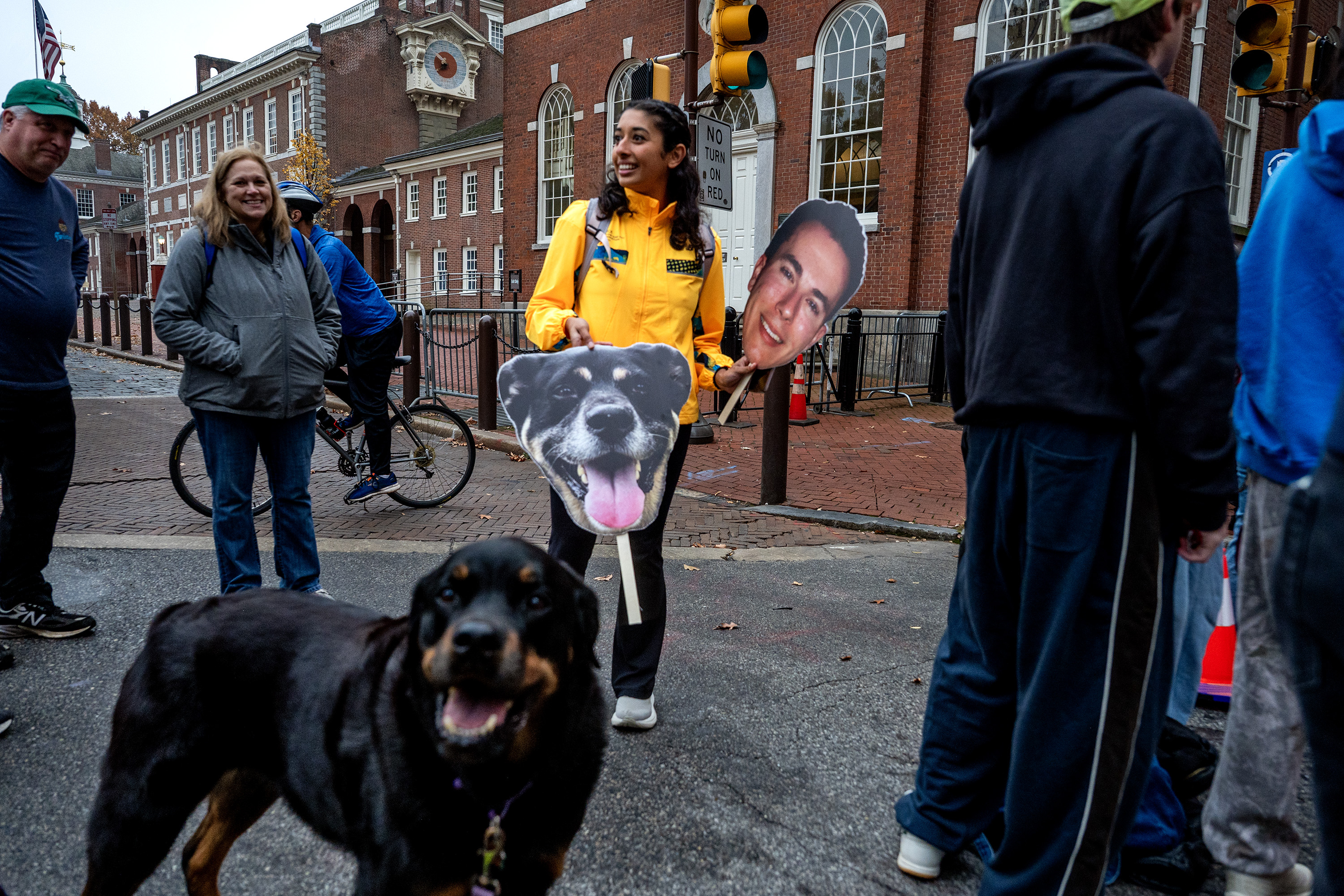
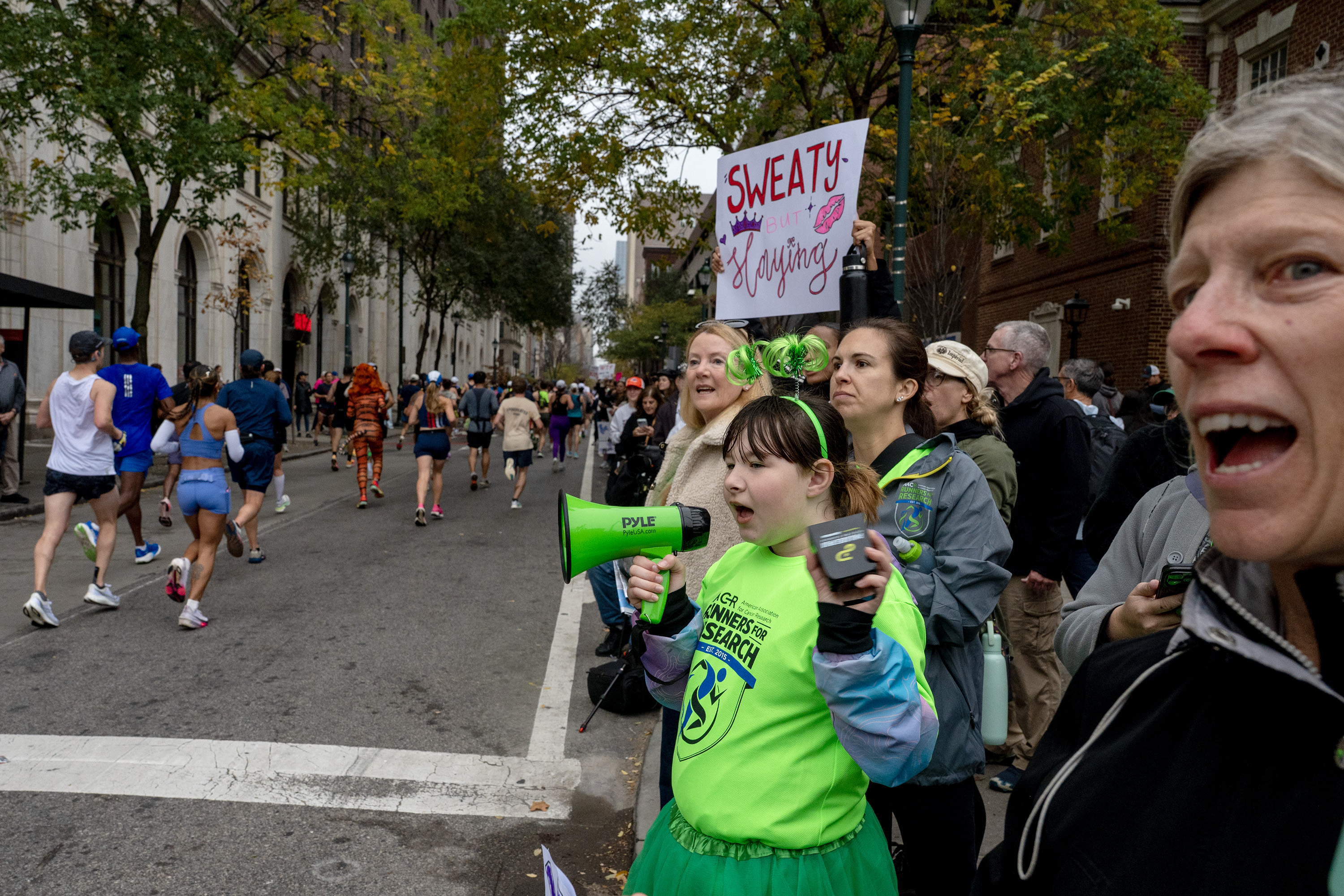
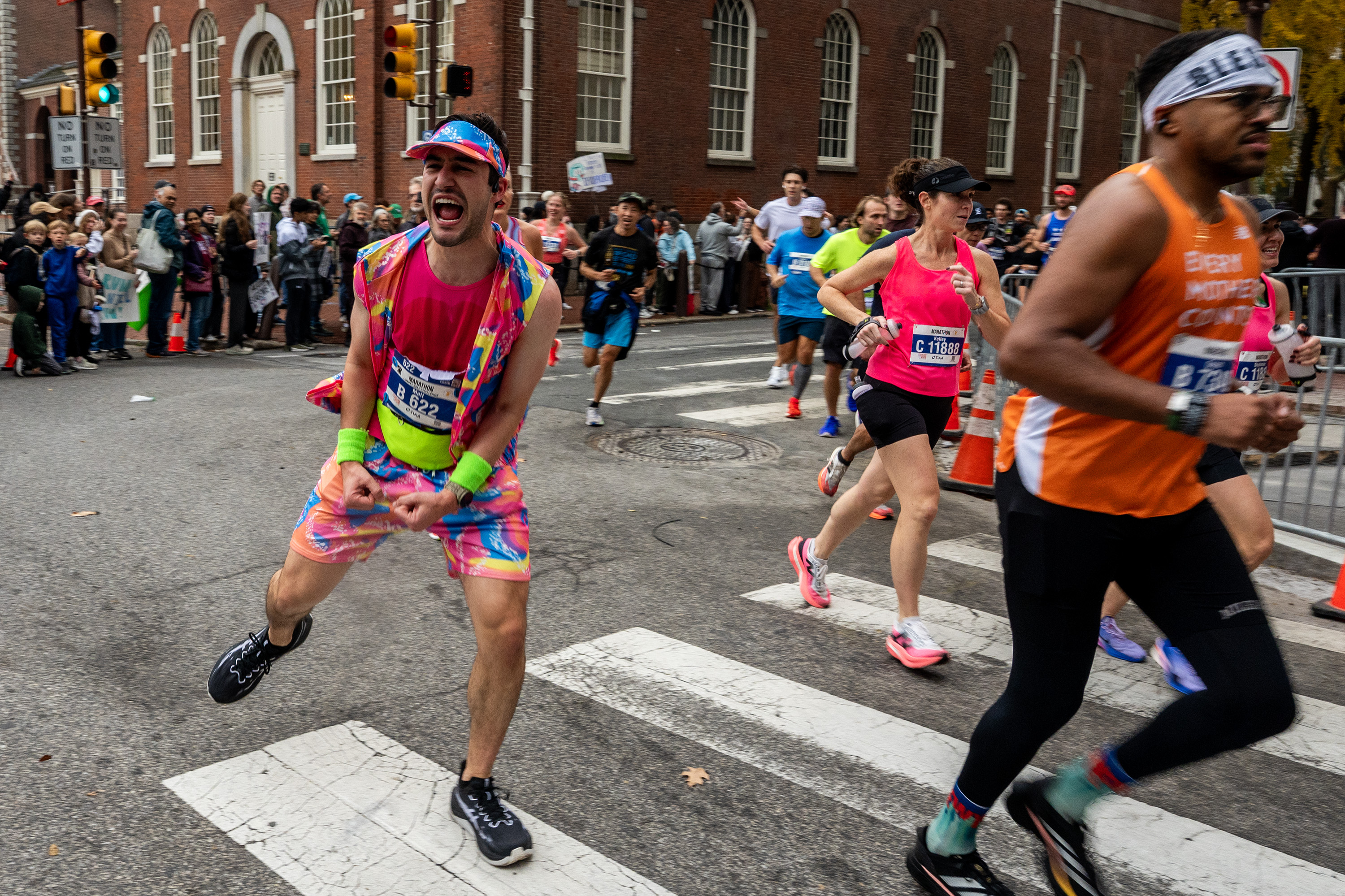
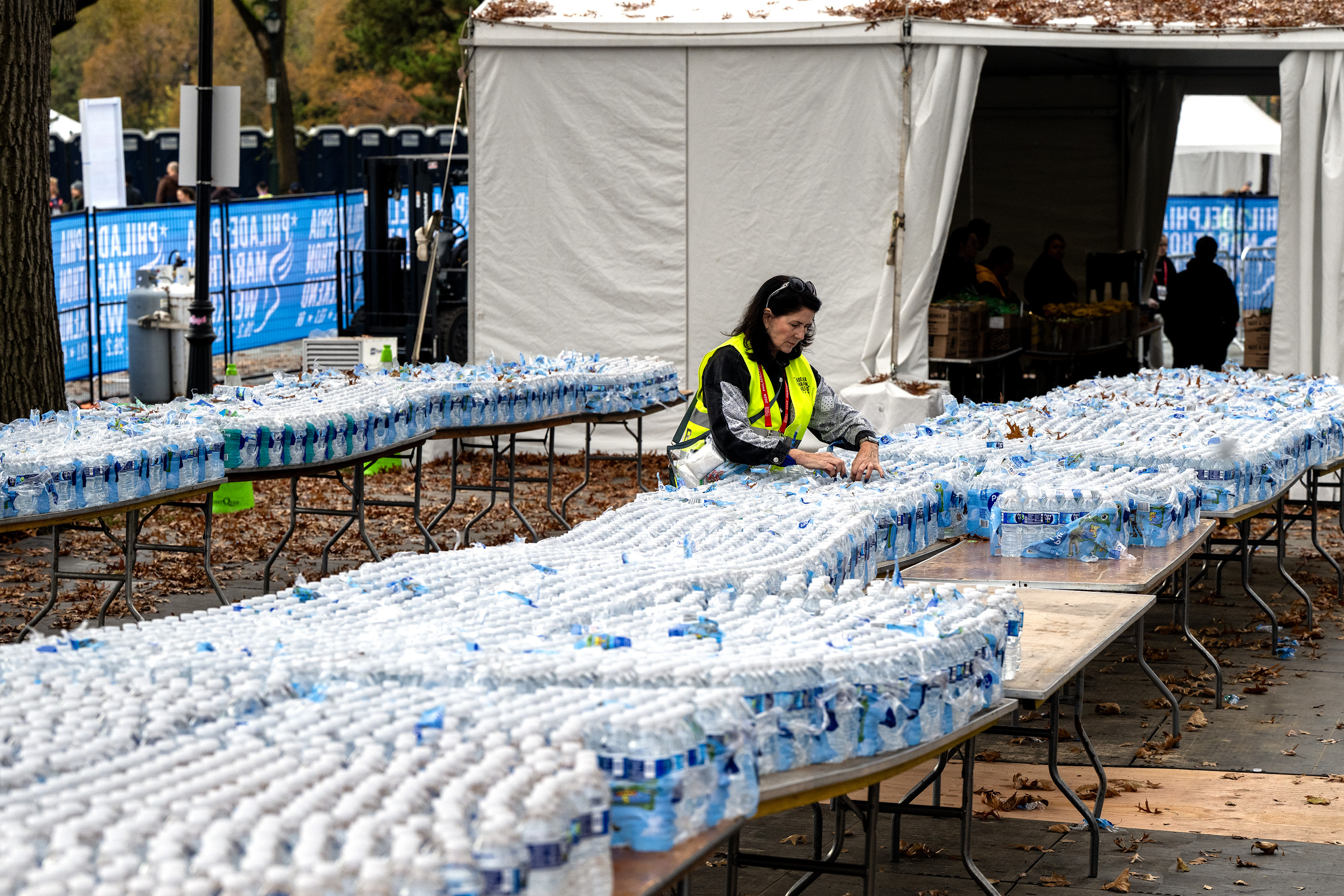
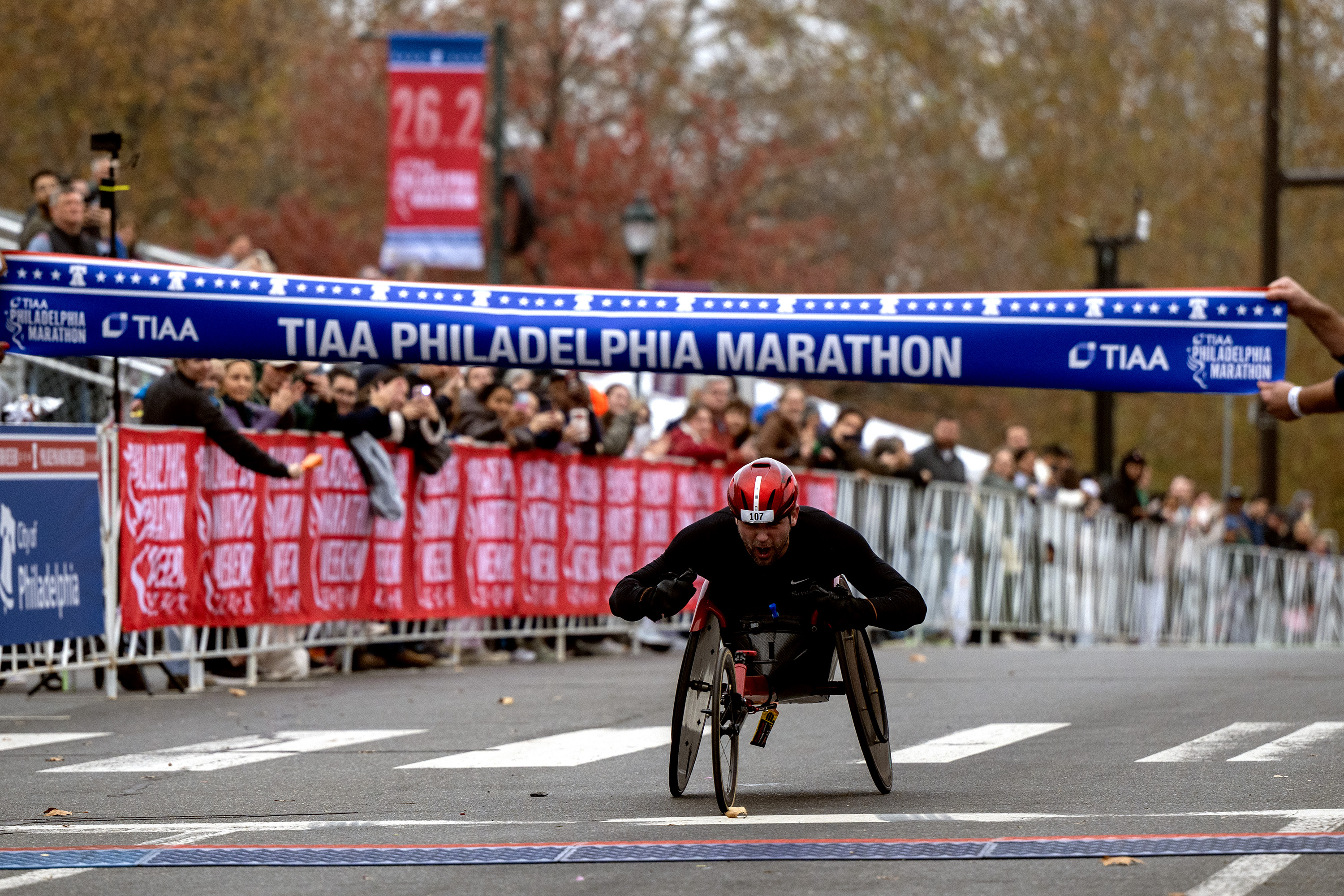
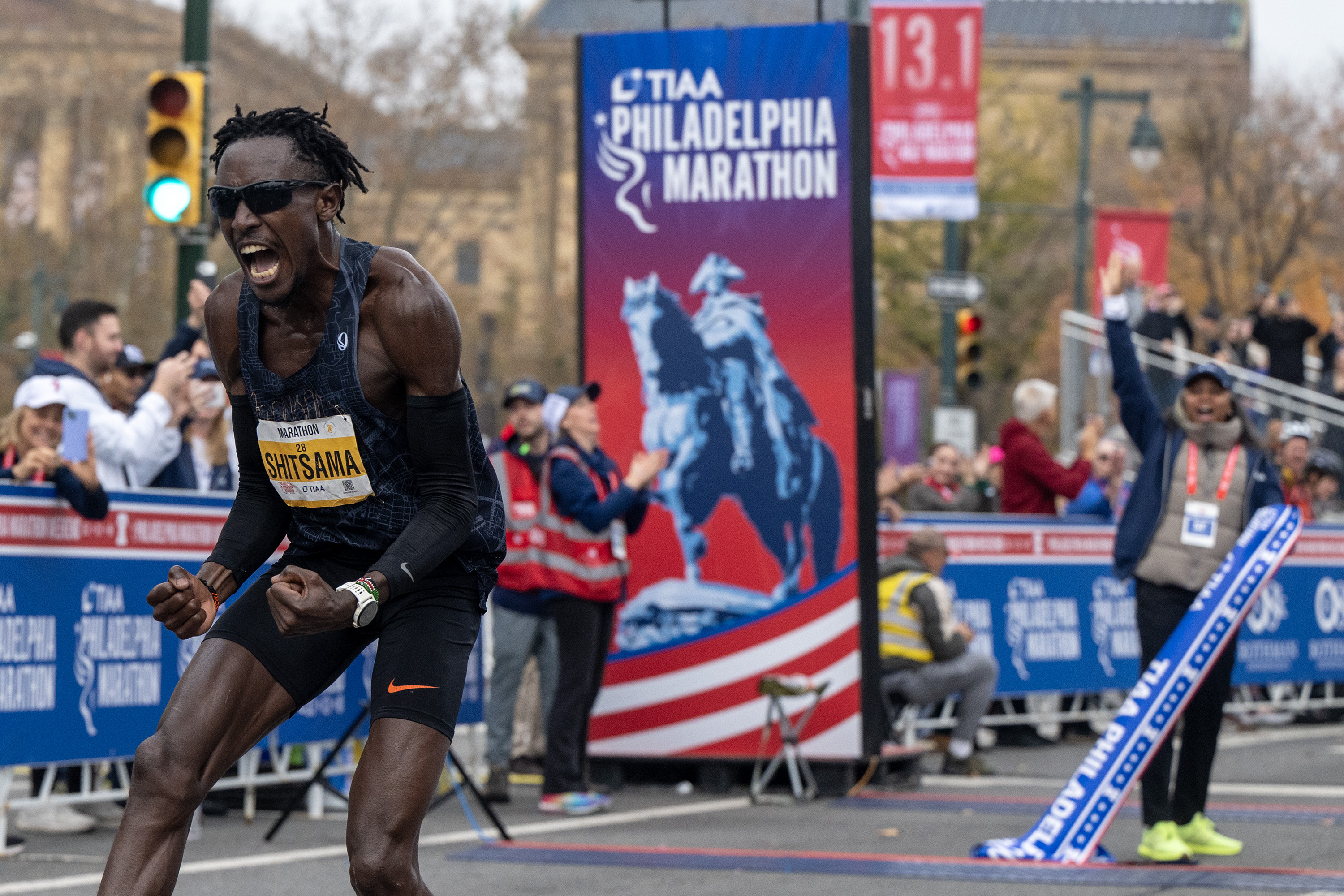
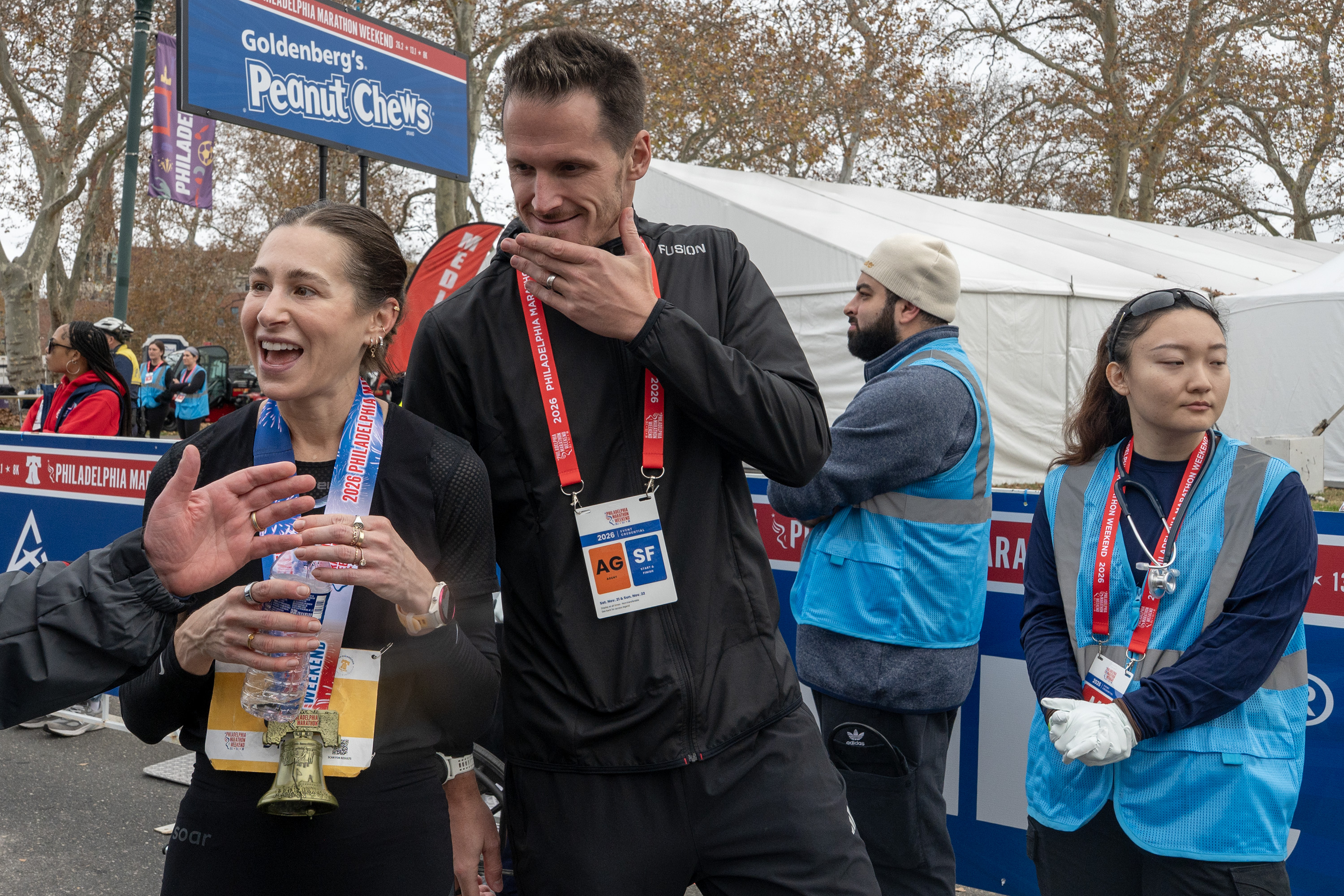
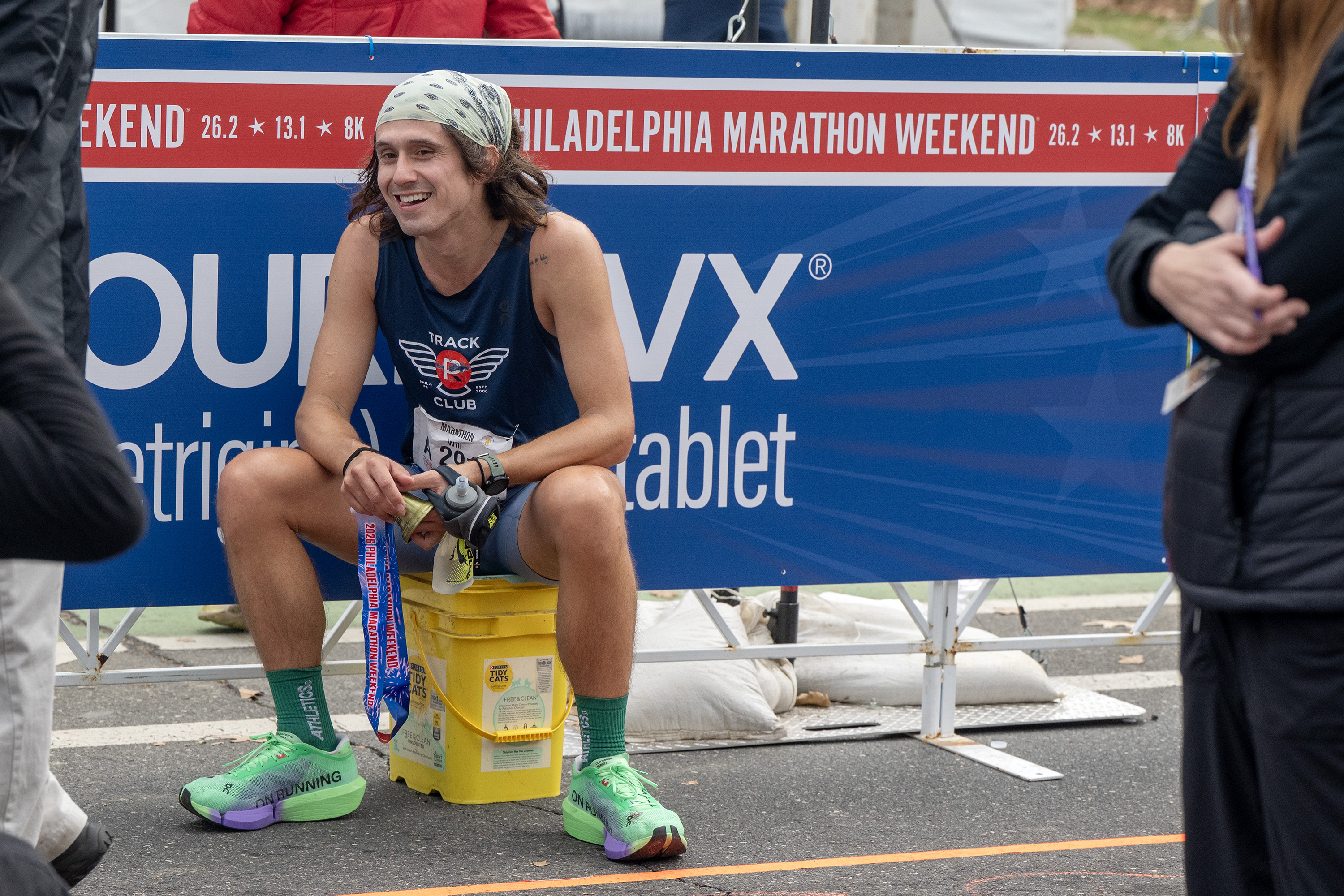
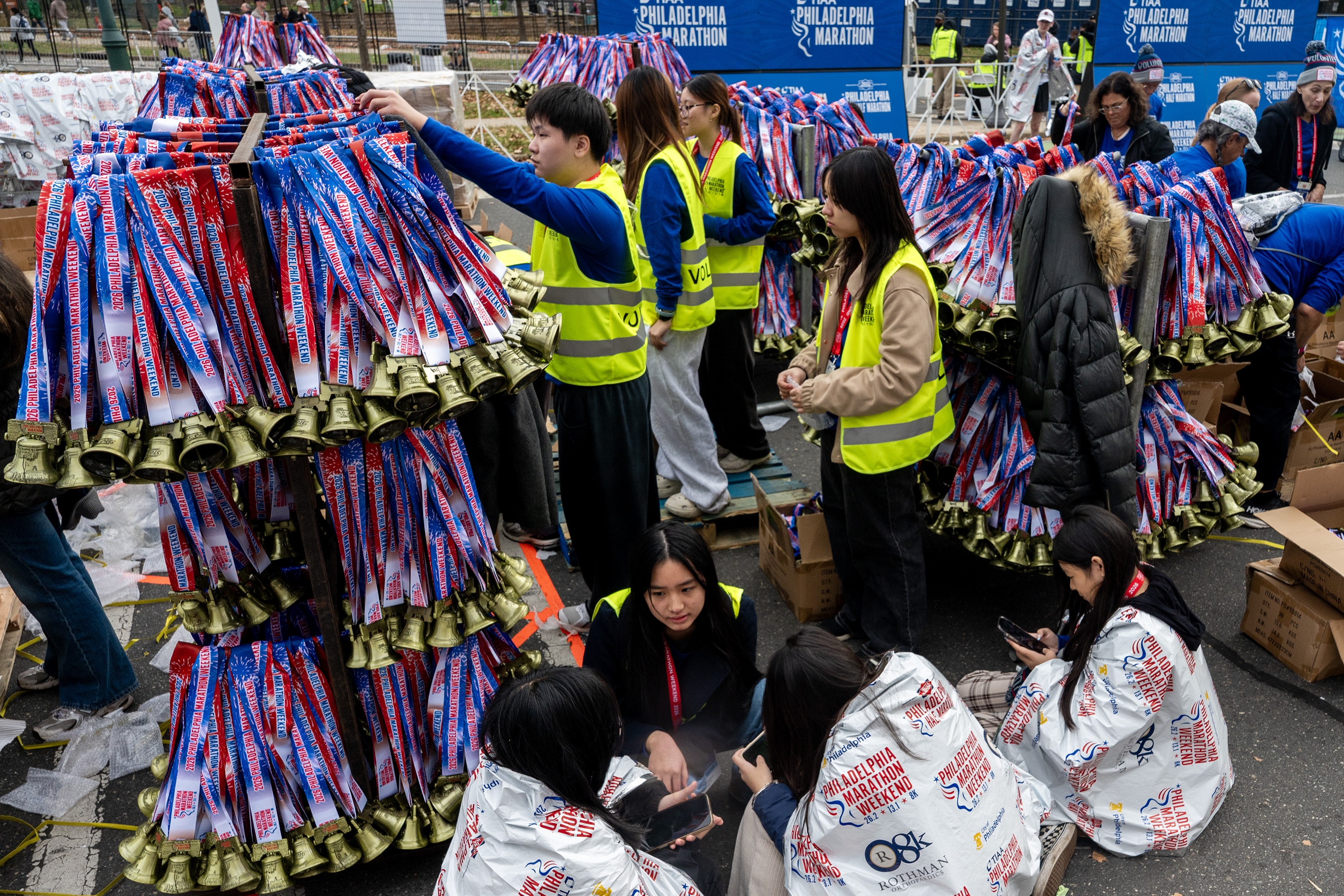
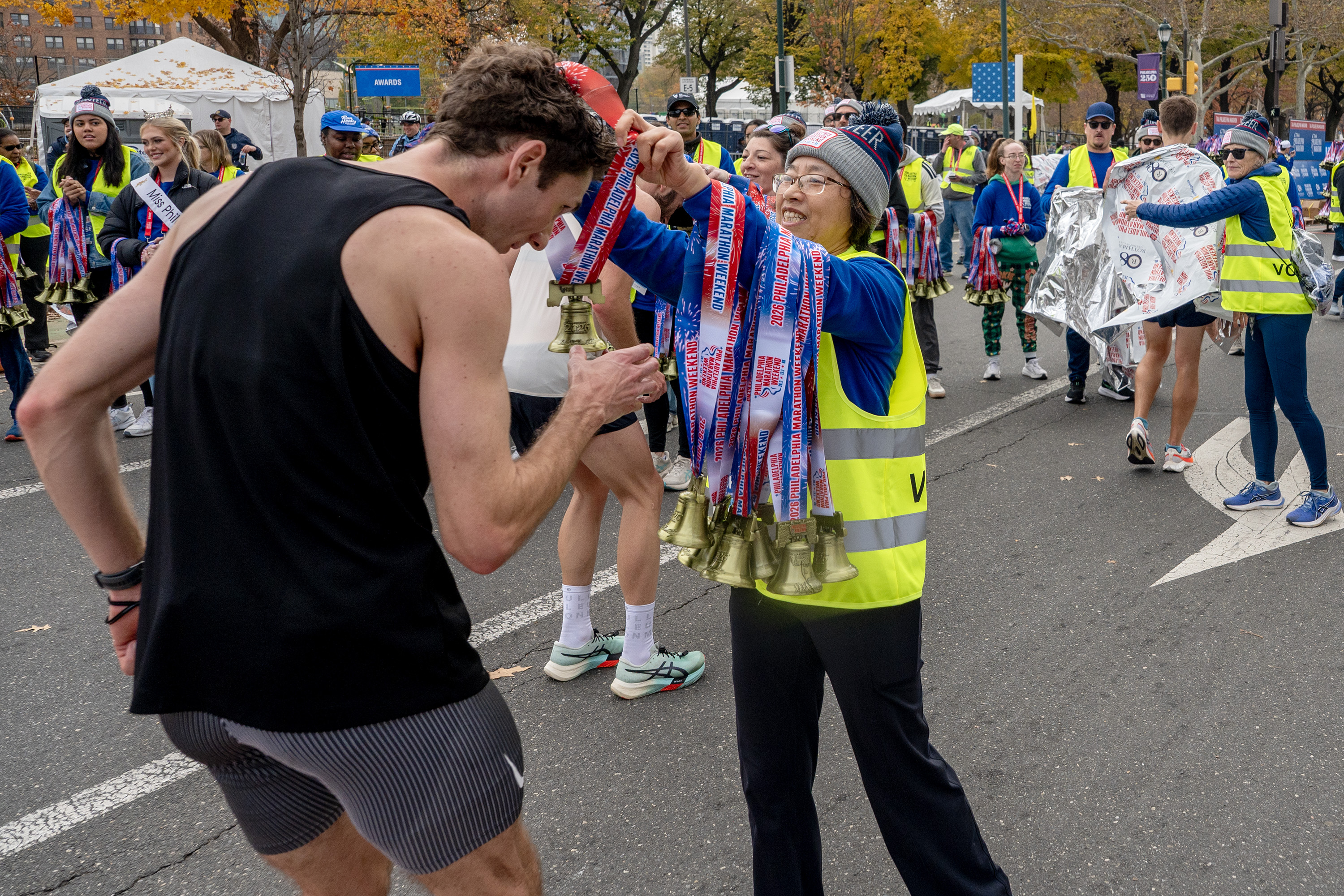
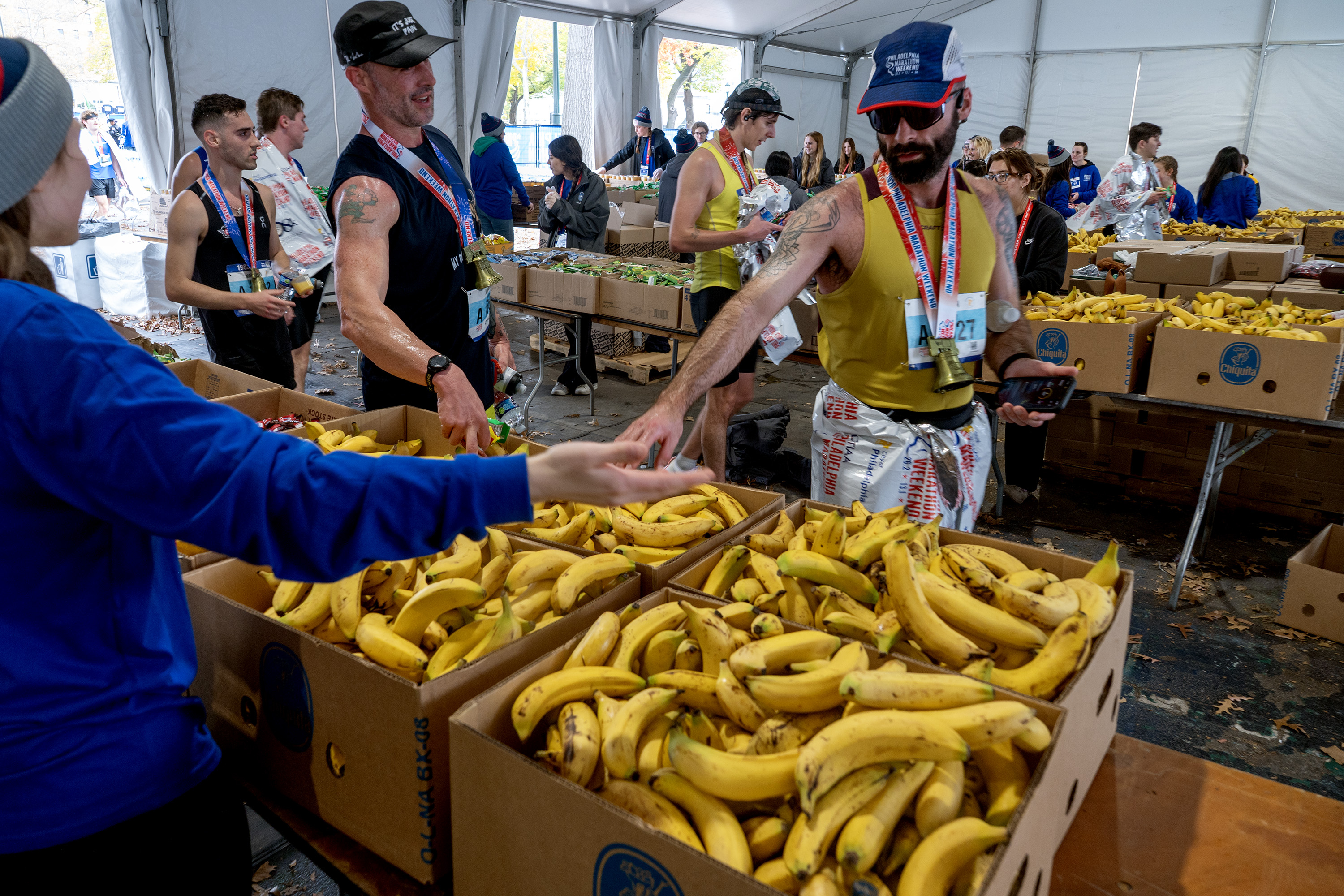
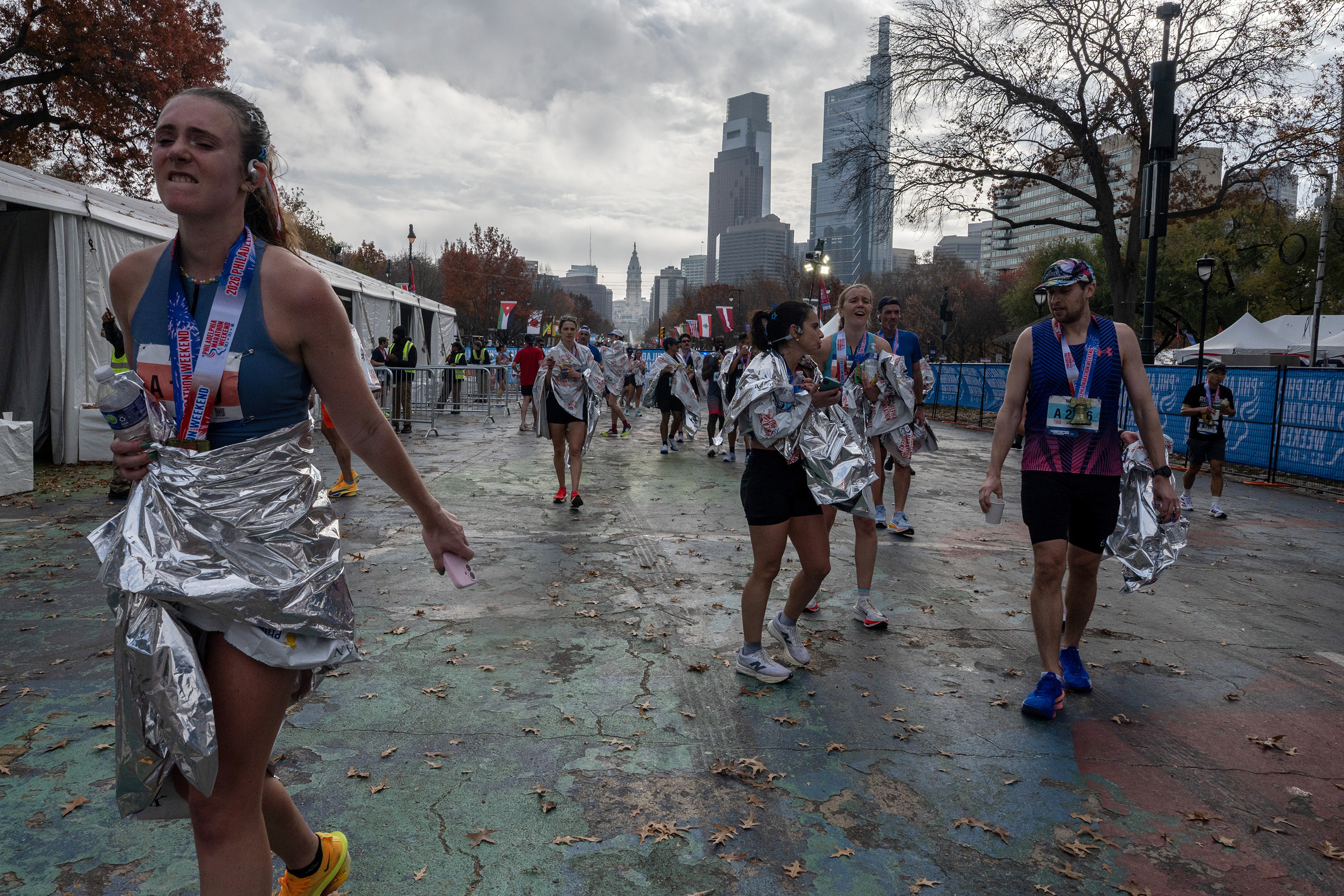
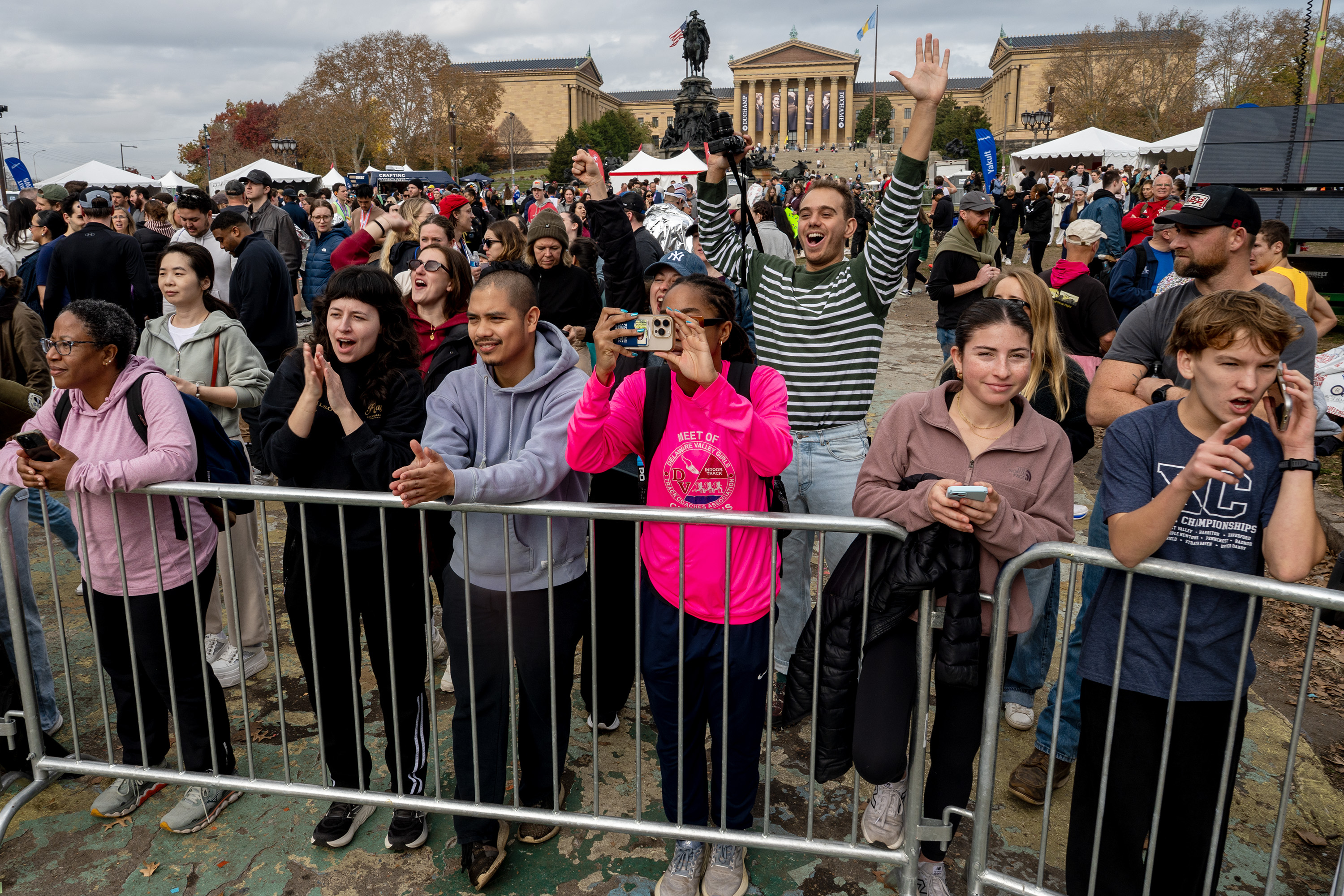
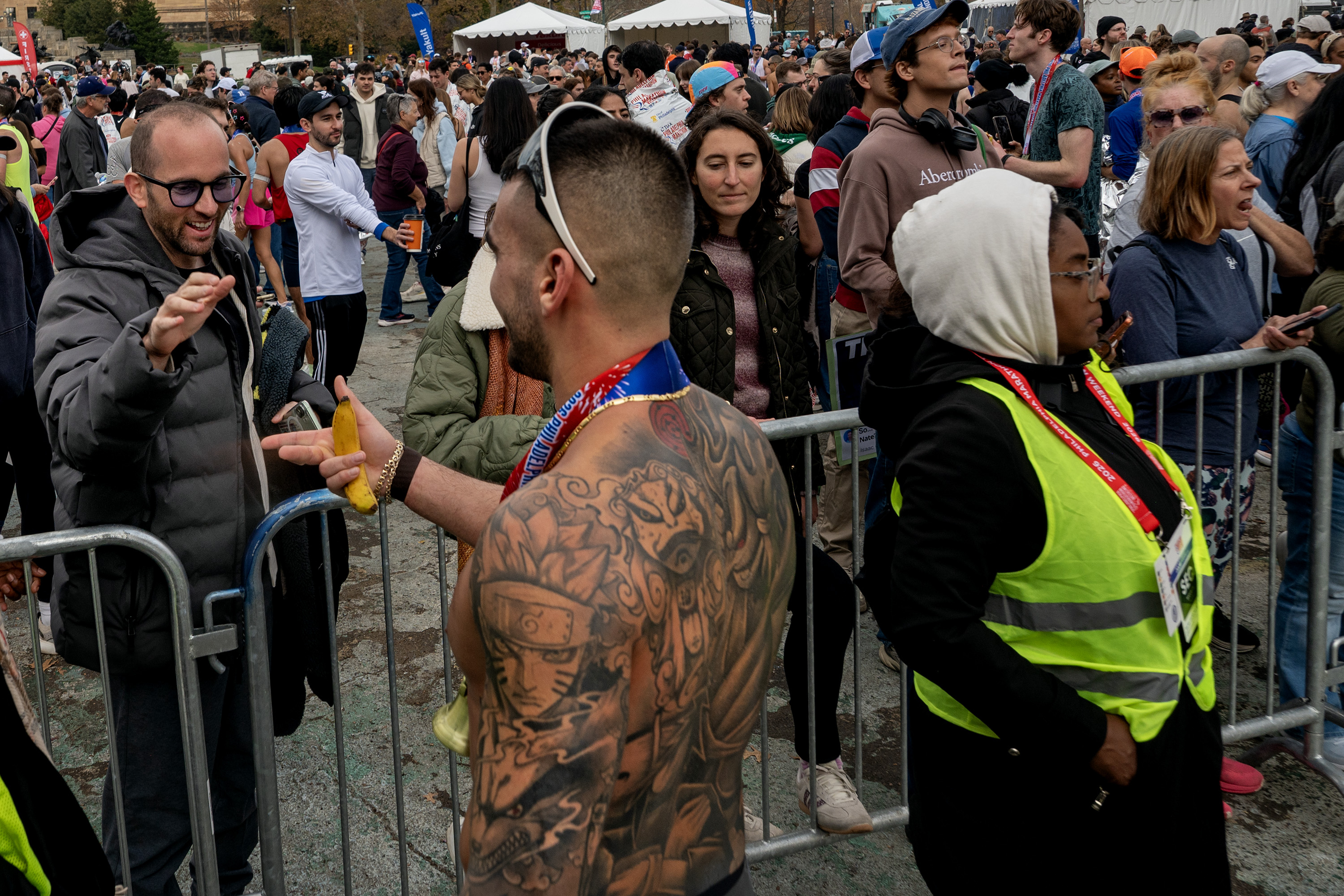
Katherine Daly (left) and Sofia Williams have an early, pre-dawn spectator spot on Logan Circle as runners walk up the Ben Franklin Parkway toward the marathon start. They are with Phi Beta Lambda at Penn State, watching a half dozen classmates running for THON, the school’s student-run, year-round philanthropy that raises money and awareness for children and families affected by childhood cancer.Tom Gralish / Staff PhotographerKaty Strand (left) poses for a pre-race photo with her mother Dawn Stand and boyfriend Matthew Martinez in front of the Franklin Institute. Katy, a UPenn grad student at UPenn is running in her third marathon.Tom Gralish / Staff PhotographerRunners start the 2026 Philadelphia Marathon on the Benjamin Franklin Parkway.Tom Gralish / Staff PhotographerA group of friends from West Chester are at Logan Circle on the Benjamin Franklin Parkway to cheer along a half dozen other friends running.Tom Gralish / Staff PhotographerRunner Edie Priest breaks out of the pack briefly to hug her parents Ian and Virginia Priest – in full-Union Jack clothing – as they cheer her on at Sixth & Chestnut. Edie, a student at UPenn running her first marathon hoped to beat her dad’s personal best, a time of 3:54 in the 1990 London Marathon. (She did, finishing in 3:36:53). The family is from the United Kingdom.Tom Gralish / Staff PhotographerFriends and family hold up portraits of runners Alexandra Stein (left) and Enrico Riego (right) at Sixth & Chestnut.Tom Gralish / Staff PhotographerShreya Thirumalai holds portraits of her dog Wilbur and human friend Alex Poch at Sixth & Chestnut. In front is Rosie, an unrelated Rottweiler, who came to watch Abby Addy run in her first marathon. Rosie is with Debby Getty (not shown) from Richmond Virginia, who is Addy’s aunt.Tom Gralish / Staff PhotographerAllison Heather, 9, uses a megaphone to cheers on runners passing Sixth and Chestnut. She was there with her mother, Heather Holland (not shown) of Blackwood, N.J. supporting runners with the American Association for Cancer Research. The group raises money and awareness for cancer science through marathons, half marathons, and 5Ks, and hosts a weekly group run that meets every Tuesday at 6:30 p.m. in front of the Liberty Bell (this same Intersection).Tom Gralish / Staff PhotographerRunner Matt Rocha (left) of Philadelphia reacts to the crowd as he turns the corner by Independence Hall at Sixth & Chestnut Streets in the 2026 Philadelphia Marathon Sunday, Nov. 22, 2026.Tom Gralish / Staff PhotographerVolunteer Denise Kintish of Northfield, N.J. helps ready thousands of bottles of water awaiting marathon runners in Eakins Oval after they finish.Tom Gralish / Staff PhotographerHermin Garic of Utica, N.Y. wins the men’s wheelchair division, finishing in 1:48:46.Tom Gralish / Staff PhotographerVictory Shitsama of Kenya reacts as he is first to cross the finish line. He won the men’s pro division in 2:09:23, breaking the course record by more than four minutes.Tom Gralish / Staff PhotographerDayna Pidhoresky (left) of Canada with her husband Josh are greeted by officials after she crossed the finish line as the Women’s Pro winner. Her time of 2:26:34 broke the women’s record by two minutes. Tom Gralish / Staff PhotographerWill Newman of Philadelphia rests after winning Sunday’s nonbinary division finishing in approximately 2:40.Tom Gralish / Staff PhotographerStudent volunteers from Central High School in Philadelphia help ready thousands of medals.Tom Gralish / Staff PhotographerVolunteer Julie Wang of Wayne and other volunteers present medals to the thousands of finishing runners in Eakins Oval.Tom Gralish / Staff PhotographerRunners wear their medals in Eakins Oval after completing the 2026 Philadelphia Marathon. Tom Gralish / Staff PhotographerRunners are fortified with fruit after finishing.Tom Gralish / Staff PhotographerRunners leave Eakins Oval after they’ve completed marathon.Tom Gralish / Staff PhotographerFriends and family wait to be reunited with their runners outside the race zone in Eakins Oval at the end of the race.Tom Gralish / Staff PhotographerElad Mor (left) greets runner Ido Serrouya after he completes the 2026 Philadelphia Marathon Sunday, Nov. 22, 2026. They are friends, from Israel now living in New York.Tom Gralish / Staff Photographer
Coulter, who said she ran marathons in Chicago, D.C., and Berlin, Germany, didn’t want to take too much credit for inspiring her cousin. But she said peer pressure can go a long way. That was how she got her start while in a run club.
“It’s lively. It’s fun. All your hard work and training, you’re seeing it play out,” Coulter said. Run results showed Malcolm placed 11,027th, running a 10:55 average mile.
Rayma Abdallah said she had about a half dozen friends in the race. They’d already passed, and so now Abdallah was here to support everyone else.
Abdallah’s friend held up a sign that promised Jell-O shots — and had an arrow pointing right to the cooler in Abdallah’s arms full of the alcoholic gelatin.
The 24-year-old from Graduate Hospital said about 15 people had already taken them up on their offer. As she talked, an enthusiastic middle-aged man became number 16, stopping just long enough to take a selfie and gulp down the Jell-O shot.
As a runner herself, Abdallah said, it was fun to cheer for others because she knows what they’re going through and how much work goes into completing a race.
“I would just say it’s inspiring to see the whole city come out to support their friends and family,” Abdallah said.
Shreya Thirumalai carries portraits of her dog Wilbur and human friend Alex Poch at Sixth and Chestnut. In front is Rosie, an unrelated Rottweiler, who came to watch Abby Addy run in her first marathon. Rosie was with Debby Getty (not shown) from Richmond, Va., who is Addy’s aunt.Tom Gralish / Staff Photographer
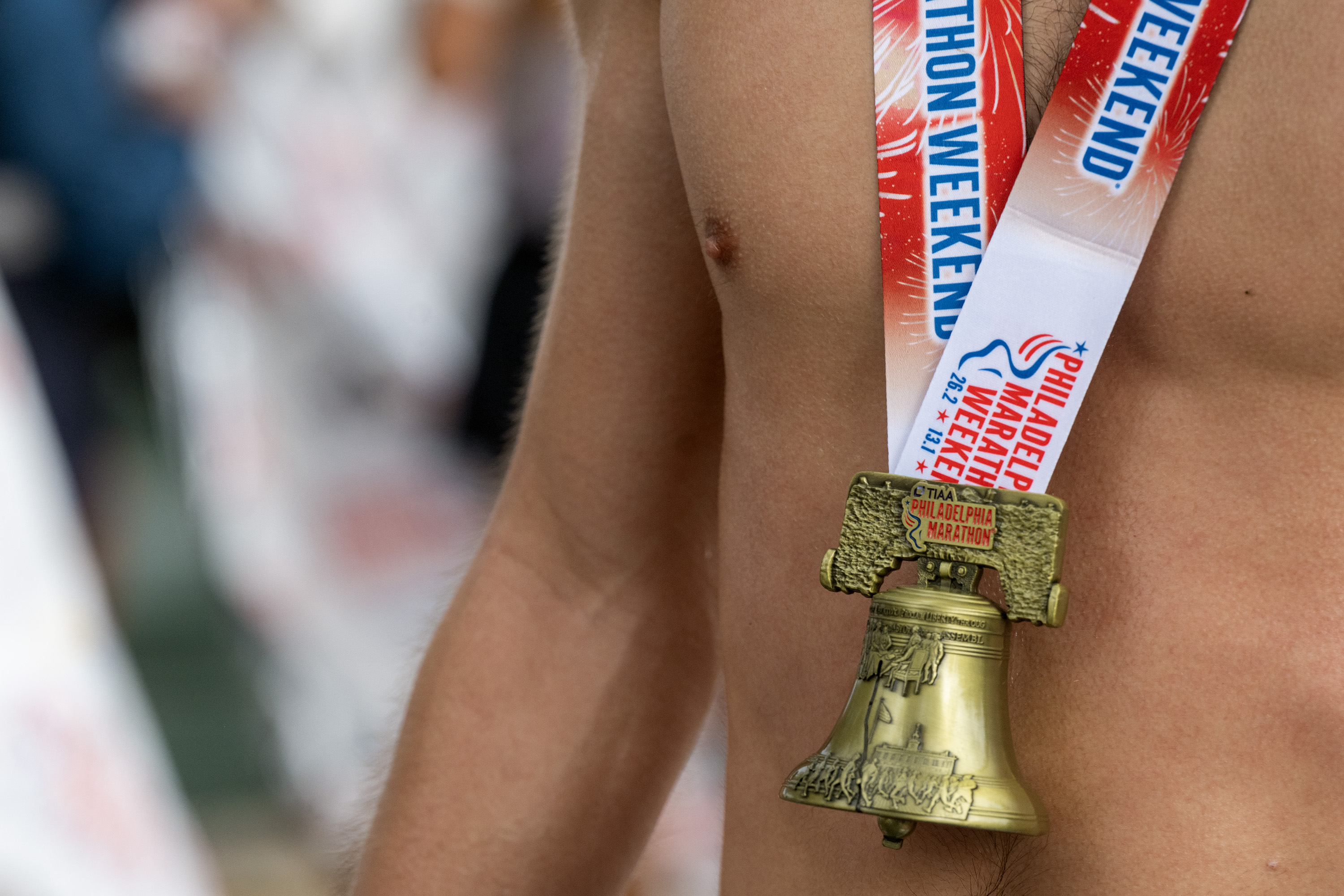
As scores of runners crossed the finish line at Eakins Oval, the sound of thousands of bells could be heard clinking in every direction. These were no mere cowbells. These were the Liberty Bell medals given to each of the marathon finishers.
Their bells clinking with each step, marathoners walked — some hobbled — away from the post-run area, some wearing lightweight blankets, many eating bananas and snack bars to replenish their bodies.
Laun Hallstrom traveled from the State College area to run the race. .
This is the sixth marathon for the 62-year-old physician, and he said the large field of runners, and the lively crowd, stood out.
“With so many people, the start was really jam-packed. Then it started spreading out a little bit,” Hallstrom said.
Hallstrom was the 3,473rd person to finish, running an 8:53 average pace. To him, that’s an accomplishment, especially after dealing with a bit of leg pain midway through his 16-week training regimen to prepare for the race.
He said the route, with minor elevation changes, and a lot of support from run organizers and spectators alike, made it well worth his trip from Central Pennsylvania.
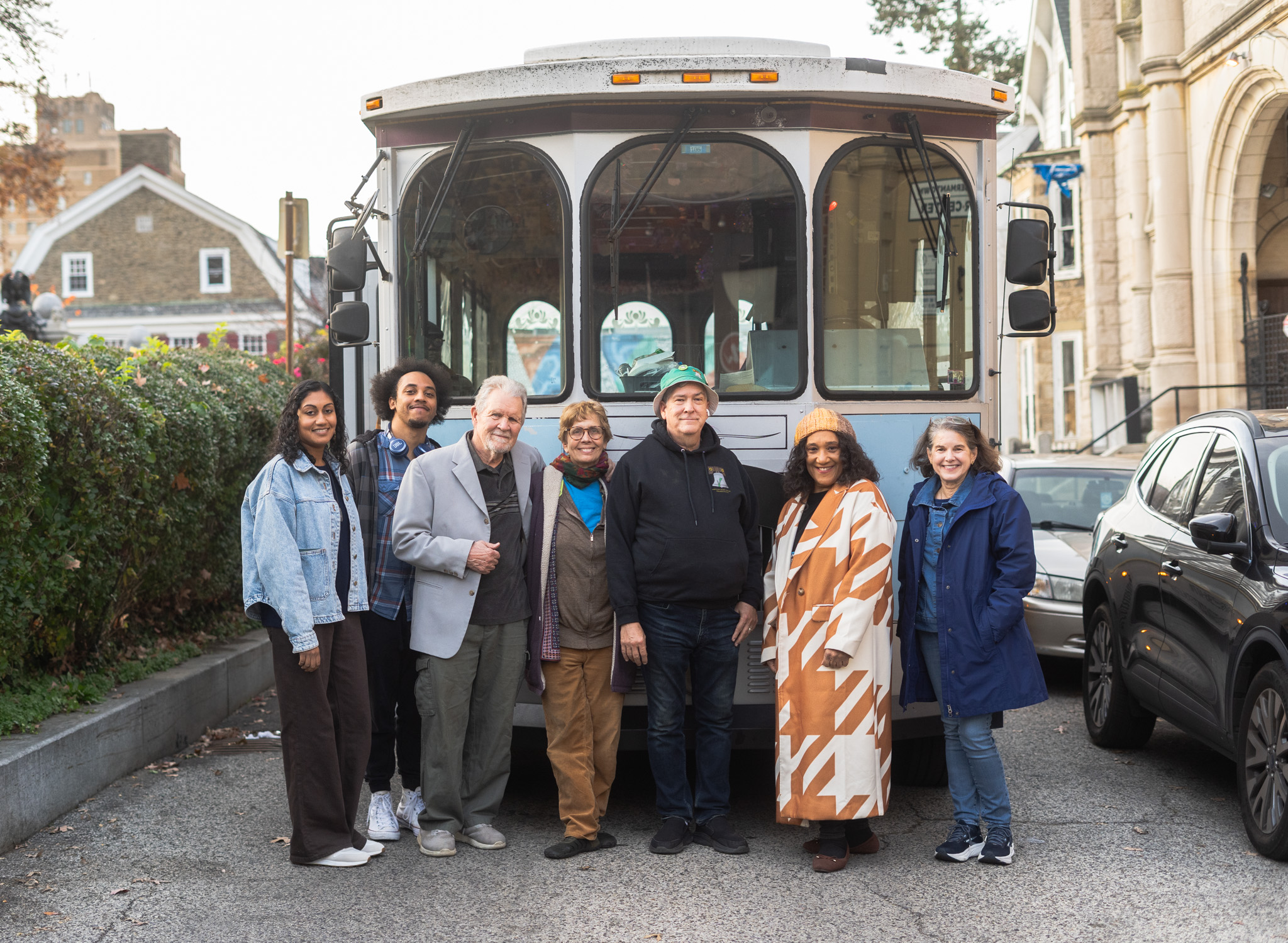
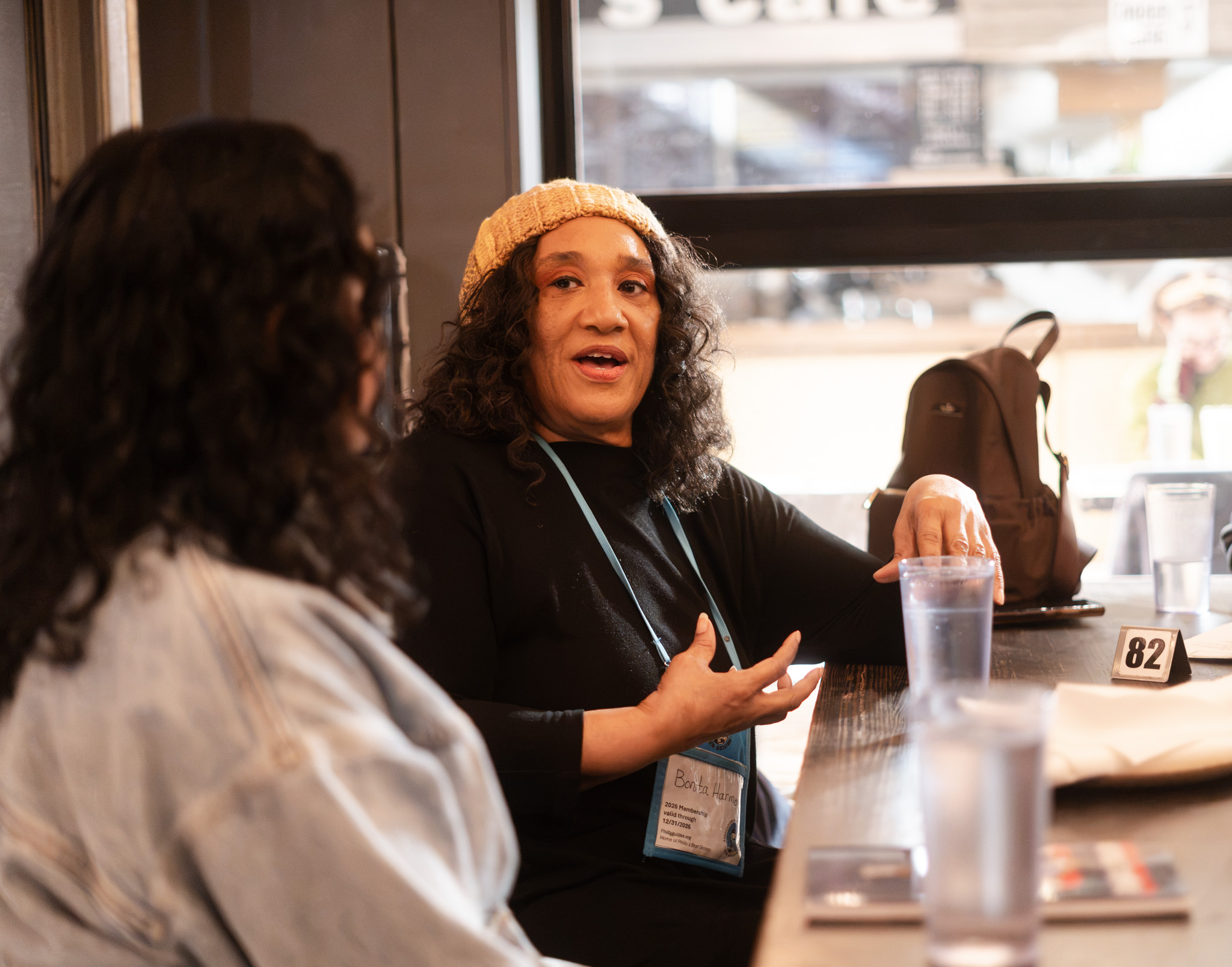
For years, Bonita Harmon led tours uncovering and connecting the historical threads that exist within Philadelphia’s famed sites and iconic attractions. Now, she wants to unveil a different side of the city’s history: veganism and vegetarianism throughout Northwest Philly.
“Telling this history is so important,” Harmon said. “It’s part of our history. American history. That’s what really got me going.”
On Saturday, Harmon unveiled the “Veg History Hop-Off Hop-On Food Tour.” The trolley ride takes passengers on a three-hour voyage through Germantown, Mount Airy, and Chestnut Hill to explore a medley of plant-based menu items.
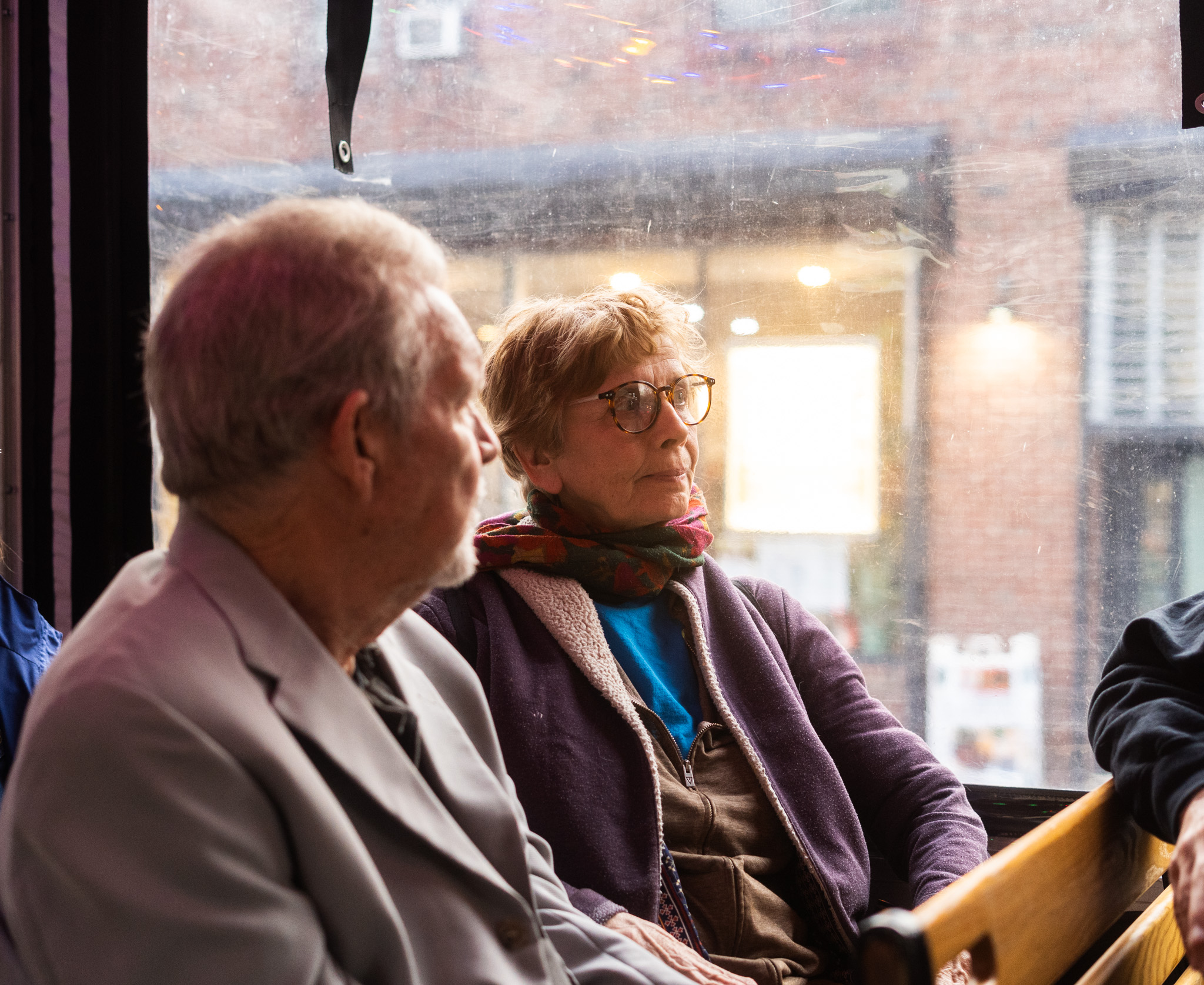
Tour organizer Bonita Harmon speaks to participant Anisha Kolupoti at Chestnut Hill Brewing Company on Saturday, Nov. 21, 2026.Courtesy of Earl Hopkins
The Mount Airy-based guide was joined by eight passengers on a Founding Footsteps trolley, adorned with Christmas lights, holiday-themed ornaments, and vinyl records. They made stops at the Nile Café, the Blue Warbler Corner & Garden, and Chestnut Hill Brewing Co.
By the tour’s end, the band of strangers Harmon brought on board left as friends, who exchanged savory bites of slow-roasted BBQ chic’n, wood-fired vegan pizza, buffalo cauliflower wings, and other plant-forward options.
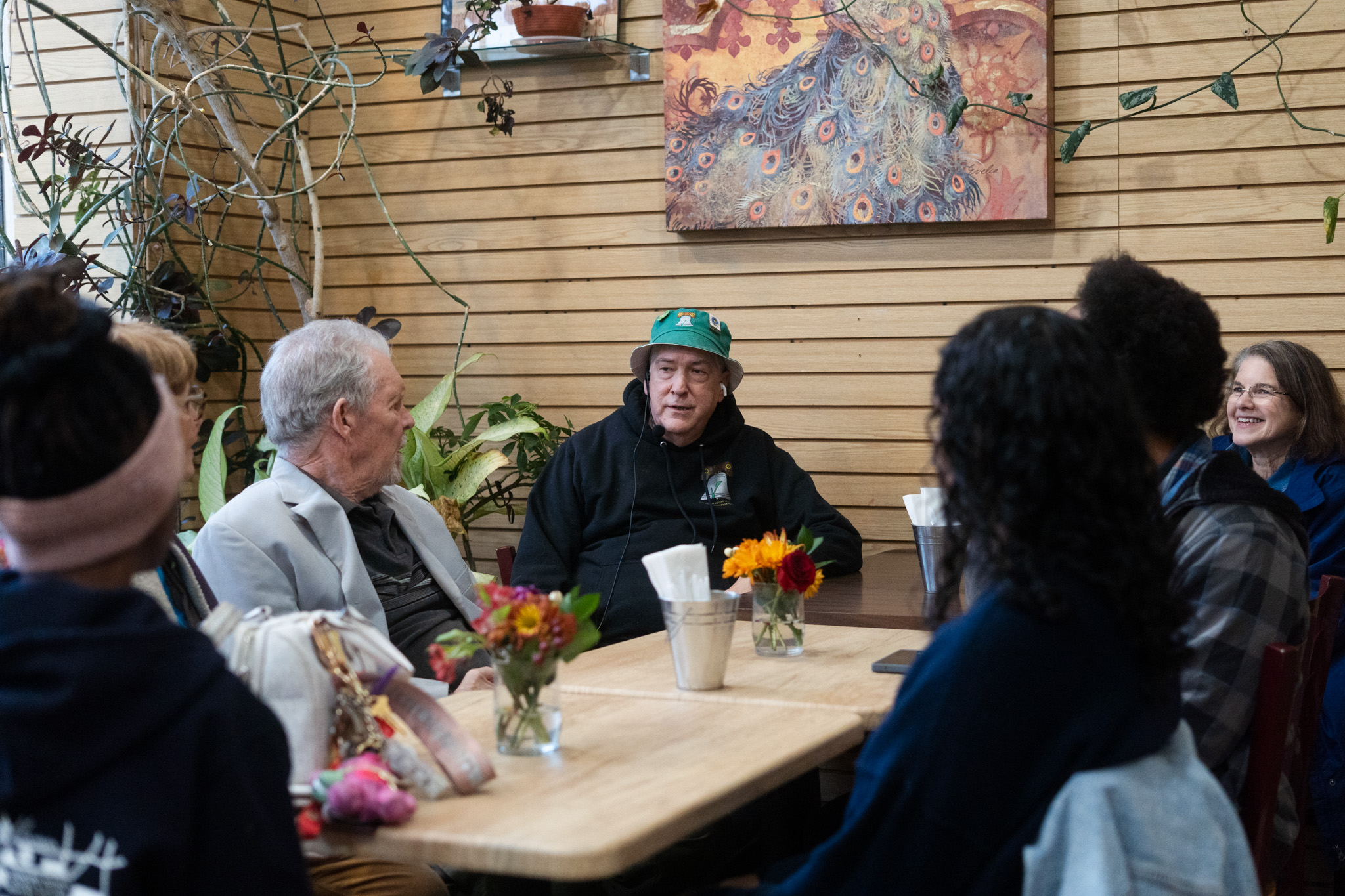
They were treated to conversations with restaurant owners such as Fred Mogul of the Blue Warbler, who described the origins of the dishes and the historical links tied to the area their establishments are based.
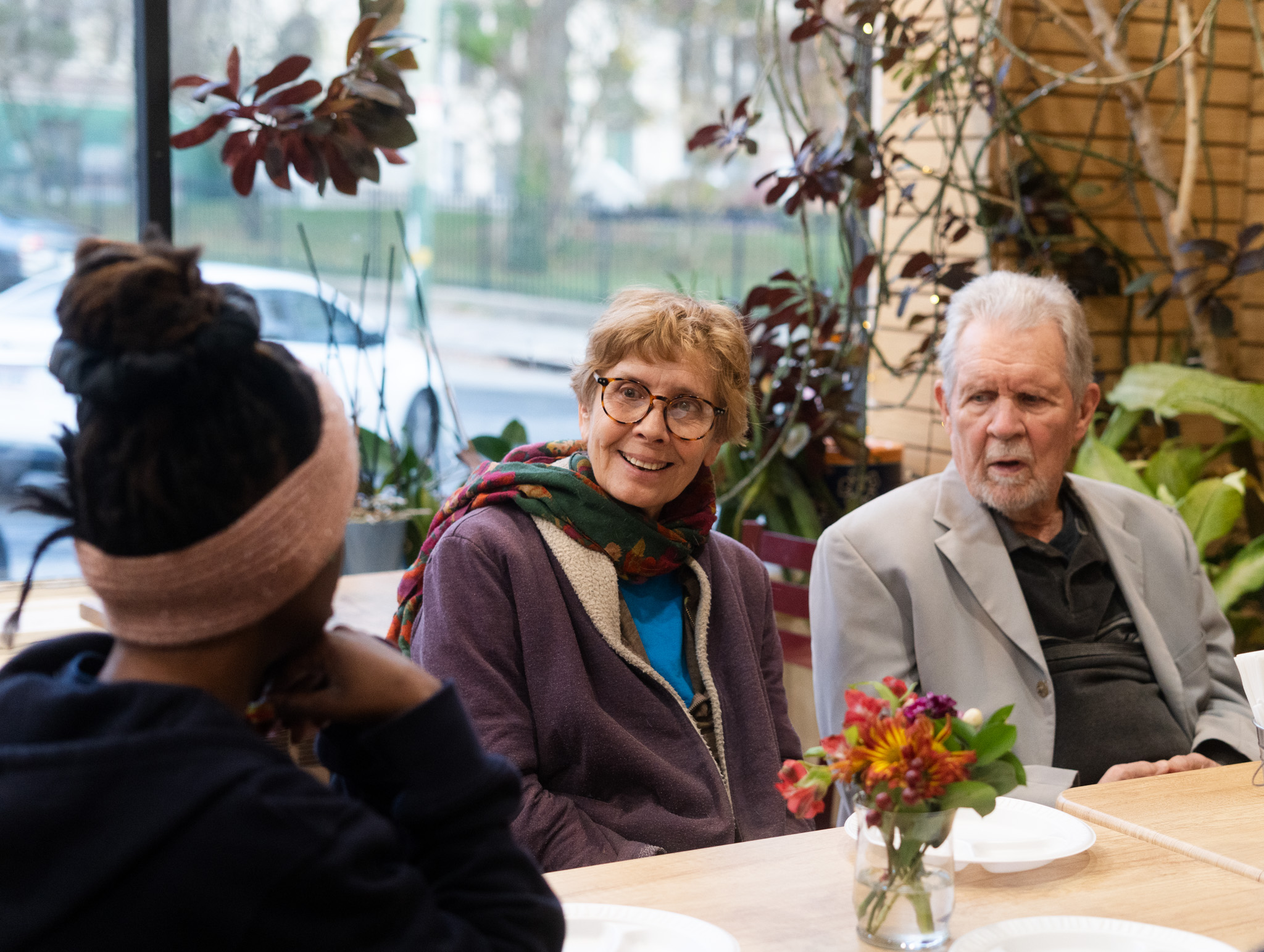
Germantown couple Zipora Schulz (left) and Jim Harris (right), who participated in Saturday’s inaugural “Veg History Hop-Off Hop-On Food Tour,” engaged with fellow community members inside The Nile Cafe.Courtesy of Earl Hopkins
For Germantown couple Jim Harris and Zipora Schulz, many of the sites were already familiar digs. But they were encouraged by the people they met throughout the experience.
“I think it’s a great idea to hop on a bus with total strangers, and we all have the same kind of lifestyle. But even for people who haven’t yet learned about the lifestyle, it’s still wonderful to explore the different businesses while eating delicious food,” Schulz, 69, said.
They were also intrigued by the knowledge that guest speaker Vance Lehmkuhl, a long-time historian at the American Vegan Society and author of Eating Vegan in Philly, shared throughout the tour.
“I’m enjoying the history. I never knew who some of these streets were named after,” Harris, 79, said. “I’m just having a great time.”
Vegan historian Vance Lehmkuhl joined the “Veg History Hop-Off Hop-On Food Tour” as a guest speaker. He discussed the early plant-based pioneers who helped shape modern day vegetarian and vegan movements.Courtesy of Earl Hopkins
Lehmkuhl, wearing a headset microphone, shared the stories of figures such as Anthony Benezet, William Metcalfe, Bronson Alcott, and other early plant-based-diet enthusiasts who helped forge today’s vegan and vegetarian movement.
Lehmkuhl, who predominantly leads vegan walking tours in Old City, said he’s been longing to be a part of one in Germantown. “There’s a lot of history of this movement,” he said. And when Harmon invited him to participate in the new attraction, he said, “I readily accepted.”
Harmon also connected with local organizations and community members for the grassroots endeavor.
She collaborated with the Historic Germantown Visitors Center for the tour, and asked locals about the viable vegan restaurants or destinations they frequented in the area.
“I just want people to really have a great time, try different flavors and foods, and have better options when they go out for a bite to eat,” Harmon said.
Pictured is Germantown resident Zipora Schulz, 69, who rode the first “Veg History Hop-Off Hop-On Food Tour” through Germantown, Mount Airy, and Chestnut Hill on Saturday, Nov. 21, 2026.Courtesy of
A portion of the proceeds from the tour will be donated to the American Vegan Society to bolster further awareness.
Harmon’s goal is to generate similar tours across Philly to help introduce more passengers to the people, small business owners, historians, and advocates that are central to the city’s vegetarian and vegancommunity – past, present, and future.
“There’s a large market out there, and a lot of vegetarians and vegans need to learn their history,” she said.
Anisha Kolupoti, 33, a member of the Philly Vegan Social Club who took part in Saturday’s event, said she envisions the tour becoming a citywide attraction.
“I would love it. The more food and the more people to meet, the better,” she said.
A little before noon, more than 150 people milled about near a large wooden pavilion by the entrance to Awbury Arboretum in East Germantown. They were joined by several goats.
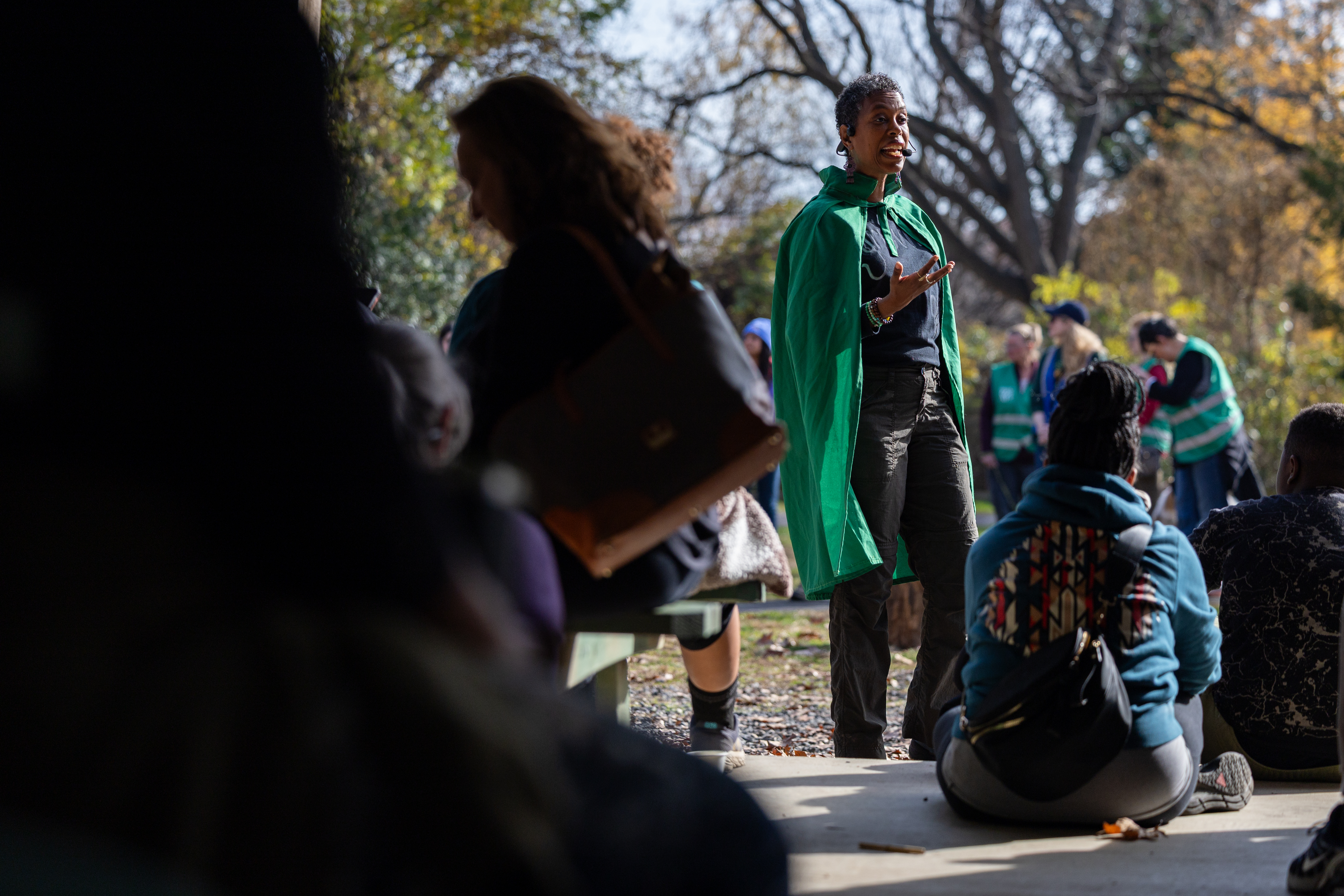
So began the Philly Goat Project’s winter grief walk — an event meant to provide an opportunity for those who have experienced loss to process their emotions, connect with others, and, perhaps, make some new four-legged friends.
As he petted Ray (a three-legged Nubian goat whose recovery became a story in its own right), Ven Schmidt said he had come to his first grief walk Saturday after the death of his husband three weeks earlier from pancreatic cancer.
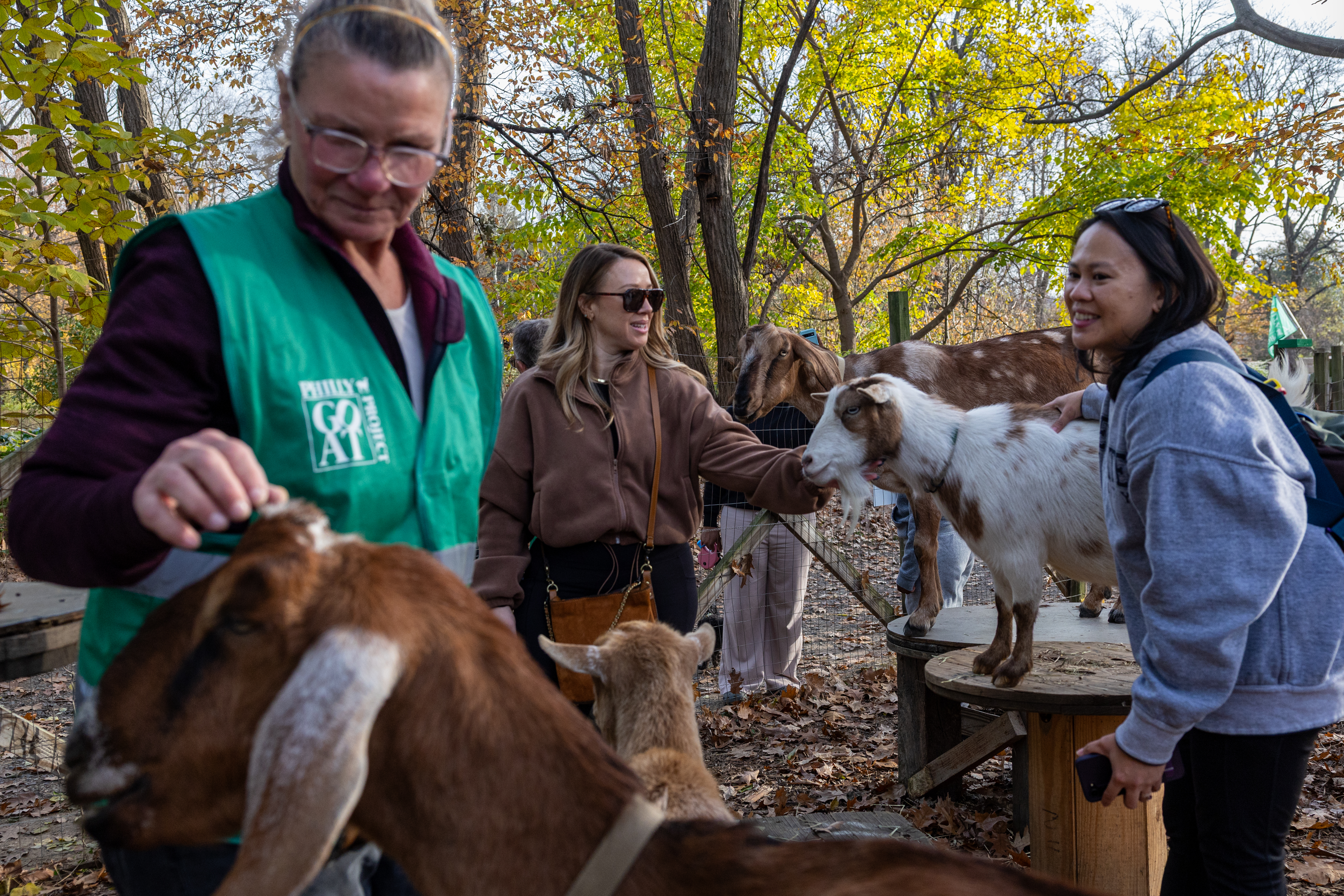
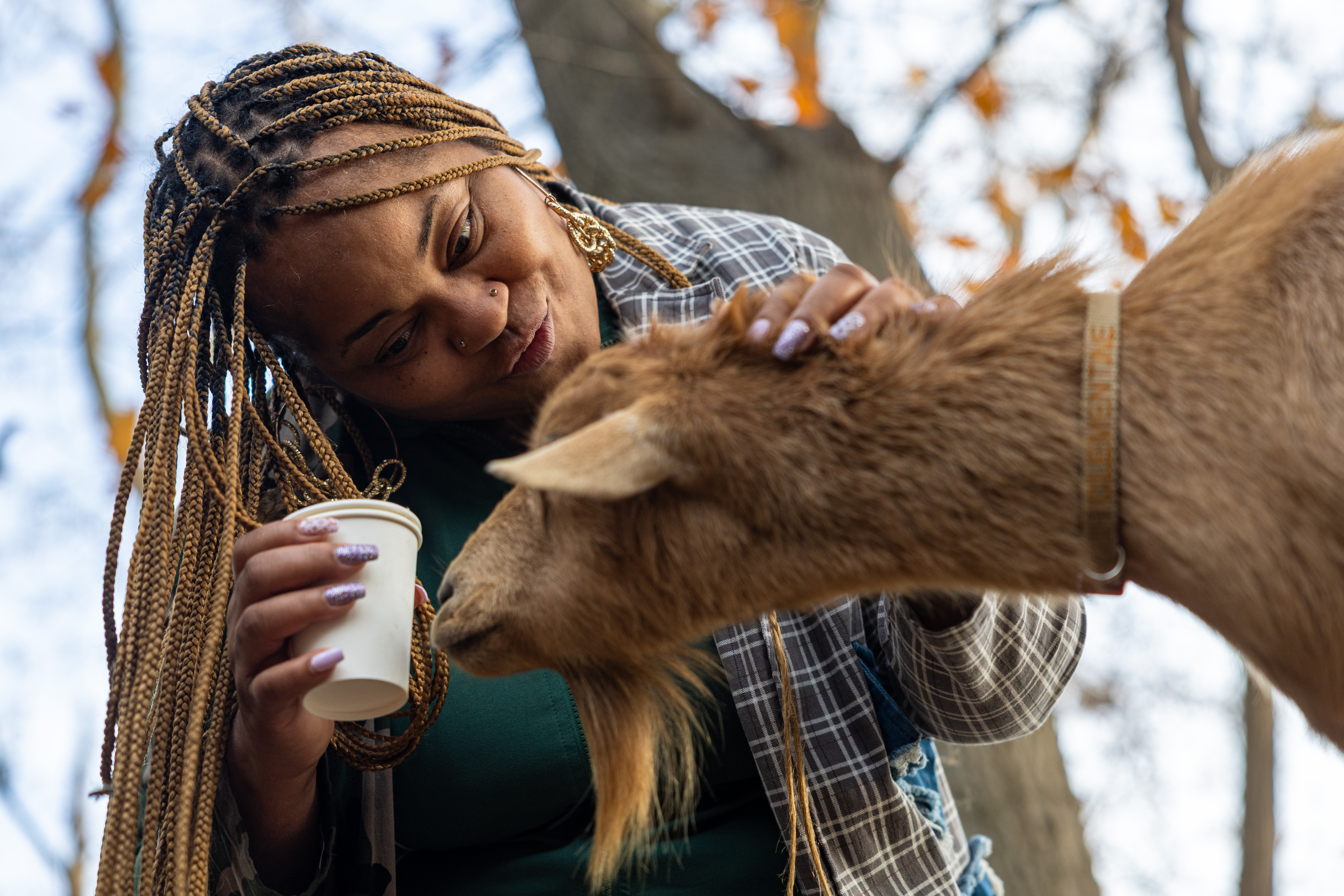
Emily Marziani, 36, pets Theo, 7, a Nubian goat, before the annual grief walk begins at the Philly Goat Project in East Germantown on Saturday, Nov. 21, 2026. Marziani first heard about the walk online and decided to try it out today. After losing people close in her life this year, she finds this event to be a great way to “get some pet therapy” and be surrounded by community.Aidan T. Gallo / Staff Photographer
His husband, Mark “Chumley” Singer, was an events producer, an activist, and a well-known figure in Philadelphia’s gay community.
His therapist suggested several options for grief counseling. Schmidt, who loves animals, picked the grief walk.
He marveled at the turnout.
“When somebody dies that’s that close to you, you feel so alone,” Schmidt said. “And then when you see how many people are also going through it, you feel less alone.”
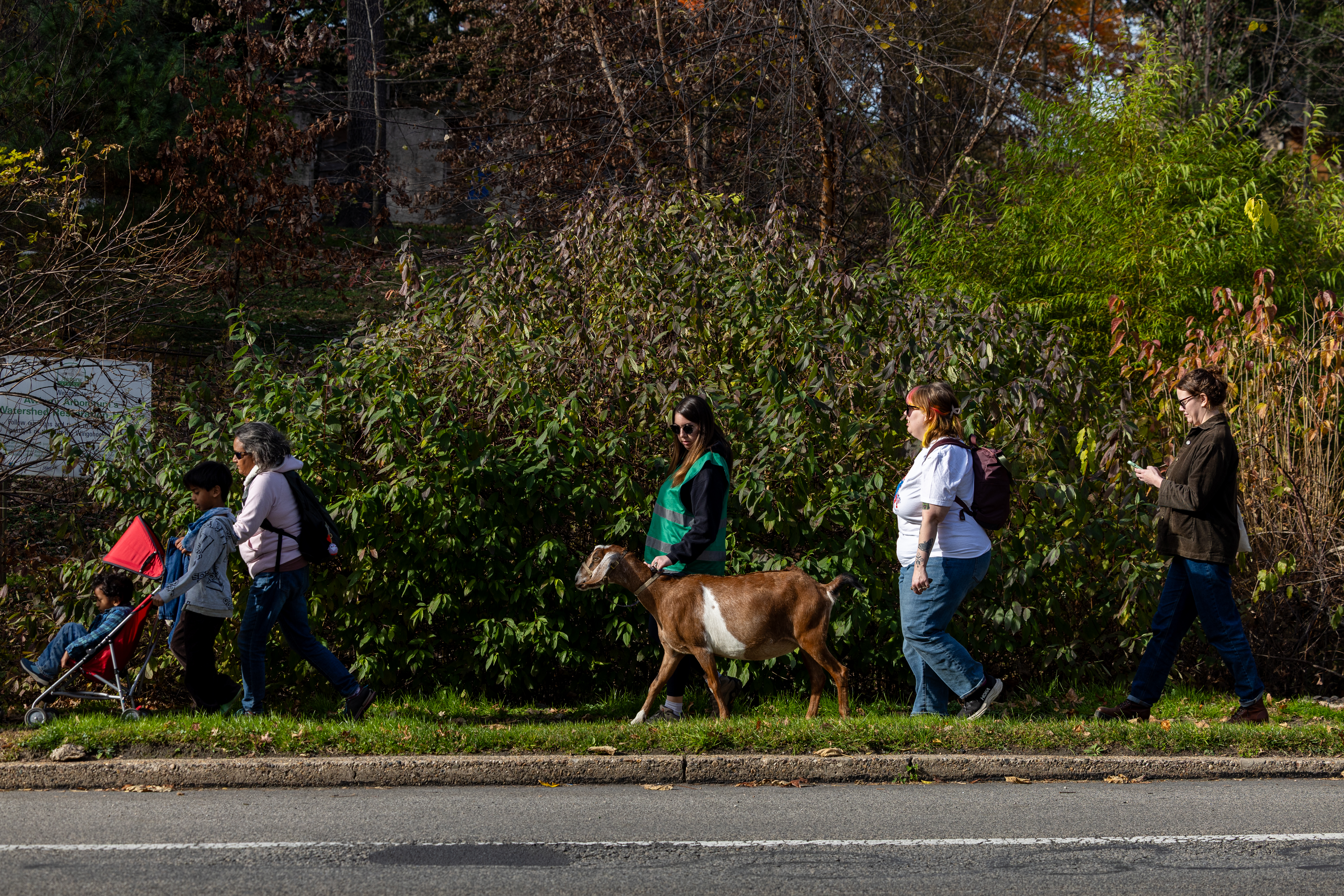
Volunteers and attendees walk during the grief walk at the Philly Goat Project in East Germantown.Aidan T. Gallo / Staff Photographer
Grieving in community
Karen Krivit, a former social worker, founded the nonprofit project in 2018 with three goats she kept in her backyard in Narberth.
“As a social worker, I saw thousands of people over my 30 years, and the pervasive issue that people were struggling with was isolation,” Krivit said. “Community is foremost the thing that guides us in everything that we do.”
The organization now has 13 goats and runs several programs aimed at providing community wellness through animal therapy.
Naila Francis, a local grief coach, reached out to Krivit in early 2023 about starting the walks. The timing was right.
“There was a lot of sadness — a lot of grief — after COVID,” Krivit said. “People were really isolated.”
Francis led the first walk that November. They are held quarterly now.
“Grief is such a natural human experience, and it needs to have that connection and that sense of being witnessed and that sense of affirmation,” Francis said. “Being in community, just at its core, helps us feel less alone and less isolated in our grief.”
Grief coach Naila Francis speaks to attendees to get them spiritually centered before the start of the grief walk at the Philly Goat Project on Saturday, Nov. 21, 2026. Francis originally introduced this unique walking experience to the project in the spring of 2023 and hosted their first grief walk that autumn.Aidan T. Gallo / Staff Photographer
Goats, Krivit explained, may have a bad rap, but they are actually ideal for therapy work.
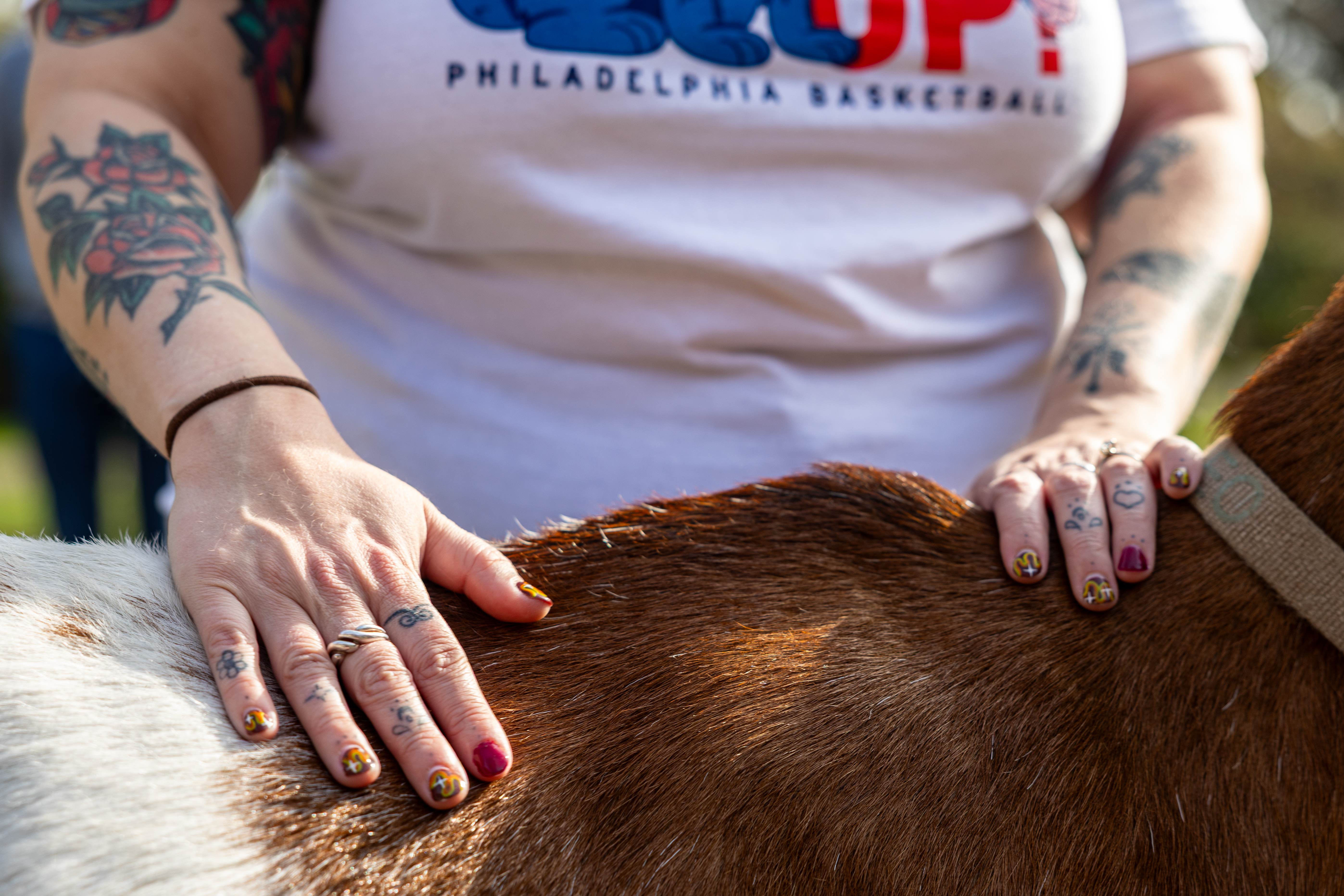
“You can walk with them and put your hand on them, and they’re very touchable,” Krivit said, repeatedly referring to the animals as versatile, “people-sized” companions for humans whose presence can bring a sense of levity to what is otherwise a heavy occasion.
Fatima Thomas, 49, of Northern Liberties, pets Clementine, an Arapaho goat, after the grief walk. Thomas learned of the event through a friend and found the experience to be relaxing. Thomas lost her son Shaaur Demby, 26, to gun violence in 2021.Aidan T. Gallo / Staff Photographer
The walks fill a need for grief-focused community programs, said Julie Drendall, a volunteer and board member.
“As strange as it might sound, these are my favorite of the Goat Project’s programs, because it’s just so beautiful to see people come together and to recognize how many different things people are grieving,” Drendall said.
“I think the goats can be super comforting to people,” Drendall said.
She remembered one of her first goat walks as a volunteer. A woman had taken a particular interest in Drendall’s goat. She had recently lost her father, who had grown up near the arboretum.
“She said, ‘I feel like my dad is here with me,’ and that’s beautiful,” Drendall said.
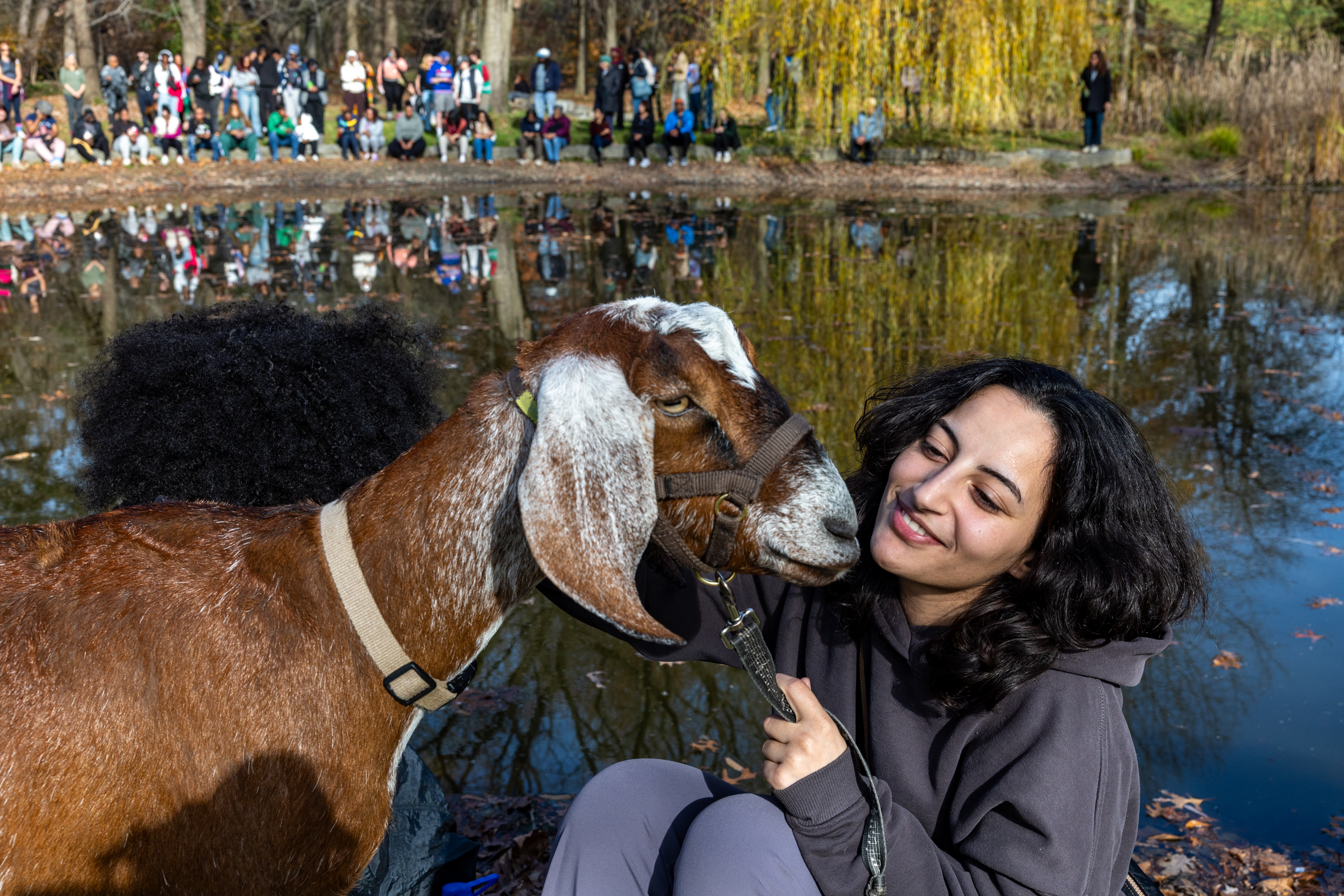
Jaidaa, 21, pets a Nubian goat during a dedicated moment of silence for attendees to reflect on memories shared by their loved ones at a pond during the grief walk.Aidan T. Gallo / Staff Photographer
‘These people all get it’
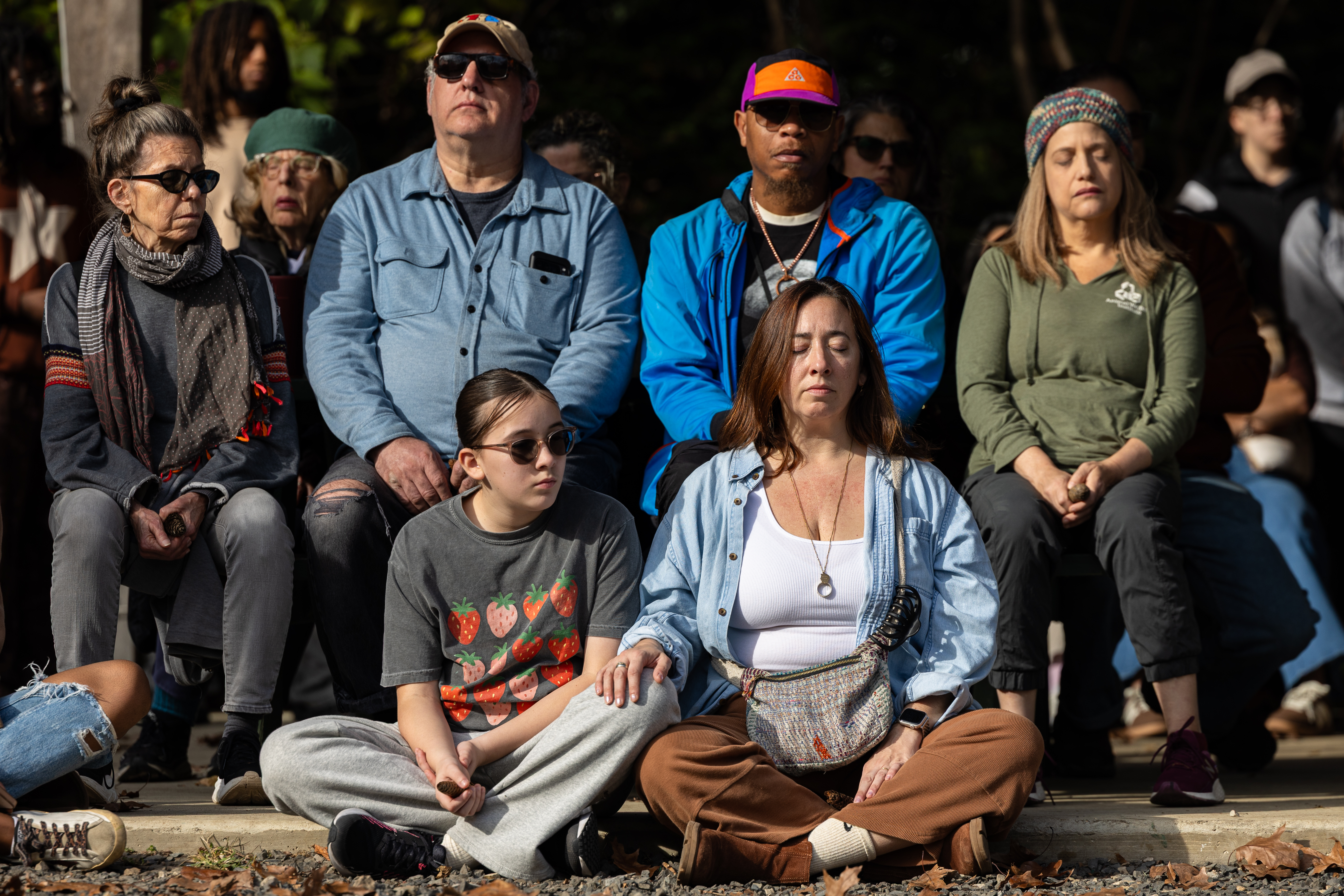
Francis opened the event with a guided meditation, encouraging attendees to “show up authentically and honestly in a culture where we don’t get enough of these spaces.”
After the meditation, Krivit led the walk alongside 7-year-old Holiday the goat, named after Billie Holiday (who was “really born in Philly even though people say Baltimore”).
The mostly unpaved path runs about a quarter of a mile, and the roughly 200 attendees and volunteers ambled at a leisurely pace.
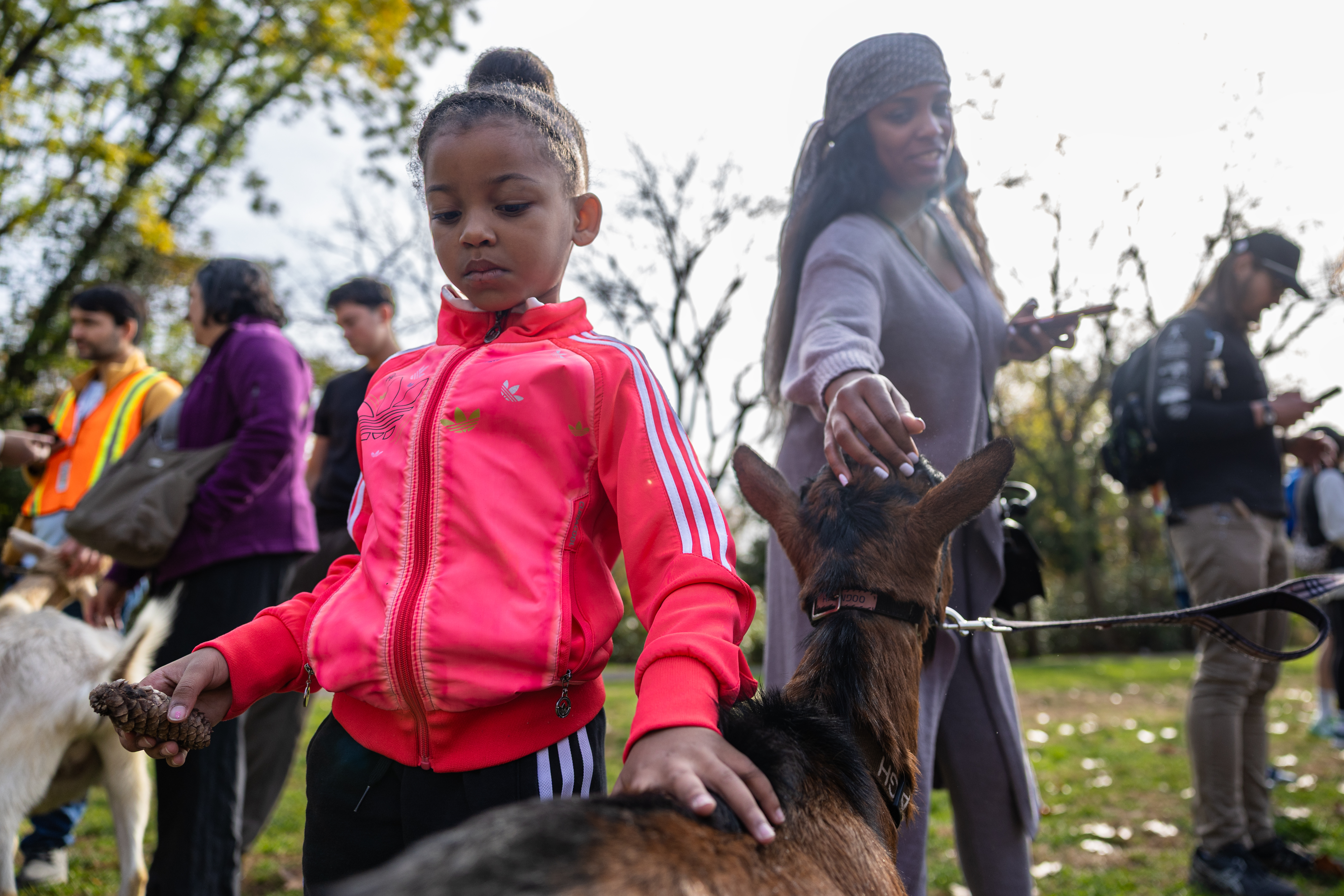
Samia N., 6, of Northeast Philadelphia, pets Oonagh alongside her mother Courtney K. before the start of the grief walk.Aidan T. Gallo / Staff Photographer
While the project does offer some accommodations for individuals with limited mobility, Krivit hopes to eventually secure funding to pave the entirety of the path.
After a short while, the group made its way to East Washington Lane. A motorist in a passing car offered the group a friendly honk and a wave.
“People will stop their cars and come out” to pet the goats, Krivit said.
After a couple more stops and guided meditations led by Francis, the group eventually made its way to the final part of the event: the grief circle — a collection of chairs and benches around a fire — and Francis invited attendees to share.
Many did.
Catherine Piotrowski, 47, of Fairmount, participates in a guided mediation hosted by grief coach Naila Francis alongside her daughter Scarlett, 11, before the grief walk begins. Piotrowski still mourns the passing of her husband, who passed away six years ago, and is now grieving the loss of her father in June. She appreciated the feeling of community alongside attendees who share and recognize her grief.Aidan T. Gallo / Staff Photographer
One woman spoke about the loss of her father. Another woman told attendees how she lost her son to gun violence and then, just four months later, lost her brother.
Schmidt, too, chose to share in the circle. He found the experience cathartic and planned to bring his friend to the next one.
“It’s such a visceral thing, and it’s so hard to explain to people who don’t get it,” Schmidt said of the acute pain of losing his husband. “But these people all get it.”
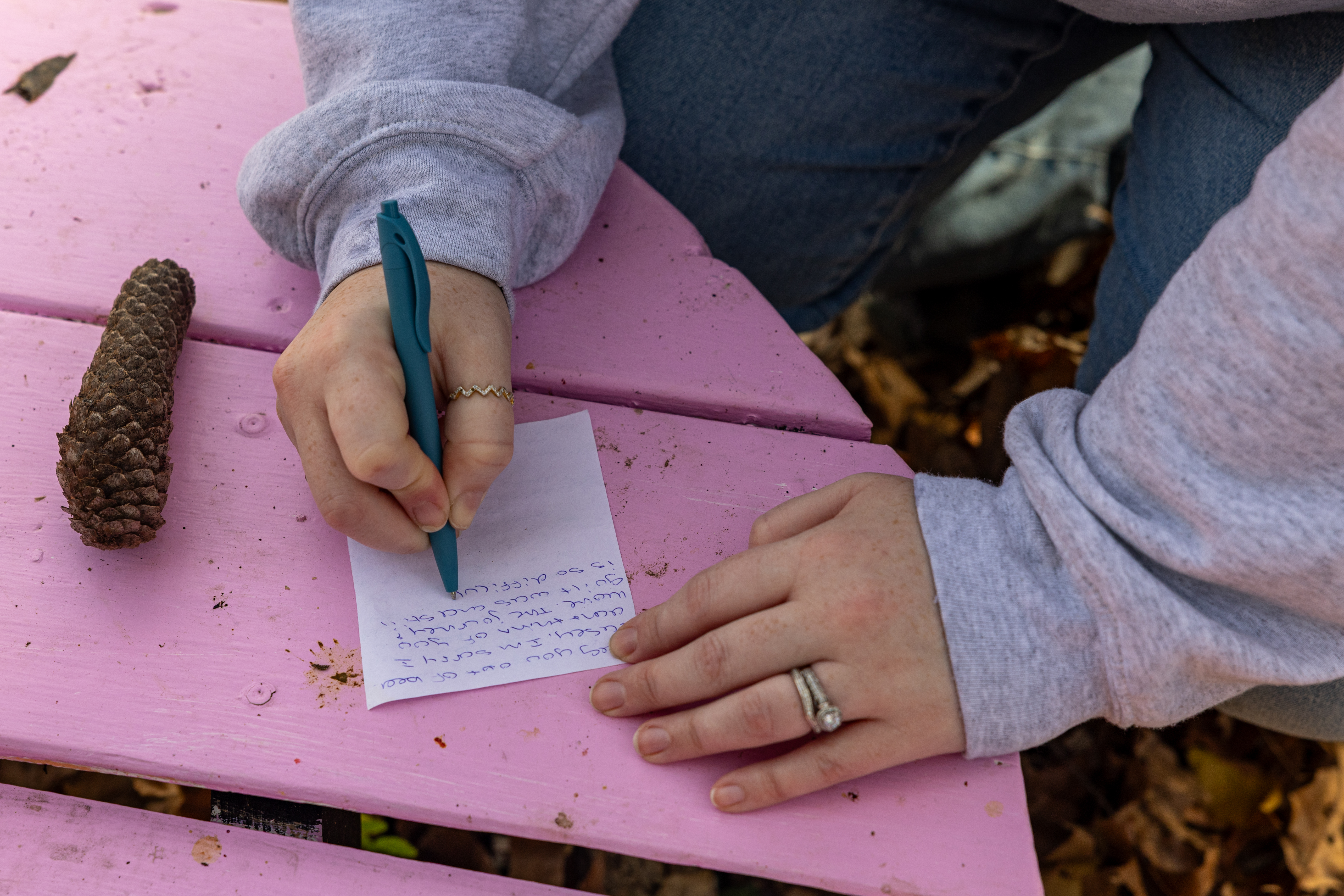
Meaghan Schickling, 31, of Kensington, writing a note for her uncle, who had recently passed away, to be placed in the Stone Memorial Wall after the grief walk concluded.Aidan T. Gallo / Staff Photographer
Tacony resident Nyeemah Wright’s father died in February, a day after her 29th birthday. She traded numbers with a few other attendees and wanted to create “my own sort of family of people who know what it feels like, so I don’t feel so alone.”
“Being 29, I’m glad not many of my friends know what it feels like to lose a parent,” Wright said. “[But] it almost feels isolating sometimes, so I wanted to feel a sense of community, and I really got that today.”
At one point on the walk, she recalled coming across a huge, orange tree that reminded Wright of her dad.
“I just stood there for a second and I looked up at that big tree and it was beautiful, and it made me think, ‘I’m standing under him again.’”
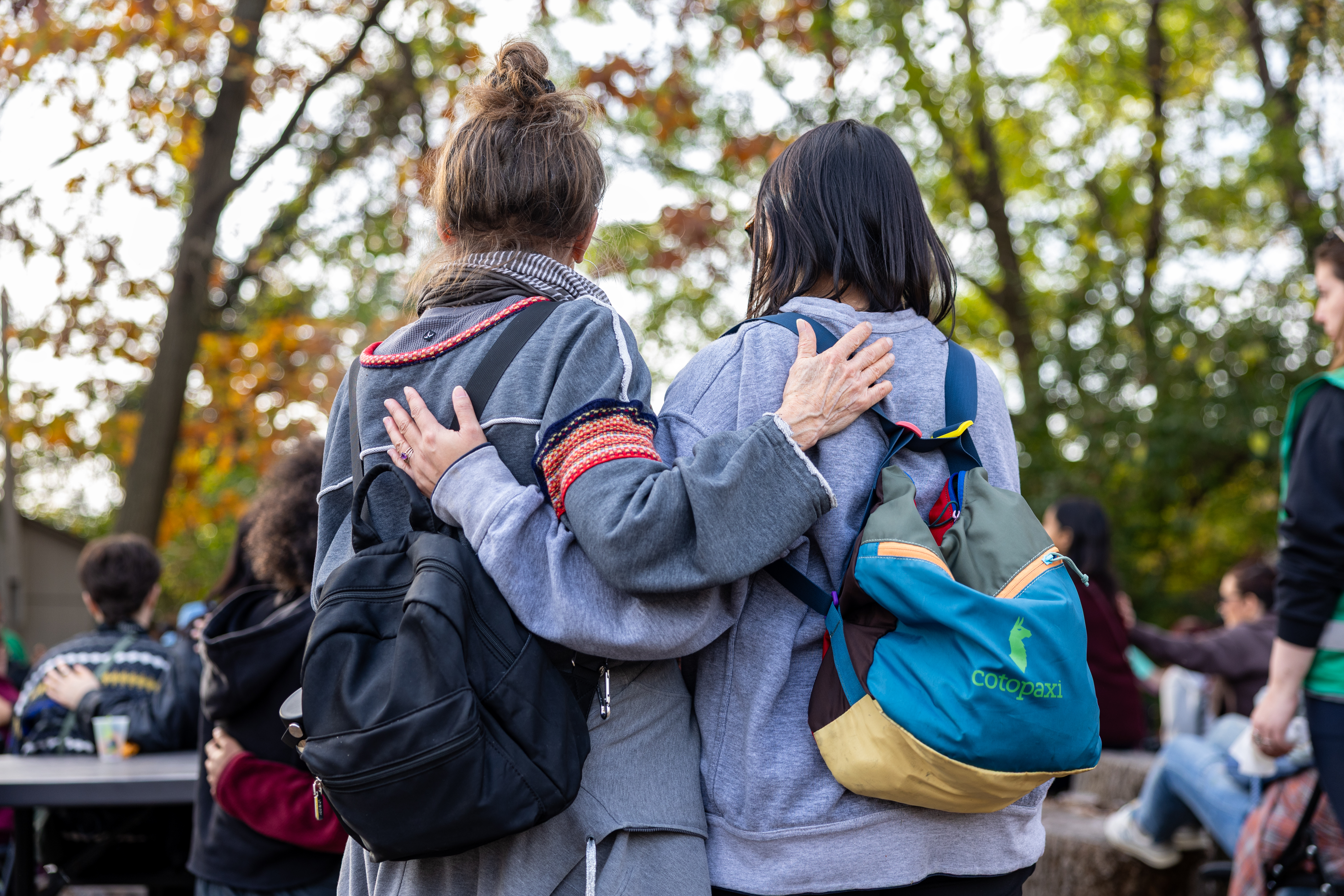
Attendees of the grief walk hold each other during a dedicated moment of silence to honor loved ones.Aidan T. Gallo / Staff Photographer
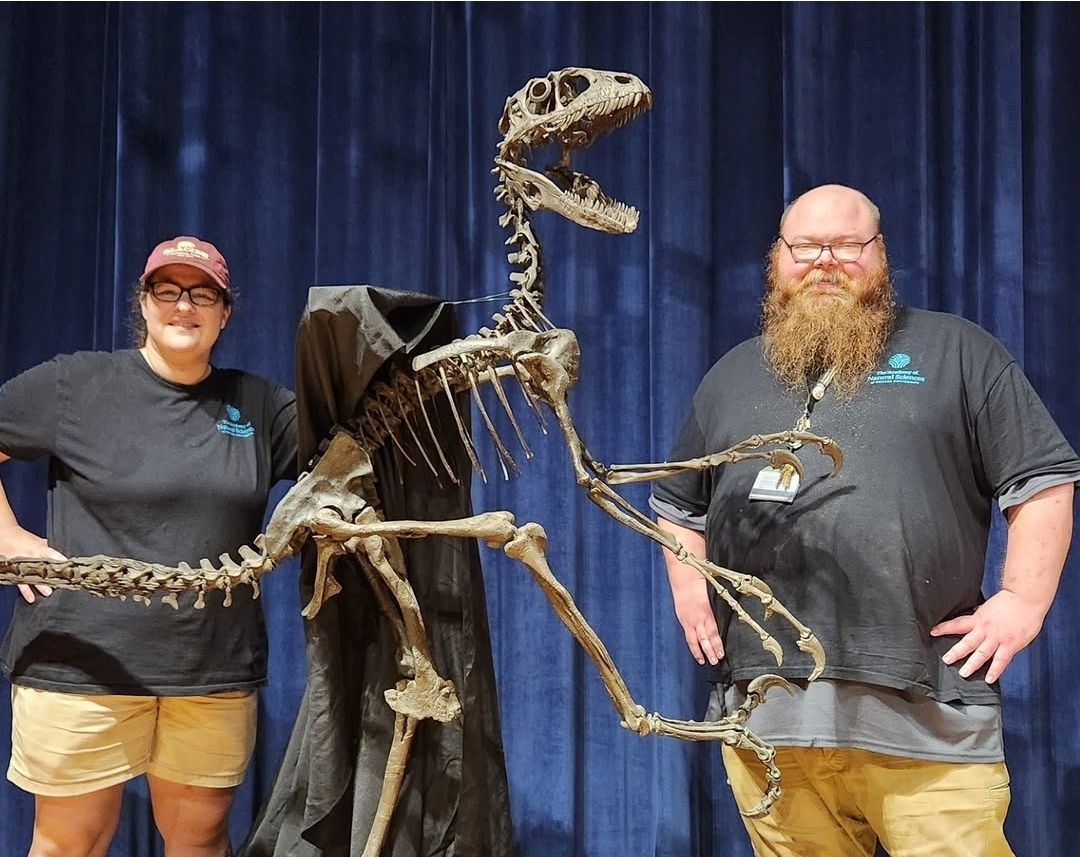
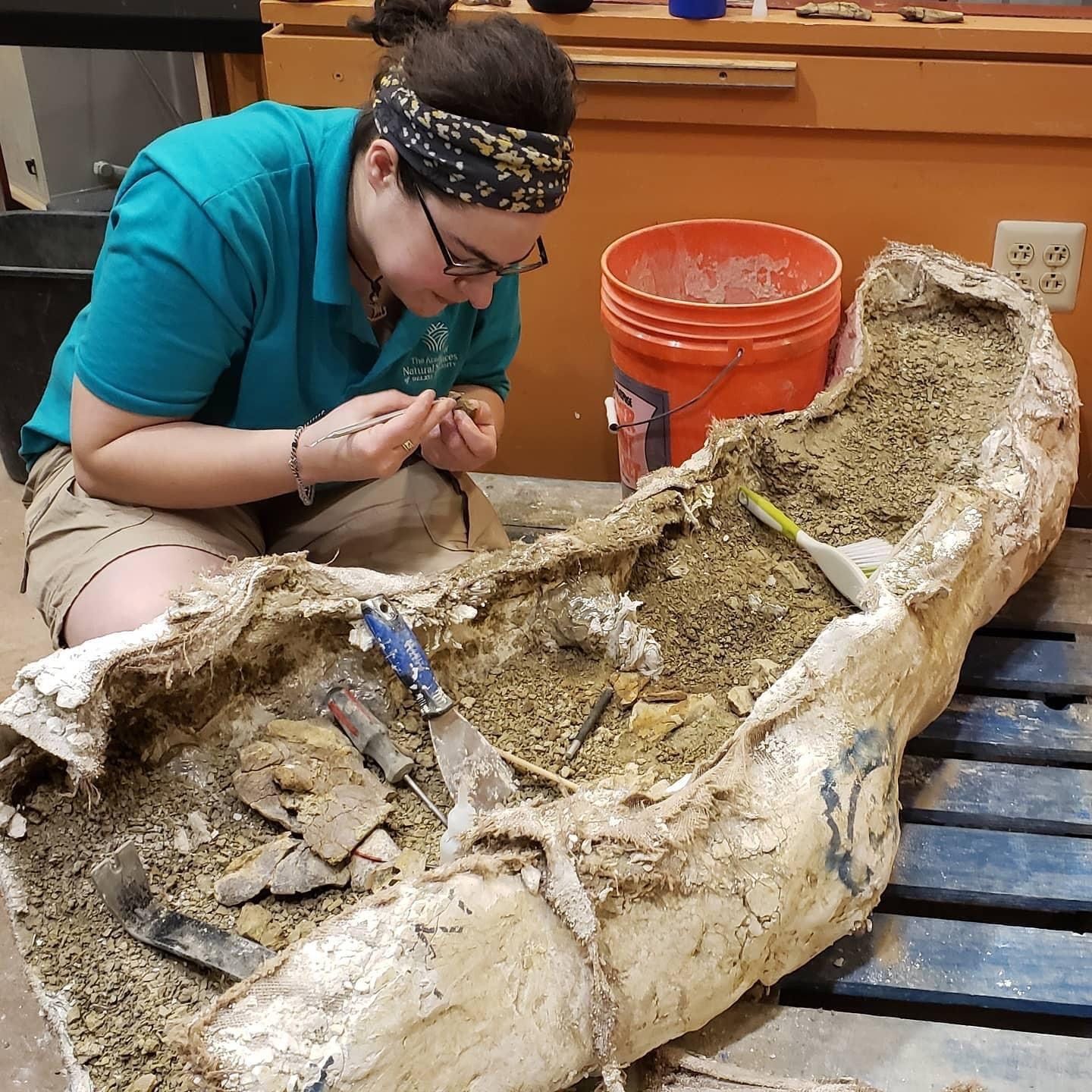
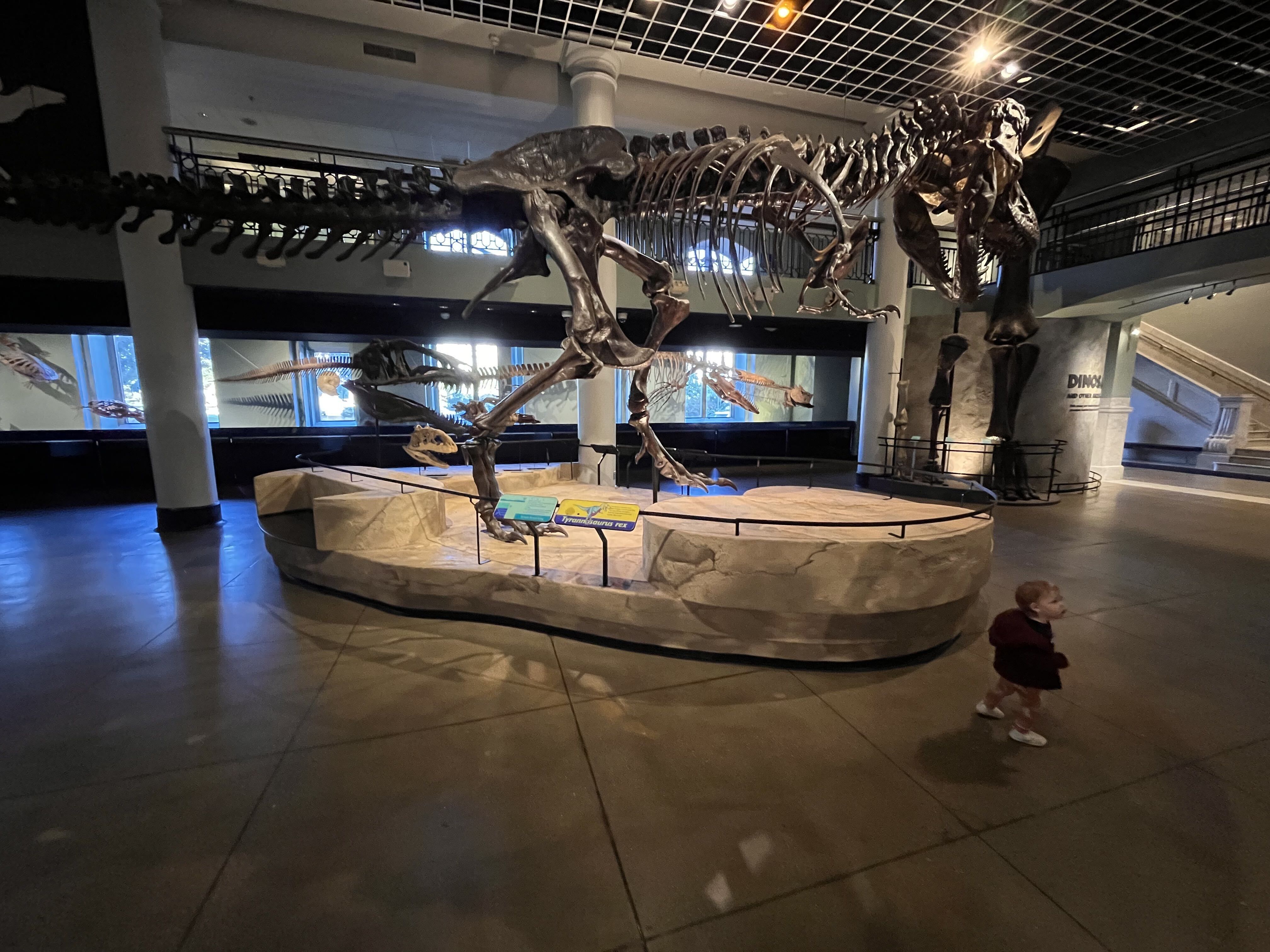
As a toddler gazing up at the meticulously assembled cast dinosaur bones evoking a Tyrannosaurus rex, Amber Redfield knew she wanted to spend as much of her life as possible at the Academy of Natural Sciences.
By then, The Land Before Time and Jurassic Park had already hooked her on all things dino, but beholding their actual body parts and scale at the museum molded her passion into a dream.
For nearly 15 years, she lived that dream as an Academy museum employee, most recently as an educator, until it all came tumbling down on Sept. 1, when she and her department learned the museum would close at the end of the month and their jobs would be eliminated.
Amber Redfield, a former educator at the Academy of Natural Sciences, examines fossils.Amber Redfield
The news broke the hearts of employees, many of whom aspired to work at the Academy museum not long after they learned to walk and talk. For some, that goal served as a guiding light through academic hardships. For others, working and volunteering there fostered confidence and creativity. For all, it offered a rare opportunity to ignite a passion in local kids that the museum had ignited in them.
“My whole life is that place,” said Redfield, 37, whose last day was Nov. 1. “I feel like a part of my soul has been ripped out.”
This career was all she ever wanted. She managed Dinosaur Hall, the exact room in the museum she marveled at as a child, geeked out with visitors about new developments in the field, and whipped out fossils so mind-bogglingly ancient they brought museum patrons to tears.
“‘I can’t believe I’m holding this right now,’” they would tell her, grasping an approximately 66 million-year-old hadrosaur leg or back bone.
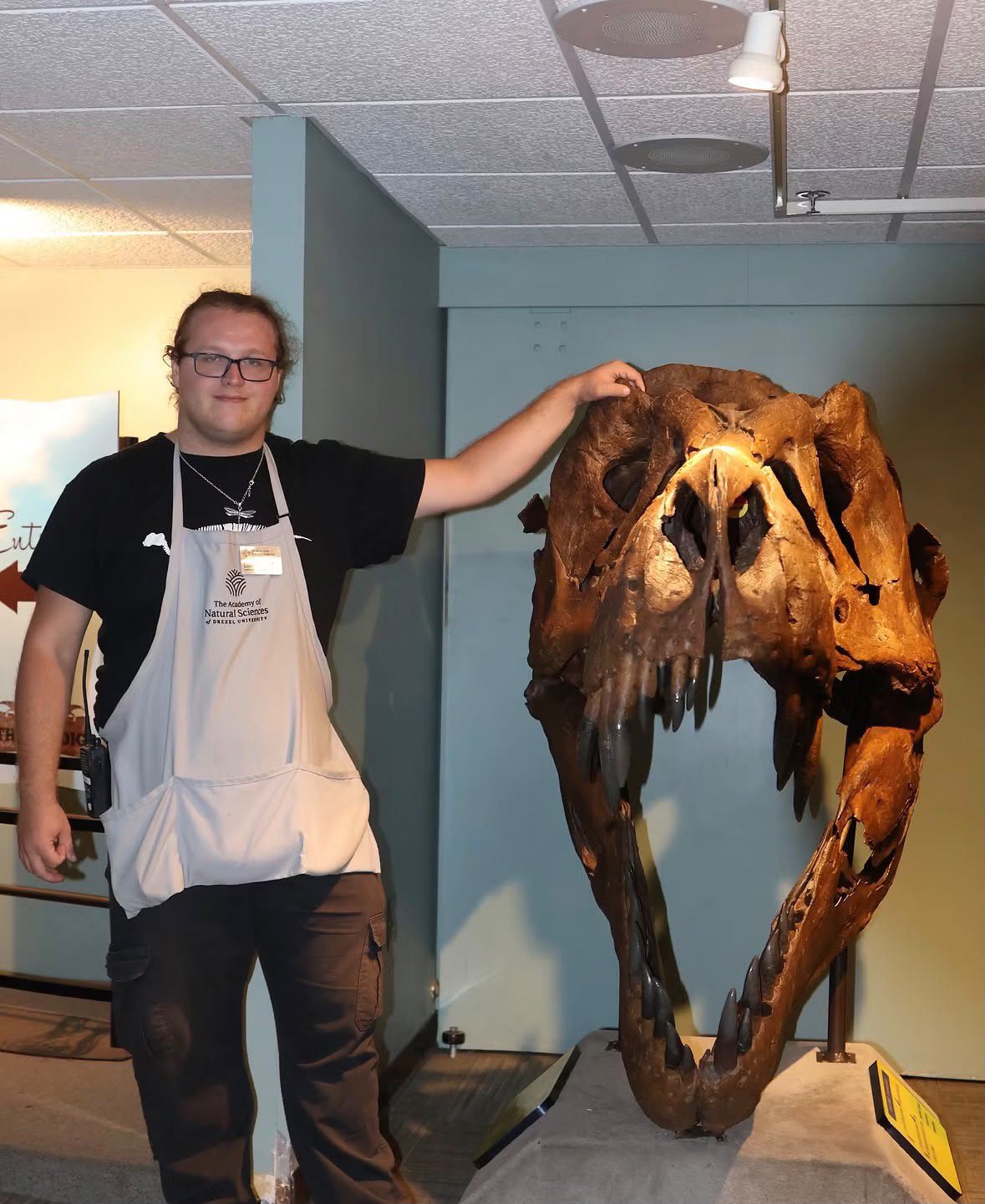
Perusing some of the older specimens in the academy’s collections — “it’s the closest we get to time travel,” said Liam O’Donnell, 27, who worked with Redfield. His last day as an experience and engagement educator wasOct. 1.
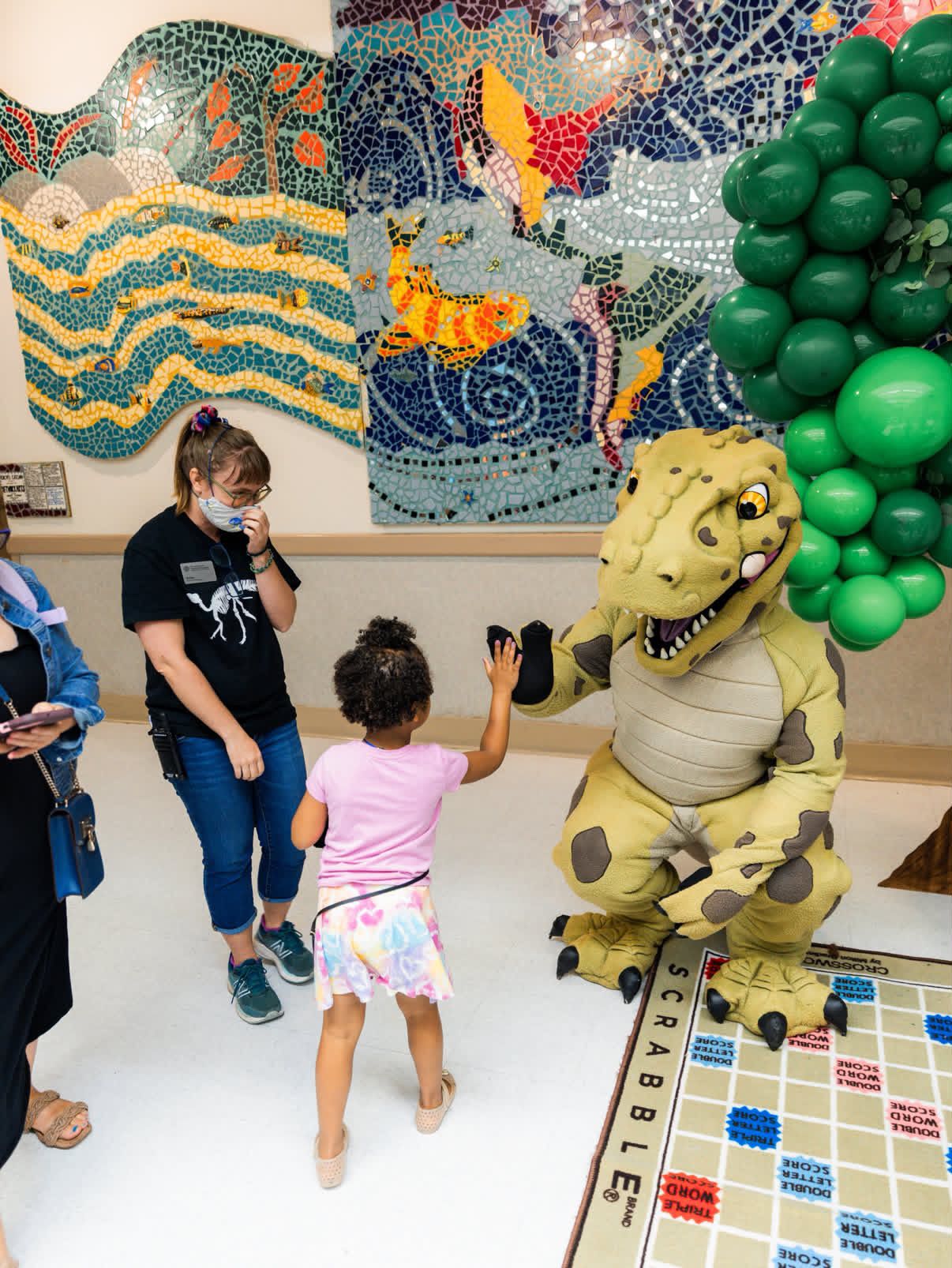
Working at the Academy museum over the last four years was a dream come true for O’Donnell — presenting a wide-eyed child with a hissing cockroach or answering questions about whether velociraptors would have liked tacos.
Liam O’Donnell, wearing a dinosaur costume, greets children at Chase Books’ annual Read-a-Thon at the Academy of Natural Sciences museum.Chase Books
O’Donnell dreamed of working at the Academy museum since his first visit there at around 6 years old. He was wowed by how much humanity had managed to learn about such old species.
But, throughout his academic career, his ADHD presented hardships, particularly as he pursued his biology degree at Widener University.
“I came very close to flunking out,” he said. “I failed chem three times.”
Weekend visits to the Academy, he said, kept him motivated to graduate.
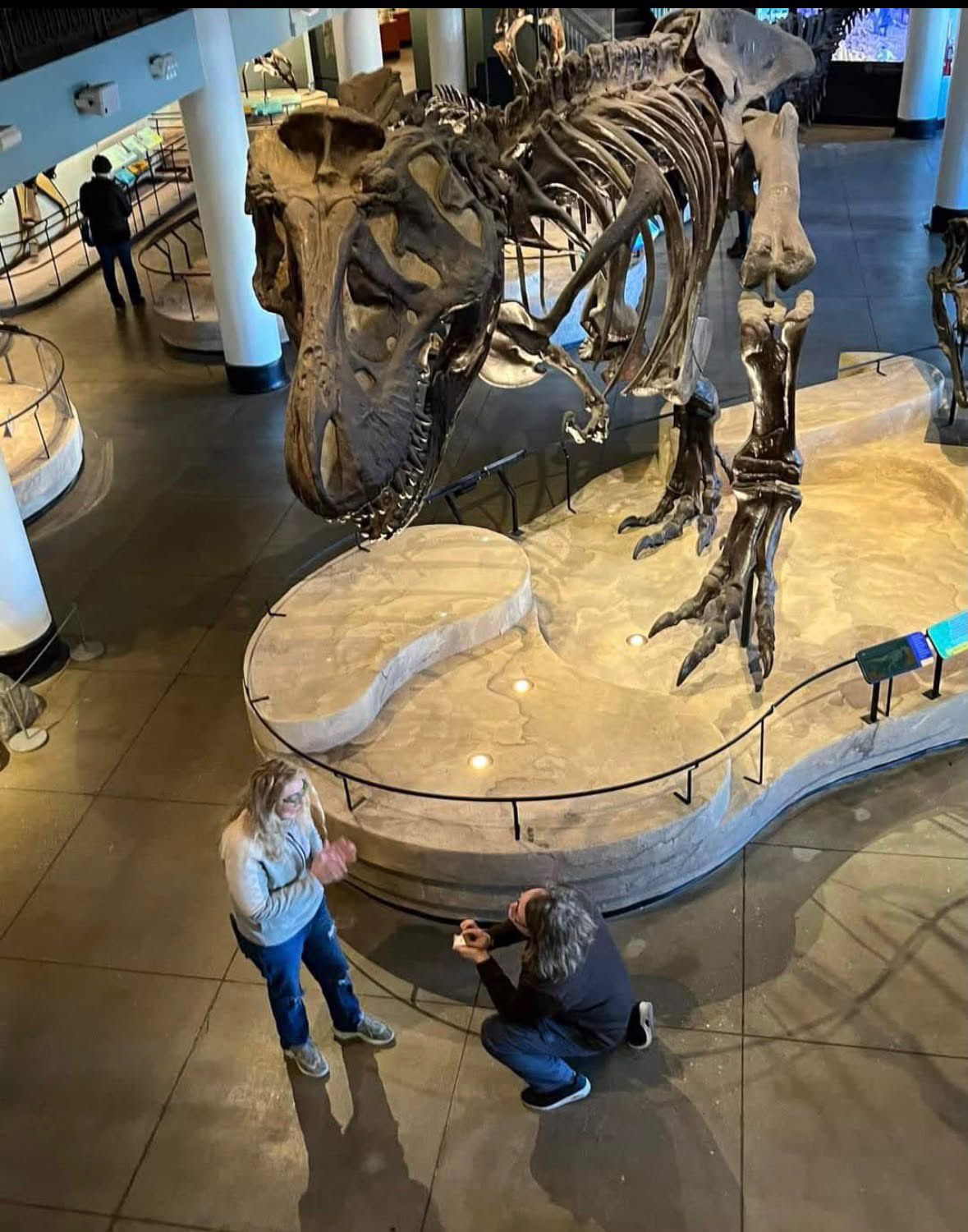
Liam O’Donnell, a former educator at the Academy of Natural Sciences museum, proposes to his wife in Dinosaur Hall.Liam O'Donnell
The museum served a similar purpose for former education and experiences manager David Schloss, 39, who worked at the Academy for 15 years before his last day Nov. 1.
Schloss’ love for dinosaurs dates back to kindergarten, when he was asked to name a word that starts with P and offered pterodactyl.
As a biology student at Wheaton College in Massachusetts, Schloss was having difficulty in school. So he took several months off to be with his sister in Philadelphia and volunteered at the Academy cleaning and preparing fossils.
After that, “I kind of had a direction and drive,” Schloss said. “I was dean’s list for the rest of my time until I graduated.”
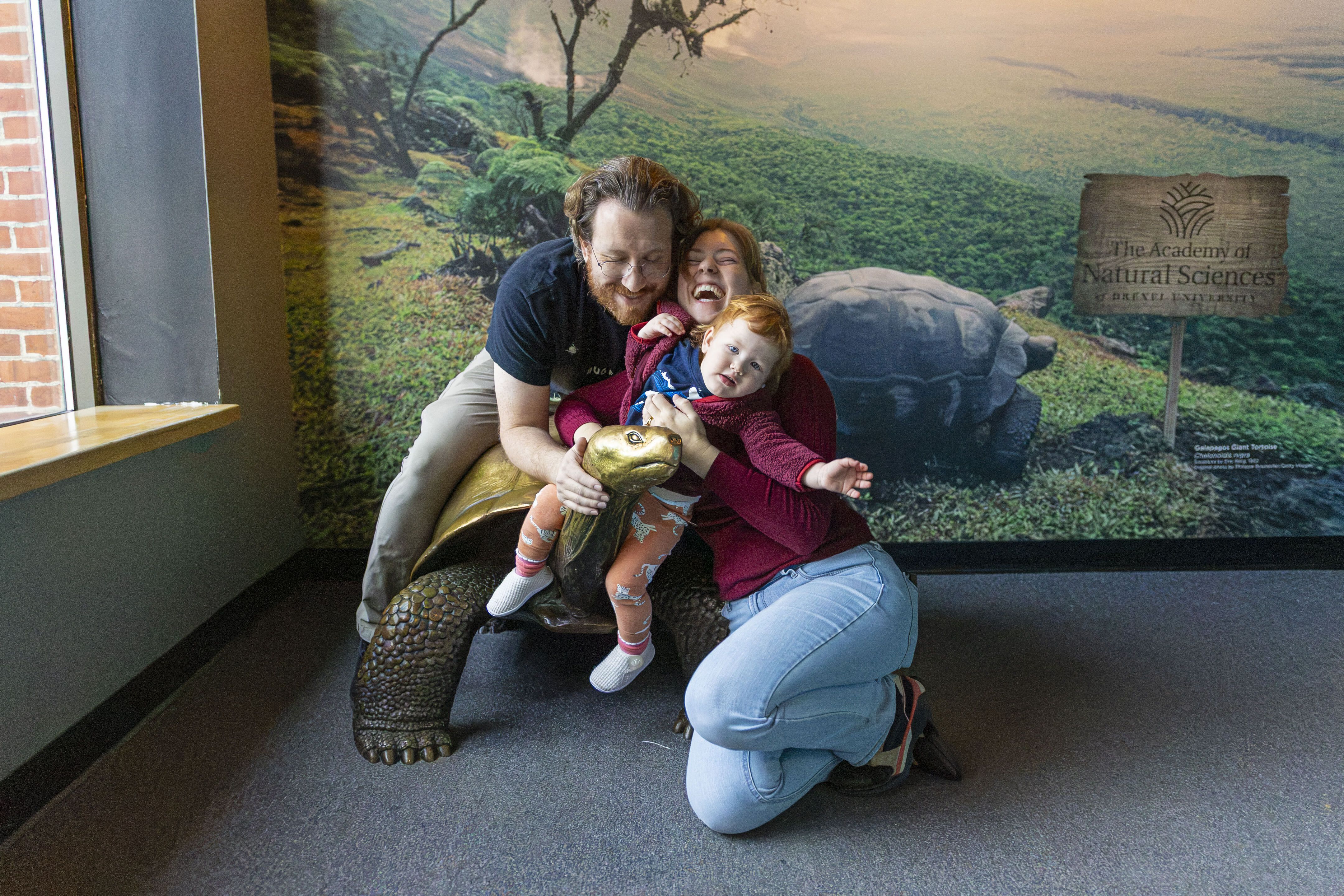
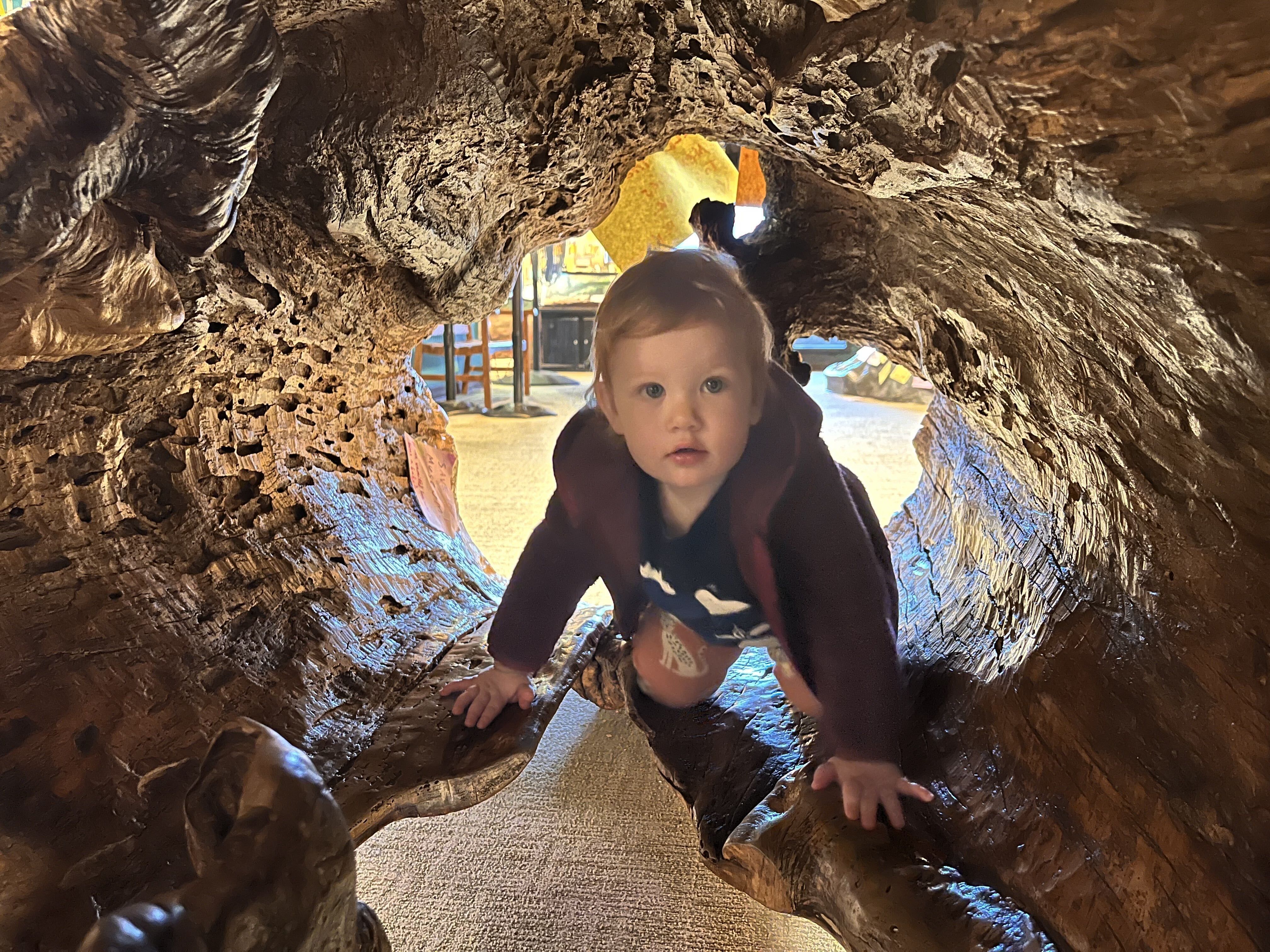
David Schloss with his wife, Ashley, and 1-year-old Eloise at the Academy of Natural Sciences in October, on a day after the museum closed when staff were allowed to bring their young kids into the museum.David Schloss
Inspiration and fulfillment always lived around the corner during Schloss’ time working at the museum. Before it closed during the pandemic, he ran the butterfly house and discovered a half-male, half-female butterfly that he got to put his name on when it was entered into the entomology collections.
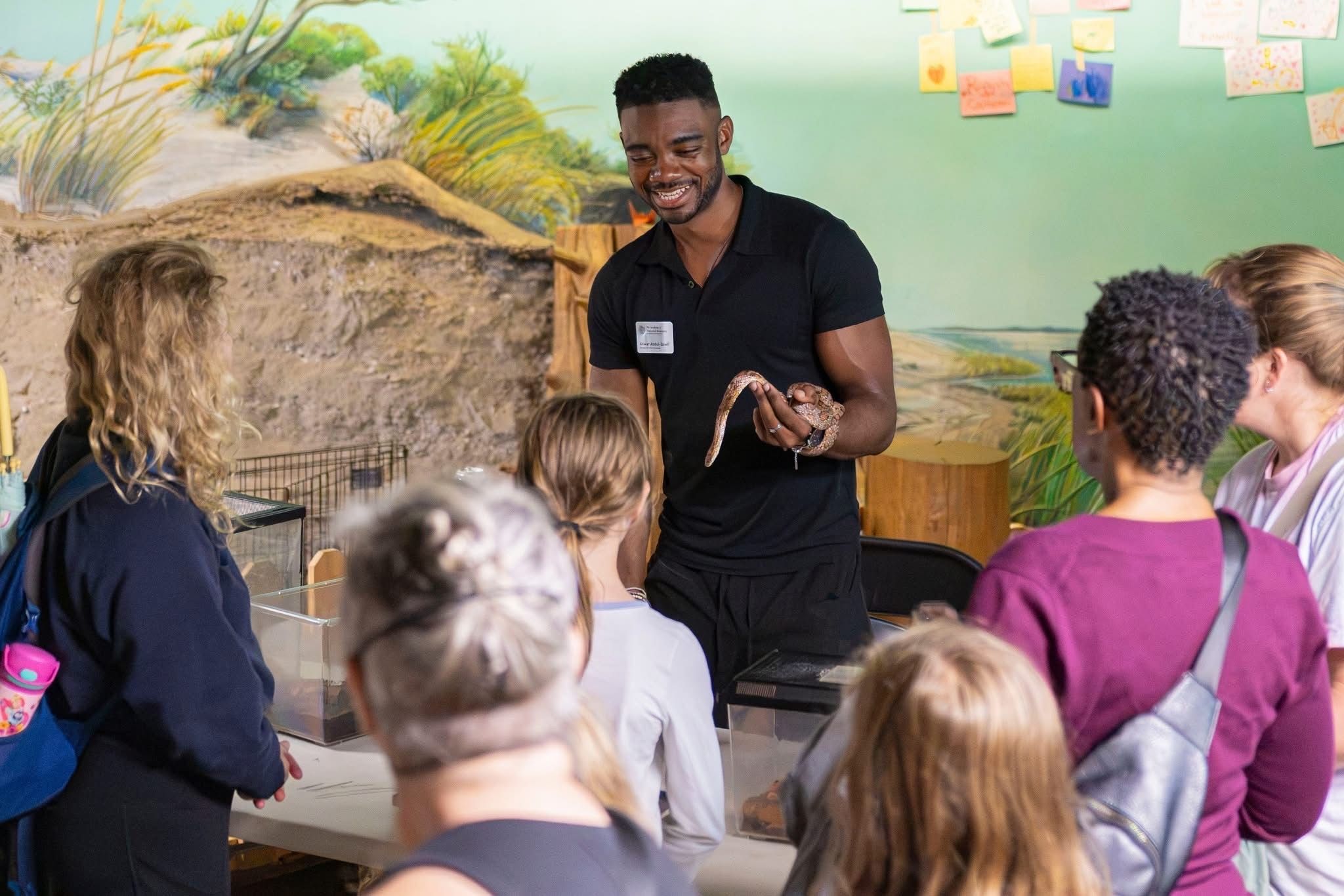
The live animals at the Academy museum similarly spoke to Anwar Abdul-Qawi.
Now 32, he still remembers seeing his first live animal show at there as a child. A self-proclaimed “super animal nerd,” he was awestruck at seeing the creatures onstage handled with such expertise.
“I can’t wait to do this one day,” he thought to himself.
But he was a shy child with a pretty severe stutter, so speaking in front of a crowd seemed impossible.
In high school he began volunteering at the Academy, then got his degree in zoology at Delaware Valley University. Soon after, the academy hired him. One live animal show after another his stutter subsided, his confidence grew, and, 11 years later, public speaking became one of his greatest skills.
His final role at the Academy museum was manager of animal programs, running the live animal department that hosted the shows that awed him as a child.
Anwar Abdul-Qawi, former manager of animal programs at the Academy of Natural Sciences museum, shows animals to kids.John Hutelmyer
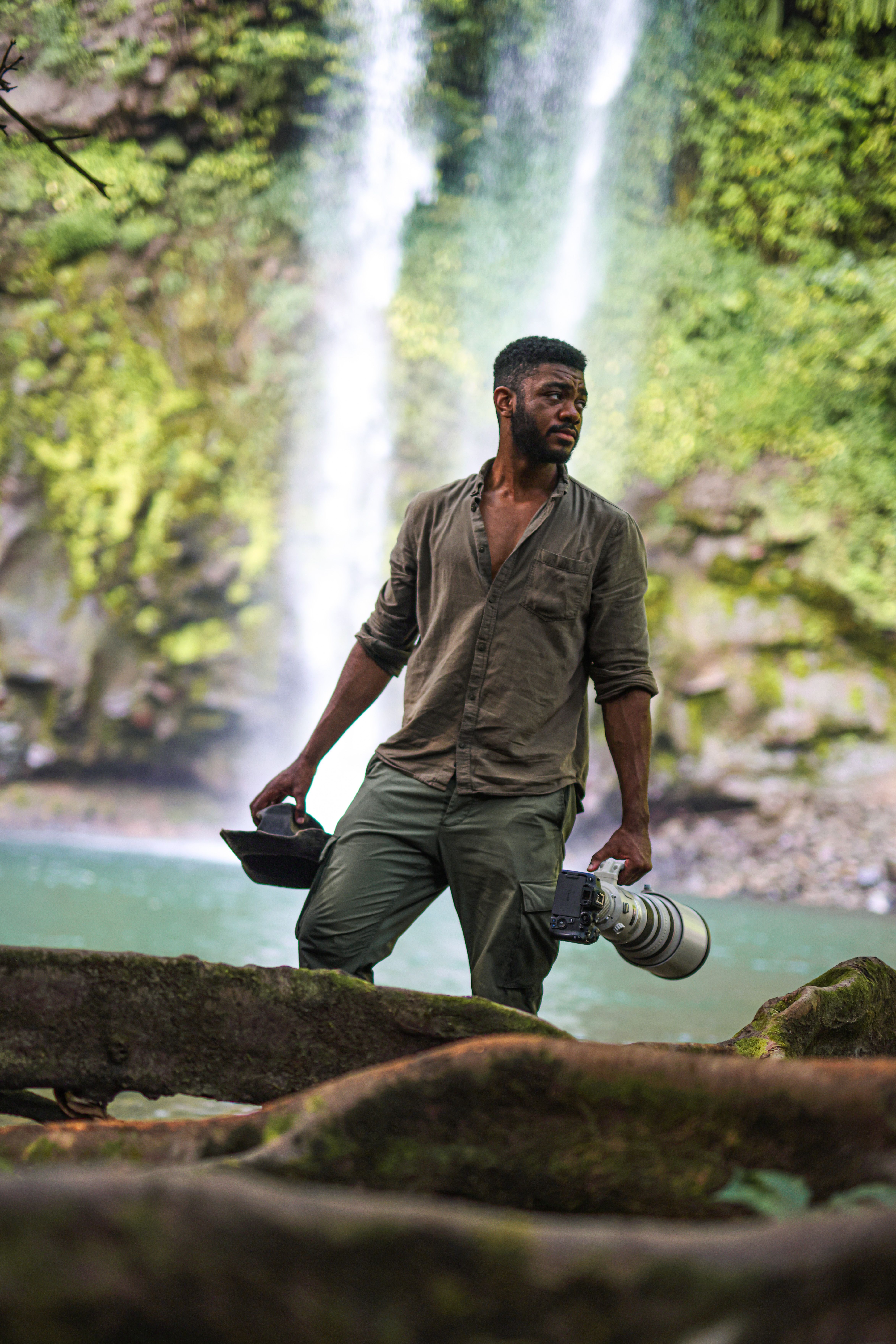
The Academy never wavered in supporting his dreams. When he got interested in wildlife photography, the museum displayed his photos. When he yearned to go abroad, Academy leaders sent him to Equatorial Guinea to document a research trip. It was his first time leaving the country. He was so excited, he cried in bed the whole night leading up to the flight, wondering: “Is this real?”
“I didn’t think this was something that was ever going to happen to me,” he recalled.
Anwar Abdul-Qawi, former manager of animal programs at the Academy of Natural Sciences, in Equatorial Guinea on a research trip the academy sent him on.Anwar Abdul-Qawi
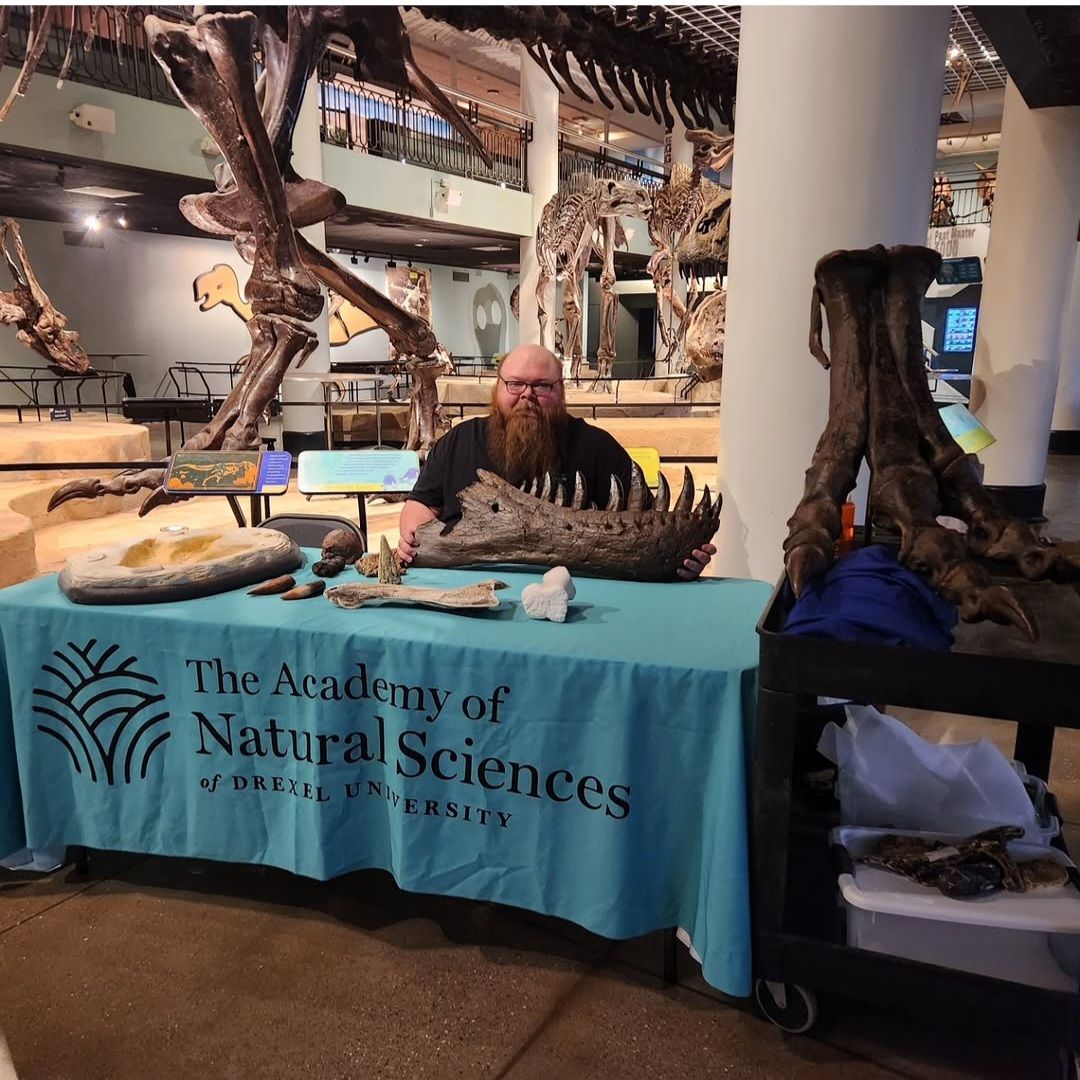
Working at the Academy museum also opened doors for Redfield and Buddy Muhler, an educator who ran the school programs at the museum. Neither Redfield nor Muhler ever graduated college. For Redfield, that was due to learning challenges, including dyslexia. For Muhler, school just was not his strong suit.
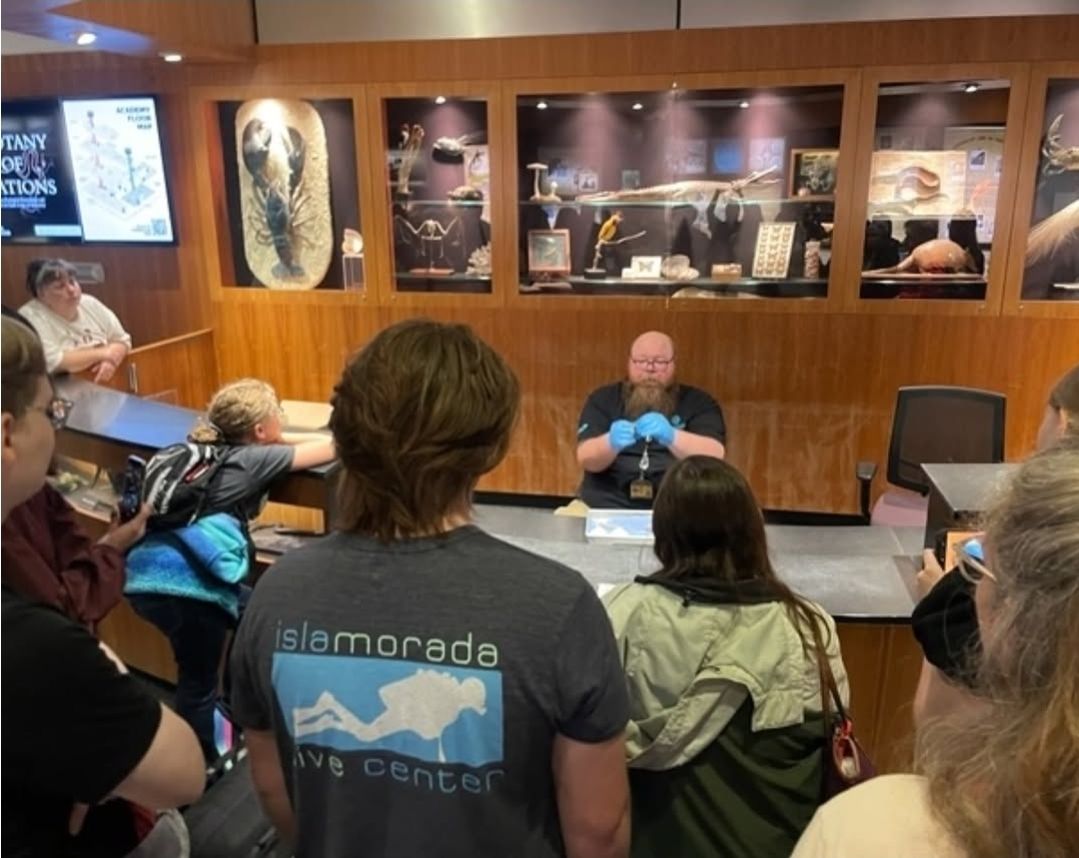
Buddy Muhler, a former staff member at the Academy of Natural Sciences museum, showcases dinosaur items.Buddy Muhler
Nevertheless, the Academy museum gave them a chance. For Redfield, it came after she did a stint volunteering there and her enthusiasm and level of paleontologic knowledge quickly became evident. For Muhler, 42, that opportunity came after several years working at another museum.
It “took a lot of hard work and timing and luck,” Muhler said.
For Schloss, learning that the museum would close felt like witnessing “a seismic event,” he said — one not unlike the alleged asteroid strike that wiped out the dinosaurs. This time, it was the extinction of “a community of people who tried to do their absolute best to engage the public with what felt like a piece of string, a pencil, and a wad of gum,” Schloss said.
David Schloss’s 1-year-old, Eloise, at the Academy of Natural Sciences in October, on a day after the museum closed when staff were allowed to bring their young kids into the museum.David Schloss
Perhaps the hardest part is knowing that, if the museum never reopens, he won’t be able to share the place he has spent the last decade and a half with his 19-month-old daughter as she grows up.
“It crushes me,” Schloss said.
David Schloss’ 1-year-old, Eloise, at the Academy of Natural Sciences in October, on a day after the museum closed when staff were allowed to bring their young kids into the museum.David Schloss
Developments earlier this month offered a glimmer of hope when Drexel University, which is affiliated with the Academy, accepted an offer from the William Penn Foundation to fund feasibility studies on the future of the Academy. But whether that could yield a reopeningof the museum will likely remain unknown for months.
Liam O’Donnell is a former staff member at the Academy of Natural Sciences museum.Liam O'Donnell
In the meantime, O’Donnell, Muhler, and Schloss are job hunting.
“I can’t imagine myself working anywhere else,” Muhler said, but “I can only live on severance for so long.”
Buddy Muhler, a former employee at the Academy of Natural Sciences Museum, is surrounded by visitors as he works.Buddy Muhler
Abdul-Qawi moved to Costa Rica to do full-time sea turtle conservation work.
As for Redfield, she has turned down job offers at other institutions in the hopes the Academy museum will reopen.
“But I can’t wait forever,” she said. “That’s the scary part.”
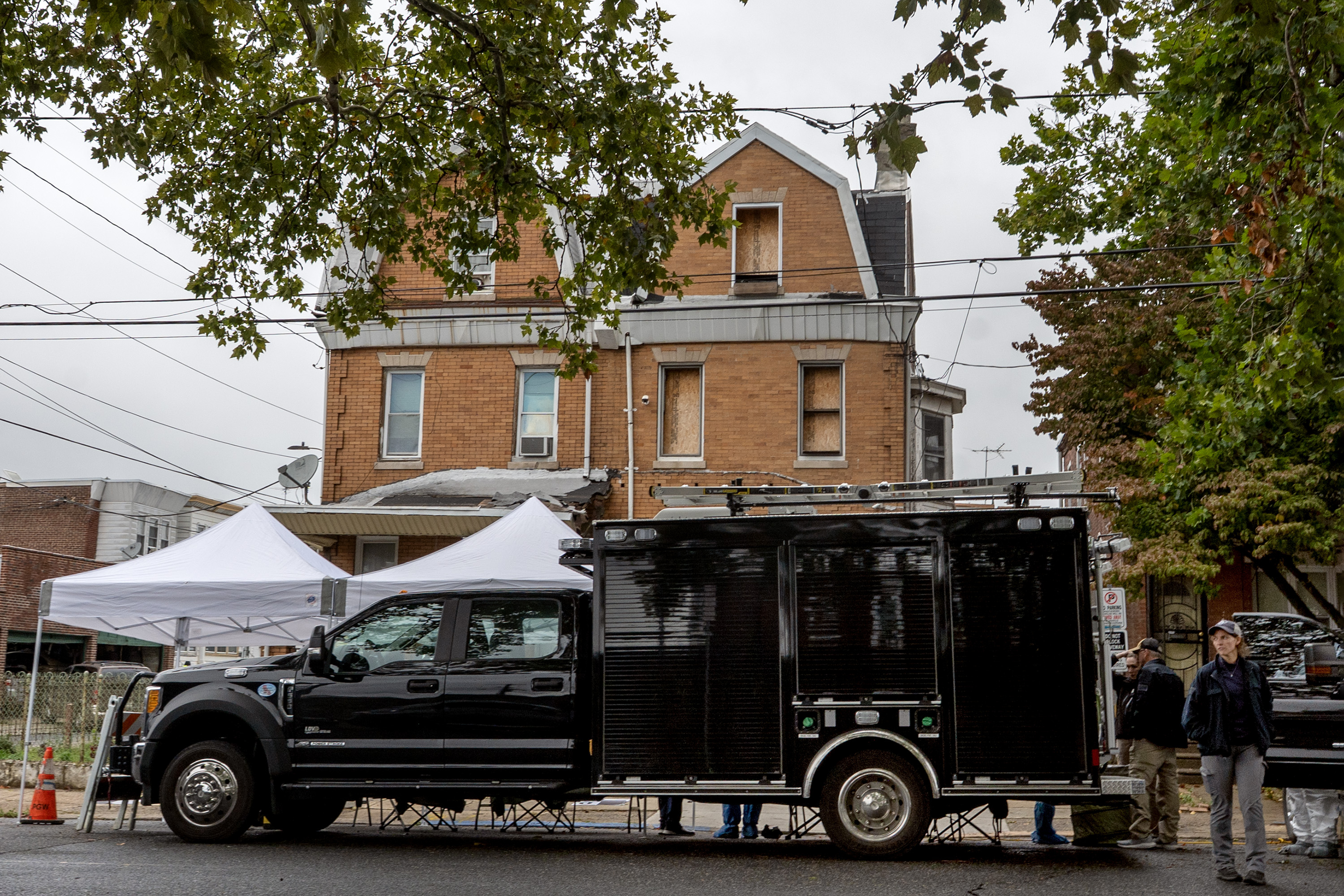
The 400 block of West Chew Avenue has seen an array of investigators since June, when the extensive search of the Olney home at the center of a shocking missing persons investigation began. But more questions than answers remain as authorities carry on the complicated task of parsing through forensic evidence collected from the residence.
Investigators suspect the late Raymond “R.C.” Horsch was connected to at least seven missing women associated with the house. Those allegations come from scads of digital evidence discovered this year that show what police believe to be a murder on camera, as well as women who appeared to be dead in the home.
Despite the lengthy investigation, scores of search warrants, and extensive searches that included excavations of its front and back yards, police have not yet publicly identified physical forensic evidence confirming violent crimes occurred in the Olney home. Gathering forensic evidence is a difficult process, however, especially as authorities contend with factors like an aging investigation scene, degradation of materials, and a lack of human remains.
That process, the Philadelphia Police Department said in a statement, involves specialized testing, extensive coordination among investigative units, and verification of discoveries — all of which takes time. And this investigation has long been expected to be a protracted one.
“Forensic investigations can be complex and time-consuming, requiring the careful collection, examination, and analysis of evidence,” a police spokesperson said. “Above all, we owe it to the victims, and most importantly their families, to get it right.”
Made more difficult by time
Time presents a significant challenge for forensic evidence collection, and as it goes on, a “whole orchestra of things” works against investigators, said Kimberlee Moran, a forensic consultant and educator at Rutgers University-Camden.
(Moran consulted with investigators on the Olney house but declined to comment on the case directly given the ongoing investigation.)
Cellular materials like blood, saliva, and fingerprints degrade over time, making it more challenging to recover useful evidence. The events of the Horsch case date back years, and the degradation of possible evidence speeds up the more materials are exposed to chemicals and ultraviolet light, or come into contact with people or objects. Even something as simple as a fan on a hot day could blow away relevant residues, she said.
In that sense, it would not necessarily take a sophisticated cleanup job to obscure evidence from investigators years later. Everyday actions could significantly diminish the amount of recoverable forensic evidence.
“It’s literally just living your life in that space over many, many years. Additional material is going to be shed, things are going to be moved around,“ she said. “This is not some place that has been frozen in time.”
The search for DNA
Law enforcement sources in October said investigators had employed luminol, a chemical that illuminates upon exposure to iron, revealing areas throughout the home that appeared to resemble blood spatter. Luminol, however, can also visibly glow when in contact with other substances, such as bathroom cleaners.
“There can be false positives,” said Thomas McAfee, a retired FBI special agent and former senior team leader of the Atlanta Evidence Response Team. ”But if you were to see spatter, even after someone cleaned, you would take a sample.”
Investigators, he added, typically would look for hair or fiber samples in rooms and on cloth materials, and forensics teams can cut away entire sections of walls, flooring, or doors to send off for DNA testing.
But in terms of practicality, Moran said, it is not realistic to examine every item or surface in a home because forensic labs have backlogs and limited resources.
“You can’t test every swab for DNA,” Moran said. “You have to figure out what swabs are going to be probative and what swabs aren’t.”
Moran added that in the United States, investigators tend not to strategize extensively with forensic experts and labs on their searches, and more collaboration could lead to better investigations. Experts could advise investigators ahead of time on what kinds of DNA they are more likely to recover, or advise against requests for forensic analysis like blood spatter and bite marks that have shown to be inaccurate, she said.
“Particularly for a case like this, where testing is going to be so important, really, the more we can incorporate the scientific expert … the more helpful that would be for the investigation,” she said.
Investigators later said the substance was not real blood. Before his death last year, Horsch was a well-known erotic photographer and filmmaker whose career in pornography dated to the 1970s. His work often depicted graphic sexual violence and simulated death scenes of women in addiction, and some scenes appeared to use prop blood.
In October, reports emerged that probable bone fragments from a hand had been detected. The Philadelphia Office of the Medical Examiner later said no human remains had been identified. Bone fragments, McAfee said, can be difficult for investigators to identify.
“It’s not always clear if it’s human or not, and there are different animal bones out there,” he said.
Reports have also indicated investigators sought evidence of alkaline hydrolysis, or “water cremation.” Experts said that process, or other chemical disposal methods, would likely leave behind forensic evidence, though none has been publicly confirmed.
“It’s really difficult to get rid of a body,” McAfee said.
Lack of remains complicates the case
Early on in the search, investigators discovered an extensive digital archive of videos and images stored on hard drives. After reviewing a portion of those files, police believe at least seven missing women are connected to the property, and at least five of them may be dead. Officials said the files show women alive and then apparently dead inside the home, and one video appeared to show Horsch strangling a woman.
Some of the files, Deputy Police Commissioner Frank Vanore said in September, likely show “playacting,” but others could show real events. Lacking confirmed human remains, police said earlier this year, the medical examiner’s office cannot officially declare the women dead, and police face the prospect of going through Orphans’ Court to get such declarations.
Amid a lack of progress reports on the case, police say the priority is on the investigation’s integrity.
“We understand the public’s desire for answers; however, it is essential that investigations are conducted thoroughly and accurately,” a police spokesperson said. “At this time, there is no confirmed timeline for the next update.”
Staff writer Ryan W. Briggs contributed to this article.
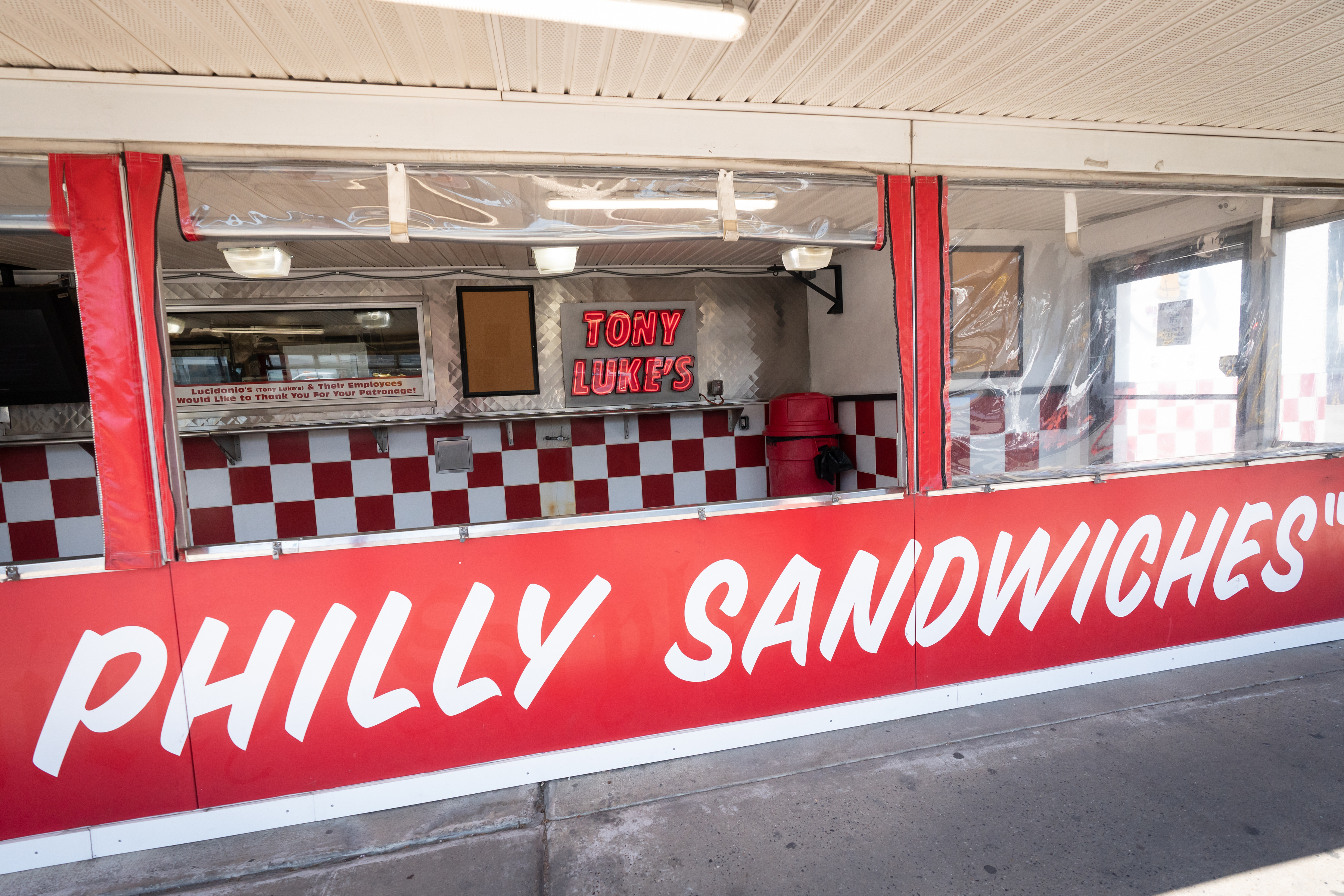
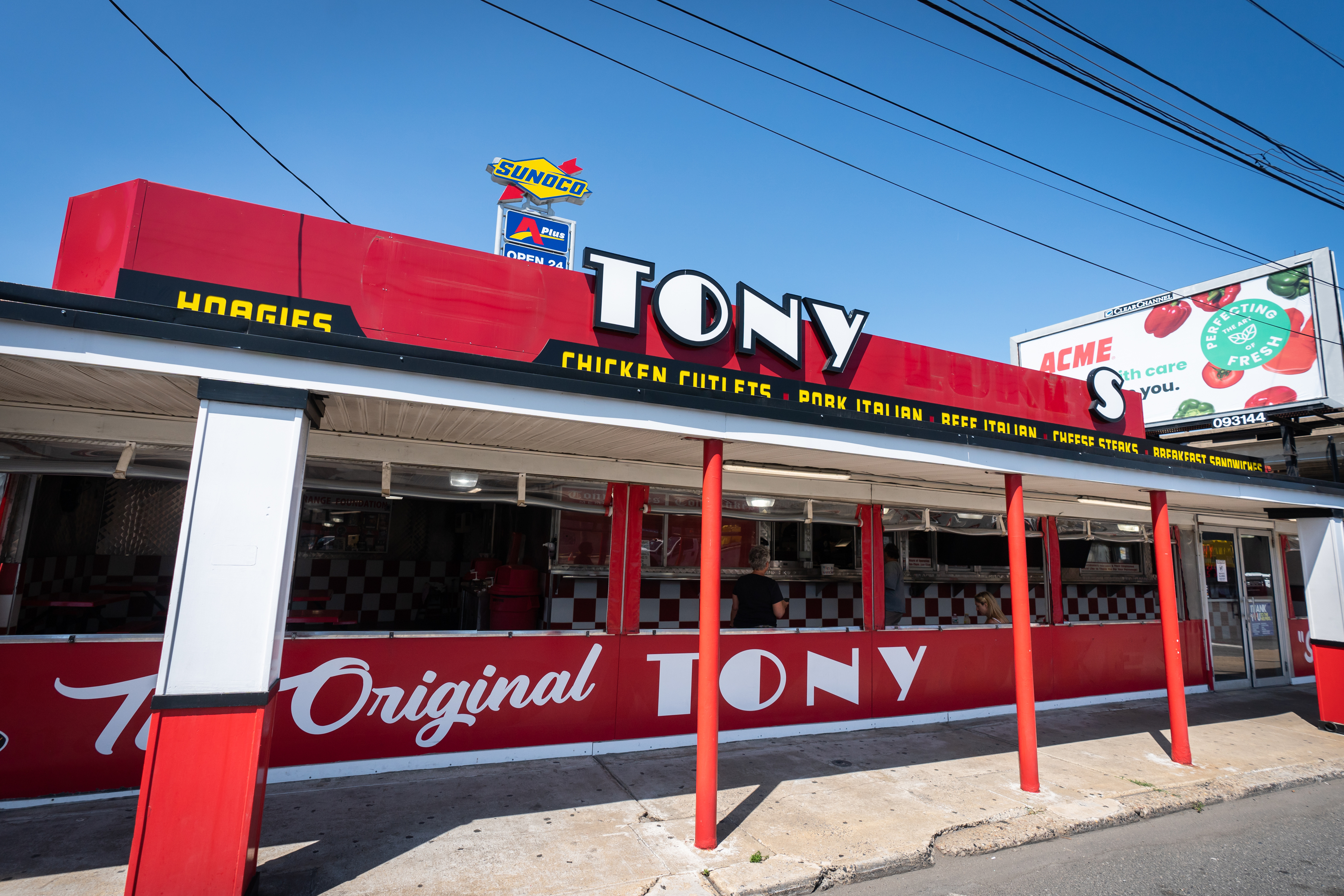
Oregon Avenue institution Tony & Nick’s Steaks closed Friday after its owners said financial difficulties and tax problems had “brought us to a point where we can no longer keep our doors open.”
The steak stand had been named Tony Luke’s for 30 years, until a 2022 settlement led to the renaming and left the separately operated Tony Luke’s 11-location franchise chain and mail-order business with the original name.
The catering business operated alongside the steak shop, Tony & Nick’s Catering, will continue, according to its owners.
In a message addressed to “employees, loyal customers, family, and friends,” the shop’s owners said they were devastated.
“This place has always been more than a business to us. It has been our life, our family’s work, and a place where so many customers became friends,” the message said.
The owners said the effect on the workers and their families “weighs heavily on our hearts.”
Co-owner Nicky Lucidonio could not immediately be reached for comment.
Tony Luke’s was opened in 1992 by Tony Lucidonio Sr. His sons Nicky Lucidonio and Tony Lucidonio Jr. became involved in the business, but a family feud became public after Tony Lucidonio Jr. was fired in 2015.
The business was the subject of an IRS tax fraud case that led to jail time for Tony Lucidonio Sr. and Nicky Lucidonio. They admitted that they had evaded taxes over a decade by keeping two sets of books to hide cash and had paid employees partly in cash to evade taxes.
The Lucidonios changed the business name after a cease-and-desist letter from the attorneys for Tony Lucidonio Jr. and his business partner, Ray Rastelli, who own the Tony Luke’s franchise business.
The exterior of the restaurant is seen at 39 E. Oregon Ave., in Philadelphia, Monday, July 11, 2022. It was undergoing a name change at the time. JESSICA GRIFFIN / Staff Photographer
The day after Janet Kalter retired from her Old City business, she didn’t sleep in. She didn’t pack for a vacation. She didn’t rest.
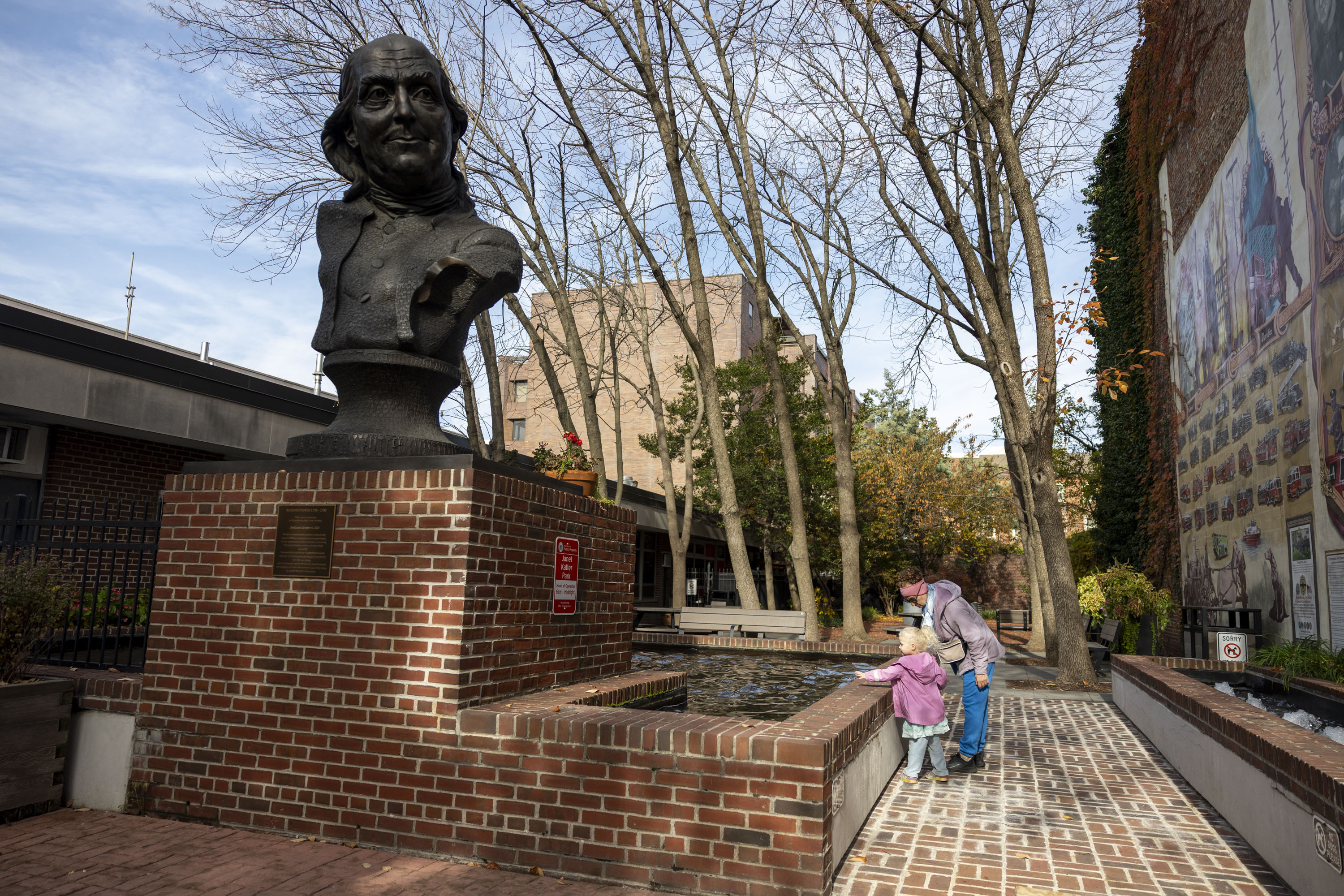
Instead, she headed to Girard Fountain Park, unofficially known as Firehouse Park, a city-owned park adjacent to the Engine 8 Ladder 2 firehouse at Fourth and Arch Streets.
“That’s where you’ll find me,” Kalter told her longtime partner, Joe Schiavo.
Kalter would go on to spend the next two decades renovating and tending the park, partly on her own dime.
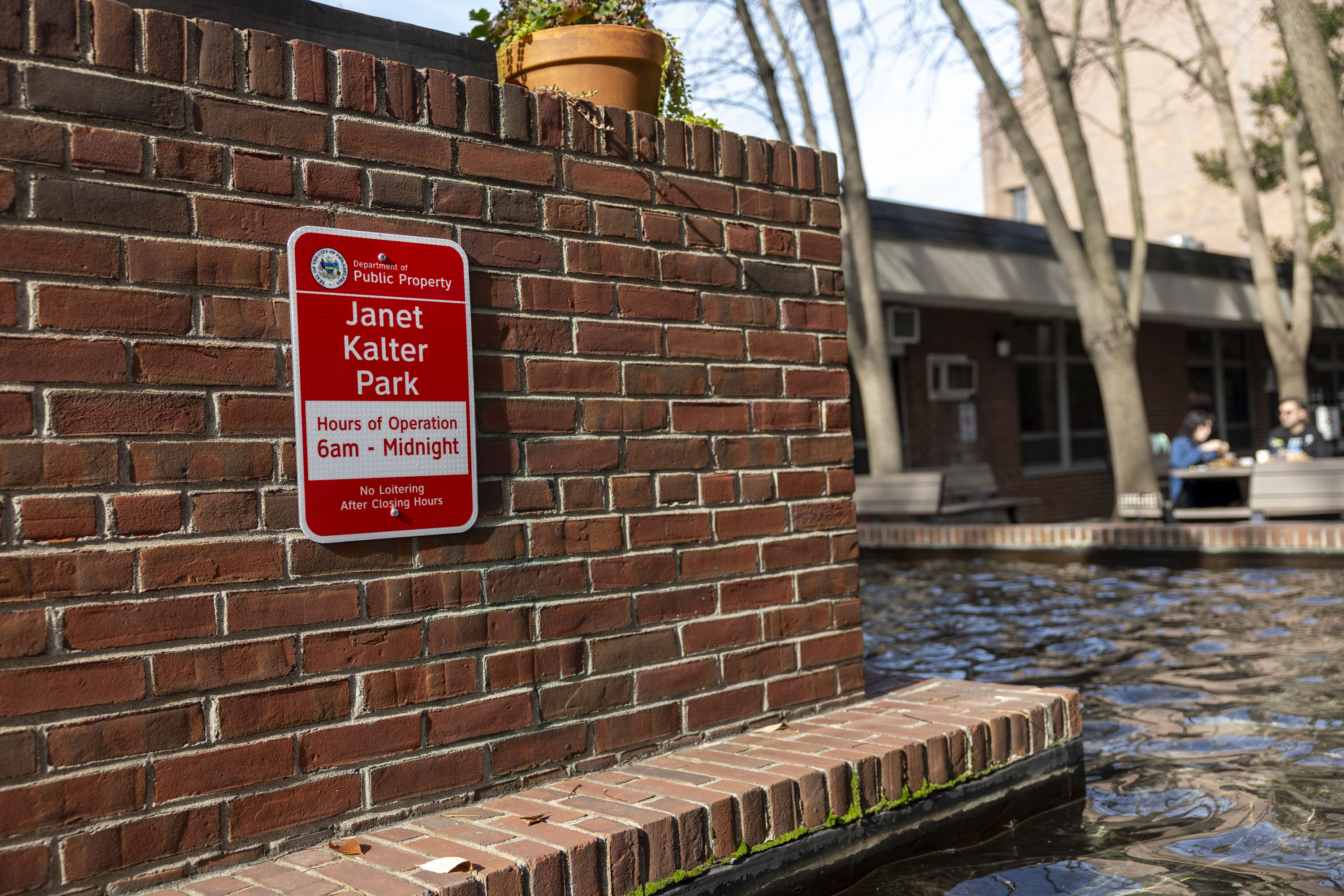
On Monday, City Councilmember Mark Squilla, the Old City District, a special services district, the nonprofit Old City Green, and Schiavo will gather to rename the location Janet Kalter Park.
“Janet just went right for [it],” said Schiavo, who cofounded OLC Furniture & Lighting with Kalter. “When she said, ‘That’s where you’ll find me,’ it wasn’t exactly clear that she meant for the next 20 years.”
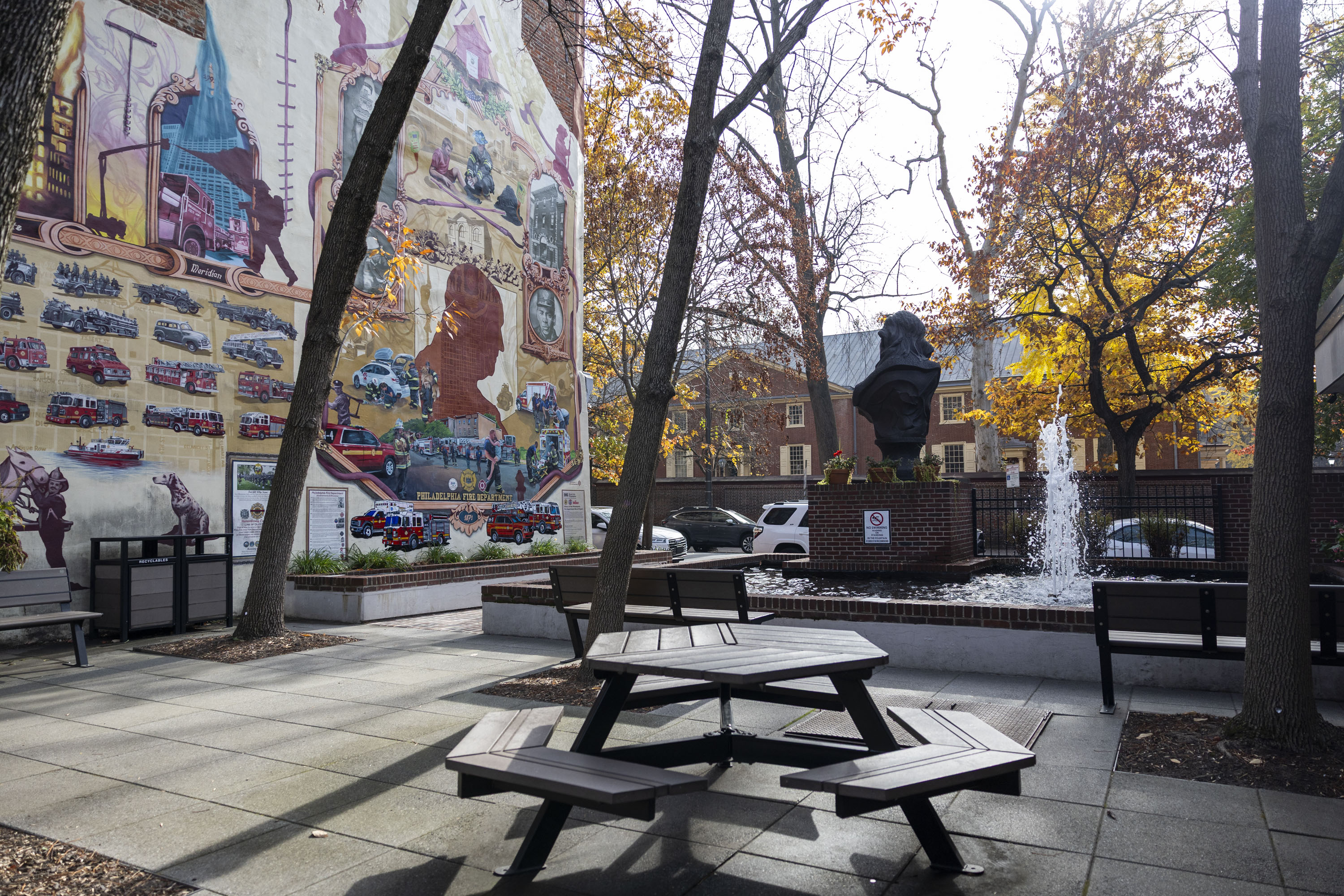
The Girard Fountain Park is being renamed on Monday in honor of Janet Kalter, in Philadelphia on Saturday, Nov. 21, 2026.Tyger Williams / Staff Photographer
Early Saturday morning, Schiavo was clearing a fountain filter and ensuring the city-ownedpark would be pristine for Monday’s ceremony, which comes a year after Kalter’s death at age 83 due to complications from a broken hip.
The park, which features two fountains, is also knownfor a nine-foot bust of Benjamin Franklin, commissioned by the city and sculpted by James Peniston.
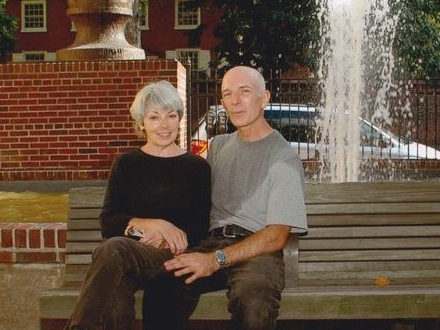
Undated photo of Janet Kalter, left, and Joe Schiavo, right at the Old City park on Arch Street now named for her. Schiavo’s shirt was wet from working on the fountain behind them.Philadelphia Fire Department
They used their time and dime for restoration
The park was built in 1975 for the Bicentennial. Before Kalter and Schiavo began working on it, neighbors and visitors had watched it fall into decay. The park was under the jurisdiction of the Philadelphia Department of Public Property, rather than the parks and recreation department, and it simply became overlooked.
The ornamental fountain no longer held water and was marred by peeling layers of paint. Chunks of stone retaining walls had collapsed. Tree roots buckled pavers where weeds poked through. Lighting fixtures and fountain elements had been stolen. The redwood furniture had rotted until ferns sprouted from sagging tabletops. The park was gated and locked up.
Armed with a welder’s hammer, the 5-foot-2, 105-poundKalter chipped away at the fountain down to the raw concrete.
Schiavo pulled from his degree in sculpture. Kalter brought a keen eye for materials and fabrication.
After receiving city approval, the couple rebuilt it, using thousands of dollars of their own money to start, and their own hands and tools.
They set up table saws on-site and in their home shop, fabricating fresh redwood tabletops, constructing sturdy planters from salvaged furniture, repairing the plumbing and electrical infrastructure, and repointing mortar joints. The gate was removed.
In 2012, Kalter and Schiavo began working on the park as volunteers under Old City Green, a nonprofit community organization.
Four years later, they partnered with the Old City District’s charitable arm, the Old City Community Fund, securing about $50,000 to overhaul the fountain and install permanent metal furniture, including three picnic tables.
In 2019, Kalter paid $70,000 out of pocket for a complete redesign of the north end of the park.
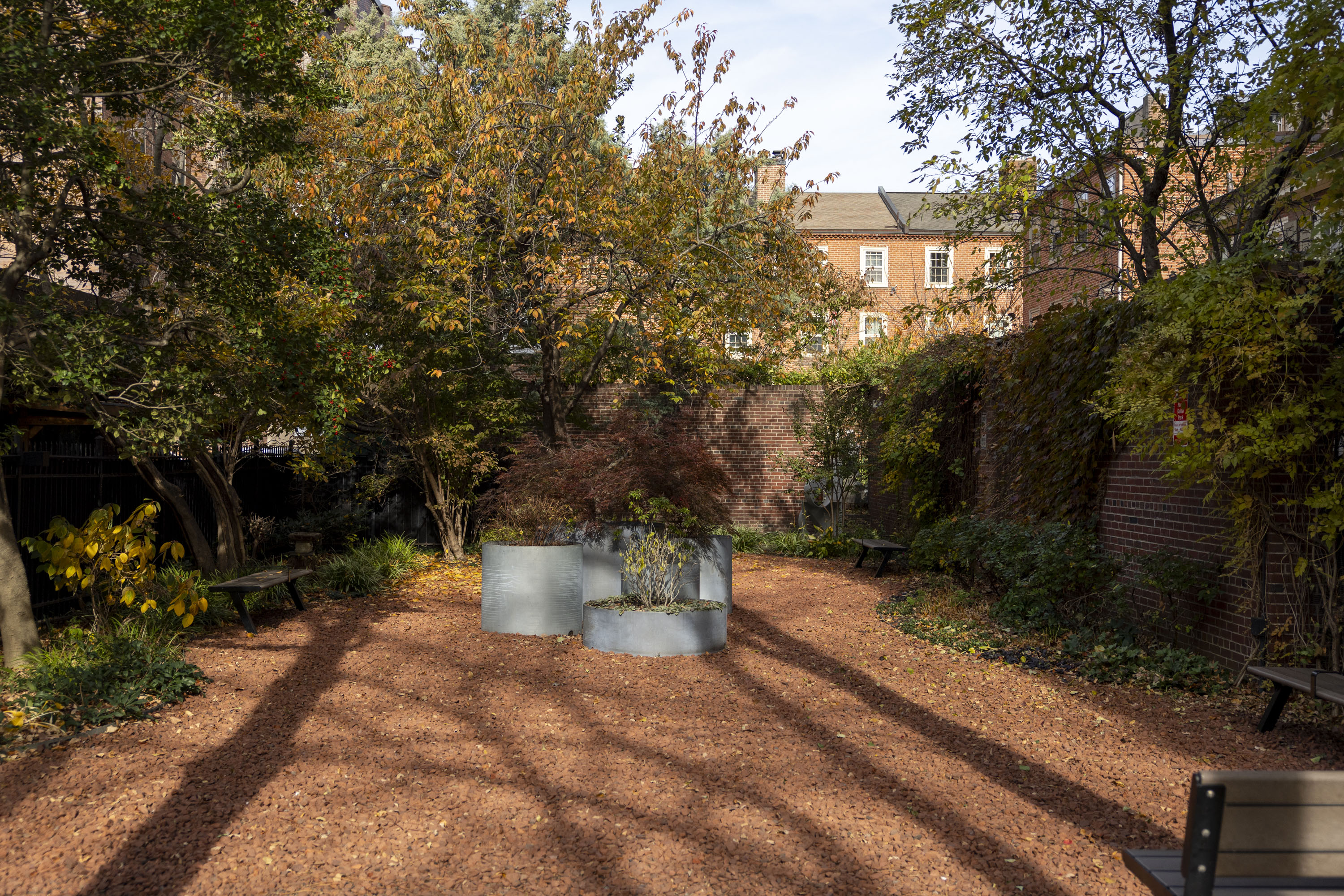
Over the years, the couplereplaced the lawn with crushed red brick and installed a drainage system. They plantedtrees, perennials, and annuals; coleus, New Guinea impatiens, creeping Jenny, and a Japanese maple were still vibrant on Saturday.
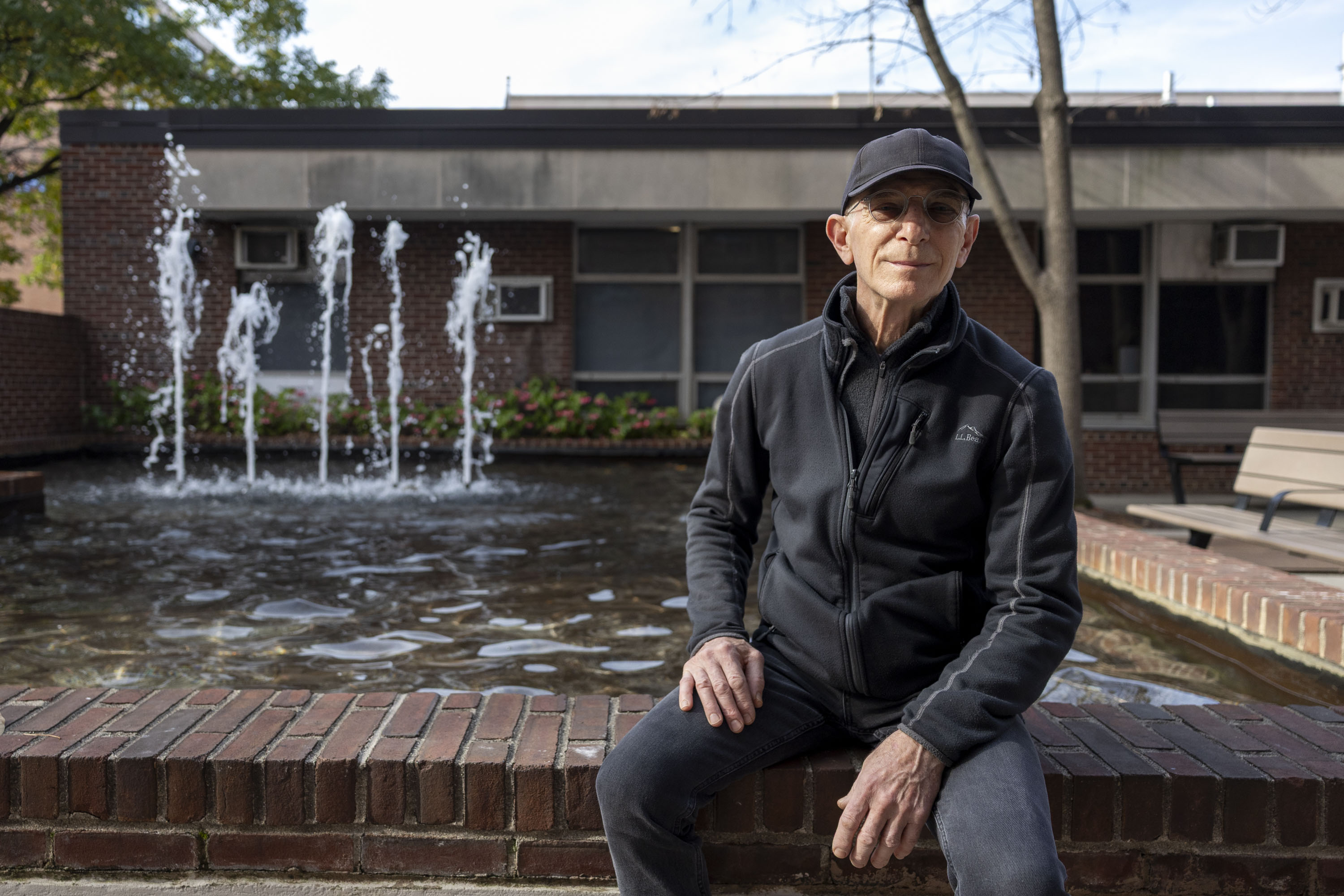
Joe Schiavo, Vice President of Old City Green, poses for a portrait at, the Girard Fountain Park which is being renamed on Monday in honor of Janet Kalter, in Philadelphia on Saturday, Nov. 21, 2026.Tyger Williams / Staff Photographer
“She could really do that hard work without breaks all day,” Schiavo said of Kalter, a former schoolteacher and clinical psychologist. “She was all about getting the job done. She wasn’t about planning and talking about things. She was about … ‘Let’s go!’”
In 2006, they sold OLC to two longtime employees who still operate it. Schiavo and Kalter used space in their home as a workshop where they crafted improvements for the park together.
Performing miracles
“Janet and Joe sort of performed miracles in that space,” said Job Itzkowitz, executive director of Old City District. “It was a turnkey neighborhood improvement that just needed a low-level financing, and so we were happy to do that.”
“She was not the person who would be the first person to speak,” Itzkowitz said. “She might be the last person after hearing all of the other perspectives. She’d be able to summarize them and analyze those perspectives and move the ball forward.”
Itzkowitz said a commemorative plaque installed directly into the park’s entrance will greet visitors.
“We all possess the power to improve our city through volunteer efforts, leading or following,” the plaque reads.
The Girard Fountain Park is being renamed on Monday in honor of Janet Kalter, in Philadelphia on Saturday, Nov. 21, 2026.Tyger Williams / Staff Photographer
Kalter Park will become the second Old City space renamed after a woman who helped champion a park. Dolly Ottey Park was opened in May 2025 at North Second Street and Elfreth’s Alley.
For Schiavo, 73, who continues maintaining the grounds with local volunteers, the naming honors decades of quiet tenacity.
“I think it’s great that she remains connected to the park in name,” Schiavo said, “because this place is so special to her.”
The Girard Fountain Park is being renamed on Monday in honor of Janet Kalter, in Philadelphia on Saturday, Nov. 21, 2026.Tyger Williams / Staff Photographer
Jason Kelce has been retired from football for more than two years, and somehow we’re seeing more of him than when he played 17 games a season.
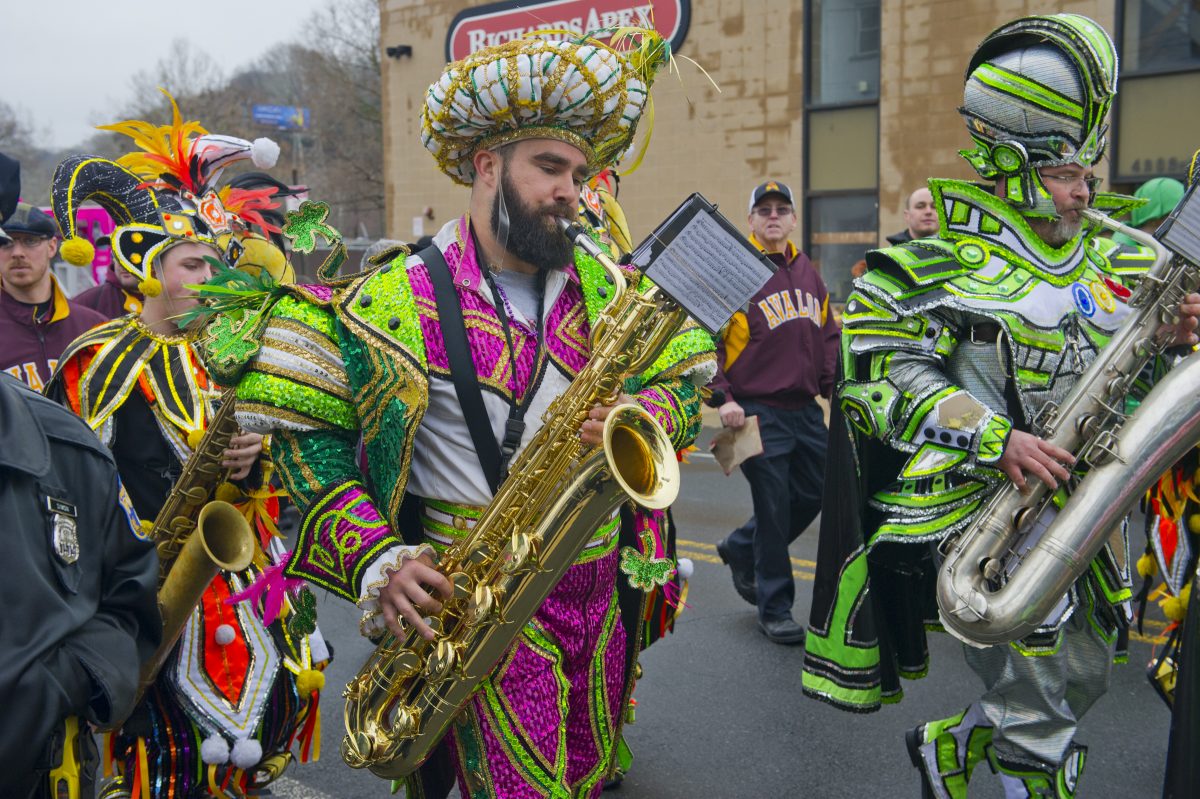
The former Eagles center has a podcast, a television career, Christmas albums, and approximately 400 other commitments. His latest venture? Playing Phil Collins songs on the saxophone with the Baltimore Ravens’ marching band during Monday Night Countdown.
To be fair, Kelce actually played the baritone saxophone in high school, so this isn’t some random midlife hobby. But we’re starting to wonder whether there’s a single activity in America that someone hasn’t asked Jason Kelce to participate in.
At this point, you could announce a competitive cheese-carving tournament in Nebraska and we’d fully expect Kelce to show up wearing a sleeveless shirt and carrying a block of cheddar.
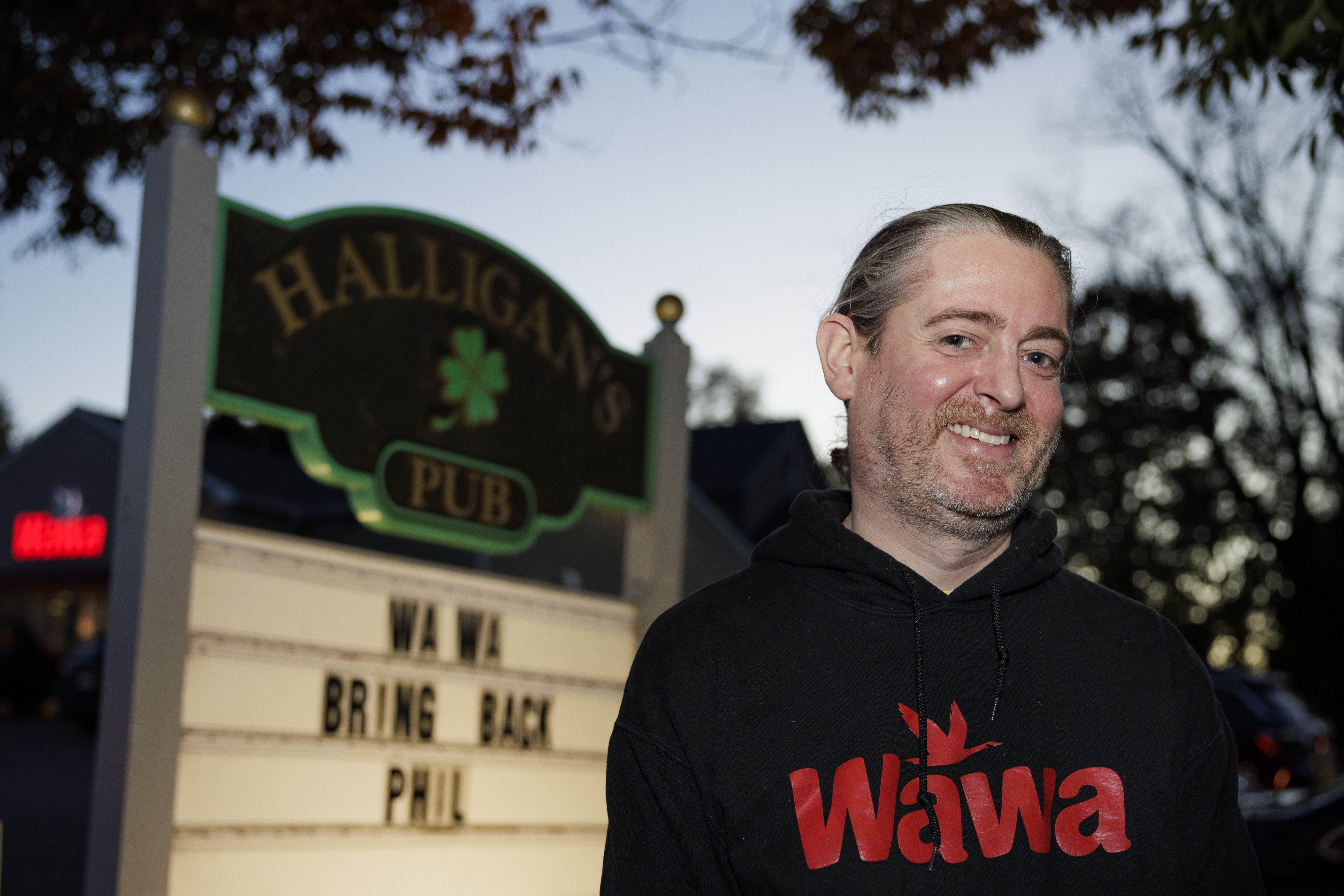
Philip Dougherty near the sign that reads “Wawa Bring Back Phil,” in front of Halligan’s Pub in Flourtown, Pa. Dougherty was fired from Wawa.Monica Herndon / Staff Photographer
Flourtown fights for Wawa Phil: A+
There are few things Philadelphians are more loyal to than their Wawa. Apparently, the people of Flourtown are even more loyal to the guy making their hoagies.
After 21 years behind the deli counter, beloved Wawa employee Phil Dougherty was fired in October. According to Phil, the offense was jokingly giving a manager the middle finger. Wawa declined to discuss the incident.
Flourtown responded as only a Philly-area community could: by staging an actual protest in the Wawa parking lot.
Residents showed up with signs demanding Phil’s return. The local fire station and a neighboring pub joined the campaign. Someone even dressed as Wawa Phil for Halloween, complete with a name tag and a raised middle finger.
But here’s where the story gets even better. After two decades of accumulating Wawa employee stock, Phil told The Inquirer his shares are worth close to $1 million.
So while his neighbors are fighting to get him back behind the deli counter, Phil is considering opening his own sandwich shop.
Imagine firing the most beloved hoagie maker in town, only to discover he might have enough Wawa money to become your competition.
A wedding guest from hell: F
Every wedding has at least one guest who gets a little too comfortable at the open bar. But a wedding in Montgomery County over the weekend apparently had someone determined to make sure nobody remembered the actual ceremony.
Police say Samantha Dick, 30, of Florida, started flirting with other women’s husbands at a reception at the Highlands Mansion and Gardens in Fort Washington. That allegedly sparked a fight with another guest, and things only got worse when police arrived.
According to investigators, Dick shoved and headbutted officers, spat on one, and kicked another in the groin. A second woman, 65, was also arrested after allegedly interfering with police.
Months of wedding planning, a small fortune spent on centerpieces, and the most memorable part of the reception ends up being a police report.
And pity the newlyweds, who now have to decide whether to include the incident in their thank-you notes.
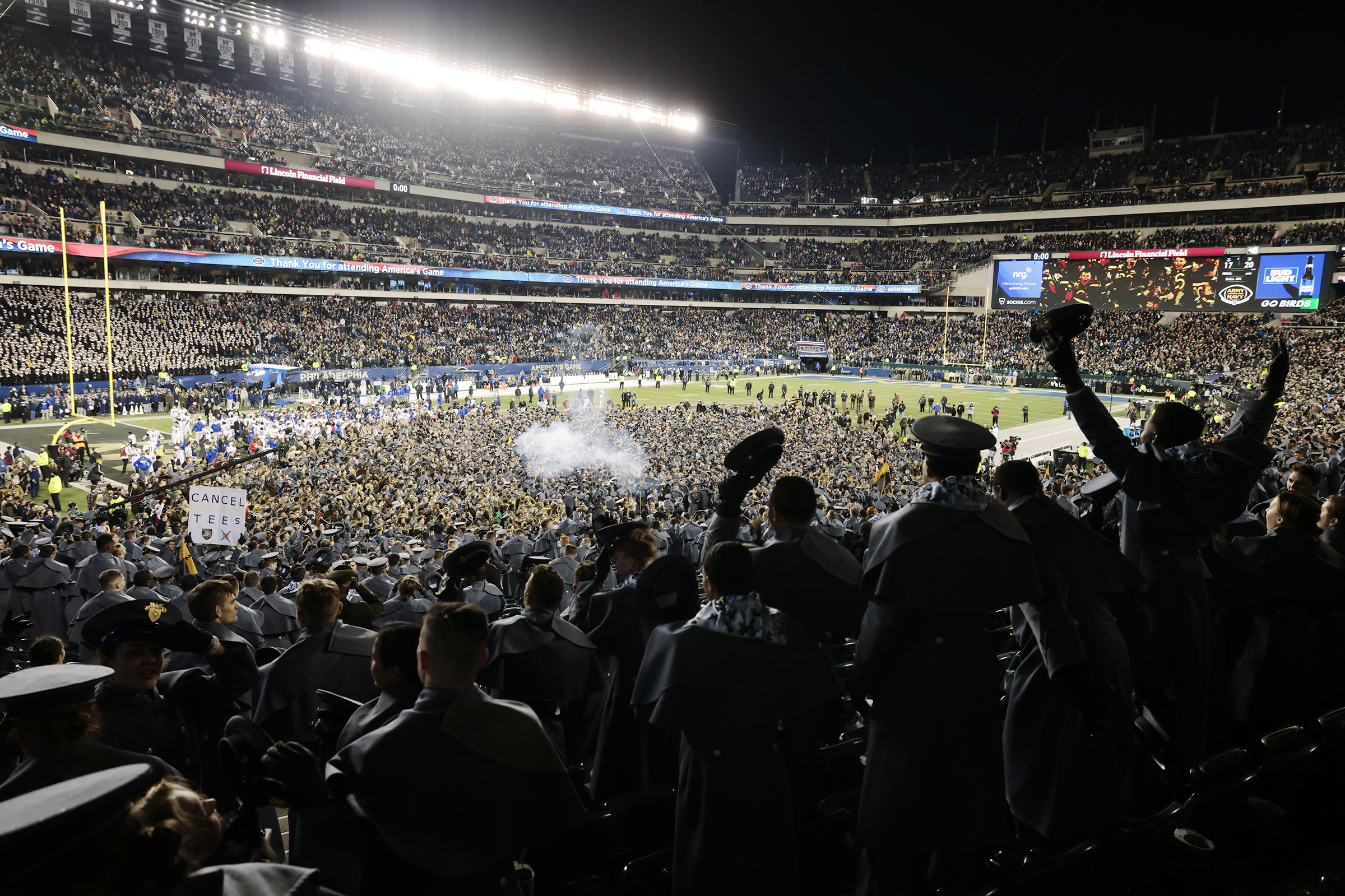
Army cadets celebrate after winning an Army-Navy football game at Lincoln Financial Field.Elizabeth Robertson / Staff Photographer
Army-Navy is coming home: A+
Philadelphia has hosted the Army-Navy football game 90 times, more than any other city. But it hasn’t been played here since 2022. So when the two military academies announced they’d be returning to the Linc for four additional games, it felt less like a major recruiting victory and more like correcting a scheduling mistake.
And really, where else should America’s Game be played? The Army, Navy, and Marine Corps all trace their beginnings to Philadelphia.
Plus, with the Eagles in free fall and the Phillies giving us another disappointing October, we could use some football that doesn’t make us want to throw the remote across the room.
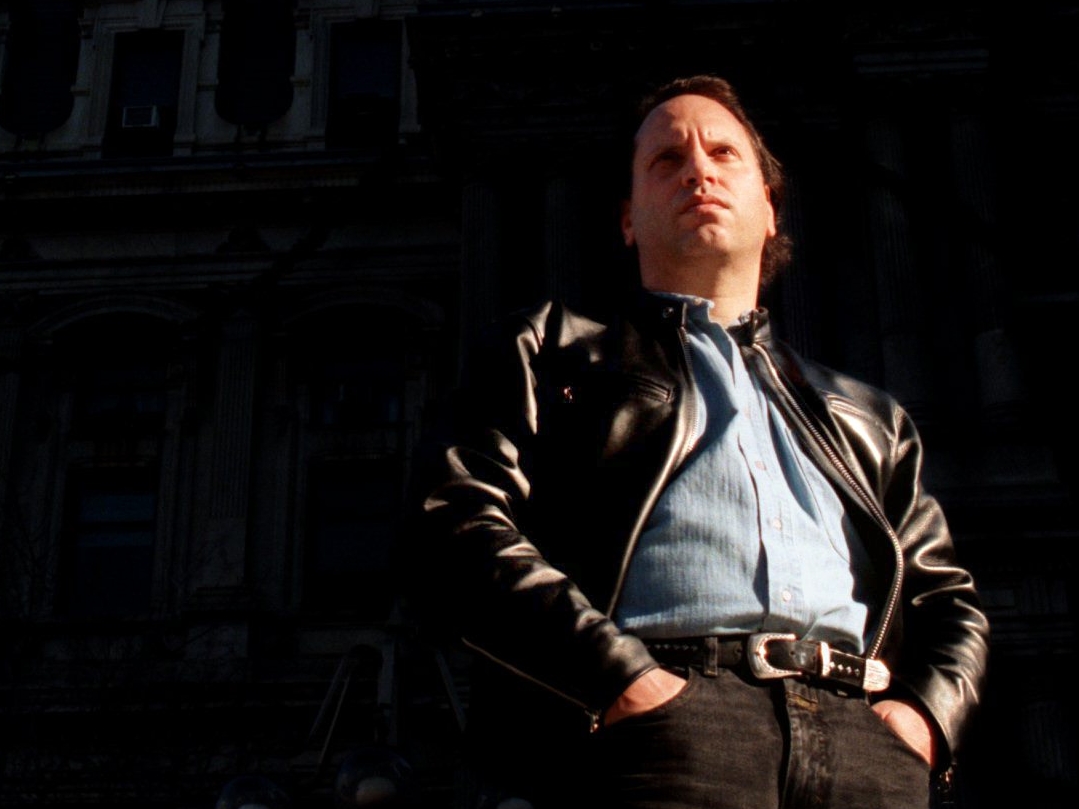
Buzz Bissinger photographed outside City Hall Jan. 11, 1998. The author hung out there with Mayor Ed Rendell for five years to write “A Prayer for the City.” (Addied caption info: Buzz, writing in GQ in 2013 said, “I own eighty-one leather jackets, seventy-five pairs of boots, forty-one pairs of leather pants, thirty-two pairs of haute couture jeans, ten evening jackets, and 115 pairs of leather gloves. Those who conclude from this that I have a leather fetish, an extreme leather fetish, get a grand prize of zero. And those who are familiar with my choices will sign affidavits attesting to the fact that I wear leather every day. The self-expression feels glorious, an indispensable part of me. As a stranger said after admiring my look in a Gucci burgundy jacquard velvet jacket and a Burberry black patent leather trench, “You don’t give a f***.”Tom Gralish / Staff Photographer
Buzz Bissinger, leather jacket correspondent: B+
When you win a Pulitzer Prize and write Friday Night Lights, you’d think those would be the accomplishments people call you about for the rest of your career.
Not if you’re former Inquirer reporter Buzz Bissinger.
Thirteen years after revealing that he’d spent more than $600,000 on luxury clothing, including 81 leather jackets, Bissinger has apparently become America’s go-to expert on men wearing leather.
The Wall Street Journal recently enlisted him to weigh in on former Nvidia CEO Jensen Huang’s collection of 30 to 40 leather jackets. Bissinger’s assessment? “Child’s play.”
We’re sorry, 40 leather jackets is an amateur collection now? How many does a man need before he gets his leather jacket varsity letter?
Bissinger has even declared himself “the world’s leading authority on all things leather.” And, considering he once owned a $14,000 ostrich skin jacket, we’re inclined to let him have the title.
It’s nice to see an Inquirer alum still getting called upon for his expertise. We just never thought that expertise would be telling other wealthy men they need to buy more leather jackets.
Fans celebrate on the steps of the Philadelphia Museum of Art after breaking the Guinness World Record for Largest Gathering of People Dressed as Rocky Balboa Friday, Nov. 13, 2026, in Philadelphia. (AP Photo/Matt Slocum)Matt Slocum
A world record nobody asked for: B+
Philadelphia is officially home to the largest gathering of people dressed as Rocky Balboa. Congratulations to us, we guess?
Last week, 570 people showed up at the Art Museum steps wearing gray sweatsuits, black knit hats, and high-top sneakers to establish a Guinness World Record in honor of Rocky’s 50th anniversary.
Which raises an important question: Who decides these records are worth keeping?
Apparently, Guinness sent an actual adjudicator from Brooklyn to Philadelphia to make sure at least 250 people were dressed appropriately.
Look, we love Rocky as much as anyone. But the whole thing feels like someone came up with a very specific record they knew Philadelphia could break and then convinced hundreds of people to stand outside in the rain to make it official.
We may not be able to get the Eagles to win a football game, but we can assemble 570 people dressed as a fictional boxer. Somebody call Guinness.
A colleague once wondered how I can take so many photos — and upload so many images into our photo content management system — from a city council meeting, a press conference, or even an election night.
I just pointed to the output of a single co-worker at a single Eagles game.
For me, covering politics is just as much fun, challenging, and creative as doing a game. I get the same adrenaline rush — along with some intellectual stimulation — inside council chambers, on the campaign trail or at a press conference, as others get on the sidelines, court or rinkside, or next to the dugout.
For both of us it’s about visual story-telling: showing “what happened?”
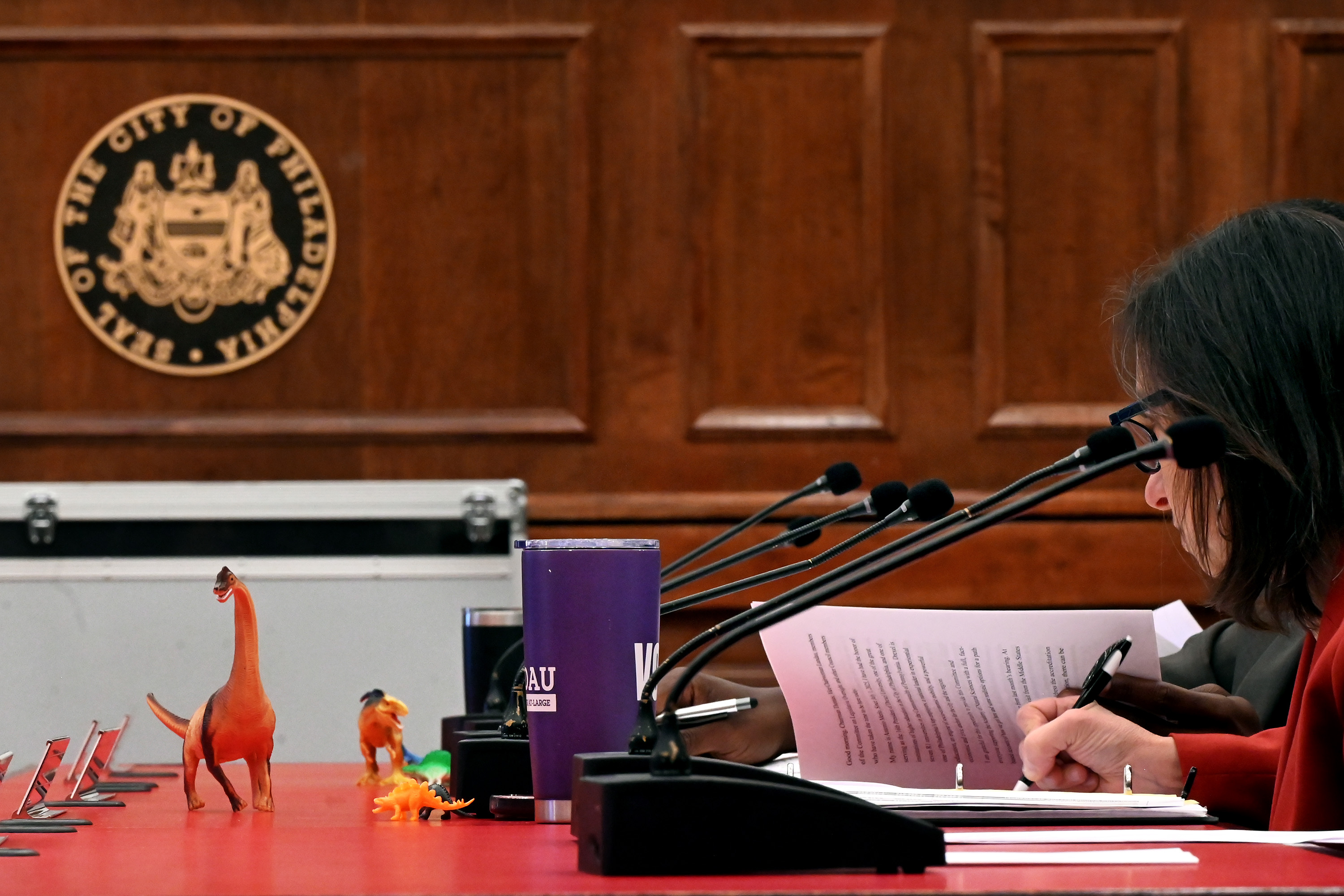
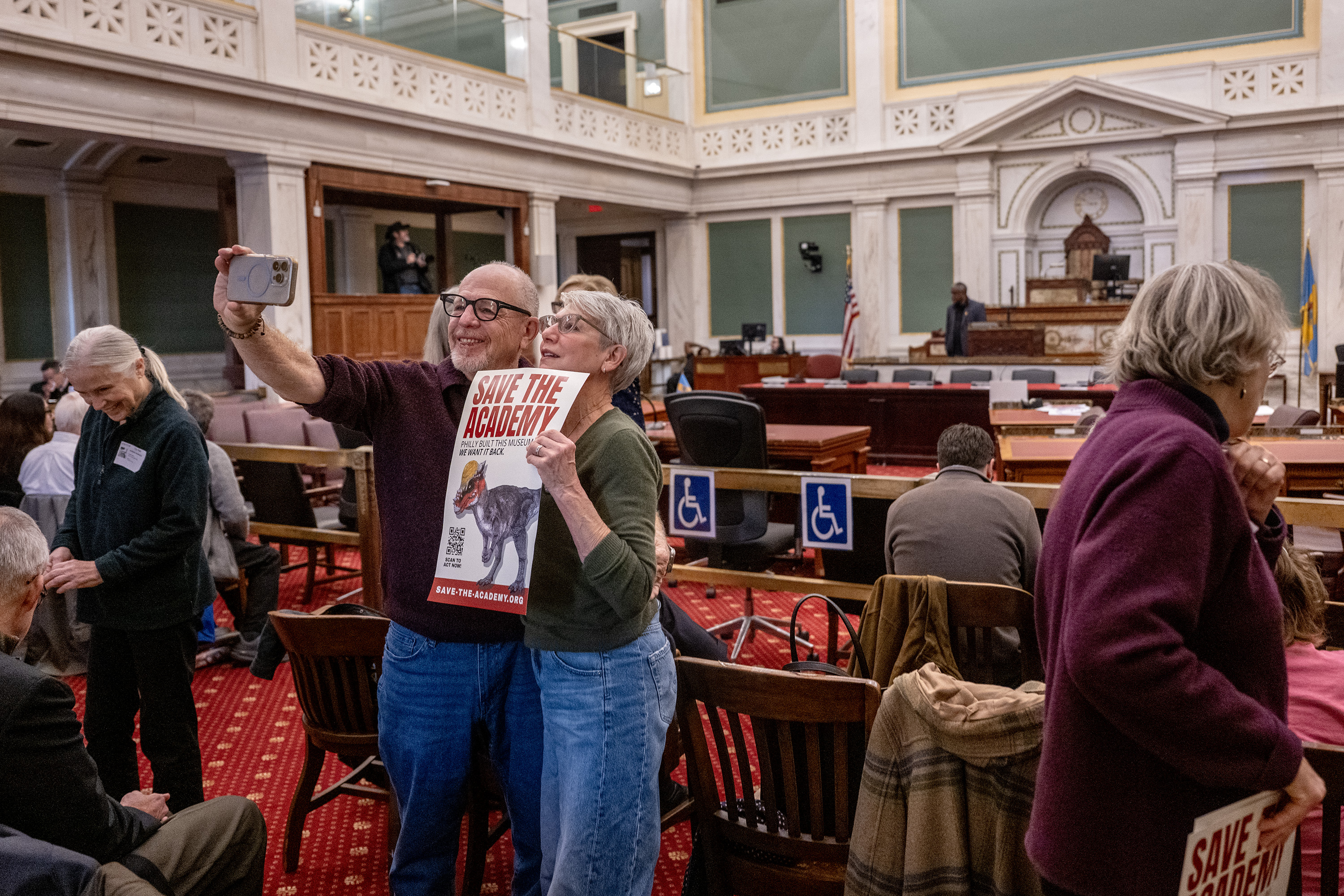
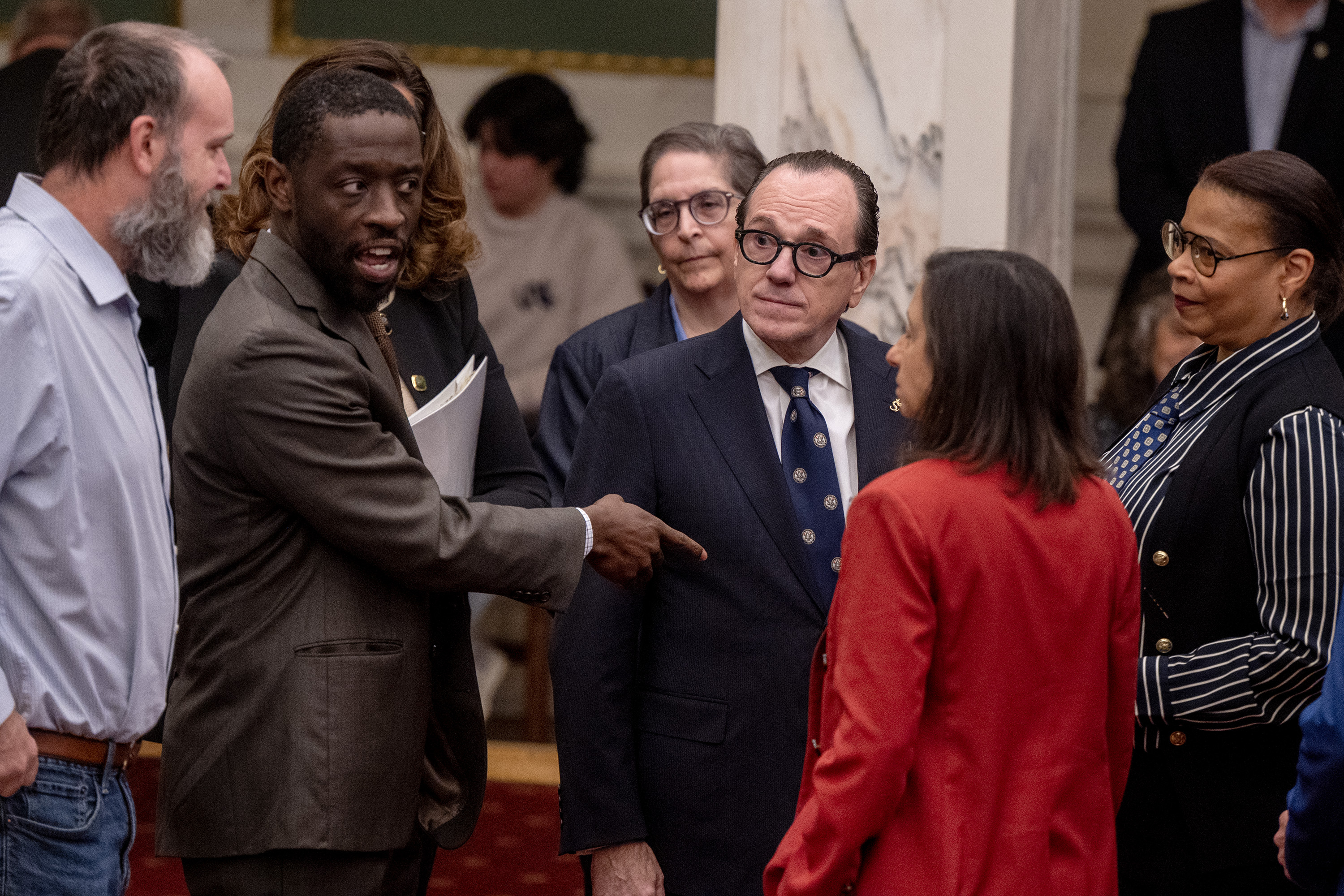
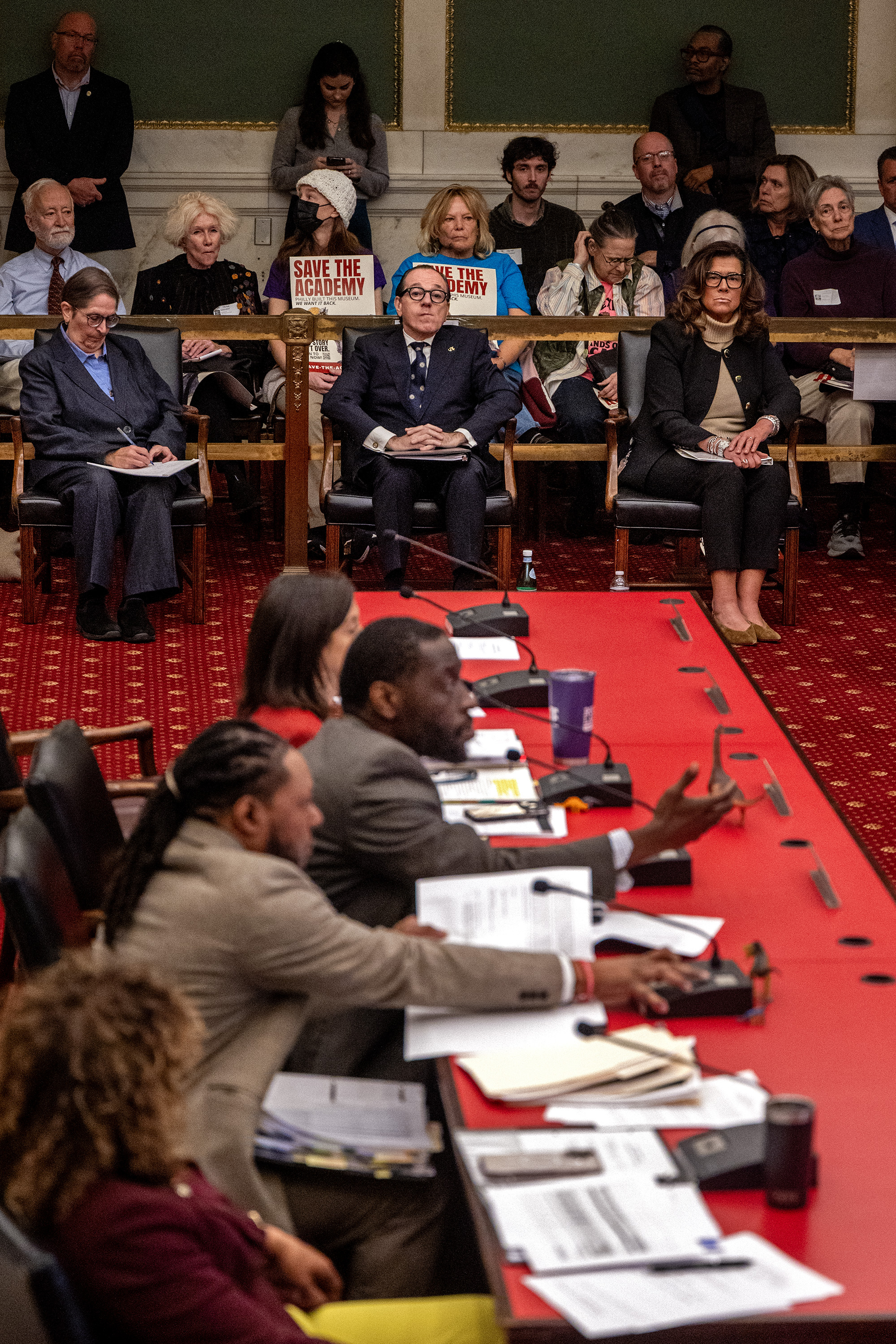
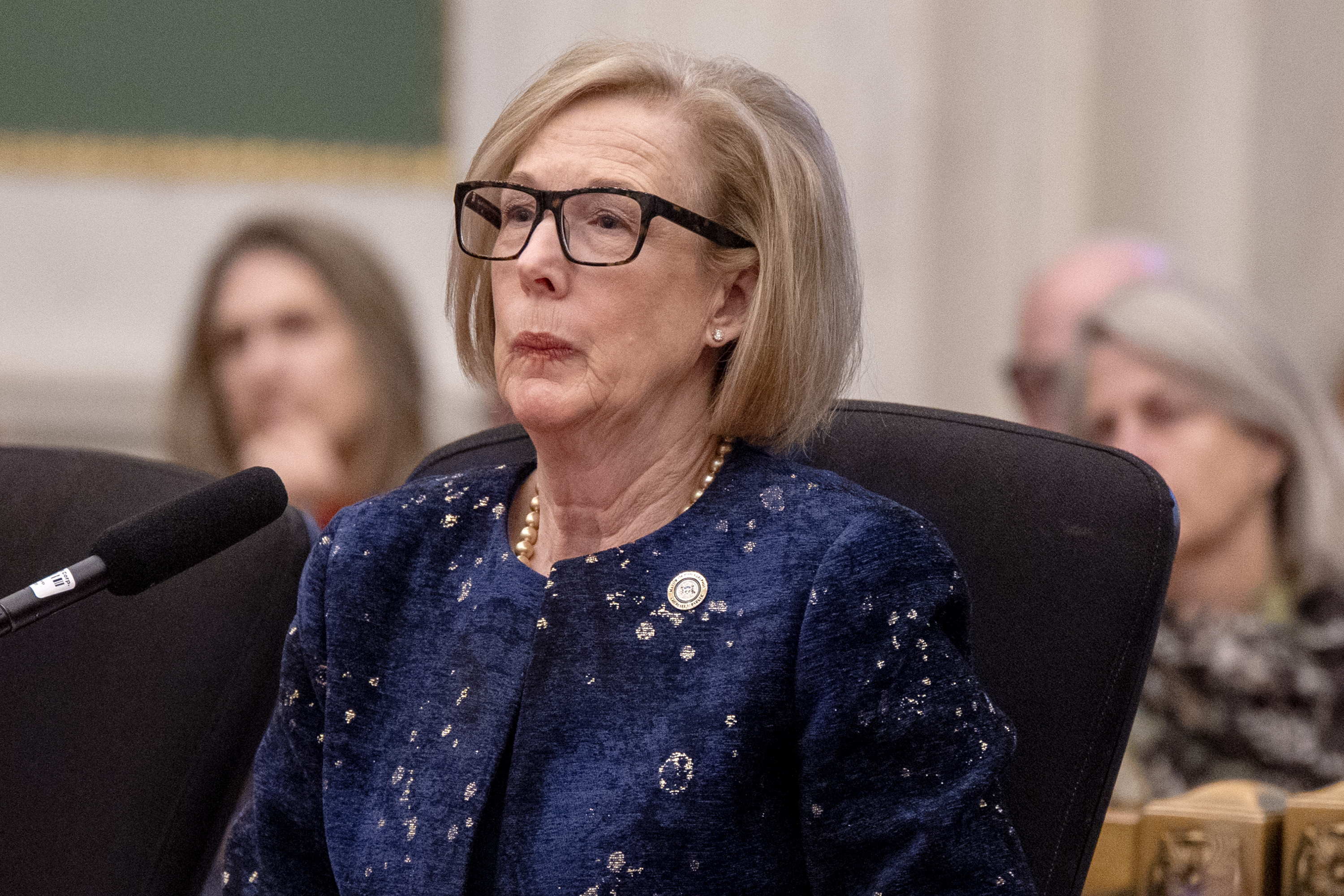
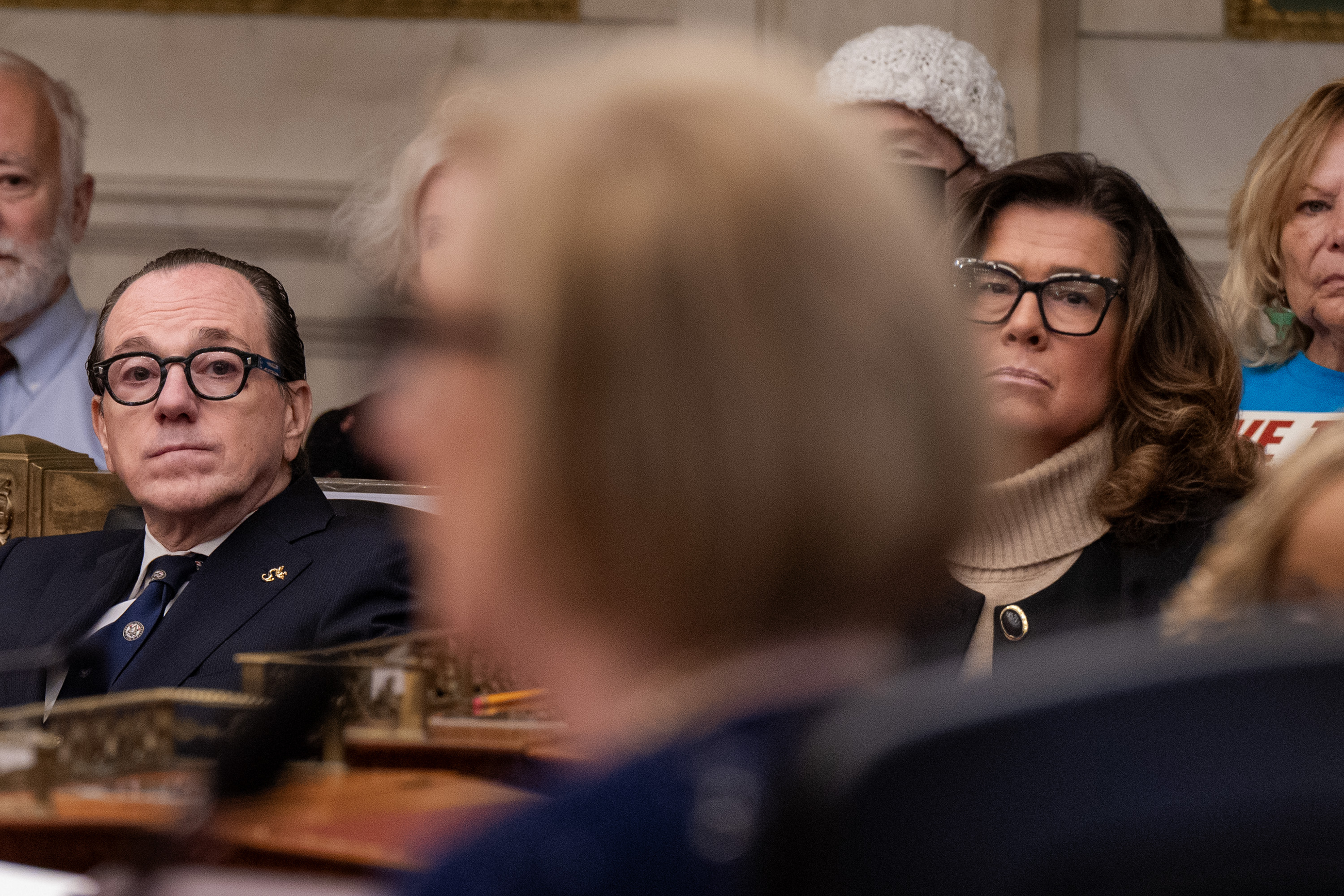
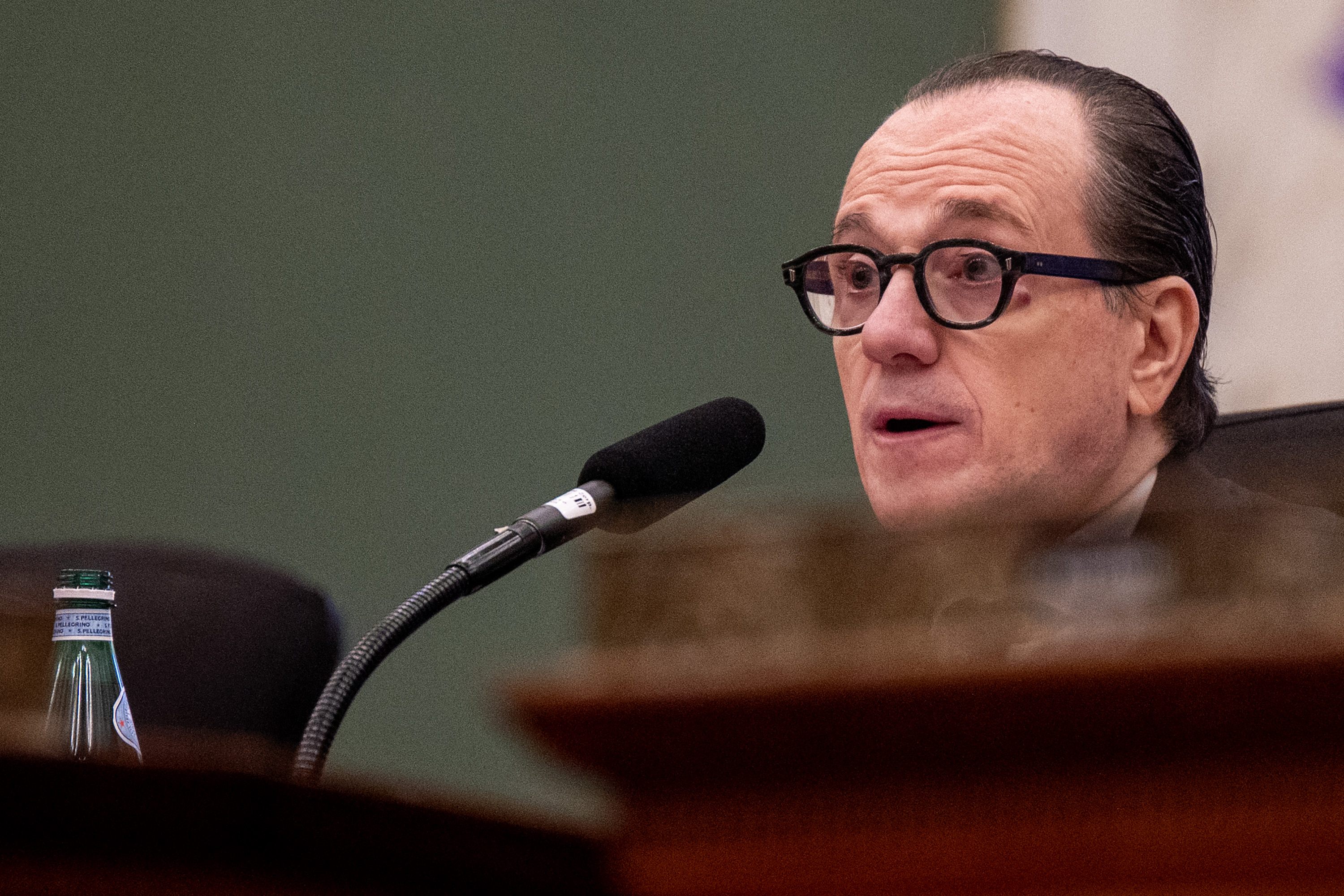
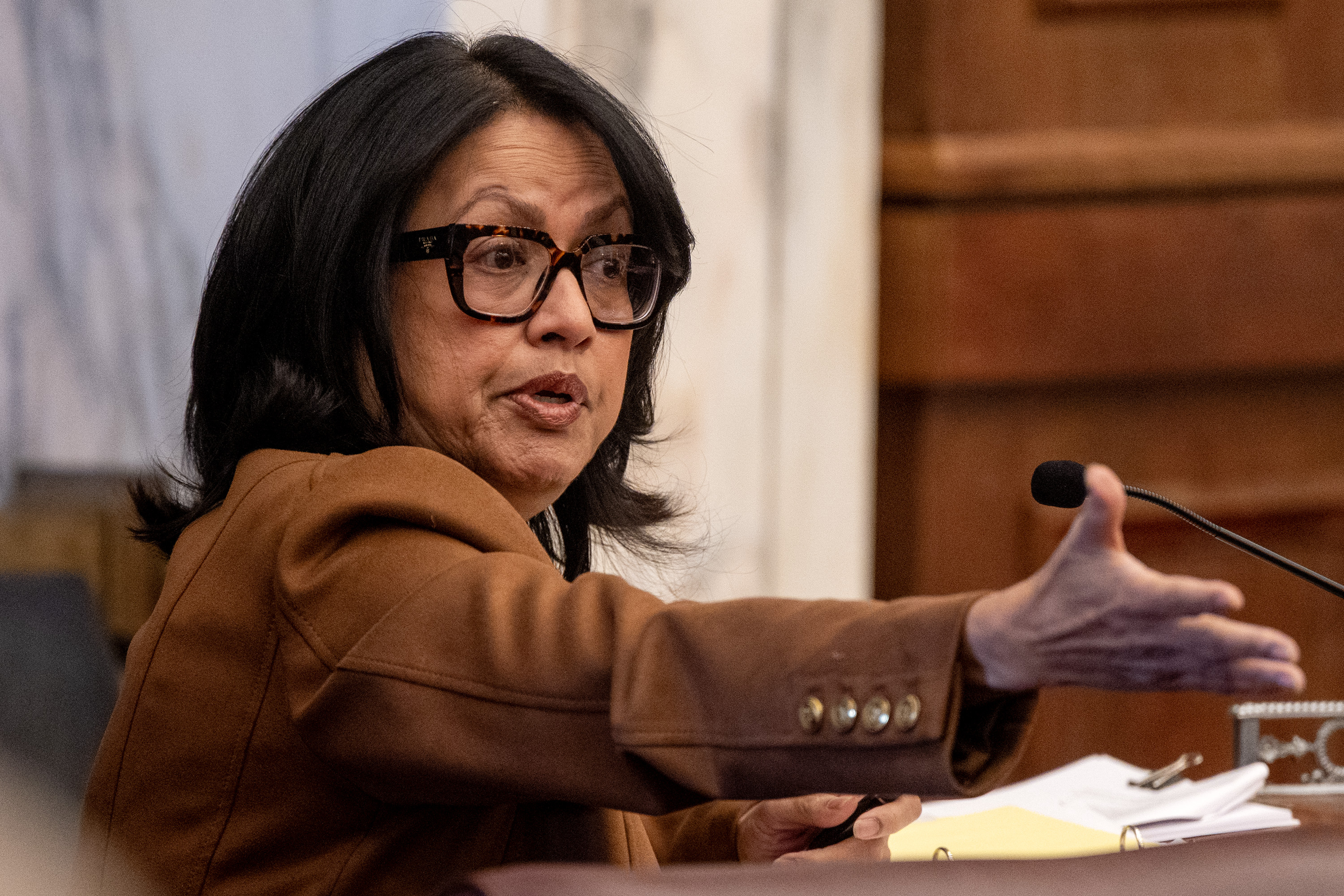
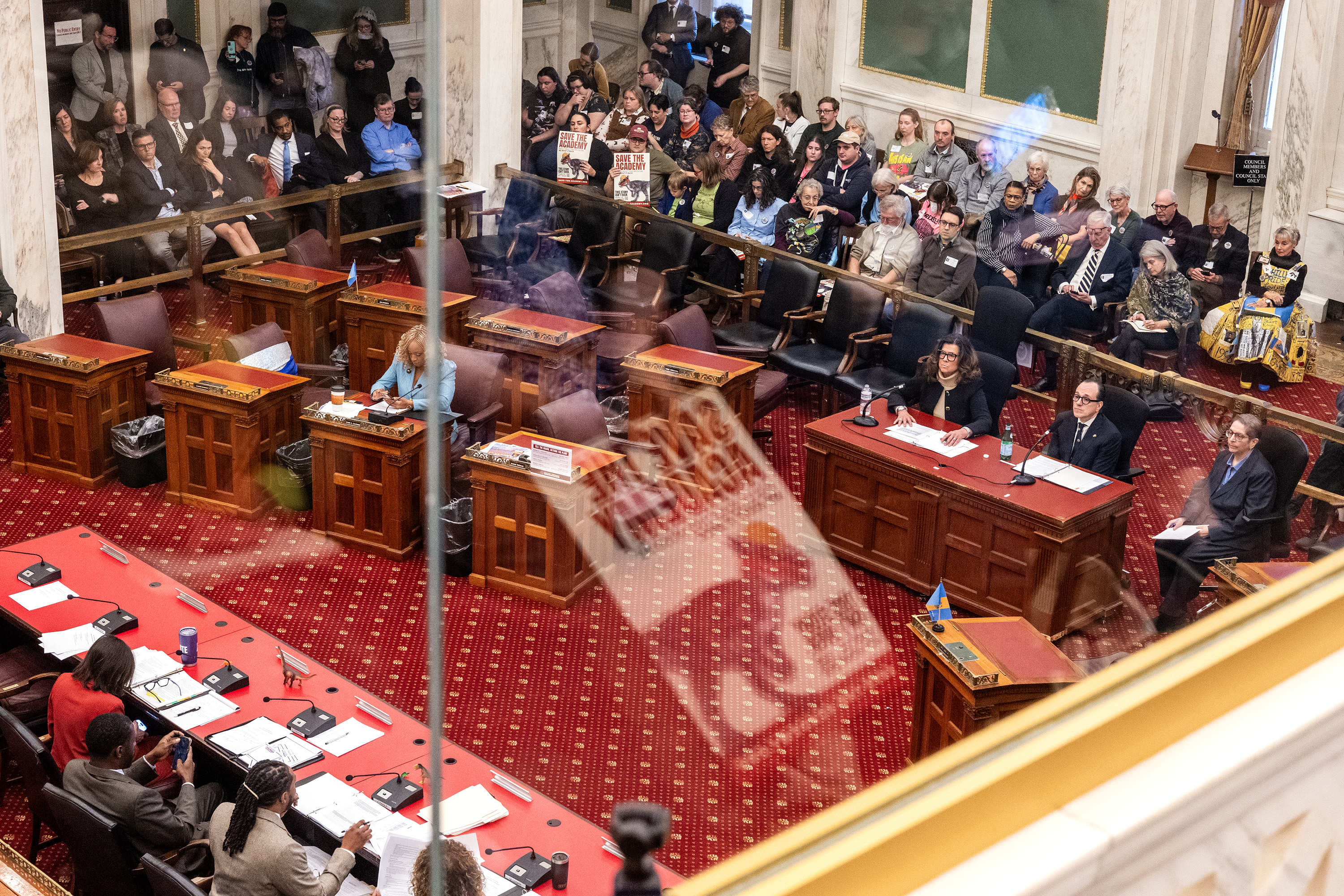
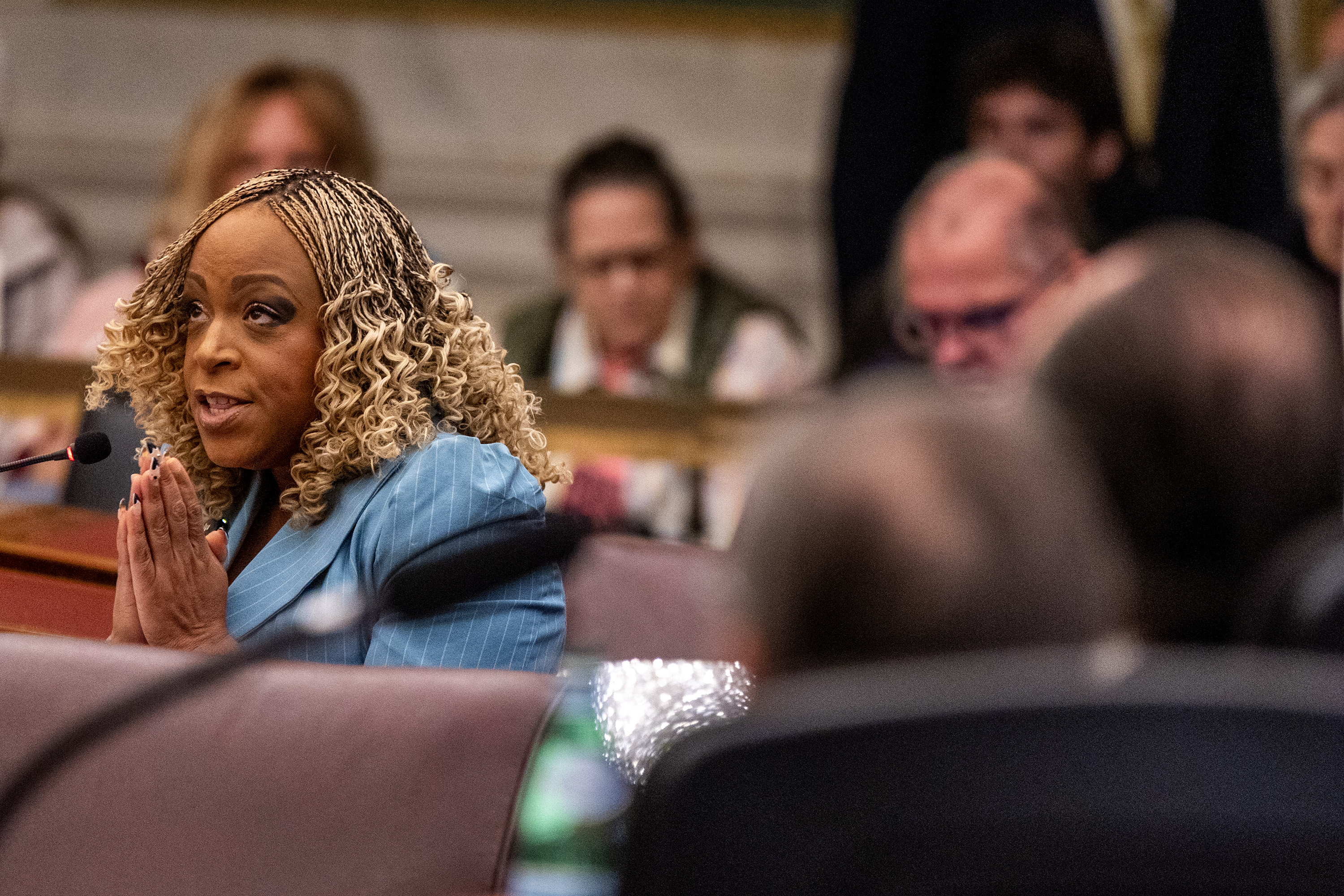
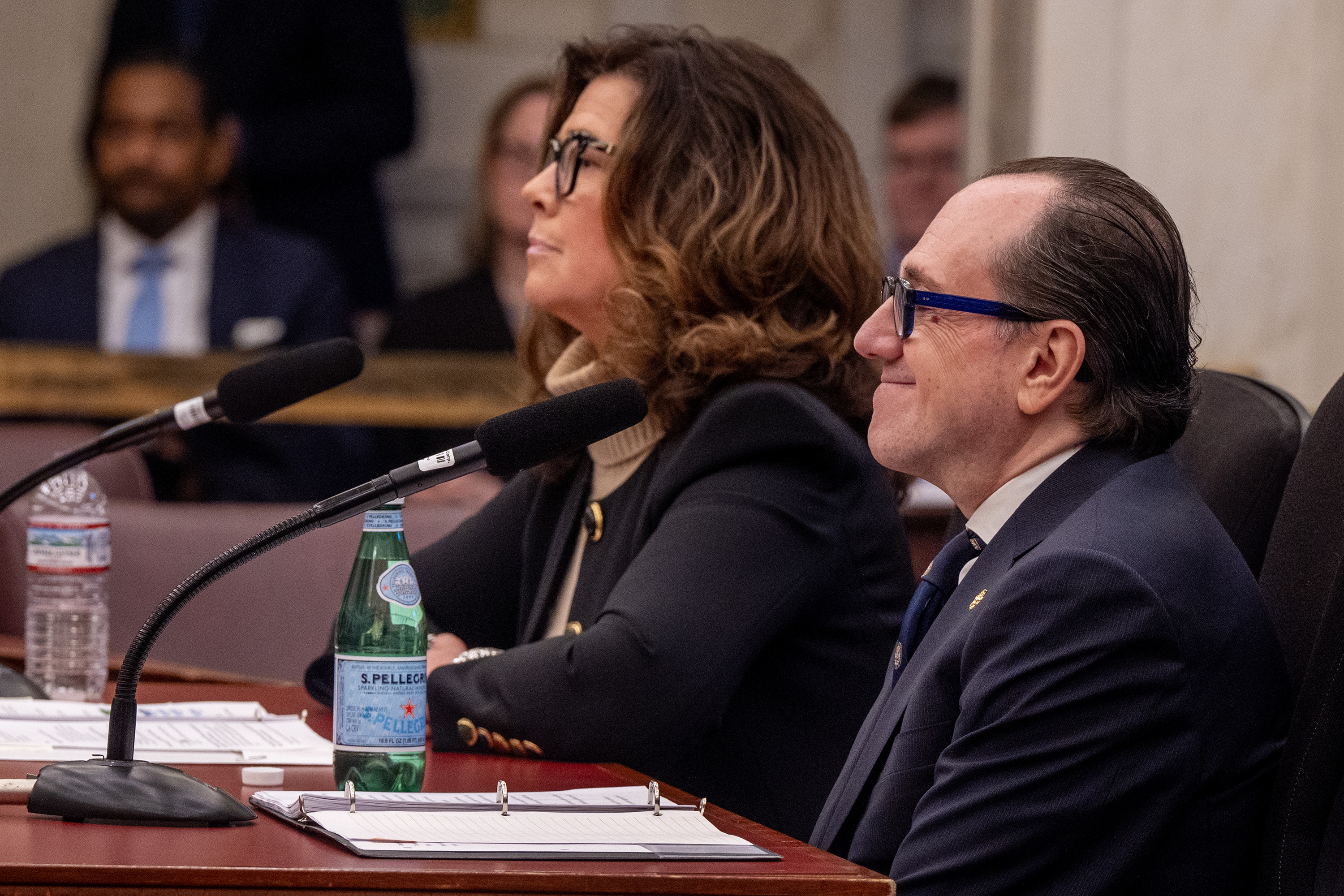
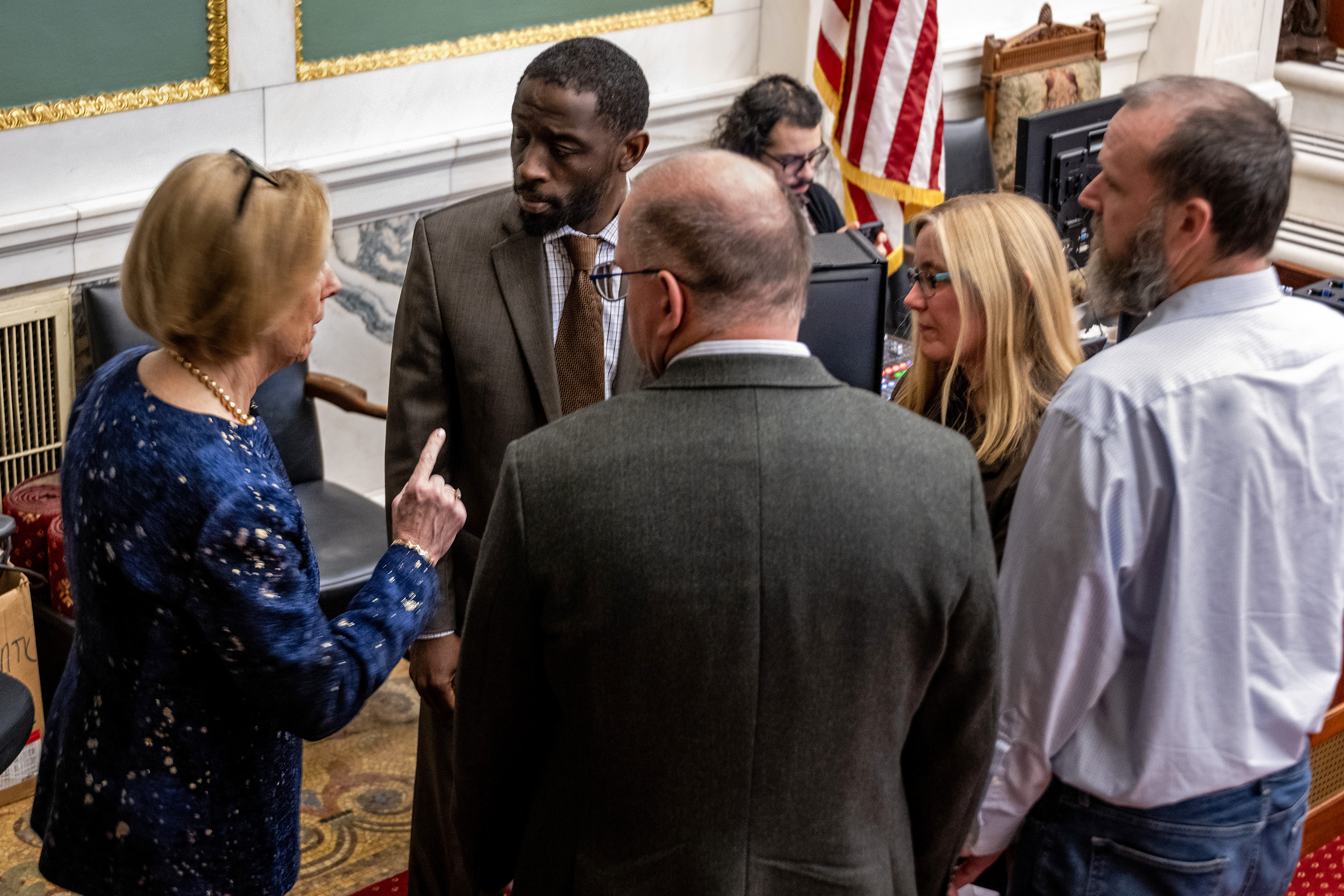
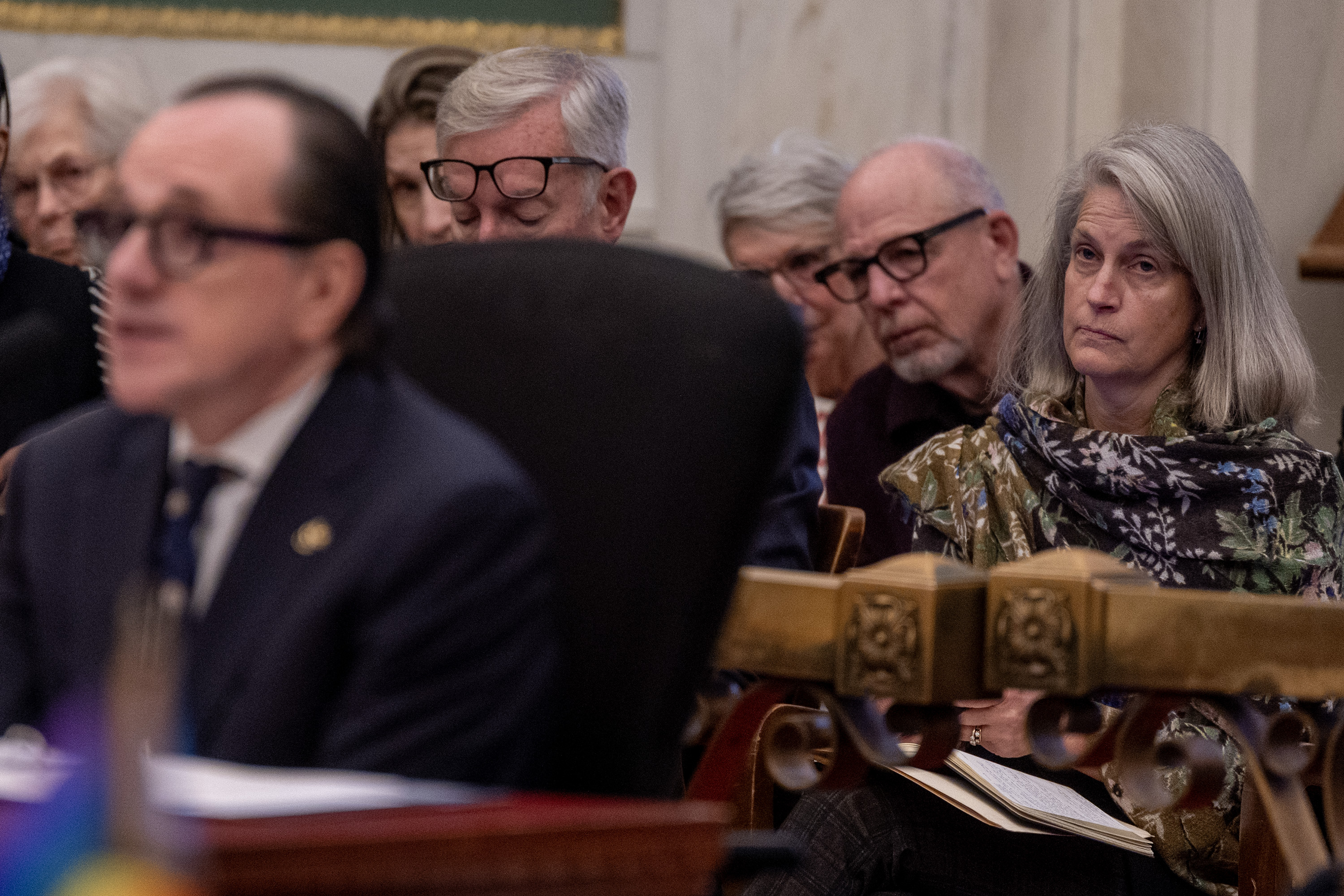
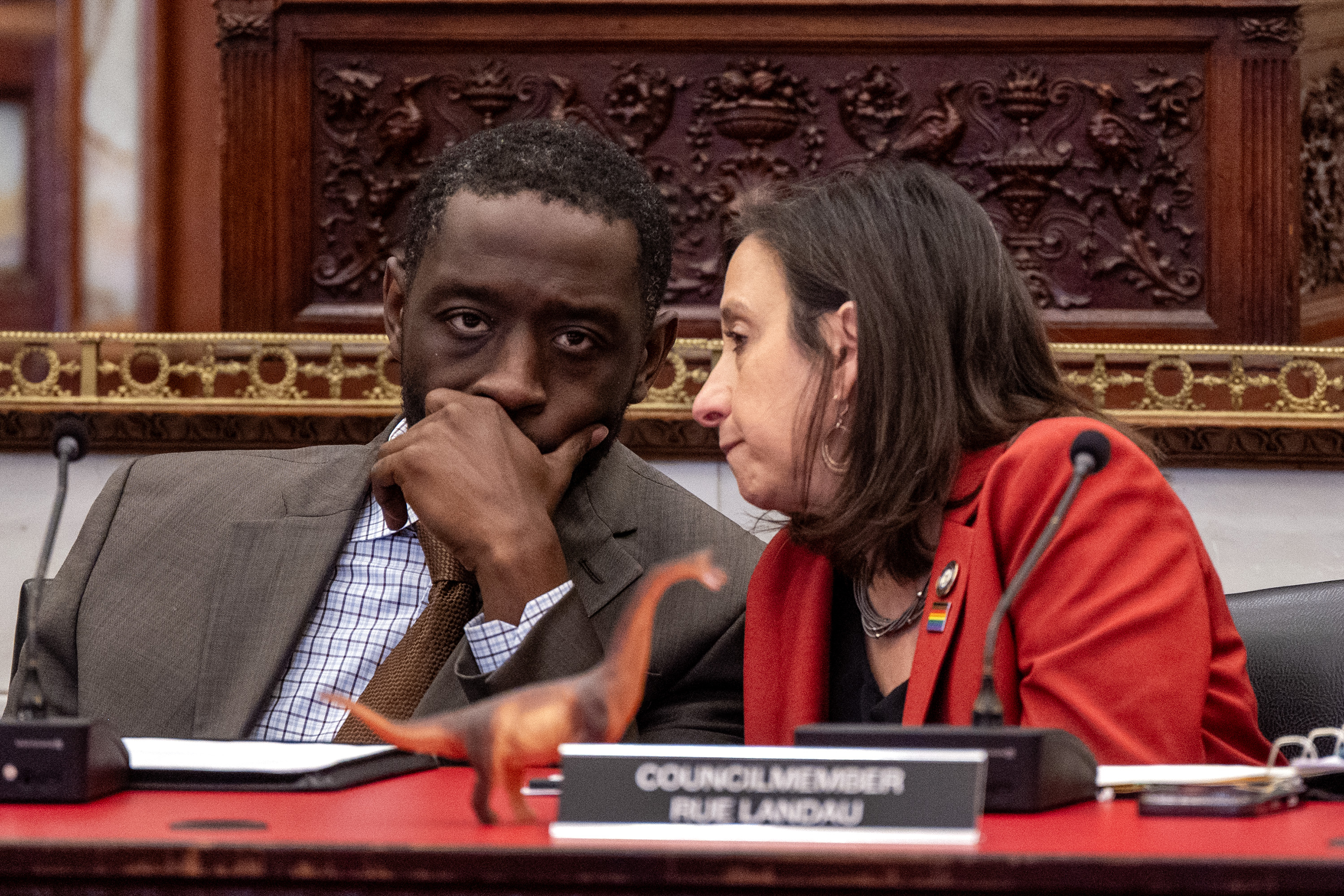
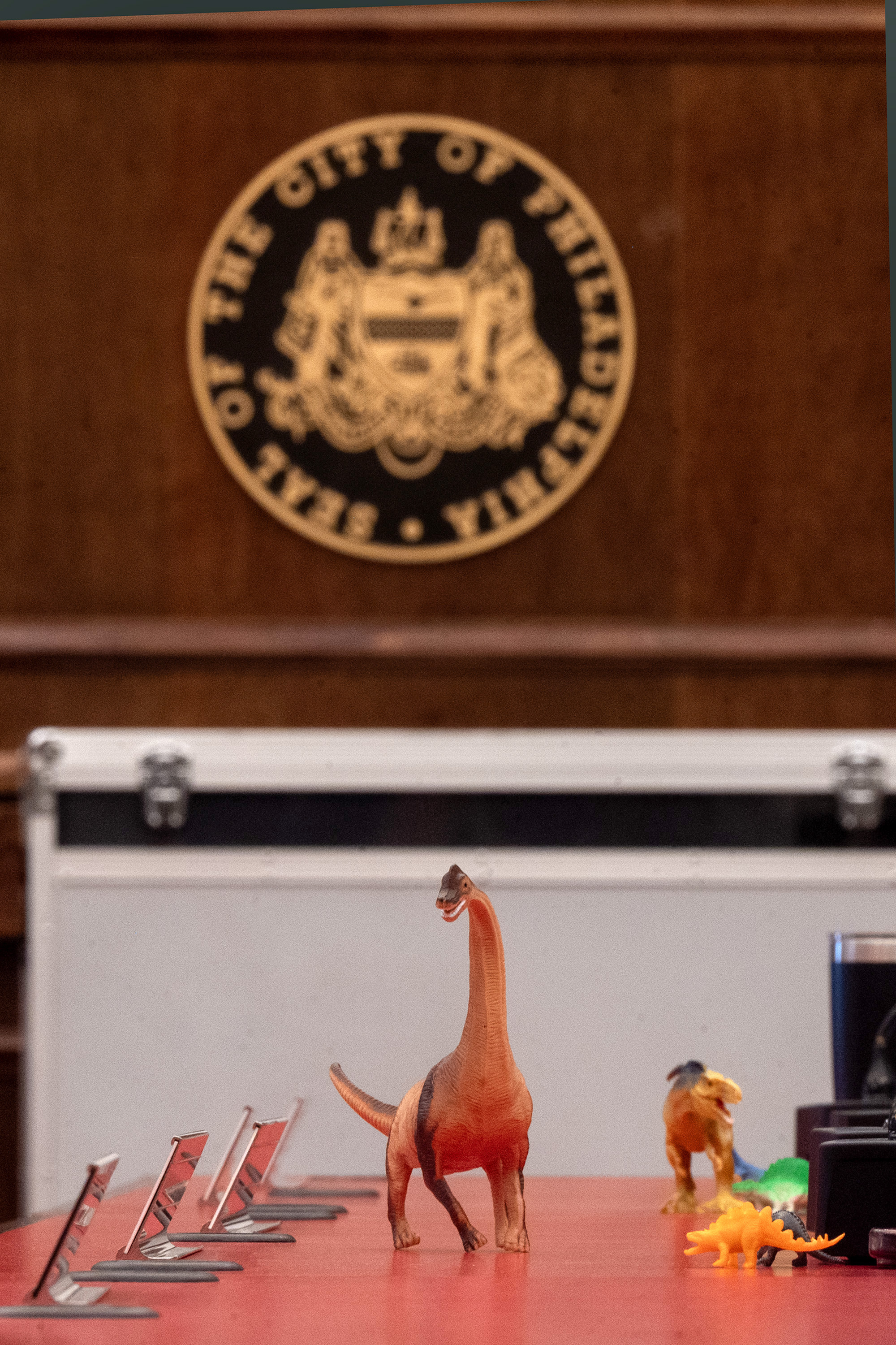
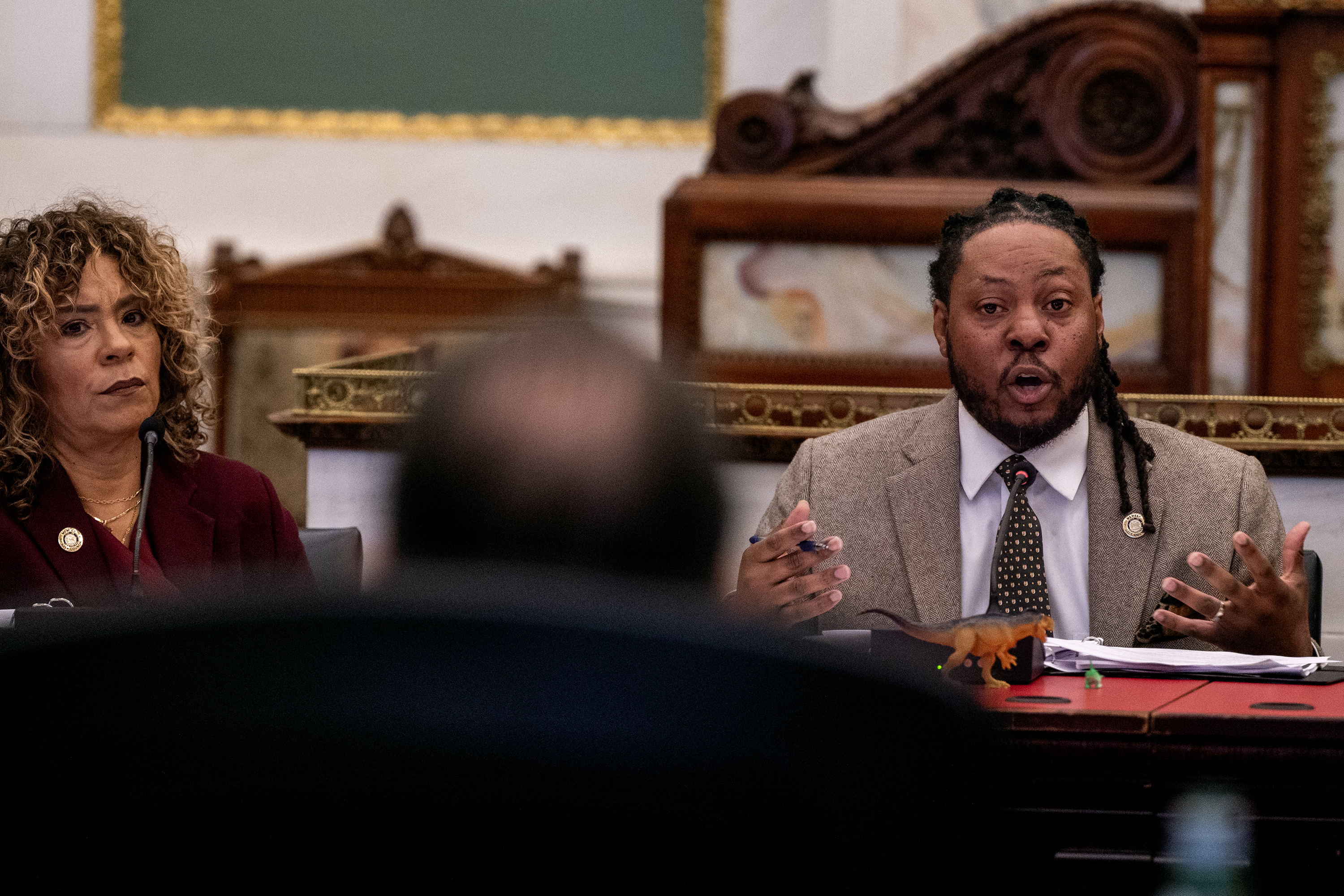
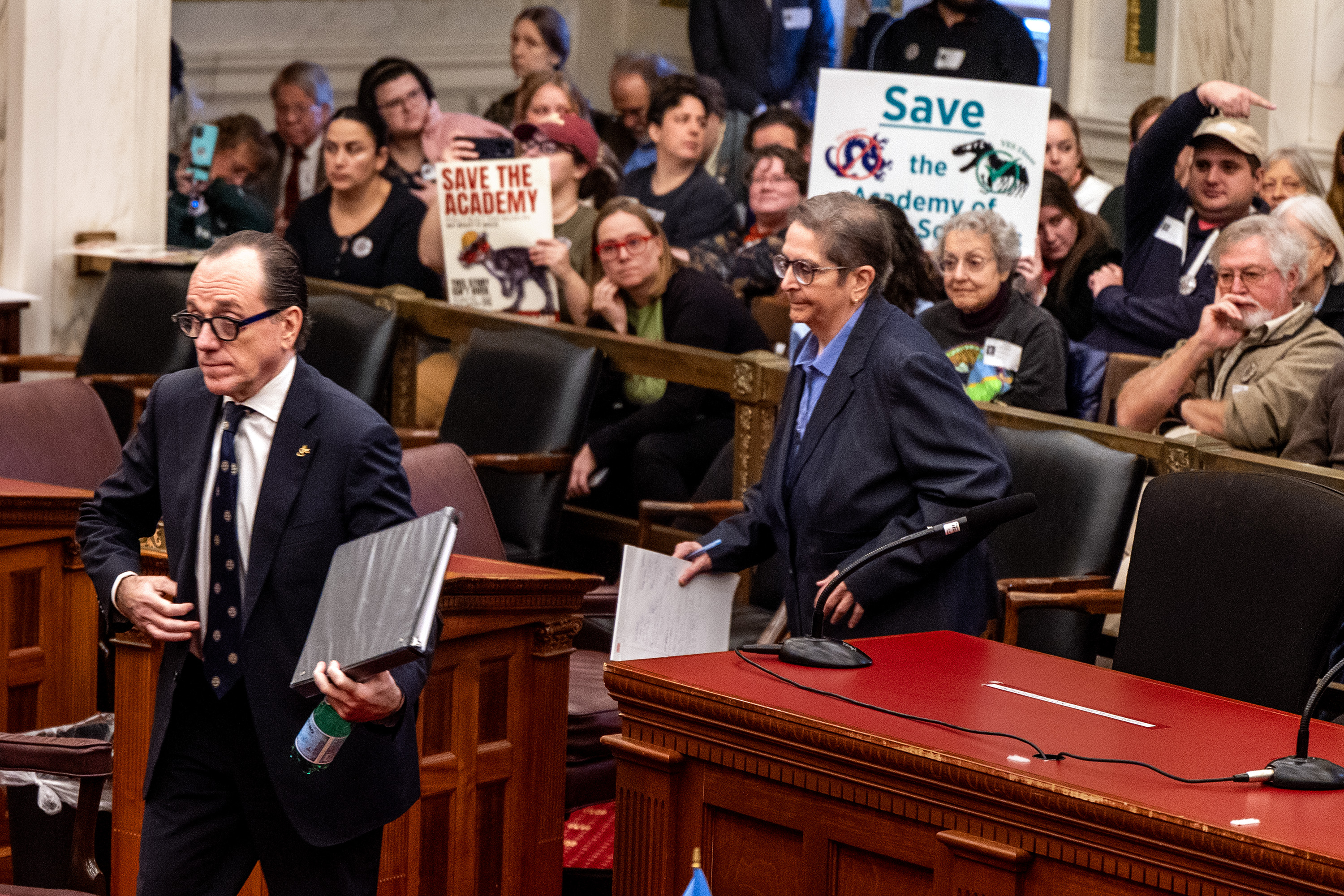
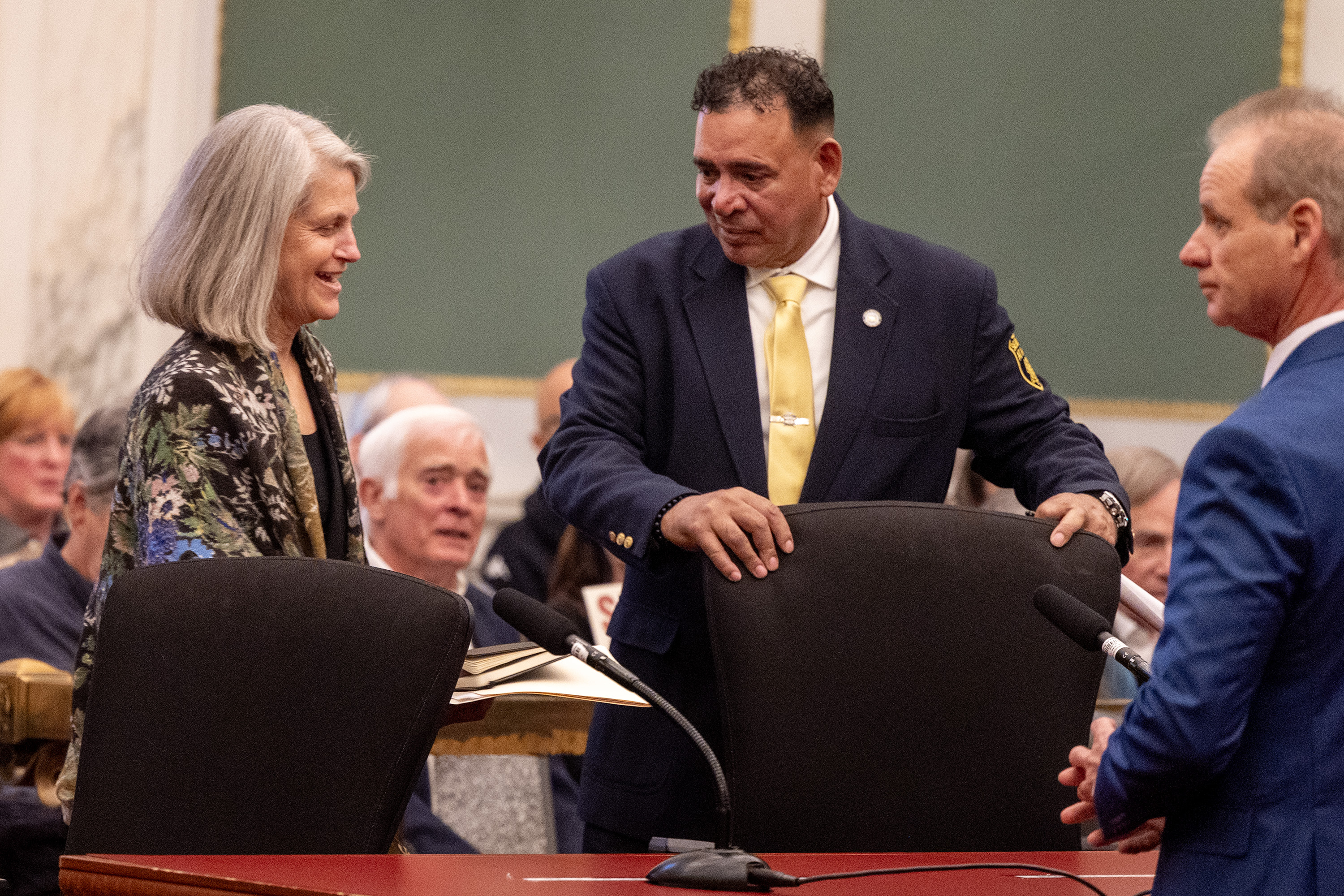
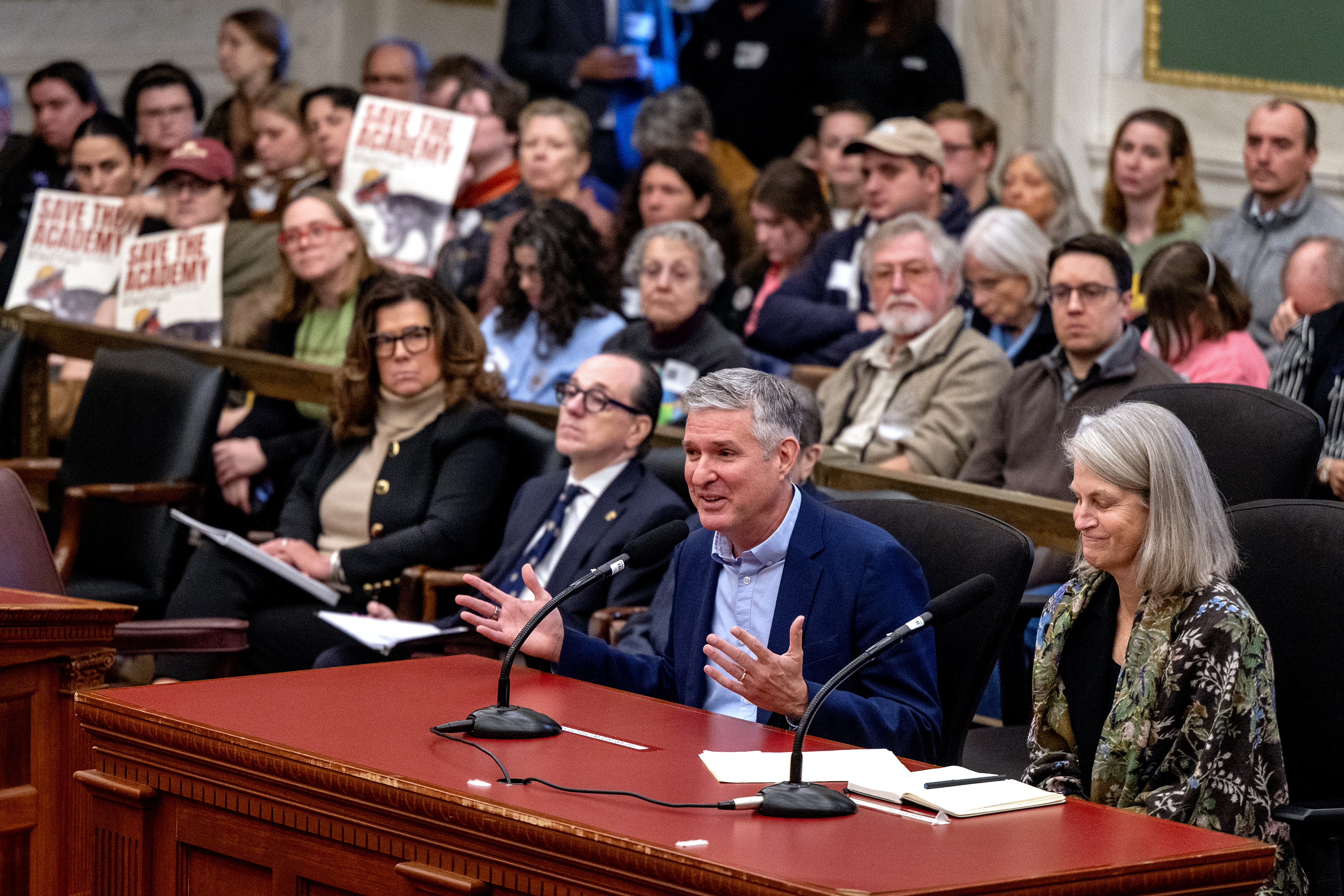
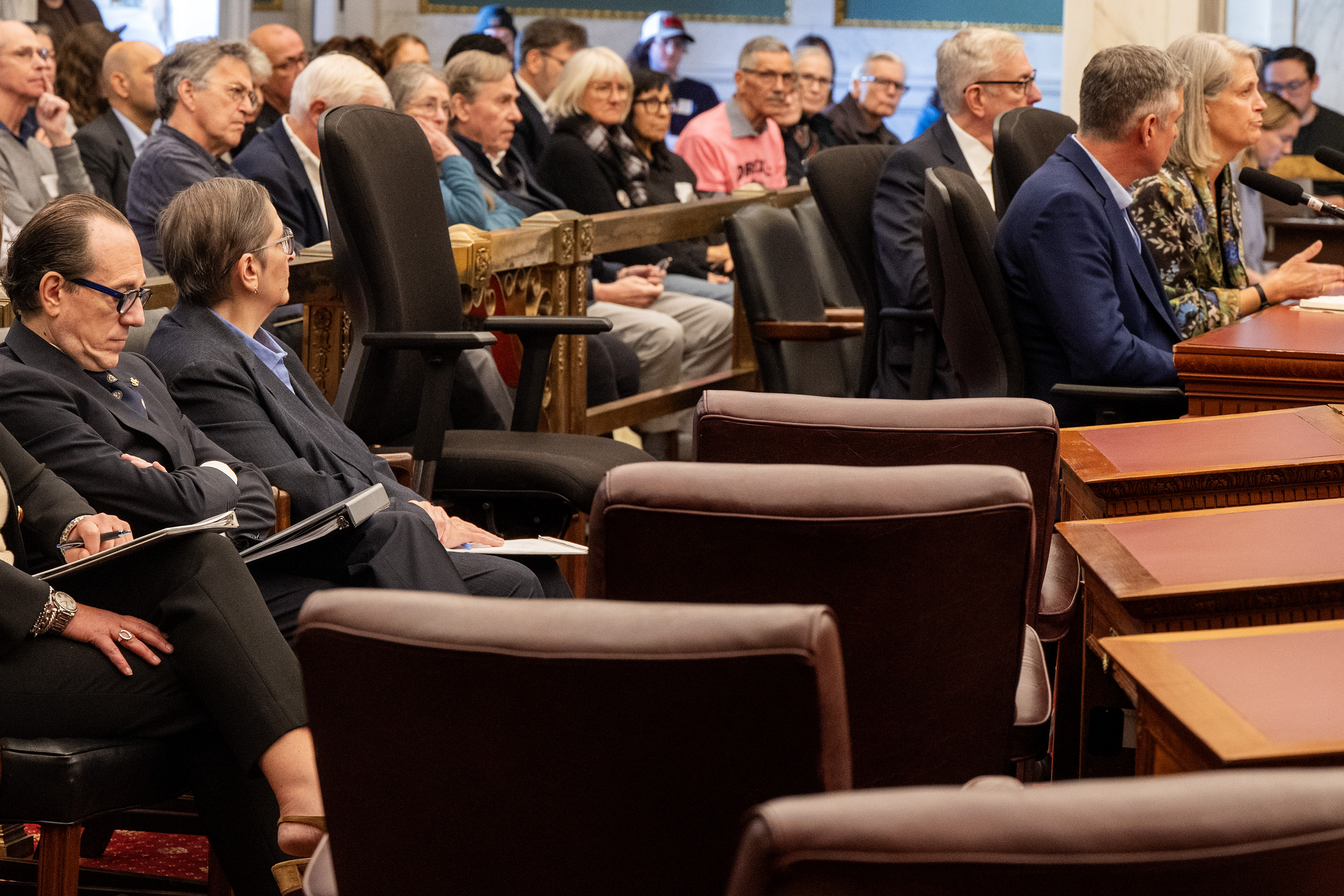
Academy of Natural Sciences of Drexel University supporters Nancy Koppelman and Neil Samuels of Old City take a selfie in council chambers before the start of the hearing.Tom Gralish / Staff PhotographerCommittee chair Isaiah Thomas (left) talks with Drexel President Antonio Merlo (center) after he arrives for the hearing.Tom Gralish / Staff PhotographerMerlo and Helen Bowman (rear, right), Drexel’s executive vice president and chief operating and financial officer, wait their turn as the committee questions Deputy Mayor Patricia Wellenbach.Tom Gralish / Staff PhotographerDeputy Mayor Wellenbach is questioned by the committee. She did not testify at the first hearing at the end of October, and council issued a subpoena to force her to appear.
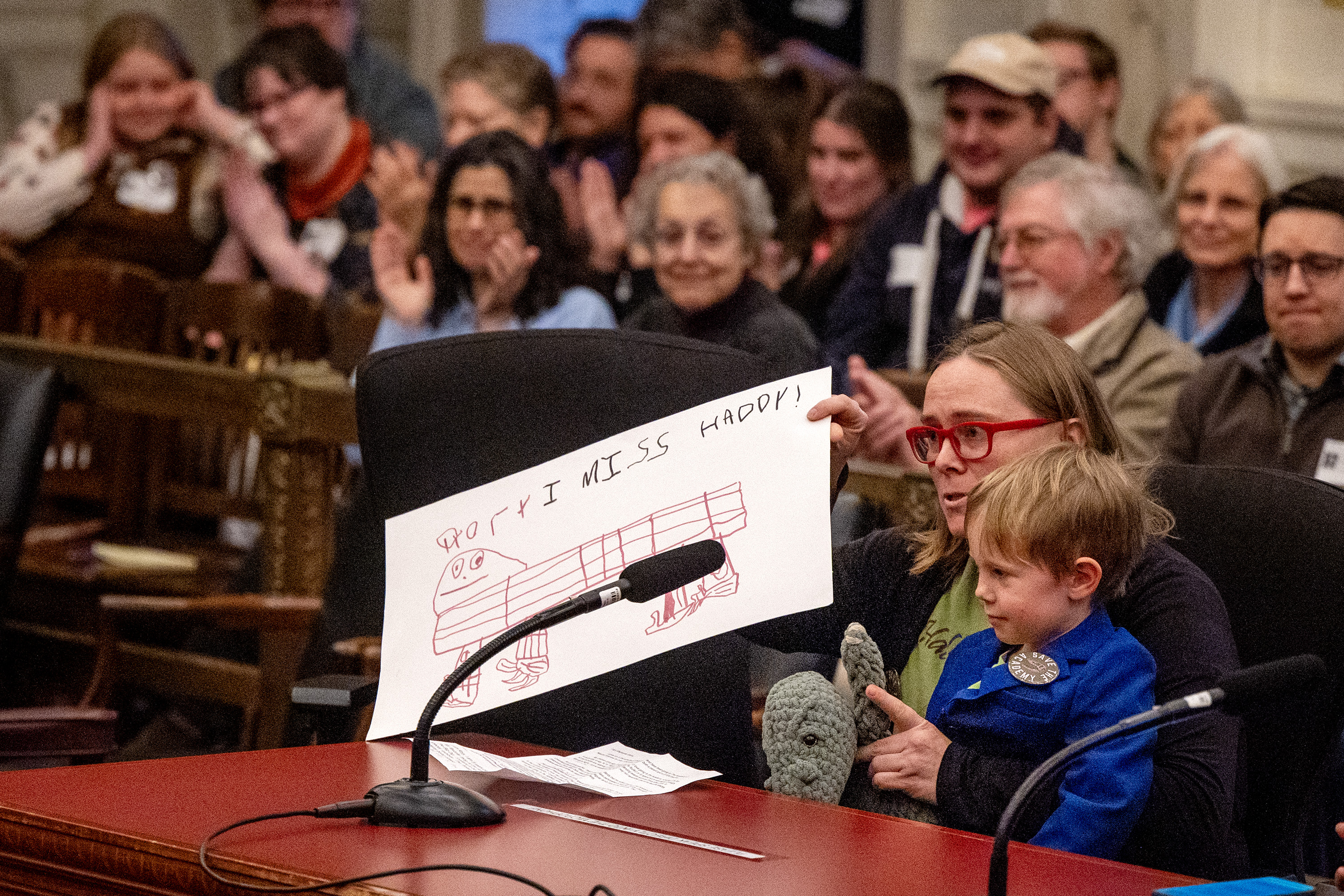
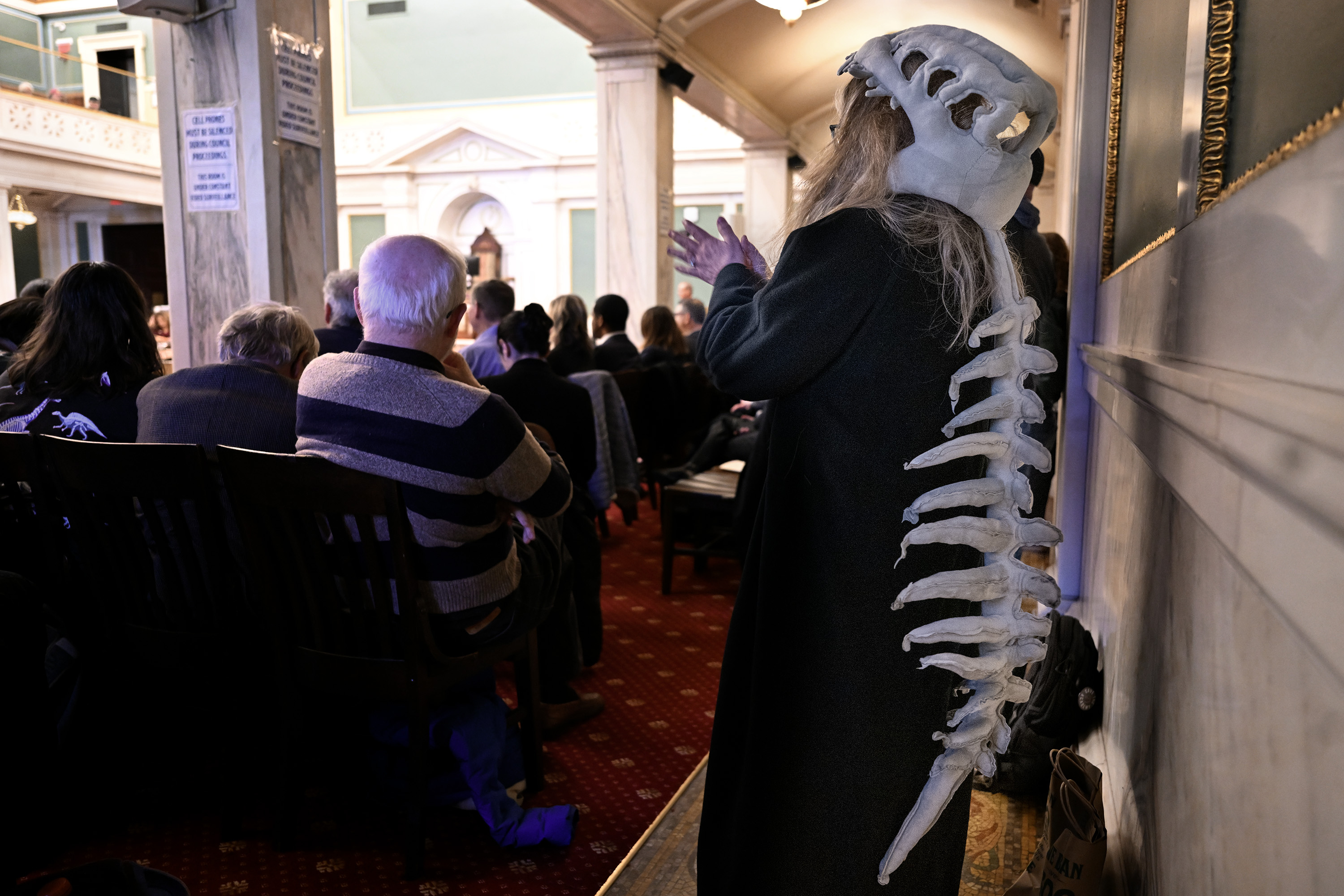
Tom Gralish / Staff PhotographerMerlo and Bowman wait their turn to testify as Wellenbach (foreground) answers questions.Tom Gralish / Staff PhotographerMerlo also did not appear at the October hearing, sending one of his administrators instead. Council also subpoenaed him to testify at the Monday hearing.Tom Gralish / Staff PhotographerCouncilmember Nina Ahmad.Tom Gralish / Staff PhotographerA protester’s sign is reflected in the glass of the upstairs overflow gallery, as Council’s Committee on Legislative Oversight holds a second hearing Monday, Nov. 16, 2026 into the closing of the Academy’s museum.Tom Gralish / Staff PhotographerCouncilmember Jamie Gauthier makes praying hands as she questions Drexel President Antonio Merlo (foreground) during a hearing by City Council’s Committee on Legislative Oversight Monday, Nov. 16, 2026 into the closing of the museum at the Academy of Natural Sciences of Drexel University.Tom Gralish / Staff PhotographerMerlo and and Bowman are questioned.Tom Gralish / Staff PhotographerDeputy Mayor Wellenbach (left) talks with committee chair Thomas and Rachel Meadows (right), Mayor Cherelle L. Parker’s director of legislative affairs.Tom Gralish / Staff PhotographerAcademy of Natural Sciences of Drexel University board chair Suzanne Biemiller (right) is in the gallery as Drexel President Antonio Merlo answers questions.Tom Gralish / Staff PhotographerCouncilmembers Thomas and Rue Landau (right) confer.Tom Gralish / Staff PhotographerThere are toy dinosaurs in front of councilmembers Rue Landau and Jeffery Young, Jr.Tom Gralish / Staff PhotographerCouncilmember Jeffery Young, Jr. questions Drexel President Antonio Merlo (foreground). Councilmember Quetcy Lozada is at left.Tom Gralish / Staff PhotographerMerlo leaves after his appearance. Tom Gralish / Staff PhotographerAcademy board chair Biemiller (left) steps up to appear before the committee. She was not a scheduled panelist but was called to answer questions after Drexel President Antonio Merlo testified.Tom Gralish / Staff PhotographerAcademy board treasurer and trustee Gregory S. Rigdon testifies with Biemiller (right). Drexel’s Merlo and Bowman are seated to the left.Tom Gralish / Staff PhotographerMerlo (left) is in the gallery as Academy board chair Suzanne Biemiller (right) testifies. Tom Gralish / Staff PhotographerStephanie Atkins and her five year-old son Rory testify during the public comment part of the hearing. Atkins is a STEM teacher at the Albert M. Greenfield School. They live in Haddonfield, where a life-size statue (named Haddy by school children) of a Hadrosaurus foulkii Leidy commemorates the site of the discovery in 1838 of the world’s first relatively complete set of dinosaur bones that were first exhibited at the Academy. Rory’s mom say he is “Haddy’s best friend.”Tom Gralish / Staff PhotographerA costumed supporter of the Academy of Natural Sciences of Drexel University is in the gallery Monday, Nov. 16, 2026 as City Council’s Committee on Legislative Oversight holds a second hearing into the closing of the Academy museum.Tom Gralish / Staff Photographer
Photographing sports action and photographing a city council meeting takes many of the same basic job skills, but they require a different mindset and modus operandi.
A sports photographer’s world is about movement, speed, unpredictability, and emotion. Working in government and politics is about human interaction, subtlety, and tension.
Committee chair Isaiah Thomas (left) talks with Drexel President Antonio Merlo (center) after he arrives for a hearing by City Council’s Committee on Legislative Oversight on Monday, into the closing of the Academy of Natural Sciences museum.Tom Gralish / Staff Photographer
Both demand anticipation and observation, but each one is about waiting and watching for different kinds of moments. For the sports photographer it’s physical. For me, it’s behavioral.
On the sidelines at the Linc they are trying to capture a moment that everyone else in the stadium — and hundreds of thousands more on TV/streaming — are also watching. In the room I’m in, I am trying to capture something everyone else is overlooking.
But in a big sports town like Philly, that difference is not something everyone can appreciate.
When I tell someone I’ve just met that I am an Inquirer photographer, they almost universally ask right away, “do you cover the fill-in-the-blank’s games?”
I usually reply that I work a day shift, and besides, I’m more interested in day-to-day life now.
Luis Meneses and Taco Garcia (right), with Proof Productions, out of Mantua, N.J. begin the task Monday, of stringing 6,000 LED lights and 100 meteor lights on the 2026 Philadelphia Holiday Tree on the north side of City Hall. The Northern Spruce from Hornell, N.Y, will be officially lit during a ceremony on December 3, with Kristen Chenoweth and Kirk Franklin performing in the pre-show with free hot chocolate and discounted activities beginning at 6 p.m., followed by the lighting ceremony at 7 p.m.Tom Gralish / Staff Photographer
But, especially when they almost universally seem disappointed, I quickly add, that before the Inquirer I worked for United Press International and would cover at least 75 MLB games every summer. Along with all the home NFL and NHL games and most of the major college teams in my town (I didn’t work in any NBA cities until coming here). I also covered golf’s majors, the Super Bowl, World Series, and NCAA tournaments.
See what I just did there? Nobody asked about any of that.
Am I trying to impress? Even though it is absolutely true that I totally identify as a well-rounded news and features, arts-and-history-and-politics-and-institutional kind of photographer?
Am I really defending myself against the assumption that I’m not good enough to cover sports?
Need I remind anyone Philly is a huge sports town? But stay tuned. We could have a local candidate for POTUS one of these days.
Since 1998 a black-and-white photo has appeared every Monday in staff photographer Tom Gralish’s “Scene Through the Lens” photo column in the print editions of The Inquirer’s local news section. Here are the most recent, in color:
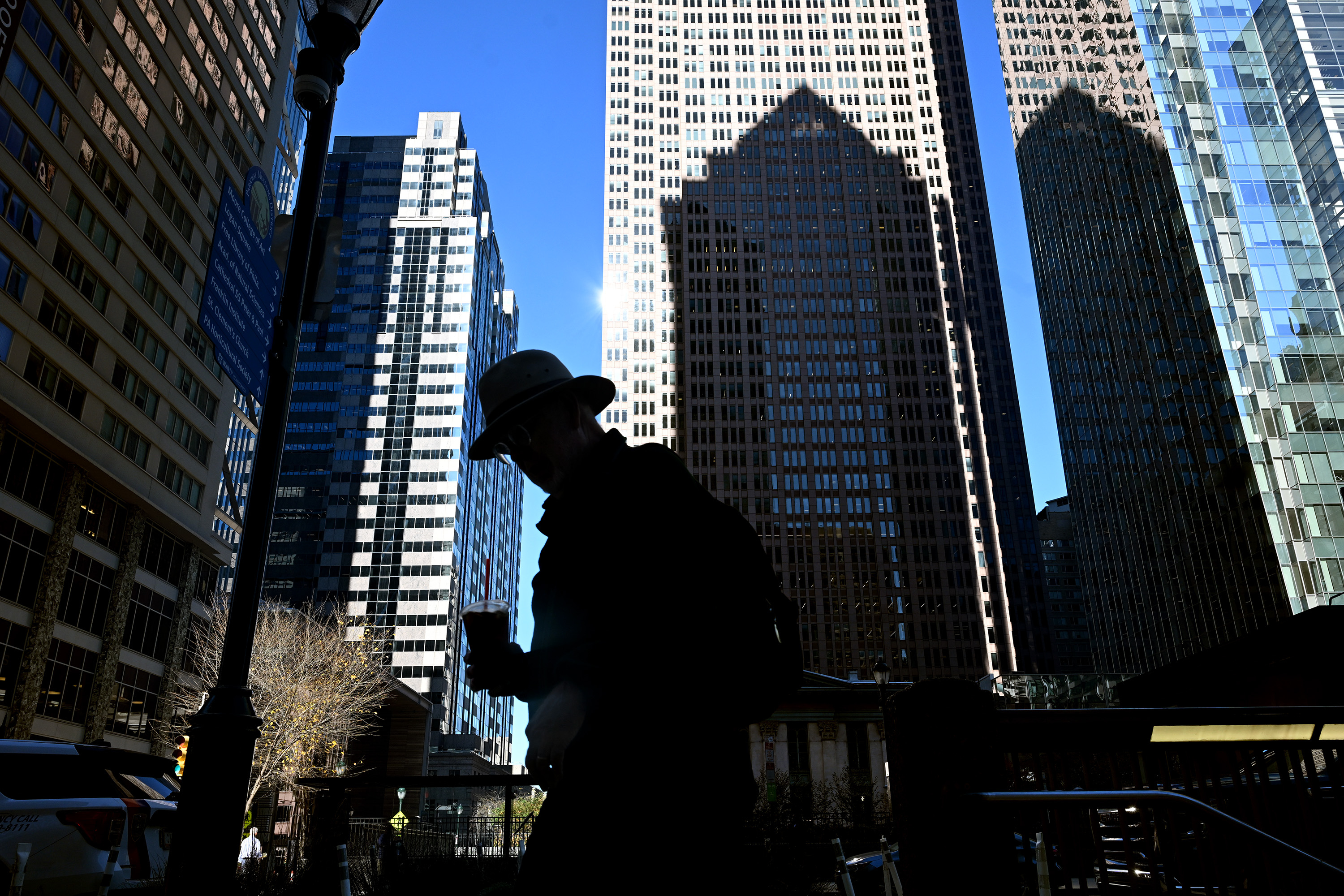
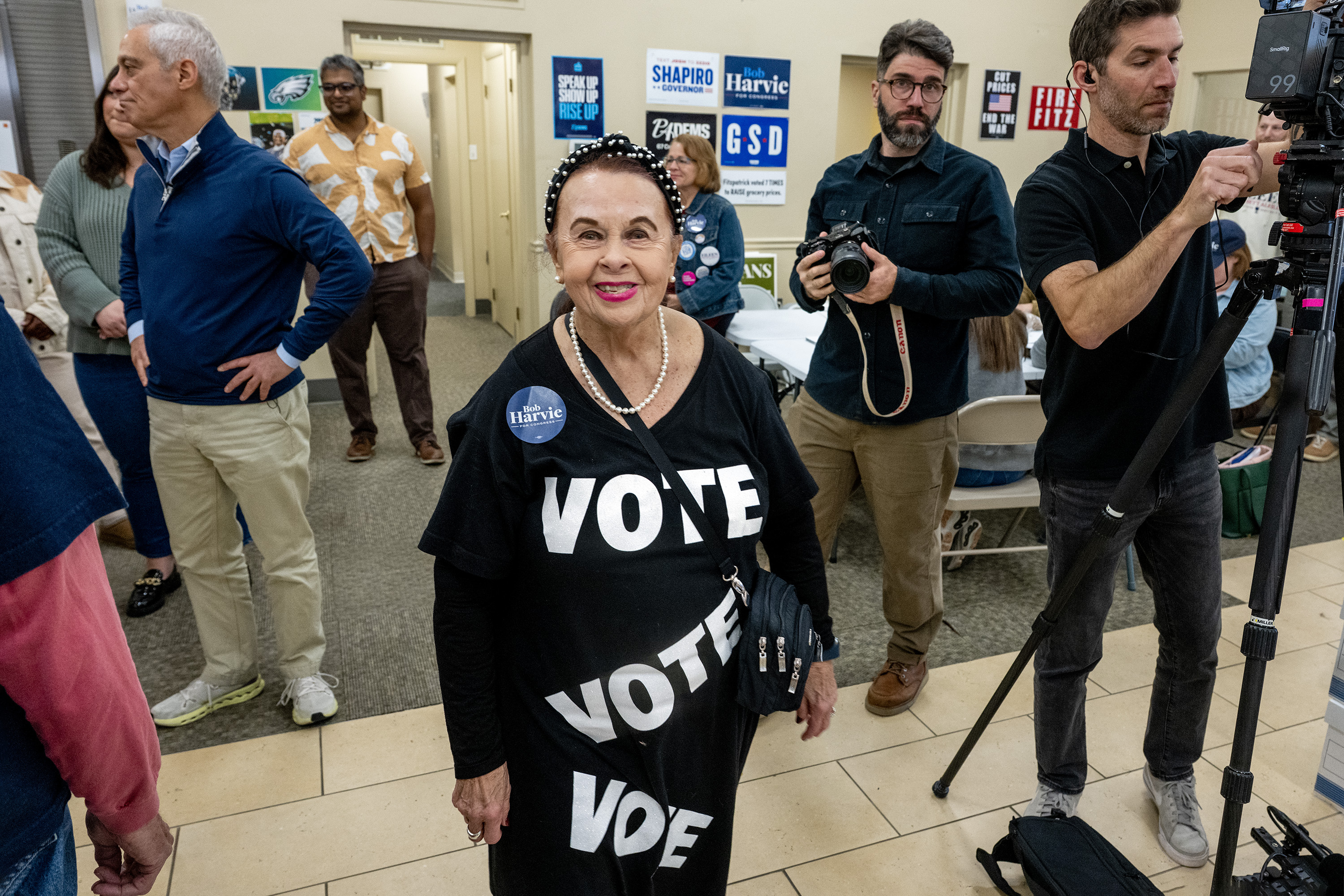
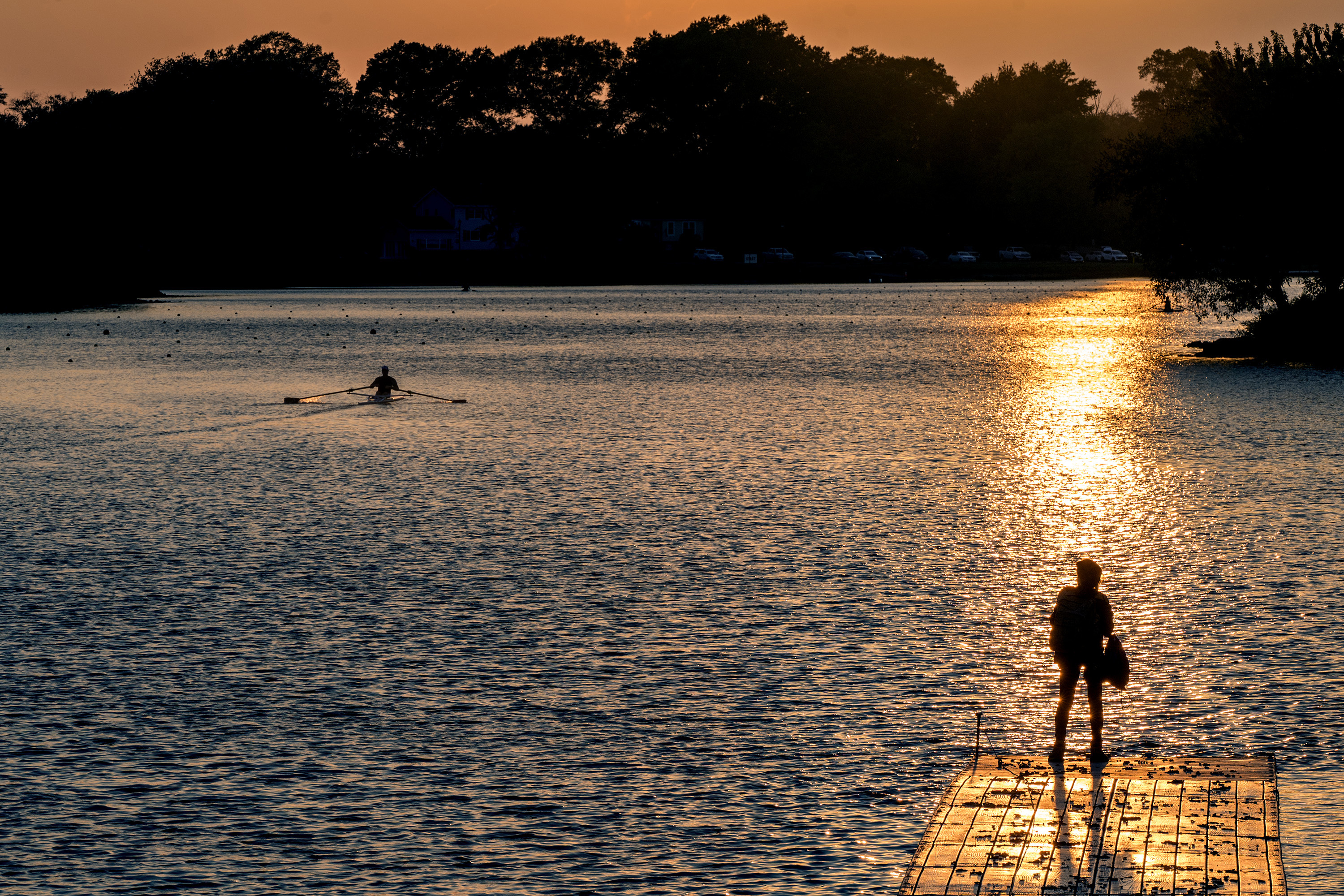
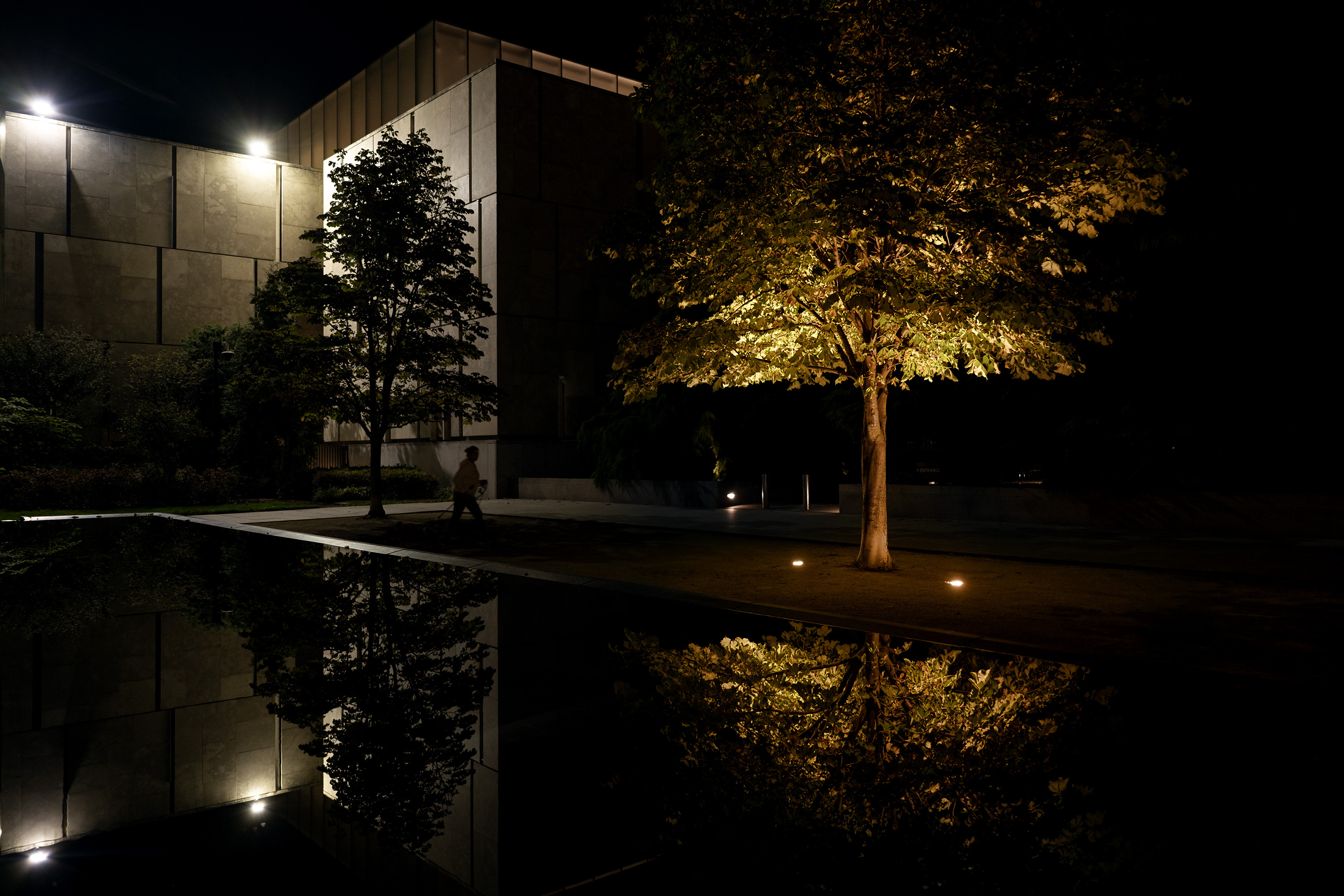
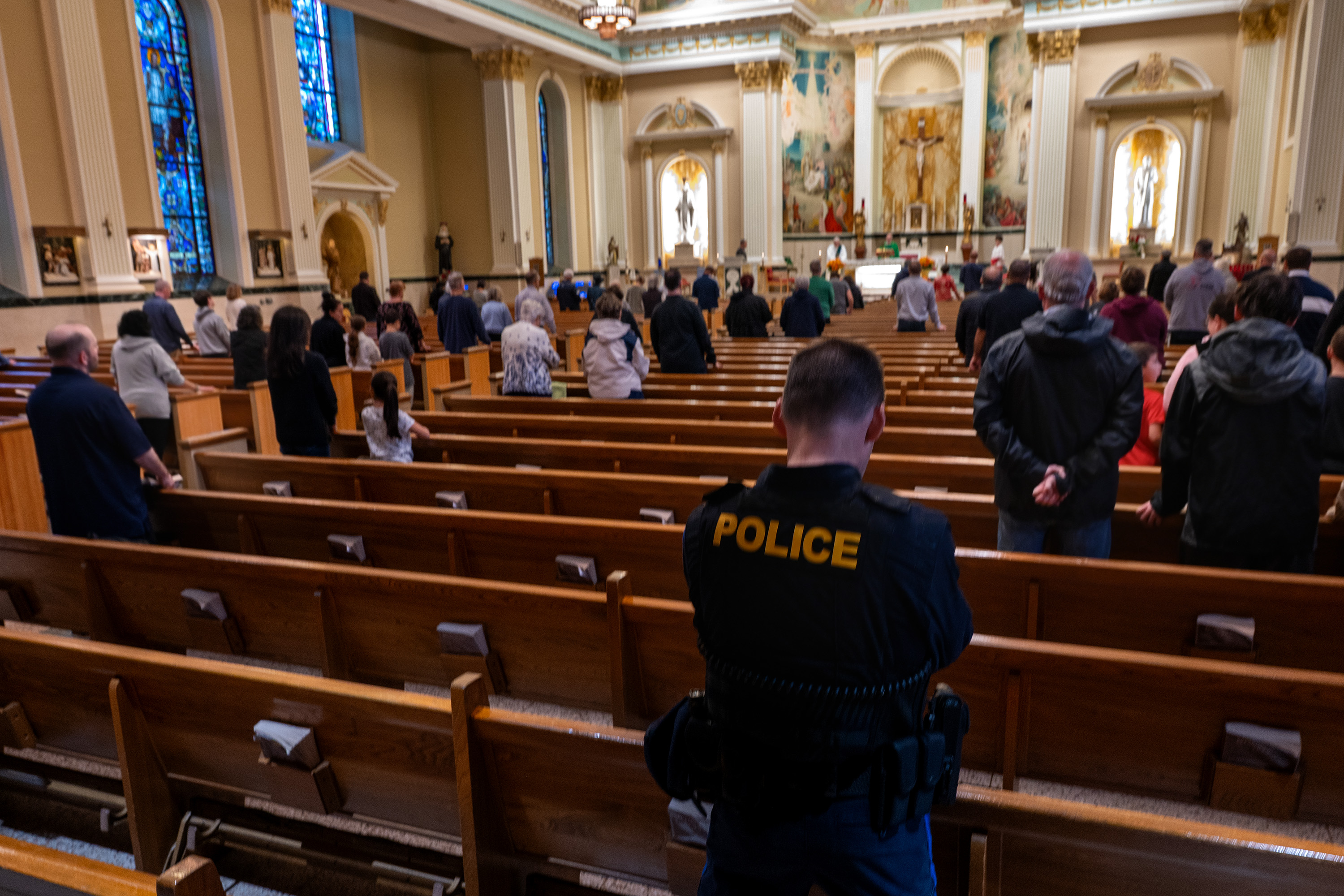
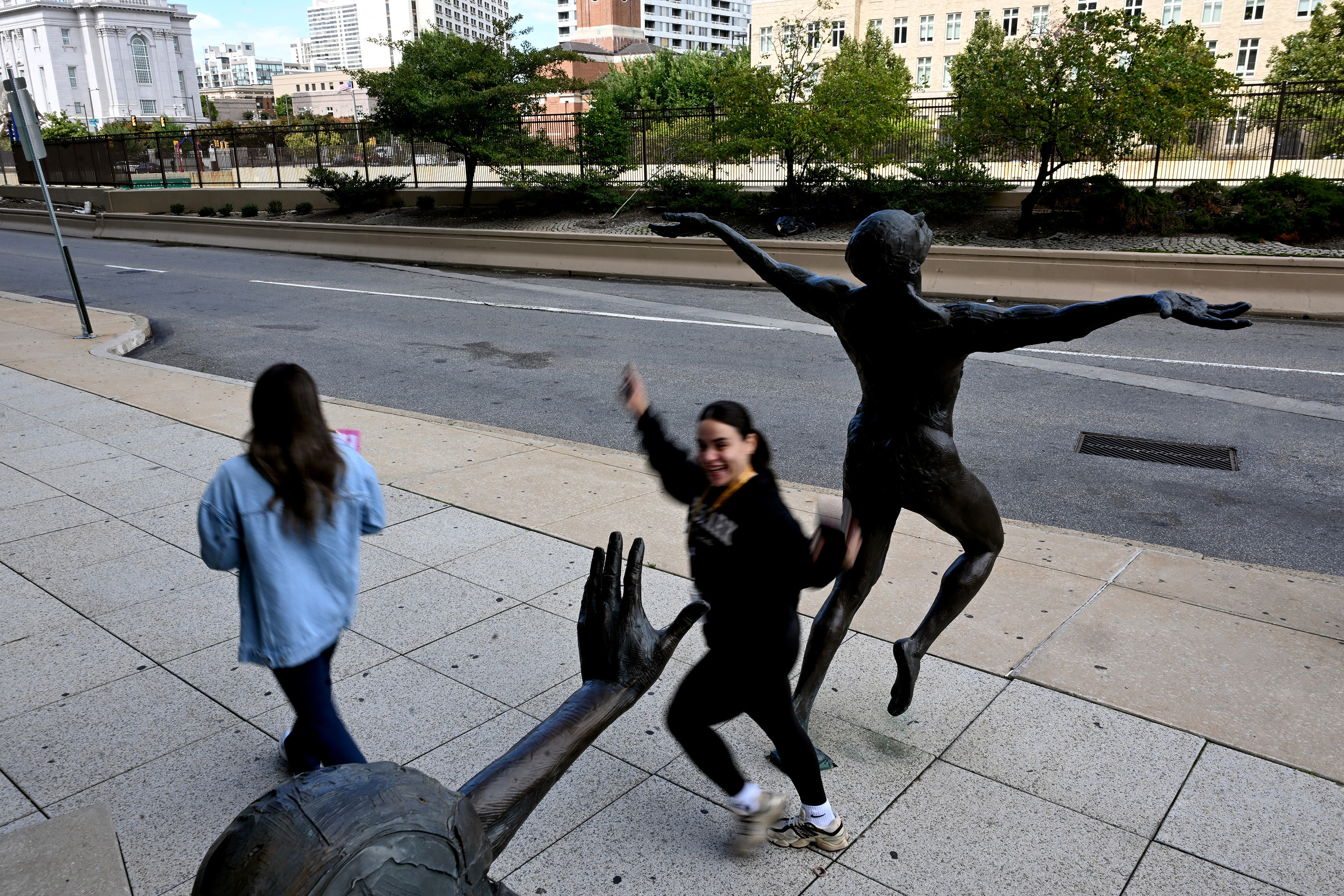
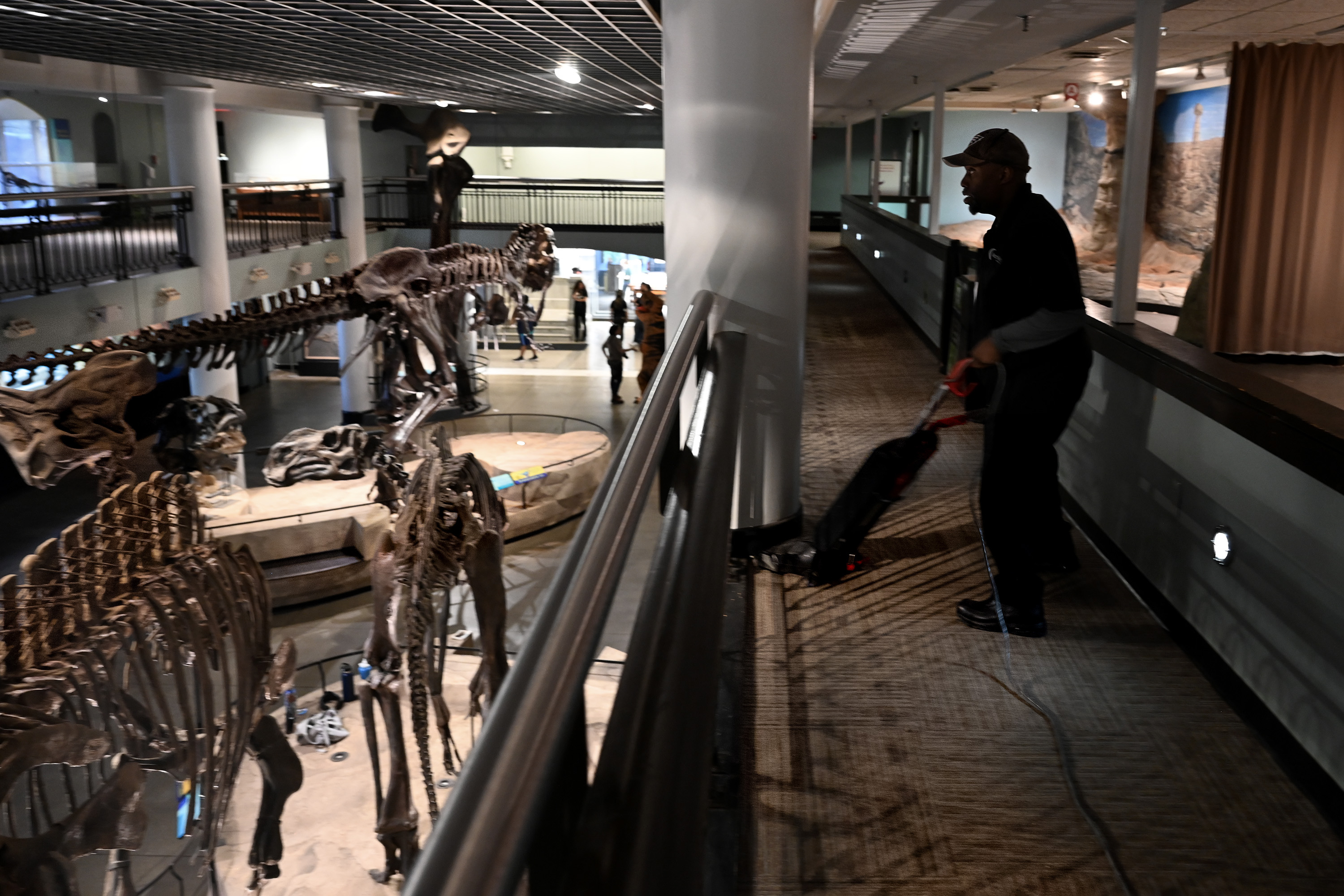
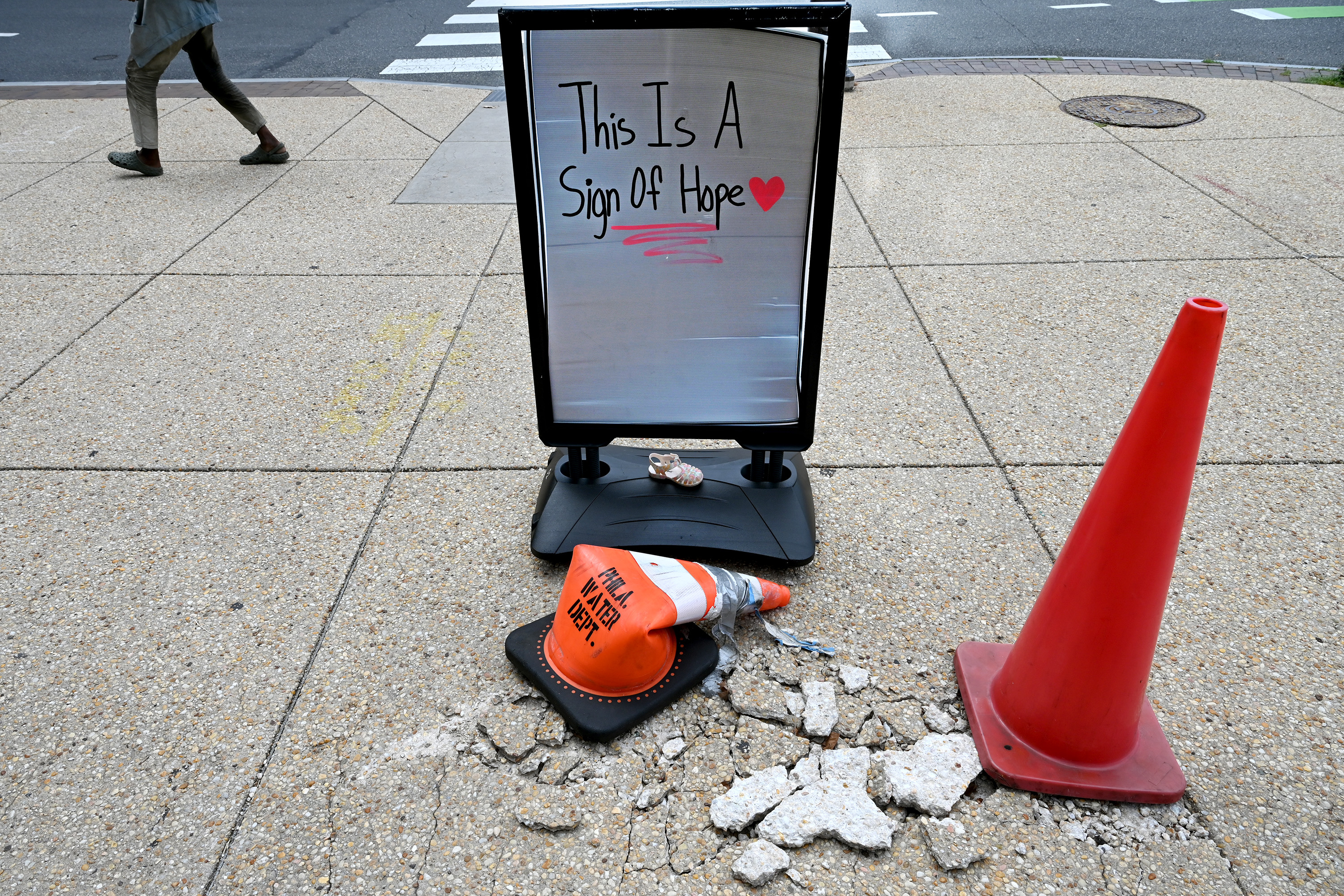
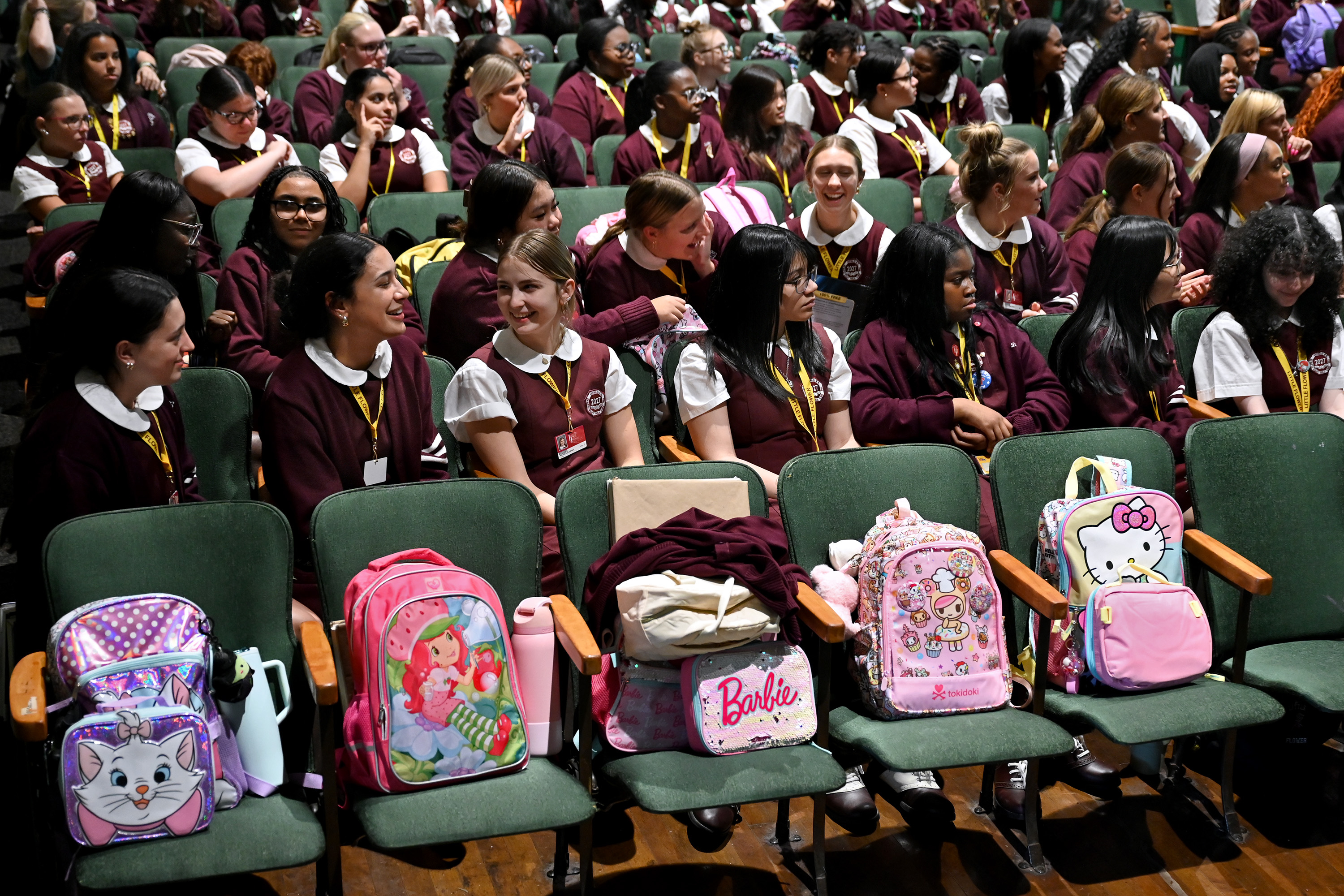
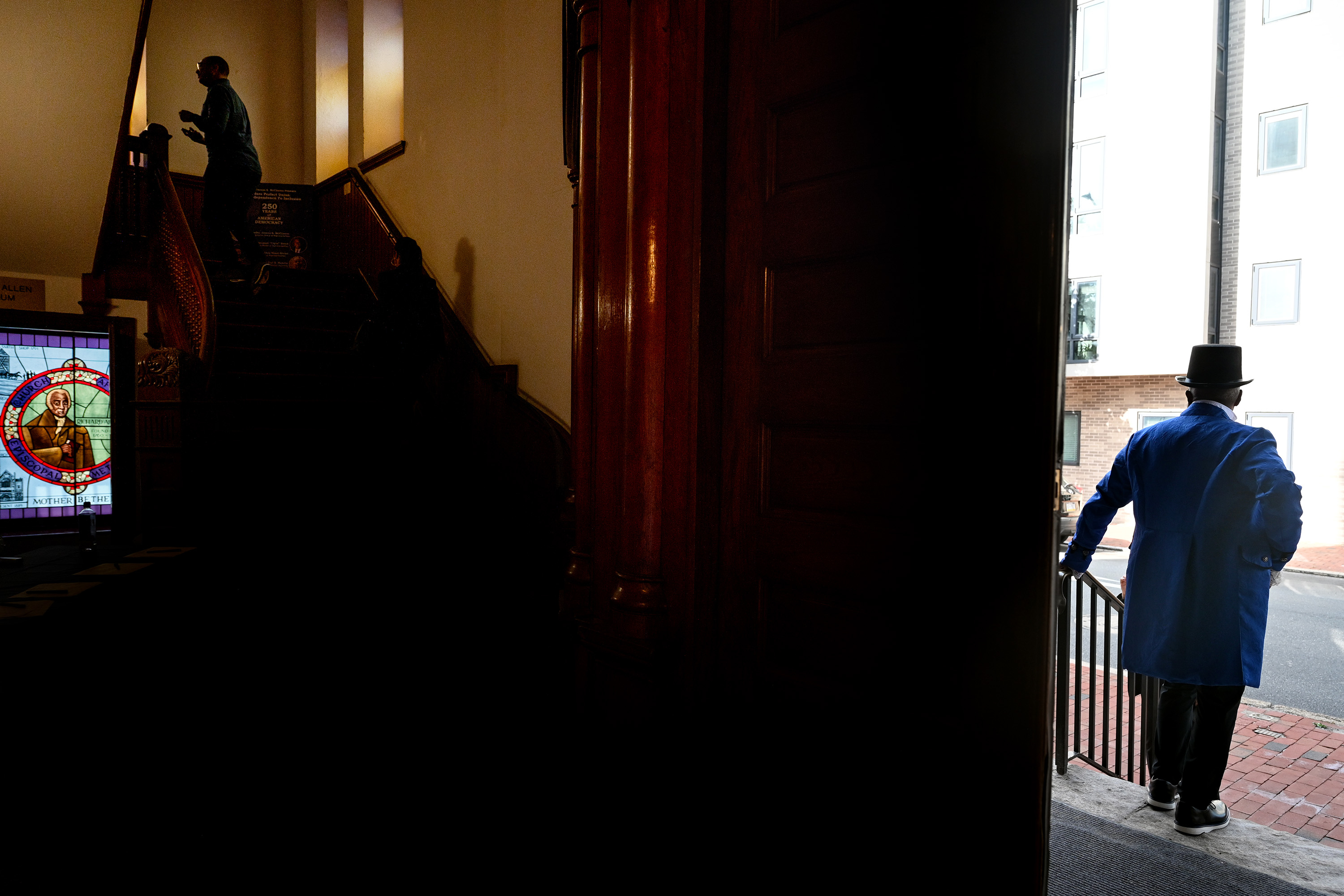
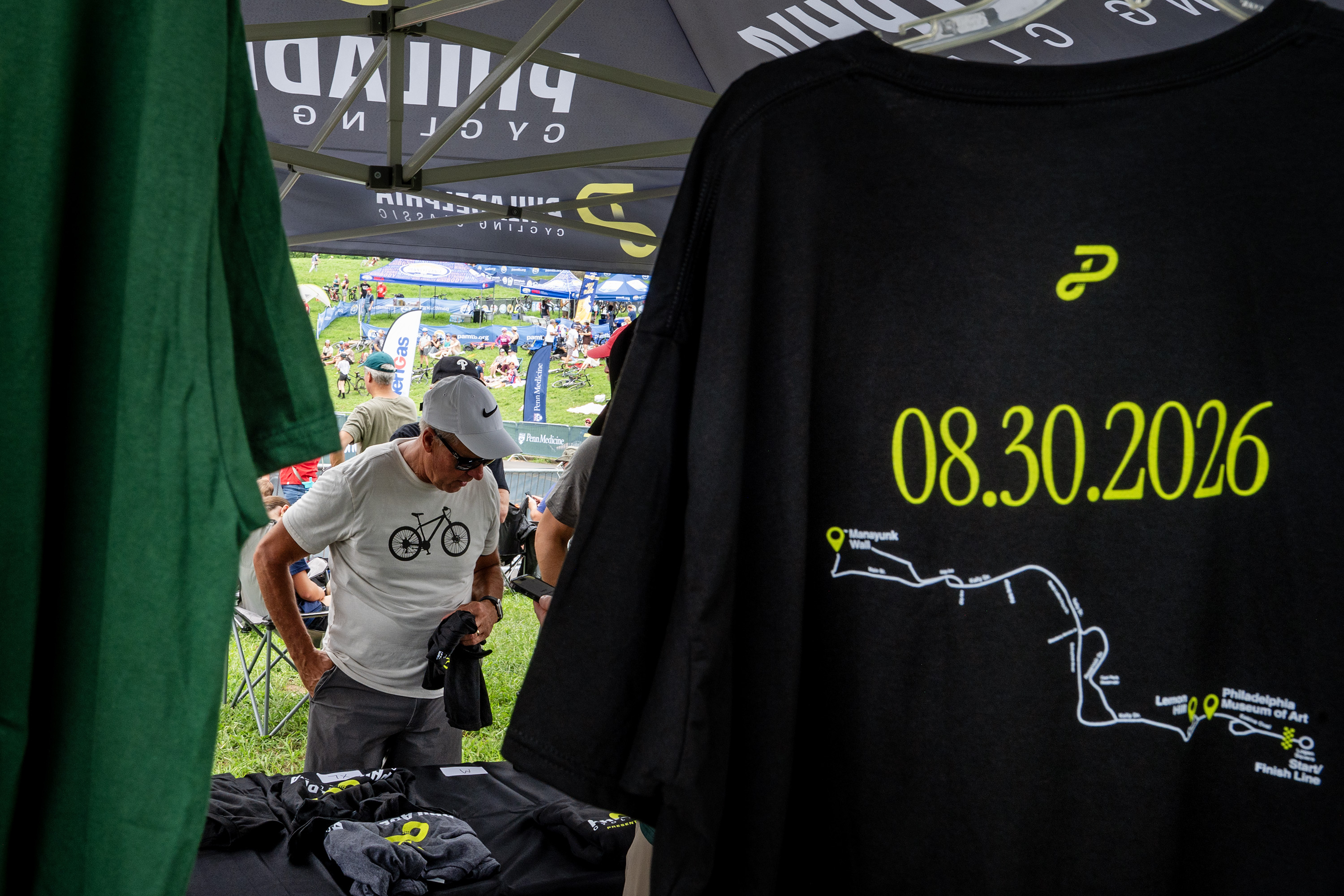
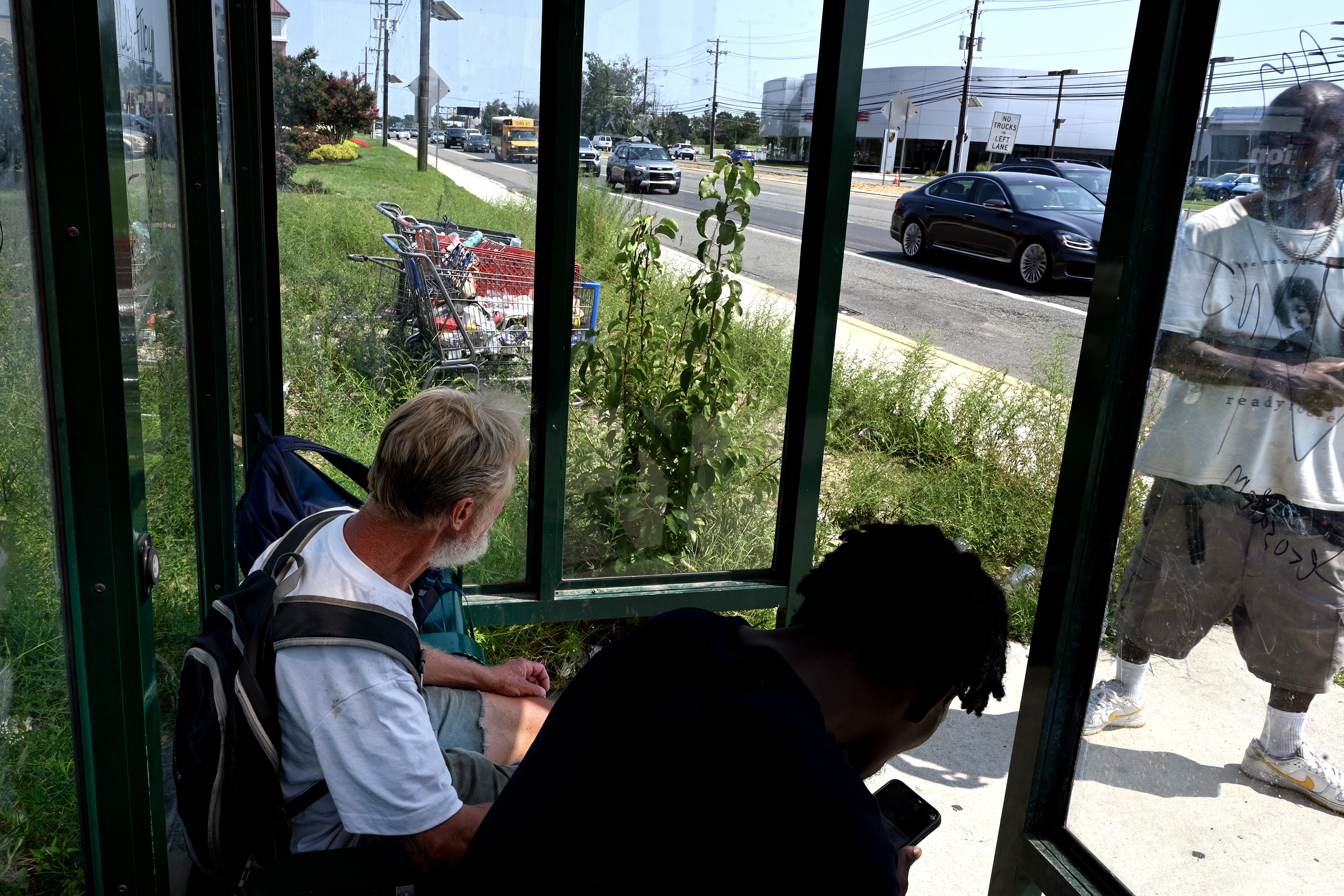
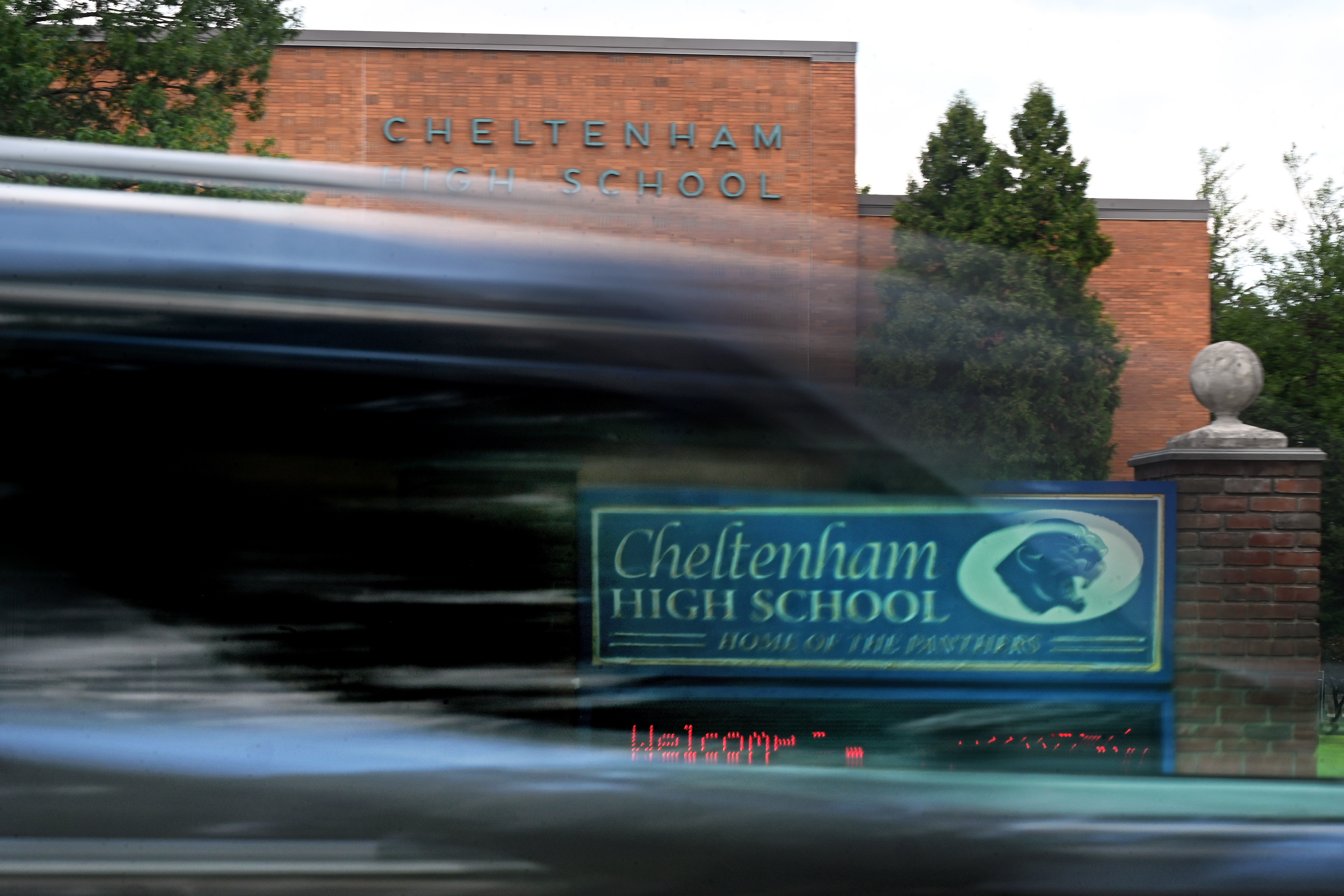
November 16, 2026: Center City in autumn, when the low sun casts long shadows and pedestrians move between light and darkness. Tom Gralish / Staff PhotographerNovember 9, 2026: Diane Hudson Harris at an election eve event for Bucks County Democrat Bob Harvie, who won the 1st Congressional District contest, defeating Republican incumbent U.S. Rep. Brian Fitzpatrick. Hudson Harris said she saw first lady Jill Biden wear the same dress “years ago” and wanted to buy one. The $800 designer price tag was too steep for her, but she found one on Etsy for $40. She wears it every chance she gets. Tom Gralish / Staff PhotographerNovember 2, 2026: Aspiring Philadelphia photographer Linda Cotrim takes in the sunset on the Cooper River in Pennsauken, N.J.Tom Gralish / Staff PhotographerOctober 26, 2026: Maybe it’s just the artificial lighting – slightly warmer than the spotlights on the building – but the trees reflected in the Tabletop Fountain outside the Barnes Foundation are especially glowing as those in the city are just now starting to show their fall colors. Tom Gralish / Staff PhotographerOctober 19, 2026: Jefferson University Police officer Mike Rafferty said it’s a “sad day” as he attends Sunday mass last weekend, the morning after Philadelphia police officer Shane Seiber was killed in the line of duty. Rafferty was at St. Monica’s in South Philadelphia, site of the traditional Knights of Columbus mass before the Columbus Day and Italian Heritage Parade and Festival, cancelled this year due to rain and wind from the remnants of Hurricane Isaias.Tom Gralish / Staff PhotographerOctober 12, 202^: “Freedom” by Zenos Frudakis at 16th and Vines Street is one of the most recognized figurative sculptures in Philadelphia. The 7000 pound, 20-foot-long bronze piece created in 2000 depicts, the artist says, “the struggle involved in breaking free from all that holds us back.”Tom Gralish / Staff PhotographerOctober 5, 2026: Jerry Atwood vacuums inside the Academy of Natural Sciences of Drexel University after it closed the doors at 5 p.m. on the final day the museum was open to the public Sunday, September 27, 2026. Tom Gralish / Staff PhotographerSeptember 28, 2026: A hopeful sign a sidewalk repair might be imminent, in the Logan Square neighborhood where residents have apparently been waiting a while for something to happen.Tom Gralish / Staff PhotographerSeptember 21, 2026: Students wait in the auditorium before the arrival of Eagles linebacker Jalyx Hunt at an assembly at Little Flower Catholic High School for Girls where he announced the establishment of three scholarships and an endowment to support students. Tom Gralish / Staff PhotographerSeptember 14, 2026: Chris Lewis (right), portraying James Forten, an abolitionist, activist, and sailmaker in colonial America, greets visitors outside Mother Bethel A.M.E. Church as they arrived for an America 250 Conversation hosted by Pennsylvania House Speaker Joanna McClinton on Sept. 10. The stainedglass window at left depicts Richard Allen, founder and first bishop of the African Methodist Episcopal Church in 1816, the first independent black religious denomination in the United States. Tom Gralish / Staff PhotographerSeptember 7, 2026: Joe Ackler of Skippack shops for a race T-shirt during a lull between laps in the Philadelphia Cycling Classic on Aug. 30. He is wearing a shirt he bought in 2003 when he attended the Tour de France. Tom Gralish / Staff PhotographerAugust 31, 2026: Robin P. Cooper (upper right) watches as Superintendent Tony B. Watlington Sr. (far left) gathers school and city officials for a group photo outside the district bus, stopped at McClure Elementary on the first day of school in Philadelphia. The bus was on its annual back-to-school celebration visit to schools throughout Philadelphia. Cooper later left the bus to join in the photo. Tom Gralish / Staff PhotographerAugust 24, 2026: Pencils were sharpened in the first-grade classroom of teacher Lauren Cucinotta at Fanny Jackson Coppin Elementary as she prepared for the start of the new school year for the Philadelphia School District on Monday.Tom Gralish / Staff PhotographerAugust 17, 2026: Wayne Peters (left) and Bobby White (right) wait for the #406 bus to Camden, on Rt. 70 in Cherry Hill, near the entrance to stores at the Garden State Pavilion shopping center and NJ Transit’s Cherry Hill station. Peters says it “Gotta be the worst bus stop in the state,” with White adding, “You’d think something in Cherry Hill would be better. How hard would it be to put a trash can here?” Before their bus arrives, Peters, trying to be positive about the shelter, reminds him “They fixed a broken window once.”Tom Gralish / Staff PhotographerAugust 10, 2026: Cheltenham High School in Wyncote, on the day the Montgomery County district attorney announced charges in connection with two assaults in the school’s football locker room. A photo of the static signs was made more visually interesting by using a slow camera shutter speed to blur the passing cars. Tom Gralish / Staff Photographer