The man who shot three Palestinian students in Burlington, Vt., including one from Haverford College, during the 2023 Thanksgiving weekend was convicted on three counts of second-degree attempted murder Monday.
The students, who’d known each other since grade school in the West Bank, were together for the holiday. They had been walking along a street near the University of Vermont when a man confronted them with a handgun and fired at least four rounds before running away, according to police.
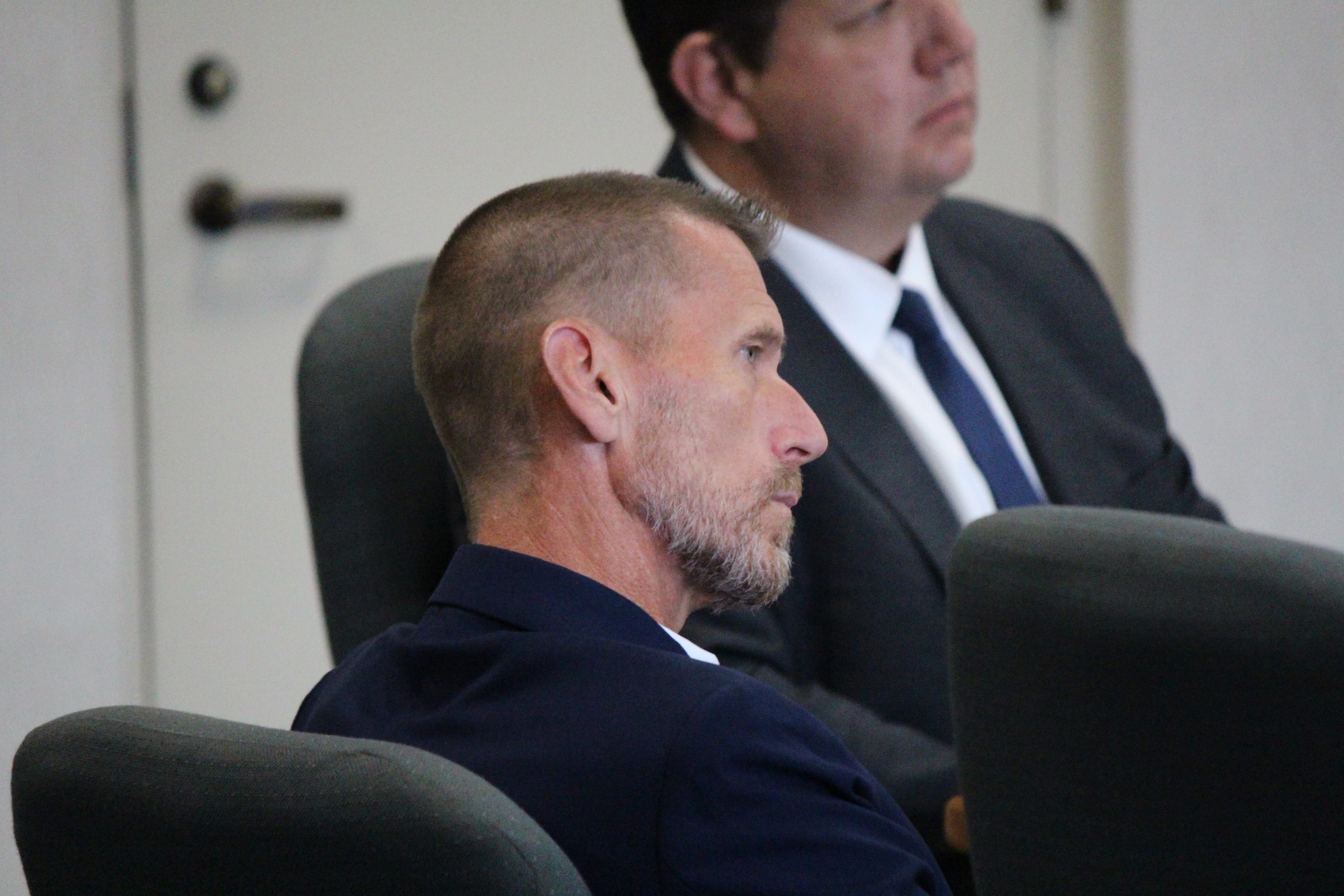
That man was later identified as Jason Eaton, 51, who did not dispute that he shot Hisham Awartani, Tahseen Aliahmad, and Kinnan Abdalhamid that Saturday evening.
His attorneys, however, argued he was not guilty by reason of insanity, presenting testimony that Eaton was suffering from a delusional, psychotic disorder after having lost his job two weeks before the shooting.
Eaton believed he was receiving messages from the CIA ordering him to “go out and shoot somebody,” said his attorneys.
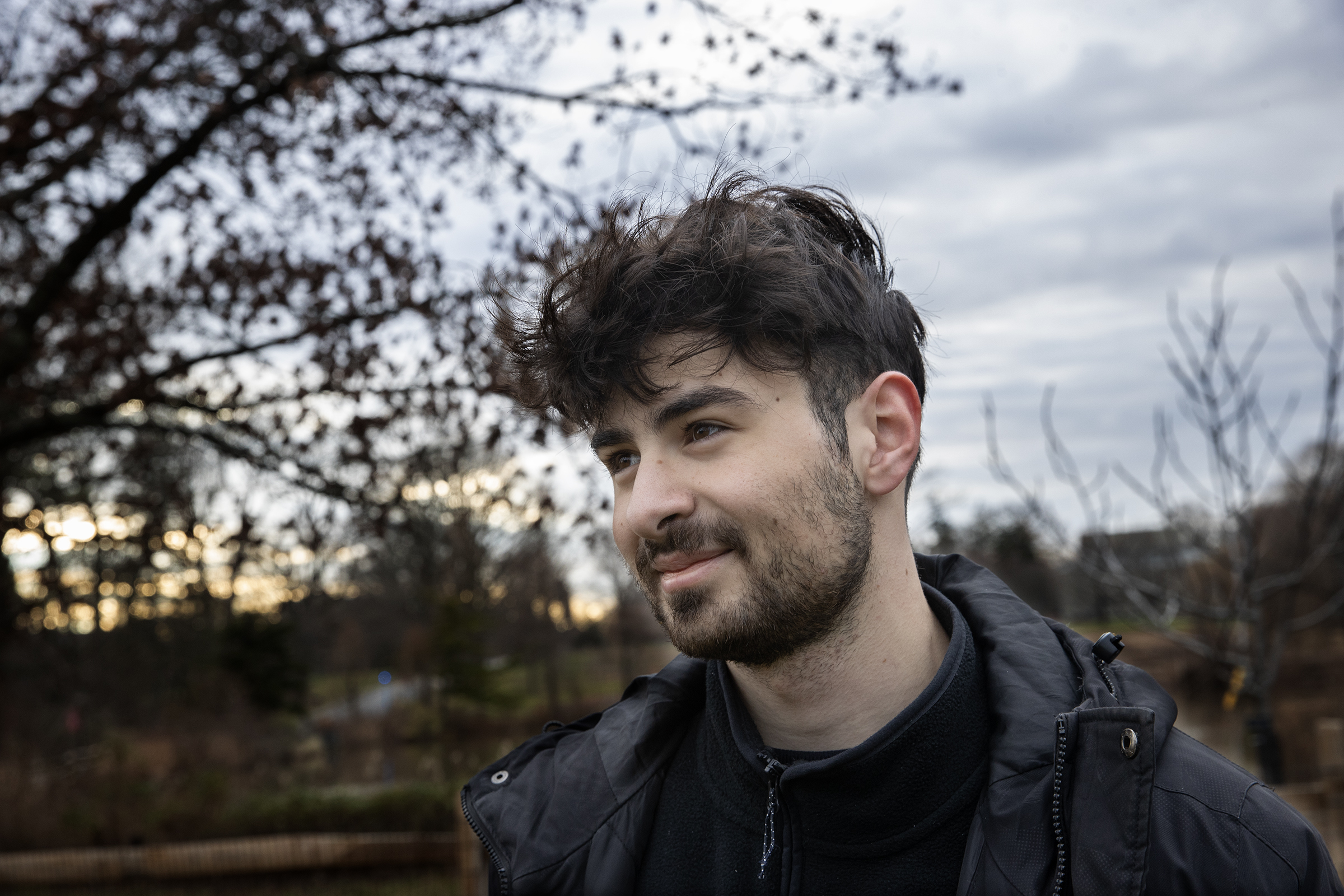
Abdalhamid, the Haverford student, suffered non-life-threatening injuries; Trinity College student Aliahmad was shot in the chest; and Awartani, a Brown University student, was paralyzed from the waist down as a result of his injuries.
Haverford College student Kinnan Abdalhamid, one of the three Palestinian American men who were shot in Vermont in 2023.Charles Fox / Staff Photographer
The case garnered national attention because of the rising tensions around the Israeli-Palestinian conflict and the continuing fallout of the Oct. 7 attacks close to two months prior. All three students were of Palestinian descent, speaking Arabic, and two were wearing keffiyehs at the time of the attack, according to police.
Abdalhamid, who was 20 at the time, returned to campus weeks later, calling on school leaders to join him in calling for a ceasefire.
“I’ve gotten more than enough support as an individual,” Abdalhamid said in December 2023. “I’m advocating for the school to back a ceasefire.”
The parents of the victims and groups including the Arab American Anti-Discrimination Committee asked that the attack be investigated as a hate crime, though prosecutors could not support the charges.
The Chittenden County State’s Attorney Office is seeking a life sentence for Eaton.
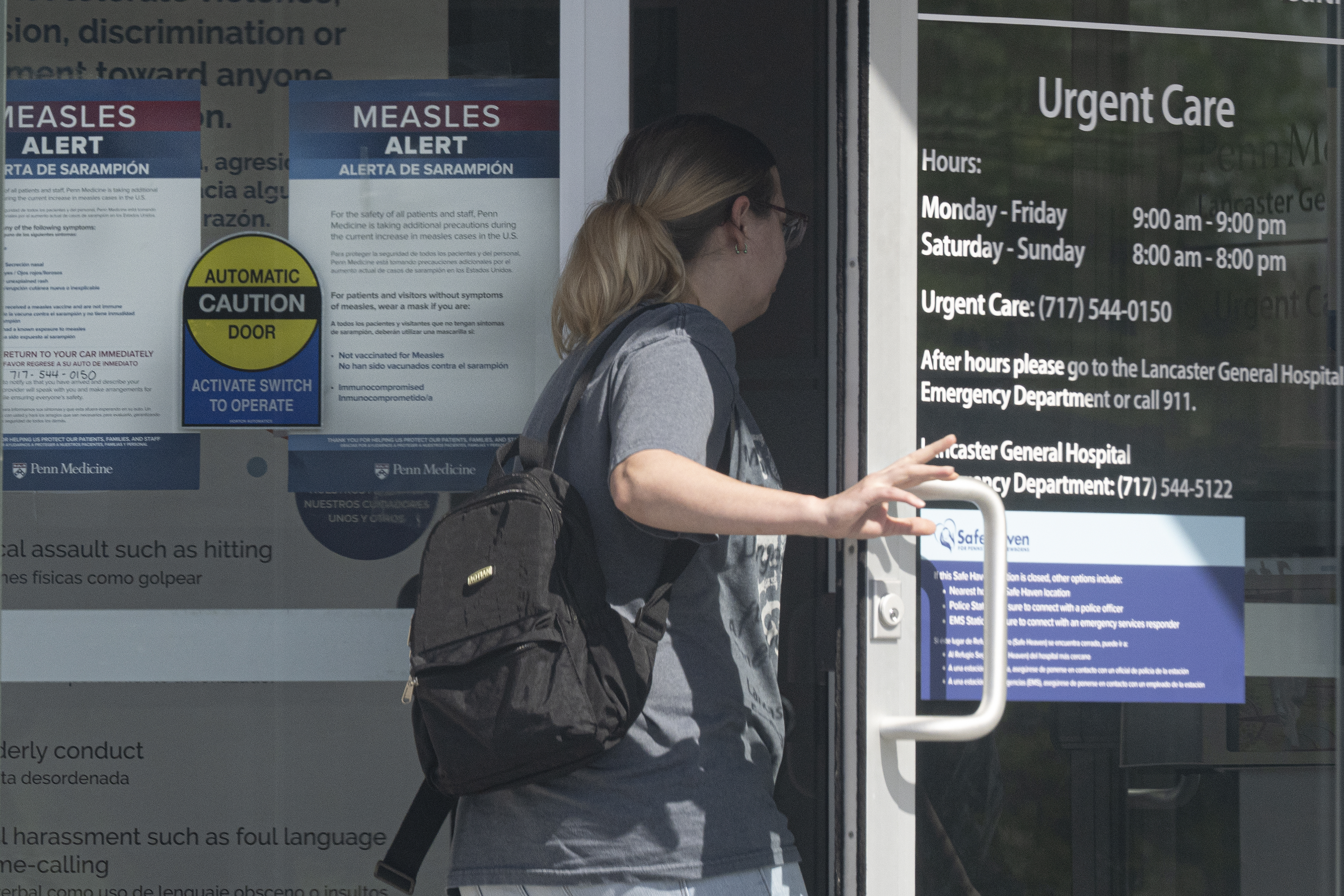
The state’s measles outbreak is the largest in the country in 2026 and is centered in Lancaster County, which has reported more than 300 cases this year.
Chester County has confirmed 76 measles cases so far this year, the third-highest total in the state behind Mifflin County in Central Pennsylvania, which has reported 93 cases.
State officials have reported four deaths associated with the outbreak: two infants in Lancaster County, a 40-year-old woman in Jefferson County, and an 18-year-old in Mifflin County.
(function(){function e(){window.addEventListener(`message`,function(e){if(e.data[`datawrapper-height`]!==void 0){var t=document.querySelectorAll(`iframe`);for(var n in e.data[`datawrapper-height`])for(var r=0,i;i=t[r];r++)if(i.contentWindow===e.source){var a=e.data[`datawrapper-height`][n]+`px`;i.style.height=a}}})}e()})();
The state defines a “measles-associated” death as one that occurs within 30 days of symptom onset in a person with clinical evidence of infection and a positive laboratory test for measles, and who did not die of another unrelated cause, like a car crash.
Lancaster County’s coroner said one of the infants died from a lacerated spleen, not measles, though the baby tested positive for the disease. Physicians have noted that measles can weaken a spleen and make it more vulnerable to rupture.
Federal officials have clashed with the state over its characterizations of the deaths.
Democratic Gov. Josh Shapiro has faulted President Donald Trump’s Health and Human Services secretary, Robert F. Kennedy, Jr., a longtime anti-vaccine activist, for spreading misinformation about the safety of the measles vaccine and contributing to declining vaccination rates.
Kennedy, in turn, suggested Shapiro’s administration “fabricated” two of the deaths, though he later acknowledged one death was caused by measles.
The Centers for Disease Control and Prevention still has not listed the deaths on its data dashboard for measles outbreaks.
(function(){function e(){window.addEventListener(`message`,function(e){if(e.data[`datawrapper-height`]!==void 0){var t=document.querySelectorAll(`iframe`);for(var n in e.data[`datawrapper-height`])for(var r=0,i;i=t[r];r++)if(i.contentWindow===e.source){var a=e.data[`datawrapper-height`][n]+`px`;i.style.height=a}}})}e()})();
Officials there have suggested the state is not cooperating with the agency and said officials had not requested emergency help from its Epi-Aid program, which provides short-term technical assistance and subject matter expertise during health crises, as other states with outbreaks have. Trump, in a White House appearance with Kennedy on Friday, called Shapiro “close to incompetent.”
“Incompetence is denying the tragedy of four measles-associated deaths in Pennsylvania,” Shapiro wrote on X in response.
Pennsylvania health secretary Debra Bogen said last week the state was already working with CDC staff, and had begun the process of requesting an Epi-Aid team — on the condition that the agency acknowledges the deaths in Pennsylvania.
Measles exposures in Philadelphia
Chester County is the only county in the Philadelphia area that has reported measles cases in the current outbreak, which began in April. (Montgomery County confirmed three cases in a separate outbreak in the winter.)
But Philadelphia health officials have reported two potential measles exposures, at the Children’s Hospital of Philadelphia and the Philadelphia International Airport.
On Sept. 11, city health officials said, a person with measles visited a neonatal intensive care unit and several other areas at the hospital at 3401 Civic Center Blvd. in University City. Infants exposed in the NICU were isolated and treated with antibodies to help decrease their chances of acquiring or becoming seriously ill from the highly contagious disease, CHOP officials said.
Measles infects up to nine in 10 unvaccinated people exposed to it, and young children are at particular risk for complications from the virus, which can include pneumonia and brain swelling.
State efforts to vaccinate
About 95% of a community must be vaccinated against the virus to prevent its spread, but vaccination rates across Pennsylvania have been dropping for years. Hundreds of kindergartens in the Philadelphia region report vaccination rates well below this “herd immunity” rate.
State officials said in a statement Monday that more Pennsylvanians have expressed interest in getting vaccinated as the outbreak spreads.
The health department will offer free measles, mumps, and rubella vaccinations from Sept. 26 through Oct. 3 at the Bloomsburg Fair in Columbia County, which has reported two measles cases.
The clinic is “just the latest way the department is meeting Pennsylvanians where they are, to ensure they have the facts and evidence to make decisions about vaccination for themselves and their family,” officials said.
State workers have hosted 148 pop-up vaccination clinics and given out more than 4,800 MMR vaccinations in affected areas since April, with “dozens” more scheduled in the weeks and months ahead, officials said, “based on community interest and need.”
Other healthcare providers have also seen renewed interest in vaccination this year, state officials said. Typically, providers give out about 25,000 MMR doses a month, but in August, more than 46,000 doses were administered, and more than 25,000 doses were given out in the first two weeks of September.
The Pennsylvania Turnpike Commission is reconstructing and widening a 2½ mile section of I-276 between the Neshaminy Falls Toll Plaza and Bensalem Boulevard in Bucks County.
It made shipping by truck more efficient, reduced congestion on local Bucks County roads, and eased traffic flow through the Philadelphia region and along the East Coast.
“Opening the I-95 connection was a historic milestone, but it was not the end of our work,” Pennsylvania Turnpike Commission chief engineer Brad Heigel said in a statement.
Starting this month, crews will reconstruct the turnpike’s center median to prepare for future traffic shifts, the agency said. Lane closures are expected through October, with work done mostly at night.
Work on this portion of the roadway, called Section C of the I-95 Interchange Project, is expected to continue through 2029.
Construction will proceed in phases:
First, temporary concrete barriers will be installed to establish long-term shoulder closures and create space for tree clearing, earthwork, and other construction activities beginning later in fall.
Crews will then build a new lane in each direction while traffic uses the existing lanes.
Once that is done, traffic willshift onto the new lanes so crews canrebuild the roadway in between. Two lanes of traffic will remain open in each direction in peak travel hours during construction, the turnpike said.
The project will create new “capacity to support safer, more reliable travel through Bucks County and along one of the nation’s most important transportation corridors,” Heigel said.
Work on the adjoining portion, Section D30, is scheduled to be finished this fall, but three-lane turnpike traffic won’t begin in the area until both sections are done.
The project also will add new emergency access gates at milepost 355, cutting response time for local firefighters by 50%.
The Pennsylvania Turnpike Commission, the lead agency on the joint project, next must complete an environmental impact study on the design.
Engineers also must study the runner-up approach: constructing the new bridge in stages, about 40 feet north of the existing bridge — over eight years. (The preferred design could be built in four years.)
The Federal Highway Administration is expected to decide in April 2028 which of the two options to use.
When it is built, the I-95 Interchange Project will be done.
As Kenzie Hamblin watched Gilmore Girls unfold in the fictional town of Stars Hollow, she looked around Phoenixville and thought, “I literally live in this town.”
And now, that’ll be actually true — at least for a weekend.
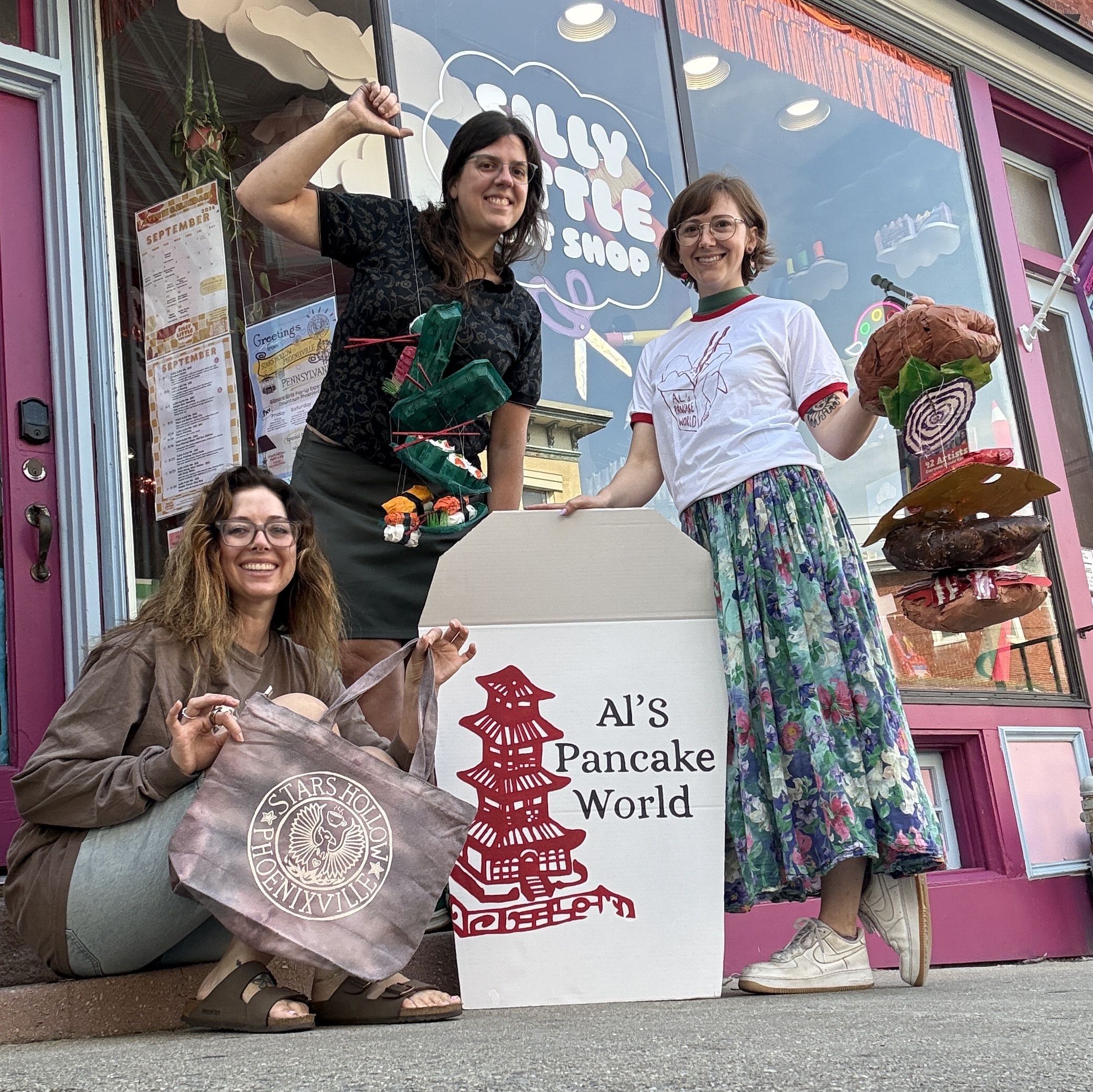
On Friday, Sept. 25 through Sunday, Sept. 27, a smattering of Phoenixville shops will transform into staples from the show in an event that Hamblin and business partner Mallory McDaniel organized.
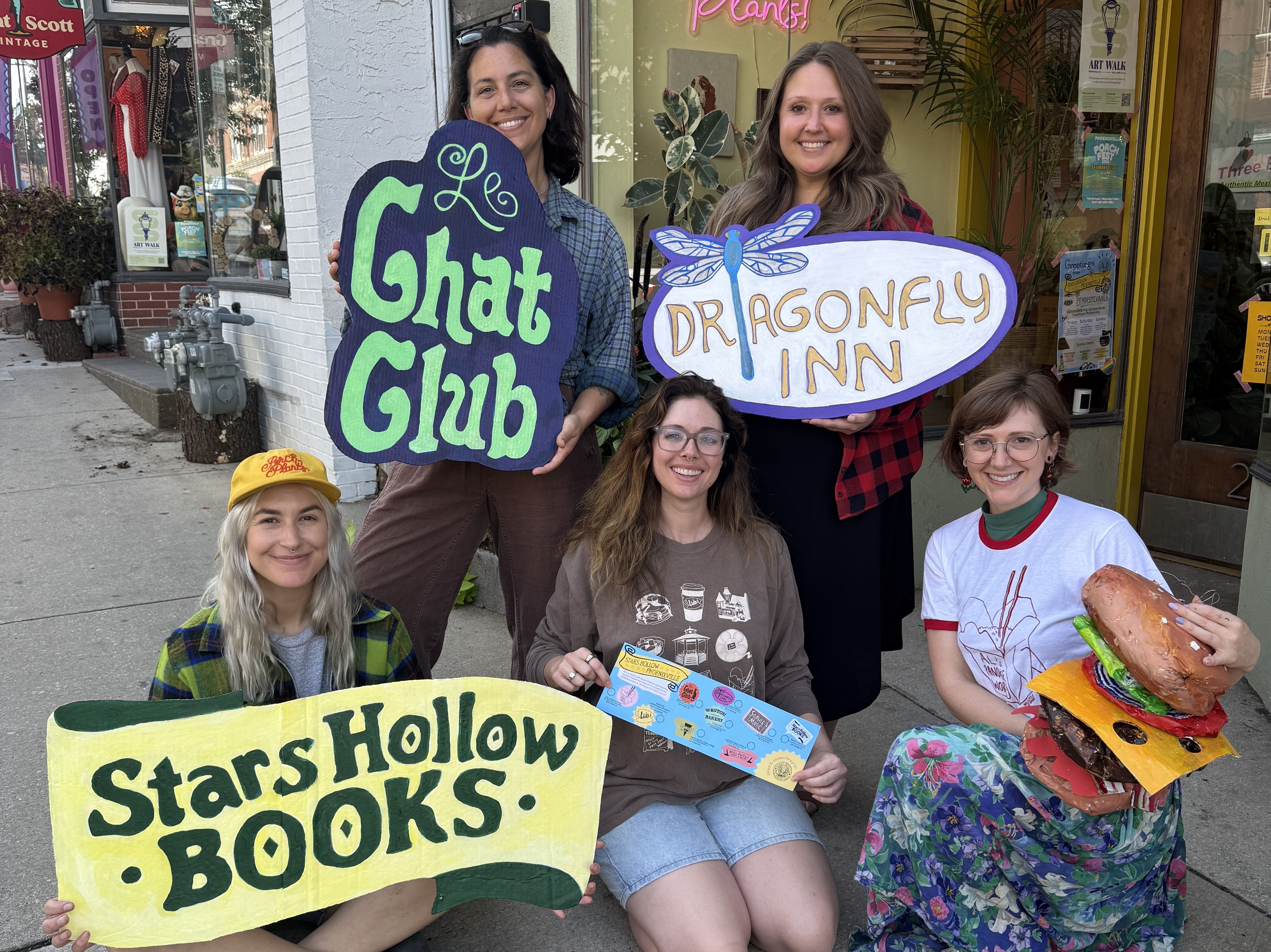
All across downtown, existing shops will dress up as Stars Hollow storefronts, from Le Chat Club, to Doose’s Market, to the Dragonfly Inn, and, of course, Luke’s Diner. Hamblin’s shop, Silly Little Art Shop at 28 S. Main St., will become Al’s Pancake World, serving up piping hot art kits and more.
Visitors can expect themed events, redecorated interiors and window designs, specialized merchandise, a map to collect stamps from participating shops for a prize, and maybe a handful of grumpy Lukes serving them coffee.
The plan was sparked about a year ago, when Hamblin saw another similar pop-up in a nearby town. It was fun, she recalled, but she knew Phoenixville could do better. The borough has the bones to do so: There’s an “amazing creative, collaborative energy” among the small business owners, and a genuine investment from the community they serve, she said.
“We have all this magic that exists in Phoenixville,” Hamblin, 35, said. “I want people to experience that, but then also get to have that fun of experiencing the magic of Stars Hollow — as much as any place can create that.”
For the uninitiated, you may ask: What is it about Stars Hollow, the whimsical, quirky New England small town in which Gilmore Girls is set?
The show, a quick-witted, comedy-drama that follows the lives of a mother and daughter, ran for seven seasons in the early 2000s and has amassed devoted fans since. Among those fans, the town has become a desirable, beloved place. It has it all: It’s close-knit, supportive, and yes — walkable. It taps into something people just seem to crave: connectedness and community, Hamblin said.
“People live in suburban wastelands, where you live in a house, and you don’t really know any of your neighbors, and you don’t have a downtown; you have a shopping mall,” she said. “And I think people want to live somewhere like Stars Hollow, where it’s very community-oriented.”
Kenzie Hamblin, left, and Mallory McDaniel, right, will transform their storefront, Silly Little Art Shop, into Al’s Pancake World later this month. Artist Emily White, middle, has designed a “Gilmore Girls” collection.Photo courtesy of Kenzie Hamblin
And you may ask, what is it about Phoenixville?
“I lived here before it was cool to be from Phoenixville,” said Julie Miller, whose pottery shop at 24 S. Main St. will become the Dragonfly Inn. “There’s such a strong community in the downtown, and a want for the downtown to survive, and a want for it to be this special, quaint little slice of heaven that it has become. I think that really equates with Stars Hollow.”
And the response to the town coming to life has been pretty resounding. Hamblin organized a small group of businesses to participate in this year’s event, with the goal of drawing a couple hundred people downtown. When she posted the initial social media flier, though, it got more traction than she could have predicted — more than 100,000 views and 5,000 shares in the first 24 hours.
Within the community, other businesses wanted to participate. And beyond the community, new customers have dropped by, scoping her shop out ahead of the event later this month, she said. (@starshollow.pa on Instagram is giving updates to the weekend’s offerings.)
The business owners aren’t entirely sure what the magnitude of the turnout could be, but they’re excited.
Miller, 36, said the enthusiastic response has been “amazing, and also a little terrifying in the best way.”
She’s creating a line of dragonfly teacups and teaspoon rests. Themed pieces from other local artists will also be on offer in her shop. And to tap into the coziness of the inn, complimentary tea and cookies will welcome visitors.
“It’s just really exciting for the potential,” Miller said. “Hopefully that just means that this is going to continue and be like another amazing thing that happens in Phoenixville that we get to do once a year.”
Studio 323, at 323 Bridge St., will become Weston’s Bakery, offering fall-themed baked goods from a local microbakery on Saturday (“Who doesn’t love baked goods on a homemade plate?” owner Abby Wheeler, 31, noted), alongside other local artisans’ creations through the weekend.
“As a creative space, a themed assignment to transform our space is what we live for,” Wheeler said.
Though Jason Hafer, 48, isn’t overly familiar with the show himself, his staff is enthusiastically helping transform Reads and Company into Stars Hollow Books. There will be a Gilmore Girls-themed book display up front, and the staff plans to be decked out accordingly in plaid.
Though a town might be content with its slate of other annual events, “we have like this great young business … and they’re bringing like their creativity and their passion to the town, which is I think what makes things so great,” Hafer said.
And over at Al’s Pancake World, Hamblin and McDaniel, 34, will be dressed as waitresses, serving up art kits in takeout containers, alongside a collection of other merchandise they’ve made.
“I deeply, deeply want our town to stay quirky and fun and strange and weird,” Hamblin said. “The only way for [small businesses] to stay and to grow and to be successful is if we can get people to come to town to ultimately enjoy themselves and spend money and enjoy Phoenixville for what it is and fall in love with it. If there’s any way I can be a part of that, to build success for our town in any small way, then that’s what I want to do.”
This suburban content is produced with support from the Leslie Miller and Richard Worley Foundation and The Lenfest Institute for Journalism. Editorial content is created independently of the project donors. Gifts to support The Inquirer’s high-impact journalism can be made at inquirer.com/donate. A list of Lenfest Institute donors can be found at lenfestinstitute.org/supporters.
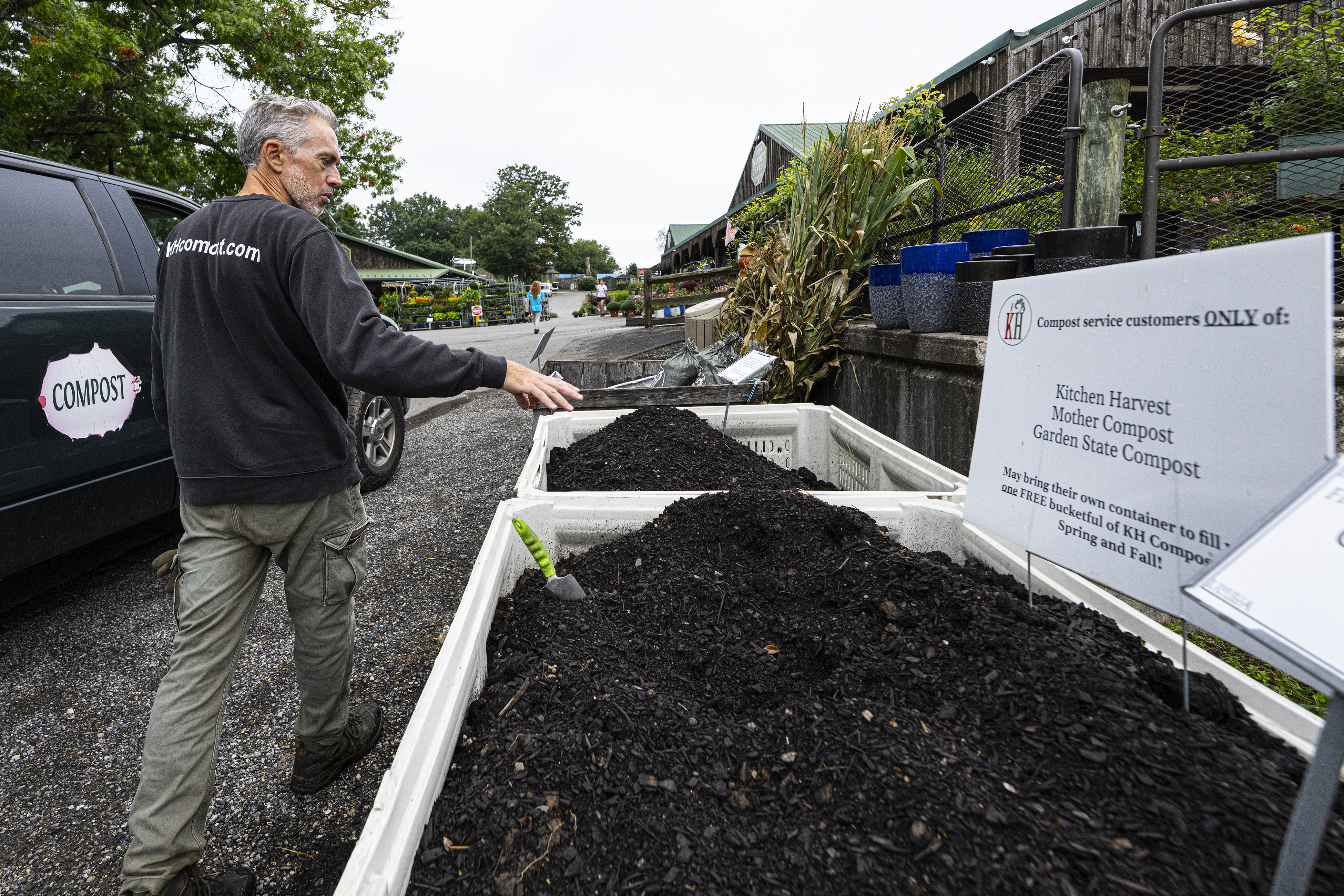
Fifteen years ago, Chris Pieretti was just trying to get people to come around on compost.
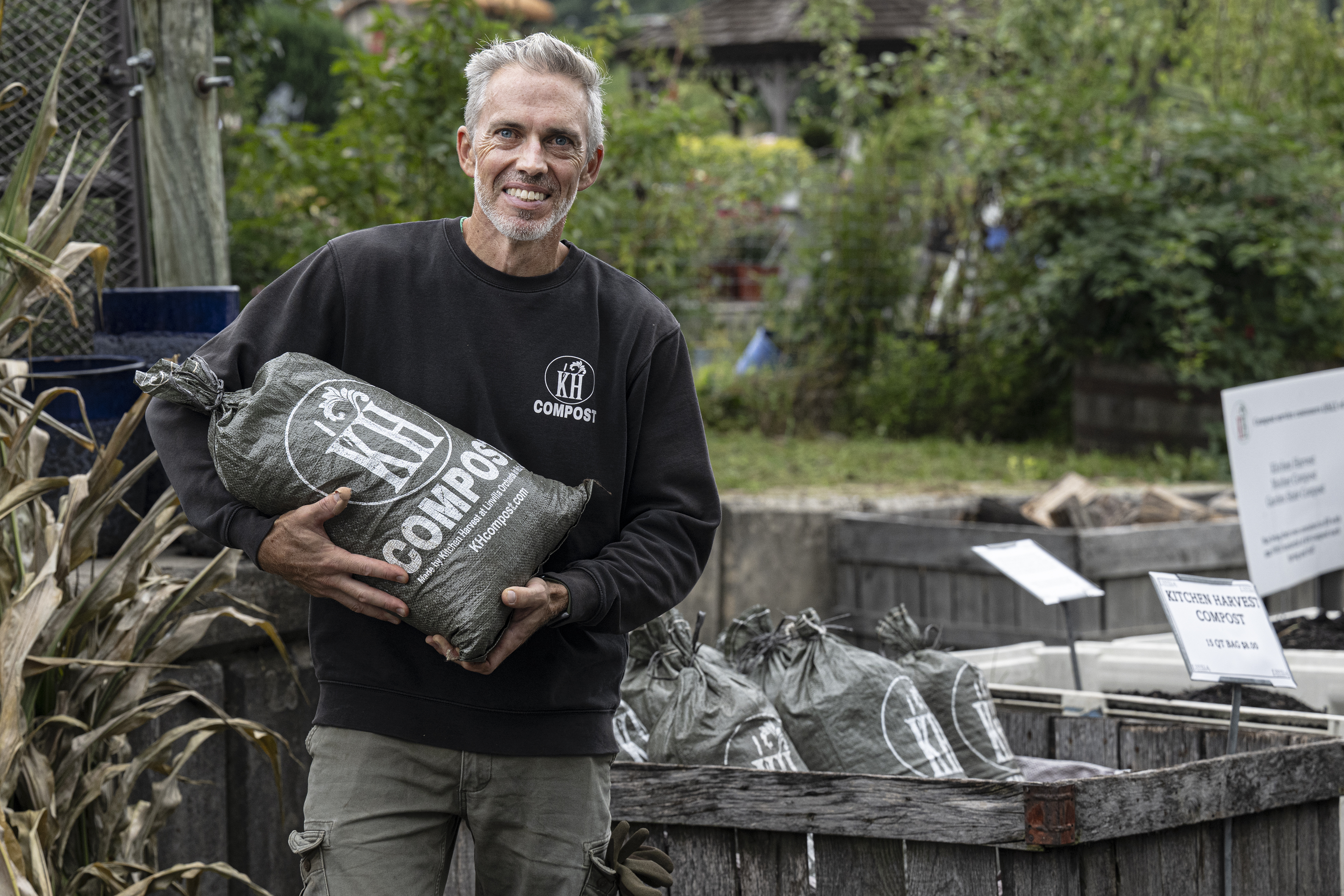
Now, the Upper Darby resident and compost aficionado spends his days traversing the region in his truck, collecting a potpourri of food scraps in green buckets, and turning eggshells, banana peels, and coffee grounds intoa nutrient-rich, soil-like product.
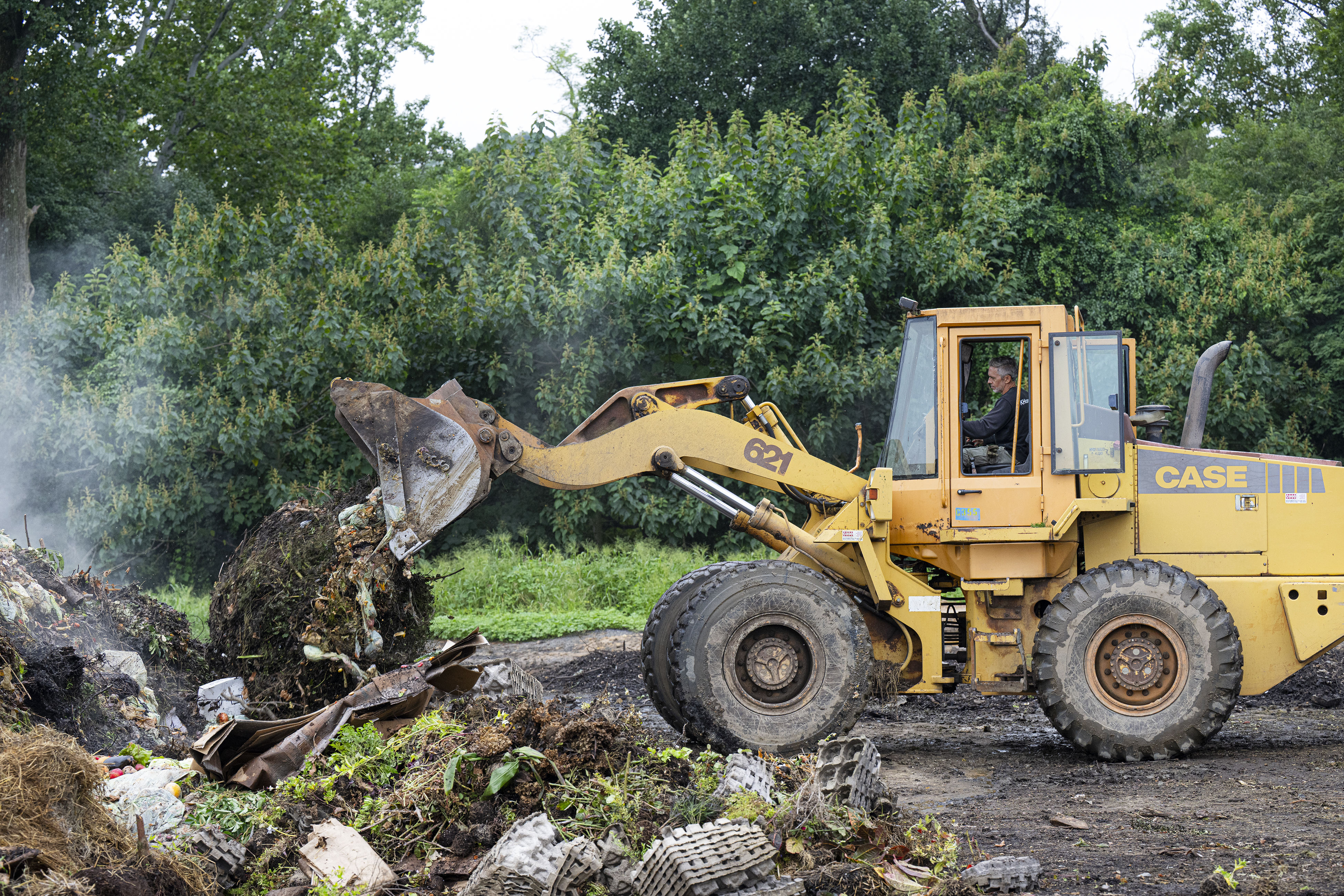
Pieretti is behind Kitchen Harvest, which collects compostable materials and processes them on a five-acre site at Linvilla Orchards in Delaware County. Kitchen Harvest is, in Pieretti’s words, part of “a better, more sustainable future of a full-circle food system.”
It is part of a growing network of providers and composters across the Philadelphia region who are working to reduce waste and improve food system circularity, where scraps of food once grown in the Earth can return to it, fertilizing soil for new crops.
With Haverford Township debuting its municipal compost program this summer, joining Media and Swarthmore, among other municipalities, compost purveyors say the practice is breaking out of its crunchy origins and becoming a key part of the region’s waste management strategy.
Chris Pieretti holds a compost bag at Kitchen Harvest in Delaware County. Pieretti is working with local homes and municipalities to compost food scraps and yard waste. Jose F. Moreno / Staff Photographer
What is composting?
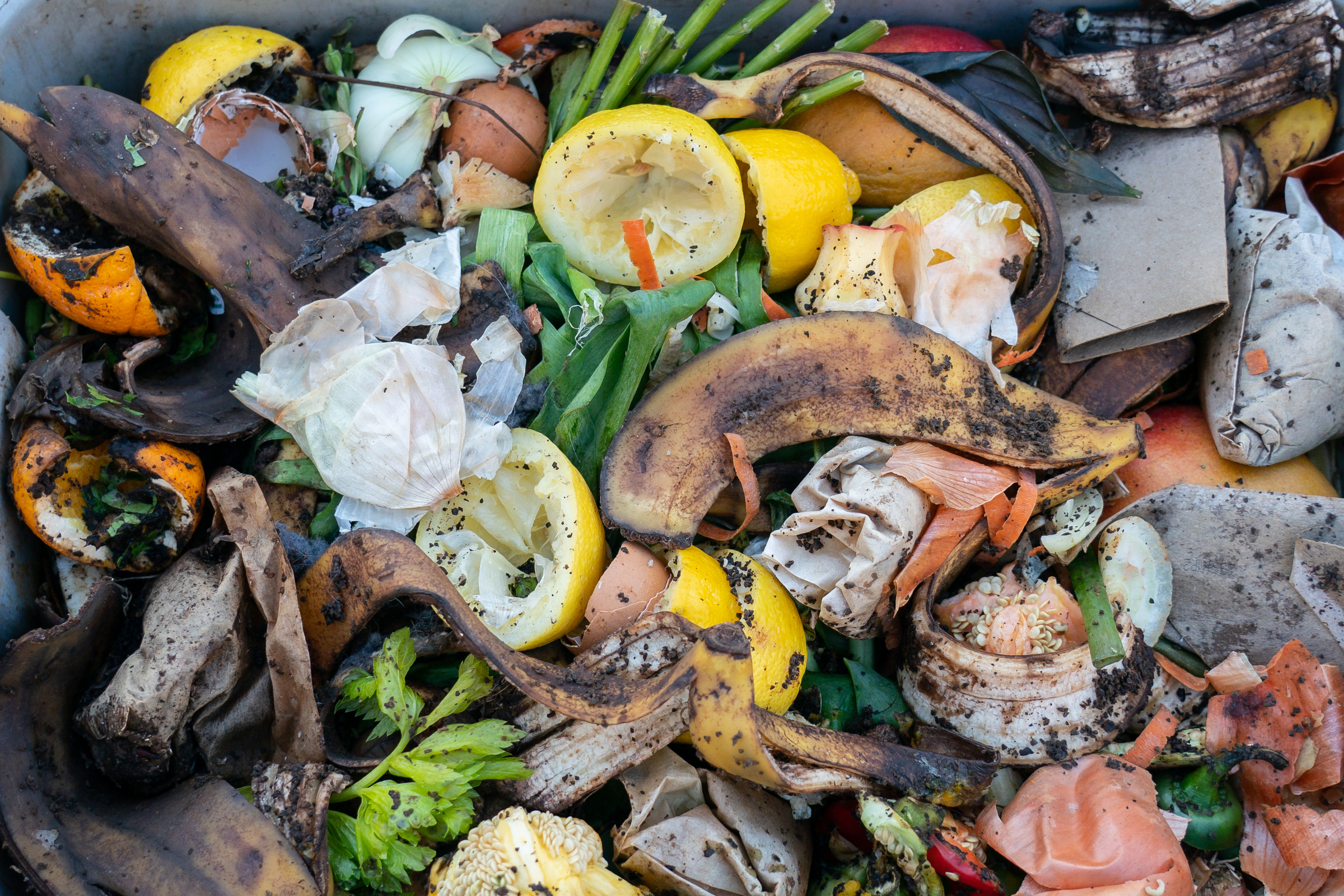
Composting is the process of recycling organic materials like food scraps and yard waste, breaking them down into a brown, soil-like material called compost, and using that material in farms and gardens to enrich other plants and crops.
The composting process happens on micro and macro scales — in small home gardens and at multi-acre sites like Kitchen Harvest’s.
Compost advocates tout both its environmental and agricultural benefits. In the U.S., food is the single most common material sent to landfills, where it is responsible for 58% of methane emissions, a powerful greenhouse gas, according to the Environmental Protection Agency. Adding compost to soil increases its nutrient content, conserves water by helping retain moisture, and reduces reliance on chemical fertilizers, the EPA says.
“Food is only wasted when we throw it in the trash. It’s our choice to dispose of it in that method, but we don’t have to,” said Gwenn Nolan, founder of Mother Compost, a company that collects compost material throughout the Philly suburbs and brings it to the Kitchen Harvest site at Linvilla.
Going from ‘crunchy’ to ‘waste management strategy’
Many compost enthusiasts have a similar story: What started as a backyard experiment grew, through trial and error, into a way of life and, for some, a career.
Nolan, of Mother Compost, got her start asking 10 friends on the Main Line to try composting so she could test demand for a compost collection service. She bought a small truck, picking up the bins of food scraps early in the morning before heading to her job in financial services. After the pandemic, residential demand ballooned, and Nolan made Mother Compost her full-time job. Now, the company serves around 1,500 homes; schools including Bryn Mawr College and Villanova University; culinary institutions including Reading Terminal Market; and corporate offices.
Nolan collects compost in her truck and carts it out to Pieretti, whom she calls “the master mixologist,” for processing.
“It’s really exciting to see the commercial side and the institutional side coming online as well,” Nolan said. “It’s becoming more a piece of the waste management strategy than just this kind of crunchy, environmental practice that I think people thought about it before.”
Kate Jacoby, who runs Center City vegan restaurant Vedge with her husband, Rich Landau, is one of Nolan’s loyal customers. Jacoby began composting in her small Philadelphia backyard during the pandemic, expanding her home compost operation when the couple moved to Chester County in 2021 and, eventually, bringing composting to the Vedge kitchen.
“I get such a satisfaction knowing that it’s going to go into the soil and it’s not going to sit in a landfill,” Jacoby said.
Foods scraps like banana peels, onion skins, and lemons are turned into compost. JESSICA GRIFFIN / Staff Photographer
An expanding suburban compost network
As compost accessibility grows, so, too, does the number of municipal governments offering compost services to residents.
“The community at-large really supported the idea, and the participation was really high,” Pieretti said of Media.
Many suburban programs have followed in the footsteps of Bennett Compost, which has been serving the city of Philadelphia since 2009.
Lower Merion in 2025 debuted both a community drop-off and a curbside pickup pilot program through Mother Compost and Bennett Compost. Swarthmore Borough launched a curbside compost program through EZComposting in January.
When Haverford Township launched its Kitchen Harvest partnership this summer, Pieretti felt like he had “won the compost championship.”
In July, Haverford Township collected 162 tons of organic material, an increase of 111 tons from last July, according to township manager Dave Burman, who called the program “pretty successful.” The township also collected 141 fewer tons of trash this July than the year prior.
Haverford Township’s program is optional, with no additional cost or registration process for residents.
“We’ve tried to make it as easy as we could for people to participate, and so far, so good,” Burman said.
Buckets of finished compost at the Kitchen Harvest site at Linvilla Orchards. Jose F. Moreno / Staff Photographer
At its best, proponents say, compost creates a circular system. Much of Kitchen Harvest’s compost product is used by Linvilla Orchards to feed the crops, and composters can buy back bags of the finished product at a discounted rate.
Sarah Linvill, team member at Linvilla, said the farm is grateful to work with Kitchen Harvest and to “be hosts for that kind of work.”
Composting services are “just invaluable to the community,” Linvill said.
Nolan called Linvilla “a tremendous resource for the region” when it comes to compost.
Composters like Jacoby, of Vedge, say they now cannot imagine a world where they simply toss an apple core into the trash.
“If you really, really dig down and want to get kind of philosophical about it,” Jacoby said, “when your soil is healthy and it’s full of nutrients, you’re going to have better-tasting food for yourself to consume.”
This suburban content is produced with support from the Leslie Miller and Richard Worley Foundation and The Lenfest Institute for Journalism. Editorial content is created independently of the project donors. Gifts to support The Inquirer’s high-impact journalism can be made at inquirer.com/donate. A list of Lenfest Institute donors can be found at lenfestinstitute.org/supporters.
A gas-powered leaf blower ban in Lower Merion has put “tremendous stress” on township staff, as hundreds of complaints have piled up since its implementation this summer, officials said at a Sept. 9 meeting.
Officials from Lower Merion’s department of building and planning told commissioners at a recent budget meetingthat enforcement of the ban has strained resources as staff are pulled away from other work to address a growing collection of complaints. The department is asking to promote one part-time staff member to full-time and hire a seasonal code compliance officer to meet the increased demand.
“There’s a significant amount of administrative time required to enforce the ordinance, and it’s just beyond our existing capabilities to do this,” Chris Leswing, Lower Merion’s director of building and planning, told commissioners.
Leswing said investigating potential violations has pushed back other projects, requiring the department to pay increased overtime so staff can address their day-to-day responsibilities.
Lower Merion received 437 complaints of leaf blower violations and issued 49 fines from June 1 to Sept. 9, according to Ernest Pendleton, assistant director of building and planning.
In that same time frame, the department received 80 reports of all other standard property maintenance violations, including trash, debris, noise, lighting, high weeds, and grass issues.
The proposed upgrade of the administrative clerk to full-time next year would add $48,000 to next year’s budget, and hiring a seasonal code compliance officer for 22 weeks of the year would add $35,000.
The ordinance phased out gas-powered leaf blowers on a seasonal basis, starting with a ban from June 1 to Oct. 1 this year, with an eventual all-out ban beginning in 2029.
Enforcement is complaint-based. Residents are encouraged to report violations via Lower Merion’s LM Report-It app, email, or phone. Violators first receive a warning, then a $100 fine for a first offense, $250 for a second offense, and $600 for a third or subsequent offense.
Enforcing the leaf blower ban presents a specific set of issues for staff, Pendleton said. Only around one-third of leaf blower complaints include enough evidence to be verified, meaning for the majority of infractions, a township staff member must conduct an independent investigation before deciding whether to fine a property owner. Investigations often include reviewing photos and videos and driving to the site of the violation. Complaints are doubly difficult to investigate as the department’s inspectors are often “scheduled out,” meaning no one is available to look into tips as they are being called in, according to Pendleton.
“We don’t have any inspector sitting inside our building to run out to a site,” Pendleton said.
Commissioners at the meeting said residents have reported feeling uncomfortable with the complaint-based system.
“They’re feeling as though they’re being asked to report on one another in the absence of another type of system,” said Commissioner Chris McGuire, who said she is getting reports that “neighbors are quibbling because one has reported the other.”
Pendleton said hiring a seasonal code compliance officer would help alleviate the fact that “neighbors aren’t liking to have to tell on neighbors,” though he noted that all of Lower Merion’s standard property maintenance complaints, with the exception of building codes, come in through resident reporting.
“We don’t send anyone out to look for problems,” Pendleton said.
Both commissioners and staff said they expect leaf blower complaints to drop in the coming years as residents and landscapers continue to transition to electric equipment. Pendleton said adding a seasonal officer would allow the township to have flexibility to shed the position should complaints drop off.
Some commissioners seemed poised to fulfill the building and planning department’s staffing requests, but no formal votes were taken at the meeting.
This suburban content is produced with support from the Leslie Miller and Richard Worley Foundation and The Lenfest Institute for Journalism. Editorial content is created independently of the project donors. Gifts to support The Inquirer’s high-impact journalism can be made at inquirer.com/donate. A list of Lenfest Institute donors can be found at lenfestinstitute.org/supporters.
The Trump administration will be overhauling the SNAP program in two major steps, forcing Pennsylvania to pay more for the federal food program and jeopardizing those in need, according to Gov. Josh Shapiro’s office.
The first phase begins Oct. 1, when states will have to pay for 75% of the expense of administering the Supplemental Nutrition Assistance Program, an end to the 50-50 cost-sharing relationship between the federal government and the states that existed for decades.
The second and more dramatic change is scheduled to commence a year from now, when the Trump administration demands that states pay for a portion of SNAP benefits — an unprecedented arrangement that could put Pennsylvania on the hook for as much as $400 million of the approximately $4 billion the state receives in SNAP benefits annually.
That’s a price the state is not ready to pay.
“Pennsylvania’s state budget cannot make up for huge cuts to federal SNAP funding that will shift these costs onto states,” Shapiro spokesperson Rosie Lapowsky said in a statement. “And those cuts risk leaving hungry Pennsylvanians without food assistance.”
The Trump administration plan, part of President Donald Trump’s One Big Beautiful Bill Act, is roiling Democrats and SNAP advocates who view it as an effort to weaken the food benefits program by saddling Pennsylvania and other states with the responsibility of paying for something they cannot afford.
In anticipation of the first new rule going into effect in two weeks, Shapiro earmarked $87 million in the state budget to administer the SNAP program in the state, which includes paying for operating expenses.
Burdening states with increased financial demands is “catastrophic,” said St. Joseph’s University sociologist Maria Kefalas.
Kefalas said it will force states to make drastic moves to make up for lost dollars, including making eligibility rules harder and shrinking benefits.
“The pressure on states to push people off SNAP will be tremendous,” she said. “The Trump act was written to shift blame for cuts to safety-net programs from the federal government to the states. Now, the states will be seen as the bad guys.”
The original even split for administrative costshad the state and the federal government each paying $250 million in SNAP administrative costs, according to the Pennsylvania Independent Fiscal Office (IFO), anonpartisanlegislative agency that analyzes budgetary issues.But after Sept. 30, the state could be looking at as much as a $125 million increase in payments annually, IFO figures show.
Shapiro’s $87 million budget infusion covers that increase for a portion of the state fiscal year, said Brandon Cwalina, press secretary for the Pennsylvania Department of Human Services, which oversees SNAP.
The Trump administration says that by forcing states to put skin in the game, it is incentivizing them to cut waste, fraud, and abuse in the program.
“President Trump is strengthening SNAP for the Americans who need it by ensuring these programs are sustainable for future generations,” White House spokesperson Anna Kelly said in a statement.
She added that the One Big Beautiful Bill Act implements “reasonable” cost-sharing measures with states.
Kelly also said that by signing the bill into law, Trump is “uplifting every American’s financial situation by passing the largest tax cut in history.”
But concern is growing that by compensating for SNAP shortfalls, states will pull funds from other sources.
“Does this mean money will be taken from police, courts, and other critical functions to pay for SNAP?”asked State Sen. Art Haywood, the top Democrat on the Health and Human Services Committee, who represents part of Philadelphia and Montgomery County.
Error rates
How much the state will have to pay in SNAP benefits in October 2027 depends on its payment error rate, a measure of overpayments and underpayments of benefits.
Error rates are largely unintentional and are not fraud, according to the Food and Nutrition Administration of the U.S. Department of Agriculture, which runs the SNAP program.
“It’s like doing your taxes and accidentally switching numbers,” said Ann Sanders, director of public benefits policy and programs for Just Harvest, a Pittsburgh-based anti-hunger nonprofit. “Not a crime, just a mistake.”
In fiscal 2025, Pennsylvania’s error rate was 9.2%, mostly representing overpayments, said IFO director Matt Knittel.
Even though it is below the national error rate of 10.6%, if the 9.2% level holds, Pennsylvania could be made to pay as much as $400 million a year when the new rule takes effect, IFO figures show.
“These are costs Gov. Shapiro has made clear we cannot backfill,” Cwalina said. The Shapiro administration, which has had some success lowering error rates, has introduced new technology that helps flag potential errors before incorrect payments are made.
The reorganization of SNAP’s functions and financing comes during an ongoing affordability crisis, said George Matysik, executive director of the Share Food Program, which supplies many food pantries in the Philadelphia area.
“Instead of the federal government helping to solve it, it’s just passing the buck onto the consumer,” he said. “Prices are going up, while Washington punches down on the working class.”
While the new changes have yet to kick in, Trump’s One Big Beautiful Bill Act has already altered SNAP to help pay for his tax cut.
The administration has expanded work and documentation requirements for SNAP recipients, resulting in millions of people seeing their benefits lowered or eliminated.
Nationwide, between July 2025 and May, SNAP rolls have decreased by more than 5 million people, or 12%, according to the Center on Budget and Policy Priorities, a left-leaning Washington-based think tank.
As of July, the latest Pennsylvania DHS estimates show that 94,200 people have lost benefitssince Trump’s law took effect.
The changing contours of the SNAP program worry legislators accustomed to its normally steady rhythms.
“There was a 60-year-long partnership between the federal government and the states on SNAP, without problems,” Haywood said.
“SNAP worked well since it got its start in 1964.But now, unfortunately, the current administration is dramatically changing it.”
Ask Pastor Daniel Cho why Korean culture has become so popular in the United States, and he just smiles, shaking his head in wonderment.
“I’m not sure, but we’re pleasantly shocked,” said Cho, 59, a Montgomery County Presbyterian minister, who is leaving soon for missionary work in Vietnam. “Turn on the TV and see Korean dramas, K-pop music, and Korean food being everywhere.
Pastor Daniel ChoAlfred Lubrano
“It’s wonderful how we’ve gotten to share our culture. When someone loves what you love, it’s exciting.”
That excitement was palpable Saturday at Montgomery County Community College in Blue Bell, where about 1,500 people gathered for “Happy Chuseok Fest 2026,” a Korean Thanksgiving celebration.
Part of a 2,000-year-old tradition, Chuseok is the time Koreans pause to reflect on family, gratitude, ancestors, harvest, and respect for nature.
“I love it because I get to spend time with my family,” said Kelsey Chung, 14, a ninth grader from Newtown Square. “It’s important to remember the traditions.”
Sponsored by the Korean Culture Community Foundation and Montgomery County, the Chuseok festival is highly significant for the roughly 30,000 to 40,000 Korean Americans living in Pennsylvania, said Sharon Hartz, president of the foundation.
“We know Christian and Jewish holidays,” she said. “But Koreans didn’t really have a holiday that was theirs. Chuseok is becoming more widely known.”
At the festival, vendors were selling kimchi (fermented cabbage), kimbap (rice, vegetables, and meat in seaweed), bulgogi (marinated beef), and, of course, fried chicken, the most popular Korean food abroad, according to the Korea Herald.
Beyond chicken, Korea is widely known for a “deep-rooted culture that people around the world have grabbed onto,” said sociologist Sam Richards of Pennsylvania State University, a Korean scholar who spoke at Saturday’s event.
“South Korea was poor 60 years ago, but it’s an economic superpower now,” said Richards, described by the Korea Times as a “megastar” whose YouTube videos are popular in Korea because of his love for and understanding of the culture.
“The Korean government rebuilt the country by putting money into exporting culture — music, television, movies.”
Americans, he said, are quite familiar with the K-pop superstars BTS, the most popular band in the world. Then, among other works, there is Squid Game, the dystopian thriller TV series, as well as the black-comedy film Parasite, Richards said.
“The government succeeded, as people were attracted to what South Korea has exported.”
A key to the appeal of Korean entertainment is that humility, a national trait, stands out among actors and musical artists, Richards said. Also, he noted, “you won’t see Korean artists putting themselves forward.”
“Pop stars say ‘we,’ not ‘I,’” Richards said.
Korea’s new role in the American zeitgeist is remarkable, said Nani Shin, executive director of the Philadelphia Asian American Film Foundation, whose organization was tabling at the Chuseok event.
“No one in the 1970s knew where Korea was,” Shin, who was born in South Korea, said. “Now, the culture isn’t only known, but celebrated. It’s wild.”
It is important to remember, however, that Koreans look to keep their traditions alive for themselves and their children.
“That’s why I’m here,” said Will Press, 43, who stood outside the event Saturday. He married a Korean woman, he said, which means “she, and I, want our children to know that Korea is part of their heritage.”
Tesla seems to be testing its autonomous Cybercabs in the Philadelphia area after launching them in Austin earlier this month.
Local Cybercab sightings have been posted on Reddit and other social media in recent days, with photos and excited commentary reminiscent of trainspotters. Several people posted shots of the gold vehicles parked in the lot of a Devon Tesla dealership.
One Reddit user reported being told at the dealership that vehicles are undergoing “training” for future deployment in Philadelphia.
“We’re not at liberty to discuss that,” a person who answered the phone in the sales department said Friday.
Tesla’s corporate media team did not respond to a request for comment about its Cybercab plans in the Philadelphia market.
Competitor Waymo is already here, so if Tesla does make a Philly play, a robotaxi arms race is possible.
The fully autonomous version has no steering wheel, pedals or mirrors, and is piloted by AI, using an array of cameras to navigate.
Waymo has not announced when it will start carrying passengers in Philadelphia. Under state law, PennDot must approve before people can hail one of its autonomous taxis and pay for a ride.
The Cybercabs caught theattention of James Mosleythis week.
Mosley, a commercial and fashion photographer, was waiting for a Route 65 SEPTA bus on City Avenue for the second leg of his commute to work Wednesday morning when he saw the brassy gold, soundless EV with a Cybercab logo on the front bumper and a Texas license plate on back.
“It was shock and awe,” Mosley said. “I thought, ‘This is crazy.’”
He captured a short video clip of the autonomous vehicle passing through an intersection and changing lanes (with signal) to make a left turn at the next traffic light.
Mosley said he didn’t see a person in the cab, which has tinted windows. In any case, he wouldn’t trust AI to drive him in a fully autonomous Cybercab.
“I don’t even like the self-checkout at the grocery store,” he said.
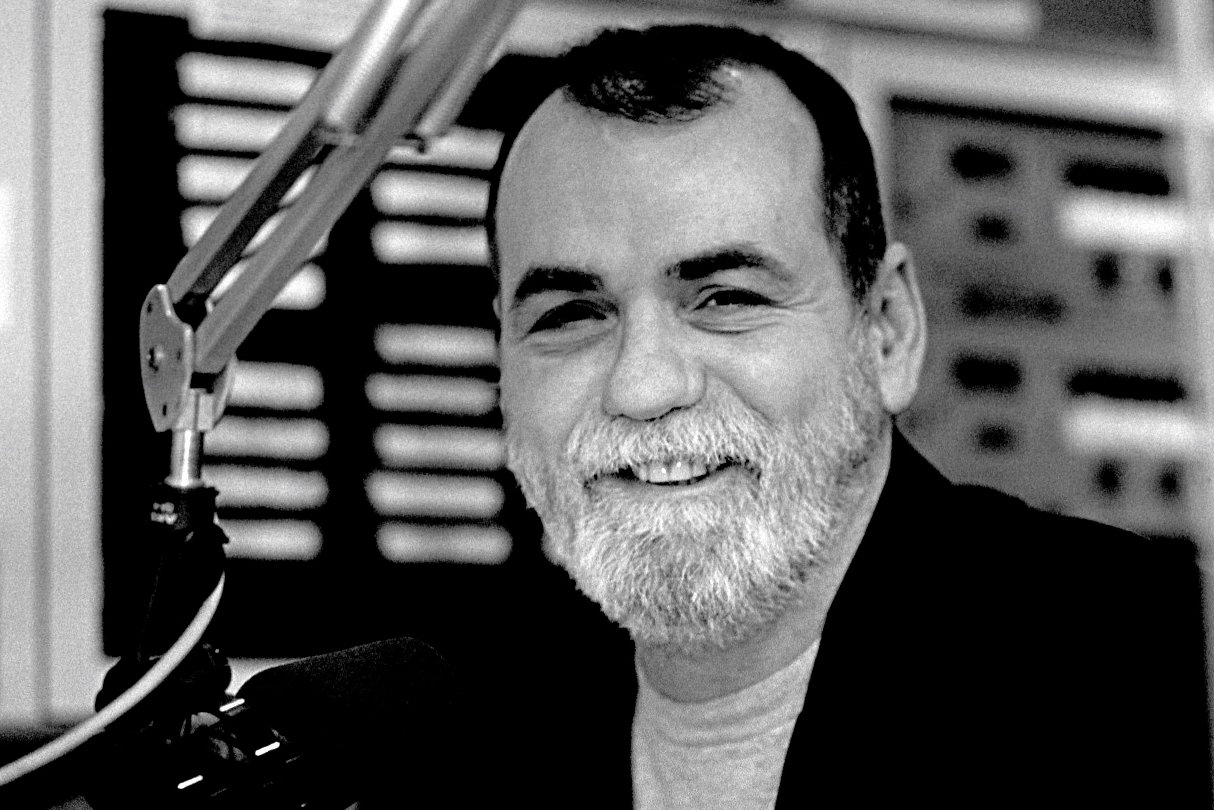
Mike Bowe, 76, of Audubon, Camden County, longtime local disc jockey and popular radio show host at WMGK, WPEN, WHAT and other stations, Army veteran, devoted Phillies fan, and proud son of Gloucester City, died Monday, Sept. 14, of complications from cancer at his home.
Mr. Bowe enjoyed music and socializing as a teen at Gloucester Catholic High School, and was skilled at chatting with people about their favorite songs and other interests. So he was a natural fit later as a radio show host and disc jockey for more than 40 years in studios and at remote appearances, dance parties, charitable fundraisers, and other events.
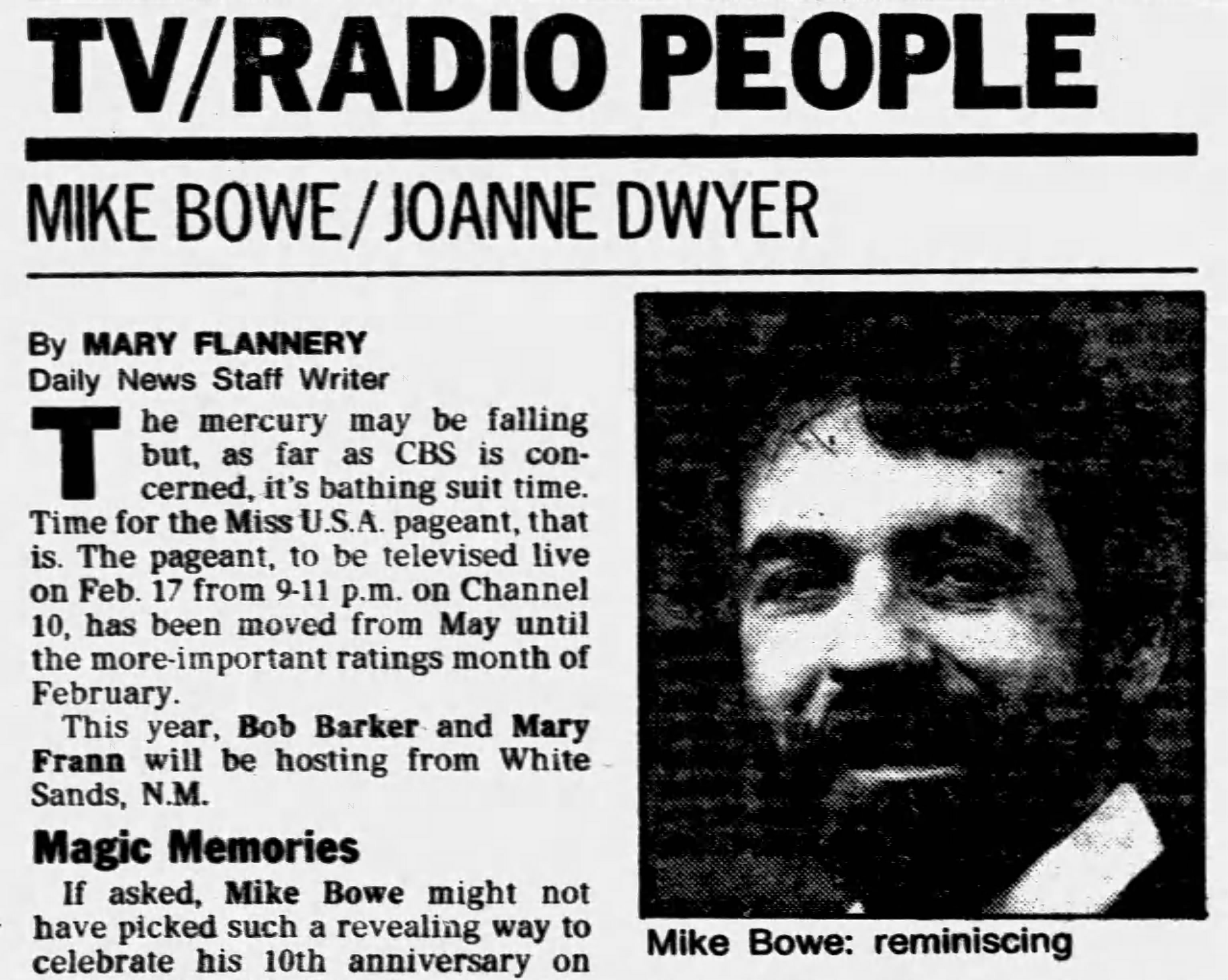
“I like to think I communicate with people,” he told the Courier-Post in 1987. “I think I can relate the same way to somebody whether he’s on Ninth Street in South Philly or at a bank in Center City.”
Fellow DJ Chris McCoy said. “He had something intangible. He made you feel like he knew you, and you knew him.”
Using what his fans and colleagues described as a “calming and smooth voice” and “velvet intonations,” Mr. Bowe hosted music shows at WMGK from 1977 through the early 2000s, at KISS 100 in the 1990s, and at WPEN and WHAT between 2000 and 2011. Colleagues called him “loyal, dedicated, witty” in online tributes, and praised his “down to earth and friendly style.”
They credited him with making WMGK’s Saturday Night ’70s show a hit in the mid-1990s. “He was the very foundation of that success,” McCoy said.
Listeners called him “truly a master of this craft,” “one of the best ever,” and “a memorable radio legend.” He worked after 2011 at other local stations and iRadioPhilly.com.
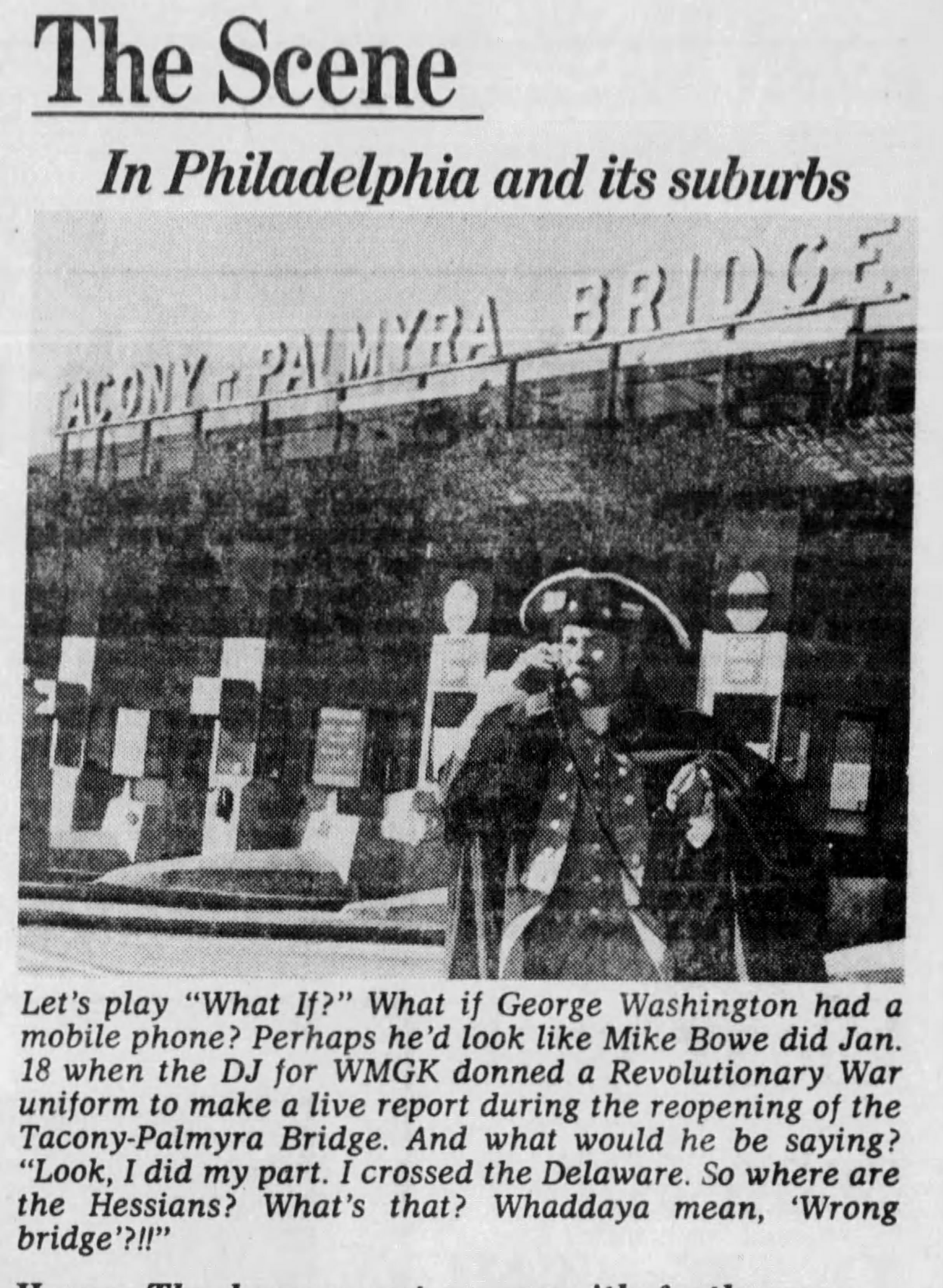
He teamed up with other popular DJs on morning, afternoon, and evening shifts, interviewed performers, took phone calls from listeners, and broadcast from Phillies games and charitable benefits. In 1989, he dressed up as George Washington to cross the Delaware River when the Tacony-Palmyra Bridge was finally reopened after repairs.
He liked to air remotely from his favorite clubs and pubs, and ride shuttle buses with listeners to concerts. He also worked DJ dance party gigs at nightclubs, holiday parades, and private events in Philadelphia and South Jersey.
Mr. Bowe appeared often in The Inquirer and Daily News, including in 1987 (above) and 1989 (below.)Newspapers.com
His favorite song was “Ain’t No Woman (Like The One I’ve Got)” by his favorite group, the Four Tops. “He knew Philadelphia from A to Z,” McCoy said. “He brought a smile to your face.”
Mr. Bowe served three years in the Army, 11 months and 11 days in Vietnam in 1968-69, and earned several medals and service stars, and an achievement badge. Fellow DJ Sue Serio said online that she enjoyed annual Veterans Day lunches with Mr. Bowe, “a treasured tradition that we never took for granted.”
One day, a former WMGK colleague said online, Mr. Bowe took him to Mr. Bowe’s favorite three local landmarks: the Melrose Diner in South Philadelphia, Mel’s Italian restaurant in Bala Cynwyd, and the pool table at the VFW in Gloucester City.
“Mike was a gift to Gloucester City and to the Delaware Valley professionally and as a man,” longtime friend Patrick Healey said. Longtime friend F. Emmett Fitzpatrick III said: “He prized honesty of character above all else.”
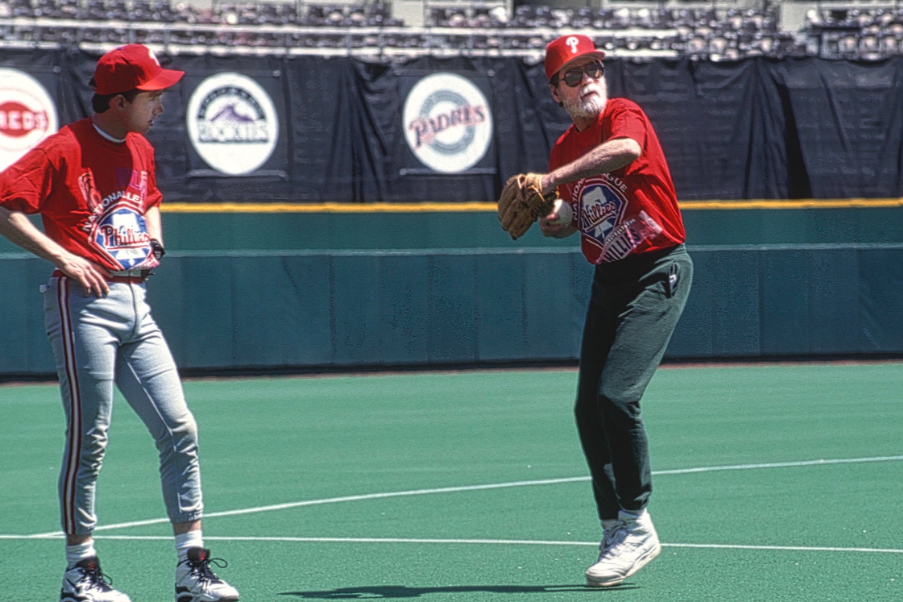
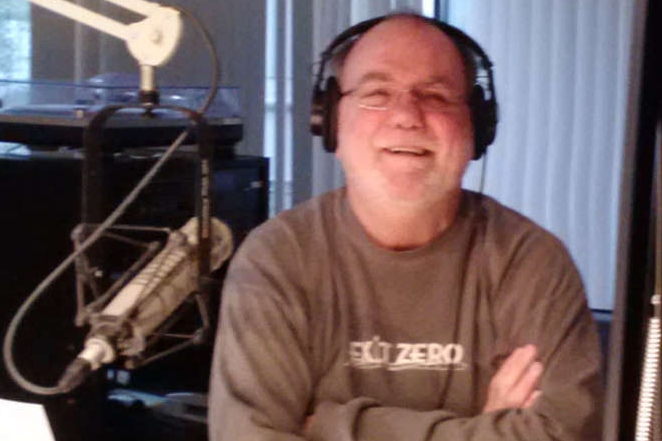
Mr. Bowe, right above, was an avid Phillies fan. Below, he worked morning, afternoon, and evening shifts in the studio.F. Emmett Fitzpatrick III
Mr. Bowe’s niece, Debra Ann Leblang, said: “He lived the ultimate American dream.”
Michael Joseph Bowe was born Nov. 4, 1949, in Gloucester City. He graduated from Gloucester Catholic in 1967, studied broadcasting in Minnesota, and worked his way through the radio ranks in South Jersey and Philadelphia.
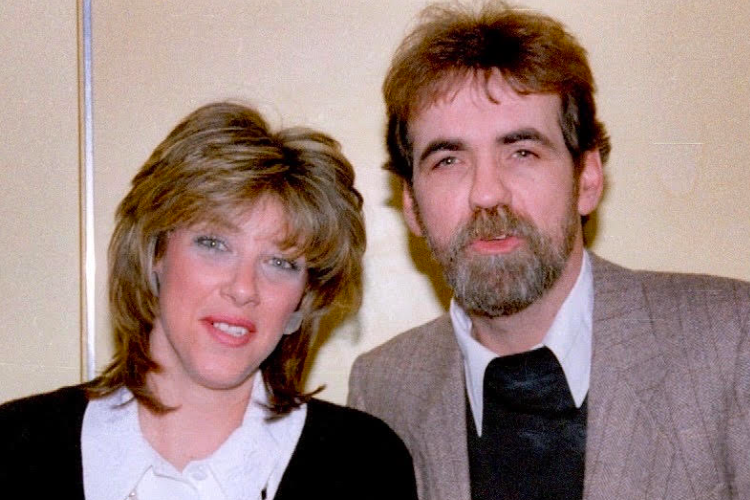
Mr. Bowe and his wife, Debbie, married in 1985. Where one of them went, family and friends all said, the other followed. F. Emmett Fitzpatrick III
Off the air, Mr. Bowe played softball and enjoyed visits to Atlantic City and Brigantine. He was a Sunday morning usher at St. Mary’s Catholic Church and belonged to the Townsend C. Young VFW post.
He used to take dates to Jim’s Pizzeria in Gloucester City, and he told The Inquirer in 1994 that he enjoyed the place’s acerbic camaraderie. “Gloucester’s always been like that,” he said. “People love it. It’s a sarcastic, get-under-your-skin kind of thing. You don’t even get to order your own food.”
His family said: “He was funny, quick-witted, sentimental, outspoken, and unforgettable. He carried his South Jersey roots with him wherever life took him.”
In addition to his niece, Mr. Bowe is survived by a sister, a brother, and other relatives. Two brothers died earlier.
Visitation with the family is to be from 8:45 to 9:45 a.m. Tuesday, Sept. 22, at the McCann-Healey Funeral Home, 851 Monmouth St., Gloucester City, N.J. 08030. Funeral services are to be at 11 a.m. at Brigadier General William C. Doyle Veterans Memorial Cemetery, 350 Province Line Rd., Wrightstown, N.J. 08562.