Category: News

  • Delco’s new emergency services director is focused on ‘sustainability’ after Crozer-Chester Medical Center’s closure

    Delco’s new emergency services director is focused on ‘sustainability’ after Crozer-Chester Medical Center’s closure

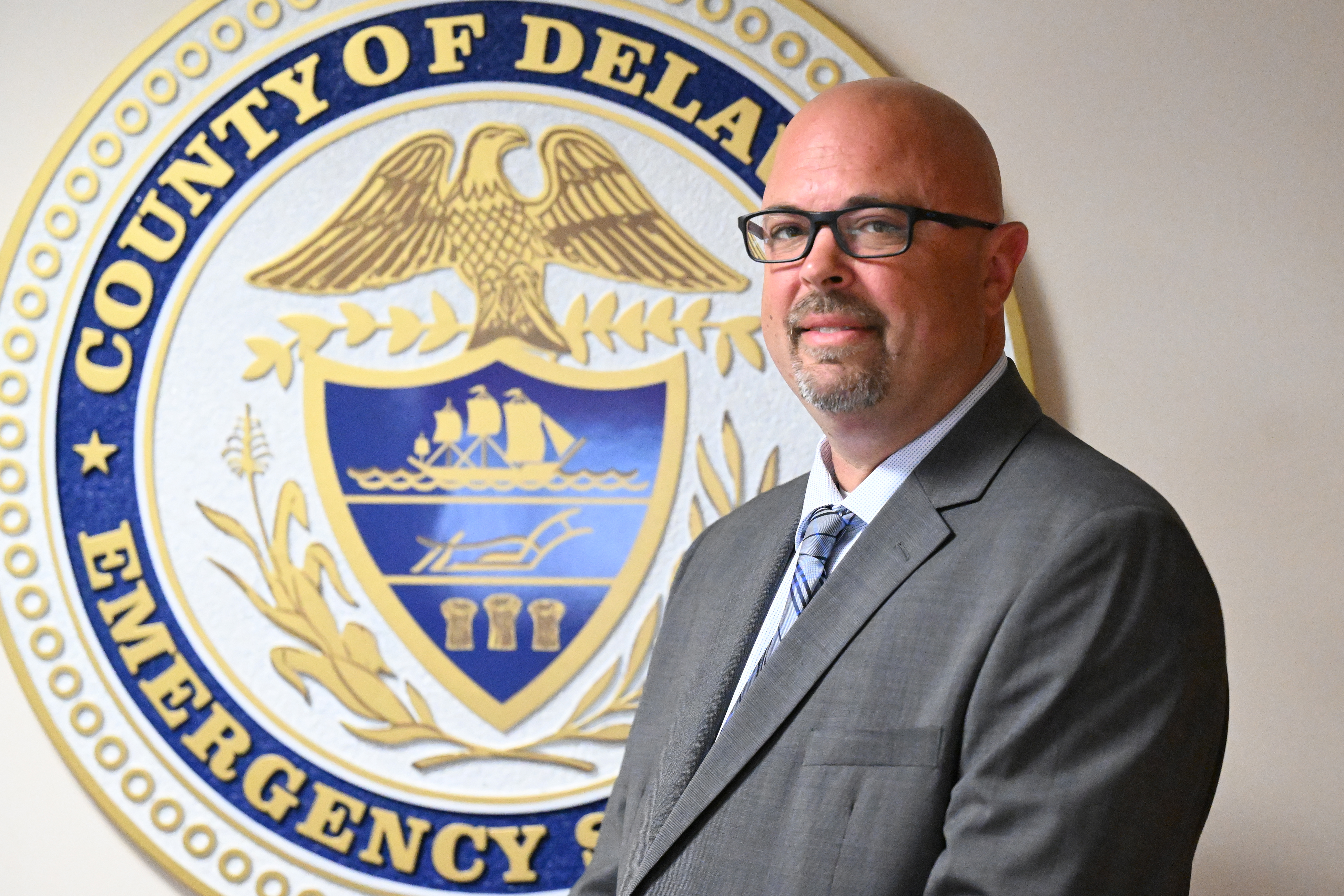
    Delaware County’s new emergency services director wants to build something sustainable.

    Gary Vinnacombe is a Delco native who has spent the last two decades overseeing EMS teams across Delaware and Chester Counties. Last month, he took the helm of Delaware County’s emergency services department, a homecoming of sorts for the longtime first responder, who got his start at Haverford’s Manoa Fire Company.

    Vinnacombe, 43, replaces interim director Ed Beebe, who oversaw Delaware County’s emergency services for 18 months after former director Timothy Boyce was charged with indecent assault, among other offenses, related to his alleged groping of a female coworker.

    Vinnacombe is taking over Delco’s emergency services apparatus at a pivotal time. The county is continuing to navigate the fallout from Crozer-Chester Medical Center’s closure, and some of its municipalities are considering emergency service mergers and cooperative authorities to fill gaps in service. Now, Vinnacombe says he’s eager to work with emergency responders across the county to build a lasting system that can serve Delco’s residents.

    A 911 dispatcher working at the Delaware County Emergency Services Center on Jan. 5, 2022. Delco native Gary Vinnacombe recently stepped up to lead the department. Thomas Hengge / Staff Photographer

    Vinnacombe grew up in Delaware County and is a 2001 graduate of Haverford High School. He holds an associate’s degree in nursing science from Delaware County Community College, a bachelor’s degree in emergency and disaster management from American Military University, and a master’s of public administration from Anna Maria College.

    Vinnacombe has worn many hats over his two-plus decades in emergency management. He joined the Manoa Fire Company as a teenager, where he rose up to become the company’s EMS captain. He spent over a decade as the deputy chief of EMS at Darby’s Mercy Fitzgerald Hospital and is a longtime adjunct faculty member at Delaware County Community College, where he teaches EMT classes, municipal police academy emergency responder training, and CPR. Most recently, Vinnacombe spent 14 years with the West Grove Fire Company in Chester County, where he was assistant chief and oversaw day-to-day operations and employee recruitment and retention. He currently lives in Chester County.

    Vinnacombe said the Crozer fallout is an “ongoing evaluation” for his department. He’s optimistic about ChristianaCare’s soon-to-open Aston and Springfield micro hospitals (the Aston facility is set to open this summer, and the Springfield facility next summer). The region’s existing hospitals have “done a fantastic job of absorbing that volume,” Vinnacombe said, and local municipalities have made a strong effort in “coming together to ensure that service continues to get delivered.”

    As the county rebuilds its emergency services, Vinnacombe said, sustainability is top of mind.

    “We can build all these great things all day long,” he said. “If we don’t have a plan or a mechanism to sustain them, it doesn’t matter what we build.”

    When asked about the push by Media, Nether Providence, Upper Providence, Rose Valley, Rutledge, and Swarthmore to create a regional EMS authority to provide advanced life-support care through an annual fee structure, Vinnacombe said he thinks “the concept of regionalization is the key to sustainability.”

    However, he added, it’s important to take a close look at the funding mechanisms for different regional service models, as “every one of them has pros and cons.”

    “I would certainly say, obviously anything that we can do to help people collaborate, or bring the right people to the table, we certainly want to,” he said.

    The emergency services director also steps into his role weeks after Delaware County unveiled a $36 million overhaul to its emergency telecommunications system, curbing years of false alarms and poor connection over its 911 radio waves.

    The difference is night and day for Vinnacombe’s first responders, he said. Now, police, fire, and EMS officials can get real-time notes from 911 calls, fortifying them with a detailed report before they even get on the scene.

    “The residents of Delaware County are in such a better space because of it,” Vinnacombe said.

    Vinnacombe’s department is preparing for a busy summer. The PGA Tour Championship, FIFA World Cup, MLB All-Star Game, and Semiquincentennial are all descending on the Philly area in the coming months, and Delaware County officials are expecting a wave of tourists — and with them, an increased need for emergency responders.

    Delco’s emergency services department is planning to support the upcoming PGA Tour at Aronimink Golf Club in Newtown Square with extra first responders, and Vinnacombe’s team has been busy filling requests for backup from municipalities.

    As he settles in, Vinnacombe is confident that Delco is “only going up.”

    “The services are only going to get better. Technology’s only going to continue to evolve,” he said. “The investments that the county has made into technology and public safety have improved the services that get delivered.”

    This suburban content is produced with support from the Leslie Miller and Richard Worley Foundation and The Lenfest Institute for Journalism. Editorial content is created independently of the project donors. Gifts to support The Inquirer’s high-impact journalism can be made at inquirer.com/donate. A list of Lenfest Institute donors can be found at lenfestinstitute.org/supporters.


  • Radnor school district is looking to enlist outside experts to prepare for future deepfake incidents

    Radnor school district is looking to enlist outside experts to prepare for future deepfake incidents

    The Radnor Township School District is preparing for a possible repeat of a so-called deepfake incident last year that targeted freshman girls, looking to enlist outside help on how to better support victims.

    At a school board policy committee meeting Tuesday, administrators presented updated regulations around bullying and harassment, including that using artificial intelligence to create or share “sexualized, indecent, demeaning or intimate content involving another person” was prohibited.

    The new rules — which follow policy changes passed last month — also say the district will consider who should be present while interviewing students, in light of a student’s age, sex, and background and the issues being investigated. Parents had complained about many aspects of the district’s handling of last year’s incident, including that girls victimized by deepfakes were interviewed alone by male administrators.

    But more changes are possible, administrators said Tuesday. Scott Hand, the district’s director of technology innovation and instructional design, said Radnor “will be engaging outside professionals beginning this summer into fall” to review its policies and practices.

    Some board members also suggested the district retain outside help to be ready for another incident.

    “The statistics say, something like this will happen again,” said Susan Stern, who asked administrators to consider hiring “a resource we could have on hand.”

    “We’re going to work really hard to educate our kids that it doesn’t happen here in Radnor, but our best response is to be prepared,” Stern said.

    Schools have increasingly been forced to grapple with deepfakes as students use generative AI to manipulate photos of their peers — sometimes with tools that can convert clothed photos into naked ones. Pennsylvania has criminalized explicit AI-generated images as child sexual abuse material, and another measure advancing in Harrisburg would require schools to immediately notify law enforcement about AI incidents.

    Radnor drew intense criticism from some victims’ parents for its handling of the deepfakes, which came to light in December and resulted in a student being charged with harassment.

    District officials said no images were ever discovered. But parents said the district had failed to adequately investigate boys’ reports of pornographic videos and downplayed the incident in community messages, further harming victims.

    Parents also accused the district of failing to initiate a Title IX harassment investigation, arguing it was wrong to characterize the incident as “off-campus.”

    Radnor parents are organizing a panel discussion Thursday in King of Prussia, with deepfake victims from Radnor and Lancaster Country Day School, advocates, and state officials, including Attorney General Dave Sunday, describing risks and how schools can better respond.

    The rules presented to Radnor’s policy committee Tuesday specify that the district has authority over off-campus behavior when it “materially and substantially disrupts the operations of the school” — a common legal standard.

    Jannie Lau, the committee’s chair, said that given how online kids are, any online harassment would seem to meet that threshold.

    “That’s my takeaway — it would be extremely rare for this conduct to happen, and for us to come to the conclusion it doesn’t impact our operations,” Lau said.

    Lau said the district should consider hiring an outside law firm to conduct future Title IX investigations, to ensure more impartiality.

    “It’s just human nature — you don’t want to bite the hand that feeds you,” Lau said, noting that a district solicitor might have an interest in siding with the district, to avoid jeopardizing that relationship.

    In comments Tuesday, Audrey Greenberg, a parent of one of the victims, said she appreciated the rule changes, but that they didn’t go far enough. If a student reports AI-generated sexual content, she said, the district’s Title IX coordinator and central administrators should be notified immediately.

    She also said the description of “off-campus” behavior was too vague — saying deepfakes harm students’ attendance, friendships, and mental health — and argued that the rules wouldn’t prevent a poor administrative response.

    “It was so painful to get those emails calling the event rumors and speculation, when a crime occurred,” Greenberg said, referring to messages from Superintendent Ken Batchelor, including one that described the deepfakes as images made “to move and dance.”

    “For crying out loud, this is pornographic material,” Greenberg said.

    Stern, the board member, said earlier in the meeting that Radnor would be dealing with the fallout for a long time.

    “I don’t think that there’s anyone in this district who will ever hear the words ‘generative AI’ again, and not feel a little tug,” she said. “We had children who were harmed.”

  • Developers revert to 1.5M-square-foot data center proposal in Chesco after months of fiery opposition

    Developers revert to 1.5M-square-foot data center proposal in Chesco after months of fiery opposition

    Following months of fiery opposition from residents that saw protests and halted municipal meetings, the developers of an East Whiteland data center called their own bluff, telling the township that they will scrap their revised plans and instead build a previously approved 1.5 million-square-foot version.

    The decision takes a smaller plan, proposed last month, off the table — but it also eliminates a much bigger version that residents vehemently opposed.

    It comes after the developers — Green Fig LLC and Sentinel Data Centers — defiantly pressed the township last month to move quickly on their revised application, which, in one last-minute iteration, could have scaled back the project’s footprint significantly, by around 74% to 85%.

    Limited plans were submitted and were sent to consultants for review, officials said. The developers told the board that it was a concession they’d make only if the township’s three elected officials moved quickly on an approval.

    The board of supervisors were expected to vote on the amended project in late May, after pushing the meeting back from the end of April. The township canceled the meeting following a letter from developers on Monday withdrawing the pending application.

    In an email, Lou Colagreco, an attorney representing the developers, said that the decision to withdraw the project was partly due to the timeframe from the board, but “the larger factor was that it became obvious that no accommodation which our client offered would be acceptable.”

    “We thought that our offer to pivot to a much smaller data center together with enhanced landscaping, sound attenuation, diminished water usage and other modifications would be well received,” he said. “It became apparent to us, however, that the real issue had little to do with these factors. It was simply data center vs. no data center.

    Colagreco described the current proposal “a good plan” that developers “are anxious to build.”

    Residents considered the downsized project — smaller than one of the amended plans that would have increased square footage by roughly 60% — a win. They’re still pursuing legal action, arguing that the initial approvals have now expired.

    The project will sit on about 100 acres at 13 S. Bacton Hill Rd., on a Superfund site near a residential development and the popular Chester Valley Trail.

    It has been a winding saga for the project, which saw its first approvals back in 2018 by the zoning hearing board before receiving a final greenlight from the supervisors in 2024.

    But outrage over data centers has been growing since, sparking large attendance at local meetings in and surrounding Chester County.

    In response to pushback, developers approached the township about shrinking the site’s footprint, but the changes still didn’t appease residents. It resulted in a string of impassioned meetings and prompted the supervisors to consider undoing the zoning language that allowed the project to proceed.

    The developer has maintained that the project would be built in some capacity but argued that the newer plans would have a lower impact on the community.

    Under the original 2024 plans they said they’ll move forward with, the project — which is 1.5 million square feet across two buildings — would include antenna yards, microwave towers, and cooling towers that rely on evaporating 3 million gallons of water a day.

    “We’ve been accused of bluffing. This is not bluffing,” Sentinel Data Centers CEO Josh Rabina told the supervisors and residents in April when presenting plans to shrink the facility. “The approved plan is less desirable for us and for our customers, is less elegant and less efficient of a design, but it’s functional, it’s profitable, it’s vested, and it gives us certainty.”

  • Kratom makers are tweaking their ‘gas station heroin’ formulas to evade pending bans in Pa. and N.J.

    Kratom makers are tweaking their ‘gas station heroin’ formulas to evade pending bans in Pa. and N.J.

    ATLANTIC CITY — When the nation’s largest smoke shop expo descended on the convention center here earlier this spring, sales reps scrambled to offload pallets of a controversial synthetic kratom product known as “7-OH” before lawmakers in Pennsylvania and New Jersey ban their products.

    The addictive drug 7-Hydroxymitragynine, a highly concentrated lab-made compound derived from the kratom plant, flooded the bustling floor of the CHAMPS trade show.

    Yet some vendors said they weren’t worried about bills working their way through Harrisburg and Trenton.

    Their suppliers had already cooked up new recipes.

    Matt Swann, a real estate investor turned 7-OH distributor from Salt Lake City, promoted a new product called “Cori,” a four-pack of tablets wrapped in a sleek green package. Swann’s offering draws from corydalis, yet another plant from East Asia that produces similar pain-killing alkaloids to kratom — but is not the target of any proposed bans.

    “Legislation is what shuts me down,” Swann said, at his one-man expo booth in March. “This is how we stay ahead.”

    Half a dozen 7-OH sales reps told The Inquirer that companies are changing their formulas to preemptively sidestep legislation prompted by concerns over the drug widely dubbed “gas station heroin” for its promised high and addictive potential.

    Federal authorities began taking steps last summer to classify 7-OH as a controlled substance due to its widespread availability and reports of abuse. At least a dozen states have moved to outlaw the substance, and bills in Pennsylvania and New Jersey are being considered.

    But in the booming gray market for synthetic drugs — from kratom to lab-made THC to psychedelics — the difference between legal and illegal can be as small as a molecule.

    Perks’ booth at the CHAMPS B2B trade show at the Atlantic City Convention Center on March 19.Tom Gralish / Staff Photographer

    To dodge the crackdown, some companies are swapping their active ingredient from 7-OH to a related compound called mitragynine pseudoindoxyl, or “pseudo.” Others are pivoting to 13-Hydroxy Mitragynine, or “13-OH.” Both function in similar ways, binding to opioid receptors in the brain.

    And vendors promised the variants are just as powerful.

    Some kratom advocates welcome restrictions on 7-OH and other chemically concentrated alkaloids. But they also worry that lower potency, natural kratom products will get caught up in sweeping bans.

    Swann criticized the panic around 7-OH. He described both it and his new corydalis product as safer alternatives to opioids that can help people living with chronic pain.

    Swann said he is clear with buyers about the risk of dependency. Kratom-derived pain relievers are far less fatal than opioids, whose pharmaceutical producers, he argued, are threatened by the drug’s popularity.

    “It’s the safest alternative,” he said. “Kratom is 10-fold the product.”

    Matt Swann at his Siete 7 / Coco Distro booth At the CHAMPS B2B trade show at the Atlantic City Convention Center.Tom Gralish / Staff Photographer

    A game of molecules

    Last summer, Florida passed an emergency ban specifically targeting 7-OH. Other states, like Vermont, have banned kratom altogether, as well as any related alkaloids, preemptively cutting out alternative compounds like 13-OH or pseudo.

    New Jersey lawmakers are advancing legislation that would similarly classify 7-OH as a controlled substance, although it makes no mention of these related alkaloids.

    Another bill under consideration in Harrisburg mimics Vermont’s strategy by outlawing all products that contain over 2% 7-Hydroxymitragynine, as well as any other “synthetic, semi-synthetic, or chemically manipulated alkaloid” derived from the kratom plant.

    “They can call it whatever they want,” said Sen. Tracy Pennycuick (R., Montgomery County), the bill’s lead sponsor. “If it comes up 2%, it’s still banned.”

    Still, as written, the ban might cover new variants like “pseudo” and 13-OH but not the latest extracts from the corydalis plant.

    Meanwhile, pro-kratom lobbying groups have pushed lawmakers to create clear legal definitions between naturally sourced, low-potency kratom products and those ultra-concentrated, synthetic forms like 7-OH.

    Dallas Vasquez, CEO of Mitra9, a Florida-based company that distributes kratom and kava-infused beverages across the country, said the two products are “not equivalent from a chemistry or pharmacological standpoint.”

    He said Mitra9 does not use concentrated 7-OH to make the drinks more potent. His products contain less than 2% total kratom alkaloids, with low levels of 7-OH that occur naturally in extracts from the plant leaves, according to lab tests reported on Mitra9’s website.

    “My business is built on the bet that the responsible segment of the market will survive,” Vasquez said. “If it doesn’t, I lose too. So I have every incentive to be honest about what the products are.”

    Kratom booth at the CHAMPS B2B trade show at the Atlantic City Convention Center on March 19.Tom Gralish / Staff Photographer

    Booming profits, clandestine makers

    The CHAMPS trade show traditionally serves as a meetup for recreational drugmakers and retailers of cannabis. That the kiosks were dominated by 7-OH vendors is a sign of kratom’s growing popularity and profitability.

    Large kratom companies pushing products with opioid-inspired names like “Opia” and “Perks” can bring in millions in revenue per month, according to Swann, the vendor from Salt Lake City.

    Many companies are supplied by a small network of kratom manufacturers that synthesize products, often on condition that the makers’ names be kept secret, according to Swann and company owners who spoke with The Inquirer. So long as the compounds remain legal at the federal level, there are labs willing to make them en masse, which sellers like Swann can distribute in states without total bans.

    For everyone involved, profits are high.

    “[Manufacturer] profit margins are in the 5 to 10% range, but they’re doing millions and millions of dollars,” Swann said. “My profit margin is closer to 200% to 300%. If I invest a quarter-million dollars, I can usually come out with a million.”

    Swann said he started his own business with $250,000 in capital and a phone call to a lab in Utah. His brand, Siete, launched within months. He estimated that his new “Cori” product had a life span of three years before it, too, would be banned.

    Camille Winans, a sales representative for a company selling new 13-OH products, argued that kratom had been demonized by lawmakers and that keeping the products on shelves amounted to “harm reduction.”

    However, medical experts say there has been an uptick in admissions to rehabs from people who got hooked on kratom, including in Pennsylvania.

    Jason Kirby, chief medical officer of Recovery Centers of America, worries that states would ban 7-OH without the necessary medical resources for people who are dependent on it. He said hospitals struggle with an influx of kratom users in states that passed sweeping bans.

    “One day it’s legal, and the next day it’s not,” he said. “So I’m going into the vape shop to refill my need, and it’s not there anymore, and I’m going to the emergency room in withdrawal.”

    Bans would also not prevent manufacturers from finding new loopholes, he said.

    “We’re gonna be dealing with a brand new synthetic substance that we’re gonna have to figure out all over again, and figure out pathways and management for,” he said. “We always have to stay ahead of them.”

    This article was supported by the Fund for Investigative Journalism.

  • Trump administration wants to give Afghans who helped U.S. forces a choice between death and disaster

    Trump administration wants to give Afghans who helped U.S. forces a choice between death and disaster

    Just when you think the White House policy toward refugees can’t get any uglier, it sinks to new depths that should infuriate Americans of all political persuasions.

    After the suspension in November of a resettlement program for Afghans who helped U.S. soldiers and civilians, the Trump administration is now trying to send up to 1,100 of such Afghan refugees to the Democratic Republic of Congo. These include former interpreters for the U.S. military, former members of the Afghan Special Operations forces who worked alongside their U.S. counterparts, and families of U.S. service members — including about 400 children.

    These Afghans are trapped in limbo at a former U.S. military base in the Gulf emirate of Qatar (amidst the U.S.-Iran war), where they were taken in late 2024 for a short stay while they completed the resettlement process.

    Now, the U.S. Department of State wants to rid itself of the problem, and these refugees may soon be given a brutal choice between death and disaster.

    One option will be to return to Afghanistan, where many are on the Taliban death list for aiding Americans. The other choice would be the Democratic Republic of Congo (also known as the DRC), a country in central Africa enmeshed in bloody civil wars that have killed and displaced millions.

    Why would U.S. officials choose the DRC? A State Department spokesperson told the New York Times the focus is on “voluntary resettlement.” Refugee organizations beg to differ.

    “They have been trying to wash their hands of these Afghans,” I was told by Shawn Van Diver, president of the aid group AfghanEvac. “The DRC may be the only ones who will play ball with them. So the DRC is rising to the top.”

    Other refugee aid groups are equally horrified, as we all should be.

    “It is horrific and absurd to think of it as a viable option to send persecuted people to a country in the midst of active conflict and listed as Do Not Travel by the State Department,” said Jennifer Patota, deputy director of U.S. legal services at the International Refugee Assistance Program.

    “This is a complete betrayal of our promise to Afghans who stood by us. Any future partners will be watching,” she said.

    But concepts like honor and loyalty or even simple human decency don’t move the White House officials who devise U.S. refugee policy. They should, however, move every citizen and U.S. legislator who cares about the future safety of our military, and the immorality of U.S. leaders eager to sell out allies.

    This latest disgrace sent my mind racing back to President Joe Biden’s shameful and botched withdrawal from Afghanistan (following on Trump’s equally shameful first-term pullout accord with the Taliban). After many trips to Afghanistan, I tried, as did so many U.S. journalists, former U.S. military, and U.S. officials who had served there, to get friends and comrades out.

    One of those, whom I wrote about, was a judge who had worked with U.S. officials and had stellar recommendations for the special immigrant visa, known as an SIV, for those who helped Americans. After harrowing months hiding outside Kabul with the Taliban on his heels, and then waiting a year in Pakistan for an SIV, he finally had to return to with his ill wife to Afghanistan when their Pakistani visas expired. I can’t use the judge’s name because he is in hiding.

    Although he had completed essential parts of the application process, the Trumpers froze the program at the end of 2025. The supposed reason was a murder in Washington, D.C., by an Afghan refugee (not an SIV holder). Absolutely no excuse for rejecting Afghans who risked their lives to help U.S. personnel.

    I spoke about this latest Afghan tragedy to Najib Bakhshinda, a former journalist, who, with his human rights lawyer wife, now heads a nongovernmental organization (NGO) in Canada called GCARR-CANADA that works to help refugees facing danger. Along with their four sons, they made it from Kabul to Ottowa.

    I asked Bakhshinda what would happen if the Afghans in Doha returned to Afghanistan.

    “They will simply get killed,” he replied. “The Taliban have an official office in Doha, Qatar, and they know who is in Camp As Saylihah [where the Afghans are held]. They even visited the camp and tried to ask about the residents, but people don’t trust them.”

    So let me repeat: The White House wants our Afghan allies trapped in Doha to choose between terrible danger and likely death.

    What makes this story even darker is the Kafkaesque process that doomed many of these refugees after they reached Doha. “There had been pre-vetting before they reached the camp,” I was told by Andrew Sullivan, a military veteran who served in both Iraq and Afghanistan, and now heads No One Left Behind, an organization that helps Afghans resettle here.

    But many of the 1,100 couldn’t qualify for SIVs because of arcane regulations, so they had to apply as refugees.

    For example, Afghan Special Forces operators who fought side-by-side with and supported U.S. troops were disqualified if the Afghan government paid them rather than the U.S. military. Yet, the Taliban wants them dead just the same.

    There are cases where a child of an SIV applicant aged out at 21 while the family waited years for their visa, and thus was no longer eligible. Or interpreters for U.S. units — prime targets of the Taliban — who didn’t work the required 365 days.

    “Absolutely, exceptions should be made if they pass final security clearance,” insisted Sullivan, whose organization helped resettle 3,300 Afghan and Iraqi SIV holders. And, if the U.S. is still unwilling, said Sullivan, then officials should ensure they are going to a safe country where they can survive.

    Once upon a time, a bipartisan movement of veterans in Congress promoted laws to enable Afghans who helped us to get visas. But as time passed, and foreign policy crises multiplied, the issue faded from view.

    “There is still strong bipartisan support, but the issue has fallen out of sight,” Sullivan said. “Congress needs to act. It can change the law any time.” Or, I’d add, it can press to revive the SIV program the White House froze. Pressure can also be brought on the State Department to drop the two despicable options it is trying to impose on the Afghans in Doha.

    This is a refugee issue that all Americans should be able to unite behind.

  • After a man shot his girlfriend, officers shot him, Chester police say

    After a man shot his girlfriend, officers shot him, Chester police say

    A man who shot his girlfriend twice in the back on a quiet Chester street on Wednesday night later turned his gun on responding police officers, prompting them to shoot him, authorities said.

    The man and the woman — whom authorities did not identify — were in critical condition at an area hospital, Delaware County District Attorney Tanner Rouse said.

    Authorities said the man shot the woman shortly before 9 p.m. near the intersection of East Ninth and Walnut Streets. Then, Rouse said, the man opened fire on passing vehicles.

    No drivers were struck.

    When officers arrived at the scene, the man turned his weapon toward them, authorities said, and at least one officer shot him.

    Helicopter footage of the scene shows more than two dozen bullet casings littering the streets and what appears to be a parked power-washing truck riddled with bullet holes.

    A Chester Police Department spokesperson did not return a request for additional information on Thursday.

    Rouse said his office was reviewing camera footage of the incident and would “make sure we have every angle that depicts the events that transpired.” When its investigation is complete, he said, charges will be filed against the man.

    Meanwhile, he praised law enforcement for its response to the shooting.

    “I can tell you with confidence that the actions of the Chester Police Department were nothing short of lifesaving and the defendant in this case had every intention to kill anyone he could,” Rouse said.

  • The Delco 10 Miler is back with a new course and twice as many runners

    The Delco 10 Miler is back with a new course and twice as many runners

    The Delco 10 Miler race is back for what organizers hope will be a bigger and better second lap. Changes for 2026 include a revised course, more than twice the number of runners, and a faster pace requirement.

    The race will take place on Oct. 4. Registration is open. This year’s race will be capped at 2,500 runners, up from 1,200 last year. About 700 runners registered in the first 24 hours, race director Kevin Nolan said.

    While the inaugural race was largely seen as a success by race organizers and runners, Nolan said, there were still some issues to address, particularly along the route.

    Some residents and drivers passing through the area were unhappy with road closures, which cut a long swath across the county. The course‘s adjustments should mean fewer closures along main roads.

    “Logistically with all this traffic, it’s a tough race to manage,” Nolan said. “It’s tougher than the Philadelphia ones … because I’ve talked to all the race directors and they don’t have the issues that we have to deal with, with all this traffic.”

    Course changes

    The race will again start at Rose Tree Park in Upper Providence and end at Subaru Park in Chester. Last year, the race shut down parts of Route 252 and Route 320, as well as portions of Third, Fourth, and Fifth Streets in Chester, including a loop that took runners past Subaru Park before returning.

    (function() {
    var l2 = function() {
    new pym.Parent(‘delco_10_miler_2026’,
    ‘https://media.inquirer.com/storage/inquirer/projects/innovation/arcgis_iframe/delco_10_miler_2026.html’);
    };
    if (typeof(pym) === ‘undefined’) {
    var h = document.getElementsByTagName(‘head’)[0],
    s = document.createElement(‘script’);
    s.type = ‘text/javascript’;
    s.src = ‘https://pym.nprapps.org/pym.v1.min.js’;
    s.onload = l2;
    h.appendChild(s);
    } else {
    l2();
    }
    })();

    This year, runners will turn west on Rose Valley Road in Nether Providence and travel through residential streets before crossing Route 320 and heading into Chester and Widener University’s campus. The course crosses I-95 on the Melrose Avenue bridge again before heading south toward Subaru Park. The loop at the end has been eliminated.

    The new course:

    • Starts at Rose Tree Park South on Providence Road/Route 252 
    • Right on West Rose Valley Road 
    • Left on Bickmore Drive 
    • Left on Sheffield Drive 
    • Left on Georgetown Road (becomes Media Parkway) 
    • Left on Chestnut Parkway (becomes Chestnut Street) 
    • Right on East 18th Street 
    • Left on Walnut Street 
    • Left on East 14th Street 
    • Right on Melrose Avenue 
    • Right on Morton Avenue 
    • Right on East Fifth Street 
    • Left on Penn Street 
    • Right on West Third Street 
    • Right on Tillman Street 
    • Left on West Fourth Street 
    • Left on Rainey Street 
    • Ends at Union Yards at Subaru Park 

    Getting the word out

    Some residents complained to race organizers that they weren’t told ahead of time that their streets were being closed.

    “As much as you try to get the word out, there are people that don’t know,” Nolan said. “So you have to do more.”

    This year, volunteers will walk some sections of the route ahead of time to let residents know about the race and road closures, Nolan said.

    St. John Chrysostom Catholic Church in Nether Providence told the Delco Times last year that the parish was not consulted about the race, which took place on a Sunday and impacted their Mass schedule. This year’s route avoids St. John’s, as well as St. Katharine Drexel Catholic Church in Chester and some fire departments.

    Faster pace

    In another change this year, the race will have a faster pace requirement. Runners will have to maintain a minimum pace of 13 minutes, 30 seconds per mile. Last year’s minimum pace was 15 minutes per mile.

    “Police are after us to open the course up. They were pretty aggravated last year with all the walkers,” Nolan said. “You hate to kick someone off the course.”

    A few more quality-of-life improvements include more bathrooms at the start and at water stops. There will also be four staggered starts based on runner speeds.

    The race will benefit The HEADstrong Foundation, Elwyn, The Riddle HealthCare Foundation, and Delco Volunteers.

    This suburban content is produced with support from the Leslie Miller and Richard Worley Foundation and The Lenfest Institute for Journalism. Editorial content is created independently of the project donors. Gifts to support The Inquirer’s high-impact journalism can be made at inquirer.com/donate. A list of Lenfest Institute donors can be found at lenfestinstitute.org/supporters.

  • White House rejection of Ukraine’s help to fight Iranian drones may cost U.S. military lives

    White House rejection of Ukraine’s help to fight Iranian drones may cost U.S. military lives

    Nothing so perfectly demonstrates Donald Trump’s reckless approach to waging war on Iran than his rebuff of Ukraine’s offer to share drone technology that could save U.S. military lives.

    Clearly, the president had little idea what he was getting into when he joined Israel in bombing Iran and killing its top leadership. This was a war of choice — the ugly Iranian regime posed no immediate threat to the U.S. — but Trump thought the effort would be easy.

    As his tsunami of Truth Social verbiage and endless stream of comments to reporters show, he expected a quick victory — either a popular uprising leading to regime change, or a Venezuela-type win in which the ouster of a dictator (or ayatollah) let him dominate the country and its oil.

    How any president could be so willfully blind is a question for psychiatrists, but Tehran ain’t Caracas. POTUS failed to foresee the obvious: that Iran would likely retaliate by closing the Strait of Hormuz to oil exports from the Persian Gulf for the very first time.

    Voila! U.S. gas is at over $4 a gallon, and the entire world economy is threatened if the strait isn’t reopened. Now, Trump faces only bad options in a war he clearly doesn’t understand.

    Despite his claims, indirect U.S. contacts with Tehran via Pakistan are likely going nowhere since the president is demanding total surrender, and Israel keeps wiping out potential Iranian negotiators.

    President Donald Trump arrives on Air Force One at Dover Air Force Base, Del., on March 18 to attend the casualty return for the six crew members of an Air Force refueling aircraft who died when their plane crashed in western Iraq while supporting operations against Iran.Julia Demaree Nikhinson

    Most scary, as POTUS keeps dispatching more troops to the Mideast, he seems oblivious to the nature of the war in which he has enmeshed our conventional forces. For the first time, the United States is facing the new style of hybrid warfare that Ukraine has been waging for four years against Russia.

    Neither the White House nor the Pentagon is ready. Yet, Trump keeps rejecting President Volodymyr Zelensky’s offers of vital help.

    The Iran war has exposed how unprepared the United States still is for modern conflicts in which large numbers of inexpensive unmanned drones and smaller, cheaper missiles can be used asymmetrically against pricey U.S. conventional weapons.

    Over the past four weeks, Gulf allies and U.S. forces have been downing Iranian Shaheds, drones that cost $20,000 to $50,000, with Patriot interceptors and other multimillion-dollar systems meant for targeting ballistic or cruise missiles.

    The U.S.-made Patriots are in increasingly short supply, as the demand for them mounts in Europe, including Ukraine, and Asia — as well as among Gulf allies whose infrastructure is now being attacked by Tehran.

    In the first four days of the Iran war, according to figures published by Philadelphia’s Foreign Policy Research Institute, the Gulf allies used up 618 Patriot PAC3 missiles, the equivalent of a whole year’s production by Lockheed Martin.

    In those first four days, the Pentagon likely fired about $5.7 billion worth of interceptors to shoot down Iranian ballistic missiles — and drones.

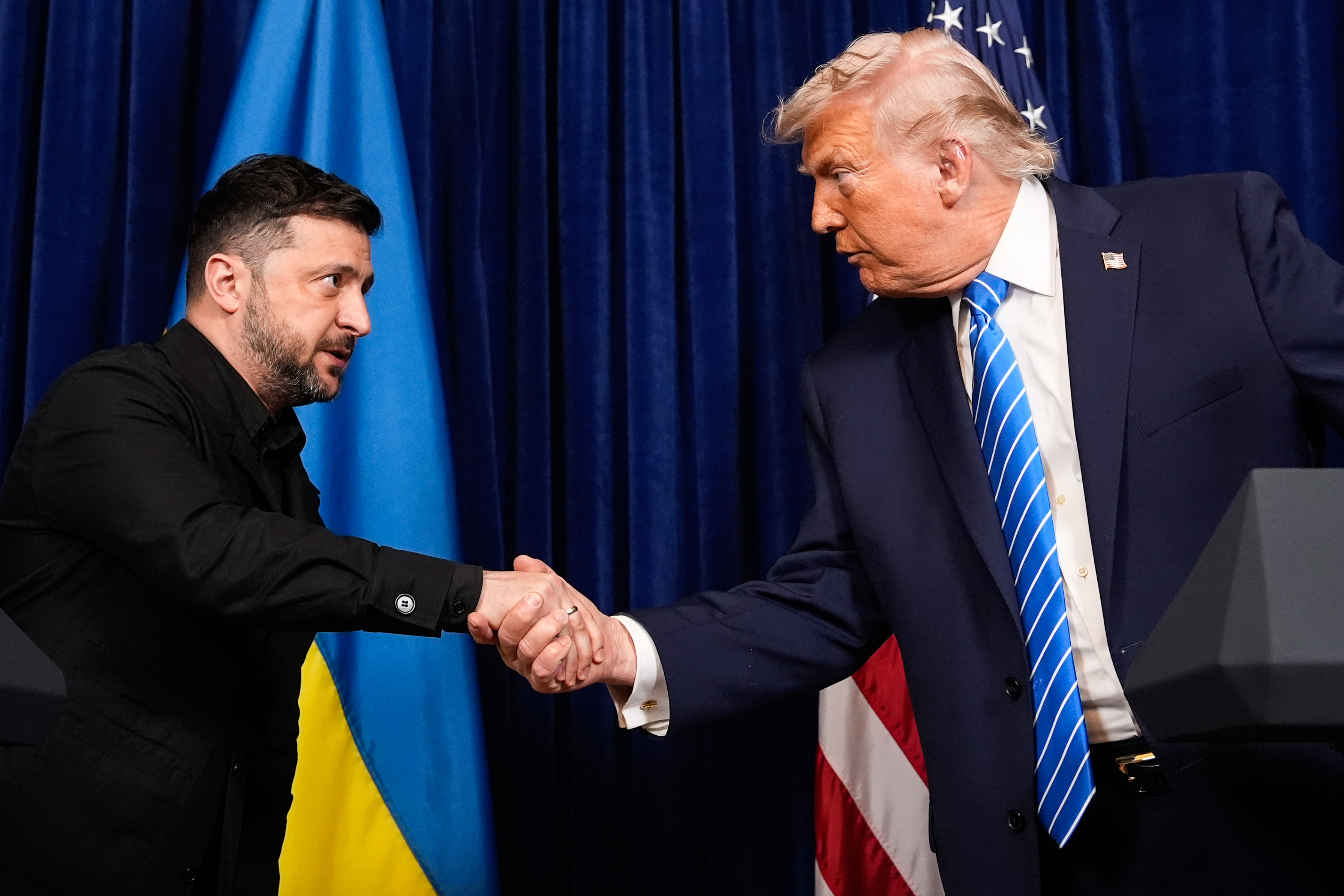
    President Donald Trump and Ukraine’s President Volodymyr Zelensky shake hands at the start of a joint news conference following a meeting at Trump’s Mar-a-Lago club in December.Alex Brandon

    It is infuriating, then, that Trump keeps rejecting help from the country that knows better than any other how to counter drone attacks, especially Iranian Shaheds.

    It was Iran that first sent Russia the Shahed drones Moscow has used relentlessly to attack Ukrainian soldiers and cities. Vladimir Putin, in turn, has upgraded those drones and is transferring drone technology and satellite intelligence to Tehran to help target U.S. soldiers in the region. (Yet, Trump still insists on giving Russia a pass.)

    Zelensky offered nearly a year ago to share Ukraine’s experience and technology, and to send drones and interceptors that have been tested and constantly updated on Ukraine’s front lines. In return, he requested U.S. air defense missiles that Europe would pay for.

    “Today, Ukraine has more experience than anywhere in the world to defend against drones,” I heard the Ukrainian president tell European leaders at the Munich Security Conference in February. “Iranian Shaheds are killing our people. Our world of drones is your world of drones. Our ability to stop this sabotage is yours.”

    But POTUS keeps turning the Ukrainian leader away.

    Sneering at Kyiv’s offer, Trump insisted in March that the U.S. military didn’t need Ukrainian expertise. “No, we don’t need their help. We know more about drones than anybody,” the president boasted in a Fox News interview. That simply isn’t true.

    If U.S. Marines and soldiers try to take Iran’s key oil depot on Kharg Island, or attempt an extremely risky effort to unearth buried stores of enriched uranium at Isfahan, they will provide rich targets for drone warfare. The island is only around 21 miles from the Iranian mainland, within easy reach of waves of Shaheds.

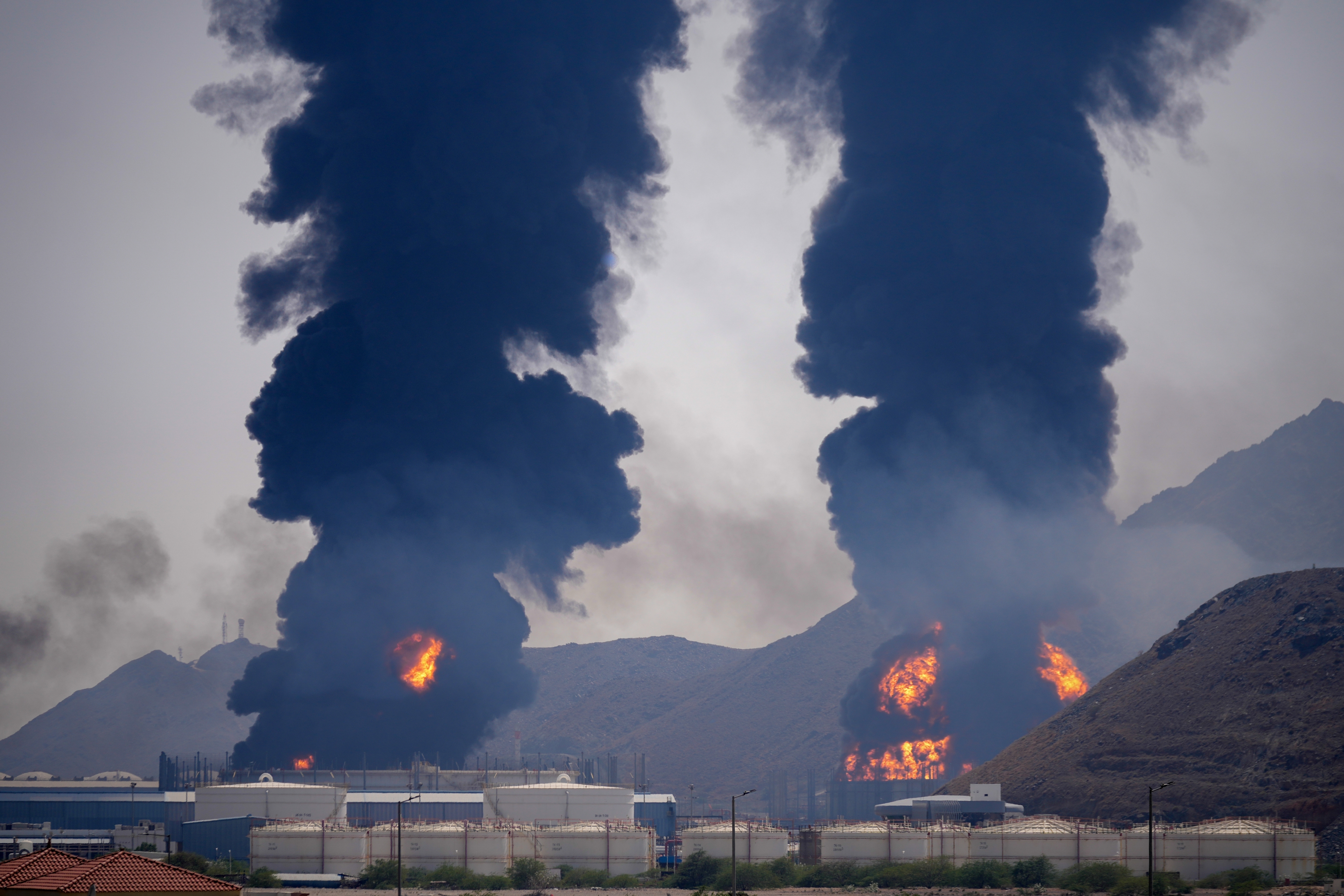
    Plumes of smoke and fire rise after debris from an intercepted Iranian drone struck an oil facility, according to authorities, in Fujairah, United Arab Emirates, March 14.Altaf Qadri

    Landing craft and vehicles make easy targets. And even though the U.S. has sunk Iran’s navy, its small boats can launch drones at American ships. Recall that Ukraine drove Russia’s Black Sea fleet out of its waters and back to home ports using unmanned sea drones, some of which could fire missiles.

    Iranian drones are now also targeting the infrastructure of Arab allies and U.S. bases in those countries. More than two dozen U.S. troops were injured by an Iranian missile and drone strikes at the Prince Sultan Air Base in Saudi Arabia on March 24, proving their reach. And the six U.S. Army Reserve soldiers who were killed in Kuwait on March 1 were victims of a drone attack.

    That is why those Gulf states, unlike Trump, have been eagerly courting help from Ukrainian drone experts. In mid-March, according to Zelensky, 201 drone defense specialists had been deployed to Qatar, the United Arab Emirates, Saudi Arabia, and Jordan, where the Ukrainians are setting up anti-Shahed defenses for a U.S. military base.

    It gives me chills to think of Trump sending U.S. troops to launch a ground war in Iran when he is so blinkered about his goals or the necessary means to achieve them. He enjoys using force, but wants easy wins, and is clearly uneasy with complex challenges. He is hinting he may quit this war without Iran regime change, or removing enriched uranium, or reopening the Strait of Hormuz, leaving the whole region in chaos and the global economy in peril as energy prices continue to soar.

    Honestly, I don’t know which would be worse: sending ground troops to Kharg or to the Iranian mainland, with a high likelihood of disaster and/or a quagmire, or the president pulling a TACO (Trump always chickens out) and leaving ill-equipped Arab and European allies to cope with a global economic mess.

    I do know that it is criminal to reject the help of Ukrainians who stand ready to aid U.S. troops against the asymmetrical warfare that a weakened Iran can still muster. If more U.S. troops die from Iranian drone strikes that Kyiv could have helped counter, then their blood will be on Trump’s hands.

  • Trump’s Iran quagmire distracts from Chinese threat to Taiwan

    Trump’s Iran quagmire distracts from Chinese threat to Taiwan

    KINMEN, Taiwan — From this tiny outer island of Taiwan, which lies less than two miles from the Chinese mainland, one can view the high-rise towers of the Chinese port city of Xiamen.

    Looking out over an extensive beach and through the mist at China, I realize Xiamen could probably be reached from where I stand by a good swimmer. From this vantage point, it’s easy to imagine Chinese leader Xi Jinping pursuing his obsession to “reunify” with the self-governing island democracy of Taiwan — whether by so-called peaceful means, by blockade of the Taiwan Strait, or using more direct force.

    I traveled to Taiwan because President Donald Trump was supposed to meet Xi in Beijing this week. POTUS had previously signaled he might weaken long-standing U.S. support for Taiwan out of his desire to cozy up to the Chinese leader and sign an advantageous trade deal. Moreover, the White House has frozen a deal Trump had already endorsed for Taiwan to purchase around $11 billion to $13 billion worth of U.S. defensive weapons, so as not to upset Xi before the visit.

    But Trump’s poorly planned war on Iran (he apparently never considered how Tehran would retaliate) has caused a postponement of the long-awaited trip until mid-May. As the erratic POTUS sinks into a potential Iran quagmire, lacking any cohesive strategy to thwart Tehran’s partial closure of the Strait of Hormuz, he is even less likely to focus strategically on the Taiwan issue.

    Yet, any potential Chinese blockade of the Taiwan Strait in the next few years could present an equal or even greater security threat to the United States than Iran’s blockage of the Strait of Hormuz, through which about 20% of the world’s oil trade flows.

    To understand why, it helps to know a bit about Kinmen’s history.

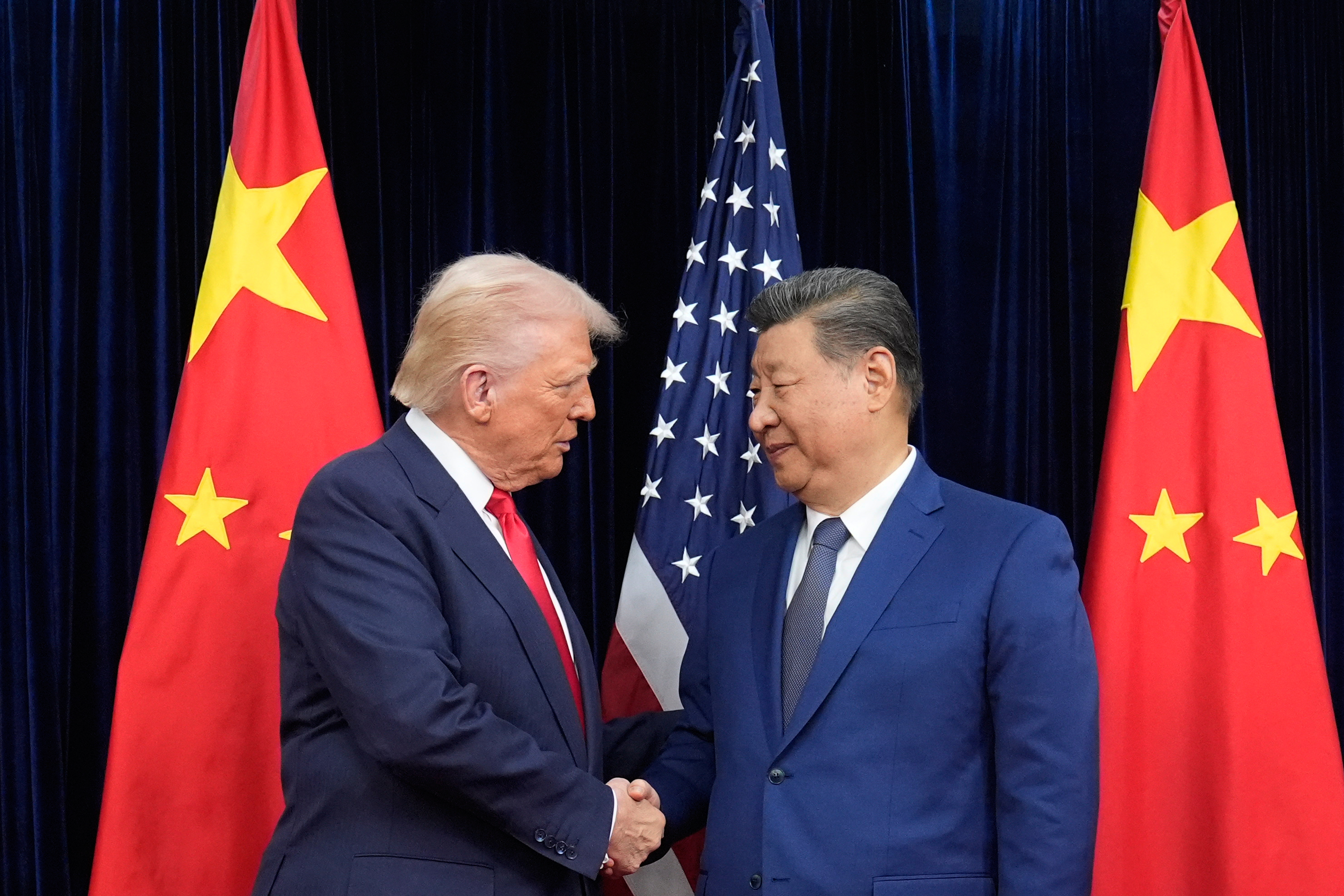
    President Donald Trump and Chinese President Xi Jinping shake hands before their meeting at Gimhae International Airport in Busan, South Korea, in October.Mark Schiefelbein

    Until 1993, Kinmen was off-limits to visitors because it was a closed military zone, and locals lived under martial law from 1956 to 1992. Most of the 120,000 Taiwanese troops have been withdrawn, although a small garrison remains.

    Yet, an endless row of rusty anti-landing spikes along the beach line stand as a reminder of the 1949 civil war Battle of Guningtou between the Communist People’s Liberation Army (PLA) and Chiang Kai-shek’s Nationalists, who were defeated on the mainland and had retreated to Taiwan. With U.S. backing, the Nationalists set up the Republic of China (ROC) government on Taiwan’s main island, roughly 110 miles from Kinmen, and held off the PLA.

    Those Americans who are old enough may recall the 1958 battle of Quemoy, as Kinmen was formerly known. During that battle, massive PLA shelling along with a Chinese blockade of the Taiwan Strait tested U.S. support for the ROC government. But President Dwight D. Eisenhower sent ships to break the blockade and repel the missiles. A local war museum displays huge photos of U.S. troops arriving on Kinmen.

    Since the U.S. formally recognized the Beijing government in 1979, and cut diplomatic ties with Taipei, Taiwan has existed in a diplomatic grey zone. China treats it as a renegade province and only a handful of countries recognize it as an independent country.

    But the U.S. insists that differences between Beijing and Taipei be settled peacefully, and is committed to providing Taiwan with defensive weapons. Moreover, U.S.-Taiwan relations are close: few Americans realize that Taiwan is America’s fourth largest trading partner, due to its technological prowess.

    As for Kinmen, these days China tempts its youth with the glitzy shopping malls of Xiamen, reachable by a 30-minute ferry ride, while a massive new international airport, built on a man-made island, cuts the sea distance between China and Kinmen to roughly one mile.

    Kinmen has become a tourist destination, with its beaches, war museums, and preservation of historic Qing dynasty homes. Mainland Chinese visitors pour into Kinmen, and the Beijing government heavily promotes the purported advantages of “reunification” to the Kinmen public — including jobs and entertainment sites — as part of its effort to win Taiwan citizens to its side.

    Taiwanese flags in Kinmen, Taiwan, in 2024.I-Hwa Cheng

    So it’s not surprising that the Taiwanese government has blocked construction of a bridge that would connect the airport directly to Kinmen, presumably to prevent both the escalation of propaganda and the security threat of a direct link.

    “Kinmen is at the front line of geopolitical conflict,” said youthful local Councilor Tung Sen-pao, as he greeted visitors in a curio shop. “We are a small lens through which you can view a much larger conflict between the U.S. and China and Taiwan and China.” As he spoke, the sound of military target practice reverberated outside.

    Indeed, in recent months, China has been conducting the largest-ever live military fire drills all around Taiwan, and simulating a total blockade of its largest and smaller islands. An aggressive Xi refuses to rule out using force for “reunification.” Locals speculate what he might do by 2027, when he has ordered the PLA to be ready to invade (without making a commitment to do so).

    This month, the U.S. intelligence community’s 2026 Annual Threat Assessment report determined that China does not plan to invade Taiwan in 2027 (although the report is published by the Office of the Director of National Intelligence, Tulsi Gabbard, whose gutting of the intel community raises the question of whether its reports can be trusted).

    That trust factor becomes critical, as does American preparedness to respond if Xi does try to limit traffic or impose a full blockade of the Taiwan Strait, given its centrality to international trade.

    Taiwanese Councilor Tung Sen-pao.Courtesy of Mark F. Nelson

    An estimated 20% of global maritime trade passes through the Taiwan Strait, and it is the main maritime route for technology and consumer goods from South Korea, Japan, and Taiwan to U.S. consumers.

    The United States has no treaty commitment to defend Taiwan, only a strategic necessity to prevent its forcible seizure by China. Little Taiwan, with 23 million people, produces 90% of the world’s most sophisticated semiconductor chips. If cut off, it could be disastrous for U.S. civilian and military needs.

    Moreover, if Taiwan falls, the security of U.S. allies in Seoul, Tokyo, and Manila, with whom America does have military commitments, would be at deep risk.

    Equally troubling, Trump’s Mideast war has drained missile interceptor stockpiles, including Patriot missile batteries and other weapons that are vital to dissuade Xi from taking rash steps. It is hard to believe a president who has acted so fecklessly on Iran strategy has any adequate plan for handling a meeting with China’s leader, except possibly to cave on supporting Taiwan.

    Meantime, Councilor Tung admits that Kinmen will have little say over its future. “We are a tiny island,” he said with a wry smile. “There is now no way for us to counter an attack if China tries to invade Kinmen.”

    However, he also believes “a direct attack on Taiwan in a conflict is more likely than targeting offshore islands such as Kinmen.”

    The 50,000 or so permanent residents of Kinmen just hope the status quo can endure for a few more years.

  • How much snow, and when will it begin snowing in the Philadelphia region?

    How much snow, and when will it begin snowing in the Philadelphia region?

    As much as two feet of snow could fall in and around Philadelphia in what forecasters are warning could be a “historic winter storm.”

    The National Weather Service is forecasting 18 to 24 inches of snow to fall in the city, which would make it one of the top 10 snowstorms in Philadelphia history. Though it’s not expected to top the nearly 31 inches of snow that blanketed Philly over a two-day period during the Blizzard of 1996.

    Philadelphia, Bucks, Delaware, and eastern Montgomery Counties, and all of New Jersey and Delaware, are currently under blizzard warnings through 6 p.m. Monday. That’s prompted by forecast wind gusts of up to 45 mph, combined with the heavy snow. The western suburbs are covered by a winter storm warming, with slightly lower wind speeds forecast.

    The storm is expected to begin as rain before shifting to snow by midday Sunday. It’s forecast to strengthen overnight, possibly at a rate of more than 2 inches an hour, which would make driving dangerous and nearly impossible.

    The last time the city experienced more than two feet of snow was 2010, when nearly 29 inches fell in early February 2010. Over a five-day period, the city was buried under 44 inches of snow, which thankfully isn’t expected this time due to a warm-up in the middle of next week.

    This time around, the Jersey Shore is expected to be hit hardest, with snowfall totals in and around Toms River forecast to reach as high as 30 inches.

    The National Weather Service puts out forecasts for every few square miles of land in the United States four times a day through a system called the National Digital Forecast Database.

    The maps below display that data. Use it to find how much snow is expected anywhere in the eastern United States. It will show the most recent forecast over the next few days.