Category: News

  • Lorina Marshall-Blake wears retirement with the verve and flair of one of her signature hats

    Lorina Marshall-Blake wears retirement with the verve and flair of one of her signature hats

    During the early 1990s, back when I was a business reporter for the Daily News and brand-new to Philly, one of my first challenges was to figure out who the local players in corporate and political circles were. It didn’t take long before I came across Lorina Marshall-Blake.

    She stood out partly because of her penchant for wearing exquisite hats. But it was also because Marshall-Blake was the newly installed vice president of government relations at Independence Blue Cross. I would see her at meetings and events across the city. She seemingly knew everybody in business and at City Hall — and could work a room like no other. Not only was Marshall-Blake a mover and shaker, but it was clear she was well-liked and respected, as well.
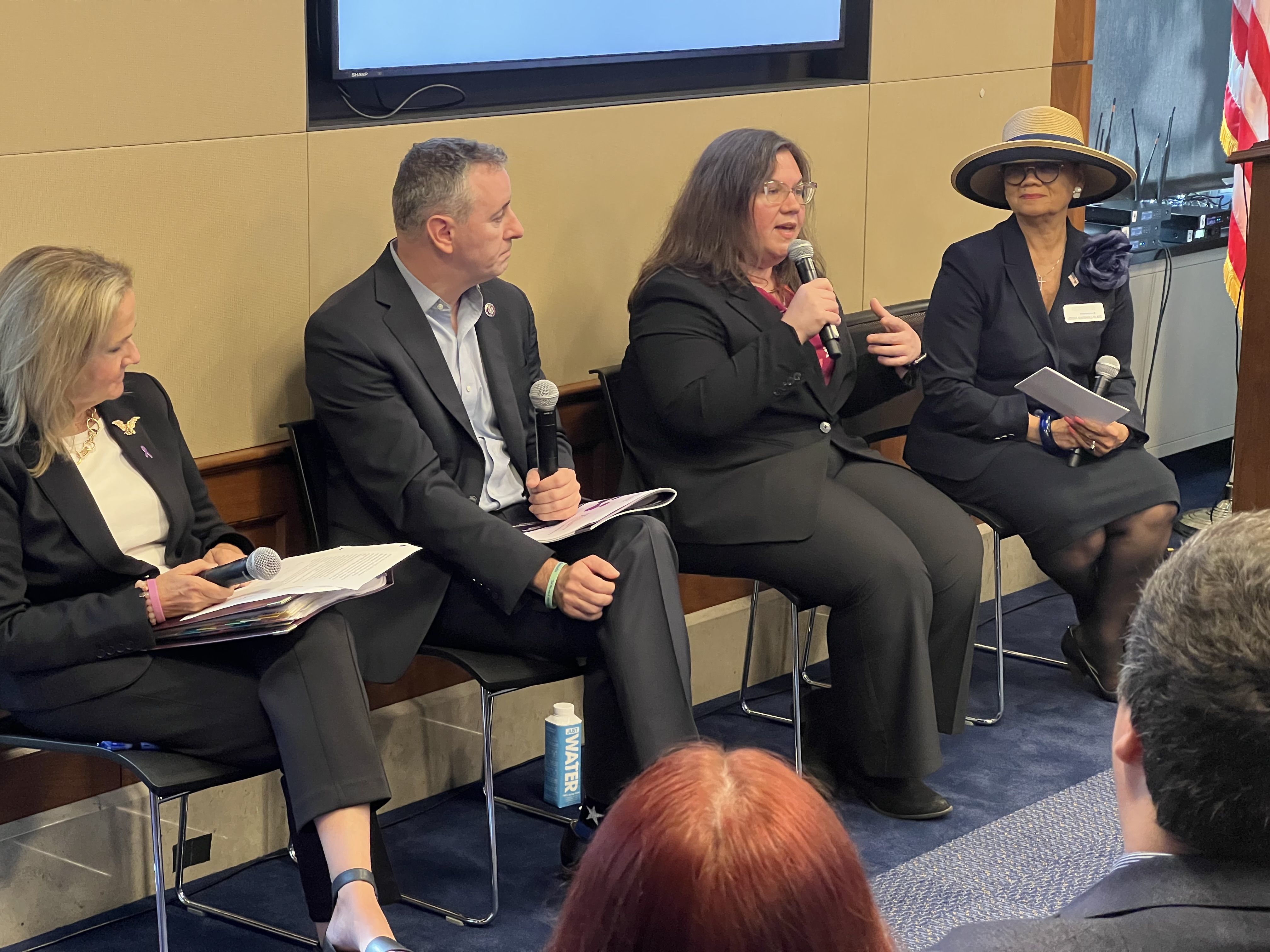
    Lorina Marshall-Blake at a meeting in Washington, D.C., with U.S. Reps. Madeleine Dean and Brian Fitzpatrick, and Kristina Canfield of the Association of Recovery in Higher Education.Courtesy of Independence Blue Cross

    “Lorina Marshall-Blake has a way of making people feel seen and supported the minute she walks into a room,” Kelly Munson, president and CEO of Independence Blue Cross, said. Marshall-Blake, she added, is an example of “how you lead matters just as much as what you lead.”

    Watching Marshall-Blake’s career trajectory from afar, I was in awe. There aren’t many women — much less Black female executives — who have experienced the kind of success she has, especially during the early 1990s. The proverbial glass ceiling that blocks qualified women and people of color from advancing in the workplace is stubbornly thick, but Marshall-Blake was somehow able to break through it.

    In 2011, she was named president of the Independence Blue Cross Foundation, the company’s philanthropic arm, which has distributed more than $90 million in grants to various local causes — including a program that provides scholarships for Philly-area high school students to attend nursing school.

    When I learned earlier this year that Marshall-Blake intended to hang up her fancy hats after 35 years at Independence Blue Cross, I felt a little sad, because it marked the end of an era.

    “She’s an iconic person given what she achieved during that period of time,” said A. Bruce Crawley, the public relations guru who met Marshall-Blake when they were both students at the now-defunct Charles Morris Price School of Advertising and Journalism.

    Crawley, who founded the African American Chamber of Commerce, watched her career over the years, and “was amazed at the progress she was able to make because she was always just a nice person.”

    Back then, he believed that to succeed in corporate America, “it required a certain toughness.” Crawley added, “I thought that she maybe would be challenged by having to be tough, but she was able to do that in a way that didn’t grate on people, and she was a very productive executive.”

    When I reached out to Marshall-Blake earlier this year about doing an exit interview, she informed me she will continue working with IBX — just not in a full-time capacity.
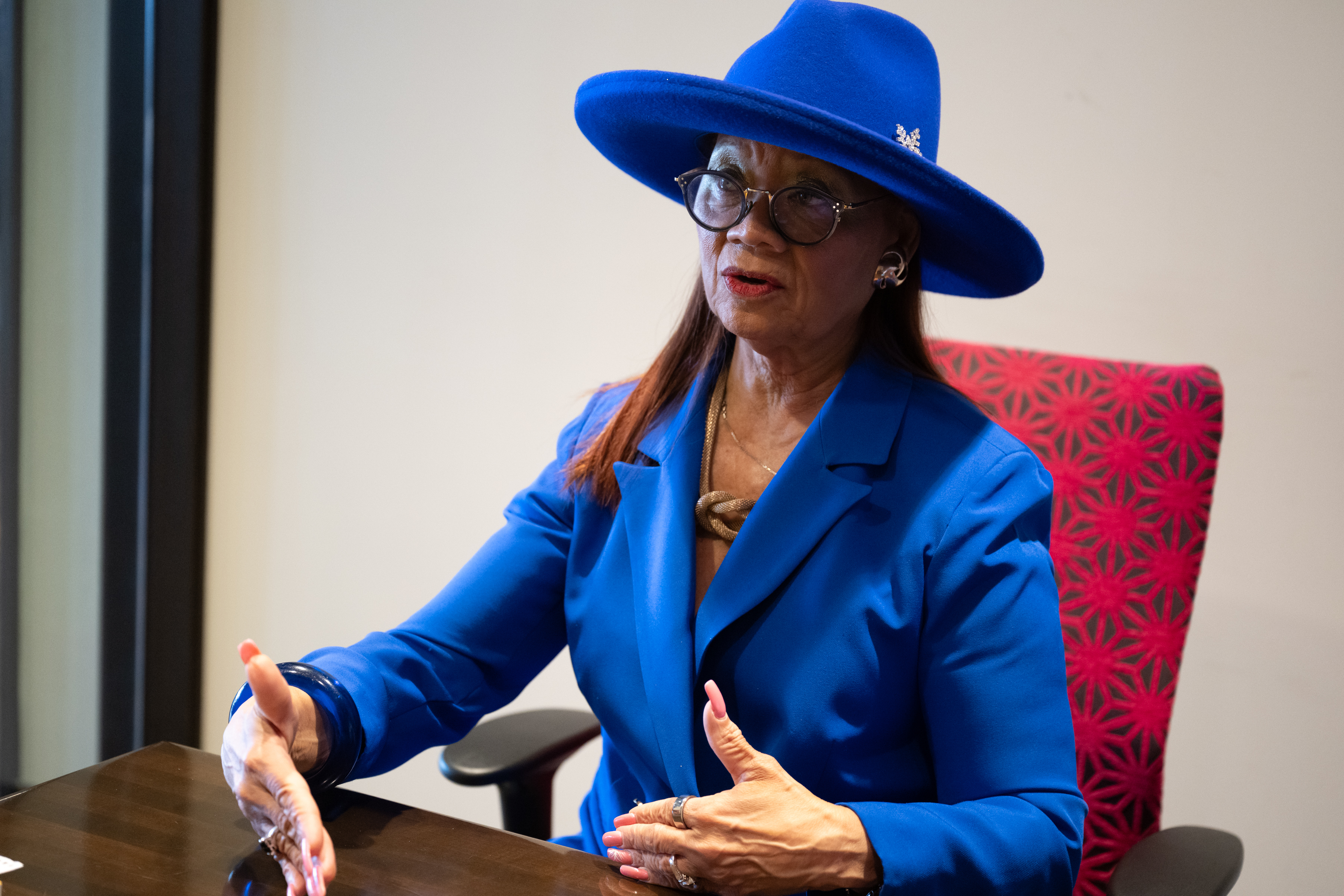
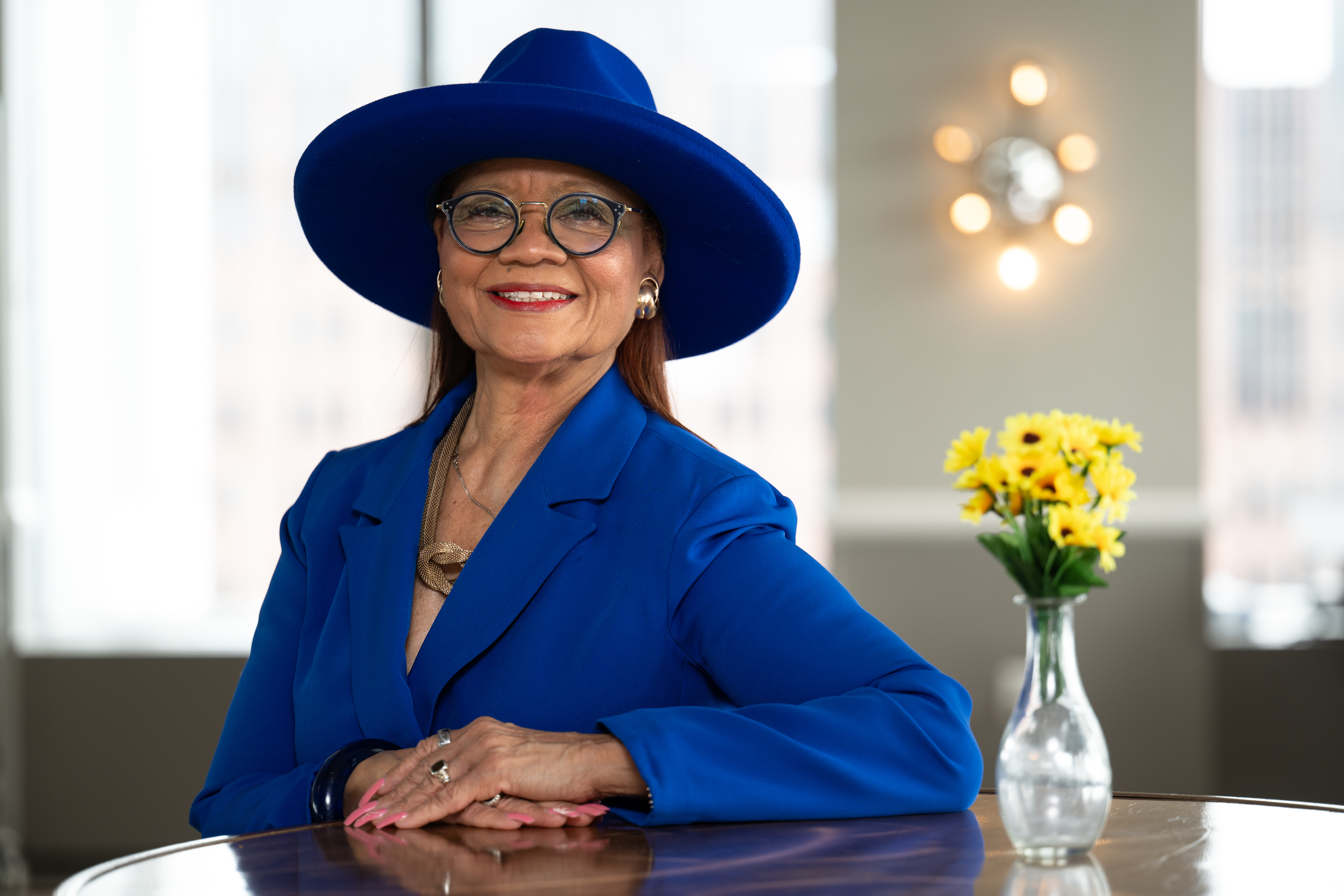
    Lorina Marshall-Blake chats with Jenice Armstrong at the Pyramid Club in March.Erin Blewett / For The Inquirer

    But I still wanted to meet with her to talk about her next chapter, as well as to glean some wisdom about succeeding in corporate America. We agreed to meet at the Pyramid Club on a chilly, overcast day. When she walked in, Marshall-Blake lit up the room in an electric blue pantsuit with, of course, a crisp matching chapeau.

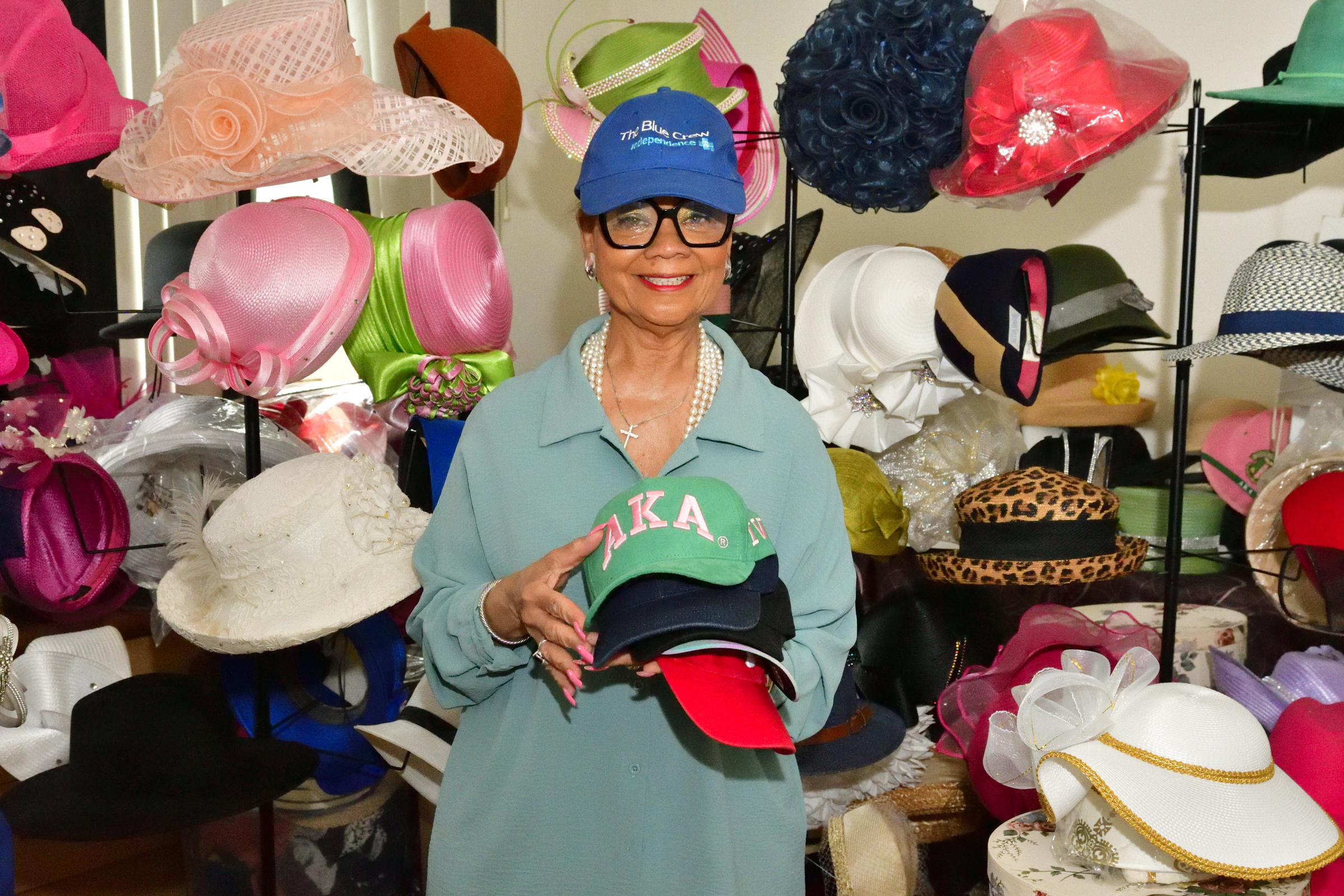
    She told me she has an entire room in her home filled with hats, many of which were given to her as gifts over the years.

    Listening to Marshall-Blake talk about growing up as a middle child in a family of five children in a modest, four-room house on the 600 block of North Yewdall Street in West Philadelphia, I thought about the considerable challenges she faced along the way. Her mother was a homemaker; her father was a welder until he was injured on the job.

    “I didn’t know I was poor until somebody told me I was poor,” she said.

    After graduating from Overbrook High School in 1968, where she was a cheerleader and class treasurer, Marshall-Blake won a scholarship to attend Temple University. But her college dreams were put on hold because she couldn’t afford books.

    She went on to hold a series of low-level jobs at Philadelphia Gas Works, Cigna, and a local law firm, and took undergraduate classes before finally graduating from Antioch University in 1983.

    Marshall-Blake got her first big career break in 1980, when PGW named her vice president of government relations and urban affairs — a role she fully embraced. She said she worked to learn everything she could about the organization from the ground up — literally.

    “I donned my meter reader outfit and read meters,” she told authors of the 2020 book, They Carried Us: the Social Impact of Philadelphia’s Black Women Leaders. “I climbed underneath buildings and got in ditches with the guys. I got on the phones. I wanted to know the people that really carried PGW. If there was a gas explosion, I was there. It was more than just showing up. I was present.”
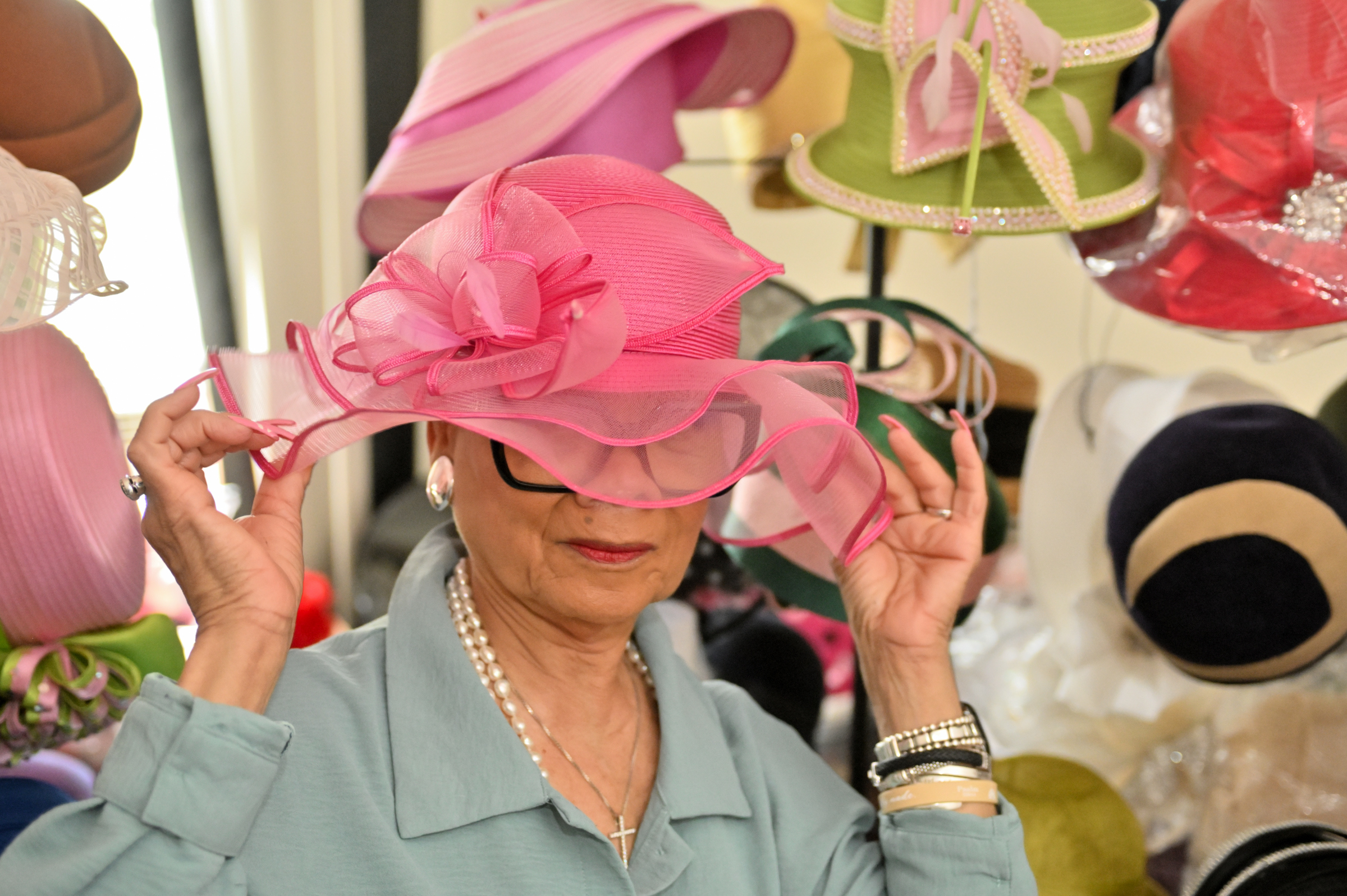
    Lorina Marshall-Blake dons a full fascinator from her collection …Bastiaan Slabbers / For The Inquirer
    … and an Independence Blue Cross cap.Bastiaan Slabbers / For The Inquirer

    In 1990, she completed her master’s degree in government relations at the University of Pennsylvania. The following year, she moved to Independence Blue Cross, where she had been named vice president of government relations.

    “I’ll always remember the first day I walked into Independence Blue Cross on June 1, 1991,” Marshall-Blake said during a retirement reception in her honor at the company’s headquarters earlier this spring. “This work for me was more than a job. For me, it was ministry.”

    March 31 marked her last official day as a full-time employee at Blue Cross, but her consulting agreement with the insurance giant began immediately. She said she welcomes the slower pace of her new role. She’s 75. It’s time. She’s ready.

    Still, stepping into her next act will be a major adjustment. Marshall-Blake is working on letting go of her usual “got-to-do-this” mindset. The 20 unpacked boxes in the middle of her living room can stay where they are. She’ll get to them when she gets to them.
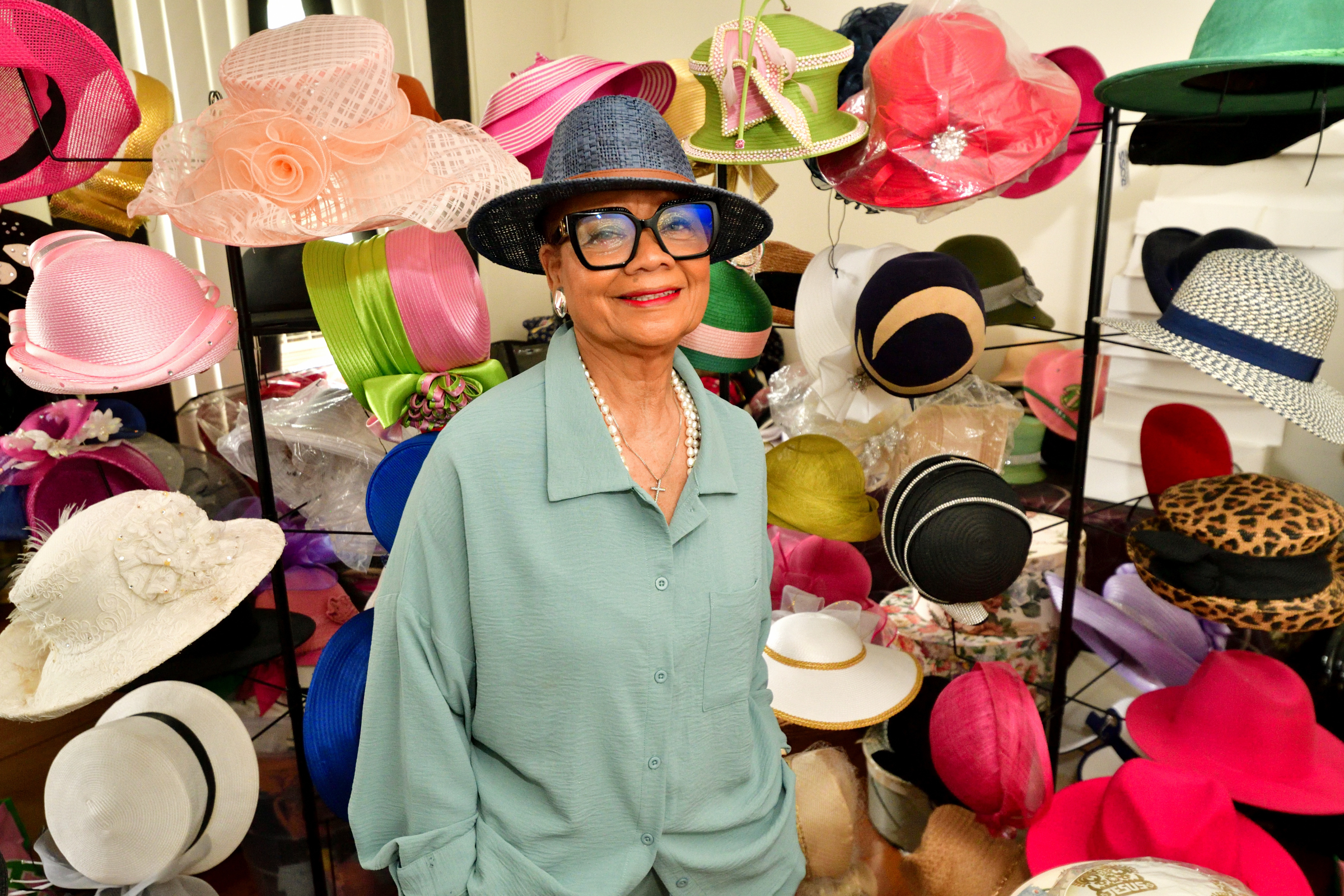

    Lorina Marshall-Blake wears a classic coffin-top Stetson …Bastiaan Slabbers / For The Inquirer
    … and then a mushroom crown hat with a downturned brim.Bastiaan Slabbers / For The Inquirer

    Marshall-Blake, who is also an associate minister at Vine Memorial Baptist Church in West Philly, said she recently offered up a simple prayer: “Lord, let me accept retirement with grace.”

    She accomplished so much during her time in corporate America; I’m sure she will do the same during this season in her life, too.

    My hats off to her.
  • Catholicism is growing in Philly and New Jersey. Who’s filling the pews?

    Catholicism is growing in Philly and New Jersey. Who’s filling the pews?

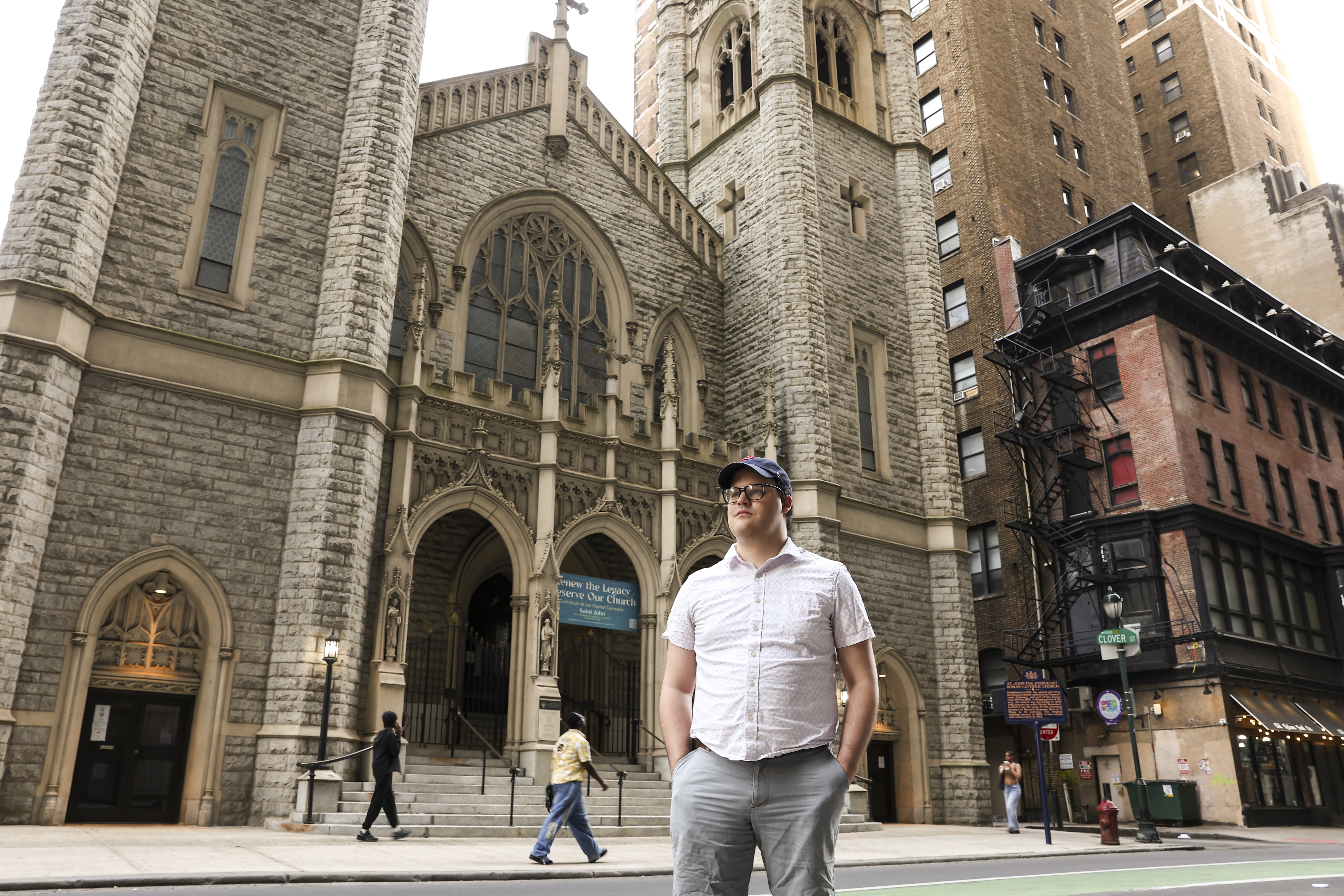
    Church bells rang out from one of Philadelphia’s oldest cathedrals, echoing off downtown parking garages and office buildings, while one of the city’s newer Catholics tried to explain his conversion.

    Daniel Yesilonis, 32, grew up evangelical in the Harrisburg area and converted to Mormonism while studying at Temple University. He said his Mormon mission to Colorado Springs, Colo., was deflating, though, and after he came out as gay during the COVID-19 pandemic, he officially left that church.

    Like millions of Americans, Yesilonis figured he would try his best to be decent, to be spiritual without a label or building attached to it. But he soon felt a sense of loss.

    “It was like something was missing, maybe a sense of community or something,” Yesilonis said outside the church in April.

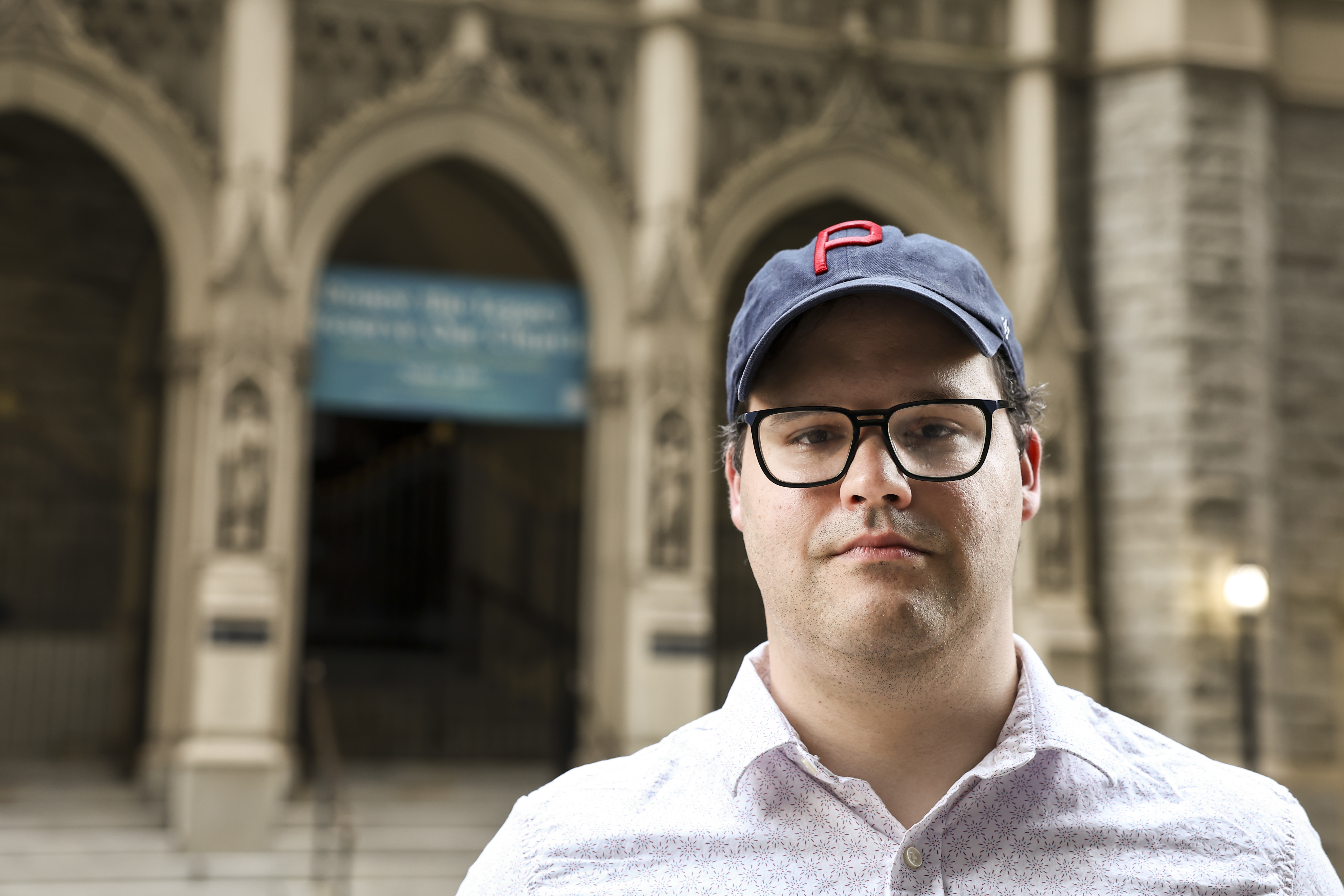
    Daniel Yesilonis posed for a portrait outside of St. John The Evangelist Church on Wednesday, April 15, 2026 in Philadelphia.Monica Herndon / Staff Photographer

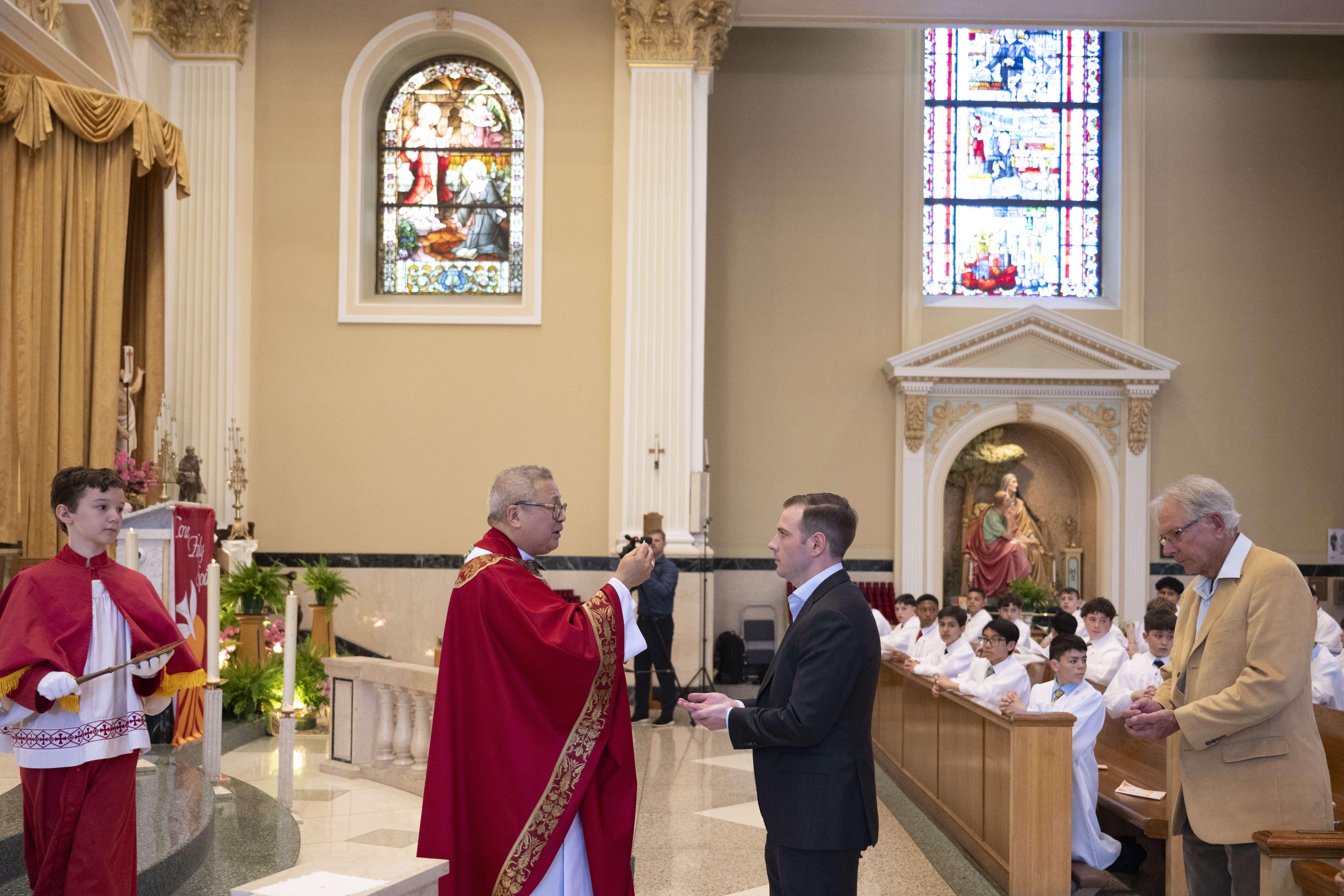
    So, at an Easter vigil Mass in 2024, Yesilonis was among a group of candidates (people who were already baptized) and catechumens (those who were never baptized) who became Catholic and joined St. John the Evangelist on 13th Street.

    Converts like Yesilonis are on the rise at churches all over Philadelphia and New Jersey, diocese officials said, a conversion boom that is being reported globally, including large spikes in Canada and France. In Philly, there have been 1,162 candidates and catechumens this year, which is a 60% increase since 2025 and a 100% increase since 2017.

    Researchers and religious scholars said it was too soon to say much about the recent spike, but noted that a rise would be bucking long-term trends. Earlier this year, the Pew Research Center found that Catholicism has lost more people than it has gained in 24 countries it surveyed, including the United States. A 2025 Pew study found that Christianity’s long-term losses were starting to “level off,” but according to the Archdiocese of Philadelphia, two high schools closed in 2021, and the last time a new Catholic school and parish opened was back in 2010.

    Since 2012, 34 Catholic churches have closed in the archdiocese. So the trend, while noticeable, is still a small change.

    “There would have to be a huge swing, something dramatic would have to happen, for the church to start gaining huge numbers,” said Patricia Tevington, a Pew Research assistant who lives in Philadelphia.

    There is no one reason for the recent increase, diocese officials said.

    In the Philadelphia Archdiocese, the Rev. Gerald Dennis Gill said, many new devotees were baptized as children but did not grow up with Catholicism because their parents or other elders had stopped practicing. He believes they are experiencing a vacuum in their life and are seeking to fill that.

    “Our culture is not offering something objectively good and true and beautiful, but it’s within all of us to seek that out,” he said. “People of all ages are finding the need to have a relationship with the Lord, for meaning and the promise of heaven.”

    A confirmation mass is held at St. Monica Roman Catholic Church in Philadelphia on Saturday, April 18, 2026.Joe Lamberti / For The Inquirer

    Across the river in the Camden Diocese, spokesperson Michael Walsh said, the number of catechumens grew from 194 last year to 238 in 2026, a nearly 23% increase.

    Catholics are not knocking on doors the way Yesilonis had to in Colorado, but members of St. Agatha-St. James Parish had an “Ask a Catholic” tent at West Philly’s 68th annual Spruce Hill May Fair in Clark Park on May 9.

    Newer Catholics whom The Inquirer spoke to in recent months (including this reporter’s adult son) cited a slew of different personal reasons for their decision.

    “We’re all looking to God to help us, to save us. For me, it was time,” said Jana Muhammad, a “middle-aged” candidate who received the sacrament of confirmation at St. Monica’s in South Philly earlier this spring. “It’s really a rough, rough time out there right now. There’s no peace right now, and people are really looking for peace, and it’s not there right now. For me, personally, when it gets really rough, I absolutely pray to God.”

    There is, however, a litany of theories being tossed around online and in the media about the increase in Catholicism that are sometimes at odds with one another.

    The trend has been attributed to increasing conservatism in young men. Catholicism has also been offered up as an antidote to the so-called red pill, a “manosphere” belief that society now caters to women. Some say the increase is a Gen Z response to the isolation of the pandemic. Others say that technology burnout is fueling it. There have been stories about the rise of Catholic social media influencers and the popularity of the prayer app Hallow, which has been downloaded 32 million times since it debuted in 2018.

    “People ask why priests always wear black. ’Cause everyday is a funeral for the haters,” the Rev. David Michael Moses, a Catholic “priestfluencer” with 1.1 million followers on Instagram, said in a post.

    Actor Mark Wahlberg, a partner in Hallow, is a proud Catholic, but so is Shia LaBeouf, a recent convert who reportedly yelled, “I’m a Catholic,” while allegedly shouting homophobic slurs in New Orleans earlier this year.

    The middle-ground, welcoming approach taken by the late Pope Francis and his successor, Pope Leo XIV, who has been vocal against President Donald Trump’s war on Iran, has also pulled people closer to Catholicism.

    “Pope Francis inspired my decision,” Yesilonis said.

    Daniel Yesilonis posed for a portrait outside of St. John The Evangelist Church on Wednesday, April 15, 2026 in Philadelphia.Monica Herndon / Staff Photographer

    Yesilonis said he knows he could never marry a man in the Catholic Church, but he has found solace among the LGBTQ+ parishioners at St. John the Evangelist.

    “I found a community as much as I found a church,” he said.

    The Rev. Thomas Betz, of St. John’s, said the church “teaches and believes” the same tenet as the wider church, but has been open.

    “St. John, by its very nature, is in the heart of the city and open to different races, and people who think differently, politically,” he said. “Everyone is welcome.”

    Mark Schiavo, 26, waits to be confirmed at St. Monica Roman Catholic Church in Philadelphia on Saturday, April 18, 2026.Joe Lamberti / For The Inquirer

    Down in Cape May, Sara Kelly said she grew up in a family that gave up on formal religion, but still held on to a strong spiritual sense of right and wrong. Her father, Kurt, suffered from head and neck cancer for years, and after he died in 2019, she constantly wondered about the afterlife.

    Kelly and her husband went to some nondenominational churches in Philadelphia, where she lived at the time, but did not find the answers she was looking for. The couple moved to the Shore and struggled with finances.

    One day, while walking on the Delaware Bay beach, she fell to her knees and asked God for help.

    “I’ve never done anything like that before,” she said.

    At the advice of a relative, Kelly began sitting in a Catholic church in 2025, and later downloaded the Hallow app. She bought a rosary, too, and began going back to church multiple times a week, and eventually signed up for Order of Christian Initiation of Adults (OCIA) classes.

    “I know for me, it was really enjoyable to go to a place where the focus is only on love and trying to help others,” she said. “At every Mass, we’re praying for people caught up in war, people in Gaza and Ukraine.”

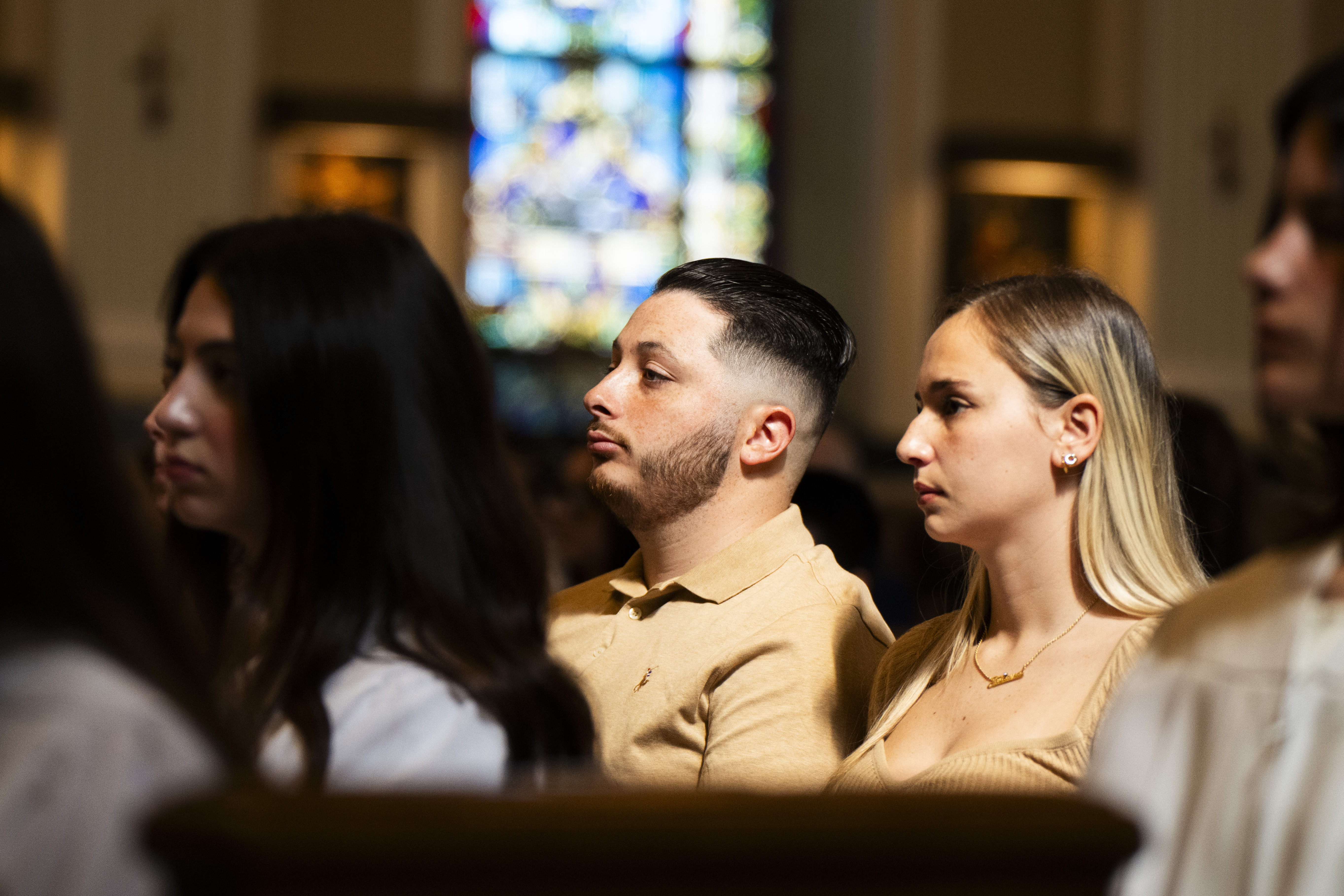
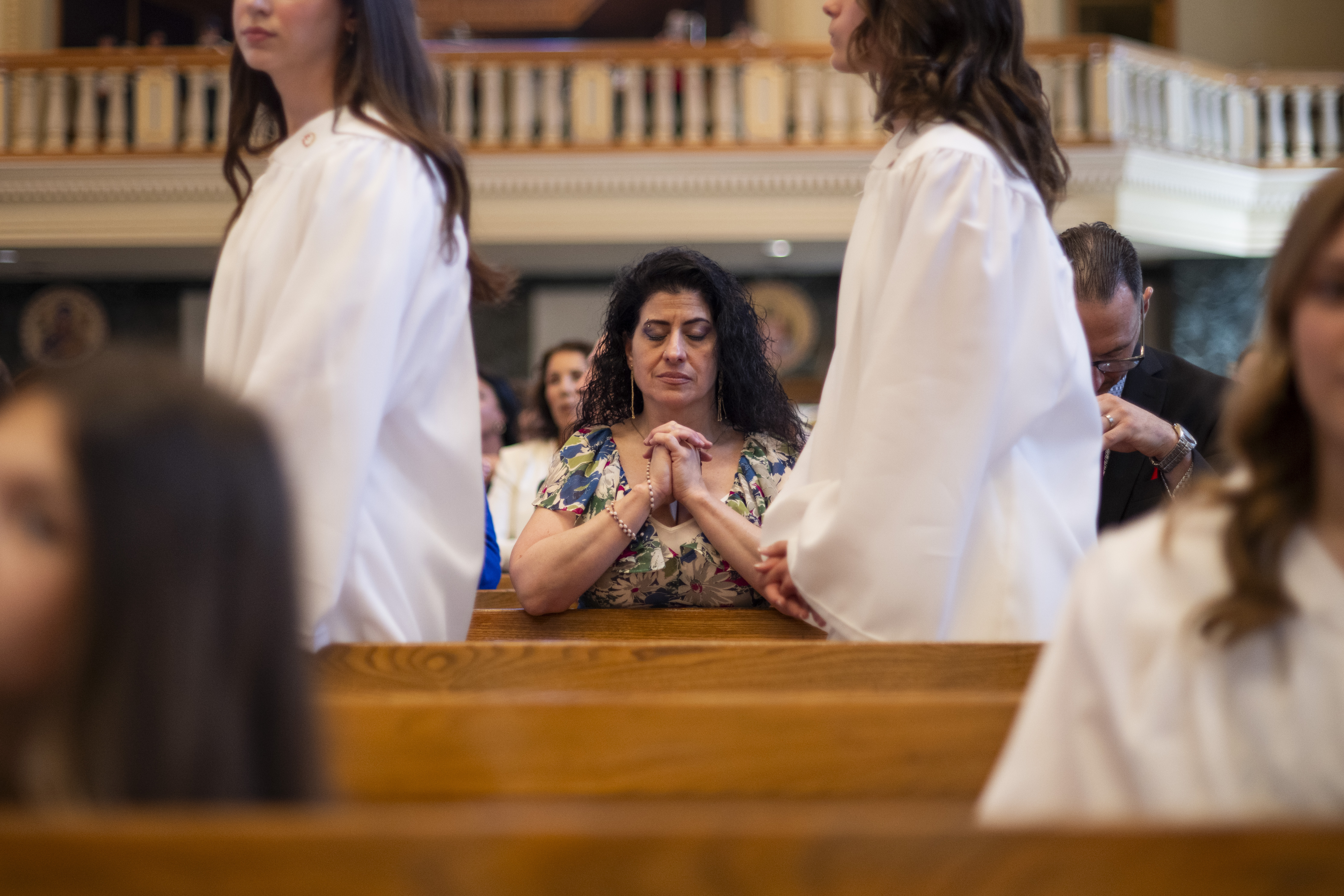
    On a breezy April morning in South Philly, hundreds of people filed into St. Monica’s for the Rite of Confirmation Mass. A few dozen teens in white filled the front pews, but just behind them were a handful of adults, like Jana Muhammad, there to receive their final sacrament and take the name of a saint.

    Muhammad chose Angelica. She was baptized as a child and grew up going to church. She said her stepmother did not want to “force” religion on her and gave her the choice to make up her own mind as an adult.

    “And it was just time,” she said.

    The Rev. Edward Town led the Christian initiation processes there and said the reasons adults come back vary from simple to profound.

    “People want stability in their lives,” he said. “To young people, the world seems very unstable, and there’s a lot of uncertainty. I think our faith gives us a little hope, right?”

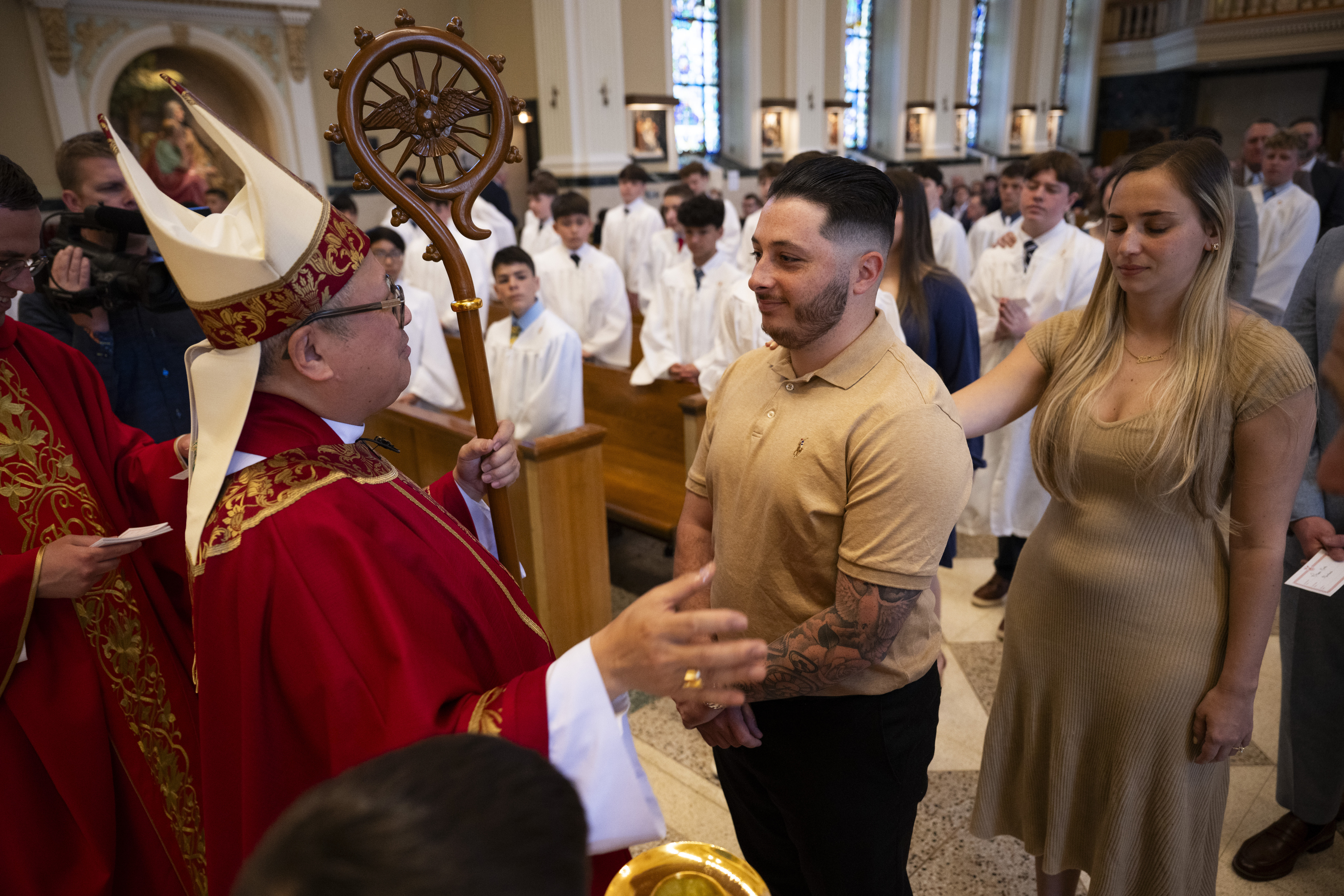
    When the Mass was finished, the Rev. Efren V. Esmilla, auxiliary bishop of Philadelphia, extended an invitation to any other seekers sitting in the church.

    “Come find us,” he said. “Our door is always open.”

    Mark Schiavo, 26, is confirmed at St. Monica Roman Catholic Church in Philadelphia on Saturday, April 18, 2026.Joe Lamberti / For The Inquirer
  • At a new Goodwill in South Jersey, customers are flocking for the deals and the resale potential

    At a new Goodwill in South Jersey, customers are flocking for the deals and the resale potential

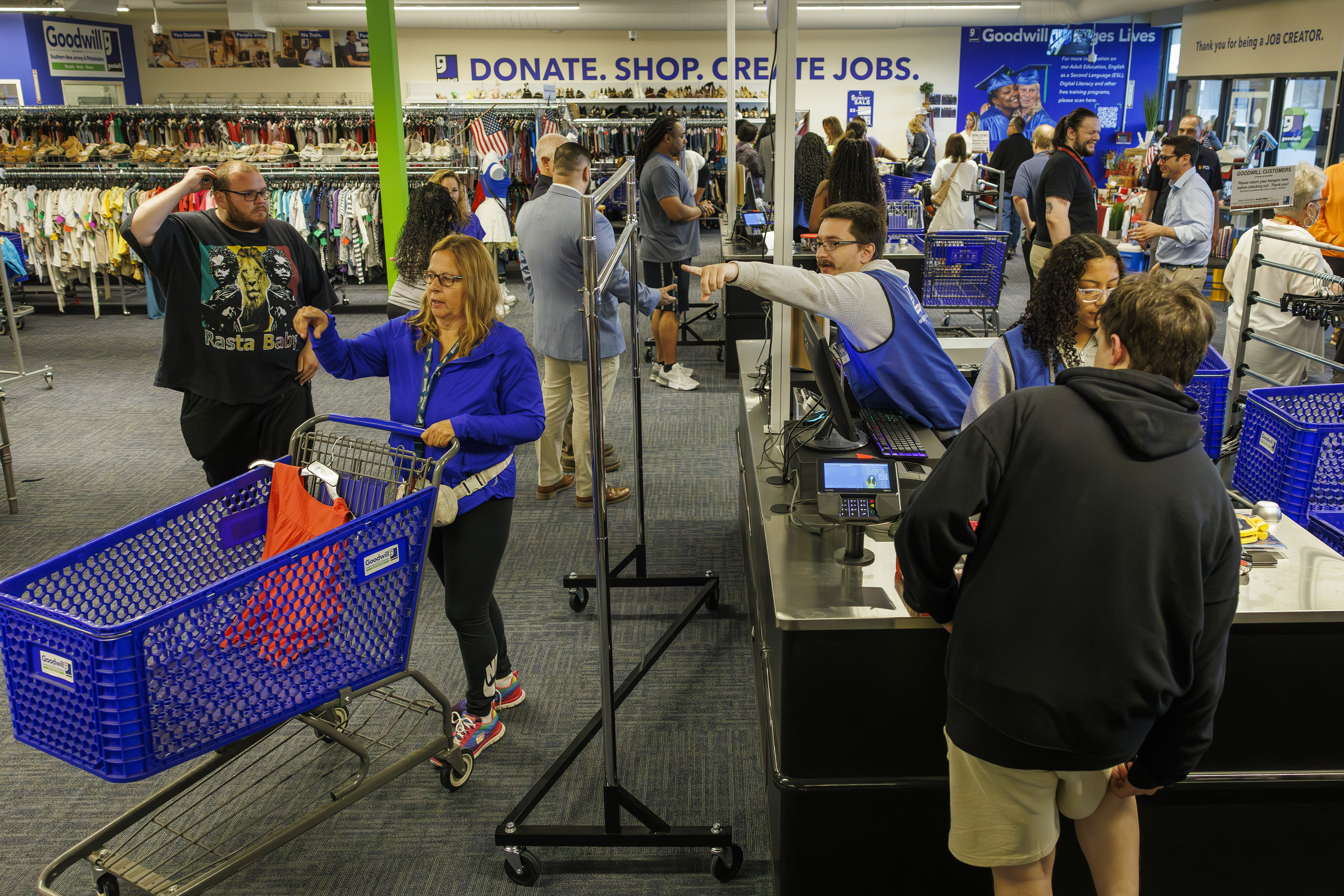
    Mia Garcia showed off her clothing haul: a multicolored tank top, a backless white tee, a lacy maroon cardigan, and white tights for an upcoming trip to the New Jersey Renaissance Faire.

    The 19-year-old was as excited about the bill as she was about the fashion.

    Her grand total: $15.

    She and her friend, Salsbee Jahan, scored the deals at a massive new Goodwill store in Deptford, where local executives say a growing number of Gen Z shoppers are flocking for clothes, shoes, decor, and more. Young customers are increasingly fueling the world’s largest thrift store chain, which posted record revenue last year.

    At Goodwill, “it’s definitely cheaper and easier to find older-style clothes,” like popular Y2K-inspired fits that are sold at a premium elsewhere, Garcia said. At some name-brand stores, “$20 won’t even get you get a shirt.”

    The women, both Deptford natives attending Rowan College of South Jersey, say they frequent malls, too. But Jahan, 18, said they’re trying to thrift more because “everything is going up” in price.

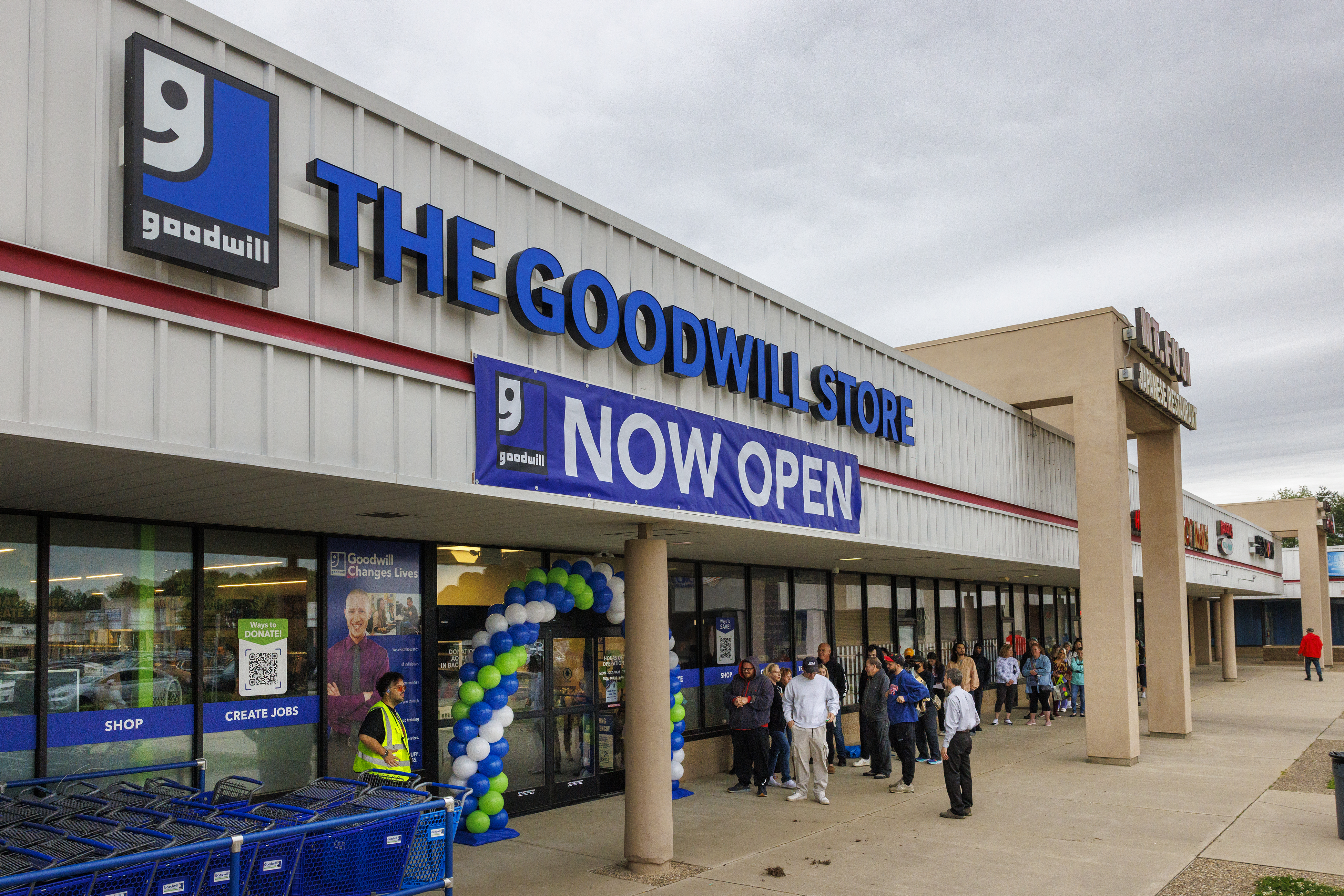
    Shoppers lined up to get inside the new Goodwill store in Deptford on opening day.Alejandro A. Alvarez / Staff Photographer

    The sentiment was echoed by several other customers at the 19,000-square-foot store, which was buzzing with dozens of shoppers around lunchtime Tuesday.

    “Gas prices have gone up. Groceries have gone up,” said Kaitlin Deegan, a 38-year-old nurse from Salem County. She was wearing a graphic tee and denim shorts that she had bought for under $10 at another Goodwill. “Now it’s all about thrifting.”

    Nearby, one woman put a $6.49 denim skirt in her cart, next to a pair of $7.99 sparkly shoes she’d grabbed earlier. Across the room, children perused shelves of toys, games, and stuffed animals — most under $10 — and teens eyed rows of $1.99 DVDs and 99-cent CDs.

    In its first 12 days, the new location on Clements Bridge Road averaged about 600 customers a day, more than double the foot traffic recorded at a smaller Goodwill retail store that recently closed in nearby Woodbury Heights, said regional manager Josef Fortun.

    Each Deptford customer has spent about $31 on average, he said, exceeding managers’ goals.

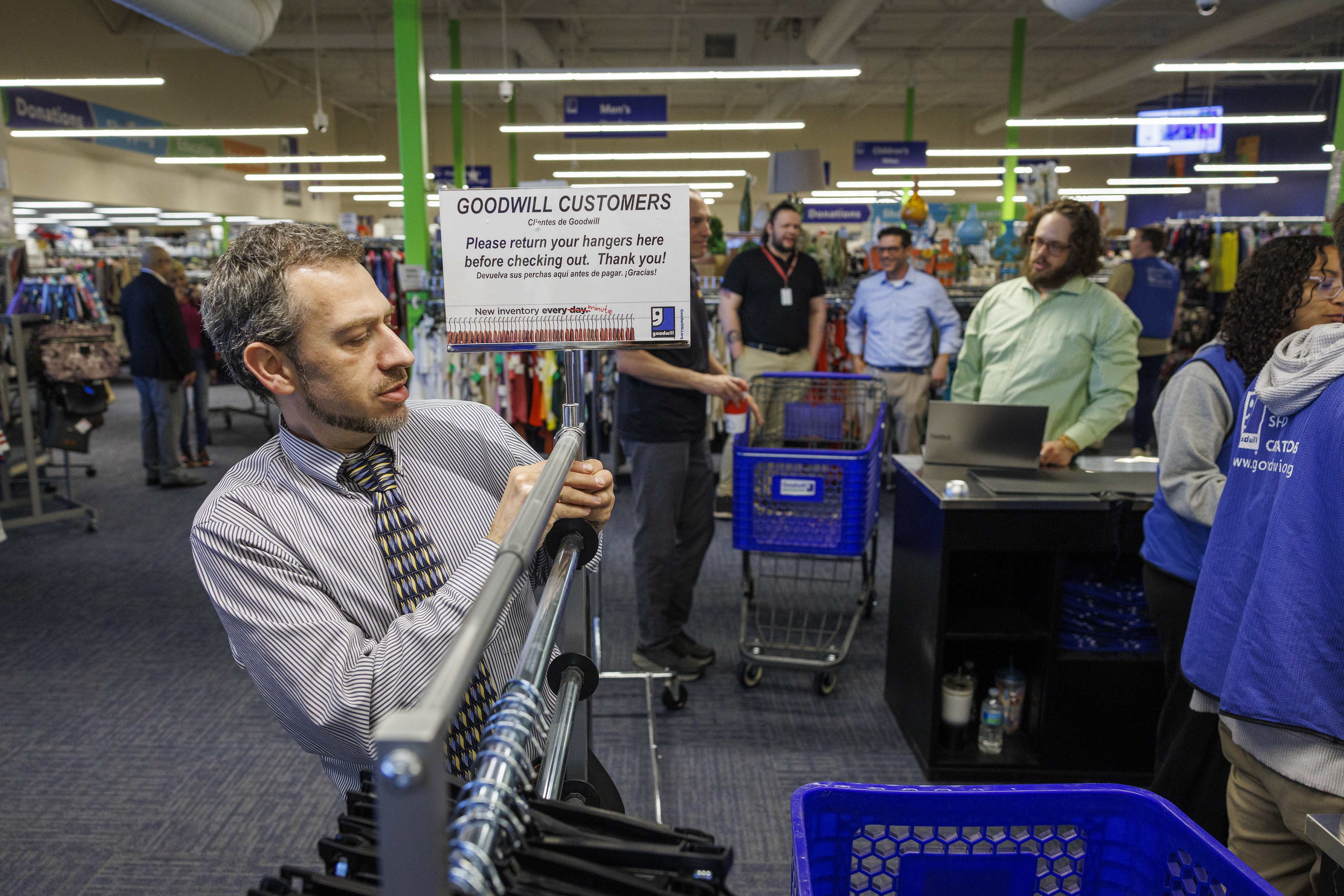
    Josef Fortun, regional manager with Goodwill Industries of Southern New Jersey, prepares the new Deptford store to open on May 21.Alejandro A. Alvarez / Staff Photographer

    This early success in South Jersey comes amid a larger thrifting resurgence. Last year, the U.S. resale market grew nearly four times faster than the broader apparel market, according to an annual report from the online consignment platform ThredUp.

    Goodwill recorded more than $7 billion in revenue last year, the New York Times reported, and annual sales across its 3,400 stores have risen 50% since 2019. Smaller secondhand shops, such as Savers Value Village and ThredUp, have also reported revenue increases, according to the Times.

    In the same Deptford shopping center as the new Goodwill, there are three other thrift stores: Once Upon A Child, Plato’s Closet, and Play It Again Sports. All are owned by Winmark Corporation, which has been adding more thrift stores and reporting year-over-year revenue increases.

    In nearby Cherry Hill, a Red White & Blue Thrift opened this spring, a half-mile from a 2nd Ave thrift outpost — owned by Savers Value Village — that opened in 2024.

    Goodwill also opened a store a year ago in a former Rite Aid in Voorhees. And its Woodbury Heights location, which is still accepting donations, is set to reopen June 15 as a Goodwill Home Medical Equipment Store.

    Boyd said the nonprofit chain is looking to expand into Cape May County in the near future.

    Why are more people thrifting?

    More people are buying secondhand right now for many reasons, said Mark Boyd, president and CEO of Goodwill Industries of Southern New Jersey and Philadelphia.

    “Challenging economic times definitely bring people into the Goodwill store, maybe for the first time,” Boyd said. At the same time, “there’s a lot of people out there who care a lot about reuse, and that’s driving particularly younger shoppers into Goodwill.”

    Friends Reed Habiak (foreground left) and Anthony Nunez (foreground right), both influencers and resellers, were first in line at the new Goodwill store in Deptford on May 21.Alejandro A. Alvarez / Staff Photographer

    And while thrifting is one of the most “tactile” experiences, Boyd said social media is playing a role in its rebirth. Many Goodwill customers are resellers, he said. They find steals in store aisles and then mark up the products to sell online or at flea markets.

    On Deptford Goodwill’s opening day last month, professional reseller Anthony Nunez was first in line. He had arrived with a friend around 4:30 a.m., ready to hunt for sports jerseys, Pokemon memorabilia, video games, and vintage clothing to resell on eBay.

    Since losing a job in compliance during the pandemic, the 34-year-old Sayreville resident has been reselling full-time, making more than $100,000 a year, he said.

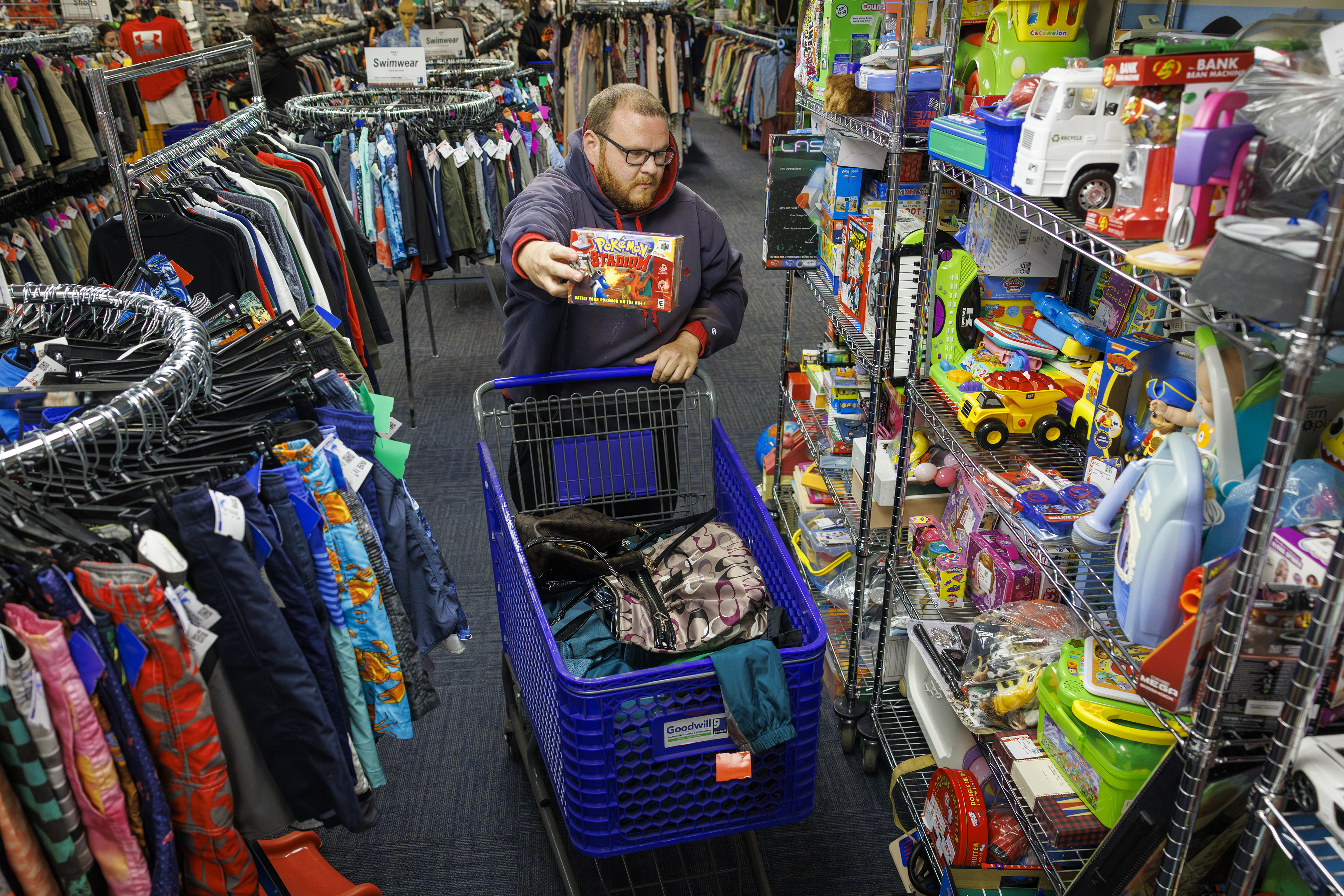
    Anthony Nunez flashes a Pokemon Stadium game he picked up in the toy section at the opening of the new Goodwill in Deptford.Alejandro A. Alvarez / Staff Photographer

    At the Deptford Goodwill, Nunez made a beeline for items with a high resale value, including a still-in-the-box Pokemon Stadium video game for Nintendo 64. He bought it for $18, Nunez said, and later resold it for $150, recouping the cost of his entire Goodwill trip.

    It helped that Goodwill executives had invited several resellers to a store preview, he noted.

    “They understand we help them too,” Nunez said. “I don’t know if they would be able to exist without us.”

    How social media has promoted thrifting

    Some longtime thrifters have started using social media to make extra cash.

    Melody Appel got into thrifting decades ago, when she was a student at Drexel University.

    Now 47 and living in Monmouth County, N.J., Appel recently got a TikTok account at the urging of her teenage daughters. At first, she just used the account to show off her thrifting hauls. But over the past month, she said she has started reselling items, too, making around $1,500.

    Many of her TikTok followers seem to be between the ages of 30 and 60, she said, but she has noticed many younger customers in stores.

    “People are seeing what they can find,” said Appel, who works as an educator and interior decorator. “And maybe their perception of what thrifting was is different from what thrifting is.”

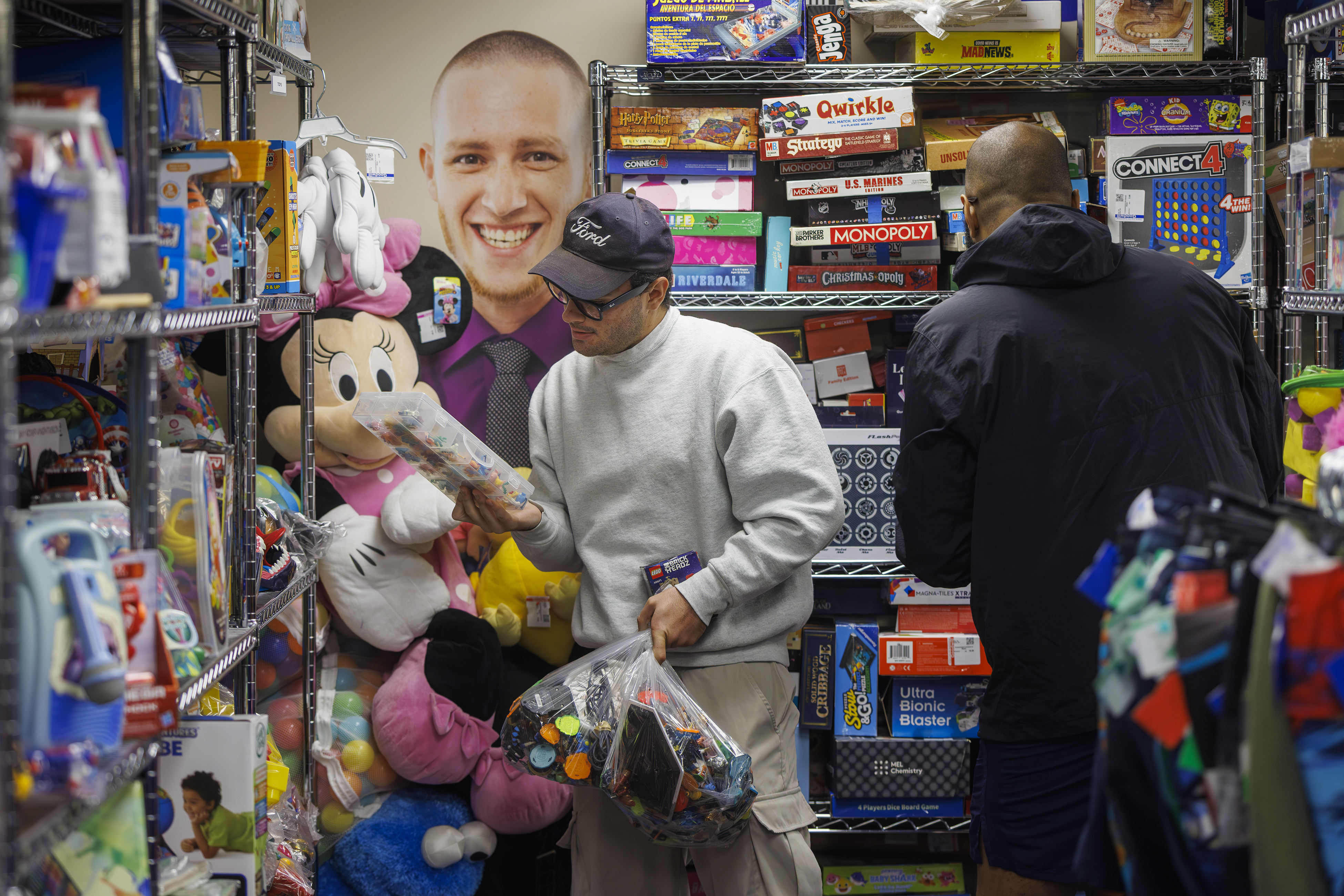
    Reed Habiak, a social media influencer and reseller, looks for items in the Deptford Goodwill’s toy section on opening day last month. Alejandro A. Alvarez / Staff Photographer

    While some found their way to thrifting through social media, others get hooked when they stumble into a store, said Fortun, the Goodwill regional manager. He has noticed more young people at the Deptford store than at the old location in Woodbury Heights, he said, and he attributes some of that to the Edge Fitness Club right next door.

    Customers often come in on a whim, he said, and are in awe of the wide selection and the price tags.

    “People always look for deals,” Fortun said. “You go to discount stores like Ross and Burlington, you still don’t find items as cheap.”

    Goodwill is trying to keep these customers hooked with a new online loyalty program, which will offer special deals and send push alerts to shoppers when their favorite brands are stocked at a local store, said Boyd, CEO of the South Jersey and Philadelphia locations.

    Mark Boyd, CEO at Goodwill Industries of Southern New Jersey and Philadelphia, cuts the ribbon to open the new store in Deptford last month.Alejandro A. Alvarez / Staff Photographer

    Executives are also looking into using artificial intelligence to optimize parts of their operations, such as pricing, he said. But he doesn’t think technology could enhance the customer experience much, he added, and over-digitization could detract from it.

    “I really think thrifting is like one of the most human experiences you’re going to have, and it’s a great shopping experience,” Boyd said, “and that’s why it’s so popular.”

  • A Conshohocken bridal shop has closed after 45 years

    A Conshohocken bridal shop has closed after 45 years

    For more than four decades, hundreds of Philadelphia-area women first laid eyes on their wedding gowns at La Bella Moda.

    Even in recent years, as their bridesmaids and mothers increasingly bought dresses online, brides kept the Conshohocken boutique in business.

    But last month, the Fayette Street mainstay shut its doors for good.

    “It eventually wears on you,” said owner Gabriella Pagano Rush, who decided to close the shop in response to industry pressures and personal timing. The 30-year-old, who took over the store from her grandmother Lena Pagano in 2020, is due to have her first child this summer.

    “The business was fine,” Pagano Rush said. “Sometimes you just have to do something that is better for you in the long run.”

    La Bella Moda, shown here in 2023, sold wedding gowns and other formal wear for 45 years before closing its doors in Conshohocken last month.Courtesy Morgan Taylor Artistry

    She calls the transition “a happy ending,” one she said marks a new chapter in her life but also comes after years spent struggling to keep up with an evolving wedding industry.

    Weddings have become increasingly extravagant, with some Philly-area celebrations costing $40,000 or more.

    Social media has upped the ante — and the pressure on couples to plan the perfect day, noted Pagano Rush.

    They have more vendor choices than ever, and small businesses like La Bella Moda, where gowns cost $2,500 on average, must compete with wedding emporiums, which can offer a wider selection for less.

    The other options include larger brands, such as King of Prussia-based David’s Bridal, which is expanding its offerings while still selling dresses for under $500.

    There are also online retailers, such as Revelry and Azazie, which offer home try-ons and mail custom dresses directly to customers. Even broader ecommerce sites and fast-fashion brands sell wedding accessories.

    In recent years, as brides browsed veils and shoes at La Bella Moda, “I would start hearing, ‘Oh, I can get this on Amazon’ or ‘Oh, I can get this on Shein,’” which started out selling wedding dresses online before becoming a retail behemoth, Pagano Rush said.

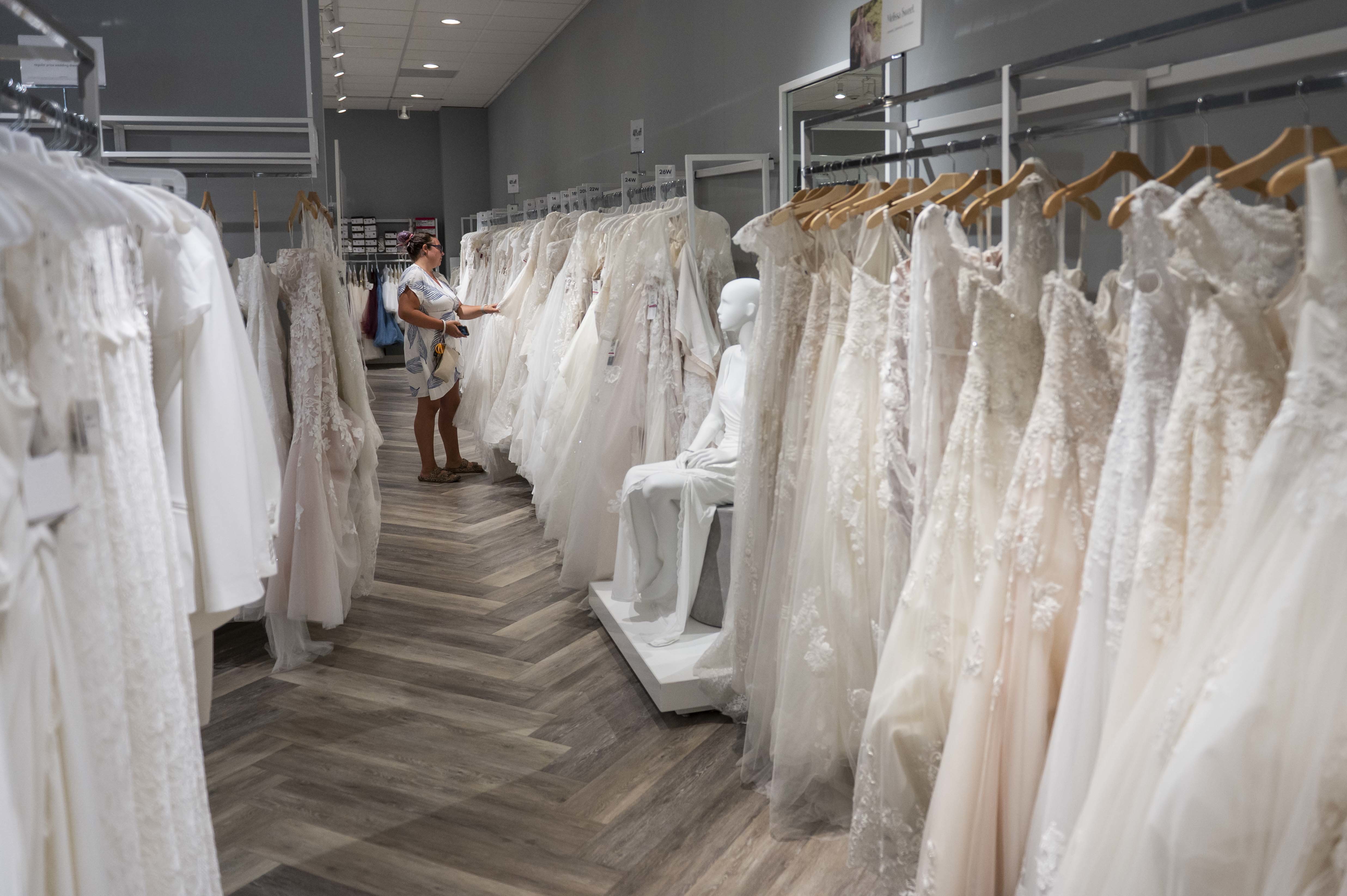
    Someone shops for a wedding dress at David’s Bridal in Feasterville-Trevose in 2023. Allie Ippolito / Staff Photographer

    In 2023, Pagano Rush stopped selling bridesmaid dresses and other formal wear, which had accounted for about 30% of the shop’s business, she said. Instead, she doubled down on wedding gowns.

    She began offering $200 private appointments, during which a bride and up to eight guests got the store to themselves, with champagne, cookies, and a personalized shopping playlist, Pagano Rush said.

    “I really wanted brides to feel relaxed when they came into our store,” Pagano Rush said. “Not intimidated, not feeling pressured to find their dress.”

    How an Italian immigrant cultivated bridal joy in Conshy

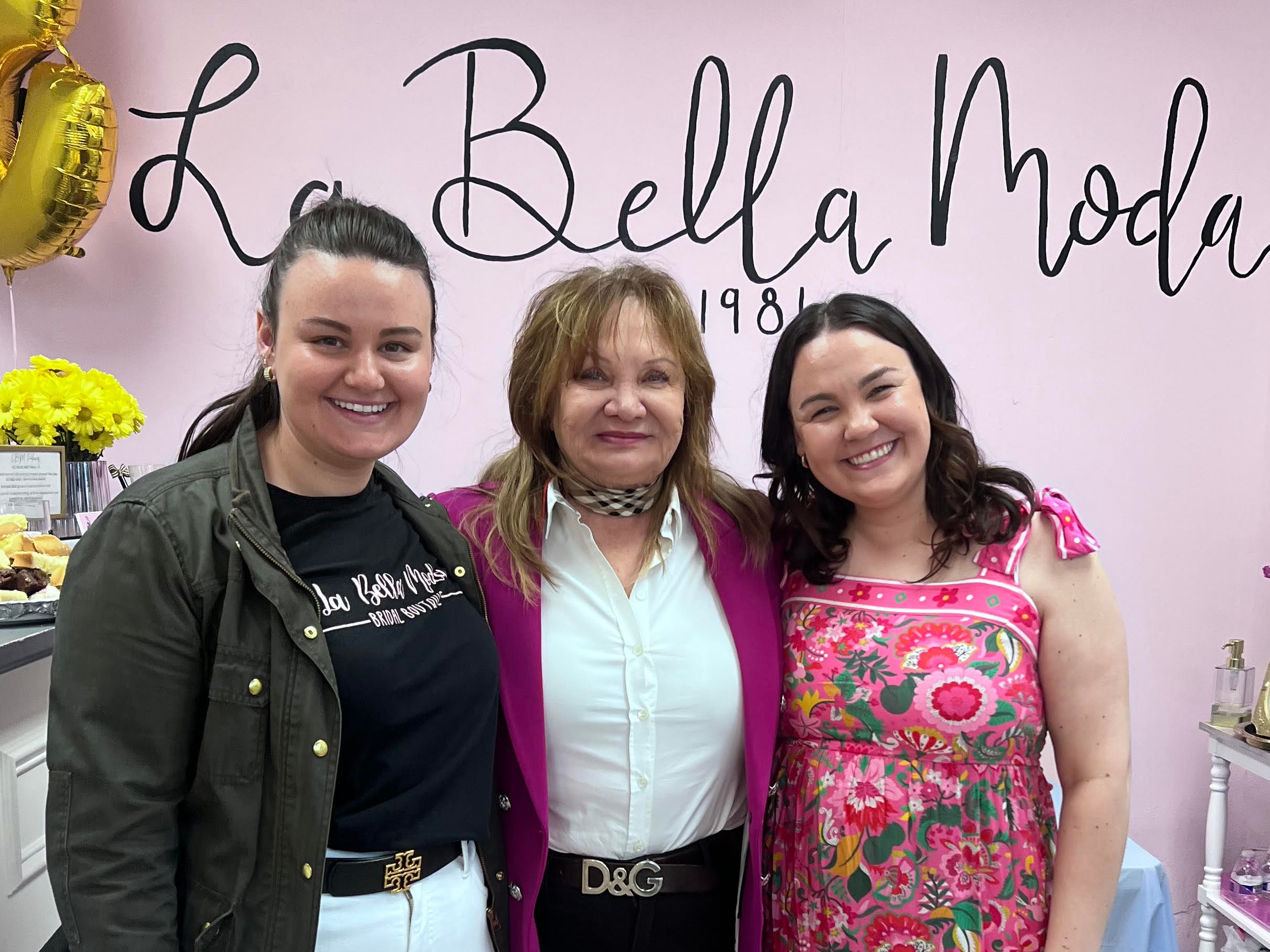
    La Bella Moda founder Lena Pagano (center) poses with her granddaughters in the Conshohocken shop. Gabriella Pagano Rush (right) took over as owner in 2020. Pagano Rush’s sister Michaela Bosico (left) encouraged the new owner to renovate the store during the pandemic.Courtesy Gabriella Pagano Rush

    Ever since she was a kid watching her “mom mom” Lena run La Bella Moda, Pagano Rush was enthralled by the wedding dress shopping experience.

    “I just remember growing up, going and visiting her at the store, helping her for fun, and just in the back of my head being like, ‘Oh, this would be really fun to do,’” said Pagano Rush, who grew up near Lansdale.

    At the time, the shop’s second floor was devoted to bridal try-ons, she said. “It was always so exciting when you would walk upstairs and you’d see all the brides up there trying on dresses.”

    The joy in the shop was cultivated by Lena Pagano, who emigrated from Italy, married, had three children, taught herself English, and then fulfilled a longtime dream of opening a boutique in 1981, Pagano Rush said.

    Lena Pagano, now in her 70s, stepped aside just before the pandemic in 2020, Pagano Rush said, and has been enjoying retirement in Plymouth Meeting.

    Meanwhile at La Bella Moda, Pagano Rush’s first few months as a business owner coincided with the early months of the pandemic, when businesses were forced to close. But she took it in stride and used the time to renovate the shop, making for a better customer experience when it reopened that June.

    Owner Gabriella Pagano Rush inside a renovated La Bella Moda in Conshohocken in 2023.Courtesy Morgan Taylor Artistry

    Montgomery County Commissioners Chair Jamila Winder said the Pagano family’s story exemplifies the immigrant experience.

    “In these times where it’s really hard for small business owners and entrepreneurs to start a business and sustain a business, Lena and Gabriella are really the epitome of that grit and that discipline and that vibrancy,” Winder said.

    “They’ve brought so much joy to women across Montgomery County, women who were planning for some of the best days of their lives.”

    Winder is one of them. A few years ago, she said, she bought her bridesmaids’ dresses at La Bella Moda.

    Customers remember their wedding dress fittings

    For women across the region, word of La Bella Moda’s May 31 closure brought back similar memories.

    Dozens commented on Facebook posts about the news.

    “I’ll never forget how gorgeous I felt in my lace gown on my wedding day,” wrote one woman. “Thank you for helping to make it so special, almost 20 years ago.”

    “Such amazing memories of the fitting and how beautiful you made me feel!” added another.

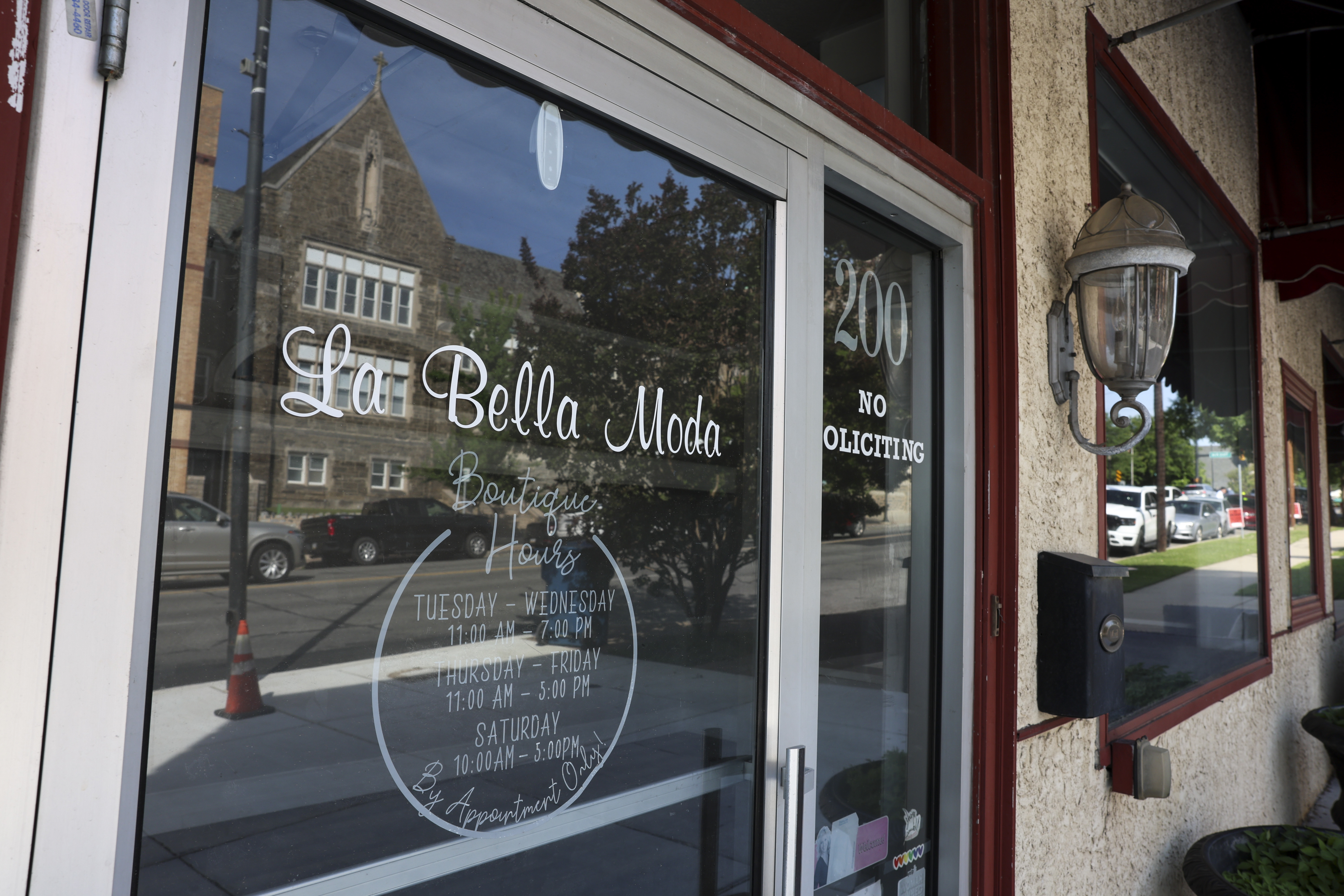
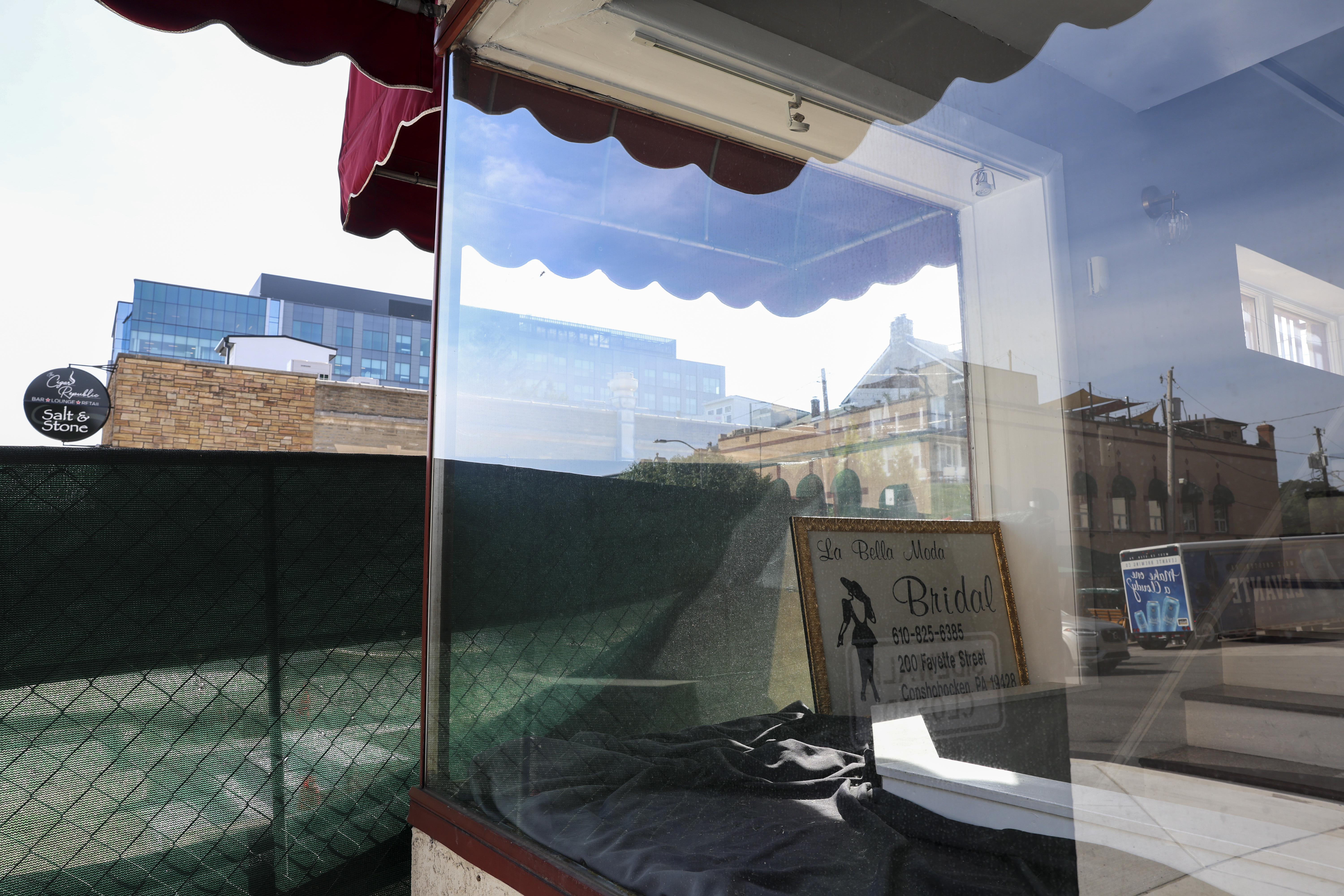
    The mostly empty window of La Bella Moda is pictured on June 4 in Conshohocken.Monica Herndon / Staff Photographer

    Tina Brennan West said she, too, recalls her wedding-gown fitting there 34 years ago.

    “I remember the experience walking through the doors, the smiles, the feeling that they already knew you,” said Brennan West, 55, of Plymouth Meeting, who works at an auto repair shop.

    She showed the stylists an inspiration picture from a magazine, she said, and an employee pulled a similar white-satin dress, with a long train, pink rose buds in the appliqué, and puffy sleeves that were popular at the time.

    She can still picture trying on the gown, she said, and see her mother and grandmother crying at the sight of her.
    Erin McElroy Kraft, now 60, wore her mother’s wedding gown for her 1992 nuptials. But the Plymouth Meeting native bought her bridesmaids outfits — deep-purple velvet skirt sets — at La Bella Moda.

    “It was absolutely beautiful,” McElroy Kraft said. “They were just so great at what they did.”

    McElroy Kraft, a retired foreign-service worker who now lives in Arlington, Va., said Fayette Street won’t feel the same on her next visit home.

    “It’s going to be hard not to see La Bella Moda in Conshohocken,” she said.

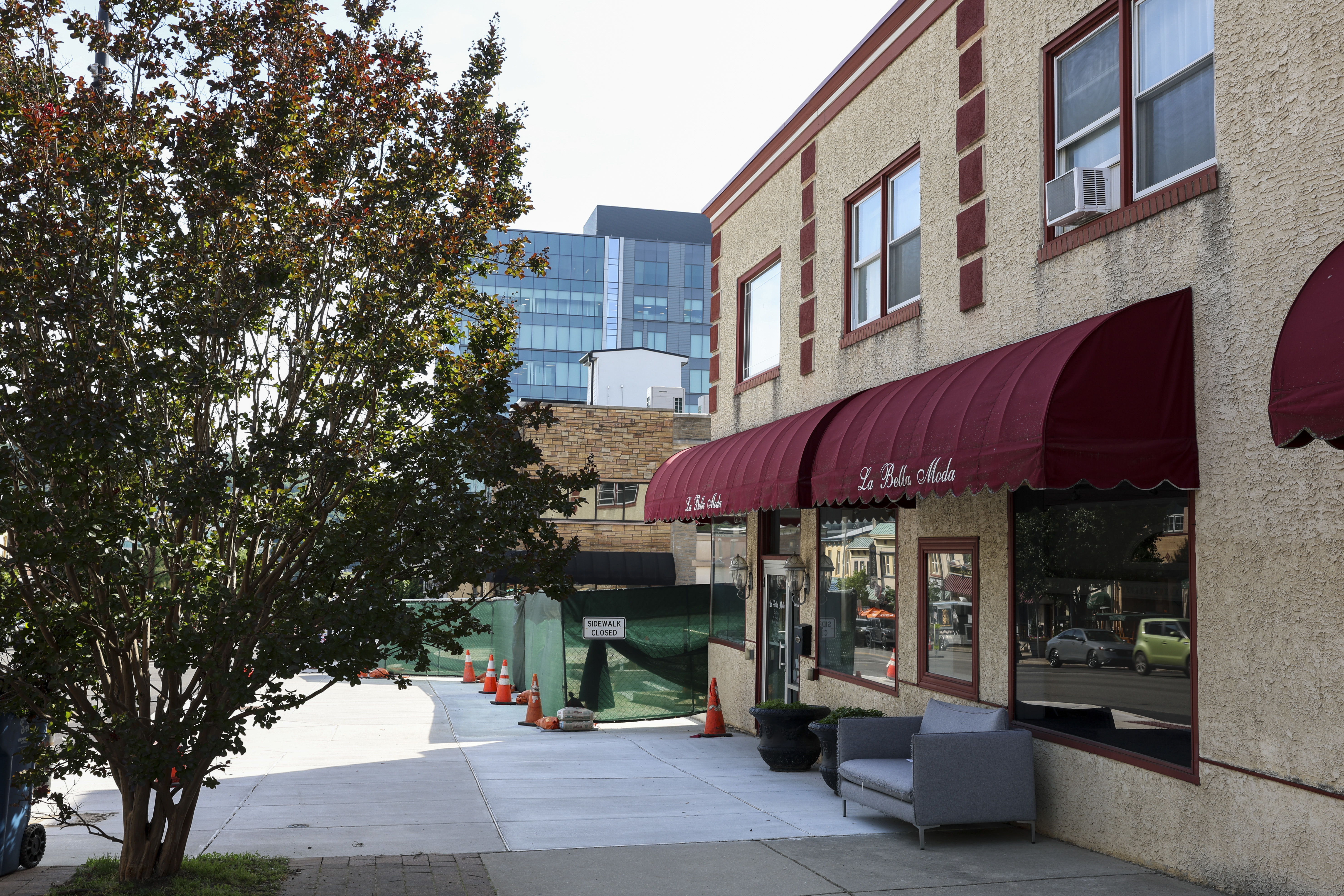
    The closed La Bella Moda on Fayette Street in Conshohocken is pictured on June 4.Monica Herndon / Staff Photographer

    La Bella Moda sits empty now. Its last dresses were either sold to customers during a recent farewell event, Pagano Rush said, or donated to bridal consignment shops owned by her friends.

    As for brides who had recently bought gowns at La Bella Moda, “no one was left without their dress and without a plan,” said Pagano Rush, who referred some customers to a local seamstress for alterations.

    The building, owned by Lena Pagano, will be leased to another tenant, Pagano Rush said.

    “The borough of Conshohocken has really done an amazing job of attracting businesses to that main corridor,” said Winder, the county commissioners’ chair. “I don’t anticipate that storefront will be vacant for long.”

    Pagano Rush said she believes there is still a place for independent shops in the modern wedding industry.

    “I can’t tell you how much attention we have gotten since April when we posted that we were even closing,” she said. “I wish small businesses just got this kind of attention and support” all time.

  • Trump’s kowtow to China on Taiwan risks tech disaster for the U.S. and the world

    Trump’s kowtow to China on Taiwan risks tech disaster for the U.S. and the world

    Recently, I attended a showing of a fascinating documentary called A Chip Odyssey that laid out the history of how that small self-governing island democracy of Taiwan came to manufacture around 90% of the world’s most advanced semiconductor chips.

    It was not at all, as President Donald Trump keeps insisting, because Taiwan “stole our chip industry.” The real reason is one Americans need to understand: if China ever manages to take control of Taiwan, it will cause a U.S. and global economic disaster that would make the Strait of Hormuz blockade look like child’s play.

    It would halt America’s global dominance in the field of artificial intelligence, since U.S. AI companies all depend on sophisticated chips fabricated by the Taiwan Semiconductor Manufacturing Co., known as TSMC. As the Wall Street Journal put it, “the island is now the factory floor” for U.S. leadership in AI.

    Yet, Trump, before, during, and after his May summit with Xi Jinping, has continued to belittle Taiwan. He discussed a planned $14 billion U.S. arms sale with Xi, despite a long-standing pledge to Taiwan, made by President Ronald Reagan, that U.S. weapons support for the island would never be subject to China’s approval.

    Trump has now frozen the weapons sale, saying it could be “a bargaining chip” with Beijing.

    The president has repeatedly hinted at his reluctance to defend a place that’s “9,500 miles away.” And he frequently argues that the production of advanced chips could and should be moved to the United States.

    My conversations with the director of A Chip Odyssey, Hsiao Chu-Chen, and coproducer Ben Tsiang (along with my recent trip to Taiwan) made clear why it will be years before the U.S. can onshore production of even a modest percentage of its chip needs. The film offers a moving history of how a small, poor island became a tech giant because it had no choice.

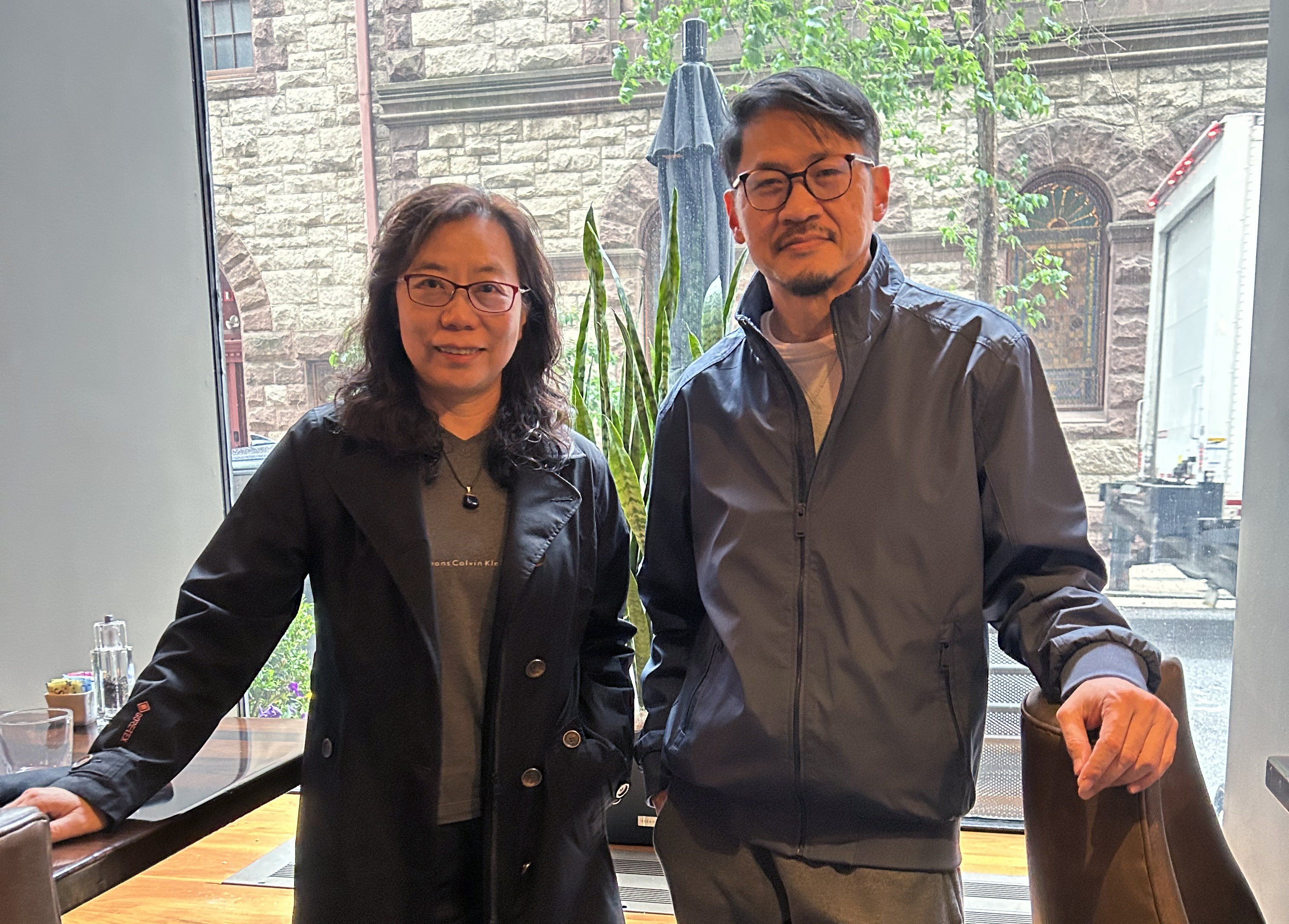
    Hsiao Chu-Chen, left, director of “A Chip Odyssey,”  and the documentary’s co-producer Ben Tsiang in Philadelphia in May.Trudy Rubin

    “I wanted to tell the history of Taiwan’s semiconductor industry, not just about the achievement itself, but how people strived to achieve what they did,” Hsiao told me over coffee in Philadelphia. Fifty years ago, the island was almost abandoned by the international community after the United Nations switched the China seat to Beijing and expelled Taiwan, she told me. “Taiwan is so tiny, with no minerals, so we needed to find a way we could survive.”

    After consulting with Taiwanese American engineers working in the United States, the Taipei government decided to focus on high tech. In the mid-1970s, it licensed and paid for semiconductor technology transfer from RCA, a common process. Nothing was stolen — and, at the time, this technology wasn’t new or mainstream, and was only a minor focus at RCA.

    Taiwanese engineers traveled to the United States to master manufacturing technology, returned, and vastly improved it. They began transferring it to the manufacture of consumer electronics such as watches, personal computers, and cell phones.

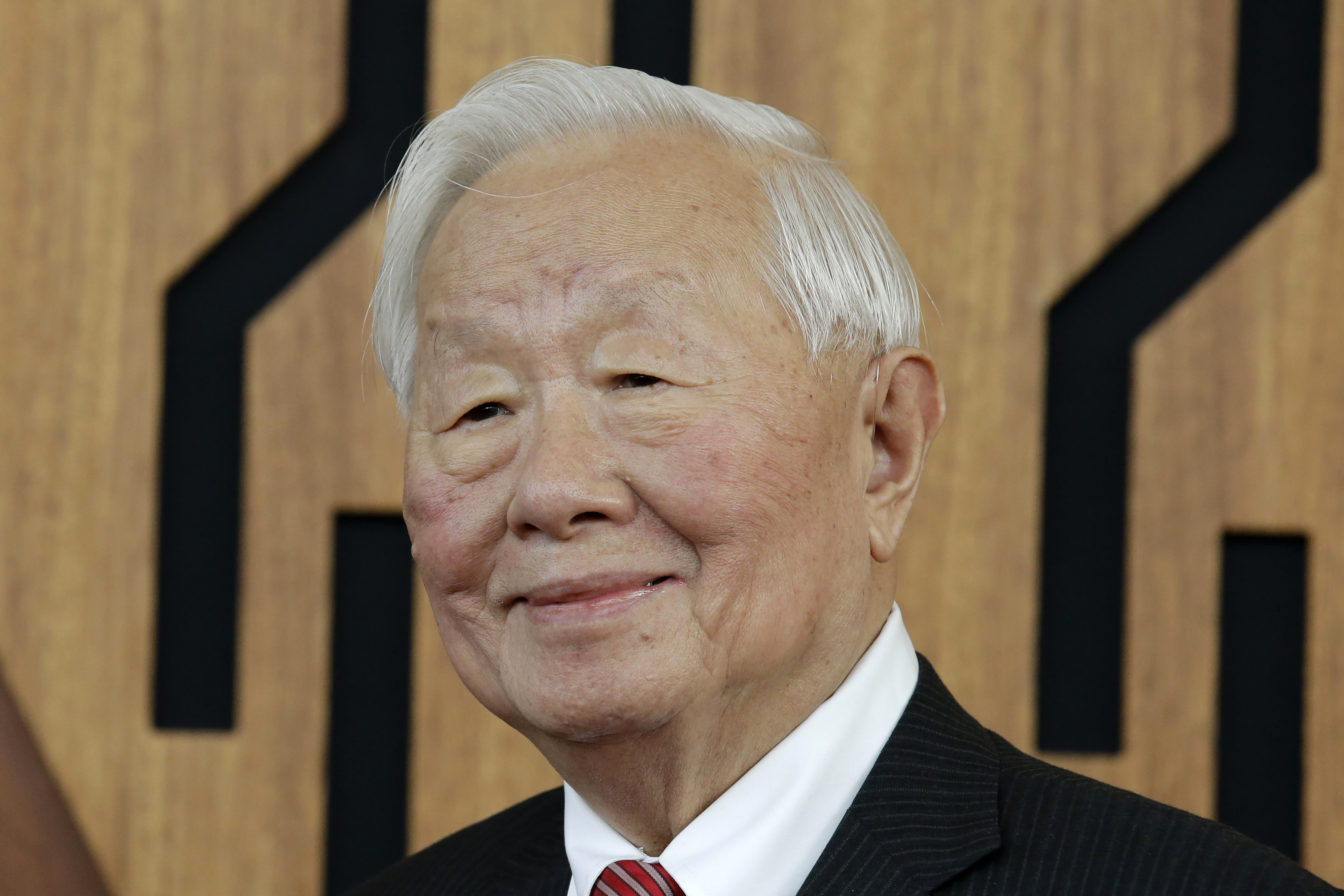
    Fast-forward, when a brilliant Chinese American engineer and star at Texas Instruments named Morris Chang was recruited by Taipei in 1987 to advance its semiconductor industry. He conceived the idea of a “fab-less” process, where small companies in Taiwan and elsewhere, and huge ones in the U.S., could focus on design and research to constantly update the technology, while Taiwan would be the foundry that manufactured complex chips to their specifications.

    Morris Chang, founder of one of the world’s largest chip manufacturers, TSMC, smiles at the start of the APEC Economic Leaders Meeting at Port Moresby, Papua New Guinea, in 2018.Aaron Favila

    For example, Hsiao explained, “TSMC makes chips based specifically on designs from Nvidia [a global leader in technology, based in California], so it is not competing with them.” And TSMC has built up the trust of its many U.S. and international partners because it never leaks information. In fact, it hardly ever allows journalists (myself included) within its sprawling precincts at the Hsinchu Science Park, an hour outside Taipei.

    “The most important principle [of TSMC] is integrity,” said the film’s director. “Companies don’t have to worry that their technology will be stolen, as it has been in China.” Moreover, TSMC invests massively in research and development to keep its foundry on the cutting edge.

    Fabricating chips “is not like manufacturing nails,” I was told by one scientist who studies TSMC and preferred not to be named, “but it is an intense, complex, and layered process. You need to update, improve the technology all the time.”

    When Chang pioneered his “fab-less” concept, making Taiwan the world’s semiconductor foundry, it was a huge risk, but it paid off beyond his dreams.

    “I understand that some Americans are anxious about losing leadership in the semiconductor industry, but Taiwan earned its place with decades of talent, tireless innovation,” producer Tsiang said intently. “It took daring investment across generations to build what we have today. That is what we were trying to show.

    “But it is not a zero-sum game with America. Taiwan’s rise is deeply connected to collaboration with U.S. companies, and will be in the future.”

    Indeed, the choice by companies such as Nvidia or Intel to outsource fabrication of chips to Taiwan was based on profit-seeking, since it vastly lowered costs.

    The Americans could also rely on the massive Taiwanese production and talent ecosystem that feeds into TSMC. As the film shows, engineers there rotate in three shifts, so they are always present and are ready to show up at 2 a.m. if machinery needs adjusting.

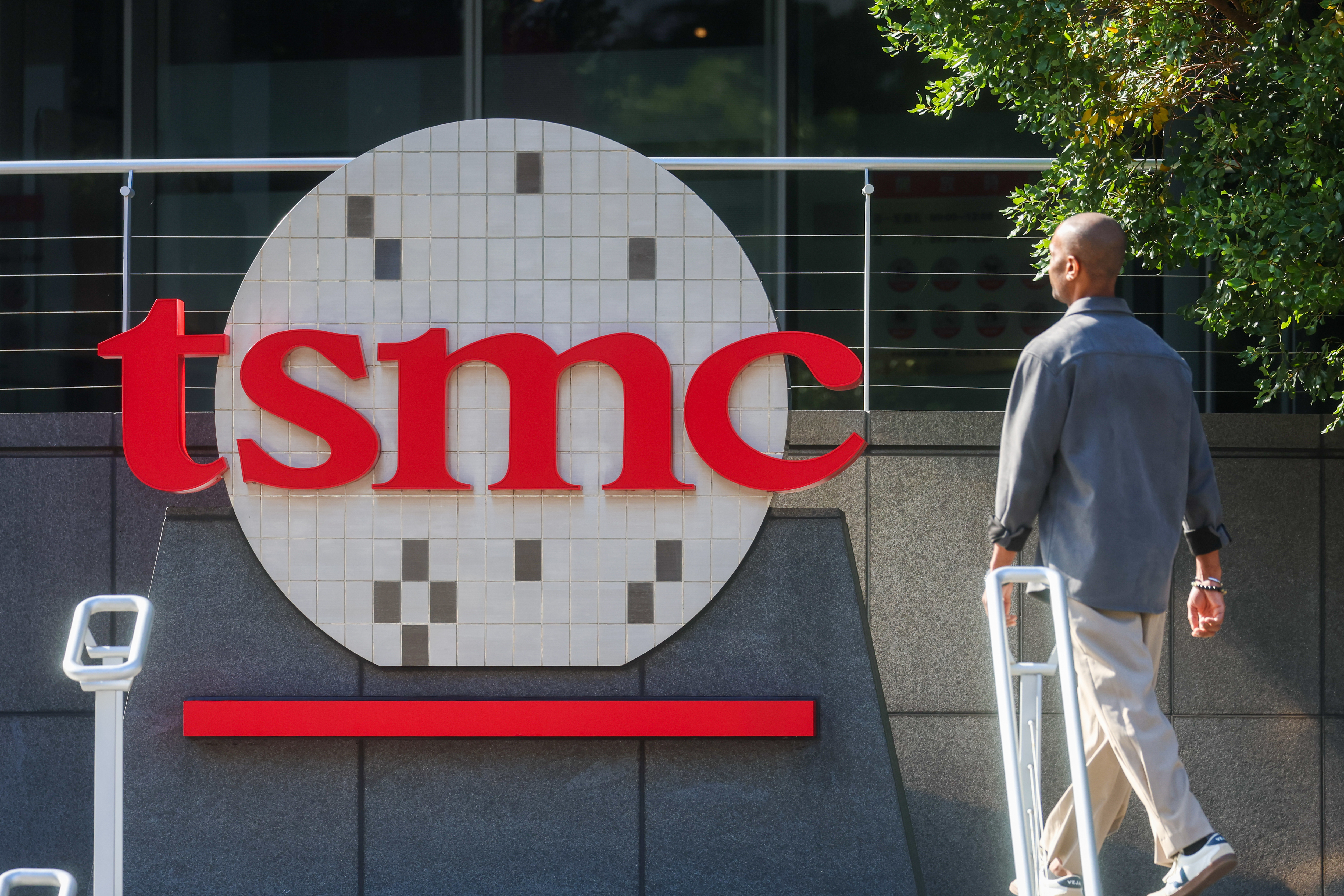
    A worker walks past the logo of TSMC, or Taiwan Semiconductor Manufacturing Co., a Taiwanese multinational semiconductor contract manufacturing and design company, in Hsinchu, Taiwan, in January.Daniel Ceng

    Which brings us to the question of whether a huge chunk of the foundry production could easily be moved from Taiwan and installed in the United States, as Trump demands.

    TSMC has committed $165 billion to build six “fabs” (as fabrication plants are called) in Phoenix. Yet, only one is operating, and one more will come online this year.

    The difficulties are obvious. Besides far higher operating costs than in Taiwan and the far more casual American work ethic, there is the huge problem of finding the engineering talent in the United States — both to maintain complex machinery and oversee complex operating processes.

    “In Taiwan, all the top university graduates go to TSMC,” Tsiang told me. “In the United States, the top university graduates go to Washington, D.C., or Silicon Valley. There is a real test in how the U.S. can develop a talent pool.”

    Links are being established with the University of Arizona and other potential feeder schools to programs aimed at filling TSMC positions. But this is a process that will take years.

    At present, the Phoenix fabs depend on around 2,000 Taiwanese engineers and staff. There are seven direct flights a week from Taipei to Phoenix.

    In Taiwan, audiences tear up at showings of A Chip Odyssey as they listen to elderly scientists reminisce about their years of building TSMC from the ground up. I wish more Americans could see the film, but it is only available for now at special showings. (However, you can watch the trailer as well as an extended interview with the director and producer on YouTube.)

    Yet, the cost to America of a possible Chinese takeover of Taiwan in the next decade is almost unimaginable, even though Trump seems to dismiss it. His ignorance of the real story of Taiwanese semiconductors is infuriating and dangerous.

    Perhaps some of Trump’s tech-bro pals can get the message across to him before we all suffer the consequences of losing TSMC.

  • We met some Philadelphians at Fashion District and asked them the same question: What made you fall in love with the city?

    We met some Philadelphians at Fashion District and asked them the same question: What made you fall in love with the city?

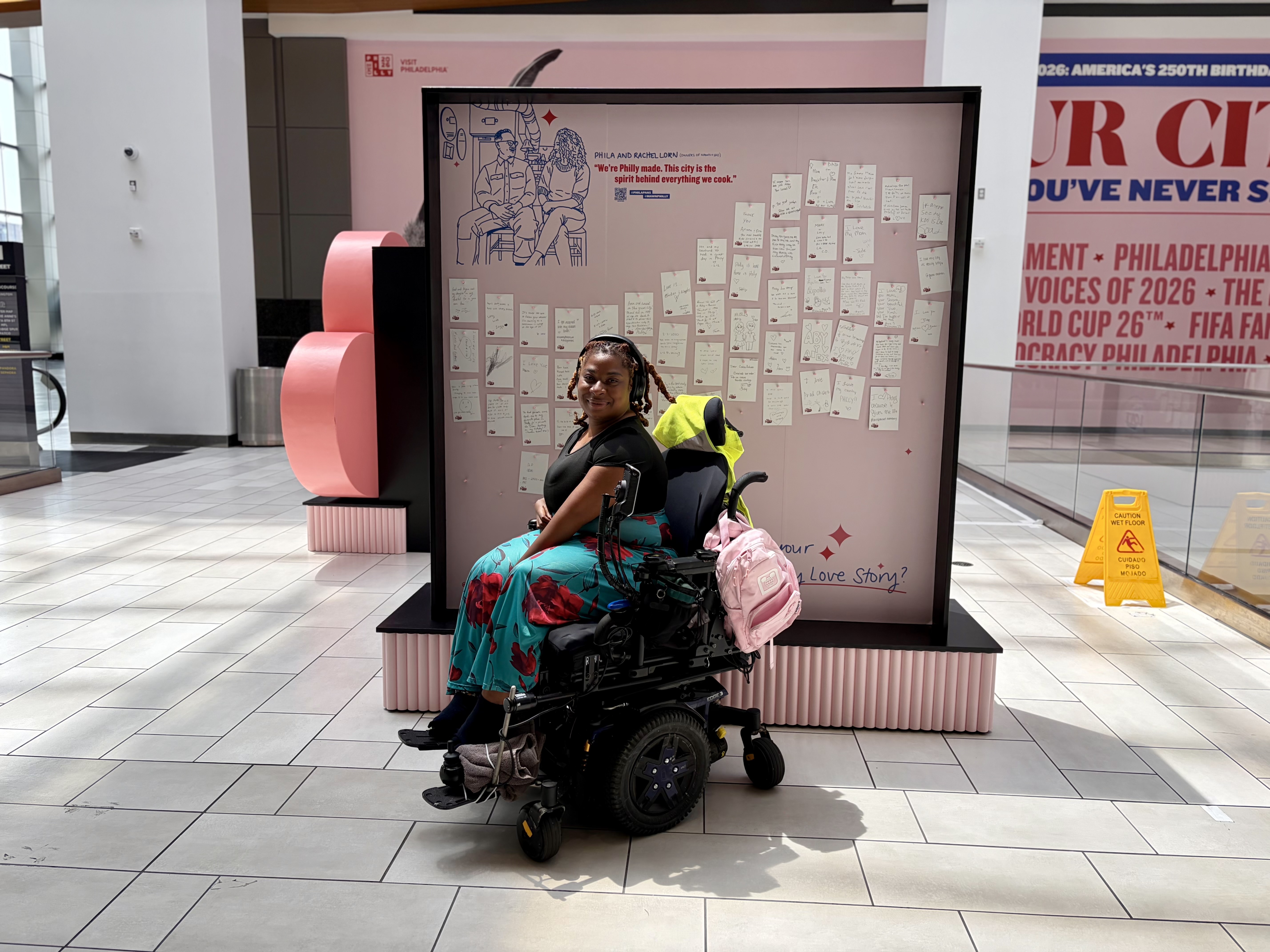
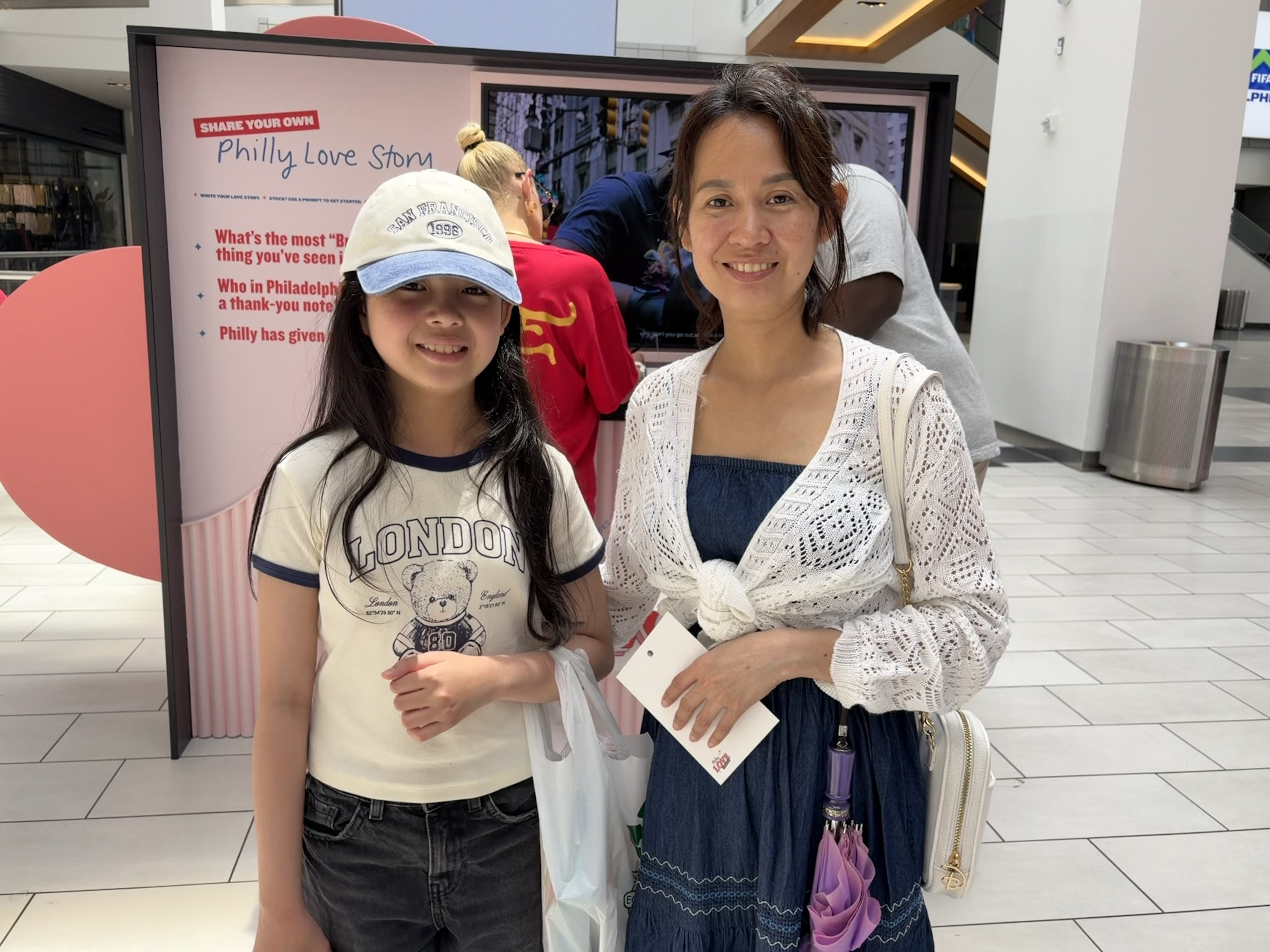
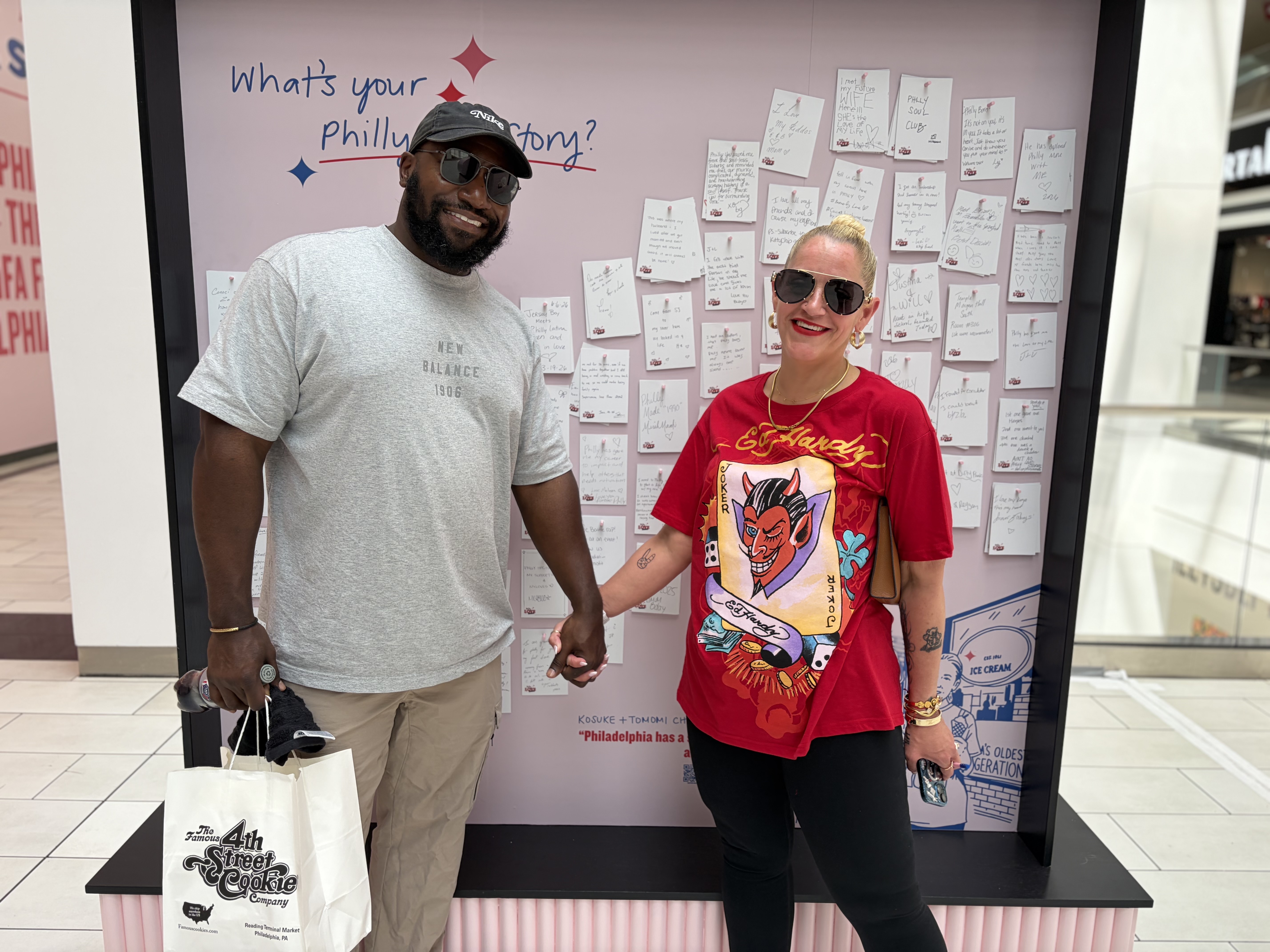
    With the World Cup and its influx of fans just around the corner, the Fashion District has a new interactive installation: “Philly Love Stories.” Despite the name, this is not about romance; it’s about Philly love and pride.

    Two three-dimensional hearts shaped to look like a pink cloud welcome folks in through the Fashion District’s entrance at Ninth and Market Streets and visitors share their musings on love in Philly. The initiative comes from a Visit Philadelphia video series with the same name.

    On Saturday afternoon, as people stopped to write their notes and see the exhibition, The Inquirer asked people for their Philadelphia love stories. For some, the city has brought their family together, and for others, the love affair with the city has remained a long-distance relationship. Here, some found the strength to cope with the grief of a child’s death, while others made loving feline bonds.

    Here are some of our favorites:

    A place to rekindle romance

    In their 16 years of marriage, Tito and Janitza Nyemah have found in Philly a place for their love to bloom.

    The Bensalem residents come to the city for romantic getaways or, as they did Saturday, to celebrate their anniversary.

    Tito (right) and Janitza Nyemah come to Philly from Bensalem every time they want to take a break.Michelle Myers / Staff

    “Day to day, you get wrapped up on family, kids, and work, but we come here and we feel connected to each other,” Janitza Nyemah said. “We walk through the parks, and never go twice to the same restaurant because the food scene, it’s top-notch. So there is always something new to try.”

    Reading the love stories written by residents and tourists on the prop wall, Nyemah said she hoped visitors coming in for the World Cup will try to seek out the city as much as they can, and explore beyond the cliches.

    “Cheesesteaks, for sure,” she said. “But the more you get to know Philly, just know the more you’ll love it.”

    A city of motherly love

    Binta Willoughby, 48, hugged her youngest son, Quamire, for the last time in early May.

    The 26-year-old was sitting outside his home in North Philly with his friend when an unidentified car passed by and the driver opened fire at random, striking Quamire, Willoughby said.

    “He was very friendly, will help you out any way he can,” she said.

    Binta Willoughby lost her son to gun violence in May, but her love for the city has not diminished.Michelle Myers / Staff

    Far from pushing her away from the city, the incident only deepened her connection to Philly.

    On Saturday, she and Quamire’s girlfriend wrote on the wall about their love for the city and for Quamire.

    “It was an unfortunate thing, but we have been here our whole lives, and there has always been more good than bad,” Willoughby said. “Philly is my home, my whole life, the city where my kids were brought up. People here are kind.”

    A city of reunion

    In 2016, Sophear Chansath held her newborn daughter and kissed her husband goodbye as he left Cambodia to work in the U.S.

    After a decade apart, Philly has now become the city where the high school sweethearts, now both 38, have reunited and are raising their family.

    With the help of her daughter Jessica, 10, Chansath wrote about how charming and kind her husband is, and what Philly means to them.

    Sophear Chansath (right) and her daughter Jessica moved from Cambodia seven months ago to reunite with Jessica’s father.Michelle Myers / Staff

    “We love the food and the people are kind,” Jessica, 10, said, translating for her mother.

    The family loves walking in Center City parks and visiting Chinatown. Handmade noodles are Jessica’s favorite meal.

    Raising her daughter in a city so far from her home, Chansath has faith that Philly will provide a safe and nurturing space where Jessica can grow up.

    “She takes good care of me and wants me to be a good kid and have a nice job here,” the daughter said.

    Going the distance

    For Damaris and Andres Outlaw, love in Philadelphia involves a long-distance marriage.

    “I’m writing about a Jersey boy that fell in love with a Philly Latina queen and now has to travel,” Damaris Outlaw said while attaching her note to the exhibit’s wall.

    Her husband’s job keeps him in New Jersey and he often commutes 45 minutes each way, multiple times a week, to be with his Philly-born and -raised wife.

    Andres Outlaw (left) commutes 45 minutes each way from New Jersey to spend time with his wife Damaris (right).Michelle Myers / Staff

    “I want to be there for her because I love her,” Andres Outlaw said. “It is a sacrifice, but we can see one another.”

    “Philadelphia has a lot to give,” Damaris Outlaw said. “We are full of friendly people, good food, and great experiences — think about the pretzels and water ice.”

    Pheline love

    Staring at the wall of notes, Wen Lee, 24, and Matt DeMarco, 31, couldn’t help but think about what they love most about Philly: cats.

    DeMarco grew up in the city, while Lee moved from Texas two years ago for work.

    They met at an anime conference in the suburbs and soon began dating. Lee eventually decided to move to Philly, wanting to experience the city’s art, music, and food scene. They also found themselves doing something they hadn’t planned for: rescuing stray cats and taking them to shelters.

    “Philly cats are wonderful. We like looking at them, taking care of them, and helping them,” Lee said.

    For Wen Lee (left) and her boyfriend Matt DeMarco (right) cats are the best part of Philly.Michelle Myers / Staff

    Last winter, they found a cat in the middle of a snowstorm and gave him a forever home.

    “His name is Moos. We don’t know how old he is because he has no teeth, so they can’t tell,” she said. “He is our little baby boy.”

    With the city’s incoming surge of tourists, they hope more people fall in love with Philly’s cats and help find them homes.

    “Give the cats food and water, and if you can catch them, take them to a shelter,” DeMarco said. “And if you want a cheesesteak, don’t go to Pat’s or Geno’s.”

  • ‘Big Rube’ Harley made throwback jerseys popular. He says Mitchell & Ness didn’t pay him his share.

    ‘Big Rube’ Harley made throwback jerseys popular. He says Mitchell & Ness didn’t pay him his share.

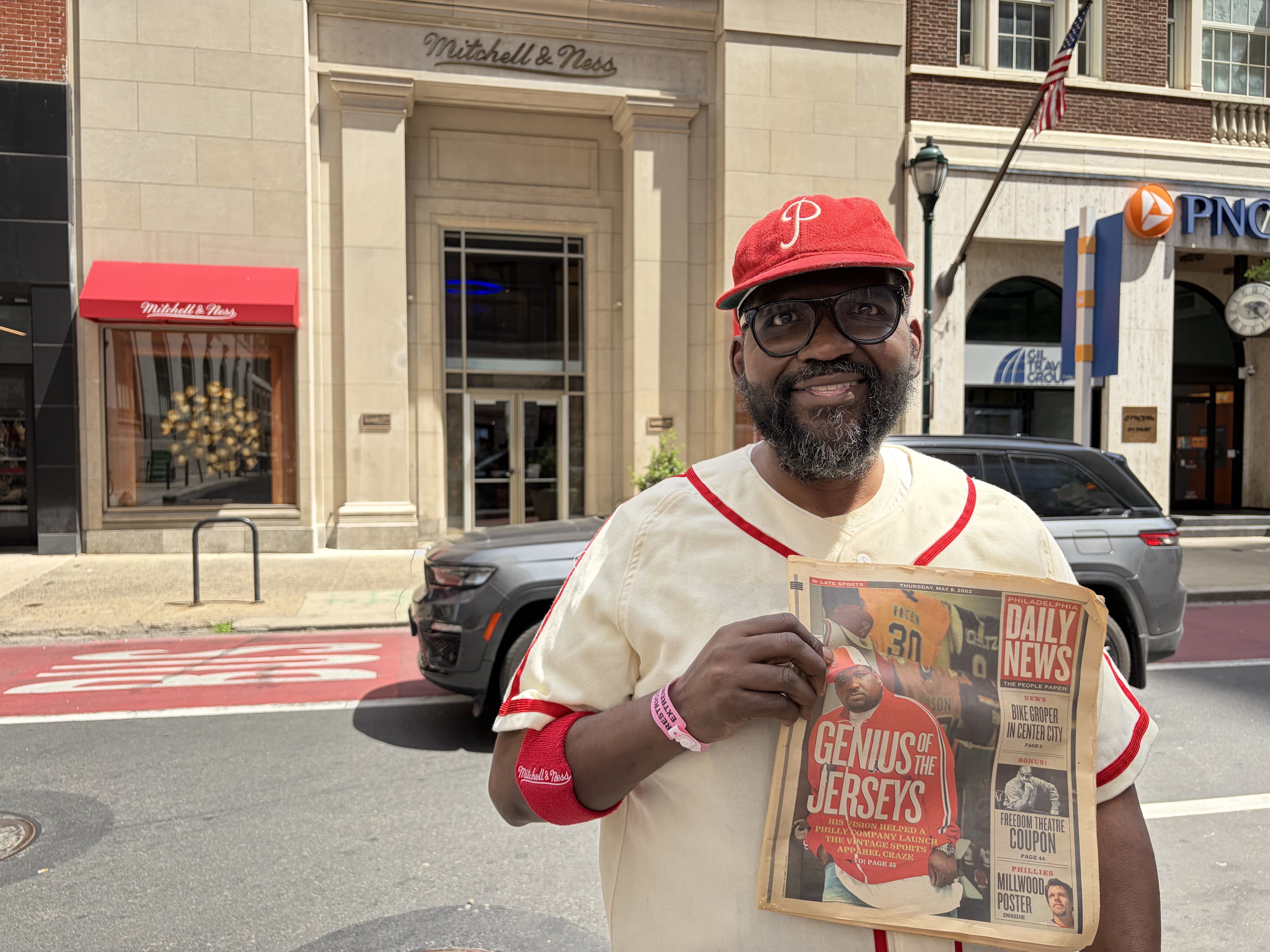
    Days after Mitchell & Ness opened its new three-level flagship store on Walnut Street, Reuben “Big Rube” Harley stood across the street to announce his lawsuit against the sportswear company.

    Big Rube was an influencer before influencer was a job description. And in the early 2000s, he influenced athletes and hip-hop artists to wear Mitchell & Ness’ vintage jerseys, which can cost more than $300 a pop. Celebrities started wearing throwbacks and business was booming.

    But Mitchell & Ness didn’t fulfill their side of the deal, according to the lawsuit, which was filed Thursday in the Philadelphia Court of Common Pleas.

    The brand, which Fanatics bought in 2022, is obligated to pay Harley an unspecified commission for sales attributed to his marketing efforts, the lawsuit says. But it has refused to even calculate how much that commission might be, the suit says.

    “They’re not in this location for nothing,” Harley said Friday across from the new Mitchell & Ness store. “I created that and I want what’s mine.”

    A spokesperson for Fanatics said the company hadn’t been served the lawsuit and was unable to comment.

    Reuben “Big Rube” Harley standing outside the new Mitchell & Ness flagship store on Walnut Street. June 5, 2026.Abraham Gutman

    Harley became a Mitchell & Ness customer in the early 1990s, purchasing throwback Negro League baseball jerseys and caps, the complaint says. A decade later, in 2001, he approached then-Mitchell & Ness owner, Peter Capolino, with a vision of marketing the throwbacks to hip-hop artists and athletes.

    The brand was “tailored to old conservative white men,” Harley said of the Philadelphia-based company that was founded in 1904, “and I gave it to my culture.”

    Harley and Capolino entered into a “partly written and partly oral” agreement, the suit says, in which Mitchell & Ness would pay Harley commission based on sales attributable to his promotional efforts. The suit does not include a copy of the written part, say whether the commission was in perpetuity, or specify the percent of sales Harley claims he is owed.

    Mitchell & Ness also made Harley the company’s marketing director with a salary.

    “I got paid, but the agreement was a piece of the pie,” he said.

    As the new marketing director, Harley contacted athletes, celebrities, and artists in his network, the suit says. The throwbacks trend caught fire. Just a few months later, now-disgraced musician Sean “Diddy” Combs co-hosted the 2002 American Music Awards wearing a rotation of vintage jerseys.

    Mitchell & Ness’ annual sales rose from $2.2 million in 1999 to roughly $25 million in 2002, the suit says.

    “I consider it a miracle that Reuben fell into my lap,” Capolino told Time Magazine in 2003. “He deserves all the credit.”

    Fanatics’ owner Michael Rubin bought Mitchell & Ness in 2022 for $250 million as part of an ownership group that includes Meek Mill and Jay-Z.

    The new owners must respect the agreement with Harley, the suits says, and pay him his share of the sales that he is owed. The complaint does not specify a percent or amount.

    “Big Rube did his part,” said attorney Emeka Igwe. “Mitchell & Ness’ part was to give him a percentage of the sales from all the revenues that they were getting. And that was never done.”

    After parting ways with Mitchell & Ness in the mid-2000s, Harley continued to reinvent himself. He launched an apparel line, wrote a Philadelphia Daily News column, and became a chef.

    He decided to bring the lawsuit now because he is battling stage-four prostate cancer. Harley said he has been assessing his life and wants to leave a legacy for his 22-year-old daughter.
    Standing across the street from the new flagship store in Center City, about a dozen friends expressed their support.

    “We ain’t gonna stop until they build you a statue out here,” Simon Carr said. “You deserve it.”

  • Bryce Harper’s toothpaste, Philly’s ‘Love Island’ takeover, and another Sánchez masterpiece | Weekly Report Card

    Bryce Harper’s toothpaste, Philly’s ‘Love Island’ takeover, and another Sánchez masterpiece | Weekly Report Card

    Bryce Harper’s toothpaste technique: C

    Bryce Harper spent last week defending his toothbrushing technique after the internet discovered that he squeezes toothpaste directly into his mouth.

    The revelation was so unsettling that the Padres put it on the videoboard, dentists weighed in, and millions of people suddenly found themselves evaluating the oral hygiene habits of the Phillies’ first baseman.

    The funniest part is that Harper seemed genuinely confused by the backlash. “I’ve done it forever,” he said, which somehow makes it worse.

    What elevates this from ordinary internet nonsense to a true Philly sports story is that Harper is currently one of the best players in baseball, and yet this became a legitimate multiday discussion.

    For the record, dentists do not recommend the technique. But Harper has two MVPs, hundreds of home runs, and apparently very clean teeth, so hard to argue with the results.

    Sean Reifel (left), Melanie Moreno (middle), Sincere Rhea (right) are contestants of Love Island USA 2026.Ben Symons/PEACOCK

    Three Philly-area contestants on ‘Love Island’? The Eagles agenda is spreading: B+

    Three contestants with Philadelphia-region ties entered the villa on this season of Love Island USA. They are a North Philly native, a Cape May track star, and a former Lehigh Valley police officer.

    And within one episode, Philadelphia had already established diplomatic relations.

    North Philly’s Melanie Moreno and Cape May’s Sincere Rhea immediately bonded over the Eagles, with Moreno declaring, “Literally cut me and I’ll bleed green.”

    The funniest part about Philly representation on reality TV is that contestants from here almost never ease people into it. Within minutes, viewers knew Moreno was from Philadelphia because she announced it the same way most Philadelphians do: loudly and with complete confidence.

    Meanwhile, Rhea seems genuinely wholesome enough that the producers will almost certainly try to create problems for him by Episode 3.

    The real winner, though, may be Philadelphia itself. The city somehow landed three contestants on one of the biggest reality shows, ensuring that for at least the next few weeks, viewers will get Eagles fandom and blunt honesty on their screens.

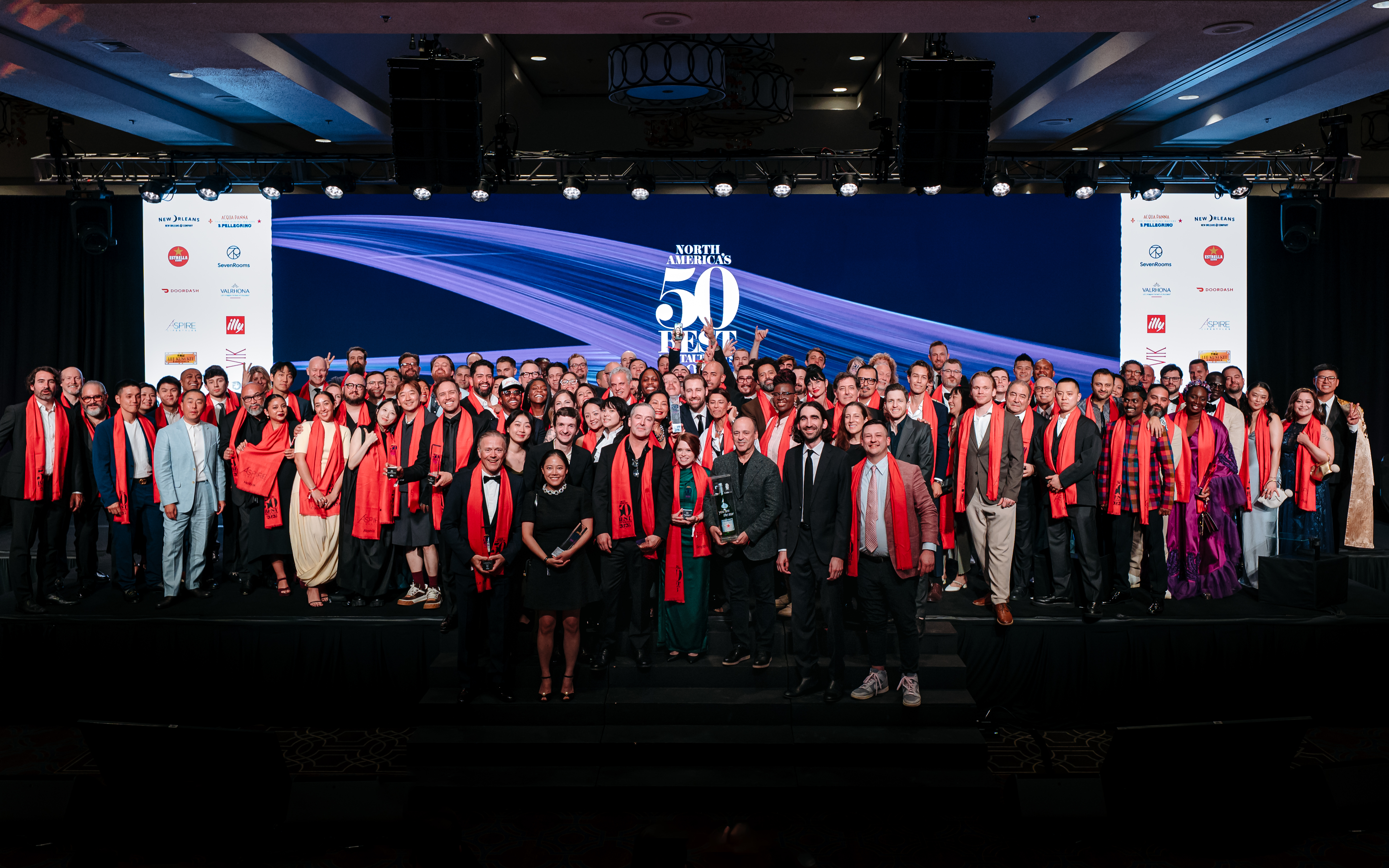
    Winners at the North America’s 50 Best Restaurants announcement.50 Best

    Philly restaurants keep collecting national awards like it’s normal now: A

    Two Philadelphia restaurants landed on North America’s 50 Best Restaurants list this week, with Kalaya and Friday Saturday Sunday once again earning spots among the continent’s culinary heavyweights.

    The funny thing is that Philly food fans have become almost spoiled by this stuff.

    A few years ago, getting one restaurant on a list like this would have triggered a citywide victory lap. Now the reaction is more along the lines of: “Only two? What happened to Royal Sushi?”

    To be fair, both restaurants dropped in the rankings this year. But they also remained on a list featuring just 50 restaurants across the United States and Canada, which is a pretty good reminder of how much Philly’s dining scene has changed.

    Not that long ago, national restaurant conversations about Philadelphia basically began and ended with cheesesteaks.

    Now we’re arguing about Michelin recommendations, international rankings, tasting menus, and whether a restaurant fell from 7th to 11th … that’s a good problem to have.

    Local drag royalty Martha Graham Cracker sings during the Philadelphia Orchestra’s Pride Concert on June 4, 2025, at the Kimmel Center in Philadelphia.Jose F. Moreno / Staff Photographer

    Philadelphia gave Martha Graham Cracker a fitting farewell: A+

    The death of Martha Graham Cracker creator Dito van Reigersberg this week felt less like the loss of a performer and more like the loss of a piece of Philadelphia itself.

    The tributes poured in from every corner of the city — theater, music, drag, dance, politics — which says a lot about the rare place he occupied in Philadelphia culture.

    But one detail from the obituary stood out. David Devan, the former head of Opera Philadelphia, was at the hospital when van Reigersberg died June 1, the first day of Pride Month. Leaving afterward, he watched the city’s Pride rainbow lights come on across Philadelphia.

    “It was the first day of Pride Month, and our greatest queer Philadelphian died,” Devan said.

    For a performer who spent decades making people laugh, feel welcome, and feel seen, it’s difficult to imagine a more fitting image than Philadelphia lighting up in rainbows on the night he died.

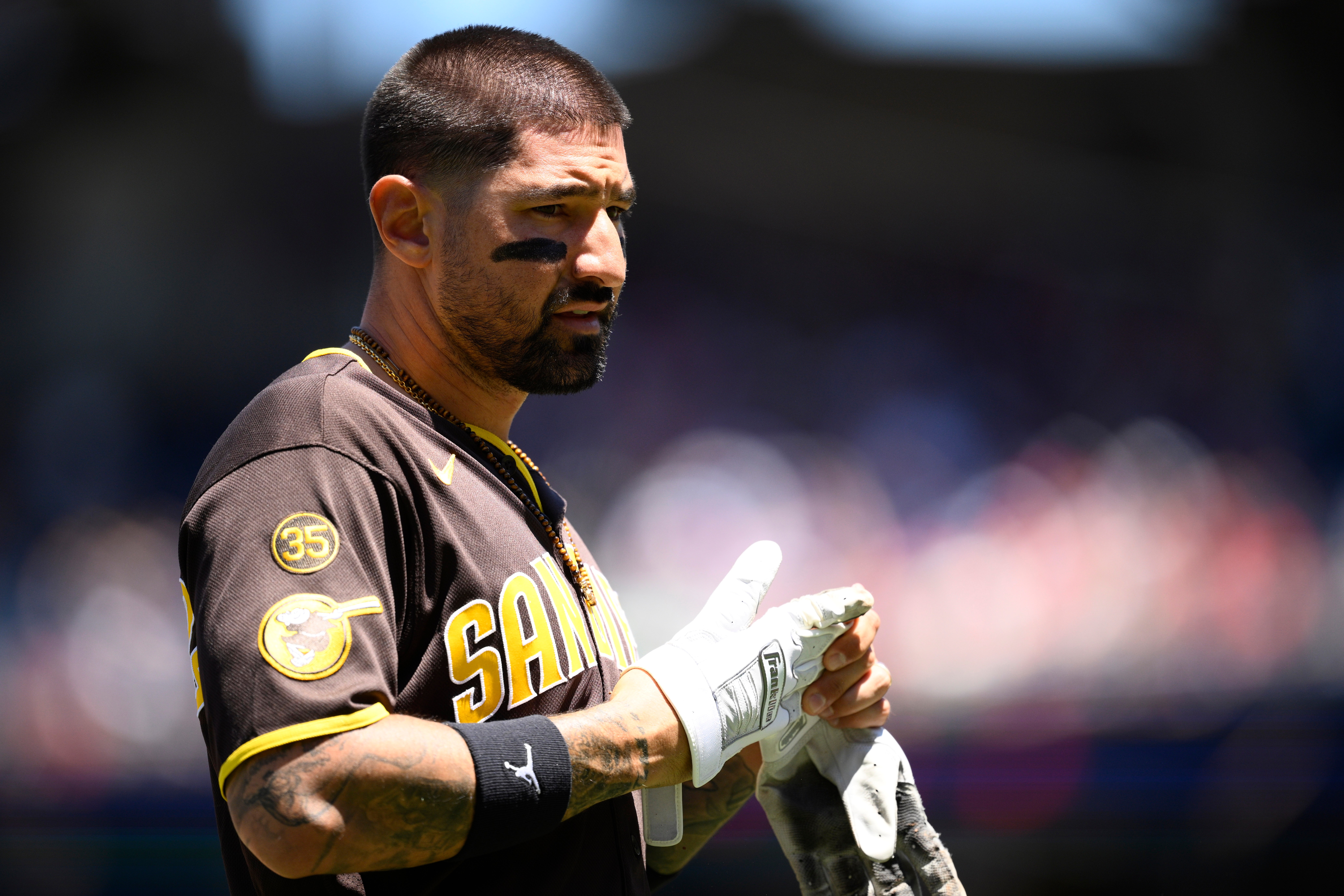
    San Diego Padres’ Nick Castellanos looks on during the third inning against the Washington Nationals, on May 31, 2026, in Washington. (AP Photo/Nick Wass)Nick Wass

    The Nick Castellanos reunion tour lasted about as long as expected: C

    When Nick Castellanos returned to Citizens Bank Park this week, the Phillies played a scoreboard tribute featuring some of his memorable moments from the 2022 postseason. Twenty-four hours later, the Padres designated him for assignment. The timing was brutal.

    Castellanos hit .191 in a part-time role with San Diego after the Phillies released him in spring training. Still, there’s something oddly fitting about the whole thing happening in Philadelphia.

    For all the frustration that came with the final year of the Castellanos era, he was also part of some genuinely great Phillies moments: The standing ovations, the postseason homers, the absolute certainty that if something weird happened in a game, Castellanos would somehow be involved.

    Now, he’s looking for another opportunity at age 34. And if this is the end of the road, at least Philadelphia got one last chance to tip its cap before the baseball gods immediately delivered one final, extremely Nick Castellanos plot twist.

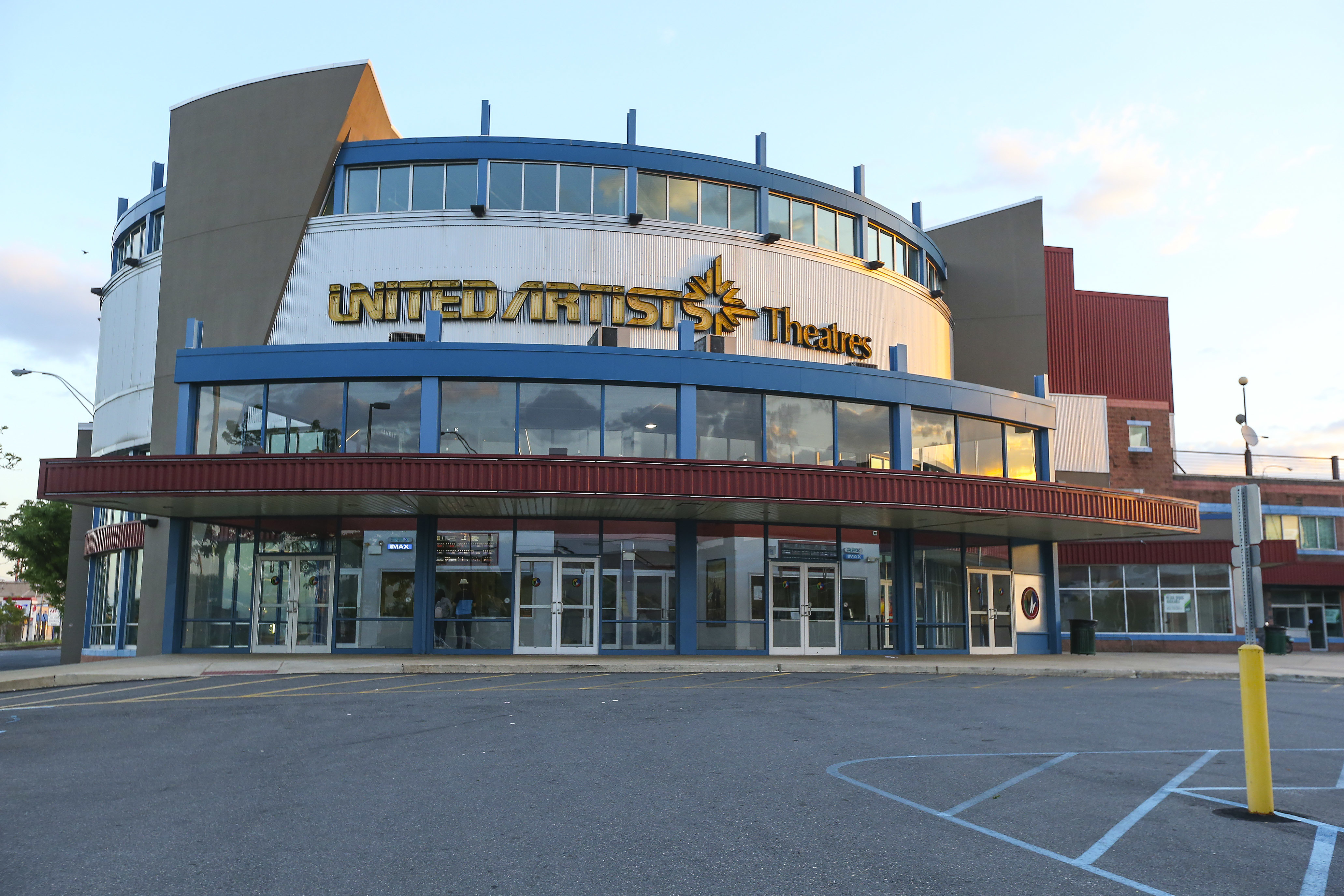
    Apple Cinemas has scrapped plans to reopen the former Riverview Plaza theater in South Philly, closed since 2020. Photo taken May 6, 2019.STEVEN M. FALK / Staff Photographer

    Philly movie fans lose again: F

    Philadelphia moviegoers got some bad news this week when Apple Cinemas scrapped plans to reopen the former Riverview Plaza theater in South Philly, ending hopes for the return of one of the city’s most beloved moviegoing spots, reported PhillyVoice.

    And what makes it sting is that people were genuinely excited about this one.

    The plan included bringing movies back to a theater that’s been dark since 2020, adding an IMAX screen, and giving Philly something it currently doesn’t have: a true IMAX theater. Instead, the project collapsed amid a dispute between Apple Cinemas and property owner Bart Blatstein over the condition of the building and lease obligations.

    The result is that the giant empty theater remains a giant empty theater.

    Cristopher Sánchez is running out of Phillies records to break: A+

    A week after setting the Phillies franchise record for consecutive scoreless innings, Cristopher Sánchez added another one: the longest scoreless streak ever by a left-handed pitcher.

    That’s not just a Phillies record. That’s an MLB record.

    By reaching 45⅔ scoreless innings, Sánchez passed Hall of Famer Carl Hubbell and moved into sixth place on the all-time list, regardless of handedness.

    What’s remarkable is how quickly this has gone from surprising to expected.

    Bryce Harper probably summed it up best when he said it feels normal now. A pitcher is doing things that haven’t been done in generations, and the reaction has become, “Yep, that’s Sánchez.” A few nervous moments, a bunch of awkward swings at changeups, seven scoreless innings, and another historic number attached to his name.

    The streak will end eventually, but right now, Philadelphia is watching one of the best stretches of pitching in baseball history unfold every fifth day.

  • Authorities arrested 25 people at a cockfight in Delco and rescued 52 live birds

    Authorities arrested 25 people at a cockfight in Delco and rescued 52 live birds

    Law enforcement officials arrested 25 people and rescued more than 50 birds after breaking up a cockfight in Delaware County over the weekend.

    The Pennsylvania SPCA Animal Law Enforcement Team, along with local authorities including the Pennsylvania State Police and Central Delaware County Organized Crime Unit, interrupted the cockfight Saturday night at a home on the 500 block of Franklin Street in Chester, officials said. There, investigators removed 52 live birds and discovered three dead roosters while serving a search warrant on the property.

    “Cockfighting is one of the most brutal forms of animal cruelty; these birds are forced to fight to near death one cut at a time, suffering devastating injuries in the process,” Nicole Wilson, director of animal law enforcement and shelter operations at the PSPCA, said in a statement.

    PSPCA officials received a tip about the cockfight on Thursday, the organization said. Investigators went on to surveil the property, and noted a number of people entering and exiting it — some of whom were carrying “animal transport carriers,” the PSPCA said.

    After securing a warrant, PSPCA investigators received support in serving it from the Central Delaware County Organized Crime Unit because of the number of people involved in the cockfight.

    The animals rescued from the property were taken to the PSPCA’s Philadelphia headquarters, where they were to receive exams and medical care. The birds will remain in PSPCA custody until their owners surrender them, or a court case related to the incident is adjudicated, the organization said.

    Officials did not identify the people arrested.

    Cockfighting, the PSPCA said in its statement, is a felony in Pennsylvania. The investigation is continuing.

    The PSPCA asked that anyone with information contact its animal cruelty hotline at 866-601-SPCA (7722) or email cruelty@pspca.org. Tips may be left anonymously.

  • 2 fatal shootings reported in Chester, the latest in a spate of violence

    2 fatal shootings reported in Chester, the latest in a spate of violence

    Two fatal shooting marked a particularly violent Tuesday in Chester, roughly a year after the city celebrated a steep decline in homicides involving firearms in the first half of 2025.

    The fatalities were from separate shootings, one of which left a third person in critical condition, according to the city’s mayor. No arrests were made and officials did not have descriptions of any suspects.

    “These acts of violence are heartbreaking and serve as another painful reminder of the ongoing challenges facing our community and the devastating consequences violence continues to ave on individuals, families, and neighborhoods,” said Chester Mayor Stefan Roots in a statement Wednesday.

    Roots lamented a third incident, in which a police officer was assaulted Tuesday and suffered lacerations during a domestic dispute call. The officer was treated at a hospital and released as the incident remains under investigation.

    While year-to-date nonfatal and fatal shooting statistics were not immediately available, Tuesday’s deaths mark the latest in a spate of shootings.

    Though zero shootings were reported in March, The Delaware County Daily Times reports there have been 10 since April.

    Last summer, the Chester police reported 15 nonfatal shootings just over the midway mark of the year. That translated to a 16% decrease in nonfatal shootings compared to 2024. Homicides in the first half of 2025 had also dropped 41% compared to the same time in the year prior, according to the Chester police midyear report.

    The summer would go on to be one of the safest the Chester ever had, largely credited to national trends in declining violence and the yearslong collaboration among community advocates, police, and the Delaware County District Attorney’s Office.

    Though Tuesday’s violence was alarming enough to warrant a news conference with both Roots and Chester Police Commissioner Katrina Blackwell, the mayor emphasized the continued violence prevention work across stakeholders and law enforcement.

    Chester’s Safe Summer Initiative will continue to provide resources to youth and families, as well as positive opportunities in the city, said Roots.

    “But public safety cannot rest solely on the shoulders of law enforcement,” he said in a statement, adding that people who “know something” should “say something.”