Category: News

  • Birthright citizenship is constitutional. But some Americans have always had to prove themselves worthy.

    Birthright citizenship is constitutional. But some Americans have always had to prove themselves worthy.

    As the Supreme Court considers President Donald Trump’s effort to narrow birthright citizenship, the administration has cast the issue as a defense of the value of U.S. citizenship rather than simply a change in immigration policy. In court, Solicitor General D. John Sauer argued that automatic citizenship “demeans the priceless and profound gift of American citizenship,” and Trump later called the current system “STUPID” on Truth Social.

    But the current fight is about much more than constitutional wording. It is the latest chapter in a long history of deciding that some people born in the United States still must prove they deserve to belong.

    That is not a new problem in American history. Birthright citizenship has long been one of the clearest places where the United States has worked out the boundaries of national belonging. On paper, the 14th Amendment seemed to settle the question after the Civil War. Anyone born in the United States and subject to its jurisdiction was a citizen. But almost immediately, that promise ran into a familiar problem: many Americans were willing to defend universal principles only until those principles extended to people they considered outsiders.

    That tension came into full view in United States v. Wong Kim Ark in 1898. Wong was born in San Francisco to Chinese immigrant parents. When he returned to the United States after a trip abroad, officials detained him and argued that his birth on American soil did not make him a citizen after all. The logic was plain enough. His parents were Chinese, Chinese immigrants were racially excluded from naturalization, and anti-Chinese officials insisted that the children of such immigrants could not truly belong either. The Supreme Court rejected that argument. It affirmed that birth in the United States, not the race or legal status of one’s parents, established citizenship. But the case mattered precisely because it revealed how badly exclusionists wanted a different outcome. They wanted citizenship to depend on lineage, not principle.

    Wong Kim Ark clarified the constitutional rule, but it did not end the effort to define the nation more narrowly. That effort moved simply moved elsewhere. Lawmakers could not easily strip citizenship from people born here, but they could still shape the nation by trying to restrict who could enter in the first place.

    The Johnson-Reed Act of 1924 did exactly that. It used national-origins quotas to privilege immigrants from northern and western Europe while sharply restricting others and effectively excluding most Asians on explicitly racial grounds. The law did not abolish birthright citizenship but rather worked around it. It sought to preserve a preferred vision of the nation by controlling the people who might one day reproduce it. Immigration control became a way to manage the future population of the nation.

    That narrowing of belonging did not stop at the border. During the Great Depression, Mexican repatriation campaigns pushed hundreds of thousands of people of Mexican descent out of the United States, including many U.S. citizens. As historian Adam Goodman argues, the long history of expulsion in the United States has always been about power: the power to determine who may remain, who can be removed, and who gets cast as outside the nation in the first place.

    That history is worth dwelling on because it makes something painfully clear. Even formal citizenship has not always guaranteed a person’s recognition as fully American. In moments of panic and xenophobia—such as when the U.S. forcibly removed and incarcerated Japanese-American citizens during World War II—race and presumed foreignness could override legal status.

    The United States also developed a more selective politics of inclusion. During the Cold War, the country welcomed many refugees, but it did so unevenly and strategically. As historians like Carl Bon Tempo have shown, this process was shaped by foreign policy goals, domestic political pressures, public attitudes toward newcomers, and changing ideas of American identity. For example, refugees fleeing communist regimes like Hungary and Cuba were often easier to recognize as worthy because their stories served a larger ideological purpose for the United States. Their flight to the U.S. helped tell a flattering story about the United States as a refuge of freedom standing against communism. On the other hand, asylum claims of those fleeing right-wing regimes such as El Salvador and Haiti, were denied en masse. The United States distinguished between the refugees it wanted and the refugees it preferred not to see.

    That is the longer history behind the present fight. American policy has repeatedly distinguished between the people imagined as rightful members of the nation and those treated as suspect, alien, or disposable. Sometimes exclusion worked through immigration restriction. Sometimes it worked through expulsion. Sometimes it worked through selective refuge. But the basic logic remained recognizable across time. Belonging was never simply given. It was sorted, ranked, and politically constructed.

    And that is still the case. In my current work as a fellow at the Public Religion Research Institute (PRRI), I study how immigration debates continue to function as debates over nationhood and belonging.

    On one level, Americans still describe the nation in civic terms. In PRRI’s 2025 American Values Survey, 93% said that believing in individual freedoms is important to being truly American, 91% said believing in the Constitution, and 89% said accepting people of diverse racial and religious backgrounds. Those are the kinds of answers Americans like to give about themselves. They describe a nation rooted in principle, rights, and pluralism.

    But the same survey points to another vision of the country, one that is narrower and more exclusionary. Seventy-five percent of Americans polled said speaking English is important to being truly American. Fifty-four percent said being born in America. And 57% said believing in God, with 43% explicitly saying being a Christian. Those numbers matter because they show that civic ideas of membership still coexist with older assumptions about inherited religious and cultural belonging. The nation may be described in universal terms, but many Americans still imagine it in more bounded ways.

    OLD IMAGE — DO NOT USE — Made By History sponsors. FOR USE ON MADE BY HISTORY STORIES ONLY.Inquirer Staff

    That same tension appears in immigration attitudes more broadly. PRRI found strong support for a pathway to citizenship for undocumented immigrants who meet certain requirements. But it also found that 37% of Americans support detaining undocumented immigrants in internment camps until they can be deported, and 32% favor deporting undocumented immigrants to foreign prisons without allowing them to challenge their deportation in court. Those are not just policy preferences. They reveal how easily legal exclusion and coercive state power remain available when migrants are cast as outside the circle of national concern.

    That is why the present debate over birthright citizenship matters so much. The Supreme Court case may seem technical or narrowly constitutional. The irony is that the legal principle itself is not especially ambiguous. Wong Kim Ark settled the matter more than a century ago.

    What remains unsettled is the political desire to narrow the boundaries of belonging. Again and again, Americans have used citizenship and immigration law to distinguish between those whose presence affirms the nation and those whose presence is treated as a problem. The country remains divided over a deeper question. Is the United States really a civic nation, or will it reserve full belonging for those who fit more narrow criteria of who Americans are supposed to be.

    E. Kyle Romero is an assistant professor of history at the University of North Florida where he writes and teaches on the history of U.S. foreign policy, immigration, and humanitarianism; he has previously served as a postdoctoral fellow at the Dickey Center for International Understanding at Dartmouth College, and is currently a fellow at the Public Religion Research Institute in Washington, D.C.

    Made by History takes readers beyond the headlines with articles written and edited by professional historians. Opinions expressed do not necessarily reflect the views of Inquirer editors.


  • What the colorful markings on Philly-area streets and sidewalks reveal about what’s underground

    What the colorful markings on Philly-area streets and sidewalks reveal about what’s underground

    On a hot Thursday morning, two Peco workers arrived in Conshohocken, tools in hand, to spray-paint brightly colored letters and numbers onto the sidewalk.

    The symbols might look like gibberish; but they are the language of utility companies that let anyone doing work in the area know what utilities are underground.

    The process starts when a business owner, contractor, or homeowner calls 811, the free Pennsylvania line that must by law be called before any digging work to prevent damage in utility lines.

    The call center takes in the who, when, where, and whys of the job, and the corresponding utility companies make sure their lines are labeled in the area.

    “If somebody is digging and they don’t know where our gas and electric lines are, there is a potential for property damage, loss of life, or injury — anything from cuts and scrapes to a fatality,” said damage prevention inspector Bryan Lloyd.

    This marking is usually a one-person job, but if the digging spans miles, a team will be sent out.

    In Conshohocken, the project near a plaza on a commercial strip is large enough for gas supervisor Michael Onimus to accompany Lloyd on this request.

    The men got out of their truck and put on protective gear, white Peco helmets, and reflective orange vests.

    Lloyd leaned into his truck, moving a 2½-foot-long blue bag with equipment out of the way, to reach a red metal marking wand that will later be loaded with spray paint to help him make the marks.

    Inside the bag, Lloyd keeps radiodetection equipment capable of locating cables, pipes, and lines of multiple materials.

    The machine has a box called a transmitter with two cables, and a current locator that works similar to the metal detectors folks use to scope the sand down the shore.

    Lloyd creates a circuit connecting a red clip to the gas meter. A black grounding tool — which looks like a long metallic turkey baster— is inserted into a dirt patch to complete the circuit.

    Lloyd pushes it into the soil, sending a current to detect precisely where the line was located.

    The type of soil, amount of rock, and pipe materials can change how easily the locator can pick up the signal.

    In this case, the locator picked up a signal about 20 steps from the meter.

    Locator in the right hand and marking wand with yellow spray paint in the left, Lloyd walked around the perimeter of an empty restaurant, following the frequency and spraying yellow spots along the way.

    The yellow color was not his choice. It’s part of a color-code system that lets contractors know which lines are in the areas they are digging. According to Onimus, each service has its own pigment:

    • Yellow: gas pipes
    • Red: electric lines
    • Blue: water pipes
    • Green: sewer lines

    Luckily, paint isn’t the only way to mark things. In areas where painting would be difficult, like grass, they can place small flags with the same color-coding system.

    Bryan Lloyd, Peco damage prevention inspector, marks the ground following the frequency of a gas line.Jose F. Moreno / Staff Photographer

    Once Lloyd has circled the area, he walked along the path of dots making long Z-shaped lines to connect them, before writing “½ P. GS. Peco” in yellow spray paint. This is called labeling the utility line.

    “You have the size of the facility, which is half an inch in this case. The material type, which here is plastic, so P. Then you have the service, in this case GS for gas. And then Peco to let everyone know this is our facility,” Onimus said.

    The order in which those elements are written down always follows the same pattern, but the information changes depending on how big the pipes are, type of line, utility company, or material they are made of.

    For example, “S” means the line is made out of steel, while “CI” stands for cast iron, Onimus said.

    With the gas all mapped out, it was time for the electric. The process is not much different, but the current-detection system does vary, since gas pipes are usually made of plastic, but electric lines have steel or metal inside the cables.

    Like with the gas line, he follows the signal, this time leaving bright red dots on the ground.

    The electrical current led them to a pole inches away from where digging is already taking place — markings of a light red spray from a different utility company already branded the concrete.

    Picking up the frequency from the electric line, Lloyd drew what looks like a red H on the ground. The mark signaled multiple electrical lines were connected to the nearby street light post, three in this case.

    PECO Damage prevention inspector Bryan Lloyd, writes “primary” on the ground signaling where the electric lines are.Jose F. Moreno / Staff Photographer

    Tracing back his steps, Lloyd drew more H’s in between the previously marked red dots. Before arriving back at the meter, he wrote: “Peco. Ele. Primary,” meaning a primary electrical line that belongs to Peco.

    Twenty minutes later, their work in Conshohocken is wrapped up. But not before Onimus stressed the importance of calling 811 before any digging job, even gardening, no matter how small it may seem.

    “People say ‘I was doing a couple inches,’ but before you know [it], you are 12 inches deep in the ground, and hitting a gas or electric line,” Onimus said. “If you hit a gas line, it may not necessarily injure you, but it could implicate a kind of injury to somebody else in the community, so calling makes sure everyone in the community is safe because we are all in this together.”

  • A Philly grandmother says $600 of EBT benefits were stolen in a skimming scheme. A solution for Pa. might be on the horizon.

    A Philly grandmother says $600 of EBT benefits were stolen in a skimming scheme. A solution for Pa. might be on the horizon.

    Keenya Banks lives in Philadelphia with her husband and the two grandchildren they care for. She has never been to Fishkill in New York’s Hudson Valley.

    Yet, that’s where someone spent more than $650 in food assistance benefits for her family at a Sam’s Club in April in an alleged case of EBT skimming, just one of the more than 5,100 cases reported in Pennsylvania between the start of the year and May. This year’s skimming incidents account for approximately $2.5 million in stolen benefits, according to the Pennsylvania Office of State Inspector General, which investigates the reports and seizes the skimming devices.

    It’s likely Banks used her EBT card in a point-of-sale machine rigged with a device designed to copy her card information and pin number. Someone then applied her EBT information to a different physical card and drained her monthly benefits the next day.

    “I was too numb to cry because I just couldn’t believe it,” said Banks, 56, who was alerted to the fraud as she tried to purchase food days after she had gotten her month’s benefits. “They said, ‘Ma’am, this is declined.’ I said, ‘No, no, I have at least 600-something dollars.’”

    Even more devastating to Banks: For a brief stretch of time, benefits were being reimbursed through a federal program, but that ended December 2024 because Congress did not extend funding. The most that the Pennsylvania Department of Human Services can do is direct victims to food banks and other food assistance programs. The end of the federal reimbursement program also means the skimming incident data Pennsylvania has on hand are likely an undercount: Victim advocates say people may simply skip reporting if they believe nothing can be done.

    Pennsylvania is looking at a possible solution, but without one immediately available, Banks spent a month scrambling to put food on the table with the help of food pantries and what she had on hand.

    “We had been storing up, like a lot of canned goods and water, and we had a deep freezer, and thank God we were able to really kind of make ends meet.”

    Victim advocates argue EBT skimming has risen to a nationwide crisis because the federal government has failed to invest in more secure card technology. Between October 2022 and the end of the reimbursement program in 2024, states reported $320 million in stolen Supplemental Nutrition Assistance Program benefits, according to the Government Accountability Office.

    EBT cards: From cutting-edge technology to scammers’ favorite

    The idea that someone’s food benefits could be loaded digitally onto something that worked like a debit card was once revolutionary.

    Before federal supplemental food assistance could be loaded onto a card, it used to come by way of coupon books or mailed checks, depending on the program. These methods not only came with high administrative costs but in the case of the coupons, also known as “food stamps,” there was an element of stigma and a risk of forgery.

    The federal government launched its first “electronic benefit transfer” pilot in Reading in 1984, yet it was not until 2002 that all states were required to make the switch.

    By then, scammers had already learned how to exploit the magnetic stripe technology used in debit, credit, and EBT cards. While banks have made cards more secure by adopting chip technology, the federal government has stuck with the magnetic stripes for EBT cards.

    In the absence of chip adoption, states have resorted to other added security measures. Last May, Pennsylvania launched ConnectEBT, an app that allows people to lock their cards until they are at the checkout line, ready to use them.

    Mackenzie Libbey, staff attorney in the health and independence unit at Community Legal Services, noted the current system places the onus on families, which are required to lock and unlock their cards, monitor their spending, and change their PIN regularly to stay ahead of fraudsters.

    “It’s just not something that anyone would expect of a middle-class consumer using a credit or debit card,” Libbey said. “It’s a lot of extra effort to protect benefits that they have shown they’re entitled and eligible to receive.”

    CLS has advocated for the federal government to reimburse victims of skimming again and for Pennsylvania to adopt chip cards.

    Pennsylvania eyes chip EBT cards

    The federal government did not approve the use of chip and tap-enabled EBT cards until 2024, largely due to concerns over the costs of upgrading the aging technological infrastructure in use.

    Some states were eager to become early adopters and tackle the skimming issue.

    In February 2025, California became the first state to begin replacing the magnetic stripe cards, with a handful of states following suit because of their own issues with skimming. Oklahoma launched a two-month pilot this March, and in April, Massachusetts announced its plan for a pilot later this year. New Jersey also has plans for a chip card rollout.

    But the U.S. Department of Agriculture has approved only two vendors for the new cards, and users in early adopter states have complained about issues with the chips and difficulties getting the cards to process.

    Those issues gave Pennsylvania Secretary of Human Services Val Arkoosh pause. She has previously said the technology was not quite ready.

    In a May hearing with the House Democratic Policy Committee, however, Arkoosh said Pennsylvania’s vendor had promising data. After Alabama adopted chip cards, the state saw an 83% reduction in theft in 60 days among the people using the chip, she said.

    “I do think I can now sit here and say to you, I believe that the technical issues have largely been solved,” she said at the hearing. “I didn’t want us to embark on this before we were confident that it would work, but I think we’re there now.”

    And there appears to be interest in Harrisburg to go after EBT skimming.

    A bipartisan bill that would require Pennsylvania to transition to chip-enabled EBT cards by 2028 moved out of committee Wednesday to the full House.

    A recent cost estimate puts the overhaul at about $14 million, according to the Pennsylvania Department of Human Services. It would take six to eight months to roll out chip cards after approval, barring any significant challenges, according to a December report by the department.

    Should legislators in Harrisburg choose to fund the transition, they would have an incentive to move fast. While the federal government used to split SNAP administrative costs evenly with states, come Oct. 1, states will be on the hook for 75% of these expenses because of the One Big Beautiful Bill Act.

    For now, the Pennsylvania Office of State Inspector General’s skimming response teams continue to search for these devices and prosecute fraudsters. Between April 2025 and March of this year, the agency said, it had prevented $8.3 million in potential losses.

    The USDA, meanwhile, said it is not stopping at card locking and chip adoption. It is combating skimming and other SNAP fraud with mobile payment pilots and encouraging states to block out-of-state and online SNAP transactions by default.

    These efforts, while welcome, cannot undo what Banks and her family went through the month after the theft they experienced. She hopes her story can alert other families to scammers targeting EBT users.

    Until chip cards come, even Banks’ 10-year-old grandson is on the lookout, monitoring their card benefits and inspecting point-of-sale machines at the grocery stores.

    “He’s so tech savvy and he’s very, very wary,” she said. “So he’s like, ‘Grandma, did you check and see if there’s a skimmer on there?’”

  • A 50-year-old partnership allows Haverford and Bryn Mawr students to take classes or even pick a major on the other campus

    A 50-year-old partnership allows Haverford and Bryn Mawr students to take classes or even pick a major on the other campus

    Caitlin Cowan chose Haverford College because she liked its Quaker roots and honor code and that it was a small campus near a big city.

    But when it came time to choose a major, she selected anthropology at nearby Bryn Mawr College.

    And that was no problem at all.

    For decades, the two colleges, just a five-minute shuttle ride apart, have allowed students to take classes, participate in clubs and programs, and eat in dining halls on each other’s campus for no additional charge. Students have even been able to live on the other campus, though college officials say few do.

    At left is Anastacia Dulany a student at Bryn Mawr taking a Growth and Structure of Cities class along side Marco Calia a student from Haverford. The class was held at Bryn Mawr College where the Growth and Structure of Cities program is based. Alejandro A. Alvarez / Staff Photographer

    Many take advantage: During the fall 2025 semester, 40% of Bryn Mawr students took courses at Haverford and 42% of Haverford students did the same at Bryn Mawr. In total, there were more than 1,700 course registrations on the non-home campuses in fall 2025. (Haverford and Bryn Mawr students also can take classes at Swarthmore College and the University of Pennsylvania and select a major at Swarthmore.)

    The relationship between Haverford and Bryn Mawr — which together enroll about 2,800 students — opens many more options to students, allows faculty to collaborate, and saves money, college officials said. Both are highly selective liberal arts colleges; Bryn Mawr is a women’s college.

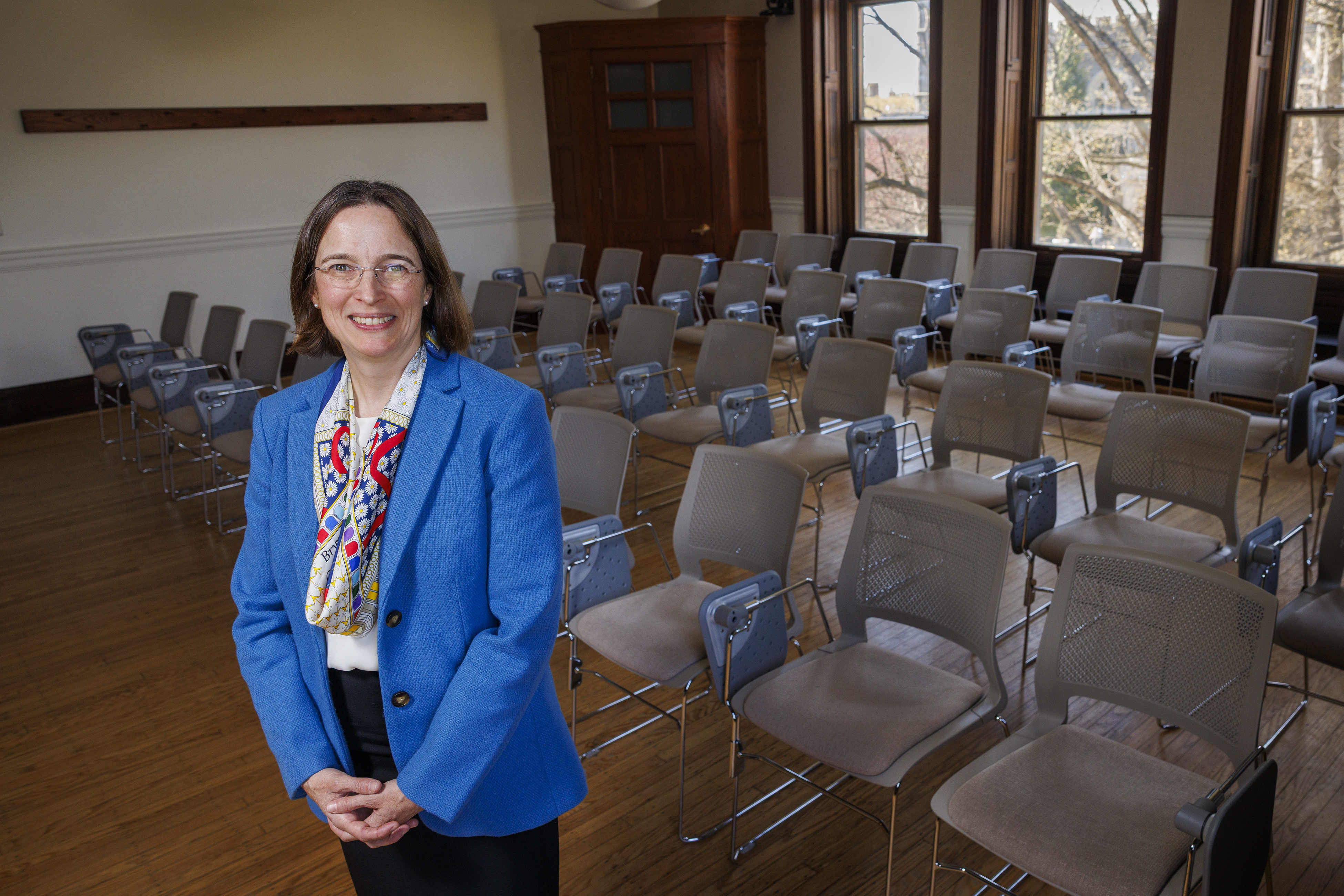
    “The academic offerings that we provide are exponentially larger than they would be without the partnership,” said Bryn Mawr president Wendy Cadge.

    Wendy Cadge, president of Bryn Mawr CollegeAlejandro A. Alvarez / Staff Photographer

    It was 1997 when Cowan, now an elementary school reading teacher in Minneapolis, got her degree from Haverford while majoring at Bryn Mawr. Now her daughter, Tabitha, 21, is enrolled at Bryn Mawr and is enjoying the benefits of both campuses, too.

    “It just broadens your world,” Tabitha Cowan said.

    Majoring in architecture studies and Spanish, she participates in the Bi-College flute choir, made up of two Haverford students and 11 Bryn Mawr students.

    Tabitha Cowan, a Bryn Mawr College student, plays the flute for the Bi-College Flute Choir.Courtesy of Bryn Mawr College

    “We have access to Haverford’s performance spaces because we do not have a music program here at Bryn Mawr,” she said.

    They practice twice a week, once at Haverford and once at Bryn Mawr.

    Joint majors and projects

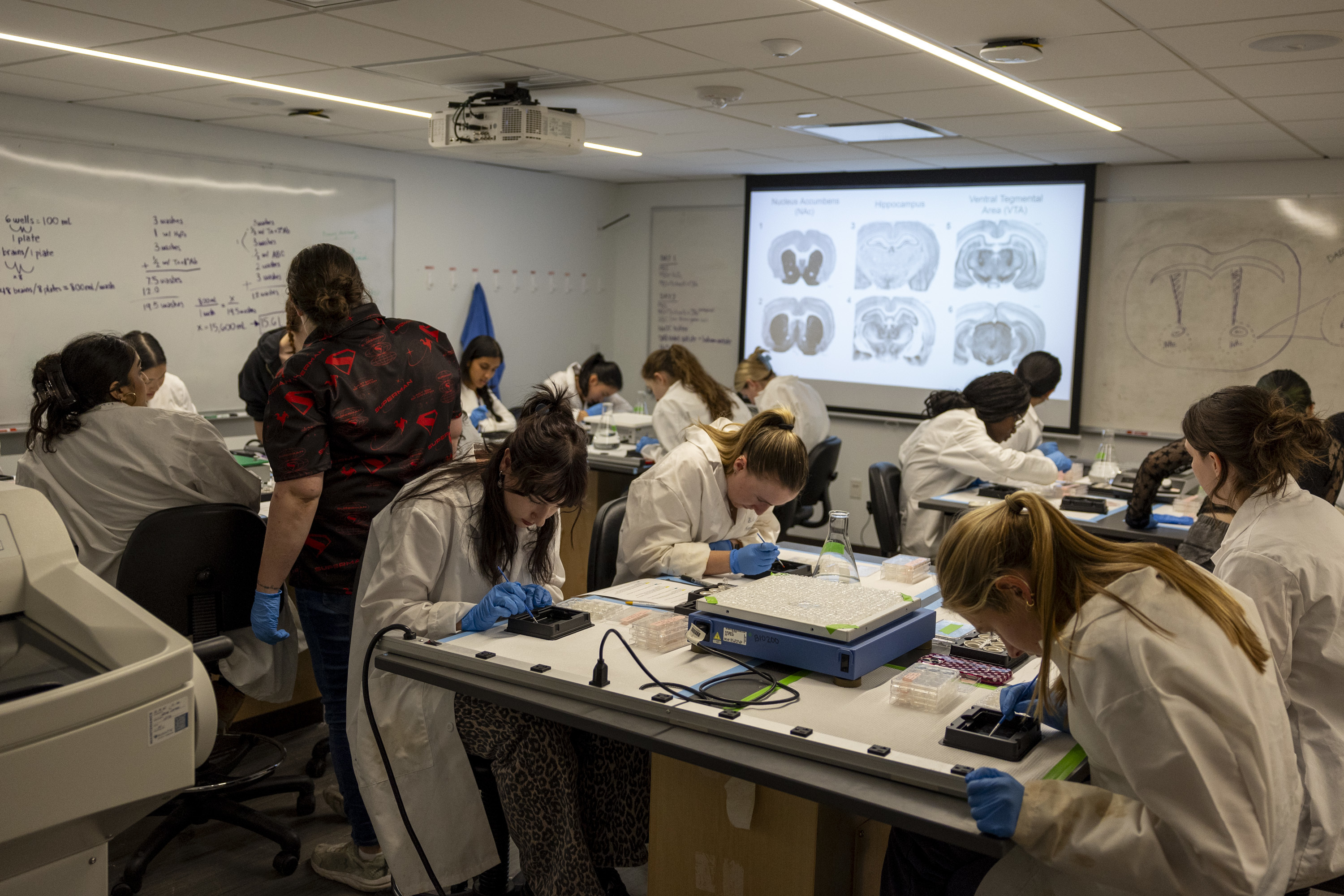
    The colleges have been able to launch joint majors in technology-intensive, interdisciplinary fields like neuroscience — which has become the most popular major on Haverford’s campus — that would have been harder to support individually. It also means the schools share expanded instructional technology and library services.

    Students from both Bryn Mawr and Haverford take a neuroscience class at Haverford College. Tyger Williams / Staff Photographer

    Faculty from both schools are working on joint projects that received institutional pilot grants, encouraging closer collaboration. One project that launched last semester is focused on developing a Jewish studies program, while another aims to reinvigorate Black studies. Others involve interdisciplinary training, chemistry, and narrative across languages and cultures.

    “We really do try to make it as seamless as possible,” said Bryn Mawr provost Dee Matthews.

    Students get one transcript, and colleges share non-salary operating costs, such as administrative overhead, for some of the offerings shared by the campuses, she said.

    “It’s a way in which we can have a large academic community while still preserving the scale of our individual institutions,” said Haverford provost Helen White.

    The two schools earlier this year re-upped a memorandum of understanding on the partnership, which started 50 years ago. The schools will explore new ways to make the most of the partnership and elevate its visibility for students.

    “We affirm that ‘each college is a better version of itself because of the richness of ideas, community, and organization made possible by the Bi-College connection,’” the memo states.

    There are about 75 such consortia nationally, with differences in how they collaborate, said Sarah Pfatteicher, executive director of the Five College Consortium in western Massachusetts. The two oldest were formed about a century ago, one in California and one in Georgia. More may start, given the political and financial pressures on higher education and the influence of artificial intelligence, said Pfatteicher, who has written a book about college consortia.

    “Any time there is pressure on higher education, particularly financial pressures, there is incentive to say, ‘What could we gain by working with our colleagues instead of trying to go this alone?’” she said.

    Complementary offerings

    The partnership between Haverford and Bryn Mawr — both of which have substantial endowments — has not been driven by finances.

    Each school brings unique features to the table. Bryn Mawr has a pool, Haverford a track. Bryn Mawr has art history and Haverford the fine arts. Haverford has music; Bryn Mawr has theater.

    The food is better at Bryn Mawr and the parties at Haverford, students say.

    “Certain sports teams at Haverford watch our menus and then come here because they think our food is better,” Cadge said. “It’s all the same food, but don’t tell.”

    Haverford student Gabriel Bernstein may differ. He said he and his track teammates often board the bus to eat at Bryn Mawr.

    “Bryn din,” he called it.

    In Bryn Mawr’s Class of 2025, 2% were enrolled in a major exclusive to Haverford, while 2.8% took a Haverford major with a Bryn Mawr component and 12.8% had a major shared by the colleges. For Haverford, 4.1% were enrolled in a major exclusive to Bryn Mawr, while 7.2% took a Bryn Mawr major with a Haverford counterpart and 11.1% had a shared major.

    Jet Li, a Haverford College student, arrives at Bryn Mawr College to take a class. Alejandro A. Alvarez / Staff Photographer

    ‘Deeply invested in the liberal arts’

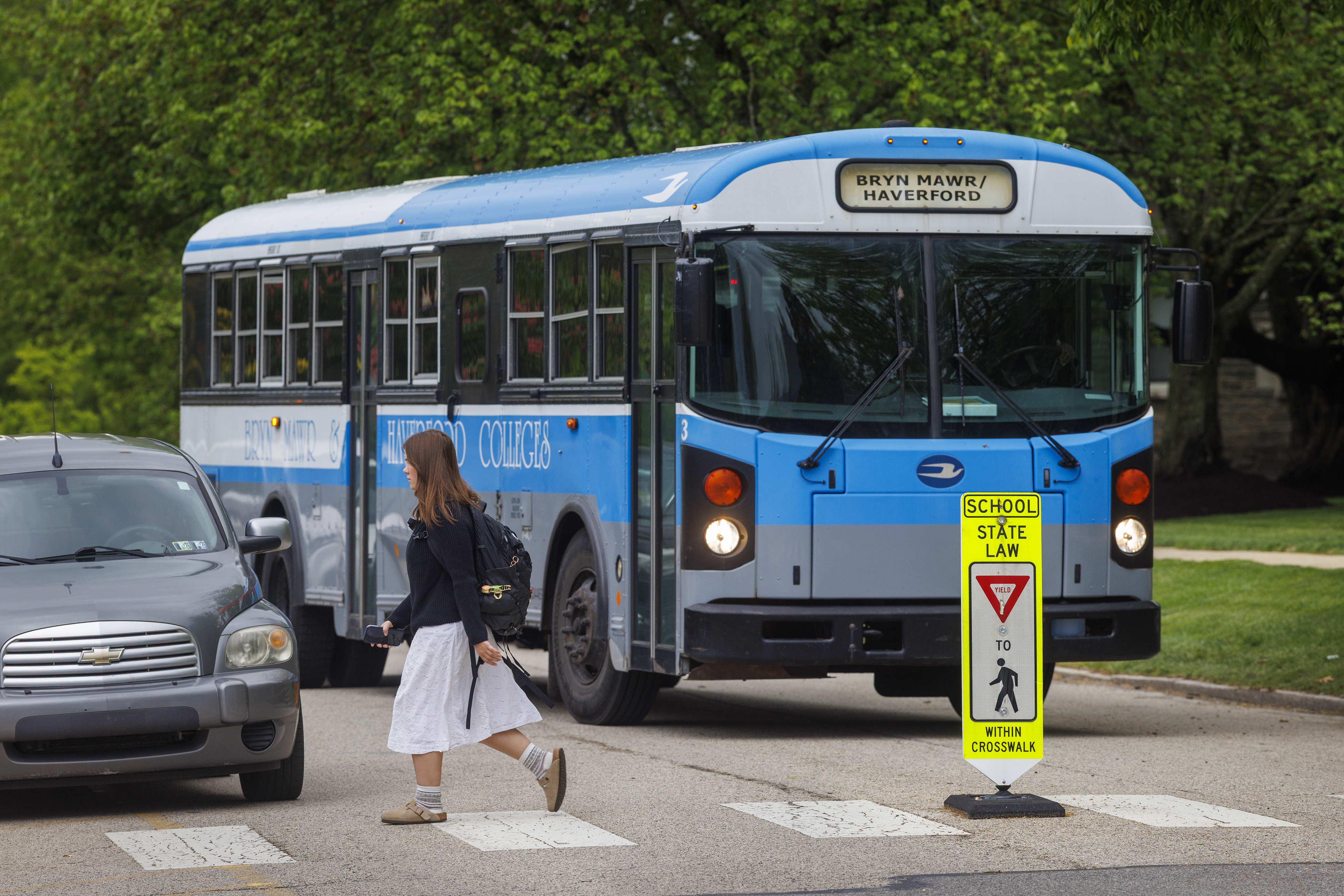
    One day during the spring semester, a group of Haverford students got off the Blue Bus, which shuttles students back and forth between the campuses about every 20 minutes, They had arrived at Bryn Mawr to take a Chinese class not offered at Haverford.

    Meanwhile, Corry Varney-Irlam, 21, a Bryn Mawr student, boarded the bus to head to Haverford for a political science class.

    “It worked better with my schedule,” Varney-Irlam said.

    Matt Ruben teaches in the Growth and Structure of Cities program at Bryn Mawr College. In his class of about 50 students, 12 are Haverford students. Alejandro A. Alvarez / Staff Photographer

    Bryn Mawr professor Matt Ruben teaches classes in the growth and structure of cities program, a major based at Bryn Mawr. In a recent class of 50 students, 12 were from Haverford. Typically, 40% to 50% of the program’s majors are Haverford students, he said.

    Students from the two schools have a lot in common, he said.

    “They’re all really highly skilled,” he said. “They’re highly engaged. They’re all highly motivated. And they’re all deeply invested in the liberal arts experience.”

    Some Haverford students were men — the partnership means males take classes at Bryn Mawr, a women’s college.

    Students said the gender mix in classes really didn’t matter.

    “I don’t mind it,” Varney-Irlam said. “There’s definitely a benefit to having predominantly women in Bryn Mawr classes. But I think that it’s nice to have a change of environment and more people around to socialize with.”

    Cowan said she enjoyed taking classes at Bryn Mawr in the 1990s because it seemed women had more space to talk and there was more support.

    “Sometimes men can take up a lot of space in the room,” she said.

    That is not as much of a factor now, said Ruben, the professor, because there is more gender fluidity, and different levels of consciousness about gender-related issues.

    “It makes a difference and it’s always going to make a difference, but it makes less of a difference than it did like 10 years ago,” he said.

    Madeline Dosen, left, a student at Haverford College, stands with her twin sister Daniela Dosen, (right) a student at Bryn Mawr College. They both played soccer for their respective schools.Courtesy of Daniela Dosen

    The Dosen family has seen the partnership from both sides. Daniela Dosen, 22, was a physics major at Bryn Mawr, while her twin sister, Madeline, majored in biology at Haverford. Both women played varsity soccer for their schools and graduated May 16. The colleges even coordinate commencements — one was in the morning, the other in the afternoon.

    First semester freshman year they had an 8 a.m. Spanish class together at Bryn Mawr. Daniela had a short walk, while her sister had to board the bus.

    “Sometimes we showed up in the same beach sweatshirt,” she said.

  • A Man found shot to death near the Quaker City Yacht Club

    Responding to a radio report of gunfire Sunday afternoon, Philadelphia Police found a man shot to death near the boat ramps of the Quaker City Yacht Club.

    It was just before 5 p.m., when patrol officers raced to 5198 Princeton Ave., where the yacht club is located tucked away near the Delaware River waterfront.

    Within minutes, paramedics pronounced the victim, whose name and age have yet to be released, dead on the scene.

    Investigators are currently working to determine the circumstances surrounding the shooting. No motive has been established, police said.

    The victim became the 59th homicide in Philadelphia in 2026, a nearly 40 percent decrease in killings from the same time last year.

    Anyone with information involving the shooting is encouraged to contact the Philadelphia Police Department’s Homicide Unit at 215-686-3334 or submit an anonymous tip by calling or texting 215-686-Tips.

  • Kennedy shows minimal engagement with vast health portfolio

    Kennedy shows minimal engagement with vast health portfolio

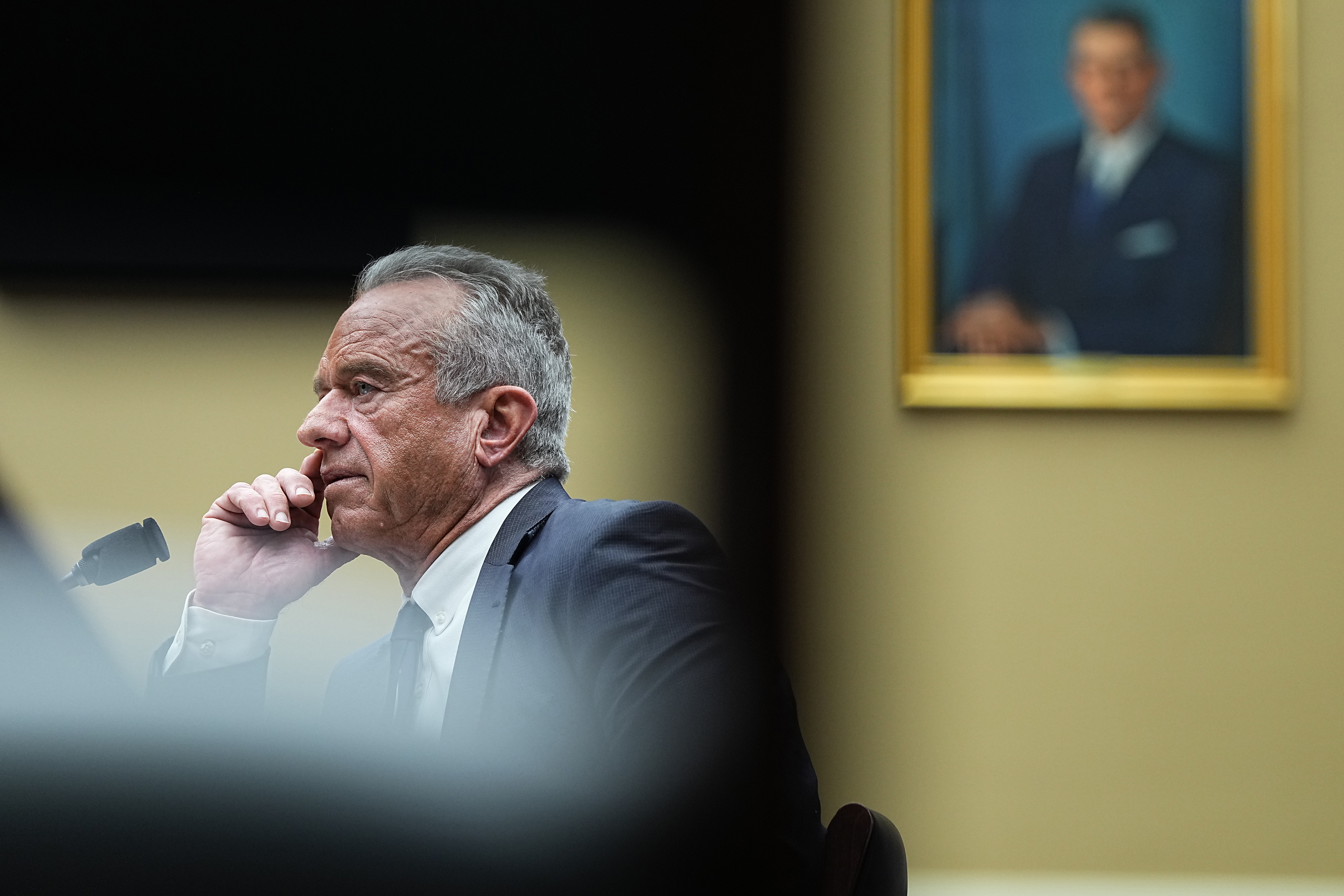
    WASHINGTON — Shortly after the World Health Organization declared the Ebola outbreak in Africa a public health emergency, a reporter asked Health Secretary Robert F. Kennedy Jr. if he was worried about the virus. Six Americans had already been exposed. His response was brief: “Yeah, we’re working on it.”

    In the nearly three weeks since, as the Centers for Disease Control and Prevention imposed travel restrictions to keep the virus from coming to the United States, Kennedy has made no public comments about the spreading outbreak. He has received few briefings about the virus from CDC scientists, although he speaks daily to the acting director, according to people familiar with his response.

    Kennedy’s approach to the crisis reflects his broader management of the Department of Health and Human Services, which affects the health of 340 million Americans and provides healthcare to 40% of the population through Medicare and Medicaid.

    Kennedy has shown little interest in managing the details of work in his department, according to multiple colleagues. Instead, they say, he is single-mindedly focused on his top priorities, including food recommendations and pesticide exposures, and hunting for evidence to support his long-held beliefs that vaccines are harmful.

    Deeply mistrustful of career civil officials, the secretary has surrounded himself with a close circle of handpicked advisers and stacked agencies with political appointees aligned with his views. While major posts have sat vacant and a wave of veteran health experts and scientists have departed, Kennedy has remained isolated from much of the department’s top staff.

    He rarely engages with members of Congress, colleagues said, unless he is asked to testify. He has made just one known visit to the CDC, after a gunman opened fire on its headquarters and killed a police officer last August.

    This examination of Kennedy’s leadership style is based on the accounts of a dozen people who have had direct contact with him as secretary, as well as other health department employees, all of whom spoke on the condition of anonymity to avoid retribution.

    Kennedy and the department did not directly address questions about his leadership style.

    The secretary’s detachment from much of the work of the agency, along with the administration’s deep staff cuts and his attacks on career staff, have driven down morale, they say. It’s a dynamic that could threaten the department’s ability to protect Americans in a crisis, according to public health experts and former secretaries.

    Critics say one of the most urgent problems is Kennedy’s failure to act more swiftly to address a leadership vacuum. There is no surgeon general. About half of the 27 institutes and centers at the National Institutes of Health are run by acting directors. The acting chief of the National Institute for Allergy and Infectious Diseases was recently fired, as was the nation’s top drug regulator.

    The leader of the Food and Drug Administration quit last month under pressure over tobacco policy. Kennedy fired the CDC director last August; it is now run on an acting basis by Jay Bhattacharya, who has another huge job as director of the NIH.

    “You would never accept a major corporation operating this way,” said Michael T. Osterholm, director of the University of Minnesota Center for Infectious Disease Research and Policy, who has advised health secretaries of both parties.

    “If the CEO lacked deep expertise in the company’s business and the leaders of its most important divisions were missing, investors would revolt,” Osterholm said. “Here, the stakes are much higher. The mission is protecting the health and safety of the American people, and we’re confronting serious disease threats without permanent leadership in some of our most important public health agencies.”

    To address the management gaps, the White House and Kennedy initiated a shake-up in February, elevating Christopher Klomp, a department official and former healthcare executive, to serve as the secretary’s chief counselor and smooth out operations. In a statement, Courtney Spencer, who left the Labor Department two weeks ago to become Kennedy’s top spokesperson, said the health department was “aggressively recruiting top talent to fill every remaining vacancy,” adding, “Nothing has slowed our ability to execute.”

    Kennedy’s allies say that while his management style may be different from that of his predecessors, he is leading in other ways by taking stands on matters of importance to Americans, including healthy eating and tackling chronic disease.

    “You do not come to Washington to challenge powerful interests, disrupt decades of business as usual, and demand accountability to make friends,” Mehmet Oz, director of the Centers for Medicare and Medicaid Services and a close ally of Kennedy’s, said in a statement provided by the health department. “You do it to deliver results.”

    Other advisers say Kennedy is also running into the realities of Washington, including a Congress that has refused to confirm some of President Donald Trump’s nominees.

    “Very predictably, you get into governing, you get into a toxic political environment, and a situation where there’s trillions of dollars of interest and you have the burden of having to do policy,” Calley Means, a close adviser to Kennedy, said at a recent forum hosted by Harvard University. “Nobody executes perfectly.”

    A remote presence

    Kennedy keeps a low profile at the health department’s headquarters, a hulking building that faces the National Mall near the U.S. Capitol.

    When he is in town, he exercises at his gym before work, then usually arrives at about 10 a.m. and leaves by 4 p.m., his colleagues say. He spends much of his day in closed-door meetings, according to those who work with him, and has little direct engagement with his staff.

    Every Tuesday at 10:30 a.m., the chiefs of the department’s 13 operating divisions gather in the secretary’s suite to update leadership on their activities. At the outset of his tenure, Kennedy was rarely there, either virtually or in person, according to three people familiar with his schedule. Since Klomp’s elevation, he now shows up once a month. But when he does attend, he often appears disengaged and spends the time scrolling on his phone, according to people in attendance. Several described him as “checked out.”

    Once, when he arrived to the meeting 15 minutes late, Kennedy offered a self-deprecating apology, according to one person in the room: “Thank you for putting up with my dysfunctional self.”

    Health department officials did not respond to a request for comment about the meeting or Kennedy’s remark.

    His lack of interest in matters that are not high on his priority list has meant that he has not engaged at critical moments, colleagues said.

    When measles killed two children in Texas early last year, Demetre Daskalakis, who led the response but has since left the agency, asked repeatedly to brief Kennedy but was rebuffed, he said.

    Susan Monarez, who briefly served as Kennedy’s CDC director before she was fired, had little direct interaction with the health secretary until she ran afoul of him on vaccine policy. She later told senators that during a series of tense meetings with the secretary, she was “directed to only work with the political appointees that he had put in place at CDC, and not to speak or work with the career scientists.”

    In the current Ebola crisis, Kennedy has left the department’s response to Bhattacharya, a health economist with no prior experience in public health even though he is leading the CDC. Bhattacharya, who also led the response to a recent outbreak of hantavirus, wrote an opinion essay published in the Wall Street Journal on Wednesday saying that while the “risk to the American public remains low, Ebola is dangerous.”

    A White House spokesperson, Kush Desai, said the agency’s “rapid and comprehensive response” to the Ebola outbreak proved that “under Secretary Kennedy’s leadership, HHS continues to safeguard the health and wellness of the American people.”

    Spencer, the HHS spokesperson, said the health department had “executed an immediate and coordinated response” under Kennedy’s leadership.

    But key vacancies inside the health department have made the response more challenging, people familiar with the situation said.

    The Administration for Strategic Preparedness and Response, responsible for pandemic preparedness and for standing up field hospitals and quarantine facilities in Kenya, is currently run on an acting basis by John Knox, a former Los Angeles firefighter who founded the group Firefighters4Freedom during the pandemic to fight vaccine mandates.

    As the Ebola outbreak has spread, Secretary of State Marco Rubio offered a tacit rebuke of Kennedy’s move last year to withhold funding from an international vaccine alliance, suggesting the State Department was taking back management of the U.S. relationship with the alliance.

    “We are going to reengage,” Rubio told lawmakers last week. “We need to drive this to an outcome.”

    A daunting portfolio

    Under any circumstances, the Department of Health and Human Services is difficult to run. It has 13 operating divisions covering a vast array of issues, such as child welfare and pandemic preparedness. Past secretaries from both political parties say there are three main ingredients for success: understanding the work of the divisions, strong crisis communication, and muscular coordination with state, local, and international health leaders.

    Tommy G. Thompson, who as health secretary to President George W. Bush faced complaints about his management of the 2001 anthrax crisis, spent a week at each one of the operating divisions at the outset of his tenure, and made frequent trips to Capitol Hill to advocate for the department. In an interview last year, he said he “would strongly suggest” Kennedy do the same.

    “The department is so vast and so complex,” Thompson said, “and you have to be prepared.”

    Kathleen Sebelius, a former Kansas governor who resigned as President Barack Obama’s health secretary after the flawed rollout of the healthcare.gov website, said she met with the division chiefs regularly, likening them to her cabinet.

    “My goal was to really be informed by the scientists, to make sure that NIH was at the table, that FDA was at the table, that our global health people were at the table,” Sebelius said in an interview. “I was really schooled by the people who had been there before and who knew what the hell they were doing.”

    Kennedy, by contrast, has delegated broad authority to Stefanie Spear, a longtime adviser who has been with him since his days as an environmental lawyer and functions as his protector and defender, according to people who know them.

    Spear runs meetings for the secretary, accompanies him on official trips, and keeps a list of his policy projects on a private spreadsheet to which his policy team has no access. There are more than 50 items on the list, one person who has seen it said.

    All requests for the secretary’s decisions and meetings go through Spear. When Kennedy is asked a question, his frequent response is “just run that by Stefanie.”

    Colleagues say that her tight control has slowed department operations.

    After Kennedy promised Congress that the FDA would investigate the safety of the abortion pill mifepristone, the agency proposed updating a set of sophisticated databases of electronic records it needed for the research. But the project was delayed for months by Kennedy’s office, according to two people with detailed knowledge.

    When a gunman opened fire on the CDC last August, Kennedy was fishing with Native American leaders in Alaska. Health department officials wanted to get a statement out to the news media. But it was held up for hours, several said, while Spear sought approval from the White House.

    Frustration with Spear, who served as Kennedy’s communications director during his campaign and oversees his public comments, has fueled some key departures.

    Kennedy is on his third top spokesperson; the first two quit in frustration, according to people familiar with their decisions. The secretary has also run through two chiefs of staff; he fired the first one, and the second was pushed aside in favor of Klomp.

    In a statement, Kennedy praised Klomp and Spear as “two of the most effective leaders in government.” He said Klomp had ”been instrumental in driving operational excellence, strengthening accountability, and ensuring HHS delivers results for the American people,” and that Spear “keeps our team focused on results and ensures the president’s and my priorities get across the finish line.”

    Klomp has moved quickly in the search for a new CDC director, with a nominee now awaiting Senate confirmation, as well as for other top leaders for the agency. He also brought in a new team of policy advisers to the secretary and instituted daily meetings between Kennedy and the leaders of the “Big Four” agencies: FDA, CDC, NIH, and the Centers for Medicare and Medicaid Services, according to three people familiar with the department’s operations.

    He has also sought to address low morale by starting a regular newsletter in which Kennedy addresses employees as “the dedicated professionals of HHS.”

    The secretary, however, has been out of the loop on some key decisions. When Tracy Beth Hoeg, the FDA’s top drug regulator, was fired by FDA leaders in May, the secretary did not learn of it until after it happened, according to three people familiar with the events.

    There is no question that Kennedy is changing the national conversation around health in America, especially healthy eating. While his vaccine agenda has so far been stymied by court decisions, he has scored “wins,” as he likes to call them, notably by flipping the food pyramid, persuading medical schools to revamp nutrition education, and convincing some food makers to abandon artificial dyes.

    He travels often and makes aggressive use of his platform to promote his priorities, including on social media and The Secretary Kennedy Podcast, which began in April. Last week, he made stops in Wisconsin to spotlight the work of dairy farmers and faith-based groups working in addiction recovery, and New Hampshire to announce an effort to combat Lyme disease.

    Colleagues say he also makes visits to Scottsdale, Ariz., where his son and daughter-in-law live, and Florida, where he stays at the Palm Beach mansion owned by Oz.

    After Memorial Day, the public got a glimpse of him there. Kennedy posted video of himself, in a suit and tie, capturing two black racer snakes on Oz’s patio. One of them bit him.

    This article originally appeared in the New York Times.

  • Philly’s 2026 Pride takes over Benjamin Franklin Parkway

    Philly’s 2026 Pride takes over Benjamin Franklin Parkway

    With the sun shining and the grand vista of the Philadelphia Art Museum steps framing a new venue, crowds poured into Philadelphia’s 2026 Pride festivities on Sunday — the first time the LGBTQ+ event was ever hosted on Benjamin Franklin Parkway.

    “This is beautiful,” said Drew Galella, 27, of King of Prussia, toasting his boyfriend, Rich Jann, 42, also from King of Prussia, and their friend, Kaitlin Kirwan, 41, of South Jersey, with their first vodka lemonades. Regular attendees of Philly Pride events — hosted in the Gayborhood since 2022, and Penn’s Landing before then — they cheered the spacious festival grounds, which ran along the Parkway, from Eakins Oval to 21st Street. The celebration had stepped off at 11 a.m., with a parade starting at 13th and Locust Streets.

    Participants hold a large Pride flag during the annual Pride Parade in Philadelphia on Sunday, June 7, 2026.David Maialetti / Staff Photographer

    By 12:30 p.m., the group had easily wound through fast-moving ticket lines — this year also marked the return of a festival admission fee — and strolled the celebration’s vastly expanded vendors’ row and wide-open performance areas, and grabbed their cocktails without a wait.

    “The change of venue is perfect,” said Jann.

    The new location is a means to accommodate larger crowds — an estimated 147,000 last year — and improve safety, the organizers have said. But the changes, including the $10 cost of an entrance band, were not well-received, and many took to social media with their frustrations and concerns over whether this move would hurt the Gayborhood.

    Philadelphia is no stranger to the pay-for-Pride model; before 2022, the festival charged an entrance fee. But still, the ticketing policy sparked discourse about inclusivity and the corporatization of Pride parades, which were first held to commemorate the Stonewall riots in New York City.

    In an email to The Inquirer ahead of Sunday’s festivities, Philly Pride 365 spokesperson Brandon Szeker said that “given the various factors that could potentially impact ANY event,” the organizers were “not concerned about ticket pricing.”

    “There are many community organizations offering free tickets, so it’s really up to the consumer to make the best decision for themself,” Szeker said. “Pride is where you stand.”

    Other cities, like St. Louis, have adopted an admission fee in response to major sponsors pulling or scaling back their support as President Donald Trump targets diversity, equity, and inclusion initiatives. In Pittsburgh, Pride organizers told NPR they anticipated securing 30-40% of the sponsorship money this year that they were able to fundraise a few years ago.

    Szeker said Philly Pride 365 has not experienced this drop in support and has previously dumped “problematic businesses,” like Target, Wawa, AARP, and Burlington, from its list of backers.

    When asked about a possible missed economic boom for the Gayborhood, Szeker pointed to Philly Pride 365’s “Out For Good,” a Saturday street festival “centered on the [Gayborhood], uplifting the businesses, venues, and spaces that help sustain LGBTQ nightlife in Philadelphia year-round.”

    This year’s sprawling event did seem to attract many first-timers, including neighborhood residents and out-of-towners.

    Sweet Suki, from Upstate New York, posed for a portrait at the Philly Pride Festival on the Ben Franklin Parkway on Sunday, June 7, 2026 in Philadelphia.Monica Herndon / Staff Photographer

    “It’s so great to see everyone come together for such a beautiful cause,” said Erin Bell, 24, of Delaware, who made the trip with friends.

    Others said they were extra proud to see the event hosted at Philadelphia’s most prominent celebration grounds, especially now, when their community is under attack from lawmakers and others.

    “It’s the City of Brotherly and Sisterly Love — it’s just so wonderful to see all this love here,” said Abby Craig, 23, of Bucks County.

    Her friend, Phillip Rodriguez, 27, of North Philly, said that while he loves the Gayborhood, he felt the move to where Philly holds its biggest festivals makes a statement that Pride isn’t just for LGBTQ+ people.

    “It says that something that everyone should enjoy,” he said.

    Manning the Mazzoni Center booth, where volunteers connected crowds with LGBTQ+ health and wellness info, the center’s chief executive officer, Simon Trowell, said he understood upset feelings over the move but praised the added visibility.

    “What a wonderful opportunity to celebrate the community and the city on America’s 250th anniversary,” he said. “We are delighted to be here.”

    Jaedan Goodman, of Burlington, N.J., holds a large Pride flag during the annual Pride Parade in Philadelphia on Sunday, June 7, 2026.David Maialetti / Staff Photographer

    Meanwhile, the Gayborhood’s sidewalks and iconic shops and bars buzzed with crowds, who said they preferred to keep the party where they believed it belongs.

    “Pride should remain a protest and support local businesses, not corporations,” said Nikki Schwartz, 28, of Spring Garden, who along with her wife toured the recently opened Philly Pride Visitor Center at 12th and Locust Streets, one of the few LGBTQ+-focused visitor centers in the nation. A lot of her friends felt the same, she added.

    Nearby, Tonka Meares, 58, and her friend, Lorre Chavez, 60, both of Philly, said they had not yet made up their minds whether to visit the festival or stay in the neighborhood, where they have celebrated for 20 years.

    “This is the Gayborhood,” said Meares. “It should be here.”

  • A Penn State student was shot to death in South Philadelphia, police said

    A Penn State student was shot to death in South Philadelphia, police said

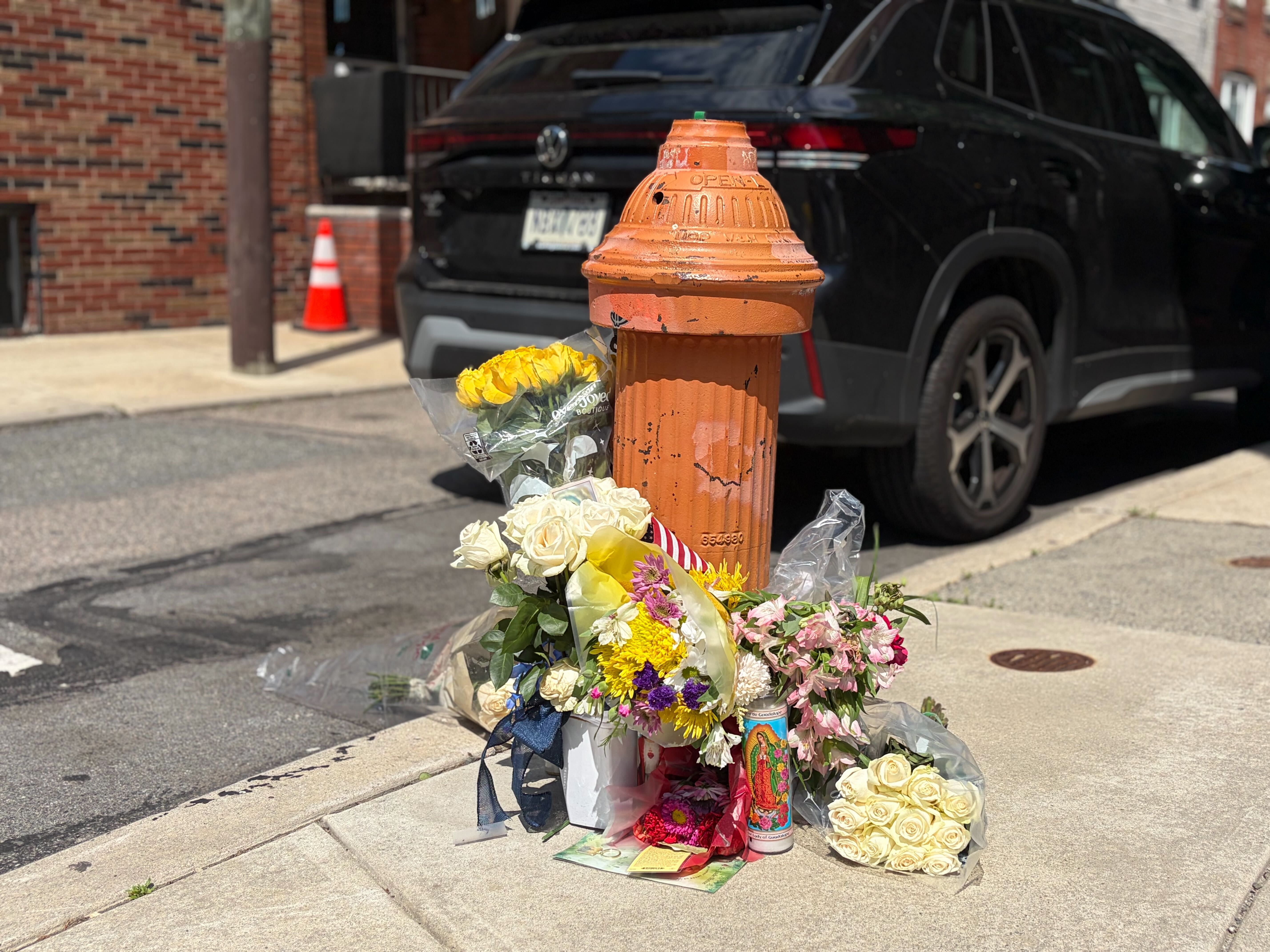
    A 22-year-old Penn State student died after being shot a half block from his home in South Philadelphia early Saturday, police said.

    Police said officers from the 1st District responded at 1:32 a.m. to a radio call for a person with a gun on the 1900 block of Durfor Street. They found William J. Schmidt lying in the street with a gunshot wound to the chest, police said.

    Schmidt was returning home from a local bar where he had been watching the NBA Finals with friends, according to his father, 6abc reported.

    Surveillance cameras captured video that appeared to show the moments before the shooting, 6abc reported. A man can be seen throwing a cell phone in one video, and seconds later, another man ran around a corner with Schmidt chasing him, before the gunman turned around and shot him, according to another video.

    Police took Schmidt to Penn Presbyterian Medical Center, where he was pronounced dead at 1:47 a.m.

    Schmidt lived on the 2300 block of South 20th Street.

    Neighbors expressed sadness over Schmidt’s death.

    Sitting on her porch, Tara Valdez, 32, said she felt a sense of loss.

    Her siblings, she said, grew up playing with him along Durfor Street.

    “He was a good person, a really good kid who was never in trouble,” Valdez said. “He always brought joy with him and made it a point to include everyone, even as a kid.”

    When Valdez learned of the tragedy Saturday morning, she was in a state of disbelief.

    She had seen Schmidt walking by Friday morning, she said, and they waved at each other.

    “I’m sad I didn’t talk to him,” she said. “His whole family are very nice people, and they are hurting now.”

    Jasmine Alleger, 39, said the sense of living in a safe neighborhood was shattered.

    Alleger, who has lived a couple houses down from Schmidt’s house for the last six years, didn’t know him personally. But, people at her gym, she said, spoke kindly about his family on Sunday morning.

    “Now all I can think about is his mom waking up without her son, for literally no reason,” Alleger said. “I’m so sorry that people are so evil; it’s so senseless.”

    Schmidt was a fourth-semester student studying digital journalism and media at the Penn State World Campus, the university’s online campus.

    “We are heartbroken over the tragic death of William Schmidt, and we share our deepest condolences with his family and friends,” the statement said.

    The university said its staff is reaching out to Schmidt’s family to provide support and offering counseling to students in need.

    Police urged anyone with information regarding the incident to contact the homicide unit at 215-686-3334 or submit an anonymous tip by calling or texting 215-686-TIPS (8477).

  • Israel says Iran launched missiles at it in first such bombardment since fragile ceasefire

    JERUSALEM — Iran launched missiles at Israel in the first such bombardment since a fragile ceasefire took effect in early April, raising the possibility of a return to heavy fighting and complicating mediation efforts to end the war.

    Iran’s state broadcaster confirmed the launches, and Iran closed its western airspace to brace for a possible response. Tehran had warned of retaliation after Israel struck Beirut’s southern suburbs without warning earlier Sunday in defiance of Washington’s request days ago to stand down. Israel said the Iranian-backed Hezbollah fired at northern Israel earlier in the day.

    “Should these acts of aggression be repeated, the responses will be broader in scope and will encompass all American and Zionist targets throughout the region,” Iran’s Revolutionary Guard said in a statement that referenced attacks in Lebanon and on Iran’s coast and vessels around the Strait of Hormuz.

    Sirens sounded in several areas of Israel, sending millions running for shelter. Israel’s military said it intercepted the missiles, and multiple explosions were heard in the north. Less than an hour later, the military said people could leave areas reinforced against missile attacks.

    “Iran has made a grave mistake,” Israel military spokesperson Brig. Gen. Effie Defrin said. The military’s chief of staff, Lt. Gen. Eyal Zamir, said it will “strike the enemy with determination as soon as the order is given.”

    But Israel’s public broadcaster, Kan, said U.S. President Donald Trump told it that he doesn’t think Israel needs to respond further. And Trump told the Financial Times: “I call all the shots. He (Netanyahu) doesn’t call the shots.”

    U.S. official: Netanyahu to hold off attack ‘for the time being’

    A senior U.S. official said Trump had called Netanyahu to urge him not to retaliate immediately for the Iranian missile attack. The official, who spoke on condition of anonymity to describe a private phone call, said that Trump believed he had convinced Netanyahu to wait.

    Trump “got Bibi to hold off for the time being,” the official said. The official would not offer any other details of the call, and there was no immediate comment from Netanyahu’s office.

    Iran had warned that an attack on Beirut would renew full-scale war across the Mideast, even as Pakistan and other mediators try to restart talks between Tehran and Washington.

    “U.S. forces across the Middle East remain vigilant and ready,” the U.S. Central Command posted on X shortly before the missile launches. The U.S. Embassy in Israel later directed employees and family members to shelter in place.

    Israel’s attack on Beirut came a few days after the Lebanese and Israeli governments agreed to a ceasefire in U.S.-hosted talks, though Hezbollah rejected the deal. The strike on a residential building killed two people and wounded 20, Lebanon’s health ministry said.

    “The army will continue to act in all of Lebanon,” the Israel military spokesperson said.

    Israel’s strikes and ground invasion in Lebanon in pursuit of Hezbollah, and the militant group’s resistance to disarming, have complicated an overall deal to end the war in the Middle East.

    Iran says any deal must include an end to fighting in Lebanon.

    Trump told a Fox News Channel reporter that he wanted the Iranians to stop firing missiles and return to the negotiating table. He also said that Israel’s strikes earlier Sunday were not coordinated with the U.S. and “I’m not happy about it.”

    Israel last week had announced it would strike the southern suburbs of Lebanon’s capital, but urgent talks via Washington halted that on the condition that Hezbollah stop targeting Israeli border towns.

    Hezbollah, which claimed responsibility for firing at Israel earlier Sunday, wants the direct talks between Lebanon and Israel to end. Instead, it supports Iran’s stance that an overall ceasefire deal between Tehran and Washington include the situation in Lebanon.

    Netanyahu, who seeks reelection later this year, is under heavy domestic pressure to respond to both Iran and the Hezbollah threat, which has paralyzed life for thousands of residents along Israel’s northern border.

    But Trump has made clear he does not want to see the war resume.

    Trump said earlier Sunday in an interview with NBC’s “Meet the Press” that he would like to see a “more surgical attack on Hezbollah.” He also said he was “not demanding” that Lebanon be part of an overall ceasefire deal in the Iran war.

    Iran continues to assert its grip on the Strait of Hormuz and the U.S. continues its blockade of Iranian ports, with shipments of oil, natural gas and fertilizer affected and the global economy in pain.

    Iran since the ceasefire took effect has launched missiles and drones at Gulf nations and said it was targeting the U.S. military presence. After its launches against Israel, Iraq’s Civil Aviation Authority announced that the country’s airspace would close for 72 hours and Syria’s aviation authority announced a 12-hour airspace closure.

    All flights from Tehran’s main international airport were suspended, the civil aviation authority said, according to the official Mizan news agency.

    Diplomacy continues before and after missile launches

    Pakistan’s interior minister, Mohsin Naqvi, was in Tehran on Sunday delivering a message to Iranian Supreme Leader Ayatollah Mojtaba Khamenei from Pakistan’s army chief Field Marshal Asim Munir, according to Iran’s state-run IRNA news agency. There were no details on the message’s contents.

    Khamenei has not been seen in public since he was named the Islamic Republic’s ruler after his father was killed on Feb. 28 as Israeli and U.S. strikes sparked the war.

    Pakistani authorities have said Islamabad, with support from regional countries including Qatar, Turkey and Egypt, is working to help bridge differences.

    In Cairo, the Egyptian and Qatari foreign ministers discussed “proposed elements” of a potential agreement between the U.S. and Iran, the Egyptian foreign ministry said, without details.

    And after Iran’s missile launches at Israel, Iranian Foreign Minister Abbas Araghchi spoke with counterparts in France, Qatar, Saudi Arabia, Britain, Egypt and Turkey as well as Pakistan’s army chief, Iran’s state TV said.

  • You hate data centers. They think you could be a terrorist or Chinese dupe.

    You hate data centers. They think you could be a terrorist or Chinese dupe.

    A year or so ago, many Americans had never heard of a data center. Today, these massive warehouse-type structures with an insatiable thirst for electricity and water are fast becoming the new “third rail” of U.S. politics. Sarah Longwell, the focus-group guru and TV pundit who writes for the “Never Trumper” site the Bulwark, said what she’s hearing from everyday voters is stunning.

    “I’m in the middle of a huge countywide fight against data centers,” one small-town Georgia woman told a focus group, in a tape that Longwell played on a podcast. “People are showing up about their water already, and about 40 people are being pushed out of their homes. It’s just very personal.”

    It’s the same here in Pennsylvania, where leaders in both parties, including Democratic Gov. Josh Shapiro, see data centers as an economic savior much as oil was in the 1860s. “We don’t want them!” exclaimed a Pittsburgh voter at the notion of these tech sites replacing shuttered steel mills. “It doesn’t matter who the governor is, who the mayor is. They’re all on board because it’s job creation.”

    Not on board? The average American. As recently as last September, a poll conducted for the environmental site Heatmap found voters evenly divided on whether they’d support a data center built near their home. Just nine months later, its newest survey finds about seven in 10 people would now strongly oppose one — a steep and shockingly rapid decline in public support for the infrastructure of artificial intelligence, or AI.

    Indeed, the trouble in the heartland for data centers has come so quickly it’s hard to say how much is driven by environmental complaints — such as noise and vibrations from data centers already up and running — or rising electric bills, and how much is simply white-hot rage at the tech billionaires getting even richer from AI, or the compliant politicians who’ve jumped on the bandwagon of their biggest donors.

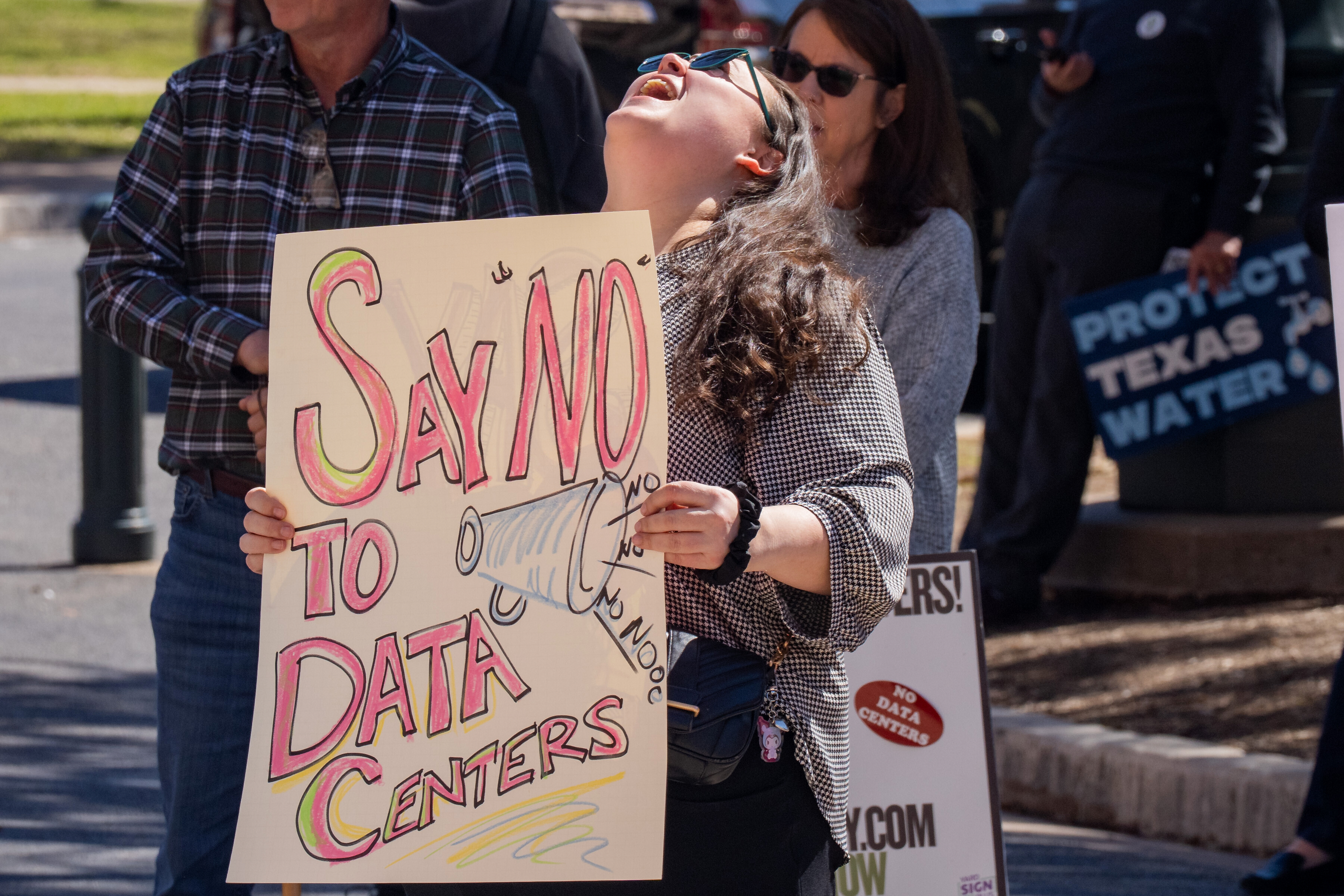
    Christina Speasmaker, of Waco, Texas, chants with other protesters demonstrating against laws surrounding data centers outside the Texas Capitol in Austin in February.Mikala Compton

    Fortunately, we live in a thriving, well-oiled democracy in which our elected officials have their fingers on the pulse of the people and have rapidly shifted gears — to grab a pitchfork and join their furious constituents on the front lines of the war against data centers. Right …?

    OK, you probably saw right through my lame sarcasm there. Instead, America’s elites, and their beat cops who exist less to enforce laws than to uphold the social order that’s made their bosses so powerful, refuse to believe that regular folks have rationally decided that new data centers are unwanted scars upon the land.

    If you oppose data centers, they’ve decided, you must have been brainwashed by Chinese communist spies.

    Or worse. You may even be a terrorist.

    Last Thursday, the Republicans on Capitol Hill who lead the House Energy and Commerce Committee sent a letter to Trump regime officials urging an investigation into whether China — as part of a 21st-century nuclear arms race to become the planet’s dominant AI force — is secretly funding all these farmers and suburban moms fighting data centers.

    It’s an outlandish and unsubstantiated claim. Indeed, some of the GOP’s supporting evidence comes from a “think tank” called — and you cannot make this stuff up — the Bitcoin Policy Institute. Yet, anti-left conspiracy theories are sure to find a sympathetic ear in Donald Trump’s rabidly pro-AI government.

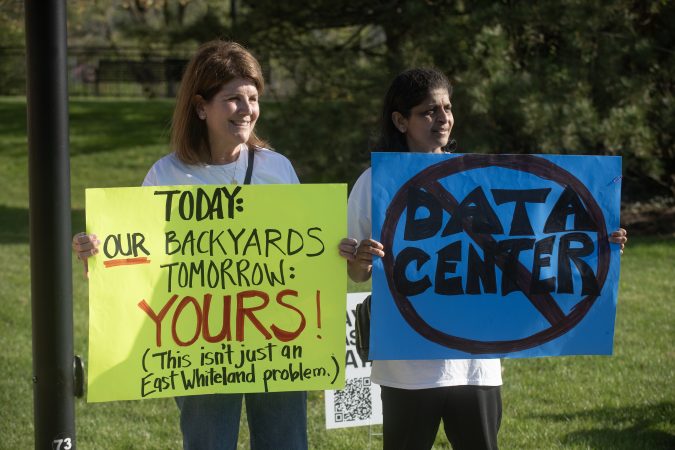
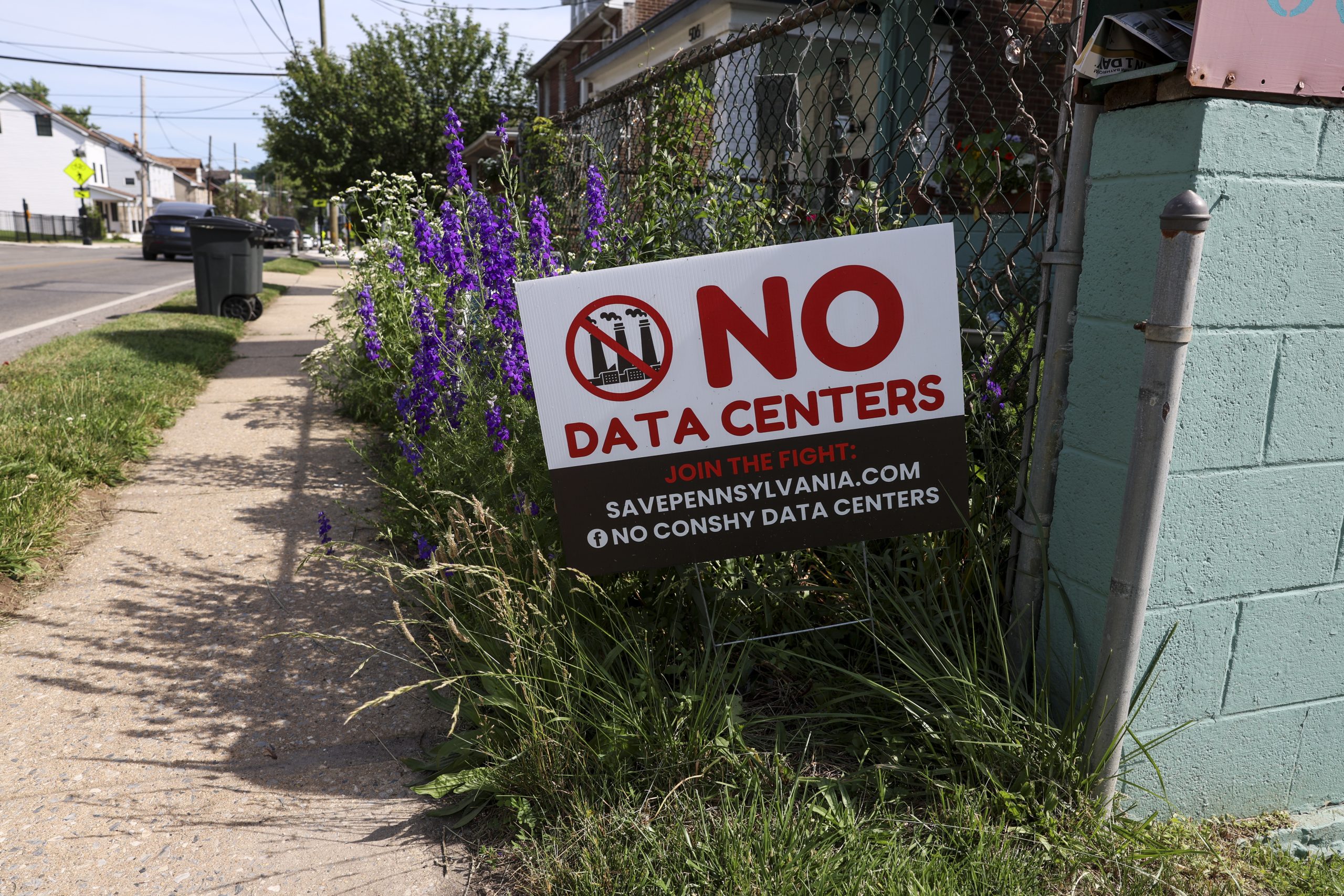
    A yard sign in Conshohocken protests a proposed data center on the site of the shuttered Cleveland-Cliffs steel mill.Monica Herndon / Staff Photographer

    “It’s not organic and local, some of this is foreign-sourced dark money coming in,” Interior Secretary Doug Burgum — formerly the governor of oil-drenched North Dakota — said at a May event hosted by the right-wing site Breitbart News. “The people who used to fight on climate change have shifted.”

    That shift would have to be the result of Manchurian Candidate-level brainwashing from Beijing, and not because studies have shown that at least 56% of the massive amounts of new energy needed to run these data centers comes from fossil fuels — oil, gas, and coal — right when the global climate crisis is accelerating. Last week, the World Meteorological Organization warned the planet should expect record heat through 2030.

    Dang, those Chinese spies are good.

    At least we can take comfort in the fact that the nation’s leading law enforcement organizations are working hard to respect the all-American First Amendment rights to free speech and dissent of these data center activists, much as they did for the civil rights marchers and anti-war protesters of the 1960s and ‘70s.

    LOL.

    Also last week, the Intercept reported on a document — later confirmed by The Inquirer — from the Delaware Valley Intelligence Center, which is hosted by the Philadelphia Police Department, that revealed that cops are sifting through social media posts by anti-data center activists, convinced they pose a newfangled terror threat.

    “Domestic violent extremists (DVEs) are likely interested in targeting artificial intelligence (AI) data centers, posing a physical and cyber threat to infrastructure in the Philadelphia regional area,” stated a December alert from the intelligence fusion center, which coordinates local, state, and national law enforcement.

    These fusion centers, you may recall, were established after the 9/11 attacks to prevent another World Trade Center-level incident. Today, “the terrorists” are apparently folks in places like East Whiteland Township or Vineland, N.J., who, in the immortal words of David Byrne, dress like students, or dress like housewives, or in a coat and a tie. Philly cops said in the report they are on the lookout for potential acts of vandalism and something they called “more disruptive First Amendment activity.”

    A massive data center is under construction in Vineland, N.J. It is expected to be complete later this year, with a capacity of 300 megawatts.Courtesy of DataOne

    I’m pretty sure your right to be nonviolently disruptive in America — without the government working to suppress those rights — is exactly why James Madison wrote up the First Amendment back in 1789.

    To be clear, vandalism or arson or other destruction at data centers would be wrong — but I’m struggling to find many examples of this. There have been a couple of reports of shots being fired at the homes of a pro-data center politician and AI impresario Sam Altman, which is deplorable. But the anti-data center movement is, overall, remarkably nonviolent. The threat to the system isn’t the bullet but the ballot, and they know it.

    “The more they try to silence us, the louder we’ll get,” Karen Feridun, the veteran environmental activist from Berks County, Pa., who founded the Pennsylvania Data Center Resistance group on Facebook, told me on Sunday. She noted that law enforcement also spied on her anti-fracking efforts in the 2010s, so she is not surprised.

    Feridun — who, as far as I know, does not speak a word of Mandarin — said activists see the law enforcement monitoring as an effort to intimidate them, but it is only fueling fears that the AI powered by data centers will be used for broader domestic surveillance.

    Indeed, we have never seen such a disconnect between our clueless elites, from Silicon Valley to Capitol Hill and the hallways of Harrisburg, and everyday folks who are filled with fury.

    That communication breakdown peaked a few weeks ago when an obscure real estate executive was tapped to address the graduating seniors at the University of Central Florida, and didn’t think twice about hailing the glorious AI future that 22-year-olds see as obliterating their job prospects. The speaker recoiled in shock at the overwhelming boos.

    Some observers argue that folks in the rural towns or sprawling exurbs fighting the data centers see them not just as ugly, noisy neighbors, but also as a proxy for the threat to the social order posed by AI as it disrupts the workplace or classroom learning.

    But in reality, the rage runs even deeper. It’s anger not only at the machine, but the world that created it — a world where the gap has never been wider between the billionaires of AI (and, this week, the first trillionaire) and us regular schlubs, struggling to pay the electric bill or fill the gas tank before our boss replaces us with a robot.

    Making matters worse is the realization that both political parties are in the back pocket of Big Tech and their crypto-bro allies, who are spending well over $300 million to buy the 2026 midterms. If anything, the hypocrisy of top Democrats like Shapiro or Virginia Gov. Abigail Spanberger, who claim to be fighting climate change while pushing for these energy hogs, is more infuriating than the predictable “Drill, baby, drill!” chants of Neanderthal Republicans.

    They just don’t get it. They spend all day in their cloistered back offices, counting their future cash, and all night at swank political fundraisers, convinced that anyone who’s not on board with their gravy train must be a deranged radical from Antifa™, or a useful idiot for the International Communist Conspiracy.

    They see the pitchforks and the flaming tiki torches and are squinting to see a “Made in China” label. They miss the righteous wrath, born in the USA.