Category: News

  • Trump officials may undo nursing home mandates for reporting COVID

    Trump officials may undo nursing home mandates for reporting COVID

    Nursing homes would no longer be required to report each week how many residents were stricken by COVID-19 and other respiratory diseases, under a Trump administration plan to repeal a key public health response to thousands of pandemic deaths.

    A draft summary of the proposed rule obtained by The New York Times outlines how the administration agrees with the industry’s objections to weekly reporting of viral caseloads, calling it burdensome. In its waning days, the Biden administration made COVID reporting rules permanent, adding influenza and respiratory syncytial virus to the list of threats that facilities also must track and record. The policy took effect in January 2025.

    Advocates for nursing home residents reacted with dismay to the proposed rollback. Elderly, frail residents are especially vulnerable to infections, and they live in close quarters, where viruses can spread rapidly.

    “That’s crazy,” said Sam Brooks, director of public policy at the nonprofit National Consumer Voice for Quality Long-Term Care. “We know, if anything, that respiratory disease has a disproportionate and deadly impact on nursing home residents.”

    He said the Centers for Medicare and Medicaid Services, or CMS, which regulates nursing homes, would be blinding itself to an important method for tracking infection control and pinpointing problems.

    The administration has cut back on data updates at other agencies, including the Centers for Disease Control and Prevention, where a study published this year found that databases related to vaccine and respiratory diseases had gone dormant.

    Nursing home industry representatives declined to comment on specifics, because the changes have not been announced. They contend infection reporting consumes too much staff time and is duplicative, because infection data is reported to the federal government and states in other ways.

    CMS, which drafted the plan, declined to discuss the proposal or disclose when it would be made public.

    During the peak years of the pandemic, from early 2020 through early 2022, more than 200,000 nursing home residents and staff members died after being infected by coronavirus, according to KFF, an independent health policy organization, which cited CDC data.

    The high death toll has been attributed in part to a lack of preparedness and weak infection controls. The Government Accountability Office said in 2020 that inspectors had cited 82% of nursing homes for infection control deficiencies from 2013 to 2017, and that half of those were found to be repeat violators.

    In the internal document obtained by the Times, Dr. Mehmet Oz, the director of CMS, recommended to his boss, Health Secretary Robert F. Kennedy Jr., that the agency pursue steps to undo the mandate.

    “The agency does not comment on purported internal or predecisional deliberative materials,” a CMS a spokesperson said in an email. He said the agency evaluated regulations to ensure they “allow providers to focus time and resources on delivering care rather than unnecessary administrative burden.”

    The draft memo from Oz to Kennedy said CMS would reserve the power to reinstate weekly reporting if another public health emergency occurred.

    The plan also would end a requirement that nursing home staffs be educated about COVID vaccines and offered the shots. Groups representing residents called the move unwise, pointing out that front-line caregivers were a key pathway for the coronavirus to enter nursing homes during the height of the pandemic. COVID vaccine rates among staff members in recent years have been below 10%, the CDC has reported.

    The administration plan would continue to mandate that facilities offer the COVID vaccine to residents.

    The nursing home industry has already achieved its biggest goal of President Donald Trump’s second term: After a heavy lobbying blitz, the administration last year scrapped Biden-era minimum staffing rules that were intended to improve resident care.

    Biden officials, in pushing the staff minimums, had cited COVID deaths along with decades of concerns about poor care, including deaths from bedsores, falls and medication errors. But the Trump administration said too many nursing homes, especially in rural areas, could not find enough staff to satisfy the requirements. Many workers who care for the elderly are typically paid less than janitors and retail employees, and the work can be grueling.

    With the proposed change on infection reporting, the administration anticipates favorable reaction from the industry, according to the draft memo.

    Two main nursing home lobbying groups — the American Health Care Association and LeadingAge — reiterated their opposition to weekly respiratory infection reporting, saying that other government programs track COVID infections and that respiratory illnesses are reported to many local health departments.

    “This outdated reporting requirement is only adding hours of unnecessary administrative tasks to caregivers each week” said Holly Harmon, the American Health Care Association’s senior vice president of quality, regulatory and clinical affairs. “It’s time to streamline public health reporting and put patients over paperwork.”

    But industry critics contend that operators are failing to heed the lessons of the pandemic. With low staffing levels and high turnover, infection control efforts are most likely in line with the prepandemic patterns flagged by the GAO, said Toby Edelman, senior policy attorney at the Center for Medicare Advocacy.

    “I don’t think there is any reason to believe they have beefed up what they are supposed to be doing,” Edelman said.

  • In defiant speech, Pezeshkian calls out Trump and says Iran will fight ‘until our last breath’

    In defiant speech, Pezeshkian calls out Trump and says Iran will fight ‘until our last breath’

    UNITED NATIONS — Iran’s president said Wednesday that his people have been “victims of terrorism” by the United States, delivering a rare wartime speech at the U.N. General Assembly a day after President Donald Trump said he may “annihilate” the Islamic Republic if a deal isn’t reached soon to end the nearly seven-month war.

    The defiant speech by President Masoud Pezeshkian marked a striking instance of a foreign leader addressing the world body while their country is at war with the host nation. While defending his country, Pezeshkian held up large photos of the late Supreme Leader Ali Khamenei and the more than 150 Iranian schoolchildren killed in the first days of the war.

    “We have only defended ourselves. We are not terrorists,” Pezeshkian said at the General Assembly. “Our innocent people have been the targets of cowardly attacks and aggressions imposed upon our country. And we defended ourselves with utmost strength. America and Israel attacked us.”

    He added of the United States: “Yes they did hit us, but we did not bend the knee.” Toward the end of his speech, Pezeshkian called out Trump by name.

    “It must be understood by Mr. Trump and those who seek to bully us that we are ready for dialogue and diplomacy and negotiations without accepting the language of force,” he said.

    Shortly after, both U.S. and Israeli officials blasted the speech, saying that it was hypocritical for the Islamic Republic to present itself as the victims of the world.

    U.S. Secretary of State Marco Rubio told reporters: “I don’t know what standing Iran has to lecture anyone on human rights or the international system when they habitually violate it.”

    A busy 24 hours for U.S.-Iran relations

    Arriving in New York under heavy security and scrutiny, Pezeshkian — who, within Iran’s political landscape, is considered a moderate politician — addressed world leaders a day after Trump used the same stage to mull whether to massively escalate a war that has already spiraled out of control.

    “I have a big decision to make,” Trump said in his wide-ranging address Tuesday. “Will a deal be made with Iran that lets them rebuild and create a far greater country than it ever was before, maybe one of the greatest in the Middle East or even the world. Or do I annihilate the Islamic Republic and do it quickly, never giving them a chance to kill and destroy people and countries again?”

    Hours after those stunning threats, Trump told reporters that his chief envoys, Steve Witkoff and Jared Kushner, met for about three hours with the Iranian officials on the sidelines of the annual gathering. But he offered few details about how the discussions transpired or the substance of the exchange.

    “It was a very good meeting,” Trump said. The president later added that the Iranian officials were “not the highest level, but it’s something.” Also on Tuesday, Rubio said Trump is open to meeting with Pezeshkian while he’s in New York.

    But Tehran downplayed Tuesday’s unscheduled exchange, which were the first indirect talks between U.S. and Iranian officials since a June ceasefire unraveled. Esmail Baghaei, an Iranian Foreign Ministry spokesperson, maintained the country’s negotiating position in talks with U.S. officials, demanding that Washington end its blockade of Iranian ports and release frozen Iranian assets.

    Baghaei said the talks — conducted indirectly through Qatari mediators — were “not anything new.”

    Rubio echoed that sentiment Wednesday, saying that “it was a continuation of conversations that have occurred in the past.”

    “If there’s an opportunity to exchange ideas and messages, we will. And that’s what largely yesterday was — it was positive in that regard,” he said. “But ultimately, I don’t want to mischaracterize this as a major breakthrough.”

    More than a year of negotiations have taken place

    Pezeshkian’s address elaborated on where Tehran stands as more than a year of start-stop negotiations between the two longtime adversaries have failed to produce a sustainable solution. His speech came as intermittent attacks continued in the Strait of Hormuz off Iran’s coast, where commercial shipping remained below prewar levels.

    His address last year came months after the 12-day Israel-Iran war that saw the assassination of many of the Islamic Republic’s highest military and political leaders and once again broke down weeks of negotiations with the United States.

    “Ladies and gentlemen, you all bore witness that this past June, my country was subjected to a savage aggression and flagrant contravention of the most elementary principles of international law,” Pezeshkian said at the time.

  • Ned Warwick, former TV news director and Inquirer reporter and editor, has died at 81

    Ned Warwick, former TV news director and Inquirer reporter and editor, has died at 81

    Ned Warwick, 81, of Philadelphia, former foreign correspondent and foreign, national, and Pennsylvania editor for The Inquirer, former news director for WPVI-TV (Channel 6) and international news director for ABC-TV, former reporter at the Bulletin, mentor, sailor, pilot, and die-hard Phillies fan, died Monday, Sept. 14, of complications from Parkinson’s disease at his home near the Philadelphia Museum of Art.

    Born in Philadelphia and reared in Germantown and Mount Airy, Mr. Warwick graduated from Chestnut Hill Academy and attended Temple University. He knew he wanted to be a newsman when he was 16, his wife, Joan, said, and he spent much of his free time reading newspapers in the high school library.

    He went on to work as a young city-side reporter for the Bulletin from 1969 to 1974 and a veteran editor and reporter for The Inquirer from 2001 to 2008. For TV, he was a news writer and assignment editor at WPVI from 1975 to 1981, news director at WTVD in Durham, N.C., from 1981 to 1986, and back as news director at WPVI from 1986 to 1990.

    Regarding the transition from print to TV work, he told Inquirer TV columnist Gail Shister in 1977: “The TV reporter’s job is more difficult because they have to be journalists and performers. It is in fact easier for a TV reporter to move over to print than vice versa.”

    Mr. Warwick became a foreign correspondent for The Inquirer in 2006.Newspapers.com

    From 1990 to 1995, Mr. Warwick was based in London as ABC’s director of news operations for Europe, Africa, and the Middle East. He worked with celebrated anchorman Peter Jennings, supervised dozens of other international TV types, and directed coverage of many of the world’s top stories.

    Actually, he told The Inquirer as he left for London, he did not expect the job to be much different from covering news in Philadelphia. “You can gather news around the corner or across the border,” he said. “But the essential business of newsgathering still remains the same. You’ve still got to get the story.”

    He nearly became the story in 1992 when he got pinned down in a gun battle while traveling in Somalia. “He always wanted to be a newsman and travel the world,” his wife said, “and he did. He loved the news. He loved ABC.”

    At The Inquirer, Mr. Warwick was the foreign and national editor for five years and a foreign correspondent in Jerusalem during and after the 2006 Lebanon war. He returned to Philadelphia in 2007 to be deputy business editor and Pennsylvania editor for a year.

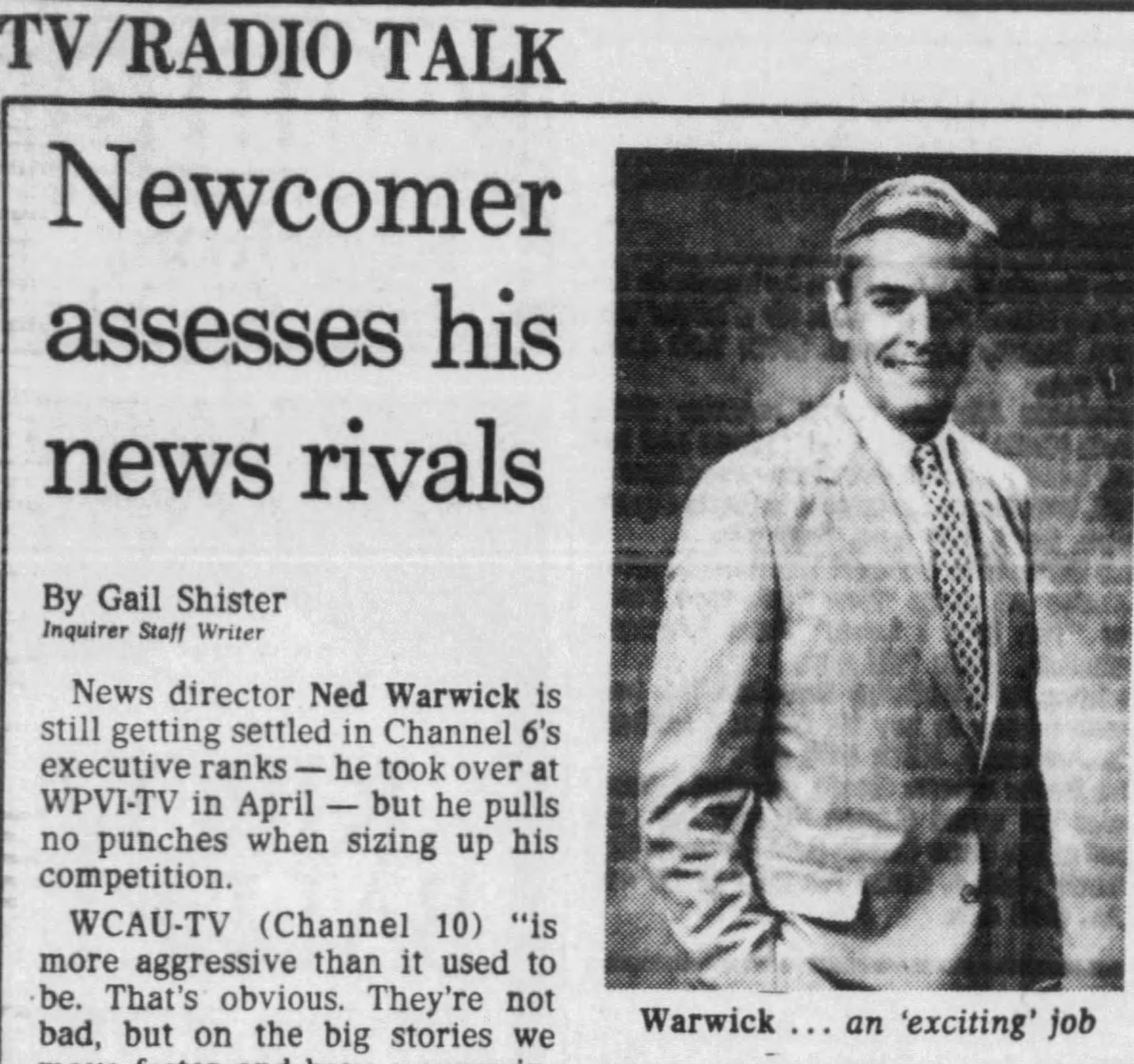
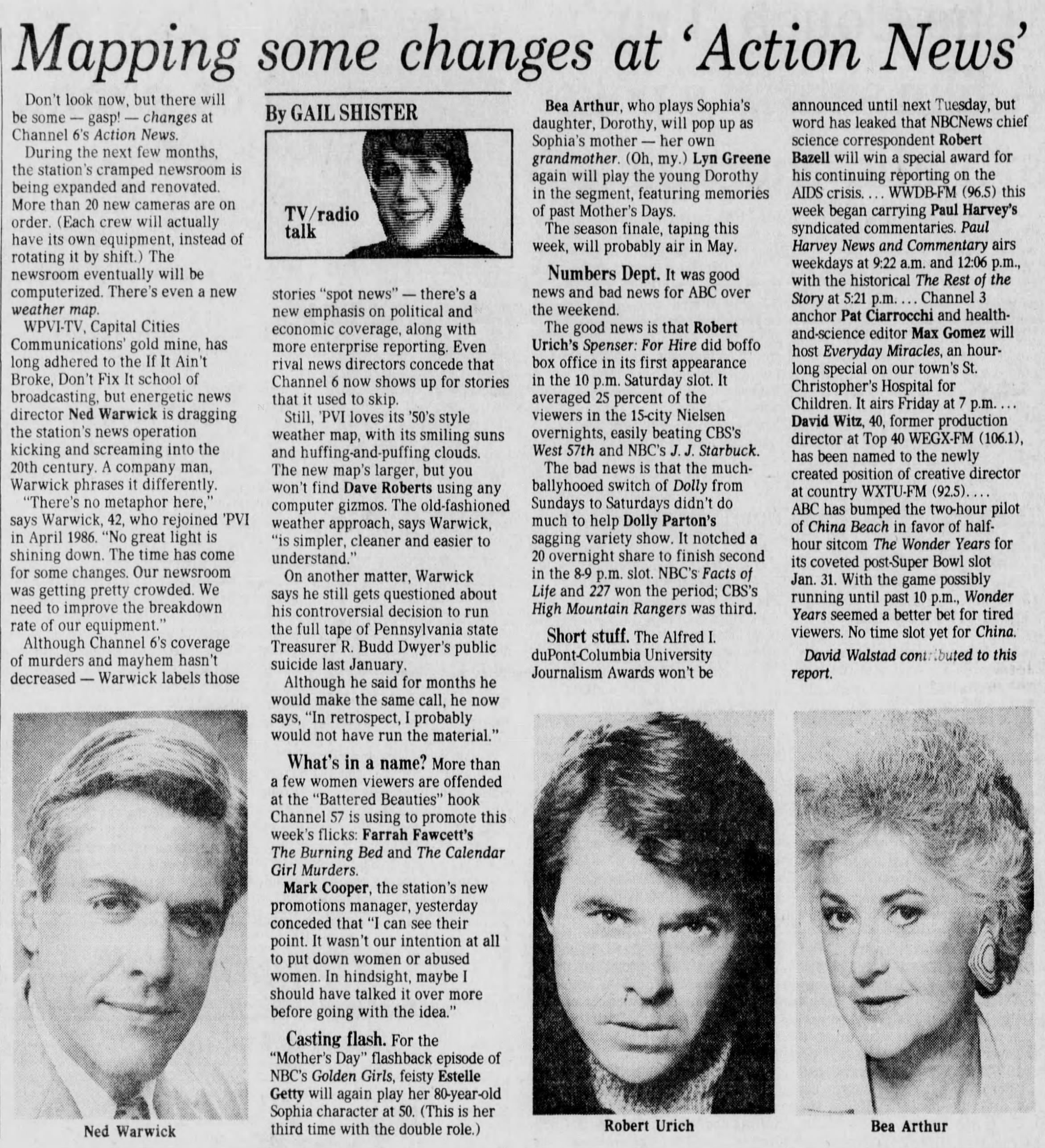
    The Inquirer covered Mr. Warwick’s return to WPVI-TV in 1986. Newspapers,com

    “He was a good listener and could manage a reporter’s needs,” former Inquirer staff writer Miriam Hill said. Former Inquirer staff writer Sally Downey said: “He was a very classy guy.”

    In 2006, his byline appeared in The Inquirer over dozens of war zone stories from Gaza City, Bethlehem, Acre, Ramallah, Huwwara, Turmus Aya, and elsewhere in the Middle East. On Oct. 17, 2006, he opened his story from Kafr Qalil with: “The sharp heat of summer lingers on the stony hills of the West Bank, and the pale olives are still ripening on the trees, thirsting for just a little of the fall rains that won’t come for a few more weeks.”

    “He was a lyrical writer,” Hill said. Former Inquirer editor William K. Marimow called his style “fluid” and “very solid.”

    Mr. Warwick also reported on the royal family from London and reviewed books for The Inquirer. He worked briefly as an editor at large with Bloomberg News after leaving the paper in 2008 and retired in 2010.

    Out of the office, Mr. Warwick was a sailor and a pilot. Courtesy of the family

    He mentored others wherever he worked and with the Rittenhouse Writers’ Group, and completed a first draft of his own book. “His mind was always crafting a story, seeing a story, or preparing to tell one in a way that made everyone near him want to listen,” said his daughter Katie Bishop.

    “No matter what was going on,” said Nathan Gorenstein, a former colleague at The Inquirer, “he was a good human.”

    Out of the office, Mr. Warwick was a sailor and a pilot. In 1986, when he was news director at WPVI, Shister asked him whether flying an airplane or directing a newsroom was more challenging. “Clearly,” he said, “if you don’t pay attention in either business, you’re going to crash.”

    He cheered openly for the Phillies even during the lean years and continued to follow them closely after becoming ill. “One of the first things he would ask in the morning,” his wife said, “is who won the game.”

    Edward Ramsey Warwick was born May 19, 1945. The oldest of three children, he was the great-grandson of former Mayor Charles Warwick. He left Temple and earned a bachelor’s degree in history at the University of the South in Sewanee, Tenn., in 1969.

    Mr. Warwick’s local TV work was covered in The Inquirer in 1988. Newspapers.com

    He married Polly Price, and they had a daughter, Katie. After a divorce, he married Gayle Roth, and they had daughters Megan and Eliza.

    “He always made us feel like having three daughters was his greatest joy in life,” his daughter Megan Osborne said. “He taught us to throw a ball and let us braid his hair.”

    After a divorce, he married Joan Hunter, and they enjoyed museums, the theater, and the orchestra. They traveled the world together. He was a longtime runner and a fashionista, and studied Buddhism.

    He lived with Parkinson’s disease for eight years. But he refused to quit city living for the suburbs, his wife said, and he never lost his sense of humor and zest for life.

    Mr. Warwick was a longtime runner and a fashionista, and studied Buddhism. Courtesy of the family

    “Dad was a giant of a man in every sense of the word,” his daughter Eliza said. His wife said: “He never, ever complained. He made me a better person.”

    In addition to wife, daughters, and former wives, Mr. Warwick is survived by four grandchildren, a sister, a brother, and other relatives.

    A memorial service is to be from noon to 4 p.m. Saturday, Nov. 14, at the Germantown Cricket Club, 411 Manheim St., Philadelphia, Pa. 19144.

    Donations in his name may be made to Penn Medicine Neurology, 3535 Market St., Suite 750, Philadelphia, Pa. 19104; and the Katz JCC Parkinson’s Connection, 1301 Springdale Rd., Cherry Hill, N.J. 08003.

    Mr. Warwick “never, ever complained” his wife said. “He made me a better person.”Courtesy of the family
  • About 1,500 Cherry Hill students are chronically absent from school. School leaders are trying to fix that.

    About 1,500 Cherry Hill students are chronically absent from school. School leaders are trying to fix that.

    The Cherry Hill school district says it is moving to drive down its chronic absenteeism rate by working with students who have been consistently absent over the last three years.

    District statistics from 2023-24 through 2025-26 showed just over 1,500 students make up the group that is absent for 10% or more of the school days in a year.

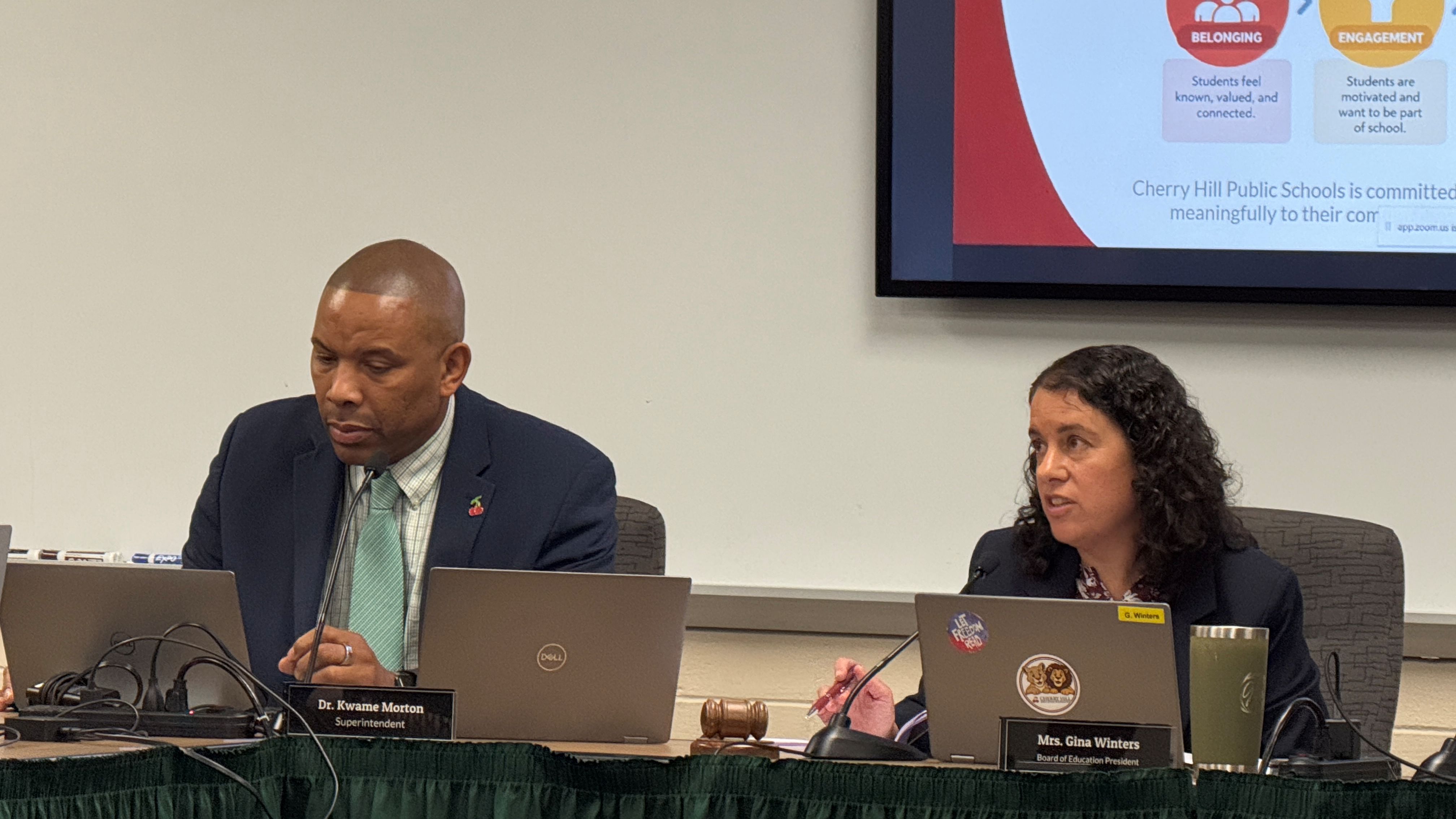
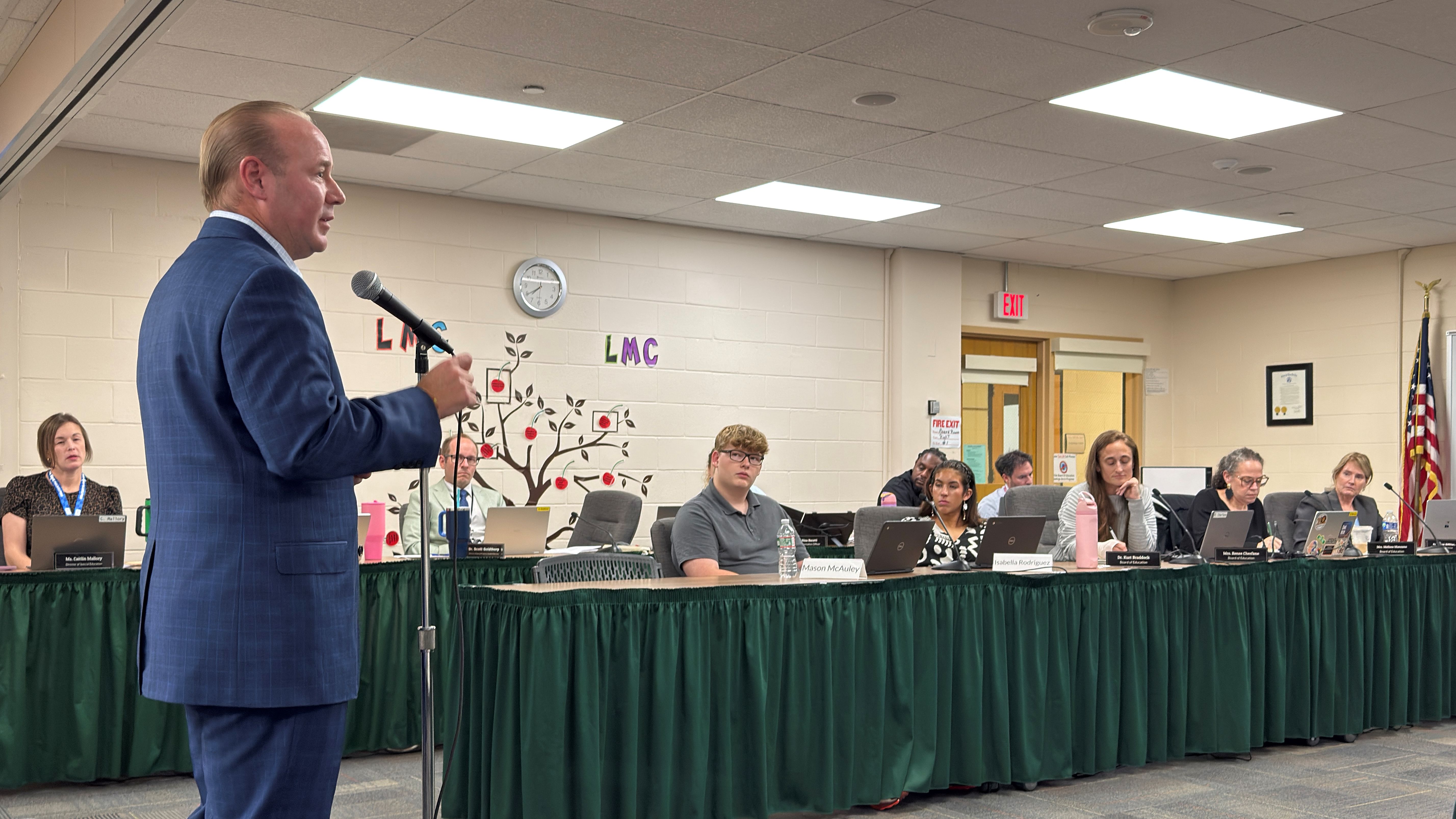
    The district hopes to lower the rate by working closely with chronically absent students and their families, and giving the students a sense of belonging to motivate them to be a part of the school, said Scott Goldthorp, the district’s director of special projects and student services.

    “While attendance isn’t working, ultimately attendance itself isn’t the ultimate outcome we’re looking for,” Goldthorp told the Cherry Hill Board of Education. “The larger goal is making sure students are connected to school, they have consistent access to supports, and that we’re able to connect them with opportunities and those supports that we do provide.”

    Students can be chronically absent due to a number of factors including health, transportation, family circumstances, academic challenges, student engagement, and life transitions, Goldthorp’s presentation noted.

    The Cherry Hill districtwide chronic absenteeism rate has consistently been lower than the state average, according to the New Jersey Department of Education’s School Performance Reports. In 2024-25, the most recent year with state-reported data available, the rate was 14% compared with the state average of 14.4%.

    However, several grades showed rates higher than the state averages.

    Although grade-level absenteeism data were not shared at the meeting, state data for 2024-25 showed chronic absenteeism rates for the sixth, seventh, eighth, and 12th grades in Cherry Hill exceeded the state averages.

    The highest absenteeism rate that year was 25.8% for 12th graders, followed by 23.5% for pre-K. The state averages were 21% and 29.9% respectively.

    Goldthorp emphasized the district’s approach to curbing absenteeism is not a “one-size-fits-all” solution.

    “Sometimes attendance is an academic issue, sometimes it’s a family issue, sometimes it’s a health or transportation issue, and sometimes it’s about a student’s connection to school,” he said. “Our response, then, has to be both systematic and individualized.”

    The New Jersey Department of Education limits what it defines as excused absences, according to the district presentation. Illnesses or physician appointments are not excused. However, religious observances, college visits, and “Take Our Children to Work Day” are among the excused absence reasons.

    Nine Cherry Hill schools lowered their chronic absenteeism rates between the 2023-24 and 2025-26 school years, according to the district data. Two remained relatively stable and six increased.

    Improving were Knight, Harte, Mann, Johnson, Sharp, Kingston, and Woodcrest elementary schools and Beck and Carusi middle schools. Increasing absenteeism rates were at Cooper, Kilmer, and Paine elementary schools, Rosa International Middle School, and both East and West high schools. Barton and Stockton rates were stable.

    Administrators are studying schools that cut their absenteeism rates to replicate the successes elsewhere, the presentation said. In one elementary school, the principal worked with district leaders to reengage chronically absent students and their families. Tangible rewards every week kept the students motivated and their attendance improved, according to the presentation.

    Absenteeism affects academic performance, the presentation noted.

    About 21% of students in middle and high school who were not chronically absent in 2025-26 had at least one failing course. That percentage is more than double (44%) for the chronically absent students in Cherry Hill.

    While about 19% of all students who were not chronically absent were involved with a disciplinary event, about 33% of chronically absent were exposed to discipline, according to the presentation.

    “When those students feel they belong, they’re motivated and want to be a part of school,” Goldthorp said. “When students are here consistently, they have access to high-quality instruction, support … and that ultimately is student success, which is why we’re all here.”

  • 10 alleged drug traffickers arrested following joint investigation by FBI, U.S. Attorney’s Office, and Philly police

    10 alleged drug traffickers arrested following joint investigation by FBI, U.S. Attorney’s Office, and Philly police

    Ten alleged drug traffickers, including the organization’s two reputed leaders, have been charged following a yearslong investigation into an operation that sent millions of dollars of cocaine into Philadelphia.

    The operation originated at the U.S.-Mexico border and ended on the streets of Philadelphia and was responsible for distributing $5 to $10 million worth of cocaine to the streets of Philly every month, said David Metcalf, U.S. attorney for the Eastern District of Pennsylvania.

    “Every prosecution that our office initiates aims to make our country and our community safer, but few have this magnitude of impact,” he said. “These are apex suppliers.”

    The alleged traffickers were with charged with conspiracy to distribute five kilograms or more of cocaine and possession with intent to distribute, among other charges.

    Five of the defendants were arrested Tuesday by the FBI and the other five were already in state or federal custody. If convicted, all face maximum sentences of life in prison.

    Almost all the defendants involved had previously been prosecuted by the U.S. Attorney’s Office for similar offenses, Metcalf said, including alleged leaders Gregory “Smallz” Jones, 48, in 2009 and Edward “Beeb” Basley, 47, in 2007.

    “This prosecution is not just of a drug trafficking network, it is the decapitation of a conspiracy to inject poison into our streets,” Metcalf said.

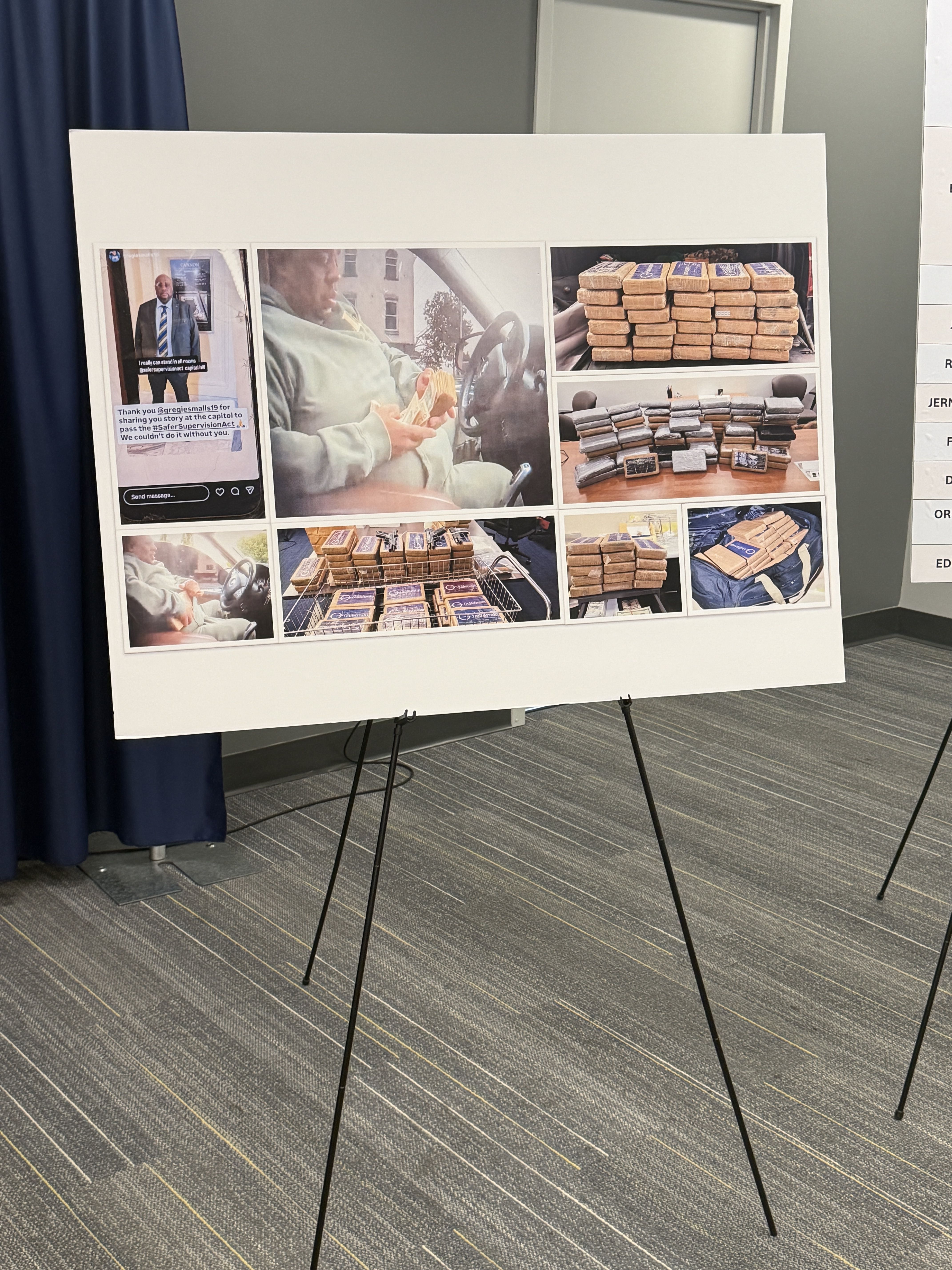
    Photos from press conference on a recent takedown of an alleged drug operation in Philadelphia.Dana Munro

    Jones allegedly served as the primary leader of the organization and procured the drugs from a supplier in Mexico, who delivered bulk shipments via tractor trailer to the Philadelphia area.

    In May, one truck bound for Philadelphia containing 89 kilograms, or nearly 200 pounds, of cocaine was stopped in Knoxville by the Tennessee Highway Patrol, Metcalf said. The driver was Orenthial “D” Bailey, 50, one of the defendants, he said.

    For the trucks that made it undetected to Philadelphia, Metcalf said, Jones met with the drivers in parking lots in and around the city to pay for and collect the cocaine. He would then meet up with his partner to deliver his share, after which both would distribute the drugs to customers and sub-dealers, according to Metcalf.

    Cases like these are a top priority for the U.S. Attorney’s Office, Metcalf said, because the people at the top of drug operations are generally the hardest ones to replace.

    “It is not simply easy to have a relationship with a Mexican cartel member or a source of supply internationally,” Metcalf said. “That takes a great degree of trust, it takes a great degree of confidence. Those types of relationships and that type of infrastructure is difficult to replicate.”

  • Cherry Hill sends $240,000 from opioid settlement to schools for mental health professional

    Cherry Hill sends $240,000 from opioid settlement to schools for mental health professional

    A large part of Cherry Hill’s share of the national settlement with opioid companies will be used to support a licensed mental health clinician working in the schools over two years.

    Township council last week voted to make a $240,000 contribution to the district from the fund’s balance of about $764,000.

    “We recognize that mental health is a national problem and certainly Cherry Hill is not immune,” Mayor David Fleisher said in an interview. “This is one way for us to take a bite out of that problem.”

    Fleisher showed up at the Board of Education meeting on Tuesday to share news of the contribution.

    New Jersey’s share of the settlement with pharmaceutical manufacturers, distributors and retailers is $1.1 billon through 2038, according to the Office the State Comptroller. Half goes to the state and half to counties and municipalities to address opioid use disorder and mental health conditions.

    The mental health professional will be assigned to work with high school students, Fleisher told the board.

    He said the contribution is a “great example of where we have a very specific targeted need and we know the challenges of mental health.”

    70and73.com is a hyperlocal news site focused on South Jersey, including the communities of Cherry Hill, Evesham, Mount Laurel, Voorhees, Medford, Medford Lakes, and Moorestown.

  • Mount Laurel may turn nine hotels into affordable housing. One owner says the plan ‘doesn’t make sense.’

    Mount Laurel may turn nine hotels into affordable housing. One owner says the plan ‘doesn’t make sense.’

    Sitting on the neatly made bed, Vijay Shroff looked around the hotel room as no lodger would.

    Shroff pointed out the wall air-conditioning unit, noting it was replaced along with those in the hotel’s 107 other rooms this summer. He gestured toward the bathroom, recalling his investment in a bathtub that will last decades next to his installation of a relatively expensive pressure-assisted toilet.

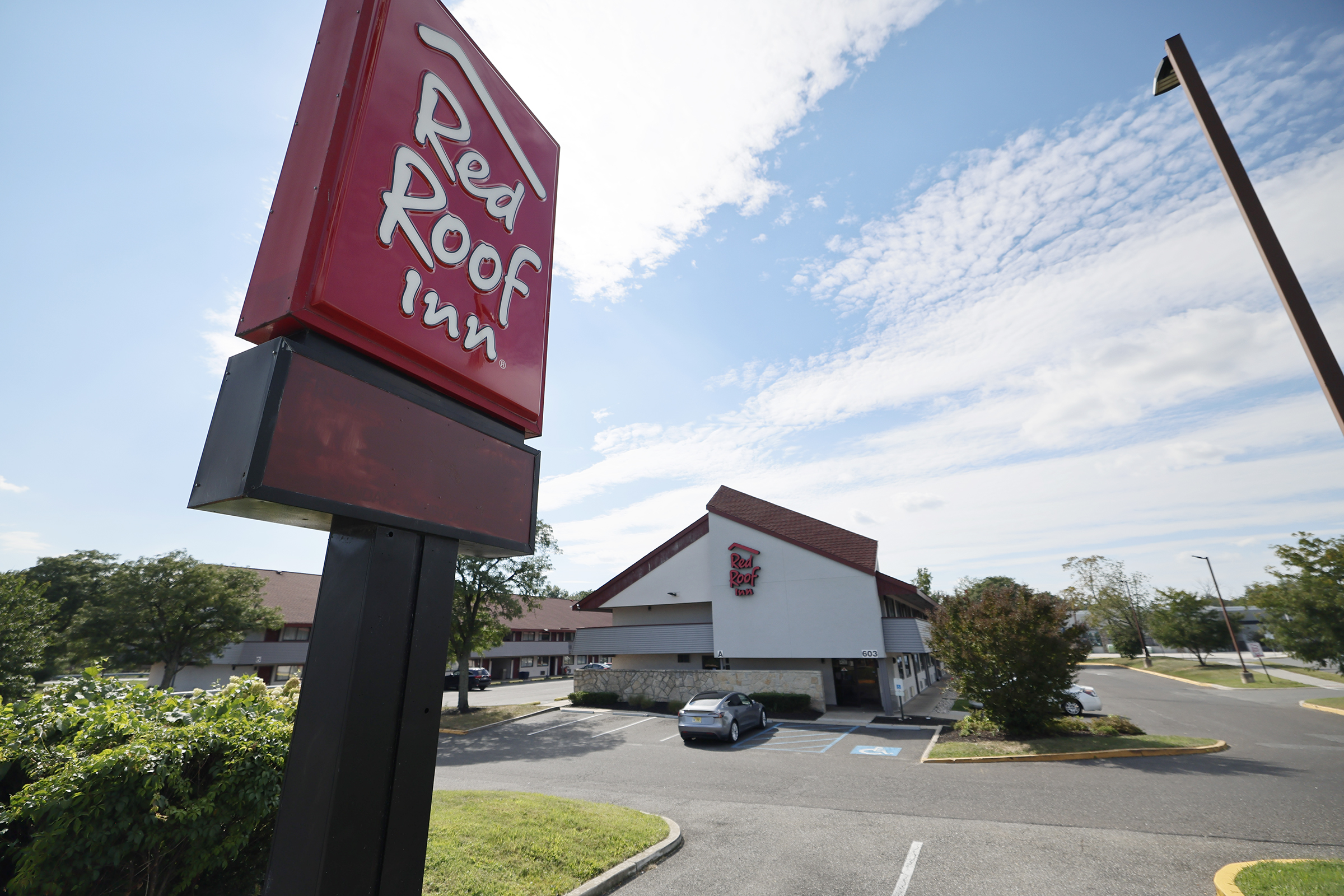
    To Shroff, the Red Roof Inn he and his family own off Route 73 in Mount Laurel “is my long-term investment,” something he could hand down to his two college-age daughters.

    But, to Mount Laurel Township, the small hotel, along with eight others in town, are properties that township government may condemn and demolish to make way for apartments. The apartments could add a total of 826 units to the town’s commitment to have developers build affordable housing under a court-ordered doctrine that had its beginning in Mount Laurel.

    Affordable housing obligations in New Jersey have had a long history since 1975, when the New Jersey Supreme Court required municipalities to provide their fair share of affordable housing in a lawsuit filed by the Southern Burlington NAACP against Mount Laurel Township. This year, the fourth round of planned affordable housing was completed.

    The lawsuit’s outcome, which has come to be known as the Mount Laurel Doctrine, has resulted in construction of more than 75,000 affordable housing units over the years, according to the nonprofit Fair Share Housing Center, which works in the courts to track each municipality’s proposals.

    Shroff, originally from India and a resident of Mount Laurel for 25 years, owns three targeted hotels: the Red Roof, the Track & Turf Motel on Route 73, and the Hyatt House on Crawford Place.

    He learned of the township’s plan to possibly buy his hotel, which could be done through the power of eminent domain, from a news article someone had passed along, he said.

    The Red Roof Inn in Mount Laurel on Wednesday, Sept. 9, 2026.Elizabeth Robertson / Staff Photographer

    Mouth Laurel gets ‘creative’

    Plans designating the Red Roof Inn and the nearby Rodeway Inn on Route 73 as condemnation areas in need of redevelopment were adopted by the township council on Tuesday evening. The council acted on planning board recommendations.

    The redevelopment plans “are the first in a series of redevelopment studies that the Township will be performing over the next few years to determine if the lands are appropriate for redevelopment projects that can accommodate affordable housing developments,” Mount Laurel Township Solicitor George M. Morris of the Parker McCay law firm said in an email.

    Besides Shroff’s three properties and the Rodeway Inn, the other hotels targeted in the affordable housing plan are the Econo Lodge on Fellowship Road, Clarion Hotel & Suites-Wyndham on Route 73, the Grand Resort Hotel-Hotel ML on Route 73, La Quinta Inn & Suites on Clover Road, and Knights Inn on Route 73.

    <iframe title="Hotel Redevelopment Plan in Mount Laurel" aria-label="Locator map" id="datawrapper-chart-gSrzA" src="https://datawrapper.dwcdn.net/gSrzA/2/" scrolling="no" frameborder="0" style="width: 0; min-width: 100% !important; border: none;" height="670" data-external="1"></iframe><script type="text/javascript">(function(){function e(){window.addEventListener(`message`,function(e){if(e.data[`datawrapper-height`]!==void 0){var t=document.querySelectorAll(`iframe`);for(var n in e.data[`datawrapper-height`])for(var r=0,i;i=t[r];r++)if(i.contentWindow===e.source){var a=e.data[`datawrapper-height`][n]+`px`;i.style.height=a}}})}e()})();</script>

    Like other highly developed municipalities, Mount Laurel has scrambled to find properties suitable for developing multifamily residences that include affordable housing.

    Neighboring Evesham Township, for example, worked with a developer to acquire the struggling, one-story Marlton Crossing Garden Offices. The offices recently were demolished, and the planning board has approved construction of 325 apartments, with 49 of them designated as affordable housing.

    Jag Davies, communications director for the nonprofit Fair Share Housing Center, which reviews all municipalities’ proposals for affordable housing, said his organization could not comment on Mount Laurel’s hotel redevelopment plan.

    “Mount Laurel, like many towns, needed to be creative to find solutions to the court mandated affordable housing obligations,” Morris, the township’s lawyer, said. “Redevelopment and effective reuse of distressed properties simply make more sense.”

    Condition of the hotel is a factor

    The redevelopment plans for both the Red Roof Inn and the Rodeway Inn list code violations and police and fire activity at the low-priced hotels.

    Photographs of what the township alleges are maintenance problems are part of the 678-page redevelopment study of the Red Roof Inn.

    Between January 2021 and this April, the Mount Laurel Police Department recorded 258 arrests and 440 service cases, according to the Red Roof redevelopment study by Harbor Consultants of Cranford, N.J. The most-frequent incidents were assault, theft/larceny, and narcotics-related cases, the study stated.

    In June 2025, the Mount Laurel Fire Department told fire personnel, fire inspectors, and code enforcement staff that they must have a police officer on the scene with them before entering the Red Roof Inn, according to the redevelopment study of the hotel.

    Morris said the condition of the properties “is a factor in determining if the lands actually qualify for a redevelopment designation.”

    Mount Laurel Mayor Stephen Steglik in an email referred to the high level of police calls over time to some of the hotels.

    “This redevelopment creates an opportunity to introduce new, fresh and clean permanent housing along one of the Township’s more troubled areas,” he wrote. “Municipalities are mandated by the state to implement an affordable housing plan. As a Township, our effort is to develop and implement a plan that makes the most sense for our community at large while adhering to the spirit of the law itself and we believe this plan does that.”

    Red Roof owner Shroff said that a Mazda cannot be compared with a Bentley and that it is the same in the hotel business.

    His property, which he says over the years has averaged a 75% occupancy rate, is low-cost, said Shroff, who added that the hotel cannot be responsible for the behavior of its customers.

    Like any business owner, Shroff said, he would consider offers from the township that reflect the value of his property. He maintained the value is in the land under the Red Roof Inn and the prospect of using it for commercial development on busy Route 73 may make it prohibitively expensive for residential use.

    “I don’t know how much they want to offer, and even [if] they offer I don’t think this location is ideal for housing,” Shroff said of his hotel, where the parking lot adjoins the parking lot of a Walmart.

    Shroff said he does not understand why the township is considering highly commercialized Route 73 for affordable housing.

    This is not an area where you want to put affordable housing, he said. “It doesn’t make sense.”

  • Johnny Doc was a longtime Democratic power broker. But his ties to some Republicans helped free him from prison.

    Johnny Doc was a longtime Democratic power broker. But his ties to some Republicans helped free him from prison.

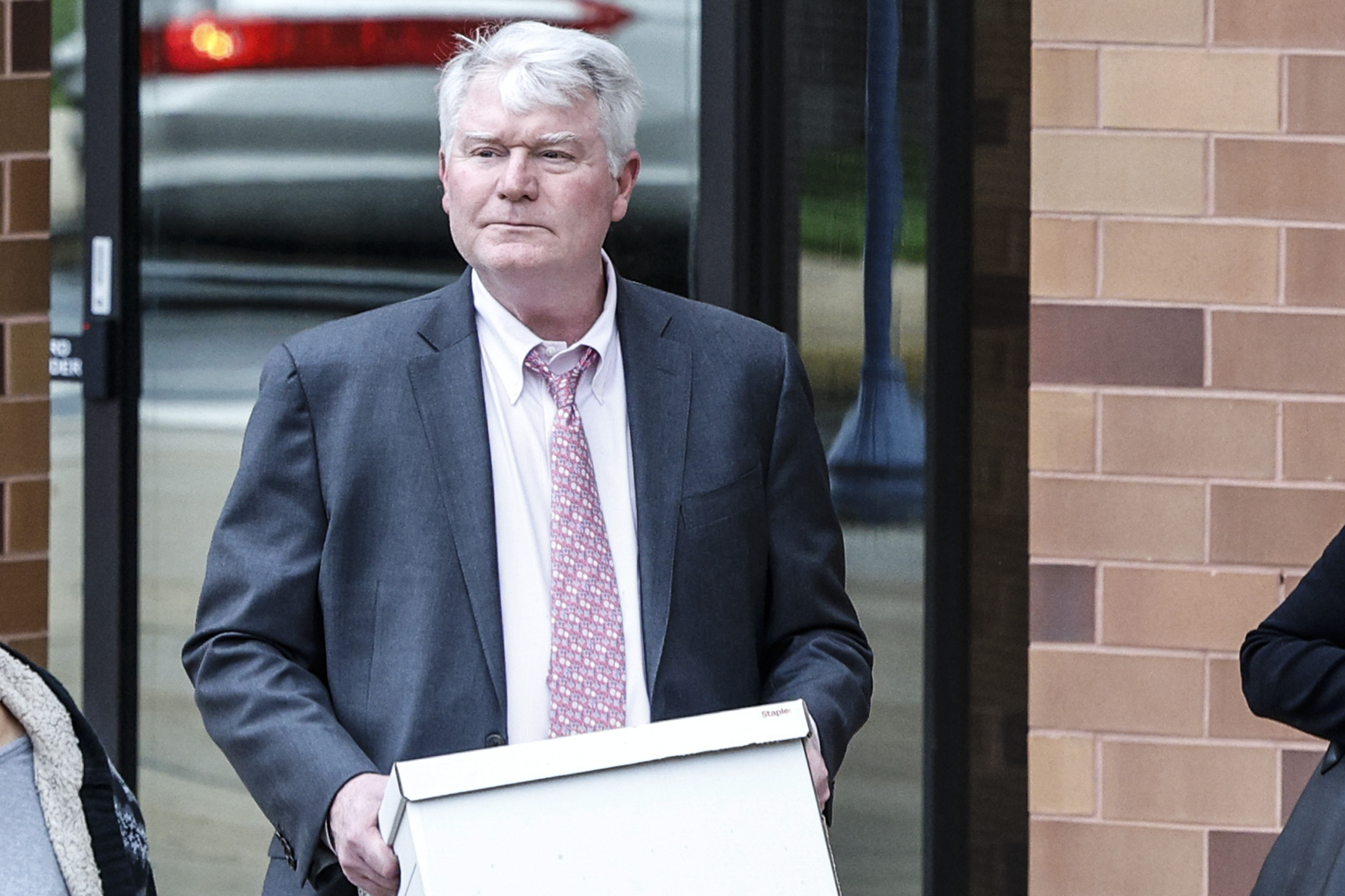
    John Dougherty was for years an unparalleled kingmaker in Philadelphia’s Democratic Party — a charismatic labor leader and fundraiser who helped anoint a generation of future mayors, City Council members, state and federal legislators, judges, and governors.

    But this year, while Dougherty was imprisoned for bribery and embezzlement convictions and desperately seeking an early release to help care for his gravely ill wife, it was a group of Republicans — and ultimately President Donald Trump — who worked to set him free.

    Some of Dougherty’s key supporters in his clemency push, The Inquirer has learned, included two former Republican congressmen; Dougherty’s lawyer, who once ran as a Republican for mayor and, later, for U.S. Senate; and a onetime candidate for Philadelphia City Council with ties to organized labor, who said he was one of Trump’s earliest local backers.

    All had relationships with Dougherty, owing to his years of political activism as head of Local 98 of the International Brotherhood of Electrical Workers — even if his support mostly benefited fellow Democrats.

    John Dougherty in 2015 with then-City Councilmember Jim Kenney. The two were childhood friends, and Dougherty helped support Kenney’s successful mayoral campaign.

    The former Council candidate, Daniel Pellicciotti, said his efforts to help Dougherty included meeting with Trump at the White House and speaking with him over the phone. Pellicciotti said that he told Trump about the significant health challenges faced by Dougherty’s wife, Cecelia, and that Trump was sympathetic to Dougherty’s situation — and willing to send him home.

    “He just said, ‘This is crazy.’ Exact words,” Pellicciotti said. “‘He needs to be home with his wife, taking care of her. Besides, it would be cheaper for the government.’”

    Former U.S. Rep. Lou Barletta, meanwhile, said he signed a letter to Trump last year and contacted anyone he could “just to try to get this on the president’s radar.”

    He said that he had been following Cecelia Dougherty’s health situation closely and that advocating for her husband “became a personal thing for me.” Earlier this year, he attended a court hearing in Reading at which Dougherty begged a judge to be released.

    “I’m very thankful that the president had the compassion to put politics aside and do the right thing,” said Barletta, who met Dougherty in the early 2000s as mayor of Hazleton.

    President Donald Trump with then-Rep. Lou Barletta in 2018.Keith Srakocic

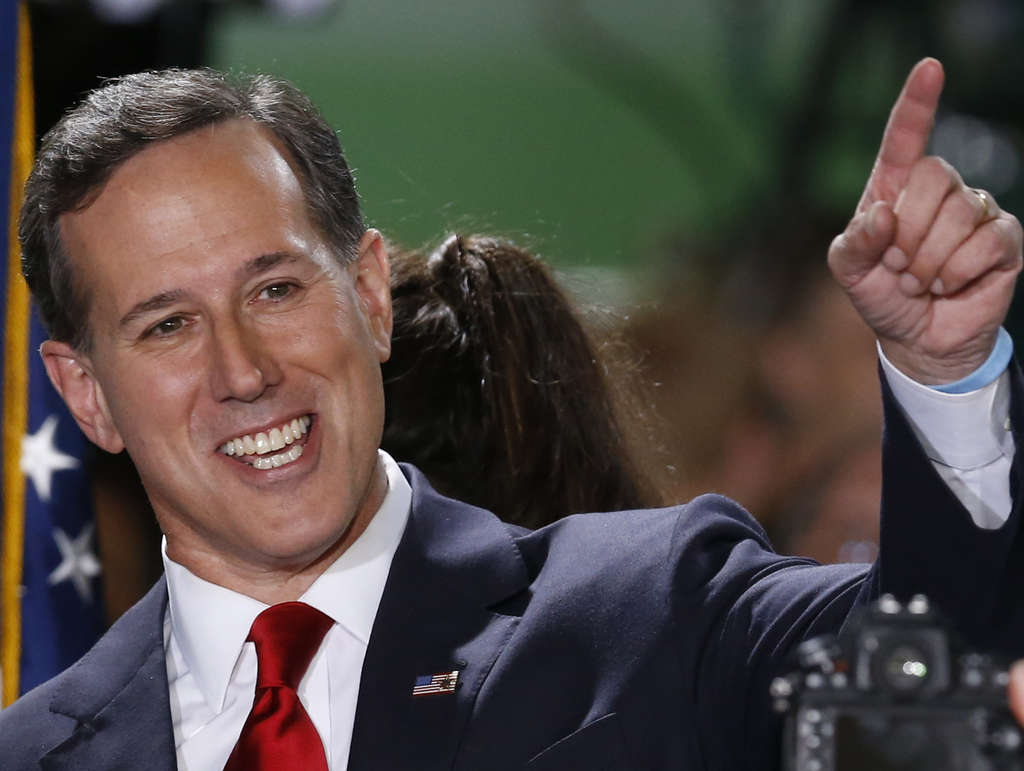
    And Rick Santorum, a former U.S. senator who competed against Trump for the GOP’s presidential nomination in 2016, said he “did what he could to be helpful” in supporting Dougherty’s efforts.

    “Those two years Dougherty spent in jail away from his wife were probably 20 years because I know how much he loves her and how much he was really hurting,” Santorum said. “So to me, this was the humanitarian thing to do, and I supported it.”

    The backing from GOP pols may help explain how Trump — a famously partisan president — ended up granting clemency to a longtime Democrat in one of America’s bluest cities. Trump was soundly defeated in Philadelphia in each of his three elections, and some of Dougherty’s longtime Democratic allies were among his fiercest critics.

    The Republican lobbying might also add context to Dougherty’s decision to change his voter registration and join the GOP. Dougherty — long known as Johnny Doc — switched parties not long after being released this month from a federal penitentiary in Lewisburg, Pa.

    Dougherty has not spoken publicly since his release, and his lawyer, George Bochetto, said Dougherty was focused on caring for his wife.

    Bochetto, who ran for Philadelphia mayor in 1999 and U.S. Senate in 2022 — both times as a Republican — generally declined to discuss details about the lobbying effort. He did say he had been in regular communication with White House aides about Cecelia Dougherty’s health challenges, and he called Trump’s decision “a magnificent gesture of compassion.”

    The White House press office did not respond to questions about who was involved in advocating for Dougherty. A spokesperson said only that the commutation was granted to let him “care for [his] terminally ill wife.”

    Multiple attempts at release

    Dougherty and Bochetto had taken several paths to try to secure an early release from his six-year sentence, which began in 2024 after Dougherty was convicted in separate bribery and embezzlement trials.

    A few months after Dougherty reported to prison, Bochetto filed emergency motions asking U.S. District Judge Jeffrey L. Schmehl to allow Dougherty to serve the remainder of his term on house arrest so he could be his wife’s primary caretaker.

    Schmehl denied those requests twice — including after a hearing in May at which Dougherty testified about how he was the only person who could provide the type of round-the-clock assistance his wife needs. She has long been paralyzed and largely nonverbal after suffering a debilitating brain injury.

    John Dougherty in 2024.Steven M. Falk / Staff Photographer

    After failing to persuade the judge, Dougherty turned to others in his orbit as the request pivoted toward the White House — where Trump, as president, has wide latitude to commute sentences and grant pardons in federal cases.

    Trump was apparently not initially convinced. In July, he denied Dougherty’s commutation request along with those of about 5,600 other applicants, according to the Office of Pardon Attorney website.

    But his allies, including Pellicciotti, persisted. A former business agent for the laborers union, he said he was friends with Cecelia Dougherty before he knew her husband, and he has known both for decades.

    A former Democrat and nephew of the late Councilmember Francis Rafferty, Pellicciotti ran unsuccessfully for Council in 2003 with backing from Dougherty’s electricians union. He said he switched his registration to Republican when Trump ran for president and backed his 2016 campaign.

    “Nobody in Philly was really backing him. I have a lot of respect for him. He don’t forget his friends,” Pellicciotti said.

    In addition to their politics, Pellicciotti, 64, of Roxborough, shared something else with Trump: a felony conviction. Pellicciotti pleaded guilty in 2005 to bribing a Philadelphia public official with cash in exchange for obtaining a designation for his demolition company as a woman-owned business.

    When Pellicciotti was sentenced to probation and a fine the following year, Dougherty and other union members were in the courtroom to pat him on the back.

    That experience with the criminal justice system did not come up in Pellicciotti’s conversations with Trump, however. “I really think it had strictly to do with him doing the right thing for John and Celi,” he said.

    Help among friends

    Barletta and Santorum declined to provide many details about the depths of their advocacy but agreed that their central motivation was support for Dougherty and his wife.

    In addition to Dougherty’s long friendship with Barletta, his ties to Santorum date to 2006, when his former union, Local 98, backed Santorum’s unsuccessful reelection campaign against Democratic challenger Bob Casey.

    Santorum said Dougherty was always uncharacteristically gracious about acts that benefited his members — despite the senator’s political affiliation.

    “Johnny cared enough that he said, ‘Well, look, this guy has done more for my workers and those families than anybody, and we’re going to support him,’” Santorum said.

    Former U.S. Sen. Rick Santorum announcing his candidacy for the 2016 presidential race.KEITH SRAKOCIC / Associated Press

    Other local figures with ties to Trump who were rumored to have helped Dougherty’s lobbying — such as Philadelphia lawyers Michael van der Veen and William J. Brennan, who represented Trump during his second impeachment trial — declined to say if they were involved.

    In any case, Trump made Dougherty’s release official earlier this month. In addition to cutting his prison term short, the commutation erased Dougherty’s obligation to pay about $1.6 million in restitution.

    Pellicciotti, for his part, was glad that Trump bestowed mercy on his longtime associate.

    “All credit goes to God,” he said. “We did a lot of praying about it.”

    Staff writers Gillian McGoldrick and Anna Orso contributed to this article.

  • Lower Merion picks a new school board member after 17 people applied for the vacant seat

    Lower Merion picks a new school board member after 17 people applied for the vacant seat

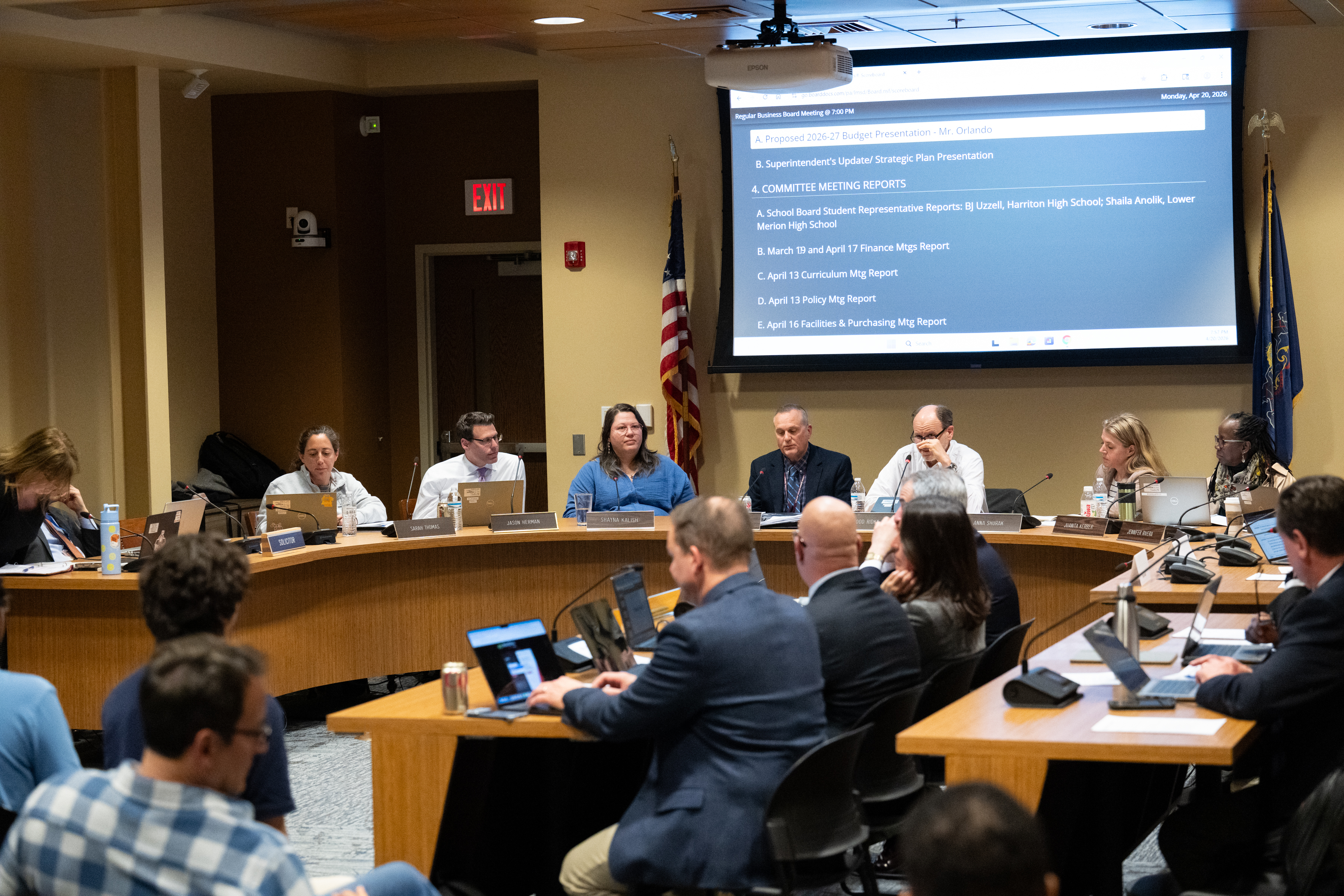
    The Lower Merion school board on Tuesday selected a Tredyffrin/Easttown teacher and former Narberth Borough Council member to fill a seat left vacant by a school board member who was arrested.

    The board picked Muna Elshakhs from a group of 17 applicants, after interviewing her and fellow applicant Andrea Gosfield during a special meeting Tuesday. The board had selected four candidates to be interviewed Tuesday, but two withdrew their names from consideration before the meeting.

    The board did not release their names, or the names of the other candidates who had applied to fill the seat. The position became vacant after Jen Rivera resigned after she was arrested last month on charges of stealing more than $50,000 from her employer.

    Some community members accused the board of a lack of transparency in appointing a new member to the term, which runs until December 2027.

    “Table this appointment, give the full list of applicants, and enter them into the public record,” Matthew Posey, who is among a group of parents challenging the district over its use of technology, said during public comment Tuesday, as he accused the board of “backroom deliberations.”

    District spokesperson Amy Buckman said before Tuesday’s meeting that the eight board members had “individually notified the board secretary of their top choices from among the applicants to be publicly interviewed.” The secretary tallied the selections, and “the applicants with the most selections” were scheduled to be interviewed, Buckman said.

    Those who were not selected included at least two people who ran for the Democratic-led board unsuccessfully in 2025: Rich Lester, who ran as a Democrat but was not endorsed by the local Democratic Party, and Deena Pack, who ran as a Republican.

    In an interview Tuesday, Lester said he was unsure how board members had made their selections for filling the vacant seat. He said he was told there was no scoring rubric used.

    “To have no sort of what we’re looking for is disappointing,” said Lester, who had proposed more accountability and financial analysis from the board.

    Pack, who addressed the school board during public comment Tuesday, said she was the only applicant who had received more than 7,000 votes, and had already been scrutinized by community members during the campaign process.

    “Should the board change its mind, I’m ready,” she said.

    When it was time for the board to nominate candidates, board president Kerry Sautner nominated Pack. But she did not vote for her.

    Sautner voted for Elshakhs, as did board vice president Todd Ridky and members Shayna Kalish and Sarah Thomas. Board members Anna Shurak, Juanita Rivera, and Jason Herman voted for Gosfield.

    Board member Abby Rubin, who has clashed with board leaders, including around the district’s technology policy, nominated and voted for Lester.

    That gave Elshakhs four votes, but five were needed for a majority. The board voted again with the same result.

    Elshakhs then withdrew her application, though some board members told her she did not have to do so, and solicitor Kenneth Roos told board members they could still vote for her.

    “There’s nothing wrong” with the board’s split, Sautner said, calling the debate “healthy tension.”

    “This is a good problem to have,” Ridky said, later adding, “I wish we had more seats to offer tonight.”

    Shurak said that Gosfield, a lawyer, had been involved in the district’s equity policy and had children in district schools that were not currently represented by other board members.

    Thomas credited Elshakhs’ perspective as a current teacher, though some board members questioned her ability to attend daytime committee meetings given her job. Sautner said the board could be flexible with scheduling.

    Shurak ultimately switched her vote to Elshakhs, saying she wanted to respect the majority of the board. Kalish accused Lerner of obstructing the process by continuing to vote for Lester; Lerner said she had a different opinion.

    After Elshakhs files a financial statement of interest, she will be sworn in and officially join the board, Roos said.

  • A huge ICE detention center in Pa. could be sold to the federal government, losing local oversight

    A huge ICE detention center in Pa. could be sold to the federal government, losing local oversight

    Big change could be coming to a giant ICE detention center in central Pennsylvania, but not the kind that advocates have demanded at a facility facing federal complaints for medical neglect and assaults against detainees.

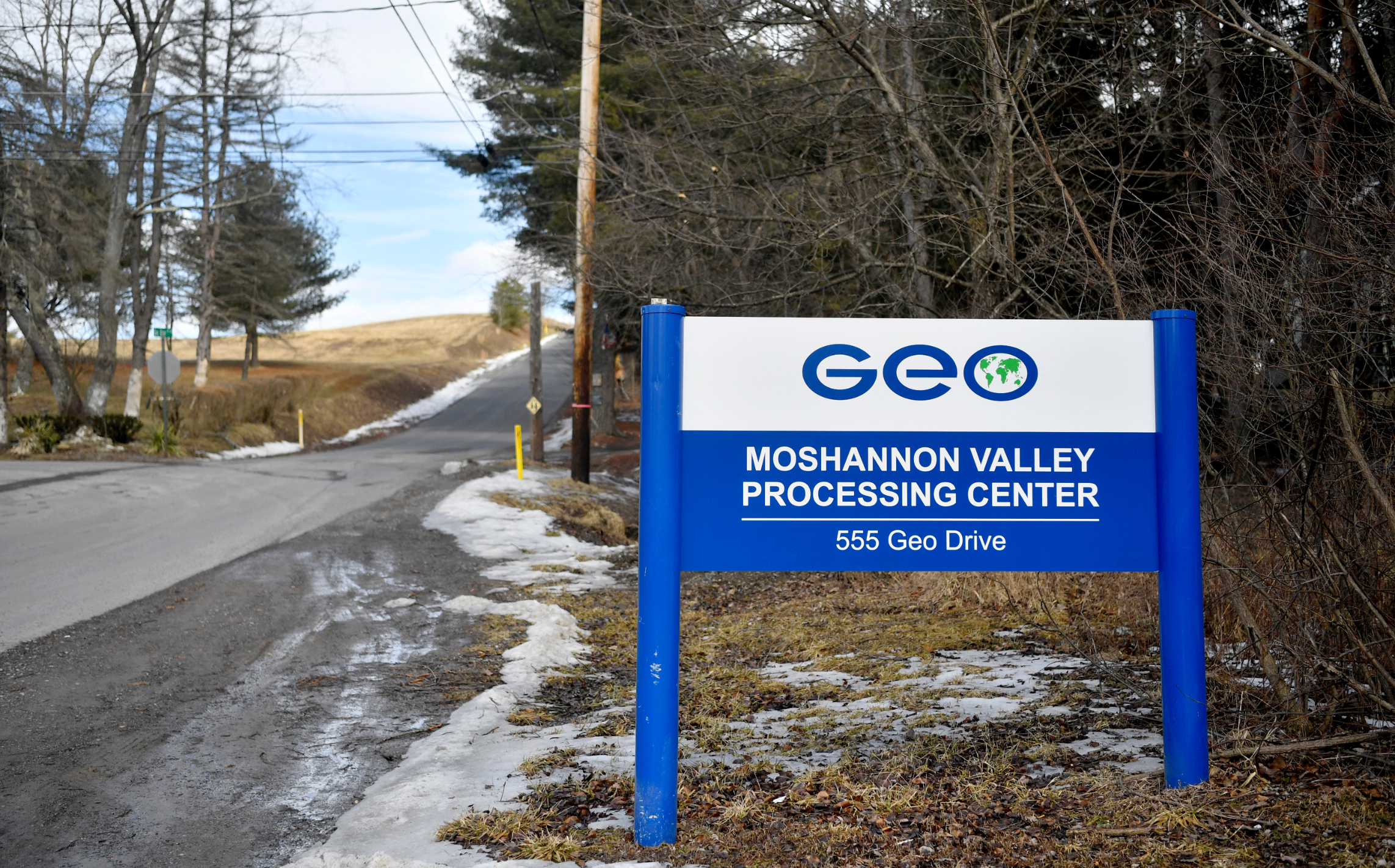
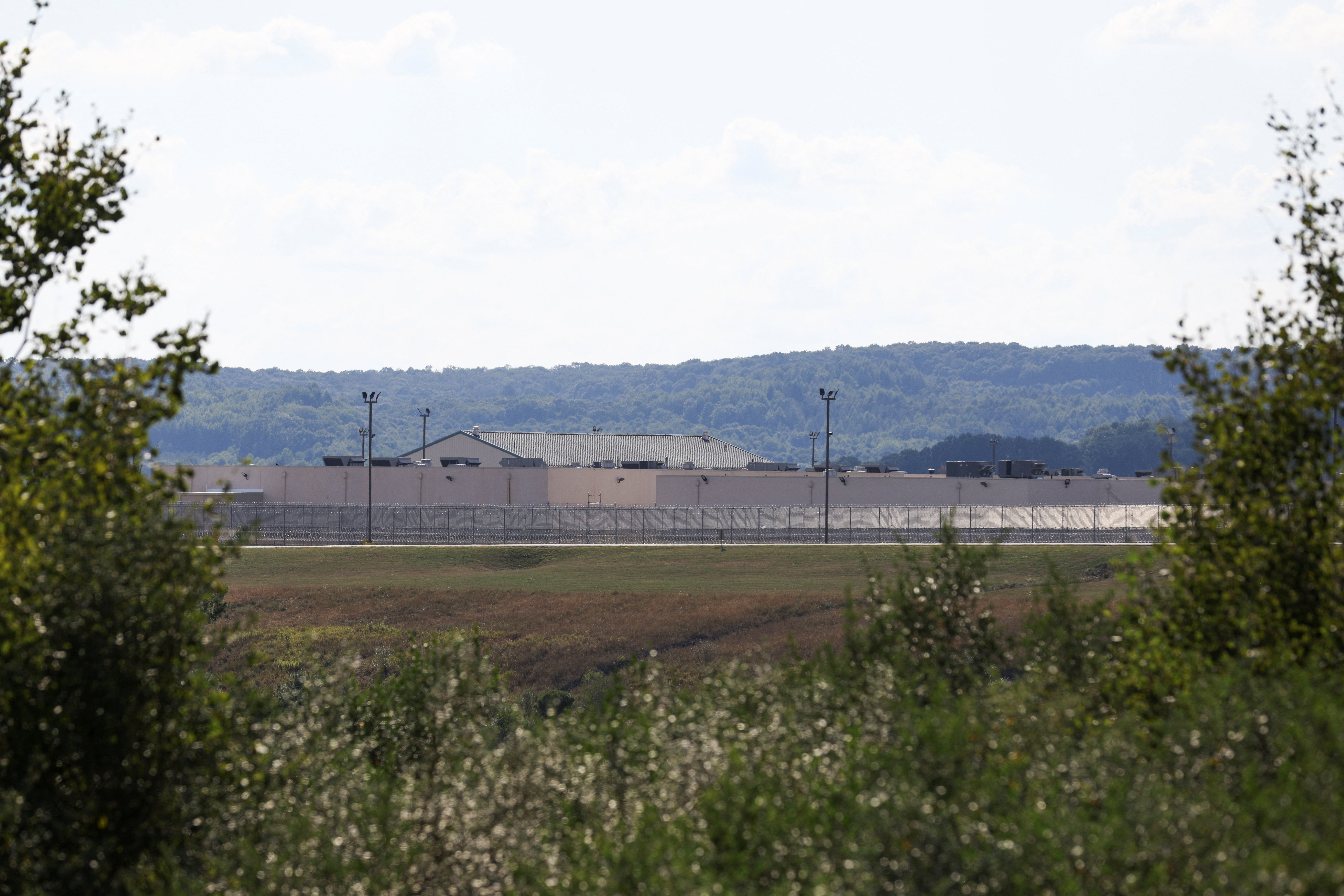
    There are signs the Moshannon Valley Processing Center could end up being sold to the federal government, a move critics fear could insulate the center from some state regulation.

    In the meantime, county officials approved a controversial extension of the current operating contract Tuesday, ensuring the largest detention center in the northeastern United States can run unimpeded for at least the next six months.

    The contract between Clearfield County and Florida-based GEO Group, the for-profit owner of the 1,876-bed facility, was set to expire at the end of September. But Republican Commissioners Tim Winters and John Sobel voted 2-1 against Democratic Commissioner Dave Glass to extend GEO Group and ICE’s contract to operate the Moshannon center.

    The vote came at a contentious meeting at which speakers from the audience mostly voiced opposition, questioning why the county had become entangled in federal immigration policy and doubting the true worth and use of the $100,000 payment.

    “Blood money!” one person shouted after the vote.

    Clearfield’s vote took place as President Donald Trump’s administration quietly mounts a takeover of private detention centers like Moshannon, as it is called, to expand bed capacity to support its mass-deportation goals.

    Some local officials and immigration advocates think Moshannon may be next to be sold. In a statement, the Department of Homeland Security said ICE does not discuss potential facility acquisitions.

    “The long-term solicitation process remains ongoing,” a spokesperson said.

    Federal ownership could insulate the properties from compliance with certain local and state laws, important to the Trump administration when other expansion plans, like turning empty warehouses into detention centers, bogged down amid community and legal opposition.

    Moshannon is a common destination of those arrested for immigration violations in Pennsylvania. An unannounced congressional oversight visit in May found that of the 1,417 adults detained there, roughly 78% lacked serious criminal charges or convictions of violent behavior — a contrast to Trump and his allies’ arguments for increased detention.

    ICE agents outside the Delaney Hall migrant detention center in Newark, N.J., in June.LEXI PARRA

    Trump’s push for mass detention and deportation

    Congress voted in July 2025 to allocate $45 billion to the Department of Homeland Security for immigration detention, more than a decade’s worth of typical funding. At the time, Trump immigration officials touted the funding as a way to treat deportation “like a business,” with acting ICE director Todd Lyons saying he wants to see the deportation system run “like [Amazon] Prime, but with human beings.”

    DHS, which oversees U.S. Immigration and Customs Enforcement, went on to spend millions on reopening shuttered prisons, allocated $1.2 billion to house thousands in tents on a Texas military base, and attempted to convert nearly a dozen warehouses across the country into mega detention centers to the tune of $1 billion.

    However, in June, ICE made plans to offload seven of those warehouses, totaling $700 million, by giving them to other agencies or selling them outright, according to the New York Times.

    A warehouse purchased by DHS to house an ICE detention center in Surprise. Caitlin O'Hara

    With a near-record 65,000 people in detention, ICE’s latest push has been to buy established private detention centers and build more facilities alongside them, as seen with the summer sale of four private detention centers owned by CoreCivic, the nation’s other large private prison owner, to ICE.

    GEO Group’s founder and executive chairman, George Foley, said in a May earnings call that the private prison company was “engaged in an active process for the sale” of several facilities to ICE. Foley acknowledged Democratic-led states were considering more active oversight in detention centers, saying, “I think the logical solution to much of that is federal ownership of the facilities.”

    CoreCivic and GEO Group reported a combined $1.4 billion in quarterly revenue this spring, not including the closed or potential sales of detention facilities.

    GEO Group did not respond to a request for comment.

    A detainee sits behind glass in a common area at the Moshannon Valley Processing Center in 2023.REUTERS / Quinn Glabicki

    The potential sale of Moshannon to ICE

    GEO Group has not officially stated its intention to sell Moshannon to ICE. But recent ICE contract bid requests and local dealings with the center’s warden are leading local officials and immigration advocates to suspect a sale.

    Earlier this month, ICE requested 10-year contract bids for “turnkey” detention facilities across the country, including in the Philadelphia area. Moshannon is the only private facility in the region that fits that criteria, said Jasmine Rivera, executive director of the Pennsylvania Immigration Coalition, which had called on county commissioners to deny a contract extension.

    Rivera said the proposal requests include provisions that could lead to the sale of private detention centers to ICE, similar to its dealings with CoreCivic. GEO Group and ICE’s contract extension “is a stopgap measure” so the parties have “the time to finish the land assessment in the sale of Moshannon,” Rivera said.

    In a Sept. 8 Clearfield County commissioners meeting, Glass told the public he directly asked Moshannon warden Leonard Oddo earlier this year whether the Clearfield detention center could be sold to ICE. Oddo said no, according to Glass. In the first week of September, the commissioner e-mailed Oddo the same question, to which Oddo responded, “‘I’ll have to refer you to GEO corporate on that,’” Glass said.

    “I took that as kind of a red flag that there may be some kind of a sale,” Glass said at the meeting.

    Moshannon Valley Processing Center, an ICE detention facility operated by the Geo Group, where migrants are housed, in Philipsburg, Pennsylvania, U.S., August 24, 2025. REUTERS/Quinn GlabickiREUTERS

    What it means for Pennsylvania residents

    Having Moshannon fall under federal ownership would mean many of the tax benefits Clearfield County receives for serving as a middleman would cease, Glass said.

    “Whatever you think about the facility, having that facility sold to the federal government and losing the tax base on that would be a huge blow,” he said.

    Clearfield commissioners have no say in approving the sale if GEO Group and ICE agree to terms.

    Due to a now-reversed order that banned federal agencies from contracting with private prisons, GEO Group is contracted through Clearfield County, meaning ICE funding — around $5 million monthly — flows through Clearfield to GEO Group for operating the detention center. Clearfield collects a $200,000 administration fee for its intermediary role.

    The county also receives $688,000 in annual property taxes from the facility, and GEO employs 400 people there. However, Rivera noted ICE still owes more than $230,000 in unpaid medical services provided by regional EMS providers — a debt U.S. Sen. John Fetterman (D., Pa.) has urged ICE to repay.

    Winters, who voted to extend the contract, said that current federal immigration policy was “not working,” but that losing a seat at the table with ICE and GEO would leave Clearfield County worse off.

    Voting “no” on the contract extension would have eliminated “our communication and our ability to investigate claims,” he said. “Our oversight ability is very small, but we still have it.”

    For Rivera, any sale is concerning because ICE could ignore Pennsylvania lawmakers’ attempts to protect public health, environmental and zoning standards, and the safety of those detained, she said.

    Even if the commissioners had denied the contract extension, ICE would have continued operating without a contractual federal agreement, Winters said, as it did with CoreCivic in New Mexico last year after its contract with Torrance County expired.

    The newly extended contract will allow ICE to continue paying GEO Group for operating Moshannon through Clearfield County until mid-March 2027. At that point, GEO Group and ICE could approach the county with a new contract, or, as advocates and some local officials fear, federal ownership could come into play.