Category: News

  • Trump officials vote to rewrite historic preservation rules, in boon for arch

    Trump officials vote to rewrite historic preservation rules, in boon for arch

    Trump officials on Friday voted to rewrite federal rules intended to protect historic sites, sending the plan to the White House for further review.

    The Advisory Council on Historic Preservation, a federal agency that oversees preservation reviews and advises the president and Congress, said it was moving forward with changes to a federally required process that governs changes to landmarks such as the National Mall, sites that are significant to Indigenous tribes, and other properties eligible for listing on the National Register of Historic Places. The process currently applies to any construction projects that are on federal land or receive federal funding, as well as private projects that require any type of federal approval.

    If codified into law, the new rules would make it easier for President Donald Trump to pursue his controversial construction projects — such as building his planned triumphal arch — and could eliminate the need for public input on other major federal projects.

    The ACHP is dominated by Trump appointees, leaving little doubt the proposal would pass.

    The proposed rules “will now move to the interagency review process” overseen by the White House’s Office of Management and Budget, Ashley Fry, an ACHP official, wrote in an email. Once it clears that review, the proposal will be opened for public comment before being finalized.

    Under the current rules, federal agencies must undertake a multistep Section 106 review assessing the potential effects of construction projects and soliciting public input, among other requirements.

    The changes would allow federal agencies to approve construction projects that would impact historical sites without the previous requirement to seek the agreement of affected states, tribes, and other interested parties. The proposal also would allow an agency to unilaterally decide whether or not it’s in the public interest to allow public participation in the review process.

    The proposed rules could make it easier to change or destroy sites like Native American burial grounds or historic downtowns, or to build projects that change the view from historic sites such as power lines near Thomas Jefferson’s Monticello estate.

    The current process has created speed bumps for some of Trump’s projects, which he has sought to rush through federal reviews and complete before his term ends in January 2029.

    Under the existing Section 106 rules, outside groups are currently weighing in on Trump’s plan to build a 250-foot-tall arch on federal parkland near Arlington National Cemetery.

    Trump officials complained last month that the current process was overly burdensome.

    “Consulting parties also often request mitigation that is beyond the agency’s authority, unacceptable to a project proponent or the agency, or unduly burdensome, which can lead to disagreements that delay the completion of the process,” said Kevin Lilly, acting assistant secretary for fish, wildlife, and parks at the time, adding that the agencies could be forced into “endless consultation” under the current rules.

    Historic preservationists and advocacy groups have decried the administration’s plan to overhaul the existing rules and vowed to mobilize resistance.

    “The proposed changes threaten the history of our nation and the fabric of our society — this is an attack on our civic and cultural inheritance,” Brent Leggs, the CEO of the National Trust for Historic Preservation, said in a statement on Friday night.

    The National Association of Tribal Historic Preservation Officers, a nonprofit that focuses on protecting culturally important places for Native Americans, said in a statement that the proposed changes are “an affront to Tribal sovereignty.” Other groups warned about the potential lack of protections.

    Rep. Chellie Pingree (D., Maine), the top Democrat on a House subcommittee that oversees funding for the Interior Department, said that the administration’s plan would allow rushed construction projects that could “permanently damage” historical sites.

    “They have shown time and again that they’re not interested in respecting the full scope of America’s history — only in fast-tracking the president’s vanity projects and giving sweetheart deals to donors and supporters,” Pingree said in a statement.

    Sara Bronin, who led the ACHP under the Biden administration, told the Washington Post that she was not surprised the council voted to advance the proposed rule. Twenty of the 24 seats on the council are either directly appointed by the president or are reserved for the heads of federal agencies, such as the Interior Department, which are controlled by Trump.

    “I expect the ACHP to ignore public comment and finalize the rule in the next month or so,” Bronin said. “Once they do, the preservation community and its allies will be ready both to challenge their action in court and to ask Congress to intervene.”
  • Germantown’s new visitor center aims to connect residents and others to the neighborhood’s history

    Germantown’s new visitor center aims to connect residents and others to the neighborhood’s history

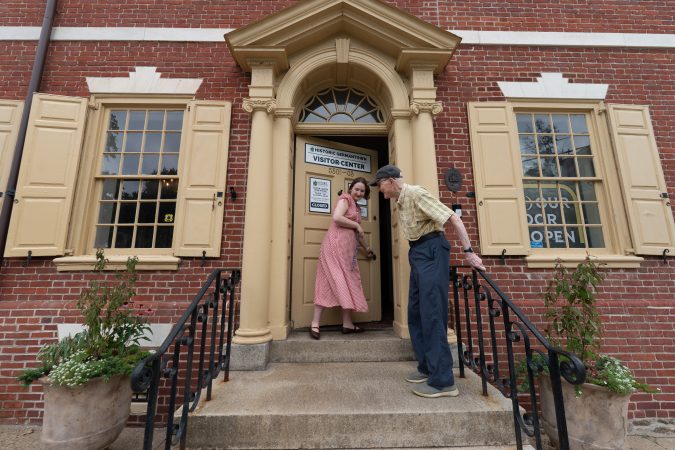
    A new visitor center aims to root Germantown more firmly in its own history, showcasing it as the site of a major Revolutionary War battle and a place with important ties to religious freedom, abolition, and the Civil Rights Movement.

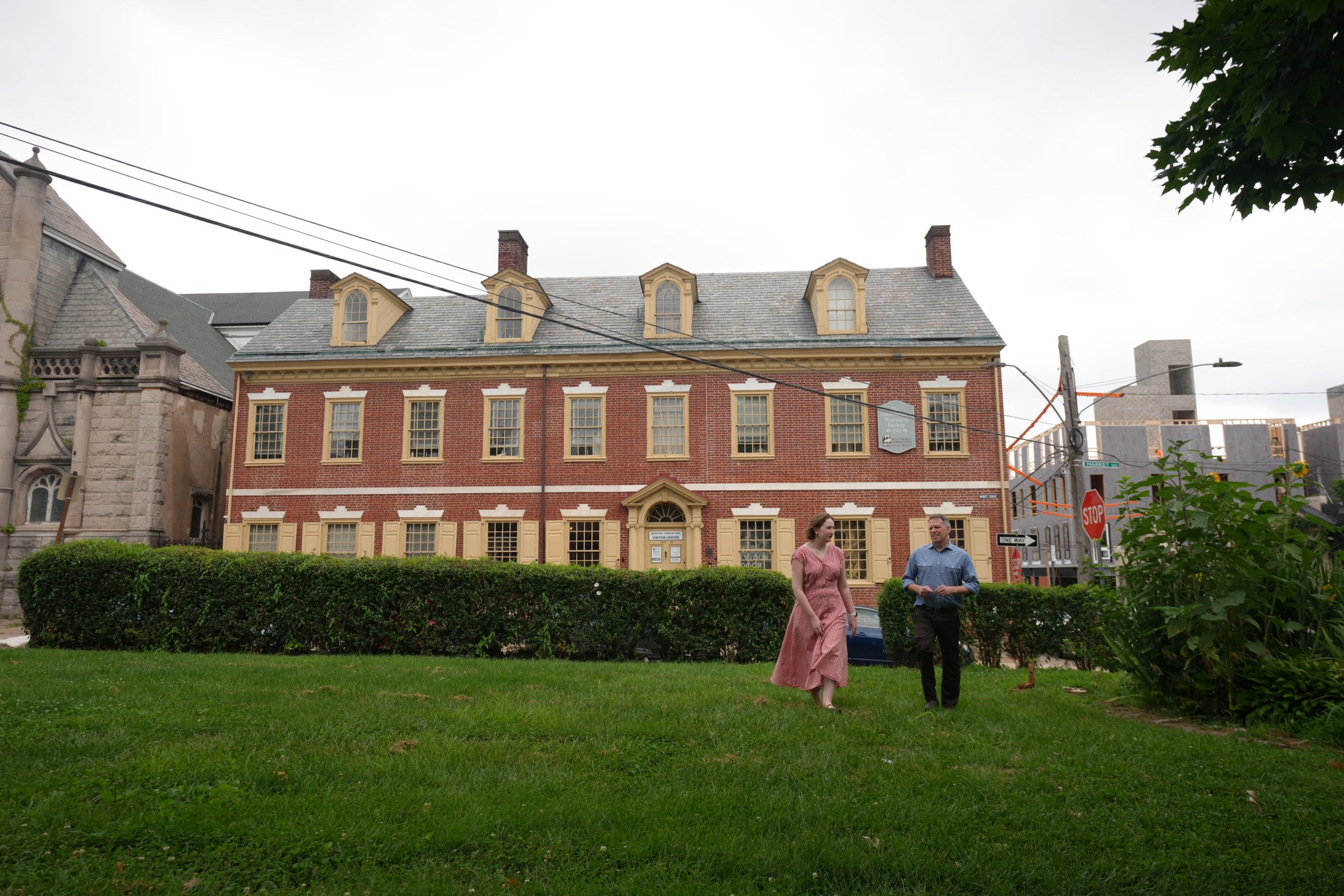
    The center opened in a two-story redbrick building at 5501 Germantown Ave. earlier this month. Owned by the Germantown Historical Society, it is intended to serve as a starting point for visitors and residents alike.

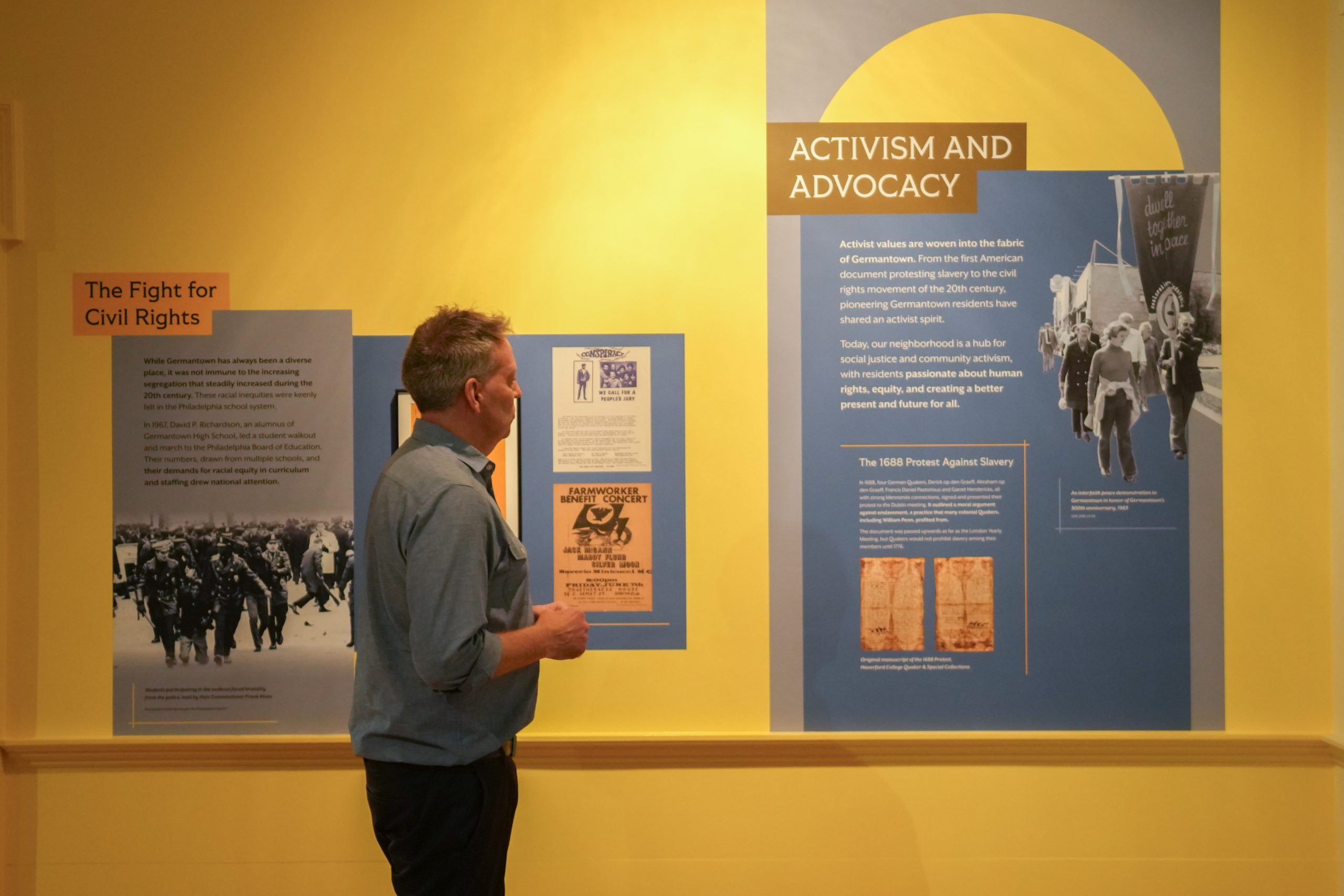
    The exhibitions were curated using a process of community conversations in which neighborhood residents shared what was important to them, said curator Kaila Temple. The main exhibit highlights major themes in Germantown’s history. Sections like “Activism and Advocacy” focus not only on the 1688 Germantown Quaker Petition Against Slavery, but also on a student protest in 1967 that was met with violent police opposition.

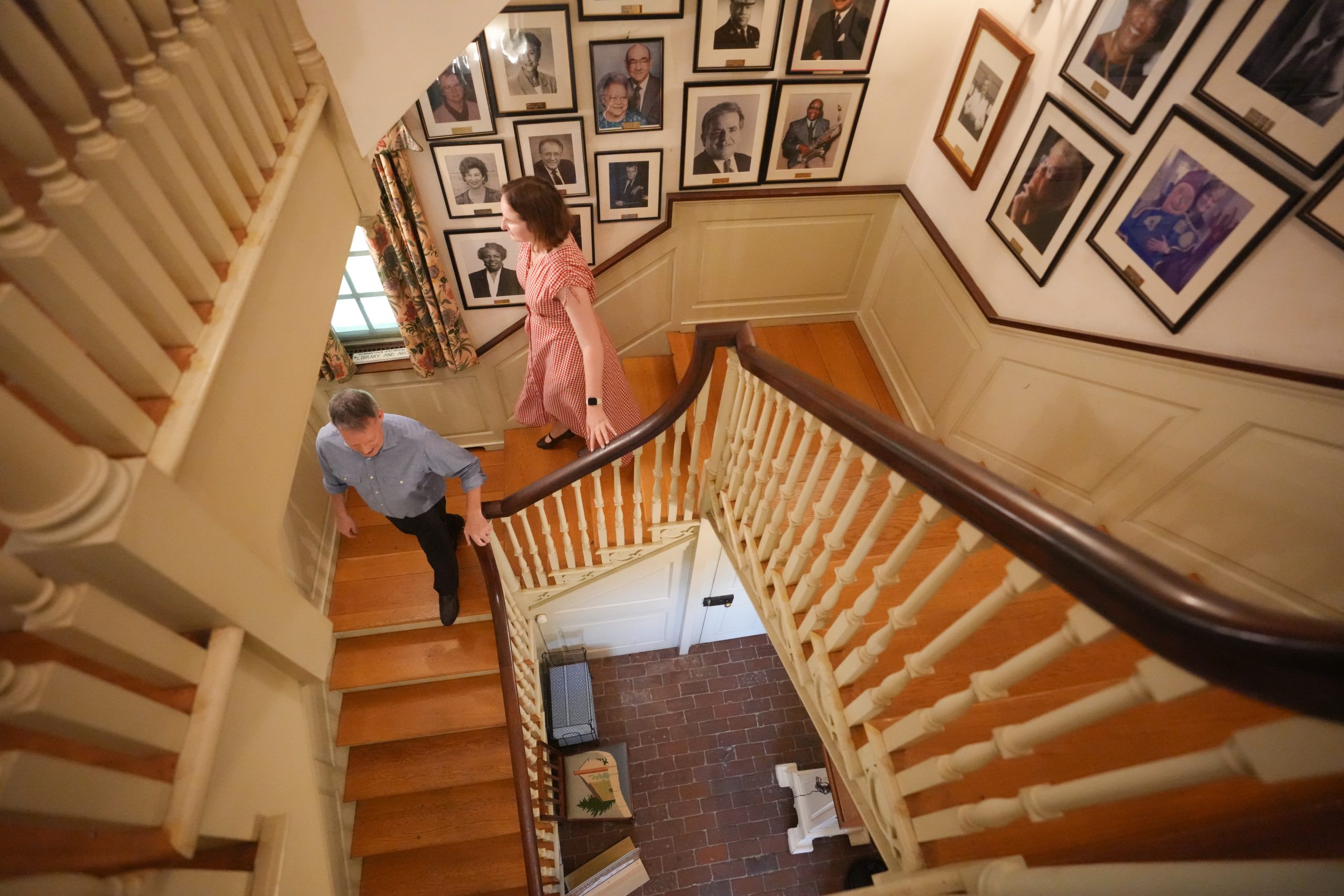
    Tuomi Forrest, executive director at the Germantown Historical, in the new exhibit.Jessica Griffin / Staff Photographer

    German immigrants first settled in Germantown in the late 16th century, fleeing Europe in search of religious freedom. Germantown played a central role in the American Revolution and later became the site of strong abolitionist advocacy, and robust student youth activism during the Civil Rights Movement.

    The visitor center hopes to both connect residents of Germantown with their local history and draw visitors from elsewhere. Visitors will be directed to visit the many historical sights in the area with maps available for walking tours. Director Tuomi Forrest hopes the visitor center can be a resource for neighbors and bring in more visitors from outside Philadelphia, citing those as “twin” goals.

    The visitor center received about 200 people the first week it opened and hopes for more. It recently collaborated with Neighborhood Jawnts Tour Series, a Philadelphia-based tourism effort, to bring in visitors from around the city.

    It has also worked closely with neighbors who want to learn more about their own homes and their ancestors. One neighbor found a wedding invitation from 1912 during home renovations and wrote to the center to ask for documents that would shine more light on who used to live in the home; another wanted more information of how his mid-1800s home came to be an institution for orphans; others ask to come to the center to do research on their ancestors.

    Tuomi Forrest, executive director, and Kaila Temple, curator, at the Germantown Historical Society building.Jessica Griffin / Staff Photographer

    The square where the visitor center sits dates to 1703. George Washington lived across the street from it in 1793, and when Philadelphians wanted the federal government to stay locally, they touted the square as an asset.

    The Colonial Revival building where the visitor center is now housed was constructed in the 1790s and restored around the 1940s and ’50s.

    Visual markers of the Colonial Revival style, a result of the 1876 Centennial Exhibition’s reawakening of Americans’ desire to connect architecturally to their colonial past, still dominate the historical section of Germantown. Along Germantown Avenue, gray stone churches stand beside pale yellow, redbrick, and coral-colored houses.

    But the visual character of the historic section of Germantown that houses the new center is not uniform, especially as new developments begin to populate empty lots.

    A neighborhood ‘at an upswing’

    As the local visitor center leans into Germantown’s past, some nearby residents and businesses — many of whom were not aware of the new center — said they were concerned with the direction of their neighborhood’s future.

    Van Brooks, operations manager of a coffee shop kitty-corner from the visitor center, worries about development just down the street — a four-story apartment building that is visible from the window of a visitor center gallery. “A lot of folks in this neighborhood don’t want this space to exist here,” he said. He worries the modern, flat apartment complex will begin to gentrify the neighborhood.

    Nicholas Thaete, who has lived in Germantown for 46 years and runs an antique repair shop, says the neighborhood has gone through different periods. “It goes up and down. Right now, it is at an upswing,” he said.

    And yet, as Debbie Curry, who works in a nearby fabric store, remembered, Germantown used to have more commercial activity: “There was a time when there were a lot of department stores. … You didn’t have to go to Center City to do your shopping.” Curry, 66, grew up in Germantown but moved from the neighborhood when she married. She is happy something is finally being done about empty lots.

    “A lot of people thought for years that Germantown would see new development, but now it has,” Forrest said, standing in front of the visitor center.

    Kaila Temple, curator of Collections at the Germantown Historical Society and Tuomi Forrest, executive director at GHS, outside the new Historic Germantown Visitor Center.Jessica Griffin / Staff Photographer

  • No blood or DNA from missing women was found in Olney house, sources say

    No blood or DNA from missing women was found in Olney house, sources say

    What initially appeared to be a significant amount of blood inside the Olney home tied to a missing persons investigation was not real blood, according to law enforcement sources.

    Forensic testing conducted so far also has found no DNA belonging to the two missing women at the center of the evolving investigation, the sources said.

    Philadelphia police and FBI agents began searching the home of Eugene Horsch last month after police arrested him with a woman carrying a fake ID in the name of Blair Tonzelli, a woman struggling with drug addiction who was last seen at the property in 2022. The probe also renewed interest in another missing person, Amy McHale, the ex-wife of Eugene’s father, who was last seen in 2016 at the same house on West Chew Avenue.

    But detectives did not find the DNA of either woman on items tested so far, and while preliminary tests indicated that a significant amount of blood was present in the house, subsequent forensic tests came back negative, said the sources, who spoke on the condition of anonymity to discuss an ongoing case.

    The Philadelphia Police Department did not immediately respond to a request for comment Friday.

    This week police began excavating a pipe beneath the property to search for more evidence. And FBI agents are examining hundreds of pages of handwritten and typed documents, CDs, videos, and text messages for clues related to the missing women, the sources said.

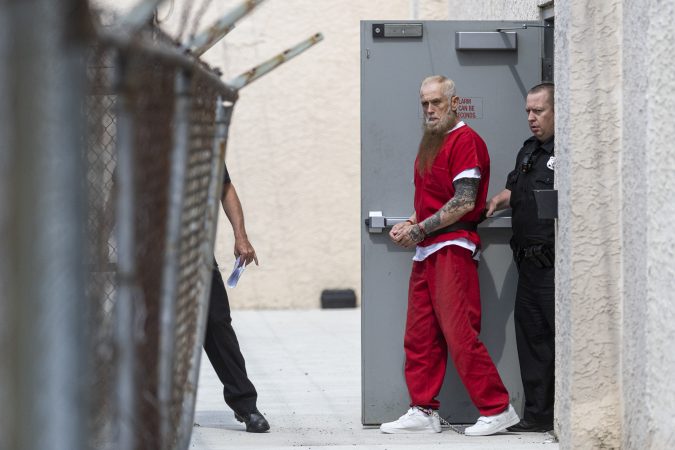
    Police arrested Horsch on June 19 near Independence Mall with drugs, guns, and various other weapons, as well as a phony U.S. Drug Enforcement Administration badge in the name of “Eugene Frederick Steiner.” He remains in federal custody on charges related to those offenses but has not been accused of any crimes in connection to the missing women.

    Horsch, 44, was incarcerated for a previous drug conviction at the time McHale’s family reported her missing in 2016. But his father, Raymond “R.C” Horsch, who died in May 2025, has become another focal point of the investigation.

    Raymond Horsch was an erotic photographer and filmmaker whose career in the porn industry dates to the 1970s. His work depicted graphic sexual violence and simulated death scenes, often involving women in addiction. Some scenes used what appeared to be prop blood. Horsch also penned semi-autobiographical novels that featured sadomasochists and serial killers.

    While the forensic testing has not shown that any real violence took place, investigators continue to examine other evidence found in the home, including unpublished film and writing, law enforcement sources said. One of those items is a handwritten note that describes hurting people and references the serial killer Ted Bundy.

    Shortly after Raymond Horsch’s death last year, a fire led police to search the property and arrest Eugene after they found a drug manufacturing operation and several illegal firearms.

    When police searched the property again last month, they found additional drugs and guns, as well as hidden compartments, vats filled with chemicals, and a 55-gallon drum with connections to water lines in the basement.

    When police arrested Eugene Horsch near Independence Mall in his black BMW, a woman with him showed police a fake ID in Tonzelli’s name. According to an affidavit of probable cause to search the Olney home, the woman told police that she did not know Tonzelli. She said Eugene never harmed her, but he told her he knew the chemicals needed to dissolve human bodies.

    Testing of the pipe excavated from the property this week remains ongoing.

  • Chester man convicted of murder for killing two of his coworkers at Delaware County Linen

    Chester man convicted of murder for killing two of his coworkers at Delaware County Linen

    A Chester man who gunned down two of his coworkers during an armed rampage two years ago was convicted of murder Friday.

    Wilbert Rosado-Ruiz, 63, was also convicted of four counts of attempted murder — three for other coworkers he wounded in the May 2024 shooting, and one for another man he attempted to shoot before his gun jammed.

    Rosado-Ruiz had no reaction as the verdict was handed down by Delaware County Court Judge Kevin Kelly, who presided over the bench trial. Kelly will sentence Rosado-Ruiz in October. A conviction for first-degree murder carries a mandatory penalty of life in prison.

    Leovanny Peña Peña, 30, and Giguenson Peña Peña, 26, were killed by Rosado-Ruiz during the shooting at Delaware County Linen, an industrial laundry facility where he had worked for 10 years. The three other victims were seriously wounded, including Charles Doyle, who said that he suffered severe internal injuries that have left him with limited use of his arms.

    During his trial before Kelly, Rosado-Ruiz testified that he acted in self-defense: A group of his coworkers, including the Peña Peña brothers, cornered him inside the facility and threatened to kill him and his family.

    The brothers, he said, were holding knives as they slowly walked toward him.

    Prosecutors disputed Rosado-Ruiz’s version of events. Evidence from the scene, including surveillance footage and witness accounts, showed Rosado-Ruiz was the aggressor, screaming that he was “tired” of his coworkers during an argument near the facility’s time clock.

    He then pulled out his 9mm handgun and opened fire, according to Nilamarie Valdivieso, the first person Rosado-Ruiz shot that morning.

    In her closing arguments, Assistant District Attorney Sophia Polites said none of the victims were armed, and no weapons were recovered from the scene. She asserted that Rosado-Ruiz went room-to-room, searching for more victims as they fled from the initial gunfire, and at one point paused to reload his gun before continuing to fire.

    Rosado-Ruiz intended to kill more people, according to the prosecutor, and would have done so had his gun not jammed. He fled the scene, and was arrested by a Trainer police officer not far from his home.

  • Excavation begins at Olney house at center of missing women case

    Excavation begins at Olney house at center of missing women case

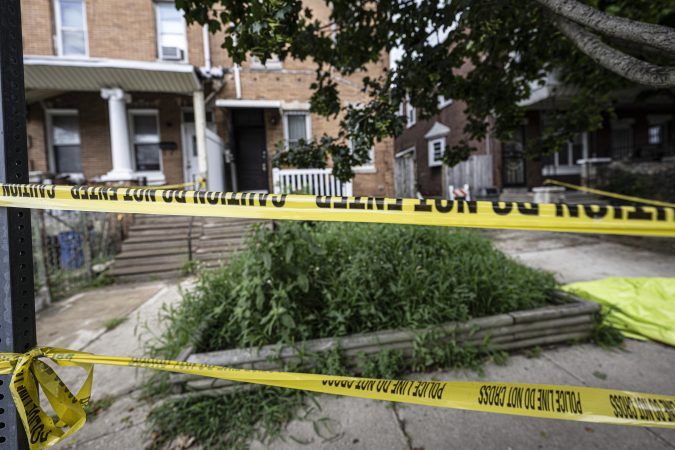
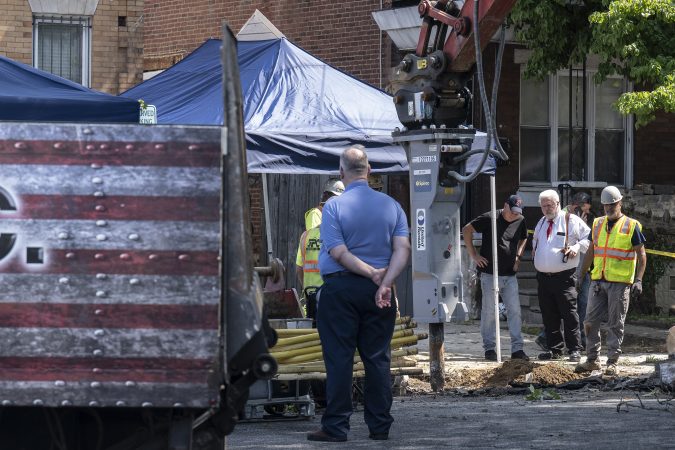
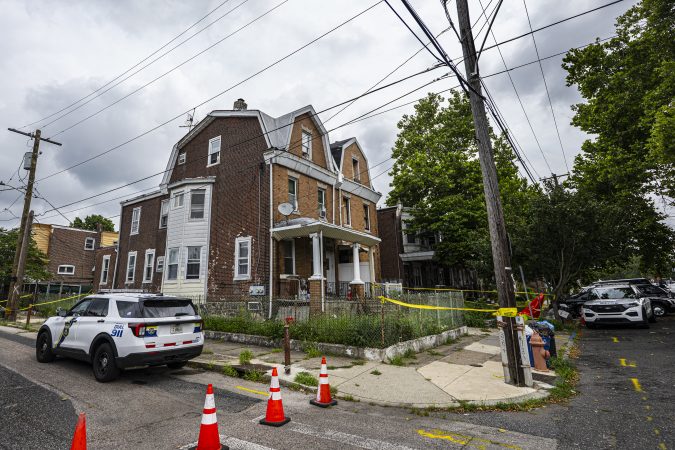
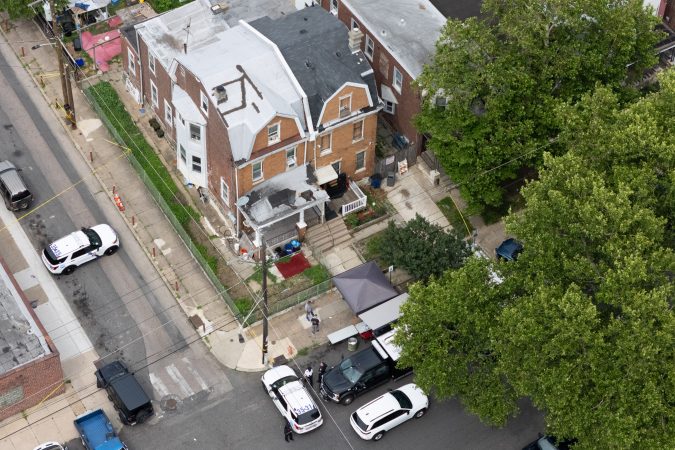
    Breaking concrete, beeping trucks, and the hum of heavy machinery signaled movement Wednesday in the monthlong investigation into two missing persons last seen at a house on the 400 block of West Chew Avenue in Olney.

    With that cacophony of construction sounds, the Philadelphia Police Department and the FBI began a planned excavation at the home of Eugene Albert Horsch, 44, who faces charges of carrying illegal firearms and fake federal law enforcement credentials following a June arrest. Horsch’s dilapidated twin home on West Chew Avenue has since been connected to the disappearances of at least two women in the last 10 years.

    Authorities said they would excavate a portion of Horsch’s property with assistance from the Philadelphia Water Department. Investigators, officials said, were intent on unearthing and examining a pipe under the house as part of a widening probe.

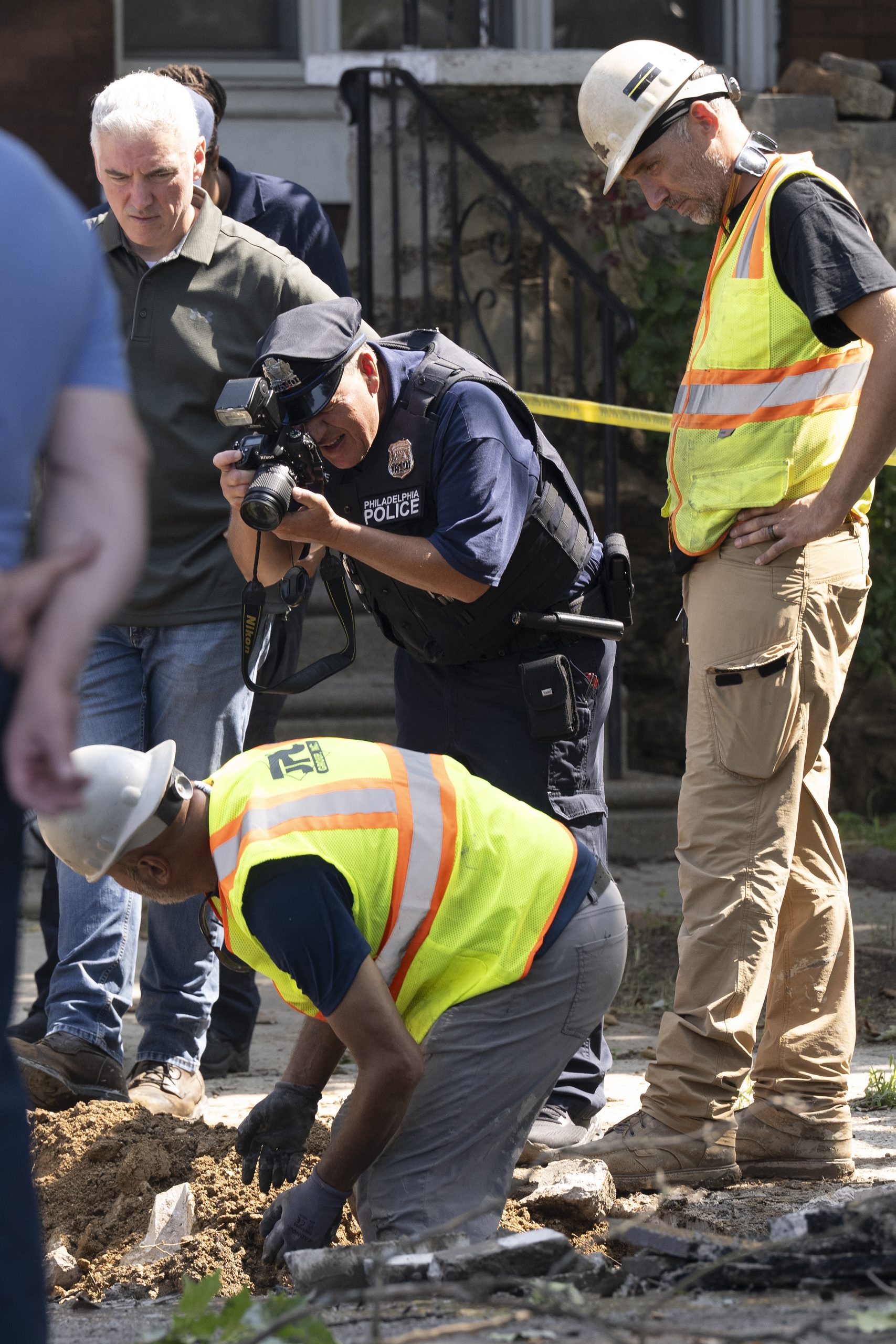
    Workers and police investigators dig and inspect a hole while removing pipes and debris at the entrance to the home of Eugene Albert Horsch on West Chew Avenue.Jose F. Moreno / Staff Photographer

    “The general scope of the dig is to excavate and remove a pipe that will be subsequently examined by FBI and PPD forensics for any evidence that may be present,” Sgt. Eric Gripp, a police department spokesperson, said Monday.

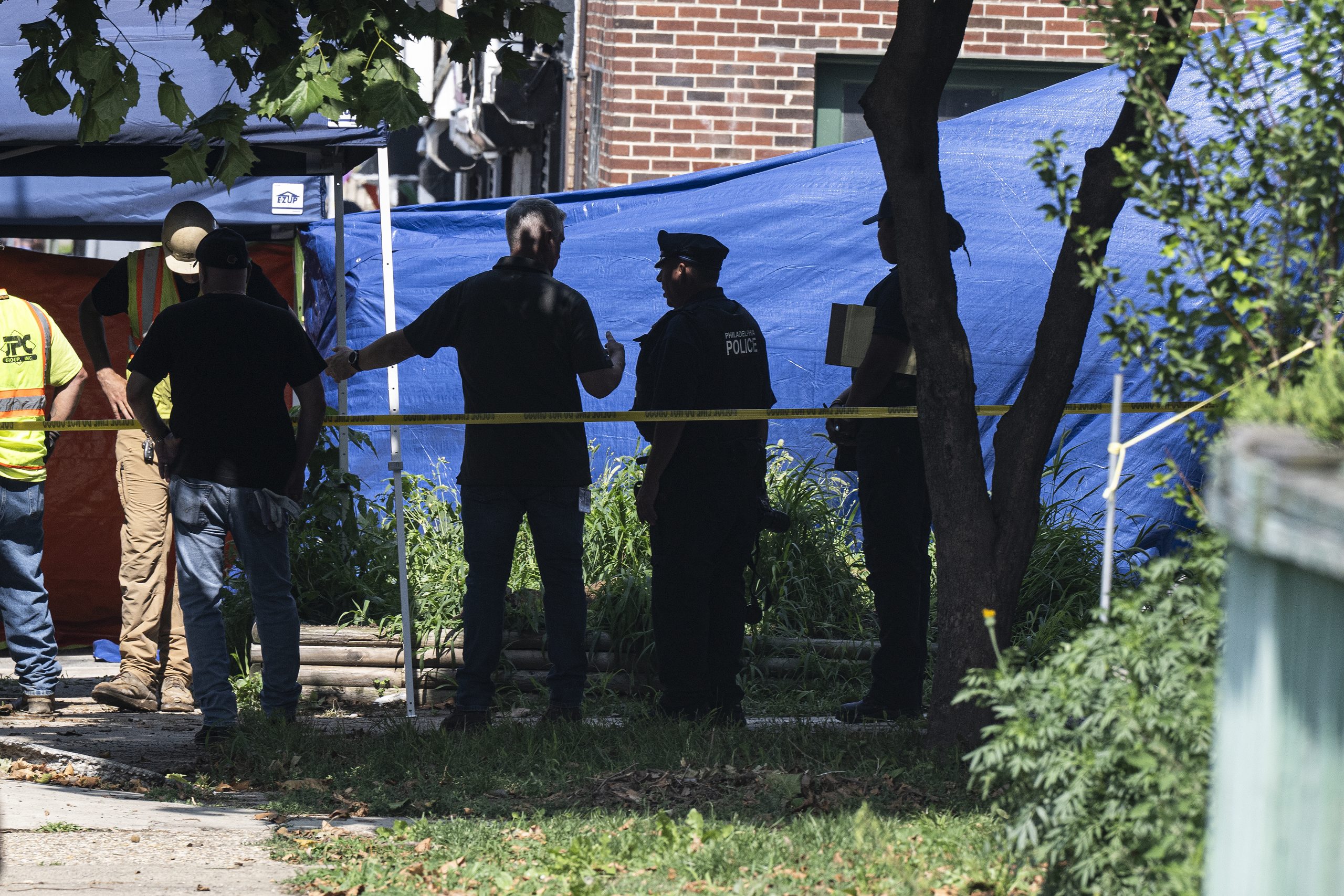
    That effort began in earnest before 9 a.m. Wednesday morning, with crews digging up what was once a small, overgrown garden in front of Horsch’s home, as well as the sidewalk and street in front of the property. Trucks and tents cropped up throughout the morning as investigators walked the block. Periodically, investigators inserted a white pole into the earth, measuring the depth of a hole.

    Later in the morning, workers pulled a piece of pipe from the ground and took it inside the home.

    Wednesday’s excavation was the latest development the case that began June 19, when Horsch was arrested near Independence Mall with drugs, guns, and other weapons, as well as a counterfeit U.S. Drug Enforcement Administration badge. A woman was with him at the time, and she was carrying a fake ID in the name of Blair Tonzelli, who was last seen at Horsch’s home in 2022.

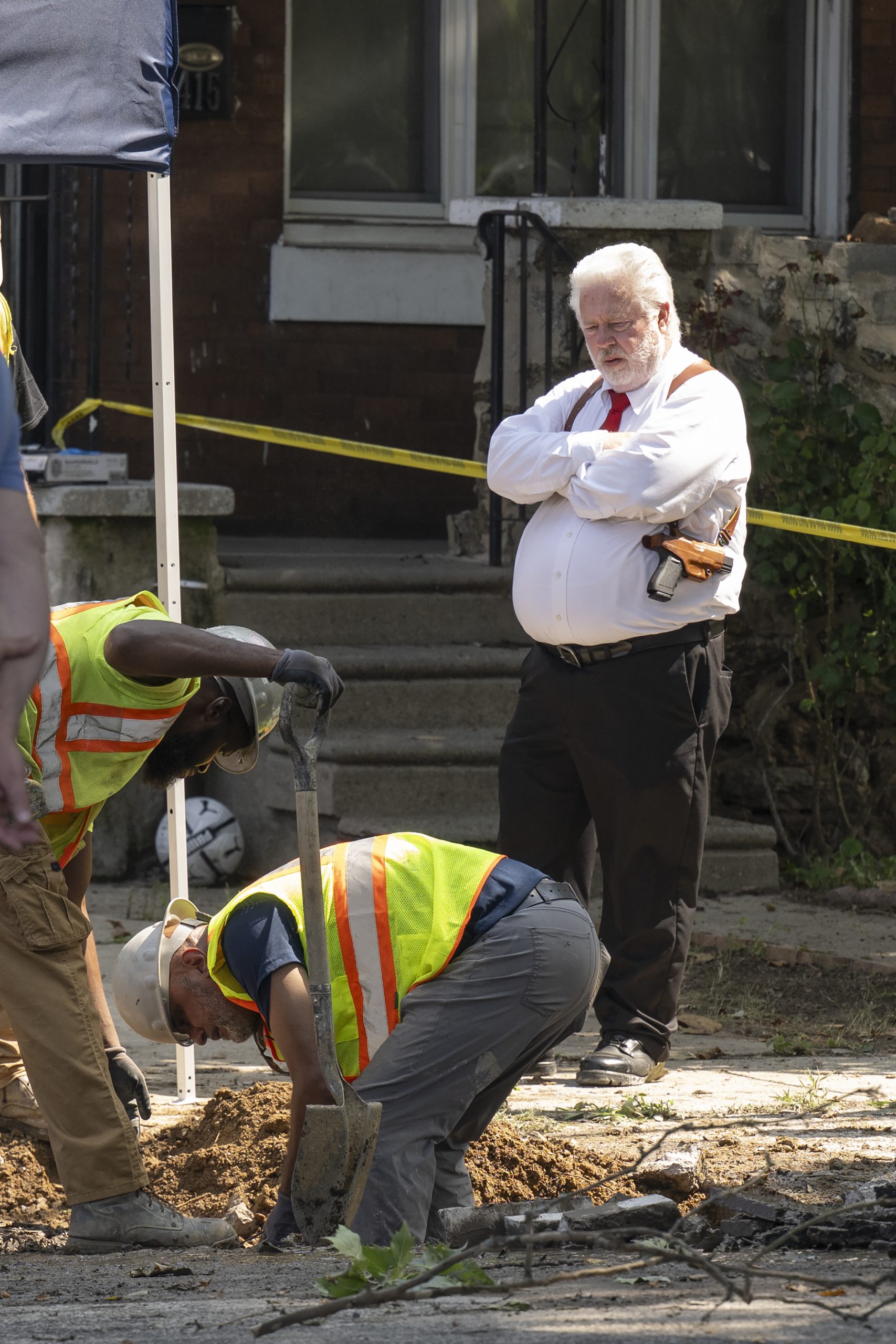
    Workers and police investigators dig and inspect a hole while removing pipes and debris at the entrance to the home of Eugene Albert Horsch.Jose F. Moreno / Staff Photographer

    Since then, investigators have discovered a swath of evidence, authorities have said. Among the items found at the West Chew Avenue home were vats of chemicals, a 55-gallon drum with connections to water lines in the house’s basement, and what police sources called “a significant amount” of blood.

    Forensic testing is continuing, and it has not yet been announced whether the blood is human. Horsch does not currently face charges involving violent crimes.

    Additionally, authorities have found other fake IDs in Tonzelli’s name, as well as the missing woman’s bank card. Investigators have also said that Amy McHale, the ex-wife of Horsch’s late father, Raymond Horsch, was last seen at the Olney home in 2016, according to the woman’s family.

    It was unclear Wednesday if investigators had linked any evidence to the disappearances of Tonzelli or McHale.

    Workers and police investigators dig and inspect a hole while removing pipes and debris at the entrance to the home of Eugene Albert Horsch on Wednesday.Jose F. Moreno / Staff Photographer

    The midweek excavation surprised some neighborhood residents. Cheri Smith lives two blocks from the site of the investigation, but still felt its effects. Smith, who has lived nearby for two decades, said she has felt unsettled since news of the investigation broke last month, and has seen little communication among police, the city, and neighbors.

    “It’s a shame what happened,” Smith said. “It would be nice if they notified us that this work is going to be happening, but the city is going to do what they are going to do.”

    Laurenza Moise said that when she arrived Wednesday to open her braiding business, the corner of Fifth Street and Chew Avenue had already been blocked off. Since the investigation began, she said, she has seen a reduction in business.

    “When they close the street, my business goes down, and there’s no parking for customers,” Moise said. “What can I do other than mind my business?”

  • A Chester man was convicted in his friend’s murder after recruiting him for the botched ambush of their rival

    A Chester man was convicted in his friend’s murder after recruiting him for the botched ambush of their rival

    A Chester man who recruited his friend to carry out the execution of a criminal rival in June 2024, only to have that friend die during the botched ambush, was convicted of first-degree murder by a Delaware County jury.

    Jesse Allen Jr., 20, was charged with the murder of Zaheem Sabree, even though he did not fire the shot that killed him, under the legal theory of transferred intent. The person who pulled the trigger, Tyjohn Walker-Jones, 18, was the target of Allen and Sabree, who were out for revenge after Walker-Jones allegedly killed their friend weeks earlier.

    Text messages presented during Allen’s three-day trial showed that he had begun plotting Walker-Jones’ death immediately after the murder of Sabrie “Breezy” Pierce.

    “Everybody gone pay,” Allen said in the message, displayed in court.

    Surveillance footage from a nearby deli recorded Allen and Sabree walking together down 24th Street on the day of the shooting, then hiding nearby — Allen in shrubbery and Sabree behind a concrete wall. Moments later, Walker-Jones is seen on the video walking through the area and then ducking behind a parked car as the gunfire rang out, prosecutors said.

    Shell casings found at the scene showed that Walker-Jones and Sabree shot at each other multiple times — Sabree with a .45-caliber pistol and Walker-Jones with a 9mm, prosecutors said. Walker-Jones and Allen then fled in opposite directions.

    Sabree was found near that scene, shot in the head. Police took him to Crozer-Chester Medical Center, where he was later pronounced dead.

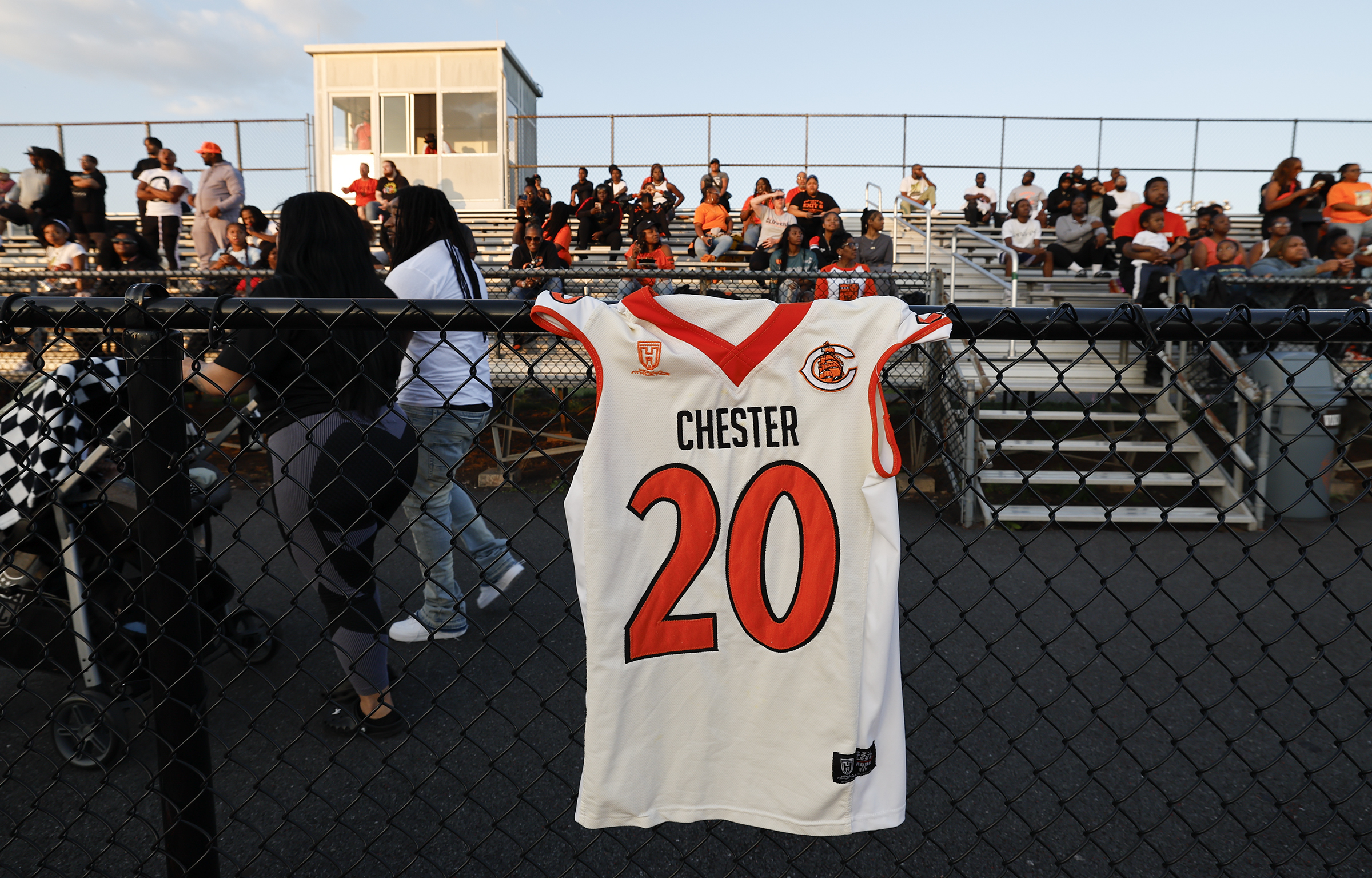
    The jersey of Chester High School football player Zaheem Sabree hangs on the fence while the Chester High School before a game in August 2024. Sabree was gunned down in Chester during the botched ambush of another teen.Yong Kim / Staff Photographer

    Allen’s attorney, Brian Malloy, urged jurors in his closing arguments to acquit his client. The real killer, he said, was Walker-Jones, who, while awaiting trial in Pierce’s murder, was given a “two-for-one deal” by prosecutors.

    During Allen’s trial, Walker-Jones, who was not charged in connection with Sabree’s death, took the stand and admitted to shooting Sabree in the head.

    “He knows he has to play along, say what he has to say, but actions speak louder than words,” Malloy said. “We watched videos of him killing two people, and he’s not sitting at this table, and that’s a crazy thing.”

    Malloy suggested that Walker-Jones was the aggressor, chasing Allen and Sabree as they walked through Chester.

    But Deputy District Attorney Matt Krouse said Allen took deliberate steps to plan the ambush and was directly responsible for Sabree’s death.

    Allen directed Sabree, a star football player at Chester High School and an honors student at STEM Academy, to wear all black and meet him at a deli in Walker-Jones’ neighborhood, which was nowhere near his own, Krouse said. He deliberately left his cell phone at a friend’s house, knowing his movement would be tracked.

    And after the shooting, Allen, in text messages, bristled at the rumor circulating through Chester that he had left his wounded friend to die, saying he had no choice.

    “He knew already on June 30, 2024 that he was guilty of everything he was charged with,” Krouse said. “But just like he ran from his so-called best friend to avoid the consequence of his actions, that’s what he’s trying to do today and this week.”

    Allen is to be sentenced in October. Walker-Jones’ trial in the death of Sabrie Pierce is scheduled to be held later this year.

  • Philadelphia police and FBI to begin excavating Olney house in connection to missing women case

    Philadelphia police and FBI to begin excavating Olney house in connection to missing women case

    The Philadelphia Police Department and the FBI are to begin excavating part of the Olney house that has been at the center of a monthlong investigation into at least two missing persons, law enforcement officials said Monday.

    Sgt. Eric Gripp, a police department spokesperson, confirmed that the Philadelphia Water Department would assist federal and local officials by unearthing a pipe under the property on the 400 block of West Chew Avenue as part of the widening probe.

    “The general scope of the dig is to excavate and remove a pipe that will be subsequently examined by FBI and PPD forensics for any evidence that may be present,” said Gripp, who declined to provide a timetable for the work.

    The excavation is the latest development in a case that has generated widespread interest since last month, when authorities connected the crumbling twin home to the disappearance of at least two women over the last decade.

    Federal prosecutors have charged the owner of the property, Eugene Albert Horsch, 44, with carrying illegal firearms and fake federal law enforcement credentials.

    Police apprehended Horsch on June 19 near Independence Mall with drugs, guns, and various other weapons, as well as a phony U.S. Drug Enforcement Administration badge. A woman who was with him at the time was carrying a fake ID in the name of Blair Tonzelli, a woman struggling with drug addiction who was last seen in 2022 at Horsch’s home.

    The monthlong search of Horsch’s property has turned up an array of evidence, authorities say: hidden compartments, vats filled with chemicals, a 55-gallon drum with connections to water lines in the basement, and what police sources described as “a significant amount” of blood.

    Forensic testing of the evidence found in the home remains ongoing, and police have yet to confirm whether the blood is human. Horsch has not been charged with any violent crimes in the current case.

    Investigators also found Tonzelli’s bank card, other fake IDs in her name, and an unsigned, handwritten letter that appeared to describe hurting people and referenced the serial killer Ted Bundy, according to the affidavit of probable cause to search the home that was obtained by The Inquirer.

    The probe grew more complicated when investigators learned that Amy McHale, the ex-wife of Horsch’s late father, Raymond Horsch, was also last seen at the Olney property in 2016, according to her family.

    And adding to complexity of the circumstances is Raymond Horsch’s unusual career as an erotic filmmaker and writer, whose work fixated on sadomasochist themes, serial killers, and women struggling with drug addiction. He died in August 2025.

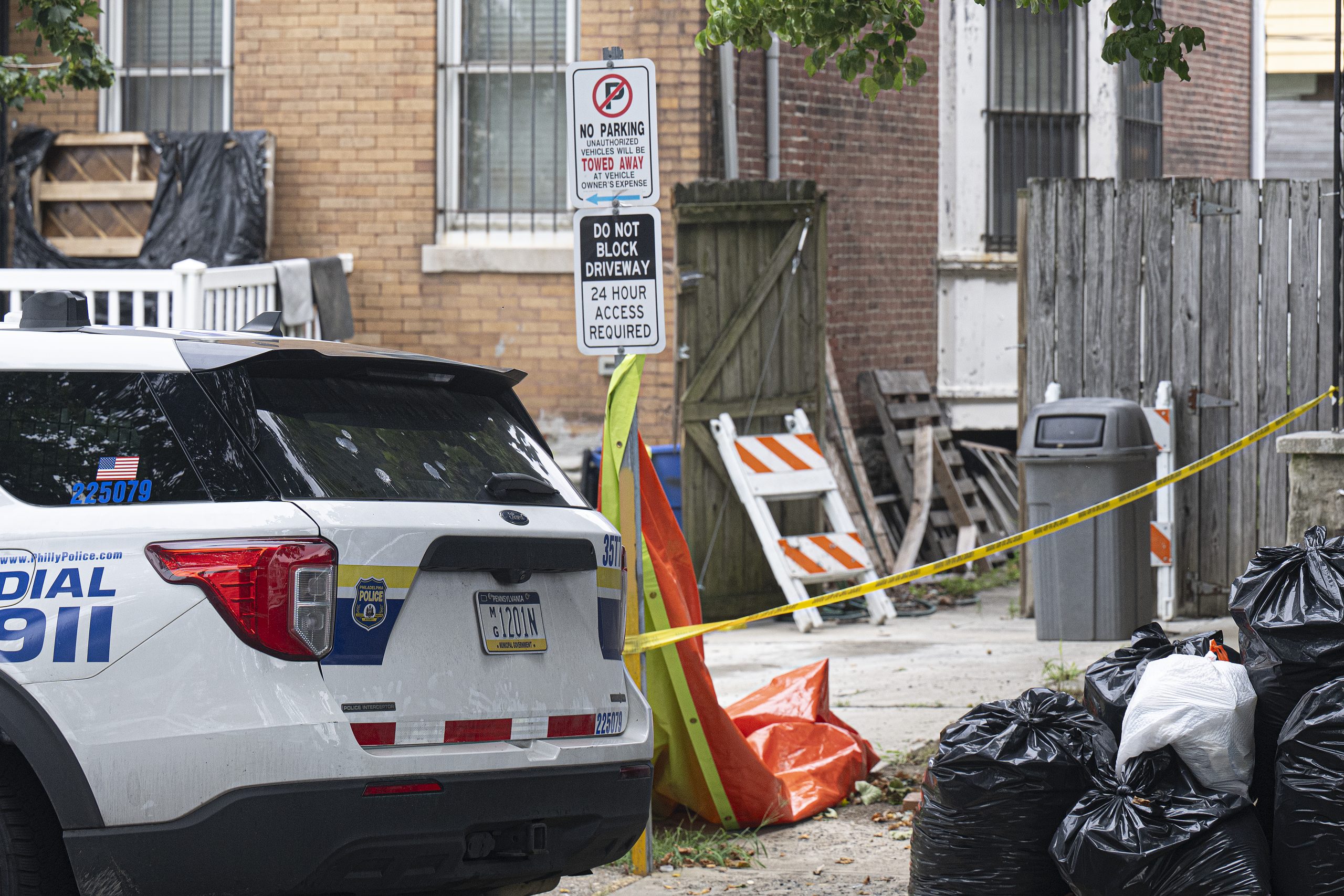
    Police maintain a presence outside the home of Eugene Albert Horsch on West Chew Avenue in the Olney section of Philadelphia Tuesday, July 21, 2026.Jose F. Moreno / Staff Photographer

    It remains unclear if authorities have linked any of the evidence in the house to foul play involving the missing women.

    Jerome Brown, a lawyer for the Horsch family, has denied any connection to McHale’s disappearance, saying that she had struggled with addiction and mental health issues. Eugene Horsch was incarcerated at the time of her 2016 disappearance, according to state prison officials.

    Eugene Horsch has a lengthy criminal background involving multiple drug convictions, including one linked to the discovery of a marijuana-growing operation after a house fire last year. After the latest search, investigators recovered numerous chemicals also suspected of being used in drug production.

    The department did not provide an estimated cost for the dig.

    Questions about the investigation have swelled among neighbors in Olney, as the probe continues in its second month. Two police cruisers have been stationed around the property 24-7 to prevent anyone from tampering with the active crime scene.

    At a crowded community meeting in the basement of an Olney billiards hall this month, 35th District Police Capt. Walter Burks tried to ease anxieties, refuting erroneous reports on social media that falsely claimed police had discovered multiple dead bodies in the property.

    Burks emphasized the house “does not pose a threat to the community” while acknowledging that he could not answer specific questions.

    “I know you all see the cars outside,” he said. “You know it’s something serious. It’s an active crime scene we have to protect.”

  • Eugene Horsch indicted in federal court on firearms, fake credentials charges

    Eugene Horsch indicted in federal court on firearms, fake credentials charges

    Federal prosecutors on Thursday formally indicted Eugene Albert Horsch, the Olney man at the center of a widening investigation into the disappearance of at least two women, on charges that he illegally possessed firearms and fake federal law enforcement credentials.

    The two-count indictment accuses Horsch, 44, of possessing two loaded firearms despite having been convicted of a prior felony, which bars him from having guns. It also alleges that he had “fraudulent identification documents” that appeared to have been issued by the Drug Enforcement Administration and the Federal Bureau of Investigation, but that neither agency had produced.

    The indictment stems from Horsch’s arrest on June 19. On that day, U.S. Park Police officers recovered two loaded firearms — a .38 Special revolver with an obliterated serial number and a Taurus .40-caliber semiautomatic pistol — from beneath a front seat of his black BMW, which was parked in a restricted area near Independence Hall in Center City, according to court records.

    Officers said they also recovered counterfeit DEA credentials from the vehicle. And later, during a search of Horsch’s home in the 400 block of West Chew Avenue, federal and local authorities uncovered fraudulent FBI credentials and a desktop computer that may have been “used to facilitate” the fake documents, according to the indictment.

    Horsch has remained in federal custody since his initial appearance in U.S. District Court last month, after a magistrate judge ordered him detained pending a trial.

    Horsch’s attorney, Jerome Brown, said this week: “We believe Mr Horsch is innocent.”

    The federal case has unfolded alongside a broader investigation that began after Horsch’s arrest. Authorities searching his deteriorating twin home found another firearm, equipment used to grow marijuana, barrels of chemicals, ashes of least one relative, documents connected to two women who have been missing for years, and an unsigned, handwritten letter describing violence and referencing serial killer Ted Bundy, officials have said.

    Investigators have said they have not found human remains at the property, but found a “significant” amount of blood. They have continued examining evidence recovered from the home as they search for any possible links between Horsch and the disappearances of Blair Tonzelli, who was reported missing in 2023, and Amy McHale, his father’s former wife, who was last heard from at the Olney property in 2016.

    Brown previously said he did not believe his client had harmed either woman.

    “I’d be shocked if [police] found any harm related to those missing persons at that location,” Brown said after Horsch’s detention hearing.

    Staff writer Ryan W. Briggs contributed to this article.

  • A Chester couple will face a county judge on murder charges in the death of their 2-year-old son

    A Chester couple will face a county judge on murder charges in the death of their 2-year-old son

    Cynthia Robinson and Frank Walton Sr. won back custody of their son, Frank Jr., in May 2025, Delaware County prosecutors said Tuesday.

    Six months later, the 2-year-old was dead, and the bruises and cuts that covered his young body told the story of the abuse he had been dealt in the weeks leading up to his killing, according to First Assistant District Attorney Kristin Kemp.

    Robinson, 37, and Walton, 57, were held for trial on charges of murder, conspiracy, and related crimes after an hours-long preliminary hearing before District Judge Dawn L. Vann.

    An autopsy revealed that Frank died in November from a laceration to his liver that caused significant internal bleeding, as well as bleeding in his brain that a forensic examiner said Tuesday was caused by either blunt trauma or severely shaking the boy.

    Those injuries, Kemp said, were caused by Robinson, who has a documented history of abusing all four of her children, and who had been seen beating and striking Frank whenever he cried at the couple’s house in Chester.

    Kemp said though Robinson dealt the fatal injuries, Walton was just as culpable — he waited to call 911 until the boy had died, despite seeing his condition worsen in the hours after the beating.

    Walton also agreed to lie to police and attempt to blame his son’s injuries on his then-3-year-old daughter, whom Robinson claimed had pushed the boy down the stairs, Kemp said. The girl, according to testimony Tuesday, had spent the entire day with Walton and had not been home.

    “They were afraid of law enforcement and investigators seeing that every aspect of that child had been abused,” Kemp said. “Only one thing could’ve happened with that baby, and that was his death.”

    Robinson’s attorney, Michael Dugan, said that there was no evidence his client had intended to kill her son.

    “At the end of the day, who calls 911? Mom. Who does CPR? Mom,” Dugan said. “I don’t think either one of these parents knew this child was dying, and when they knew his extreme condition, they called for help.”

    Walton’s attorney, Wana Saadzoi, asserted that the charges against him should be dropped — he had never been seen abusing his son, and the mortal injuries took place when he was out working.

    “He couldn’t have prevented it from happening if he wasn’t present,” she said. “This was a tragic failure that he was unable to appreciate the seriousness of his injuries.”

    But Kemp doubted that theory of the case, saying Walton was well aware of Robinson’s history of child abuse and should have done more to protect the toddler.

    “As a parent, you don’t get to bury your head in the sand,” she said. “You have an affirmative duty to intervene and save your child.”

    Frank was born prematurely, according to the affidavit of probable cause for his parents’ arrests, and tested positive for cocaine and fentanyl. He was placed in foster care as a result, but was returned to his parents in May 2025.

    Robinson’s half brother, Jason Weldon, testified Tuesday that he saw her carry Frank down the stairs by his T-shirt and drop him onto his back from about waist height hours before the boy died.

    He said he saw Robinson slap Frank and forcibly cover his mouth when he cried, and heard her say she was going to “beat this little [expletive].”

    Weldon testified that he threatened to report Robinson to county officials, but that she begged him not to because she did not want the boy to be taken away again.

    He said he told Walton about the abuse and that he needed to protect his kids.

    “If I would’ve known [Frank Jr. would be killed], I would’ve done something about it,” Weldon said.

    Weldon said he woke up on the night Frank died to see Robinson frantically performing CPR on the boy. And he was in the room when she told police that her daughter had pushed Frank down the stairs, he said, but he “didn’t think it went down that way.”

    An autopsy revealed that the injuries the boy sustained, especially the laceration to his liver, required force only an adult could apply, according to testimony Tuesday.

  • Your guide to South Jersey’s mini golf courses

    Mini golf is an underrated nostalgic summer staple. The rainbow array of golf balls, the sun-bleached artificial turf, the tilting windmills, and fiberglass volcanoes will transport you right back to childhood, melting ice cream cones and all.

    It’s easy to find Putt-Putt courses dotted up and down the boardwalks of the Jersey Shore, but South Jersey has its fair share of miniature fareways, too. Many offer more than just mini golf, with homemade ice cream, arcade games, amusement park rides, and driving ranges for adults. Two courses are indoors, for big fun even when the sun isn’t shining.

    Tee up a great summer on these miniature links:

    Big Swing Golf Center

    Open year-round, weather permitting

    Big Swing boasts not one but two mini golf courses. (For the second, “Go left at the volcano,” the attendant tells me.) Both are light on props and heavy on banks, curves, hills, elevation gains, and drops, making for some genuinely tricky shots.

    Best hole: No. 8 on the waterfall course starts at the top of a hill, with three options to get to the bottom, including two mystery chutes — one that could land a hole in one, and another that spits out on a separate landing.

    Other amenities: Golf simulator, golf lessons, driving range

    Price: $7 per adult for both courses, $6 for children 12 and under

    📍312 Salina Rd., Sewell, N.J. 08080 📞 856-553-6723, 🌐 bigswinggolfcenter.com

    Monster Mini Golf

    Inside Monster Mini Golf in Cherry Hill, N.J.

    Year-round

    Don’t let a rainy day (or a brutally hot one) stop you from hitting the links. Monster Mini Golf offers 18 holes of spooky-themed, indoor, glow-in-the-dark golf, with locations in Cherry Hill and Turnersville. Black light illuminates the dark interior, which is decked out with weird Jersey scenes rendered in glowing paint, and monstrous animatronics that come to life as you move around the course.

    Best hole: Tie between hole No. 8, which is presided over by an enormous, glowing talking skull and No. 9, where players can spin a wheel to add a random, extra challenge to their turn, like playing with one arm behind their back or with their eyes closed.

    Other amenities: Arcade, mini bowling alley, laser maze, laser tag (at Turnersville location only)

    Price: $10-14 for mini golf

    📍2040 Springdale Rd., Suite 300, Cherry Hill, N.J. 08003, 📞 856-393-5500, 🌐 monsterminigolf.com/locations/us/nj/cherry-hill

    📍 1 Shoppers Lane, Blackwood, N.J. 08012, 📞 856-302-5240, 🌐 monsterminigolf.com/locations/us/nj/turnersville

    Pleasant Valley Miniature Golf

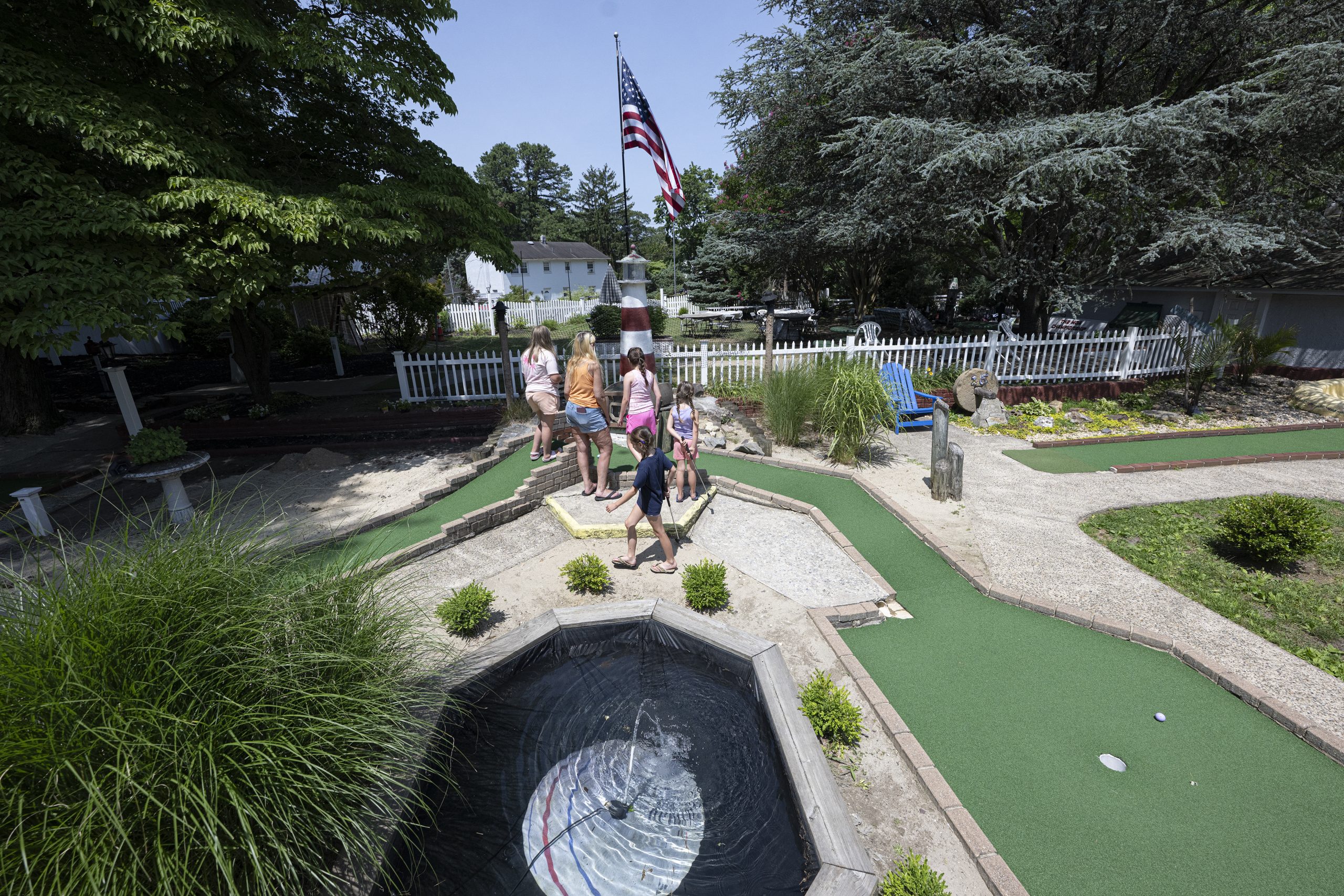
    Players play rounds at Pleasant Valley Miniature Golf on Route 73 in Voorhees on June 30, 2026.

    April 1 to Halloween

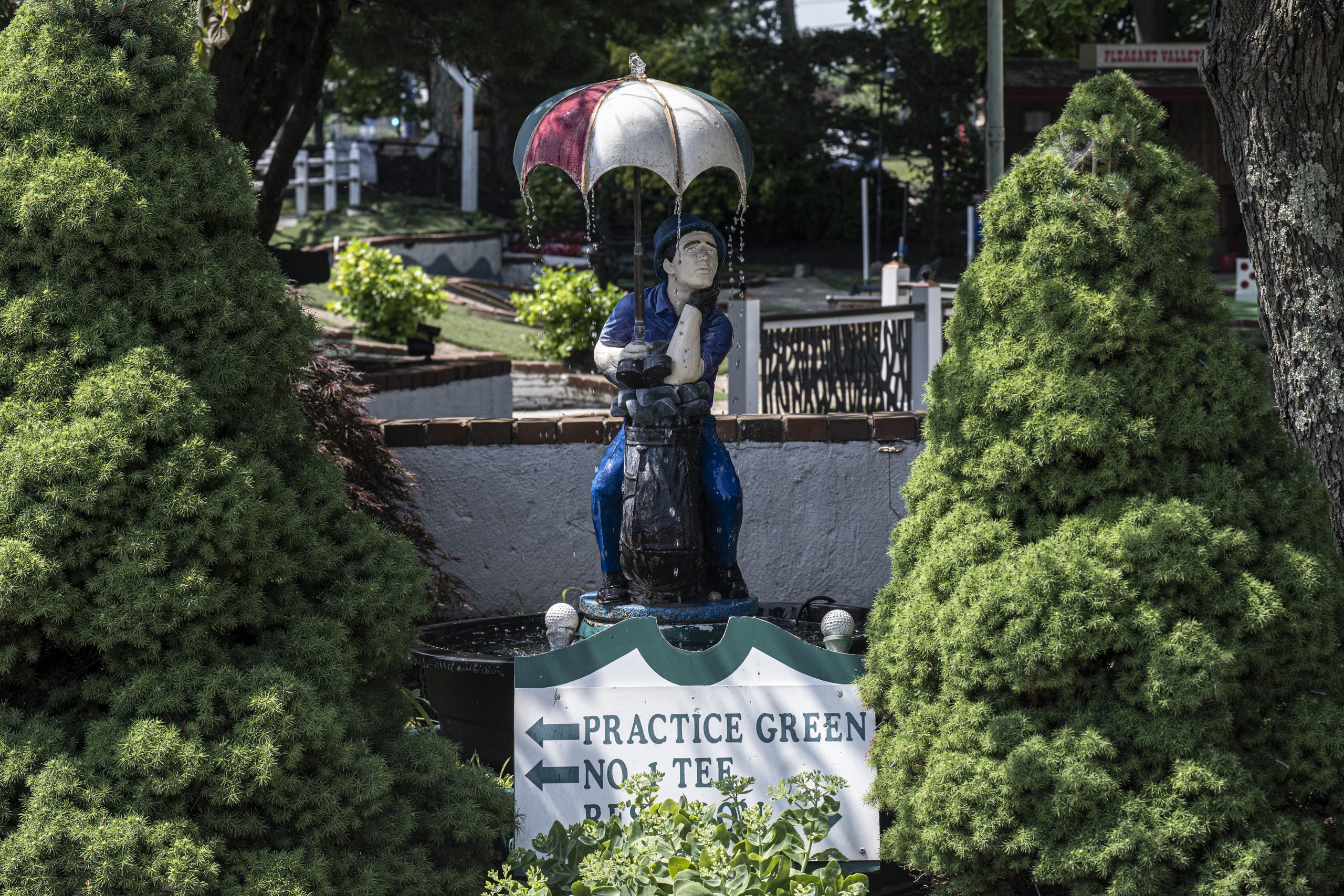
    Opened in 1972 and now run by the son of the original owner, Pleasant Valley is a throwback mini golf course with all the wacky obstacles you could dream of. The fiberglass Liberty Bell and giant sombrero, built by the owner, have been there since the 1970s. Guest-favorite hole No. 12 features three gophers driving classic cars in circles. Conveniently located on the way to Atlantic City, it’s got a classic charm you won’t find at every course.

    Best hole: “The sombrero,” owner Brian Whelan says. “It’s very difficult, very easy to have the ball fly out of the sombrero. Big risk, big reward there.”

    Other amenities: Ice cream and water ice

    Price: Before 6 p.m., $10 for adults, $9 for kids 10 and under and seniors; after 6 p.m., $12.50 for adults, $10 for kids and seniors

    📍 93 Rt. 73, Voorhees, N.J. 08043, 📞 609-314-1214, 🌐 pvminigolf.com

    Voorhees Golf Land

    March 1 to the weekend after Thanksgiving

    Previously known as the Golf Farm, Voorhees Golf Land reopened last year under new ownership after a yearlong closure. In addition to 18 holes of mini golf, Golf Land sports the region’s only pitch-and-putt course. That’s 18 holes of golf that are just 20 to 50 yards long, “not quite the size of a par three,” owner Diana Hennefer says, so it’s a great option for people who don’t have the time or mobility to play a full round of golf, or who just want to practice their short game.

    Best hole: No. 18 has a wishing well in the middle. “It’s probably the trickiest one,” Hennefer says. “It’s also the prettiest, most picturesque one.”

    Other amenities: Pitch-and-putt course

    Price: Mini golf: $8 for adults, $6 for kids; pitch and putt: $15 for adults, $10 for kids

    📍 801 Haddonfield Berlin Rd., Voorhees, N.J. 08043, 📞 856-630-0977, 🌐 voorheesgolfland.com

    Serene Custard and Miniature Golf

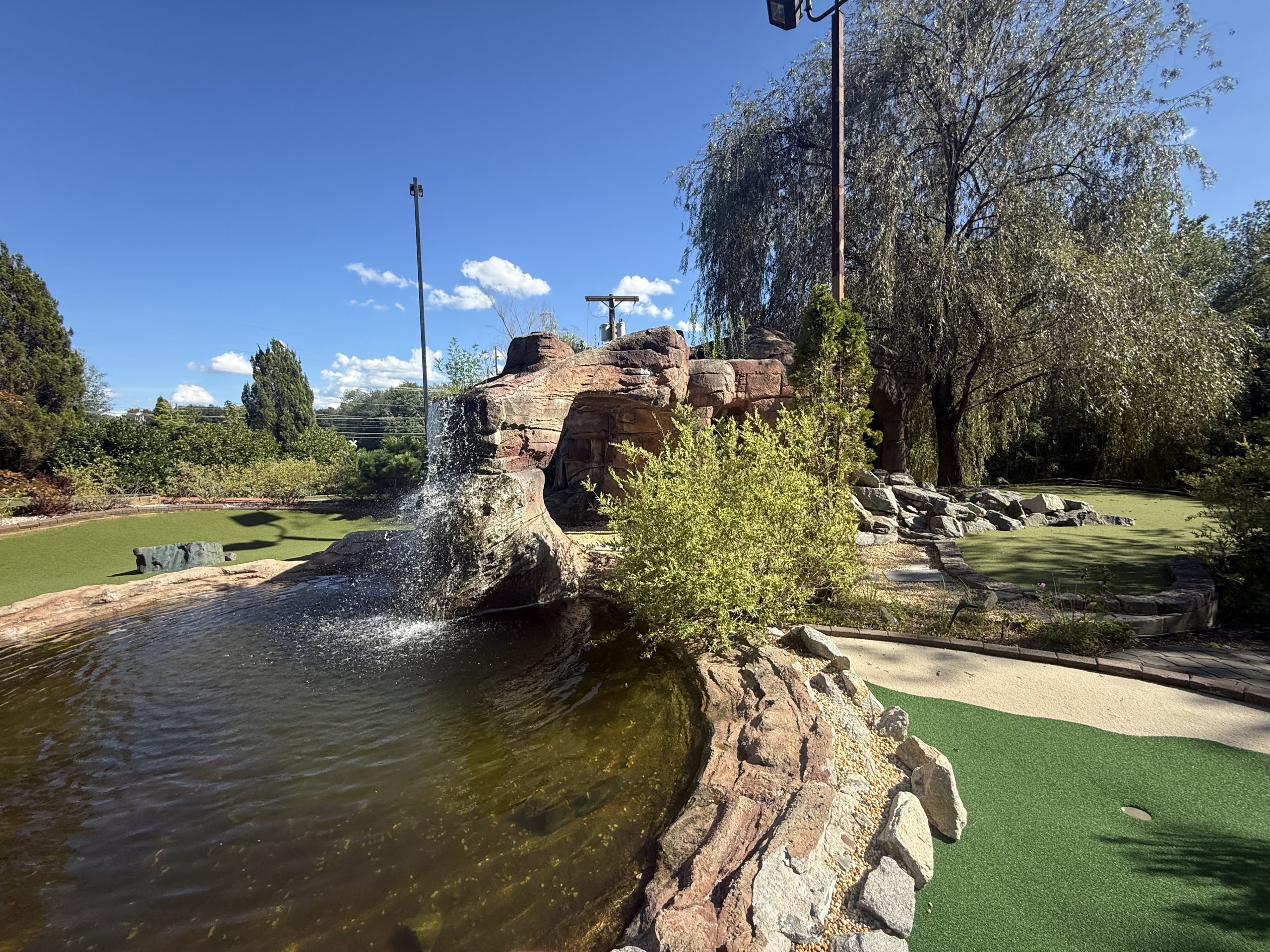
    A water feature at Serene Custard and Miniature Golf in Vineland, N.J.Courtesy Ari Dendrinos

    Come for the challenging, hilly course, and stay for the vintage custard stand serving homemade ice cream. Built in 1959, Serene Custard still boasts its original mid-century signage and is celebrating its 67th season this year. The 18-hole mini golf course is a newer addition, featuring tough terrains and lush landscaping. “You sort of don’t even feel like you’re in South Jersey when you’re on the course,” owner Ari Dendrinos says.

    Best hole: No. 9 takes place entirely within a huge man-made cave.

    Other amenities: Custard stand serving ice cream, water ice, and some savory snacks

    Price: $6 for children, $8 for adults

    📍 2336 N. West Blvd, Vineland, N.J. 08360, 📞 856-692-1104, 🌐 serenecustardandgolf.com

    The Funplex Mount Laurel

    Spring break to mid-October

    The Funplex at Mount Laurel has way more than just mini golf. There’s a waterpark, indoor and outdoor rides, a bowling alley, and more. But don’t sleep on the two mini golf courses, Adventure Cave and Lost Lagoon, both of which offer 18 holes of obstacles, including a few multilevel designs.

    Best hole: At No. 19, if you get a hole in one, your next game is free.

    Other amenities: Waterpark, indoor and outdoor rides, bowling, arcade games

    Price: $42 on weekdays and $49 on weekends for access to all attractions; $46 and $54 when purchasing at the gate

    📍 3320-24 NJ-38, Mount Laurel, N.J. 08054, 📞 856-273-9666, 🌐 thefunplex.com

    Jersey Devil Golf & Fun Center

    May to October, honor system year-round

    The Jersey Devil wants to ensure you never have to miss a mini golf fix. Despite the posted hours, this course operates on the honor system, making putters and golf balls available every day, all year round, so you can play even when no one is working. Just drop $5 in the box at the first hole to enjoy putting on these long greens, which provide a challenge to kids and adults alike.

    Best hole: Hole No. 12 features a sharp bend and splits in two before converging.

    Other amenities: Driving range, picnic area with cornhole, and firepits

    Price: $8 for adults, $7 for 6- to 16-year-olds, free for 5 and under

    📍 276 Rte 73 S, Hammonton, N.J. 08037, 📞 609-704-9007, 🌐 jerseydevilgolf.com

    Pleasant Valley Miniature Golf is shown on Route 73 in Voorhees, N.J. Tuesday, June 30, 2026.Jose F. Moreno / Staff Photographer