A 22-year-old man was in critical condition after being shot in a South Philadelphia home Tuesday night.
Right before 10 p.m., police arrived at the 1900 block of Tasker Street following the report of a person being shot.
Multiple fired cartridge casings were found outside the home, police said. Inside, the man was in the living room with a gunshot wound to the chest.
Police believe the man was on the second-floor bedroom when he was struck. A motive remains unknown, and no arrests have been made.
Officers took him to Penn Presbyterian Medical Center, where he was listed in critical condition.
Through Aug. 4, Philadelphia had seen 494 shooting incidents, a 7% decrease compared with the same period last year, according to police crime statistics.
Anyone with information can contact the Philadelphia Police Department by calling the police tip line at 215-686-TIPS (8477). Tipsters can remain anonymous.
The school year started Wednesday for the 500-plus new Philadelphia School District teachers and counselors who will welcome 113,000 students back to school on Aug. 24.
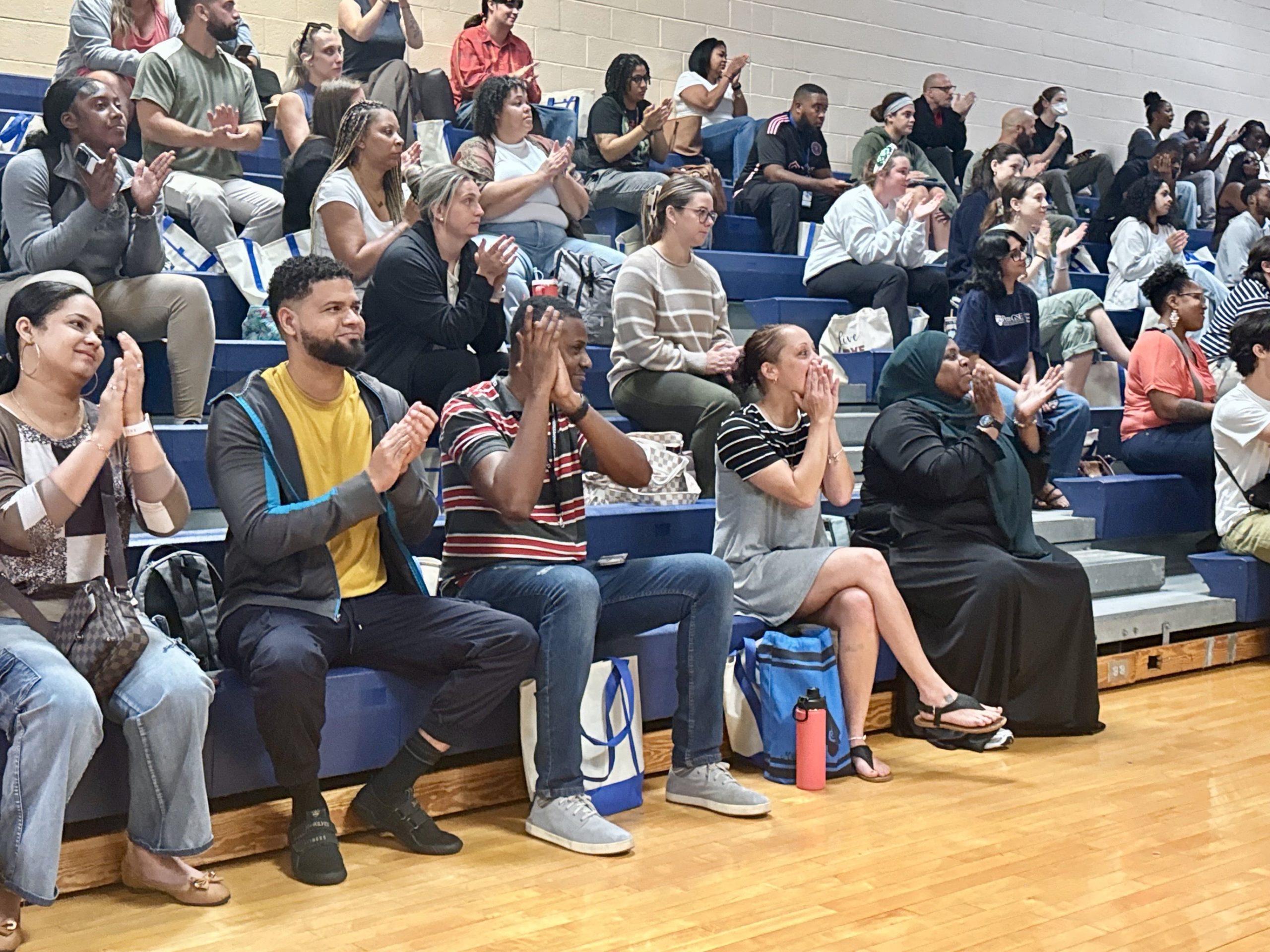
Inside the cavernous gymnasium at School of the Future in Parkside, Superintendent Tony B. Watlington Sr. pumped up the 575 new hires, telling them he was honored they chose Philadelphia.
District officials said that they have 94% of teacher jobs filled system-wide, with just under three weeks to go before the beginning of the school year. The district has 100% of principal jobs filled.
The lowest “fill rate” for school-based jobs across the system is 77%, for building engineers, followed by special-education assistants at 79%.
Some of those 340 teachers, counselors, and other school-based workers whose jobs were cut have been restored to the positions they were initially directed to leave; others have taken new jobs within or outside the system, or are “over-appointments” who do not yet have permanent Philadelphia assignments.
New teachers and counselors applaud a performer at the Philadelphia School District’s 2026 new hire orientation at School of the Future in Parkside.Kristen A. Graham / Staff
‘They saw potential’
Debora Carrera told the new teachers she would not have risen to become Mayor Cherelle L. Parker’s chief education officer if not for people like them.
Carrera, the daughter of parents who did not finish elementary school, grew up as one of six kids in a single-parent family. Sometimes she was hungry. Sometimes she was unable to bathe.
But “there were teachers who didn’t use those things as obstacles or barriers,” Carrera said. “But you know what they saw? They saw talent, and they saw potential in me.”
Research shows that the top factor influencing a child’s academic progress is having a well-supported, stable teacher. And the first few years of educators’ careers are crucial: Nearly half of all teachers leave the profession within the first five years.
Don’t give up, Carrera said.
“Being a teacher is the most amazing incredible profession on the planet — don’t let anyone ever tell you differently,” she said. “Are you going to feel like you’re great every day? No? But guess what: Stick with it.”
After the pep talk, Kwaku Ansah was charged up.
Ansah, who will teach students with disabilities at Philadelphia Military Academy, a small district high school in North Philadelphia, has a decade of teaching in his native Ghana under his belt. He knows there will be tough days in Philly classrooms, Ansah said.
The U.S. Attorney for the District of Columbia — a fierce defender and decades-long friend — openly refuted Trump’s claims of vandalism regarding one of his treasured D.C. construction projects, admitting in court filings that damage to the Lincoln Memorial Reflecting Pool was due to shoddy workmanship.
The moment comes as Trump is struggling to convince Americans to believe what he’s telling them on the economy, his agenda and his war on Iran ahead of pivotal midterm elections in the fall — and reveals the inherent challenges for his team in delivering hard truths he doesn’t want to hear. Trump has historically engaged in exaggeration, but this was a moment in which he wanted a U.S. citizen, Olympic canoeist David Hearn, to be indicted, tried, and possibly imprisoned for the act of touching a chunk of sealant in the already damaged pool.
The White House said that Trump was not aware ahead of time that Pirro’s office would drop the charges.
Trump says he told Pirro he was “not happy” about her decision, saying a video backed him up even though it’s not clear from the footage shot at a distance that any property destruction occurred. “Well I just think she was totally wrong,” Trump told reporters on Tuesday night. “And everybody saw the vandalism.”
By publicly rebuking Pirro, Trump sent a message to other administration officials that he is not to be contradicted, regardless of what the facts show.
“He just blows it up like a keg of dynamite — it’s a form of intimidating employees to be in group-think,” said Rice University professor Douglas Brinkley, a presidential historian. “‘If you work for me, you triple down.’ Never disagree with the boss, even in a small fractional way.”
Some Republicans blame Trump’s choices on ‘bad advice’ from staff
Trump has faced withering criticism for launching a war with Iran without fully laying out the rationale for the public or considering that country’s ability to withstand intense bombing. Trump snubbed a housing bill to address the affordability problems that voters say are their biggest concern, letting it become law without his signature.
Some Republican lawmakers have suggested that Trump is being sheltered from facts or chalk up his choices to poor staff work. During Trump’s second term, Republican senators including Ted Cruz of Texas and Thom Tillis of North Carolina have said publicly the president was receiving “bad advice,” a subtle critique of the president that shifts blame onto the aides who are supposed to be providing him with credible information.
The latest blow-up “reflects a president who is struggling to shape the narrative as his national approval ratings remain extremely low,” said Julian Zelizer, a political history professor at Princeton University. “The more controversy that he faces — over Iran, the Epstein files, inflation, and more — the less control he has and the stronger the chances that he will be forced to confront reality.”
The president continues to dwell on the 2020 election that he falsely claims to have won. He likes to boast that America is booming with an unverifiable $19.2 trillion in investments from foreign countries, even as economic growth has been meager over the prior three months. He posted a Jesus-like picture of himself on social media and said after a backlash that he thought it depicted him as a medical doctor.
The White House did not respond to questions about how aides brief the president and whether officials feel comfortable providing information that could contradict his public statements.
Pirro had been faithful to Trump’s wishes, until now
Until now, Pirro, a former Westchester County judge and TV show host, has largely been faithful to Trump’s wishes. Her office sent a subpoena in January to the Federal Reserve regarding the congressional testimony by the central bank’s then-chair, Jerome Powell, about a $2.5 billion renovation of its headquarters.
Pirro defended her decision to threaten Powell, who said the threat of a criminal indictment was really a pretext to pressure the Fed into slashing its benchmark interest rates in accordance with Trump’s wishes.
“This office makes decisions based on the merits, nothing more and nothing less,” Pirro posted on X. “We agree with the chairman of the Federal Reserve that no one is above the law, and that is why we expect his full cooperation.”
Her actions temporarily slowed efforts in the Senate to confirm Kevin Warsh as the next Fed chair. The Justice Department dropped the probe in April, roughly a month after a government prosecutor said in a closed-door court hearing that the government hadn’t found any evidence of a crime.
On the reflecting pool, Pirro pursued the investigation despite what defense lawyers say was abundant evidence from the outset that the damage at the pool was the result of preexisting problems that had nothing to do with Hearn. A new court filing from Hearn’s team disputes the Justice Department’s contention that it only recently learned its case was flawed and urges a judge to not only dismiss it but to foreclose the possibility of ever resurrecting it.
“From day one, the case against Mr. Hearn was motivated by political considerations and devoid of adequate factual support,” defense lawyers wrote. “Those political pressures have not dissipated in the mere four weeks since the government saw fit to obtain the indictment.”
Acting Attorney General Todd Blanche declined to discuss internal Justice Department conversations related to the case.
He deflected on the question of whether or not he supported the decision, acknowledging on one hand that Trump has “every right to be extraordinarily frustrated with damage done to our national monuments in this city and elsewhere” while simultaneously praising Pirro for what he asserted was “an unprecedented effort” to improve safety in the nation’s capital.
“When you look at the D.C. U.S. Attorney’s body of work over the past year and a half and where we are in this city compared to where we were, they are doing a phenomenal job,” Blanche said. “Now does that mean that every case goes exactly the way that President Trump wants or I want or U.S. Attorney Pirro wants? Of course not, it doesn’t.”
Pirro blamed others for giving Trump bad advice
What makes the reflecting pool incident different was that the administration contradicted claims of property damage made repeatedly by the president.
On Friday, the government moved to dismiss the criminal case and said that any damage to the pool was caused by the bungled work of the contractor and “the rush to complete the project prior to events associated with the America 250 celebration in the weeks surrounding Independence Day 2026.”
Interior Secretary Doug Burgum has supported Trump’s claims that vandals damaged the pool. That suggests that the conflict around this issue could continue to simmer.
While Trump and many of his supporters are able to exist within their own information bubble, the administration had basically declared in court that the president was wrong. That was different from a judicial ruling or news report fact-checking him, said Kathleen Hall Jamieson, a professor of communication at the University of Pennsylvania.
“It’s difficult to discredit that by saying these are anti-Trump forces,” she said.
Two New Jersey municipal water systems were targeted in a cyberattack that affected multiple local water agencies across the U.S. last week.
The FBI and the Environmental Protection Agency issued a public warning last Thursday to all critical infrastructure operators that hackers are targeting vulnerable internet-connected control systems responsible for delivering drinking water. At least seven states, including New Jersey, Georgia, Minnesota, Michigan, and Wisconsin, have reported cyber incidents to the FBI since July 27.
The two New Jersey municipal water systems targeted in the cyberattack have not been publicly disclosed.
“Both systems have since been secured with strengthened access controls,” said Christopher Thoresen, spokesperson for the New Jersey Cybersecurity and Communications Integration Cell (NJCCIC), part of the New Jersey Department of Homeland Security. “The NJCCIC continues working with these utilities and with water systems statewide to reduce the risk of similar incidents going forward.”
A water tower is seen Thursday, July 30, 2026, in Plymouth, Minn. A cyberattack targeted the operating technology at over 30 water systems in Minnesota, including Plymouth’s, earlier this week, state officials said. (AP Photo/Ellen Schmidt)Ellen Schmidt
Three state officials who were briefed on the cyberattack investigation told the New York Times last week that the methods used to exploit the water systems and the lack of a ransom demand had led some analysts to “tentatively conclude” that the cyberattack could be traced back to Iran, amid the U.S.-Iran war. However, federal investigators have not publicly linked Iran to the cyberattacks.
Hackers accessed the water systems by exploiting small internet-connected devices, called programmable logic controllers (PLCs), that are used to remotely monitor and control aspects of industrial equipment, according to the NJCCIC.
In July’s attack, hackers targeted logic controllers in municipal water systems that control the pumps and valves used to deliver drinking water. After accessing these devices, hackers changed IP addresses and set new passwords, locking water agencies out of remote monitoring capabilities.
In New Jersey’s incidents, the municipal water agencies sent out staff to operate the systems manually, leading to no disruption to service or access to drinking water, according to the NJCCIC.
A water tower in Flint, Mich., Aug. 20, 2020. Michigan and Minnesota are among at least seven states coping with cyberattacks aimed at disrupting water systems nationwide. (Erin Kirkland/The New York Times)ERIN KIRKLAND
Cyberattacks were also reported in Minnesota, where 30 water-system facilities were targeted, and in Michigan, where nine were attacked. Similar to New Jersey, state officials said at no point during the attacks was drinking water unsafe.
To protect from future cyberattacks, the FBI is advising all critical infrastructure operators to remove direct internet connections from PLCs through secure firewalls, stronger passwords, and more secure authorized communication.
In July’s cyberattack, hackers exploited the MicroLogix 1100 and 1400 series of Rockwell Automation/Allen-Bradley PLCs, but the FBI warned that other branded devices can be vulnerable as well.
A Northwest Philadelphia woman who fatally shot her estranged husband and staged his death as a suicide pleaded guilty Wednesday to murder and related crimes.
Investigators said Baxter shot and killed her husband, a longtime SEPTA employee, in the bedroom of her home before dragging his body down the stairs and staging his body between two cars in a nearby driveway.
Police found Jordan Baxter there around 7 a.m., covered in blood. He had been shot through the back of the head, they said.
While investigators initially believed Baxter’s death was a suicide because he was found with a 9mm pistol in his hand, they soon questioned the nature of the crime after finding irregularities in statements made by Danielle Baxter.
Assistant District Attorney Ashley Toczylowski of the homicide unit outlined those details during Baxter’s plea hearing before Common Pleas Court Judge J. Scott O’Keefe.
It was Danielle Baxter who called police to report her husband’s death, Toczylowski said. She told investigators she came across her husband’s body while she was taking out the trash that morning at her West Bells Mill Road home.
But investigators noted that Baxter was breathing heavily on the call and was unable to answer basic questions about her husband’s condition, she said.
Inside the home, police found blood pooling on Baxter’s bed where a pillow would be. Baxter, Toczylowski said, lied when she told police the blood was there because she had recently had her period.
Investigators later downloaded data from Baxter’s Apple Watch and learned she had recorded a “very steep level of activity” between 1 and 4 a.m. the morning Jordan Baxter was killed, activity they attributed to climbing multiple flights of stairs.
And investigators eventually determined that the bullet that killed Jordan Baxter was not of the same caliber as the weapon found on his body.
Rather, the bullet matched a gun that investigators recovered from Danielle Baxter’s closet, Toczylowski said.
Taken together, those factors led investigators to believe the killing “was not a suicide, but rather a staged homicide,” she said.
Baxter said little in O’Keefe’s courtroom beyond acknowledging that she was pleading guilty to third-degree murder and possessing an instrument of a crime.
She is expected to be sentenced Nov. 18.
Jonathan Strange, Baxter’s attorney with the Defender Association of Philadelphia, declined to comment.
Mita says the 17,694-square-foot home at 5475 Dune Drive is not for his personal use, but rather a house built by his Achristavest construction company that will be offered for sale. There is no designated buyer yet, he said.
“This is a spec home,” he said by telephone. “Is it the biggest home in Avalon? Yes, absolutely. It’s not just one big home. It’s a home with a carriage house.”
Construction will require additional sand trucked in to fortify the dune for the property, which will include a 14,000-square-foot main house connected to a 3,000-square-foot carriage house.
Mita said he will continue to personally use a home on the beach in Ocean City, at 28th and Wesley.
Two stories in the new house will be subterranean and three will be above ground, he said. The below-ground floors will include a bowling alley, golf simulator, indoor pool, home theater, recording studio, and cold plunge.
He said has secured state environmental proposals and emphasized that the house, because it will occupy the same footprint as the existing house, did not need a zoning variance from Avalon borough.
Avalon’s impressively high and vast dune system has 11 homes. The largest existing house in the dunes is at 5299 Dune Drive and owned by the heirs to the Utz potato chip family business. It is 12,631 square feet.
In Mita’s case, the Avalon planning and zoning board approved the plans June 9, with the only notes being that the sand brought in should be “clean, uncontaminated, and free of hazardous substances.”
At the July borough council meeting, several residents expressed concern about the size of the project and its impact on the dunes.
Mita said the additional sand was requested by state environmental officials to fortify the dunes and will be placed on the street side near the retaining wall, not “onto the dunes” as some residents feared.
“I didn’t even need variances,” he said. “The renderings make it look overpowering.”
The additional sand, he said, was mandated by CAFRA (Coastal Area Facility Review Act) regulations.
“I can’t build one inch into the existing toe of the dunes,” he said. “I have to build a retaining wall as to not to encroach on the dune. It preserves the integrity.”
Eustace Mita, arriving at the Ocean City Music Pier for a city planning board meeting on Jan. 7, 2026, about the old Wonderland Pier site he owns.Amy S. Rosenberg / staff
Residents expressed concerns at a recent Avalon council meeting.
“It’s just a ruin, a ruin of the dunes,” said Elaine Scattergood, who said borough officials were being misled by claims that the property would stay within the footprint and elevation of the existing house. “If the dunes were a child, I think the protective agency would have taken it away from us.”
In Ocean City, those engaged in the back and forth over the Wonderland site also had a lot to say about Mita’s plan for Avalon’s high dunes.
“His home looks bigger than the hotel he wants to build in O.C.,” said one Facebook commenter.
“Barge the old home up to the Wonderland site,” said another. “Problem solved.”
Mita said his company is currently building three beachfront spec homes at 77th in Avalon, and three beachfront homes at 116th Street in Stone Harbor.
He said building a spec home of this size and expected sale price in the many tens of millions was “so risky.”
Who would be a potential buyer?
“LeBron James,” he mused. “Or Taylor Swift. She spent summers in Stone Harbor. There’s a recording studio. You can’t even buy a beach block lot in Avalon or Stone Harbor for $5 million.”
For nearly a dozen years, Vito Maglio’s family has agonized over who could have shot him in the head and neck, torched his SUV, then dumped his body into the Schuylkill.
“I said to myself, maybe I’ll die before I know,” his wife of 40 years, Maria, 75, said from her Bustleton home.
Then, this week, Philadelphia police arrested a 30-year-old woman in connection with Maglio’s death, saying she and others robbed him of his gold ring, phone, and a small amount of cash, then killed him and tossed his body into the river in December 2014.
Melanie Morat was taken into custody at her East Frankford home Tuesday afternoon and is expected to be charged with murder, robbery, arson, and related crimes, police said. Detectives are investigating whether at least two other people were involved in the crime, law enforcement sources said.
The arrest comes as Philadelphia homicide detectives, with more time and resources amid a striking decline in violence, continue to work through a backlog of unsolved cases — a combination of the hundreds of killings from the pandemic-era spike in shootings and higher-profile cases from years past that ran cold.
The killing of Maglio, 69, was among the latter, a disappearance and death that shocked his family and community, and left police struggling to amass enough evidence to make an arrest.
Maglio, a father of six, was a mechanic who owned several gas stations and ran a social club, the Napoli Association in Rhawnhurst, for many years before selling the businesses and retiring in November 2014.
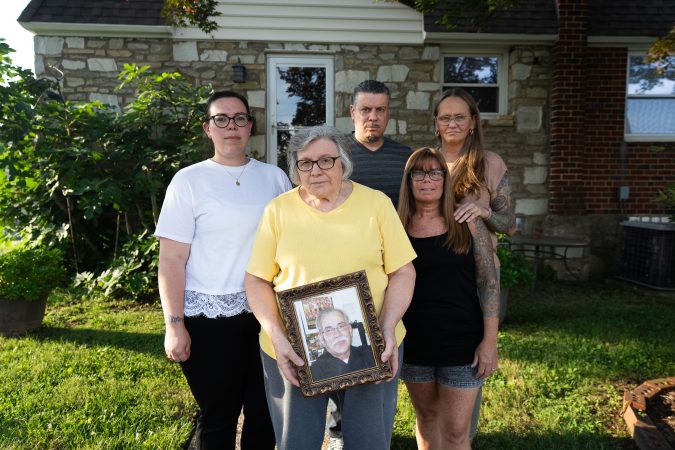
Maria and Vito Maglio had been married for 40 years.
But on Dec. 14, 2014, he did not return to his Bustleton home, and his family reported him missing. Several days later, police found his GMC Yukon in East Germantown, charred and windowless, with a bullet casing inside and a pool of blood beneath the driver’s seat, police said.
His remains were not recovered from the Schuylkill until late March. He was identified by his pacemaker.
The investigation was challenging from the start, officials said, in part because homicide detectives did not take over the case until his body was recovered months after his disappearance. The assigned detective, Gregory Santamala, said in a 2016 interview that police did not know where Maglio was killed because his phone records showed that he was in various neighborhoods on the night he disappeared, and there were no surveillance cameras in the area where his car was burned.
Detectives suspected he had been set up in a robbery that went awry, he said. An early tip led investigators to interview two women in the Northeast, and both failed polygraph tests. But the women immediately hired lawyers and stopped talking, officials said.
Santamala retired in 2022, and the case went cold.
Then, this summer, the case was reassigned to Detectives Joseph Cremen and Robert Daly, who began reviewing phone records and the more than a dozen interviews their colleagues held with suspects and witnesses over the years.
Investigators told Maglio’s family it was not necessarily new evidence that allowed them to make an arrest this week — but a new style of building cases. Years ago, they said, prosecutors had less experience making cases from cell phone location data and circumstantial evidence. Now, they said, law enforcement has greater expertise in understanding those records, which, alongside the witness statements, allowed prosecutors to conclude there was sufficient evidence to charge Morat with murder.
Deputy Police Commissioner Frank Vanore said using today’s technology to solve older cases is the crux of cold case review.
The Philadelphia District Attorney’s Office declined to comment.
Maglio’s family said the developments came as a welcome surprise after a decade of fleeting hope. Sitting in the green-walled living room of their parents’ home Tuesday night, Maglio’s children said they were grateful for an arrest and eager for the court process to begin.
“I’m just glad it didn’t fall through the cracks,” said daughter-in-law Sandra Maglio, 50. “It was our biggest fear. We live in a city where people die every day, sadly. … So I’m just glad that, you know, someone took the initiative to say, ‘Hey, let’s look at this again.’”
They were also struck by the timing. Maglio’s brother-in-law died Monday. And his son, Donato, died three years ago this month at the age of 47.
They imagine them all together now.
“It gives us some kind of closure,” said daughter Lucia Thrasher, 37. “But we already got the outcome we didn’t want to 12 years ago.”
Thrasher’s eyes welled with tears as she looked at her 6-year-old twins, Charles and Thomas, who never got to meet their grandfather. Charles, bouncing in the doorway, asked why everyone was in the living room.
“Nonno,” she told him.
“You know, Nonno,” she said, as he looked away bashfully. “Where’s Nonno?”
He pointed toward a gold-flecked picture frame in the corner of the room.
Vito Maglio, 69, was a father of six.Jessica Griffin / Staff Photographer
You’ve heard about it. Students don’t do school because artificial intelligence does it for them. AI summarizes readings, answers questions, generates essays, and adds citations. Agents log into learning management systems and complete coursework. Bots now “write” at human — rather than algorithmic — speed to evade metadata detectors.
Students have achieved wicked technoefficiency, saving time and engagement while generating correct answers and polished products.
Responses? Some teachers pore over (often inaccurate) AI detector results and police students instead of interacting with them. Some assign less homework and reading and instead have students read and write in class so they can watch them. Or they convert essays to blue books — remember those? — shifting writing from an inquiry and exploration process into a content dump.
Dutiful students suffer the surveillance, do the work, and requirements are checked off. “School” happens. Everyone’s disheartened.
But that’s not how it has to be.
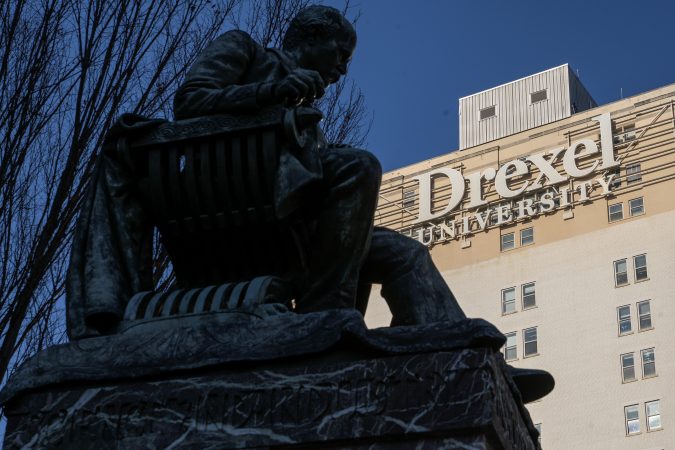
We’re longtime Drexel writing teachers who last term taught a new course, “Writing For and About AI.” In the class, we worked with students to take on AI — machine learning — and its impact on writing and their intellectual lives.
We worked with students as they wrote for the machine. It’s their reality: Writing into AI apps already is part of their professional, personal, and civic lives.
We also helped them write about the machine, about AI’s consequences for writing, learning, creativity, work, and the environment.
We aren’t futurists. We couldn’t tell students what their lives will be in five years. But we did all read challenging texts and resources about how transformers parse and mathematicize writing to generate language back at us, how AI may affect our voices and exposure to other voices, differences between writing and generating text, data centers, the future of work, and search technology.
Our students read critiques of AI, but the course wasn’t anti-technology. They also read pro-AI perspectives, and heard from those who see ways to harness AI for school and work.
What we found, as we often do working with our smart, curious undergrads, was not what we — or you — might think.
Our students didn’t want to do less work, or turn over learning to machines. We’re at Drexel, known for its co-op, and so many students had used AI in business and corporate settings. They’re not naive. They took critical, nuanced stances about AI, its generated content, and the effects of integrating it into their lives.
Students weren’t anti-AI, but they were stressed about AI paranoia, being talked at about AI, and how the “Are students using AI?” focus has damaged their classrooms.
They expressed frustration, worry, and anger about how some students rip through schoolwork with AI. But they were also frustrated about some schoolwork, wondering why they’re not asked more often to do authentic, meaningful assignments. They want to take on problems and questions that matter, thinking deeply and connecting with classmates and teachers.
When overwhelmed with work that feels meaningless, the whole endeavor can become a series of obstacles to the college degree finish line. We don’t — nor did they — justify cheating, but given all that, might they at least be tempted to outsource work to AI?
More broadly, they voiced doubt and often opposition to how AI colonizes their writing, thinking, and working lives. They recognized tension between using AI to automate/eliminate tasks and a desire to preserve meaningful work.
These talented writing students were annoyed that apps would do the powerful writing and thinking they do. As they sharpened prompting skills and experimented with AI — two of our course objectives — they saw how AI does information and language well, but writing, not so much.
Given space to experiment, explore, and learn, our students developed sturdy questions and insights:
How can smart prompting reduce AI’s environmental effects?
When using AI in class, what are boundaries for authentic work?
What makes writing assignments meaningful — and why aren’t there more?
Who trains large language models (LLMs)?
Things meaningful to our students matter to us. School is not just learning answers. This class reinforced how important — and enjoyable — it is to work with students asking and developing complex questions.
We didn’t start with answers: The process of thinking, creating, and refining questions is what it was about. In fact, our students might argue that in school — especially with tools that automate so much work — this is exactly what humans should be doing.
Dan Driscoll and Scott Warnock are writing faculty in Drexel University’s department of English and philosophy.
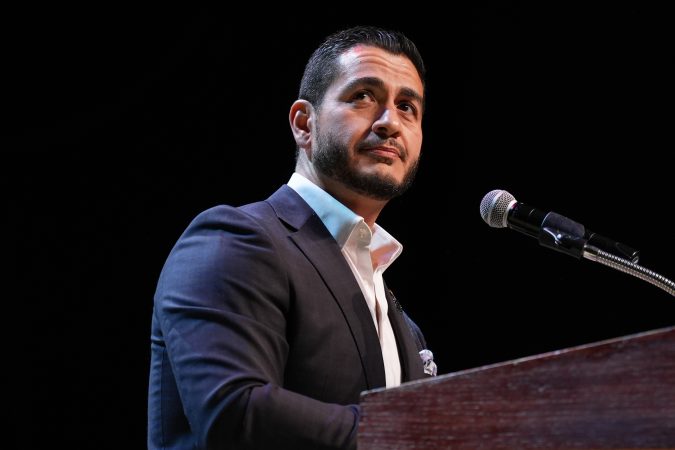
DETROIT — Abdul El-Sayed has won Michigan’s Democratic nomination for U.S. Senate, defeating U.S. Rep. Haley Stevens in a massive victory for the party’s progressive wing in a battleground state.
The real test of El-Sayed’s and progressives’ strength will now come in a November matchup against Republican Mike Rogers, a former congressman who ran unopposed for the GOP nomination. The seat is pivotal to Democrats’ chances of flipping the Senate and El-Sayed will face the challenge of uniting a divided Democratic base after a bruising primary.
The race remained tight throughout Tuesday night, with a winner not declared until early Wednesday. In his final remarks at a primary night party before the race was called, El-Sayed said “tomorrow we begin to mend fences.”
El-Sayed’s campaign said Stevens called to concede Wednesday.
El-Sayed’s win represents a significant shift for the Democratic Party; in 2018 he lost the gubernatorial primary to now-Gov. Gretchen Whitmer by 21 percentage points.
El-Sayed, a former health official, campaigned on “Medicare for All,” halting military aid to Israel and campaign finance reform. He had support from progressive leaders including Sen. Bernie Sanders and U.S. Rep. Alexandria Ocasio-Cortez, who framed the race as a grassroots-focused movement and a broader fight against the establishment and big-money spending.
Stevens, a more moderate candidate, was backed by Senate Minority Leader Chuck Schumer and tens of millions in outside spending, including the American Israel Public Affairs Committee’s largest outlay ever in a single race.
Now comes the more difficult challenge for Democrats: uniting the party to defeat Rogers, for whom Republicans have already reserved large sums of money ahead of the general election. Democrats consider the seat a must-win if they are to flip control of the Senate this year.
El-Sayed called for unity to defeat Rogers
Early Tuesday evening, El-Sayed’s supporters in Detroit’s Majestic Theatre cheered at the first batches of votes, before mellowing. Hours later Stevens’ previously subdued partygoers roared as she narrowed the margin.
“Whatever happens tonight,” El-Sayed told a thinned but still energetic crowd, “we have a responsibility to ensure that we unite, unite to make sure that Mike Rogers never sees the inside of the U.S. Senate.”
El-Sayed, a former Wayne County health director, campaigned on “Medicare for All,” campaign finance reform and ending military aid to Israel.
Stevens, a four-term congresswoman, focused on manufacturing and the economy. She stressed her past victories in tough races, saying she would be best positioned to beat Rogers.
Stevens benefited from tens of millions of dollars in outside spending, including the largest investment in a race ever from the American Israel Public Affairs Committee, which supports pro-Israel candidates.
Michigan is a must-win Senate race for Democrats
The race will help decide which party controls the chamber in the last two years of President Donald Trump’s term. Those stakes have added heat to the rivalry, with moderates arguing that El-Sayed would have a harder time than Stevens against a Republican in the general election.
Stevens won election to Congress in 2018 after serving as chief of staff to President Barack Obama’s auto task force, which helped oversee the federal rescue of General Motors and Chrysler. Her campaign and allied groups have repeatedly highlighted that experience.
El-Sayed cast himself as the anti-establishment candidate and argued that Democrats need to reject corporate influence and embrace a more progressive agenda.
While the candidate has said he is not a democratic socialist, he found support from some of the group’s members. That included Melat Kiros, who recently beat a longtime incumbent in a Democratic primary for a Denver-based House seat and was at El-Sayed’s watch party. Also there was Hasan Piker, a progressive and controversial influencer online.
The candidates’ differences were clear to some voters.
Kenneth Woodside, 87, of West Bloomfield, said he voted for El-Sayed over Stevens because “the nation is ready for someone who wants to take some more action rather than on the road we are now, which is on the road to an oligarchy and authoritarianism.”
Nessa Fuller, 51, of Birmingham, said she voted for Stevens because she will “fight to get the right things done, and she’ll work with other people, which is really important to me.”
Outside influences spent millions on the Senate race
National groups poured unprecedented sums into the race, making it one of the country’s biggest tests of outside spending.
Groups backing Stevens spent more than $50 million, led by more than $30 million from AIPAC and its affiliates.
The spending thrust Israel policy into the center of the race even though the ads never mentioned it. While El-Sayed called for ending military aid to Israel, Stevens maintained strong support for the relationship.
Israel became a contentious issue within the Democratic Party amid a war in Gaza that killed more than 73,000 Palestinians in its retaliatory offensive after about 1,200 people were killed and 251 hostages were taken in attacks by the militant group Hamas.
McKinney wins Detroit US House primary
In a heavily Democratic district representing Detroit, the 13th, state Rep. Donavan McKinney defeated Rep. Shri Thanedar. McKinney argued that the city should once again have a Black representative in Congress.
After Thanedar won election in 2022, Detroit had no Black representation in Congress for the first time since the early 1950s.
A federal judge on Tuesday agreed to dismiss the seditious-conspiracy case against the leader of the Oath Keepers, Stewart Rhodes, and seven other members of the extremist group who planned to storm the U.S. Capitol on Jan. 6, 2021.
The ruling by U.S. District Judge Amit P. Mehta is the last step in the legal process to wipe out penalties from the Jan. 6 riot, cementing President Donald Trump’s bid to unravel the largest federal investigation in U.S. history.
Mehta had sentenced Rhodes to 18 years in prison and imposed lesser prison terms on other top Oath Keepers who were convicted at jury trials. Trump commuted those prison sentences on his first day in office last year, and he pardoned more than 1,500 rioters.
In a written ruling Tuesday, Mehta said he was dismissing the Oath Keepers’ charges reluctantly at the request of the Justice Department. He criticized prosecutors for claiming in a court filing that wiping out the most serious convictions from the Jan. 6 riot was in the public interest.
“The government does not say that the charges were legally deficient or that the evidence presented is insufficient to sustain Defendants’ convictions,” Mehta wrote. “It confesses to no prosecutorial misconduct, nor does it assert any denial or compromise of a defendant’s rights.”
The Justice Department, Mehta said, was simply bestowing the ringleaders behind the riot “unearned grace by wiping their records clean” after juries found them guilty of committing “crimes against the United States itself.”
The riot, during a joint session of Congress that was being held to certify Joe Biden’s victory over Trump in the 2020 presidential election, left more than 140 police officers injured and caused an estimated $3 million in damage.
Rioters marched on the Capitol after a rally in which Trump repeated his false claims that he had won the election. Lawmakers were forced to evacuate, delaying Biden’s certification as the winner.
In his ruling, Mehta recounted how the Oath Keepers stocked firearms at a hotel outside D.C. and exchanged encrypted messages about using violence to thwart the congressional proceedings. The Oath Keeper with the guns, Edward Vallejo, was not called into action, Mehta added.
When the rioters breached the Capitol, about 10 members of the Oath Keepers wearing military gear entered the building. One half of that group ended up in then-House Speaker Nancy Pelosi’s office. The other half headed to the Senate chamber, where they tried with other rioters to “storm past a line of police officers,” wrote Mehta, who was nominated to the bench by President Barack Obama.
A second contingent of Oath Keepers later entered the Capitol and clashed with police trying to clear the building, according to the trial evidence Mehta cited in his ruling.
In addition to Rhodes and Vallejo, the other Oath Keepers whose charges were dismissed are Kelly Meggs, Kenneth Harrelson, Jessica Watkins, Roberto Minuta, Joseph Hackett, and David Moerschel. Harrelson and Watkins were acquitted of seditious conspiracy but convicted of other riot-related offenses.
An attorney for Rhodes, James Lee Bright, said in a post on X that Mehta’s ruling to dismiss the Oath Keepers’ case “personalizes his reasoning.”
Rhodes, he said, was convicted of a “thought crime” that “should never have been charged.”
“This chapter is now over,” the attorney wrote. “Congrats to the remaining defendants.”
In a court filing Tuesday, attorneys for Vallejo maintained that he was not guilty of a crime. “The Court correctly granted the motion to dismiss with prejudice based on the government’s exercise of discretion but incorrectly injected advisory opinions that are contrary to the presumption of innocence and unfair to an innocent man,” the attorneys wrote.
Trump pardoned nearly all the rioters — more than 1,500 — who were charged by the Justice Department in the wake of Jan. 6. But that blanket pardon, issued on the president’s first day in office last year, did not extend to about a dozen leaders and prominent members of two extremist groups behind the violence, the Proud Boys and the Oath Keepers.
Those defendants were convicted of carrying out a seditious conspiracy against the United States or related offenses. Trump initially commuted their prison terms, stopping short of a full pardon. But this year, while those cases were being appealed, Justice Department officials filed legal papers to vacate the convictions altogether.
The D.C. Circuit federal appeals court granted that request in May. U.S. Attorney Jeanine Pirro, a Trump ally who serves as the top federal prosecutor in D.C., then filed motions to dismiss the underlying charges in U.S. district court.
Judge Timothy J. Kelly similarly ruled last month to dismiss seditious conspiracy charges against the Proud Boys. Like Mehta, Kelly said judges are constrained to dismiss charges once prosecutors ask to drop them.
Under Supreme Court precedent, prosecutors have “exclusive authority and absolute discretion to decide whether to prosecute a case,” and they may drop charges “in the interests of justice” even after defendants have been convicted.
Trump’s efforts to reframe the riot have continued. Even in recent days, he has asserted that those charged in the case “were treated so badly.”
“This is the last of the prosecutions seeking to hold accountable those responsible for the events of January 6,” Mehta wrote in his 15-page order dismissing the charges Tuesday.
“That book is now closed. Today’s epilogue diminishes the gravity of that day, denigrates the work of the prosecutors and law enforcement officers who secured these convictions, and excuses criminal acts that caused a centuries-long pillar of our democracy — the peaceful transfer of presidential power — to buckle.”
He added, “The court cannot write a different ending.”