WASHINGTON — A Senate committee on Thursday voted to hold Dr. Anthony Fauci in contempt of Congress and refer him to the Justice Department for potential prosecution over his refusal to answer questions at a hearing last week focused on his handling of the COVID-19 pandemic.
The party-line vote approving the contempt resolution came a week after Fauci invoked his Fifth Amendment right against self-incrimination more than 100 times when he appeared before the Senate Committee on Homeland Security and Governmental Affairs.
Republican Sen. Rand Paul of Kentucky, the committee chairman, said that constitutional protection did not apply since Fauci last year received a pardon from Democratic President Joe Biden and thus did not have to worry about the threat of prosecution. Fauci and Democrats who opposed the contempt resolution said he had a well-founded fear of self-incrimination given a public desire by Republicans to seek his prosecution.
“Dr. Fauci faced no risk of federal prosecution,” Paul said at the outset of a hearing. ”All he had to do was tell the truth.”
Paul noted that the vote had nothing to do with Fauci’s policies, opinions or anything he has said in previous congressional appearances.
Instead, the senator said, “We are voting on whether a witness who has received the benefit of a sweeping pardon can be ordered by this committee to answer questions and then defy that order without consequence.”
Fauci, in a statement explaining his decision to invoke his Fifth Amendment rights, said he had good reason to fear the possibility of criminal charges given what he said was Paul’s determination “to get me to say something, anything, that could vindicate his repeated public pledges that I end up, in his words, quote, behind bars, unquote.”
The pardon from Biden covered acts from 2014 through the January 2025 day it was issued. It does not shield Fauci from state-level prosecutions or from investigations into any testimony that he did give that lawmakers thought was false.
The referral goes to the U.S. attorney’s office in Washington, which will decide whether or not to investigate or potentially attempt to prosecute the doctor for contempt.
Paul, who has previously sent referrals on Fauci on his own, acknowledged on Wednesday that contempt resolutions have often gone through the full Senate but said he did not “want to waste time” with that route. The resolution there would be unlikely to muster the required 60 votes needed to advance.
No matter the outcome, the episode raises fresh and complicated questions about lawmakers’ ability to compel testimony from previously pardoned witnesses — and the outcome could resonate beyond Fauci given the possibility that Trump may also grant clemency to his own aides before leaving the White House.
Birthdays call for cake and the country’s 250th is no exception.
America250, the federal agency behind the Semiquincentennial celebration, cut the official national birthday cake in a July 4th ceremony at the Library of Congress. Online, Goldbelly created “America’s Official 250th Birthday Cake Collection.” In Philadelphia, the Independence Visitor Center arranged 5,000 cupcakes into a flag formation.
When Philadelphia served cupcakes, it was doing more than choosing the simplest way to apportion cake. It was remaining true to its roots as the birthplace of all-American cupcakes.
The “cup cake” was the brainchild of Eliza Leslie, an accomplished Philadelphia author of cookbooks, fiction, and other prose. Leslie’s cupcake appears in her category-defining 1828 book, Seventy-Five Receipts for Pastry, Cakes, and Sweetmeats, considered the first baking book published in the U.S. and published at a time when recipes were called receipts.
The small-cakes genre predates Leslie; the first known American cookbook author, Amelia Simmons, included a “light cake to bake in small cups” in her 1796 American Cookery. Simmons didn’t specify the type of baking vessel, so the “small cups” reference in the recipe title is the only allusion to a cupcake-sized cake.
There are other records of similar baking practices, but Leslie was the first to call the petite cake a cupcake. Not only is her recipe titled “cup cake,” but she also includes specific instructions to bake in “small tins.” Cupcake history thus begins here, in this printed record of the name and form recognized today.
A chocolate Eagles cupcake from Carlino’s Market in Ardmore.Craig LaBan / Staff
Leslie was born in 1787 in Philadelphia’s historic core. She learned to read by age 5, educated at home by her father, Robert Leslie. U.S.-born of Scottish ancestry, Robert was a polymath who owned a clock and watchmaking company. Her mother was an American of Swedish descent.
Eliza wrote that her father was an intellectual who “obtained the custom of the principal people [of Philadelphia], including that of Washington, Franklin, and Jefferson; the two last being his warm personal friends.” He likely debated revolutionary values with politicians, for “[i]t was by Mr. Jefferson’s recommendation that my father was elected a member of the American Philosophical Society,” Eliza wrote in her autobiography, published in Godey’s Lady’s Book in 1858.
In her late 30s, she enrolled in cooking school, a decision that would change the course of her life. She learned to bake from Elizabeth Goodfellow, a respected Philadelphia pastry chef who owned a bakery and candy store. Leslie took notes and kept the recipes from her studies at Mrs. Goodfellow’s cooking school.
In response to repeated requests to share the recipes she learned from Goodfellow, Leslie compiled them into a book, having grown tired of handwriting copies for friends. Seventy-Five Receipts was authored anonymously by “a lady of Philadelphia.” Leslie didn’t credit Goodfellow and Goodfellow herself never authored a cookbook.
Leslie acknowledged her teacher in later books and dropped the anonymity to write under her real name or the pen name of Miss Leslie. Bucking social norms, Leslie was a lifelong childfree, never-married woman who earned her living as a writer.
Leslie’s was the first American cookbook to list ingredients separately at the beginning of a recipe, a style she copied from Goodfellow. The previous convention was to state the ingredients within the narrative directions.
She intended to write simple, logical recipes that resolved the common pain points American cooks faced. “There is frequently much difficulty in following directions in English and French Cookery Books, not only from their want of explicitness, but from the difference in the fuel, fire-places, and cooking tools generally used in Europe and America,” she wrote in the Seventy-Five Receipts preface.
She prioritized locally grown, accessible, affordable ingredients and stressed the economic savings in home baking as opposed to buying cakes from a bakery. “Many of the European receipts are so complicated and laborious that our female cooks are afraid to undertake the arduous task of making anything from them,” she lamented. Confidently patriotic, Leslie affirmed that her recipes were, “in every sense of the word, American.” Her dishes could compete with the standard bearers, she insisted. They “will not be found inferior to any of a similar description made in the European manner,” she declared.
While statesmen instilled independence in the U.S. political culture, Leslie and other women adopted the same mentality in American cooking. Their DIY spirit was creative, rebellious, defiant, and nonconformist vis-à-vis European culture. For example, Leslie was among the authors to publish an Election Cake recipe, fusing the political and the culinary.
“Election Cake became the first food strongly associated with American politics,” wrote historian Gregg Mangan, who argued that this baking provided women with an opportunity to express themselves politically long before they got voting rights. Food and gender scholar K.C. Hysmith noted, “While women couldn’t vote, they could bend the ear of the voting-eligible men they hosted on election day. And at the very least, serving slices of cake allowed them access to political conversations they might otherwise miss.” More than just an item in the baker’s repertoire, Election Cake was an “exercise in everyday politics” and “statement of community organizing.”
“Through their production of Election Cake and other recipes, including Independence Cake, Franklin Gingerbread, and Democratic Tea Cakes, women projected their influence into the public sphere and helped ingrain patriotism into our national culture,” Mangan wrote.
Food historian Stephen Schmidt locates Leslie in the historical arc extending from America’s infancy to an evolving nation edging towards civil war. “By the end of her career, the tiny, parochial, overwhelmingly culturally English America of Leslie’s youth had been swallowed up by a far larger, rapidly industrializing and urbanizing, and increasingly diverse and factionalized America,” wrote Schmidt. “Food and cooking had changed in tandem, the prevailing taste of the times, at least as exhibited in the many cookbooks now on the market, having shifted from an essentially British, upper-class, 18th-century cuisine, freighted with rich, expensive ingredients and many practical difficulties, to a much simpler, easier, more naturalized cuisine that truly was ‘in every sense of the word, American.’”
Leslie would go on to write juvenile fiction, etiquette guides, short stories, and a novel, while continuing to author smash-hit cookbooks. There’s broad consensus that her third, Directions for Cookery, was the most popular American cookbook of the 19th century.
The must-have cookbook “passed through 60 editions from its first appearance in 1837 until 1870, a dozen years after the author’s death,” wrote Dover Publications in its 2013 reprint. According to historian Liz Susman Karp, it sold more than 150,000 copies.
Made By History sponsors. FOR USE ON MADE BY HISTORY STORIES ONLY.Inquirer Staff
Leslie spent her later years holding court in a fashionable hotel lobby, having established herself as a lifestyle influencer and public figure. “Long before her death, Miss Leslie had become a Philadelphia institution,” wrote Mary Tolford Wilson in a 1971 biography. “Grown portly and walking with difficulty, she lived for about a decade at the United States Hotel, where she not only met every visiting celebrity, but was herself sought out as one.”
More than one modern authority has likened Leslie to Julia Child, another American author and chef who taught Americans to cook. In the introduction to a 2022 reprint, chef and author Dorie Greenspan wrote, “As I read Seventy-Five Receipts, I was reminded over and over of Julia. Both are a pleasure to read. Both clearly love sharing what they’ve learned. Both have a generous spirit — you sense it each time they comfort and encourage us as we follow their instructions. And both have an intelligence that sparkles on each page and within each recipe.”
Leslie died in 1858 at the age of 70 and was buried at St. Peter’s Church in Philadelphia. Her 200-year legacy is baked into all the cupcakes Americans have eaten since she coined the term.
Andrea Adleman is a journalist specializing in the cultural history of cupcakes. Her forthcoming Cupcake Nation book is based on her award-winning Washington Post story “The psychology of cupcakes.”
Made by History takes readers beyond the headlines with articles written and edited by professional historians. Opinions expressed do not necessarily reflect the views of The Inquirer.
BEIRUT — Two Israeli soldiers were killed in an explosion in southern Lebanon, Israel’s military said Thursday, the first Israeli deaths since a shaky truce between Israel and the Lebanese militant group Hezbollah began nearly two months ago.
Four other soldiers were seriously wounded, the military said. An Israeli military official, who spoke on condition of anonymity in accordance with the army’s policy, said that “an explosion was detonated” when the soldiers entered a site in the village of Majdal Zoun and that the nature of the explosive was under review.
Israeli media reported the two deaths a day earlier.
The Israeli army launched strikes Wednesday in southern Lebanon in response to what it described as Hezbollah’s violation of the ceasefire and called on residents of the village of Mansouri to flee — the first such warning Israel has issued in Lebanon for weeks.
Lebanon’s Health Ministry said one person was killed and 12 wounded in an Israeli strike in the town of Tebnine Wednesday and another eight wounded in overnight strikes on the village of Burj al-Shemali. Artillery shelling also targeted the areas of Mansouri and Majdal Zoun, the state-run National News Agency said.
There was no immediate statement from the Iran-backed Hezbollah.
The latest Israel-Hezbollah war erupted on March 2, when Hezbollah fired rockets across the border two days after the U.S. and Israel launched their attacks on Iran. More than 4,000 people have been killed by Israeli strikes in Lebanon since then, including hundreds of civilians. About 40 soldiers and three civilians – including a military contractor – have been killed on the Israeli side.
A precarious truce between Israel and Hezbollah has largely held since June 20, but Israeli forces have continued to occupy swaths of southern Lebanon and to carry out periodic airstrikes and shelling.
The latest escalation came as Lebanese and Israeli negotiators met in Rome to discuss implementation of a June 26 deal reached between Israel and the Lebanese government under which Israeli forces are supposed to withdraw from areas they occupy in southern Lebanon and allow the Lebanese army to take control, in exchange for Hezbollah’s disarmament.
Hezbollah has refused to disarm and opposed the direct Lebanon-Israel talks. It was not a party to the deal. The group has accused the Lebanese government of making too many concessions without guaranteeing an Israeli withdrawal.
Wednesday’s talks ended early due to the escalation on the ground, but were set to resume Thursday.
The talks in Rome have focused on implementation of “pilot zones” where Israeli forces would withdraw and the Lebanese army would take control. Implementation began last month with an initial pilot zone in an area that wasn’t occupied by Israeli forces but had previously sustained Israeli fire.
The Lebanese army entered the town of Zawtar al-Gharbieh and some civilians returned, although many came only to find their homes destroyed and left again.
A diplomat familiar with the negotiations who spoke on condition of anonymity because they were not authorized to comment publicly said earlier this week that Lebanon had asked for the next pilot zone to be either in the town of Khiam or Bint Jbeil. Both areas saw heavy fighting in the latest Israel-Hezbollah war and are currently occupied by Israeli forces.
But U.S. Ambassador to Lebanon Michel Issa suggested ahead of the three-day talks that no new pilot zones would be immediately implemented, saying that “moving too quickly risks jeopardizing the very civilians this process is meant to protect.”
SEOUL, South Korea — North Korea launched a short-range ballistic missile toward the sea on Thursday, South Korea’s military said, resuming weapons tests days before its rivals the U.S. and South Korea begin annual military drills that North Korea views as an invasion rehearsal.
The launch from North Korea’s eastern coastal Wonsan area was detected around 5 p.m., South Korea’s Joint Chiefs of Staff said, explaining that South Korea’s military has bolstered its surveillance posture and is closely coordinating with the U.S. and Japan.
Japan’s Defense Ministry also said North Korea fired a possible ballistic missile but there was no impact in or around Japan, where the coast guard urged ships around the coast to use caution and notify authorities if any fallen objects were found.
The ballistic missile launch was North Korea’s first since late June, when it tested a tactical ballistic missile with a “special mission” warhead and other weapons. After watching the testing activities, leader Kim Jong Un underscored the need to bolster the military’s “deadly and destructive offensive posture.”
Thursday’s launch also came ahead of large-scale, annual exercises to be conducted by the U.S. and South Korean militaries later this month. U.S. and South Korean officials say the training is defensive in nature, but North Korea says the maneuvers are a practice invasion and often responds with its own missile tests and warlike rhetoric.
South Korean and U.S. officials haven’t formally released details about this year’s joint exercise, but the drills are typically held in the latter half of August.
Kim has been focusing on enlarging its nuclear and missile arsenals since his high-stakes diplomacy with U.S. President Donald Trump collapsed in 2019. Experts say Kim wants international recognition as a nuclear state so that he can demand the lifting of international economic sanctions on North Korea.
U.N. Security Council resolutions ban North Korea from launches involving its huge stockpile of ballistic missiles. Tests of other weapons including cruise missiles and artillery systems are not banned, but experts say they still pose a threat to South Korea and the U.S.
In early July, Kim supervised tests of a nuclear-capable cruise missile aboard a new 5,000-ton destroyer. After years of prioritizing ballistic missile development, Kim has increasingly turned his focus to naval capabilities, including the construction of a nuclear-powered submarine.
In recent years, Kim has boosted his diplomatic credentials by expanding ties with Russia. North Korea has supplied conventional weapons and troops to Russia to support its war against Ukraine.
Kim also has pushed to deepen cooperation with China, the North’s economic pipeline. Chinese President Xi Jinping visited the North Korean capital Pyongyang in June for the first time in seven years.
In response to Trump’s repeated outreach to restart diplomacy, Kim has suggested talks can resume if the U.S. drops its demand for North Korean denuclearization as a precondition.
Michigan’s bitter Senate primary was the clearest signal yet: The Democratic establishment is gasping.
The narrow victory of former health official Abdul El-Sayed over four-term Rep. Haley Stevens, who had the near-unanimous backing of senior establishment figures in Washington and Michigan as well as a more than 8-to-1 television spending advantage, marked yet another stumble by the traditional power brokers.
It also amplified how out of touch they have grown with the angry left that has become the party’s ascendant force.
This time, the victory by a progressive insurgent happened not in a deep-blue enclave, such as New York City, where Democrats are pretty certain to win no matter what candidate they put up. It was in a statewide contest in Middle America. Donald Trump won Michigan twice, in 2016 and 2024.
In 2026, the stakes could hardly be higher. Democrats currently hold the Michigan seat being vacated by the retirement of Sen. Gary Peters. Should El-Sayed lose in November against Republican nominee Mike Rogers — a former congressman who came within a third of a percentage point from winning Michigan’s other Senate seat in 2024 — the party’s uphill effort to win back control of the Senate will become even steeper.
Much criticism has focused on how Senate Minority Leader Chuck Schumer and the campaign arm that he effectively steers, the Democratic Senatorial Campaign Committee, have attempted to orchestrate the primary process. They have boosted favored contenders in three primaries this year. Michigan marked the second one — the first having been Maine — in which Schumer’s anointed contenders were rejected by Democratic voters.
“What voters have been screaming from the rooftops is they’re sick of the status quo. They’re sick of the establishment. They want something different,” said Lis Smith, a Democratic consultant who worked for Mallory McMorrow, a state senator who dropped out of the race after failing to gain traction in a middle lane.
Nor were Democrats in a critical swing state persuaded by the argument that Stevens was more “electable.”
“If you listen to focus groups or interviews with Michigan voters, they are very interested in winning,” former Obama White House official Dan Pfeiffer wrote Monday in his Substack. “They want to pick a winner; they just don’t trust Democratic politicians to tell them who can really win. This is a very understandable impulse after 2024 and every Democratic leader backing Biden when he clearly shouldn’t have run.”
The stresses and divisions within the Democratic Party, including over support for Israel and the role of money in politics, were on full display in Michigan. El-Sayed rarely missed an opportunity to mention that Stevens had benefited from $62 million in advertising spending by outside groups, led by the American Israel Public Affairs Committee, the influential pro-Israel lobby.
The entire race, El-Sayed argued in the candidates’ final debate, “really comes down to how you are funded.” Rarely has a candidate been so effective at that kind of political jujitsu, using the weight of campaign money against its intended beneficiary.
Late polls that had El-Sayed comfortably ahead of Stevens were wrong. The race turned out to be a photo finish.
The results also complicated any clean story about a party moving left. El-Sayed ran up his margins in the counties with the youngest and most highly educated voters. Stevens carried the poorest counties and the areas with the most Black residents — the parts of the Democratic coalition that have historically decided general elections in Michigan. An insurgent left that wins on campuses and in college towns but loses in Detroit’s suburbs and the state’s poorest counties has proved it can win a primary. It has not yet proved it can win a state.
Stevens quickly endorsed El-Sayed after the race was called. “I spoke with Abdul a few moments ago to offer him my full support as we work to defeat Mike Rogers this November,” she posted on X. But given the acrimony of their battle, it is unclear whether Democrats can bind their wounds and regroup behind their new nominee.
Progressives in Michigan notched other victories Tuesday: William Lawrence, co-founder of the climate action group Sunrise Movement, defeated two more moderate Democrats to win the Democratic nomination in a swing district that includes Lansing. And incumbent Rep. Shri Thanedar lost to Michigan state Rep. Donavan McKinney, a democratic socialist.
The implications could well extend beyond November. The Democratic National Committee has tentatively approved Michigan to vote fifth in the 2028 presidential primaries — making it the biggest prize on the early calendar.
Should the progressives who were chosen Tuesday win this November, that may strengthen the hand of 2028 prospects who hew to the left. But if they lose, the party may be seeking a more centrist standard bearer.
With the 2026 primary season coming to an end, more optimistic Democrats are hoping that raging battles over their party’s identity will move to the back burner as they refocus their energies on Trump and the Republicans.
“We’re gonna have a great November. We’re gonna win the House, and I’m still bullish on the Senate,” former Virginia governor Terry McAuliffe, who also chaired the Democratic National Committee, said in an interview. “This is going to be about the party in power, plain and simple.”
Democrats are favored to flip the House, but Republicans could still save their majority under the right conditions.
Historically, midterm elections are a referendum on the party that holds the White House, which voters are prone to punish. This year, the Democratic Party is well positioned to win a House majority, buoyed by voters’ dissatisfaction with President Donald Trump and the war in Iran that he started.
But Trump’s party could defy conventional wisdom and still eke out a win, election analysts say. Here’s how.
Voters aren’t angry enough to vote blue
Registered voters support Democrats over Republicans in Congress by five percentage points, according to a Washington Post average of July “generic ballot” polls that ask preferences for parties rather than individuals.
Analysts estimate that Democrats need to win the national House vote by three to four points to win the majority. Democrats have a bigger advantage among highly motivated voters, who are more likely to turn out in November.
But polls also show that the Democratic brand is bruised.
The Democratic Party is less popular than before the 2018 midterm elections, when a blue wave delivered 41 new seats, according to a CNN poll released in late July.
Just before that 2018 election, 46 percent of adults rated Democrats favorably while 45 percent rated them unfavorably. Now, 30 percent rate Democrats favorably while 51 percent rate them unfavorably, almost identical to ratings for the Republican Party.
Much of that discontent comes from Democrats who are unhappy with their own party but unwilling to vote for Republicans.
Democrats are counting on people who don’t like them but are fed up with a GOP-controlled Washington to vote blue. That might be a harder sell by November if voters aren’t as outraged.
“Republicans have to hope that gas prices come down and that the war fades from the news a bit,” said David Wasserman, a senior elections analyst with Cook Political Report, a nonpartisan race handicapper.
A redrawn map protects GOP majority
A party needs 218 seats to control the House, and Republicans hold a razor-thin majority with several vacancies.
Aggressive redistricting to favor parties in congressional elections has resulted in a smaller battleground for control of Congress.
As of mid-July, Cook Political Report deemed 37 districts competitive. Eighteen were toss-ups, while 10 leaned Democrat and 9 leaned Republican.
Republicans made it unusually hard for Democrats to win the majority by launching a national battle to redraw electoral maps mid-decade. While Democrats tried to gain their own seats, the redistricting gambit proved advantageous for the GOP.
Because the two parties are competing on the new map, November’s results could be close even in a difficult year for Republicans, Wasserman said.
If Democrats win all of the most competitive districts classified by the Cook Political Report, they would win 235 seats under the 2024 map. But under the current map, they would only win 223 seats.
Big money saves vulnerable Republicans
In June, a Supreme Court ruling granted Republicans financial leverage to spend big to boost their candidates.
The high court lifted limits on how much political parties can spend in coordination with candidates, allowing the political parties’ national committees and their House and Senate campaign committees to funnel as much money as they want in coordination with candidates.
This will allow political parties to boost their candidates with more ads, probably at lower costs because candidates get cheaper rates than parties and super PACs from the Federal Communications Commission, which regulates the airwaves. Republican committees have more money to spend than Democrats on those efforts.
Conservatives could also benefit from Trump’s super PAC, MAGA Inc., which ended June with $400 million in the bank. It’s unclear whether that money will go toward midterm races.
The Republican campaign committees have also not yet detailed how they will spend their money in the coming months but said after the Supreme Court ruling that they were “ready to fully support our candidates and put them in the strongest position possible.”
The Democratic Congressional Campaign Committee, the House Democrats’ campaign operation, disputed that the GOP’s financial resources would sway the midterms out of Democrats’ reach. They pointed to special elections in which Democrats won despite being outspent by Republican opponents.
“Donald Trump’s money won’t save the vulnerable Republicans who have spent the last two years making life worse for the American people,” DCCC spokesperson Viet Shelton said.
Weak candidates lose winnable races
In past elections, Republicans lost competitive congressional races after more hard-line conservatives emerged from primaries. Now Democrats have a similar problem.
Primary victories by several progressive candidates have made some in the party establishment worry about losing winnable seats.
Most of these candidates have been in blue districts, but Matthew Dunlap in Maine and Randy Villegas in California beat more moderate, DCCC-endorsed candidates in primaries. Amish Shah, who lost a 2024 race in an Arizona battleground district, defeated a former Republican endorsed by the DCCC to run again.
On Tuesday in Michigan, Sunrise Movement co-founder William Lawrence, a progressive, bested two moderate Democrats in the battleground 7th Congressional District. The DCCC did not endorse any candidate before the primary.
Manny Rutinel defeated a more moderate opponent in a beef-producing Colorado district where some Democrats fear his history of animal rights activism and liberal voting record in the state House could render him unelectable.
Those districts could still go for Democrats, according to national analyses, and progressives argue that their preferred candidates are better at turning out voters even if they turn off some moderates.
Doug Heye, a Republican strategist, said that while Republicans have a “very narrow” path to the majority, they could defy expectations if the party successfully casts its opponents as extreme and out of touch. They include candidates affiliated with the Democratic Socialists of America, a growing political movement with far-left views.
“With every candidate on the DSA side that succeeds, that makes that argument that much easier,” Heye said.
In an analysis this week, the University of Virginia’s Center of Politics said “Democratic candidates flopping is integral to GOP chances” in several states.
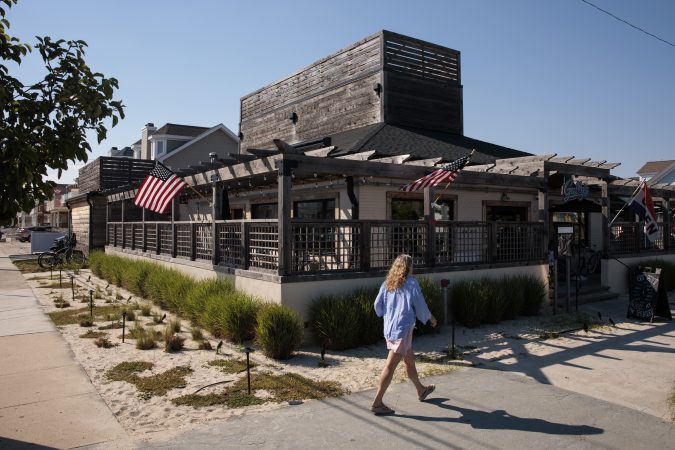
Last week’s newsletter highlighting the band Three and One getting the hook midway through their outdoor 6 to 10 p.m. set at Gully’s in Avalon prompted a lot of soul-searching.
Even though Avalon liquor licenses have limited outdoor music past 8 p.m. for years (not far behind is Sea Isle, where outdoor bars end music at 9 p.m.), many people felt that it illustrated something essential, and frustrating, about Avalon and the Shore’s changing identity.
Meanwhile, in Strathmere this week, the Deauville Inn said it was canceling its annual luau because a neighbor had complained before the event.
“Apparently tropical vibes are louder than we thought,” the historic inn wrote on Facebook, citing a “premature noise complaint” from a neighbor who is “not a fan of live music, fun or people enjoying themselves.”
The luau, sponsored by Kona Big Wave, was due to begin at 5:30 p.m. Wednesday; tickets for dinner and the show were listed as $117.23 plus tax. A Kona Big Wave Luau at Congress Hall on Aug. 20 in Cape May (no tickets required) looks like a go. (Deauville events director Judy Brenna Felicetta declined further comment).
What is the future of the freewheeling bar and music scene that has defined summers down the Shore, in Asbury Park legendarily, of course, but also in Avalon and elsewhere? Have things become too tightly controlled by the demands of wealthy homeowners who have scooped up real estate and turned the islands into noise-canceled enclaves?
Saw your piece on Gully’s and was reminded of our walk a while back where we saw the changes in Avalon. This year, like a breath of fresh air, a new venue tries to rekindle the soul of old Avalon, but new Avalon slaps it down and says that’s enough out of you!
Mike Hudome wrote:
What’s really going on here is people are searching for the Avalon of the ’70’s and ’80’s that no longer exists. They’ll never find it, and it is impossible to replicate.
Ira Dosovitz wrote:
I’ve been coming to Avalon for 40 years, and have seen the place transition from a somewhat casual, family-oriented beach town to a more corporate vibe destination. Having said that, I still feel that Avalon is right to place strictures on the music at Gully’s. Avalon is still a family town, and that should be respected.
📮 What is the future of music down the Shore? Has there been a culture shift? Where do you go to hear music? (I’m a fan of the free music series on the A.C. Boardwalk at Kennedy Plaza, where jazz returns this week.) Related, is $117.23 per person too much for a dinner and luau performance? Let me know what you think by replying to this email and I’ll include your most interesting responses.
Have ideas or news tips about the Shore or this newsletter? Pet peeves for us to opine on? Send them to me here.
🌞 Forecasters said it would rain all week but except for Monday, it’s been lovely. So just come down already.
🎳 Avalon’s biggest home has been greenlit by borough and state officials: a whopping 17,694-square-foot house and carriage house to be built on Avalon’s high dunes at 5475 Dune Drive. In an intra-island twist, the builder is Eustace Mita, the developer who has proposed a luxury hotel on the site of Ocean City’s old Wonderland Pier.
Mita says the house is not for his personal use. He’s looking for a buyer who will appreciate amenities like a bowling alley, recording studio, golf simulator, and cold plunge. LeBron? Taylor? More on that house here.
🚀 Corson’s Inlet State Park was closed for about four hours this week after a rocket-assisted supply line launcher was found on the beach, state officials said.
🦀 Animal rights activists want Ocean City to use robot crabs instead of hermit crabs for its iconic Miss Crustacian Beauty Pageant and hermit crab races.
🎶 Atlantic City’s beloved summer Chicken Bone Beach free jazz on the Boardwalk series returns to Kennedy Plaza this week with Warren Wolf and Wolfpack and local artist Keith Hollis beginning at 7 p.m. Thursday. Full schedule here.
😋 In other water ice news, Ventnor’s North Beach Creamery is now offering a chocolate black cherry flavor. That’s chocolate with black cherries in one flavor.
😭 Visit the Wonderland Pier museum in the Promenade food court on the Ocean City Boardwalk through Aug. 9.
Shore snapshot
A variety of tomatoes on sale at the No Frills Farm tent at the West Cape May Farmers Market, on Tuesday, July 28, 2026.Vernon Ogrodnek / For The Inquirer
Vocab lesson: sea gorse
Not to be confused with seahorse, gorse (n) is a perennial, spiny shrub with green branches and shiny yellow flowers known to grow along coastlines, sometimes in an invasive fashion.
See the Shore memory below for its use in an ode to Avalon.
Ask Down the Shore: Ball playing
We asked our text group, The Shore Line, about etiquette around playing ball on the beach. Two texters said they’d been hit in the face with Frisbees, and one lost a tooth! My personal pet peeve is those who throw a football in the ocean over the heads of bathers, but I’m sure it’s fun.
Hello from Wildwood Crest! Our borough lifeguards maintain a very publicized posted rule about playing ball at the beach: only on the “Back Beach.”
I recently was sitting in a chair near the water’s edge and I got hit several times with either soccer balls or other throwable items. Most times the player apologized. It’s the beach, so you have to keep your head up and be on the defense at all times!
Many years ago a bunch of guys were playing Frisbee. The Frisbee hit me in the face along with the guy diving for it. I lost a tooth from the force of the hit and also needed root canal. They should be far from the crowds.
The beachgoer needs to relax. They are kids and we all did it as kids. It’s a public place and to expect kids not to be playing is ridiculous.
🧠 Trivia time
Reader Jacqui was first with the correct answer to last week’s water ice trivia question (Mento’s of course, which famously ended the free taste era with a sign: “Chocolate tastes like chocolate; lemon tastes like lemon.”
This week:
Bathhouses are vanishing at the Jersey Shore. Daytrippers, in North Wildwood, profiled by my colleague Jason Nark, charged just $5 for a shower in 2021.
Is the price for a shower in 2026:
A. $20 for adults, $5 for children under 42 inches.
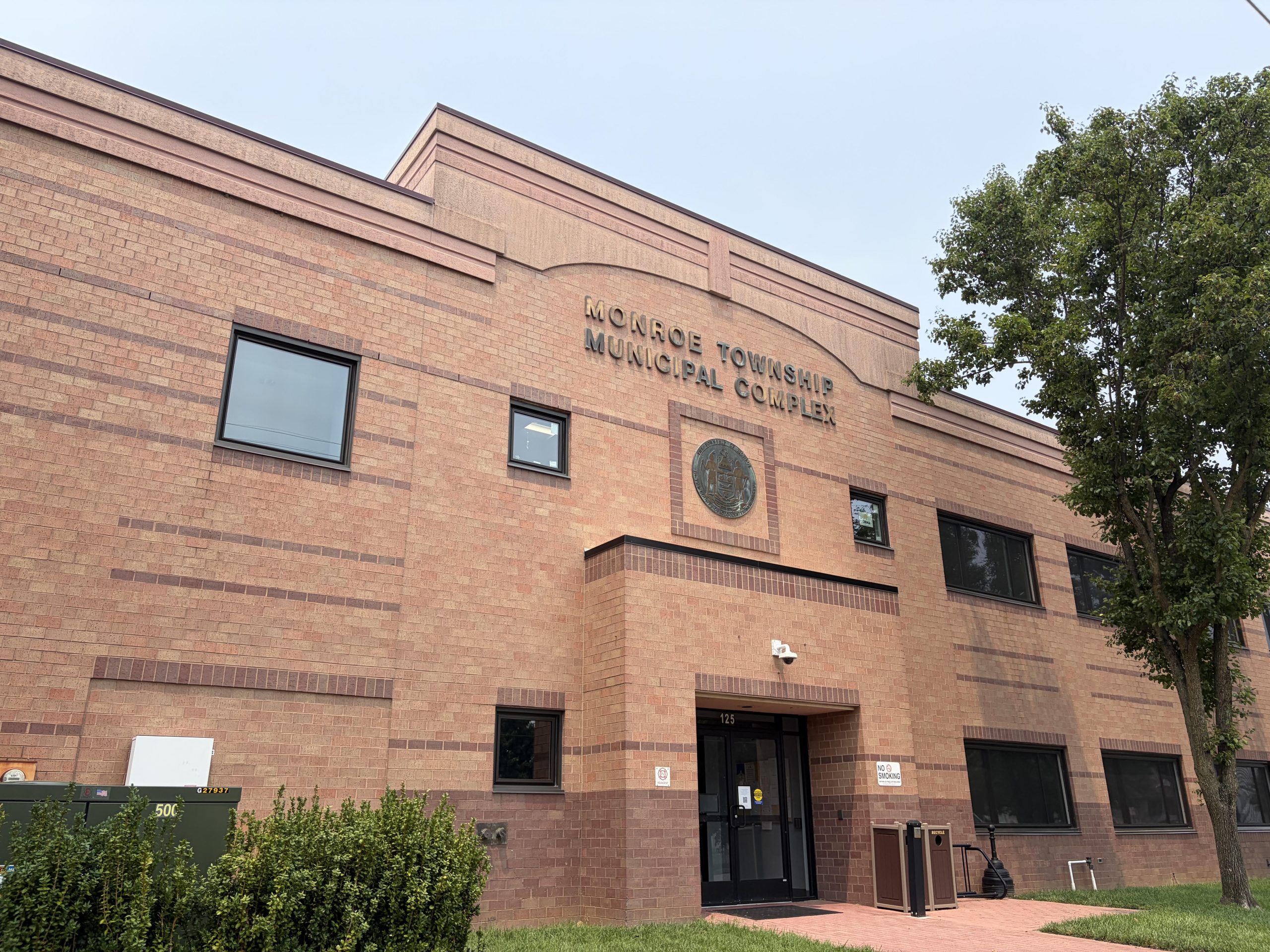
Monroe Township officials are not budging their stance on data centers as they push for the dismissal of a $300 million lawsuit from a developer challenging the municipality’s recent ban.
And a judge tossed out the Cherry Hill Board of Education’s lawsuit against a journalist for filing too many public records requests.
Monroe Township is doubling down on its data center ban.
Officials recently requested to dismiss a $300 million lawsuit from Hexa Builders — a Princeton-based real estate developer that wants to build a 1 million-square-foot data center — that challenges the municipality’s ban.
The saga continues as Hexa Builders pushes for the case to go back to state court instead of federal.
Meanwhile, Collingswood pursued its own ban through an ordinance that would amend the borough’s code.
Other South Jersey municipalities to consider and pass similar bans include Cherry Hill, Millville, and Medford.
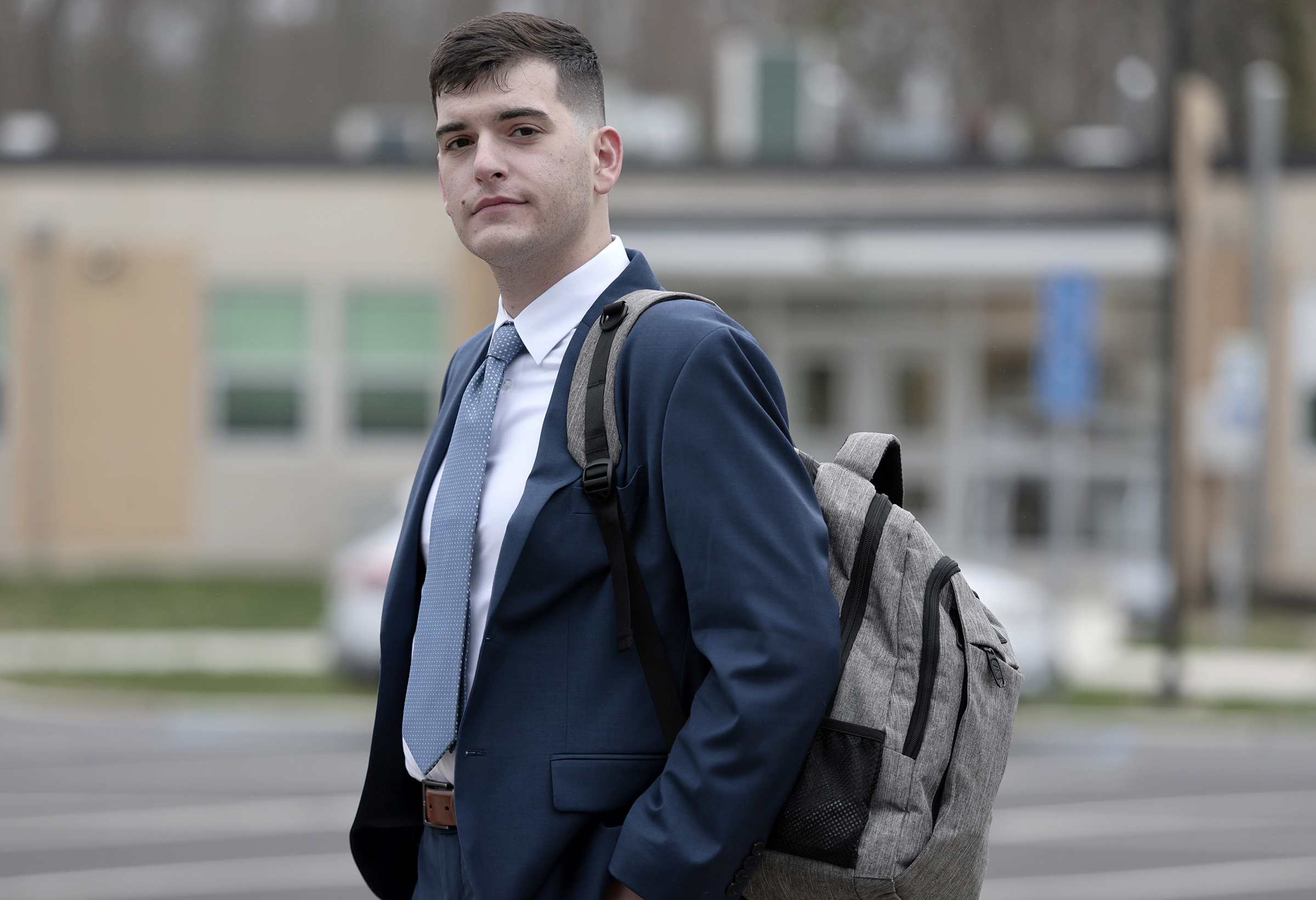
Freelance journalist Benjamin Shore can file as many public records requests as he wants in South Jersey.
When the Cherry Hill Board of Education filed a 128-page lawsuit back in February, it claimed the “numerous, repeated, and vexatious” requests he filed under the state’s Open Public Records Act qualified as harassment.
Superior Court Judge Michael Mikulski disagreed. On July 31, the judge dismissed the case and stated the district failed to provide evidence of ill-intent.
Hackers targeted two New Jersey municipal water systems in a nationwide cyberattack. Three state officials, according to a report, said some analysts highly suspect the attack could be traced to Iran amid the ongoing war.
A teenager has been arrested and charged with attempted murder and other crimes after allegedly shooting at a family member while in a moving vehicle in Willingboro Township, according to officials.
The rehab work on Collings Avenue Bridge that would close it for three months is postponed until further notice. The bridge on the border of Gloucester City and Camden will remain fully operational until a new project date is determined, according to Camden County officials.
According to Gov. Mikie Sherrill, the best cheesesteaks are in Jersey at Donkey’s Place in Camden. She said they are better than the “million” she’s tried in Philadelphia.
🍽️Burlington County Restaurant Week: The county’s restaurant week ends on Saturday. Check out the list of participating restaurants for special discounts for the last few days. ⏰ Through Sat, Aug. 8 💵 Pay as you go📍Various locations.
🎶 Summer Street Feast: Go out tonight to this evening festival featuring live music, face painting, and treats from more than 10 food trucks. ⏰ Thursday, Aug. 6 4-8 p.m. 💵 Pay as you go📍Kings Highway, Haddonfield.
🦈 Sharks at the Park: The Edelman Fossil Park & Museum of Rowan University will host a series of events about the prehistoric sea, including a foam party, a quarry shark tooth contest, and a trivia night. ⏰ Friday Aug. 7-Sunday, Aug. 16, various times 💵 Various prices 📍 66 Million Mosasaur Way, Mantua.
For the second time in five years, a freeze wiped out all of Morgantown farmer Ed Weaver’s peaches this spring.
What was an unassuming late April frost for most Pennsylvanians this year created devastation for farmers across the state. High temperatures at the beginning of the month accelerated orchards’ blooming process. But an ensuing sudden drop below freezing quickly killed what had grown. The freeze hit 13 states on the East Coast, costing Pennsylvania fruit farmers almost $200 million.
Along with the peaches, the cold decimated nectarines and cherries at Weaver’s Orchard in Berks County. Now, just 15% of the apples and pears there remain, and about half of the berries are gone. Weaver estimates the freeze caused him to lose between 70% and 80% of his orchard’s revenue this year.
Weaver is not alone. A surge in extreme weather has taken a toll on fruit farmers’ crops across the state, in an industry growing increasingly sparse from rising costs.
Weaver — who has overseen his family’s nearly-100-year-old business for four decades — said many farmers are starting to question whether losses from extreme weather are a new standard and are determining the best next steps to maintain stability.
“How do we move forward? How are we going to mitigate these risks? And is this a new type of normal for us?” he said.
Attempting to reclaim some of the lost money from the frozen crops, Weaver plans to apply for a Freeze Disaster Assistance Recovery Grant — a $10 million initiative approved last month in the Pennsylvania state budget to assist farmers who have lost 30% or more of their crops.
Pennsylvania Agriculture Secretary Russell Redding said the department is still determining how the funding will be distributed to eligible farmers, but is hopeful the money can be given by fall, when farmers typically see profits from their spring fruit crops.
“We wouldn’t forget about the harm that was done through this frost, and the lingering effects of it. So we’re here to deliver on that promise,” Redding said last month.
The funding comes after Democratic Gov. Josh Shapiro’s administration called for federal assistance to further offset the impact of the freeze. Last month, the United States Department of Agriculture expanded low-interest loan options for some Pennsylvania apple growers with federal crop insurance. Additionally, 17 counties have been designated by the USDA as disaster areas, making farmers there eligible for low-credit loans.
Berks County, home to Weaver’s Orchard, lost 85% of its crops in the freeze. But the county still hasn’t received the federal disaster designation, Weaver said. State officials have said they’re pushing for more assistance.
Weaver said the state’s grant program is a great first step, but that it’ll take years for his orchard to recover.
He said much of the financial strain is born from costs like pruning and fertilizer for the decimated crops.
Weaver said his orchard is fortunate to have other sources of income, like its market and storefront, rather than relying entirely on its fruit crops. But the freeze impacted Weaver’s “pick-your-own” service, where customers can harvest their own fruit, since there are so few fruit crops available.
Typically, Weaver said that when farmers’ crops are damaged, they can buy fruit from other growers to sell, but that has been challenging this year, because the freeze was so widespread.
A flower bud with a brown center, which indicates the apple tree couldn’t produce apples due to the frost, at Highland Orchard in West Chester, on Friday, May 8, 2026.Tyger Williams / Staff Photographer
For Norm Schultz, farmer at Linvilla Orchards in Media, the freeze took out nearly all of his peaches and apples.
Schultz said much of his orchard’s rebuilding will rely on the fall season, and how Linvilla’s pumpkin sales fare.
But the harvest lost in the April freeze will have lingering impacts come fall, he said. Apple crops were affected, meaning that candy apple and cider sales could take a hit.
The freeze was the latest blow to Pennsylvania’s fruit farmers.
Both Weaver and Schultz said it’s becoming harder for farmers to pass down their land to their families, partly because of financial unpredictability but also because land is worth more if sold instead.
The number of farms in Pennsylvania has fallen by 18% over 10 years from 2012 to 2022, according to the most recent agriculture census data.
Schultz said he hopes the state’s newest grant for affected farmers “can keep the people who only grow fruit in the game, because so many farms and fruit growers go out of business in this area.”
Similarly, Weaver said there are costs burdens in needing to continually upgrade equipment and make capital investments to maintain facilities, which could reduce profitability and efficiency for future generations.
“If we’re going to have a good food supply of these kinds of crops in Pennsylvania, it needs to be something that the next generation wants to do,” he said. “And if it burns them financially, they’re going to make a decision of whether they want to [farm] or not.”
In the meantime, Weaver said it’s important for people to purchase storefront goods from local farms or make use of other services.
“Especially right now, it’s so important for people to get out and support the local farms and buy local.”
Natalie Javitt is an intern with the Pennsylvania Legislative Correspondents’ Association. She can be reached at natalie.javitt@gmail.com.
Half A While serves teas and pastries, including a matcha silk crepe. Aidan T. Gallo / Staff Photographer
Two new dessert cafes, Half A While and Mango Mango, have opened in Ardmore.
Half A While, which took over the former Kung Fu Tea space and is currently in a soft opening phase, specializes in cold-brewed teas as well as pastries and cakes with Asian influences.
It’s joined by Asian-inspired dessert chain Mango Mango, which dishes up desserts and teas that lean heavily on the tropical stone fruit.
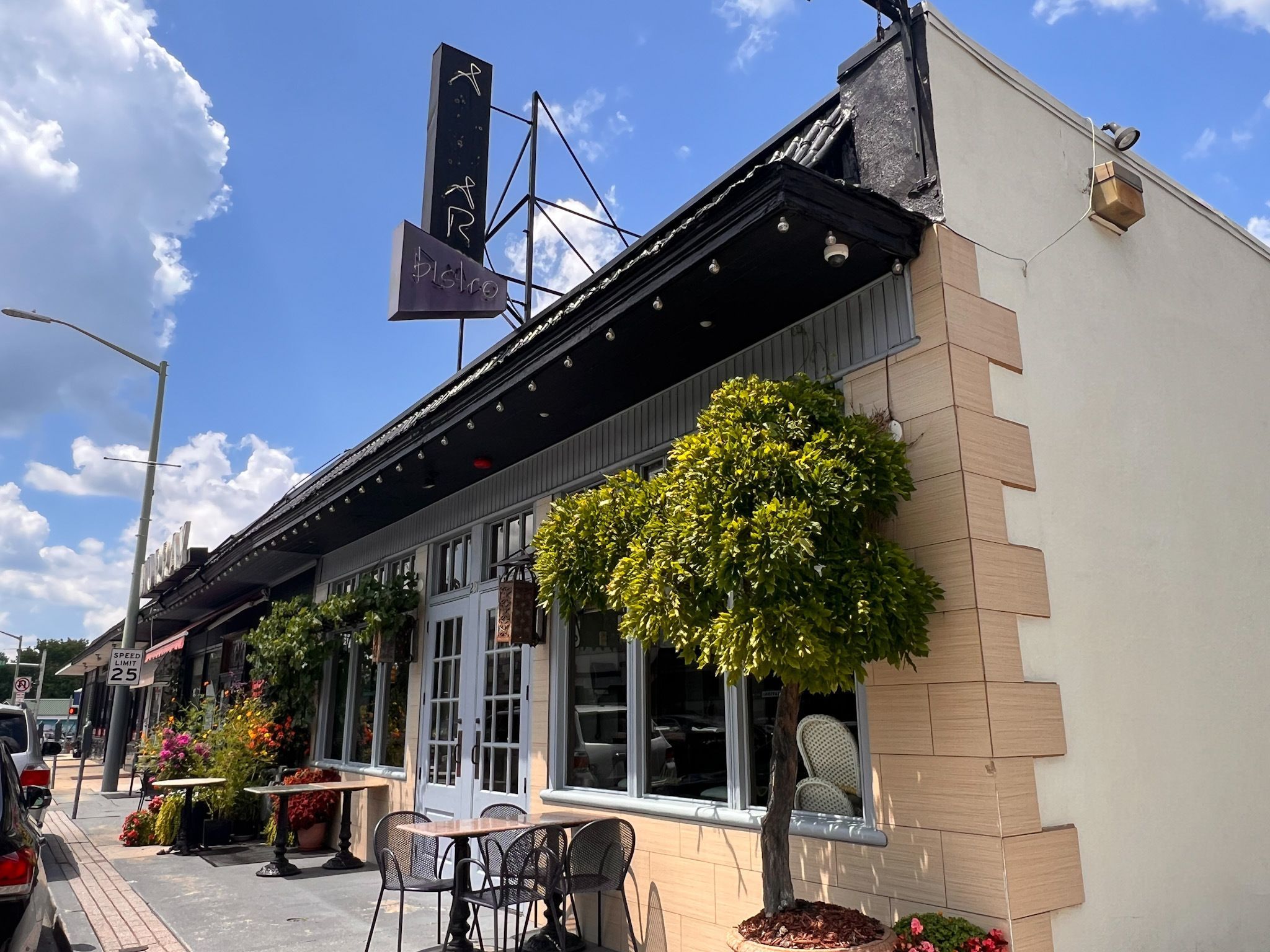
Aldar Bistro is located at 281 Montgomery Ave. in Bala Cynwyd.Michael Klein / Staff
Longtime Bala Cynwyd staple Aldar Bistro is closing its doors, with the owners selling to the two couples behind Gran Caffè L’Aquila in Center City.
They plan to convert the Lebanese restaurant into a Southern Italian-focused concept, complete with white tablecloths. Bruzi will dish up house-made pastas and a robust beverage program.
The Jamaican Pattie Shop is now open at 107 E. County Line Rd. The Ardmore eatery is currently in a soft opening phase.
Pomelo Rooftop Terrace is opening this weekend at The Brandywine hotel in Radnor, where it will serve shareable plates, a raw bar, and botanical-focused cocktails.
💡 Community News
As the township’s parking meters age, commissioners are weighing next steps, from replacing them to phasing them out entirely, The Inquirer’s Denali Sagner reports.
The township has been awarded nearly $400,000 from the state to modernize traffic signals and improve safety along Lancaster Avenue and Wynnewood Road.
Neighboring Upper Merion Township is looking to build a 7,500-seat sports and entertainment venue, possibly at 650 Park Ave., and is seeking state funding to support the project.
🏫 Schools Briefing
The school board’s policy committee voted to advance updated technology rules earlier this week after shutting down public comment and moving to Zoom for the vote. The new guidelines, which scale back screen time for the youngest students, will go before the full board later this month, The Inquirer’s Maddie Hanna reports.
🎳 Things to Do
🎶 Bryn Mawr Twilight Concerts: Steve Forbert, an early pioneer of Americana music, headlines this week’s show. ⏰ Saturday, Aug. 8, 7 p.m. 💵 $25.88, free for kids 12 and under 📍 Bryn Mawr Gazebo
🚴 Ardmore Rock n’ Ride: Watch the race and catch live music at this annual event benefiting Narberth Ambulance. ⏰ Sunday, Aug. 9, races run from 10:15 a.m.-5 p.m., live music is from noon-7 p.m. 💵 Free 📍 Downtown Ardmore
🎞️ The Princess Bride: Catch a screening of the 1987 cult classic. ⏰ Wednesday, Aug. 12, 7:15 p.m. 💵 $17.75 📍 Bryn Mawr Film Institute
The home sits on a corner lot in Wynnewood.Courtesy of Brett Furman/Real Broker LLC
Situated on a corner lot near South Ardmore Park, this brick Wynnewood home packs a lot into a small space. The first floor has a living room with a fireplace, a dining room with a bay window, and a kitchen, while all three bedrooms are upstairs. One opens onto a covered second-floor deck, and there’s another covered patio out back. There’s an open house Saturday from noon to 2 p.m.
By submitting your written, visual, and/or audio contributions, you agree to The Inquirer’s Terms of Use, including the grant of rights in Section 10.
This suburban content is produced with support from the Leslie Miller and Richard Worley Foundation and The Lenfest Institute for Journalism. Editorial content is created independently of the project donors. Gifts to support The Inquirer’s high-impact journalism can be made at inquirer.com/donate. A list of Lenfest Institute donors can be found at lenfestinstitute.org/supporters.