Category: News

  • Colombia searches for over 3,000 missing after a powerful earthquake kills more than 100

    Colombia searches for over 3,000 missing after a powerful earthquake kills more than 100

    PEREIRA, Colombia — Rescue crews and civilians in Colombia painstakingly searched through rubble Tuesday in the hopes of finding survivors trapped under debris after a powerful earthquake left thousands missing in dozens of cities and towns.

    The 7.4 magnitude earthquake that hit western Colombia on Monday wreaked havoc, collapsing buildings, buckling roads, crushing cars, and leaving devastated residents to console each other among the wreckage of their homes. Excavators and heavy machinery cleared heavy chunks of concrete, while buckets of rubble were passed hand-to-hand along a line of volunteers.

    Rescue crews and volunteers picked through flattened concrete buildings in affected cities, searching for signs of life. They raised their hands to call for silence when they thought they heard someone beneath the piles of debris. At least one woman was retrieved — alive — from the rubble.

    Colombian President Abelardo de la Espriella said the earthquake killed at least 181 people and left 2,595 more injured. He said at least 195 remained missing, but civilian-run databases suggest that number could be closer to 4,000.

    Crews race to find survivors

    Authorities said the deaths were concentrated in the cities of Cali, Pereira, Manizales, and Quibdo, but local leaders and families worried about casualties and damage in rural areas, from where very little information has emerged. Aid agencies consider the first 48 to 72 hours crucial for retrieving people alive, though that threshold can be extended if they have access to food and water.

    De la Espriella said more than 1,000 homes were destroyed and yet more damaged.

    Standing near the remains of his brother’s collapsed apartment building in Pereira, Jairo Vargas said he made the 135-mile drive from Medellin, hoping to find him alive.

    “I’m absolutely certain he’s here. Absolutely certain,” Vargas said, adding that his brother’s car was still parked outside. But he fears his sibling did not survive.

    “The debris surrounding my brother is soft,” he said, as heavy machinery rumbled nearby. “It’s possible that it’s protecting him, but we can’t hear any noises anymore. I don’t know. I have little hope.”

    Colombia’s new president faces his first serious challenge

    The earthquake presents the first major test for first-time officeholder de la Espriella, who entered office just days before the natural disaster. The leader, who split the country in recent elections, now seeks to unite Colombia in its disaster response.

    That challenge was particularly notable in Choco, the region at the quake’s epicenter. It is one of Colombia’s poorest and most neglected regions, often beset by warring armed groups. Much of Choco is accessible only by boat, through the jungle, or by airplane.

    Sterling Palacios, a religious and environmental leader in the region, said Choco’s capital and smaller communities along the Atrato River were devastated. Homes were reduced to rubble and aftershocks continued to rumble, terrifying residents who slept in the streets overnight.

    The Colombian Geological Service said it has documented more than 100 less powerful aftershocks since the initial quake.

    “There are towns where people have lost everything, where people have died, where homes have been destroyed,” he said. “We don’t have a full panorama of the damage, but we know it’s been massive.”

    De la Espriella traveled to Quibdo in Choco on Monday night where he announced he was mobilizing “the entire military and police apparatus,” as well as deploying engineers, rescue workers, and search dogs.

    “Choco will never again be the ‘land of the forgotten,’” he said.

    Palacios said the government’s response has so far been “concentrated in the capital,” and that authorities were flying the wounded from Quibdo to hospitals in the city of Medellín.

    The biggest challenge, he said, remains towns in rural areas only reachable by boat — journeys that can take hours or days. That response is also complicated by a toxic slate of armed groups warring for control who, during the COVID-19 pandemic, blocked healthcare workers from traveling to remote areas.

    “It’s a risk and it’s very difficult to predict” what could happen, he said, adding it could take weeks to fully assess the devastation.

    Desperate residents seek news of loved ones

    Families posted information about missing loved ones on citizen-run websites.

    Dana Carolina Zamora posted an image of her missing 60-year-old uncle, Miguel Ángel Zamora, cradling his dog. The farmer was living in a rural area of El Cairo, not far from the quake’s epicenter in San Jose Del Palmar.

    Local authorities said 80% of El Cairo, a town of about 7,000 people, was damaged. Zamora said her uncle lived in a traditional house of sticks and mud.

    “We are afraid. We hope that is not the case, that he is all right and that it is only a communication failure. But we haven’t heard anything from him,” Zamora said.

    The earthquake left many people unnerved after back-to-back quakes devastated neighboring Venezuela in late June, destroying hundreds of buildings and killing more than 6,300 people.

    Mónica Sánchez, who lives in Pereira, one of the worst-hit cities, said when the quake happened a wall collapsed inside her clothing factory. Sánchez and her 12 employees escaped just in time.

    “It was shocking — the city fell down around us,” she said.

    On Tuesday, rescue workers pulled a woman alive from the rubble. Diana Troncoso lay on a stretcher, dusty and scraped up, with her eyes closed. Observers burst into applause as she emerged, but search teams raised their hand to call for quiet so they could continue their search for survivors.

    Pereira and Cali enforced curfews Monday night to prevent looting, and private vehicles were banned from the roads of Pereira so ambulances, police, and rescue workers were able to navigate what’s left of the roads.

    The U.S. State Department has announced it would provide $15.5 million for emergency shelter, food, and other aid. Governments across Latin America have also lined up to help.

    “This has been a tragedy for the whole city, for thousands of families,” Pereira Mayor Mauricio Salazar told local media, his voice quavering. “But here we are, and we will continue forward with the hand of God.”


  • Trump’s plane ruse echoes Clinton’s Pakistan swap, but with press pool at risk

    Trump’s plane ruse echoes Clinton’s Pakistan swap, but with press pool at risk

    When President Bill Clinton deplaned in Islamabad, the sleight of hand became clear.

    A decoy jet with all of the markings of Air Force One touched down in view of the news media, and a Secret Service agent resembling the president emerged. Then, an unmarked plane landed, and the real president disembarked.

    It was March 2000, and Susan Page, a White House reporter covering the trip for USA Today, was one of a small group of people who knew about the ruse.

    Before the India-to-Pakistan flight, White House officials called Page, then the White House Correspondents’ Association president, and summoned her for an off-the-record conversation. There, White House press and security officials explained the operation, informing her of the president’s location and safety measures in place for journalists on the trip, Page said in messages with the Washington Post.

    “They told me about the extraordinary security procedures being taken because of the dangers in flying there, including use of the decoy plane,” she said. “Of course, the dangers threatened the journalists covering the trip as well as President Clinton.”

    Page’s briefing, which has not been previously reported, meant at least one journalist in the traveling press corps knew the president would not be aboard Air Force One.

    More than 25 years later, the White House faced a similar security dilemma — but handled the press very differently.

    On Monday evening, the Post reported on an extraordinary maneuver in which security personnel in Turkey secretly moved President Donald Trump from a plane marked as Air Force One to a smaller, unmarked Air Force plane, using an airport catering truck. The operation, which took place last month, was prompted by a credible Iranian threat to Trump, the Post reported.

    As the swap took place, reporters aboard the decoy plane, who were instructed to lower their window shades, were unaware of the president’s maneuver, according to the Post’s reporting.

    The incident could further degrade the already-fraught rapport between the Trump White House and the press corps, a relationship marked by name-calling, threats, legal restrictions, and lawsuits from Trump.

    Page, now USA Today’s Washington bureau chief, declined to comment on the newly revealed incident but broke a decades-old agreement with the Clinton White House to describe her experience.

    “I haven’t spoken about this episode before, because of the off-the-record ground rules of that discussion,” Page said in a text message. “But since more than a quarter-century has passed — and since the ruse became evident as soon as President Clinton disembarked in Pakistan — I think it’s OK for me to relay it now.”

    Jacqui Heinrich, current president of the WHCA, declined to comment.

    The White House did not respond to a request for comment on the operation’s impact on the journalists aboard the decoy plane.

    “As the President has said recently, there are many enemies of America who have their sights on him, and we use every tool at our disposal to address those threats,” White House Communications Director Steven Cheung previously told the Post.

    The White House press pool consists of a rotating group of journalists who send reports, photos, and footage of the president’s activities for the entire press corps. This formal system has existed since 1937, though the White House first brought in a pooler in 1881 after President James Garfield was shot. Associated Press reporter Franklin Trusdell sat outside of the president’s room, monitoring his breathing and sharing updates with his colleagues.

    The system is designed to ensure that someone from the press is present to observe the president’s movements and activities, giving the public an independent accounting.

    Because the press was seemingly in the dark about the operation, Garrett Graff, a journalist and historian, said that the Post’s reporting describes an event that is probably unprecedented in modern presidential history.

    “That the White House would lie to the press corps in its entirety about where the president is,” he said. “That’s a new Rubicon that’s being crossed.”

    The breach was not merely one of journalistic access, according to Graff. The details of the threat that prompted Trump’s operation are unknown, so it’s impossible to calculate the risks to the press pool. However, the reporters aboard the plane were probably exposed to the very threat that had prompted the extraordinary security measures, Graff said.

    “Knowing that this was a series of actions that the White House and the military took precisely because of a threat that they were deeply worried about, it makes it all the more egregious that the press was kept out of the loop,” he added.

    Former CNN Pentagon correspondent Barbara Starr said that the press fully understands and respects the security requirements of covering the president.

    But, she said, “there will be a level of distrust now that we have not seen before … their own lives were potentially at risk without them even knowing it, without them having the option of making a different choice of how to get home.”

    Politico reporter Megan Messerly was the print pooler on the day of Trump’s trip. “We are wheels up from Ankara as of 8:43 p.m.,” she reported. “We have been advised to keep our window shades in the press cabin closed. See you on the other side.”

    After landing, she wrote that the flight was “uneventful” with “no visitors to the press cabin.”

    Hours later, a reporter peppered Trump with questions about whether there was a security threat to Air Force One that warranted the shades being closed, according to Messerly’s pool report.

    “Well, I have a threat all the time. I’m number one on their list, before you,” Trump responded. “But if I go, you go. Right? Perhaps someday you want to change professions.” Messerly did not respond to a request for comment.

    The disclosure quickly prompted a scramble among White House reporters for more information.

    “We (and no doubt every other newsroom in Washington) are asking the White House and sources for more info,” NBC chief White House correspondent Garrett Haake wrote on X.

    ABC’s Michelle Stoddart, who was the TV pool producer aboard the flight, sent WHCA members additional details on the trip, following the Post’s reporting.

    “Upon arrival to the airport, the events did not seem particularly out of the ordinary to the travel pool,” she wrote. “Our photographer noted that the stairs were quickly pulled away as the press loaded.”

    She said that a photographer seated behind her opened a shade on board and was quickly instructed to close it again by a White House staffer who said it was a “request from Secret Service.”

    One White House reporter, speaking on the condition of anonymity because they weren’t authorized to speak publicly, said that they were outraged to learn about an operation that might have put the press corps in danger.

    “When you sign up to work at the White House, even as a civilian, part of your job is to defend the president,” the reporter said. “That’s not my job. I cover the president. Reporters take risks as part of the job, but not on behalf of the president.”

  • A Philly mom fights for more speed bumps after her son was killed near one of the city’s most dangerous roads

    A Philly mom fights for more speed bumps after her son was killed near one of the city’s most dangerous roads

    Angela McDonald caught her breath on the sidewalk at the intersection of South 58th and Delancey Streets in Cobbs Creek, a few feet from where her son, Mark Ringgold, was killed last year in a hit-and-run crash by a speeding driver in a Jeep Cherokee.

    She wants someone to answer for her son’s death and for the city to install speed bumps on the streets and other road-design changes to slow drivers down. And surveillance cameras.

    “This is what my purpose is now,“ McDonald said Friday, a year after the crash. ”I will fight until God calls me home.“

    Ringgold, 33, was crossing Delancey Street after leaving a friend’s house shortly before 3 a.m., when he was hit and left in the street. The family calls it a blessing they were able to say goodbye to him in the hospital before he died.

    Last year, 28 pedestrians were killed in hit-and-run crashes in Philadelphia, according to the city’s count.

    “Don’t wait for it to come to your door before you do something. Nobody knows what’s coming. Make change now,” said McDonald, 62, a retired Philadelphia police officer.

    Angela McDonald and other traffic-safety advocates held a community walk in memory of her son Mark, who was killed by a hit-and-run driver. Jessica Griffin / Staff Photographer

    A group of family, neighbors, and traffic safety advocates walked the streets Friday in heat brushing triple digits as thunderstorms rolled in.

    Cobbs Creek Parkway, a state-designated highway not far away, is listed on the High Injury Network, one of the 12% of city roads where 80% of traffic crashes have occurred. Many of those streets are thoroughfares or state highways, like Broad Street (Route 611).

    South 58th Street is not on the map, though there are speed bumps near a recreation center at South 58th and Spruce Streets.

    And the city is working on a Neighborhood Slow Zone nearby, about five square blocks bounded by 52nd Street, 57th Street, Spruce Street, and Baltimore Avenue. The program imposes a 20 mph speed limit on residential streets and adds traffic-calming infrastructure such as speed cushions, narrower pedestrian crossings at intersections, and other elements.

    “We have a lot of traffic violence on streets in regular Philadelphia gridded neighborhoods, not just on the High Injury Network or thoroughfares,” said Andrew Goodman, director of equitable development in the office of Councilmember Jamie Gauthier, who is working on getting some safety treatments for South 58th Street and Delancey Street.

    Evidence shows that the interventions work, city officials say.

    “We get calls from people asking for speed bumps consistently,” Goodman said. “There are so many needs, so much demand. Driver behavior seems to be getting worse by the day.”

    McDonald wants the neighborhood to get consideration. Speed-enforcement cameras are limited, with installations requiring specific authorization by the state legislature.

    But she wonders about police surveillance cameras. If there is a hit-and-run crash, they might be able to capture the image of the driver. Police have recovered the car that hit her son, but there is no footage of the driver and there has been no arrest.

    “As long as I have been traveling this road, since I was a young girl, 58th Street has always been a racetrack,” McDonald said.

    “Speed bumps are definitely going to slow people down, because if you don’t, you’re going to tear your car up,” she said. “You may flip yourself over.”

    One year after a fatal hit-and-run took the life of Angela McDonald’s son, Mark, she and other traffic-safety advocates are pushing for traffic-calming improvements.Jessica Griffin / Staff Photographer
  • Ukraine’s push to cripple Russia in Crimea is just getting started, drone chief says

    Ukraine’s push to cripple Russia in Crimea is just getting started, drone chief says

    EASTERN UKRAINE — The commander leading Ukraine’s drone war says his country’s recent strikes in Crimea are the first phase of a campaign aimed at rendering the peninsula — illegally annexed by Russia in 2014 — unusable as a staging ground for Russian forces.

    Maj. Robert “Magyar” Brovdi, one of Ukraine’s most prominent commanders among a new generation of soldiers, said his forces could strike seven times more military targets in Crimea if the money pledged by Western allies came faster.

    “Crimea falls within the key conceptual pillars on the path to ending the war,” Brovdi told the Associated Press in an interview.

    Despite that shortfall, Ukraine’s summer campaign in Crimea has already inflicted significant damage: striking rail bridges, oil depots, and power infrastructure to disrupt supply lines and blind Russian air defenses as drones fly in.

    Brovdi said his forces are equipped at just 14% of what they would need to carry out the Crimea campaign at full capacity.

    A firm believer in numbers since his past life running an international grain trading business, Brovdi joined Ukraine’s territorial defense as a volunteer in the war’s opening days. He rose quickly, commanding one of the country’s most effective drone brigades before being tapped to lead a force with no precedent before this war — Ukraine’s Unmanned Systems Forces.

    “It’s not that the production capacity of Ukrainian manufacturers doesn’t allow us to make the necessary quantities” of drones, Brovdi said. “It’s the banal problem of untimely financing, which our partners do allocate, but which moves significantly slower than our plans.”

    A lover of the arts

    A devoted patron of the arts, Brovdi works in an underground command post that resembles a museum, with pieces of Ukrainian art on display, including by renowned painter Maria Prymachenko — each with small placards noting their titles and a QR code linking to more information. “Please don’t touch the sculpture,” reads a sign beneath one piece.

    The artwork sits against a backdrop of dozens of screens streaming live footage from the front, along with real-time data that drives decisions on the battlefield. Soldiers can grab good coffee, pick a book, work out, or rest in sleeping pods — a culture that feels closer to a Silicon Valley office than a war room.

    They work around the clock to try to prevent Crimea from functioning as a staging ground for the Russian military, said Brovdi, whose call sign, Magyar, nods to his ethnic Hungarian roots in Zakarpattia, the western Ukrainian region bordering Hungary.

    He pointed to one sign of progress — in four recent large-scale Russian missile barrages from the peninsula, only five missiles were launched in total, a drop he credited to the systematic destruction of Russian air defenses there. The AP couldn’t independently verify the claim.

    To open that “window” for drones to strike the peninsula without being shot down en masse, his forces destroyed more than 300 air defense assets over recent months — surface-to-air systems, radar stations, electronic warfare equipment.

    The window metaphor sends him into a sidetrack about something personal — he loves sleeping with one open, a pleasure he rarely gets anymore as one of Russia’s most hunted men, who spends most of his time in underground bunkers.

    Forcing Russia out of Crimea

    Much of Russia’s Soviet-era air defense hardware runs on the power grid, which is one of the reasons Crimea’s electrical infrastructure has become a recurring target. Russian soldiers become “blind,” left with just machine guns and rifles, he said. The tactic has also impacted access to power for civilians, and Brovdi said he has twice publicly apologized to Ukrainians living in Crimea for the disruptions.

    Wherever Starlink connectivity reaches across Crimea, his forces can now destroy even the most heavily defended target using an average of just three drones, mixing munitions with different characteristics and warheads depending on what’s being hit. He described the strikes as deliberately calibrated — different munitions for a bridge pier than for a fuel truck or a moving train — and said his forces avoid hitting civilian infrastructure.

    “Creating conditions that make it impossible for any kind of military capability … to remain there will make Crimea uninteresting … as a military staging ground,” he said.

    Ukraine is also working to dismantle Crimea’s role as a naval base — a blow to Russia’s presence near NATO’s borders, he added.

    The campaign’s early results have not been made public, Brovdi said. But roughly two weeks into the offensive that began in late June, he said Ukrainian intelligence indicated Russian authorities had ordered all military commands and security services to relocate off the peninsula, along with a covert order to remove secret archives and artworks. The AP could not independently verify the account.

    Threats from Russia

    Meanwhile, Russia is working to counter Ukraine’s edge. It is installing jamming systems at a scale that will, to some degree, degrade Starlink connectivity, Brovdi said.

    Russia is also building its own satellite communications system to rival Starlink, he said. “This is a risk for the entire planet,” Brovdi said, “because a dictatorship will gain access to information across the whole globe.”

    He also pointed to other threats facing Ukraine. The concentration of jet-powered Shahed drones, which are much harder for Ukraine to shoot down, has increased 2½ times in recent weeks, he said.

    Russia’s military can currently fire a simultaneous salvo of 77 ballistic and cruise missiles, he said, and plans to increase that to 200. That is one of Ukraine’s most vulnerable points, since the country is running short of interceptors for the U.S.-made Patriot — the only system Ukraine has in its arsenal against ballistic missiles — meaning dozens fired by Russia during mass barrages get through and hit their targets.

    “Even if they only manage half of that, it will all be flying at us,” Brovdi said. The only way to bring the number down, he said, is by striking every facility involved in producing those missiles — underscoring the importance of Ukraine’s long-range strikes deep inside Russian territory.

    Ukraine’s plan for Russia’s Wildberries

    Ukraine has increasingly targeted Wildberries, Russia’s largest online marketplace, sometimes described as the country’s answer to Amazon, and Brovdi named it as a target.

    “Wildberries is, first of all, a supply platform — it’s the war’s quartermaster,” he said, noting the company runs a dedicated section selling goods for Russia’s military.

    The Kremlin has denied the site supplies the Russian military and has accused Ukraine of striking civilian targets. Russia regularly attacks Ukrainian logistics and retail facilities.

    At the same time, Brovdi said, the strikes on Wildberries are meant to make ordinary Russians feel the war directly, in hopes the resulting desire to end it could weigh on Russia’s ability to keep fighting.

    Brovdi declined to give a timeline for the Wildberries campaign, saying only that the strikes will continue “until it becomes impossible for it to recover quickly.”

    “Ultimately, Wildberries is, forgive the expression, a consumer gambling addiction,” he said, arguing that losing access to it — like restrictions on social media — creates an intrusion on one’s personal life that most Russians feel.

    “It turned out to be a sensitive sensor of the comfort of Russia’s massive population — people who consider themselves completely untouched by the actions of the aggressor country,” he said.

  • I-95 on-ramp in Northeast Philly is closing for good next week

    I-95 on-ramp in Northeast Philly is closing for good next week

    An I-95 ramp in Northeast Philly is set to close for good next week.

    The ramp from Bridge Street to I-95 North is slated to shut down at 8 p.m. on Friday, Aug. 21, the Pennsylvania Department of Transportation announced Monday.

    The closure will make way for construction of a new I-95 entrance from Tacony Street and the Delaware Avenue extension, which the agency expects to open in late 2027.

    Until then, drivers will be detoured to Tacony Street and State Road/New State Road, where they can get on I-95 North via the Milnor Street ramp.

    The rerouting is part of a larger I-95 rehabilitation, which includes nearly $268 million of Northeast Philly improvements, including the reconstruction of the viaduct over Bridge and Tacony Streets.

    In addition to the ramp closure, I-95 North drivers will experience a traffic shift from 8 p.m. Aug. 21 to 5 a.m. Aug 22. They will be temporarily rerouted to southbound lanes as northbound reconstruction begins at the Bridge Street Interchange. PennDot expects to complete that project in 2028.

    The agency advises drivers in the area to allow for extra time, as backups and delays are expected due to the ramp closure.

  • Former U.S. Marine held in Russia for more than 4 years has been released, his advocates say

    Former U.S. Marine held in Russia for more than 4 years has been released, his advocates say

    WASHINGTON — Russia has released an American military veteran who spent more than four years in prison on disputed charges under abusive conditions and was said to be gravely ill and at risk of dying, a group advocating for him said Tuesday.

    Robert Gilman was on his way to a U.S. military hospital in Texas, where he will be medically and psychologically assessed and treated, said Eric ‌Lebson, chief strategy officer of Global Reach, a group that’s been working to free him and other American detainees abroad. Gilman’s family has flown to Texas to be with him, including his mother, who was in Russia attempting to see him at a hospital.

    Gilman, a 32-year-old teacher detained since 2022, was initially handed a 3½-year sentence when he was convicted of beating a police officer after being taken off a train for causing a disturbance. He later was convicted of attacking a prison inspector during a cell check, beating an investigator, and assaulting a guard, and he was sentenced in October 2024 to eight years and one month. His sentence was extended last year to 10 years after he was found guilty of assaulting prison guards.

    Gilman’s sister, Lexie Hudson, credited President Donald Trump and U.S. Sen. Ed Markey of Massachusetts with bringing about the former Marine’s release.

    “There is no other reason that Robert is alive today other than that President Trump heard about the case and took action,” said Hudson, who thanked Markey “for leading our advocacy efforts in Congress.”

    “The Russians treated my brother so badly,” Hudson said. ”They hurt him for no reason, other than that he was both an American and a Marine. What did they get out of this? Why did they do this to such a wonderful person?”

    The State Department said that Gilman, who had been determined recently to have been wrongfully detained, was released on humanitarian grounds and “was not part of an exchange, and no other concessions were provided.”

    “This as a welcome step that we hope leads to the release of Americans unjustly held in Russia, such as wrongful detainee Stephen Hubbard,” it said.

    Before Gilman was flown out of Russia, he had been in “a dissociative stupor” for 47 days due to the abuse he has suffered in prison, Lebson said. Gilman had been moved from a prison to a civilian hospital, where he was hooked up to a feeding tube and handcuffed to a bed.

    Hospital reports conveyed Gilman’s condition “as dire and life-threatening,” pushing the U.S. government into action and leading to “a unilateral humanitarian release” by Russian officials, Lebson said.

    Markey had called on Russia and the U.S. to work together to get the Massachusetts resident released. Gilman was among at least eight Americans who remained in Russian custody after a series of high-profile prisoner exchanges with the U.S. in recent years.

    Markey blamed Russia for Gilman’s poor health, saying his return to the U.S. was long overdue.

    “It is a tragedy that it took Robert’s near-death condition for his case to receive the attention that it required for his release to be negotiated,” Markey said. “Throughout his detention, Robert was subjected to physical torture, forced medication, and provocations by Russian authorities. There is no doubt that his treatment by Russian authorities is the reason Robert is in this precarious state today.”

    The Associated Press was making efforts to get comment from Russian officials on Gilman’s release.

  • A 224-unit senior living facility is proposed for Radnor to help address ‘a woeful lack of senior housing’

    A 224-unit senior living facility is proposed for Radnor to help address ‘a woeful lack of senior housing’

    A Gladwyne-based senior services organization is planning to build an independent living community on an estate in Radnor Township, a move the group says is necessary as demand for senior living services rises in the region.

    Waverly Senior Services presented an early proposal to Radnor Township’s planning commission on Aug. 3 for a large senior living facility at 452 S. Roberts Rd., a historic estate owned by the Haverford School.

    The proposal includes 208 multifamily housing units across 15 buildings, 16 twin homes, and a handful of administrative buildings, including a maintenance building and a welcome house.

    Waverly Senior Services, a nonprofit organization, is in the process of purchasing the 43-acre property, which the Haverford School acquired in 2022.

    Waverly operates Waverly Heights, a life care residence in Gladwyne, as well as in-home healthcare and personalized care management services.

    Tom Garvin, Waverly’s president and CEO, told the Radnor planning commission that the organization is seeing “unprecedented demand” for life care facilities as baby boomers age and their housing and care needs change.

    “There’s a woeful lack of senior housing across the country to serve that sort of bubble that’s coming in the population,” Garvin said.

    The number of U.S. residents 65 and older grew nearly five times faster than the total population between 1920 and 2020, according to the U.S. Census Bureau.

    More than 560,000 senior housing units will be needed to meet the demand for older adult housing, according to market research firm NIC MAP. Under current development rates, only 191,000 will be built.

    Waverly currently serves around 365 residents, the vast majority of whom are local, Garvin said.

    The Radnor site would primarily be home to independent living, with some additional care for residents who need it as they age in place. It will not be a skilled nursing facility.

    Waverly representatives said that they are early in the process — they will still need to finalize the land sale and secure township approval — and that it could be three to five years before shovels hit the ground. However, Garvin said, the organization felt it had to jump on the opportunity in a region where it is difficult to find open space to develop.

    “This opportunity for a piece of property that’s 43 acres, zoned institutional, in our primary market area is one we just couldn’t pass up,” he said.

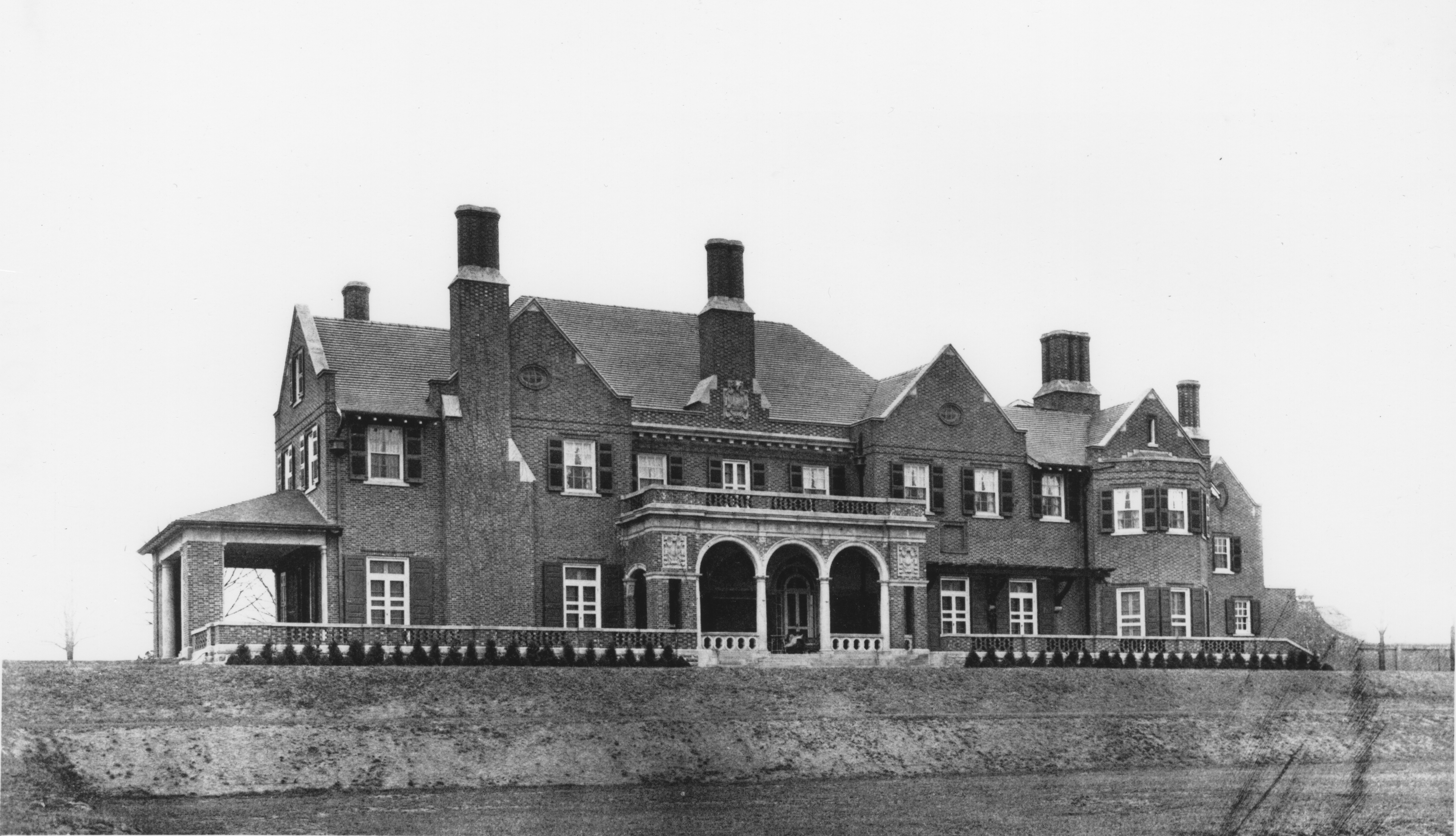
    The property is home to the Glencoe estate, built in 1907 for Thomas McKean Jr., and purchased by Samuel Robinson, founder of Acme Markets, in 1925, according to the Radnor Historical Society. In 1960, Robinson left the estate to Presbyterian Children’s Village, an orphanage run by a local Presbyterian group. The orphanage transitioned over time to become a residential treatment program for children with emotional and behavioral challenges, and in 2019 became Gemma Services after a merger with Silver Springs-Martin Luther School. Gemma Services is building a new campus in Plymouth Meeting.

    The Haverford School purchased the property in 2022 from Gemma Services for $19.88 million and said at the time that it did not have a specific plan for the site.

    Waverly’s early proposal involved retaining the historic mansion and knocking down its dormitory buildings, which are in “poor shape,” said Marc Heil, Waverly’s vice president of campus development.

    Heil said any new construction would “have that Main Line flair to it” and would not be “commercial looking.”

    Planning commission members expressed an openness to having the site developed, but raised concerns about the early plans.

    Commission member Stephen Varenhorst called the plan “chaotic” and “random” and encouraged the organization to reconsider its approach. Lane Vines, the commission’s chair, said he hoped more of the historic property could be retained.

    Residents expressed concern about increased traffic in the quiet neighborhood, stormwater management, and a potential increase in ambulance traffic, especially if an EMS station is placed on the site, a possibility.

    Waverly officials said they will submit plans to the planning commission, which will issue a recommendation to the Radnor Township commissioners, who will ultimately vote on whether to approve the project. Representatives from Waverly said the organization may also seek additional zoning relief if they pursue renovations outside of the property’s institutional zoning classification, which would require a separate approval process through the zoning hearing board.

    This suburban content is produced with support from the Leslie Miller and Richard Worley Foundation and The Lenfest Institute for Journalism. Editorial content is created independently of the project donors. Gifts to support The Inquirer’s high-impact journalism can be made at inquirer.com/donate. A list of Lenfest Institute donors can be found at lenfestinstitute.org/supporters.

  • Bucks County farm owner who fled to Belize to dodge animal abuse charges pleads guilty

    Bucks County farm owner who fled to Belize to dodge animal abuse charges pleads guilty

    A Bucks County woman who presided over squalid conditions on a Wrightstown farm and mistreated more than 100 animals in one of the worst neglect cases in county history has pleaded guilty.

    Abigail Tuttle O’Keeffe, 55, the former owner of Narrow Way Farm, entered guilty pleas to aggravated cruelty to animals, neglect of animals, and related crimes late last month. She was spared from prison by entering a diversionary program, prosecutors said Monday. O’Keeffe must attend substance-abuse and mental-health counseling, and is barred from owning animals.

    Her attorney, Josh Buchanan, declined to comment Monday.

    In August 2024, the Bucks County SPCA served a search warrant on O’Keeffe’s property after a farm manager notified the agency that a sheep had been found dead, according to the affidavit of probable cause for her arrest.

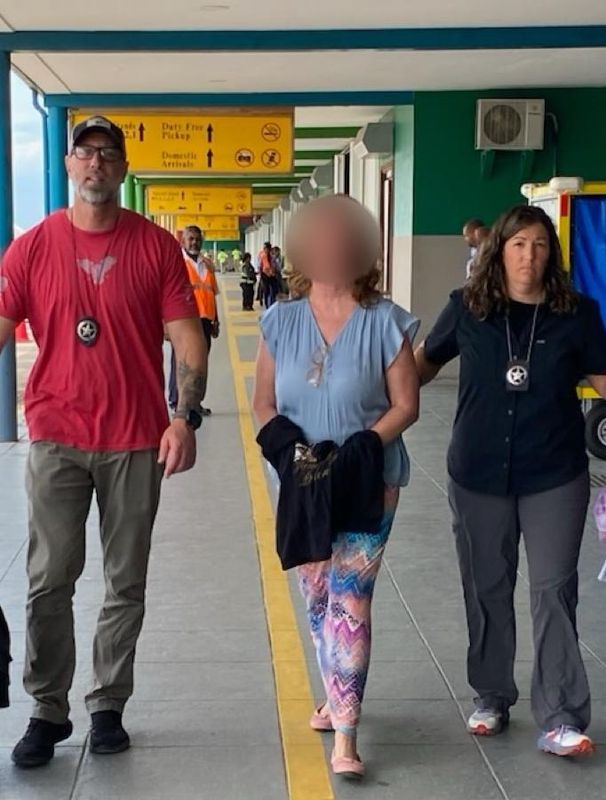
    Abigail Tuttle O’Keeffe was extradited to Bucks County in September 2025 by the U.S. Marshals Fugitive Task Force. In this photo provided by the U.S. Marshals Service, her face was obscured.U.S. Marshals Service

    Officers rescued more than 100 pigs, goats, and sheep, many suffering from infections, parasites, and other chronic medical conditions. One severely emaciated goat died while investigators were searching the property. Another one was so malnourished and riddled with parasites that it had to be euthanized after weeks of intensive care, the affidavit said.

    Volunteers at Narrow Way who spoke with The Inquirer in 2024 said O’Keeffe, who holds a doctorate in developmental psychology, did not have the skills to match her ambitions of running a working farm.

    Most of O’Keeffe’s workforce also had little to no farm experience, and the 36-acre property was in disarray, to the detriment of the livestock she kept there, according to some of those volunteers.

    In one incident, workers botched the dehorning of a calf, leaving the animal with permanent nerve damage.

    Word of the conditions at Narrow Way spread quickly: The owner of a nearby farm said O’Keeffe was not “a real, active farmer,” shied away from the work that required of her, and ran the operation like a cult, comparing her farmhands to “disciples.”

    But when local investigators came to the farm, O’Keeffe was thousands of miles away. Prosecutors said she moved to Belize, where she was arrested in April 2025 on gun charges.

    U.S. Marshals extradited her to Bucks County months later.

    Staff Writer Jesse Bunch contributed to this article.

  • Trump told Ukraine it had no cards. Then Kyiv took the war to Russia

    Trump told Ukraine it had no cards. Then Kyiv took the war to Russia

    The meeting in the Oval Office between U.S. President Donald Trump and Ukrainian President Volodymyr Zelenskyy was a diplomatic car crash.

    “Your country is in big trouble. You’re not winning,” Trump said, dressing down Zelenskyy in front of the world’s media. “You don’t have the cards.”

    The blowup in February 2025, three years into the war, was more than just a heated public exchange: The Ukrainian delegation was asked to leave the White House, and Washington briefly suspended intelligence sharing with Kyiv. In the ensuing months, as Russia made slow but steady gains on the battlefield, Trump warmly welcomed Russian President Vladimir Putin in Alaska and seemed ready to push Ukraine into an unfavorable peace deal, including forcing it to give up territory.

    But even as Zelenskyy sat next to Trump, his forces were preparing an operation that would reveal Ukraine’s ability and ambition to take the war to Russia: Months later, drones smuggled into the country attacked Russian bombers, destroying or damaging planes worth hundreds of millions of dollars.

    Since then, Kyiv has ramped up a campaign of longer-range strikes inside Russia and in areas Moscow has seized, increased production of weapons, targeted Russian air defenses, and hit oil infrastructure and the warehouses of a major retailer in a bid to ensure ordinary Russians feel the impact of the conflict.

    In an embarrassment to Putin, Ukrainian drone strikes sent thick plumes of smoke billowing over St. Petersburg shortly before the opening of an international economic forum in June. Concern over Ukraine’s attacks led Russian authorities to scale down the May 9 military parade commemorating the defeat of Nazi Germany. Strikes on oil refineries have caused a summer fuel crisis.

    By the time Trump and Zelenskyy met at a NATO summit in July, the American president said the Ukrainian leader had “been very effective” in the war. “We’ve actually developed a good relationship,” Trump added.

    But as Ukraine’s strikes have intensified, so have Russia’s — and Kyiv faces major challenges in defending against them because of shortages of American Patriot air defense missiles.

    In the first six months of the year, 1,396 civilians were killed in Ukraine, according to the U.N. Meanwhile, the world body said Russian authorities reported 250 civilians killed in the same period. On Monday, a strike that Ukraine said hit an oil refinery in Russia killed 13 people, according to local officials.

    And while Ukraine’s effort appears to have shifted the narrative about the war in Washington, it’s still not clear if it will be able to push Putin toward the negotiating table.

    Ukraine’s strikes are aimed at undermining the idea that Russia can afford to “just let this roll,” said Jack Watling, a senior research fellow at the London-based RUSI think tank.

    The question of whether it will succeed depends on how much pain Ukraine can exact. “Logically, above a certain threshold, it does work but whether they can reach that threshold is an interesting question” — and one that depends at least partly on factors outside Kyiv’s control, like continued European financial support, he noted.

    Ukraine brings the war to Russia

    While most of Ukraine’s strikes have a range of less than 200 kilometers (125 miles), its longer-range attacks have increased dramatically this year. It launched three times as many of those strikes in July as it did in January, according to data from ACLED, an independent conflict monitor. Repeatedly hitting deep into Russia has forced its military to stretch air defenses over a larger area.

    Many of its strikes have focused on four key categories of targets, according to an Associated Press analysis of hundreds of Ukrainian attacks this year — compiled from statements by Russian officials and state media and the Ukrainian military.

    As the Iran war pushed up energy prices, leading the U.S. to ease sanctions on Russian oil, Kyiv ramped up strikes on oil infrastructure to deny the Kremlin revenue from fuel exports and force shortages on ordinary Russians. It is also striking defense manufacturing to damage Russia’s long-term ability to produce weapons, targeting air defenses to clear a path for its own arms, and hitting retail warehouses to bring the effects to ordinary Russians.

    — As part of the campaign against oil infrastructure, Kyiv said it hit Russia’s largest oil refinery, more than 2,500 kilometers (1,550 miles) from Ukraine.

    — Kyiv has also targeted defense manufacturing centers. It hit a factory making navigation systems multiple times, including with its own Flamingo missile.

    — In July and August, Ukraine struck Wildberries warehouses. Kyiv said the company helps supply the Russian military. Moscow denies that.

    — Many of Ukraine’s strikes on Russian air defenses and radar are around Russian-held Crimea and are often carried out with drones.

    Maj. Robert “Magyar” Brovdi, the commander leading Ukraine’s drone war, told the AP its strikes in Crimea are also aimed at rendering the peninsula unusable as a staging ground for Russian forces.

    Starlink gives Ukraine an advantage — for now

    It’s not always clear if Ukraine’s attacks are effective — and some may have resulted in minimal or no damage. In May and June, Ukraine said it hit several satellite, reconnaissance or signals intelligence facilities in Russia, but satellite images analyzed by AP did not show major damage.

    Still, Ukraine has one advantage that can help it strip back Russian air defenses and make its drone strikes more precise.

    It has access to Elon Musk’s satellite communications service Starlink — which means its operators can control drones in real time in Russian-held Ukrainian territory. Russia has been blocked from using Starlink.

    But Russia is also building its own version of Starlink, and is installing jamming systems that hamper Starlink connectivity, Brovdi said.

    Ukraine is investing heavily in weapons production

    Even before the Oval Office meeting, Ukraine scrambled to invest in new weapons — but that moment was “a real wake-up call,” said a European military official who spoke on condition of anonymity to discuss the front-line situation in detail. It became clear that U.S. support could be stopped “from one day to the next.”

    Ukraine doubled down on production, churning out a growing array of weapons in larger numbers and shortening traditional research and production cycles from decades to years or even months.

    Even so, Ukraine is still not able to produce as many missiles as it needs. It also took Ukraine time to make systems that could target facilities precisely enough that Kyiv felt comfortable using them to strike deep into Russia, Watling said.

    And while Ukraine has begun to resolve navigational issues with its missiles, such as the Flamingo, those weapons are still not as accurate — or as stealthy — as their Western analogues. That often means hundreds of drones must be fired to overwhelm Russian air defenses to allow a missile to get through.

    It’s an expensive and time-consuming way to wage war since only 5% to 9% of what Ukraine fires gets past Russian air defenses, according to Watling.

    But, although Russia’s weapons are more powerful, Zelenskyy suggested at the NATO summit that Putin is “losing the initiative” in the war as Ukraine has moved the fight from the stalled battlefield to the sky.

    Sitting next to Trump at the summit, the Ukrainian leader even cracked a joke, demurring when Trump asked him if he would accept Moscow as a venue for peace talks, as Putin has suggested.

    “There are a lot of Ukrainian drones in the air,” Zelenskyy said. ”It would be dangerous.”

  • In rejecting Trump’s Gaza plan, Netanyahu reprises a balancing act he has mastered

    In rejecting Trump’s Gaza plan, Netanyahu reprises a balancing act he has mastered

    It’s possibly the most important job of any Israeli prime minister: maintain good relations with the United States while pushing back on demands seen as undermining Israel’s security.

    No one has managed the balancing act longer than Prime Minister Benjamin Netanyahu, Israel’s longest-serving leader. But with the Iran war at a stalemate, and U.S. President Donald Trump looking to advance peace efforts elsewhere, Netanyahu’s task is getting harder less than three months away from Israeli elections.

    On Sunday, Netanyahu rejected Trump’s latest plan to advance the stalled ceasefire in Gaza, saying Israel will not withdraw from any of the roughly 60% of the territory it controls until Hamas has been completely disarmed — something the militant group controlling the other 40% has long resisted.

    Netanyahu risks angering Trump, who he has repeatedly said is the greatest friend Israel has ever had in the White House. But even a hint of compromise with Hamas could be fatal for Netanyahu’s reelection in a country deeply traumatized by the Oct. 7, 2023, attack that happened on his watch.

    Trump, meanwhile, is under pressure to deliver on his promise of being a global peacemaker as talks with Iran stall and gas prices stay elevated ahead of U.S. congressional elections in November.

    Netanyahu: No progress on Gaza ceasefire until Hamas disarms

    The Gaza plan announced by Trump last month grew out of his October ceasefire deal, which ended major Israeli military operations there and brought about the release of all remaining hostages but has otherwise largely stalled.

    Under the latest agreement, Hamas would gradually give up its weapons while Israeli forces halt their attacks and begin withdrawing from Gaza. Hamas accepted the deal, even as the group linked the surrender of its heaviest weapons to the creation of a Palestinian state, something Israel’s current government and most of its political class adamantly reject.

    Netanyahu rejected the plan, saying Israel would not retreat from any of its positions in Gaza until Hamas has been completely disarmed. That would leave other elements of the ceasefire, including the deployment of international forces and any reconstruction of the devastated territory, on hold.

    At the same time, the Israeli military seems to have eased off on its strikes on Gaza that have killed over 1,250 people since the ceasefire came into effect, according to Gaza’s Health Ministry.

    Israeli media reported that the authority for carrying out strikes has been limited to the army’s chief of staff, apparently in a quiet gesture toward Trump’s ceasefire efforts. The Israeli military did not respond to a request for comment.

    “We are focused on actions, not rhetoric or politics,” an official with the Board of Peace, the Trump-led entity overseeing the ceasefire, told the Associated Press. “There have been some results on the ground in the last few days,” the official added, including “restraint from strikes” and new Israeli military procedures.

    “There is constructive cooperation behind the scenes and our conversations continue,” the official said, speaking on condition of anonymity because they were not authorized to talk about the ongoing discussions.

    Oct. 7 looms over a tough campaign for reelection

    In his election campaign, Netanyahu has boasted of Israel’s military achievements in the wars that followed the Oct. 7 attack. Israeli forces have seized territory in Gaza, Lebanon and Syria, and launched two major air wars against Iran and its disputed nuclear program.

    But the “total victory” Netanyahu promised in Gaza has yet to materialize. Many Israelis blame him for the security failures that led to the initial attack, as well as previous attempts to contain Hamas that at times included allowing Qatar to deliver suitcases filled with cash to Gaza.

    Netanyahu’s far-right allies, who will likely be crucial to his Likud party’s ability to form a government after the elections, have welcomed his rejection of the Trump plan.

    Trump “wants to see real steps taken toward rehabilitating Gaza, while Netanyahu’s two right-wing partners and the Likud’s faltering election campaign is keeping him from yielding even a millimeter,” wrote Jonathan Lis, the diplomatic correspondent for Israel’s Haaretz newspaper.

    Ghaith al-Omari, a former Palestinian negotiator who is now a senior fellow at the Washington Institute for Near East Policy, said that even if the White House ignores Netanyahu’s rejection of the plan, Trump is still stuck unless he can persuade the Israeli leader to change course.

    Hamas is meanwhile winning the “blame game” by appearing to be the more reasonable of the two sides, he said.

    Trump’s standing in Israel has fallen

    Trump was wildly popular in Israel during his first term, when he lent unprecedented support to Israel’s claims to territory seized in war, including by moving the U.S. Embassy to Jerusalem.

    The trend continued in his second term, as he backed Israel’s actions in Gaza and joined it in bombing Iran. The alliance was particularly beneficial to Netanyahu, whose political future remained uncertain. The prime minister relied on Trump to improve his image at home.

    But the allies’ interests diverged last spring, as Israel pressed for further strikes on Iran and against Hezbollah in Lebanon, while Trump looked to wind down the regional conflict in order to reopen the Strait of Hormuz to ease pressure on the world economy.

    Since then, Trump has said that he would “likely” endorse Netanyahu ahead of the Israeli election but has not yet given his full backing. And while a formal endorsement from a U.S. president still carries weight in Israel, the rift between the two leaders suggests it could also complicate Netanyahu’s campaign.

    “A few months ago, a significant majority of Israelis assumed that when President Trump is making decisions, he’s taking Israeli security interests into account. This is no longer the case,” said Yohanan Plesner, head of the Israel Democracy Institute, a think tank in Jerusalem.

    The closeness between Netanyahu and Trump “used to be an asset,” he said, but not anymore.

    Netanyahu has defied past U.S. presidents

    Netanyahu has a long history of defying U.S. presidents, particularly Democratic ones. During his first term, in the late 1990s, he resisted efforts by President Bill Clinton to resolve the conflict with the Palestinians. He clashed publicly with President Barack Obama over the 2015 nuclear deal with Iran.

    But that approach carries greater risks now, as Israel’s military campaigns have left it increasingly isolated diplomatically and upended its historic support among Democratic voters in the U.S., leaving Trump as one of Israel’s few strong allies.

    Netanyahu’s dependence on Trump is “tremendous,” Plesner said, and voters will punish him if he is seen as mismanaging the key relationship.

    “If Trump will insist on carrying on, I think Netanyahu will have no choice but to tag along rather than take on the president, since he’s left Israel with very few diplomatic cards to maneuver.”